
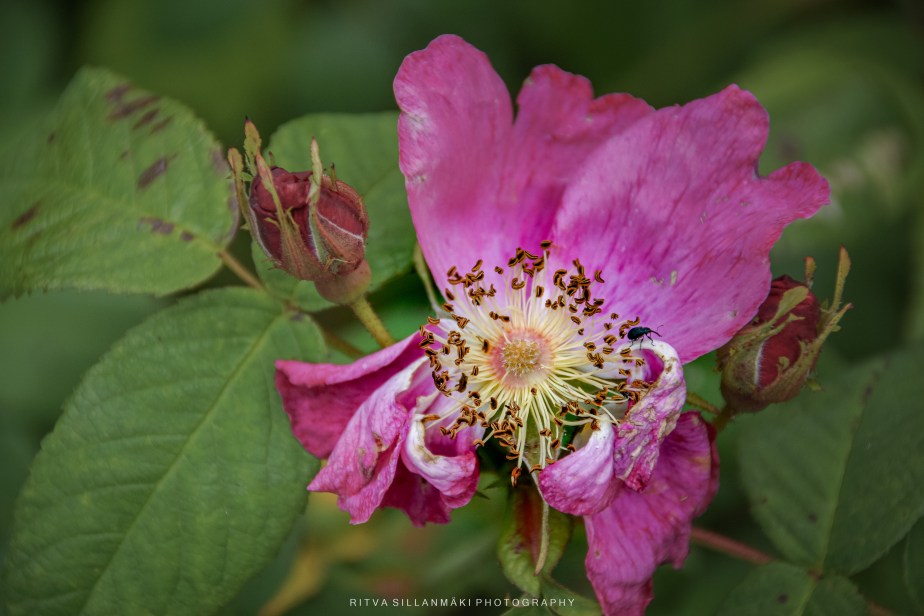
We have snow blanketing the ground and evergreens standing tall at the moment that I could photograph. Right now, I have no fresh flowers in the vase to add a splash of color. However, while sifting through my old photos, I stumbled upon these shots of roses from my visit to the Espoo Cathedral several years ago; there were several flowers to photograph They are not at their peek, but sometimes even the decay looks good. Nowadays these flowers are to be eradicated, but my images were captured before that suggestion was made. I took a bit of editing liberties with the first two images to enhance their vibrant hues and textures, hoping to capture the essence of those fleeting moments when nature’s beauty takes center stage.
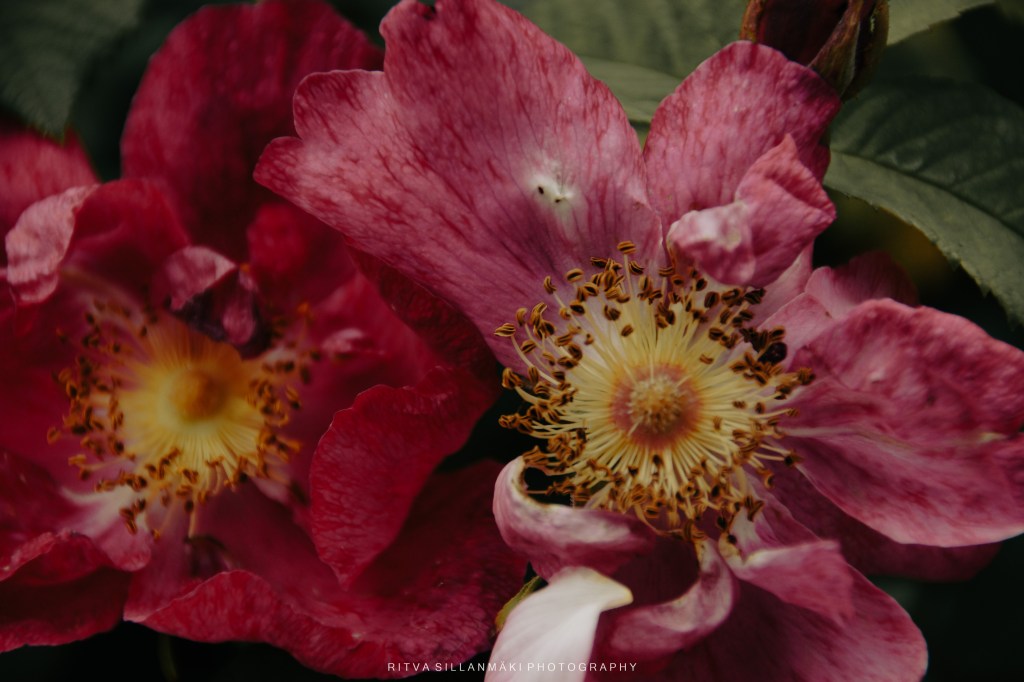
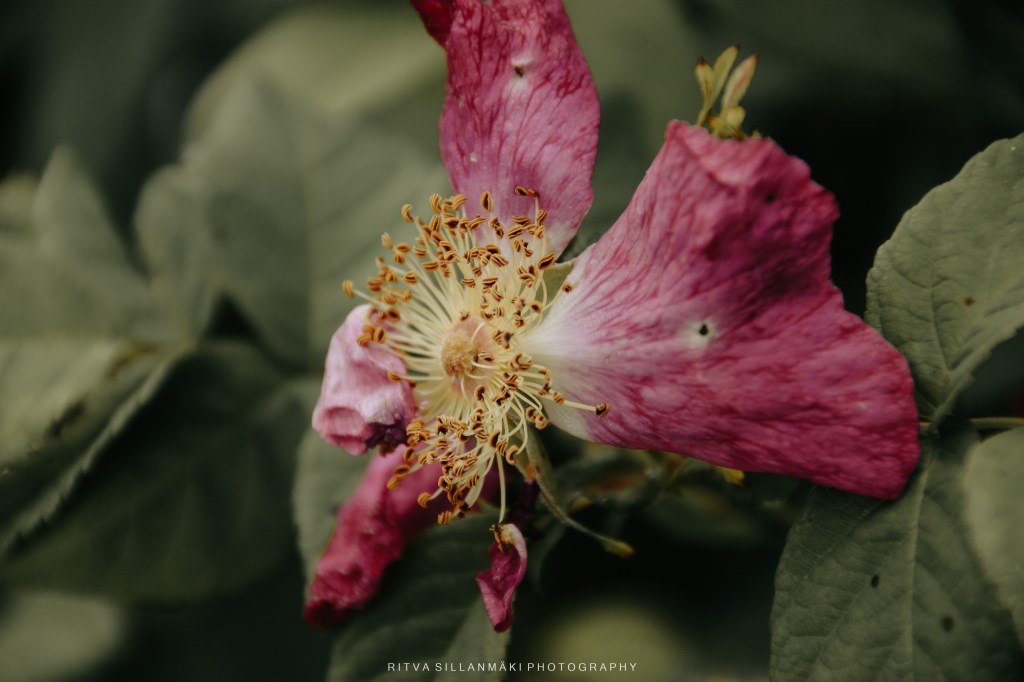
Why should we eradicate the rugosa rose?
The rugosa rose (Rosa rugosa) is classified as an invasive species under Finnish legislation, and its spread must be prevented and populations eradicated. The cultivation of the rugosa rose and its white-flowered form (Rosa rugosa f. alba) is prohibited as of June 1, 2022.
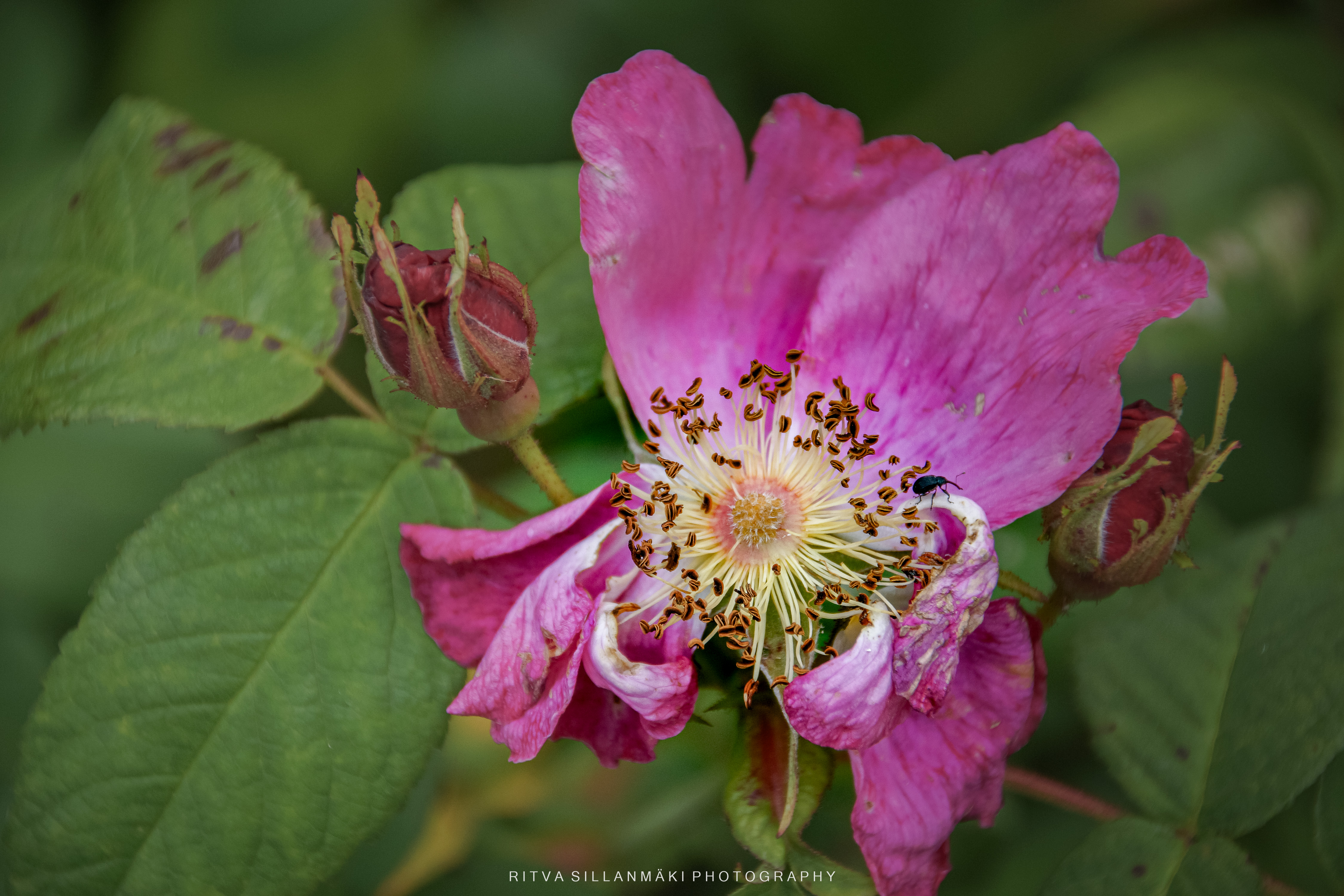
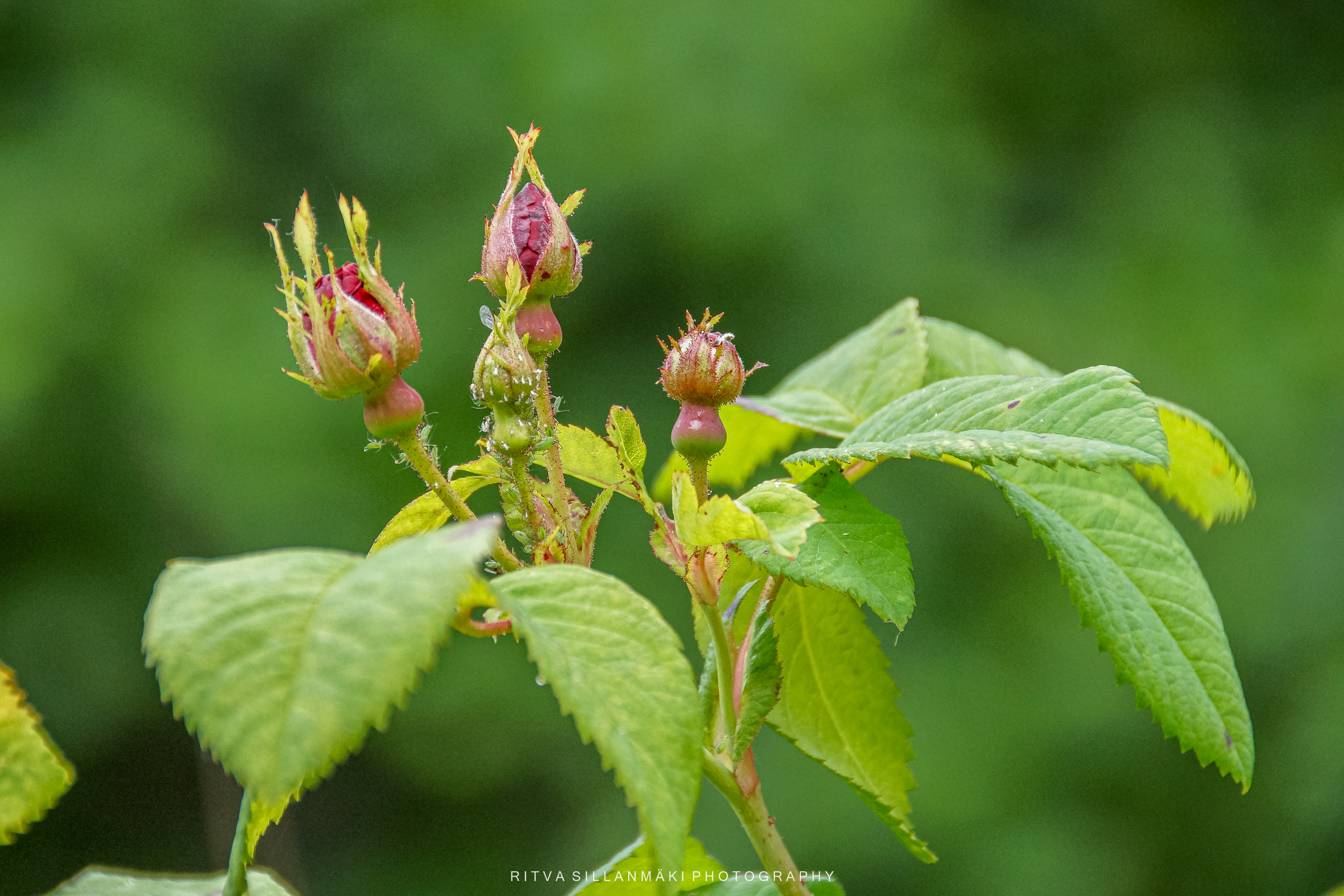
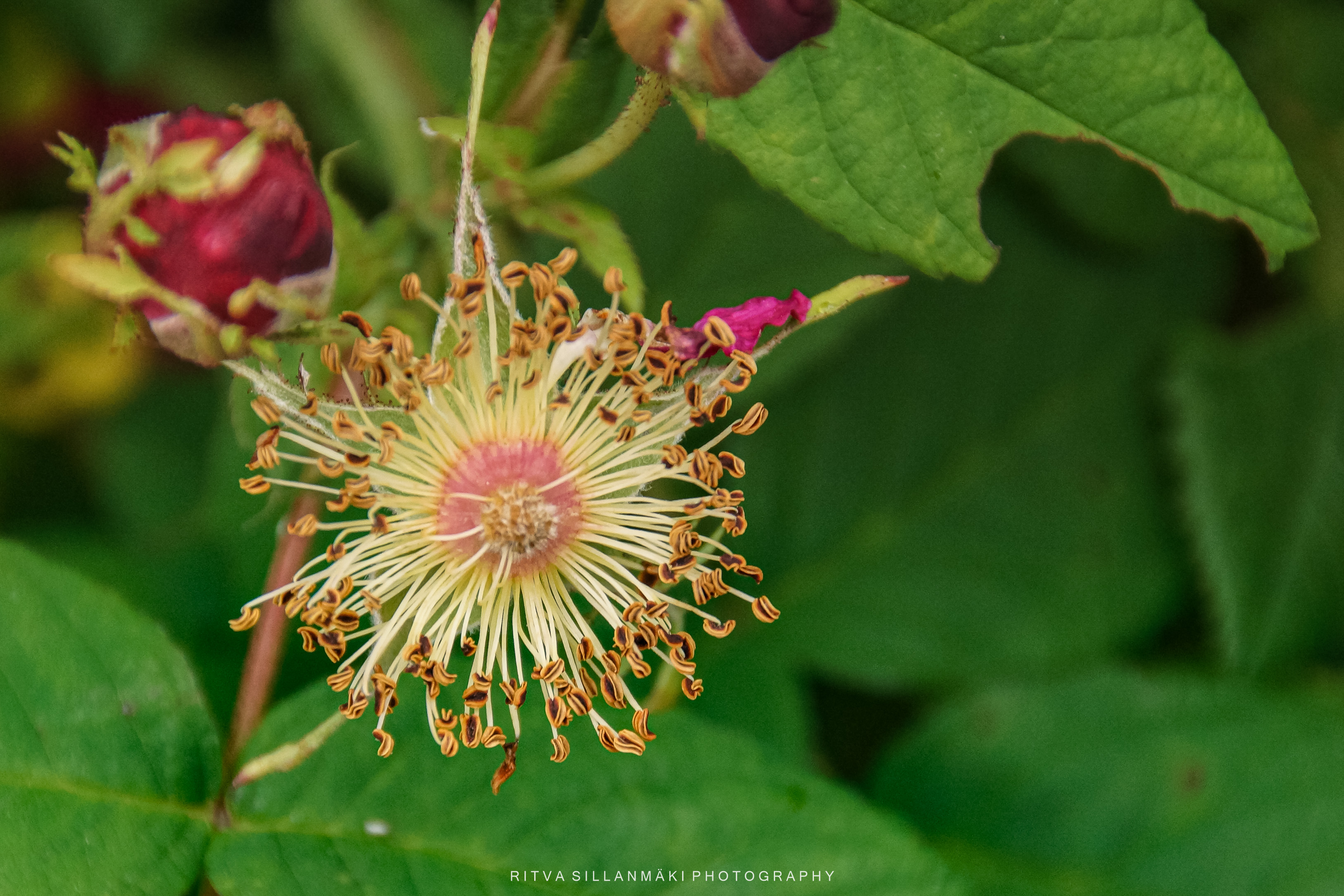
Rosa rugosa in English is commonly called Rugosa Rose, Japanese Rose, Beach Rose, or Ramanas Rose, known for its tough, wrinkled leaves, fragrant pink/white flowers, large vitamin C-rich hips, and hardiness in coastal/harsh conditions, but it’s also an invasive species in many areas due to its vigorous spreading, making it great for hedges but needing management.
Participating in The Flower Hour
 Ritva Sillanmäki Photography
Stunning versions of this cute rose, Ritva! I’m glad you shared this and explained more about it. I get sad thinking that any floral species is considered invasive when they bring such beauty and have medicinal properties.
Sad that such a beautiful rose is invasive.
Here we have a wild rose (rosa acicularis) that looks similar but its petals are smooth. Also known as the Arctic rose, it’s native to Canada. Too bad that such a pretty rose is invasive.
I know, it will hard to get rid of it.