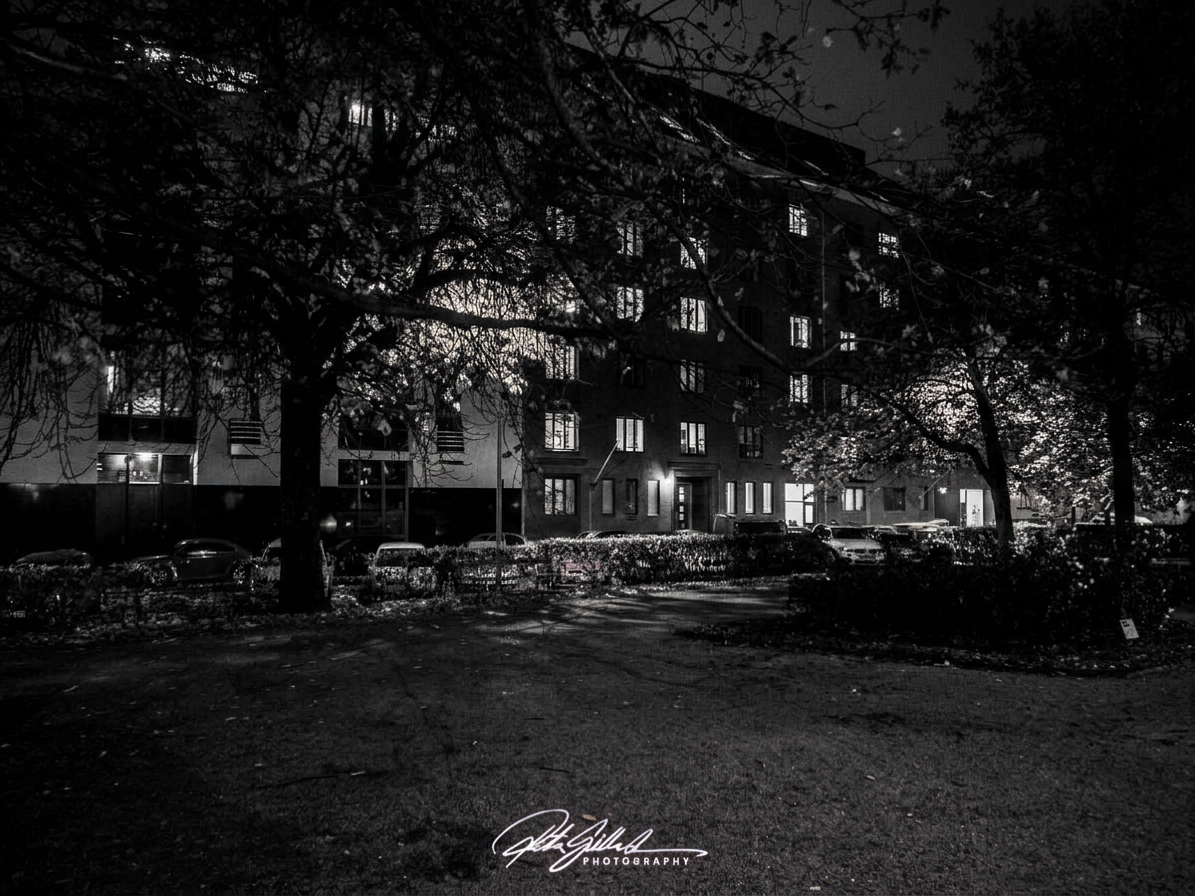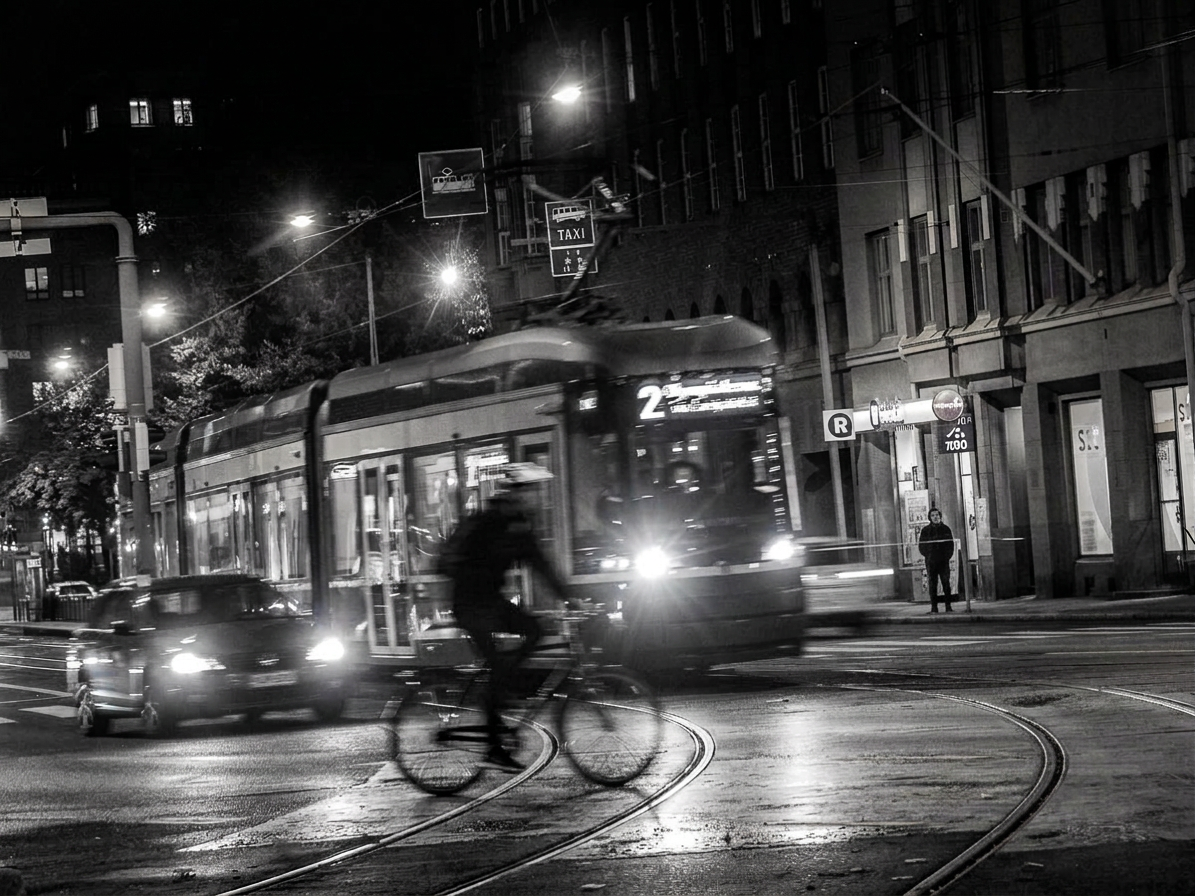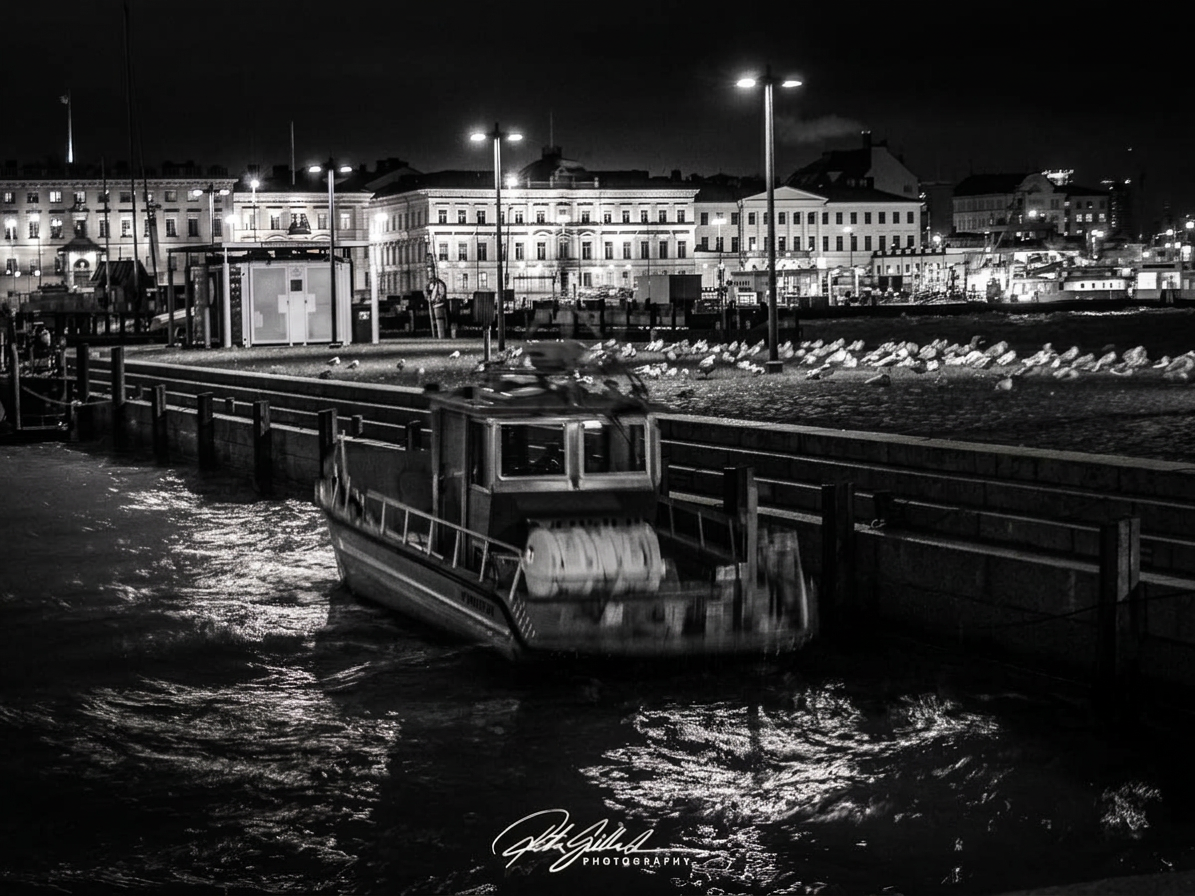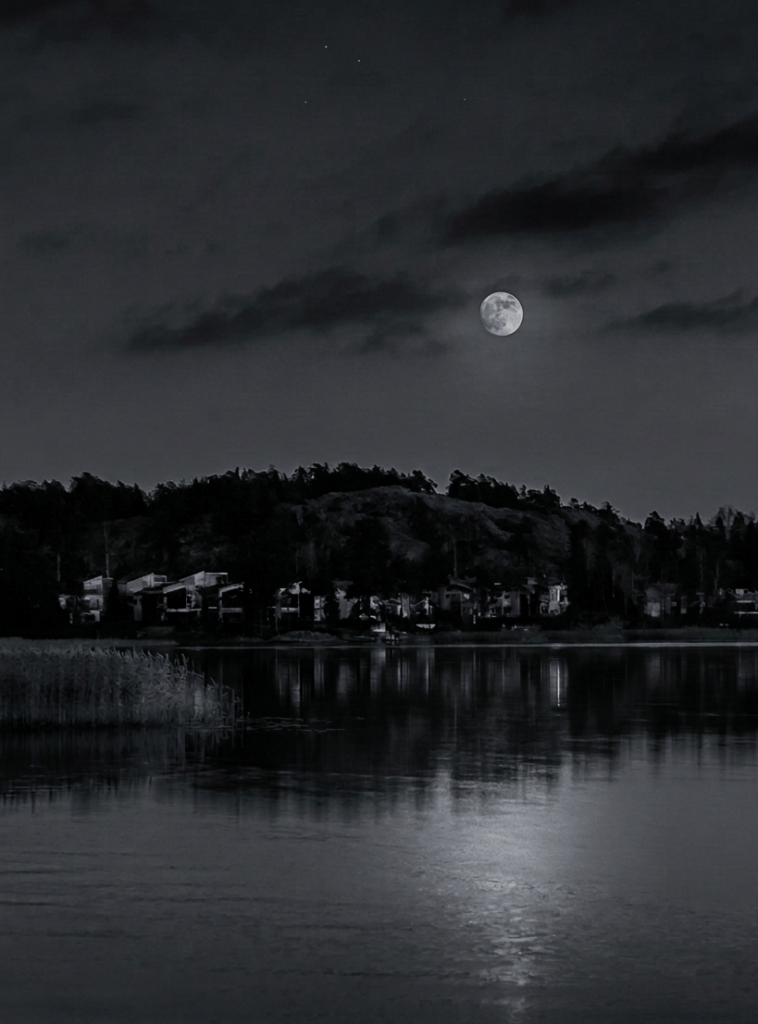
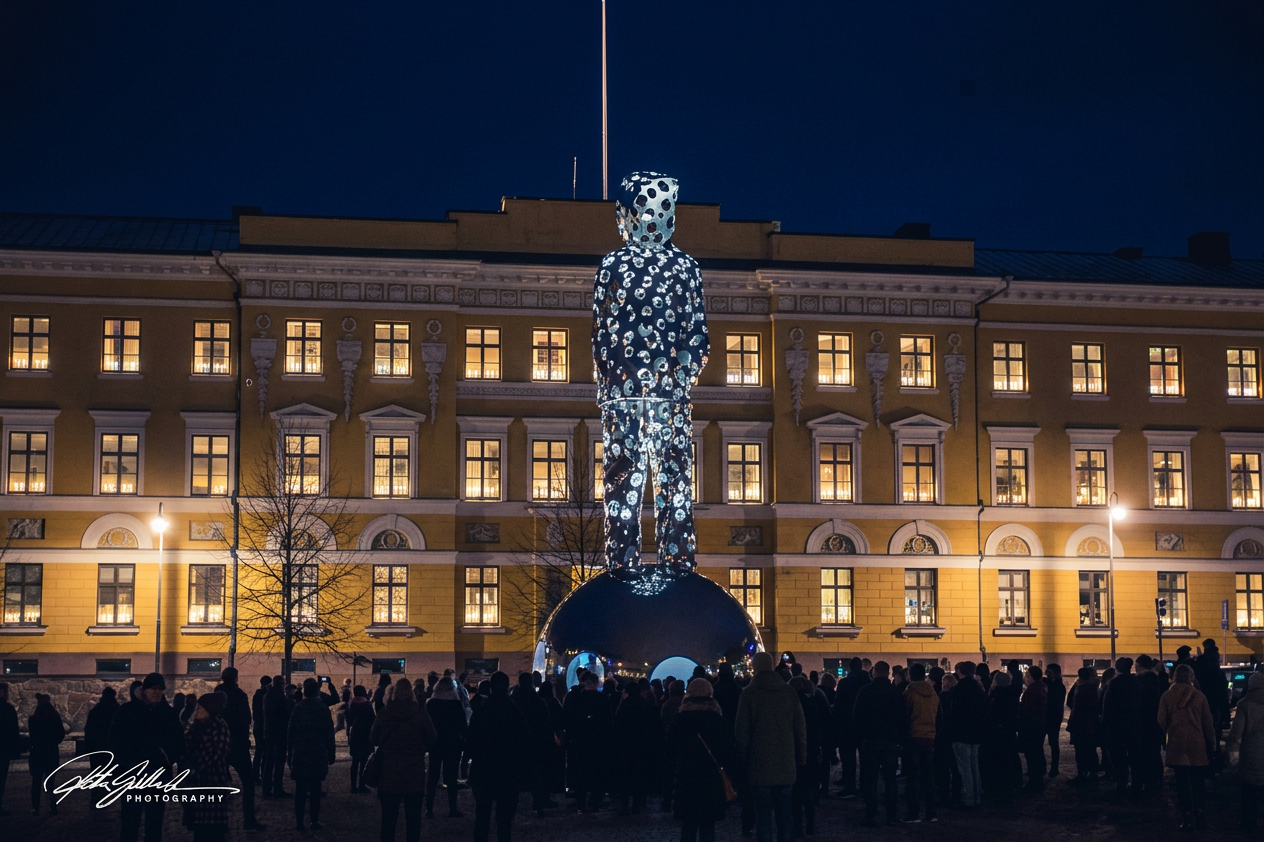
John’s theme is really not my thing, that is obvious as you read on – Monuments. Here is some information about iconic monuments in Helsinki. I haven’t taken any of these photos with the statue as the main subject: the National Memorial to the Winter War shot was to capture the lights of the LUX festival of lights one year, and I photographed poet Johan Ludvig Runeberg because of the seagull on his head. Now I’m sharing suggestions on what to see if you’re interested in monuments in Helsinki.
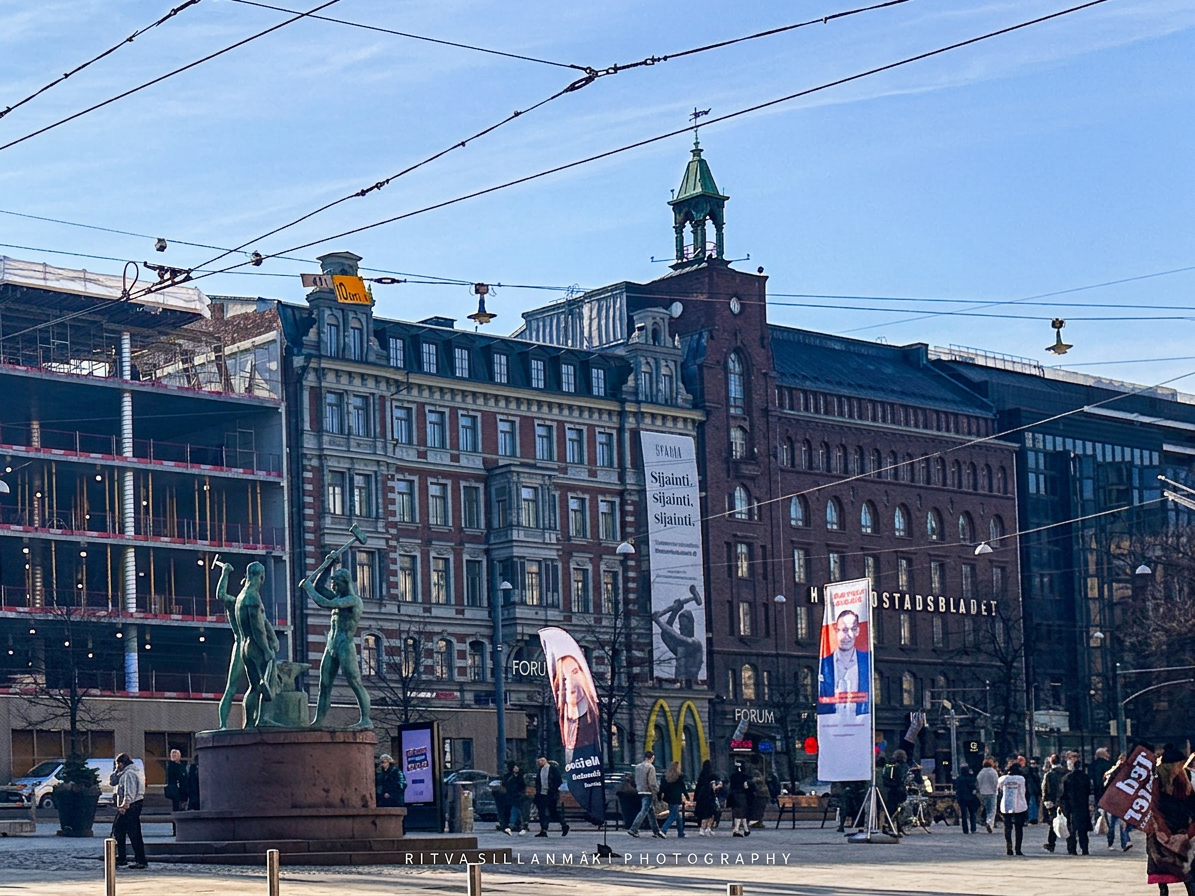
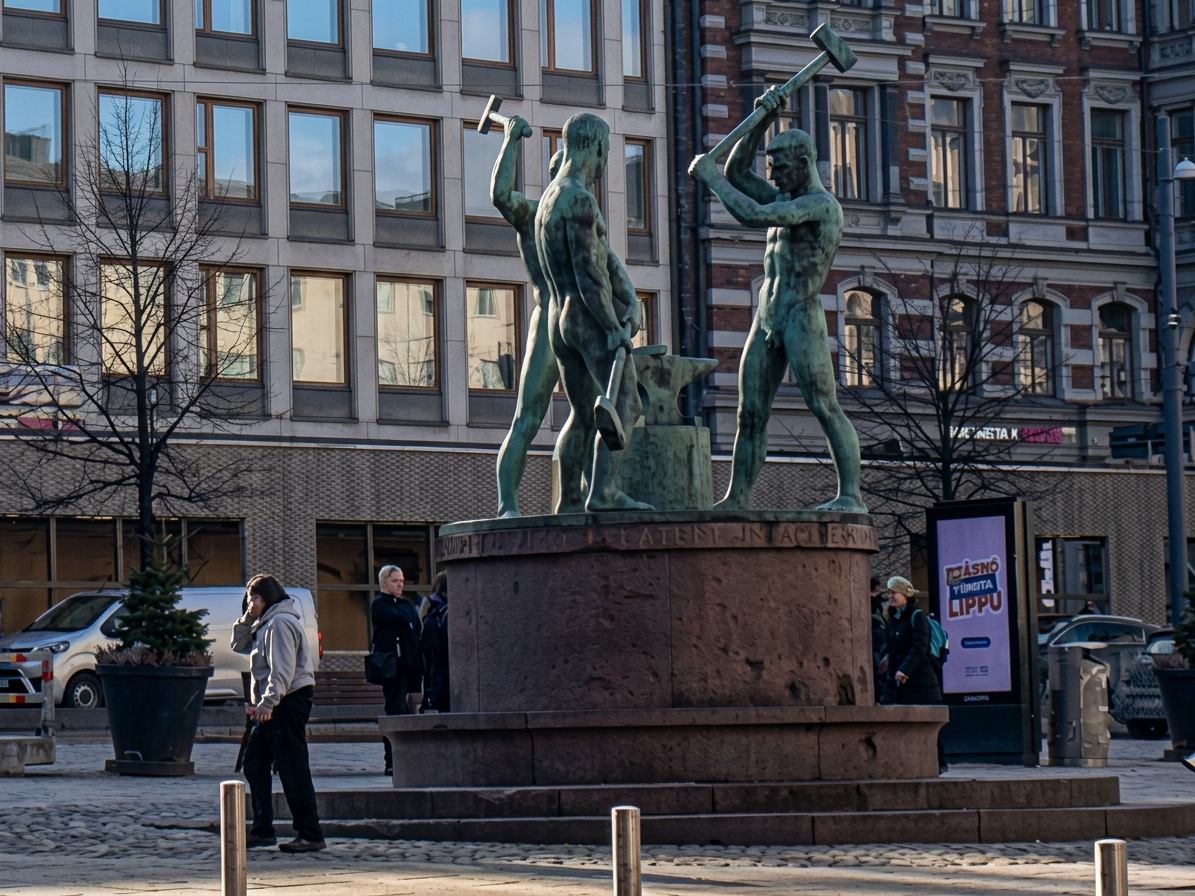
I’ve walked past the Three Smiths Statue (Kolmen sepän patsas) on Kolmensepänaukio in the heart of Helsinki; Felix Nylund’s three blacksmiths hammering on an anvil perfectly capture Finland’s cooperative and hardworking spirit, but I’ve only ever hurried past with my camera still in my bag. I did take a photo of a drummer in front of it, I have shared that with you before. When I really looked at photos of the area on my phone, I found a shot were it is, but it was not intentionally there.
I’ve also seen the Equestrian Statue of Marshal Mannerheim (Marsalkka Mannerheimin ratsastajapatsas) along Mannerheimintie countless times. This massive bronze monument by Aimo Tukiainen, honoring Marshal Carl Gustaf Emil Mannerheim, is such a prominent part of the cityscape, yet I’ve never really paused to frame it thoughtfully through my lens. The Lantern Bearers (Lyhdynkantajat) at the entrance to the Helsinki Central Railway Station are another example; carved from Finnish granite by Emil Wikström in 1914, those four figures holding glowing globes greet me almost every time I pass the station, but I’ve somehow never taken the time to take a shot. I have several shots of the railway station, but not from the front. What is wrong with me?
In front of the Finnish National Theatre on Rautatientori, the Aleksis Kivi Memorial (Aleksis Kiven muistomerkki) by Wäinö Aaltonen has become such a familiar sight that I sometimes forget how significant it is, honoring Finland’s national author—yet I still don’t have a single carefully composed photograph of it. The same is true for Aaltonen’s Paavo Nurmi Statue, a classic bronze sculpture of the legendary Finnish Olympic runner and a powerful symbol of our sports history, which I’ve admired in passing but never photographed.
I’ve driven past the Sibelius Monument (Sibelius-monumentti) in Sibelius Park more times than I can count. This abstract metal sculpture by Eila Hiltunen, with its more than 600 welded hollow steel pipes and the separate bronze bust of Jean Sibelius, has always impressed me, yet I never really stopped to photograph it properly.
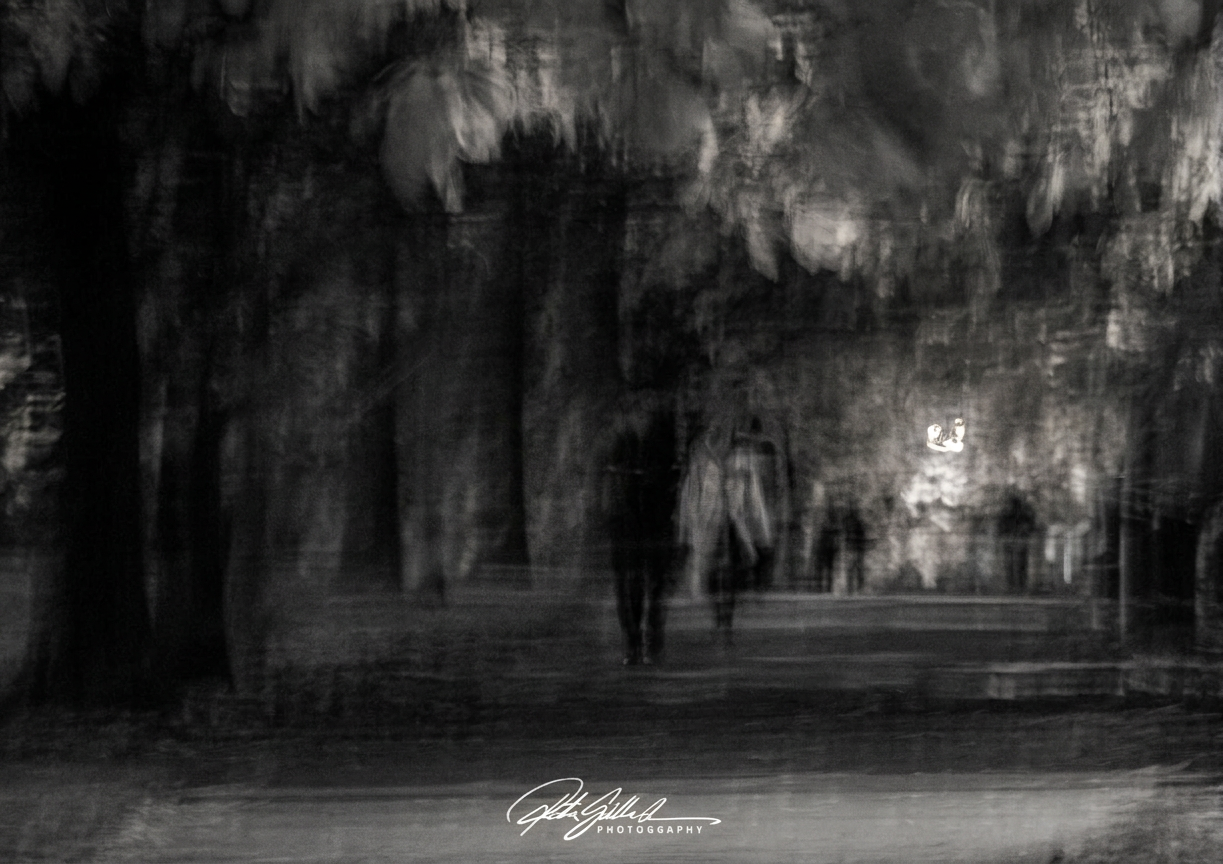
This may come as a surprise, but I actually took this shot of the National Memorial to the Winter War at Kasarmitori. It’s a contemporary memorial to the soldiers and citizens who defended Finland during the Winter War of 1939–1940, and I remember standing there quietly, reflecting on its meaning before finally deciding to turn that moment into a photograph. And I took it in during night time as it was nicely lit.
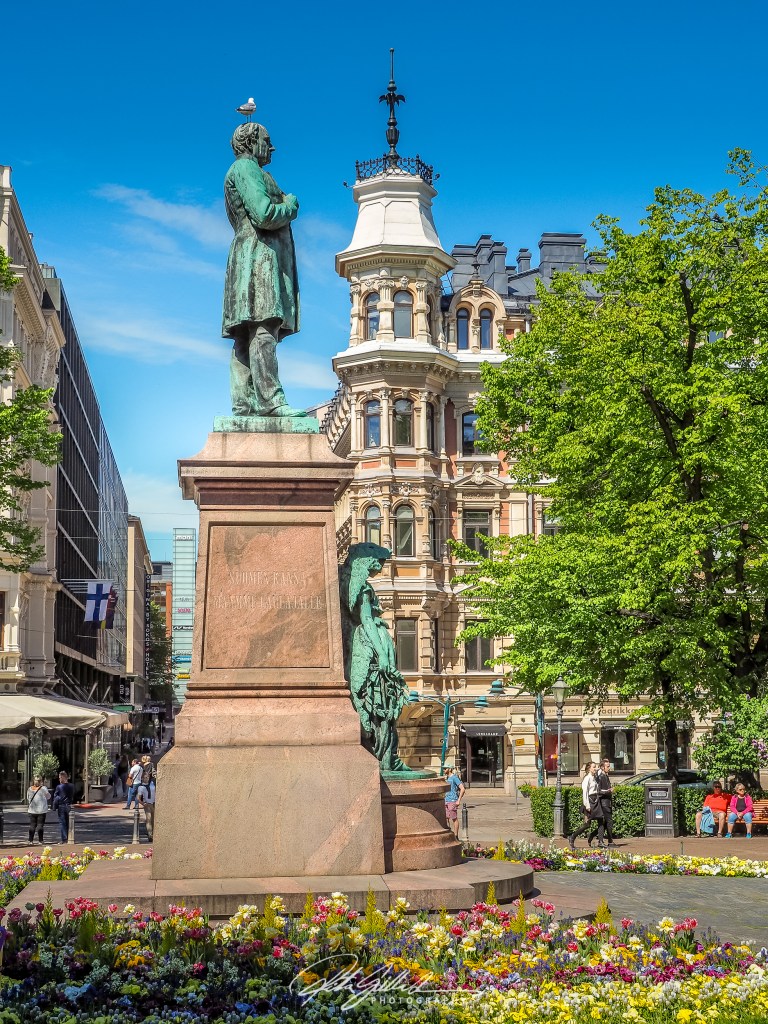
I’ve photographed this one from the side, but I’m counting it anyway: the statue of our national poet, Johan Ludvig Runeberg. Sculptor was Walter Runeberg (the writer’s son). First revealed to the public: 1885. Located in Esplanadi Park, Helsinki. The pedestal carries the proud inscription “The Finnish people to the singer of our national anthem”, accompanied by an allegorical figure of the Finnish Maiden, watching over the park.
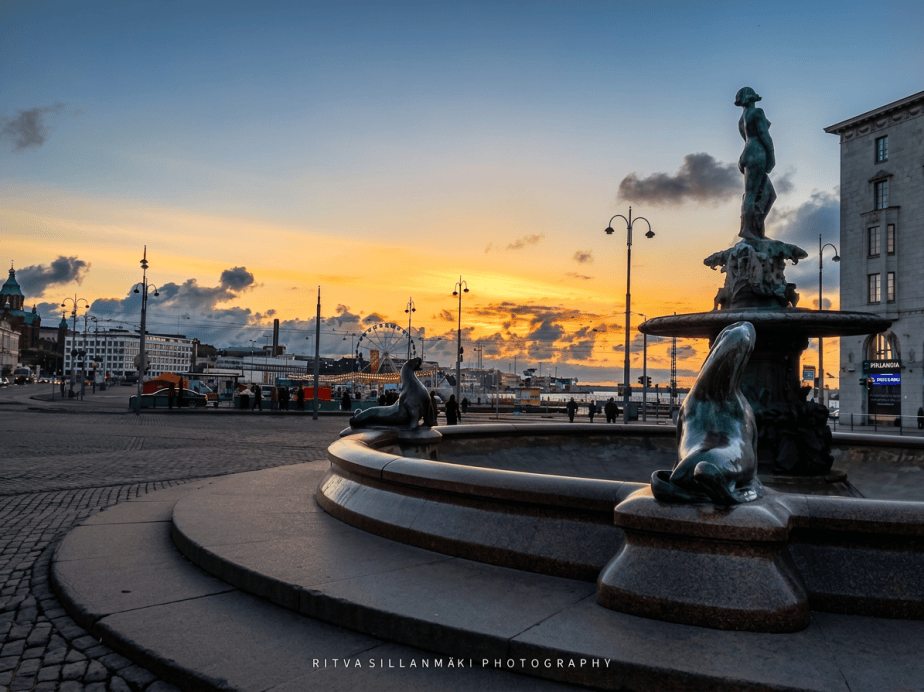
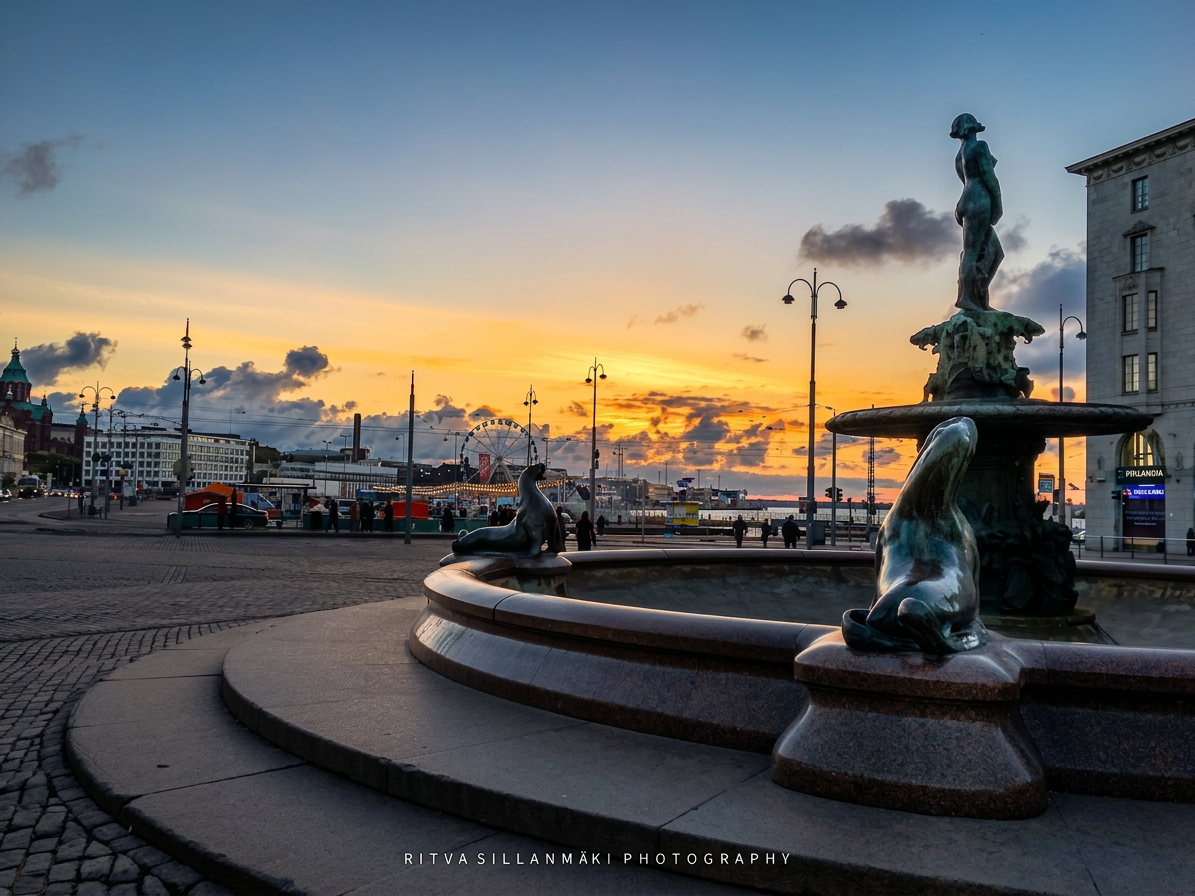
This statue’s really just in the frame to help shape the shot—what I’m actually looking here at the sunrise on my way to work several years back. The photo shows the famous Havis Amanda fountain, located next to the Market Square (Kauppatori) in downtown Helsinki. Affectionately known by locals as “Manta”, the statue is the absolute focal point of the city’s annual Vappu (May Day) celebrations, during which university students ceremonially wash the statue and crown it with a giant student cap. Sculpted by the prominent Finnish artist Ville Vallgren in Paris in 1906, it was unveiled at its current site in 1908. The central bronze figure depicts a nude sea nymph or mermaid rising from the water, which Vallgren designed to symbolize the rebirth and growth of Helsinki rising from the sea. The granite fountain base features four decorative sea lions spraying water.
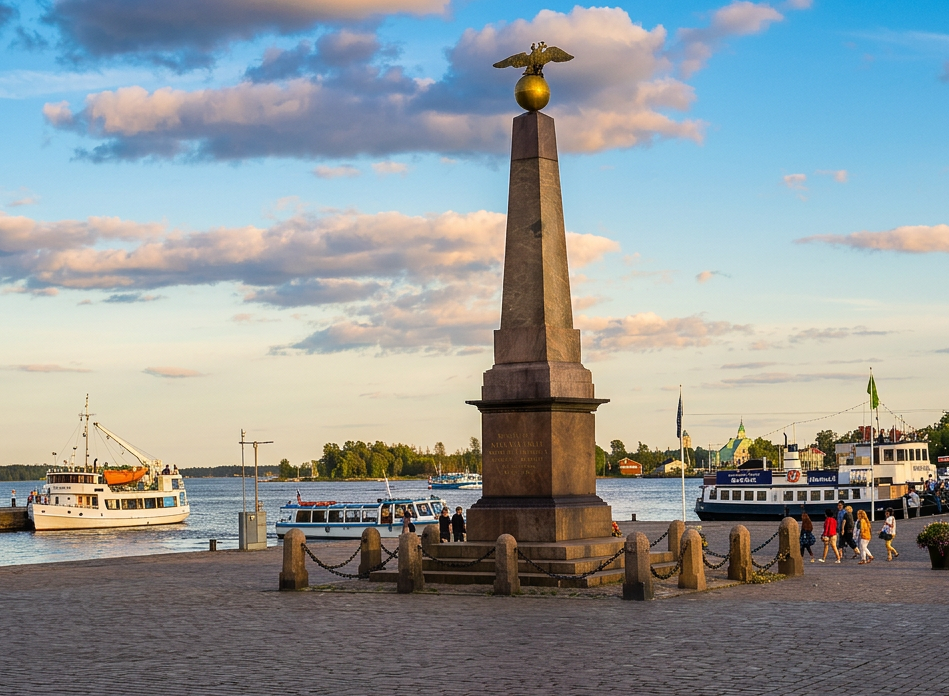
It is the oldest public monument in Helsinki, erected in 1835. It stands directly by the waterfront at the Market Square, looking out towards the harbor where several passenger ferries and sightseeing waterbuses dock. It was designed by the famous architect Carl Ludvig Engel to commemorate Empress Alexandra Feodorovna’s (the wife of Tsar Nicholas I) first visit to the city. The monument consists of a red granite obelisk topped with a gilded bronze globe and a double-headed eagle, which was the symbol of imperial Russia.
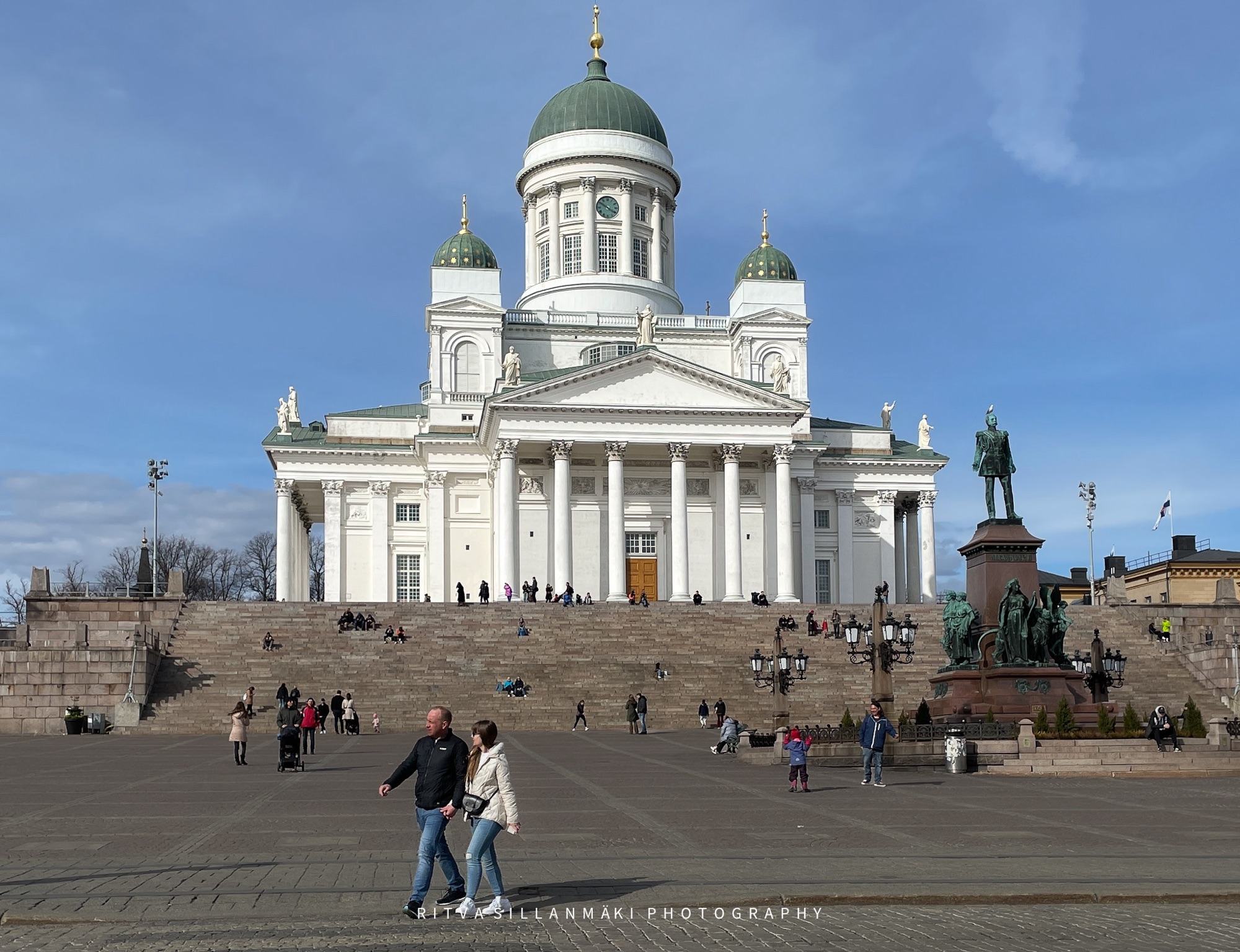
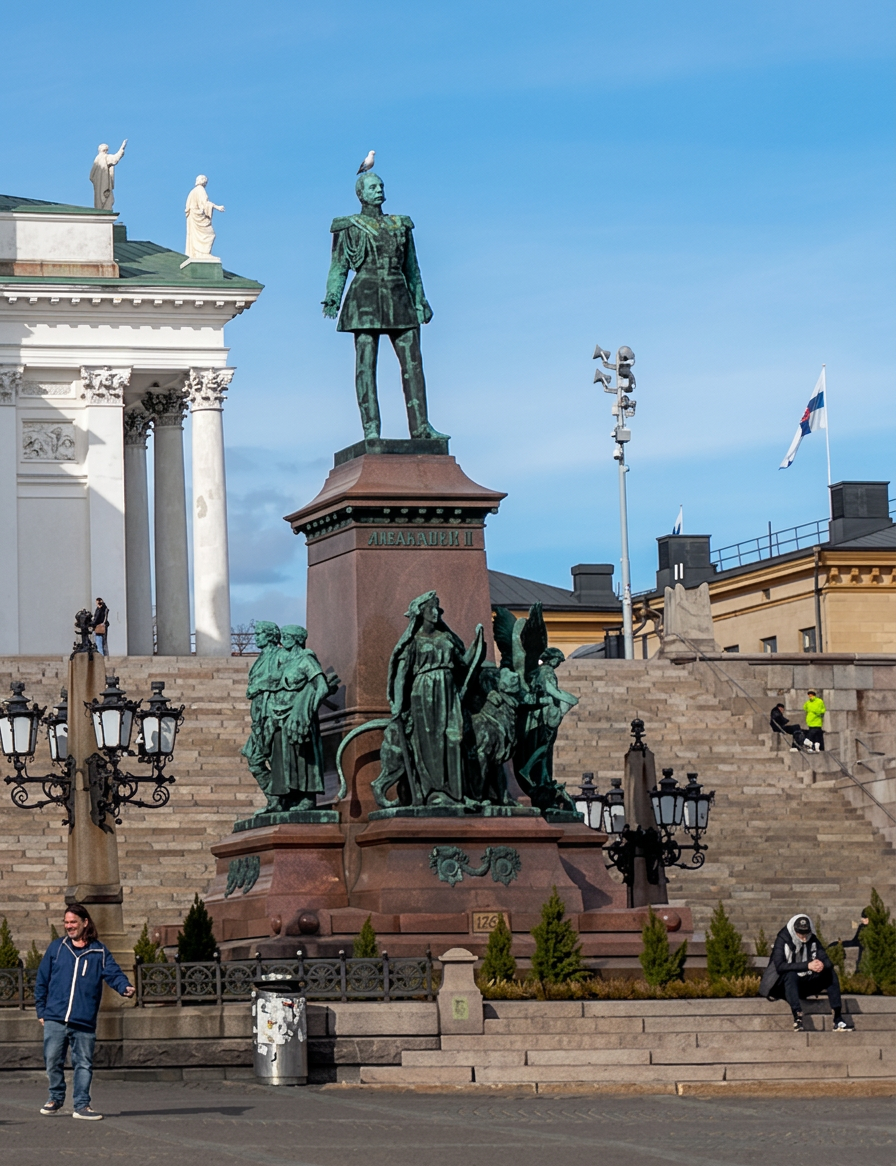
The images show Helsinki Cathedral and the Senate Square in front of it, as well as the the main statue statue of Emperor Alexander II, the Russian emperor who was also Grand Duke of Finland. He’s shown in the uniform of a Finnish Guards officer, right in the middle of giving a speech to the Diet of Finland back in 1863. The monument was put up in 1894 to thank him for the freedoms he brought to Finland—things like more cultural and political autonomy, raising the status of the Finnish language, and even introducing the Finnish markka as its own currency. The red granite base is one of my favorite parts: around it you’ll see four smaller figures that each stand for something important in society—Law (Lex, shown as the Maiden of Finland wearing a bearskin and with her lion), Work (Labor), Peace (Pax), and Light or Science (Lux).
What really struck me, knowing the history, is how this statue later became a quiet symbol of resistance. During the harsh Russification policies under Nicholas II from 1899 onward, people would gather here and lay wreaths and flowers at Alexander II’s feet to remind everyone of the more liberal reforms his grandfather had brought to Finland.
I’ve chosen six site’s in Helsinki that show some of our statues. Now it’s your turn — Be sure to link to to Johns post in the the comments section and tag your entry with “Lens-Artists” so we can find it.
Last week, Tina’s challenge had many of us wandering down memory lane together. Next week it’s Sofia’s turn to lead us on, and you can follow along here so you don’t miss her challenge when it goes live on Saturday, October 31, at noon Eastern Time.
Until then, let’s keep exploring, broadening our horizons, and maintaining a positive mindset
You can keep up with all of our challenges by subscribing to the Lens-Artists team members websites: Tina, Patti, Ann-Christine, John, Sofia, Anne, Egidio, Beth, Ritva.
For information on how to join the Lens-Artists challenge please click here.