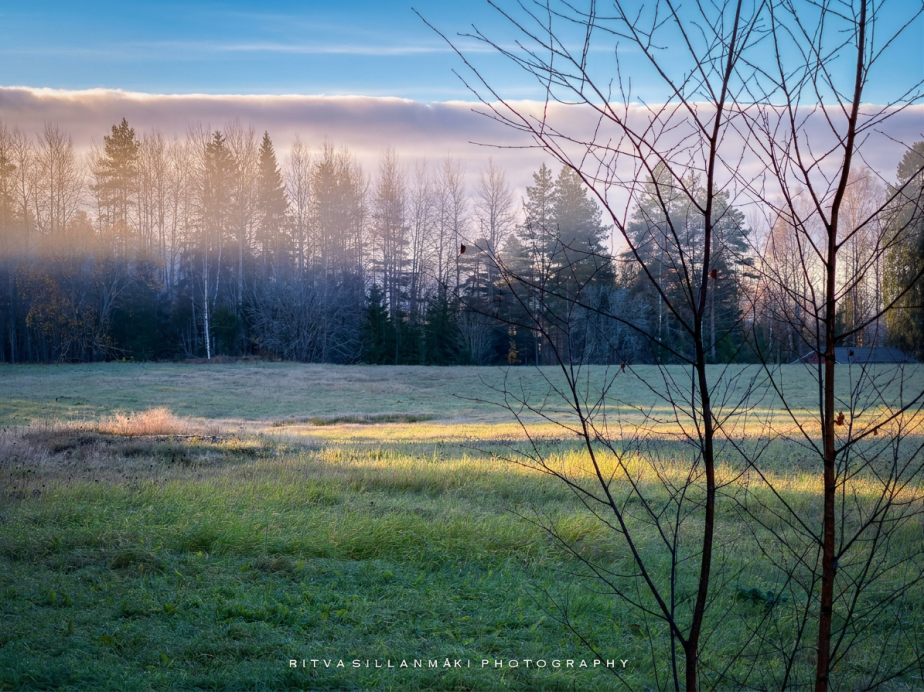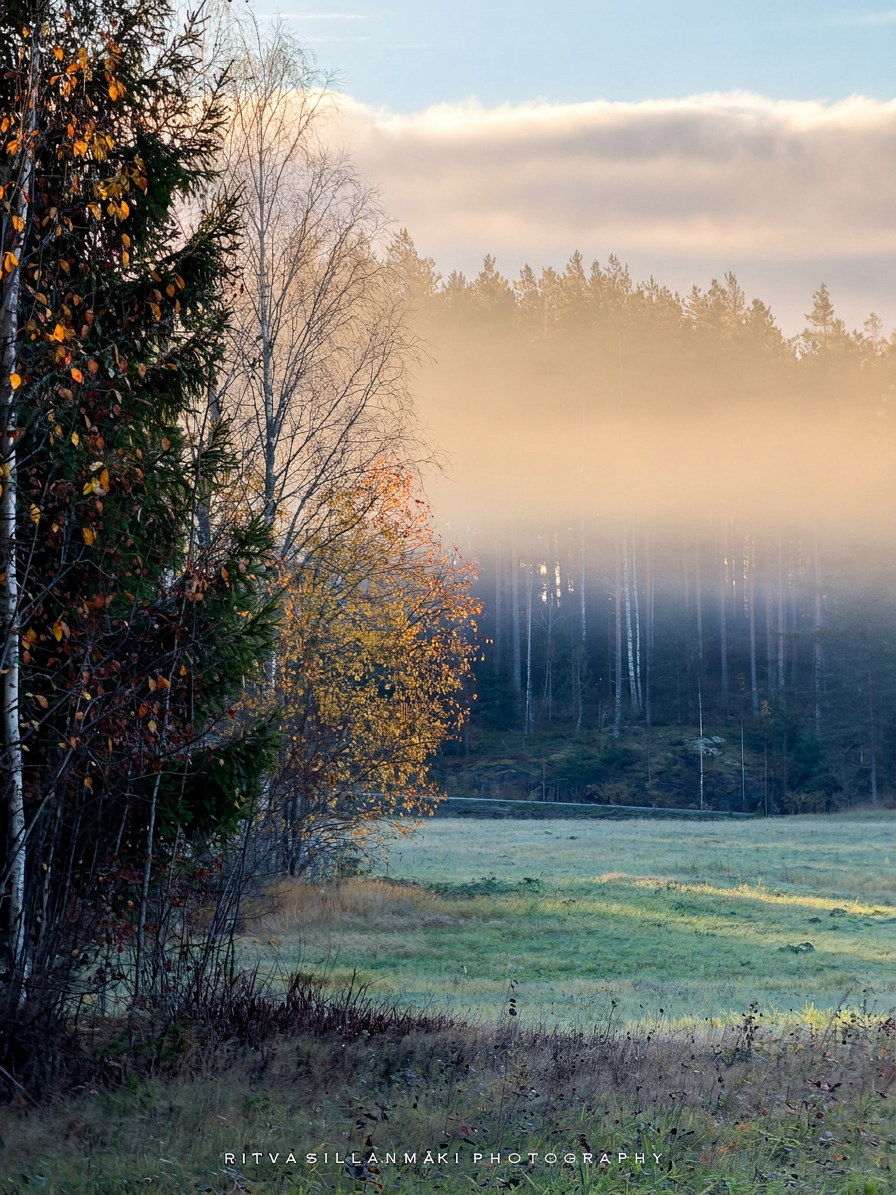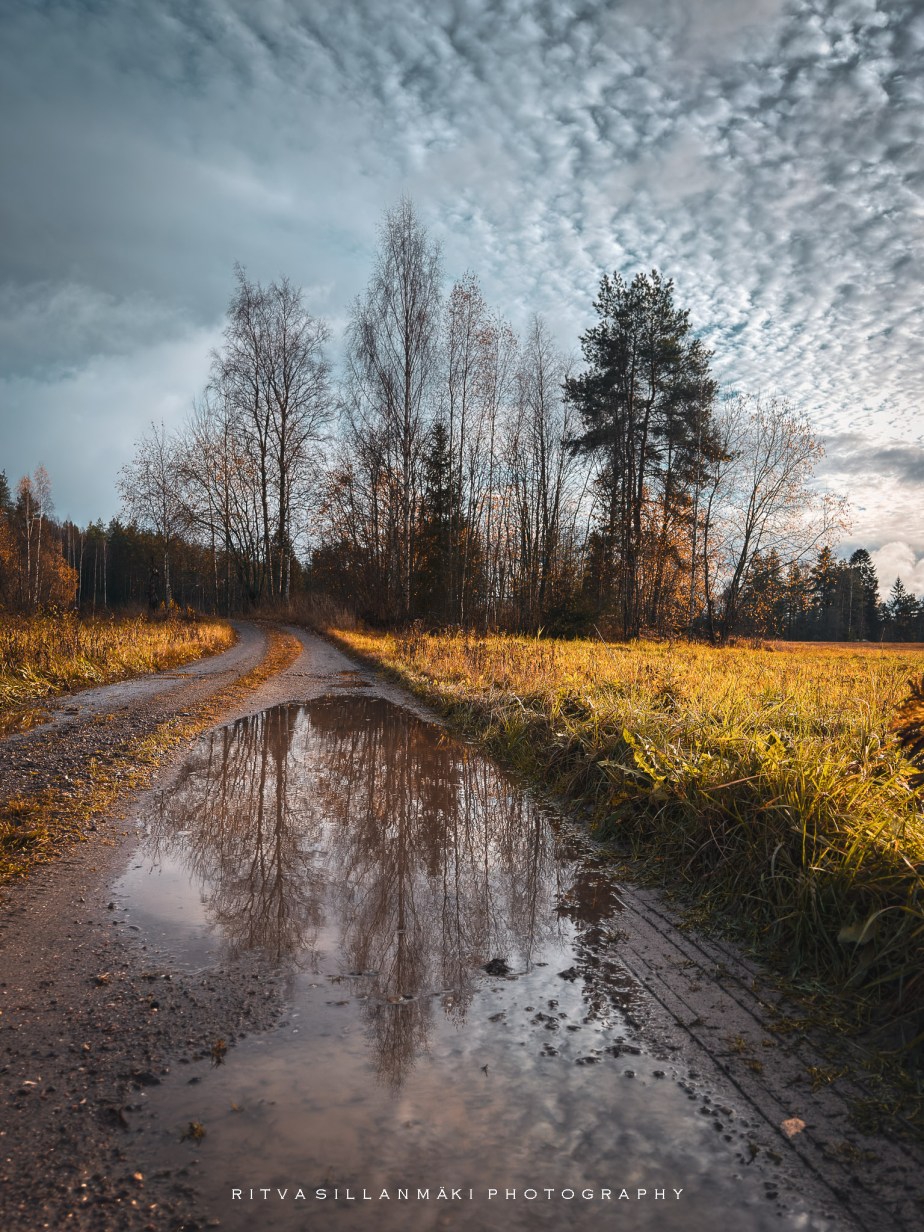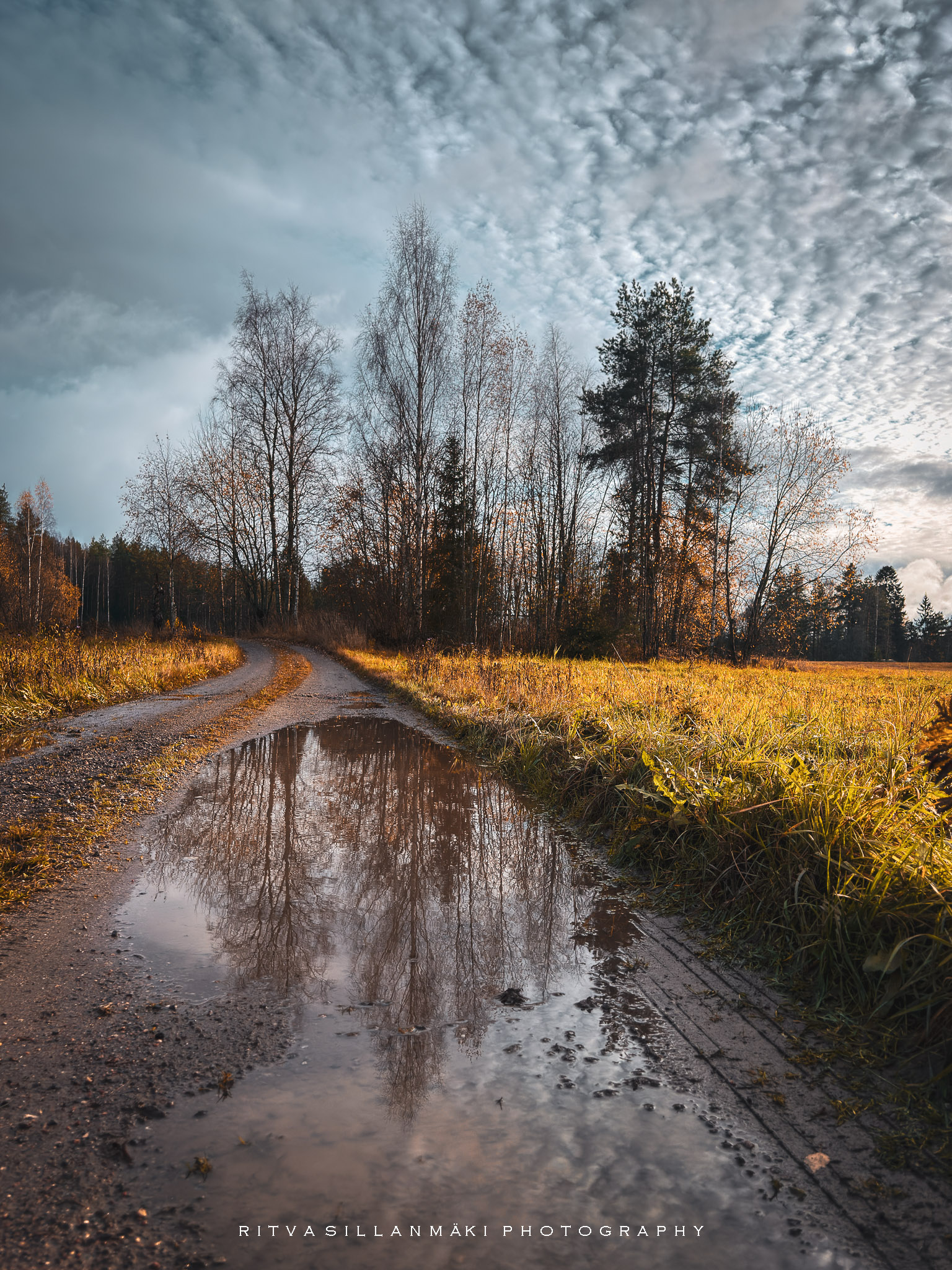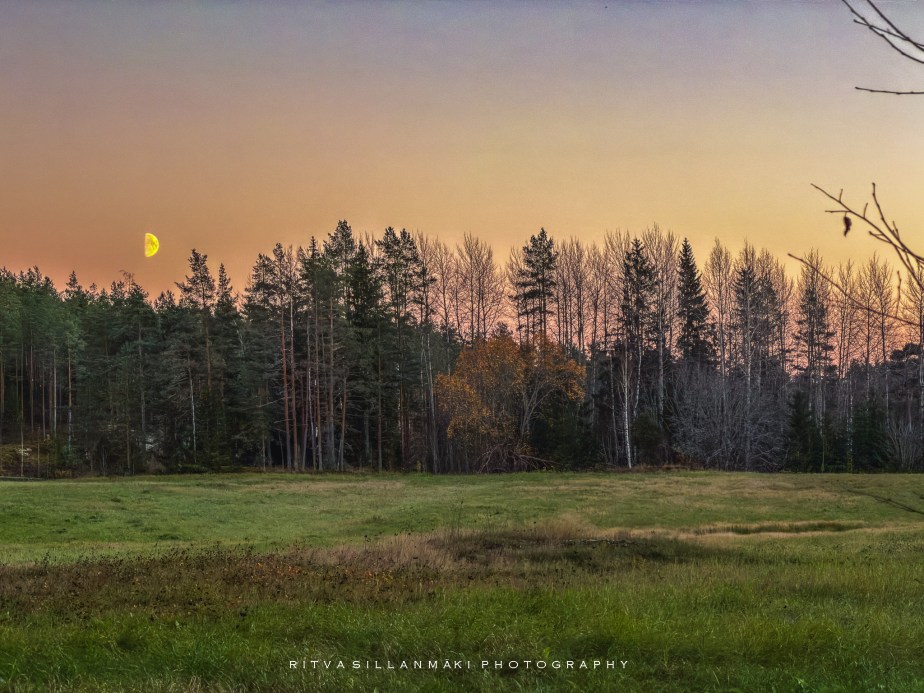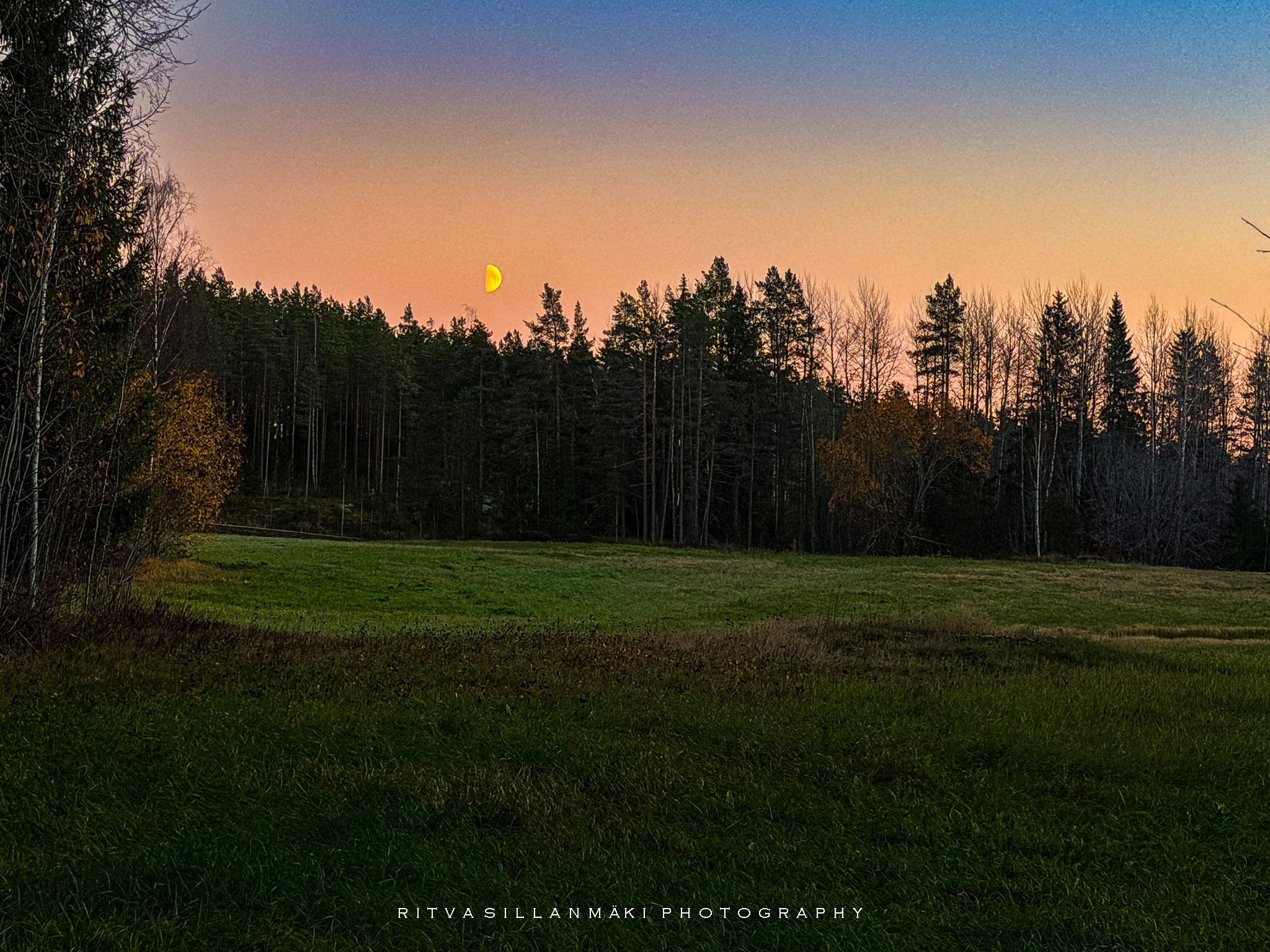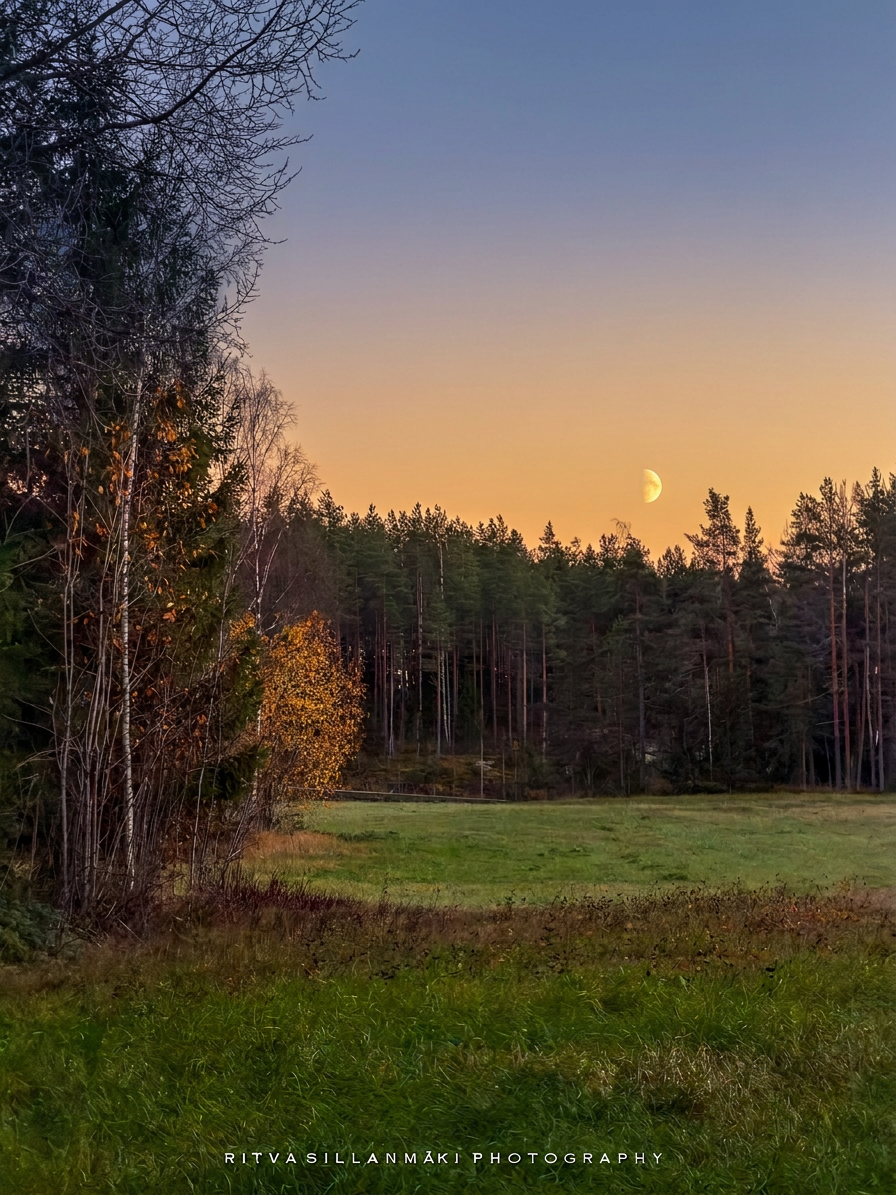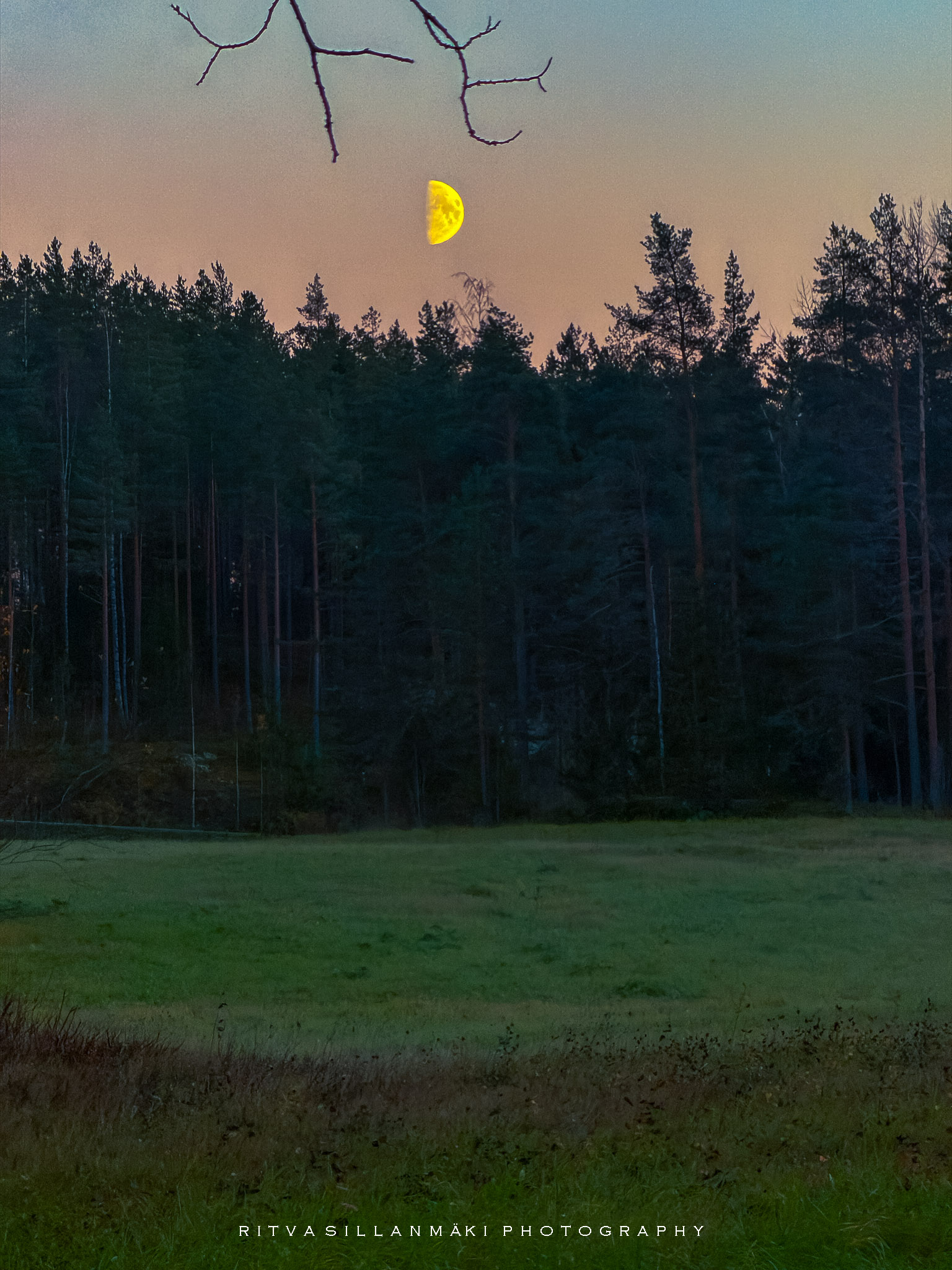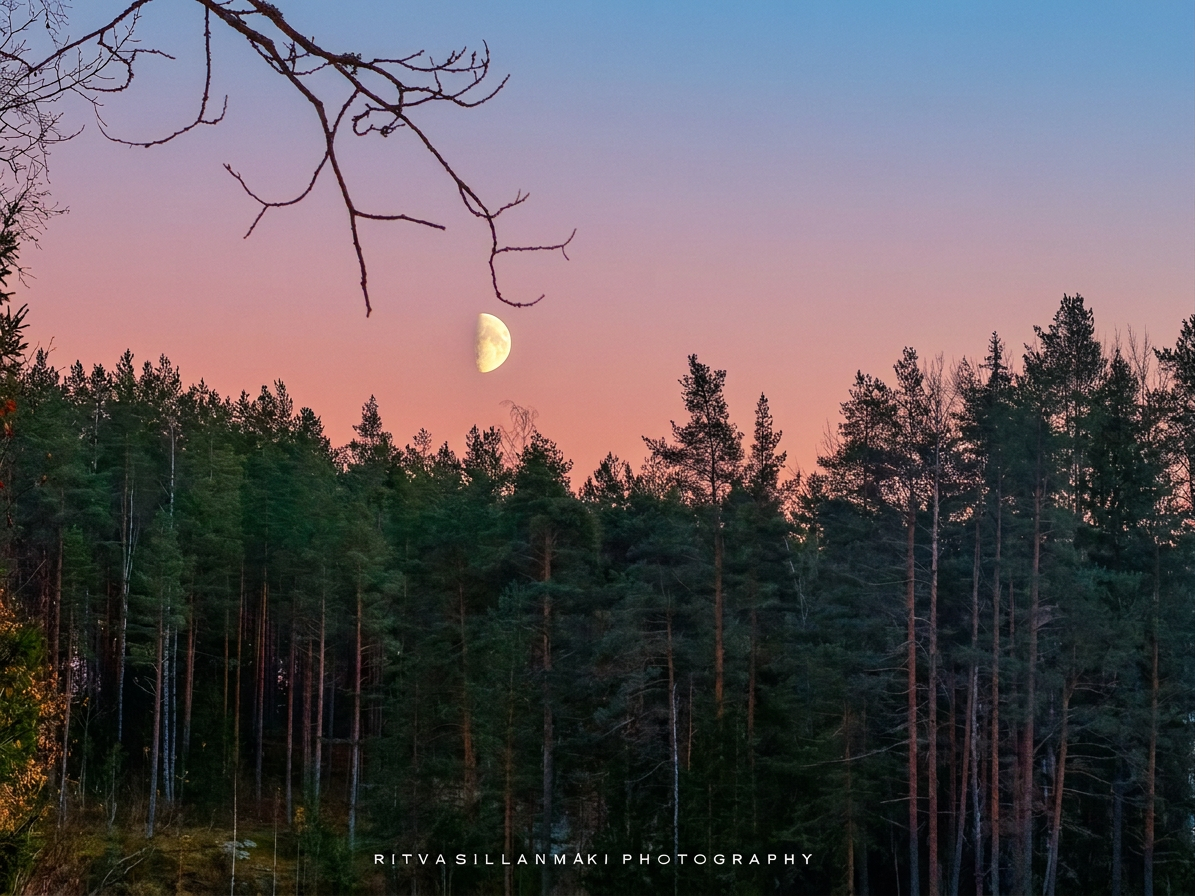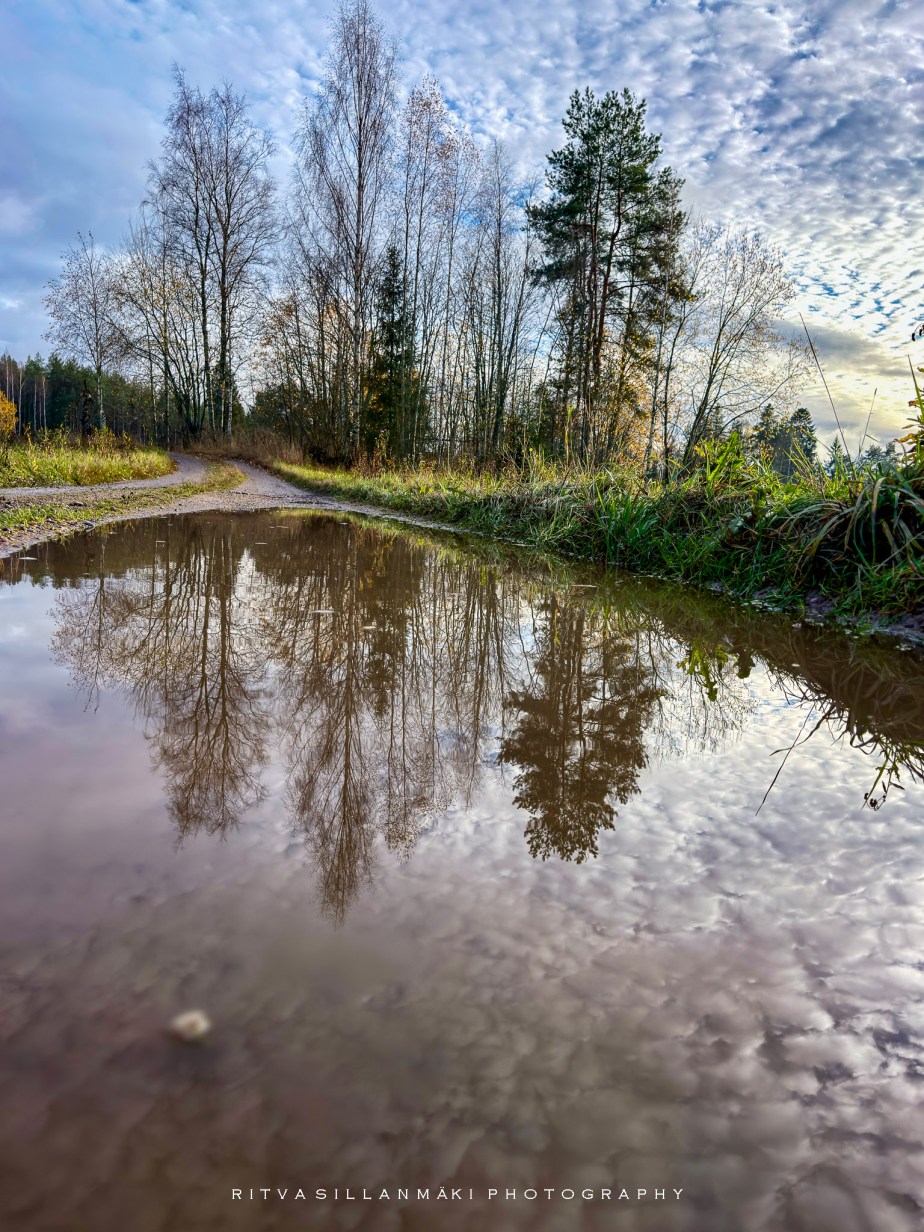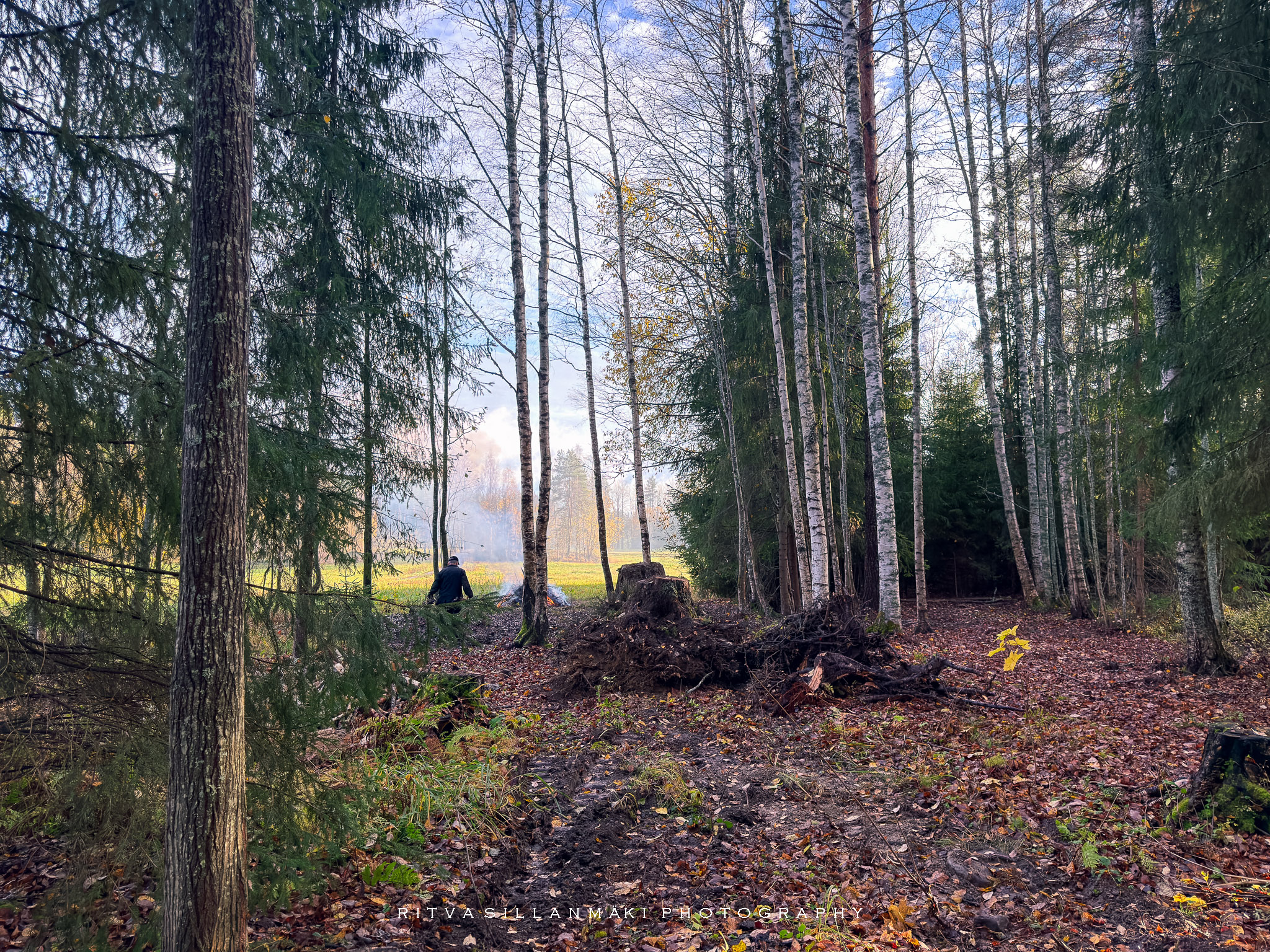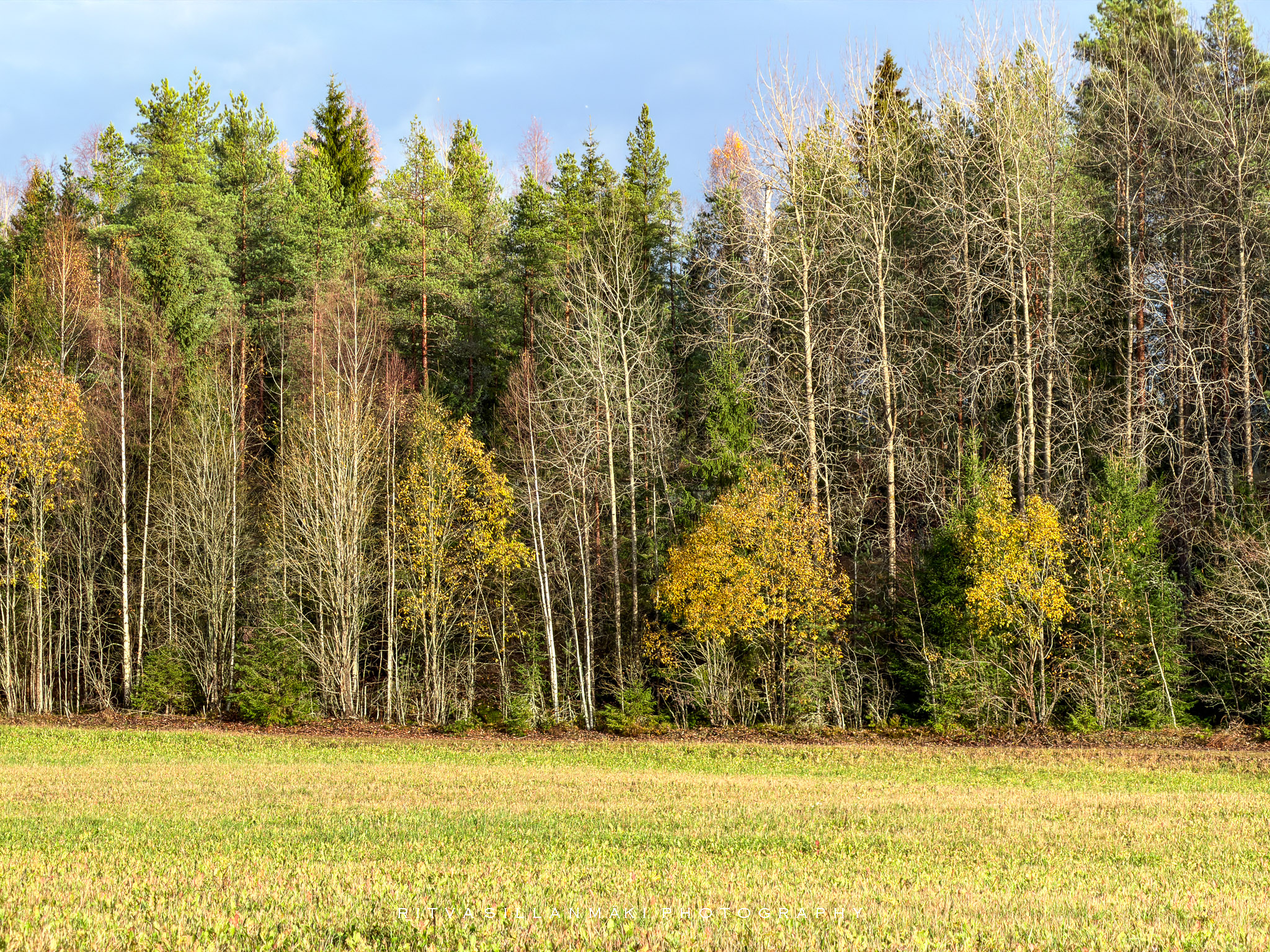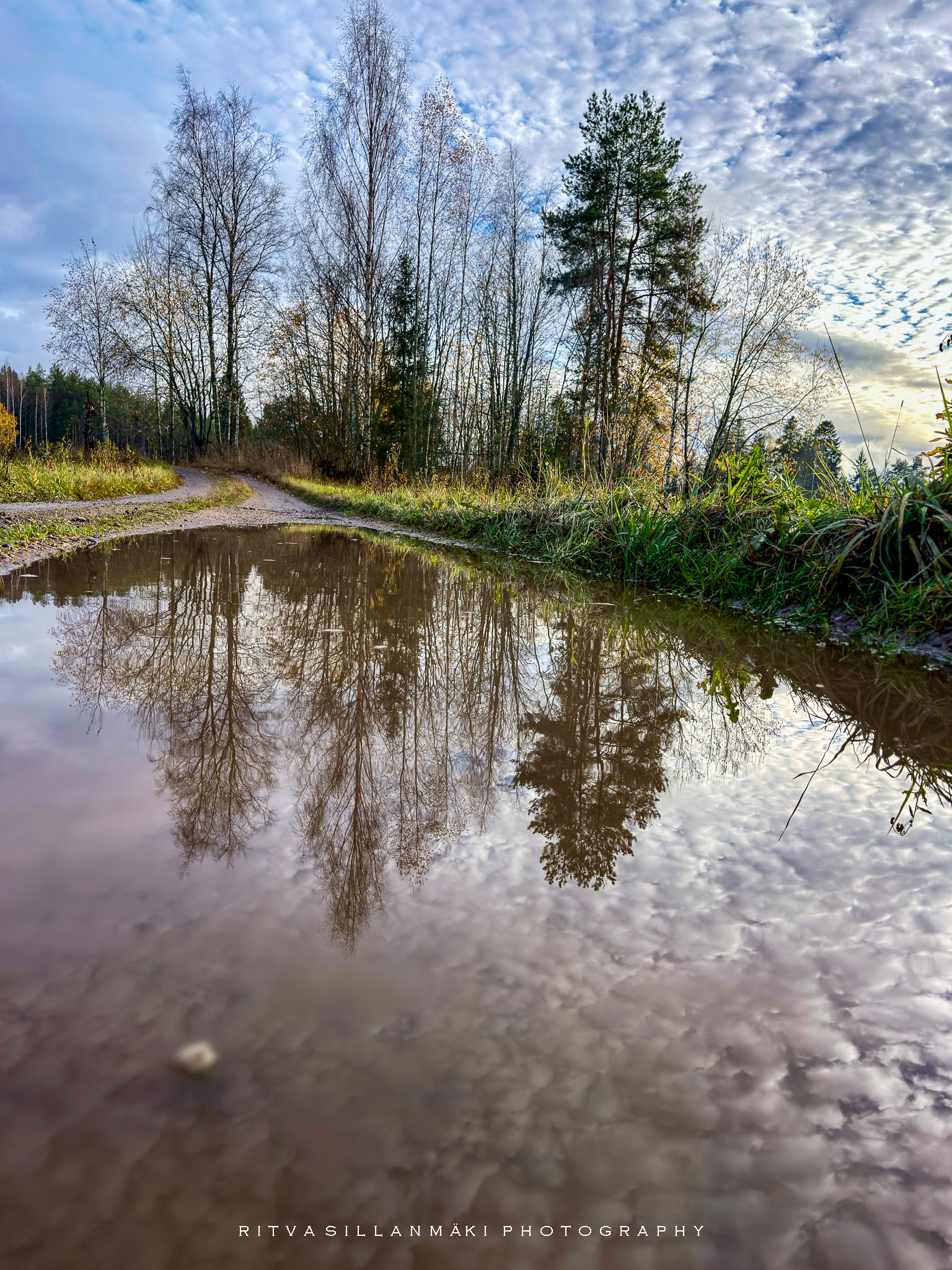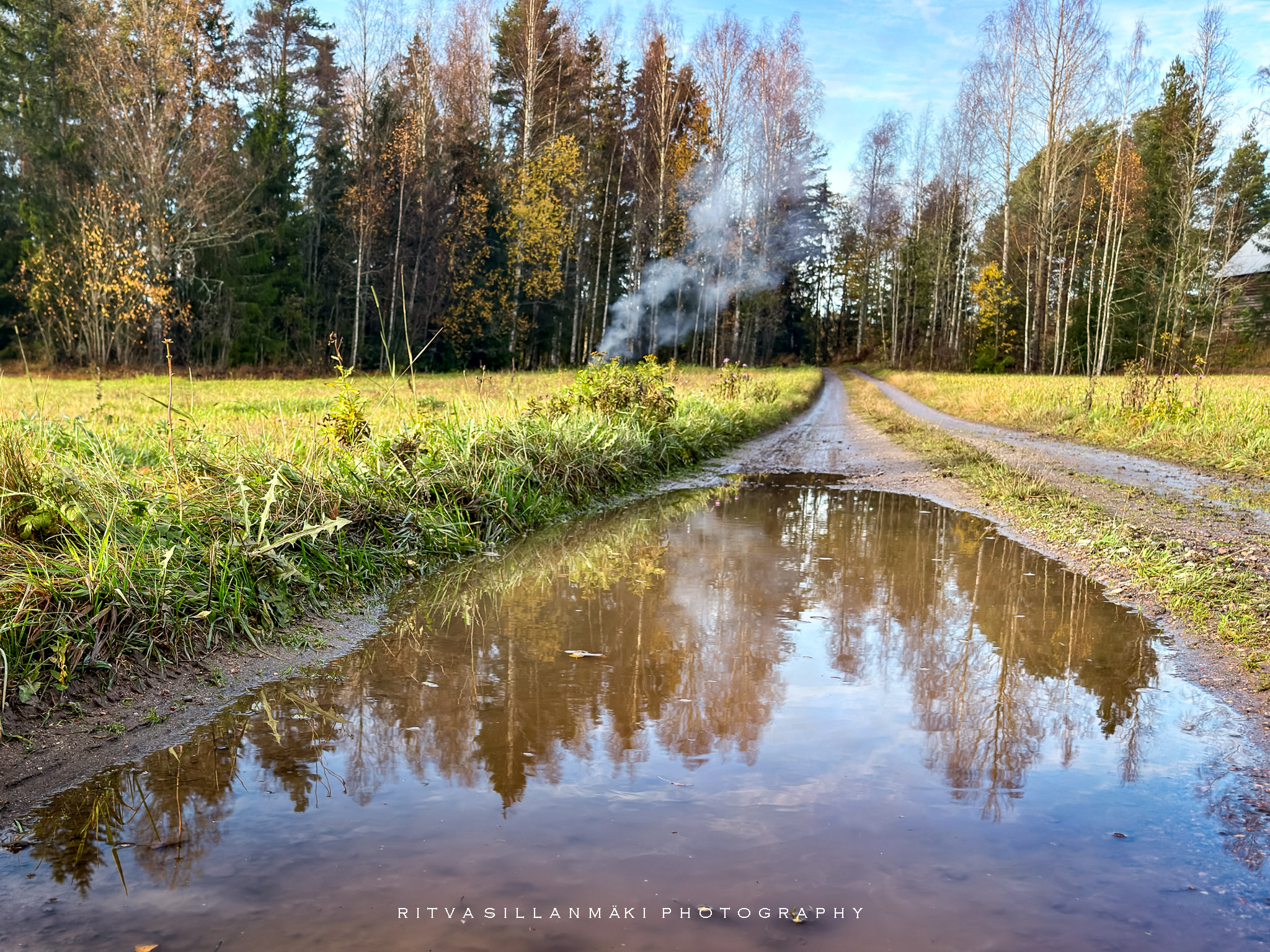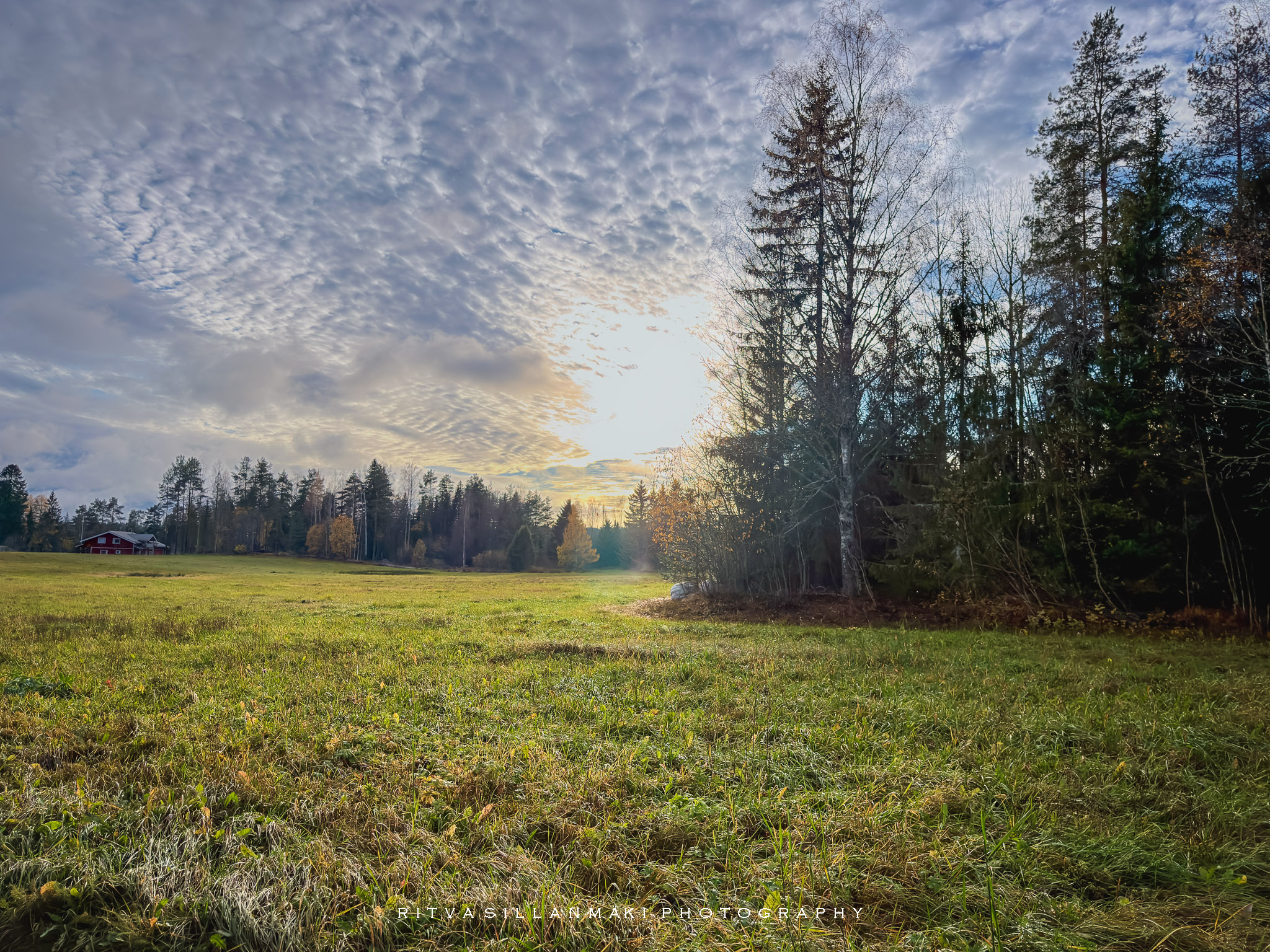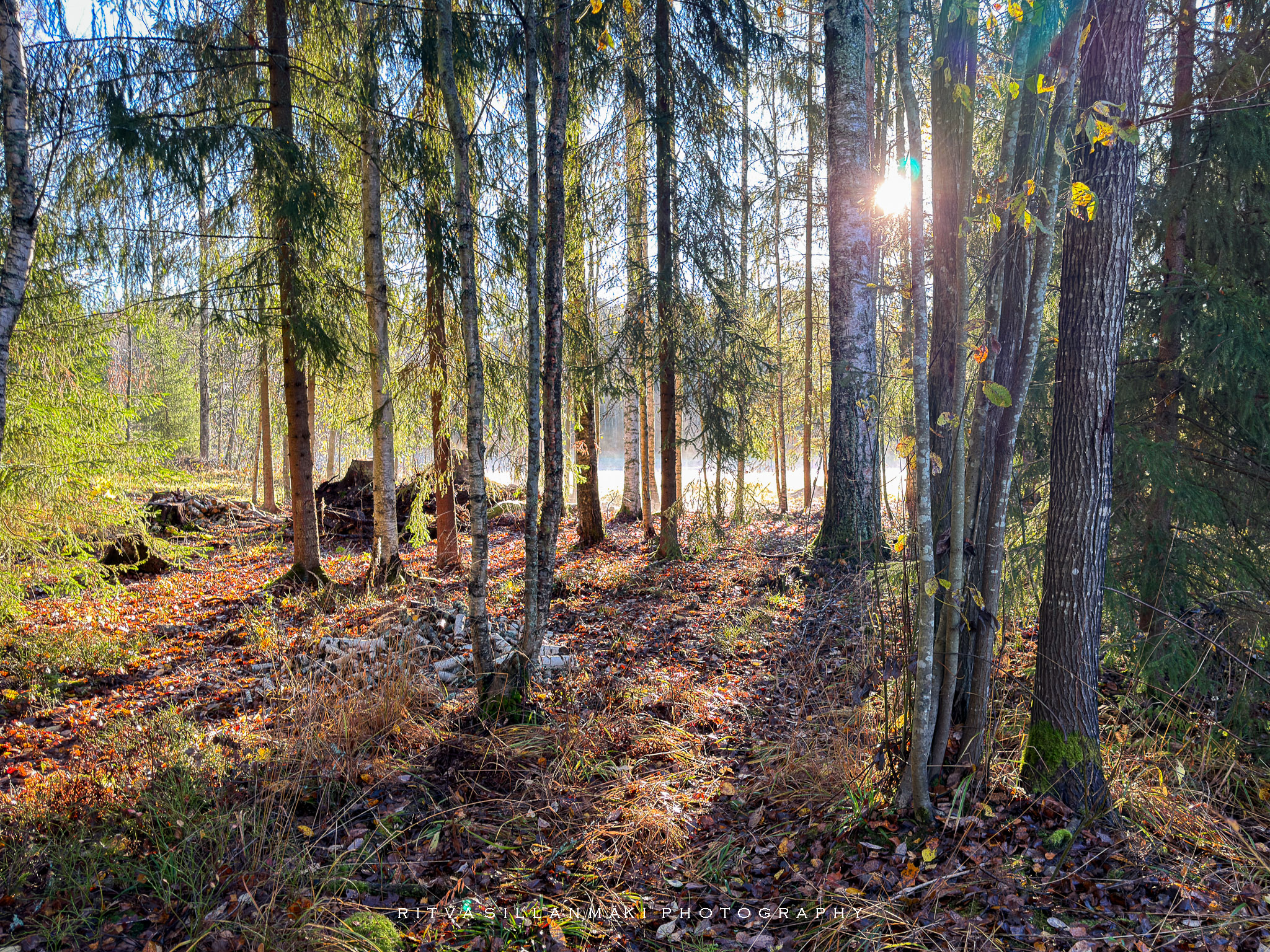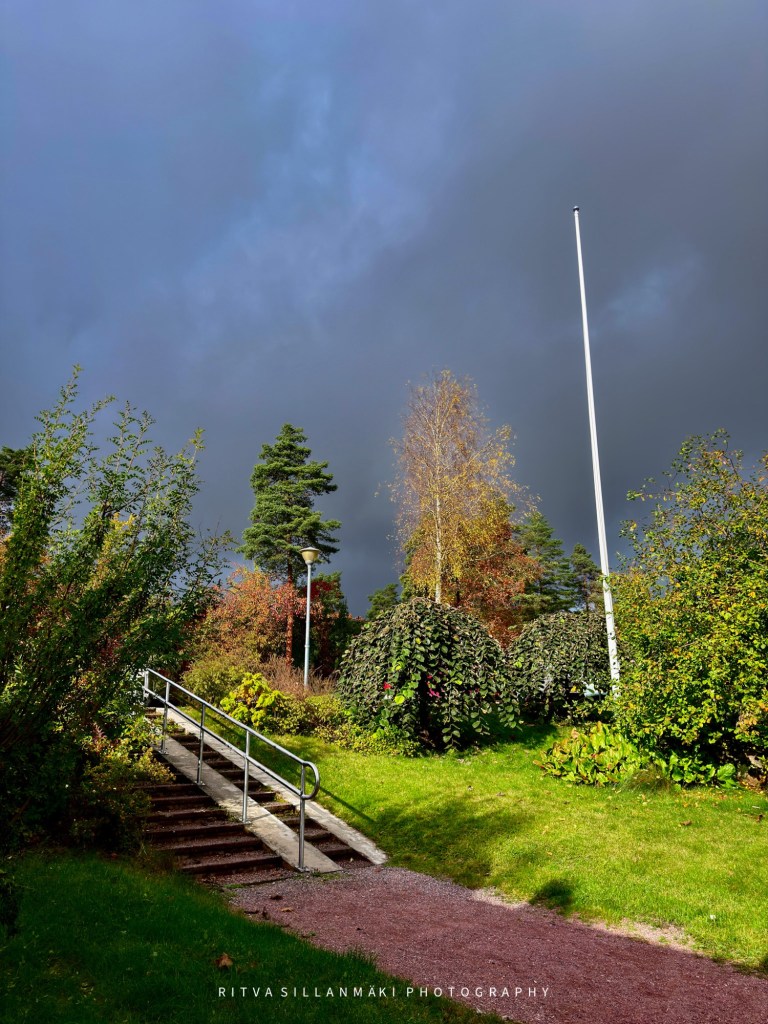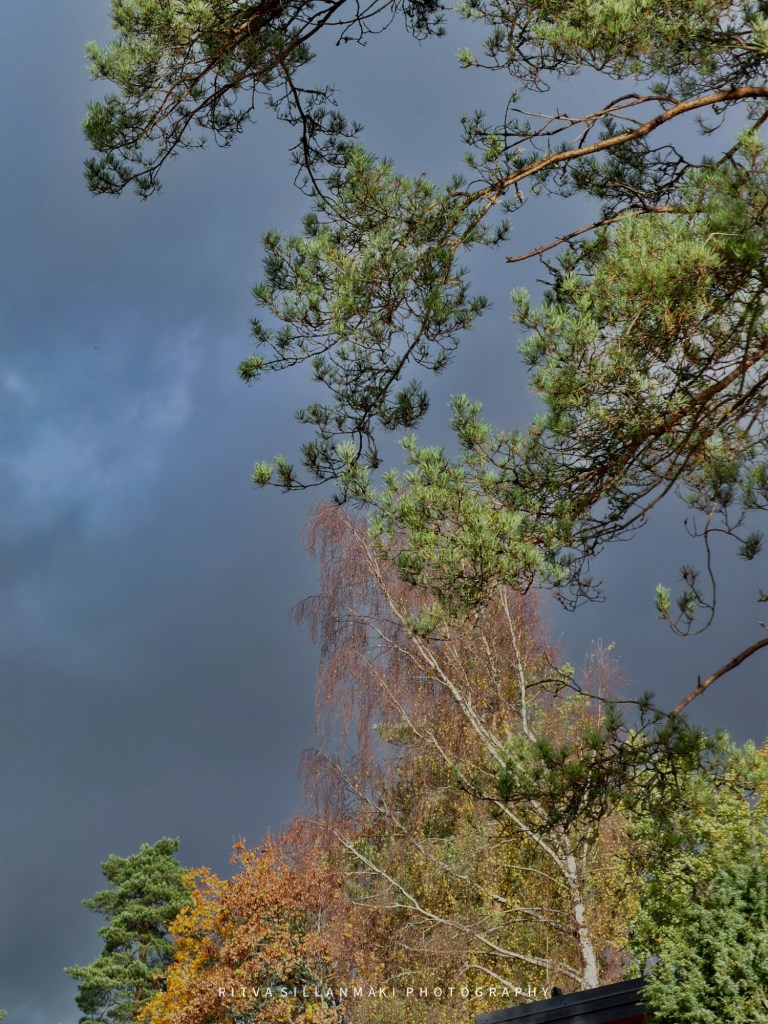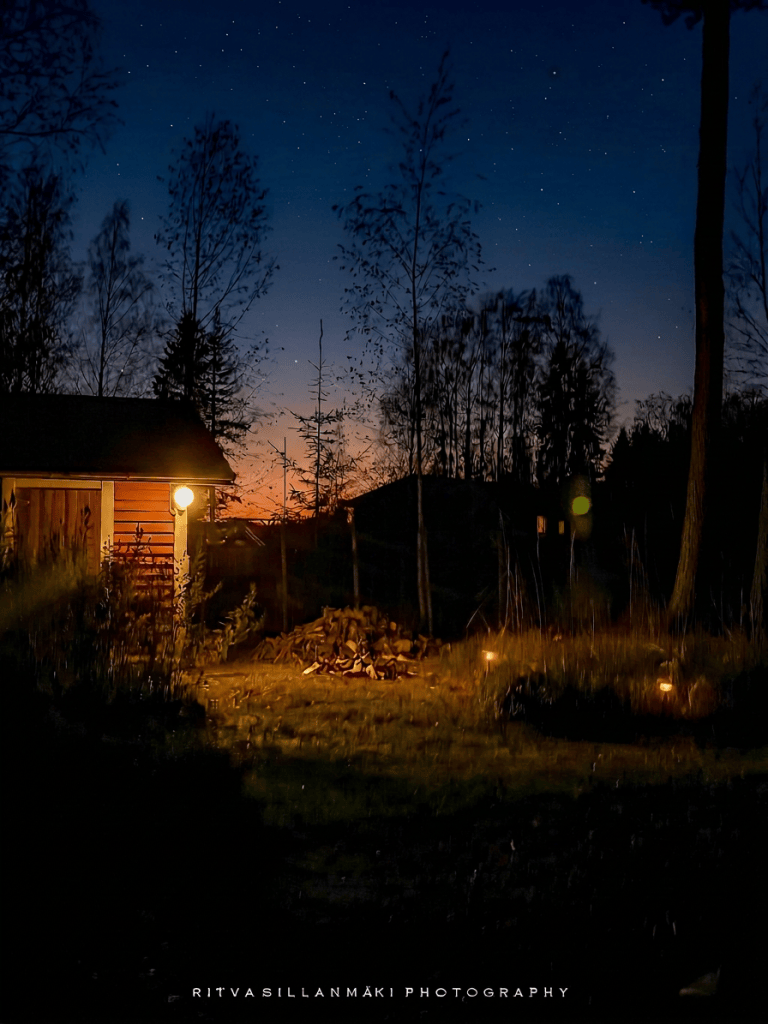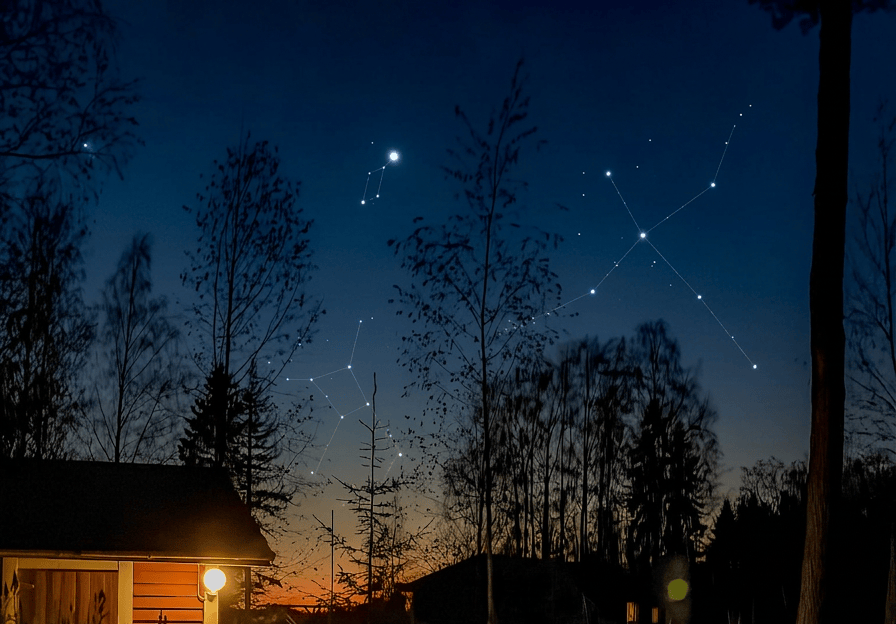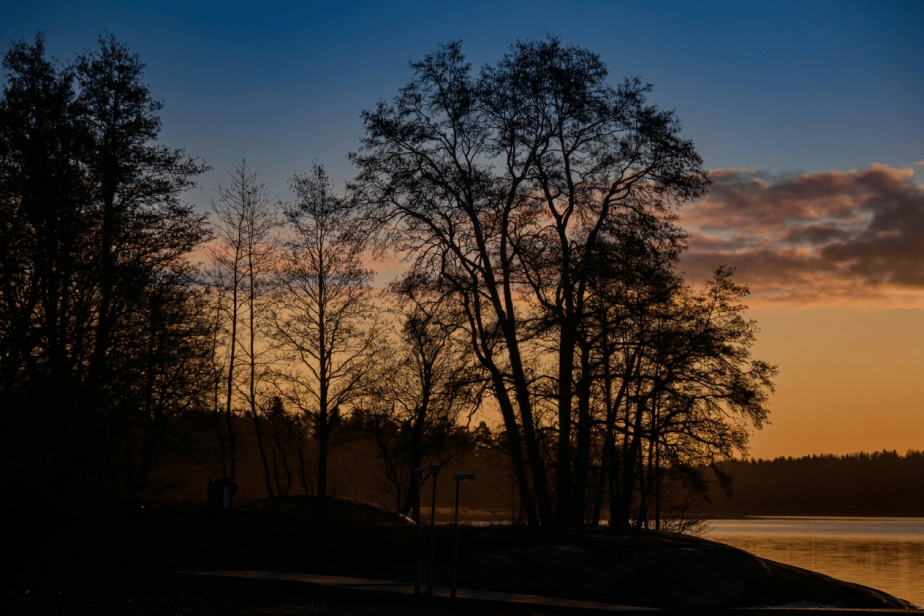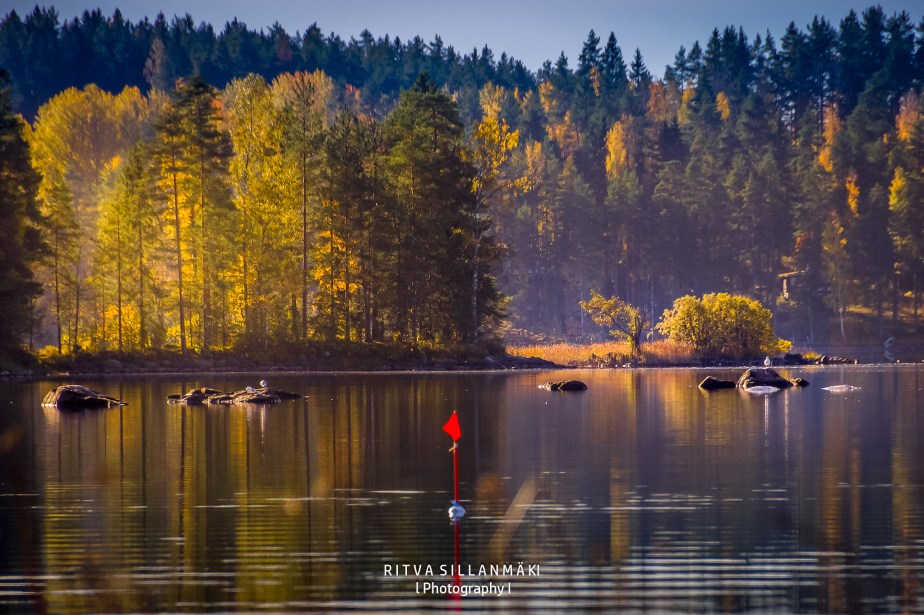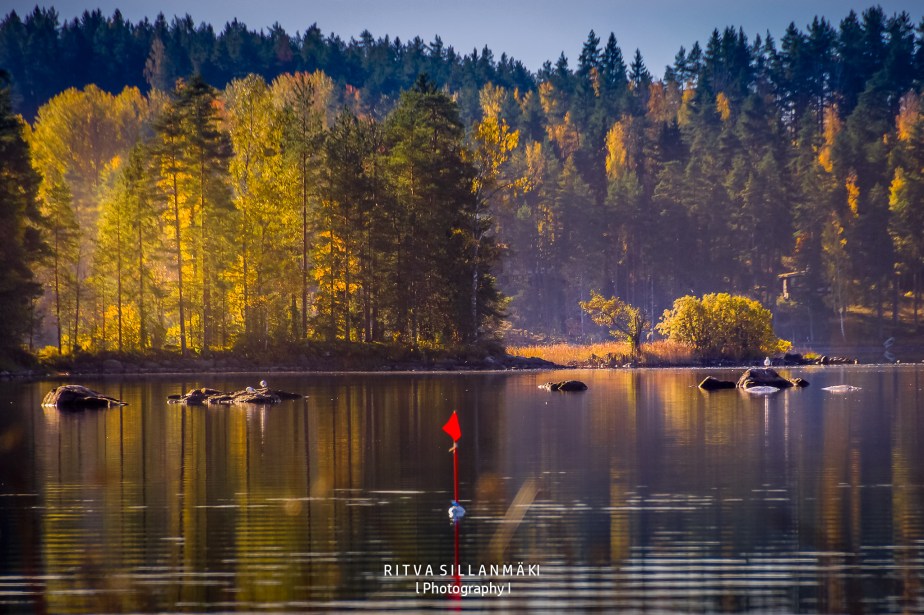
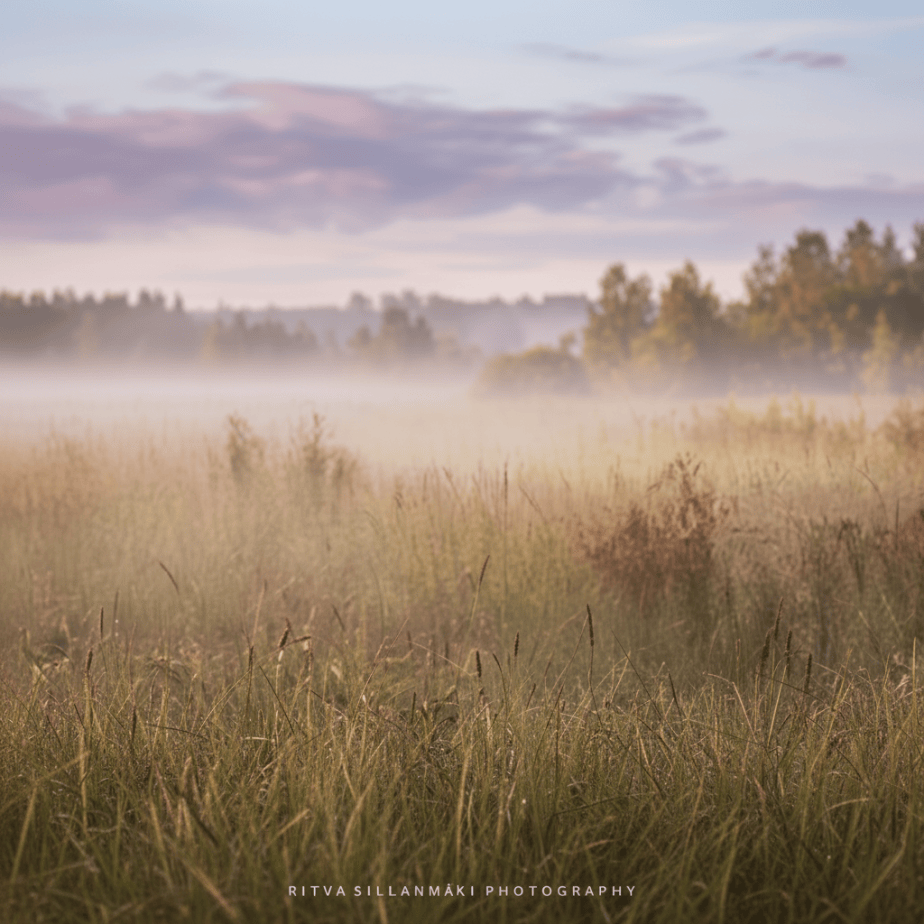
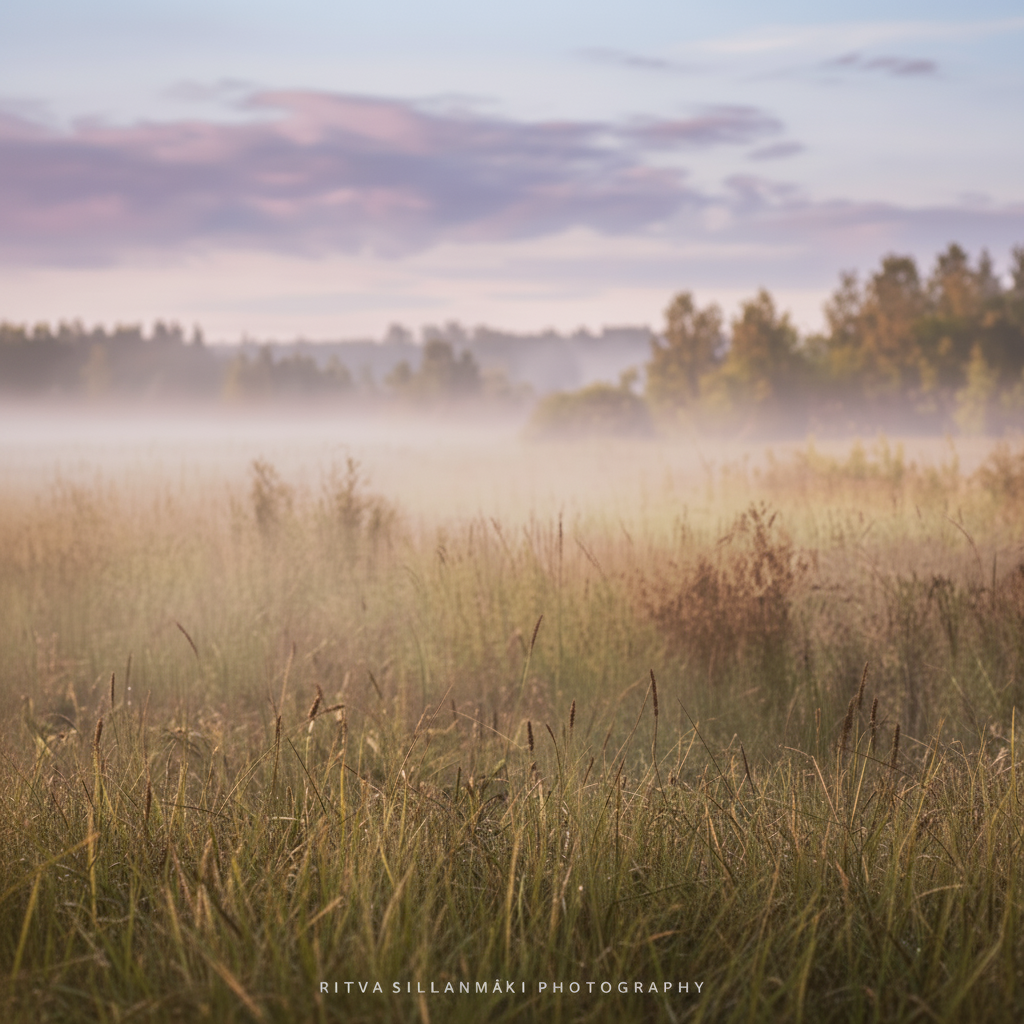
One of the joys of being able to spend time in the countryside, at least for me, is witnessing the mist enveloping the fields and the beauty of sunsets. Since I’m not really a morning person, I often, well to be truthful, always miss the sunrise. I find tranquility in a forest meadow, where the low evening mist blankets the area, tall grasses sway in the foreground, and the dark, layered horizon is defined by dense trees. The sky morphs from a warm golden yellow at the horizon to soft shades of peach and pink, eventually giving way to a cool lavender-blue overhead. Silhouetted pines, birches, and leafy trees perfectly frame this scene, crafting a serene, atmospheric landscape with gentle, natural contrasts. It’s one of those moments that stays with you.
A misty meadow glows beneath a pastel sunrise, framed by a tranquil forest.
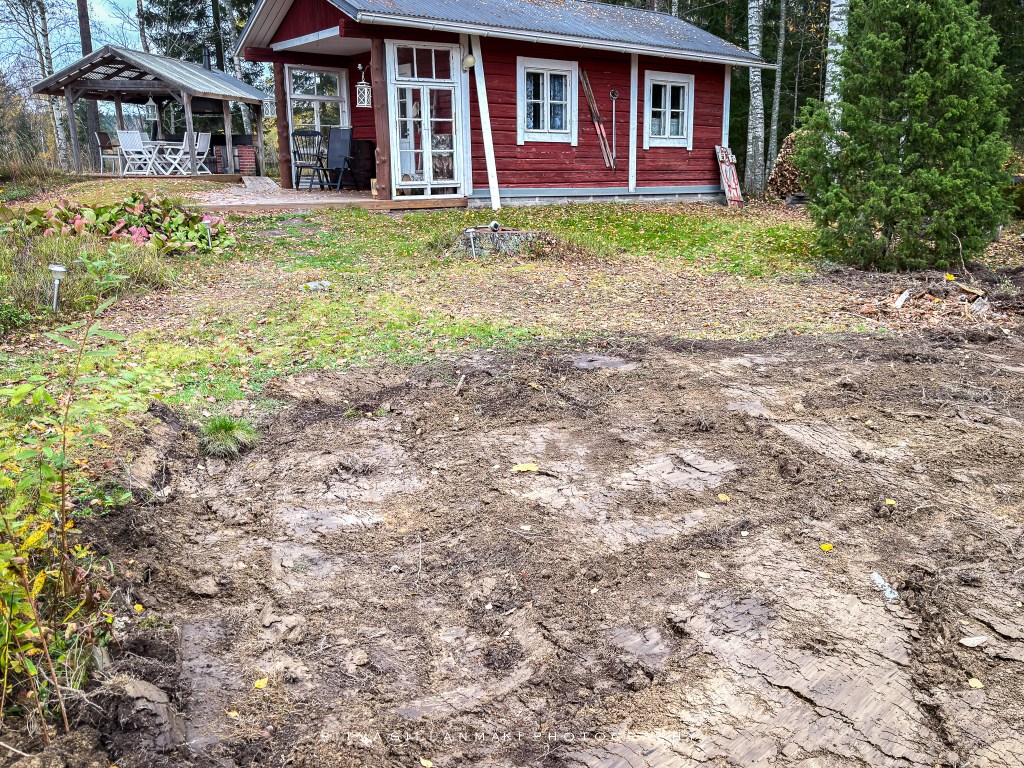
September has already started and finally the work on our summer house has begun, not so peaceful at the moment. We are adding a new kitchen and bathroom to our house. It will add more comfort to our
Sisävessan lisäys – esimerkiksi kesämökille tai vanhaan omakotitaloon – tuo huomattavaa arjen mukavuutta, nostaa kiinteistön arvoa ja helpottaa asumista ympäri vuoden.
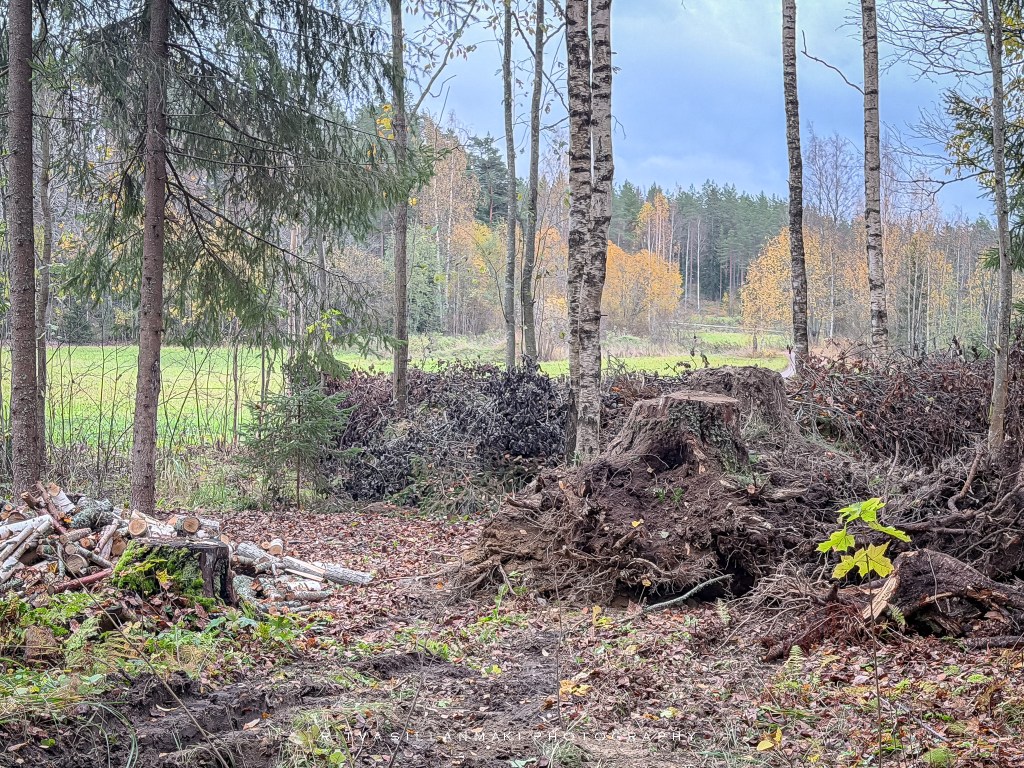
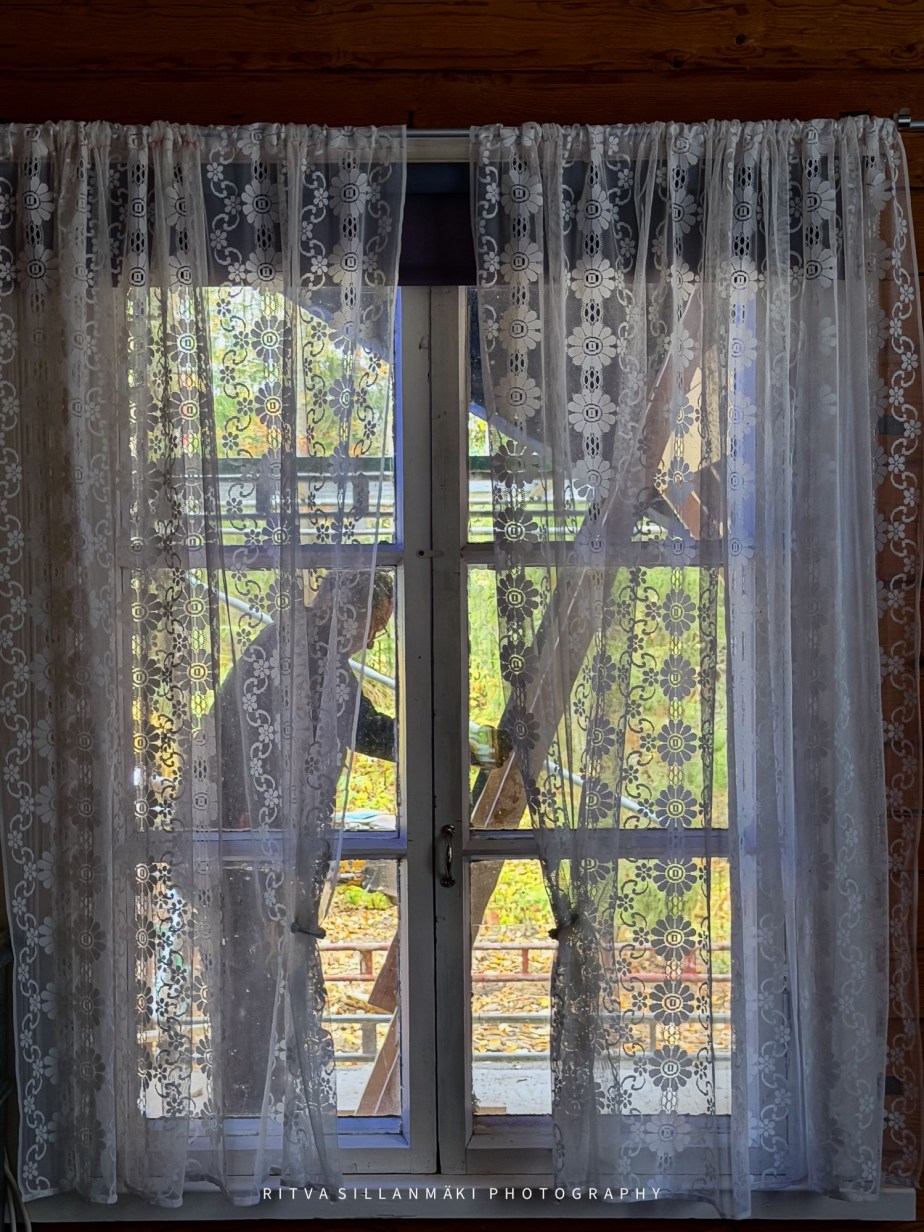
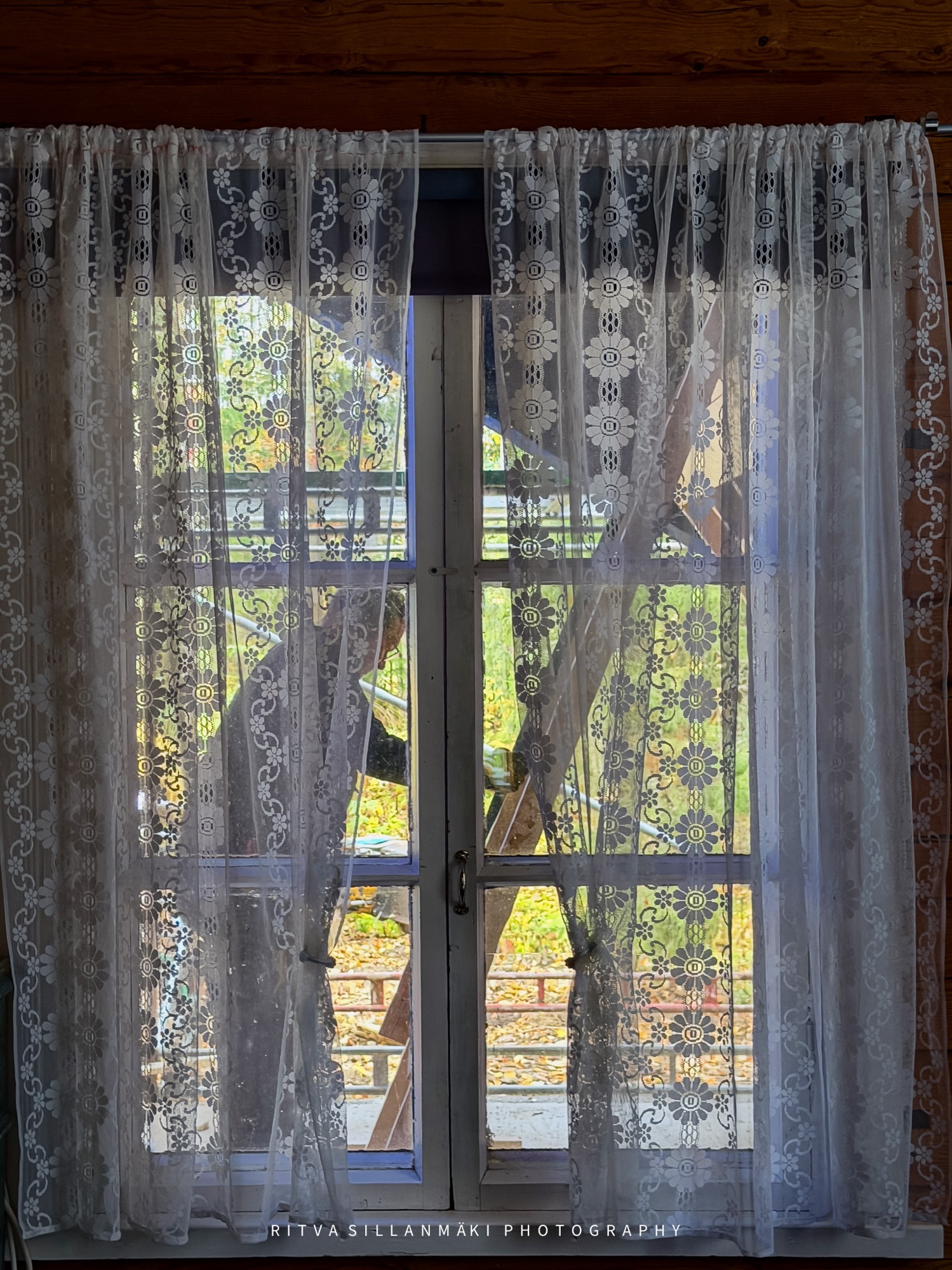
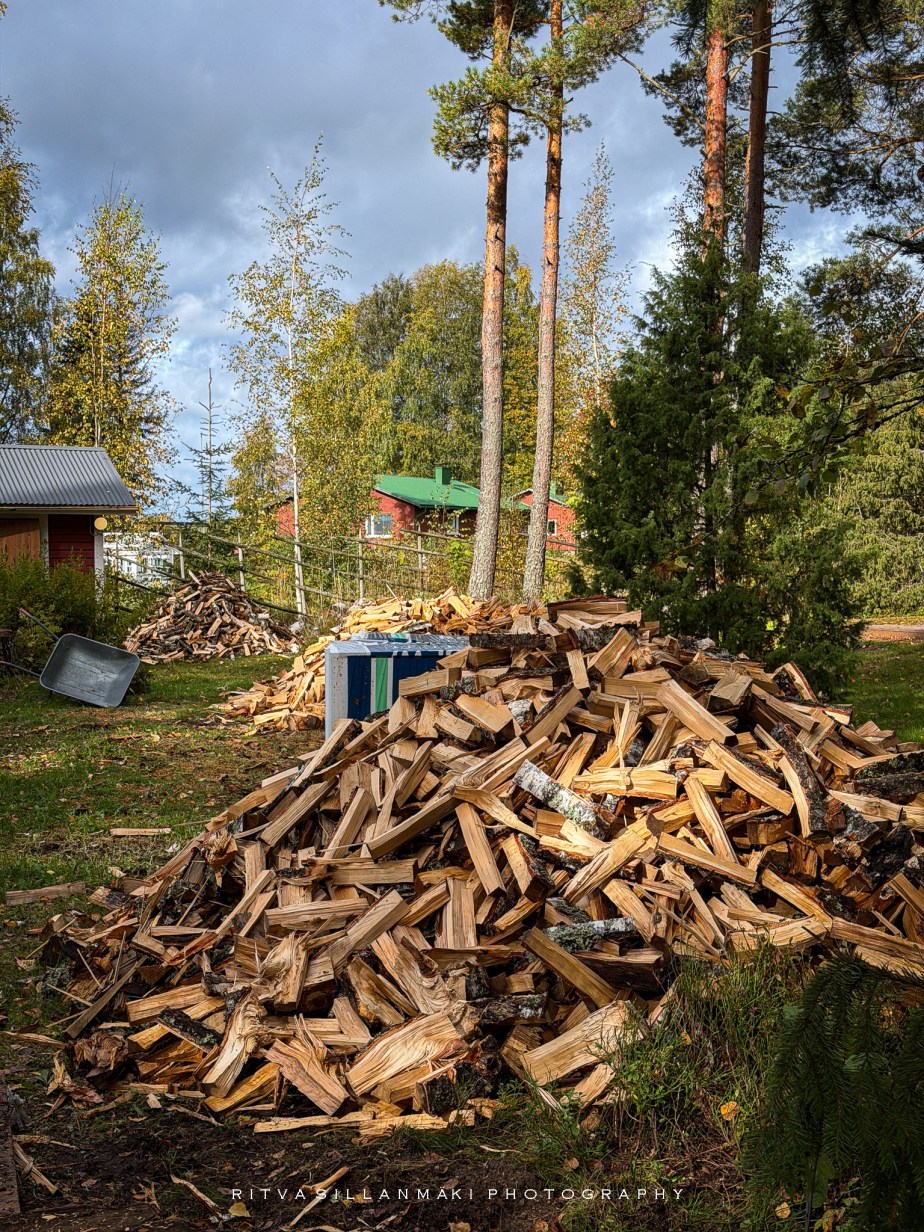
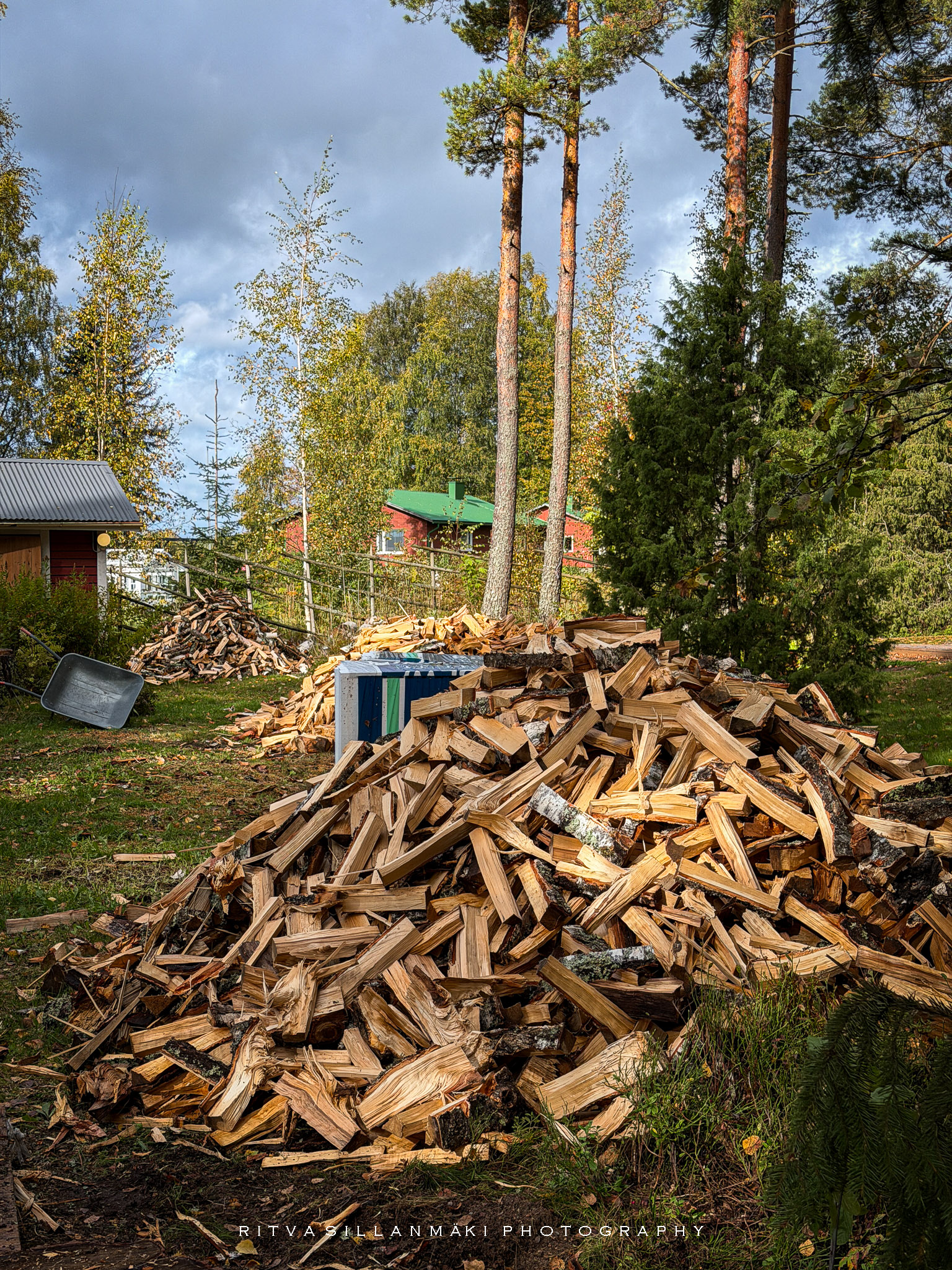
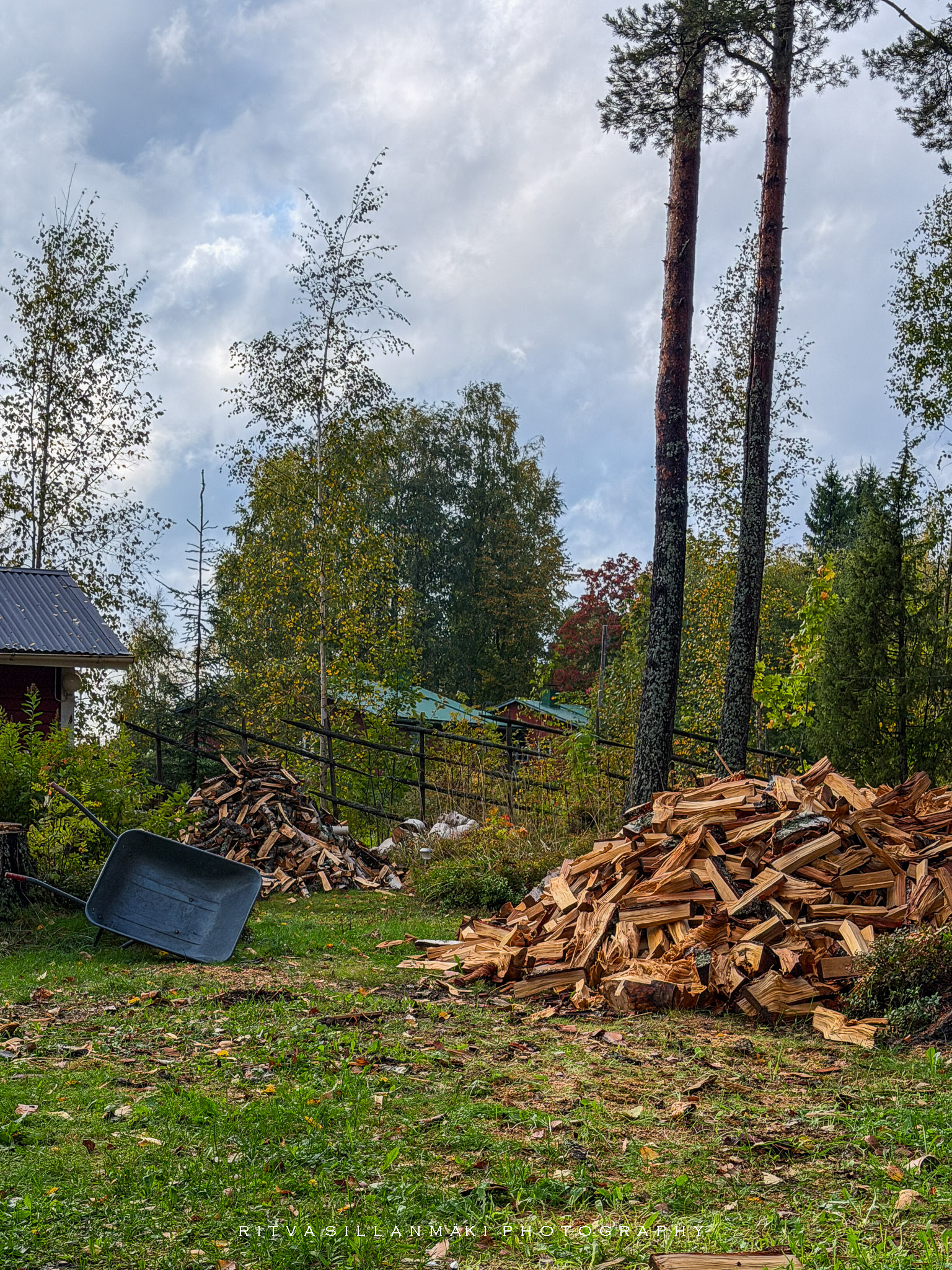
Finally it is happening, the addition to our house has started So many changes have happened for us to do this We will have loads of logs to keep us warm in the coming years . Builder at work
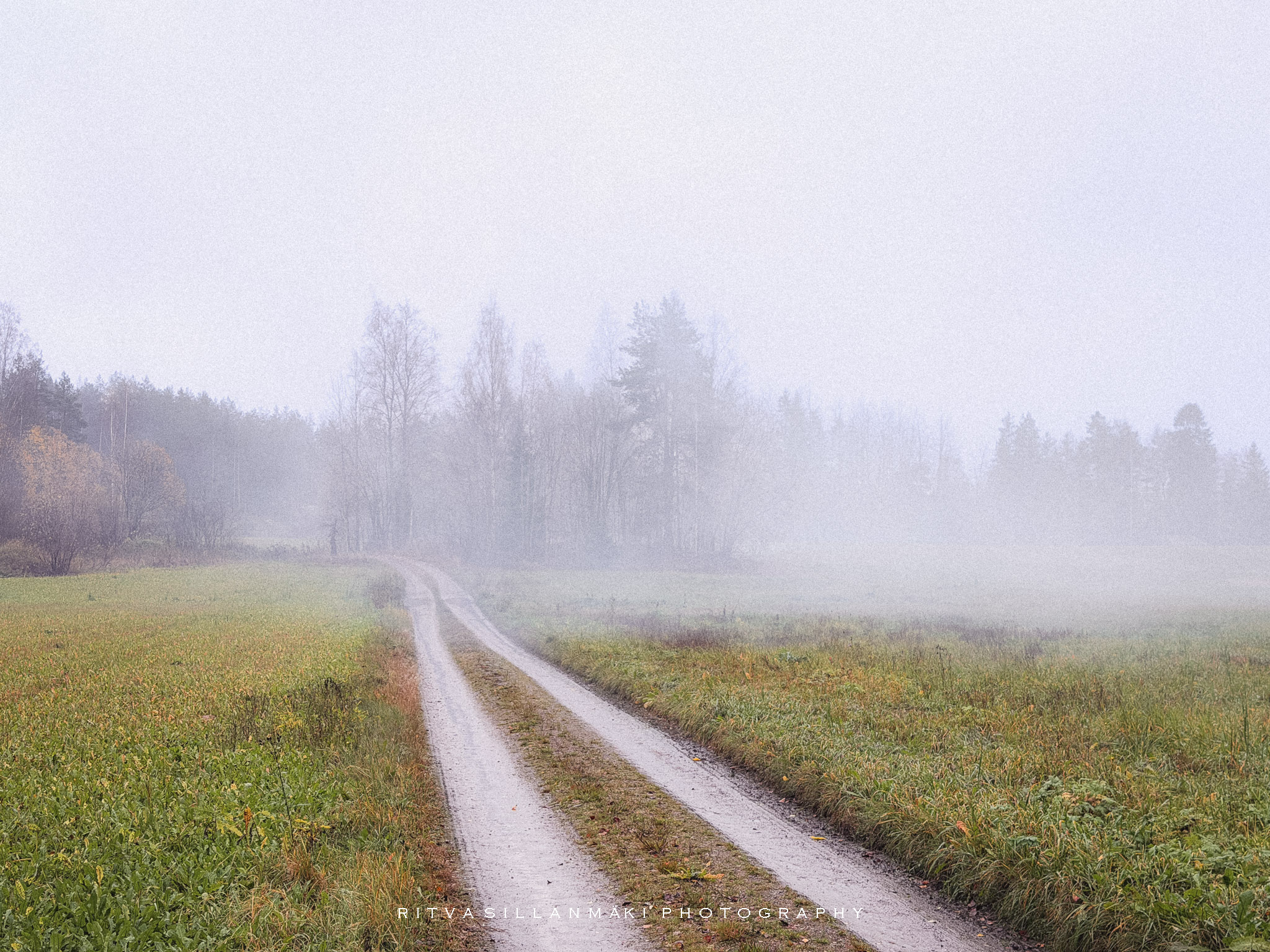
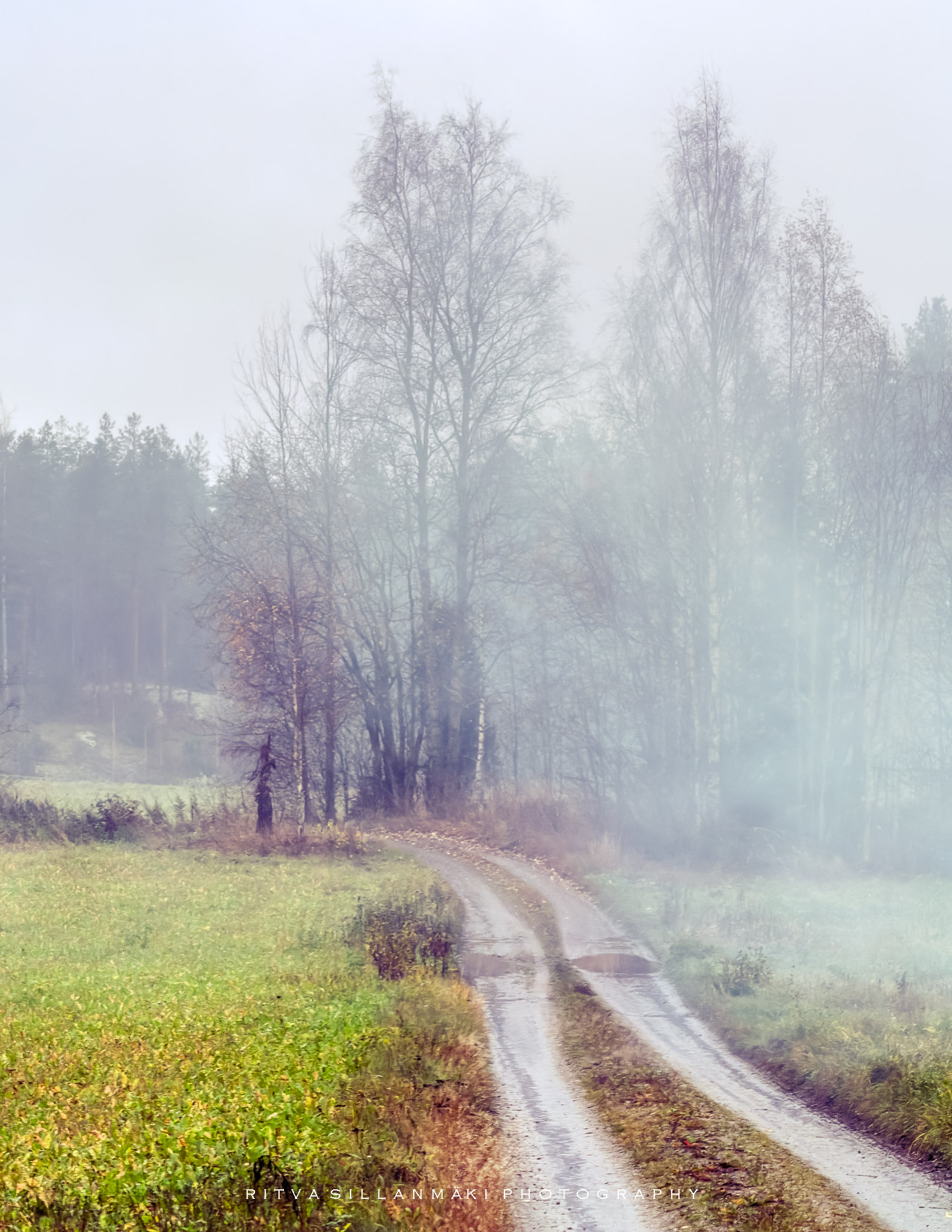
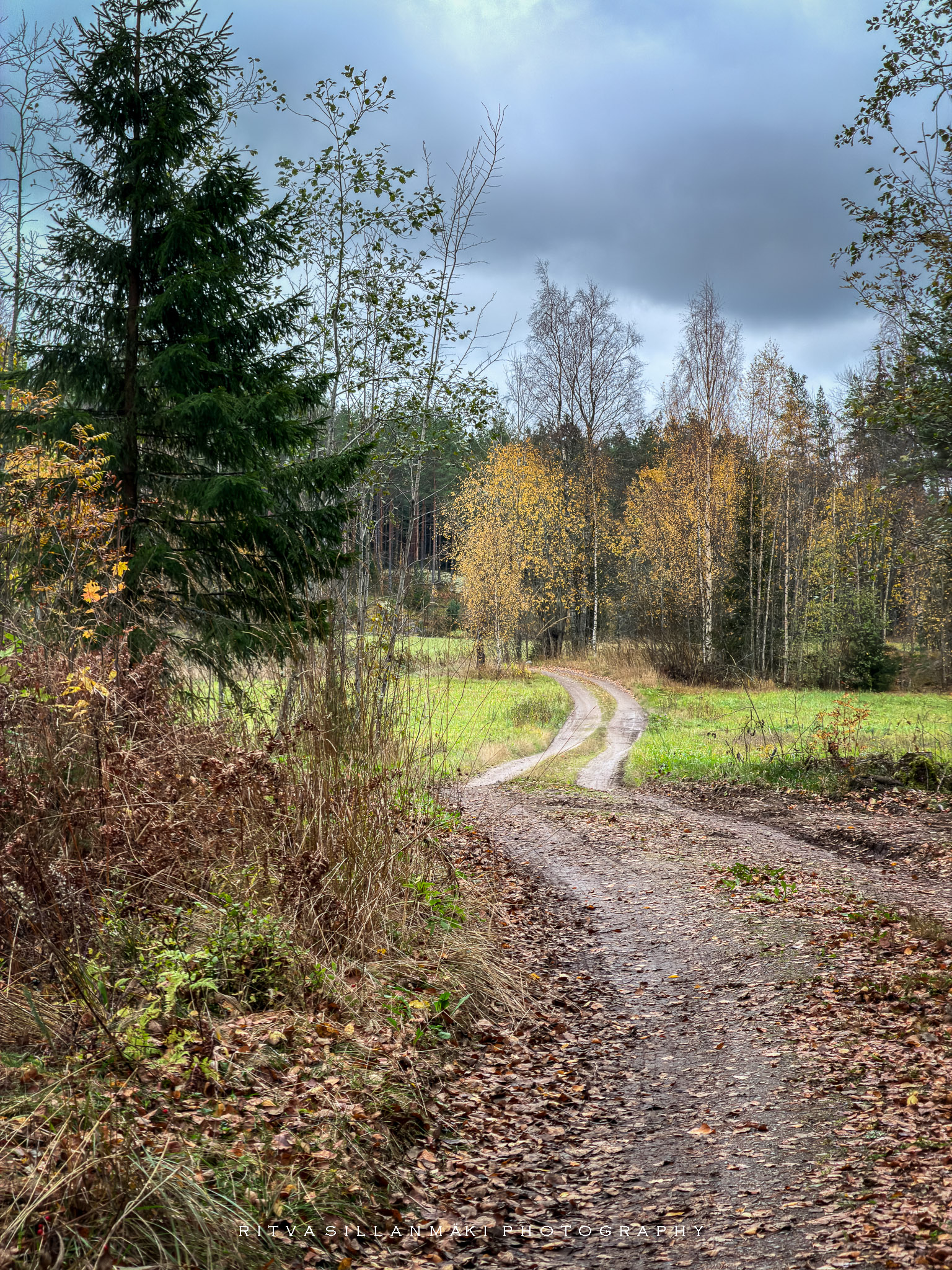
Monochrome Madness and here I am with another free week, and you might have thought I’d wrapped it all up after my stroll down Meadow Road. But no, we’re back at it! This time, I’m excited to share two versions of the images I snapped along the road where I found those beautiful flower photos—my pathway to my joyful retreat, my summer oasis. I’ve also included two monochrome takes of the plants I saw there to jog your memory.
A quiet dirt path winds through dense woodland and sunlit grasses in a striking black-and-white landscape.
Which version do you prefer, the darker or the lighter one, and what’s the reason for it?
A winding forest path leads through tall grasses and birch trees beneath a dramatic sky in striking black and white.
I took this photo of Juniper needles on Saturday, August 29th, when the light hit them just right, making them really pop.
SONY SLT- A65V – 50MM 2.8 MACRO SONY 7 III – E 28-200mm F2.8-5.6
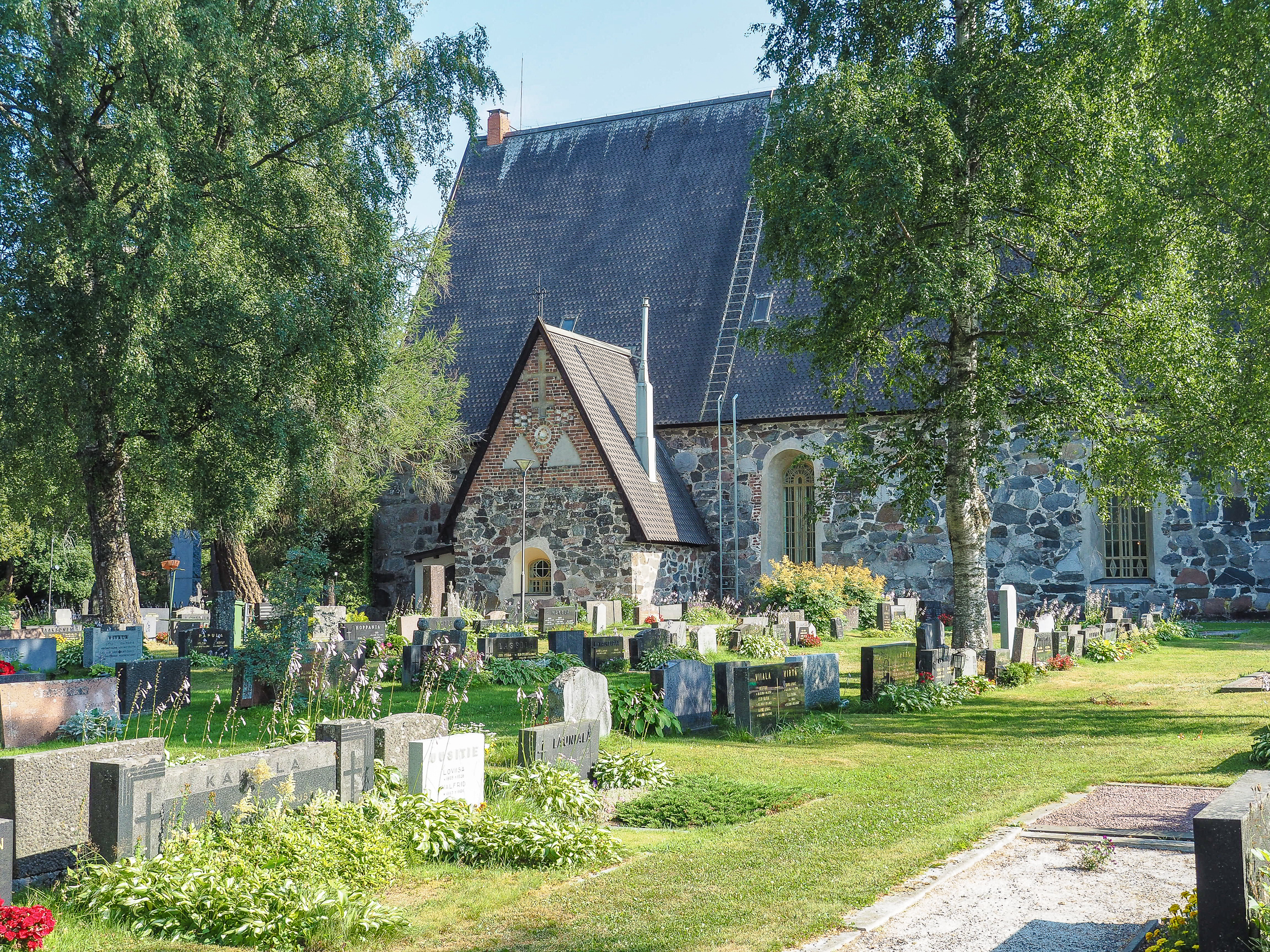
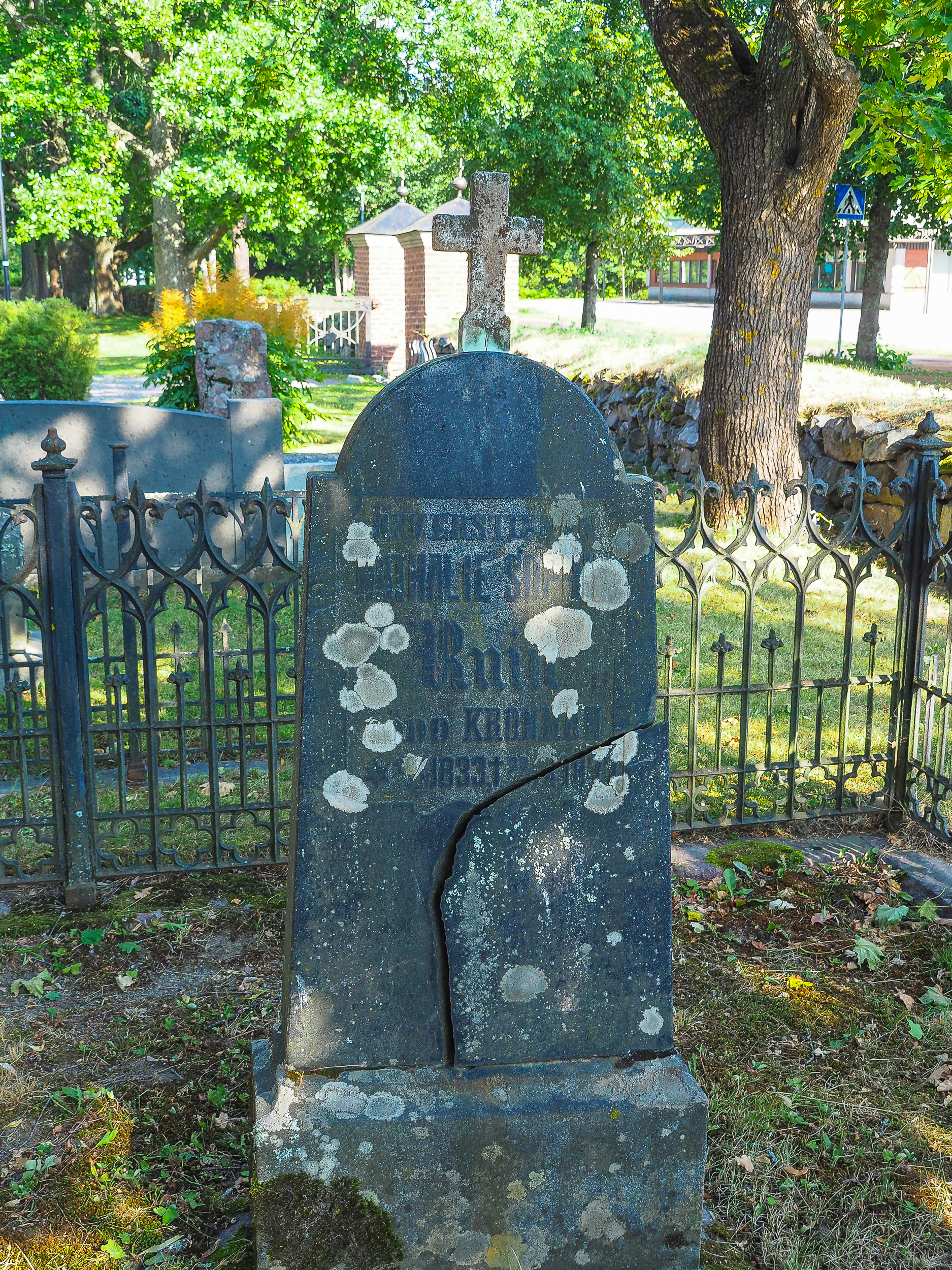
While walking by the meadow on August 20th, I spotted these delicate Fen Bedstraw flowers and couldn’t resist taking a photo. Then, on August 29th, I went to the cemetery to visit my parents’ grave, where I say this angel leaning on a rock that read, “We miss you.”
IPhone 17 PRO
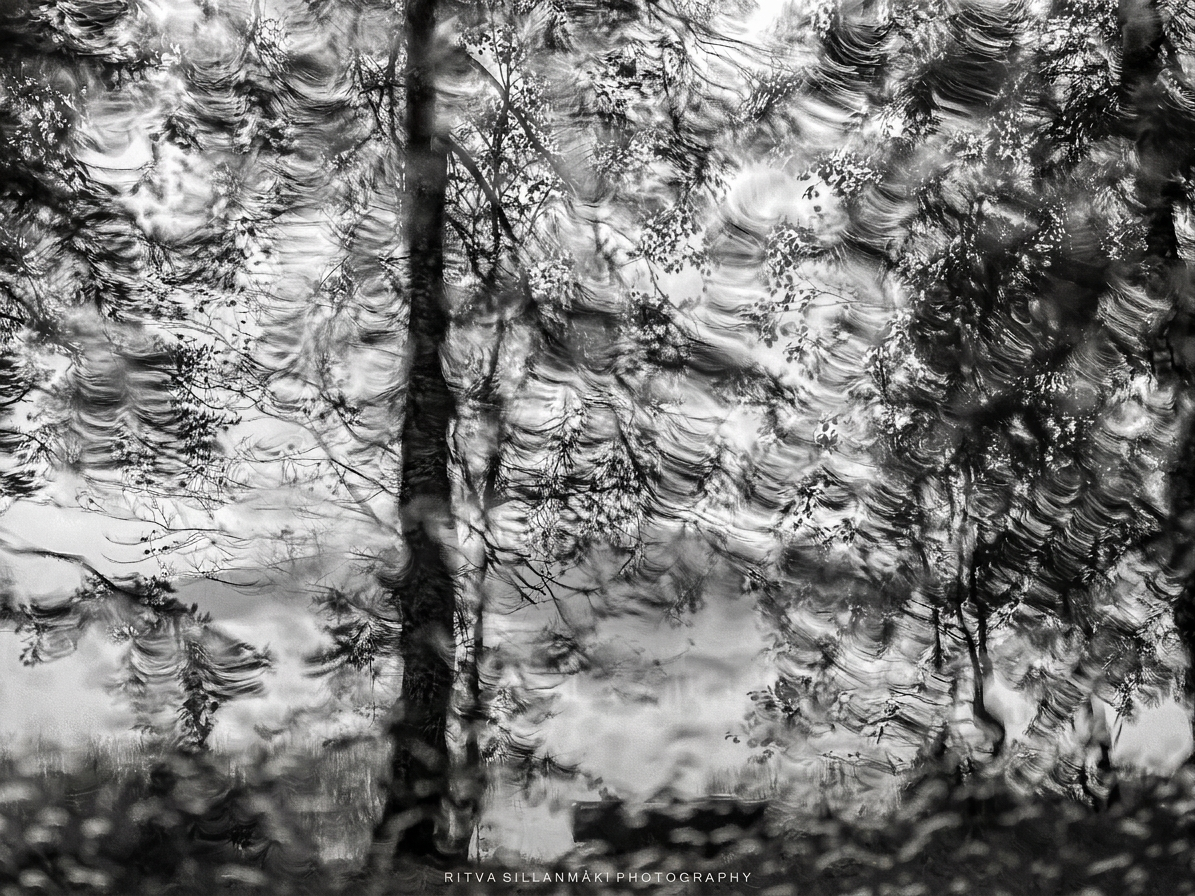
I captured this feature shot on August 20th, looking through an old window glass that beautifully distorts the image. For Bush Boy’s Last On The Card
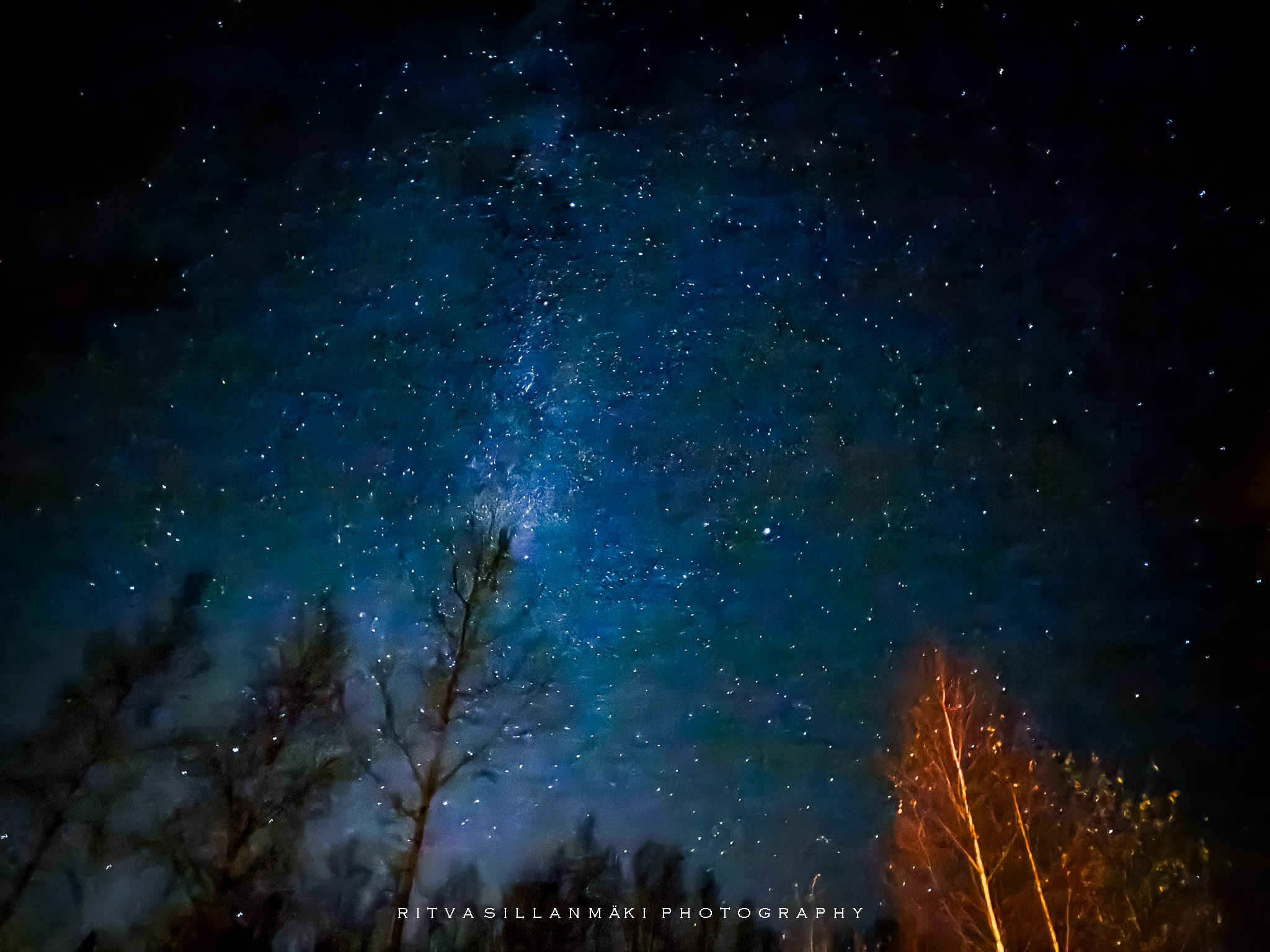
Taking time to sit outside to look at the stars and moon is one of life’s simple pleasures that often goes overlooked. The charm of the countryside is undoubtedly the absence of light pollution; in these serene settings, the stars and the moon become visible with breathtaking clarity, illuminating the night with a twinkling brilliance that captivates. As I sat and admired the stars, even though the sky was partly covered with clouds, I found a sense of peace. I am always amazed at how well my phone captures images in the dark, allowing me to preserve these fleeting moments and share the beauty of the night sky with others.
The moon breaks through dramatic clouds above a shadowed field framed by leafy trees.
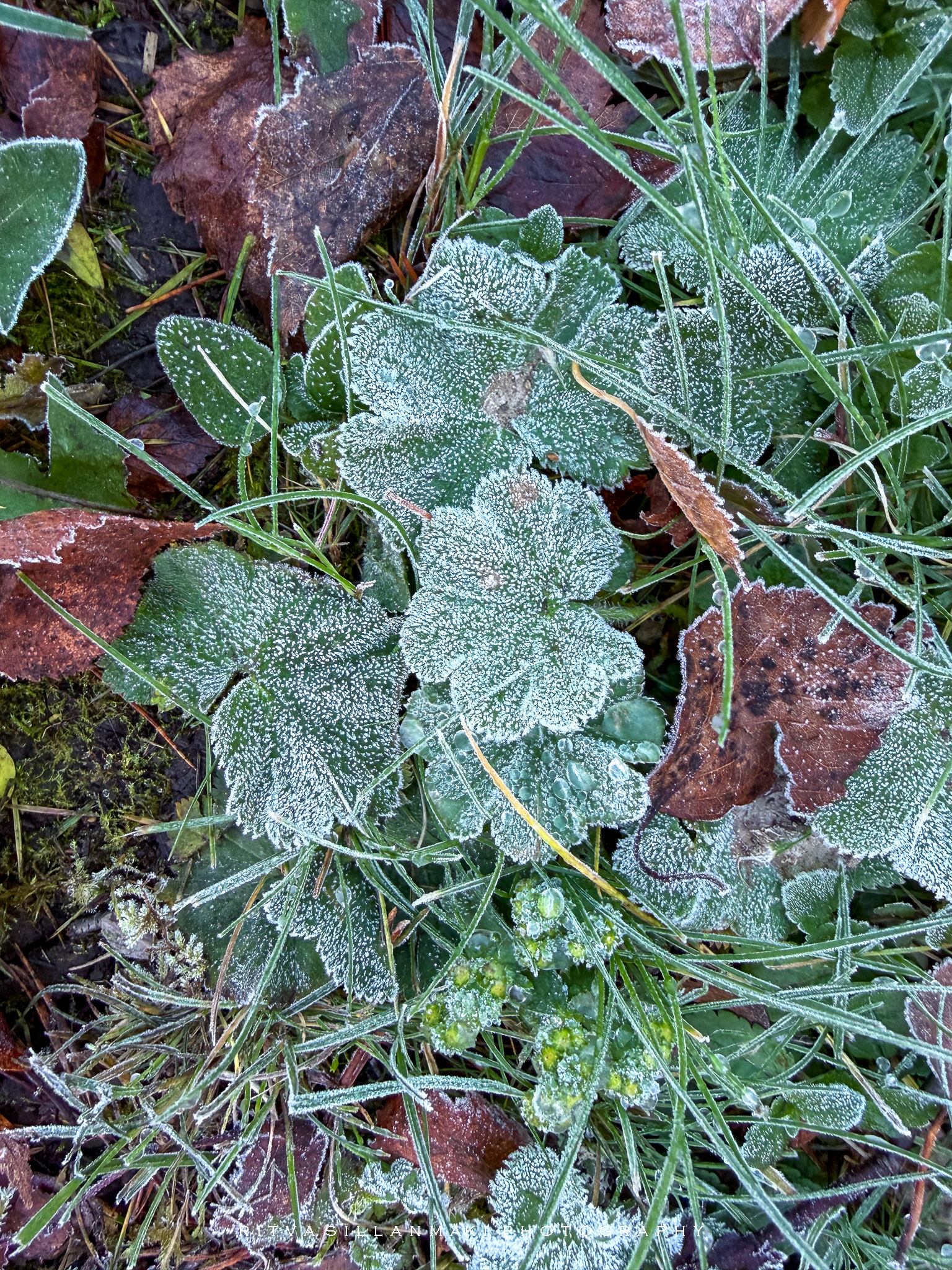
i am happy I got this close-up of lush green grass covered in sparkling dew droplets, captured in bright natural light. The shallow depth of field turns many droplets into luminous circular highlights, while a few golden-brown fallen leaves and small mushrooms add warm accents among the blades. The low-angle composition creates a fresh, bright morning feelings
This week, let’s embrace an intentionally defocused interior scene that invites you in. Imagine a bright window or doorway at the center, surrounded by warm golden walls and softly glowing circular lights on either side, creating a comforting atmosphere. I truly appreciate this setup. In the lower foreground, dark, indistinct furniture and architectural forms blend into the background, while cool gray and blue tones gracefully balance the soft amber lighting. The gentle bokeh, heavy blur, and muted composition work harmoniously to evoke a soothing, dreamlike mood that resonates with the feeling I wanted to capture. In these times, comfort is needed.
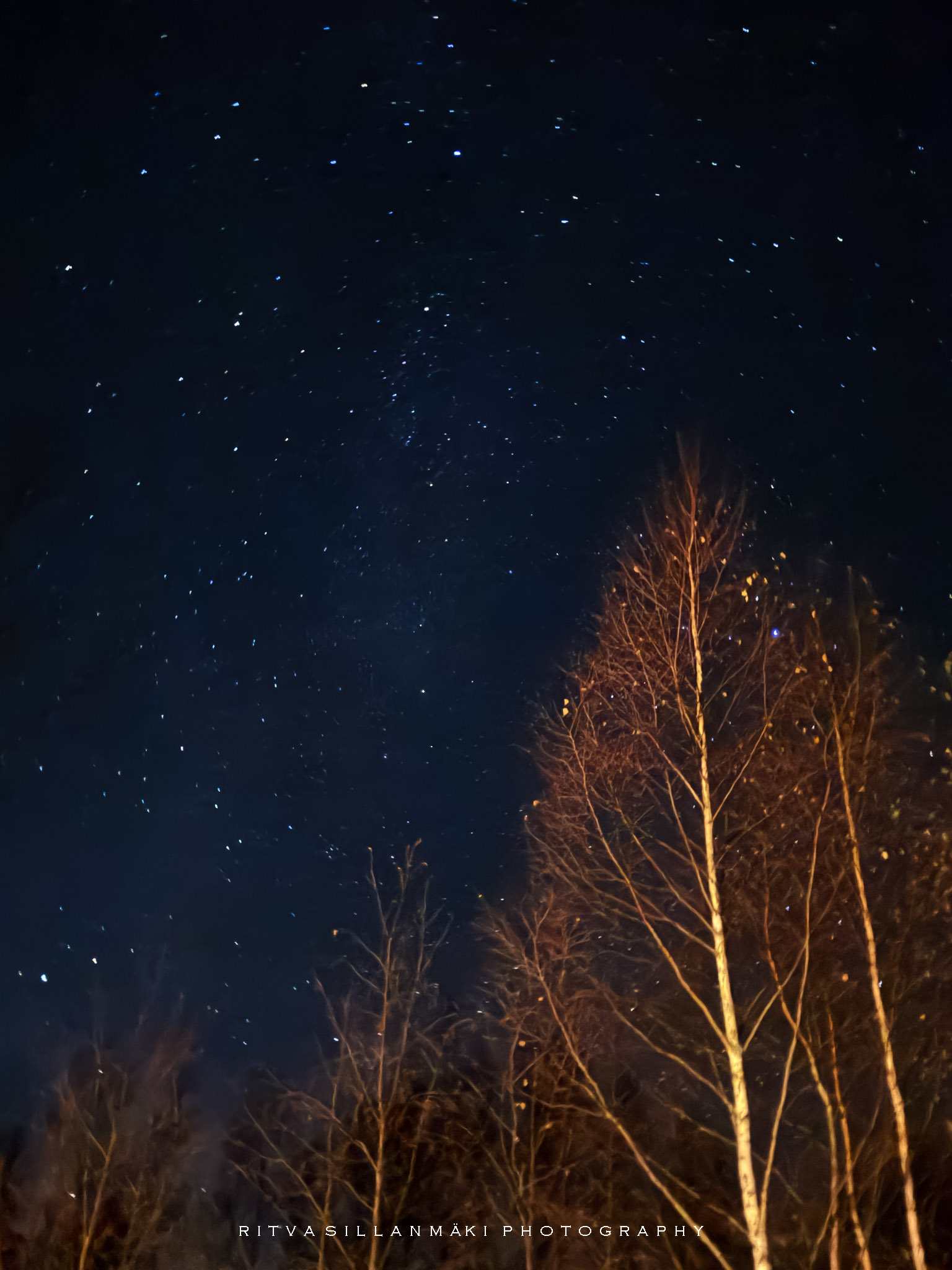
An atmospheric, softly blurred interior glows with warm golden lights and indistinct architectural details.
This on the same dirt road, gravel road, whatever 😂 by the meadow. If you thought that I was done, not, here are few more. No explanation this time. Just saying these little buzzers are so important
I have taken so many photos lately that I have not posted, that it is starting to annoy me. So I am uploading more from my walk along the meadow on the gravel road. There was a gentle breeze and sunny day, inspiring me to capture the vibrant life thriving all around me. In these photographs, I have a small tortoiseshell butterfly that happily feeds on the nectar from a delicate wig knapweed, its colorful wings fluttering gracefully as it dances from flower to flower, embodying the beauty of nature in motion. It is worth to pause take the time to appreciate the little but important things in life.
Butterflies can be classified into three categories based on their wandering behavior: those that migrate over long distances, those that remain stationary, and those with a mix of both wandering and non-wandering individuals. The small tortoiseshell butterfly belongs to the latter category.
The small tortoiseshell overwinters as an adult and is among the first butterflies to emerge in the spring (the common brimstone is usually even earlier). Males wait for females in forest margins, where they defend their territory. The females lay their eggs in clusters on the underside of the leaves of the host plant (usually nettle). The caterpillars colonise the host plant together and often make cocoons in the host plant, although they also use tree trunks, house walls and other vertical surfaces.
The small tortoiseshell is common all over Finland and looks a lot like the large tortoiseshell, the yellow-legged tortoiseshell and the Compton tortoiseshell which all are larger than the small tortoiseshell. Besides size it can be told apart from these, however, by the way that the upper surface of its wings are closer to brick red than orange, and the basal part of its hind wings are black.
Wig knapweed has arrived in Finland from the east, and its habitats are linked to traditional methods of agriculture. Häme and especially Savo–Karelia have been the core of slash-and-burn agriculture in Finland, and wig knapweed is often found there on banks and dry meadows. It also perseveres in the margins of forest clearings and in light-filled broad-leaved forests. The last burn-beaten areas are beginning to close up, and this is reflected in the way that the species is becoming rarer. Its habitat stretches from eastern Europe to western Siberia and it would appear to favour a continental climate, or to avoid coastal climates, whichever way you look at it. Knapweeds have been popular in gardens throughout the ages as ornamentals in sunny and perhaps slightly dryish areas. Although many exotic species are grown as perennials, wig knapweed and other domestic species deserve more attention than they currently receive as wonderful plants in flowering meadows.
I was just thinking about where to point my camera during this time. Should I capture the Devil’s-bit scabious that’s either blooming or fading away, showcasing its intricate details and vibrant colors? Or maybe I should focus on the grass, which I believe is Calamagrostis epigejos, swaying gently in the breeze, its delicate blades reflecting the soft light? Then there’s also the Sow thistle, with its bright yellow blooms, and the cotton grass, which adds an ethereal quality to the landscape with its fluffy tufts dancing above the ground. What do you think? I did focus on all of them, keeping little distance so I could capture a mood I was aiming for – soft and light – delicate, evoking a sense of tranquility and harmony within nature. Each element plays a vital role in this ephemeral scene, weaving together a tapestry of colors and textures that resonate with the serene ambiance of the moment.
A delicate purple wildflower, Devil’s-bit scabious, emerges from a softly blurred meadow of green grasses.
Devil’s-bit scabious’s inflorescence resembles that of field scabious (Knautia arvensis), but differs in having smaller ray-florets and distinct leaf shapes. The two plants typically inhabit opposite environments; field scabious thrives in dry sands, whereas devil’s-bit prefers heavy clay areas. It is found in clearings, damp meadows, and along coastal regions, mainly in the west and south-west, with a distribution limit in central Finland. A historical climate barrier exists between coastal and inland populations, attributed to post-Ice Age climatic changes. The species has since spread to newer shorelines. LuontoPortti
Devil’s-bit scabious has a history of use as a dye, seasoning, tea, and medicine for various ailments. Legend has it that the Devil attempted to destroy the plant by biting off its root, which appears damaged as it ages. Its names are derived from the Latin term succidere, meaning “to break from the bottom.” This plant also supports insects, particularly butterflies and bees, as they prepare for winter.
Devil’s-bit scabious slowly fading Should the focus be on Hietakastikka
I think this grass is Hietakastikka (Calamagrostis epigejos), a perennial large grass species that thrives in a variety of habitats, often found in coastal areas and along riverbanks. It can be identified by its dense and large panicles, which are notably more pronounced compared to other Northern European grasses, contributing to its striking appearance. The spikelets, which are gray-green or bluish-brown, add to its visual appeal, especially when swaying gently in the wind. This species is not only valued for its aesthetic qualities but also plays a vital role in stabilizing soil and providing habitat for various wildlife, making it an essential component of the ecosystems it inhabits.
Softly blurred reeds and grasses create a serene, dreamlike abstract scene in muted green tones. This single twig pops into the focusDelicate Sormipaisukarve lichen-covered branches create an abstract pattern against a softly blurred green woodland background.
Sormipaisukarve (Hypogymnia physodes) is a type of lichen that grows on trees and rocks. It has become more common in recent years and is likely the most widespread lichen in Finland. This lichen is found throughout the country, especially in the south, and is rare in northern Lapland. Sormipaisukarve is a sign of air quality: in clean areas, it can grow up to five centimeters, while in polluted areas, it stays under one centimeter.
A delicate wispy Cotton grass glow softly against a dreamy, blurred woodland background.
Cotton grass (Agrostis capillaris, syn. Agrostis tenuis) is a common grass species that thrives in a variety of habitats, including meadows, fields, and along roadsides. Its tall, slender stems and fine leaves create a delicate appearance, making it a notable feature in the landscape. Additionally, this grass species plays a vital role in the local ecosystem, providing food and shelter for various insects and small animals. It is an ancient introduction in Finland, where it has adapted to the climate and soil conditions, contributing to the rich biodiversity of the region.
A delicate The Sow thistle glows softly amid sunlit grasses and warm, dreamy bokeh.
The Sow thistle reached Finland after the Ice Age from the south and west. The populations from different directions are separate, and changes in distribution are very small on a human scale. The species grows in the Åland Islands and Uusimaa, mainly in the pine forests and edges of the Lohja region. Human activities do not threaten the species; instead, they often help it by creating more open areas with light, which the plant prefers. In some locations, it has even spread to roadsides and railway embankments.
Humans have also utilized sow thistle; the plant’s sturdy taproot is edible and tastes good. Instead of starch, the root contains inulin sugar, making it excellent for diabetics. One would think the sow thistle would stand out in the open pine forest, but its abundance and entire existence can go unnoticed, as it is often present only as leaf rosettes. The rosette somewhat resembles ribwort plantain (Plantago lanceolata), but the large flower heads that often open as early as May reveal that the plant belongs to the daisy family.
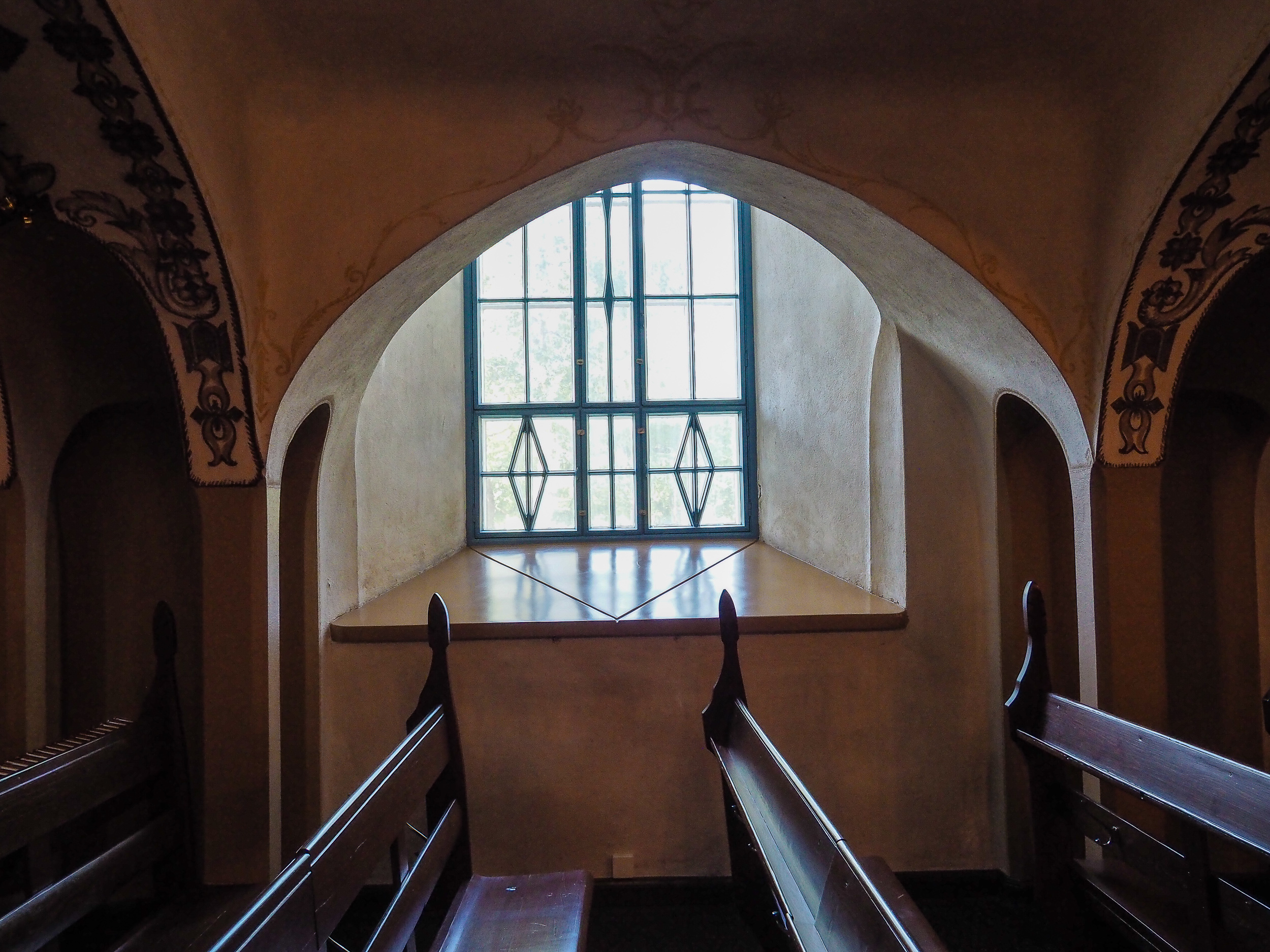
I took this photograph because of the serene atmosphere created by the sunlit interior and the suspended circular installation of long, tattered white fabric strips. The sheer curtains framing the window not only reveal the lush greenery outside but also allow strong daylight to cast bright geometric reflections and shadows across the dark, glossy wooden floor. The warm ochre walls, aged trim, and the framed forest-themed poster add a rustic charm, making the scene feel contemplative and slightly ethereal.
Sunlight fills a historic room where delicate white fabric installations hang from the ceiling above polished wooden floors.
I this historic room that has this vibrant curtain installation of multicolored fabric strips—it’s just beautiful! There’s also an ornate chair and a sunlit window that adds to the charm. I ended up photographing the window from three different spots to capture the light just right.
An eclectic interior features a large installation of multicolored fabric strips hanging from the ceiling on the right, forming a dense curtain of vibrant reds, purples, blues, greens, pinks, and patterned textiles, reminiscent of the work displayed at Anjalan Kartano’s fabric art exhibition. In the background, daylight streams through a tall window with sheer curtains, illuminating a potted plant on a bright red pedestal and an ornate upholstered wooden chair against delicate floral wallpaper. The worn wooden floor reflects cool blue light, while the pale paneled ceiling and soft natural illumination create an atmospheric, artistic gallery-like setting.
I was trying to capture the wide coastal seascape that stretches beneath a vast sky filled with layered gray and blue clouds, with warm pale light breaking through near the horizon while on a ferry crossing to Estonia in the summer. In the distance, a tree-covered island and a returning ferry sit along the low horizon, while navigation markers punctuate the gently rippled foreground water. The muted blue-gray palette and diffused lighting create a quiet, atmospheric seascape.
A ferry crosses calm coastal waters beneath layers of softly illuminated clouds.
The color of the sky changed depending on what I was looking at, unveiling an astonishing spectrum that embraced everything from soft pastels to vibrant hues. In those fleeting moments, it felt as if the sky was painting a unique picture just for me, transforming the atmosphere around me in ways that spoke to my heart. I always marvel at that gentle transformation, feeling a profound sense of wonder and gratitude for nature’s artistry. As the clouds drifted and the light shifted, it created a breathtaking canvas that reminded me of the beauty and fleeting nature of our world.
A Finnlines ferry cruises across calm blue waters beneath layered morning clouds and a softly lit horizon.A small lighthouse island beneath layered blue-gray clouds and a calm horizon.
As an afterthought, I might as well take some photos of the Helsinki coastline. While I found myself a bit too far to get the best shots. This is what I got; you often ignore the sights that are part of everyday life, taking for granted the beauty surrounding you. Had it been some other coast, my camera would have been shooting at high speed, capturing every possible angle and detail, what is too close to home that often go unnoticed in our busy lives.
Helsinki seen from the sea. You can see the recognizable tower buildings of Helsinki’s Kalasatama (such as Majakka, Loisto, and Lumo One) from a distance at sea or from the opposite shore, and in the background, the distinctive stack landmarks of power plants like Hanasaaren or Salmisaaren can also be seen.
In the first two photos you can Mikael Agricola Church: It is clearly distinguished in the picture by its long and narrow bell tower, which is about 97 meters high. St. John’s Church: Its two green-capped neo-Gothic twin towers are visible in the group of churches next to Agricola Church. Jätkäsaari and Ruoholahti areas: In the foreground and to the left, there is newer apartment building construction and harbor cranes.
The Mikael Agricola Church, It is clearly distinguished in the picture by its long and narrow bell tower, which is about 97 meters high. St. John’s Church: Its two green-capped neo-Gothic twin towers are visible in the group of churches next to Agricola Church
The image shows the West Harbour of Helsinki and the coastal scenery of Jätkäsaari, with the distinctive tower of Clarion Hotel Helsinki visible in the background.
The Suomenlinna maritime fortress, a historical site near Helsinki with a distinctive church dome, is now a UNESCO World Heritage Site. The central tower is part of the Suomenlinna church, which also serves as a lighthouse.
.
The beach house and sandy beach visible in the picture are located at the swimming beach of Pihlajasaari in front of Helsinki, on the western part of Pihlajasaari, it is a popular outdoor and recreational destination in front of Helsinki, right southwest of Hernesaari and Kaivopuisto.
The Helsinki city skyline as viewed from the sea, whether from the west or south heading towards the city center, particularly showcasing areas like Ruoholahti, Jätkäsaari, or Salmisaari. On the left, the towering chimneys of the Salmisaari power plant stand out prominently, while the right side reveals an urban landscape filled with various buildings and masts.
Today on a rainy Sunday I am sharing some interior photos from a recent trip to a restaurant that has been in Helsinki since 1930´s for John’s Cellpic Sunday
The legendary restaurant Elite, located in Töölö, Helsinki, was established in April 1932. It will celebrate its 94th in year 2026. The restaurant began its operations on Museokatu and has been serving in its current premises on South Hesperiankatu since 1938. Elite is one of Helsinki’s most famous artist restaurants, I enjoyed their perhaps most of traditional classic dishes– Tauno Palo’s creamy onion steak. Art Deco Design: Entering Elite, you’re welcomed by a beautifully elegant interior crafted by Stockmann’s Jung & Jung architects, featuring handmade furniture by Werner West. Located near the Lallukka Artists’ Home, Elite has been a vibrant meeting place for cultural icons like authors Mika Waltari and Matti Kurjensaari, and composer Aarre Merikanto.
During World War II, food regulations and rationing were stringent. Elite managed to remain operational by offering un-rationed game dishes, casseroles, and fish. There are whispers that actual meat steaks were sold discreetly, but only to the most trusted regular patrons. Amidst the 1944 bombings of Helsinki, staff had to hurriedly secure the liquor cabinets and seek refuge in air-raid shelters, resulting in the destruction of nearly all of Elite’s beautifully custom-painted glass windows. Remarkably, this establishment became a second home for the renowned actor Tauno Palo, whose frequent visits are commemorated by a wall plaque at his favorite table. It is said that the famed sirloin steak with creamed onion (sipulipihvi) was invented to quell his late-night hunger after his theatrical performances.
The famous artist table is the first table on the right when entering through the main doors of Restaurant Elite’s, a special corner table shared by two of Finland’s greatest actors, Tauno Palo and Matti Pellonpää. The table has an official brass plaque.
A tranquil river flows through a rocky landscape surrounded by dense green forest under a cloudy sky.
Koiteli is a unique, nearly natural area of rapids in Oulu, Kiiminki district, only about 25 kilometers from the city center in the direction of Kuusamo and a provincially valuable attraction with cultural and historical importance. The area’s scenic value is formed by riverbeds, rapids, small islands, shores and nature.
There was a moment when it did not rain, as we visited Tamminiemi today, in the link you can find more information about the place
Early history
The Jugendstil villa, designed by Finnish architects Sigurd Frosterus and Gustaf Strengell, was built in 1904 for businessman Jörgen Nissen and later owned by publisher Amos Anderson in 1924, who renovated it. Feeling lonely there, Anderson mostly stayed in his apartment and rented out the villa. Following a suggestion from President Kyösti Kallio, he agreed to donate the villa to the state in 1940 with conditions regarding its lease, but Kallio died before he could reside there, shortly after resigning for health reasons.
Presidential residence
Presidents Risto Ryti and C. G. E. Mannerheim lived at Tamminiemi, while J. K. Paasikivi preferred the Presidential Palace; however, the villa is most associated with Urho Kekkonen, who resided there for nearly thirty years and made it the hub of Finnish politics from 1956 to 1982. After resigning due to health issues in 1982, Kekkonen remained at Tamminiemi, which became his private nursing home until his death in 1986.
This is true to me: During his term of office that lasted a quarter of a century Tamminiemi came into the public eye: Tamminiemi and Kekkonen became almost synonymous.
In this post, I am sharing photos of the quick tour we took there. I have to say times were different, but the house was very modest by any standards for the head of state.
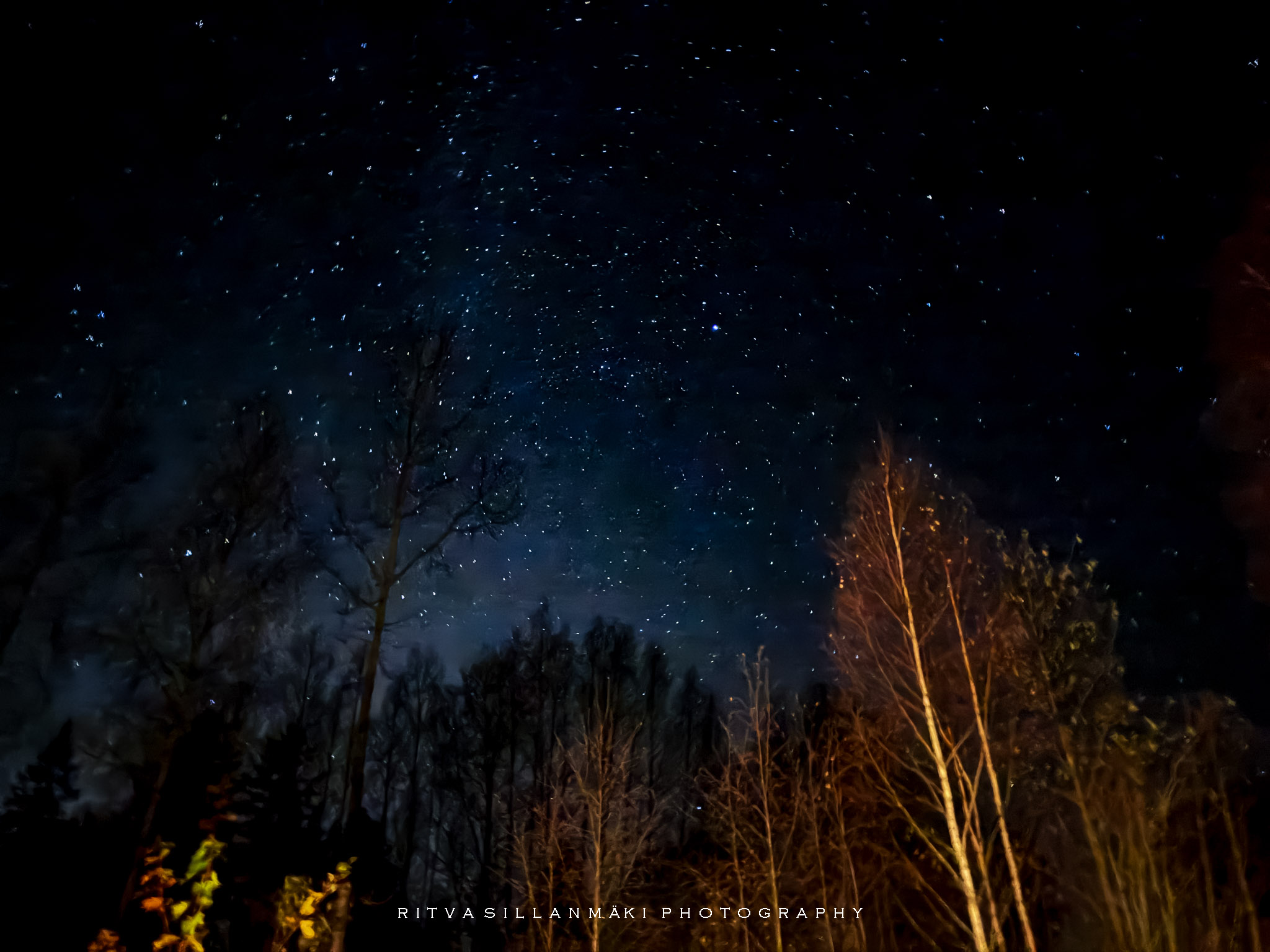
A calm sea reflects moody, overcast skies above a lush, tree-lined shoreline.
Tamminiemi is located in a park by the sea. This sea scene under a dramatic sky filled with thick, heavy gray clouds that suggest an impending storm. The water of the sea is calm, reflecting the moody sky above and the lush green trees that line the distant shoreline. The dense foliage along the banks adds a natural, untouched feel to the landscape, contrasting with a faint glimpse of buildings nestled among the trees. It feels tranquil yet slightly ominous atmosphere, emphasizing the interplay between nature and weather.
A lone white boat glides smoothly across a calm sea t under a sky filled with dramatic clouds.we stood under a back oak tree for a moment for the rain to slow the downpour. From there I took this shot.
In 1956 the interior of the house was largely renovated and modernized, so that there aren’t many details left of the original Art Nouveau style. At the same time, a sauna was built down by the waterside.
On our journey north, we took the timé to make a short stop to the beautiful Aavasaksa, a historical hill nestled in Ylitornio within the beautiful Tornio River Valley. It was a truly lovely place, celebrated for its breathtaking natural scenery and the enchanting midnight sun. I was reminded of the fact that Aavasaksa is the southernmost spot in Finland where you can witness the phenomenon of the nightless nights.
Being a UNESCO World Heritage Site, it’s part of the Struve Geodetic Arc, which is fascinating as it helps measure the Earth’s size and shape. We did not have time to enjoy exploring the nature trails and hiking routes that reveal spectacular views of the Tornio River leading into Sweden.
Oh, and it is one of Finland’s national landscapes, they reflect the country’s identity and unique characteristics.
Sharing this for John’s CellPic Sunday, I took these with my Iphone 17 Pro and edited them in LRC
Still in Oulu, late afternoon 17:30, not that you would know that this time of the year it is so light. Our son is showing us places in in his hometown. Just a little fact about summer nights; last night the sunset was at 00:15 and sunrise at 2:21, creating almost a continuous twilight that casts a magical glow over the landscape.
Back to the topic of this post, I am sharing a few window shots from Pikisaari, located right next to the center of Oulu, which is a real gem! This charming area boasts lots of fascinating architecture, ranging from historical buildings to modern designs that harmonize beautifully with the surroundings. The beautiful nature surrounding Pikisaari, with its lush greenery and serene waters, creates a perfect backdrop for leisurely strolls. Additionally, the vibrant arts and culture scene here is truly inspiring, with local artists often showcasing their talents through various exhibitions and events, making it an ideal spot for both residents and visitors to experience the rich cultural fabric of the city.
Bright red animal and abstract shapes decorate the exterior brick wall of a building surrounded by greenery.
The area around the Old Wool Factory is turning into such a cool cultural hub, and honestly, this little island is just so pretty! Pikisaari has such beautiful nature; almost half of the island is untouched, so there’s plenty of space to kick back and soak in the scenery and art you find along the trails. The running paths here in Oulu are honestly the best and they weave through this stunning island! We didn’t feel like running, i never do though, so we just strolled slowly along the river path instead, but I’ll save those picture for another post!
How do you feel about those chair legs, kind of cute?
My husband standing next to a large rusty metal sculpture that has art inside in front of a brick building
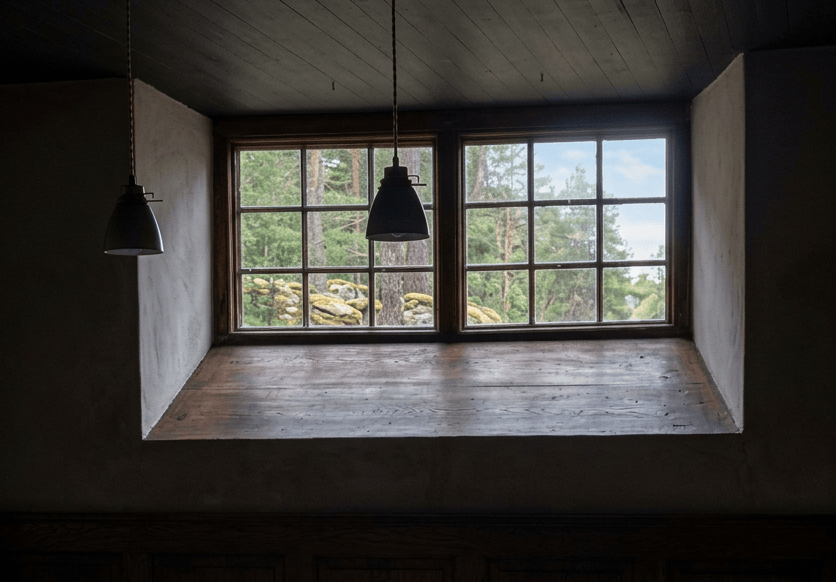
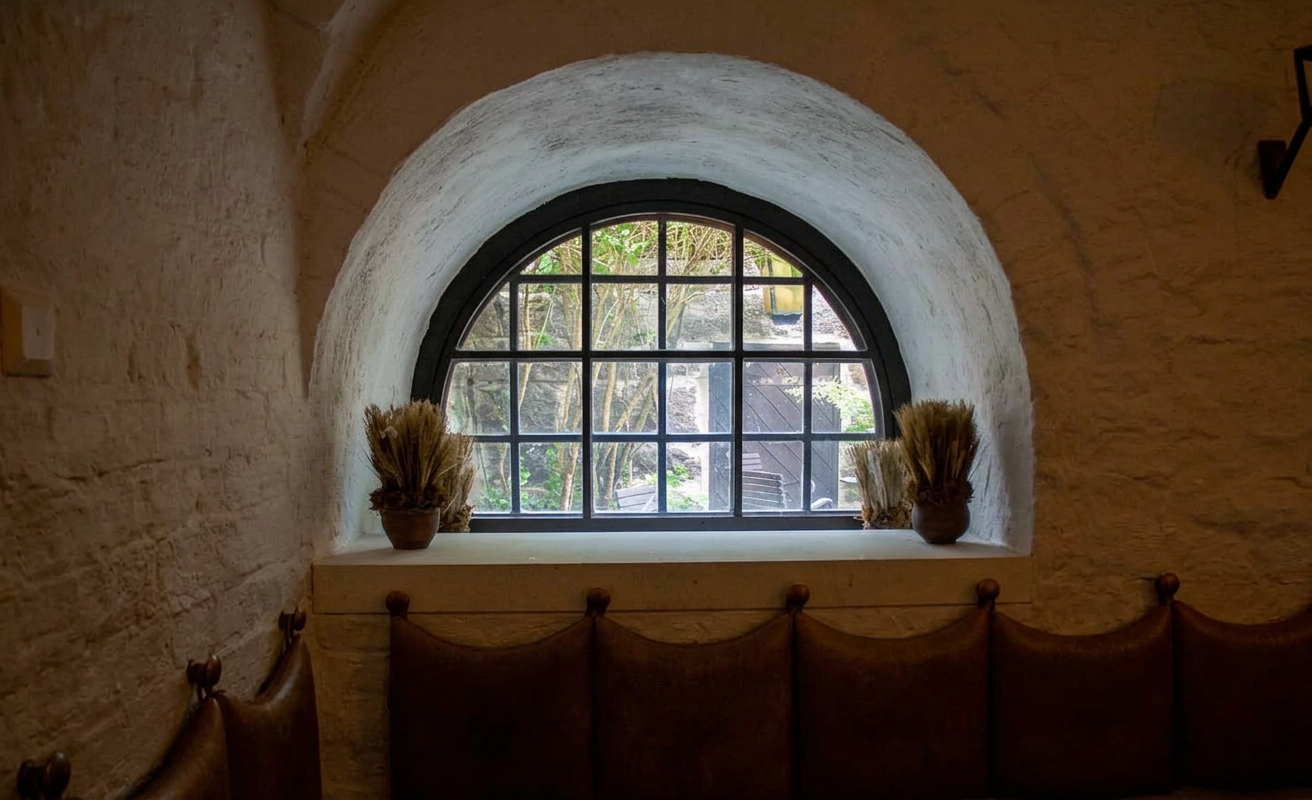
I hope this post has enough windows for Monday Window.
So, it wasn’t exactly sunny at first, but then the sun peeked out from behind the clouds, casting this gorgeous warm glow over the sand. We swung by Nallikari beach in Oulu— it’s such a picturesque spot with stunning scenery and a super lively vibe! The beach has this Blue Flag certification, which basically means it’s well taken care off.. The gentle slope and fine sand make it perfect for swimming and sunbathing, especially for little kids and brave adults. In summer, it’s packed with beach lovers and sports junkies, while winter? That’s when the ice fishers, skiers, and Northern Lights fans show up! As we strolled along the shore, we caught sight of groups playing beach volleyball—talk about a blast, every group had different music and in my mind the ssome of the lyrics were too much for me.! Their laughter and cheers filled the air, making it so lively. Families gathered on the lush green lawn, chatting away and enjoying picnic lunches. Someone even hung up a hammock between two trees—it looked so inviting, and you could just kick back and soak in the sunshine! Not far away, couples and friends were happily savoring ice cream, while everyone seemed glued to their phones. It was such a lively scene!
A lifeguard tower on a sandy beach overlooks a calm sea with Nallikari Observation Tower, better known as Nallikari Lighthouse, on the top of the breakwater at the northern end of the beach in the background.
Children and adults enjoying a sandy beach with a unique rope climbing structure under a cloudy sky
A group of friends enjoying a sunny day playing beach volleyball by the water’s edge
To enjoy alone time by the Baltic ssea
Groups of people enjoying a sunny day picnicking and relaxing under tall green birch trees in a park
I am in Oulu, visiting my son, and we had lunch at this lovely Yacht club, which offered a delightful atmosphere that made our lunch experience so relaxing. The location was stunning, providing us with picturesque views of the water and the surrounding landscape. The deck we ate at was beautifully adorned in shades of pink and red, as the vibrant geraniums blossomed all around, adding a cheerful splash of color to our table setting. We took our time savoring the meal, enjoying heartfelt conversations while being caressed by the gentle breeze. It was a perfect way to spend quality time together, surrounded by such natural beauty and tranquility.
For John’s CellPic Sunday All images shot with IPhone 17 Pro and edited in LrC
A serene wooden dock nestled among lush green trees along a calm riverbank
A serene river gently flows through a lush, green forest on a calm summer day.
You can see thousing on the other side of the Oulu river.
Two men fishing peacefully from a small boat on a calm lake surrounded by lush greenery
a closer look, capturing the reflection on the water
Bridges: In the background, the bridges of the Oulu River estuary connect different islands and districts. The view is directed towards Tuira and its bridges. Oulu is known as the “bicycle capital,” and the image reflects the local lifestyle where cycling is a popular way to get around the waterfront areas.
Name also Clammy campion (usa), Red german catchfly
Sticky catchfly is a plant that originally grew on rocky areas, dry hills, and sandy meadows. It has adapted to human environments, spreading to pastures and sunny roadsides. The plant can survive long droughts thanks to its deep taproot. Its distinctive reddish-brown sticky substance, which covers the upper stem, helps deter predators like ants. You can often see insects stuck to the stem. When picked, the sticky tar gets on your hands. Sometimes, a pink-flowered version can be found that doesn’t secrete any liquid. Its smaller relative, alpine catchfly (V. alpina), secretes very little or no tar at all.
At the start of summer, the red flowers of sticky catchfly attract queen bees, which are busy creating new colonies and pollinating. When the queen is in the hive caring for her young, the smaller worker bees are less effective at pollination. The flowers also draw in various insects, like butterflies, flower flies, and small beetles. Additionally, pollinators can spread diseases, such as spores from parasitic ustilaginales fungi, and even the sticky substance on the stem doesn’t protect catchfly from these harmful pests.