I’ve written this before, but when we visited Paris a year back, as we walked it felt like we were in an outdoor museum, wandering through endless streets of history. The buildings were so beautiful, each balcony and window full of little details that made me want to stop and stare. I kept taking photos, trying to catch that soft light and quiet atmosphere, and now I decided to use some of these images for Margaret’s theme of stories for Monochrome Madness, you can sense the city in these in photos.
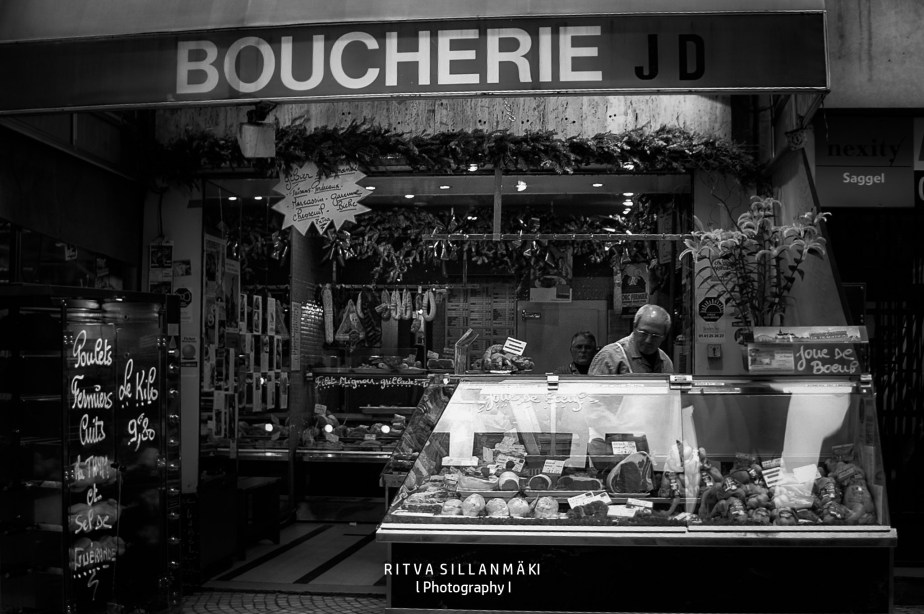
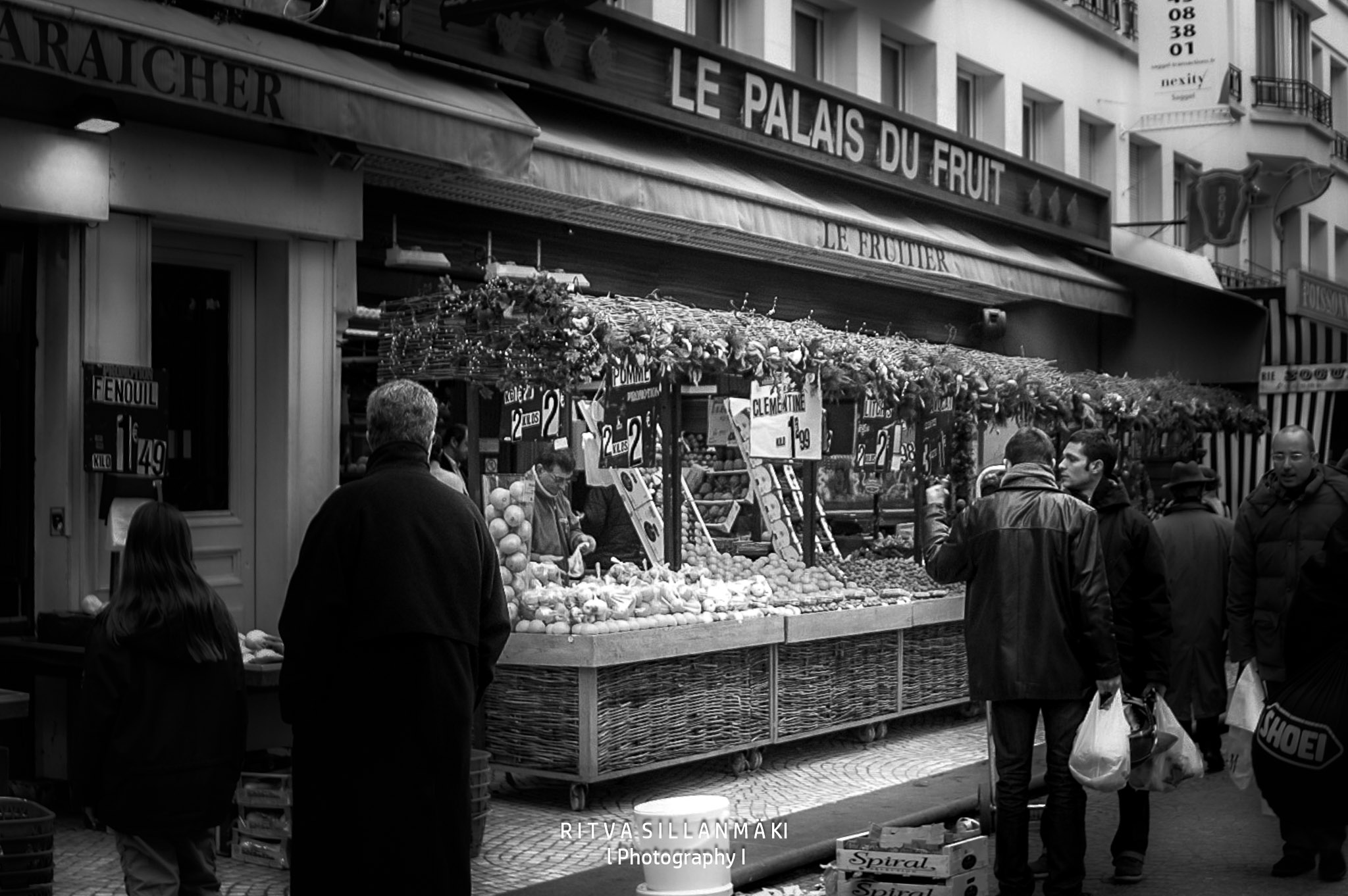
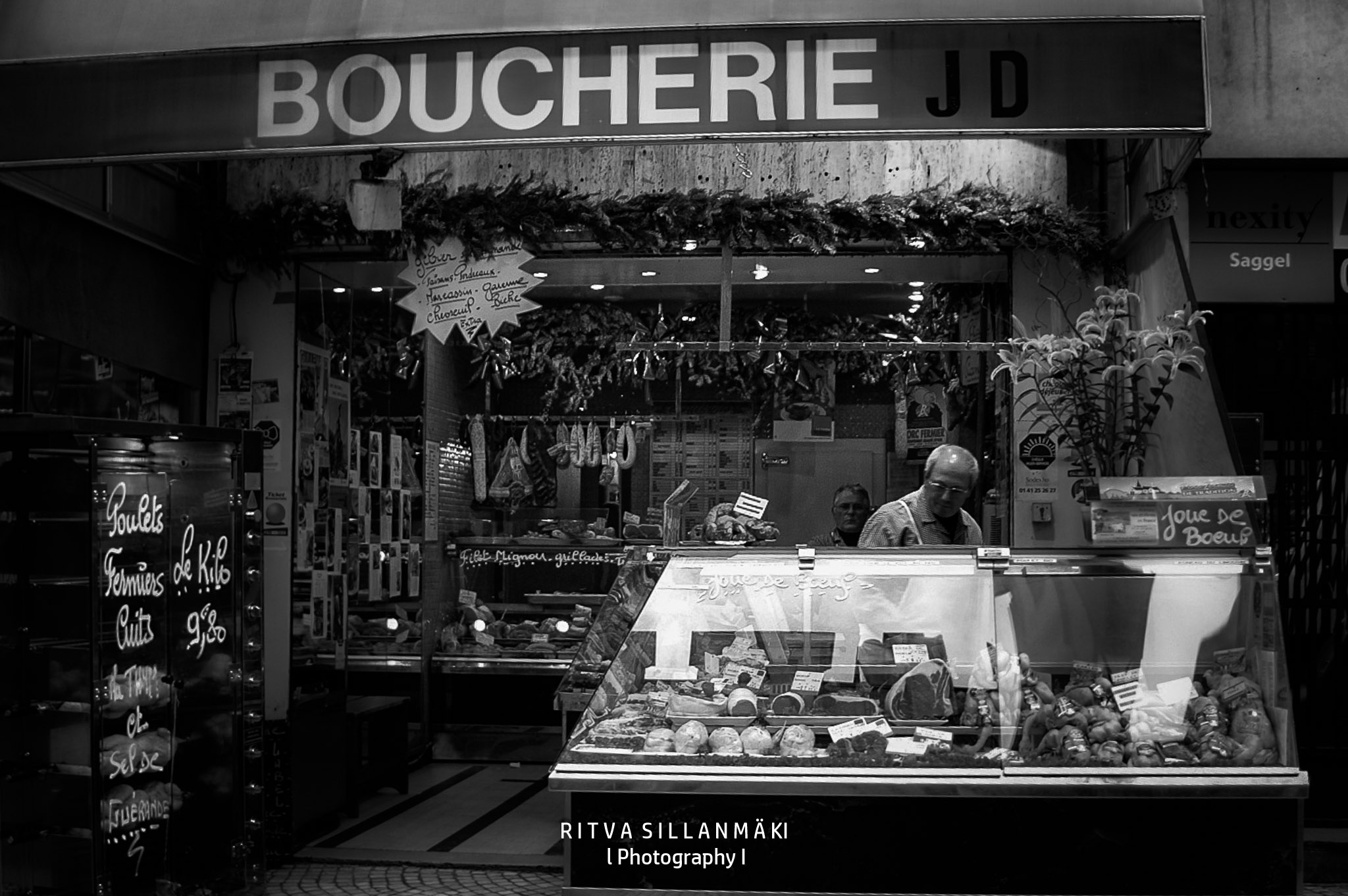
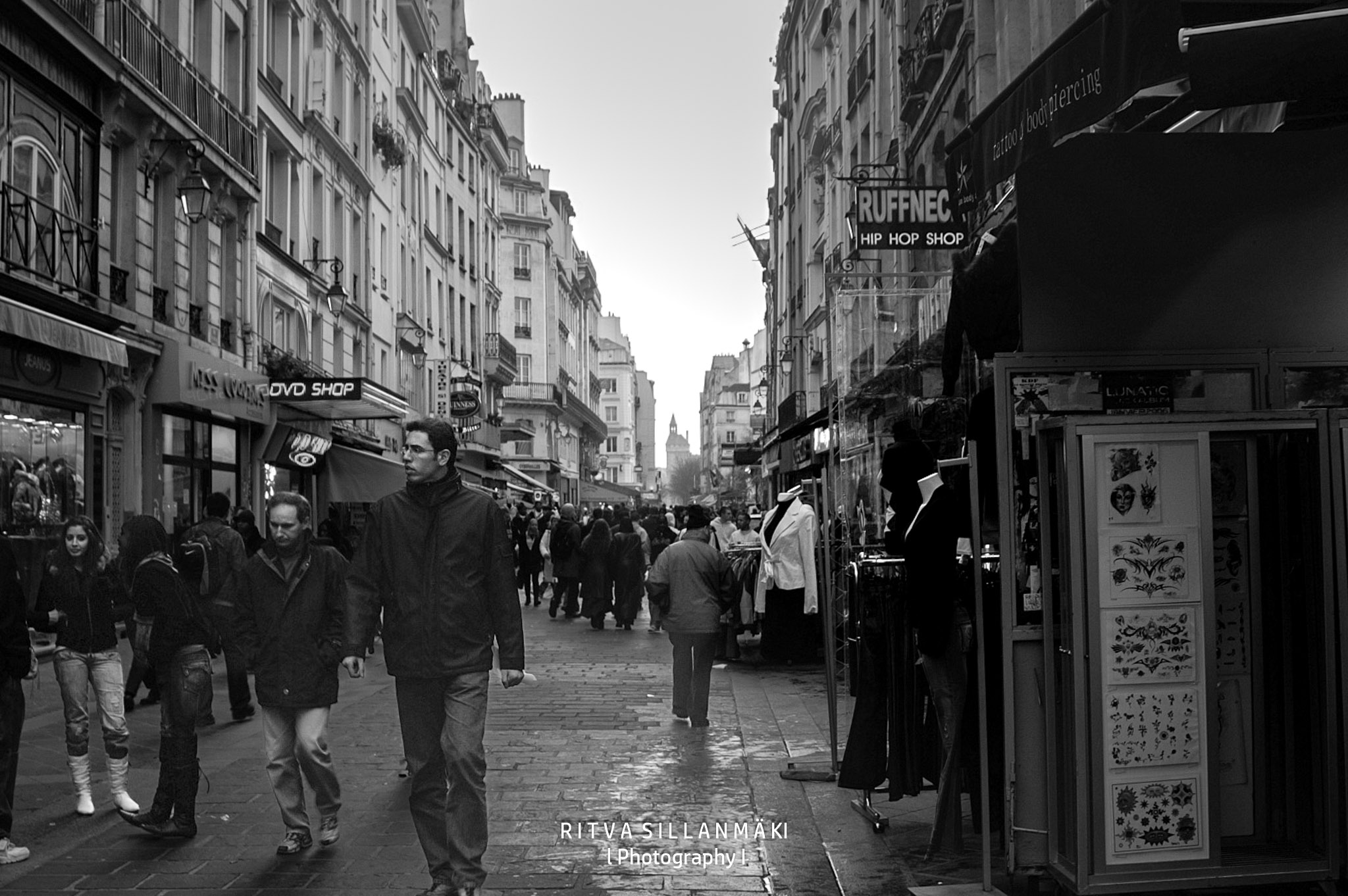
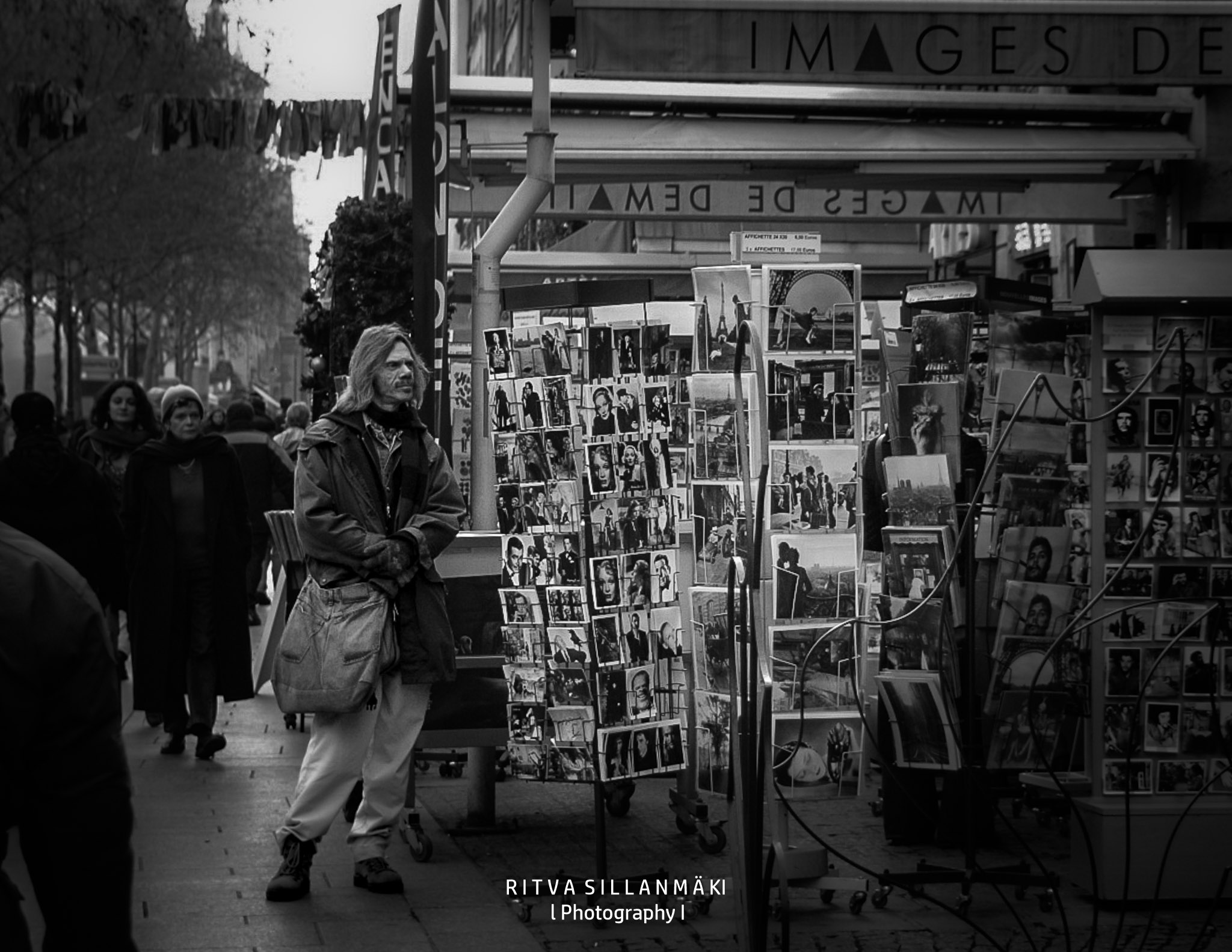
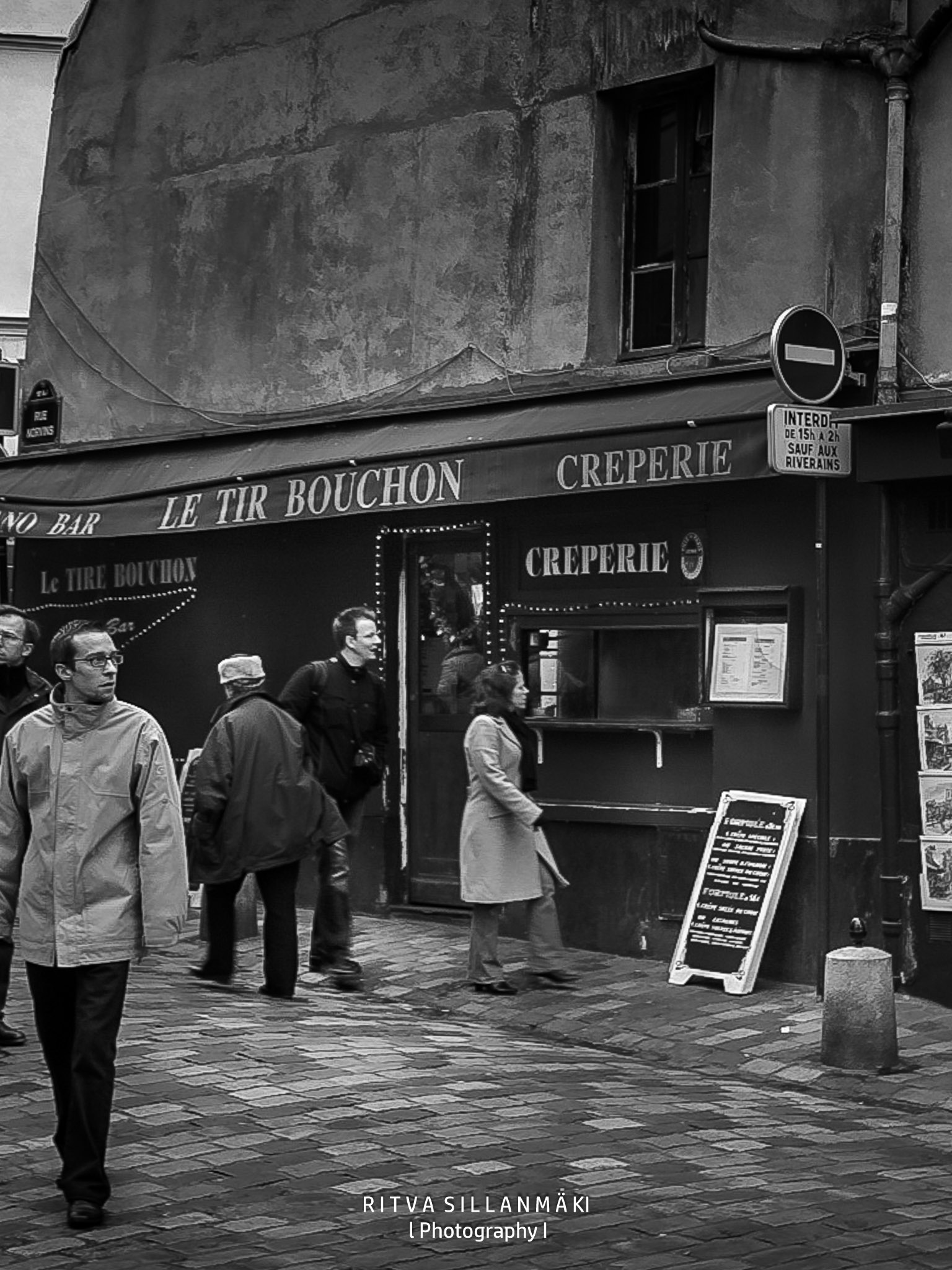
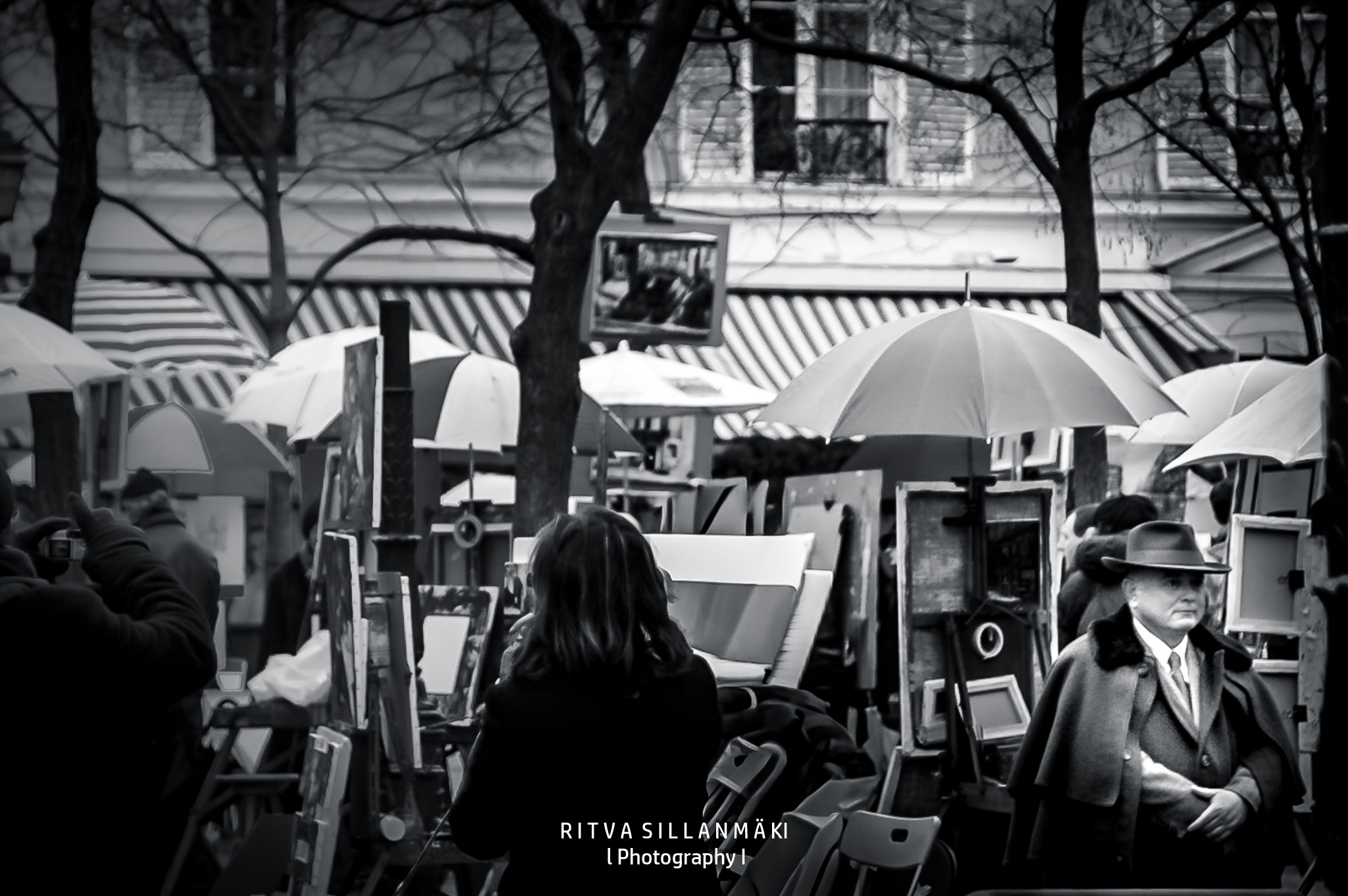
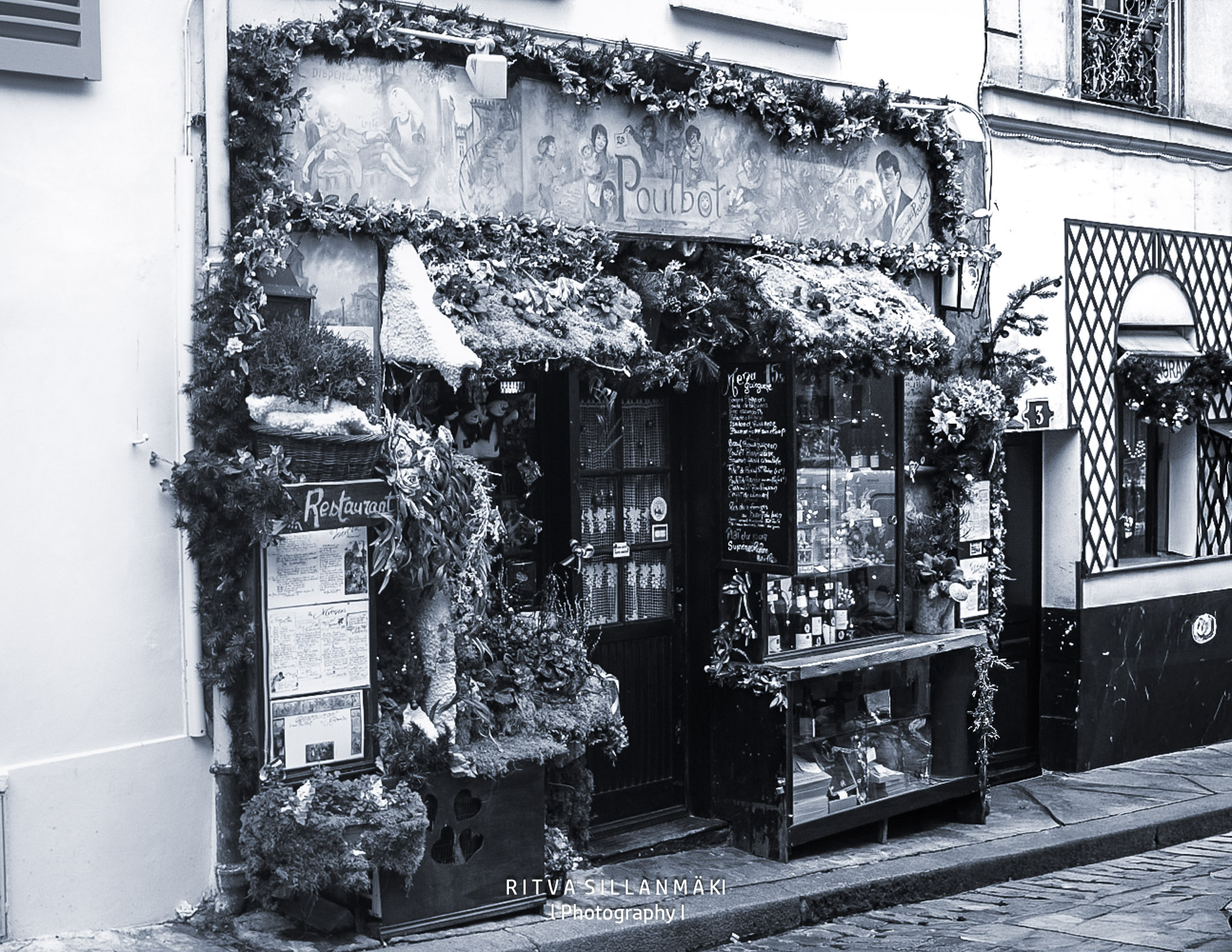
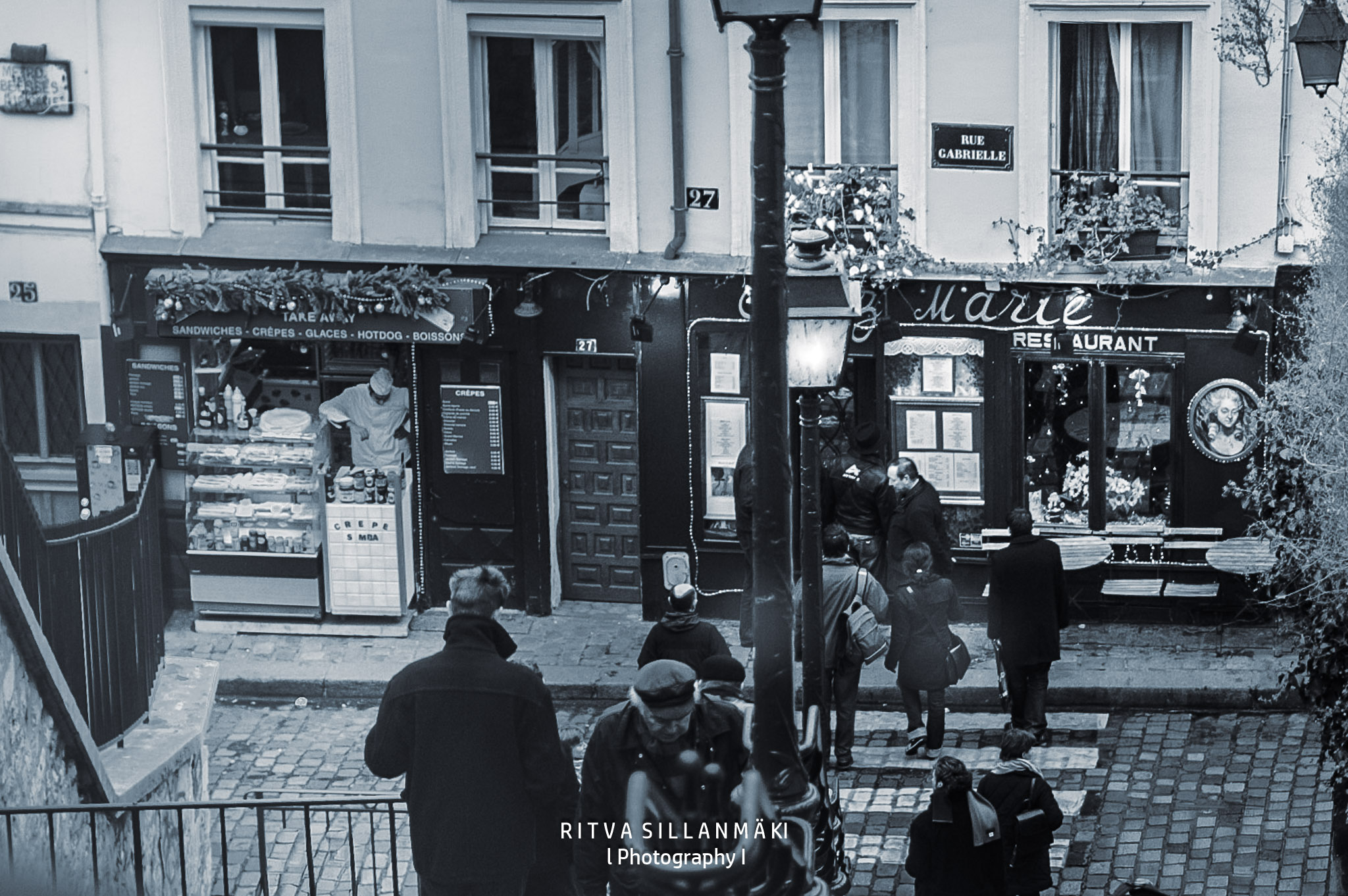
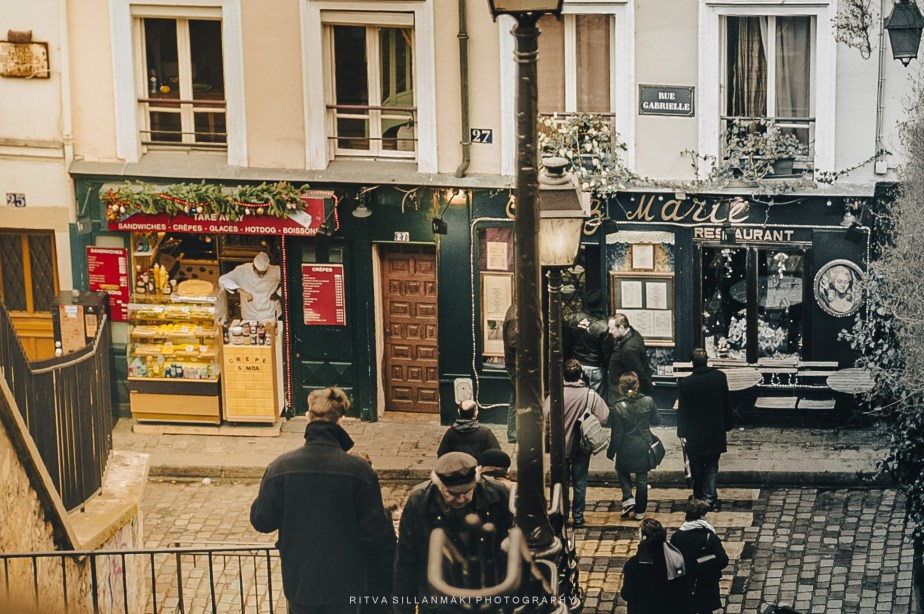
As we wander through the city with my camera in hand, we drift first to Le Palais du Fruit, where shoppers lean over bright piles of produce and the air is sweet with oranges and ripe tomatoes. At Boucherie J.D., its meat counter is alive with clinking knives and the easy charm of a traditional French butcher. A little farther on, a busy Parisian street stretches ahead, lined with old buildings and eclectic storefronts, the smell of fresh bread and quick snatches of conversation spilling from open doors. In a narrow passage, a street vendor stands beside a glowing display of artwork and postcards as the crowd hums around us. We pass a tiny French crêperie on cobblestones beneath a no-entry sign, pausing to watch steam rise from the griddle and breathe in the buttery scent of sugar and warm batter. Up in Montmartre, an outdoor art market unfolds under scattered umbrellas, artists chatting softly as framed works light up the tree-lined square. On Rue Gabrielle, the day lingers while we stroll past a cozy crêperie and restaurant, pedestrians brushing by, the whole street wrapped in that soft Parisian light that makes every corner feel like a memory.
Shoppers browse colorful produce at Le Palais du Fruit, a lively French street market.
A black-and-white view of Boucherie J.D., showcasing its bustling meat counter and traditional French butcher-shop character.
A lively Parisian shopping street unfolds in black and white, with pedestrians, historic buildings, and eclectic storefronts.
A street vendor stands beside a vibrant display of artwork and postcards in a bustling city passage.
Pedestrians pass a charming French crêperie on a cobblestone street beneath a prominent no-entry sign.
A lively outdoor art market ar Montmartre unfolds beneath umbrellas, with artists, shoppers, and framed works filling the tree-lined scene.
A charming flower-filled restaurant storefront with a hand-painted mural and inviting sidewalk display.
A lively Parisian street scene on Rue Gabrielle, with a crêperie, restaurant, and pedestrians along the cobblestones.
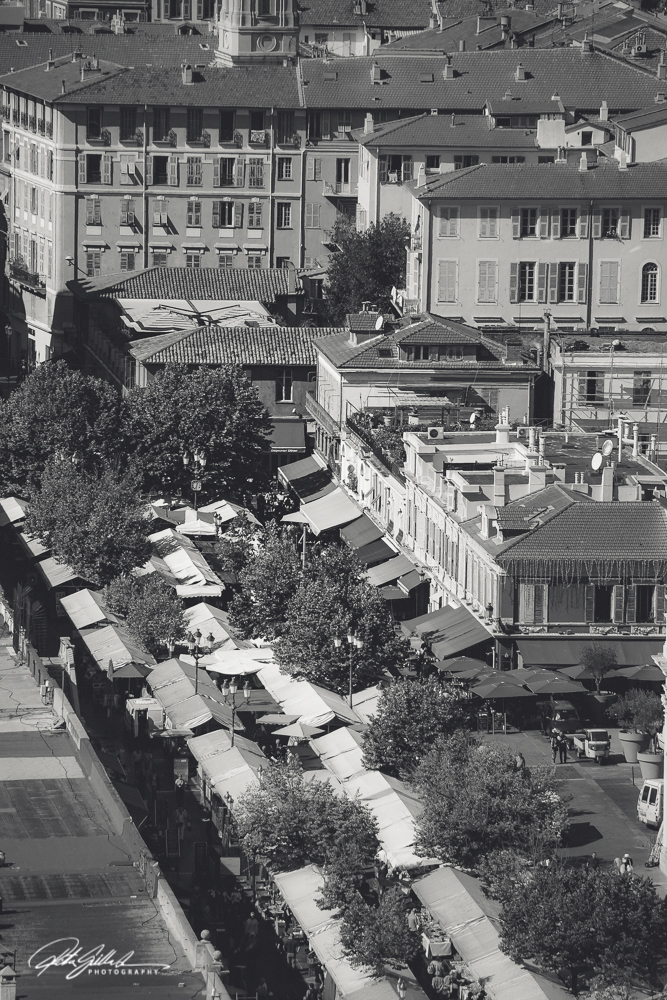
And as an afterthought I added this earlier edit, but this is not from Paris, it is from Nice. Also taken years back.
A bustling open-air market winds through a historic European city of Nice framed by tiled rooftops, shuttered buildings, and leafy trees.
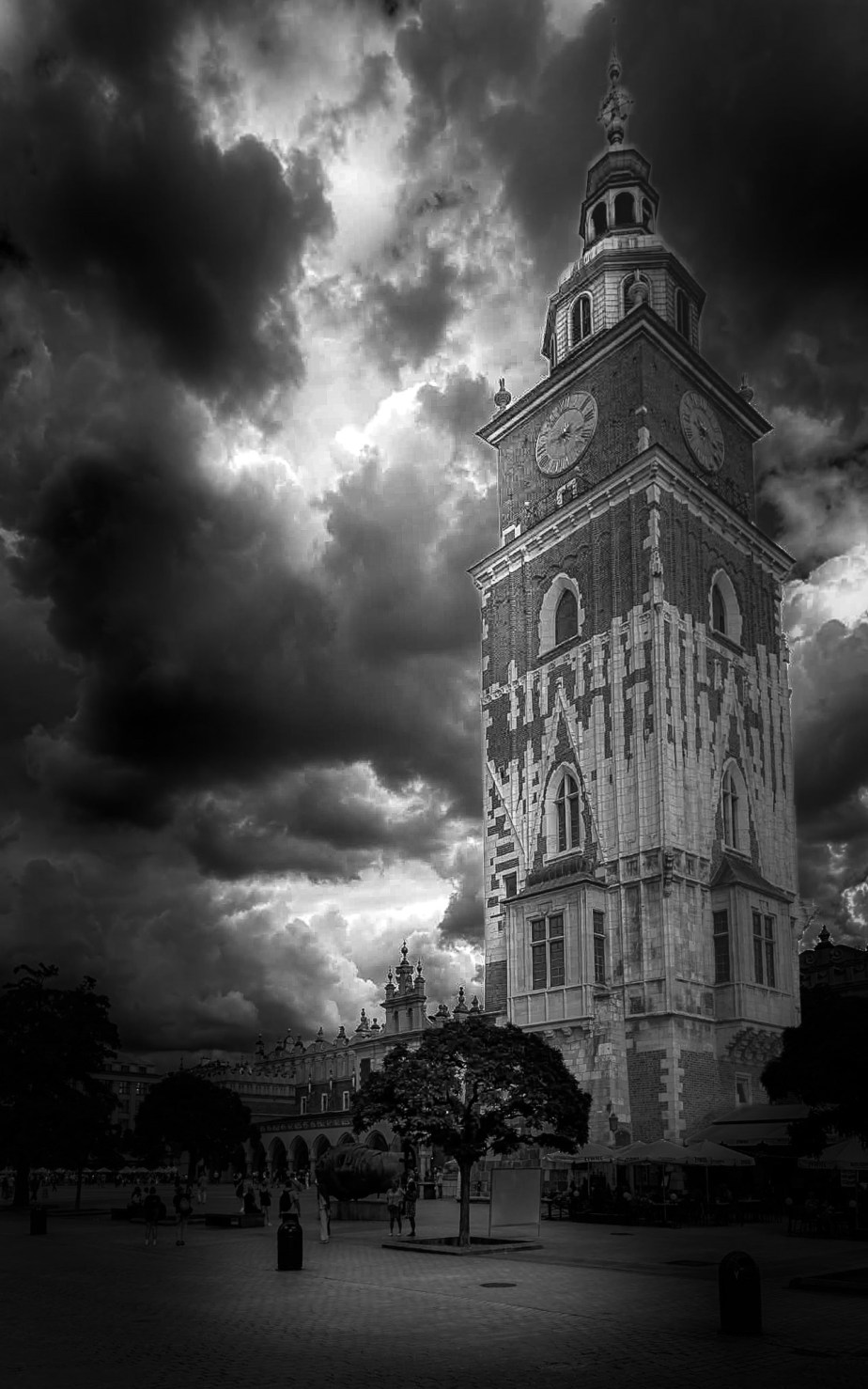
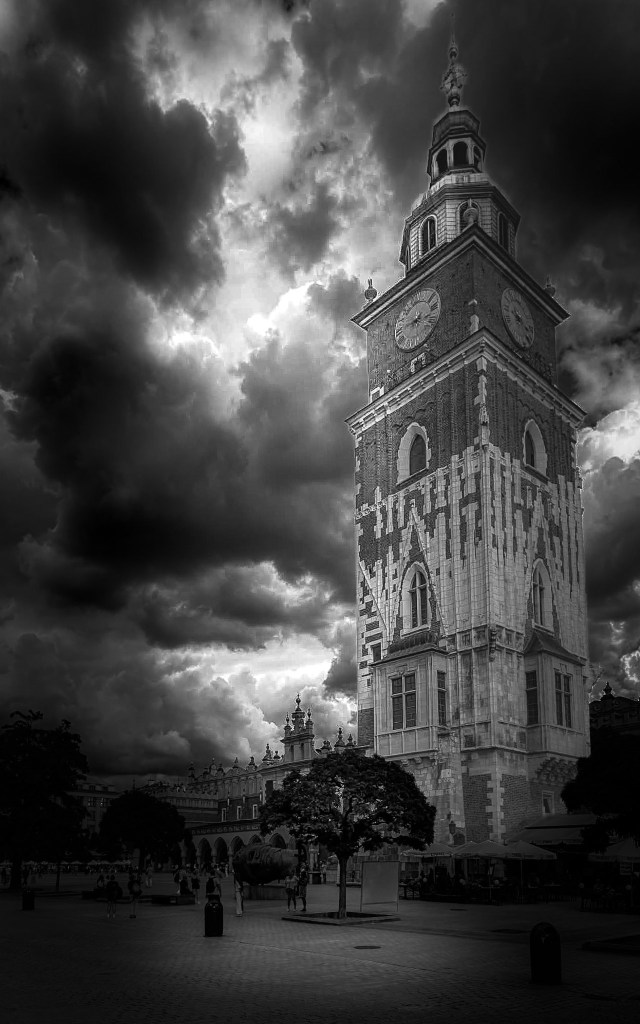
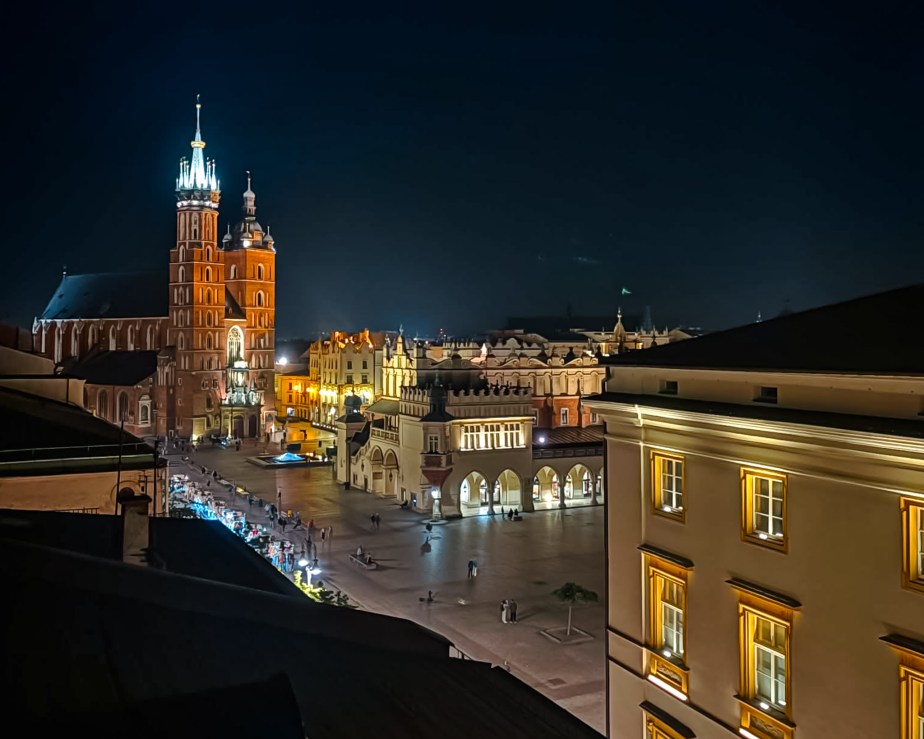
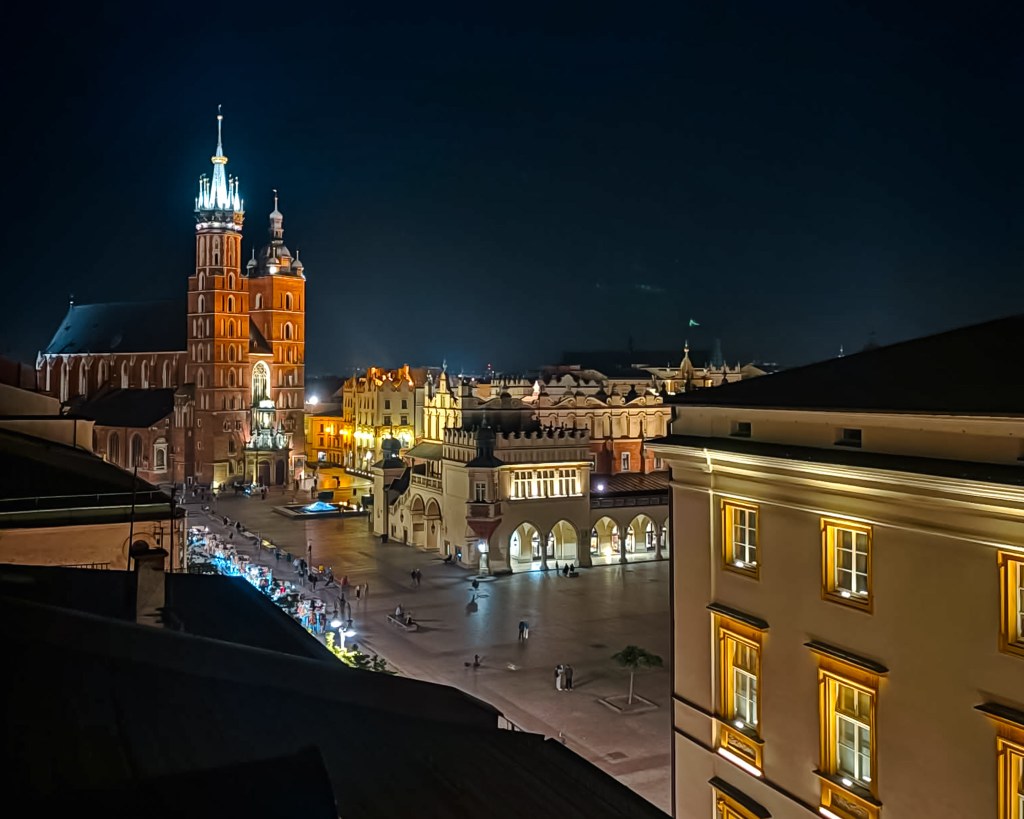
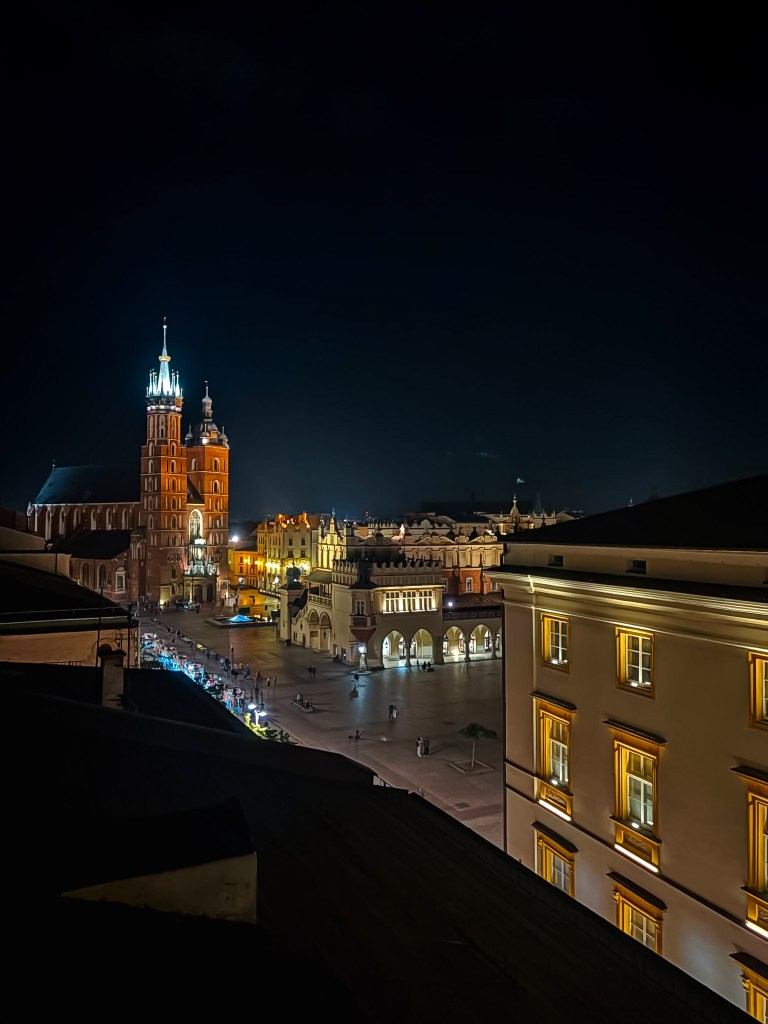
I came across this wonderful photo my son captured, and I was instantly drawn to the clouds that framed the Town Hall Tower in Krakow. I felt inspired to edit this image (with permission) of the tower, which stands proudly in the historical market square of Krakow in Poland (Rynek Główny). This Gothic tower, built in the 14th century, is the last remnant of the old town hall. It’s fascinating to see how it’s constructed from brick and stone, and I read that it leans slightly—about 55 centimeters off vertical.
I wanted to give the clouds a little more depth, and converting the image to black and white really did the trick. Heavy clouds fill the sky, with bright light breaking through behind the tower, creating a moody, cinematic atmosphere and strong contrast. I find the mood quite ominous—what about you?
A dramatic black-and-white view of a historic clock tower rising above a city square beneath stormy clouds.
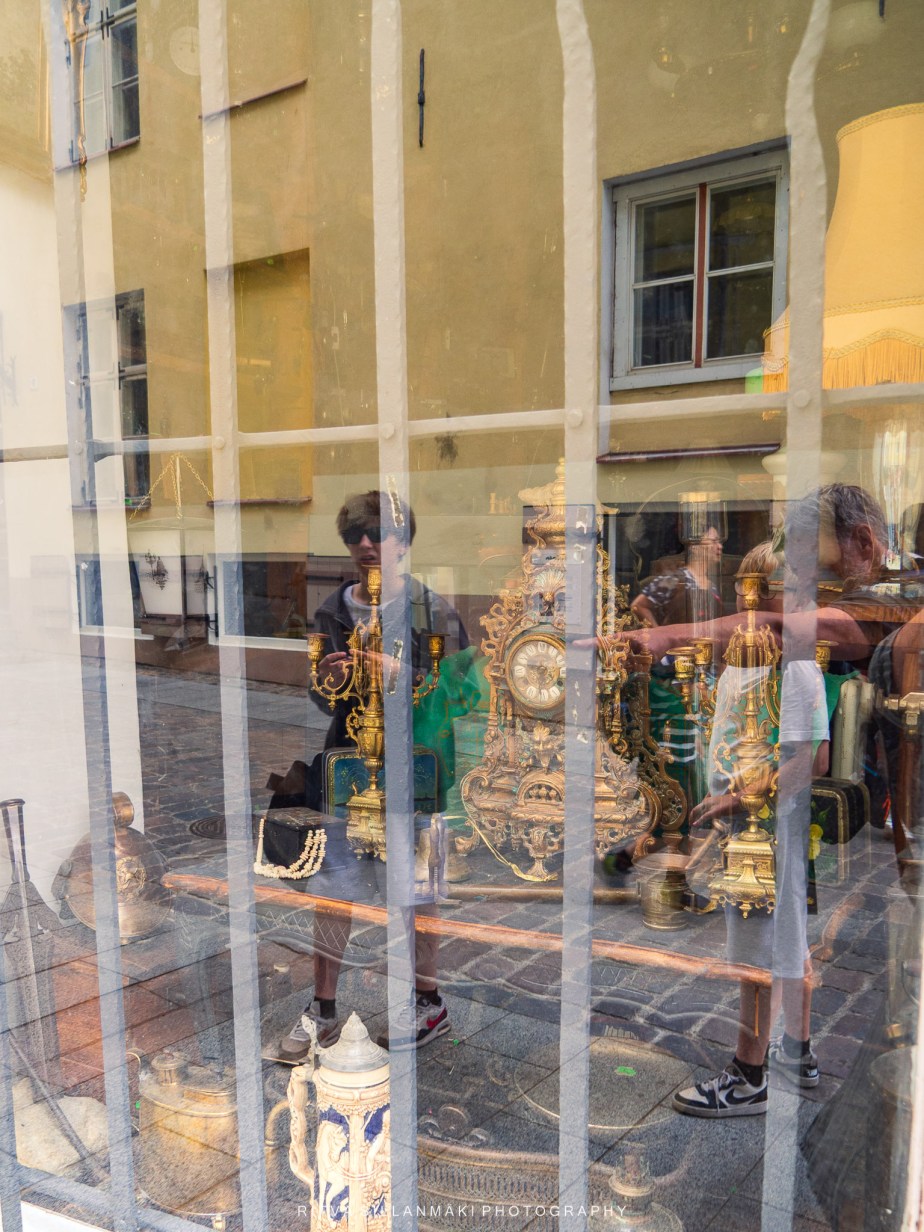
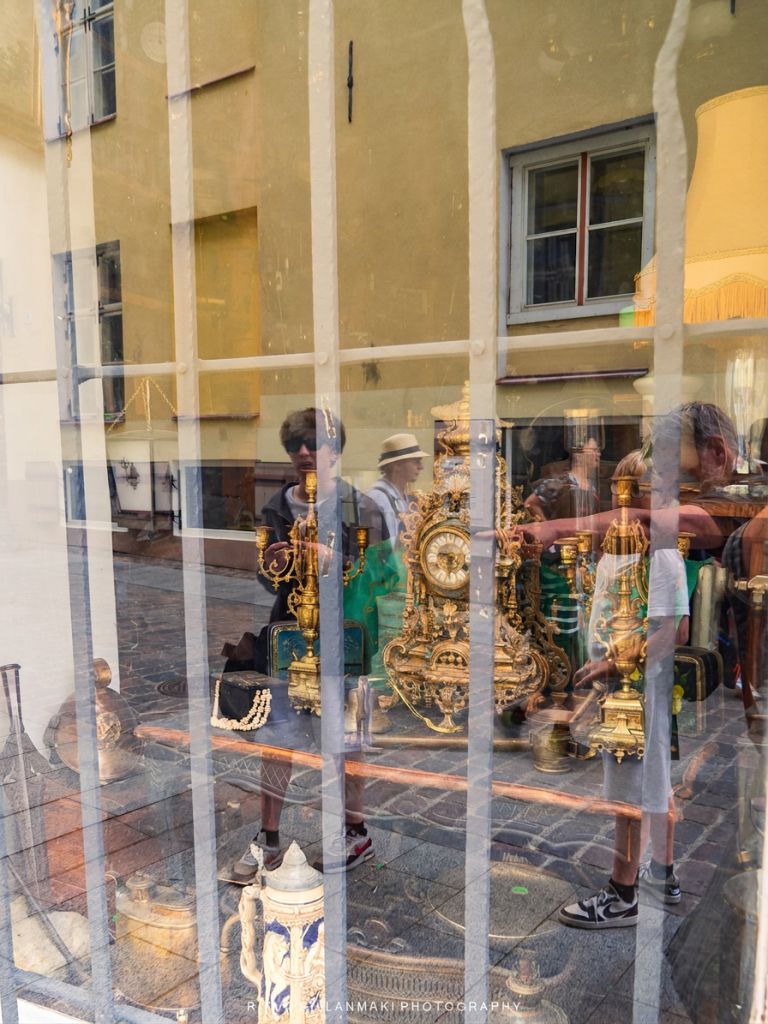
I took this because the interplay between the reflections of pedestrians and the historic architecture in the shop window intrigued me, creating a dynamic contrast that beautifully blended urban life with the rich details of the antique objects inside. The way the figures in casual clothing seemed to interact with the display added a captivating layer to the scene, and the warm glow of the lampshade against the pastels of the building façades created a dreamlike quality that I found irresistible.
Reflections of pedestrians and historic buildings merge with an ornate antique display in a shop window.
Time has a way of speeding by, particularly as I age. Here we are once more on a Monday, and I’m embracing the tradition of sharing windows through Monday Window. Each week is filled with the daily routines, but this opportunity allows me to simply revel in sharing a window that piqued my interest. This one appeared especially welcoming!
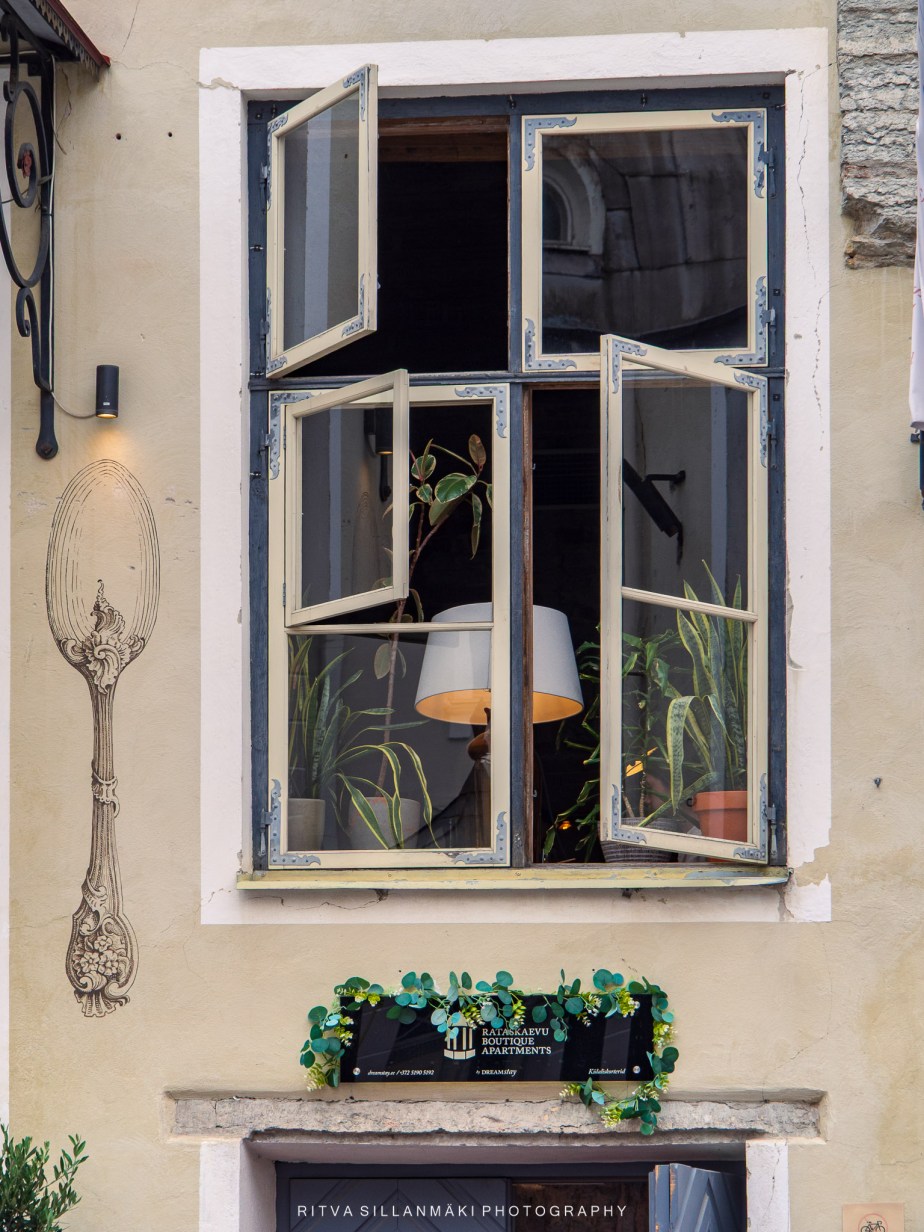
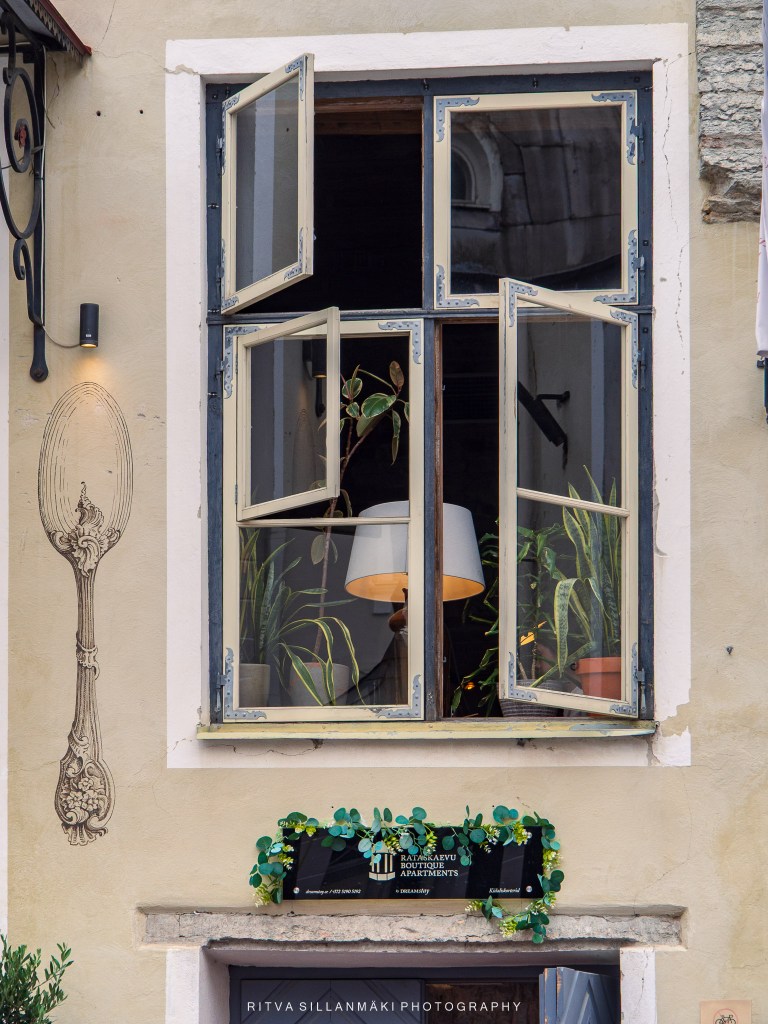
I observed this charming building facade that exuded a nostalgic charm, characterized by a large, open window framed in cream with delicate blue accents. The scene captured my attention due to the inviting sight of green potted plants and the warm glow of a table lamp visible through the tilted panes. The subtle signs of wear on the beige wall, including small cracks and peeling paint, added a vintage allure that spoke of history and stories untold. An artistic drawing of an ornate spoon to the left and a black sign with green foliage below provided contextual details that enriched the composition. This captivating blend of elements sparked my creative instinct to capture the window the unique interplay of urban life and artistic expression.
A charming open window adorned with plants and a glowing lamp, highlighting a cozy interior behind a boutique apartment sign.
In the window with no glass, is it truly a window? Just a question that lingers in the air. A group of domestic pigeons, also known as doves, have taken refuge here, finding solace of the outside world. The barred window, embedded in the aged stone wall, likely serves as a safe haven for the birds, much like a traditional pigeon loft where they can rest and gather. This quaint space, with its rustic charm, provides them shelter from the elements, allowing the pigeons to huddle together, cooing softly to one another as they bask in the warmth of the sun that dapples through the gaps. The stone, weathered by time and the elements, tells stories of seasons gone by.
A group of pigeons perched on the bars of a rustic, weathered window set in an old stone wall.
The photos were taken in Argyroupoli, Crete in May, there is rich history of this charming village. With its picturesque ancient ruins, every corner of Argyroupoli tells a story steeped in tradition. I’m now sharing these images with Monday Window.
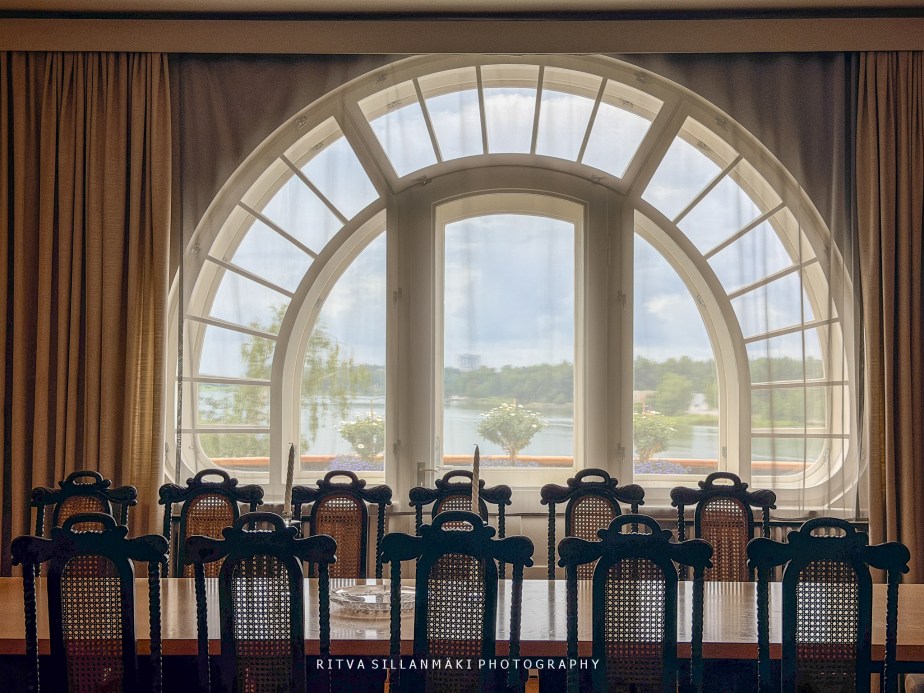
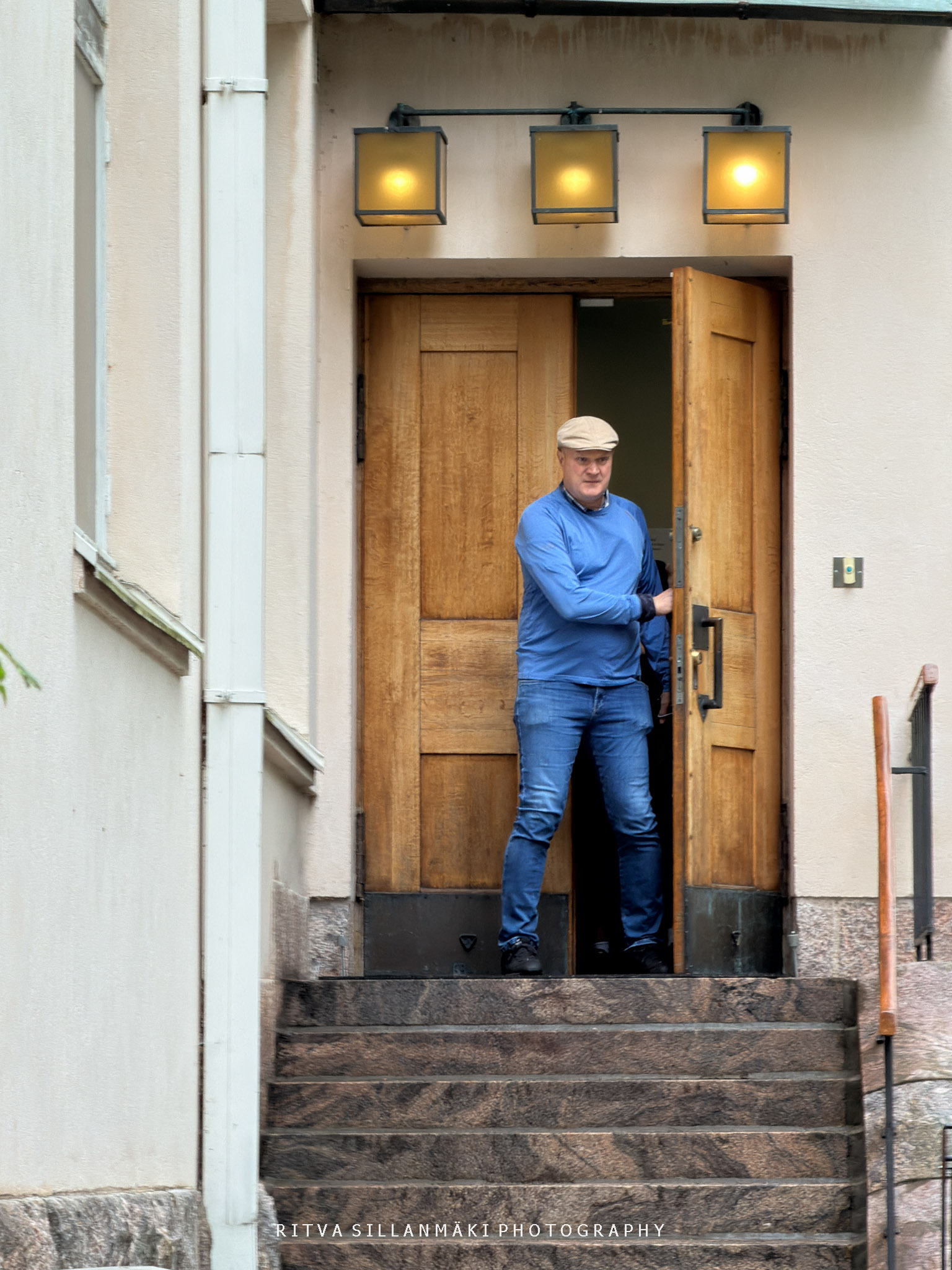
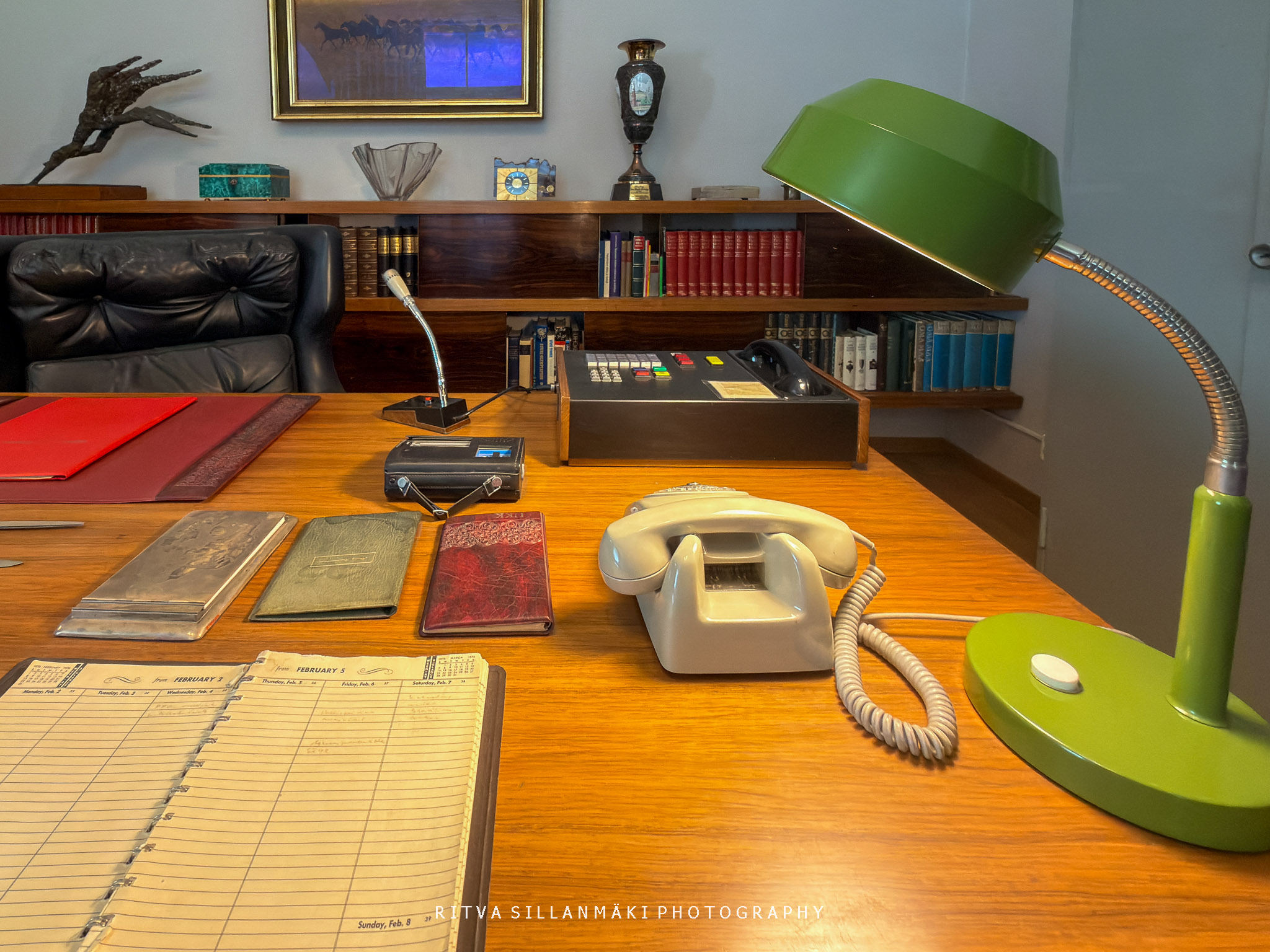
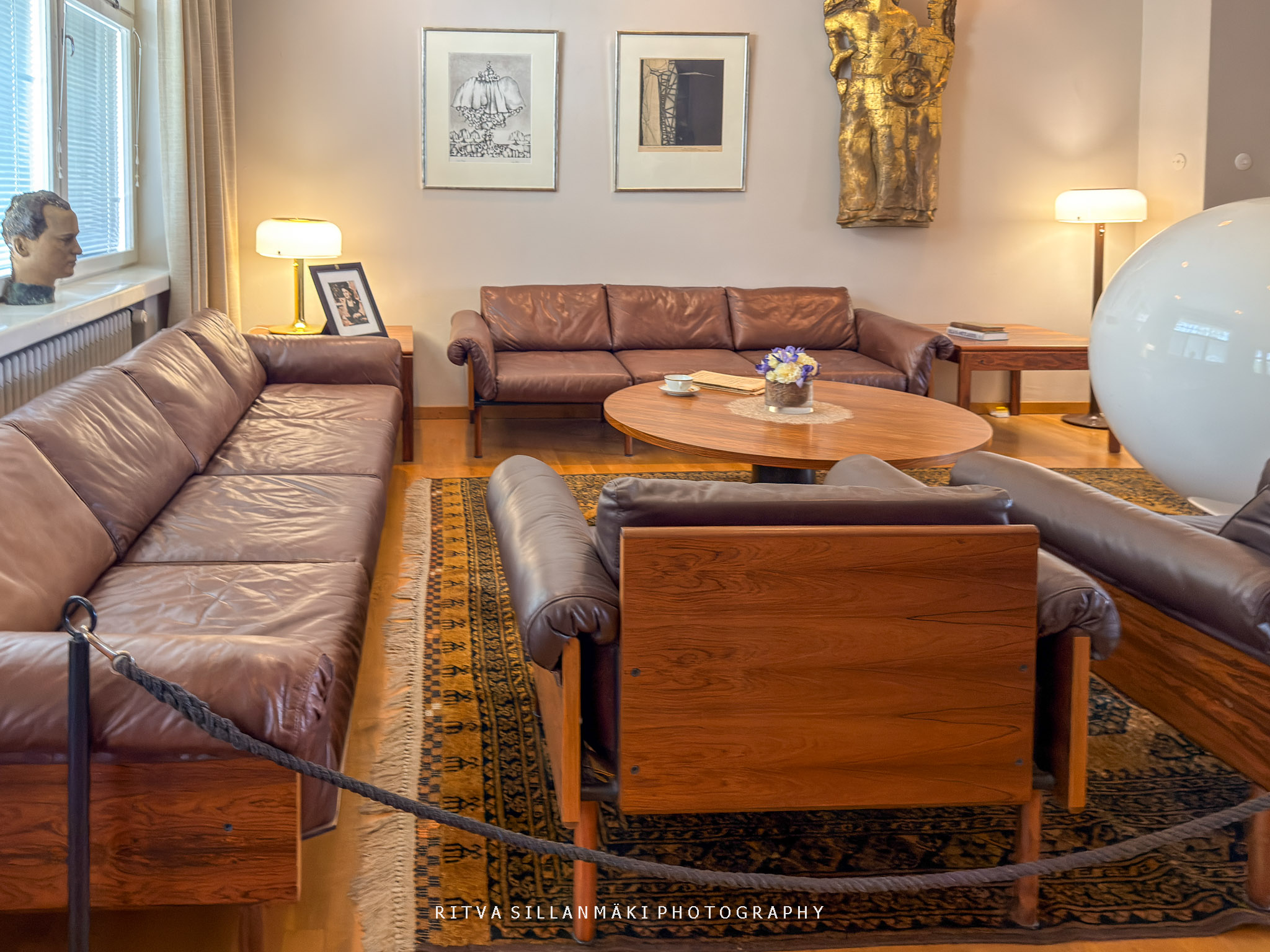
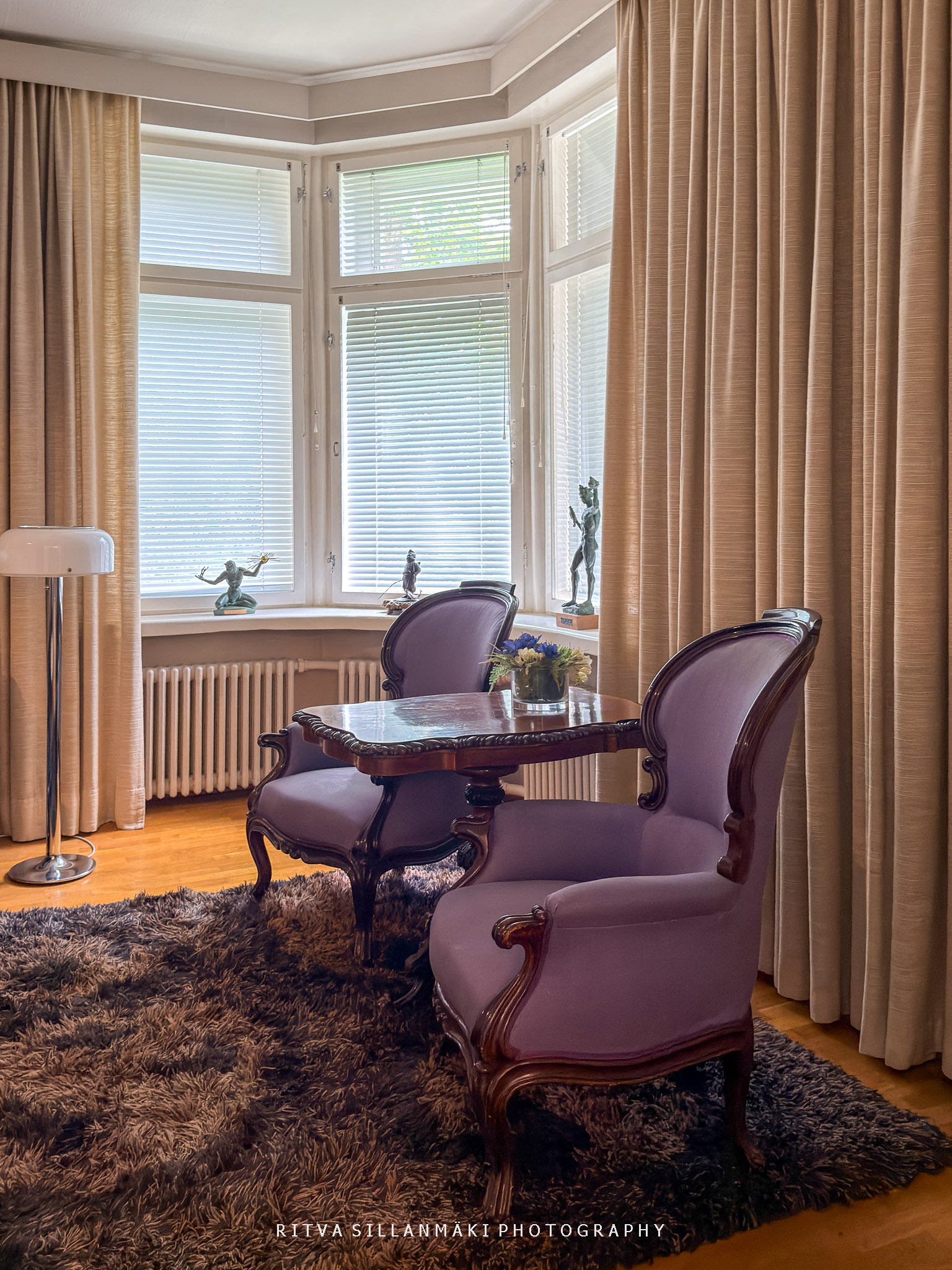
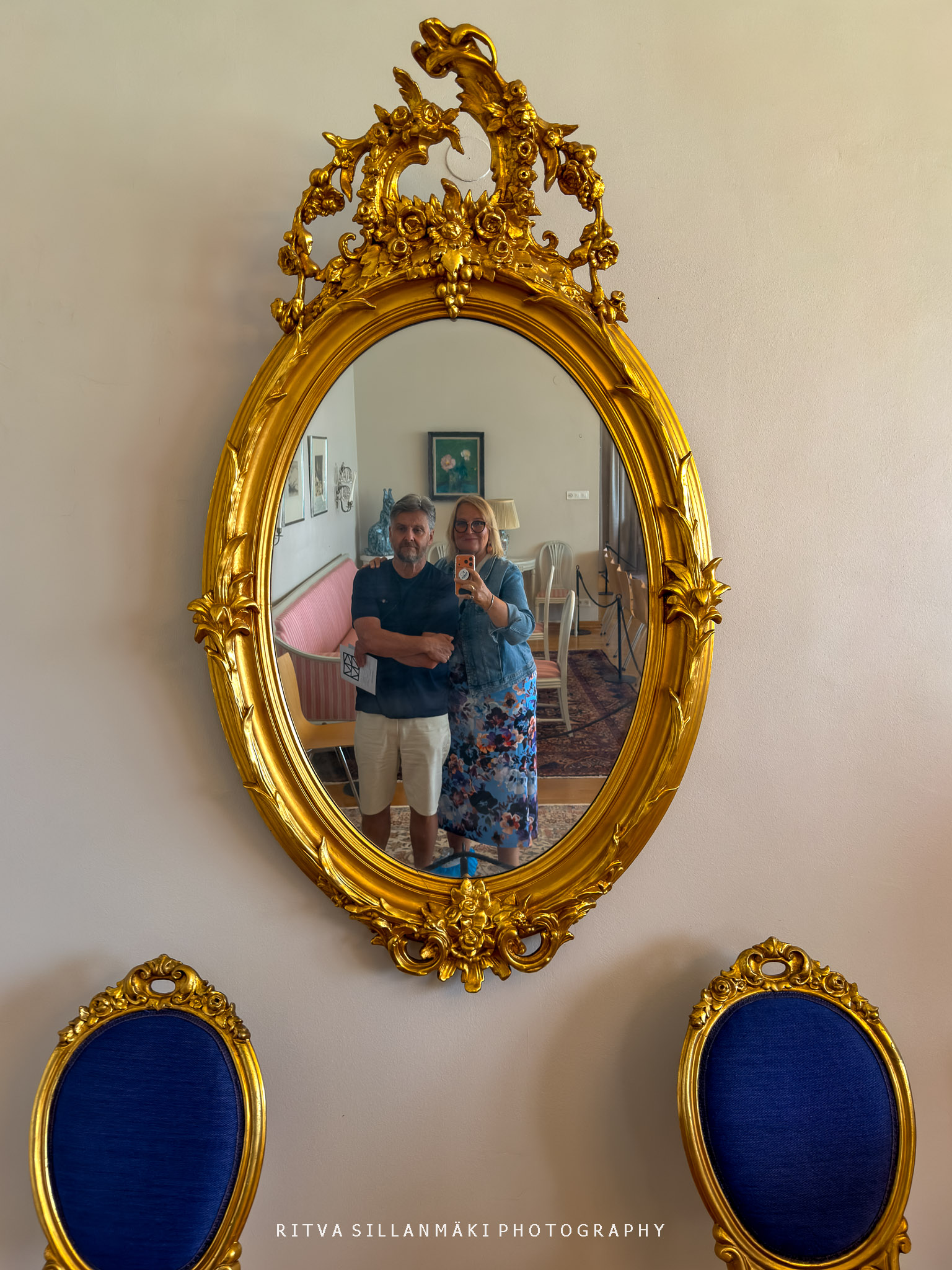
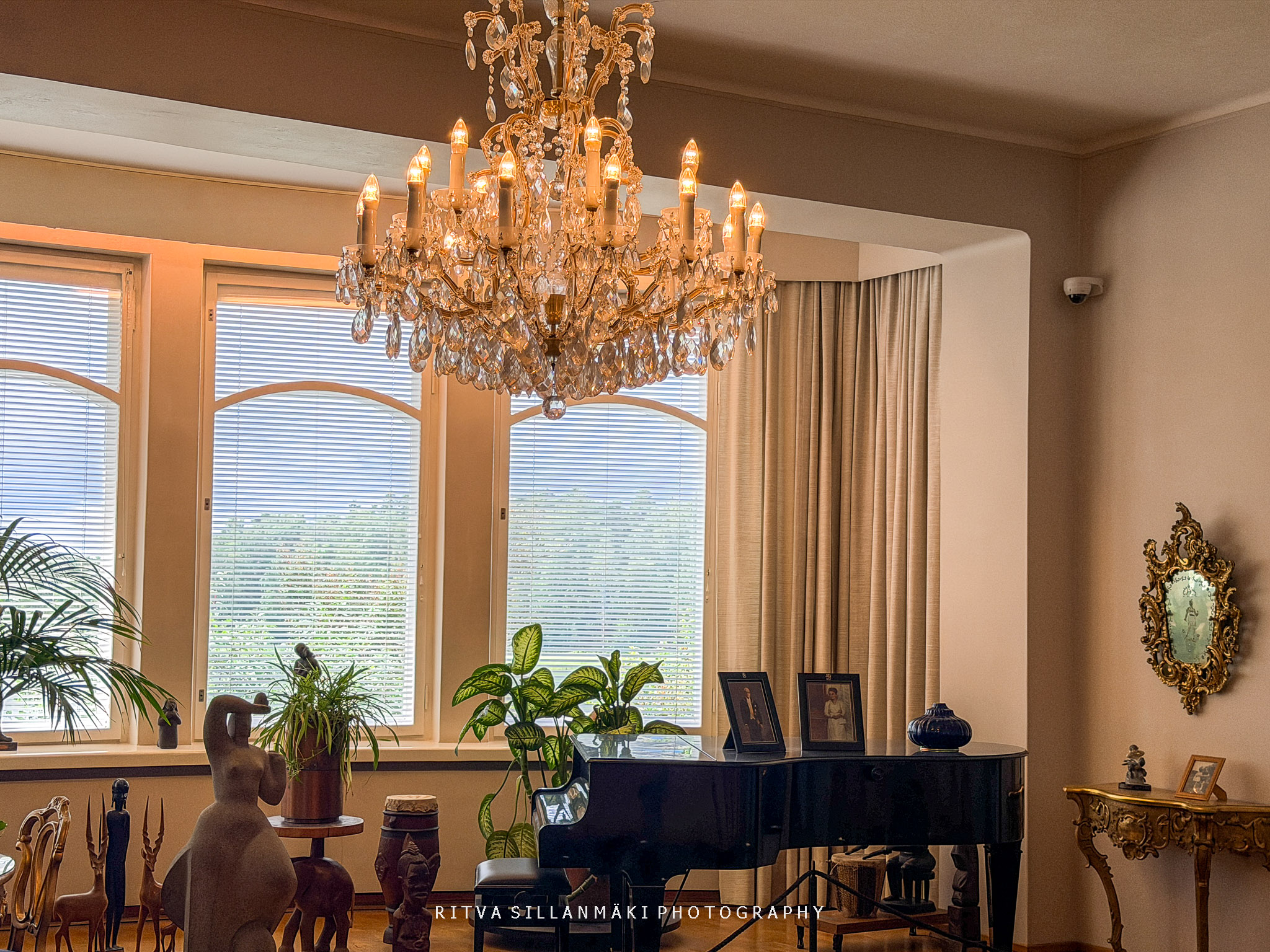
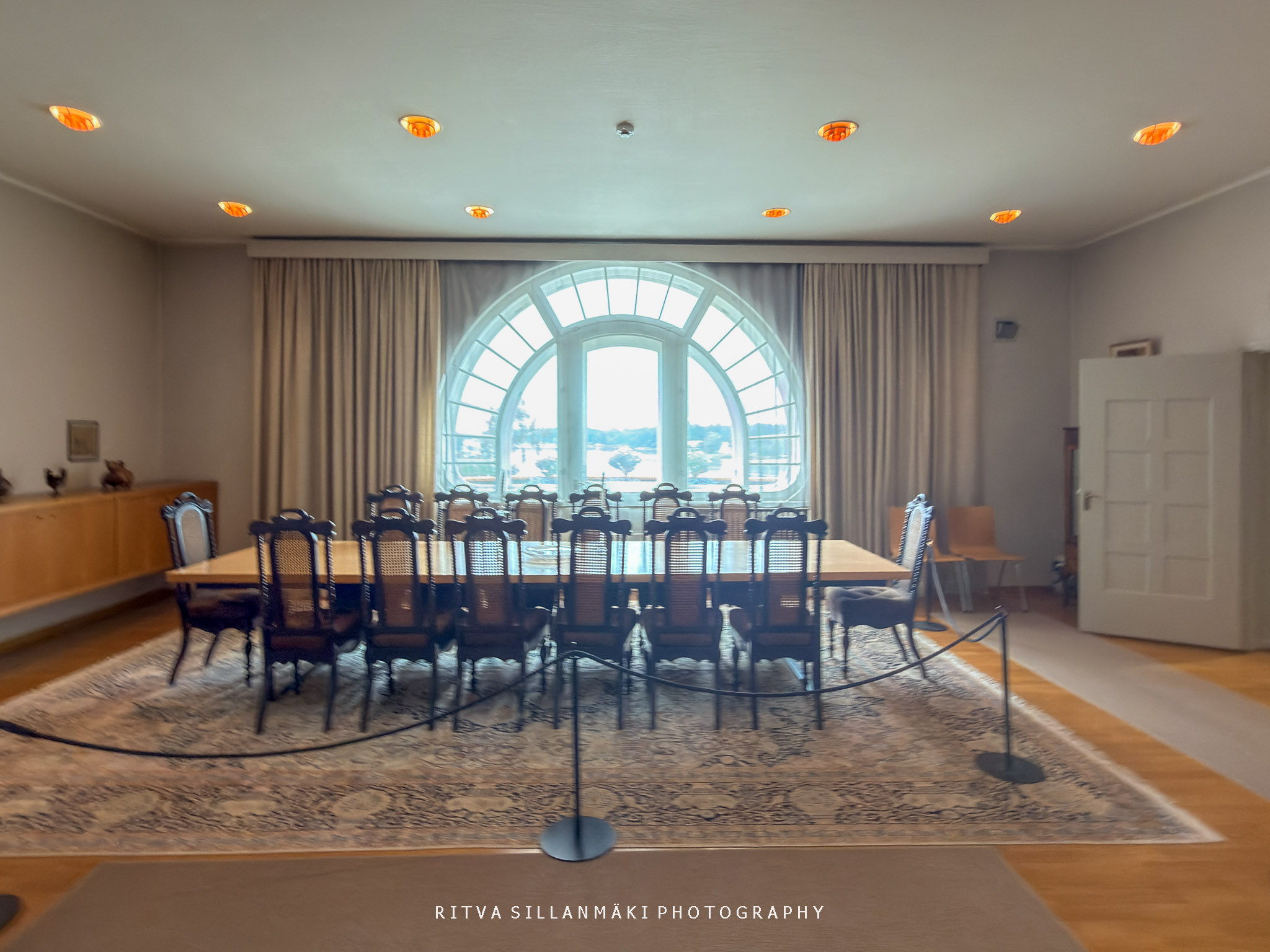
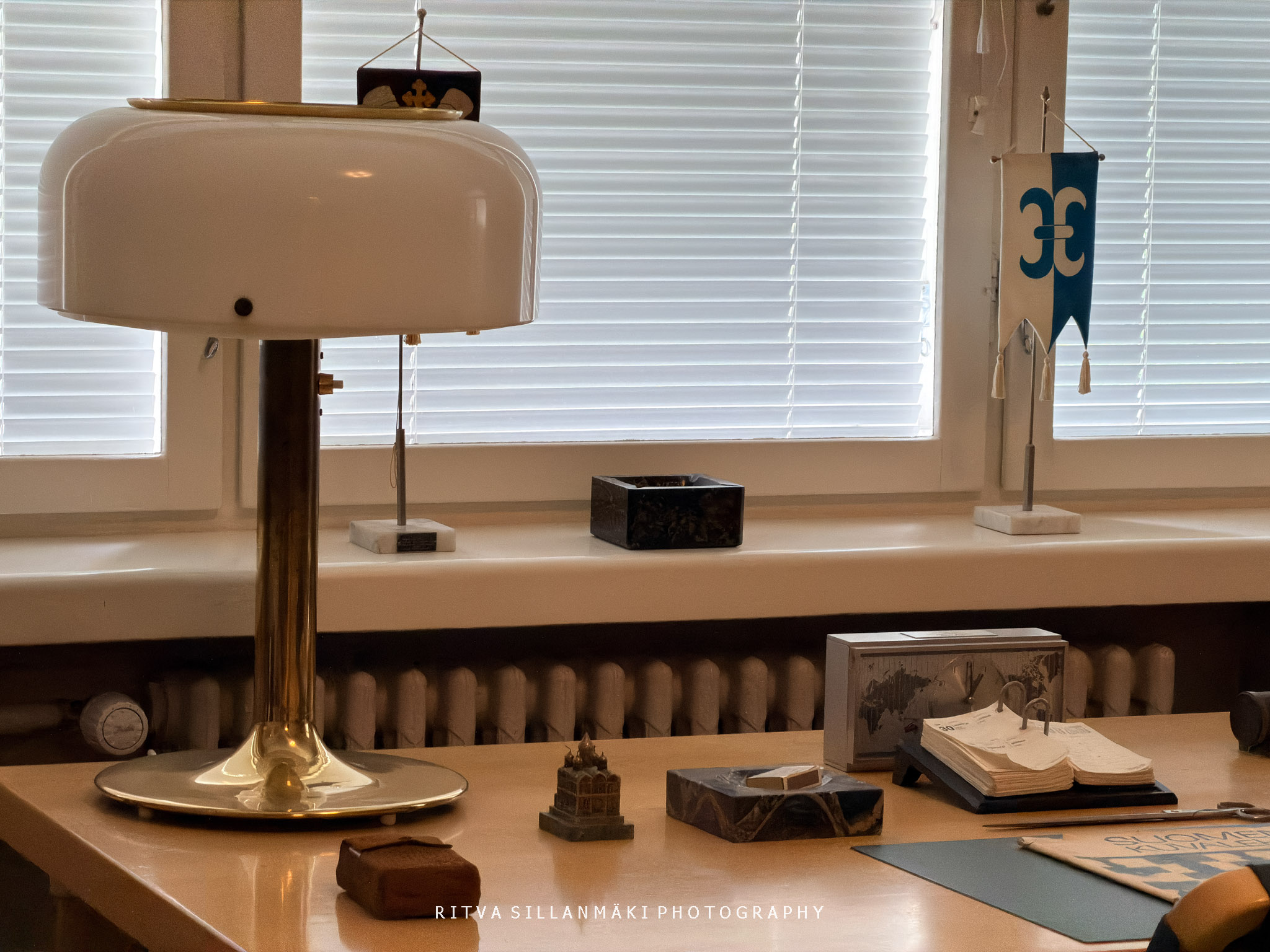
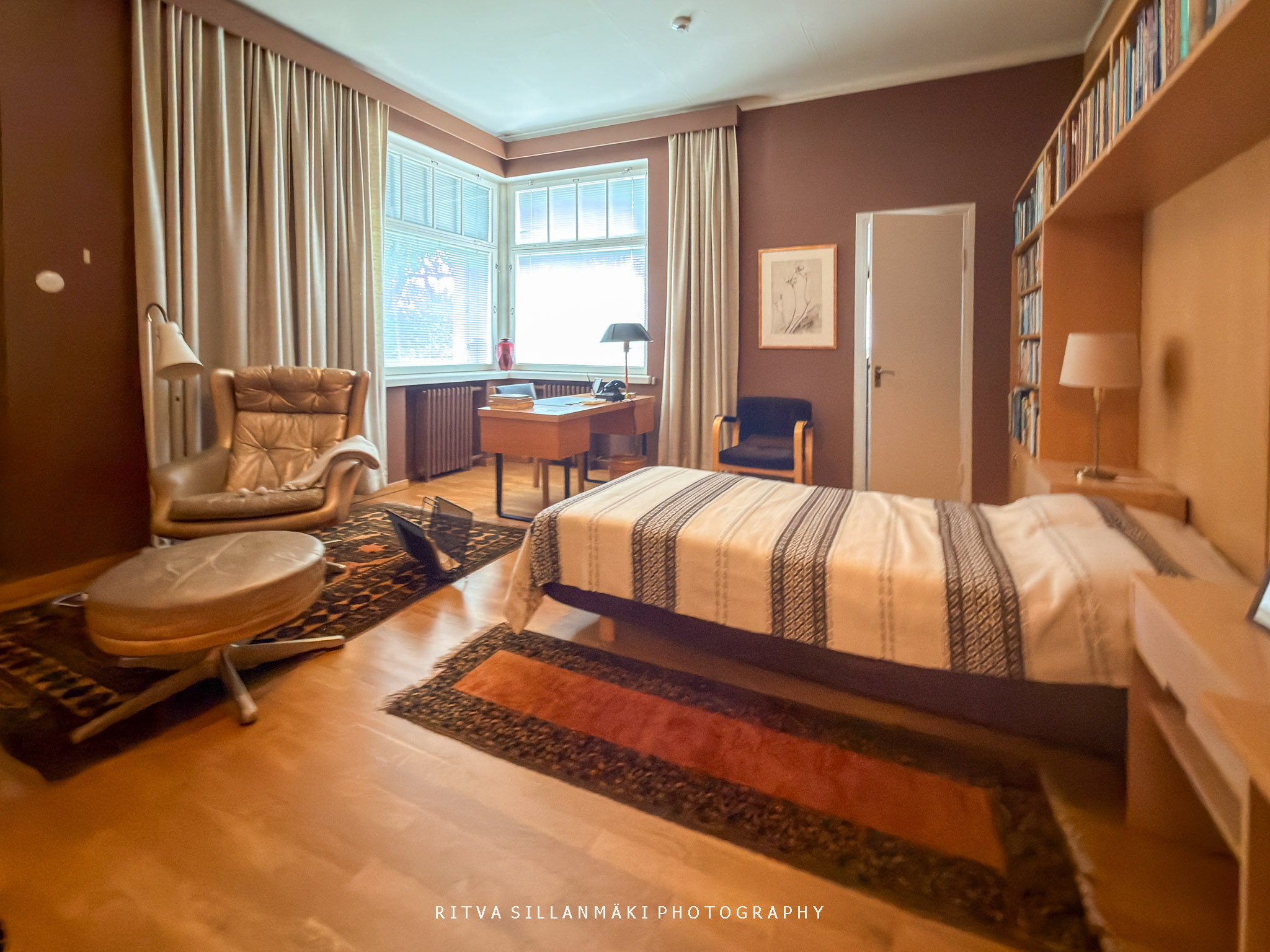
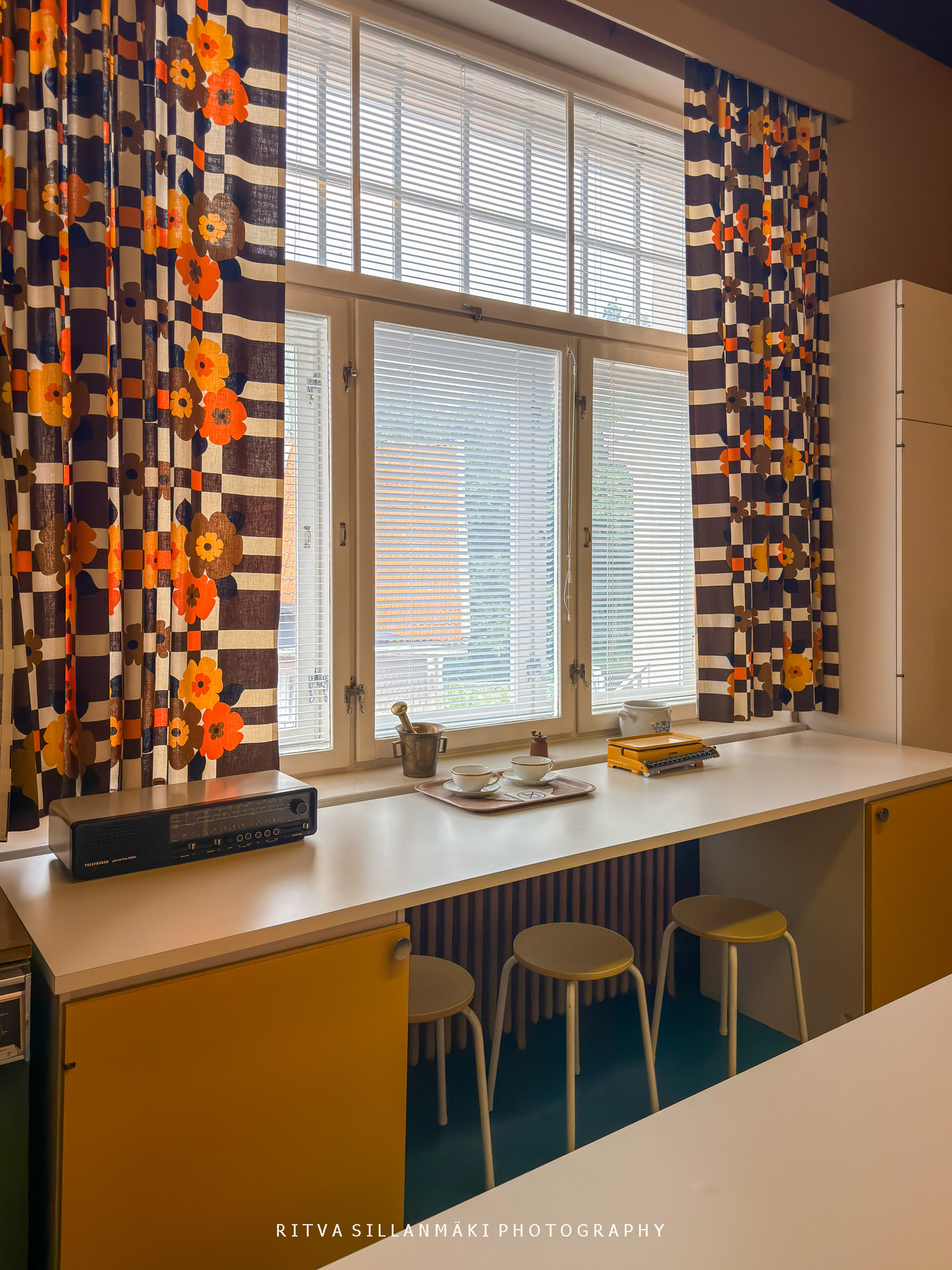
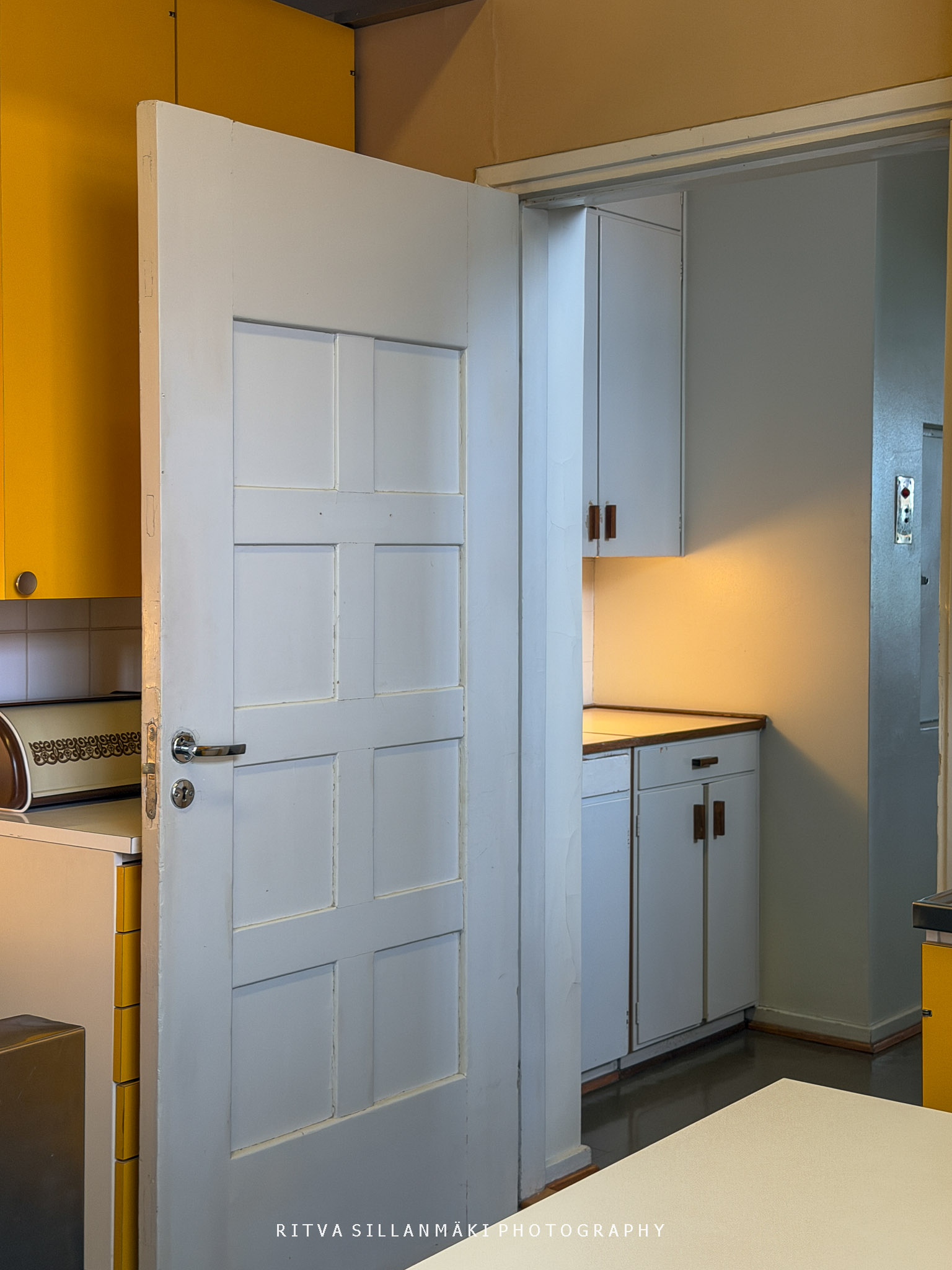
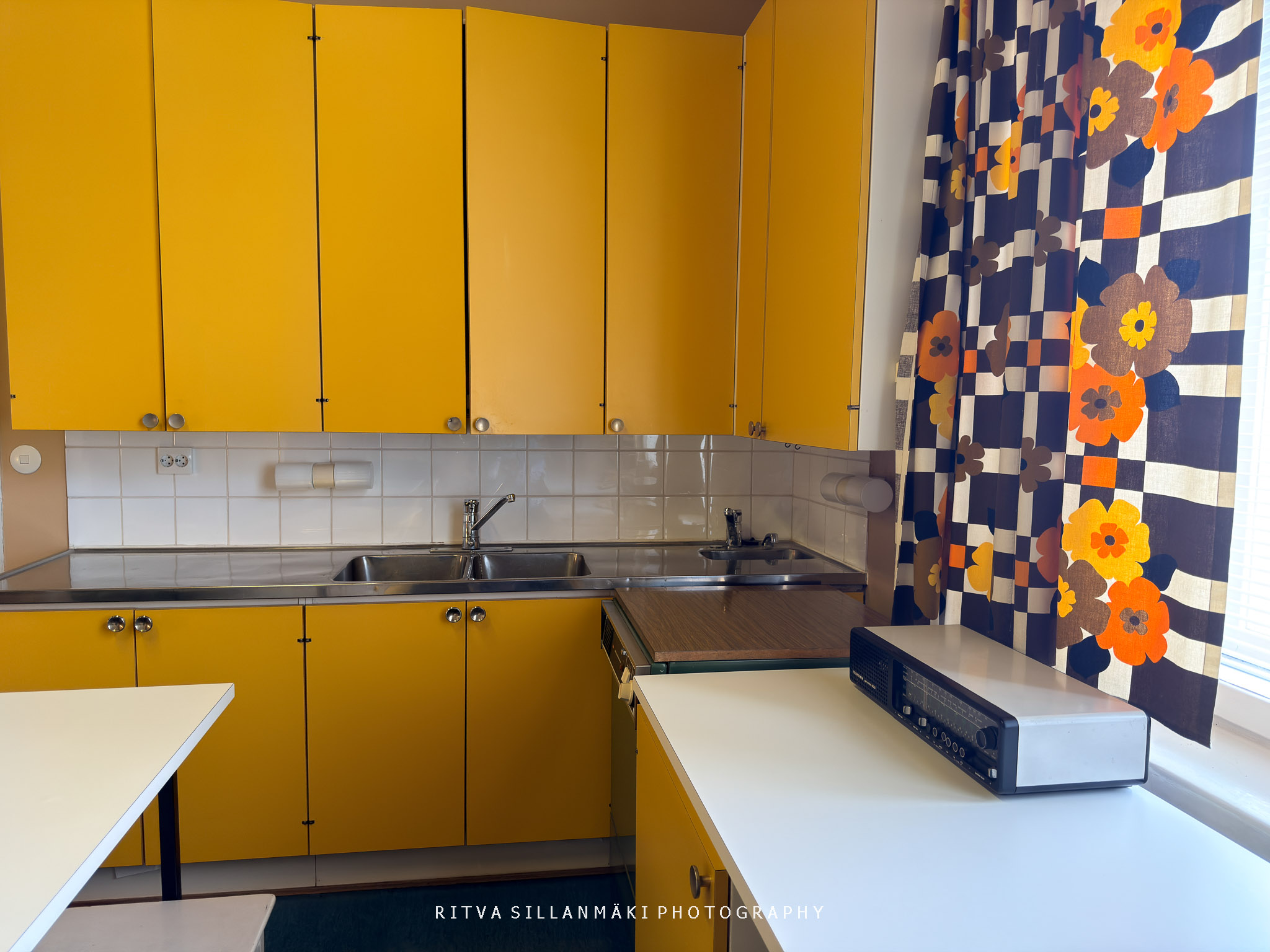
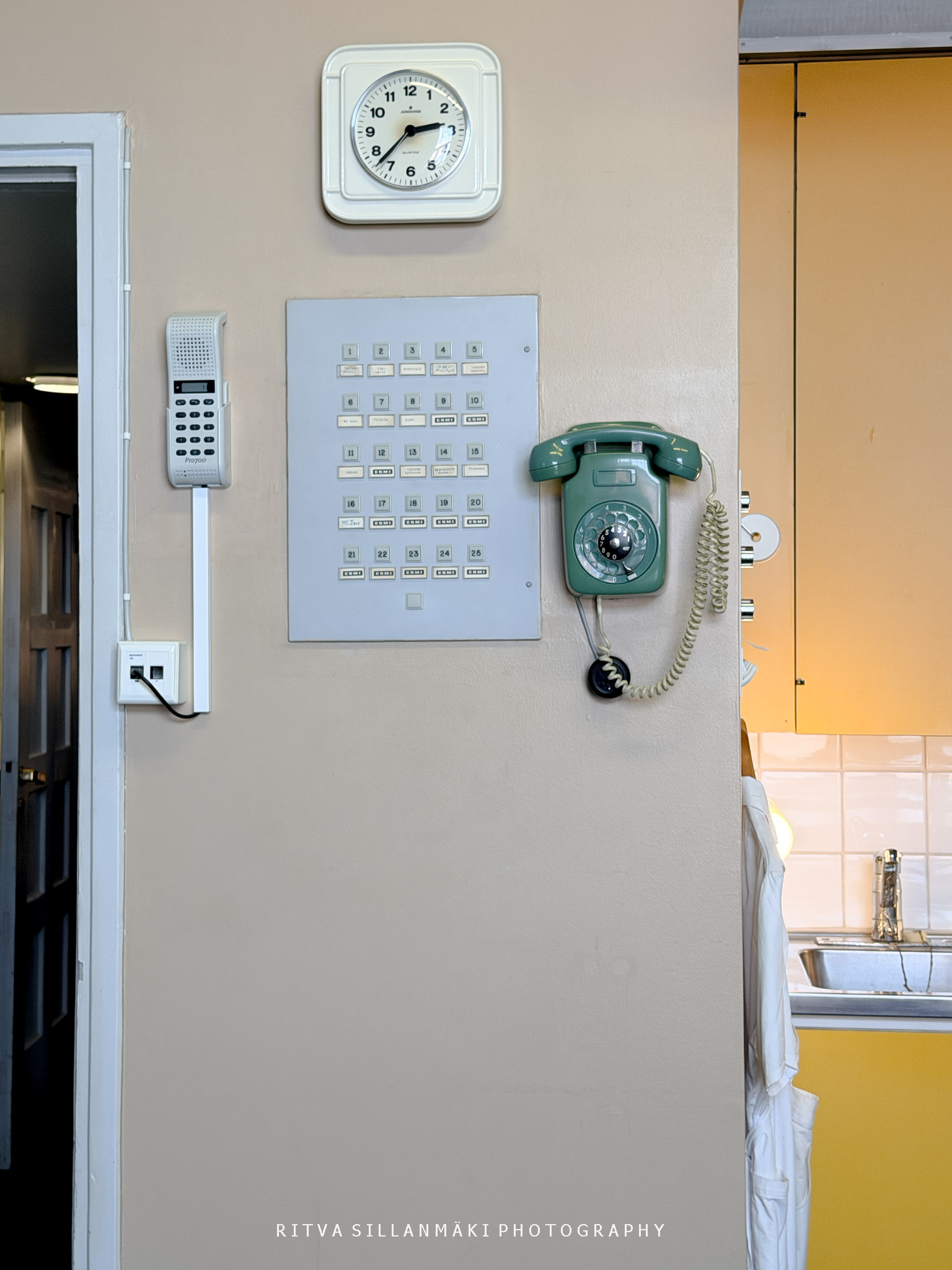
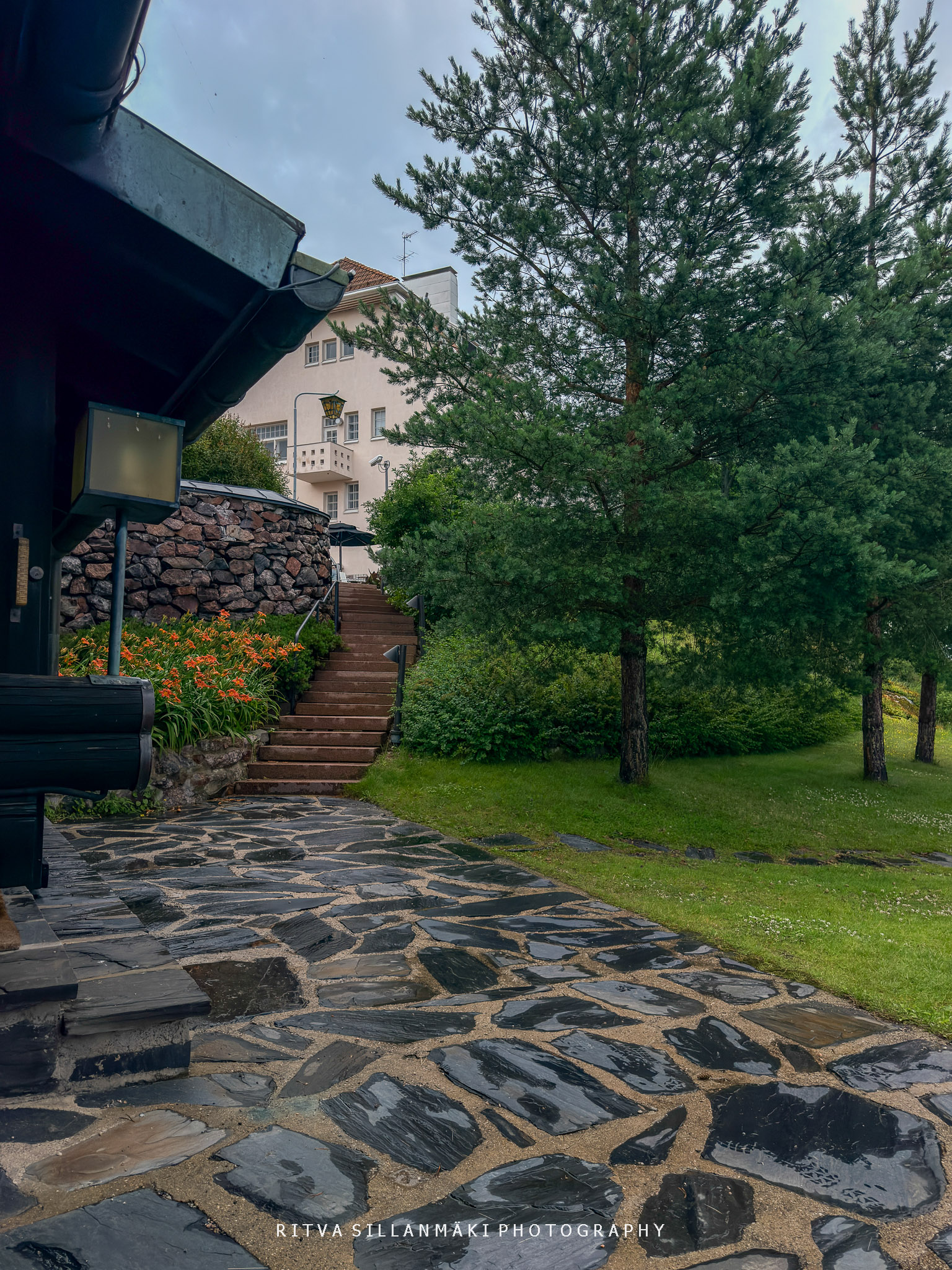
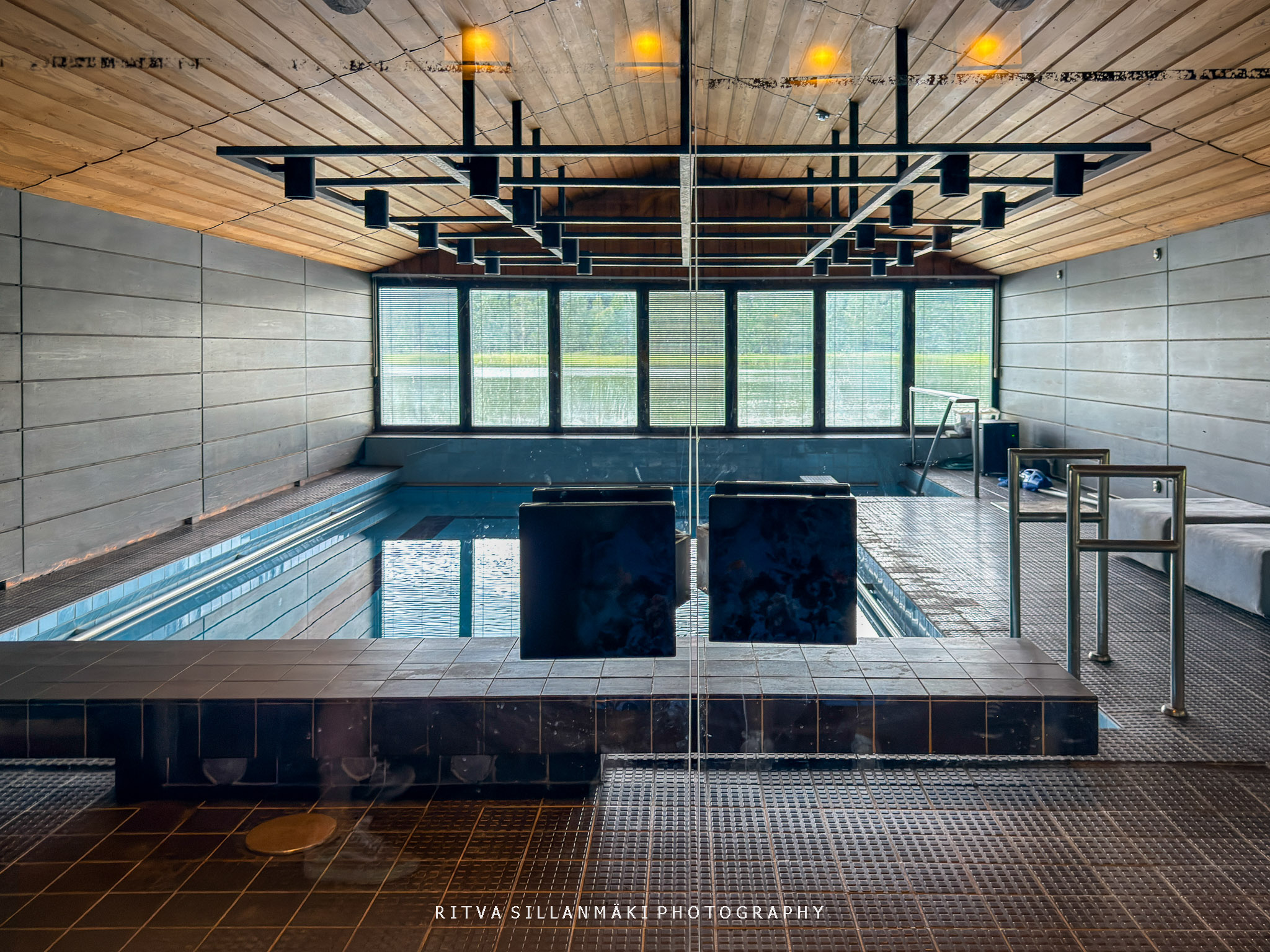
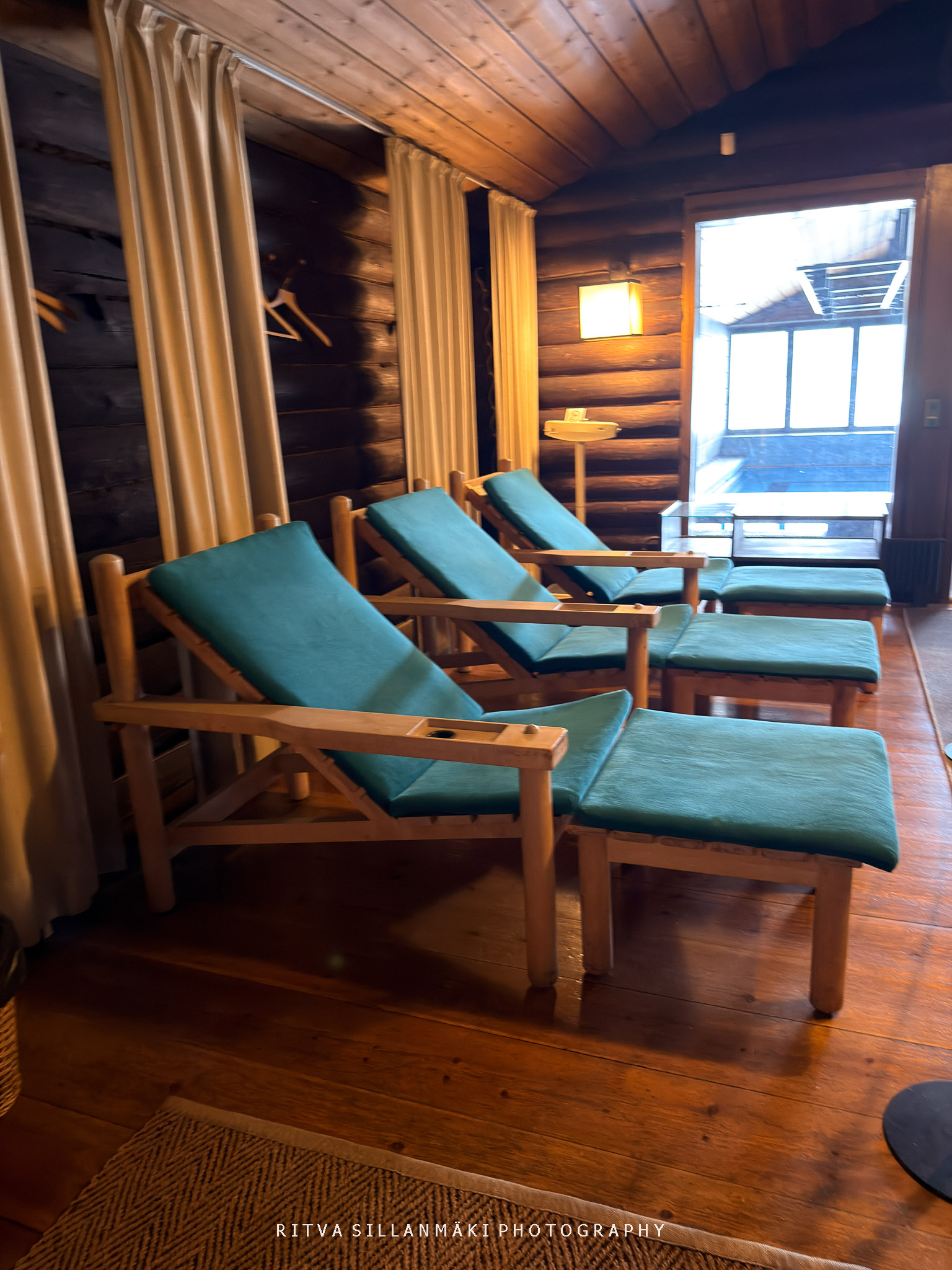
There was a moment when it did not rain, as we visited Tamminiemi today, in the link you can find more information about the place
Early history
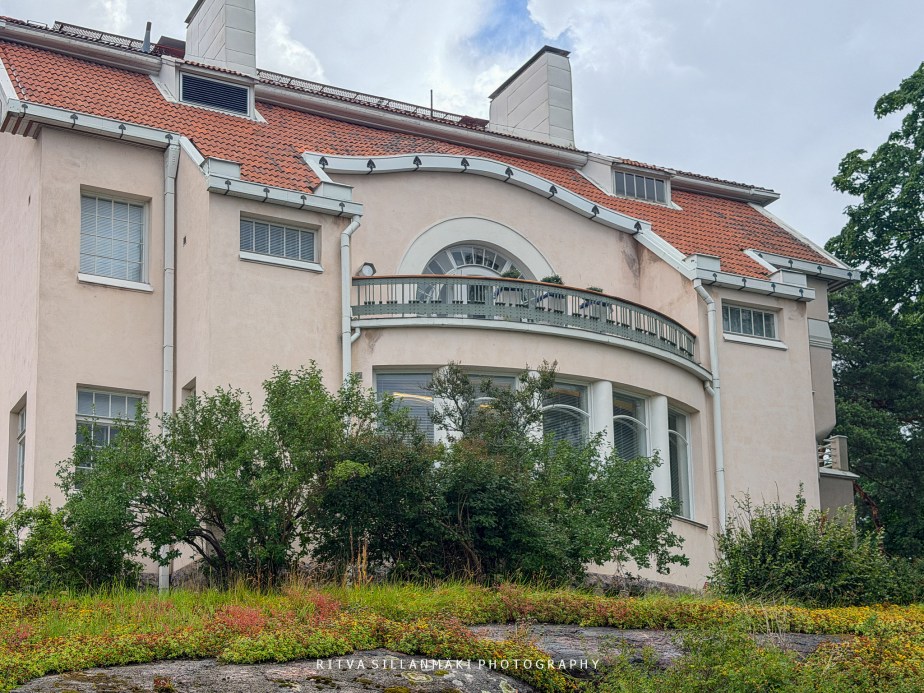
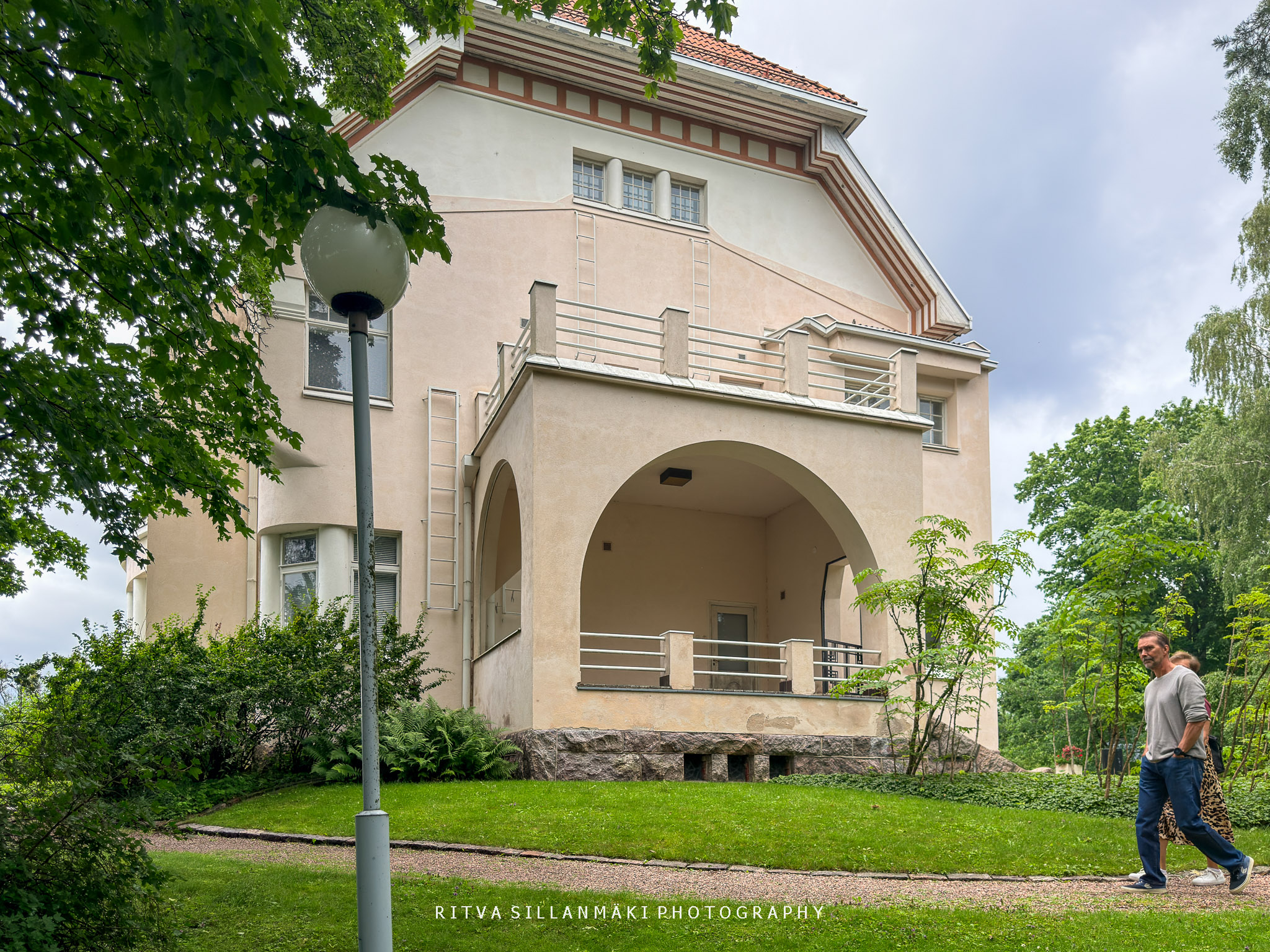
The Jugendstil villa, designed by Finnish architects Sigurd Frosterus and Gustaf Strengell, was built in 1904 for businessman Jörgen Nissen and later owned by publisher Amos Anderson in 1924, who renovated it. Feeling lonely there, Anderson mostly stayed in his apartment and rented out the villa. Following a suggestion from President Kyösti Kallio, he agreed to donate the villa to the state in 1940 with conditions regarding its lease, but Kallio died before he could reside there, shortly after resigning for health reasons.
Presidential residence
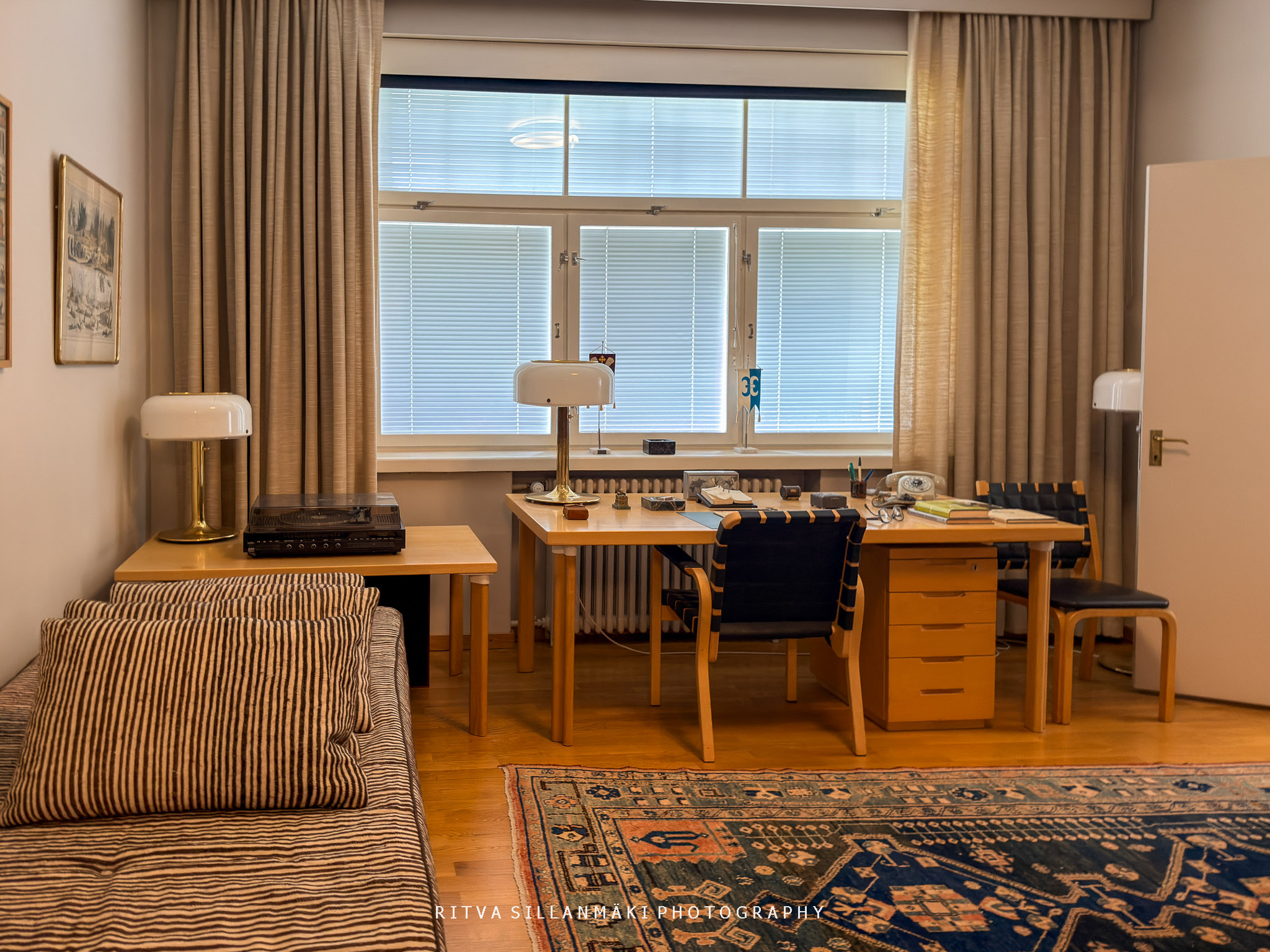
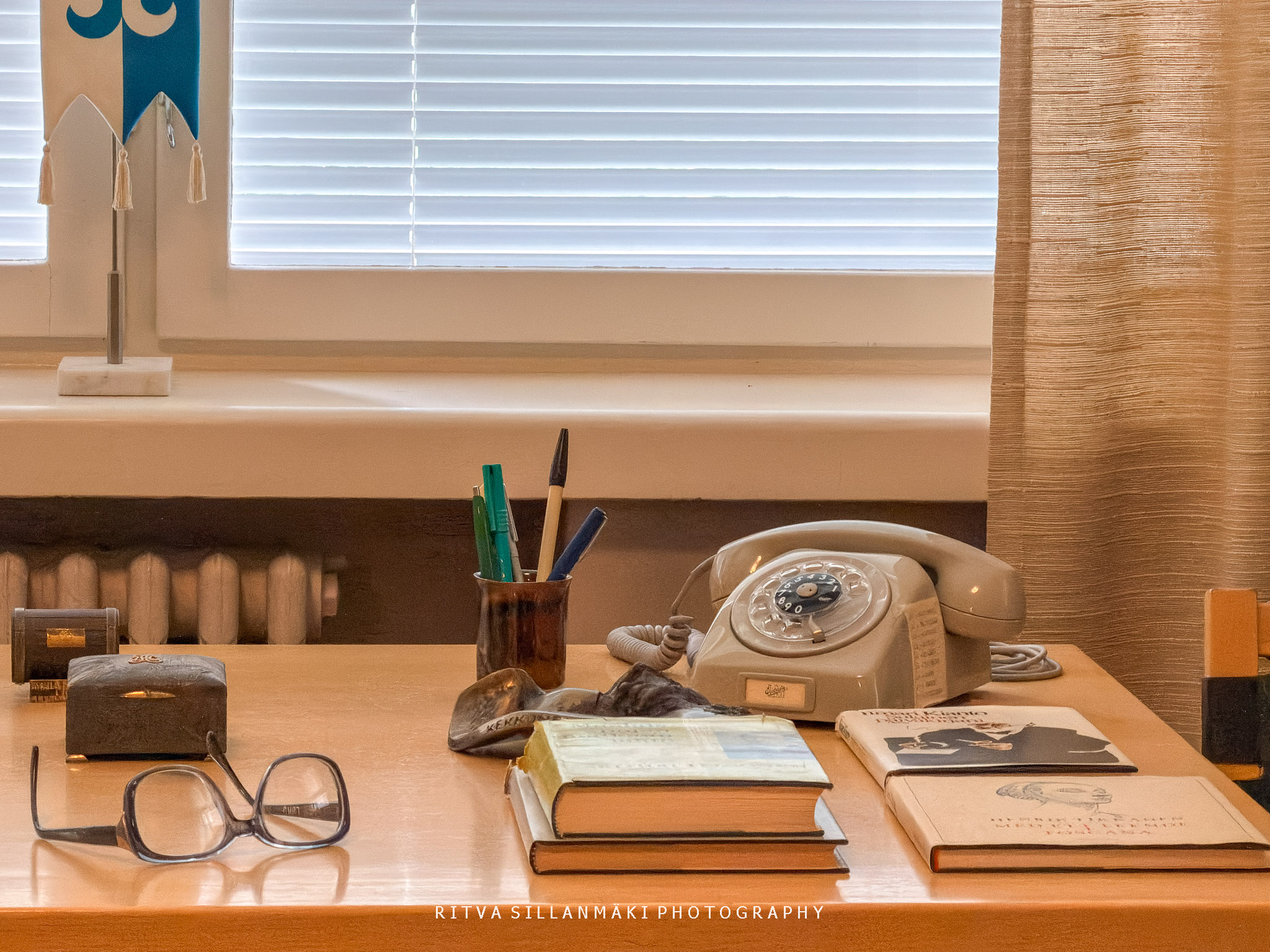
Presidents Risto Ryti and C. G. E. Mannerheim lived at Tamminiemi, while J. K. Paasikivi preferred the Presidential Palace; however, the villa is most associated with Urho Kekkonen, who resided there for nearly thirty years and made it the hub of Finnish politics from 1956 to 1982. After resigning due to health issues in 1982, Kekkonen remained at Tamminiemi, which became his private nursing home until his death in 1986.
This is true to me: During his term of office that lasted a quarter of a century Tamminiemi came into the public eye: Tamminiemi and Kekkonen became almost synonymous.
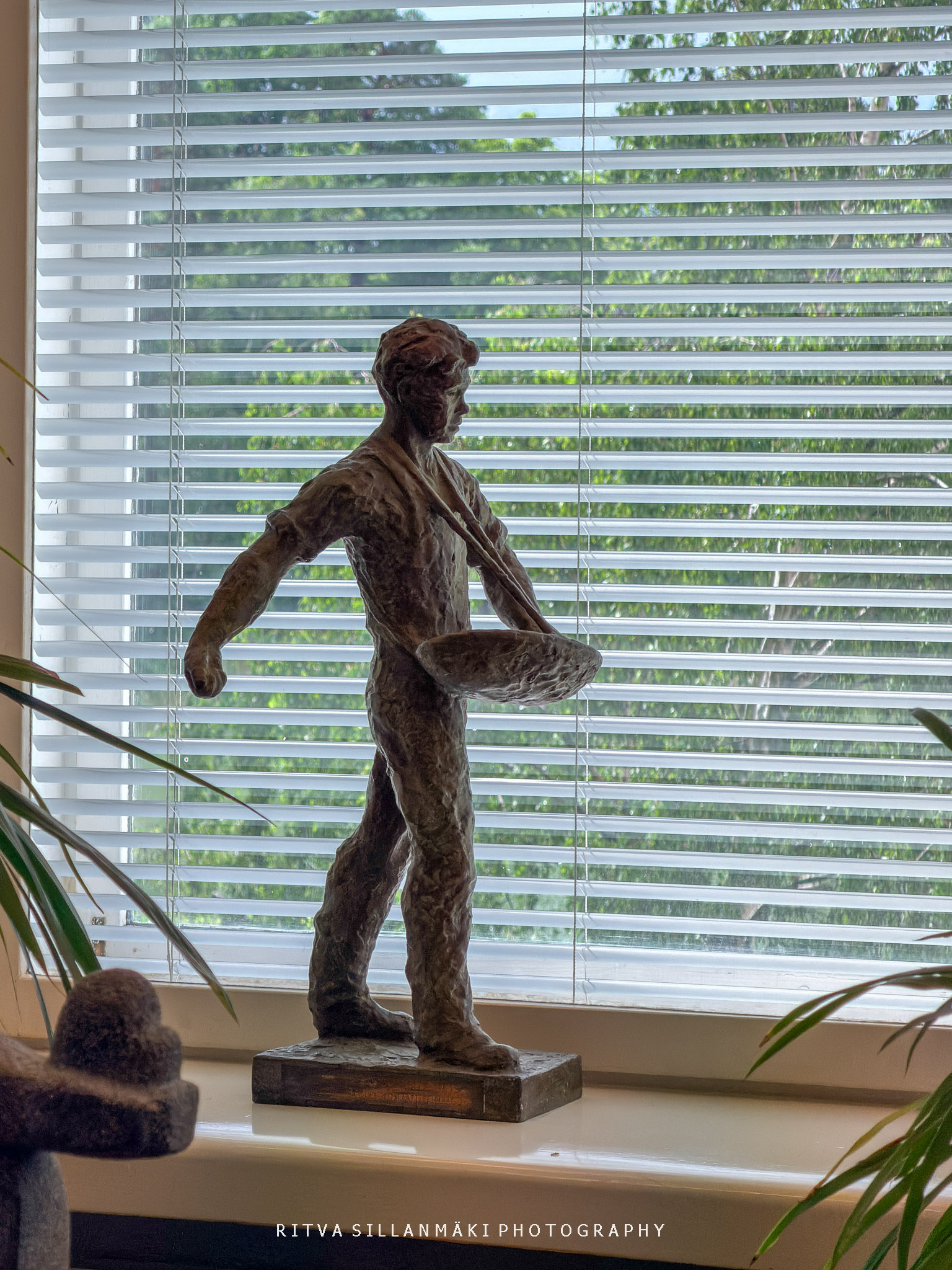
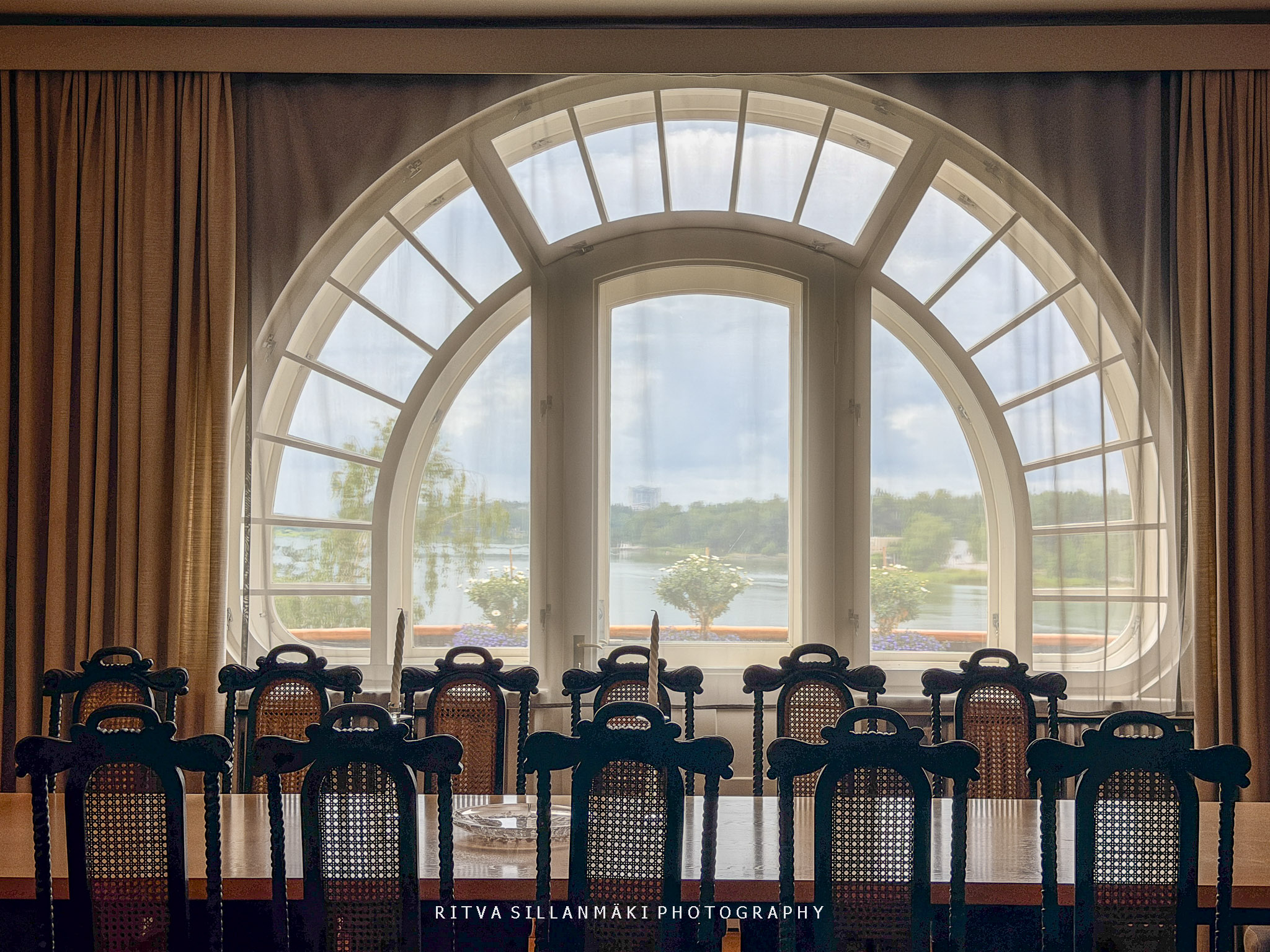
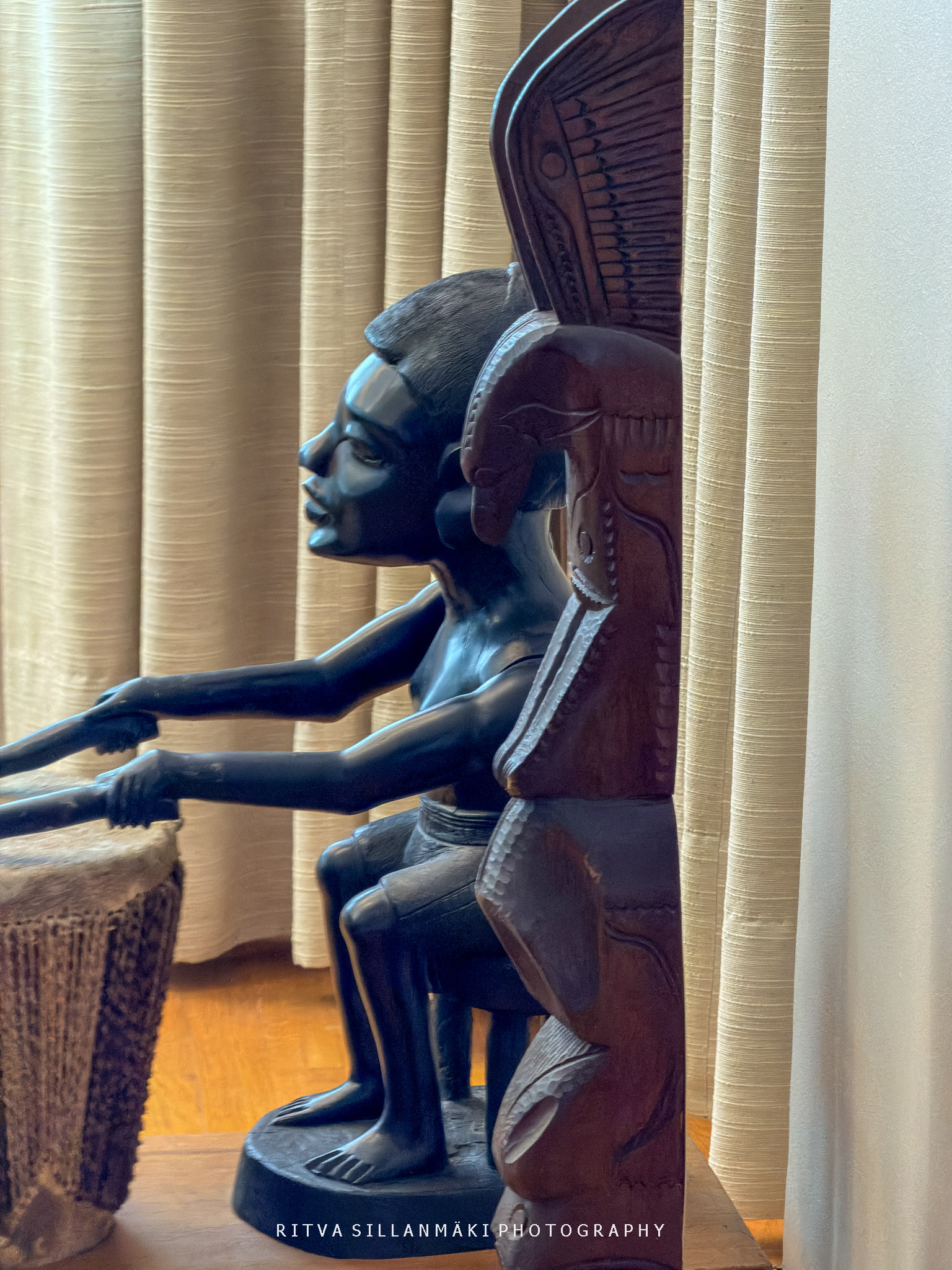
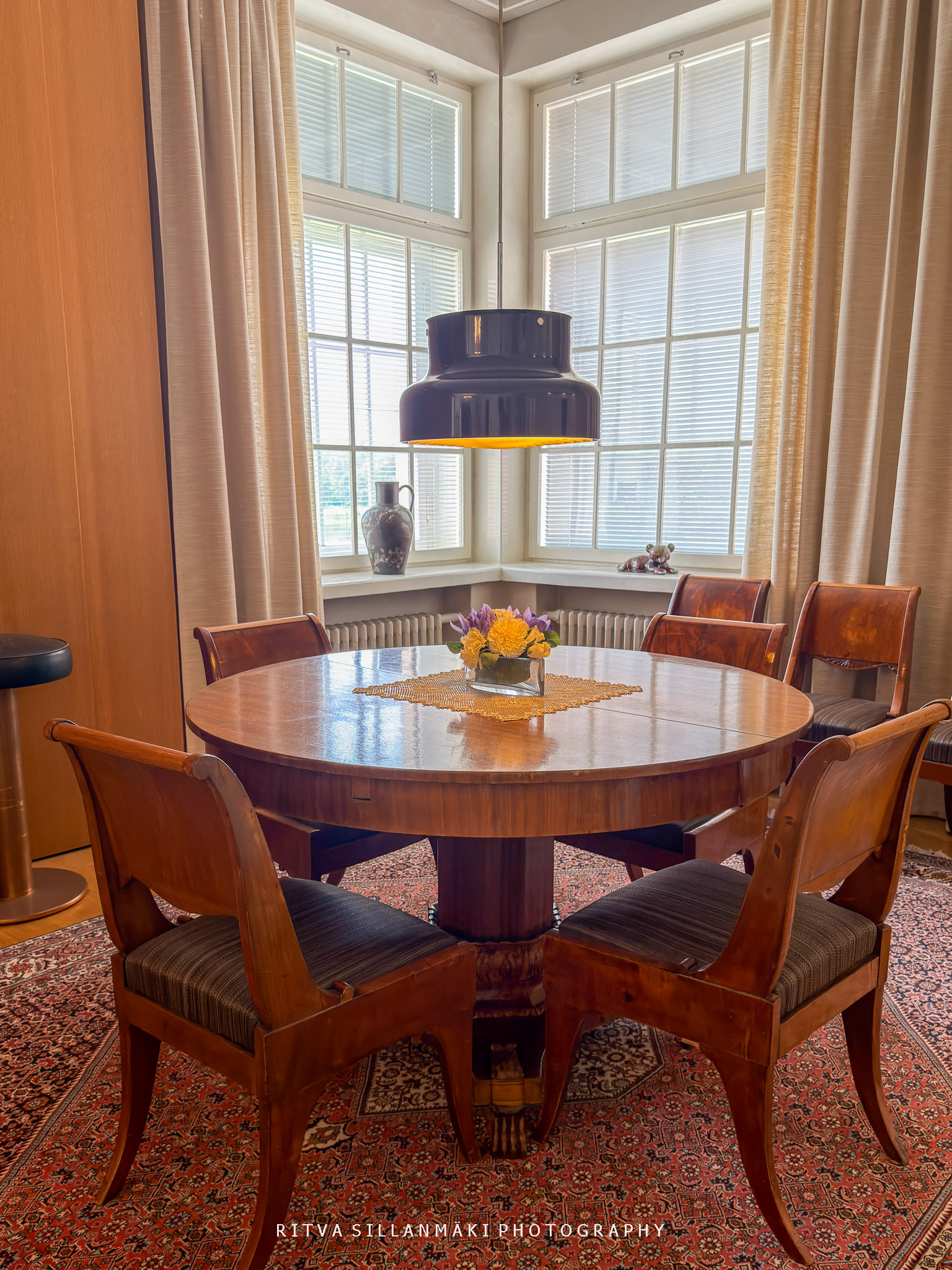
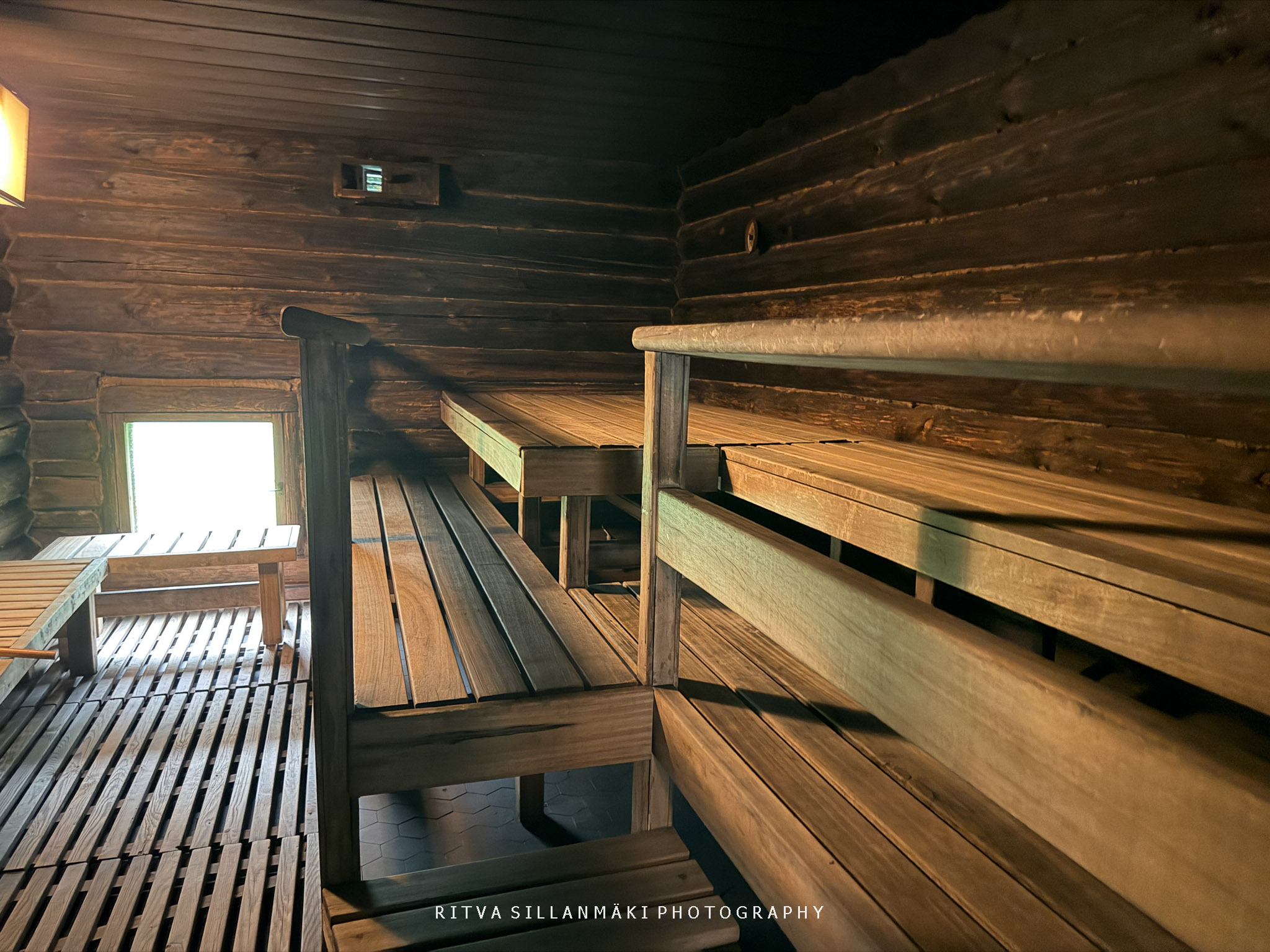
In this post, I am sharing photos of the quick tour we took there. I have to say times were different, but the house was very modest by any standards for the head of state.
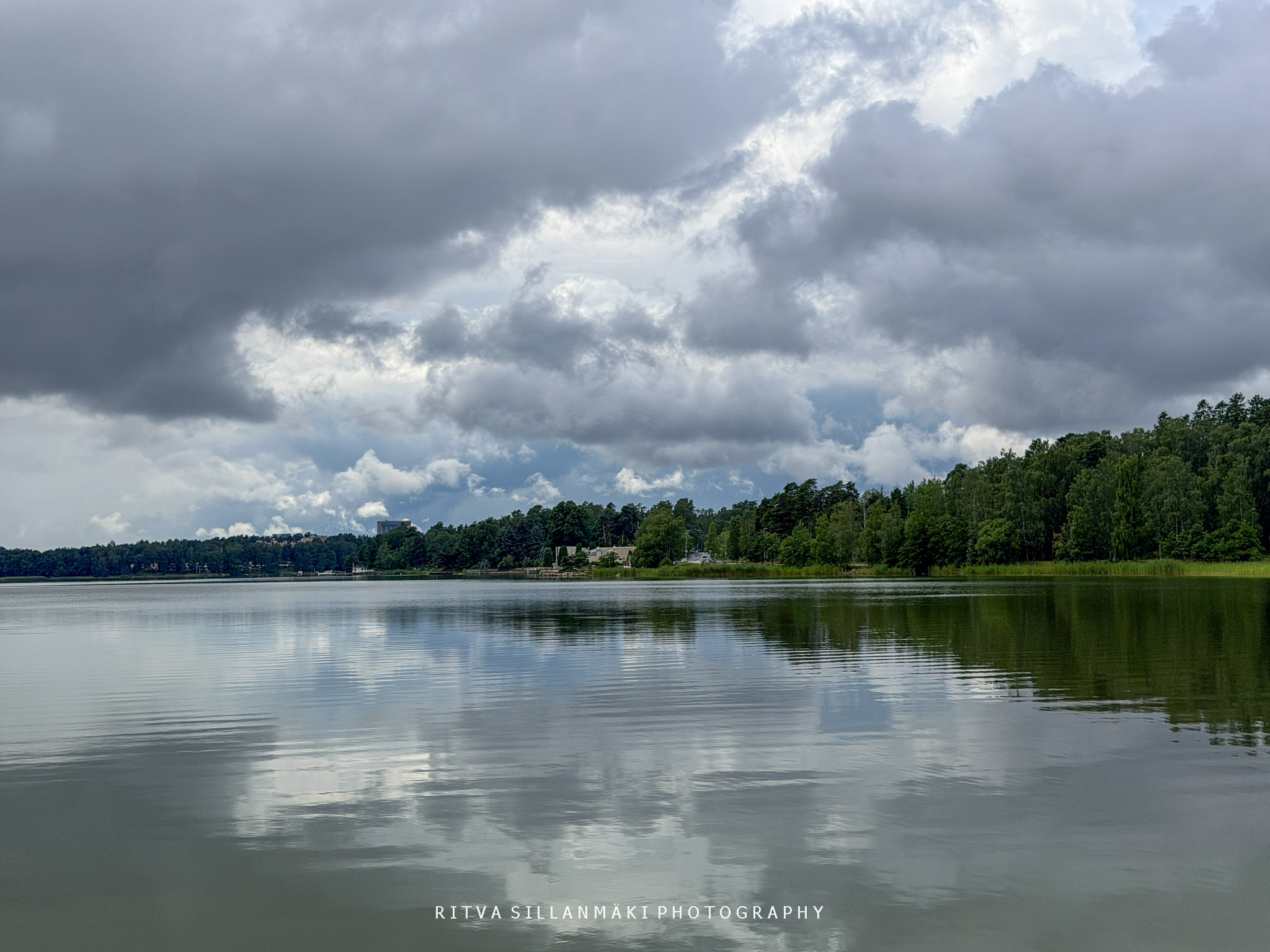
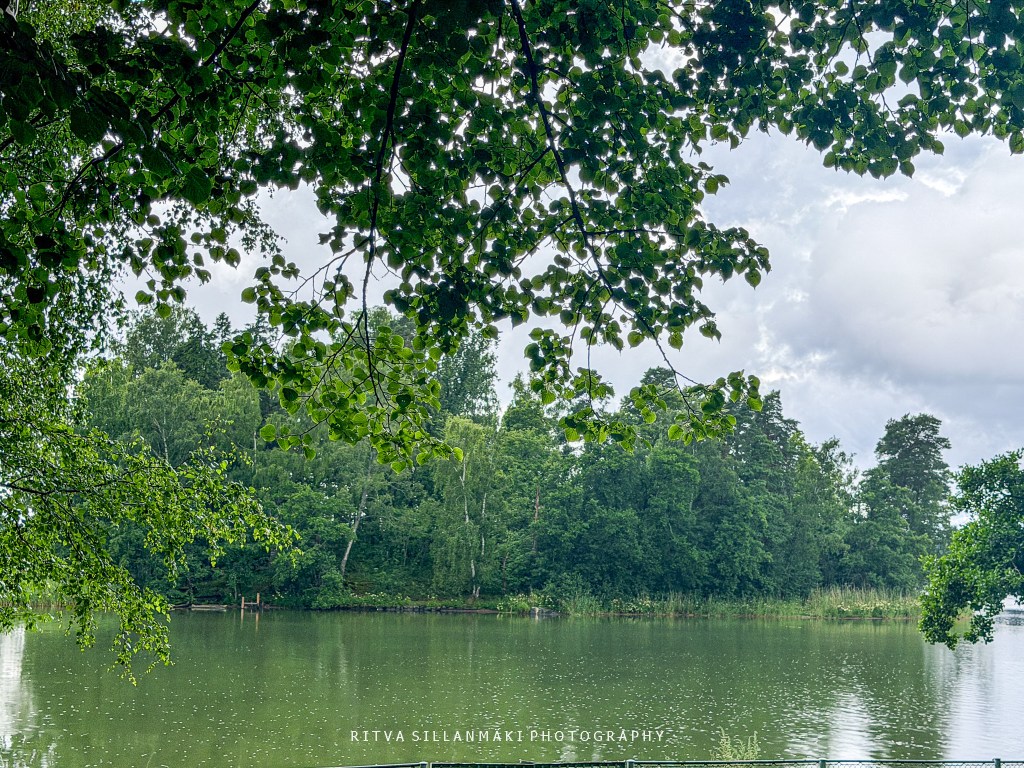
A calm sea reflects moody, overcast skies above a lush, tree-lined shoreline.
Tamminiemi is located in a park by the sea. This sea scene under a dramatic sky filled with thick, heavy gray clouds that suggest an impending storm. The water of the sea is calm, reflecting the moody sky above and the lush green trees that line the distant shoreline. The dense foliage along the banks adds a natural, untouched feel to the landscape, contrasting with a faint glimpse of buildings nestled among the trees. It feels tranquil yet slightly ominous atmosphere, emphasizing the interplay between nature and weather.
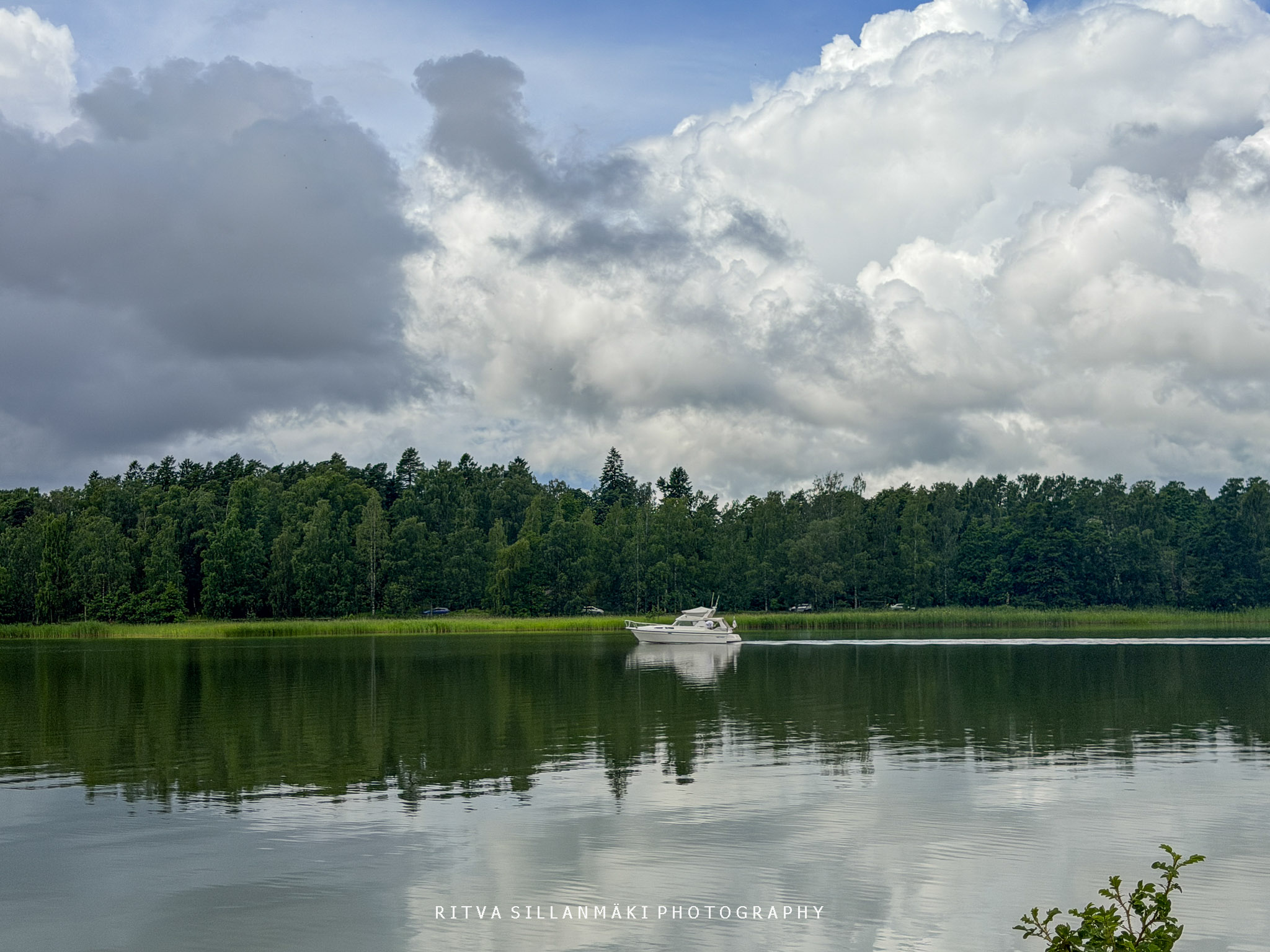
A lone white boat glides smoothly across a calm sea t under a sky filled with dramatic clouds.we stood under a back oak tree for a moment for the rain to slow the downpour. From there I took this shot.
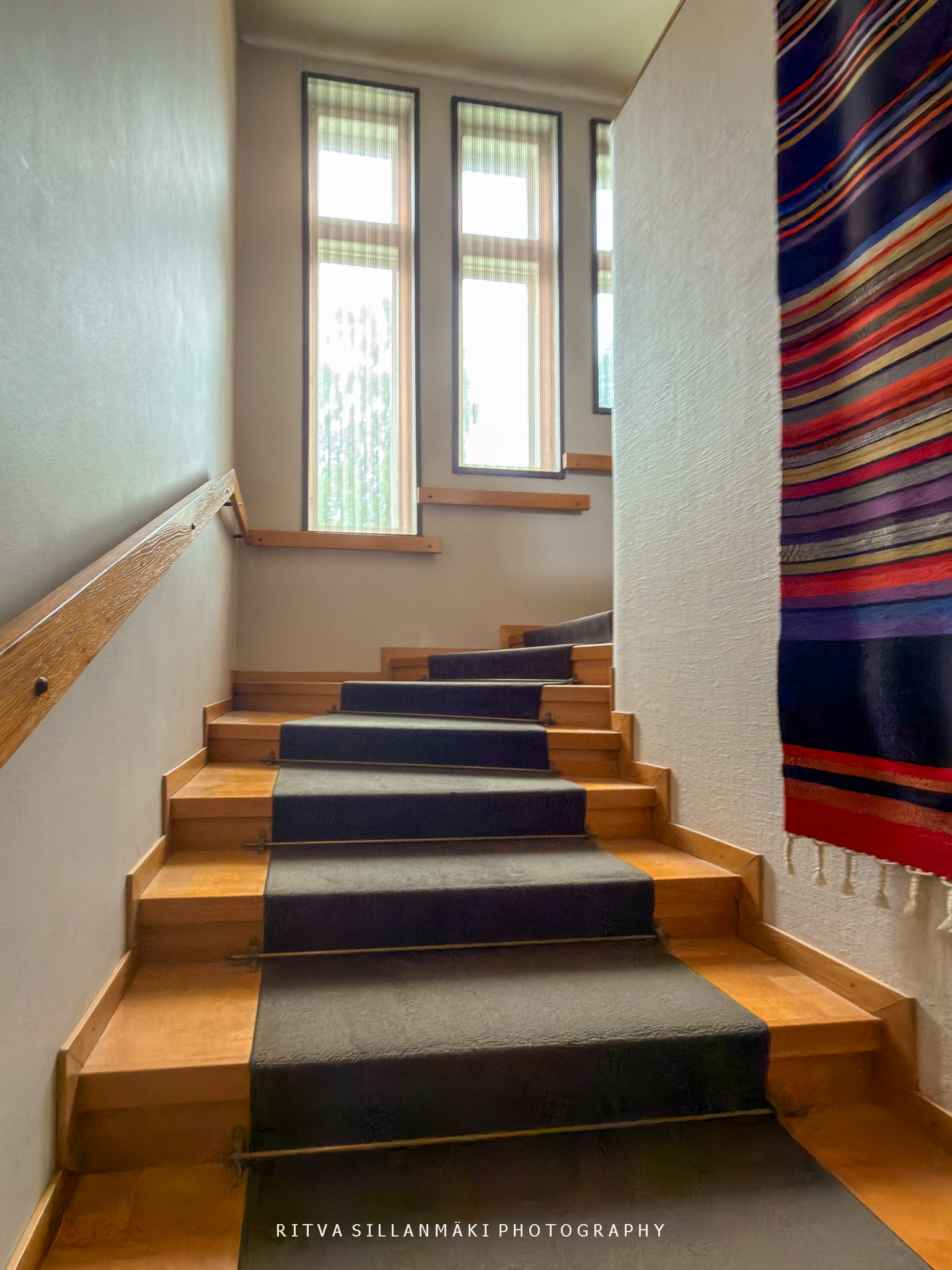
In 1956 the interior of the house was largely renovated and modernized, so that there aren’t many details left of the original Art Nouveau style. At the same time, a sauna was built down by the waterside.
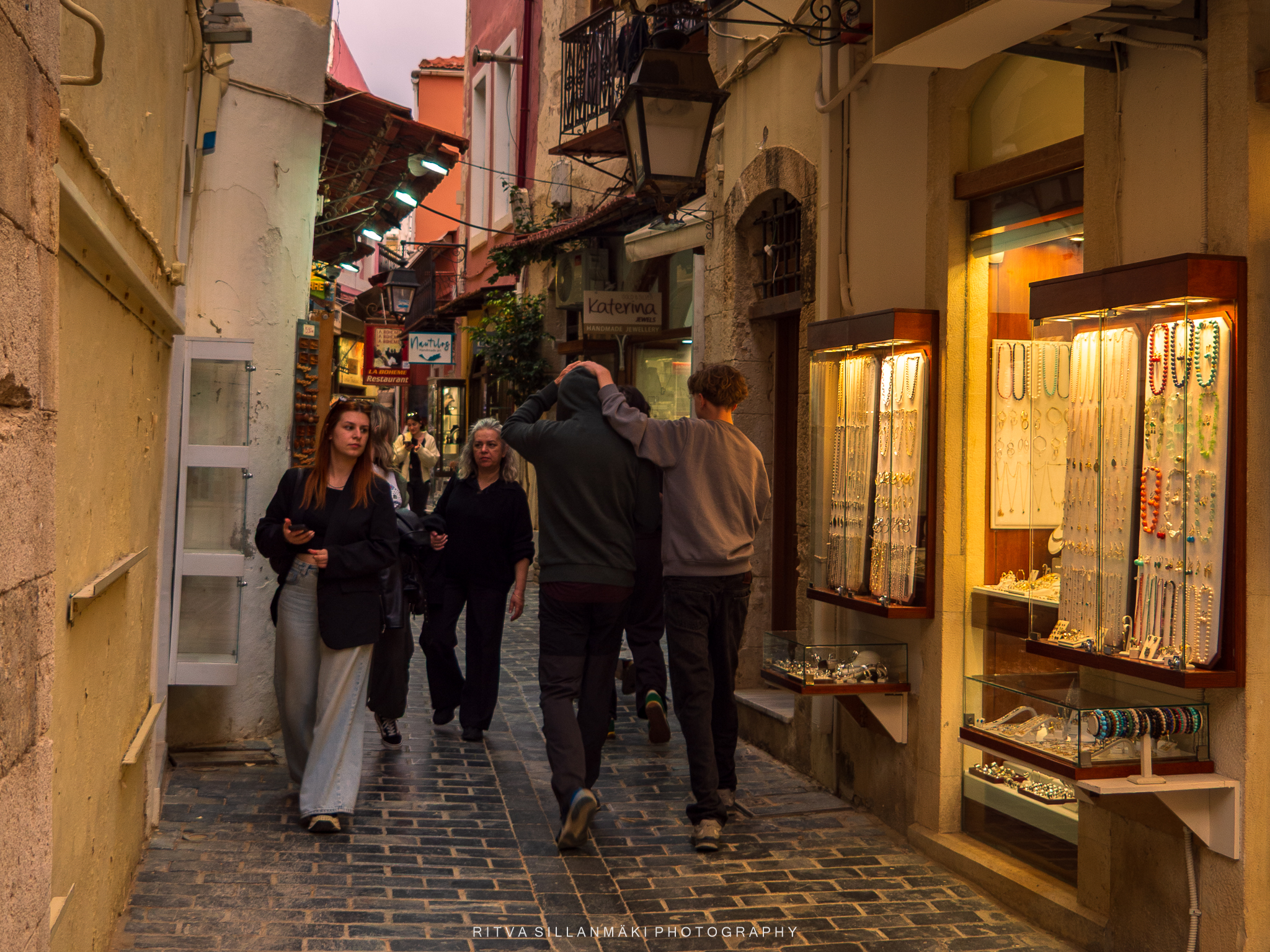
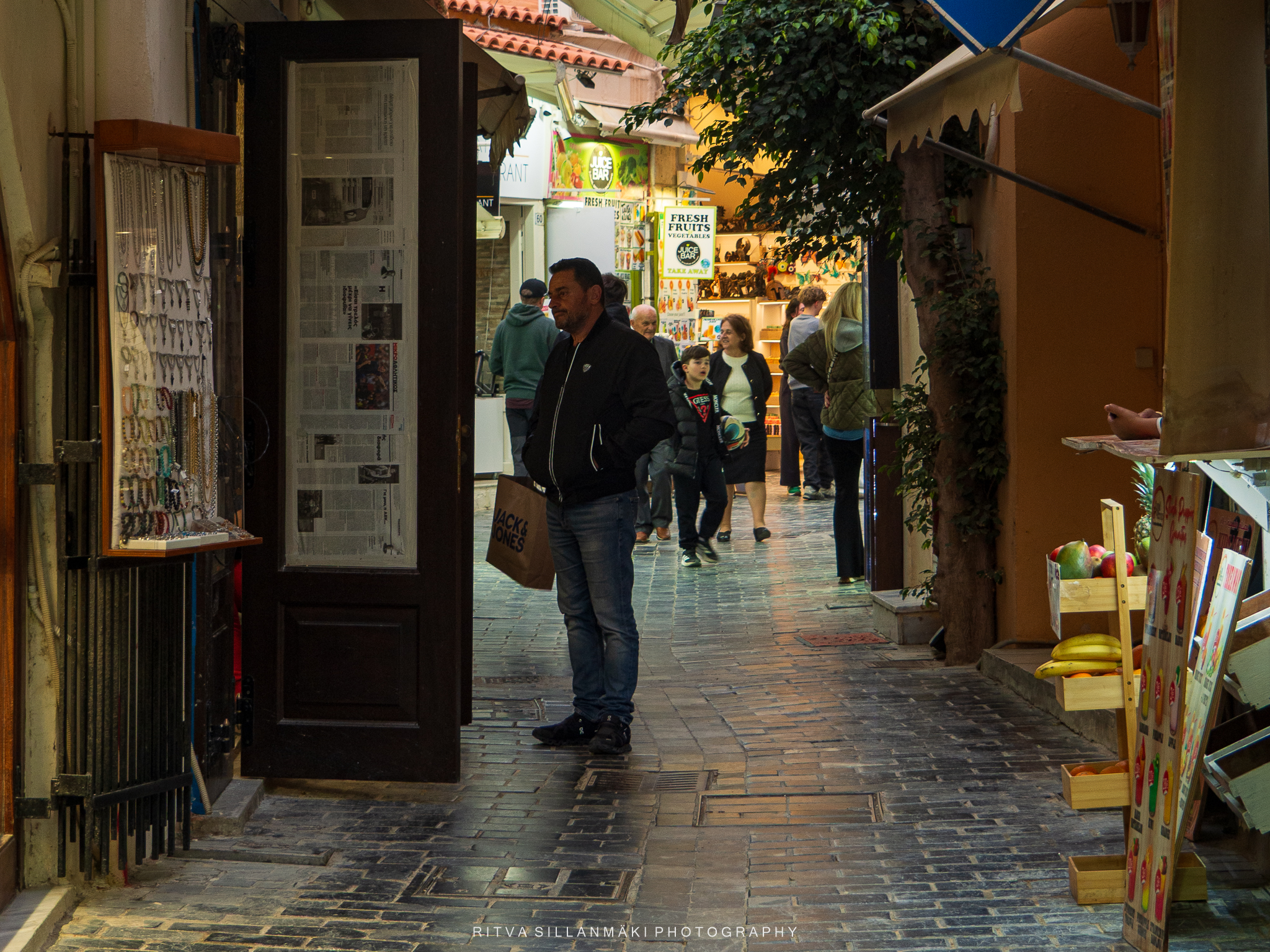
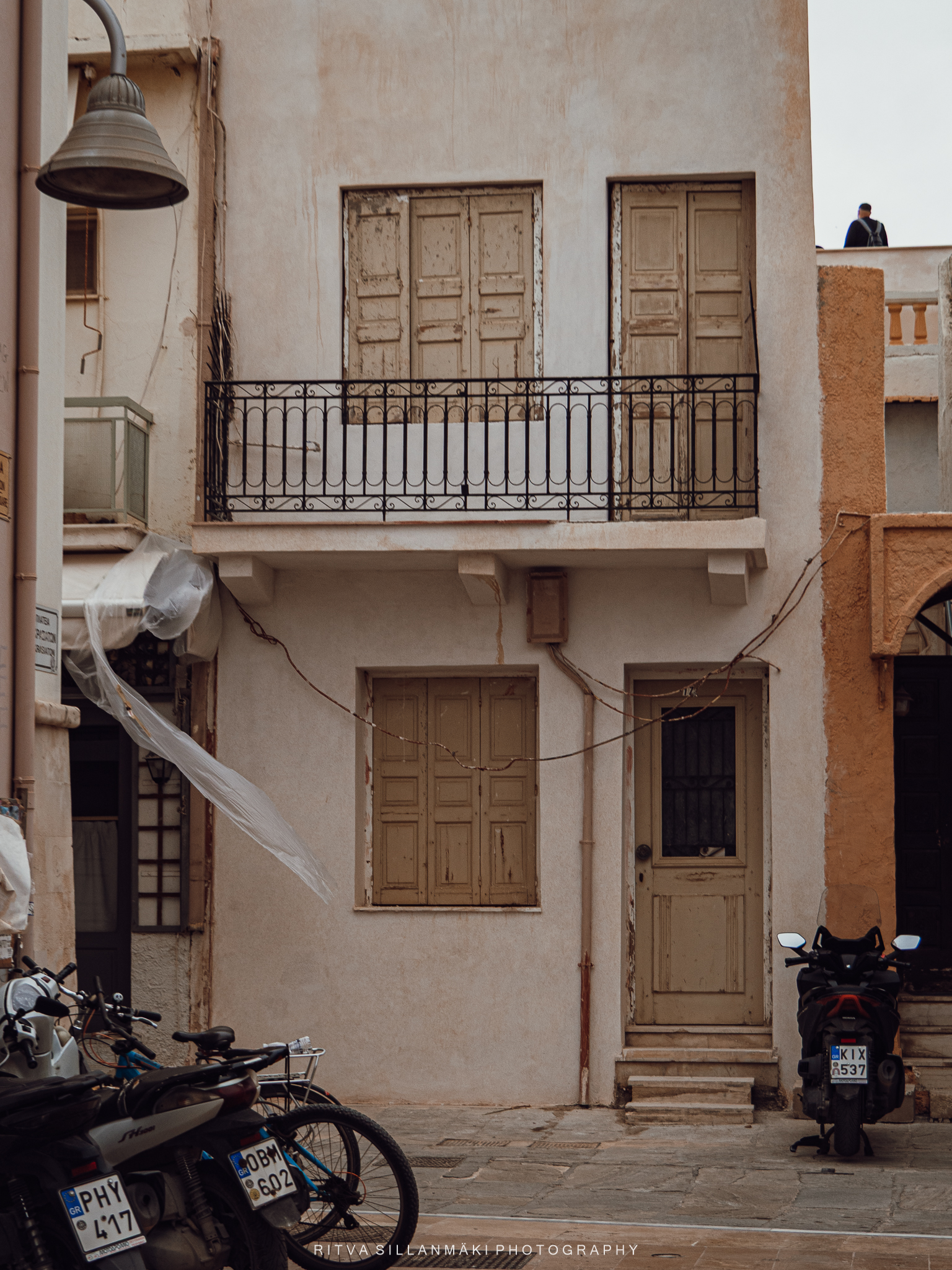
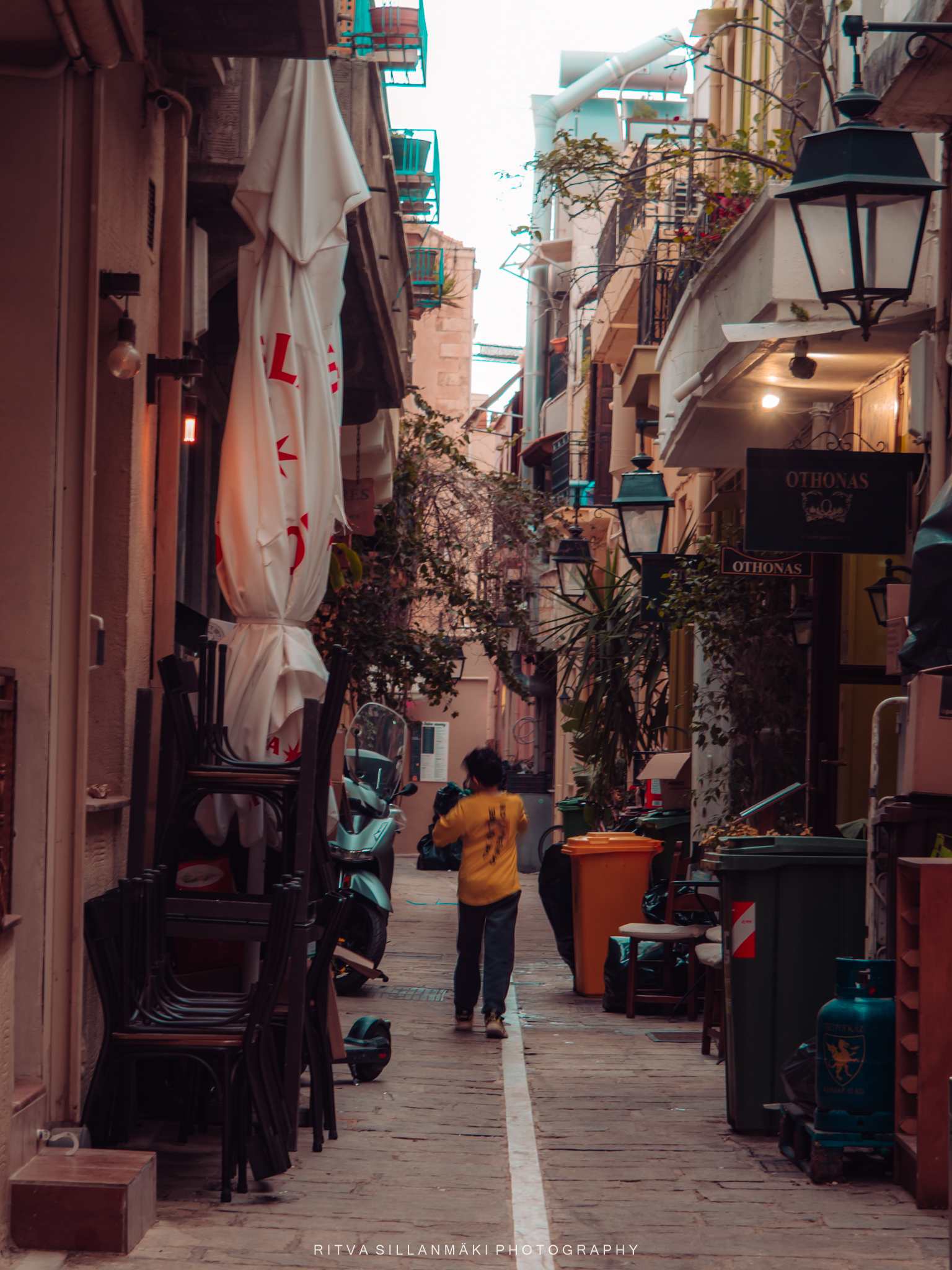
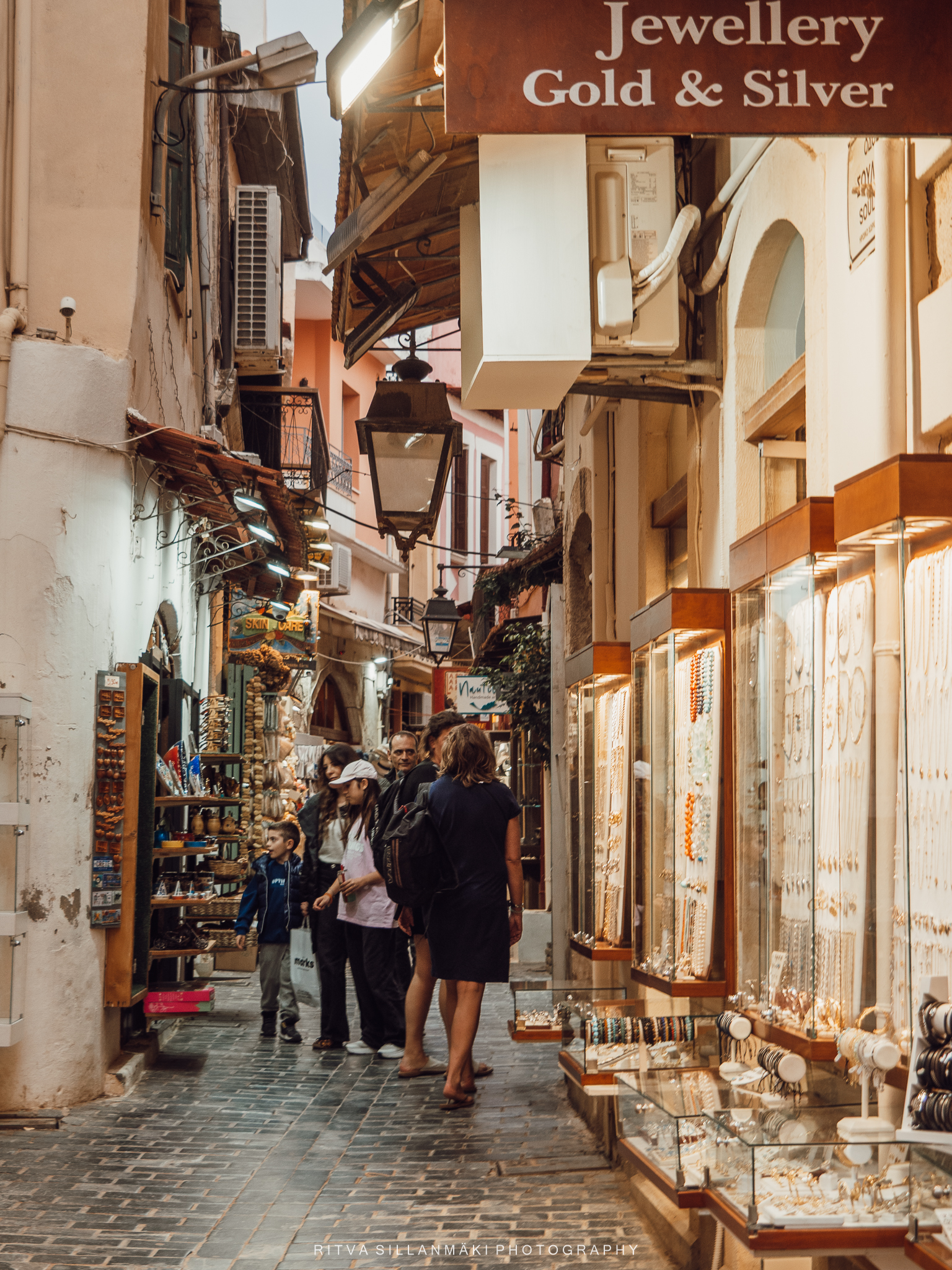
Here a photos from May trip to Rethymno, I took a lot of street photos in the towns we visited. Most are still not posted. The post features a collection of street photographs taken during a May trip to Rethymno, capturing the essence of the town. Among the highlights is a charming old building with a weathered door, ornate gate, and inviting café atmosphere. Other images showcase cozy alleys filled with quaint tables, vibrant storefronts, and charming pastel buildings. Each photo reflects daily life in Rethymno, conveying warmth and nostalgia. The author expresses a fondness for these moments, highlighting the interplay between the town’s beauty and human connection.
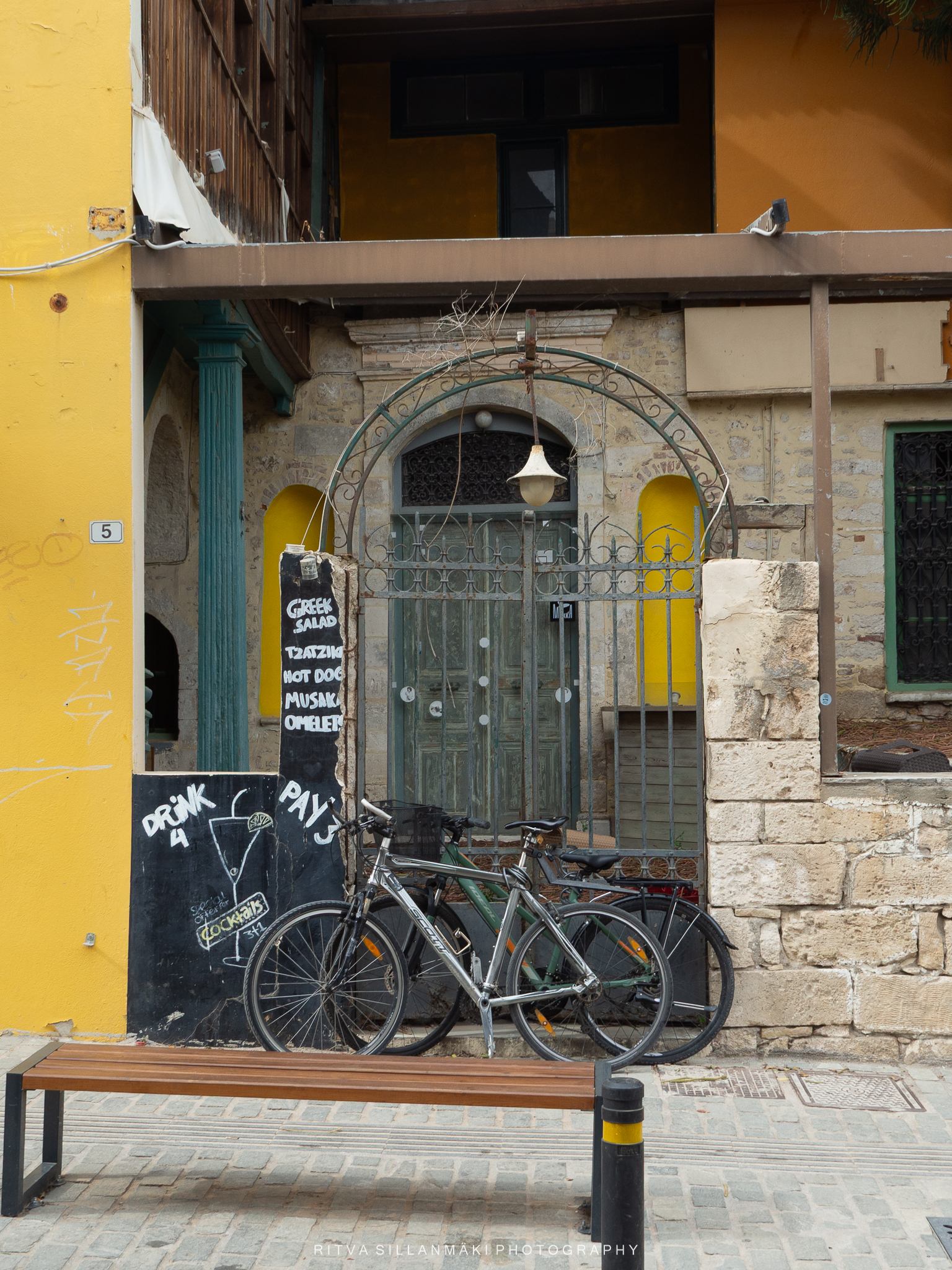
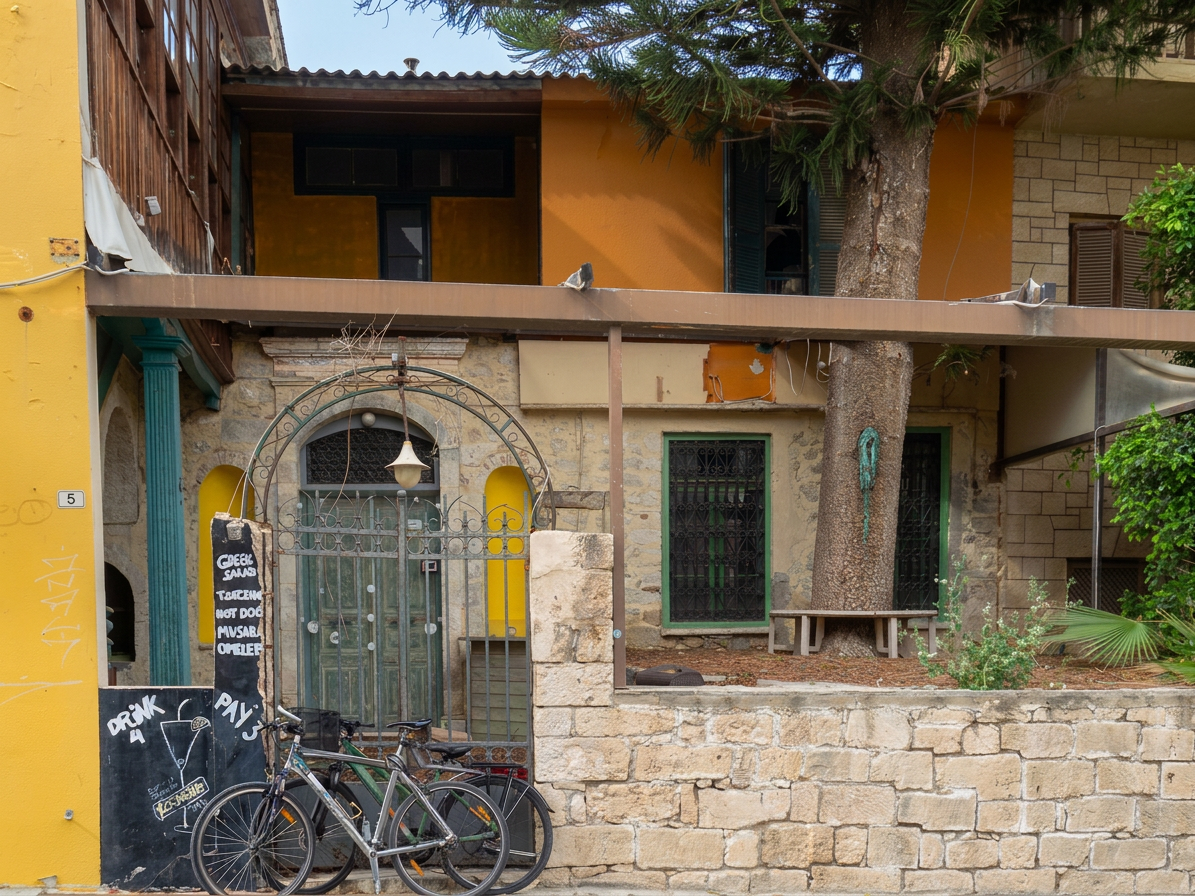
A rustic street scene with bicycles parked in front of a colorful building with a handwritten menu board and a decorative archway. Does not seem to be open anymore, closed for good?
This photo captures the charming entrance of an old building, showcasing a weathered wooden door nestled within vibrant yellow stone walls and archways. I couldn’t resist the allure of the ornate metal gate, framed by delicate dry vines, which adds an enchanting touch. Two bicycles leaning against the gate feel like they belong to friends who’ve just popped in for a quick bite. Speaking of which, the blackboard to the left tempted me with its handwritten menu items like Greek salad, tzatziki, and a classic hot dog—perfect for a relaxing afternoon. The cozy wooden bench and cobblestone pavement create an inviting atmosphere, making this spot all the more special to capture.
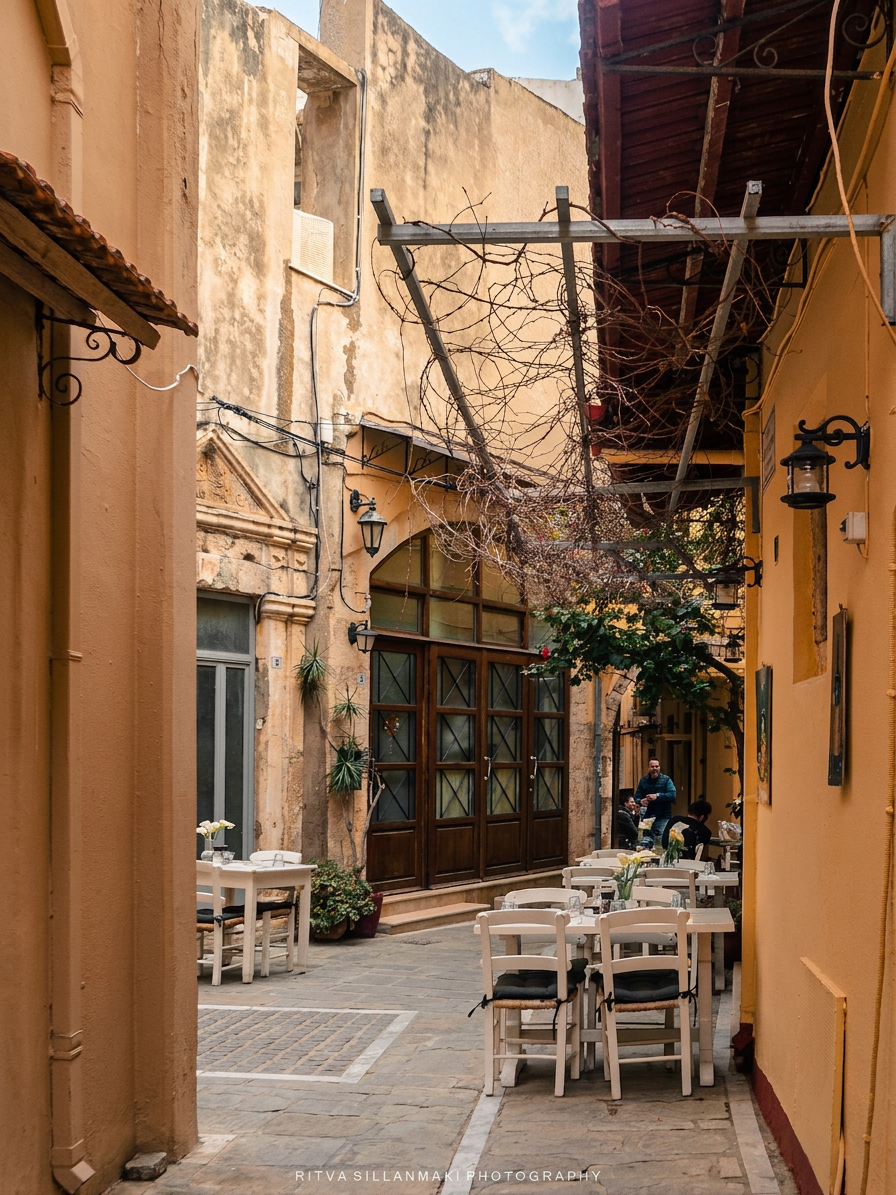
Rethymno- same place but as a landscape and different croppingRethymno alley with a cozy restaurant
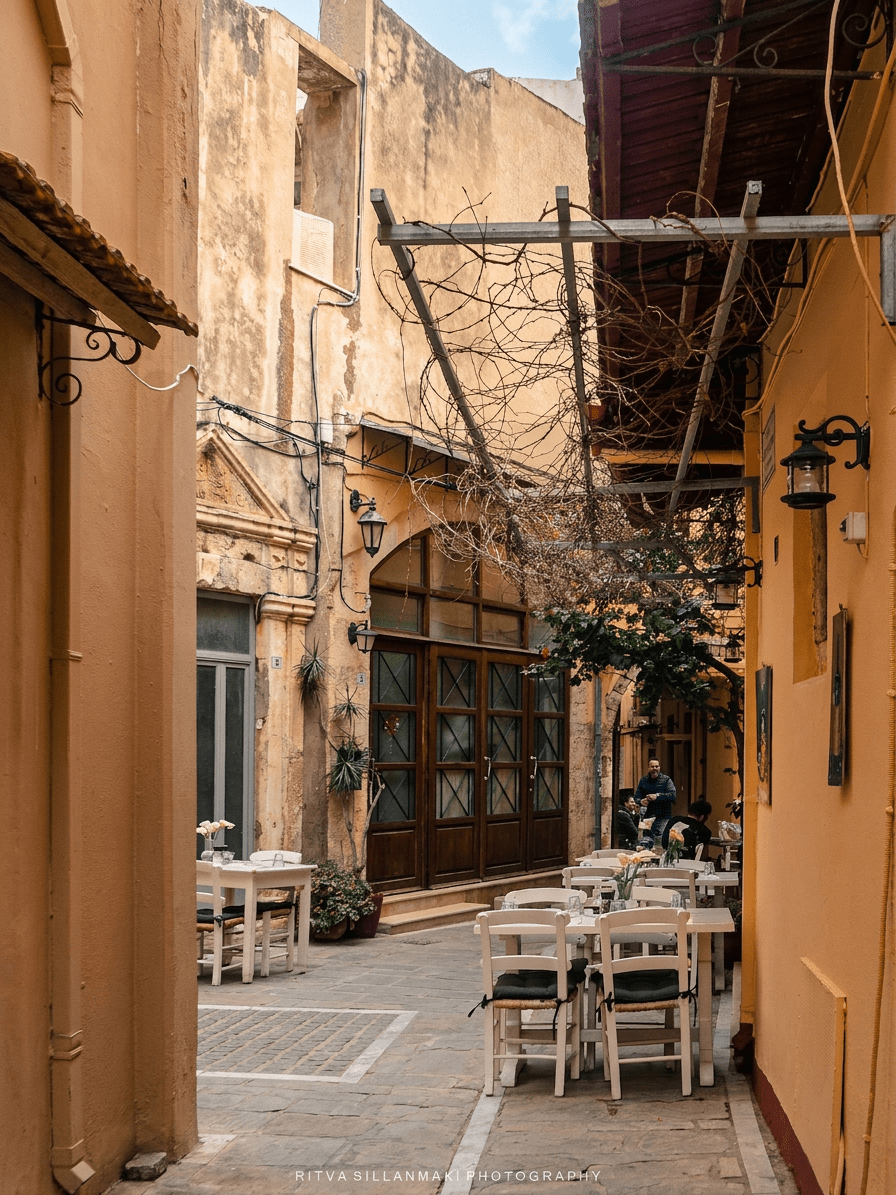
This delightful image was snapped to capture a moment that feels like stepping into a charming little world. You can just picture yourself wandering down this narrow alleyway, flanked by those lovely beige and yellow buildings. The small outdoor tables with their quaint white chairs beckon you to sit a while and enjoy a coffee, perhaps a pastry, surrounded by little vases g with flowers that add a touch of warmth. And that trellis overhead? It’s like a cozy hug, with its bare branches weaving together to create a rustic canopy. In the background, you can see a few friendly faces enjoying the vibe, which just makes the whole place feel so inviting and relaxed. It’s the kind of spot that wraps you in its charm and makes you want to linger a little longer.
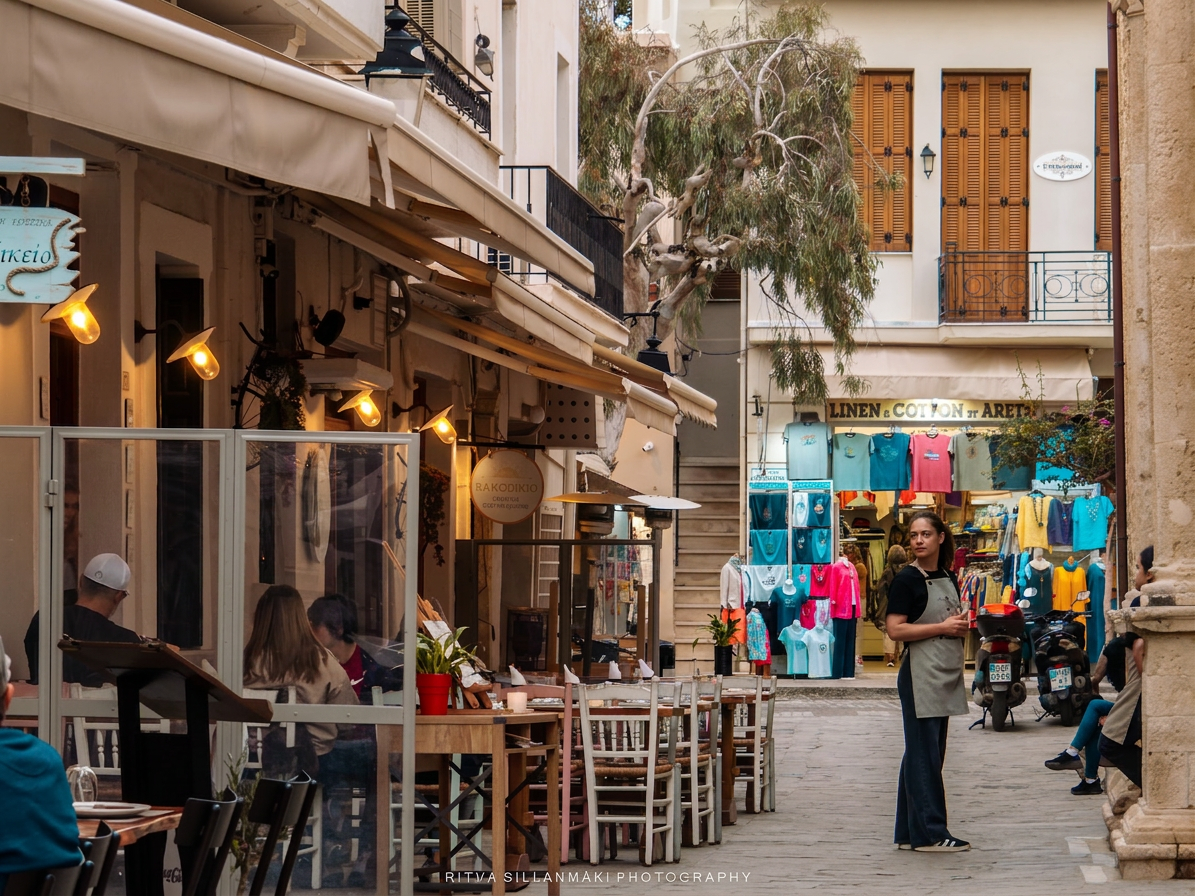
Rethymno would you prefer this place
This photo captures a delightful little street in a charming Rethymno town in Crete, where time seems to slow down just for a moment. You can almost feel the inviting atmosphere of the outdoor café on the left, where locals and visitors alike enjoy their coffee under soft cream-colored awnings, the warm glow of lights adding a touch of magic to the scene. Just beyond, the vibrant display at “LINEN & COTTON in ARET” showcases an array of colorful t-shirts that dance in the breeze. I couldn’t help but notice the café staff member, who seems to draw the attention to the whole scene to life as she balances her tray and keeps an eye with the area around her. The cobblestone street, lined with charming buildings adorned with shutters and wrought-iron balconies, sets the perfect backdrop for this slice of everyday life, blending the charm of the picturesque with the warmth of human connection. It’s a moment I wanted to capture, to reminisce about those slow, beautiful afternoons spent soaking in the sights and sounds of street life.
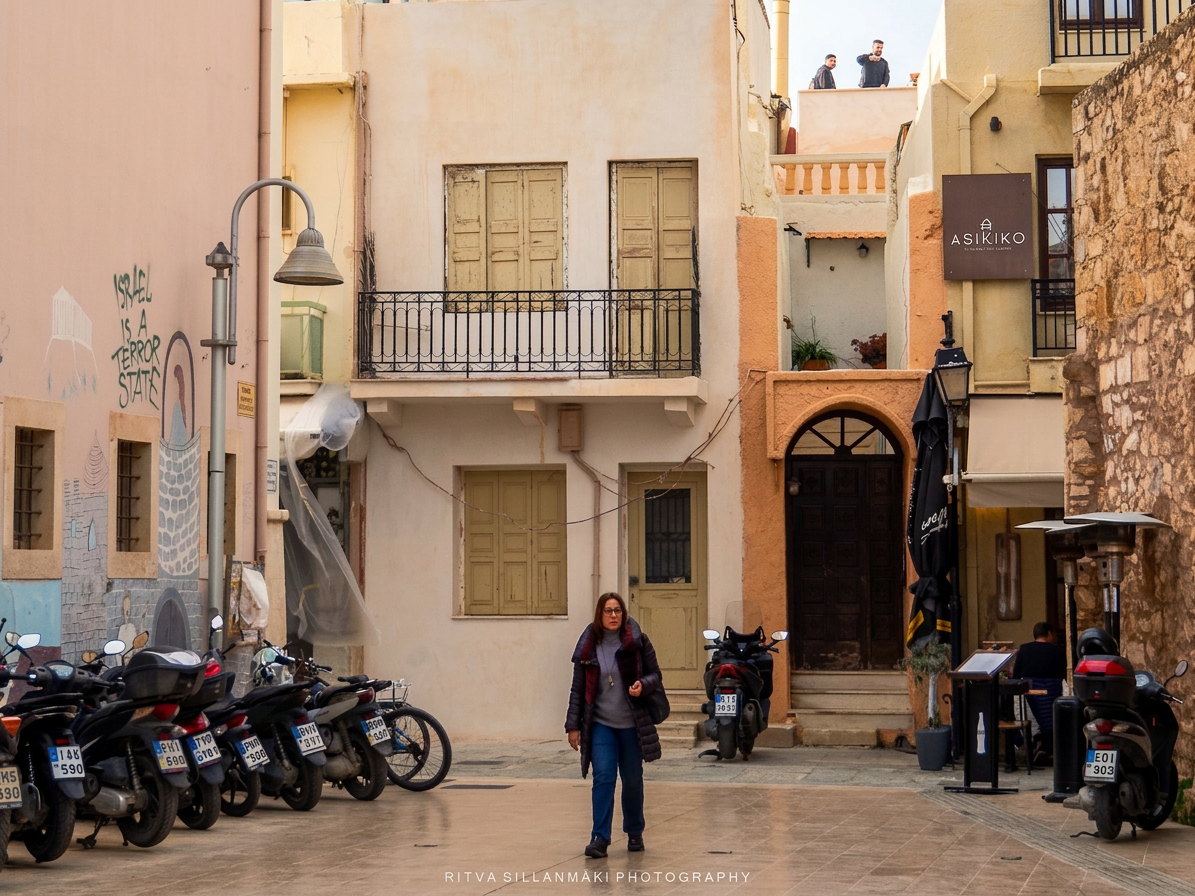
Side street in Rethymno
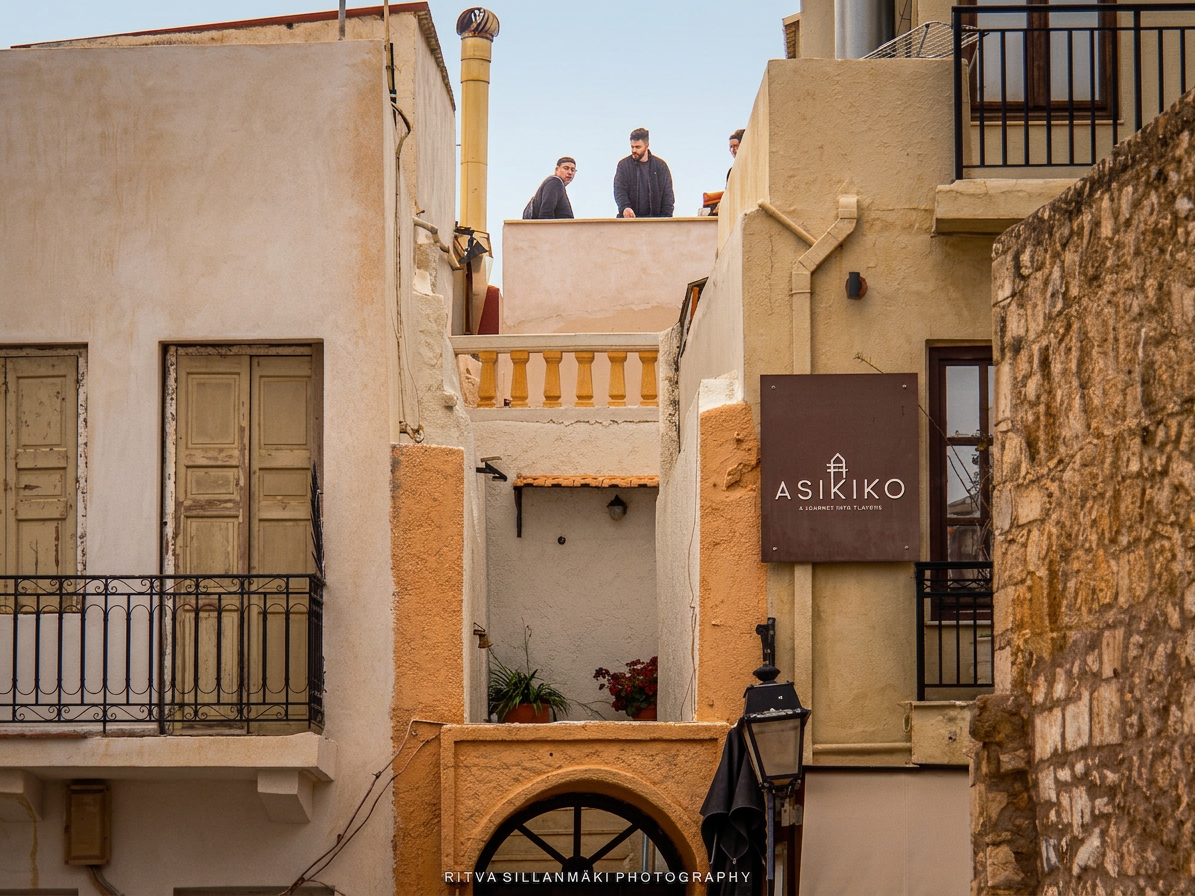
This photo was taken during a late afternoon stroll down a charming urban street that blends the old with the new. I was drawn to the pastel hues of the buildings—beige, peach, and soft pink—that seem to whisper stories of the past. The central building with its shuttered windows and quaint wrought-iron balcony had me imagining the lives of those who once called it home. I couldn’t help but notice a line of scooters parked along the street, hinting at the vibrant life that fills this area. Just then, a woman in a dark coat caught my eye as she walked toward the camera, embodying the everyday hustle of city life. In the background, two men relaxed on a rooftop near the ASIKIKO restaurant sign, perfectly capturing that casual, laid-back vibe that makes urban exploration so enjoyable.
I liked how the group of people was at the top of the building, as I zoomed in it was a moment there was three instead of two friends found themselves on a terrace, just taking a break from work or chatting. It’s one of those light-filled days when the soft natural afternoon sunlight paints everything in a warm glow, making the weathered walls and stone surfaces feel alive with stories.
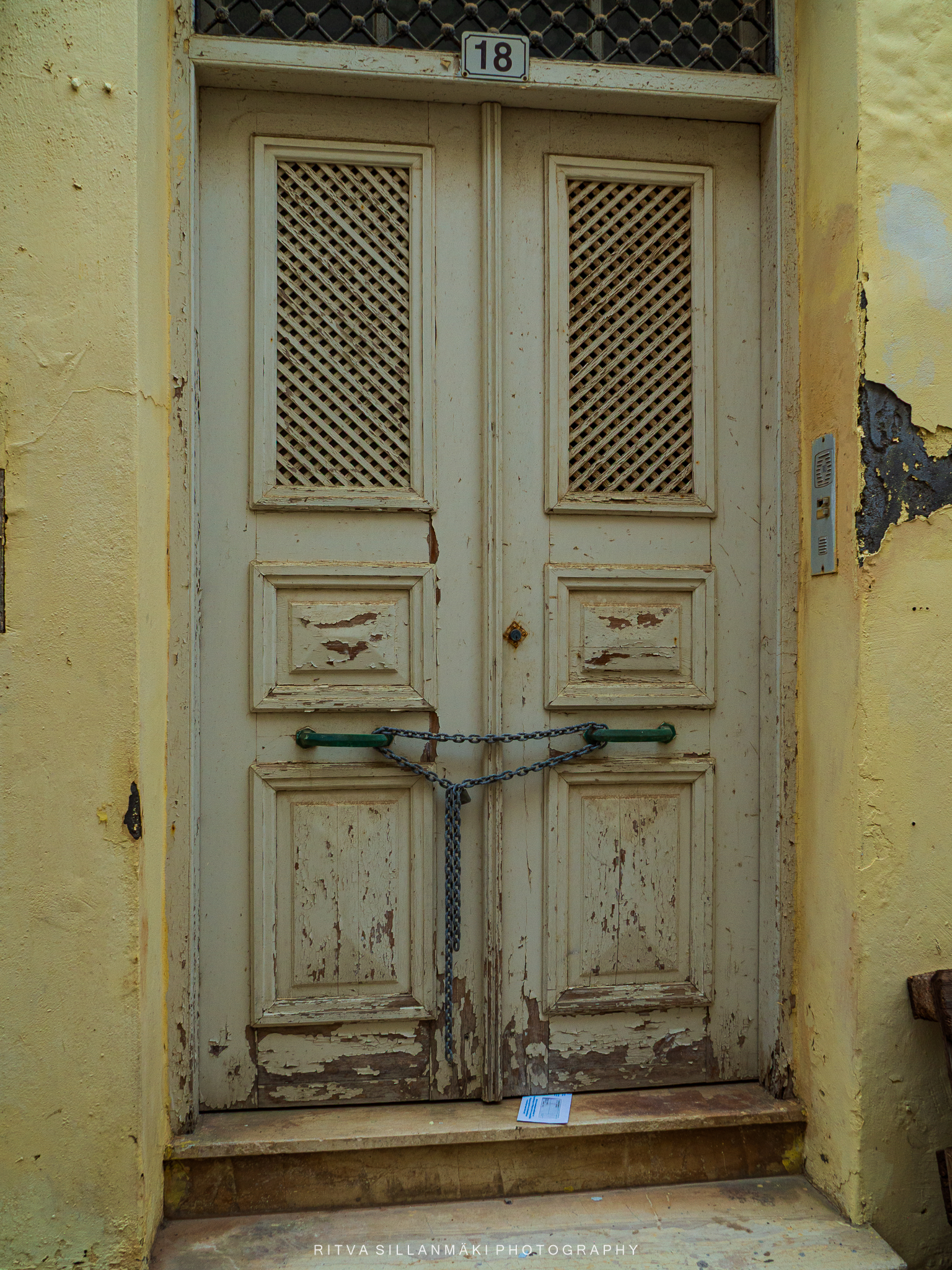
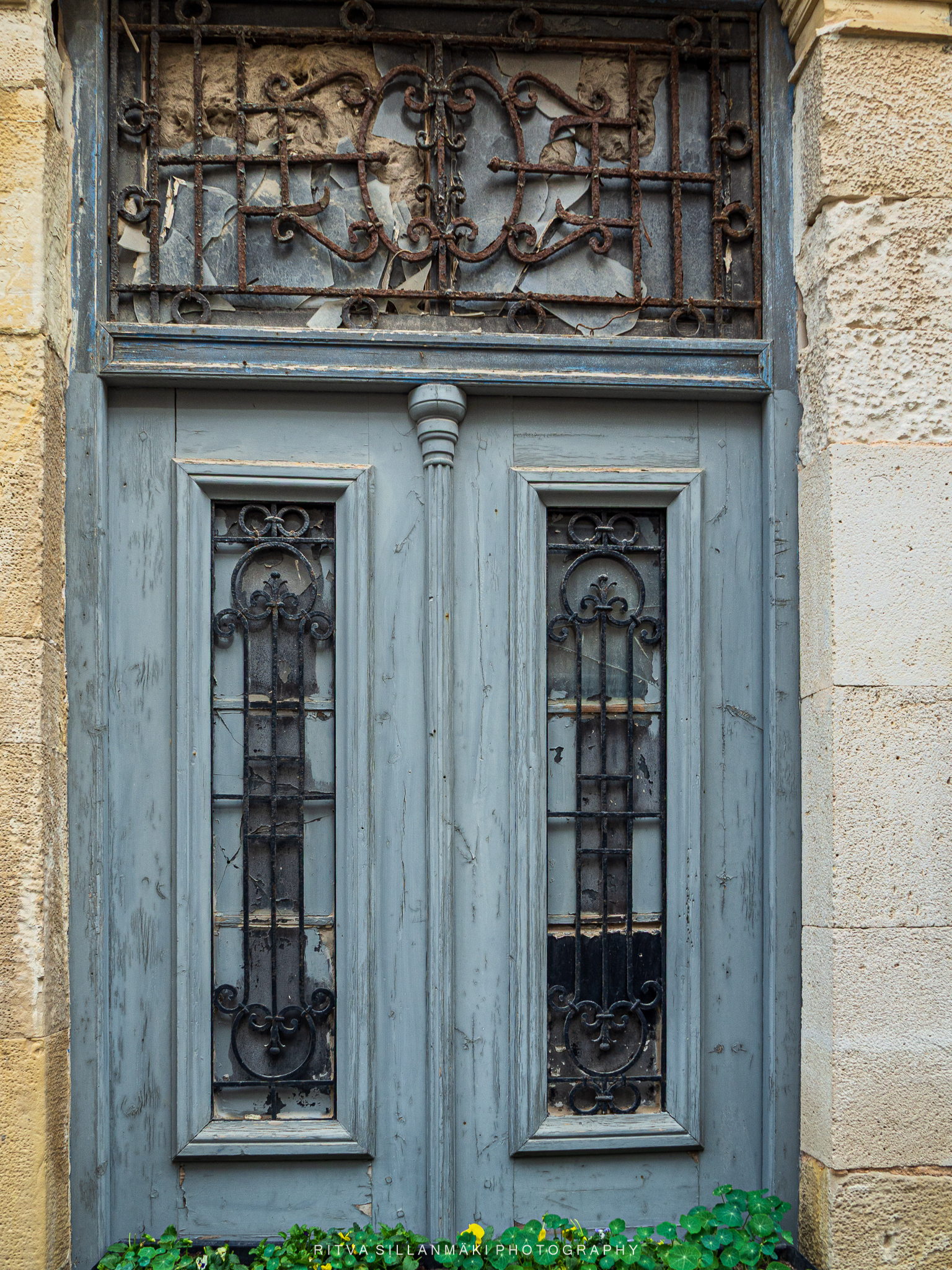
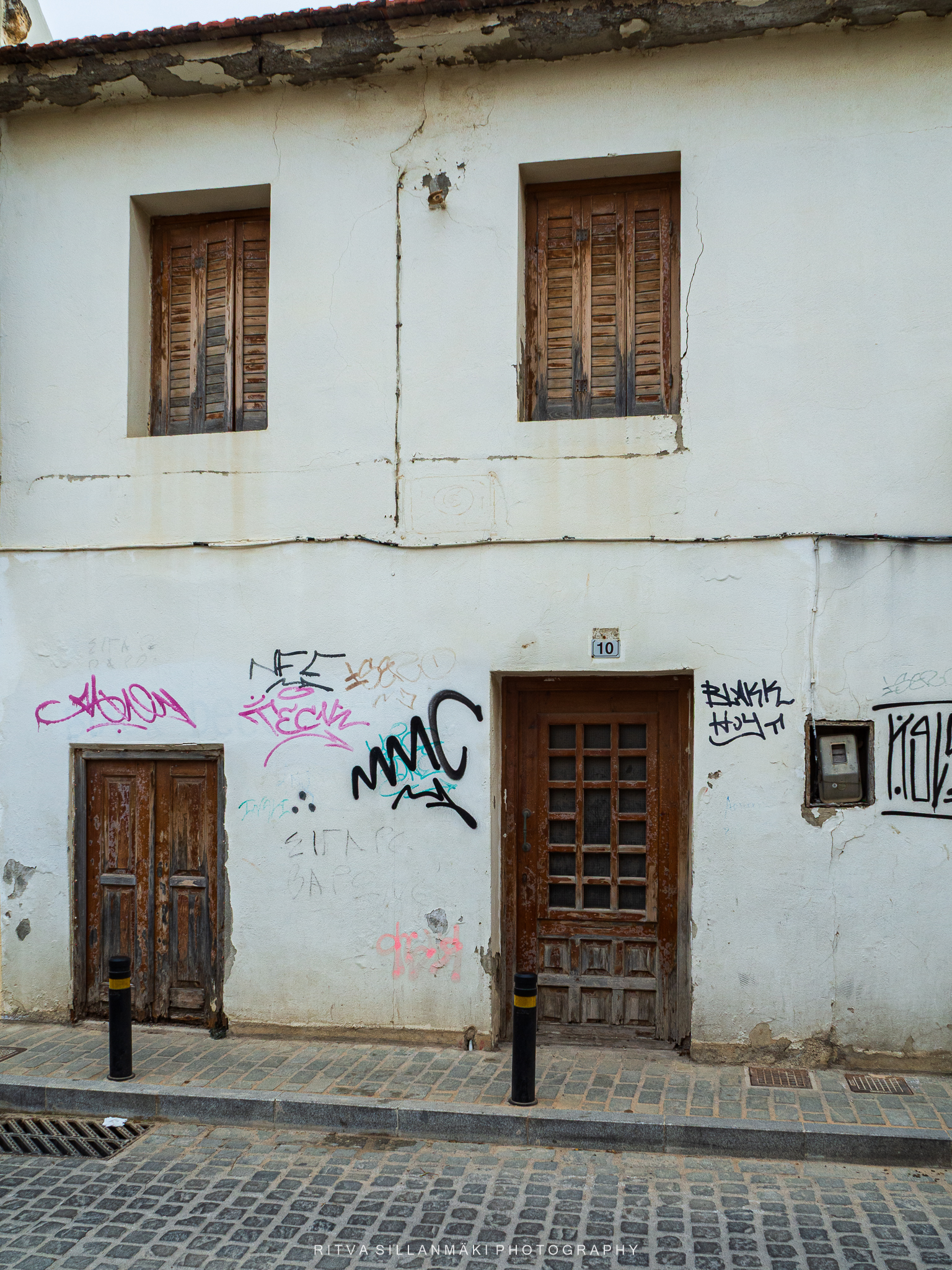
I took this photo because I was hunting for interesting doors for Dans Thursday Doors and I was captivated by the old, weathered double wooden door. It was painted in a pale, muted color, but the significant peeling and chipping really revealed the underlying wood’s character. Each door panel had this interesting latticed section at the top, which added a textured pattern, while the bottom panels were solid and showed extensive paint deterioration. What struck me was how the doors were secured with a metal chain wrapped around two green handles, making it seem like they were locked or out of use. The yellowish wall surrounding the doors had its own story with patches of peeling paint and dark spots, giving off an overall vibe of age and neglect. Plus, the small white plaque above the doors with the number 18 and the letter of notice set under the door piqued my curiosity about what lay behind them.
Few more 😀🫢If using a computer to read my post, for a better view click the gallery to enlarge the photos
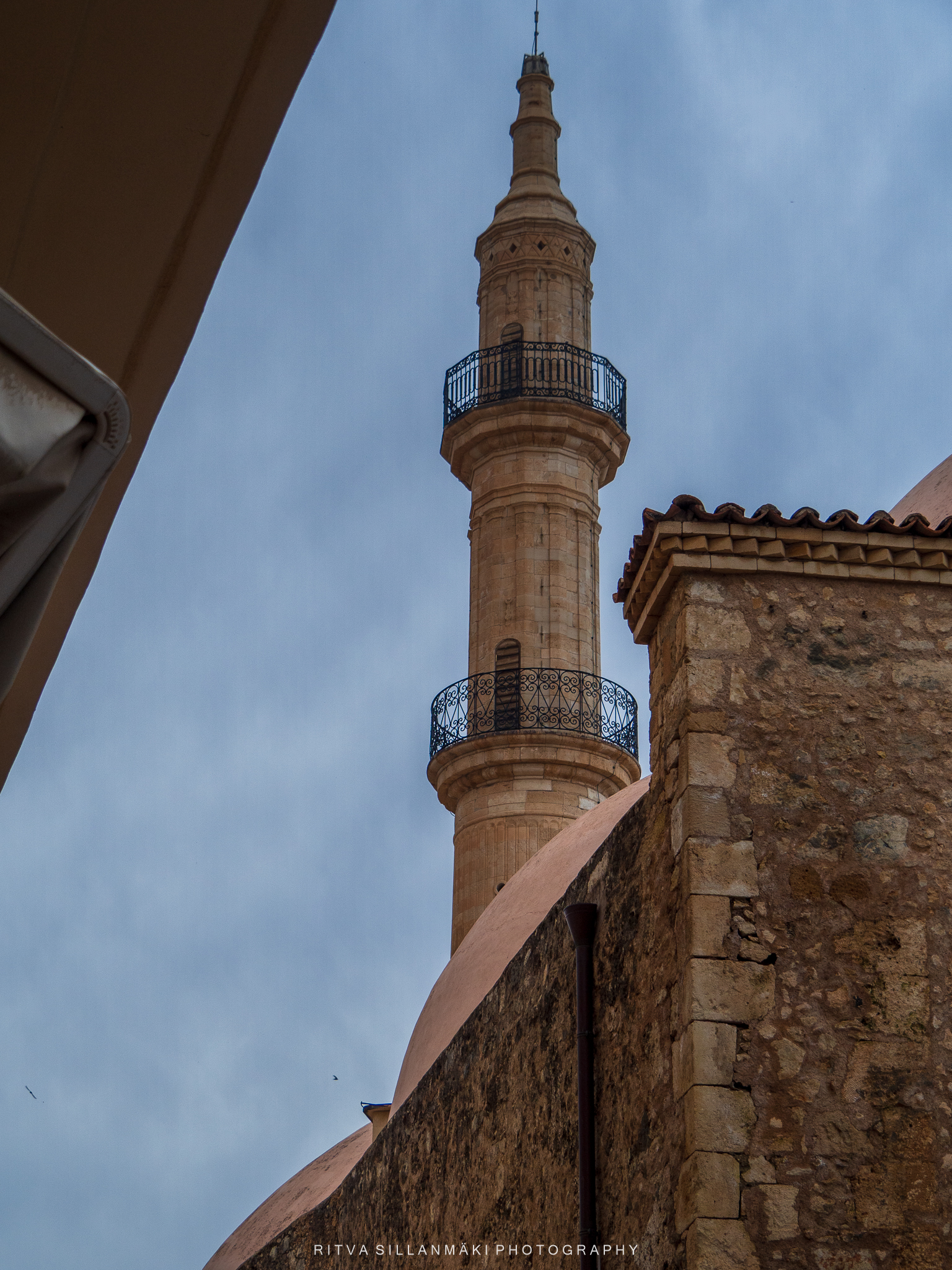
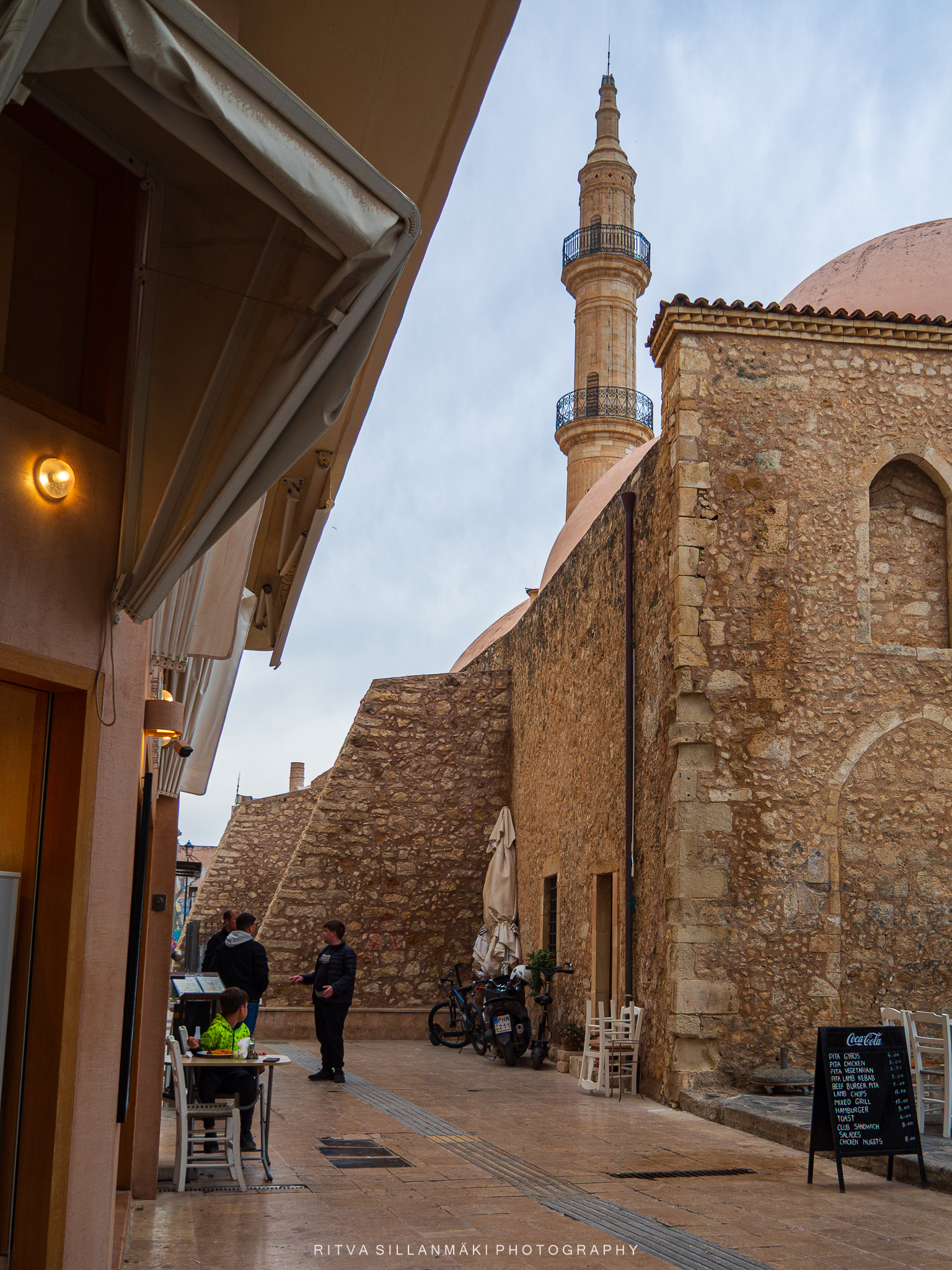
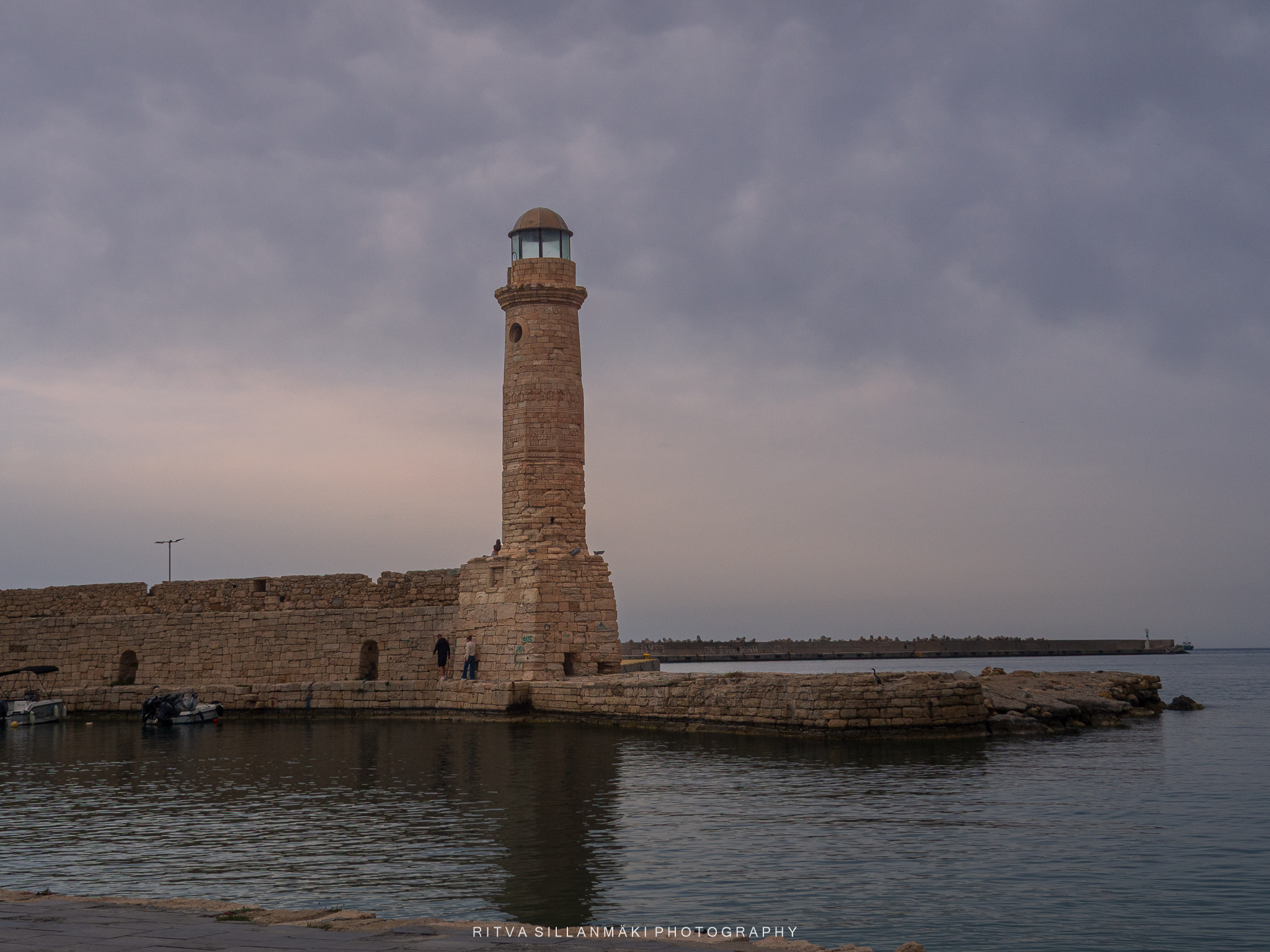
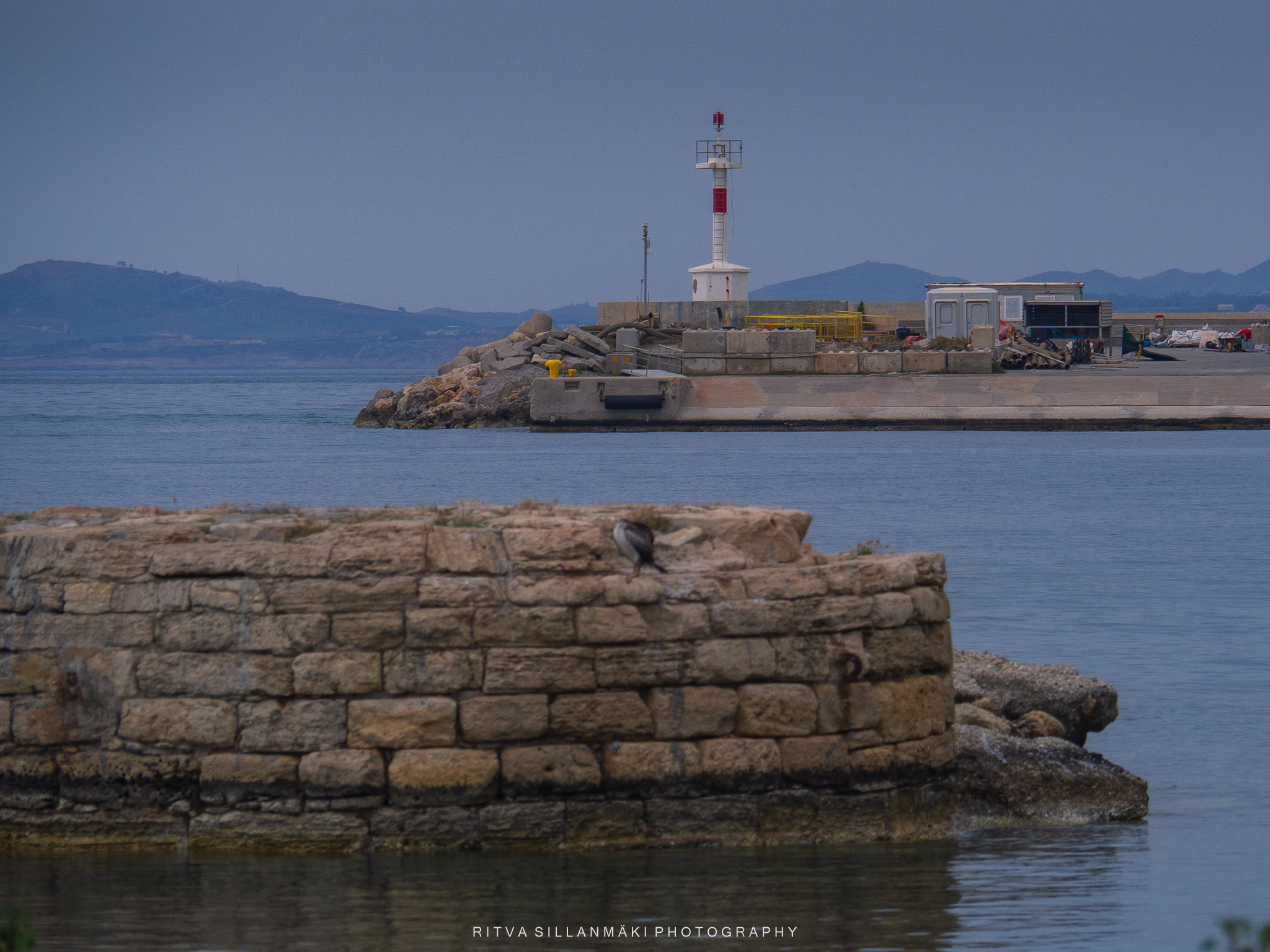
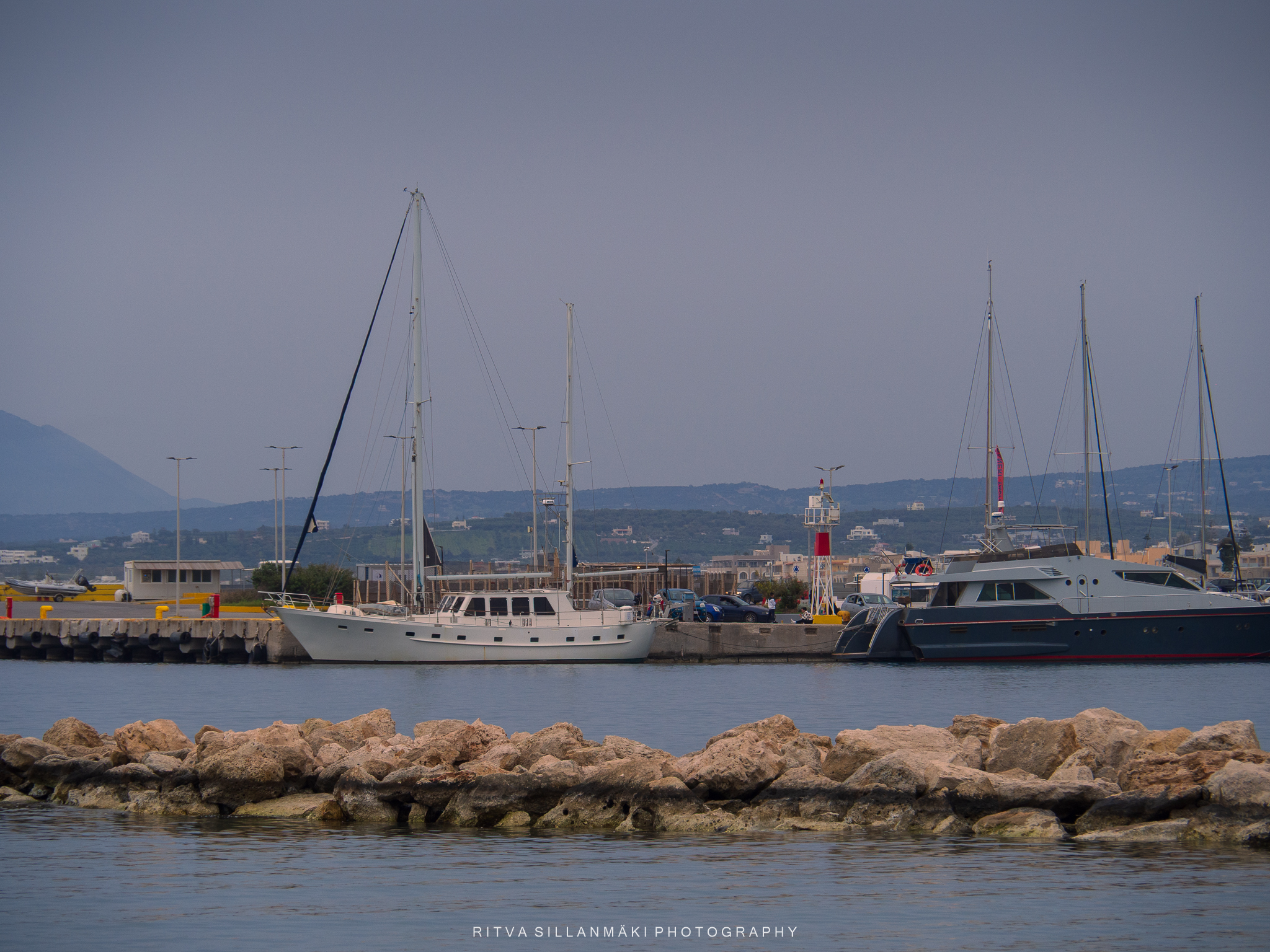
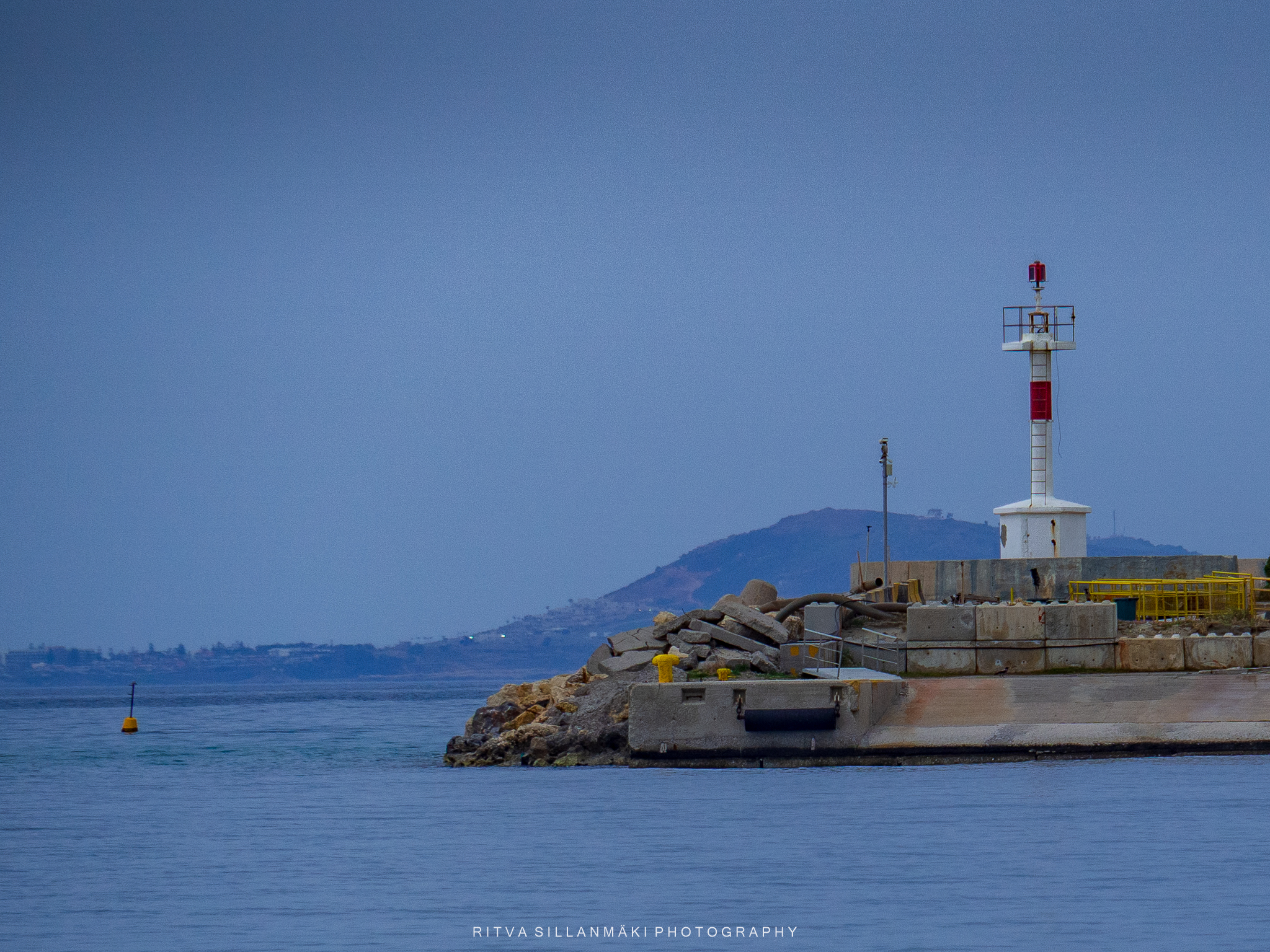
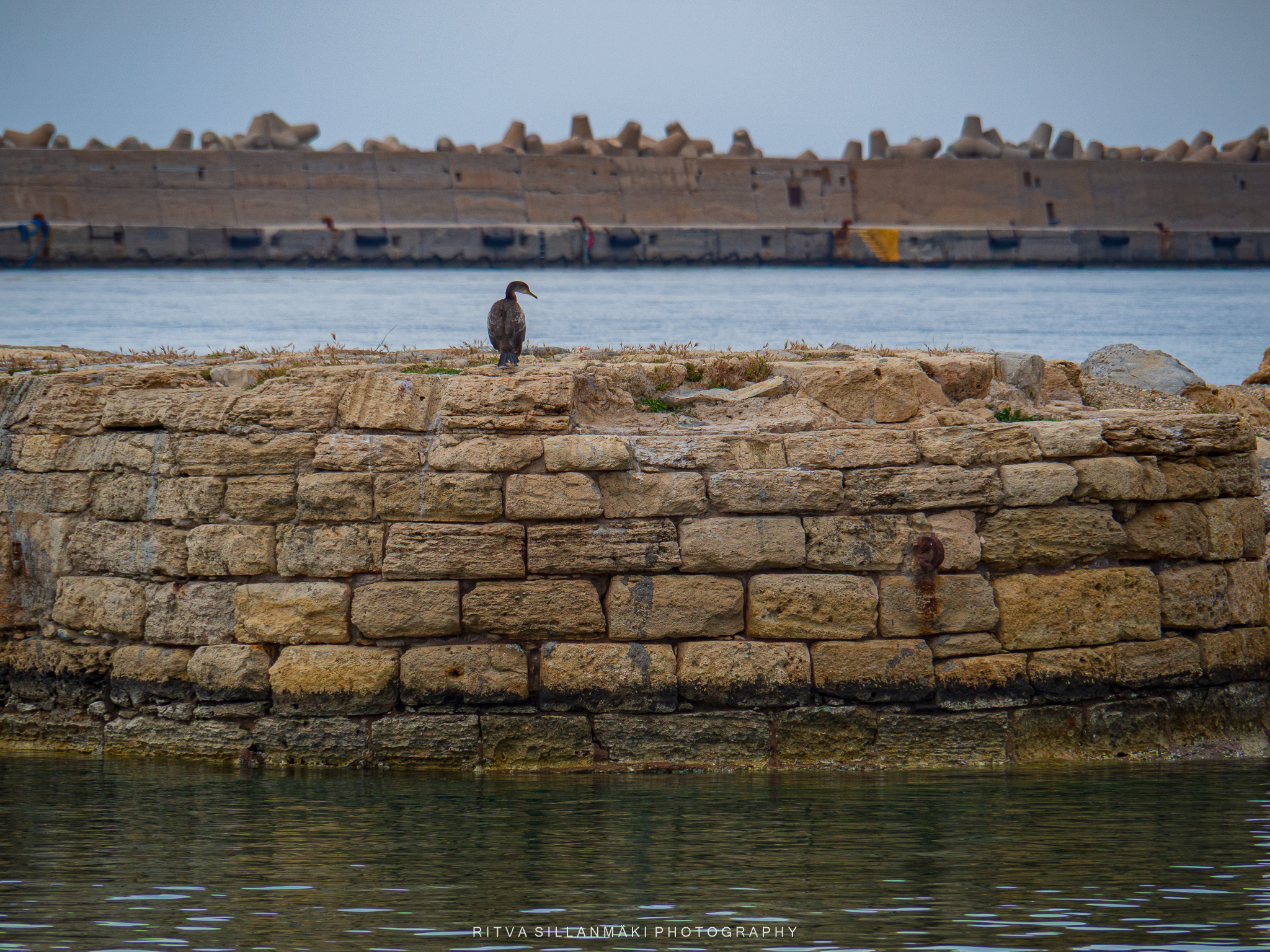
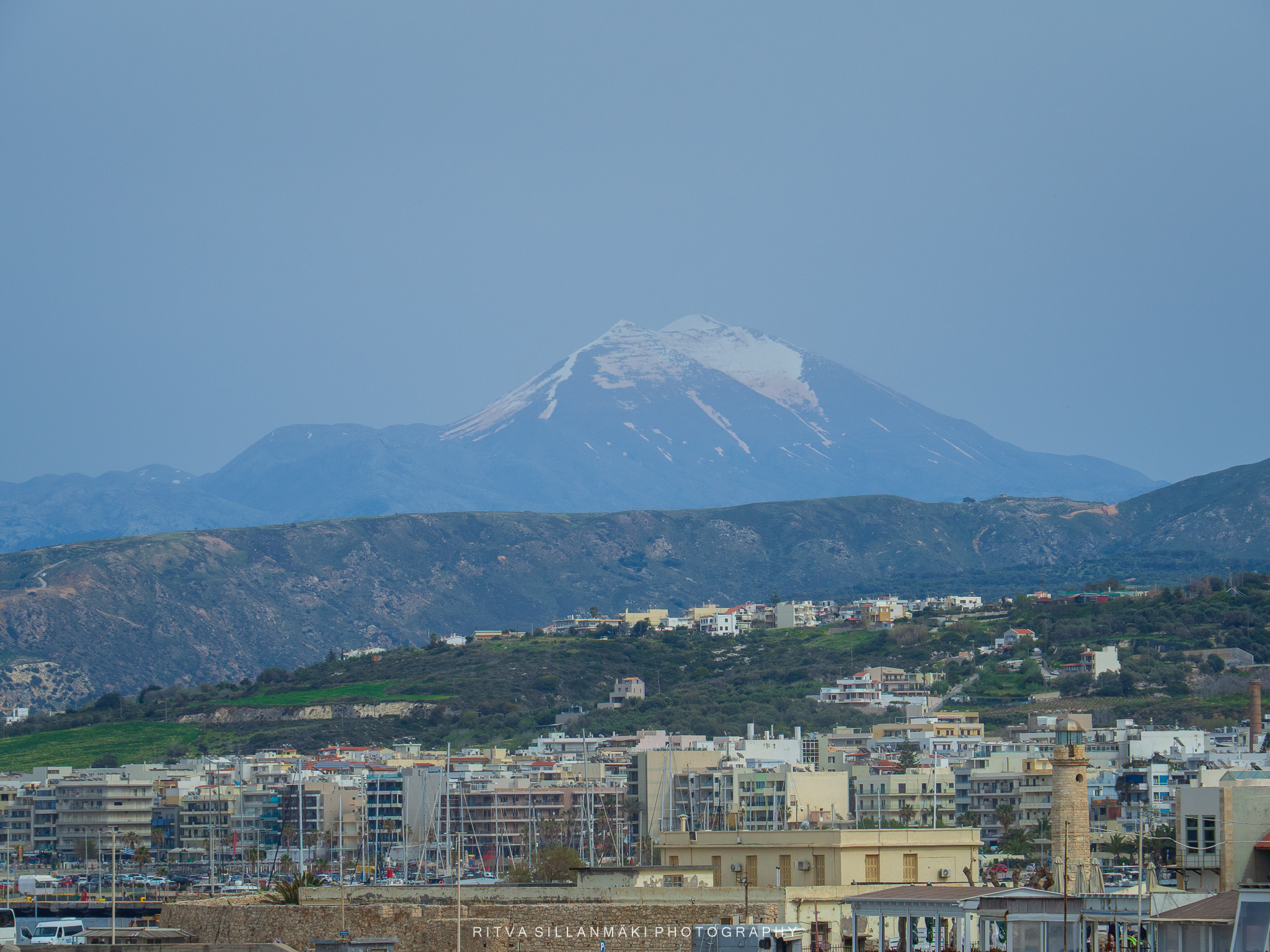
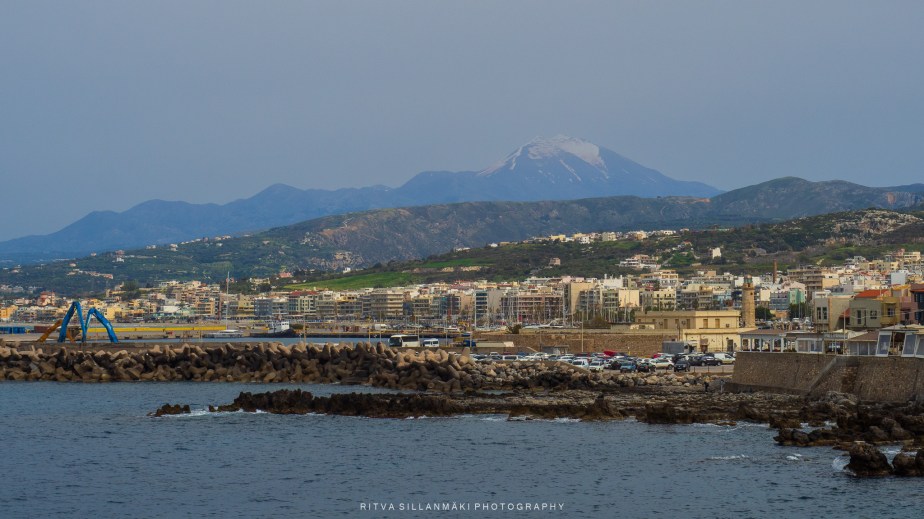
As an afterthought, I am adding these photos; it was not really my intention to do so. We also walked to the Rethymnon lighthouse, located on the island of Crete in Greece. This historical landmark, built of stone in the Venetian harbor, was constructed during the Ottoman period and continues to be one of the area’s most famous attractions.
The city of Réthymnon and its Venetian harbor, from which there is a view towards the snow-capped Psilorítis mountain (Ida mountain).
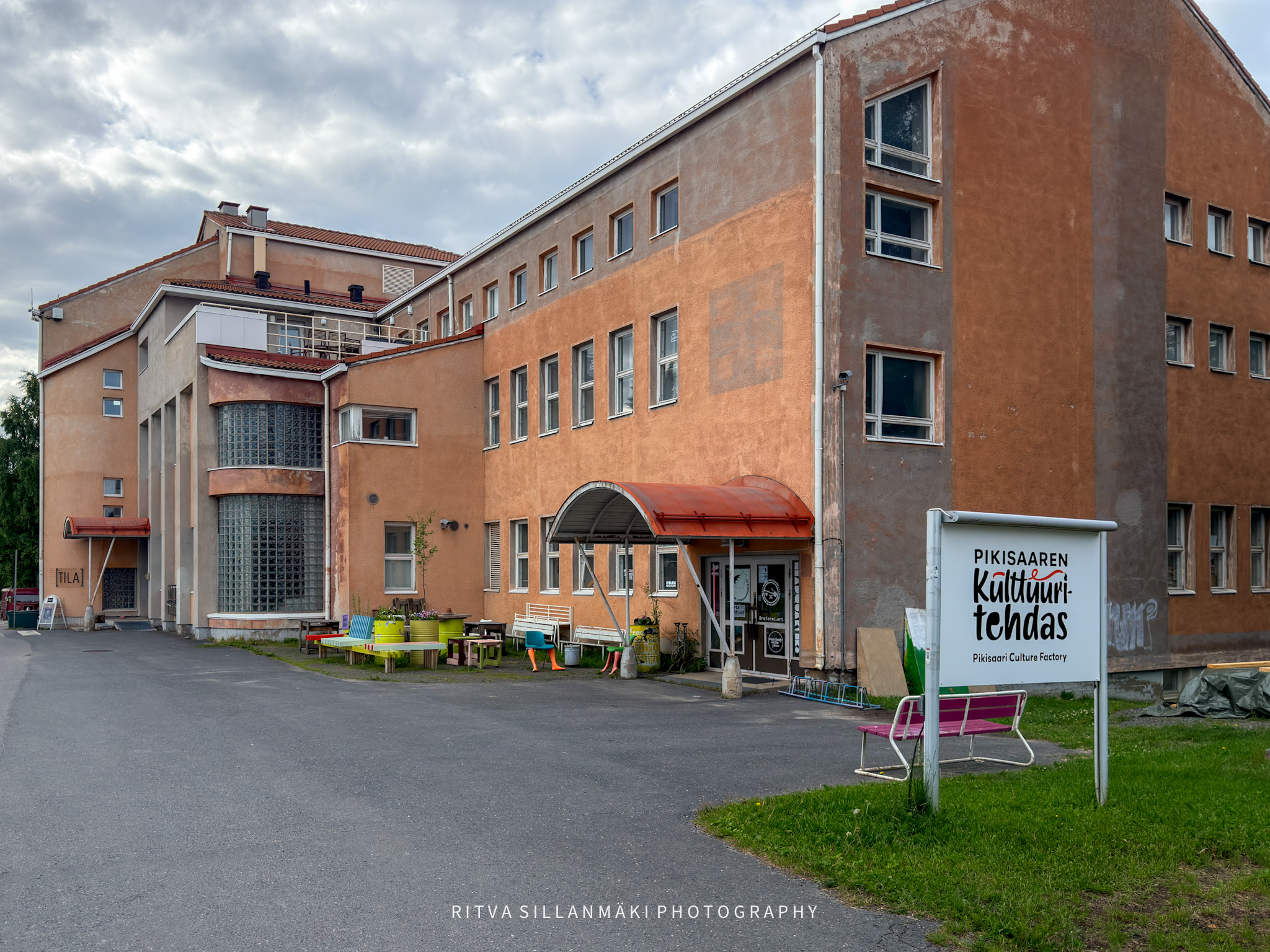
Still in Oulu, late afternoon 17:30, not that you would know that this time of the year it is so light. Our son is showing us places in in his hometown. Just a little fact about summer nights; last night the sunset was at 00:15 and sunrise at 2:21, creating almost a continuous twilight that casts a magical glow over the landscape.
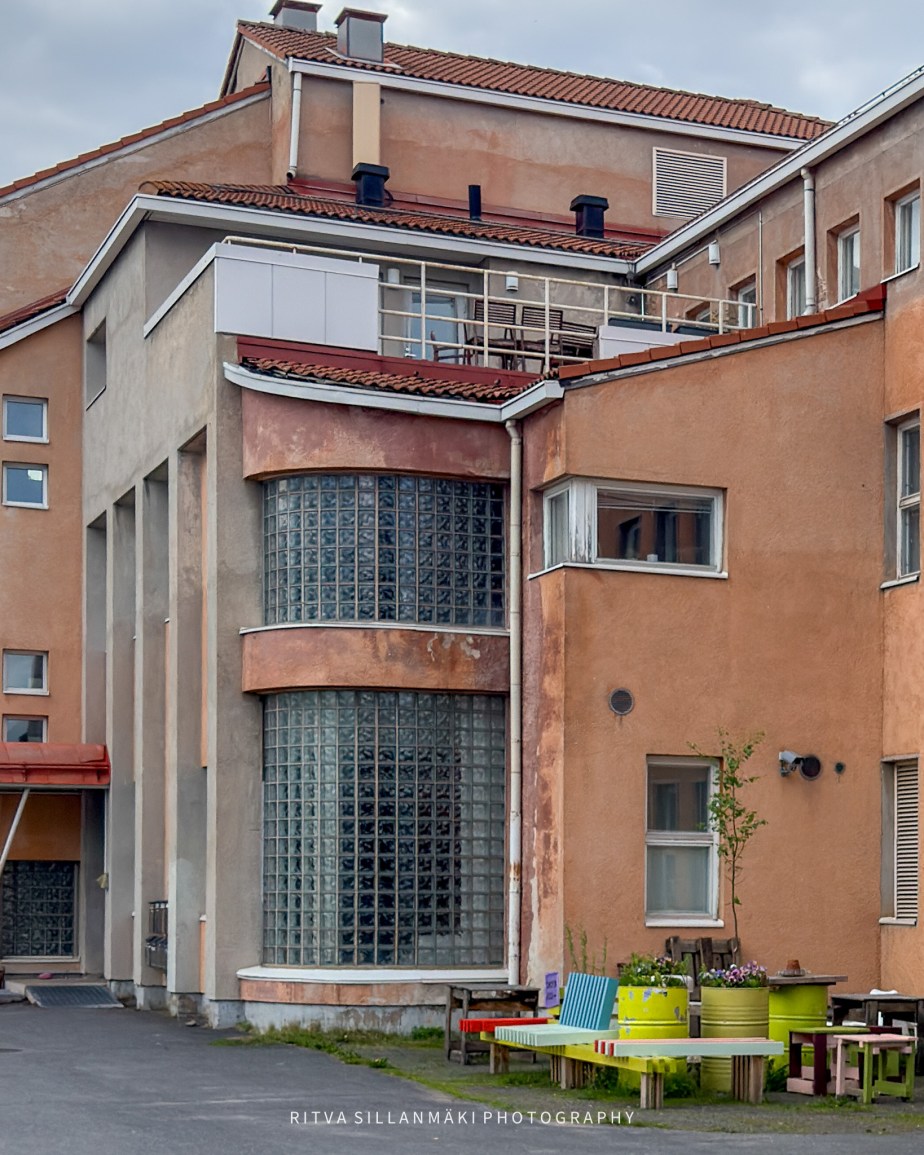
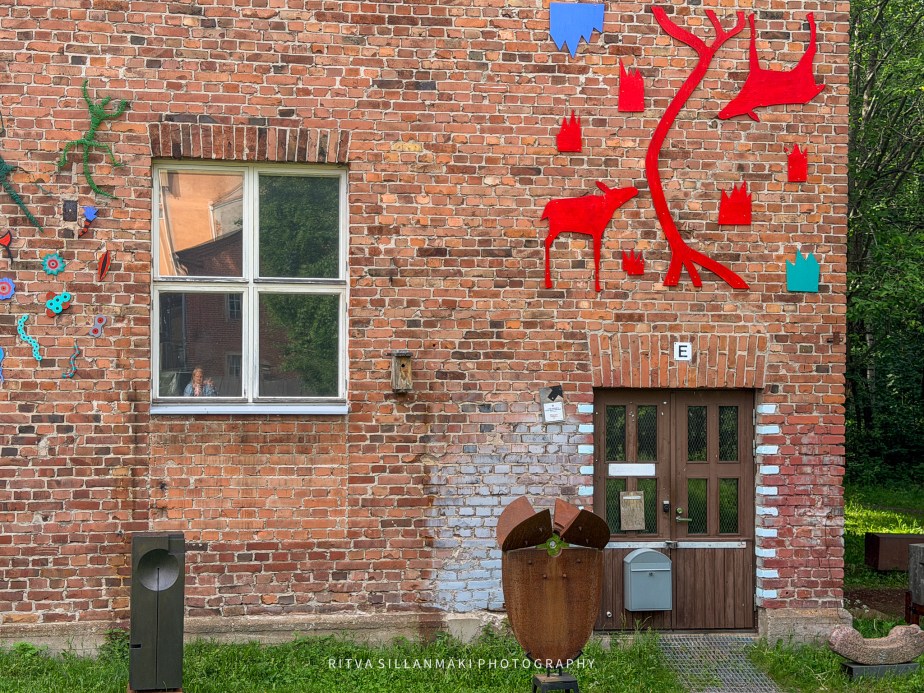
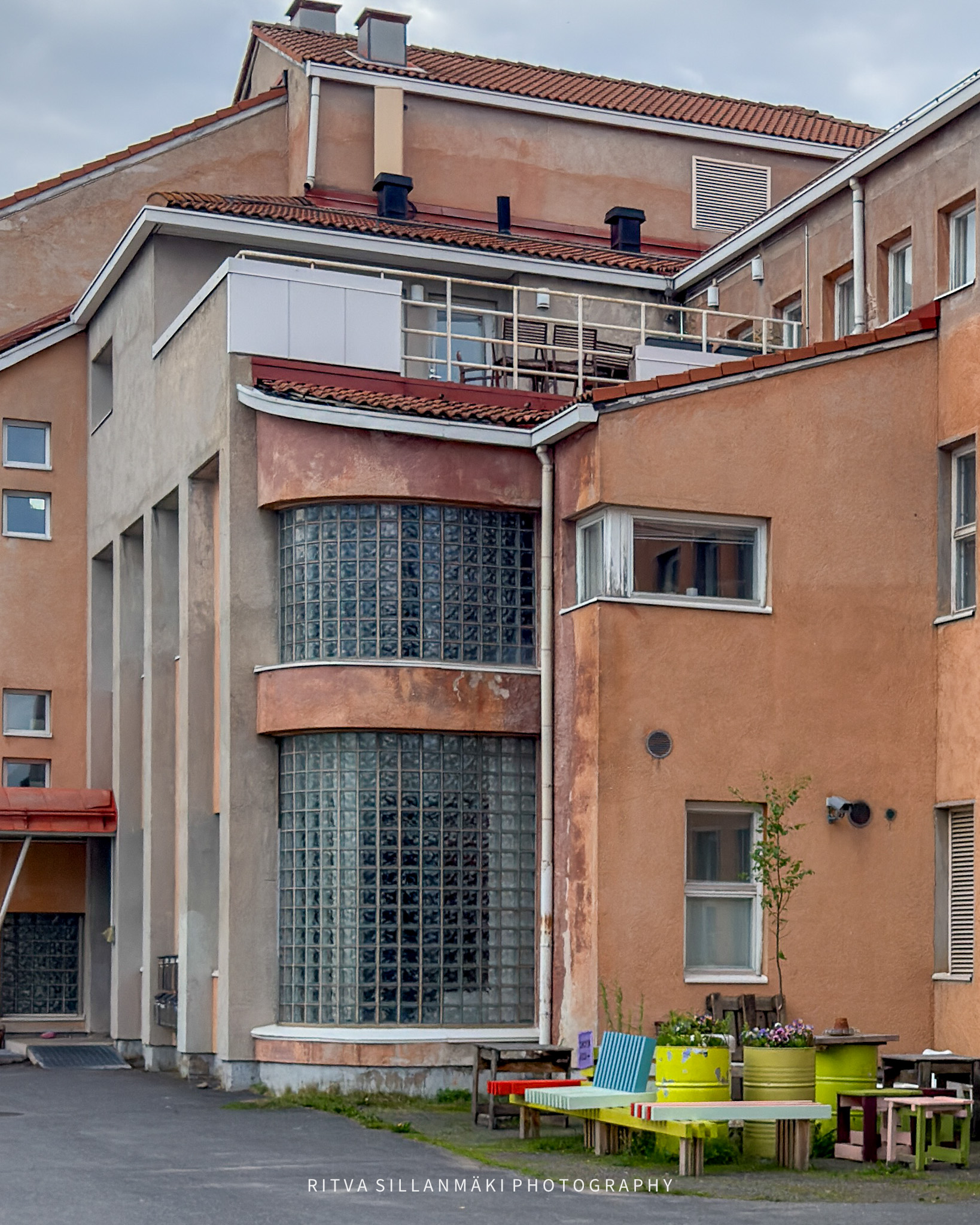
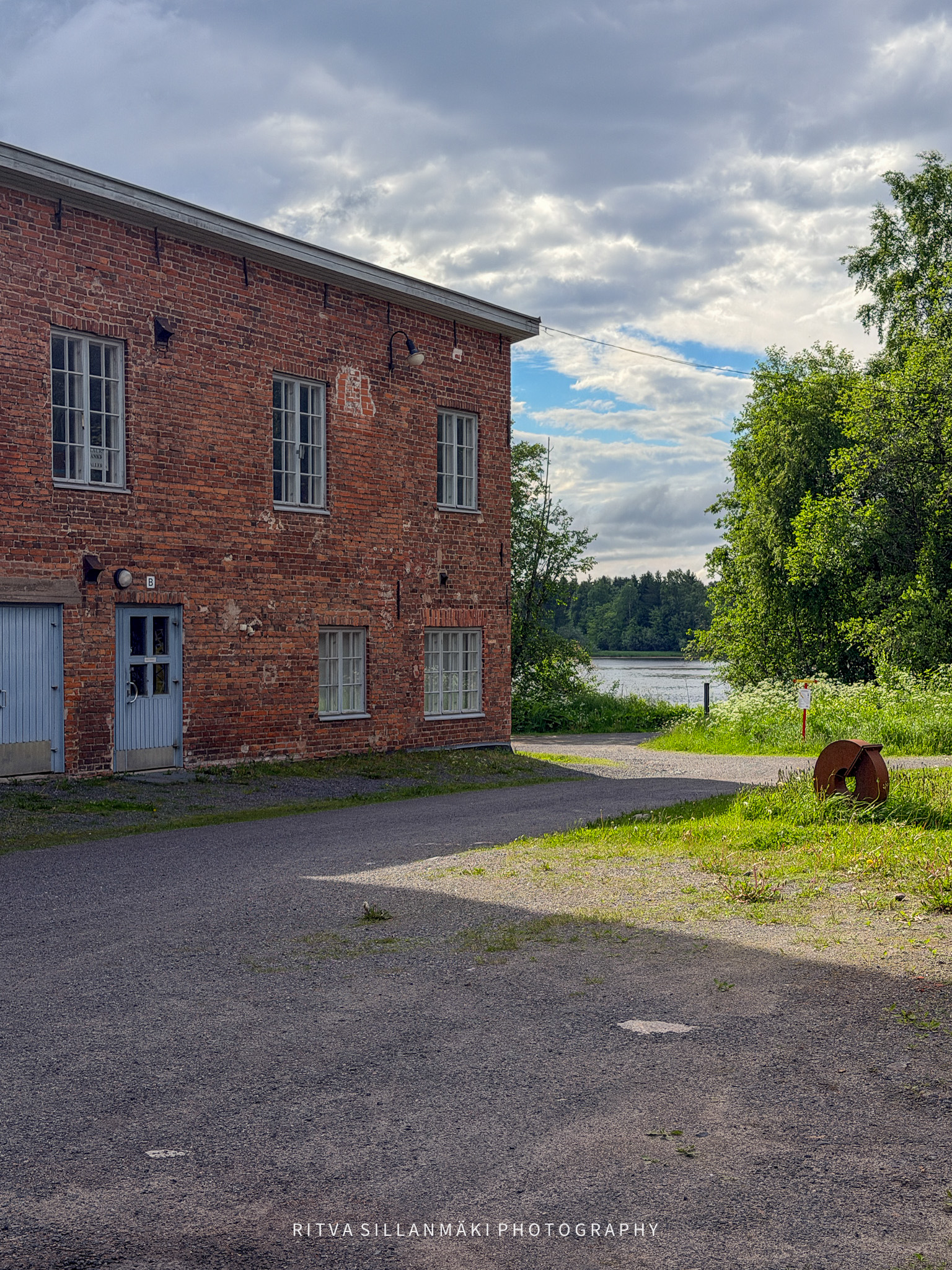
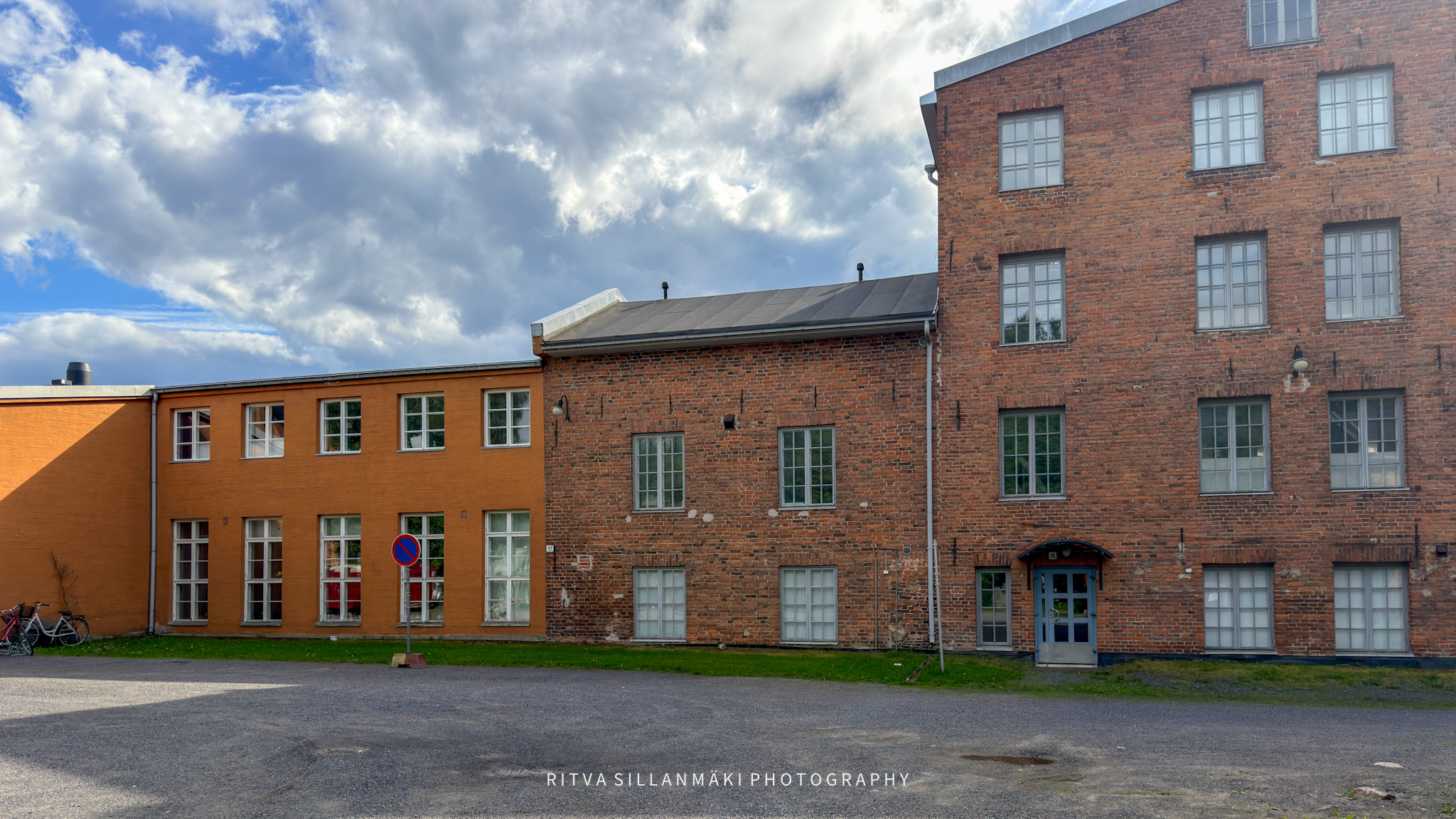
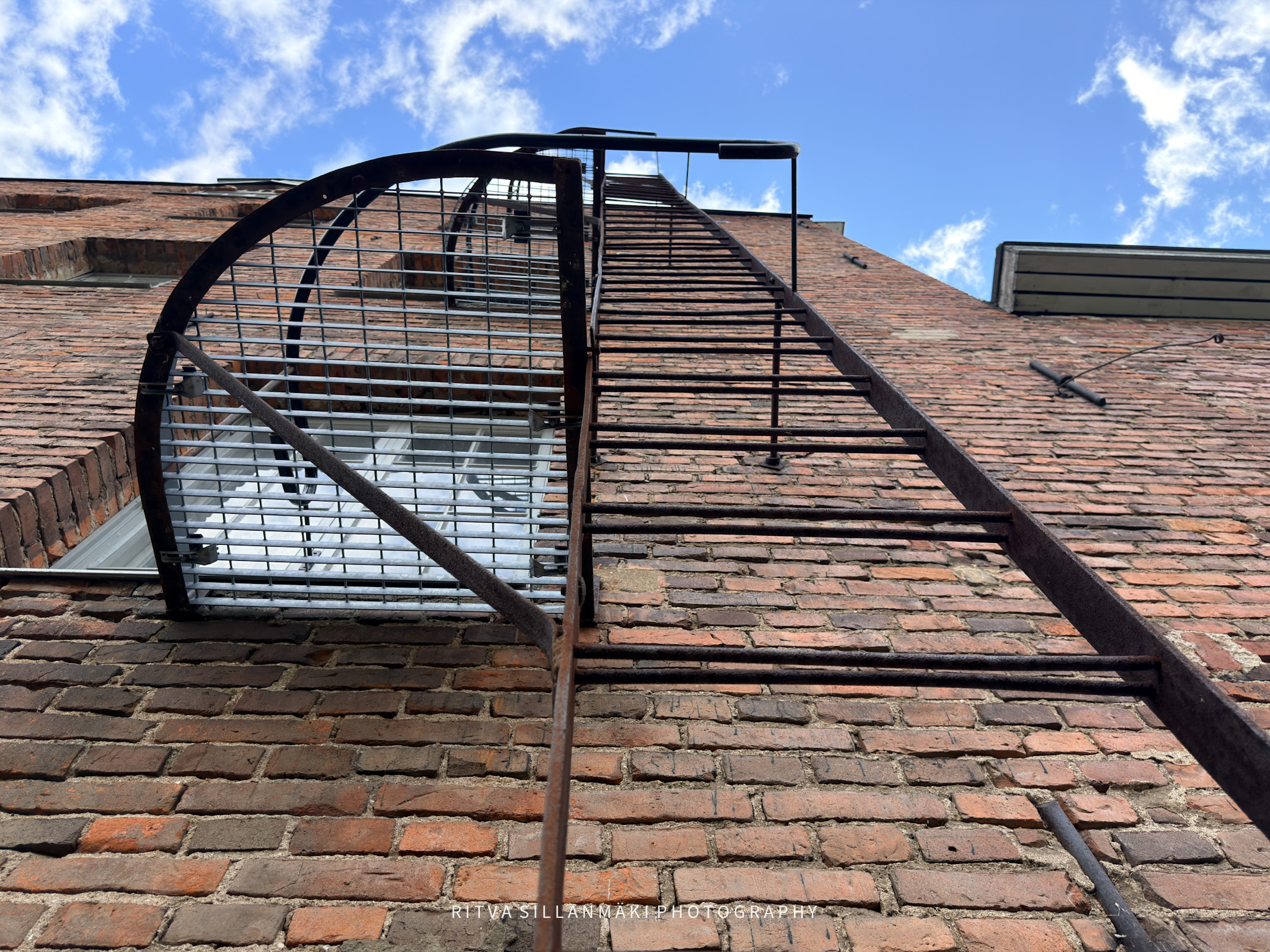
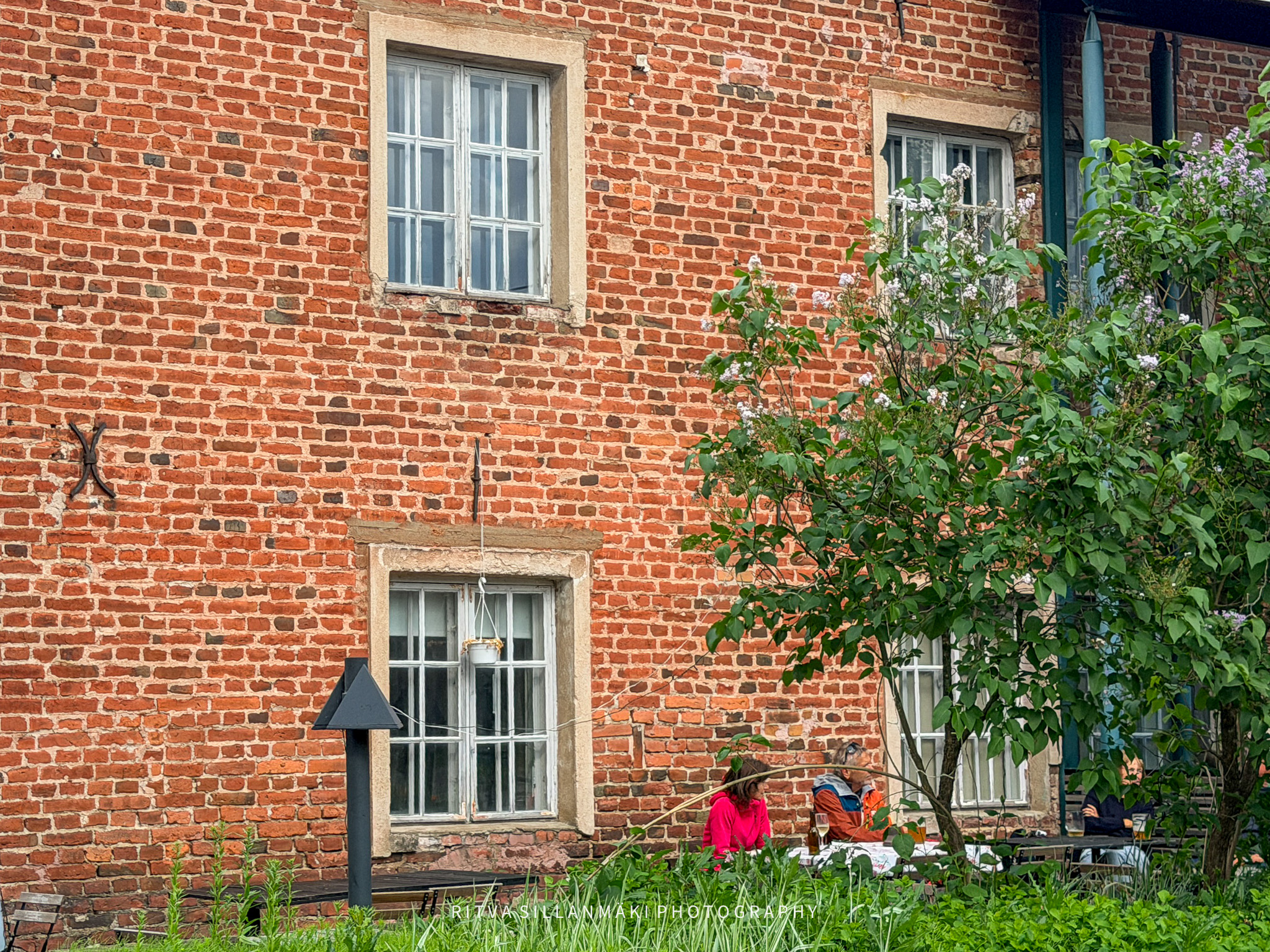
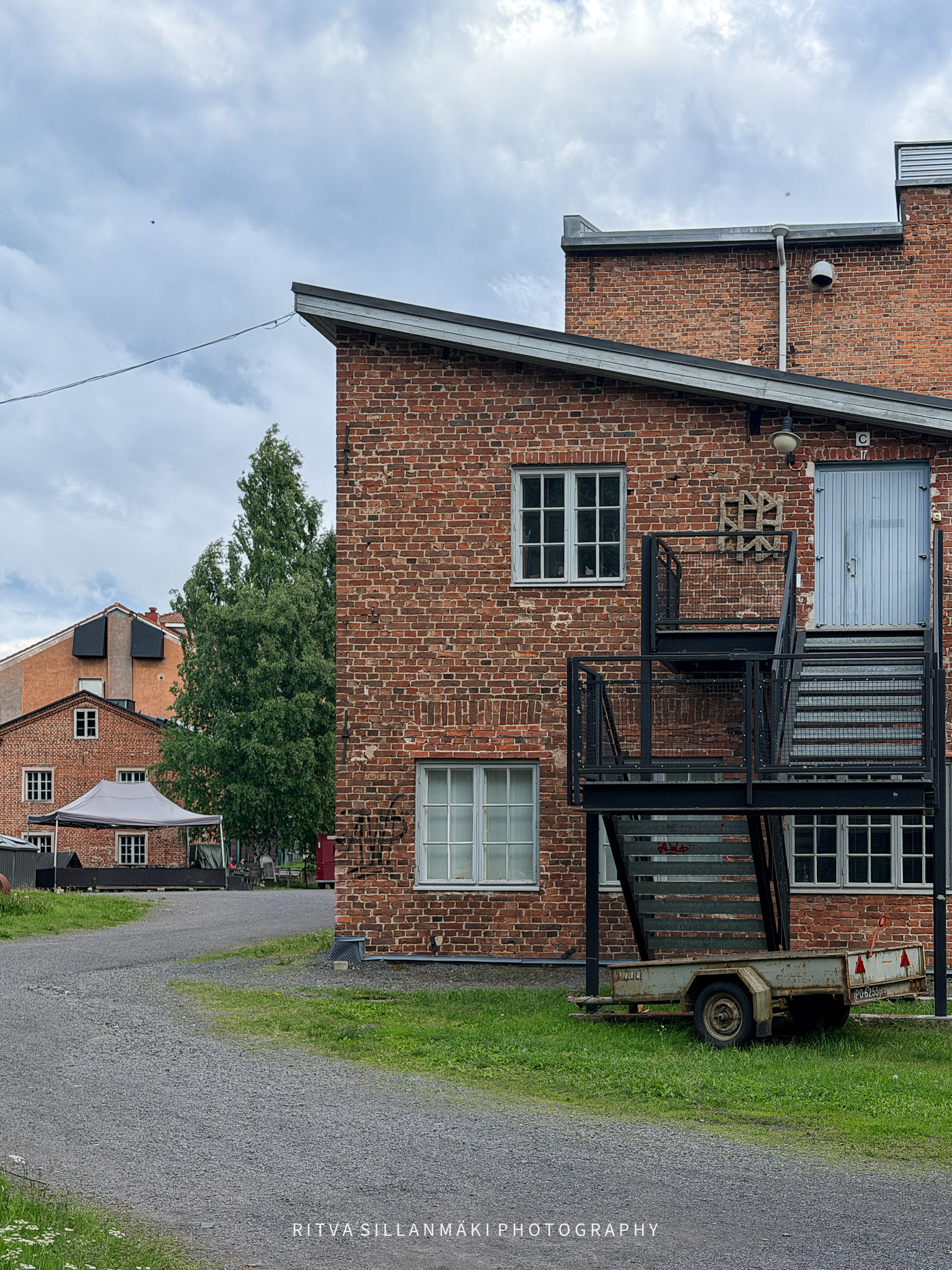
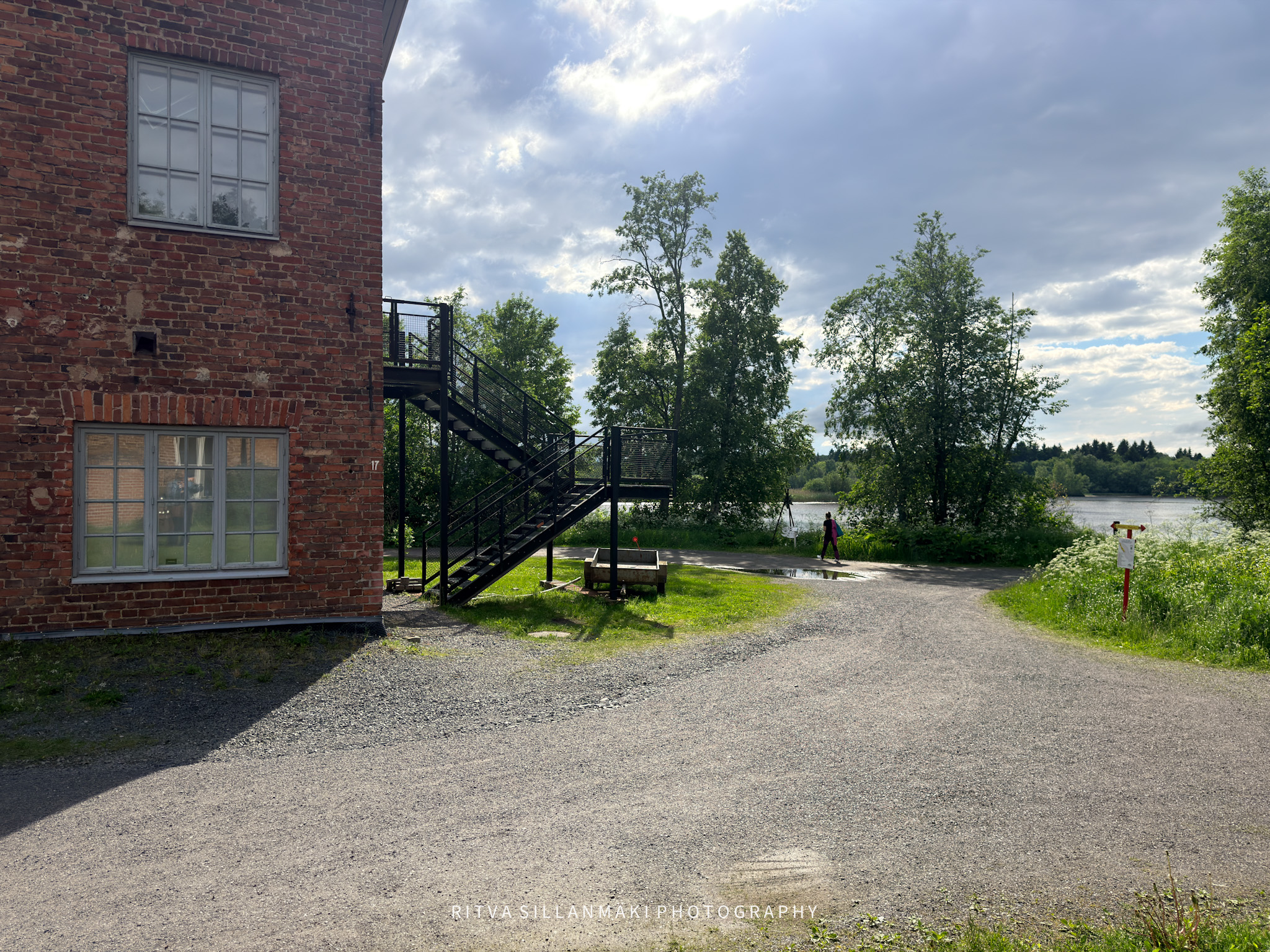
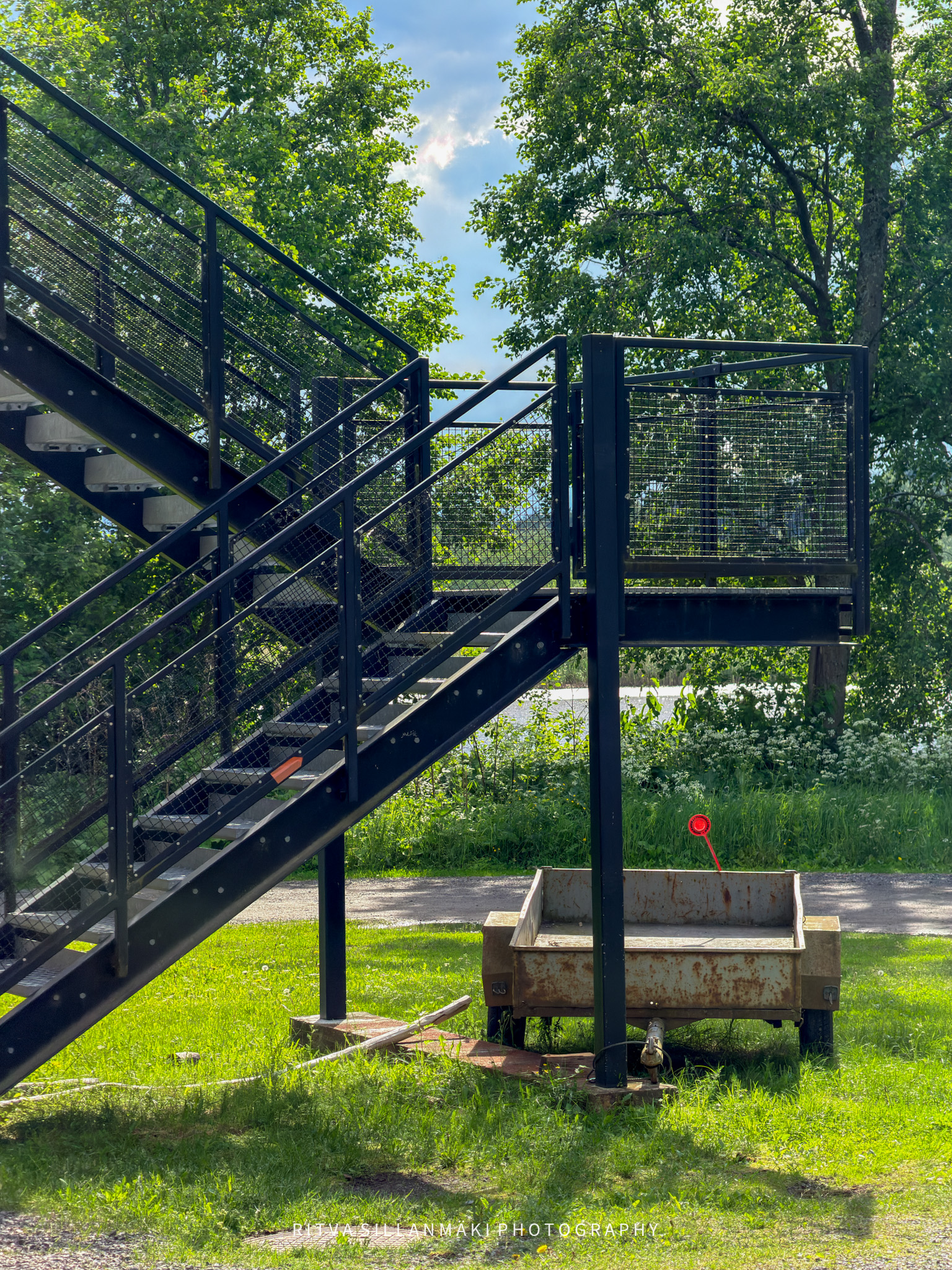
Back to the topic of this post, I am sharing a few window shots from Pikisaari, located right next to the center of Oulu, which is a real gem! This charming area boasts lots of fascinating architecture, ranging from historical buildings to modern designs that harmonize beautifully with the surroundings. The beautiful nature surrounding Pikisaari, with its lush greenery and serene waters, creates a perfect backdrop for leisurely strolls. Additionally, the vibrant arts and culture scene here is truly inspiring, with local artists often showcasing their talents through various exhibitions and events, making it an ideal spot for both residents and visitors to experience the rich cultural fabric of the city.
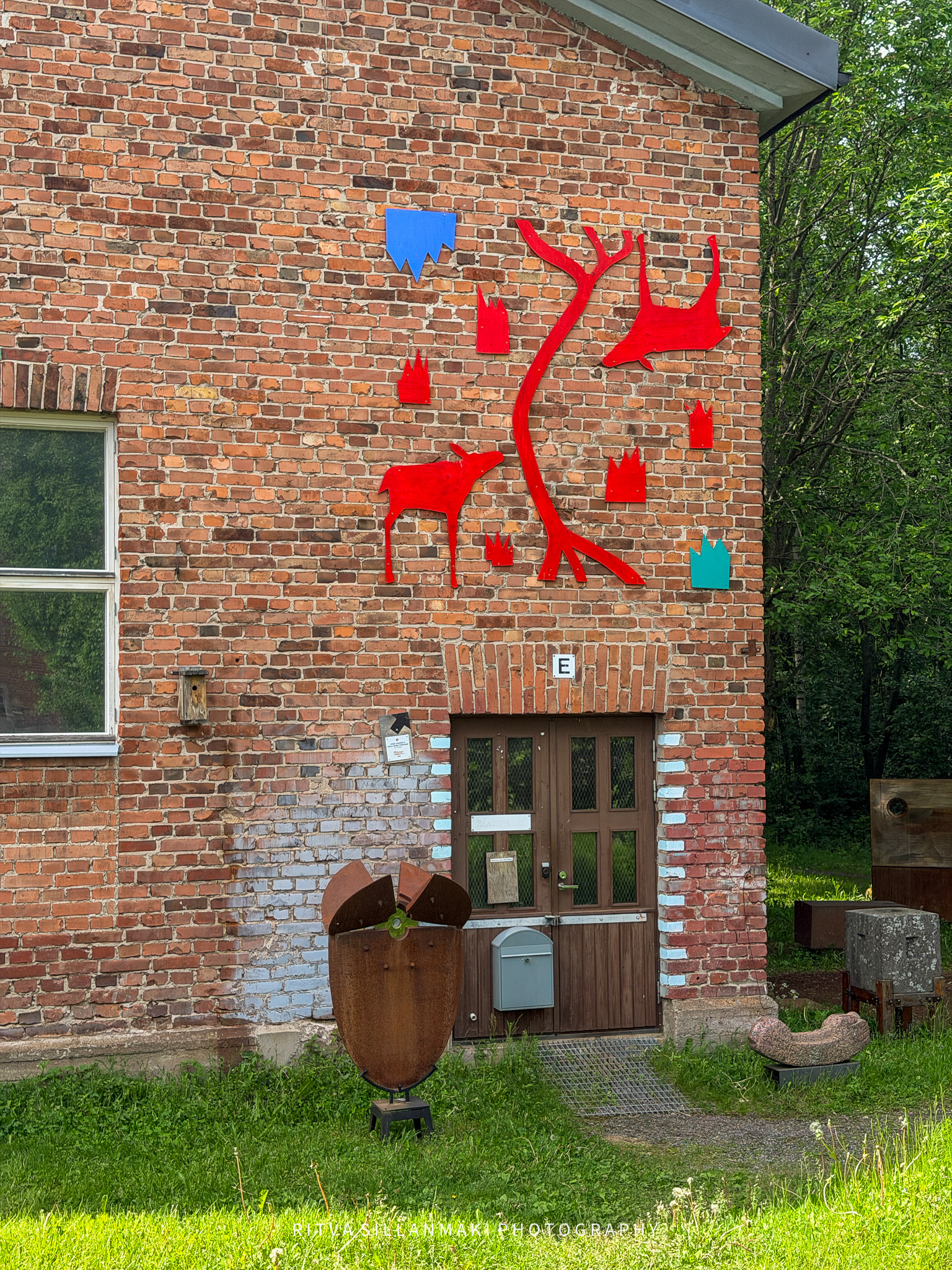
Bright red animal and abstract shapes decorate the exterior brick wall of a building surrounded by greenery.
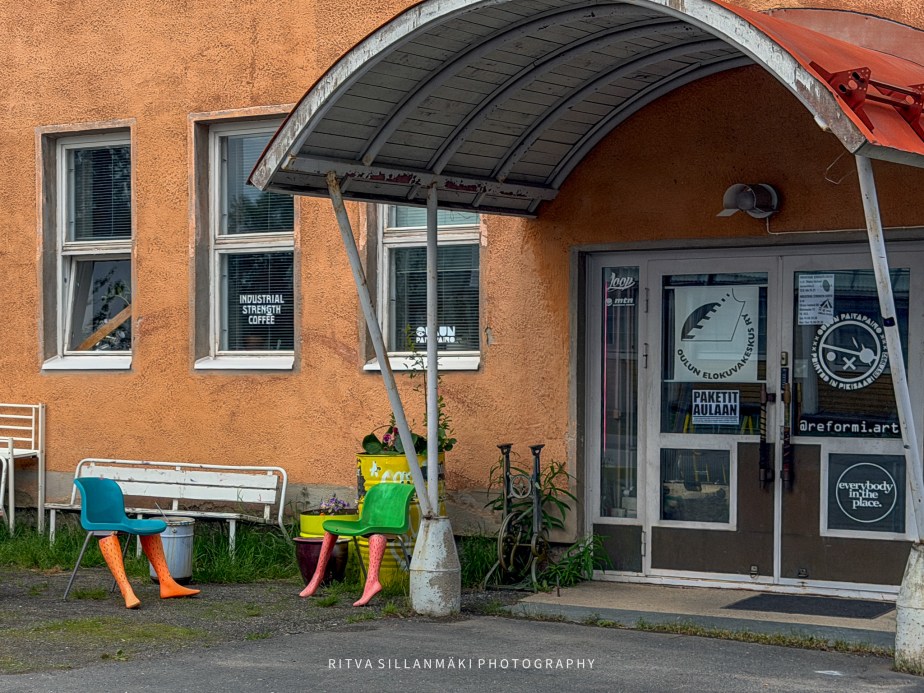
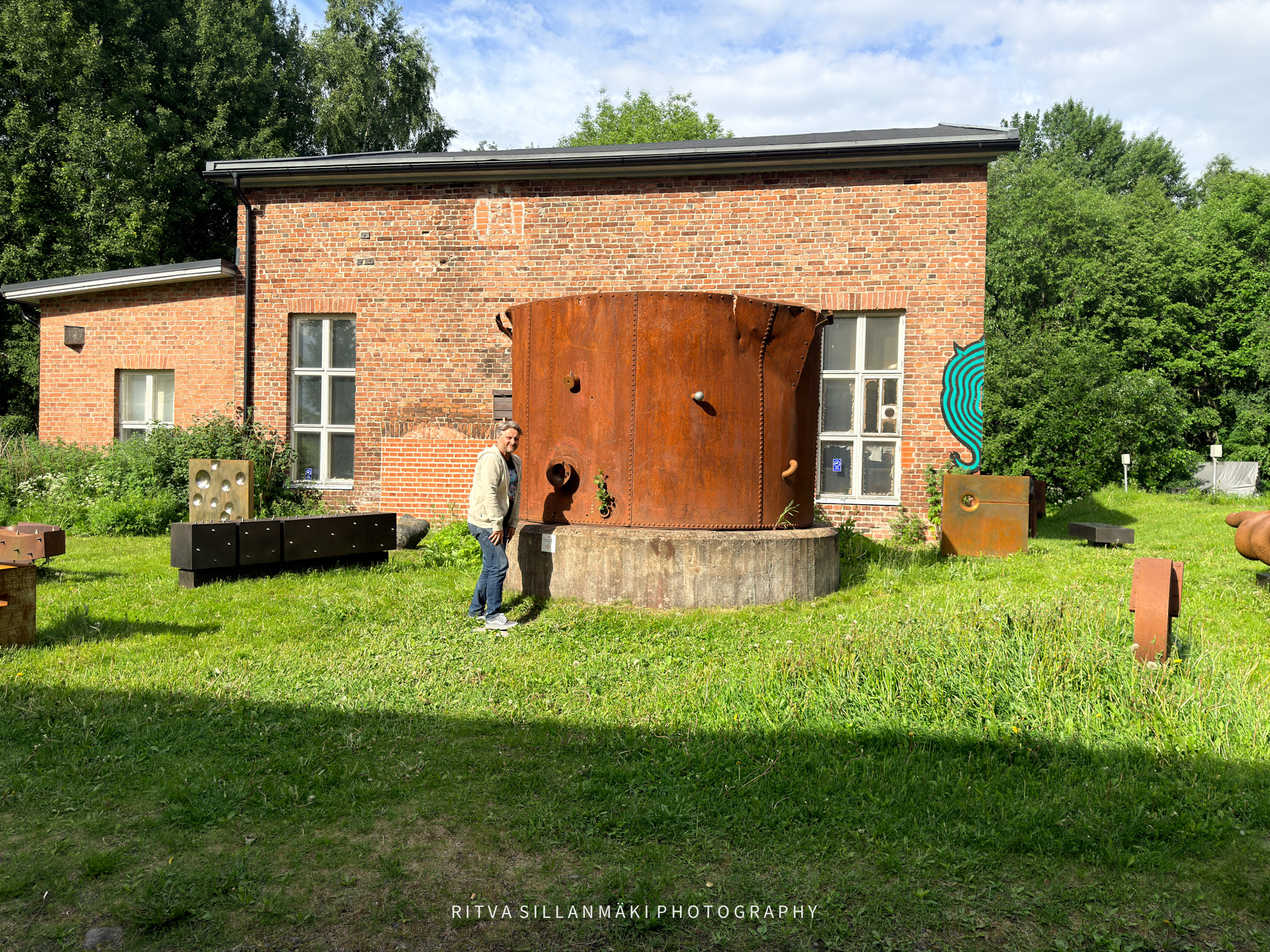
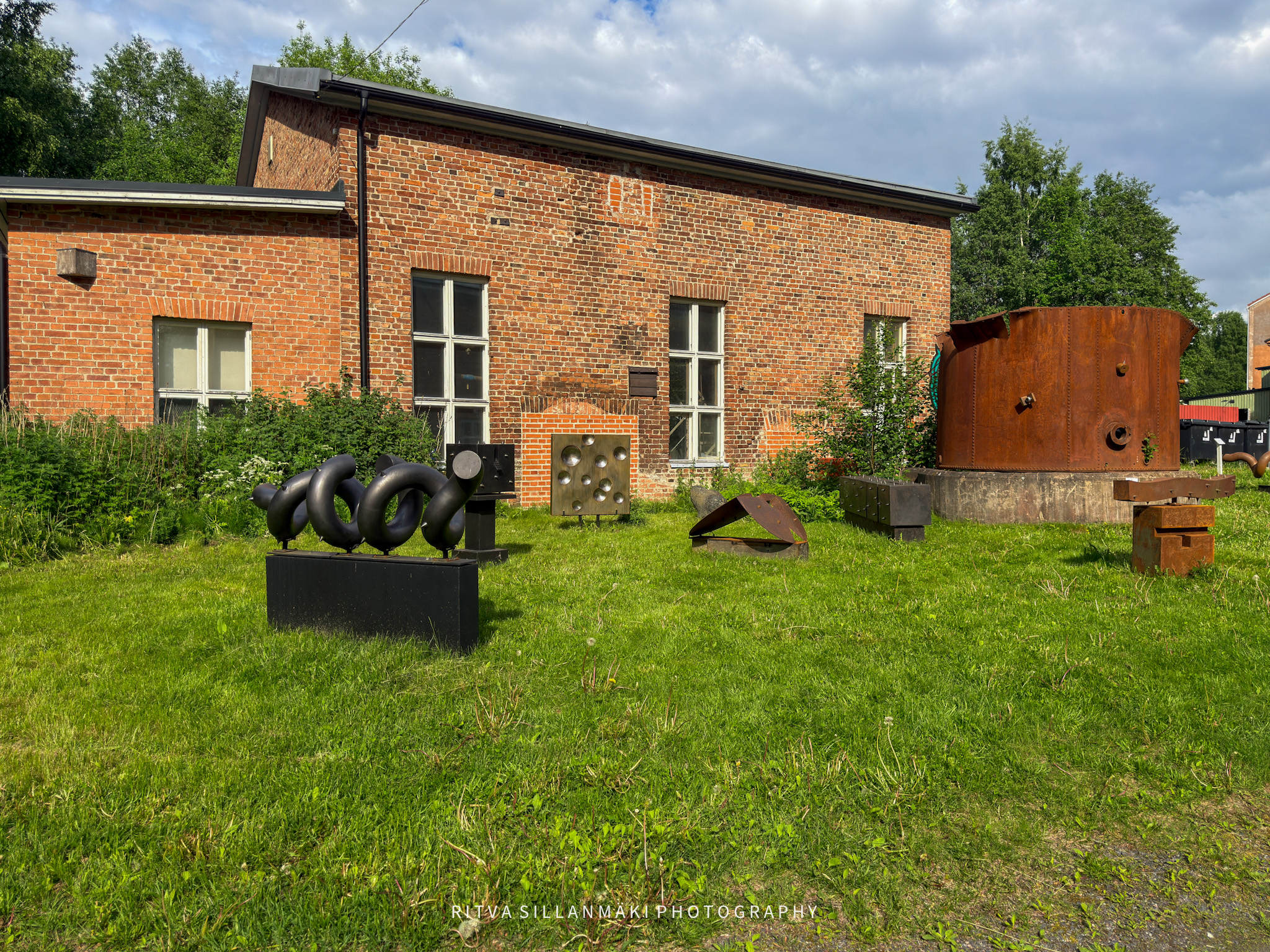
The area around the Old Wool Factory is turning into such a cool cultural hub, and honestly, this little island is just so pretty! Pikisaari has such beautiful nature; almost half of the island is untouched, so there’s plenty of space to kick back and soak in the scenery and art you find along the trails. The running paths here in Oulu are honestly the best and they weave through this stunning island! We didn’t feel like running, i never do though, so we just strolled slowly along the river path instead, but I’ll save those picture for another post!
How do you feel about those chair legs, kind of cute?
My husband standing next to a large rusty metal sculpture that has art inside in front of a brick building
I hope this post has enough windows for Monday Window.
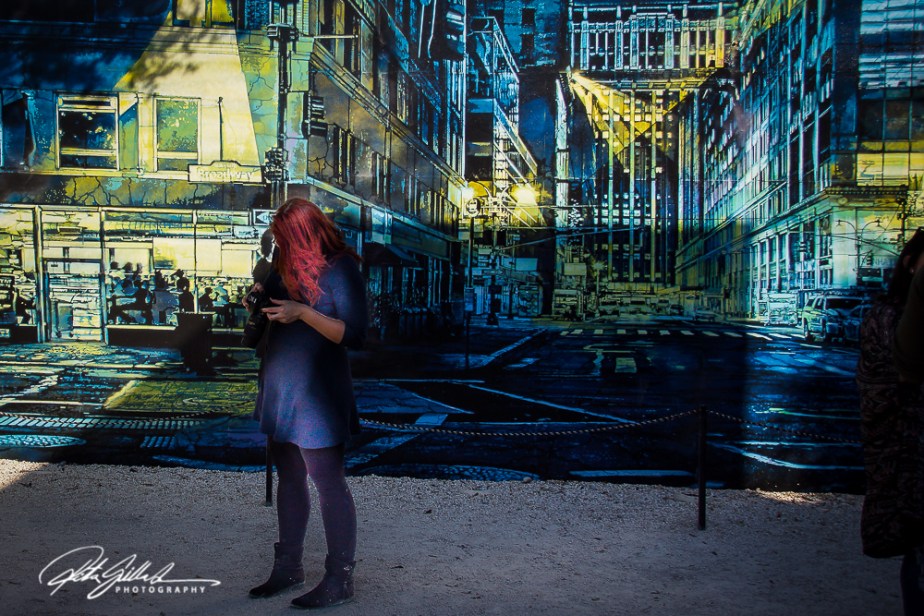
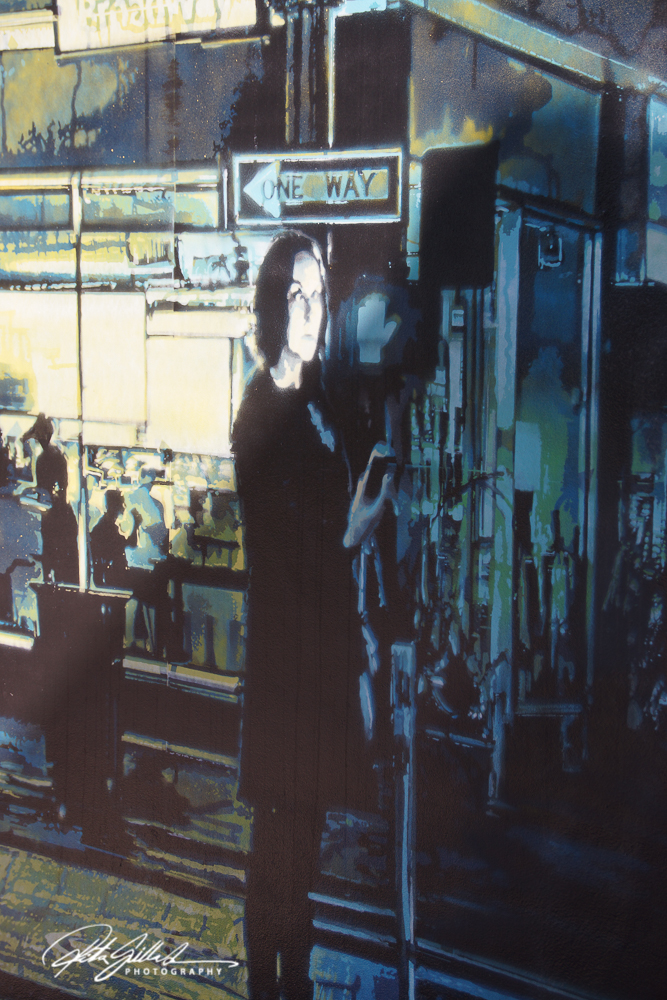
A woman with vibrant red hair stands in front of a large, detailed mural depicting an urban city street at night, with tall buildings and bright yellow and blue lighting effects. The mural shows a Broadway street sign and a stylized, almost graphic-novel-like rendering of city architecture bathed in dramatic light and shadow. The woman is dressed in dark clothing and appears engrossed in her phone or camera, casting a shadow on the textured ground. The energy of a bustling cityscape with a contemplative, intimate moment ,maybe that is the mood of this one.
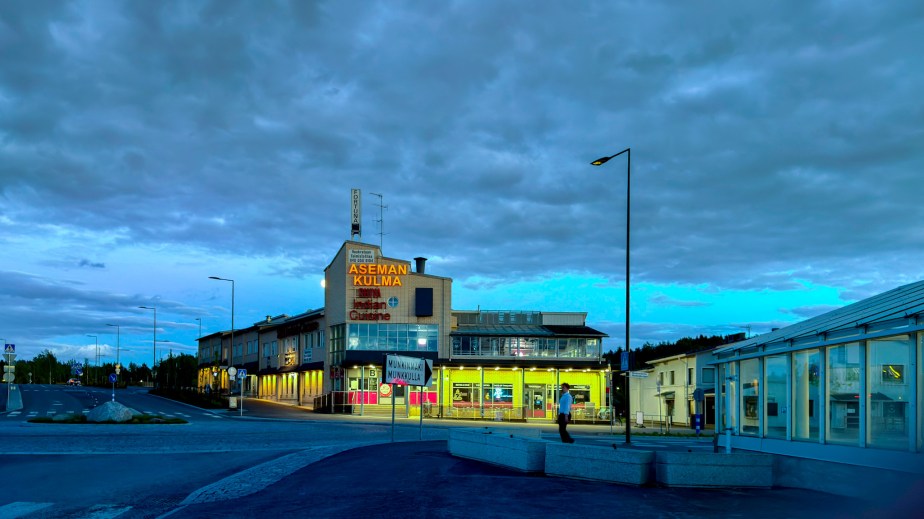
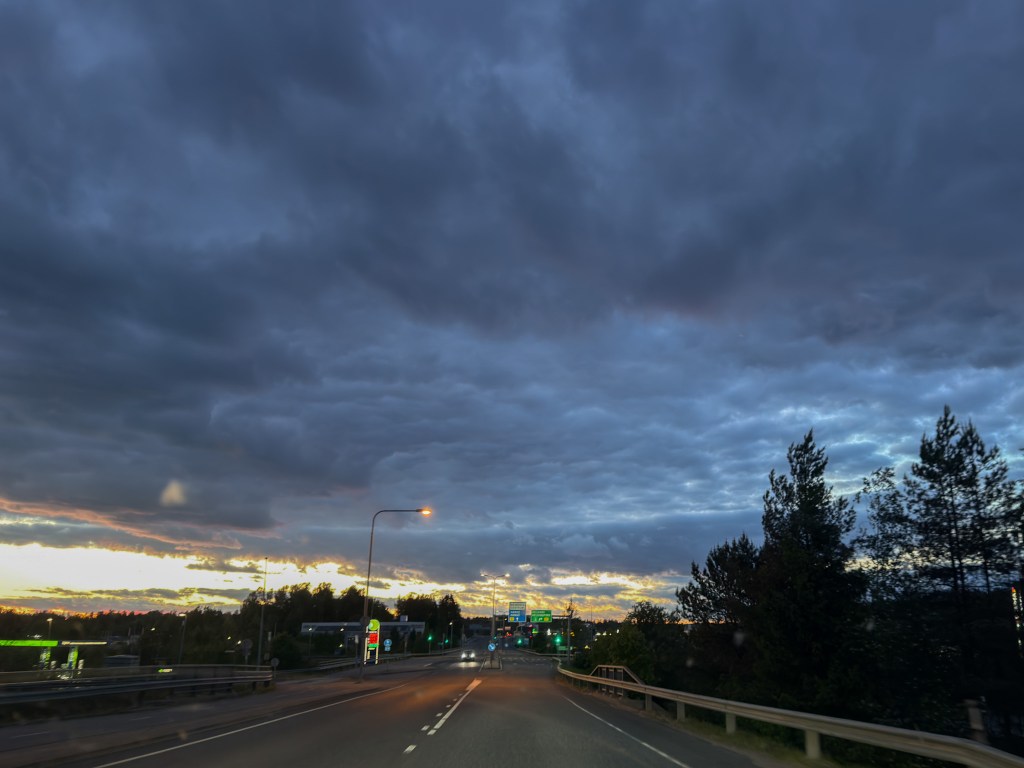
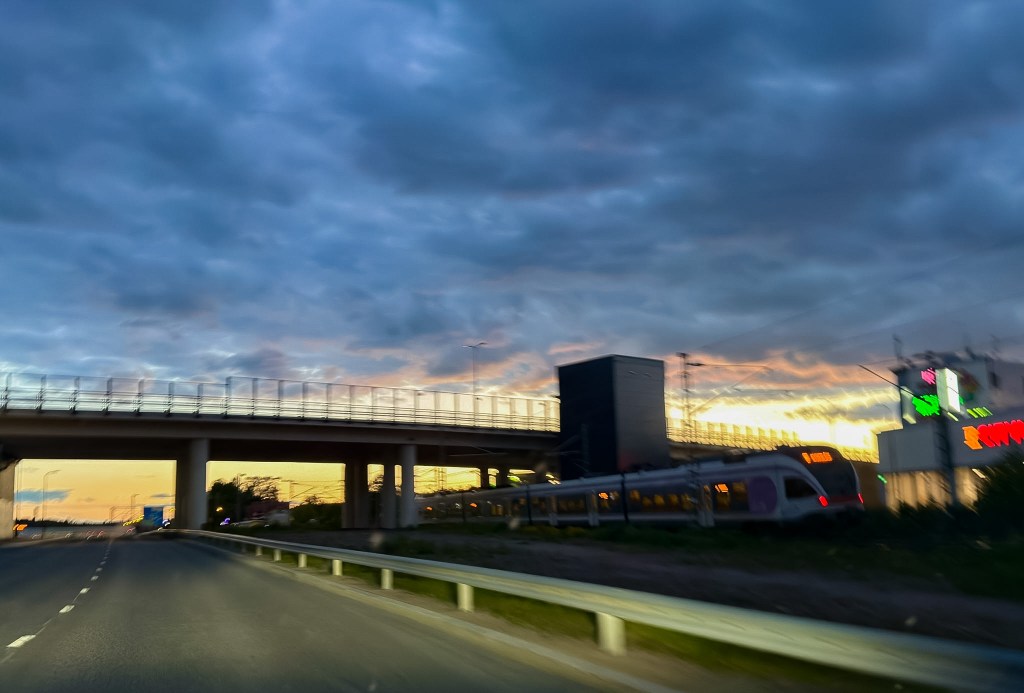
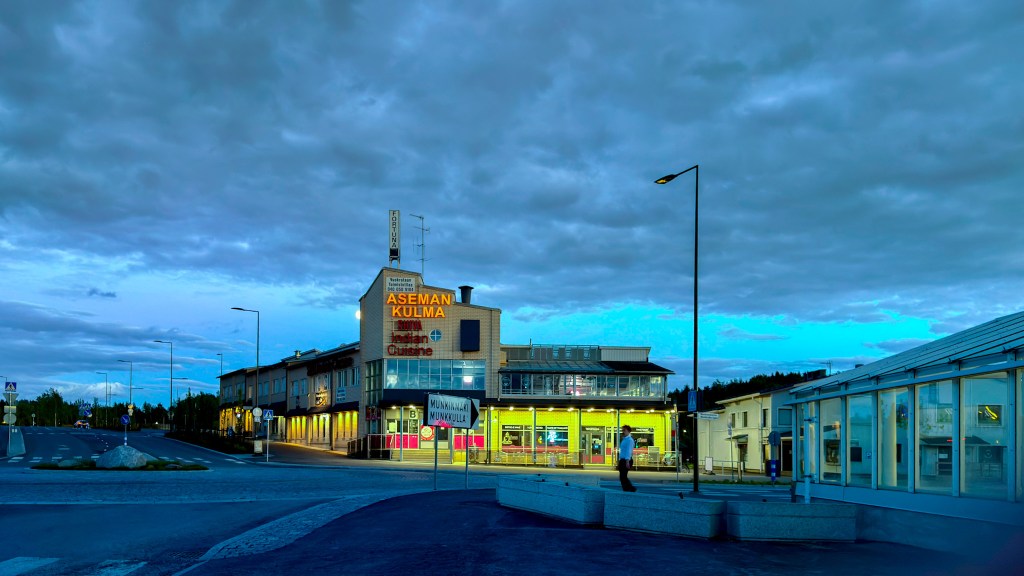
For John’s Cellpic Sunday. I Post photos from few days back, I went to pick up my husband from the train so I took the opportunity to take few photos. I know I shouldn’t take photos while I drive, but the roads were empty of traffic
Dark clouds at 11PMThe train arrived on time The streets are empty
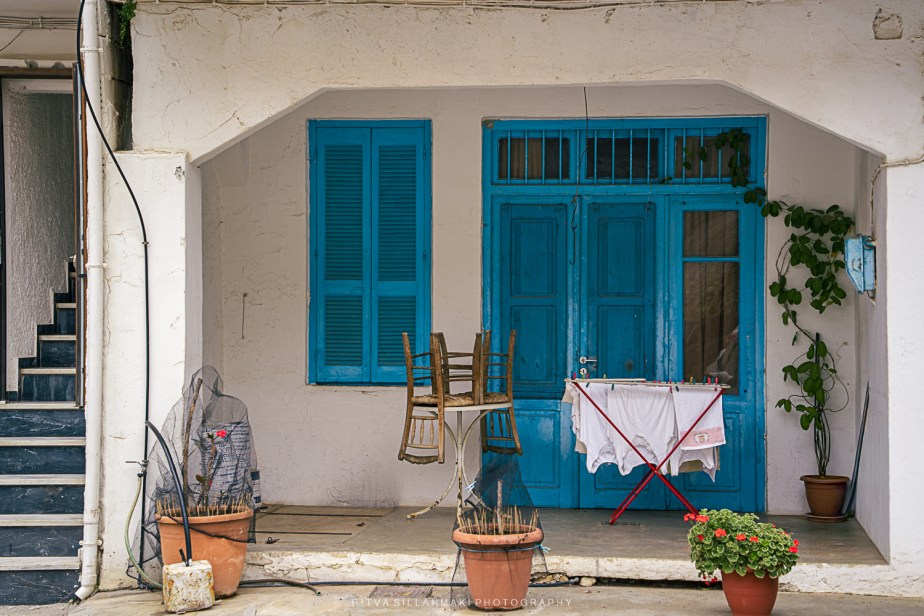
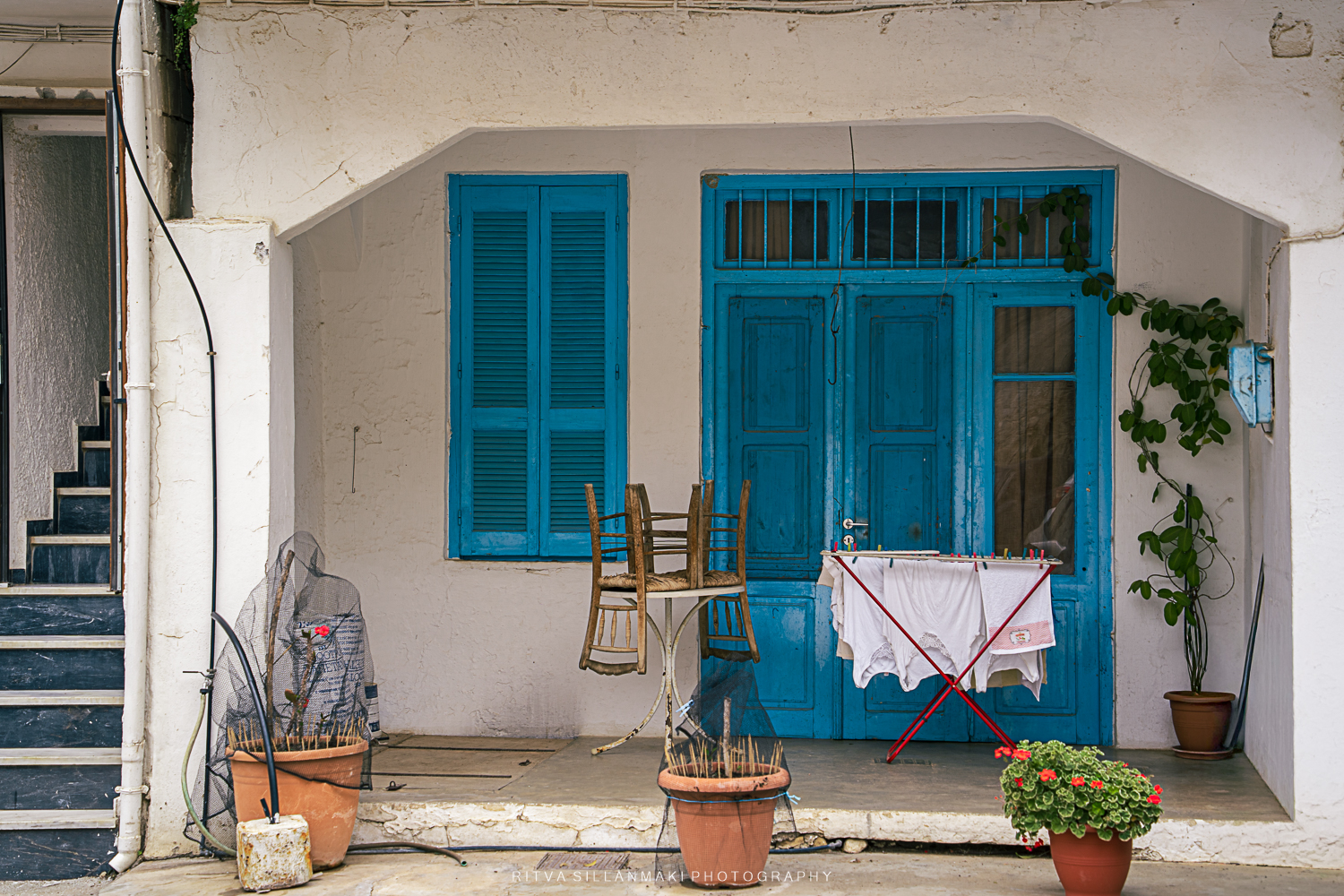
The facade of a rustic building characterized by bright turquoise wooden doors and window shutters set against white, textured walls. A small porch area in front of the entrance houses two upside-down wooden chairs balanced on a small white table, terracotta pots with plants, and a drying rack with white clothes pinned to it. The scene is accented by a potted plant with green leaves climbing near the door and vibrant red flowers in the foreground. The color contrast between the vivid blue paint and the neutral white walls, alongside the aged, weathered textures, evokes a charming, cozy atmosphere typical of a Crete Island atown
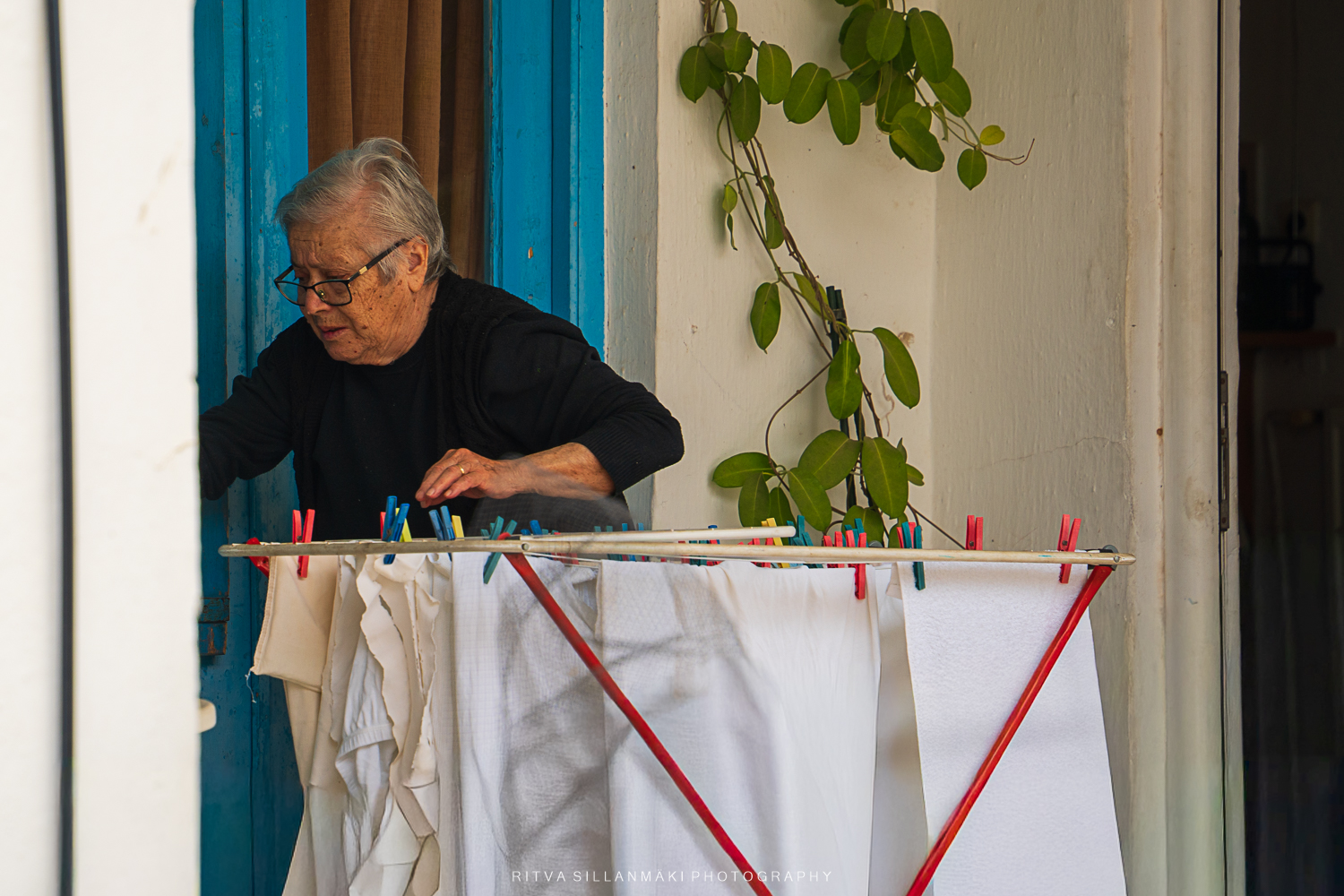
An elderly woman with gray hair and glasses is seen hanging white laundry on a red drying rack positioned outdoors, near a blue door and white wall. She wears a black long-sleeved top and is focused on attaching clothes with colorful clothespins. The setting includes a climbing green plant on the wall, adding a natural element to the scene. This was a quiet, everyday moment with warm, natural lighting that highlights the textures and colors of the environment and the laundry.
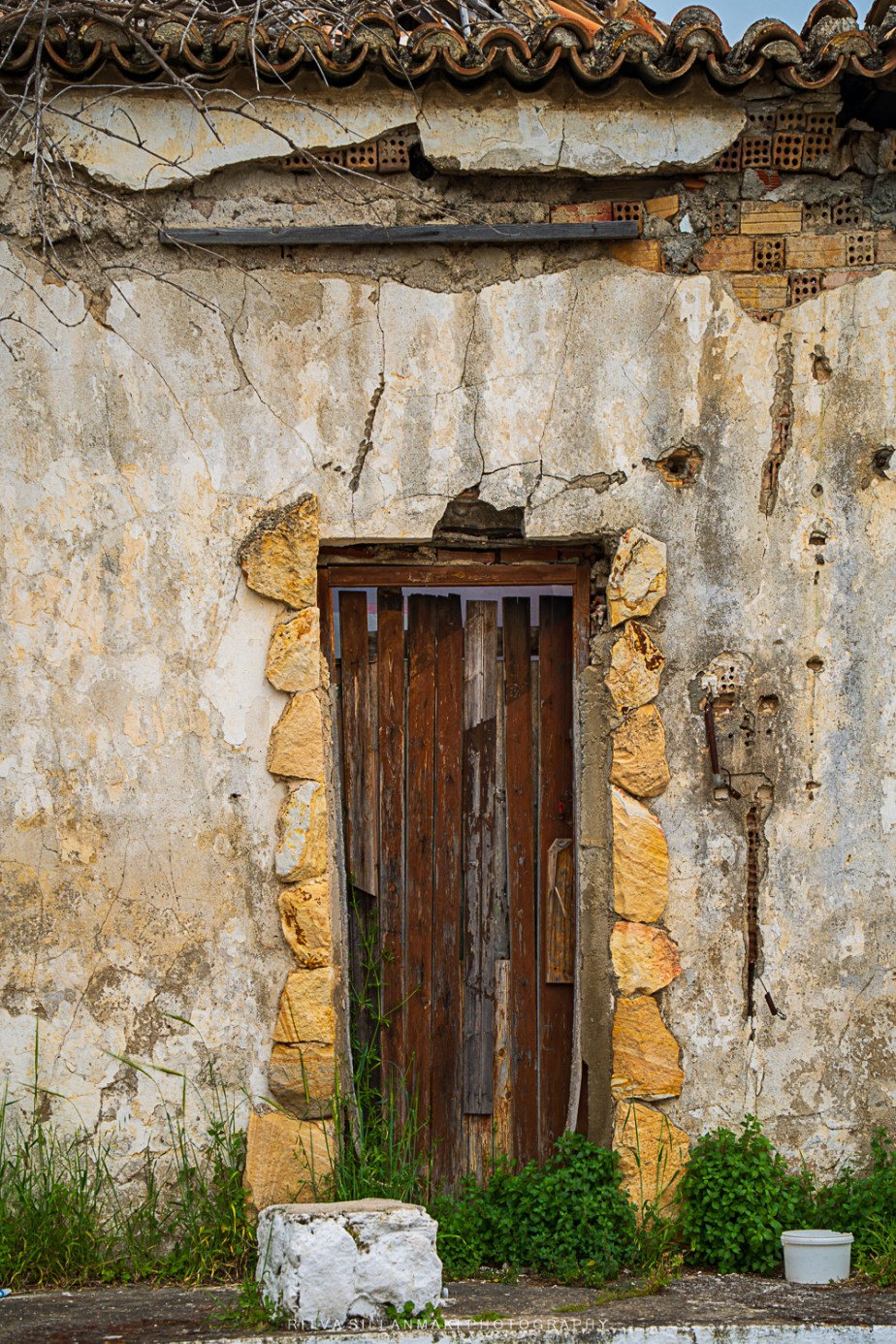
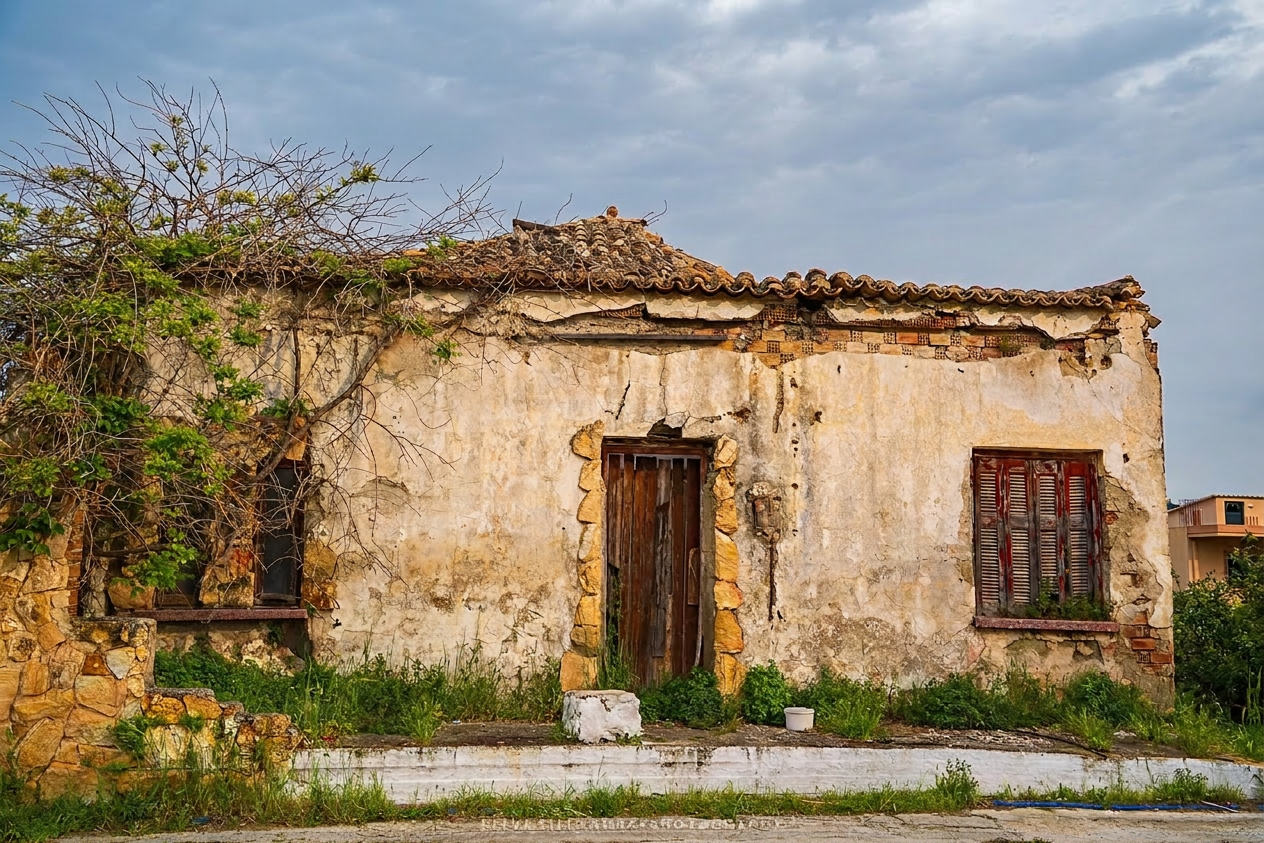
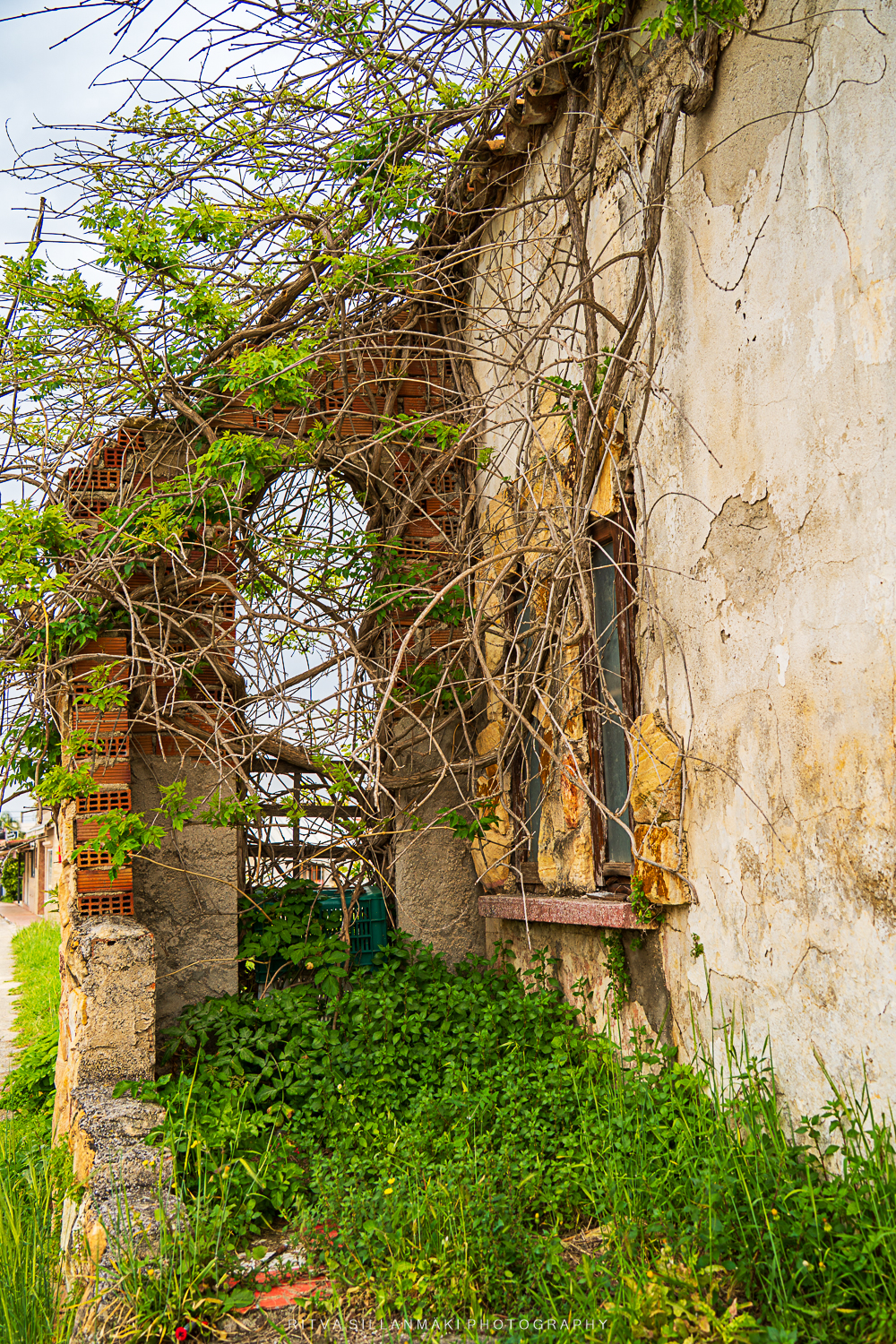
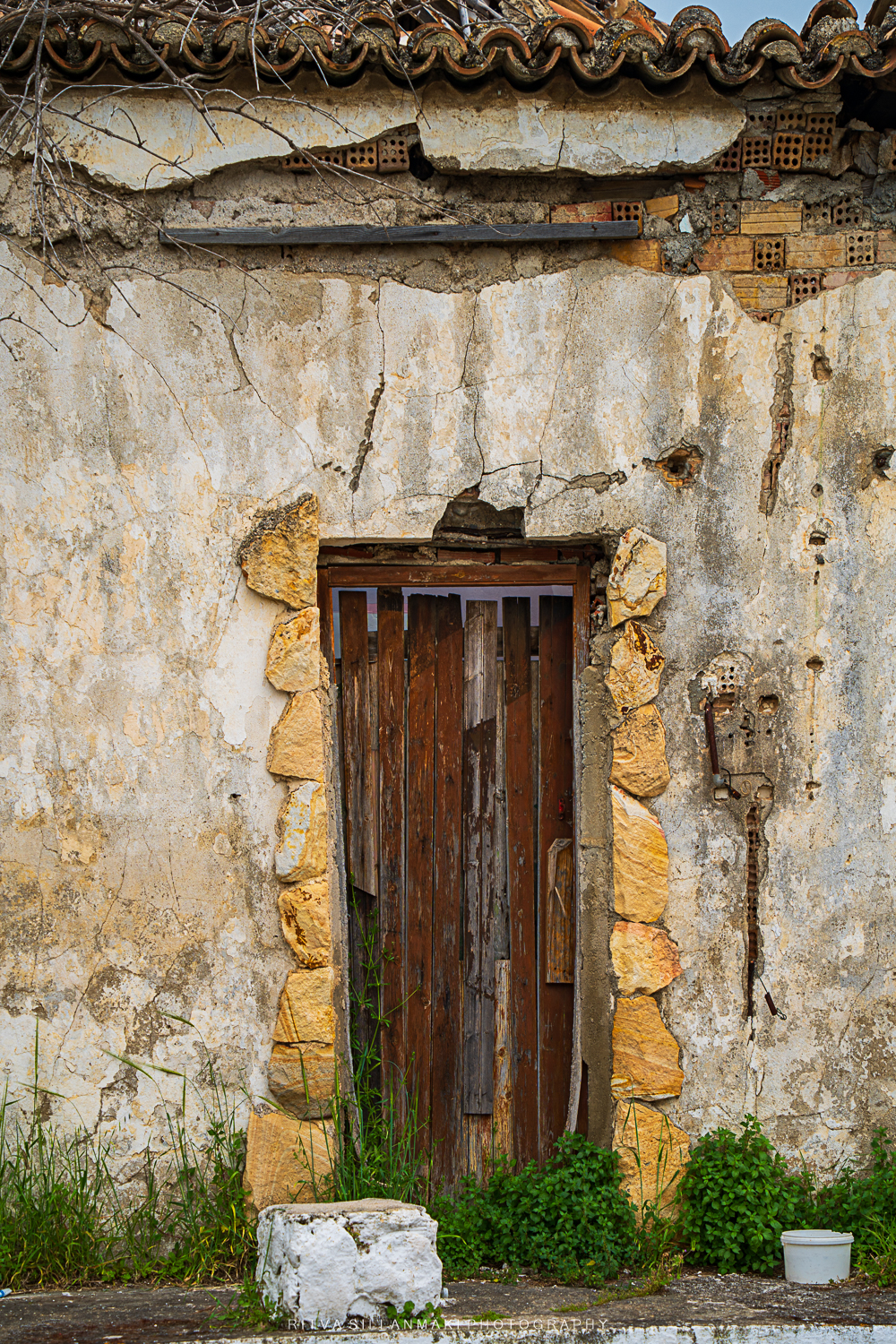
I wrote a piece of fiction to go with these images of an abandoned house, illustrating the eerie silence that envelops the crumbling walls and overgrown garden. As I delved deeper into the story, the forgotten echoes of the past began to emerge, trying to paint a picture of the lives once lived within those decaying rooms. The shadows seemed to whisper secrets, share my take of the the mysteries that lay hidden beneath the layers of dust and time.
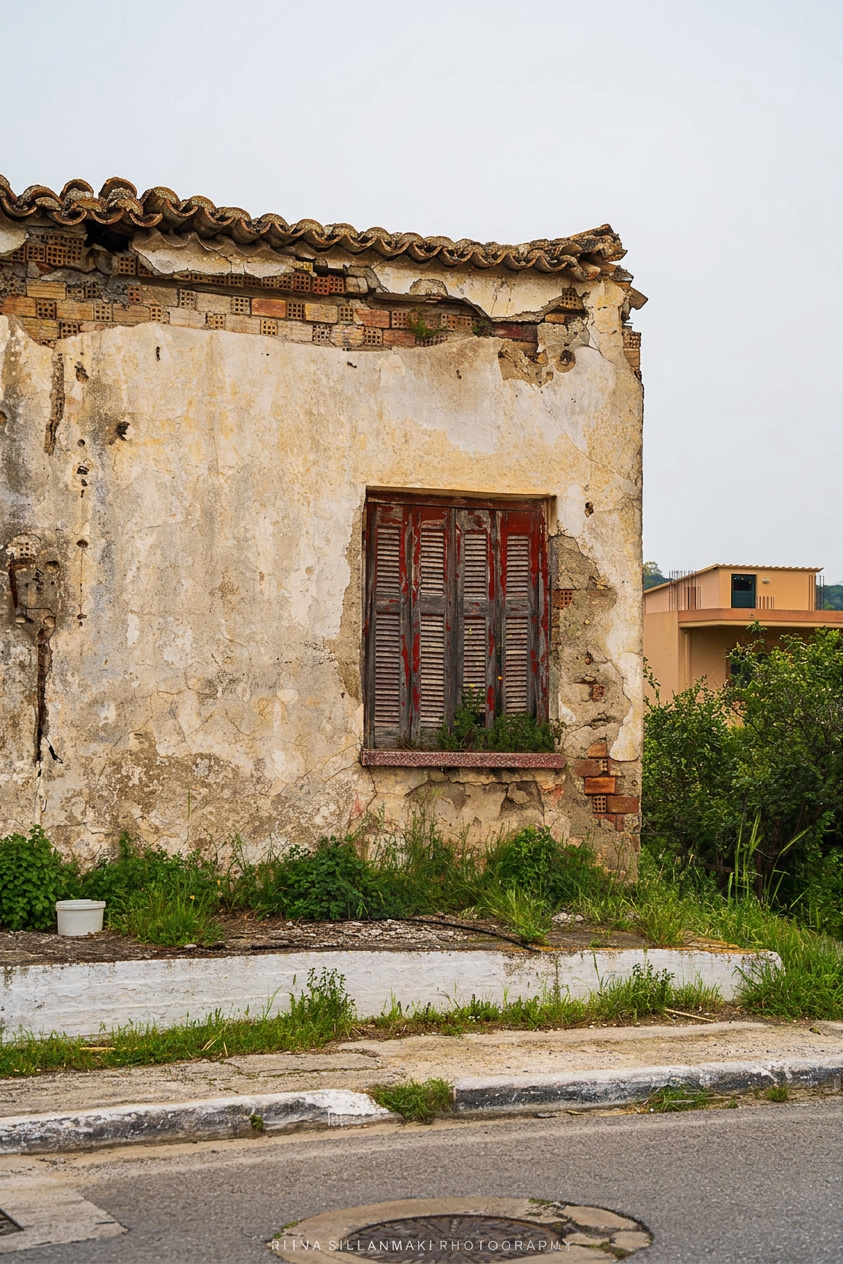
In the heart of a forgotten village, there stood an old, rundown house that held the whispers of its vibrant past. It had a faded, cracked exterior and a barely intact tiled roof, with memories of joyful days trapped in every corner. The walls, now worn and discolored, showed glimpses of the brick and stone beneath, framing the door and windows like silent guardians of time. This house used to belong to the Georgiou family, who left it behind decades ago following a series of unfortunate events. The wooden door, slightly open and well-worn, hinted at laughter and love that once filled the space, now muted by silence. The windows, partially covered with old shutters, were entwined with greenery, as nature gradually took back what people had forsaken. Surrounding the house, wild grass danced in the breeze, while a bare, spindly tree reached for the sky—a testament to resilience and a haunting reminder of the family’s departure. Above, the heavy clouds seemed to grieve for a life that used to buzz with energy, as if the past longed to be acknowledged once again.
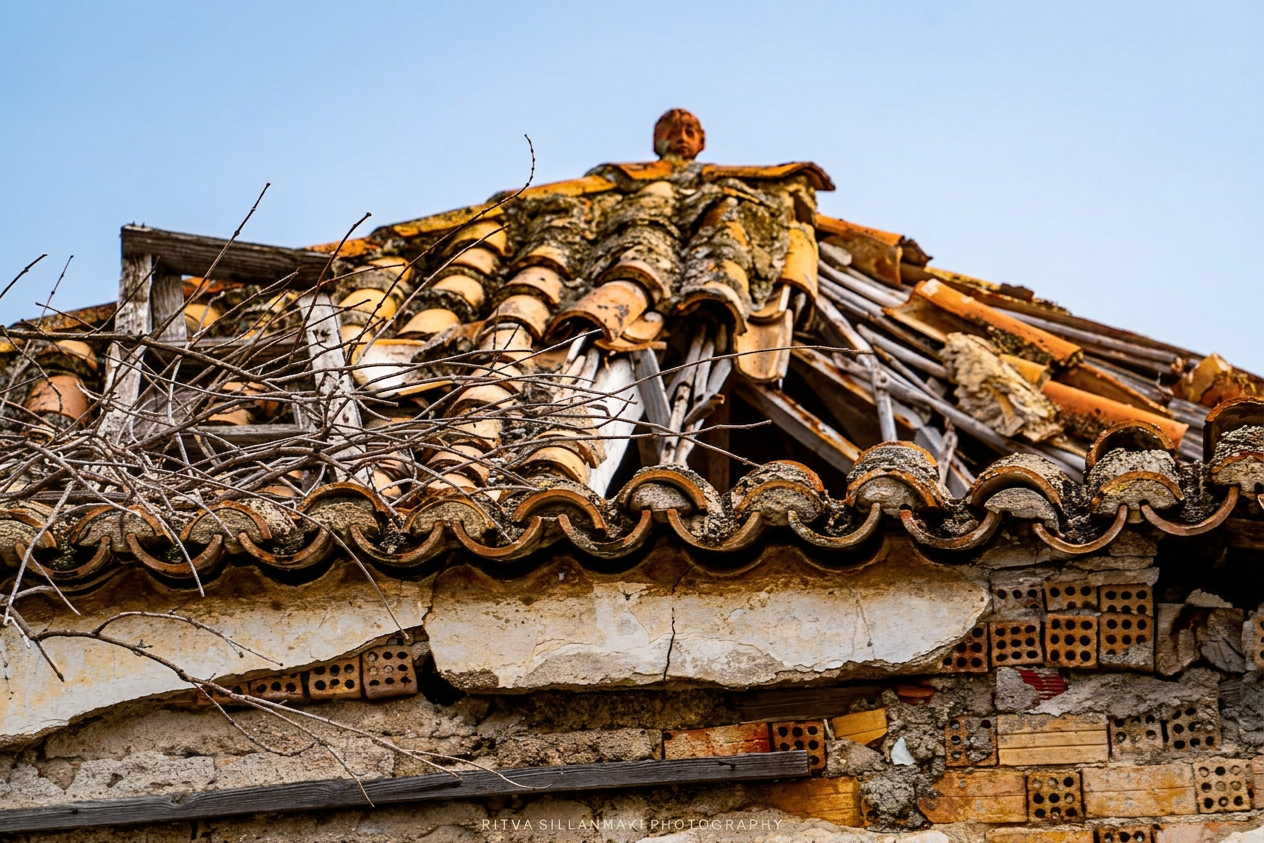
the deteriorating corner of an old, rustic roof made of curved terracotta tiles,
The deteriorating corner of an old, rustic roof made of curved terracotta tiles, many of which are covered with patches of moss and appear weathered and broken. Below the roof, the wall shows signs of decay with exposed bricks and crumbling plaster, revealing various textures and layers of construction materials. Bare tree branches extend across the lower left of the frame, contrasting with the warm earthy tones of the roof and wall. The sky is clear and bright, adding a subtle contrast to the aged, textured structures in the foreground. Can you see a doll on the roof, or is it just me? What is the story there?
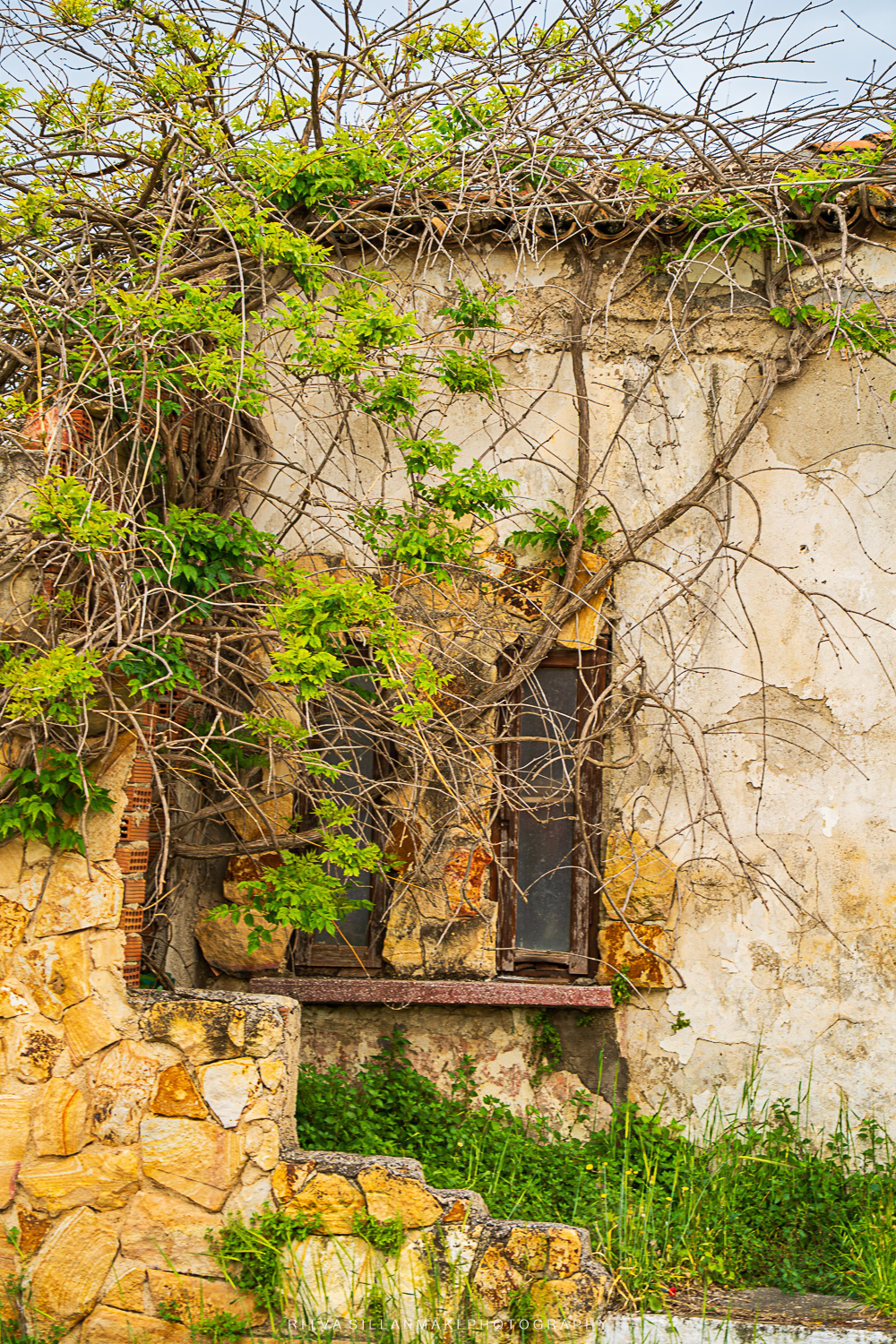
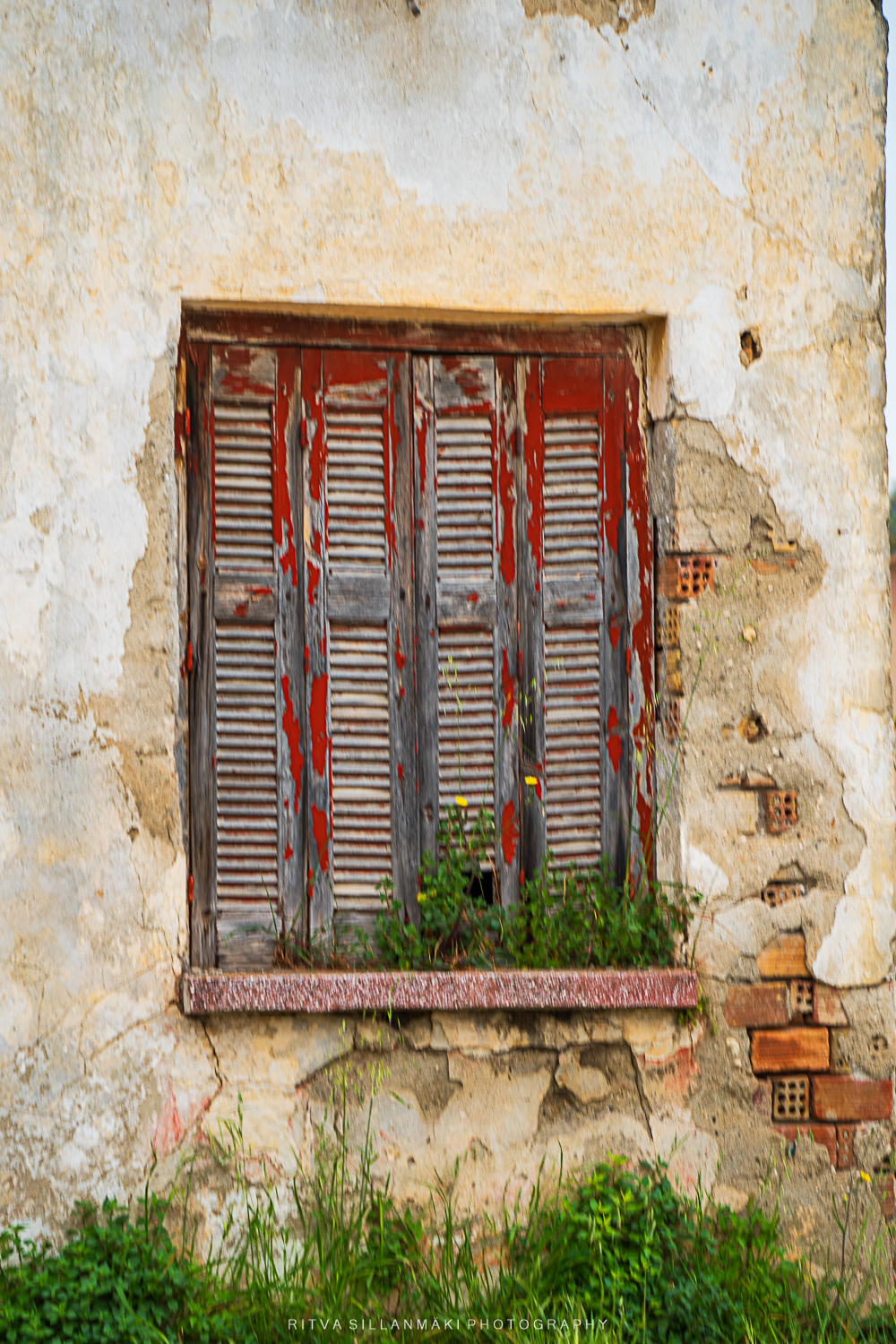
The weathered window
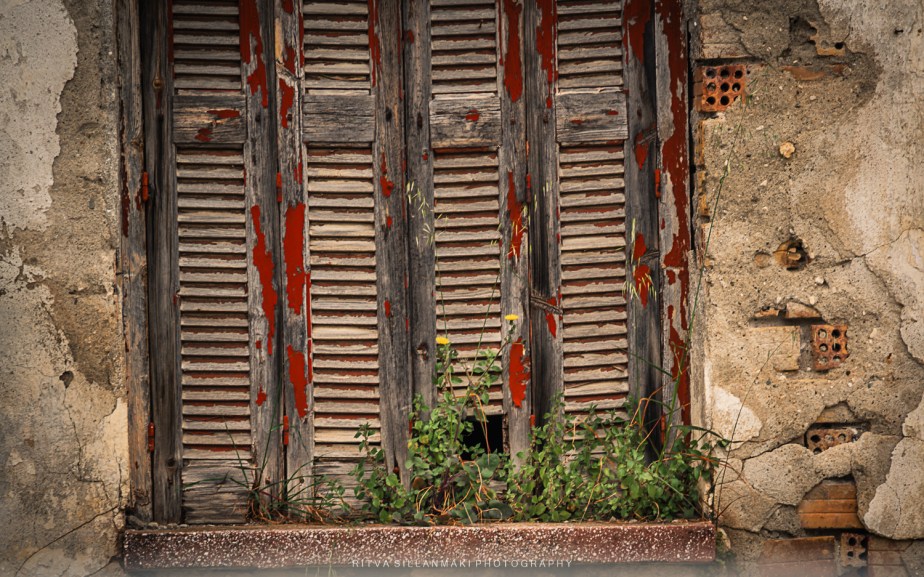
The weathered window set into an old, deteriorating wall once belonged their daughter Eleni spent her childhood. The window shutters are wooden and painted red, but the paint is severely chipped and peeling, revealing the worn wood beneath. Eleni would often sit by this window, dreaming of adventures beyond the walls, her imagination ignited by the vibrant world outside. Below the window, overgrown green plants and small yellow flowers grow along the ledge and the base of the wall, remnants of Eleni’s once-cared-for garden where she picked flowers for her mother. As she grew older, the dreams by this window transformed into aspirations of travel, writing stories inspired by the landscapes she envisioned. The wall itself shows signs of decay, with cracked plaster and exposed bricks, echoing the passage of time since the family moved away, leaving behind a rustic and abandoned atmosphere with earthy, muted colors, which now serve as a silent witness to her cherished memories. This window became a portal for Eleni, connecting her past with a future filled with hopes of re-exploring the wild beauty beyond the walls that once confined her.
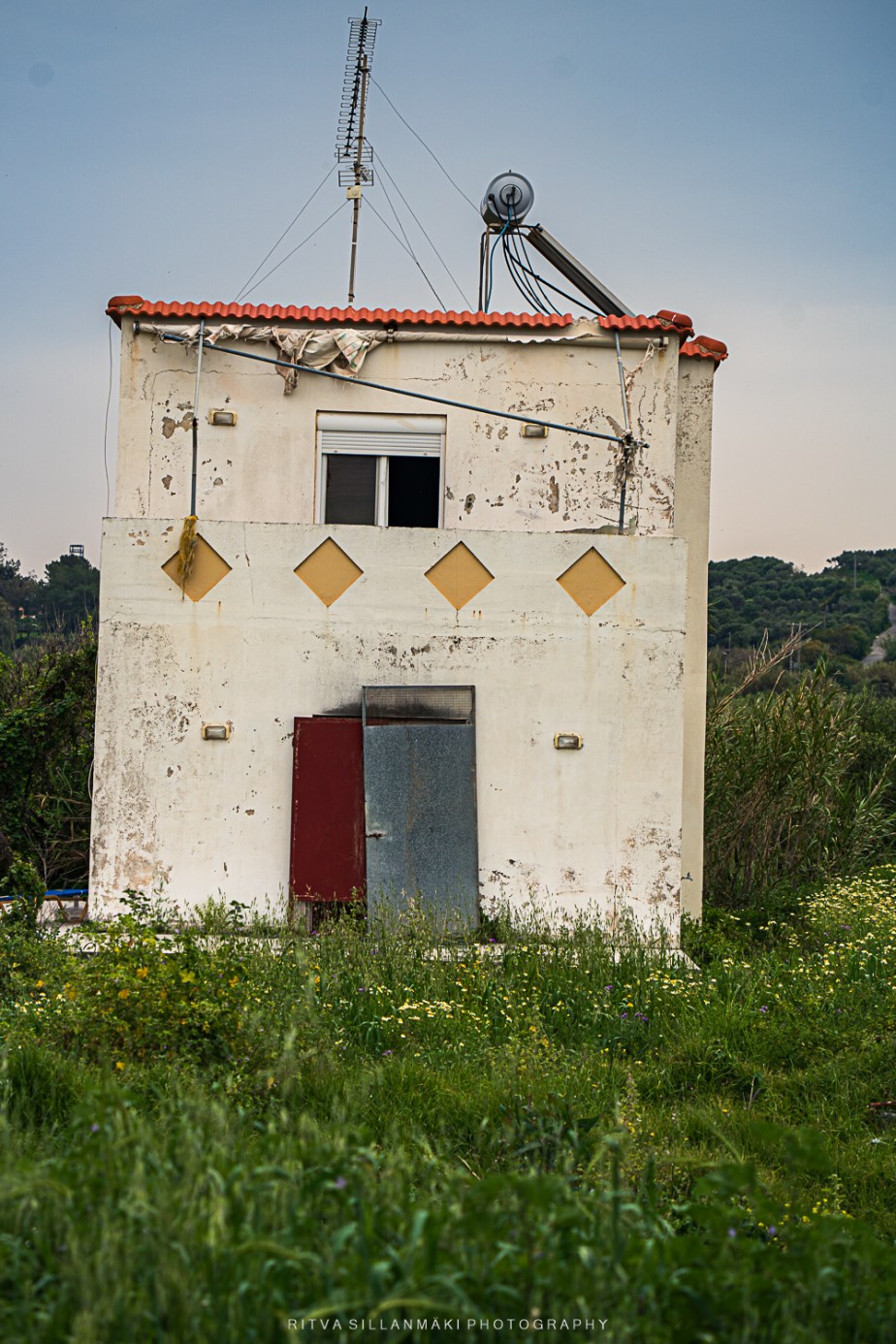
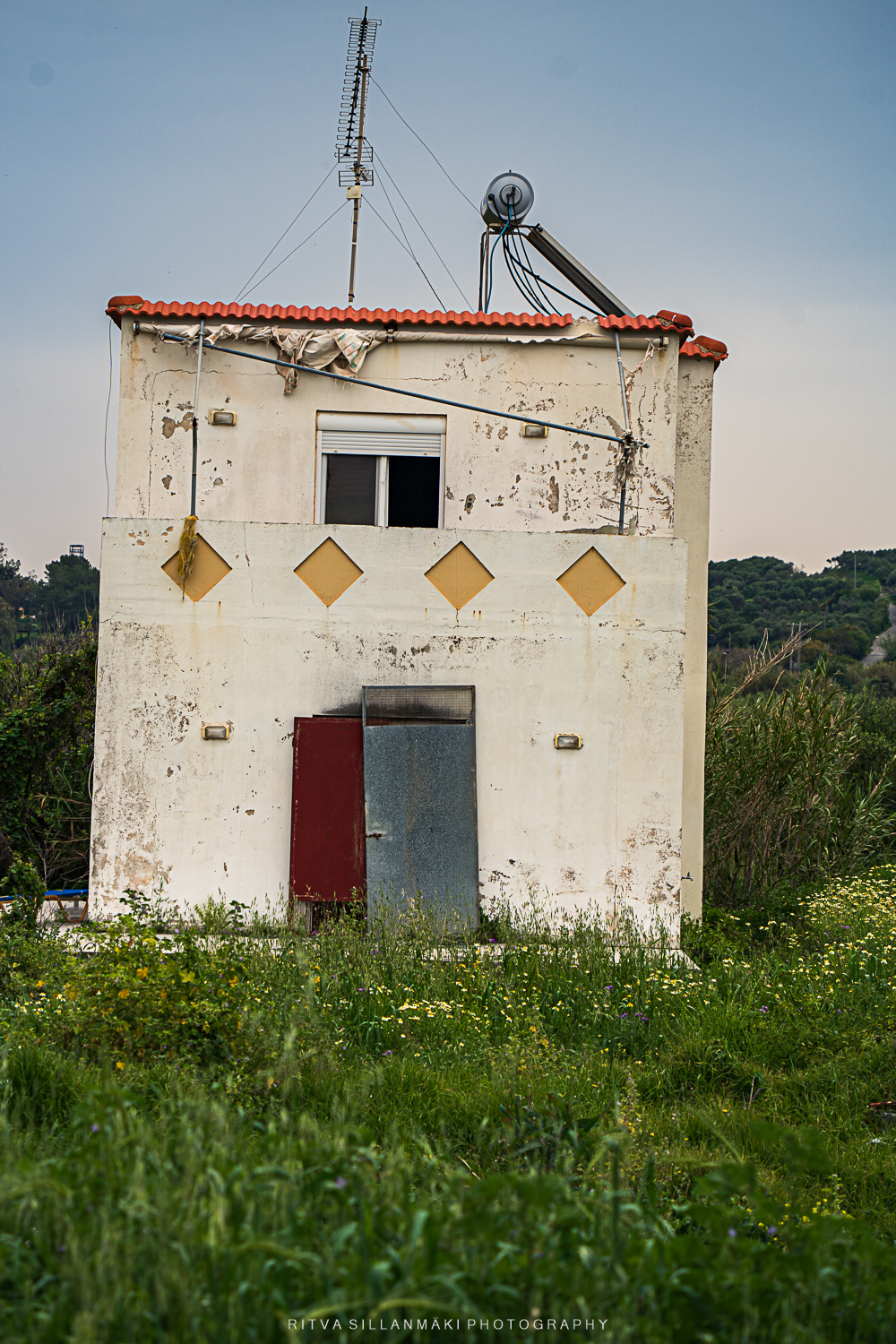
While I was in Crete, I came across this small, weathered two-story building that really caught my eye. It had a flat, tiled roof and the exterior was quite worn, with peeling paint all over. I noticed it had a single window with a roller shutter on the upper part, and there was this interesting balcony-like feature adorned with four diamond-shaped yellow accents. It seemed to have some antennas and cables cluttering the roof, including a satellite dish and an old TV antenna, and a subpanel and a water tank for warm water, which hinted that someone lived there, even though the door does not suggest that. This building gives mixed signals. The building was surrounded by tall grass and colorful wildflowers, and in the background, there were lush green trees under a clear sky. It was in a peaceful, rural area, and the atmosphere was kind of lonely.
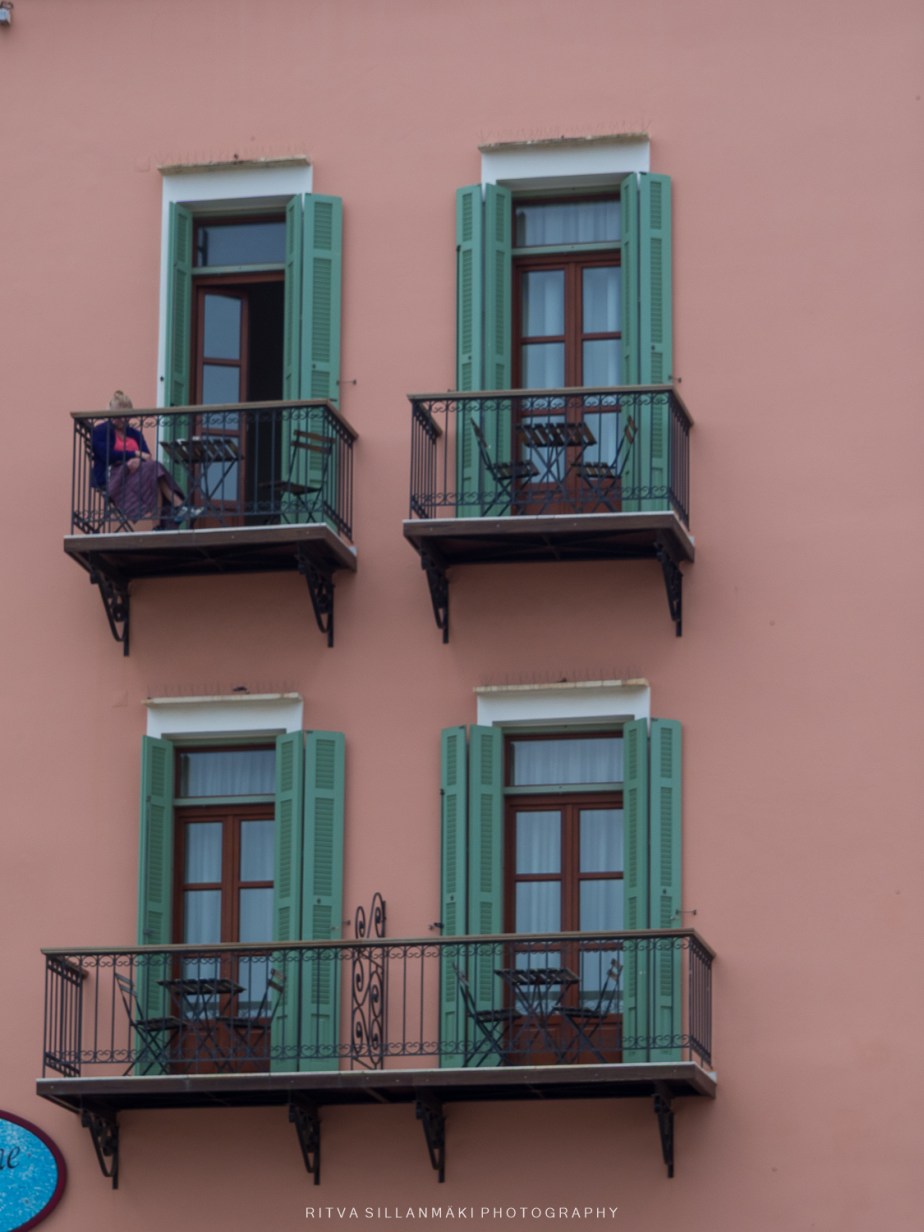
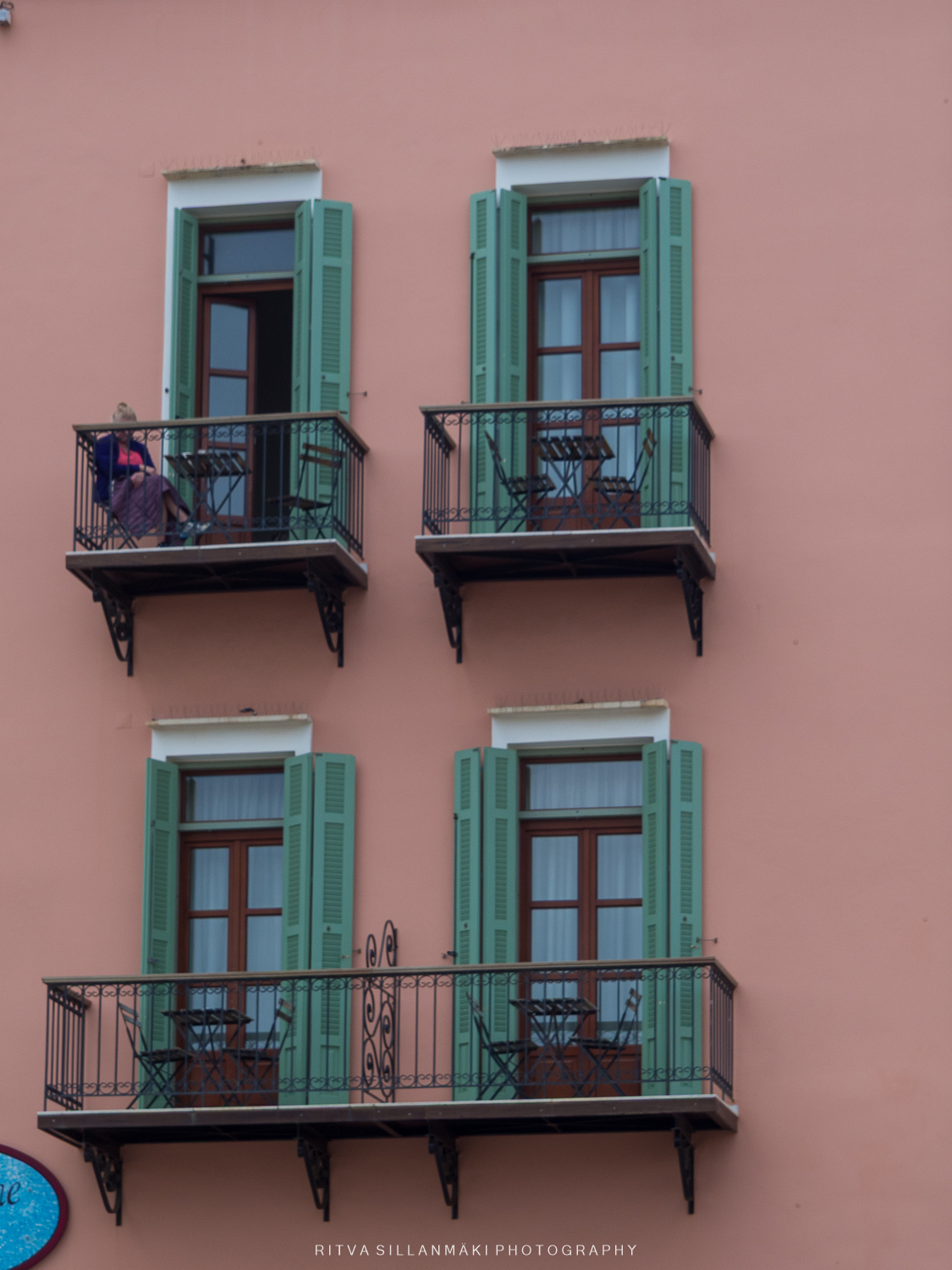
I came across the cutest pastel pink building facade in Chania Port for my Monday Window! It has these four charming windows framed by vibrant green shutters, all nicely arranged in two uplifting rows. Each window leads to a delightful little balcony with wrought iron railings that give it an elegant touch. I couldn’t help but notice a cheerful table and chairs set up there—just perfect for soaking up the sun! I even spotted a single person on the upper left balcony, dressed in lively colors, which added a joyful vibe to the peaceful, symmetrical scene. The soft natural light made everything pop, especially the lovely contrast between the pink wall and the green shutters.
For this weeks Thursday Doors, I am continuing with the theme from my Monochrome post from yesterday, reflecting on our trip to Paris in 2006; these are such old photos that it’s enjoyable to edit them with more freedom than I typically do, allowing me to enhance the characteristics and emotions captured in each image. I can also work with images that aren’t the clearest due to this editing approach, breathing new life into them and revealing details that might have otherwise gone unnoticed.
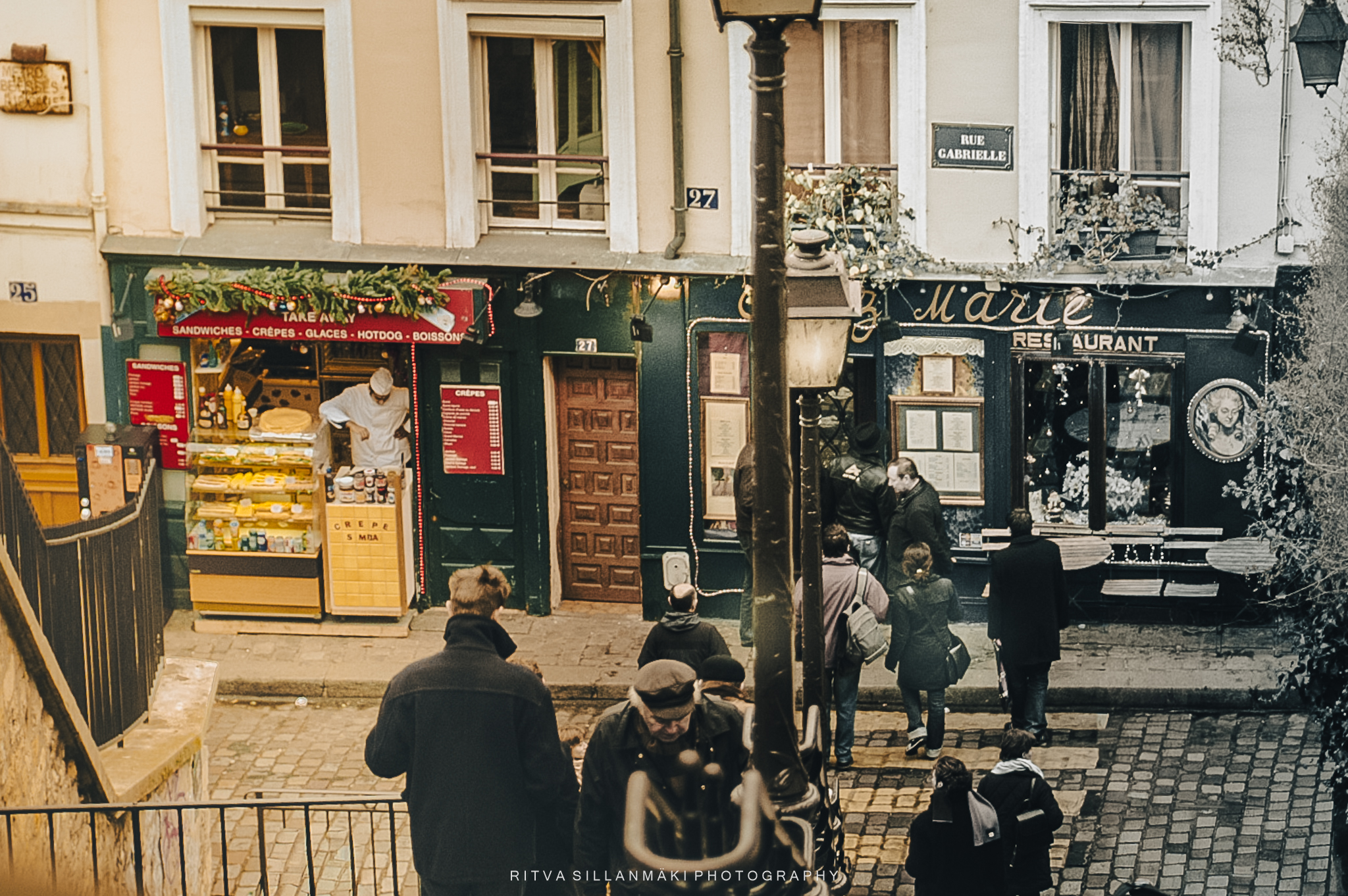
A charming Parisian street scene featuring a crepe stand and a cozy restaurant, capturing the essence of the city’s vibrant atmosphere.
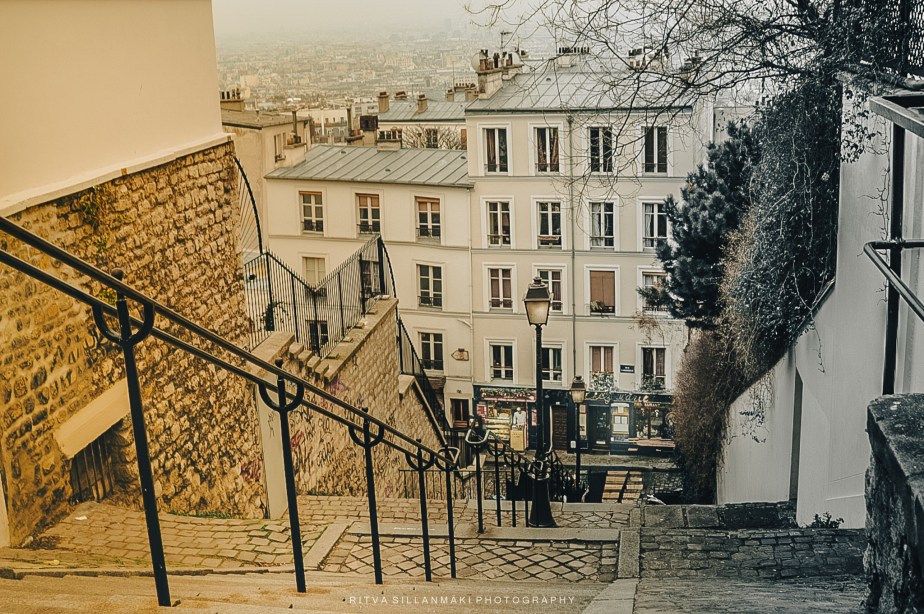
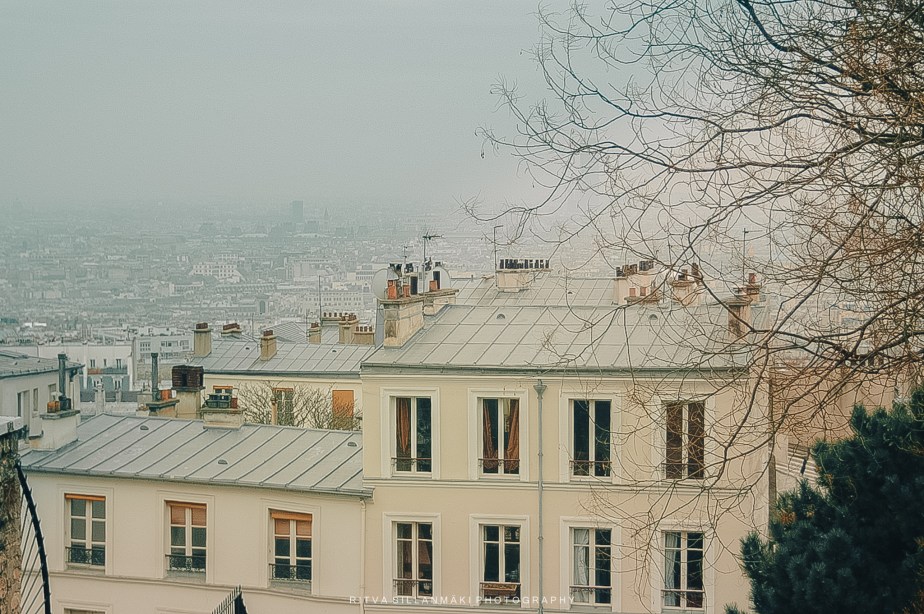
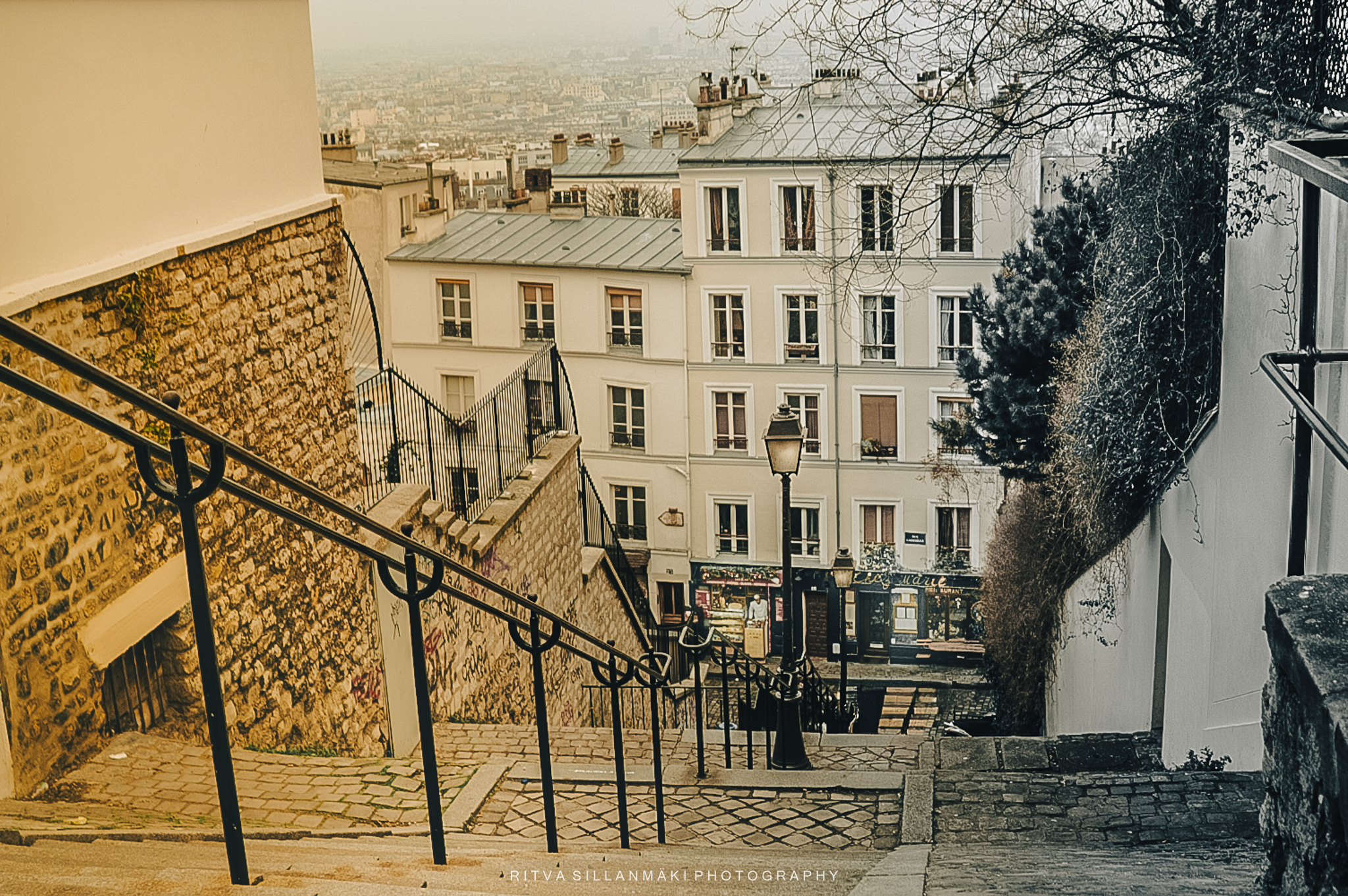
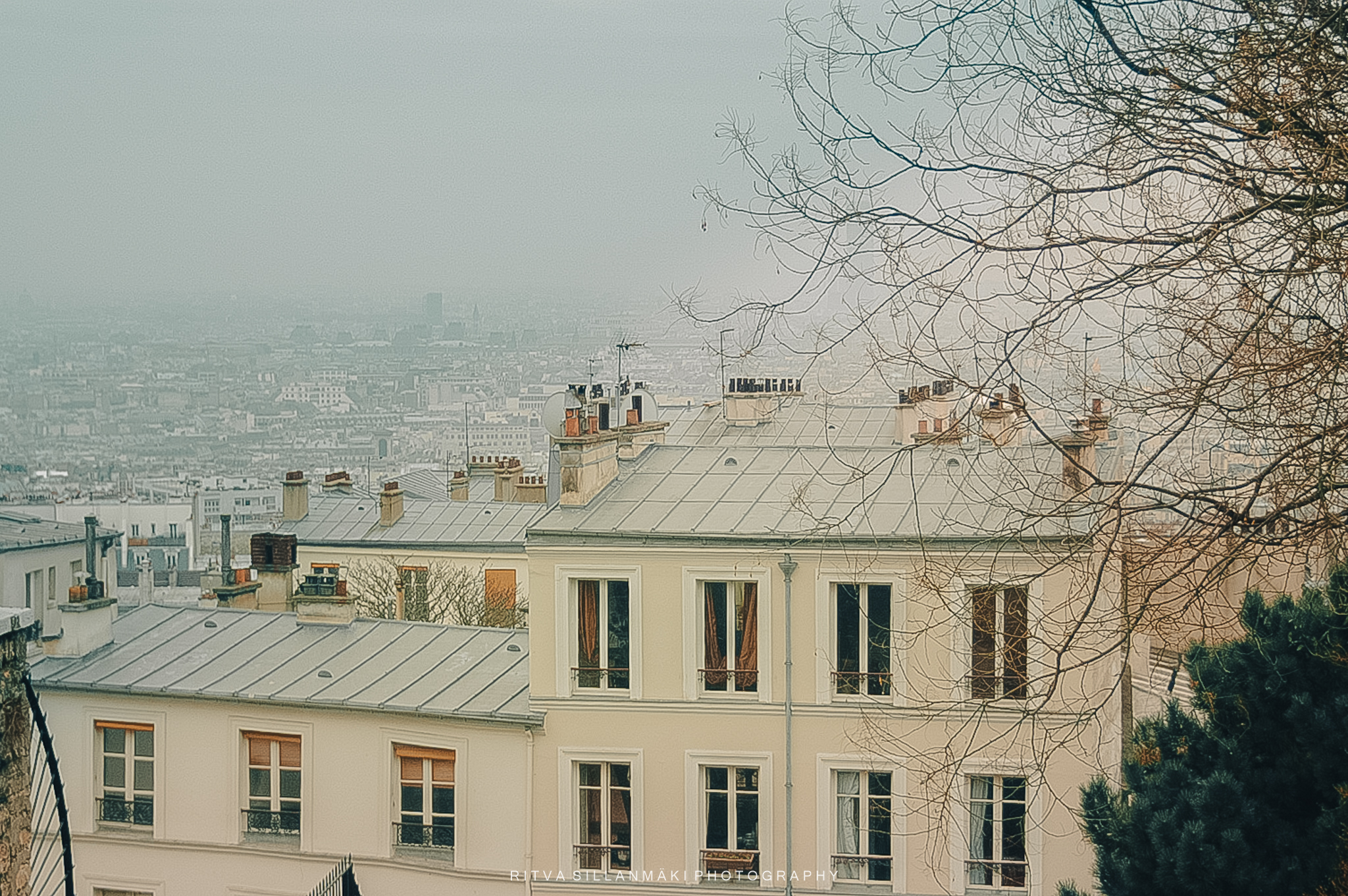
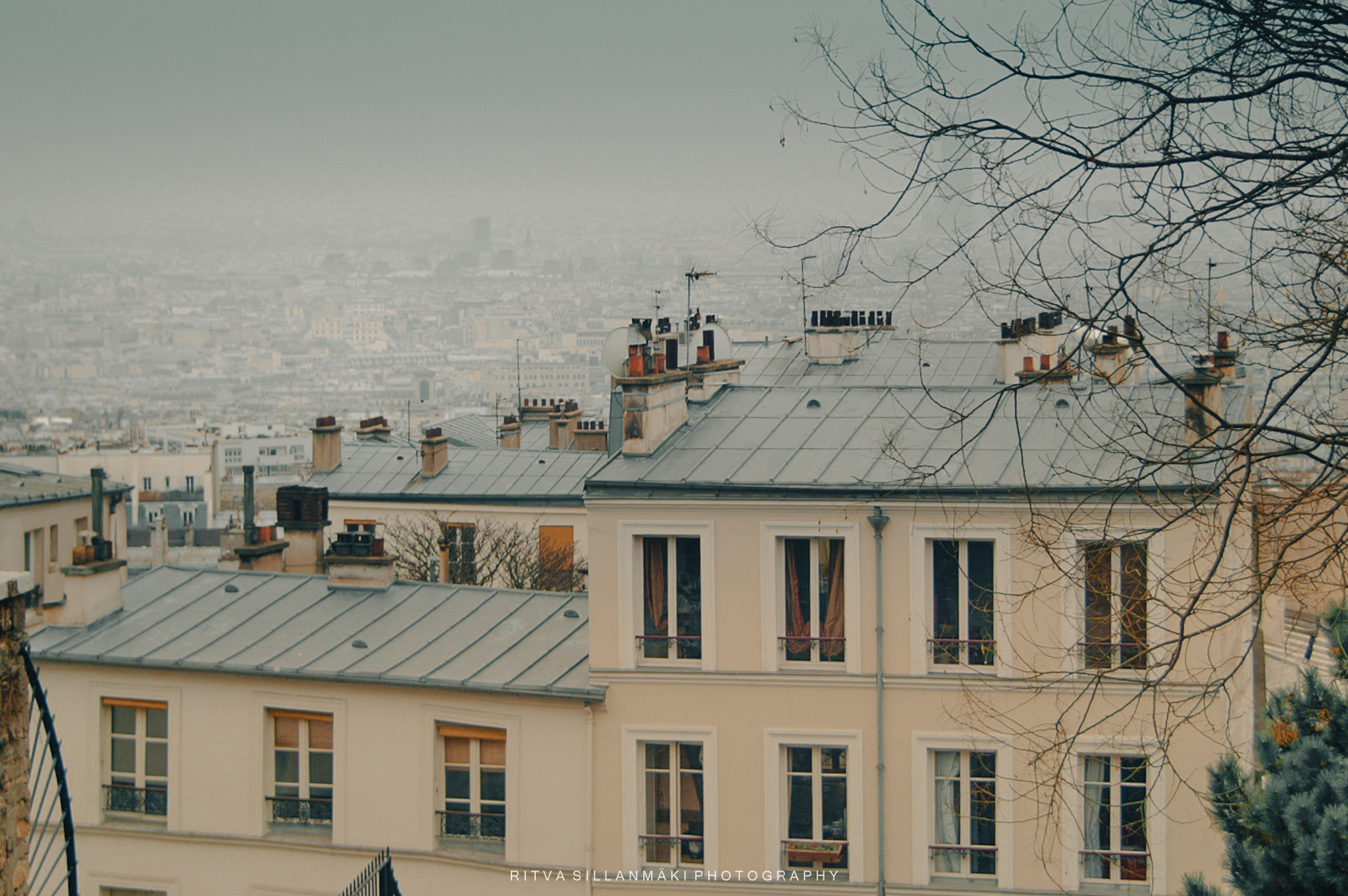
These photographs are from the renowned Rue du Calvaire in the Montmartre neighborhood of Paris way back 20 years ago, a place filled with vibrant history and artistic passion. This district is noted for its elevated terrain in the northern section of the city and has long been home to many artists who have found inspiration in its picturesque streets and charming buildings. Rue du Calvaire is especially well-known for its steep staircase that ascends the hill, where each step leads to breathtaking views and hidden gems waiting to be discovered. This location is a favored spot for providing stunning vistas of Paris, where visitors can gaze across the cityscape, absorbing the iconic skyline that has captivated hearts for generations. The ambiance evoke feelings of nostalgia and creativity, as one imagines the countless stories that have unfolded in this enchanting corner of the world.
A scenic view of Parisian stairs leading down to charming buildings, capturing the timeless beauty of the city’s architecture.A misty view of Paris rooftops, capturing the timeless beauty of the city.
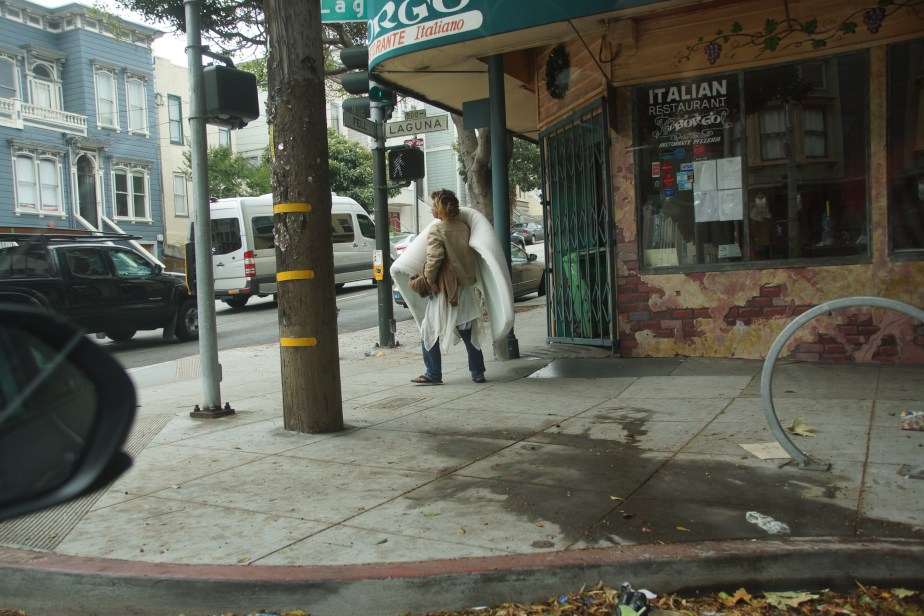
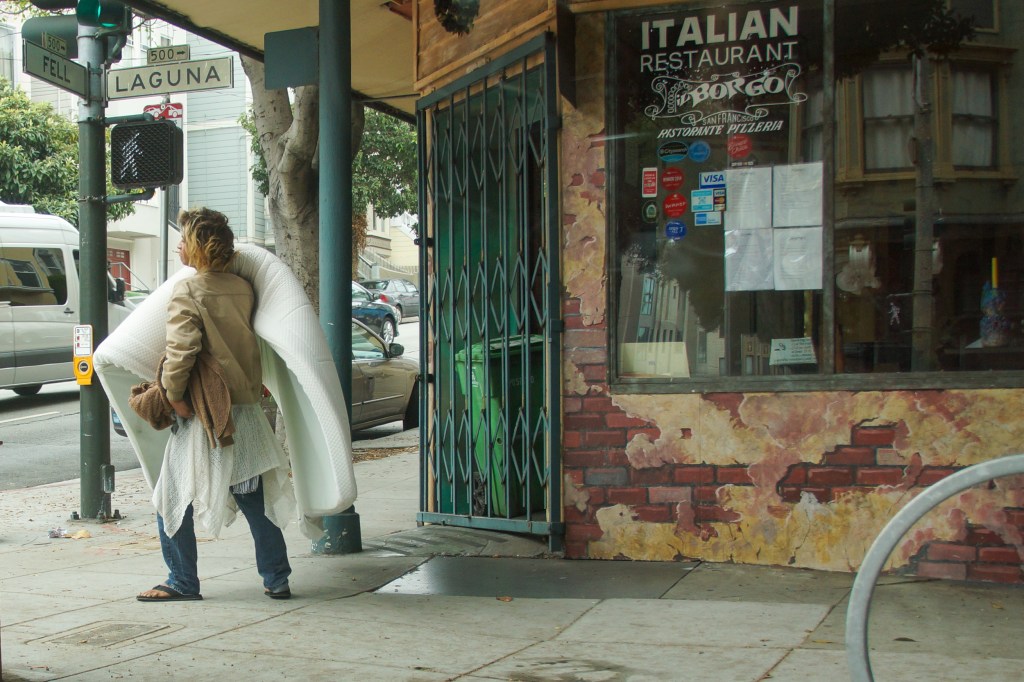
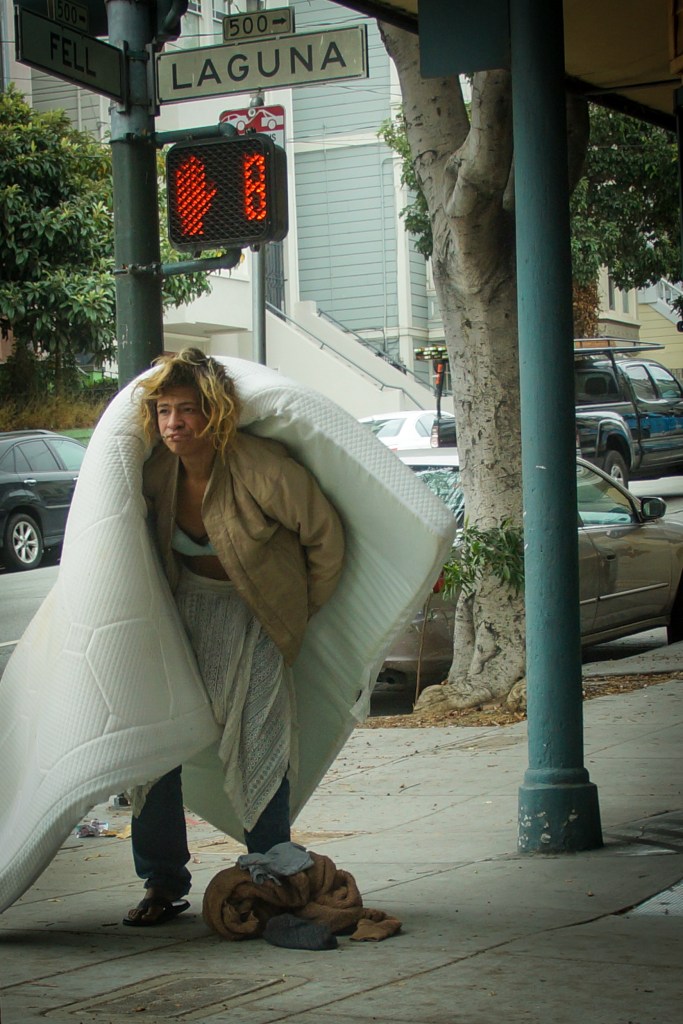
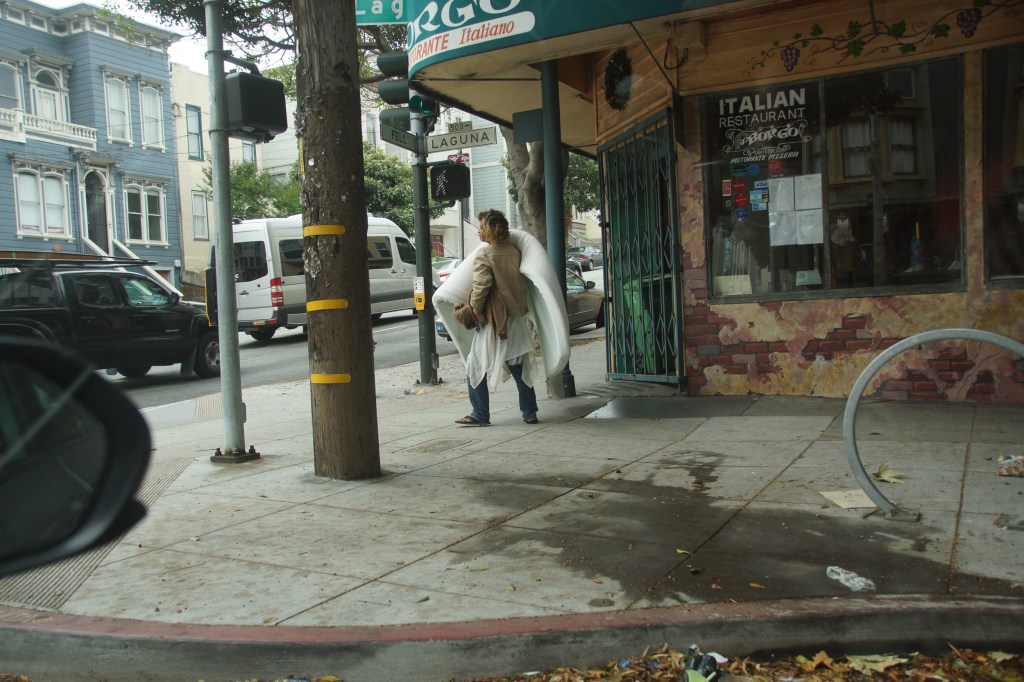
We were cautioned about the significant issue of homelessness during our visit to San Francisco several years ago; I’m uncertain about the current situation, but I doubt it has improved significantly. Still, I hope it has. It was quite disheartening to see as we drove through the city; these random shots reflect that experience. RDP Friday: Random
A random shot taken from the car of a person carrying a large mattress walks past an Italian restaurant on a San Francisco city street.
A man struggles to carry a mattress along a city street under a stop light
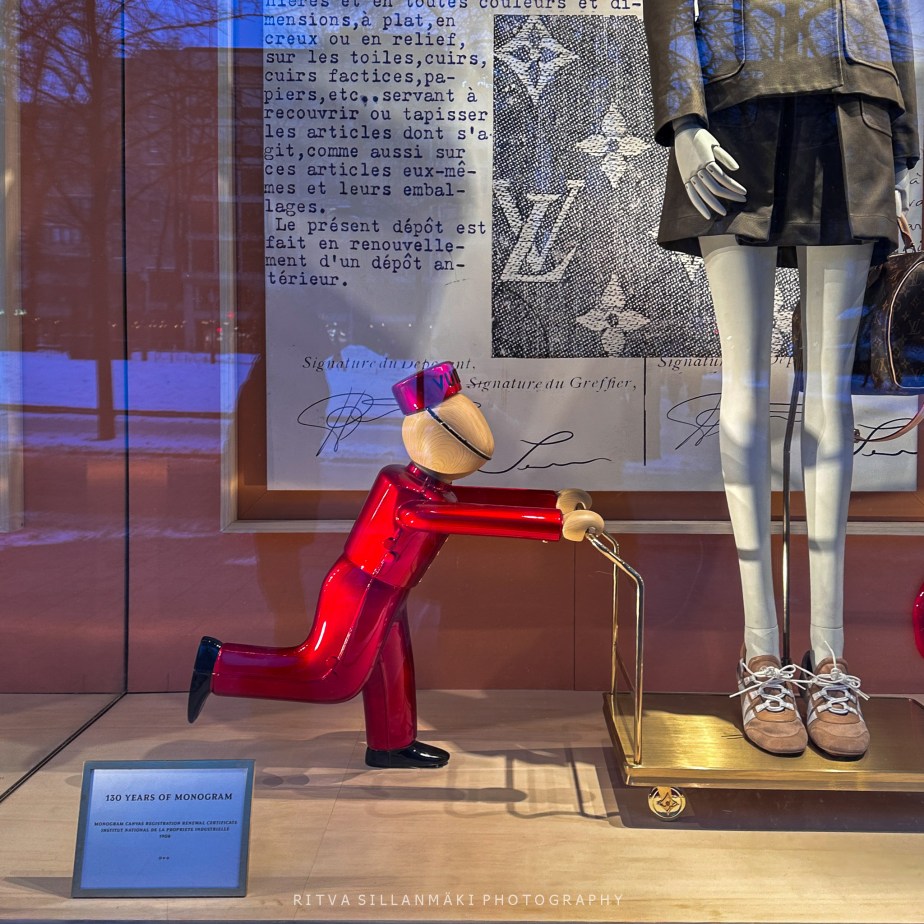
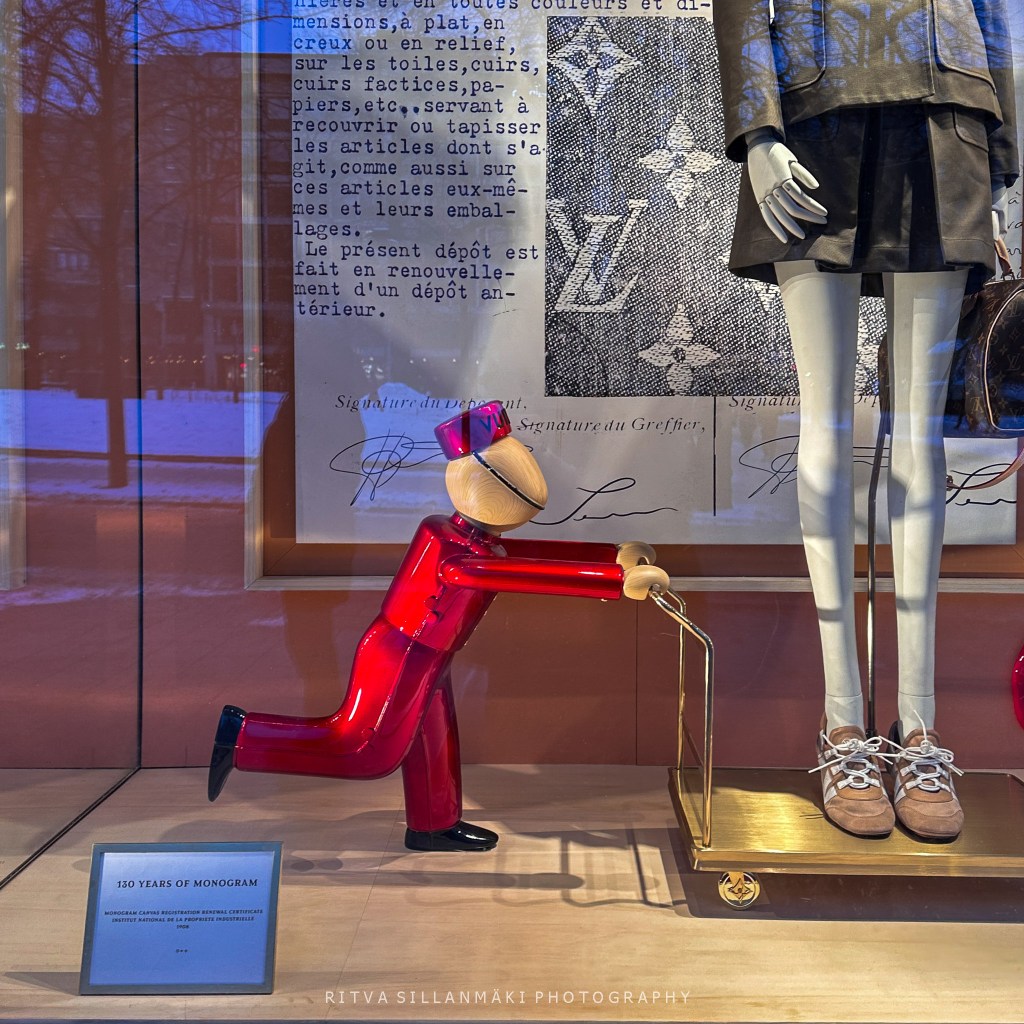
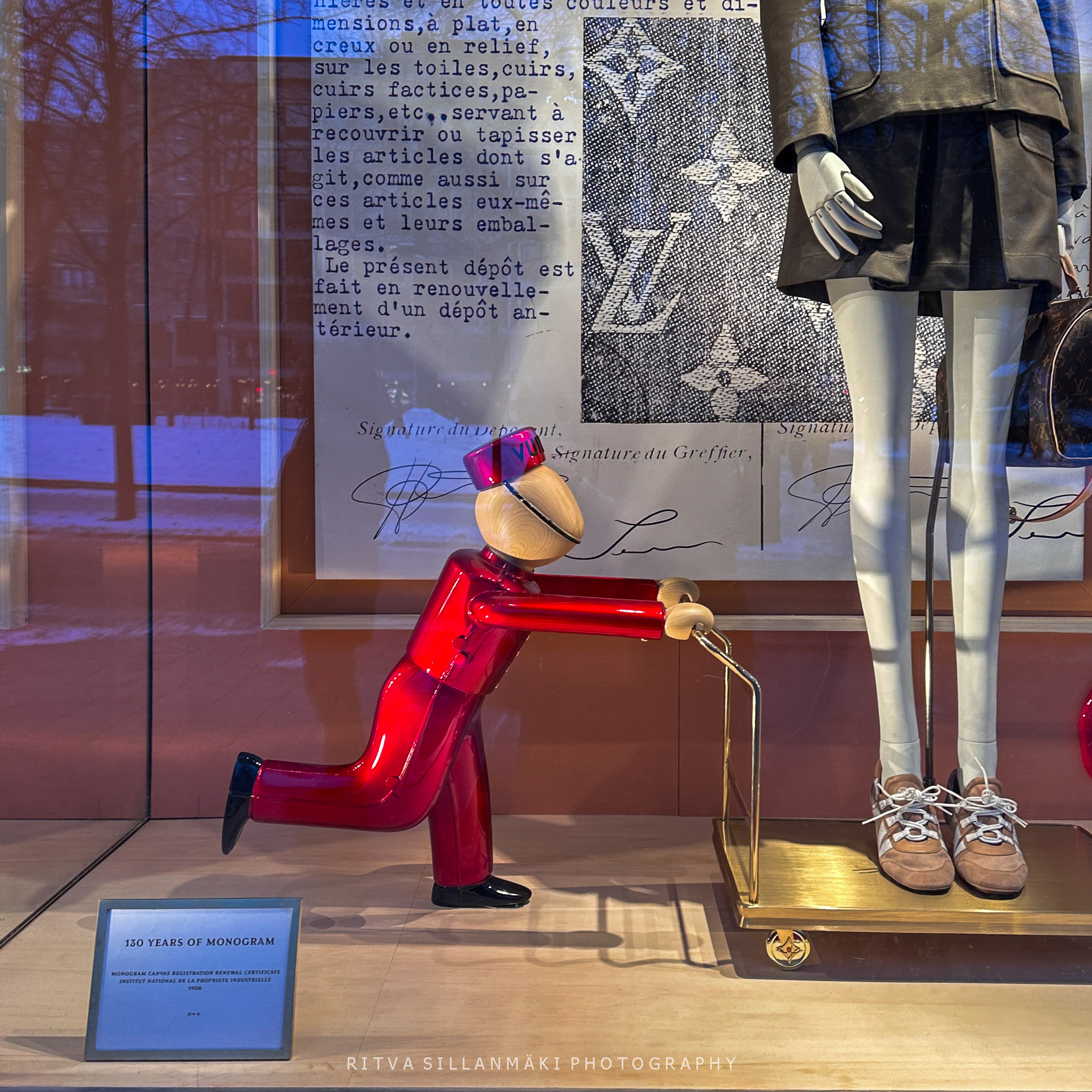
A whimsical display featuring a playful red figurine pushing a cart alongside stylish clothing and a luxury handbag, celebrating 130 years of monogram design.
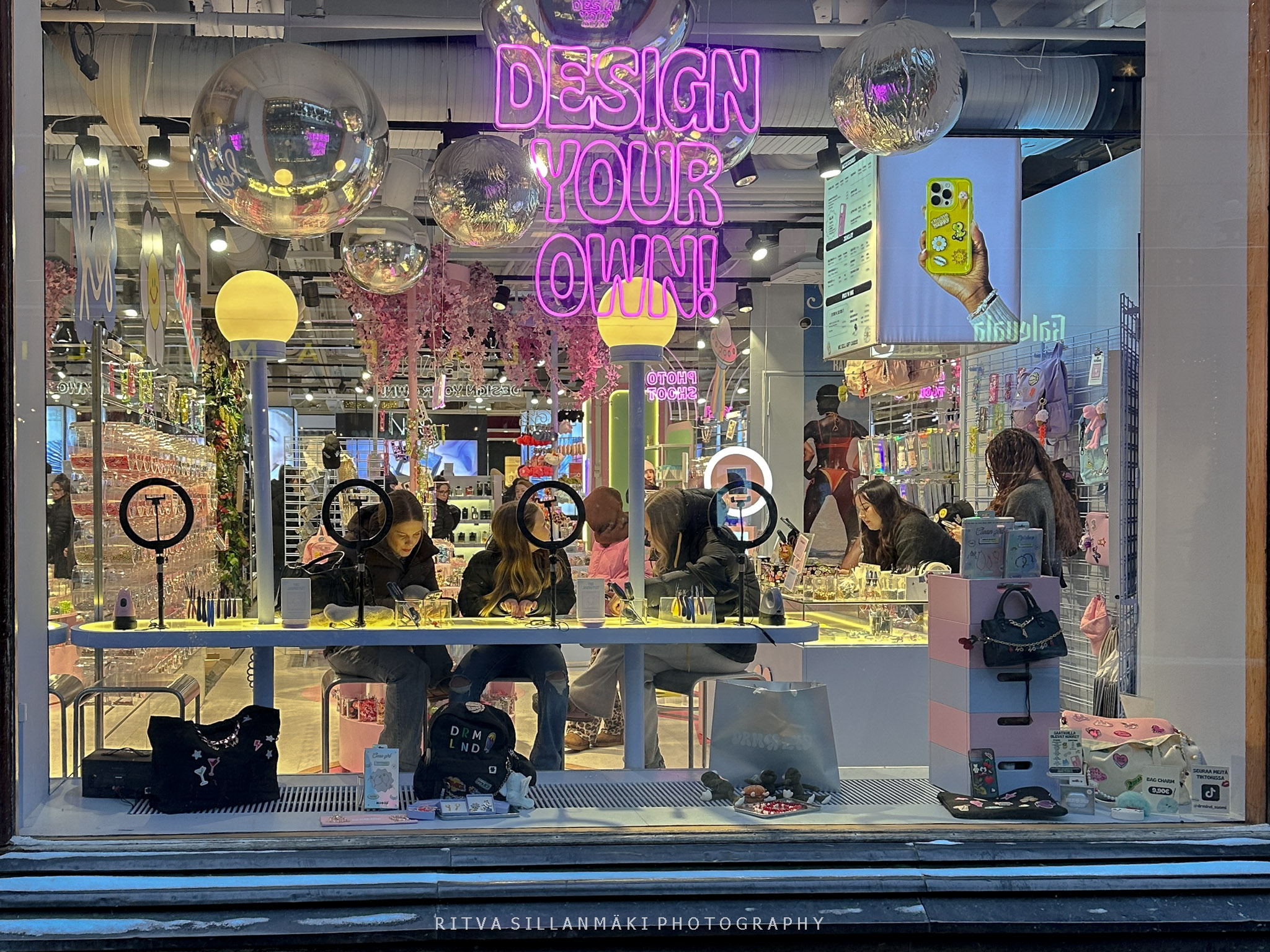
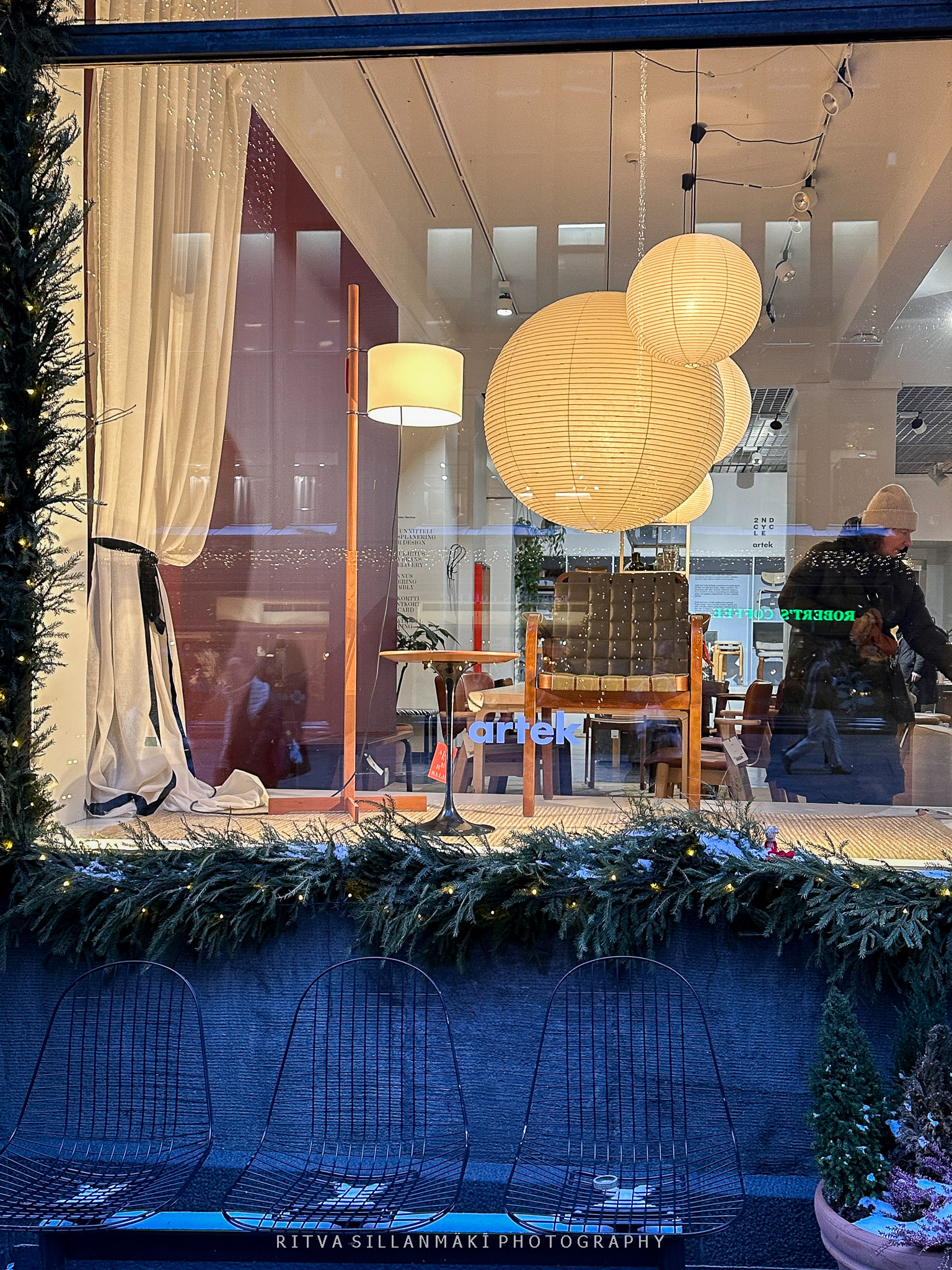
This week it’s Anne’s turn to host, and for that, I took an outing to Helsinki. Well, that is partially true. We went to buy bed linen; one of our sheets had been used so much that it ripped with a big hole. I have, for an unknown reason, very sensitive skin at the moment, so I wanted very soft linen. I am happy to say I found it: bamboo sheets. Luxury. I am way off the point here, but it might explain some of my photos. I took them all with my iPhone. Anne wrote: Look around, and using your imagination, what do you see? Please keep this to the same walk—that’s the challenge. I’m looking forward to seeing what you find. And have fun! This is where my walk began.
A beautifully arranged display of soft, luxurious bed linen featuring patterned blue sheets and plush pillows, perfect for a comfortable night’s sleep. I did not buy these but it was a last minute decision to take photos and this is a lovely set in my opinion.
I did take the one below as I did not know if we were going to go out of the store, I mean it was cold.
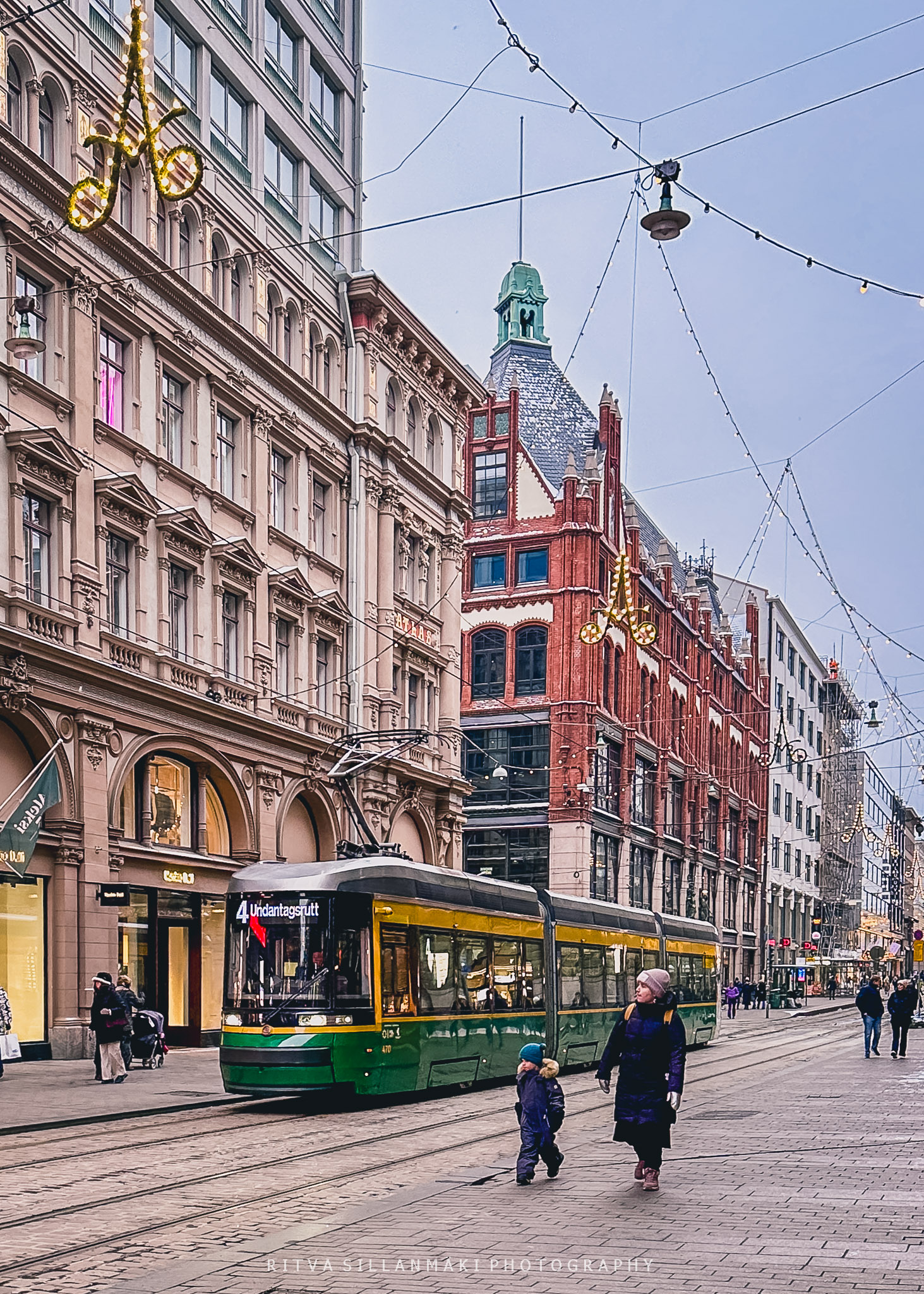
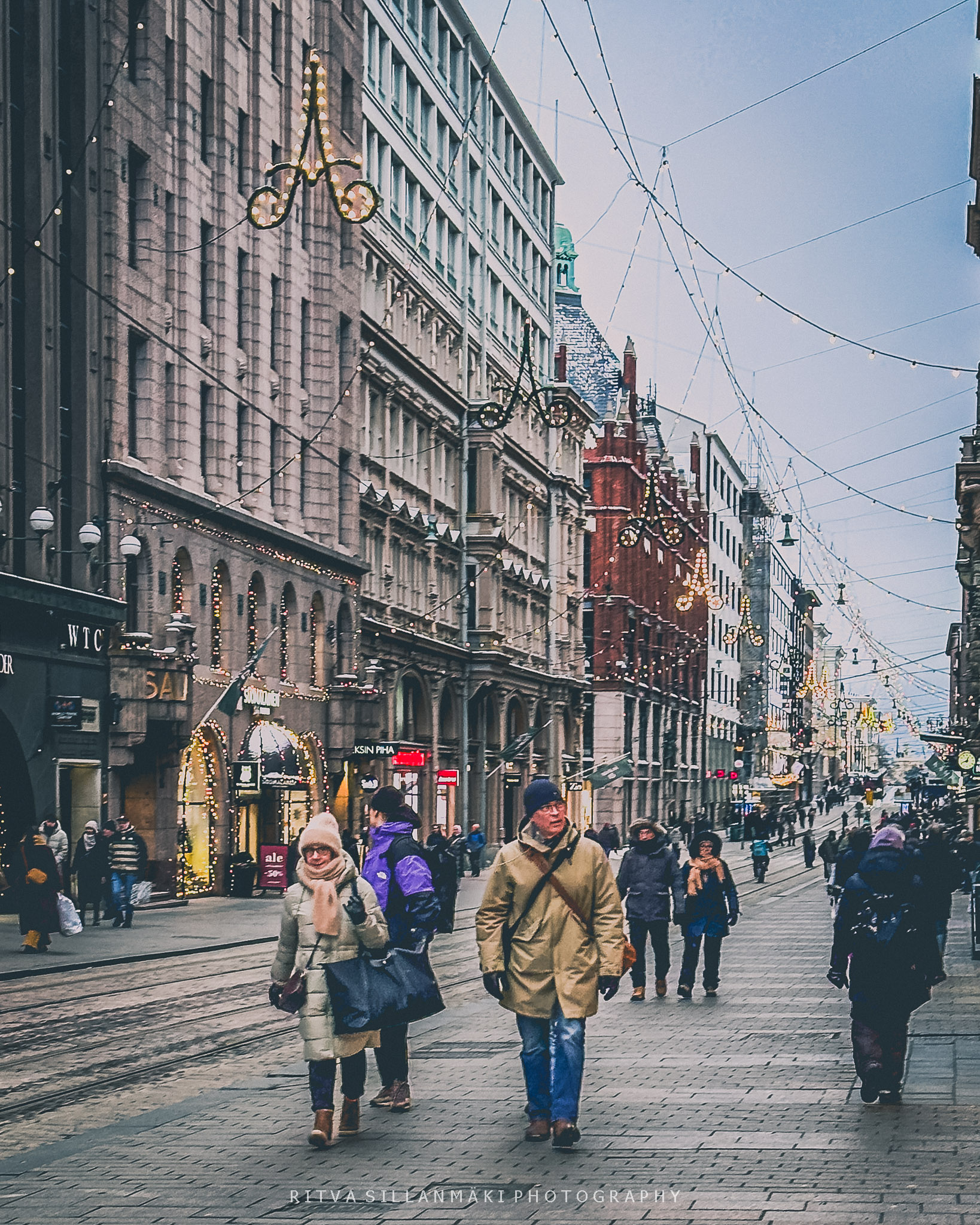
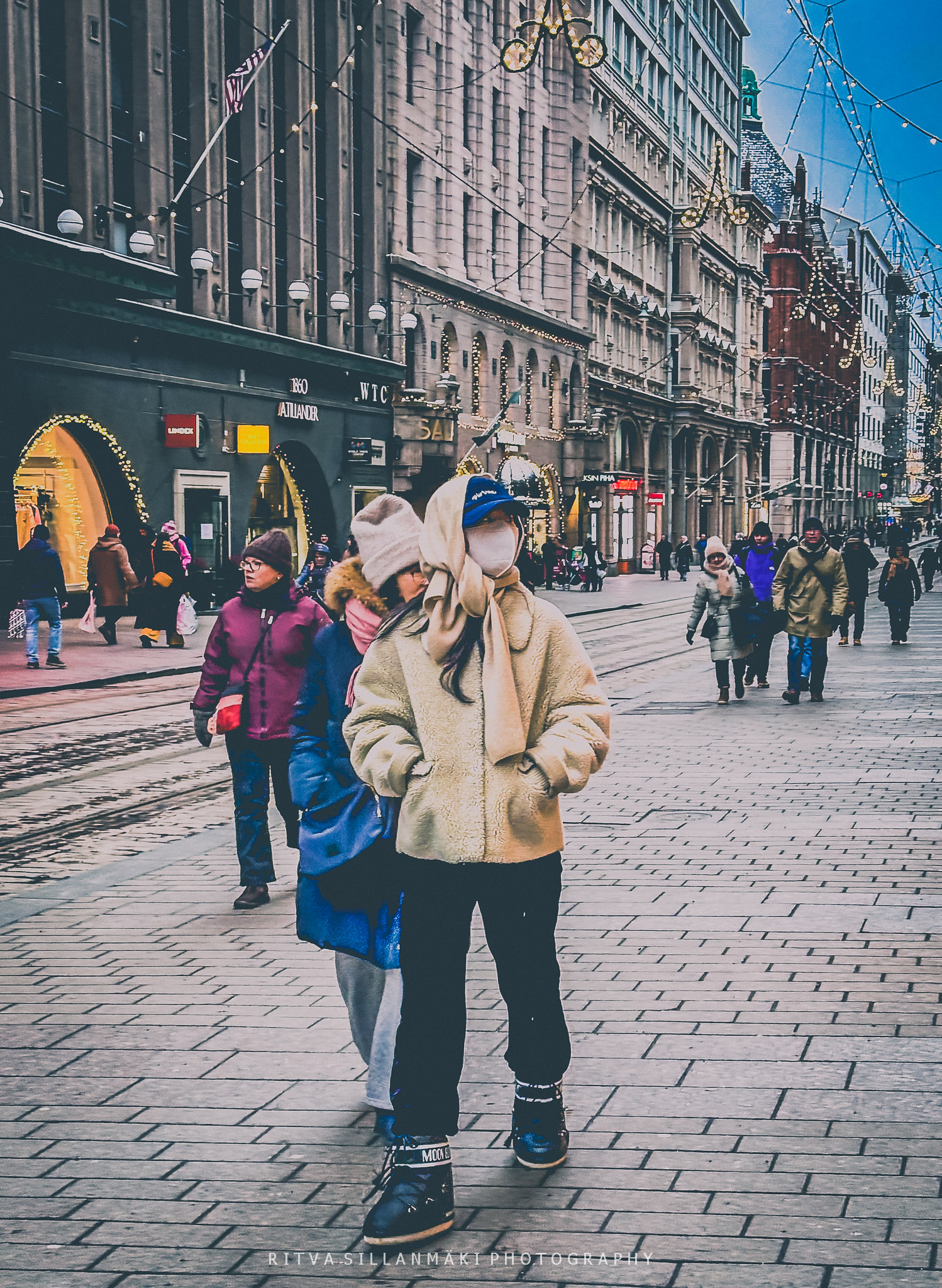
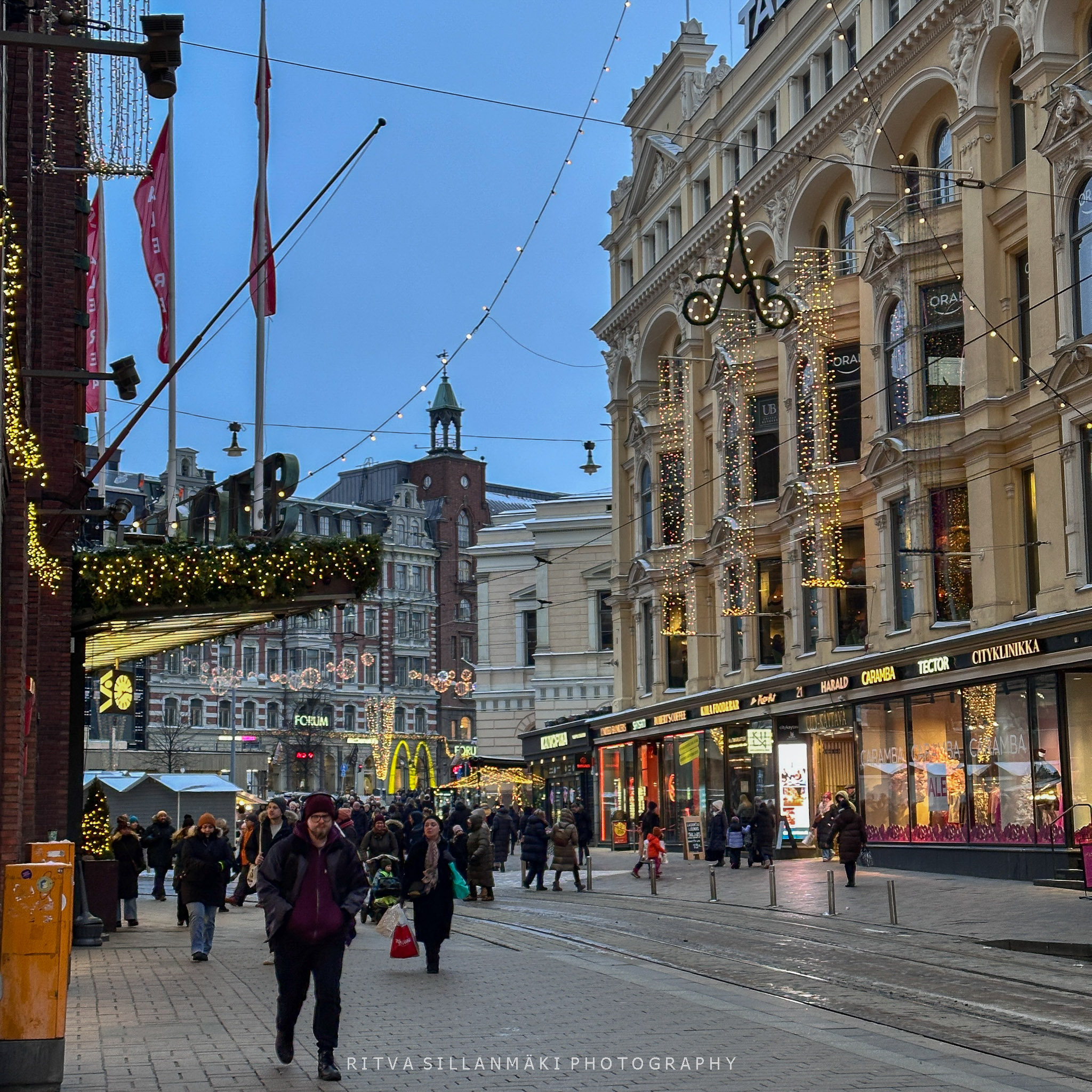
We strolled around for a bit, and you know how it is in familiar spots—you hardly notice the little things, right? So, I grabbed some shots of Aleksanterinkatu and the folks bustling about. Then I kicked myself for not paying more attention. In the shots below, you’ll see some doors that normally I’d just breeze past, even though I think they’re gorgeous.
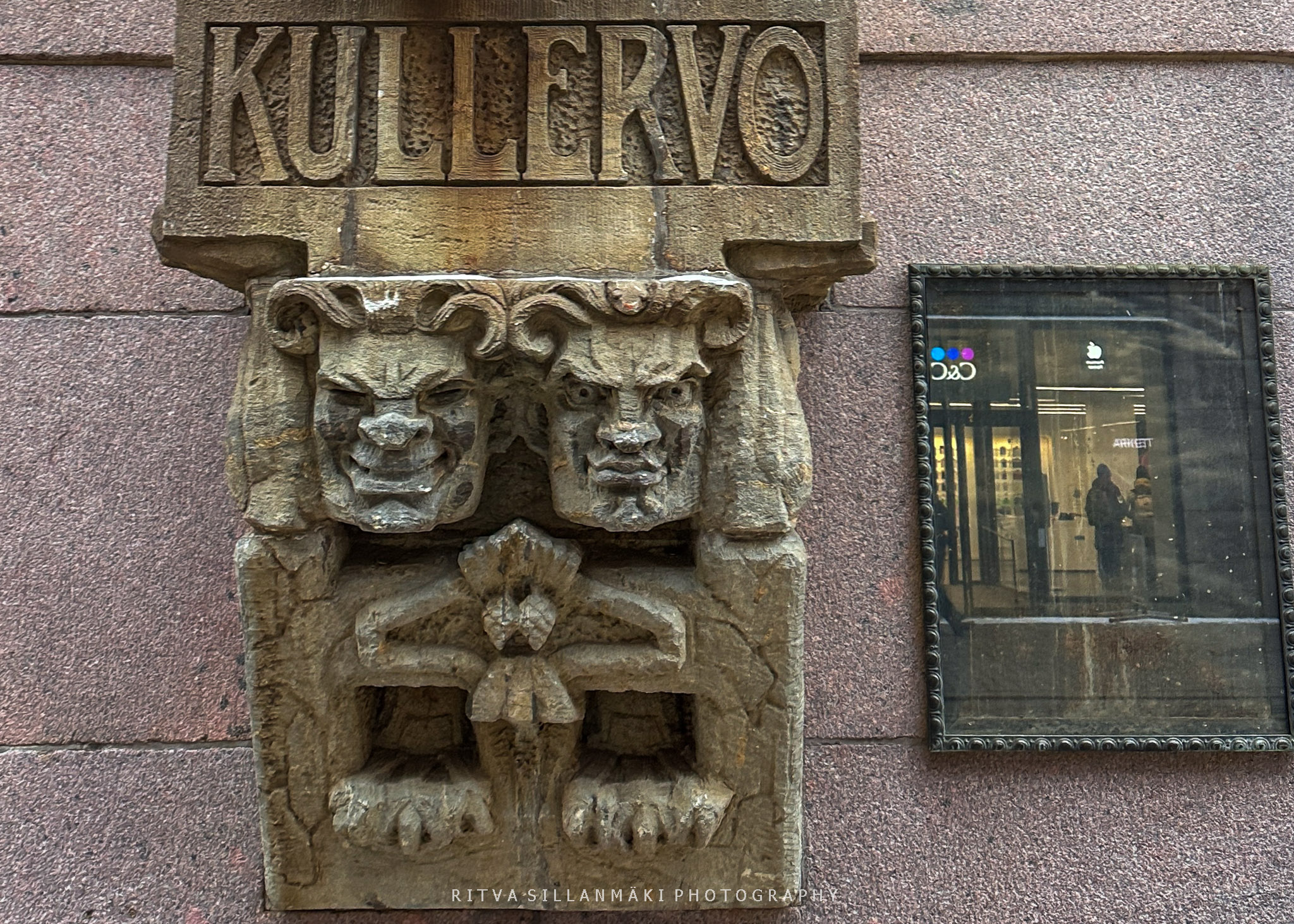
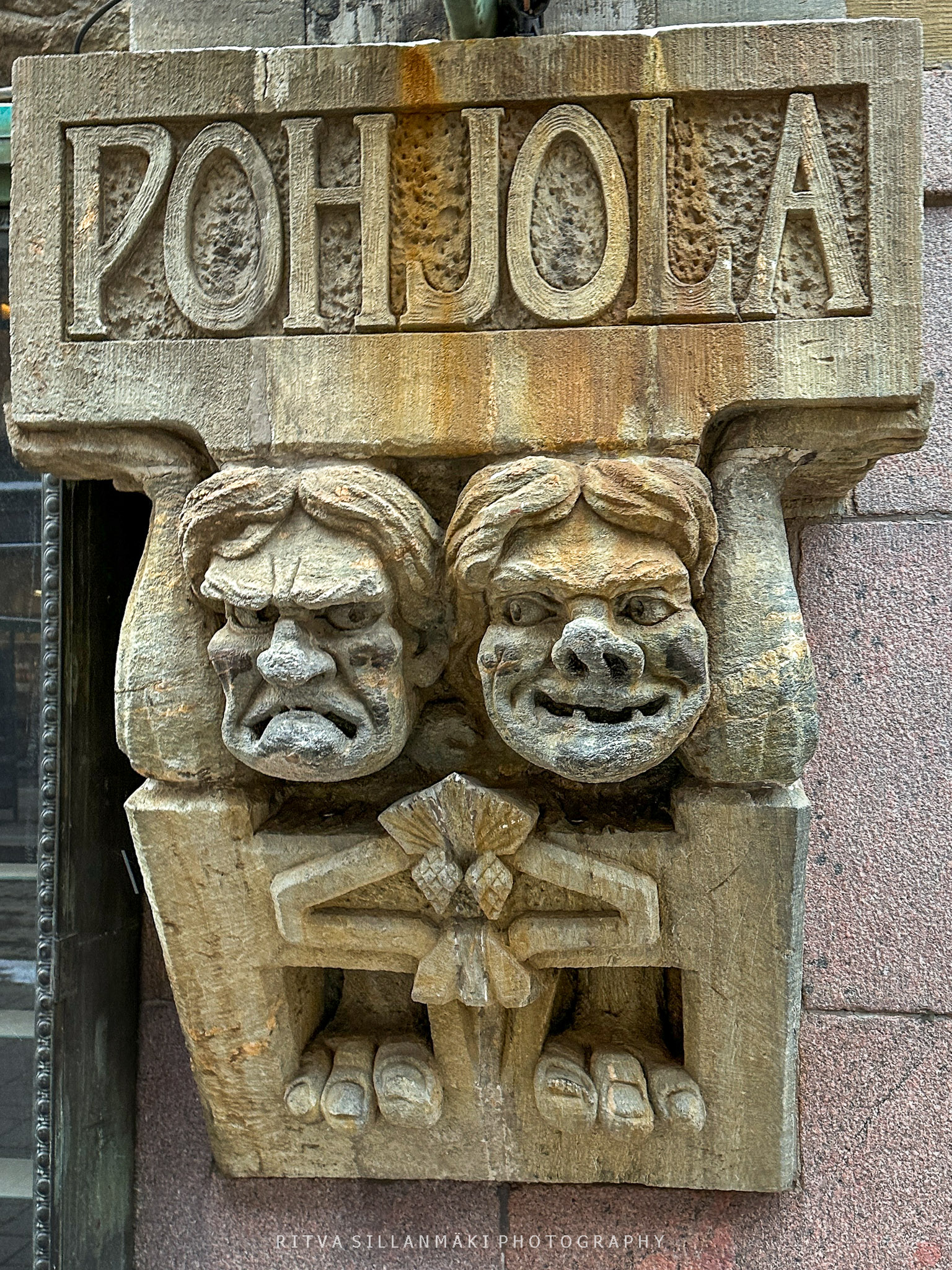
To participate in this challenge, I needed to discover something compelling for a photograph. I captured a close-up of the intricate stone carvings at the entrance of the Pohjola Insurance Company’s building in Helsinki. Designed by architect Eliel Saarinen, the building was completed in 1901 and features a façade embellished with grotesques and mythical creatures from Finnish folklore. The scowling faces in the picture are crafted by sculptor Hilda Flodin. My husband made a joke about it, and just from their expressions, you can tell which ones are women, as he remarked with a smug grin 😂
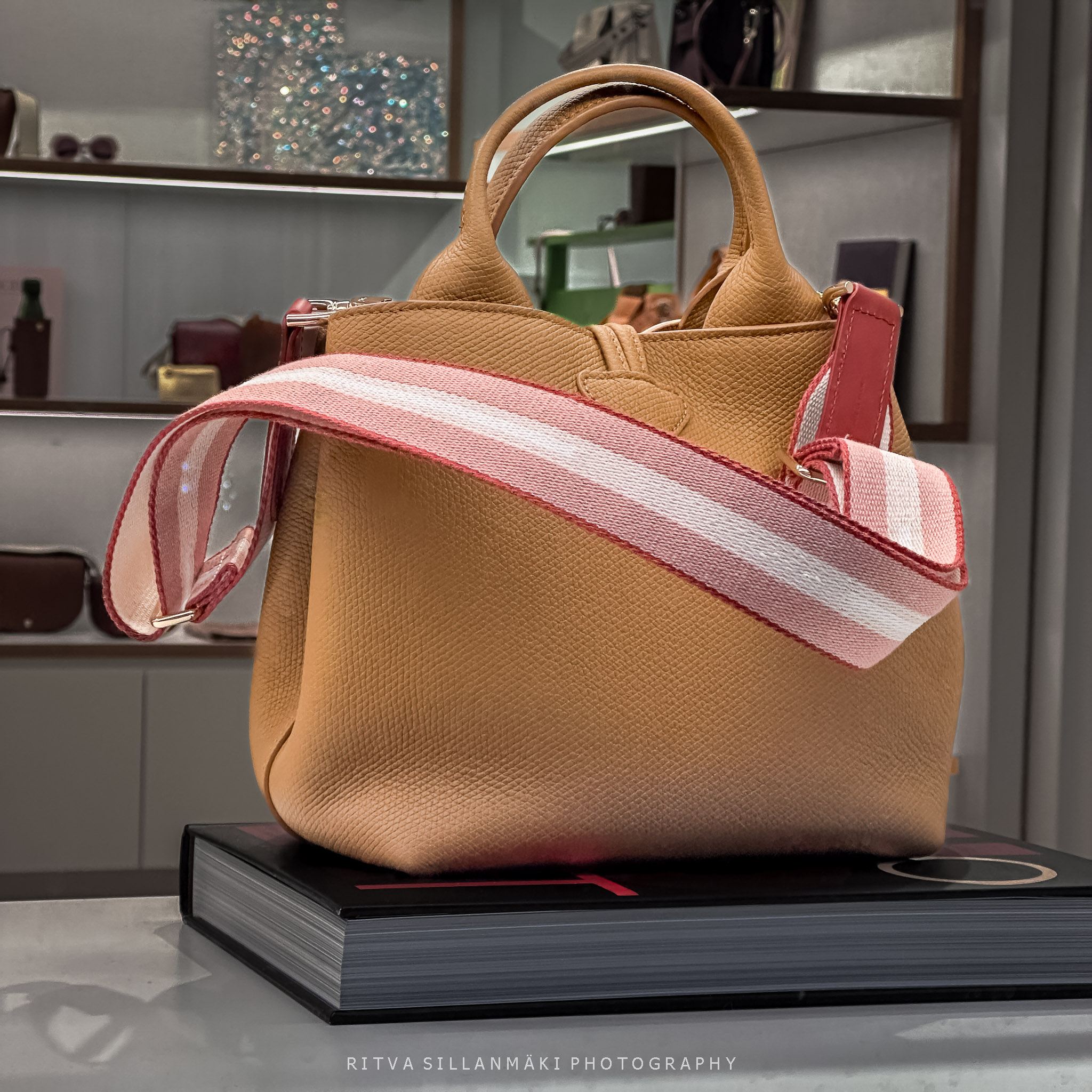
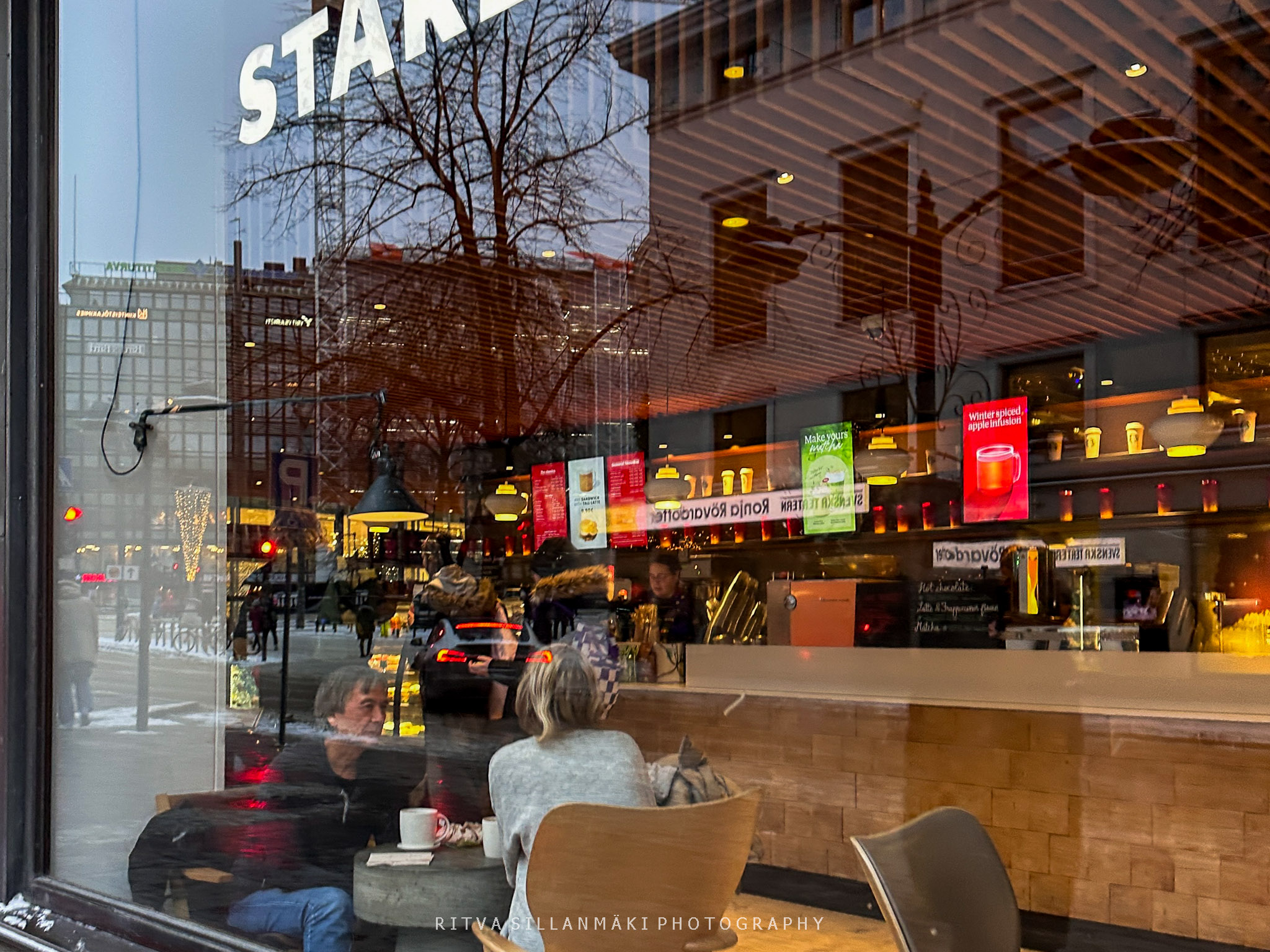
Window shopping and checking out the displays is fun, but this time I tried to pay more attention to the details and didn’t really nail it. I could’ve done better, but the cold wind had my fingers feeling like ice sticks!
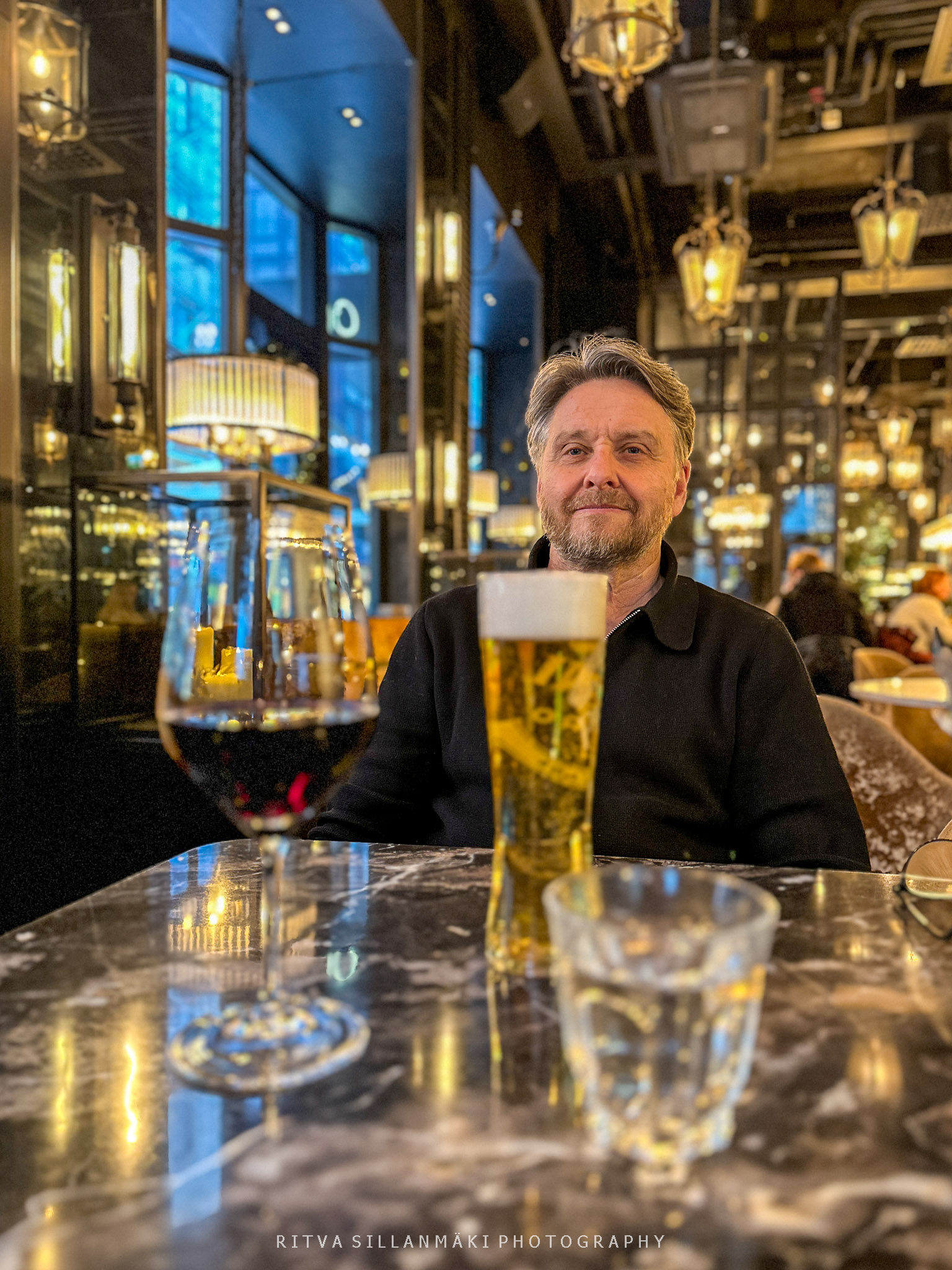
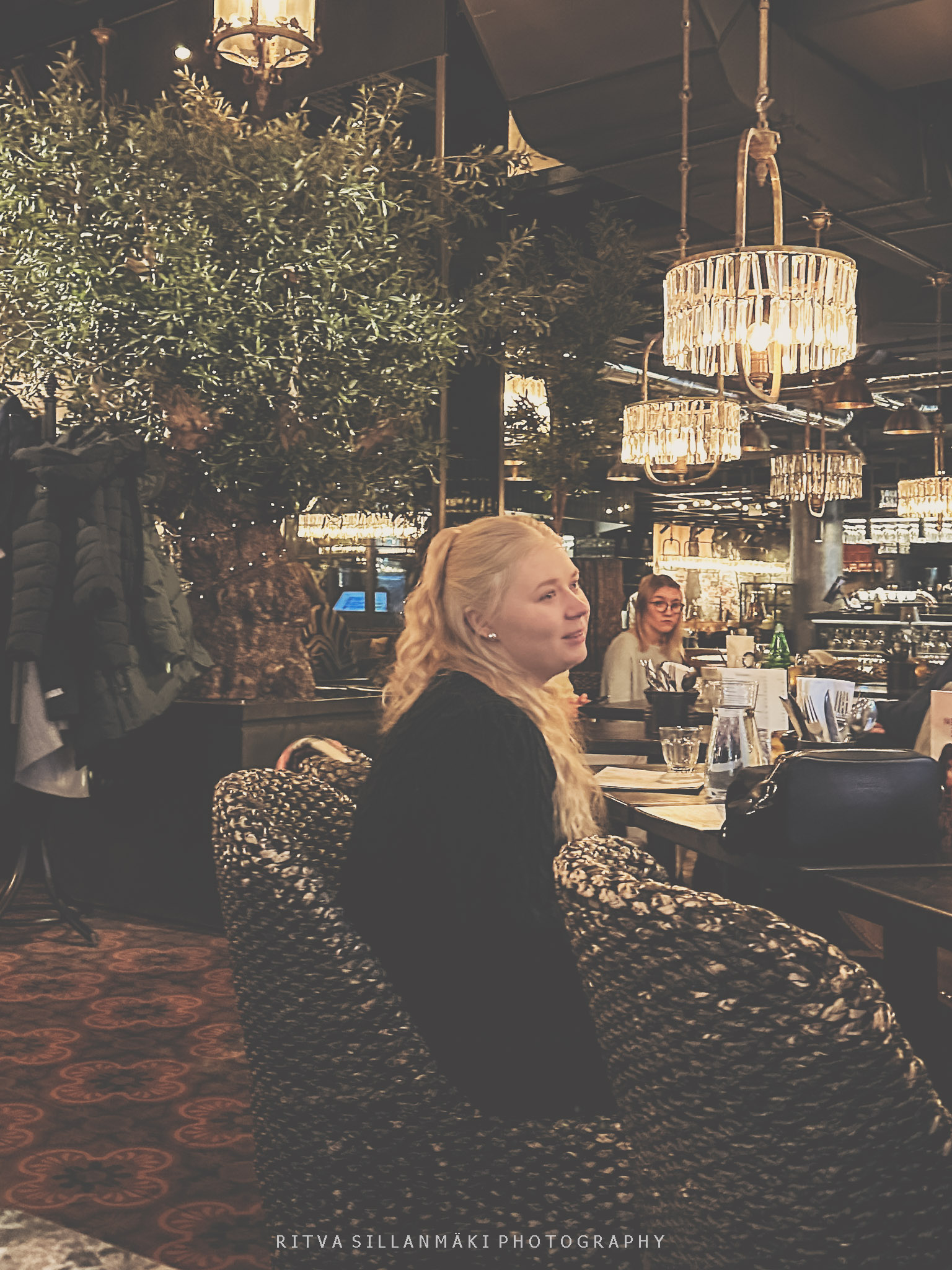
We did find a restaurant to have lunch.
Please keep it to the same walk—that was the challenge, I did that. My intention was to keep the post shorter, but this is what I found. And I did have fun! It turned out that my photos are not award-winning photos or all that attractive to my photographic eye; but, I did take the risk and found something worth the time.
Thanks Anne for this one, it made go out to the cold and have walk in the city. Next week, Saturday, January 17, at noon EST is my turn to host, hope to see you then.
Please remember to link your post Anne’s original post. Also, remember to use the Lens-Artists Tag to help us find you.
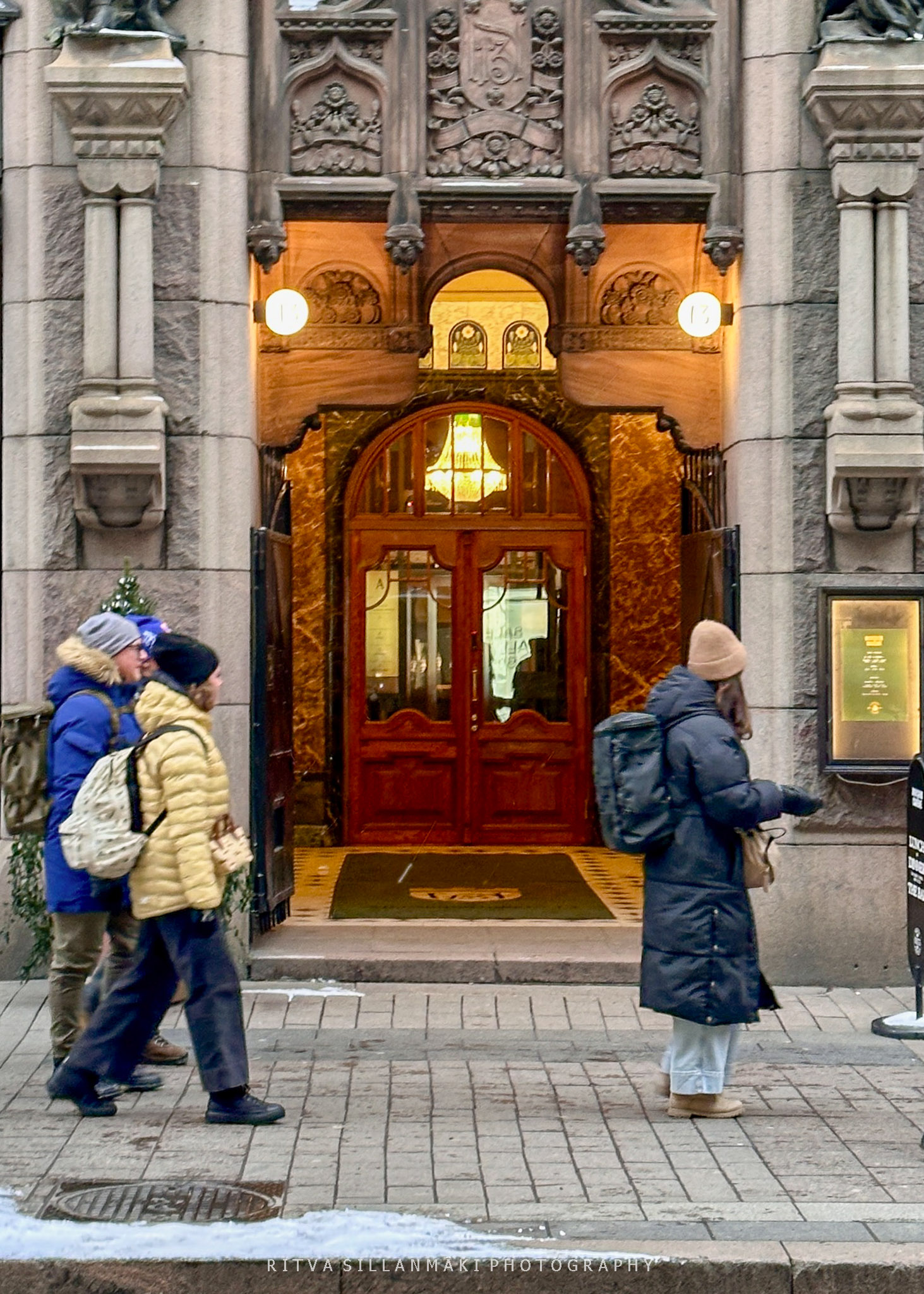
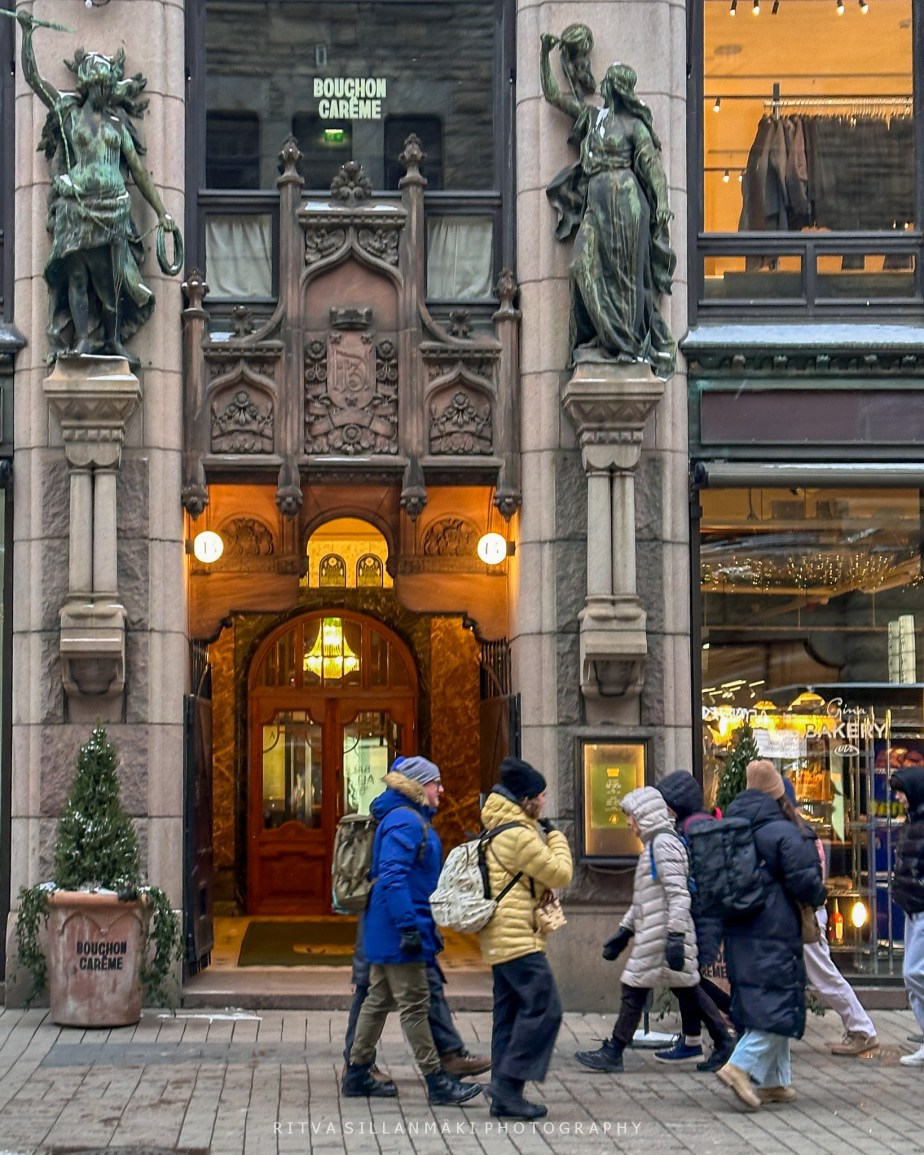
The building depicted in the picture is Lundquist’s commercial building, located in Helsinki. It is one of the most beautiful and representative buildings in Finland and a landmark in Helsinki’s city center. It has been renovated in recent years.
The building was completed in 1900 and designed by architect Selim A. Lindqvist. At the time of completion, it was Finland’s first pure commercial building, which contained no residential apartments. The façade is adorned with statues inspired by mythological goddesses, such as Artemis and Athena, reflecting the building’s original purpose as a shopping center.
Entrance of Lundquist’s commercial building in Helsinki, featuring statues of mythological goddesses.