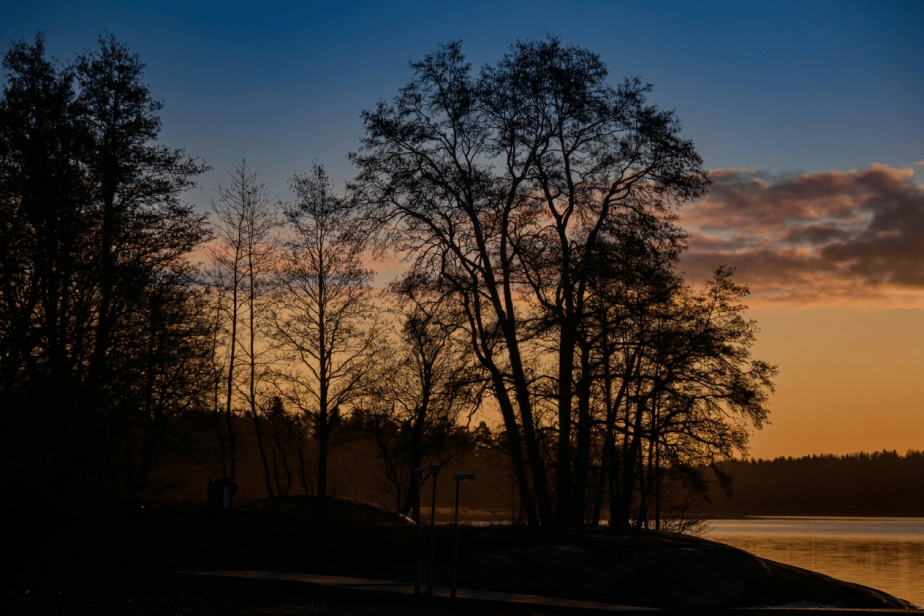
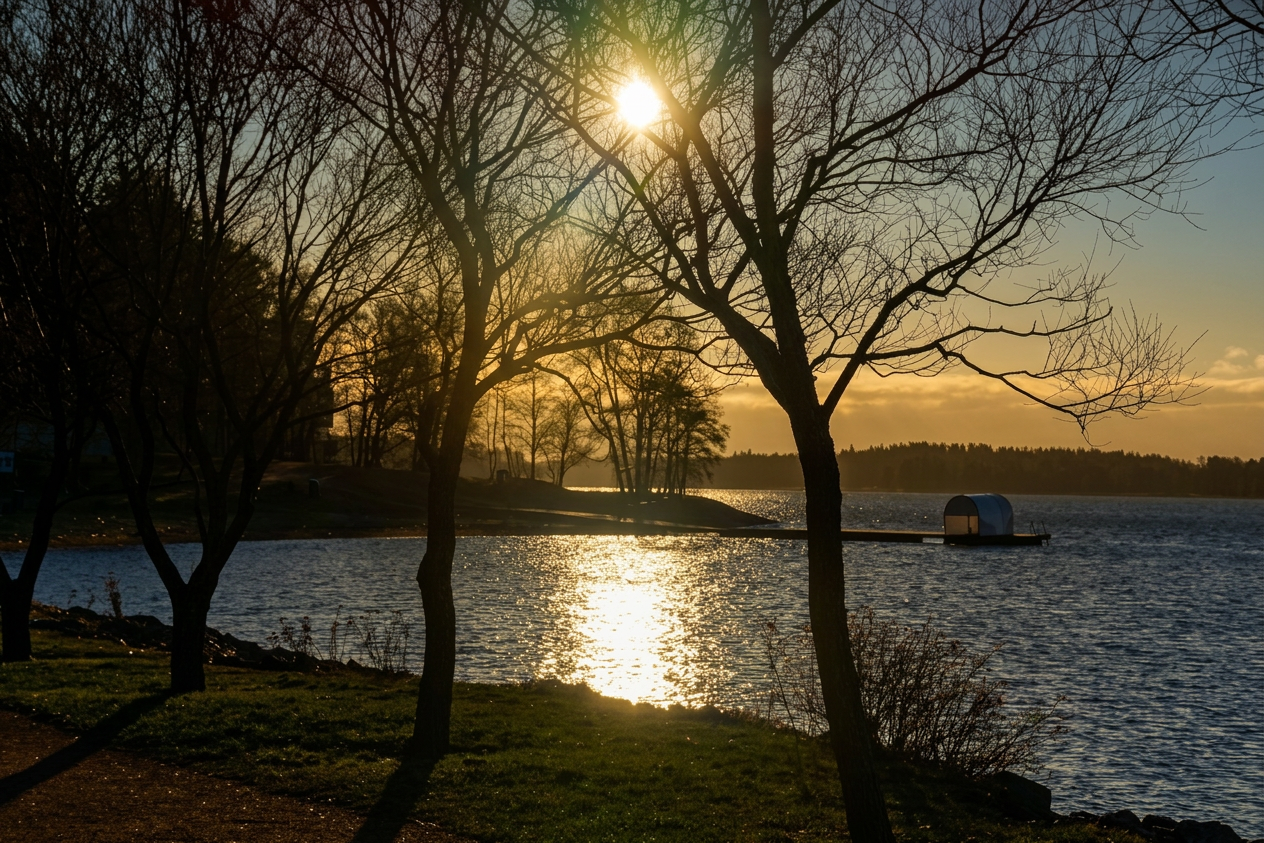
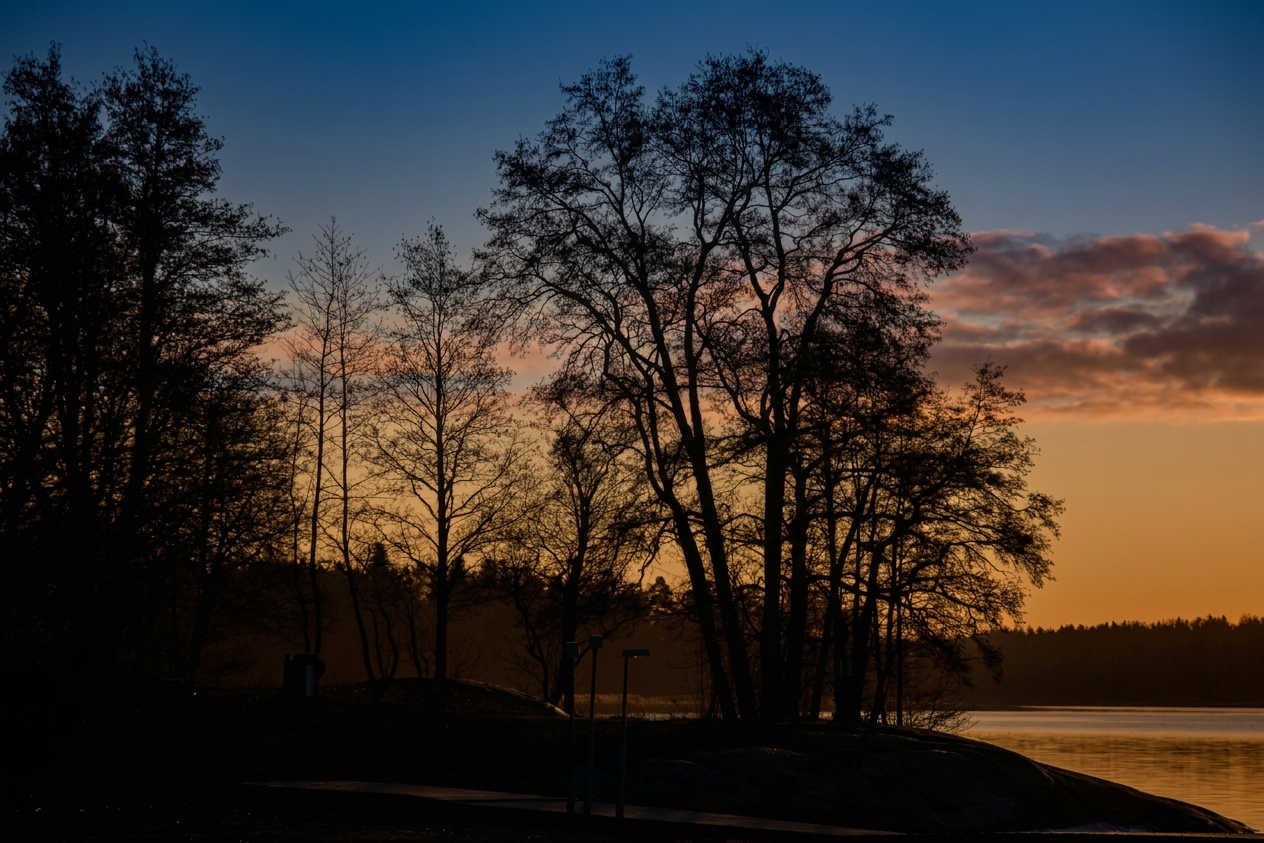
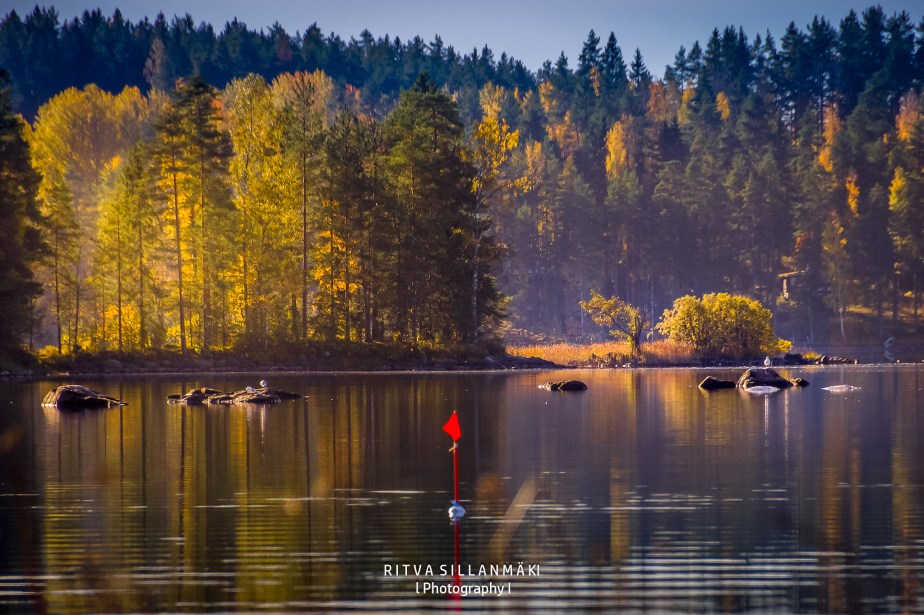
Dusk comes early now, and October is finally showing its real mood. A low golden light shines through the bare trees by the quiet sea, and the water reflects a thin path of light on its small waves. A small floating winter swimming hut rocks gently in place, waiting for the first thin ice to form and for the brave swimmers who will arrive with their steaming breath and quick, sharp laughter. The air is cool and smells faintly of salt and wet wood, and I can feel the early darkness settling in as everything prepares for the slow change of season. The bare trees stand out dark against the sky, perfect for silhouette photos, and when I am lucky enough to catch a soft Nordic sunset behind them, it feels as if the whole shoreline pauses for a moment while I take the shot.
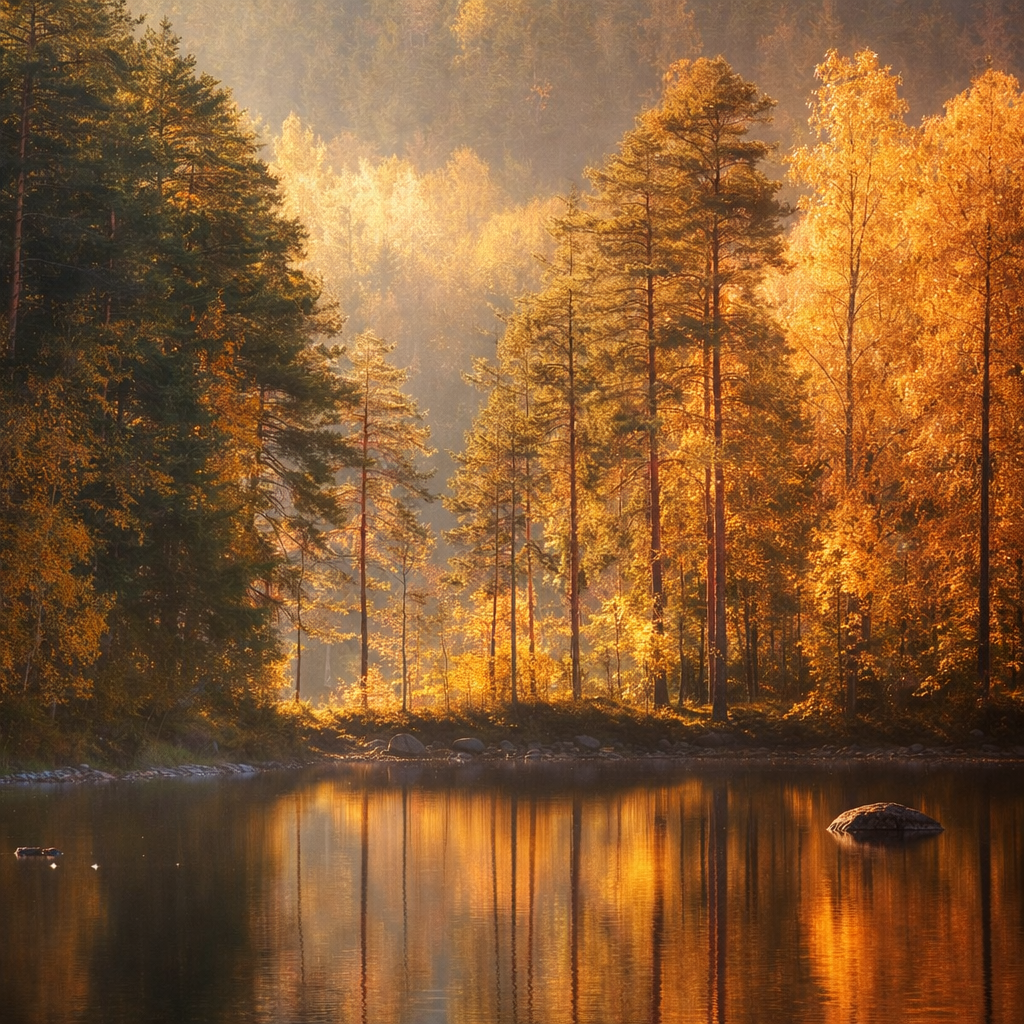
Golden sunlight filters through bare trees beside a tranquil sea illuminating the rippling water and a small floating winter swimming hole hut waiting for the ice and swimmer’s Bare trees stand in silhouette against a glowing sunset over a calm sea
It’s Thursday, but I am still silent as it is Wednesday. What a relief; sometimes it’s hard to say something when it’s a pretty image—oh well, I did end up saying something. Oh, one more thing: my imagination started to roam; I made up a village life under these roofs, and one house even has a skylight.
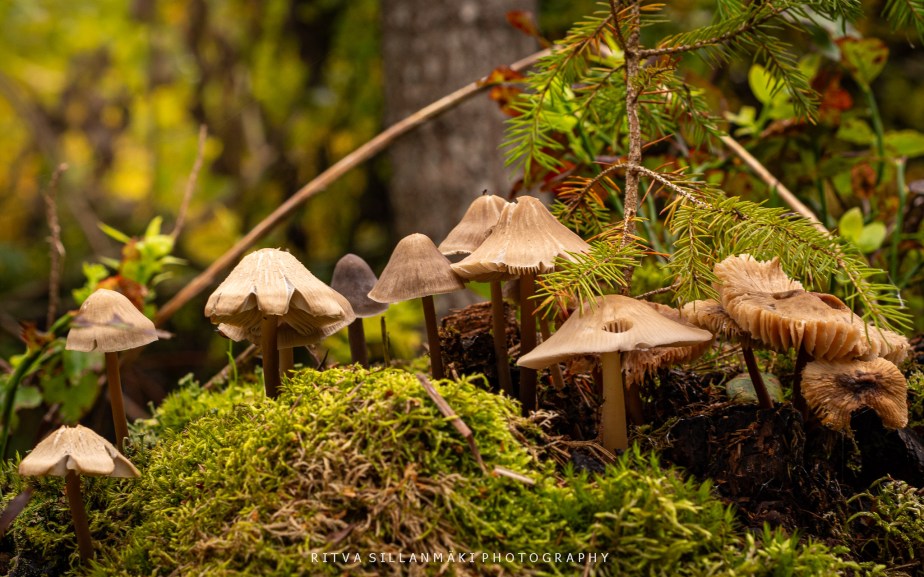
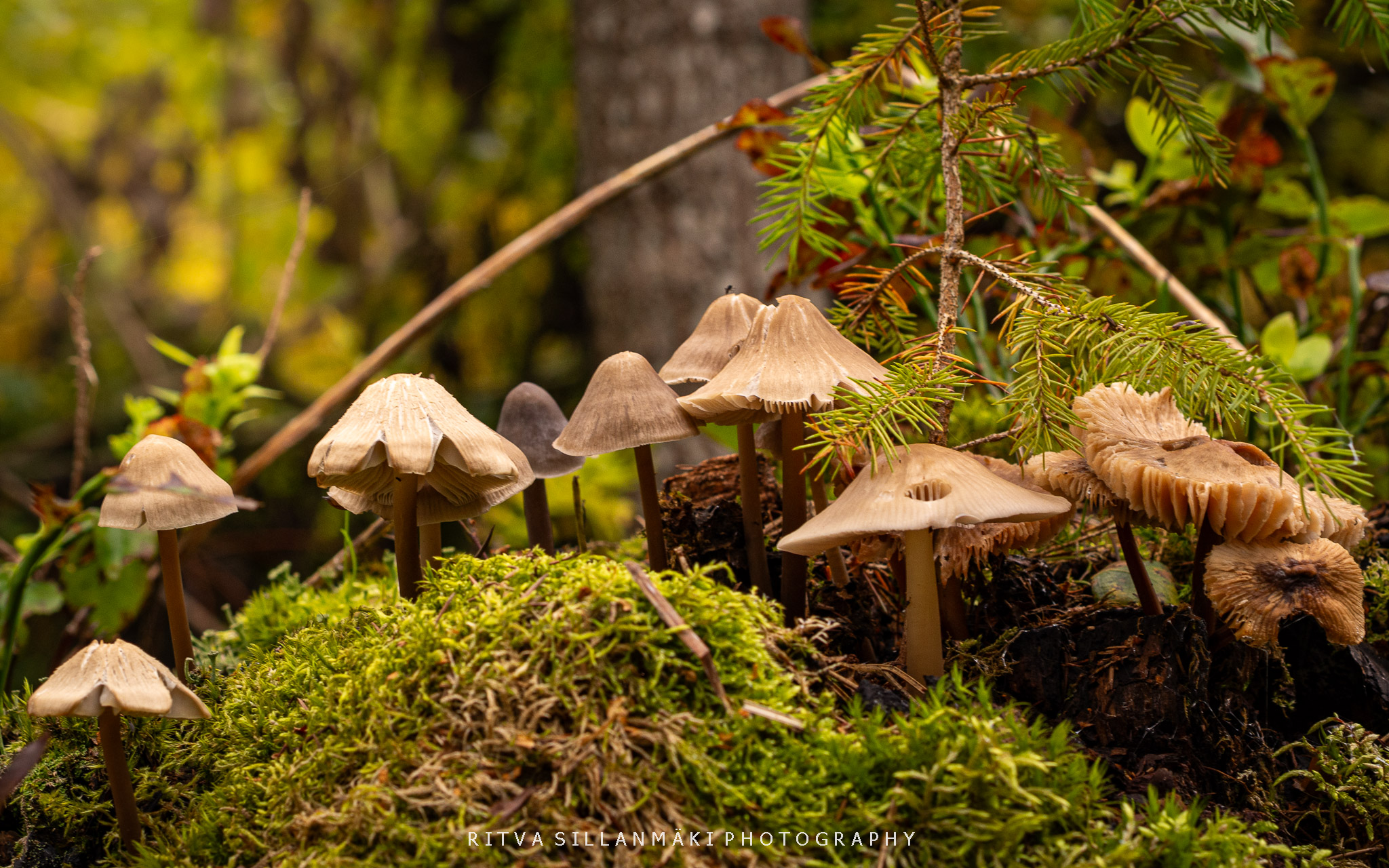
A cluster of delicate woodland mushrooms rises from lush moss beneath a young evergreen tree.
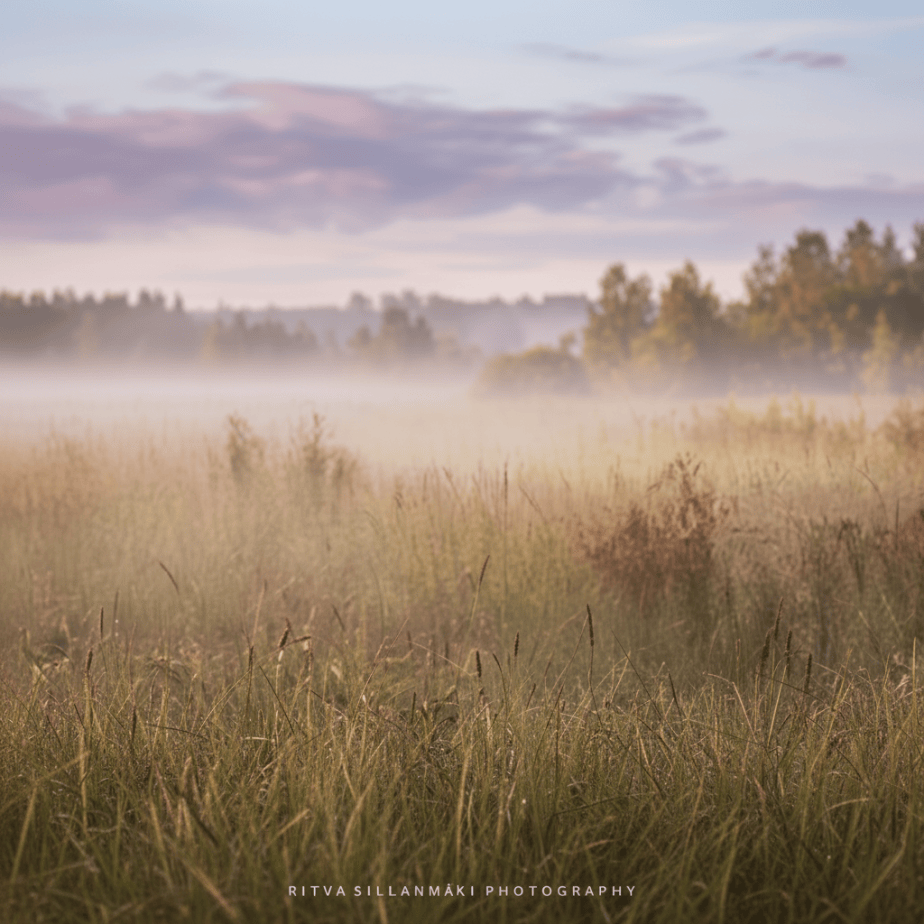
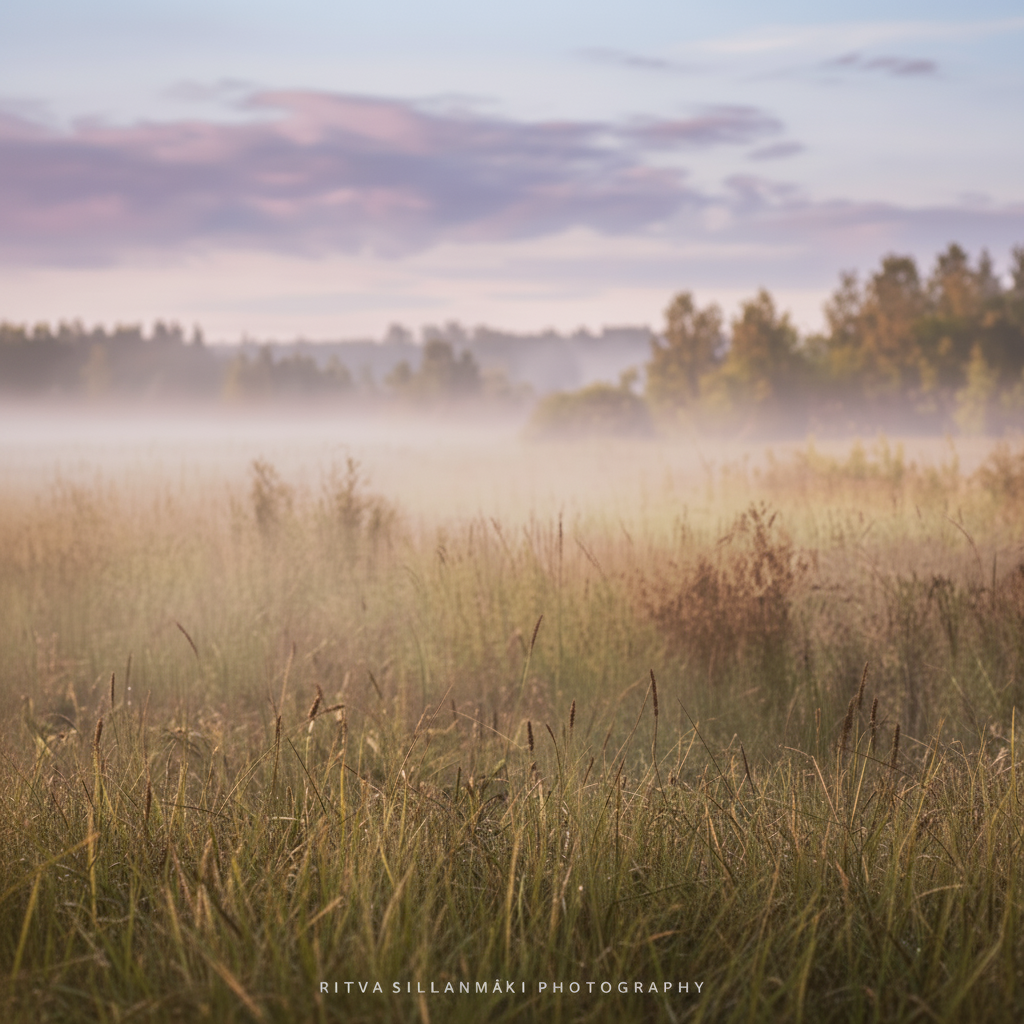
A misty meadow glows beneath a softly colored morning sky, with wild grasses stretching toward a tree-lined horizon.
Misty meadow, barely waking,
Tall grasses breathe in ribbons of gold,
cool air combs their seed-soft crowns.
Fog drifts low, a quiet tide,
folding the tree line into its pale pocket
of green and embered amber.
Morning light loosens from a pastel sky,
rose and lavender sifting down—
the whole field scented with leaf-soft autumn,
with the hush of a season turning
so gently you can almost miss it.
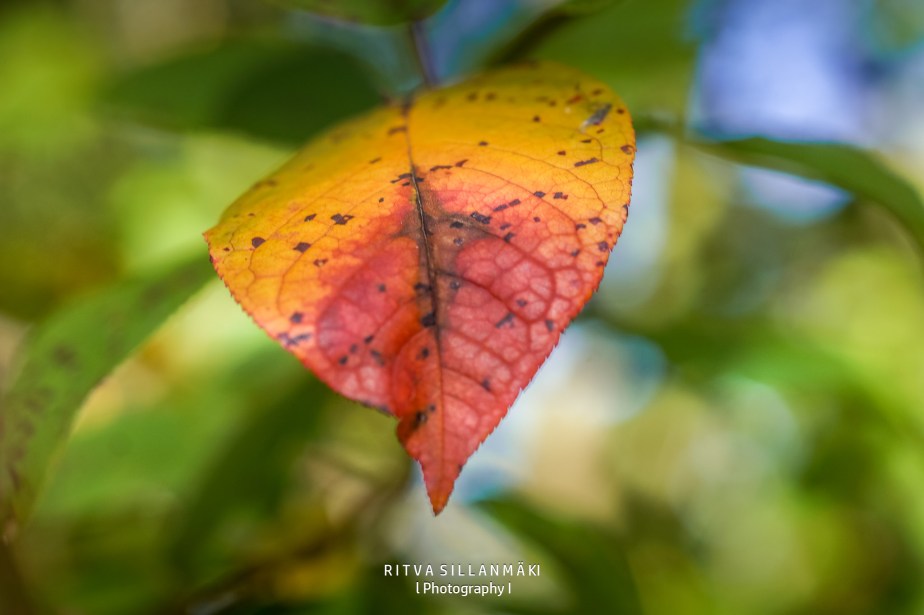
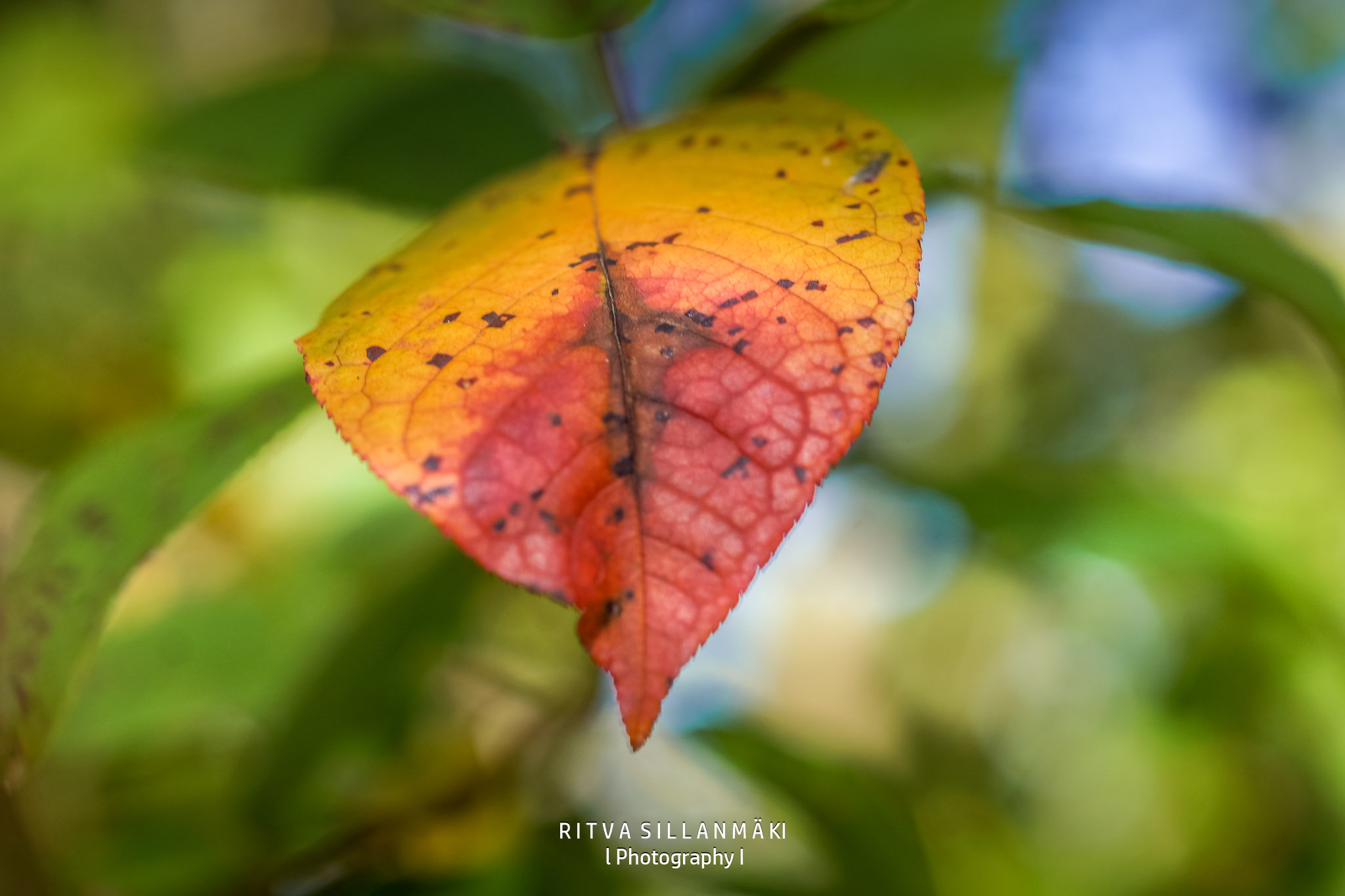
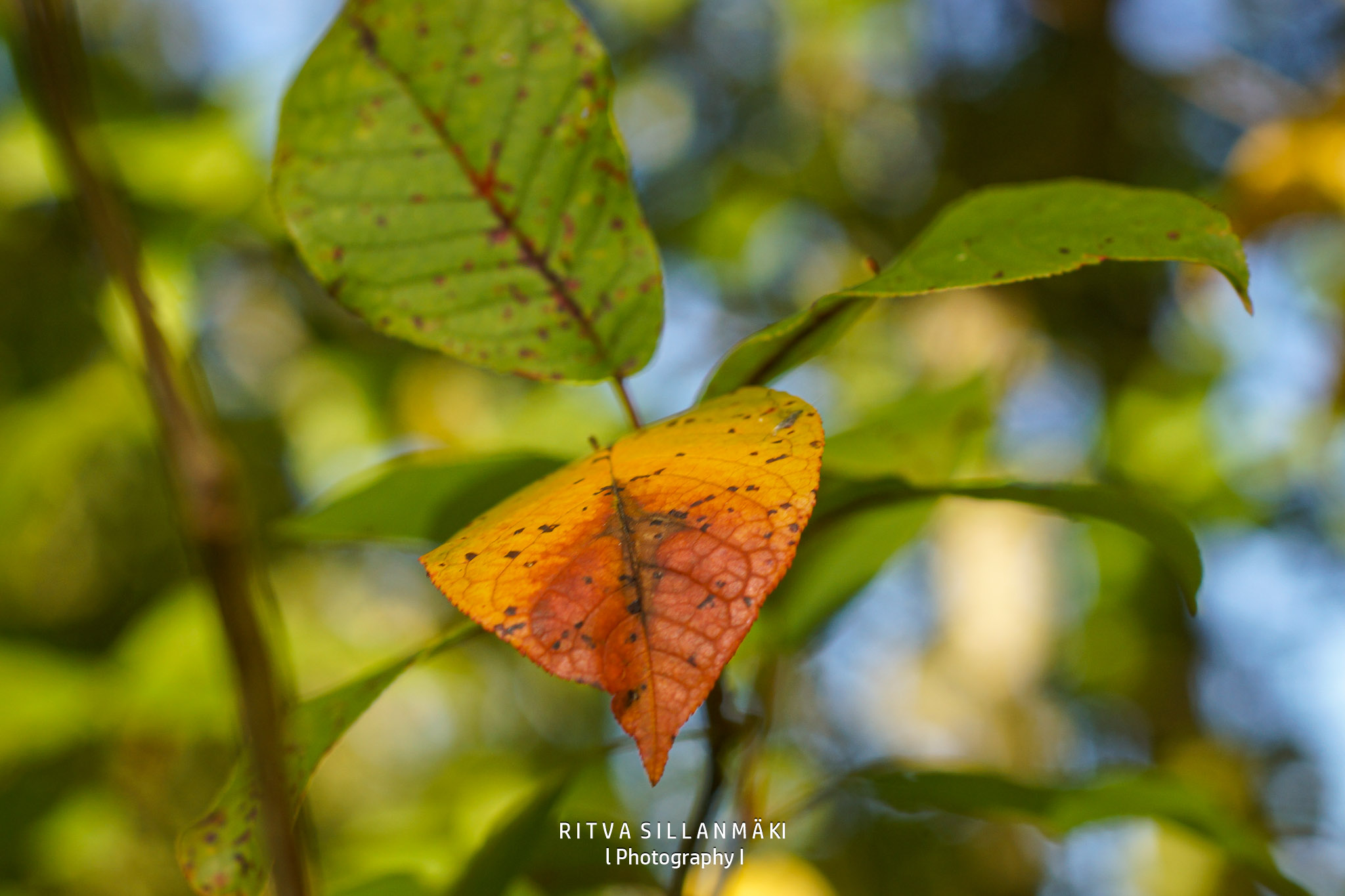
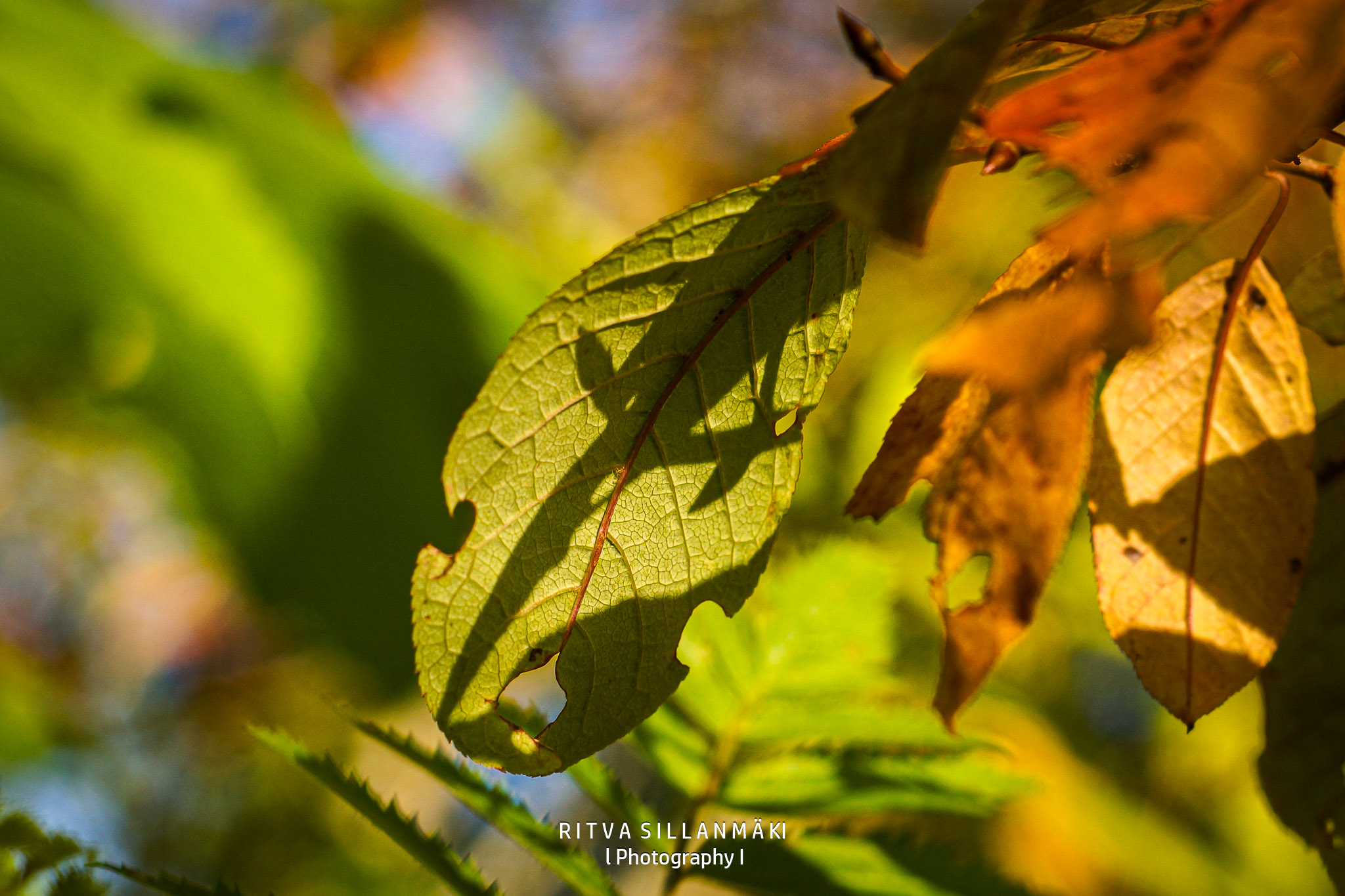
Finding these little gems of color and detail is a joy, and there’s no need to go any farther than the front door—just step outside, wander through the yard, and let your eyes linger on the quiet corners where beauty has been hiding all along. I think this is a buckthorn leaf, whatever it is the colors are lovely,
A vibrant autumn leaf shifts from golden yellow to warm crimson against a softly blurred green background.A vibrant autumn leaf hangs among green foliage, glowing against a softly blurred woodland background.Sunlit green and autumn leaves glow with warm golden color in a softly blurred natural setting. I like the shadow that falls on the green leaf.
This week it is Anne´s turn to host us with a great theme, MOVE YOURSELVES. Photography, to me, is about showing what I see and how I compose it. You need a camera, a willingness to really look, and the freedom to move toward your subject to find the right angle, distance, and light. It is as much about quiet observation as it is about action, taking the time to notice small details and relationships in the scene. In the end, it is always a return to the basics: seeing clearly, moving with intention, and framing the moment in a way that feels true. Anne challenge is all about that.
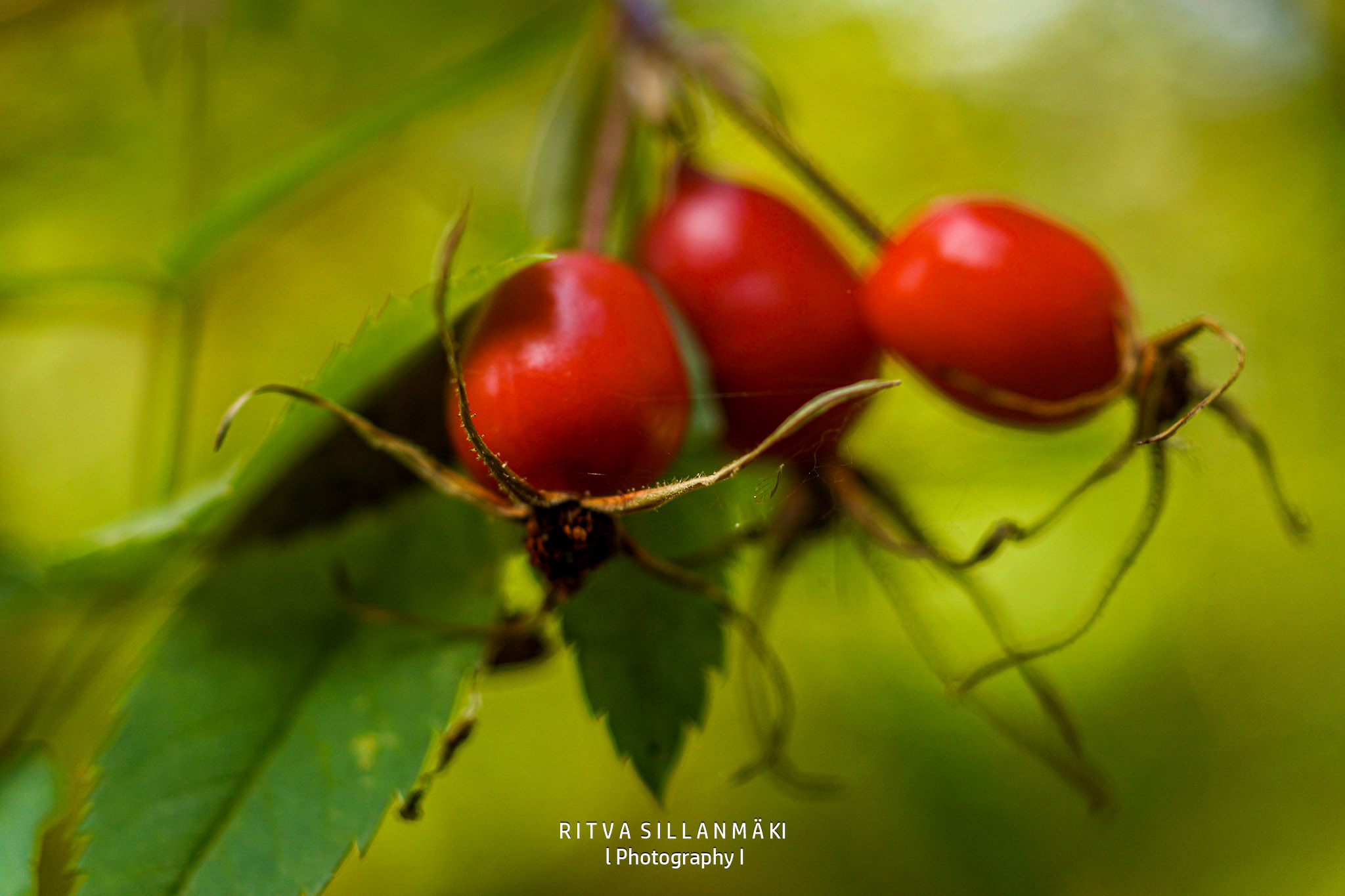
A close-up of three glossy red wild rose hips nestled among vivid green leaves.
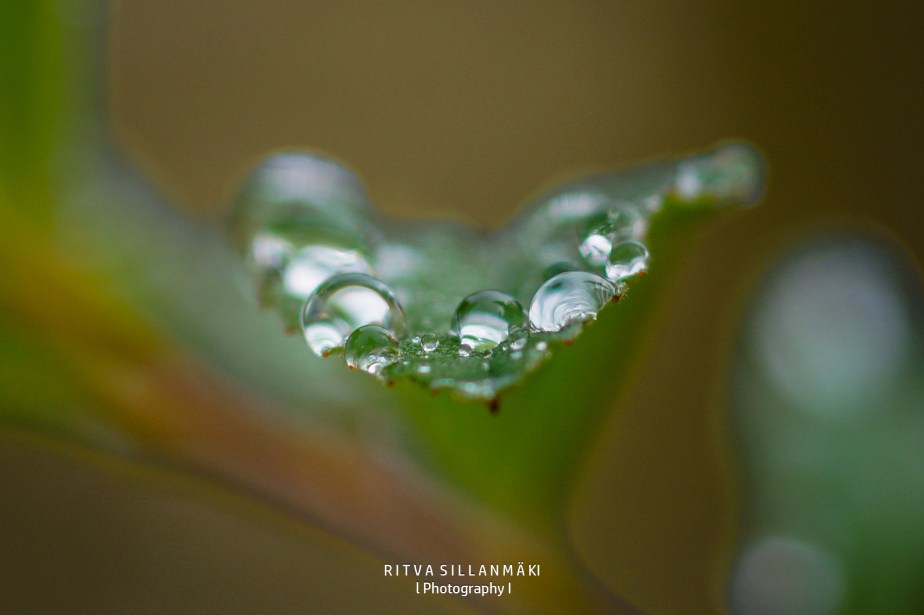
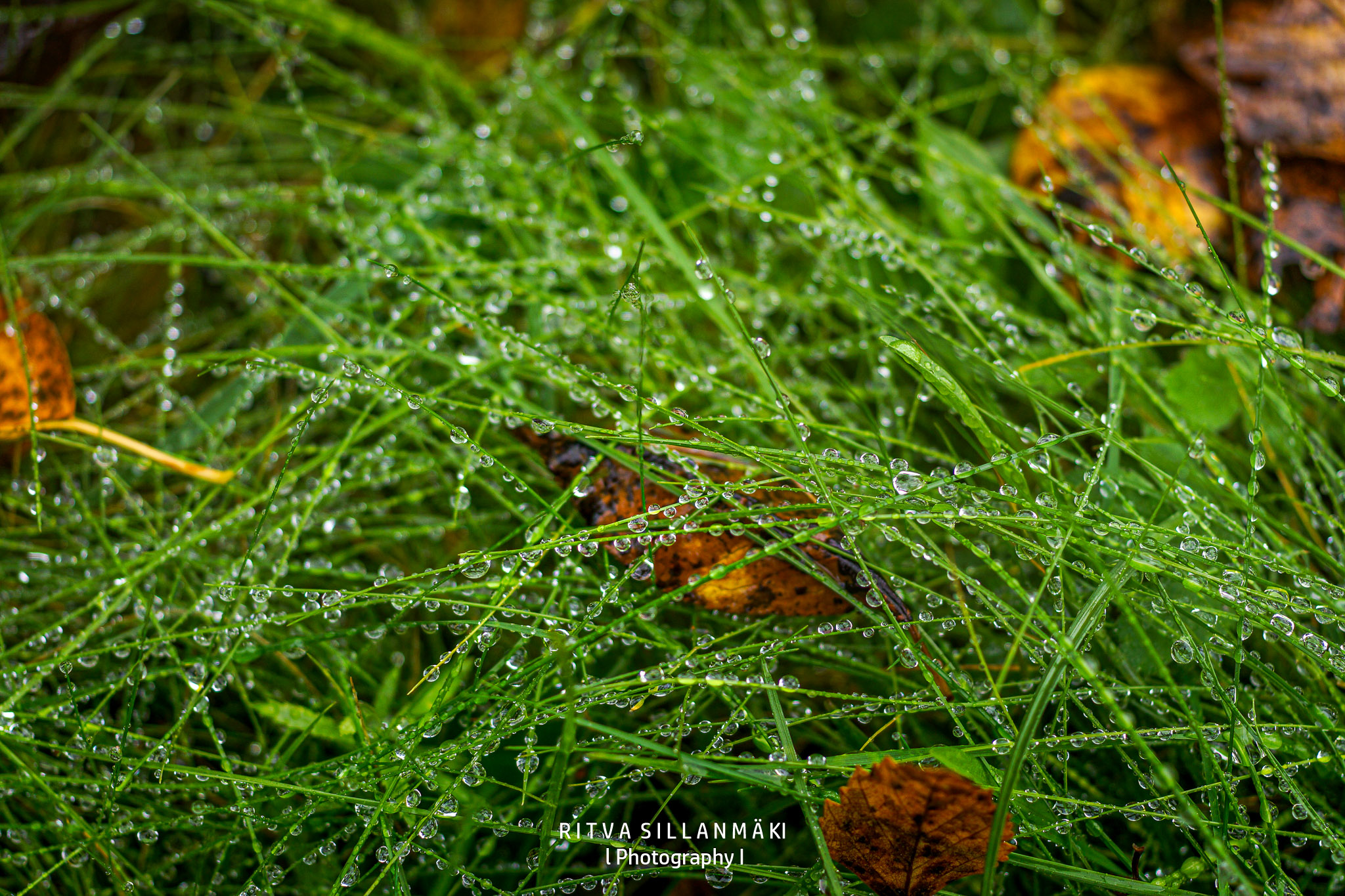
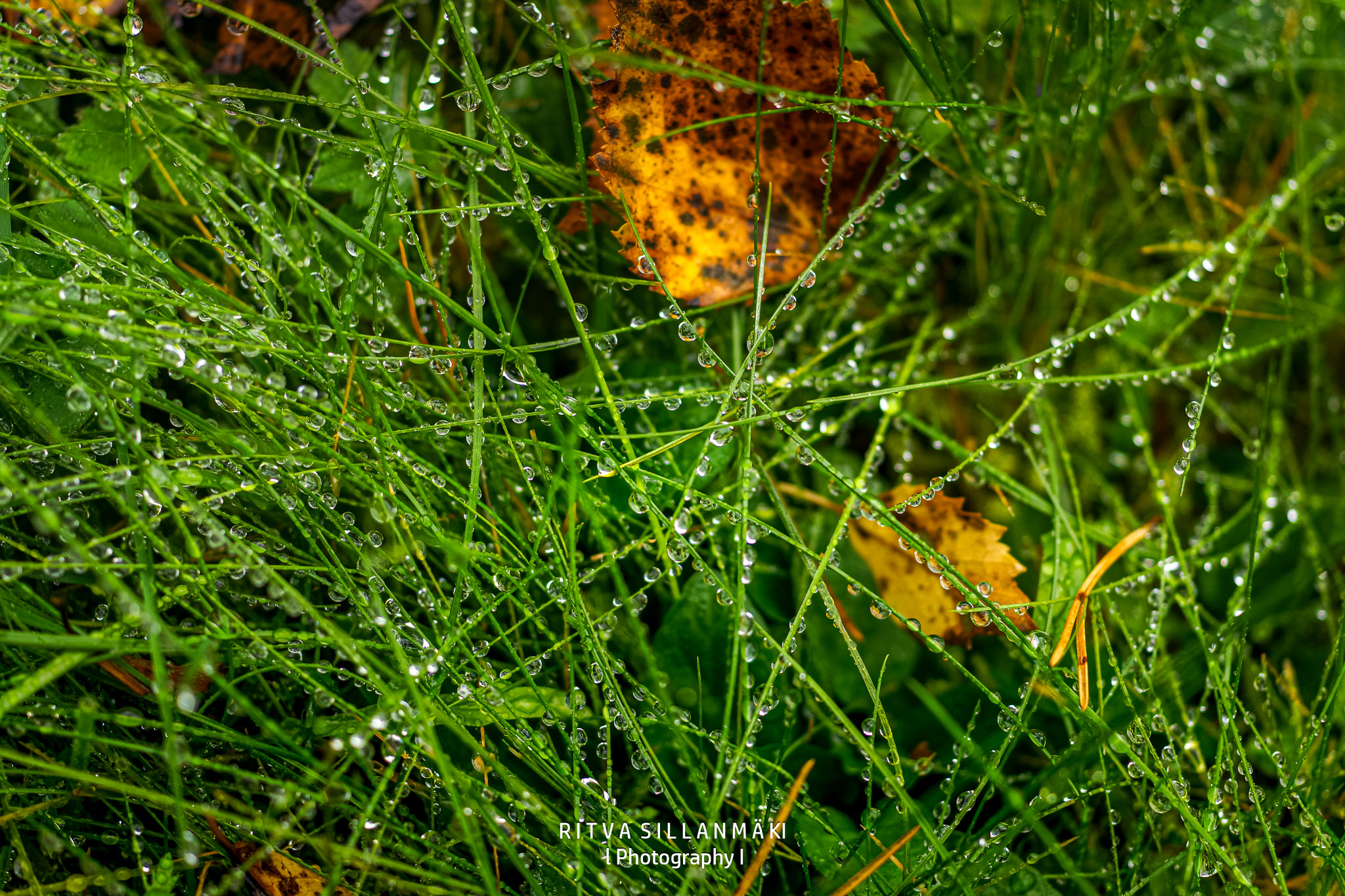
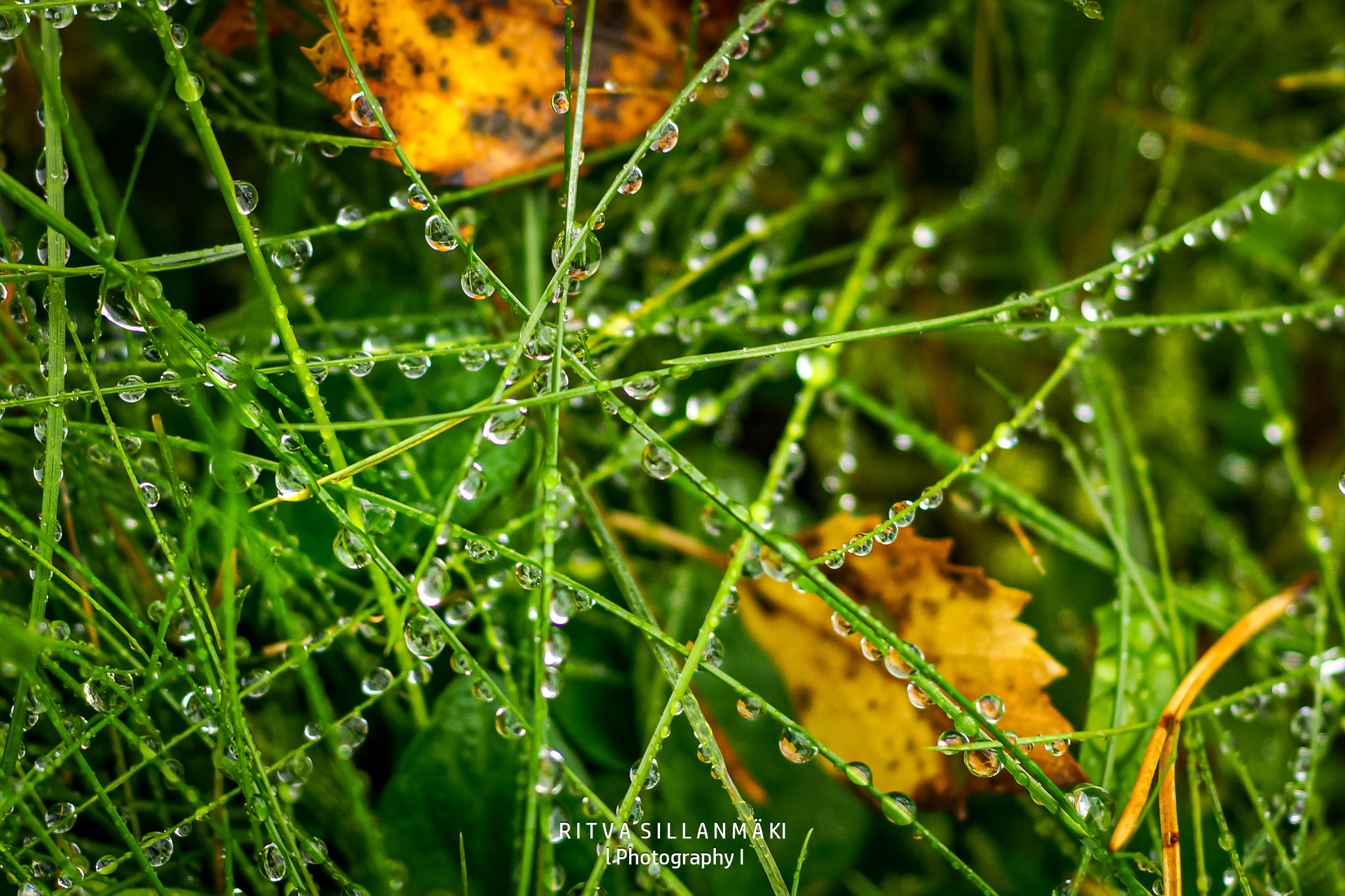
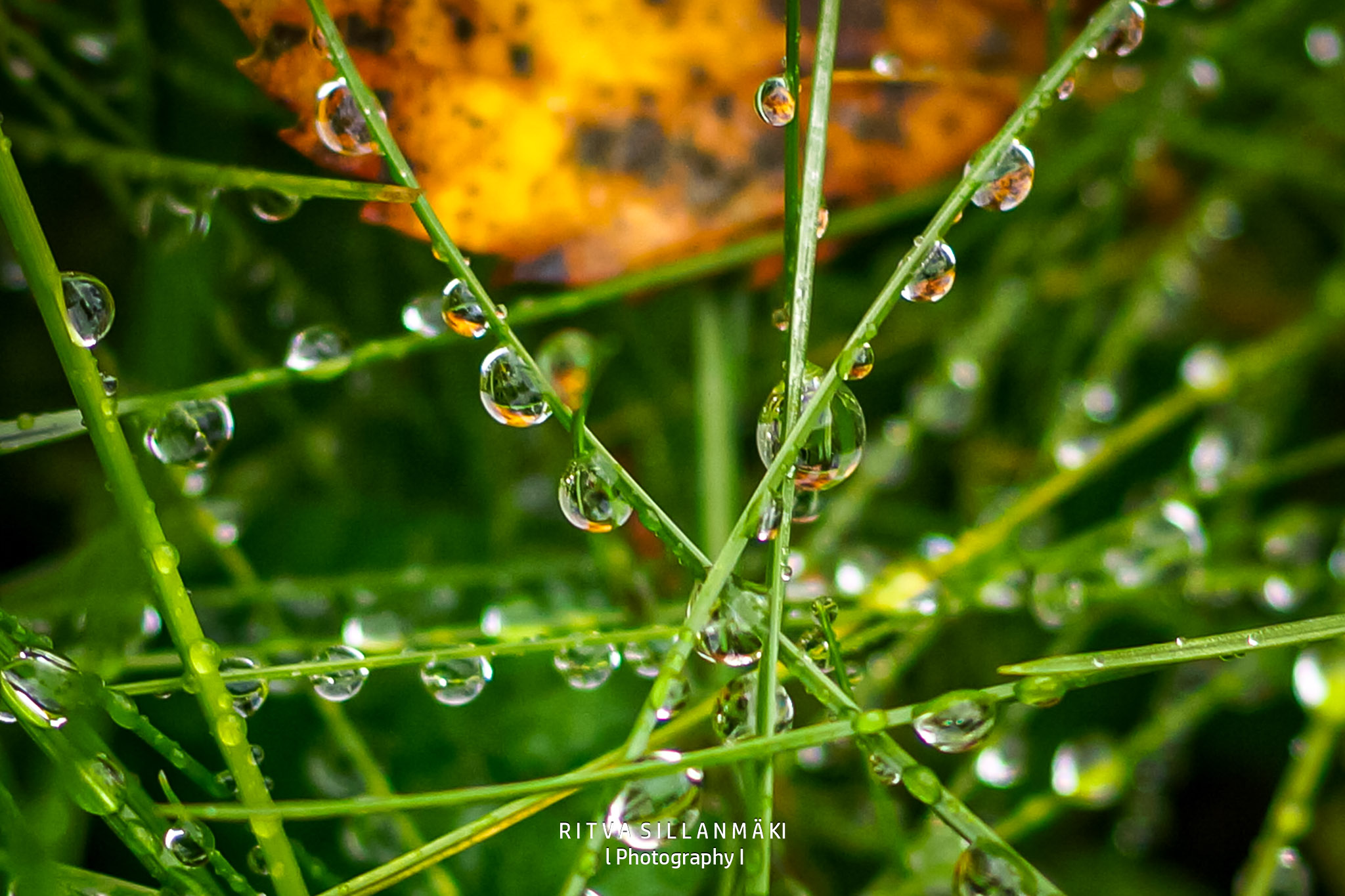
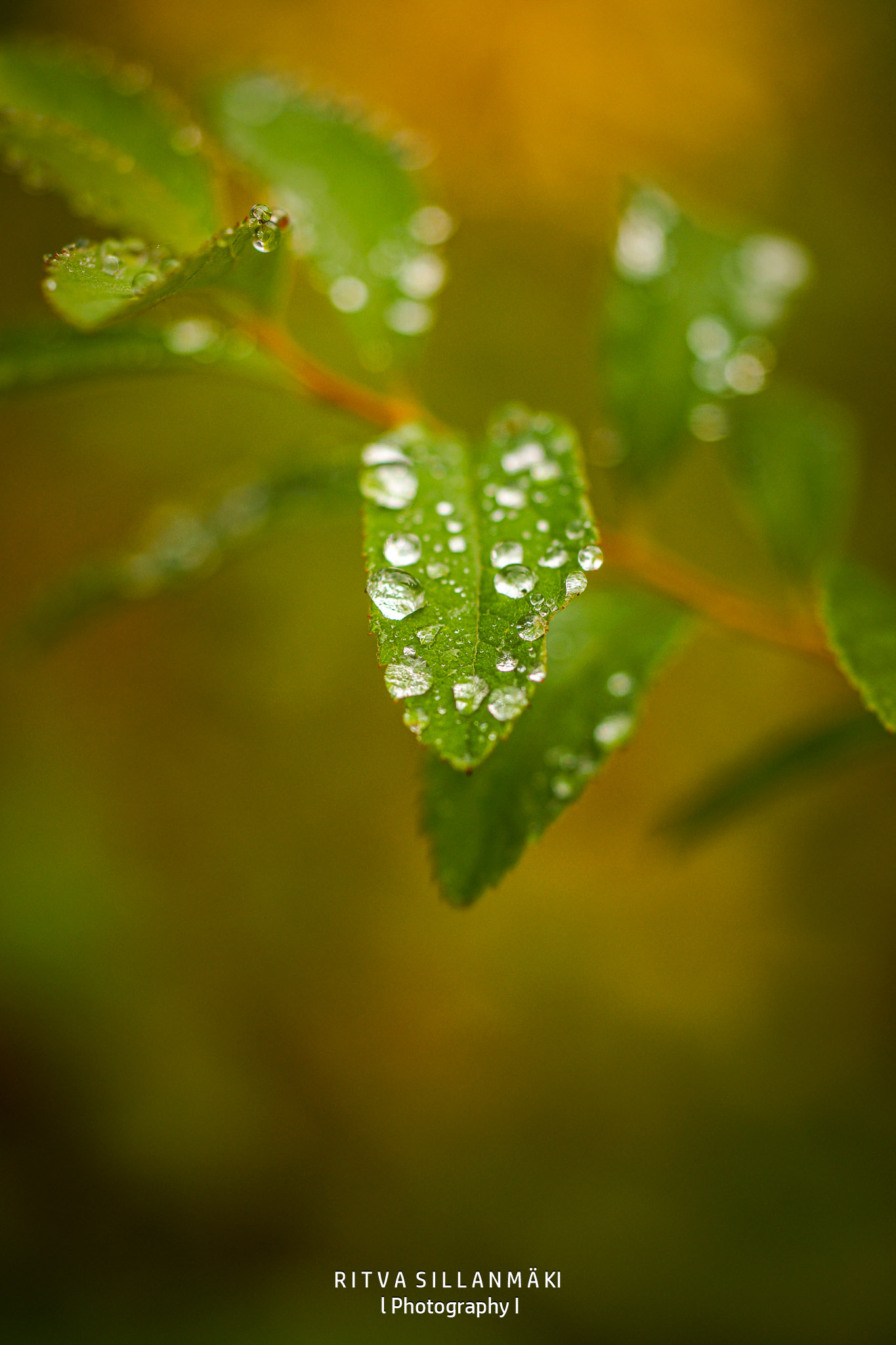
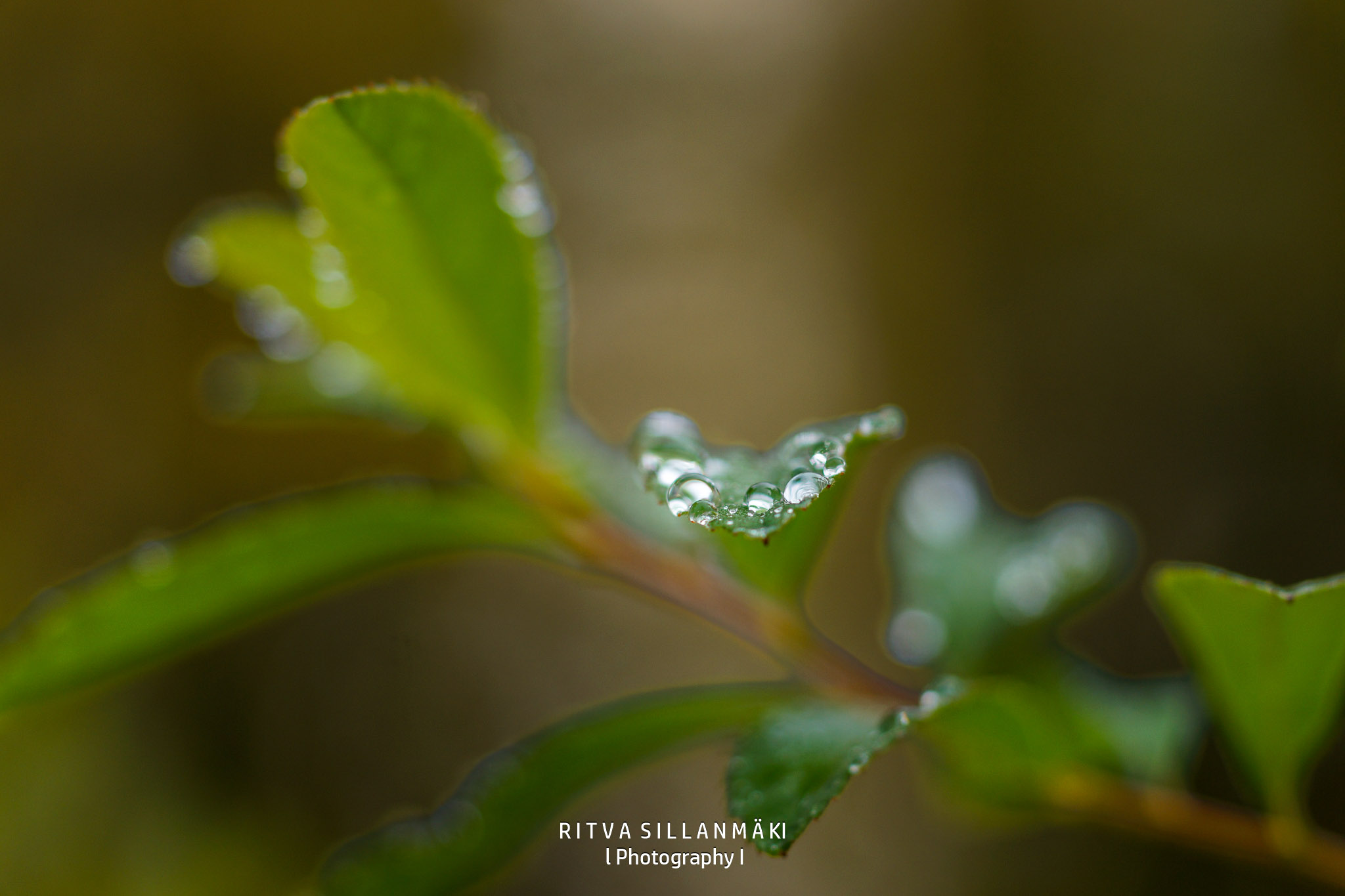
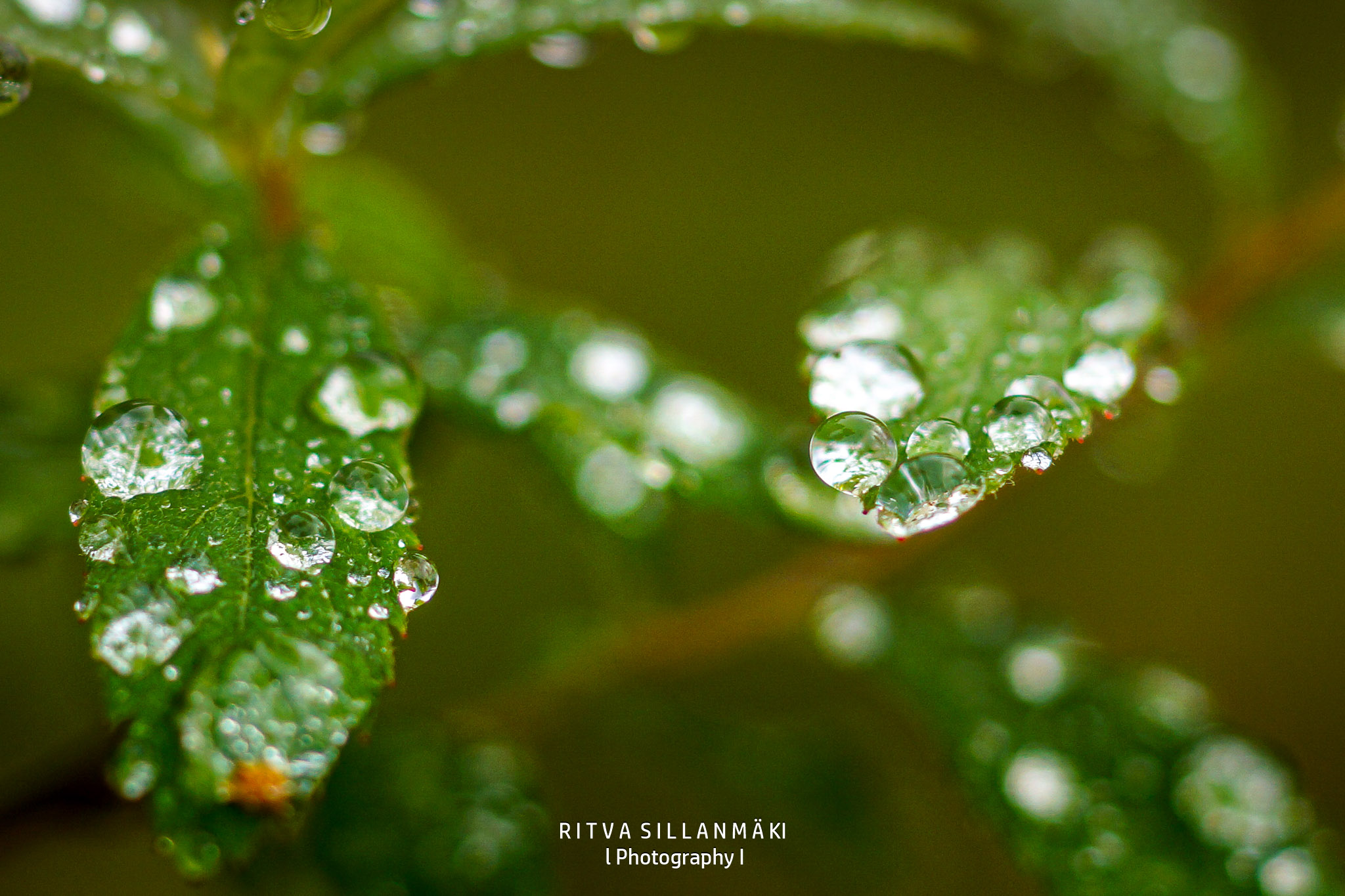
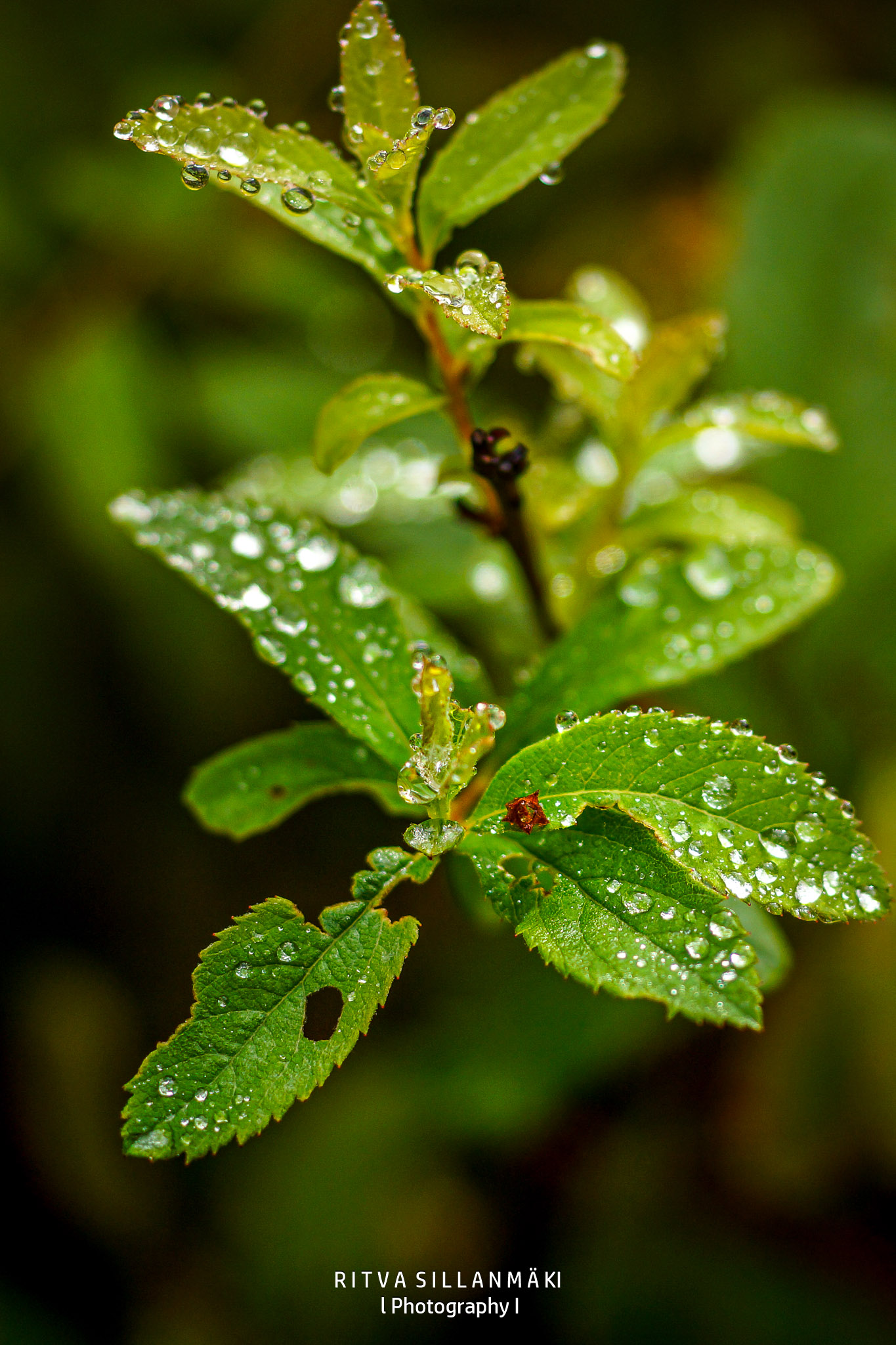
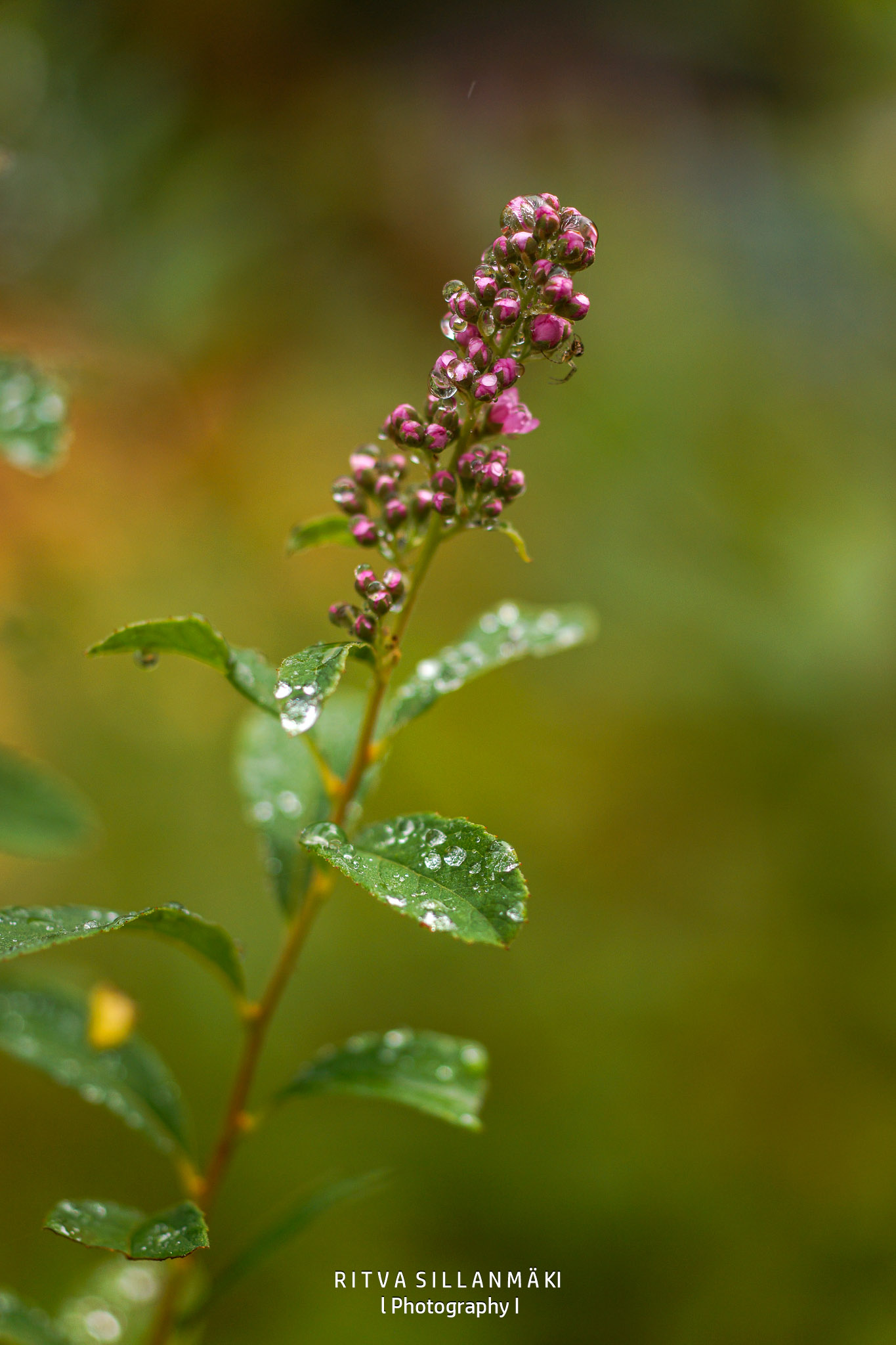
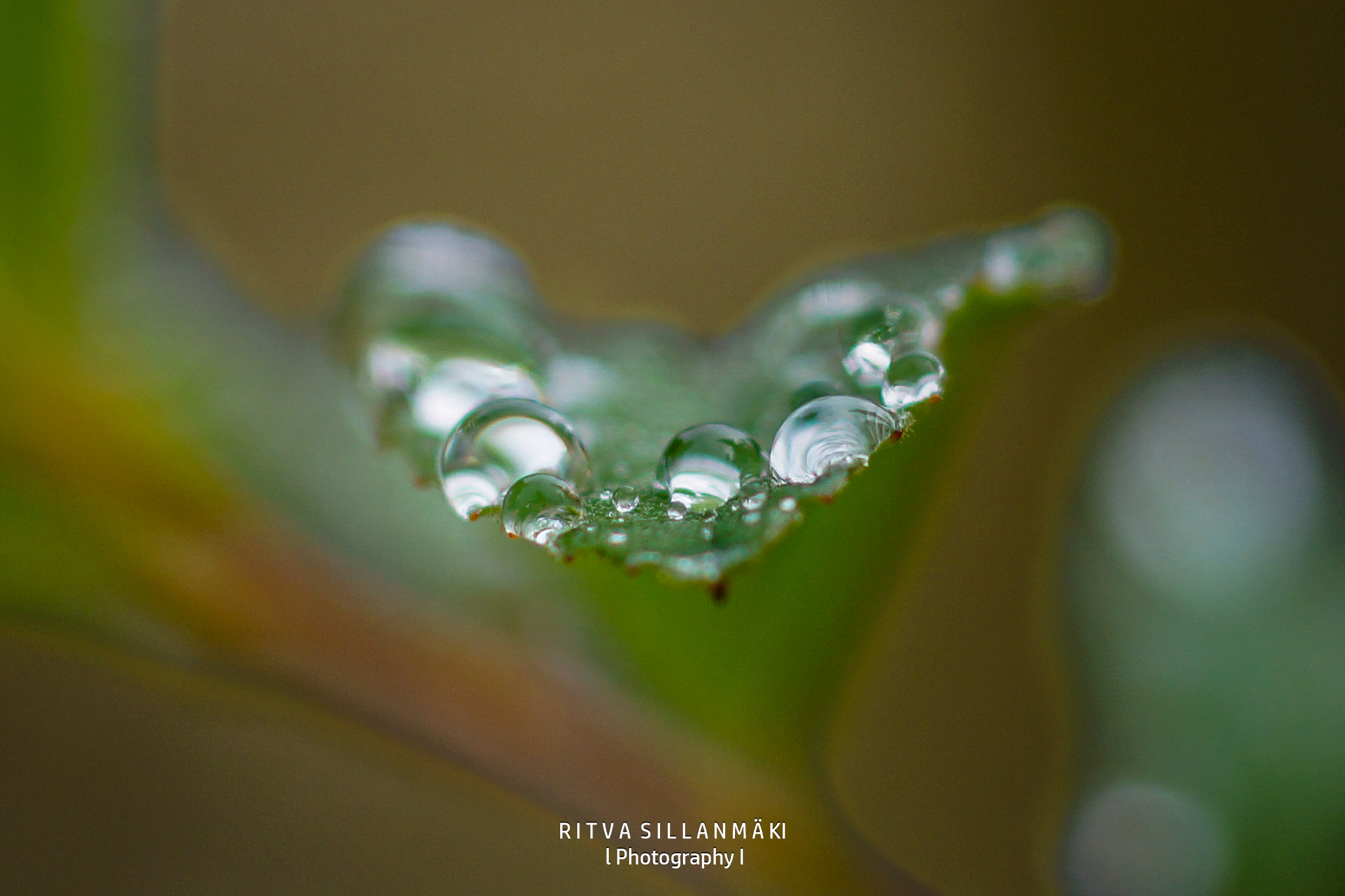
Last week here in Finland, we had miserable weather. Rain, drizzle, low clouds – the day never really got bright. Yet with rain come droplets, and I’m known to show a lot of love toward that subject. On days like this, I slow down and simply watch how the droplets gather on leaves, branches, , each one holding a tiny, upside‑down world inside. The light is soft and diffused, wrapping gently around every surface so that even the smallest bead of water catches a quiet glow instead of a harsh reflection. Gloomy weather also simplifies the scene, removing distractions and letting subtle tones, reflections, and shapes guide the composition.
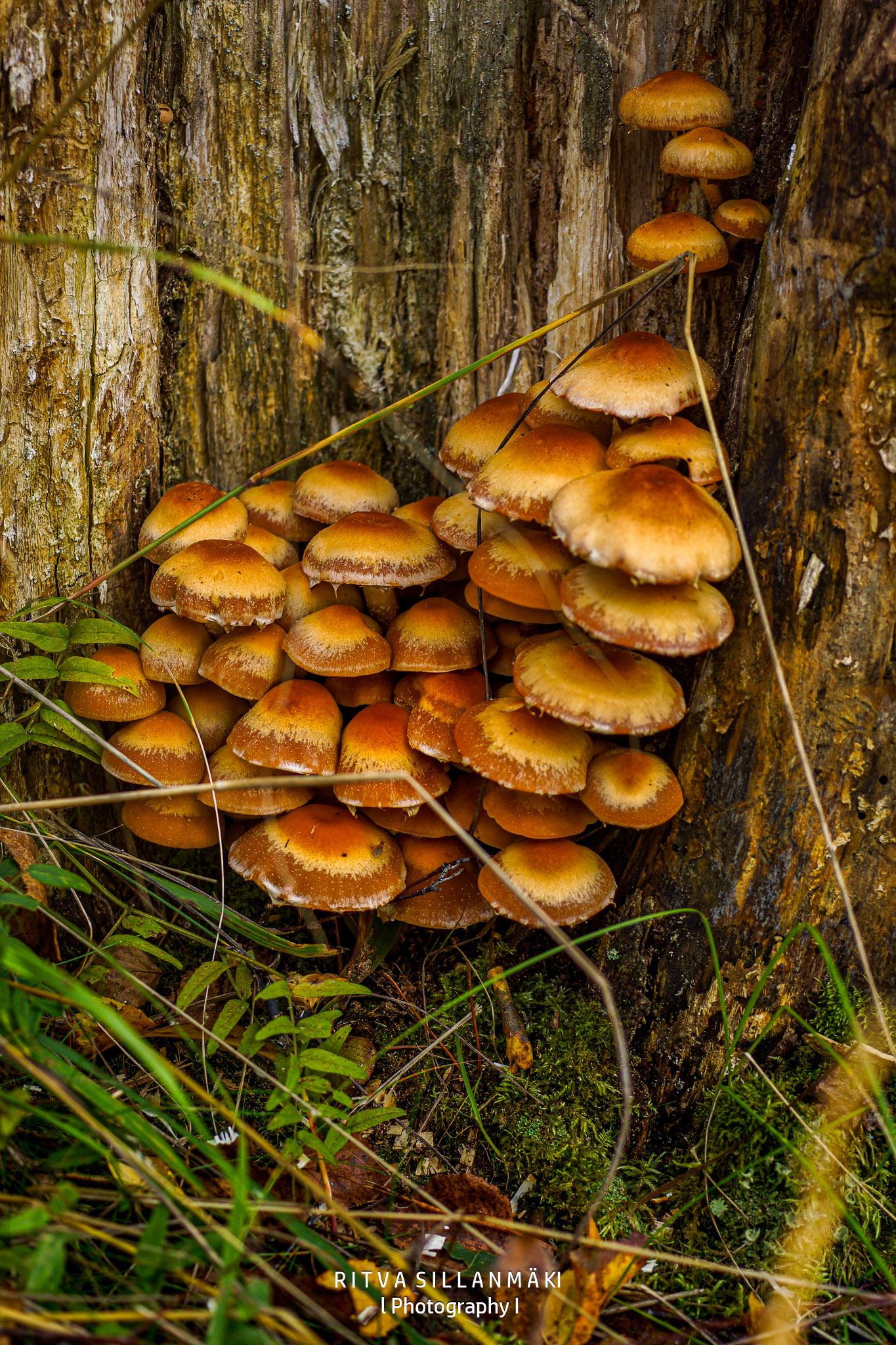
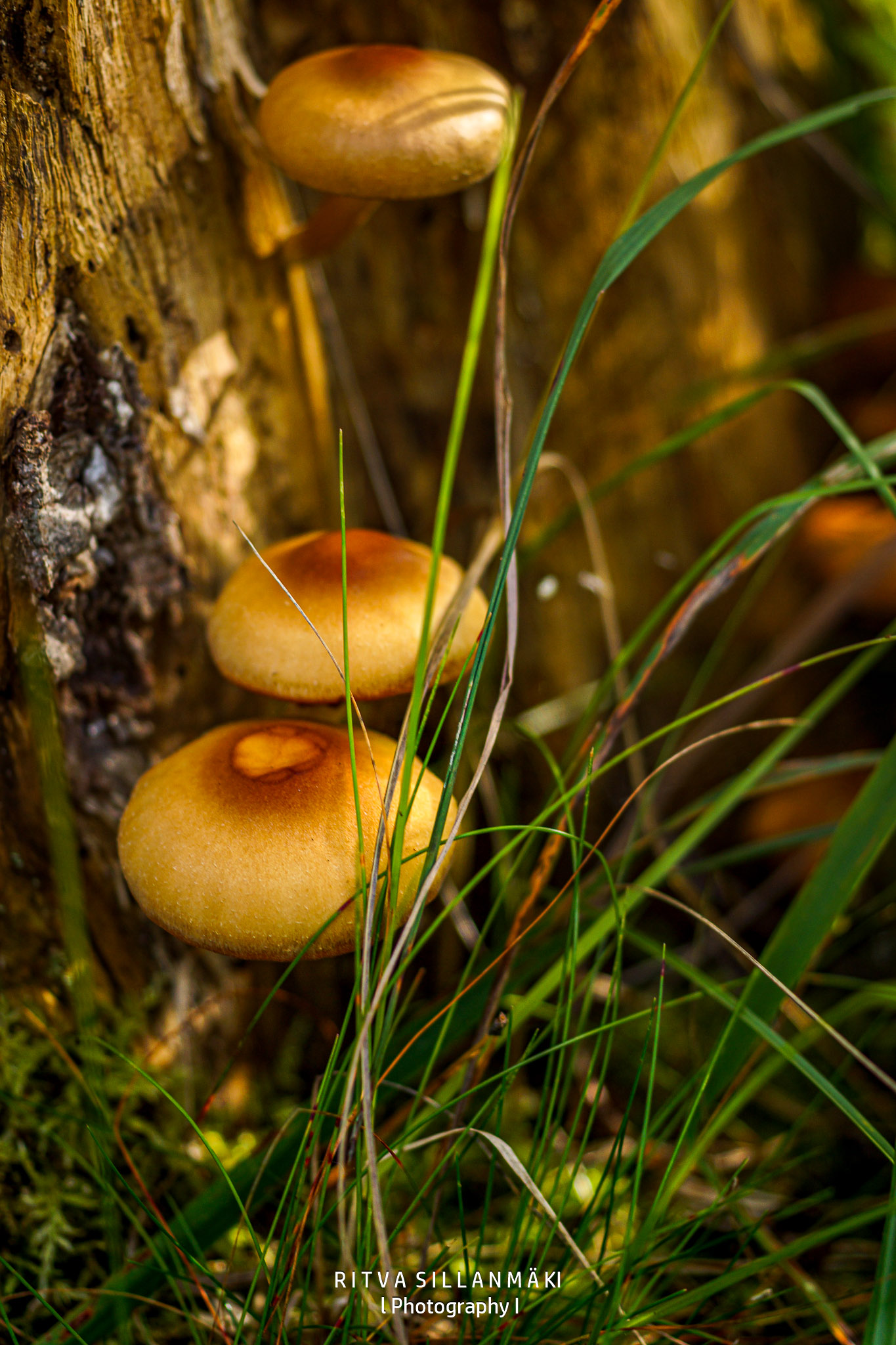
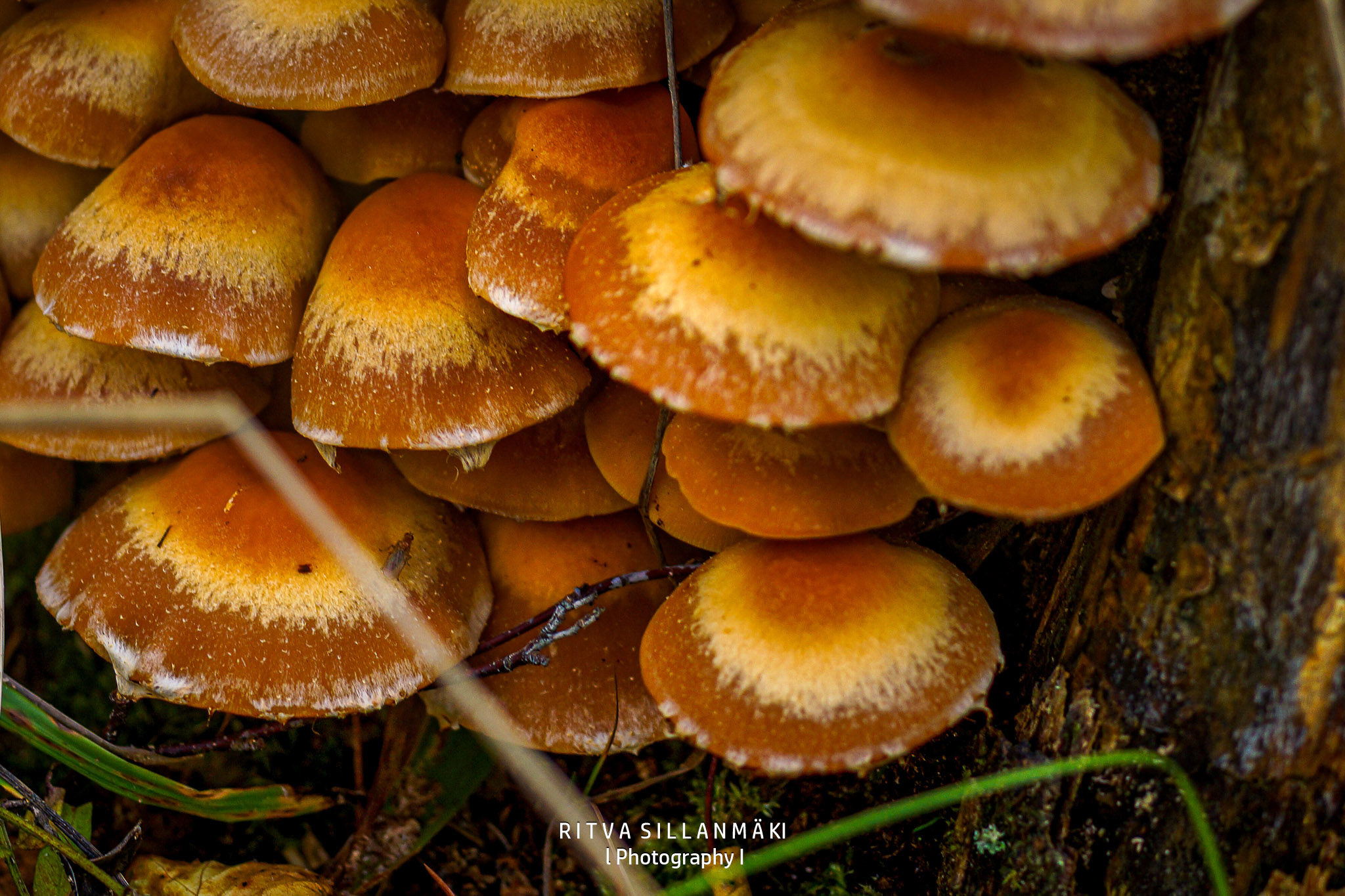
I found these mushrooms on a tree trunk that is on a path to decay. The photo shows many sheathed woodtufts (Kuehneromyces mutabilis), but telling them apart from the highly poisonous funeral bell (Galerina marginata) requires careful examination of the stem, because the caps look very similar.
The grass was covered in tiny droplets, each one catching the light in a slightly different way. I took my time, just looking—tracing the lines of the blades, noticing how the droplets clustered, how they broke into patterns and rhythms that I felt could become a strong photograph. The way the light slid across the surface, the soft reflections, and the contrast between sharp edges and blurred textures all started to suggest a composition. Because I was working with a macro lens that has no zoom, every change in framing meant that I had to move myself, slowly and deliberately, bending closer and adjusting my position by small increments to fine-tune the focus and preserve the delicate balance of light, texture, and form in the scene.
These were easier to take, as the branches were on eye level. Closer and closer I got… Billard’s bridewort had only this one flower left all the others had turned brown.
Delicate water droplets cling to a green leaf, creating a shimmering macro scene against a softly blurred background.
Check out Anne’s original post and link you post to hers. Please don’t forget to use the “lens-artists” hashtag in your posts so people can find your challenge entries.
Ann-Christine had us thinking about HARMONY last week, and it reminded us just how deeply we need it in our lives. The challenge inspired so many different and creative ways to express harmony—quiet moments in nature, balanced compositions, gentle colors, and heartfelt stories—and the posts I saw were filled with the calm, connection, and beauty we were hoping for. Thank you to everyone who joined in and shared your unique vision; together, you created a rich, soothing tapestry of images and ideas.
Next week, I’ll be introducing a brand-new challenge, which will go live Saturday October 3rd at noon EST in the USA. Mark your calendars and stop by then to discover what I’ve been planning and how you can join in the fun; I can’t wait to see where our lenses take us next.
Until then, let’s keep exploring, broadening our horizons, and maintaining a positive mindset
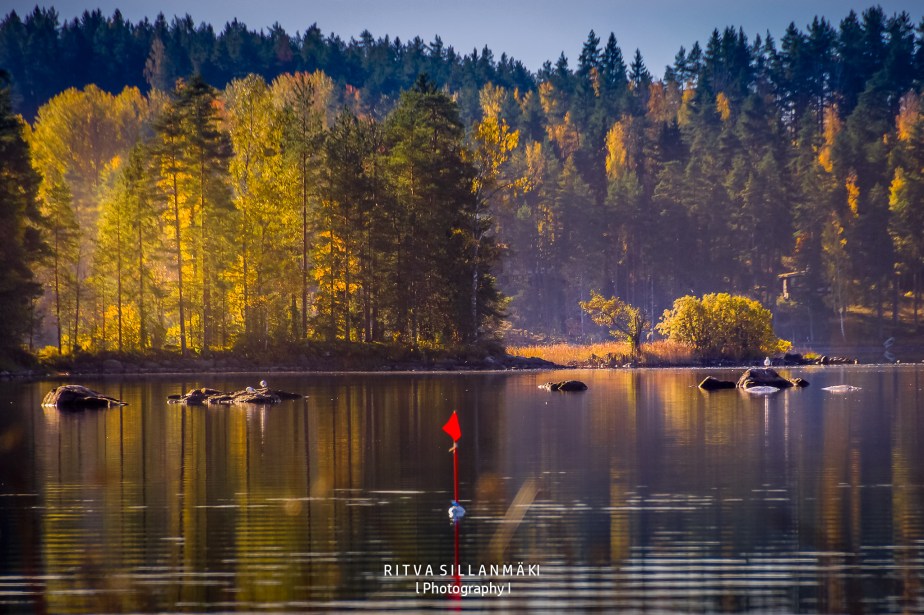
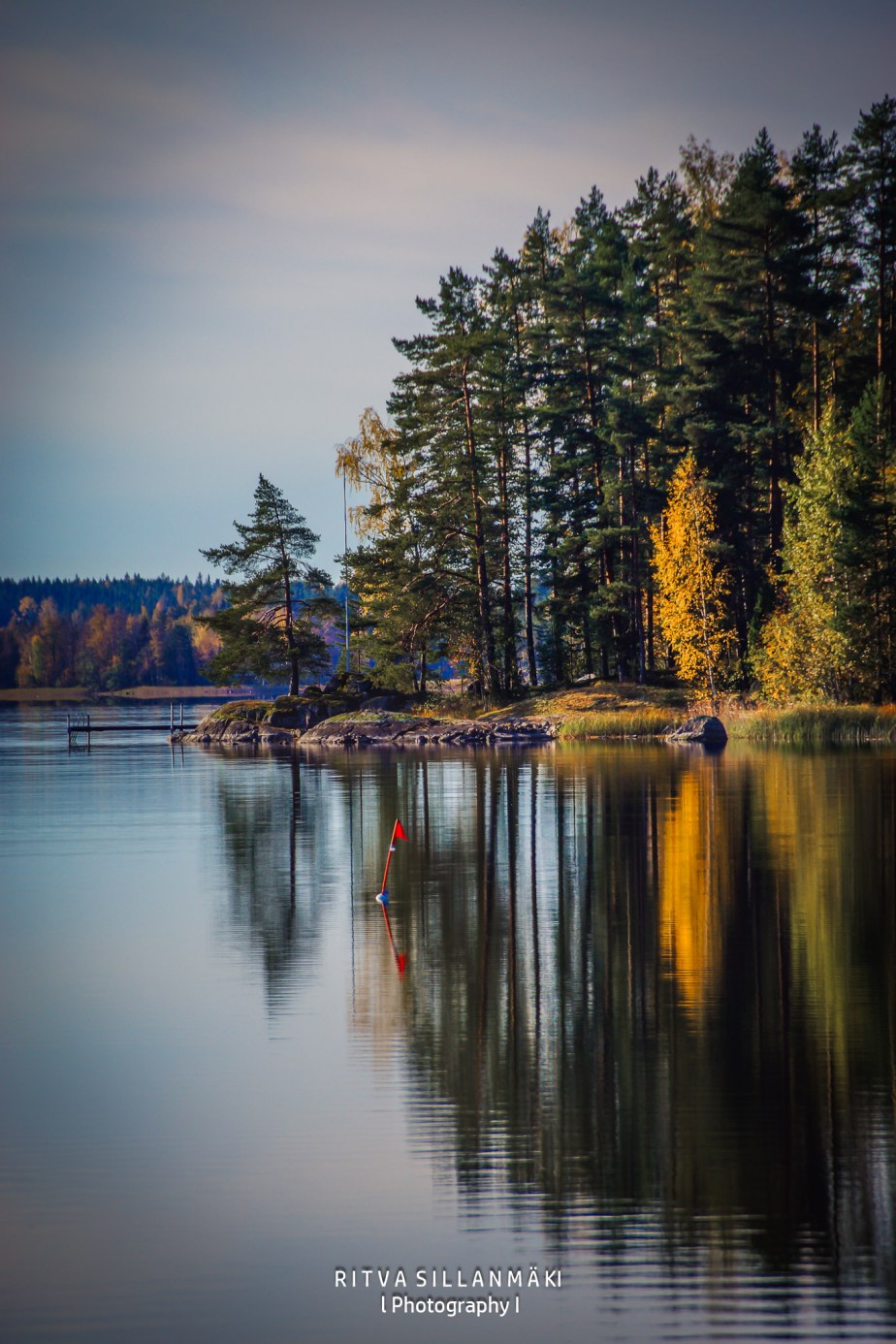
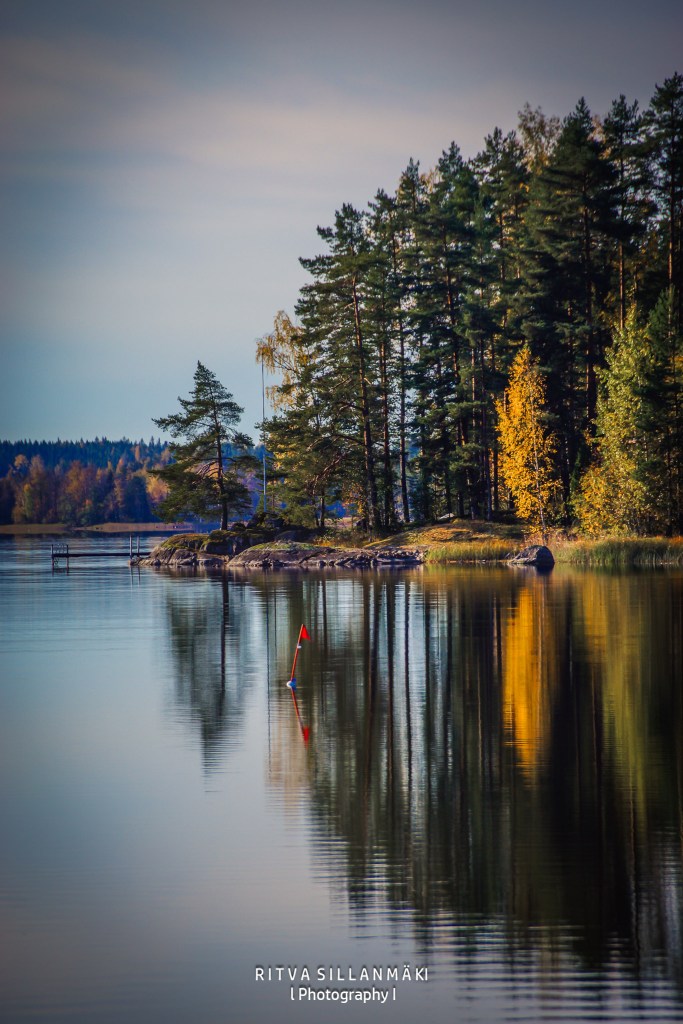
I was on a quiet autumn lakeshore, hands stuffed in my pockets because the air’s a bit colder than I expected. The water is almost completely still, like it can’t decide whether to move or not. It looked so beautiful. Rocks and a wall of dark green pines wrap around the bay, and here and there the birch trees have turned this bright, gold that really stands out against the evergreens. The low sun is coming in from the side, turning parts of the lake into streaks of warm amber, but other patches just look flat and gray. The grasses along the edge have that same soft, rusty light in them. There’s a tiny red fishing float right in front of me, barely moving, and off to the left a small, plain dock sits there under a pale blue‑gray sky.
A tranquil autumn lakeshore reflects golden birch trees, evergreen pines, and a bright red fishing float in still water.
Ann-Christine has us thinking about HARMONY this week, and do we so need in these times. The quote she ended with is so good that I am sharing it and placing it at the top. She gave us a set of beautiful reference images and a lot of freedom to interpret the theme, with just one condition: seven images should be enough to express our idea of harmony. I experience harmony mainly in nature; I’m not religious, yet I still sense a certain harmony in churches, so I included one photograph from there, knowing many people feel it in that space. And I have to confess I broke the rule and slipped in an extra image, because animals are such a comfort and bring so much harmony into our lives.
Happiness is when what you think, what you say, and what you do are in harmony – Mahatma Gandhi
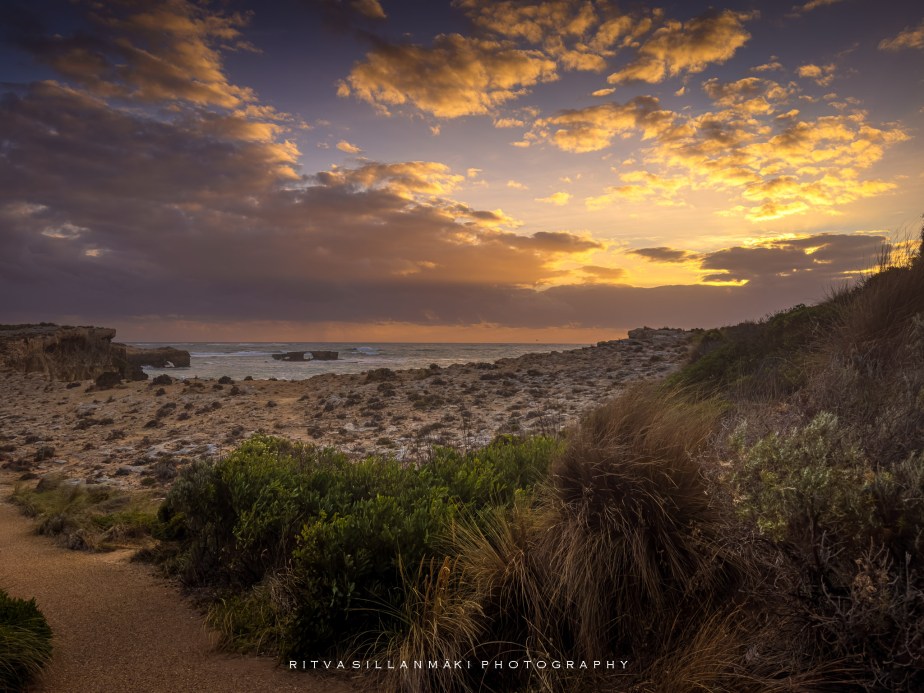
There are all these elements, but I still feel that there is harmony in colors all muted. A wide coastal landscape is captured at sunset, with the sun glowing through layered clouds above a calm, gently rippling sea. Jagged rocky shoreline and small tidal pools stretch across the middle ground, while sandy paths, dense green shrubs, and tall golden grasses frame the foreground. The warm amber and violet sky creates a tranquil, atmospheric mood,
A dramatic sunset illuminates rugged coastal cliffs, rolling waves, and windswept grasses along the shore.
Ocean waves meet the shore in a steady rhythm, their sound carrying a quiet sense of harmony, don’t you think. Turquoise and deep teal water sweep toward the land in several parallel bands of foaming white surf. The textured swells form delicate, shifting patterns across the scene, while a thin strip of rugged, golden-brown coastal vegetation lines the bottom edge. The cool blue-green tones play against the warmth of the shoreline, creating a seascape that feels both dynamic and peacefully calm
Turquoise ocean waves churn into white foam along a rugged coastal cliff.
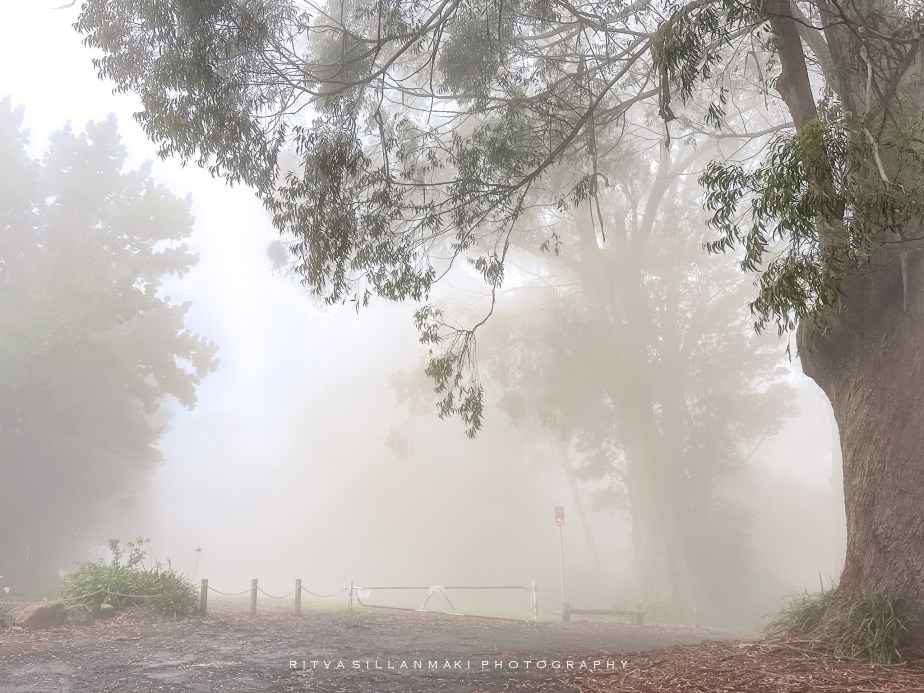
A quiet, fog-shrouded woodland framed by a large eucalyptus tree on the right and sweeping, narrow-leaved branches overhead. Dense white mist obscures the distant trees and softens the muted gray-green landscape, creating a serene, dreamlike atmosphere where every tone feels gently in harmony. In the foreground, a dirt and leaf-covered path leads toward a low chain barrier and metal gate, with small garden beds and a faint red sign emerging through the haze, all held together by the same subdued, balanced color palette. This shot has a soft, atmospheric photographic style that feels calm and deeply cohesive.
A misty woodland path disappears into the fog beneath towering eucalyptus trees.
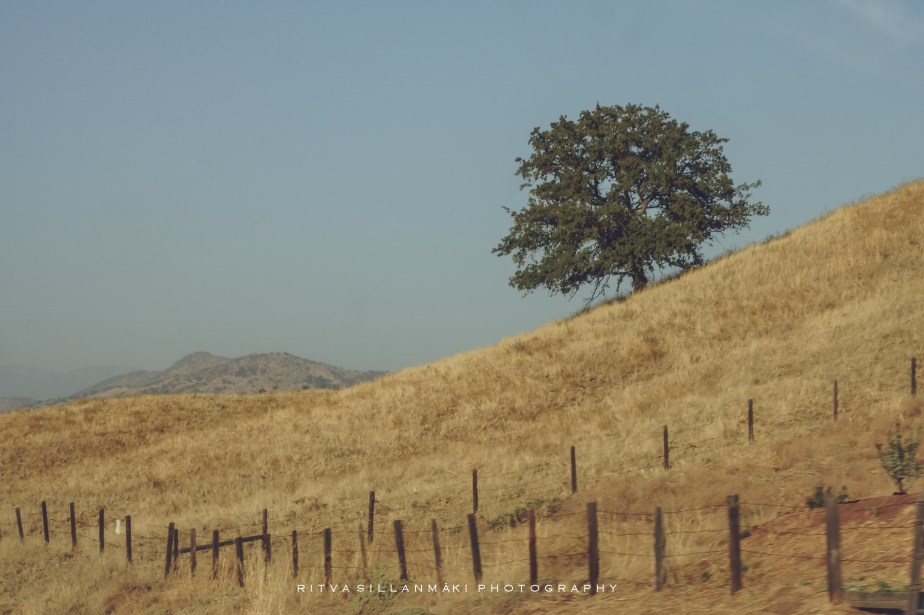
I find harmony in the once again softened colors. A solitary broad-canopied tree stands on a sunlit, dry golden-grass hillside beneath a hazy blue sky. A rustic wire fence with dark wooden posts runs across the foreground, while softly layered rocky hills appear in the distant background, evoking a quiet, pastoral countryside.
A lone tree stands atop a sun-baked golden hillside above a rustic fence and distant mountain.
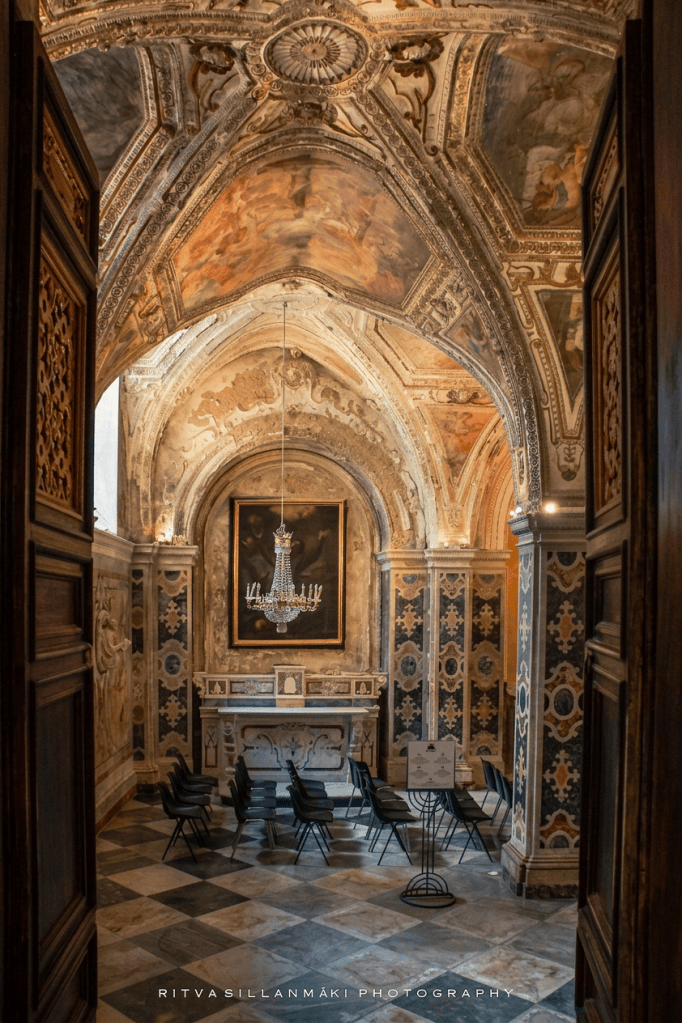
I’ve always felt that churches hold a kind of quiet harmony, and this richly decorated historic chapel is no exception. Seen through the dark, carved wooden doors, it feels almost like stepping into another time. The colors are warm and a little faded, the vaulted ceiling and arches covered in old frescoes, gilded borders, floral motifs, and painted religious or mythological scenes that seem to whisper their own stories. Patterned marble panels line the walls, cool and solid, while a crystal chandelier glows softly above a small altar and framed painting. Rows of modern black chairs sit neatly on the black-and-cream checkered floor, a simple, contemporary counterpoint to all the Renaissance-style ornament. In this contrast between the ornate and the everyday, I find a strange calm, as if the space is quietly holding every voice, every silence, in balance.
An ornate historic chapel with frescoed arches, patterned walls, a crystal chandelier, and rows of chairs arranged before the altar.
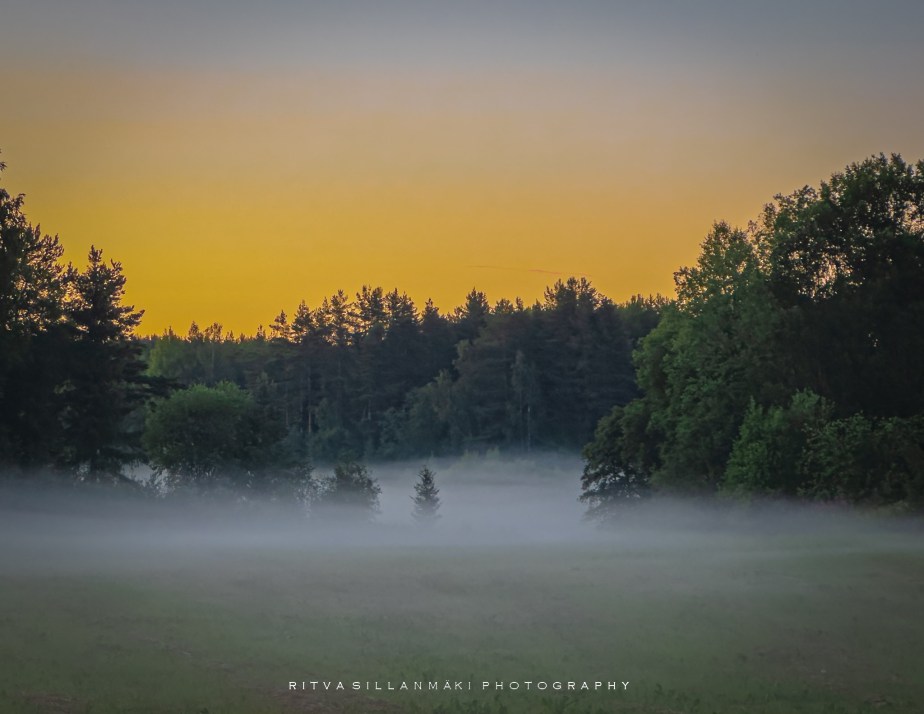
At my summer house I love the misty night, its quiet, the nature and I are in harmony. In this tranquil landscape photograph, a dense mixed forest lines the edge of a mist-covered meadow as dusk settles in. The treetops create a dark, textured band stretching across the lower middle of the frame, while a soft, pale fog glides over the grass in the foreground. Above it all, the sky shifts from deep gray-blue into a warm, glowing gold at the horizon, wrapping the scene in a serene and atmospheric stillness.
A misty forest meadow glows beneath a warm golden sunset, creating a serene and atmospheric landscape.
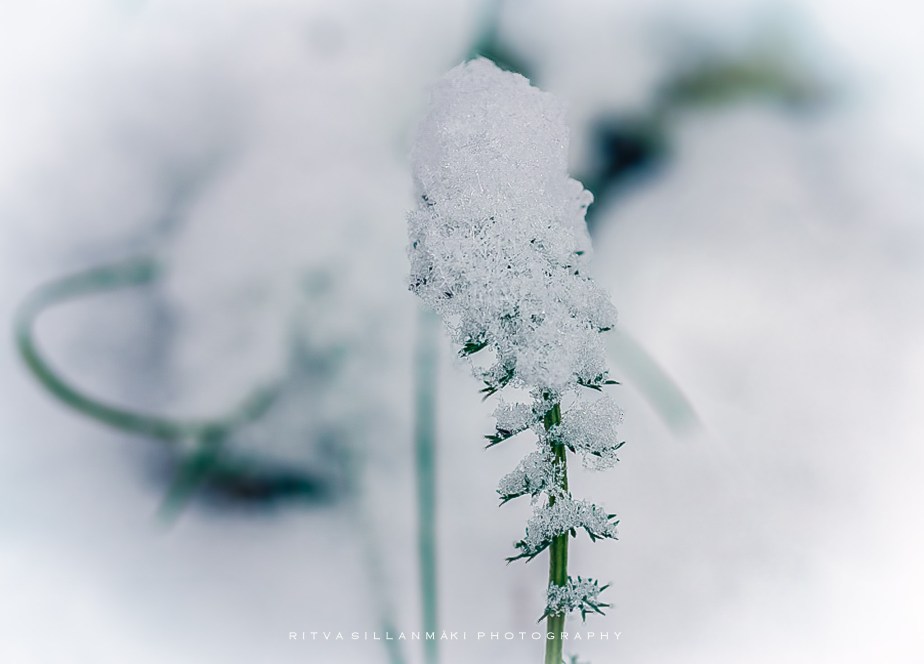
I’m no fan of winter, but I have to admit there’s a strange beauty in the details: the way the snow pulls a white blanket over everything and quiets it all down. Here, a single delicate white flower stands in close-up, its tall stem sprinkled with tiny, frost-like blossoms and fine, crystalline textures that look almost unreal. The bloom stays sharp and clear while the background fades into soft grays, whites, and muted greens, and the whole scene feels cool, wintry, and a little otherworldly.
A delicate wildflower covered in sparkling frost, set against a softly blurred winter landscape.
Veikka and Tinka, our cats, were in such harmony together; it was so lovely to see. This shows them cuddled together in warm sunlight beside a bright window. In the foreground, Tinka, the dark brown tabby, rests with her eyes closed, while Veikka, the white-and-orange one behind her, gently grooms her, eyes softly shut and pink tongue just visible. In this photo, the soft cream, golden, and brown tones create a peaceful, affectionate mood, and the softly blurred indoor background makes their textured fur and intimate little world feel even more tender and precious.
Two cats cuddle by the window as one sweetly grooms the other in the warm sunlight.
What a show Beth’s bridge challenge generated last week. Great images you all shared, wonderful bridges from around the world. I hope you will join Ann-Christine’s challenge, this week too. Please don’t forget to use the “lens-artists” hashtag in your posts so people can find your challenge entries.
Next week, Anne will feature a new challenge. It will go live at noon EST in the USA. Tune in then to find out more about the challenge.
Until then, let’s keep exploring, broadening our horizons, and maintaining a positive mindset
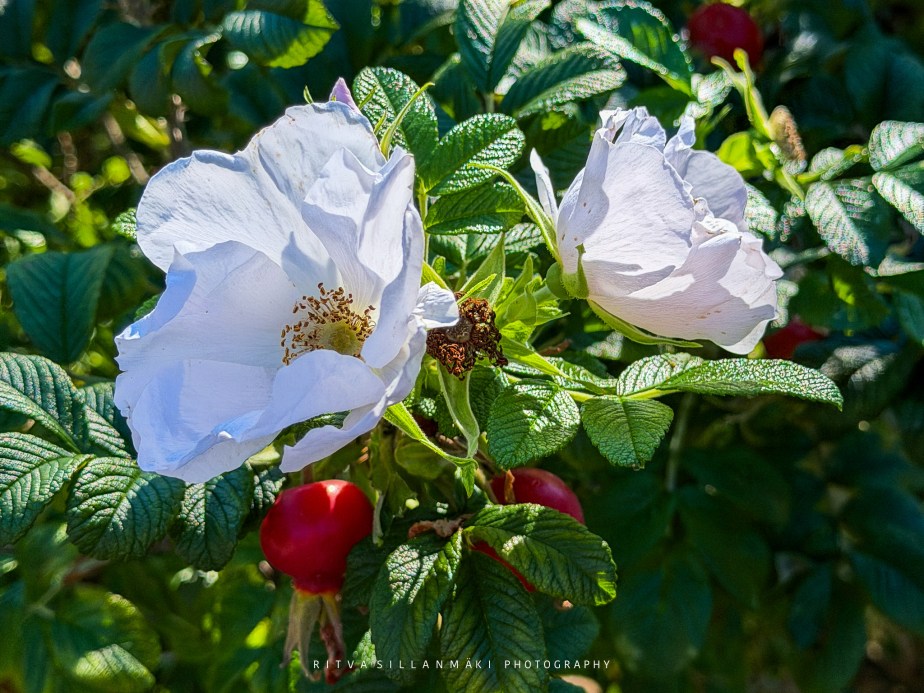
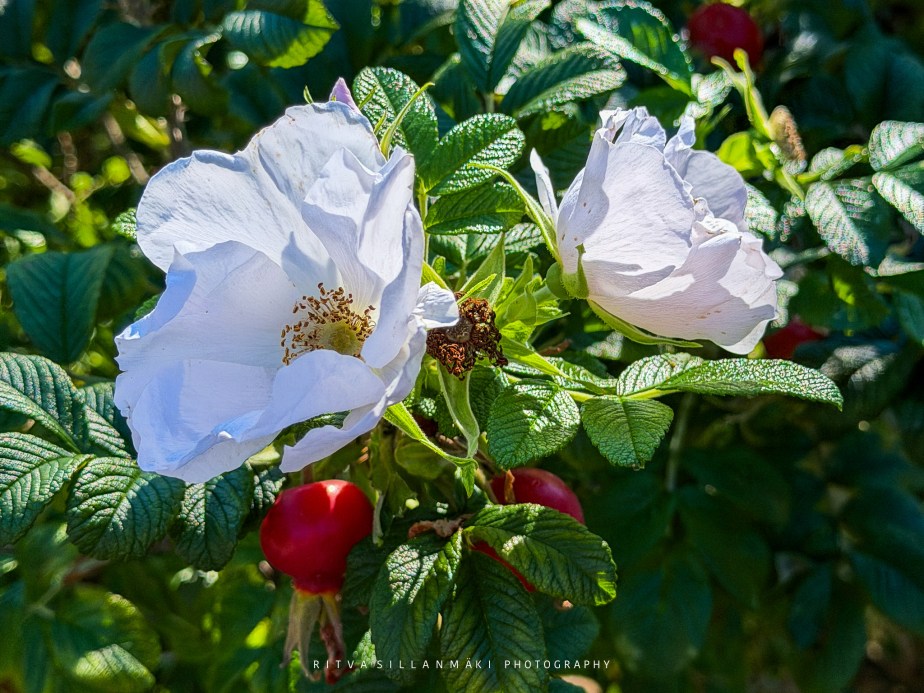
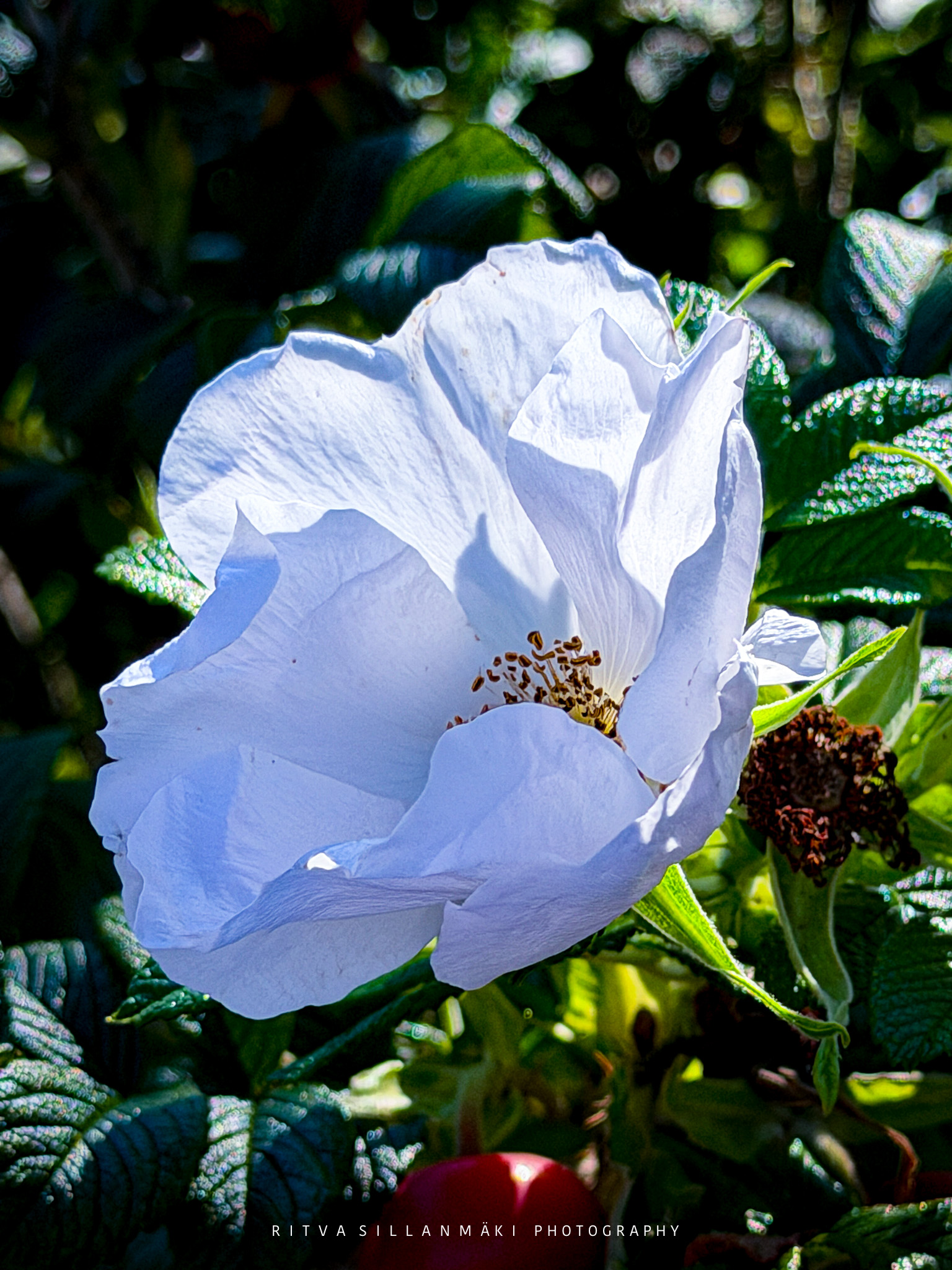
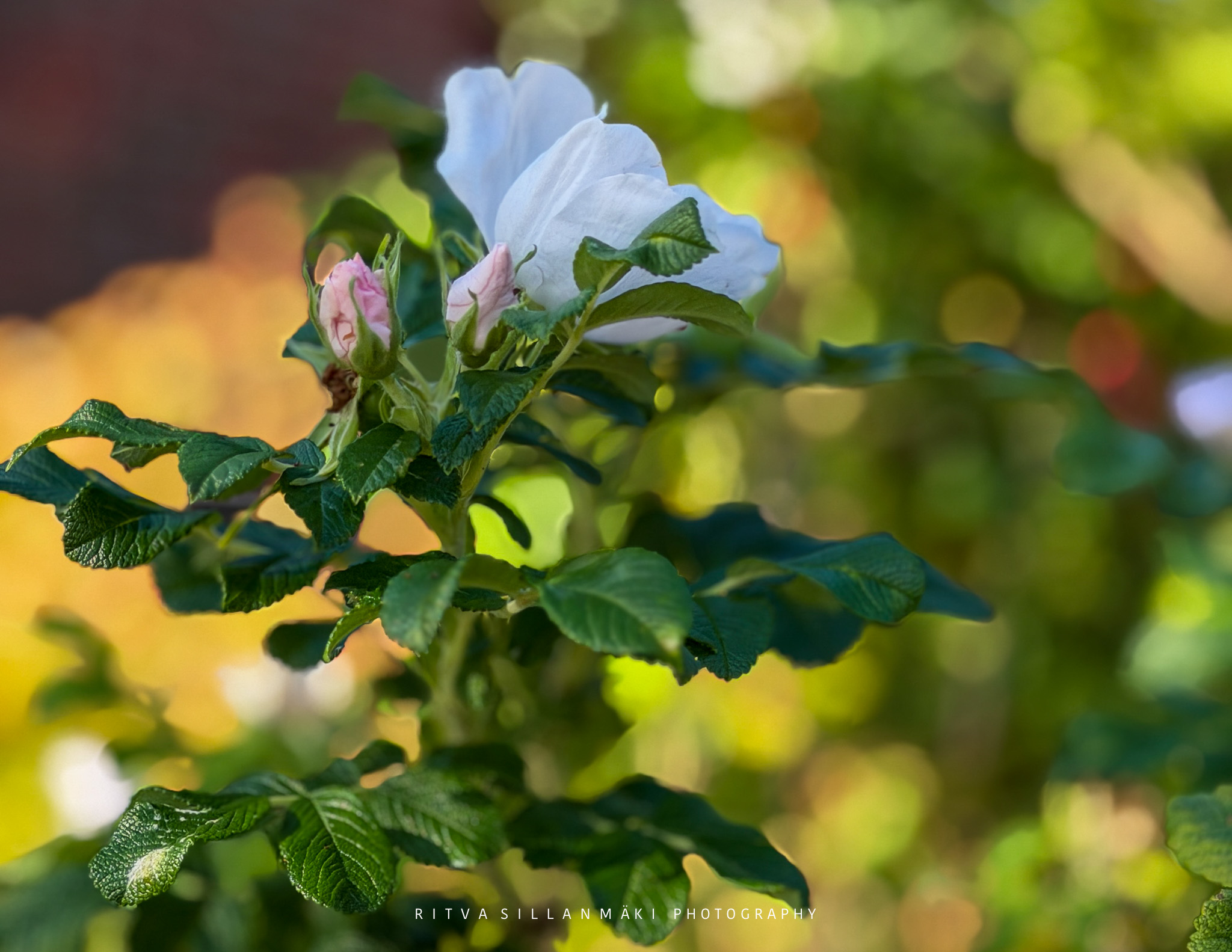
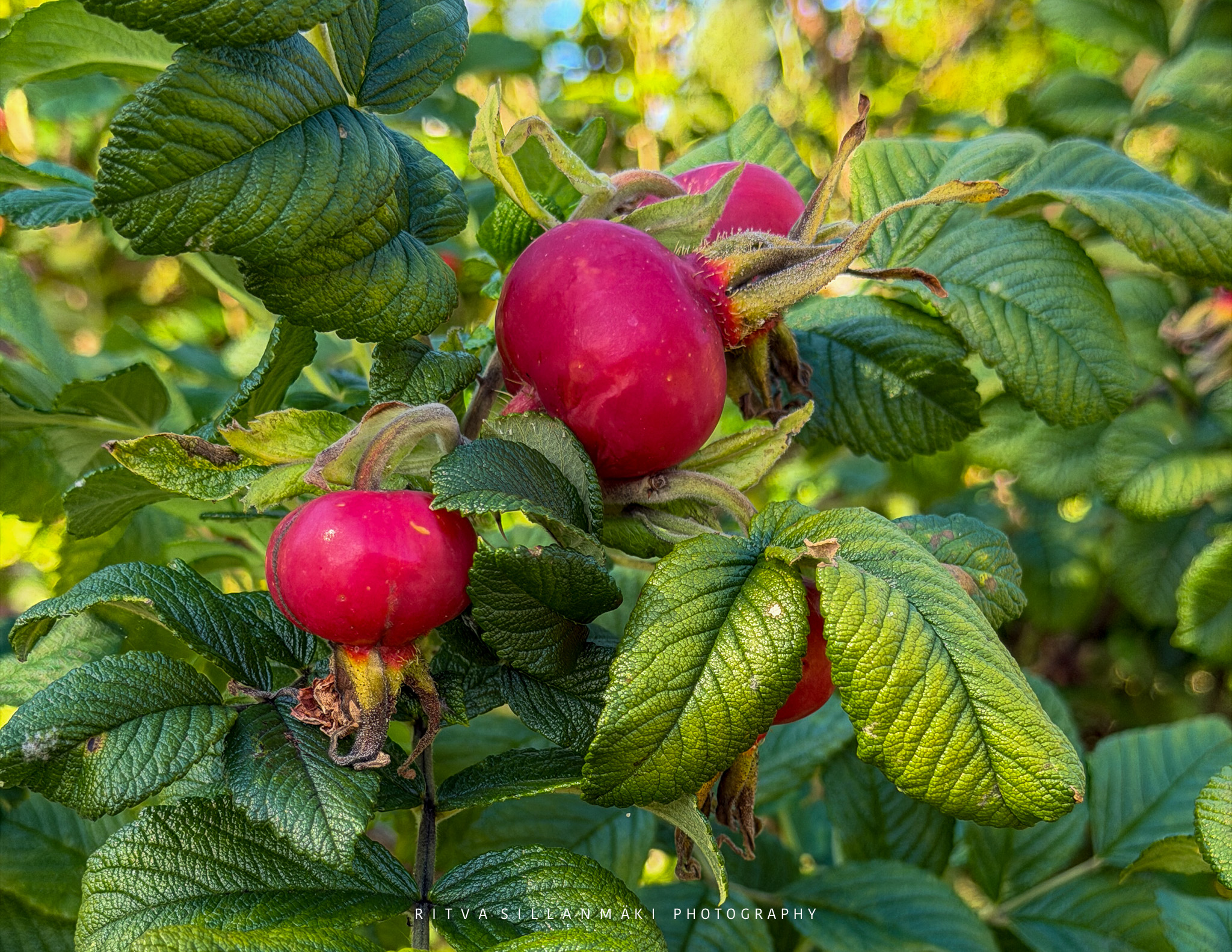
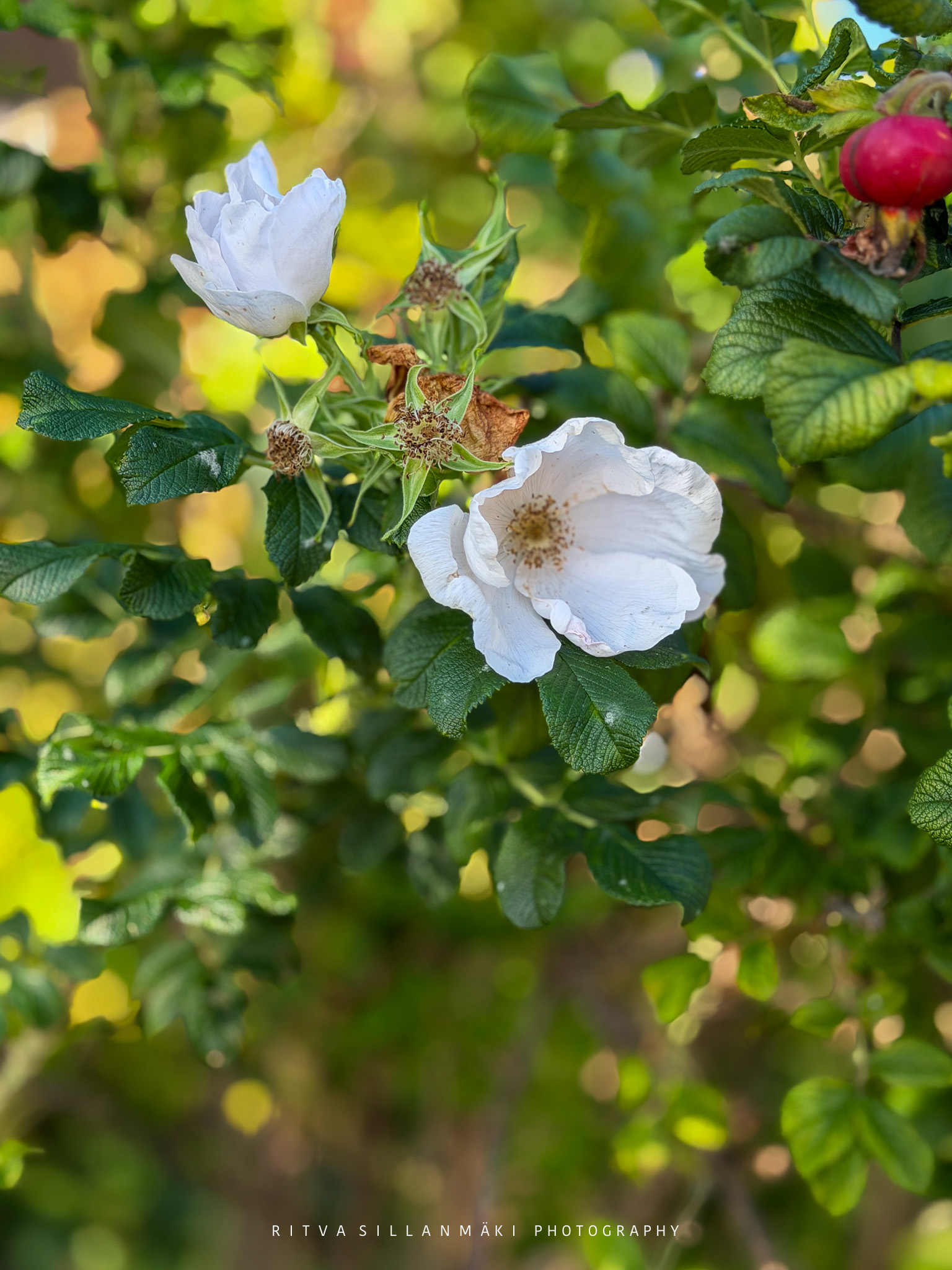
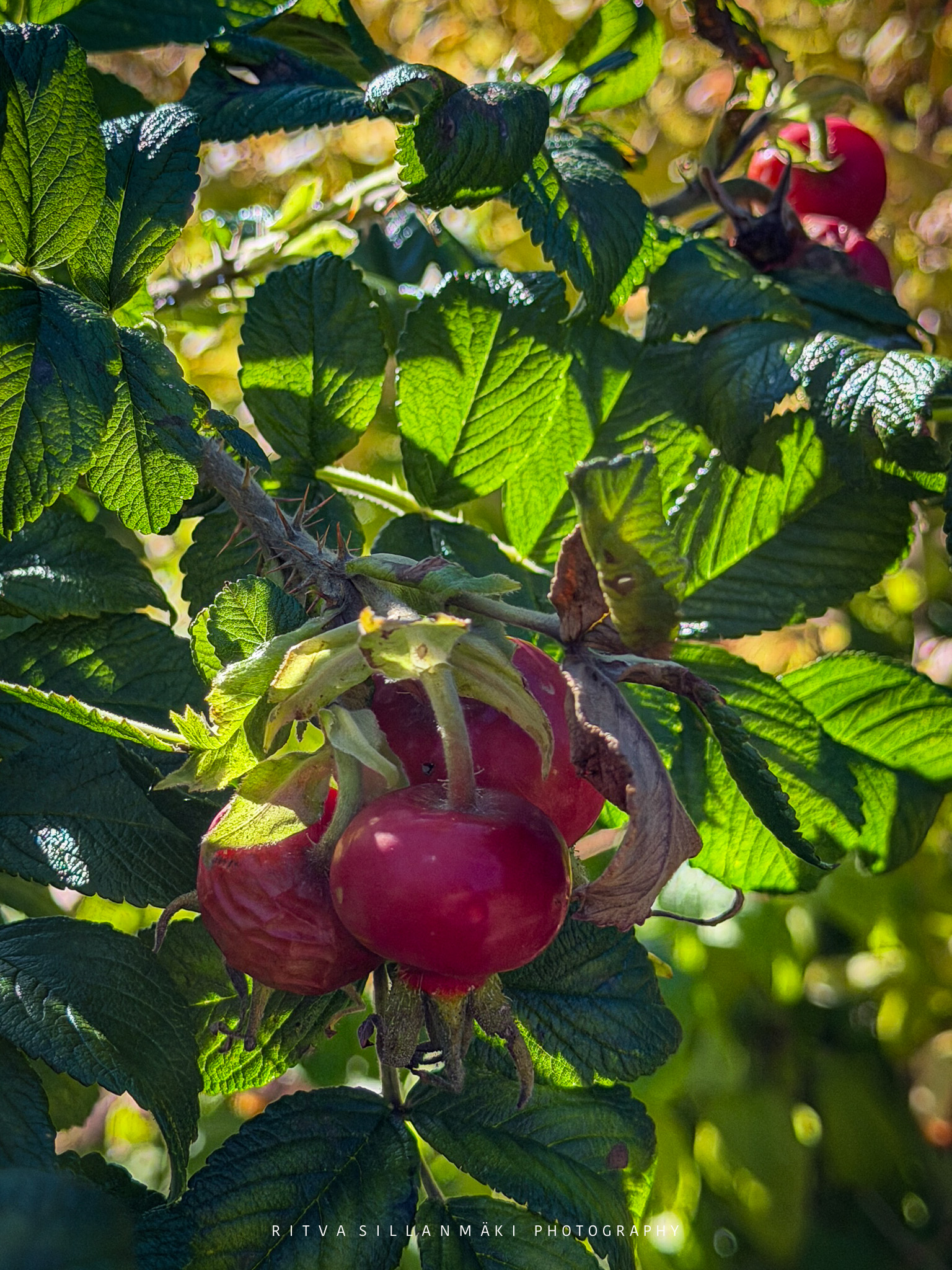
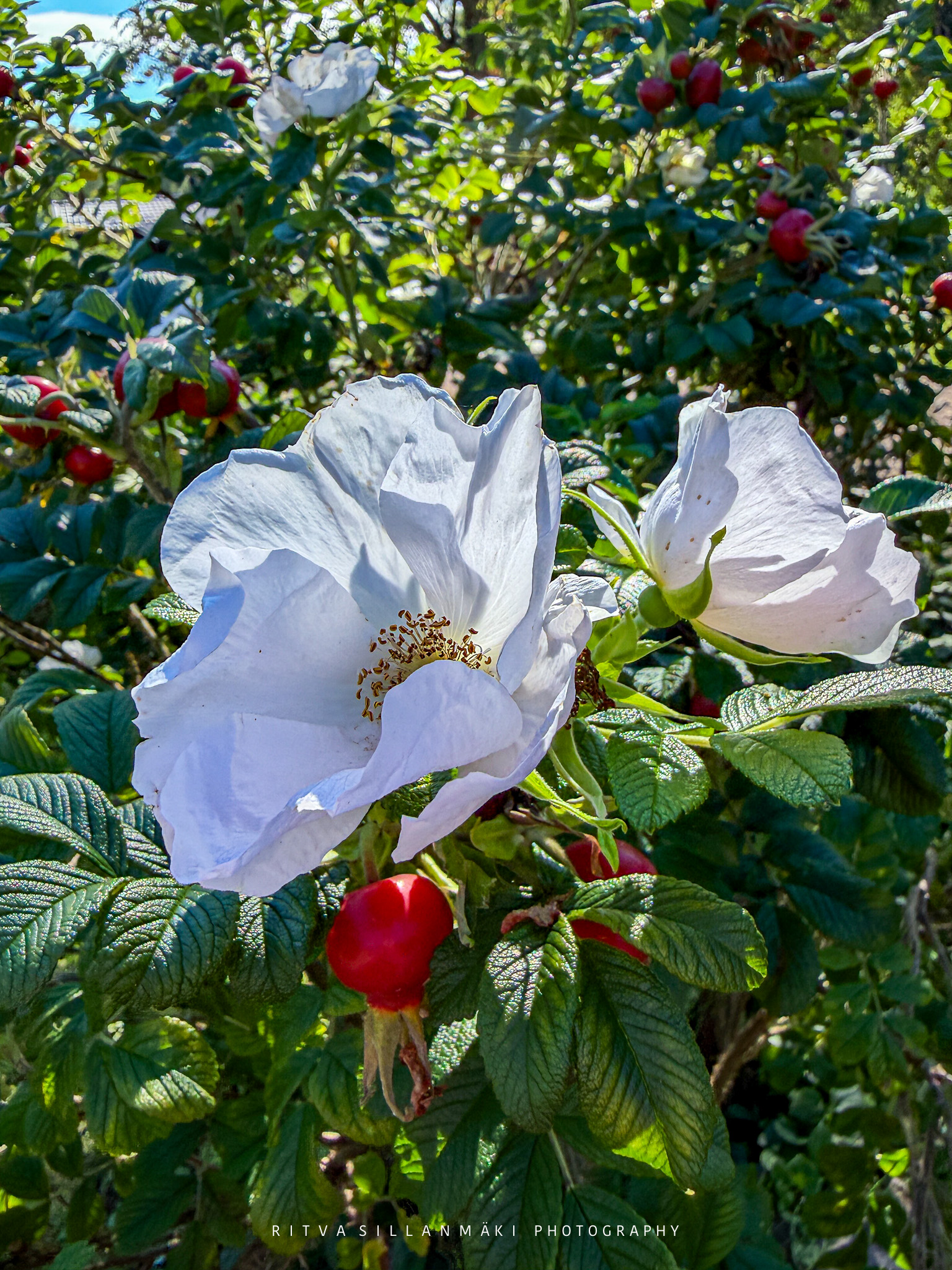
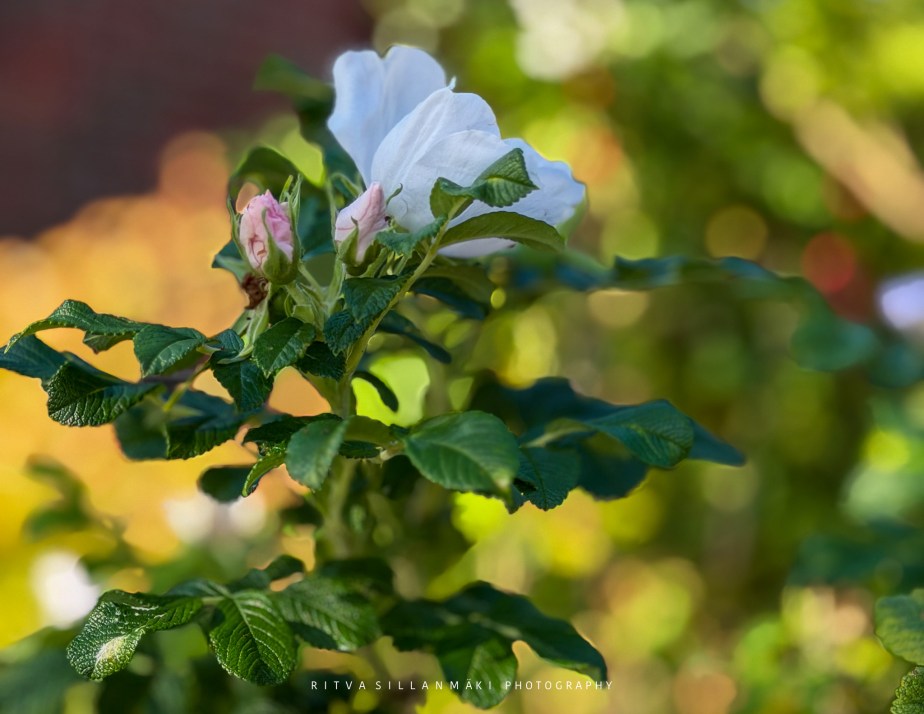
Rose hip berries and flowers, it must be September, a time when the days begin to shorten and the air carries a hint of crispness. I took these on one of the few sunny days lately, when the golden sunlight bathed the landscape in warmth and vibrance, creating a beautiful contrast against the deep green foliage. The rose hips, with their rich red hue, are not only visually stunning but also herald the changing seasons as they ripen. Enjoy the beauty of this fleeting moment, as nature prepares for the transition into autumn, offering a reminder of the bountiful gifts that each season brings.
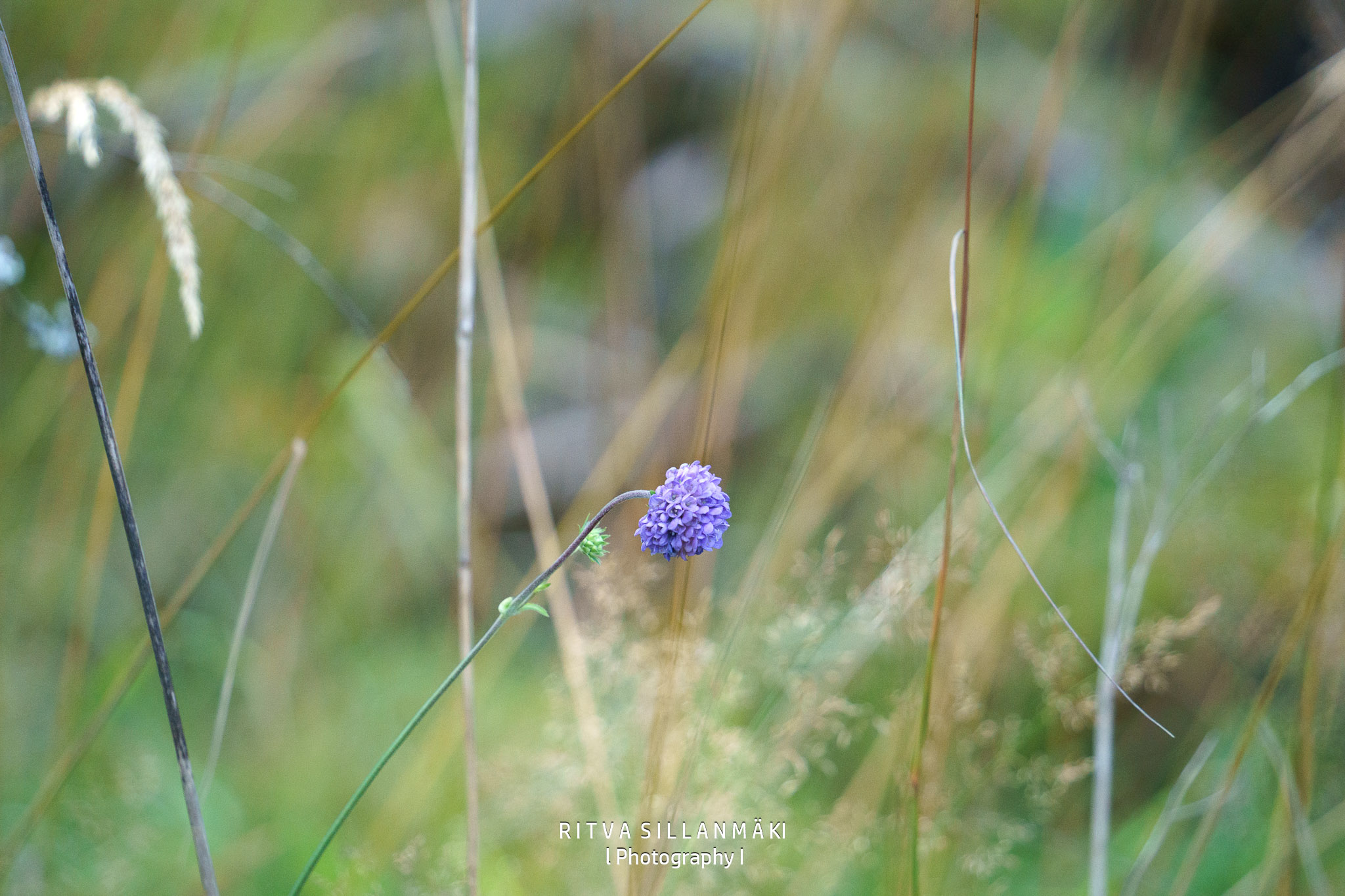
I was just thinking about where to point my camera during this time. Should I capture the Devil’s-bit scabious that’s either blooming or fading away, showcasing its intricate details and vibrant colors? Or maybe I should focus on the grass, which I believe is Calamagrostis epigejos, swaying gently in the breeze, its delicate blades reflecting the soft light? Then there’s also the Sow thistle, with its bright yellow blooms, and the cotton grass, which adds an ethereal quality to the landscape with its fluffy tufts dancing above the ground. What do you think? I did focus on all of them, keeping little distance so I could capture a mood I was aiming for – soft and light – delicate, evoking a sense of tranquility and harmony within nature. Each element plays a vital role in this ephemeral scene, weaving together a tapestry of colors and textures that resonate with the serene ambiance of the moment.
A delicate purple wildflower, Devil’s-bit scabious, emerges from a softly blurred meadow of green grasses.
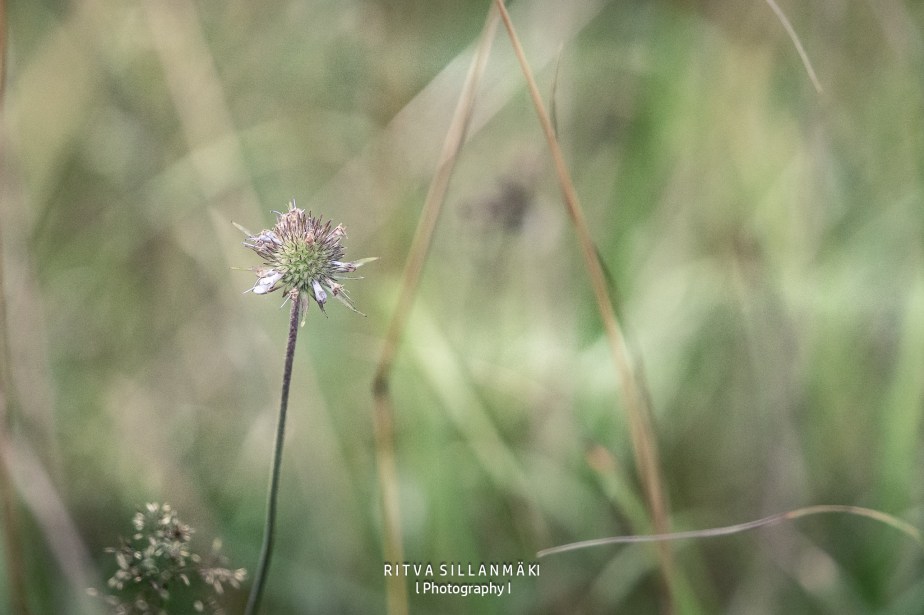
Devil’s-bit scabious’s inflorescence resembles that of field scabious (Knautia arvensis), but differs in having smaller ray-florets and distinct leaf shapes. The two plants typically inhabit opposite environments; field scabious thrives in dry sands, whereas devil’s-bit prefers heavy clay areas. It is found in clearings, damp meadows, and along coastal regions, mainly in the west and south-west, with a distribution limit in central Finland. A historical climate barrier exists between coastal and inland populations, attributed to post-Ice Age climatic changes. The species has since spread to newer shorelines. LuontoPortti
Devil’s-bit scabious has a history of use as a dye, seasoning, tea, and medicine for various ailments. Legend has it that the Devil attempted to destroy the plant by biting off its root, which appears damaged as it ages. Its names are derived from the Latin term succidere, meaning “to break from the bottom.” This plant also supports insects, particularly butterflies and bees, as they prepare for winter.
Devil’s-bit scabious slowly fading Should the focus be on Hietakastikka
I think this grass is Hietakastikka (Calamagrostis epigejos), a perennial large grass species that thrives in a variety of habitats, often found in coastal areas and along riverbanks. It can be identified by its dense and large panicles, which are notably more pronounced compared to other Northern European grasses, contributing to its striking appearance. The spikelets, which are gray-green or bluish-brown, add to its visual appeal, especially when swaying gently in the wind. This species is not only valued for its aesthetic qualities but also plays a vital role in stabilizing soil and providing habitat for various wildlife, making it an essential component of the ecosystems it inhabits.
Softly blurred reeds and grasses create a serene, dreamlike abstract scene in muted green tones. This single twig pops into the focusDelicate Sormipaisukarve lichen-covered branches create an abstract pattern against a softly blurred green woodland background.
Sormipaisukarve (Hypogymnia physodes) is a type of lichen that grows on trees and rocks. It has become more common in recent years and is likely the most widespread lichen in Finland. This lichen is found throughout the country, especially in the south, and is rare in northern Lapland. Sormipaisukarve is a sign of air quality: in clean areas, it can grow up to five centimeters, while in polluted areas, it stays under one centimeter.
A delicate wispy Cotton grass glow softly against a dreamy, blurred woodland background.
Cotton grass (Agrostis capillaris, syn. Agrostis tenuis) is a common grass species that thrives in a variety of habitats, including meadows, fields, and along roadsides. Its tall, slender stems and fine leaves create a delicate appearance, making it a notable feature in the landscape. Additionally, this grass species plays a vital role in the local ecosystem, providing food and shelter for various insects and small animals. It is an ancient introduction in Finland, where it has adapted to the climate and soil conditions, contributing to the rich biodiversity of the region.
A delicate The Sow thistle glows softly amid sunlit grasses and warm, dreamy bokeh.
The Sow thistle reached Finland after the Ice Age from the south and west. The populations from different directions are separate, and changes in distribution are very small on a human scale. The species grows in the Åland Islands and Uusimaa, mainly in the pine forests and edges of the Lohja region. Human activities do not threaten the species; instead, they often help it by creating more open areas with light, which the plant prefers. In some locations, it has even spread to roadsides and railway embankments.
Humans have also utilized sow thistle; the plant’s sturdy taproot is edible and tastes good. Instead of starch, the root contains inulin sugar, making it excellent for diabetics. One would think the sow thistle would stand out in the open pine forest, but its abundance and entire existence can go unnoticed, as it is often present only as leaf rosettes. The rosette somewhat resembles ribwort plantain (Plantago lanceolata), but the large flower heads that often open as early as May reveal that the plant belongs to the daisy family.
Henri Cartier-Bresson said that a photographer is continually shaping and changing his or her perspective to create a capture, but at the speed of a reflex action.
I opted to revisit Tina for her captivating “One Photo Two Ways” challenge, which was originally posted on June 26, 2021.
I am incorporating quotes from the original post because they perfectly resonate with this challenge, starting with the same quote that Tina used in her inspiring piece. This is an editing challenge, and for those who have followed my journey, you know how much I enjoy the editing process.
“Photography is as much about what is left out of the frame as it is about what the photographer keeps inside the frame.”Daryl Oh
Cropping
I rarely crop or edit my landscape photographs; I find it more important to concentrate on framing to convey my message. Nevertheless, I do occasionally make minor tweaks. I enjoy composing my images as I capture them, which often includes leveling or correcting verticals. Cropping is an useful and powerful way to highlight your subject and composition.
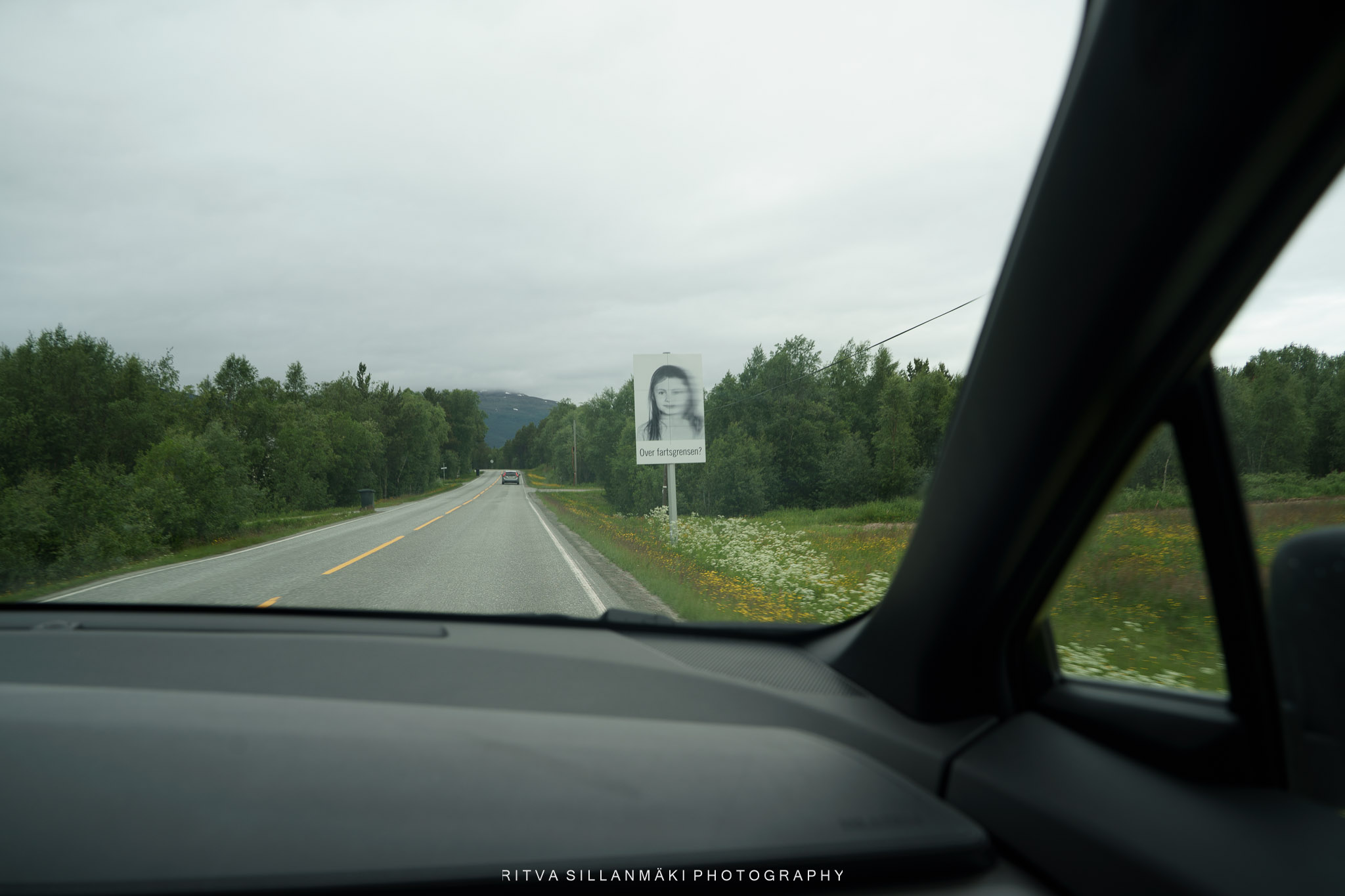
I trimmed the image below quite a bit to highlight the elements I want to emphasize. I’ve darkened the sky to create a gloomier atmosphere and brightened the trees to emphasize the leading line. Additionally, I enhanced the sign to make it stand out as the focal point of the shot. These types of edits are standard for me, as I perceive editing as a means to express my perspective. #1
This is an advertisement for a traffic safety campaign by the Norwegian Public Roads Administration (The text on the sign, “Over fartsgrensen?”, means “Speeding?”. The distortion of the face in the image illustrates how speed can alter a person’s perception and life irreversibly. A reminder of the human costs of speeding.
Black and white conversion
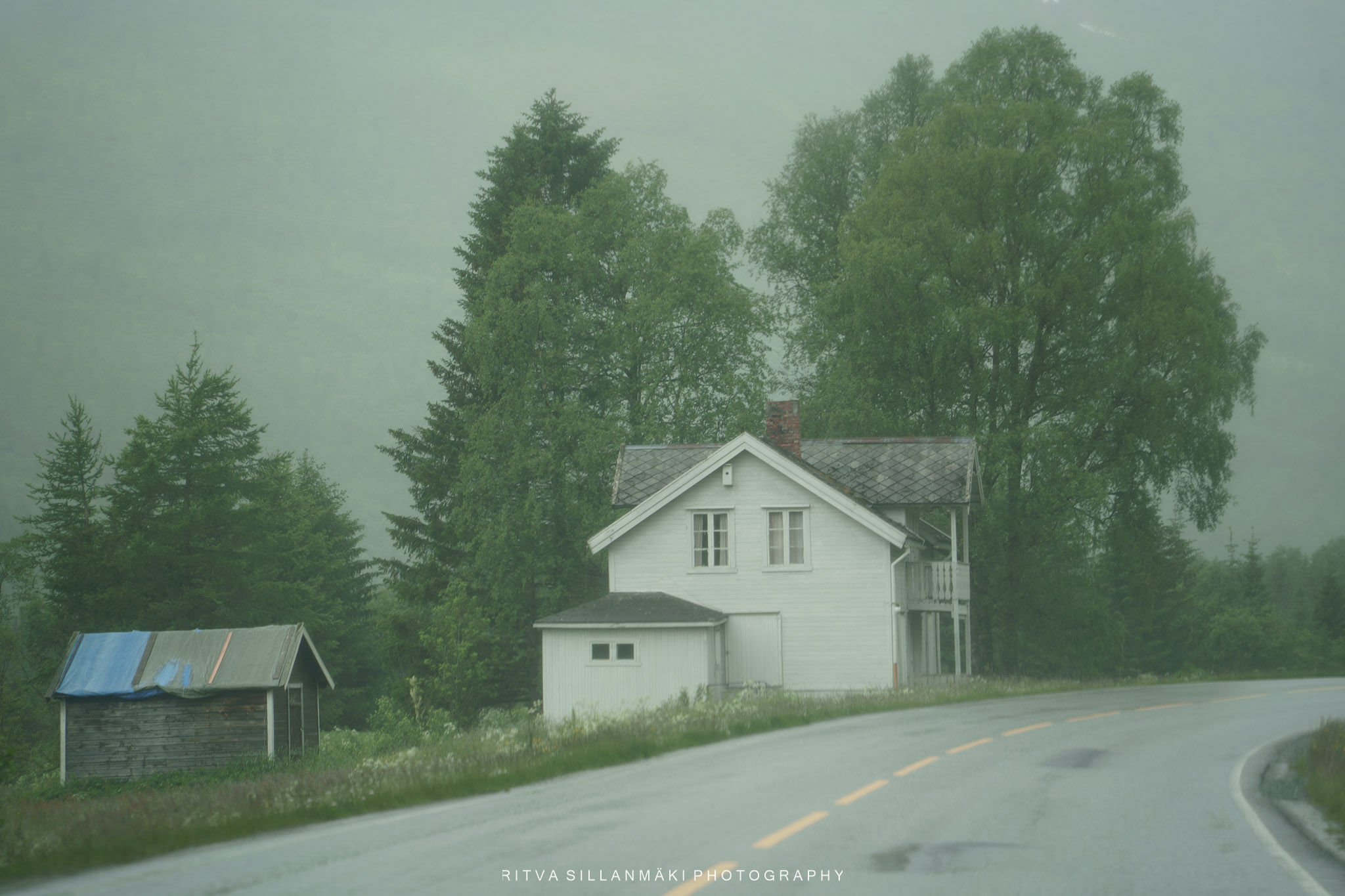
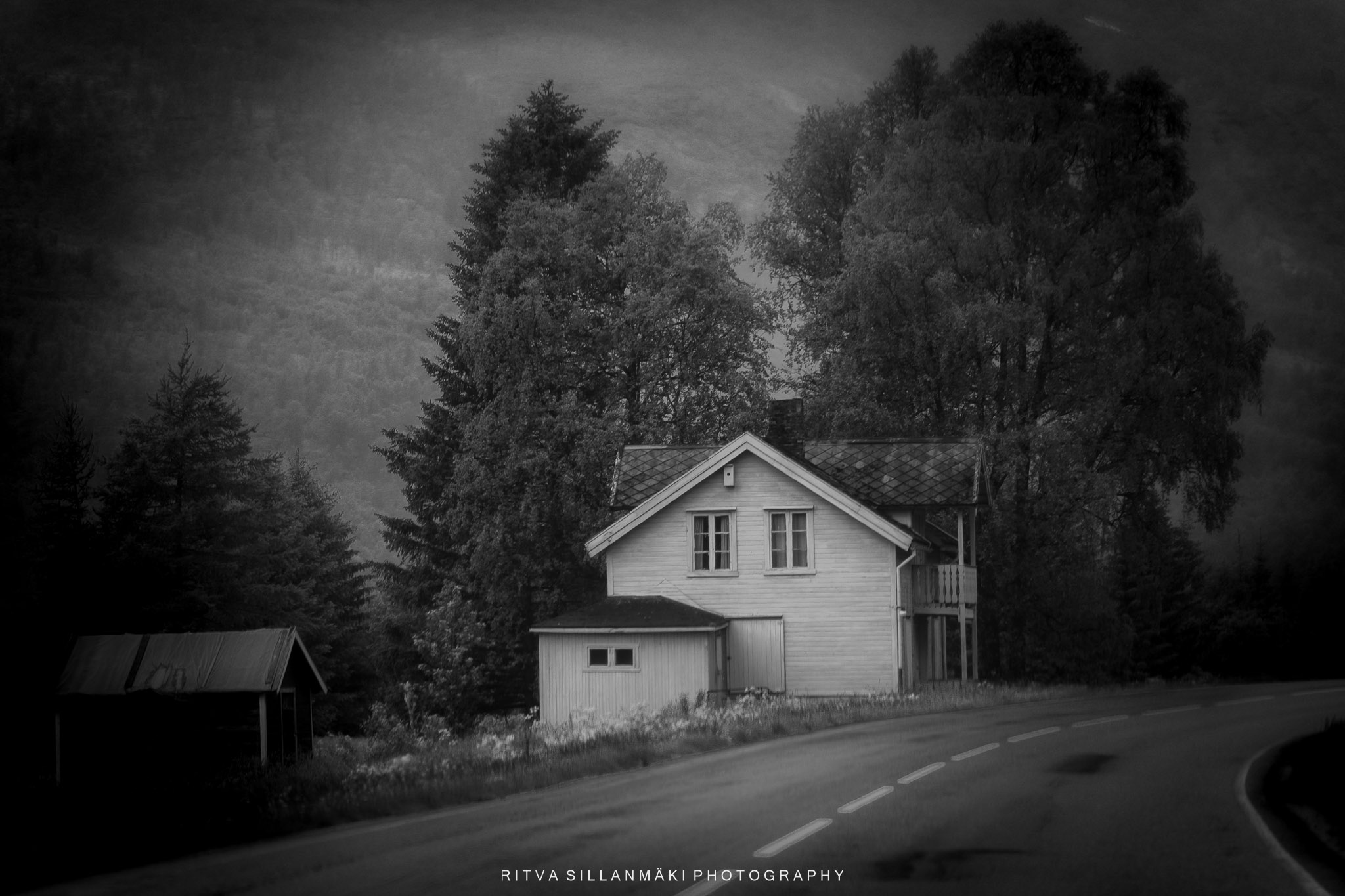
Monochrome / Black and white photography is something I really love. It holds a unique charm that transcends the complexities of color, allowing the viewer to focus on the stark contrasts and intricate details that might otherwise be overlooked. Here I have used the masking tool to get this result, isolating certain elements to enhance their impact and draw attention to the play of light and shadow. The subtleties of texture and form come to life in ways that evoke a range of emotions, inviting viewers to interpret the scene from their own perspective. Through this technique, I aim to not only capture moments but also convey the essence of the subject in a pure, stripped-down manner. #2
A quaint, two-story house nestled among tall, dense trees. The house has pitched roof with visible shingles and a small attached structure on the side. In the foreground, a winding road curves past the house. The mood is calm and nostalgic, enhanced by the monochromatic tones and the misty, blurred background of rolling hills covered with trees.
“A picture is the expression of an impression. If the beautiful were not in us, how would we ever recognize it?”Ernst Haas
Editing Impression
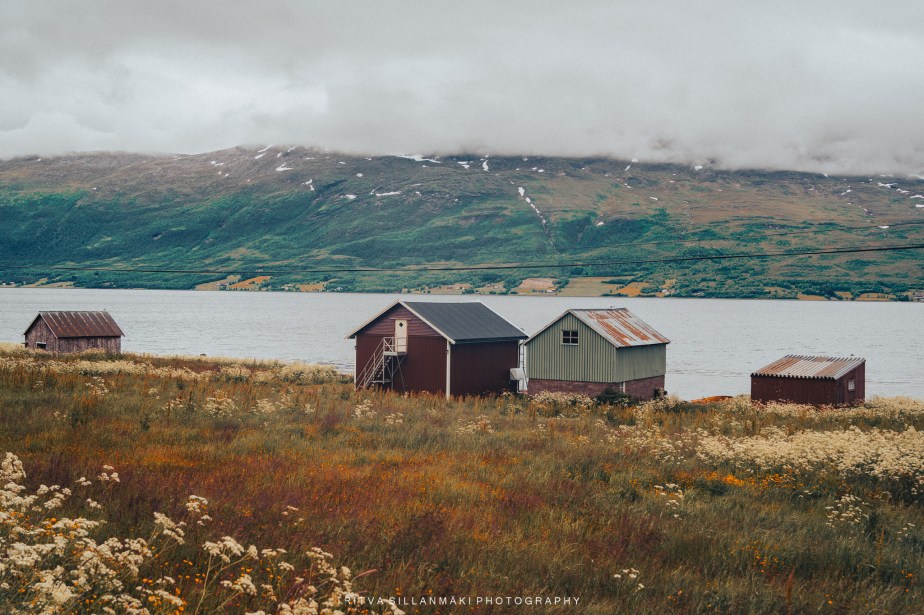
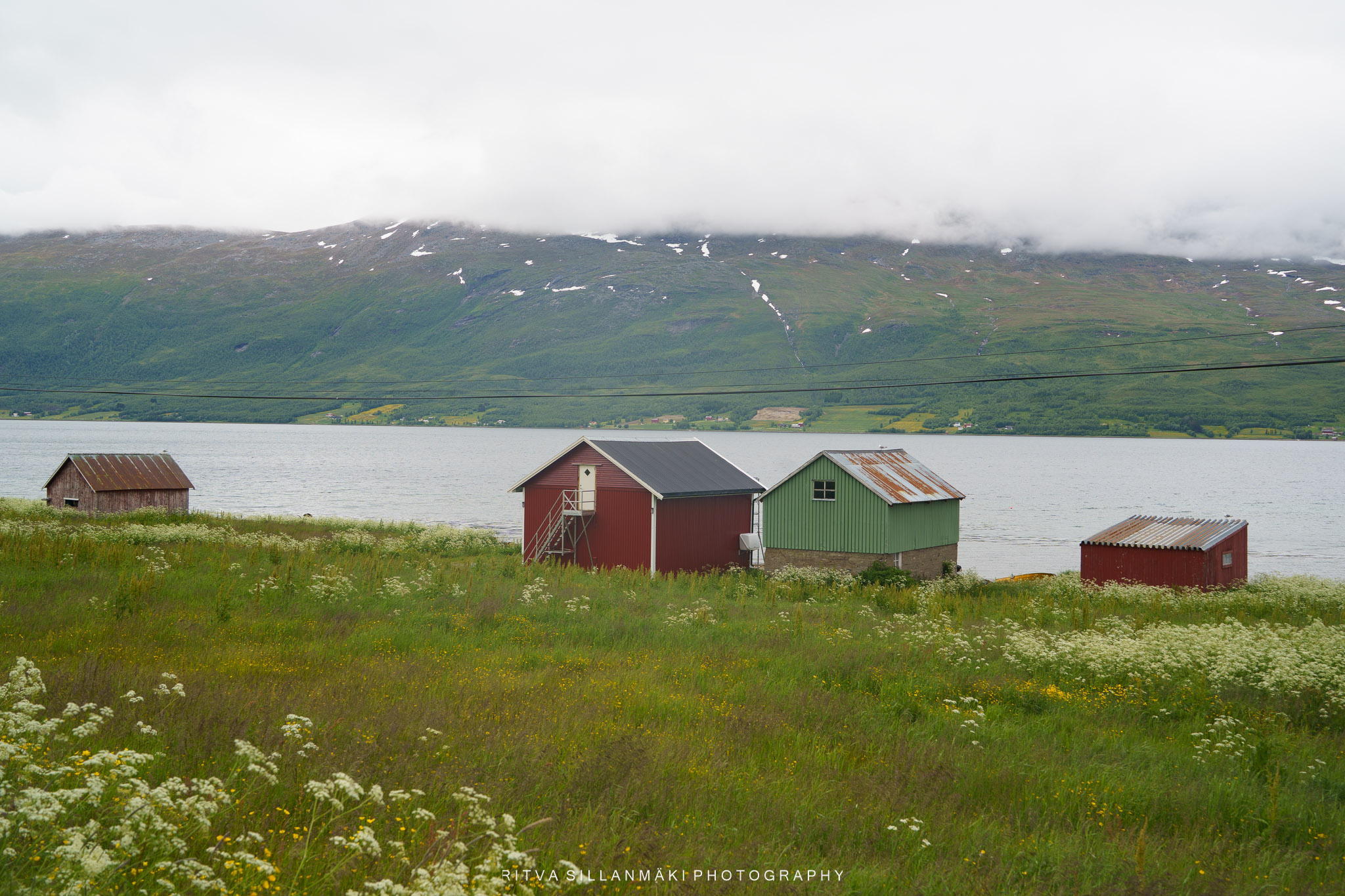
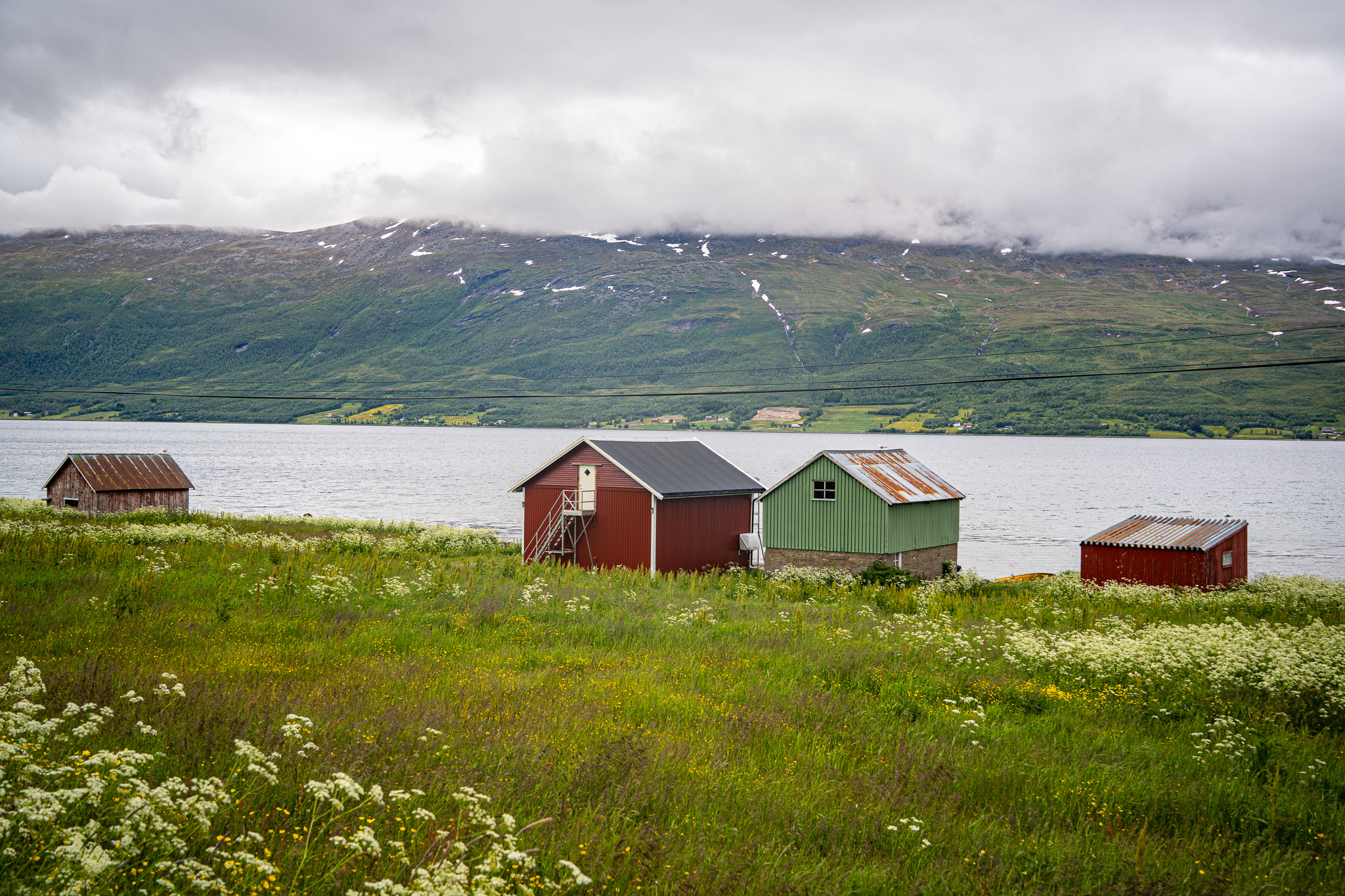
A rural landscape with a cluster of four small, rustic houses on a grassy field abundant with wildflowers and greenery. Behind the houses lies a calm body of water, fjord, stretching horizontally across the middle of the image. Beyond the water, a large, green mountain range ascends under a dramatic sky filled with thick, moody clouds that partially obscure the mountain peaks. The peaceful, natural environment with a subdued color palette dominated by greens, blues, and earthy tones, suggesting , rightly so, a cool and possibly overcast day in a remote area.
In this gallery, I share the unaltered, original version next to my standard enhancements, as I capture images in RAW format. Editing is essential to prevent the photos from appearing flat. I utilize the masking tool in Lightroom for photo adjustments. To add an extra touch, I’ve presented them as if they were taken with an analog camera. To transform a digital photo into an analog film look, raise the black points, reduce the highlights, incorporate coarse film grain #3, and increase the warmth of the color temperature. The artistic interpretation is generated by AI.
“Every photo I take is a piece of my life that I will never get back, but that I will be able to see again and again.”Malcolm Flowers
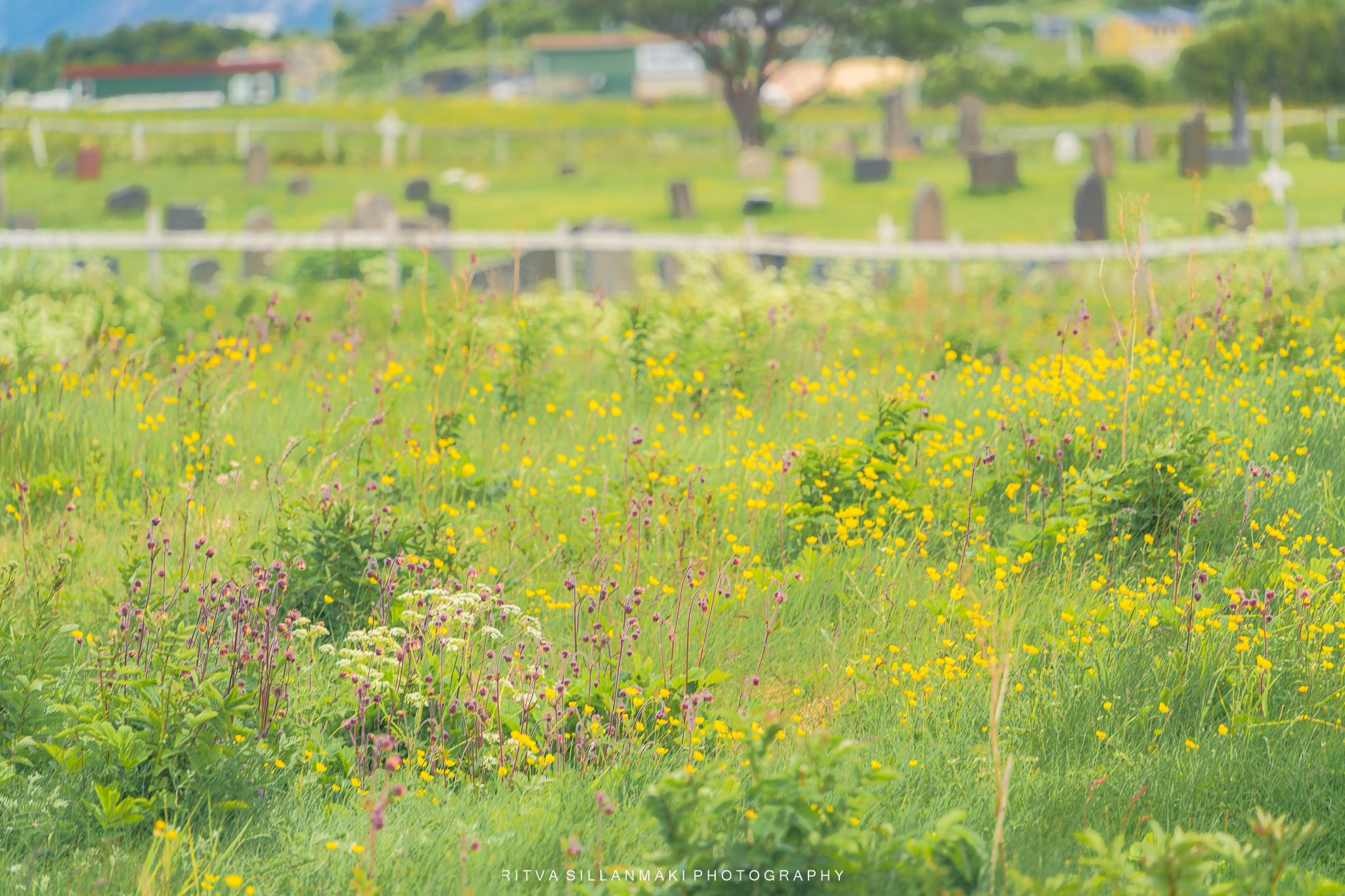
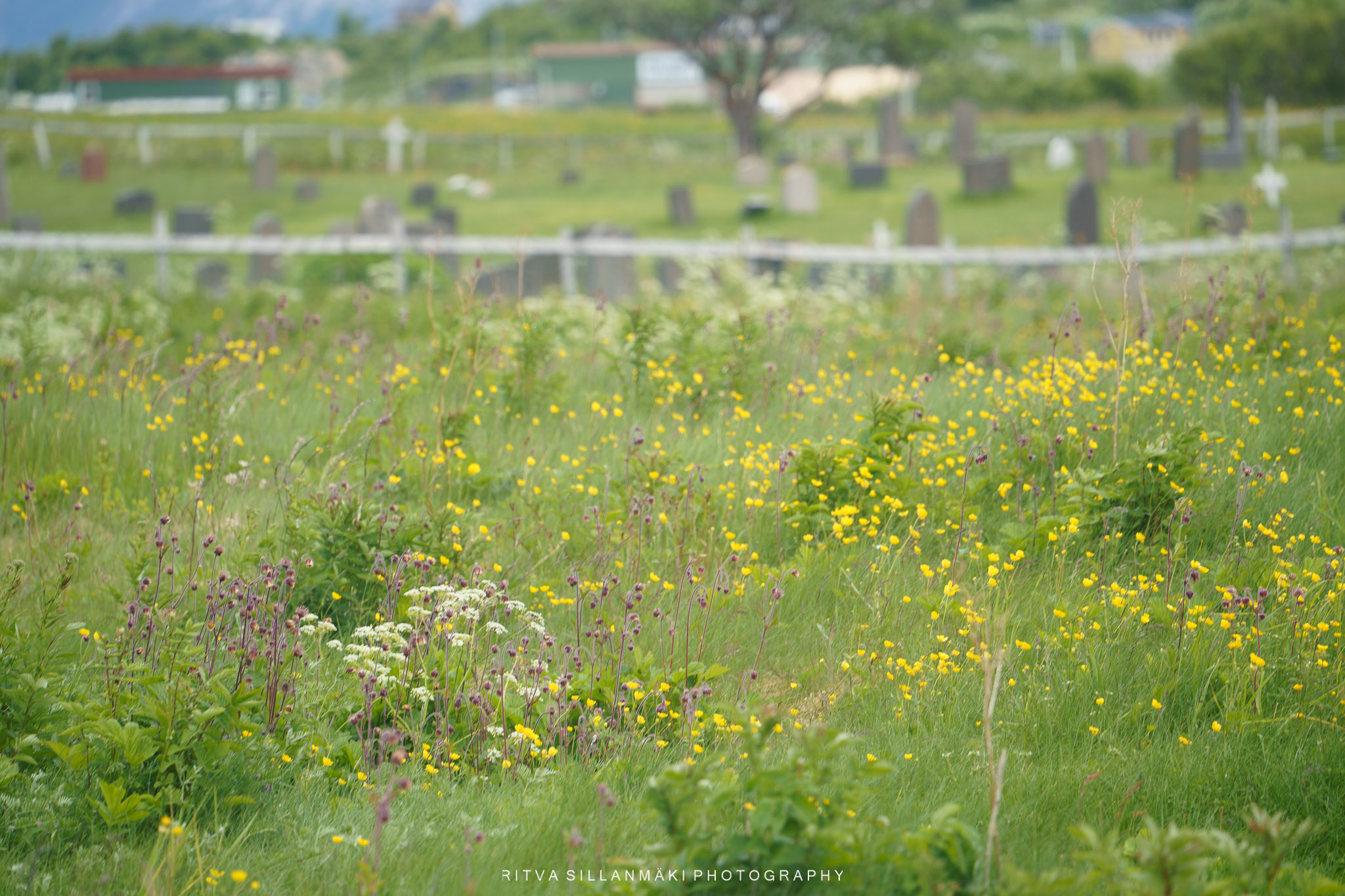
The meadow above is filled with tall grasses and a variety of wildflowers, predominantly yellow, interspersed with white and purple blooms. In the background, a cemetery is visible, with an assortment of tombstones and crosses scattered across a green lawn, surrounded by a white fence. The scene is set against a backdrop of trees and distant buildings, all slightly blurred to emphasize the vibrant flora in the foreground. A peaceful and contemplative mood, combining elements of nature and quiet remembrance.
In this gallery I experimented AI to edit a version, as it’s ubiquitous these days, but it shifted the mood and emphasis from the forefront to a much darker tone. Initially, the shot is primarily out of focus, contributing to this ambiance. I aimed for the focus to remain on the light and bright foreground, evoking a sense of hope and that is what I aimed for in my edit. AI can be useful, but do not loose your own vision and style. #4
“I do not document anything. I give an interpretation.”Andre Kertesz
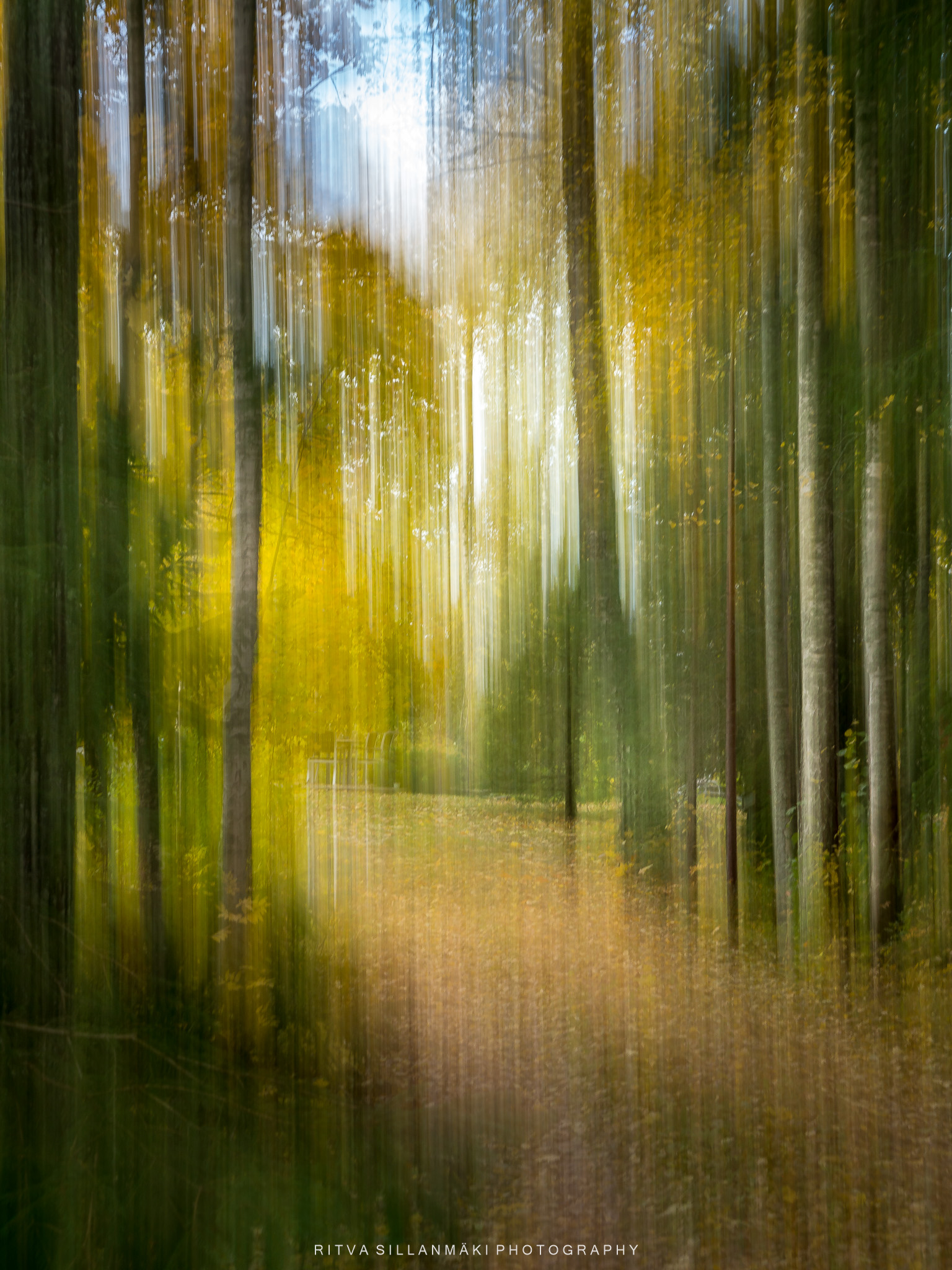
A forest scene featuring tall trees, intended to showcase intentional camera movement (ICM) through a vertical motion blur technique that generates elongated streaks of color and light. The predominant tones are varying shades of green and yellow, with autumn sunlight streaming through the leaves. This creates a dreamy, impressionistic effect, softening the natural details into gentle vertical lines. The forest floor is blanketed with fallen leaves, while bright snippets of sky and sunlight contribute to the radiant ambiance of the serene woodland. #5
This week, I invite you to explore the different methods you use to create images. Capture the same subject through a variety of unique approaches. Please limit your submissions to 5 photos. You have the freedom to select your technique, including the application of editing tools. I eagerly anticipate the outcomes of your creativity—make sure to link them back to my original post and apply the Lens-Artists Tag so we can easily discover your work in the WP Reader.
Last week we featured a guest host Steve Hyde (of Steve Hyde Photography Blog) and he provided us with a wonderful challenge, but nearly impossible one. Many of us had a hard time choosing them. We appreciate all the fantastic, Best Ever Photos you shared. Wonderful photography!
Sofia will return next week, we will have to wait to see what she has in store for us at noon EST in the USA. Tune in to find out more about the challenge then.
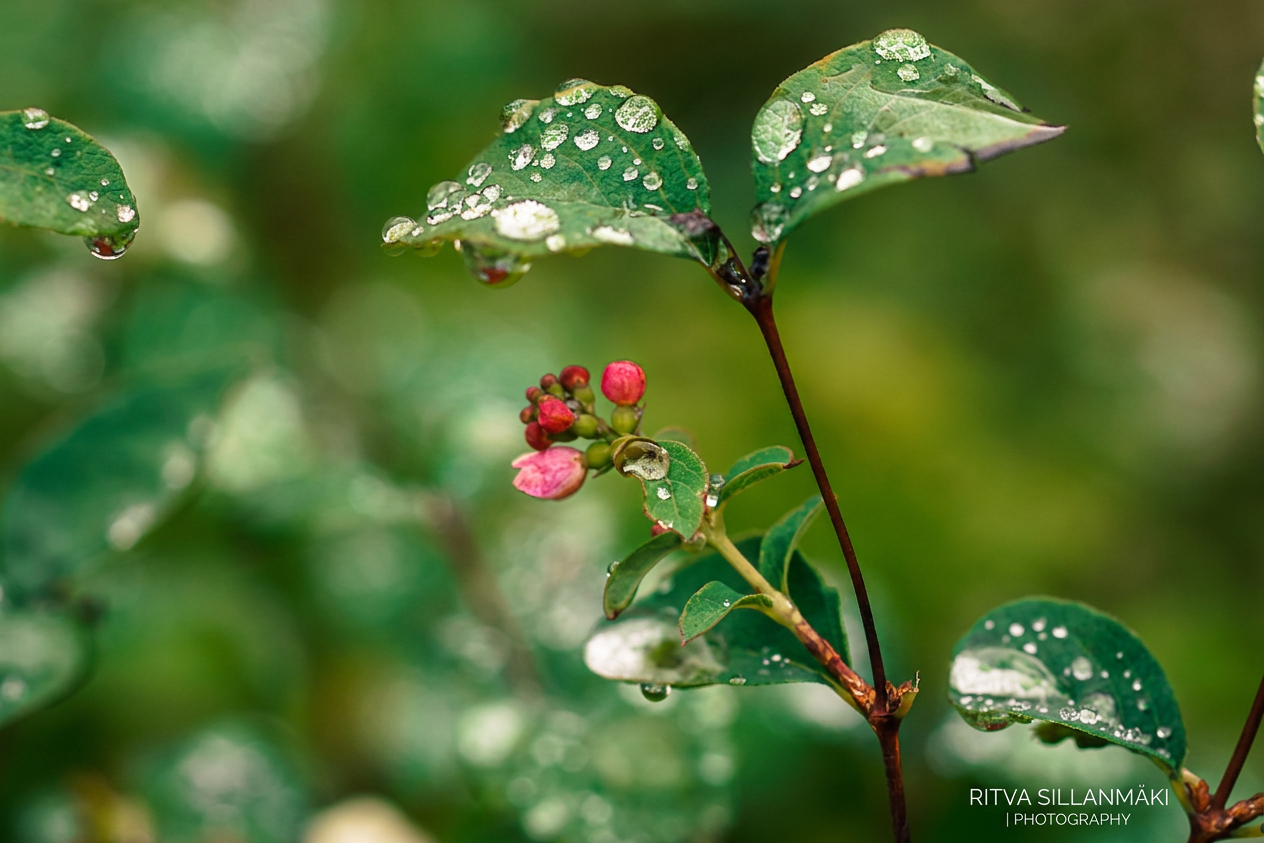
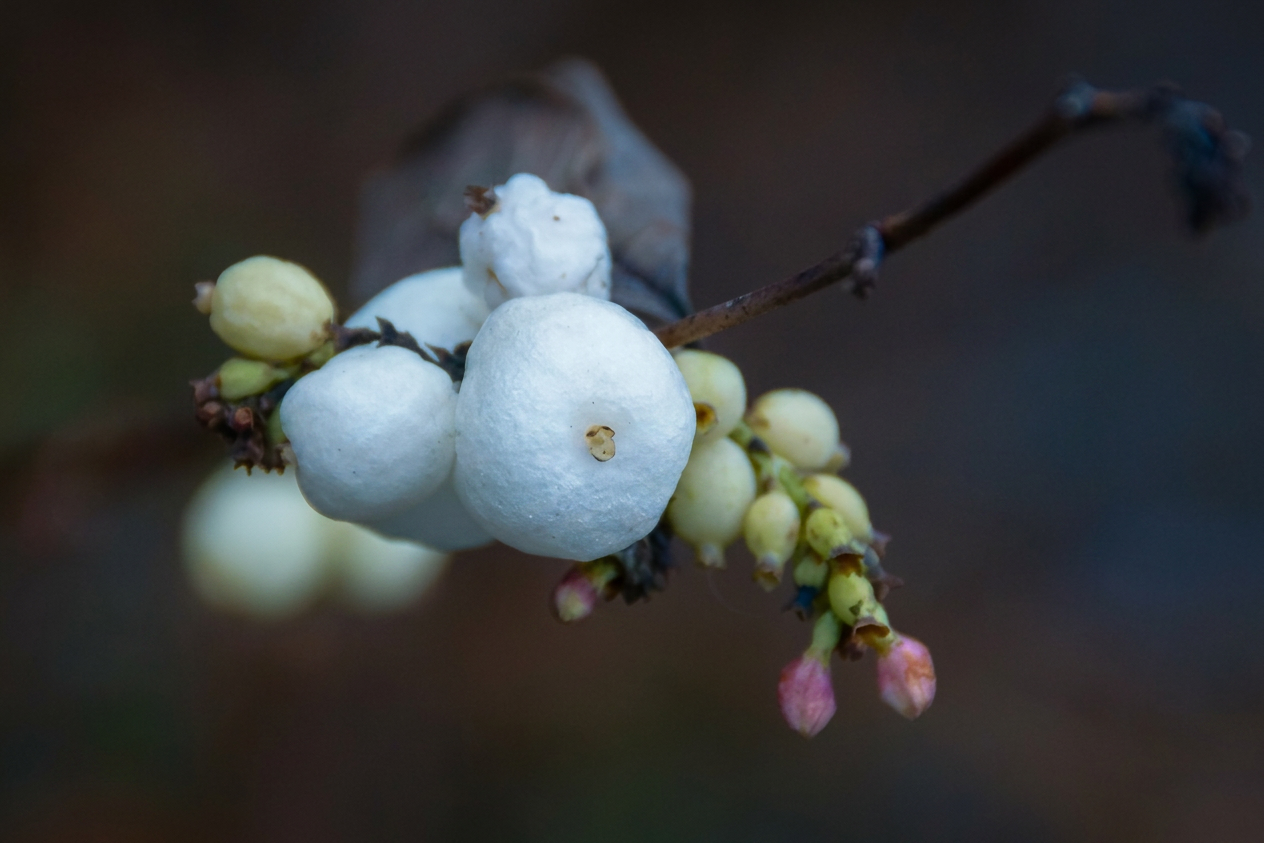
The fresh green leaves and delicate clusters of pink-and-white blossoms, enhanced by glistening water droplets. A softly blurred background of deep teal, green, and golden foliage establishes a serene atmosphere. It is shared for Terri’s Flower Hour, highlighting American snowberry or snowberry.
I am leaving you with this thought: Beauty can be seen in all things. Seeing and composing the beauty is what separates the snapshot from the photograph. – Matt Hardy
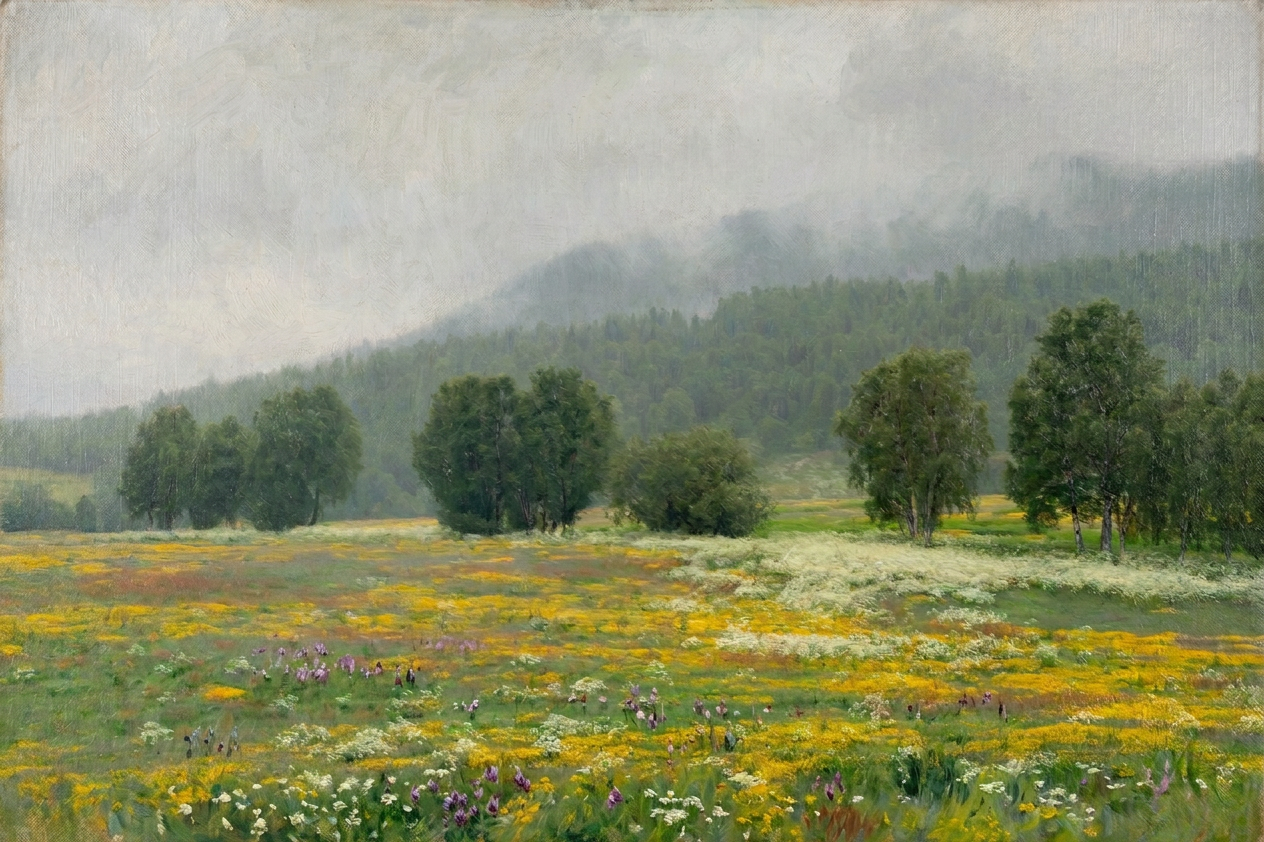
I’m truly enjoying the process of editing photos, immersing myself in the creative journey that allows me to enhance their vibrancy and bring them to life in ways that surpass what the original images captured. With each adjustment, I experiment with colors, contrasts, and textures, striving to evoke emotions and memories that resonate deeply. This artistic endeavor is not just about modifying images; it’s about taking creative liberties to ensure they reflect the vivid vision I have in my mind, transforming mere snapshots into compelling visual stories that convey my unique perspective and imagination. It’s a fulfilling experience that combines technical skill with personal expression, enabling me to share how I perceive the world through my lens.
Editing process was by adding a more painting like feel, and some more subtle flower additions to it it became more vibrant and even more inviting – something I saw in my mind.
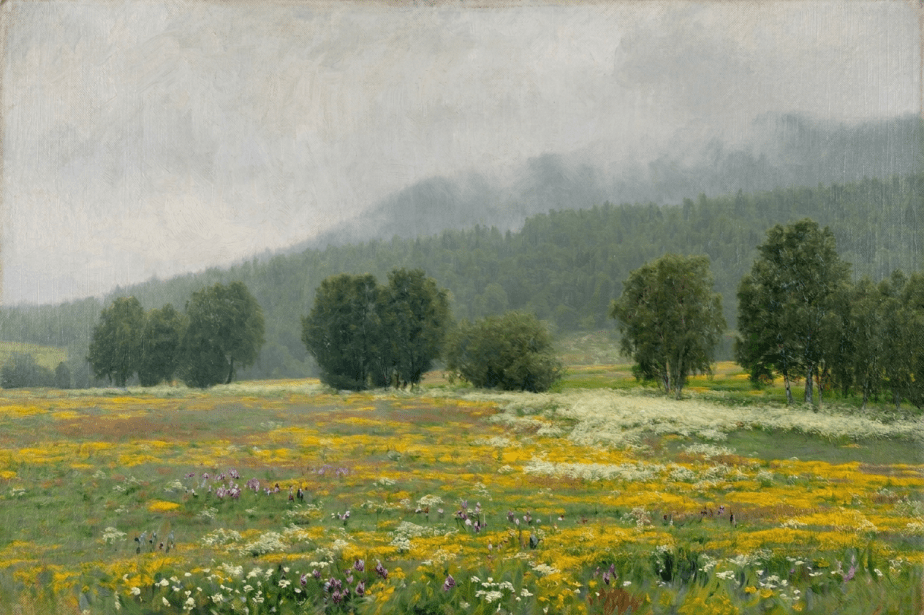
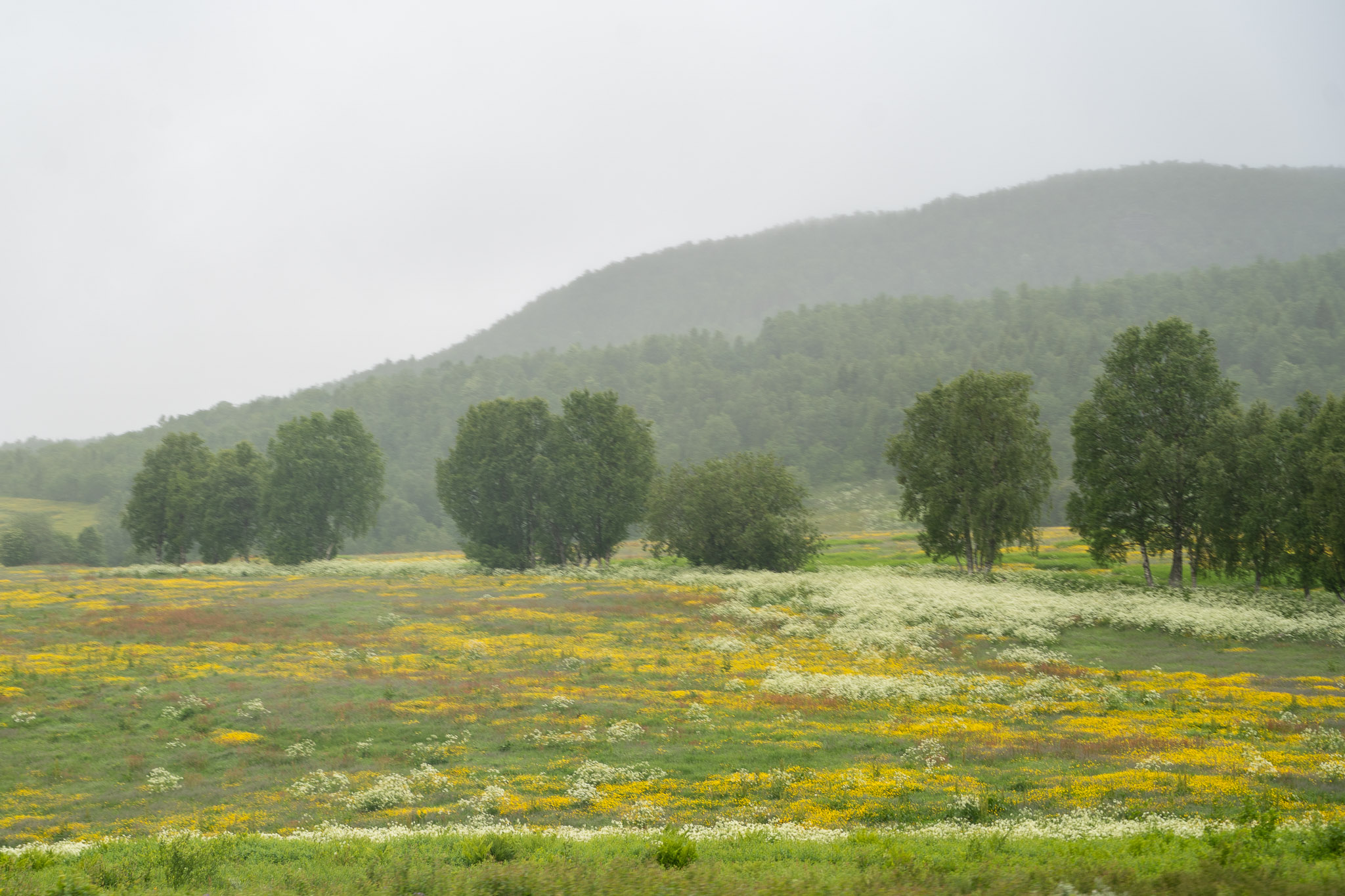
When I snapped this shot, I loved the serene landscape that unfolded before me. This gently rolling field, sprinkled with delightful patches of yellow and white wildflowers, all set against an overcast sky. And right there in the middle ground, a charming row of green trees stands tall, perfectly spaced out like they’re in a well-rehearsed formation. Then, in the background, there’s this grand, densely forested hill, slightly hidden in a veil of mist adding a touch of moodiness to the scene. Tranquility—it’s exactly the kind of peaceful feeling you get during a light rainy day in the lovely countryside!
original photo is very simple and even in tones due to the gray day
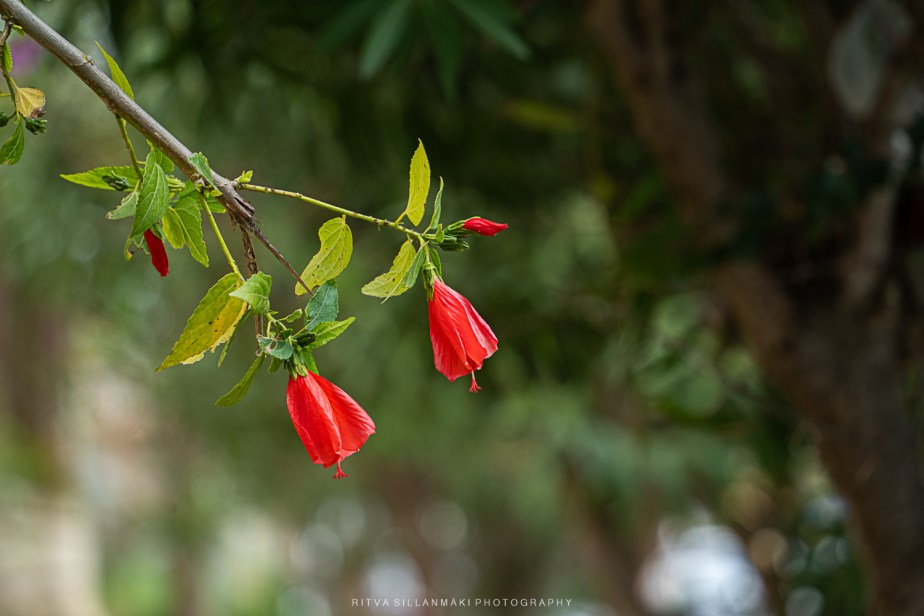
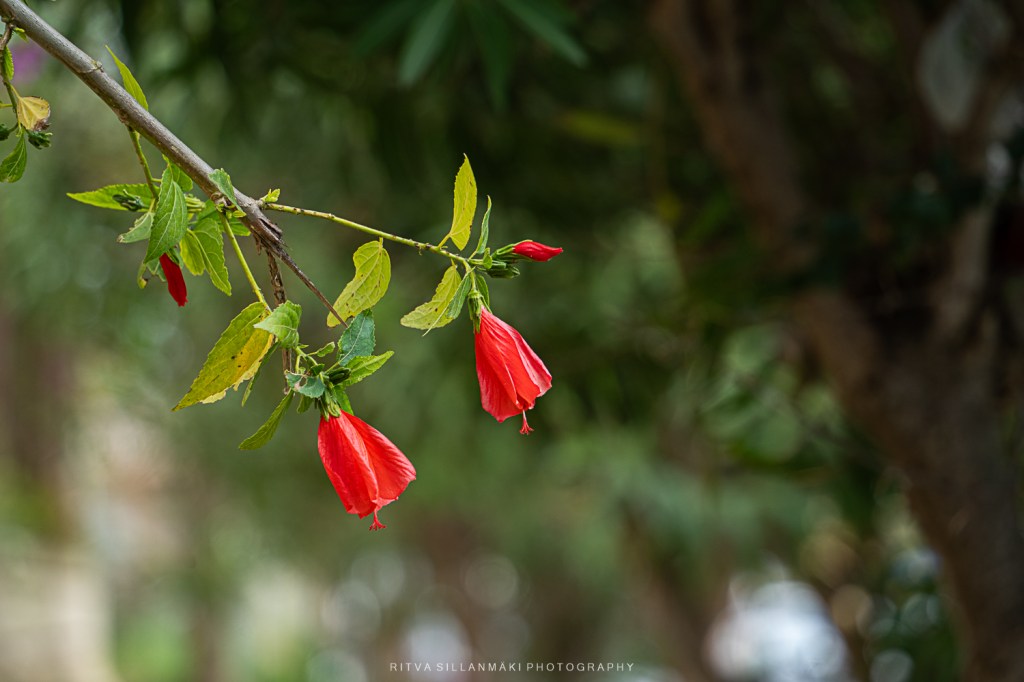
It is just a flower photo. Live Red Sleeping Hibiscus it is called, and it caught my eye with its vibrant hues and delicate petals, prompting me to capture its beauty in a photograph. The striking color and unique shape of the flower stand out against the lush green backdrop. That’s about it about this one. Although simple, it represents the fleeting moments of beauty that nature offers us. Happy Tuesday from cool (15.5°C) and rainy Finland, where ran keeps me inside, perfect for posting the small wonders like this flower.
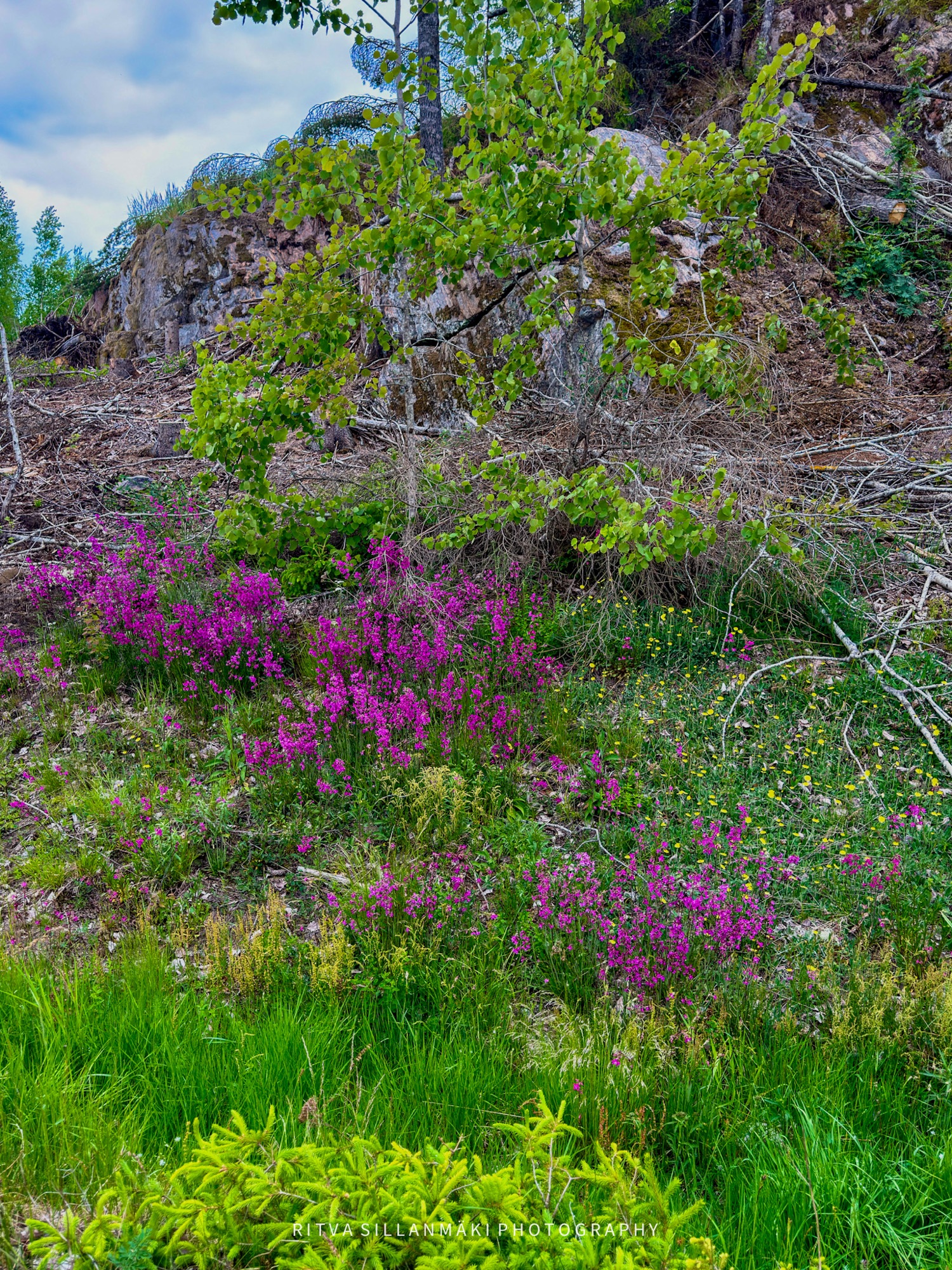
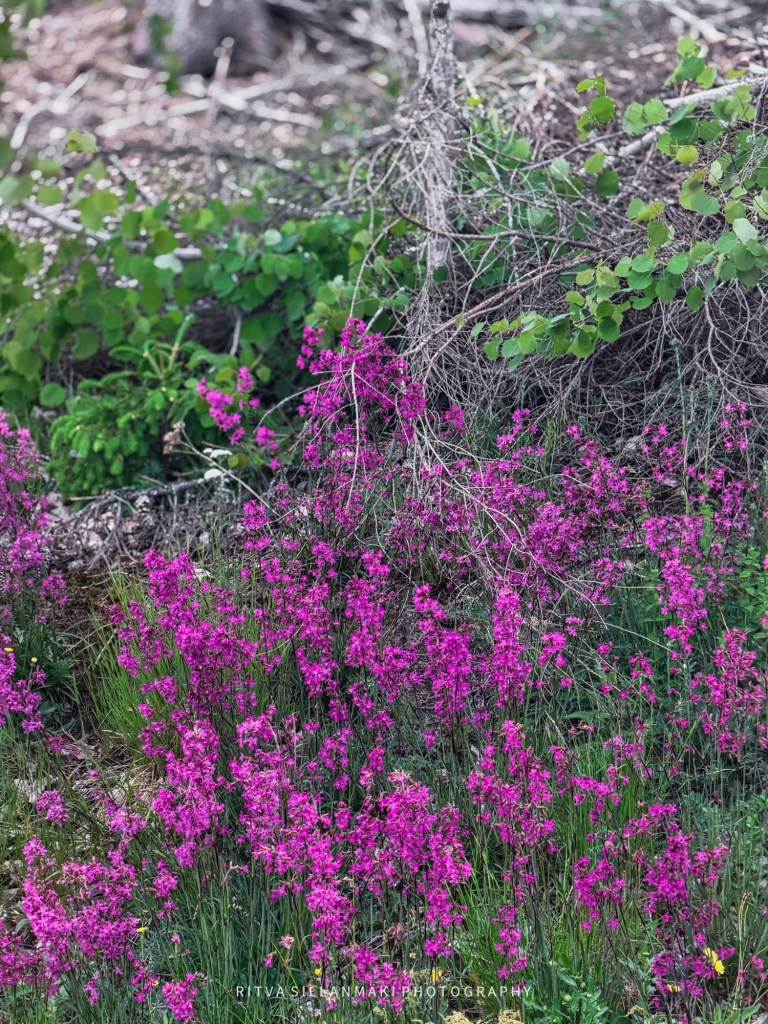
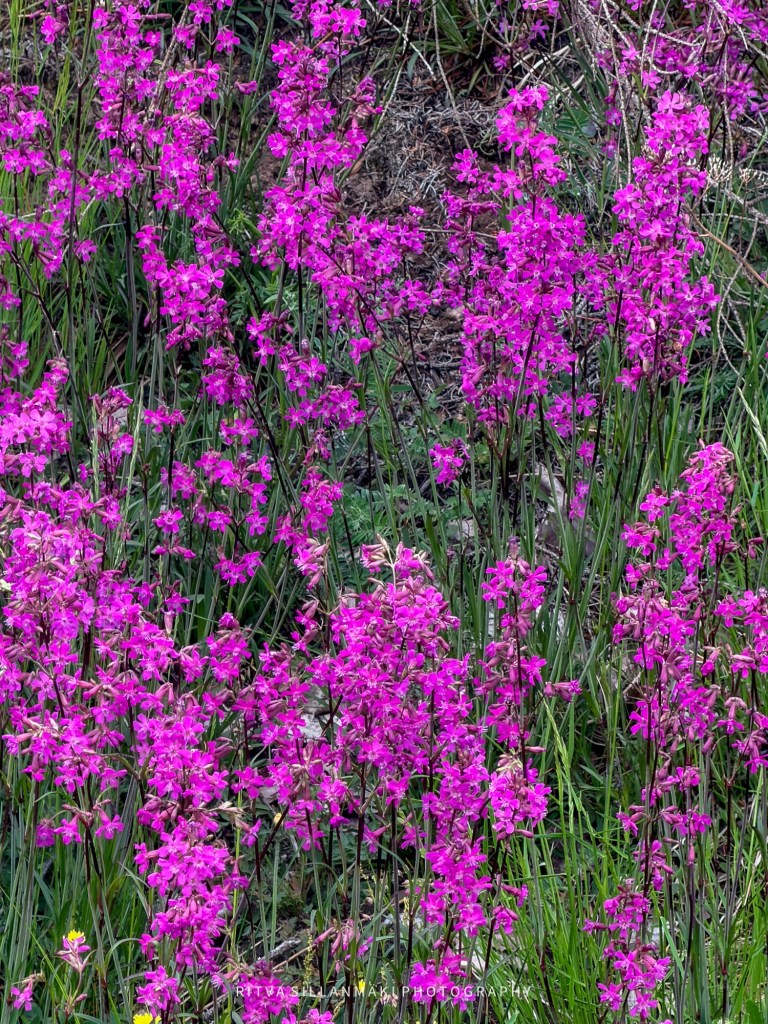
Name also Clammy campion (usa), Red german catchfly
Sticky catchfly is a plant that originally grew on rocky areas, dry hills, and sandy meadows. It has adapted to human environments, spreading to pastures and sunny roadsides. The plant can survive long droughts thanks to its deep taproot. Its distinctive reddish-brown sticky substance, which covers the upper stem, helps deter predators like ants. You can often see insects stuck to the stem. When picked, the sticky tar gets on your hands. Sometimes, a pink-flowered version can be found that doesn’t secrete any liquid. Its smaller relative, alpine catchfly (V. alpina), secretes very little or no tar at all.
At the start of summer, the red flowers of sticky catchfly attract queen bees, which are busy creating new colonies and pollinating. When the queen is in the hive caring for her young, the smaller worker bees are less effective at pollination. The flowers also draw in various insects, like butterflies, flower flies, and small beetles. Additionally, pollinators can spread diseases, such as spores from parasitic ustilaginales fungi, and even the sticky substance on the stem doesn’t protect catchfly from these harmful pests.
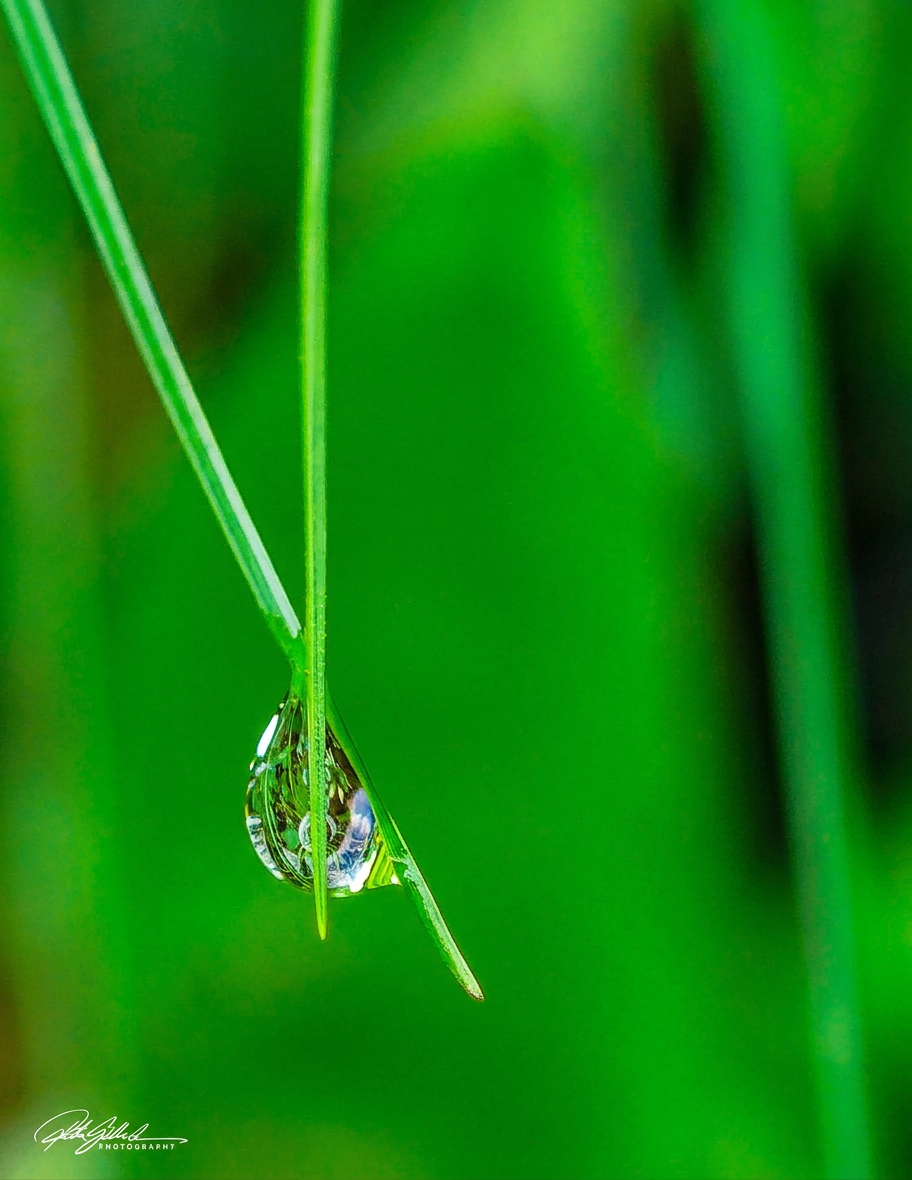
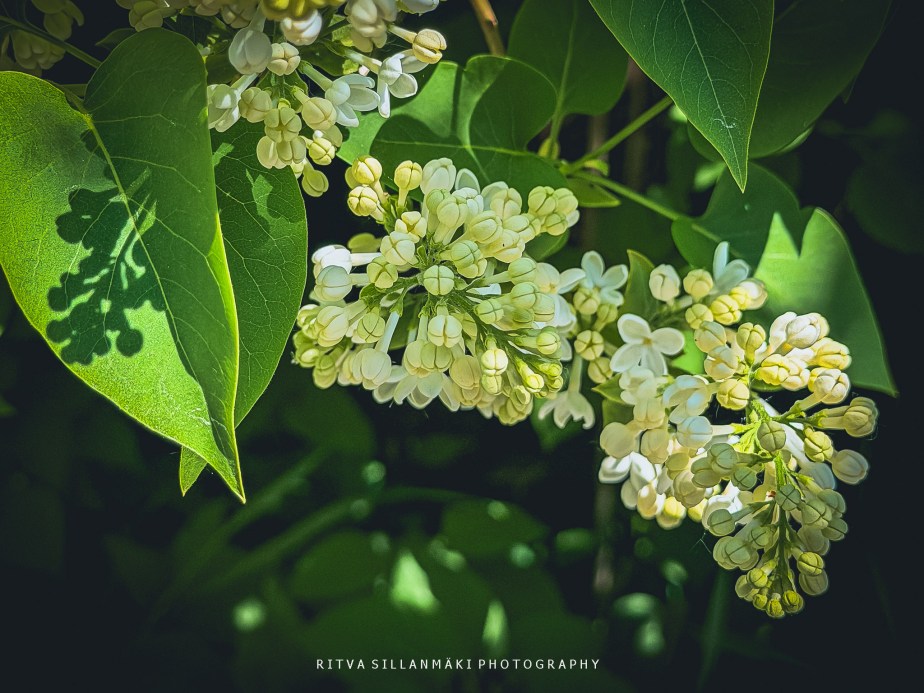
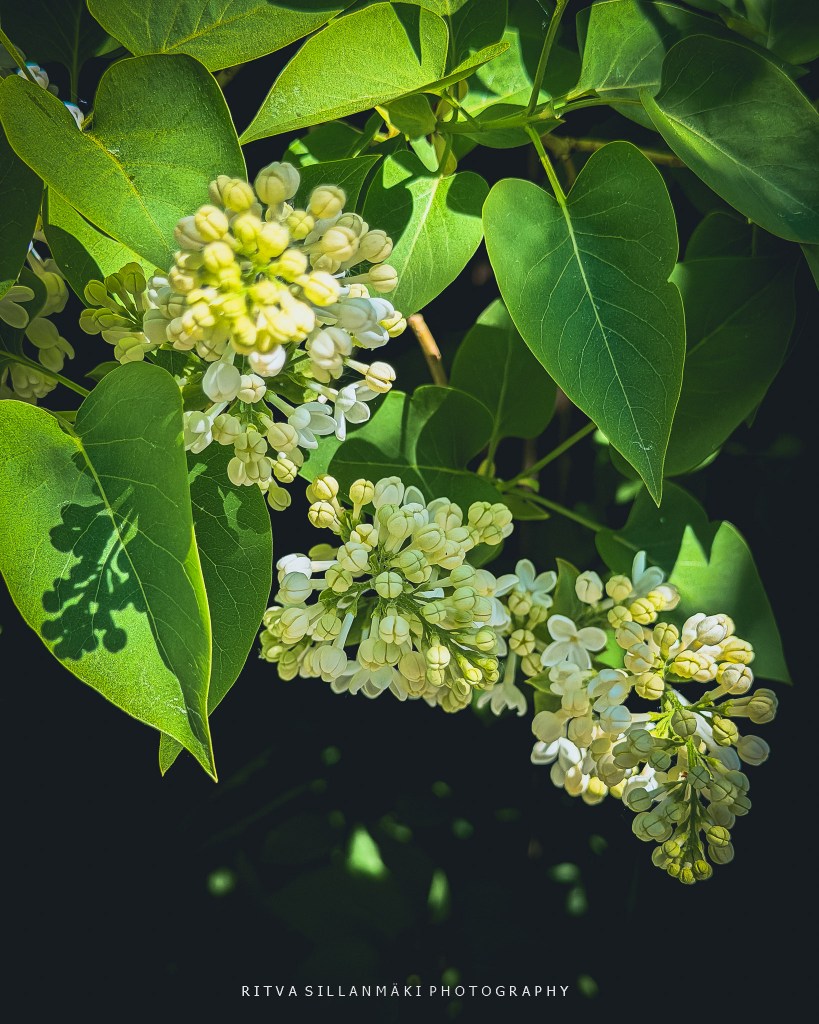
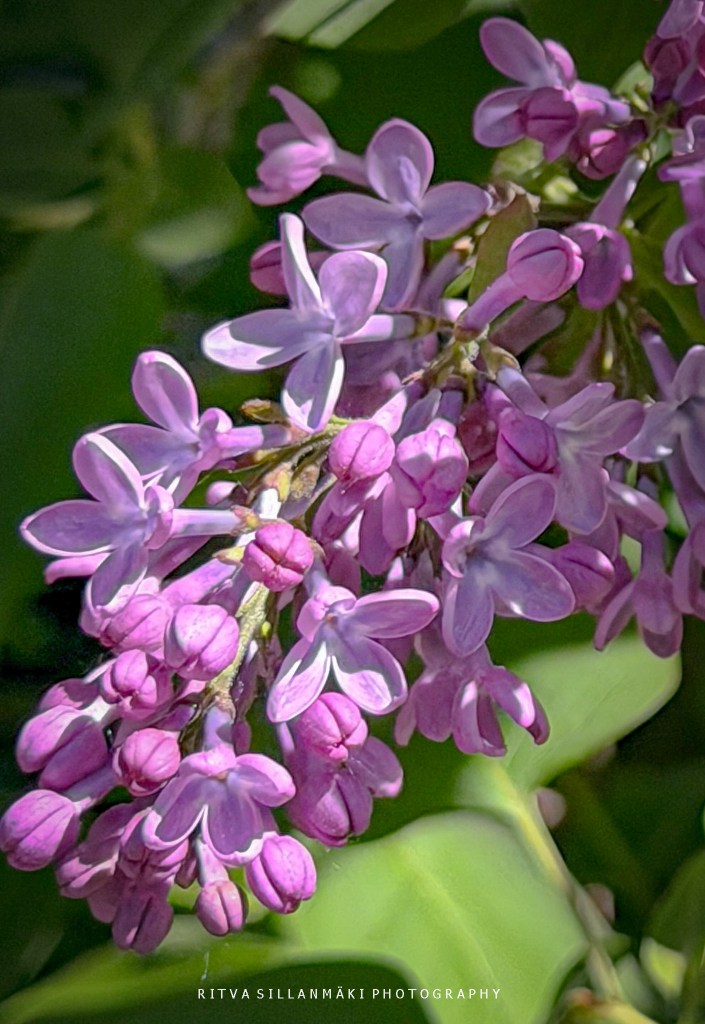
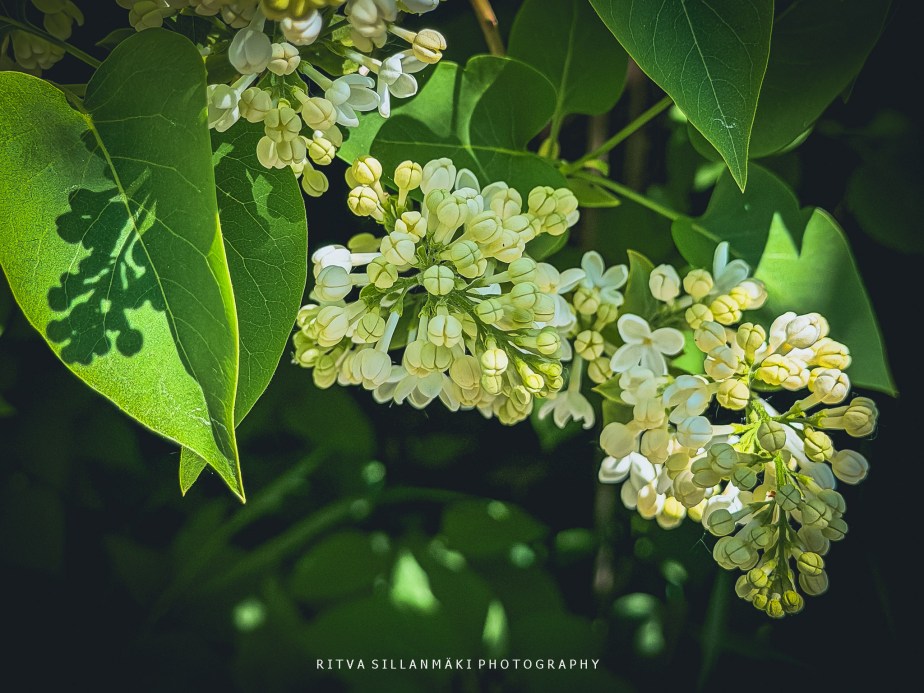
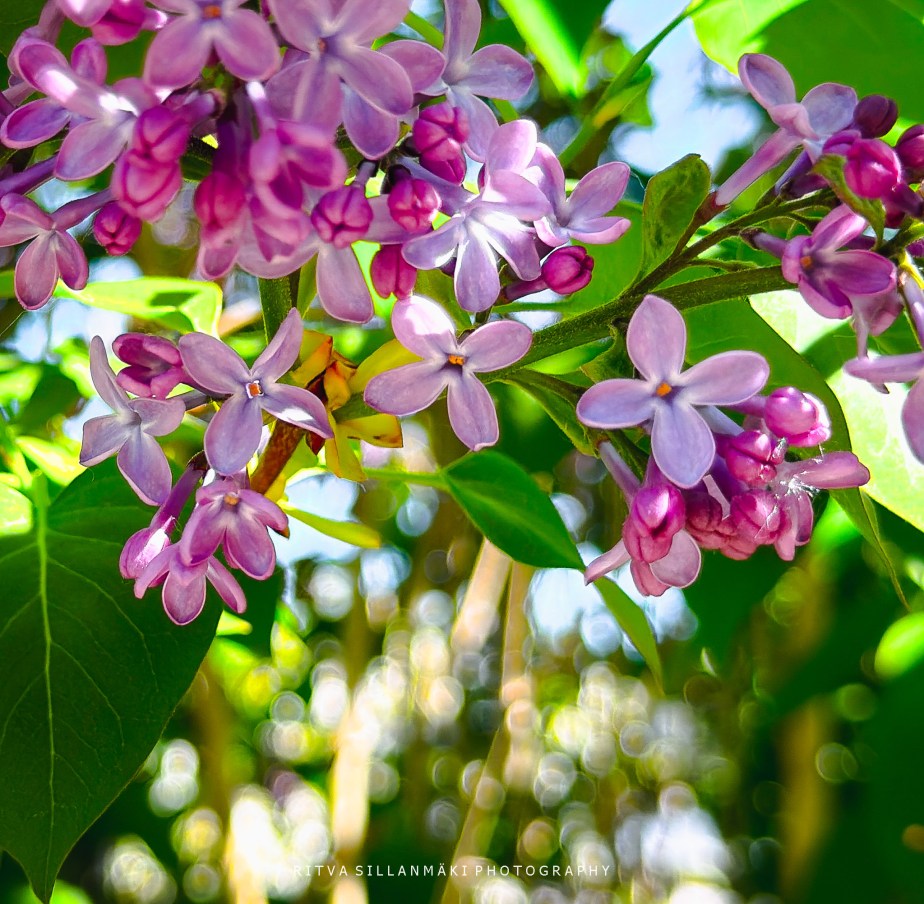
On a request, here are my lilac photos on color, showcasing this flower that insists on flaunting its beauty in every possible lighting condition—it’s like the diva of the garden and the scent of her, aah!! Whether it’s posing against a clear blue sky, showing off its gorgeous self amidst lush greenery, or just casually lounging in the softness of a pastel backdrop, the lilac’s knack for stealing the spotlight, proving once and for all that flowers can outshine even the best of us in the color department!
White lilacs
Light purple lilacs stand for first love and early affection
White lilacs primarily symbolize purity and youthful innocence. In the traditional language of flowers, they represent a sweet, untainted soul, humility, and modesty
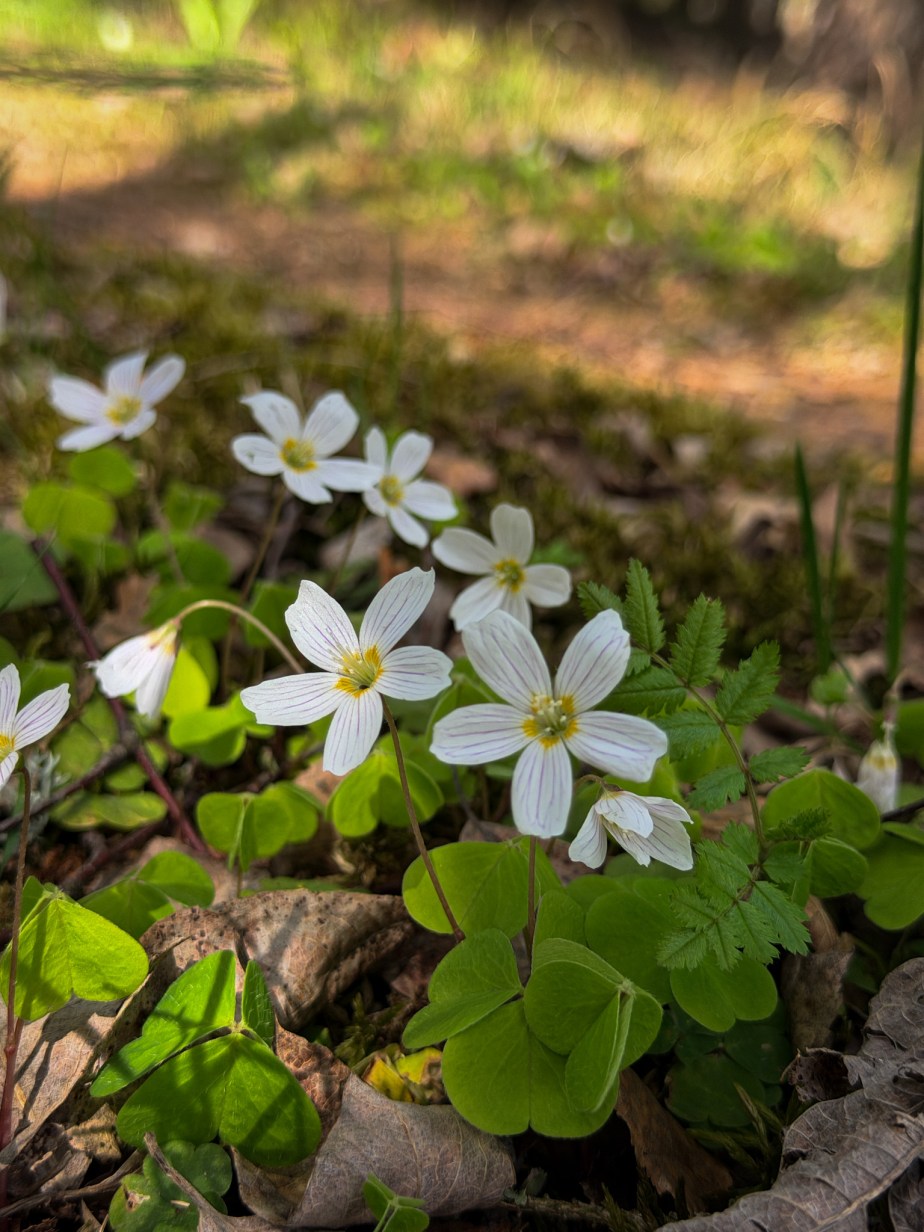
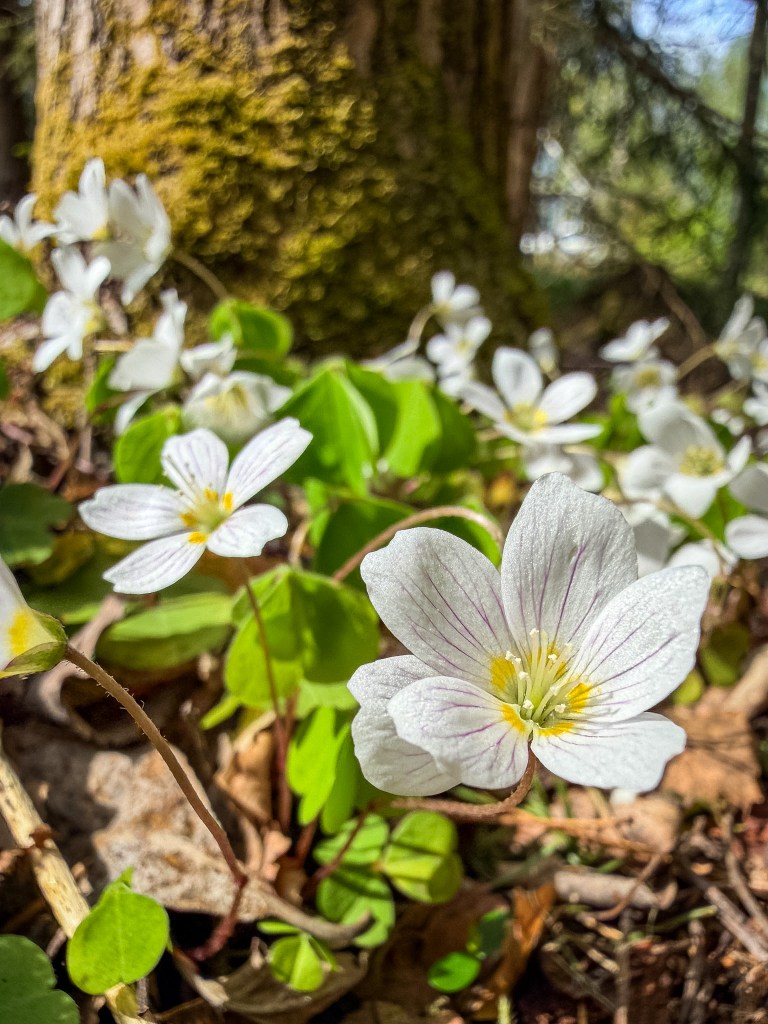
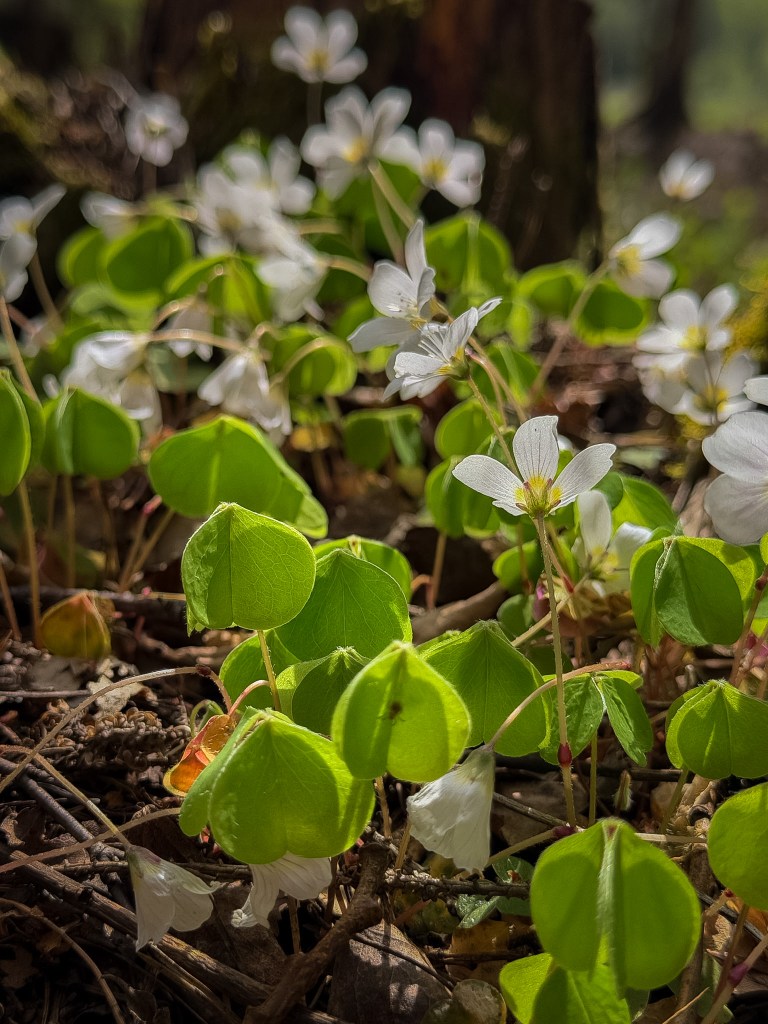
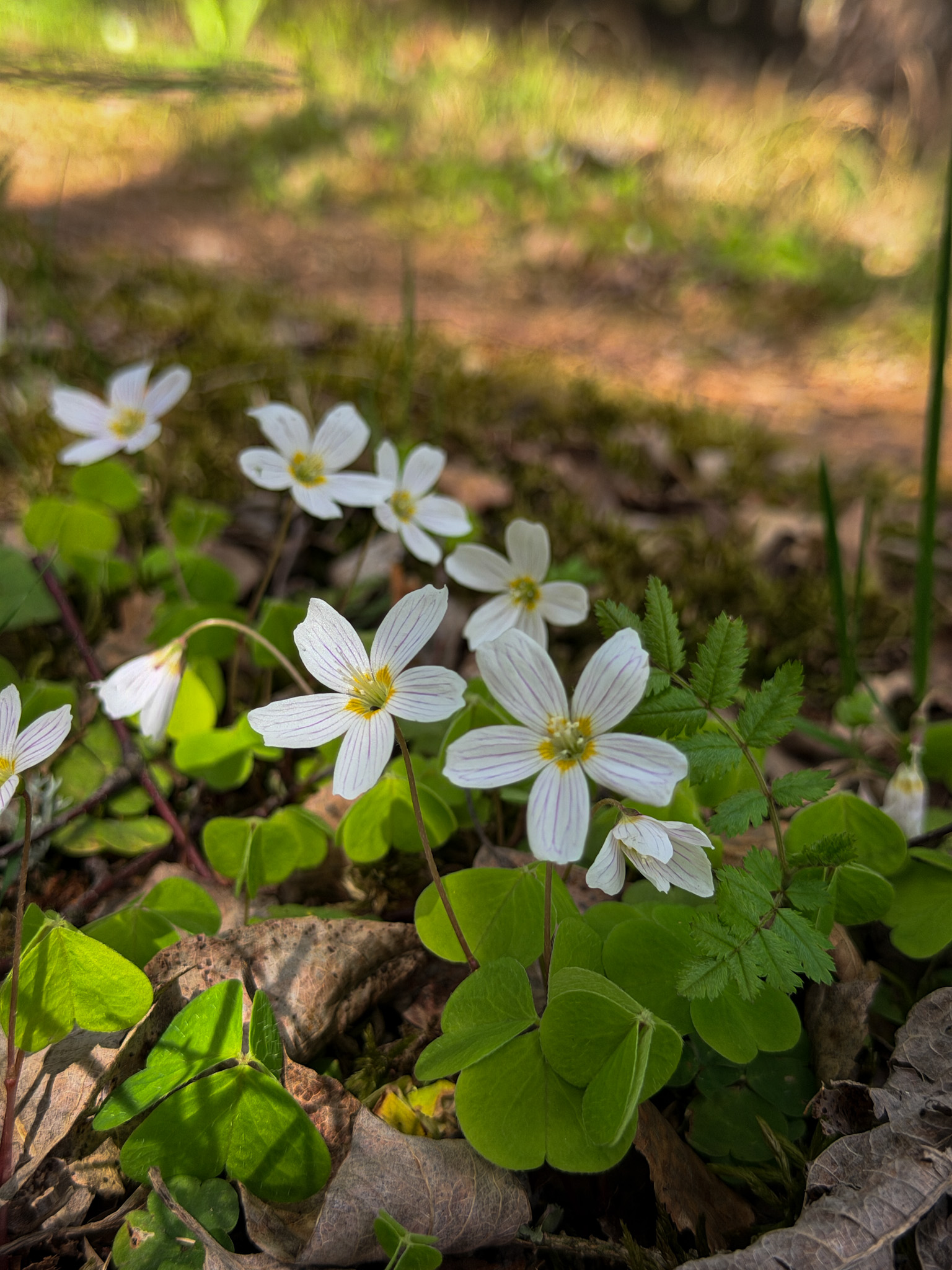
Spring flowers in nature bloom and fade so quickly, their beauty often lasting only a fleeting moment. Last weekend, I took these shots of wood sorrels, capturing their delicate petals and delicate flowers while they were still alive in the warm sunlight. However, this week, there is only the green leaves left, as nature effortlessly transitions to palette of greens.
Oxalis acetosella, common wood sorrel, cuckoo bread, shamrock
The taste of the wood sorrel is familiar to many from childhood summers, used to pick them up while playing with friends in the woods. The flavor is refreshingly sour, now I know it is due to the oxalic acid it contains just like rhubarb. We never used it in fresh in salads, soups, and various sauces, where it adds a lemony tartness as fas as I remember.
common wood sorrel, cuckoo bread, shamrock
The beauty I came across during my walk in the woods was what I was searching for, I spotted these delicate wood sorrels, these white flowers, their thin purple veins and yellow centers really stood out. They were nestled among vibrant green clover-like leaves, surrounded by all sorts of other foliage. I took the photo so that the background was softly blurred, filled with warm earthy tones—think soil, dried leaves, and moss—creating a serene woodland atmosphere. Sunlight was gently illuminating the flowers and leaves, bringing out their textures and colors beautifully. Overall, it was just this quiet moment of wildflower beauty in the forest on a bright day.
For this week’s Lens- Artists challenge , you are to select one color (excluding black and white). Share a maximum of 6 photos where your chosen color is the prominent hue, or alternatively, you may share one photo featuring each of the following captivating colors in their various shades: red, blue, green, purple, orange, and yellow.
Different cultures and different times throughout history connected various emotions to colors. And though we might argue about which color represents which emotion, we have to admit that adding color to a photo brings a whole new vitality to it.
We see color all the time, but we do not always notice it. Unless a particular amazing sunset catches your eye or you find yourself in a field of poppies or rows and rows of lavender. For this week we are not only looking for color but also paying attention to how subtle shades or bold colors affect our mood and perception of the world.
Your chosen color should be dominant in your photo, but colors are often paired with other colors in photos. So play with the different color relationships such as complementary colors, warm and cold colors, analogous colors and triadic colors.
Isolate your chosen color with monochromatic photography where you use a color scheme that is comprised of variations of one color.
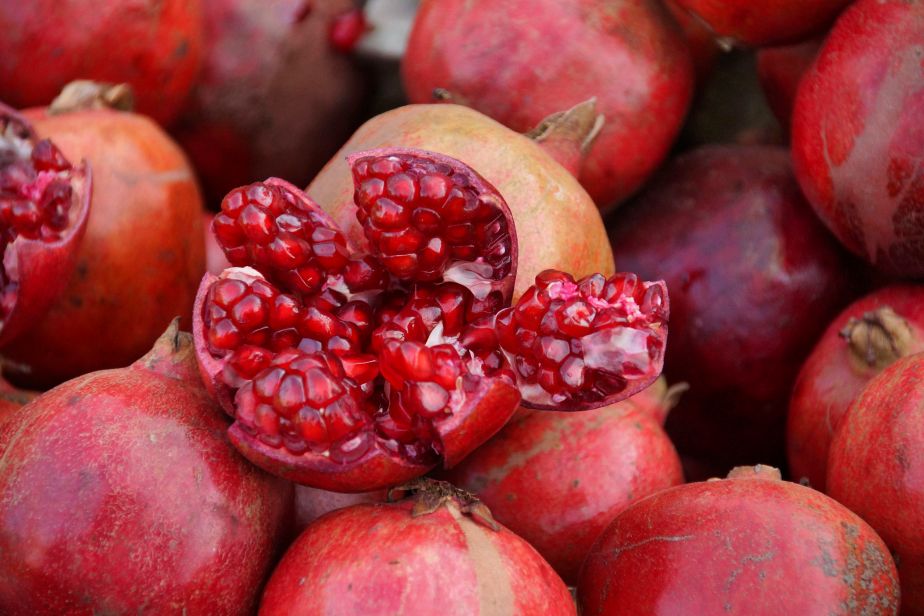
A vibrant display of pomegranates, showcasing rich red hues that symbolize passion and vitality.
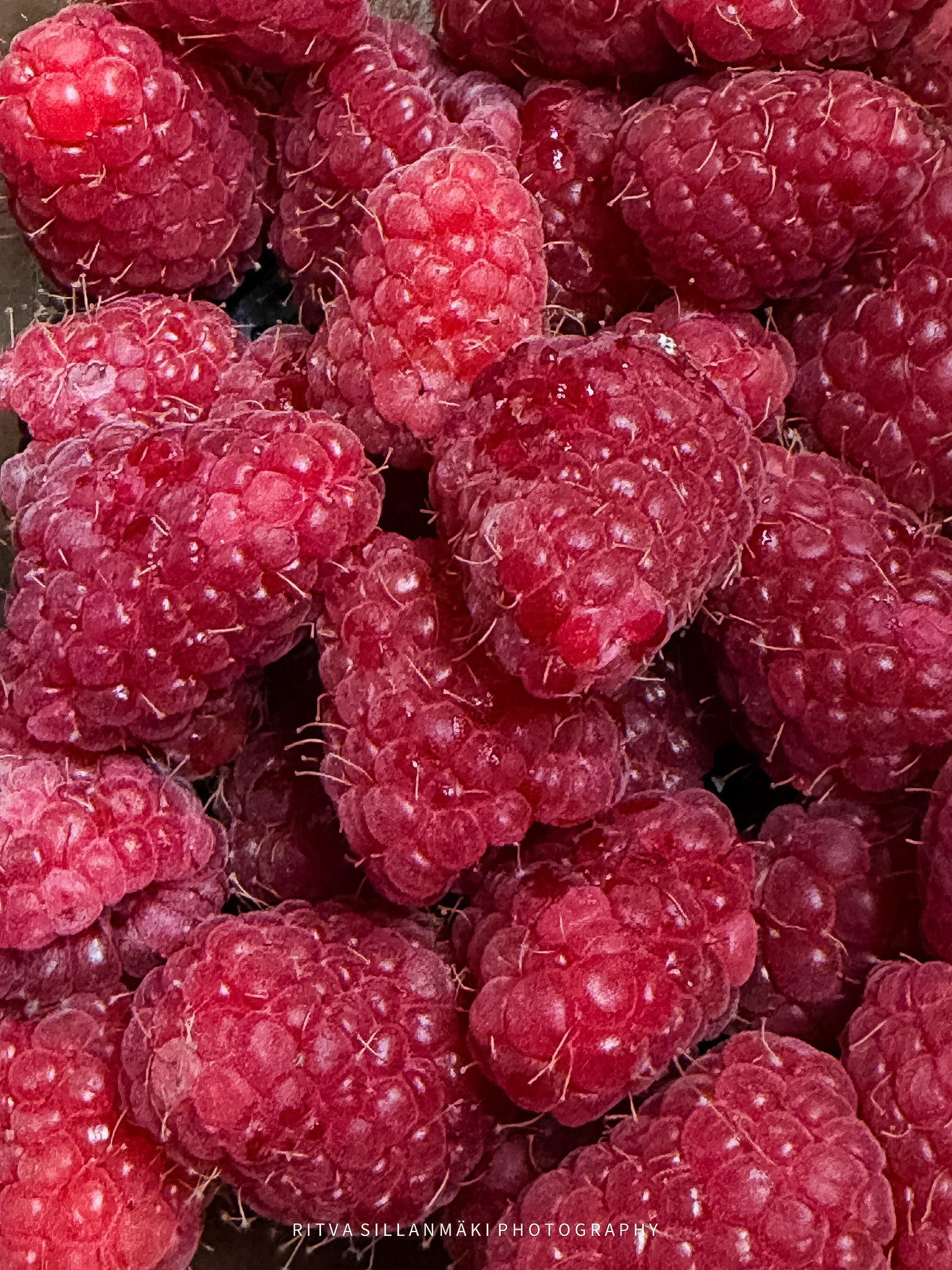
The color red, for instance, embodies sensations of desire, passion, blood, and transgression, while also representing bravery, selflessness, passion, love, and beauty.
Monochrome photography is frequently linked to black & white visuals, yet it truly encompasses any single hue, providing photographers with an expansive array of creative possibilities. This includes captivating images in shades such as red, blue, green, purple, orange, and yellow.
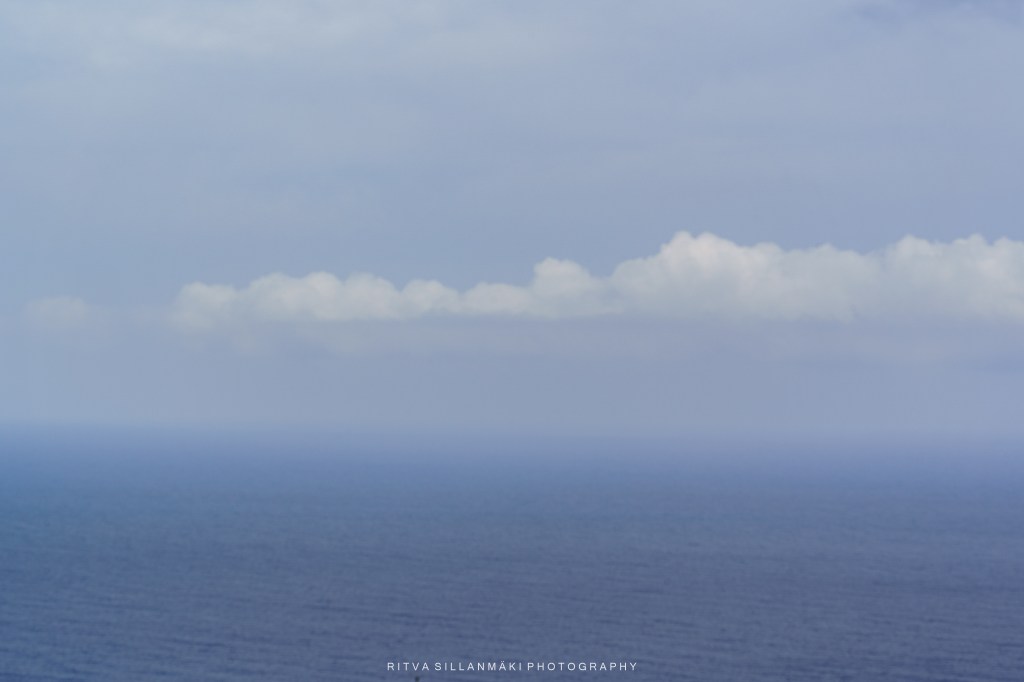
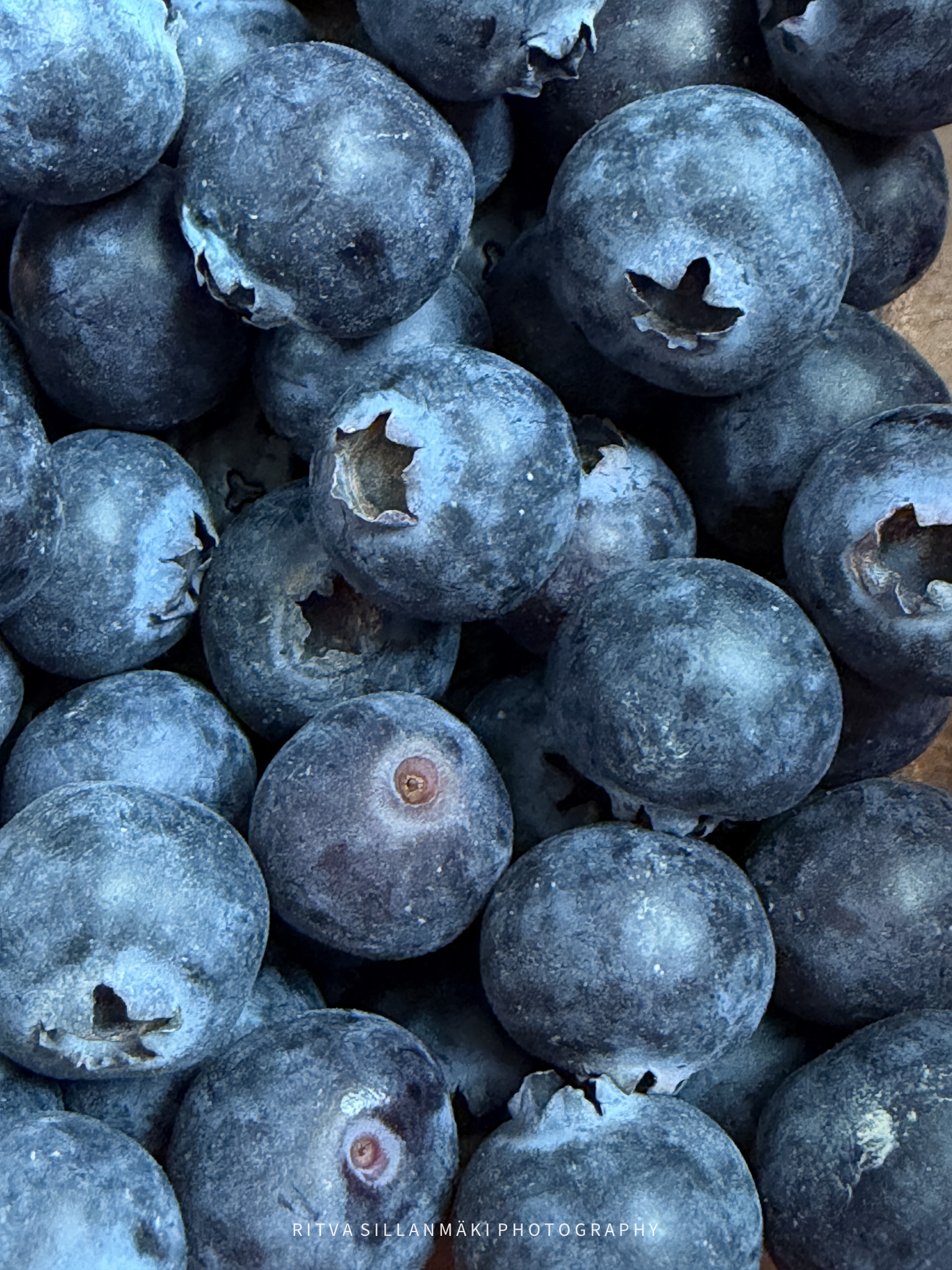
Blue, In Western societies, it often symbolizes calmness, stability, and tranquility. In art, the use of blue can evoke a sense of depth and distance, creating immersive and serene scenes. In contrast, some Eastern cultures associate blue with spirituality, wisdom, and the divine.
A soft blue sky scattered with light, fluffy clouds. The horizon line subtly divides the frame, with the deep blue ocean and the expansive sky. The overall mood is calm and serene, enhanced by the gentle blending of blues and whites
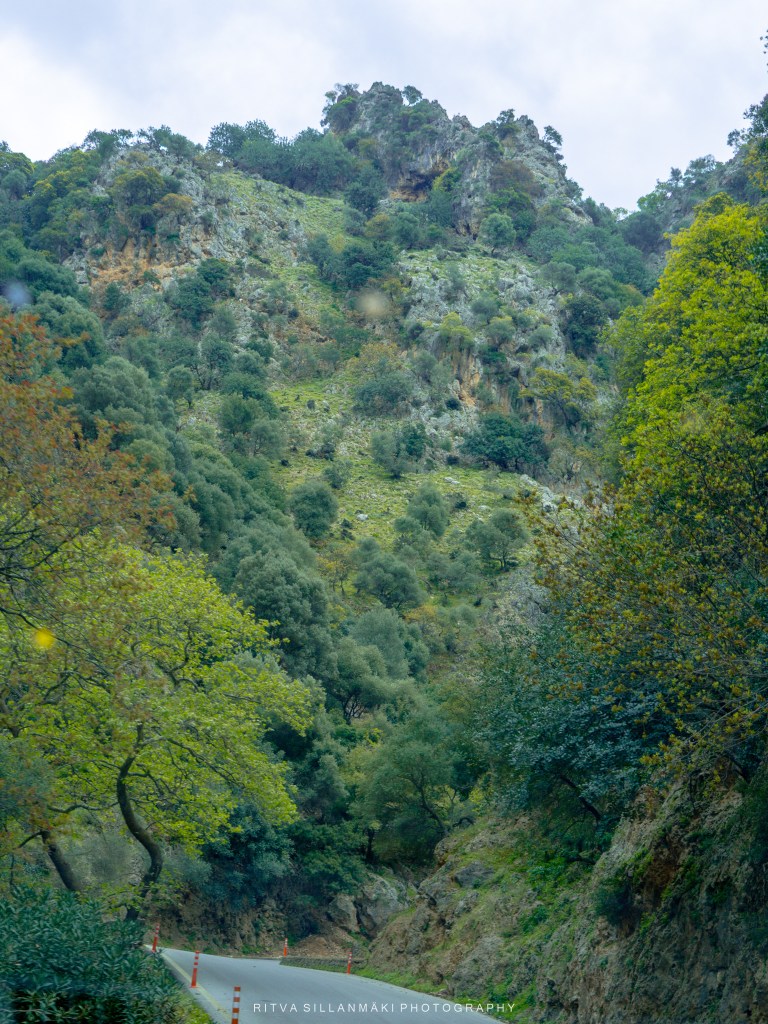
The color green offers a variety of meanings, symbolizing growth and representing nature, environmental concerns, naivety, envy, and wealth. Its interpretations can differ across cultures, symbolizing prosperity in some and illness in others.
A lush spring, mountainous landscape. The surrounding hillside is densely covered with a variety of green trees and shrubs
Historically tied to royalty due to the steep cost of its dye, purple is an elite color that lends a regal air to your photographs.
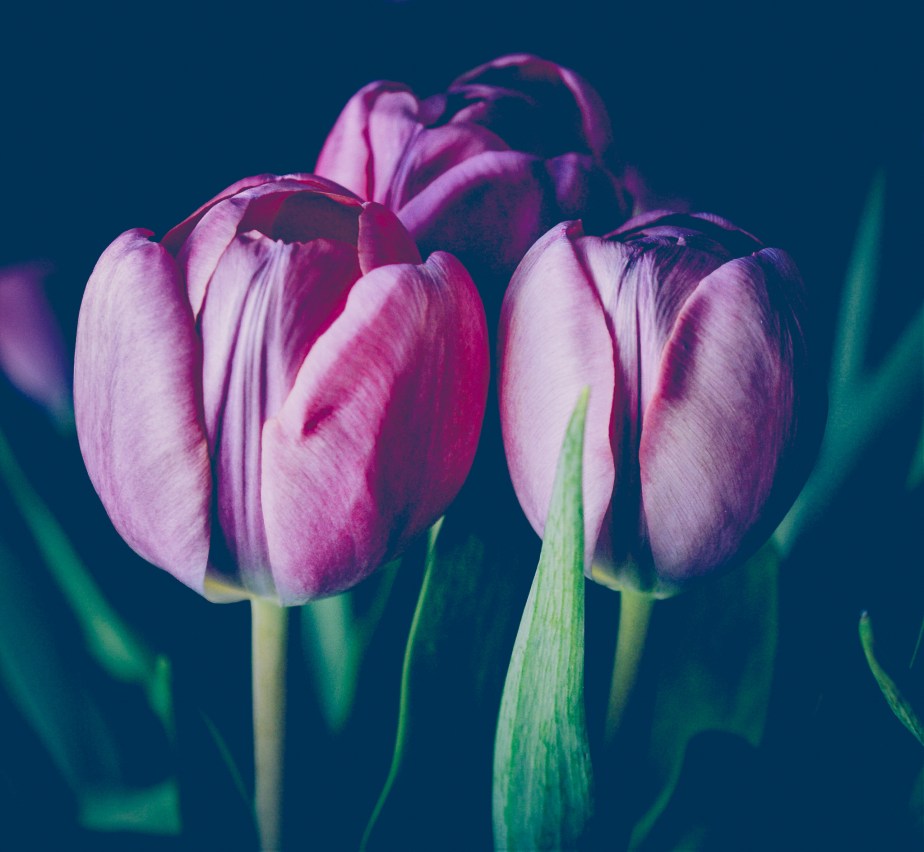
Purple tulips symbolize royalty, admiration, and deep respect. They are often associated with nobility and elegance, making them a meaningful gift.
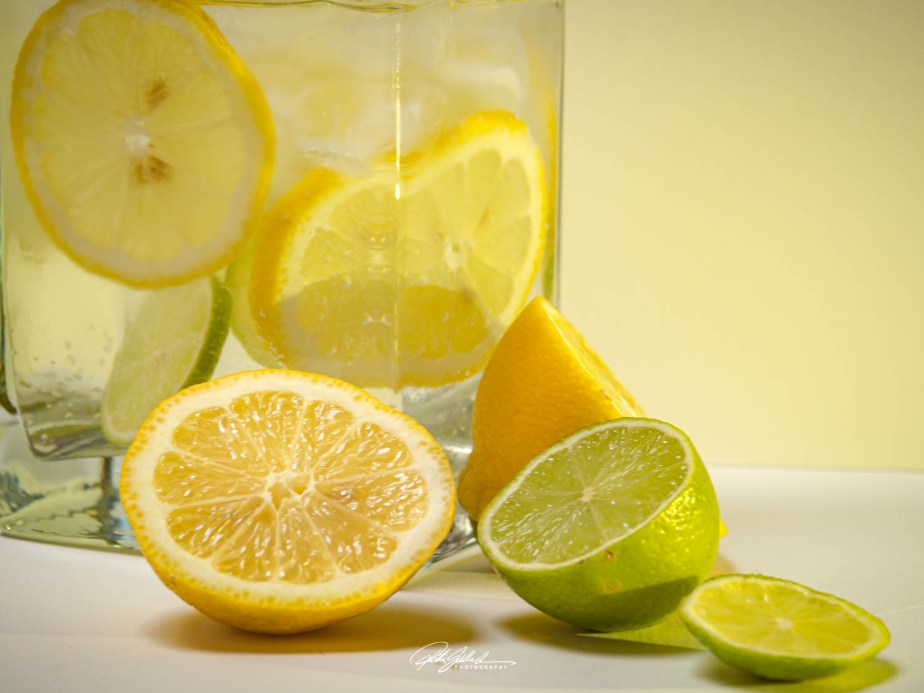
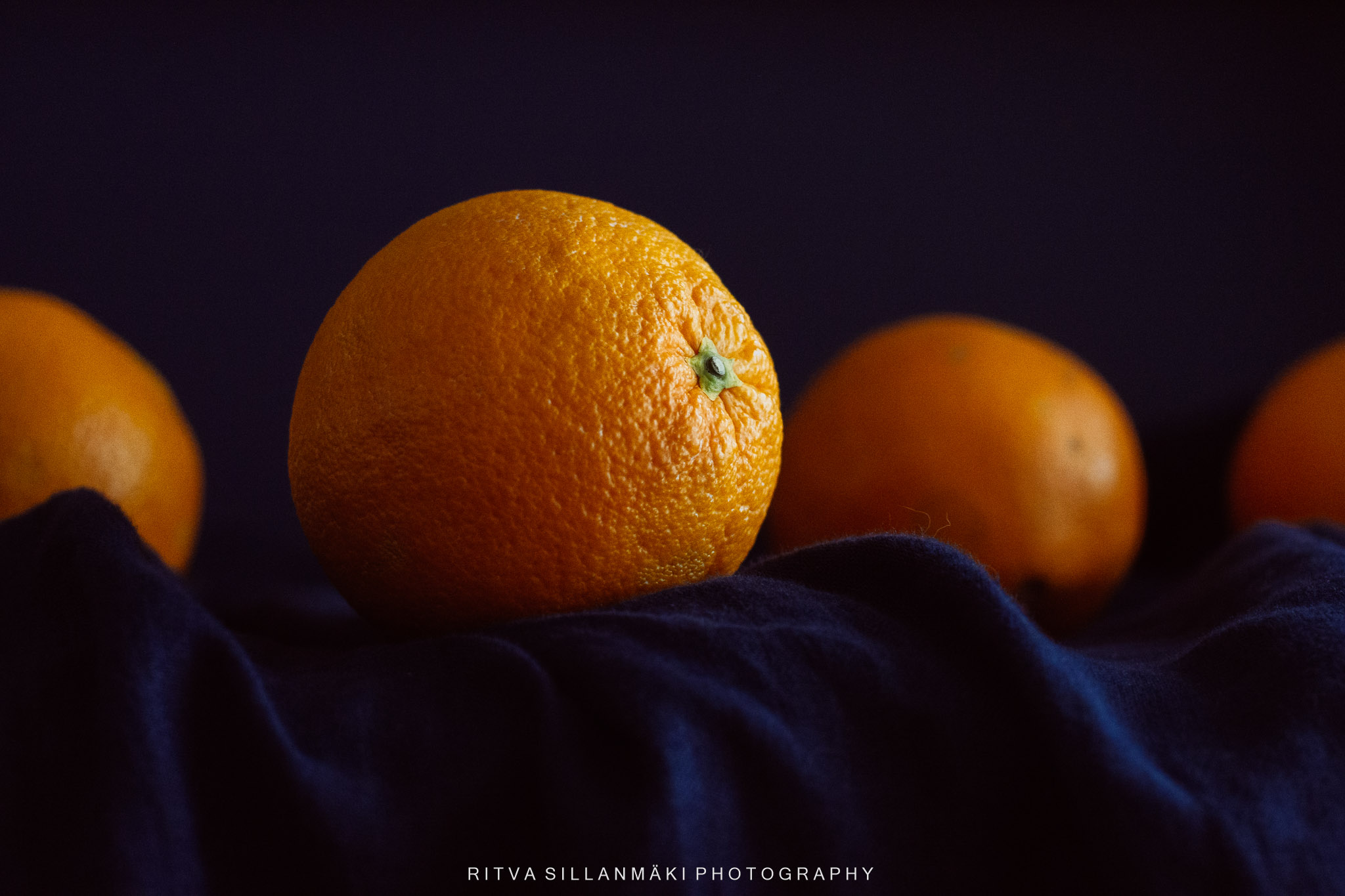
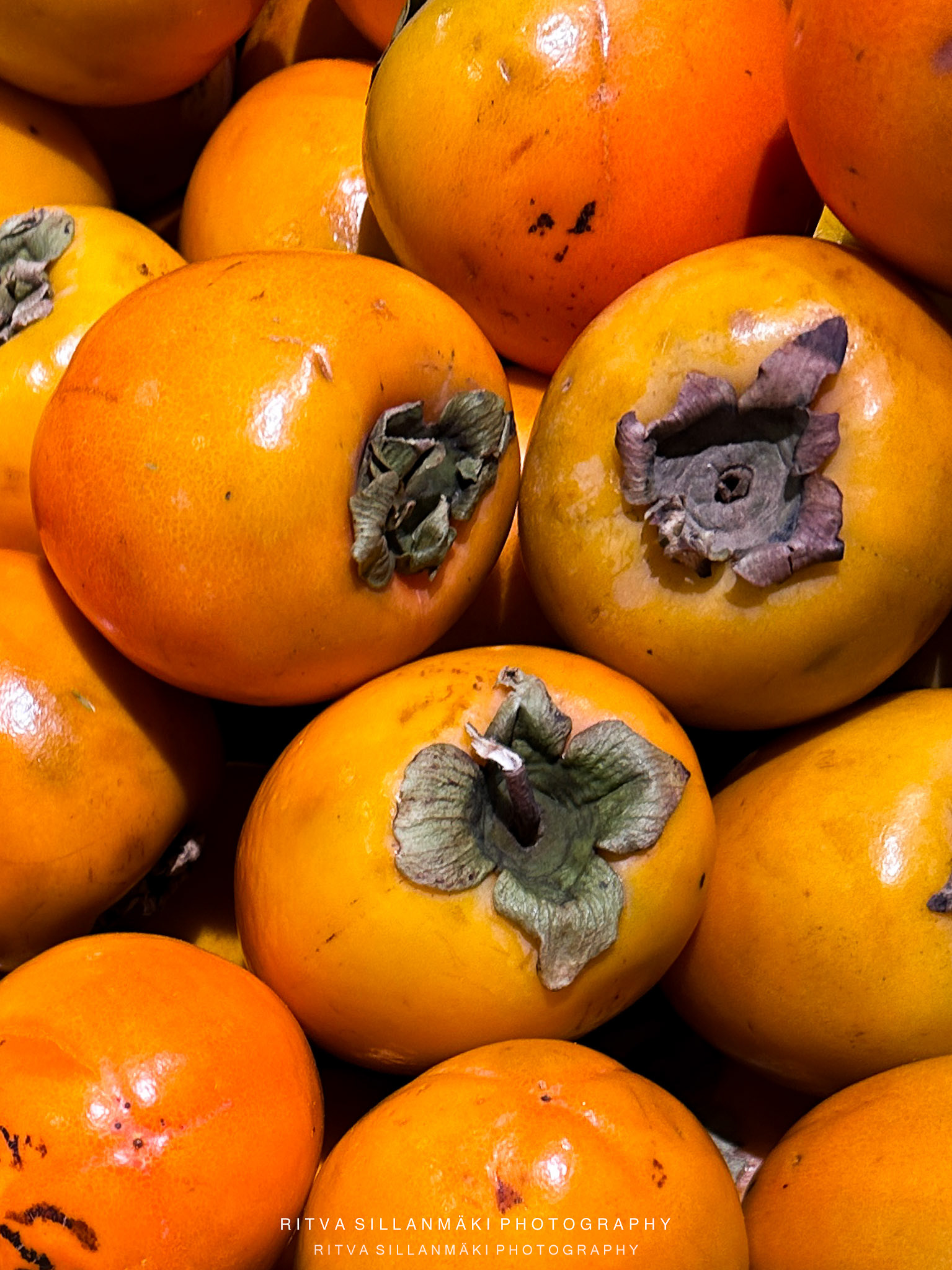
Orange, named after the fruit, signifies vitality and warmth, appearing gentler than red, which can symbolize anger. It exudes cheerfulness and approachability while still attracting notice, evident in its frequent use for warning signs.
A vibrant concert scene with orange lights, confetti, and cheering hands illuminating the excitement of the moment. The overall atmosphere is festive and electrifying .
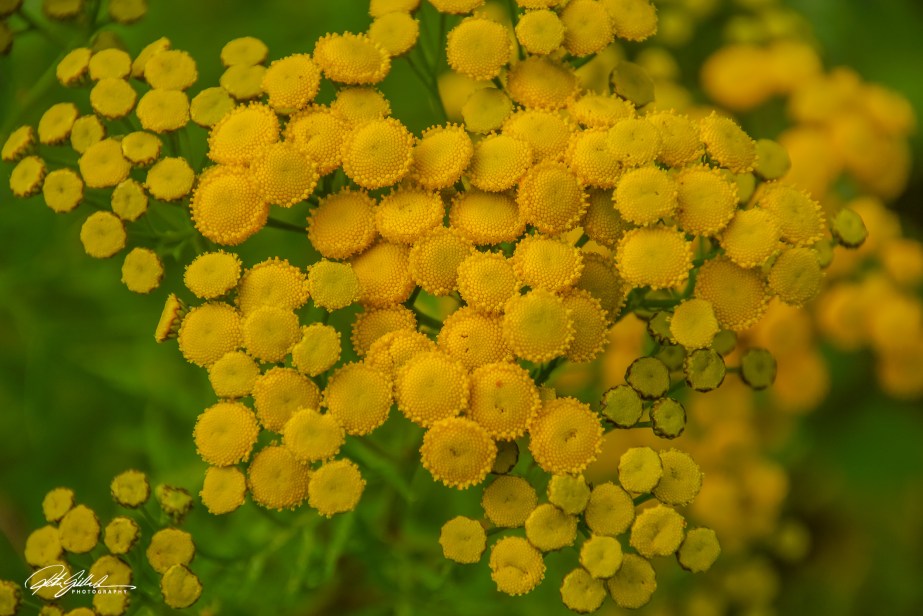
Yellow embodies both happiness and negativity, presenting opposing connotations; it signifies joy and optimism but also suggests cowardice, deceit, and aging.
A vibrant cluster of yellow flowers, showcasing the cheerful and warm qualities associated with the color.
Here is a quick guidance to colors start you off.
Finding triadic colors in nature involves practice and observation, exemplified by the Scarlet Macaw. A triadic scheme comprises a subject color and two complementary colors, like Orange, Teal, and Pink, or Red, Blue, and Yellow, which is beneficial in food and product design.
Ambiguous colors are hues lacking clear definitions, changing based on context and evoking various interpretations and emotions in art and design.
The traditional color wheel includes primary (red, blue, yellow), secondary (green, violet, orange), and tertiary colors formed by mixing them. Colors can be categorized into cool, associated with water and grass, and warm, linked to fire and sun. Warm colors can evoke feelings of anger, happiness, and excitement, while cool colors promote soothing and calming effects.
A huge thank you to Anne for the Texture challenge last week! The diversity of textures in your posts provided us with a wealth of inspiration for the future. Next week, it will be Egídio’s turn to lead us, so make sure to visit his site for more creative ideas.
Please see this page for more information about the Lens-Artists Challenge and its history. If you don’t want to miss any future challenges, please consider subscribing to the team members’ websites.
This week, Anne is our guide with a a very textured challenge: Texture! She tells us that texture really adds that visual kick to a surface—think of how rough, smooth, gritty, or soft something looks in a flat image. Check out her amazing site for some awesome tips!
Sharing colorful and tasty textures to start with…enjoy! Click on the galleries to enlarge them, if you are looking at the photos on a computer.
This set I took with my iPhone a few days ago while I was sitting on my patio, enjoying the warm sun day. As I pondered what to post, I looked around, taking in the surroundings of my garden, looking for textures. And to be honest everything is textured. Inspired by some of the things around me, I snapped a few shots, . Afterward, I went inside to find a few more images to contrast with the shots I took, hoping to curate a selection that would better resonate with this challenge.
We’d love to see your images that highlight texture! You might be surprised by how many you actually have. When you post, don’t forget to link back to Anne’s original post and add the Lens-Artists tag.
Last week I had great fun seeing your pairings with pictures and quotes! Many I had never seen before and many recognized but with new surprising combos. Thanks you to all who participated! Next week I will be presenting the challenge. I hope you will join me.
If you don’t want to miss any future challenges, please consider subscribing to the team members’ websites. Here we are, The Lens-Artists: Tina, Patti, Ann-Christine, John, Sofia, Anne, Egidio, Beth, and I Ritva.
Until then, let’s keep exploring, broadening our horizons, and maintaining a positive mindset !
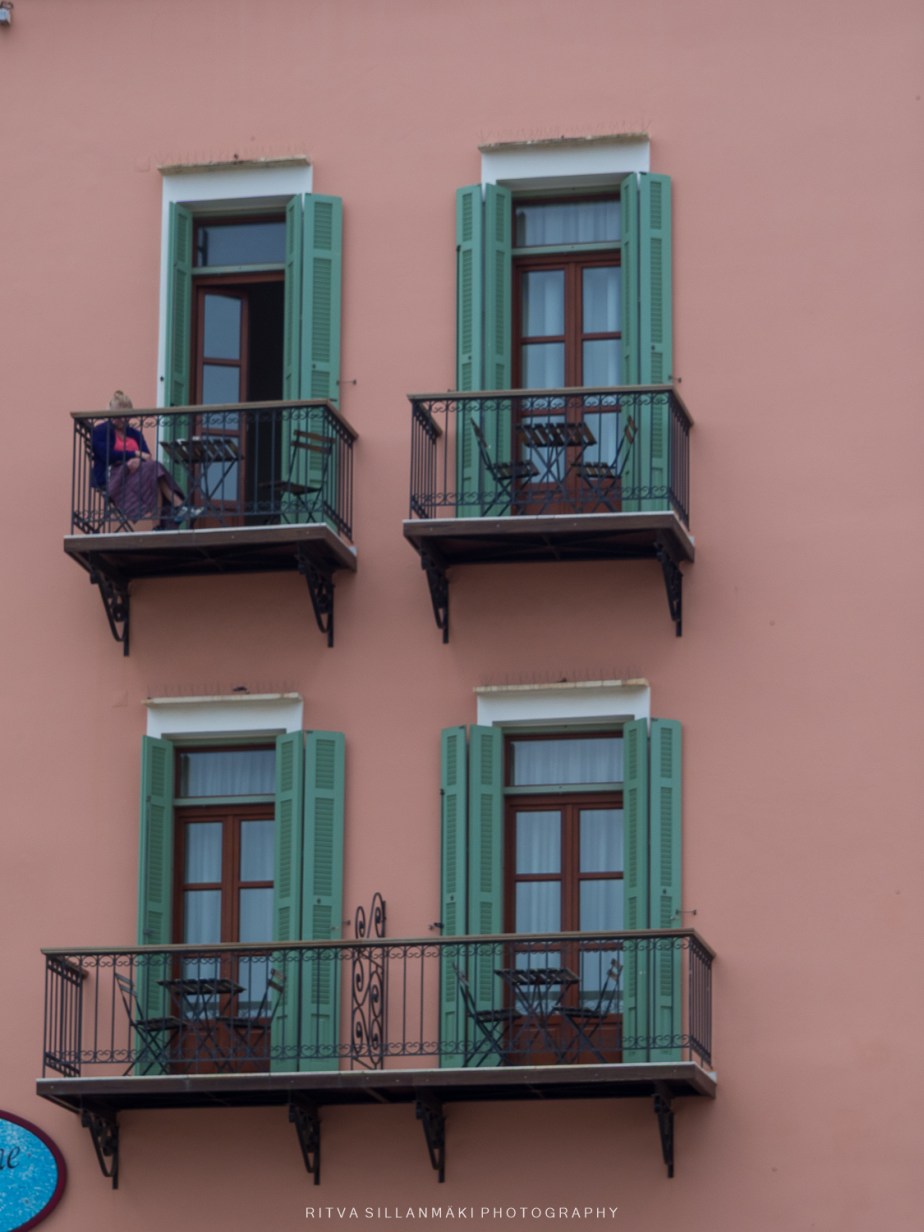
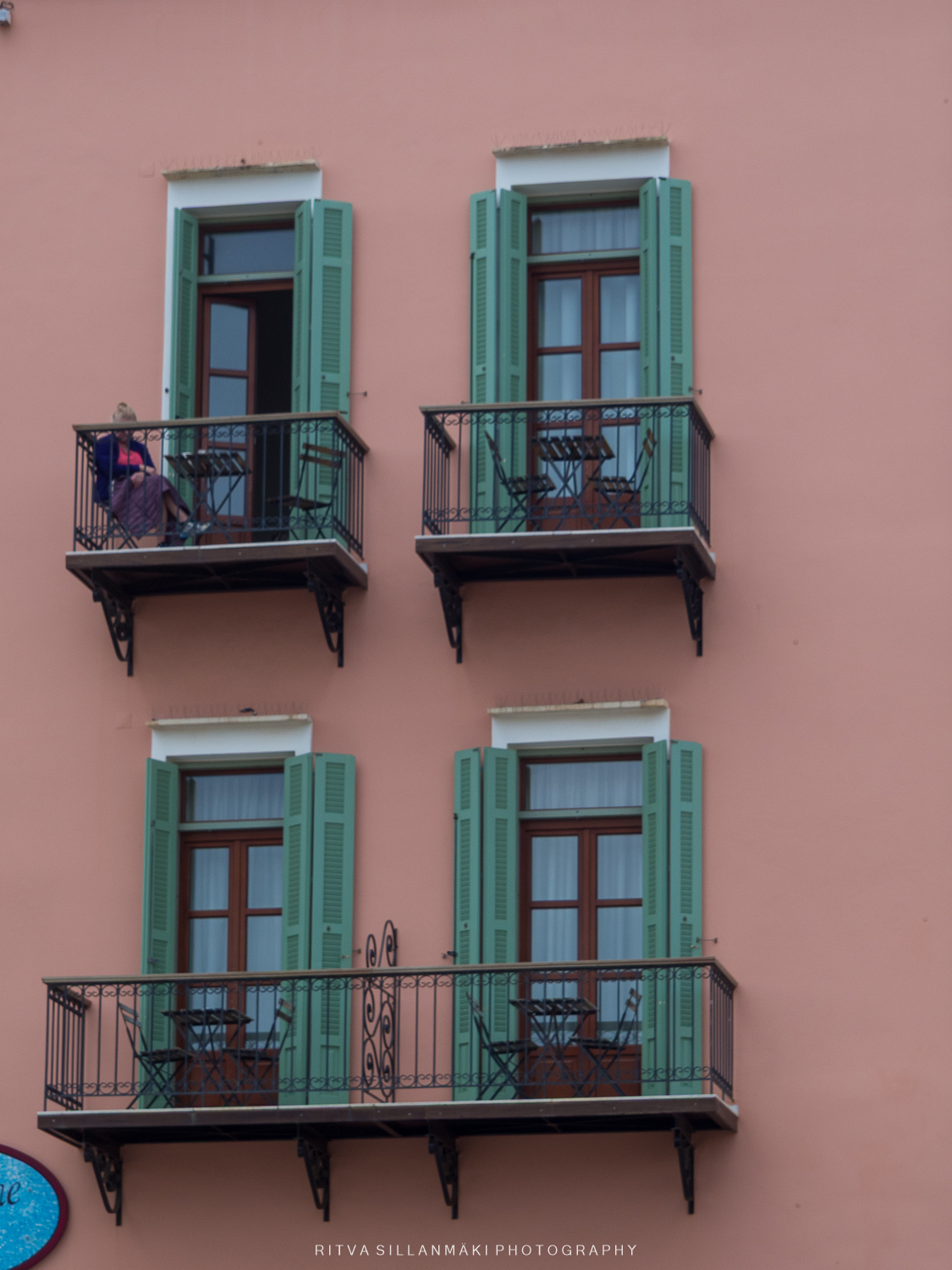
I came across the cutest pastel pink building facade in Chania Port for my Monday Window! It has these four charming windows framed by vibrant green shutters, all nicely arranged in two uplifting rows. Each window leads to a delightful little balcony with wrought iron railings that give it an elegant touch. I couldn’t help but notice a cheerful table and chairs set up there—just perfect for soaking up the sun! I even spotted a single person on the upper left balcony, dressed in lively colors, which added a joyful vibe to the peaceful, symmetrical scene. The soft natural light made everything pop, especially the lovely contrast between the pink wall and the green shutters.
Sofia is in search for our – Lucky Shots. Just like her my photography is largely influenced by chance. For me, I’d estimate that around 80% of it hinges on either the moment of capture or the editing process. This week, the request is to explore how that element of luck often results in our most remarkable images. Whether it’s being in the right spot at the right time, having faith in your camera, or experiencing pure serendipity, these unexpected moments create the types of shots that brighten our day.
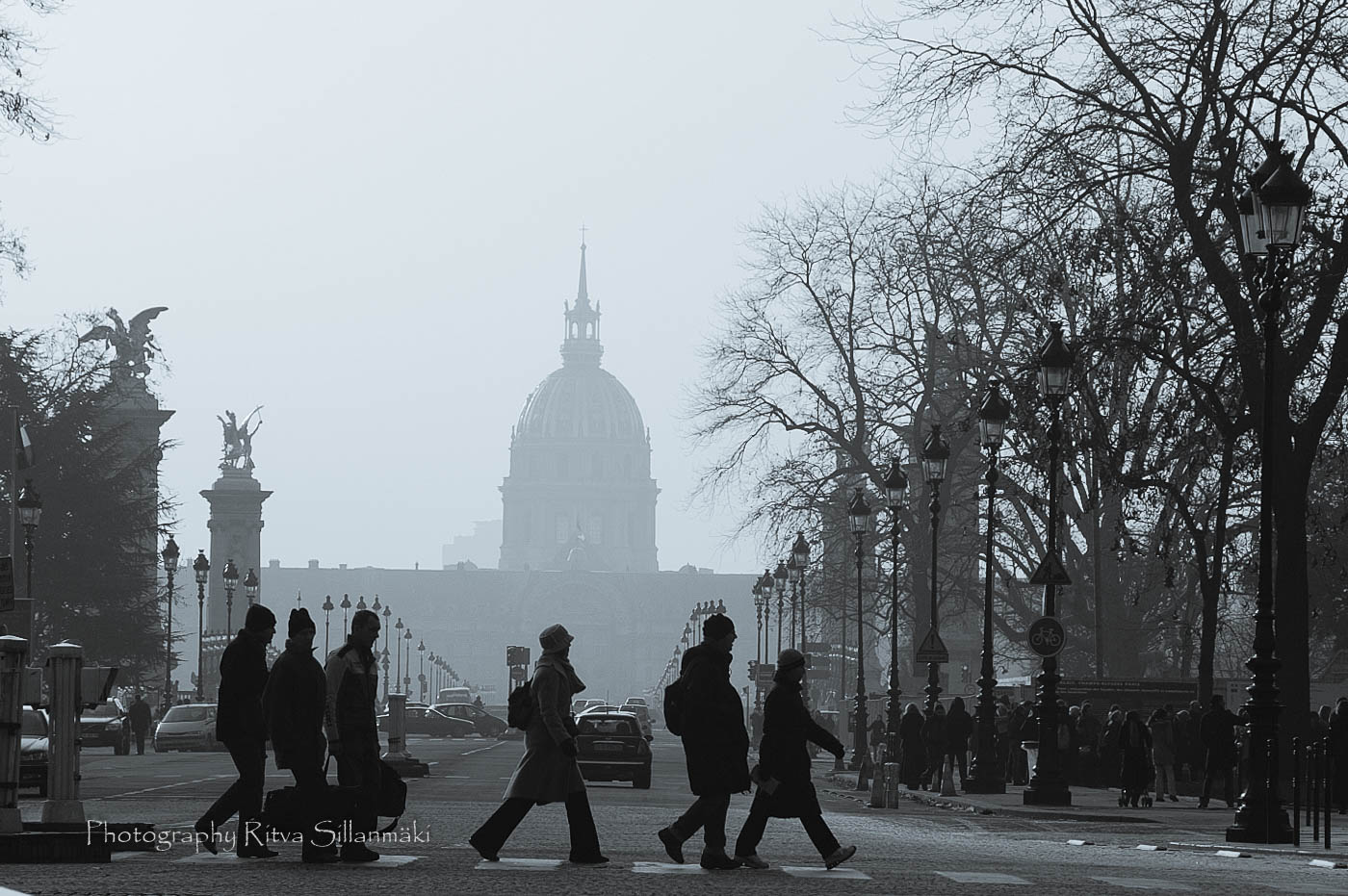
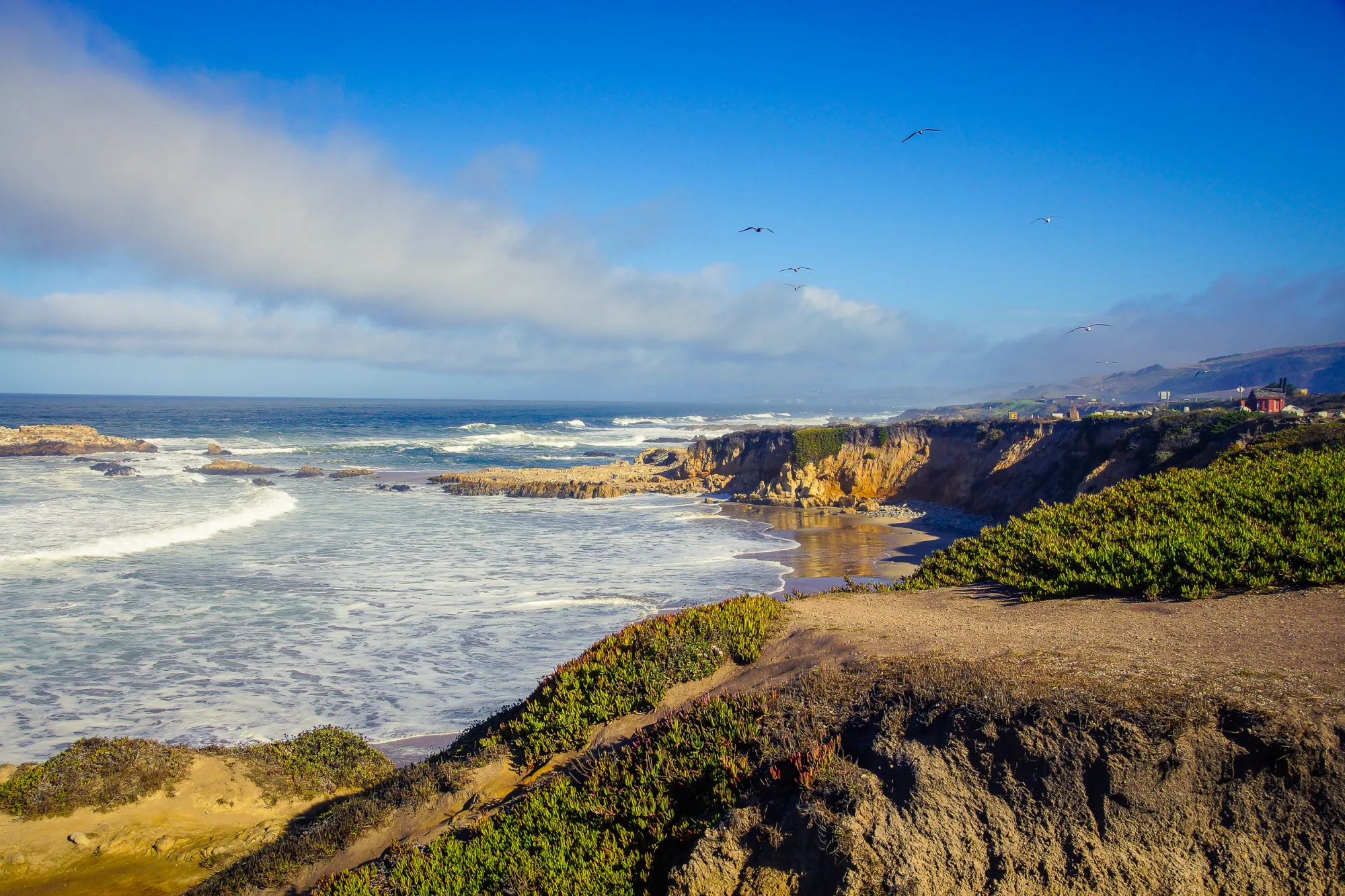
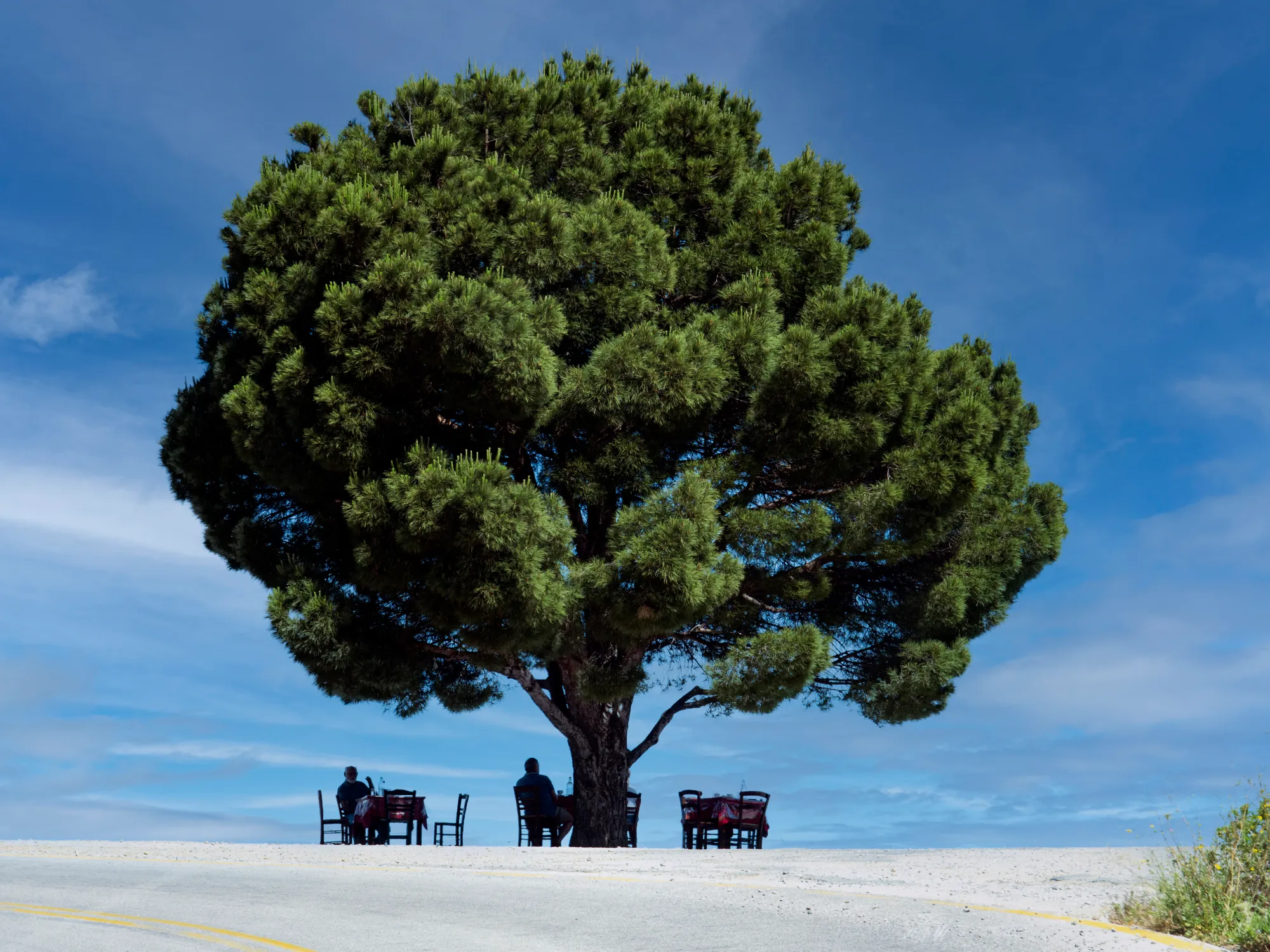
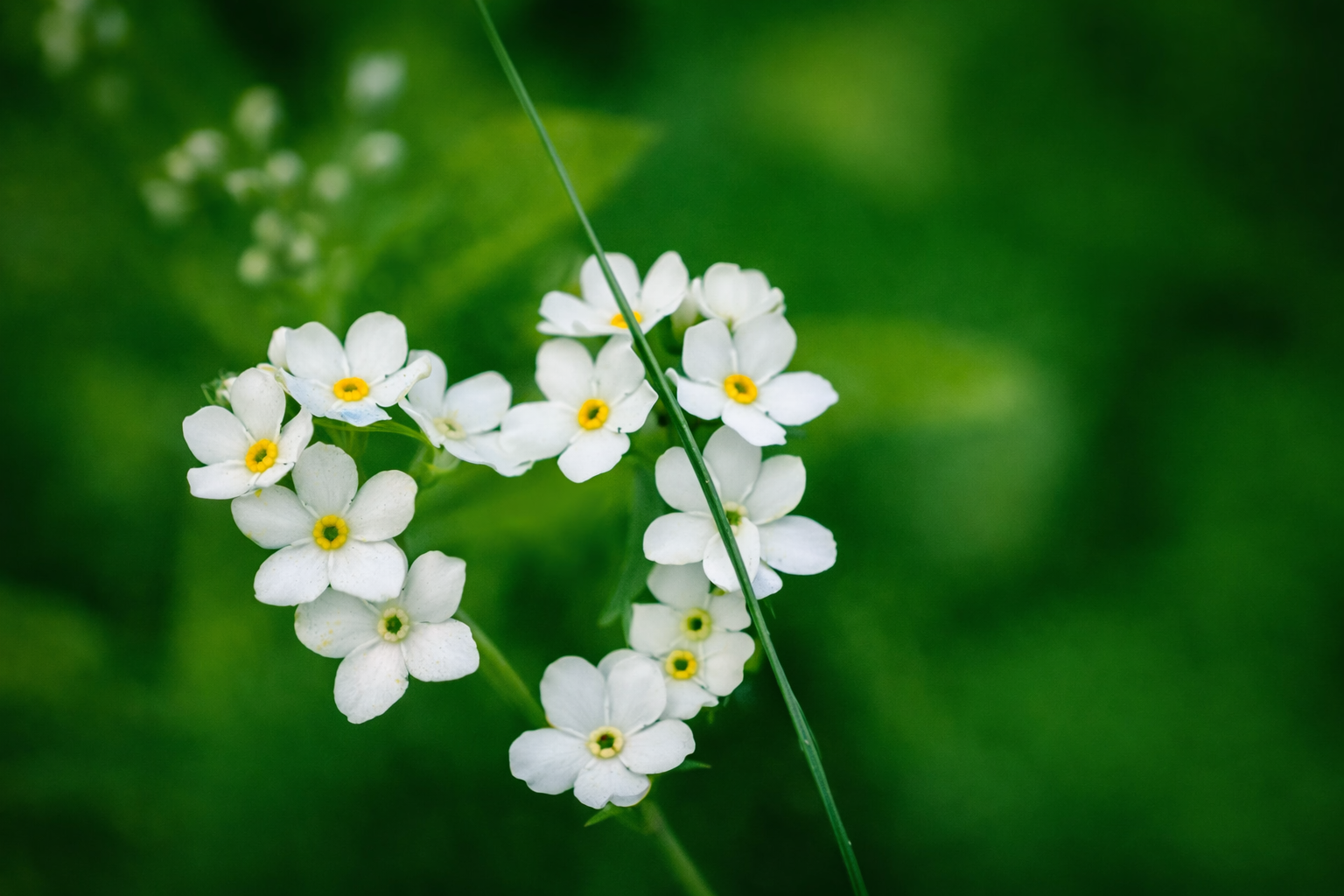
A black and white photograph captures a group of six people crossing a street on a pedestrian crosswalk in Paris an urban setting. The figures are silhouetted against a misty backdrop, emphasizing their winter clothing and motion. The street is lined with tall, ornate lamp posts, and bare trees frame the scene on both sides. In the distance, a large classical dome-shaped building with a spire emerges through the haze, adding an atmospheric historical context to the image. This image is a quick click and I have always liked it – it somehow speaks to meThe image captures a breathtaking sunset over the ocean in Negombo in Sri Lanka, with the sun low on the horizon casting a warm, golden glow across the sky and water. Gentle waves roll towards the shore, reflecting the rich hues of orange, yellow, and hints of purple in the fading light. I was so lucky to capture the man silhouetted against the vibrant sunset engaged in kite surfing, suspended mid-air, creating a dynamic contrast to the serene natural setting. The scene evokes a sense of freedom and adventure amidst the tranquility of the evening sea.One lucky morning walk to the lake in September 2017 – Lake Ruuhijärvi. A scene during autumn the tall trees adorned in vibrant shades of orange and yellow leaves. The sunlight gently filters through the foliage, casting a warm golden glow across the landscape. In the foreground, a calm body of water reflects the colorful trees, enhancing the tranquil atmosphere. The overall composition conveys a peaceful and contemplative mood, highlighting the natural beauty of fall. A scenic coastal landscape in Northern California rugged cliffs and a sandy beach with waves gently washing ashore. The foreground shows earthy, textured soil and lush green shrubbery covering parts of the cliffs, while the ocean extends into the distance under a bright blue sky. Several seagulls are seen flying above the water, adding life to the tranquil scene. The horizon blends soft clouds with clear skies, creating a peaceful and natural atmosphere and that is what I love and this has such a holiday fibe to me.The image captures a large, lush green tree standing prominently against a backdrop of a clear blue sky with soft clouds in Crete. Beneath the tree, several chairs and tables are arranged, some occupied by a few people who appear to be seated comfortably in the shade. The ground is light-colored, sandy, and the scene conveys a peaceful, coffee moment. A road curve is visible in the foreground, adding depth and framing the natural and human-made elements harmoniously. I was once again taking macro shots of these flowers and lucky me. I was so happy to see this small cluster of delicate white forget me not flowers with yellow centers arranged in a heart shaped formation. I The flowers stand out sharply against a lush green background, which is softly blurred to emphasize the blossoms. A single blade of grass crosses over the flowers diagonally, adding a natural and dynamic element to the composition. The overall mood is fresh, highlighting the simple beauty of nature in spring, early summer
The last one is lucky in many ways 😊so I set it as the featured image.
The Piedras Blancas Rookery is the only elephant seal rookery in the world that is easily accessible, in San Simeon on Highway 1. we by accident came across it. I was able to capture a large group of elephant seals is seen resting closely together on a sandy beach. The seals vary in shades from light gray to dark brown, with pronounced textures on their skin showing natural folds and wrinkles. One seal in the center raises a flipper toward its head, luckily I caught it, adding a touch of individuality to the otherwise uniform cluster of animals.
How wonderful it is to capture the shot of your dreams when all you had to do was press the button and let luck take care of the rest. I don’t know if these are the luckiest shots, but I do like them a lot. I hope you enjoy reminiscing about those fortunate moments and share them with us. Don’t forget to link back to Sofia’s post and tag Lens-Artists, so we can all discover your work easily in the Reader.
Last week Patti’s challenged focused on working with the three grounds as compositional tools and it was great to see your takes on this theme. John returns with our next challenge on Saturday, April 18th at noon EST. Until then, let’s keep exploring, broadening our horizons, and maintaining a positive mindset.
Please see this page for more information about the Lens-Artists Challenge and its history. If you don’t want to miss any future challenges, please consider subscribing to the team members’ websites.
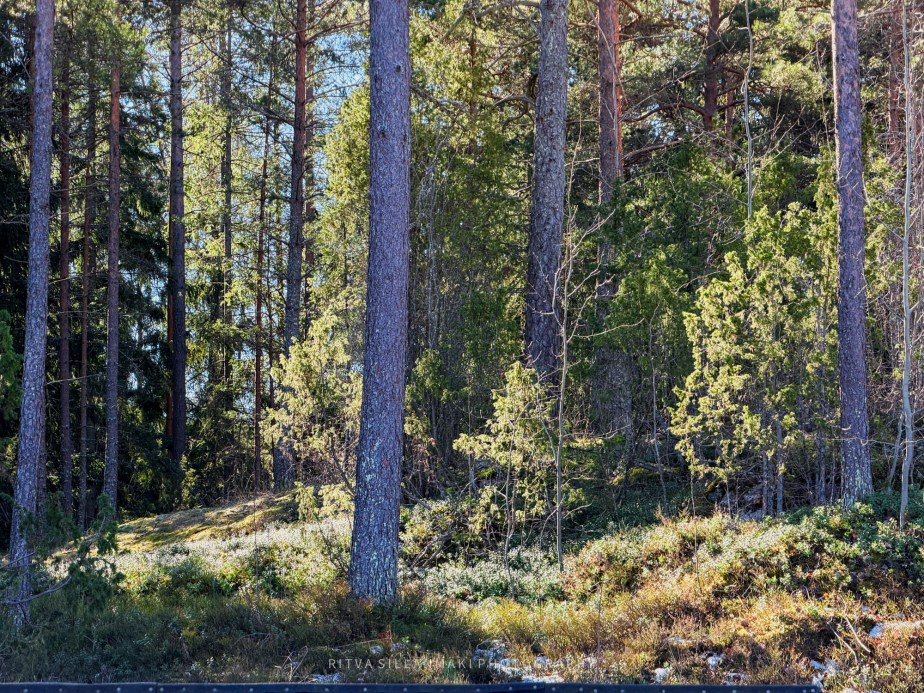
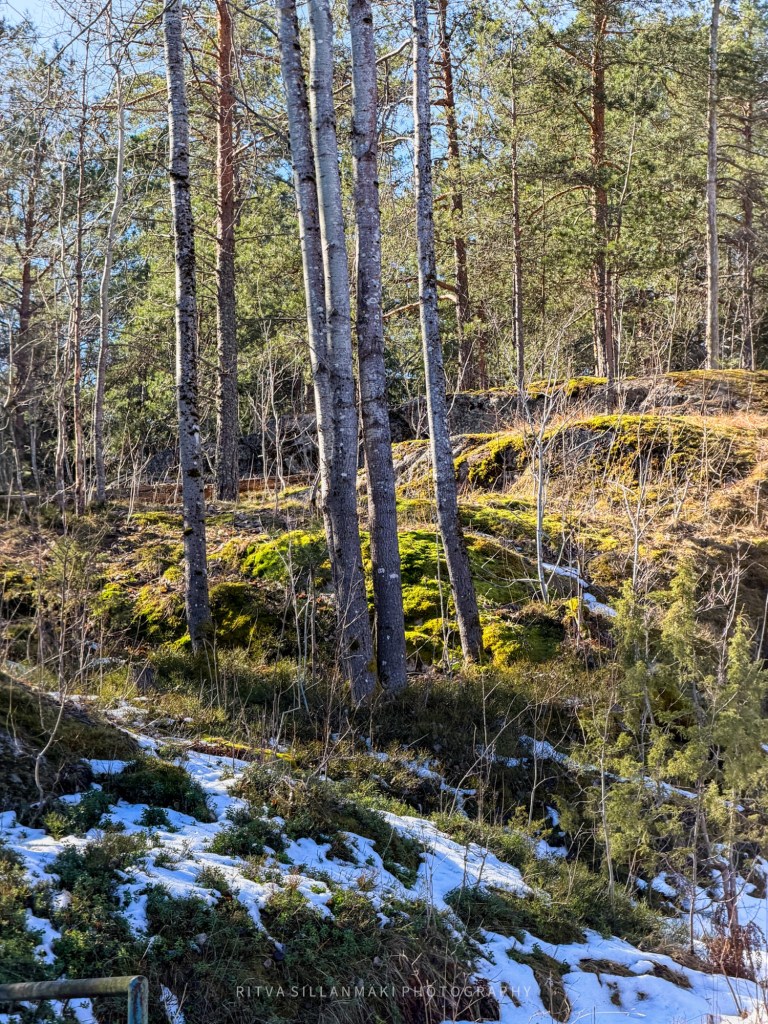
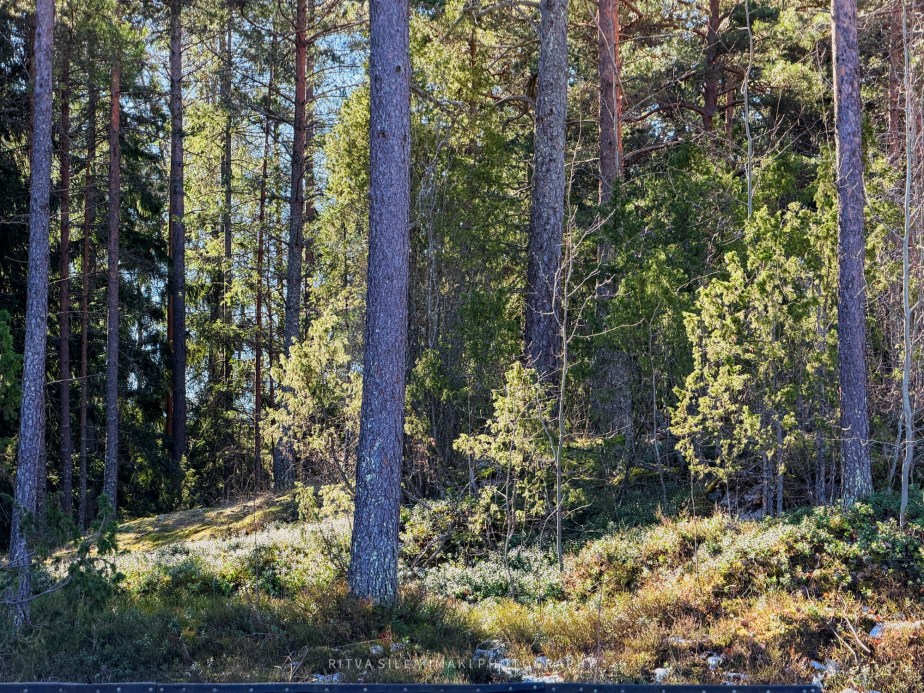
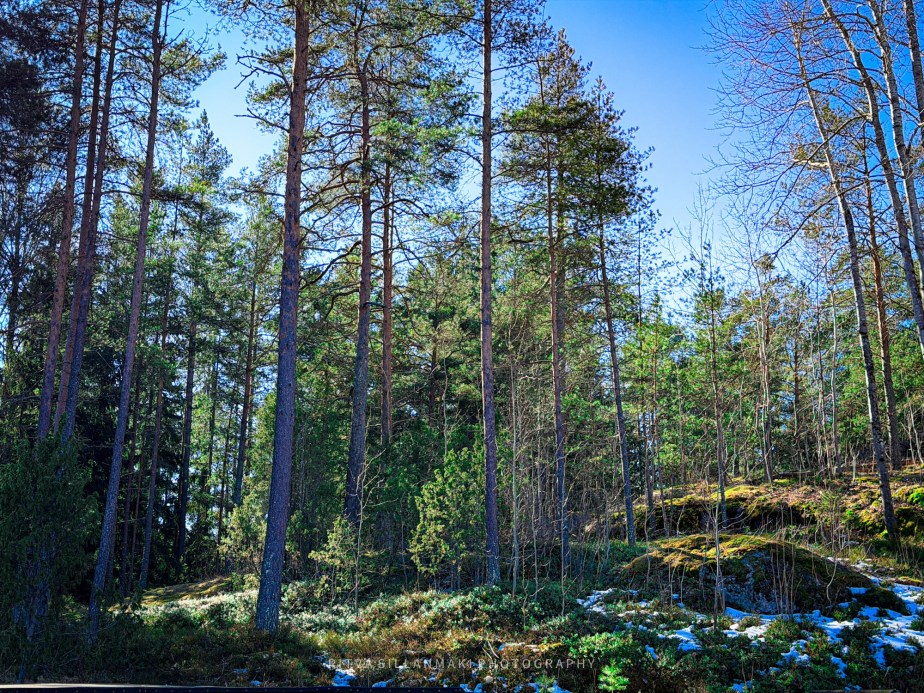
I took these yesterday as I watched the snow melt on the hill behind my backyard. I was able to sit outside as our patio is such that the house safeguards us from the wind. Am I happy to see the green emerging- the moss is so bright.
A forest scene featuring tall trees with bare branches and vibrant green foliage. The ground is covered with patches of snow and moss, highlighting the transition between seasons.
A serene forest scene featuring tall pine trees and dense greenery, with underbrush and sunlight filtering through the foliage.
A view of trees with vibrant greenery, the essence of spring.