I have to say, I really adore this photo; it has such a tranquil and gentle feel to it. It is from our trip to Norway in Sommarøy. As you might know, I enjoy editing, and this image has all the elements I love to work with, transforming it from serene to somewhat eerie. I can play with the clouds, adjust the contrast between light and darkness, and shift from soft colors to vivid tones. I even like to experiment with monochrome and deep black-and-white effects.
A tranquil coastal scene from Norway shows traditional red wooden boathouses standing on stilts above pale turquoise water. The buildings have weathered gray metal roofs, while the boathouse on the right is topped with a vivid green grass roof and bordered by rocky shoreline and tall grasses. Low islands and small distant boats sit beneath a dramatic overcast sky, creating a cool, quiet maritime atmosphere with soft natural light.
Red stilted boathouses line a quiet, misty shoreline beneath a dramatic gray sky – first edit
Red coastal boathouses stand on stilts above calm turquoise water beneath a dramatic overcast sky. – I enhances the colors, clarity and sky for the second edit
This image feels so chill with its muted, almost monochrome vibes. The buildings’ soft red siding is like the only splash of warmth popping against that hazy gray sky and silvery water. The overcast light gives it this dreamy, soft focus look, and those gentle ripples really amp up the peaceful, secluded vibe. Plus, the low vegetation and the distant land give it some nice depth in the background, making it even more inviting. I love how the editing brings it all together, giving a sense of calm that just makes you want to stay a while.
Red stilted boathouses line a quiet, misty shoreline beneath a dramatic gray sky.
An edited moody black-and-white coastal scene transforms the original view of weathered wooden boathouses . The heavy storm clouds now loom even more dramatically in the sky, enhancing the contrast and evoking a profound sense of isolation over the expansive, rippling water. This impactful editing elevates the emotional atmosphere, allowing the viewer to experience the quiet intensity of the landscape in a new light.
Weathered boathouses stand along a calm shoreline beneath a dramatic, cloud-filled sky.
A color version of the ominous storm clouds gather in the sky, casting a dark shadow over the jagged shorelines and the distant, ghostly islands on the horizon. A desolate sandy forefield, bordered by swaying reeds, enhances the sense of isolation, enveloping the scene in a heavy, melancholic maritime atmosphere. How about this edit?
Red waterfront boathouses stand along a quiet shoreline beneath a dramatic, stormy sky.
Now I am done with this image, and I would love to see which one you preferred and maybe even tell me why. Your feedback is invaluable to me, I am eager to hear about the aspects that resonated with you, whether it was the color scheme, the composition, or the overall vibe. Your insights are very much appreciated.
Henri Cartier-Bresson said that a photographer is continually shaping and changing his or her perspective to create a capture, but at the speed of a reflex action.
I opted to revisit Tina for her captivating “One Photo Two Ways” challenge, which was originally posted on June 26, 2021.
I am incorporating quotes from the original post because they perfectly resonate with this challenge, starting with the same quote that Tina used in her inspiring piece. This is an editing challenge, and for those who have followed my journey, you know how much I enjoy the editing process.
“Photography is as much about what is left out of the frame as it is about what the photographer keeps inside the frame.”Daryl Oh
Cropping
I rarely crop or edit my landscape photographs; I find it more important to concentrate on framing to convey my message. Nevertheless, I do occasionally make minor tweaks. I enjoy composing my images as I capture them, which often includes leveling or correcting verticals. Cropping is an useful and powerful way to highlight your subject and composition.
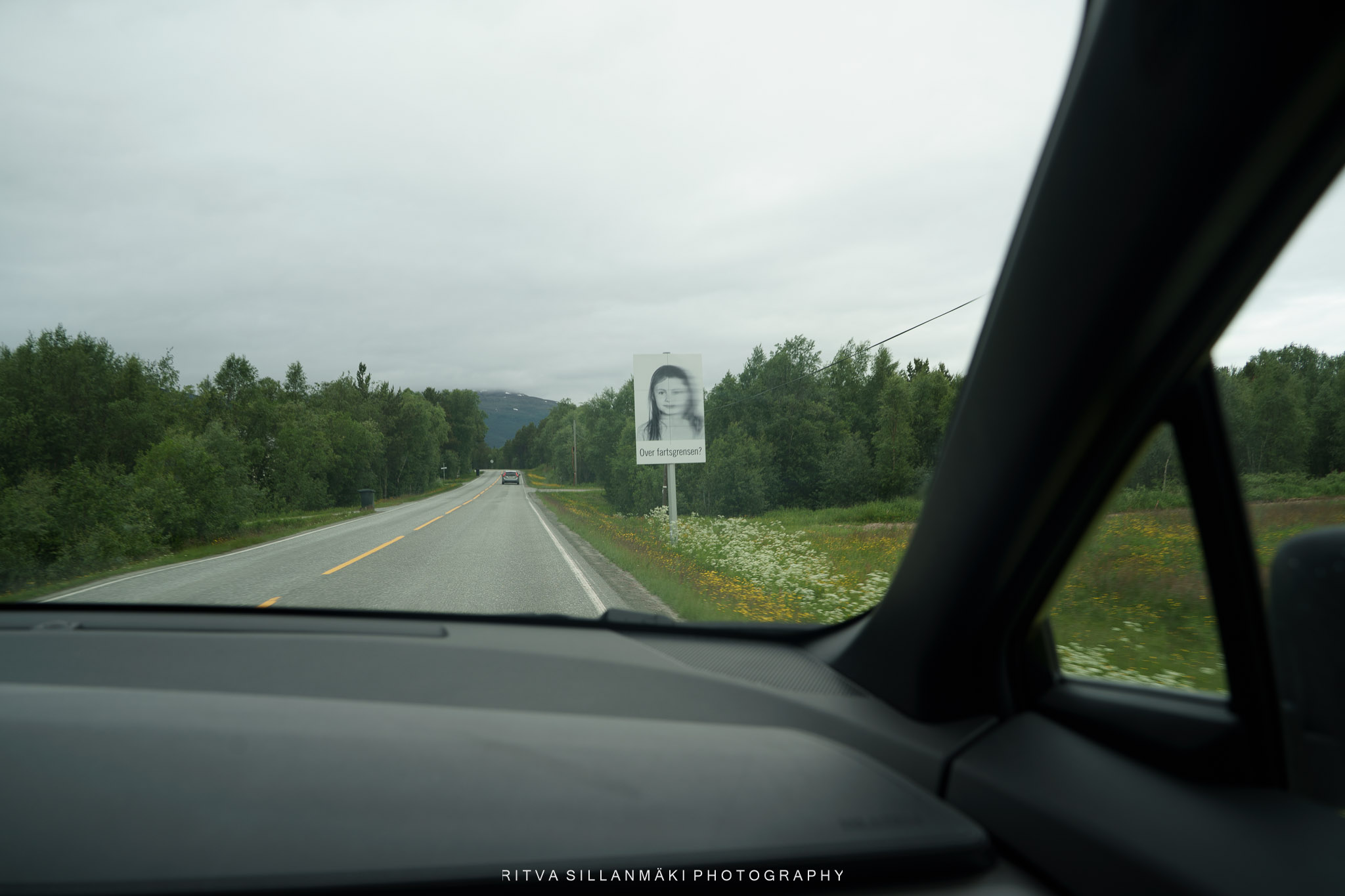
I trimmed the image below quite a bit to highlight the elements I want to emphasize. I’ve darkened the sky to create a gloomier atmosphere and brightened the trees to emphasize the leading line. Additionally, I enhanced the sign to make it stand out as the focal point of the shot. These types of edits are standard for me, as I perceive editing as a means to express my perspective. #1
This is an advertisement for a traffic safety campaign by the Norwegian Public Roads Administration (The text on the sign, “Over fartsgrensen?”, means “Speeding?”. The distortion of the face in the image illustrates how speed can alter a person’s perception and life irreversibly. A reminder of the human costs of speeding.
Black and white conversion
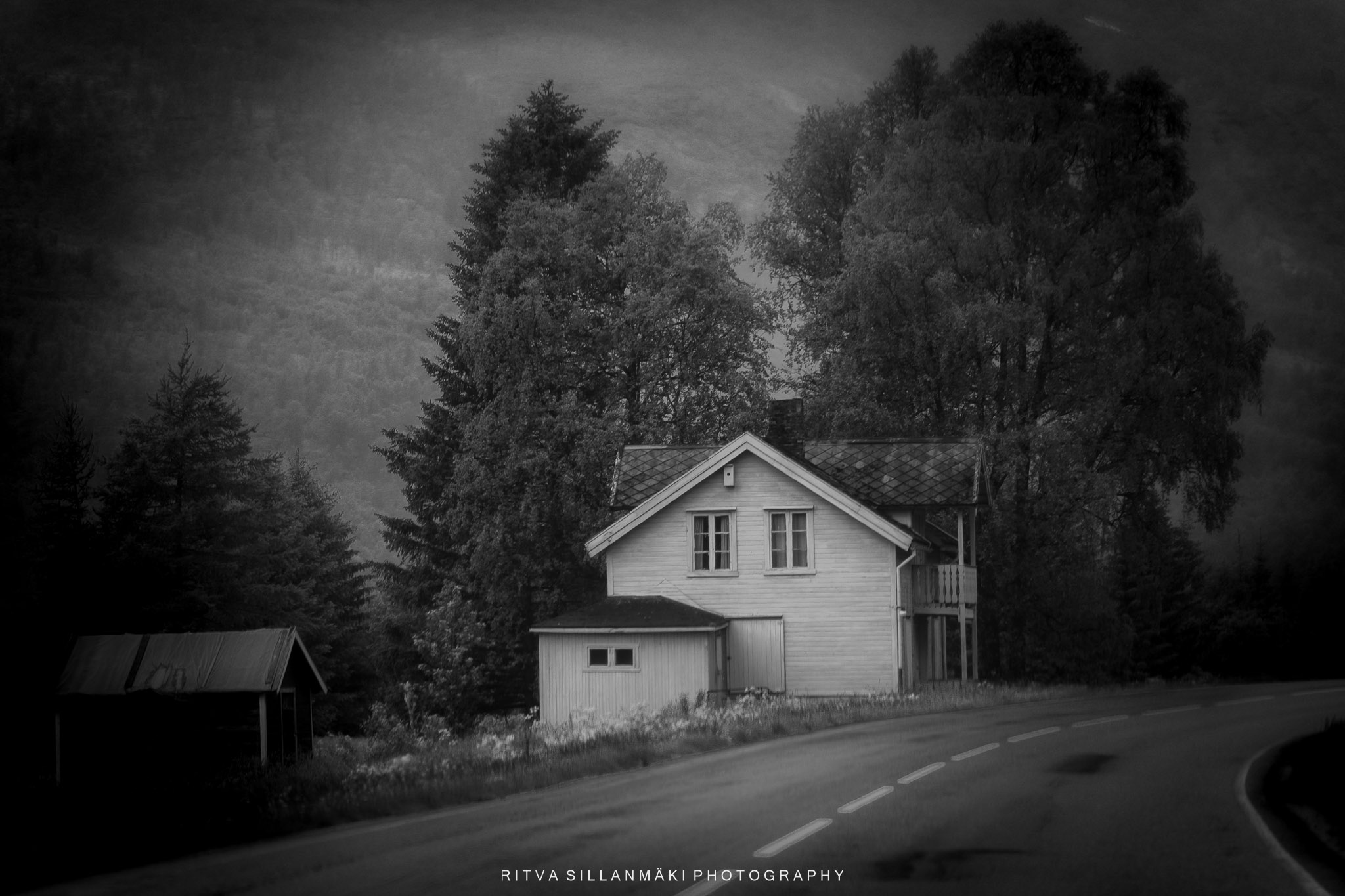
Monochrome / Black and white photography is something I really love. It holds a unique charm that transcends the complexities of color, allowing the viewer to focus on the stark contrasts and intricate details that might otherwise be overlooked. Here I have used the masking tool to get this result, isolating certain elements to enhance their impact and draw attention to the play of light and shadow. The subtleties of texture and form come to life in ways that evoke a range of emotions, inviting viewers to interpret the scene from their own perspective. Through this technique, I aim to not only capture moments but also convey the essence of the subject in a pure, stripped-down manner. #2
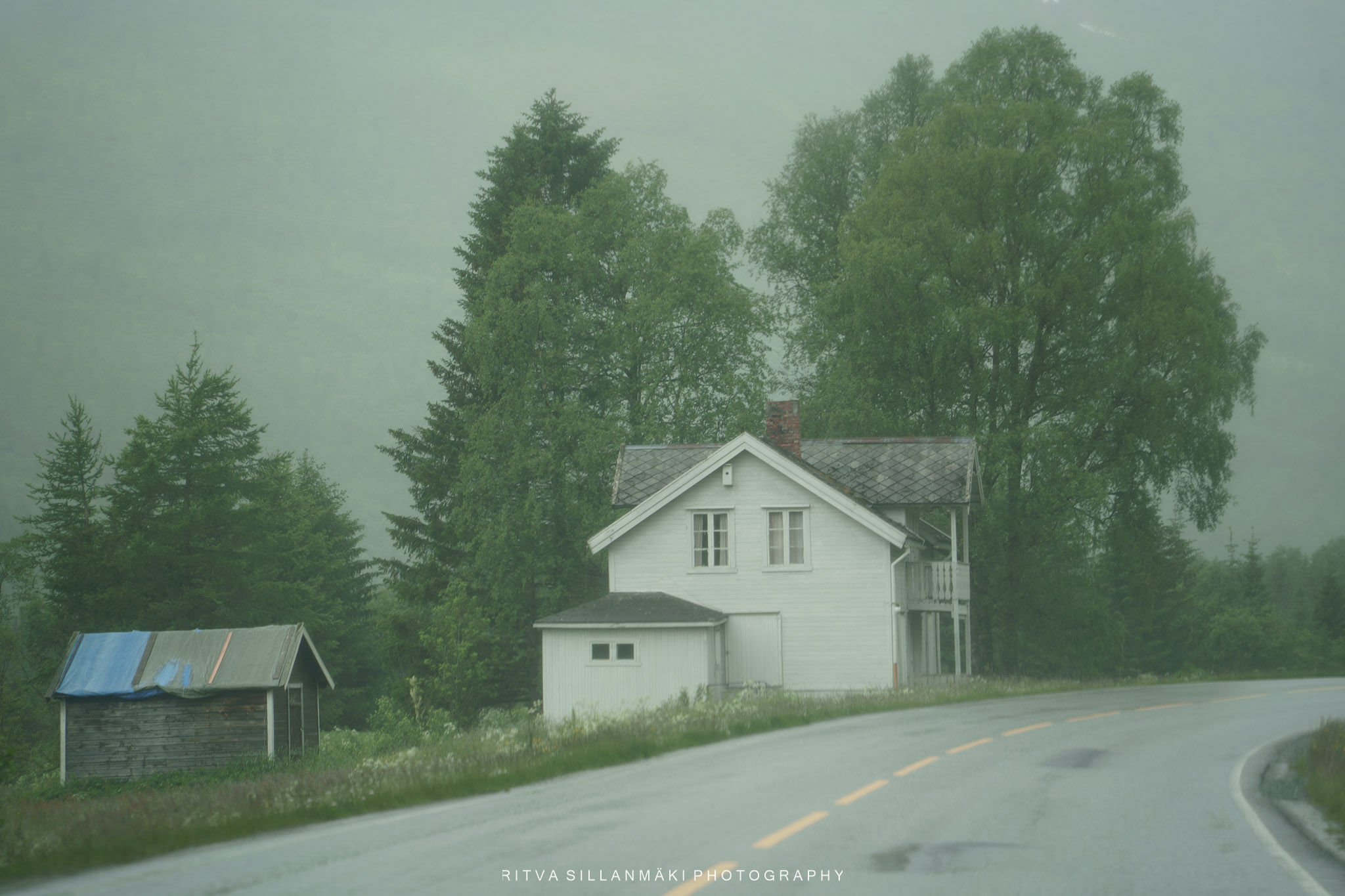
A quaint, two-story house nestled among tall, dense trees. The house has pitched roof with visible shingles and a small attached structure on the side. In the foreground, a winding road curves past the house. The mood is calm and nostalgic, enhanced by the monochromatic tones and the misty, blurred background of rolling hills covered with trees.
“A picture is the expression of an impression. If the beautiful were not in us, how would we ever recognize it?”Ernst Haas
Editing Impression
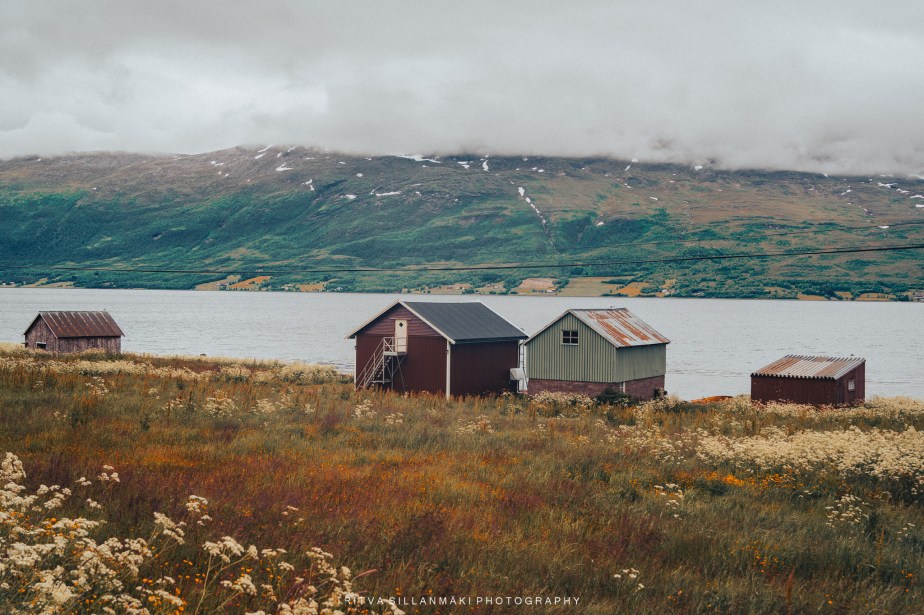
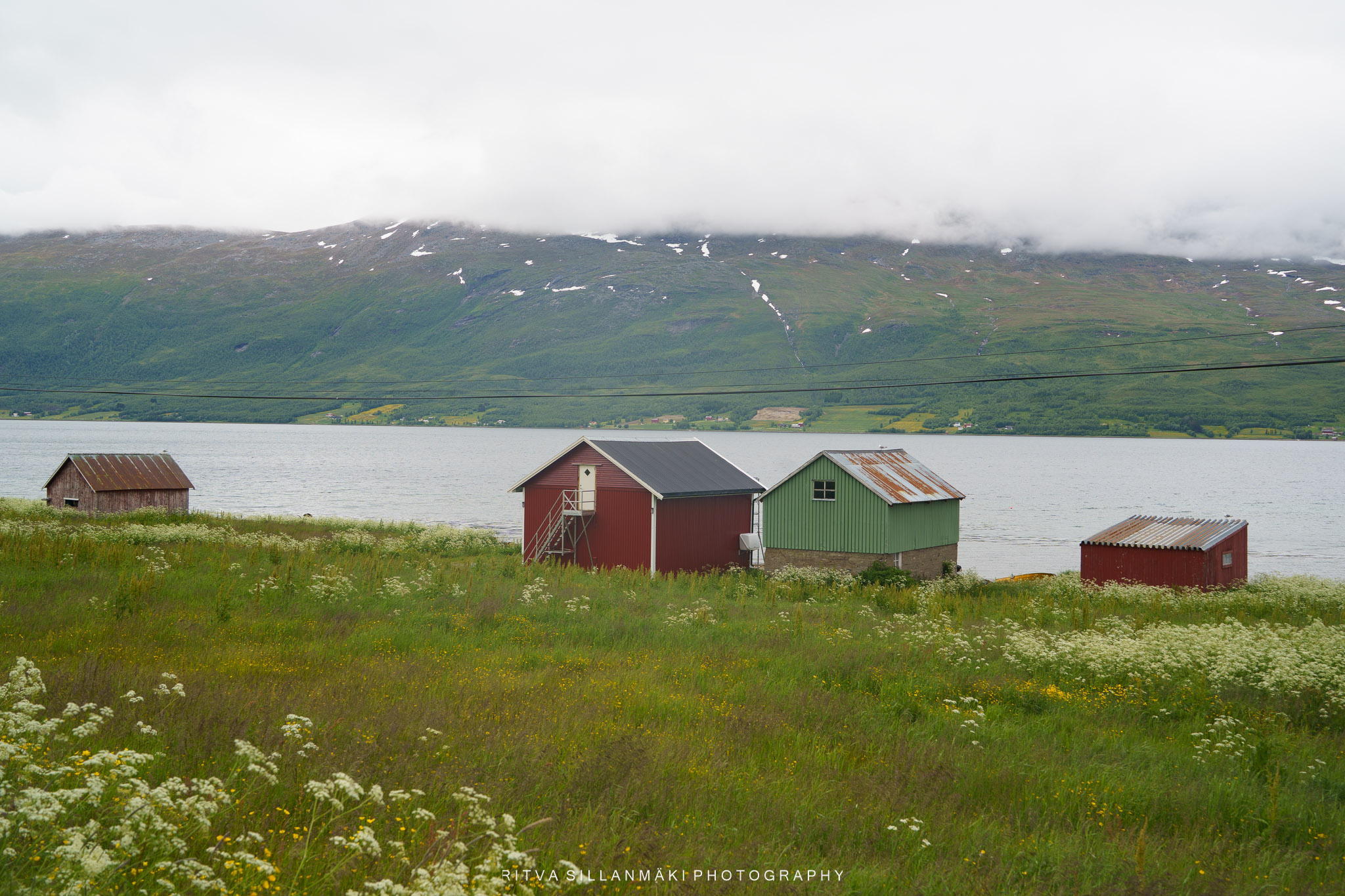
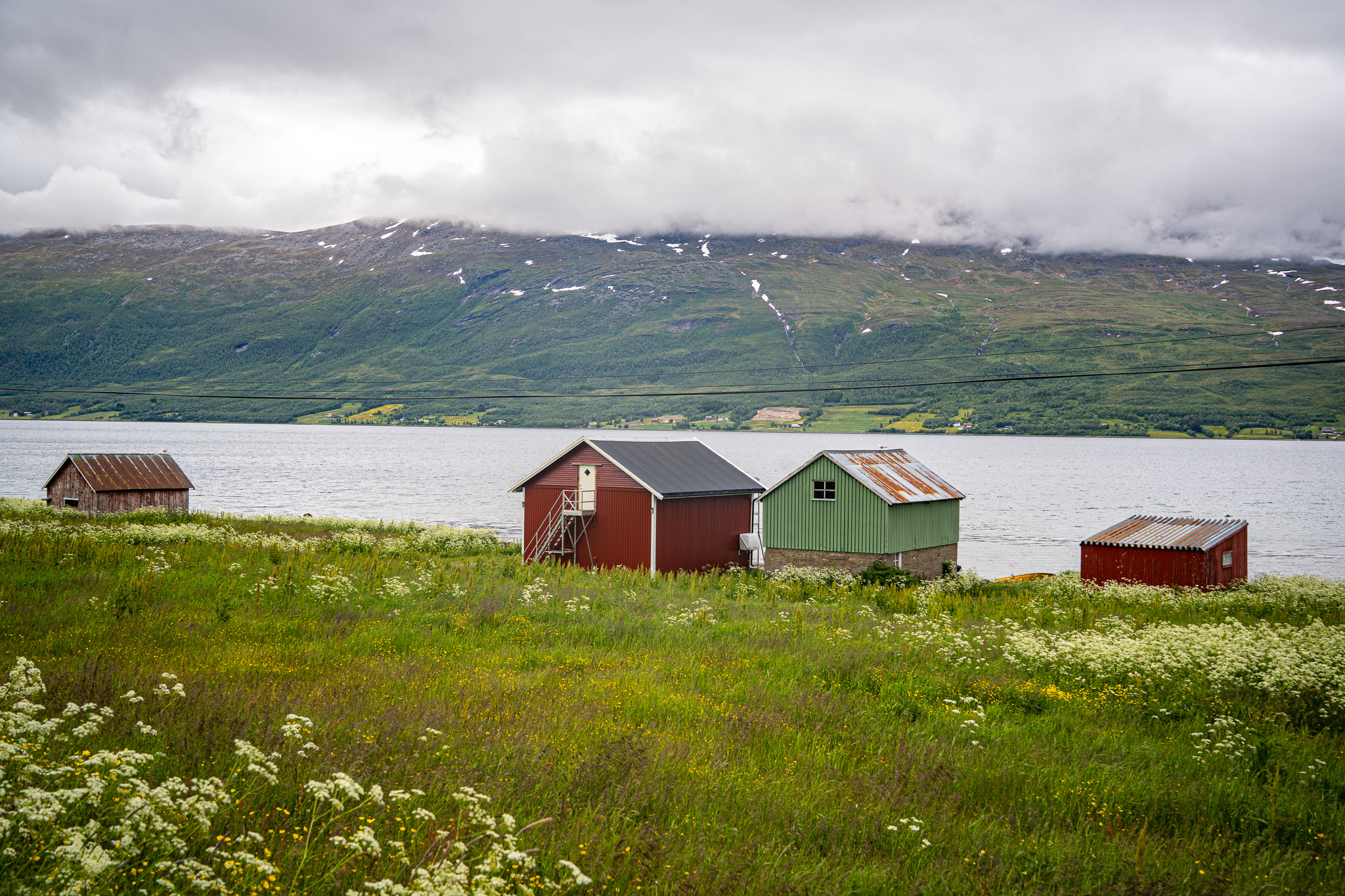
A rural landscape with a cluster of four small, rustic houses on a grassy field abundant with wildflowers and greenery. Behind the houses lies a calm body of water, fjord, stretching horizontally across the middle of the image. Beyond the water, a large, green mountain range ascends under a dramatic sky filled with thick, moody clouds that partially obscure the mountain peaks. The peaceful, natural environment with a subdued color palette dominated by greens, blues, and earthy tones, suggesting , rightly so, a cool and possibly overcast day in a remote area.
In this gallery, I share the unaltered, original version next to my standard enhancements, as I capture images in RAW format. Editing is essential to prevent the photos from appearing flat. I utilize the masking tool in Lightroom for photo adjustments. To add an extra touch, I’ve presented them as if they were taken with an analog camera. To transform a digital photo into an analog film look, raise the black points, reduce the highlights, incorporate coarse film grain #3, and increase the warmth of the color temperature. The artistic interpretation is generated by AI.
“Every photo I take is a piece of my life that I will never get back, but that I will be able to see again and again.”Malcolm Flowers
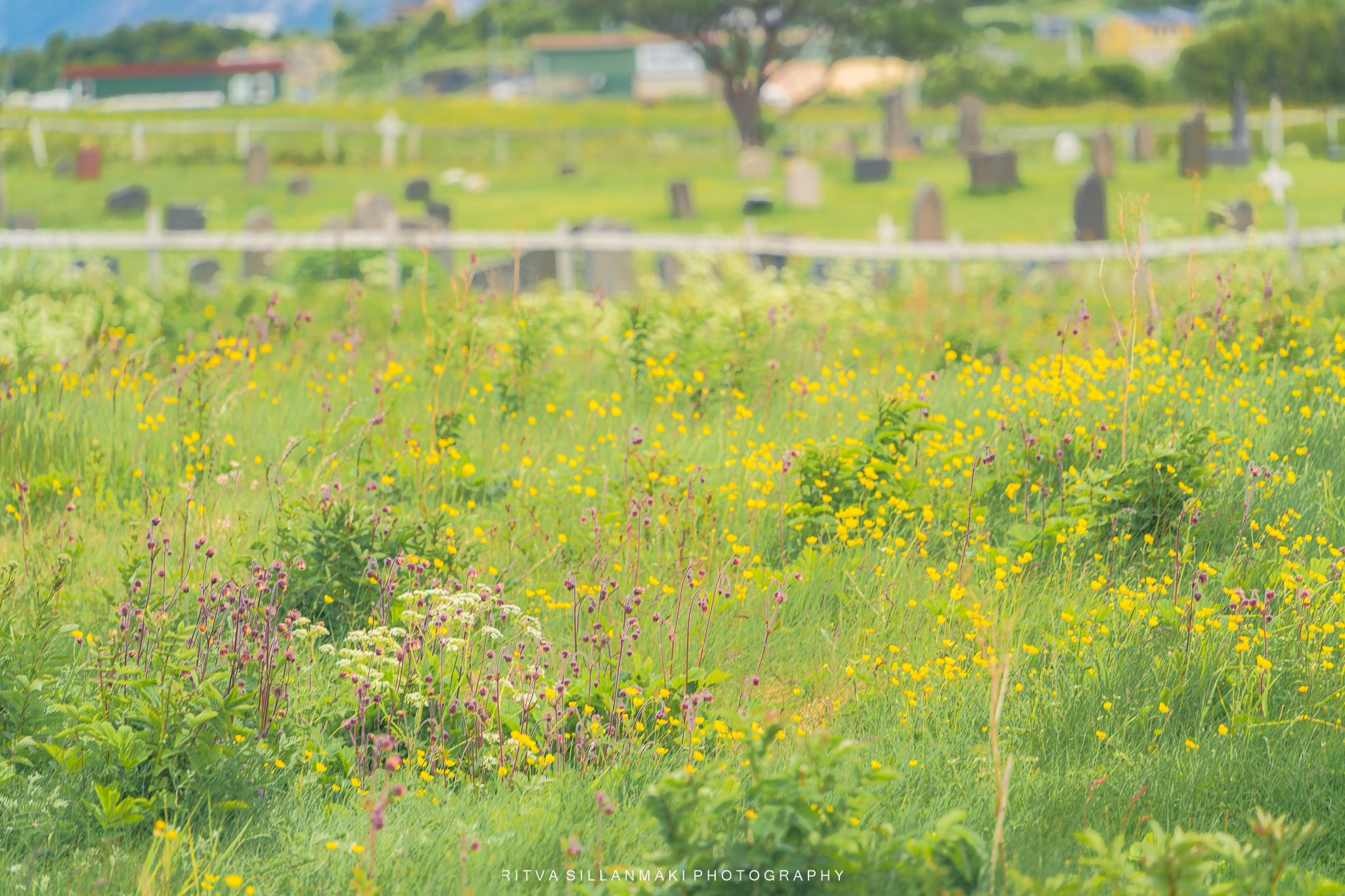
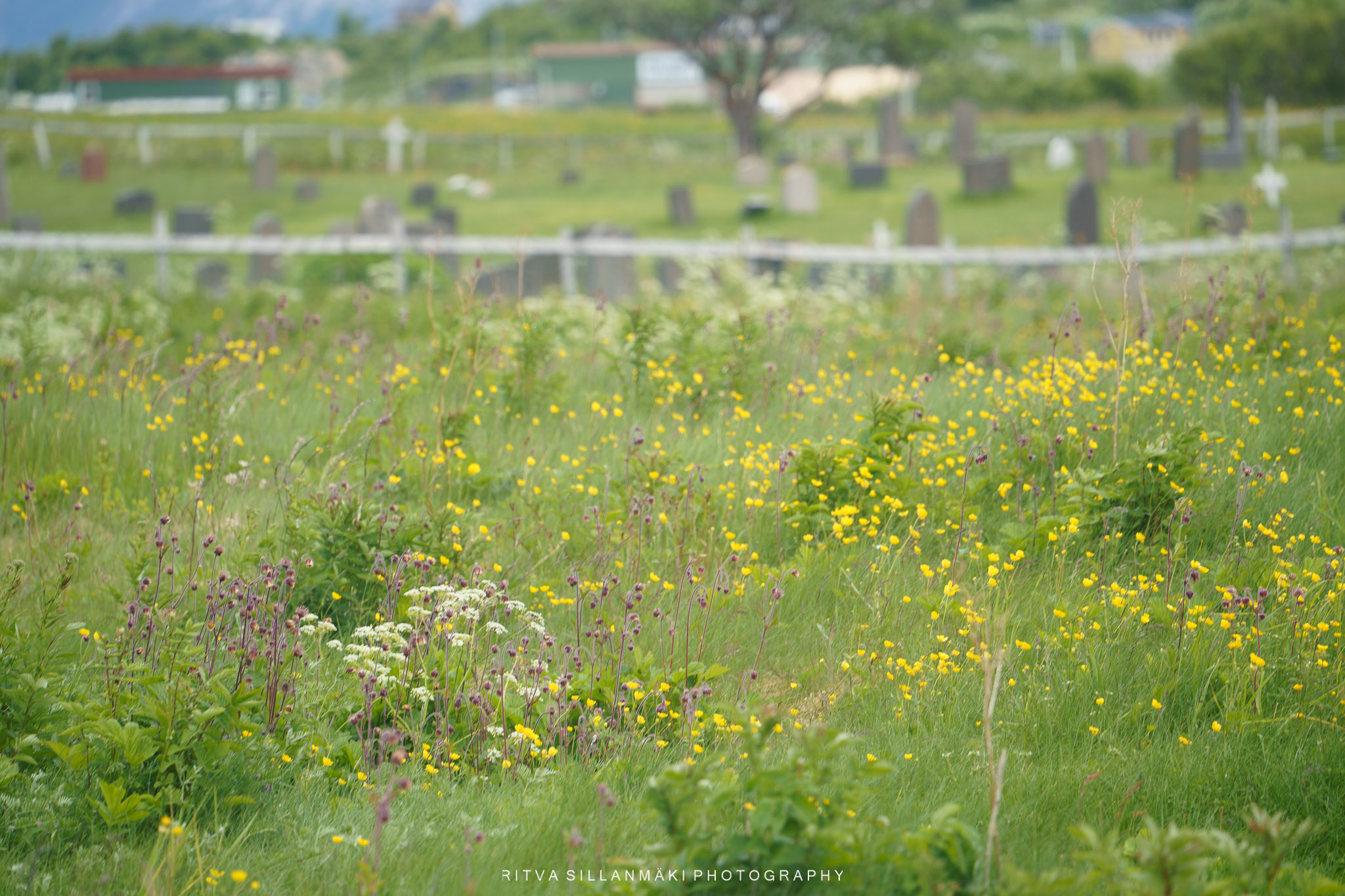
The meadow above is filled with tall grasses and a variety of wildflowers, predominantly yellow, interspersed with white and purple blooms. In the background, a cemetery is visible, with an assortment of tombstones and crosses scattered across a green lawn, surrounded by a white fence. The scene is set against a backdrop of trees and distant buildings, all slightly blurred to emphasize the vibrant flora in the foreground. A peaceful and contemplative mood, combining elements of nature and quiet remembrance.
In this gallery I experimented AI to edit a version, as it’s ubiquitous these days, but it shifted the mood and emphasis from the forefront to a much darker tone. Initially, the shot is primarily out of focus, contributing to this ambiance. I aimed for the focus to remain on the light and bright foreground, evoking a sense of hope and that is what I aimed for in my edit. AI can be useful, but do not loose your own vision and style. #4
“I do not document anything. I give an interpretation.”Andre Kertesz
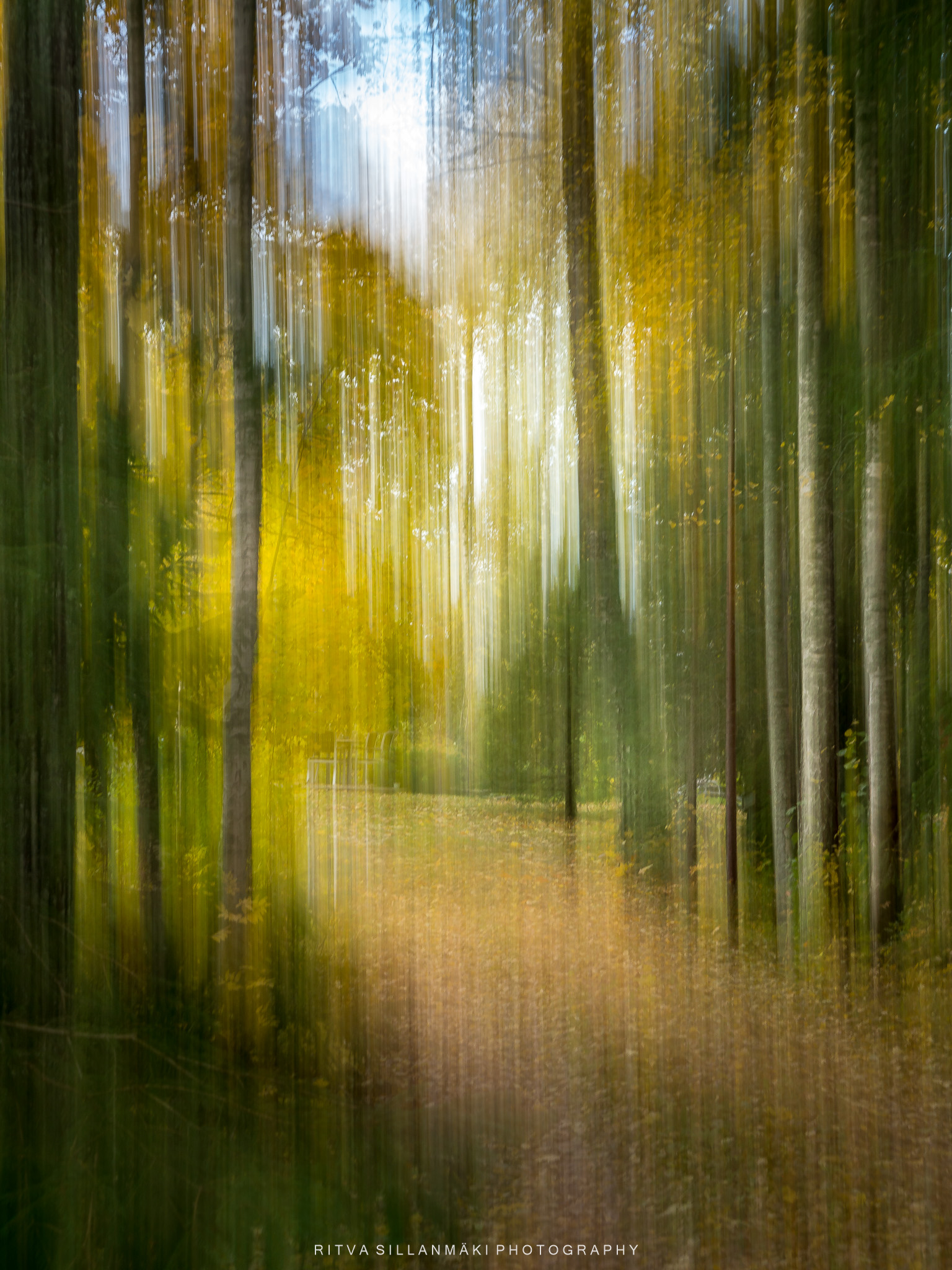
A forest scene featuring tall trees, intended to showcase intentional camera movement (ICM) through a vertical motion blur technique that generates elongated streaks of color and light. The predominant tones are varying shades of green and yellow, with autumn sunlight streaming through the leaves. This creates a dreamy, impressionistic effect, softening the natural details into gentle vertical lines. The forest floor is blanketed with fallen leaves, while bright snippets of sky and sunlight contribute to the radiant ambiance of the serene woodland. #5
This week, I invite you to explore the different methods you use to create images. Capture the same subject through a variety of unique approaches. Please limit your submissions to 5 photos. You have the freedom to select your technique, including the application of editing tools. I eagerly anticipate the outcomes of your creativity—make sure to link them back to my original post and apply the Lens-Artists Tag so we can easily discover your work in the WP Reader.
Last week we featured a guest host Steve Hyde (of Steve Hyde Photography Blog) and he provided us with a wonderful challenge, but nearly impossible one. Many of us had a hard time choosing them. We appreciate all the fantastic, Best Ever Photos you shared. Wonderful photography!
Sofia will return next week, we will have to wait to see what she has in store for us at noon EST in the USA. Tune in to find out more about the challenge then.
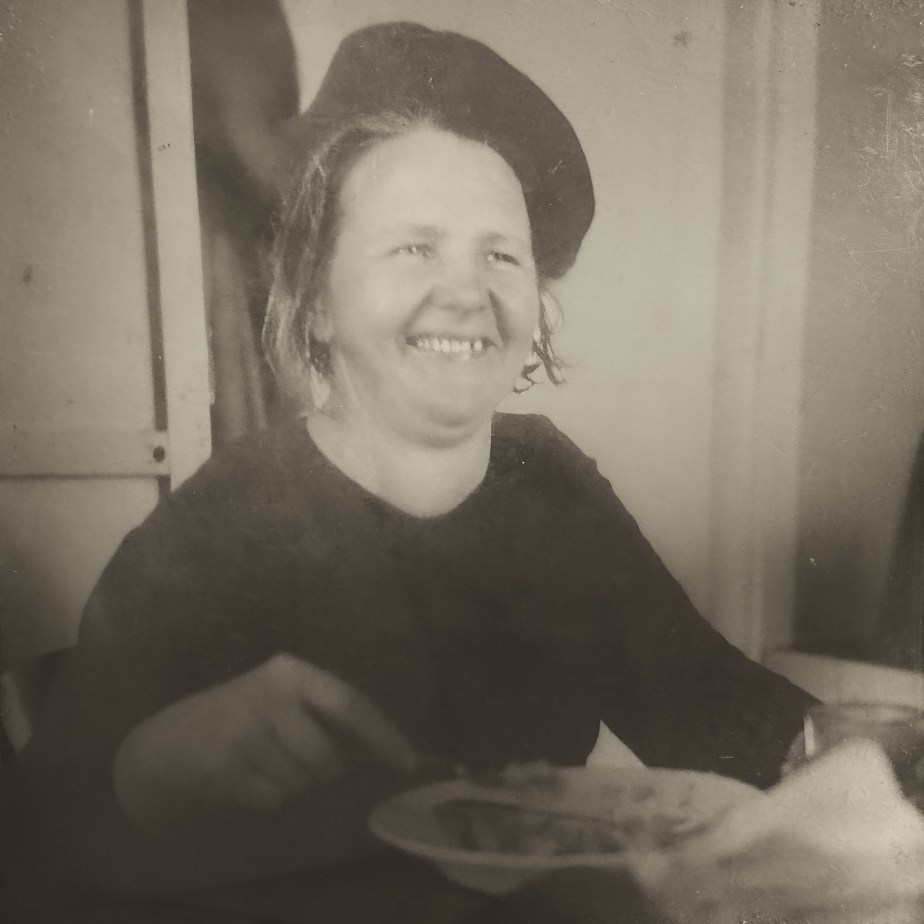
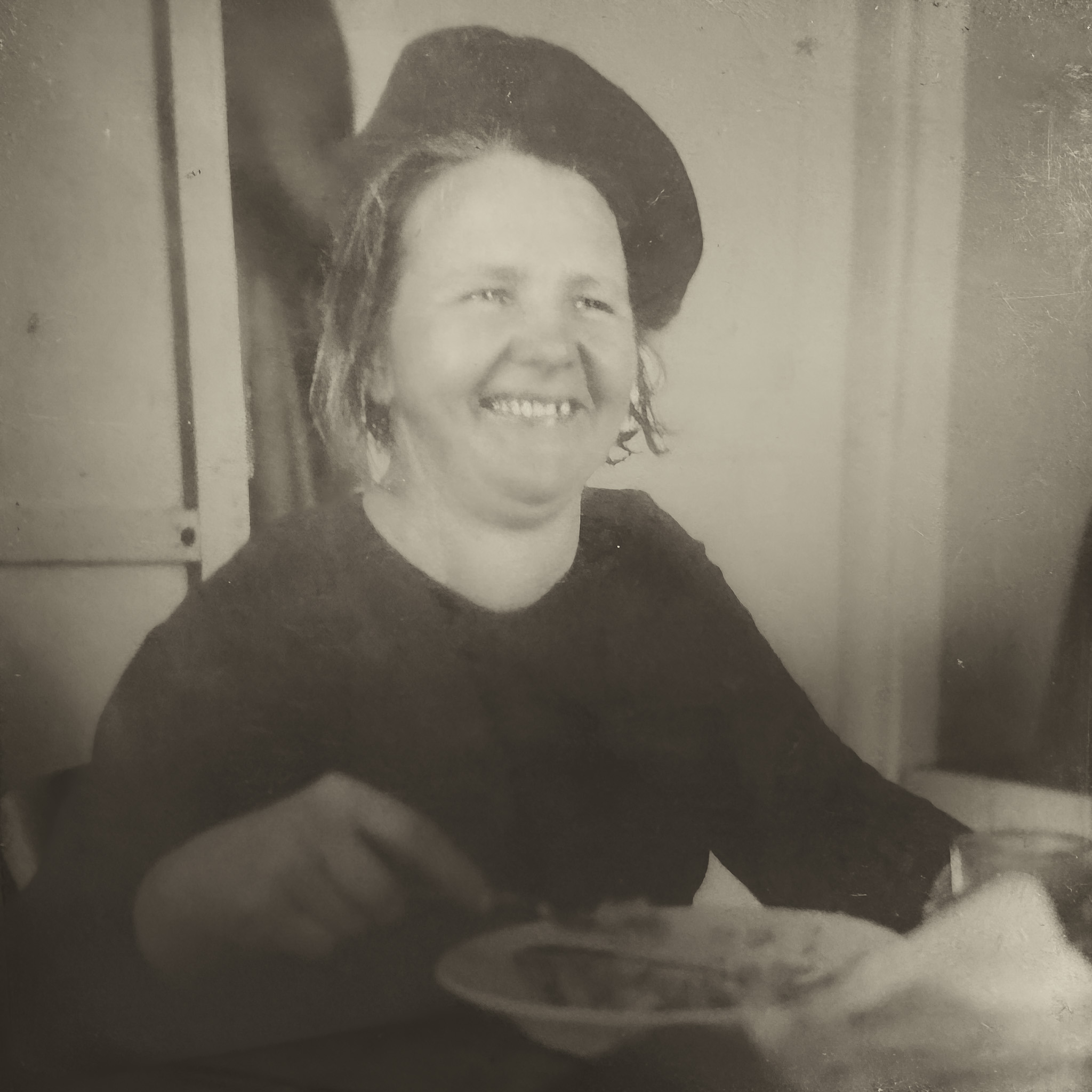
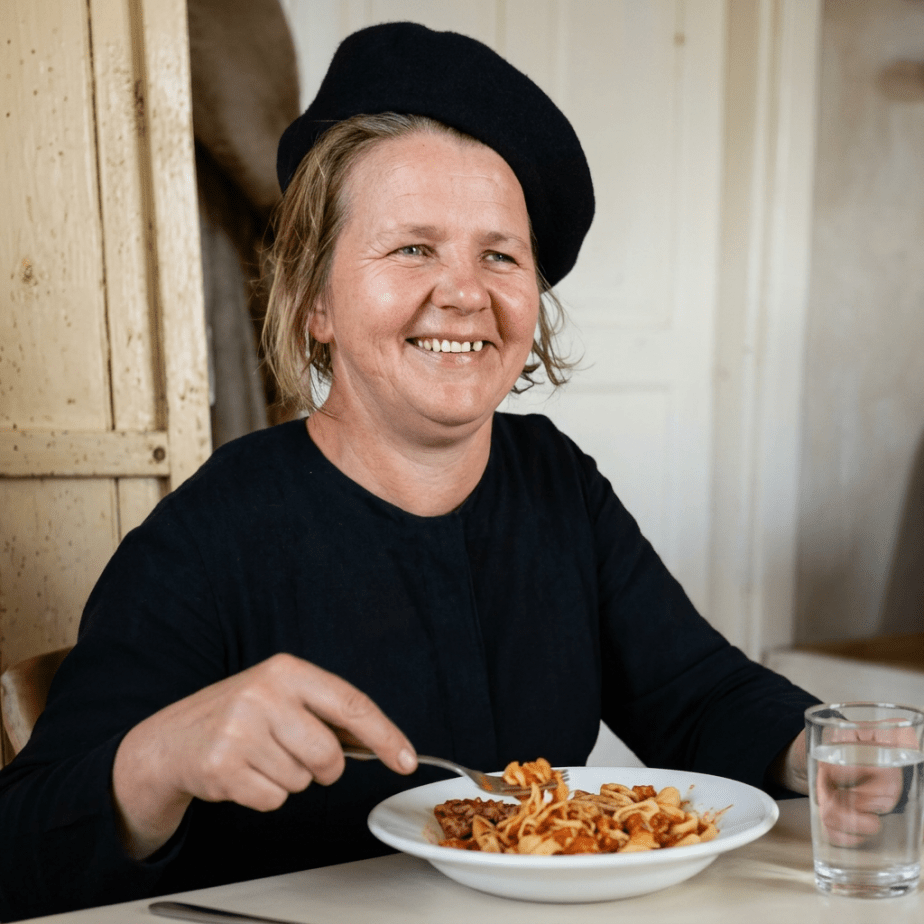
This joyful woman smiling while holding a plate of food in a vintage black and white photo is my husband’s late aunt. He found this photo while looking at old stuff at his father’s house. I think the expression is so real, that when I see this photo I end up smiling too.I did some edits on this on – and turned into color. The expression is still joyful, but for me the mood it great in the original shot.
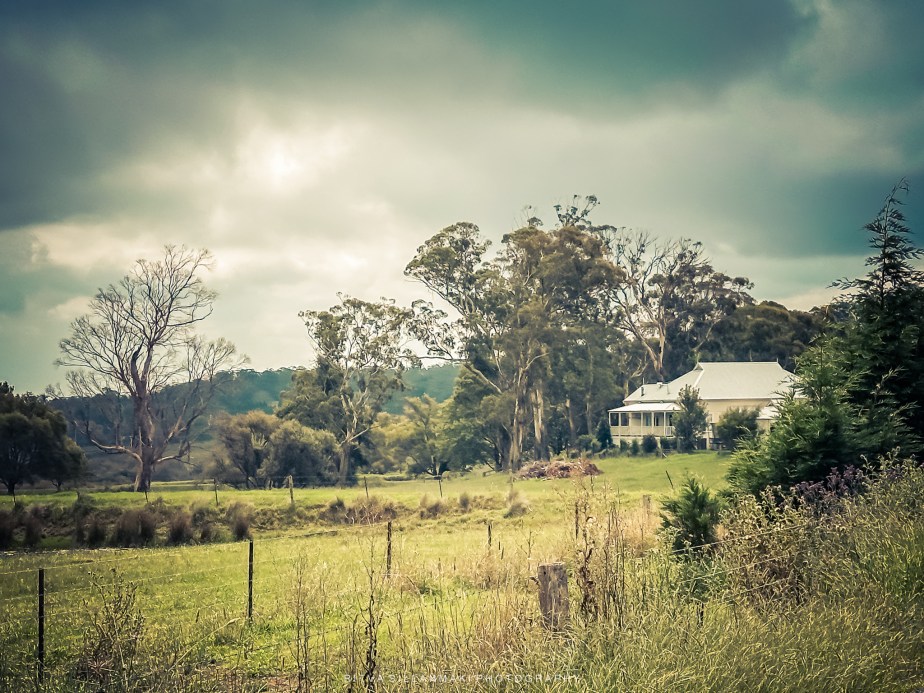
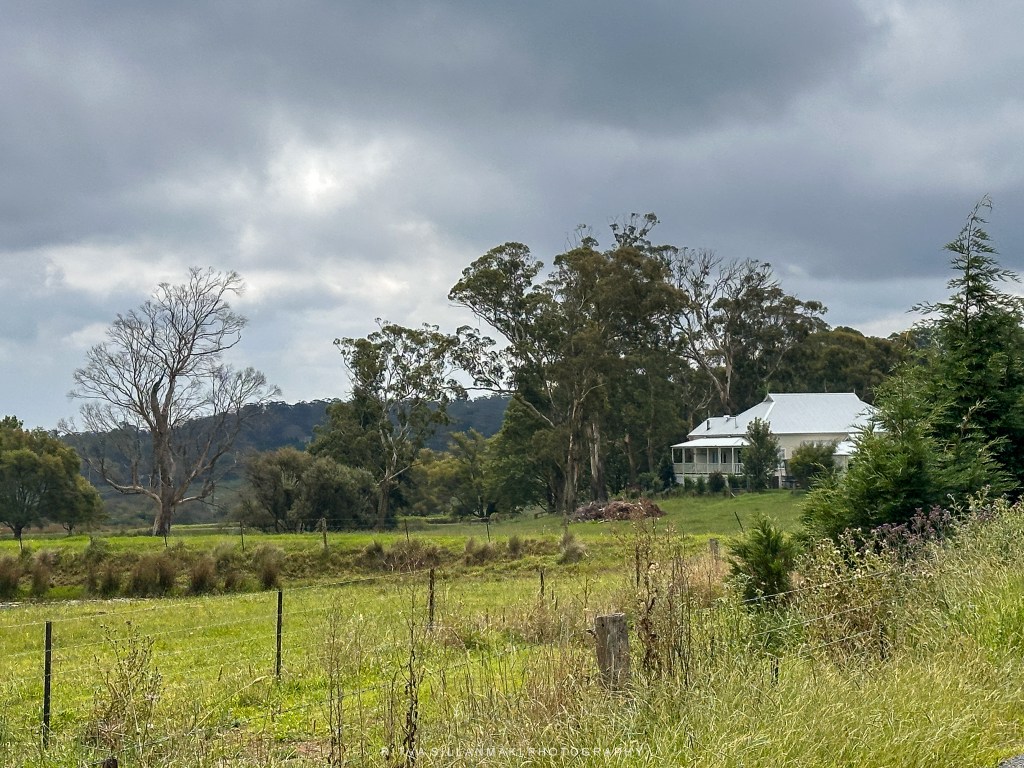
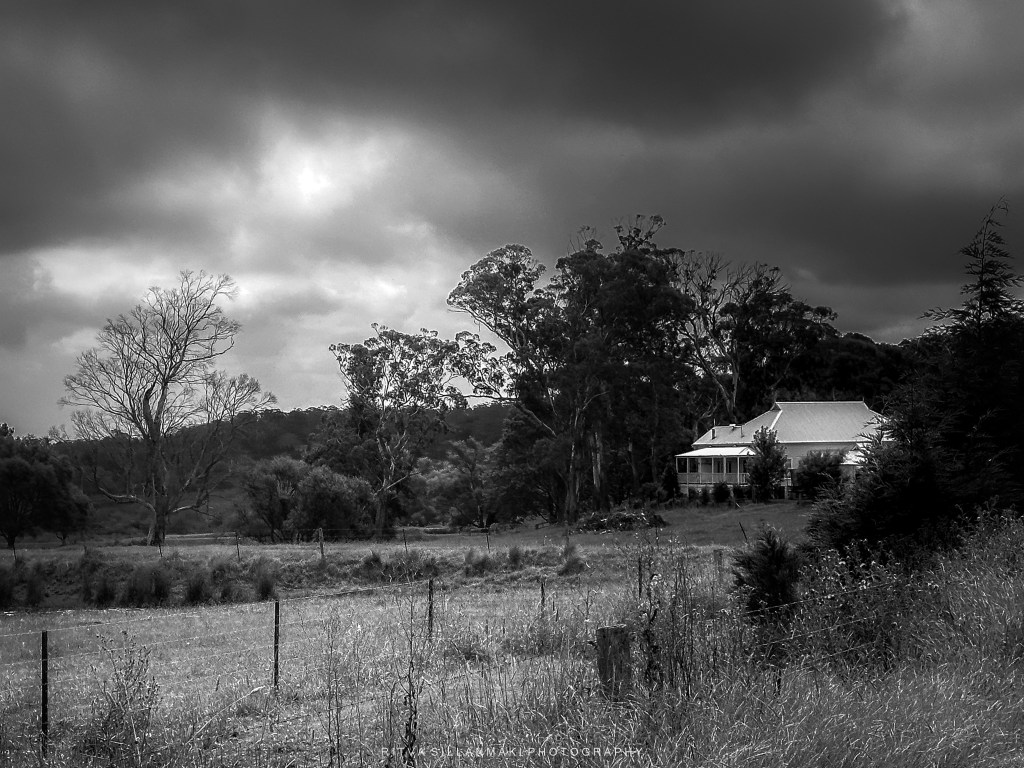
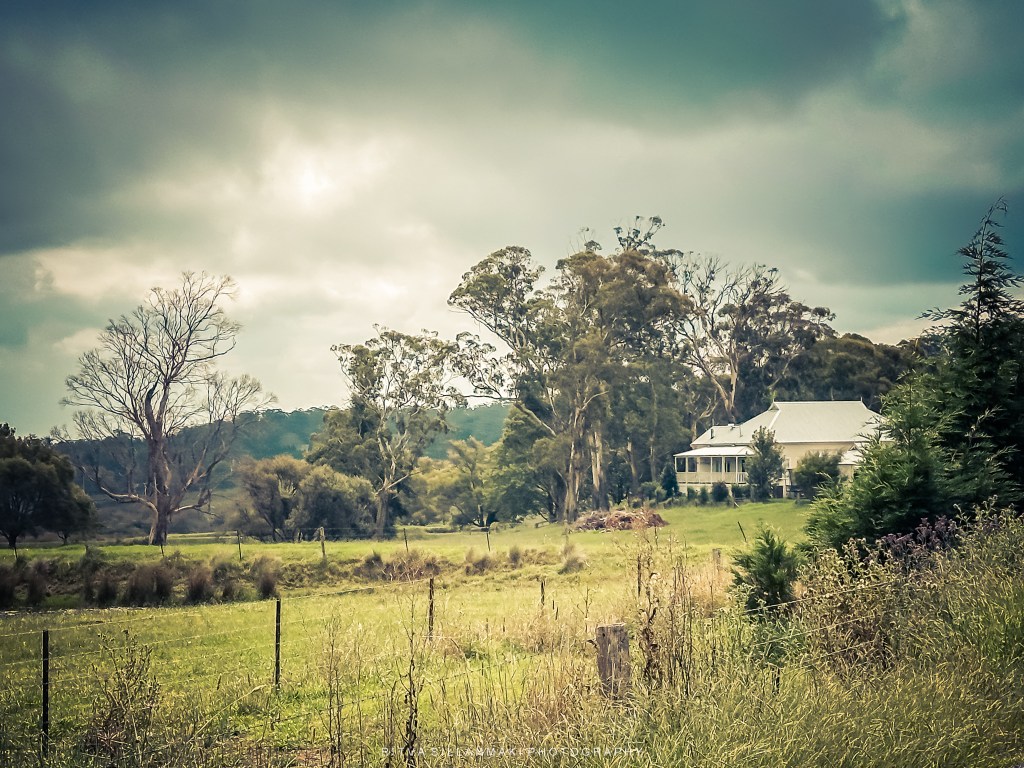
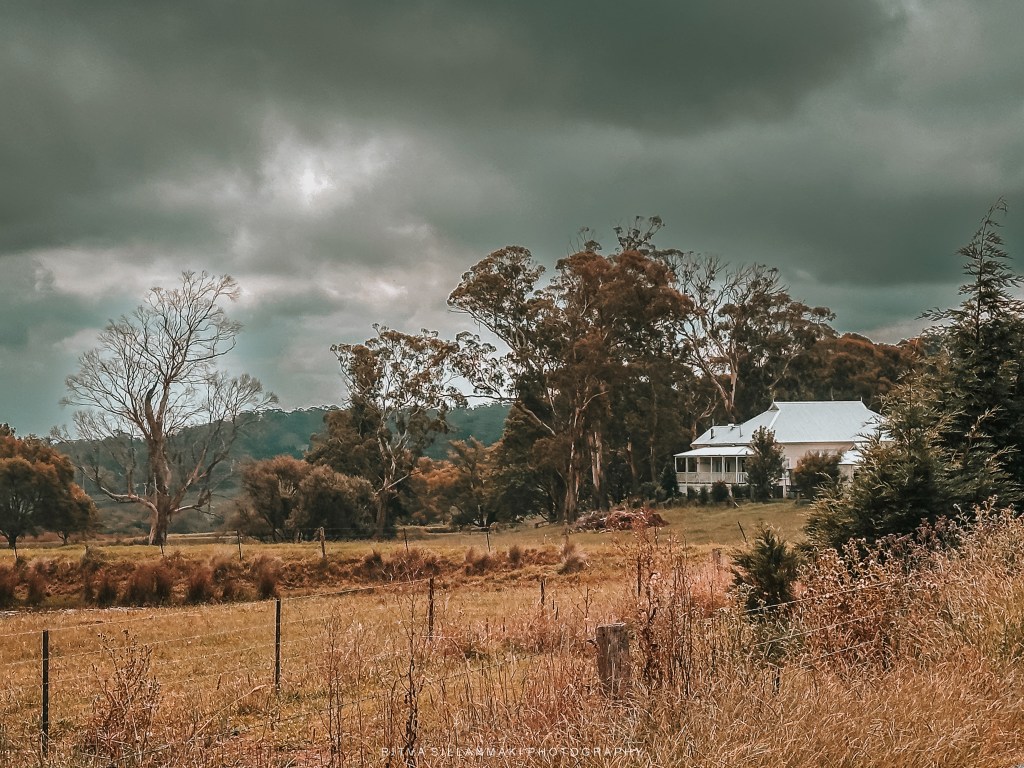
This was taken about a year ago, a rural landscape and farmhouse amidst lush greenery and distant hills in Mittagong, NSW, Australia. The scene was idyllic, under the cloudy sky. I did three edits and let the AI capture them; it was fun how it changed with each edit.This was fun, allowing me to explore various artistic interpretations and styles that breathed new life into the original image. Each version revealed a different aspect of the scenery, from subtle alterations in light and shadow to more pronounced changes in color saturation that transformed the overall mood of the photograph.
A scenic view of a rural landscape, farmhouse amidst lush greenery and distant hills in Mittagong, NSW, under a cloudy sky. Original image
A black and white landscape featuring a house amidst a moody sky and surrounding trees.
A tranquil rural landscape featuring a house surrounded by trees and open fields under a moody sky.( my additional text; A more Nostalgic and painterly effect.
A serene rural landscape featuring a charming house surrounded by tall trees and rolling hills under a moody sky. My additional text, Changing colors to more fall colors.
This week, Egidio has encouraged us to showcase some of our rejected alongside our edited images to highlight the contrasts. I’ve encountered photographers who view editing as “cheating,” believing it undermines the integrity of the moment captured. Nevertheless, I regard editing as an equally vital skill as the art of photographing a subject or scene. It empowers us to emphasize particular features, enhance colors, and evoke emotions that may not be as prominent in the unedited image. Ultimately, the final image should represent not just what was observed but also the artist’s unique vision and perspective. By embracing both photography and editing, we can elevate our creations and convey more impactful stories through our visuals.
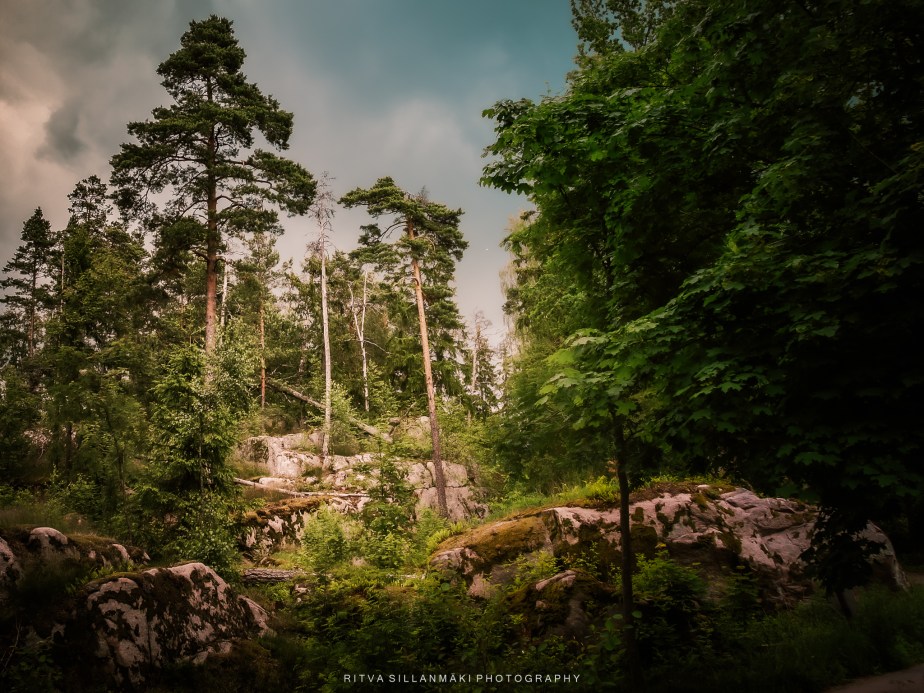
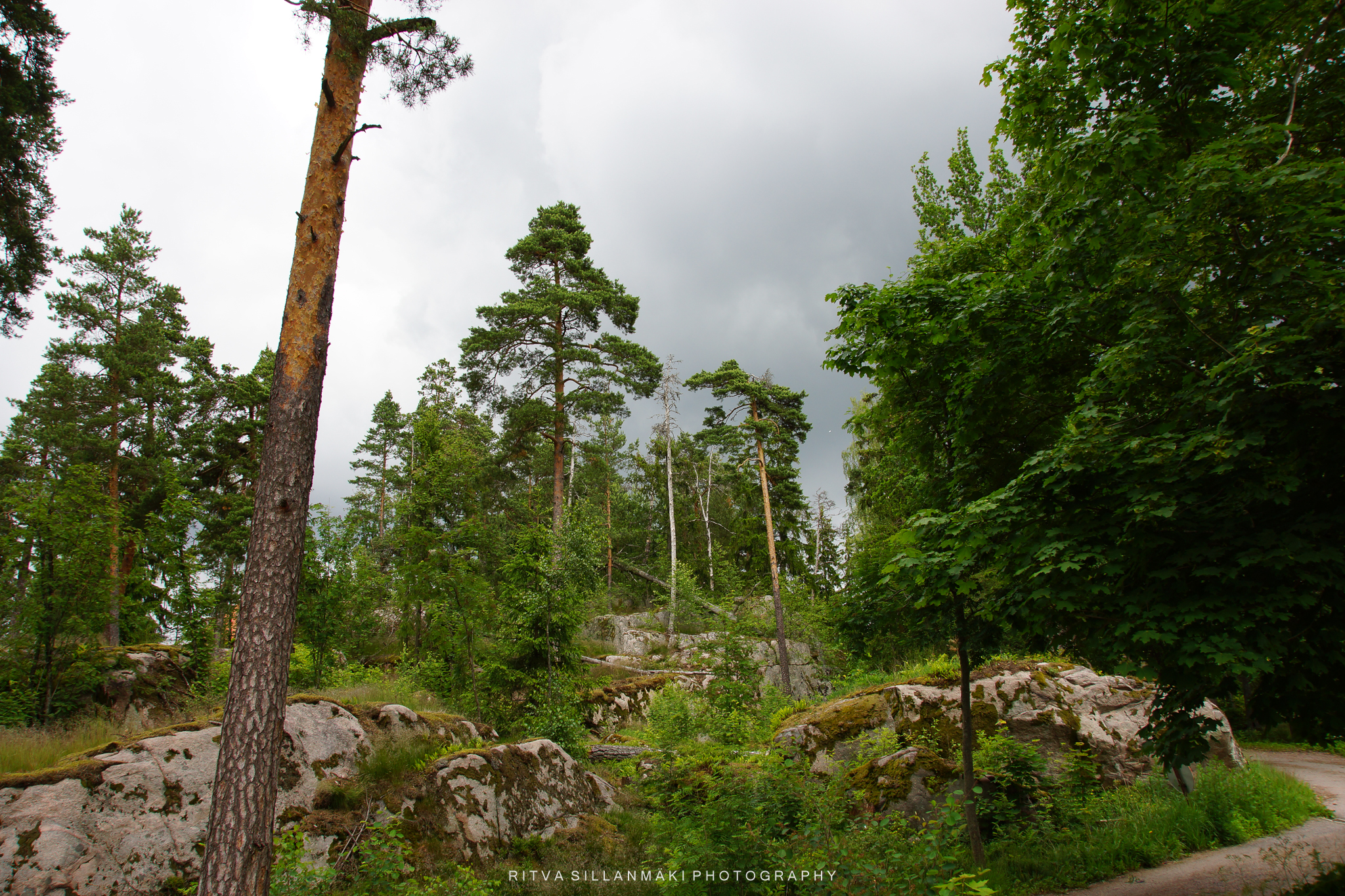
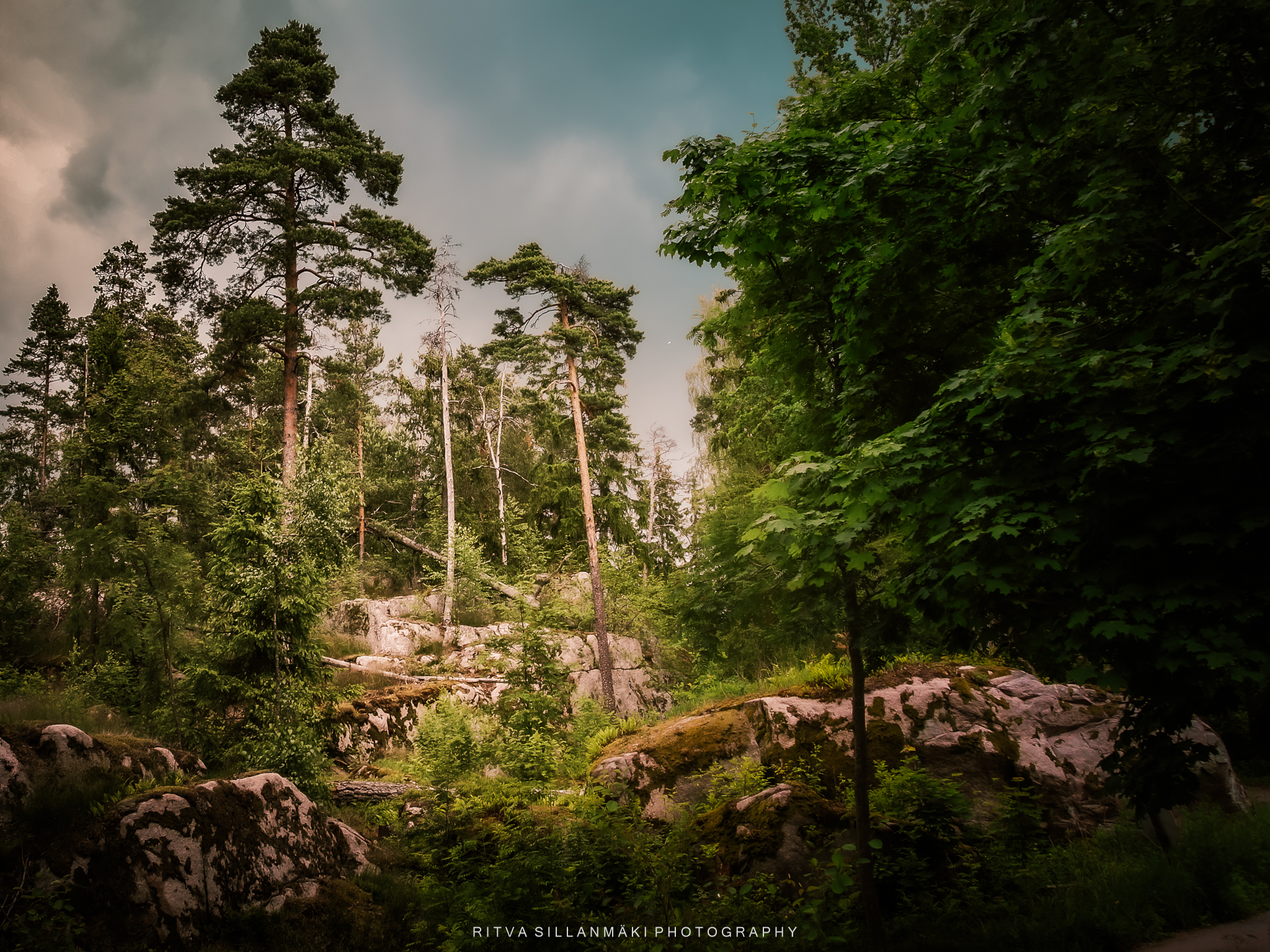
These are all from my visit to Hvitträsk and its surroundings some year ago except the last one. That was a so bad I did not pay any attention to it at all at the time, I just remember being very disappointed in it. I should have binned it, but luckily now with my approved editing skills I was able to do something with it.
The original image was flat and boring, and I never got around to publishing it, even though the picture has many layers and good elements. Perhaps I didn’t initially realize to crop it enough; for some reason, I wanted the trunk of the pine tree in the image even though it didn’t really fit there. The sky had remained flat and nothing really stood out.
Nature shines
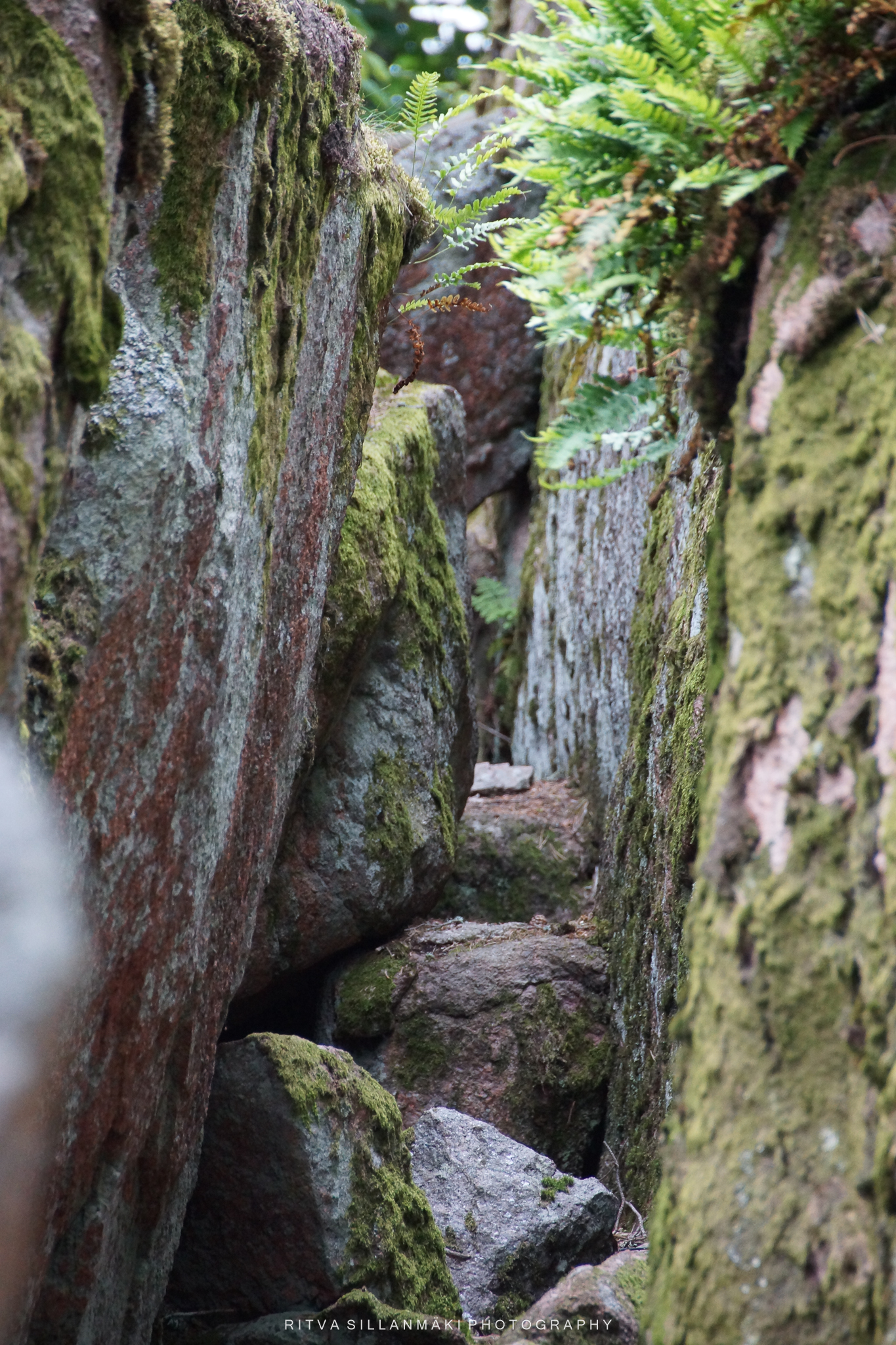
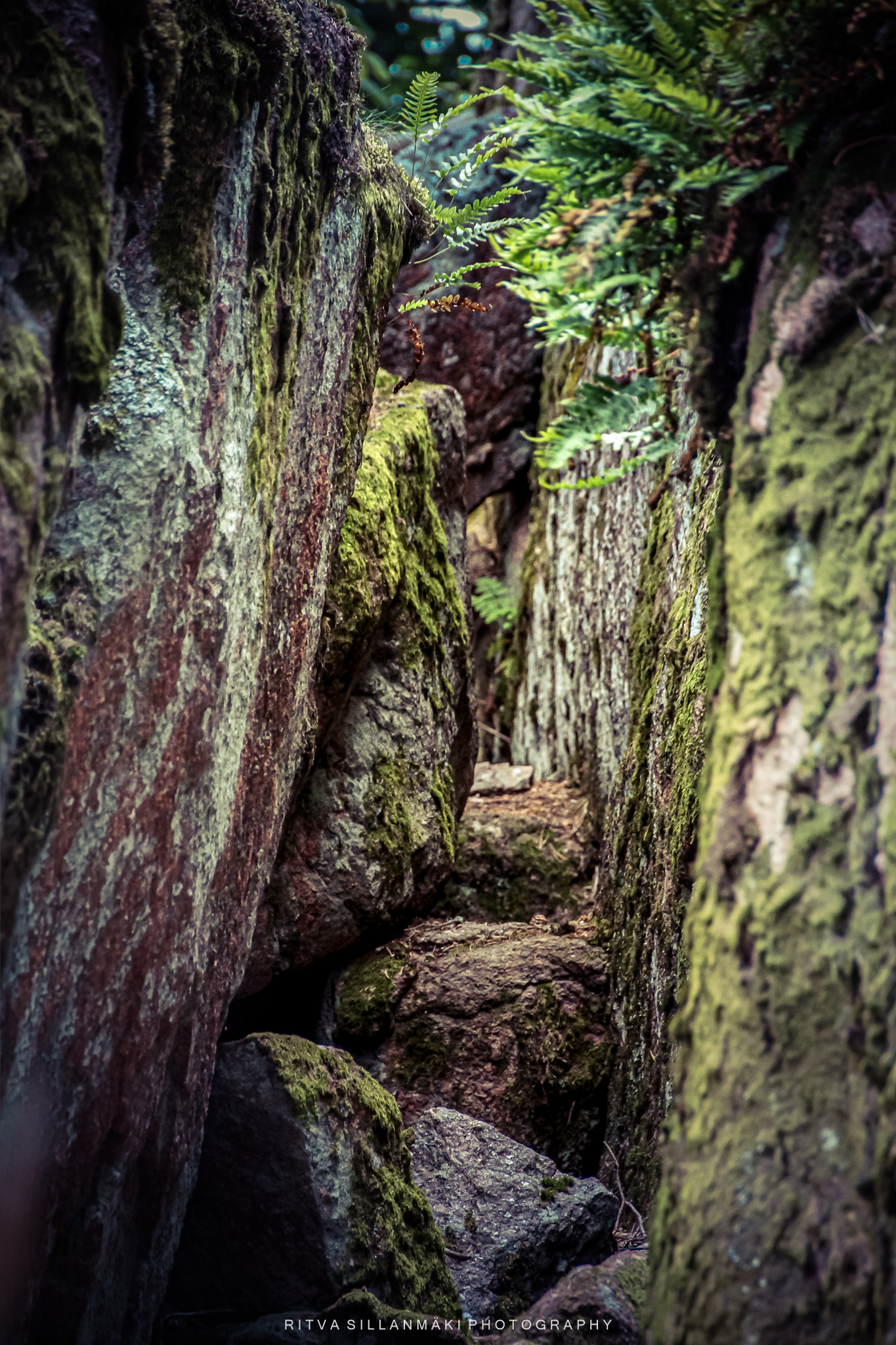
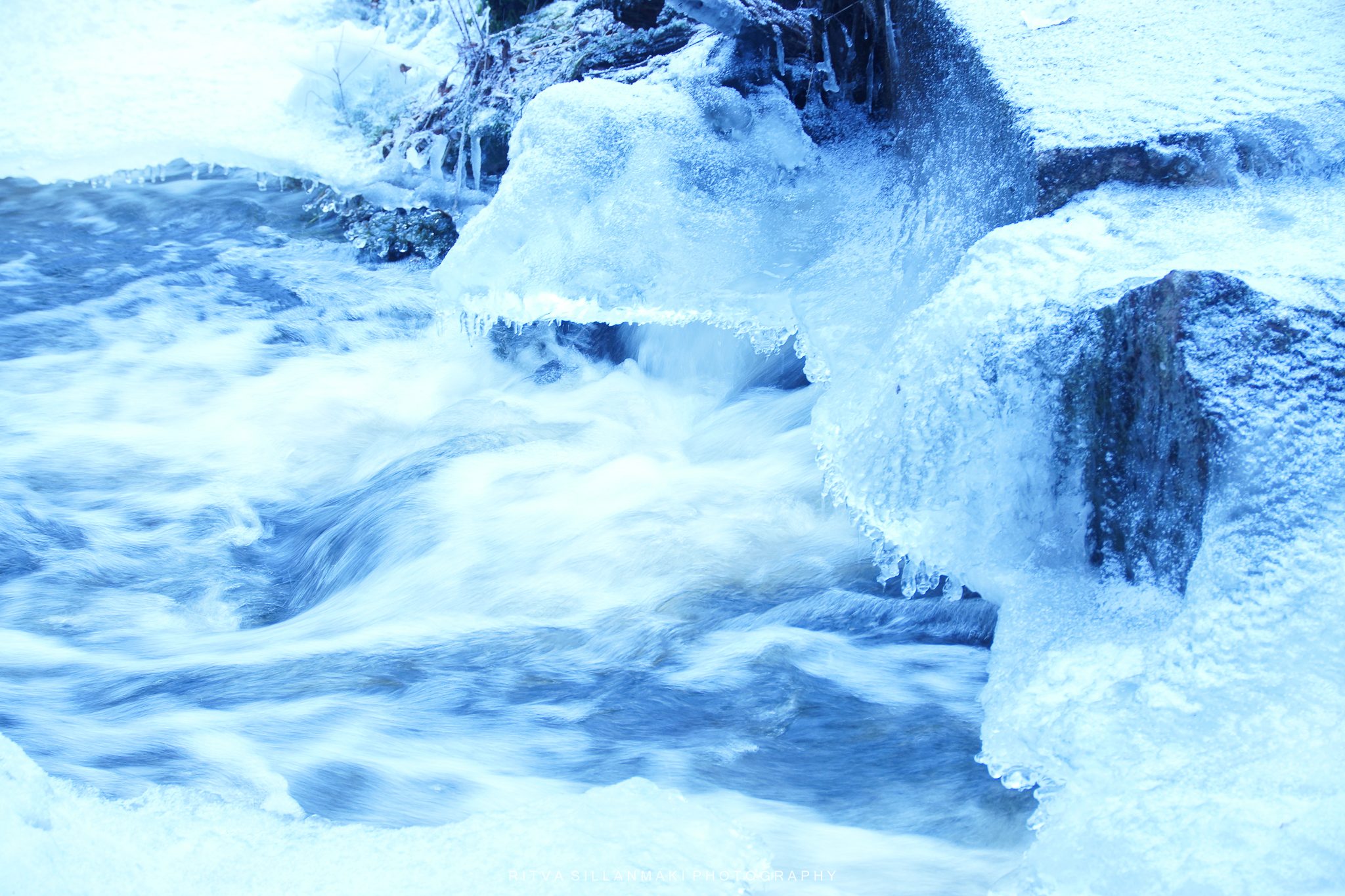
I was drawn to this blurry image; there was something about it that appealed to me, so I decided to rework it in the hope that it would present better with a slight adjustment of contrast and colors. The top of the image was slightly overexposed and clearly out of focus. I am not entirely satisfied with the edit as the colors changed too much from the original—primarily because I try to keep the image as natural as possible.
This could fall into the same category as the previous post, but this is in many parts very unfocused,
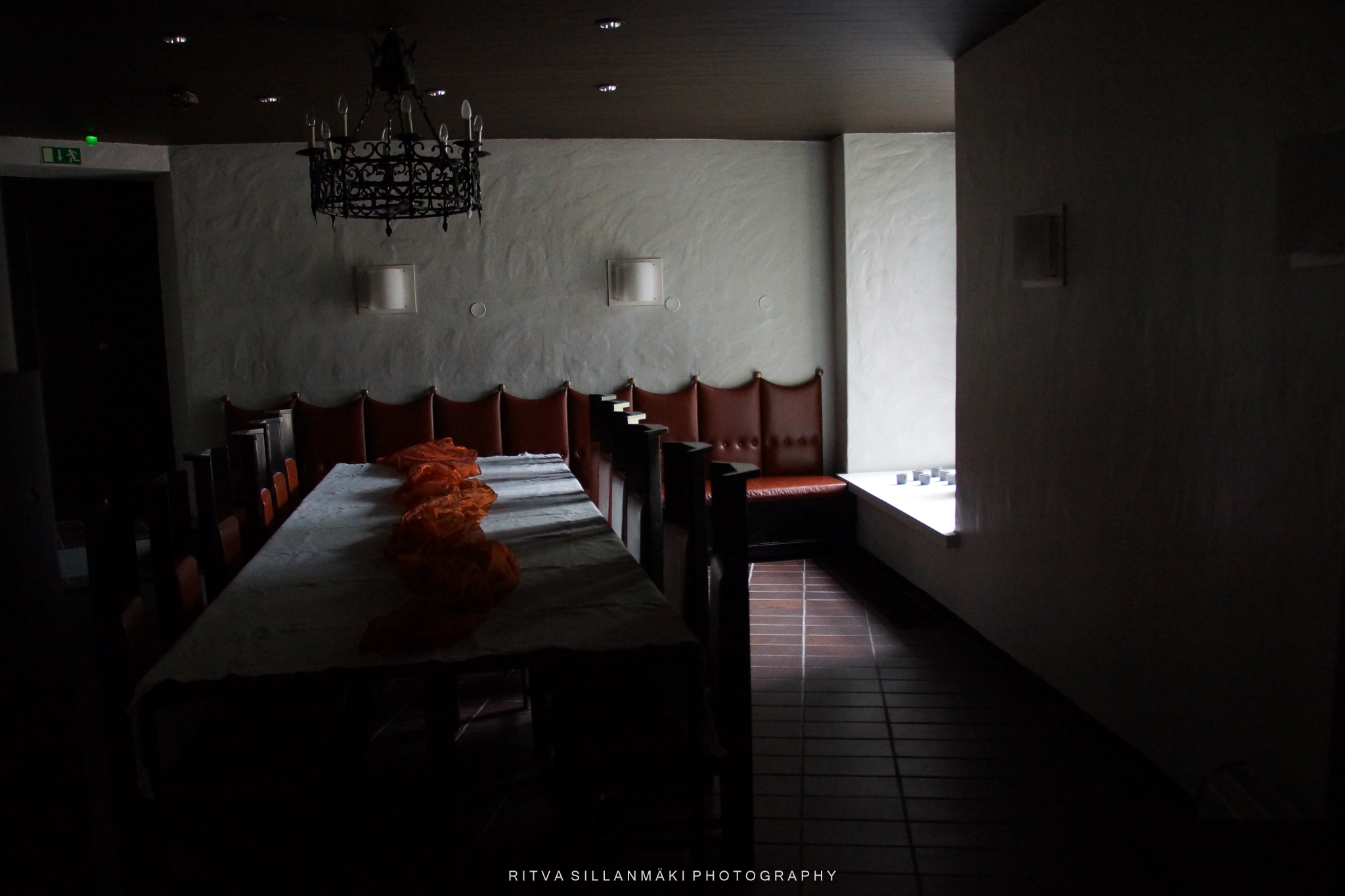
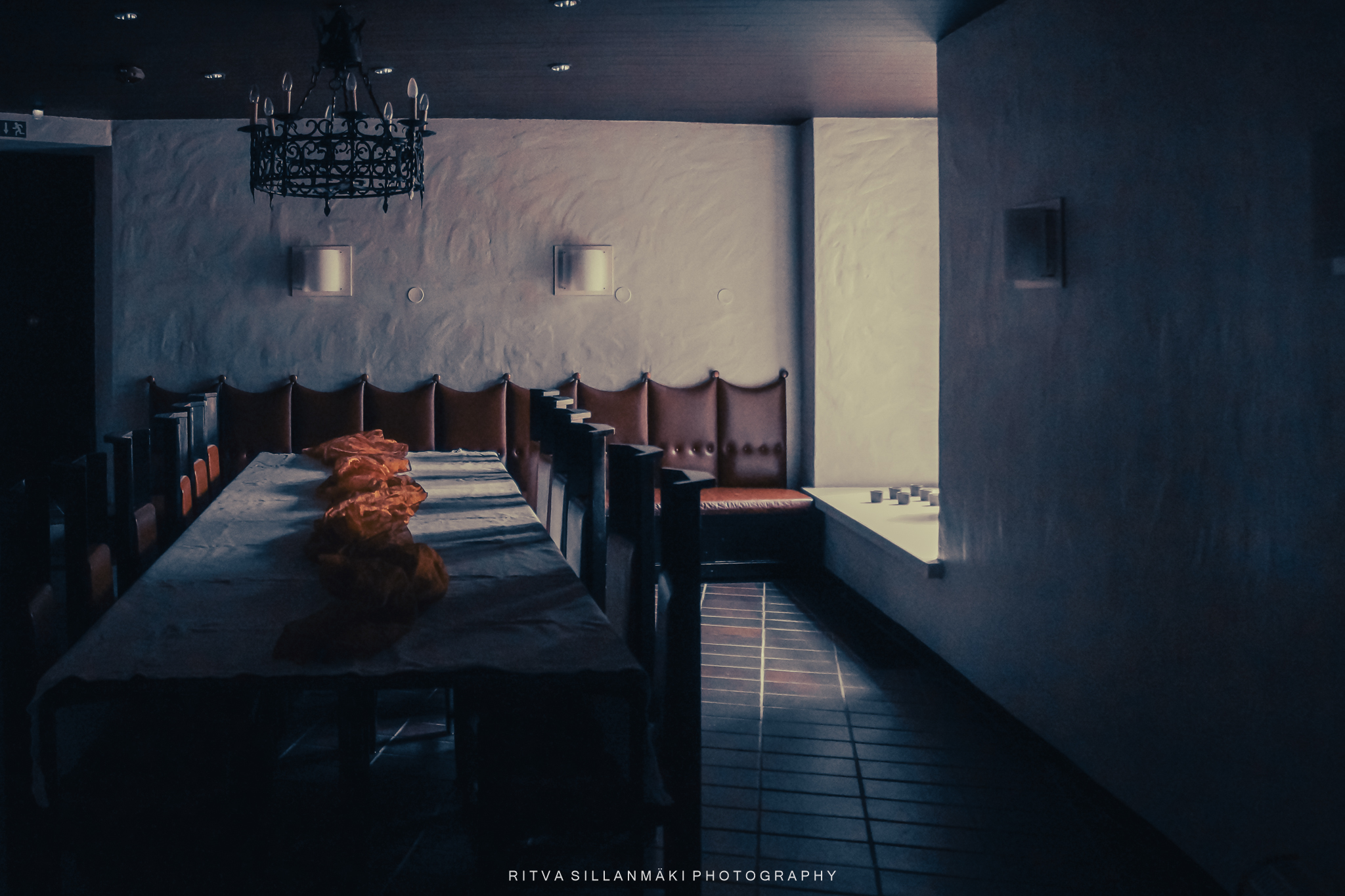
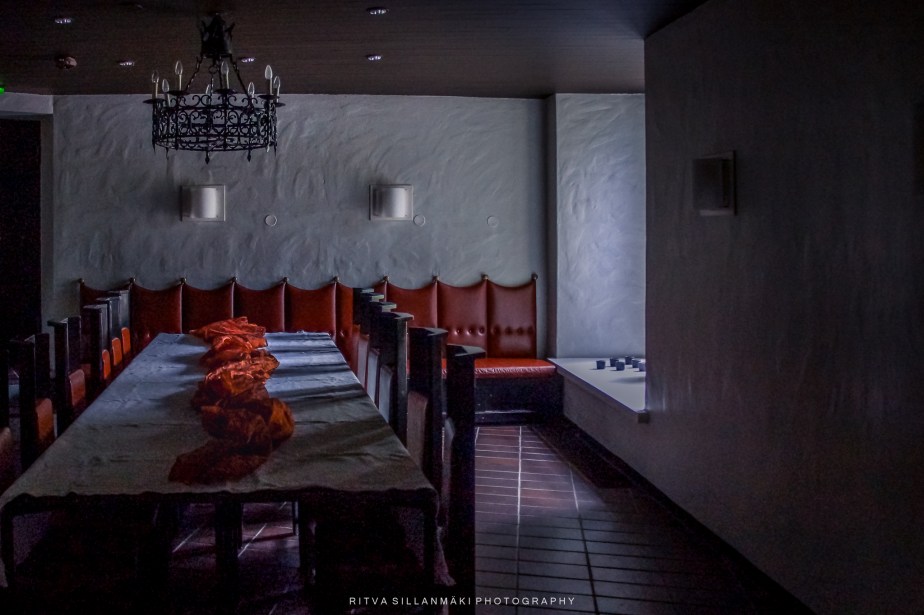
A dimly lit dining room featuring long wooden table in Hvitträsk
A dimly lit dining room with a long wooden table covered in a white tablecloth, adorned with orange fabric. Red upholstered leather benches line the walls, and a decorative chandelier hangs from the ceiling. In the image above, there is a lot of good, but the picture was left languishing in the archives a bit subdued, and I couldn’t find its purpose; now I decided to boldly edit it in a more cinematic direction. I spent some time battling against making it too colorful, so the third edit is the final result 👇, where I wanted to bring the fabric on the table into focus with light.
A dimly lit dining room featuring long wooden tables and contrasting red seating, evoking a warm yet subdued atmosphere.
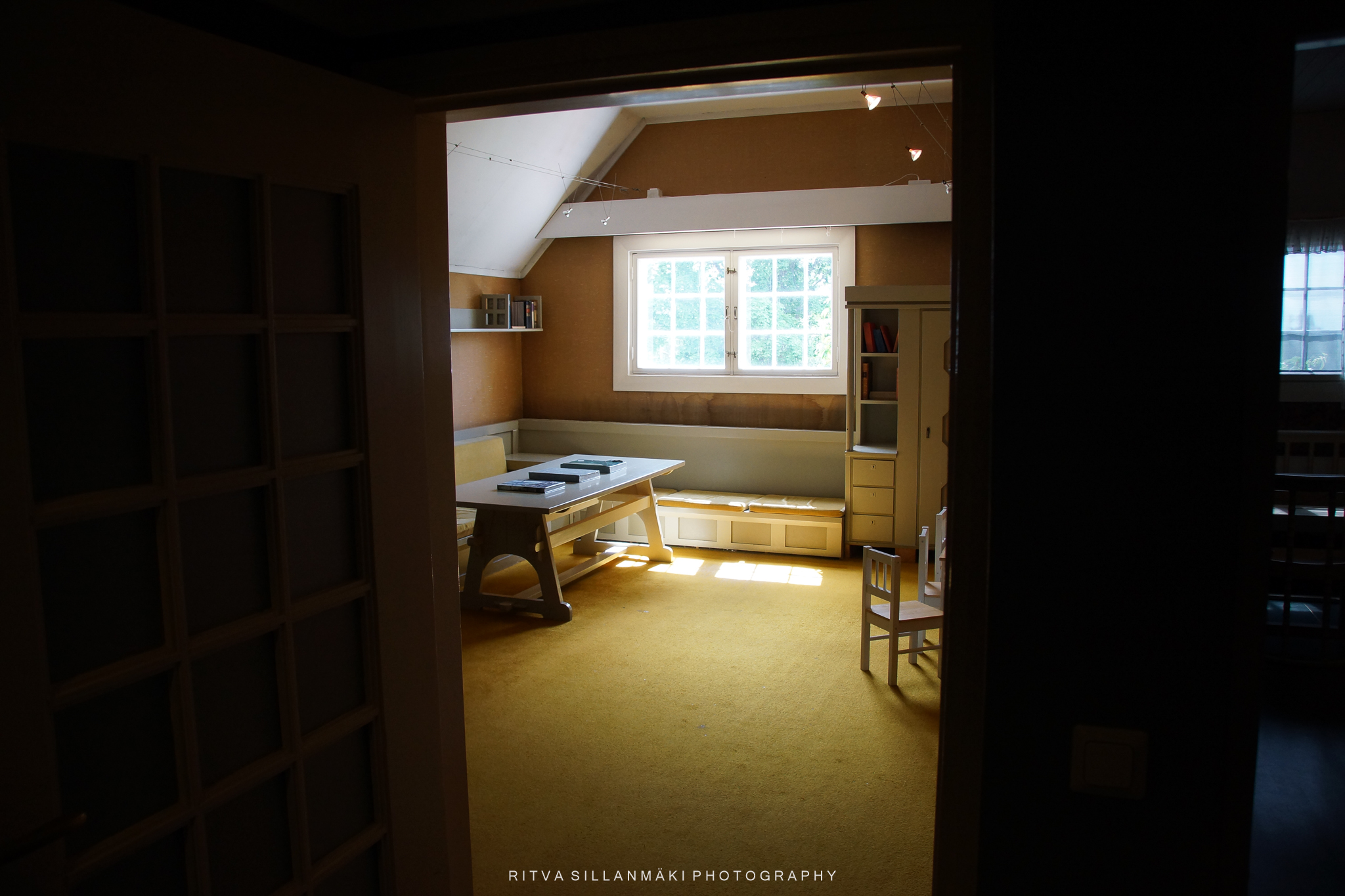
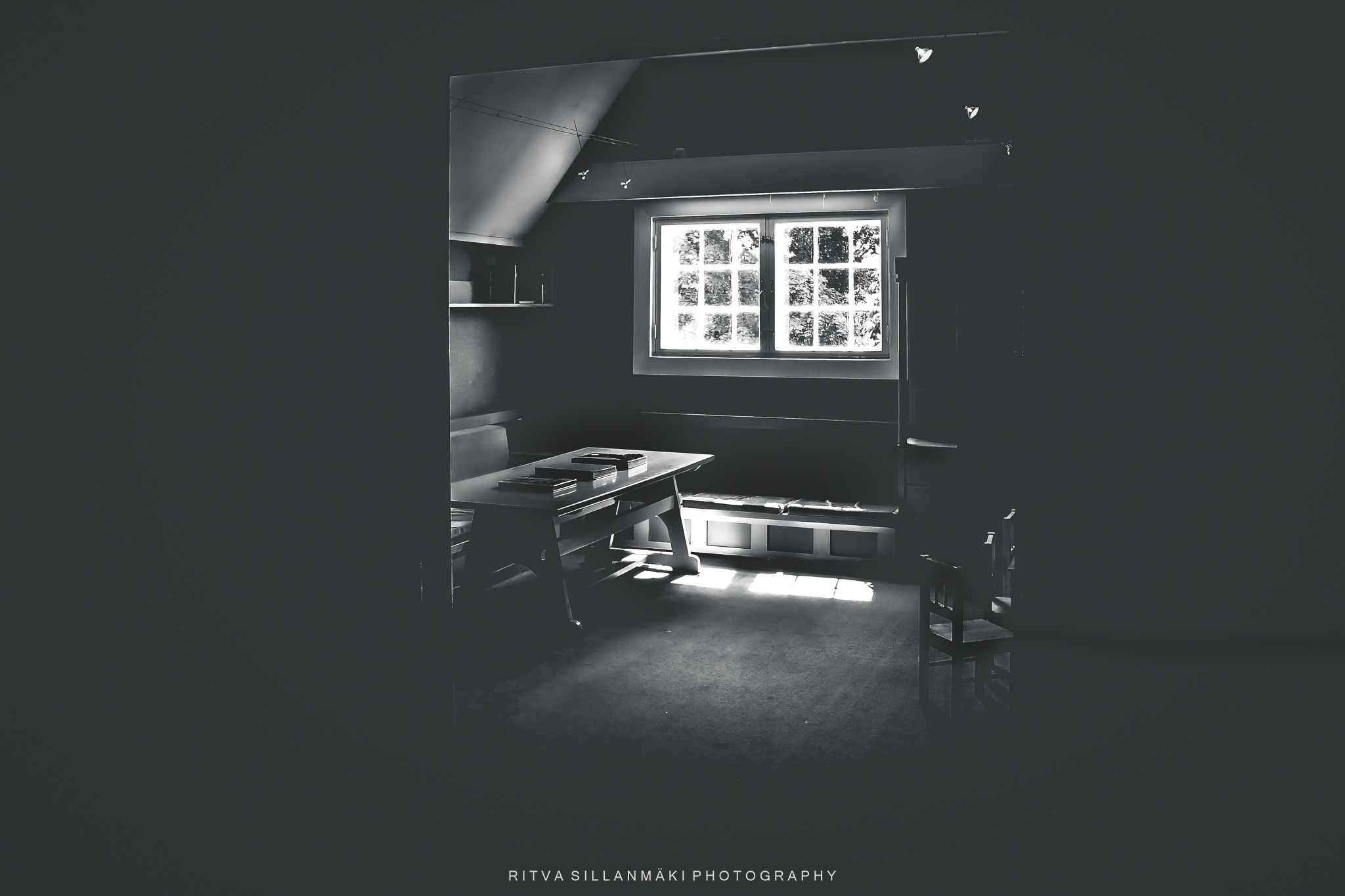
In this last image pair, I wanted to highlight the minimalism of the previous challenge and the black-and-white image as it is a style I really enjoy. I sought to create an atmosphere in the picture and wanted to draw attention to the window and the light coming from it and how it came to the room, and eliminating most of the furniture.
In this picture, I managed to save an image that was clearly overexposed and additionally had completely off coloring. I didn’t know what I had adjusted back then, but for some reason, this remained in the archives. I couldn’t edit this photo to color, but the black and white turned out rather well.
salvation of a bad photo
I would like to extend my gratitude to Egidio for encouraging us to present some of the effort that goes into crafting an image we are proud to share. Don’t forget to check out his original post here, and remember to use the Lens-Artist Tag in your response so we can find you post.
I am grateful to all who took part in last week’s B&W / Minimalism challenge; it highlighted the remarkable power of simplicity when done effectively. I was taken aback by the amount of interest it created and glad to find out that there are so many interested in this style of photography, which emphasizes the beauty of minimalism and the striking impact of black and white imagery. This challenge inspired participants to explore their creativity among those who share a passion for this art form. I loved seeing all your contributions, as each one told a unique story and showcased different perspectives, proving that less truly can be more in the world of visual storytelling.
Lastly, we invite you to join us next week for a challenge Tina will be hosting on Travels and Trifles. In the meantime, smile and try to stay positive
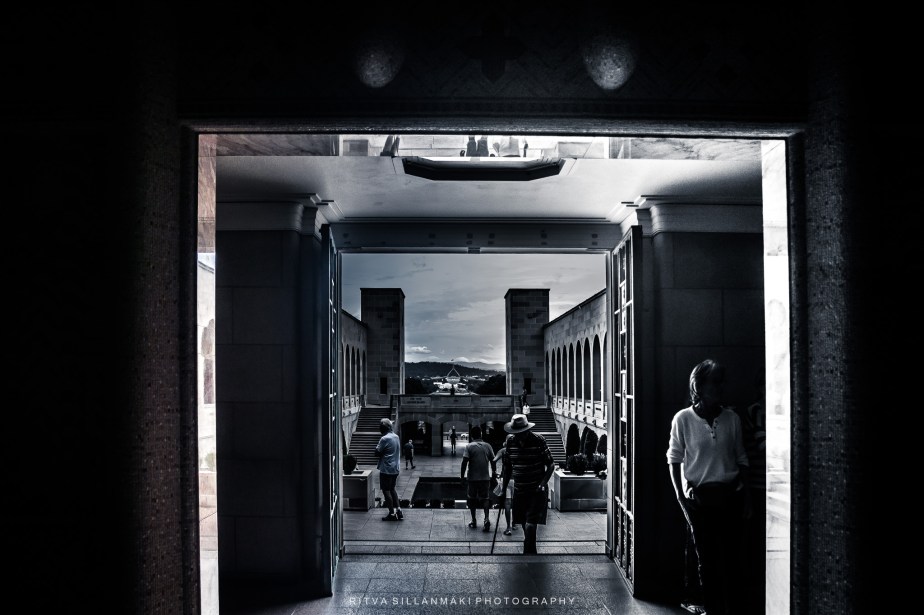
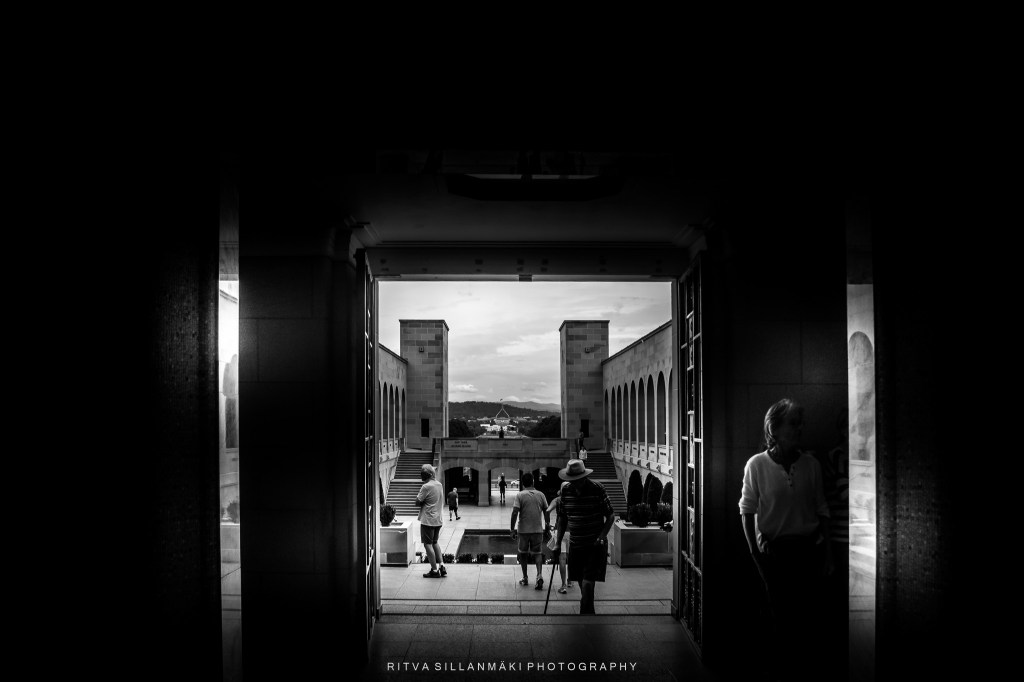
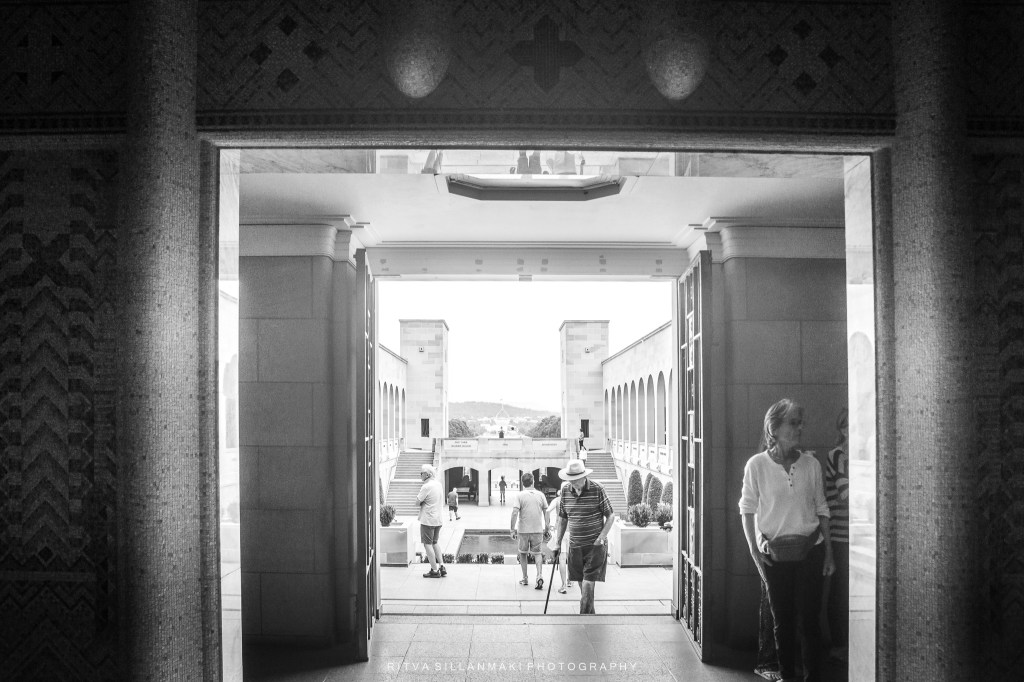
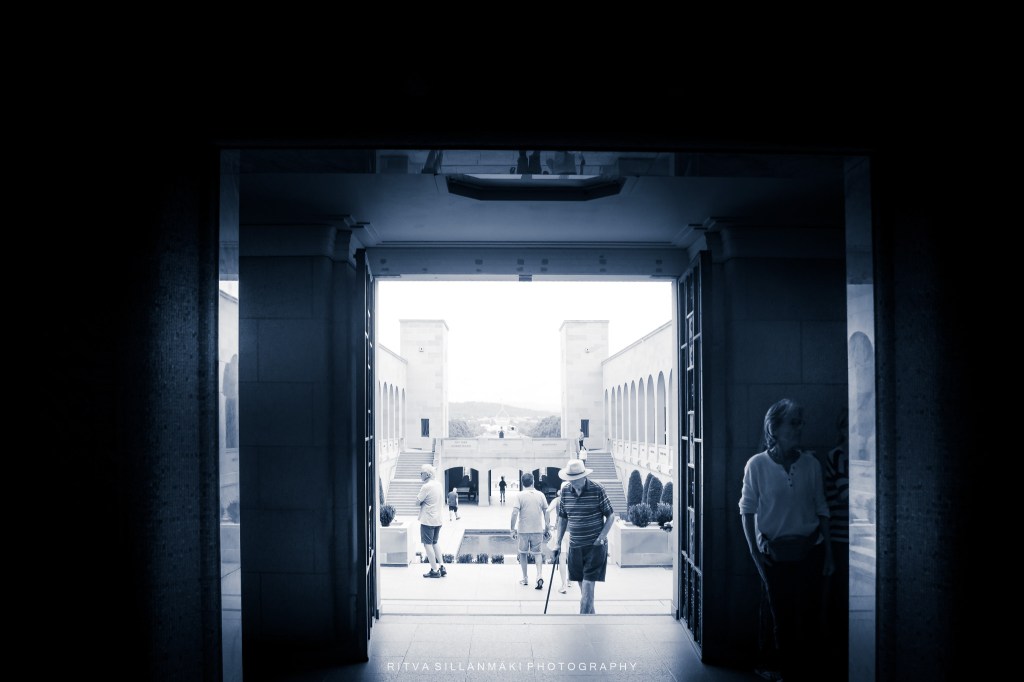
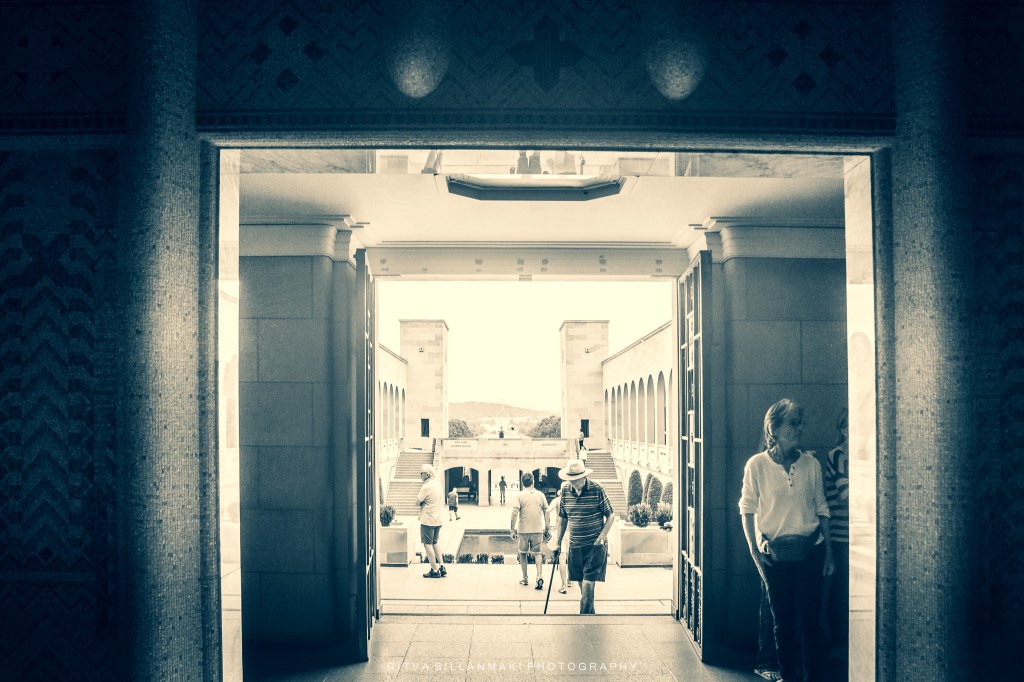
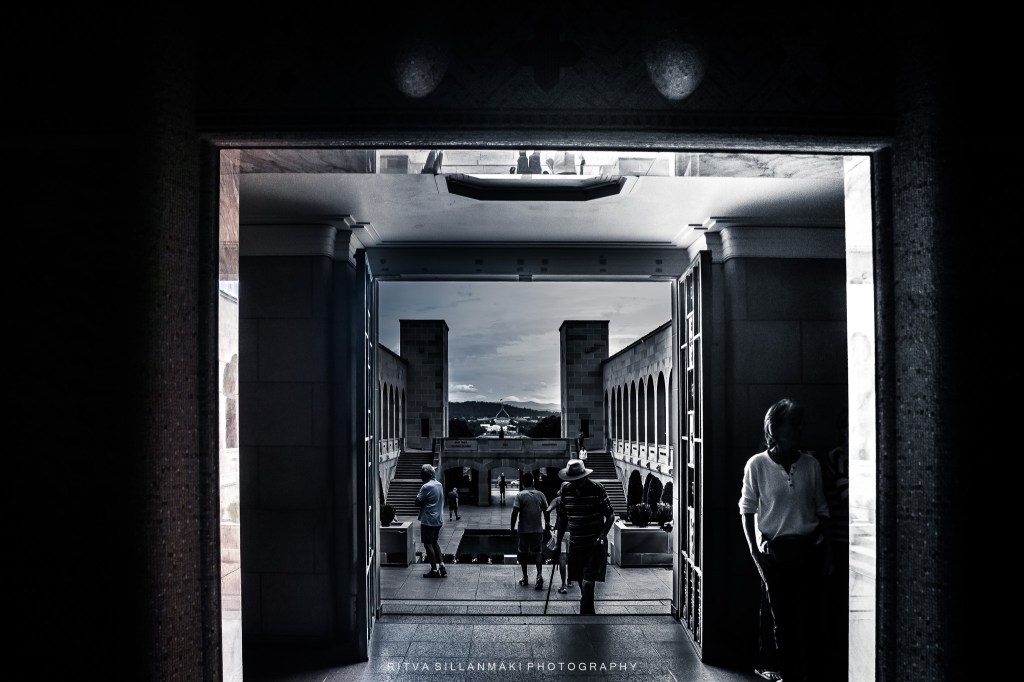
This is a topic free week for Leanne’s Monochrome Madness and I am at the moment experimenting with editing, playing with light and contrast to see how subtle adjustments can dramatically affect the overall impact of an image. As you change the elements, such as brightness, shadows, and highlights, how does it change how you perceive the image? Each adjustment can convey different emotions, stirring distinct feelings or memories within the viewer. Not all the changes are big, yet they can significantly shift the mood of the photo, influencing where your attention is drawn and what stories are told through the visual. The interplay between light and shadow can create depth, drawing you deeper into the scene, while contrast can emphasize particular features, guiding your gaze in a more intentional way. What do you think, was it worth my time to do these edits?
A monochrome photograph capturing the interplay of light and shadow as visitors walk through a stylized architectural space.
A doorway at the War Memorial in Canberra, Australia. This architectural feature not only embodies the solemnity of the site but also symbolizes the passage between the past and present, wherein the sacrifices of countless individuals who served their country are honored. As one approaches the doorway, the intricate details and sturdy materials evoke a sense of reverence, signifying the importance of the history encapsulated within the memorial.
the interplay of light and shadow at a historical site, inviting viewers to reflect on their own memories.A view through an archway, showcasing visitors at a historic siteExploring the interplay of light and shadow at an architectural site, inviting viewers to consider how subtle edits influence perception.A monochrome image capturing a doorway leading to a scenic view, accentuating the interplay of light and shadow.
I have often expressed that I enjoy editing photos, even though I tend to post mainly realistic images, having them look like I saw them. On that note, all of my images have been edited, mostly I adjust the light and contrast—highlights and shadows—to enhance the overall feel of the photograph. Contrast plays a crucial role in making certain elements stand out and giving depth to the image. I do it so that it reflects the image I saw in my mind’s eye—hence the title; the world as I see it. Photography, for me, is not just about capturing moments but also about expressing my unique perspective and interpretation of the scenes before me, allowing viewers to experience the beauty and intricacies that I wished to convey. Through careful editing, I strive to invite others into my vision, ensuring that they appreciate the subtleties that might go unnoticed in a more straightforward representation.
Original image without the edits other that cropping it.
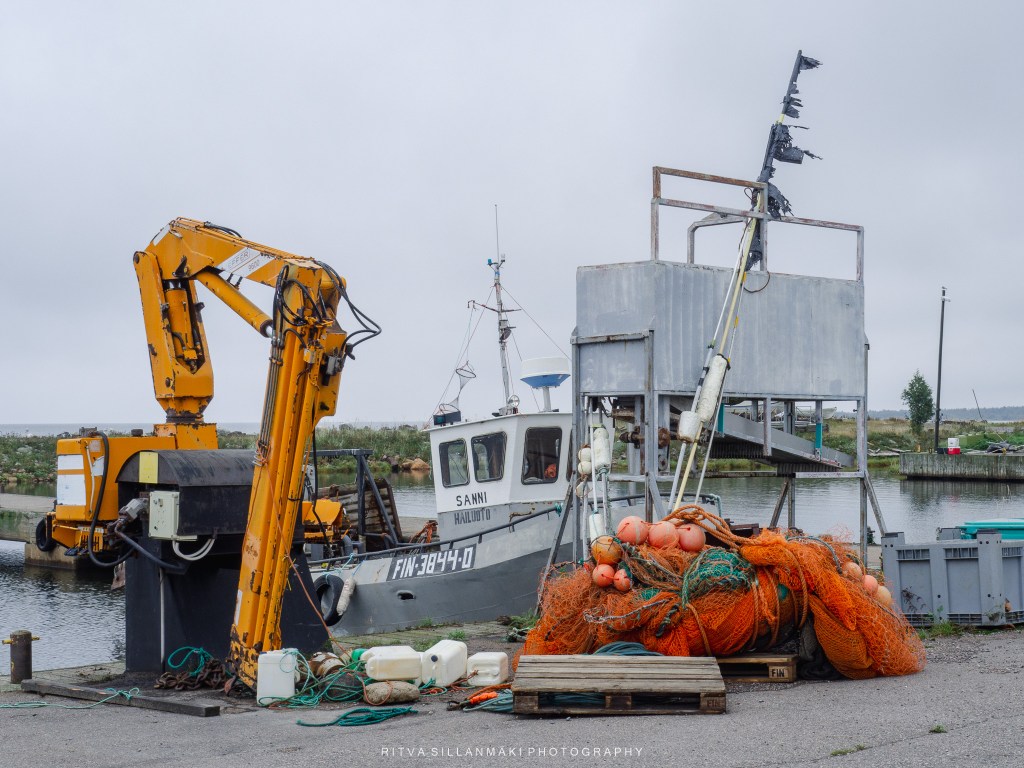
I am going to start editing cityscapes, buildings, and industrial places in a more creative way. For a long time, I have wanted to venture towards this direction, and now I am excited to explore various artistic approaches that can bring a fresh perspective to my work. I plan to experiment with techniques such as dramatic lighting, unique angles, and vibrant color palettes to enhance the visual appeal of my photographs. By prioritizing these innovative methods in my editing process, I hope to creatively showcase buildings and cityscapes, transforming my photographs into something more artsy and captivating.
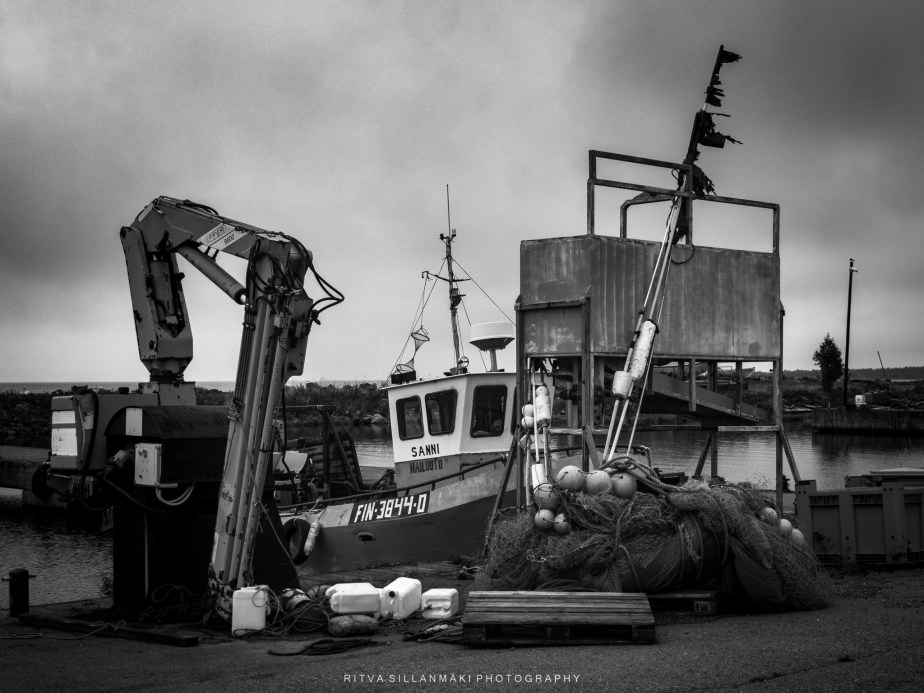
Converted to an black and white
I am going to explore various angles to highlight architectural details. Finding unique vantage points can elevate the way buildings are presented in your images. Adjusting contrast can enhance the structural elements of buildings, making them stand out.
Vintage or black-and-white filters can transform standard images into stunning artistic representations.
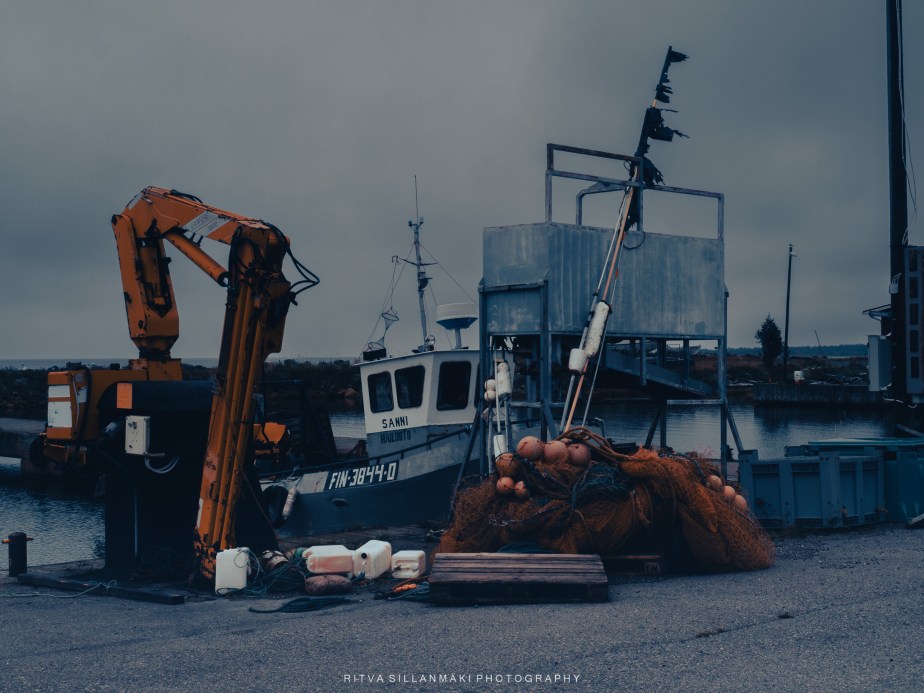
Blue and gray tones –
Use color grading to enrich urban atmospheres.. Pay attention to the distinct textures found in urban environments, such as brickwork or glass in post-processing to create depth and interest in your cityscape photos. Play with the color tones in the image.
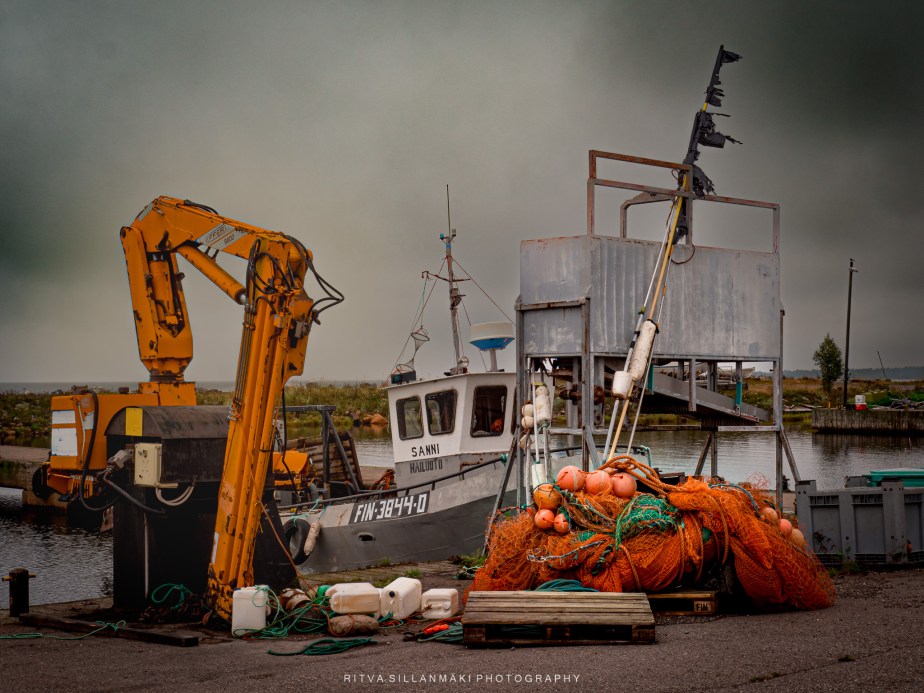
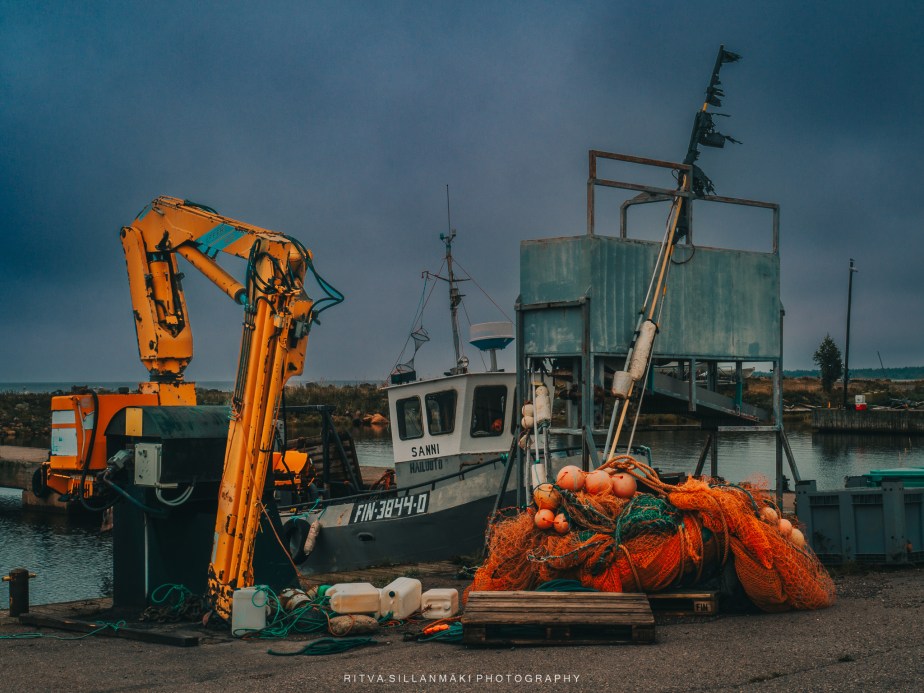
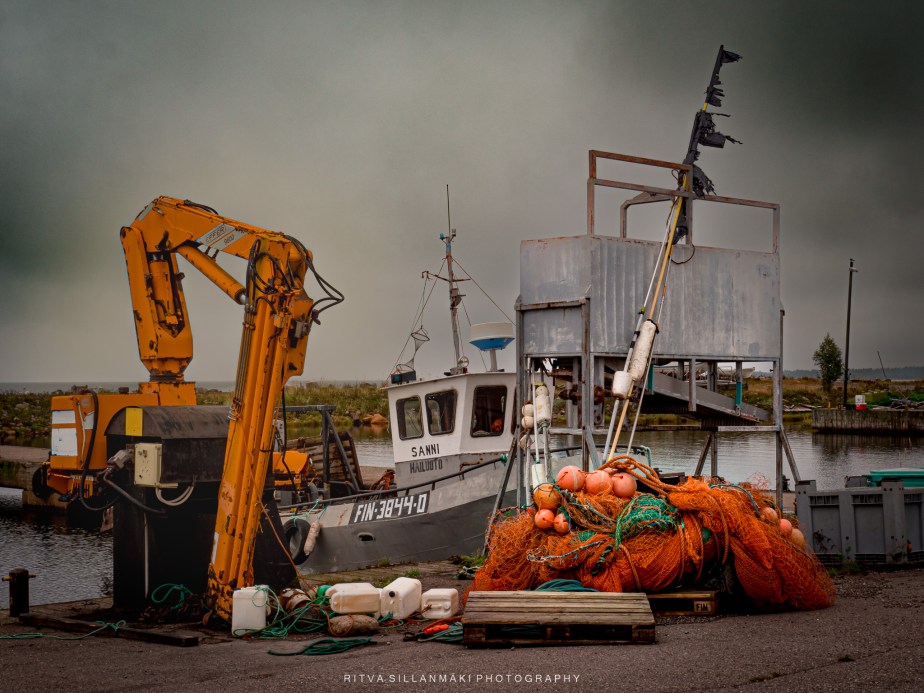
Fishing dock, placing the interest in the subject matter and bright colors
Use filters to create effects that align with the character of buildings and cityscapes.
Fishing Dock in warm tone and still focusing on the bright subjects