Henri Cartier-Bresson said that a photographer is continually shaping and changing his or her perspective to create a capture, but at the speed of a reflex action.
I opted to revisit Tina for her captivating “One Photo Two Ways” challenge, which was originally posted on June 26, 2021.
I am incorporating quotes from the original post because they perfectly resonate with this challenge, starting with the same quote that Tina used in her inspiring piece. This is an editing challenge, and for those who have followed my journey, you know how much I enjoy the editing process.
“Photography is as much about what is left out of the frame as it is about what the photographer keeps inside the frame.”Daryl Oh
Cropping
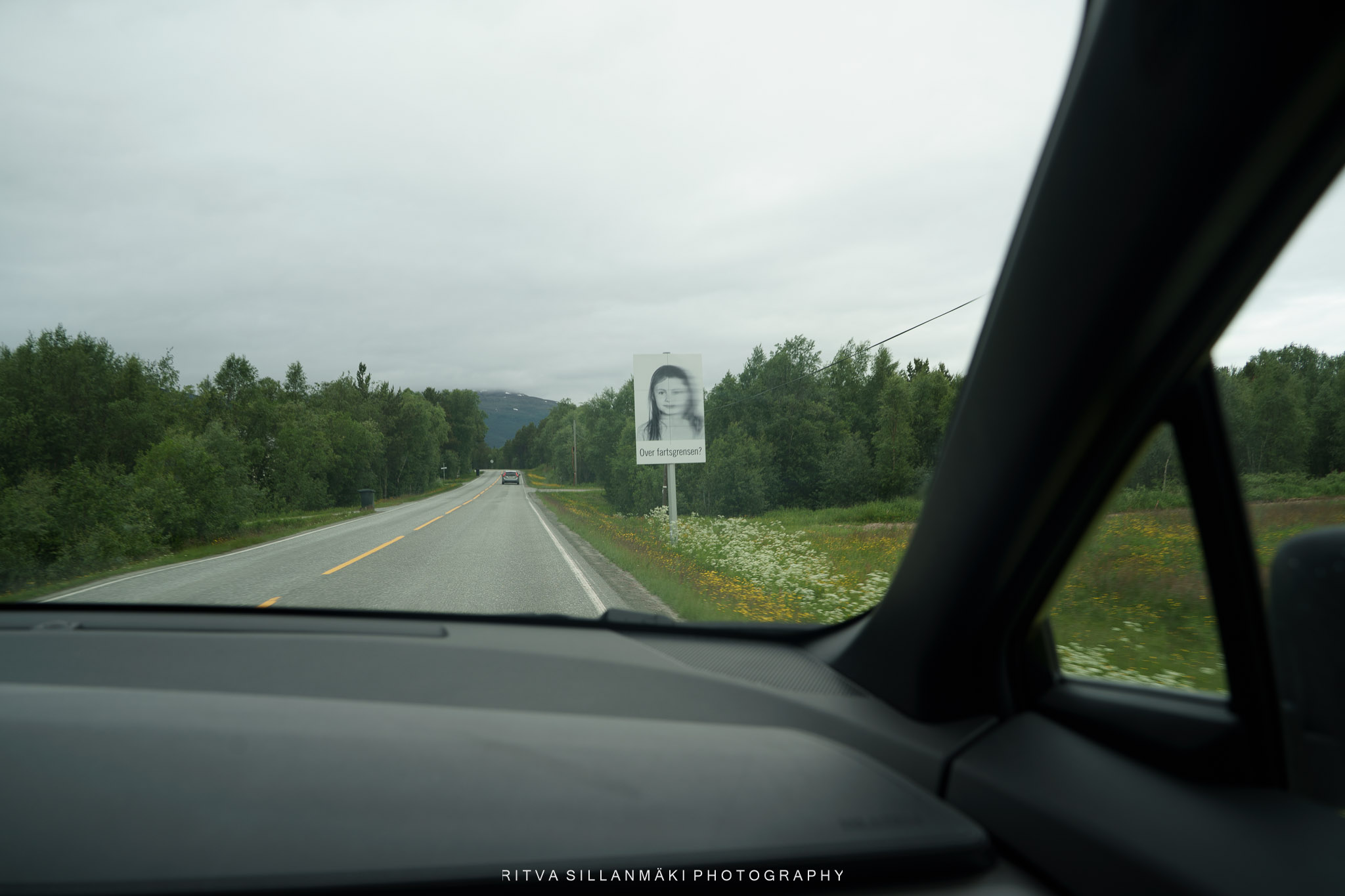
I rarely crop or edit my landscape photographs; I find it more important to concentrate on framing to convey my message. Nevertheless, I do occasionally make minor tweaks. I enjoy composing my images as I capture them, which often includes leveling or correcting verticals. Cropping is an useful and powerful way to highlight your subject and composition.
I trimmed the image below quite a bit to highlight the elements I want to emphasize. I’ve darkened the sky to create a gloomier atmosphere and brightened the trees to emphasize the leading line. Additionally, I enhanced the sign to make it stand out as the focal point of the shot. These types of edits are standard for me, as I perceive editing as a means to express my perspective. #1

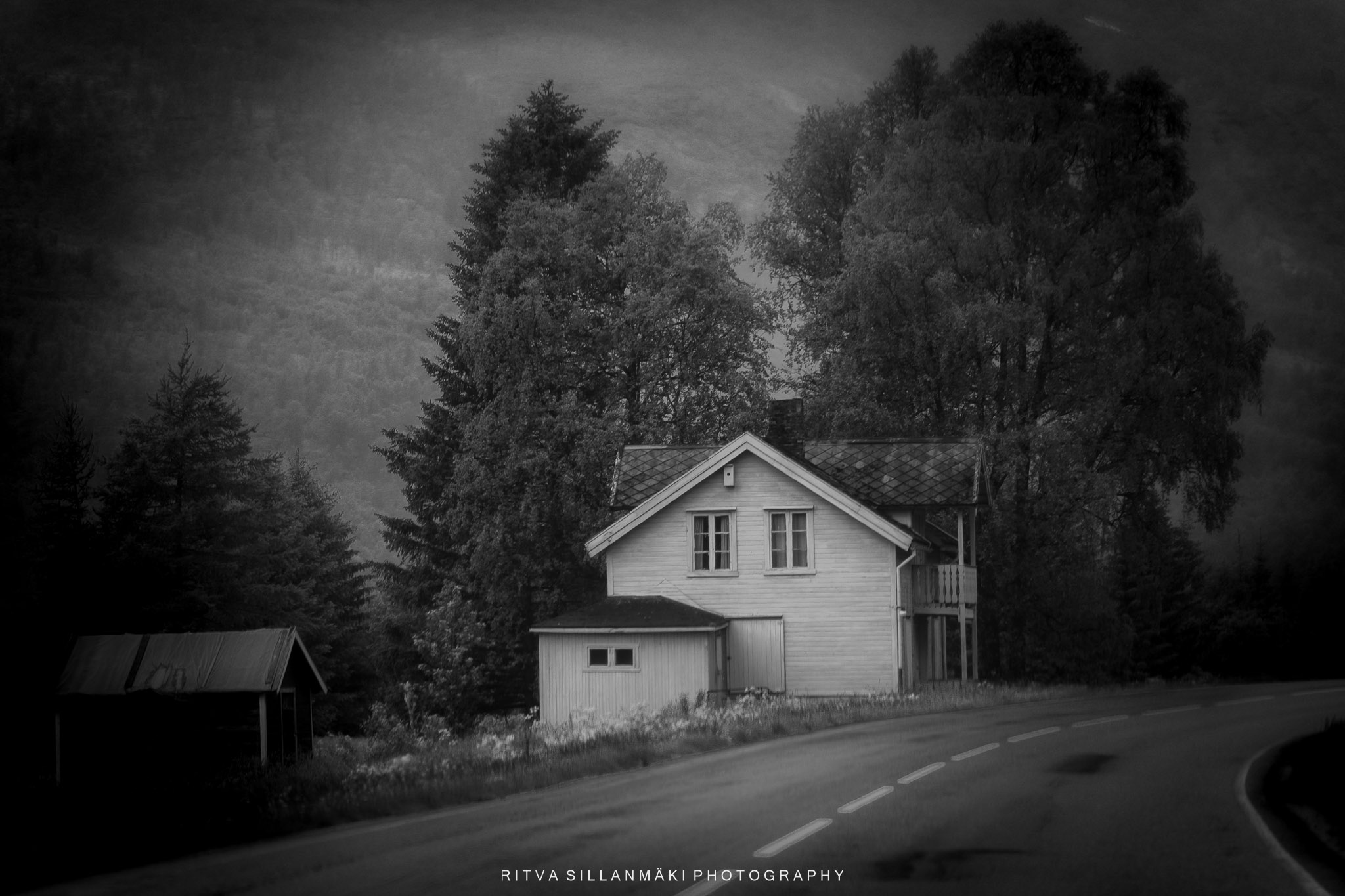
Black and white conversion
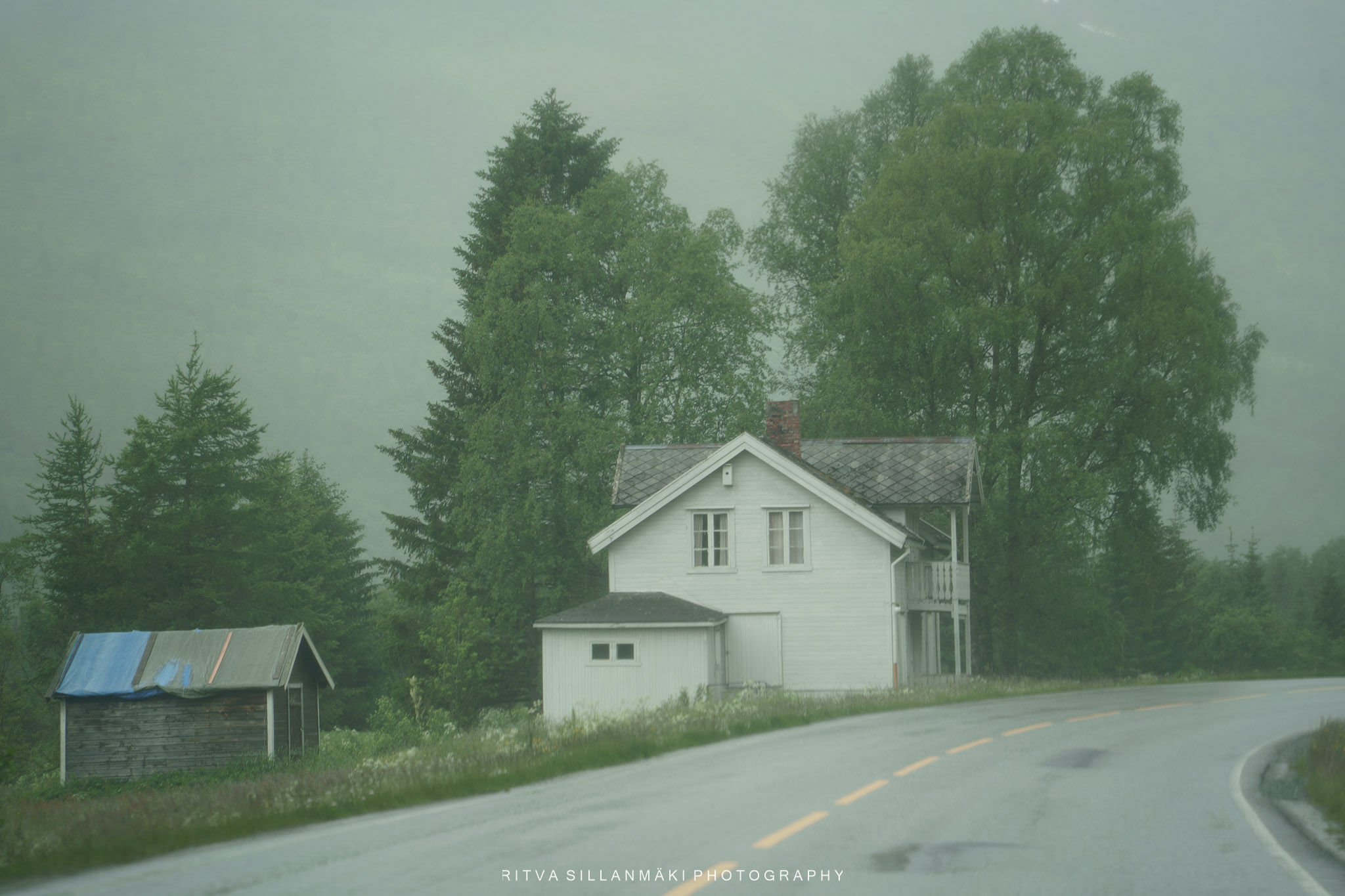
Monochrome / Black and white photography is something I really love. It holds a unique charm that transcends the complexities of color, allowing the viewer to focus on the stark contrasts and intricate details that might otherwise be overlooked. Here I have used the masking tool to get this result, isolating certain elements to enhance their impact and draw attention to the play of light and shadow. The subtleties of texture and form come to life in ways that evoke a range of emotions, inviting viewers to interpret the scene from their own perspective. Through this technique, I aim to not only capture moments but also convey the essence of the subject in a pure, stripped-down manner. #2
“A picture is the expression of an impression. If the beautiful were not in us, how would we ever recognize it?”Ernst Haas
Editing Impression
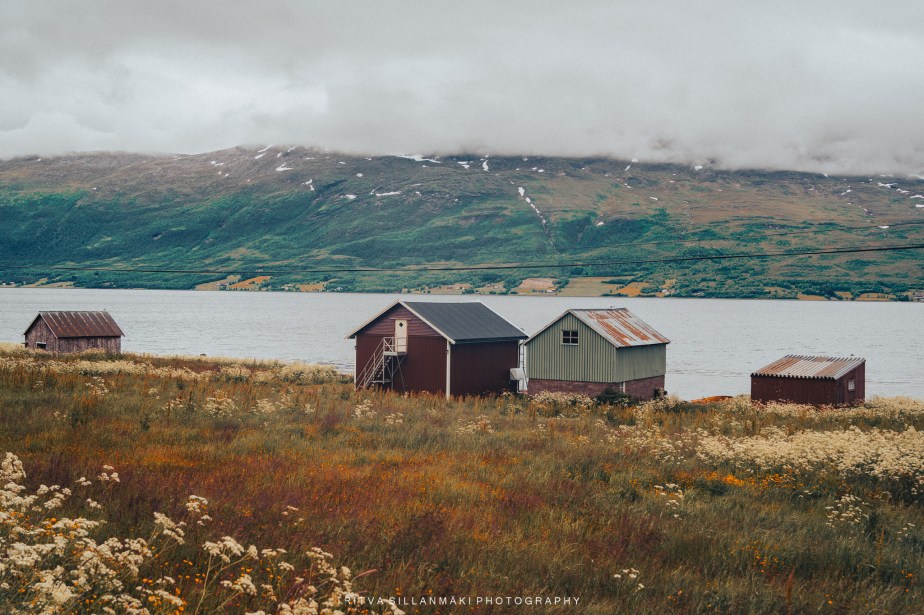
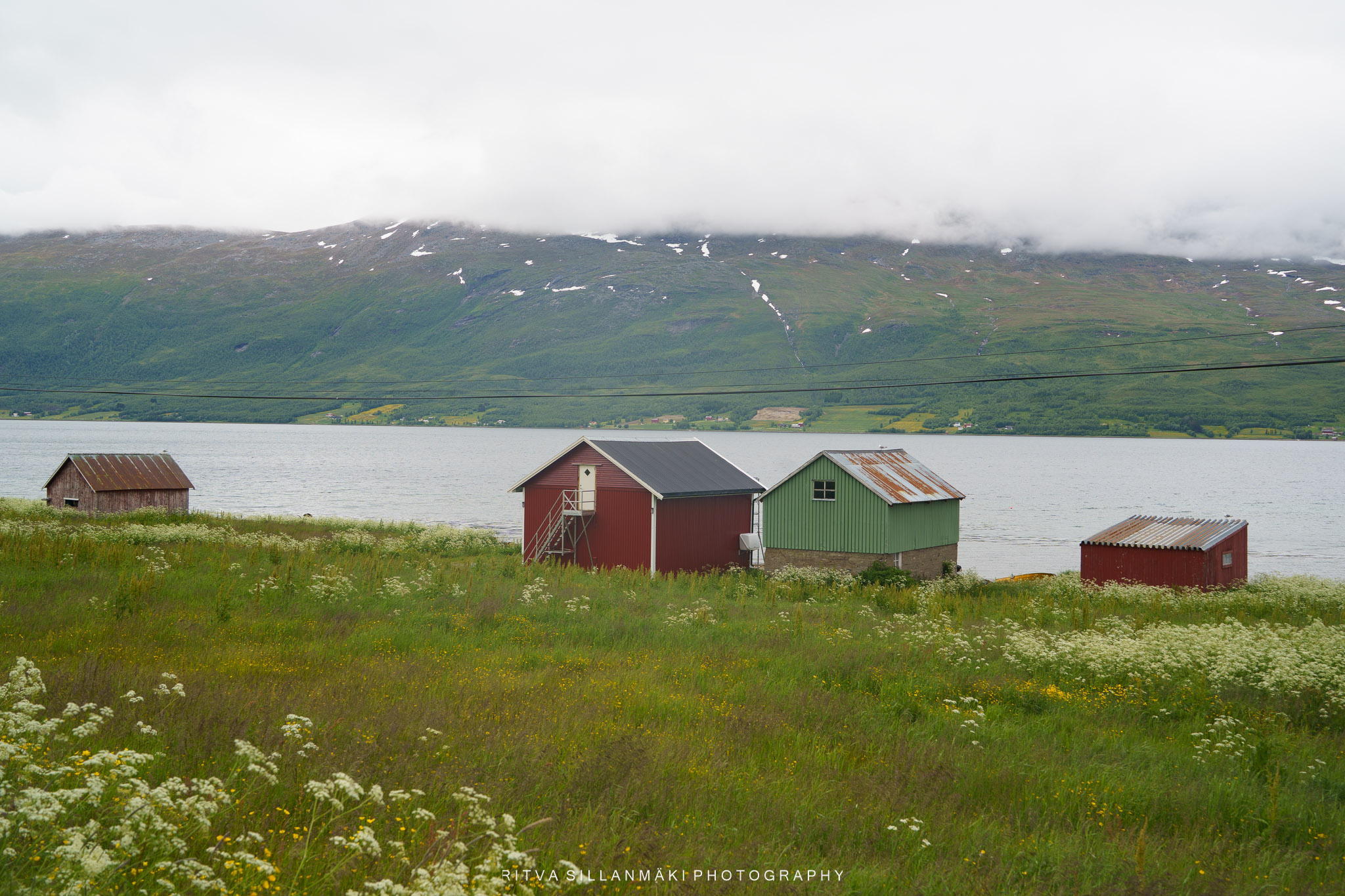
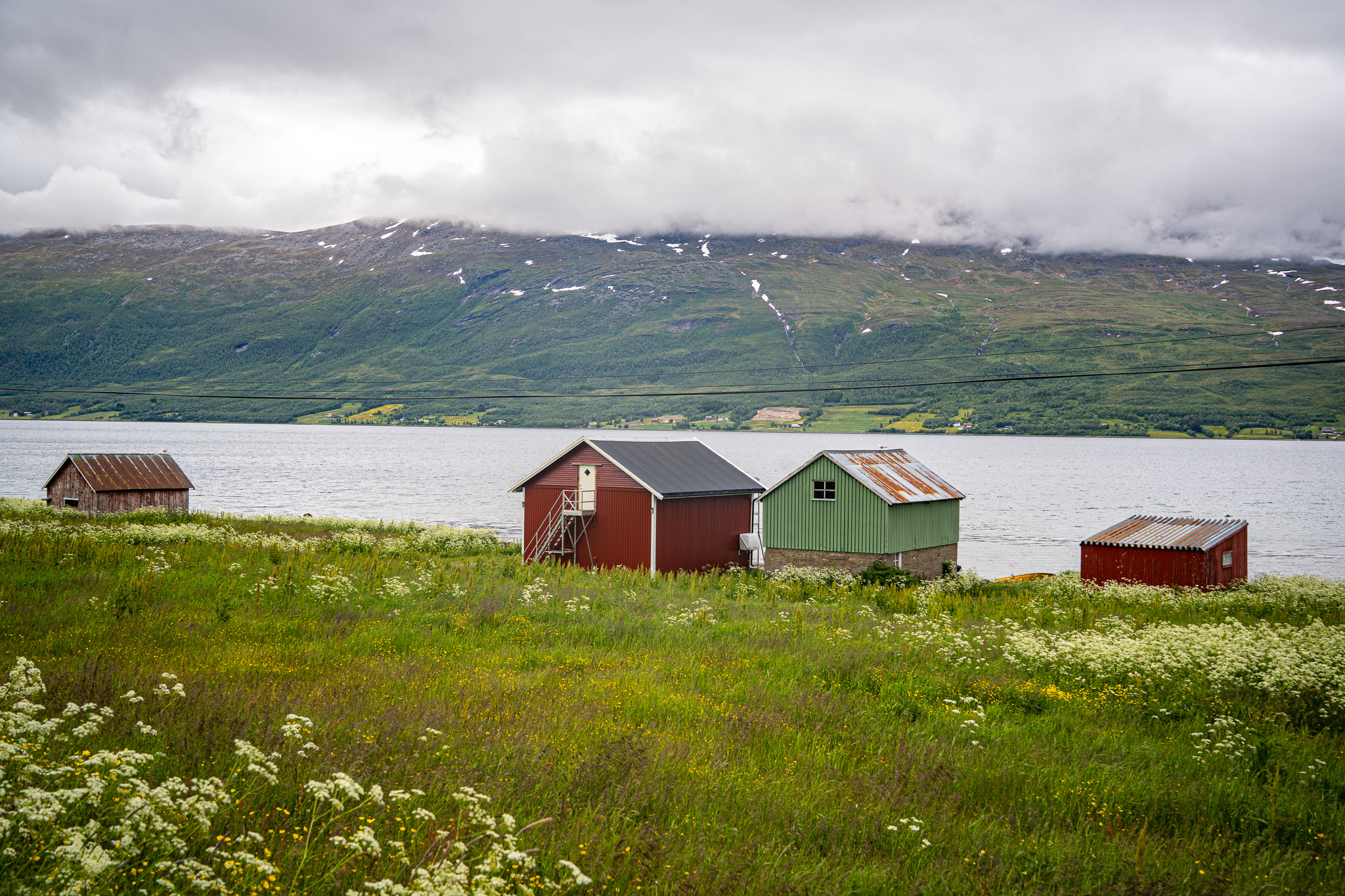
A rural landscape with a cluster of four small, rustic houses on a grassy field abundant with wildflowers and greenery. Behind the houses lies a calm body of water, fjord, stretching horizontally across the middle of the image. Beyond the water, a large, green mountain range ascends under a dramatic sky filled with thick, moody clouds that partially obscure the mountain peaks. The peaceful, natural environment with a subdued color palette dominated by greens, blues, and earthy tones, suggesting , rightly so, a cool and possibly overcast day in a remote area.
In this gallery, I share the unaltered, original version next to my standard enhancements, as I capture images in RAW format. Editing is essential to prevent the photos from appearing flat. I utilize the masking tool in Lightroom for photo adjustments. To add an extra touch, I’ve presented them as if they were taken with an analog camera. To transform a digital photo into an analog film look, raise the black points, reduce the highlights, incorporate coarse film grain #3, and increase the warmth of the color temperature. The artistic interpretation is generated by AI.


“Every photo I take is a piece of my life that I will never get back, but that I will be able to see again and again.”Malcolm Flowers
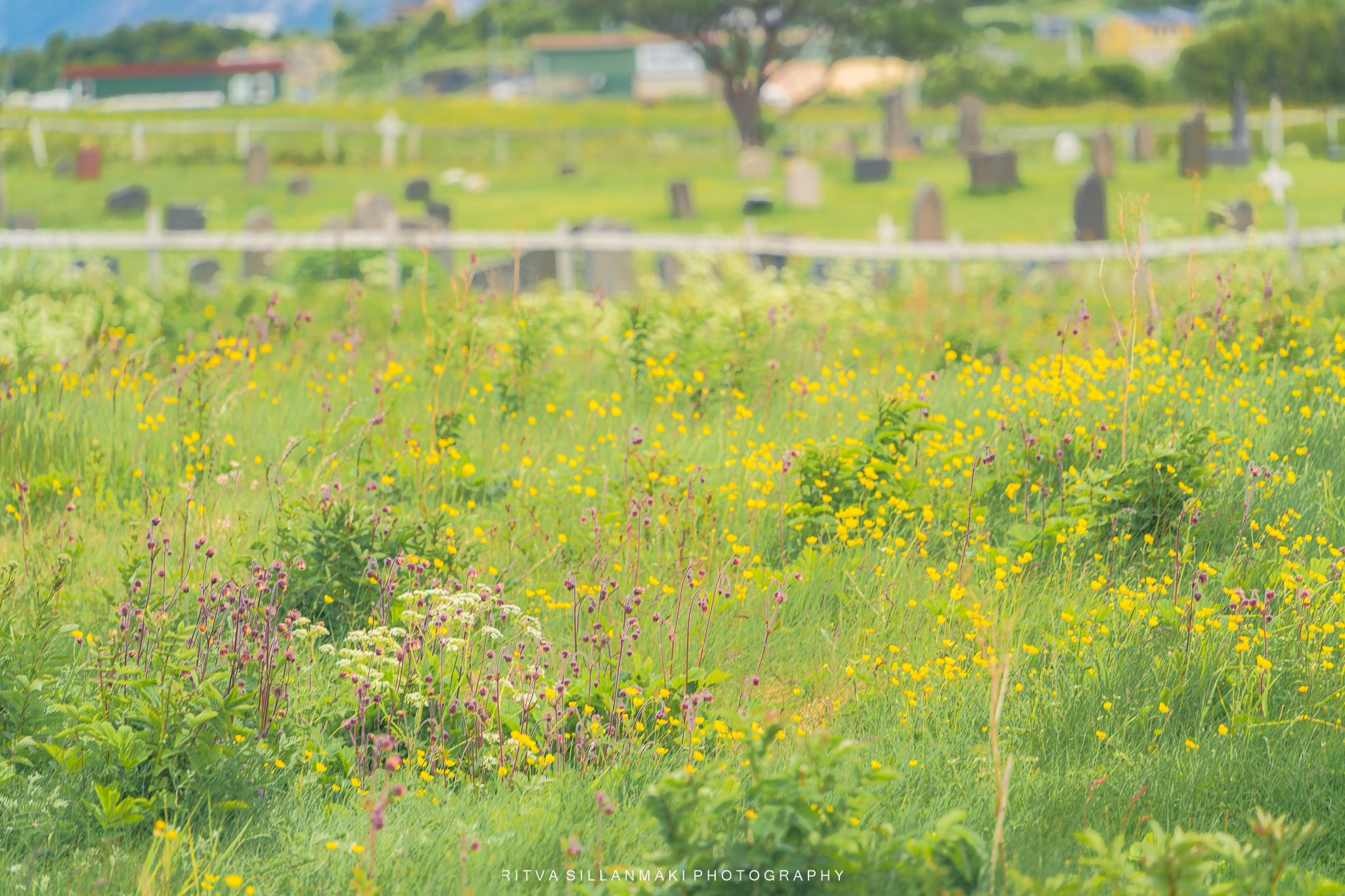
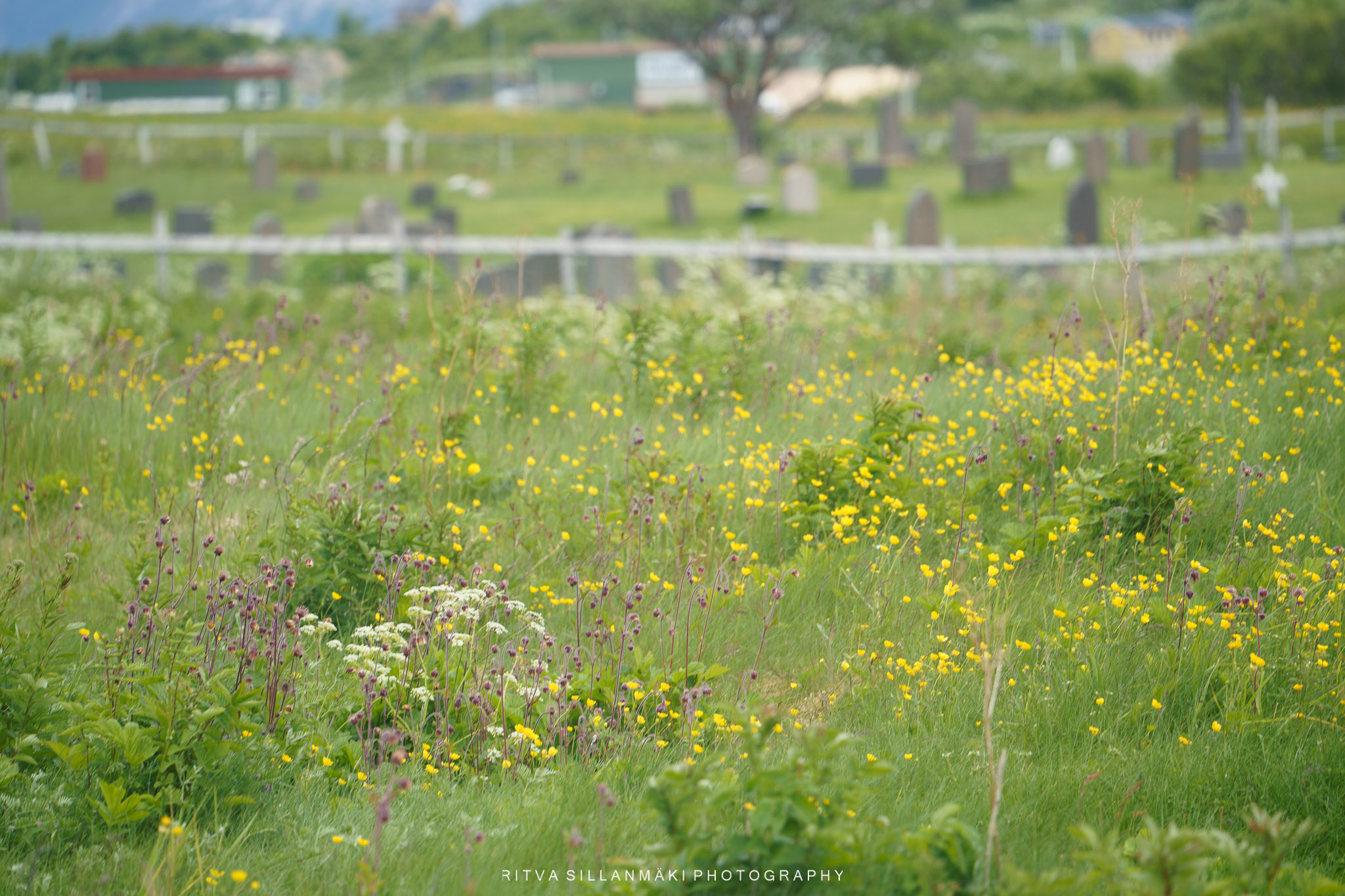

The meadow above is filled with tall grasses and a variety of wildflowers, predominantly yellow, interspersed with white and purple blooms. In the background, a cemetery is visible, with an assortment of tombstones and crosses scattered across a green lawn, surrounded by a white fence. The scene is set against a backdrop of trees and distant buildings, all slightly blurred to emphasize the vibrant flora in the foreground. A peaceful and contemplative mood, combining elements of nature and quiet remembrance.
In this gallery I experimented AI to edit a version, as it’s ubiquitous these days, but it shifted the mood and emphasis from the forefront to a much darker tone. Initially, the shot is primarily out of focus, contributing to this ambiance. I aimed for the focus to remain on the light and bright foreground, evoking a sense of hope and that is what I aimed for in my edit. AI can be useful, but do not loose your own vision and style. #4
“I do not document anything. I give an interpretation.”Andre Kertesz
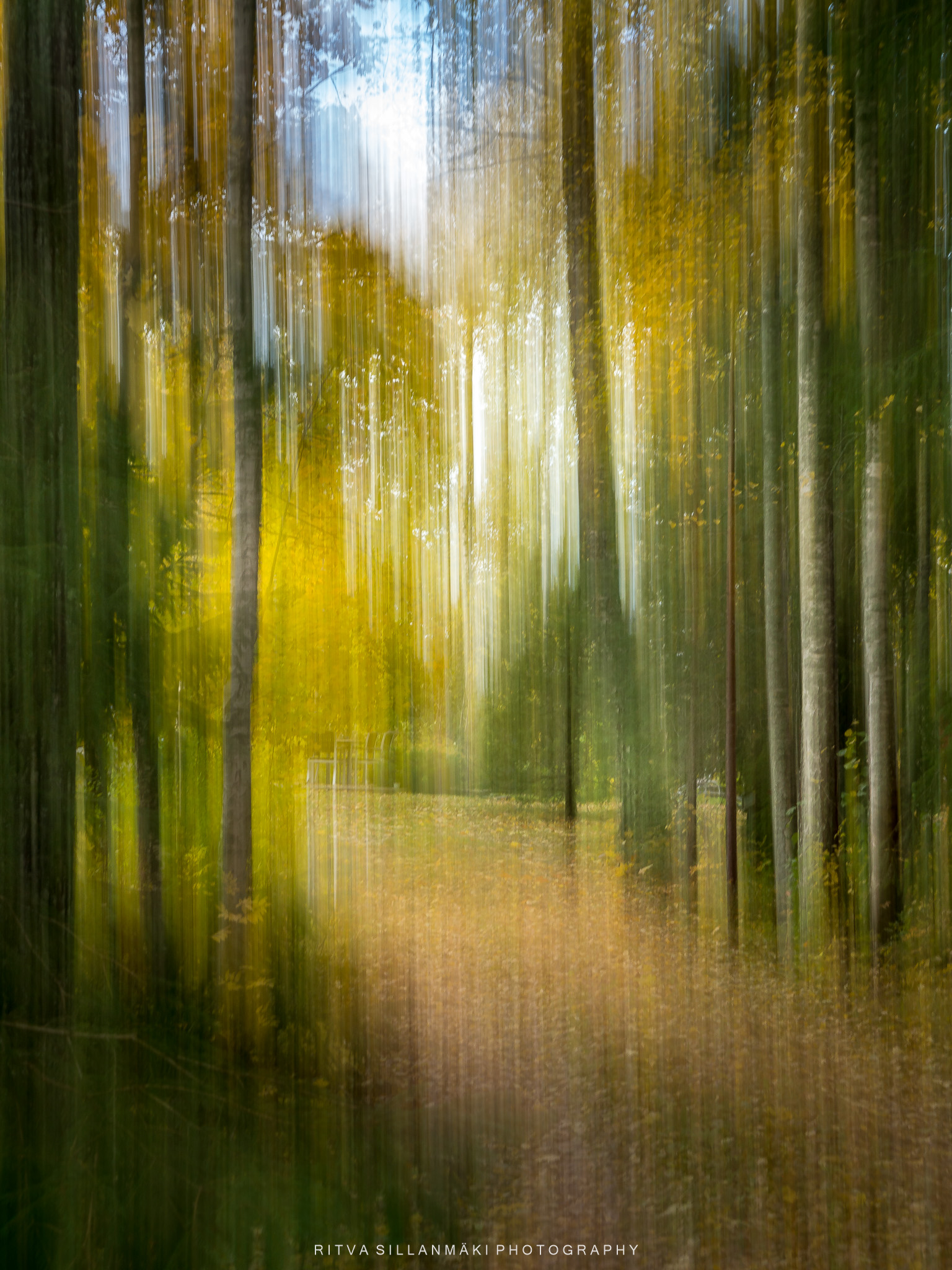
This week, I invite you to explore the different methods you use to create images. Capture the same subject through a variety of unique approaches. Please limit your submissions to 5 photos. You have the freedom to select your technique, including the application of editing tools. I eagerly anticipate the outcomes of your creativity—make sure to link them back to my original post and apply the Lens-Artists Tag so we can easily discover your work in the WP Reader.
Last week we featured a guest host Steve Hyde (of Steve Hyde Photography Blog) and he provided us with a wonderful challenge, but nearly impossible one. Many of us had a hard time choosing them. We appreciate all the fantastic, Best Ever Photos you shared. Wonderful photography!
Sofia will return next week, we will have to wait to see what she has in store for us at noon EST in the USA. Tune in to find out more about the challenge then.
You can keep up with all of our challenges by subscribing to the Lens-Artists team members websites: Tina, Patti, Ann-Christine, John, Sofia, Anne, Egidio, Beth. Ritva,
For information on how to join the Lens-Artists challenge please click here.
Until then, let’s keep exploring, broadening our horizons, and maintaining a positive mindset


So much thought went into your editing choices and the results of each truly lift each one up into the extraordinary. I was going to say I like the black and white transformation of the house best but going back I like the others just as much. Here’s mine: https://elizabatz.wordpress.com/2026/08/28/artworks-and-photos-of-tropical-fan-palm-trees/
Thanks, I appreciate your comment. I thought your edits were great.
Late as usual! Even so, participating in the Lens-Artists challenge is a priority. Thank you all, again! https://lindylecoq.com/2026/08/28/lens-artists-challenge-410-154-one-photo-two-ways/
It’s only Friday 😂 no hurry