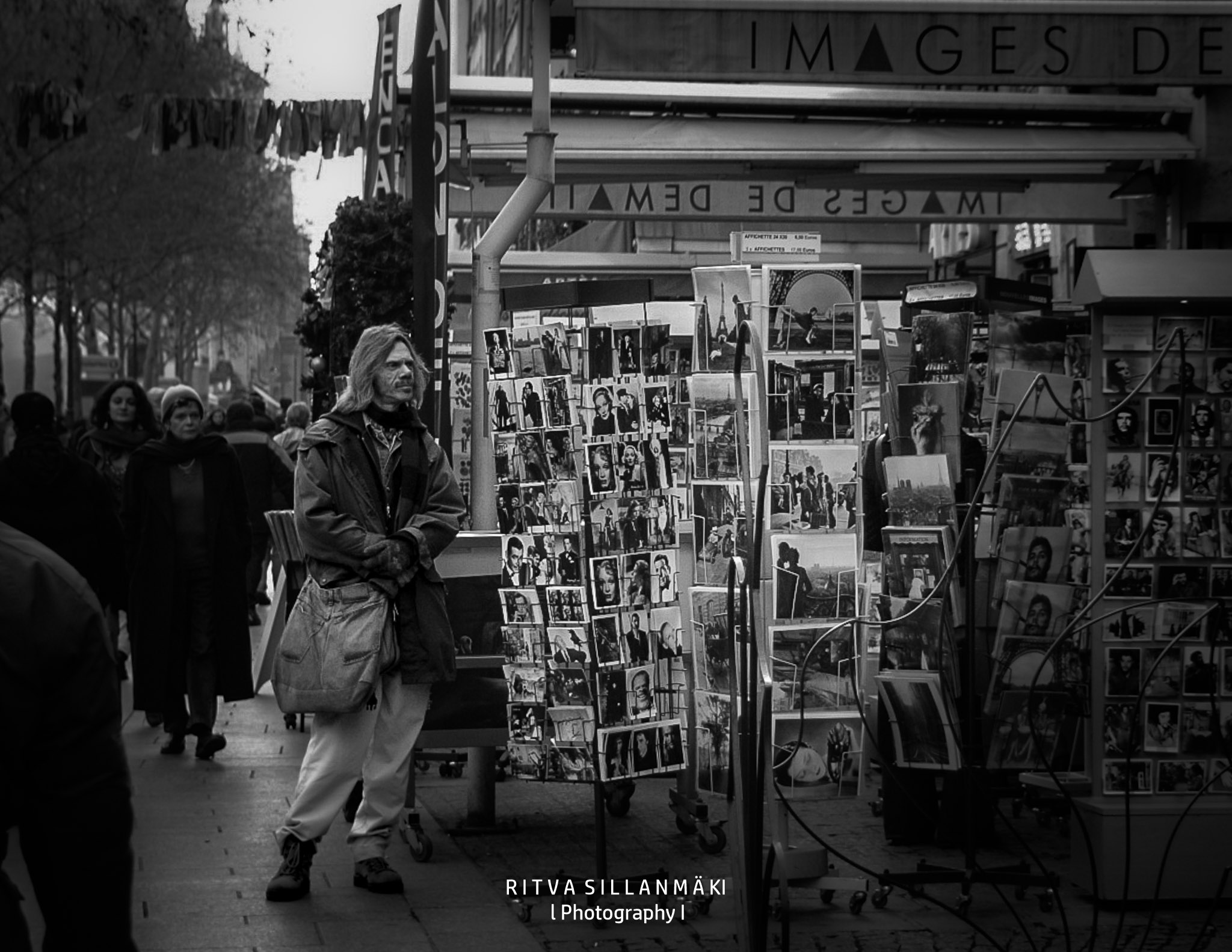
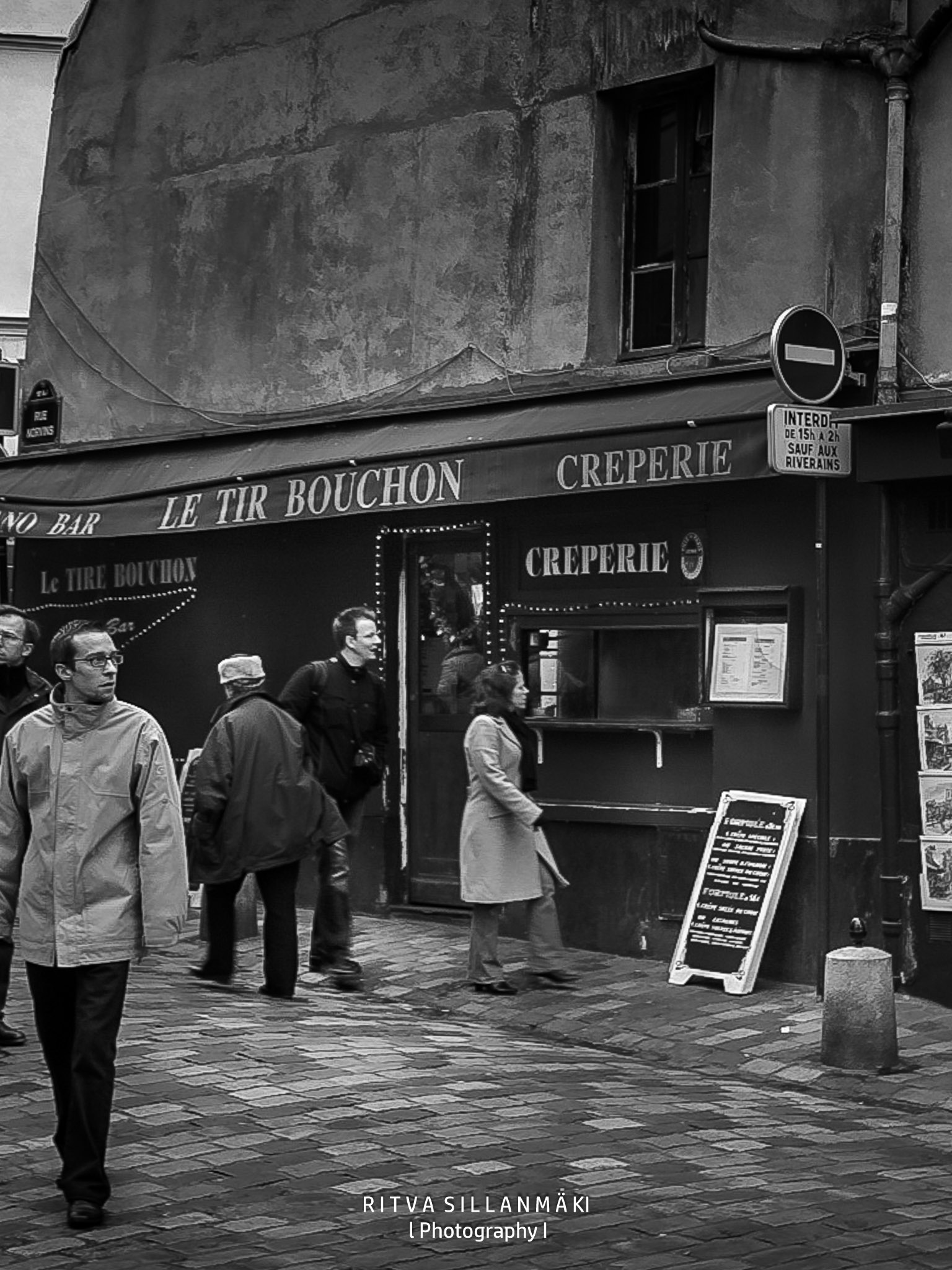
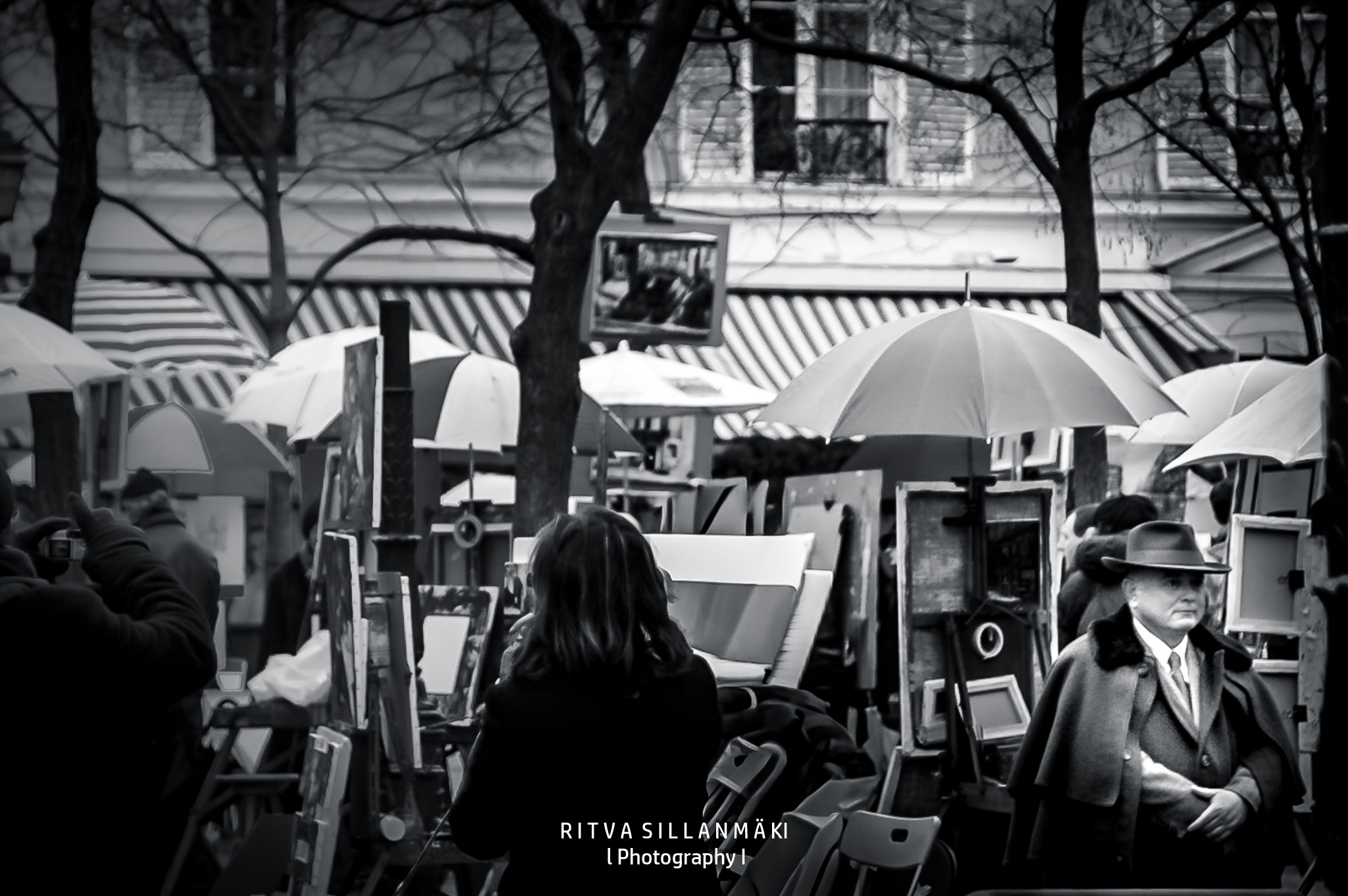
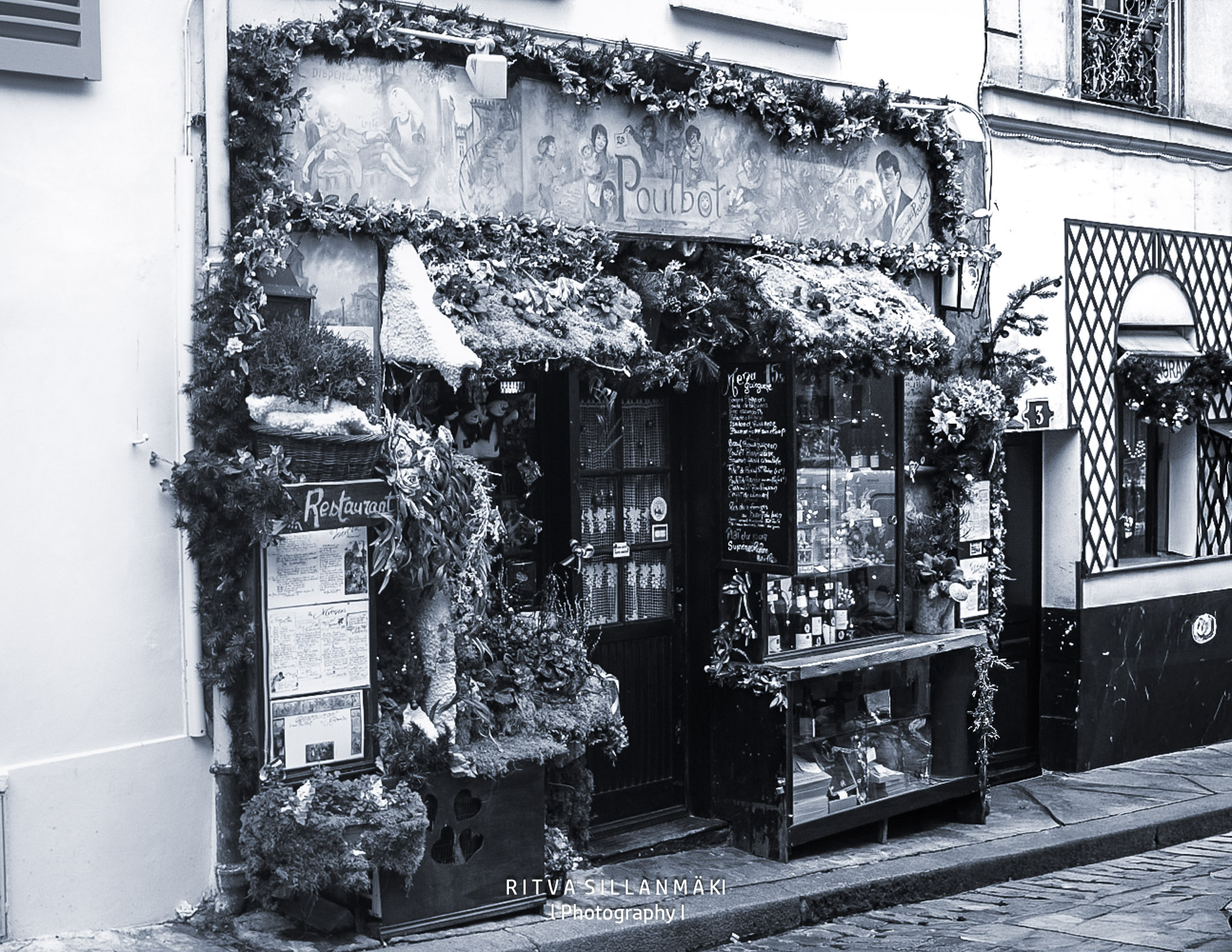
I’ve written this before, but when we visited Paris a year back, as we walked it felt like we were in an outdoor museum, wandering through endless streets of history. The buildings were so beautiful, each balcony and window full of little details that made me want to stop and stare. I kept taking photos, trying to catch that soft light and quiet atmosphere, and now I decided to use some of these images for Margaret’s theme of stories for Monochrome Madness, you can sense the city in these in photos.
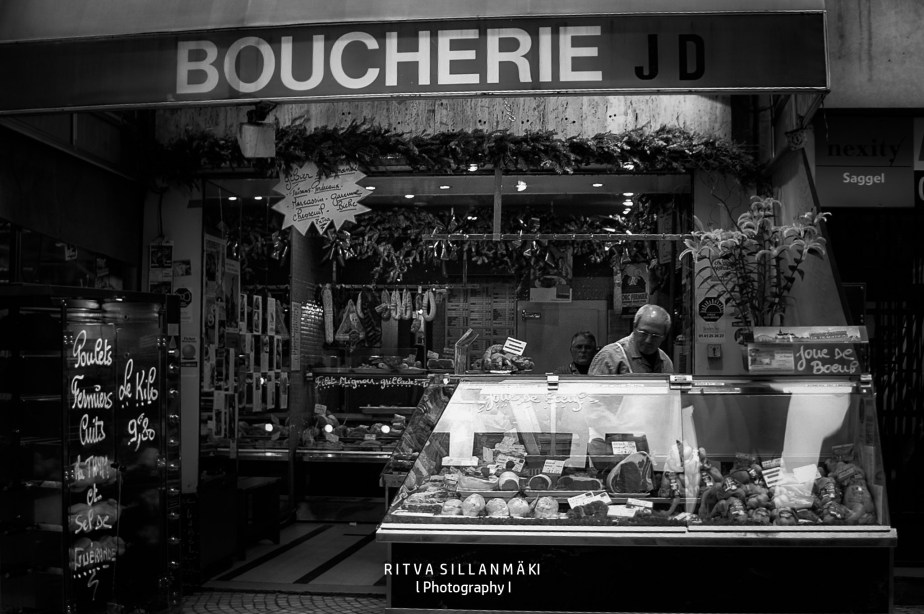
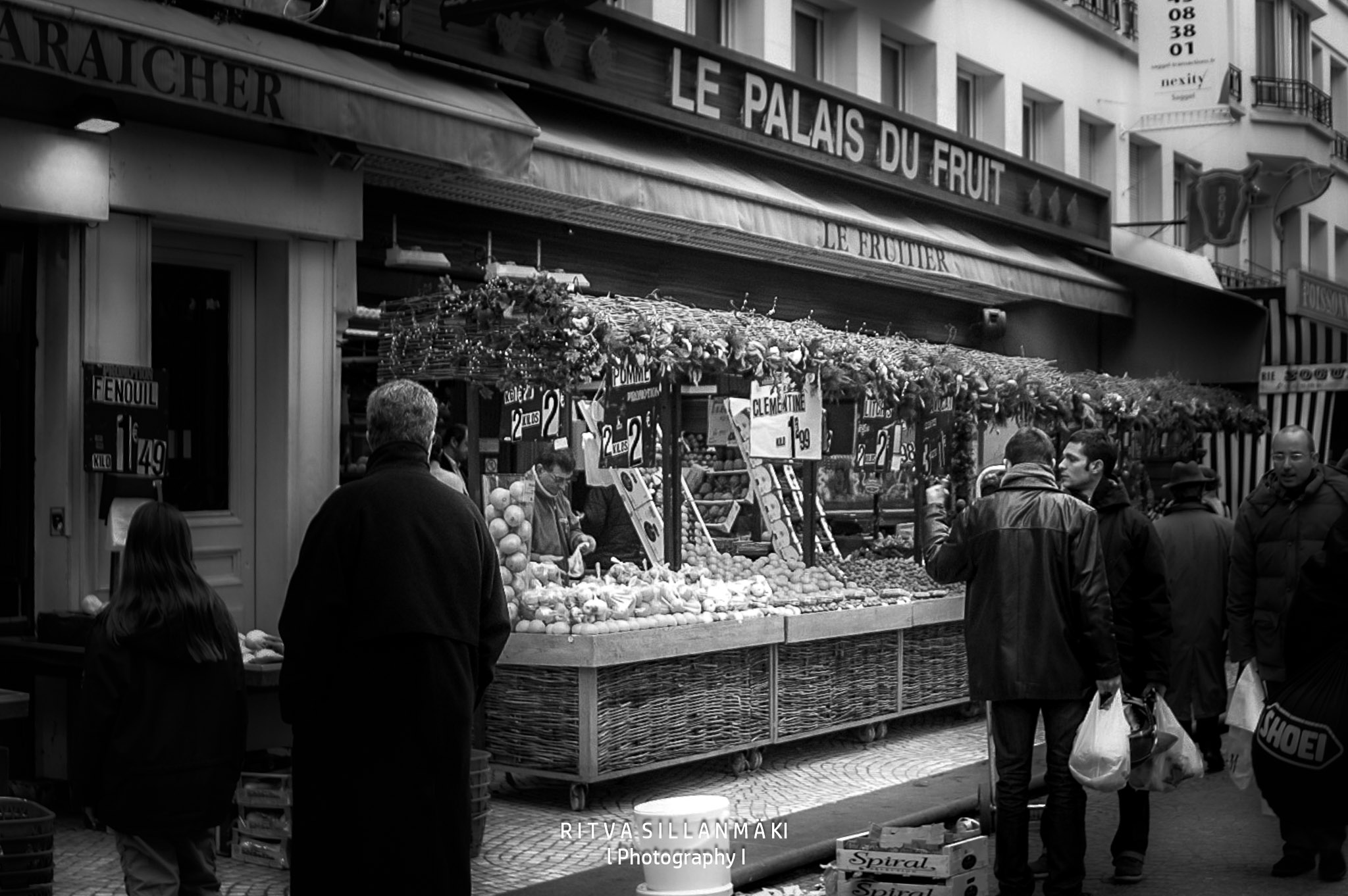
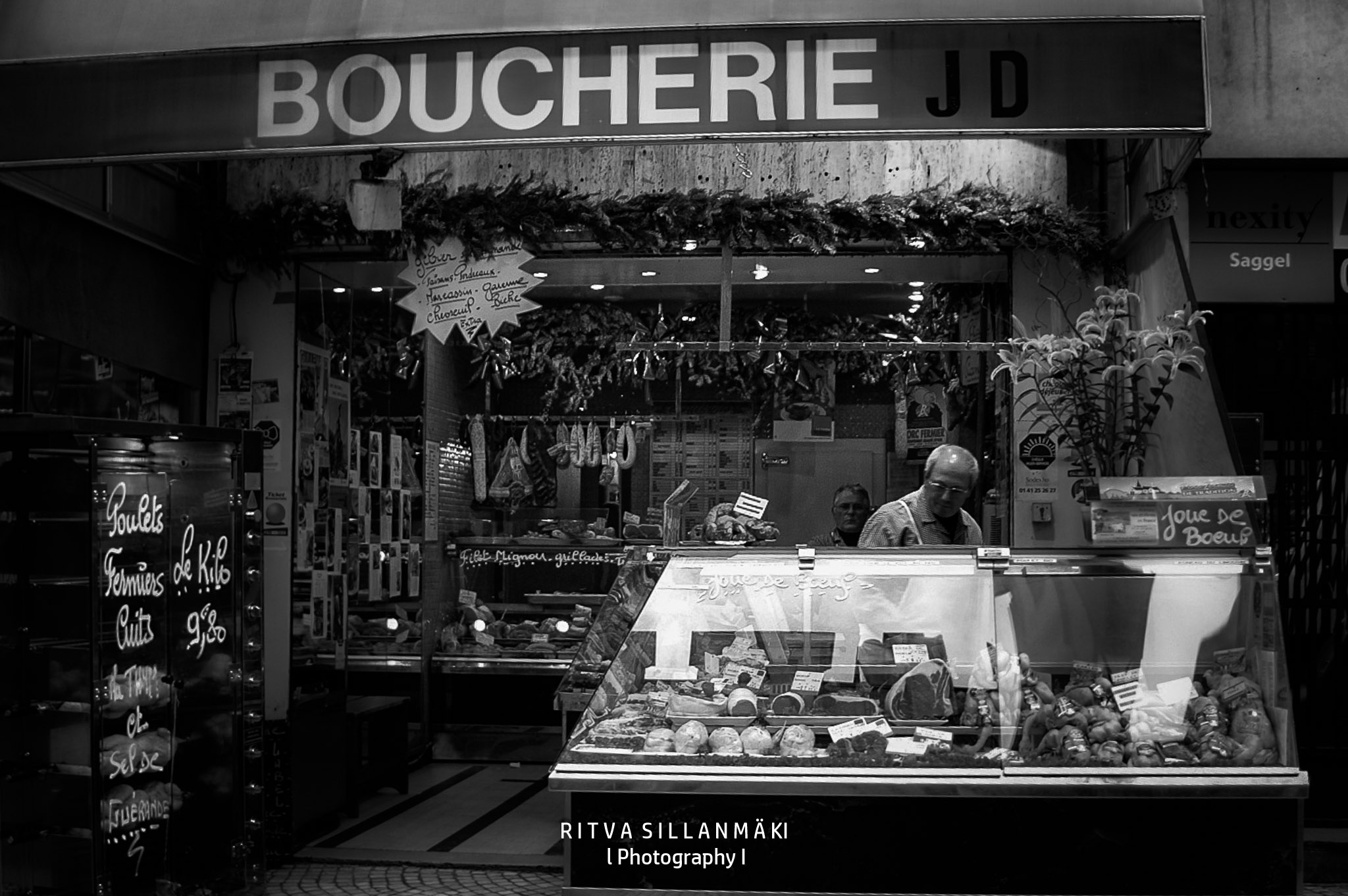
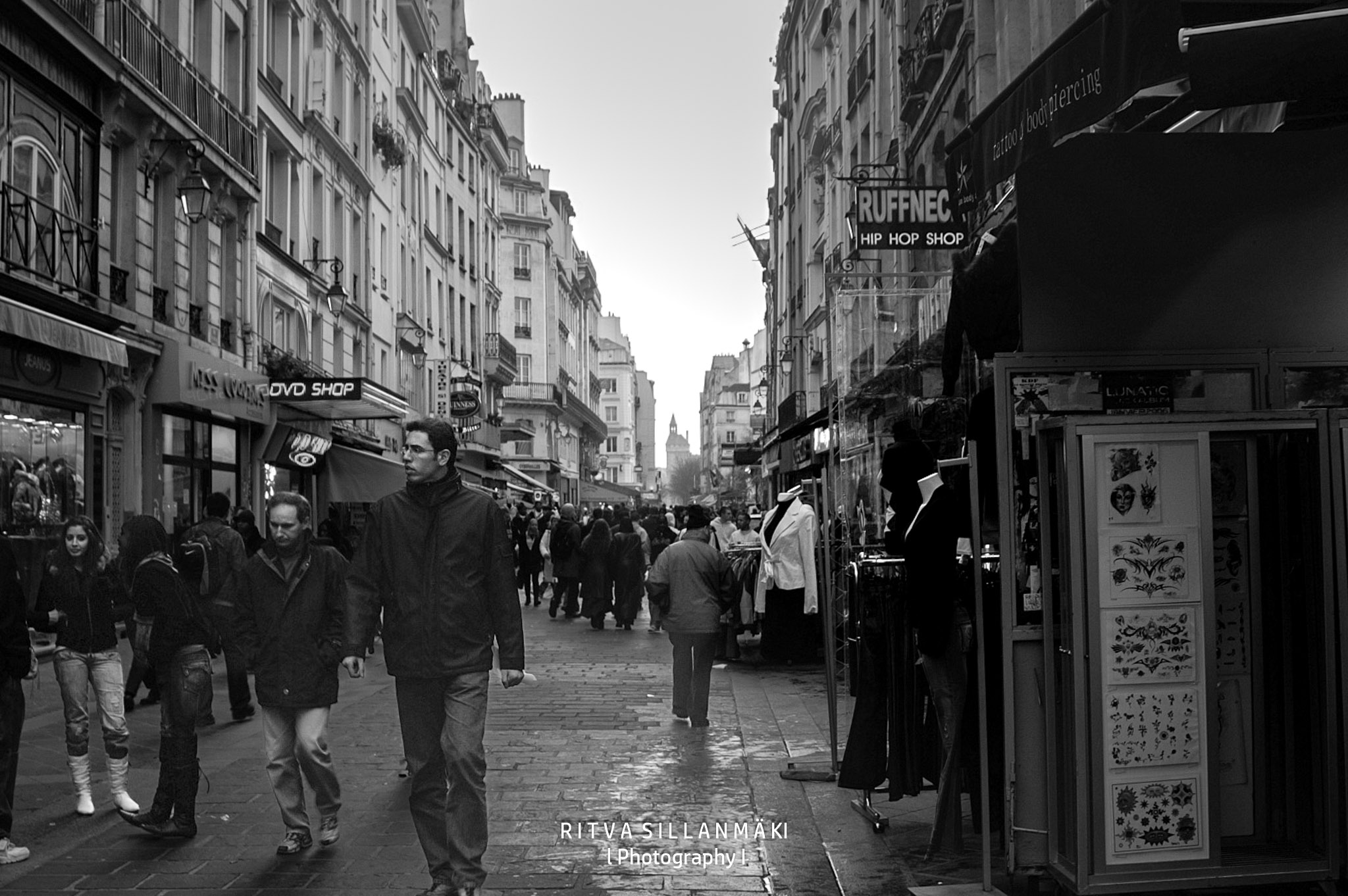
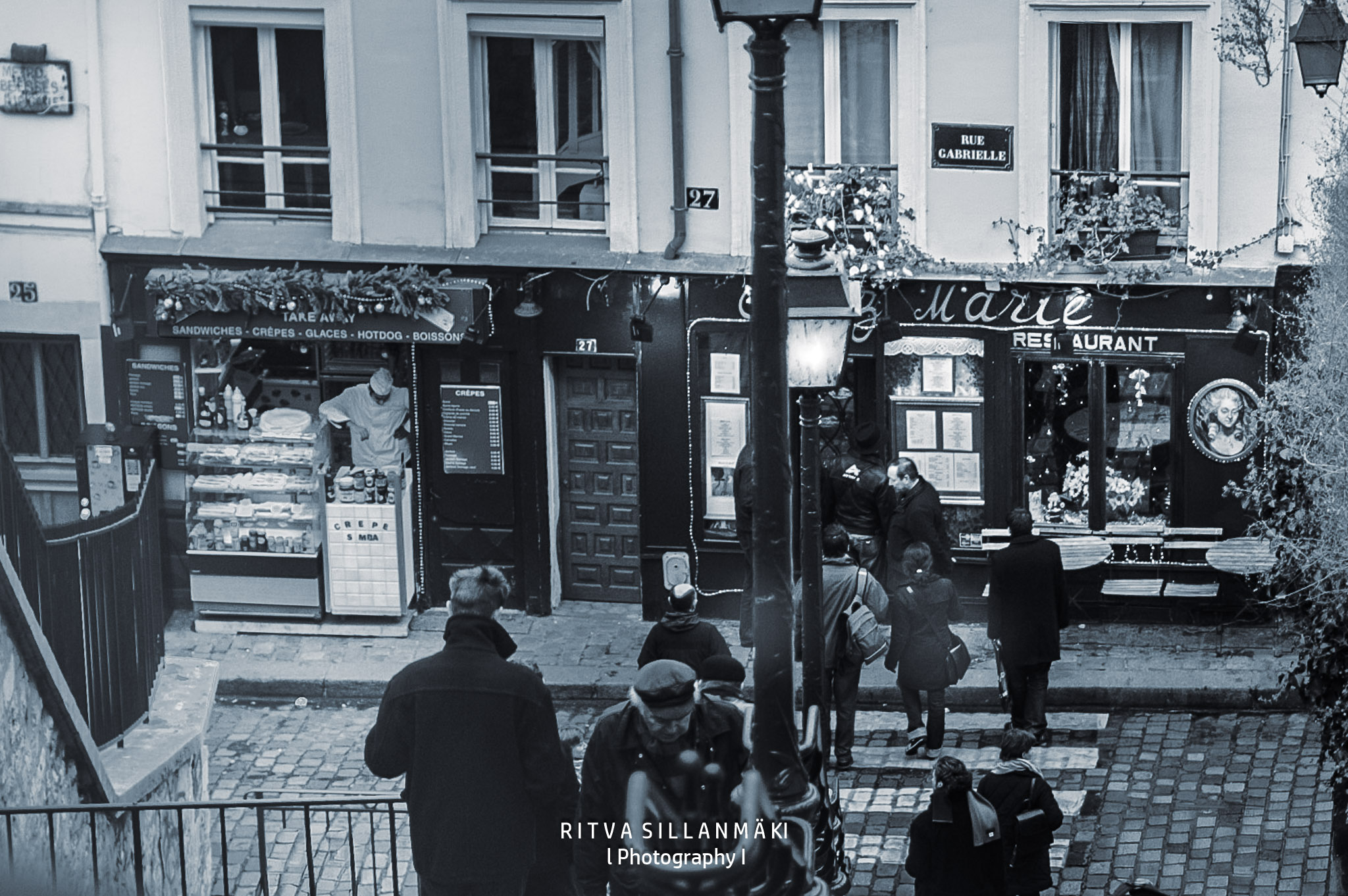
As we wander through the city with my camera in hand, we drift first to Le Palais du Fruit, where shoppers lean over bright piles of produce and the air is sweet with oranges and ripe tomatoes. At Boucherie J.D., its meat counter is alive with clinking knives and the easy charm of a traditional French butcher. A little farther on, a busy Parisian street stretches ahead, lined with old buildings and eclectic storefronts, the smell of fresh bread and quick snatches of conversation spilling from open doors. In a narrow passage, a street vendor stands beside a glowing display of artwork and postcards as the crowd hums around us. We pass a tiny French crêperie on cobblestones beneath a no-entry sign, pausing to watch steam rise from the griddle and breathe in the buttery scent of sugar and warm batter. Up in Montmartre, an outdoor art market unfolds under scattered umbrellas, artists chatting softly as framed works light up the tree-lined square. On Rue Gabrielle, the day lingers while we stroll past a cozy crêperie and restaurant, pedestrians brushing by, the whole street wrapped in that soft Parisian light that makes every corner feel like a memory.
Shoppers browse colorful produce at Le Palais du Fruit, a lively French street market.
A black-and-white view of Boucherie J.D., showcasing its bustling meat counter and traditional French butcher-shop character.
A lively Parisian shopping street unfolds in black and white, with pedestrians, historic buildings, and eclectic storefronts.
A street vendor stands beside a vibrant display of artwork and postcards in a bustling city passage.
Pedestrians pass a charming French crêperie on a cobblestone street beneath a prominent no-entry sign.
A lively outdoor art market ar Montmartre unfolds beneath umbrellas, with artists, shoppers, and framed works filling the tree-lined scene.
A charming flower-filled restaurant storefront with a hand-painted mural and inviting sidewalk display.
A lively Parisian street scene on Rue Gabrielle, with a crêperie, restaurant, and pedestrians along the cobblestones.
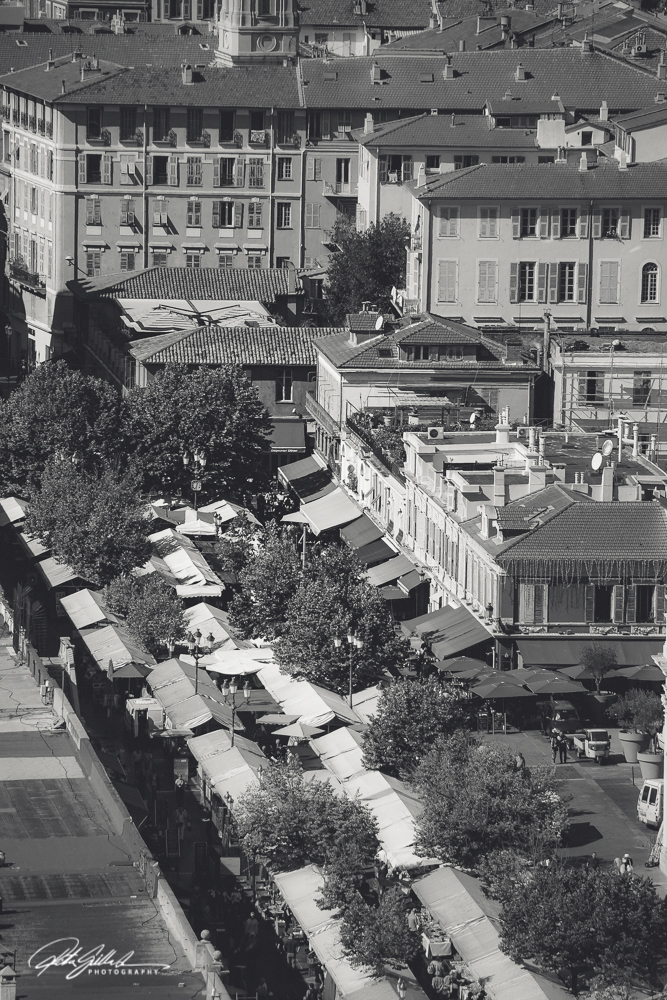
And as an afterthought I added this earlier edit, but this is not from Paris, it is from Nice. Also taken years back.
A bustling open-air market winds through a historic European city of Nice framed by tiled rooftops, shuttered buildings, and leafy trees.
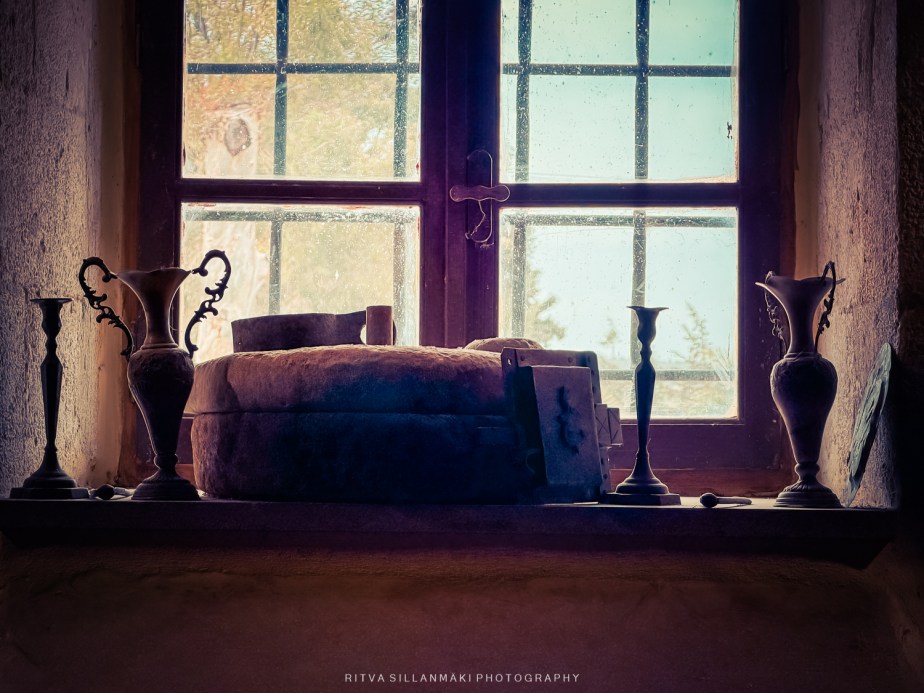
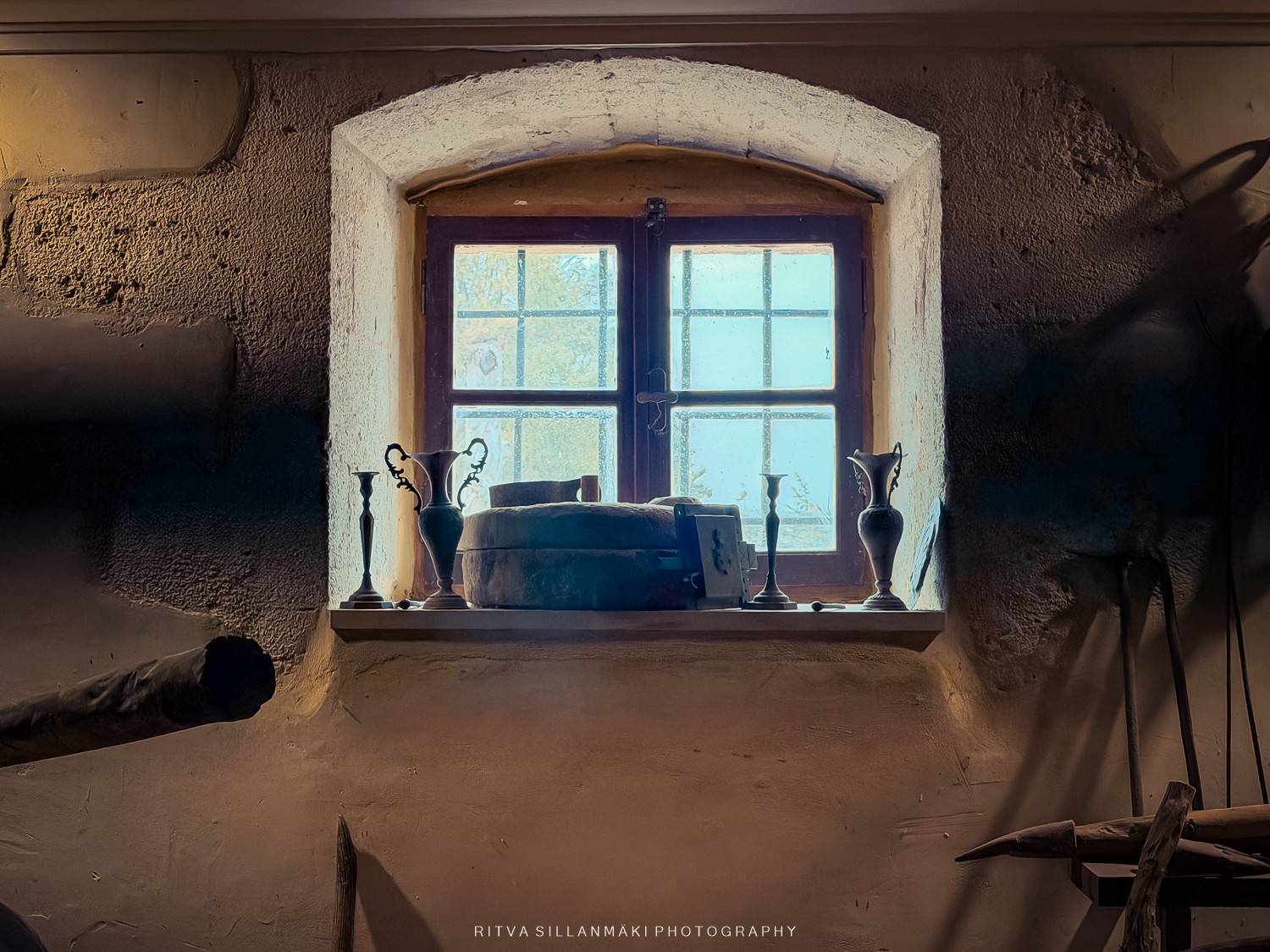
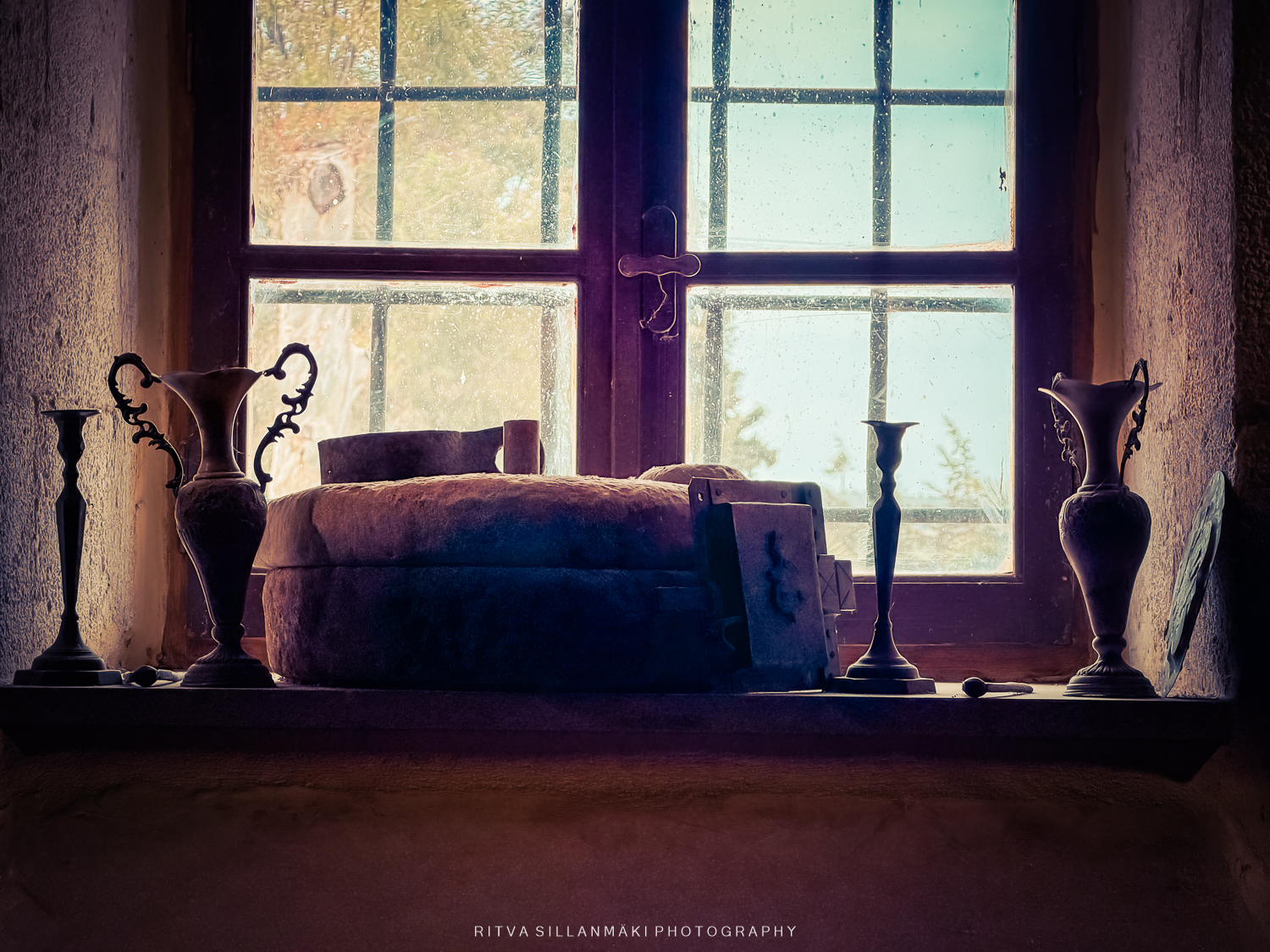
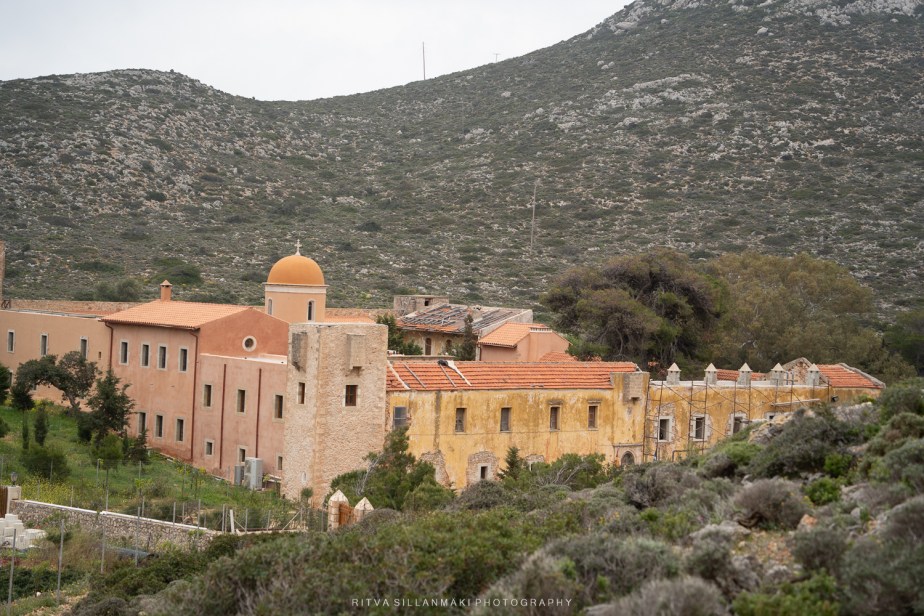
The Monastery of the Holy Trinity of Tsangarolon features a window that captures my attention, designed to do just that, with its gracefully arched wooden frame embellished with four-pane glass that gently diffuses the cool daylight streaming in. The rich, dark tones of the frame contrast beautifully with the subtle white plaster surrounding it, all set against the backdrop of weathered earthen walls. Perched on the sill is an assortment of antique metal pitchers and several candlesticks, each item contributing character to the display. The warm amber shadows dance across the surfaces, revealing traditional tools peeking out from the edges.
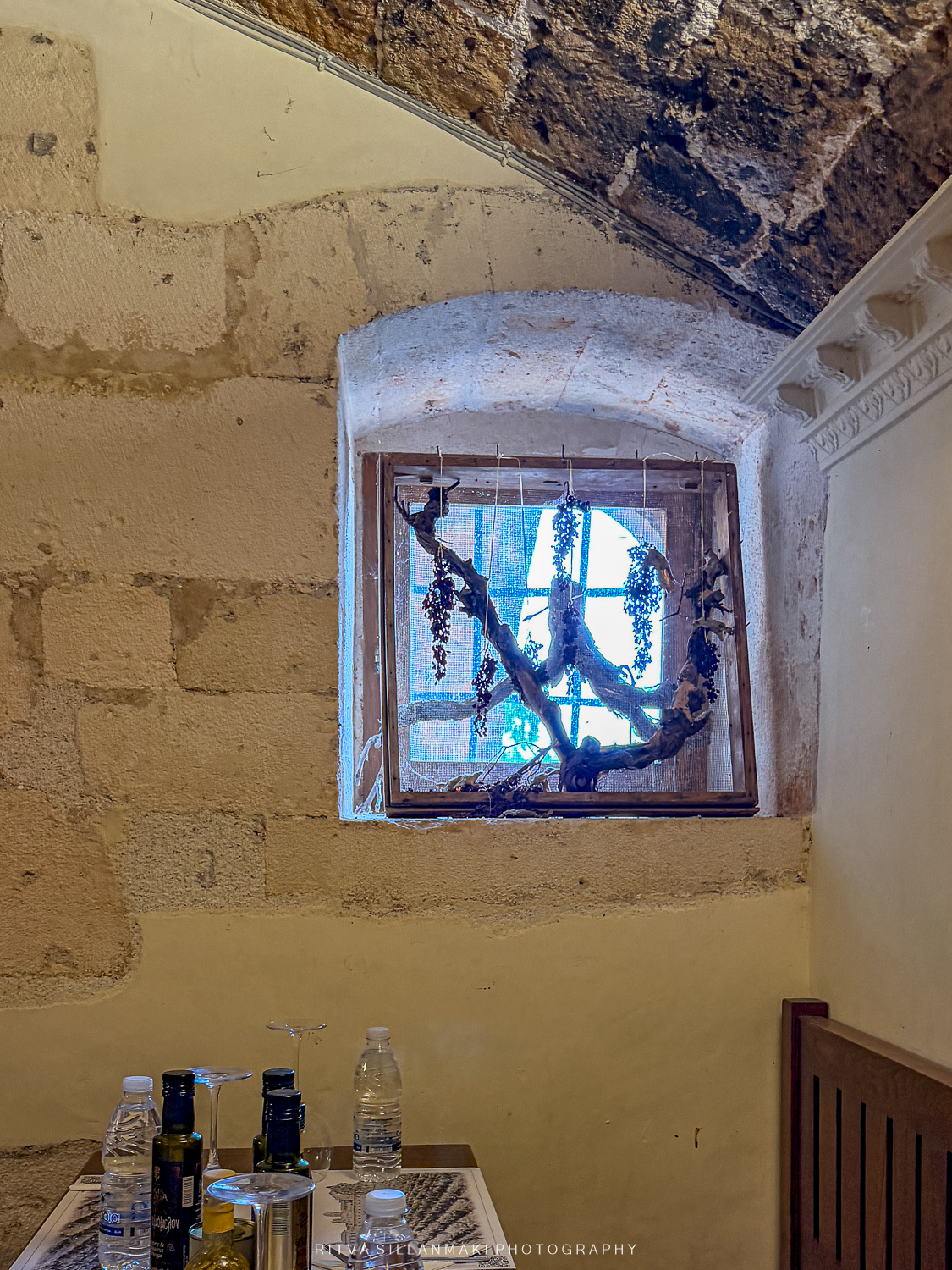
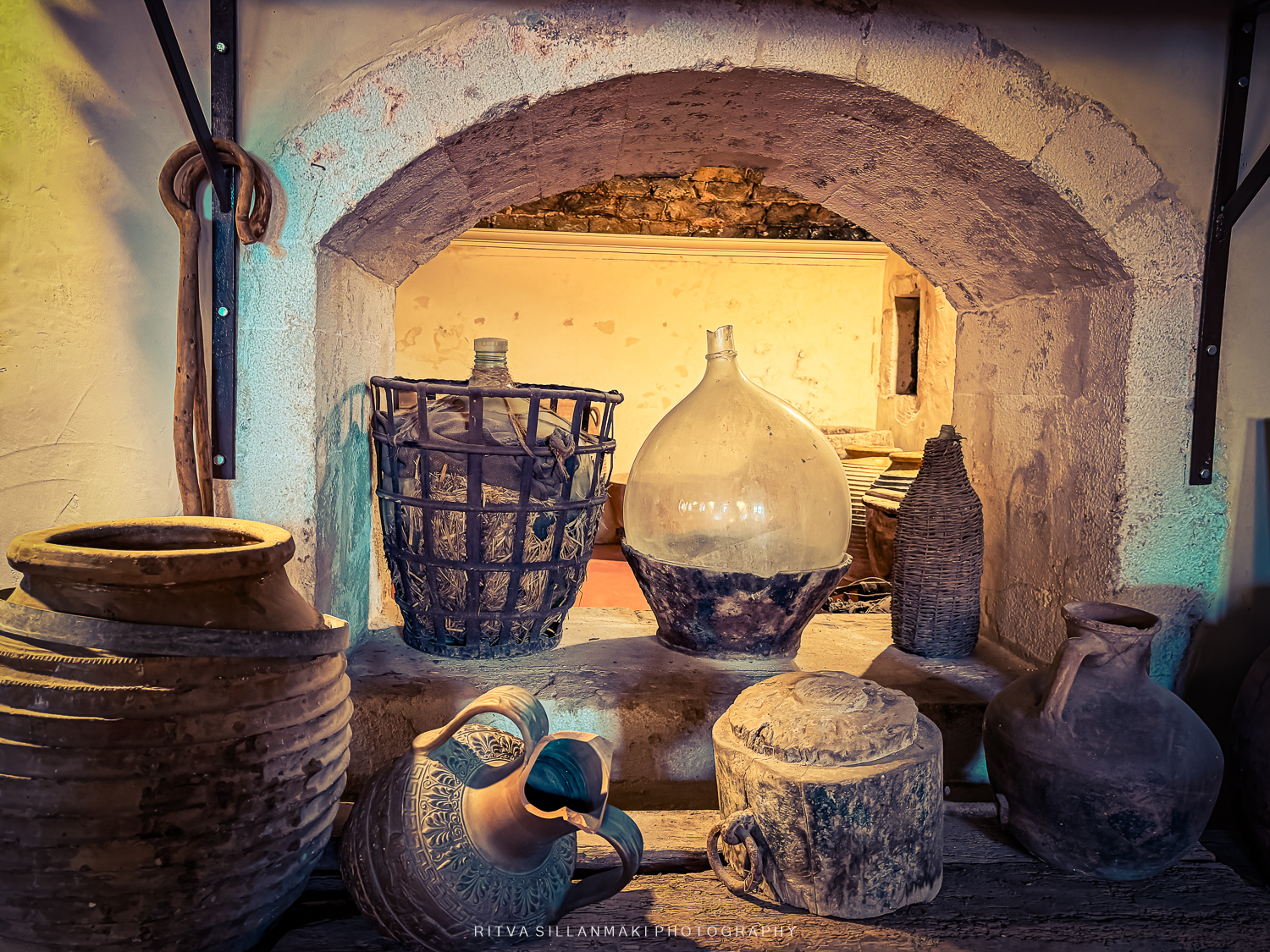
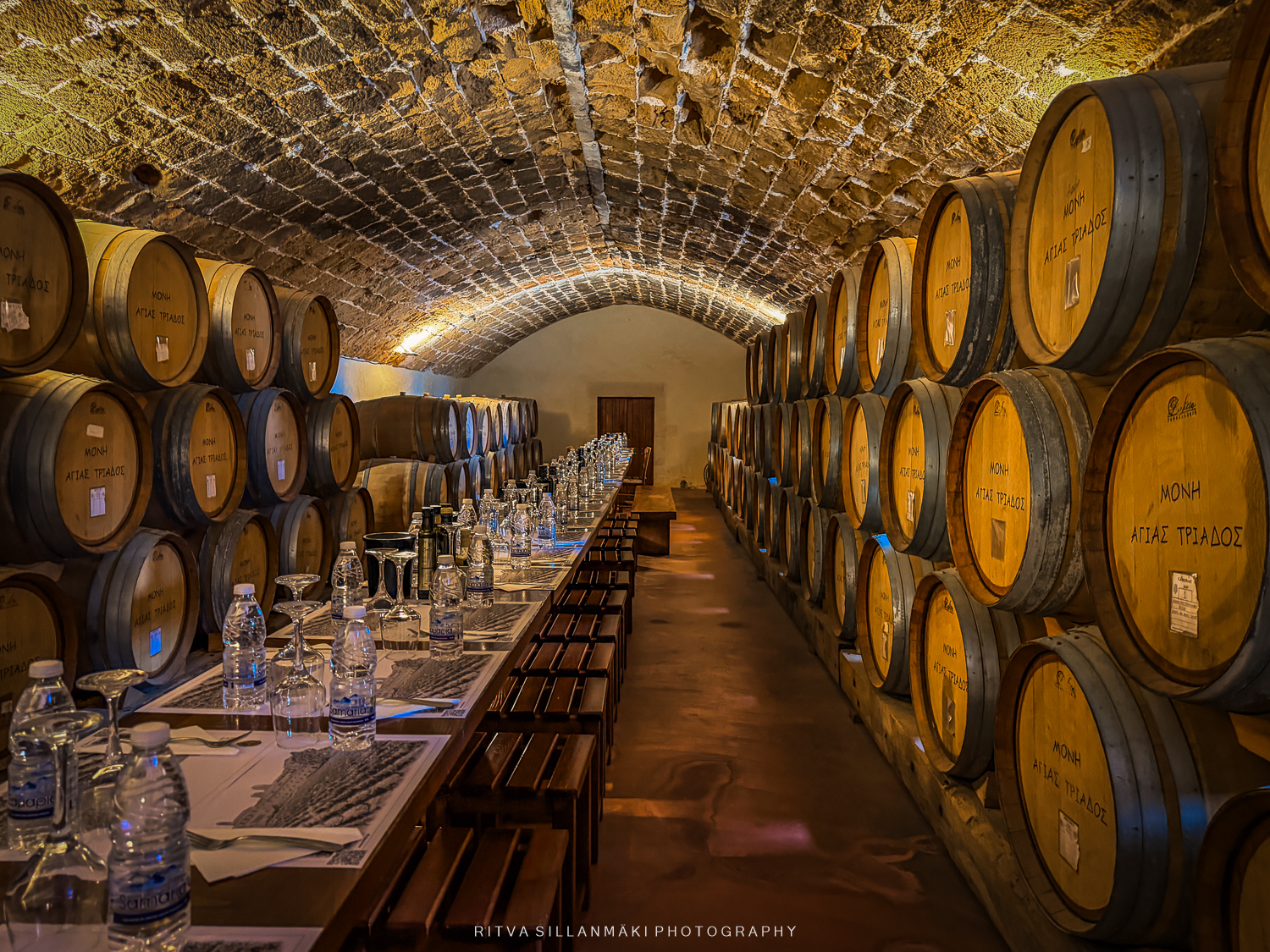
The monastery is still active, and the monks produce organic olive oil, wine, honey, and olive oil soap these windows are from the shop. There is also a museum in the area displaying old church icons which we did not see.
A rustic stone-wall window glows with daylight, framed by antique pitchers, candlesticks, and a traditional hearth interior.A rustic still life of a vintage chest, ornate vases, and candlesticks arranged before a sunlit window.
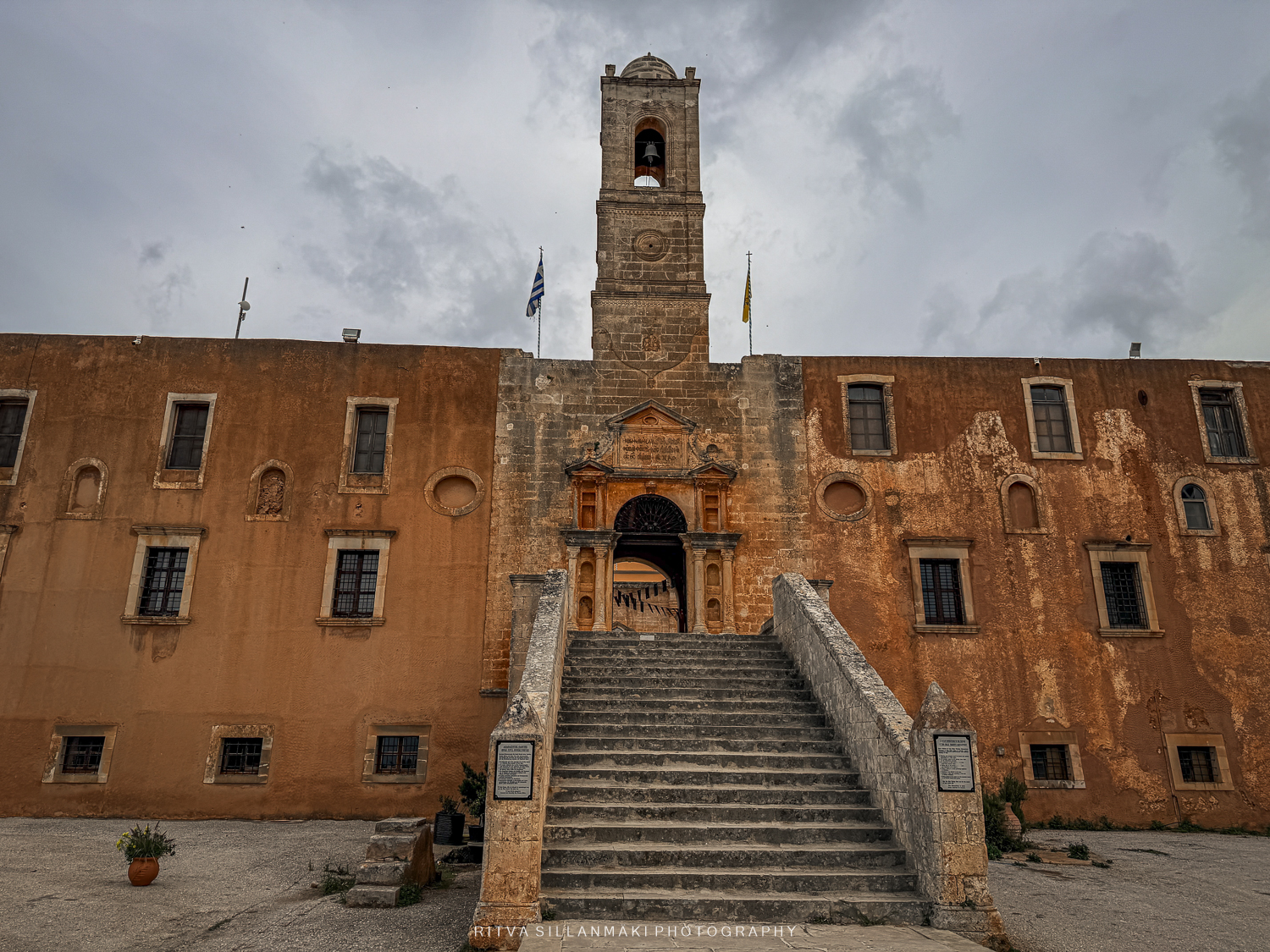
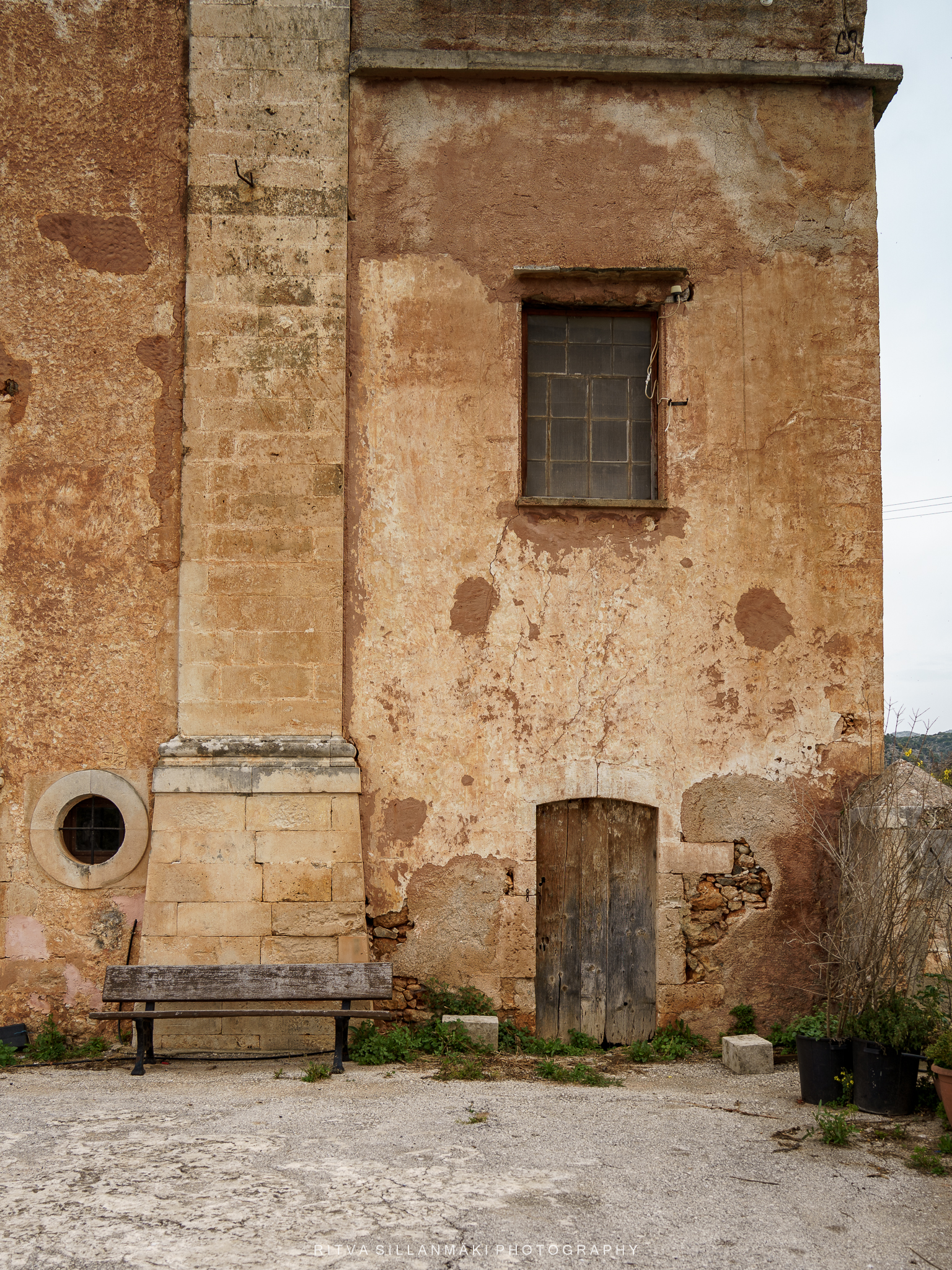
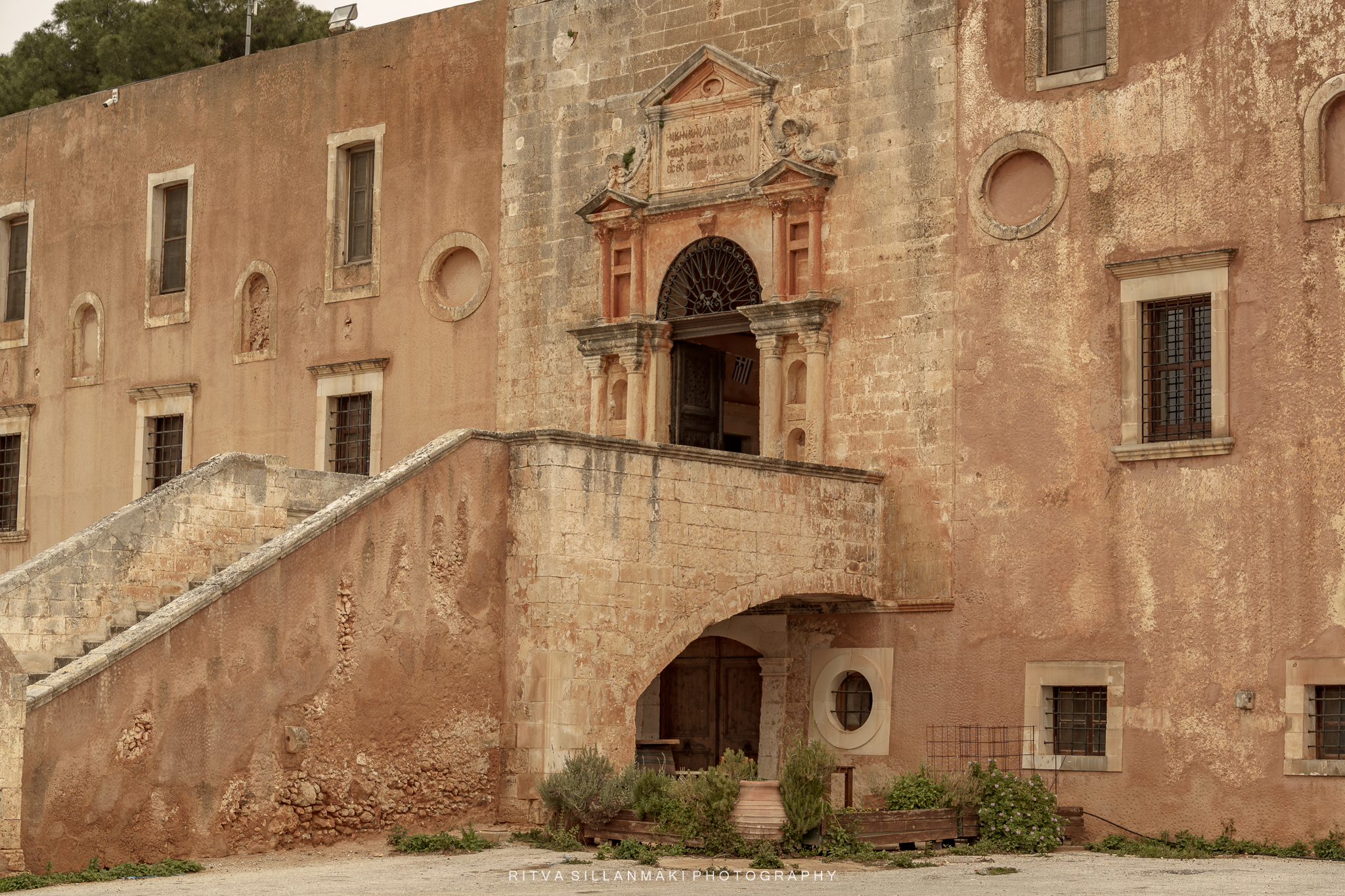
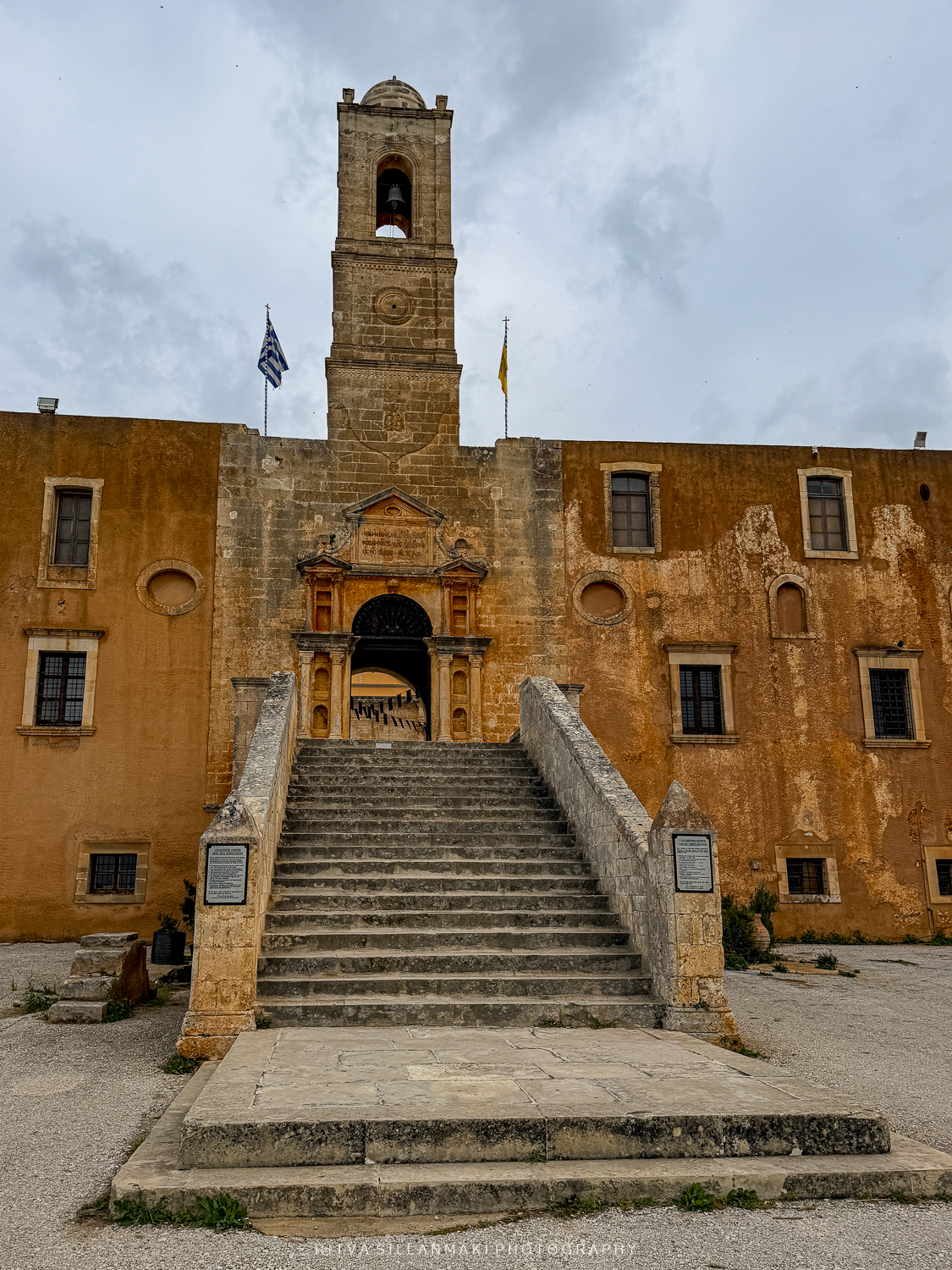
I read about the historic Monastery of the Holy Trinity of Tsangarolon (Agia Triada Tsangarolon), located on the beautiful Akrotiri peninsula in Crete, just 15 kilometers from Chania. It was established in the early 17th century by the Tzagarolon brothers during the Venetian era, and I love how it reflects a unique blend of Venetian Renaissance and traditional Orthodox architecture. The Patriarchal Monastery of Agia Triada Tsagarolon is not only one of the most significant monasteries built towards the end of the Venetian Empire in Crete, but it also has an important place in the region’s history and education. Nestled at the foot of the Stavros mountain range, you can find it in the serene “Tzompomilos” area of Meleha cape.
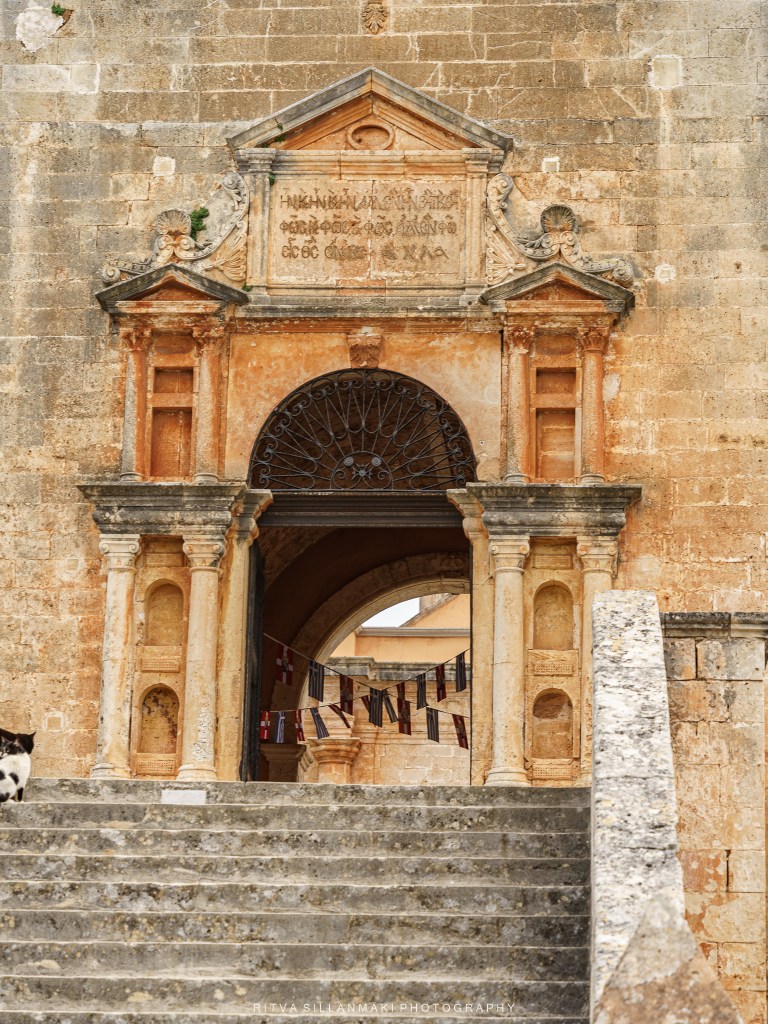
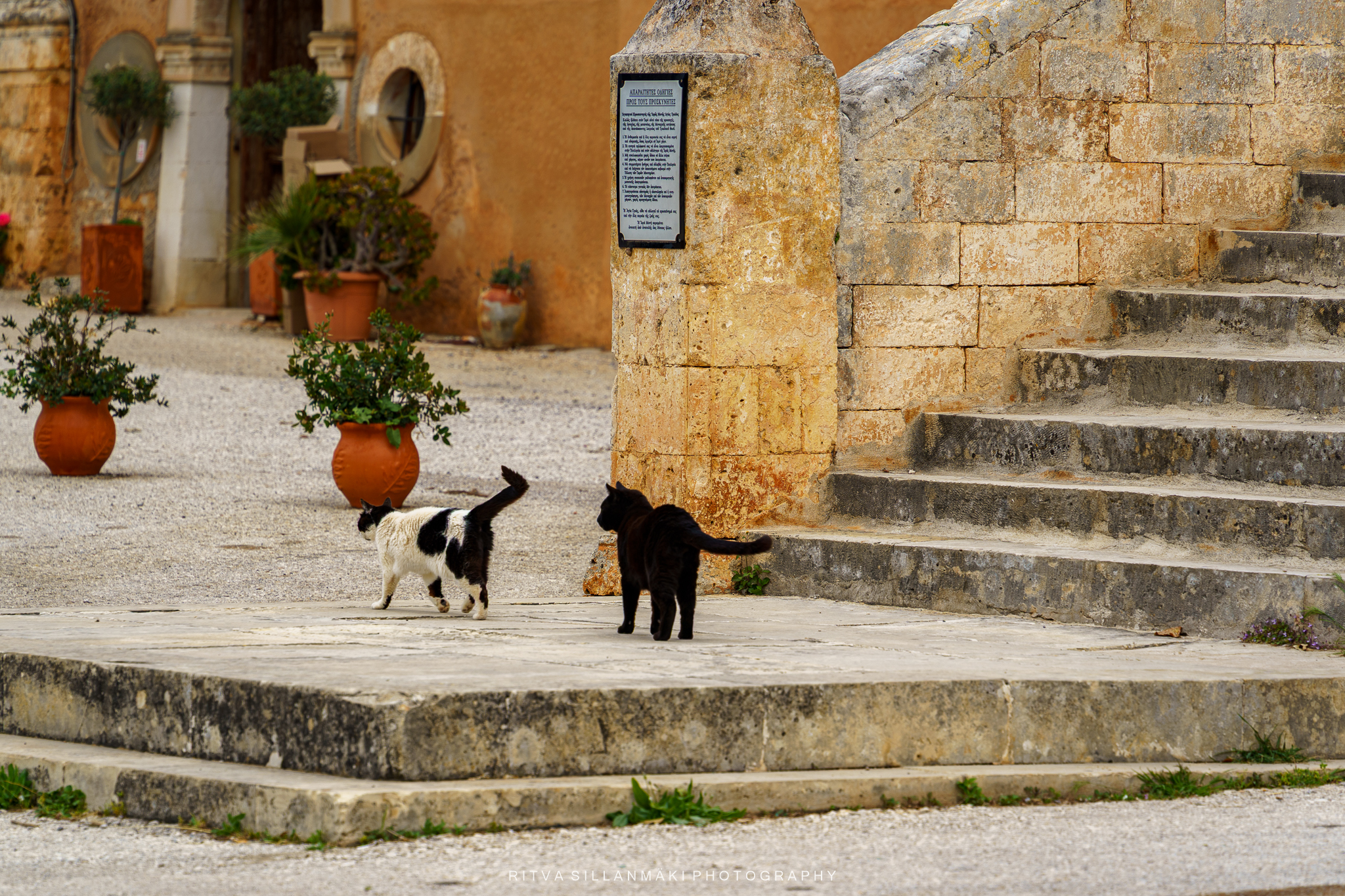
The Greek inscription above the door translates to the following in English: “There was and was and was, but there was only one, is one and shall in all future be one, light and light and light, but only one light, indeed one God, 1631.” The text refers to the Holy Trinity by repeating the words three times, which directly applies to the name of the monastery.
I still have them for what I thought was going to be post for wordless Wednesday
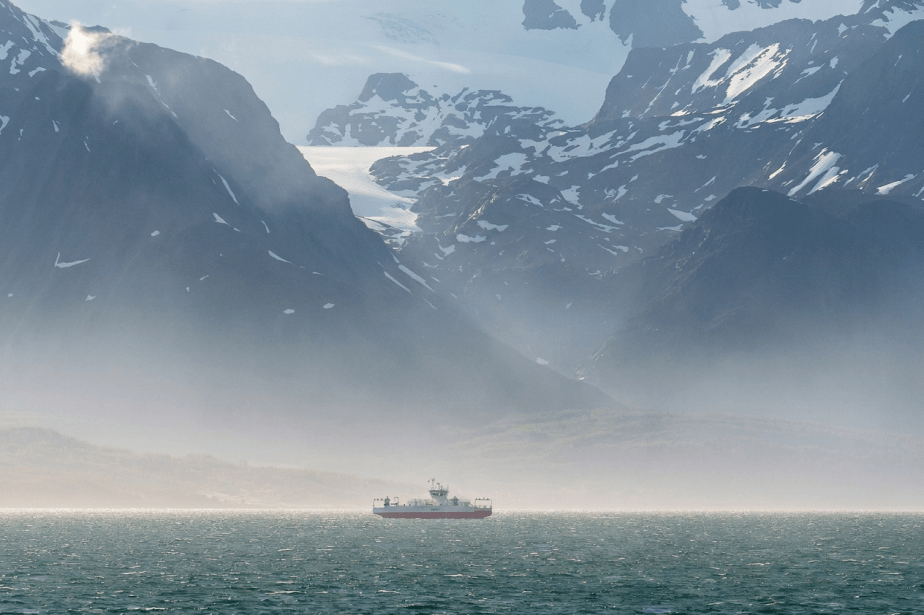
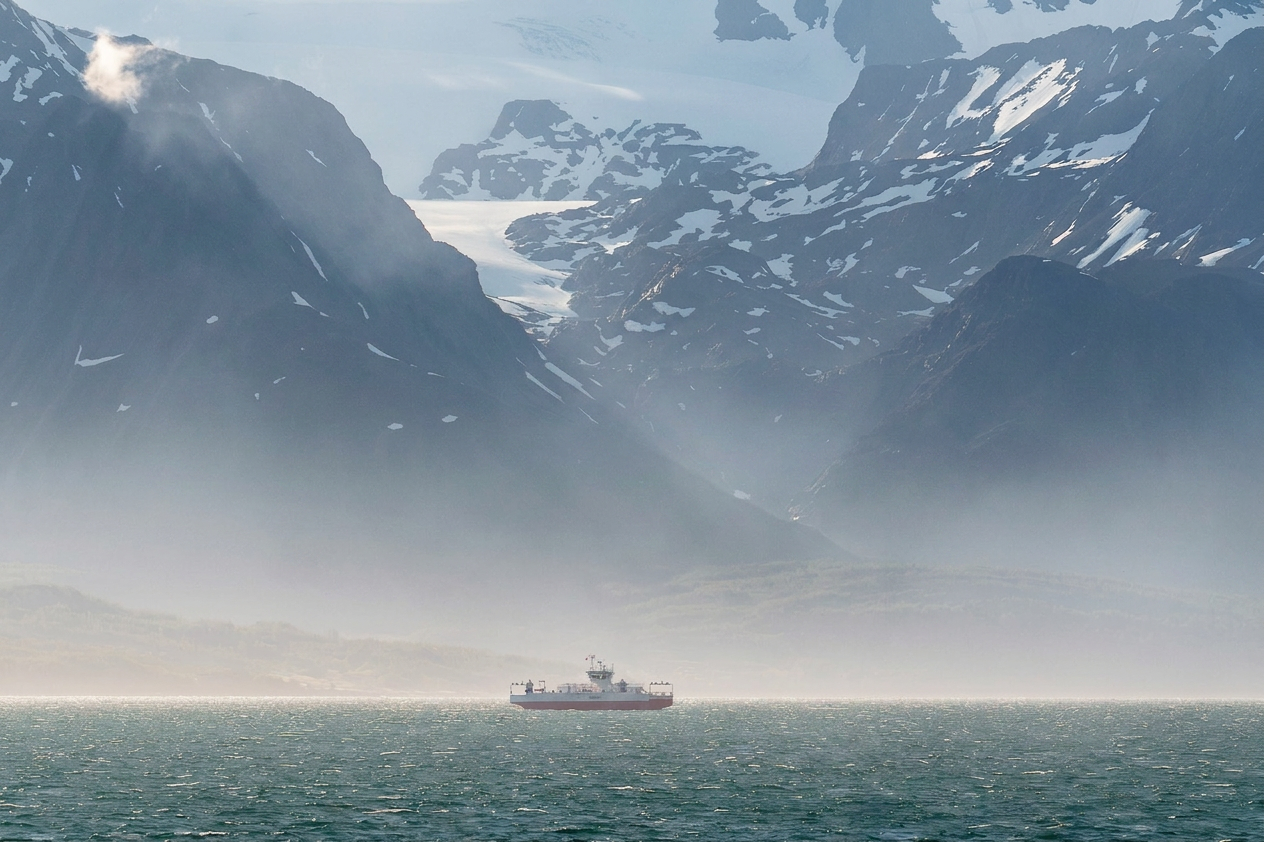
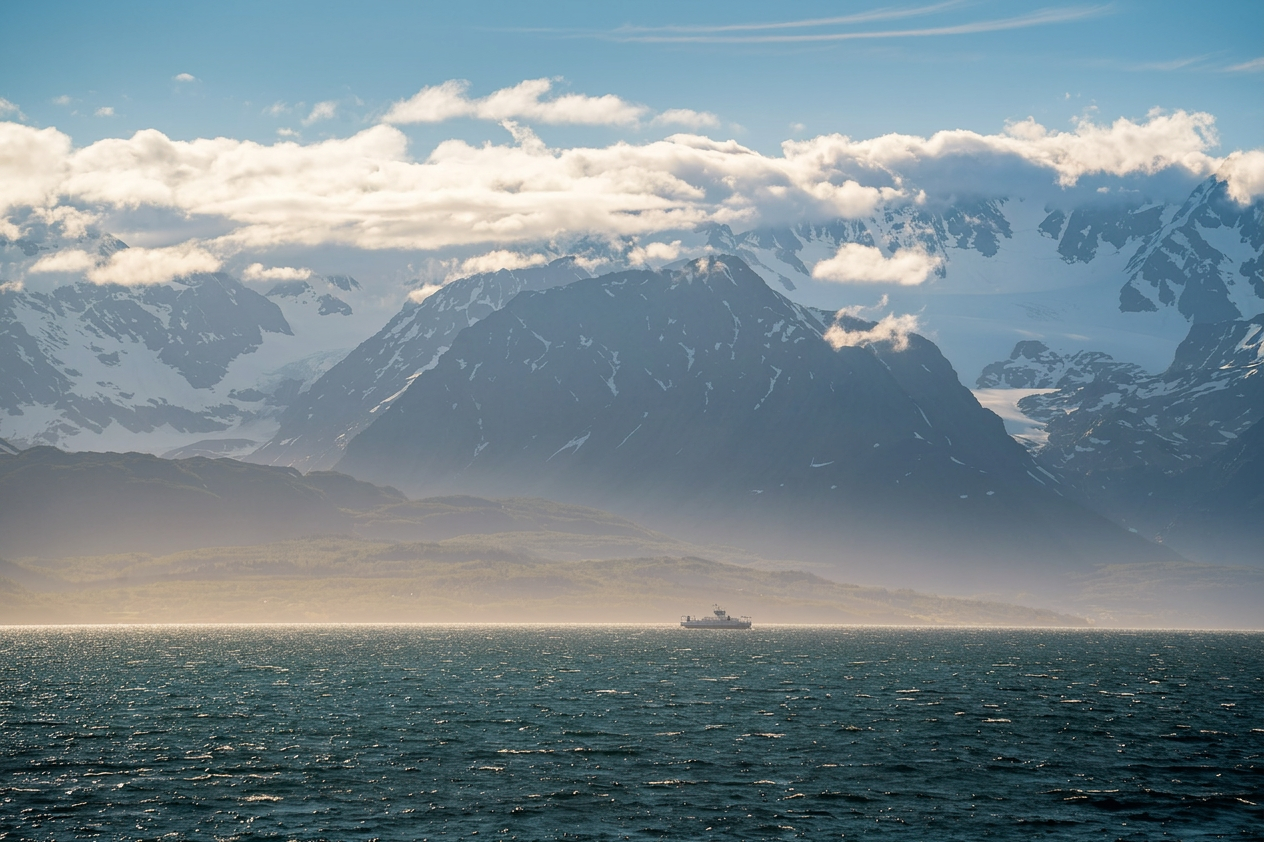
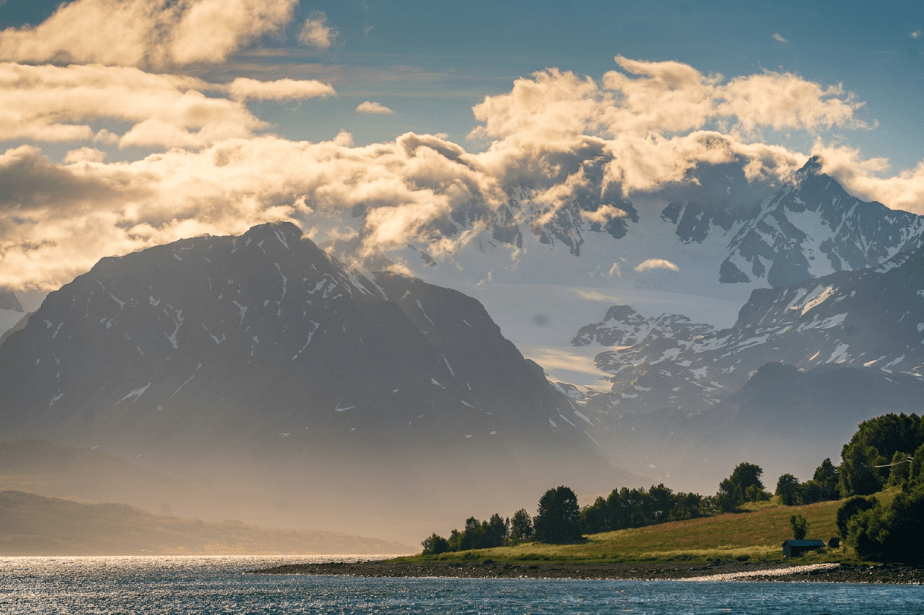
A lone ship gliding dark green waters in North Norway
I watched a lone ship gliding over the serene, dark green waters, gazing at the mist-covered, mountainous panorama for some time. I loved the majestic peaks, adorned with light touches of snow and ice, cradling a significant glacier that cascades like a frozen river, standing in sharp contrast to the rugged, dark rocks. A delicate veil of fog hangs over the lower slopes, softly blurring the line where the water meets the wild landscape. This scene presents a peaceful yet breathtaking atmosphere, weaving cool hues into a tapestry of expansive, secluded wilderness.
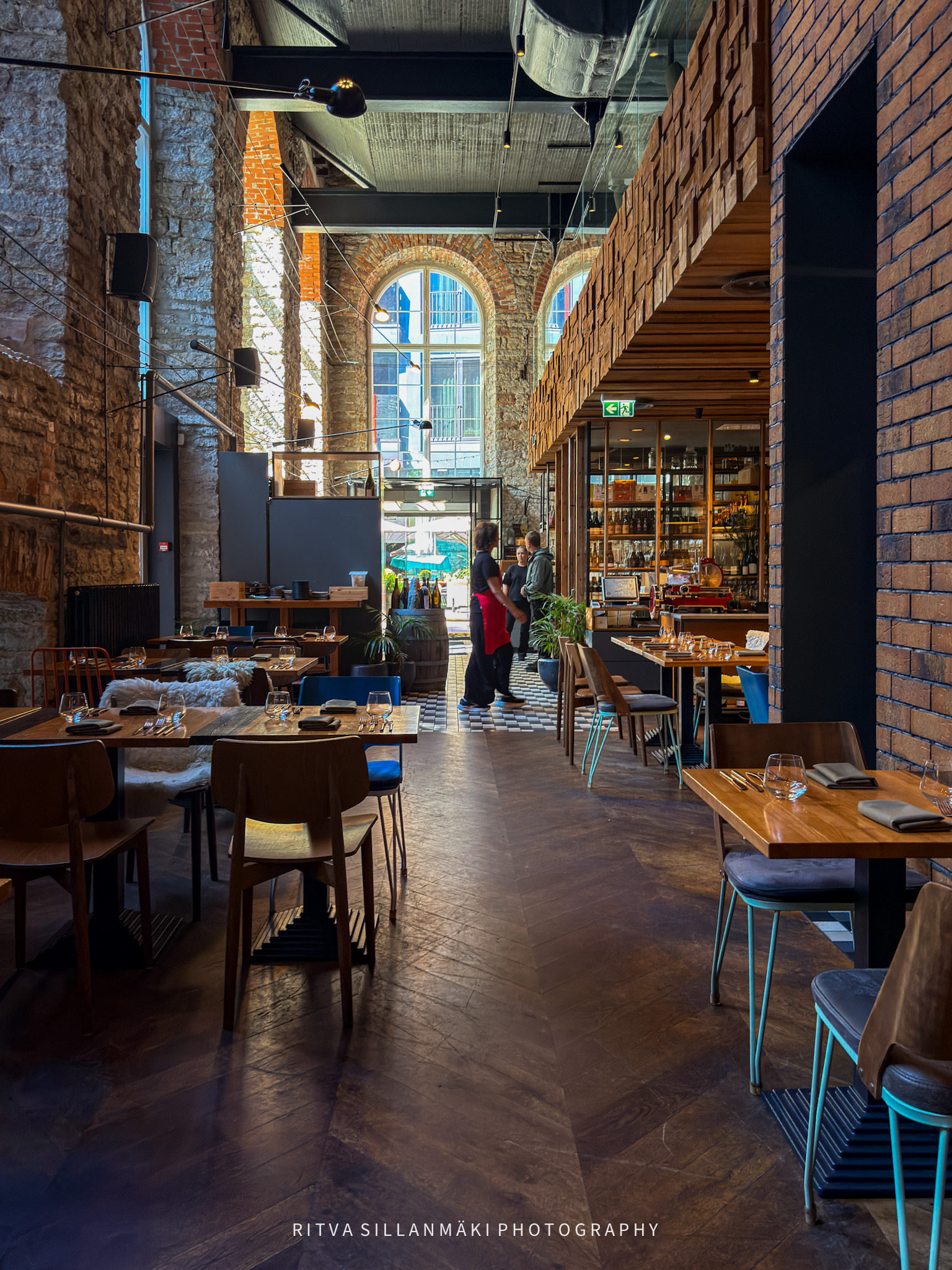
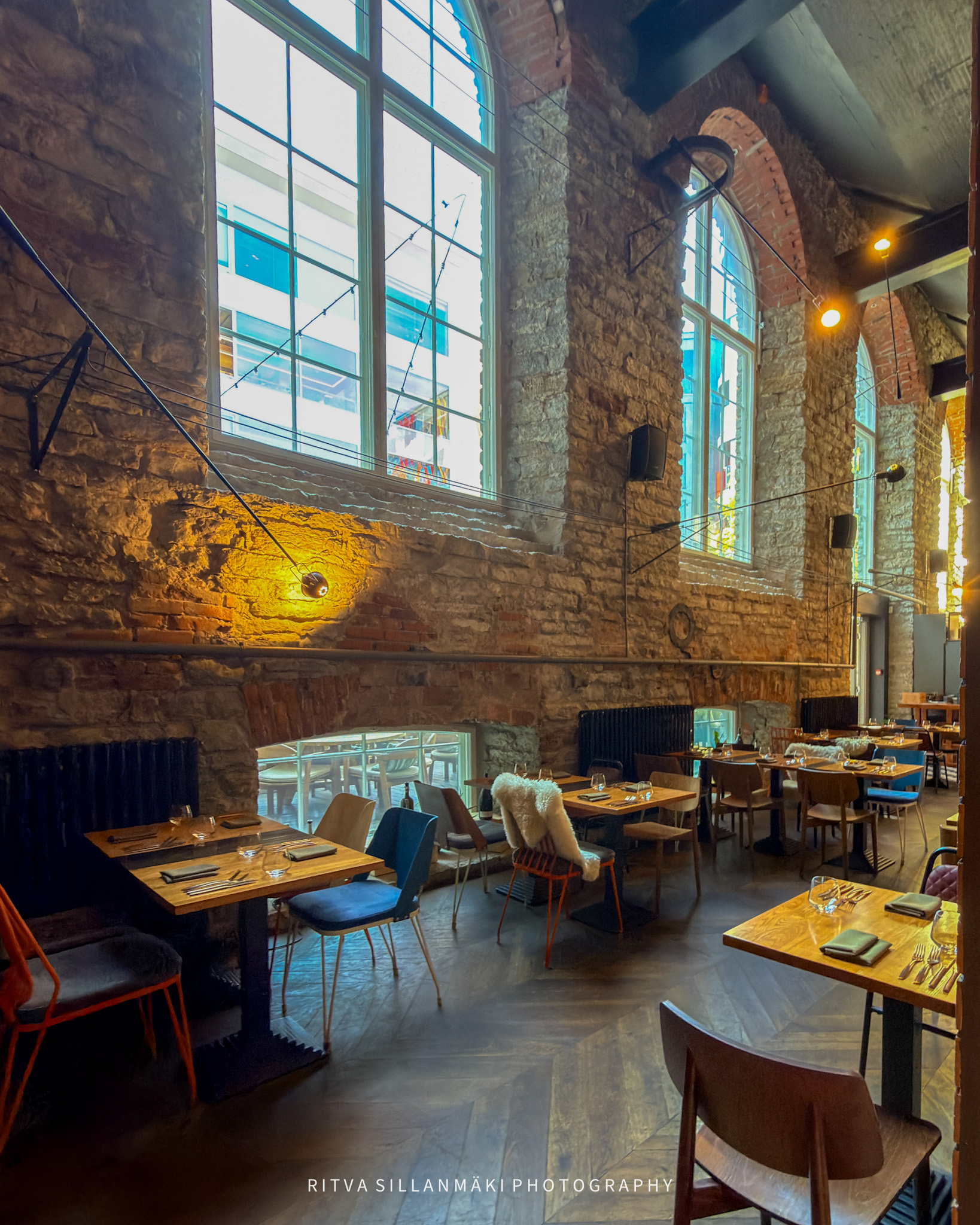
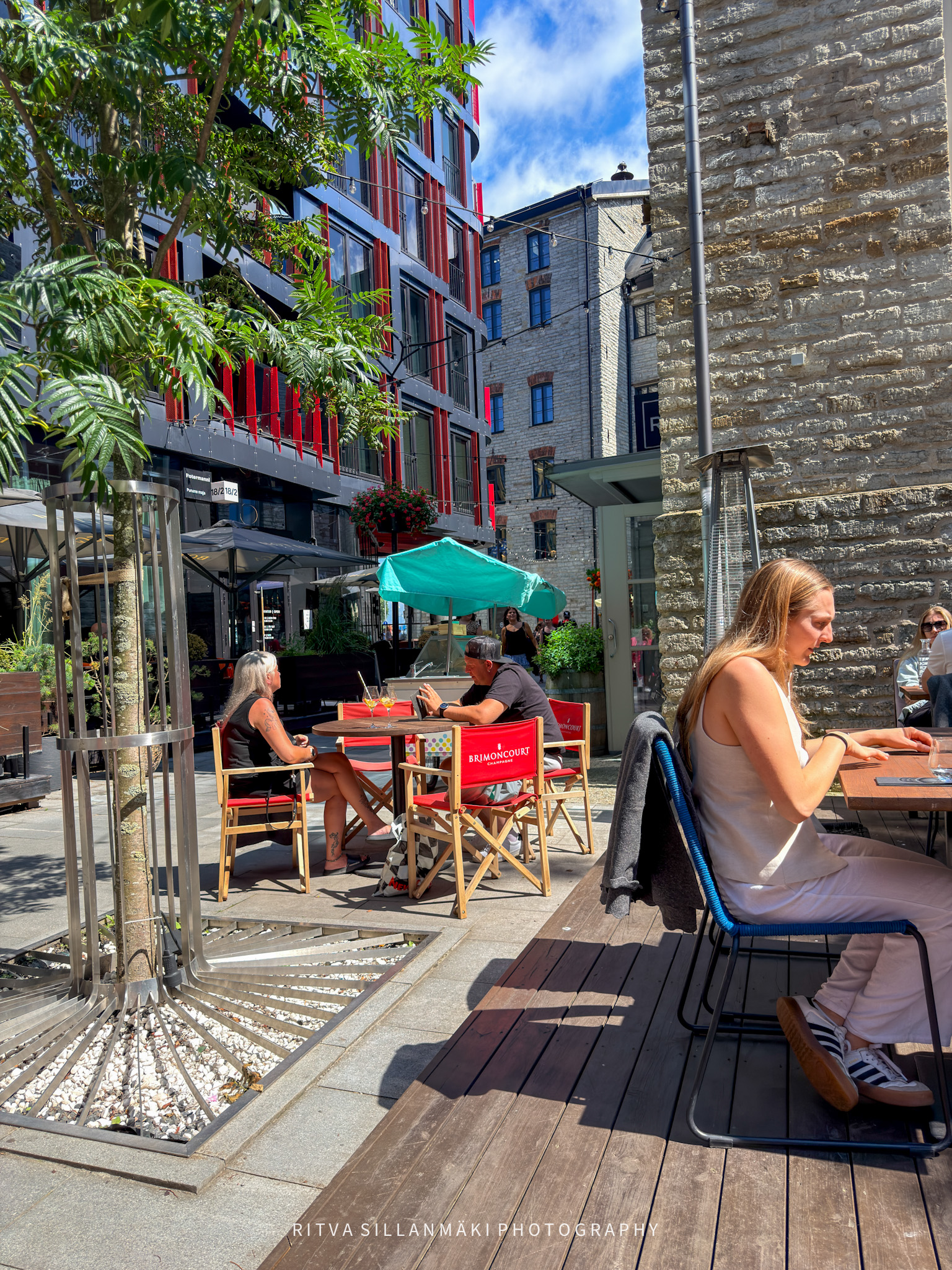
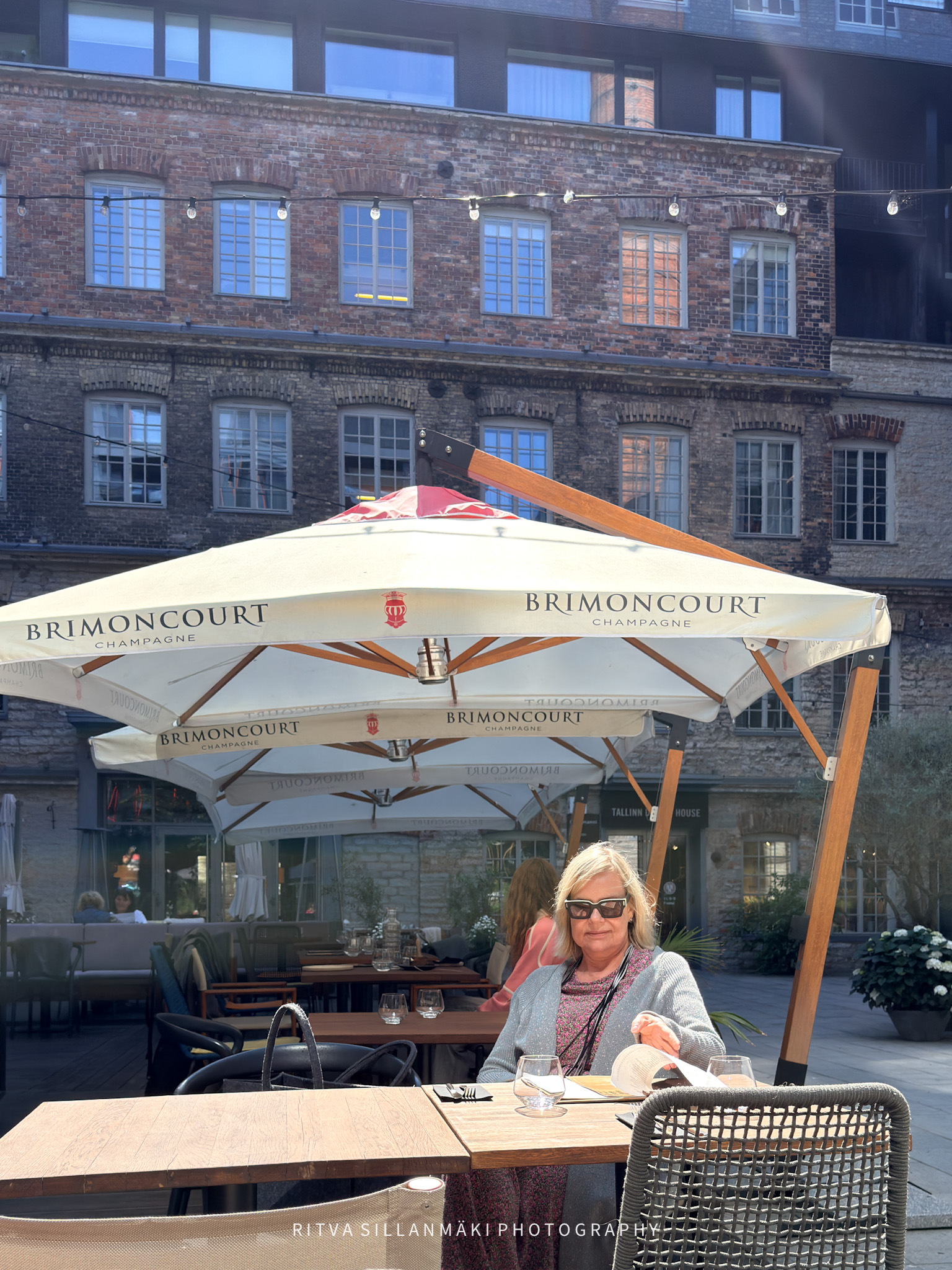
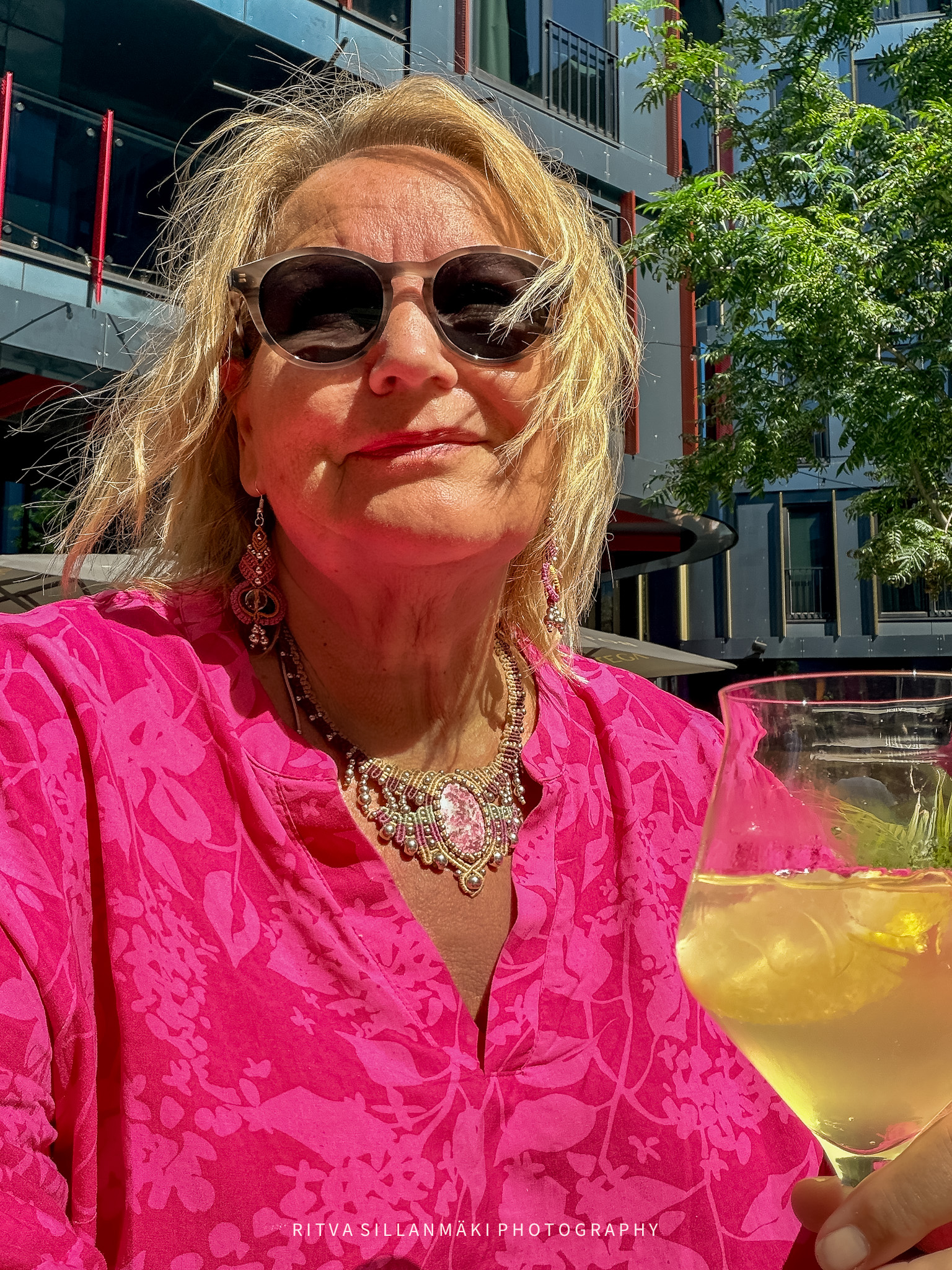
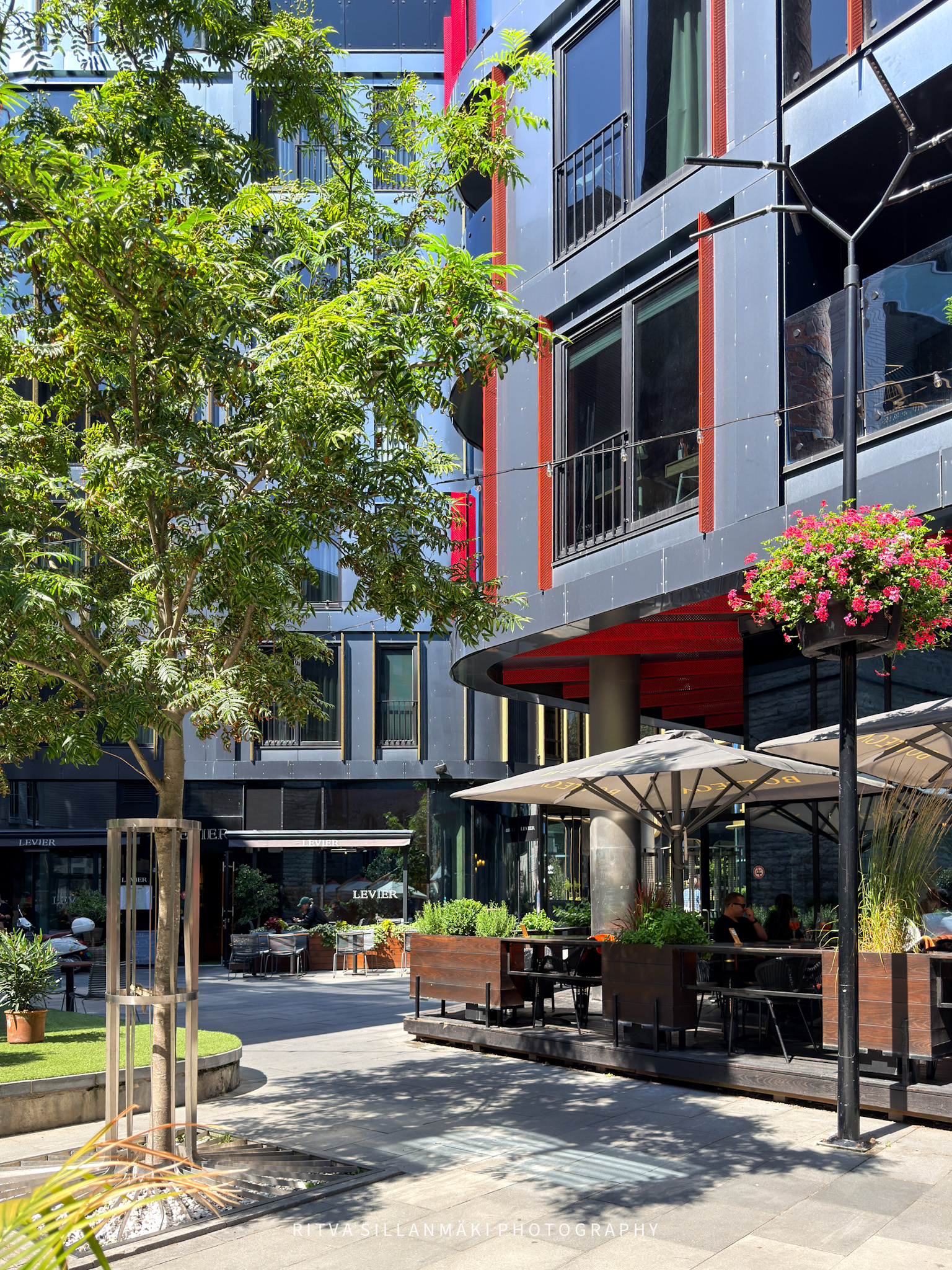
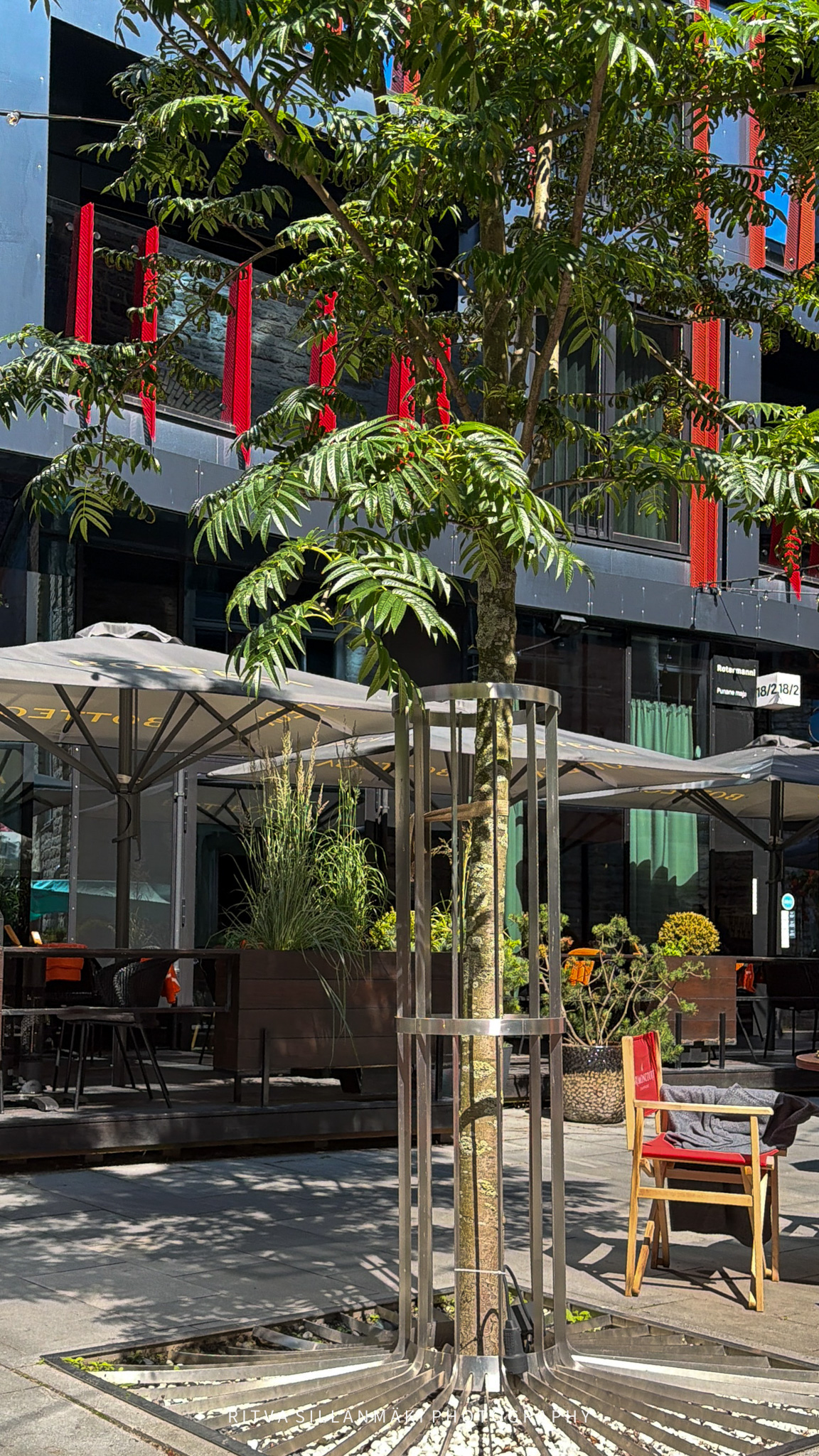
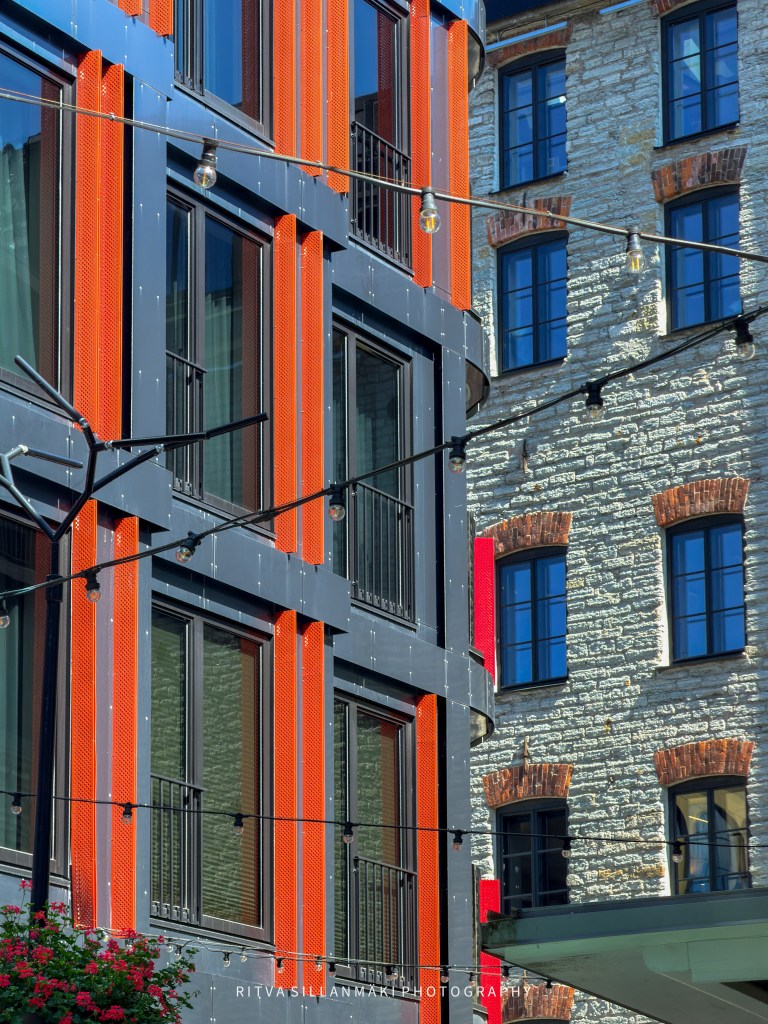
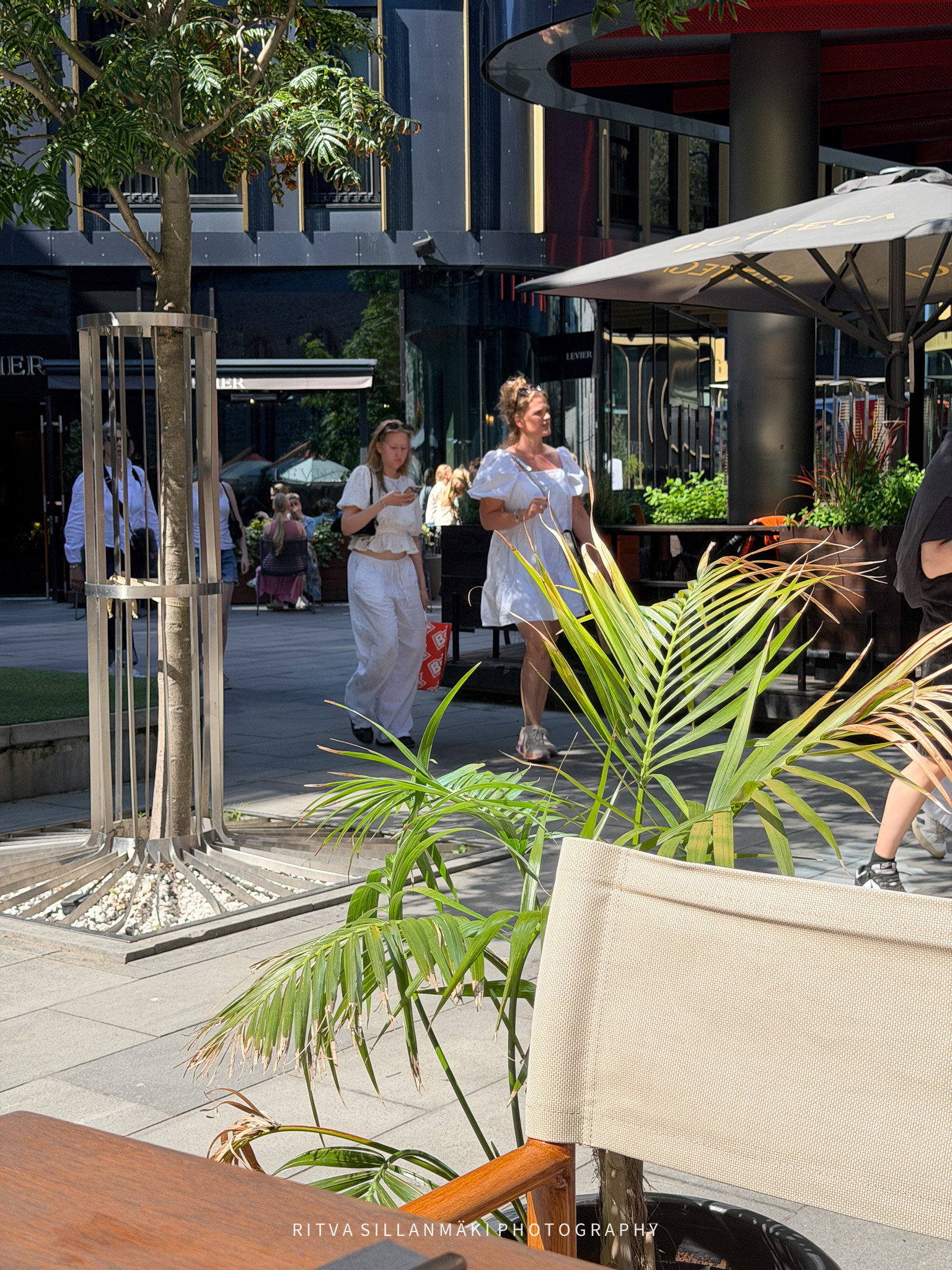
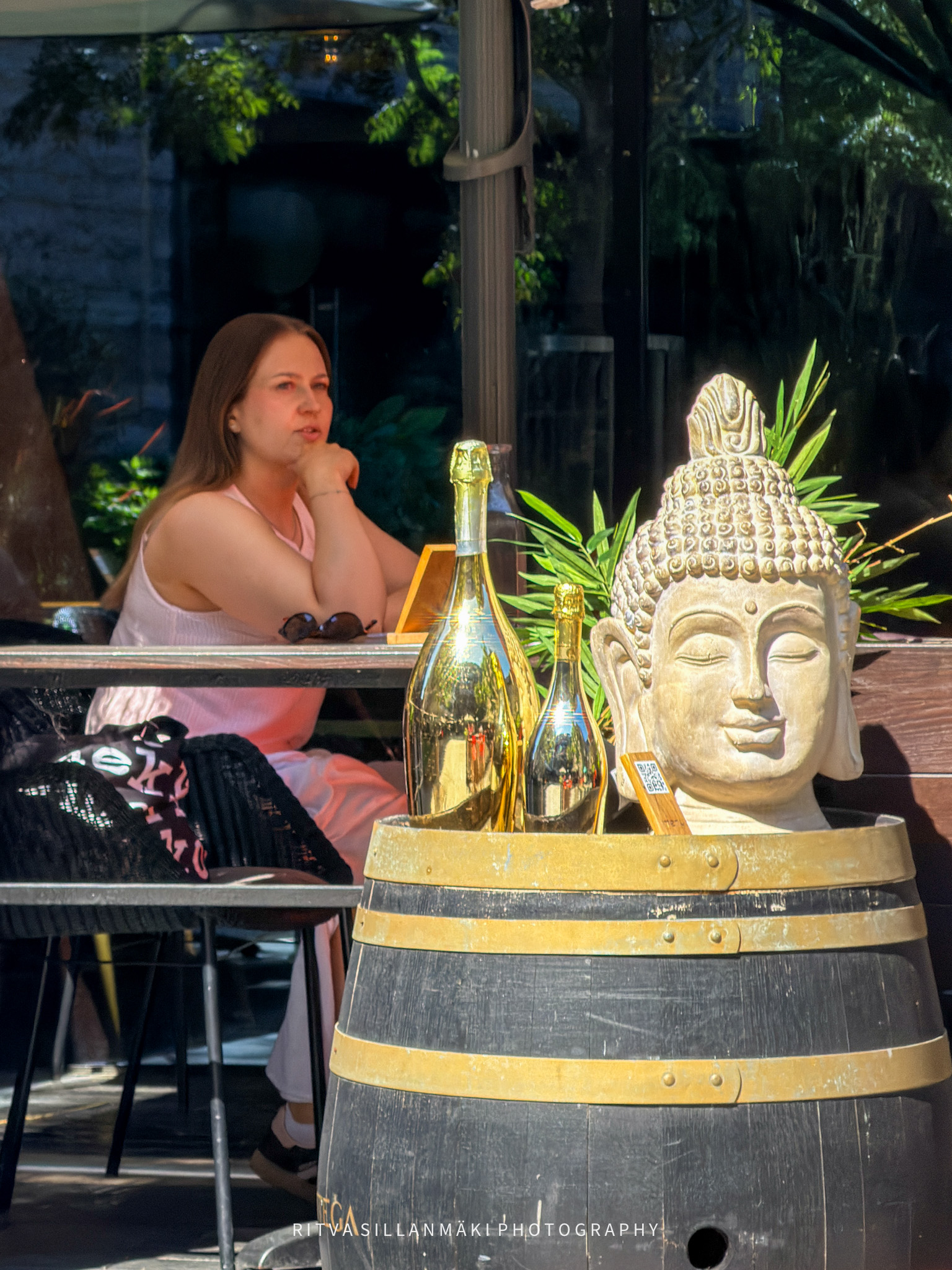
I am excited to share photos from a restaurant in Tallinn, where the atmosphere was absolutely vibrant that day! The sun shone brilliantly, encouraging all the customers to enjoy their meals outside. I was particularly enchanted by how the Rotermann kvartal beautifully blends old and new buildings, celebrating the city’s rich history alongside its modern innovations. The architecture tells a delightful story, reflecting the perfect harmony of tradition and progress that defines Tallinn. It was a wonderful experience, and I hope these images capture the charm of the moment and the inviting ambiance of this unique location. 🙂 Sharing with Monday Window
A stylish restaurant interior blending rustic stone walls with modern wooden and metal design elements under natural light.
As I framed the shot, I was immediately captivated by the stylish, modern restaurant interior that unfolded before me, where exposed stone and brick walls created a perfect blend of rustic charm and sophistication. The large arched windows at the far end poured natural light into the space, illuminating the high ceiling adorned with visible beams and industrial-style lighting fixtures that hung gracefully above. My lens caught the wooden tables and chairs neatly arranged along the polished wooden floor, complemented by glassware and cutlery that sparkled in the sunlight. The service counter, lined with bottles and glassware, contributed to the warm, inviting atmosphere. I couldn’t help but notice the Staff in blackl attire, adding life to the setting and embodying the vibrant, welcoming experience that harmoniously merged historic architecture with contemporary design elements.
The exposed stone walls, large arched windows, and warmly lit tables set for dining.
Windows in Rotermann
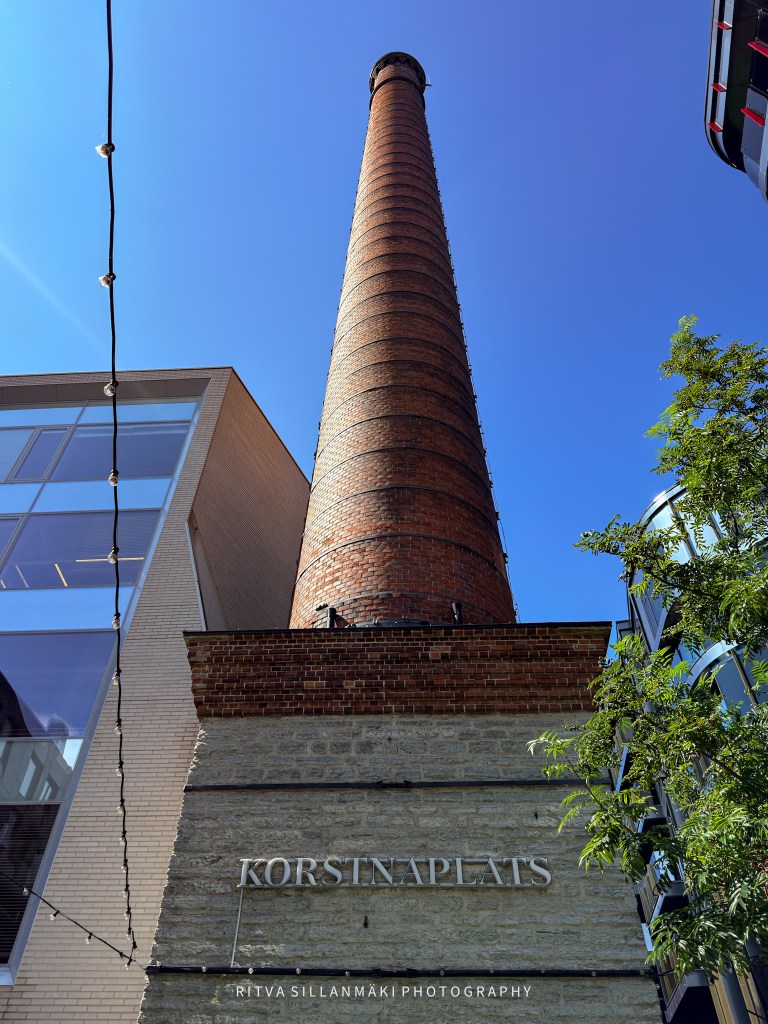
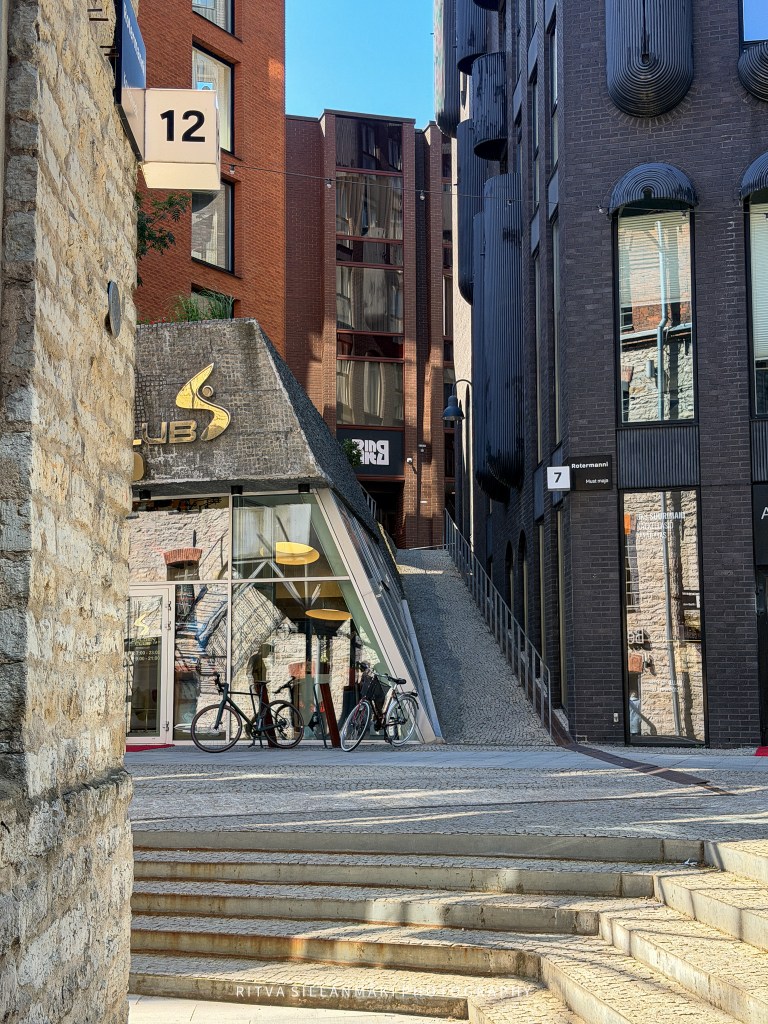
The photo was taken in the Rotermann Quarter of Tallinn, and it depicts an old brick chimney integrated into modern architecture.
the striking juxtaposition of modern and historic architecture
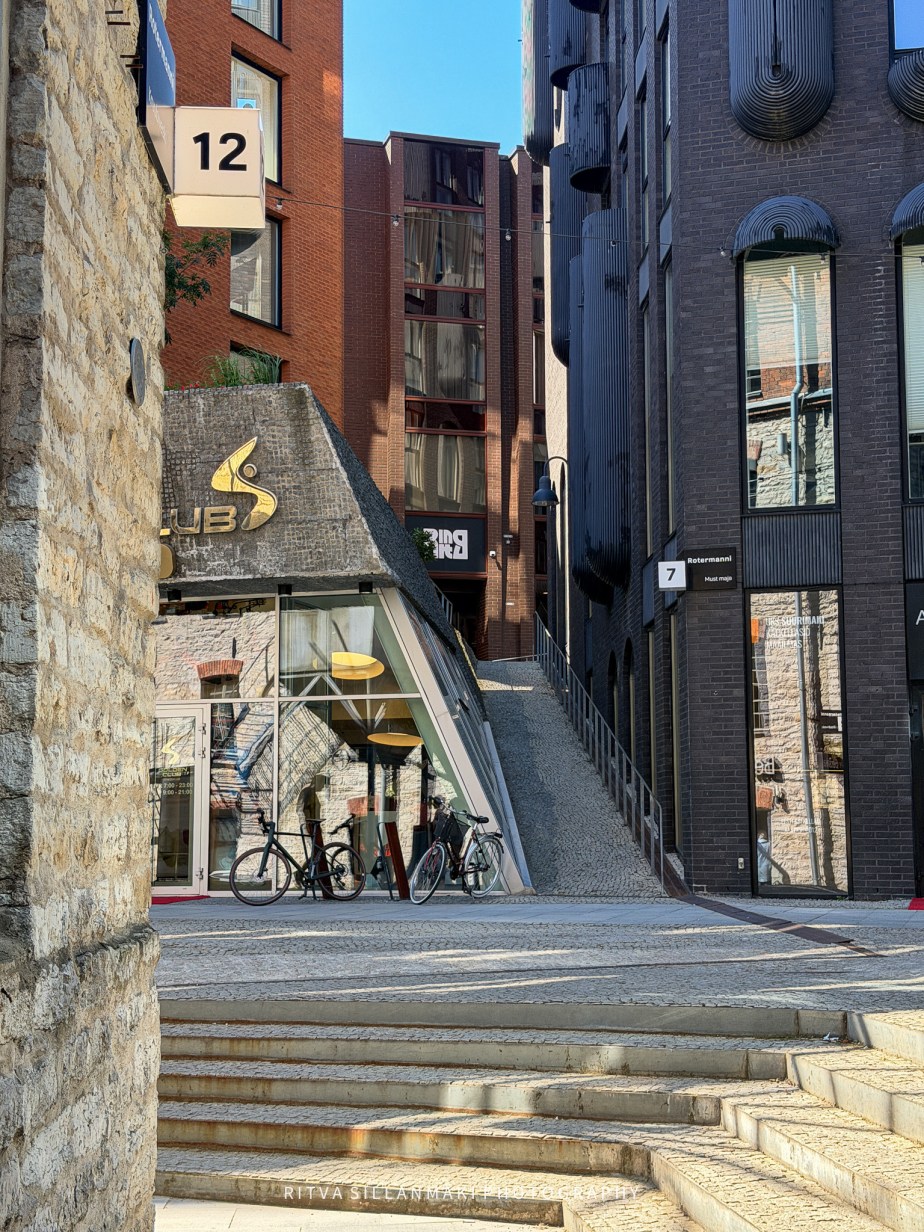
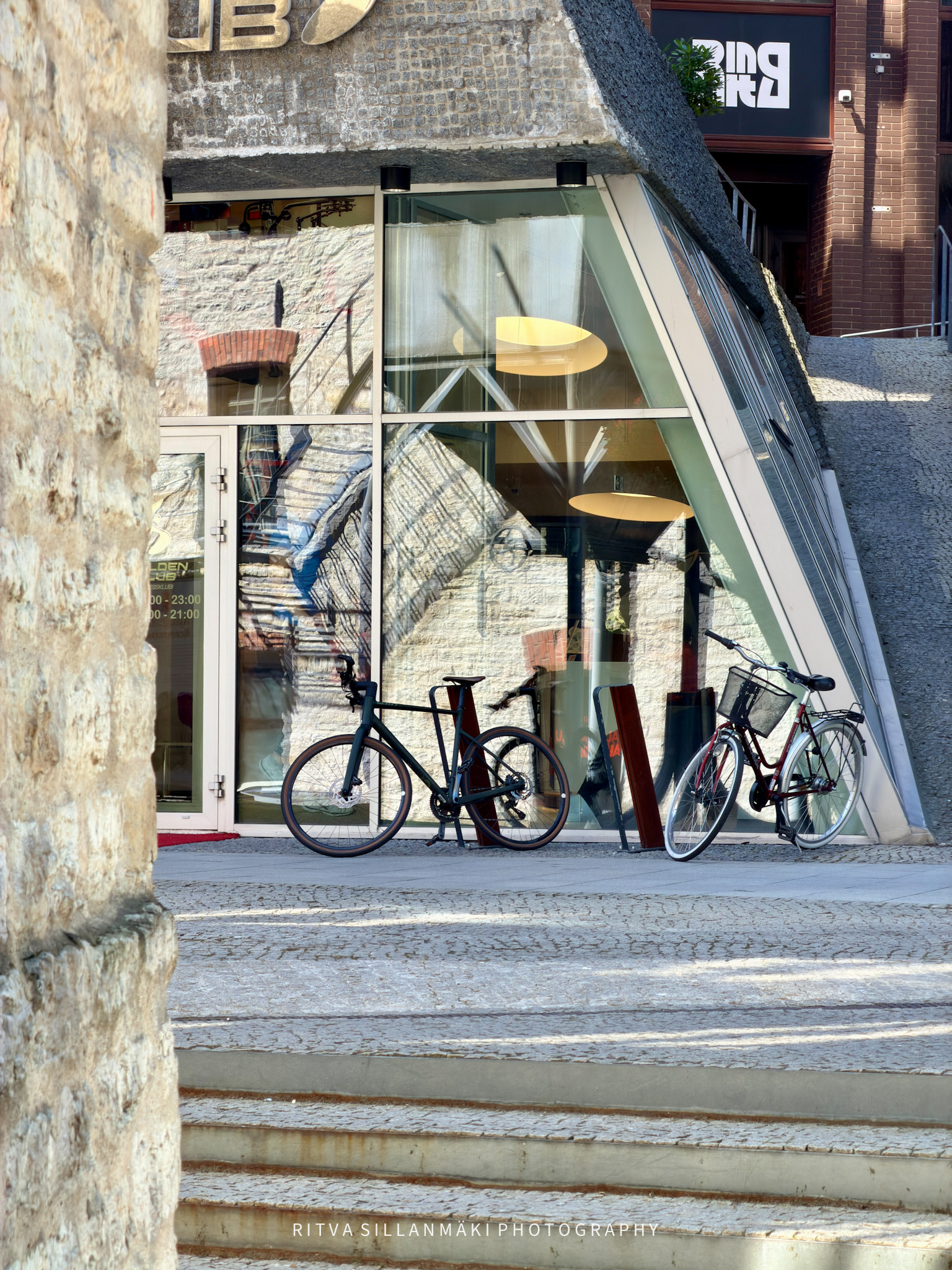
I captured these images to highlight the striking juxtaposition of modern and historic architecture in a single frame. The glass facade, with its slanted design, serves as a reflective canvas, beautifully mirroring the old stone wall and staircase, showcasing how these contrasting styles can coexist. The presence of two bicycles, one black and the other red with a charming basket, adds a touch of life and accessibility to the scene, emphasizing the building’s role in everyday urban life. The warm light fixtures within the interior cast a soft yellow glow that creates an inviting atmosphere, enriching the cool tones of stone and glass. This blend of contemporary and historic elements not only caught my eye but also instills a sense of calm and quiet within the bustling environment, making it a perfect moment to capture.
Street Photography
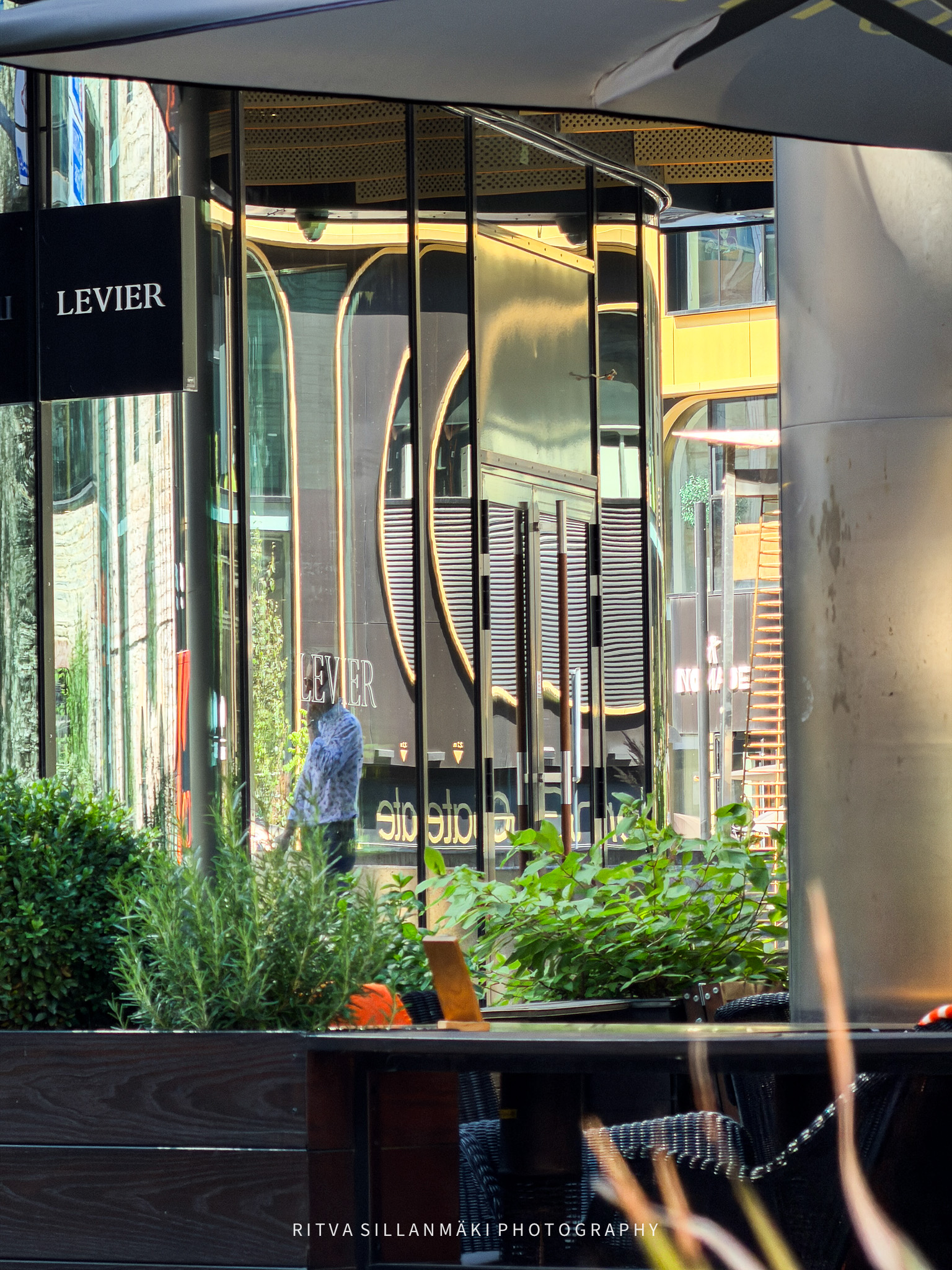
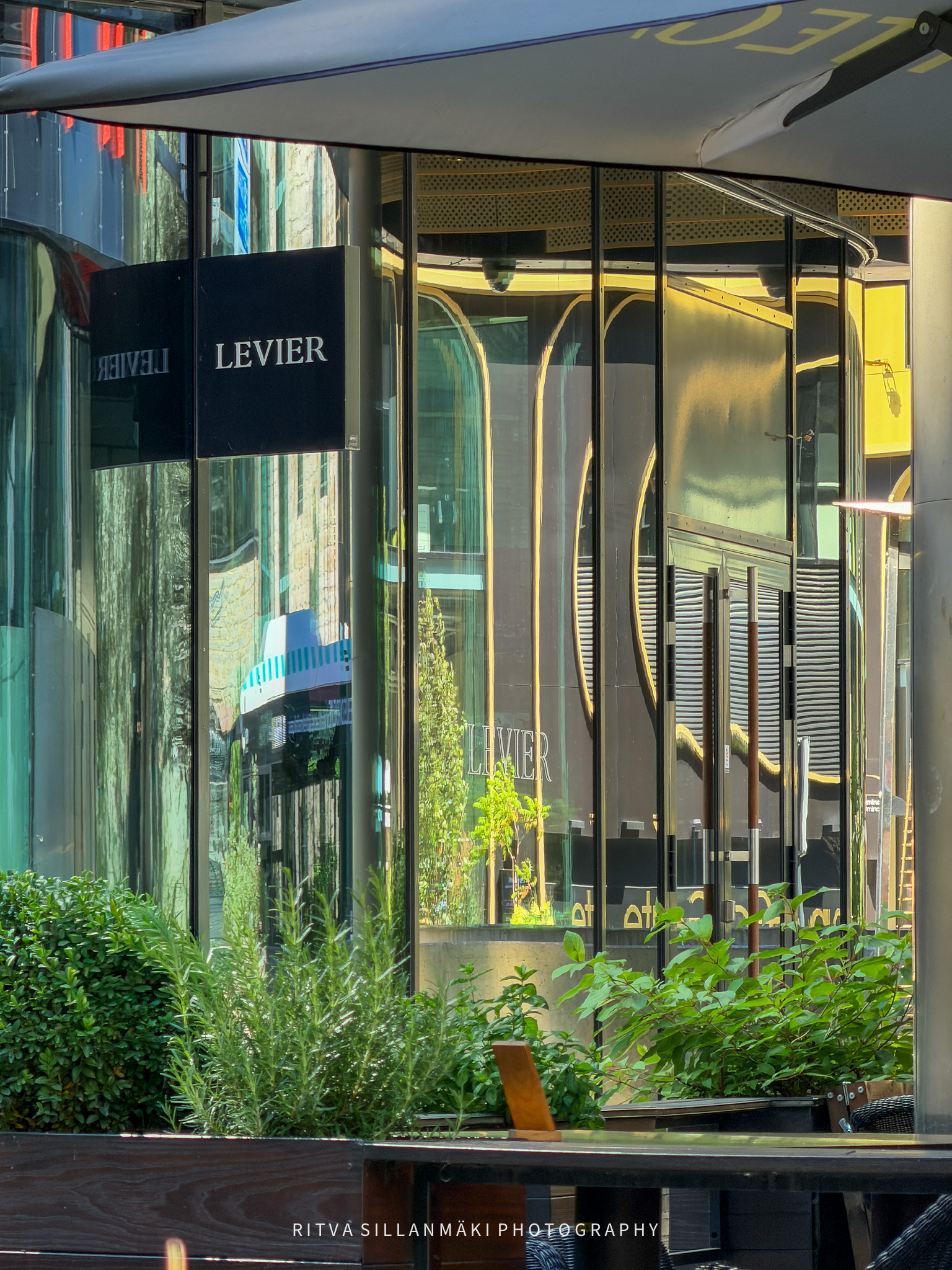
In capturing this image, I aimed to highlight the harmonious relationship between architecture and nature. The reflective glass panels not only offer a contemporary aesthetic but also serve as a canvas that mirrors the vibrant surroundings, emphasizing the beauty of our environment. The sign “LEVIER,” prominently displayed, represents a connection between people and place, and its reflection speaks to the integration of the structure in its locale. The warm illumination evokes a sense of welcome, inviting those who view it to appreciate the urban landscape. By including the lush greenery and the wooden bench, I wanted to remind viewers of the importance of nature in our daily lives, even in a bustling cityscape.
Welcome back, everyone! After our summer hiatus, Ann-Christine is our guide for this week’s exciting challenge. There’s no better occasion than the holidays to embark on an adventure! I certainly had my share of fun, and it still continues as I am on vacation until the middle of August. So while at our summer house with our grandkids, I am trying to put together a post that makes some sense. It will be interesting to see what you all have been up to. Be sure to visit Ann-Christine’s fantastic post and participate, remembering to tag Lens-Artists and link back to her original post.
This summer has been particularly hectic. In June, we traveled to Oulu to visit our son and explore the local attractions. Being so far north, which is midway across Finland by distance, we took the opportunity to drive to Kilpijärvi and further into northern Norway. Additionally, in May, we spent some time in Crete, and last weekend, we visited Estonia. In this post, I’ll be sharing more photos from our trip to Norway.
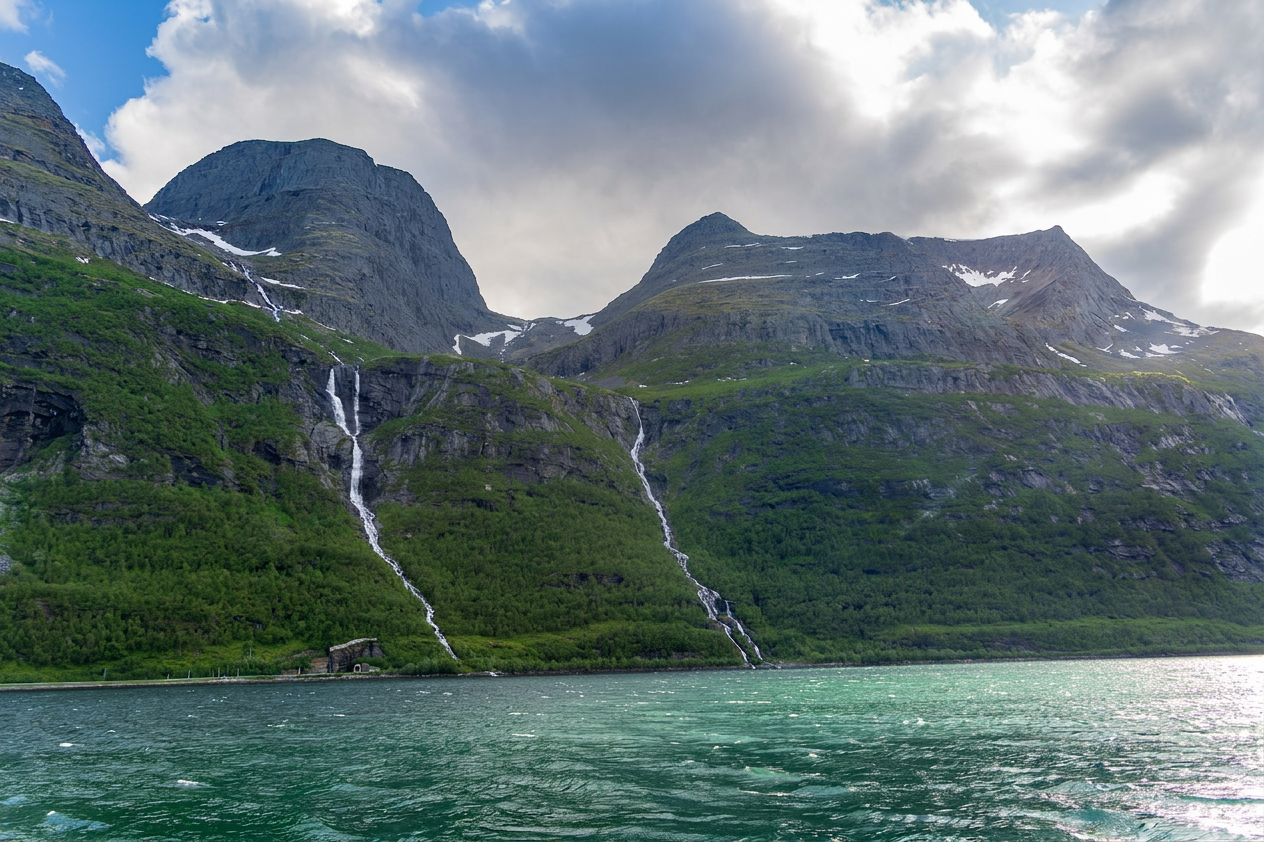
the lush Sørdalen canyon in Rohkunborri National Park, located in Troms county.
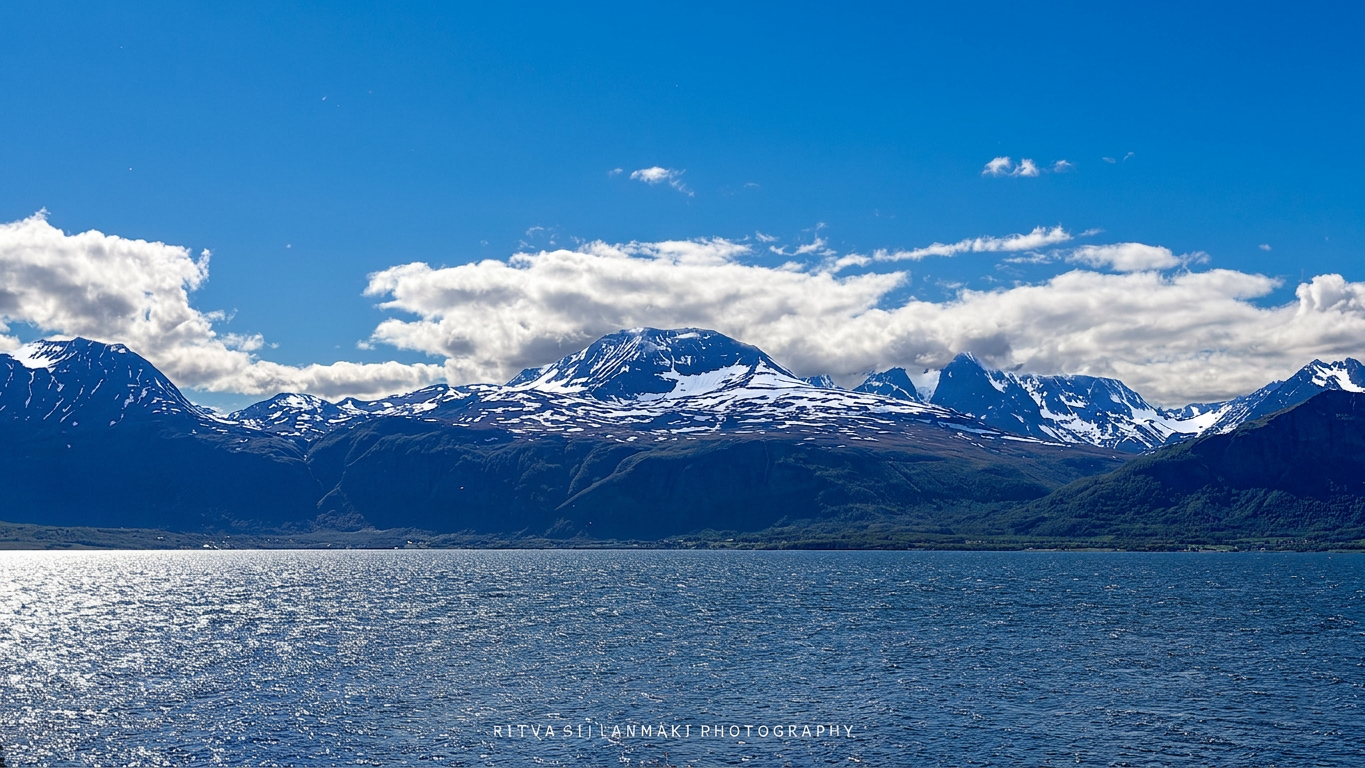
Heading to Northern Norway had been a long-time dream; I don’t understand why we hadn’t done it before. Although it didn’t seem very far, especially coming from Southern Finland, we made sure to give ourselves plenty of time for the trip. Our car’s odometer showed a total of 1,300 kilometers from Helsinki, but we did make a stop in Oulu to visit our son, so we did not drive it in one stretch. Every bit of it was worth it, as Northern Norway is truly a dream spot for anyone who enjoys stunning landscapes and the great outdoors. The Lyngen Peninsula was just a few hours away from Kilpisjärvi, and we reached Skibotn in less than an hour, I think. Troms County, with its majestic mountains, took my breath away with attractions like Lyngen, renowned for its alpine wonders. The Lyngenfjord, or Yykeänmuotka in Finnish, sits beautifully between Tromsø and Kilpisjärvi, with the magnificent Lyngen Alps (Lyngsalpan) as the crown jewel of the peninsula. Seeing those sharp peaks for the first time was an experience I’ll never forget, and hopefully, we will visit again.
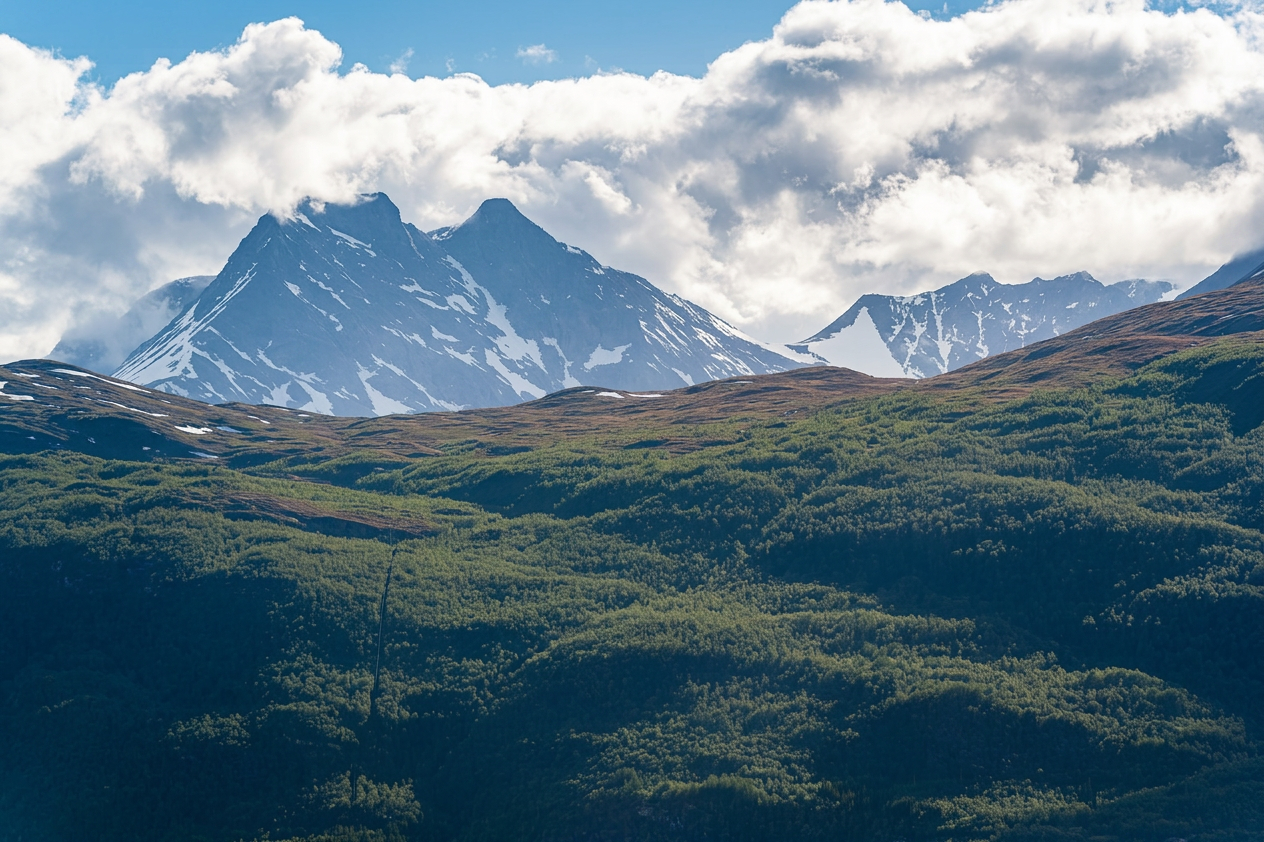
A view of snow-capped Lyngen Alps peaks under a cloudy sky with lush green hills in the foregroundThis picture shows the striking landscape of Kåfjorden (Kaivuono), a beautiful branch fjord located in the Troms og Finnmark region of northern NorwayThis image depicts the harbor of Skibotn in Norway, featuring several boats along the shore of the Lyngenfjord.A panoramic view from Samuelsberg it’s a small village in the Kåfjord municipality in Troms, Finnmark county,
The different time of day made a difference even if the sun did not set during the time we were there
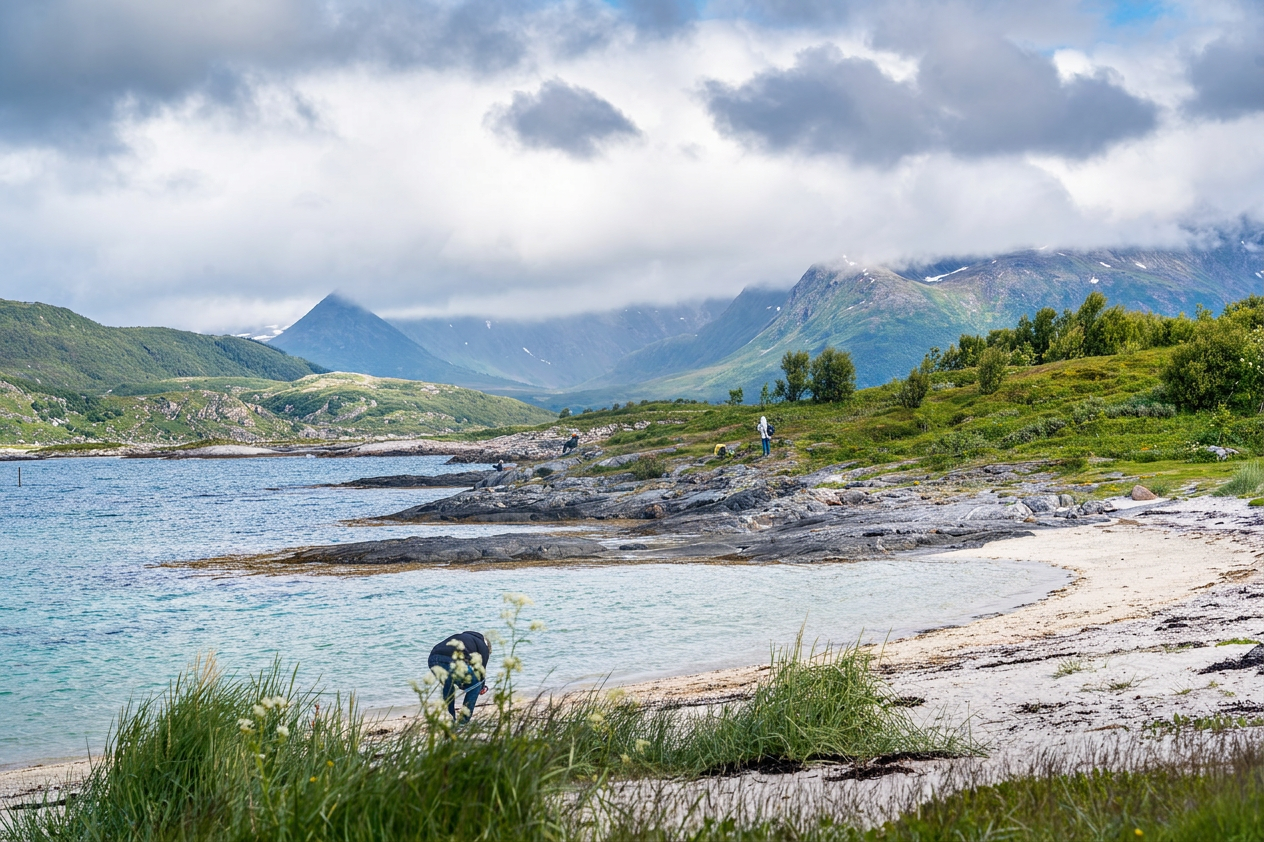
You won’t believe how beautiful Sommarøy is, especially during peak summer! We visited on a chilly, windy day in June, so it wasn’t exactly beach weather for us. But I’ve heard that if you go there on a sunny Sunday in July, it’s totally packed, just like a Mediterranean vacation spot! Luckily, we got to enjoy the tranquility of the beaches on a weekday. There weren’t too many people around, which made it perfect for taking photos without distractions. And the way the turquoise water shimmers against the mountains is just stunning!
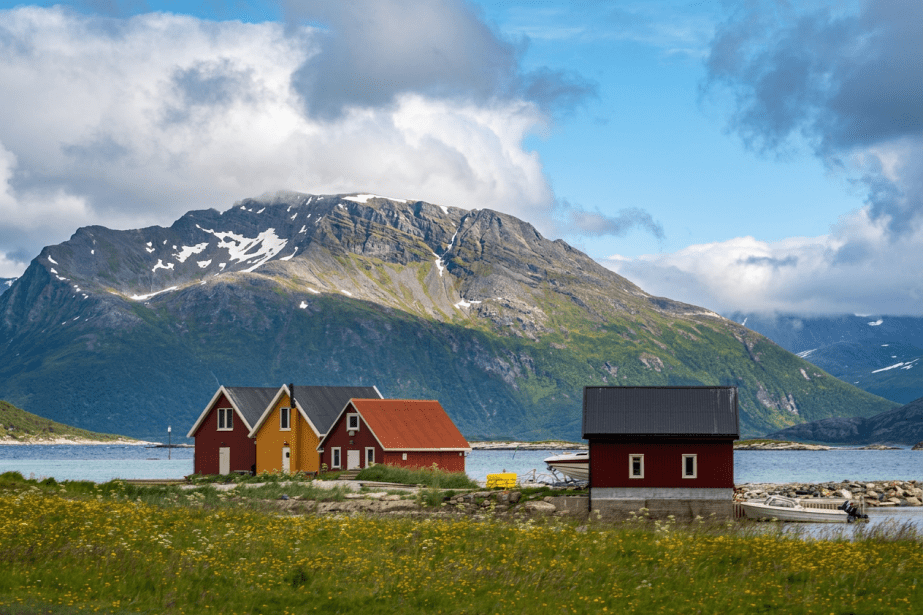
Oh, the beauty of these scene is so stunningDo I need to say anything , the photos say it all.The “Caribbean of the North“: It is famous for its stunning white-sand beaches, emerald-turquoise shallow waters, and lush green coastlines.Colorful houses by a serene fjord with towering, snow-dusted mountains in the background under a partly cloudy sky. So Idyllic.
I hope you enjoy the views as much as I did, as they truly take your breath away with their stunning beauty; I fell in love with that area, captivated by the vibrant colors of the landscape and the serene ambiance that surrounded me, making every moment spent there unforgettable.
Next week is Anne’s turn to lead us, Saturday 25th July.
Until then, let’s keep exploring, broadening our horizons, and maintaining a positive mindset
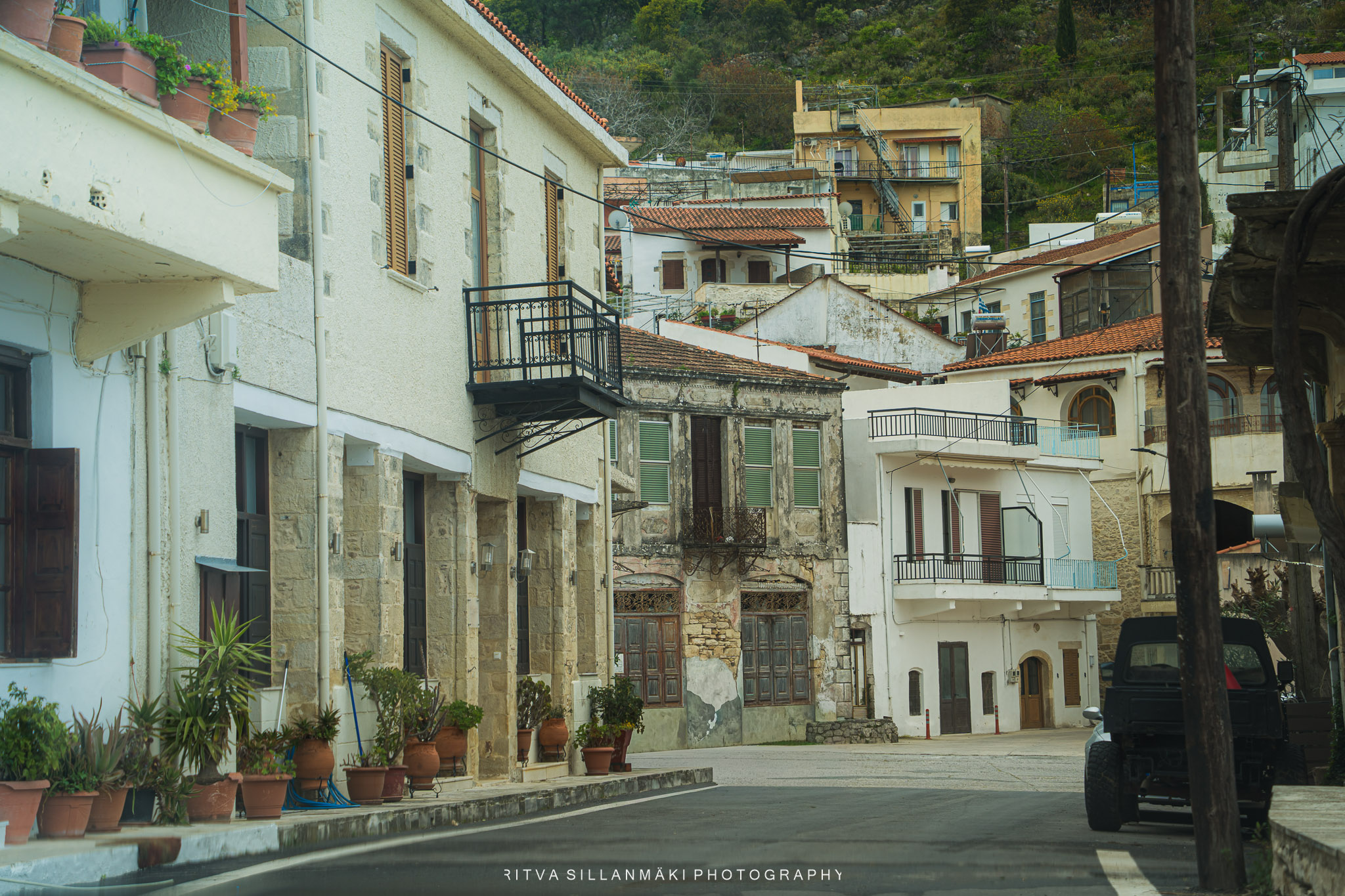
Argyroupoli, located in Crete, truly captivated us during our visit! Situated roughly 20 km southwest of Rethymno, this charming mountain village offers stunning views at every turn. The village is perched at approximately 260 meters above sea level. Although the day was cloudy and breezy, it didn’t detract from its beauty, but it did limit our time there. The area is renowned for its natural springs and waterfalls, which are said to be amazing, energizing local mills and creating a refreshing ambiance ideal for unwinding at quaint cafes and tavernas. Unfortunately, we didn’t get to see these attractions this time, and most cafes were closed since we visited prior to the tourist season.
The village with red-tiled roofs nestled among green hills under an overcast sky
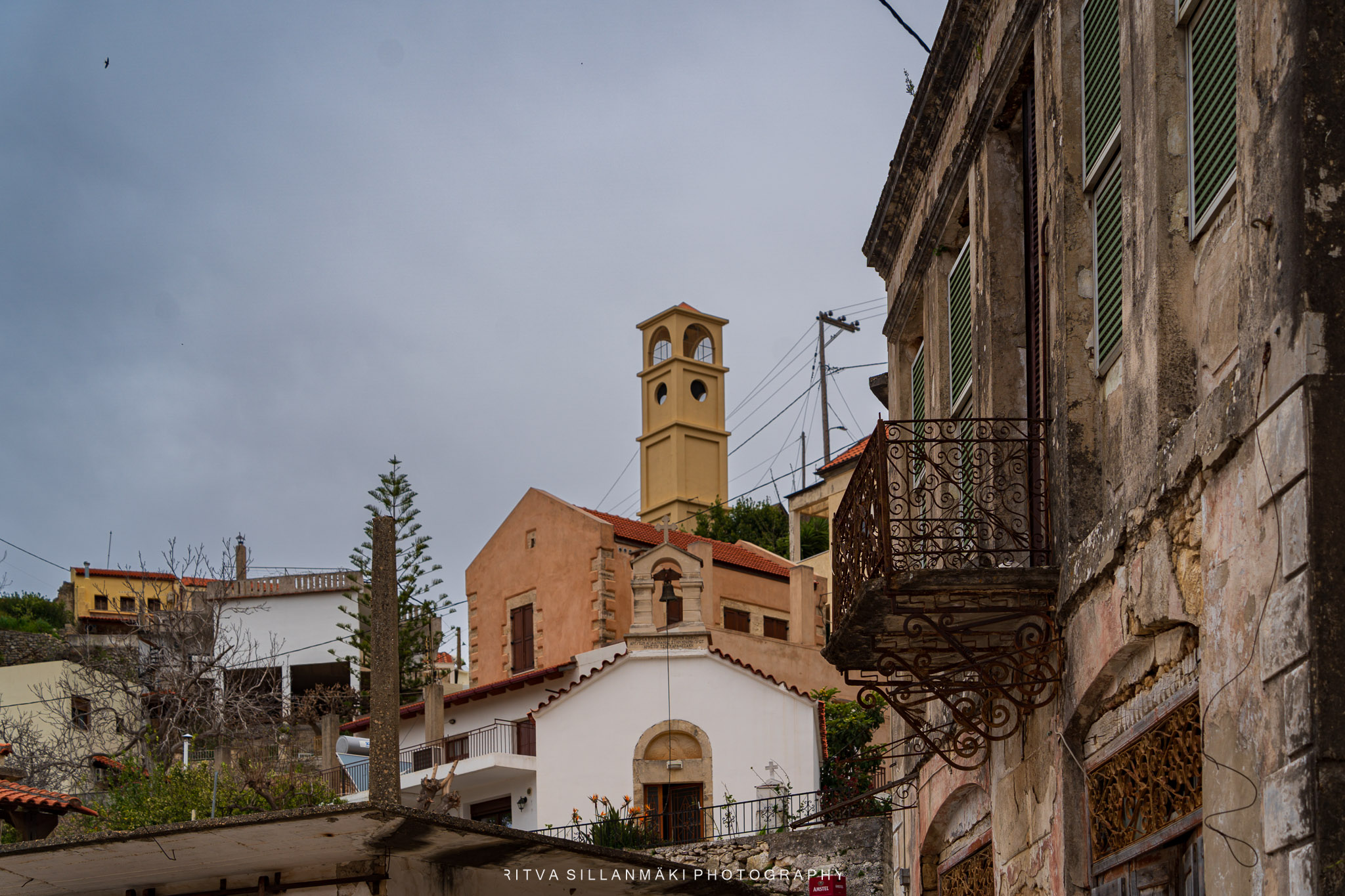
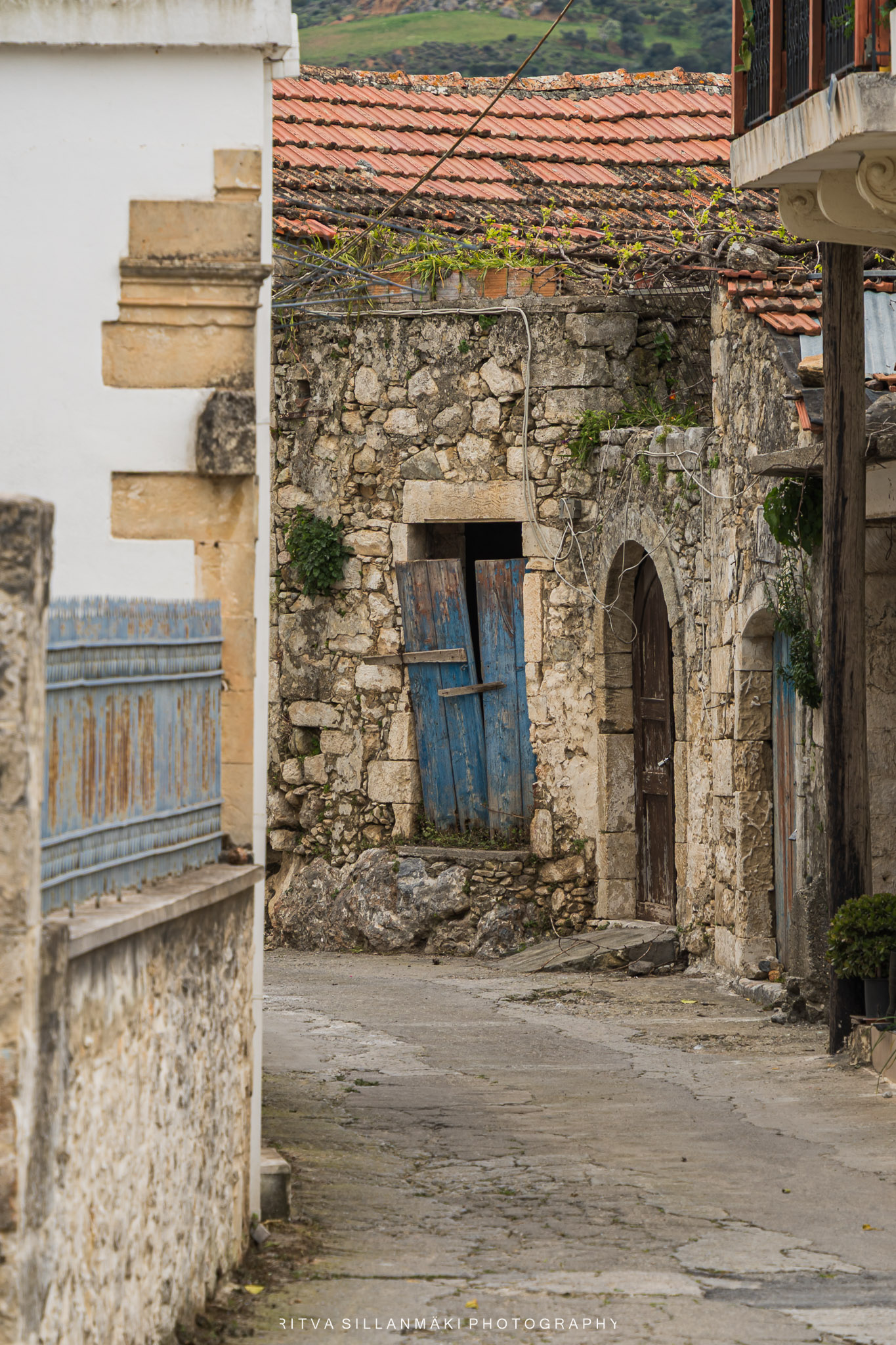
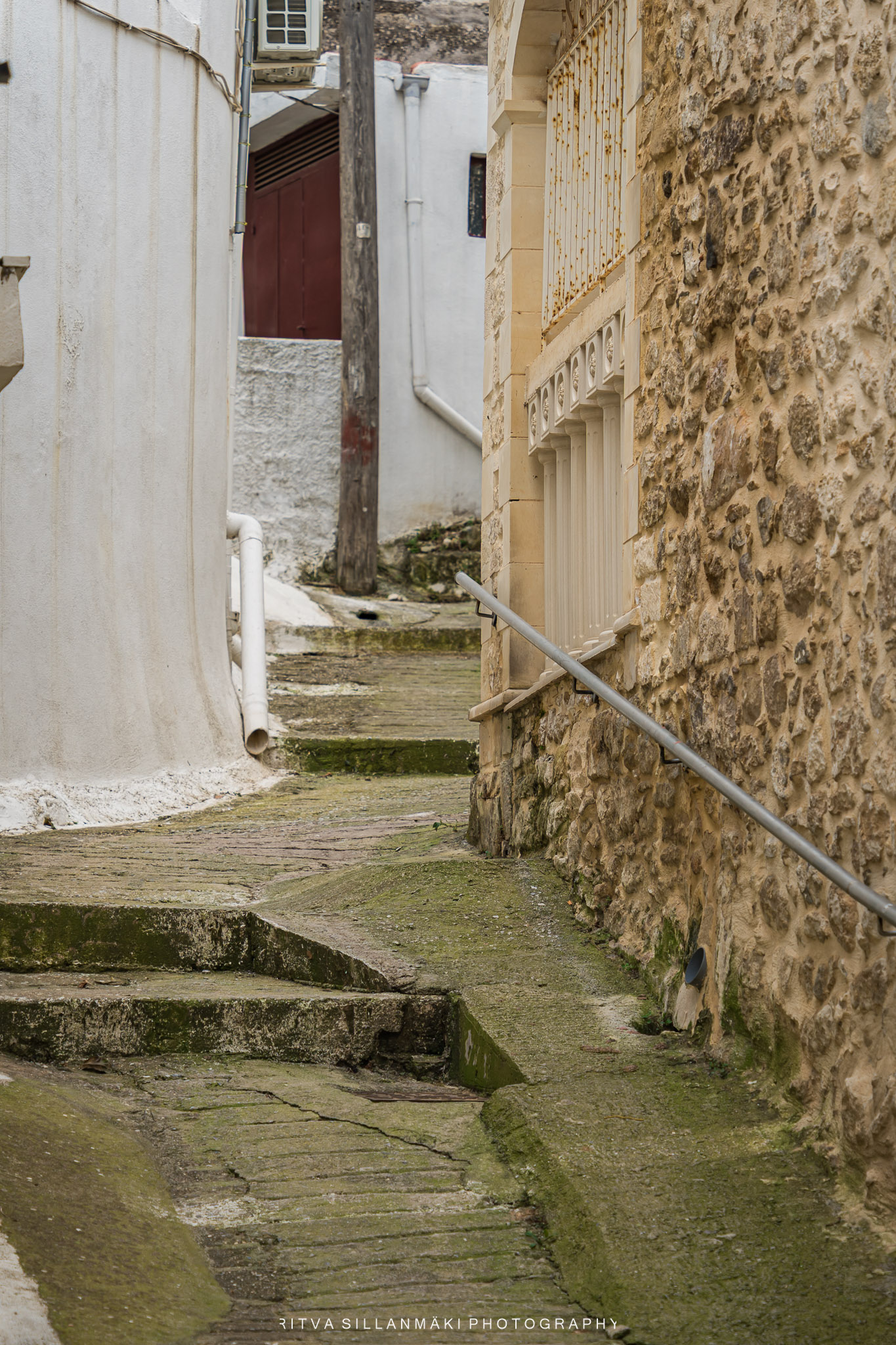
The aged cobblestone streets, flanked by weathered rustic buildings, contribute to the enchanting atmosphere of this town. You can truly immerse yourself in the authentic essence of Cretan life, surrounded by breathtaking natural beauty. Interestingly, this charming village is perched atop the ancient ruins of Lappa. At the heart of the square stands a picturesque church, a favorite meeting spot for both locals and curious tourists.
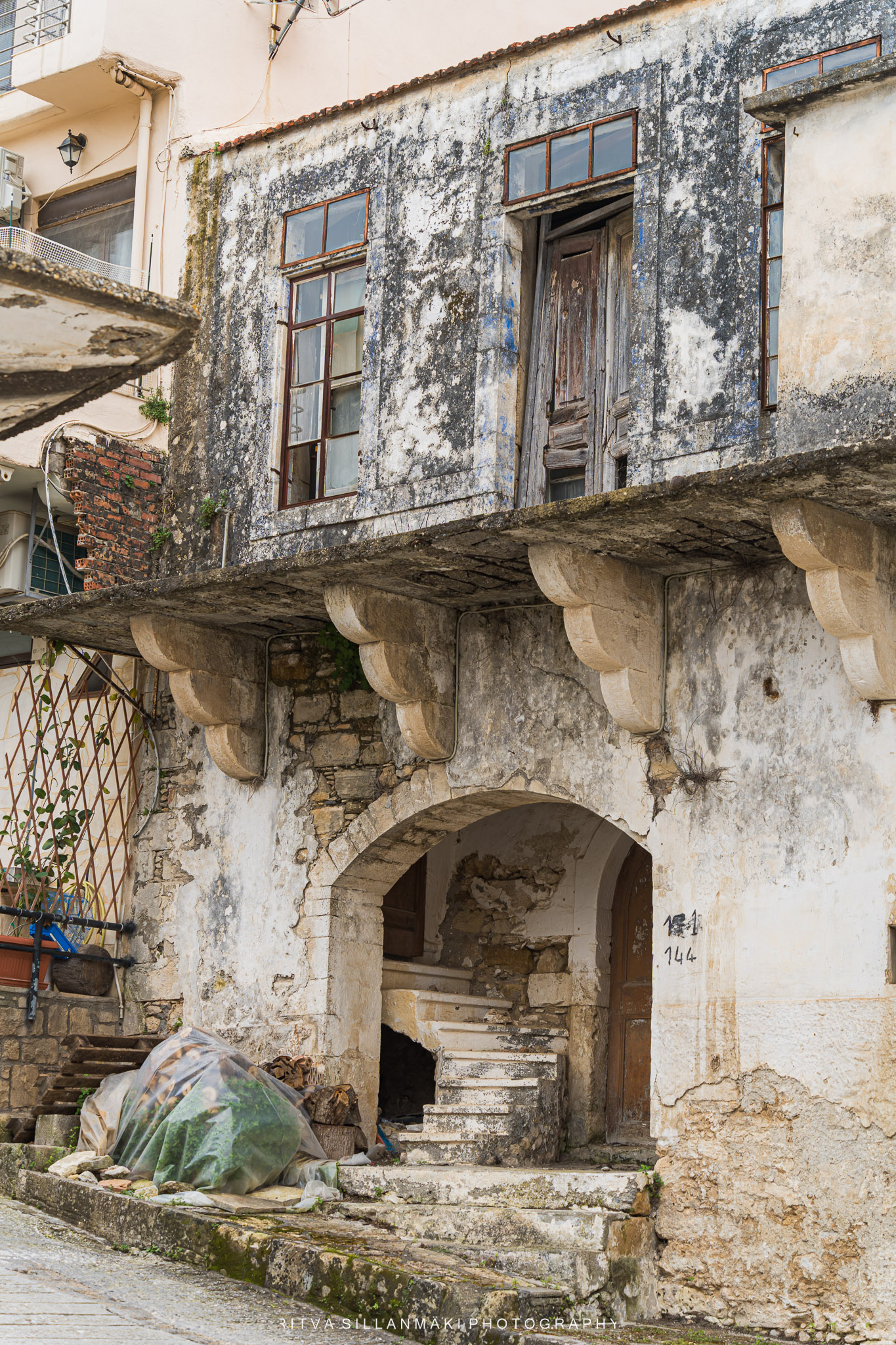
The structures here showcase a remarkable blend of Venetian and Cretan architectural styles, each one telling its own story through the peeling paint and timeworn facades, which bear witness to the passage of time and the lives that once thrived within their walls. I find immense joy in capturing these nostalgic elements on camera, as each image evokes a sense reverence for the past, inviting viewers to imagine the vibrant stories these buildings could share. It is sad to see how houses in small towns like these are being abandoned and left to decay, their histories fading slowly into obscurity, and how the charm of their unique designs is overshadowed by neglect, making it all the more urgent to preserve their beauty before they vanish completely.
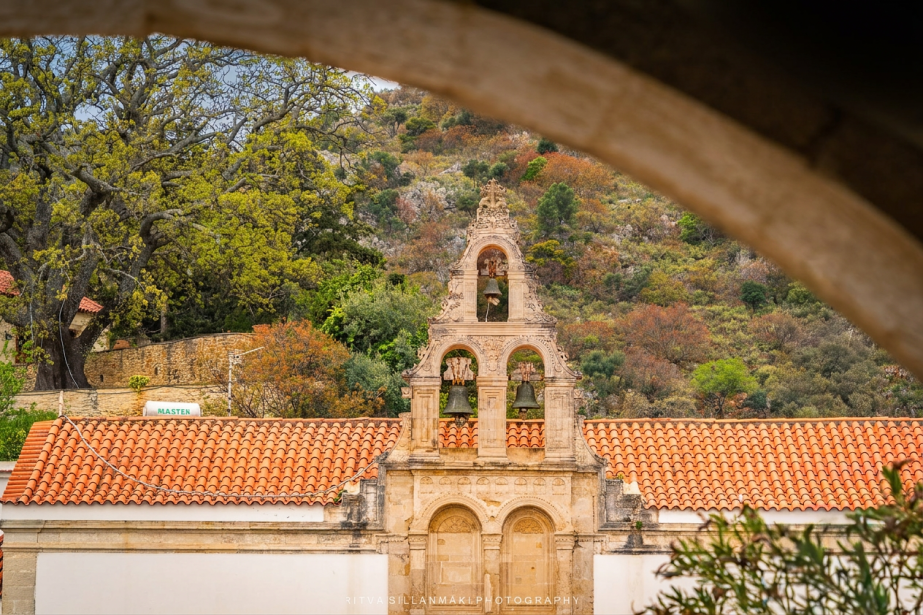
A historic stone bell tower framed by a curved arch, set against a backdrop of leafy trees and rocky hills.
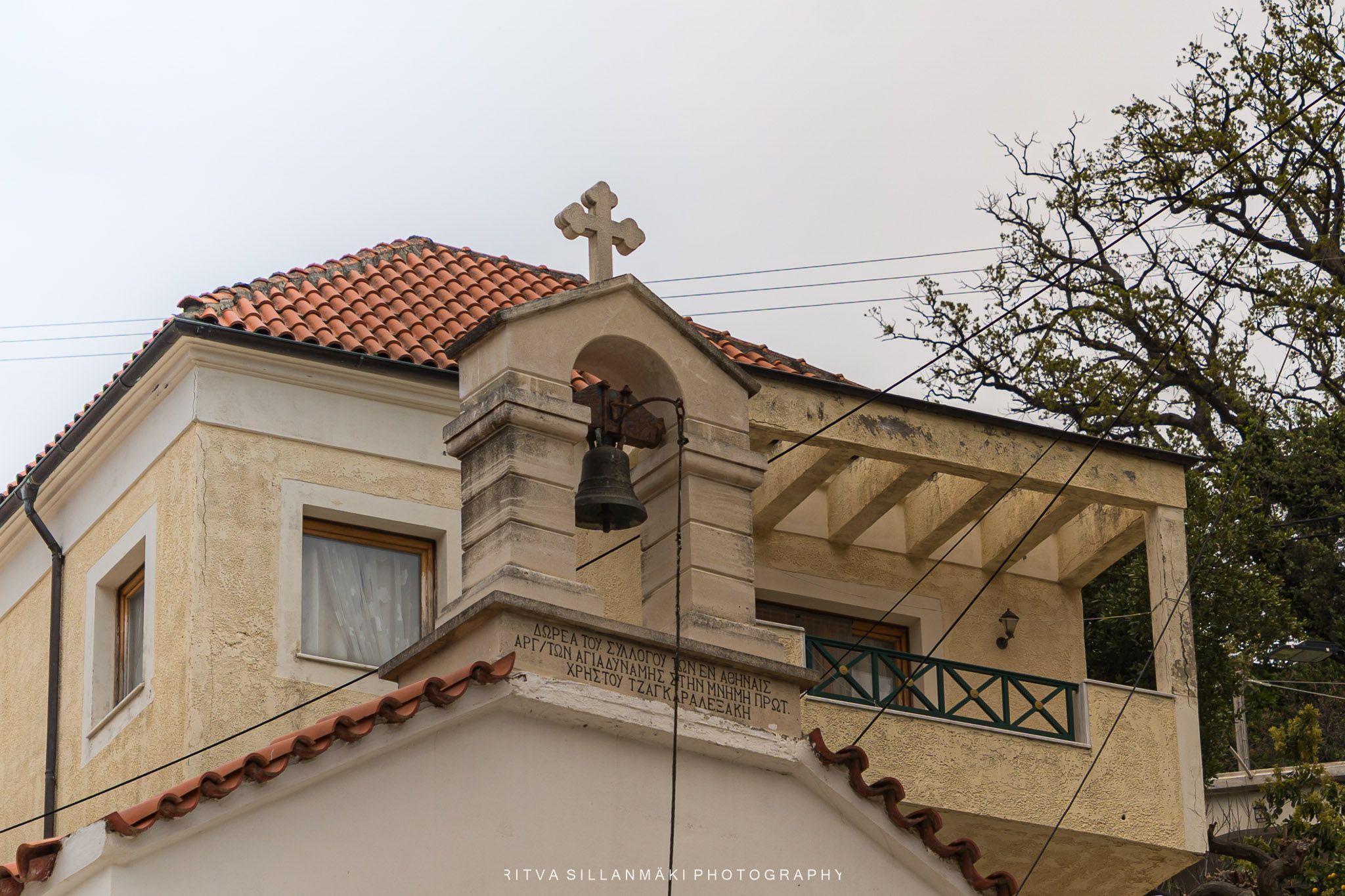
The Church of Saint John (Agios Ioannis) captures the eye with its striking bell tower, creating a stunning contrast against the adjacent whitewashed walls, evoking a sense of both history and beauty that is hard to resist. But for me the old buildings were the thing, as you can see from the huge amount of images.
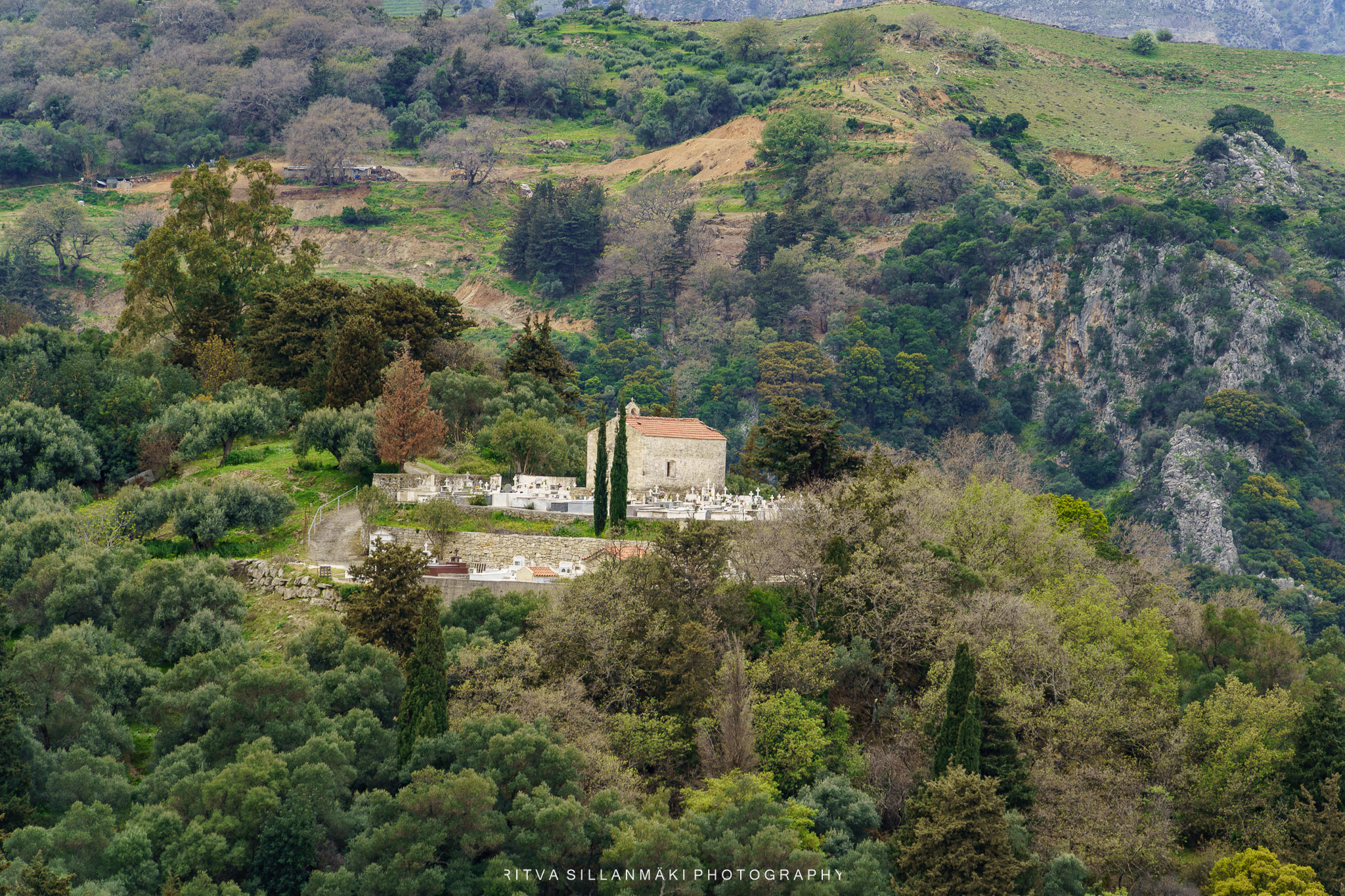
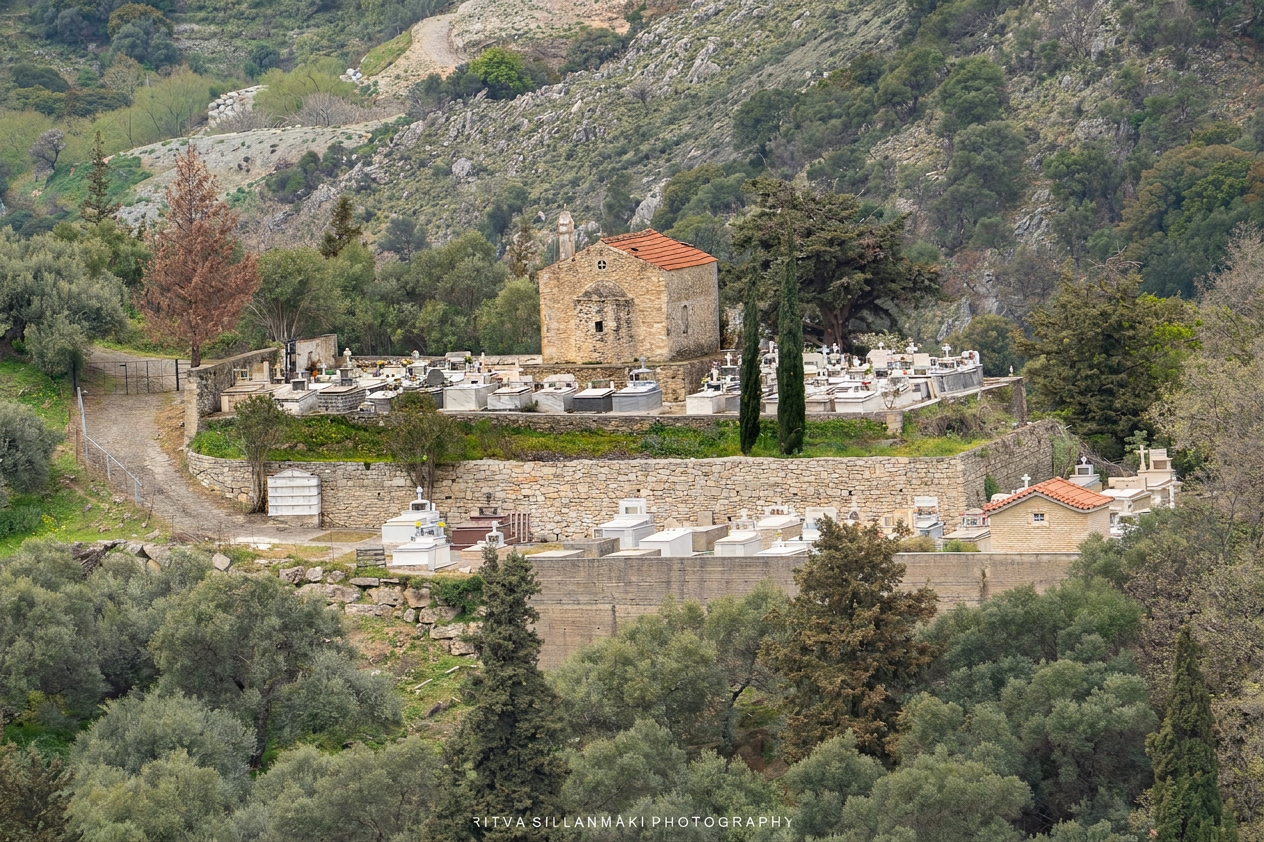
A peaceful chapel and cemetery located on the outskirts of Argyroupoli on hillside surrounded by lush greenery and rocky terrain.
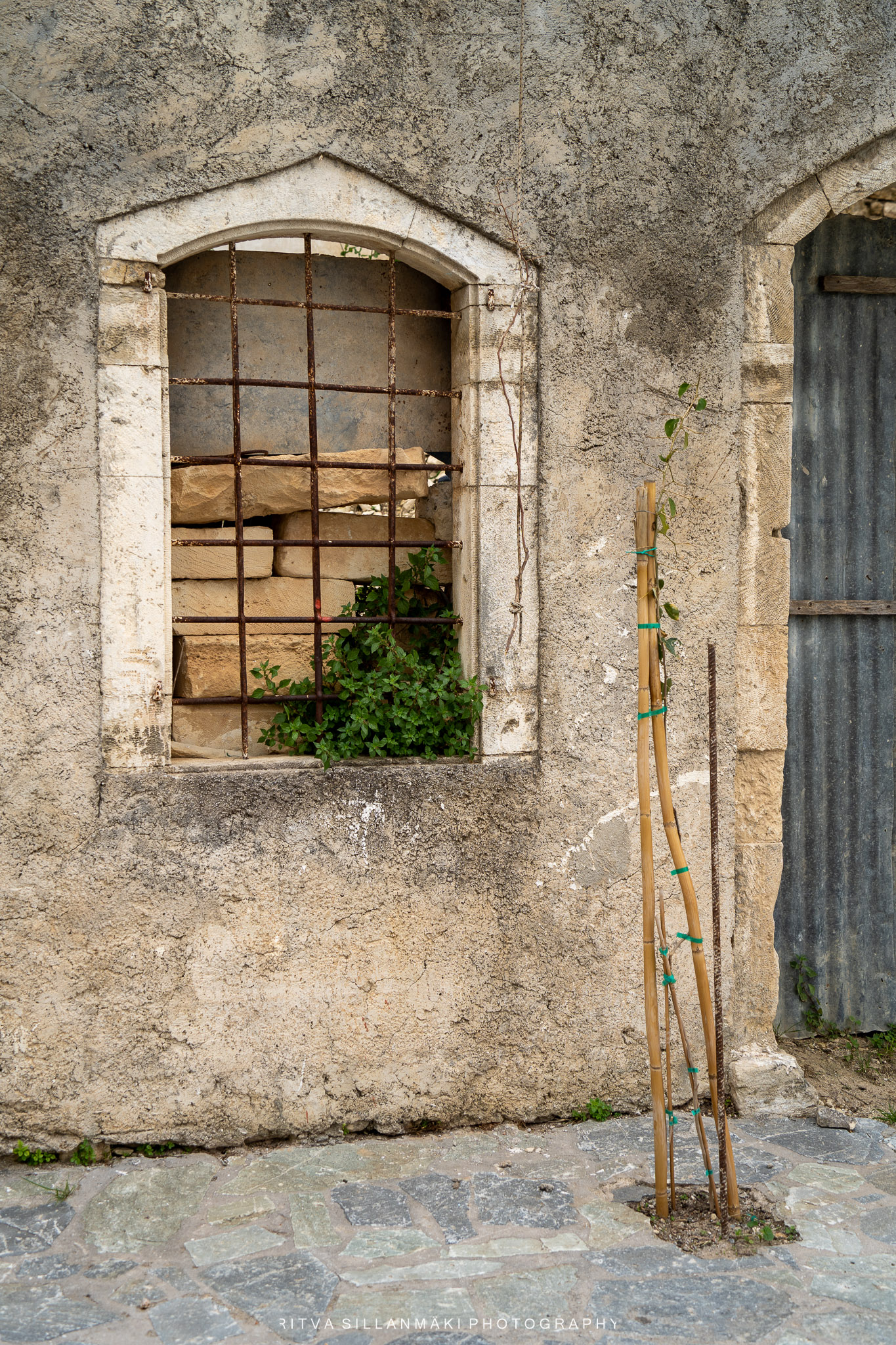
Participating in Thursday Doors This week, I am excited to share an array of photos from our memorable trip to Crete in May, where the rich history and vibrant culture of the island inspired every click of the camera. Each door we encountered told its own story, reflecting the unique charm of the traditional Cretan homes, and I am happy to share you how these all with you.
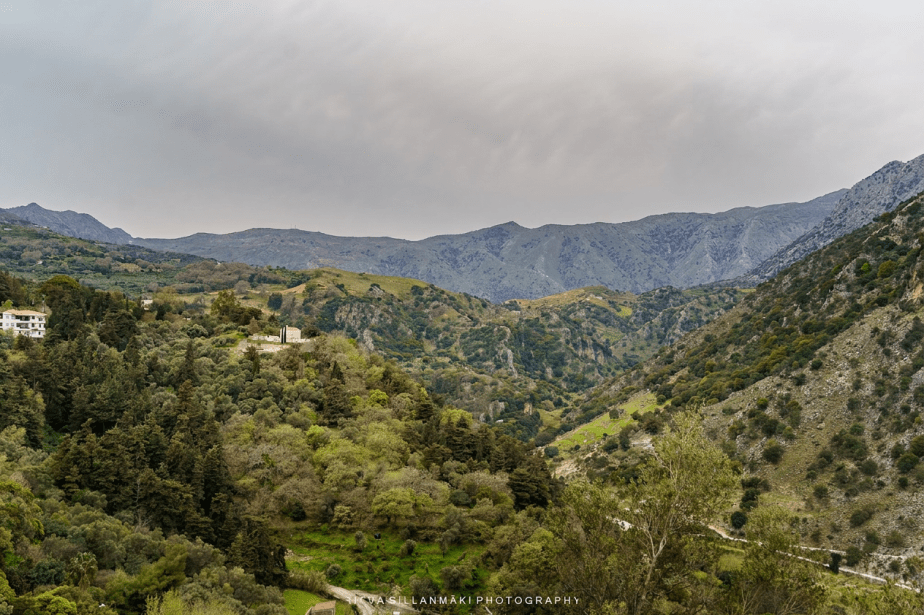
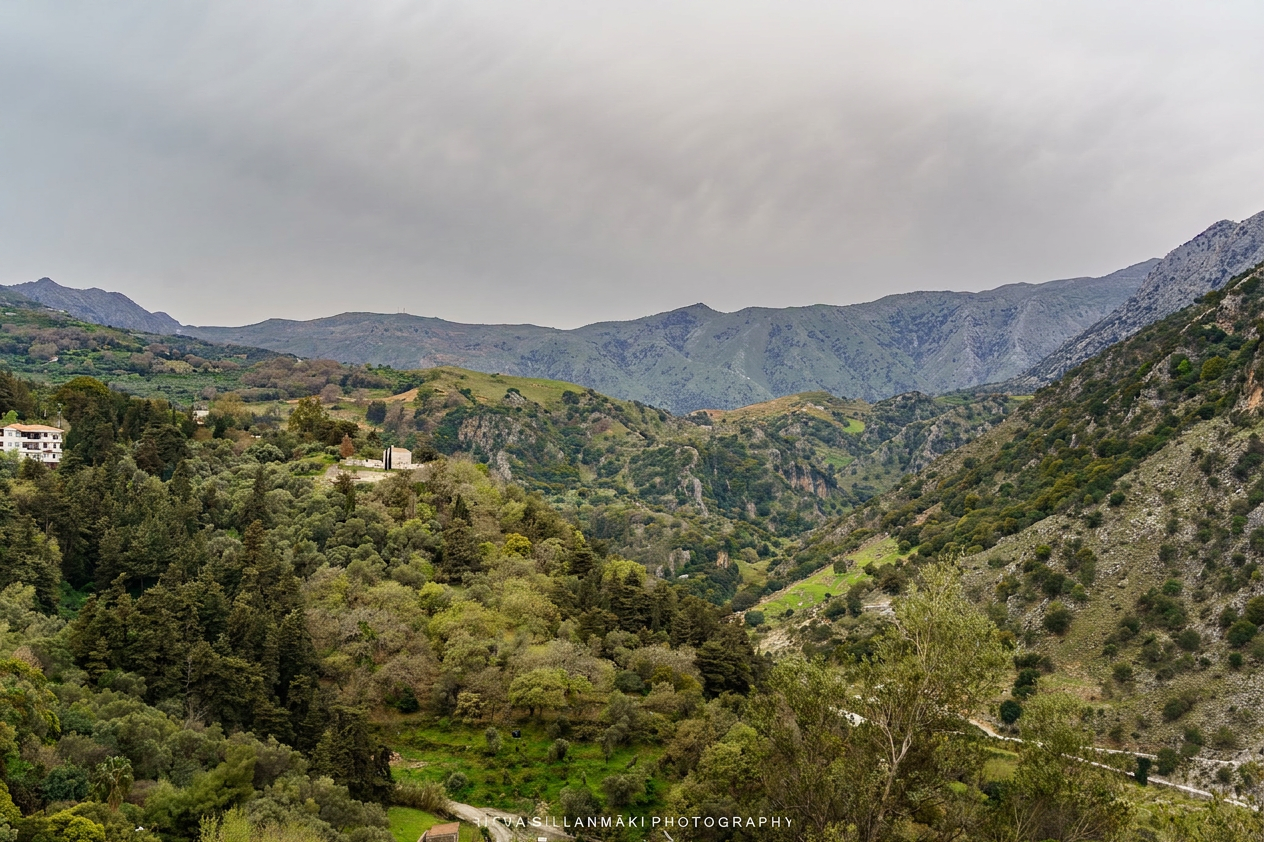
A lush green valley framed by rugged mountains under an overcast sky, showcasing the natural beauty of the landscape.
I am still going through the Crete photos; it seems that I have a tendency to edit bits and pieces at a time. In a world where everything is expected to be posted and documented immediately, I’ve stepped or more like fallen back from that pressure—I’m never ready to share them that quickly. By the time I consider posting, the moment has already passed. Do you understand what I mean?
Social media has made it too quick for me to keep up with the constant flow of information and updates. As a result, I’ve mostly stopped posting there, feeling overwhelmed by the rapid pace of engagement that doesn’t allow for thoughtful reflection. I often find that I am never truly in the moment, as the pressure to share experiences instantly detracts from actually enjoying them.
A large domed roof of The Sultan Ibrahim Mosque, and a small bell tower of The Church of Saint Catherine, surrounded by trees and grass under a cloudy sky
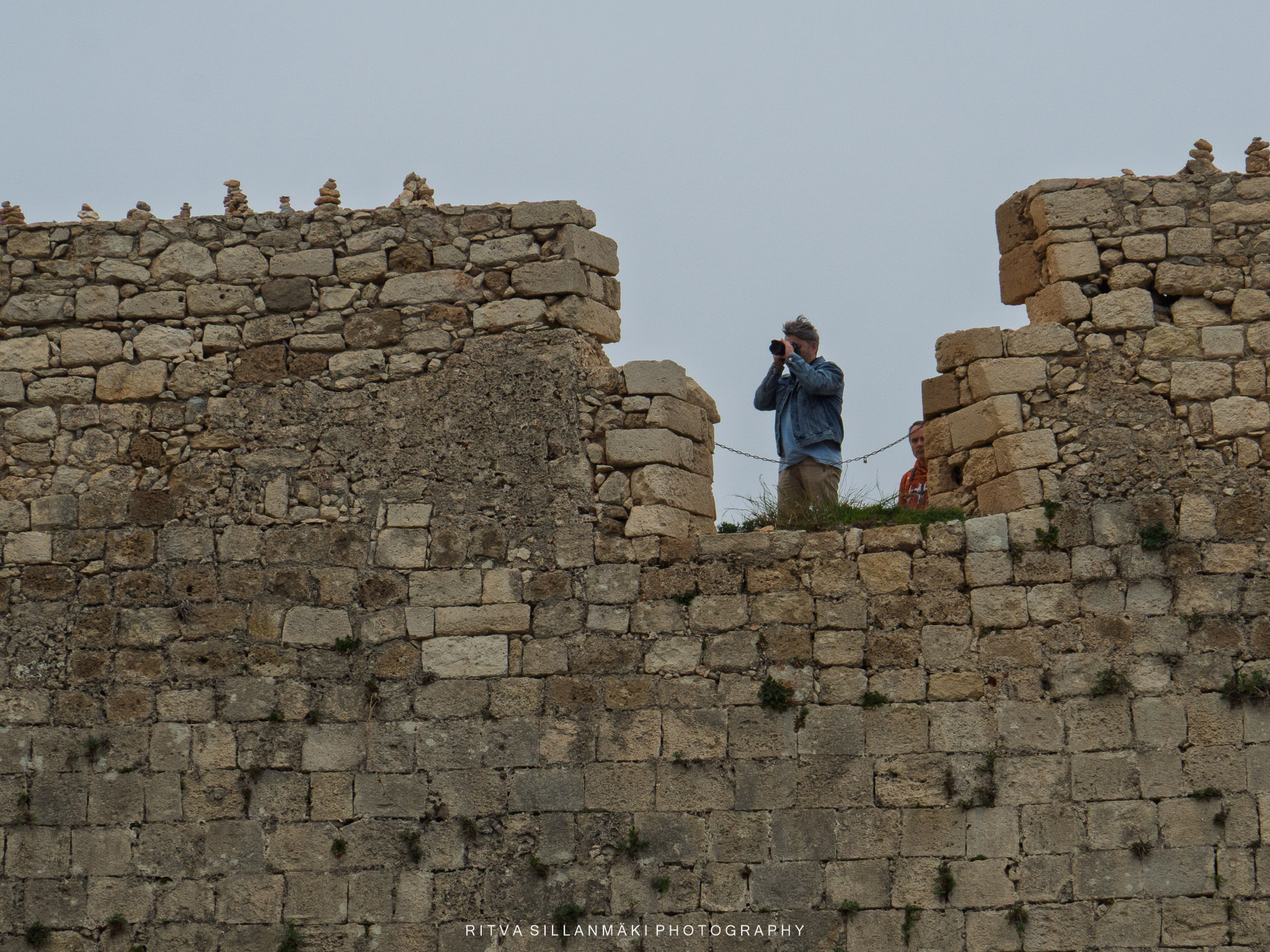
Now after that rant, for Leanne’s Monochrome Madness: here are black and white, monochrome images from the Fortezza Fortress in Crete. This historical site, with its impressive architecture, offers a unique perspective on the rich history of the region. In my post from yesterday, I was below looking up, trying to capture the grandeur of the fortress that towers above the surrounding landscape. This time, however, these images are actually taken from within the fortress itself, allowing you to explore the intricate details. The timeless grandeur and the enduring strength of this magnificent structure of Crete’s ancient heritage.
The Church of Saint Catherine (Agia Ekaterini),in the historic area of the Fortress. This charming Orthodox chapel, built of rugged limestone, dates back to the 19th century.
The picture depicts the Church of Saint Catherine (Agia Ekaterini), located in the historic area of the Fortress .This charming Orthodox chapel, built of rugged limestone, dates back to the 19th century.
The Sultan Ibrahim Mosque,
The Sultan Ibrahim Mosque is located within the Fortezza Fortress and was constructed in 1583, initially functioning as a church dedicated to Saint Nicholas during the era of Venetian control. Following the Ottomans’ conquest of Réthymno in 1646, the church was transformed into a mosque, at which point an 11-meter diameter dome was added, along with a minaret that has since been demolished.
The walls can be up to 5 meters thick.
The fortress is primarily built from rough limestone, and its walls can be up to 5 meters thick. The limestone arches looked interesting
The limestone arches
With this last photo, I did two monochrome edits. As you can see, the other is in the same gray shades as all the photos above, while I tried more blue tones in the one. I still lean towards the more traditional black and white – gray shades. Don’t you think the mood changes in these two, even if it’s the same shot? Any thoughts about this?
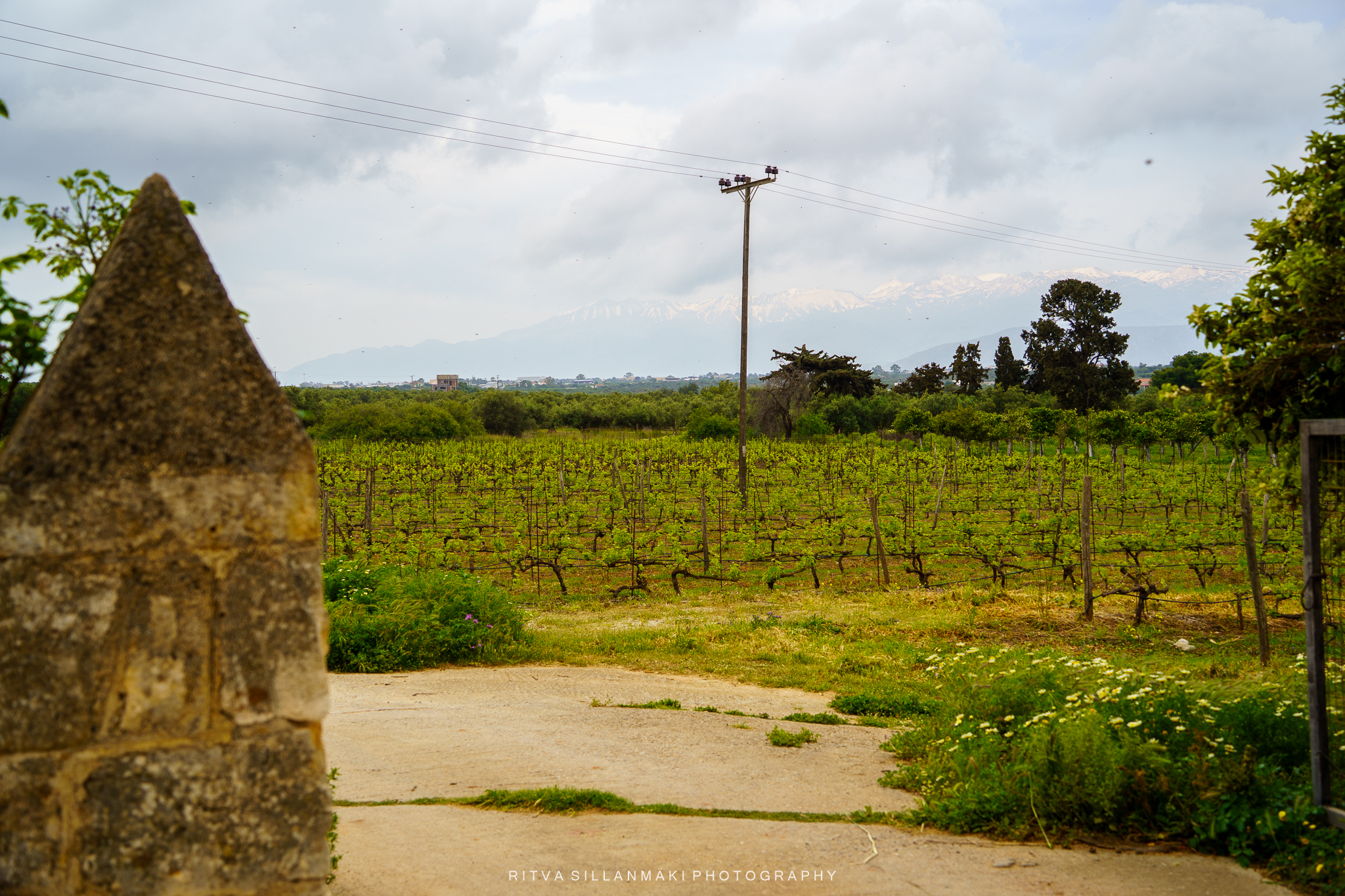
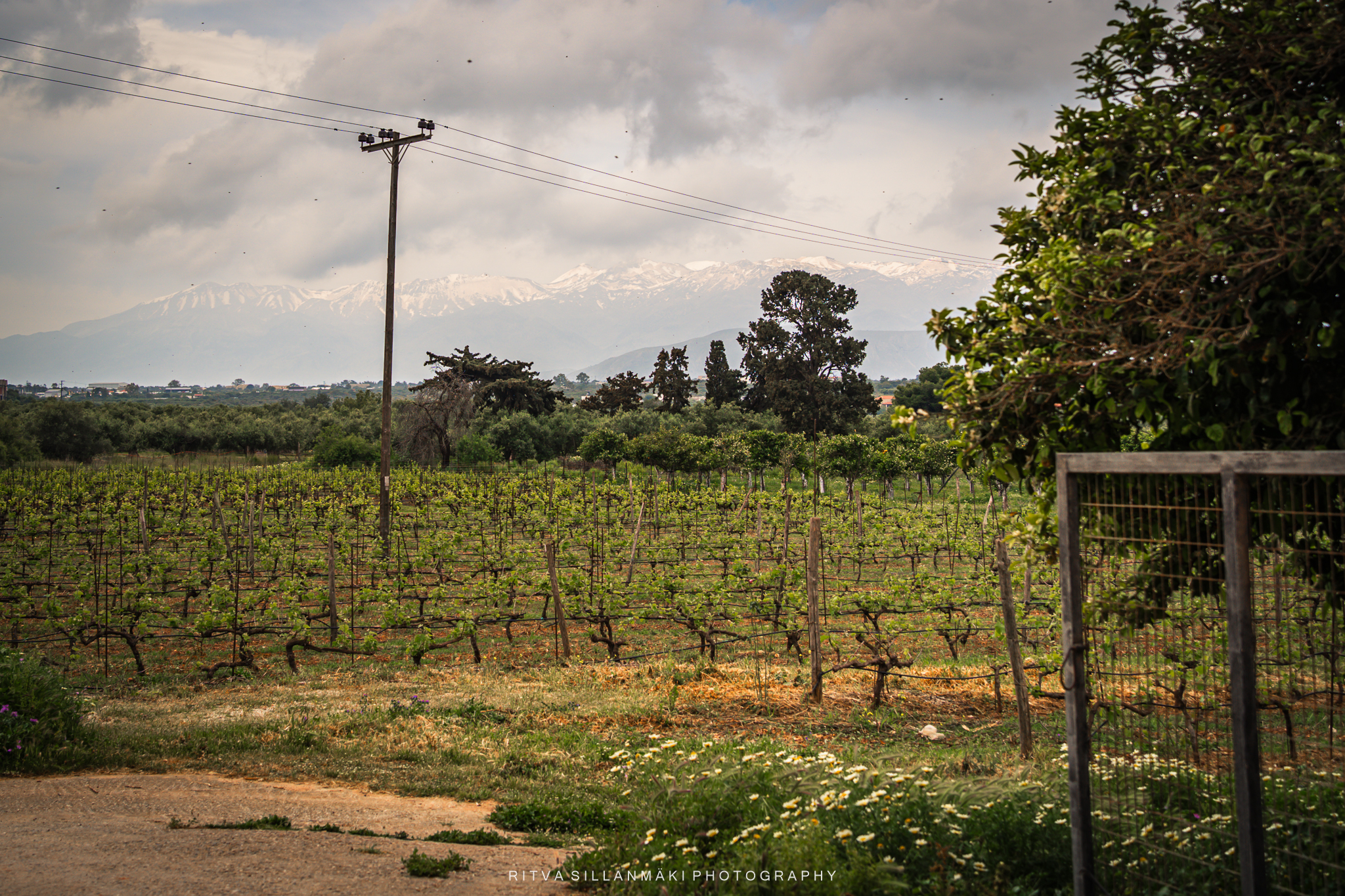
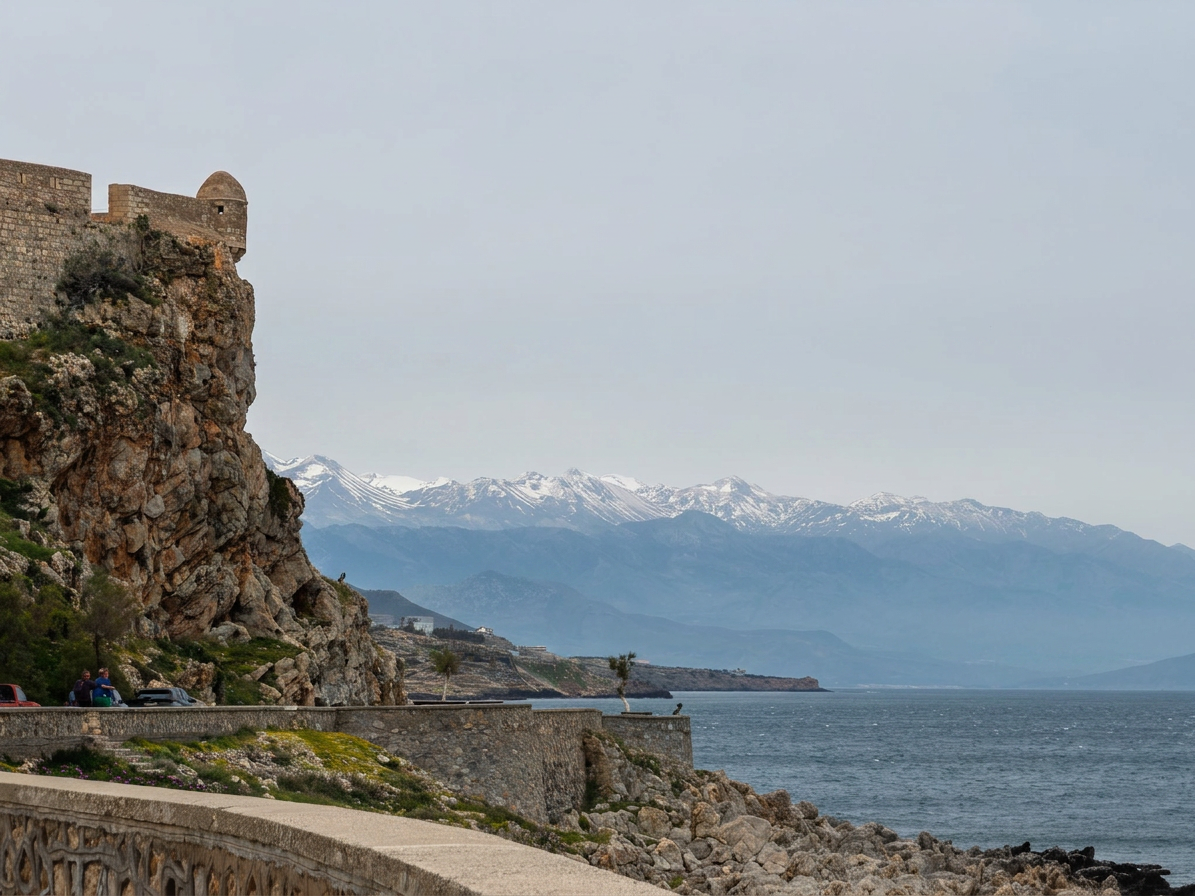
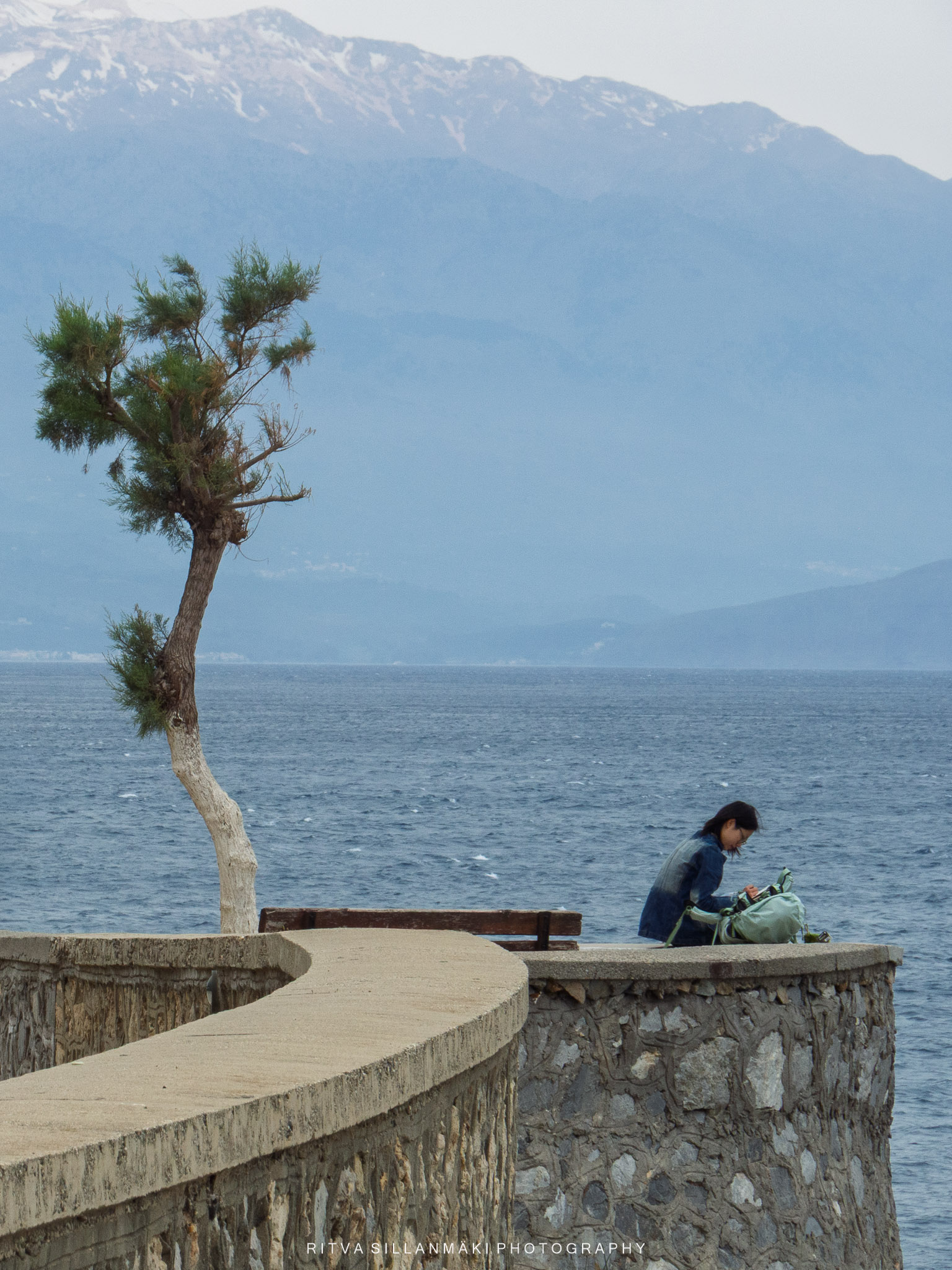
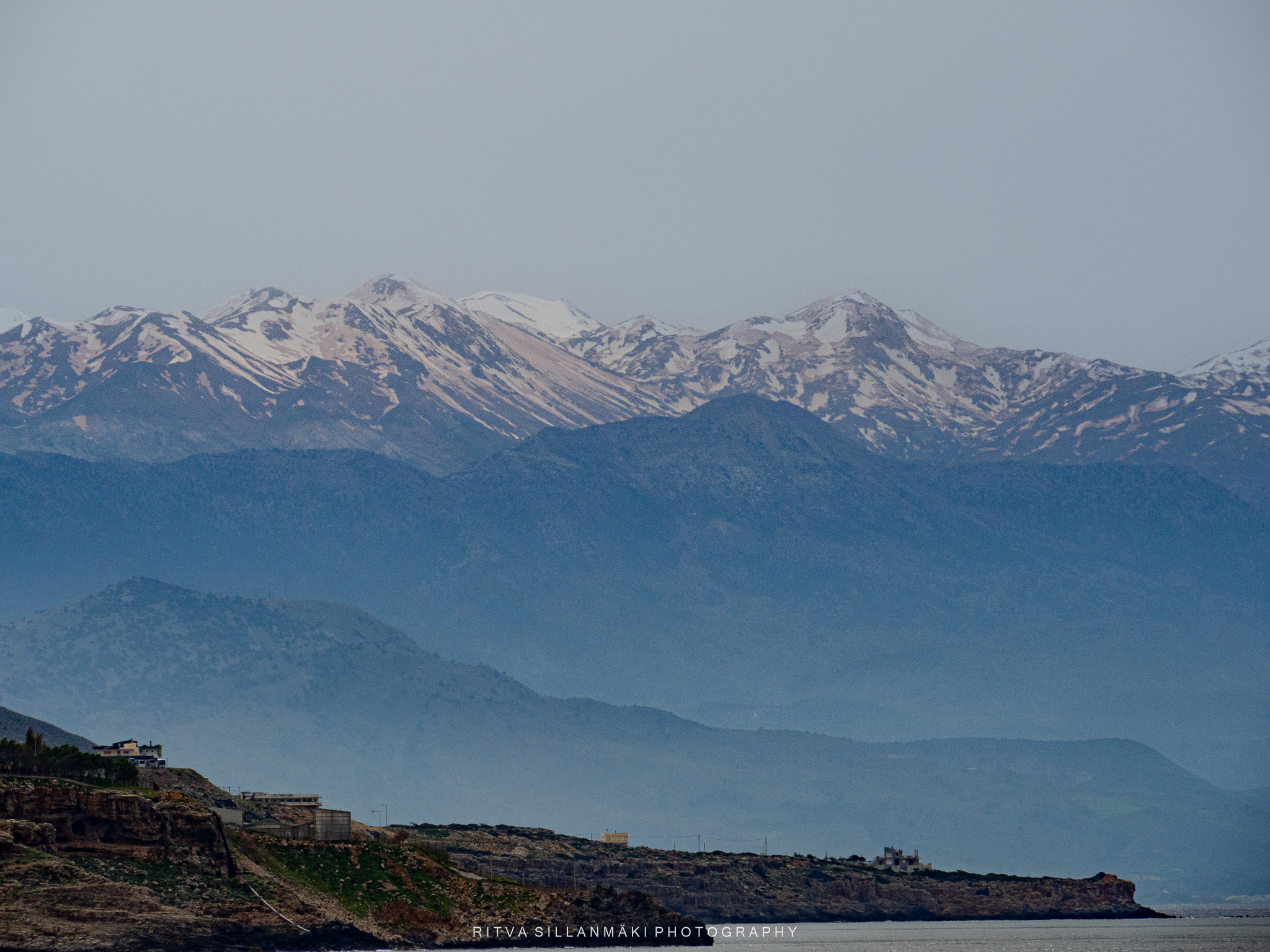
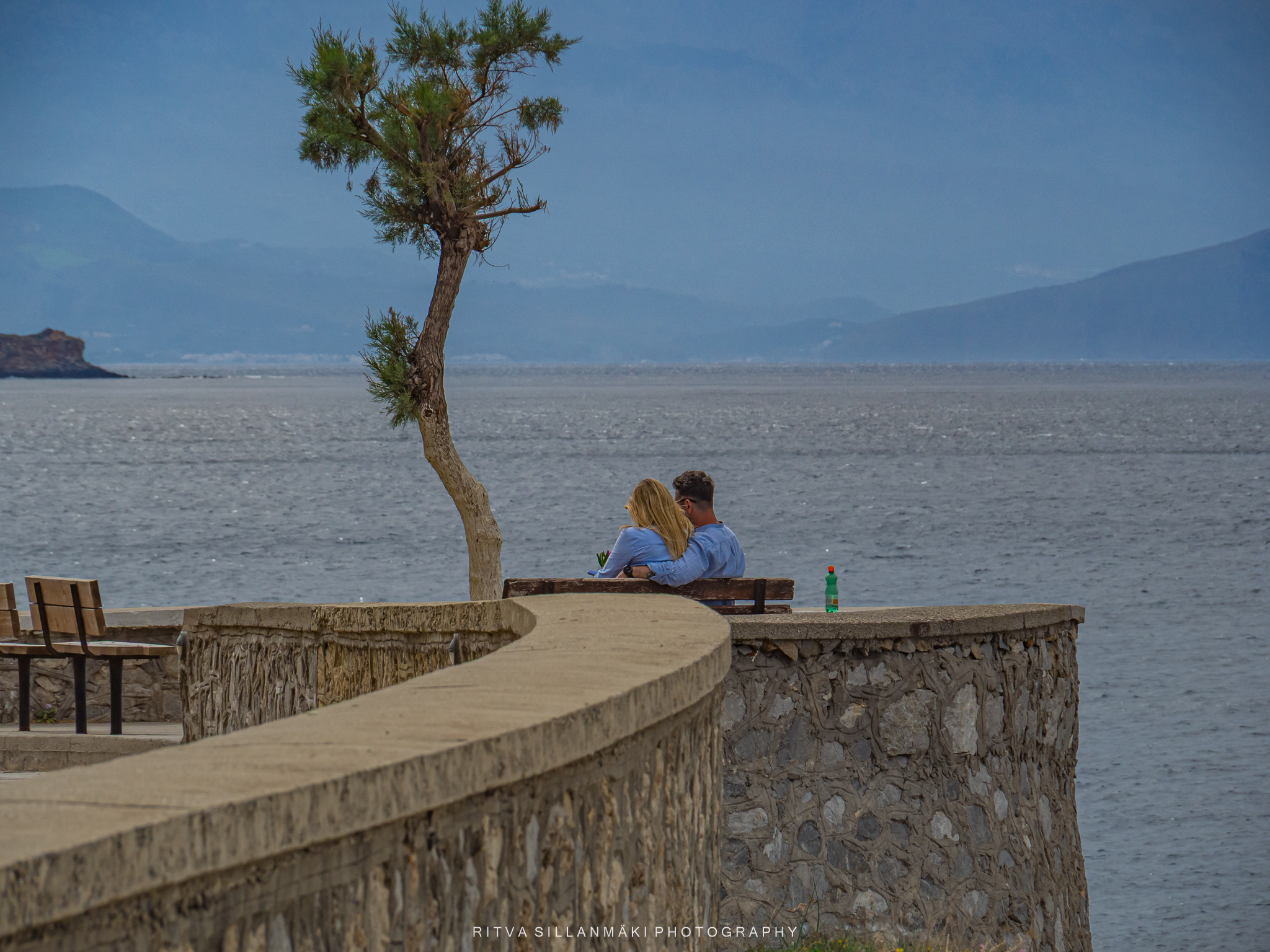
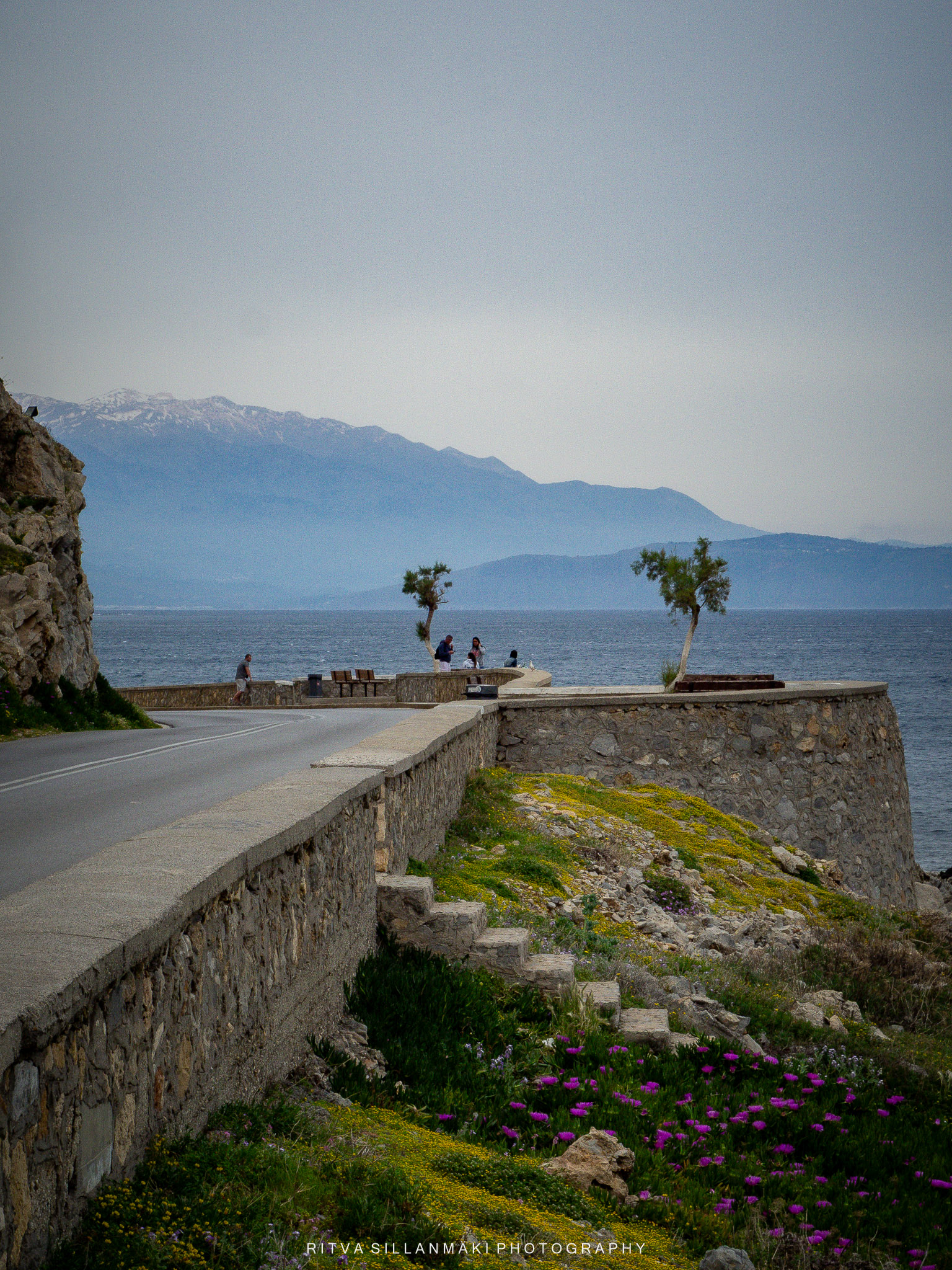
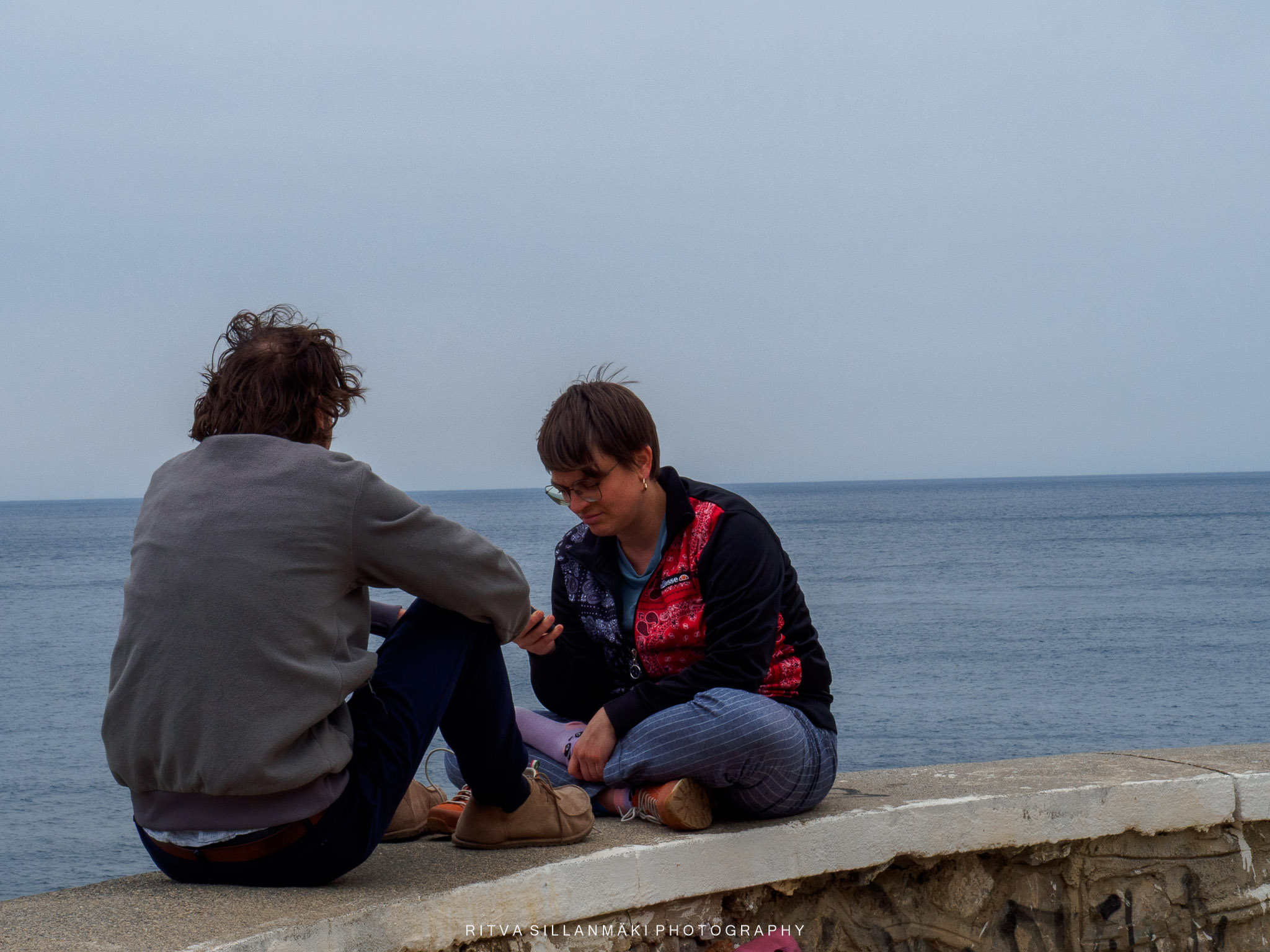
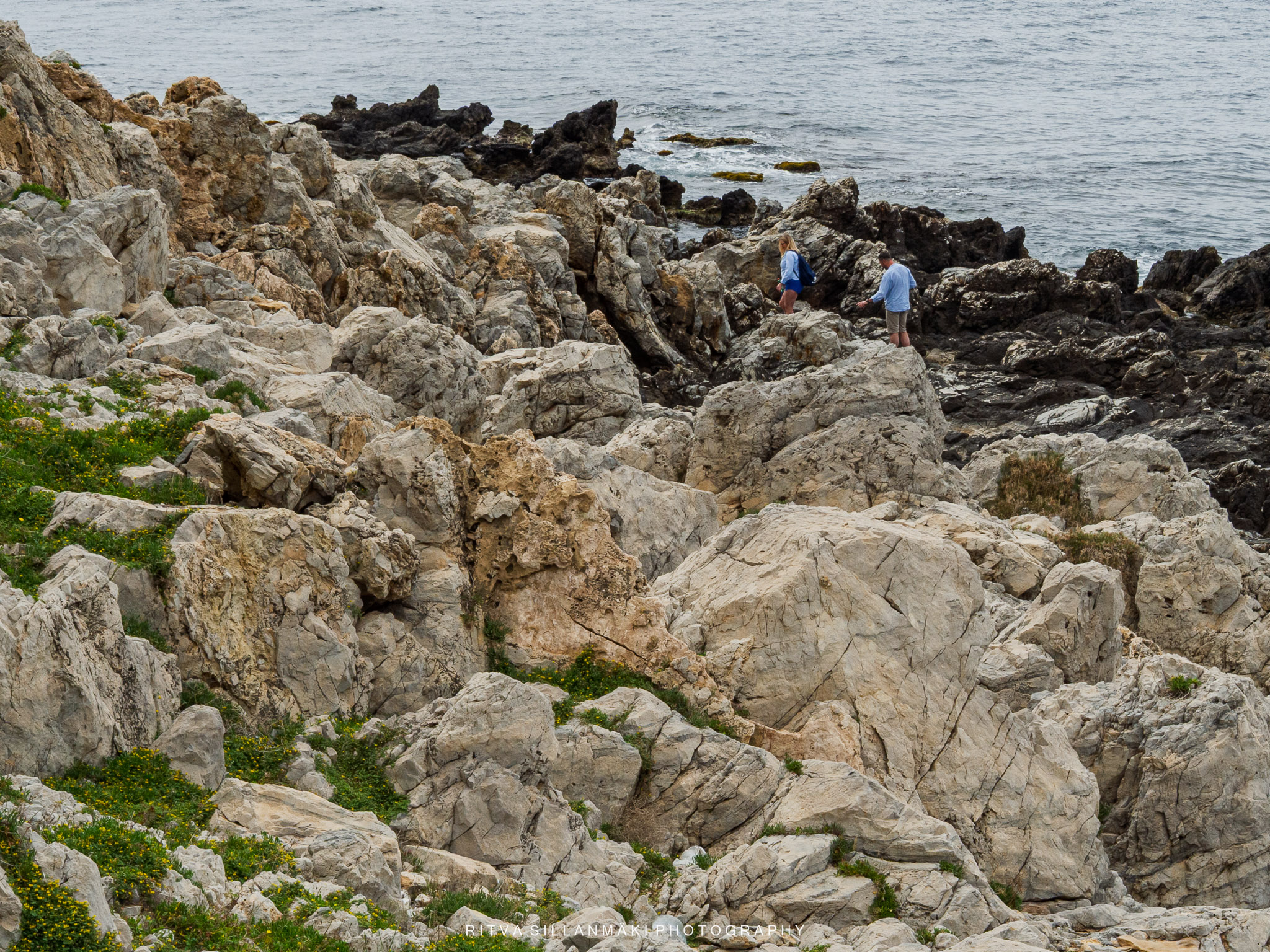
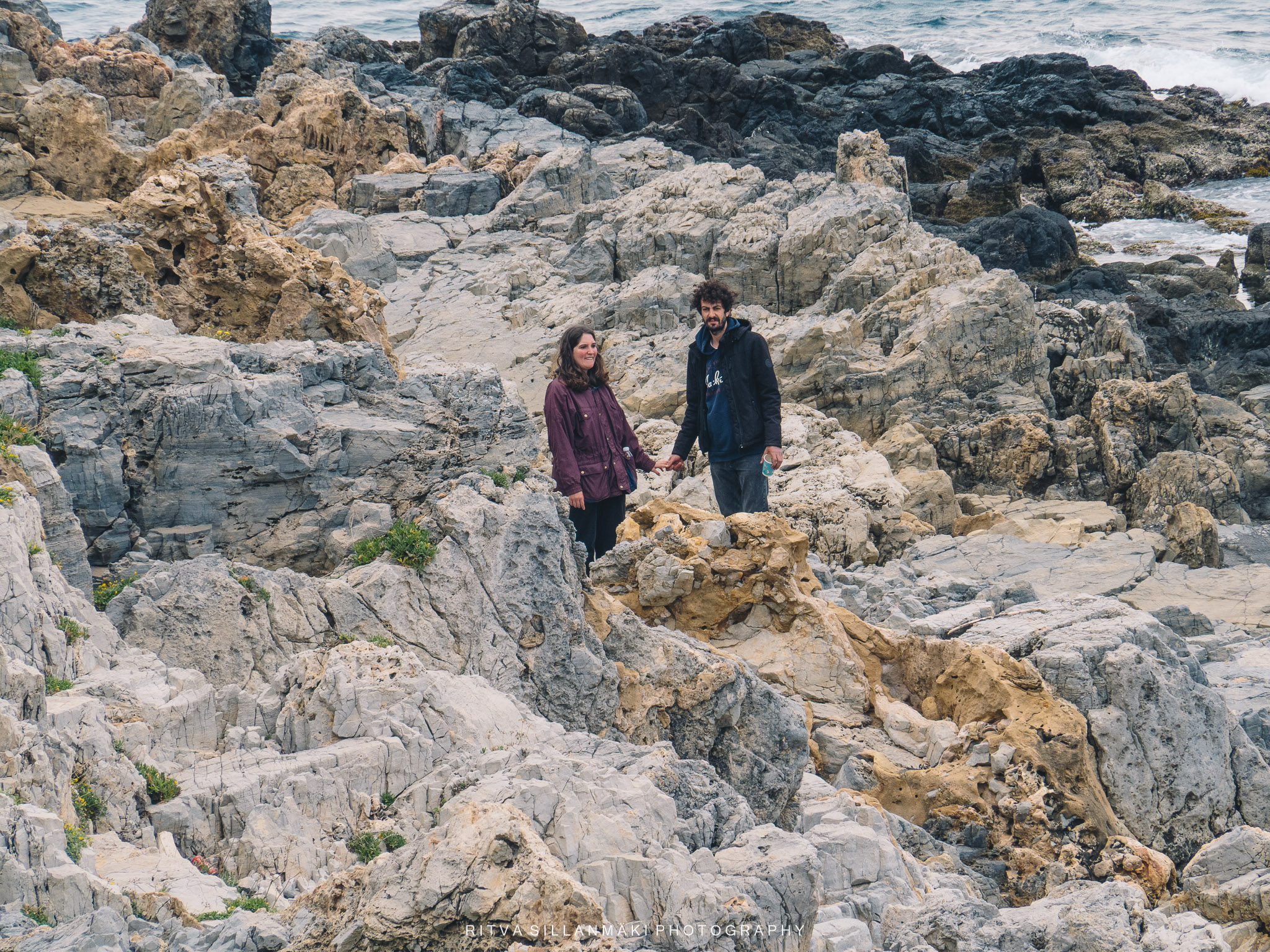
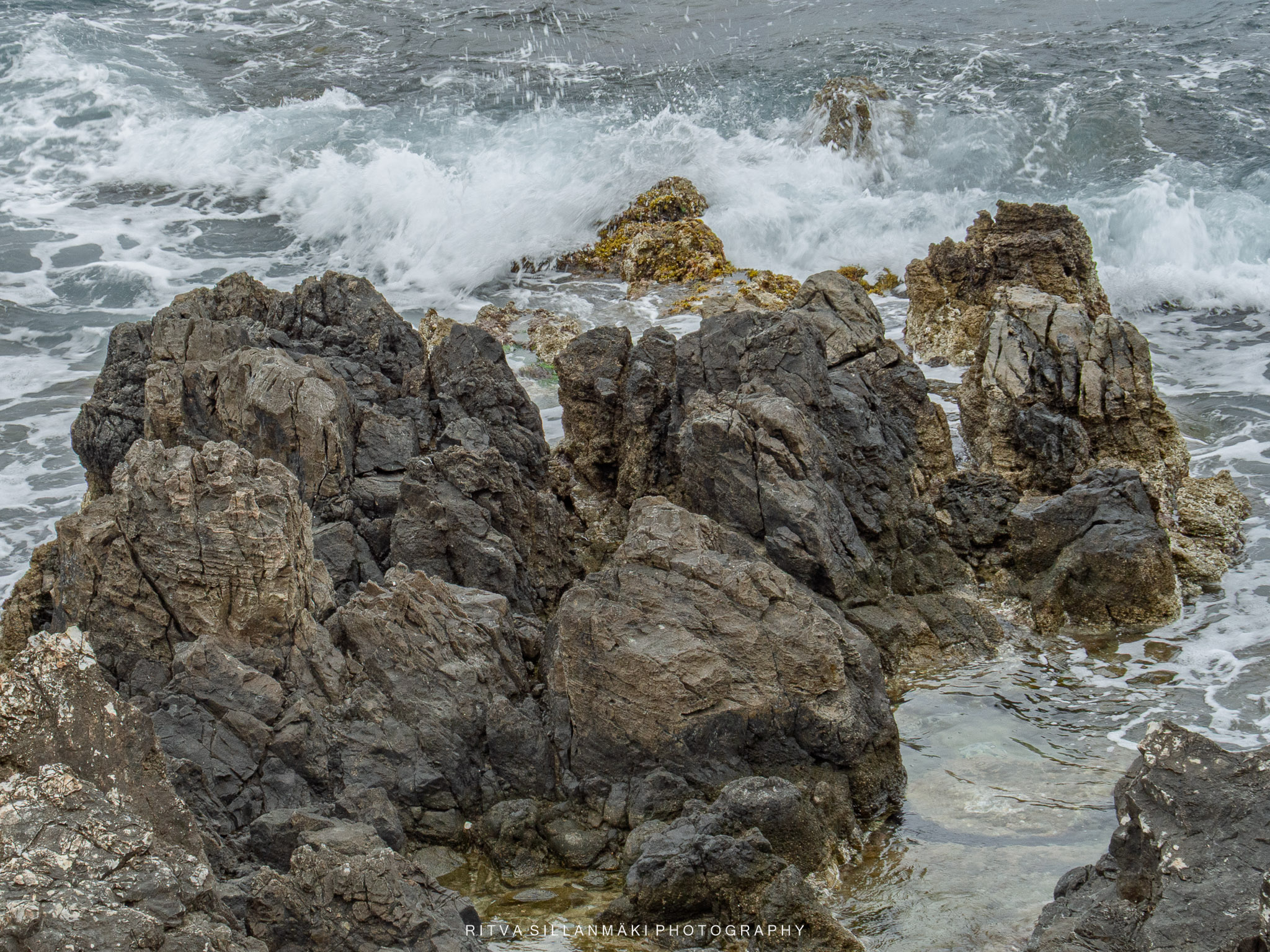
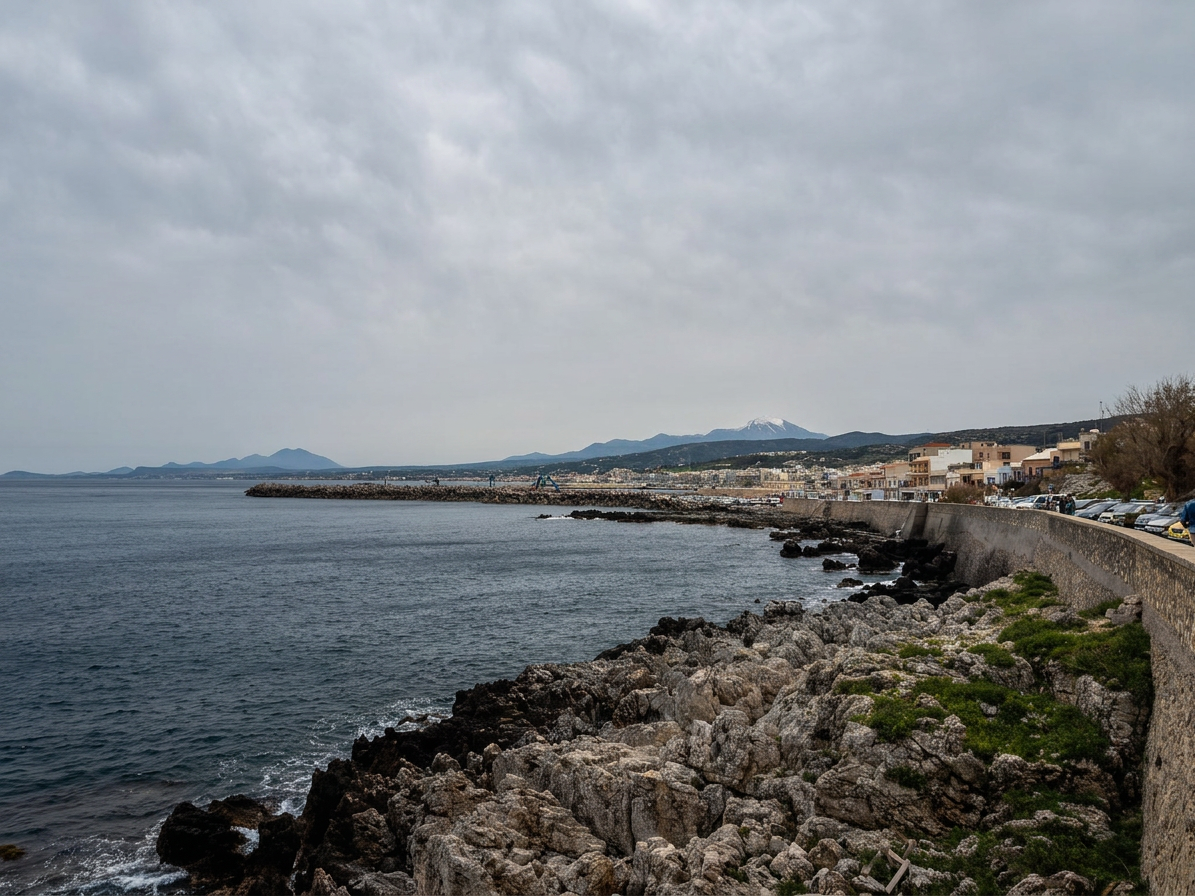
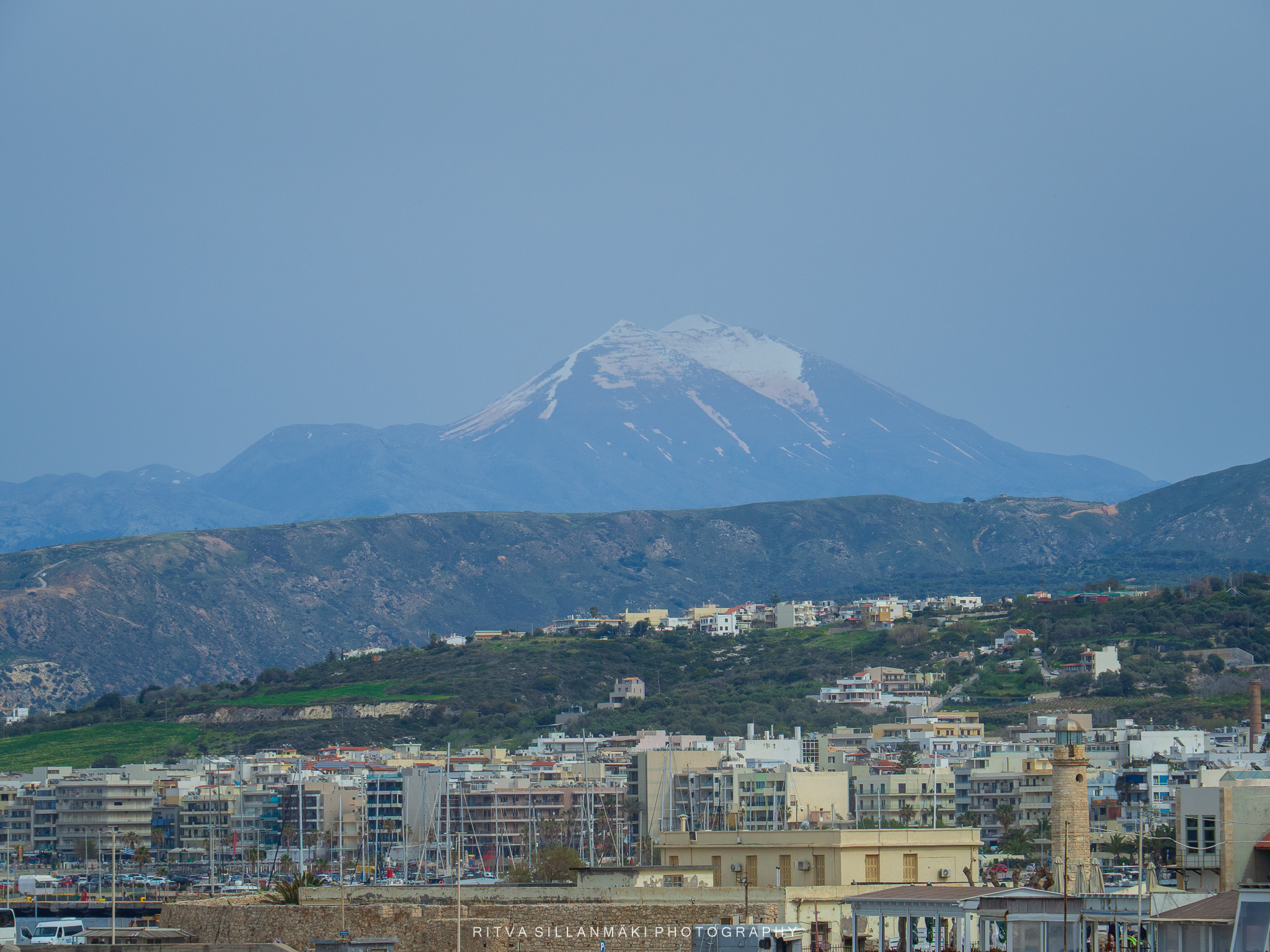
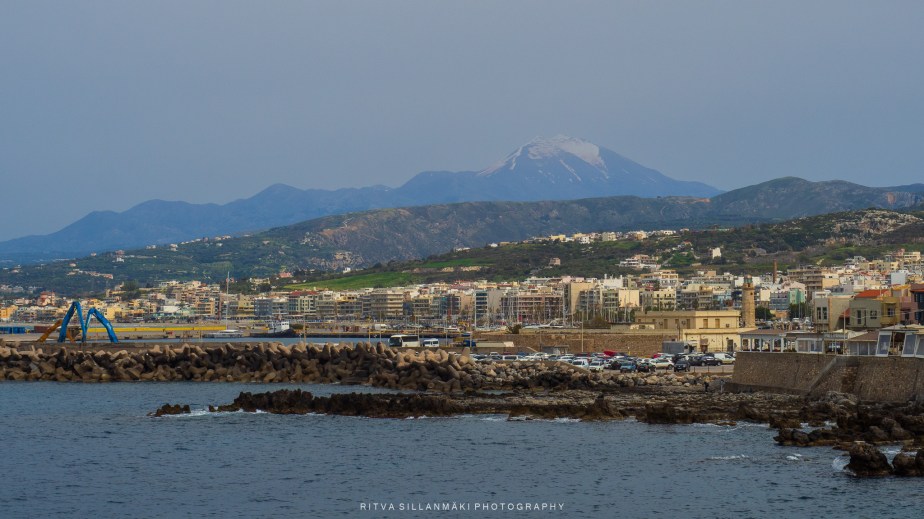
Fortezza Fortress stands proudly in Rethymnon, Crete, Greece. I found myself seated by the seaside road, admiring the fortress while simultaneously looking at the stunning sight of the snow-capped mountains rising majestically in the distance. The view was a breathtaking contrast, with sea creating a mesmerizing panorama. We visited in May, and to our delight, the snow had yet to melt on the peaks, providing us with numerous excellent photography opportunities that encapsulated the beauty of the landscape. The rocky shoreline was not easy to walk on; that is only an observation from looking down at people moving about, carefully navigating the uneven terrain while enjoying the fresh sea breeze and the sounds of waves crashing against the rocks.
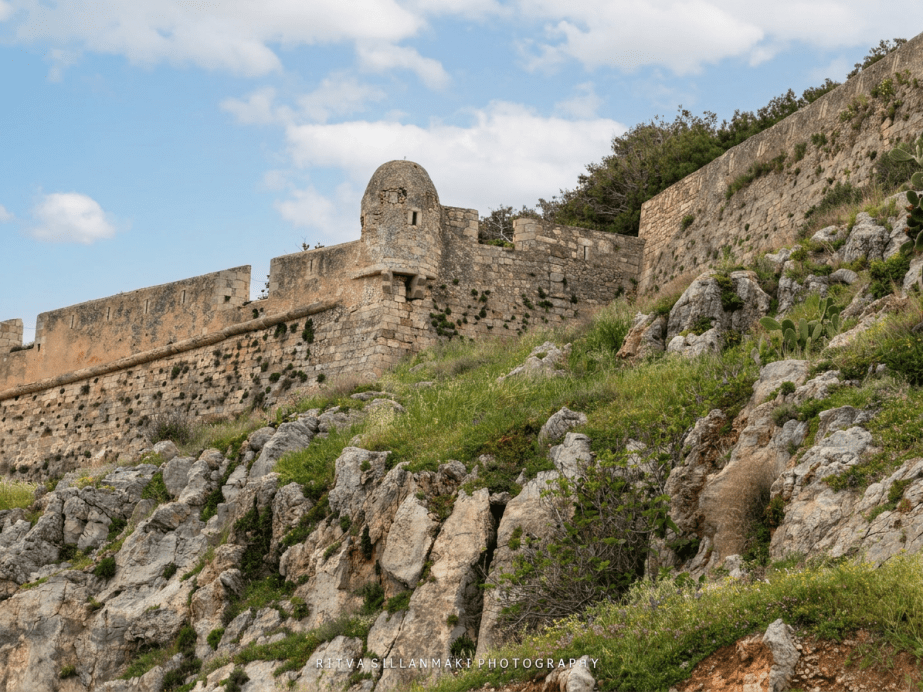
Ancient stone fortress walls rise along a rugged hillside
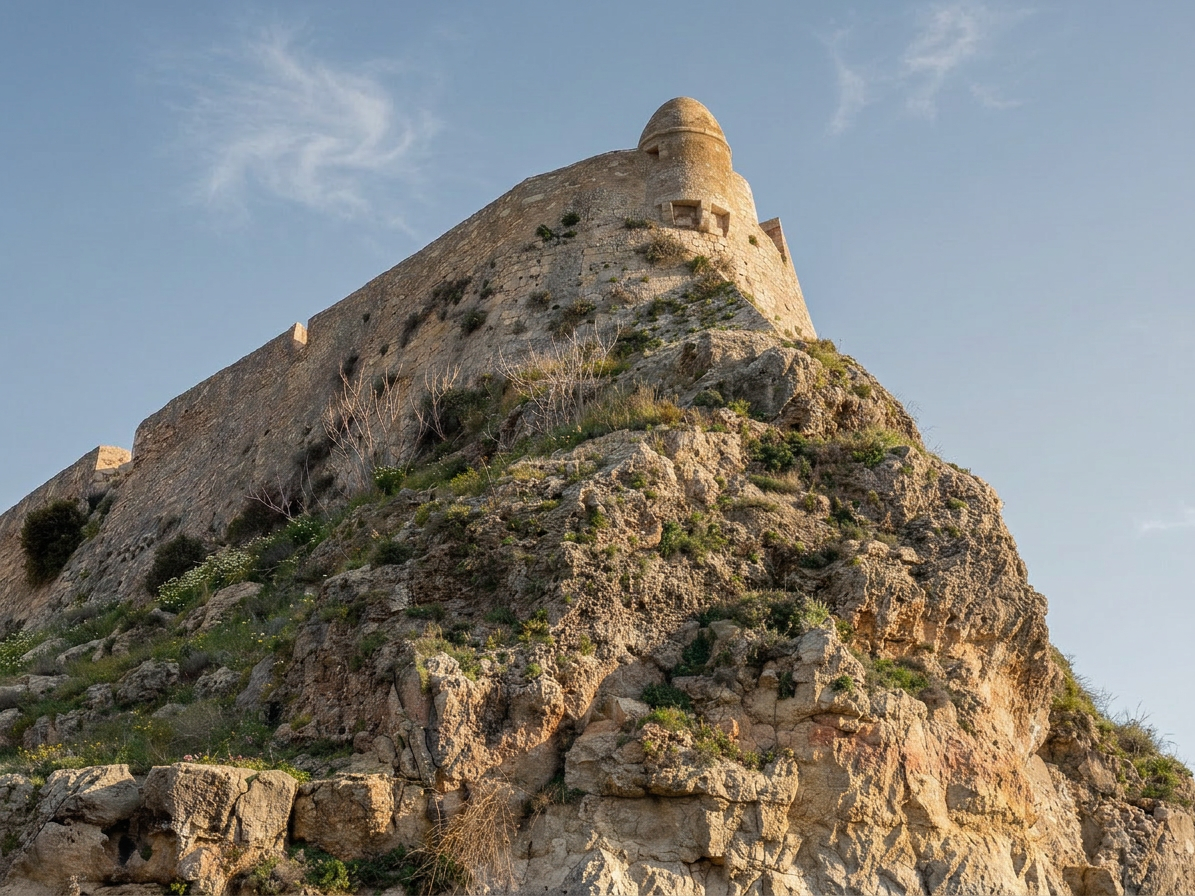
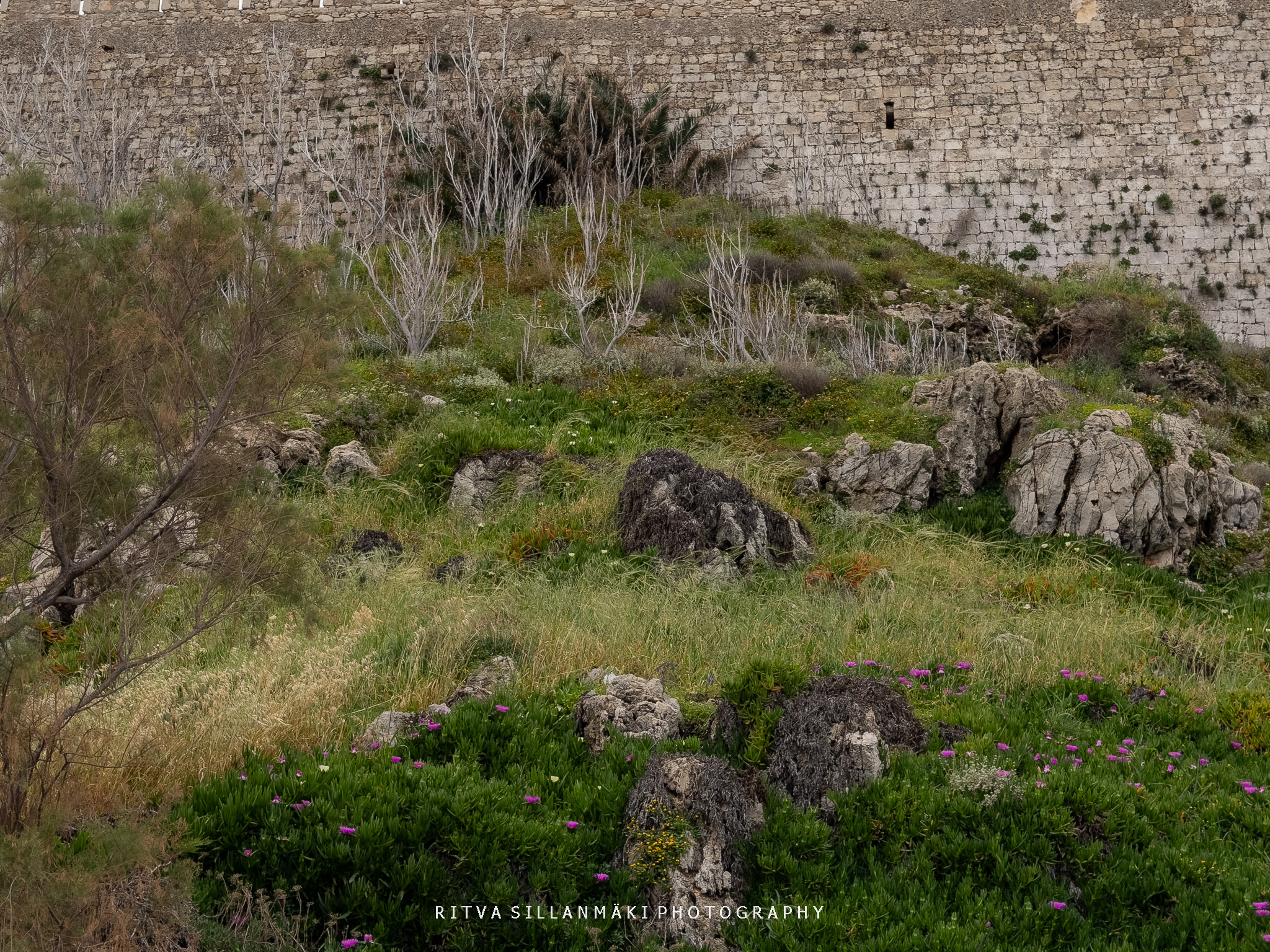
The Fortezza Fortress, constructed by the Venetians in the 16th century, is perched on Paleokastro hill and provides stunning views of both the city and the sea. This fortress is a vital historical landmark on the island. Located to the north of the city and adjacent to the old town and the Venetian harbor, it was built between 1573 and 1580 to safeguard the city from pirate attacks.
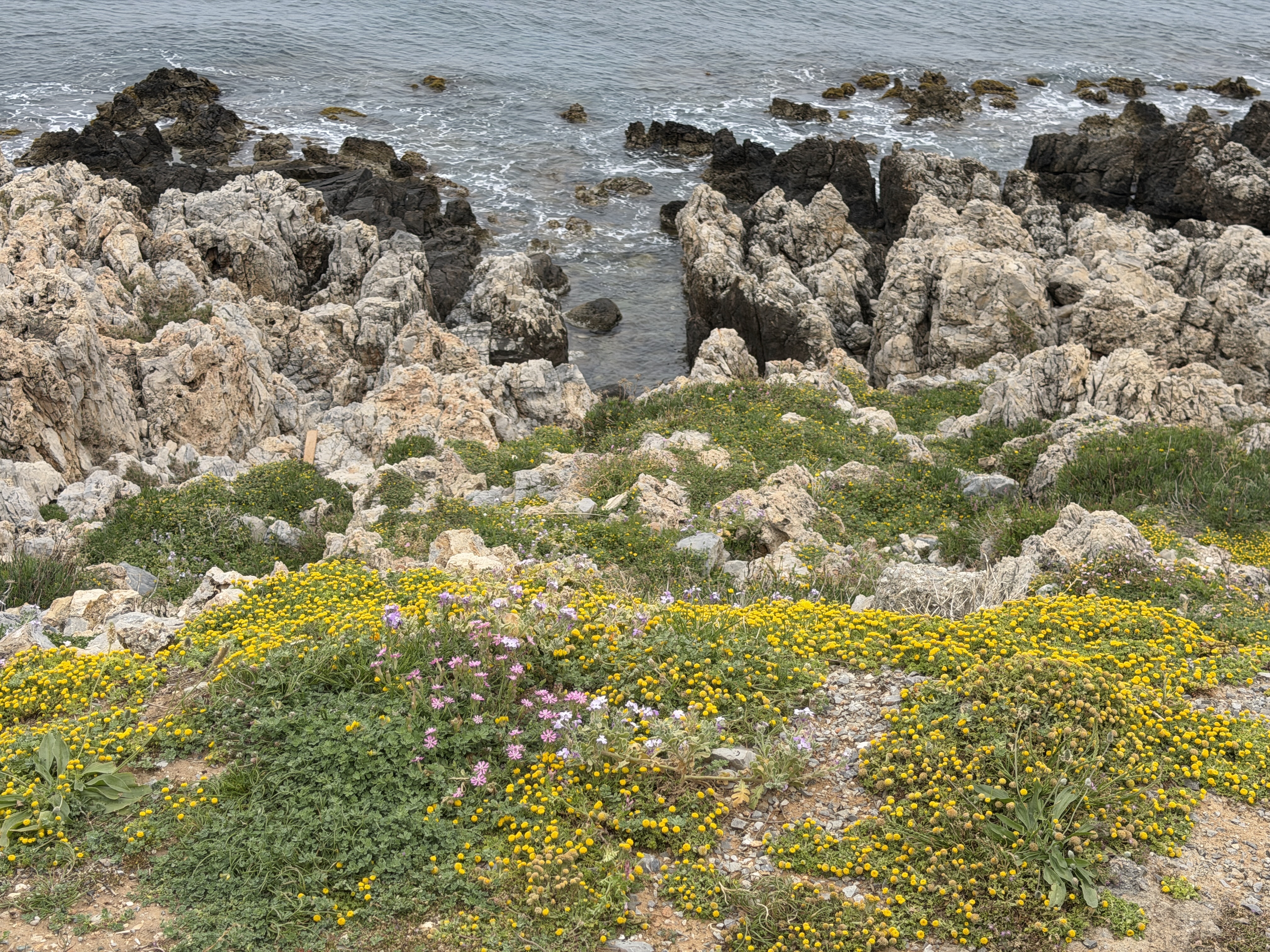
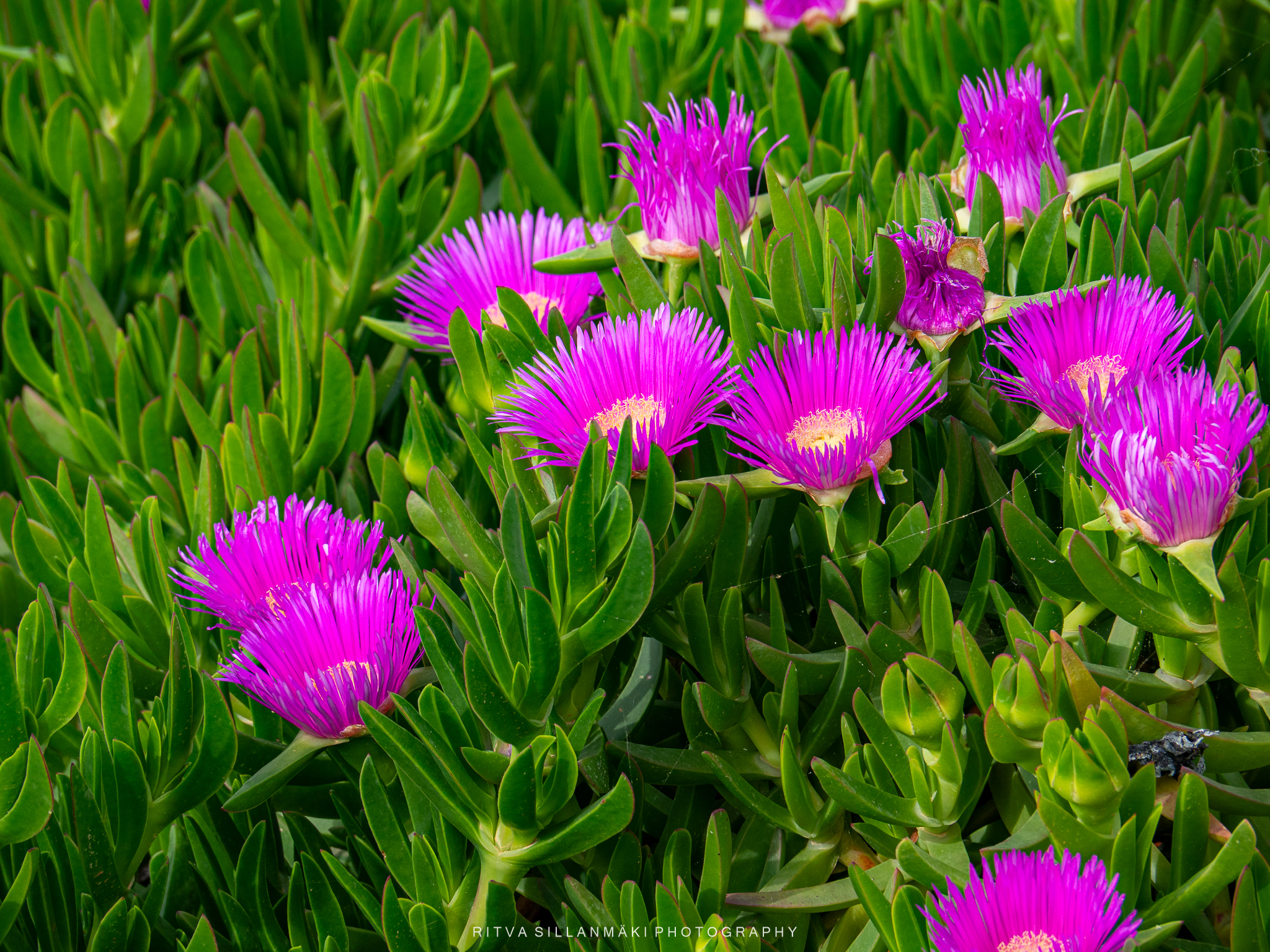
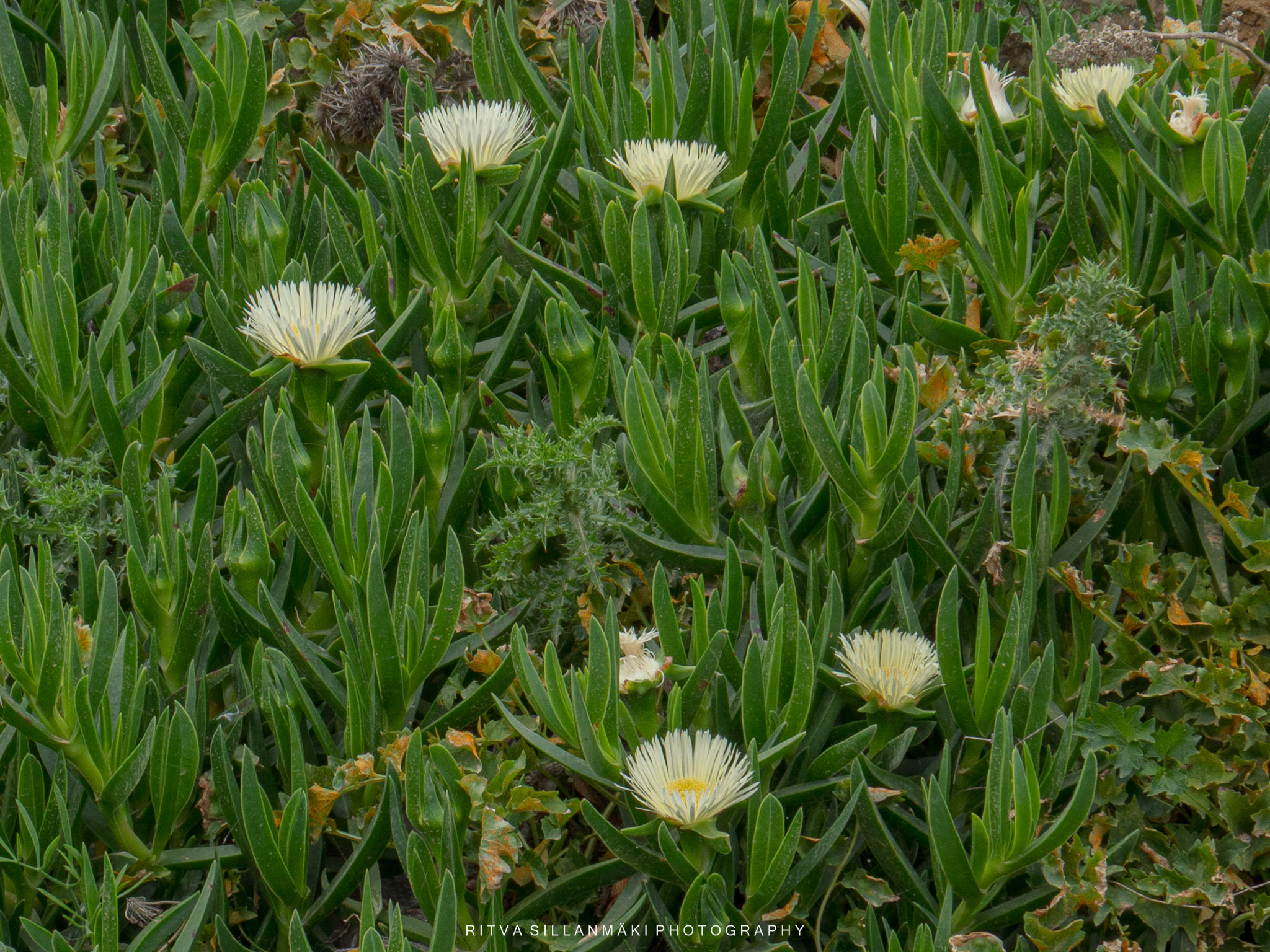
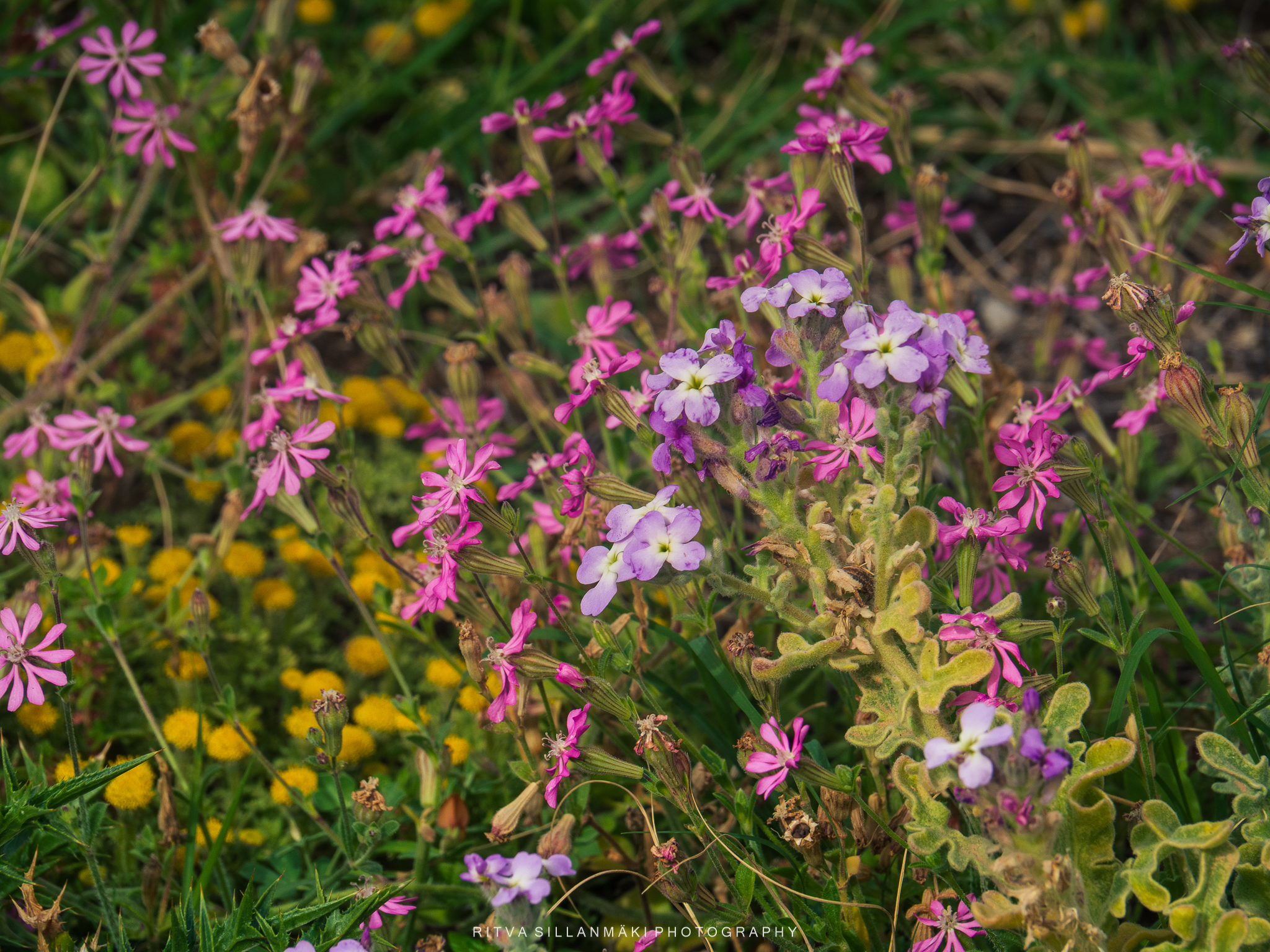
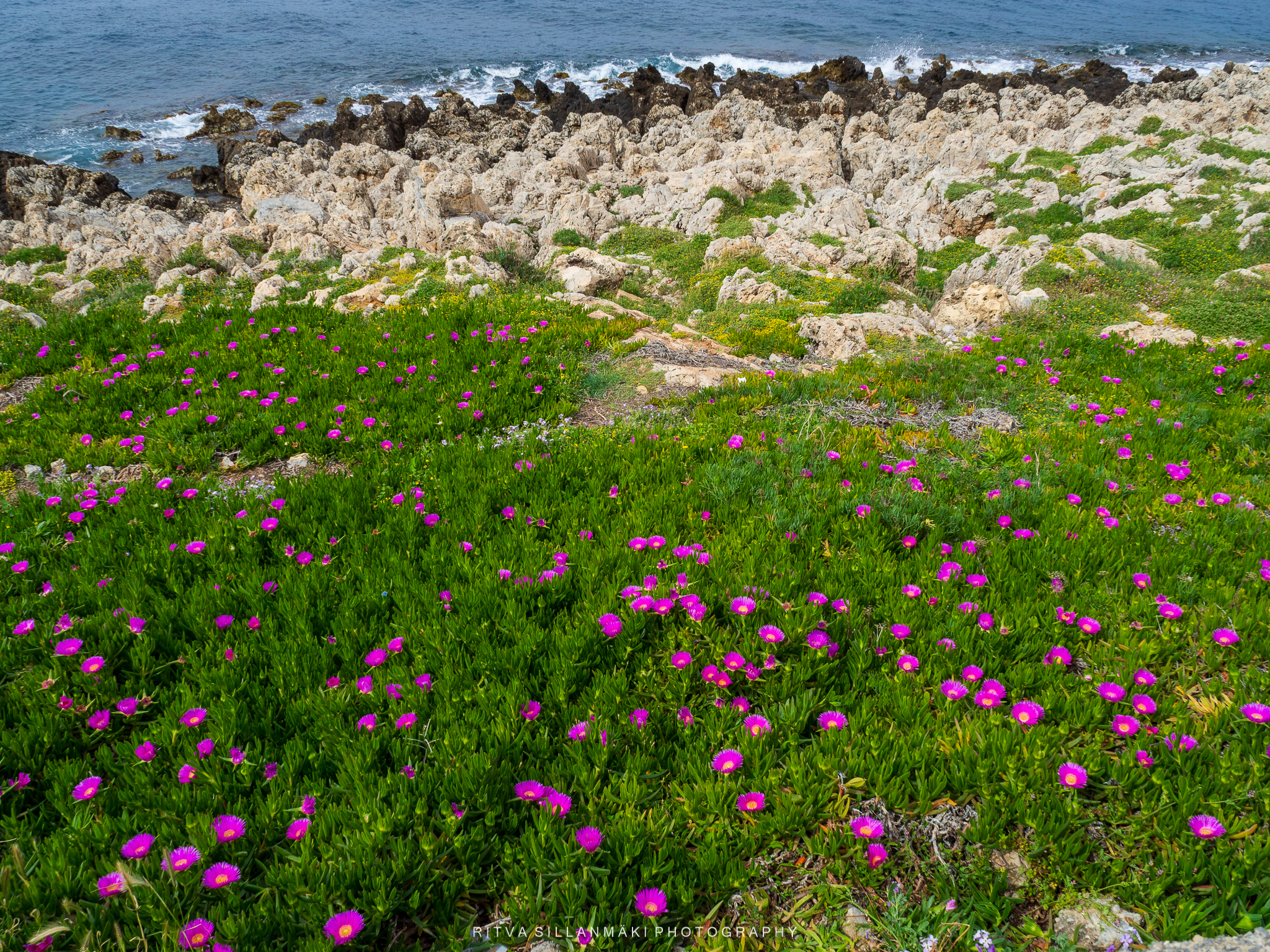
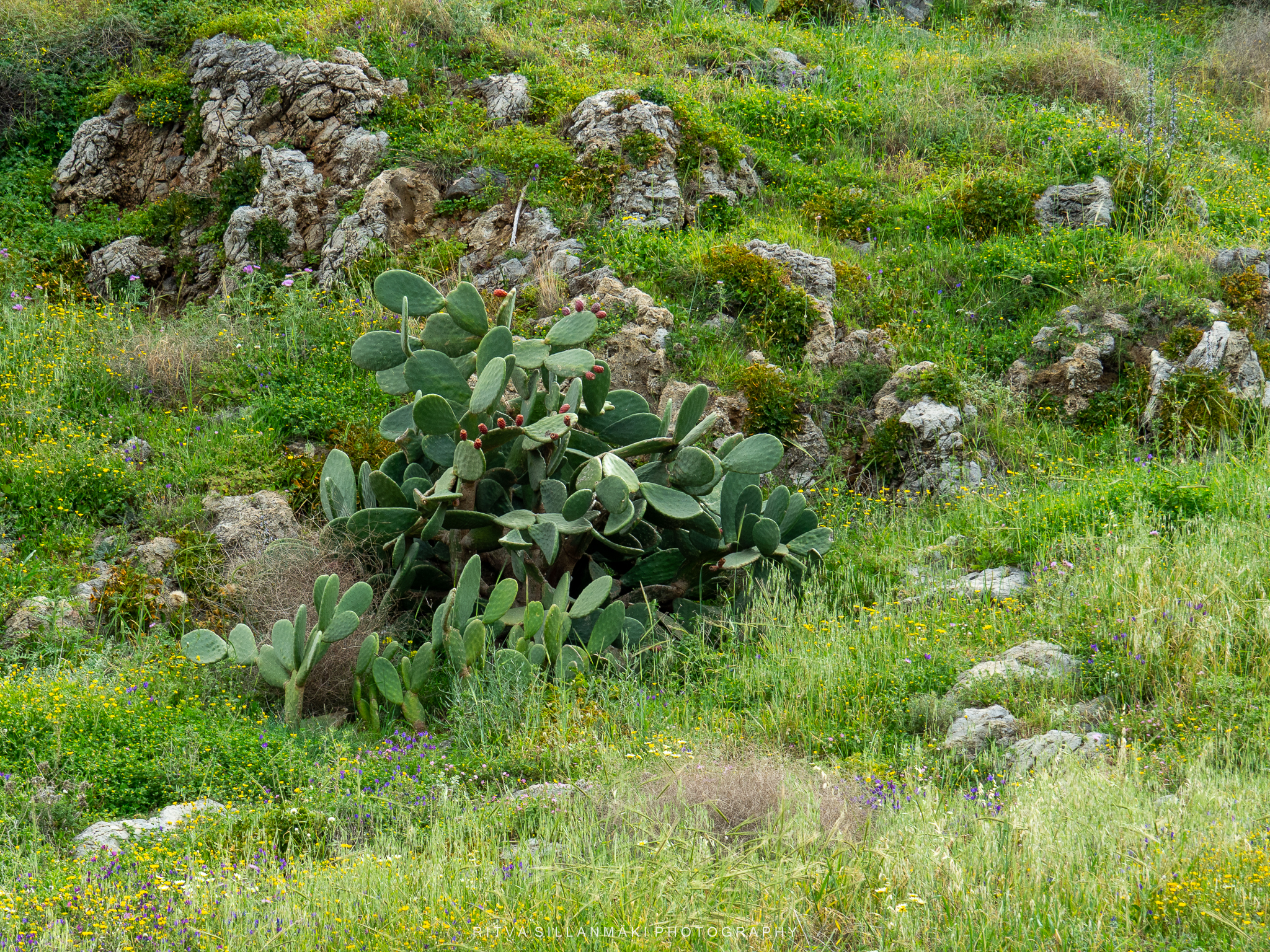
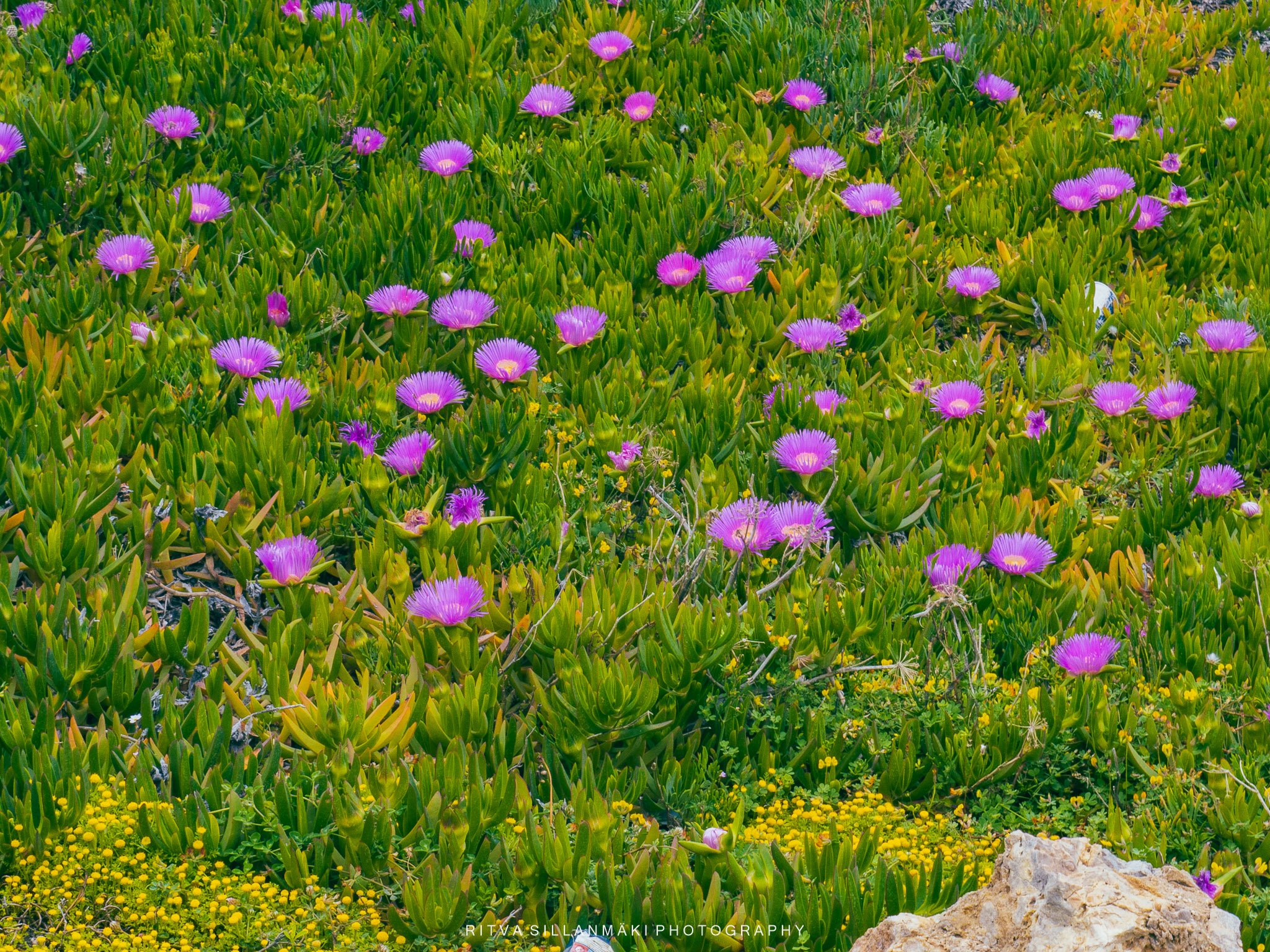
The two flowers are, the fig-marigold (scientific name Carpobrotus edulis), also known as the Hottentot fig or sour fig. This succulent plant, native to South Africa, has spread and become wild in many coastal areas around the world. Appearance: It has fleshy, triangular leaves and large, daisy-like flowers that range in color from white and pale yellow to bright red.
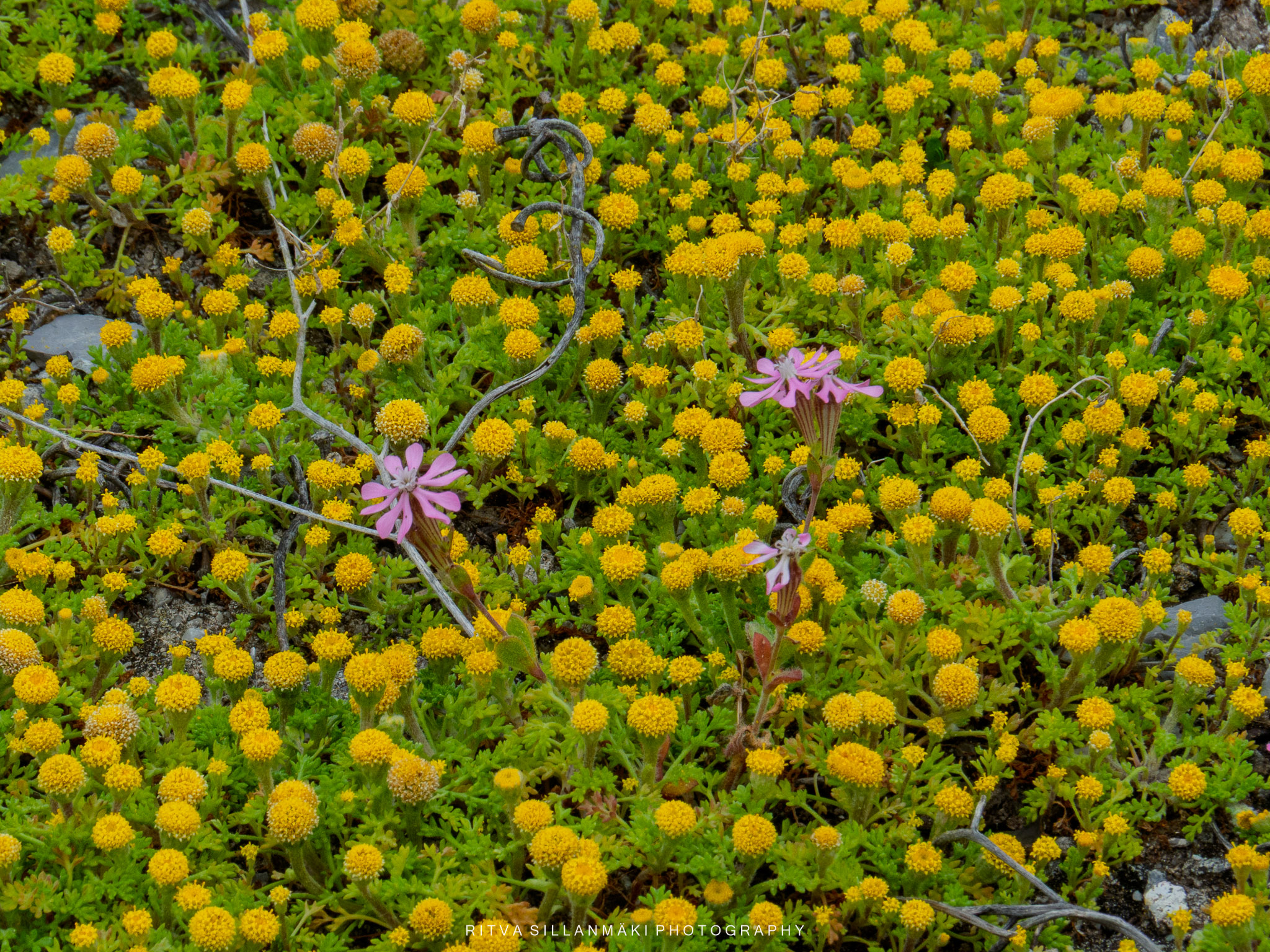
The prominent, aniline pink flowers depicted in the image are red campions.
The yellow flowers is, I think, dwarf clover (scientifically Anthyllis vulneraria), a perennial plant belonging to the legume family, commonly found in dry meadows and ridges perennial plant. It forms dense, spherical flowers that are usually golden yellow, but the petals can occasionally be lighter or have reddish tips.
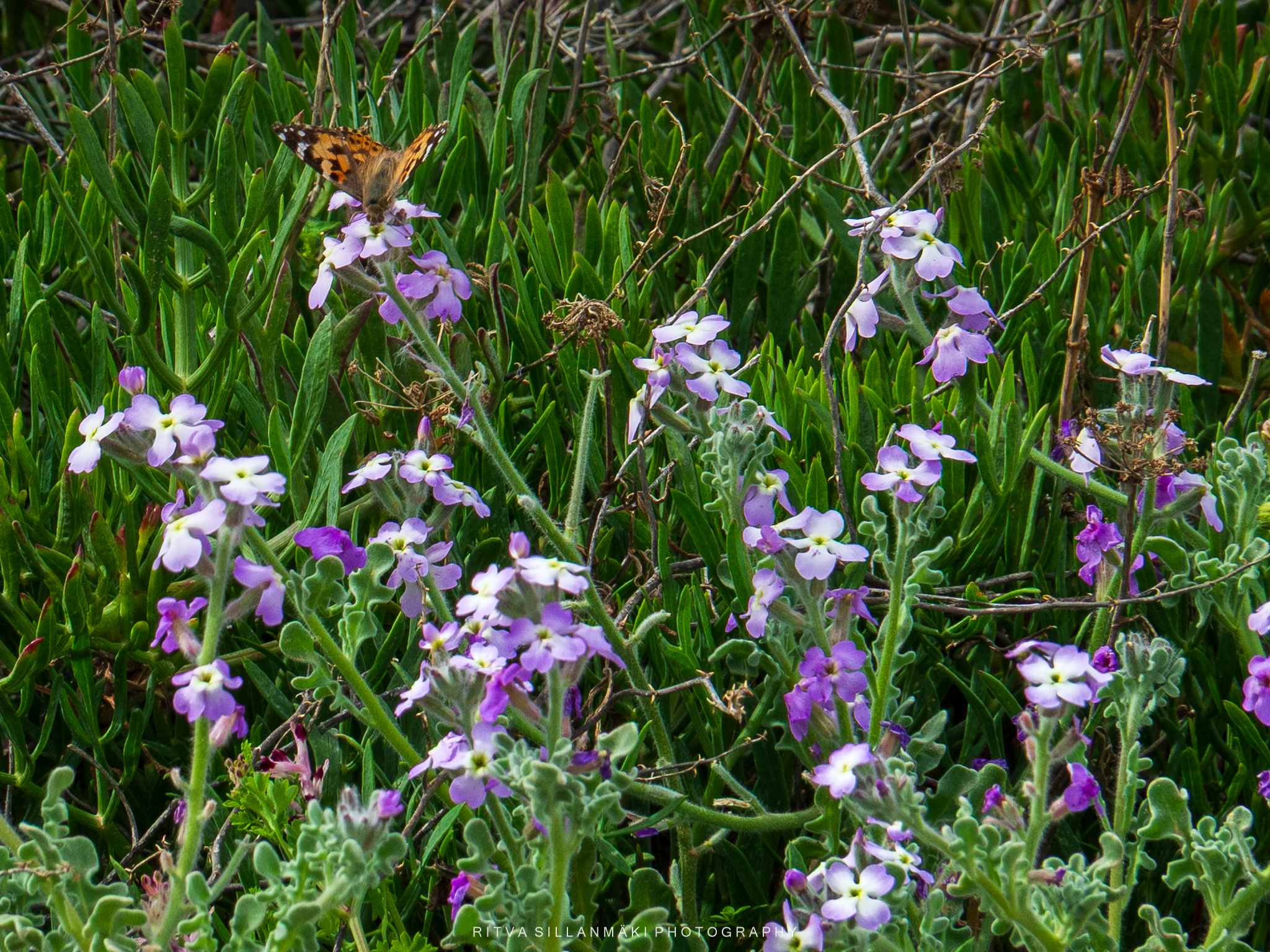
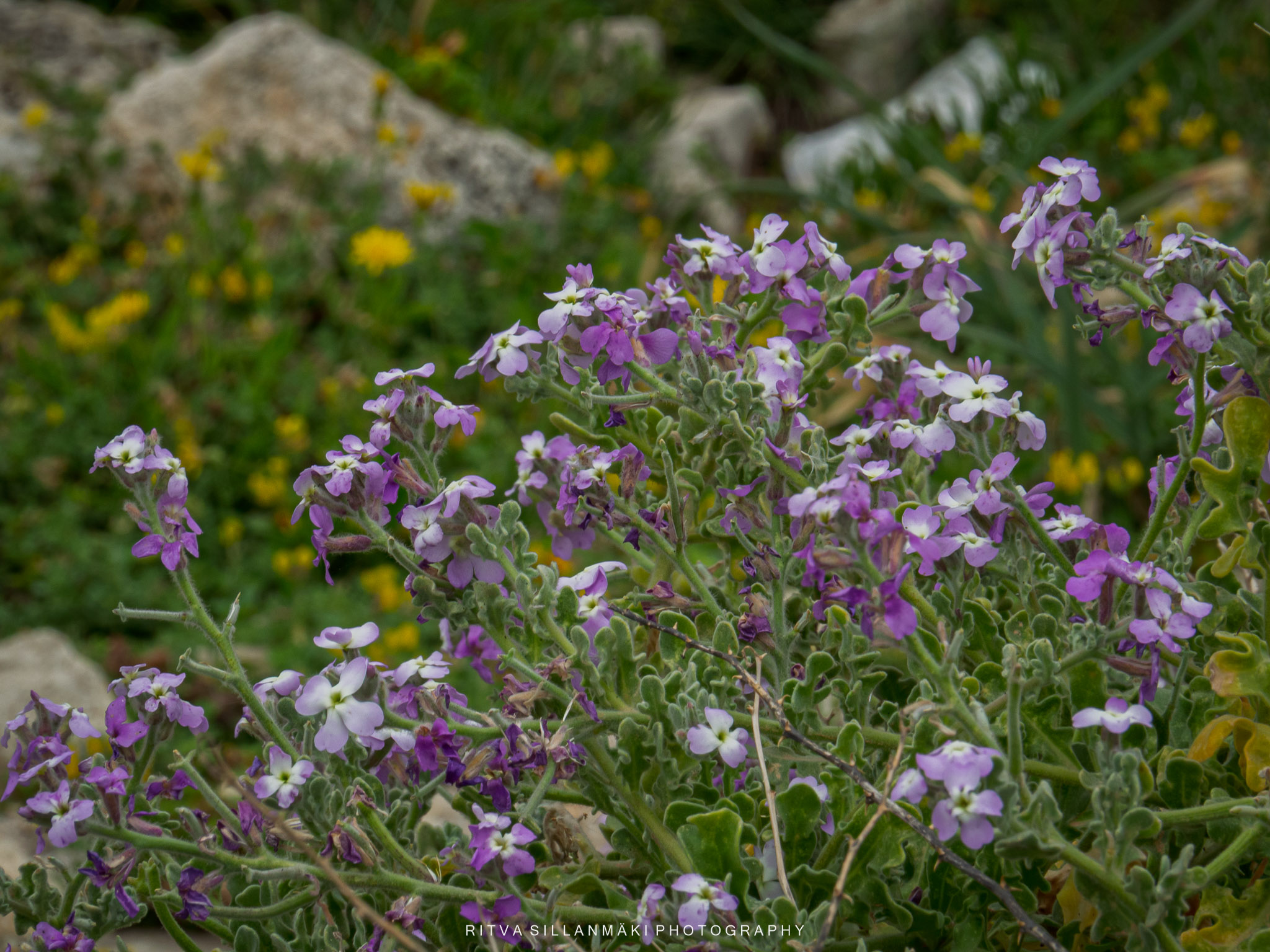
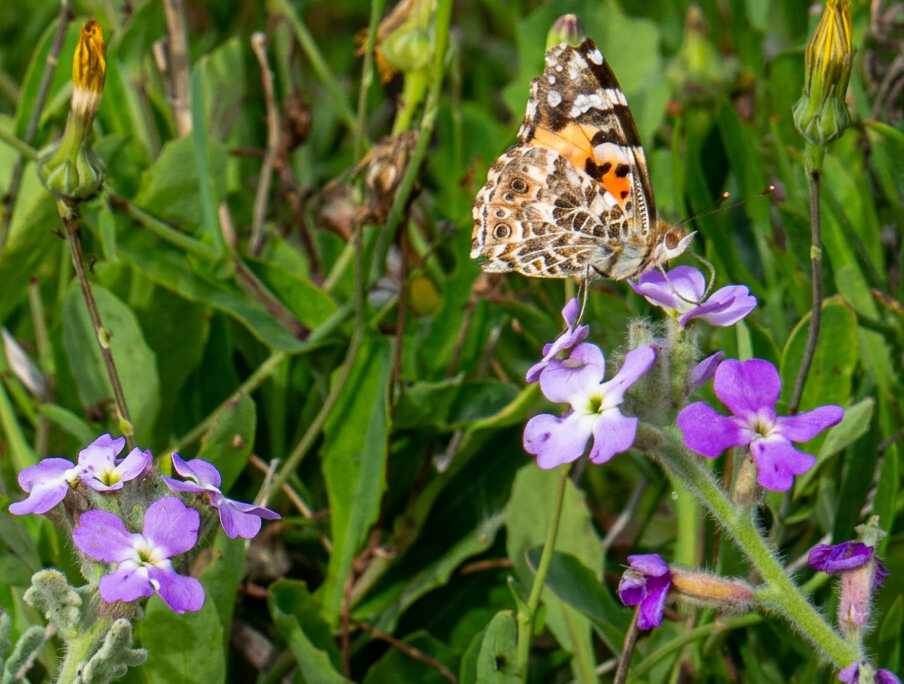
The flowers with the butterfly is the night-scented stock (also known as Matthiola longipetala . This annual summer flower is famous for its strong, intoxicating fragrance that intensifies in the evenings and at night. Its modest, pale violet or purple flowers may appear wilted during the day, but they open up in the twilight.
I saw a a beautiful painted lady butterfly (Vanessa cardui), which is one of the most widely distributed butterflies in the w
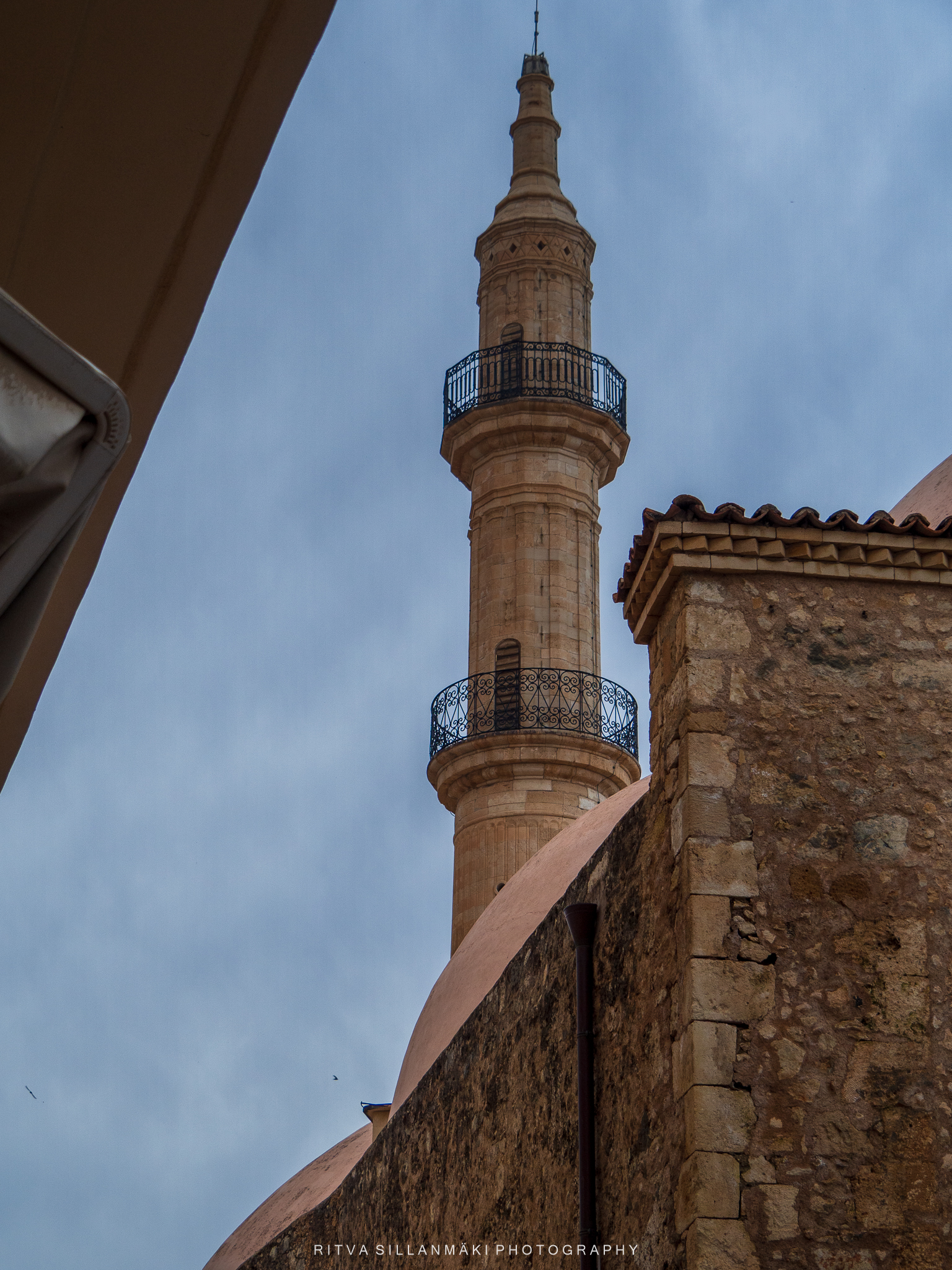
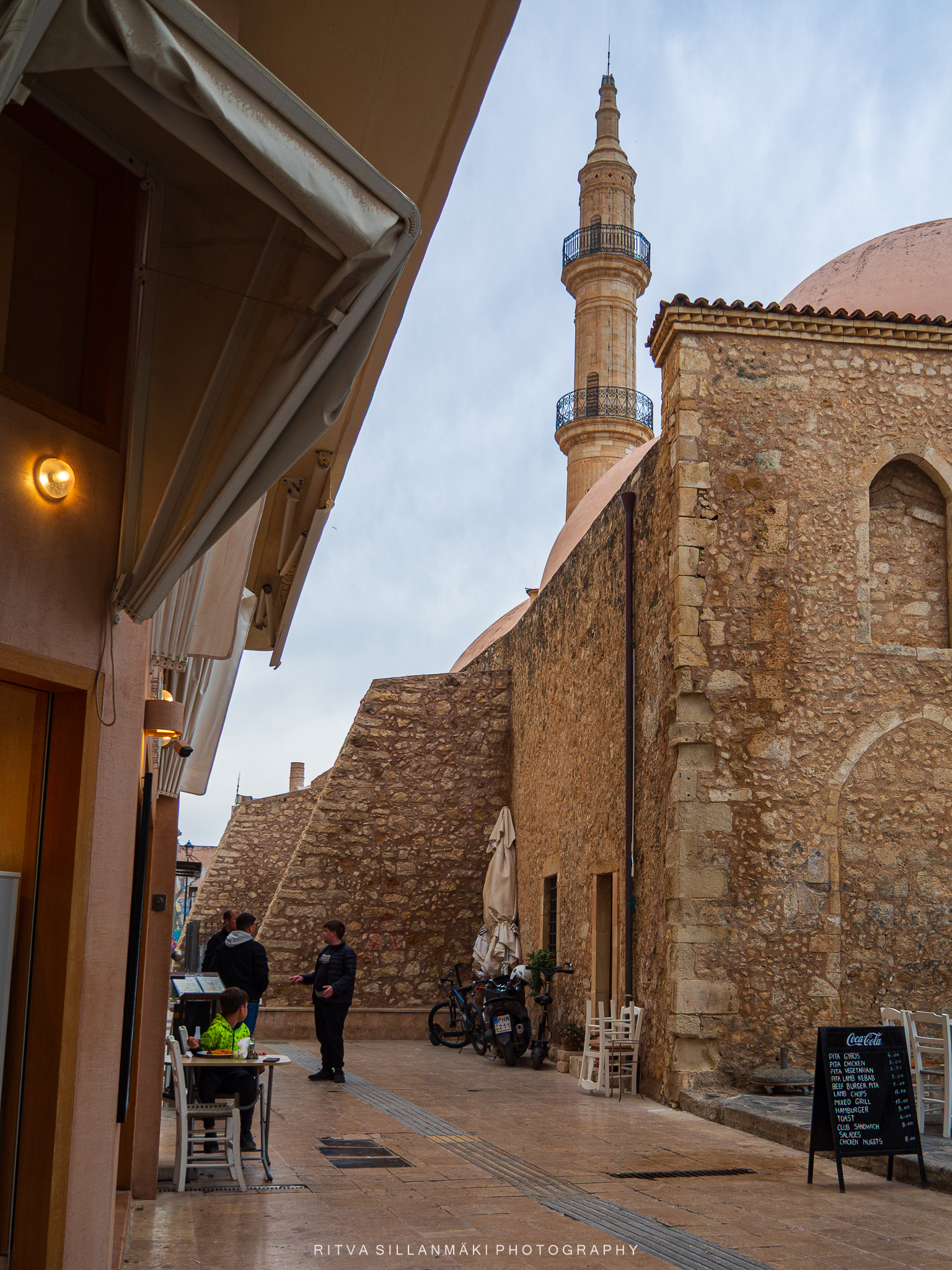
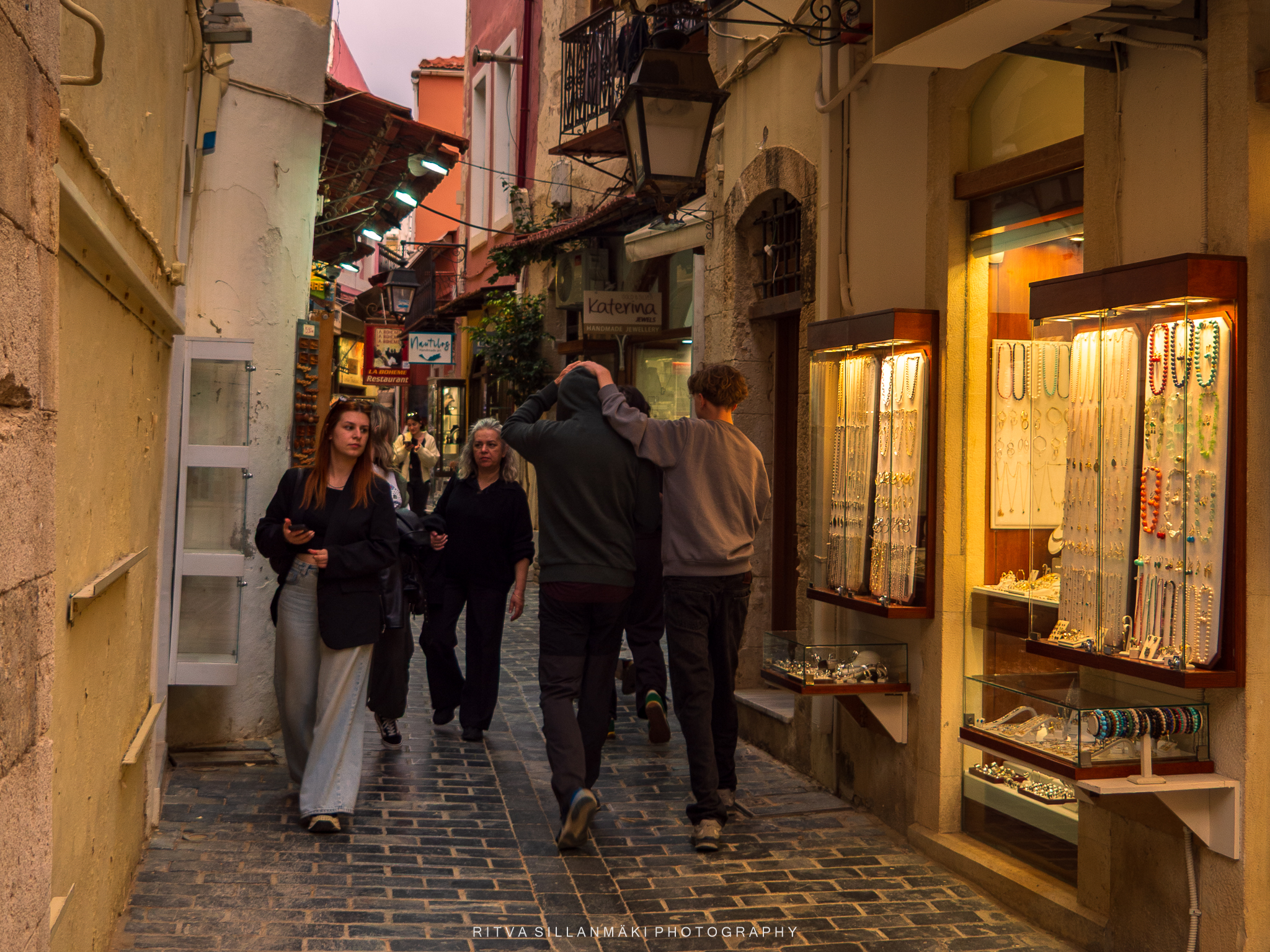
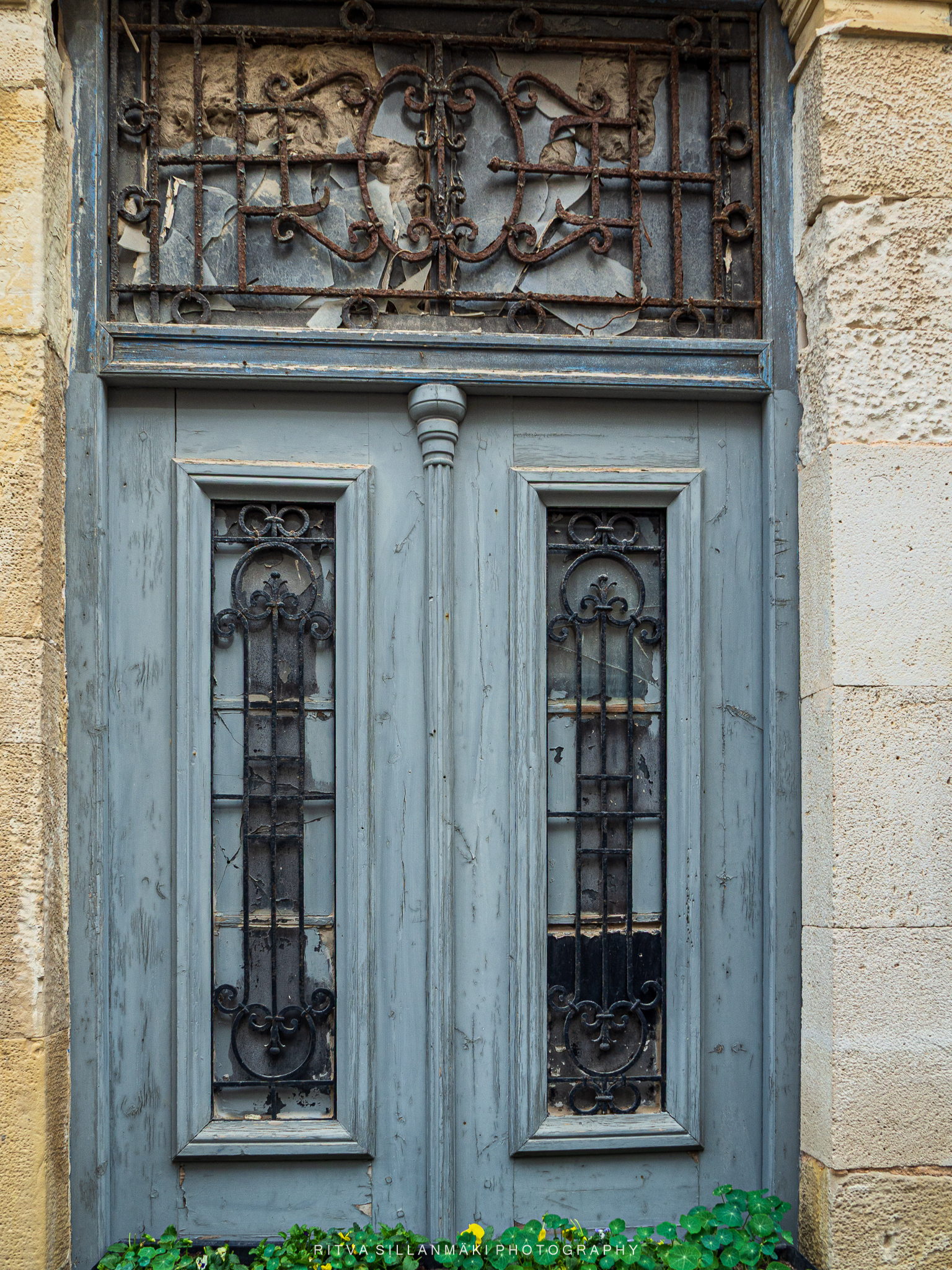
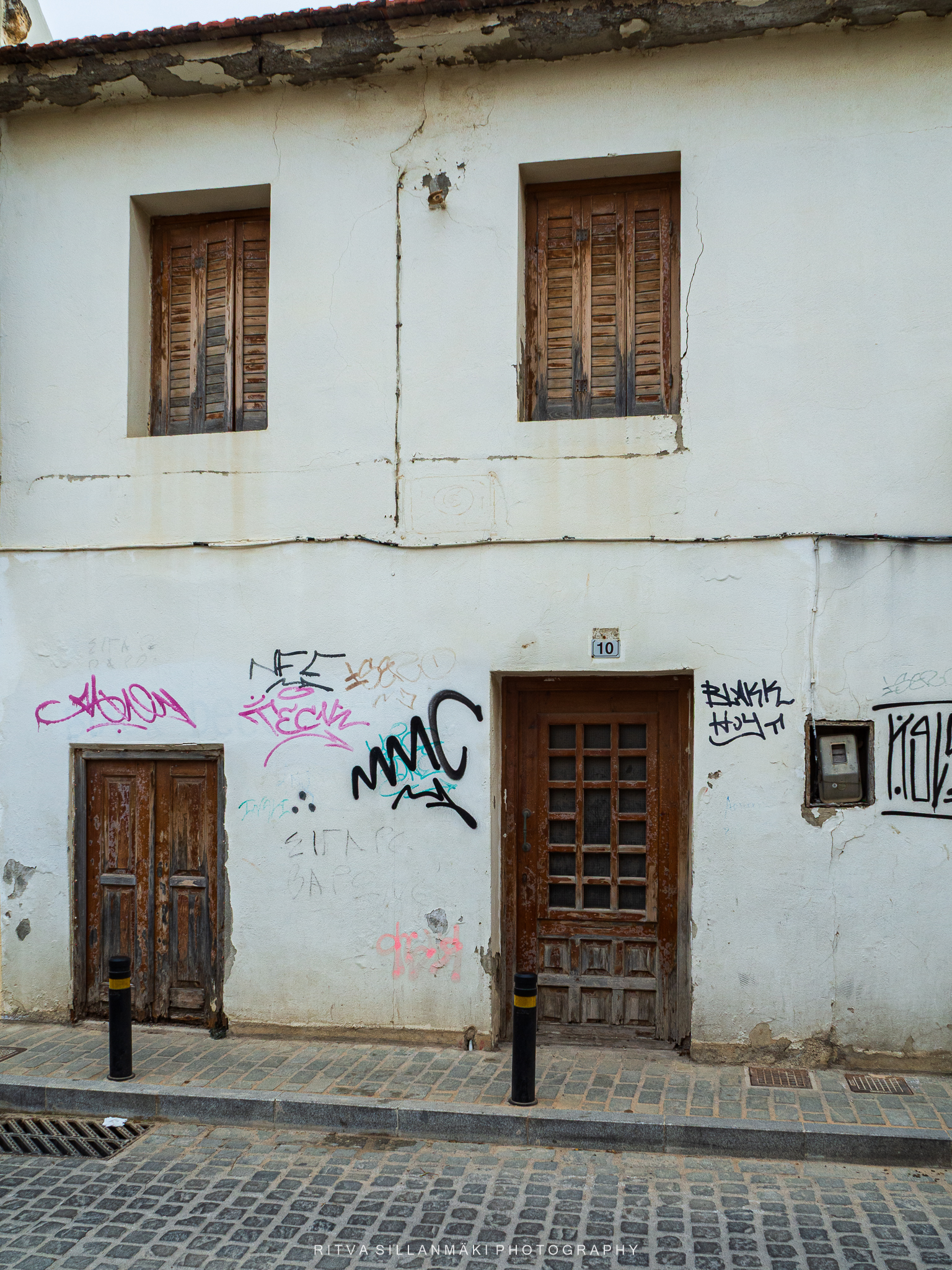
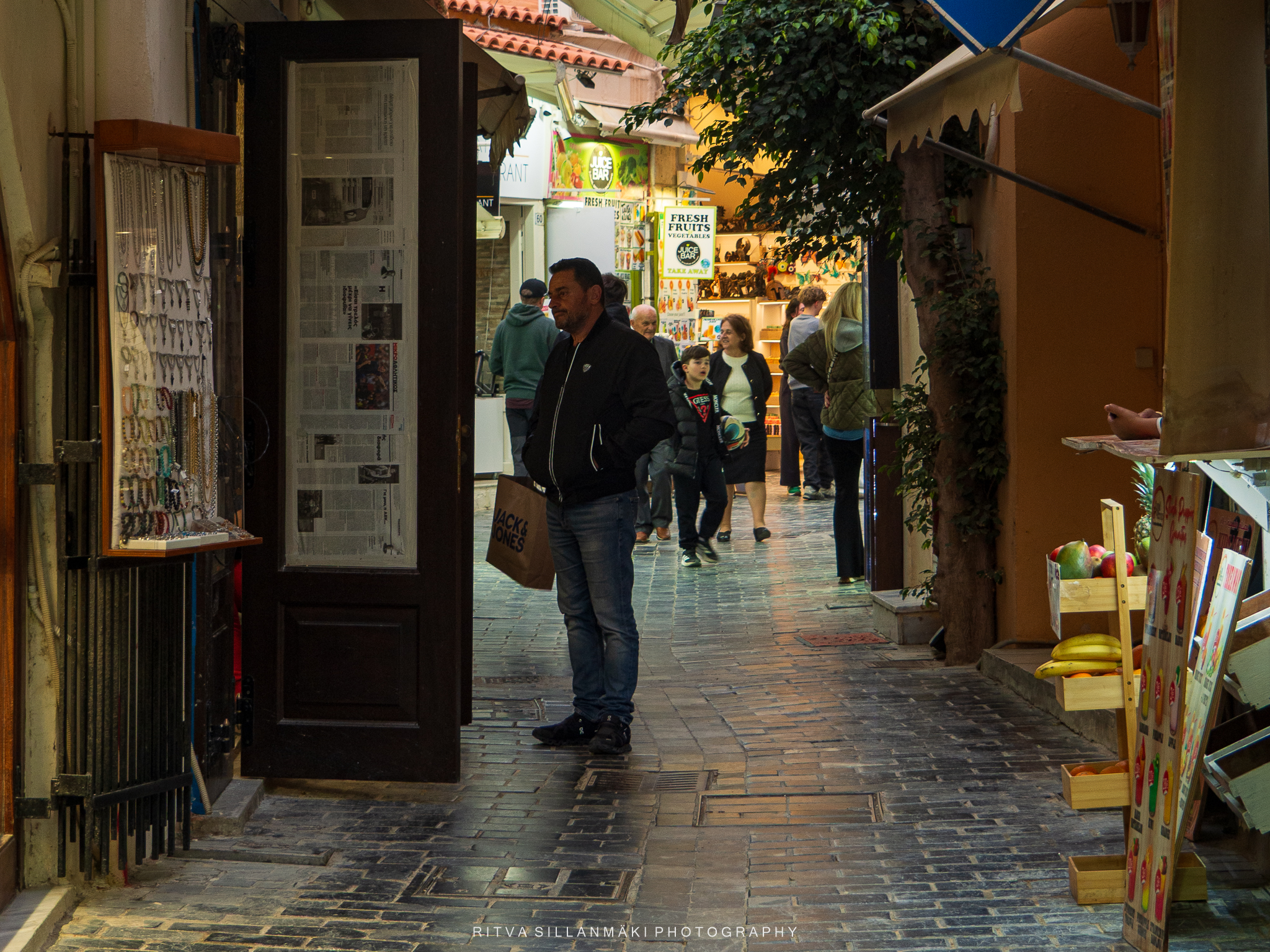
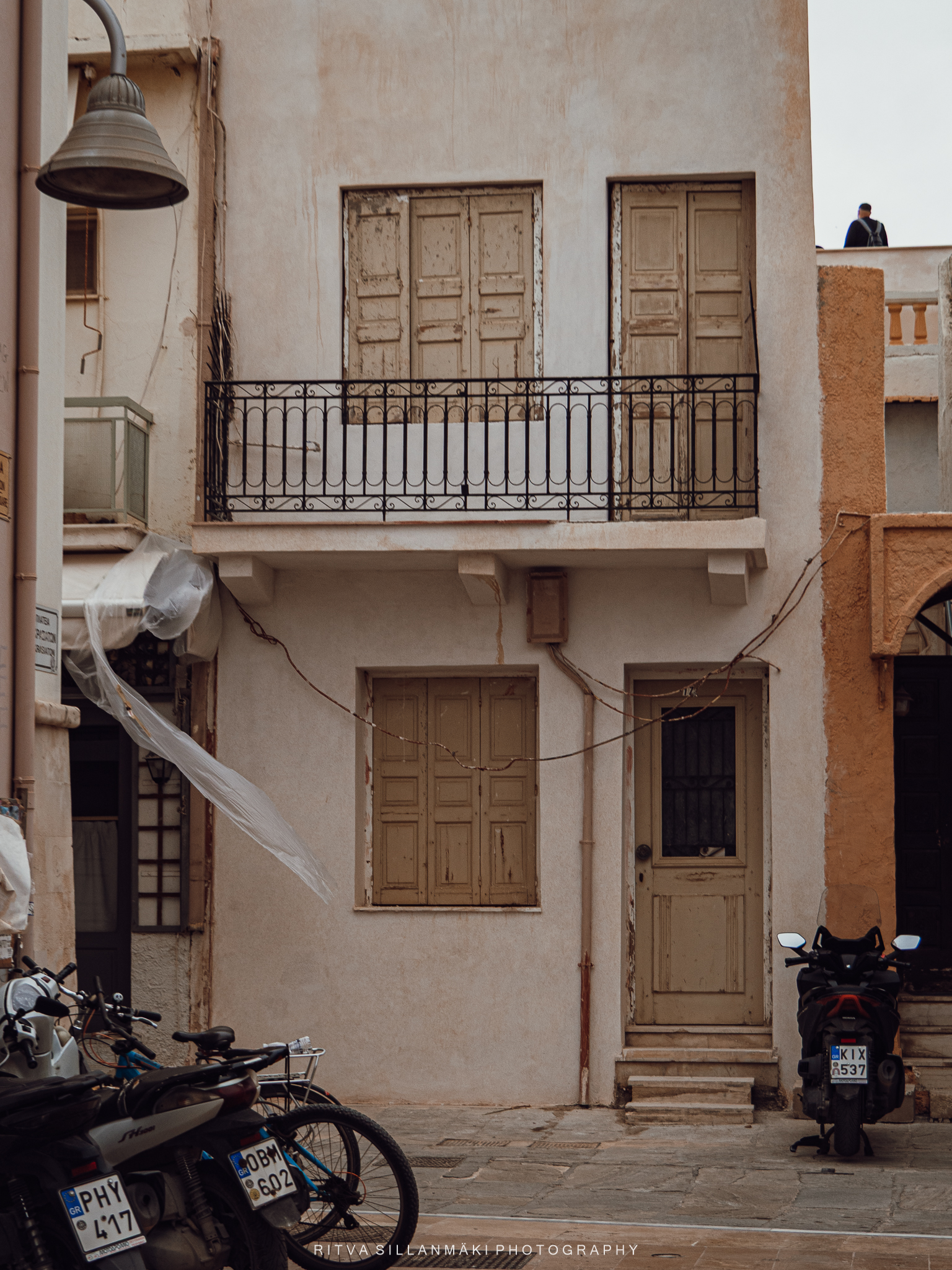
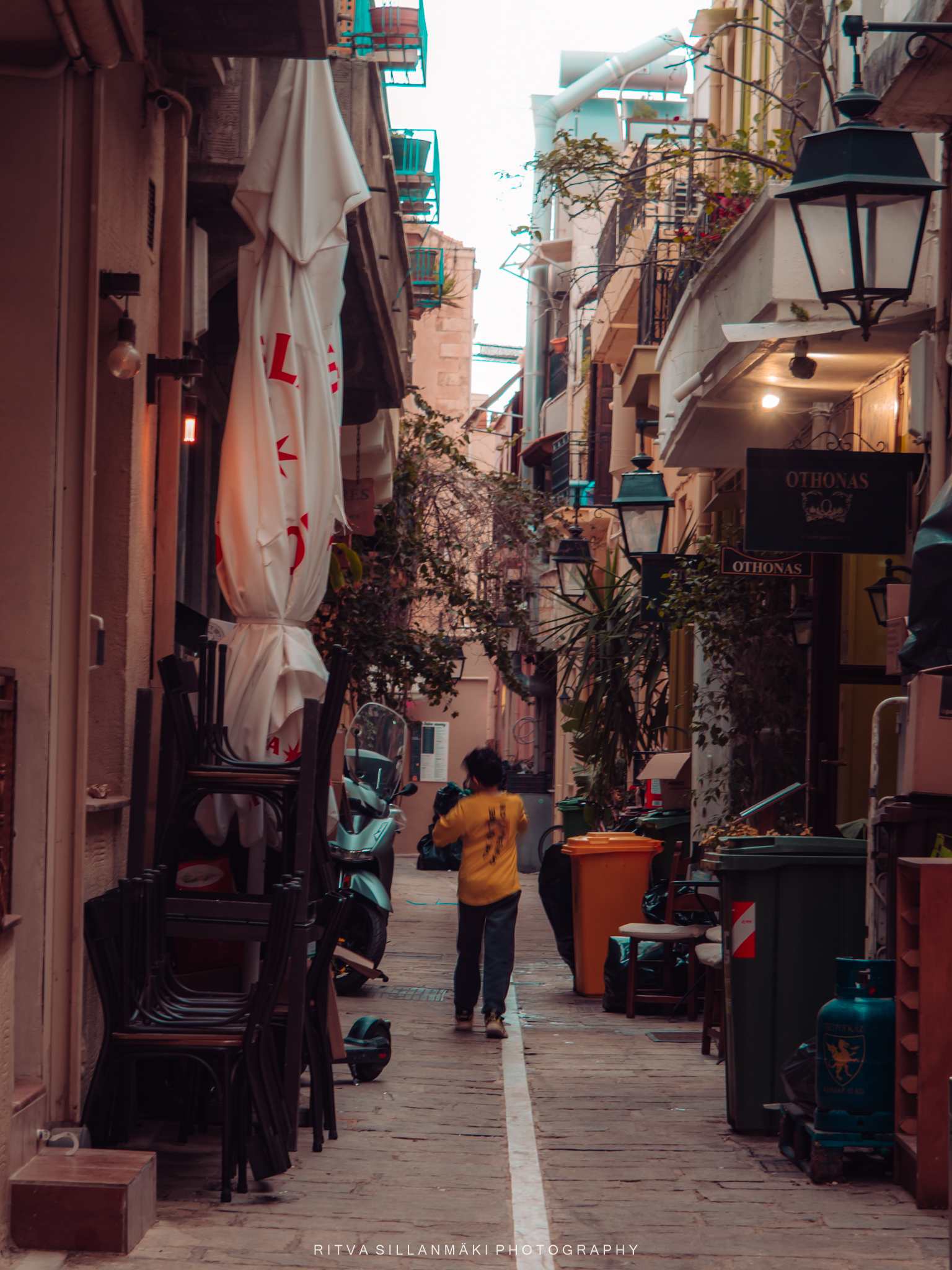
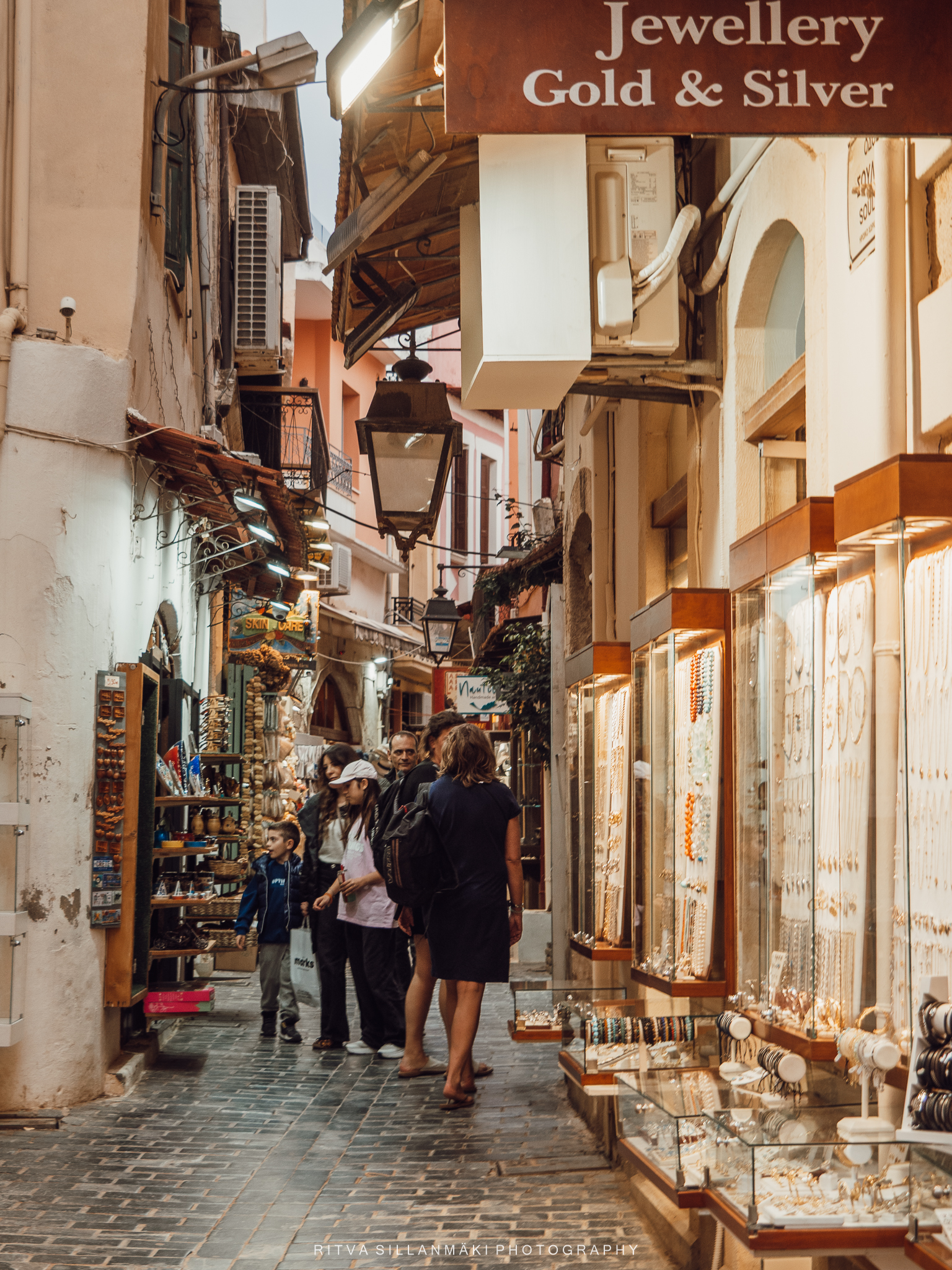
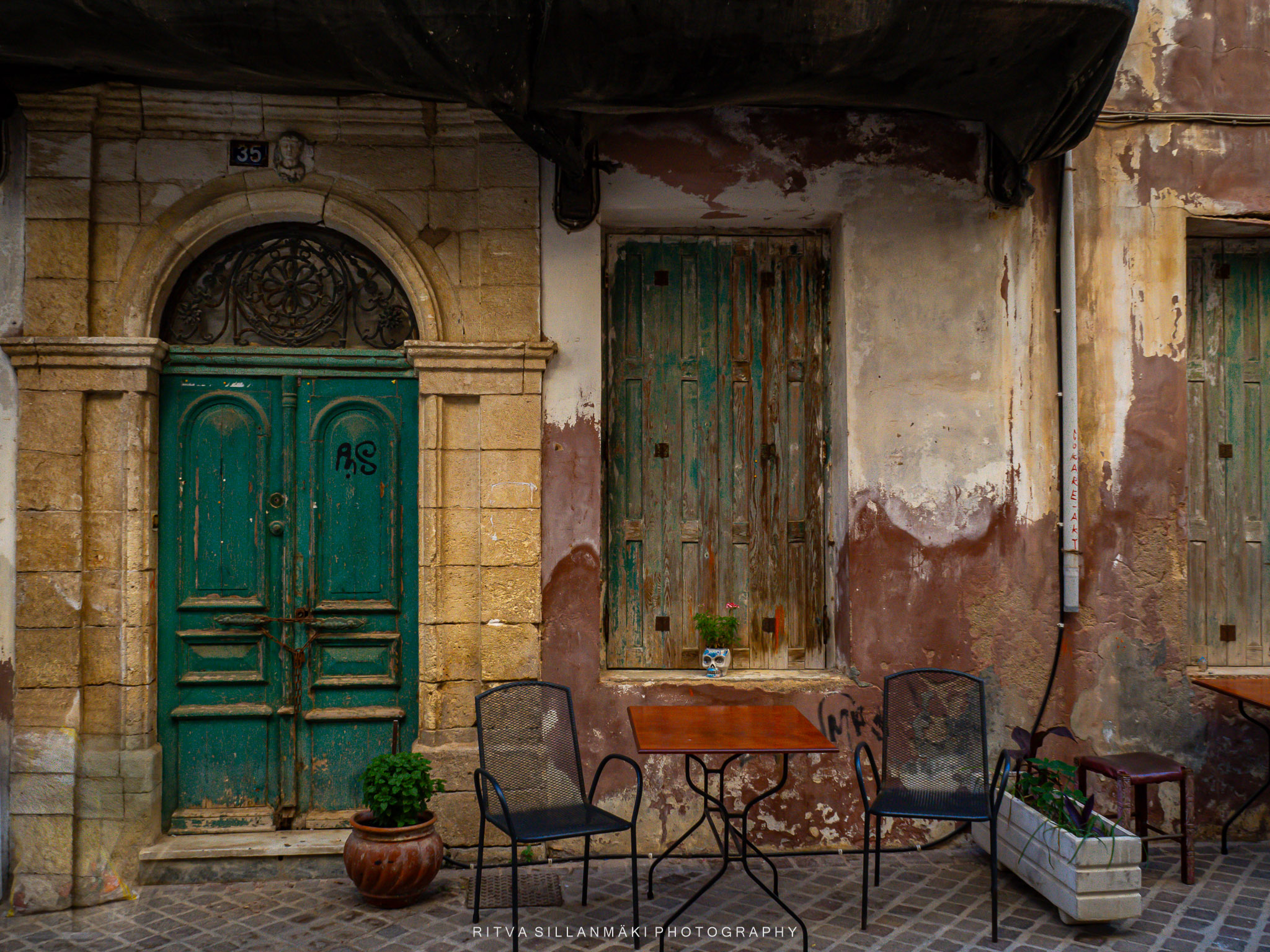
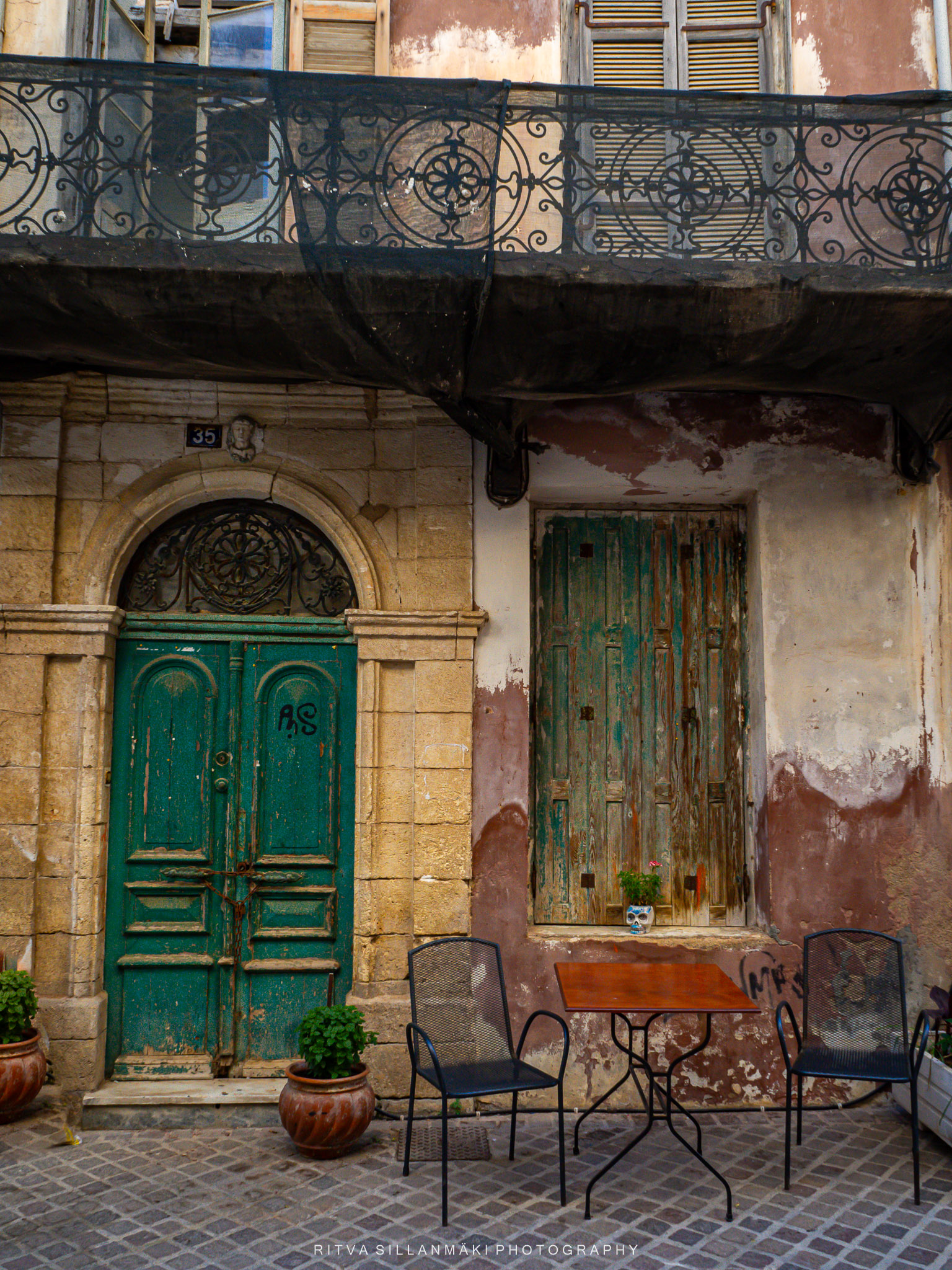
Here a photos from May trip to Rethymno, I took a lot of street photos in the towns we visited. Most are still not posted. The post features a collection of street photographs taken during a May trip to Rethymno, capturing the essence of the town. Among the highlights is a charming old building with a weathered door, ornate gate, and inviting café atmosphere. Other images showcase cozy alleys filled with quaint tables, vibrant storefronts, and charming pastel buildings. Each photo reflects daily life in Rethymno, conveying warmth and nostalgia. The author expresses a fondness for these moments, highlighting the interplay between the town’s beauty and human connection.
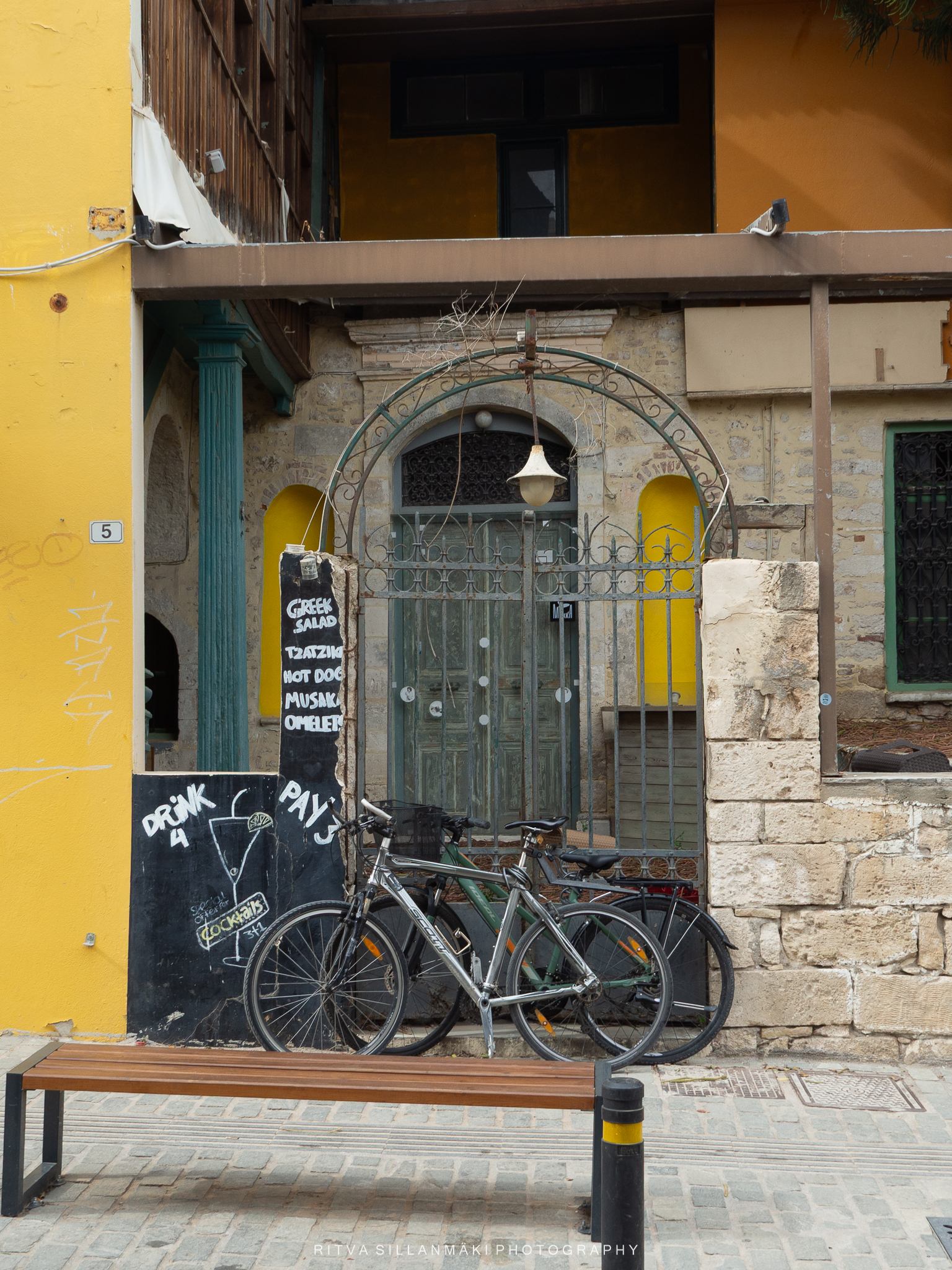
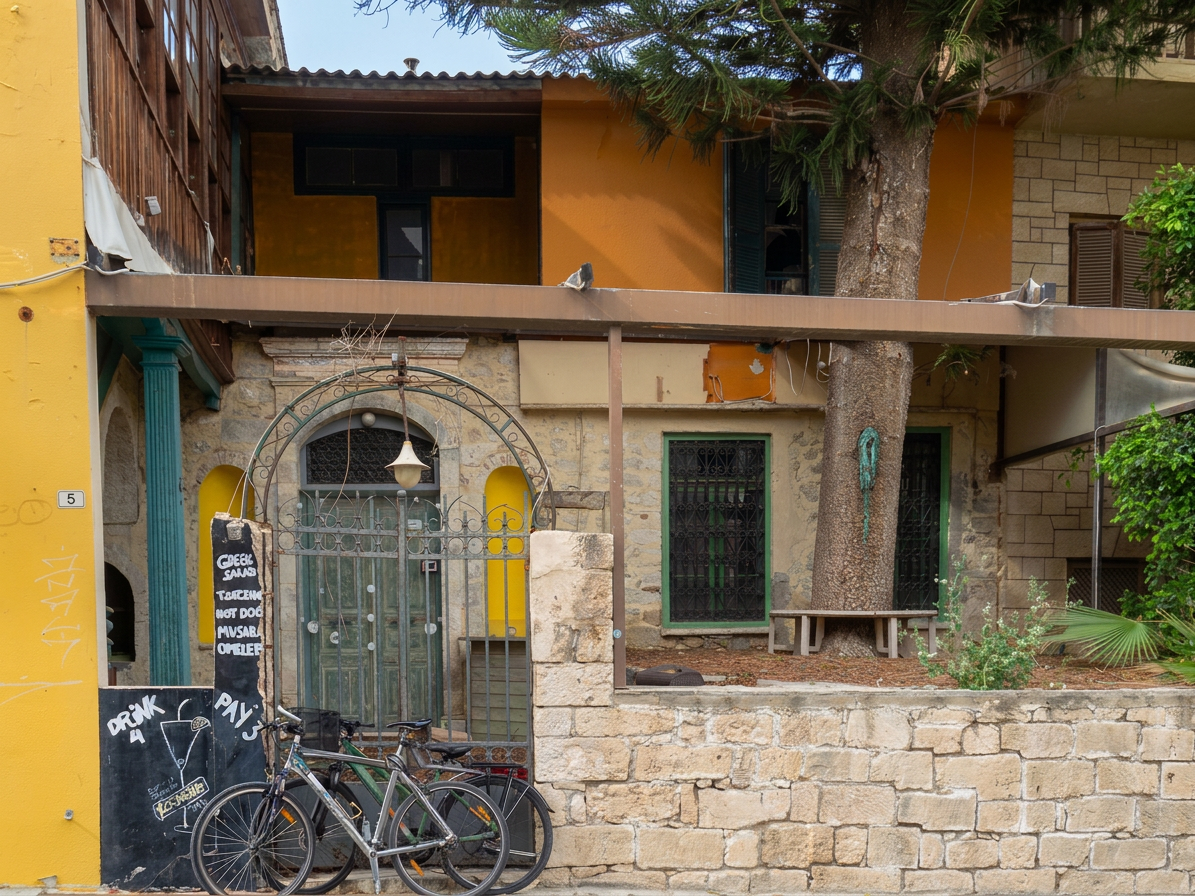
A rustic street scene with bicycles parked in front of a colorful building with a handwritten menu board and a decorative archway. Does not seem to be open anymore, closed for good?
This photo captures the charming entrance of an old building, showcasing a weathered wooden door nestled within vibrant yellow stone walls and archways. I couldn’t resist the allure of the ornate metal gate, framed by delicate dry vines, which adds an enchanting touch. Two bicycles leaning against the gate feel like they belong to friends who’ve just popped in for a quick bite. Speaking of which, the blackboard to the left tempted me with its handwritten menu items like Greek salad, tzatziki, and a classic hot dog—perfect for a relaxing afternoon. The cozy wooden bench and cobblestone pavement create an inviting atmosphere, making this spot all the more special to capture.
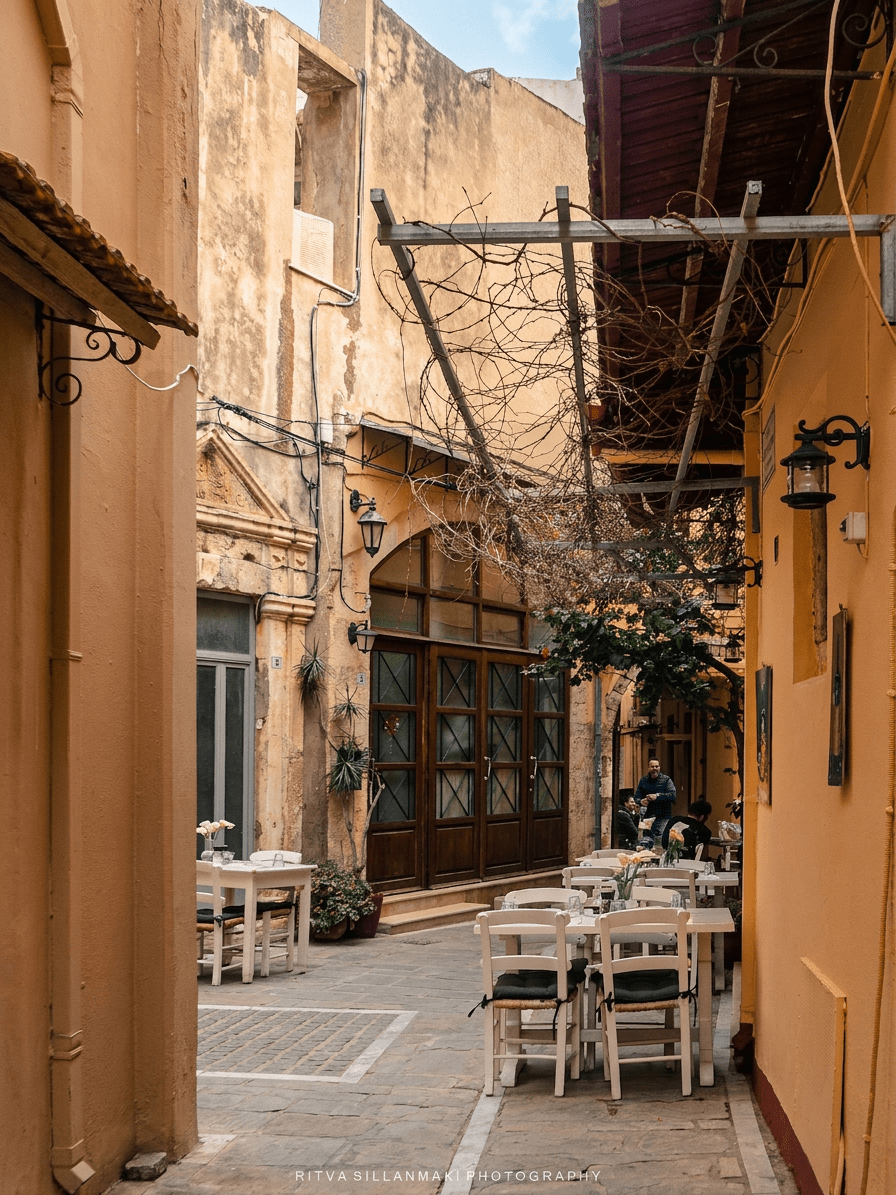
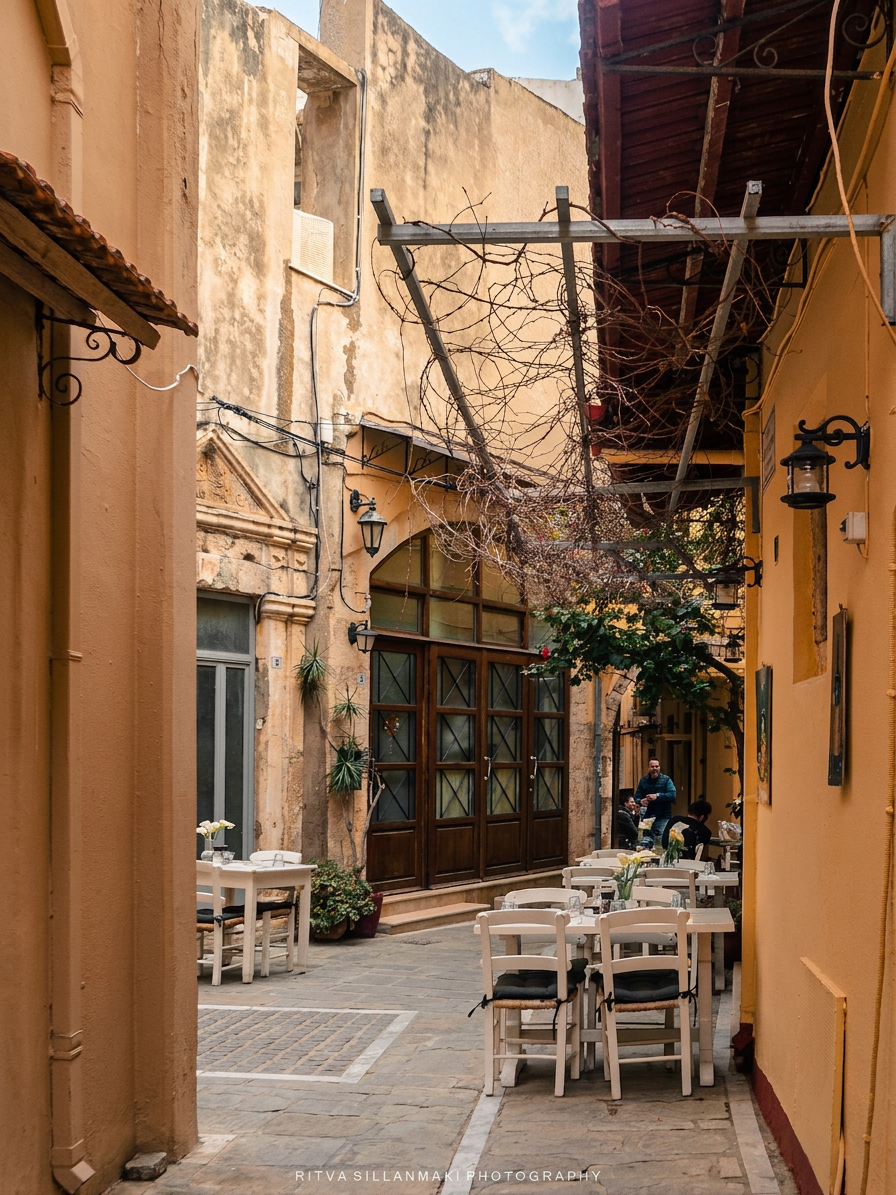
Rethymno- same place but as a landscape and different croppingRethymno alley with a cozy restaurant
This delightful image was snapped to capture a moment that feels like stepping into a charming little world. You can just picture yourself wandering down this narrow alleyway, flanked by those lovely beige and yellow buildings. The small outdoor tables with their quaint white chairs beckon you to sit a while and enjoy a coffee, perhaps a pastry, surrounded by little vases g with flowers that add a touch of warmth. And that trellis overhead? It’s like a cozy hug, with its bare branches weaving together to create a rustic canopy. In the background, you can see a few friendly faces enjoying the vibe, which just makes the whole place feel so inviting and relaxed. It’s the kind of spot that wraps you in its charm and makes you want to linger a little longer.
Rethymno would you prefer this place
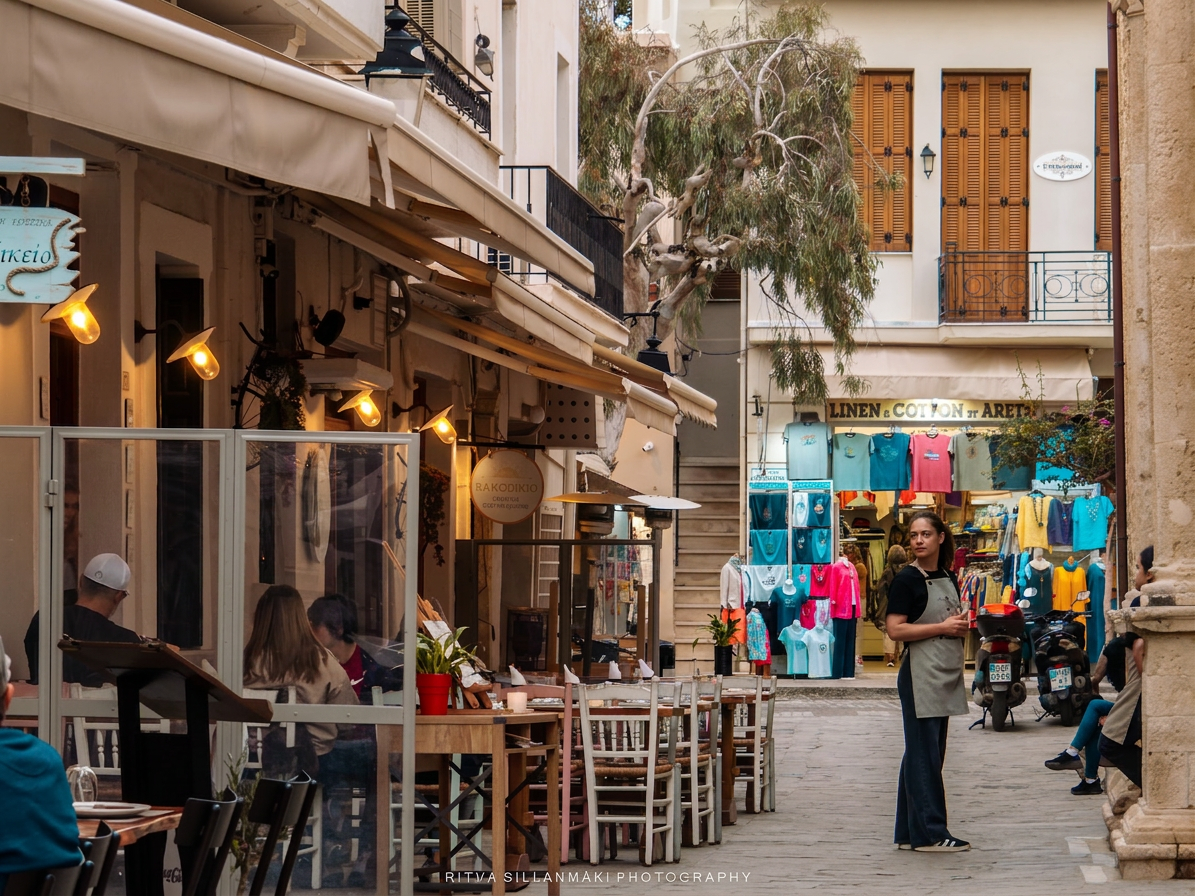
This photo captures a delightful little street in a charming Rethymno town in Crete, where time seems to slow down just for a moment. You can almost feel the inviting atmosphere of the outdoor café on the left, where locals and visitors alike enjoy their coffee under soft cream-colored awnings, the warm glow of lights adding a touch of magic to the scene. Just beyond, the vibrant display at “LINEN & COTTON in ARET” showcases an array of colorful t-shirts that dance in the breeze. I couldn’t help but notice the café staff member, who seems to draw the attention to the whole scene to life as she balances her tray and keeps an eye with the area around her. The cobblestone street, lined with charming buildings adorned with shutters and wrought-iron balconies, sets the perfect backdrop for this slice of everyday life, blending the charm of the picturesque with the warmth of human connection. It’s a moment I wanted to capture, to reminisce about those slow, beautiful afternoons spent soaking in the sights and sounds of street life.
Side street in Rethymno
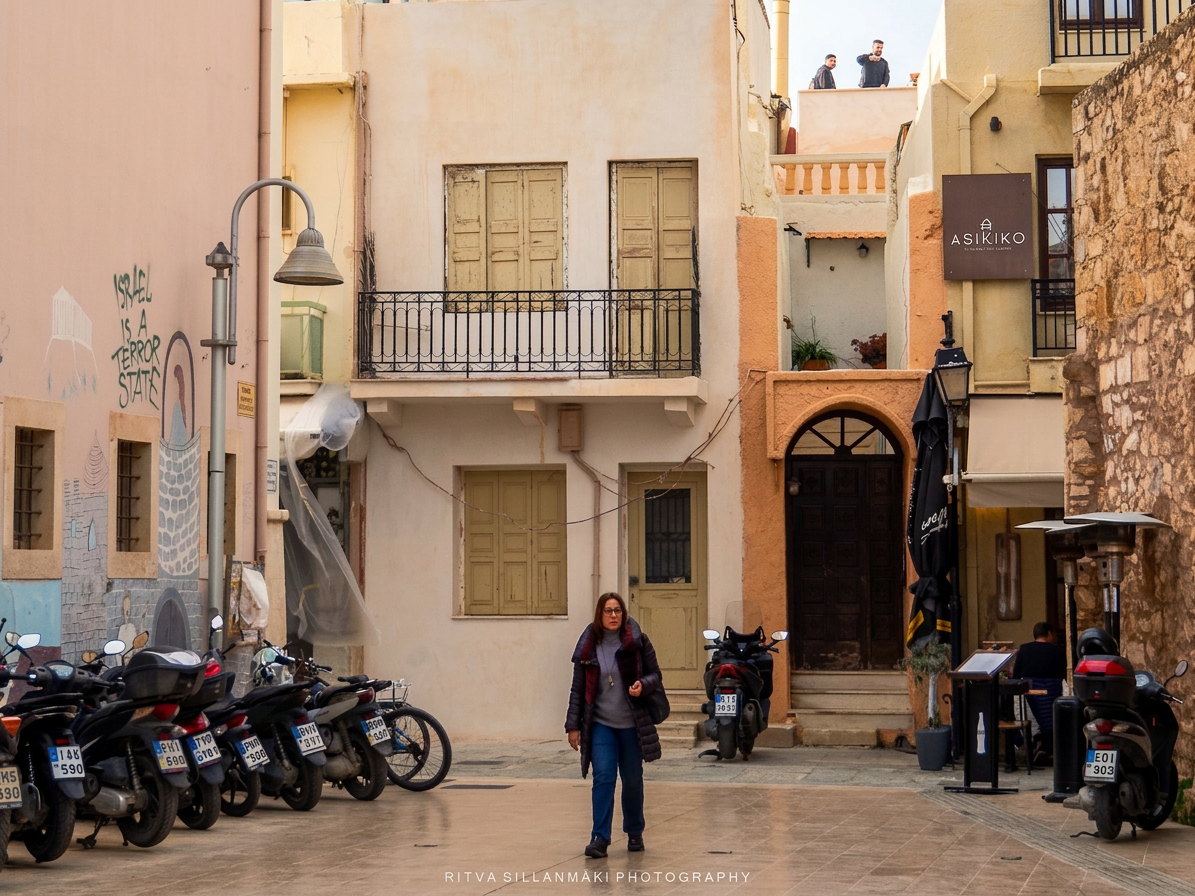
This photo was taken during a late afternoon stroll down a charming urban street that blends the old with the new. I was drawn to the pastel hues of the buildings—beige, peach, and soft pink—that seem to whisper stories of the past. The central building with its shuttered windows and quaint wrought-iron balcony had me imagining the lives of those who once called it home. I couldn’t help but notice a line of scooters parked along the street, hinting at the vibrant life that fills this area. Just then, a woman in a dark coat caught my eye as she walked toward the camera, embodying the everyday hustle of city life. In the background, two men relaxed on a rooftop near the ASIKIKO restaurant sign, perfectly capturing that casual, laid-back vibe that makes urban exploration so enjoyable.
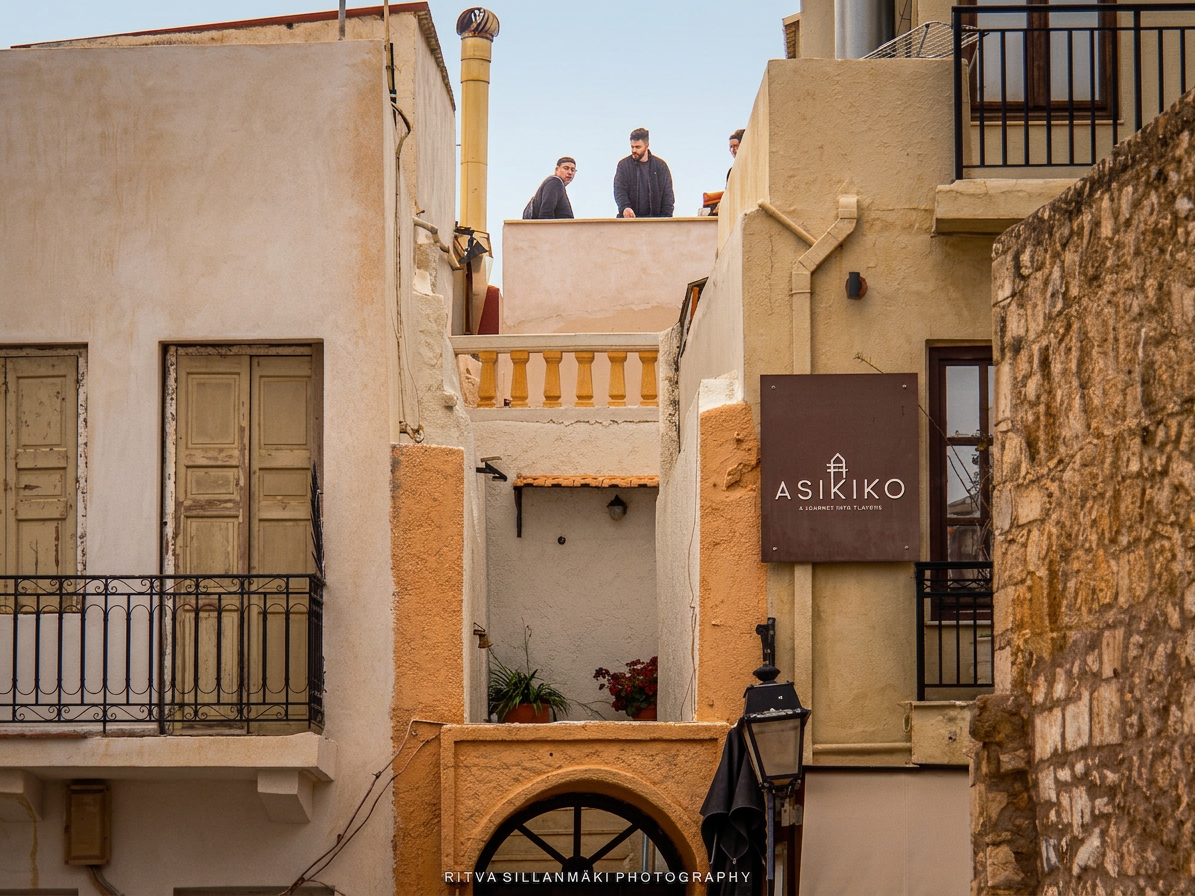
I liked how the group of people was at the top of the building, as I zoomed in it was a moment there was three instead of two friends found themselves on a terrace, just taking a break from work or chatting. It’s one of those light-filled days when the soft natural afternoon sunlight paints everything in a warm glow, making the weathered walls and stone surfaces feel alive with stories.
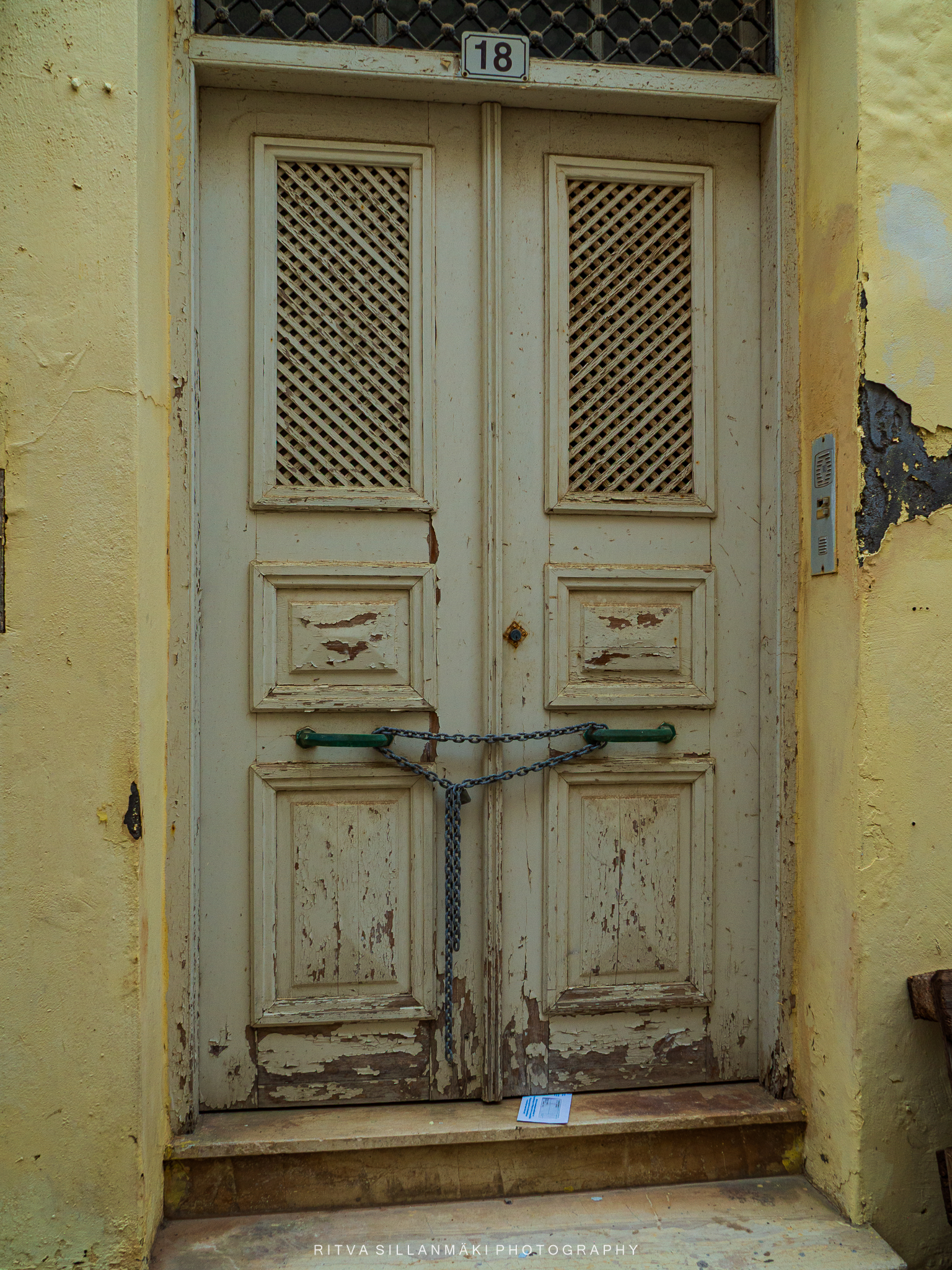
I took this photo because I was hunting for interesting doors for Dans Thursday Doors and I was captivated by the old, weathered double wooden door. It was painted in a pale, muted color, but the significant peeling and chipping really revealed the underlying wood’s character. Each door panel had this interesting latticed section at the top, which added a textured pattern, while the bottom panels were solid and showed extensive paint deterioration. What struck me was how the doors were secured with a metal chain wrapped around two green handles, making it seem like they were locked or out of use. The yellowish wall surrounding the doors had its own story with patches of peeling paint and dark spots, giving off an overall vibe of age and neglect. Plus, the small white plaque above the doors with the number 18 and the letter of notice set under the door piqued my curiosity about what lay behind them.
Few more 😀🫢If using a computer to read my post, for a better view click the gallery to enlarge the photos
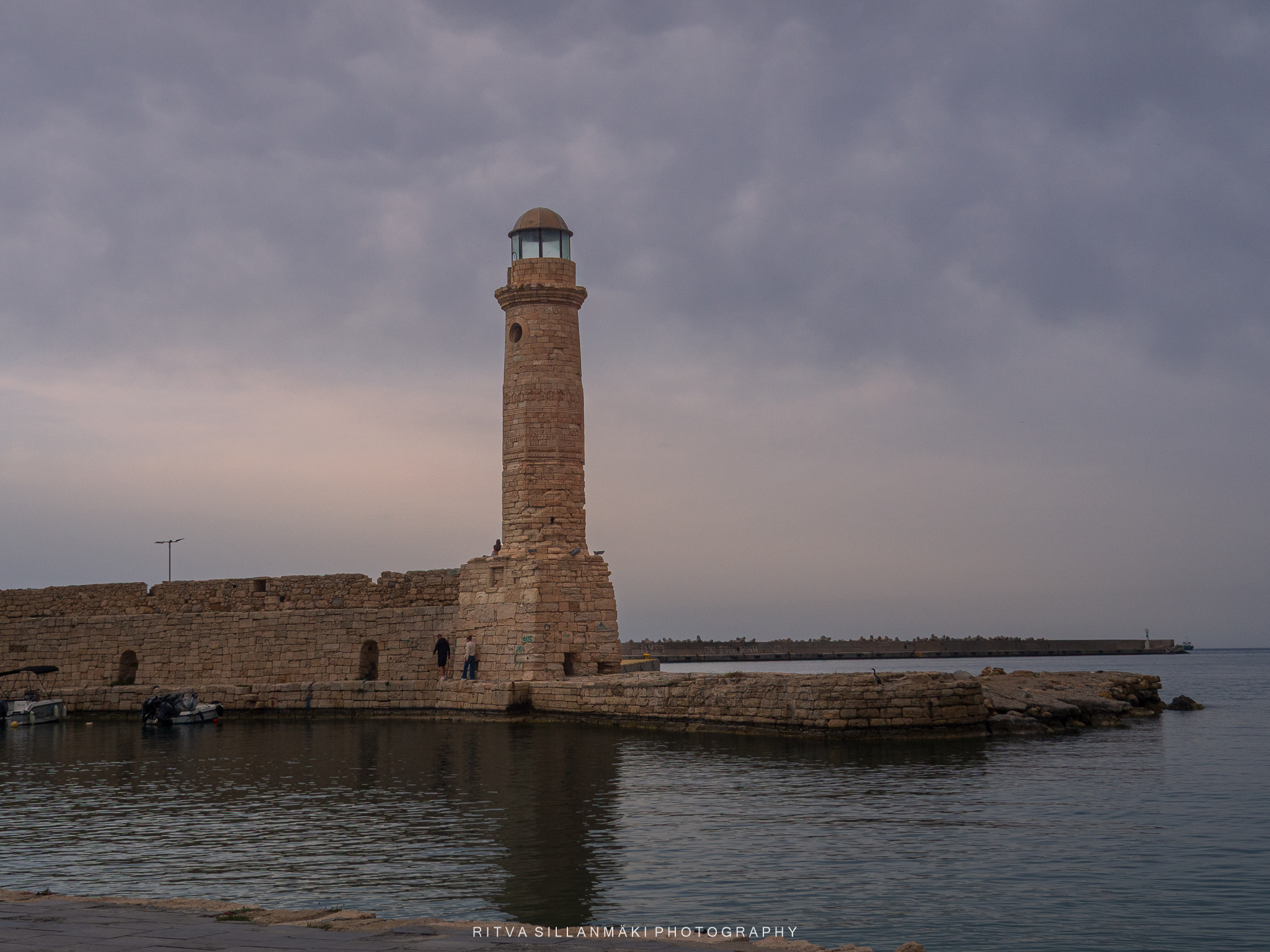
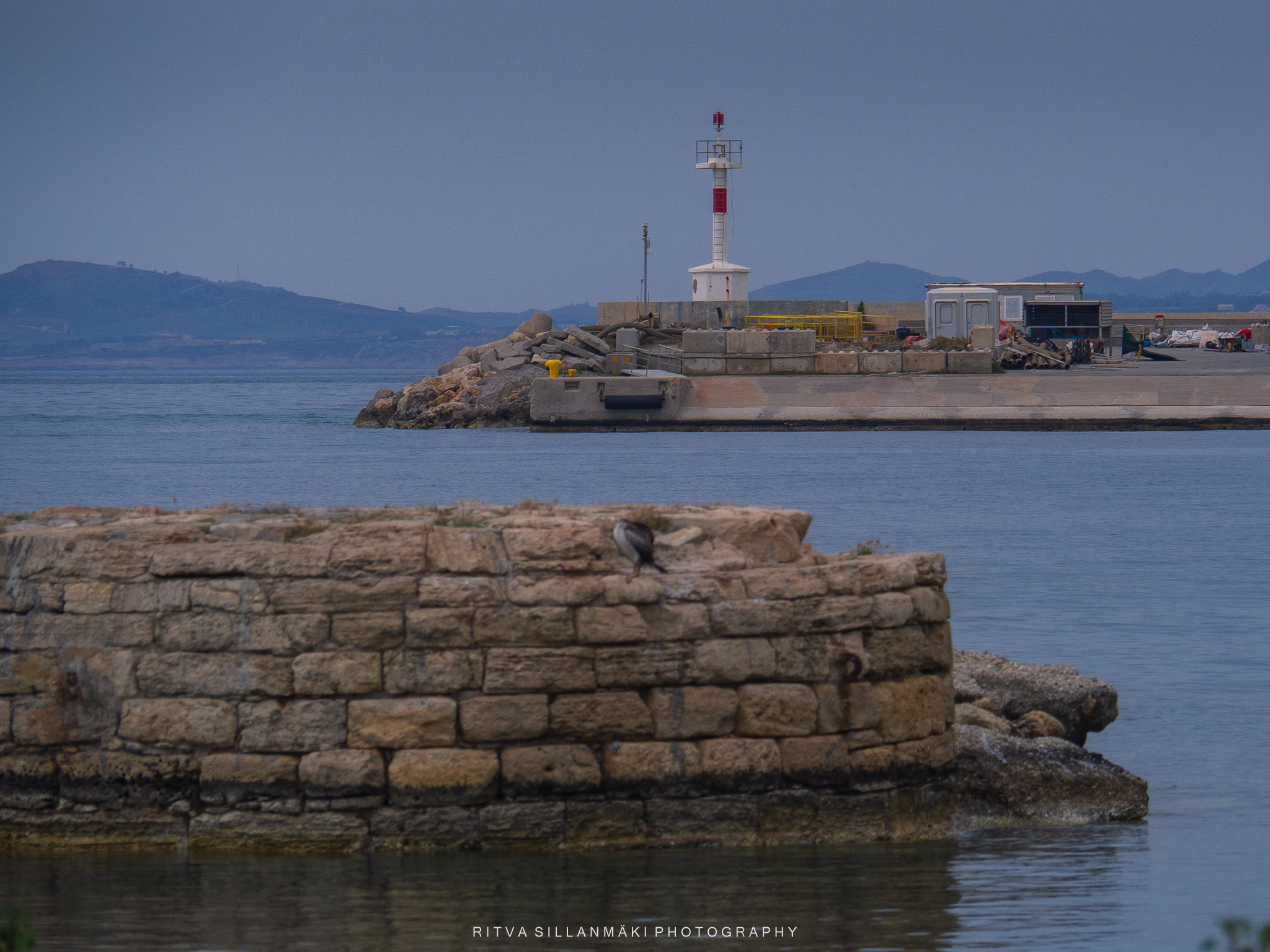
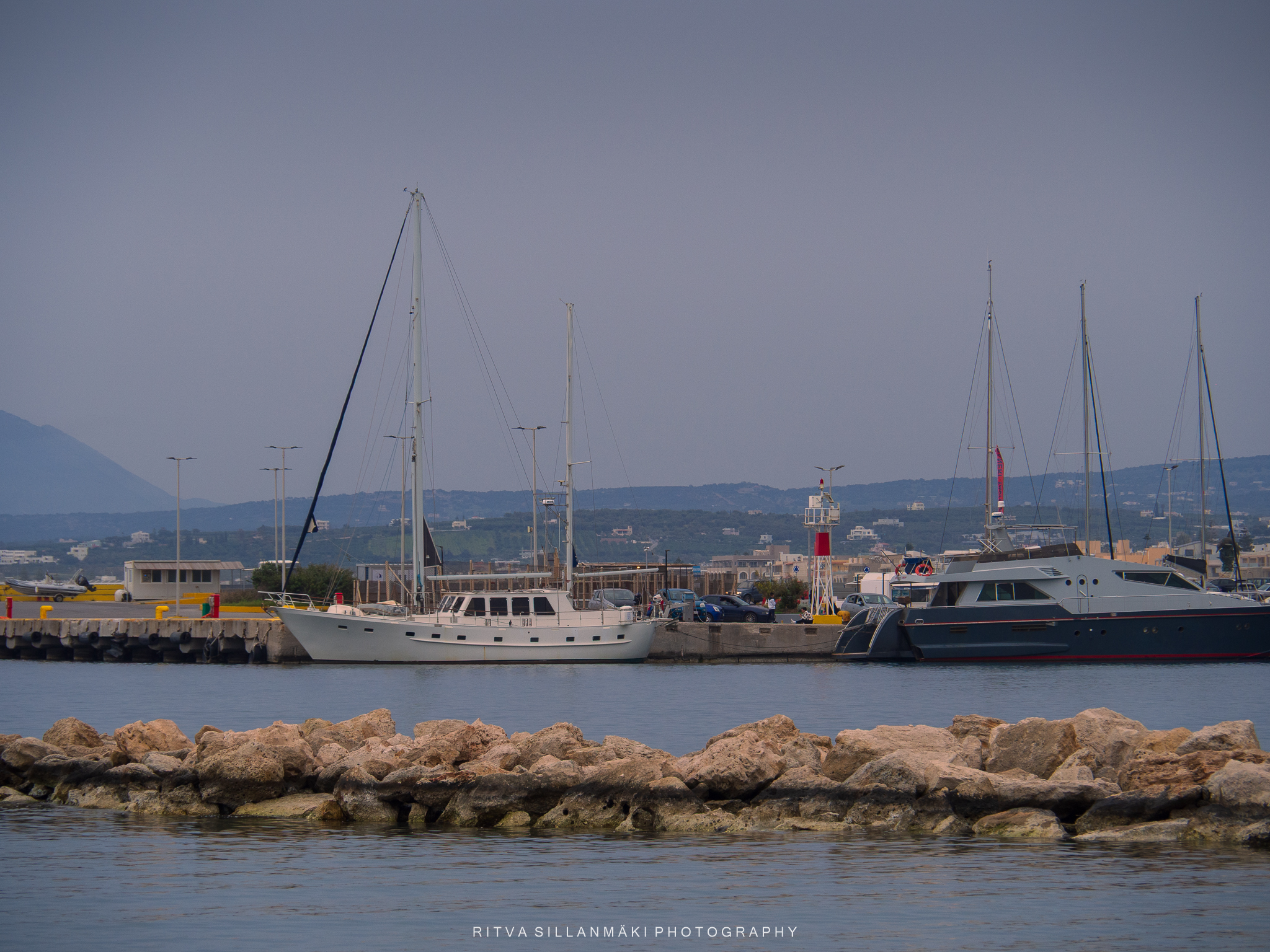
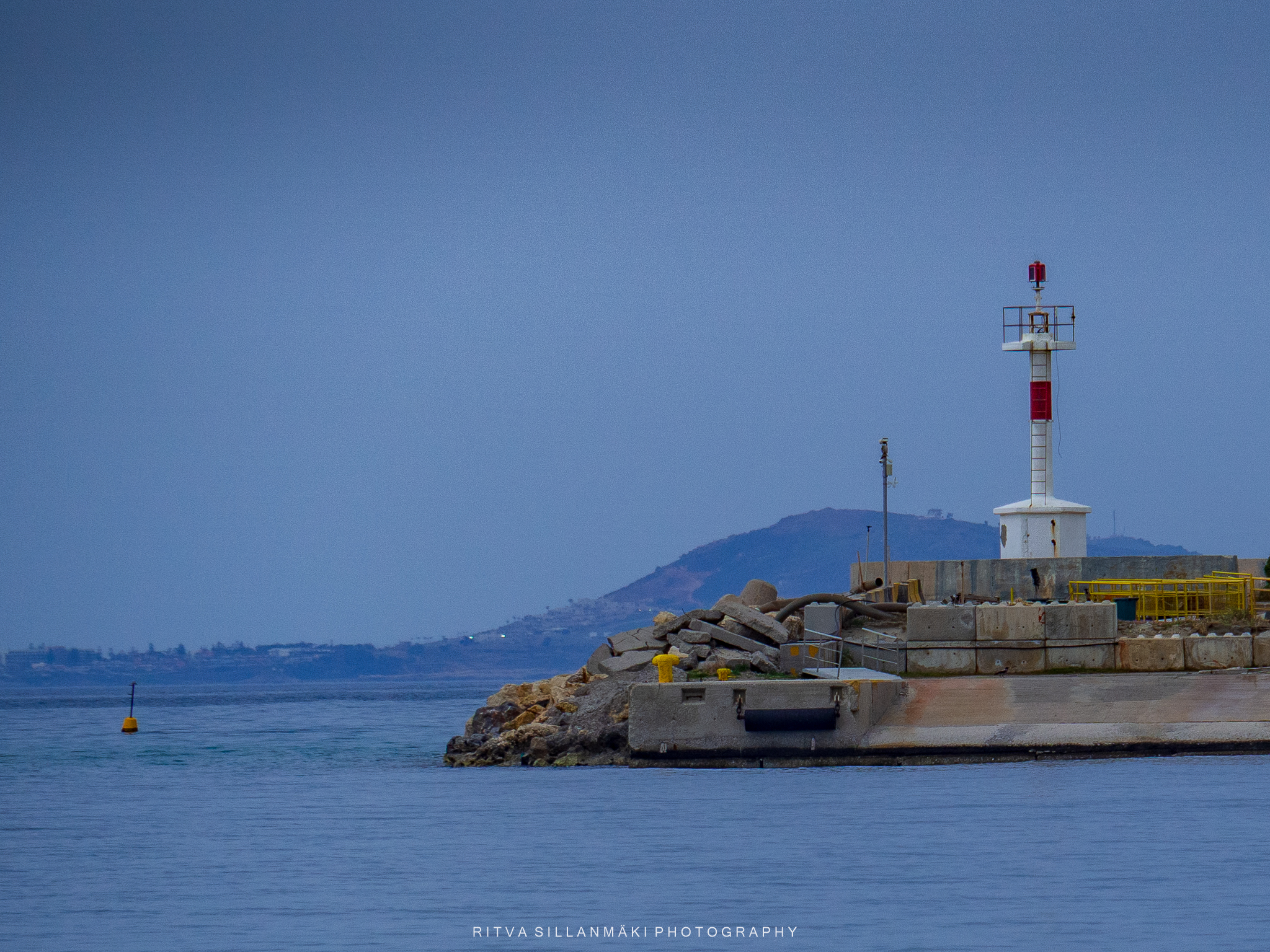
As an afterthought, I am adding these photos; it was not really my intention to do so. We also walked to the Rethymnon lighthouse, located on the island of Crete in Greece. This historical landmark, built of stone in the Venetian harbor, was constructed during the Ottoman period and continues to be one of the area’s most famous attractions.
The city of Réthymnon and its Venetian harbor, from which there is a view towards the snow-capped Psilorítis mountain (Ida mountain).
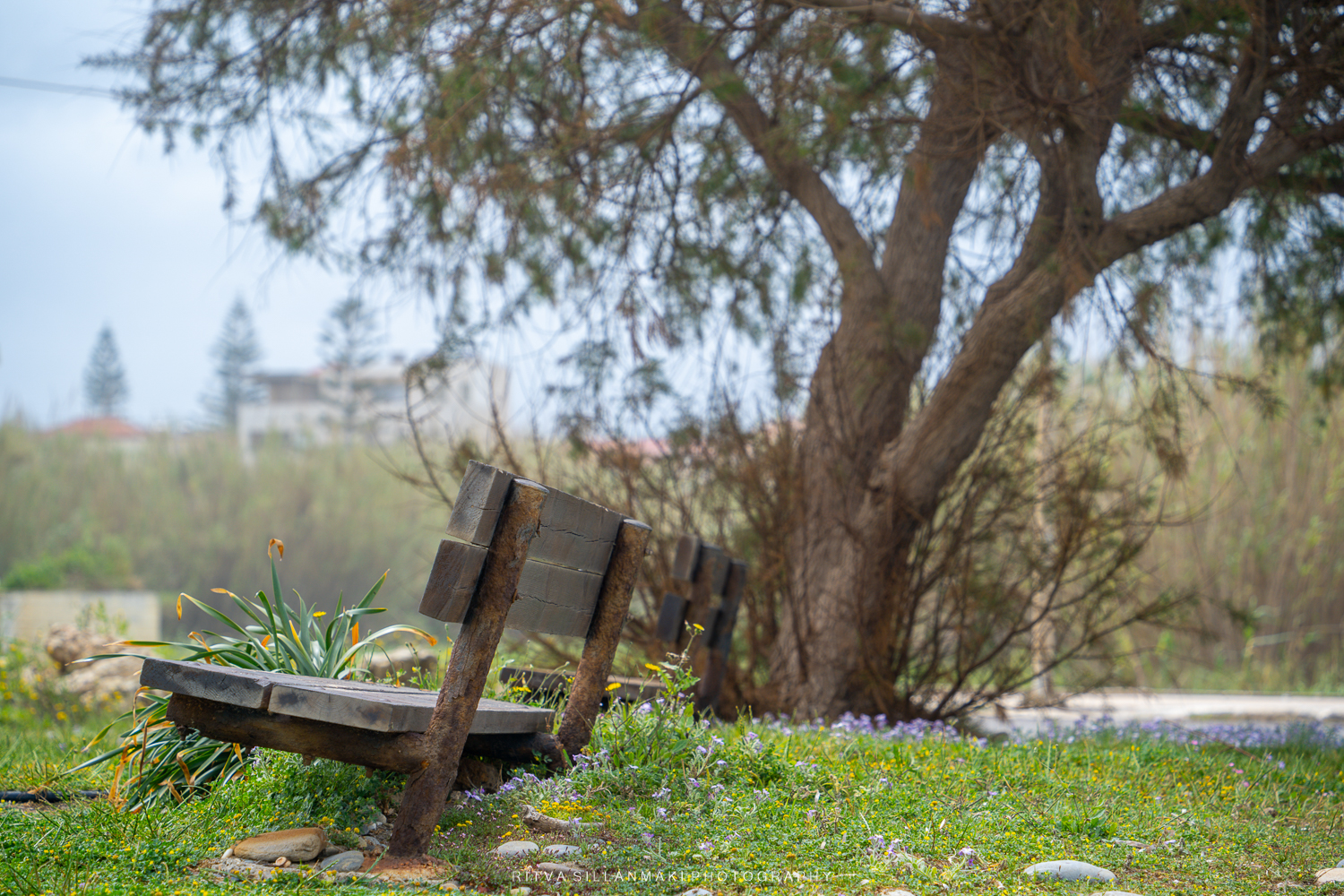
By the beach in Maleme a pair of weathered wooden benches positioned on a grassy patch adorned with small purple and yellow wildflowers, a large, leafy tree with a thick trunk, providing a natural backdrop and some shade. The sky is overcast, casting a soft, muted light over the scene. In the blurred background, distant buildings and conifer trees are faintly visible, adding depth and context to this tranquil outdoor setting. My last on the card is from Crete.
Last shot with my OLYMPUS DIGITAL CAMERA
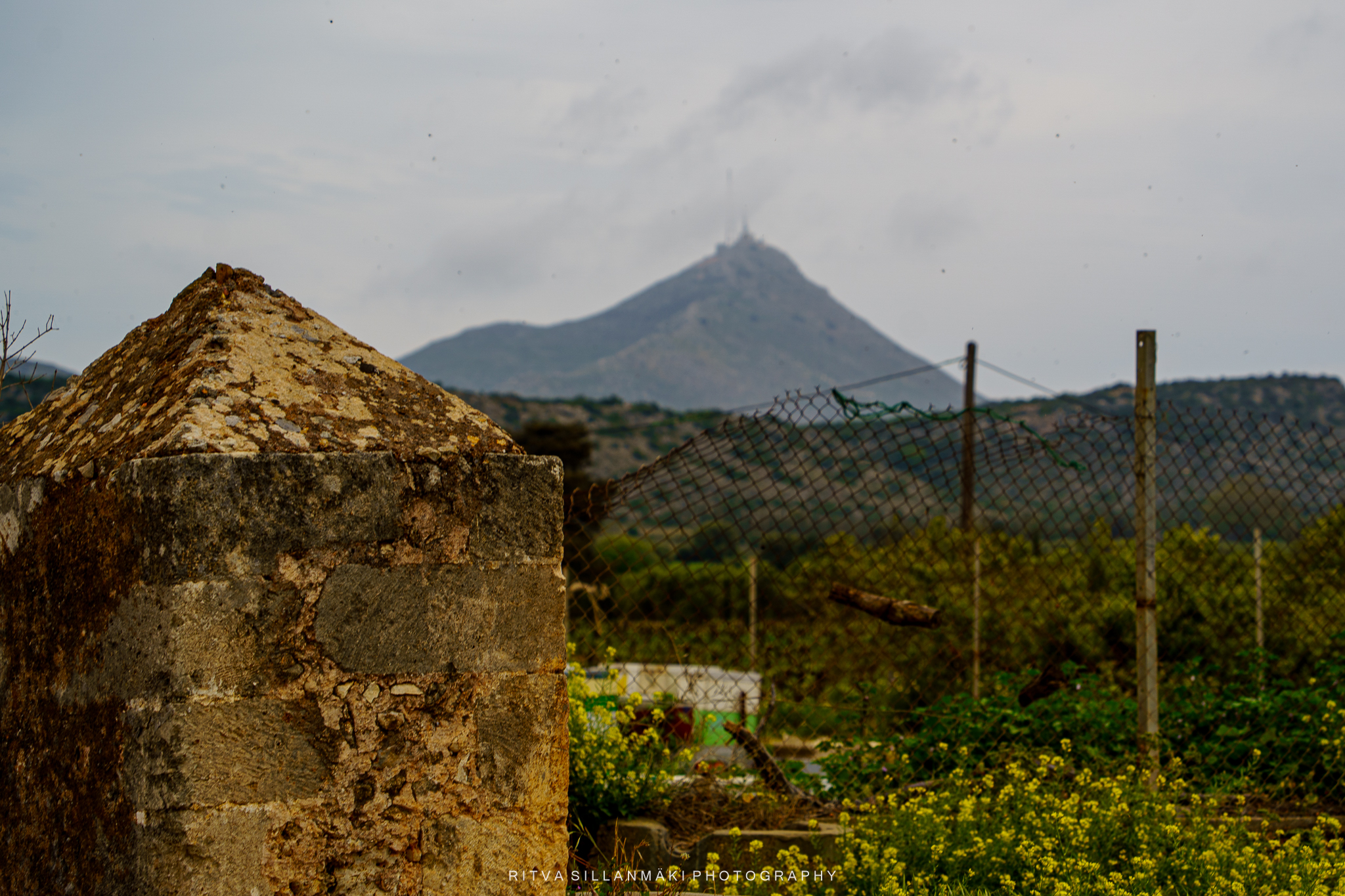
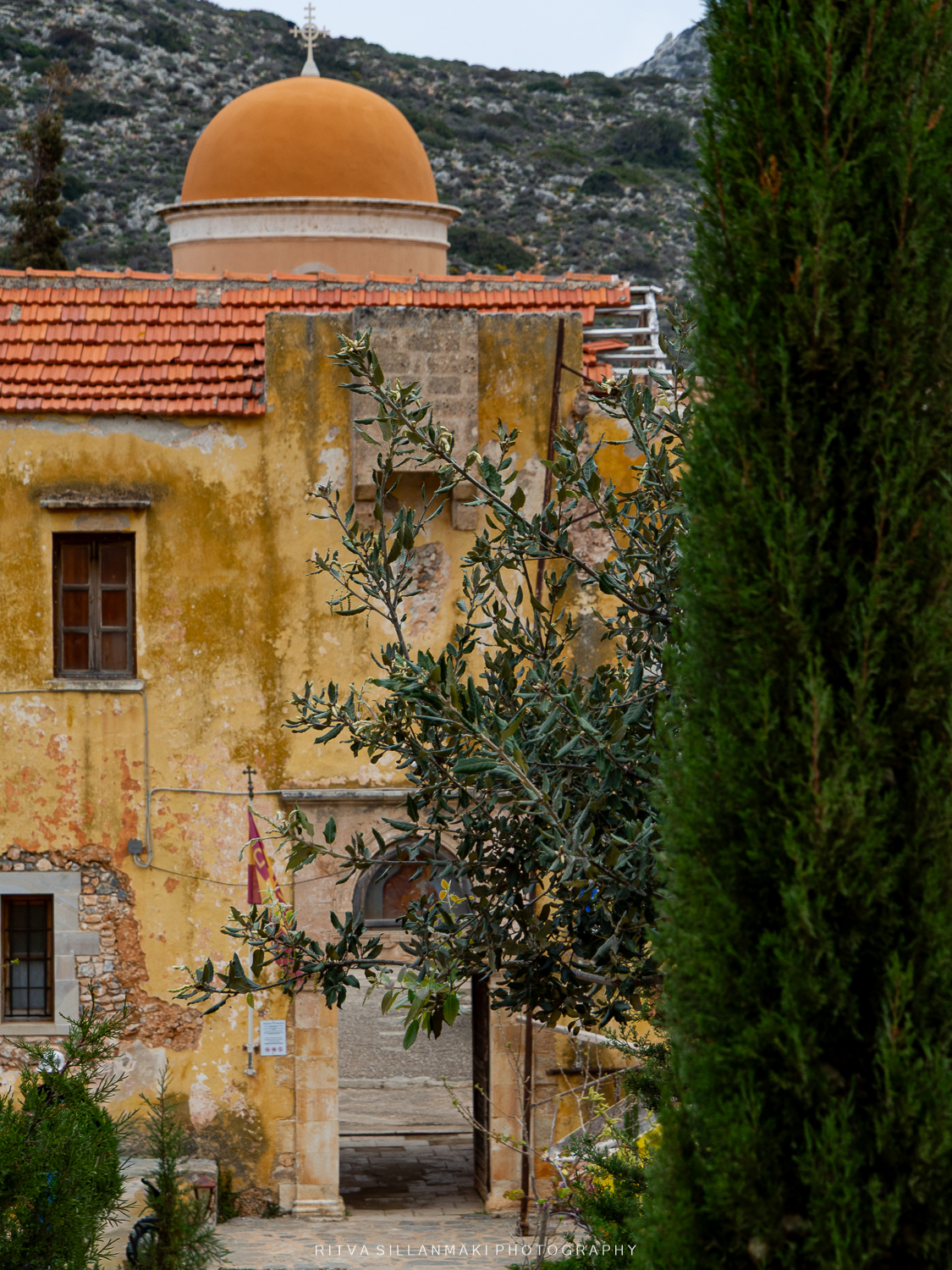
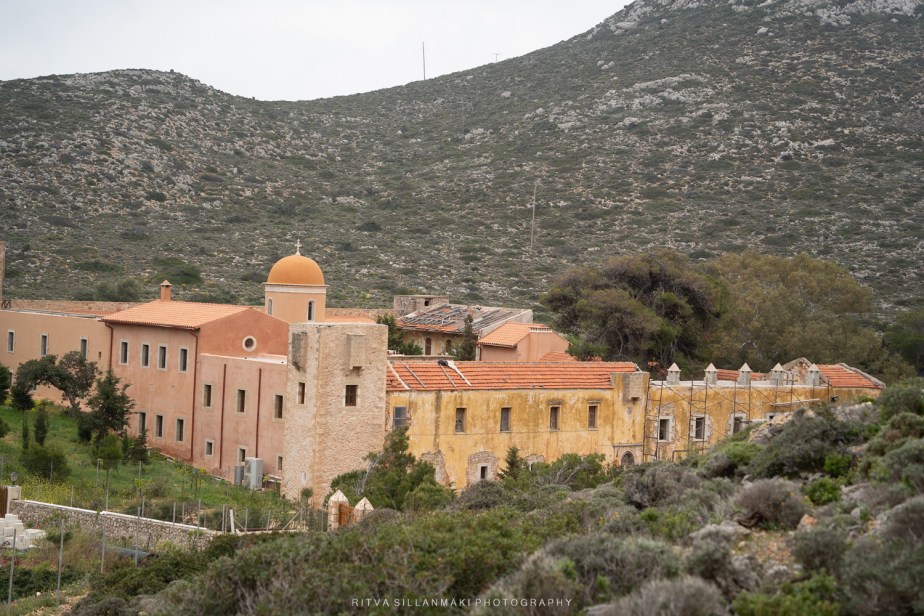
A timeworn monastery in Crete, known as the Gouverneto Monastery (or the Monastery of Our Lady of the Angels), is an active place of worship that beautifully showcases its yellow, textured facade, with signs of peeling paint that speak to its age. Notice the small wooden-framed windows and distinctive terracotta-tiled roof, topped with a dome and cross? This architectural detail certainly highlights its importance as a historical and religious site. In the foreground, verdant greenery, including a leafy tree and tall cypress bushes, frames the scene, introducing a natural element that adds depth to the composition. Meanwhile, the rugged hills in the background sit beneath an overcast sky, contributing to a tranquil and timeless ambiance. Established in 1537, the monastery is dedicated to the Virgin Mary and serves as a starting point for a popular hiking trail leading to the Arkouditissa Cave and the ruins of the abandoned Katholiko Monastery. It’s interesting to note that it was originally built as a Venetian-style fortress to protect the monks from pirate raids, featuring thick walls and defensive towers, which further emphasizes its significance on the island of Crete.
Iphone 17 Pro
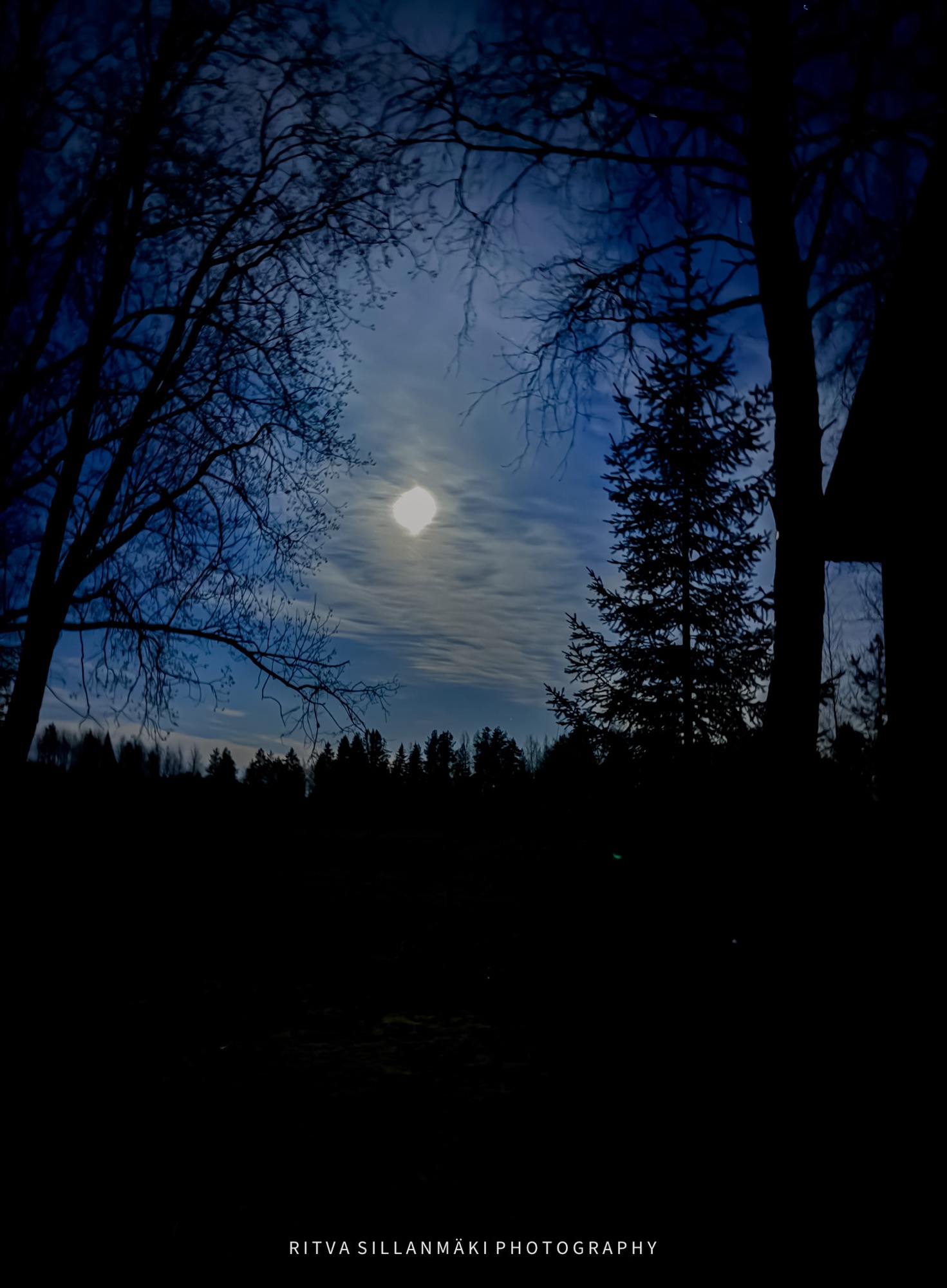
A serene night scene featuring a bright full moon partially obscured by thin, wispy clouds. Silhouettes of various trees, including leafless branches and a spruce, frame the moon and enhance the depth of the composition. The sky exhibits deep blue tones transitioning to lighter shades near the horizon, creating a mystical and tranquil atmosphere. Back home or our summer house, emphasizing the natural beauty of a quiet night in the countryside. Taken at 23:19 before May 1st – a day of celebration in Finland.
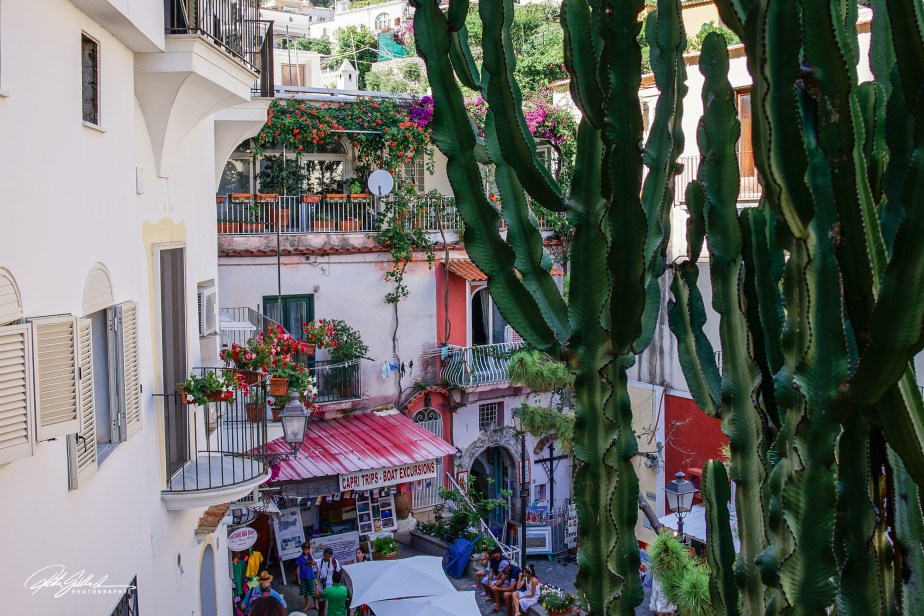
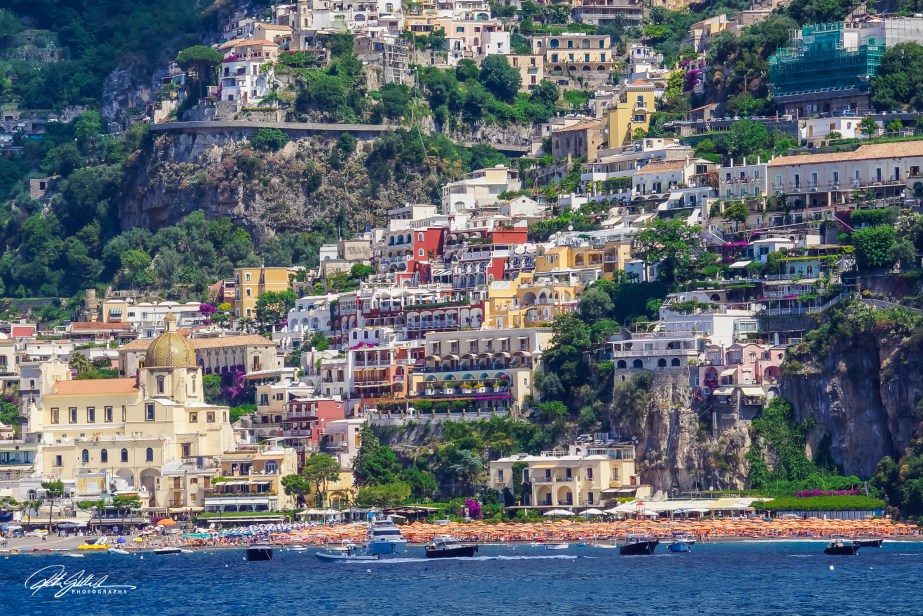
Positano, Italy, captivates with its colorful coastal buildings and stunning Mediterranean architecture.
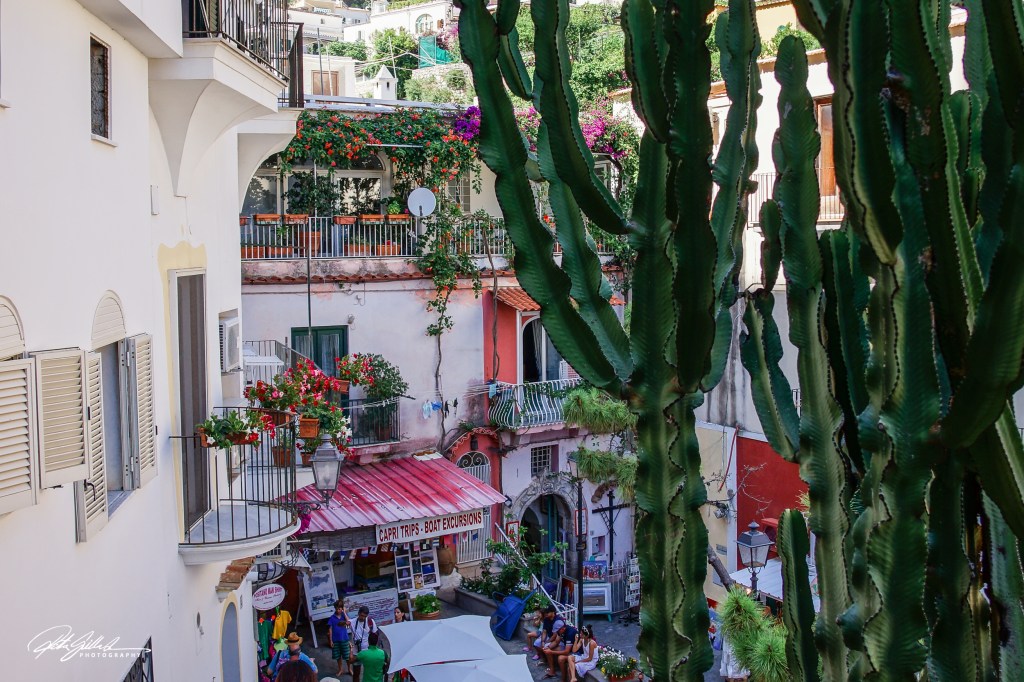
A stunning view of colorful coastal buildings on a hillside in Positano, Italy, showcasing Mediterranean architecture and a vibrant atmosphere.A vibrant street scene featuring colorful balconies and blossoming plants, with a glimpse of local shops and eateries in a picturesque Positano town.
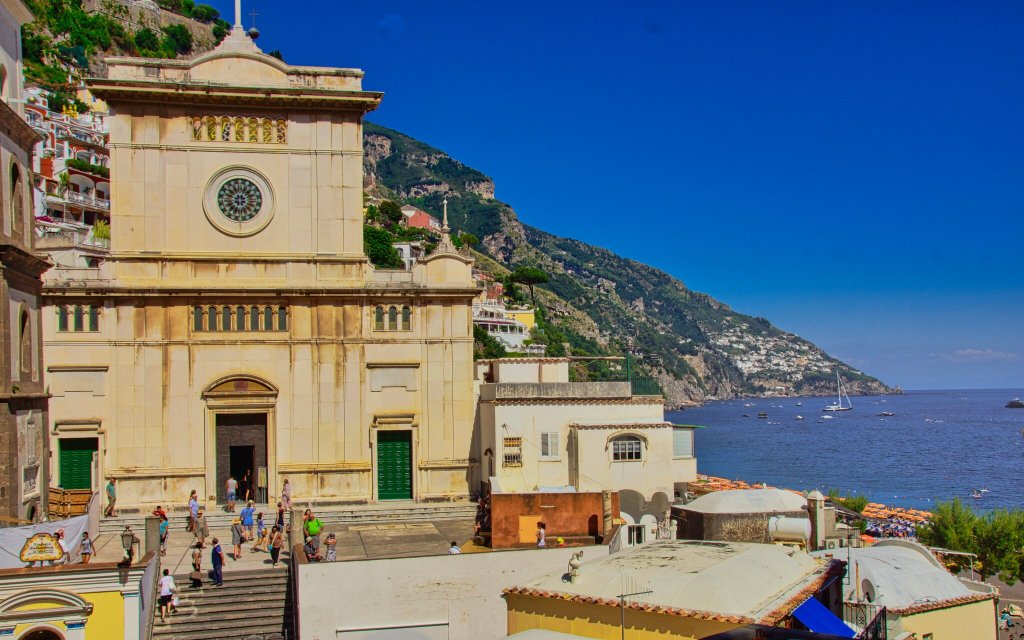
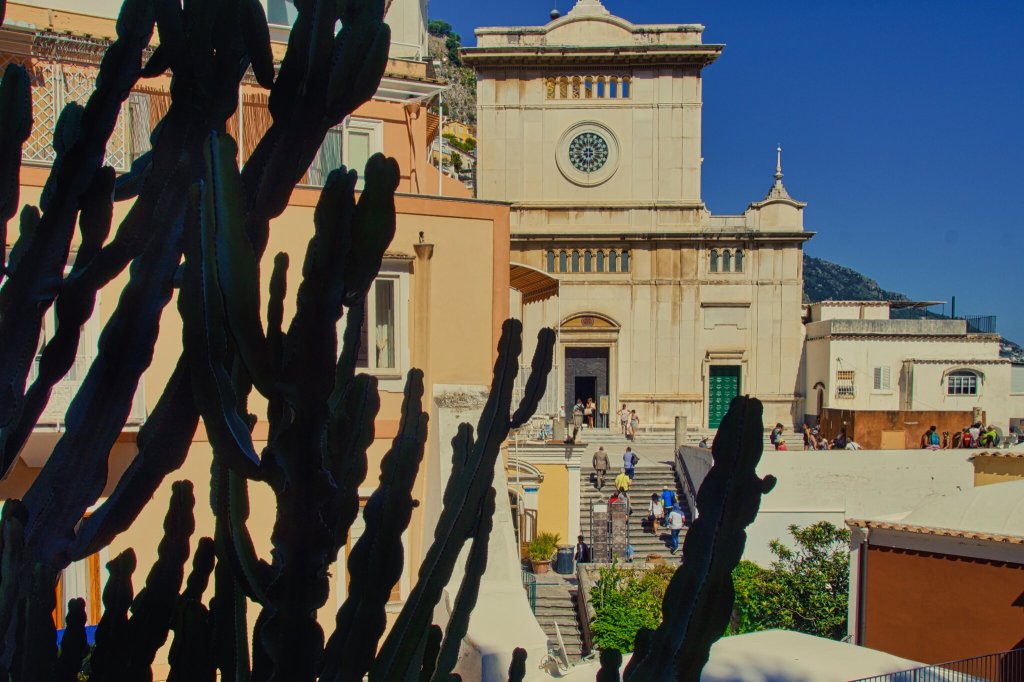
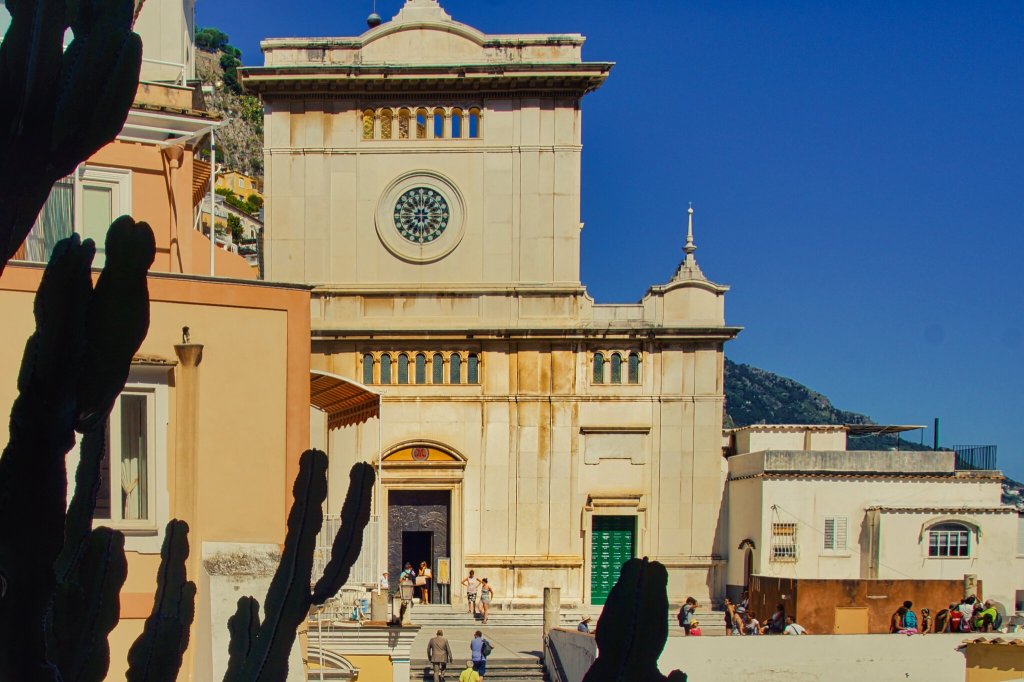
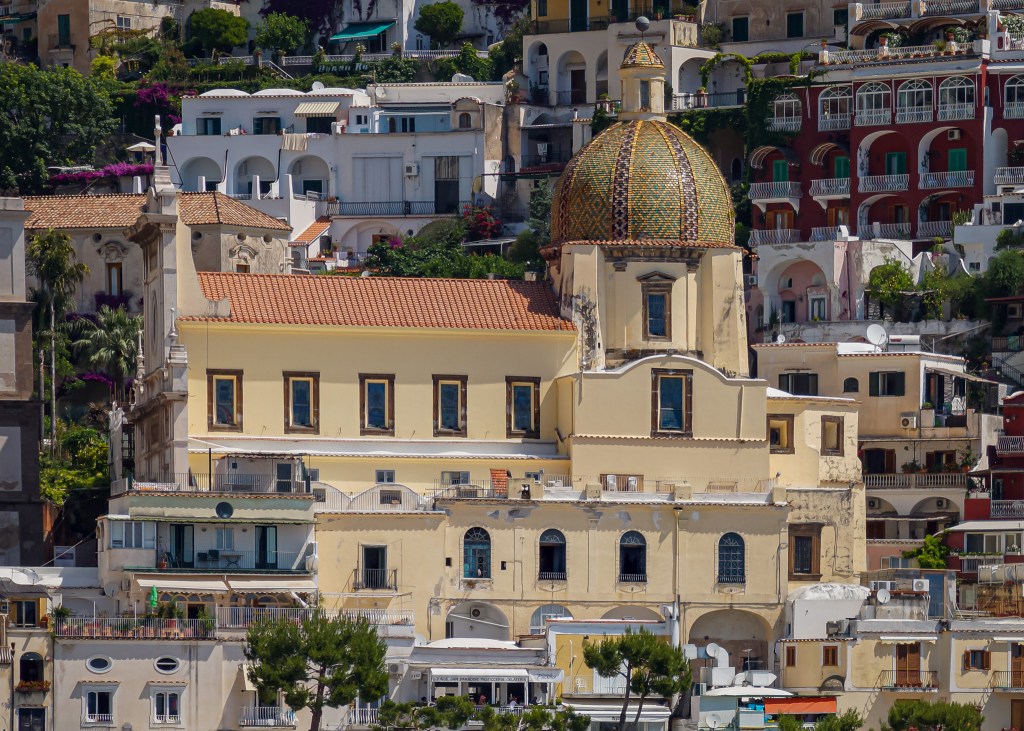
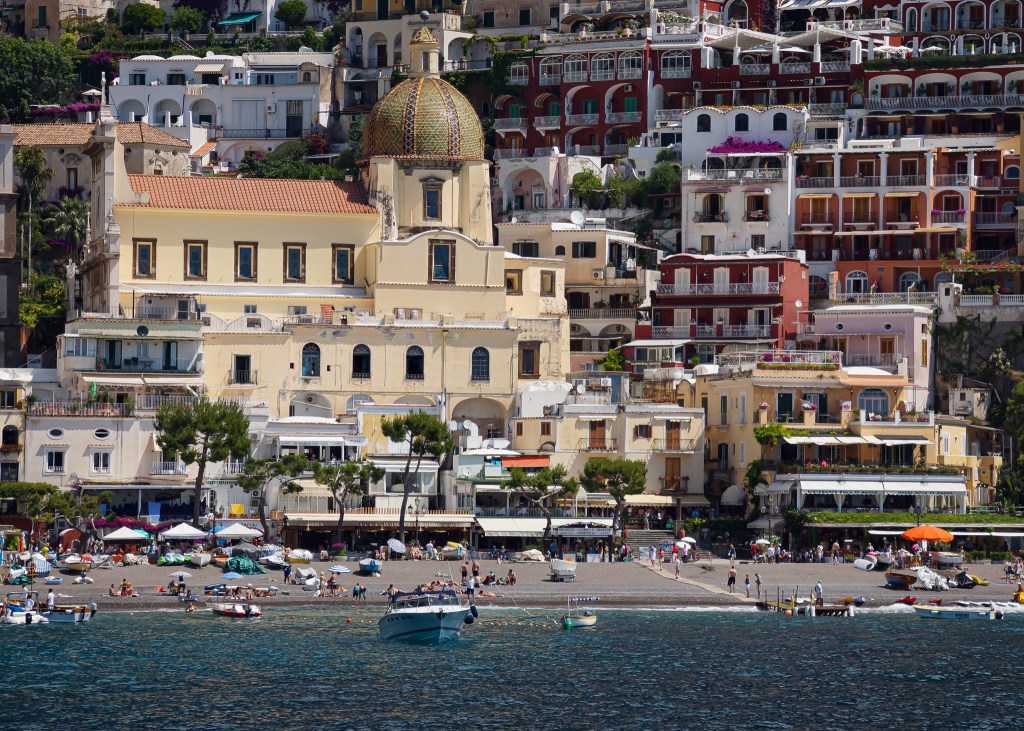
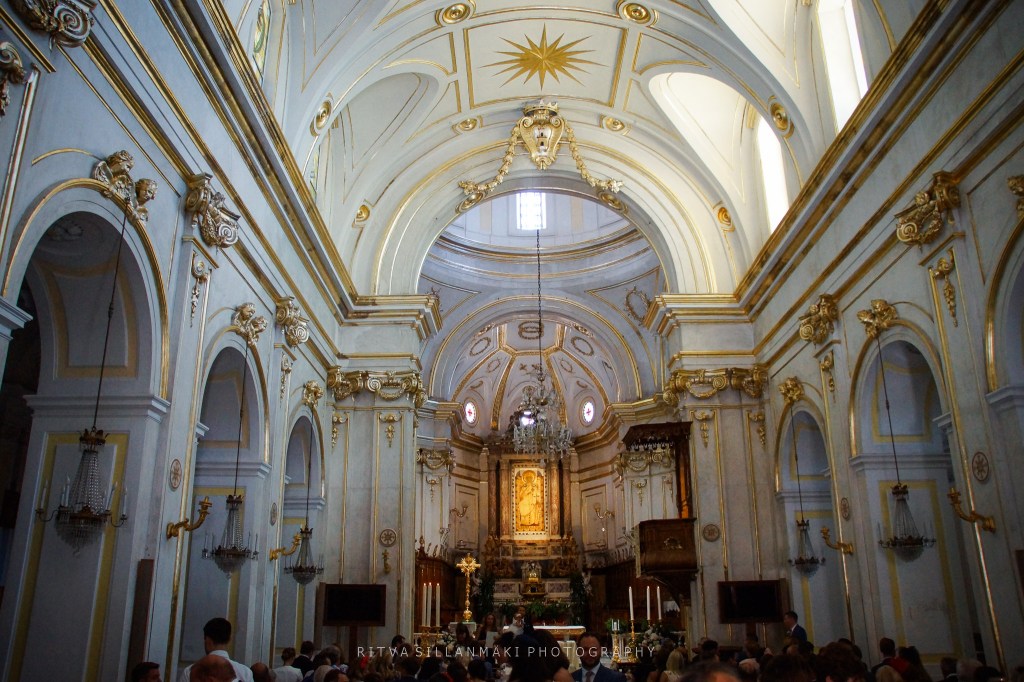
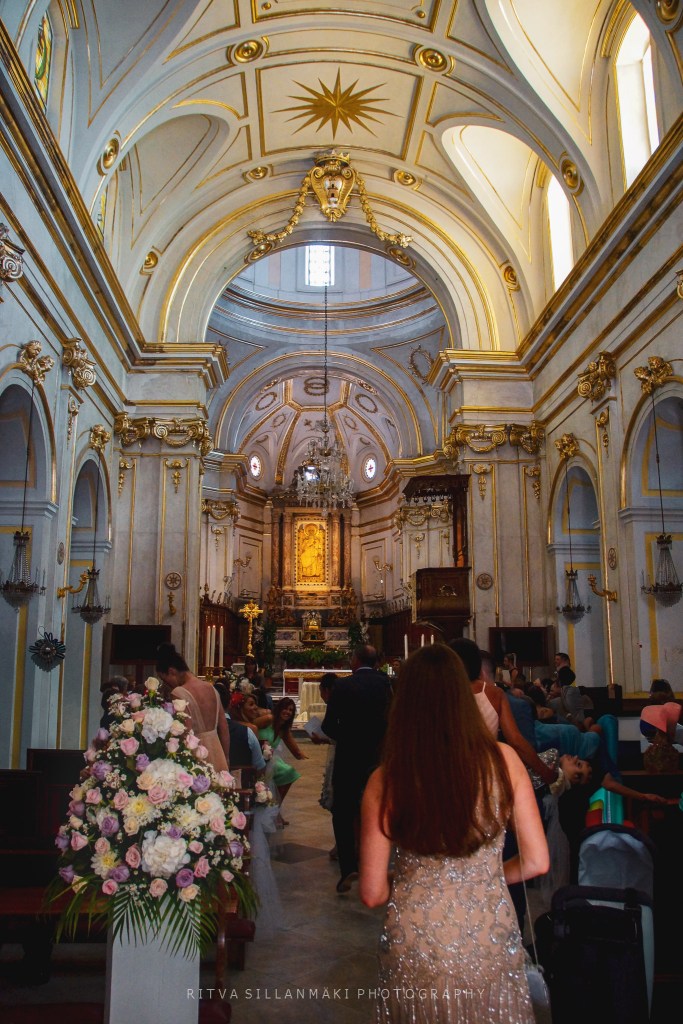
In the picture is the Chiesa di Santa Maria Assunta church, nestled in the charming Positano on the Amalfi Coast, a breathtaking architectural gem that weaves memories of sunny day spent wandering its streets. I can still picture that striking dome, embellished with shimmering majolica tiles, catching the sunlight as if it were a beacon from the past. This lovely church, with roots tracing back to the 12th century, isn’t just a place of worship; it holds stories and dreams, drawing visitors from all corners of the globe. The views of the Mediterranean Sea and the quaint cliffside village always felt like a postcard come to life. I can see art lovers admiring the iconic statue of the Black Madonna, while soaking in the exquisite frescoes and intricate details within its walls, each one a testament to a rich history.
The Chiesa di Santa Maria Assunta church in Positano, overlooking the stunning Amalfi Coast.The Chiesa di Santa Maria Assunta church in Positano, framed by local vegetation.The Chiesa di Santa Maria Assunta and its intricate architecture against a clear blue sky.The Chiesa di Santa Maria Assunta in Positano features a stunning dome adorned with colorful majolica tiles, set against the backdrop of the Amalfi Coast.View of the Chiesa di Santa Maria Assunta church in Positano, featuring its iconic dome and the bustling beach below.The stunning interior of Chiesa di Santa Maria Assunta, showcasing intricate gold details and elaborate frescoes.
Interior view of the Chiesa di Santa Maria Assunta, showcasing its ornate architecture and floral decorations during a special event.
I know I’m being a bit boring by sharing these old re-edited photos for Dan’s Thursday Doors, but honestly, I’m fresh out of new material right now. I can’t wait for the weather to warm up so I can get out there and soak it all in! I’m hoping to wander through the neighborhoods, looking for unique buildings and those interesting doors that seem to hold secrets of the past, and even present. I most likely will also photograph the vibrant colors and fresh blooms along the way. I will the my camera out, and maybe discover architectural gems that tell their own stories.
In the picture, there is a traditional French building that represents typical Parisian architecture.
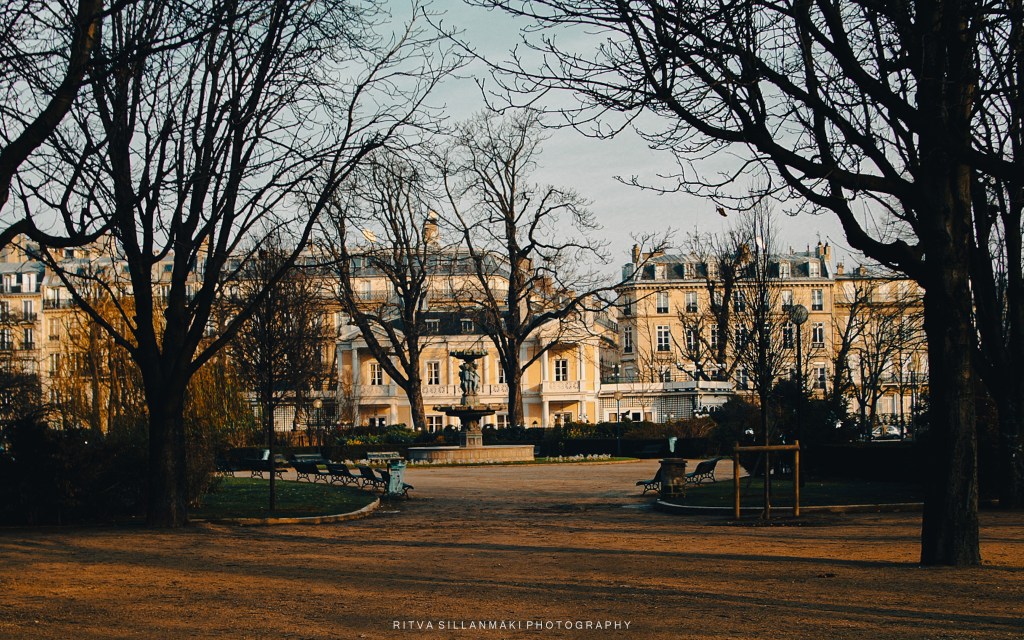
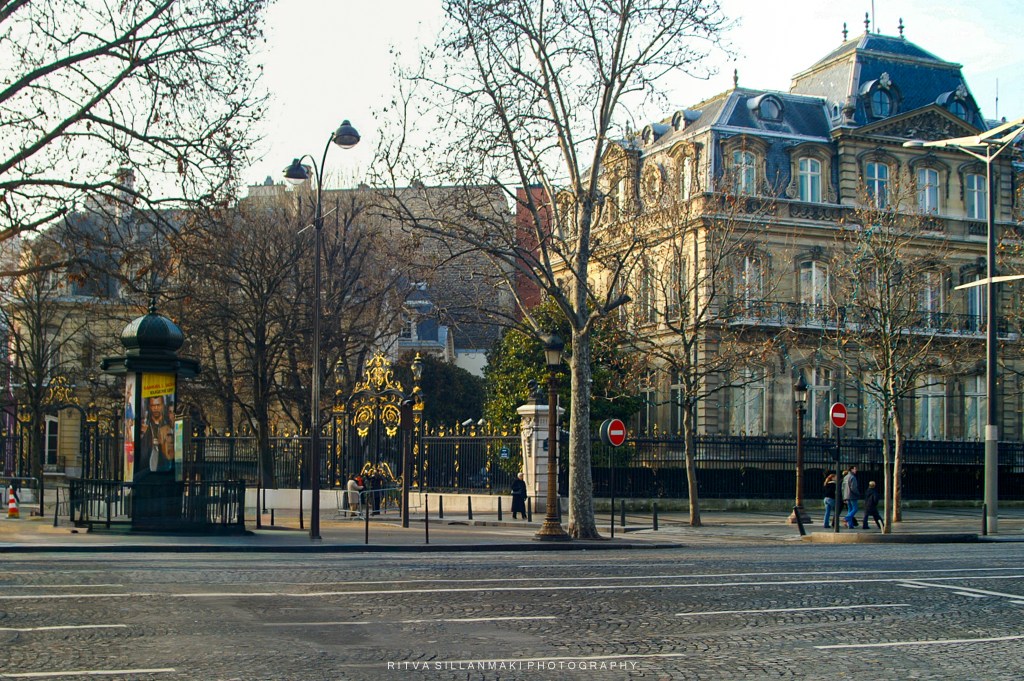
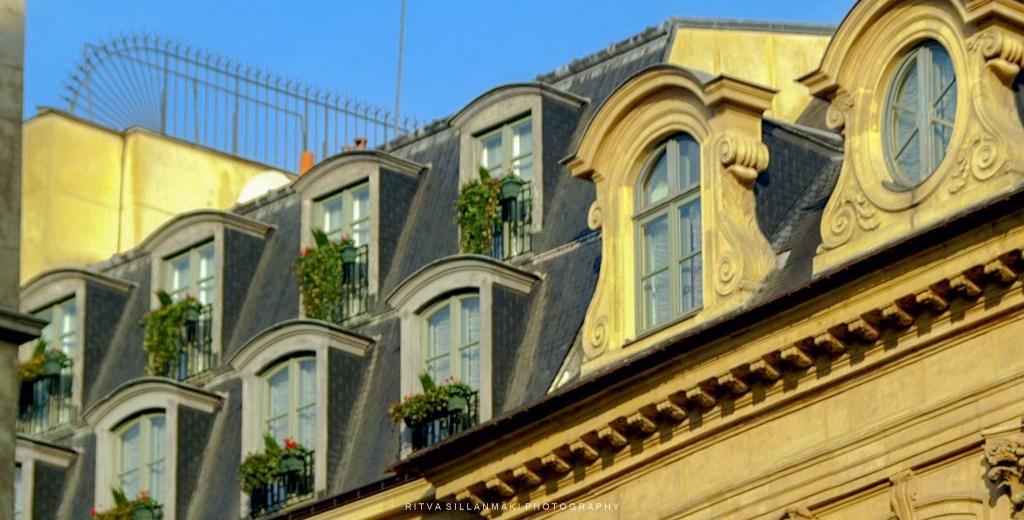
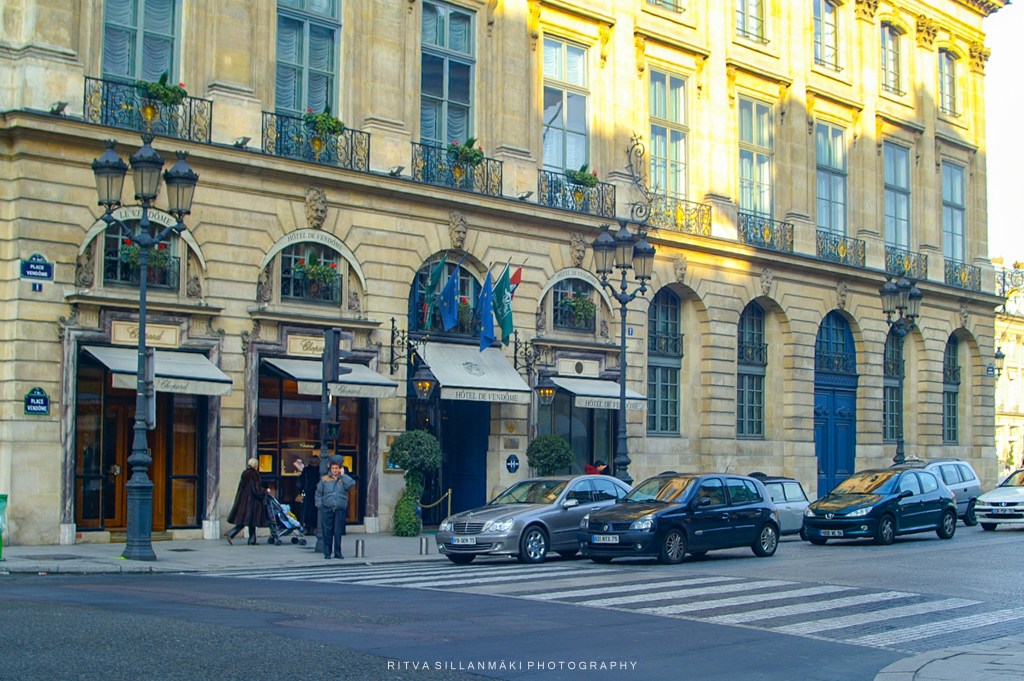
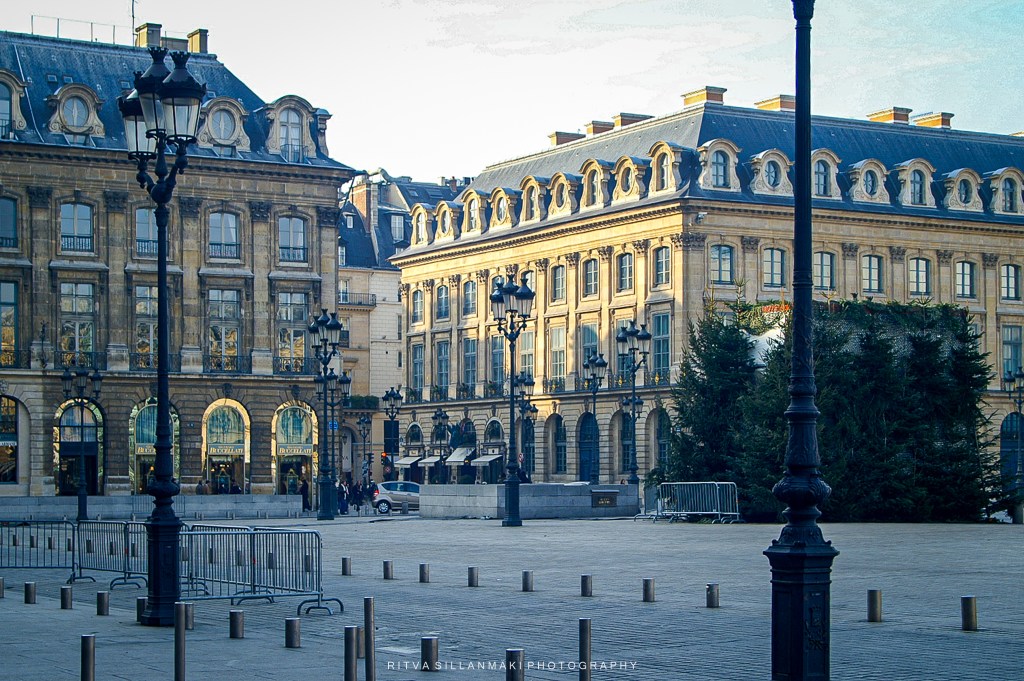
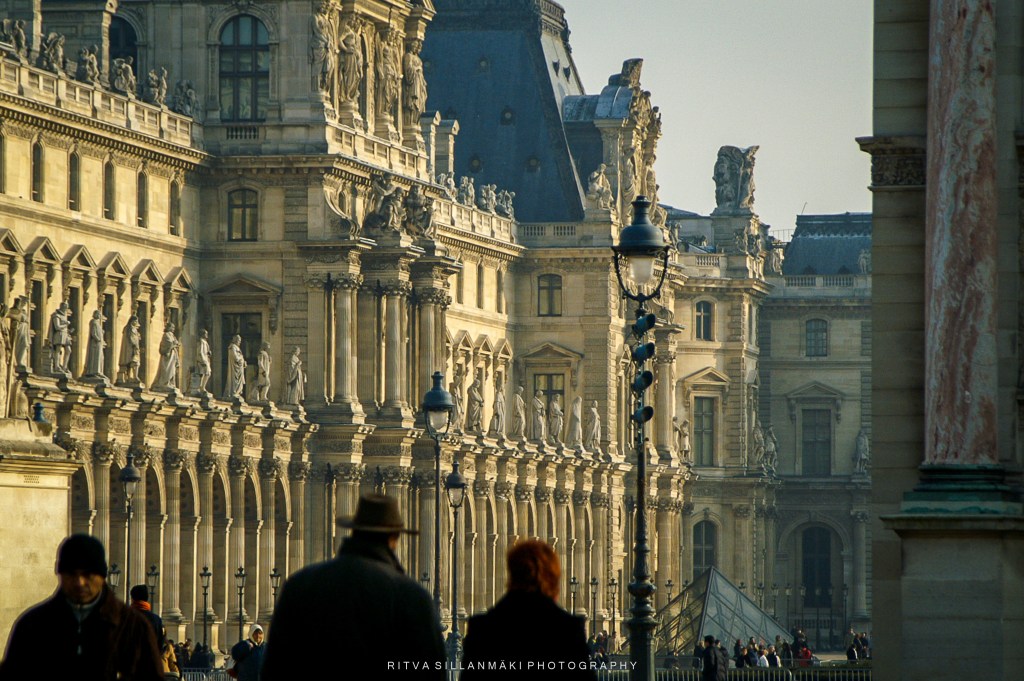
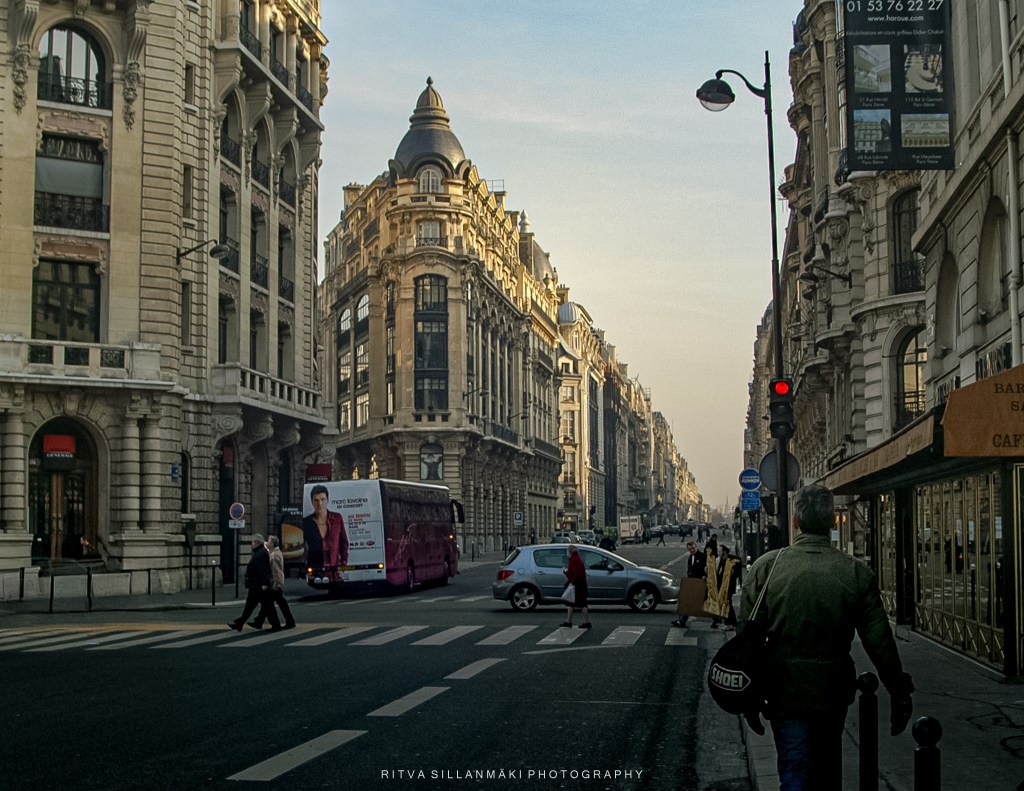
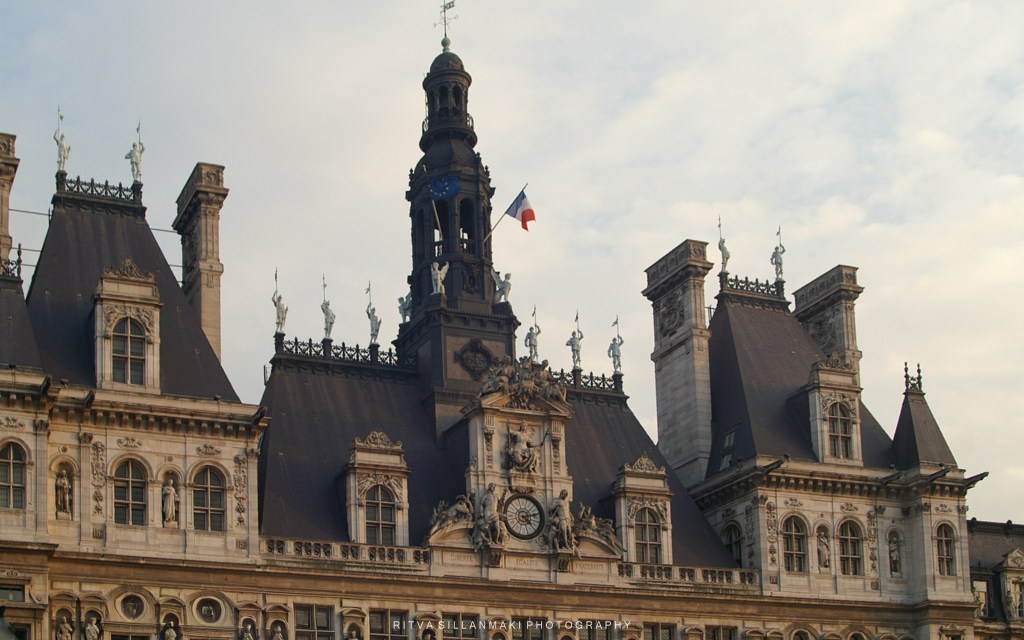
Well I could mark some locations in Paris for you but not all, and as these are taken in 2006, much has changed. The first one I am not able to name. By the way these were taken in the month of January.
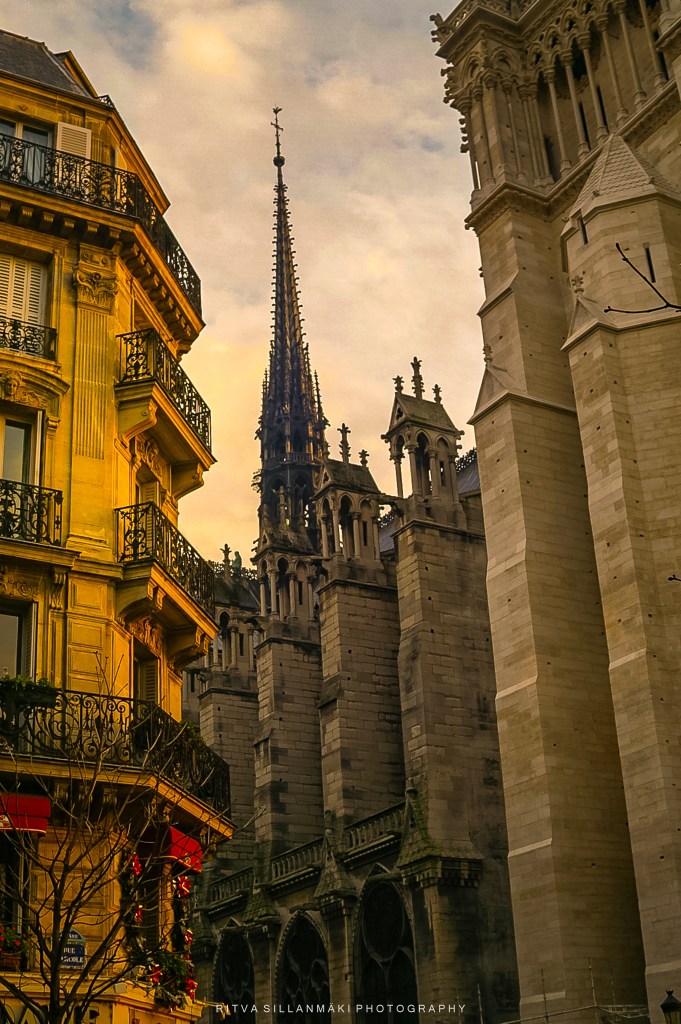
For one, the reconstructed spire of Notre-Dame cathedral in Paris, with a design identical to the 1859 version designed by architect Eugène Viollet-le-Duc, is among the elements of the landmark to be reconstructed following the devastating fire in 2019. The rebuilt spire is topped with a recreation of the original cross, as well as a golden rooster designed by architect Philippe Villeneuve, who is leading the renovation works.
Scenic view of a Paris park showcasing elegant architecture framed by bare trees.
the historic Hôtel Marcel Dassault building located at the Rond-Point des Champs-Élysées square in Paris.
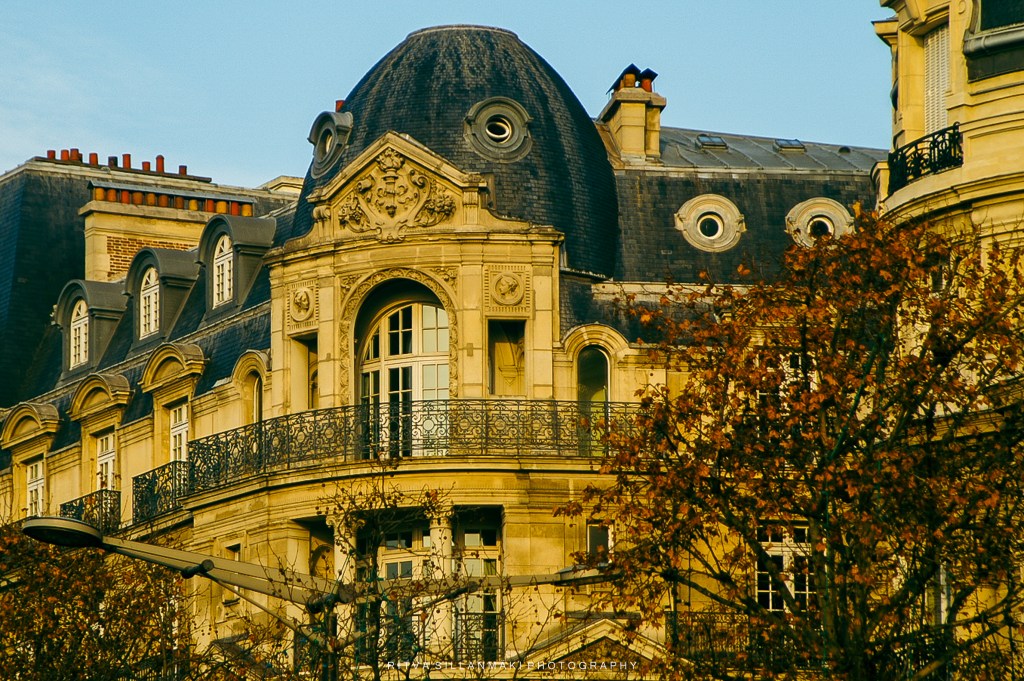
Close-up of classic Parisian architecture featuring intricate windows and charming rooftop details.
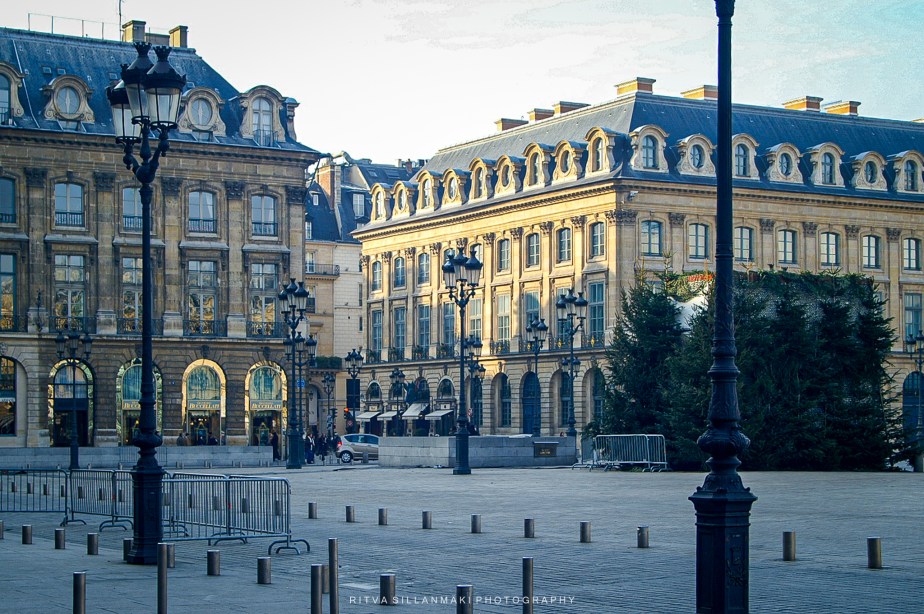
The elegant façade of Hôtel de Vendôme in Place Vendôme, Paris, showcasing classic Parisian architecture.
View of Place Vendôme square in Paris, showcasing its iconic architecture and elegance.
Stunning view of the ornate architecture at the Louvre, showcasing classic Parisian style.
The Rue Réaumur in Paris, featuring skillfully crafted historical buildings.
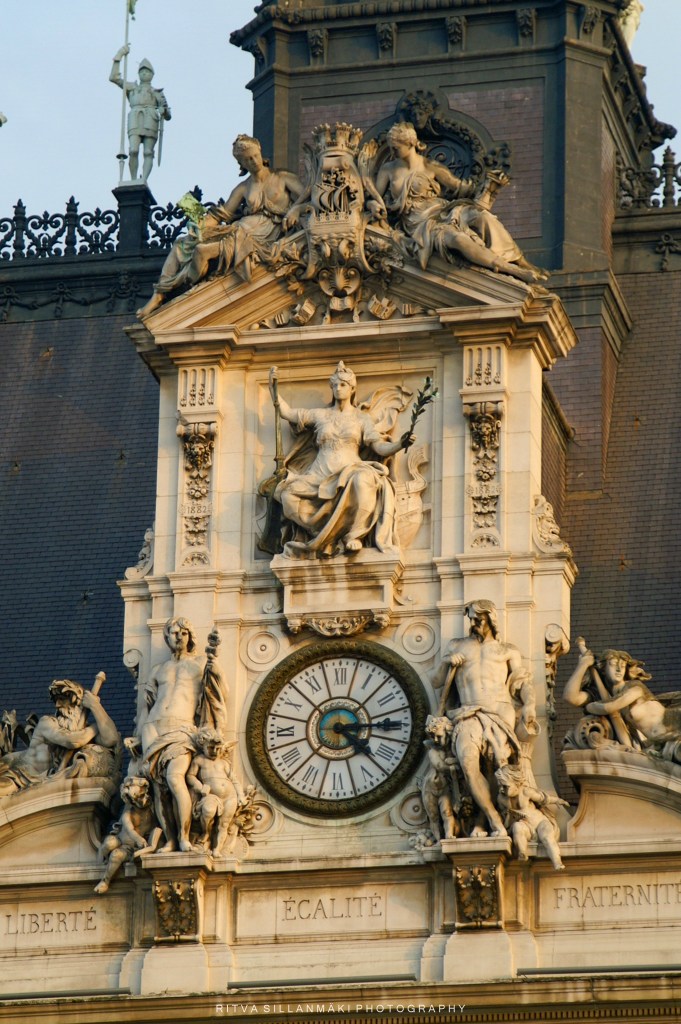
A close-up view of the ornate architecture of the Paris City Hall, showcasing its impressive spires and sculptures.
Close-up of the intricate architectural details of the clock and sculptures at Paris City Hall, highlighting its historical significance and artistic craftsmanship.
View of traditional Parisian architecture alongside the iconic Notre-Dame Cathedral spire at sunset.
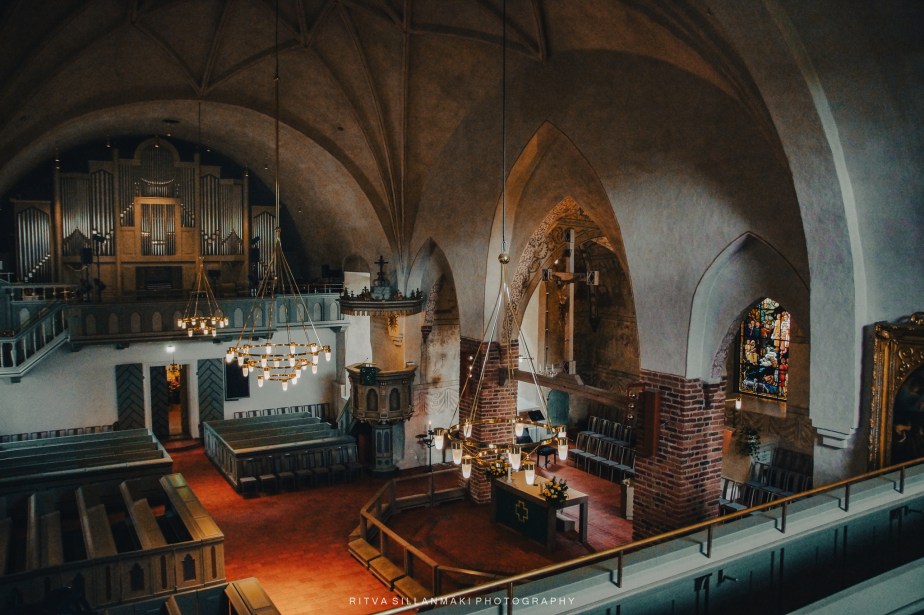
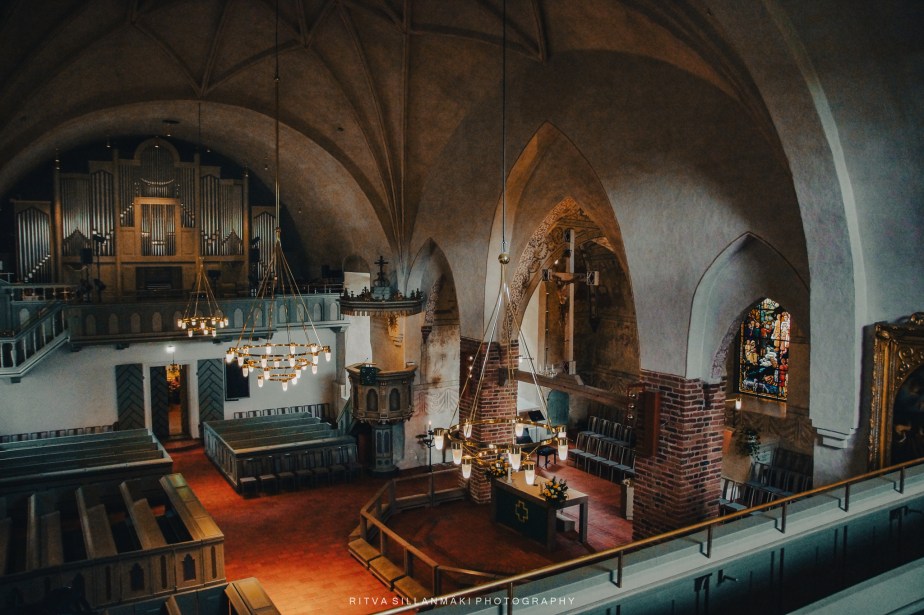
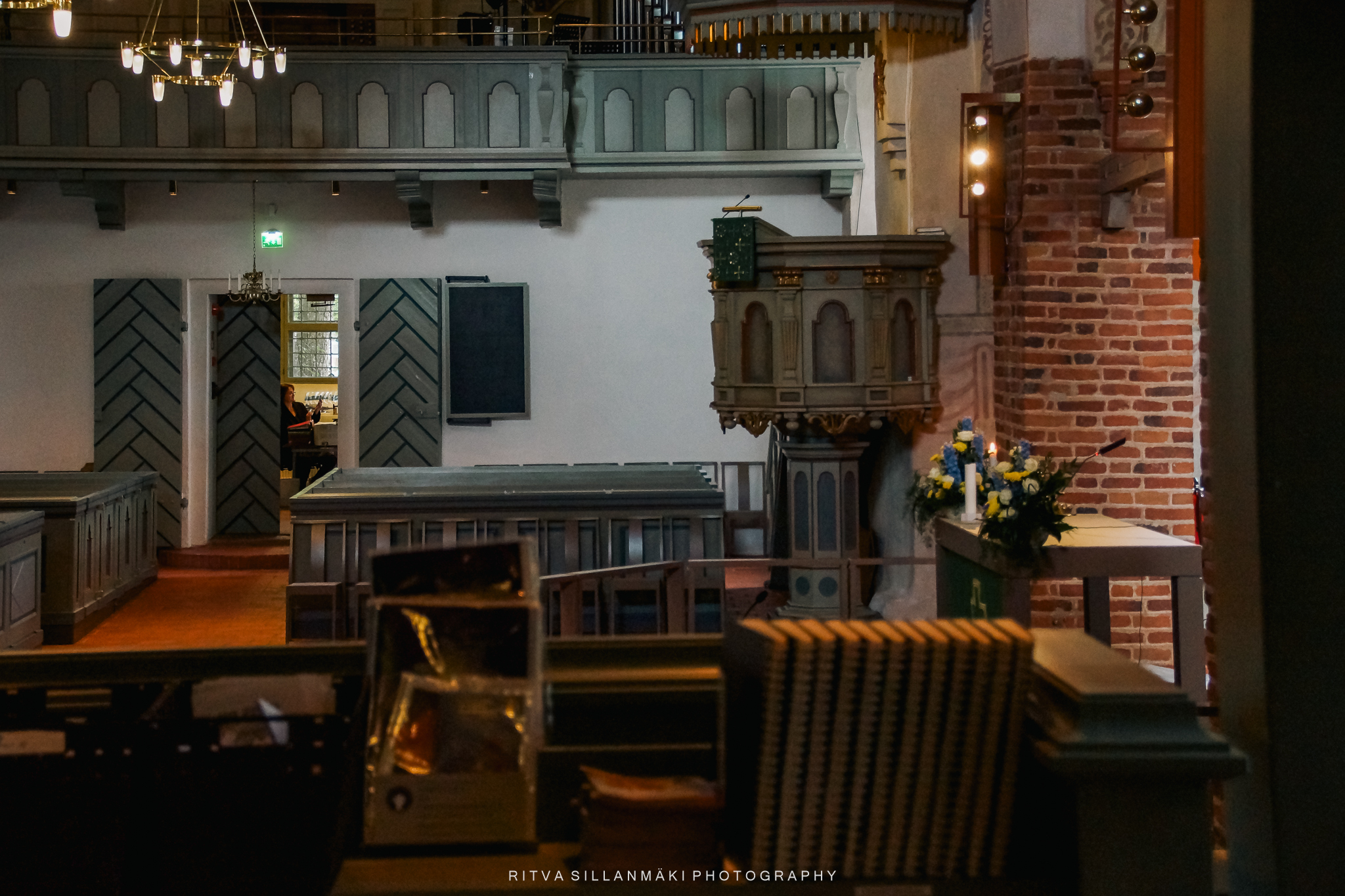
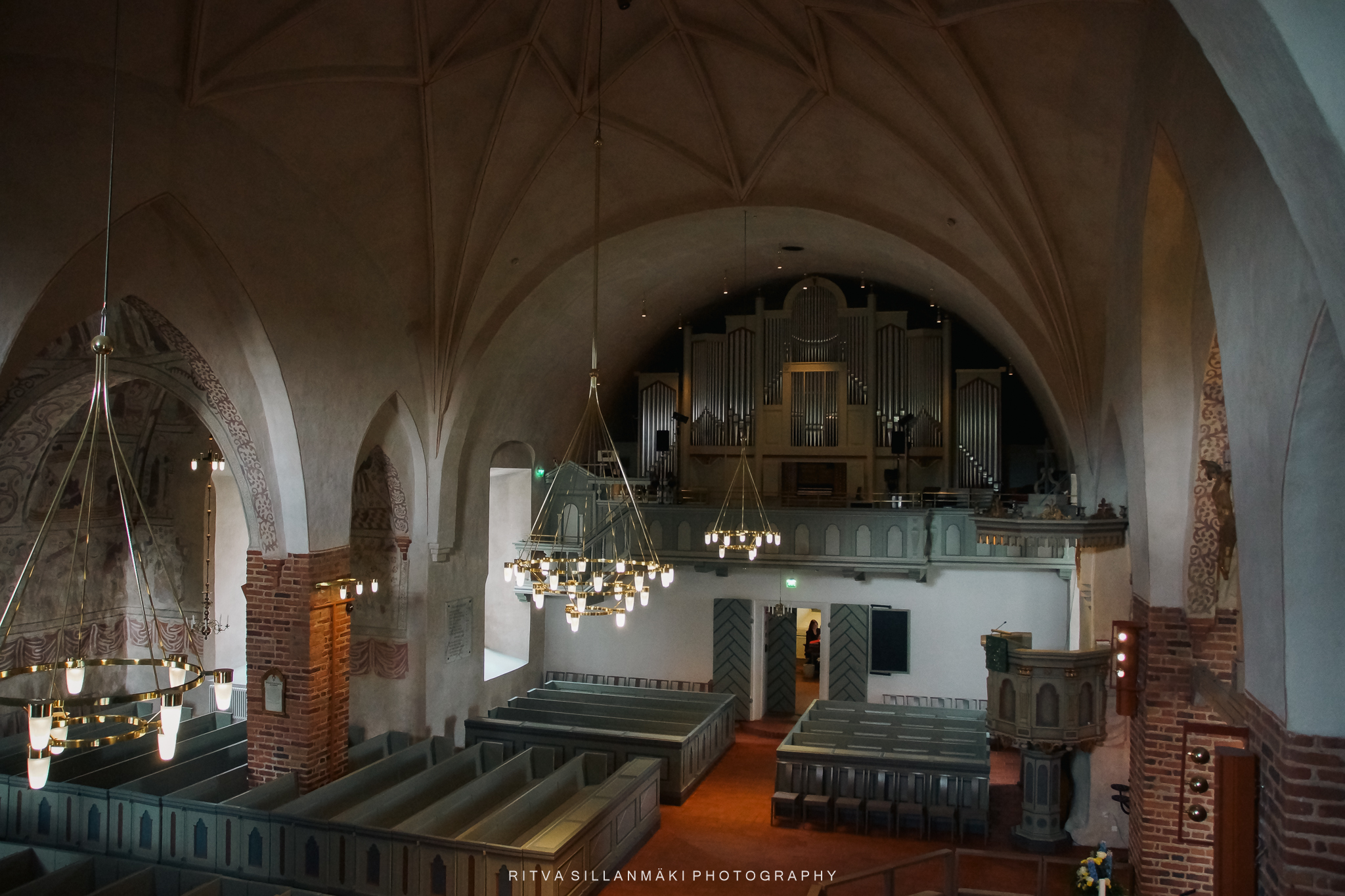
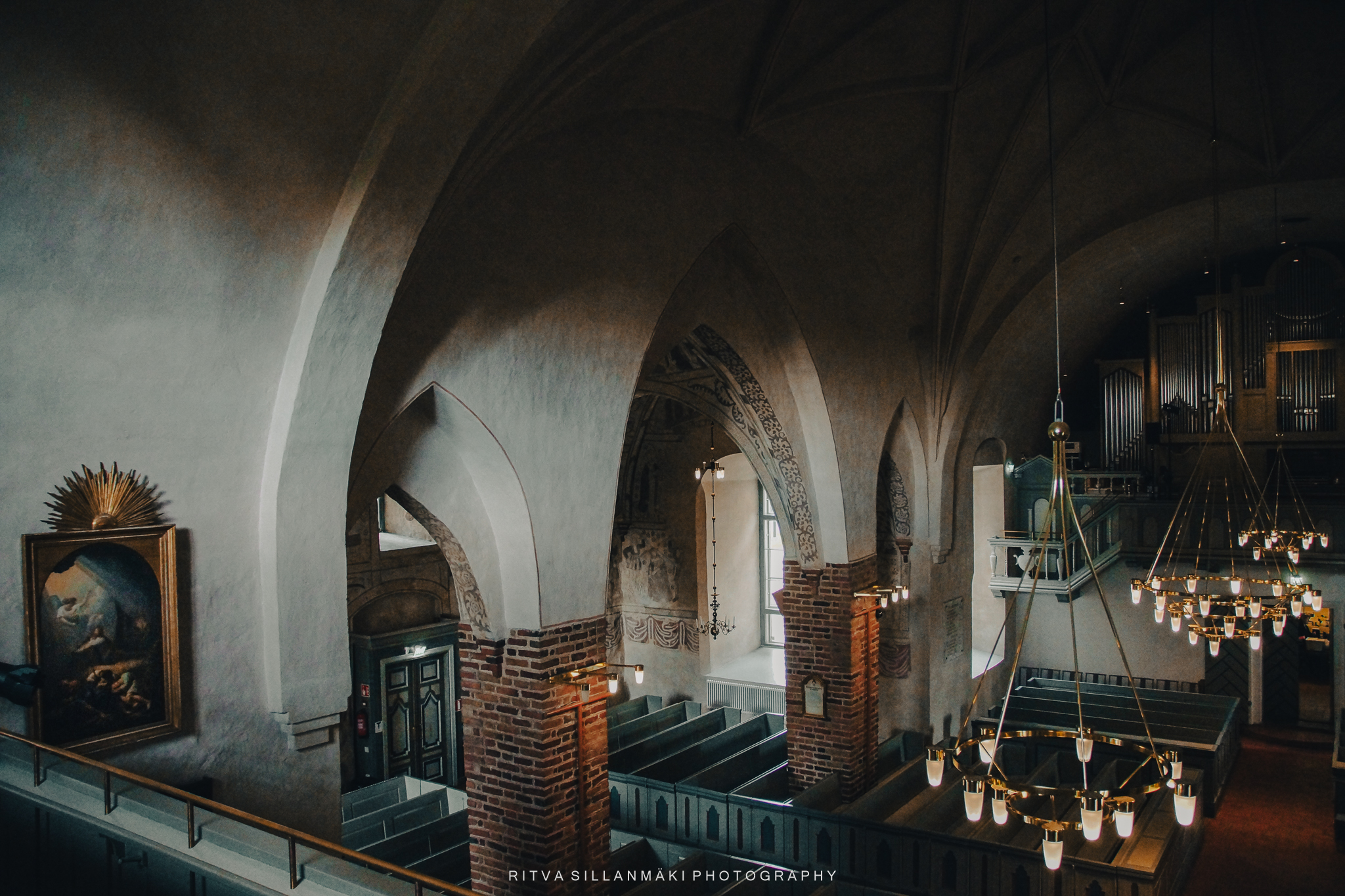
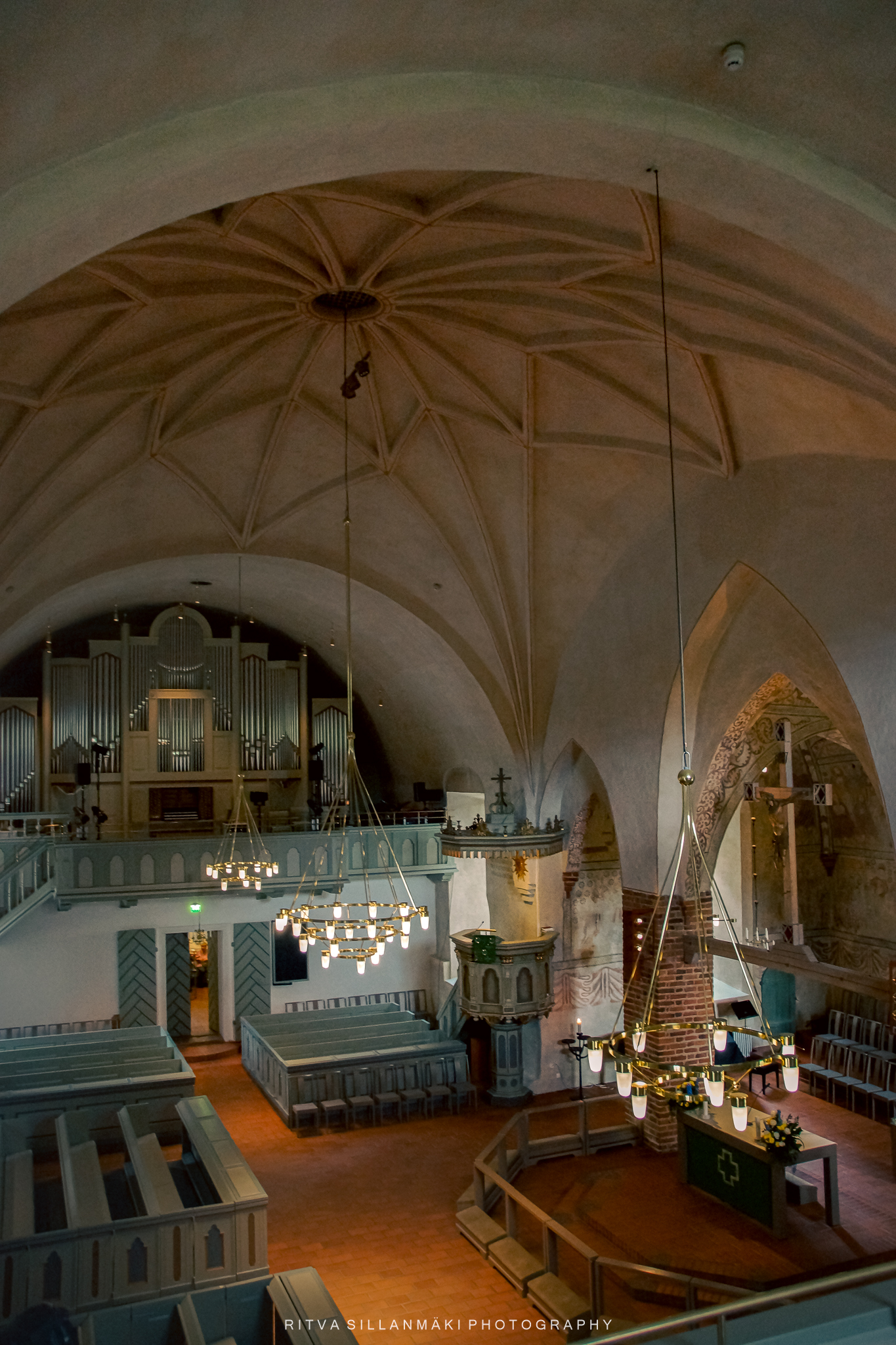
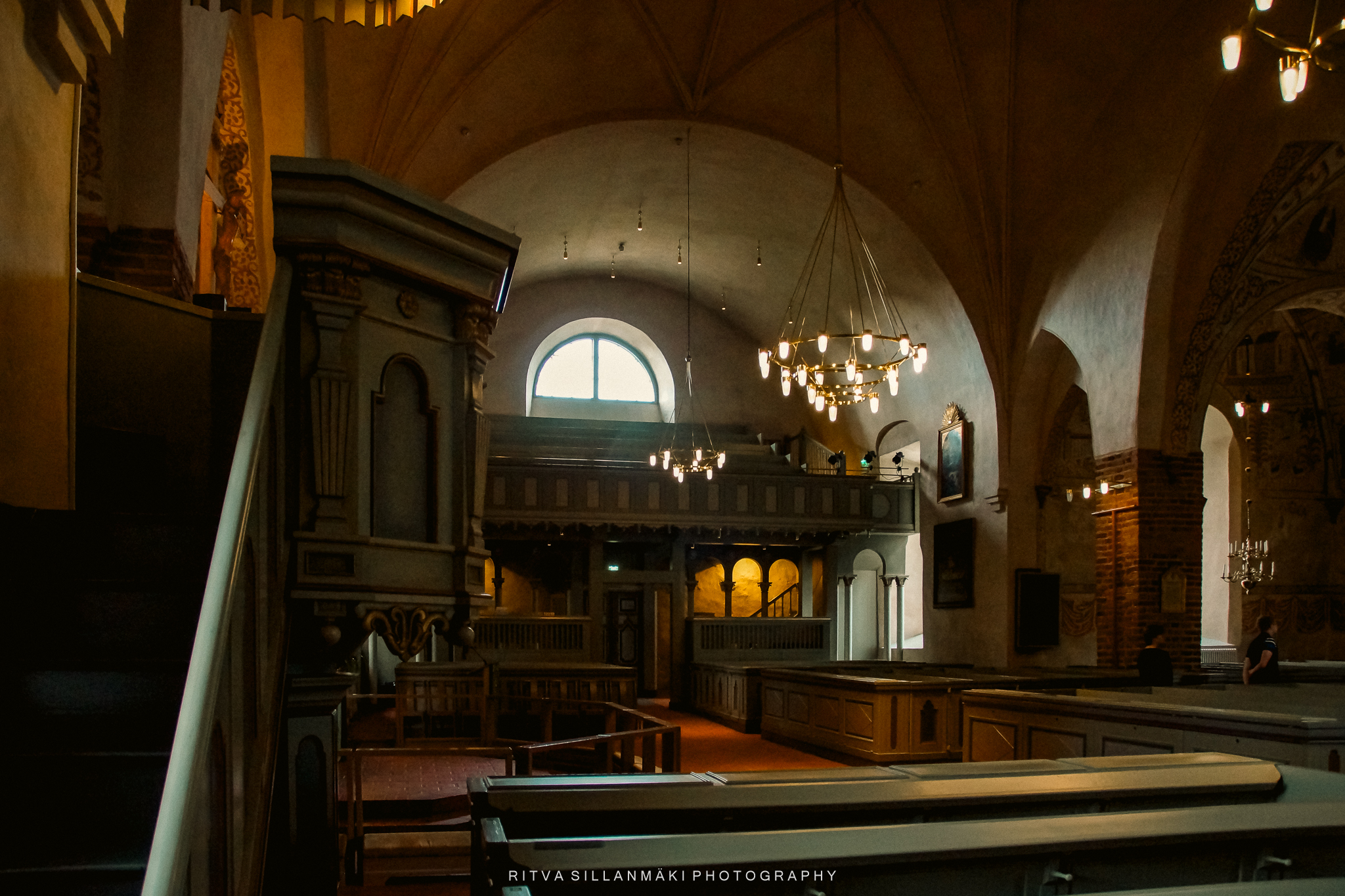
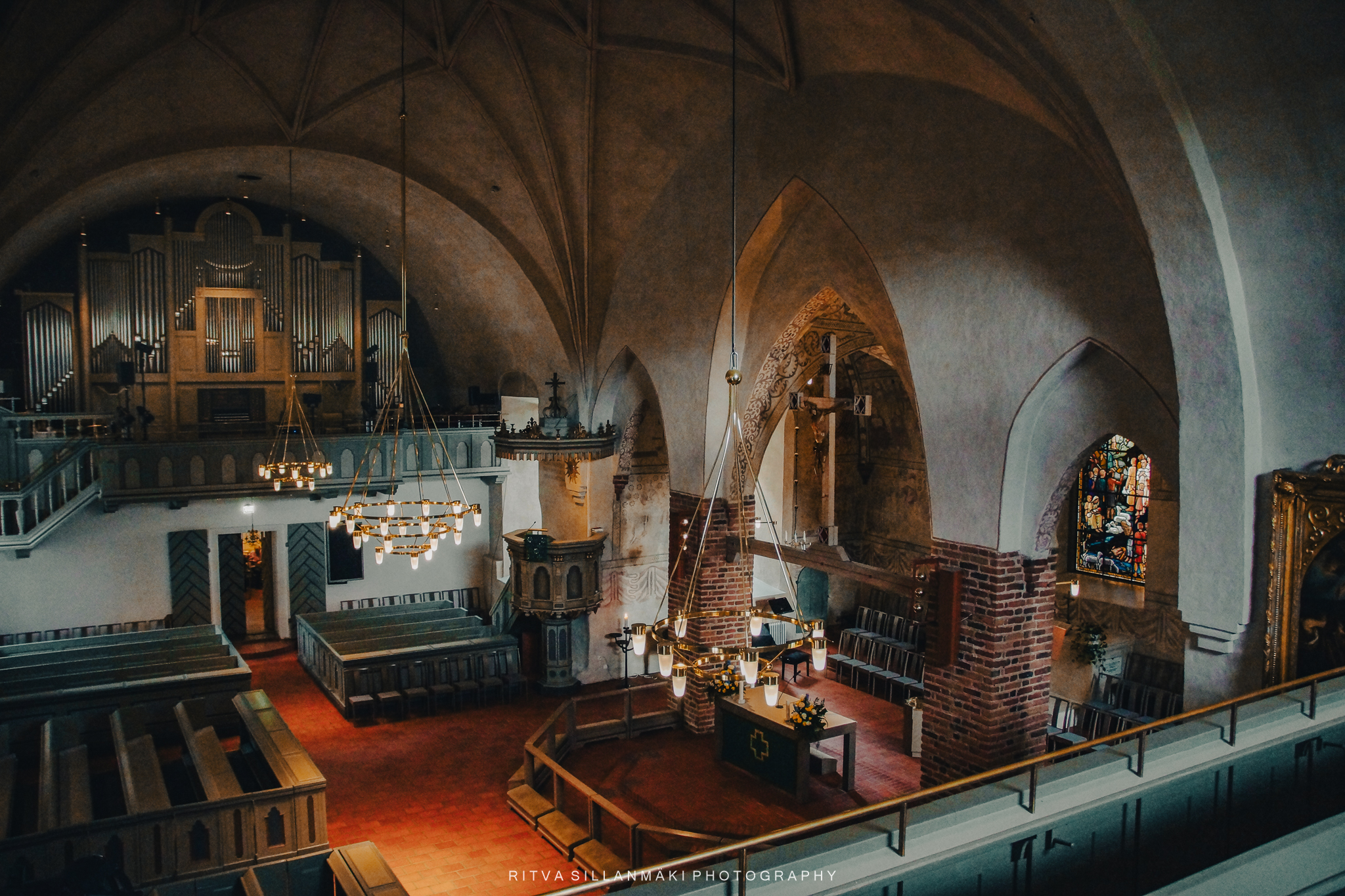
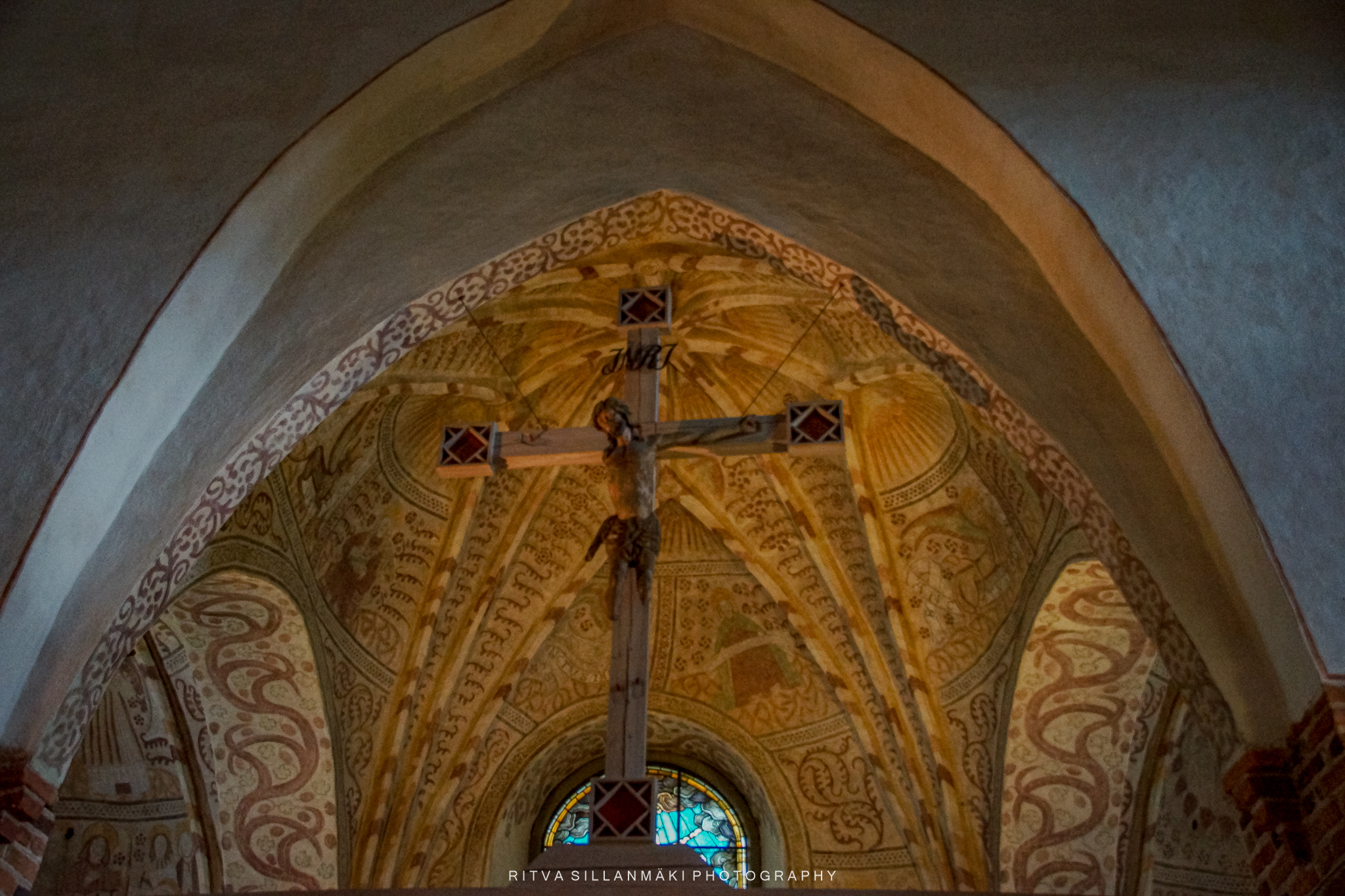
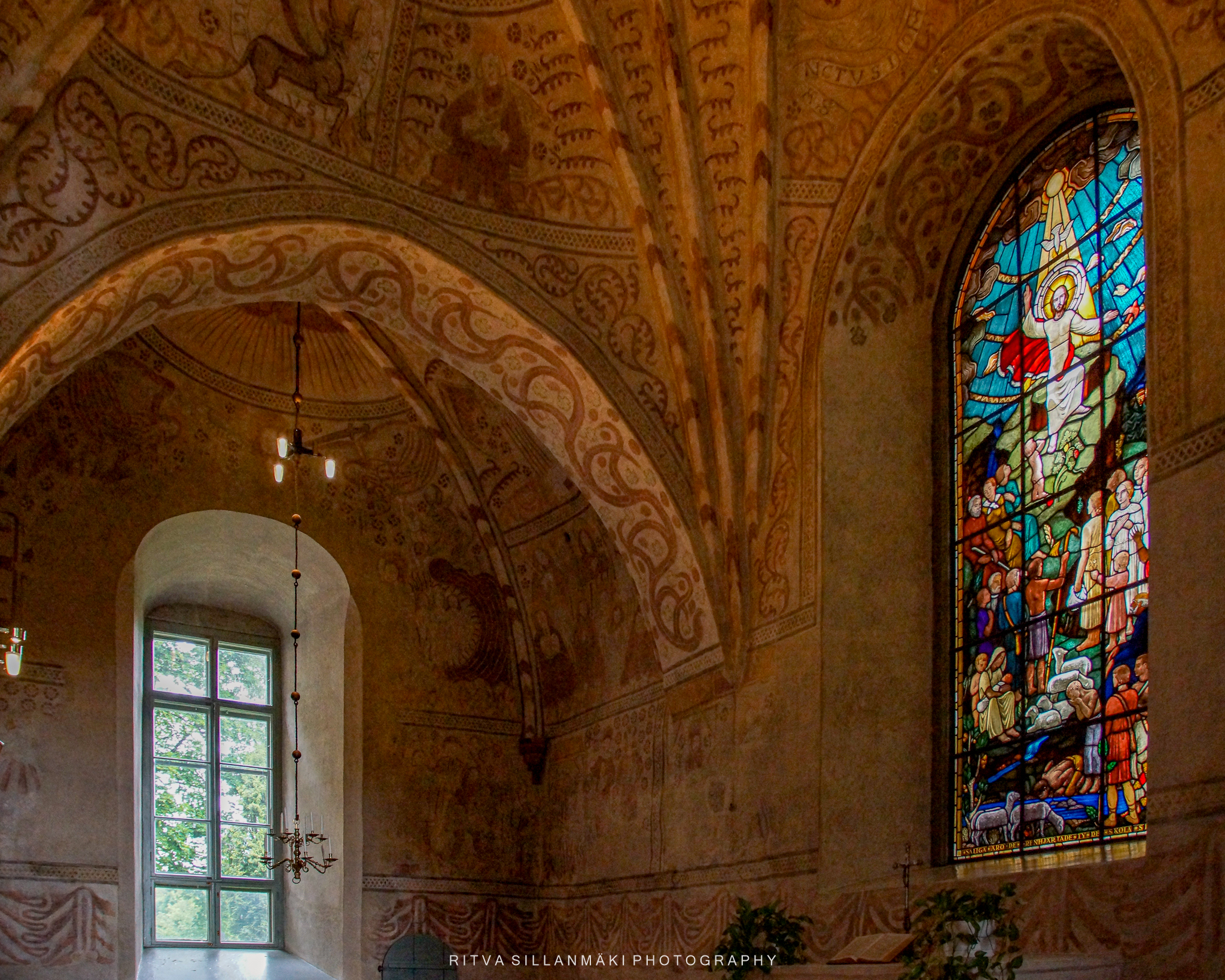
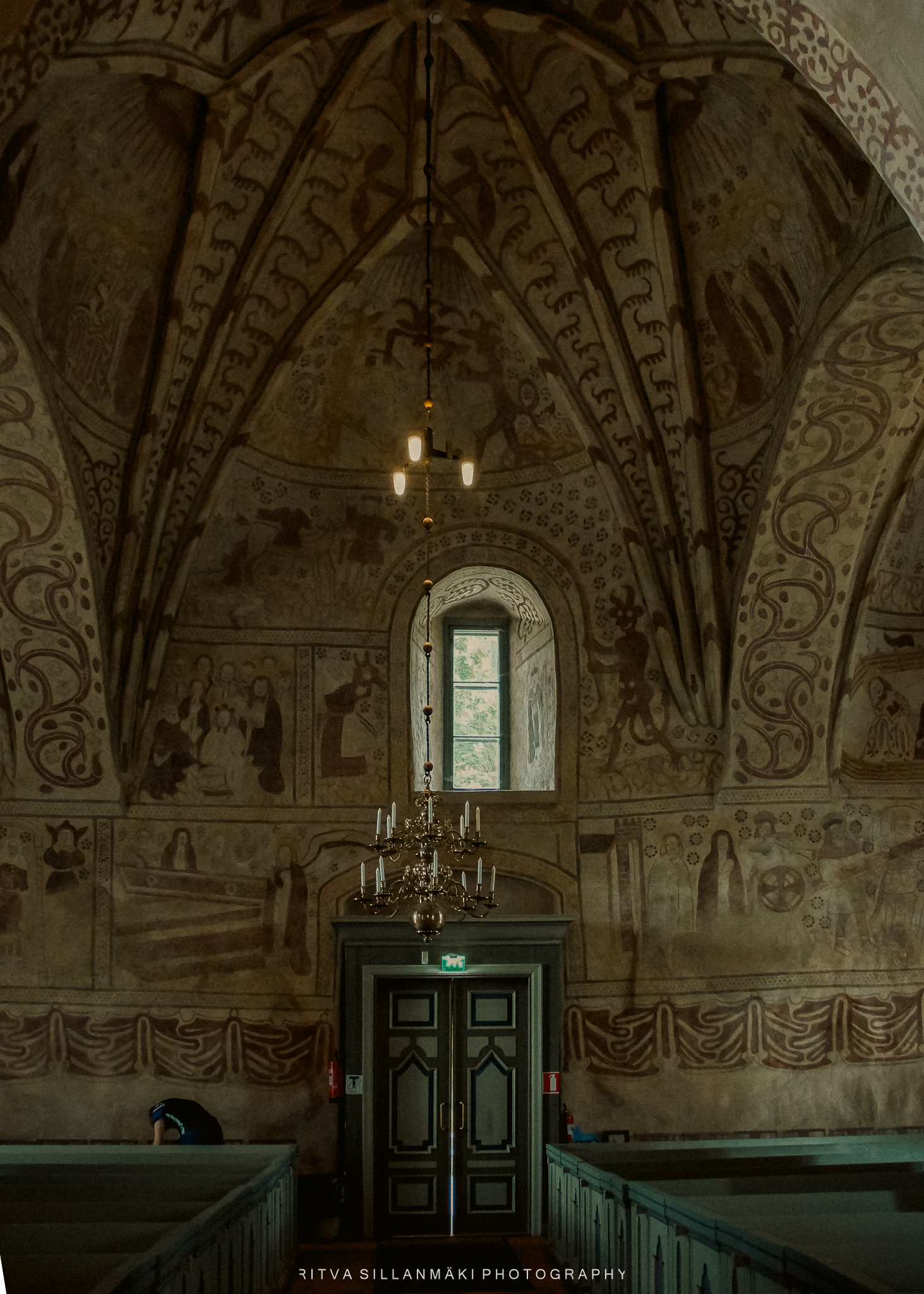
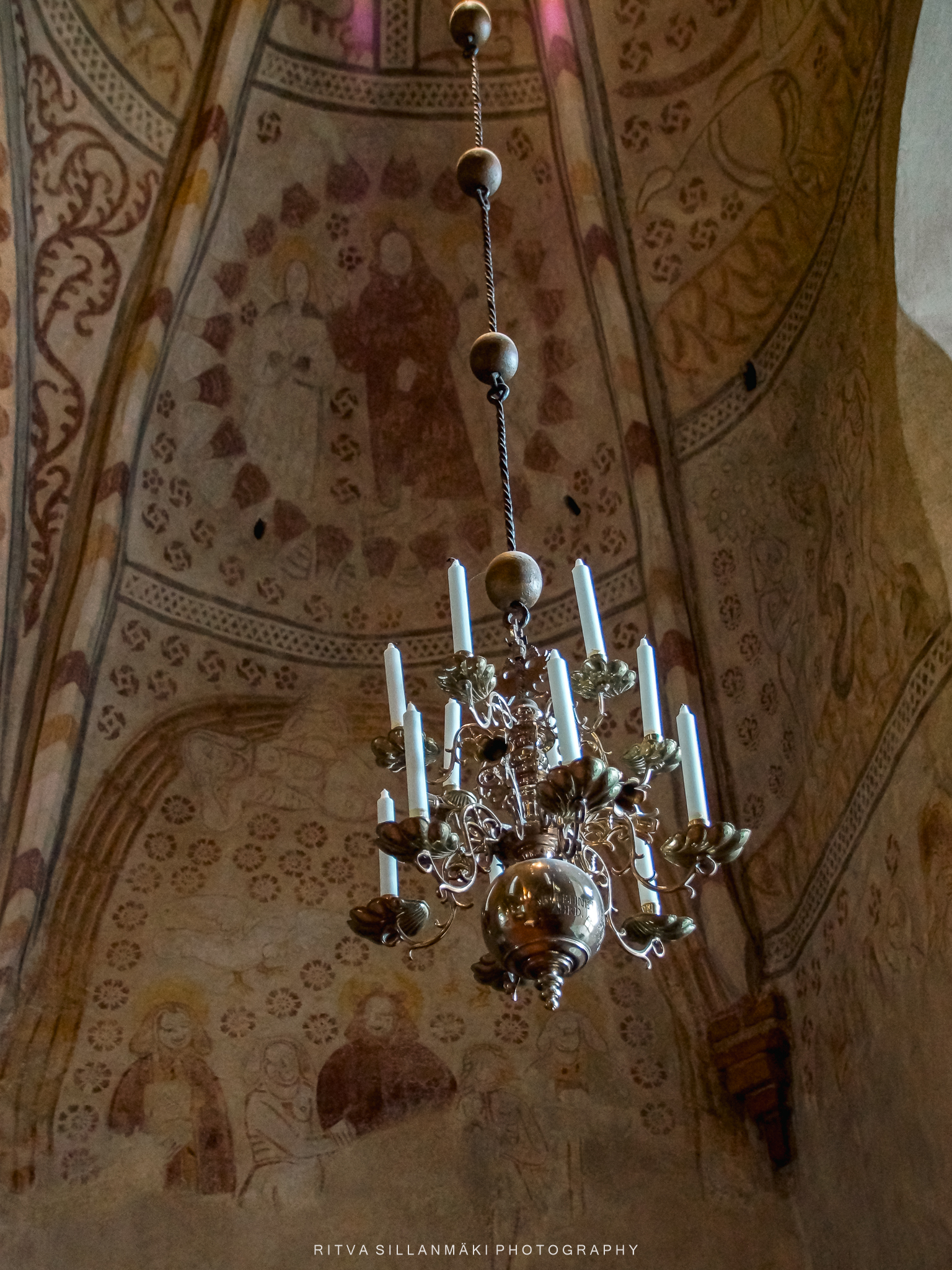
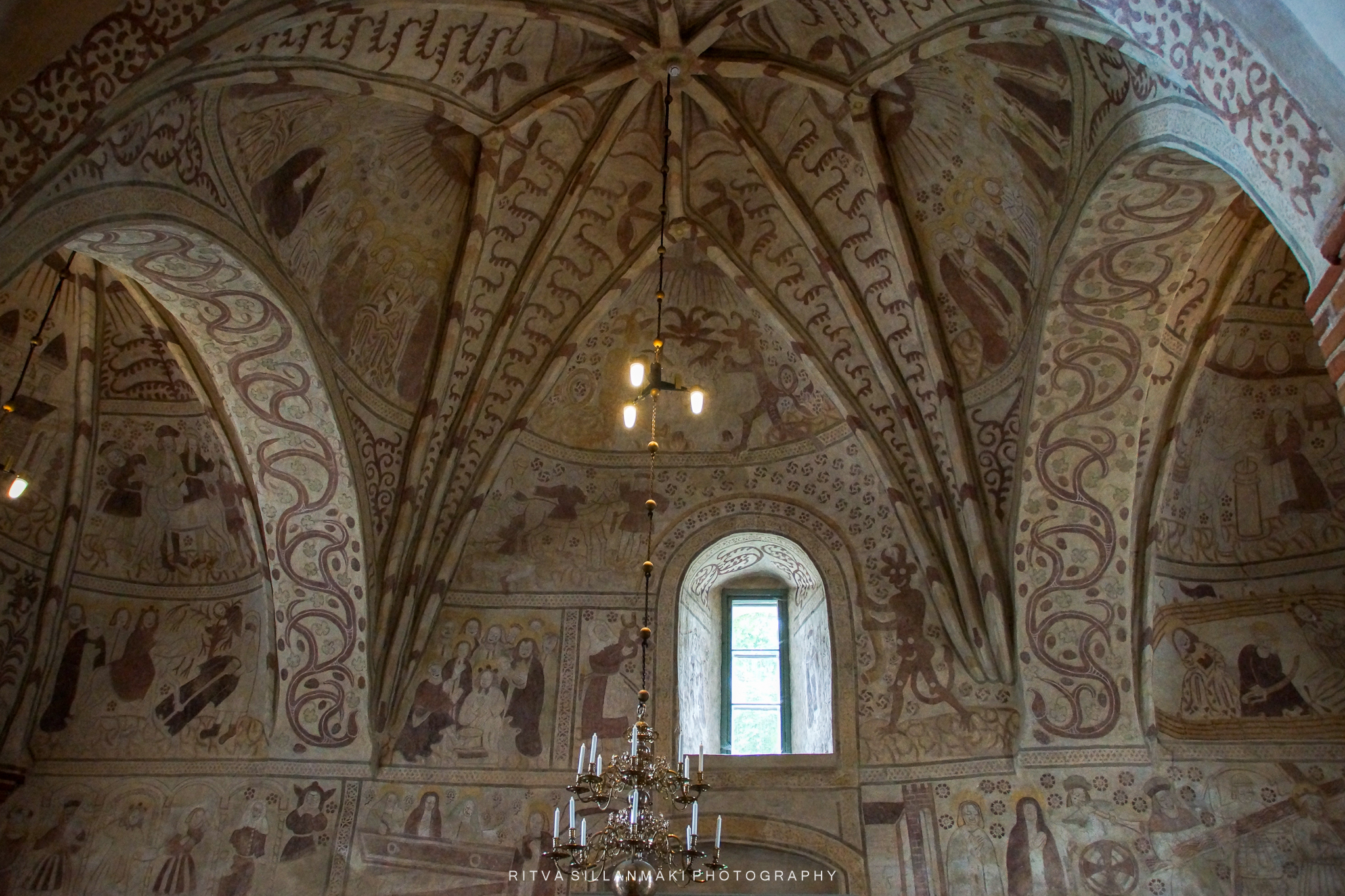
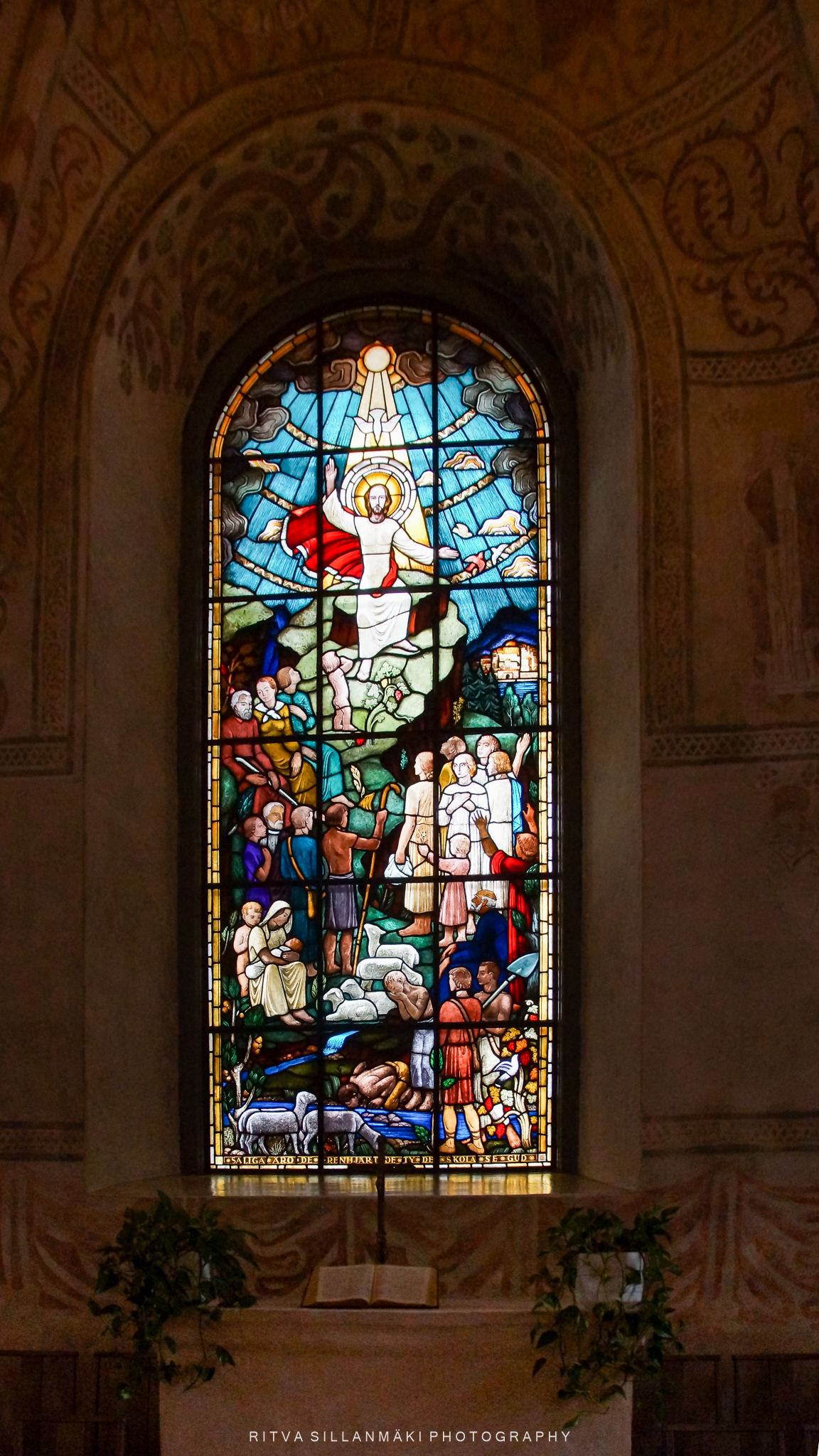
Here are some more images from this old church and a link to more information of Espoo Cathedral .
I have additional images taken, but I plan to share them separately, as I think these particular ones align well with Dan’s theme. I’m aware that people often overlook images when there are too many of them, which has been a common mistake in many of my earlier posts. I really strive to thoughtfully select and limit the number of images I include. Hopefully, I can keep the attention and ensure that every image adds value to the story, creating a more deliberate and enjoyable experience as they explore the content.
The church was crafted in the late 15th century by an anonymous “Espoo master” and constructed between 1485 and 1490 under his guidance. The only remnants of the medieval structure are the eastern and western sections of the nave. The armory was dismantled from 1804 to 1806, and several other portions of the church, including the original sacristy, were taken apart between 1821 and 1823 when the edifice was transformed into a larger cruciform layout.
Click the galleries to see the photos more clearly, that is if you are looking at them on your computer as most of my followers are, I saw in the stats that the number is 82% ☺
The vaults and walls of the older sections of the cathedral feature murals, predominantly painted in the 1510s, showcasing both biblical narratives and scenes from everyday life. These paintings were concealed in the 18th century due to perceptions of being “crude and superstitious,” but were exposed and restored during renovations in 1931. The current campanile of the cathedral was finalized in 1767, with its upper section remodeled between 1868 and 1869.
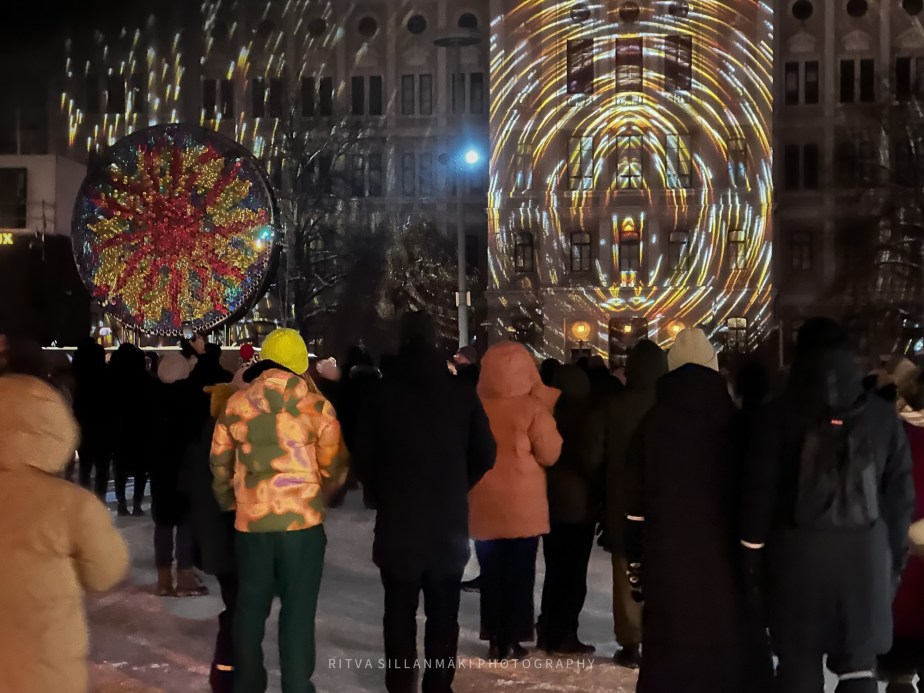
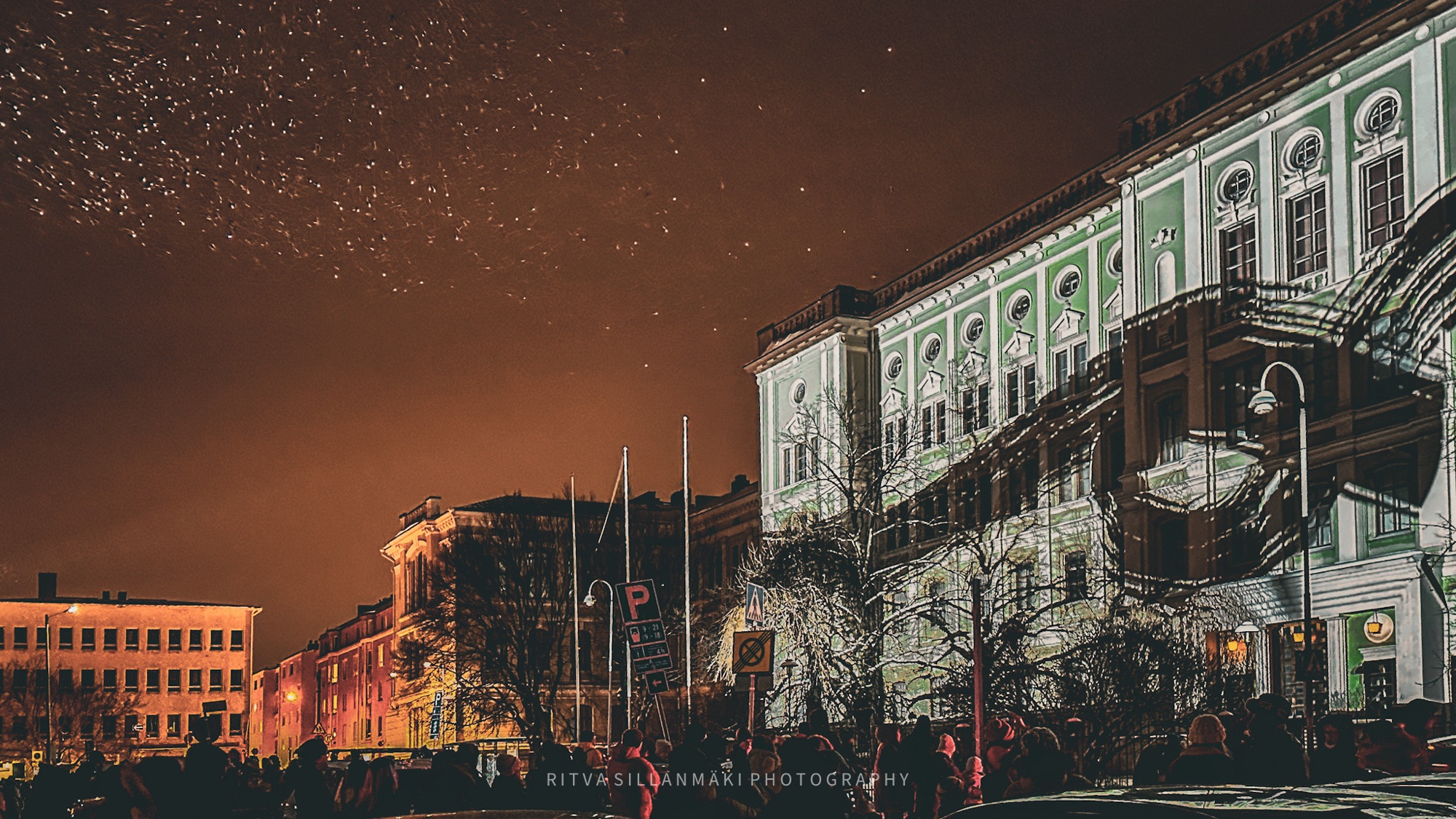
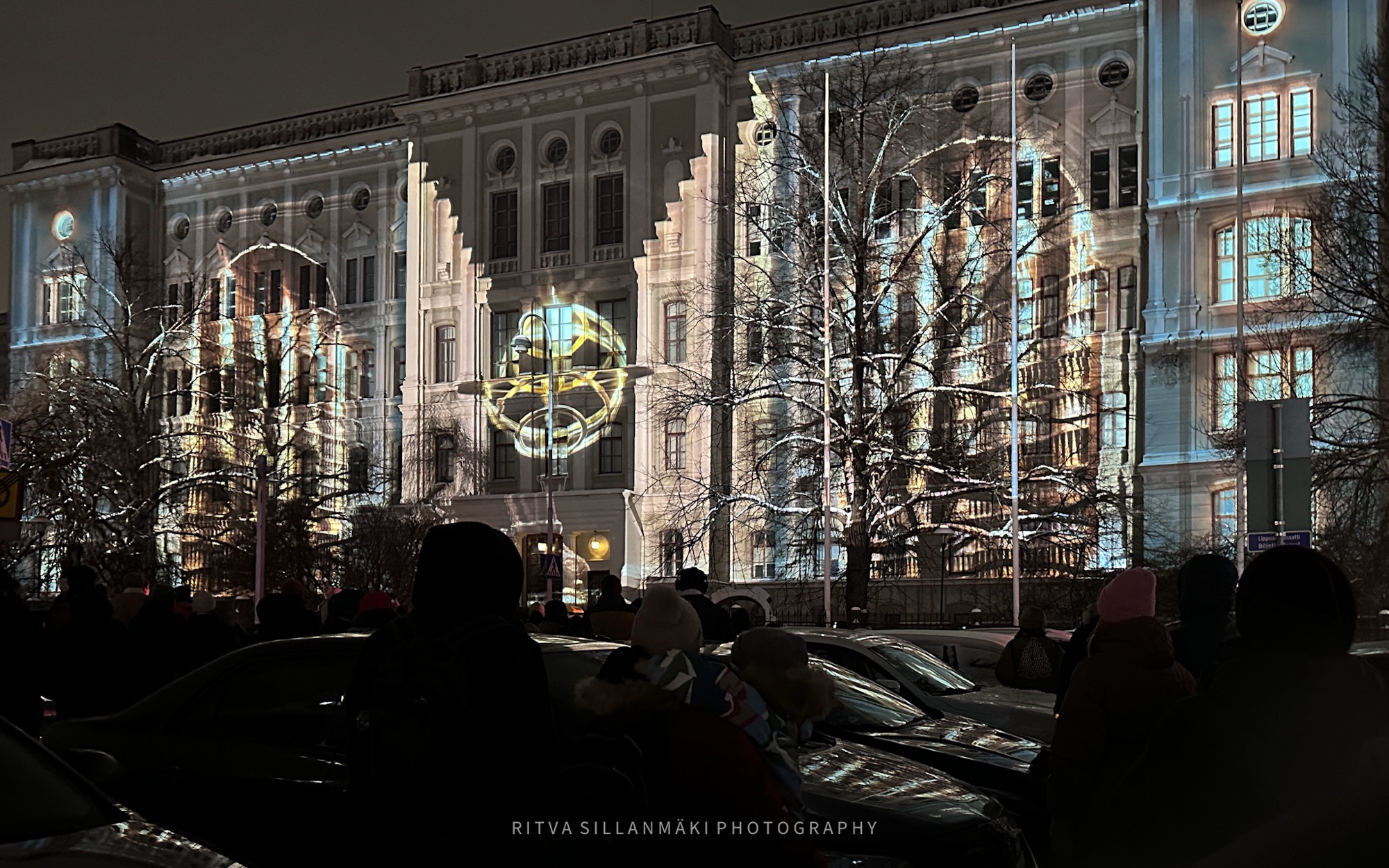
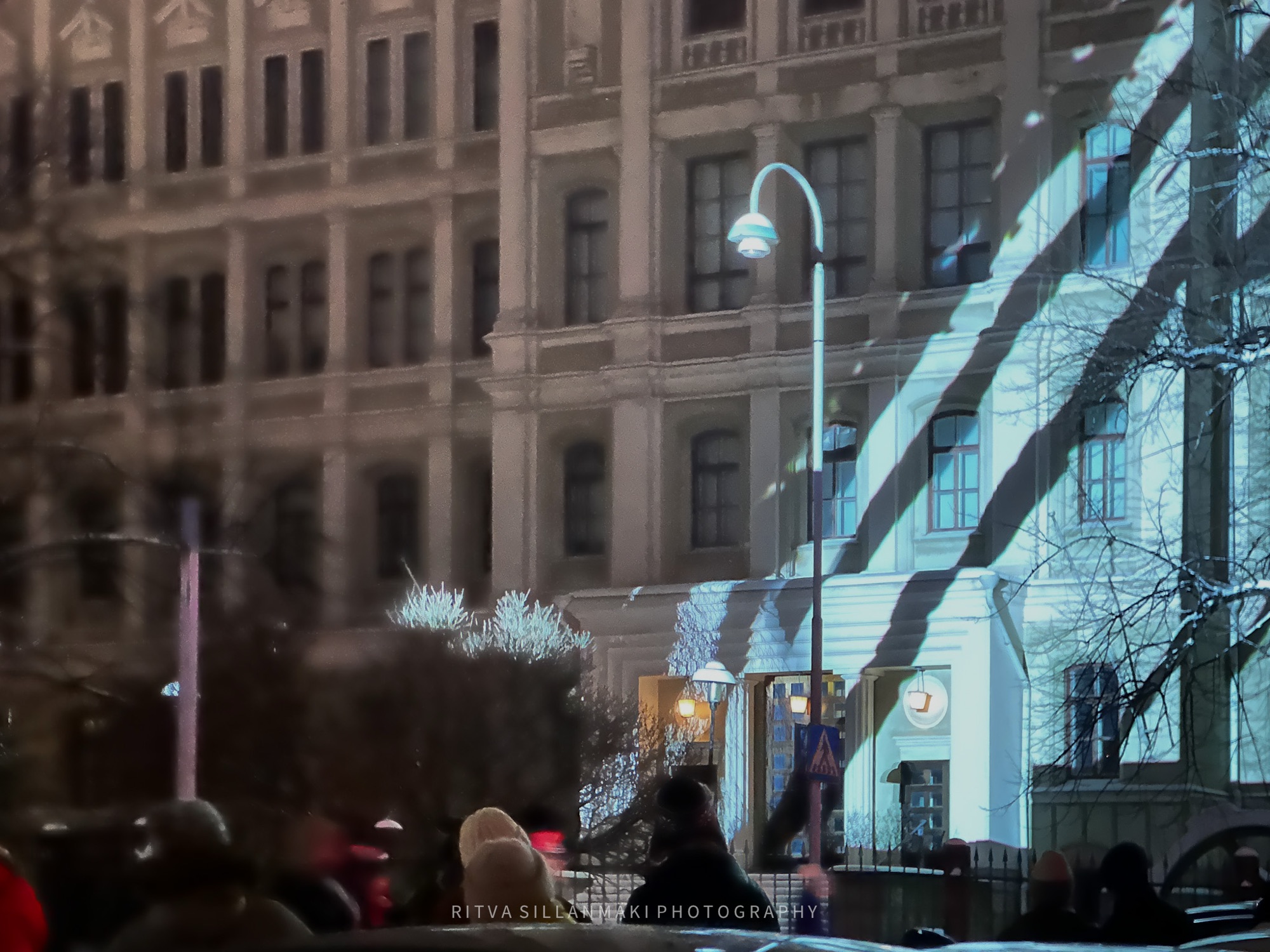
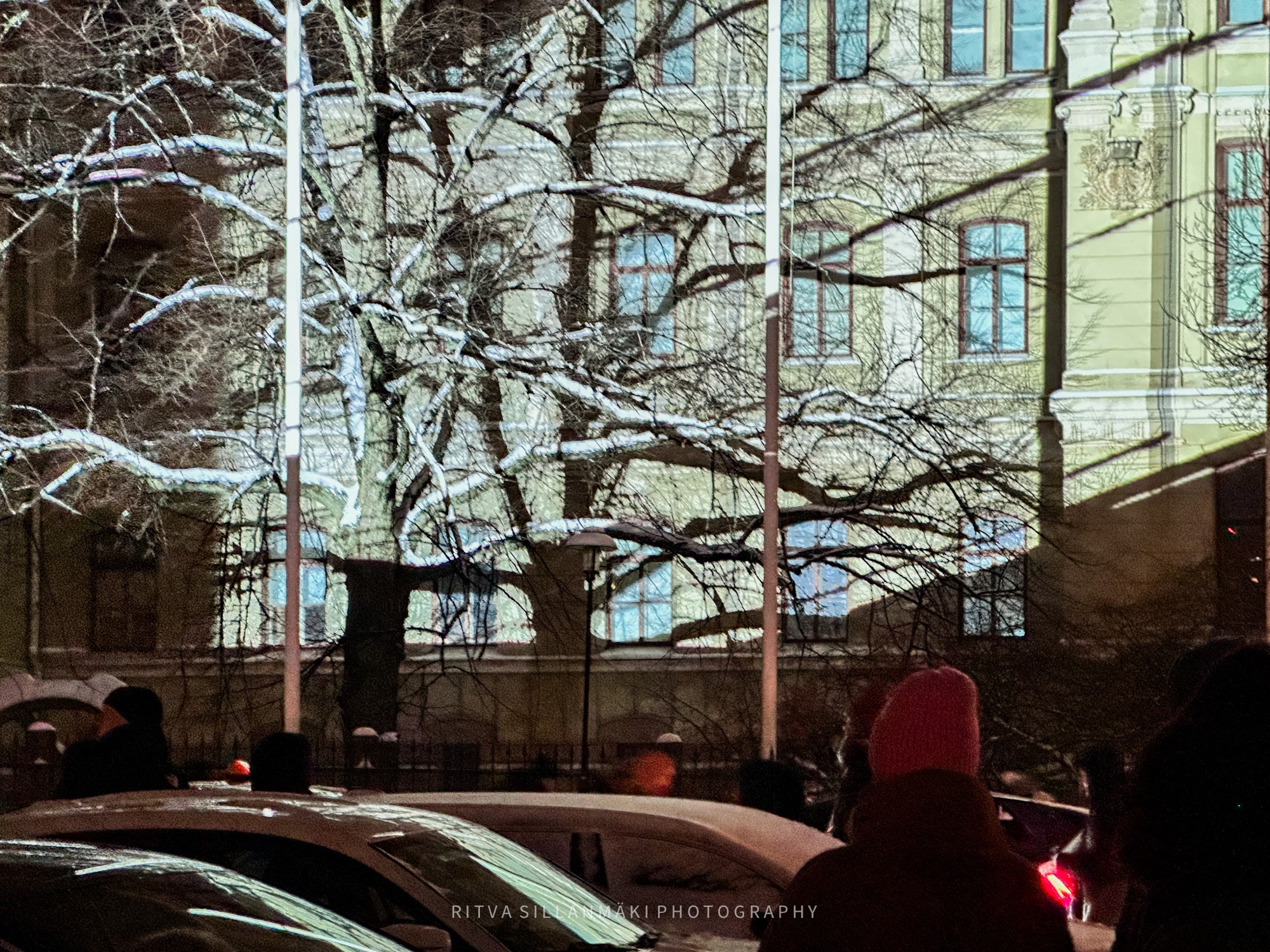
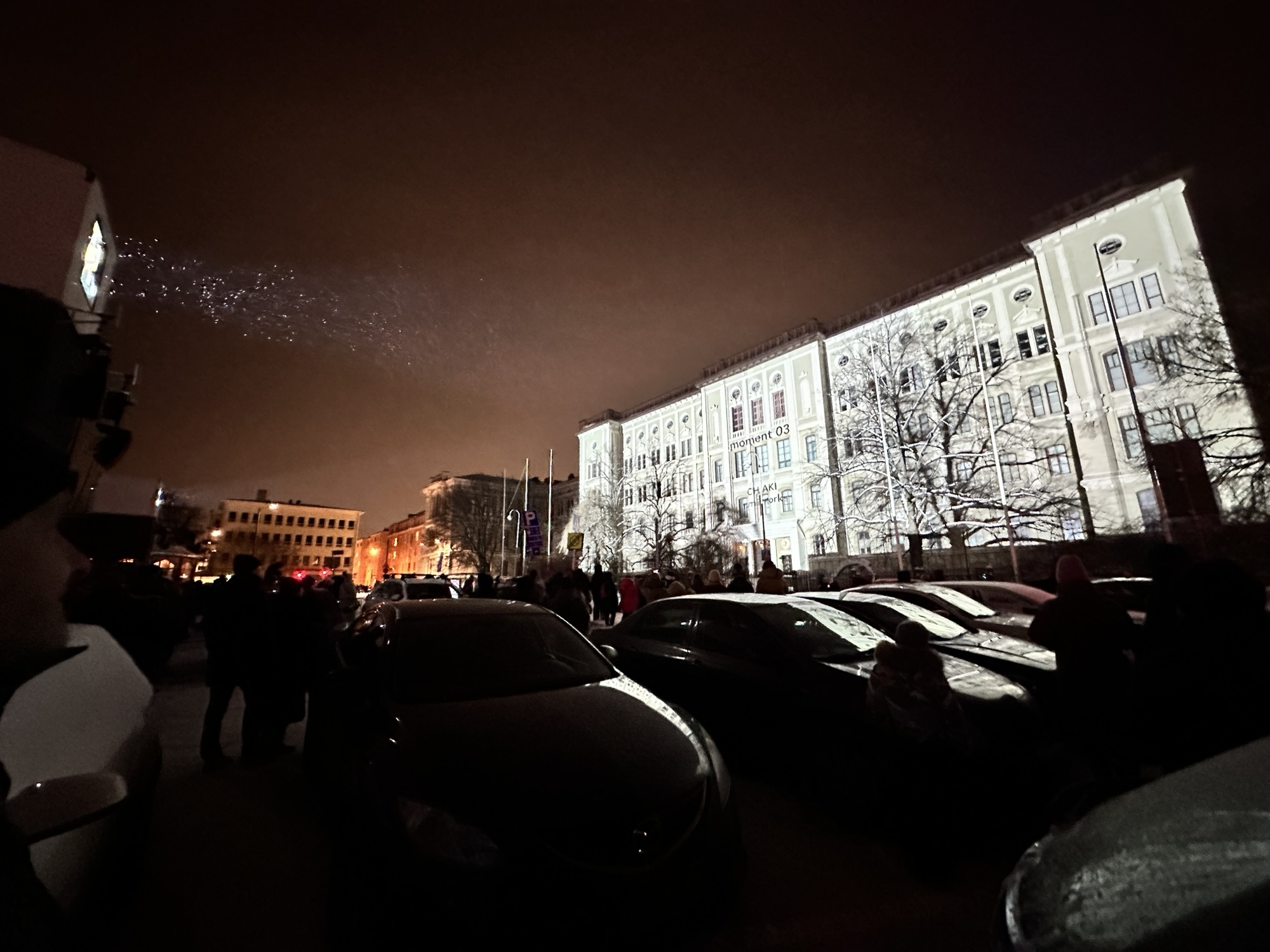
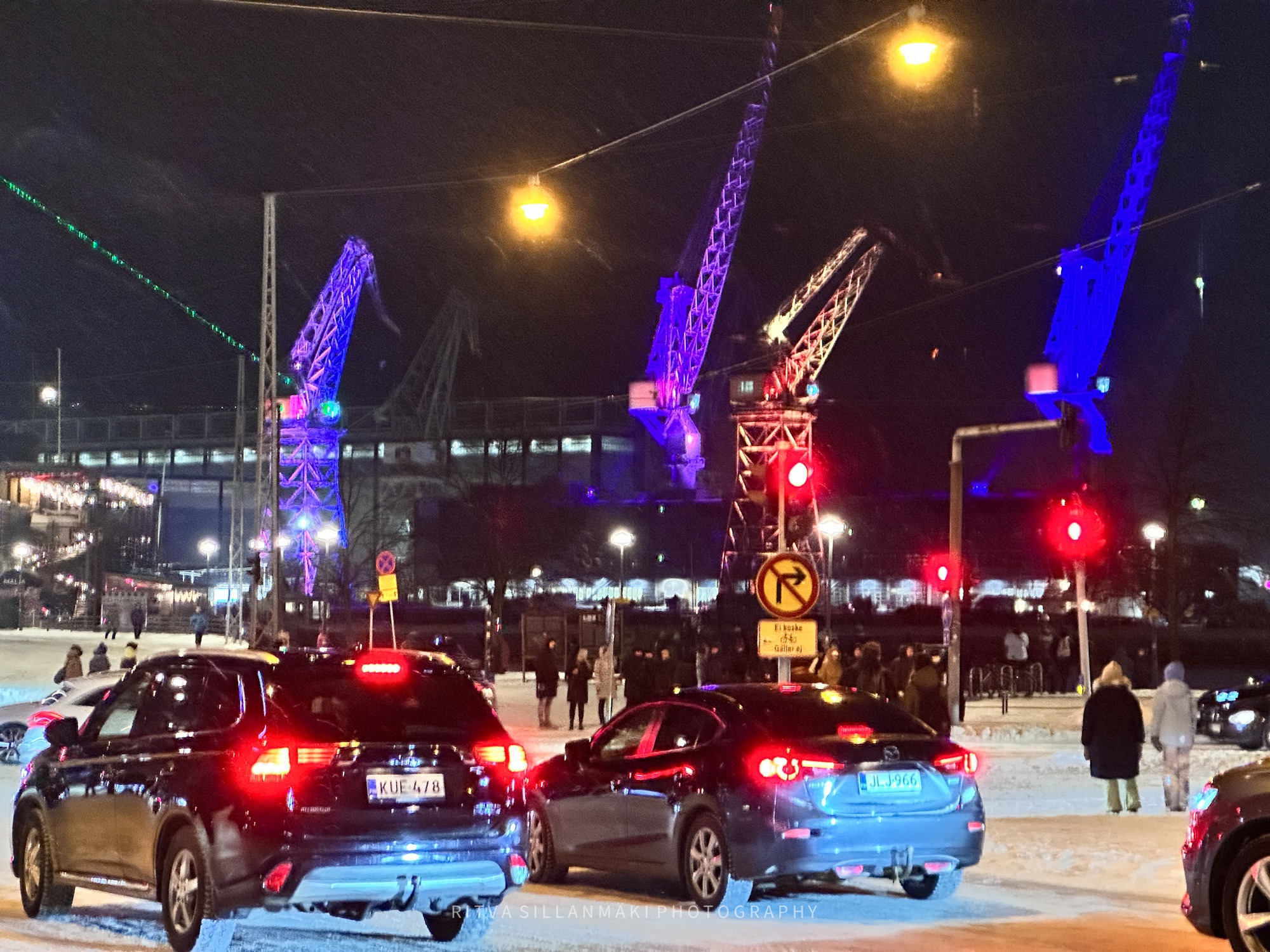
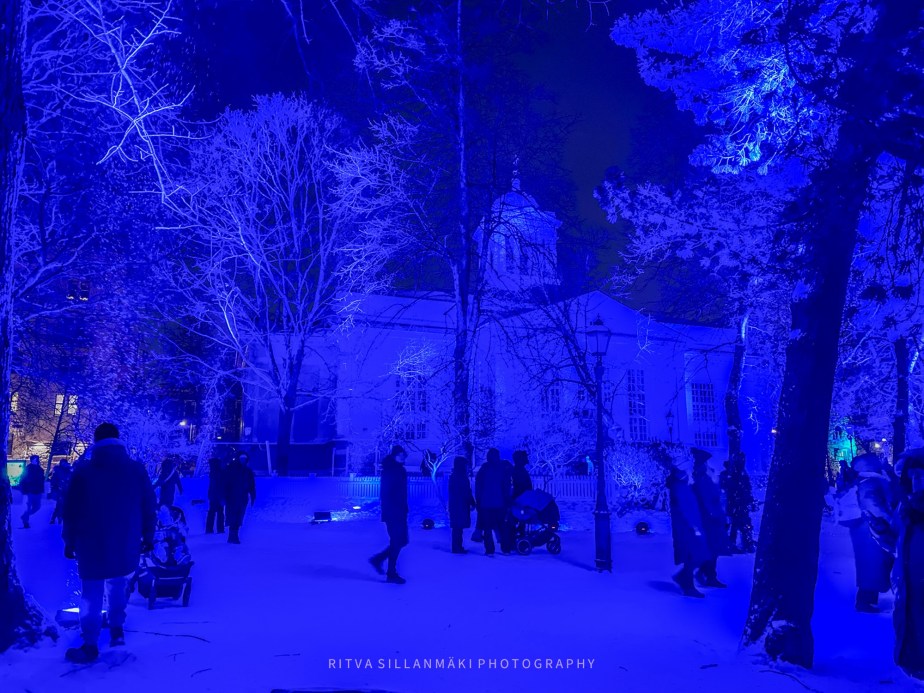
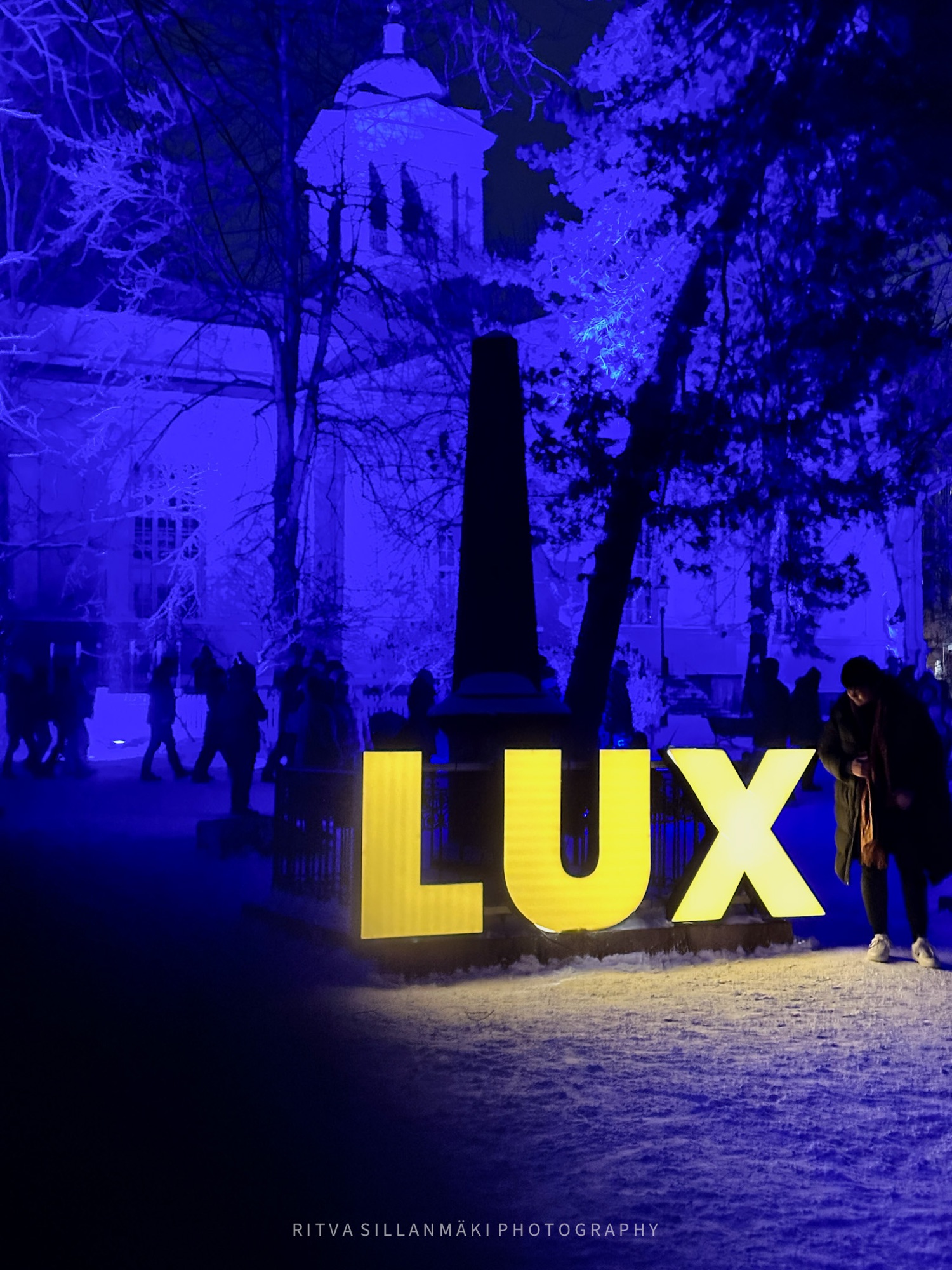
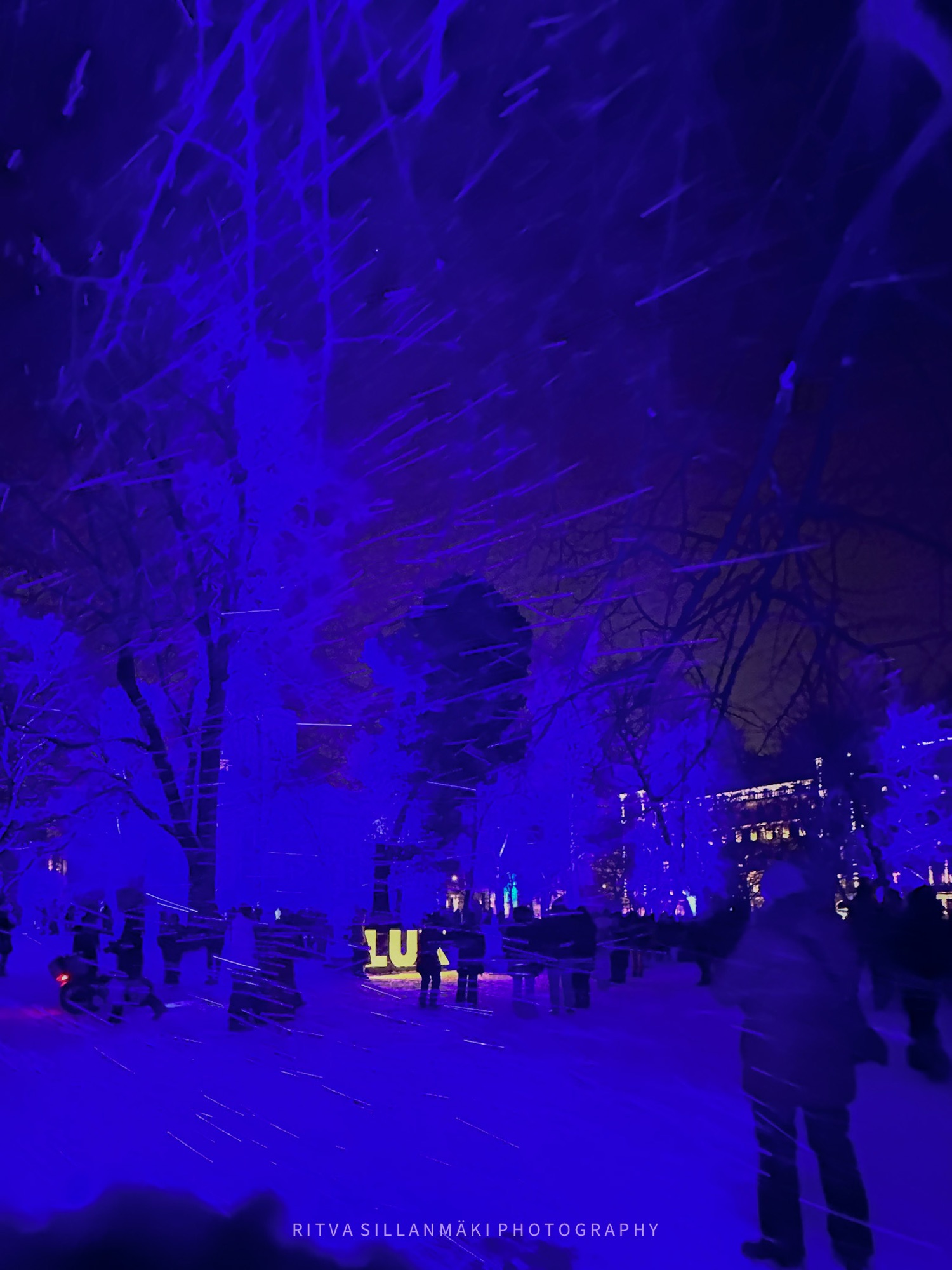
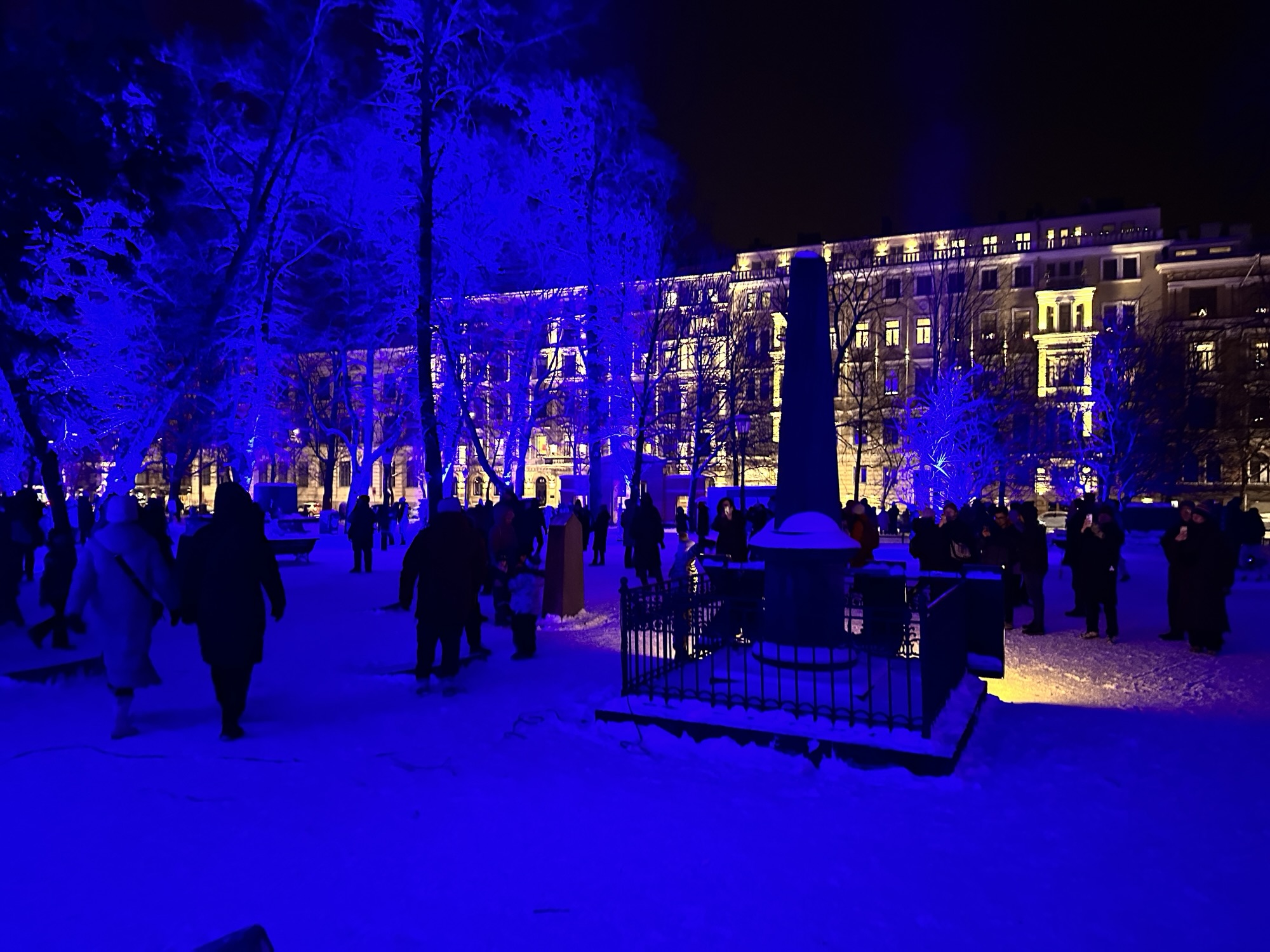
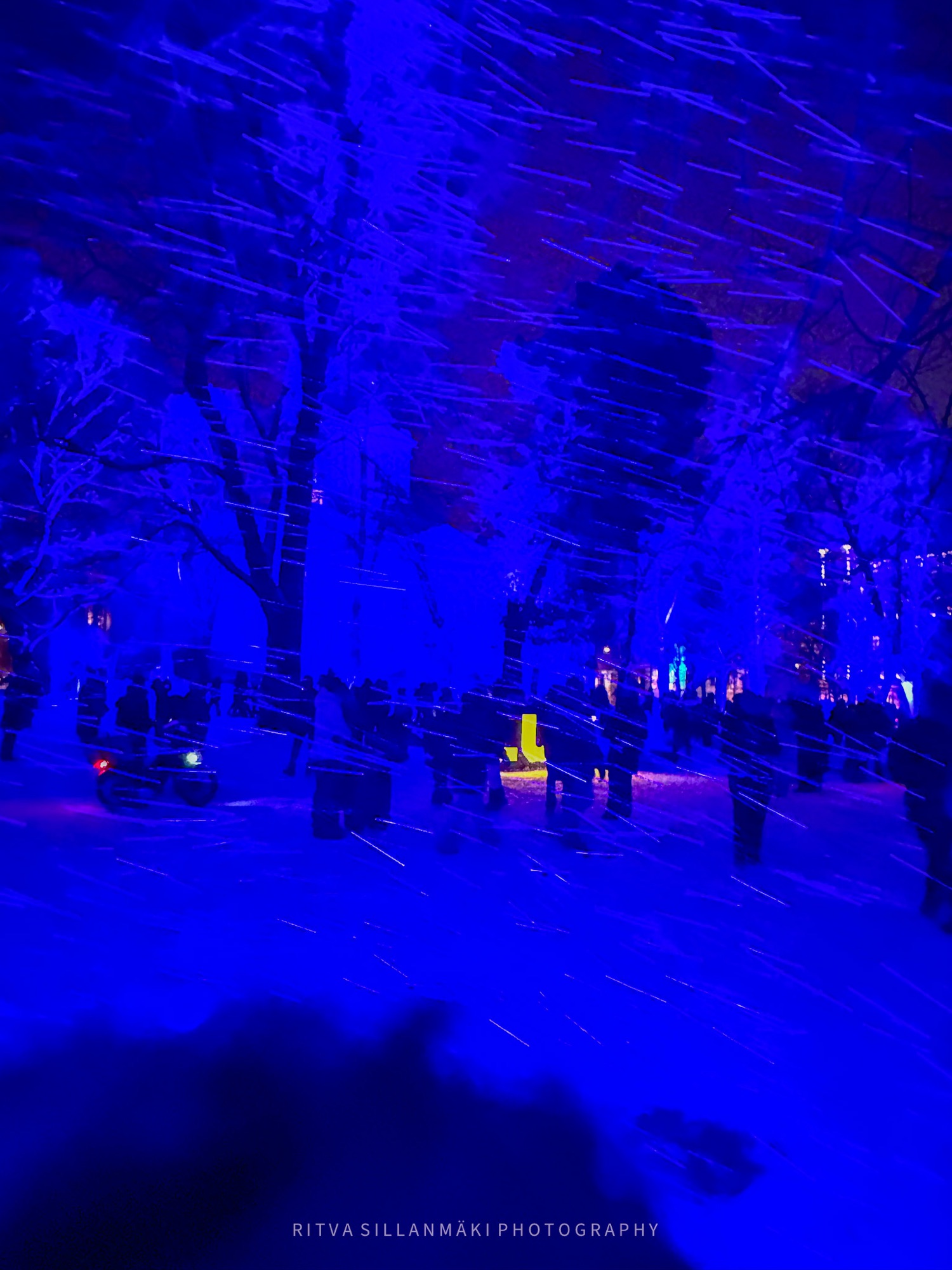
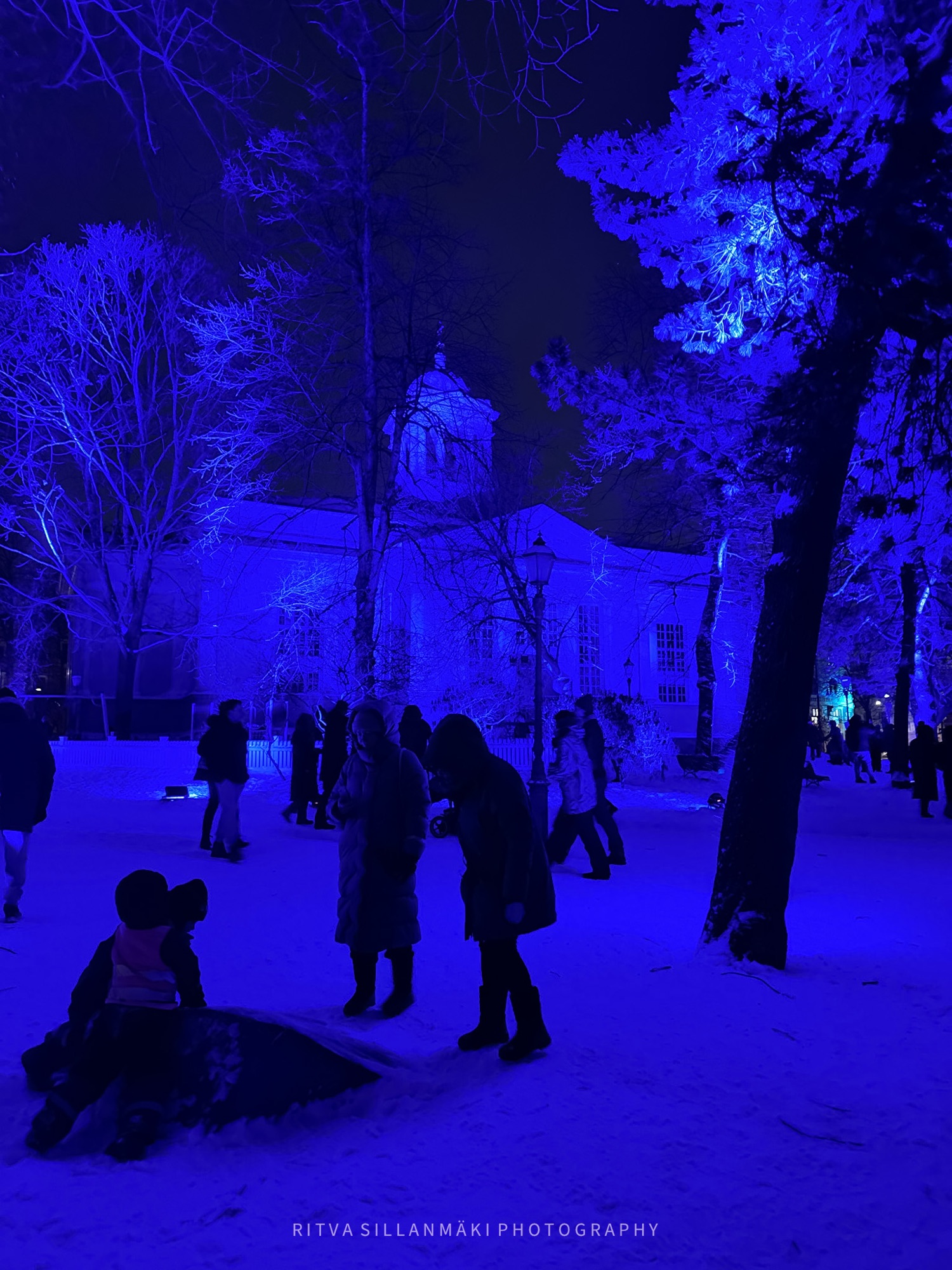
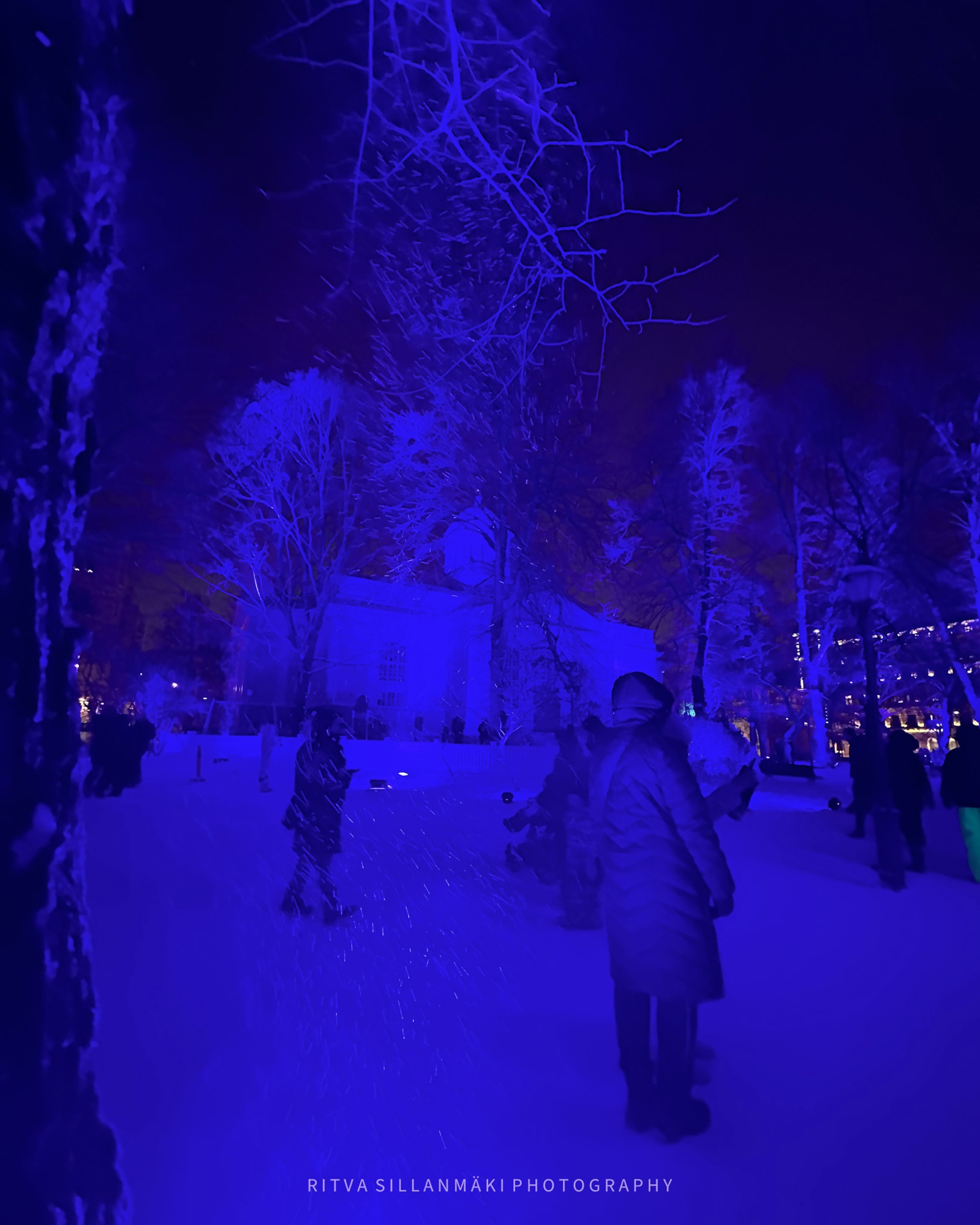
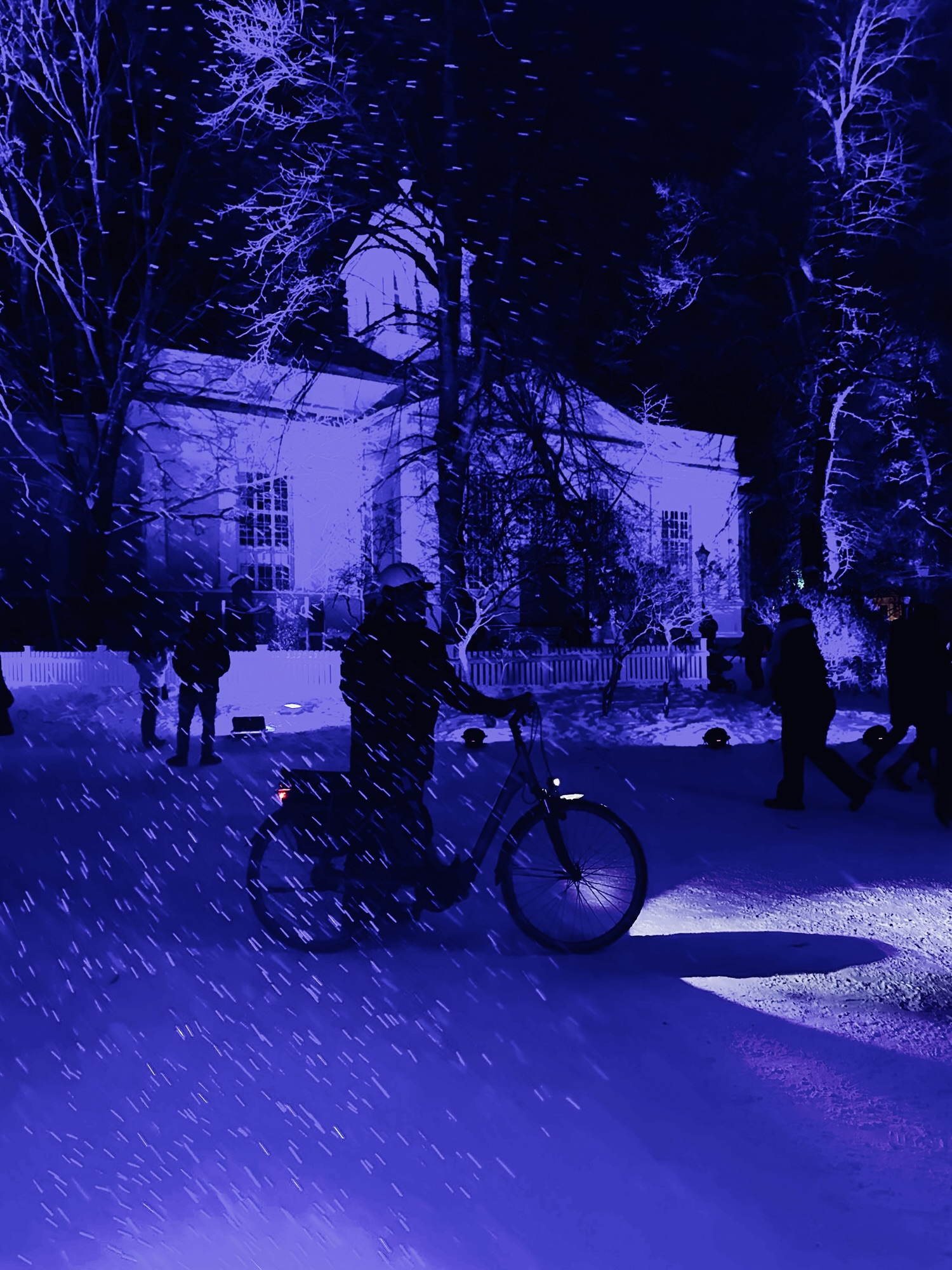
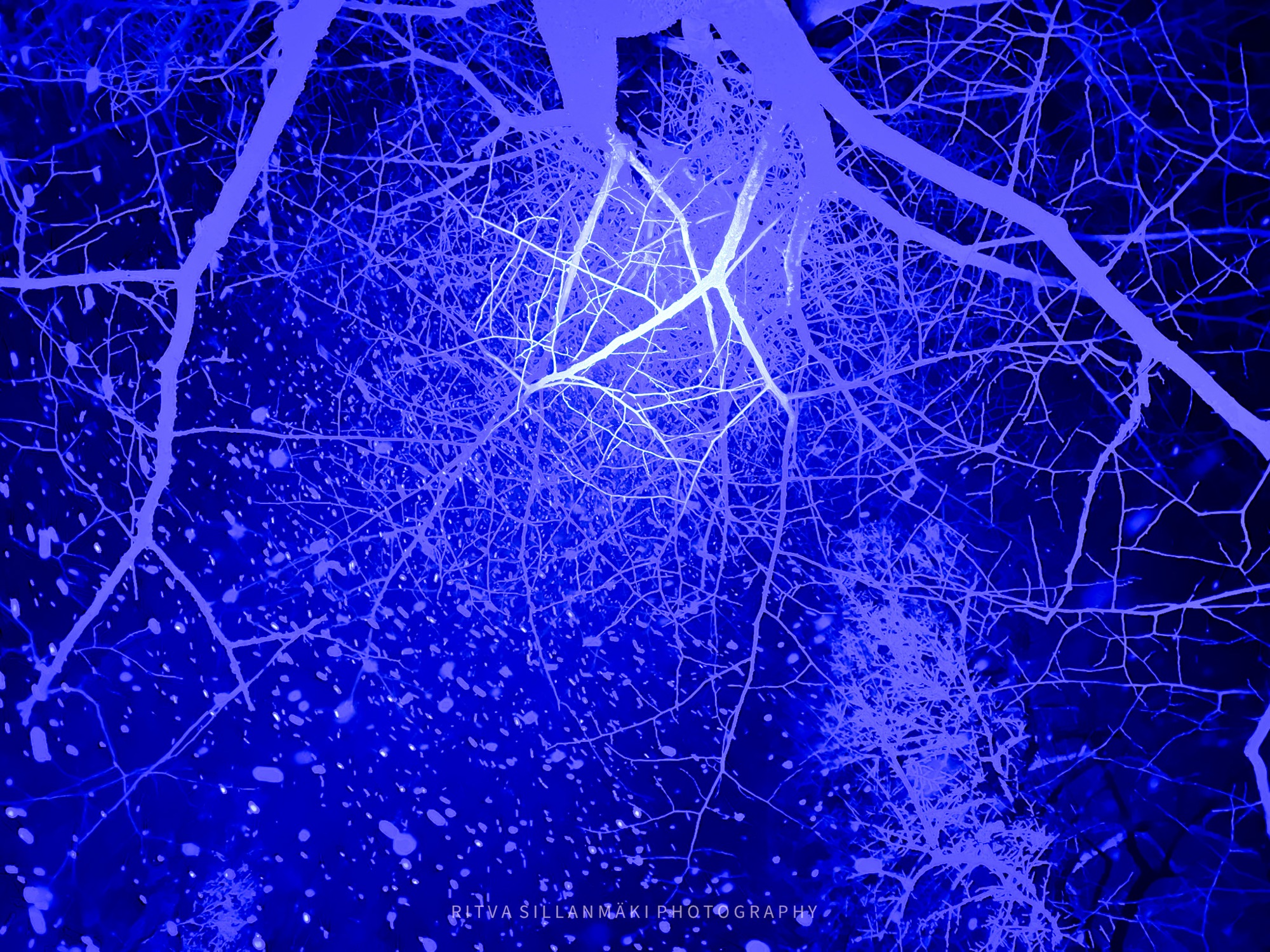
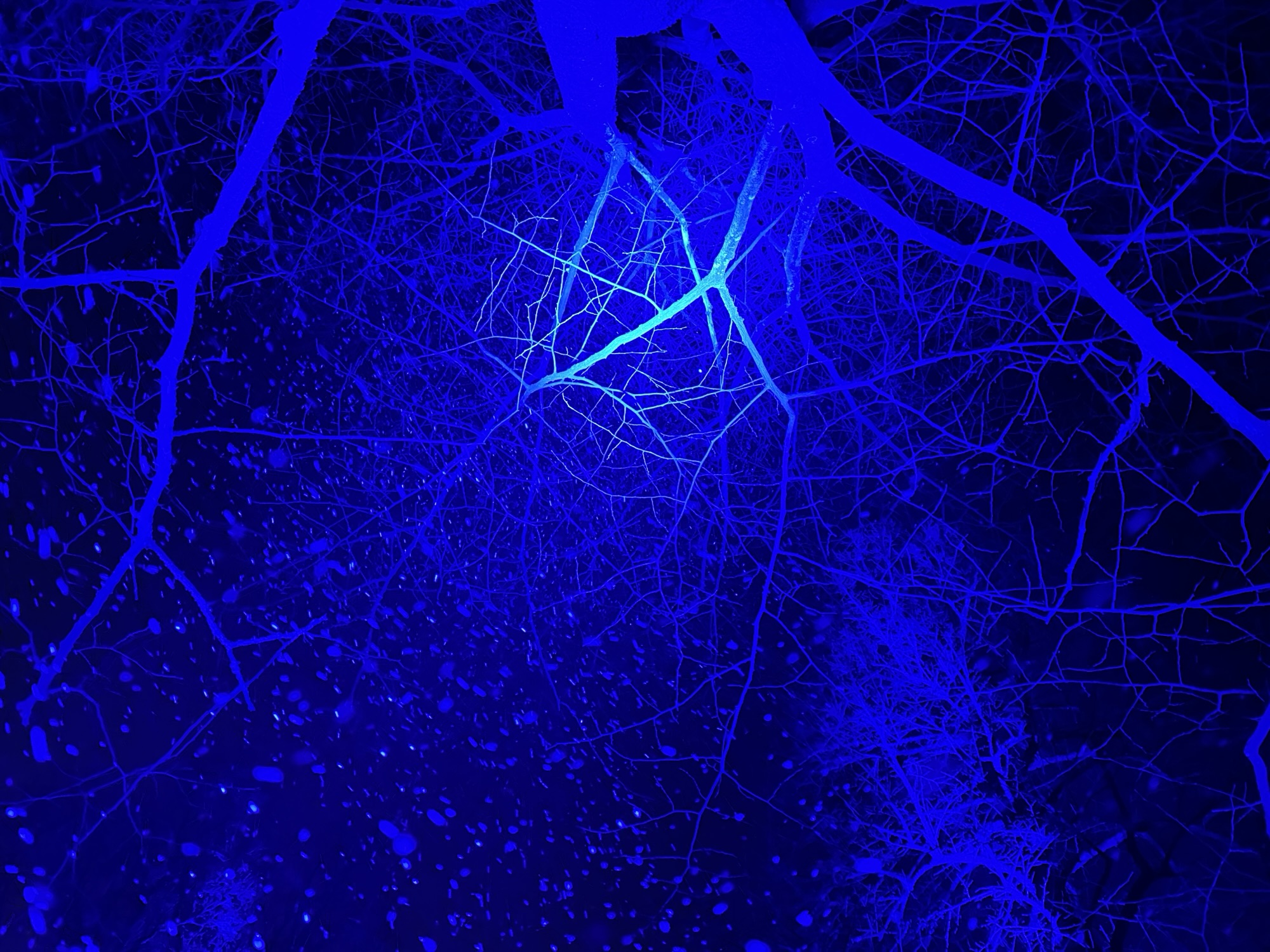
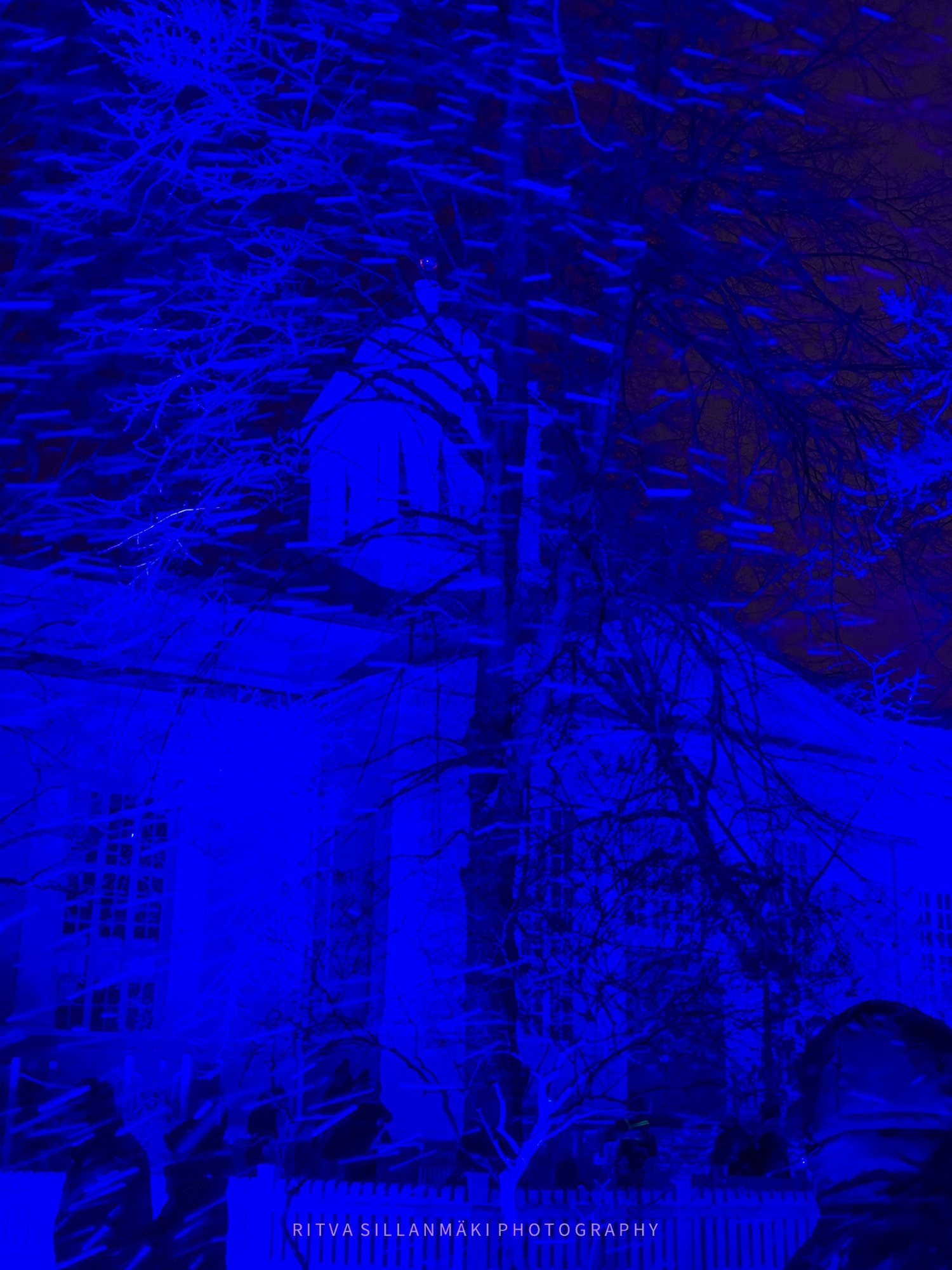
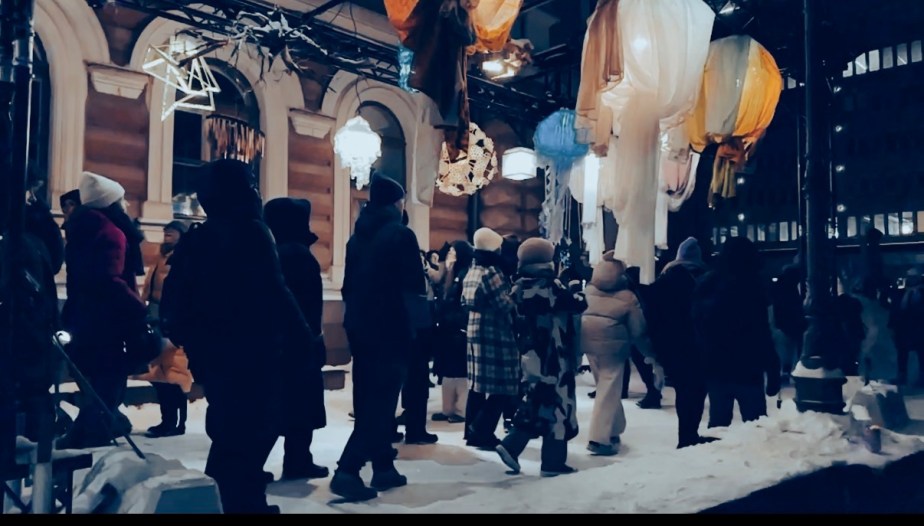
Last weekend, I attended the LUX Helsinki 2026 festival, which attracted large crowds despite the cold weather. Dressing appropriately helped, but my fingers did get really cold while taking the photos. Five of the twenty installations were situated near Hietalahti Market Hall.
Visitors admire a colorful light display during LUX Helsinki 2026 on a chilly Sunday evening.
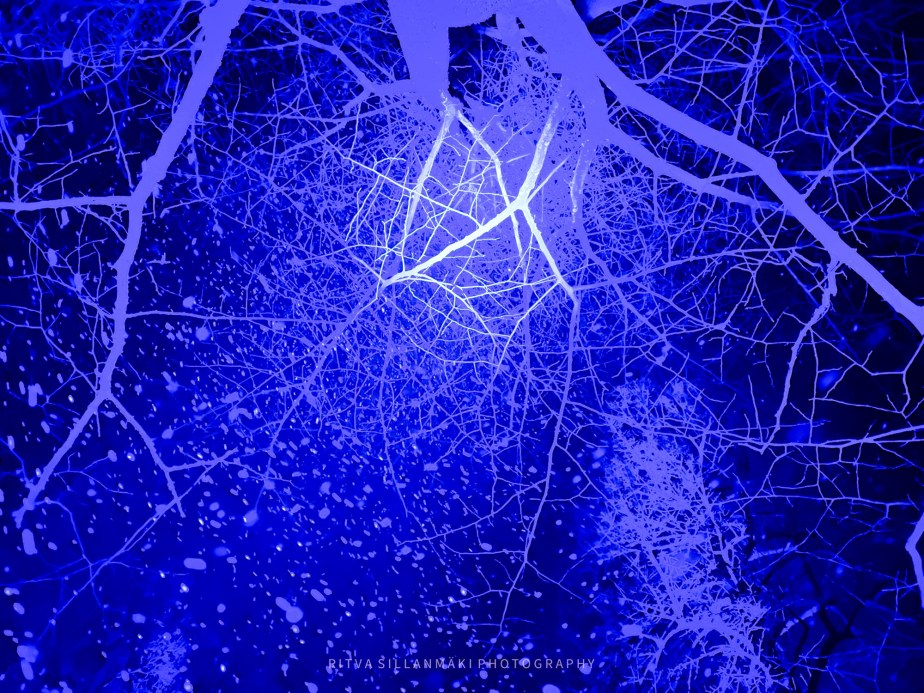
Visitors explore the enchanting snowy landscape illuminated by blue lights at LUX Helsinki 2026.
The event featured colorful light displays, particularly at the eerily beautiful Old Church Park, also known as the “Plague Park” due to its historical significance. The Blue light and snow made the place look a bit eerie. It is also known as the “Plague Park” (Ruttopuisto), as victims of the plague in 1710 were buried alongside the church. The gravestones in the Old Church Park remind of the history of cemeteries in this part of town. The park is home to the second oldest church in Helsinki and remains a popular destination within the city center, blending art and history.
Visitors enjoying the LUX Helsinki 2026 light festival, surrounded by art installations on a snowy evening.
This morning I started to look for photos of doors, Now it’s 5 PM, and I found myself completely immersed in editing photos from years back, particularly from my visits to the Espoo Cathedral, which is currently closed for renovations but is expected to be back in use by 2027. The intricate architecture and historical significance of this beautiful structure captivate me, making the editing process both a nostalgic experience. I will post those sorted photos soon.
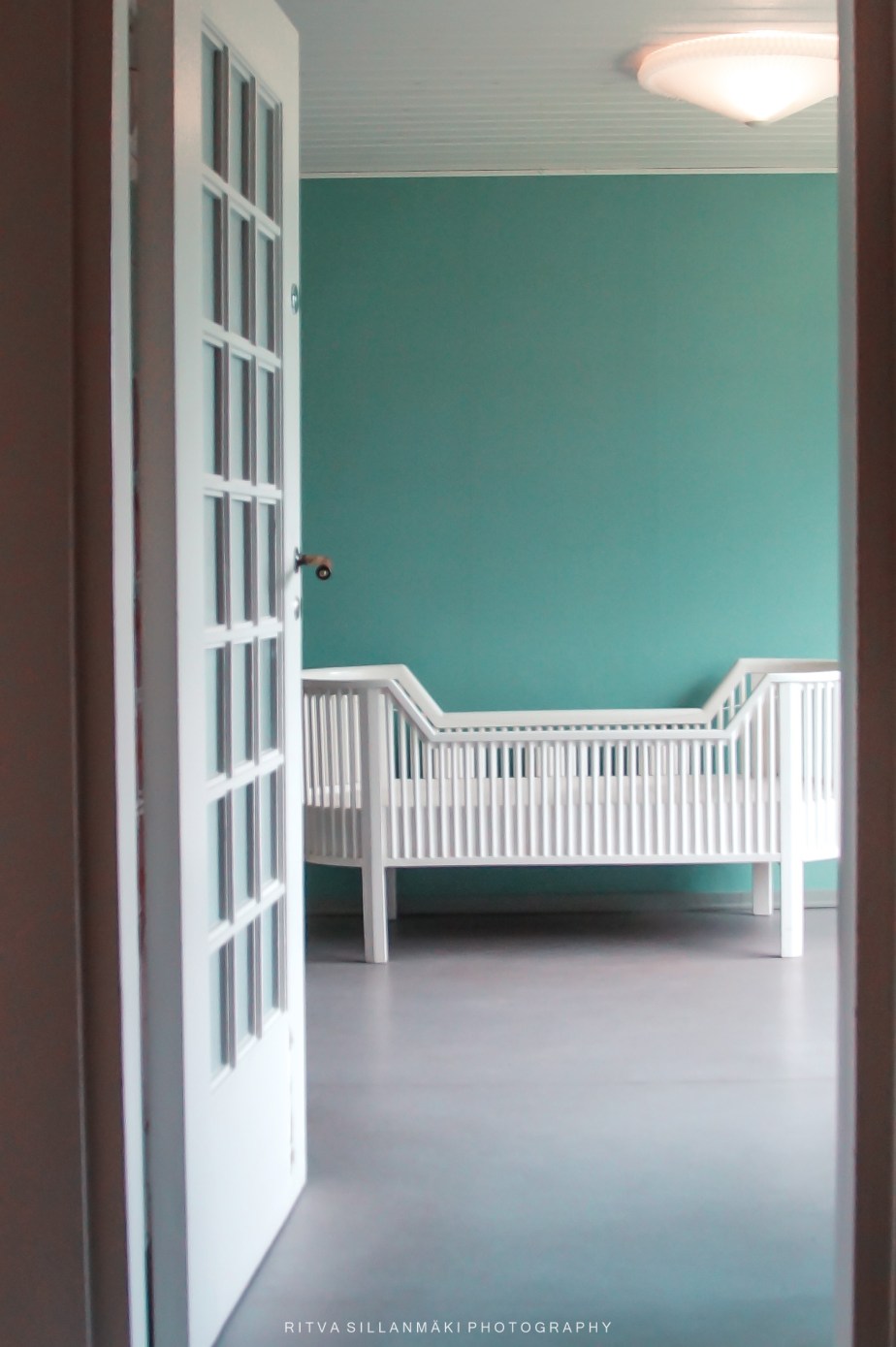
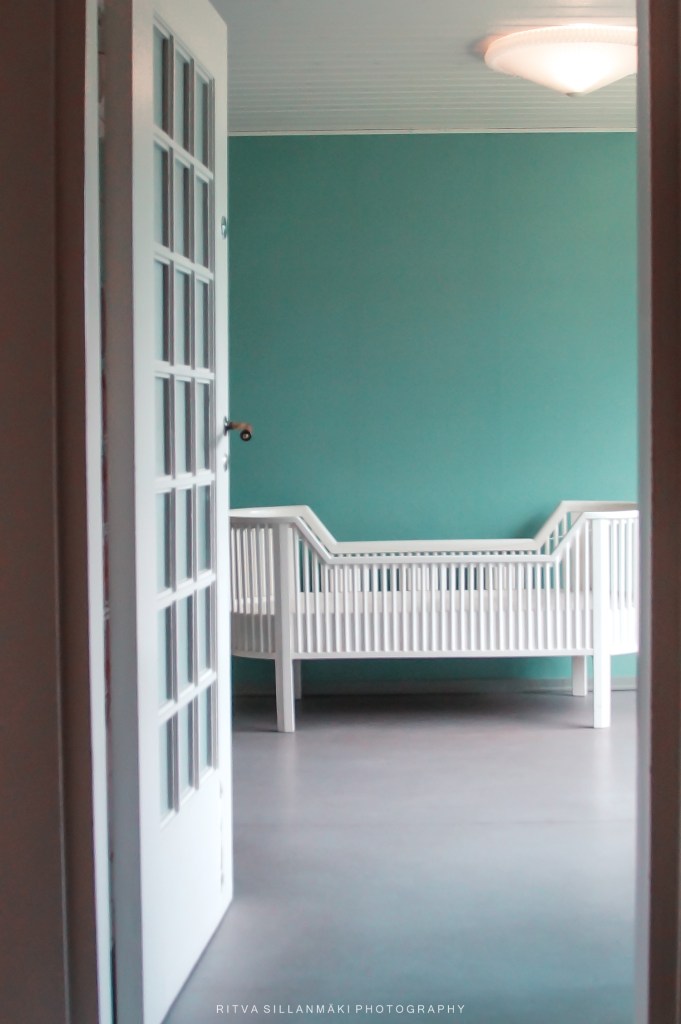
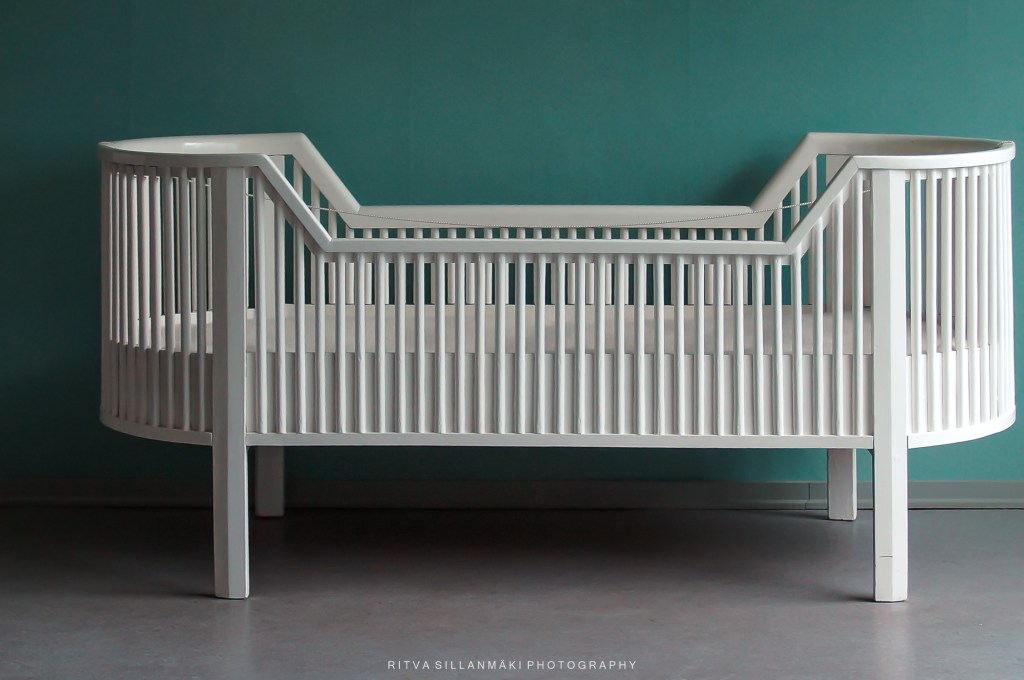
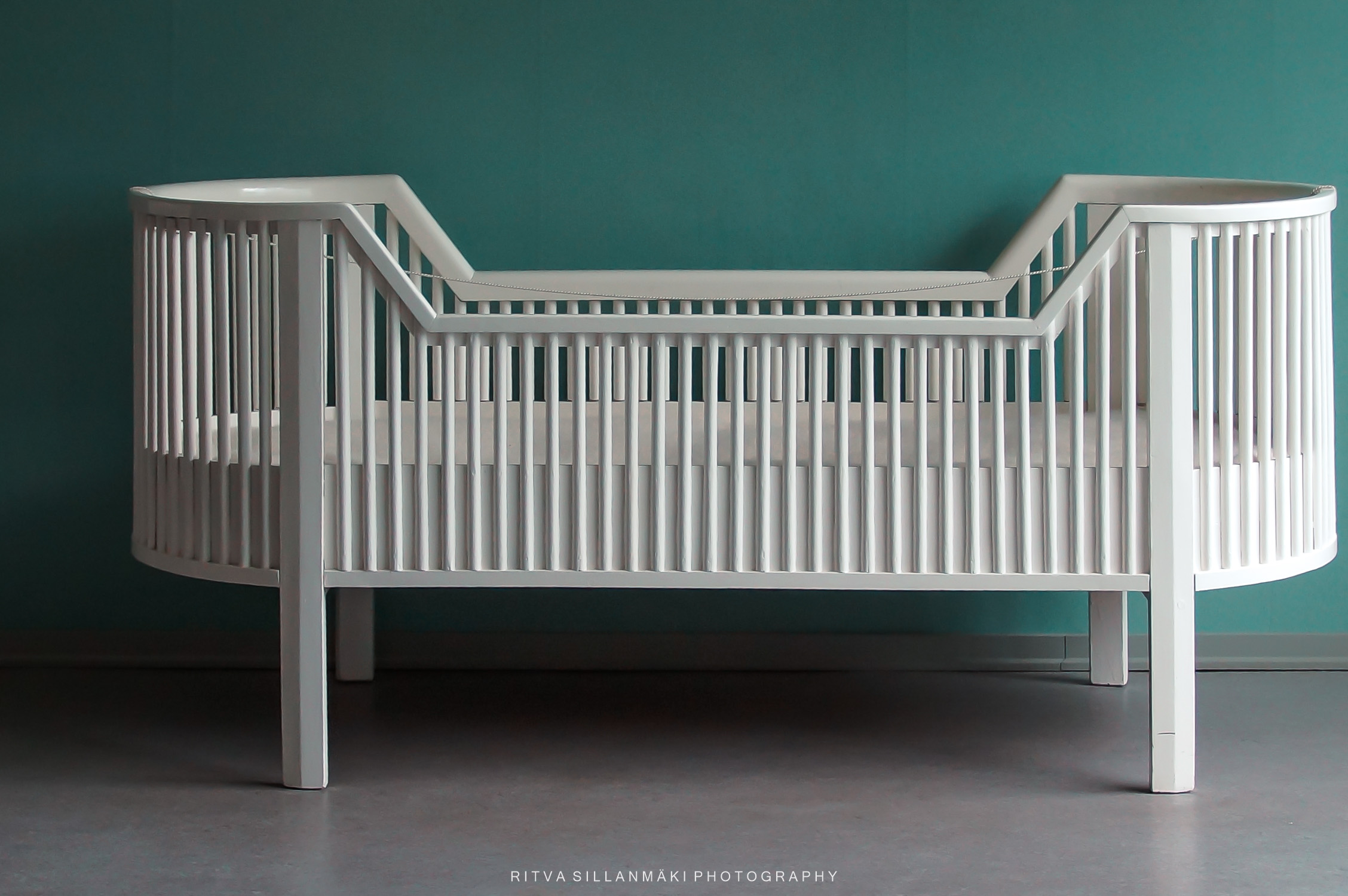
These are not from there. These are from the interior of Hvitträsk, just a small detail from a children’s room that truly captures the essence of early 20th-century design. I love the design of this child’s bed made of wood, crafted in 1905 by the renowned designer Eliel Saarinen. The bed showcases a thoughtful blend of functionality and artistry, ensuring comfort for the child while also serving as a beautiful piece of furniture.
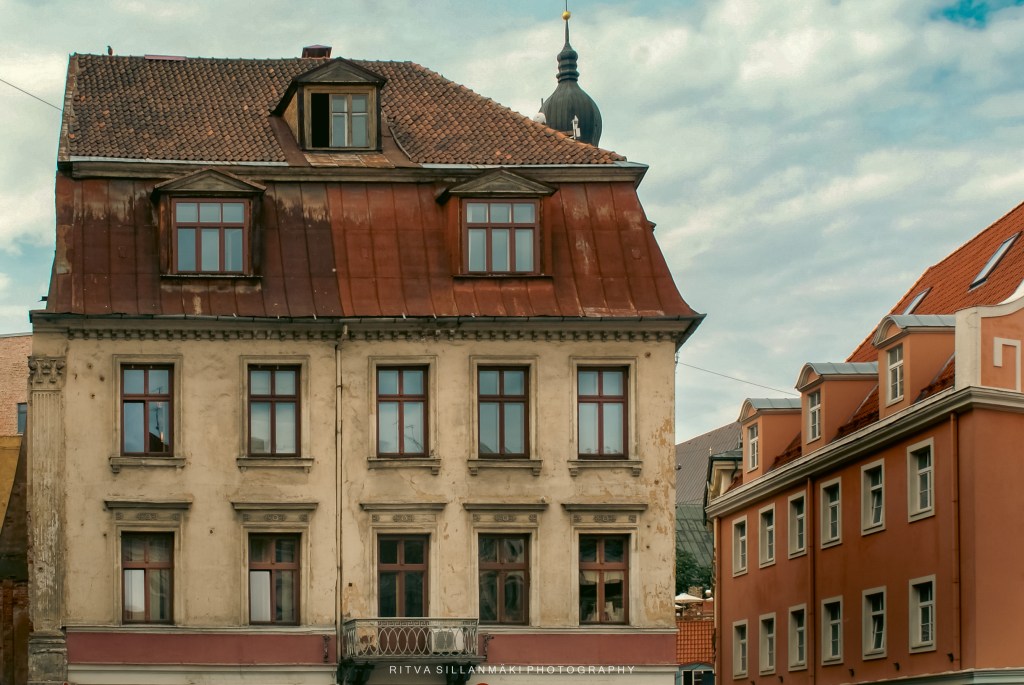
I am still and for many more days viewing my archives and editing my images from 2012 Riga. I am going to find many windows and doors in these photographs to share with you.
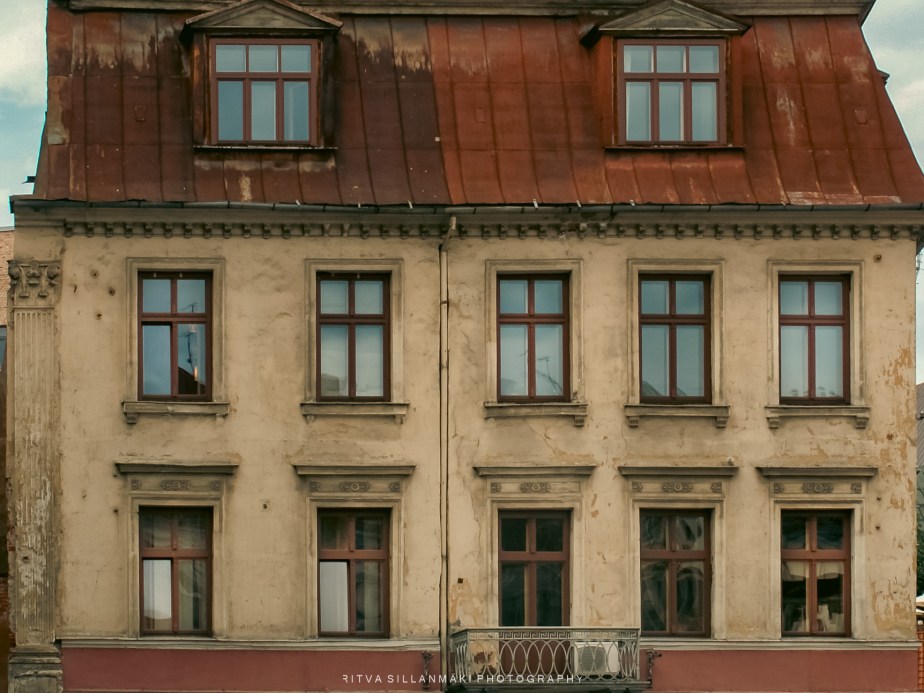
This image is of an aged European-style architecture under a partly cloudy sky, representing a cityscape in Riga, Latvia. The design reflects an older historic urban setting, featuring a small balcony on the lower level of the main building, while a dark spire or dome can be observed peeking above the primary roofline against the sky.
An aged European-style building in Riga, Latvia, a weathered facade with a distinctive copper roof and intricate window designs.
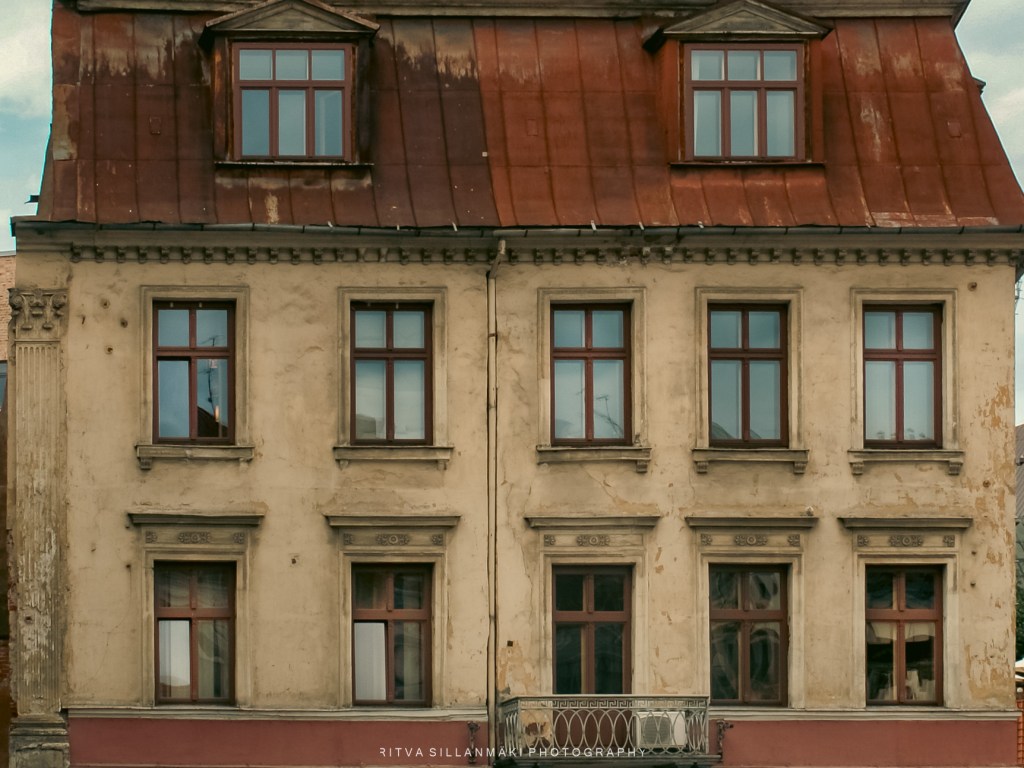
A historic structure in Riga features a distinctive copper roof and intricately designed windows. Its facade is adorned with 11 elaborate windows that accentuate the architectural elegance of the building. A tall, prominent structure occupies the left and center of the scene, showcasing a weathered pale yellow or beige exterior with numerous rows of windows framed in red. The roof comprises a blend of red tiles and rusted reddish-brown metal sheeting, complete with several dormer windows.
To the right, a smaller structure boasts a lively orange facade and a red-tiled roof.
A close-up view of a historic building in Riga, its weathered facade and 11 red-framed windows.
Presenting this week’s edition of Monday Window, brought to you by Brian, renowned from Bushboy.
Before I started this post, I enjoyed the beautiful images of doors in Tina’s and Sofia’s post, such a cavalcade of lovely doors and buildings that truly capture the essence of their surroundings. Each door tells its own unique story. The vibrant colors, intricate designs, and diverse architectural styles showcased in their posts serve as a source of inspiration for anyone looking to explore the world of doors. Both posts give us lots of ideas on how to approach this challenge with creativity and enthusiasm, encouraging us to find beauty in the ordinary.
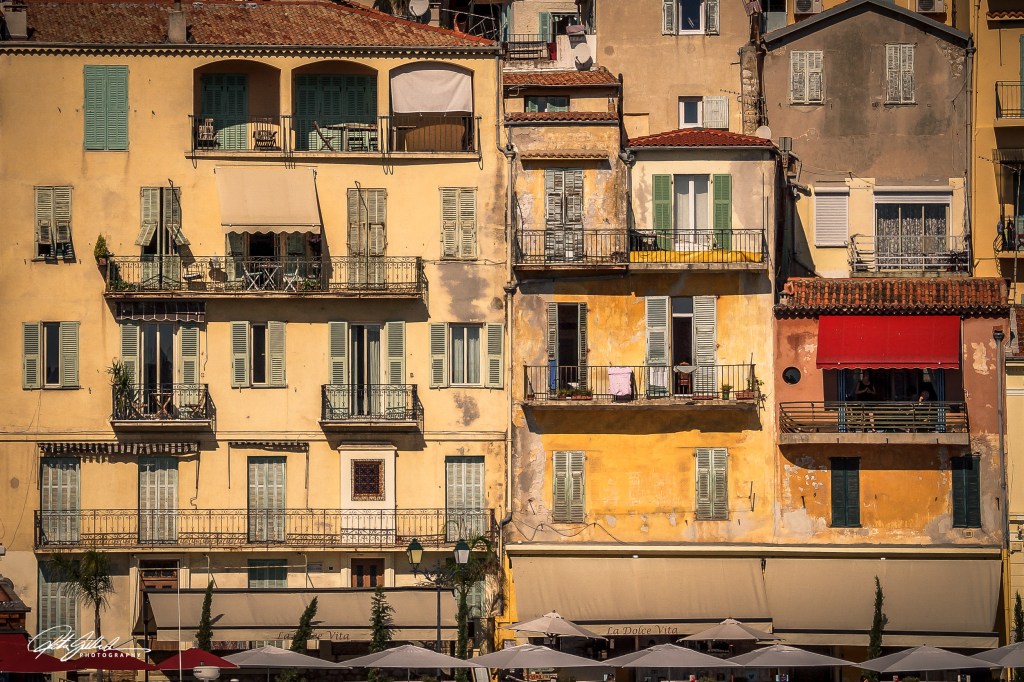
An intriguing view of colorful balconies and doors reflecting the charm of Mediterranean architecture, showcasing the beauty of everyday life.
Like Sofia, I enjoy photographing doors and windows as intriguing opportunities to imagine life behind them, often sparking curiosity about the stories within those frames. Each door stands as a portal, and windows offer glimpses of the vibrant world inside, blending the exterior with the intimate. Street photography closely relates to door images for me, capturing the essence of the environment and moments that unfold silently, inviting us to ponder our shared human experiences. The interplay of light and shadow often evokes nostalgia, making each shot a narrative waiting to be explored.
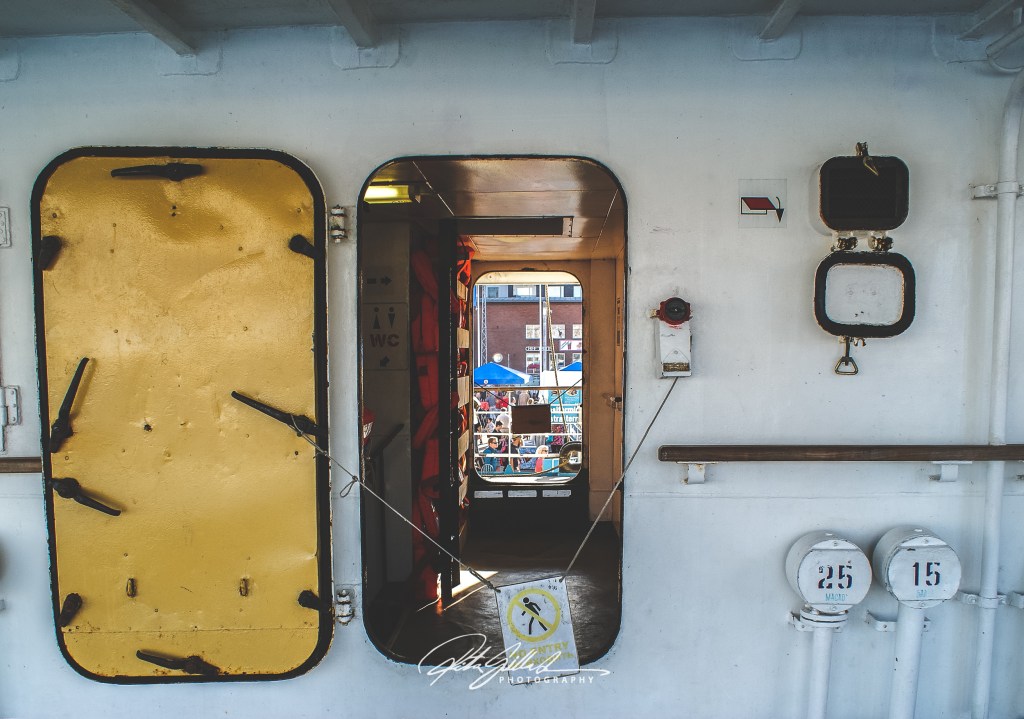
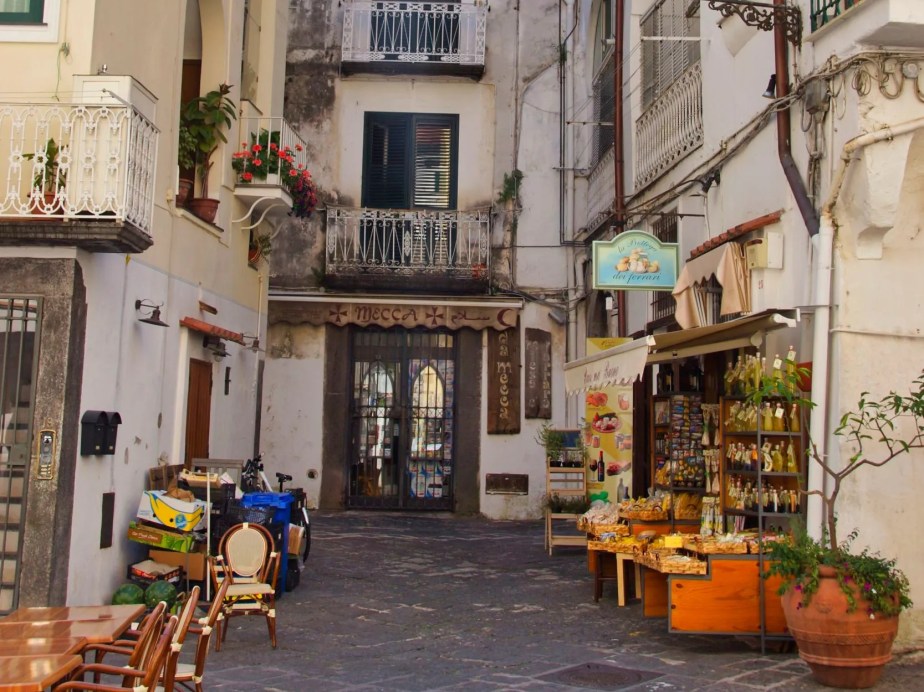
A brightly colored yellow door on a ship leads us in and out on the other side to a lively scene beyond, showcasing the unique architecture and inviting atmosphere.A charming alleyway featuring a quaint storefront and decorative balconies and doors, inviting exploration and capturing the essence of local life in Amalfi.
How you crop the image makes you pay attention to different things, emphasizing various aspects of the subject and focus. By adjusting the frame, you can direct the viewer’s eye to specific details, creating a stronger emotional impact. This encourages deeper engagement with the visual narrative. (click the images to get a better view)
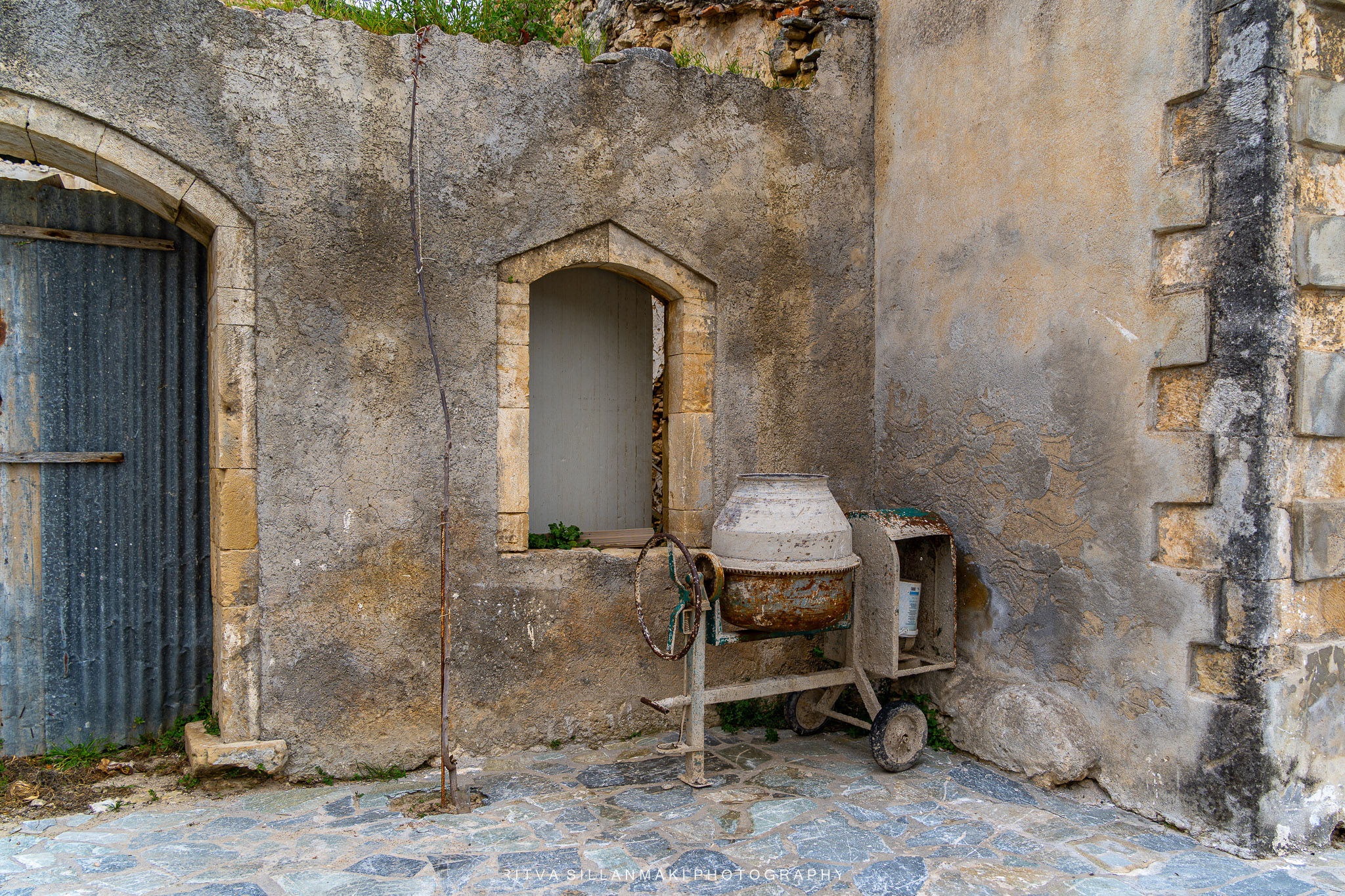
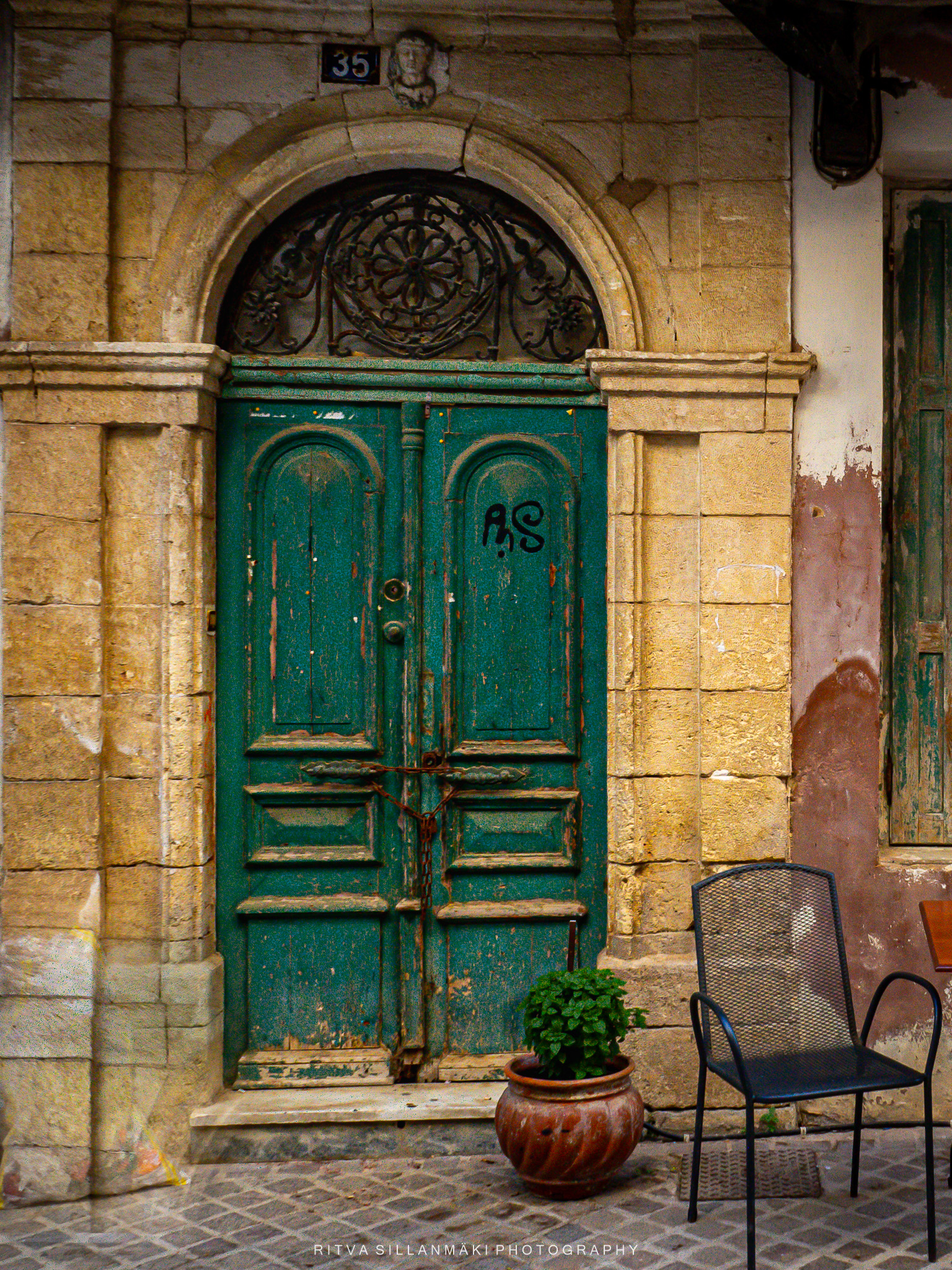
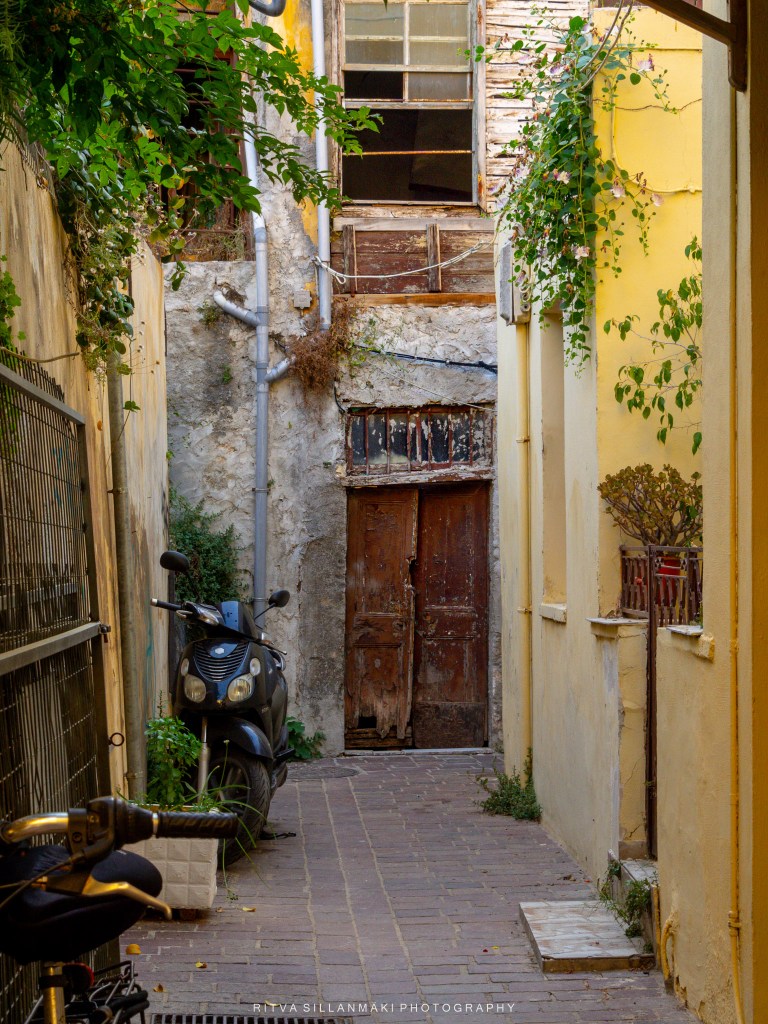
A charming alleyway in Crete featuring a weathered wooden door, surrounded by vibrant yellow walls and greenery, evoking a sense of history and character.
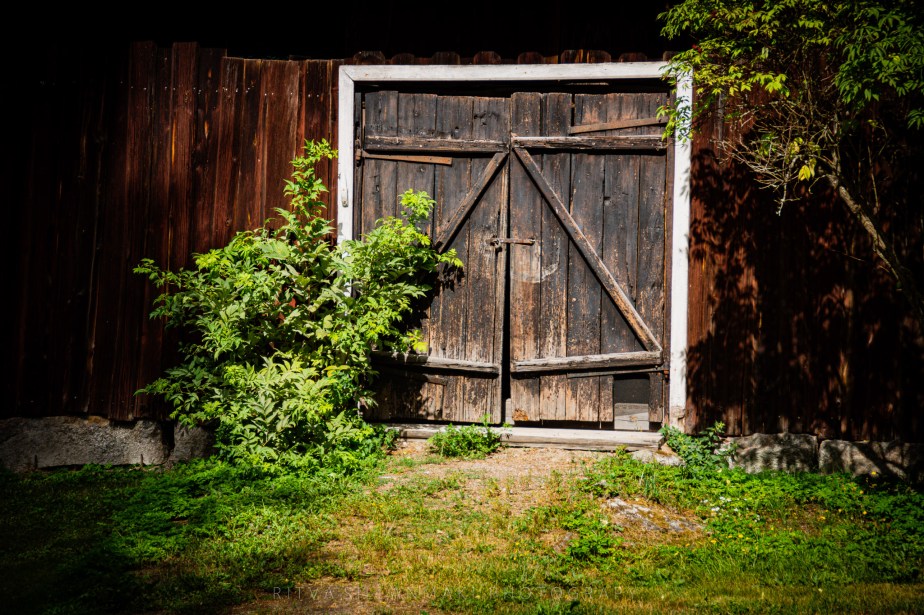
A rustic wooden barn door partially obscured by lush greenery, highlighting the beauty of nature and the charm of aged architecture from Finland.
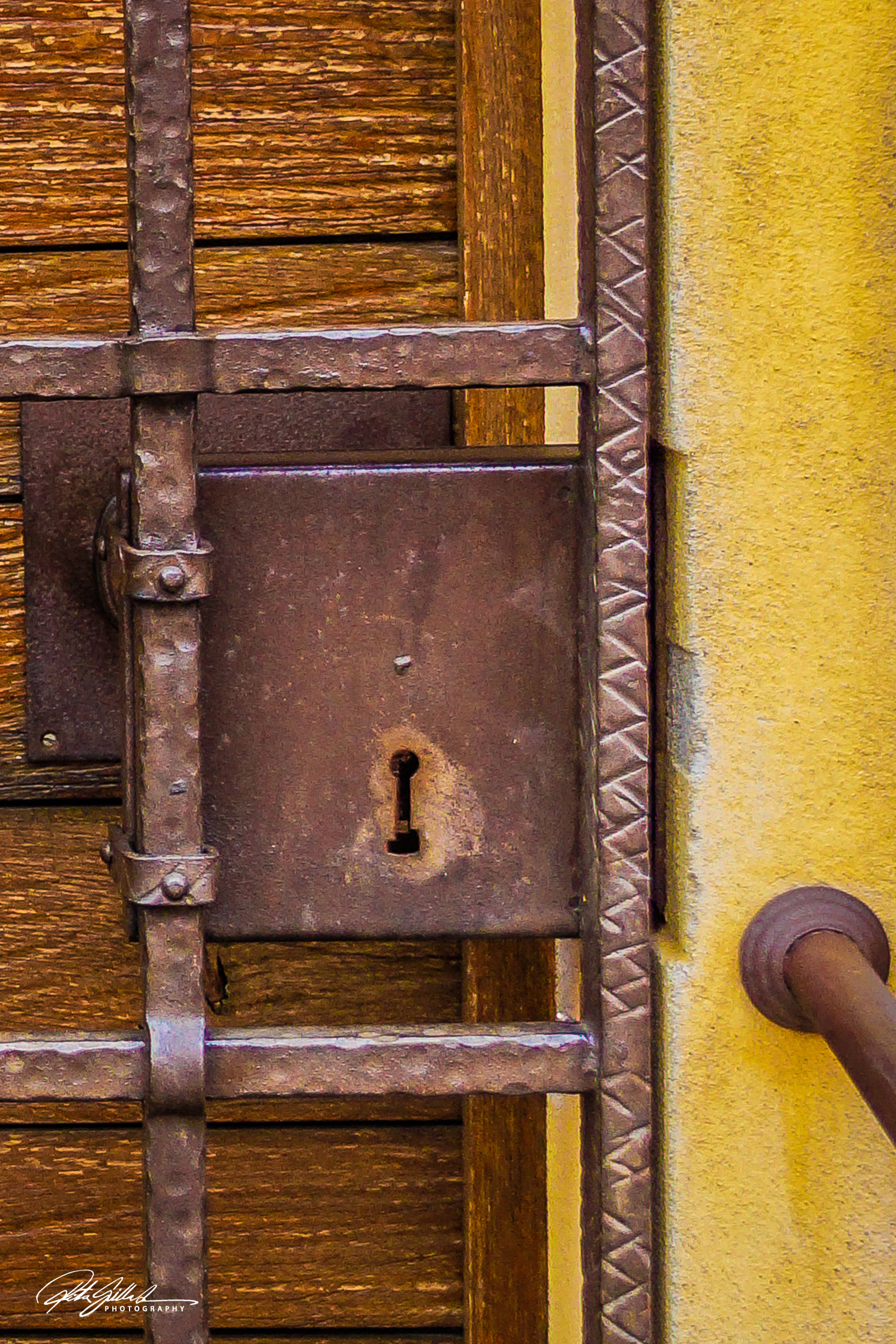
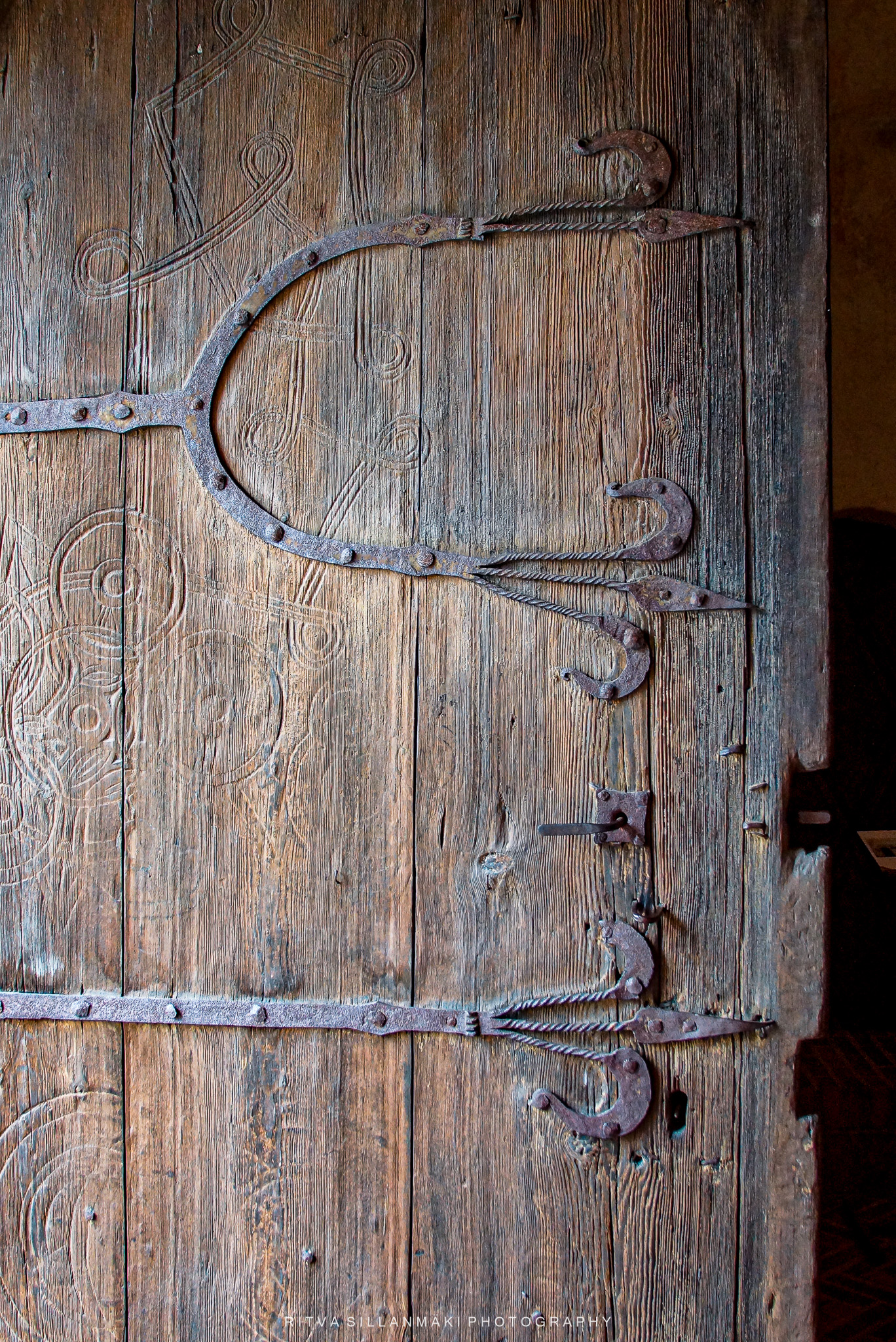
Details on doors that have gotten me to click the a shot.
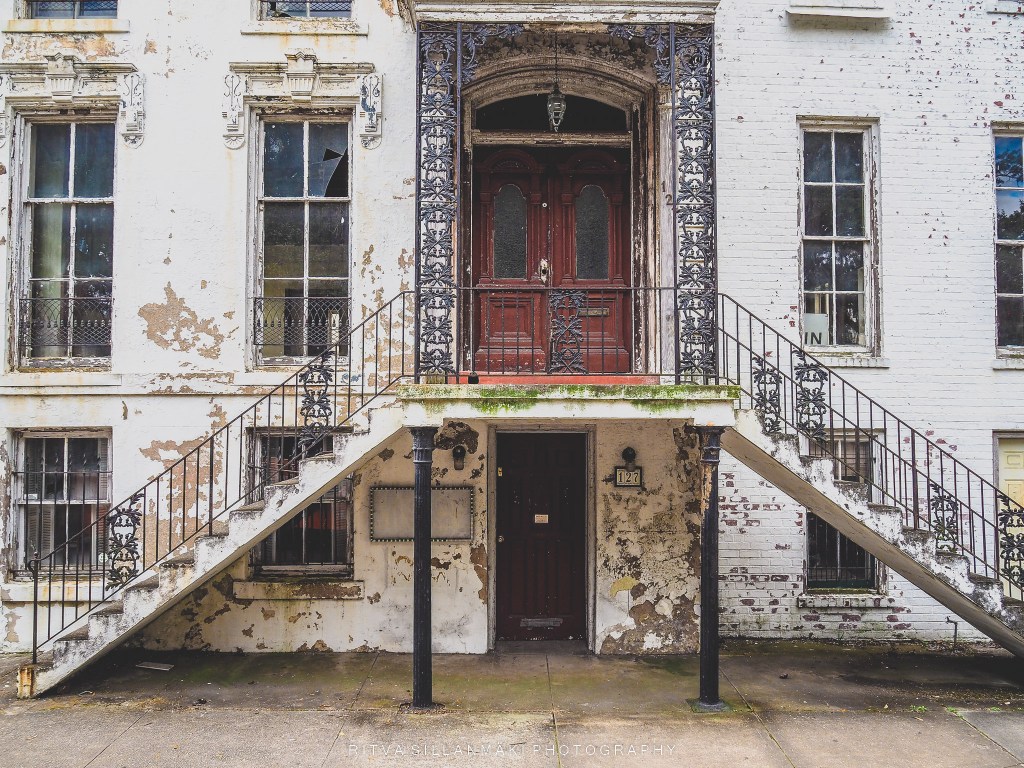
An ornate entryway featuring a weathered double door flanked by large, cracked windows, showcasing the beauty of architectural decay in Savannah
I eagerly anticipate your posts, inspired by Tina’s 2018 challenge and Sofia’s current exploration of the same theme. Hope your search enjoyable! Do remember to tag Lens-Artists and to link back to Sofia’s post so that we can all effortlessly connect with your contributions.
Last week was truly remarkable, thanks to Ann-Christine’s challenge focused on Fairs, Markets, and Festivals. These vibrant cultural events are pivotal in defining a society, and it was a pleasure to explore a selection from across the globe. Looking ahead, we eagerly anticipate Beth’s leadership next Saturday, August 23rd. Until then, say positive and keep on smiling.
If you want to know more about the Lens-Artists challenge, please click here.
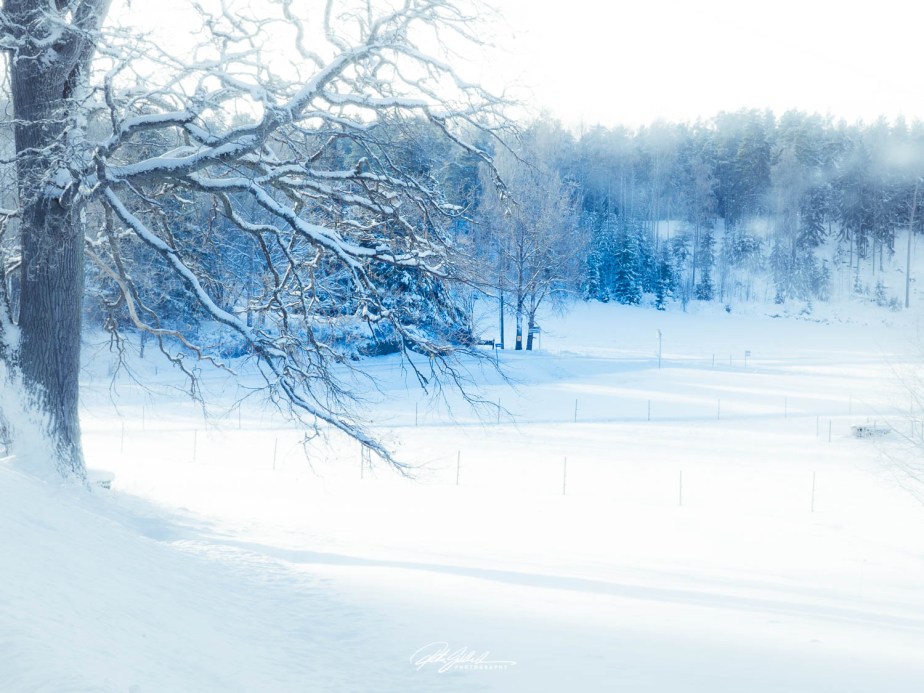
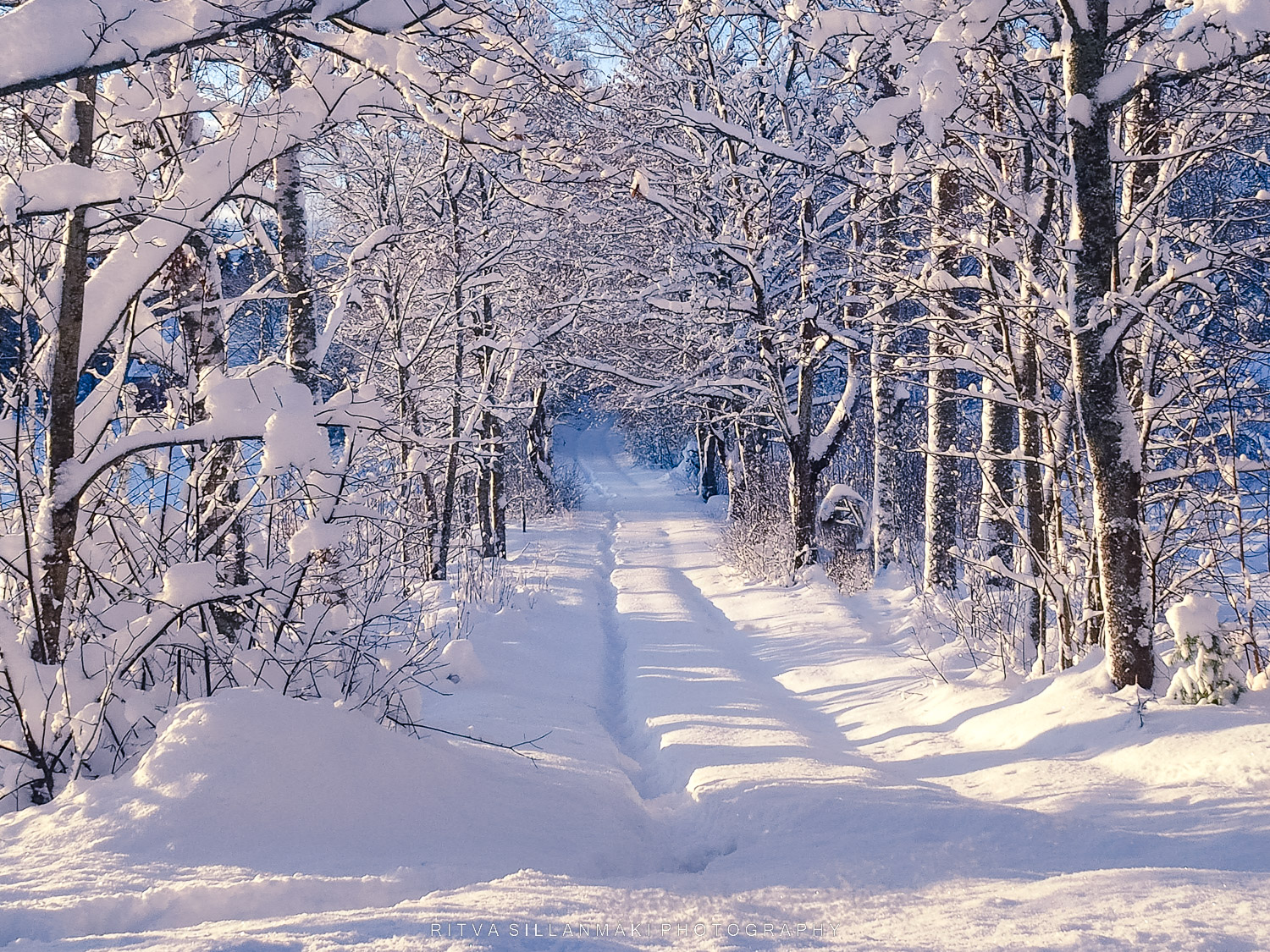
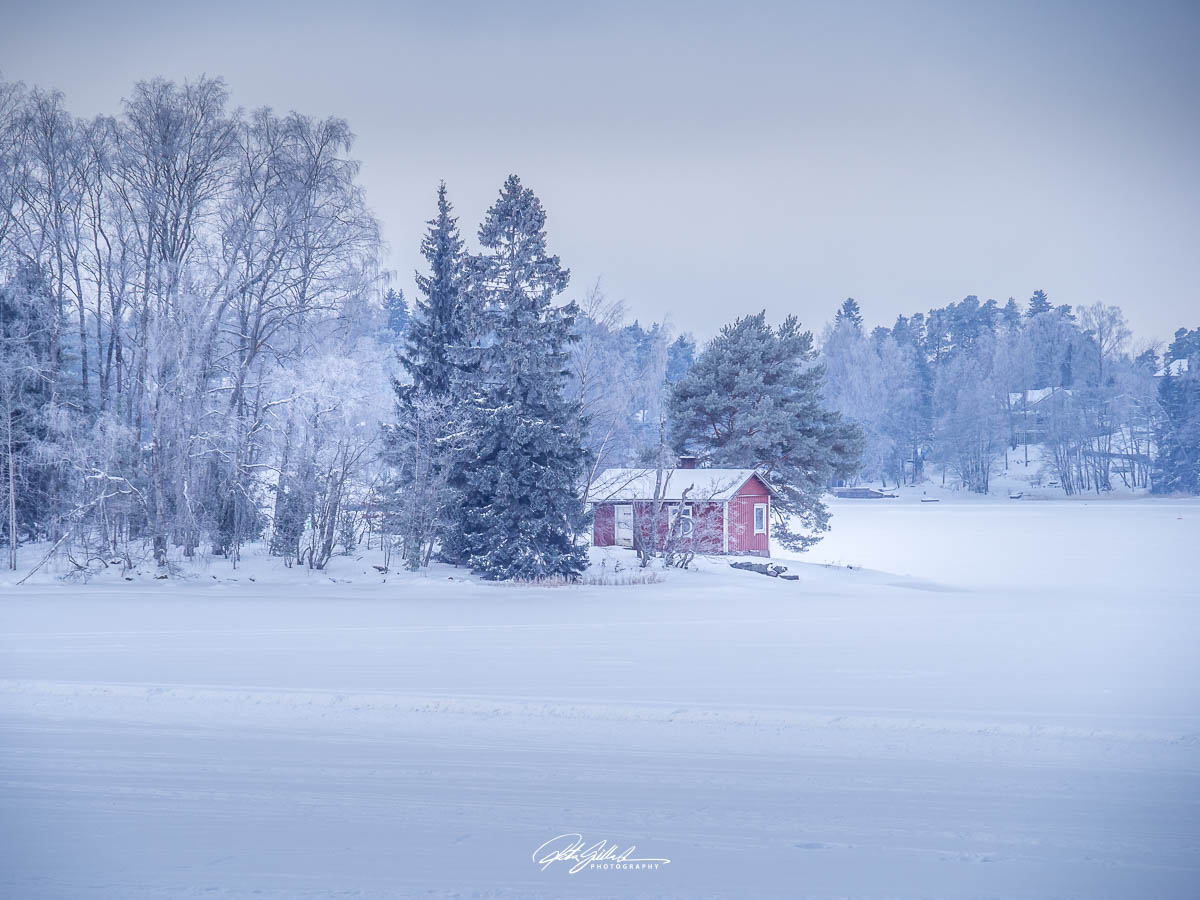
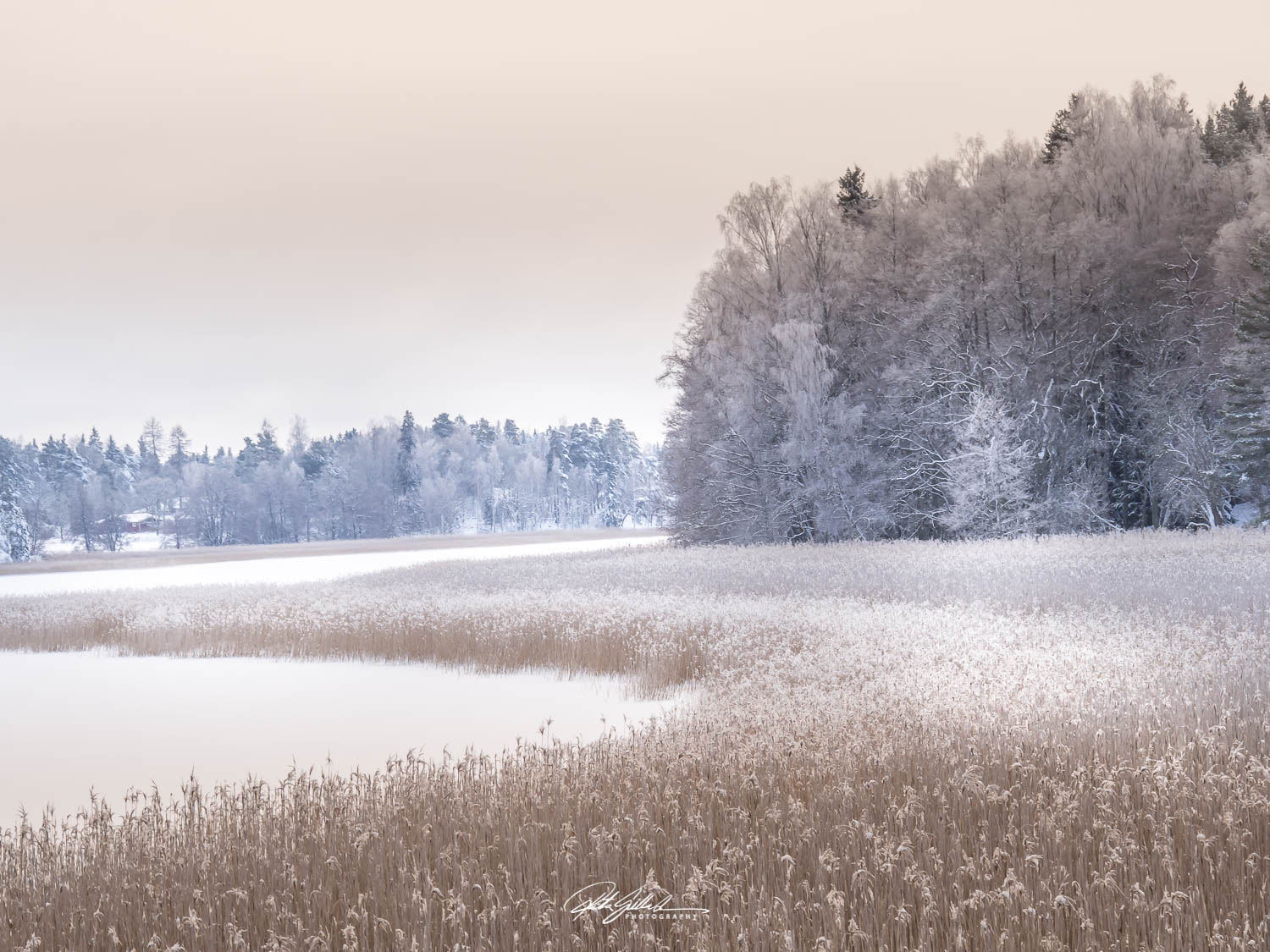
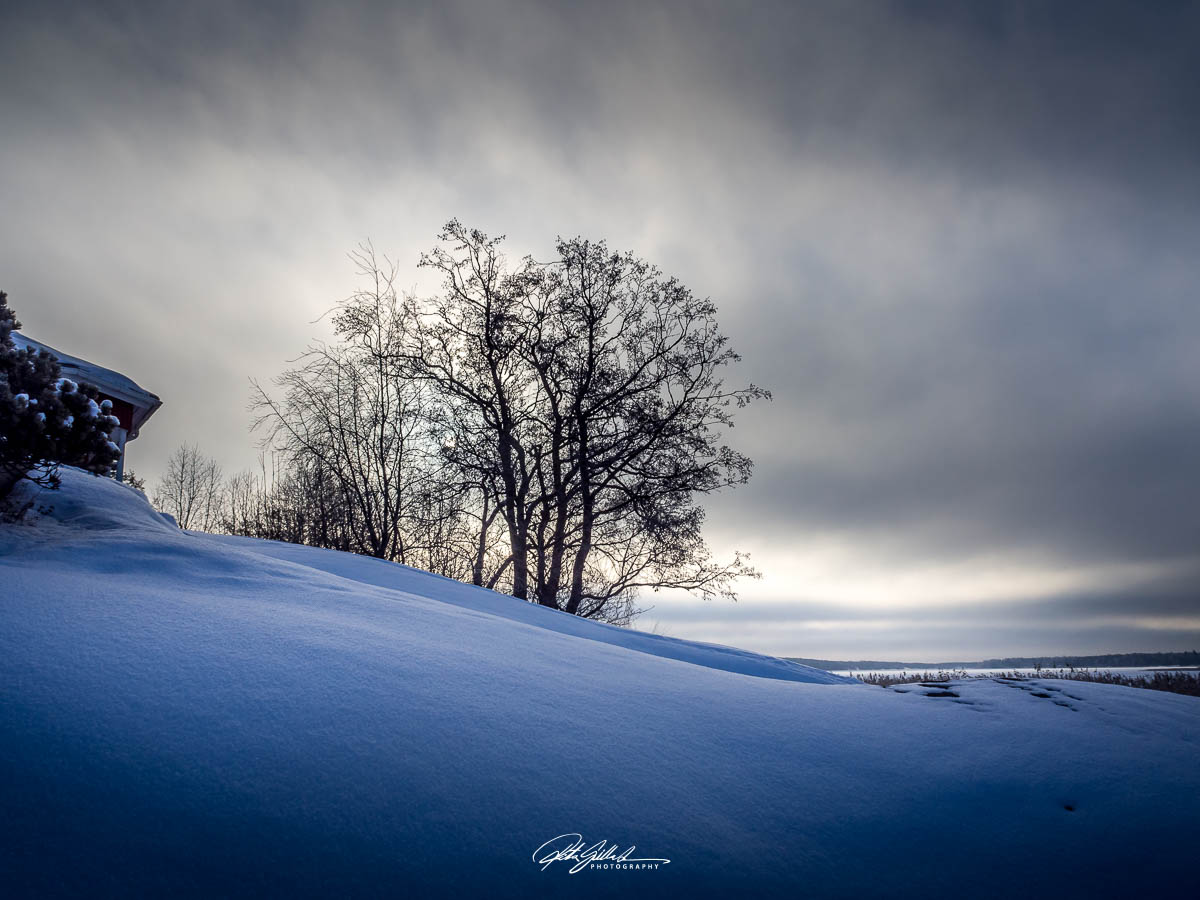
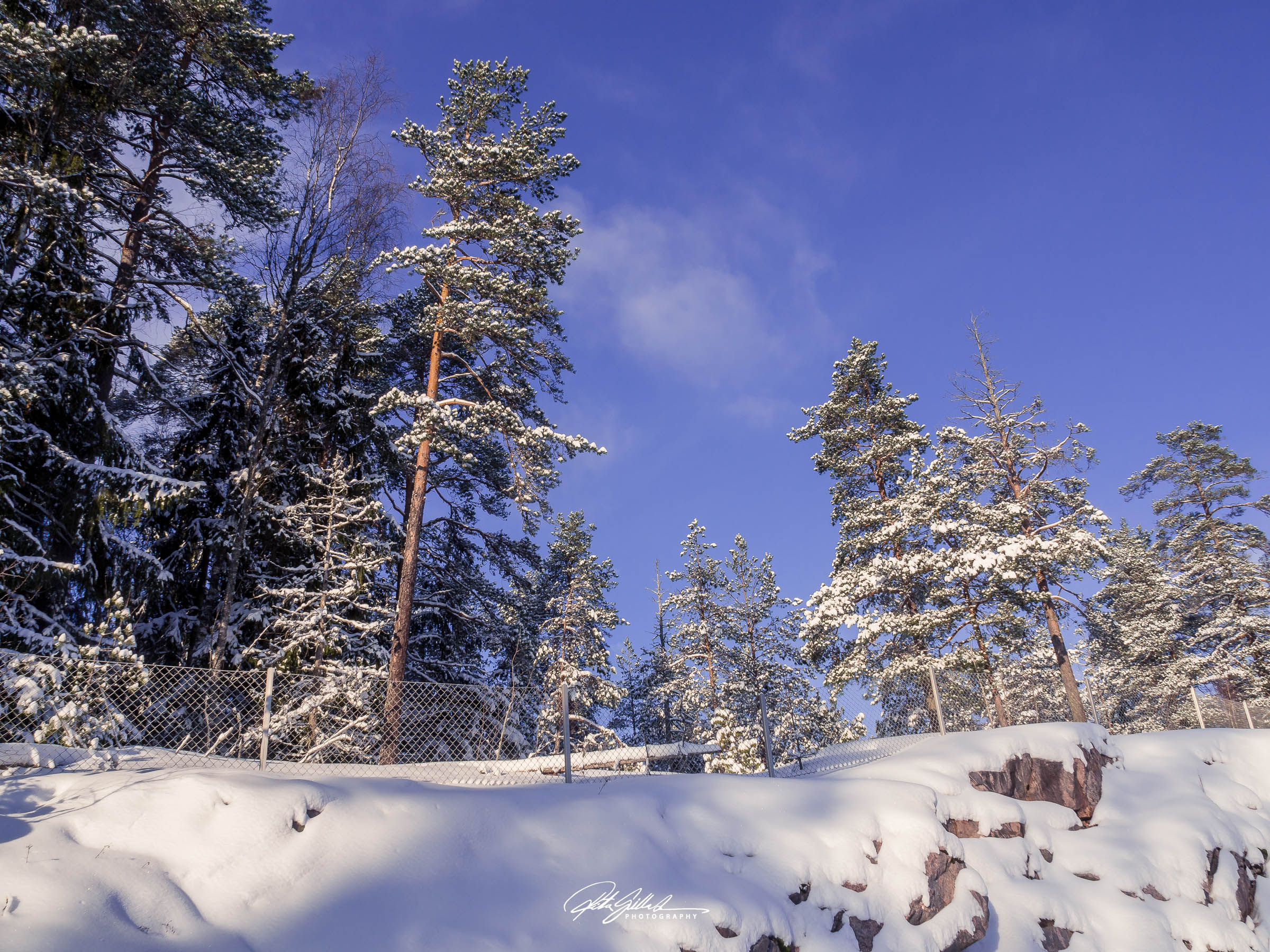
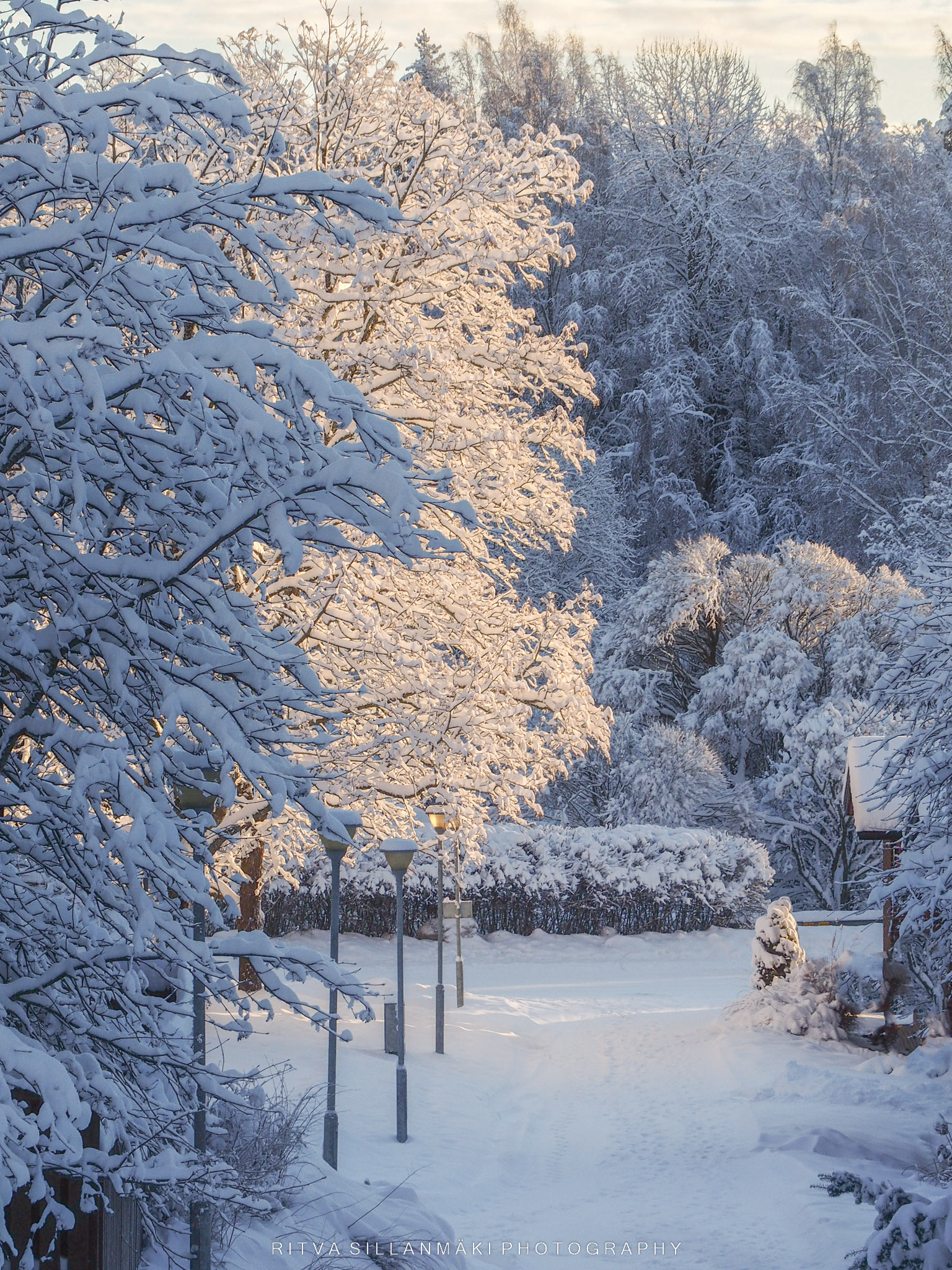
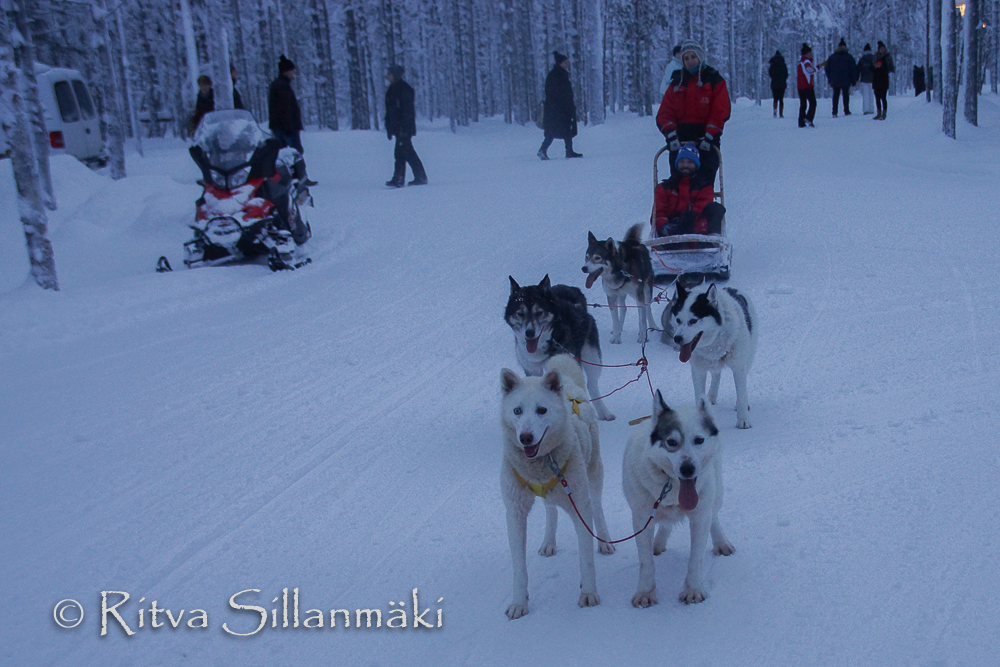
Winter will be upon those living in the northern hemisphere in only two weeks, well in my opinion it is already here .
For those who know me, know that winter is not my season, but you have to endure it. While I can appreciate the beautiful winter landscapes, with their pristine white snow and glistening icicles hanging from the eaves, and the seasonal lights that illuminate the dark nights, the cold weather is something I struggle with. The crisp air can feel invigorating at first, but it quickly turns into an unwelcome chill that seeps through even the warmest of layers. I know it is a matter of dressing accordingly, but the layer after layer can become cumbersome and stifling; not to mention the effort it takes to bundle up before stepping outside.
Winter season
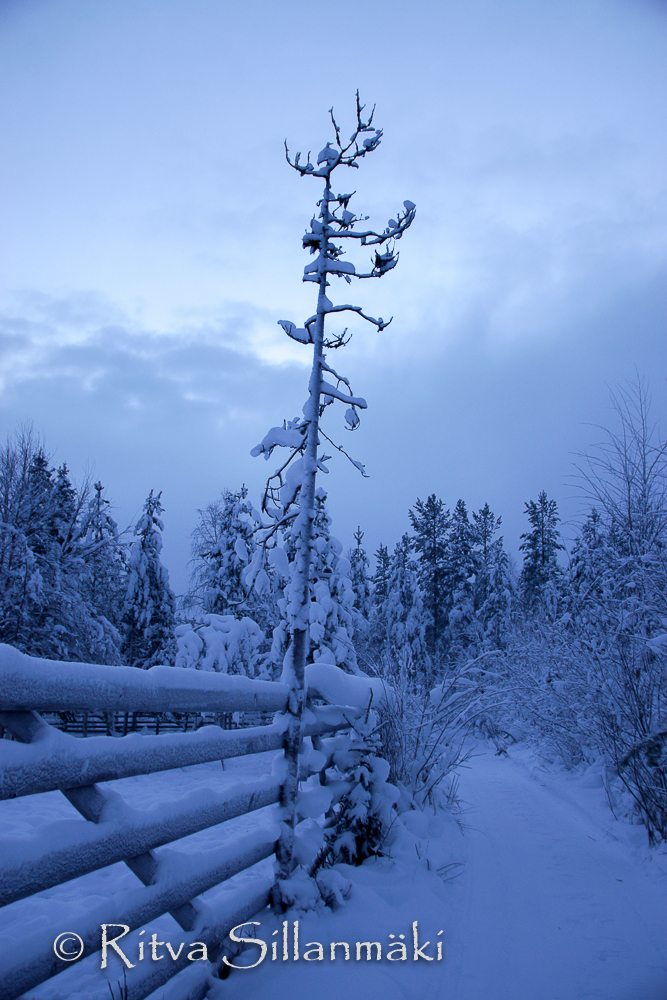
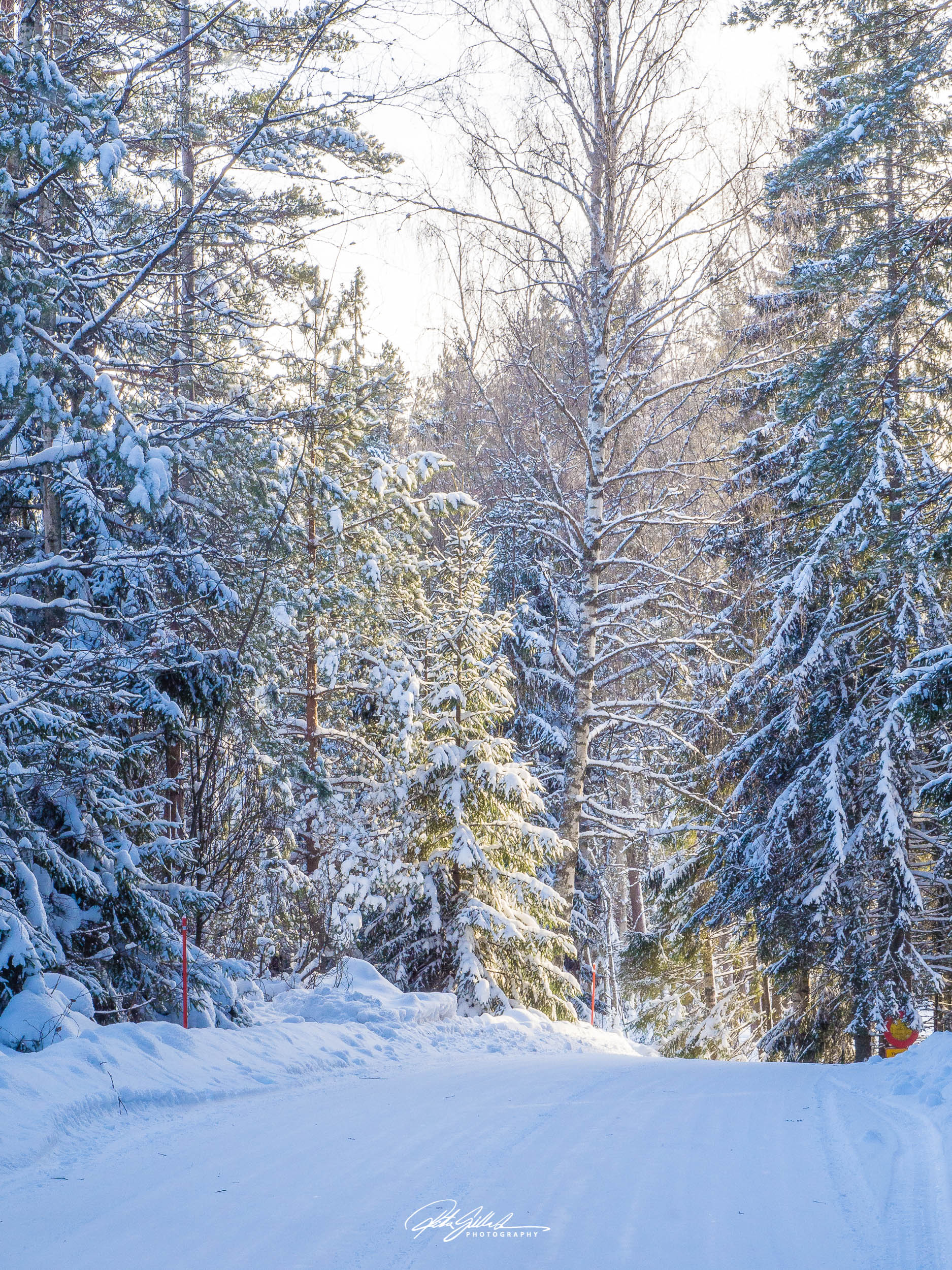
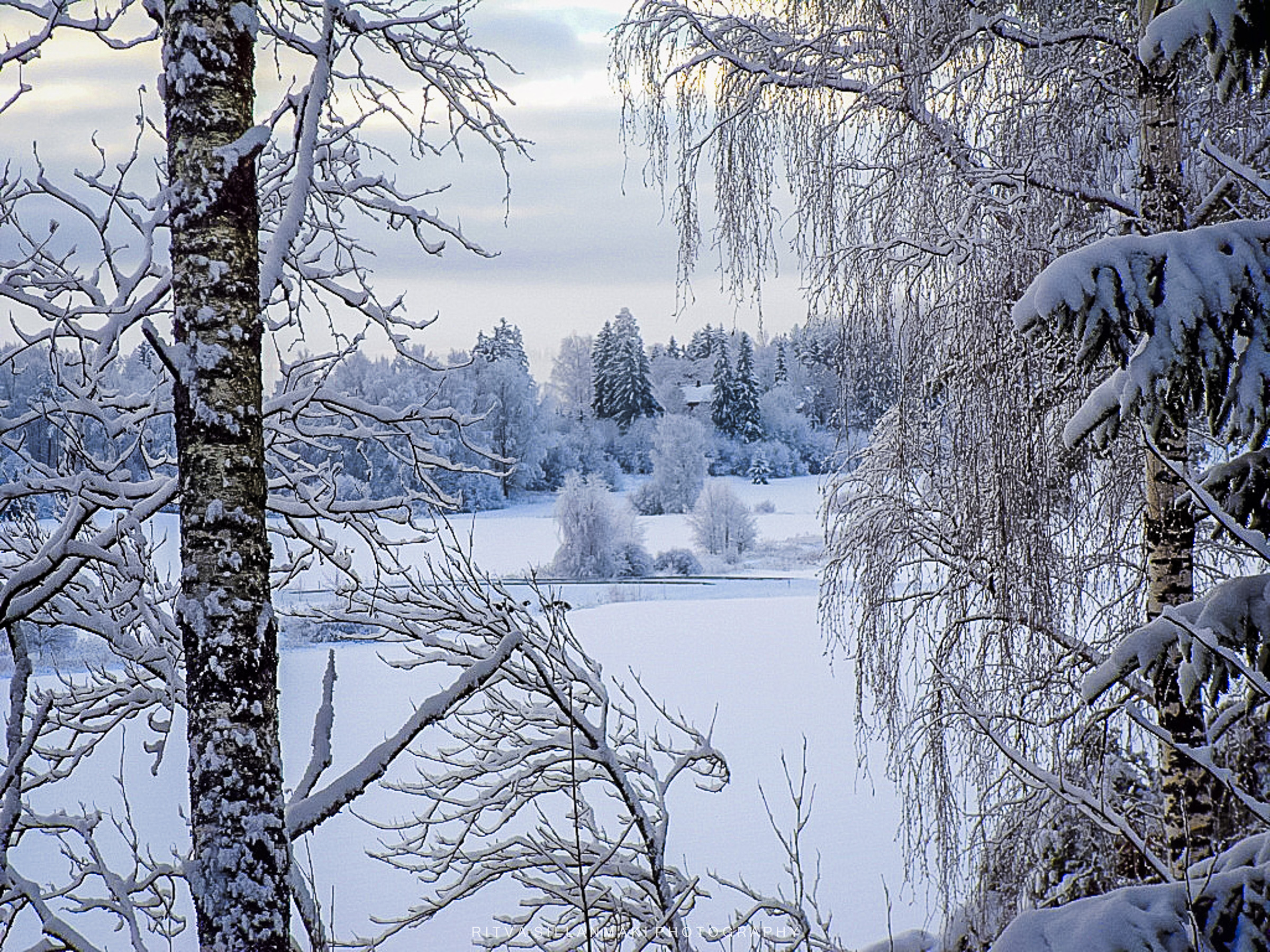
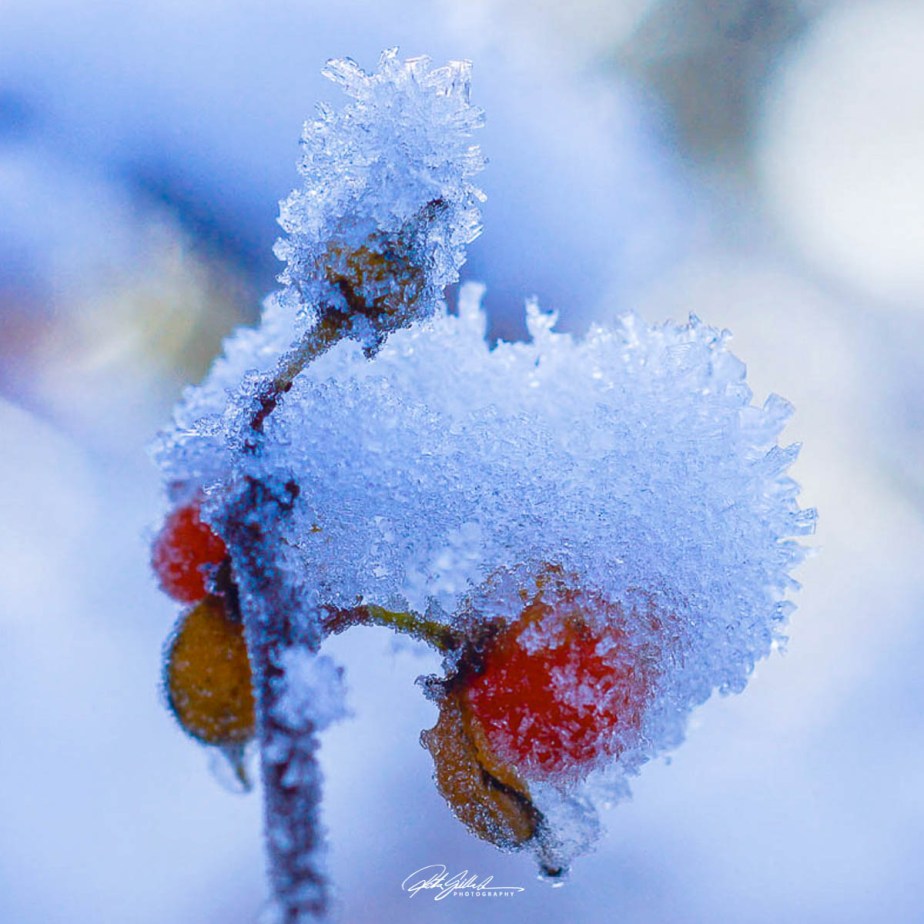
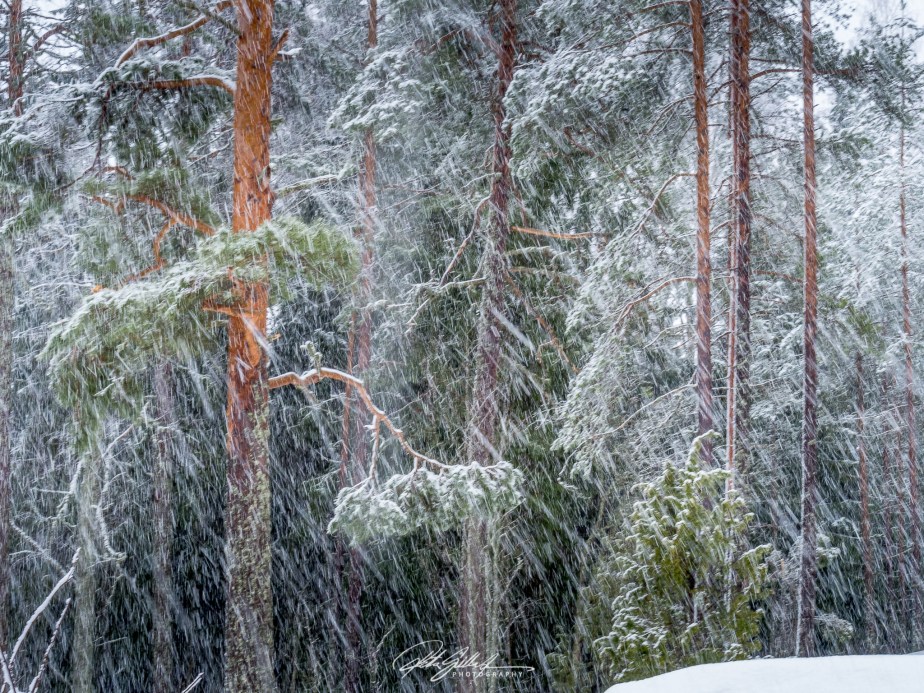
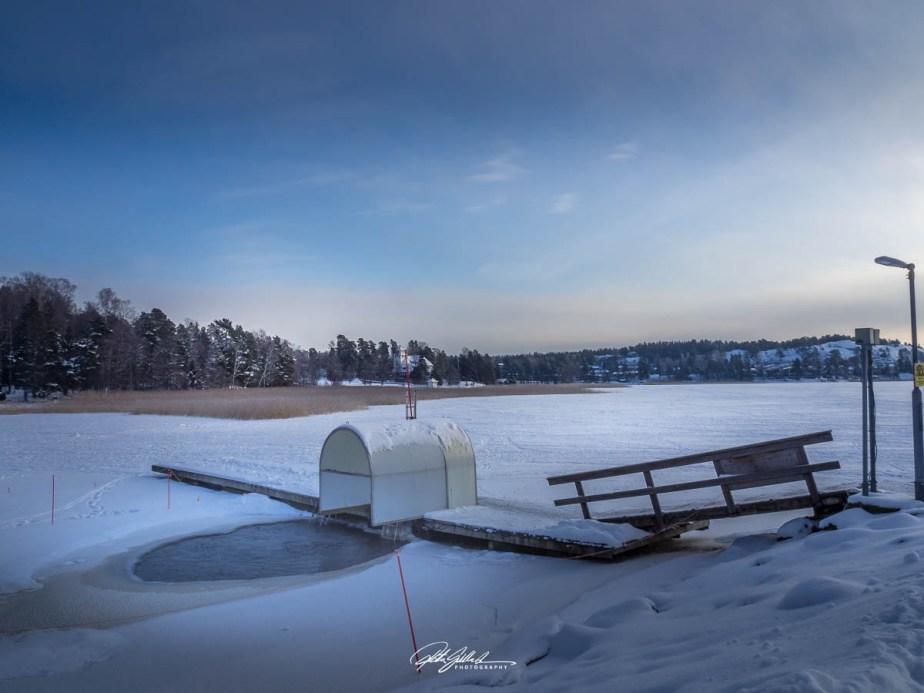
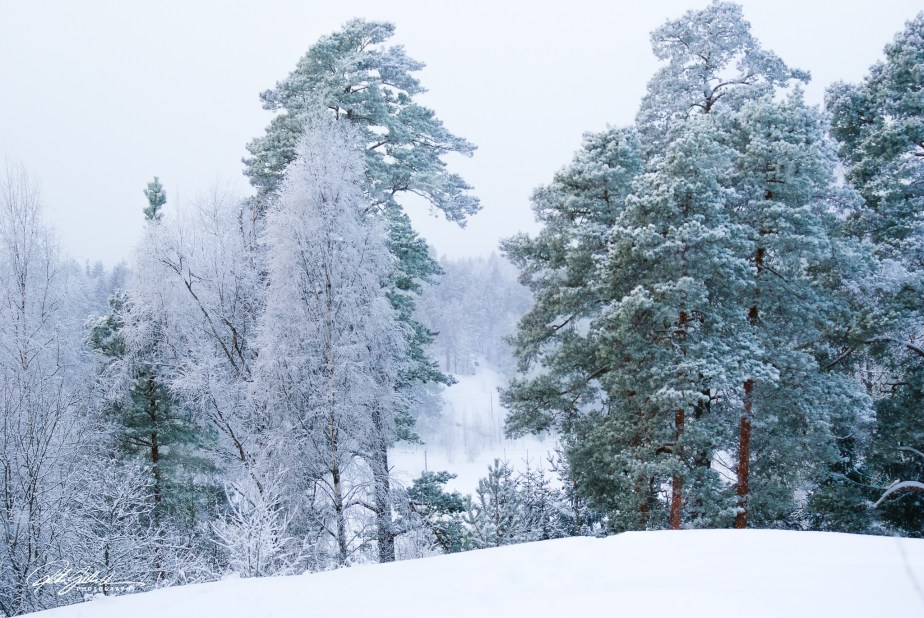
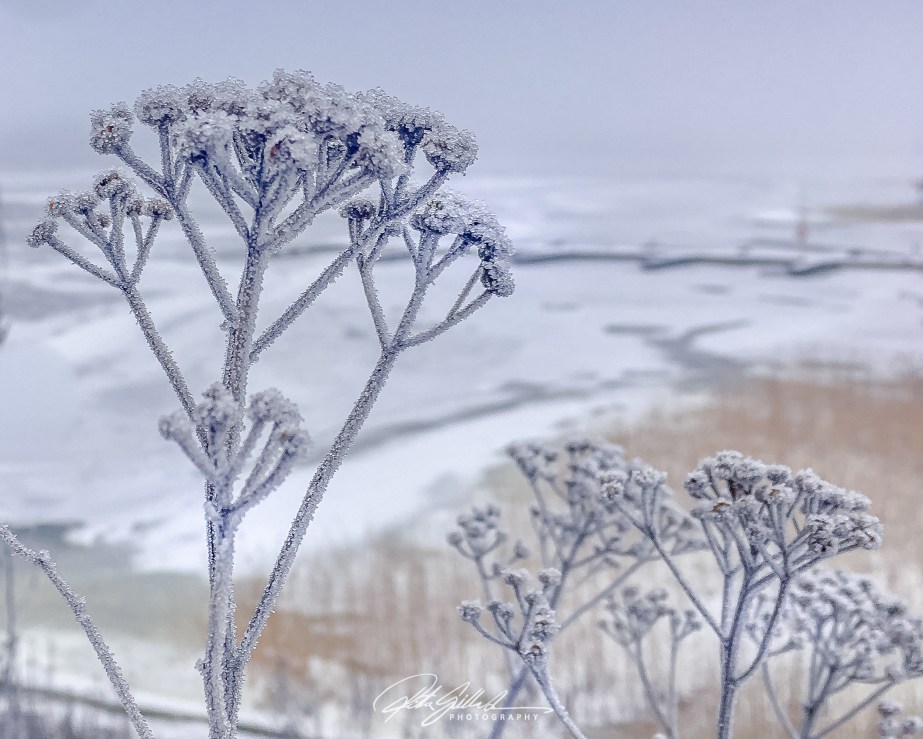
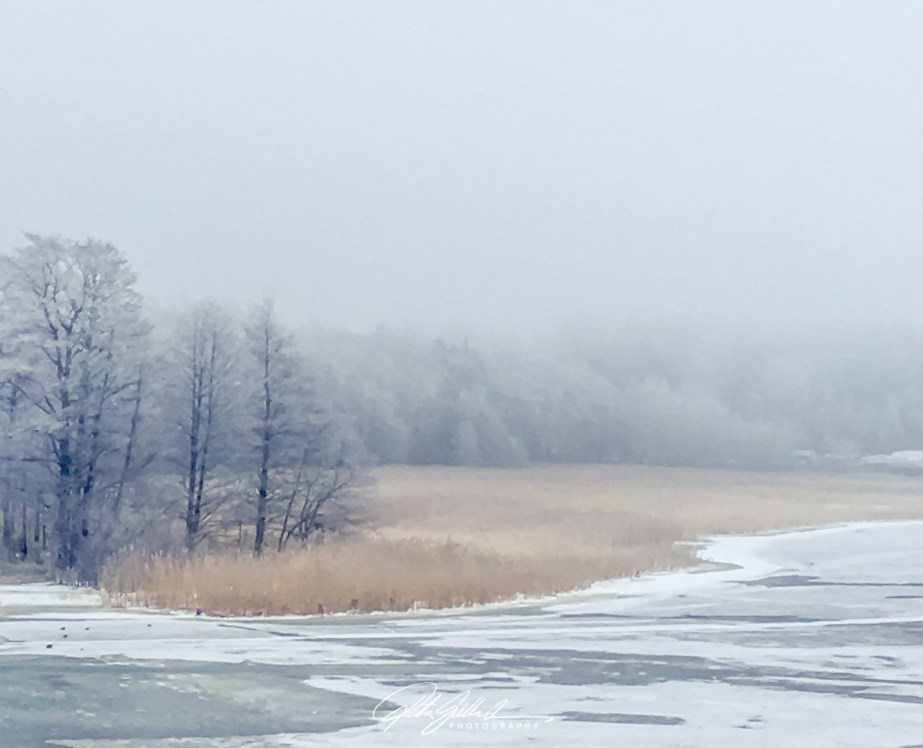
I will give you a few facts below about the beloved season if you are interested, or you can just enjoy the photos I’ve taken of the beauty of the snow-filled landscape, which captures the serene essence of winter perfectly. There is something magical about how snow blankets the ground, transforming ordinary scenes into picturesque winter wonderlands that take your breath away. I enjoy it too—in the photos, where each pristine flake seems to reflect the beauty of nature and the quiet stillness that accompanies this season, inviting you to pause and admire the frosty charm that surrounds us.
FEW facts about Finland In winter, the mean temperature remains below 0°C, but warm airflows can raise the daily high above 0°C at times. Winter usually begins in mid-October in Lapland and during November in the rest of Finland, though not until December in the southwestern archipelago. It thus takes about two months for winter to proceed from Lapland to Åland. The sea and large lakes slow down the progress of winter. Winter is the longest season in Finland, lasting for about 100 days in southwestern Finland and 200 days in Lapland.
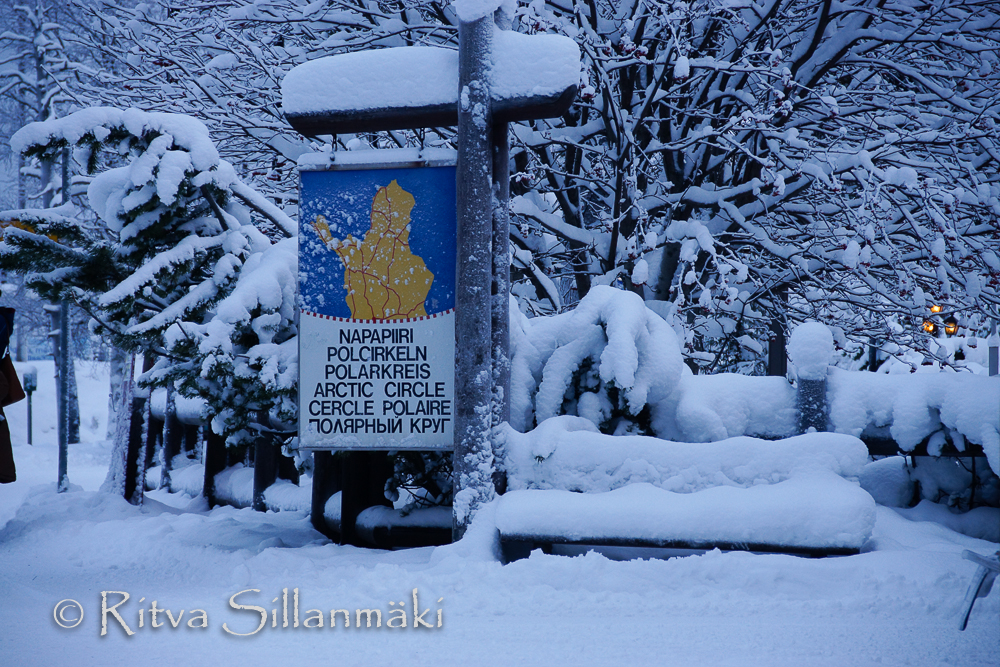
Arctic Circle, part of winter is the period known as the “polar night”, when the sun does not rise above the horizon at all. In the northernmost corner of Finland, the polar night lasts for 51 days. In southern Finland, the shortest day is about 6 hours long.
Permanent snow covers the ground about two weeks after winter begins, reaching its deepest around mid-March with 60 to 90 cm in eastern and northern Finland, and 20 to 30 cm in southwestern Finland. Lakes freeze in late November and early December, with ice thickest in early April at about 50 to 65 cm. In severe winters, the Baltic Sea may ice over almost completely, while mild winters keep it open except for the Gulf of Bothnia and the Gulf of Finland’s far ends.
The coldest day of winter typically occurs after the winter solstice, at the end of January in most places, except for maritime islands and coastal areas, where it is delayed until early February. Coldest temperatures range from -45°C to -50°C in Lapland and eastern Finland, from -35°C to -45°C elsewhere, and from -25°C to -35°C in islands and coastal regions.
snowingA quick dip to the sea?Frost covered treesWinter gray day ny the sea.
Please join and remember to link to John’s challenge when you post your response, and use the Lens-Artists tag.
Last week, Sofia’s challenge focused on the Five Elements in her lovely post, and the responses were interesting to see. How we all interpreted it in our own way .
Next week, it is time for our annual year-end challenge. In December 2022, the Lens-Artists team introduced a “Last-Chance” challenge. The idea was to review the year’s images that never quite fit our challenge subjects that year. The “rule” is that your chosen photographs must have been taken in 2024 and not have been included in response to our 2024 challenges. Go through your gallery and join us on Saturday, December 14, at noon Eastern Standard Time.
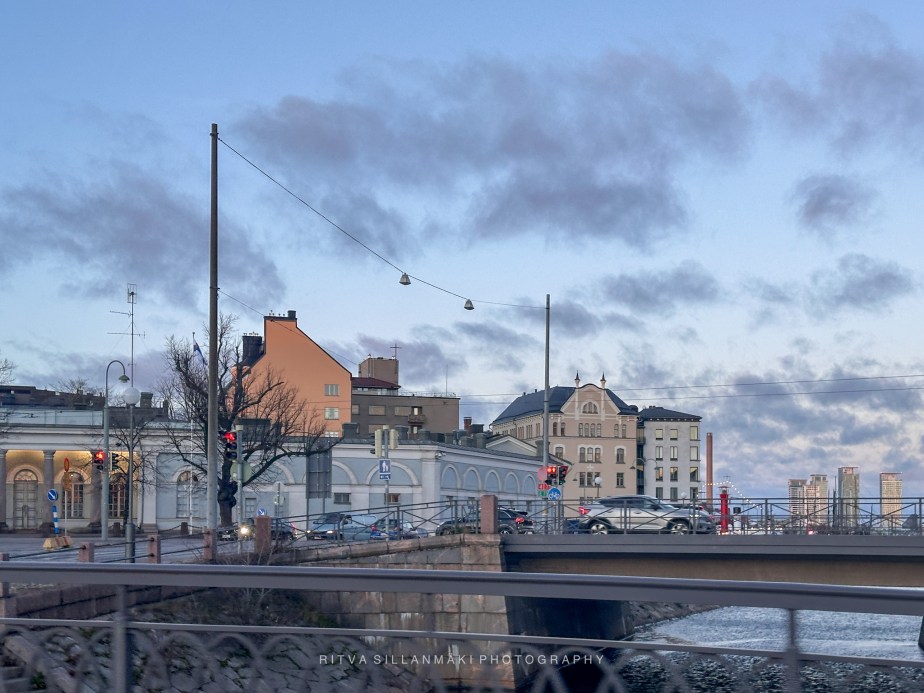
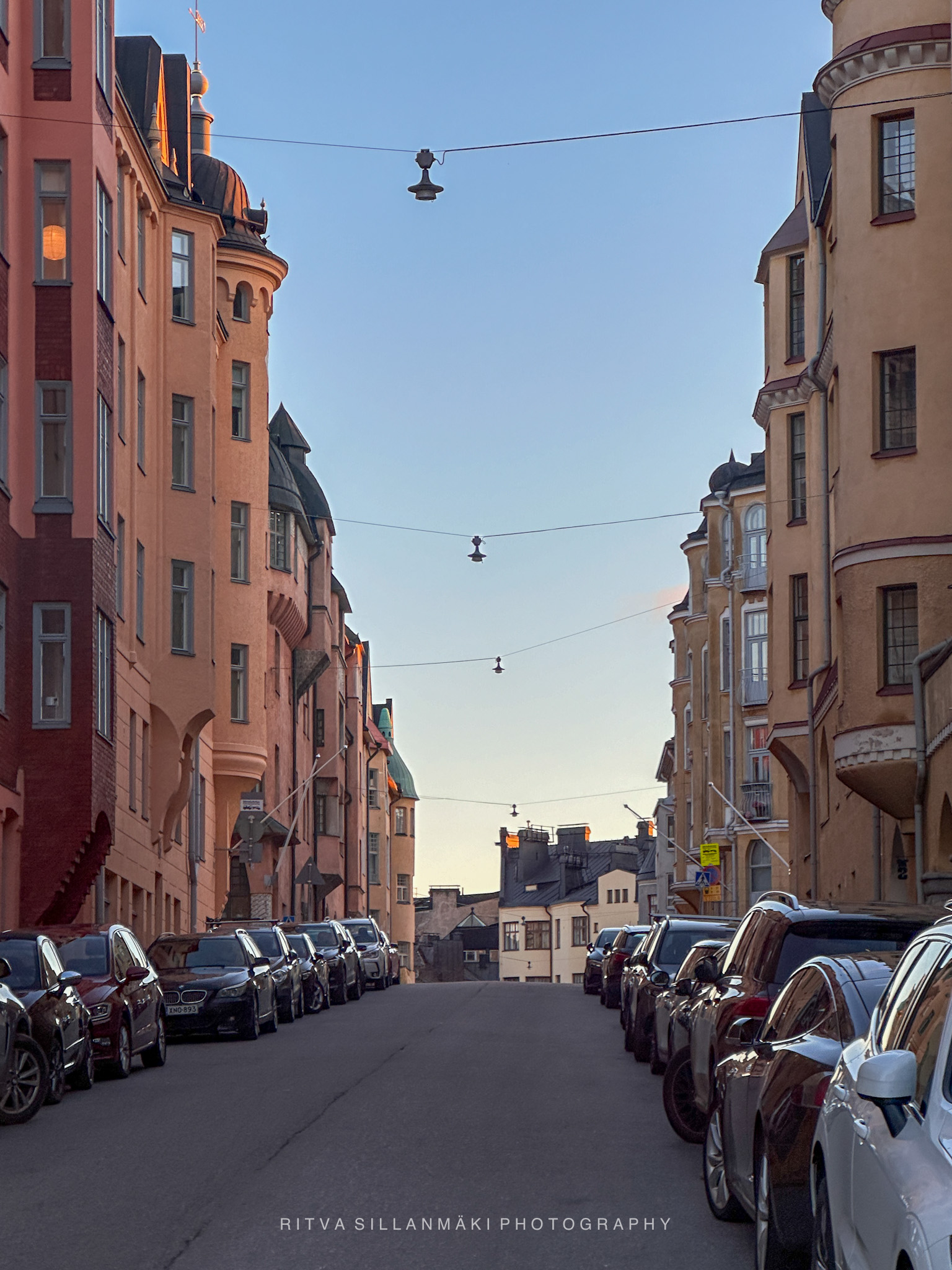
Last weekend we ventured outside and drove to have lunch in Helsinki , it’s about half hour drive, not much of an adventure. The restaurant is located in the area of Katajanokka is a neighbourhood of Helsinki, with around 5000 inhabitants. The district is located adjacent to the immediate downtown area, though in the first major town plan for Helsinki from the mid-18th century, the area fell outside the fortifications planned to encircle the city.
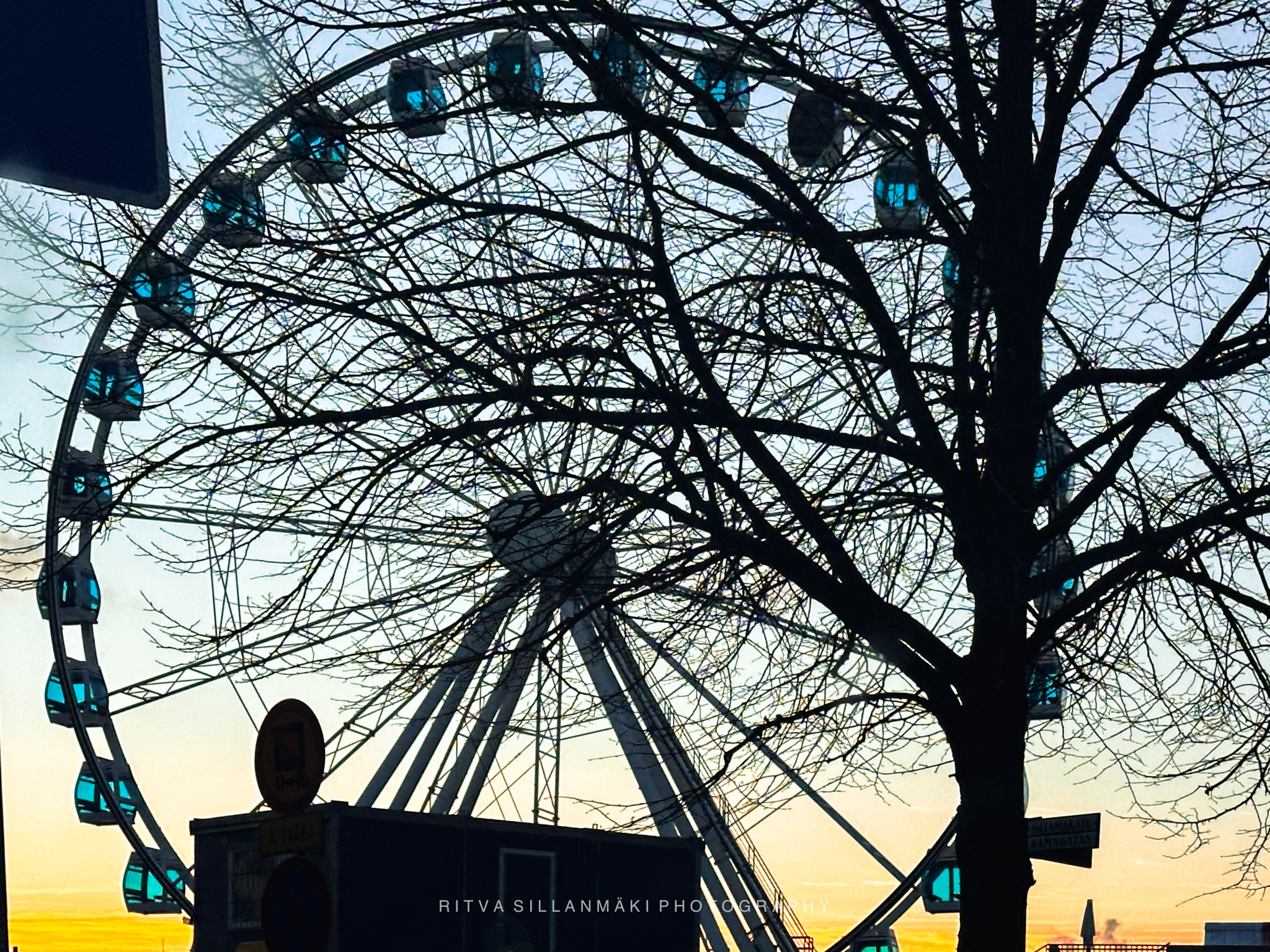
This us driving away from Katajannokka on one of the bridges, in the corner is the part of the The Presidential Palace.
Katajanokka was originally a headland of the Helsinki peninsula but is now an island due to the canal dug in the 19th century. Four bridges connect it to mainland Helsinki. Urban settlement expanded to Katajanokka in the 18th century, remaining largely untouched until the canal’s completion in 1844, which linked the South and North Harbours. The south side features a busy passenger harbour for ferries to various destinations, while the area consists mainly of co-operative apartment buildings and small parks. The eastern part was once a military zone with a naval base, which evolved into a commercial shipyard.
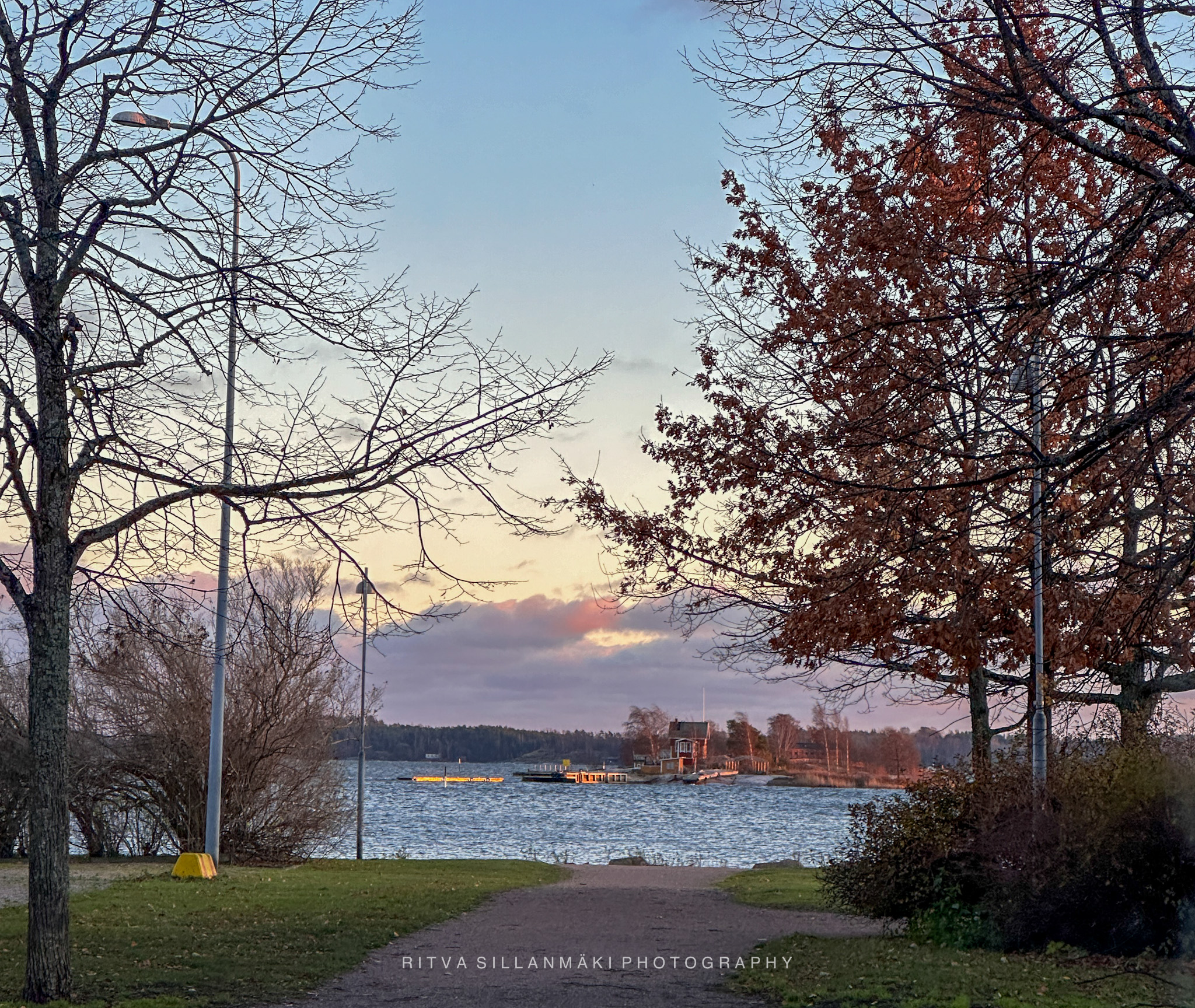
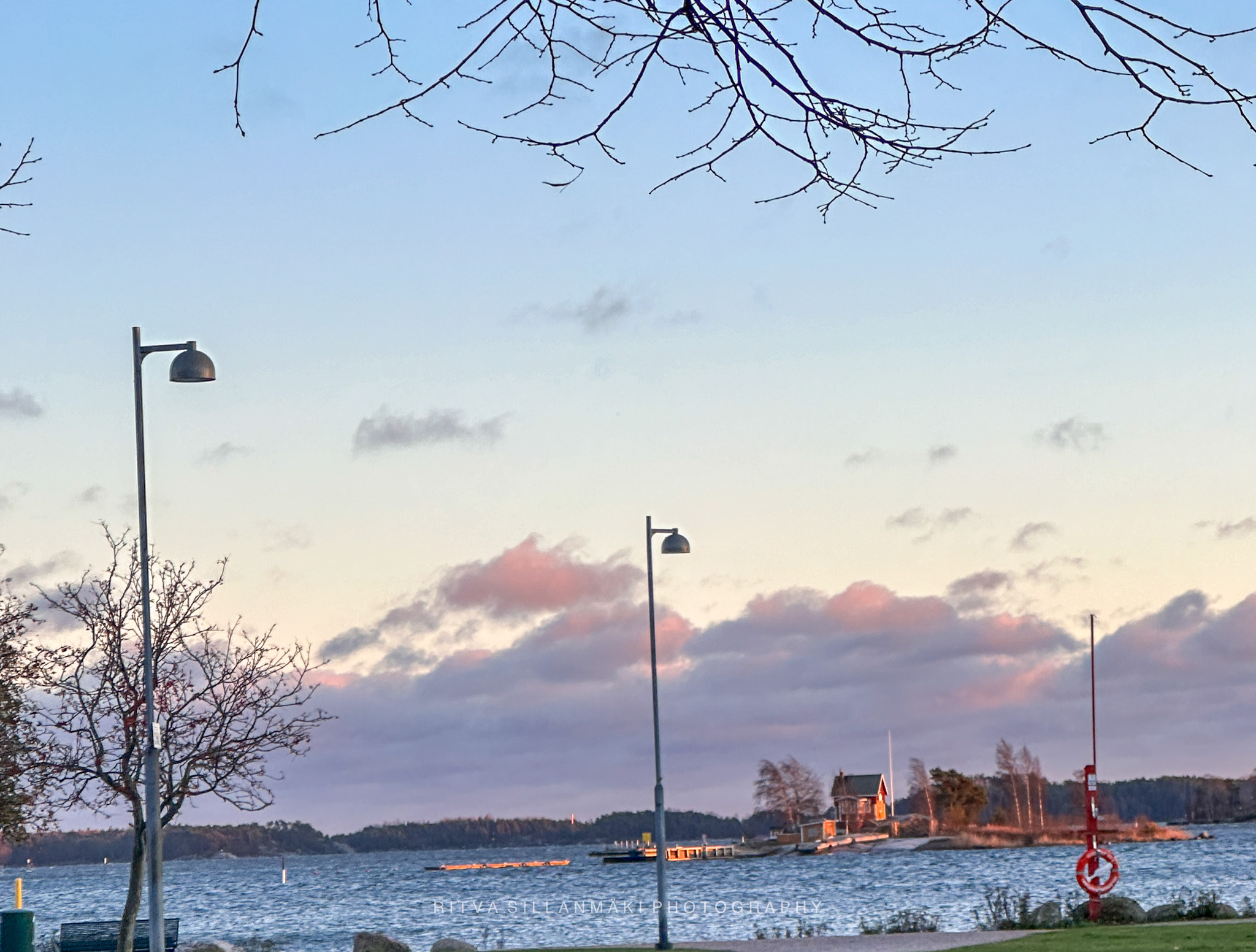
These are from the eastern side looking towards the sea, my attention was on the house on the small island as the sun was casting the last light on it. for some reason I did not take photos of the newer buildings.
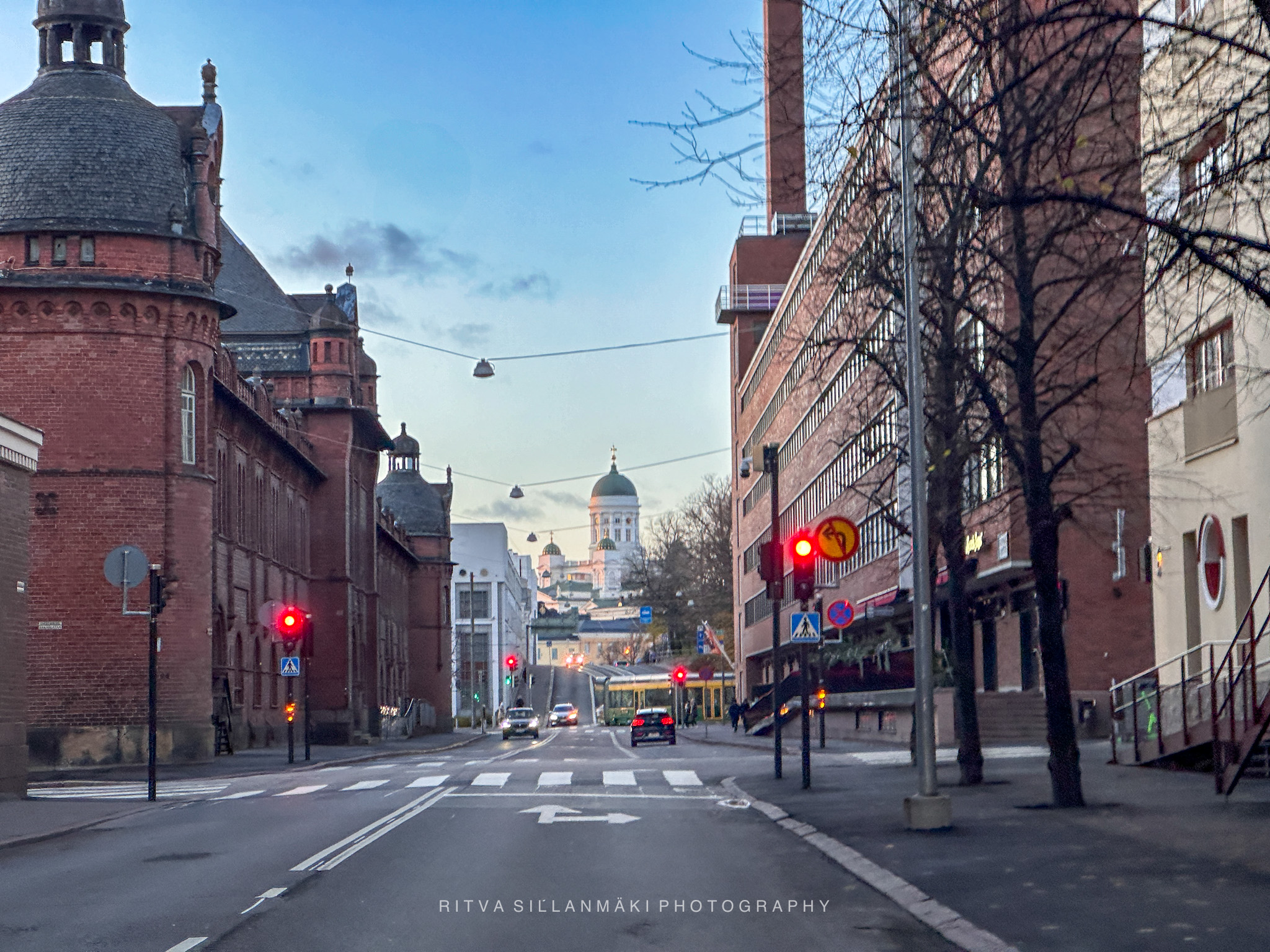
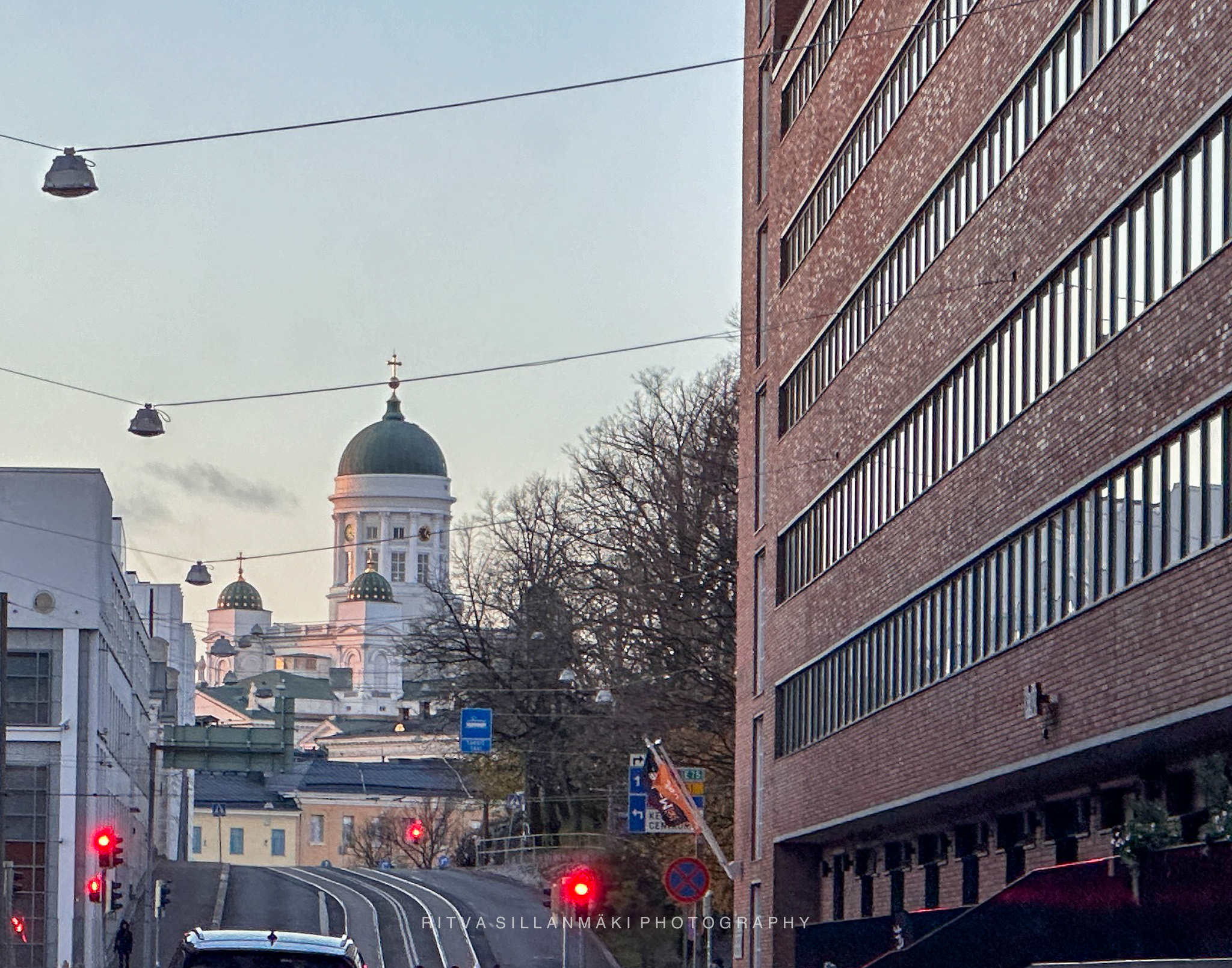
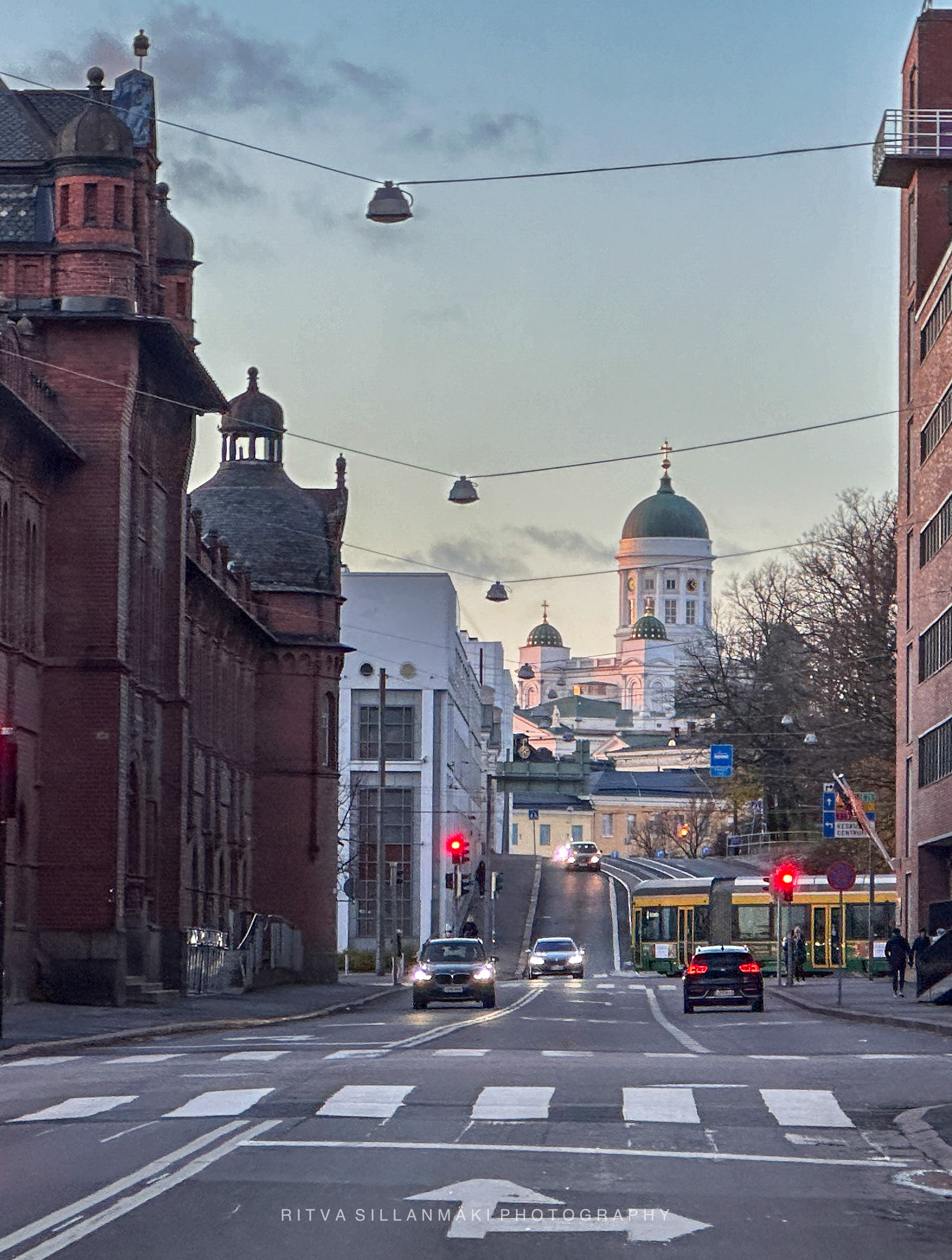
Here we are leaving the area, driving towards the Helsinki Cathedral
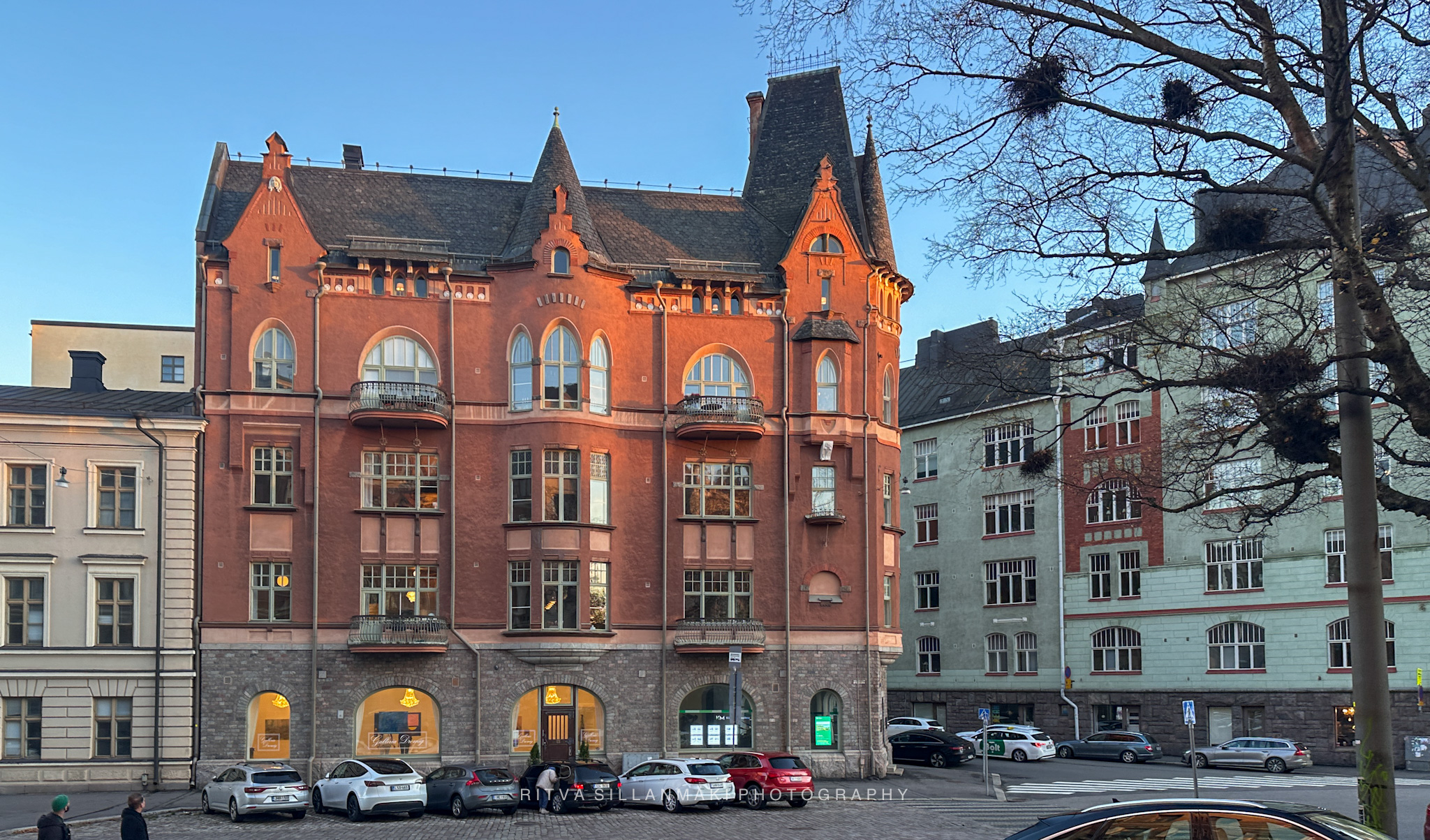
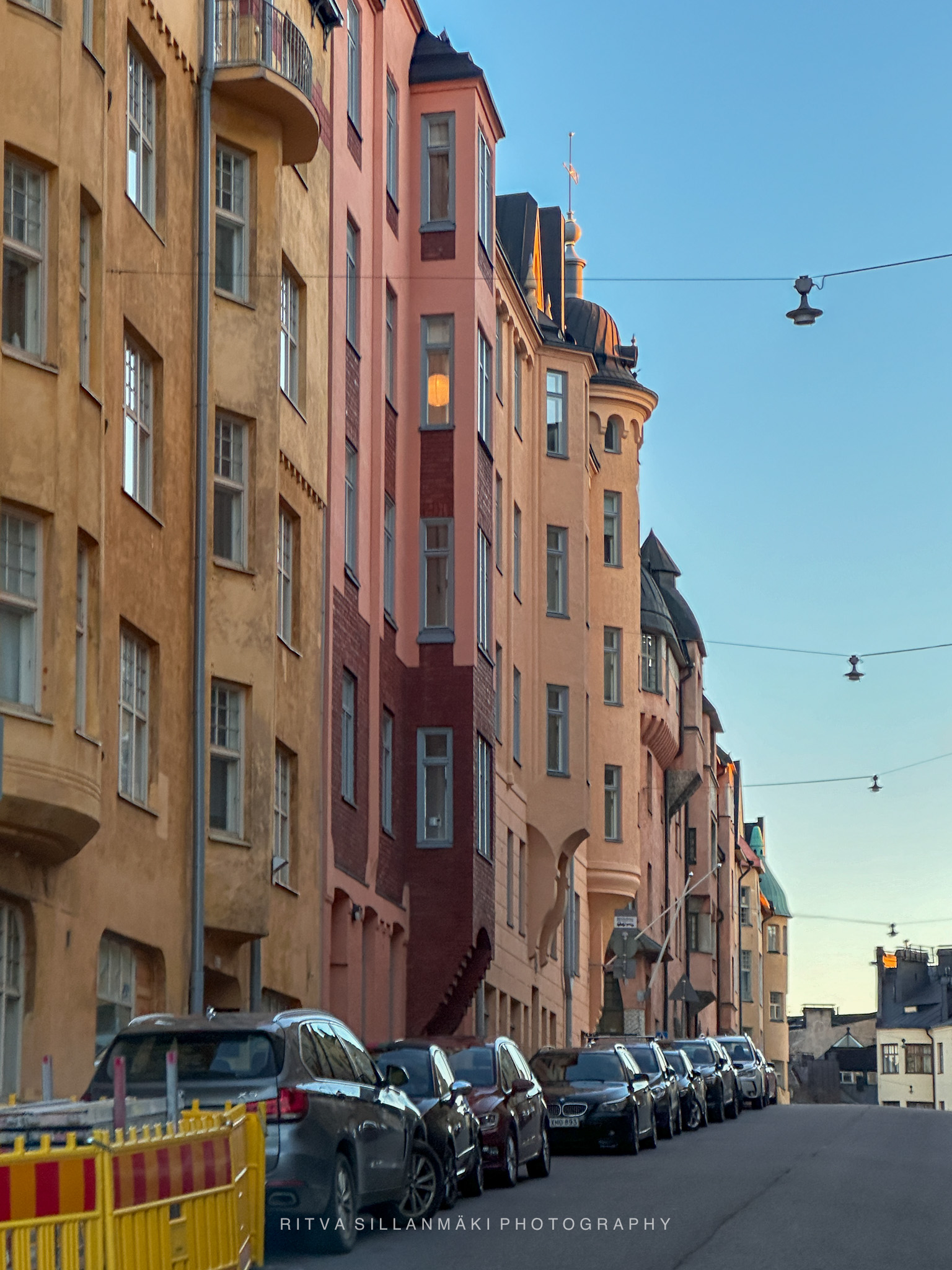
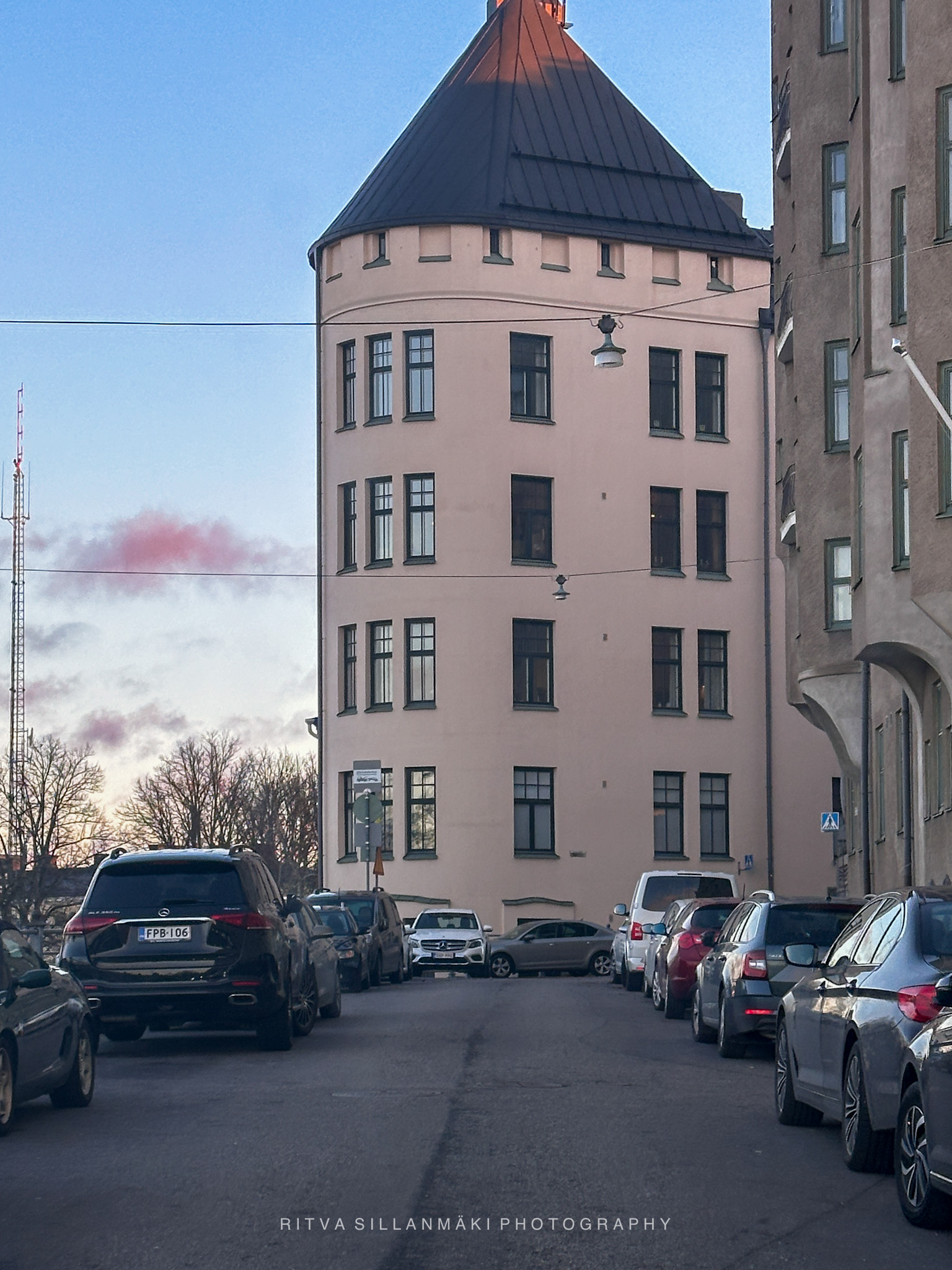
The western part of the residential area, known as the “Old Side” of Katajanokka, is an upscale neighborhood and a well-preserved example of early 20th century Art Nouveau architecture, though up until the mid-19th century – while the centre of Helsinki was being filled with stone buildings – the area was essentially still a wooden shanty town.
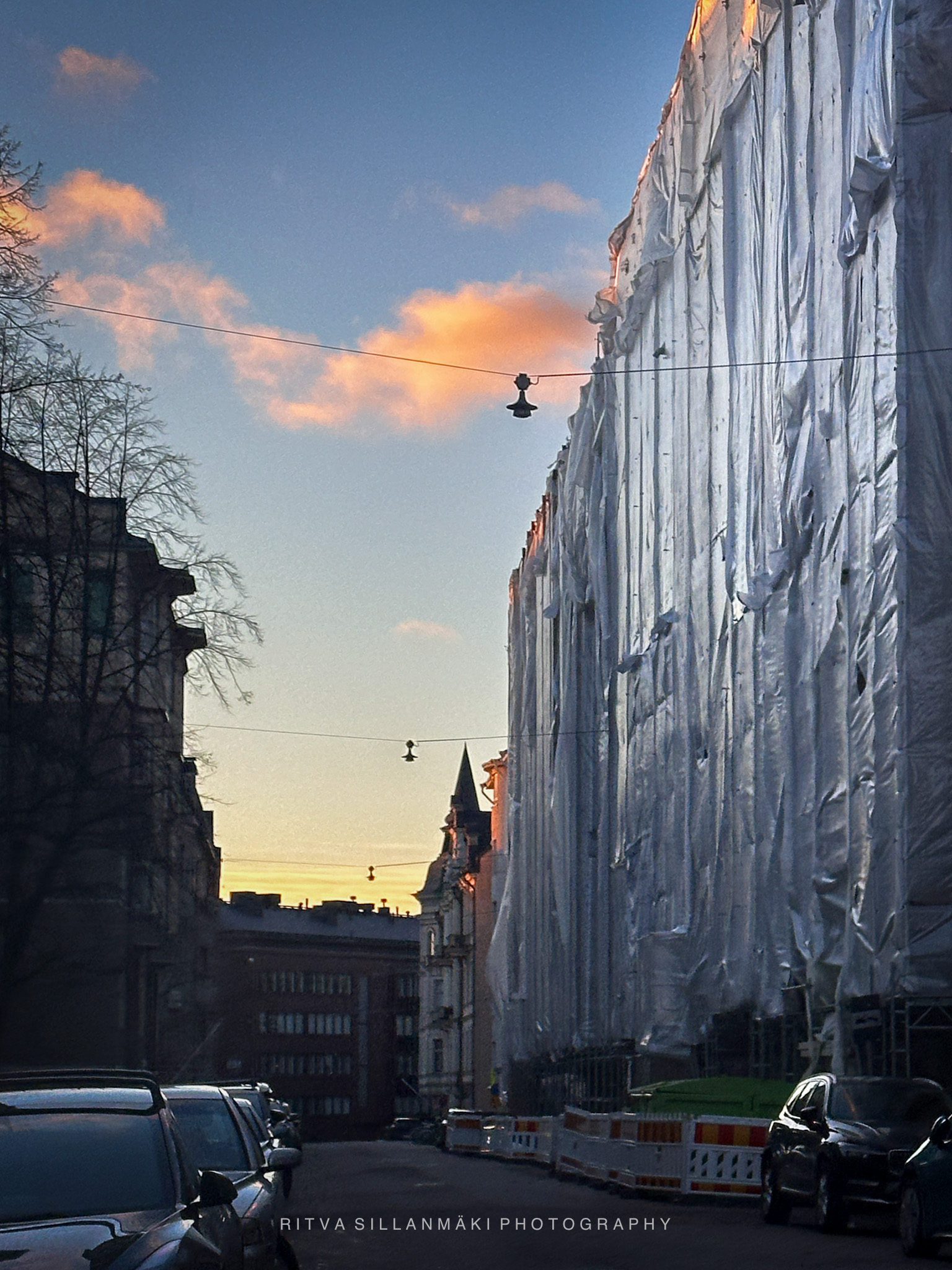
The westside has some restoration going on and the area is not built for the amount of cars that we nowadays have, a bit tricky to get a parking spot here,
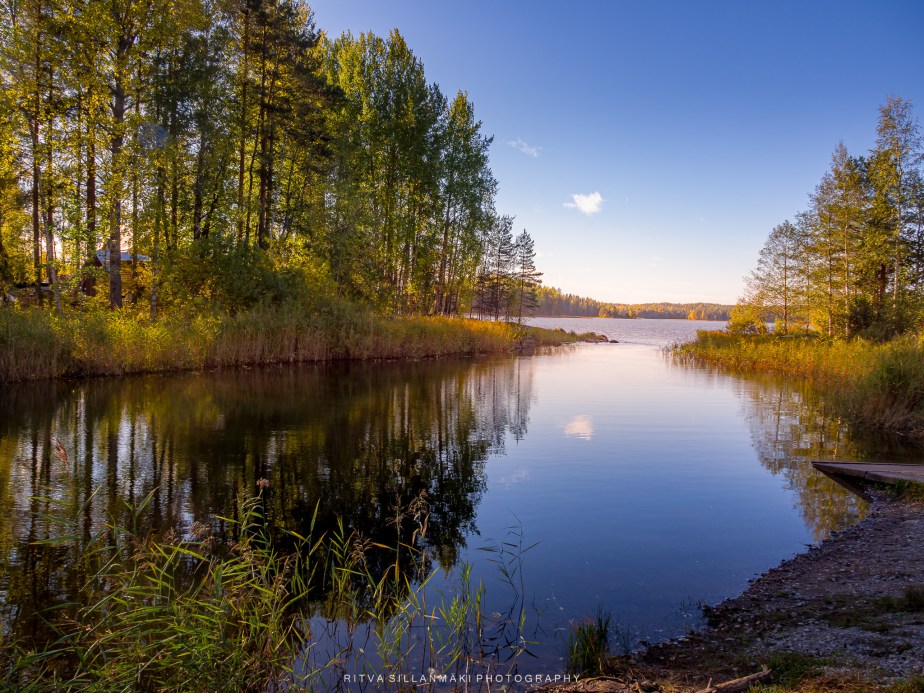
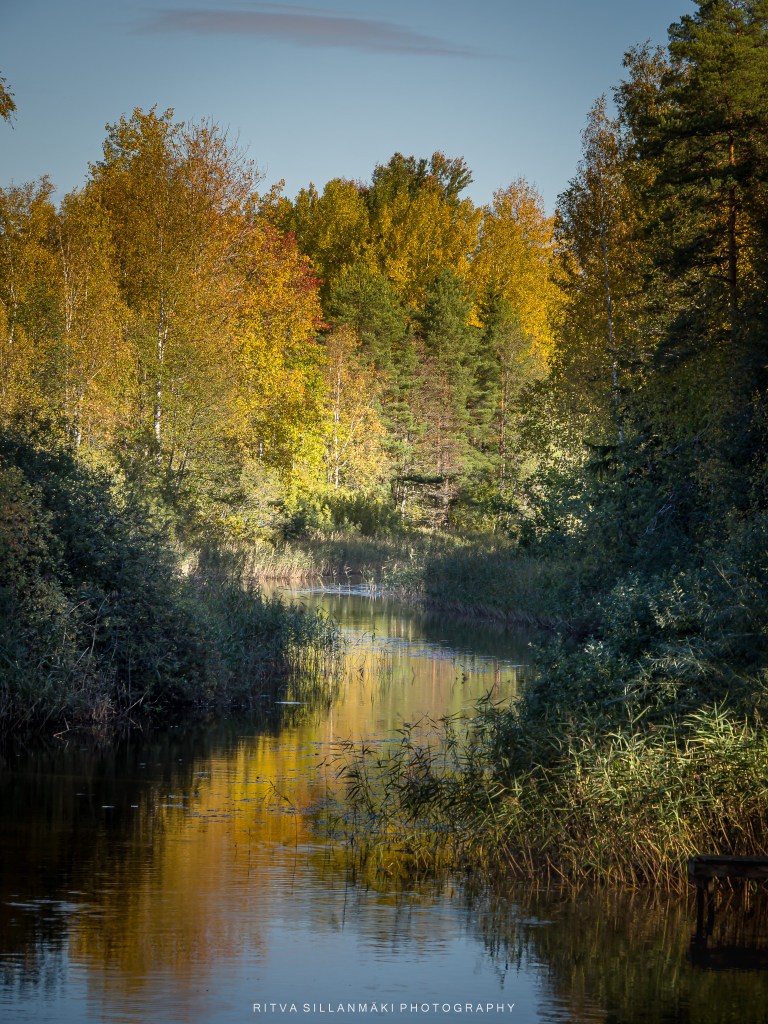
This is ruska. (n the Finnish language, this stunning phenomenon that paints northern landscapes in deep and soft tones is called ‘ruska’.
What is ruska?
Ruska comes from the Sami word “ruškat”, and close to the Finnish word ruskea which means brown. This refers to the time of the year when the spectacular natural phenomena of the autumn foliage happen, or when leaves change colors and the trees get ready for winter.
Puuruska
There are two different types of ruska; puuruska and maaruska. In Finnish language, puu means tree, therefore puuruska refers to the leaves of the trees changing to different colors. Maa means land, ground, or soil; so maaruska, when translated to English, means bushes and plants of the ground changing their colors. The maaruska is especially beautiful to see in blueberry bushes at the forest. The colors are very bright and intense, creating the perfect spot for that perfect shot, or most of the time, simply an immeasurable and breathtaking view that a photo can’t even justify.
river Salajoki
Typically, ruska starts in the north of Finland in early September and gradually moves southward. By late September to early October, the southern parts of the country, including Helsinki, will be in the full throes of this colorful season.
Lapland, the northernmost region of Finland, offers some of the most stunning ruska views. The fells and vast wilderness areas, interspersed with crystal-clear lakes and rivers, provide a perfect backdrop for the red and gold leaves.
Reflections
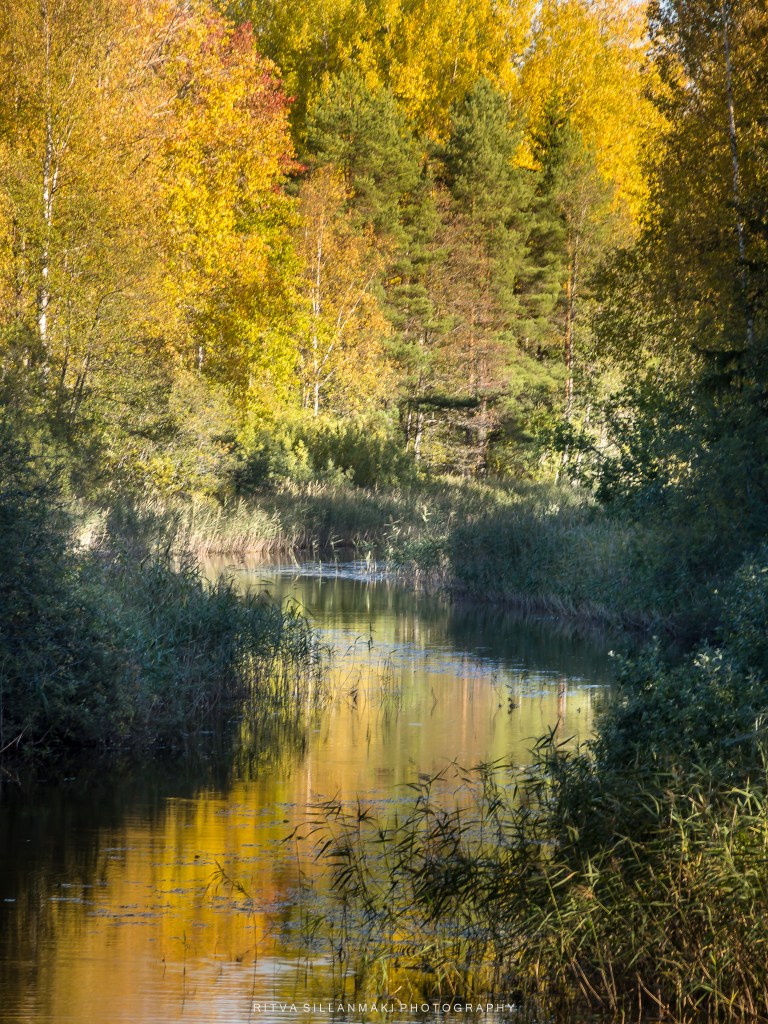
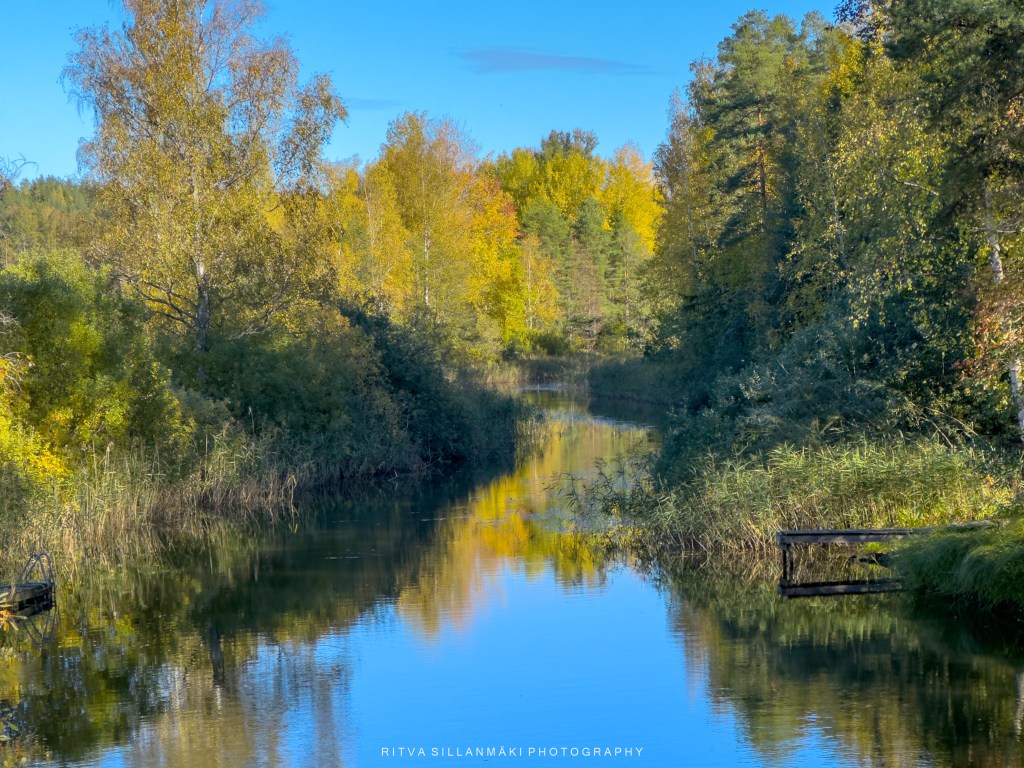
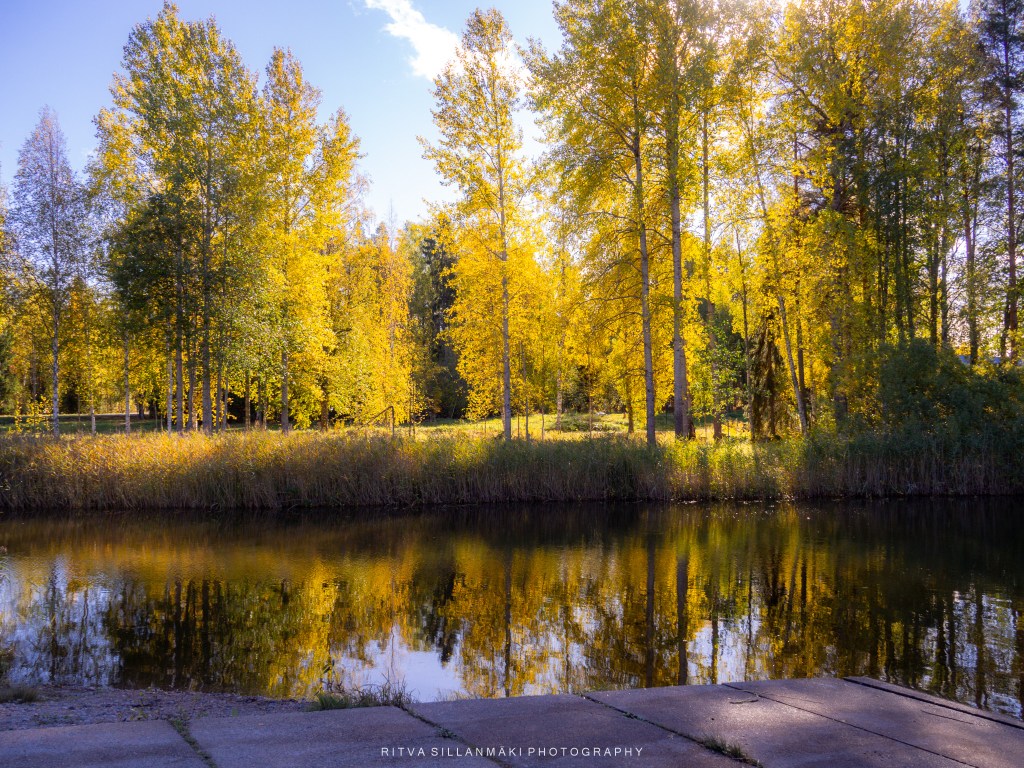
I took these last weekend, and since then, this week the colors have intensified spectacularly. Hopefully, the rain and winds of the autumn storm pass swiftly, allowing the beauty of nature to remain mainly undisturbed. I hope for a chance to photograph the stunning fall leaves again in the coming days, capturing the fleeting beauty of the season.
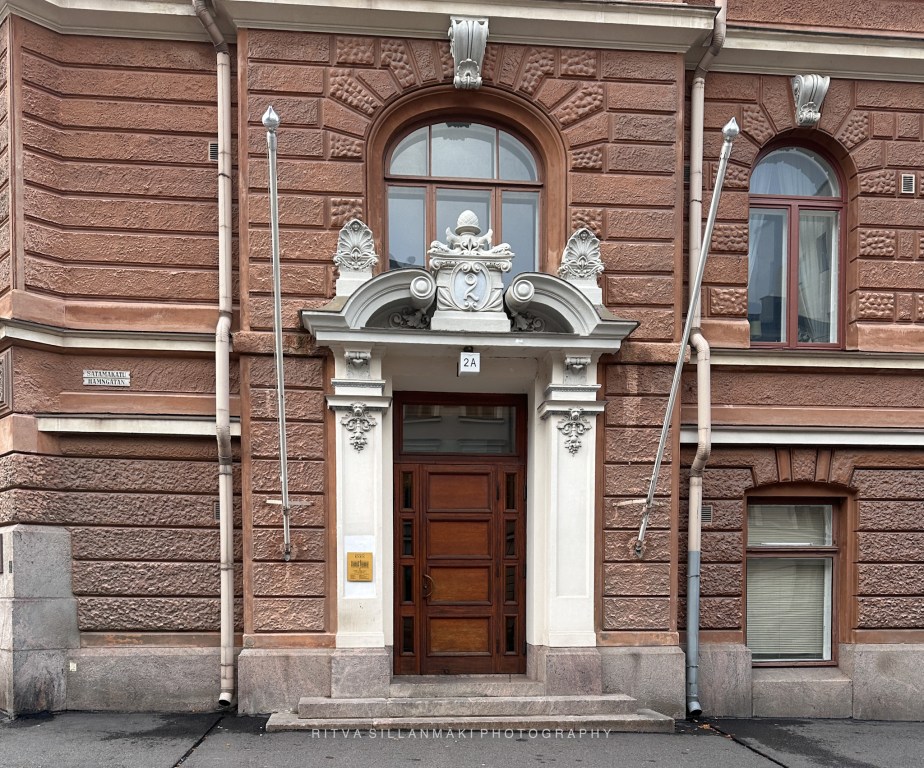
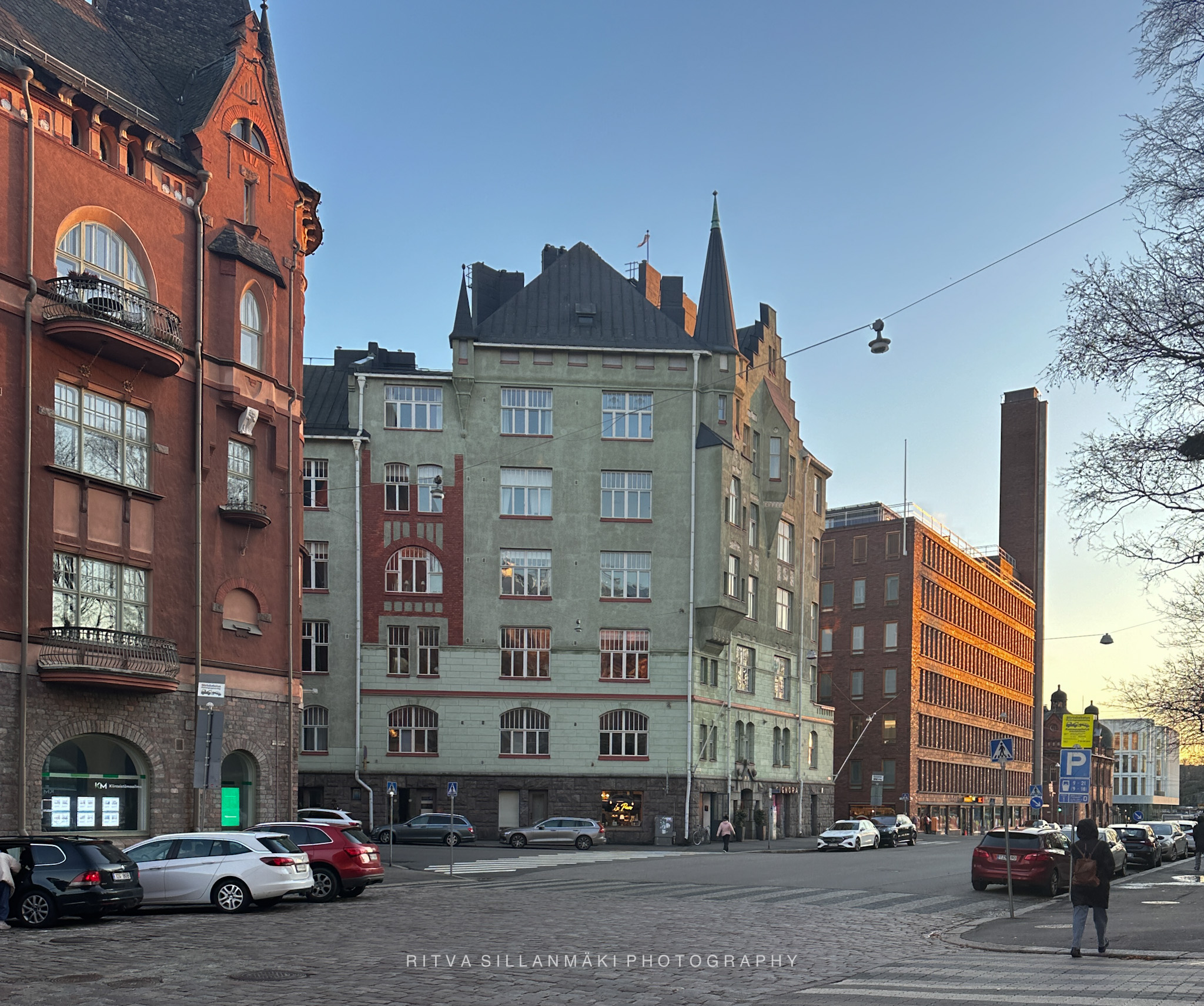
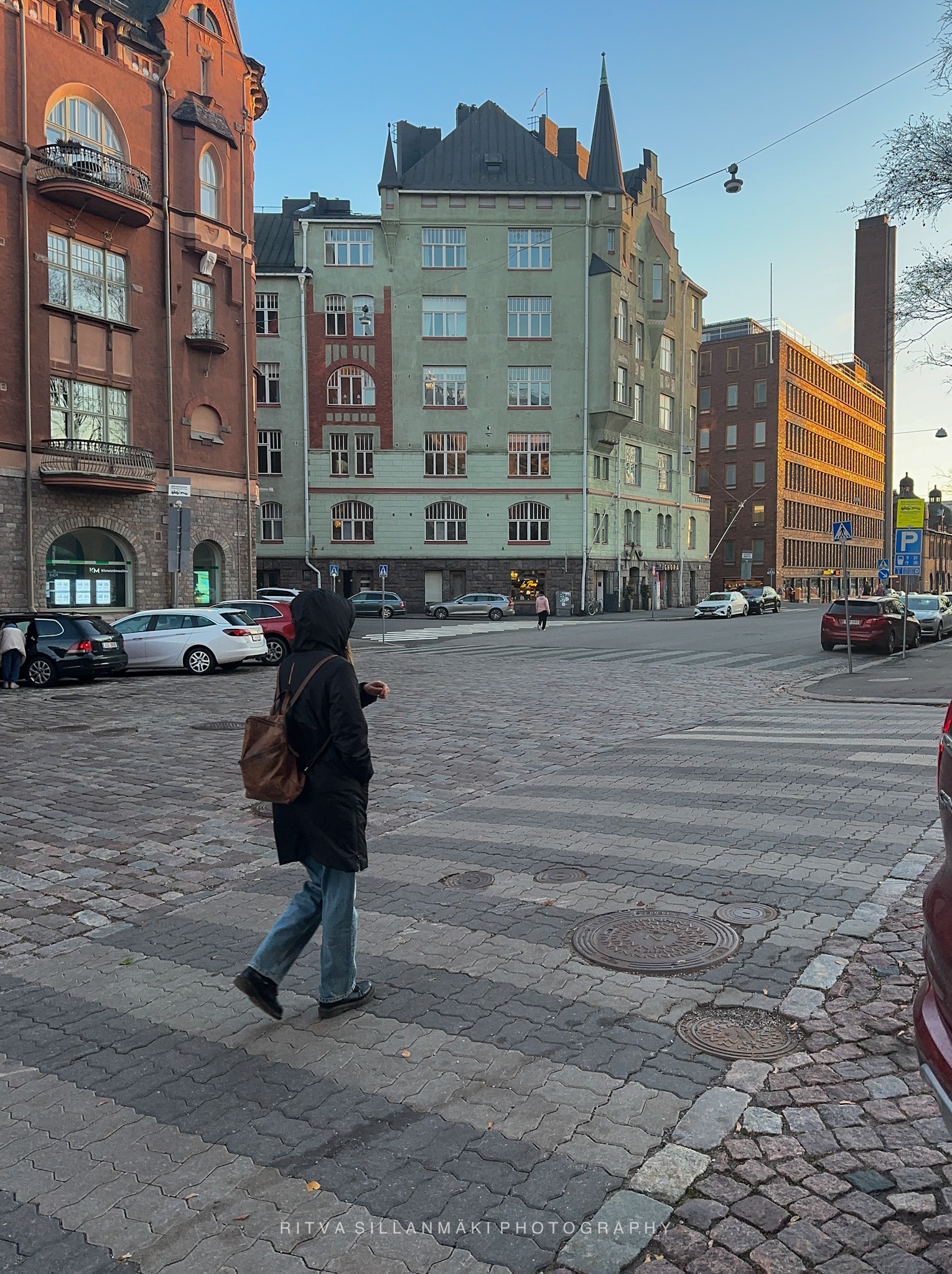
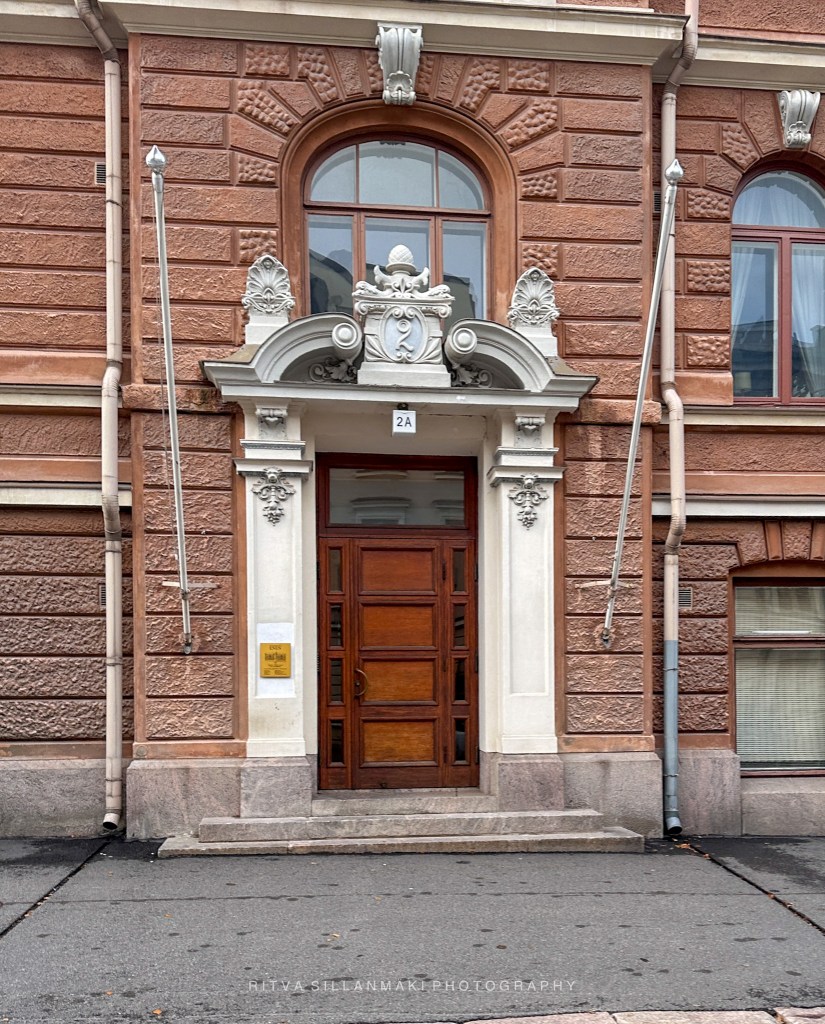
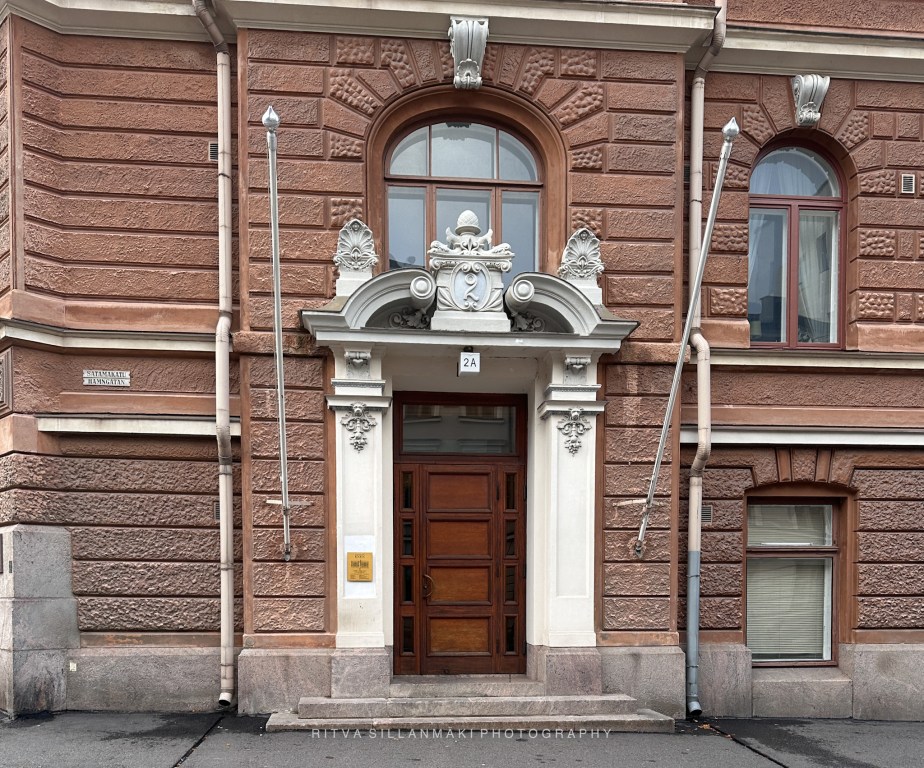
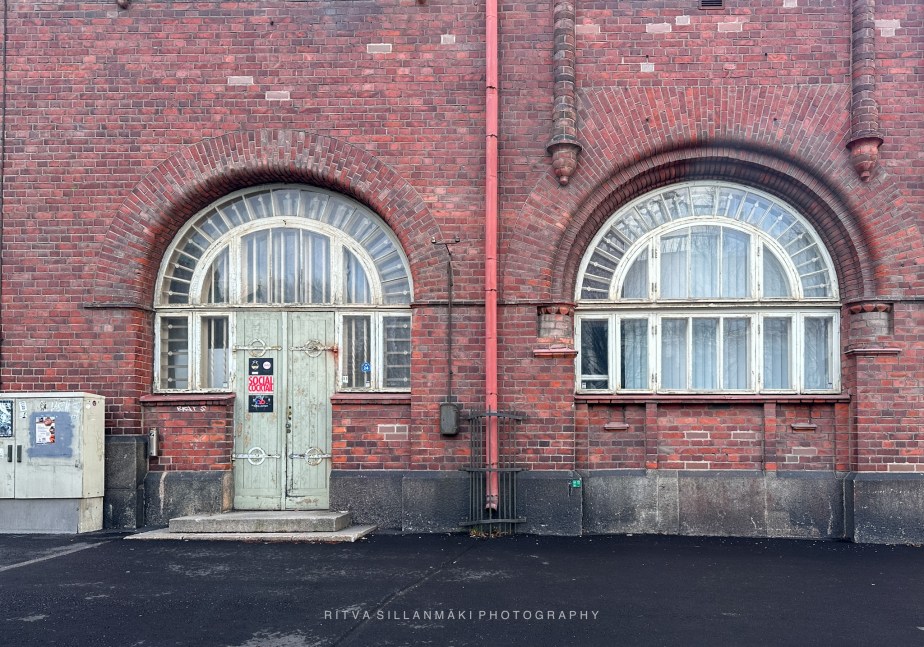
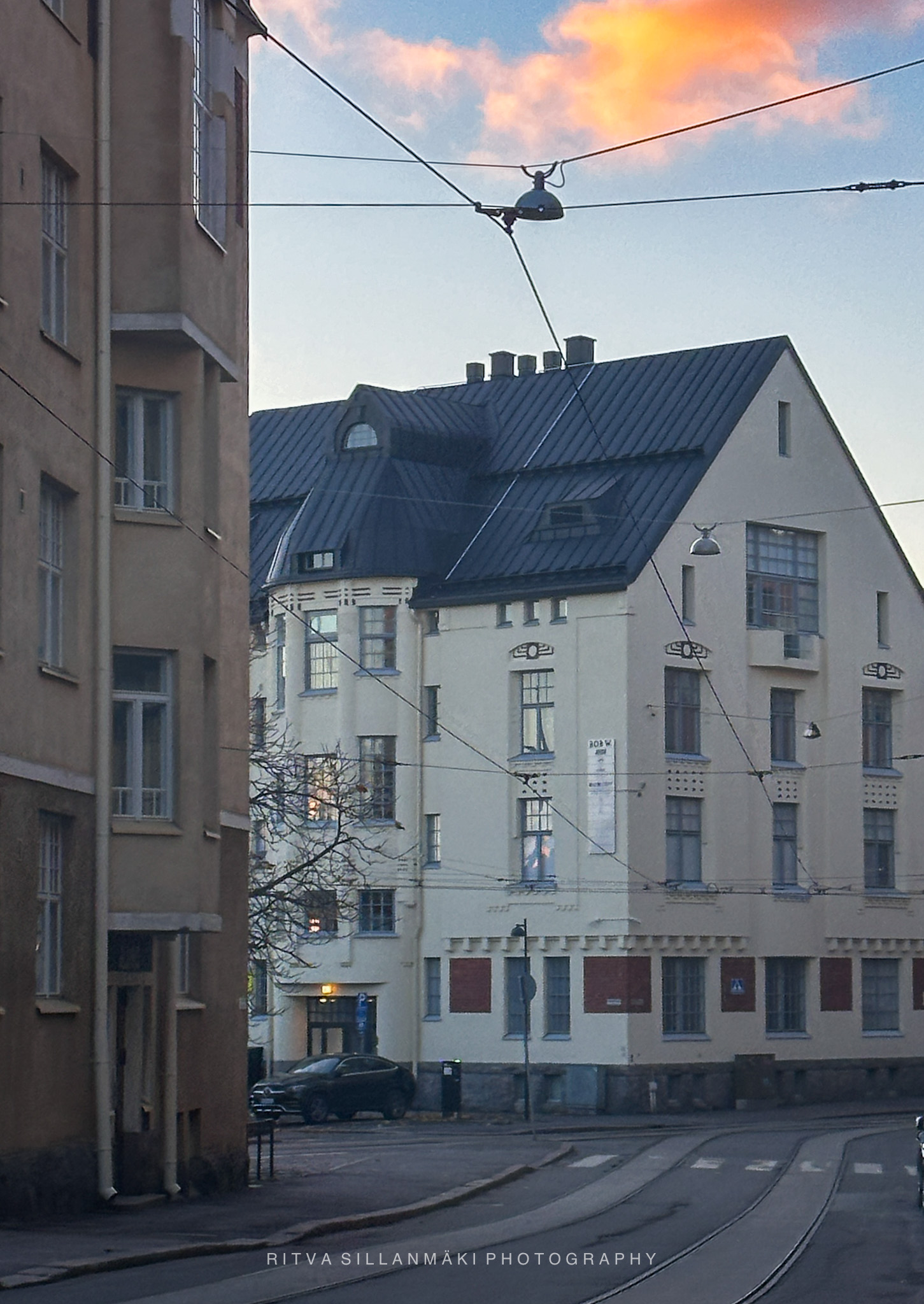
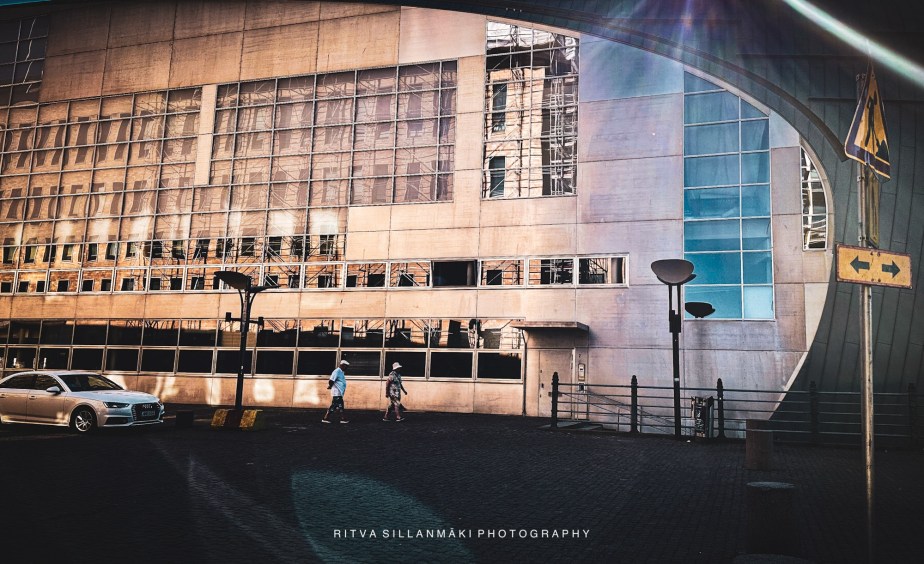
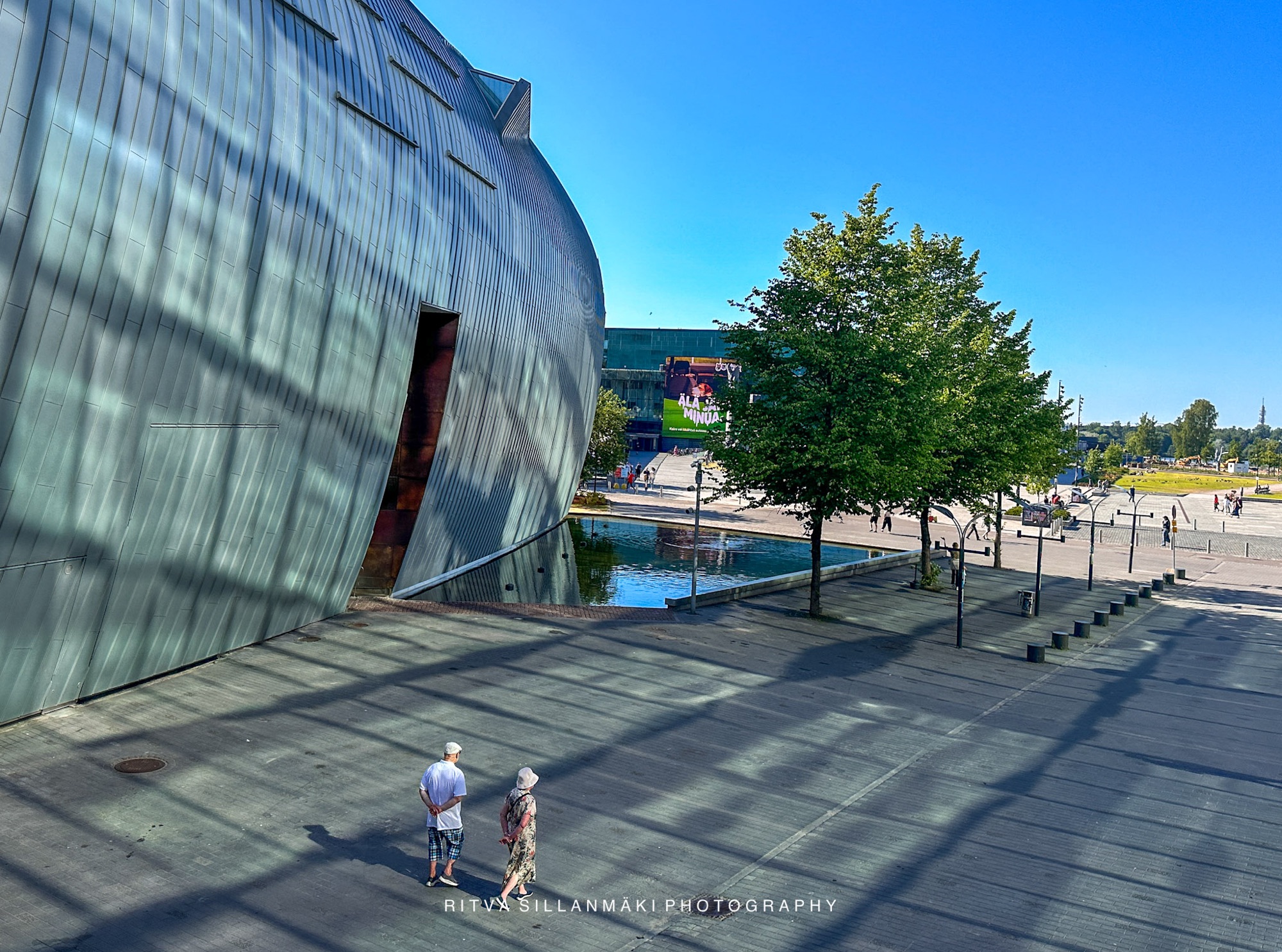
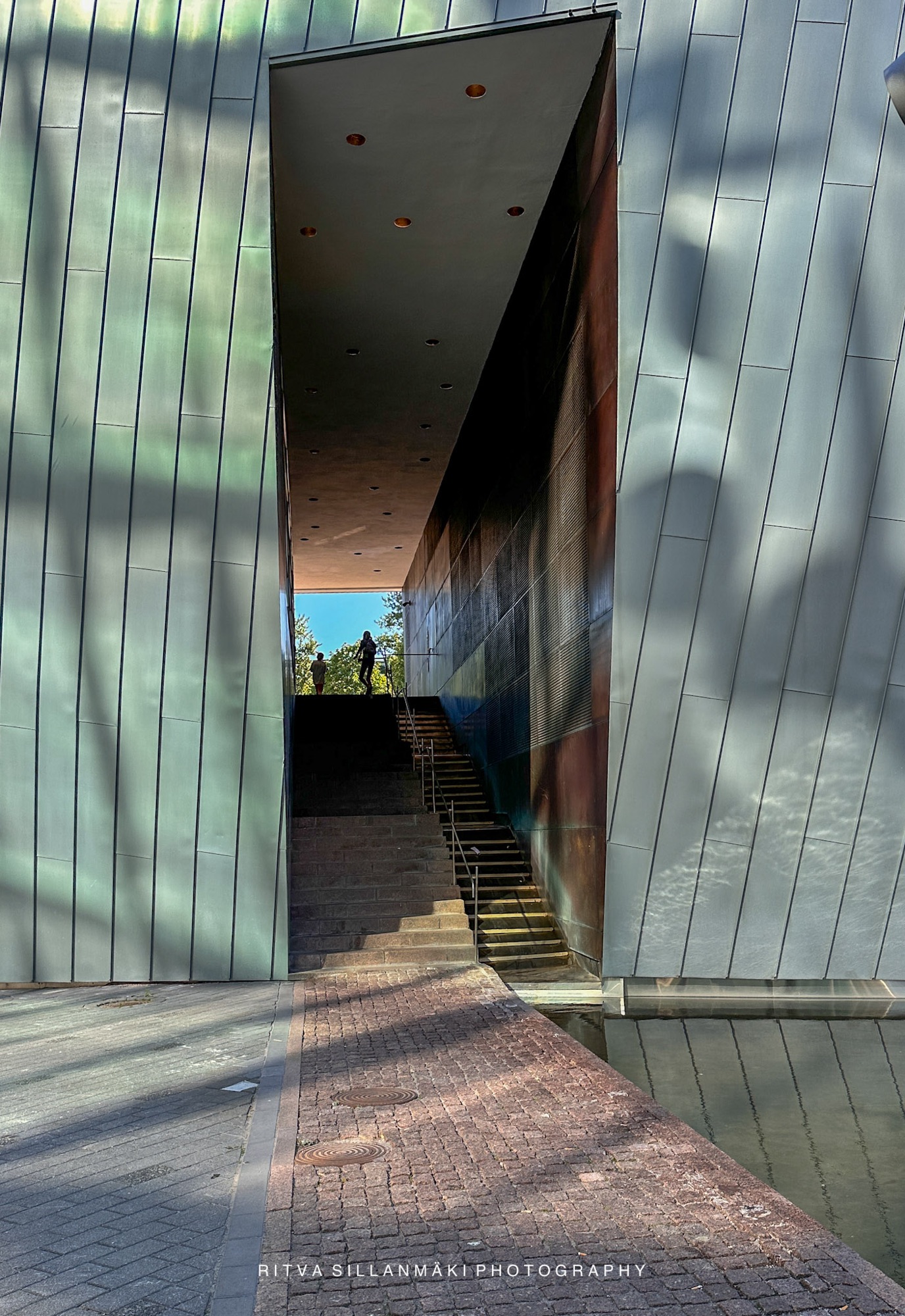
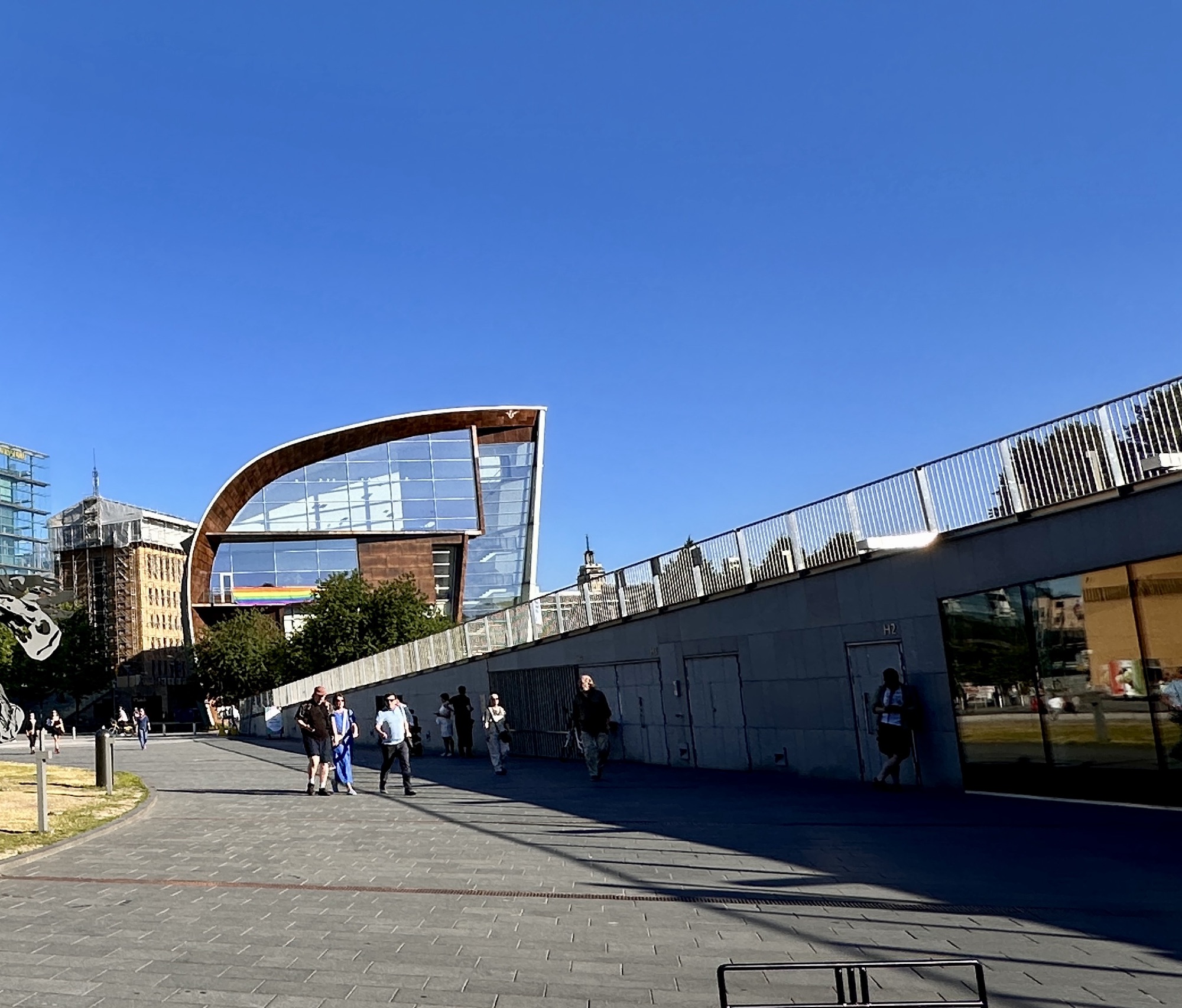
I spent some time in Helsinki and looked it with the eyes of a tourist. You rarely take photos of your own cities and towns that you frequently visit. Well last week I did, as I already posted we went to see Nick Cave and I took these on my way from the parking garage to the music hall and actually looked at the buildings, not just walked past them. Something we often do in familiar places, this goes to landscape and scenery too. I noticed a fare amount of door and windows, what a revelation to find them in the city 🙂
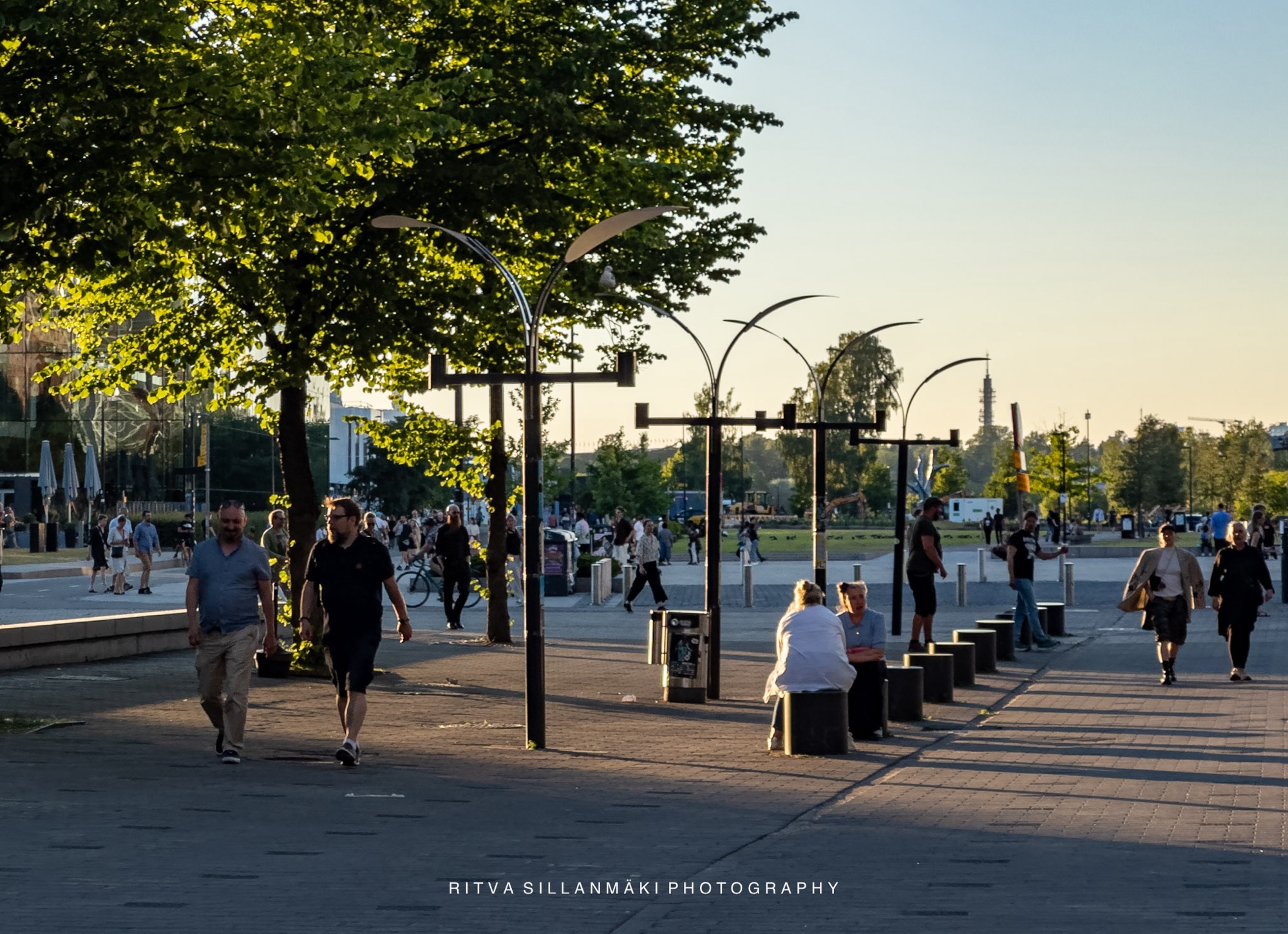
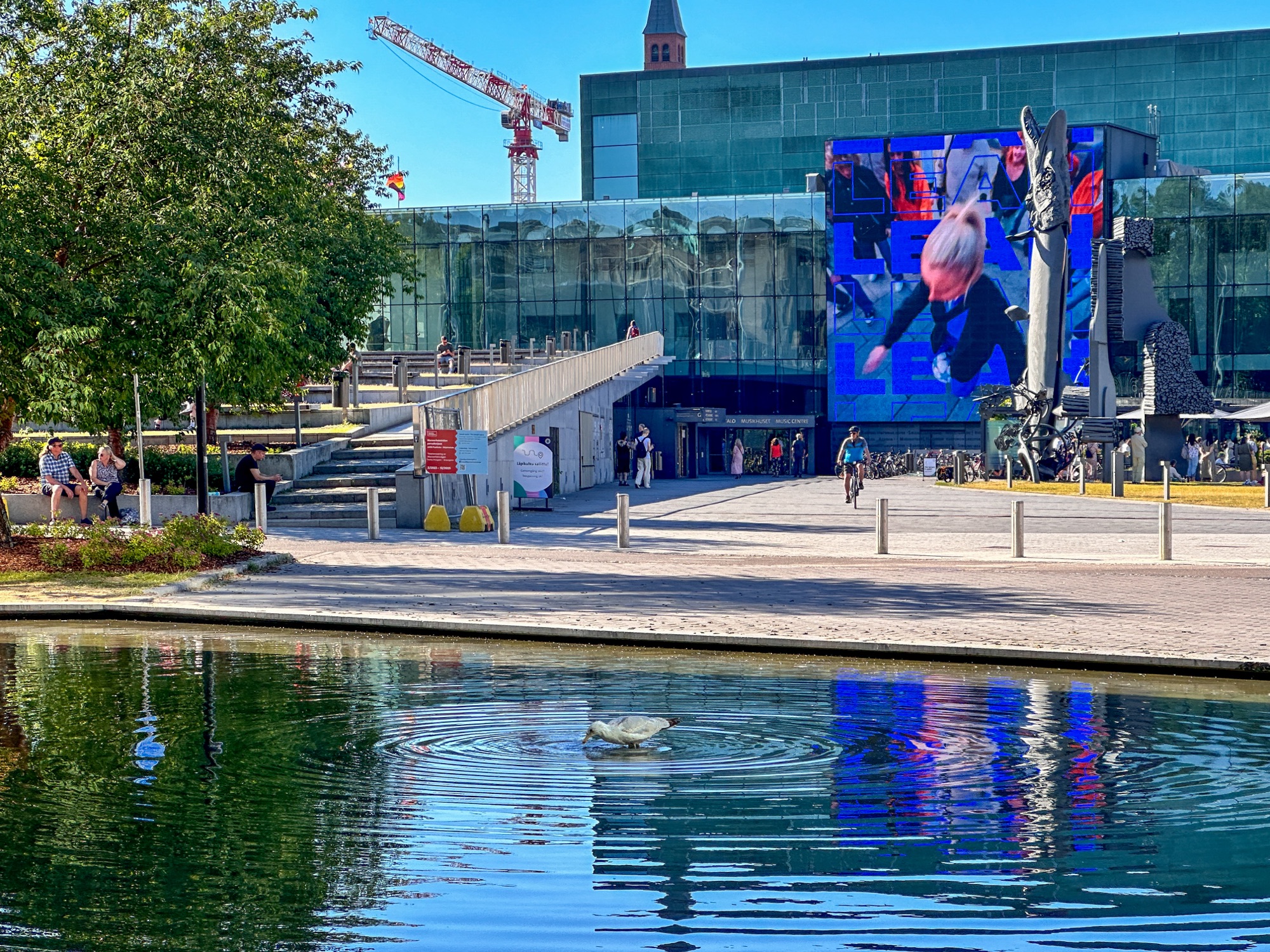
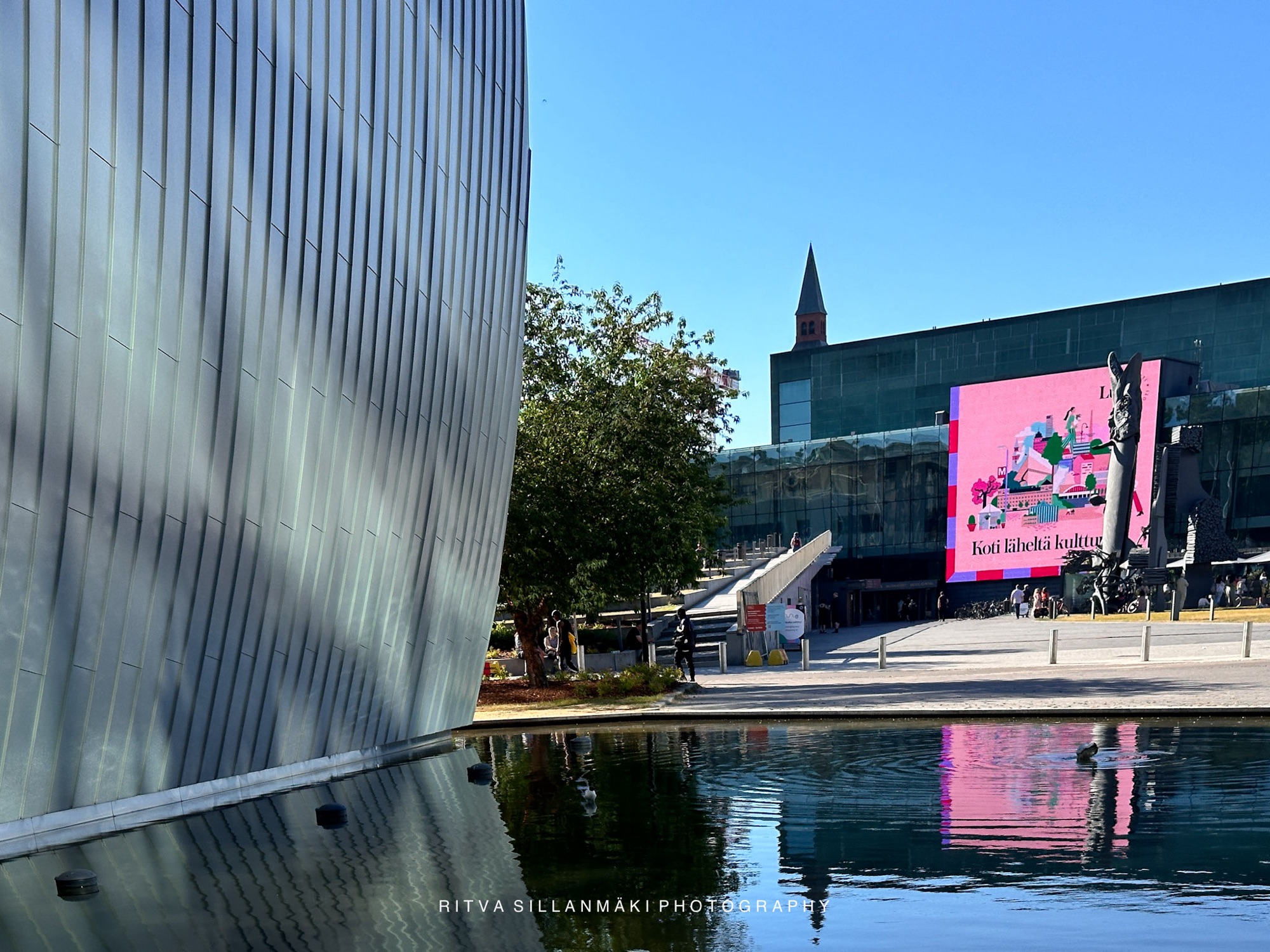
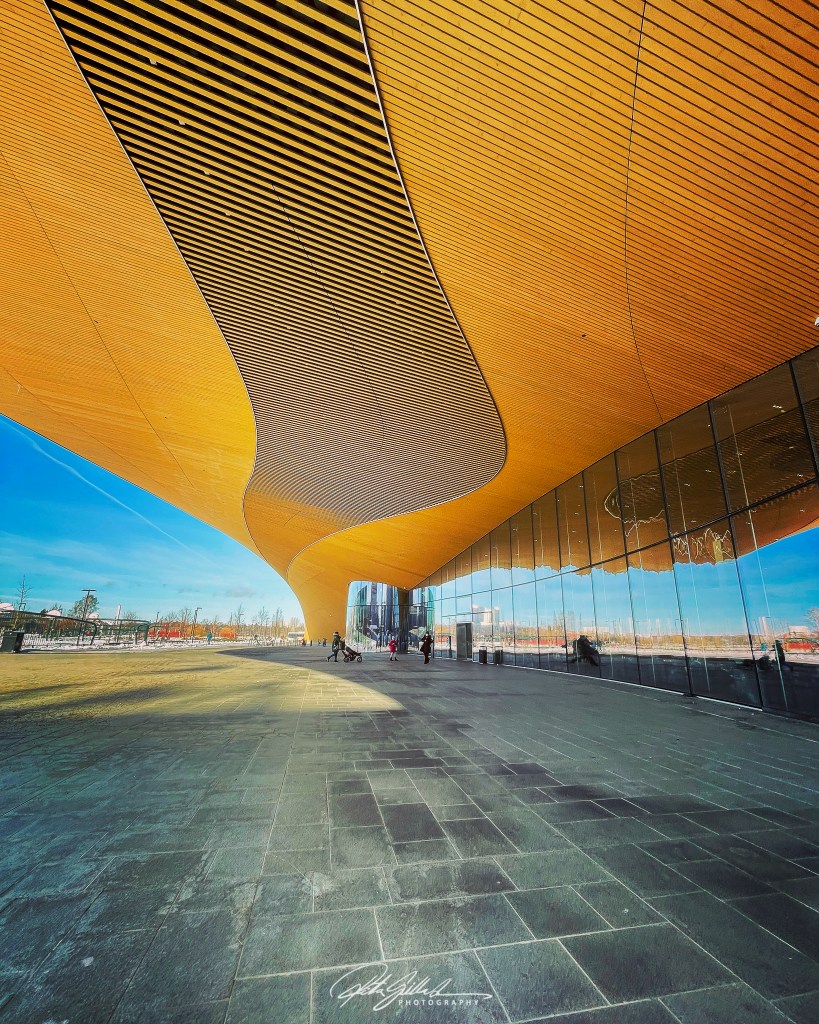
Kansalaistori is a new square and lawn area in the heart of the city located between the Music Centre and Museum of Contemporary Art Kiasma along Mannerheimintie in Helsinki. On the other side of there square there is the Central library Oodi. The square is partially paved and in the summertime popular especially among skateboarders. . Kansalaistori serves also as a venue for various events.
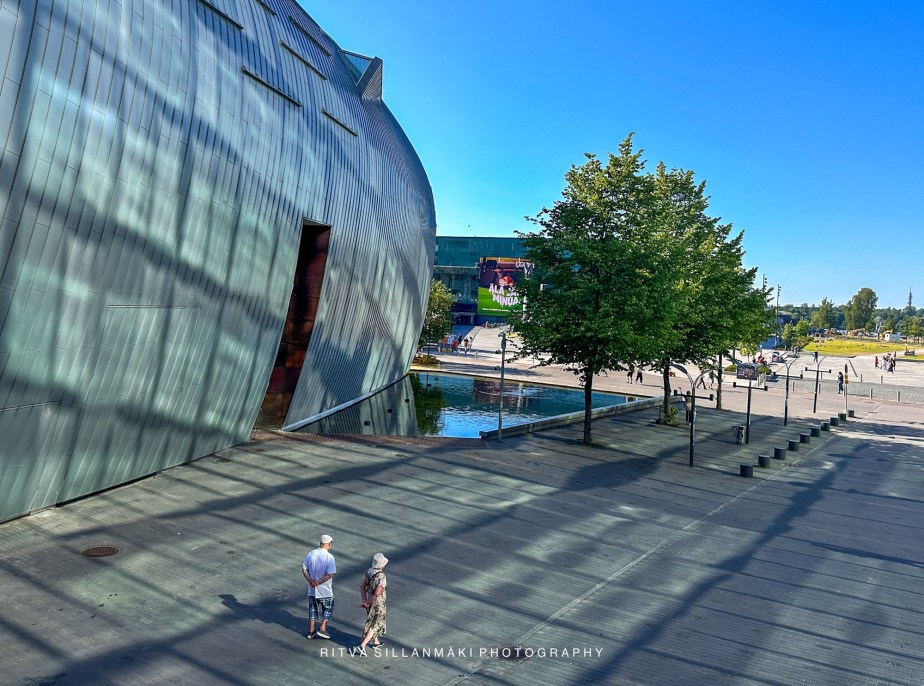
Kiasma from the back. All the photos in the galleries can be enlarged by a click.
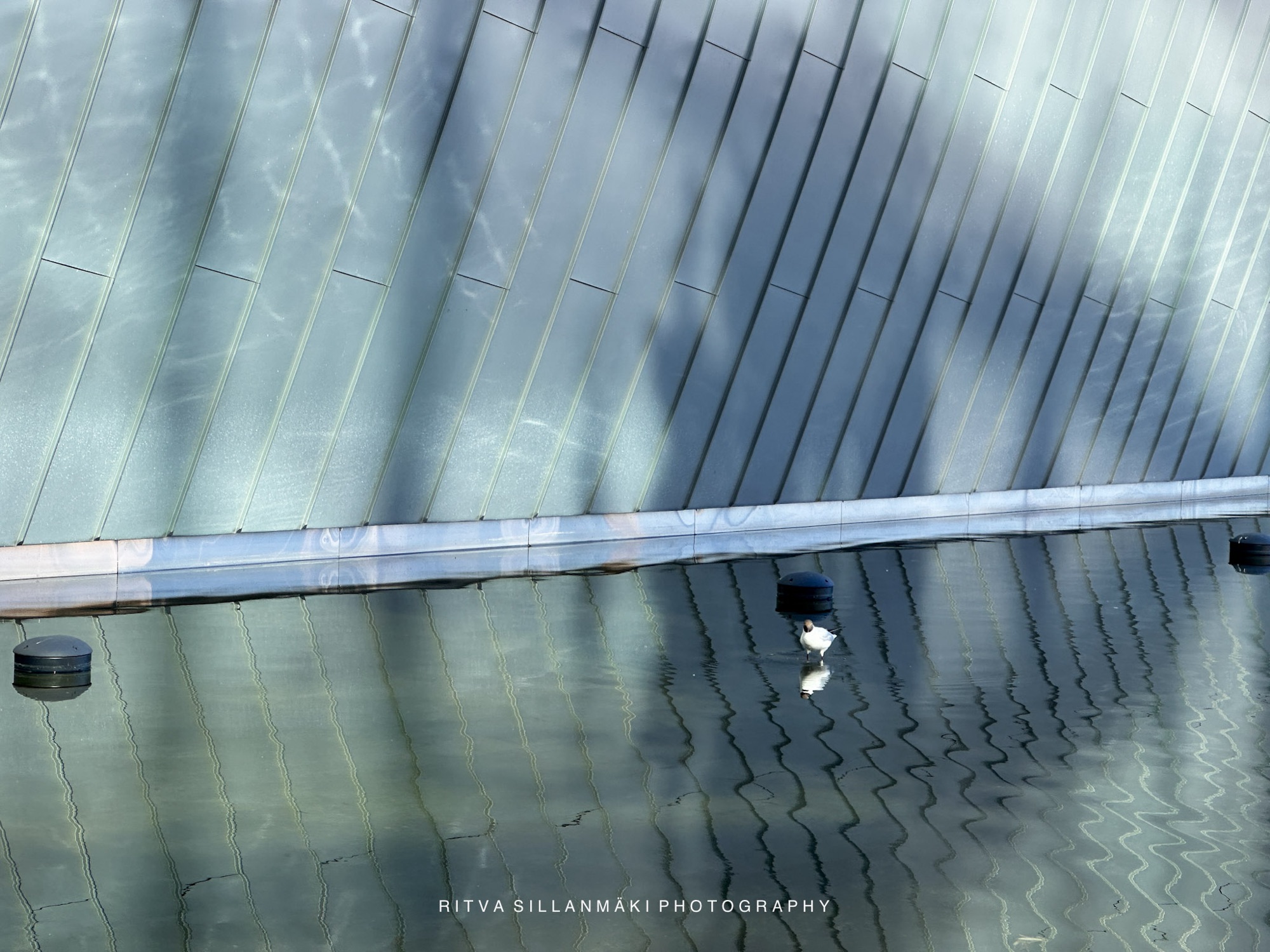
Kiasma is a museum of contemporary art under the umbrella of the Finnish National Gallery. The primary focus in the museum collection is on Finnish contemporary art. Kiasma was designed by the American architect Steven Holl and opened to the public in 1998. At Kiasma there’s also a museum shop and café. These are all taken from the backside of the building.
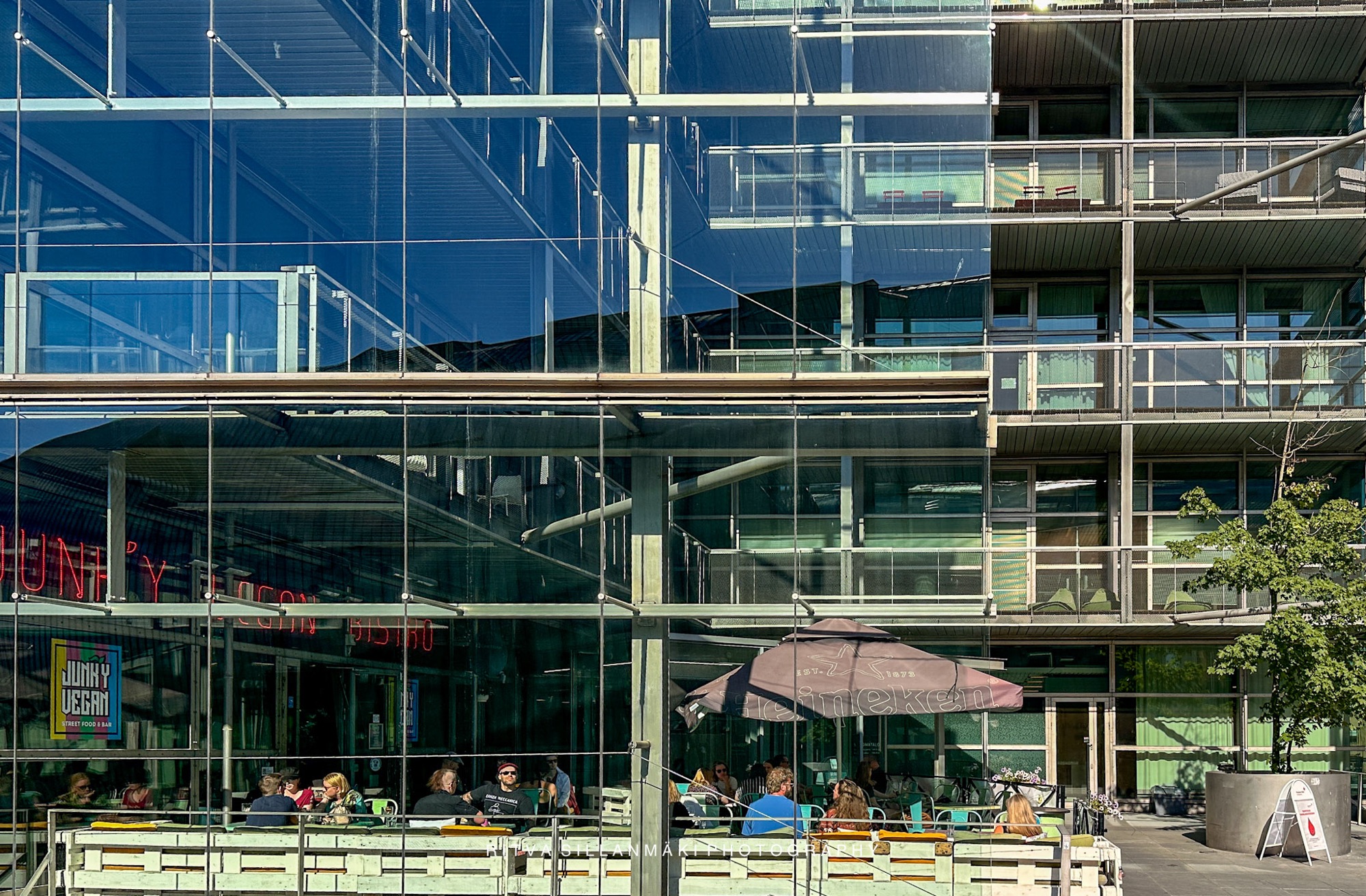
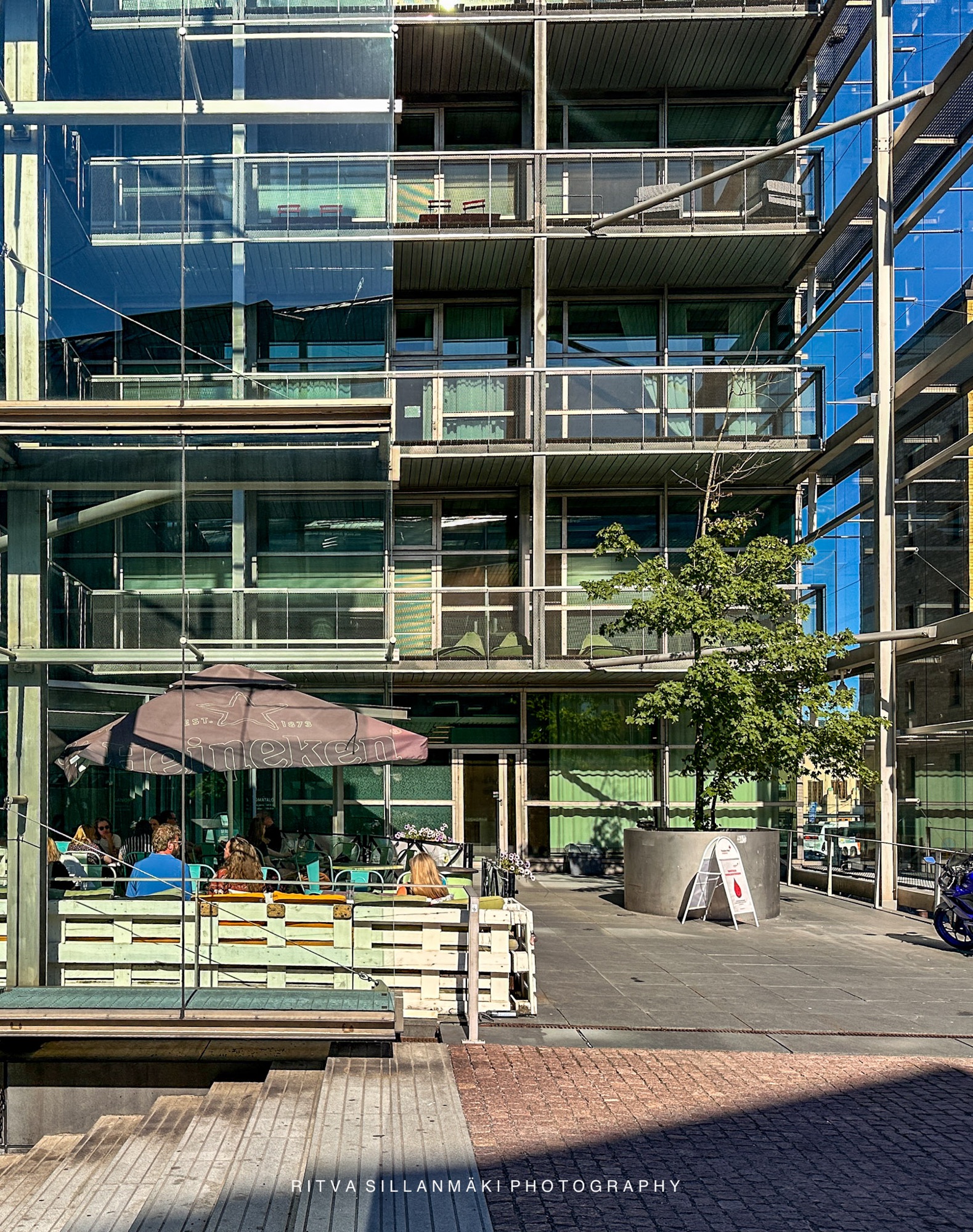
Sanoma House with its glass facade is situated in Finlandia Park, a cultural oasis in the heart of Helsinki, north of the Helsinki railway station, beside the Museum of Contemporary Art-Kiasma, the Central library Oodi and the Music Centre. The first and second floors mainly consist of covered public space.
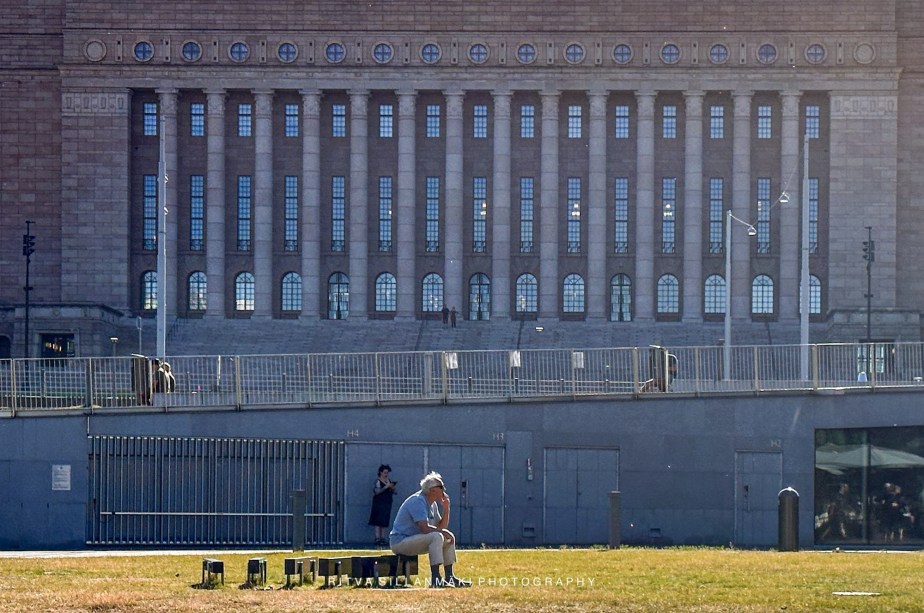
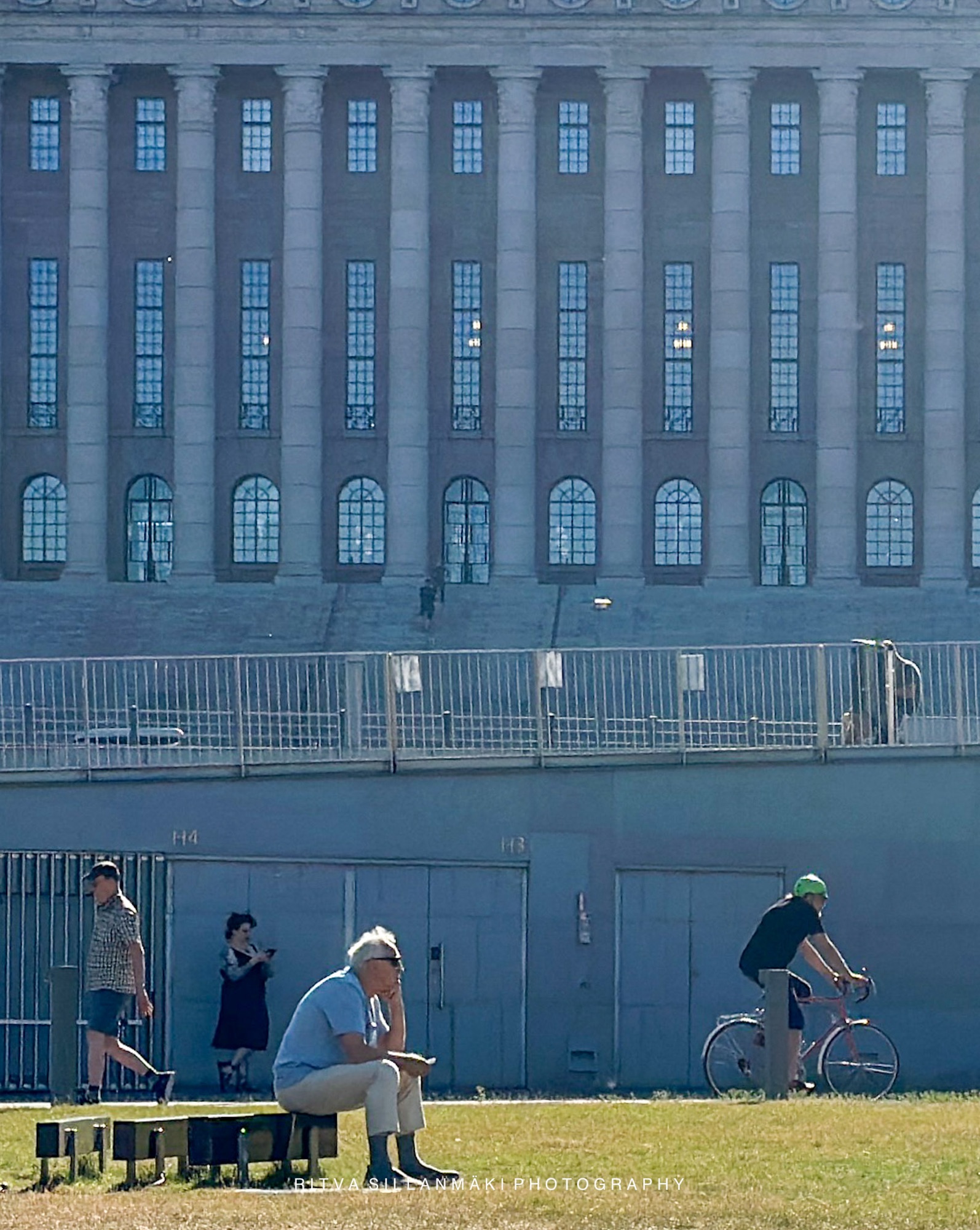
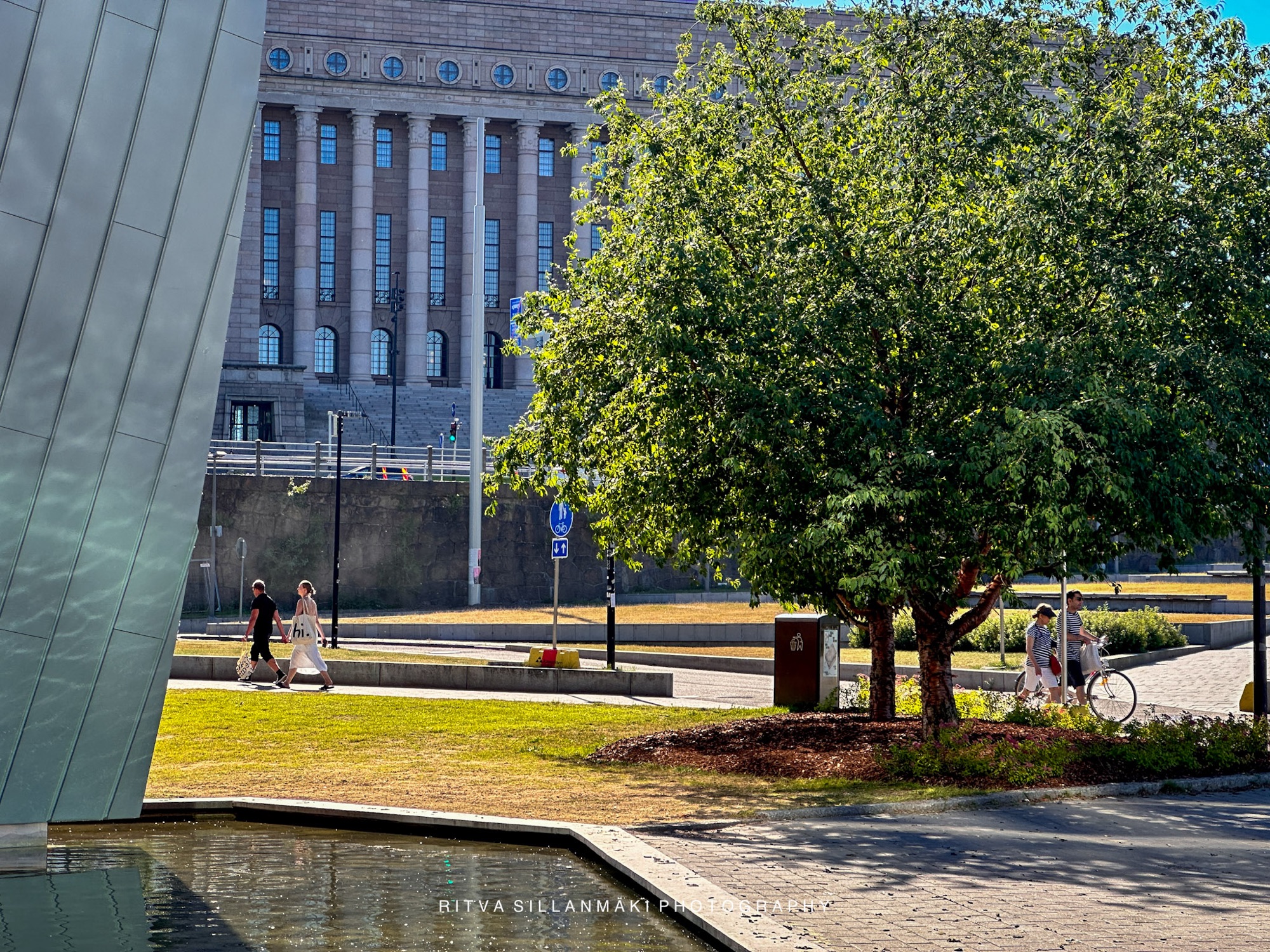
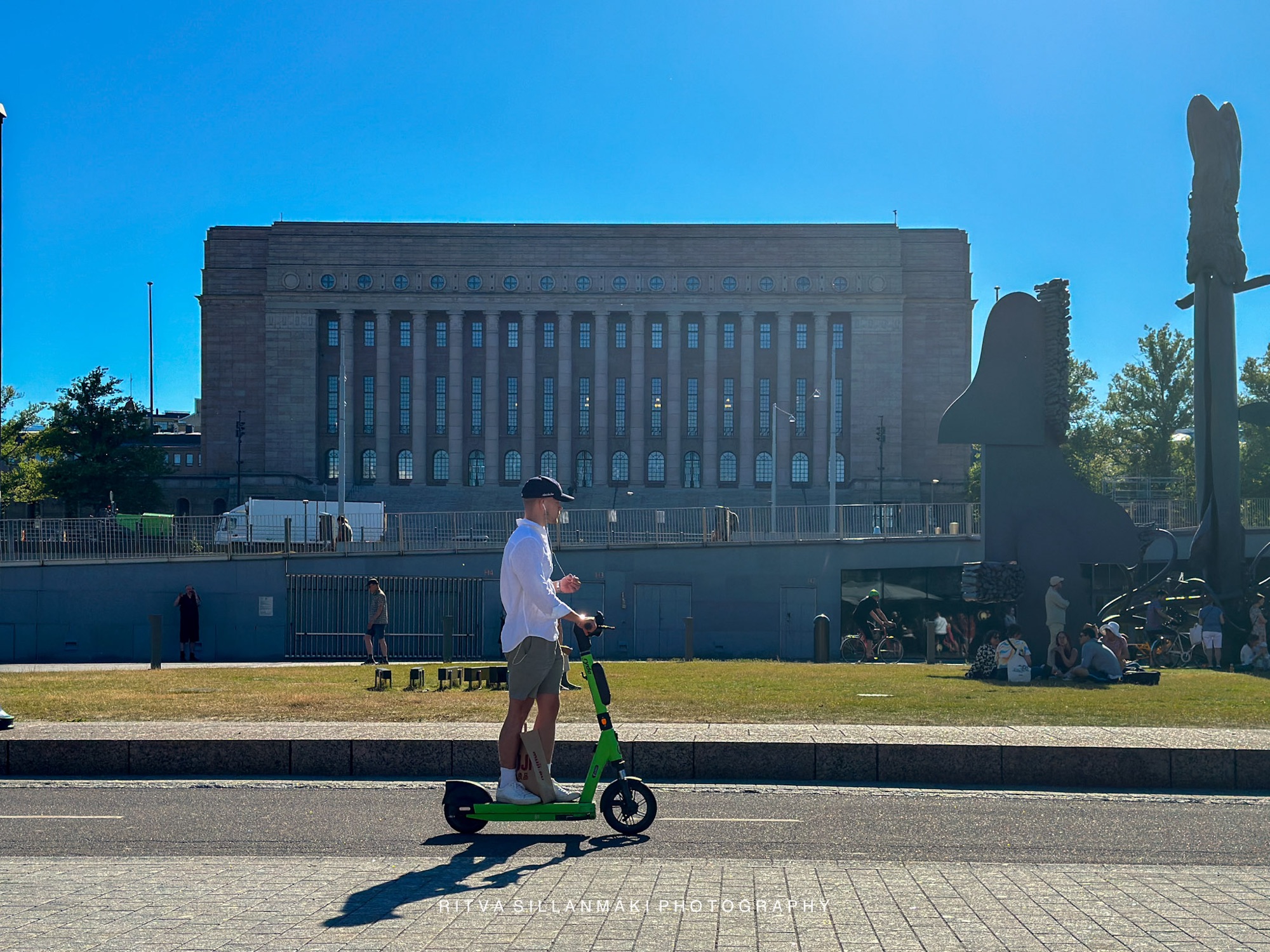
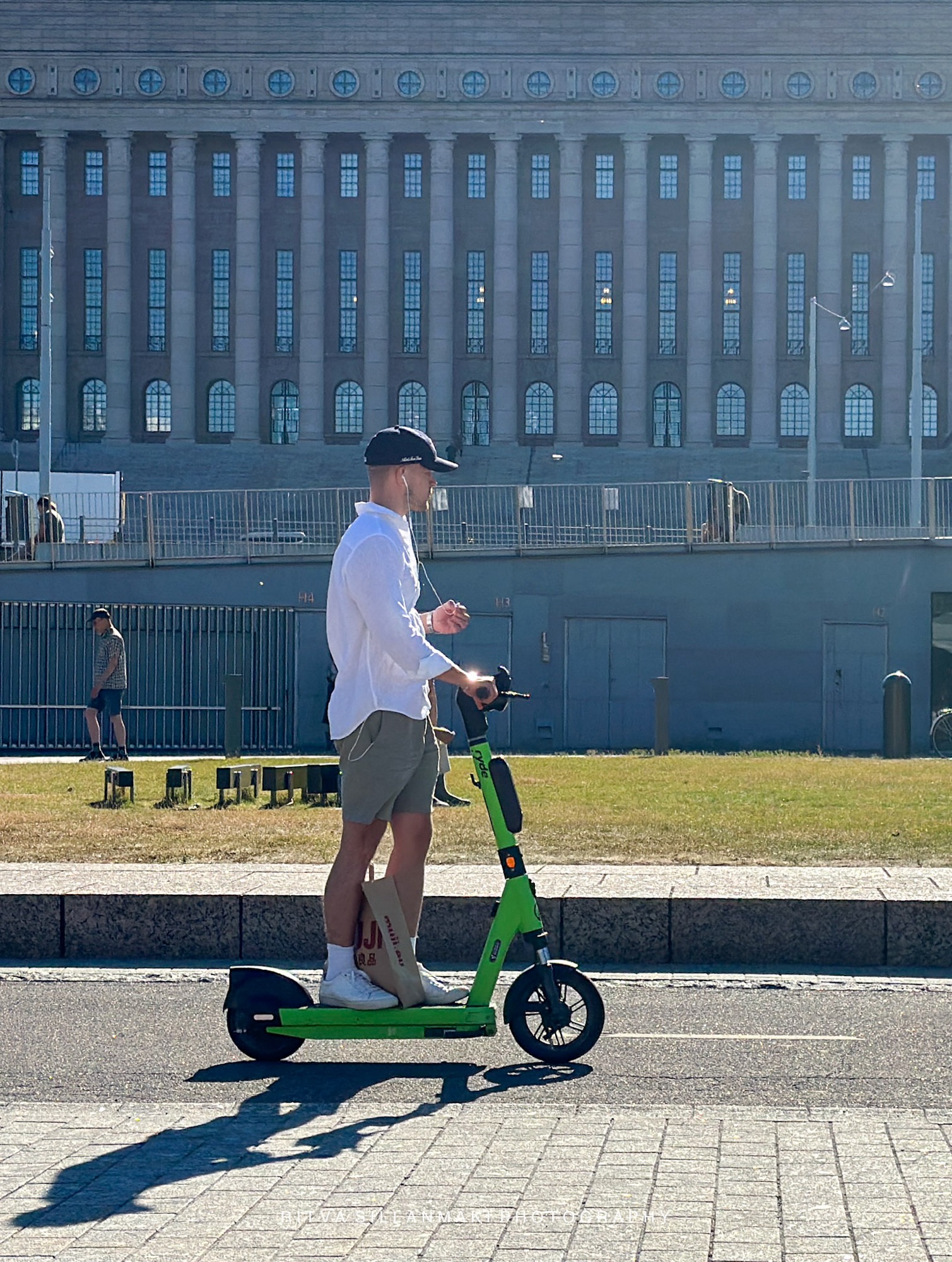
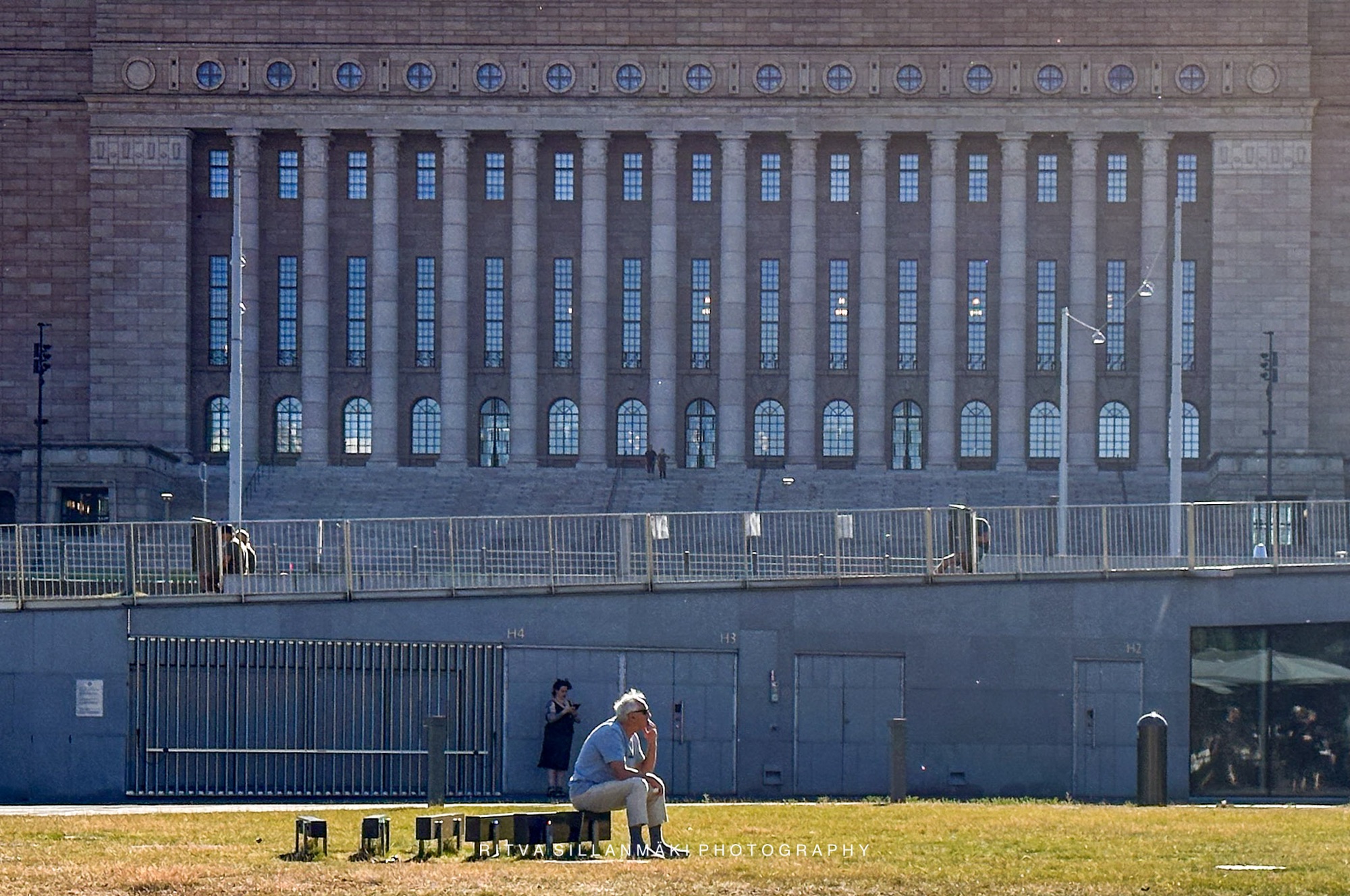
Finland’s 200-seat parliament gathers in this impressive building representing 1920s Classicism. The facade of the building is made of red granite from Kalvola. The main facade includes 14 Corinthian columns. It is across the road from the kansalaistori.
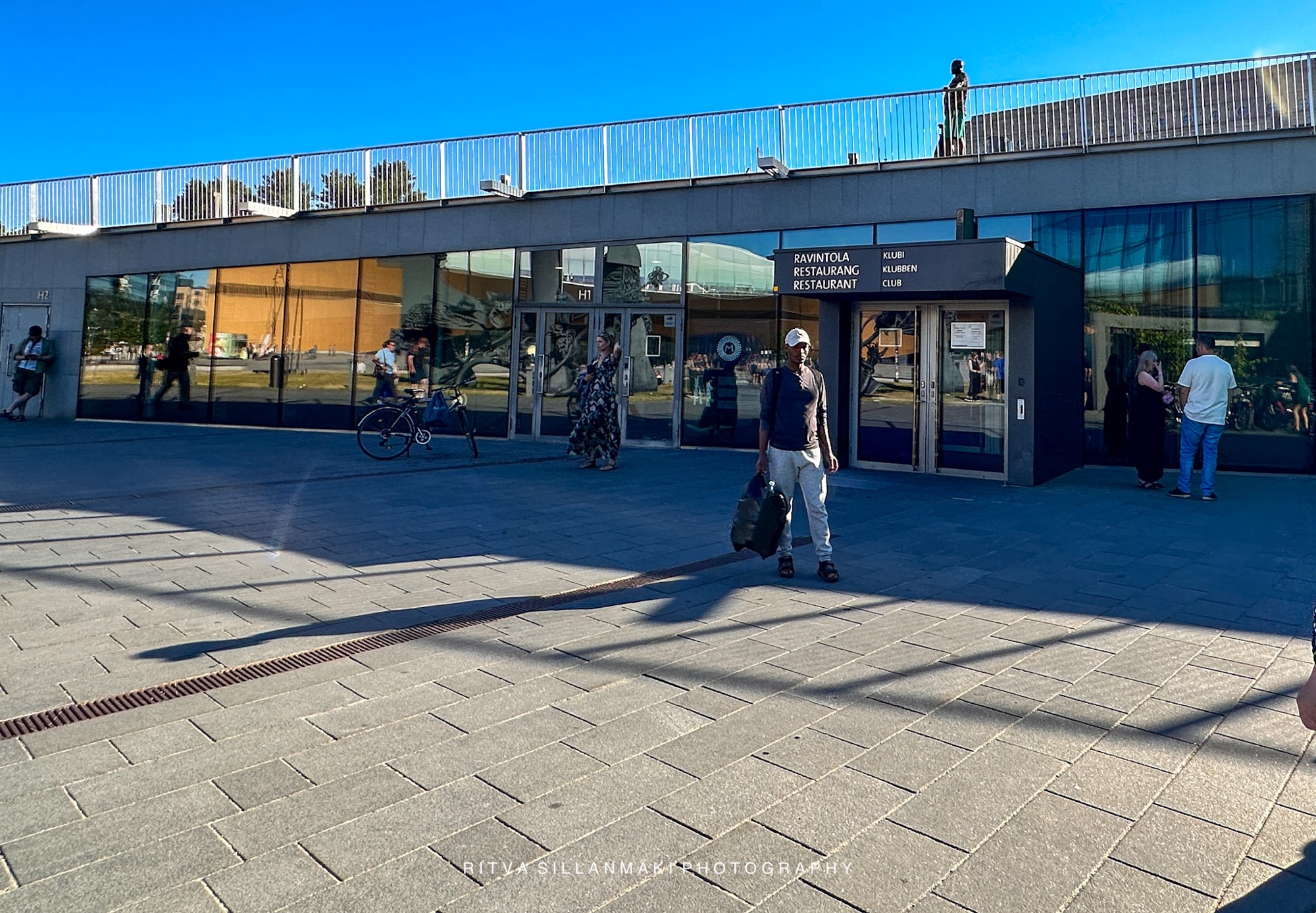
Musiikkitalo is an acoustically first-class concert hall as well as other facilities providing a wide range of musical experiences for people of all ages and a place to study music. The residents of Musiikkitalo are Helsinki Philharmonic Orchestra, Finnish Radio Symphony Orchestra, and Sibelius Academy, Uniarts Helsinki. These are also taken from the back of the Music Hall
This a photo of Oodi, I’ve taken at spring, for some reason I did not take on this time, but as it is in the square I’ll add it here.
Yesterday we visited the Tuomaan markkinat – Helsinki Chrismas Market little bit too early if we had waited for the sunset the lights would have been more brighter, but even thought we were a bit early it was crowded hard to get to the the vendor booths. It was rather windy and cold, but it is winter 🙂
Providing a more responsible alternative to mass-produced gifts and decorations, Helsinki Christmas Market brings to Senate Square a significant number of artisans and small producers from all over Finland. The market’s atmospheric core consists of the Deliyard and Restaurant Yard, which also serves alcoholic beverages, where one can enjoy seasonal treats and festive holiday spirit.