Monochrome Photography at the Fortezza Fortress

I am still going through the Crete photos; it seems that I have a tendency to edit bits and pieces at a time. In a world where everything is expected to be posted and documented immediately, I’ve stepped or more like fallen back from that pressure—I’m never ready to share them that quickly. By the time I consider posting, the moment has already passed. Do you understand what I mean?

Social media has made it too quick for me to keep up with the constant flow of information and updates. As a result, I’ve mostly stopped posting there, feeling overwhelmed by the rapid pace of engagement that doesn’t allow for thoughtful reflection. I often find that I am never truly in the moment, as the pressure to share experiences instantly detracts from actually enjoying them.

A large domed roof of The Sultan Ibrahim Mosque, and a small bell tower of The Church of Saint Catherine, surrounded by trees and grass under a cloudy sky

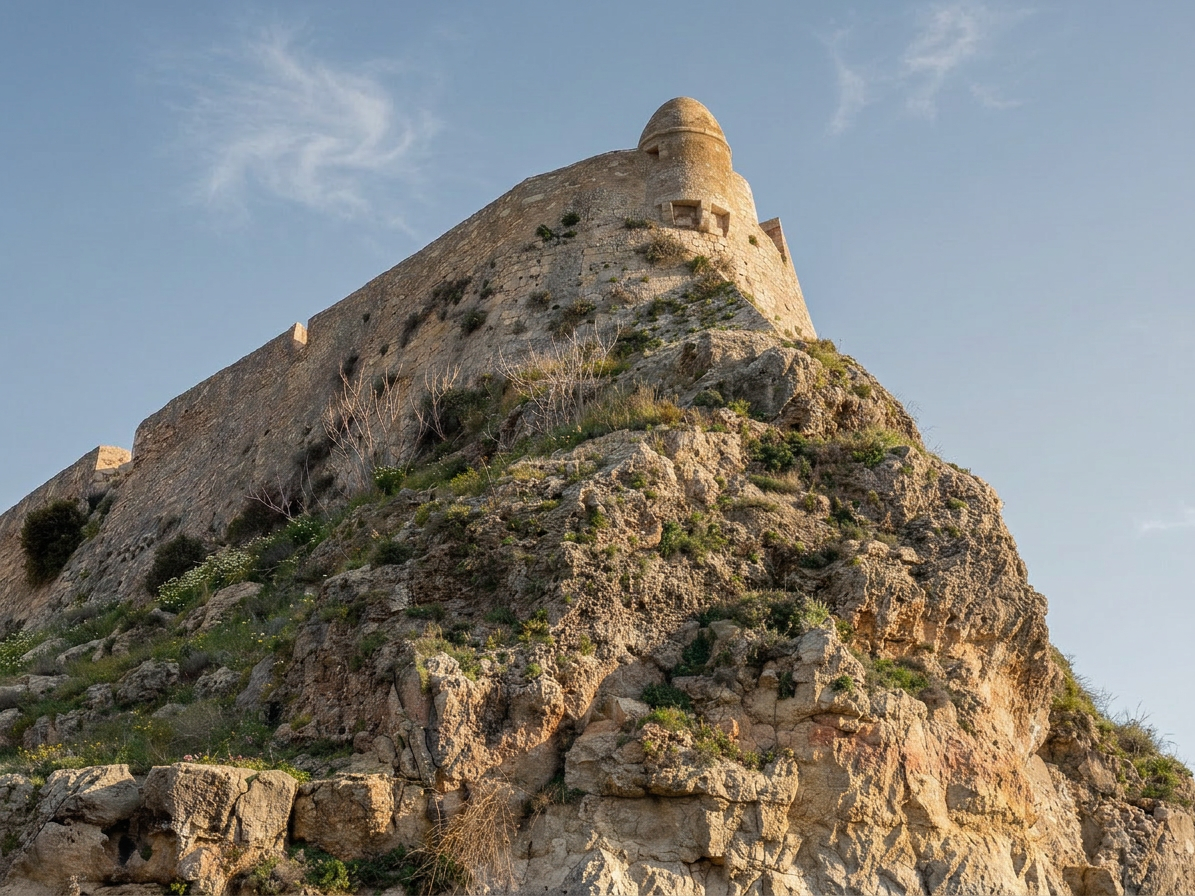
Now after that rant, for Leanne’s Monochrome Madness: here are black and white, monochrome images from the Fortezza Fortress in Crete. This historical site, with its impressive architecture, offers a unique perspective on the rich history of the region. In my post from yesterday, I was below looking up, trying to capture the grandeur of the fortress that towers above the surrounding landscape. This time, however, these images are actually taken from within the fortress itself, allowing you to explore the intricate details. The timeless grandeur and the enduring strength of this magnificent structure of Crete’s ancient heritage.

The Church of Saint Catherine (Agia Ekaterini),in the historic area of the Fortress. This charming Orthodox chapel, built of rugged limestone, dates back to the 19th century.

The picture depicts the Church of Saint Catherine (Agia Ekaterini), located in the historic area of the Fortress .This charming Orthodox chapel, built of rugged limestone, dates back to the 19th century.

The Sultan Ibrahim Mosque,

The Sultan Ibrahim Mosque is located within the Fortezza Fortress and was constructed in 1583, initially functioning as a church dedicated to Saint Nicholas during the era of Venetian control. Following the Ottomans’ conquest of Réthymno in 1646, the church was transformed into a mosque, at which point an 11-meter diameter dome was added, along with a minaret that has since been demolished.

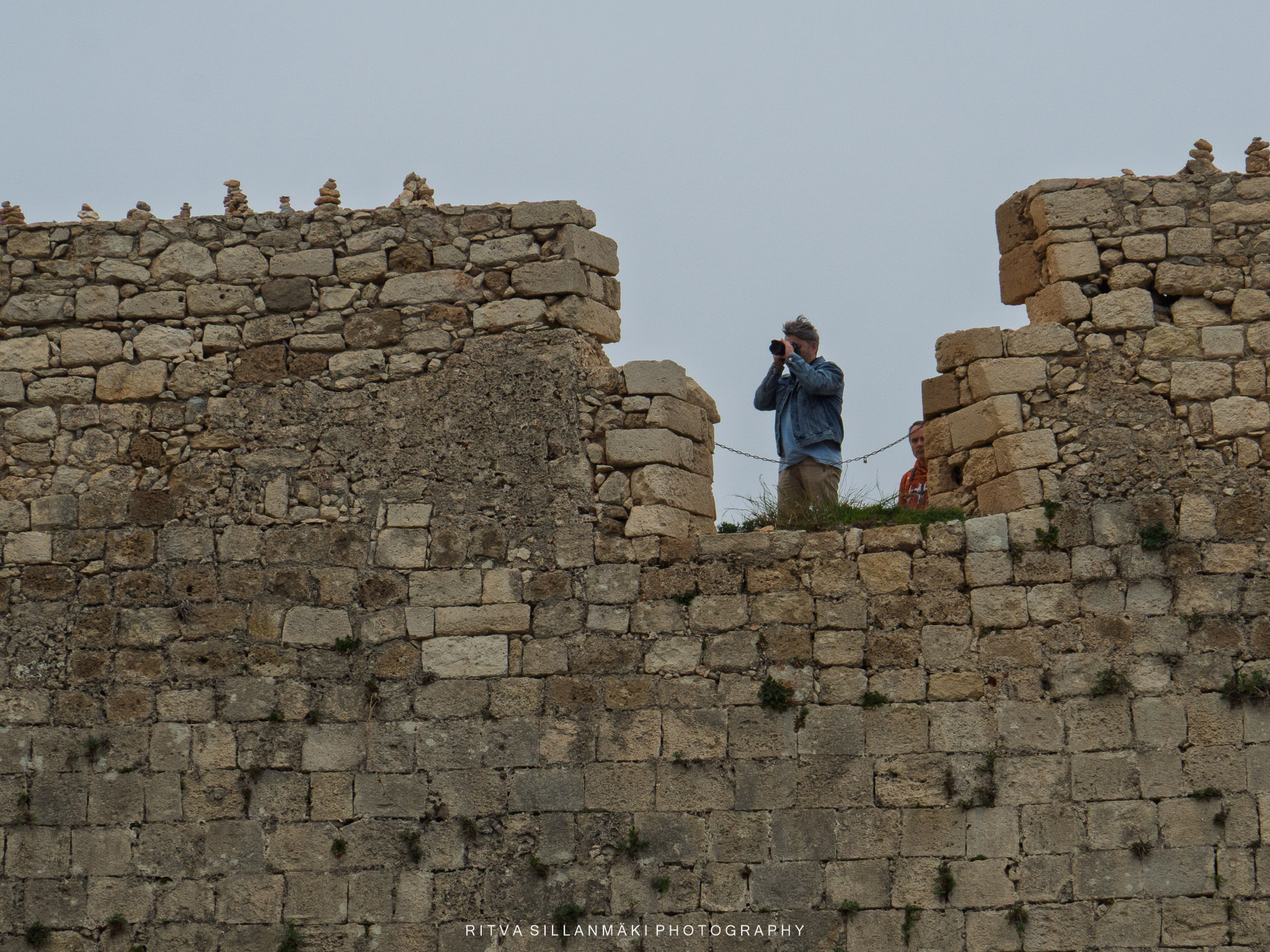
The walls can be up to 5 meters thick.

The fortress is primarily built from rough limestone, and its walls can be up to 5 meters thick. The limestone arches looked interesting

The limestone arches

With this last photo, I did two monochrome edits. As you can see, the other is in the same gray shades as all the photos above, while I tried more blue tones in the one. I still lean towards the more traditional black and white – gray shades. Don’t you think the mood changes in these two, even if it’s the same shot? Any thoughts about this?

Photography Spots below the Fortezza Fortress, Crete

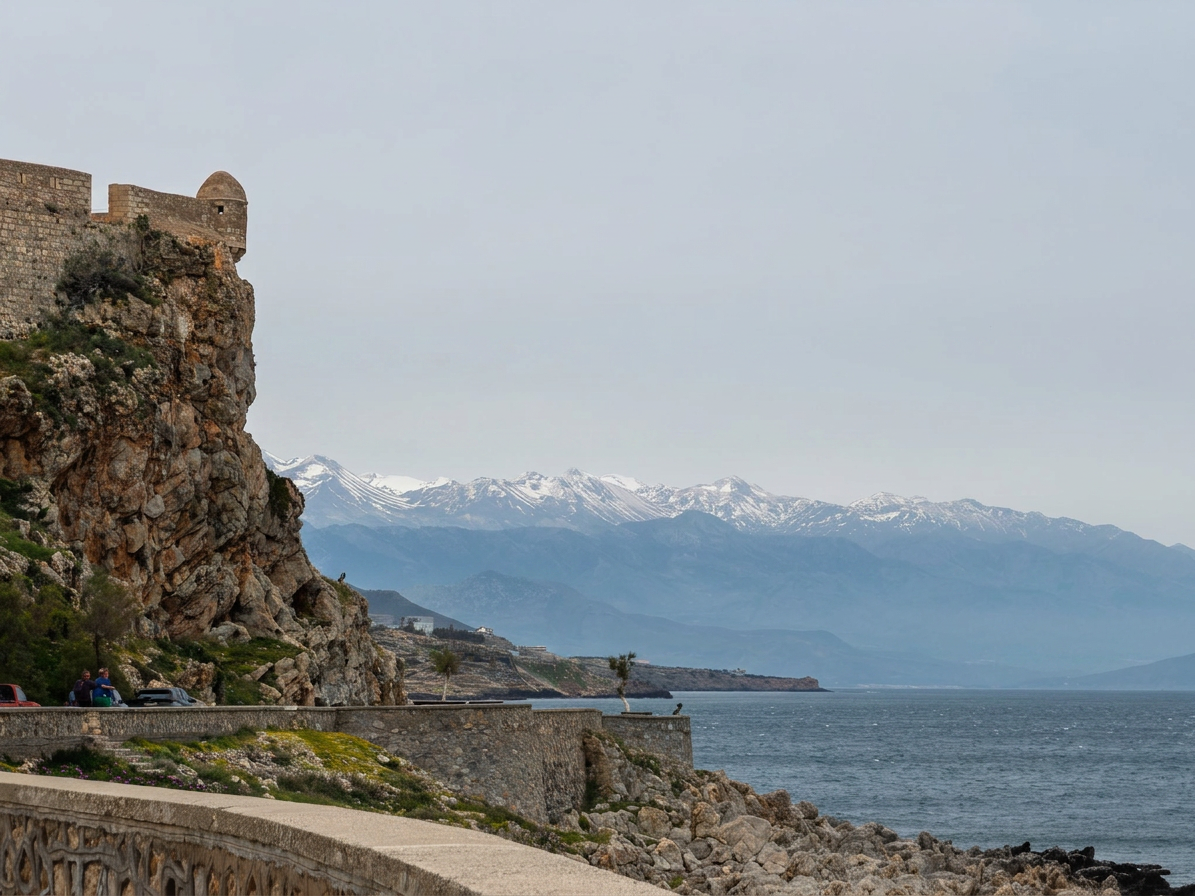
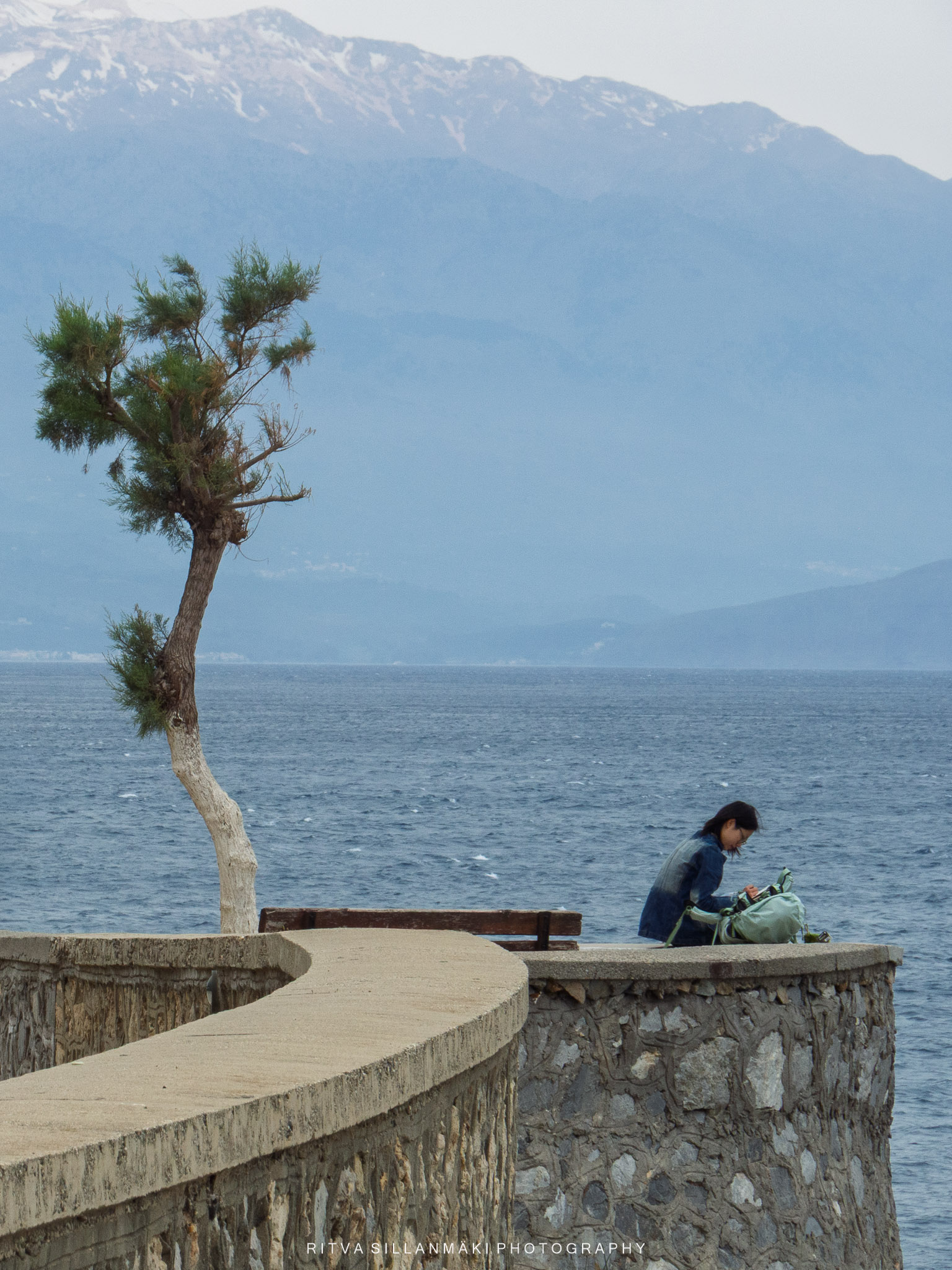
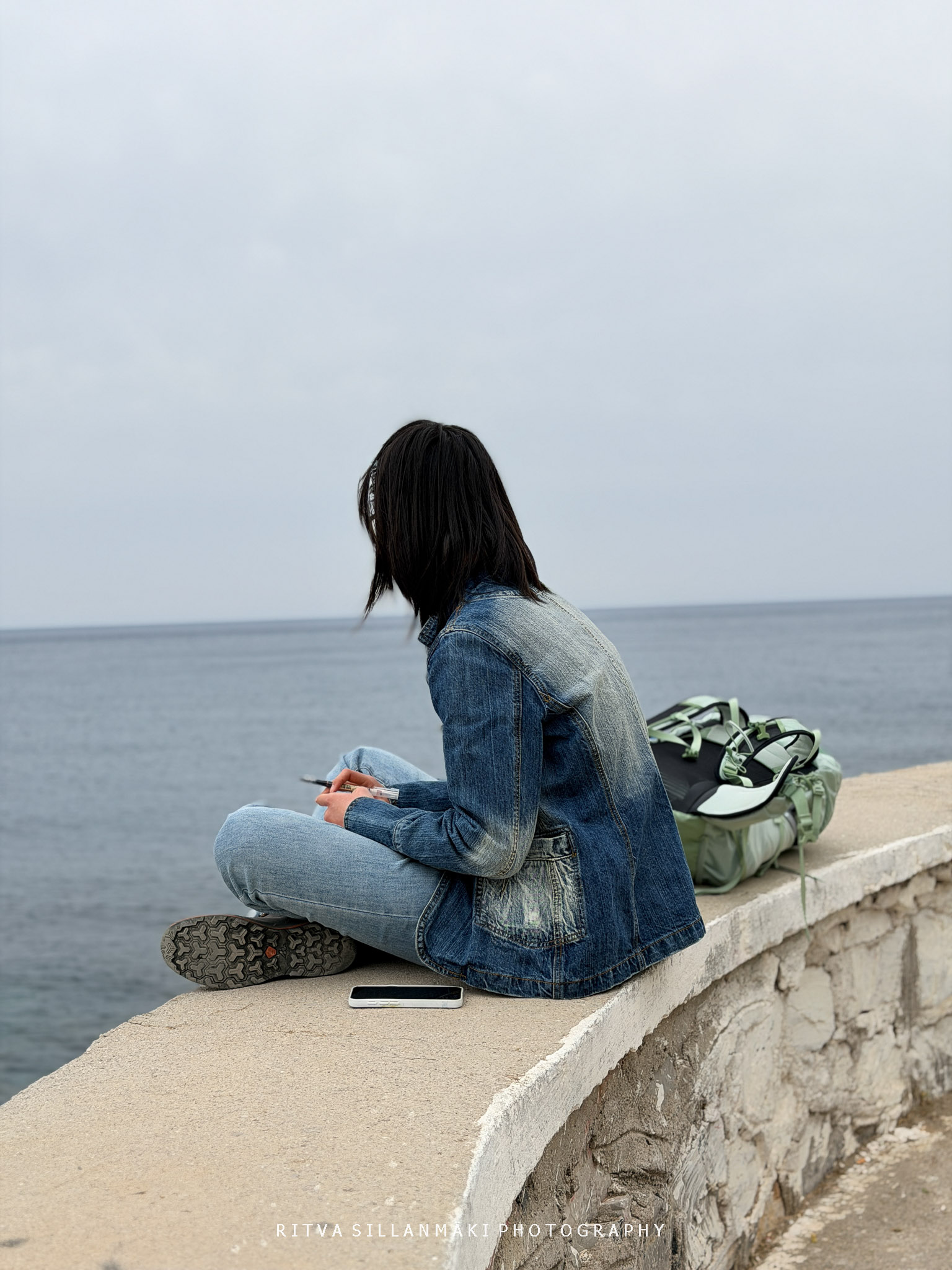
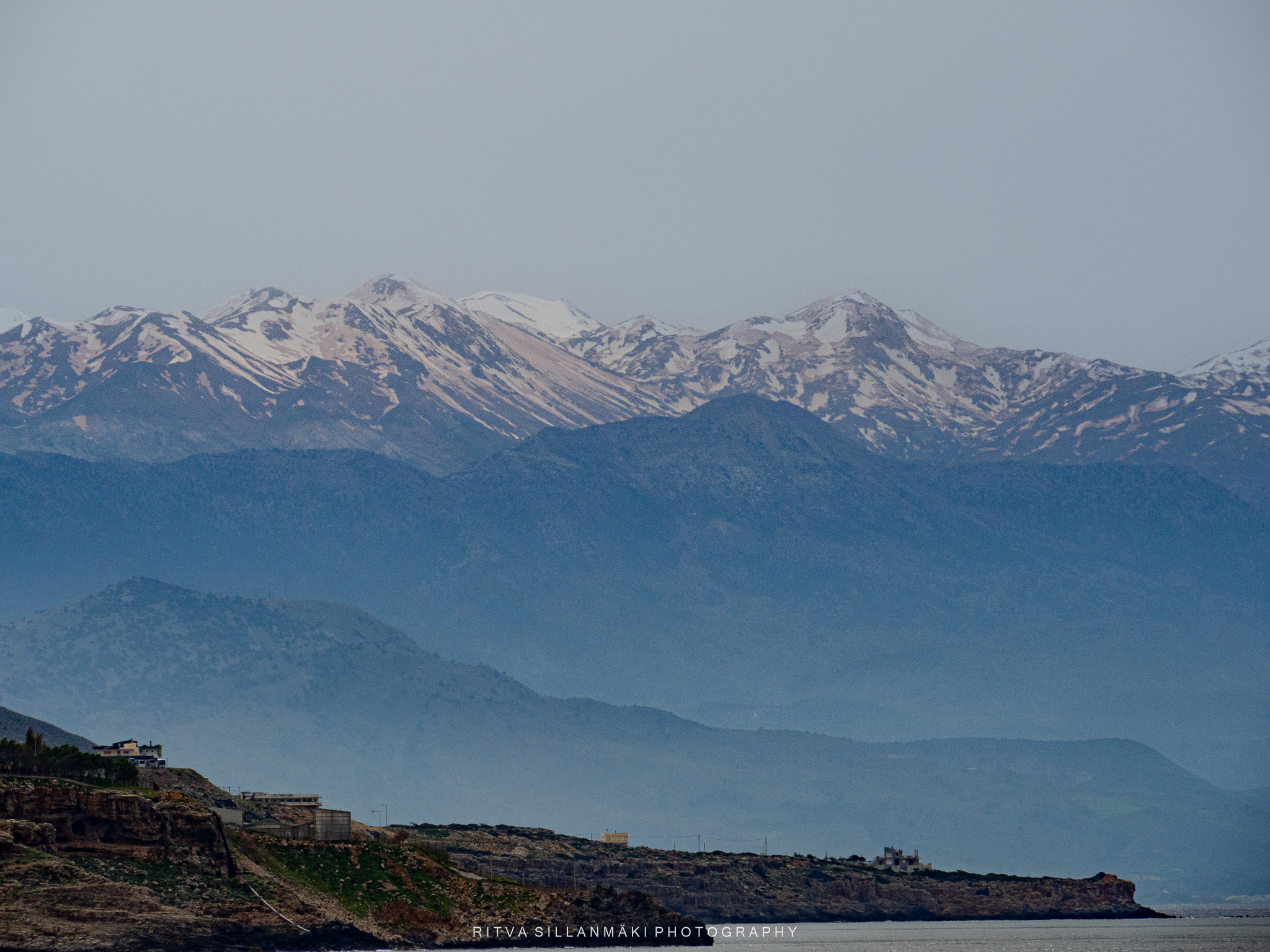
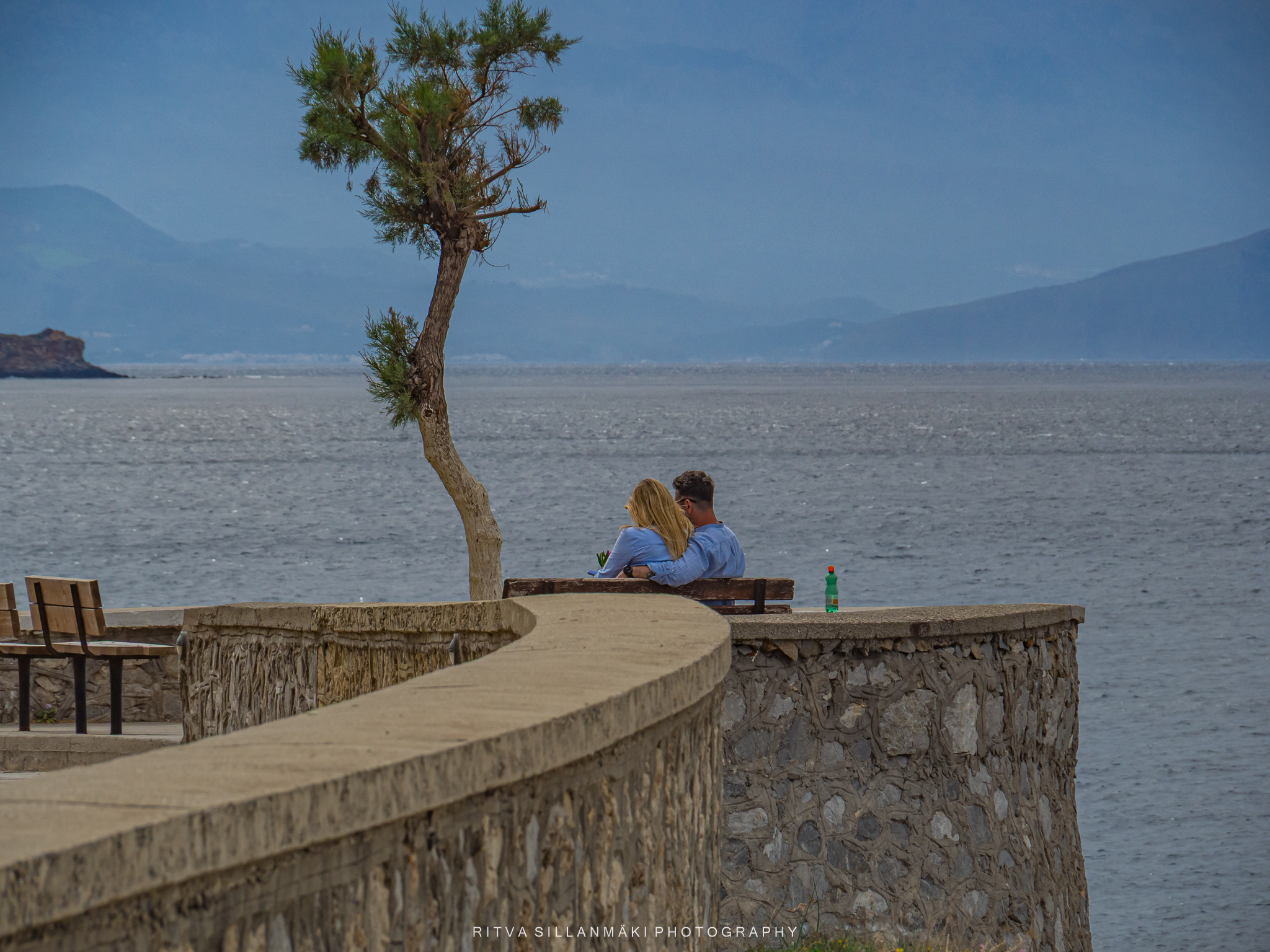
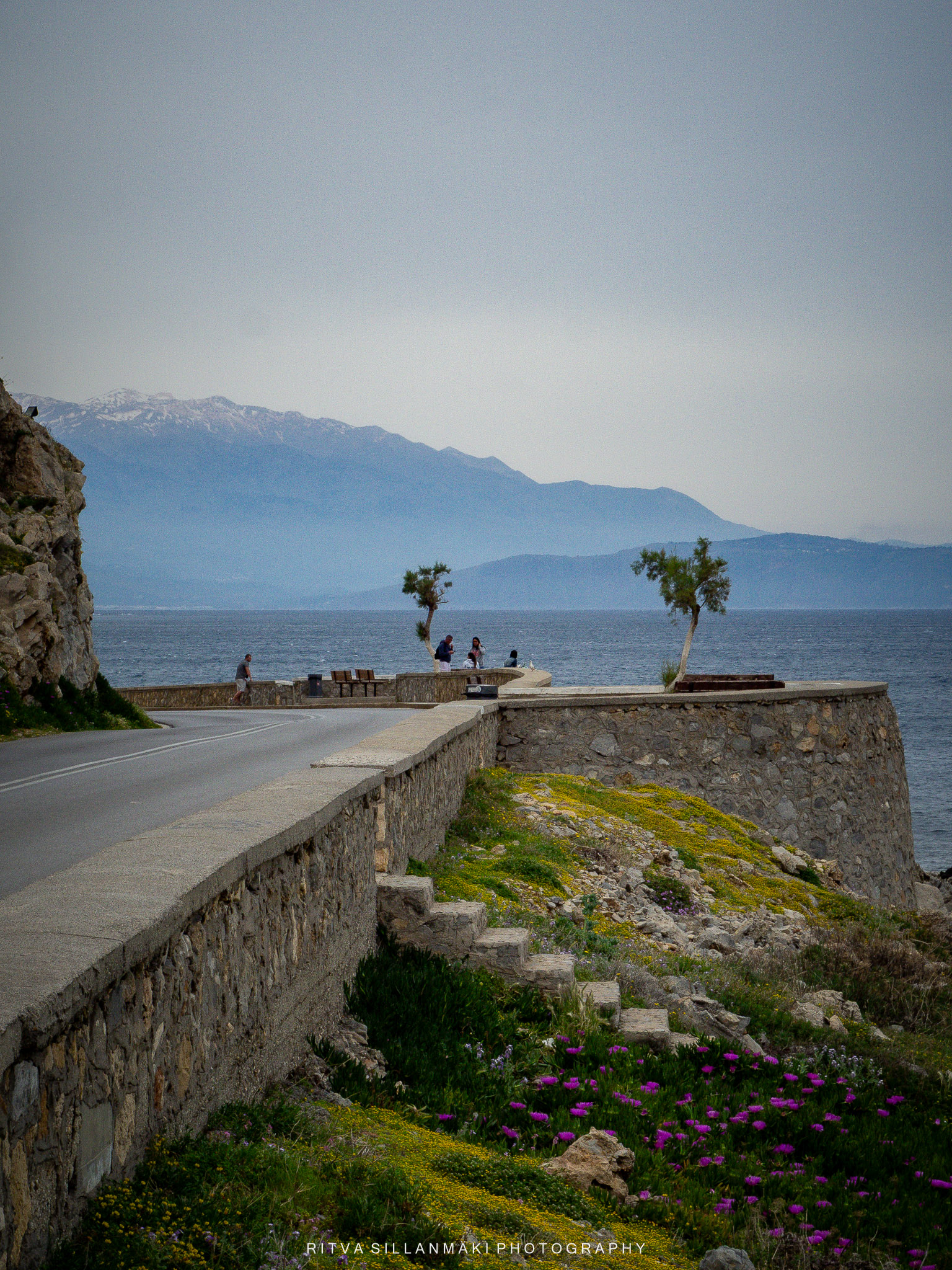
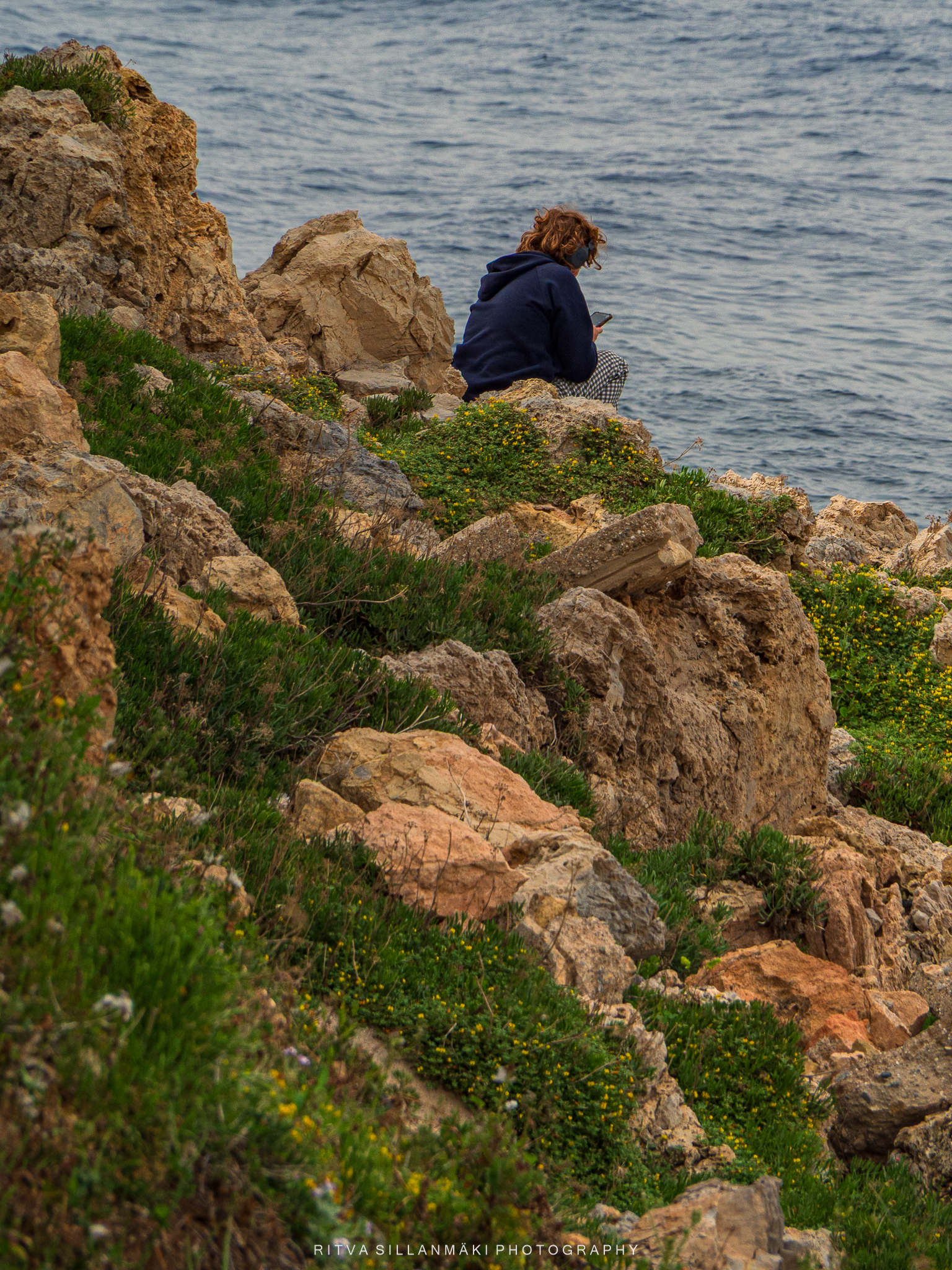
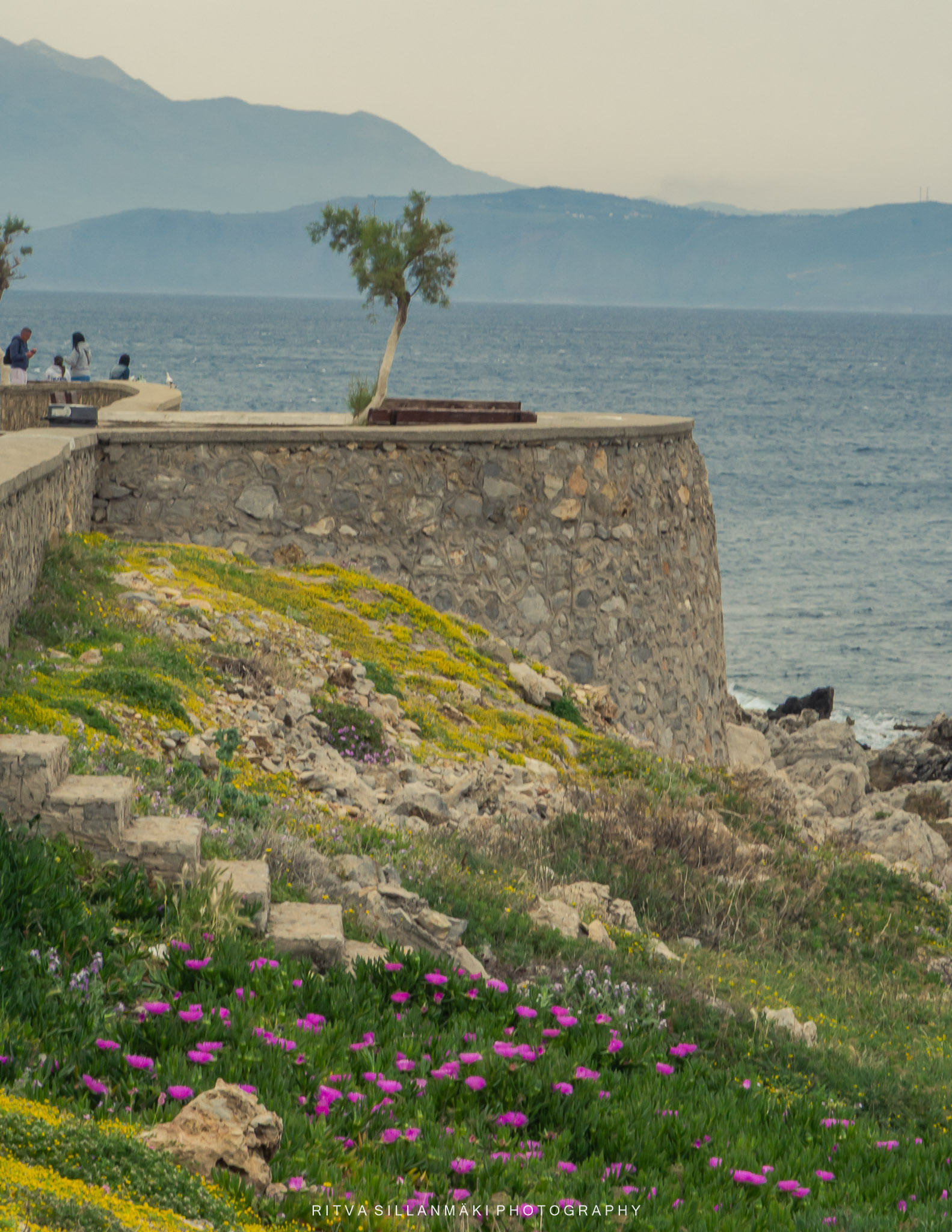
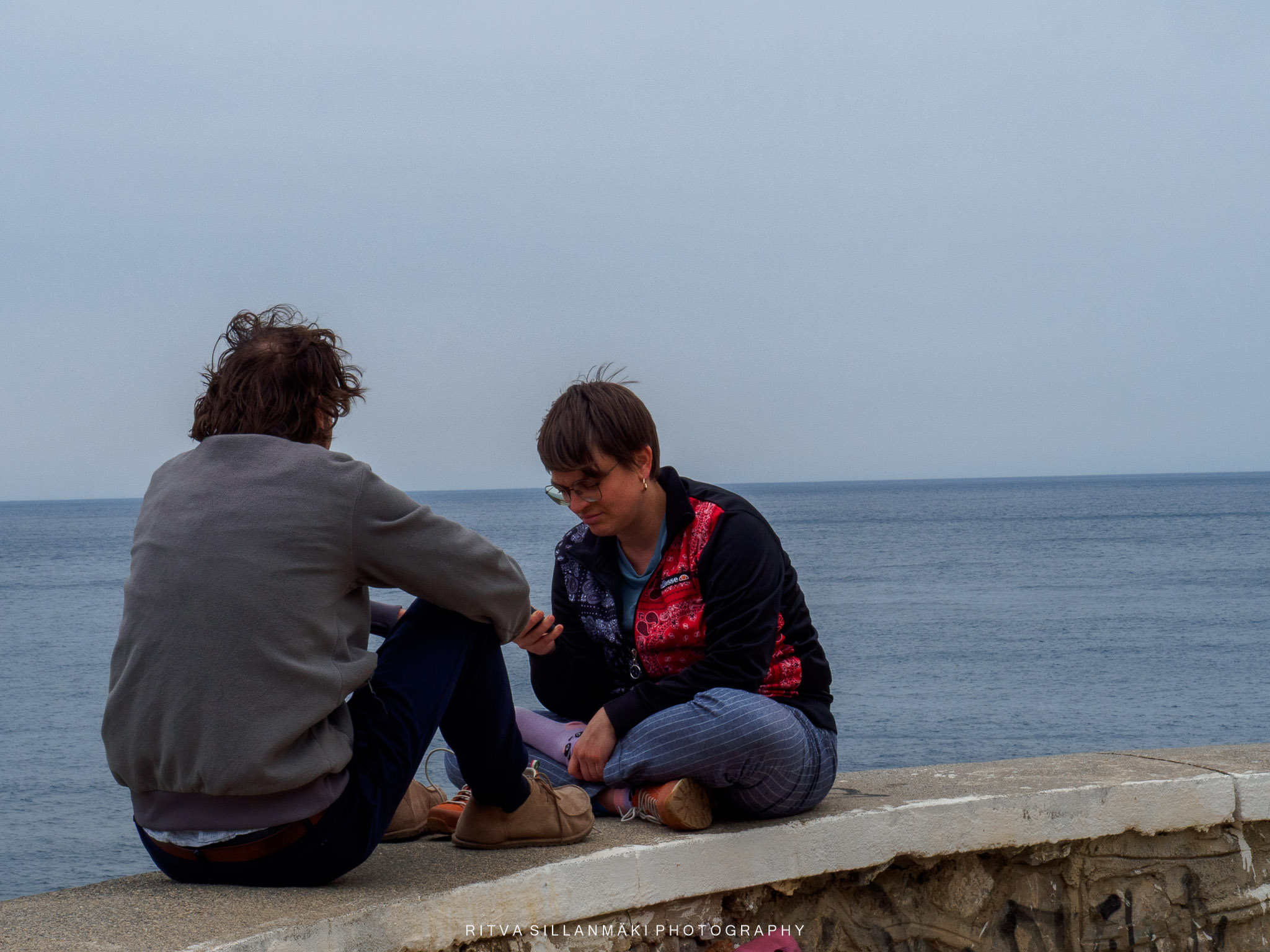
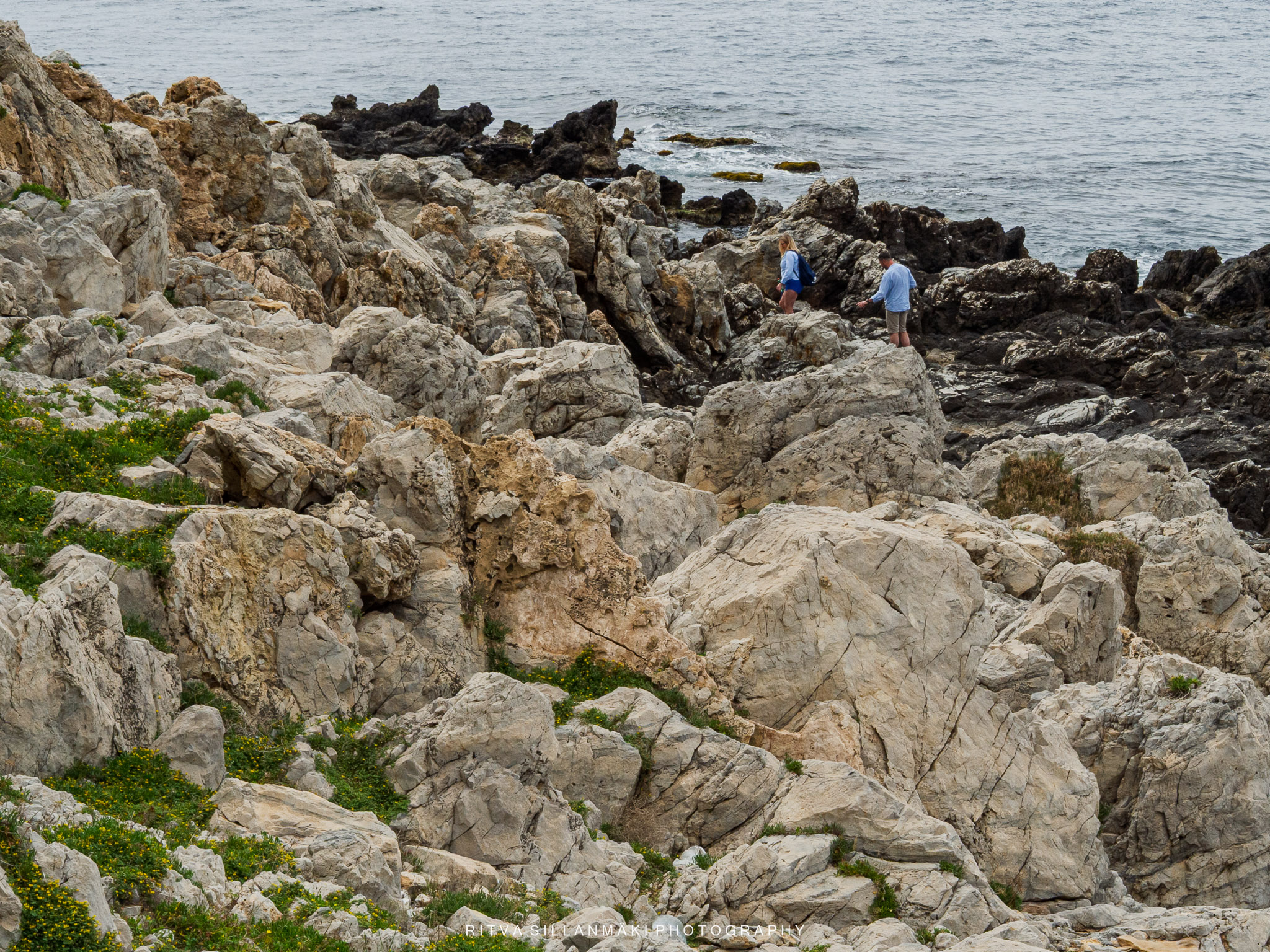
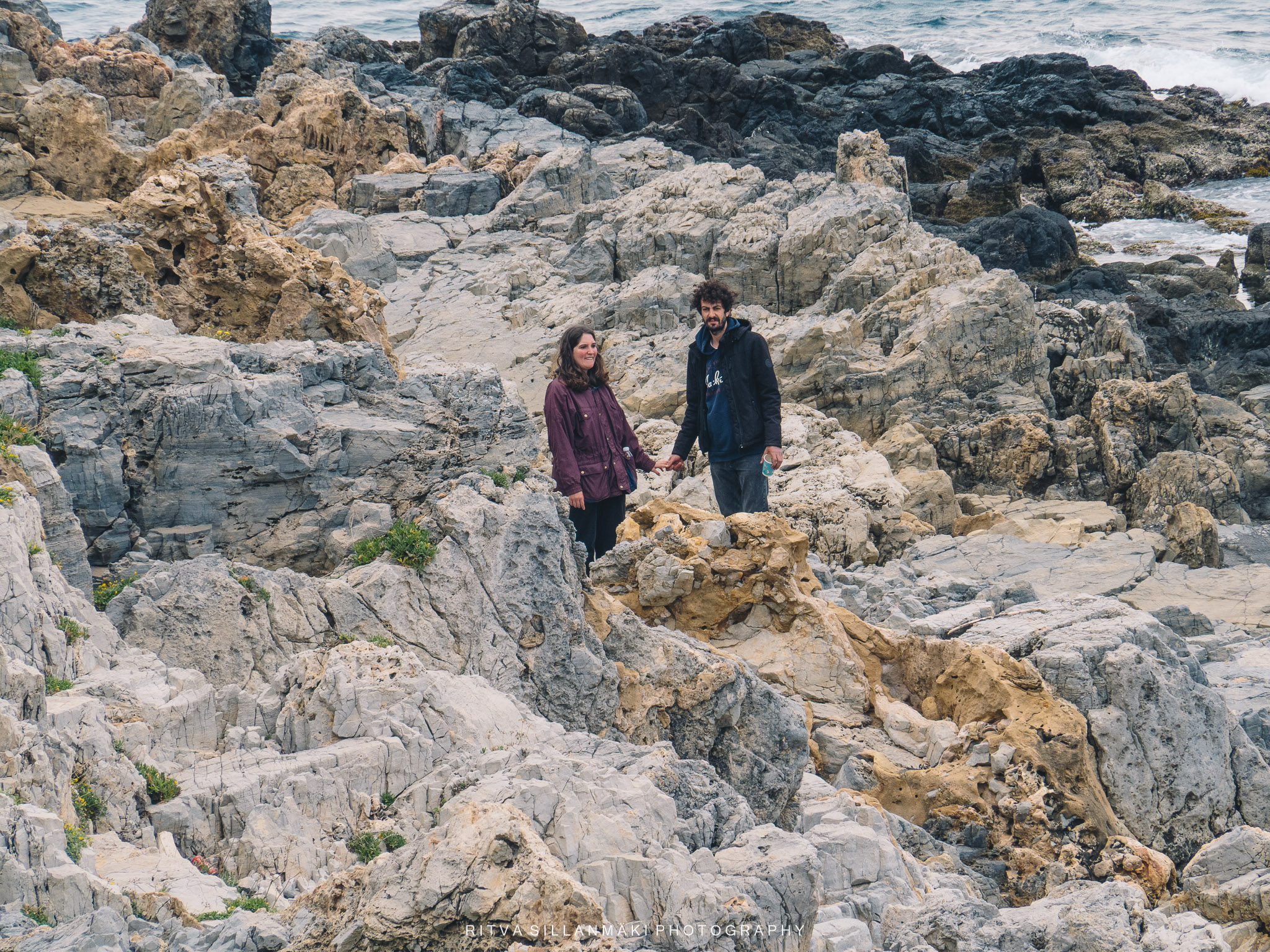
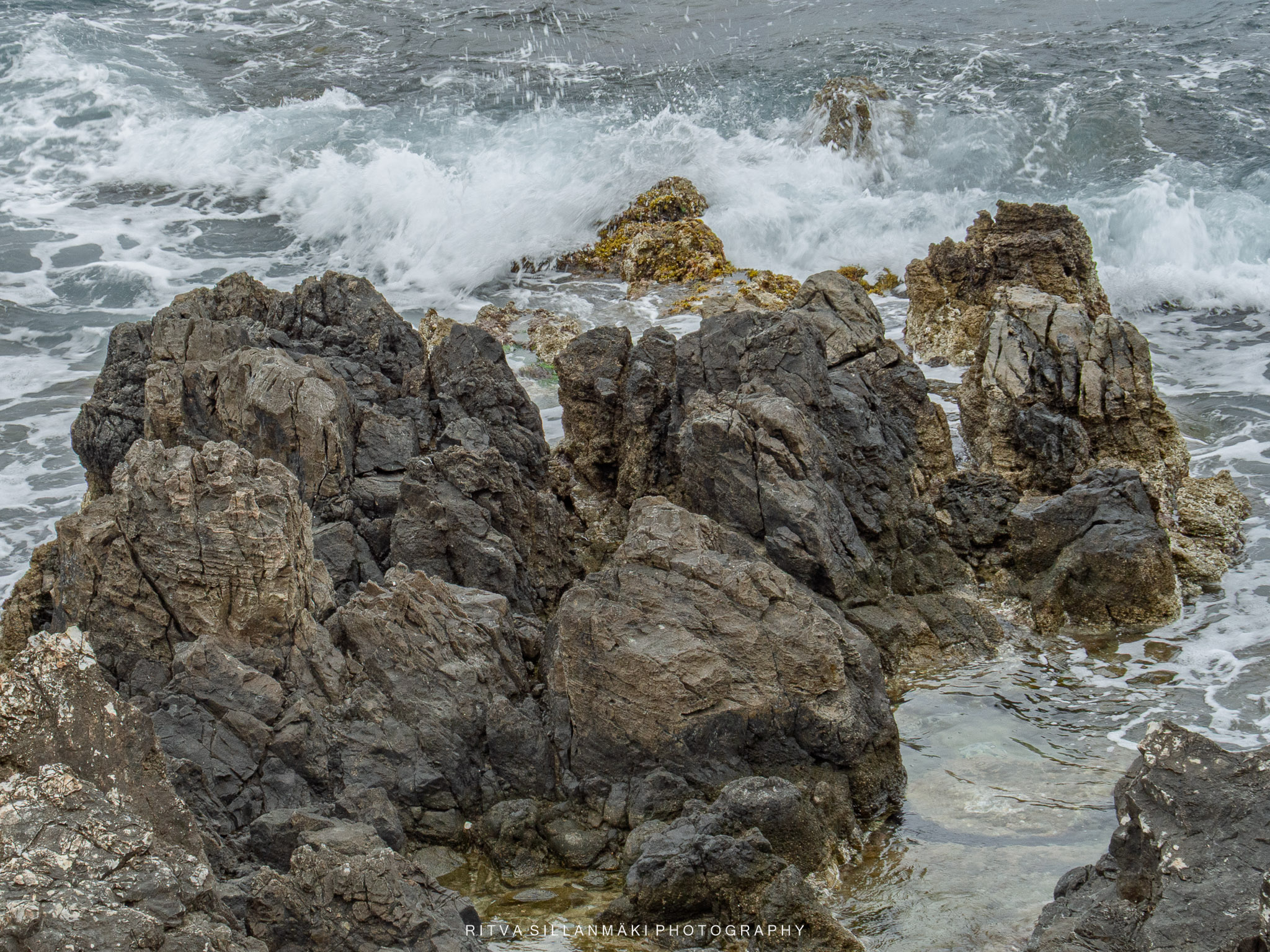
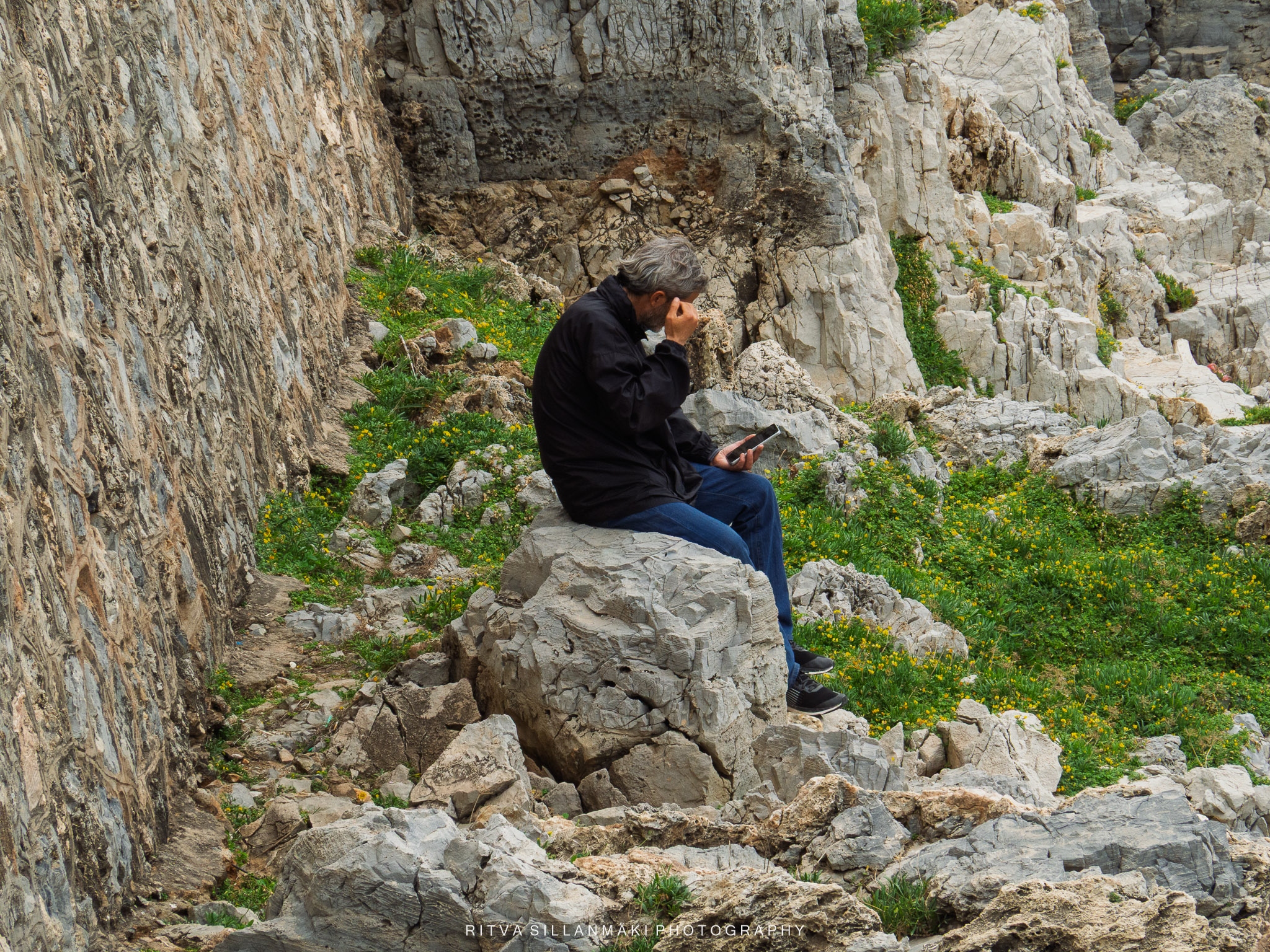
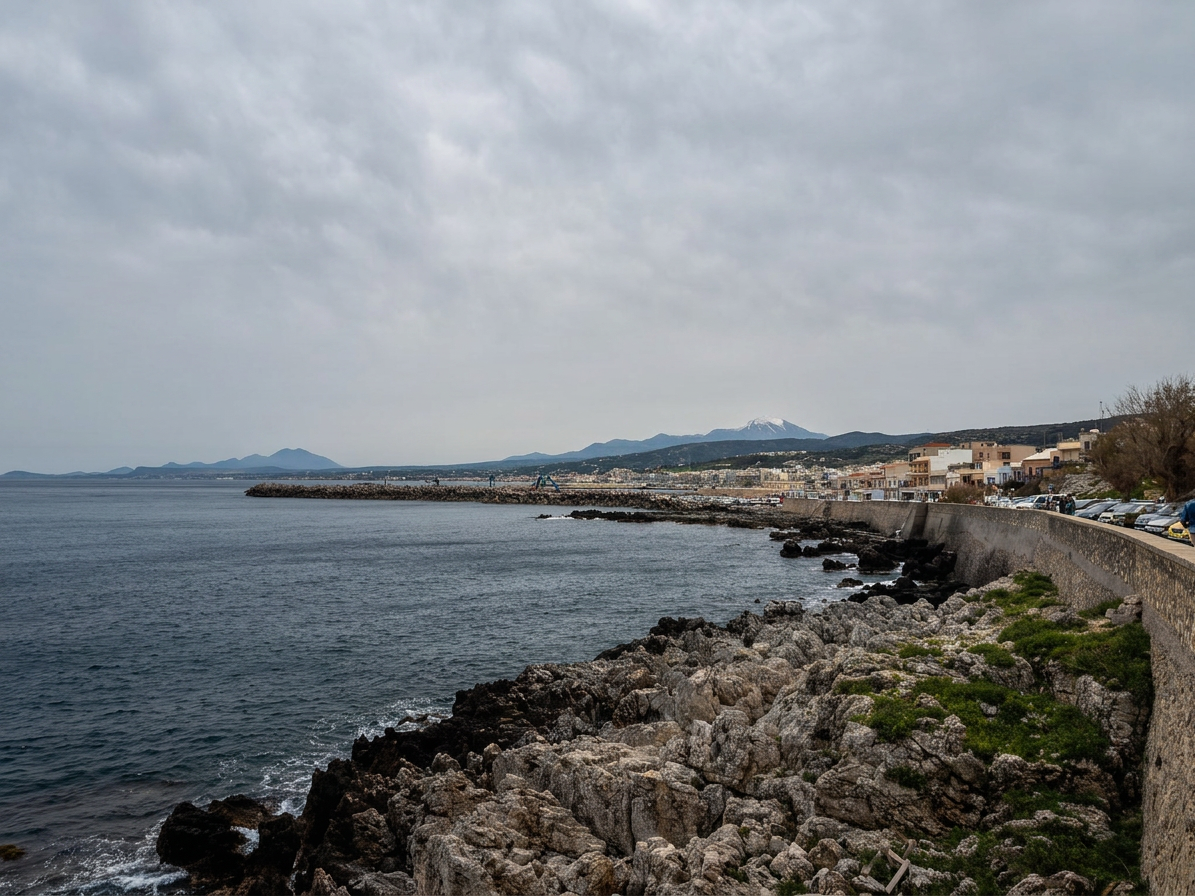
Fortezza Fortress stands proudly in Rethymnon, Crete, Greece. I found myself seated by the seaside road, admiring the fortress while simultaneously looking at the stunning sight of the snow-capped mountains rising majestically in the distance. The view was a breathtaking contrast, with sea creating a mesmerizing panorama. We visited in May, and to our delight, the snow had yet to melt on the peaks, providing us with numerous excellent photography opportunities that encapsulated the beauty of the landscape. The rocky shoreline was not easy to walk on; that is only an observation from looking down at people moving about, carefully navigating the uneven terrain while enjoying the fresh sea breeze and the sounds of waves crashing against the rocks.

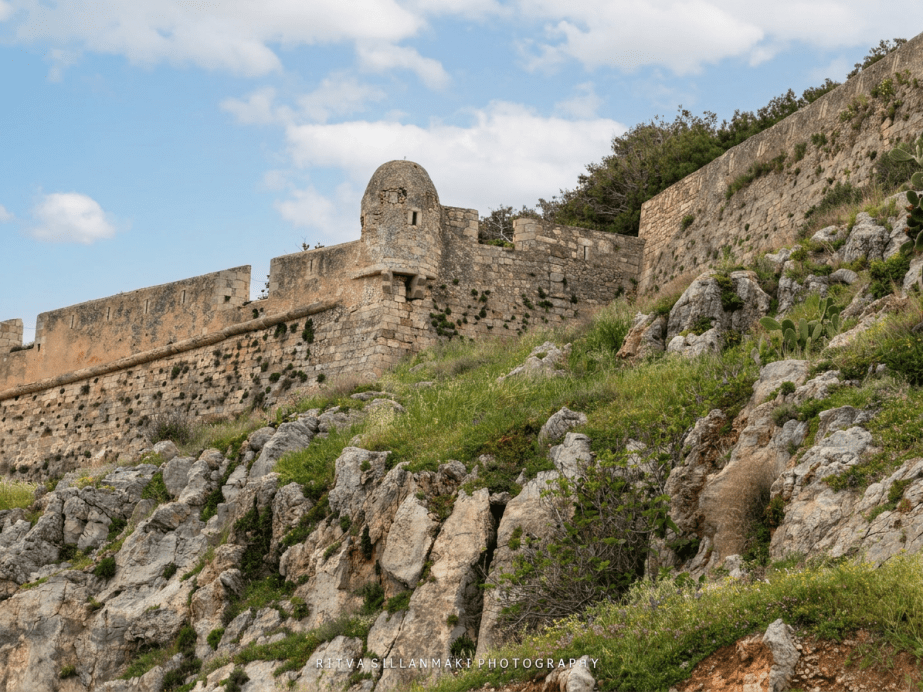
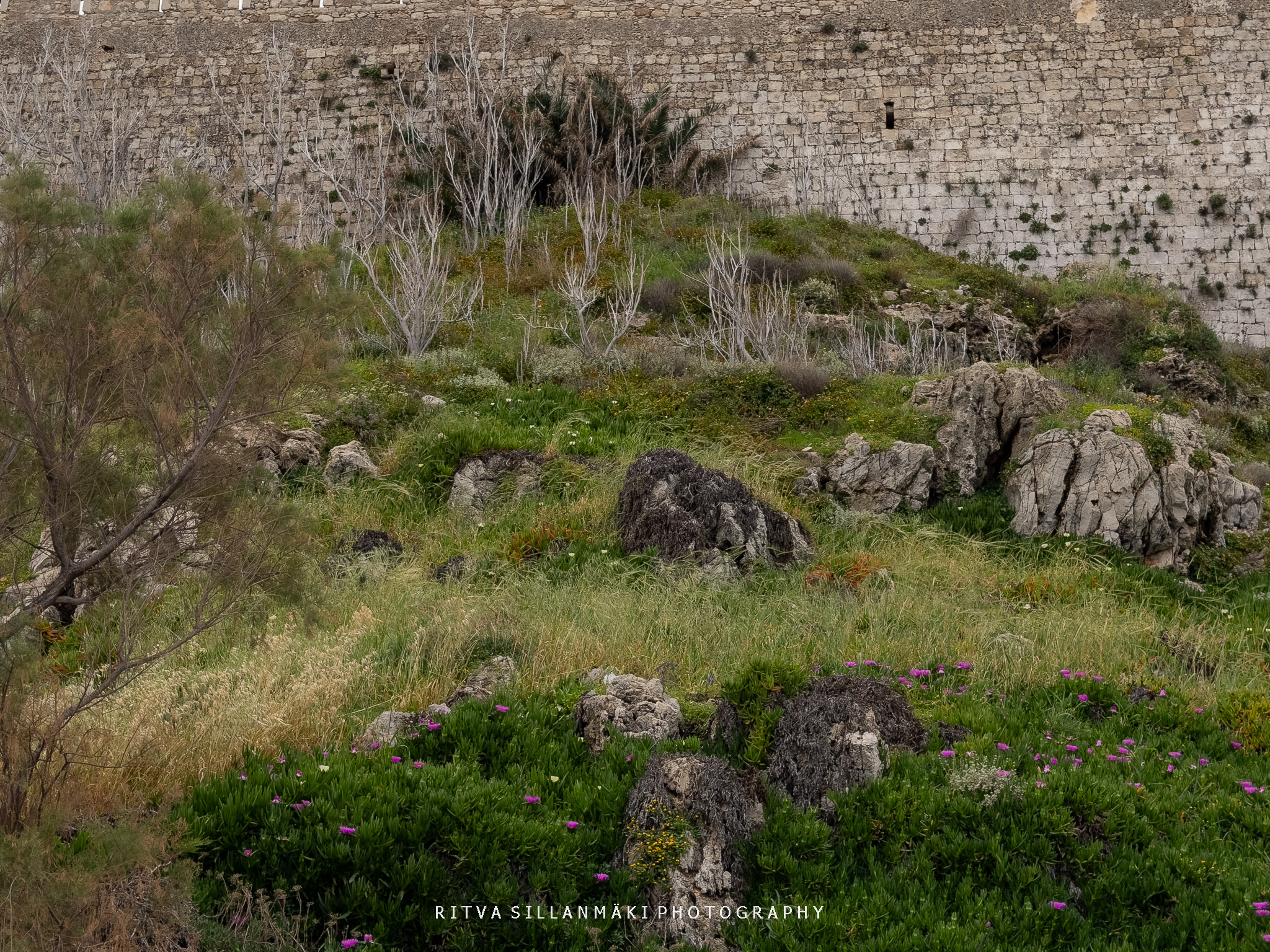
Ancient stone fortress walls rise along a rugged hillside

The Fortezza Fortress, constructed by the Venetians in the 16th century, is perched on Paleokastro hill and provides stunning views of both the city and the sea. This fortress is a vital historical landmark on the island. Located to the north of the city and adjacent to the old town and the Venetian harbor, it was built between 1573 and 1580 to safeguard the city from pirate attacks.

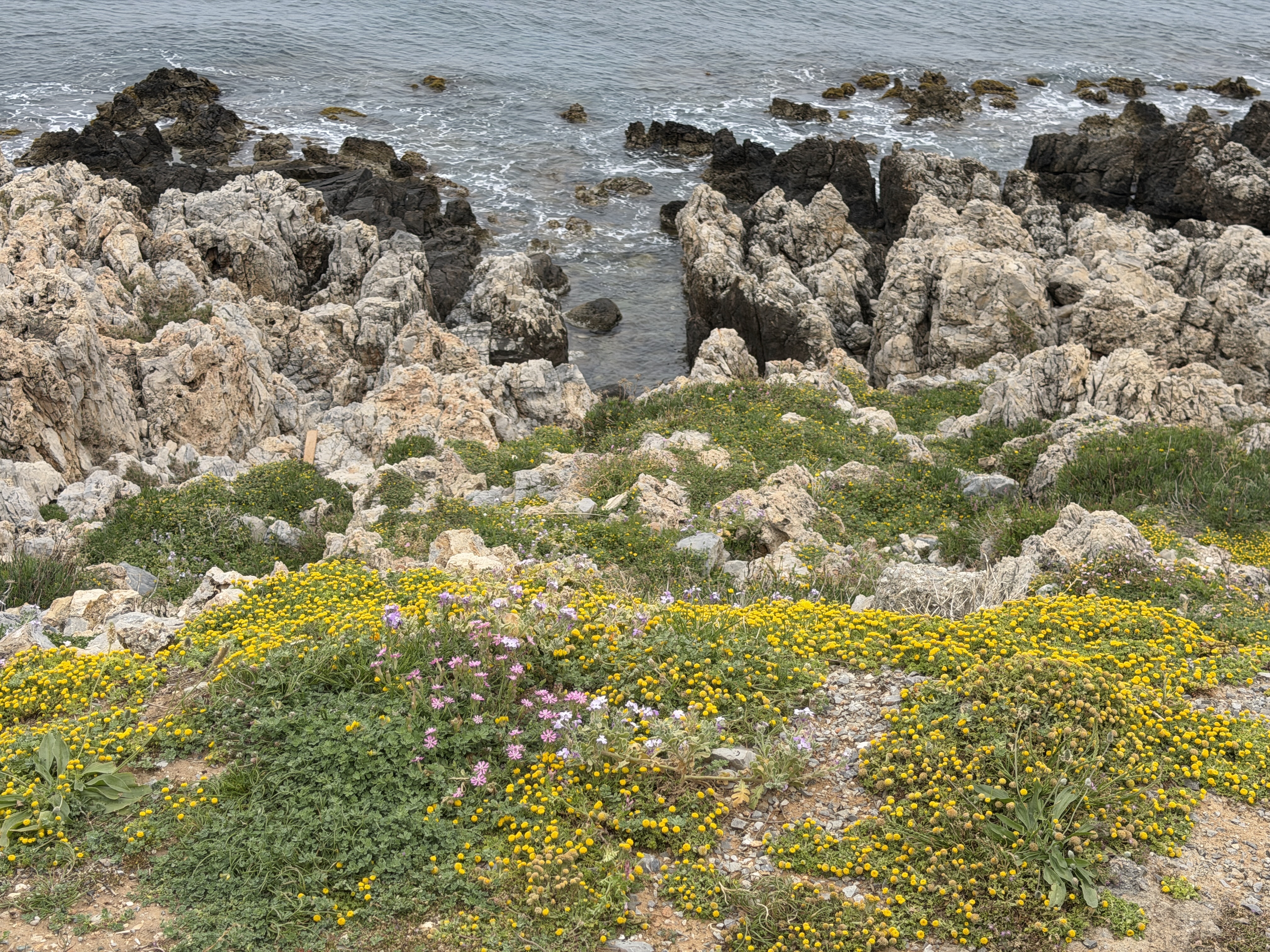
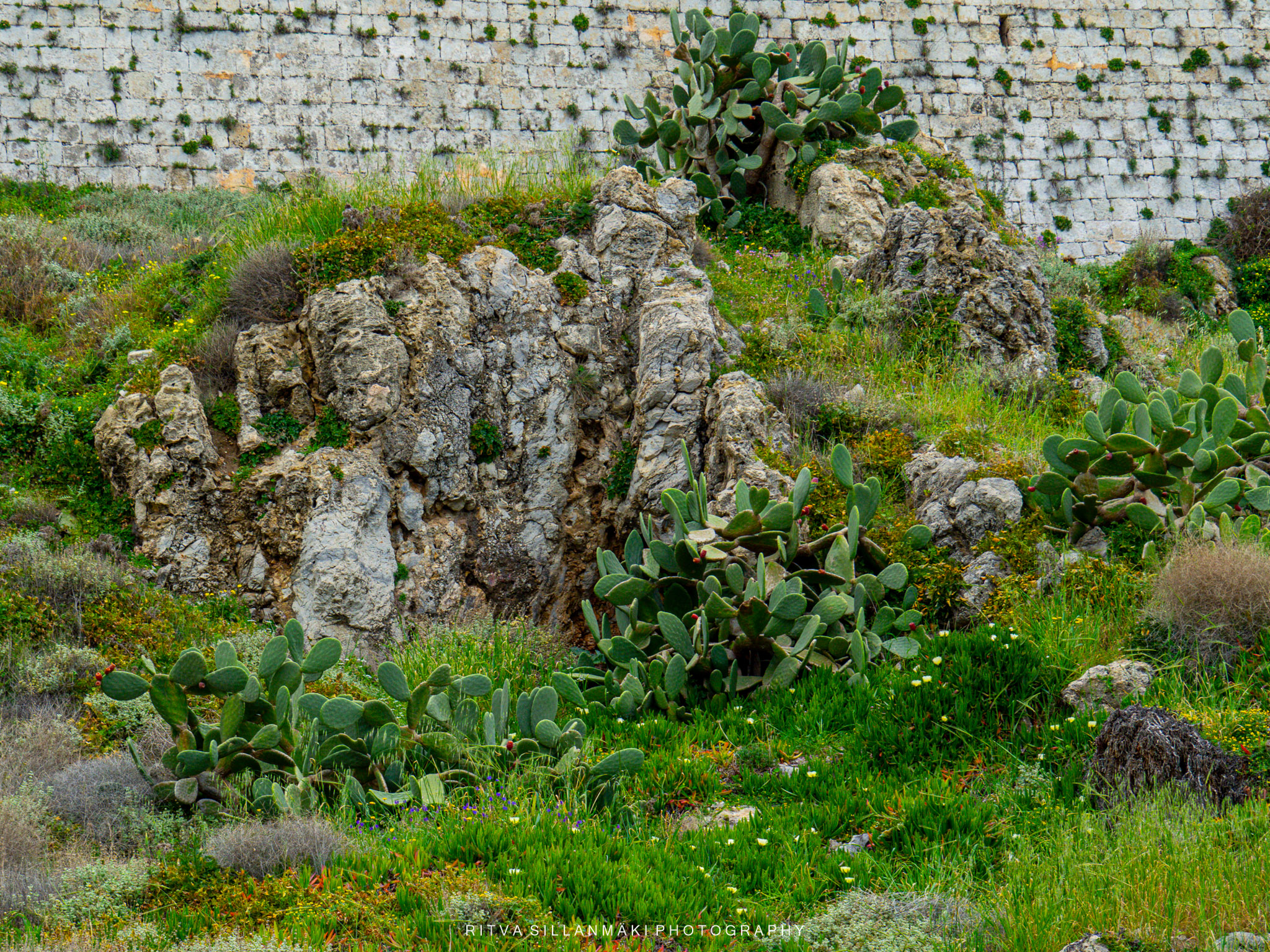
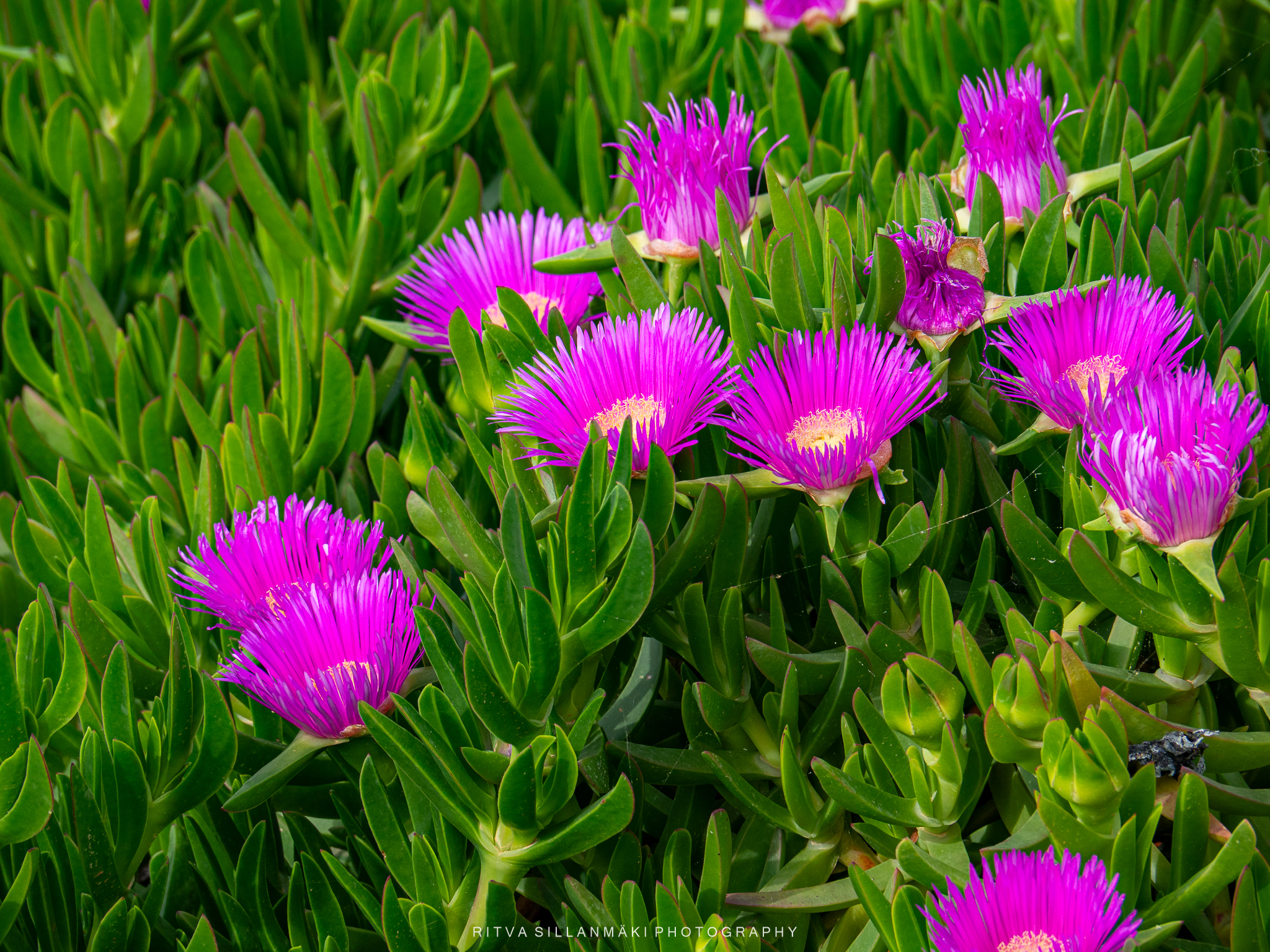
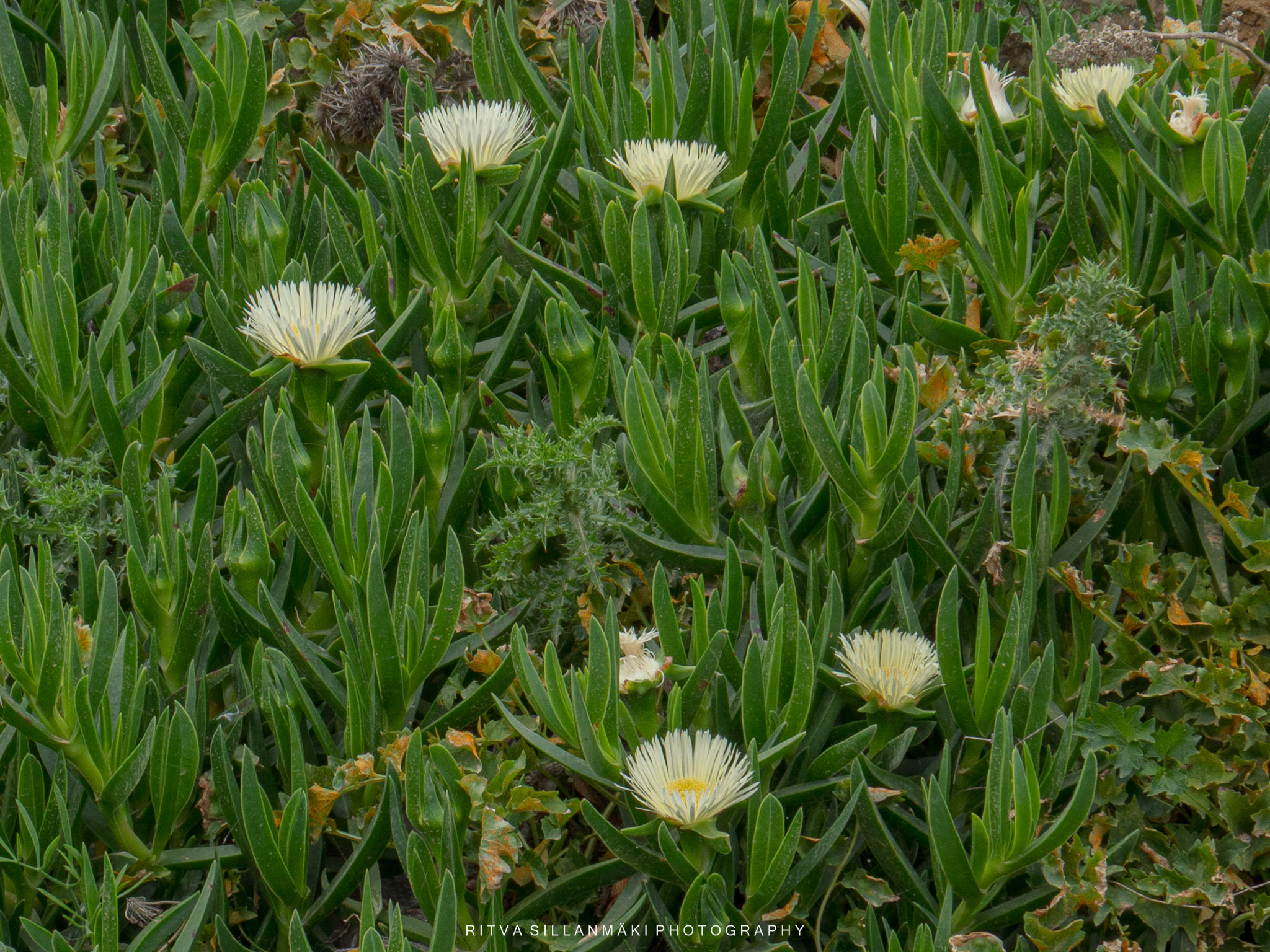
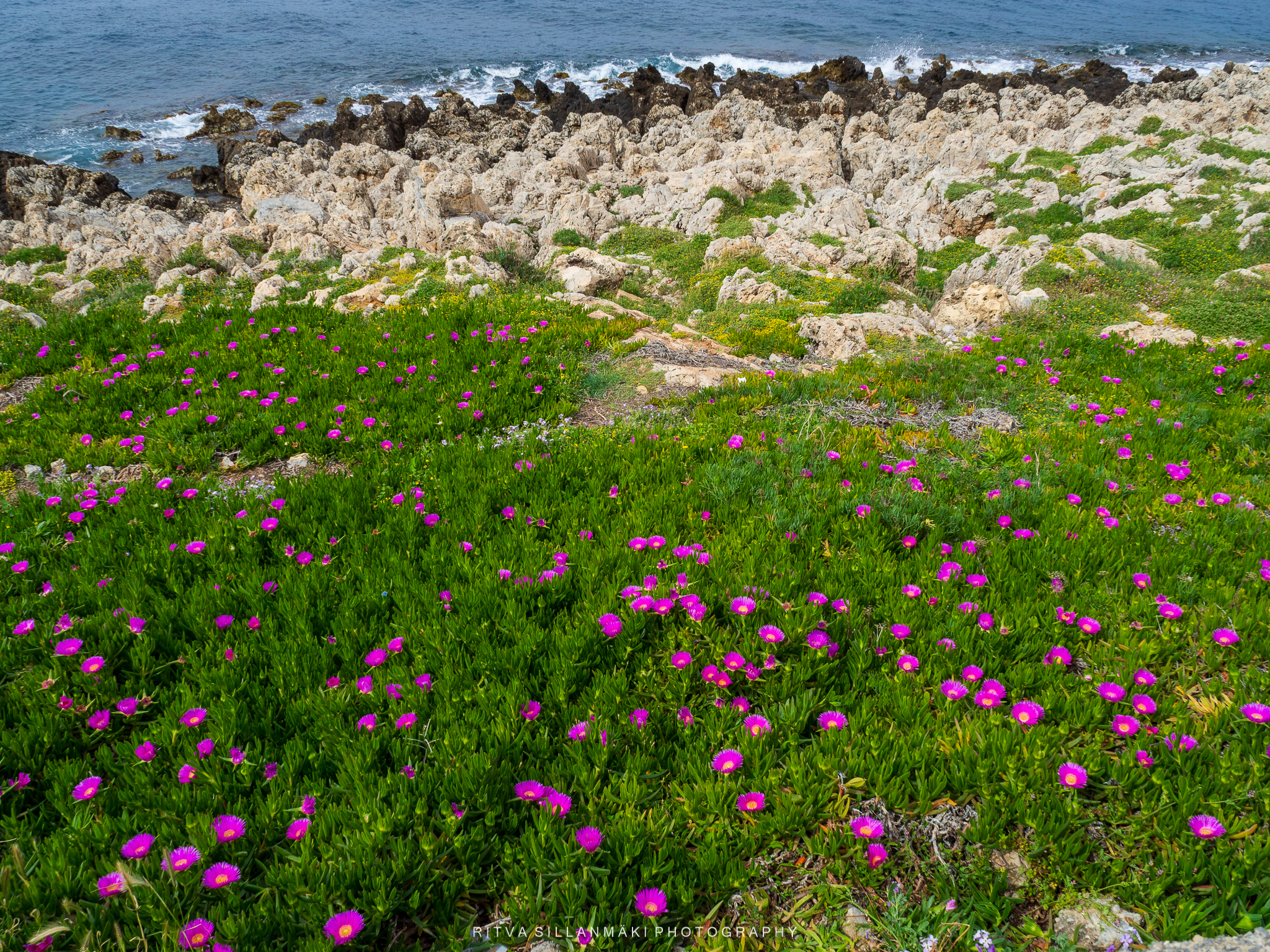
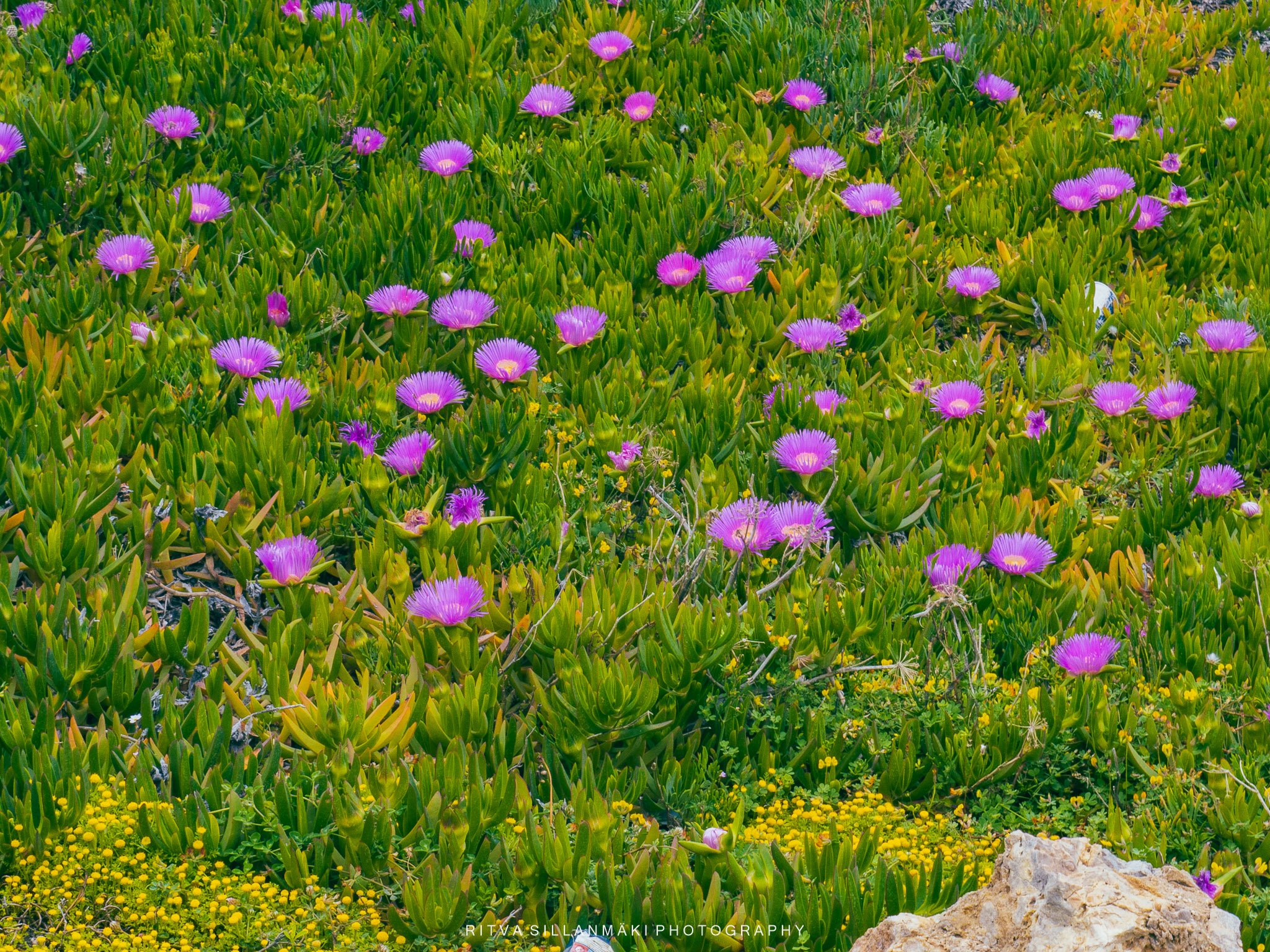
The two flowers are, the fig-marigold (scientific name Carpobrotus edulis), also known as the Hottentot fig or sour fig. This succulent plant, native to South Africa, has spread and become wild in many coastal areas around the world. Appearance: It has fleshy, triangular leaves and large, daisy-like flowers that range in color from white and pale yellow to bright red.

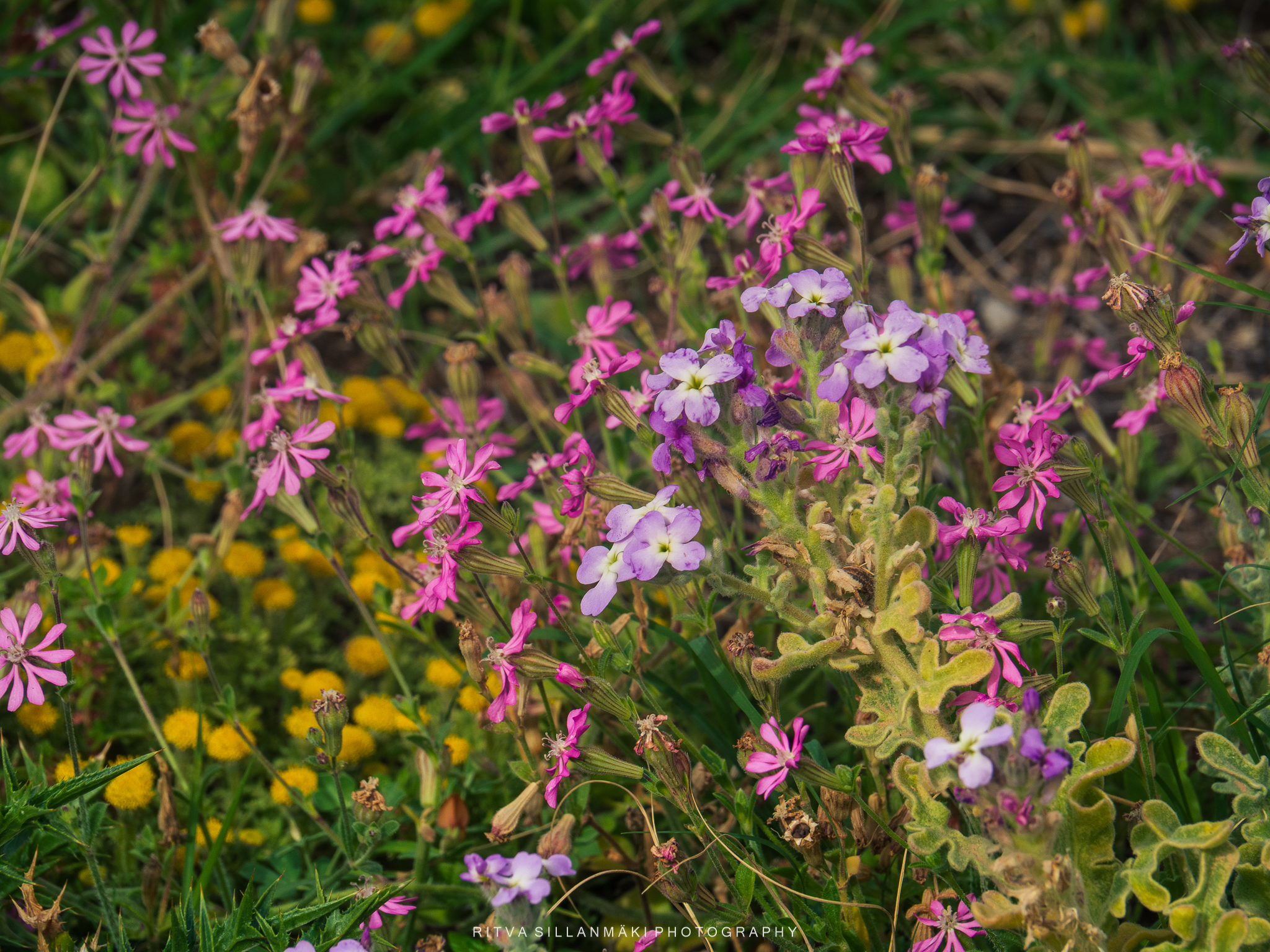
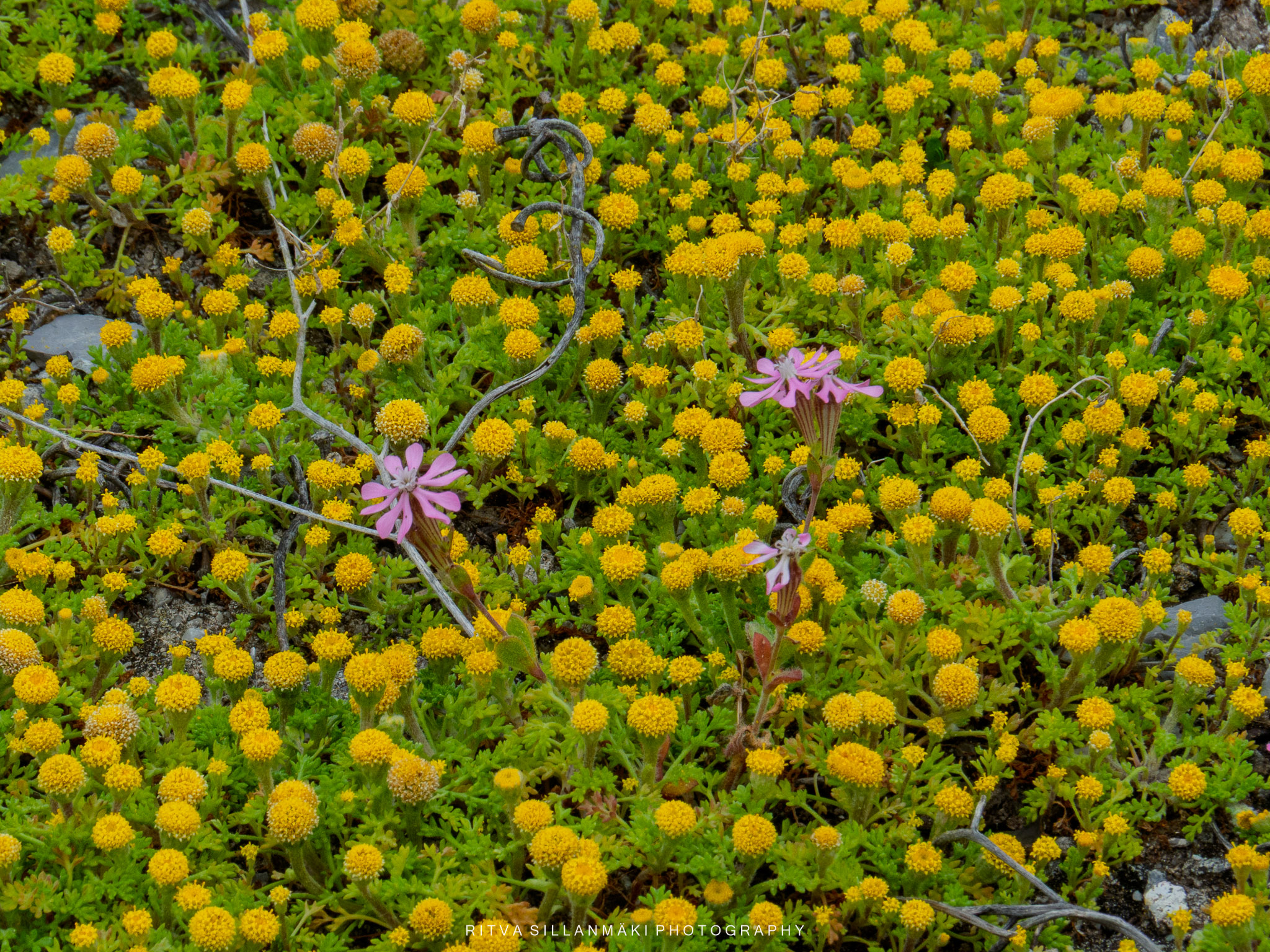
The prominent, aniline pink flowers depicted in the image are red campions.

The yellow flowers is, I think, dwarf clover (scientifically Anthyllis vulneraria), a perennial plant belonging to the legume family, commonly found in dry meadows and ridges perennial plant. It forms dense, spherical flowers that are usually golden yellow, but the petals can occasionally be lighter or have reddish tips.

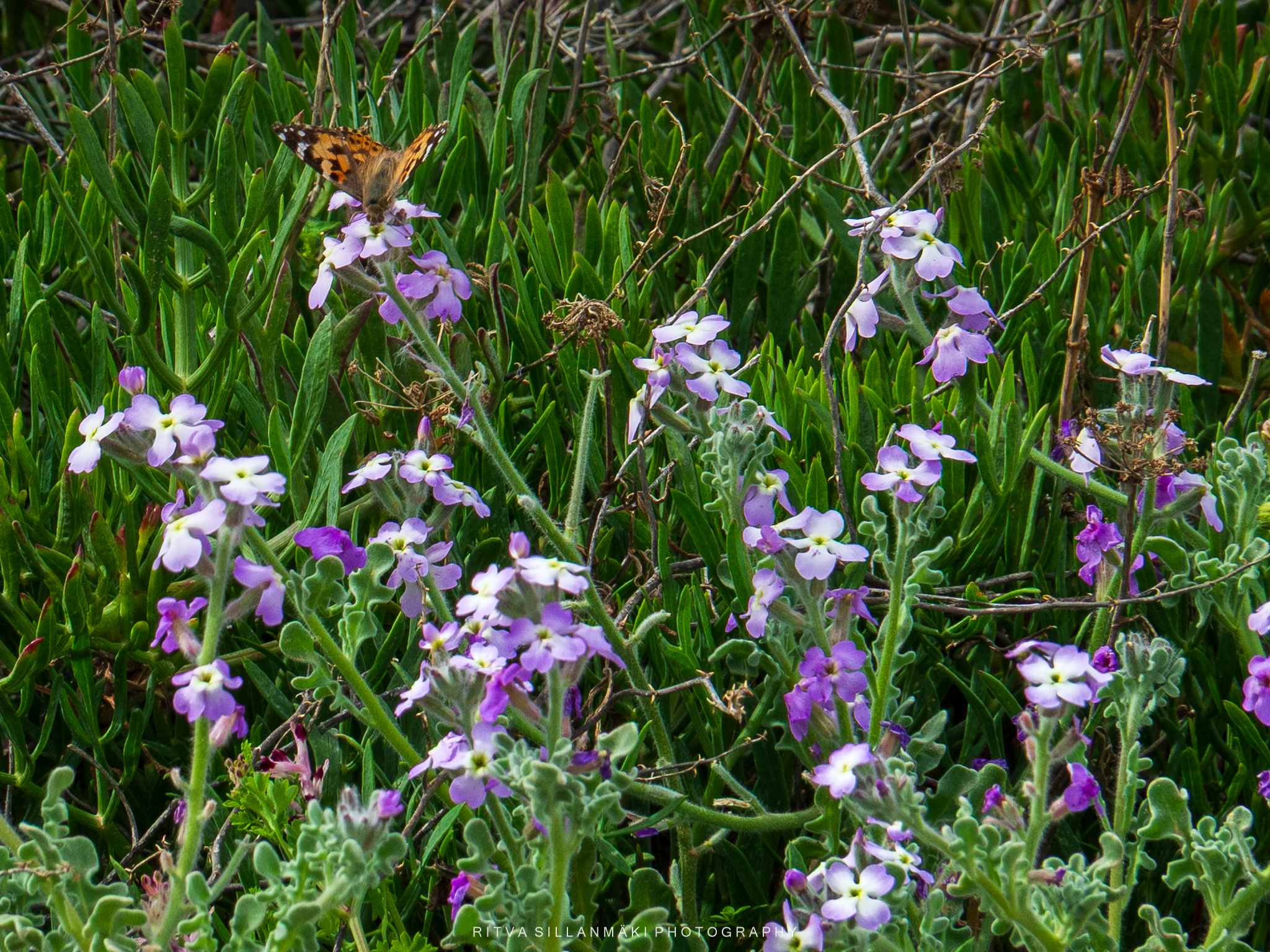
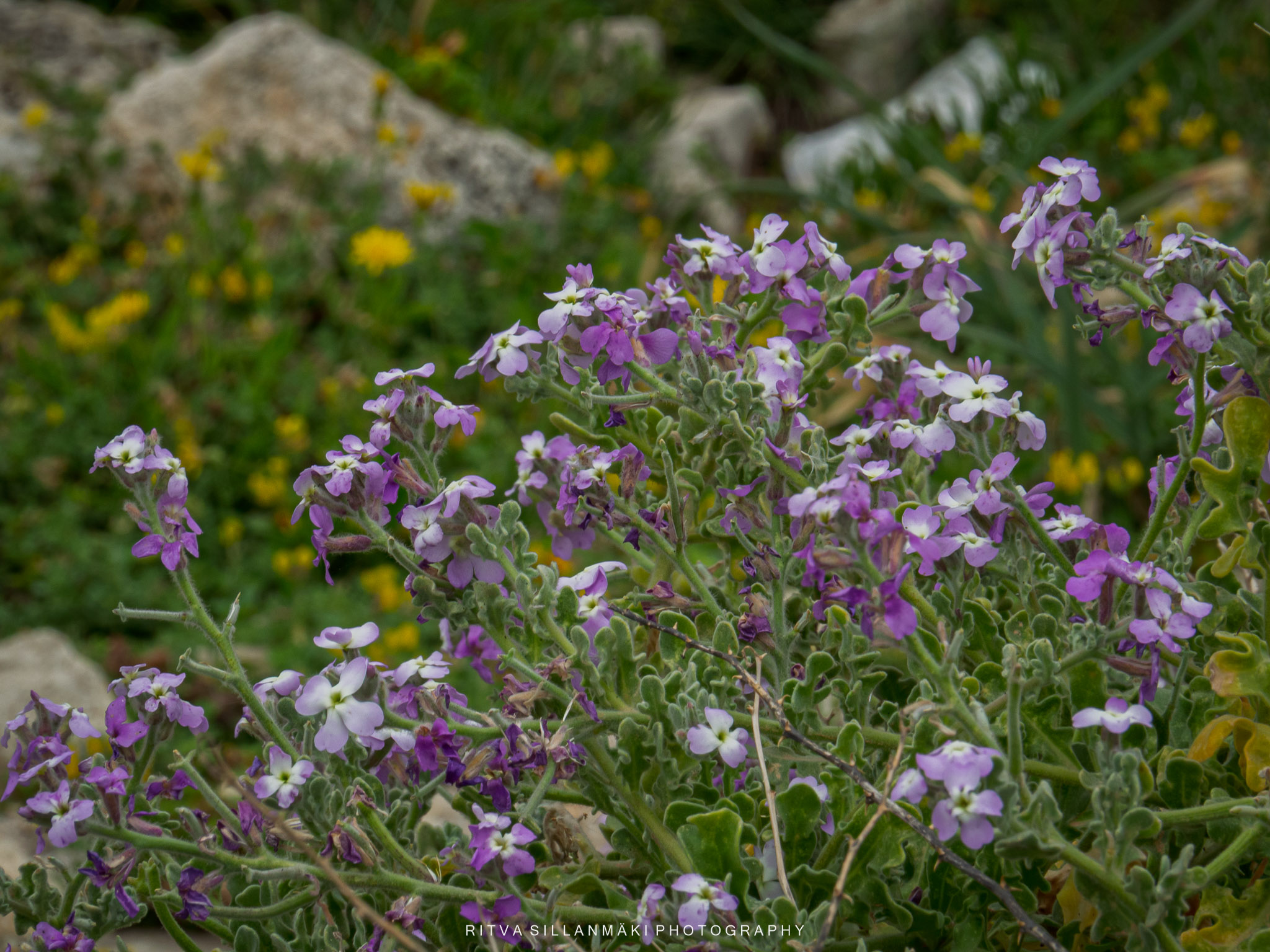
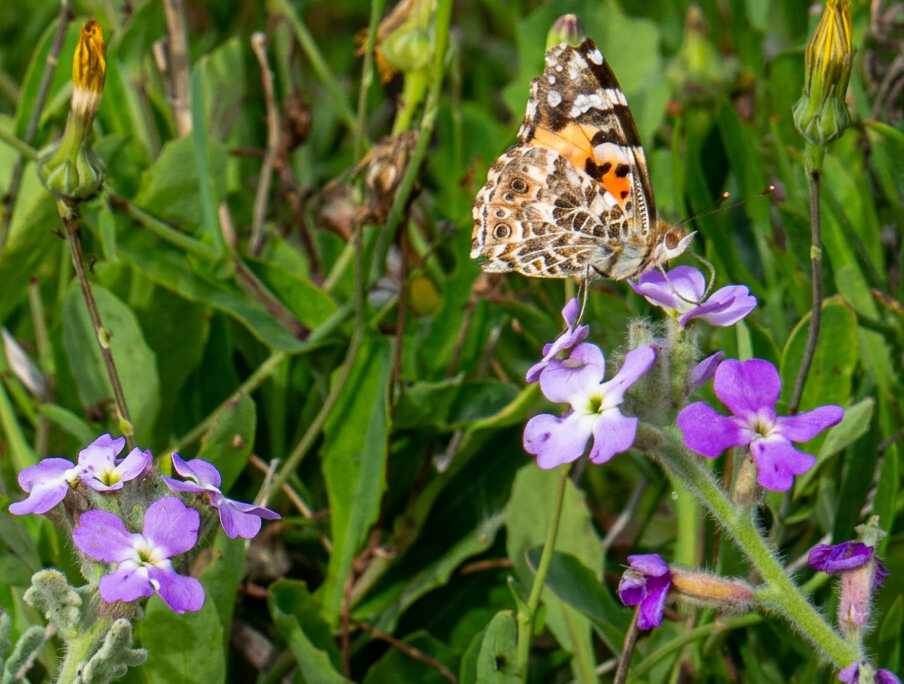
The flowers with the butterfly is the night-scented stock (also known as Matthiola longipetala . This annual summer flower is famous for its strong, intoxicating fragrance that intensifies in the evenings and at night. Its modest, pale violet or purple flowers may appear wilted during the day, but they open up in the twilight.

I saw a a beautiful painted lady butterfly (Vanessa cardui), which is one of the most widely distributed butterflies in the w