
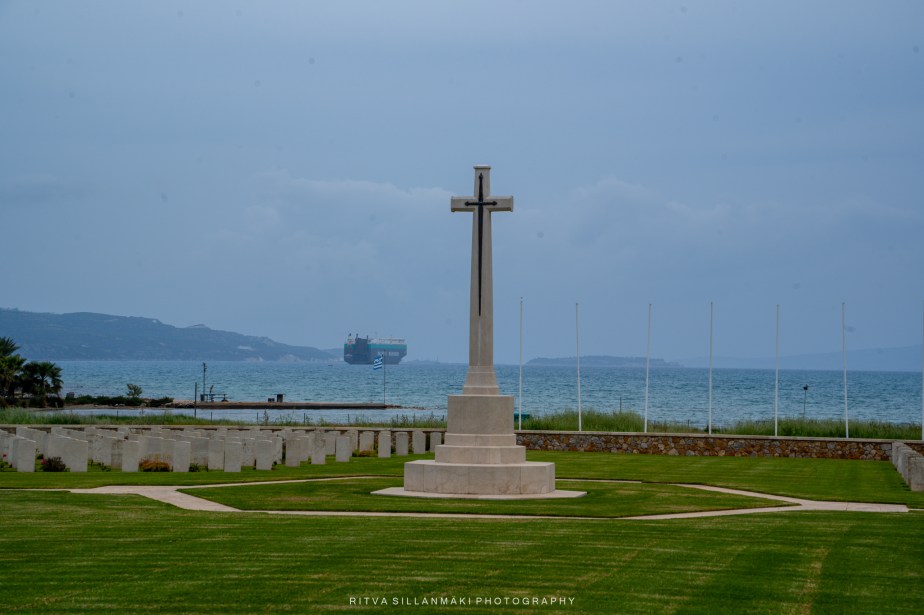
John’s challenge is to feature places “where history still lives”. One of John’s suggested topics “Where the Past Still Stands”is the inspiration for this post. I am not a history buff, but I do like visiting historic sights- sometimes. But history is something we need to know and understand so hopefully we do not repeat the mistakes done. At this moment – that is evident history of war and its consequences has been not studied. When do we learn?
We visited the Suda Bay War Cemetery in Crete last week, a place filled with history and remembrance. It always stirs strong feelings to see these memorials for the young men who lost their lives in wars, with each gravestone telling a story of courage and sacrifice. Walking among the rows of white markers made me think about the personal losses faced by these individuals and the effects of war on families and communities. I often question the reasons behind it—how power struggles and political choices can lead to such devastation. It’s striking to see this collection of gravestones, each a reminder of lives cut short and the lessons we should remember as we move forward.
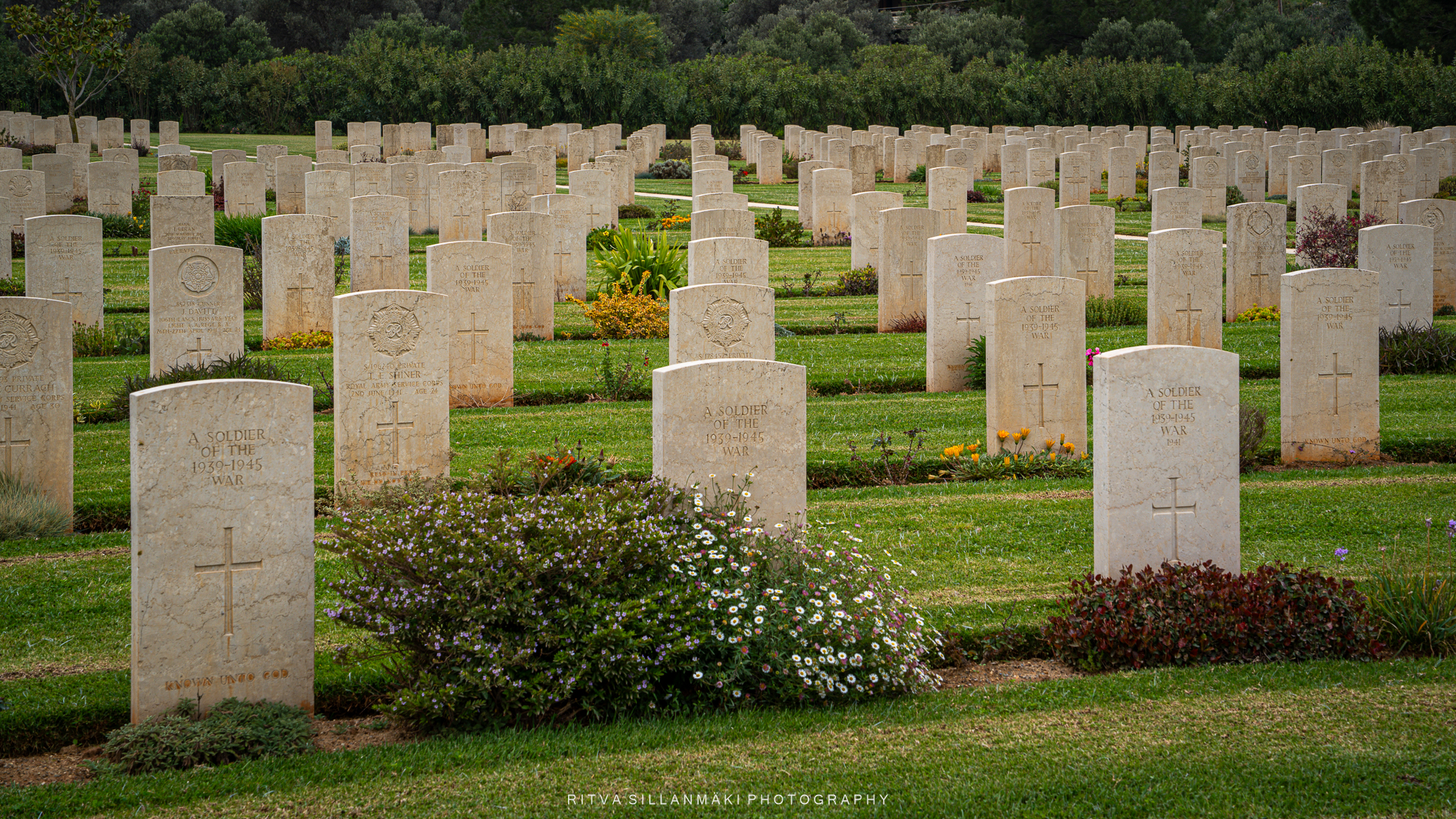
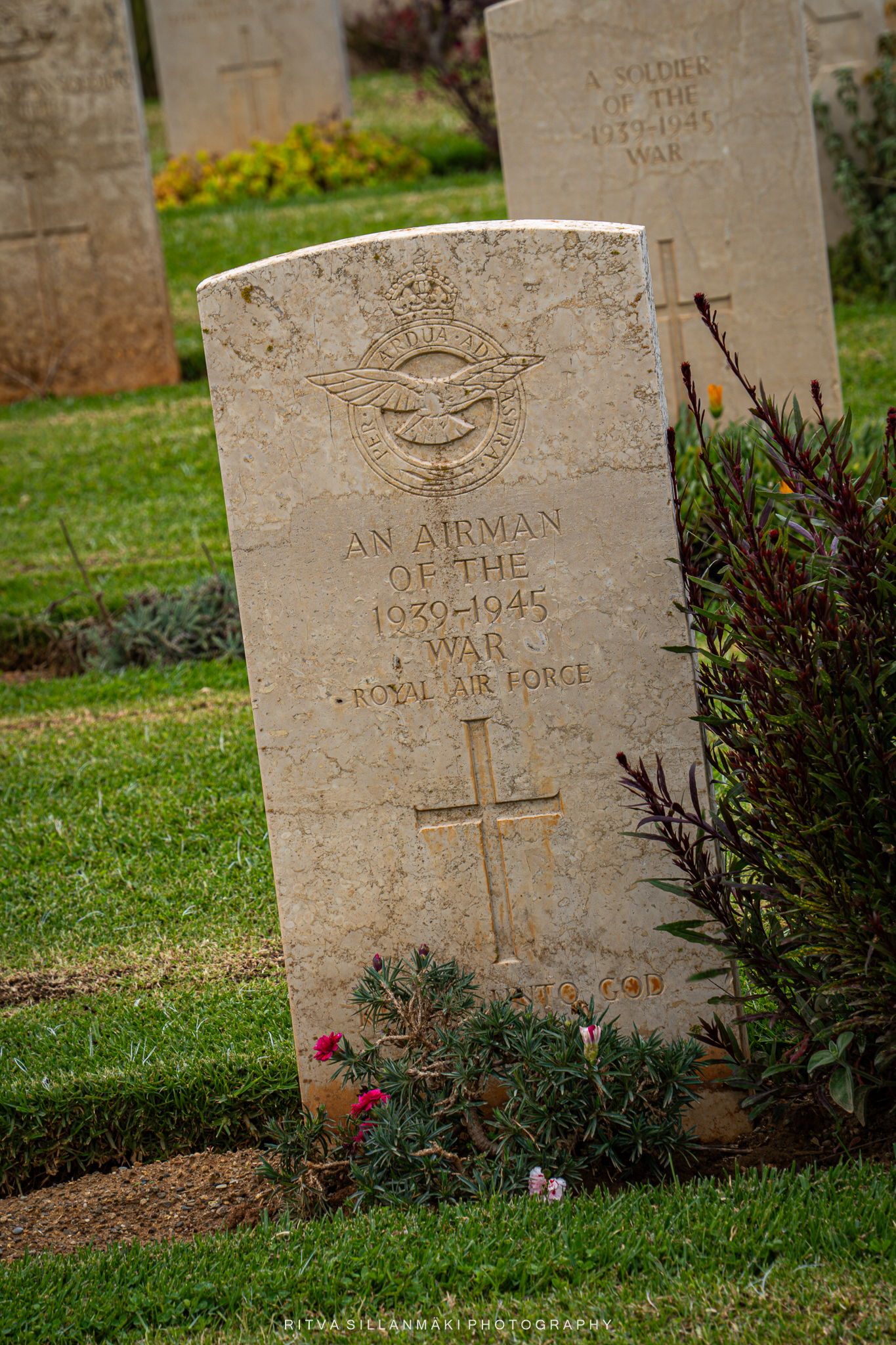
A sprawling military cemetery stretches before us, where countless rows of light-colored gravestones stand sentinel amidst the lush green grass. Each gravestone, etched with heartfelt inscriptions and adorned with crosses, pays homage to the brave souls who valiantly fought in the 1939-1945 war, some tragically marked ‘Unknown unto God’. Delicate flowers and gentle bushes are tenderly placed throughout the hallowed ground, offering a touch of beauty and solace. The atmosphere respectful, a profound sense of loss and gratitude intertwining, serving as a poignant reminder of the sacrifice and valor of those who gave everything for their country.
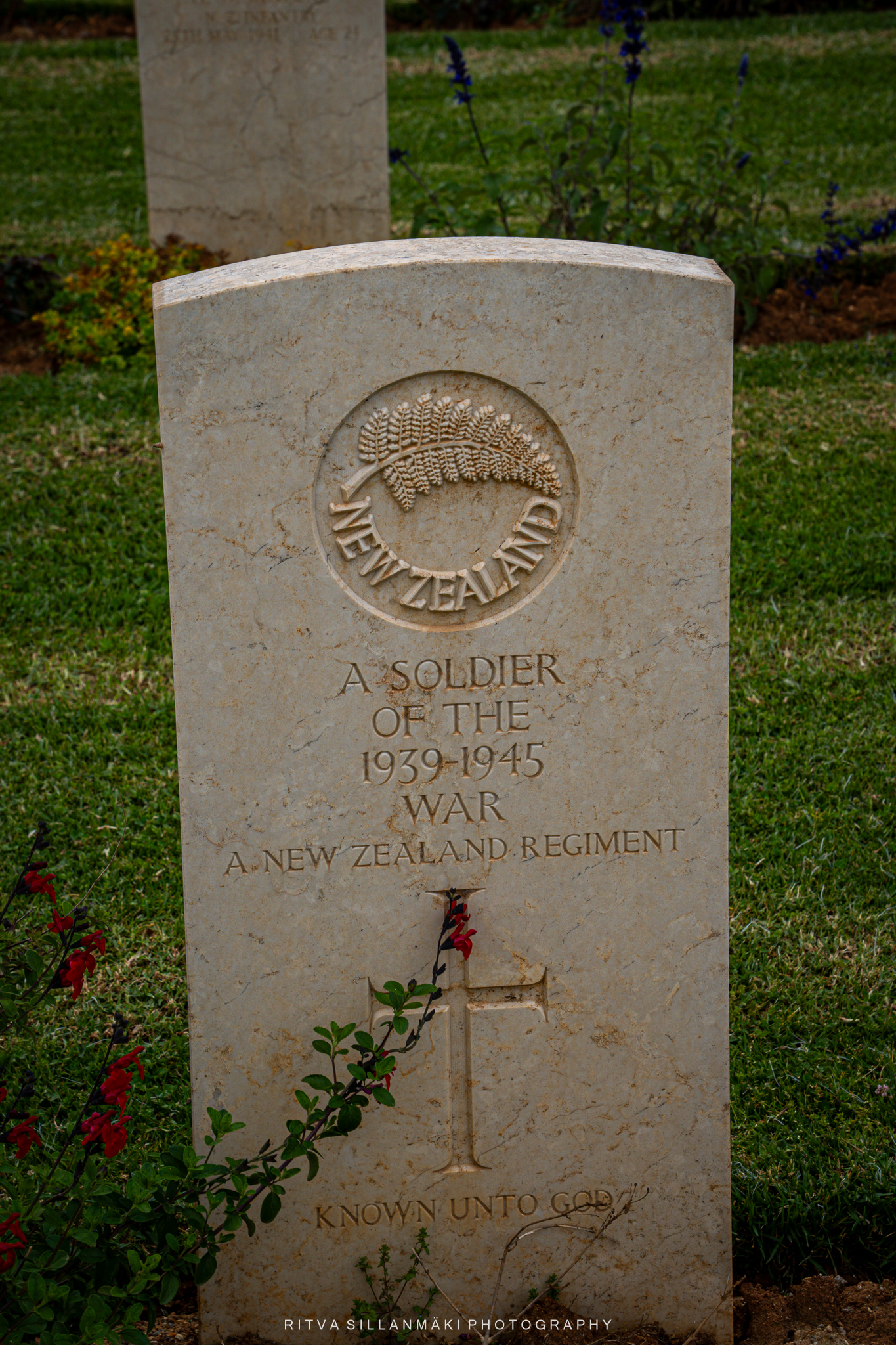
Some headstones bear just the inscription, “Known unto God.”
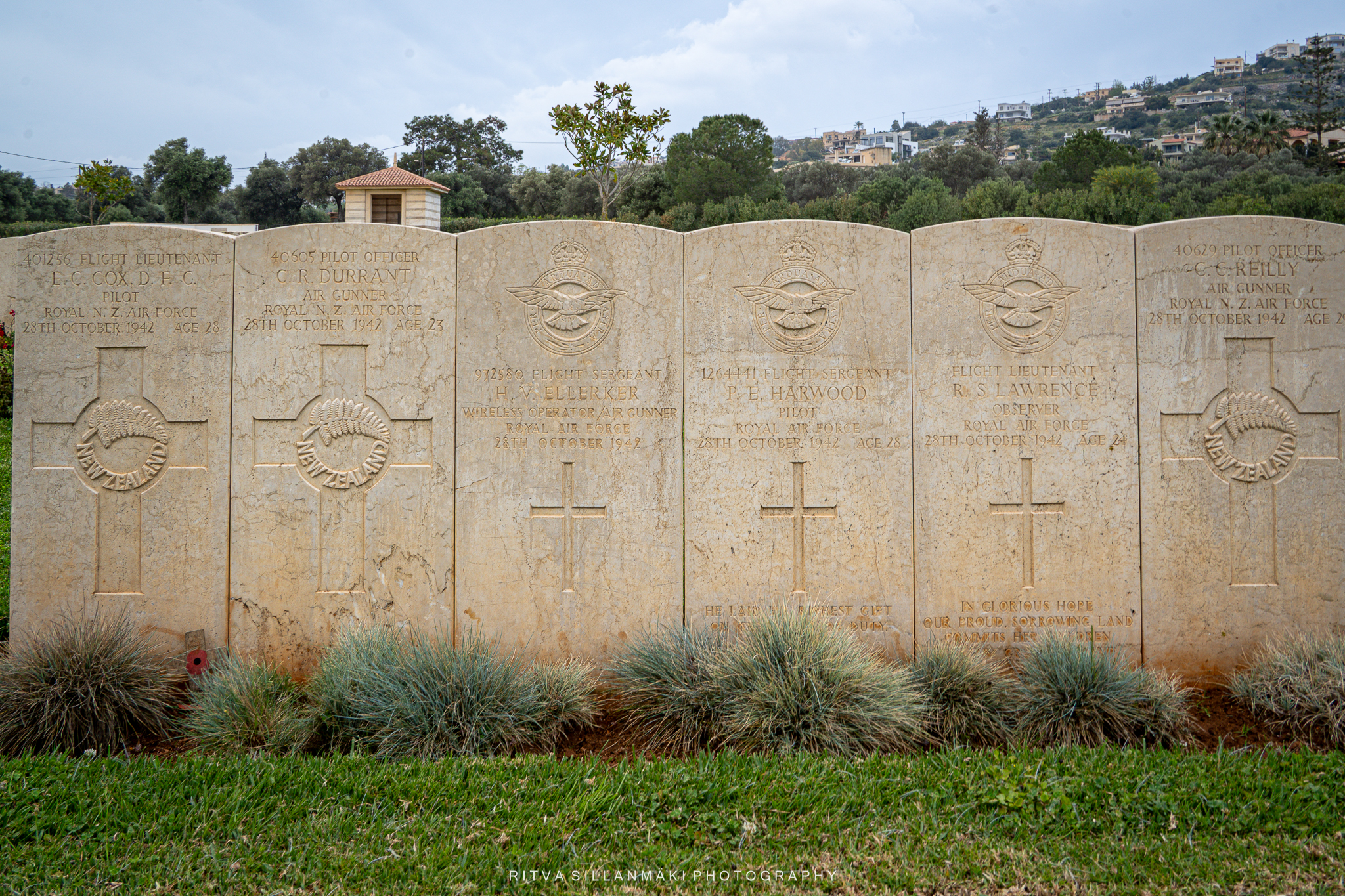
Intertwined resting places of the Royal Air Force belonging to a plane that was downed on October 28, 1942, alongside a complete fleet that was lost.
History information
In May 1941, the Commonwealth force in Crete was organised in five widely separated defence areas along the north coast – around the three airfields at Iraklion, Rethymnon and Maleme, and at Suda Bay and the port of Chania. The Germans launched their attack on 20 May with airborne troops. The airfield at Maleme was quickly captured and used for landing German reinforcements. On 23 May, the remainder of the Maleme position had to be given up and its defenders fell back to Chania. On 26 May, the Allied line west of Chania was broken. Suda Bay became indefensible and the troops from these two positions, with the remainder of the Maleme garrison, withdrew across the island to Sfakion, where many of them were evacuated by sea on the nights of the 28 – 31 May. The airborne attacks on the Iraklion and Rethymnon positions on 20 May were repulsed. Iraklion was successfully defended until the night of 29/29 May when the garrison was evacuated by sea. Orders for the Rethymnon garrison to fight its way southward for evacuation did not arrive, and it was overwhelmed on 31 May. Of the total Commonwealth land force of 32,000 men, 18,000 were evacuated, 12,000 were taken prisoner and 2,000 were killed.
The site of Suda Bay War Cemetery was chosen after the war and graves were moved there by 21st and 22nd Australian War Graves Units from the four burial grounds that had been established by the German occupying forces at Chania, Iraklion, Rethymnon and Galata, and from isolated sites and civilian cemeteries.
Click the gallery for a better view.
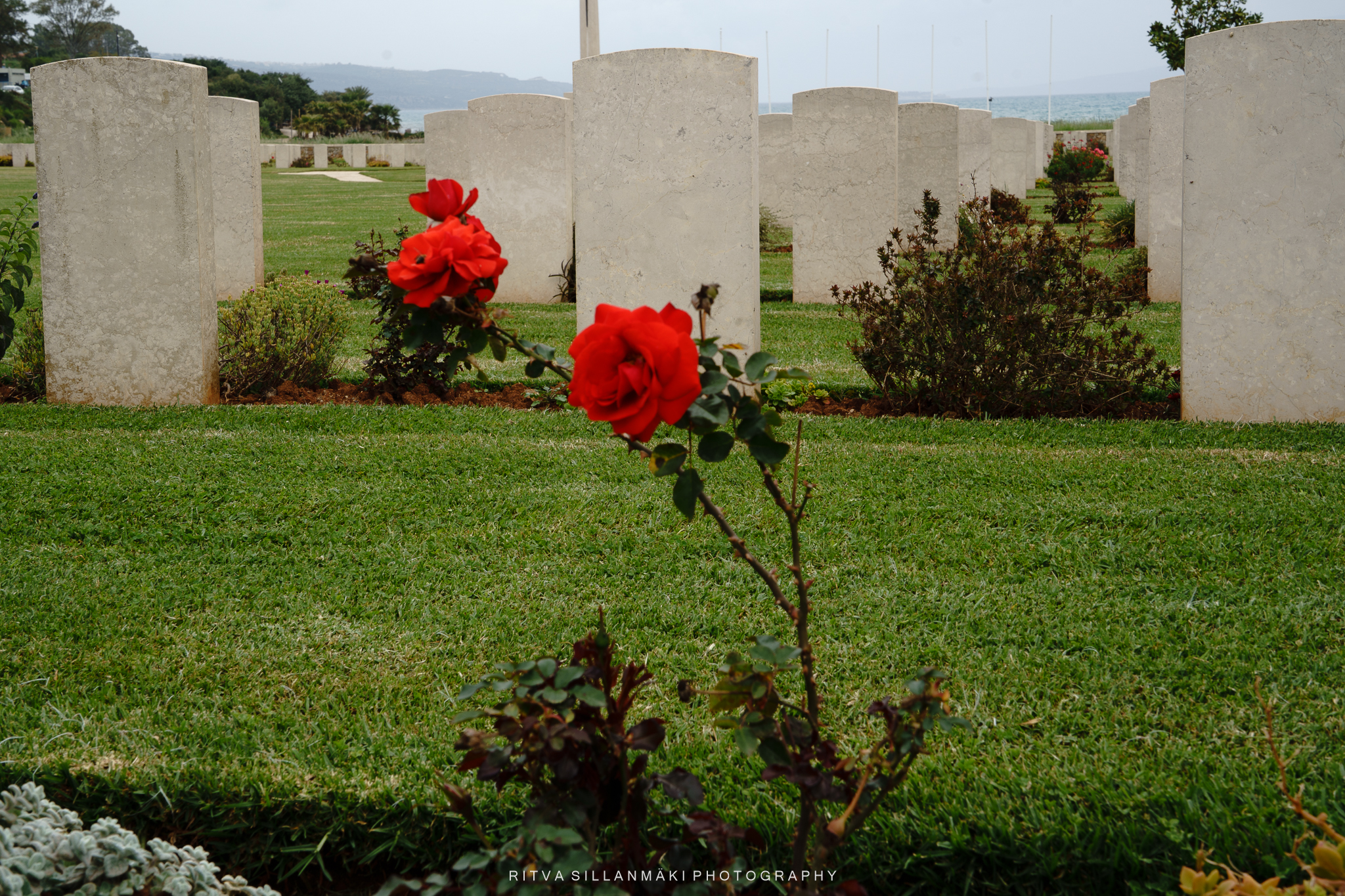
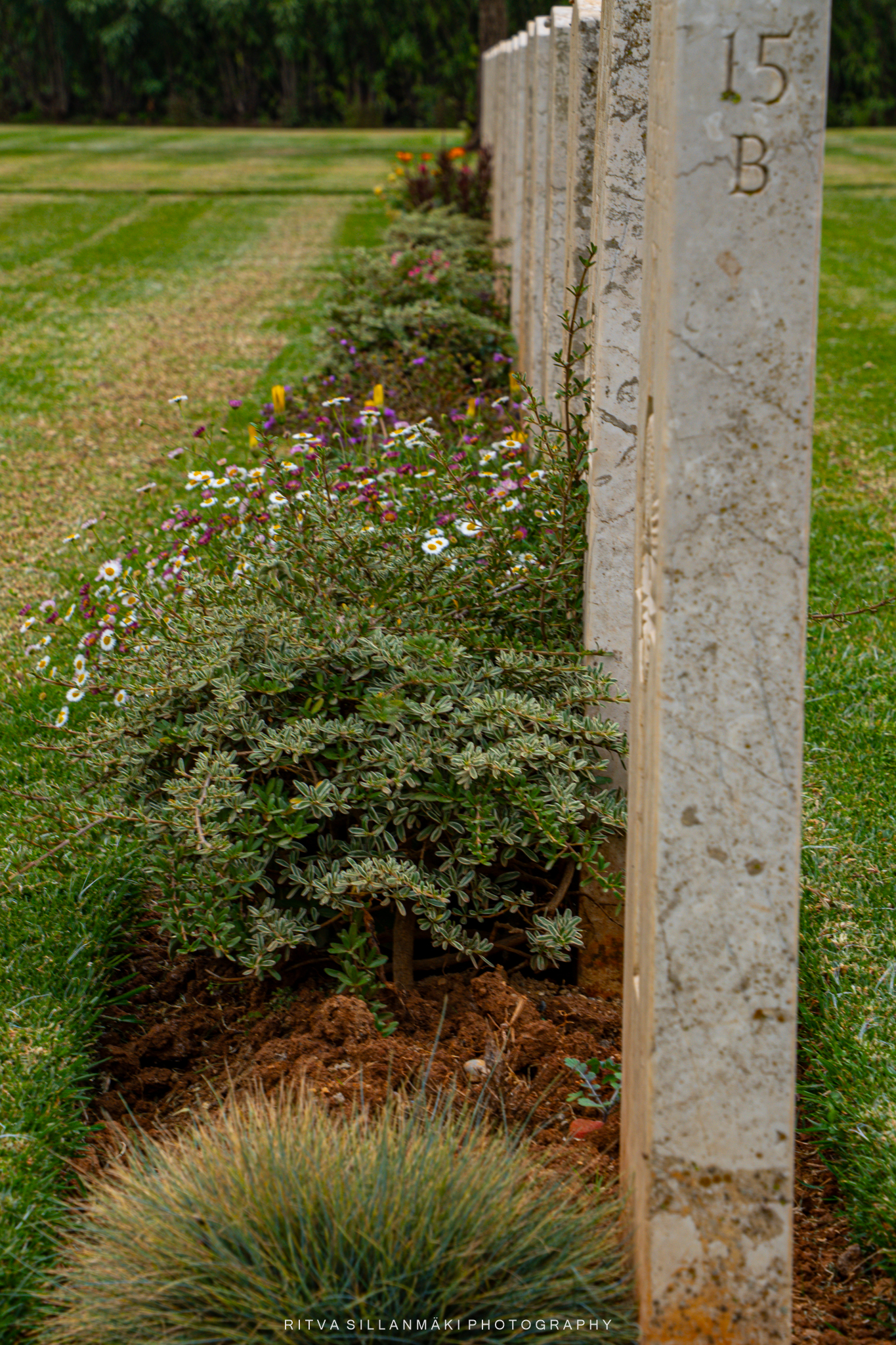
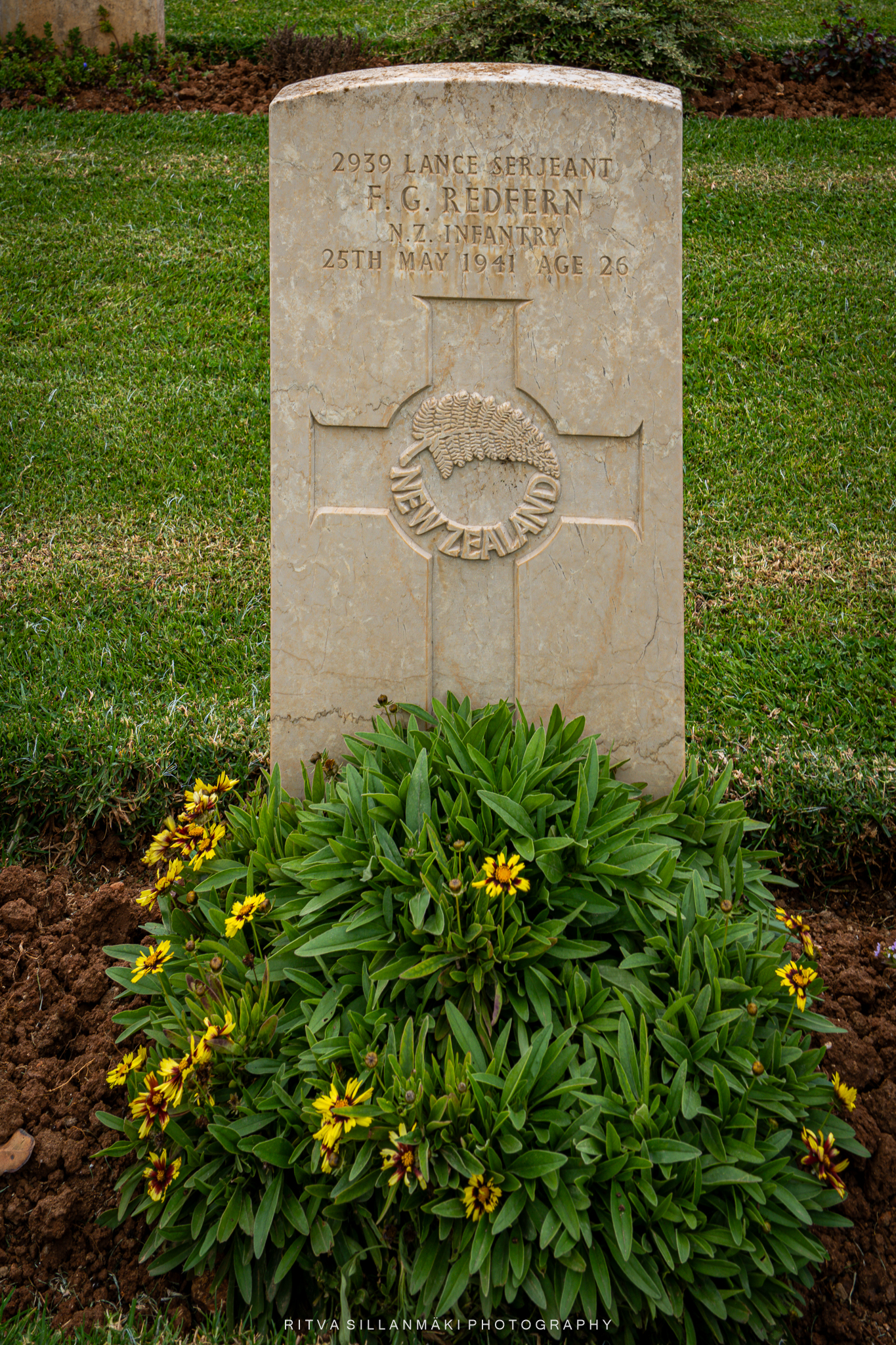
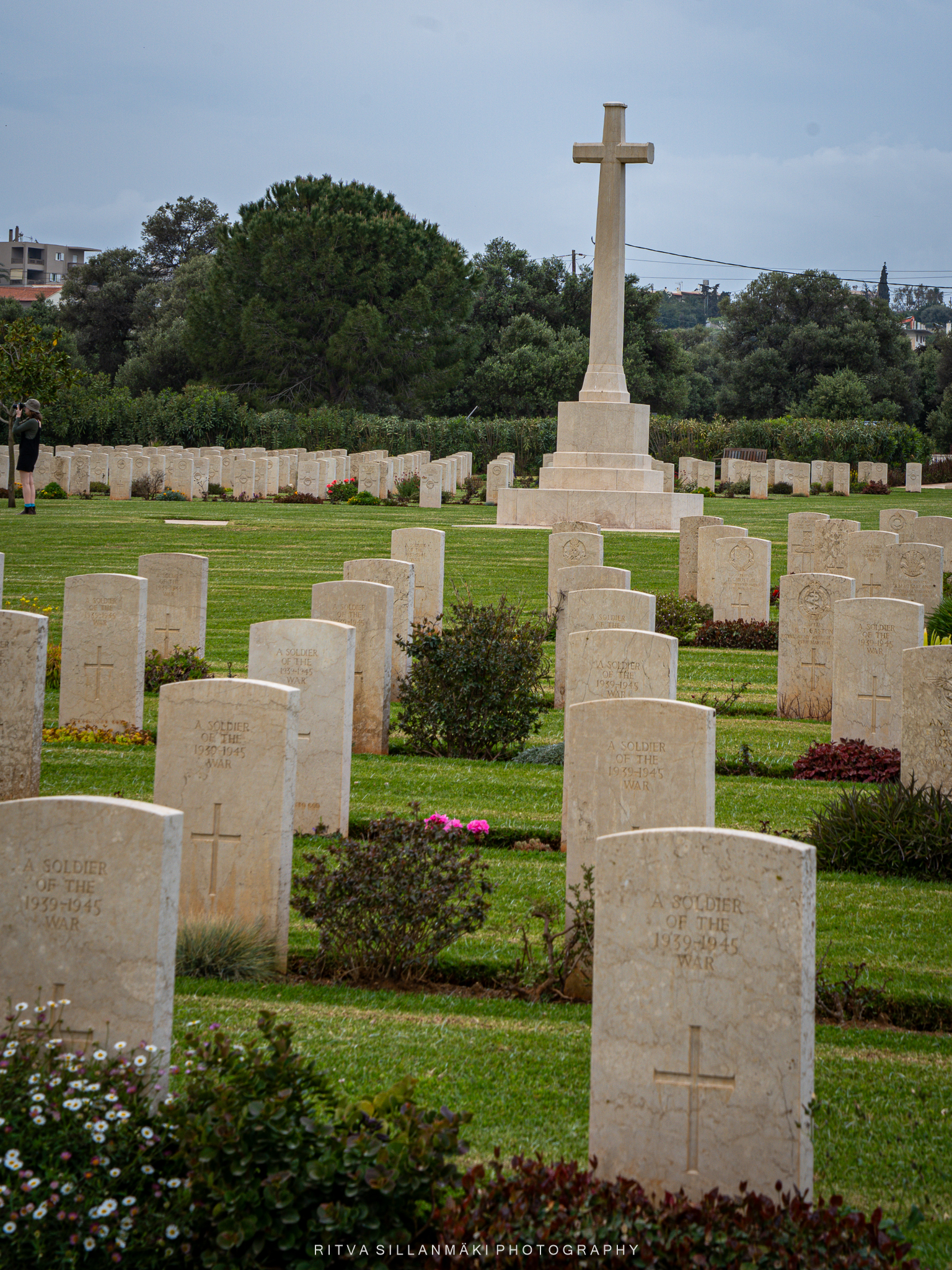
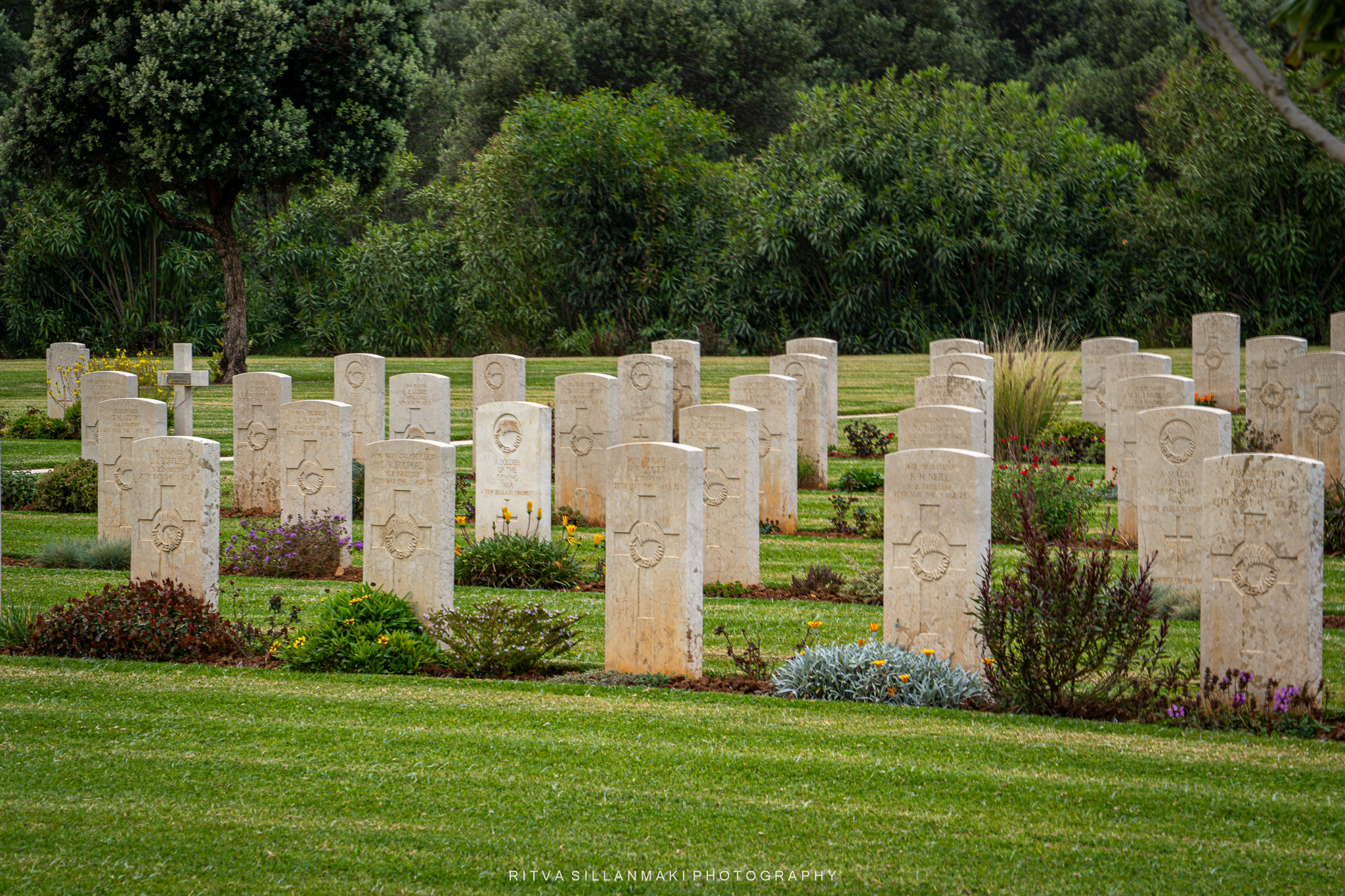
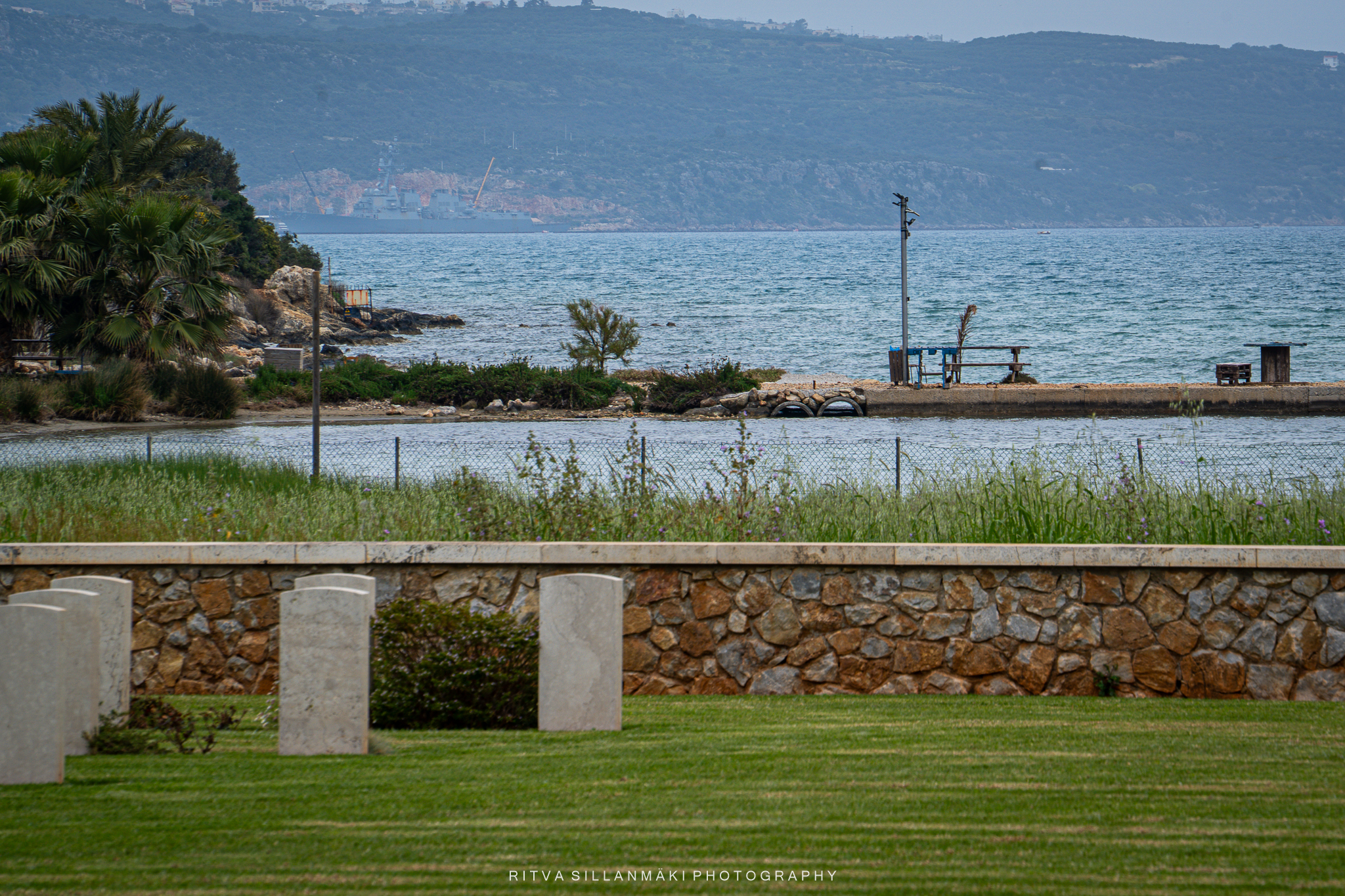
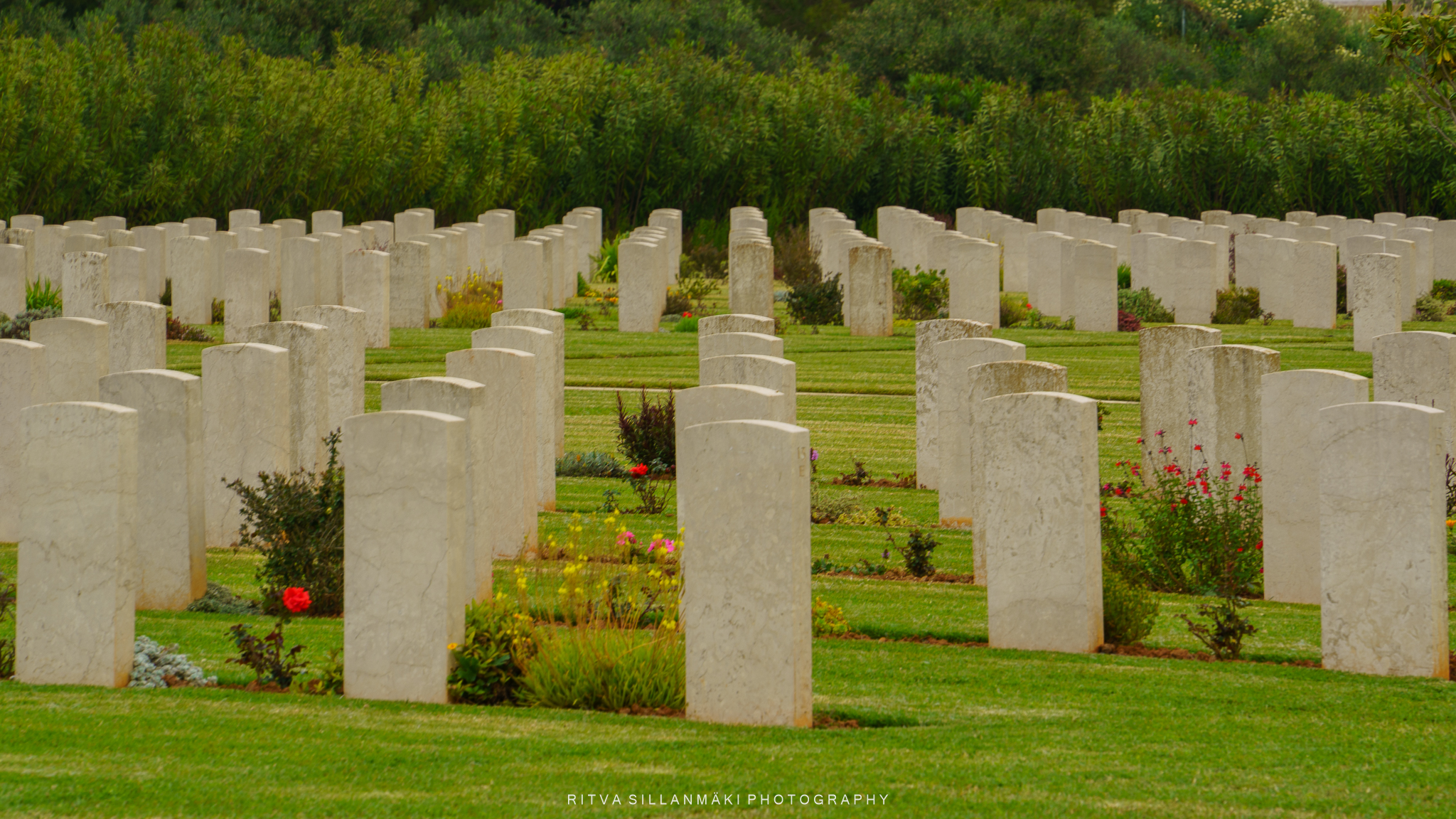
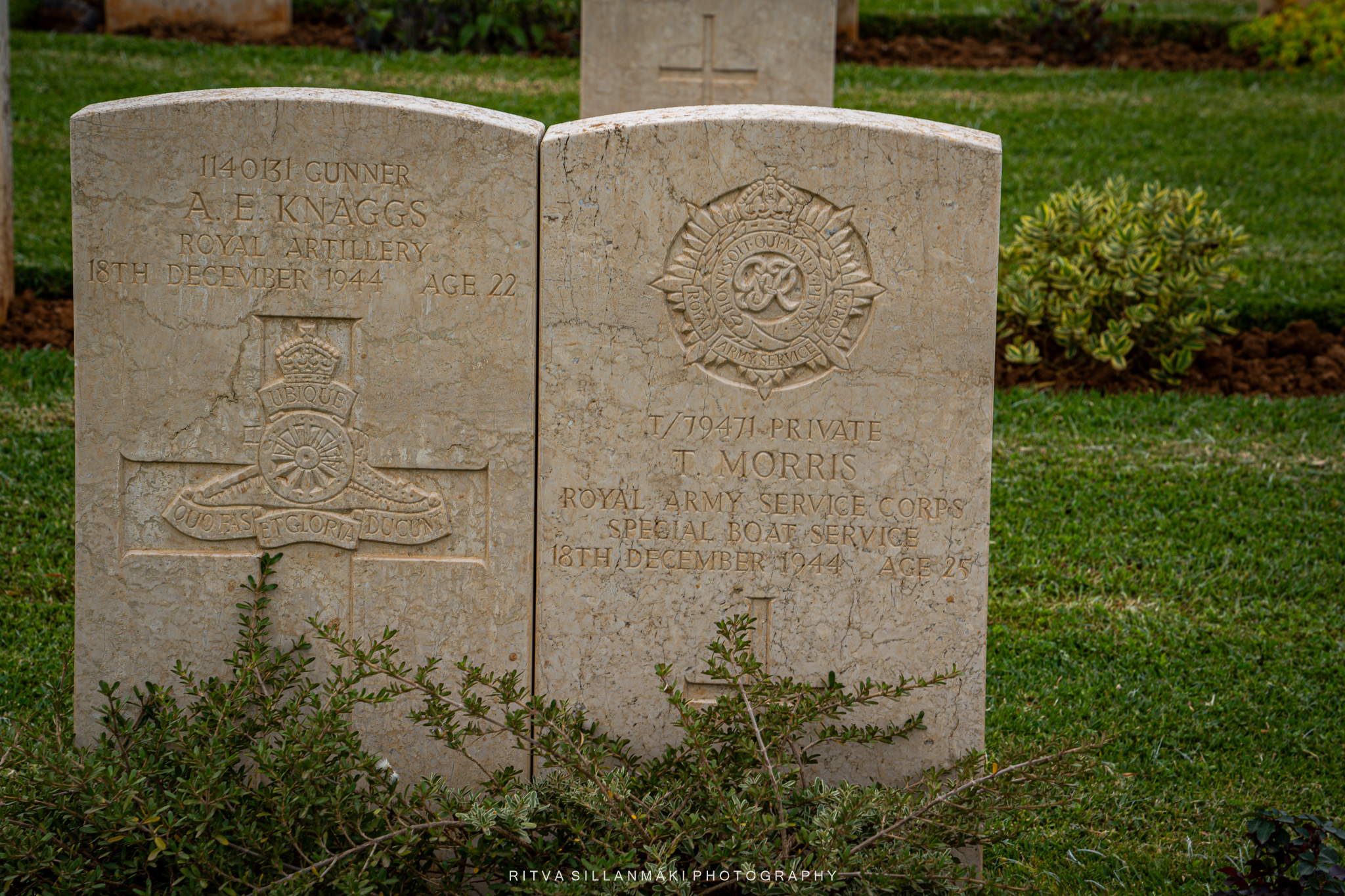
There are now 1,500 Commonwealth servicemen of the Second World War buried or commemorated in the cemetery. 776 of the burials are unidentified but special memorials commemorate a number of casualties believed to be buried among them. The cemetery also contains 19 First World War burials brought in from Suda Bay Consular Cemetery, 1 being unidentified. There are also 7 burials of other nationalities and 37 non-war burials.
Many thanks to John for this week’s challenge. If you would like to join the challenge please be sure to tag your post with Lens-Artists and include a link back to his post Lens-Artists #394: History through the Lens.
A big thanks to Sofia for her challenge last week, “Lucky Shots.” Next week, it’s Beth’s turn to host. Be sure to follow her [here] so you don’t miss her challenge that goes live on Saturday at noon Eastern Time.
If you’re sharing a Lens‑Artists Challenge response for the first time, welcome—we’d love to visit your post. To participate, publish your take on this week’s theme, link back to John’s page, and add the Lens‑Artists tag so others can discover your work.
Please see this page for more information about the Lens-Artists Challenge and its history. If you don’t want to miss any future challenges, please consider subscribing to the team members’ websites.
Here we are The Lens-Artists: Tina, Patti, Ann-Christine, John, Sofia, Anne, Egidio, Beth, and myself Ritva.


Thoughtfully presented, Ritva. When do we learn indeed…
Thank you Sofia
So beautifully photographed, Ritva, and cemetaries are places I visit in every country I visit. I have to. They are peaceful – even the war cemetaries are. They bring out thoughts about life and death, what we are doing with our lives and with the lives we touch. Thank you for a beautiful post.
Yes, they are good reminders of life
thoughtful post, Ritva. Nicely photographed
thanks Sue
Both beautiful and somber at the same time.
What’s happening in the world at the moment makes it more relevant
A beautiful photo collection with strong messages. When will we learn? Fantastic post, Ritva.
Thanks Egídio
Beautiful and thought provoking, Ritva! Humankind will never learn the ramifications of war, the loss of lives and the emotional toll on those they left behind.
Yes, so sad. Thanks Anne
A thouhtful post. These cemeteries always stop one in one’s tracks. And so they should.
I agree Margaret
Ritva, I found this post so very sad and so moving. Your images are wonderful and your text combined with them really let one feel the heartache that comes with the loss of those who go to war in our honor. Your images are wonderful and really tell the story.
Tina, the wars are so senseless. Thanks.
Ritva, this is a beautiful post reminding us of the ultimate sacrifice made by these brave soldiers.
Thanks Beth
Interesting read,
Thanks Vijay
The places where history weeps are so many around the world. I felt the same way when visiting the American Cemetery at Normandy. So sad to see the sacrifices made by these young people.
it is sad, and almost all young men.
Such a poignant place.
Thanks Lynette