
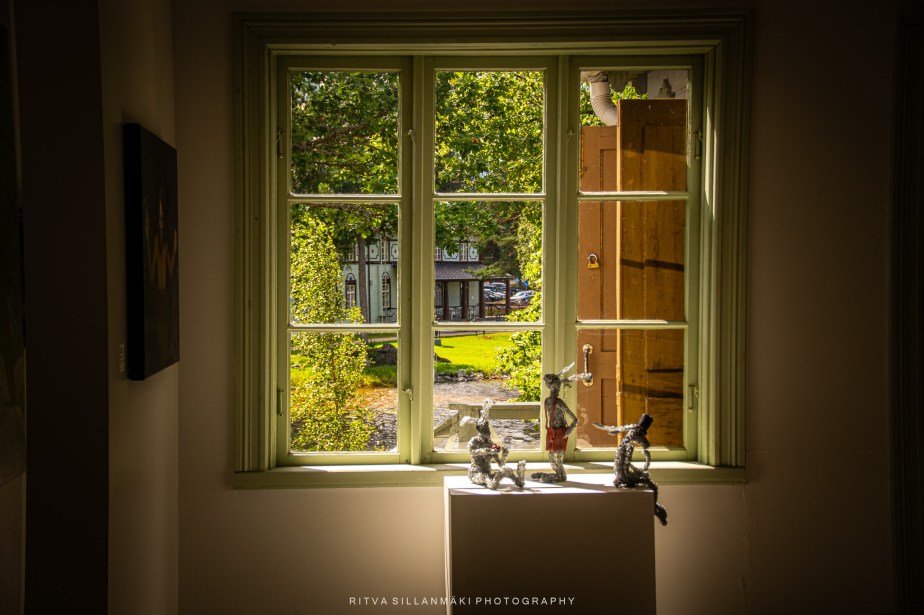
This is a fictional story inspired by this this photograph. For Dans Thursday Doors as he likes stories.
Miriam, the old writer, got her best ideas not from the outside world but from the cozy little sanctuary she created in her study. Her window, framed in pale green and fitted with six panes, was like her own personal lookout, showcasing the seasons as they slowly changed. Right now, that lookout was all lit up by the late afternoon sun dipping down behind the trees, throwing long shadows over the lawn.
Looking through the glass, she spotted the back of this big, white house with dark trim, kinda hidden by all the green leaves of summer. She knew every little thing about that place—the way the afternoon sun hit the peeling paint on the porch, the twisted branches of the old oak tree standing watch next to it, and that stone path leading up to the front door. She’d come up with all sorts of stories about the people she imagined living there, crafting a new tale every day, always a new mystery to figure out.
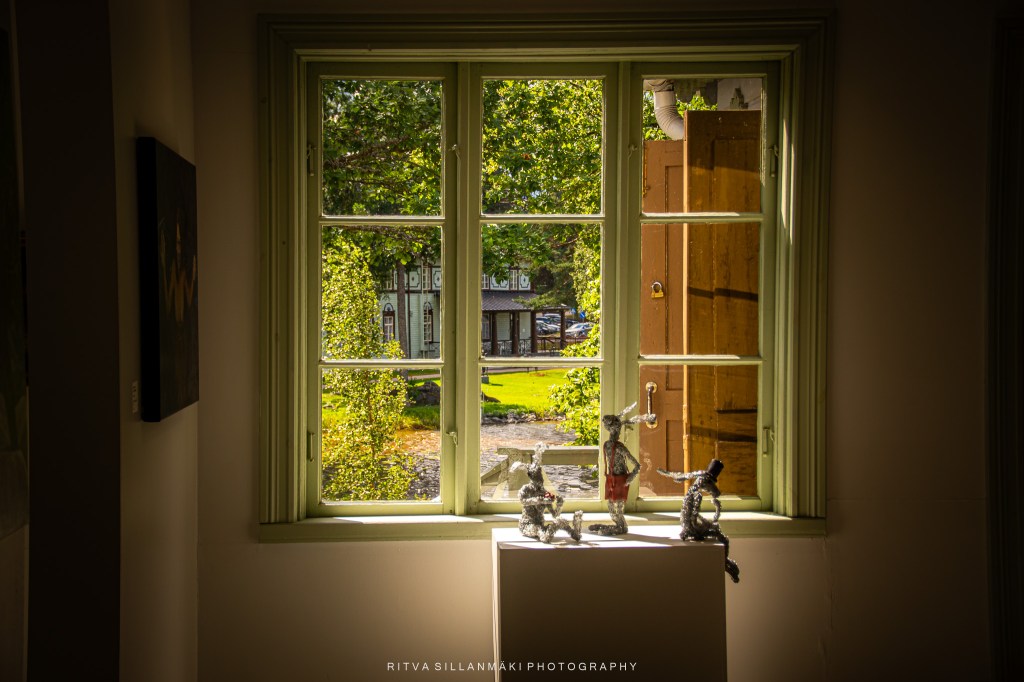
But she always found herself staring at the windowsill. There, a bunch of funky wire and found-object sculptures hung out like they owned the place. The coolest one, a figure with a big open head and a rusty metal body, was totally her fave. She named it “The Listener.” To her, it wasn’t just some art piece; it was like her muse, her creative buddy, just hanging out while she worked. She’d chat with it about plot twists and character issues, and in the silence of the room, she could almost picture it nodding along, its big head soaking up her ideas like a satellite dish.
So today, the listener was totally quiet. Miriam had been going back and forth with this super annoying protagonist for weeks, a character who just wouldn’t spill her real motivations. The story was basically stuck, like a boat without a sail. She tapped her finger on the chilly glass, the sound cutting through the silence like a little punctuation mark.
Suddenly, a strong burst of wind slammed the old wooden doors on the right side of the window, which were flung wide open and creaked like they were complaining. Outside, the small world was waking up. The trees swayed, their leaves rustling like distant applause. The back of the big house shimmered a bit in the shifting light.
Miriam glanced over at the listener. The afternoon sun hit the wire head just right, making it seem like the figure was really tuned in, not to her, but to everything happening outside. She had been digging for answers in her own thoughts and quiet little bubble. But then it hit her—the real answer was right out there, in the breeze, in the leaves rustling, in all the hidden lives around her. She grabbed her notebook, with her pen already ready to jot down the whispers of the wind. The story was about to kick off again.




 Ritva Sillanmäki Photography