
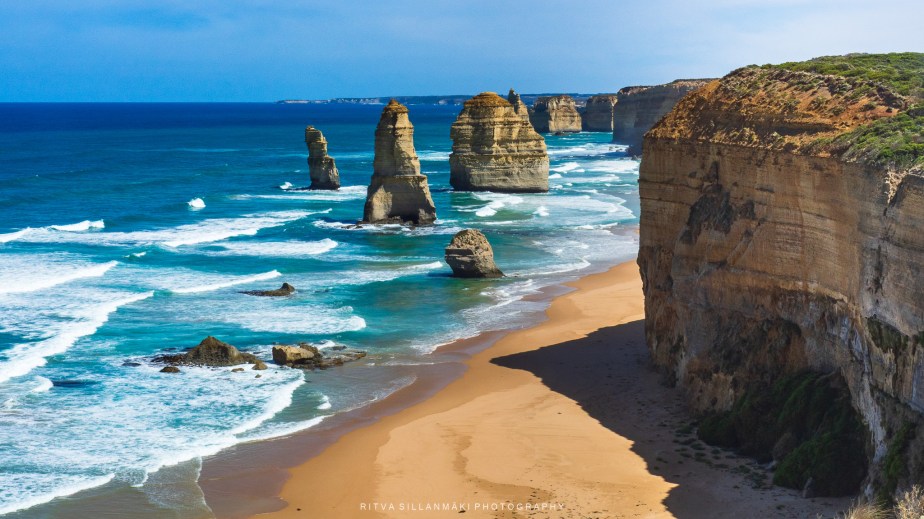
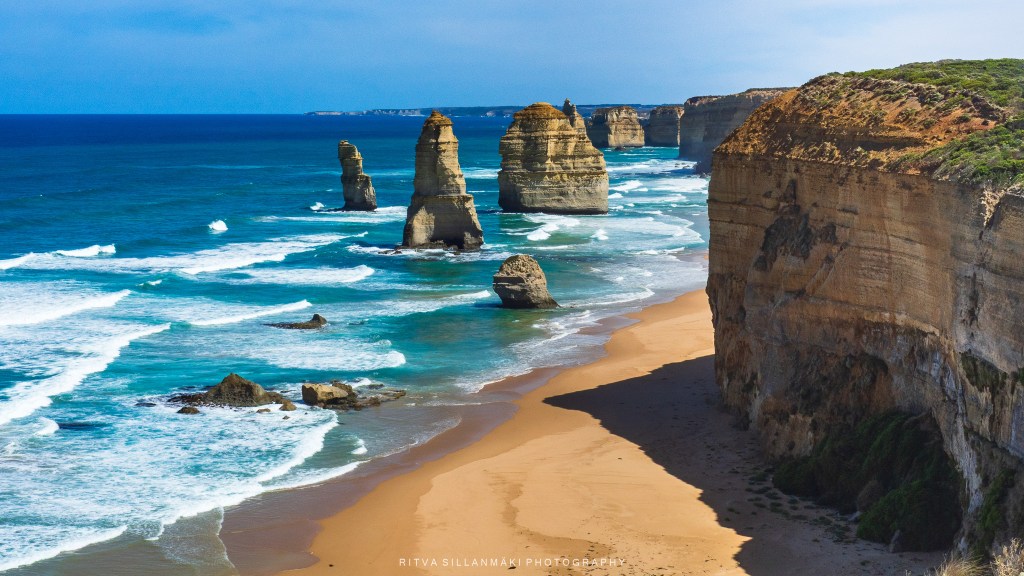
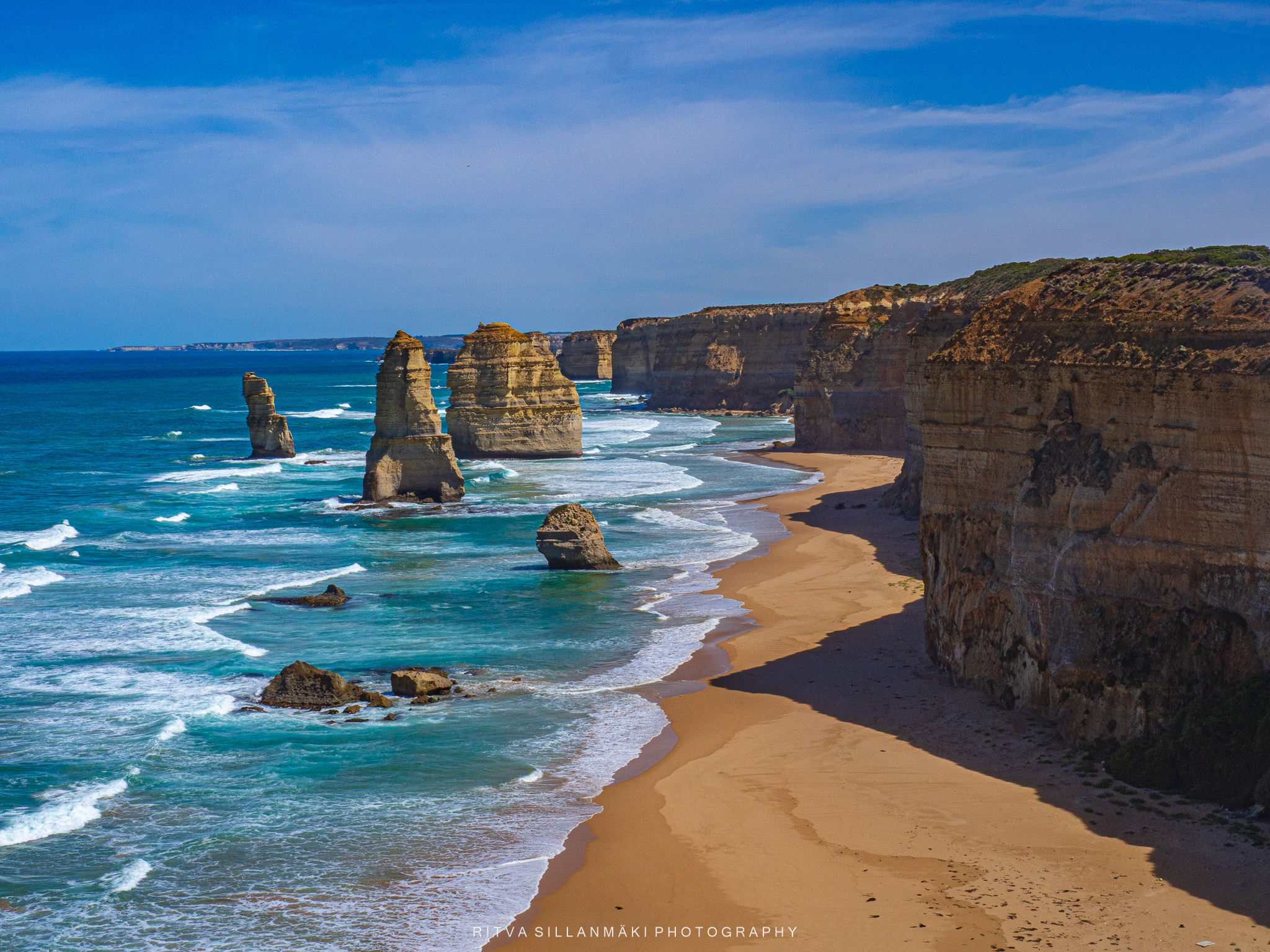
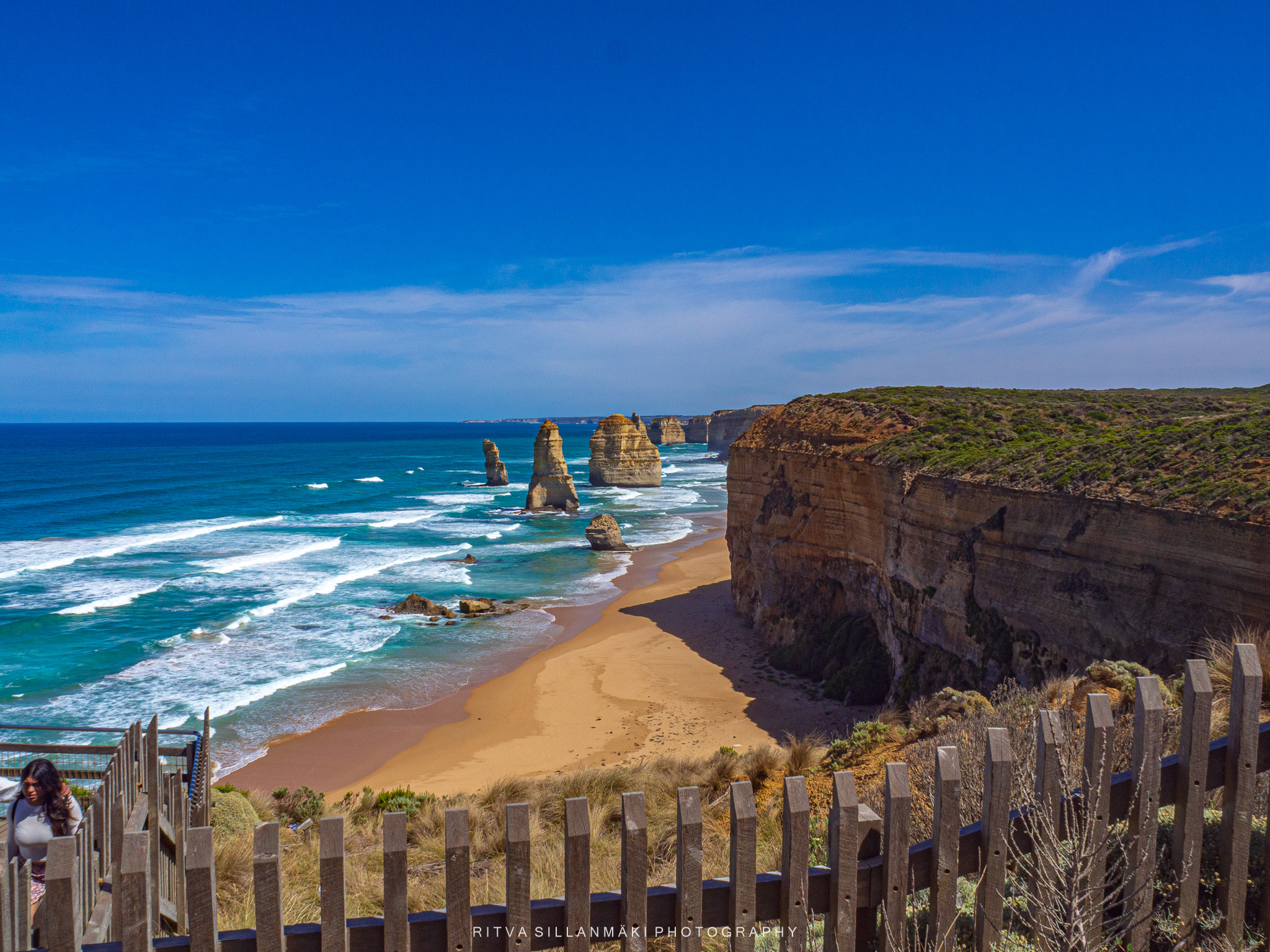
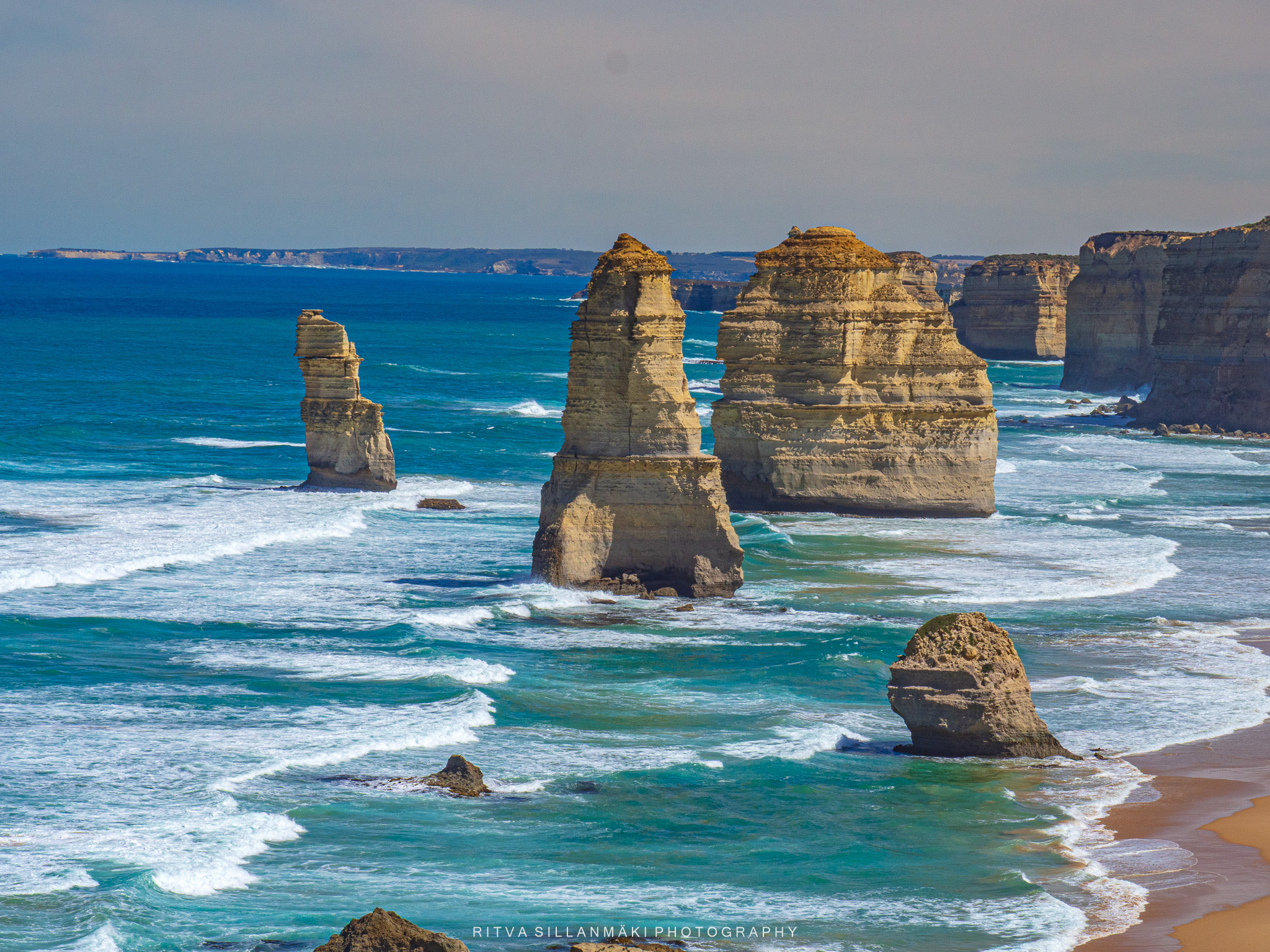
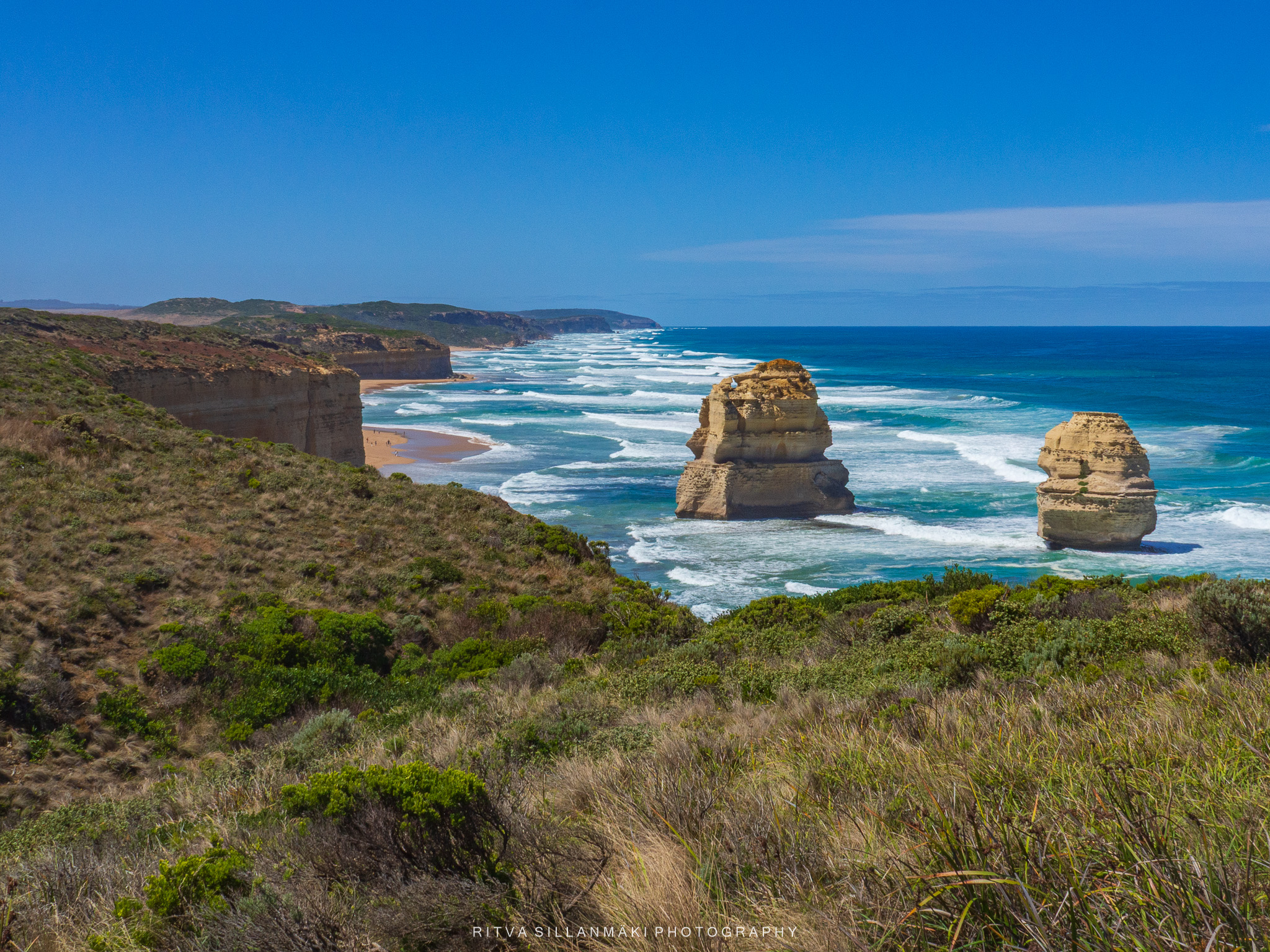
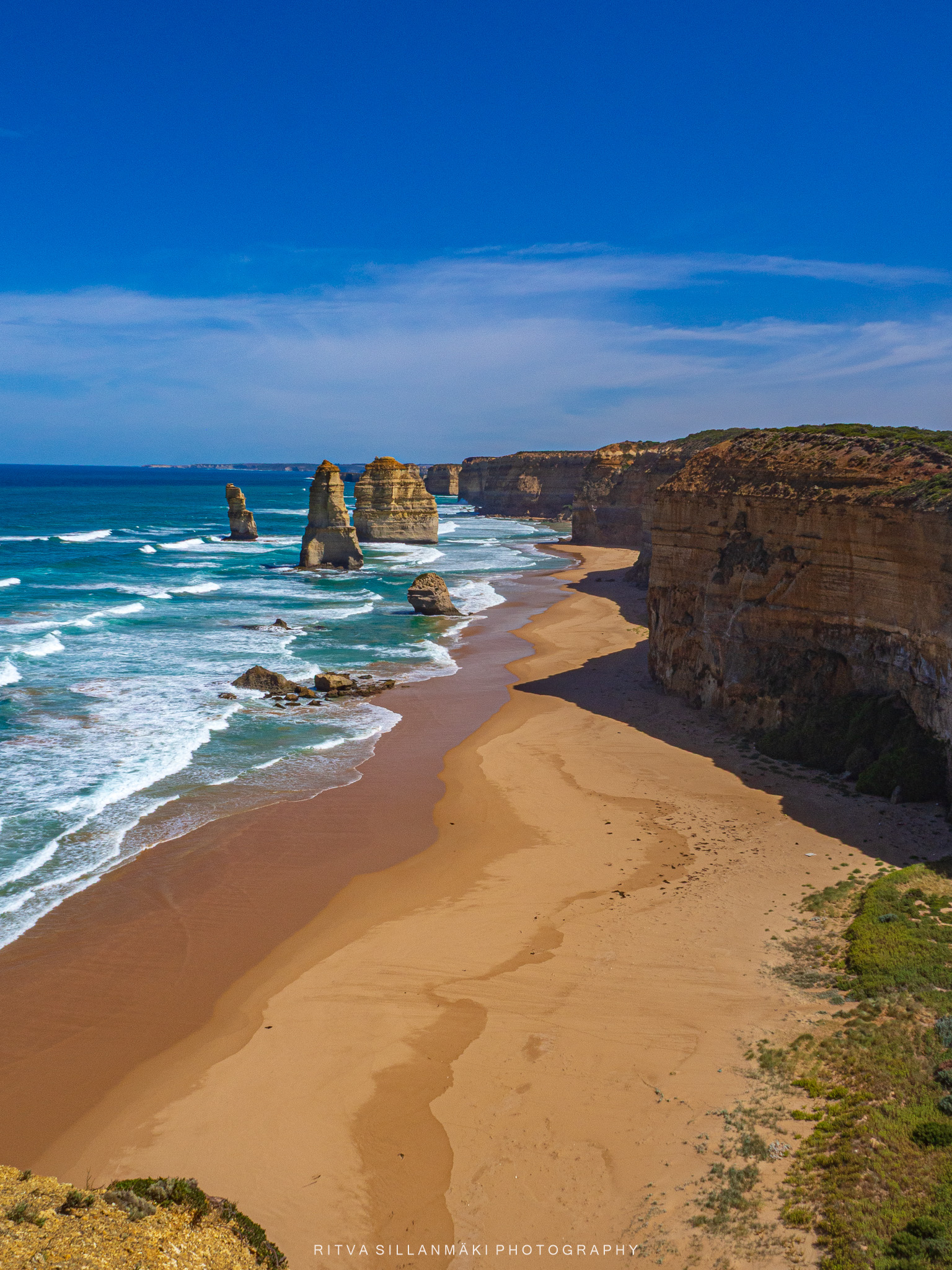
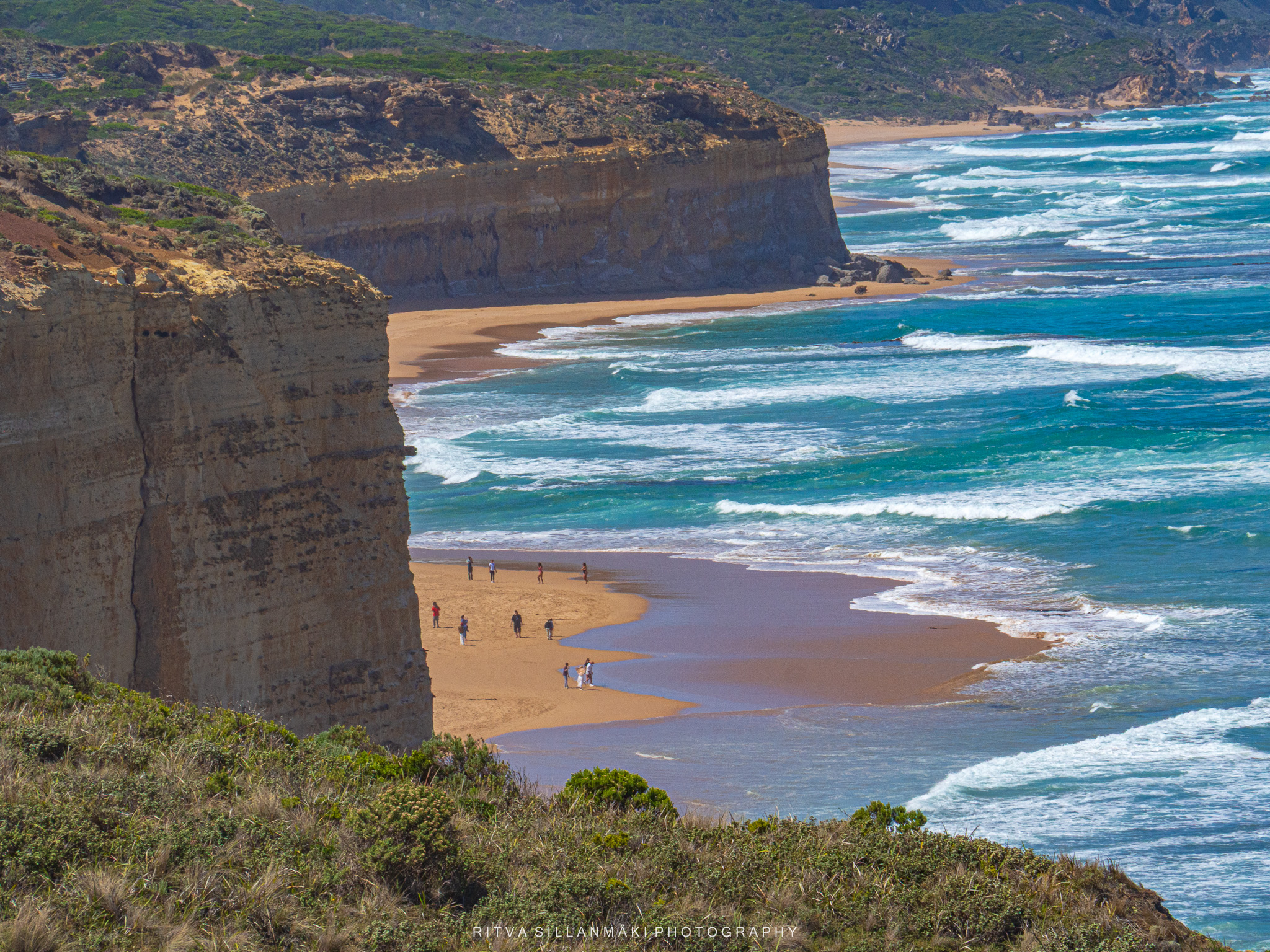
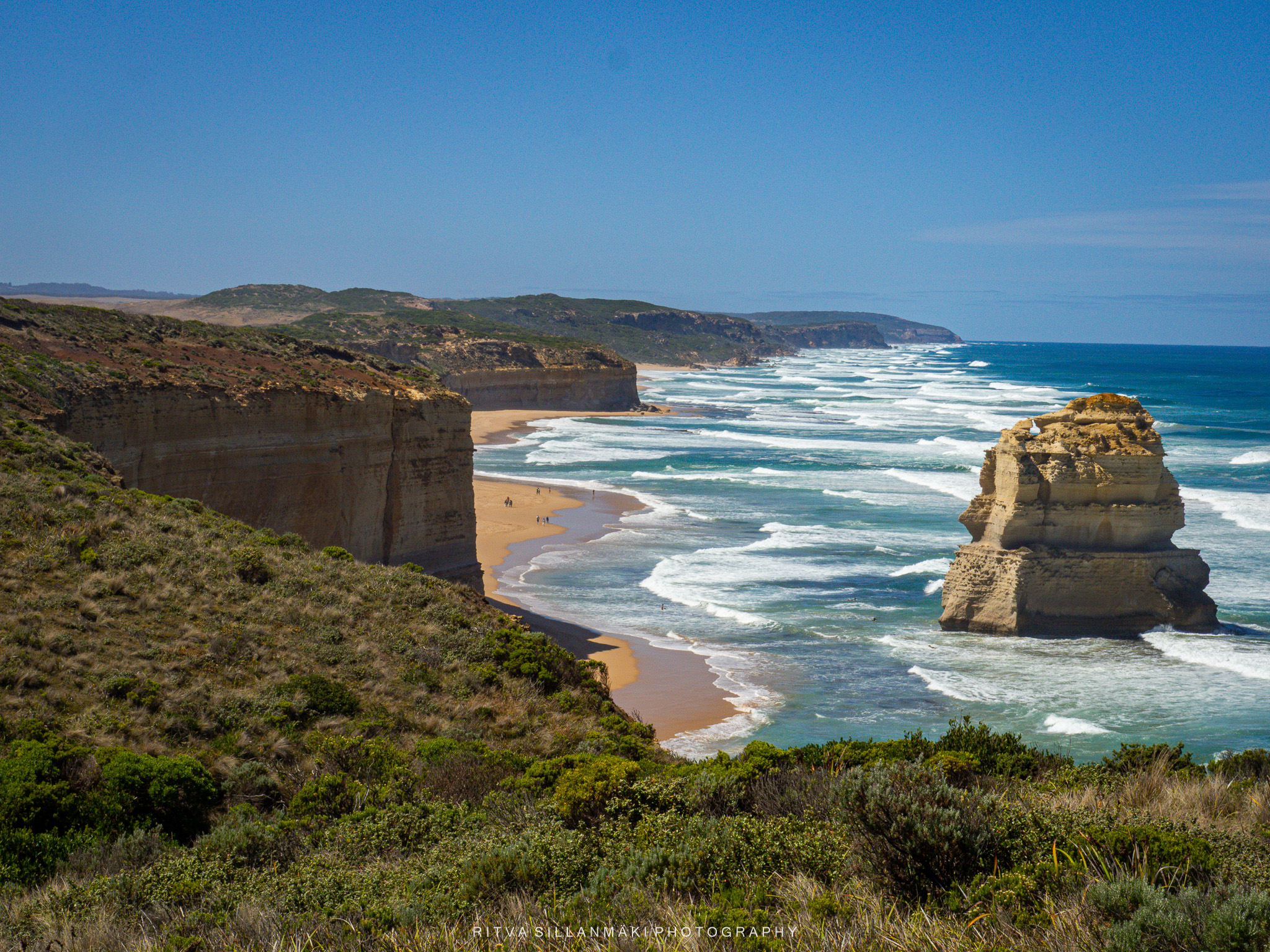
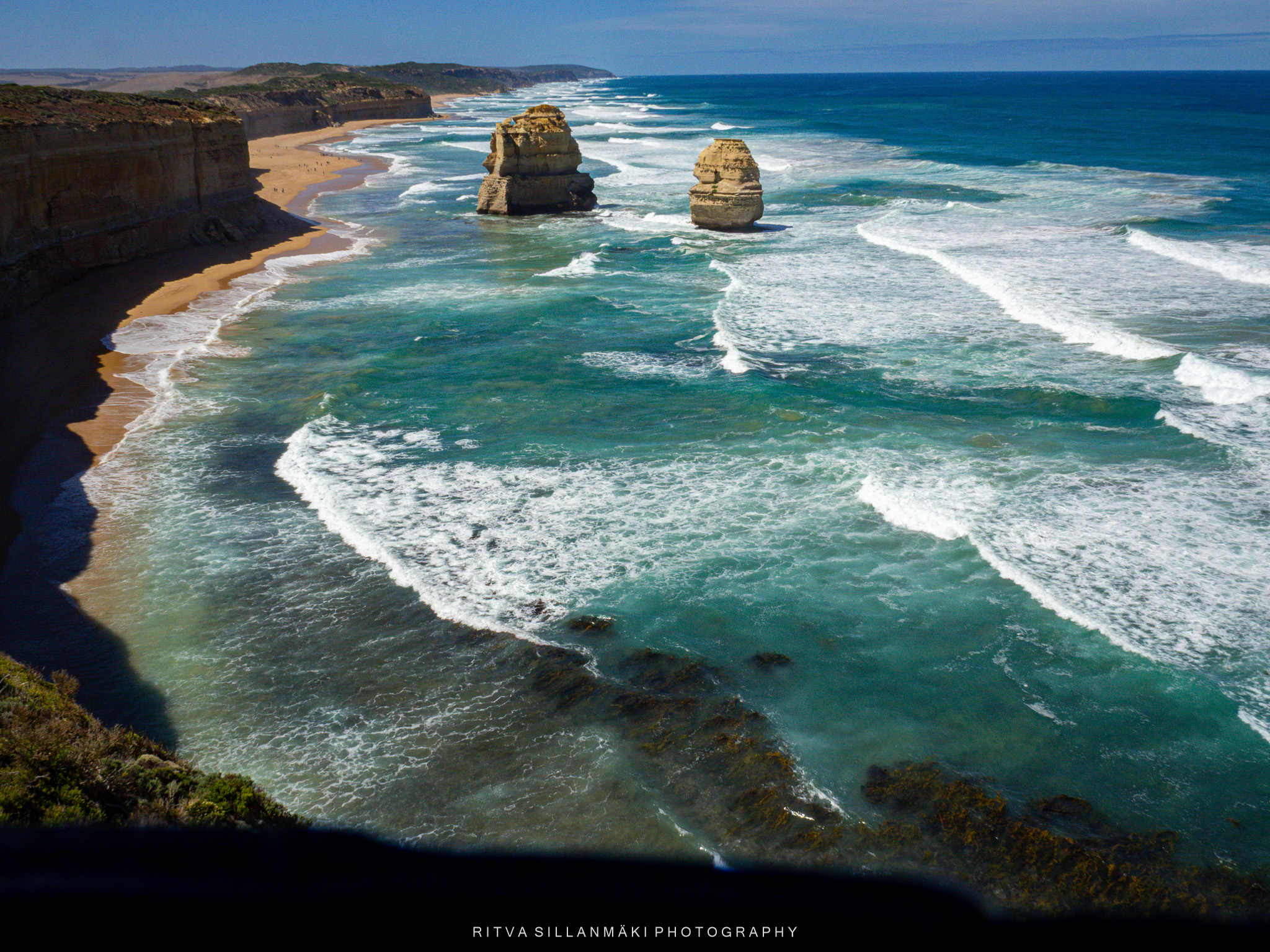
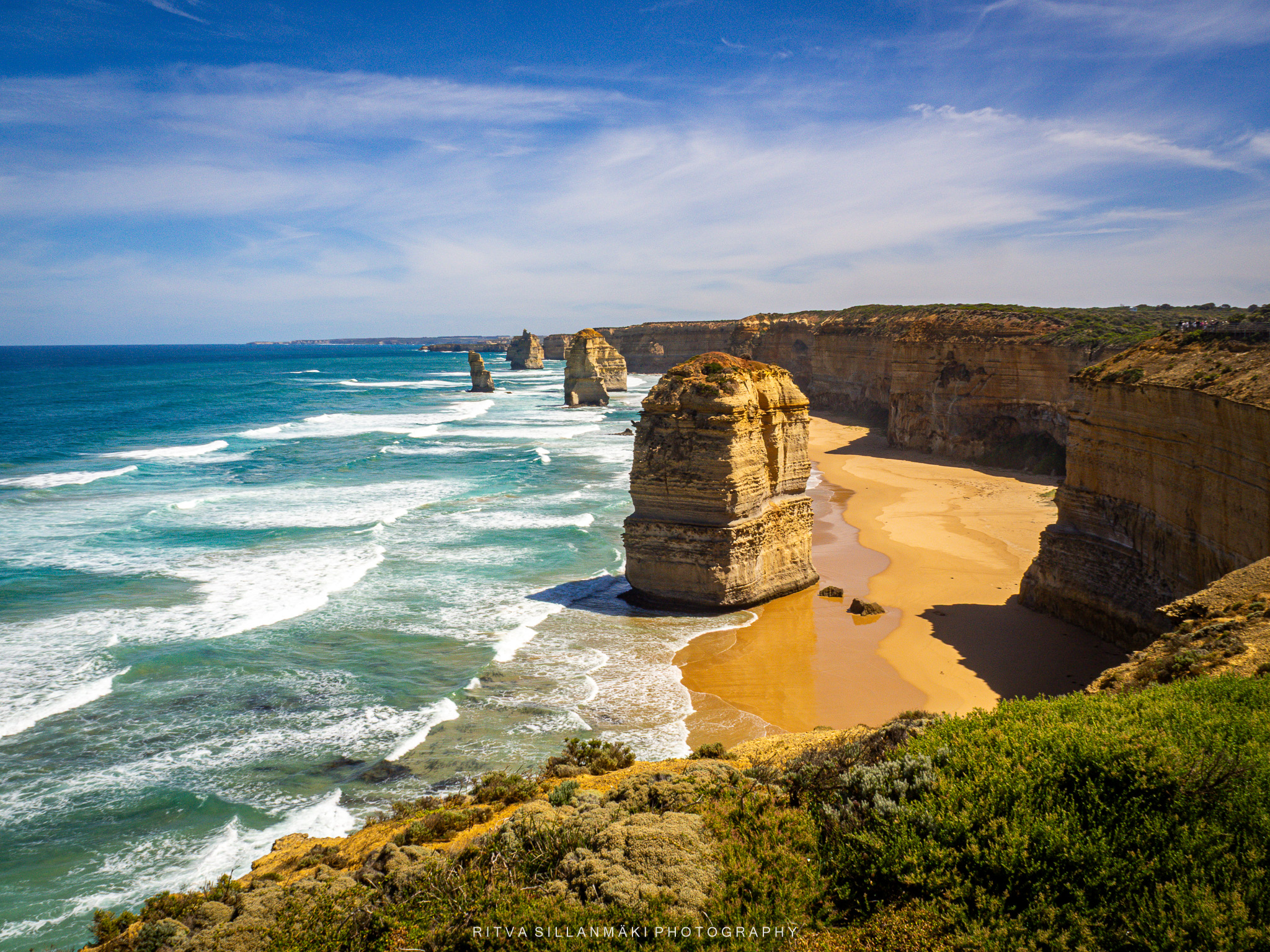
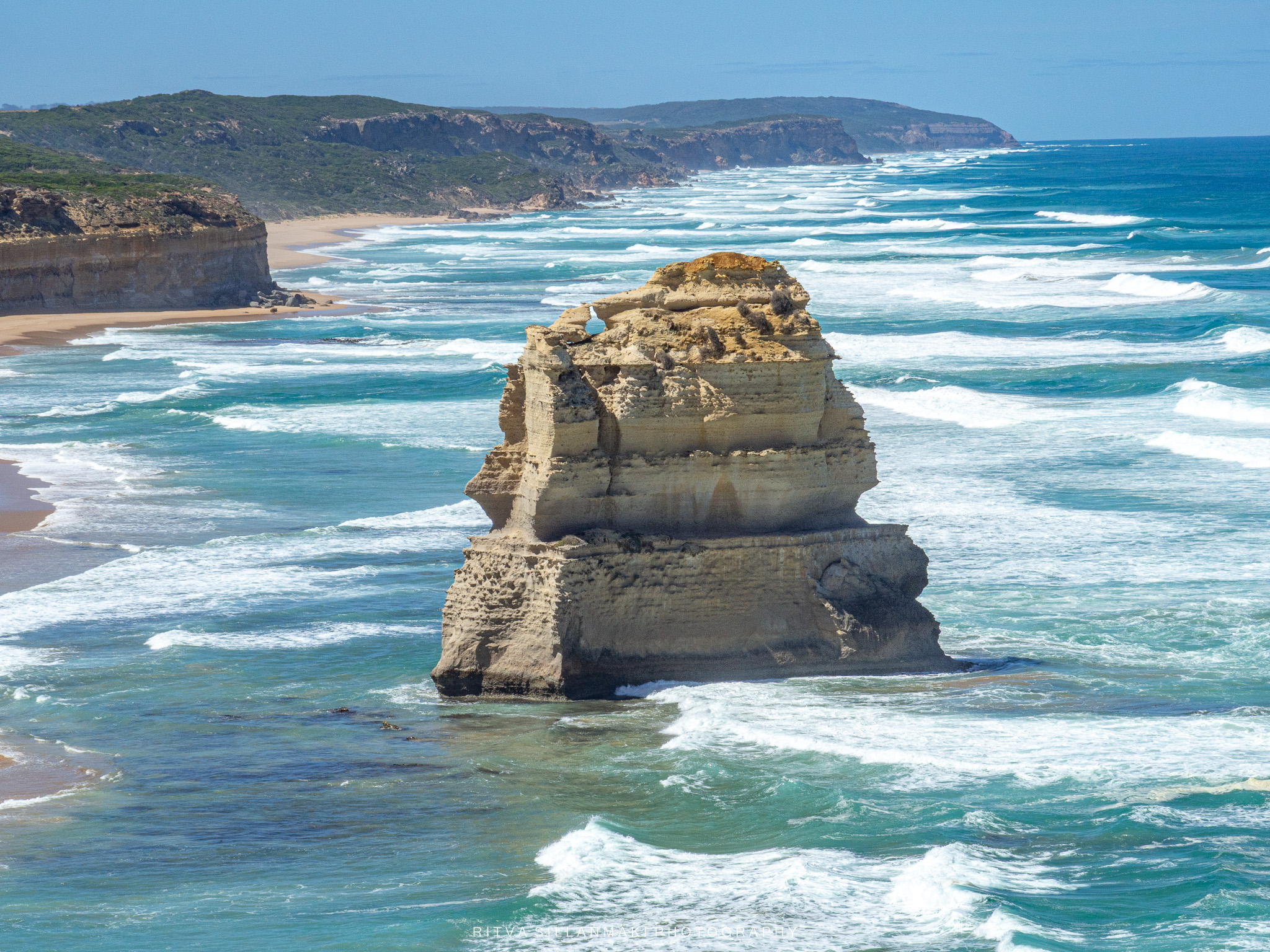
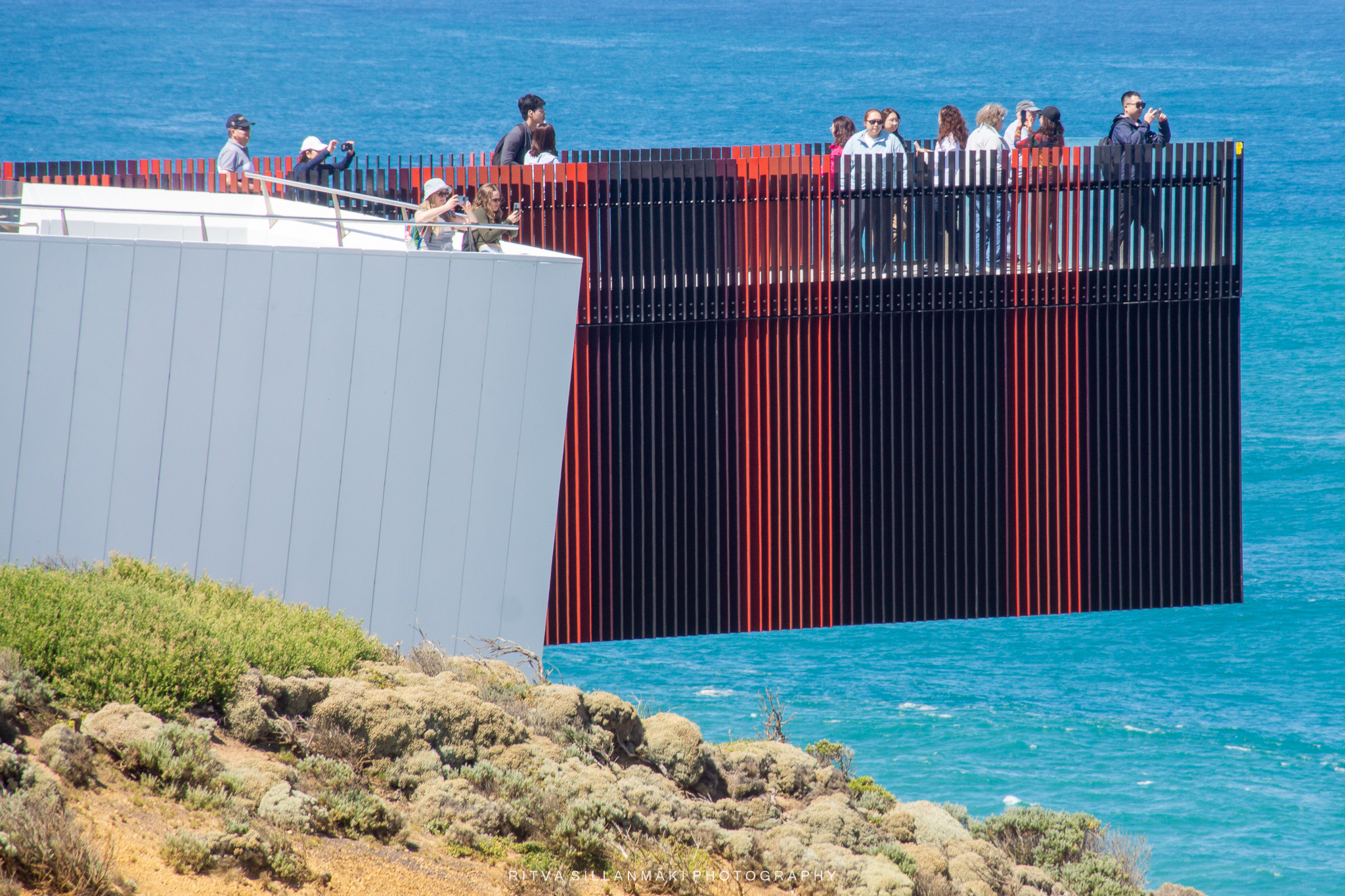
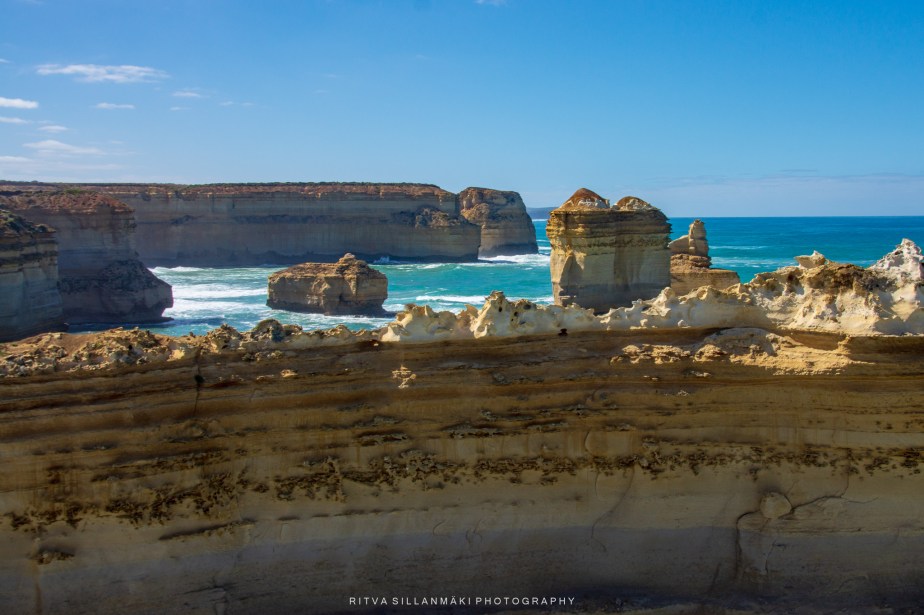
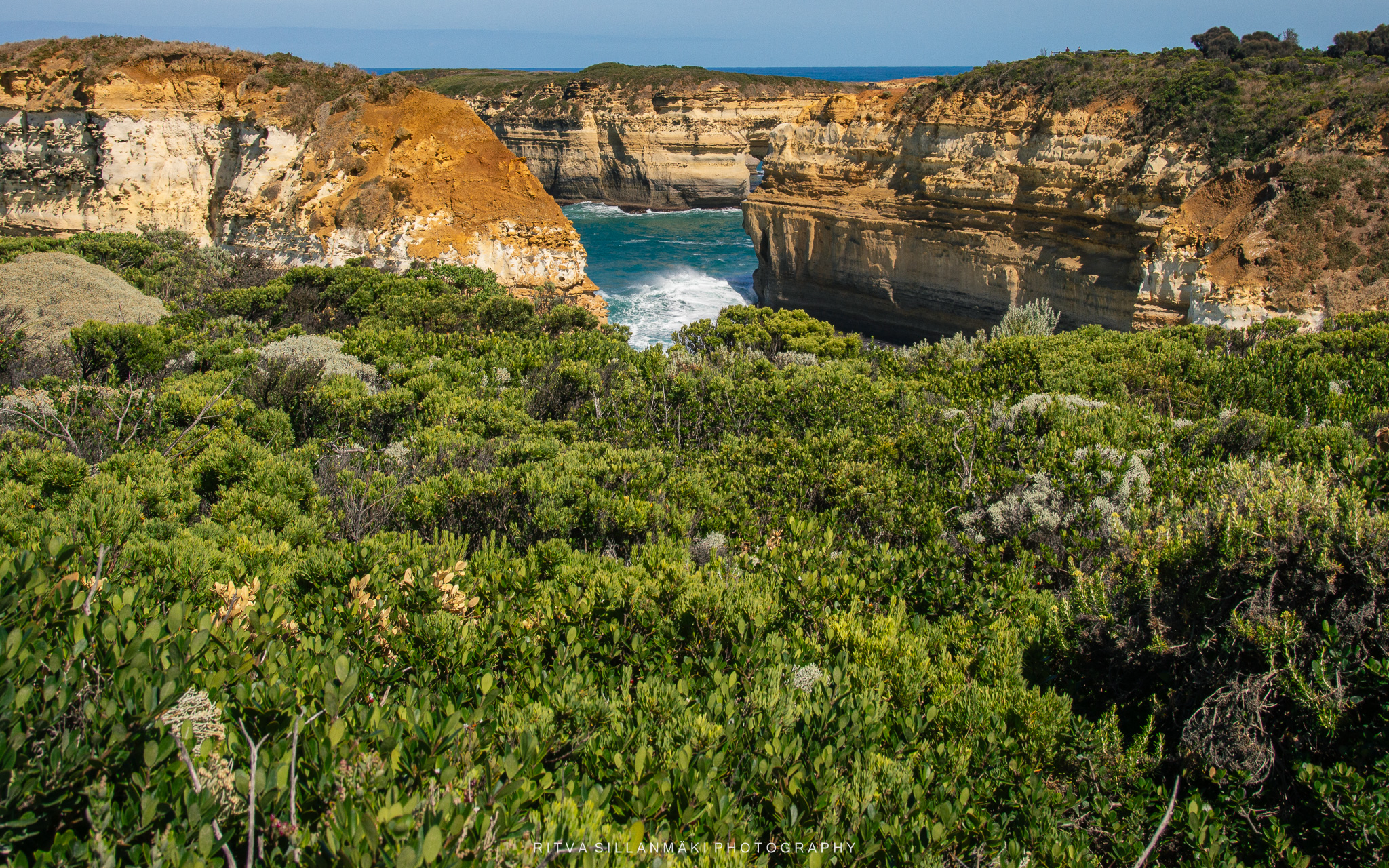
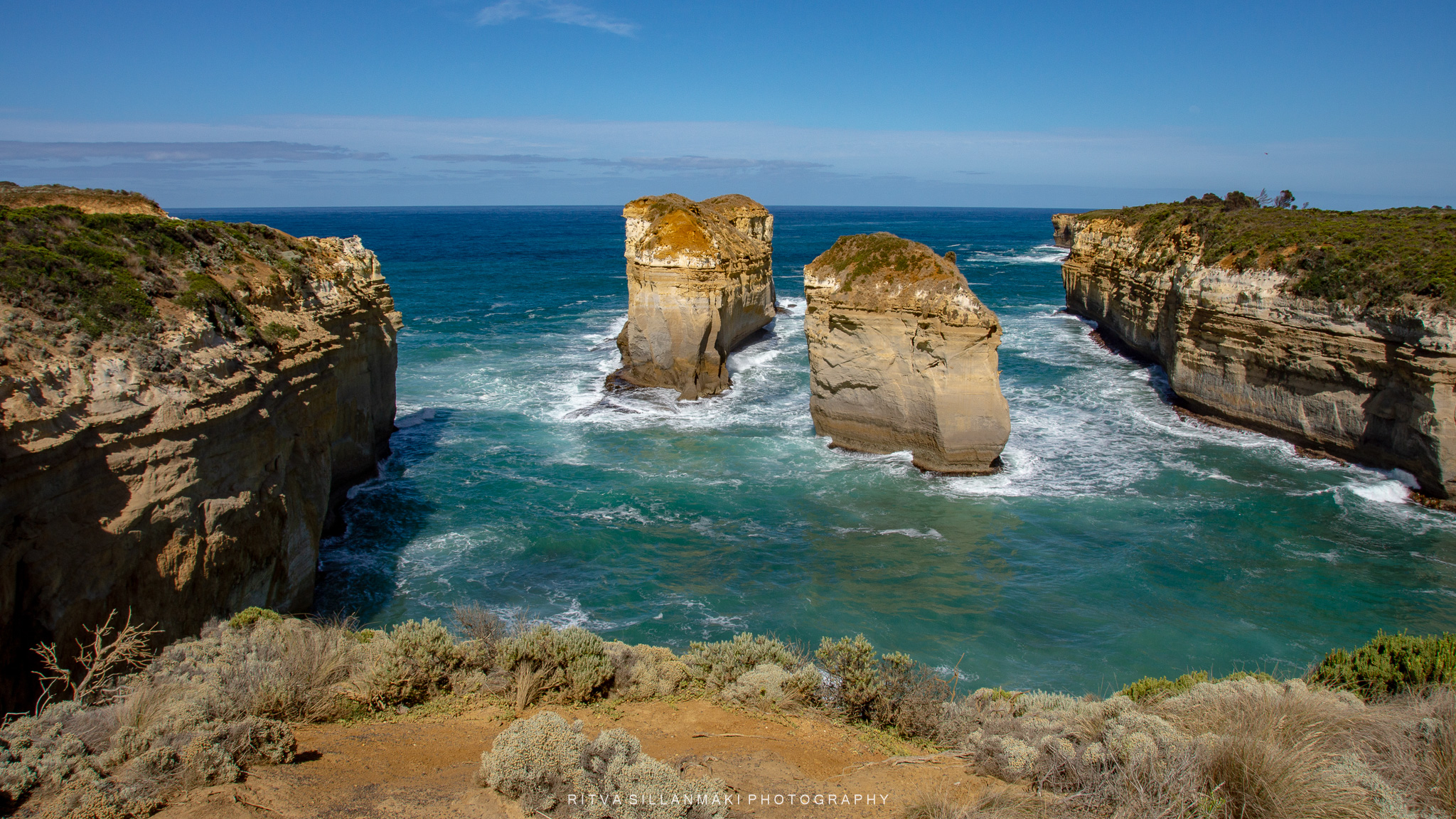
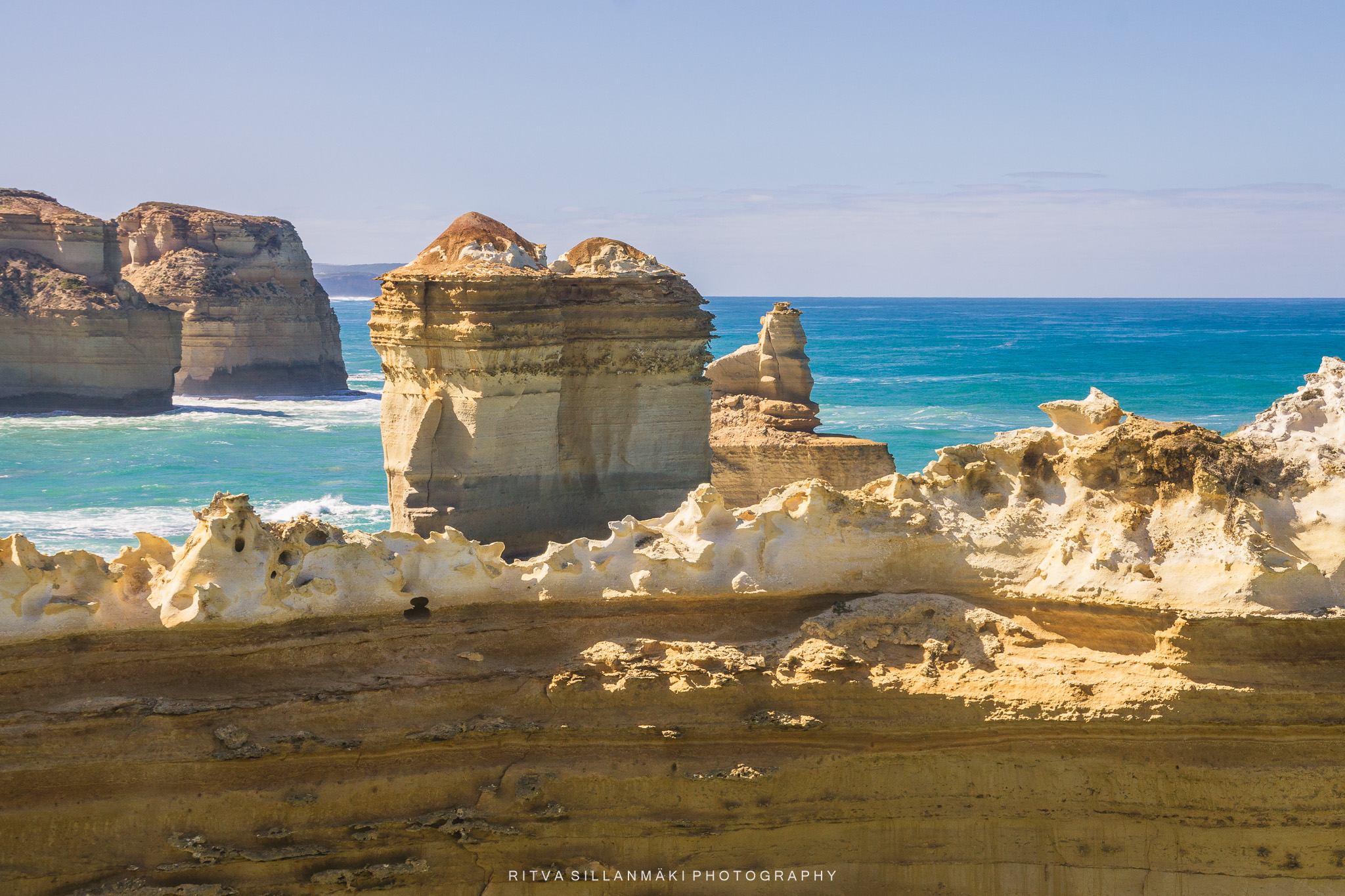
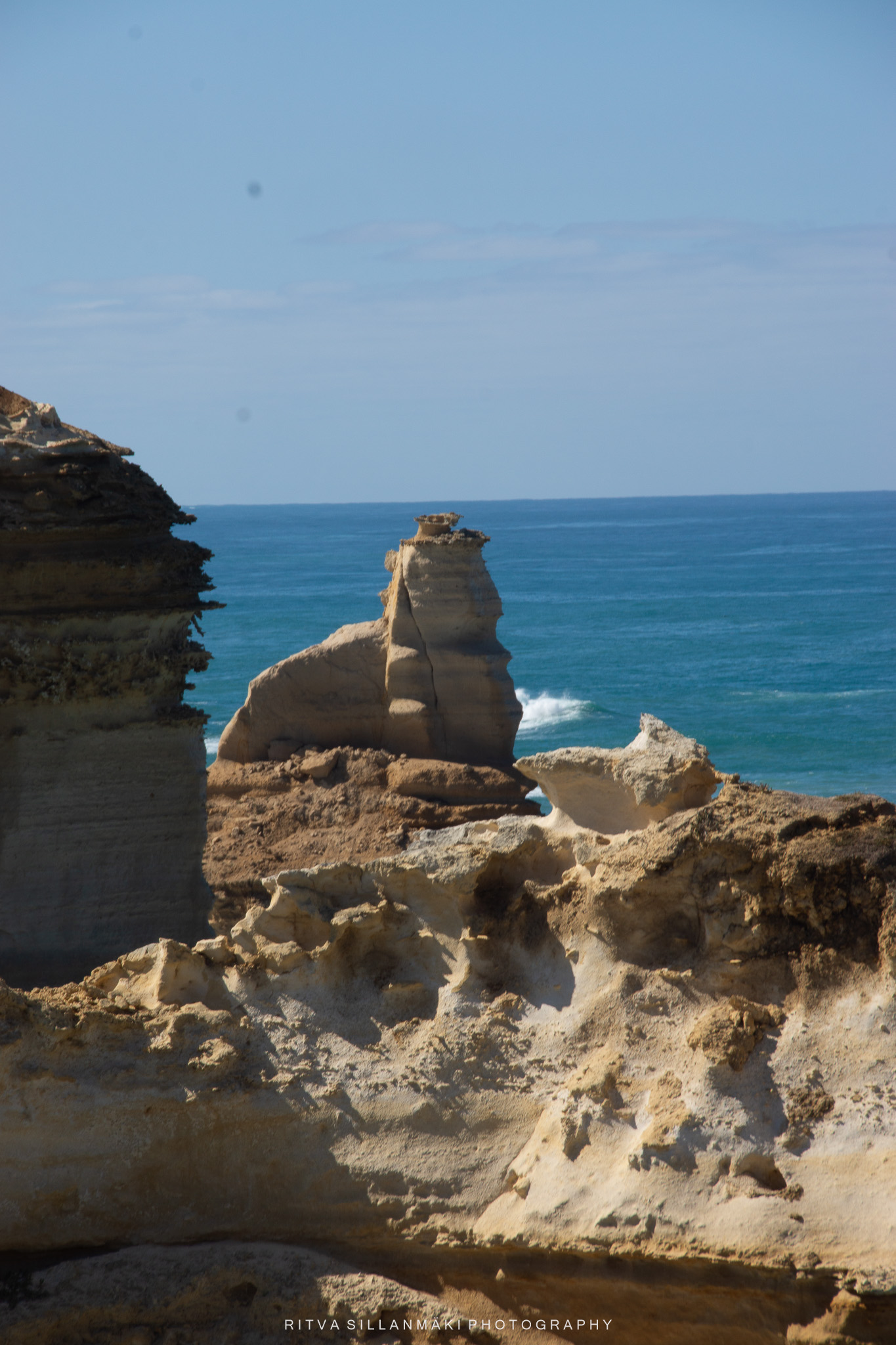
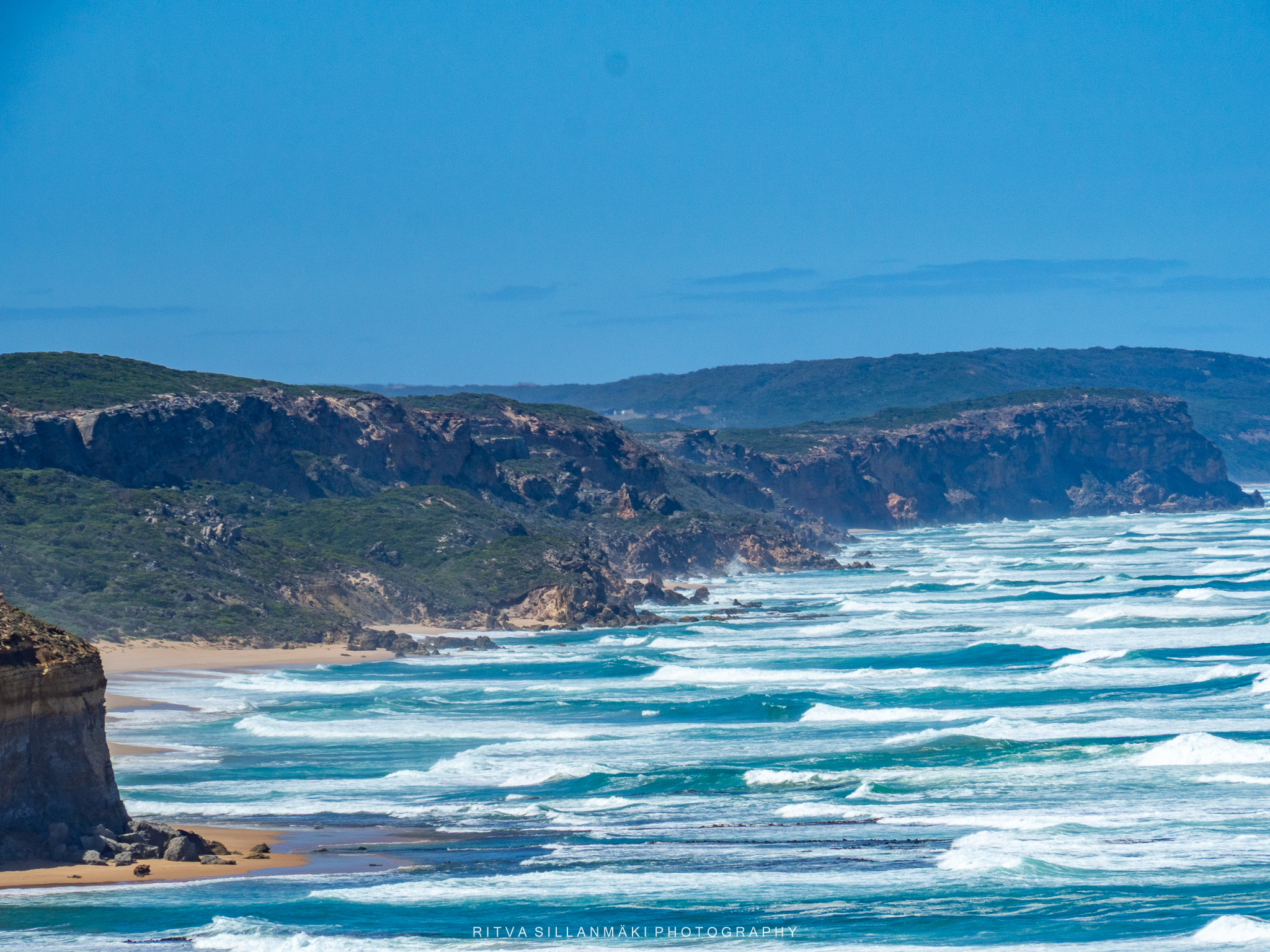
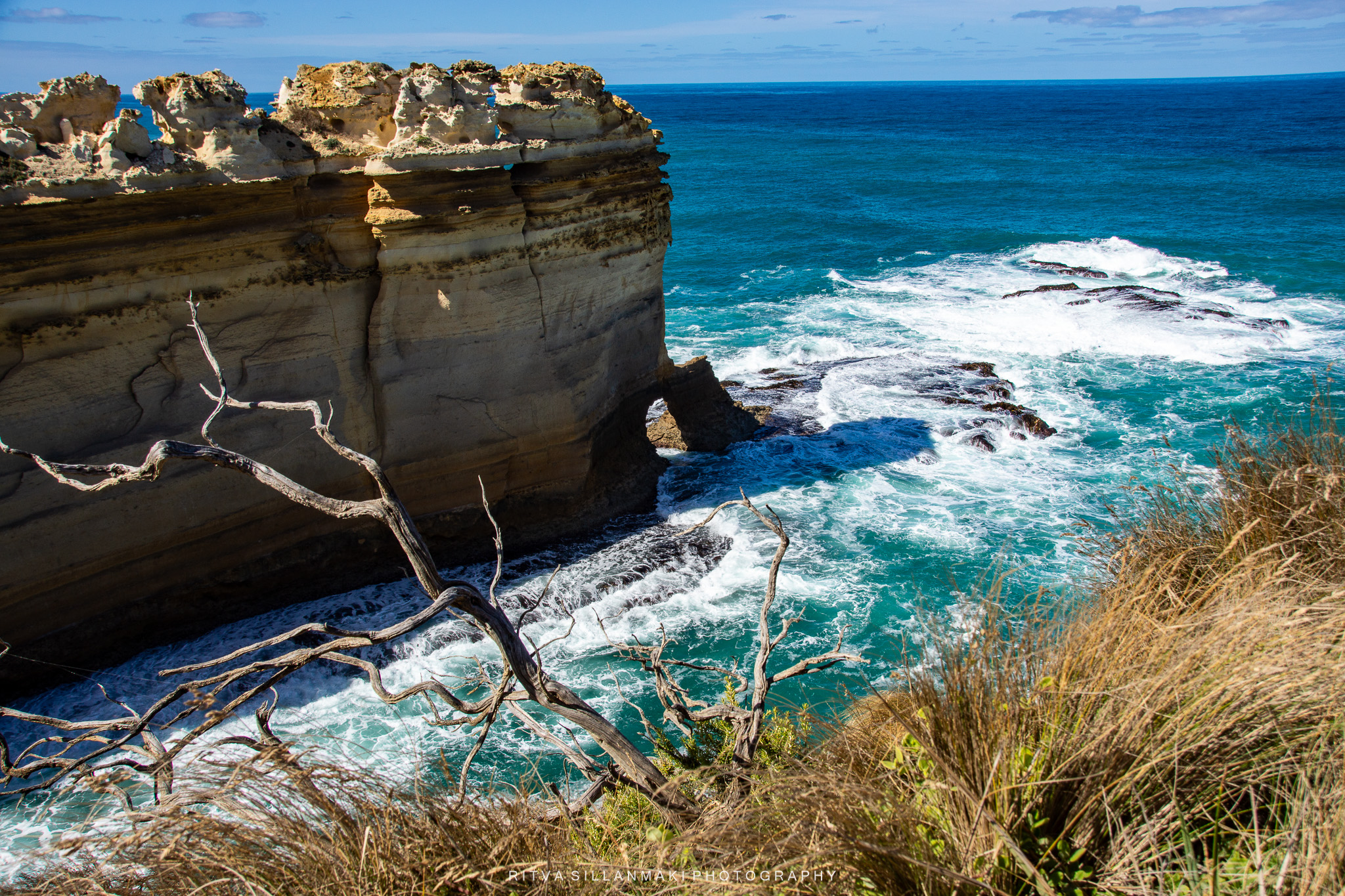
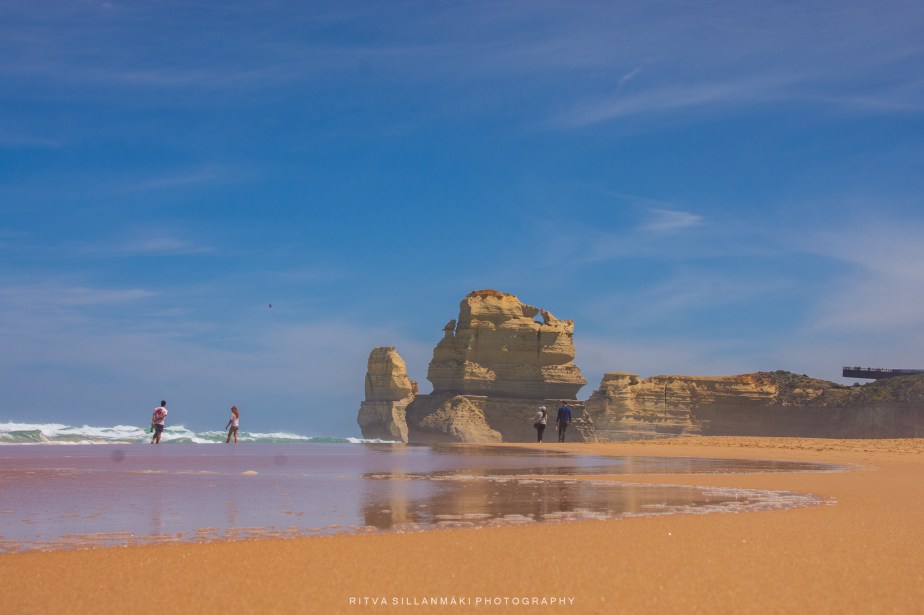
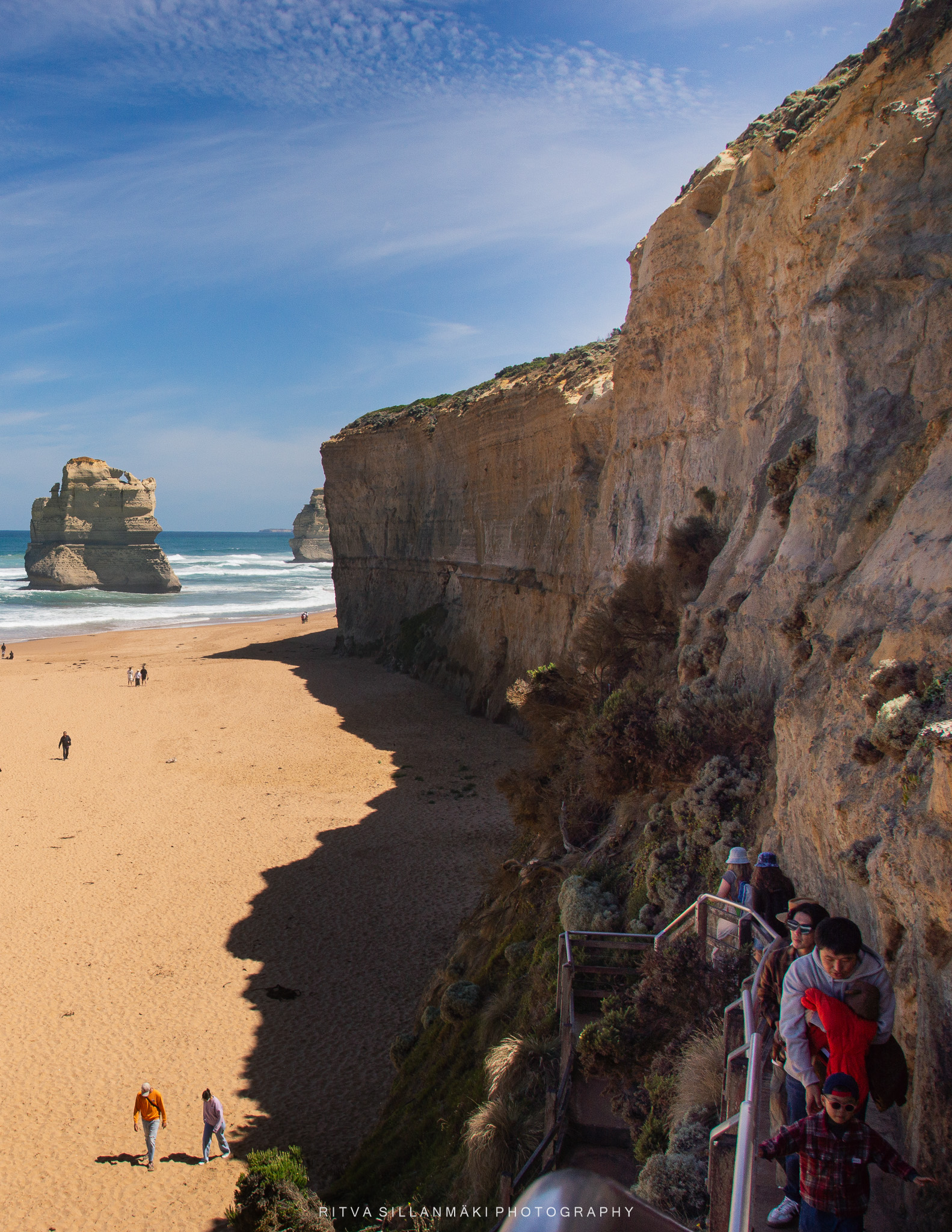
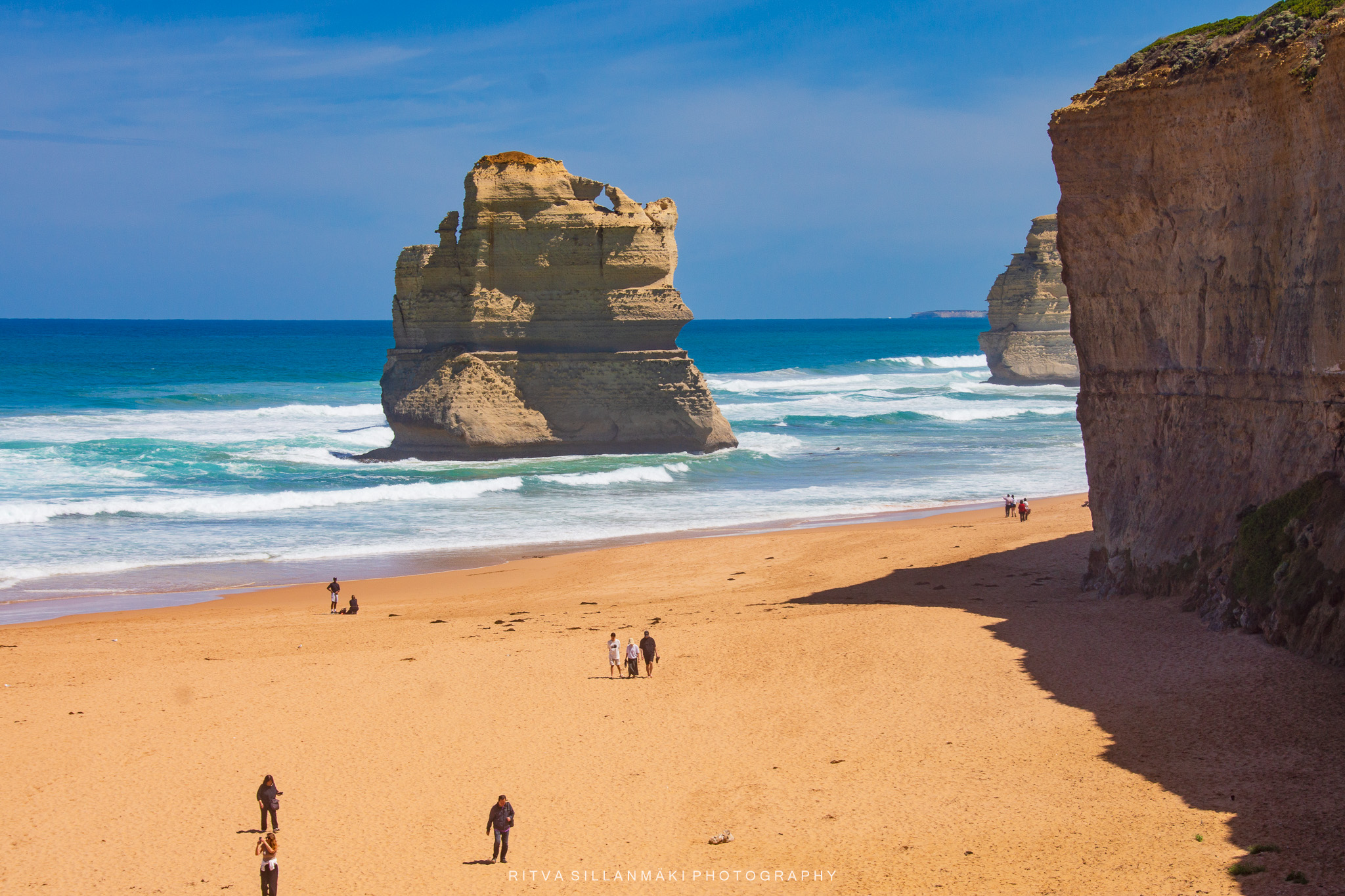
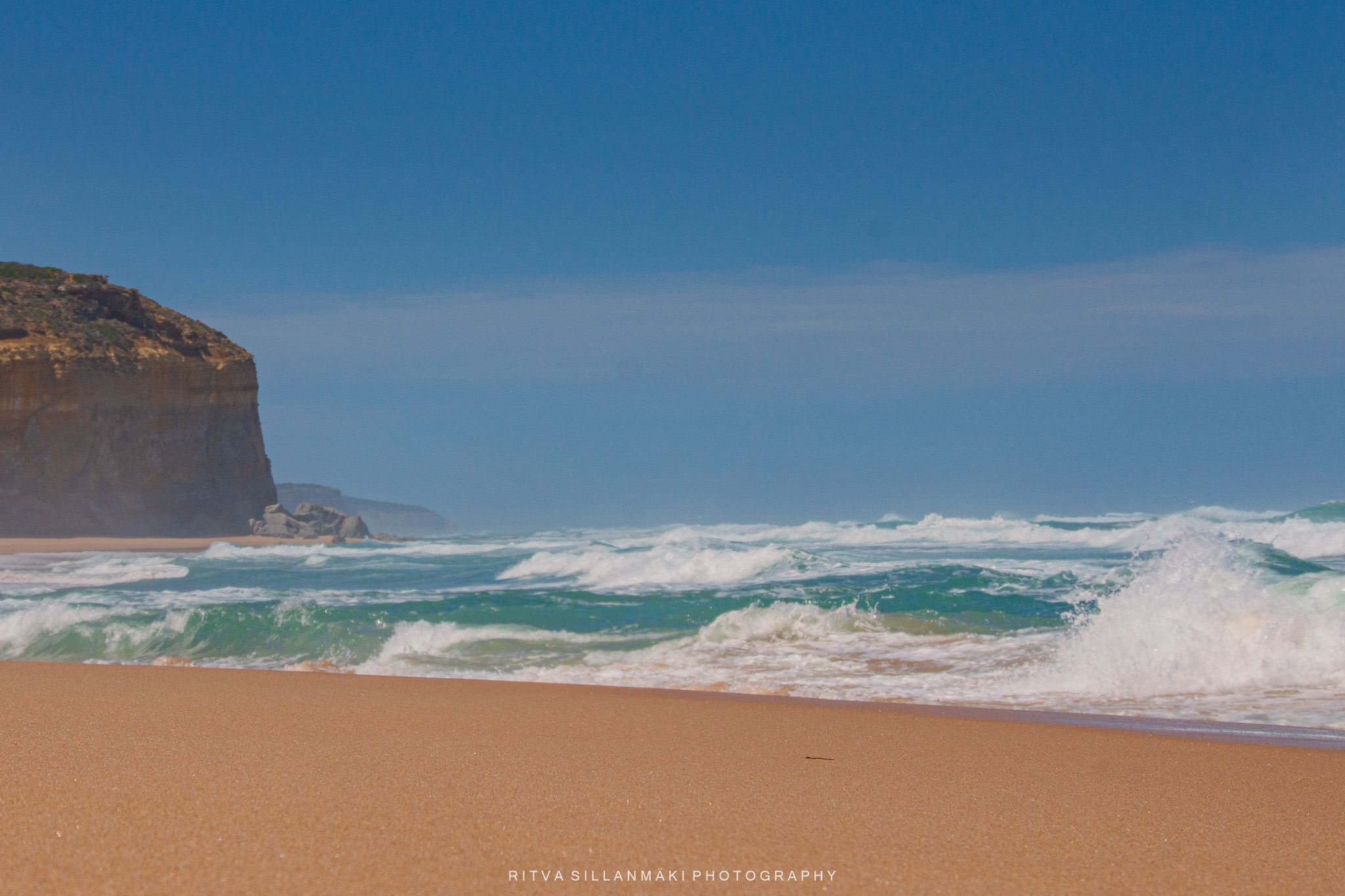
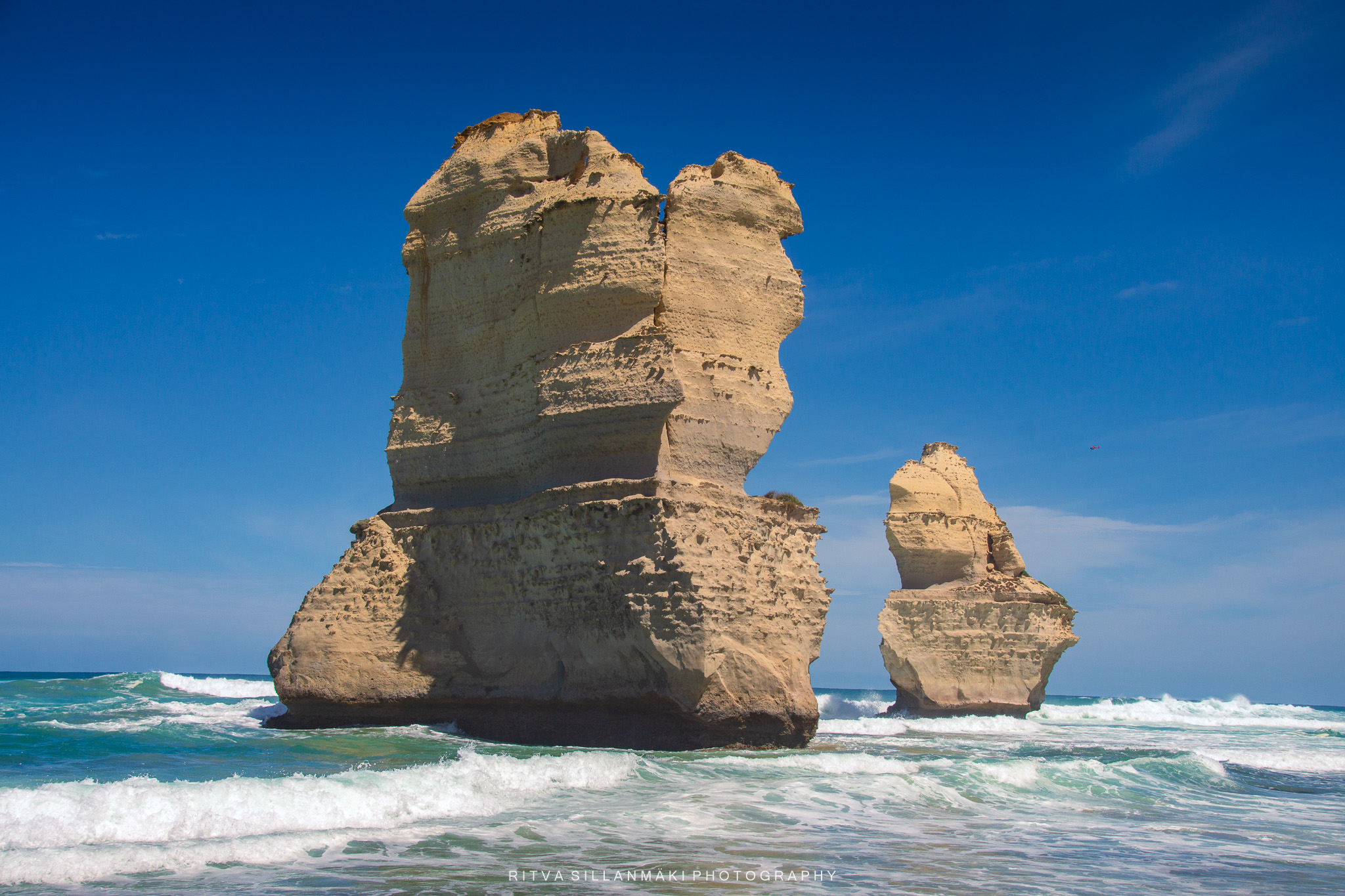
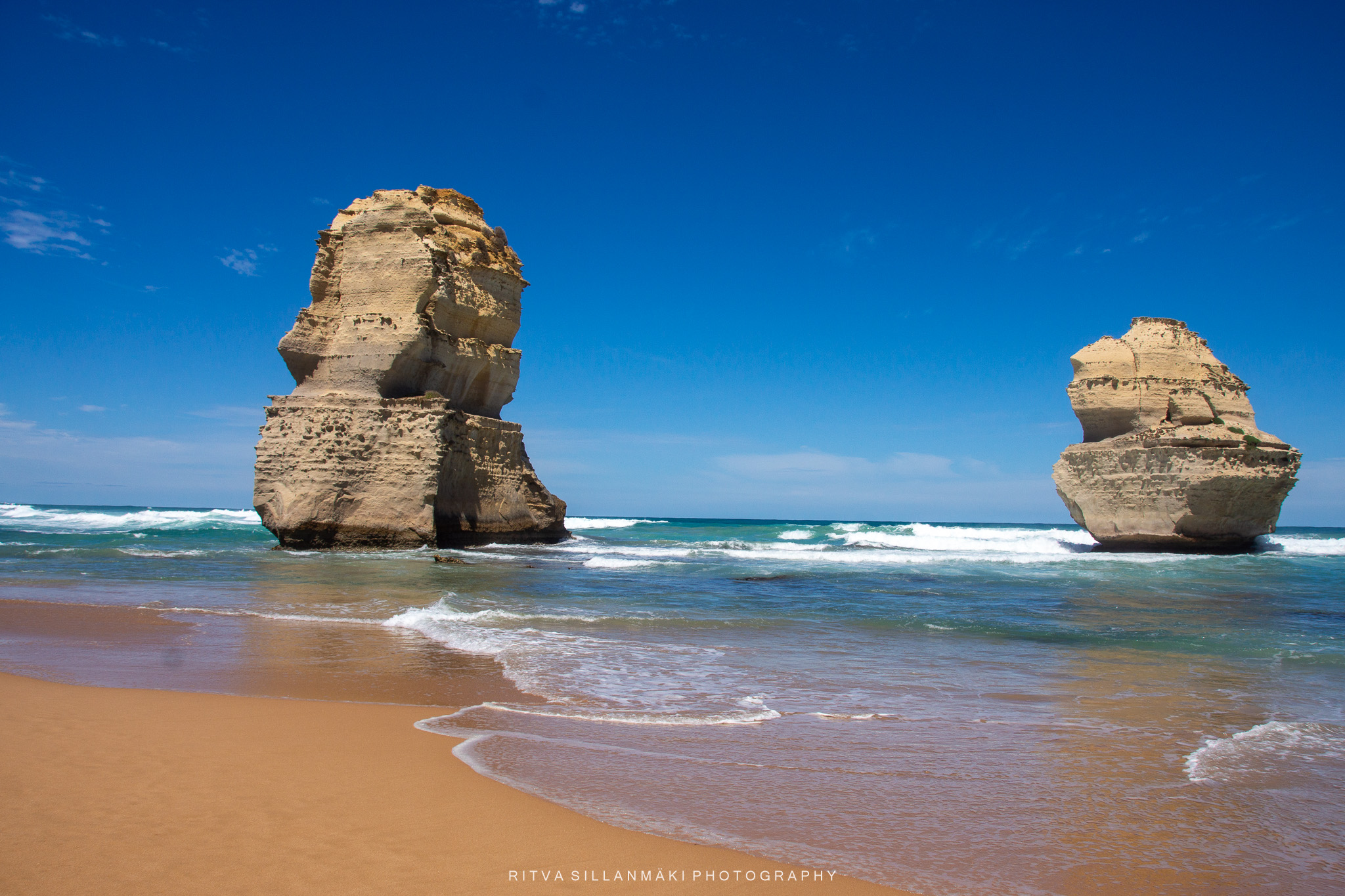
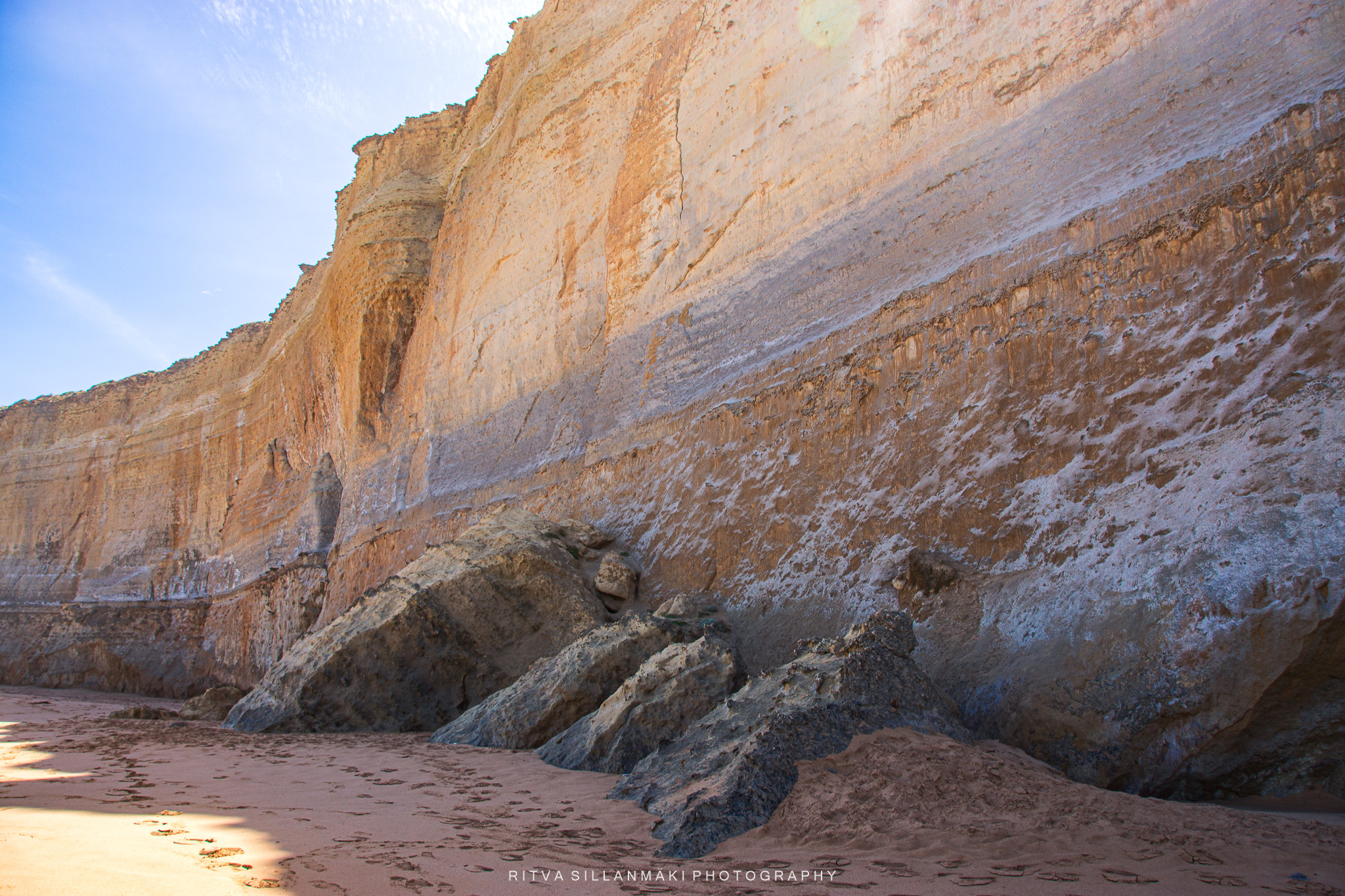
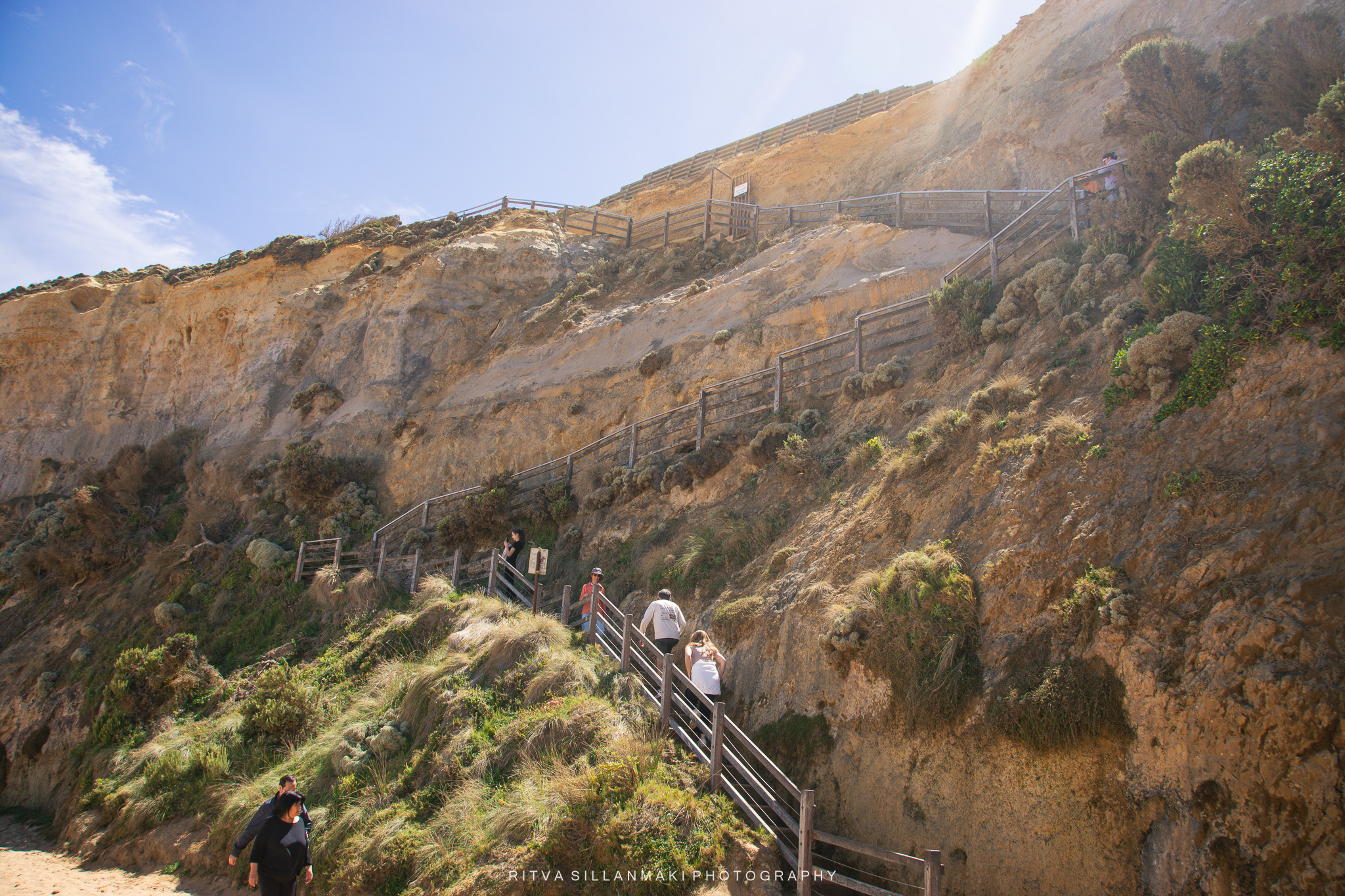
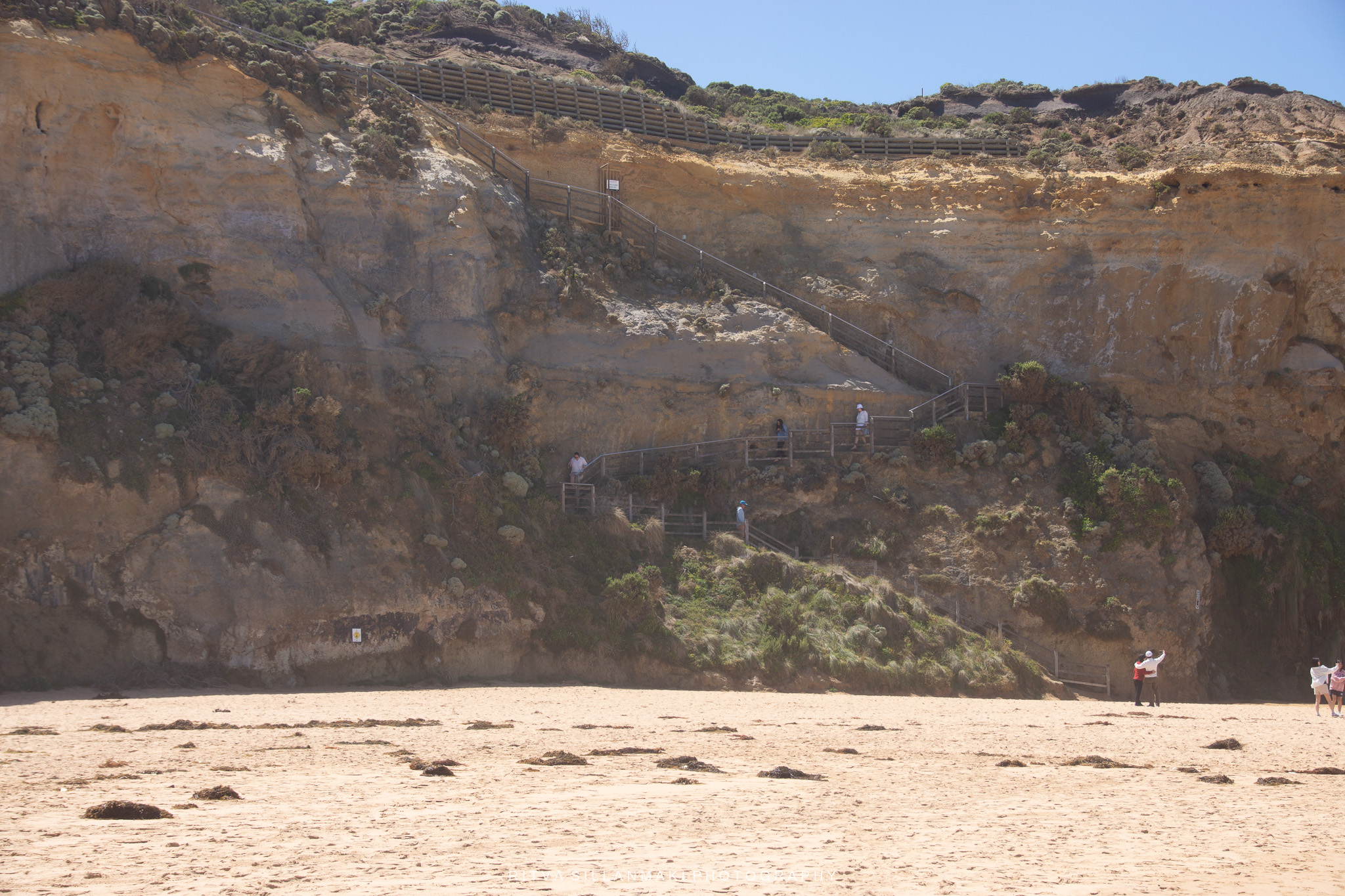
Since the last visit in 2018, 12 Apostles had a new observation deck jutting out of the coastal cliffs. It made it easier to take photographs of those marvels. Not doing my scouting work properly I decided to follow the sign from tourist info and walk to Gibson’s Steps and the beach. It only one kilometer but it was hot, and we could have driven there as well. But the beach was worth the visit. I was able to get some pics of the Apostles reflecting from the wet sand.
Circling back to the cultural phenomenon of Asian tourists taking pictures. Or at least I think it is culture thing, with all the different poses and selfies? I do take selfies sometimes, like the one with my gorgeous Billabong hat, but I don’t want to go through my holiday pictures and seeing my face in all of them. Imagine showing the pictures to your friends: this is me in front of the Grotto x 5, this is me in front of London Bridge x 10, this is me with victory sign or thumbs up in front of 12 Apostles, etc. But you get the picture. But getting the picture was often hard when there was a bus load of people in front of you. Eventually, there was nothing else to do but to photobomb their pictures.
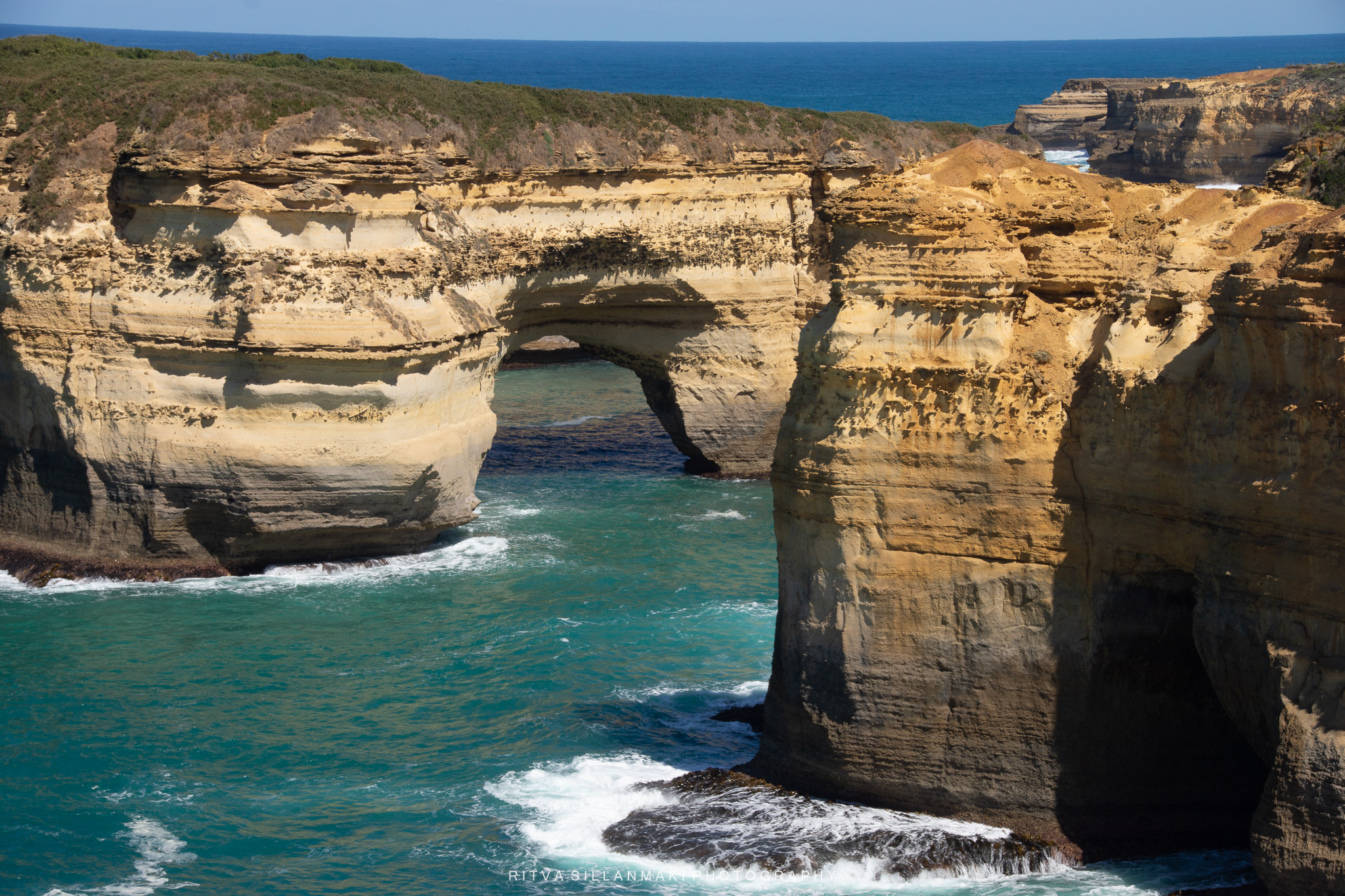
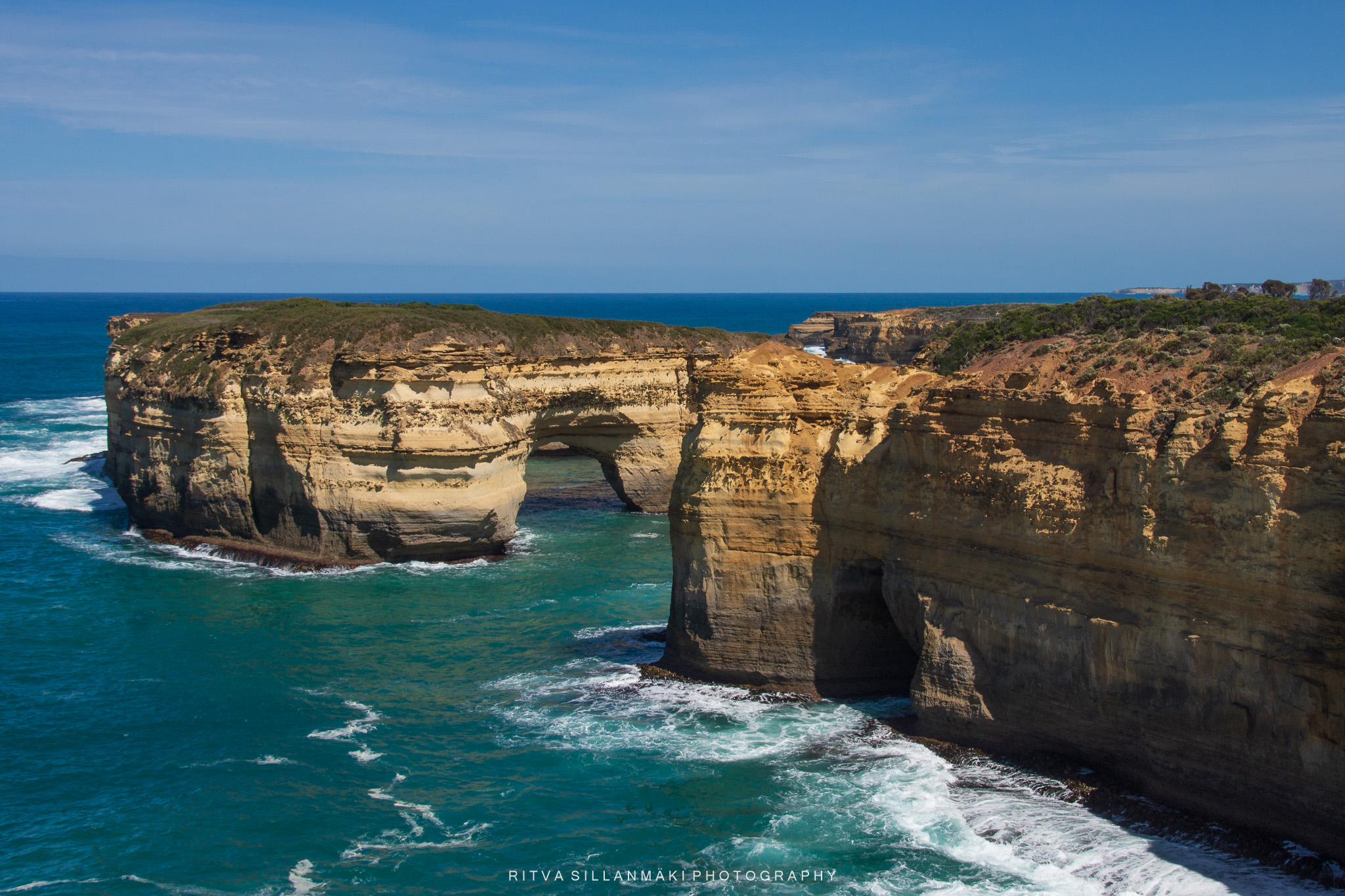
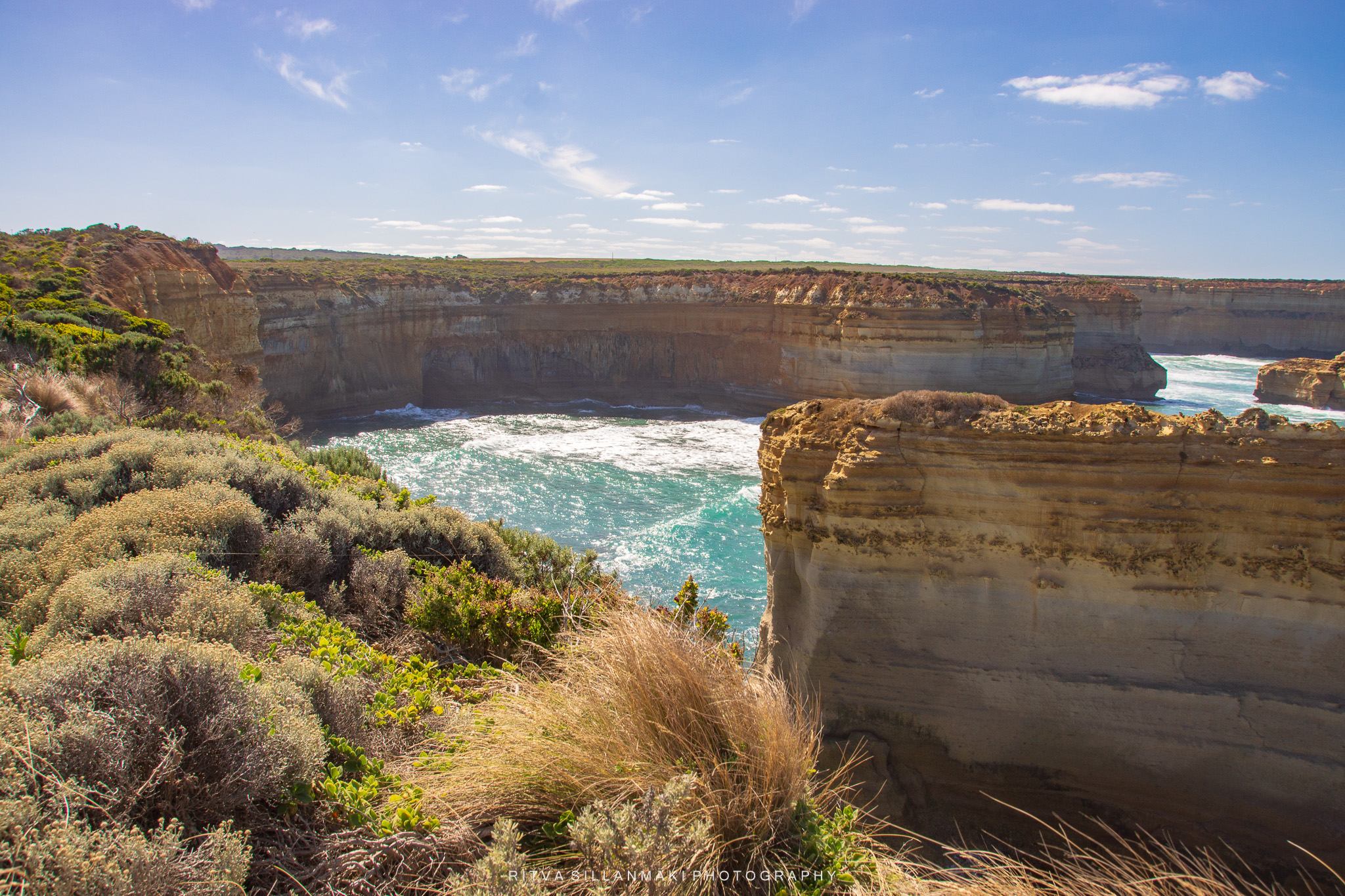
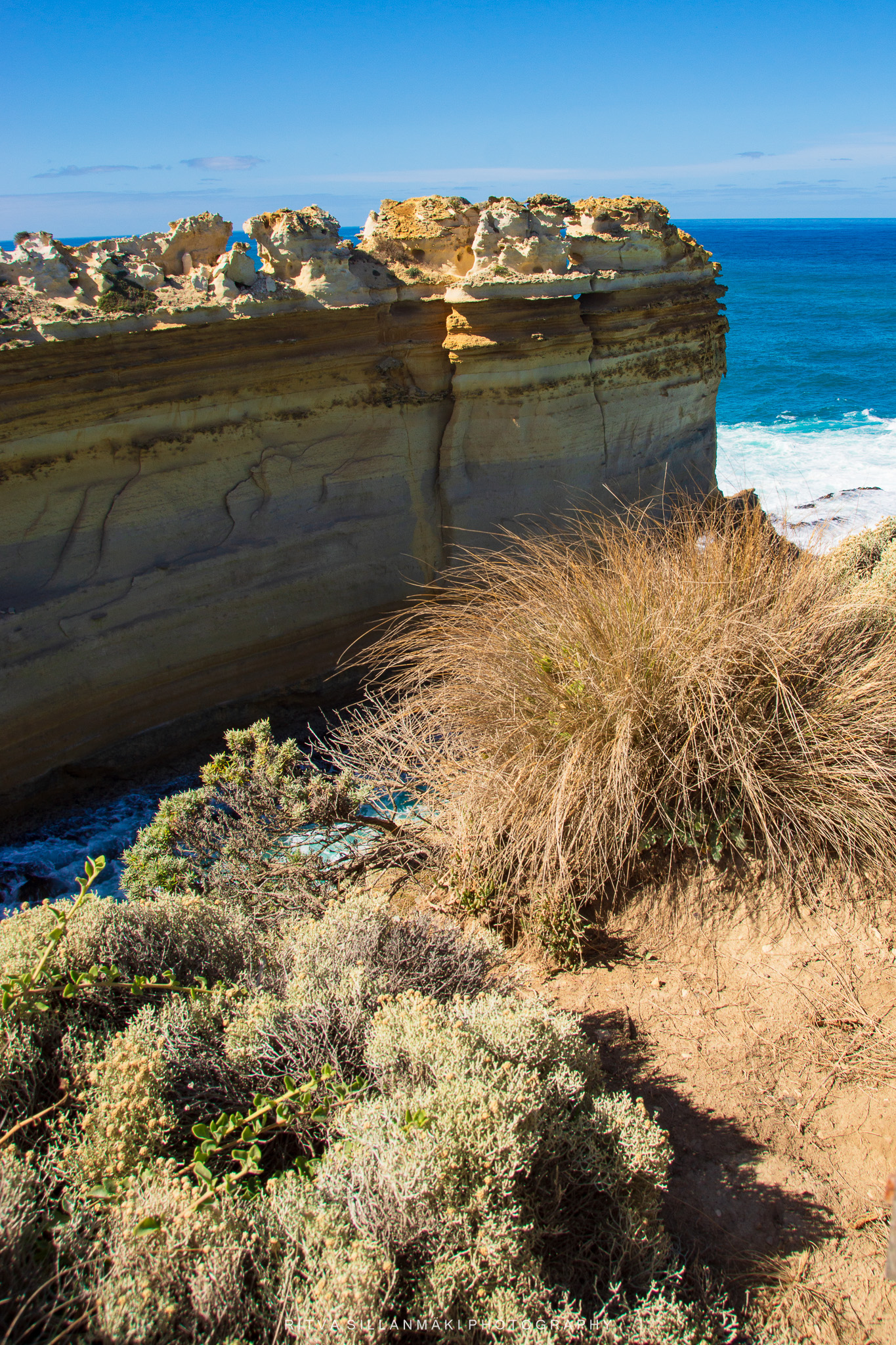
We had lunch in Port Campbell and in the next table there was an American couple once again. They were from Tampa Bay, Florida. As it happened his grandparents were from North Finland, and he had visited our country when he was a boy. We had a pleasant conversation about their travels. They had visited New Zealand first, then Tasmania, then toured Australia and they were planning on continuing to Great Barrier Reef. The discussion turned to politics, and we got out of there fast. . Enough said.
The day wasn’t over yet; we still had to drive to Bendigo. We decided on Bendigo because it was less than 4 hours from Port Campbell and five hours from Talbingo, where we originally planned to go. Talbingo was a no go, but it was too late to cancel Bendigo. I also picked Bendigo because I once knew a professional poker player Keith “Bendigo” Sloan. He was from Bendigo but that is another story.
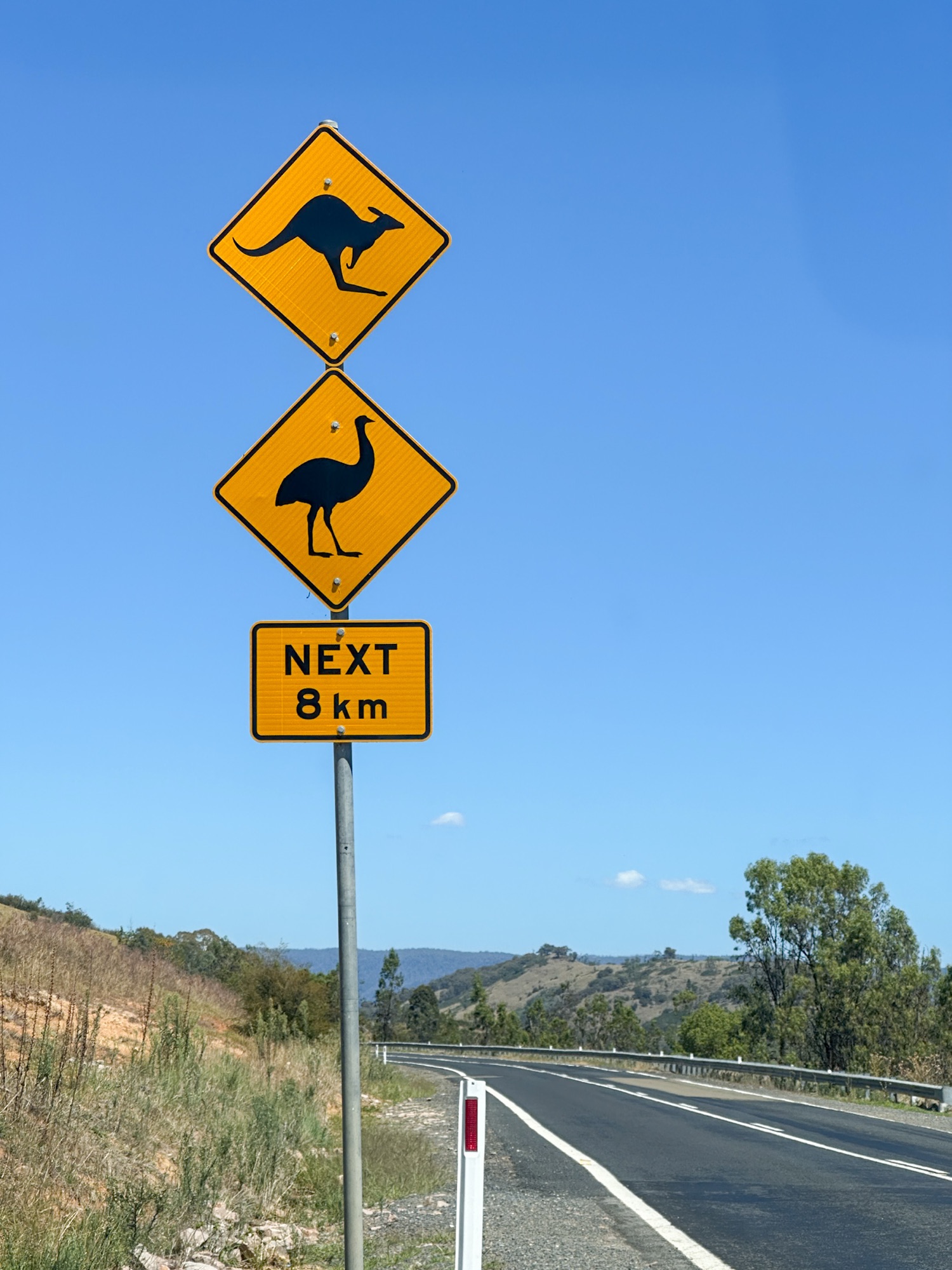
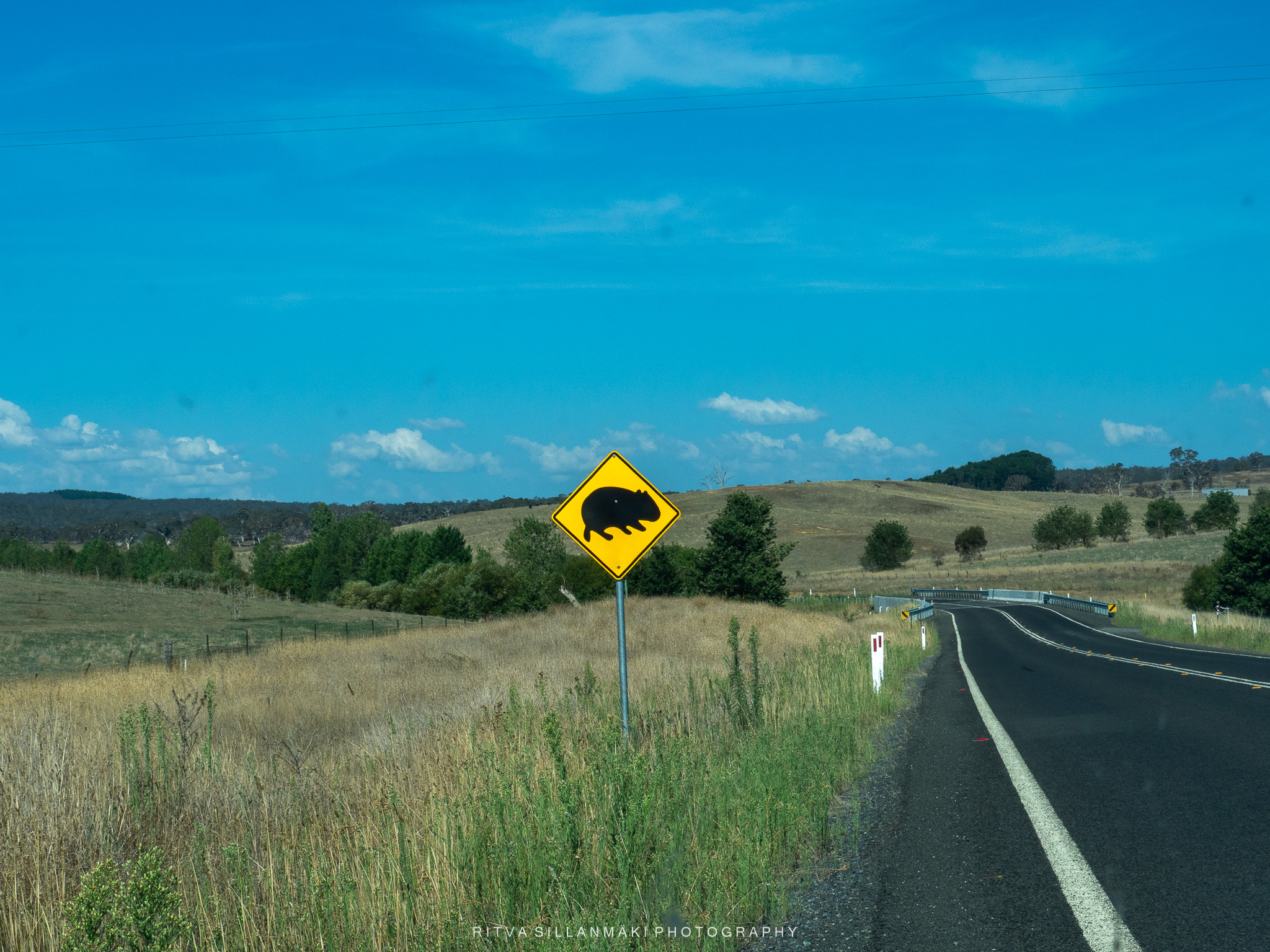
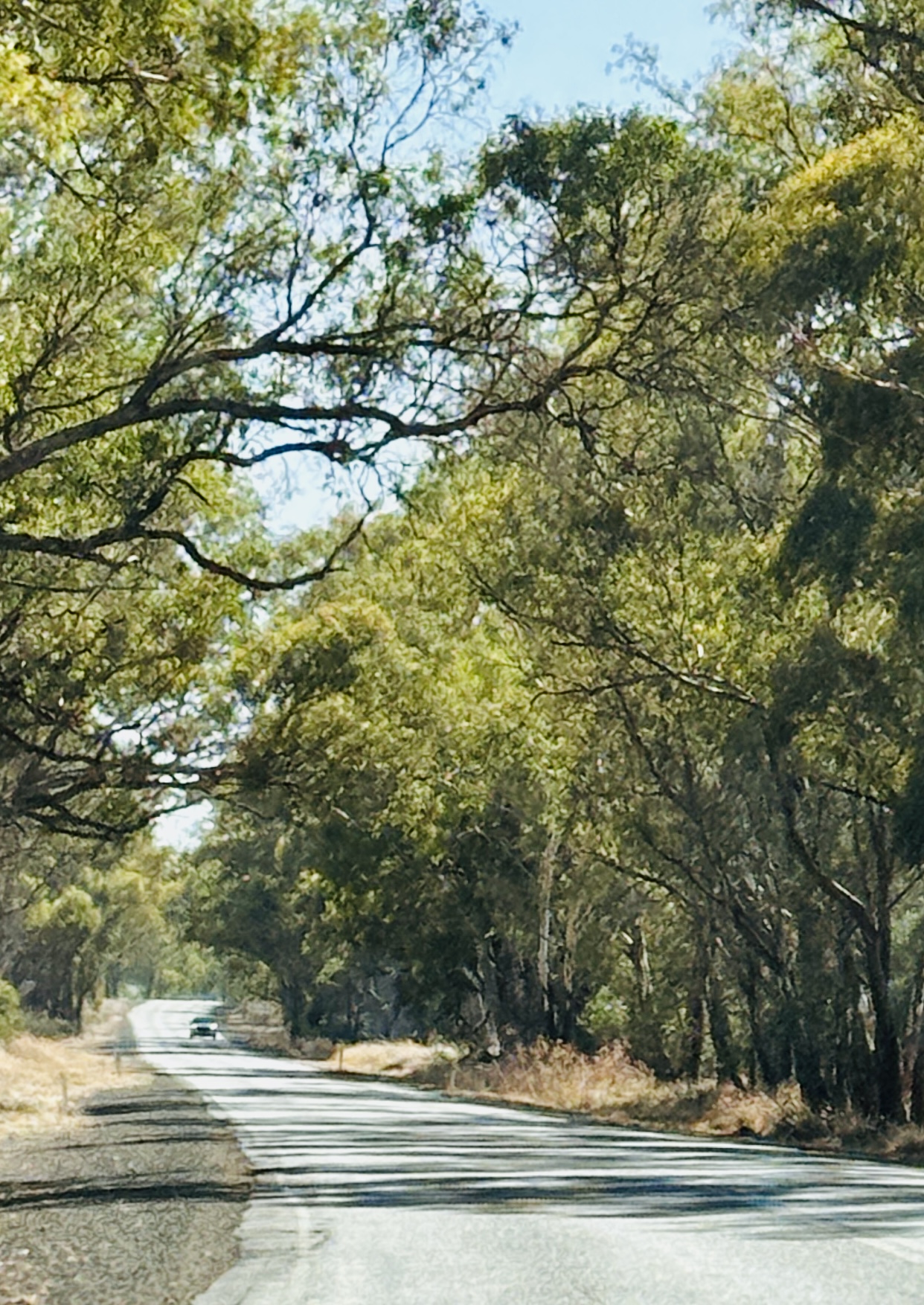
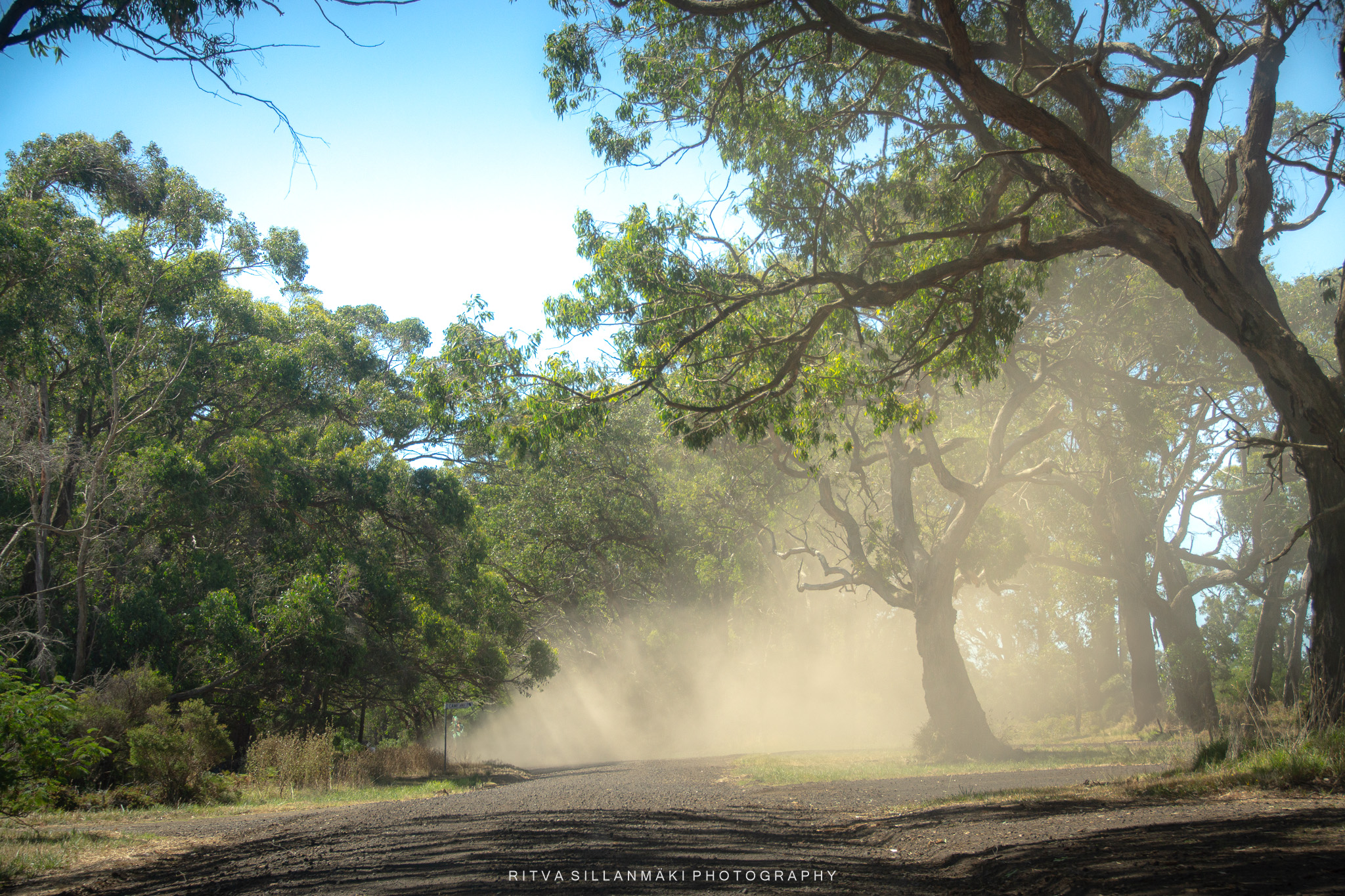
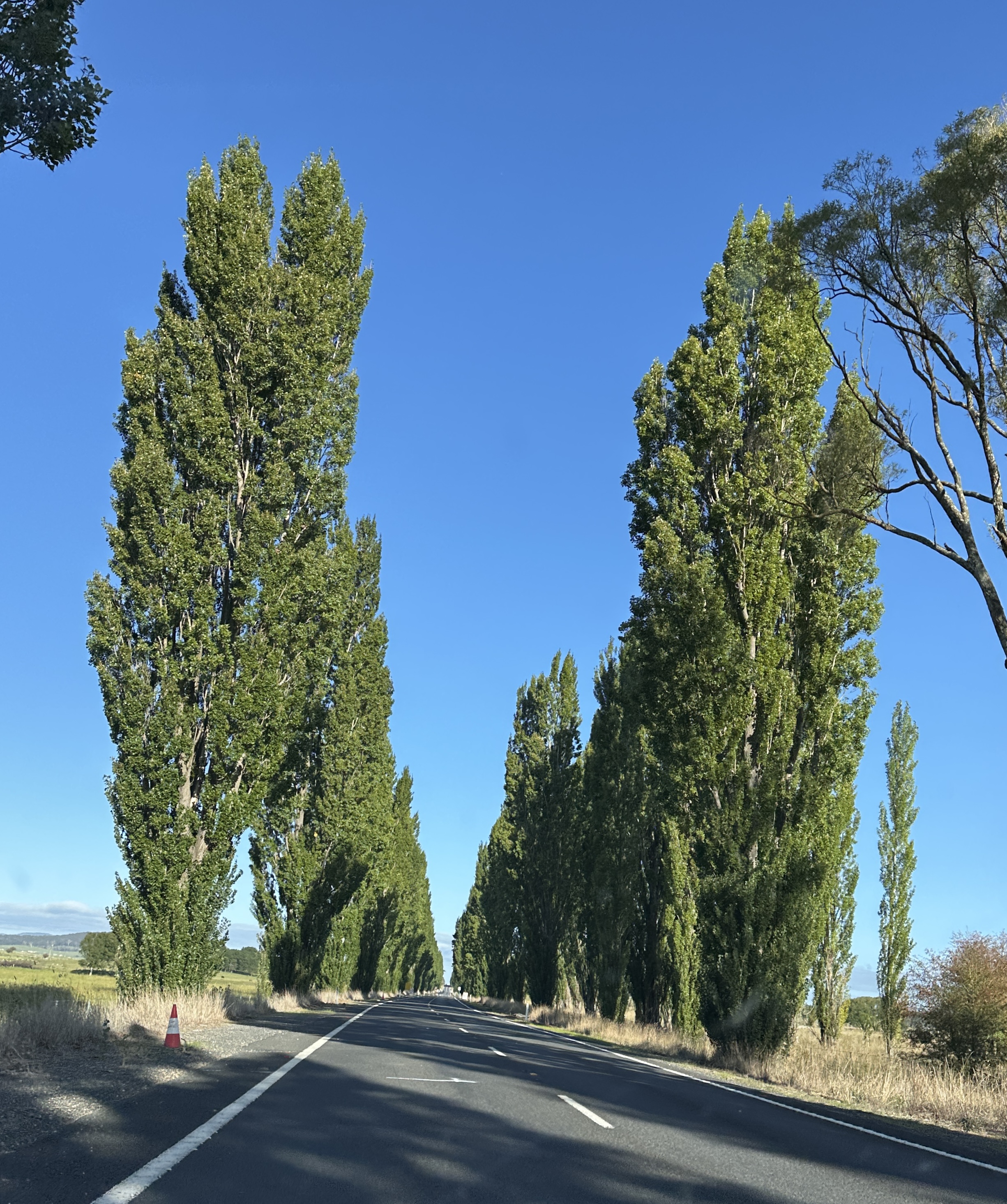
Now comes the part where I lost my faith in Google Maps many times. The Great Ocean Road is not situated in, let’s say, densely populated area. Next to it there is basically farmland, and the beginning of our drive was a combination of narrow asphalt roads, gravel roads, cattle, sheep, gum trees and warning signs for kangaroos. Turn right to stay on Cobden-Port Campbell Rd/C164 and drive 1,6 km, turn right to Cobden-Terang Rd/C156/C164 and drive 210 m, continue Neylon St and drive 1,3 km, continue from the roundabout to Camperdown-Cobden Rd/C164 and drive 12,5 km, turn right to Manifold St/Princes Hwy/A1/C164 and drive 60 m, turn left to Cressy St/C164 continue C164 for8,8 km and so on. Seemed it was forever until we got on any highway. That’s what you ask for the fastest and most fuel-efficient route from Google Maps.
But it was so much fun! The roads were in good shape and there was hardly anybody on the road. The speed limit was most of the time 100 km but like I said – no traffic. And no traffic means that somebody next to me is screaming – STOP – every few minutes to, you guessed it, take a picture or hundreds of them. Eventually we got to Bendigo just in time to collect the keys to the room and visit Woolworths or Woolies to the locals.
I always picked our drive to happen during the daylight. The reason being kangaroos and wombats. They move mostly from dusk till dawn. Most cars have the kangaroo bumpers for a good reason. The name says it all. Our high-end Corolla didn’t include kangaroo bumpers. It was sad to see so many road kills. We drove over 4700 km but still the number of dead kangaroos was staggering, and we saw couple of wombats, too, and one dead deer. I’m sure to local people kangaroos are mainly pests but to us they just seemed so cuddly and funny. If I understood correctly kangaroos are not very smart when it comes to traffic. They freeze in the headlights or something.











 Ritva Sillanmäki Photography