
Looking up
It is often said that a great book has the power to resonate with the human spirit, transport us to new realms, ignite our imagination, and shift our viewpoints in an instant… but are we discussing literature or photography here?! For Challenge 351, I invite you to embrace your inner book lover and share your most creative photographic interpretation of anything related to books. What significance do books hold for you? Can you inventively capture an image of one of the most timeless themes in existence?
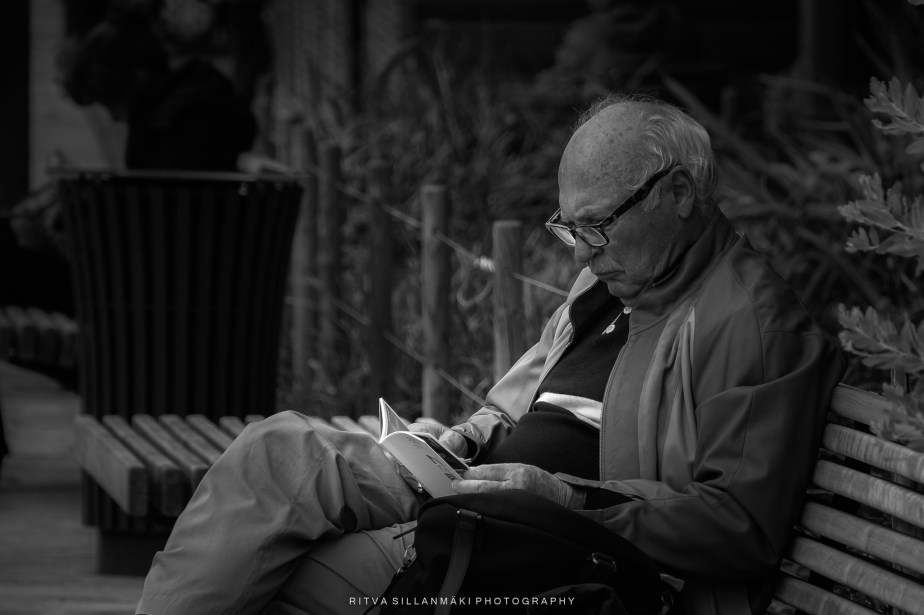
I am looking for photos of books, any kind of books that inspire a love for reading. This could include someone deeply engaged in the act of reading a book, perhaps captured in a cozy nook, lost in a world of imagination. A shot of your favorite bookstore, with its enchanting display of titles and welcoming atmosphere, would also be wonderful to see. Alternatively, simply showcasing a book, whether it’s an old cherished classic or a trendy new release, can evoke a strong connection to the written word. I am not looking for book reviews, as they present another challenge altogether, but rather visual representations that highlight the beauty and allure of books, reflecting the passion of those who are truly bookworms amongst us.



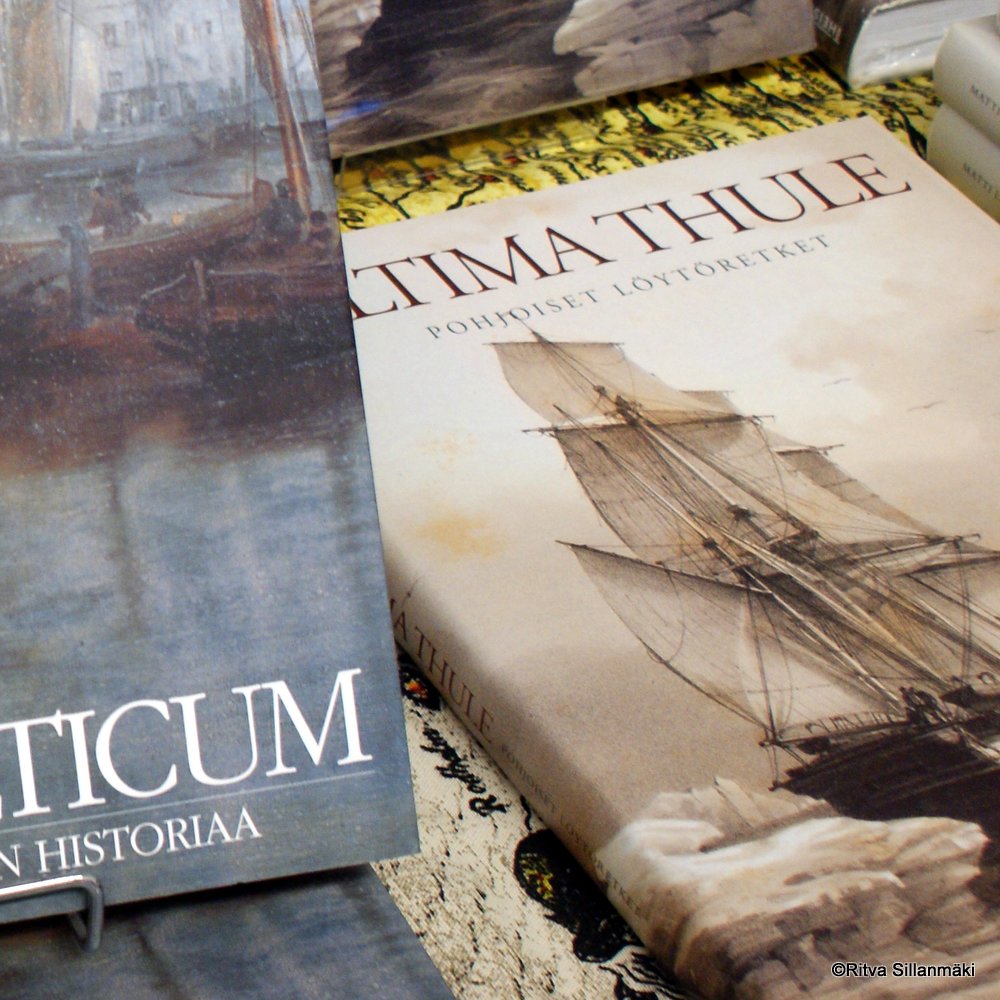
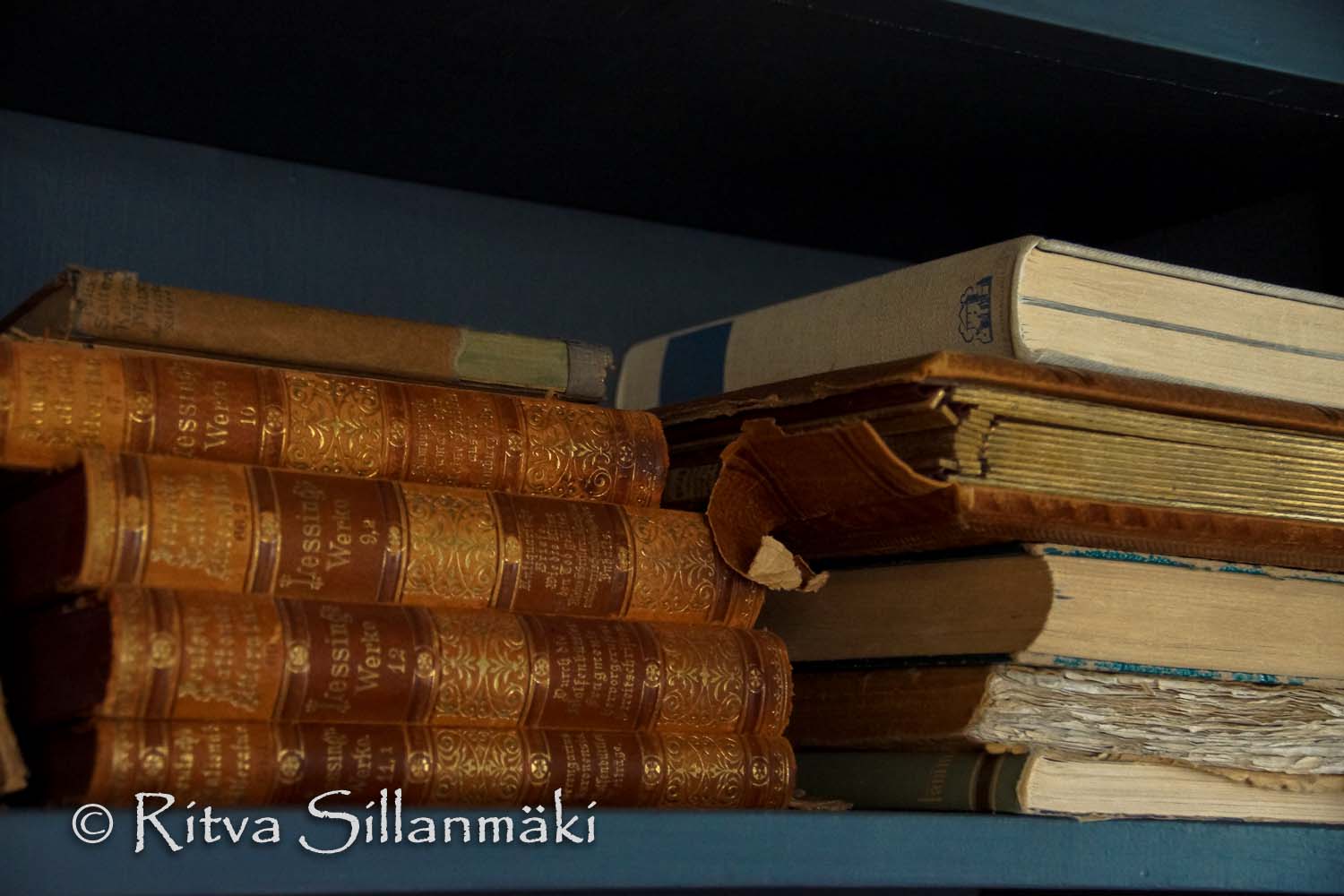


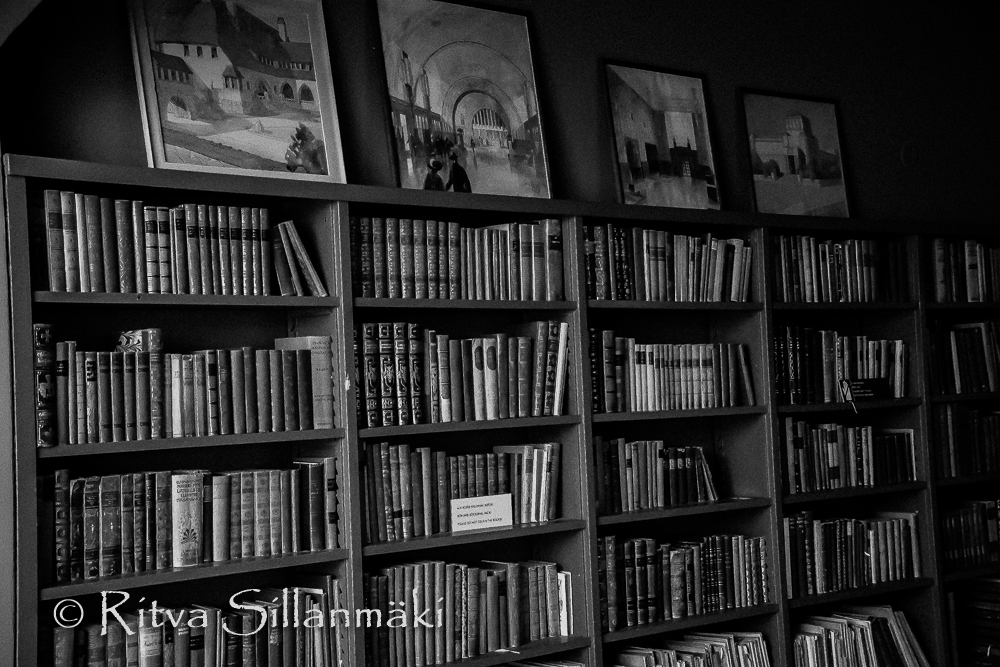
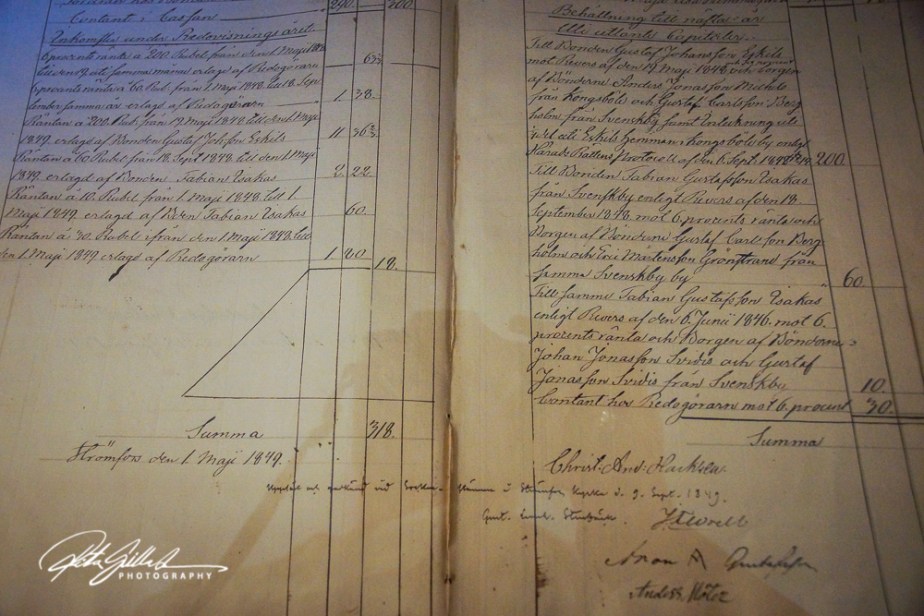
It can be older books, these books were in the Library of Hvitträsk’s Museum
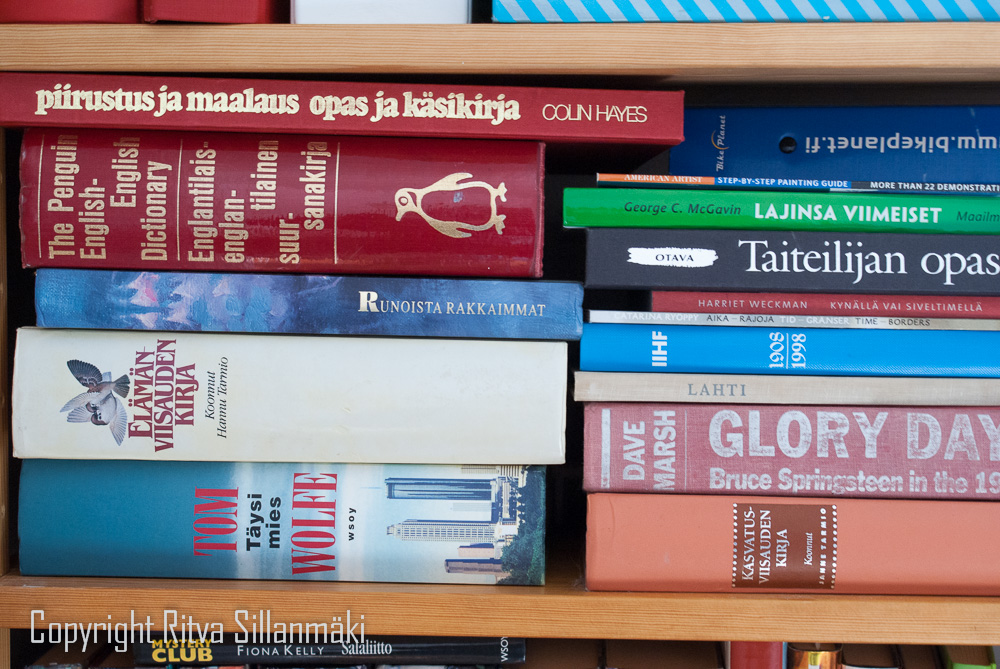


These newer books can be found in my own bookshelves. No rhyme or reason for the books in this shelve.
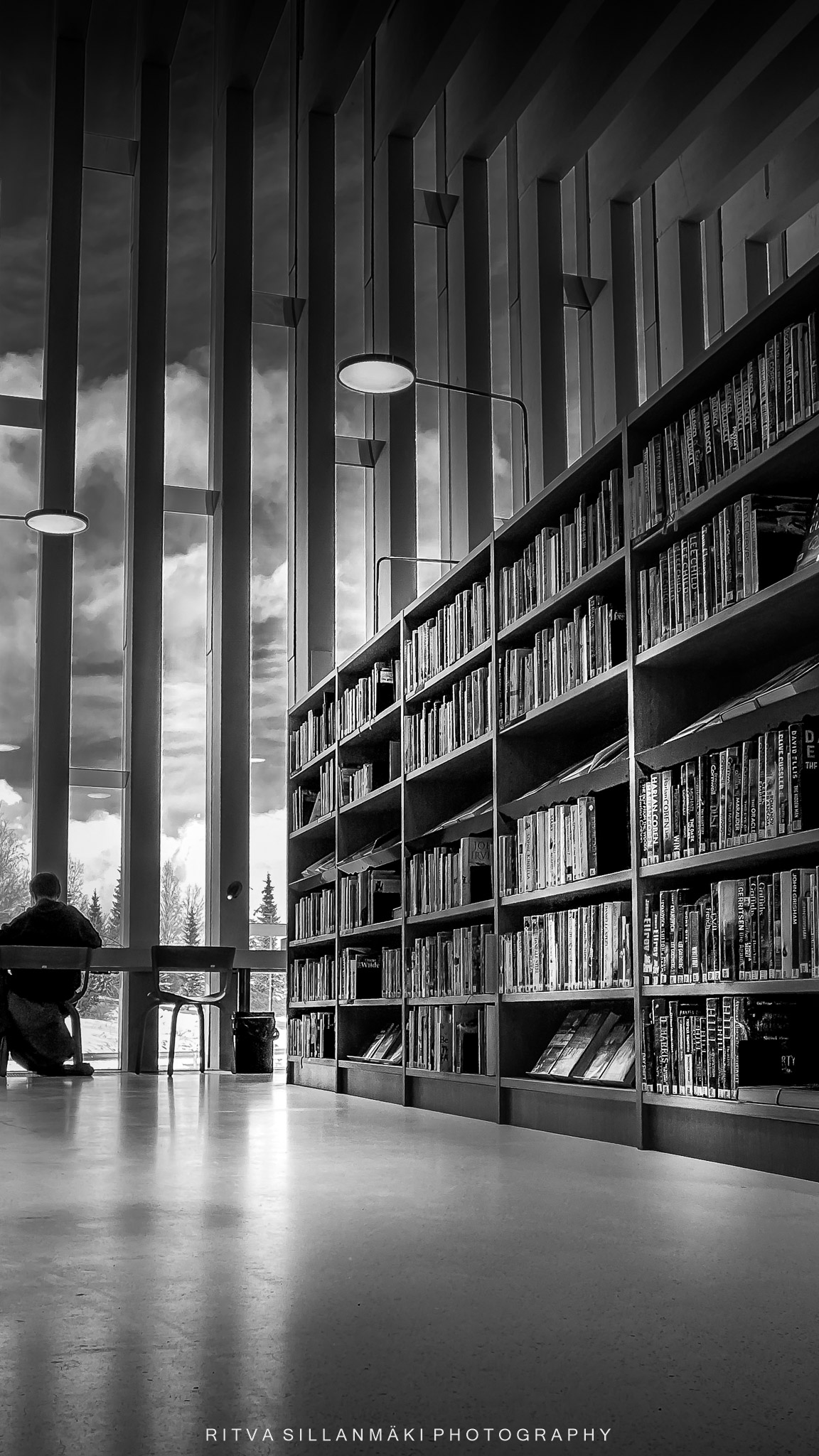
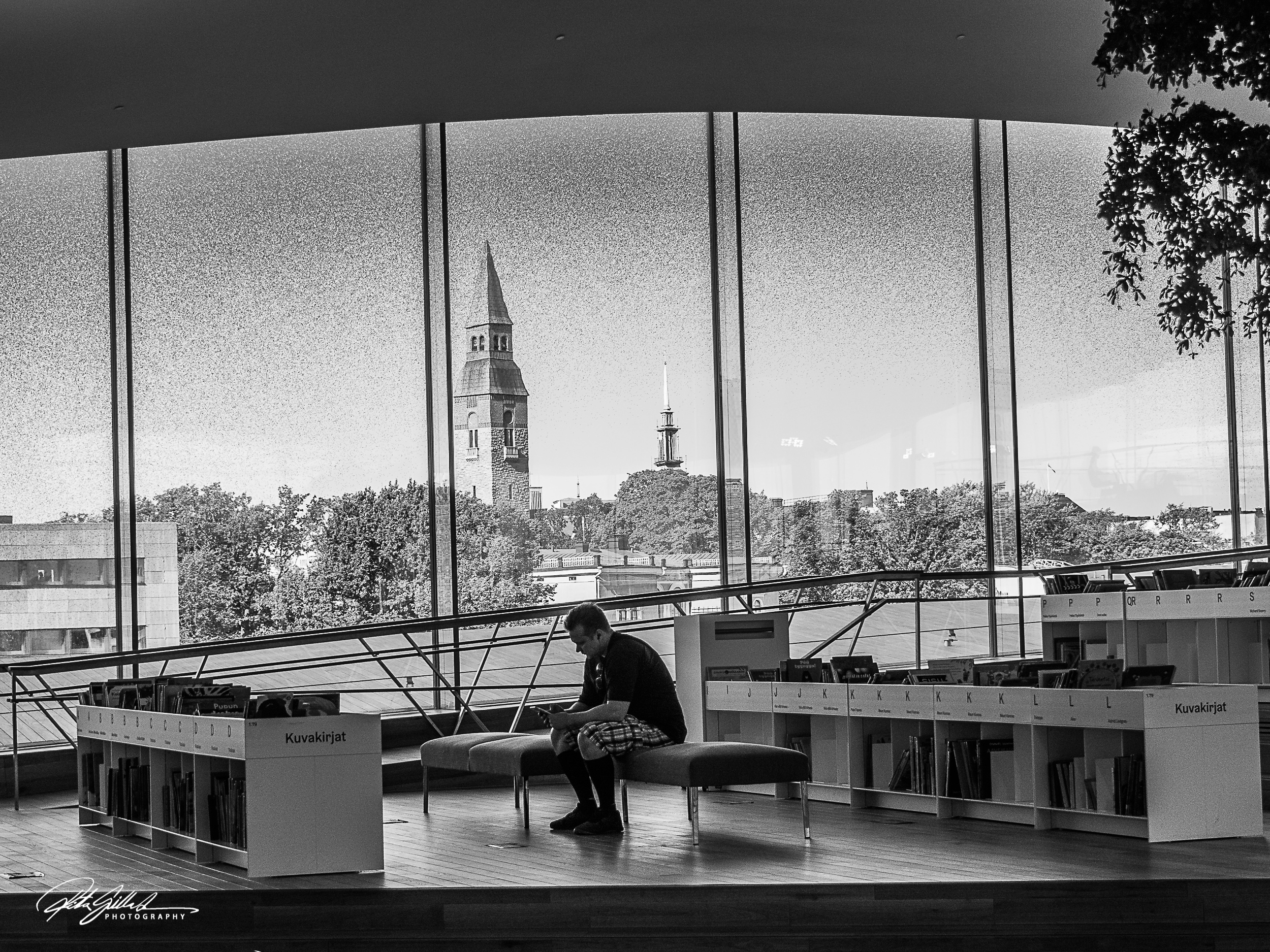
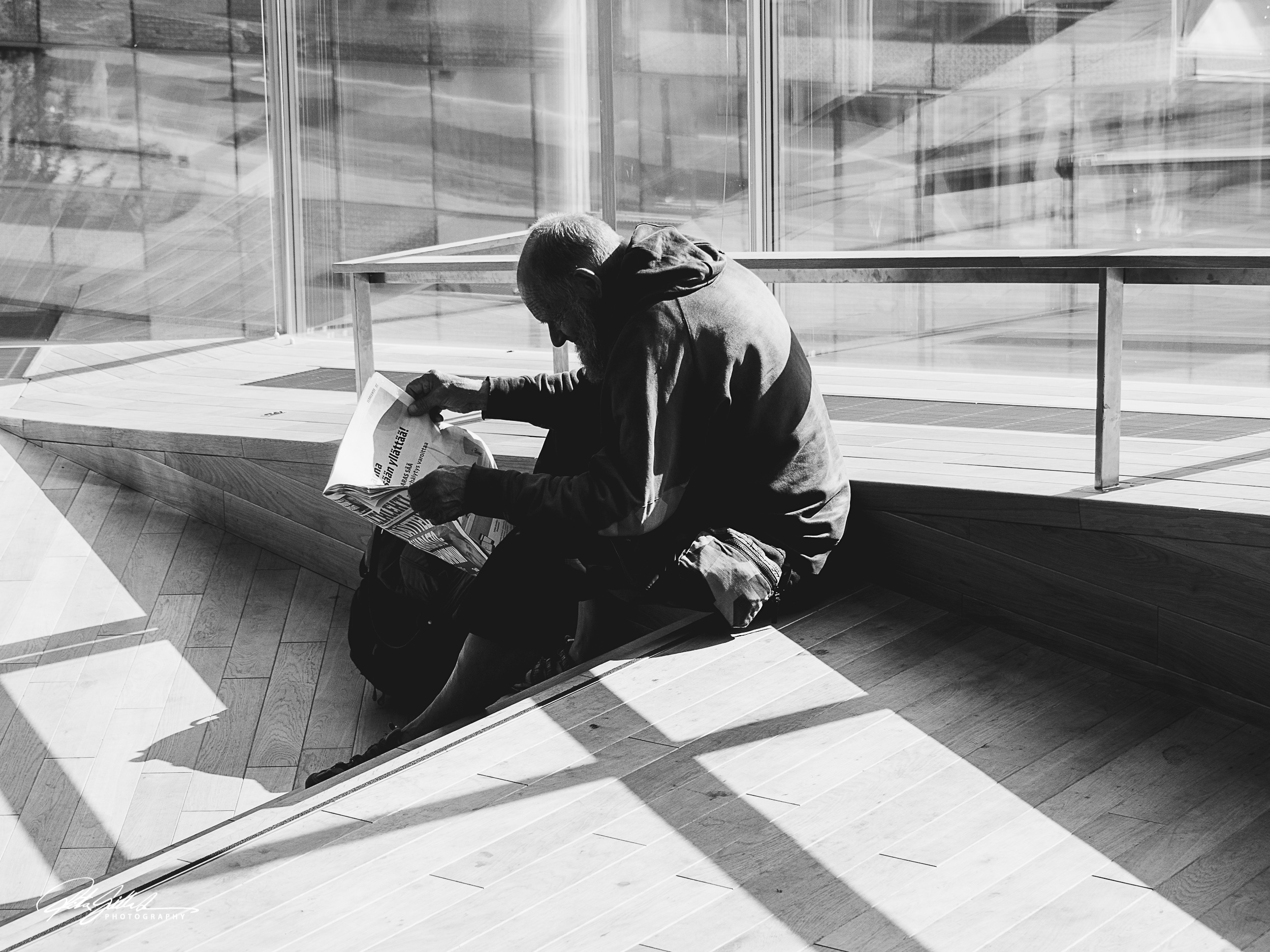
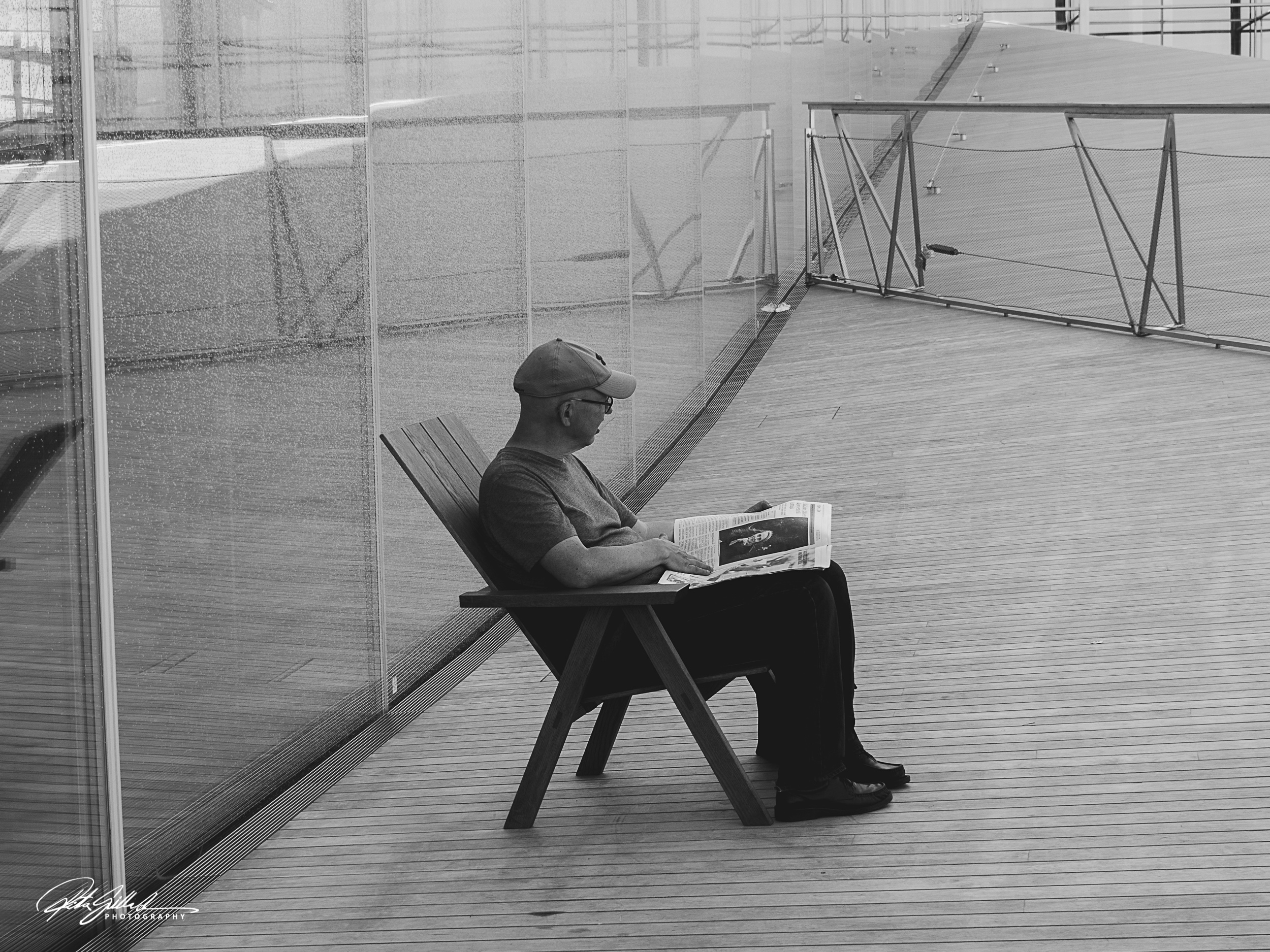
The Bookshelf is from our Library Fyyri in Kirkkonummi, a beautiful, modern architecture and welcoming atmosphere, where community members gather to enjoy books, attend events, and connect with one another. Meanwhile, the three men reading are in Oodi, the innovative central library in Helsinki, which serves as a vibrant hub for culture and creativity.

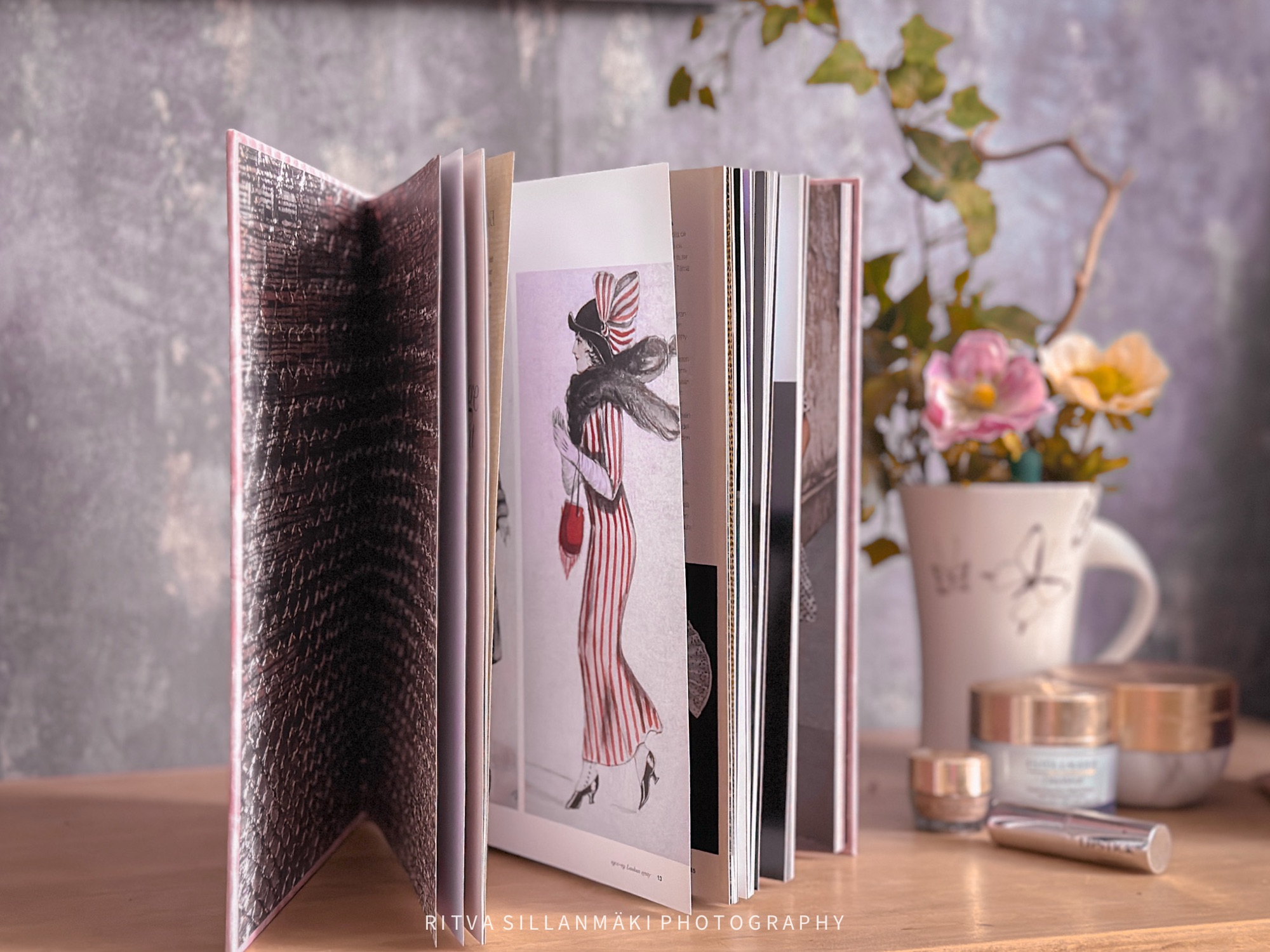

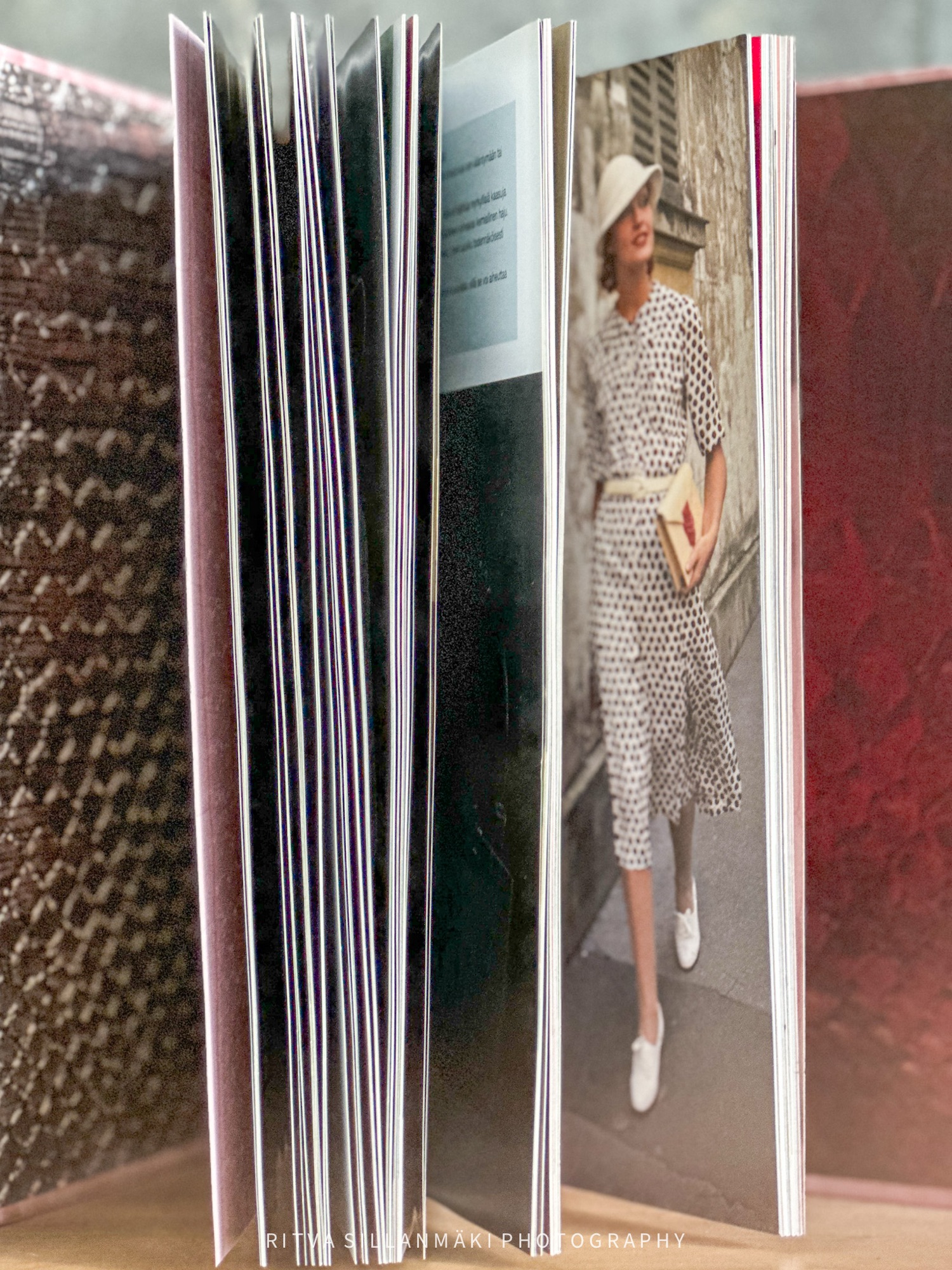
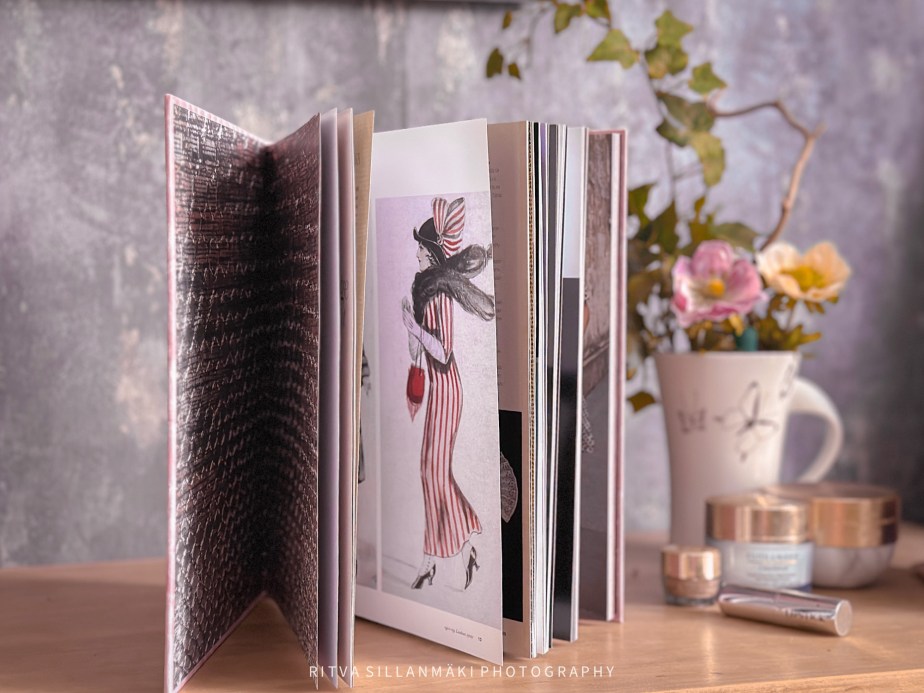
I took these photos of a book about Vintage bags, it is a gift from a friend of mine – I do love handbags 🙂
In conclusion, zooming this way was fun and, to many of us, a new experience. Anne’s challenge last week was an excellent reminder of the joy of experiencing and learning something new. Her post was, as always, a source of inspiration with amazing photos. I hope you have fun joining us again this week. Remember to tag Lens-Artists; also, please link back to my original post.
Next week is Sofia’s turn to host, Saturday 7th June. Until then keep on smiling ☺
If you want to know more about the Lens-Artists Challenge, please click here.
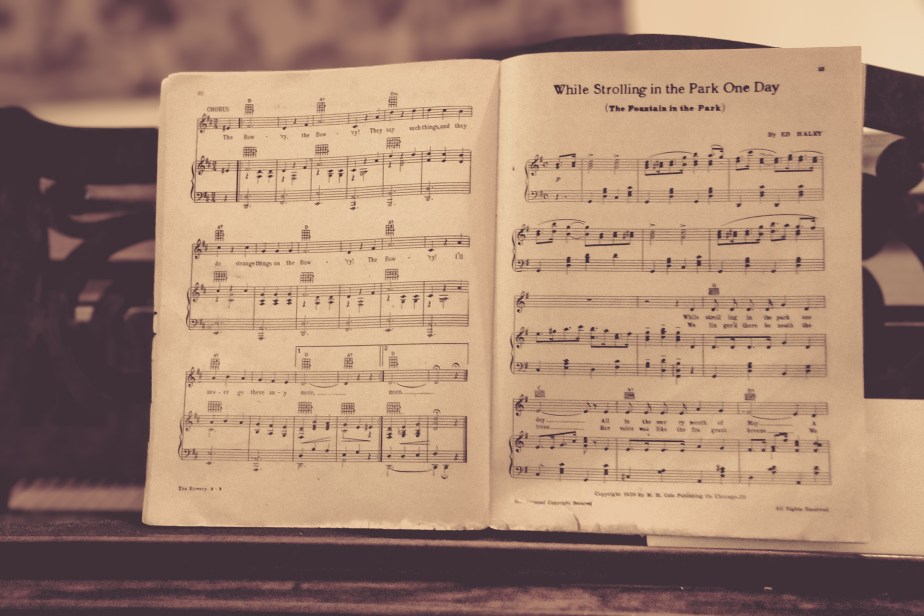
Let me end this post with book of vintage sheet music . “While strolling through the park one day, in the merry merry month of May….

For Debbie´s Six Words Saturday.
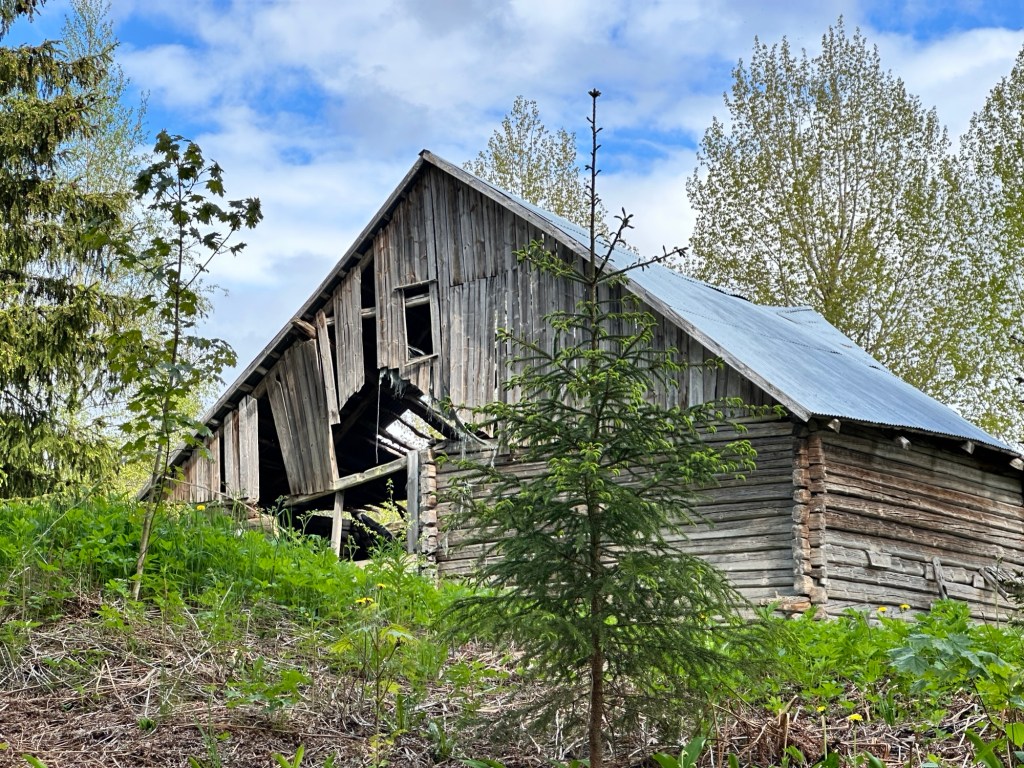
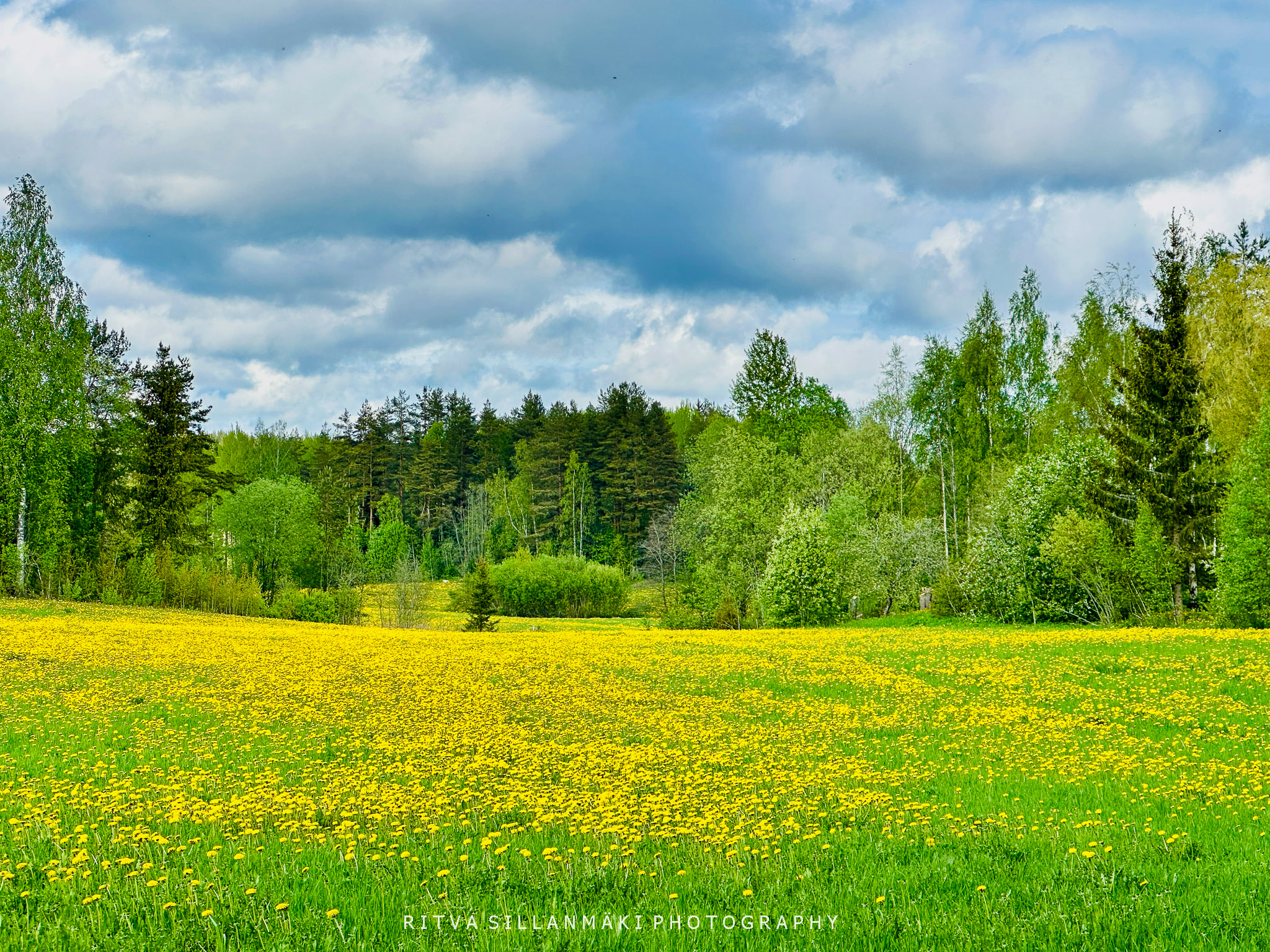
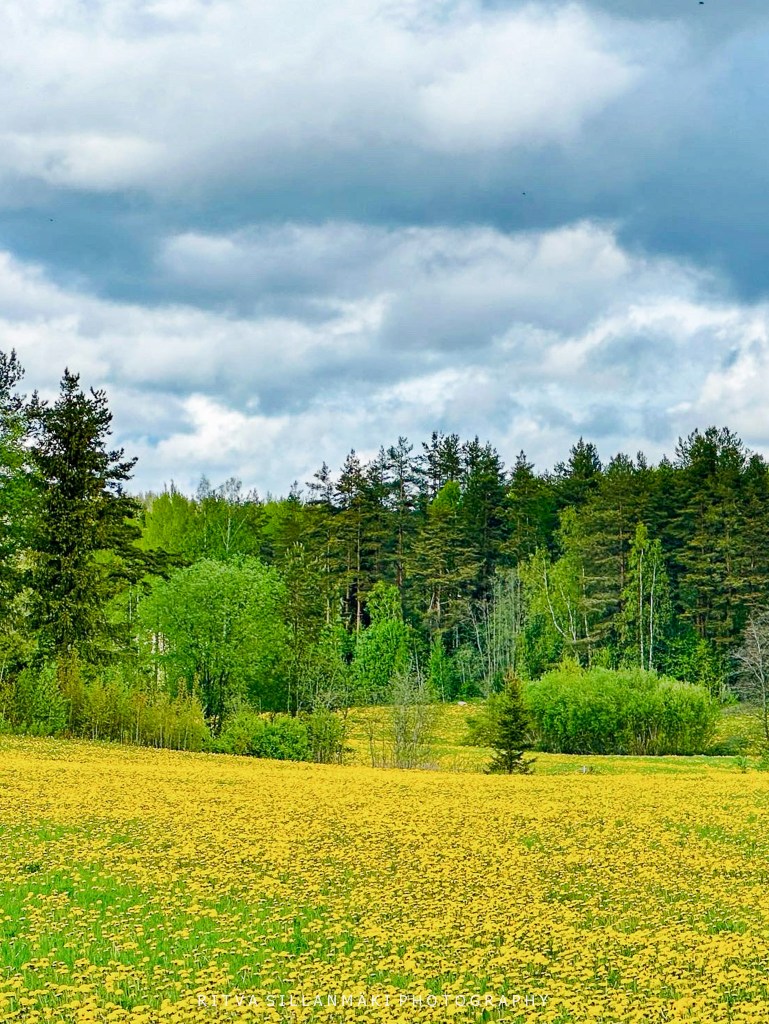
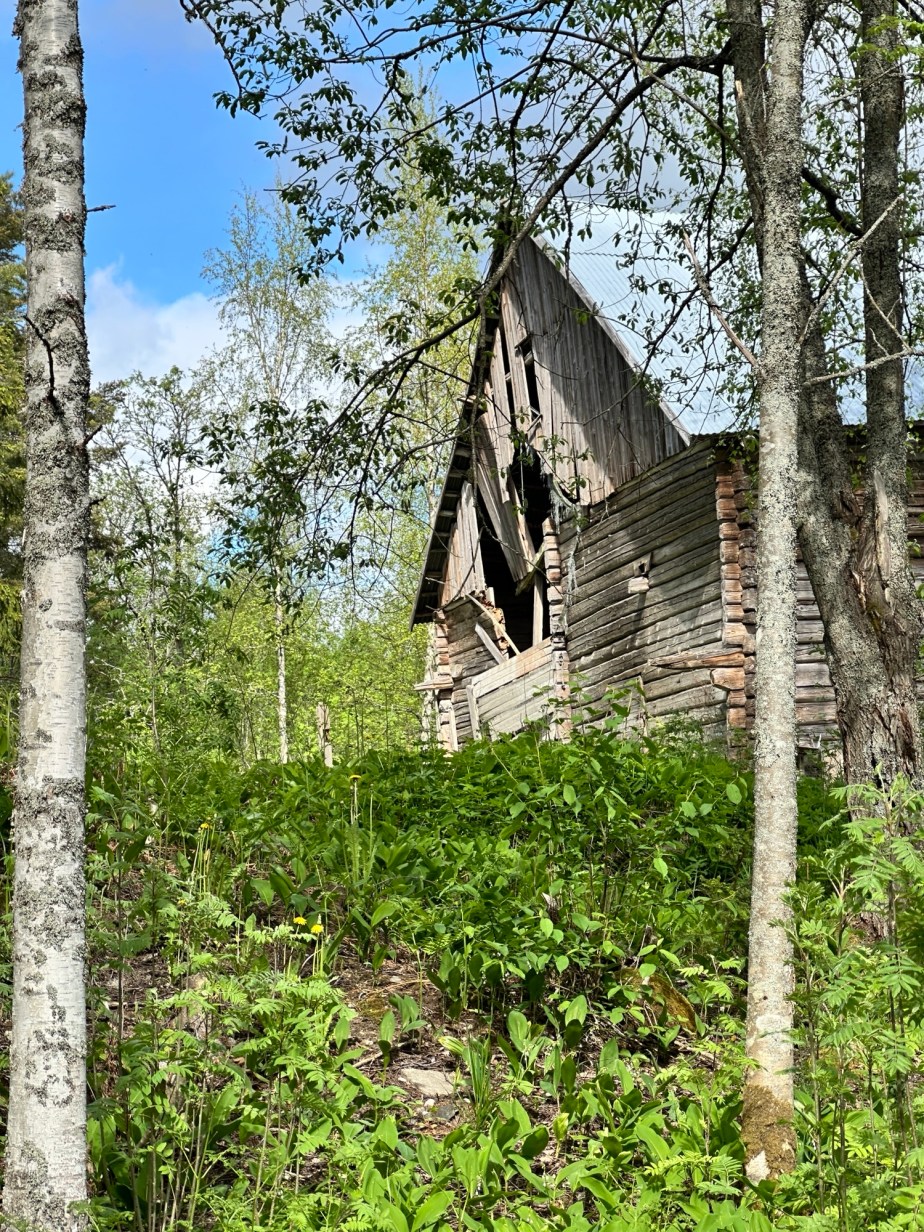
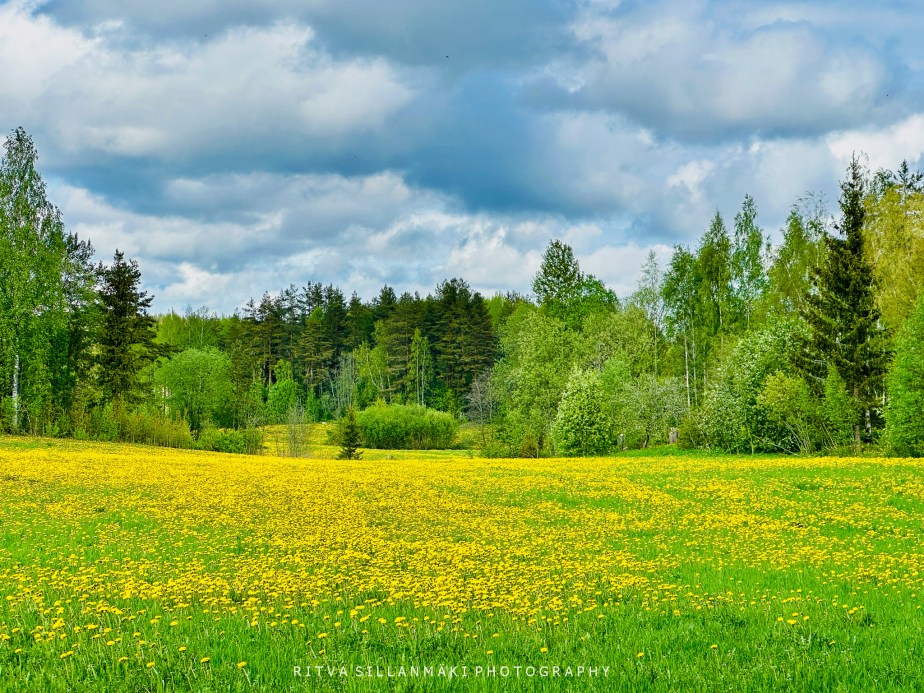
traditional Scandinavian grain drying and threshing cabinThis is the prime time for dandelions in my neck of the woods. The glorious yellow fields of this pest of a flower look lovely, stretching out like a bright carpet across the landscape, creating a vivid contrast against the greens of the grass and the browns of the earth. This weed is lovely in its brightness, with its unapologetic splendor. I took these yesterday, reveling in the beauty of the fields and the soft, fluffy clouds drifting lazily above, where the sun peeked through to illuminate the landscape. However, towards the end of the day, the clouds turned dark, gathering together ominously and giving us a pour of rain that was both refreshing and needed. The scent of the air after the rain was so fresh and lovely, invigorating my senses.
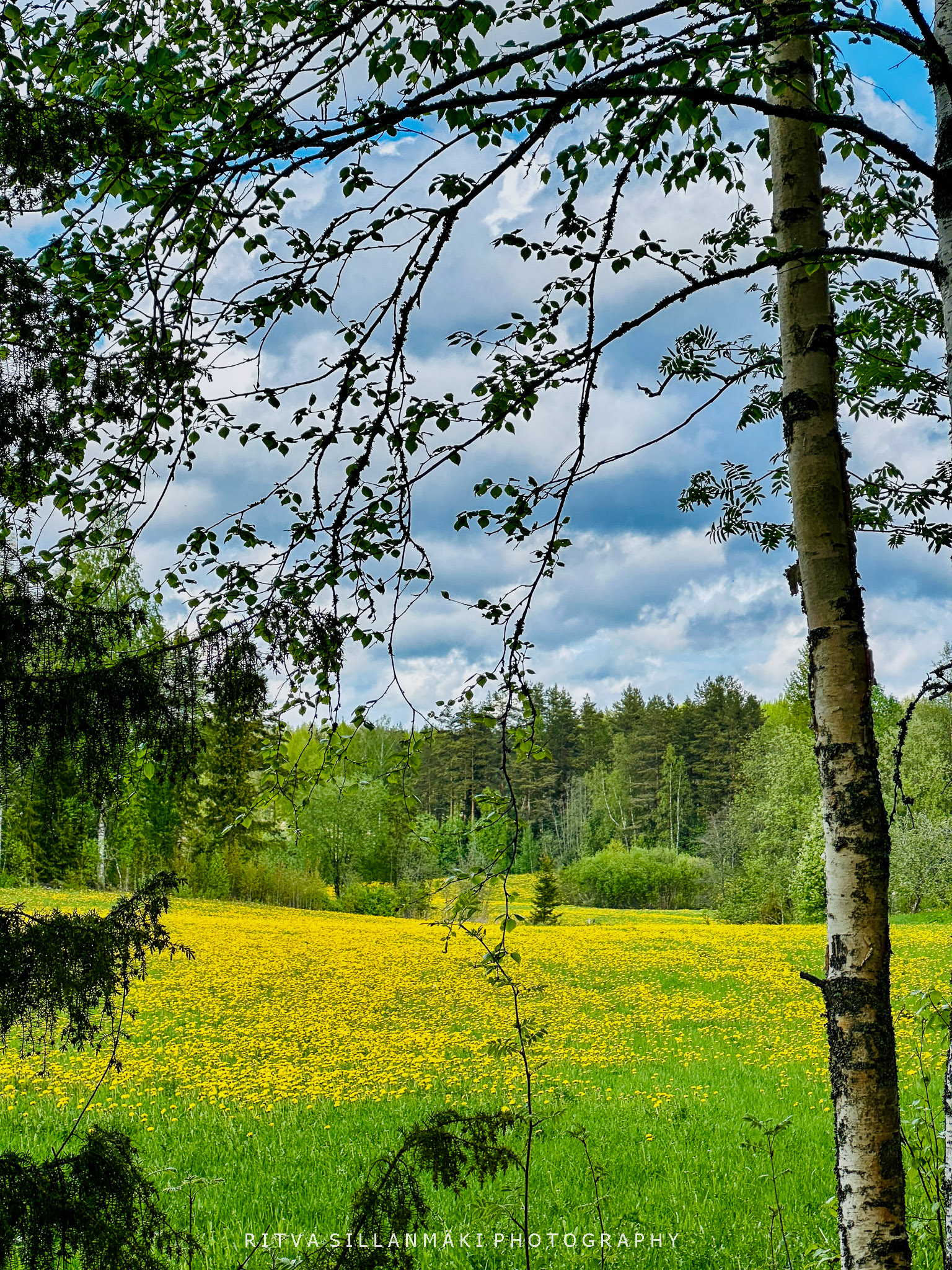
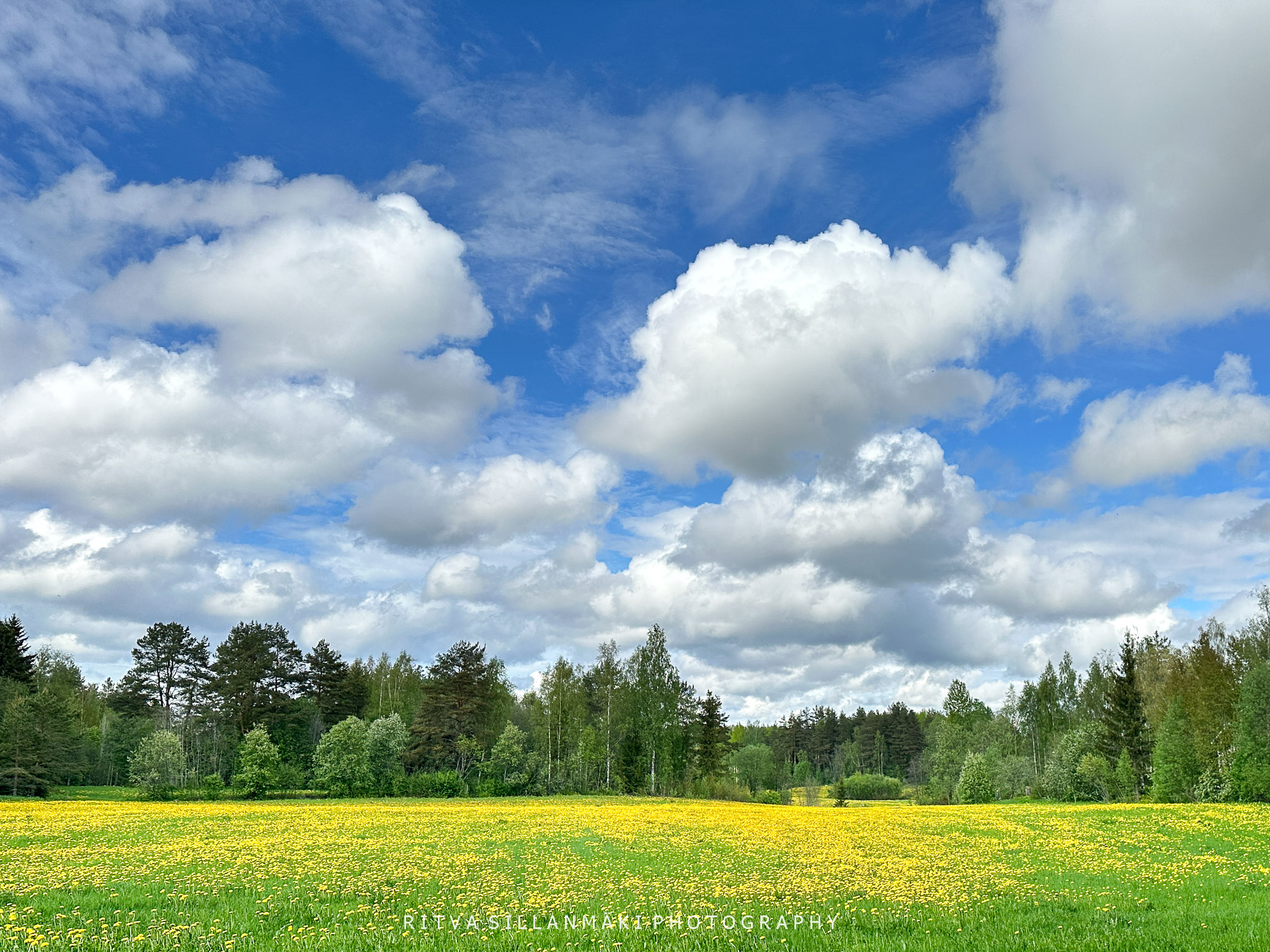
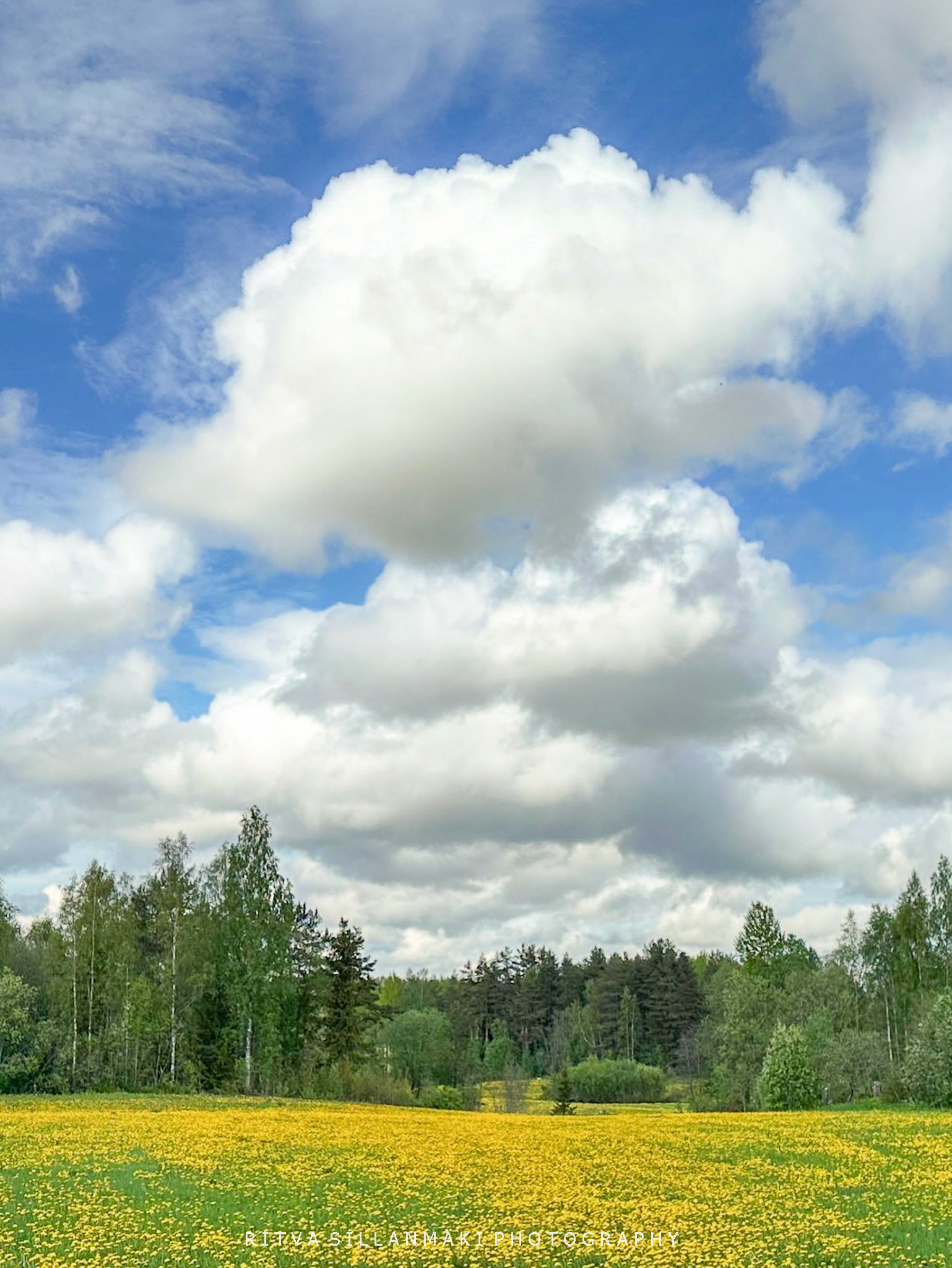
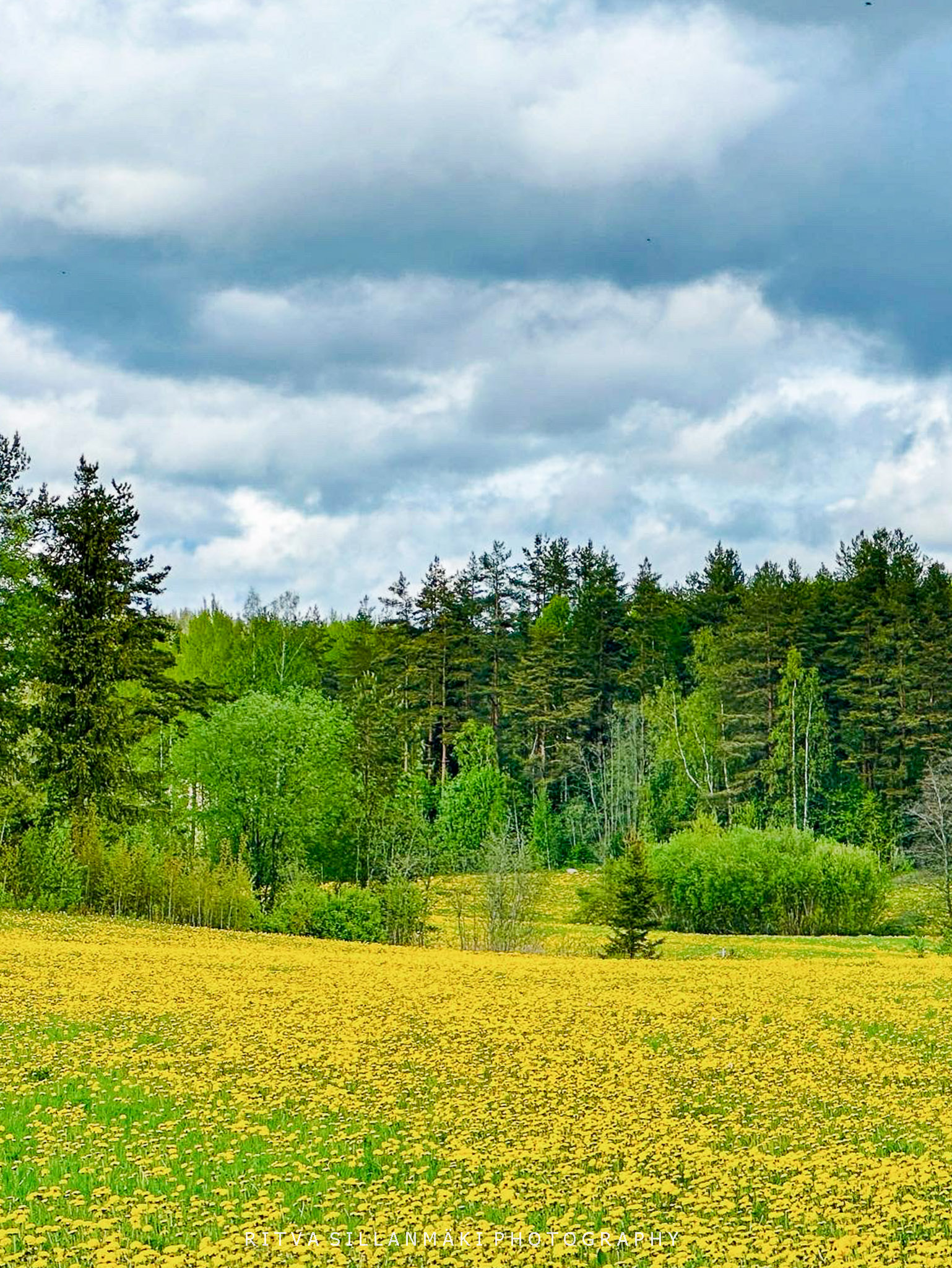
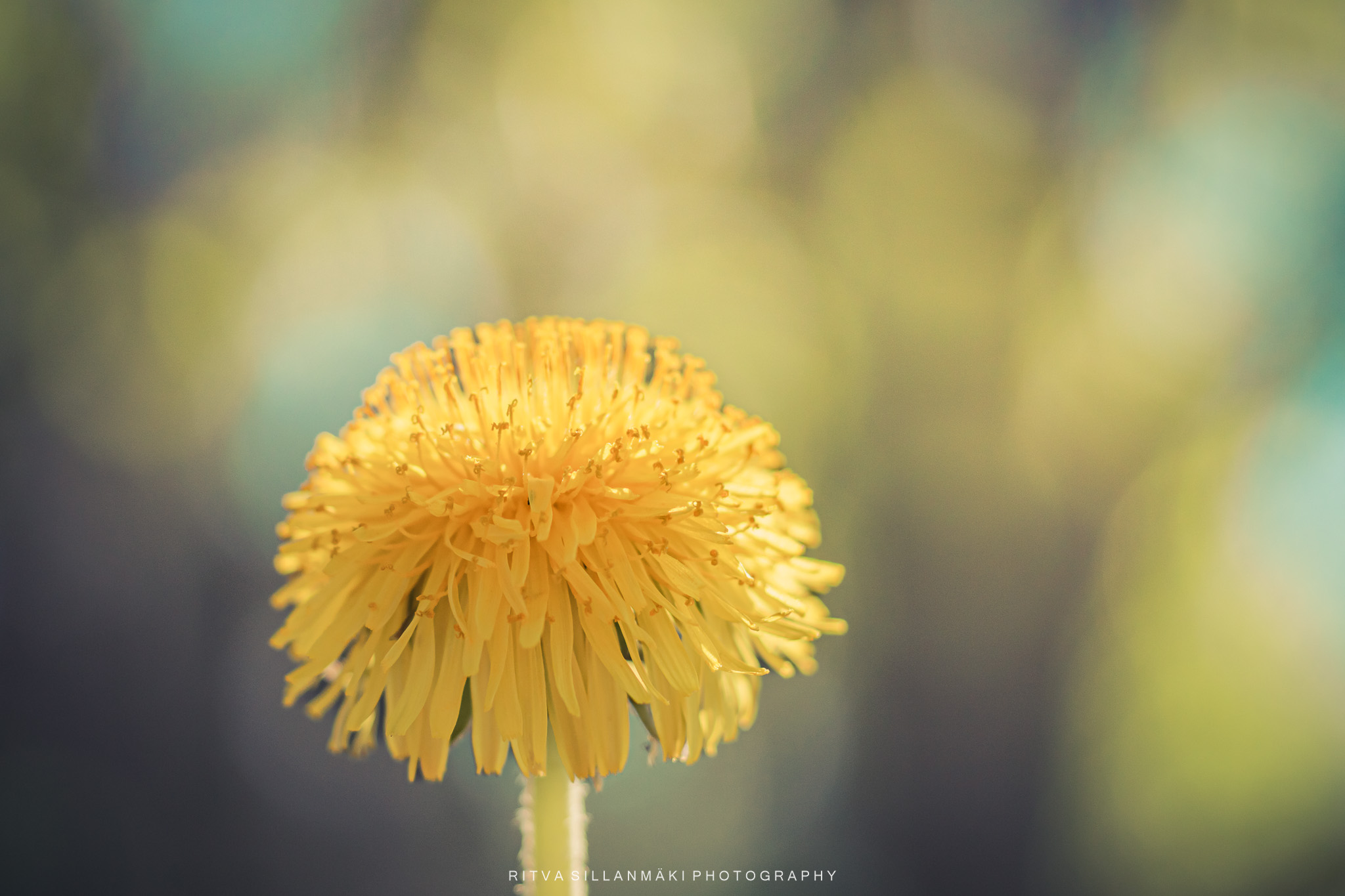
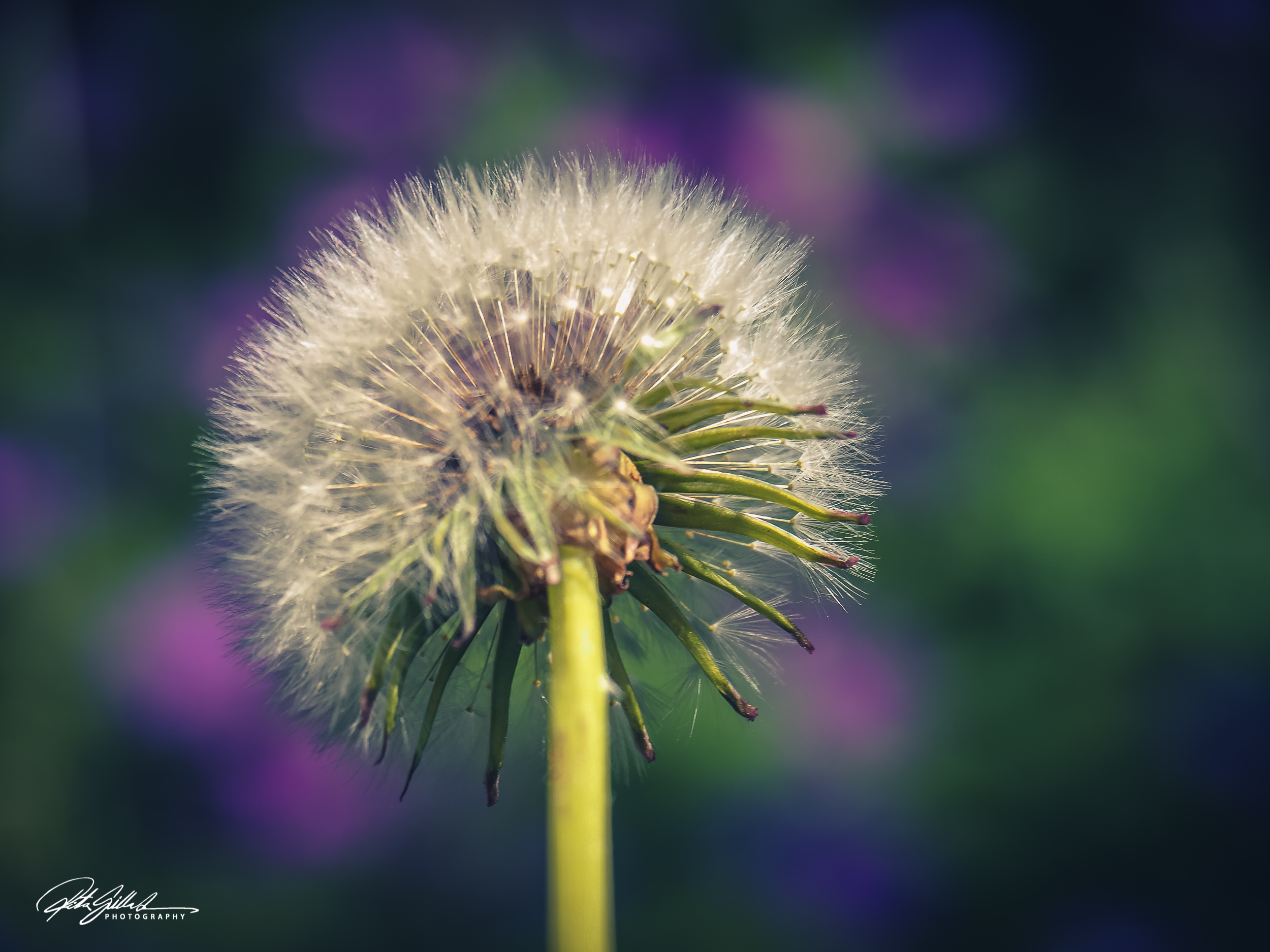
The seeds, delicate and fluffy, are a great macro photography subject, exploding into the air with just a gentle breath, scattering like tiny parachutes on the wind.

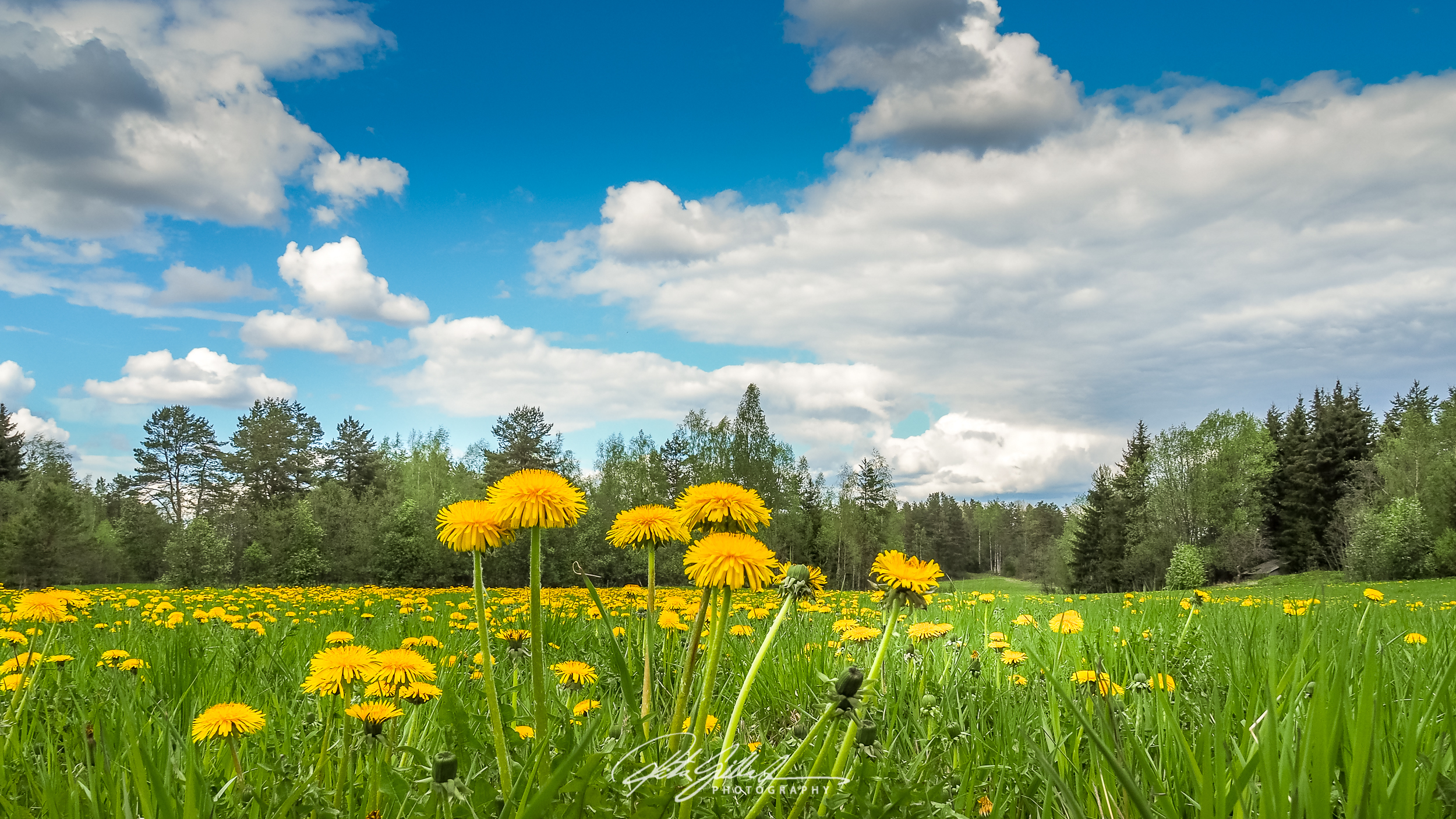
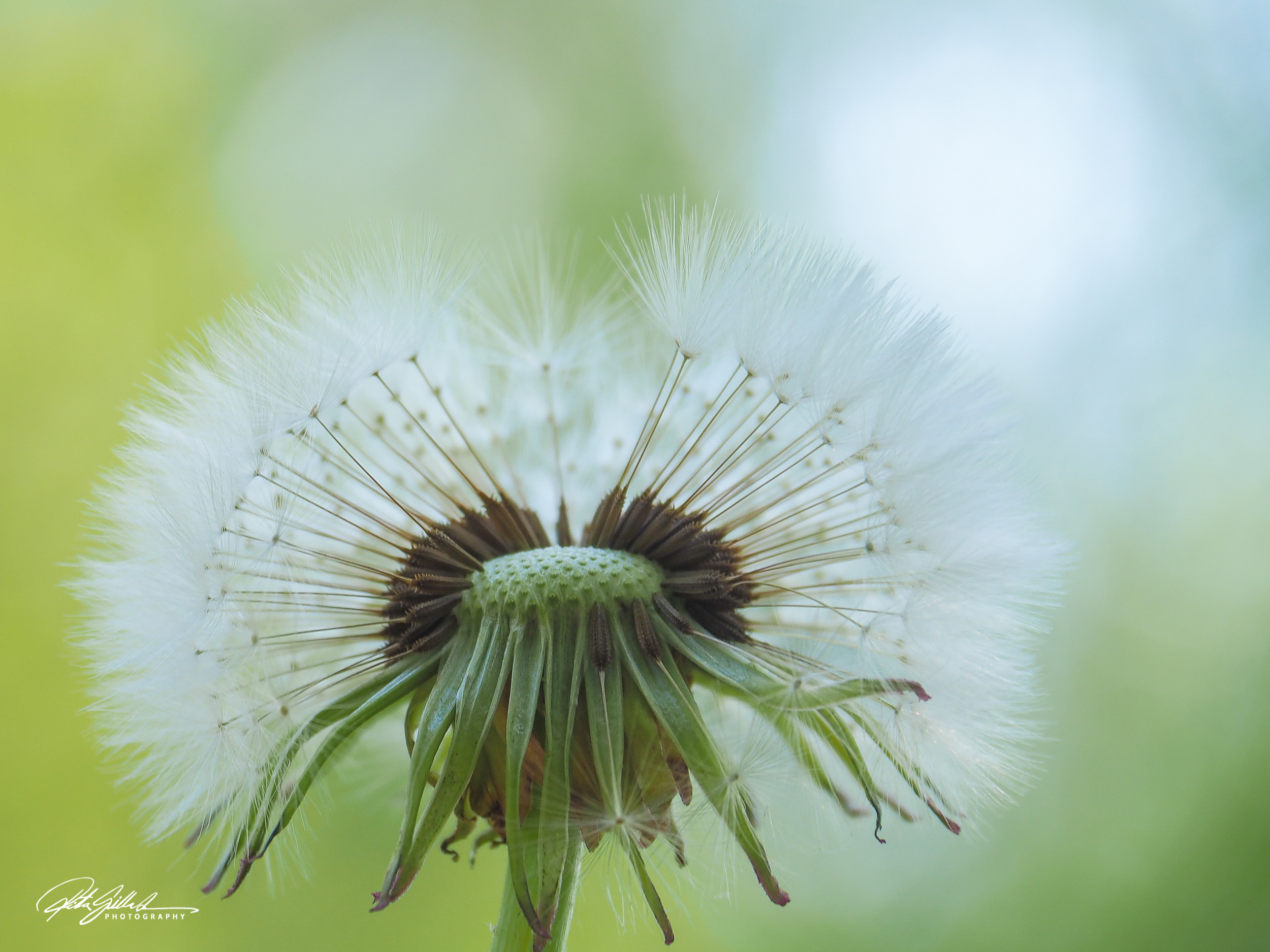
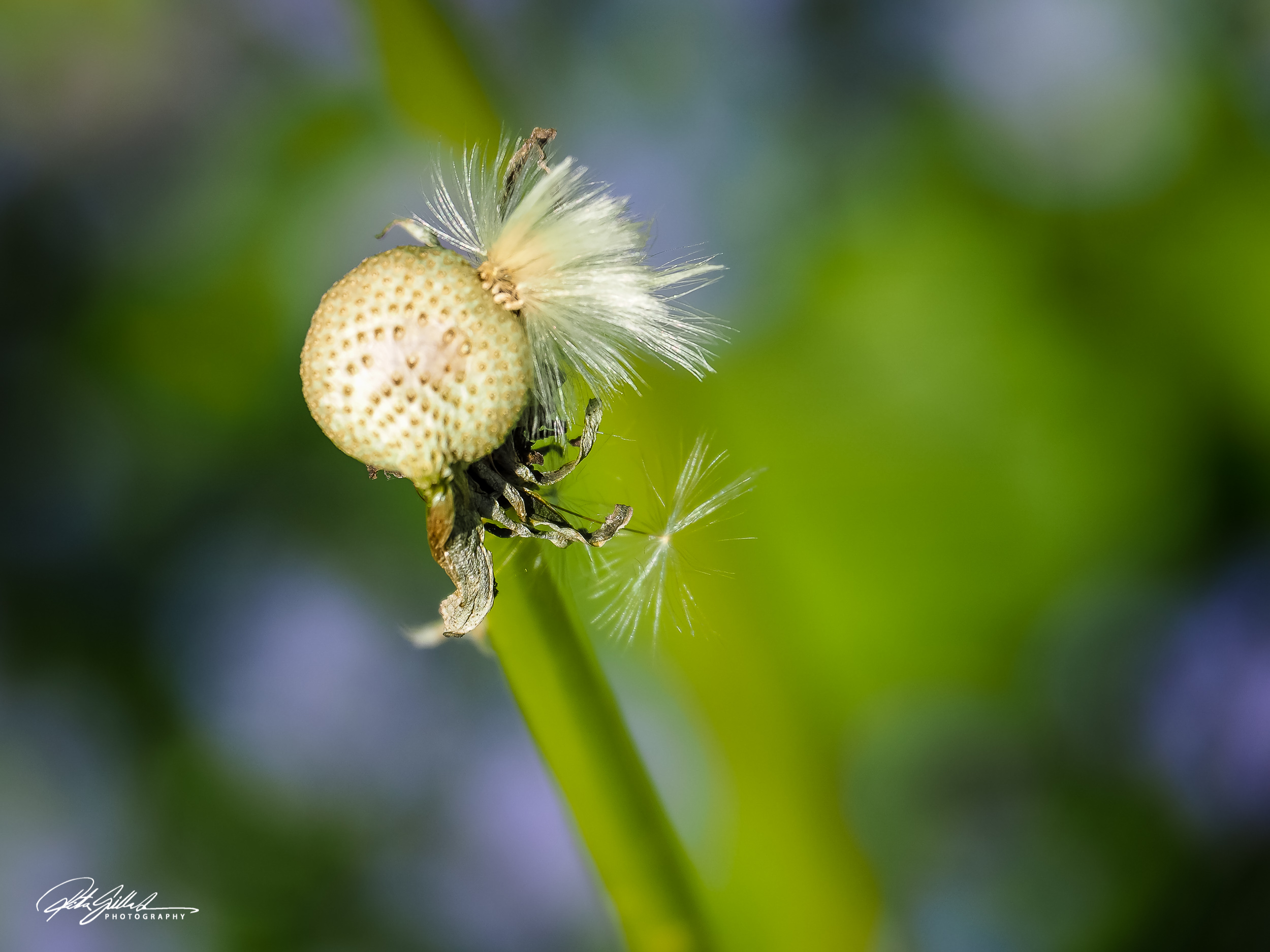
My old neighbor, by old I mean she used to be my neighbor and well she was on the older side; I was in my late forties and she in her late eighties, told me she used to make wine out of dandelions, a unique blend that captivated and surprised many. She said she would give me the recipe, but I never did actually get it, although it came up many times during our conversations, often reminiscing about the joy ipicking the dandelions. She was a lovely lady, always positive, her laughter , and her stories rich with wisdom about foraging, gardening, and the simple pleasures found in nature.
Dandelions can be made into wine, offering a refreshing and unique beverage. This traditional recipe is perfect for beginners looking to try something new for spring or summer meals. While many see dandelions as weeds, wine enthusiasts view them as ingredients. Dandelion wine is gaining popularity among DIY winemakers, featuring a light and citrusy flavor.
I googled this recipe
Dandelion Wine
Yields approx. 4 liters
Ingredients:
• 3 liters of dandelion petals (only the yellow parts)
• 4 liters of water
• 1.5–2 kg of sugar (adjust to taste)
• 2 organic lemons (juice + zest)
• 1 orange (optional – for rounder flavor)
• 1 tsp freshly grated ginger (optional)
• 1 packet wine yeast
• Optional: 1 tsp yeast nutrient
Instructions:
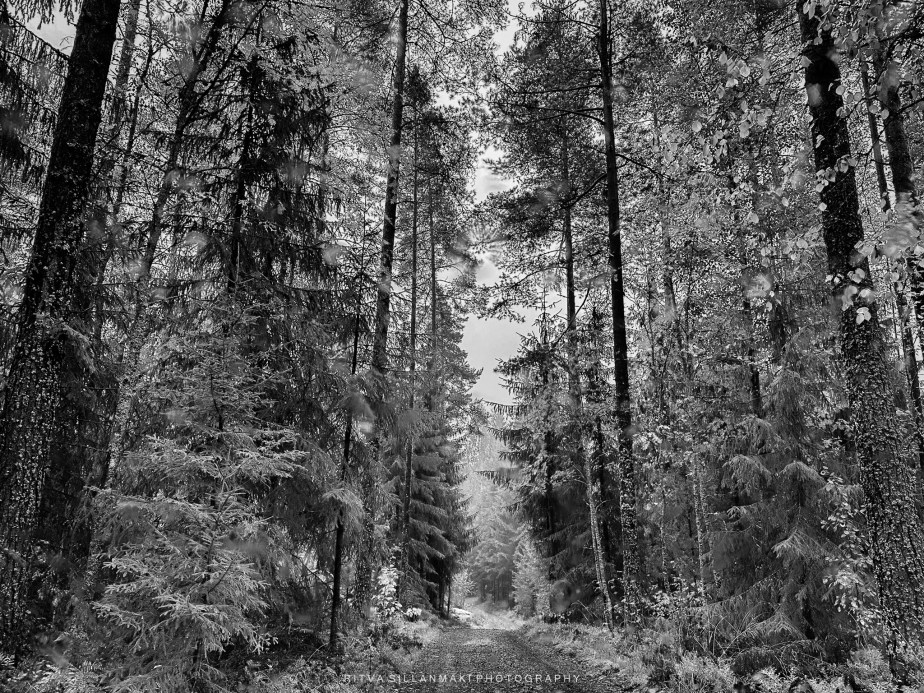
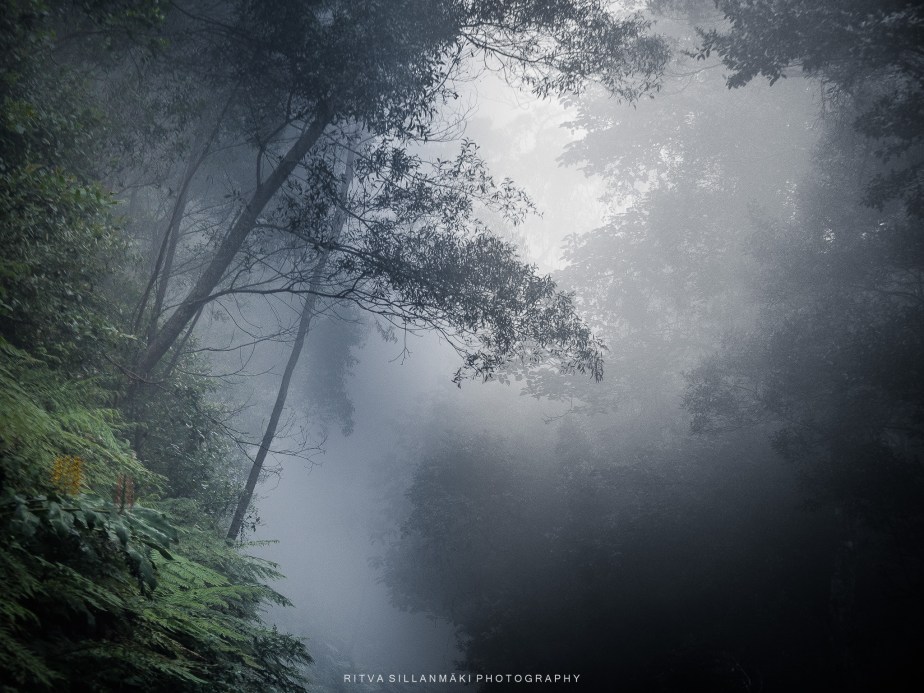
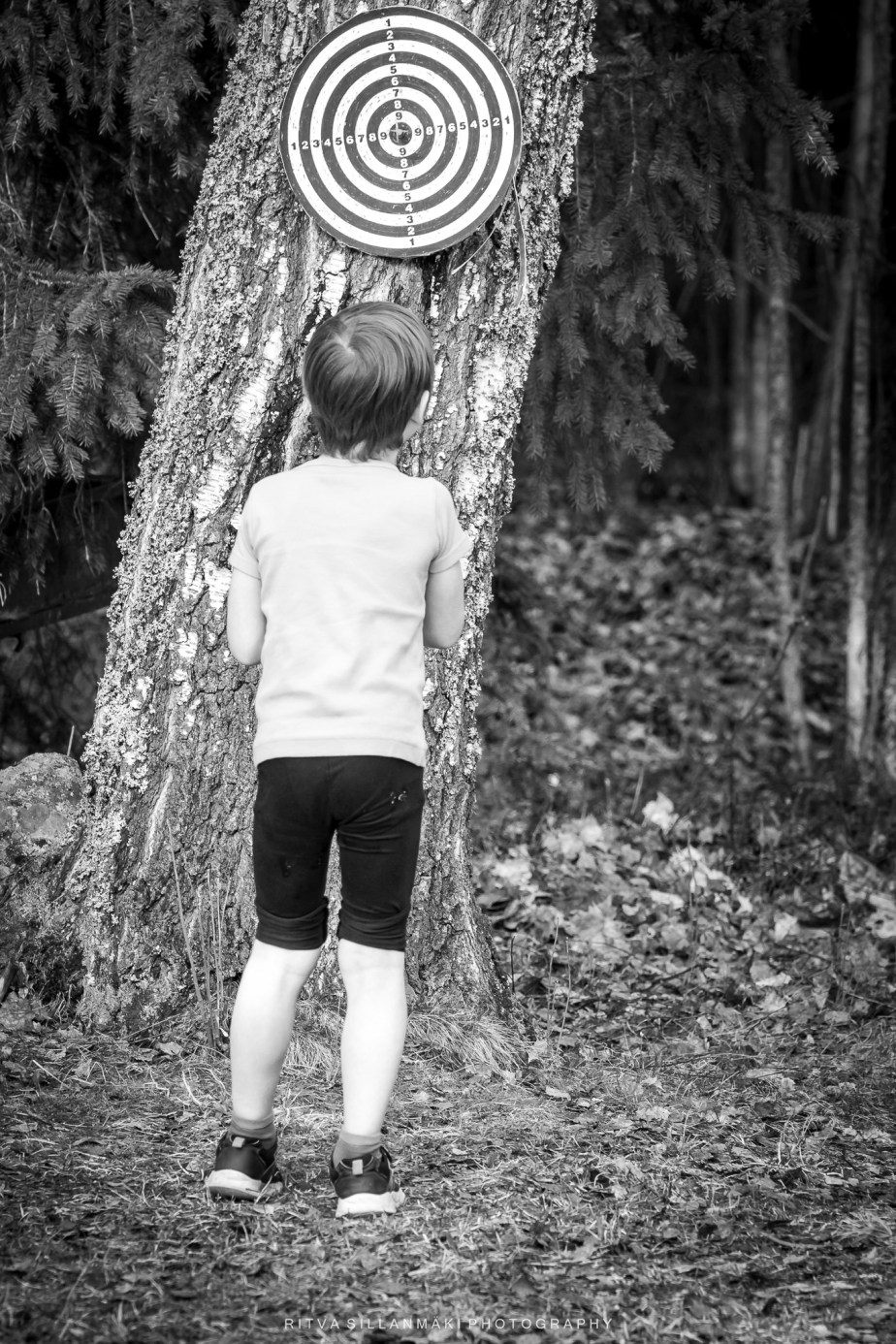
You cannot escape forests here – they are all around us, enveloping every corner of the landscape. Approximately 75 percent of Finland’s land area is covered by forest, creating a lush, green tapestry that supports an array of wildlife and offers countless opportunities for exploration.
I have had a forest right at my doorstep most of my life, from playing in the forest as a kid to taking walks in it as an adult, allowing me to witness the changing seasons, from the vibrant hues of autumn leaves to the serene blanket of snow during winter, each moment reinforcing the connection I feel with nature. The soothing sounds of rustling leaves and chirping birds provide a constant reminder of the peace that these natural havens can bring.
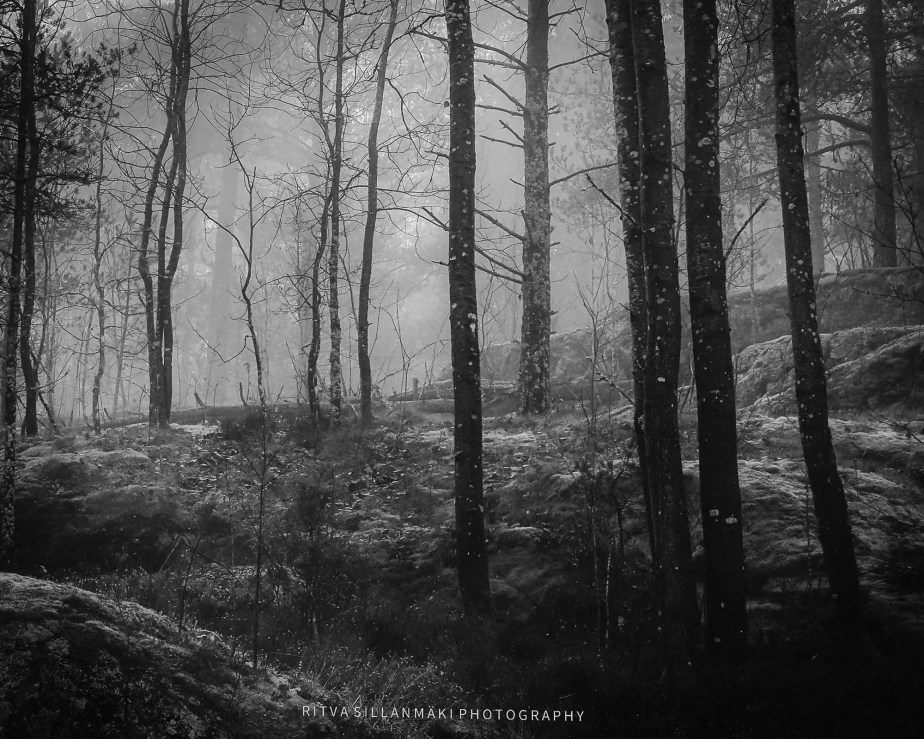
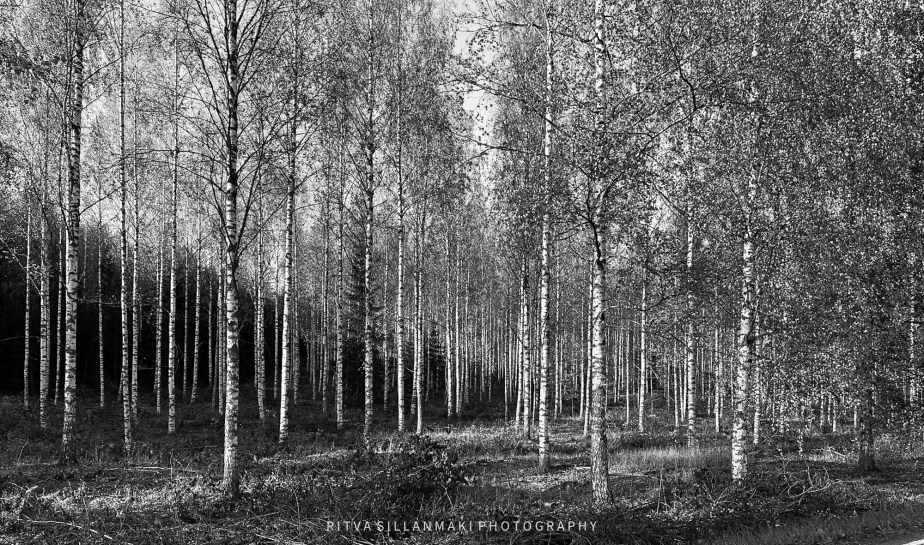
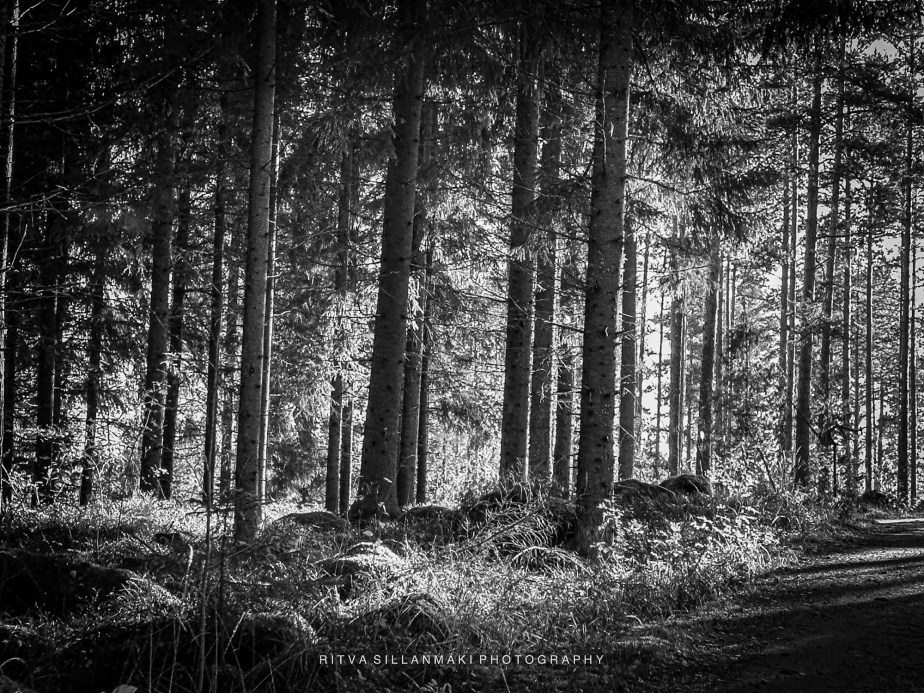
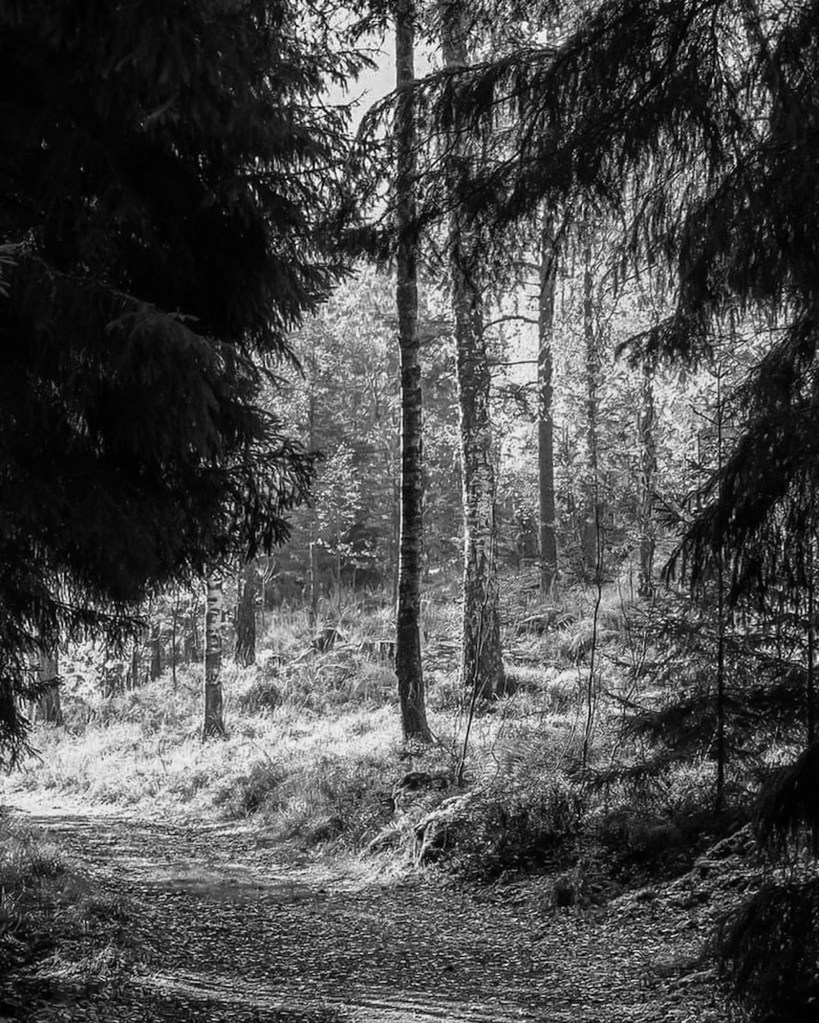
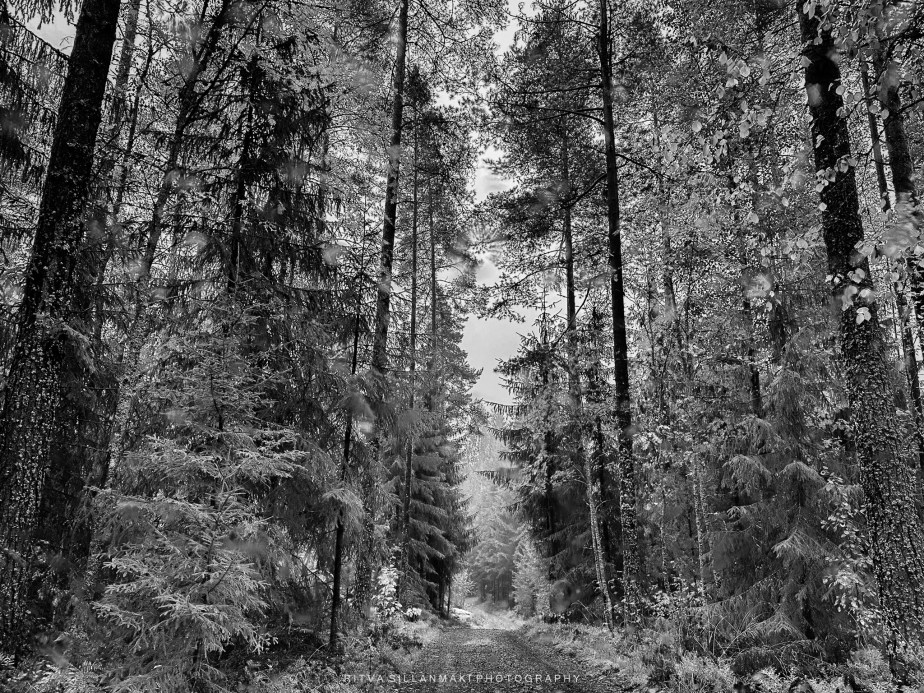
Posted for For Leanne’s Monochrome Madness.
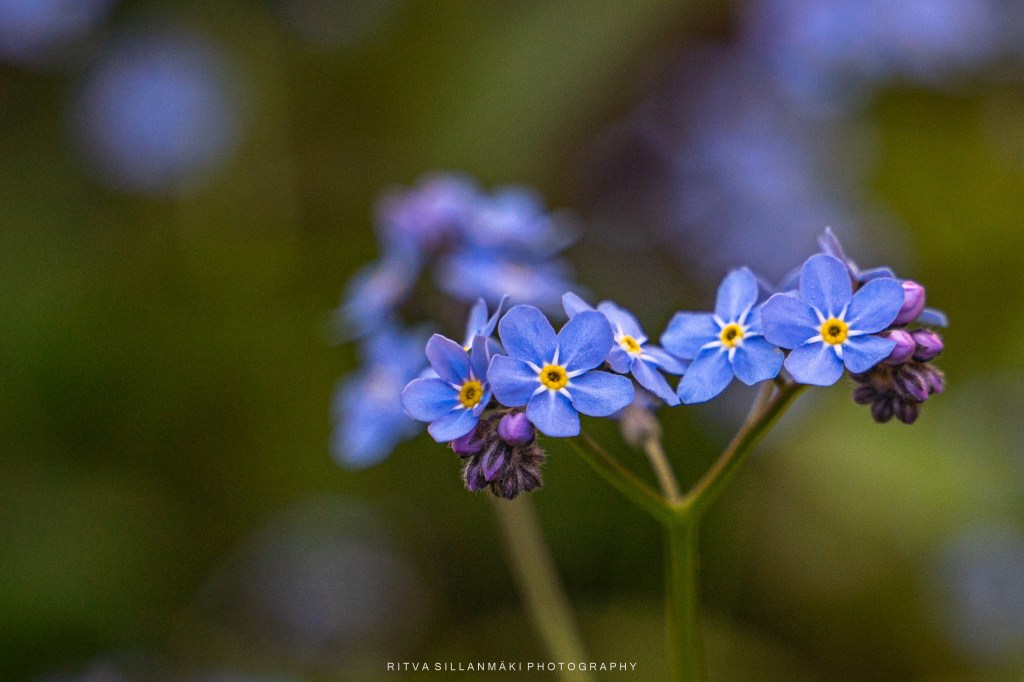
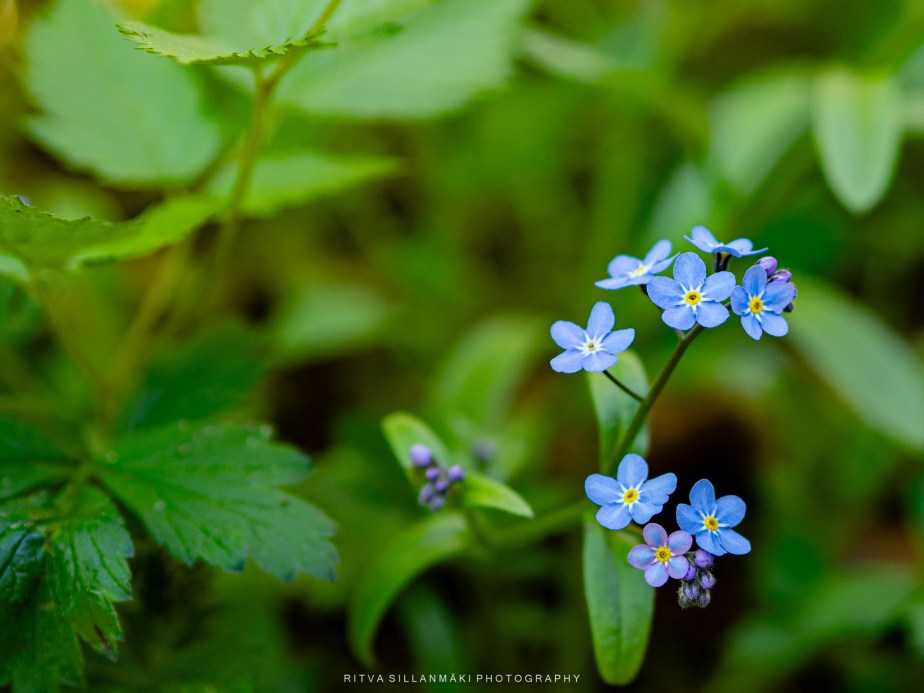
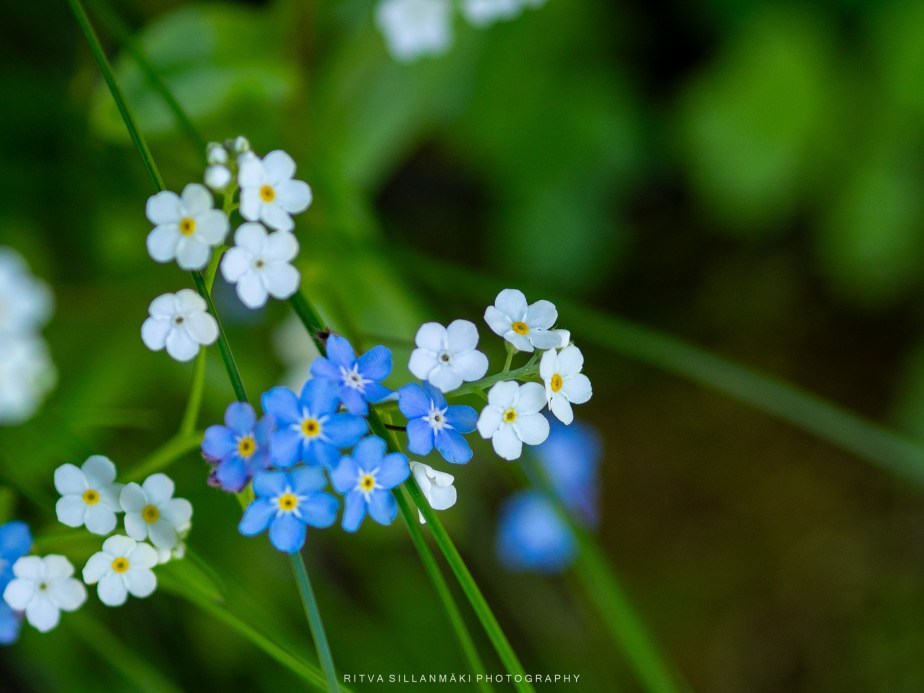
I’ve had a blast soaking up some sunny days in the backyard, just watching the colors and flowers burst into life like nature’s own art show. Those little forget-me-nots are a real highlight—so delicate and lovely! I’ve got loads photos of them from past springs, so I definitely don’t need more, but honestly, I can’t resist the urge to snap some fresh shots.
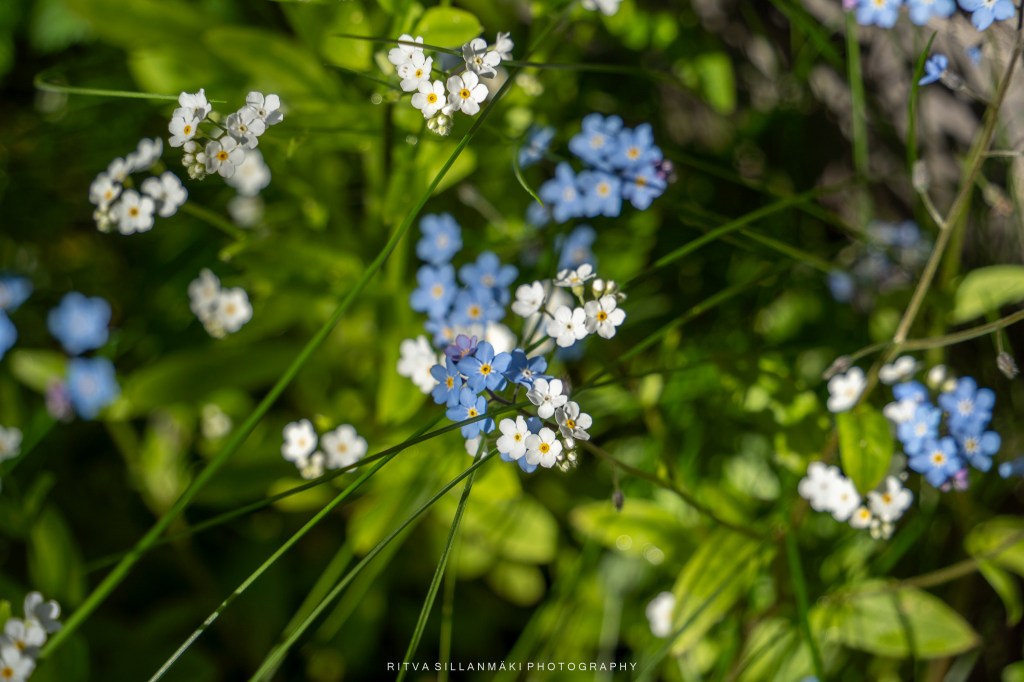
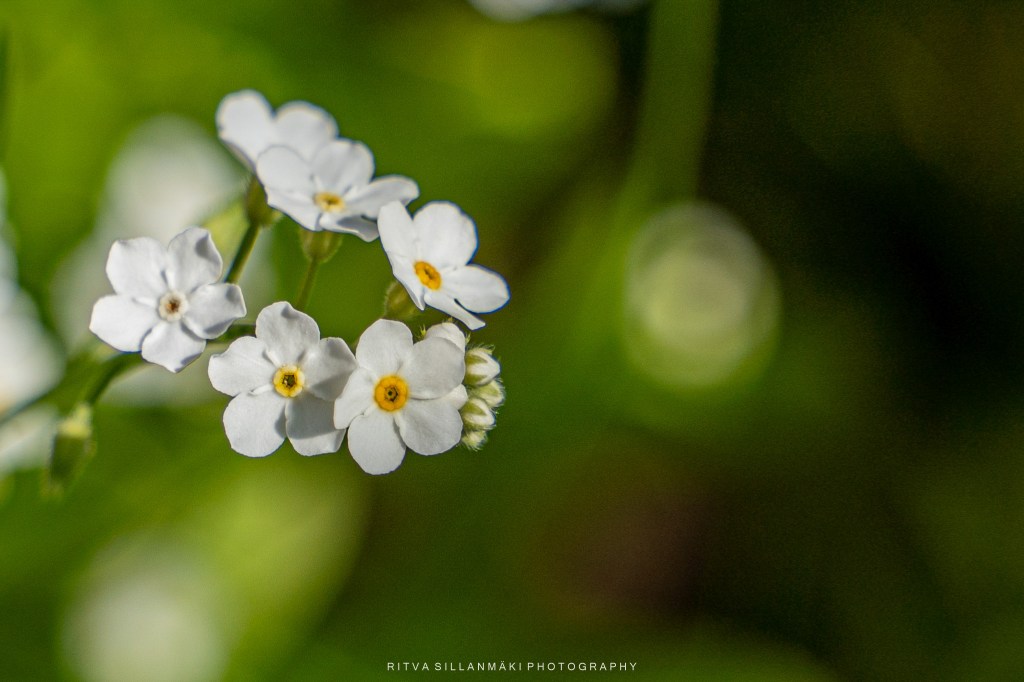
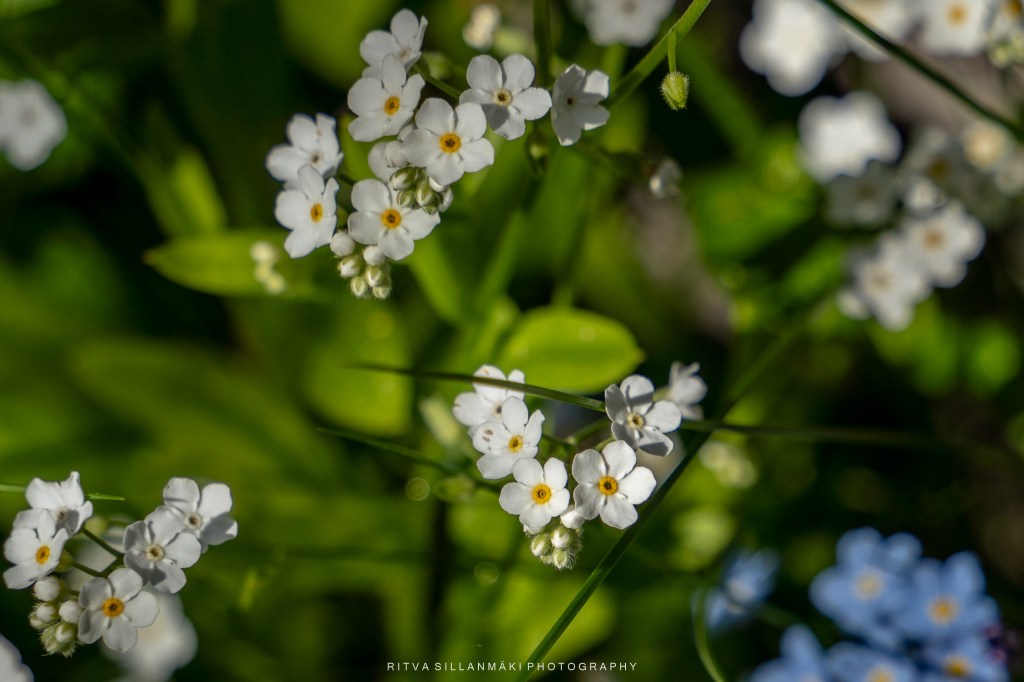
The White Forget Me Not Flower carries a heartfelt spiritual significance for many, embodying enduring love and cherished memories. Often used to pay tribute to those who have passed, this delicate bloom has inspired countless poems and songs that beautifully express the depth of its timeless affection. For some, it serves as a comforting beacon of hope, offering assurance of a brighter tomorrow, while for others, it symbolizes the peace and tranquility that only nature can provide during moments of reflection and loss.
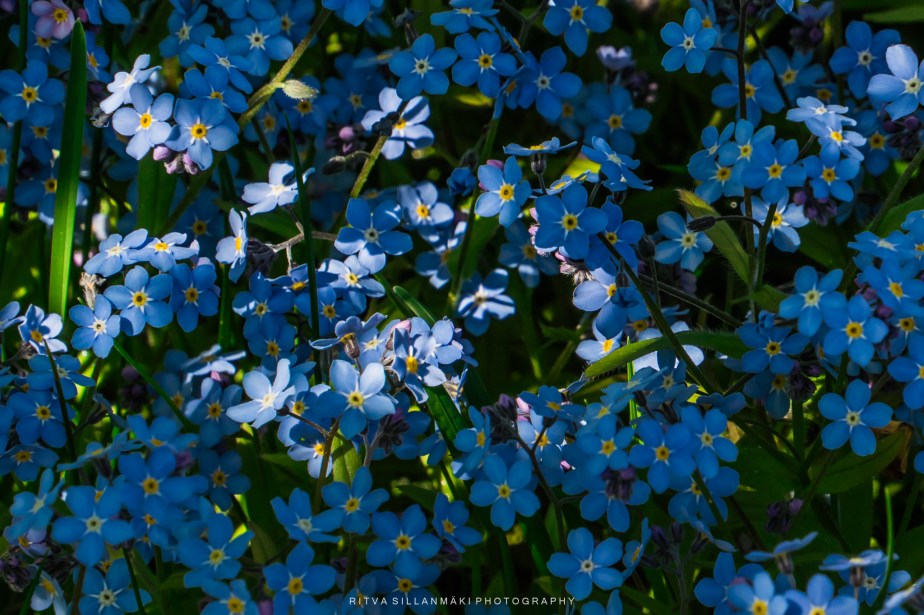
The Blue Forget Me Not Flower holds a gentle charm with its spiritual qualities and healing properties, known for bestowing a calming effect and fostering a deep sense of tranquility, making it a wonderful companion for meditation and relaxation. This delicate flower also serves as a heartfelt symbol of remembrance and loyalty, inspired by a poignant medieval legend of a knight who, while gathering these blossoms for his beloved, tragically fell into a river, urging her to “Forget me not.” This touching story has woven the flower into our hearts, associating it with memorials and funerals, reminding us of the enduring connections we cherish.
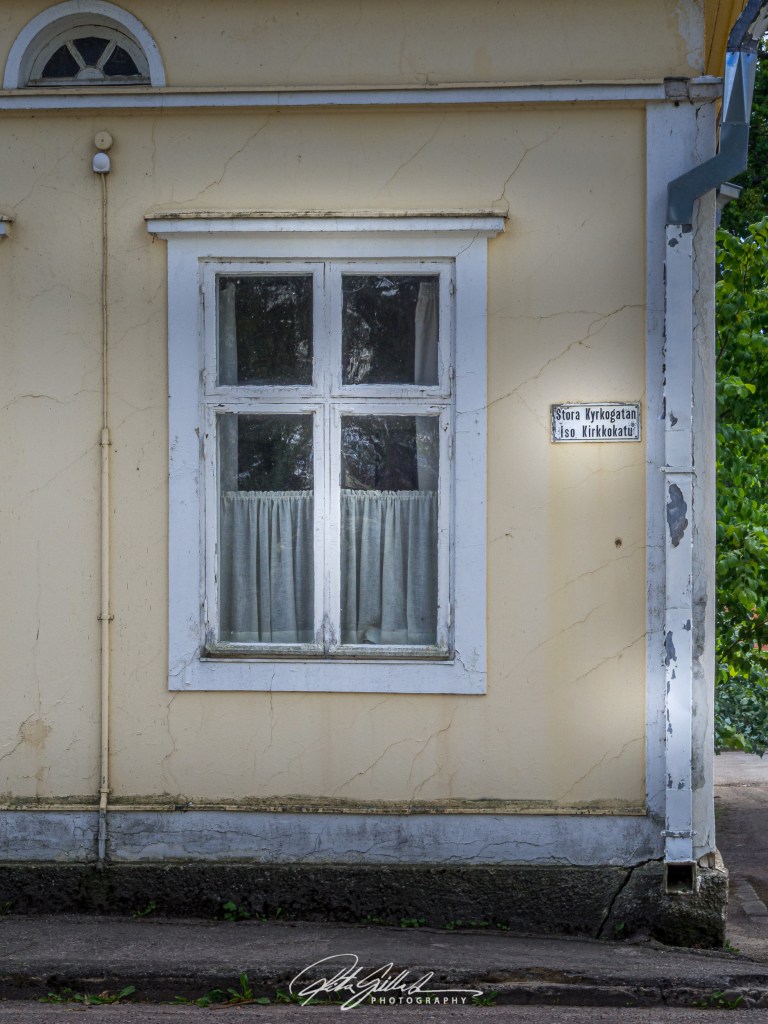
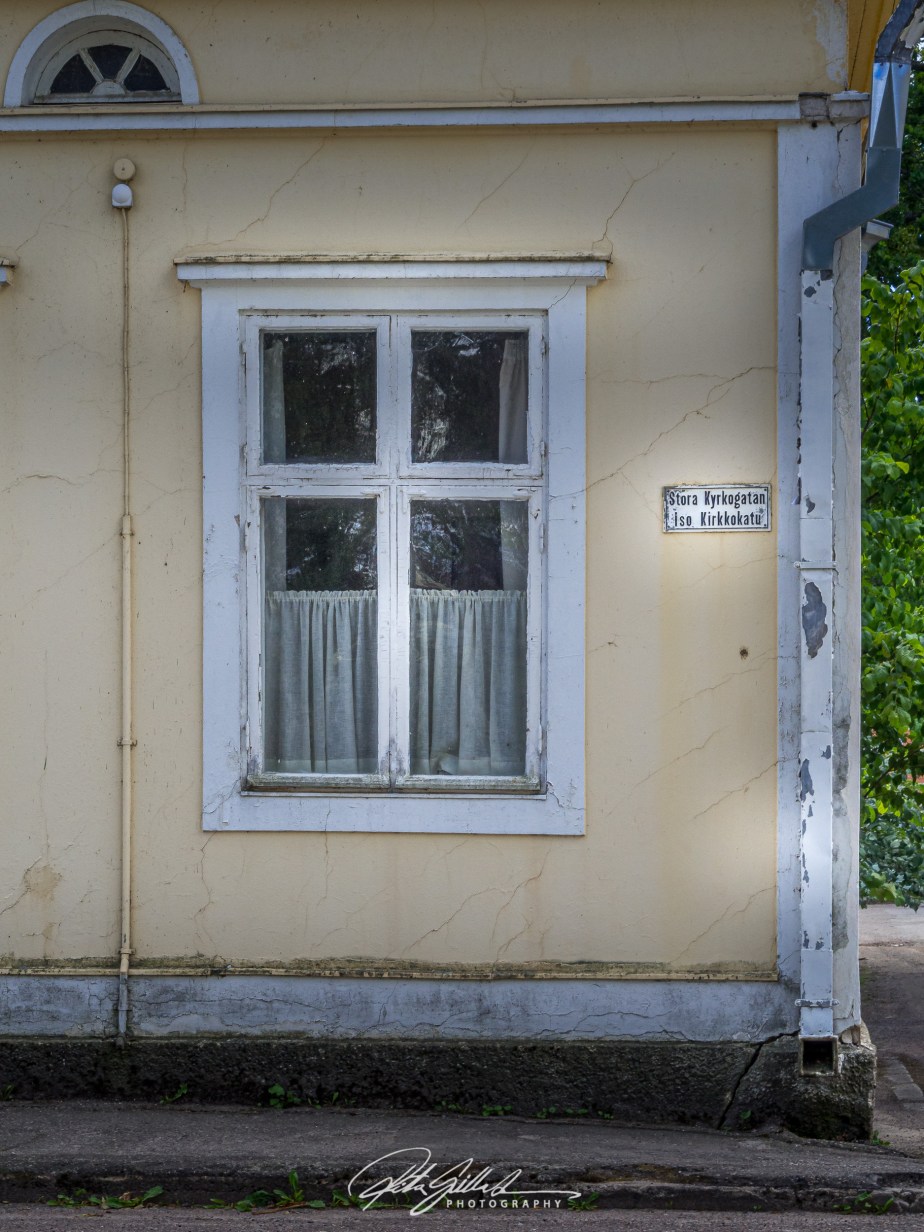
Here is a photo of a window from Iso Kirkkokatu for Monday Window. The building at this point in time could have used some much-needed tlc, as its facade showed signs of wear and aging. Despite this, the window itself stands out beautifully. The light reflection casts enchanting shadows, one more addition to the shot.
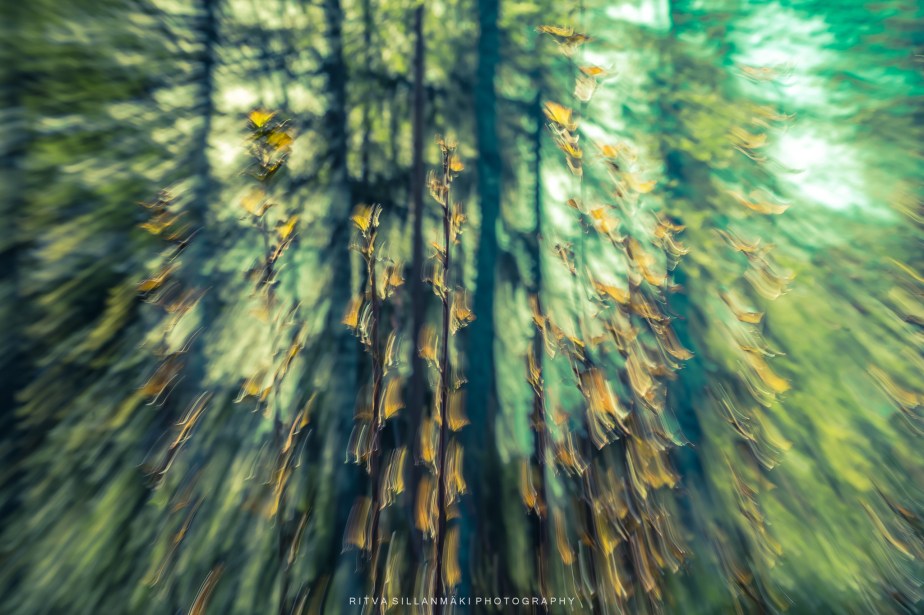
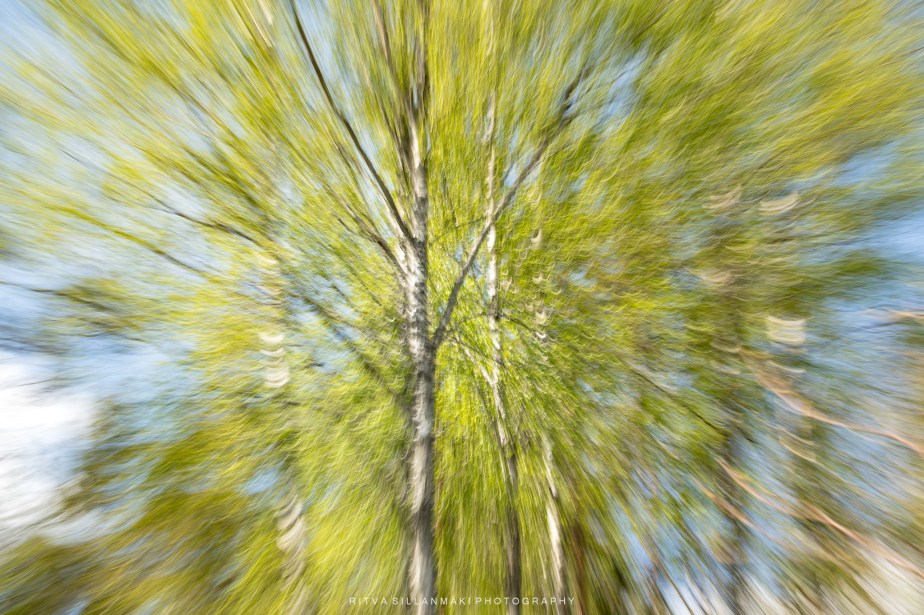
Let’s get this out in the open right away: when I saw this challenge, I was SO out of my depth. I don’t have a tripod, nor do I use any filters, and I rarely shoot in manual mode—my comfort zone has always been in more intuitive settings using either aperture or shutter setting. I am all but a technical photographer; instead, I am all about composition and mood, focusing on capturing the essence of a moment rather than worrying about technical perfection. The idea of embracing an entirely new approach left me feeling insecure. I was terrified, and although maybe that is a bit too strong a term, daunted is more like it. The prospect of experimenting with techniques outside my usual repertoire felt a bit overwhelming, yet at the same time, a small flicker of excitement began to form deep within me, urging me to push through the apprehension and discover what I might learn from this experience.
I did do it, I took SO many, most photos were just rubbish. I am so glad it’s digital photography; otherwise, I might have felt overwhelmed by the sheer volume of shots that didn’t turn out as expected. The challenge hosted by Anne from Slow Shutter Speed is all about zooming, which is an intriguing technique that falls under the broader category of Intentional Camera Movement. In this case, instead of moving the entire camera, you simply move the lens back and forth to create a unique visual effect. This approach yields photos of a different kind, capturing the motion and essence of the subject in unexpected ways! So I found out after experimenting with it myself. The results were surprising, and I discovered a new appreciation for movement in photography. For anyone interested in exploring this technique further, please go to her lovely blog, where you’ll find very useful information and guidance on how to tackle this one effectively, enabling you to unleash your creativity and take your photography skills to new heights.

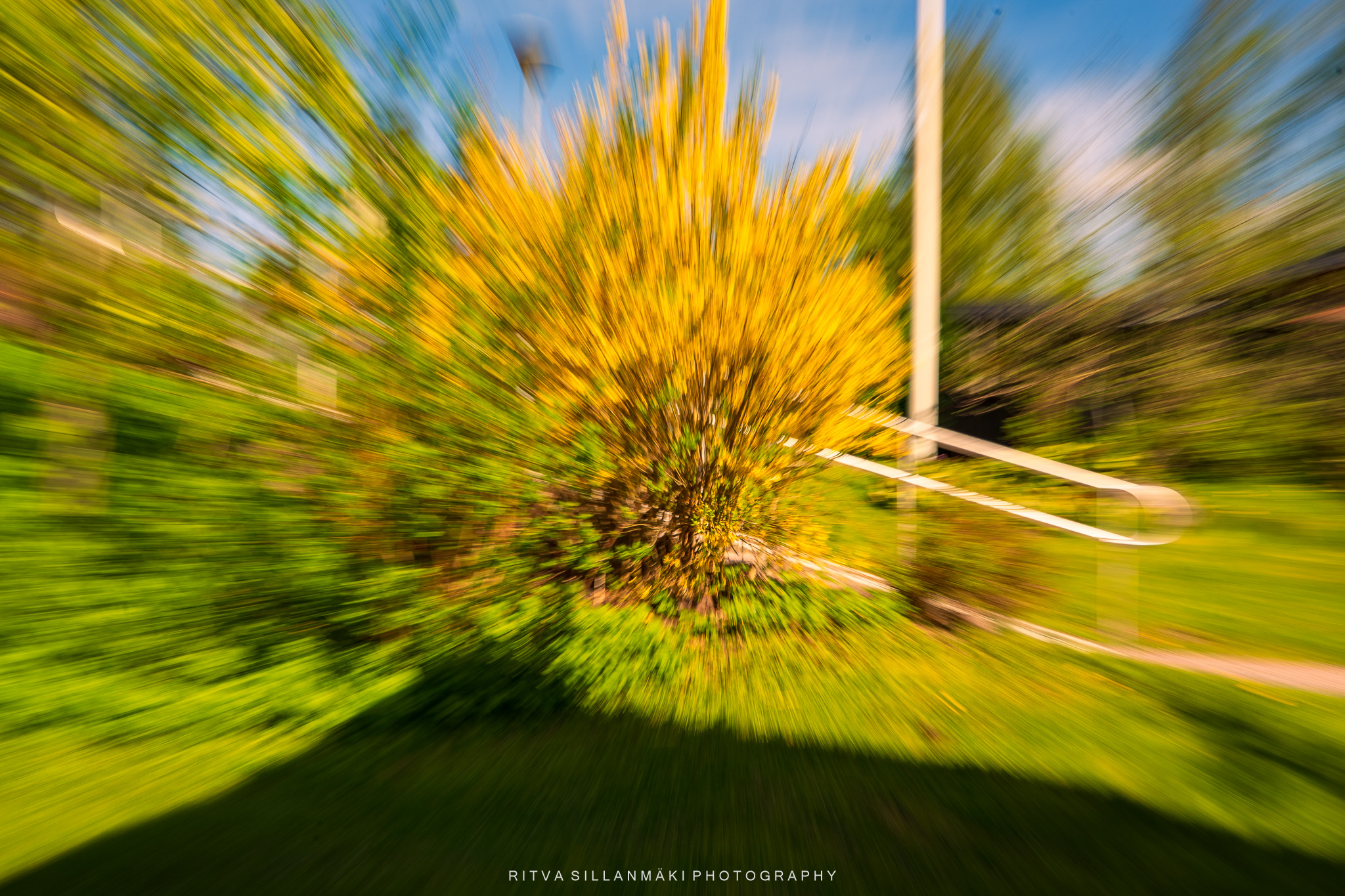
Now to the photos I took. It is spring, a season that always brings a sense of renewal and excitement, and I venture as far as my backyard to do this – and against advice on a sunny day, with not that much shade. The first one is maybe my favorite 👆, capturing the vibrant colors and the fresh scents that fill the air during this beautiful time of year. After a few sunny days, the spring just burst into life, showcasing a dazzling array greenery – and this shot kind of says that, reflecting the joy and energy that surrounds us as nature awakens.
There is this yellow wisteria in the front of the house that exploded with this style.
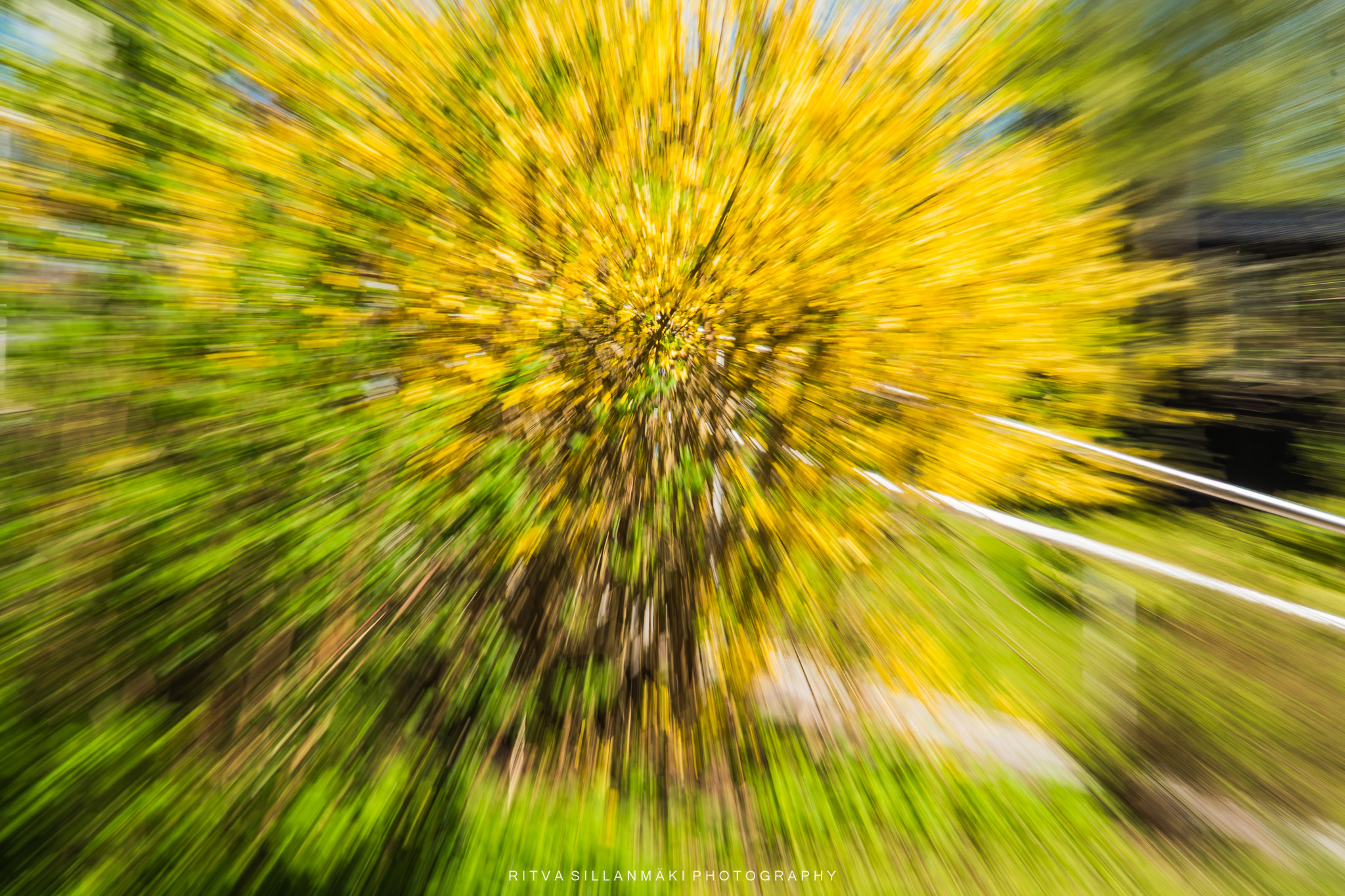

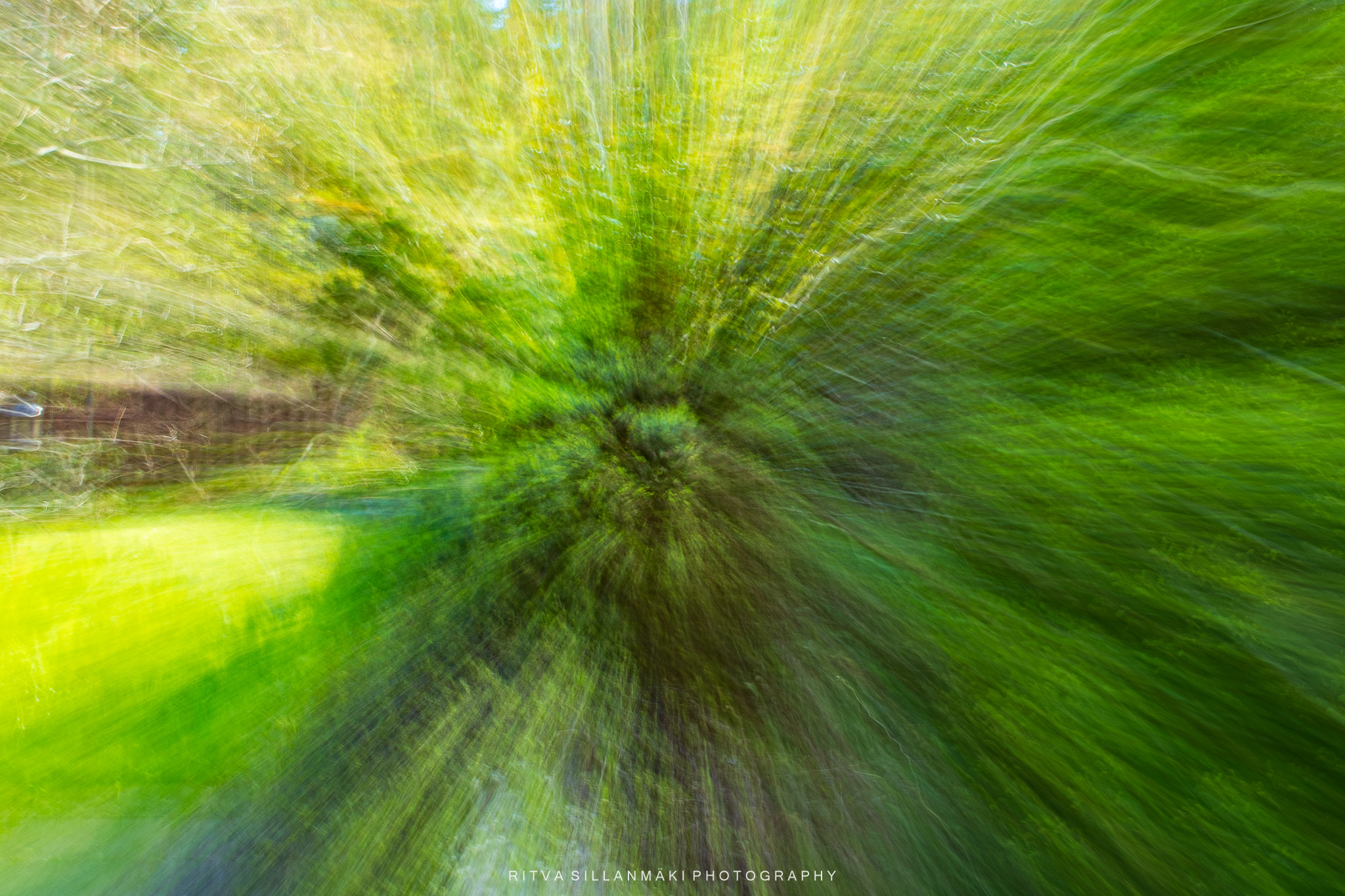
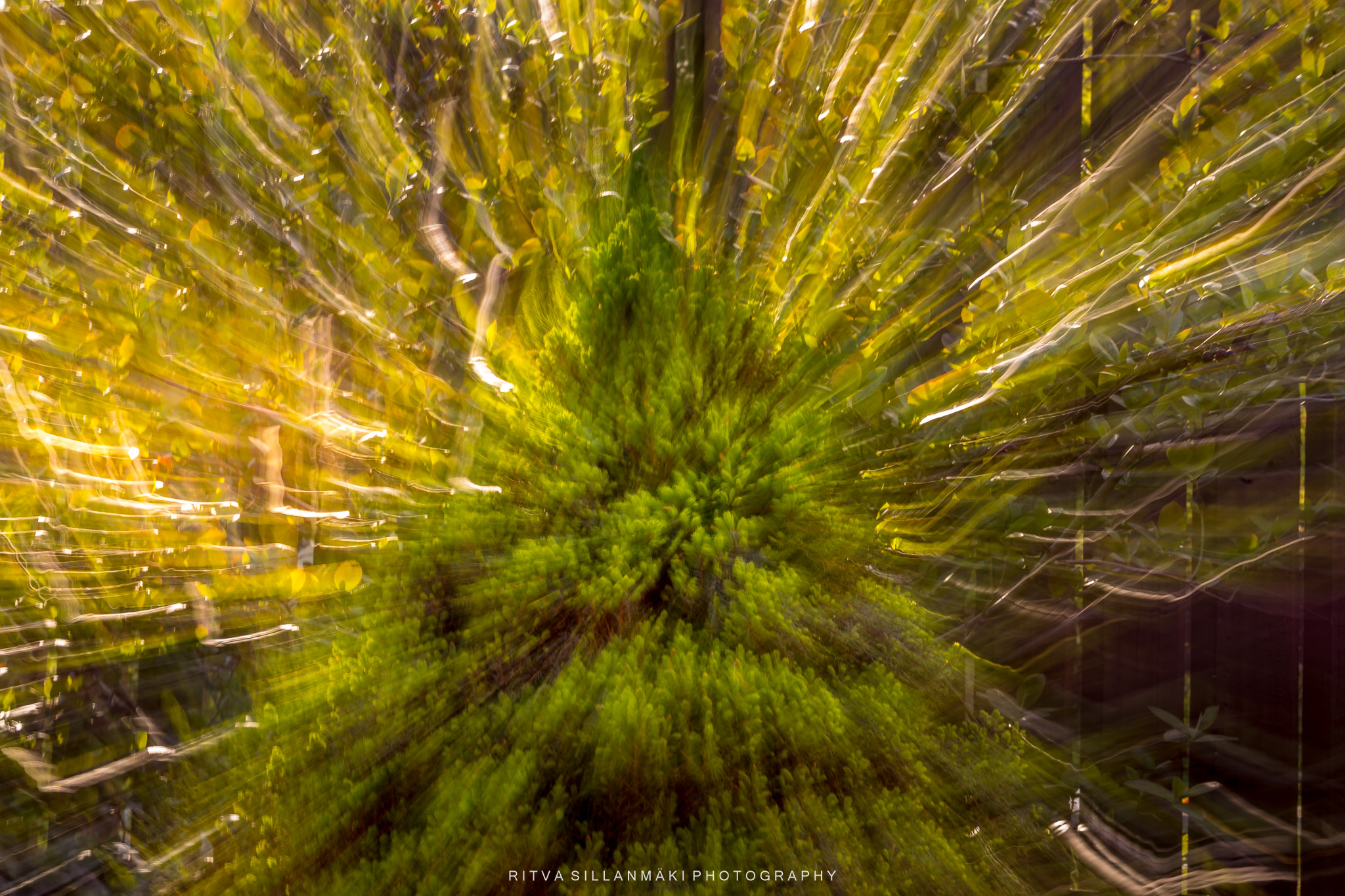
Juniperus chinensis was my next subject I tried the zooming on – these three were presentable.
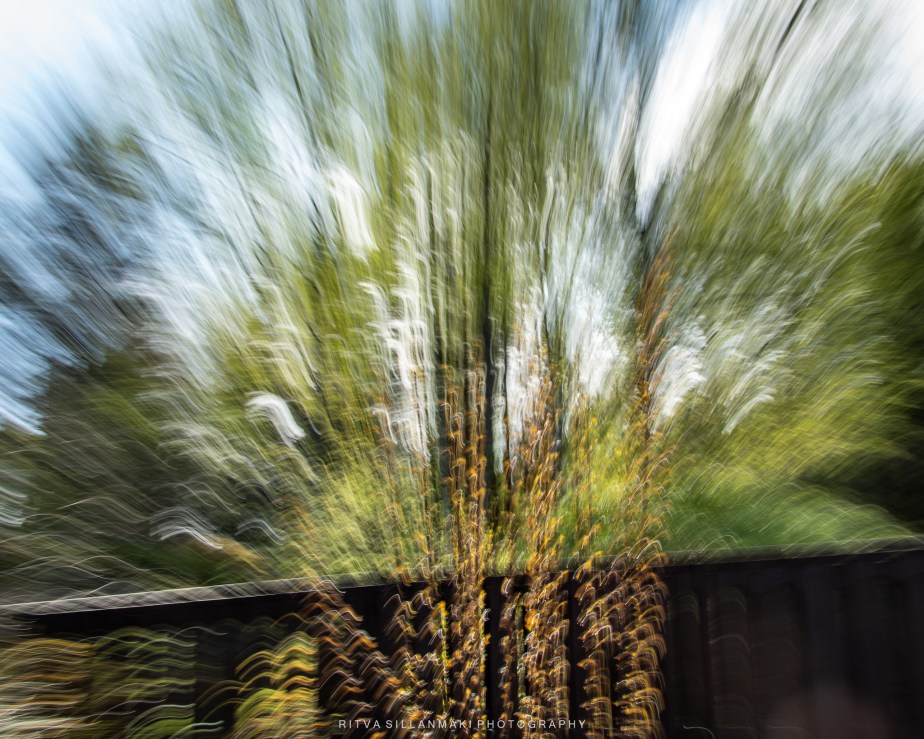
Once again – I found backlit plant – I wanted the different shade that the green to pop and hopefully follow my zoom movements. Zoom in or zoom out – I don’t know which one worked better as I took so many shot that are placed in to the bin.
When you post, please remember to link to Anne’s post and use the Lens-Artist tag. I really enjoyed seeing your post on Tina’s challenge, “The First Thing I Thought Of.” It’s amazing how a picture has so many different interpretations depending on how you caption it, and I loved the positivity and smiles I got this week.
I’ll be leading next week’s challenge again; it is rather soon after my last challenge, but it will be something we haven’t done before. Hopefully, you will join me next week. In the meantime, keep on smiling; it just might be someone’s high point of the day. And it is contagious :-d
Debbie’s Six Words Saturday
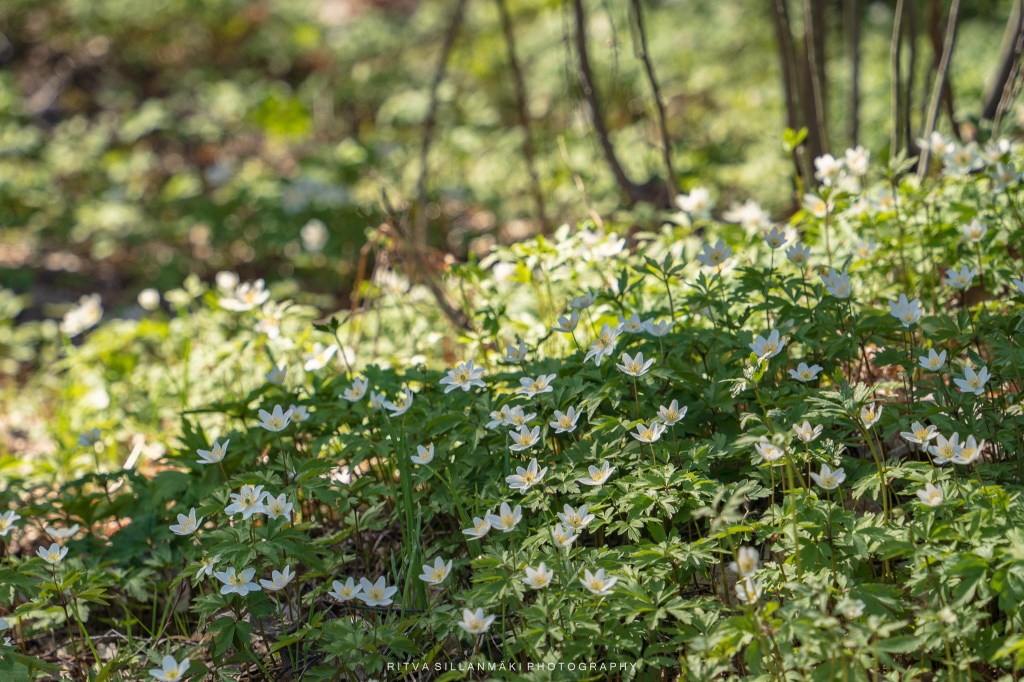
We arrived at Peterborough around 2 and our accommodations were ready. To my surprise we
stayed in a house owned by elderly gentleman named Jim. Somehow, I was expecting motel again.
His house was split in half and this pleasant fellow lived in the other half of the house. After arriving fairly early we had plenty of time start exploring the area. We managed to visit Bay of
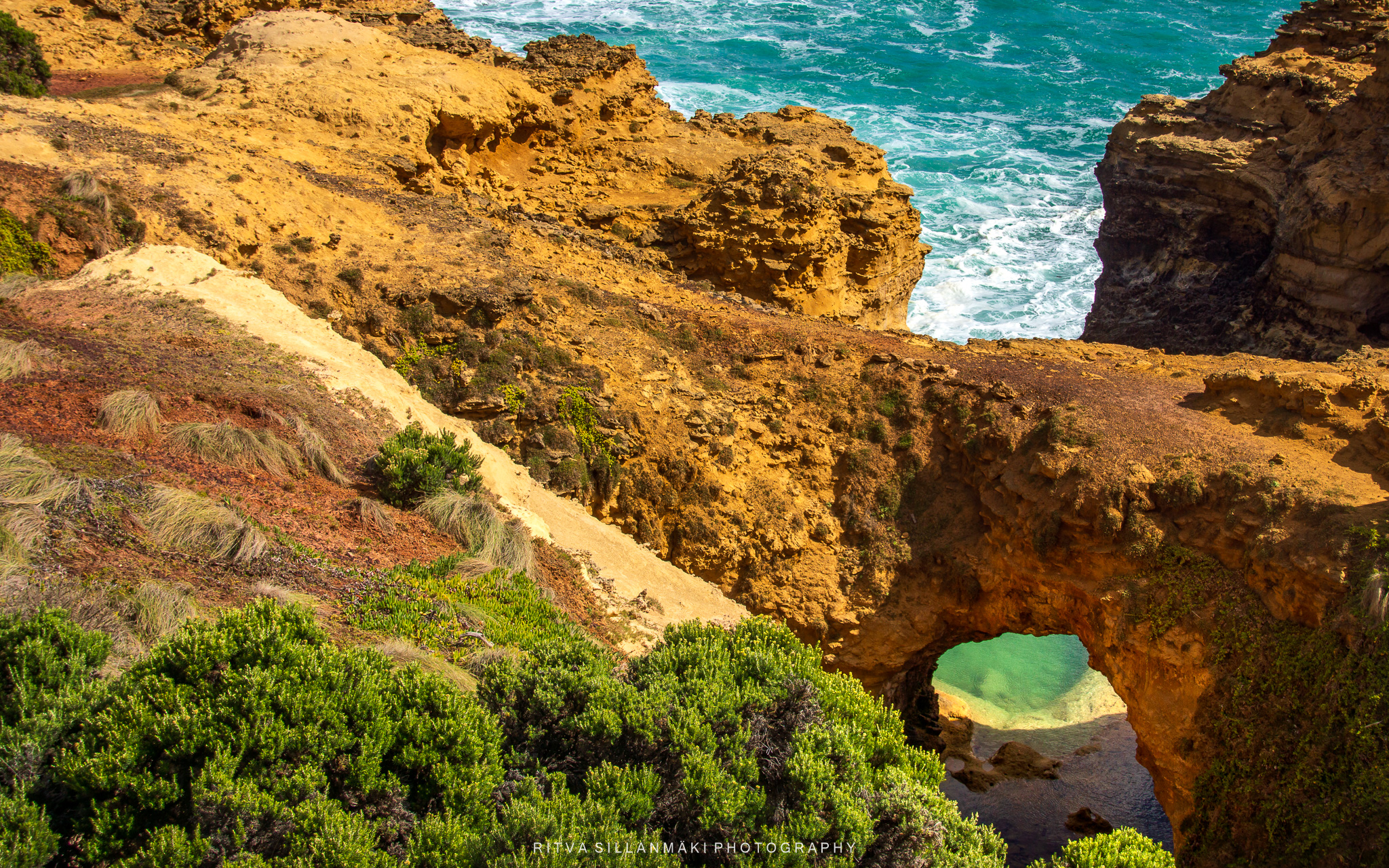
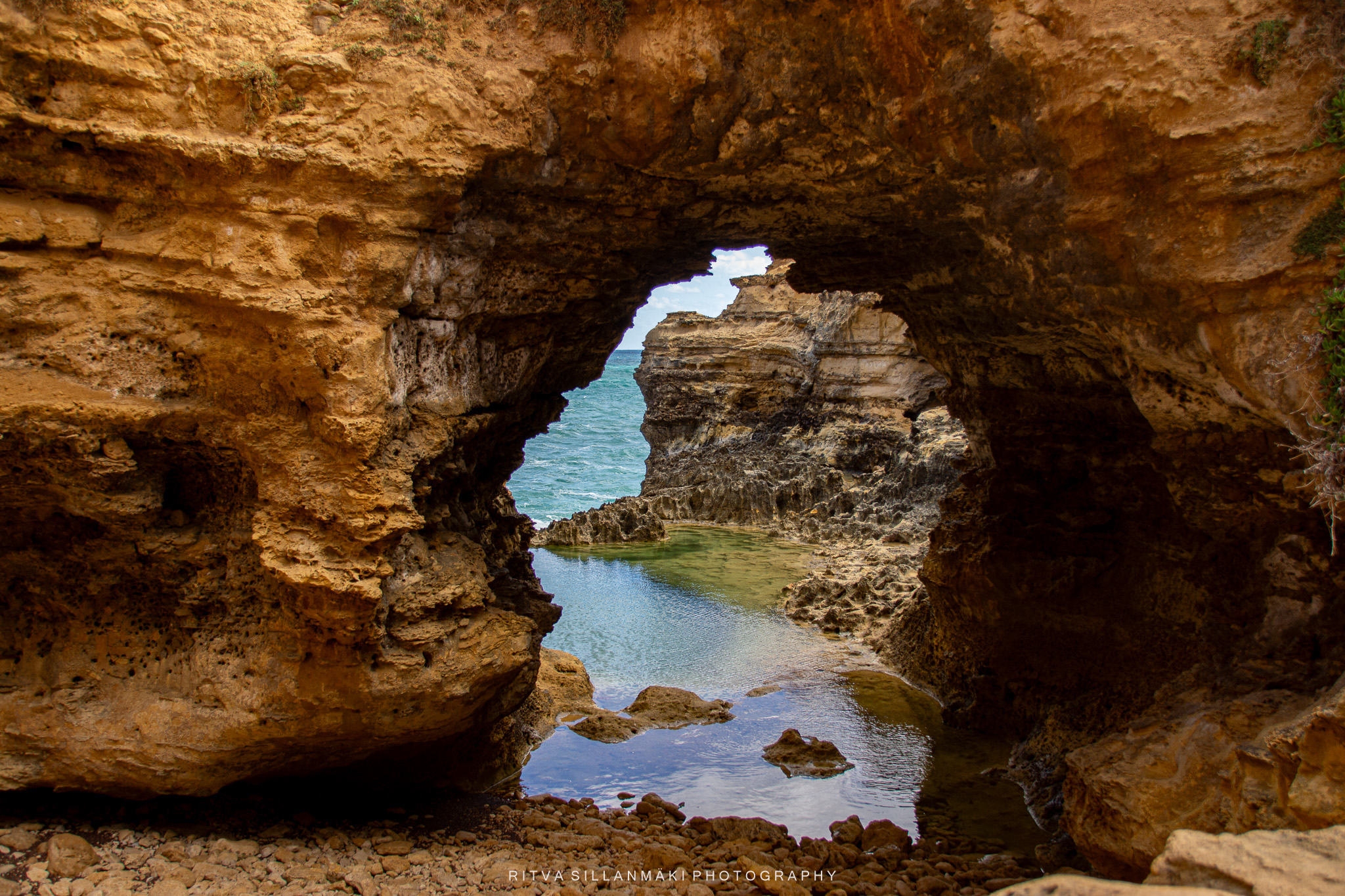
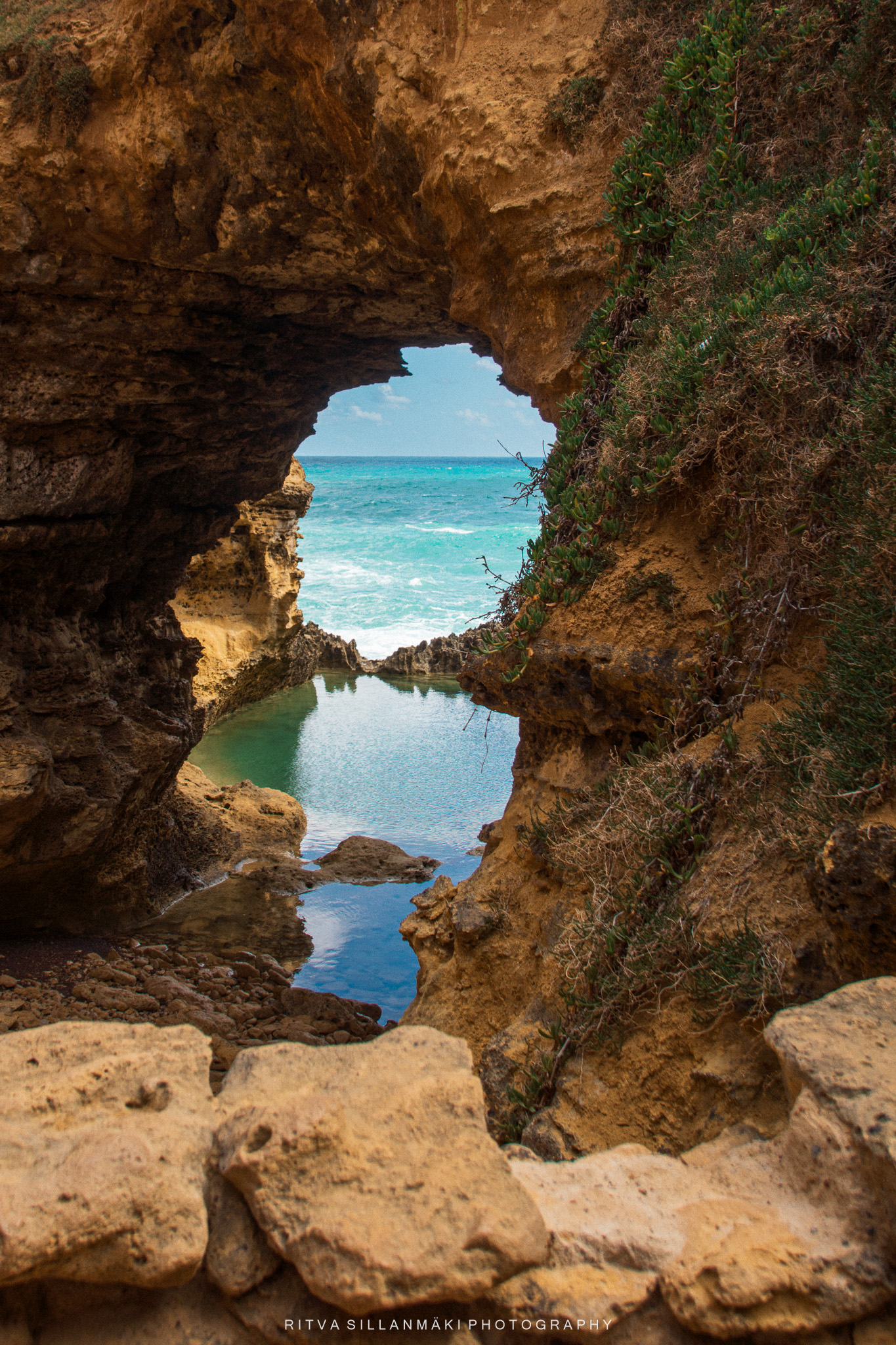
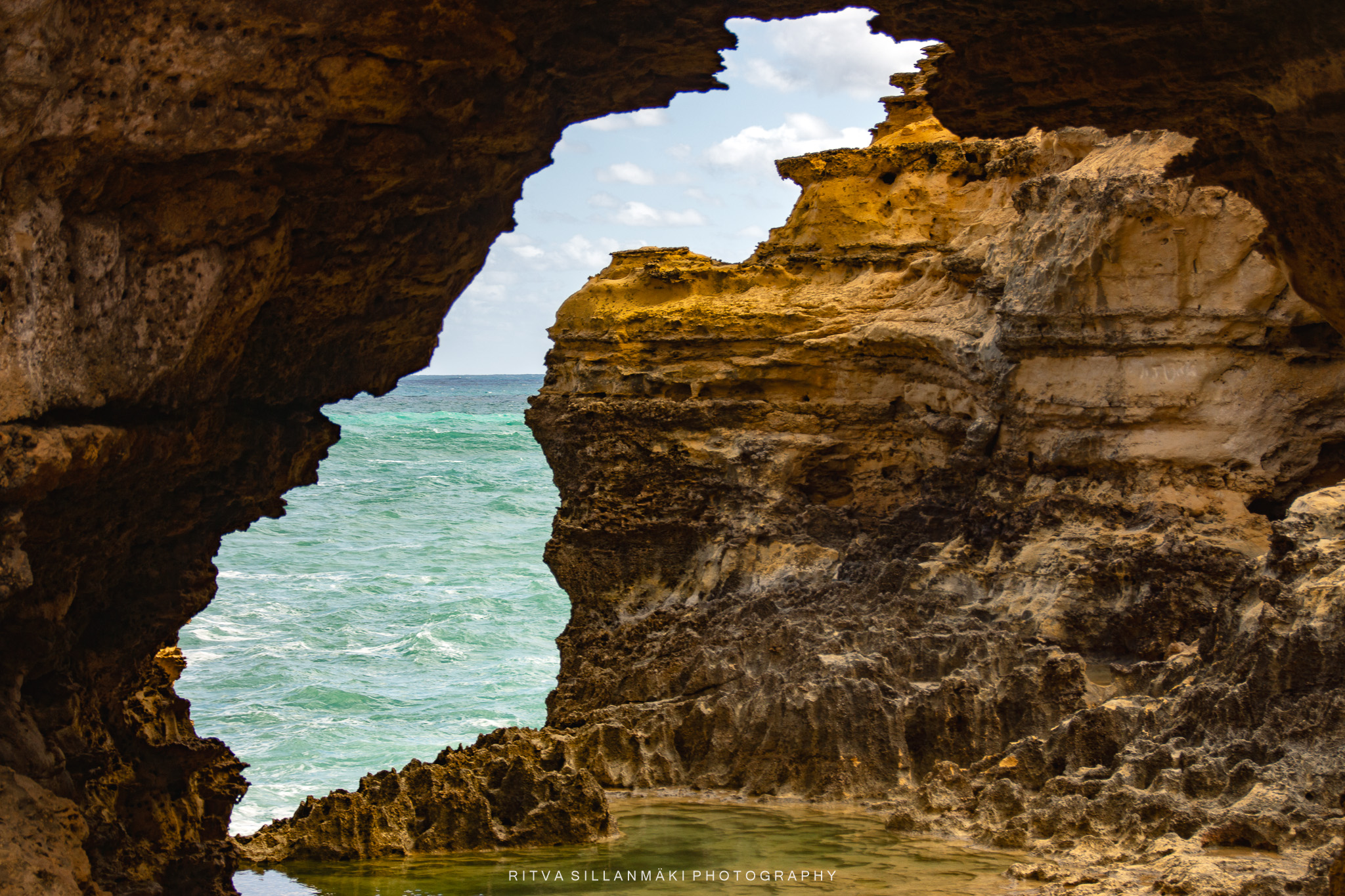
Islands, Bay of Martyrs and The Grotto.
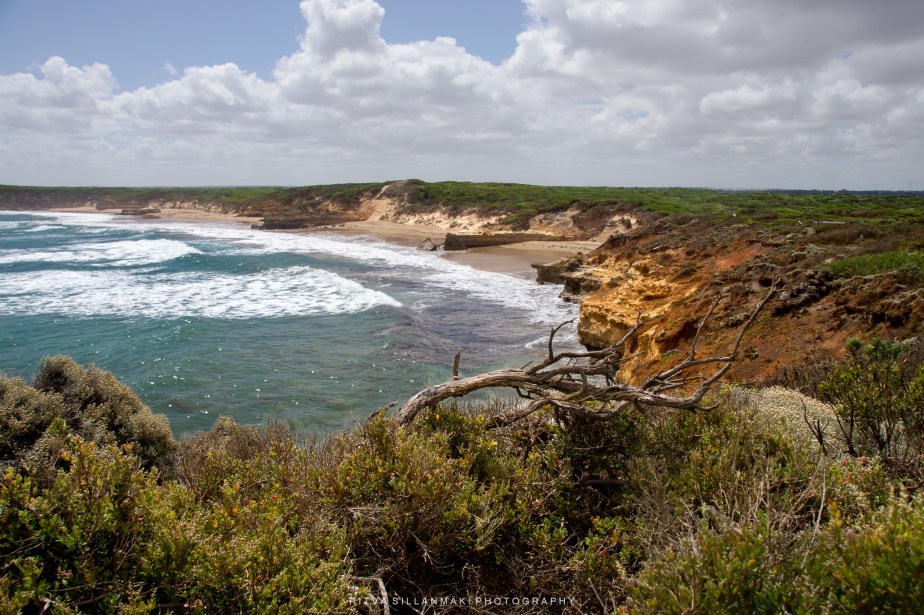
Bay of Islands Coastal Park is part of an Aboriginal cultural landscape. The Southern Ocean has carved a stunning collection of rock stacks and sheltered bays with and small beach coves near Peterborough. This one was nearest to us and our first stop.
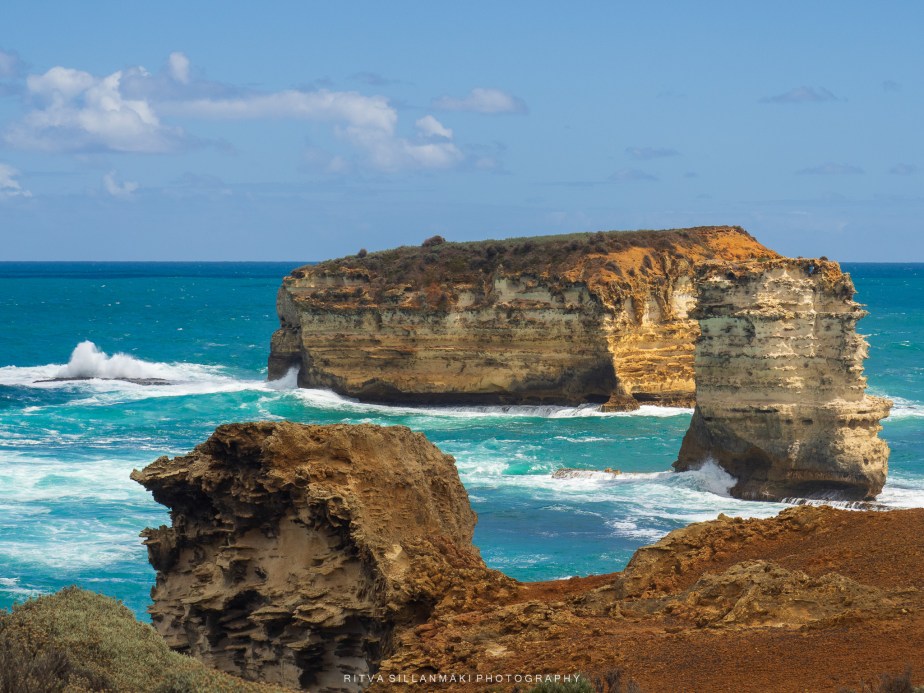
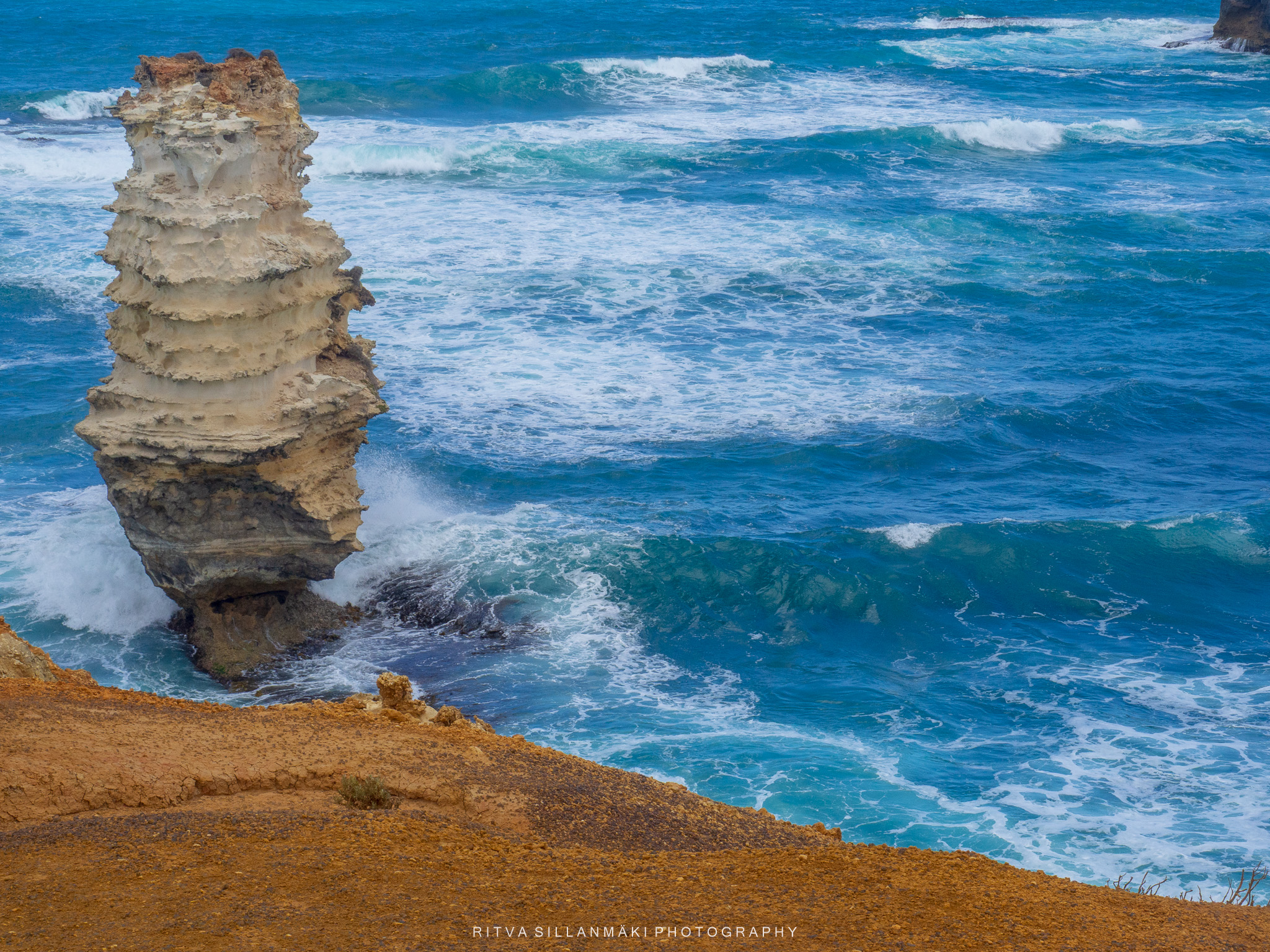
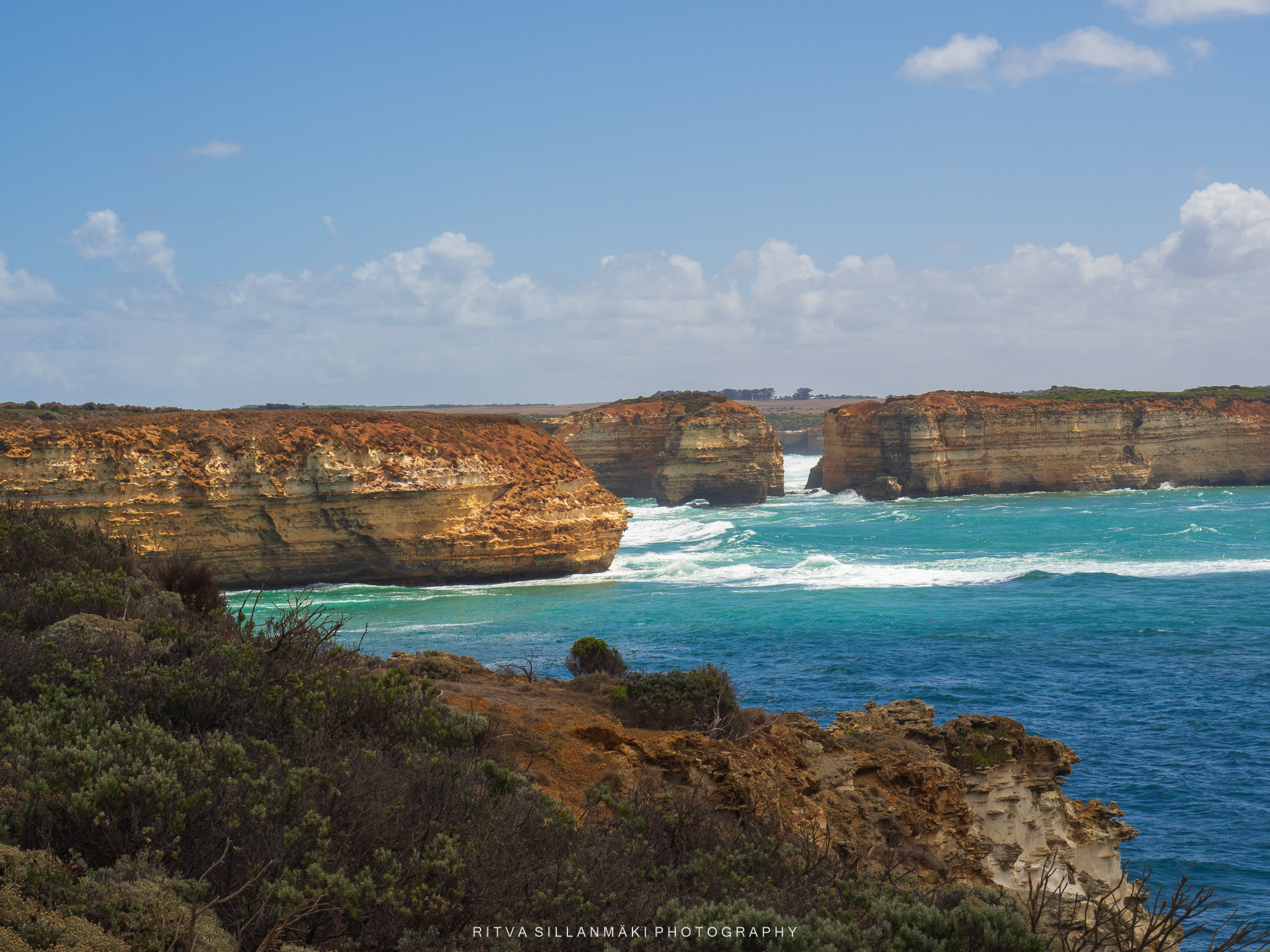
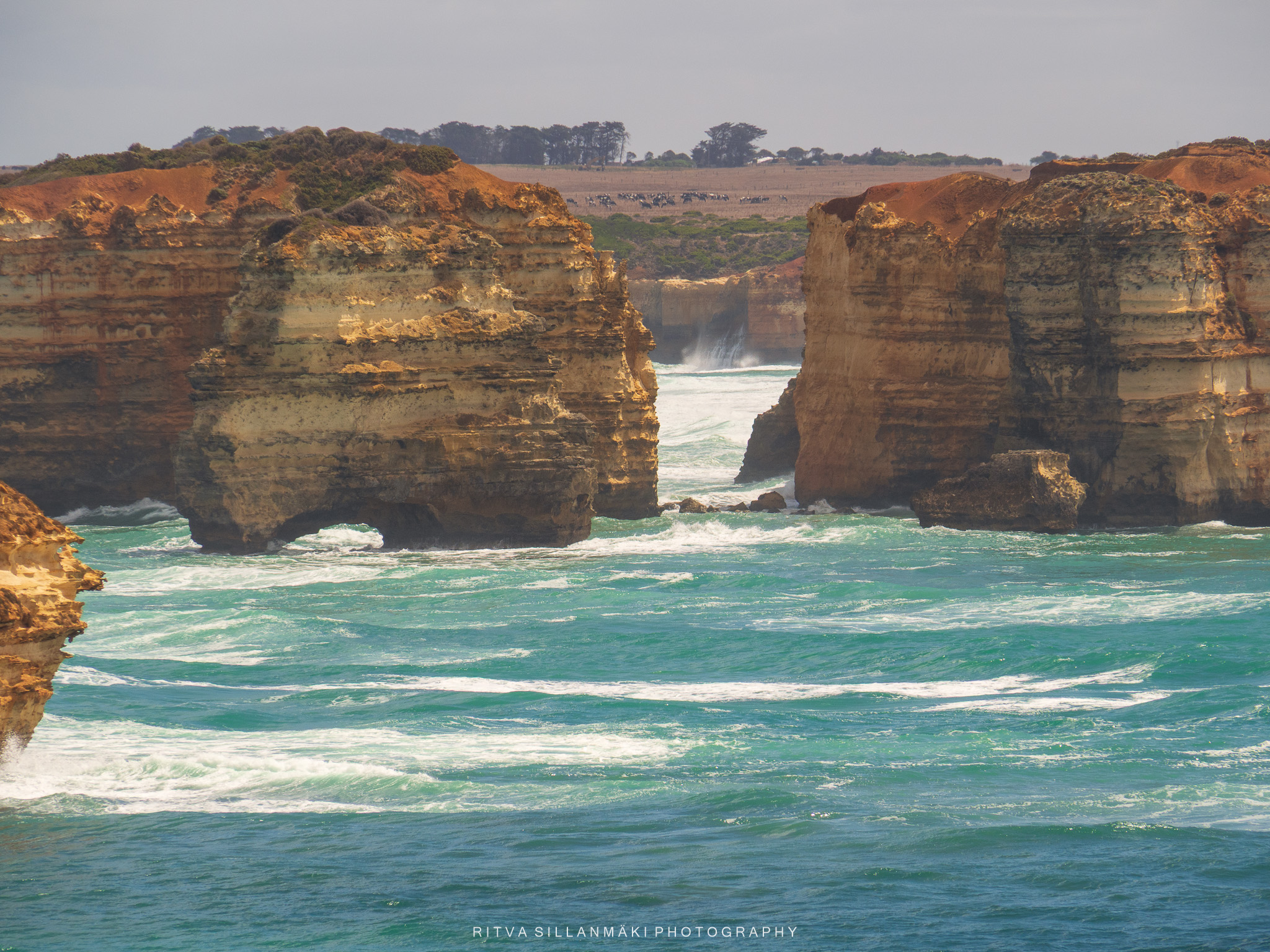
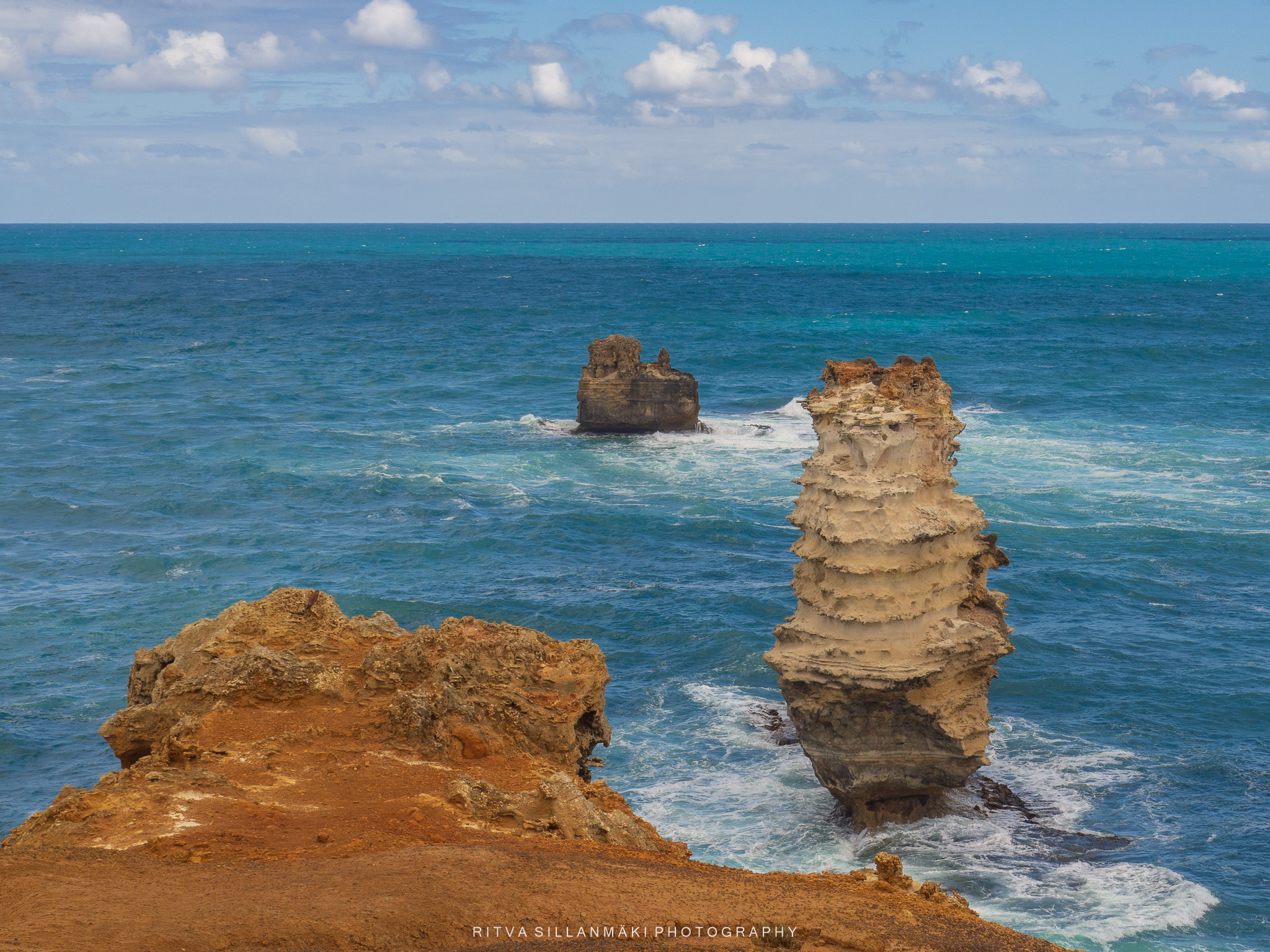
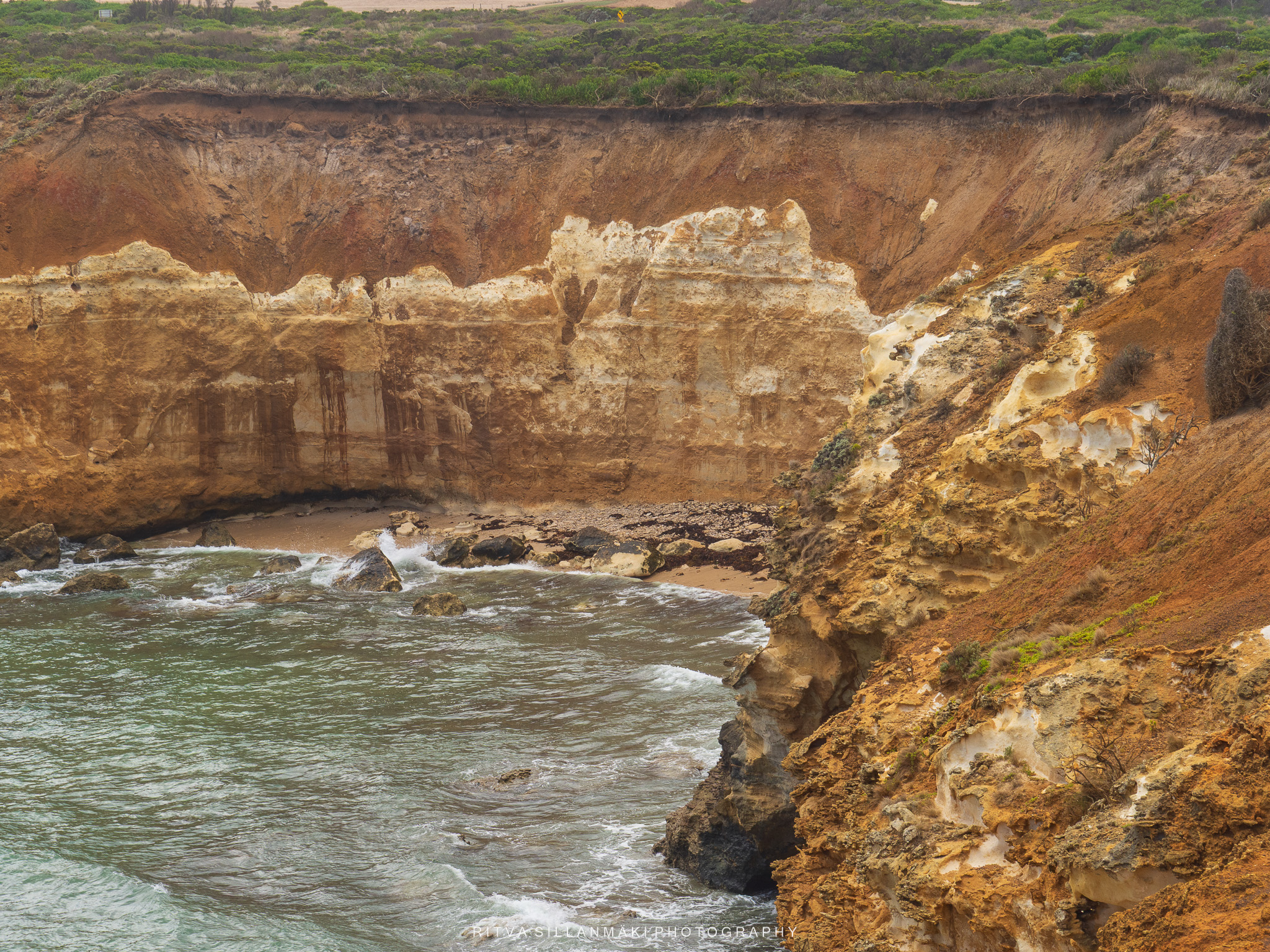
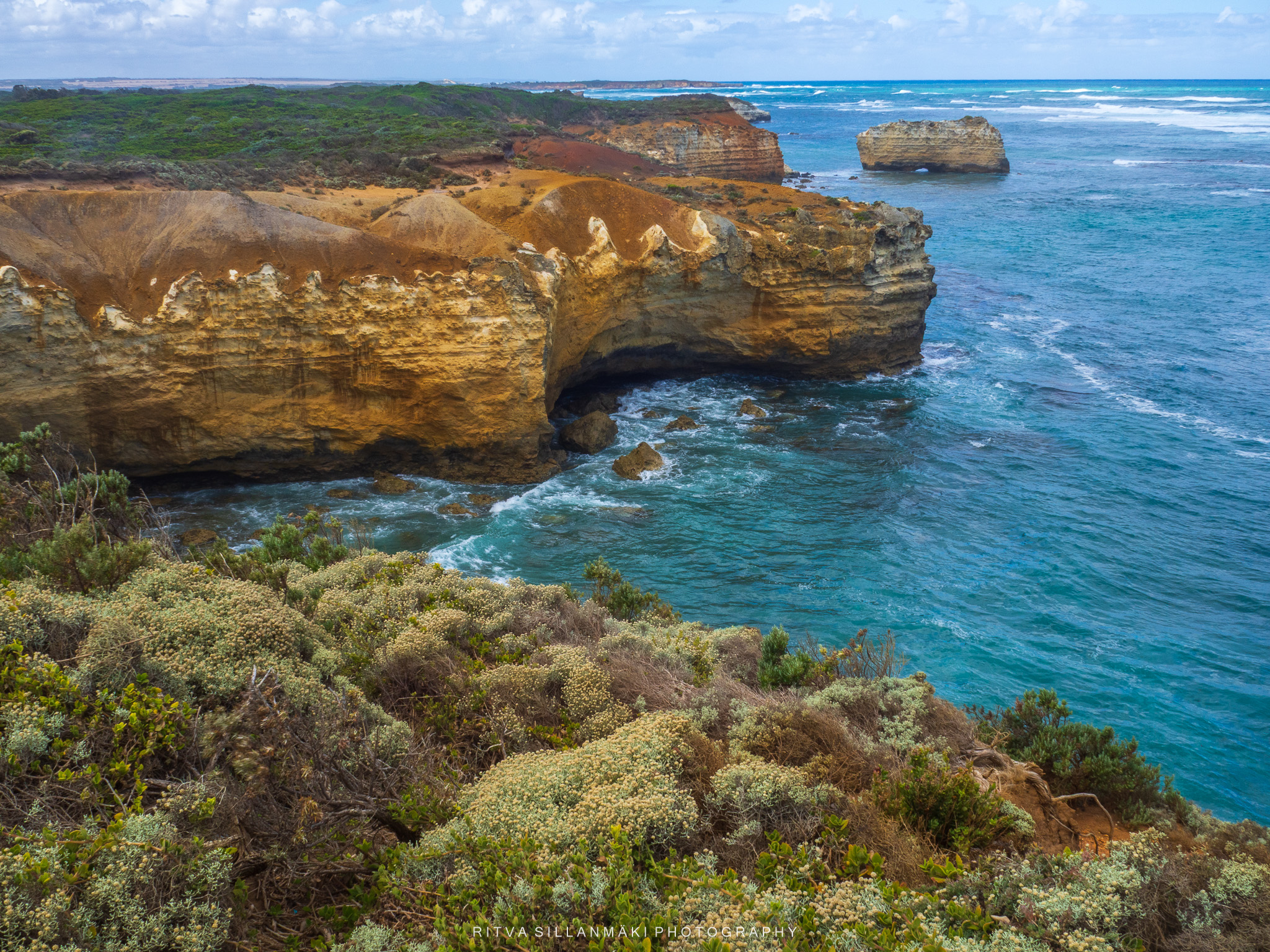
Bay of Martyrs. According to local legends, it got its name from a pretty brutal showdown between the Kirrae-Wurrong people and the early European settlers. This clash, which some folks call the “Bay of Martyrs,” resulted in the tragic loss of many Indigenous lives and is crucial in understanding the area’s colonial past. The cliffs surrounding the bay are a reminder of that tough time, showing the lasting impact of colonization on the land and its original peoples.
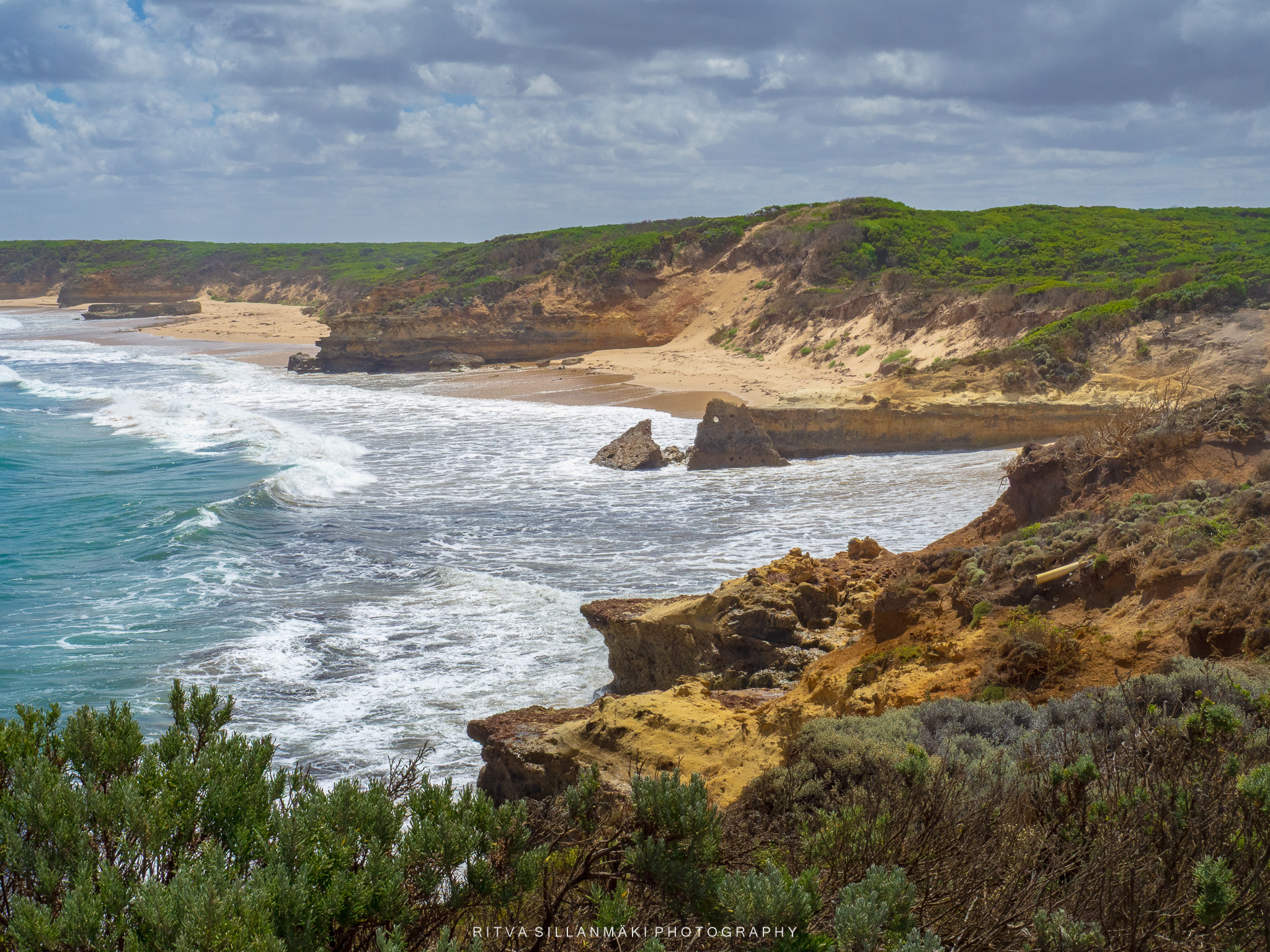
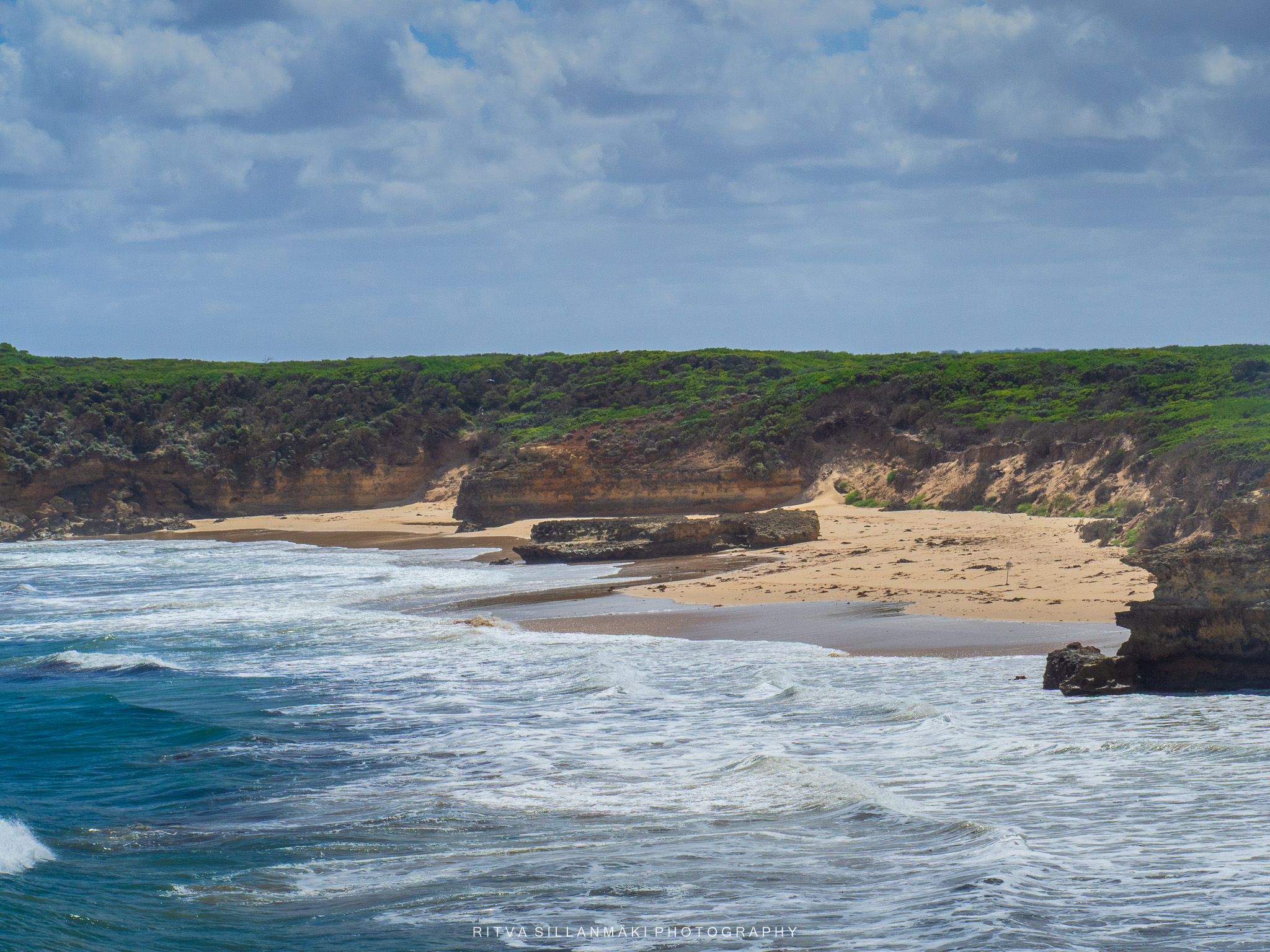
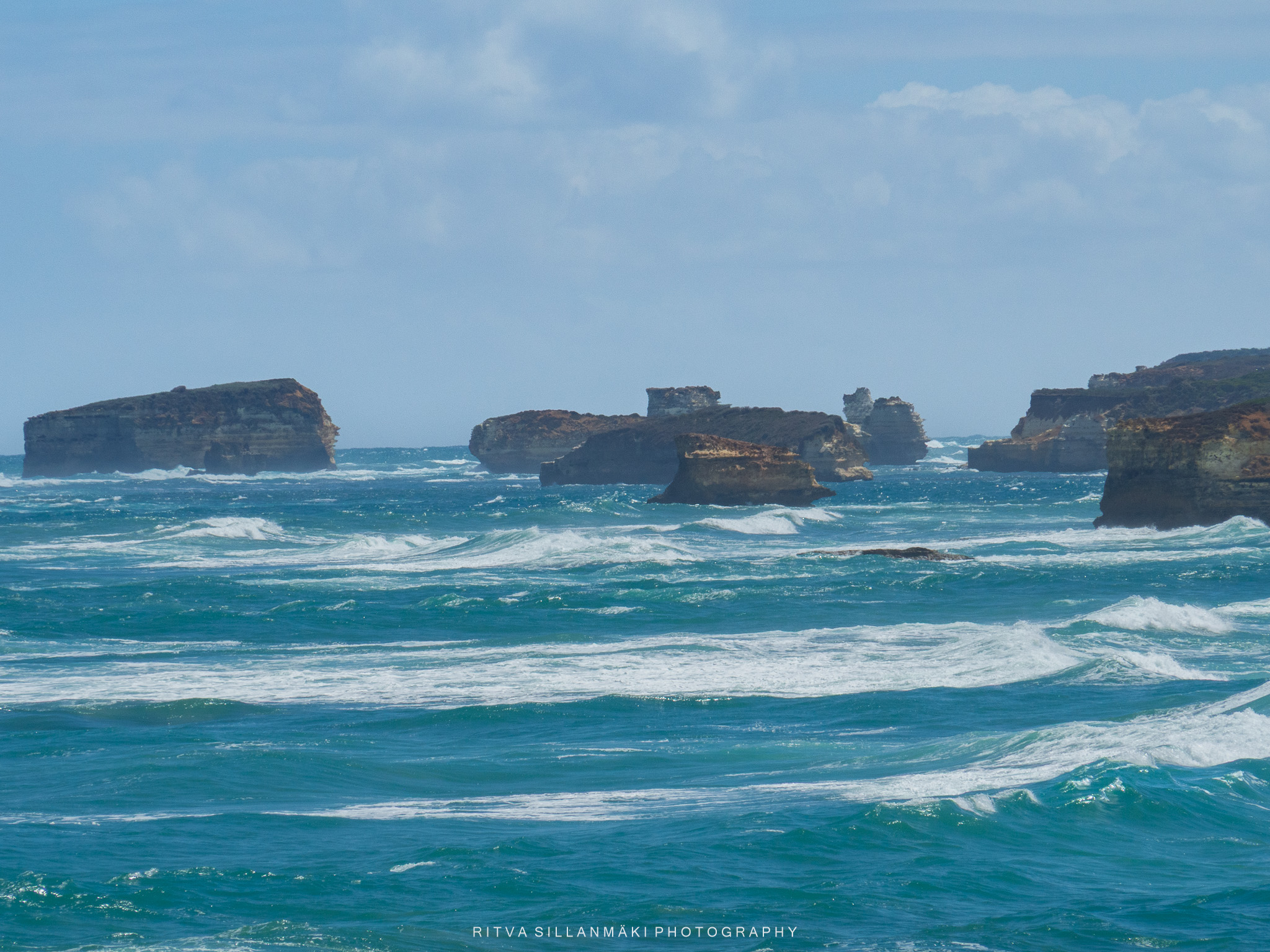
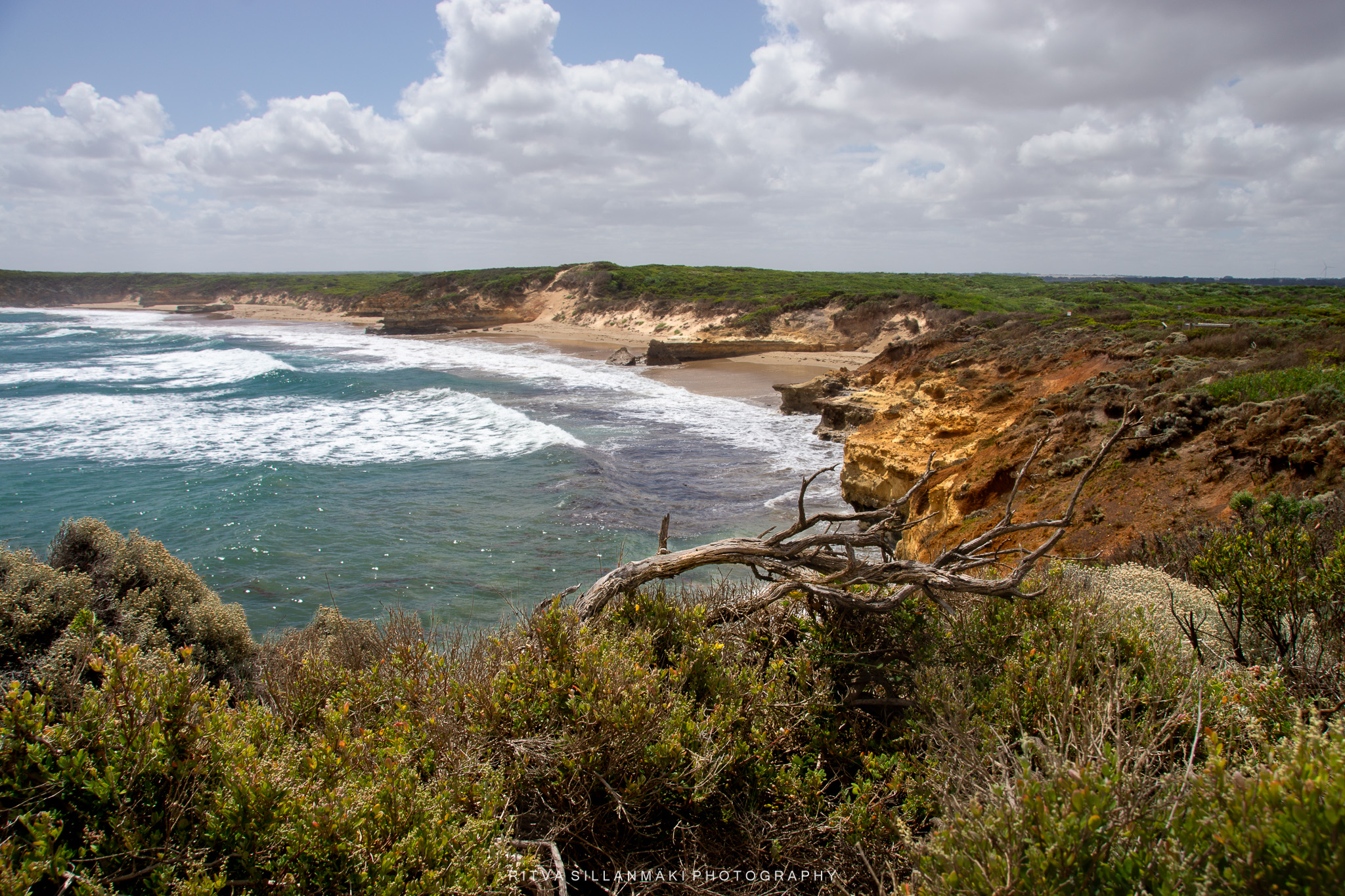
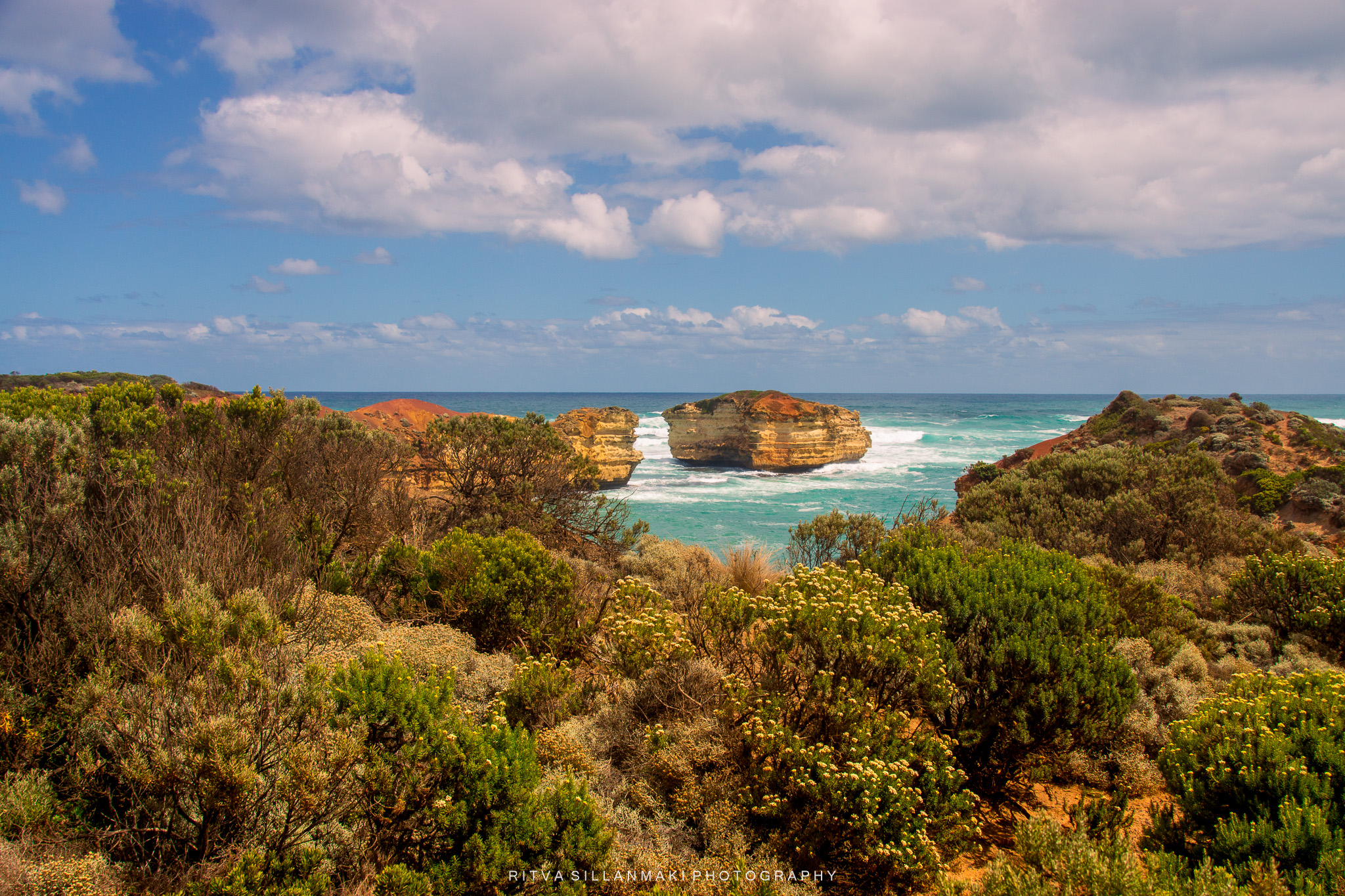
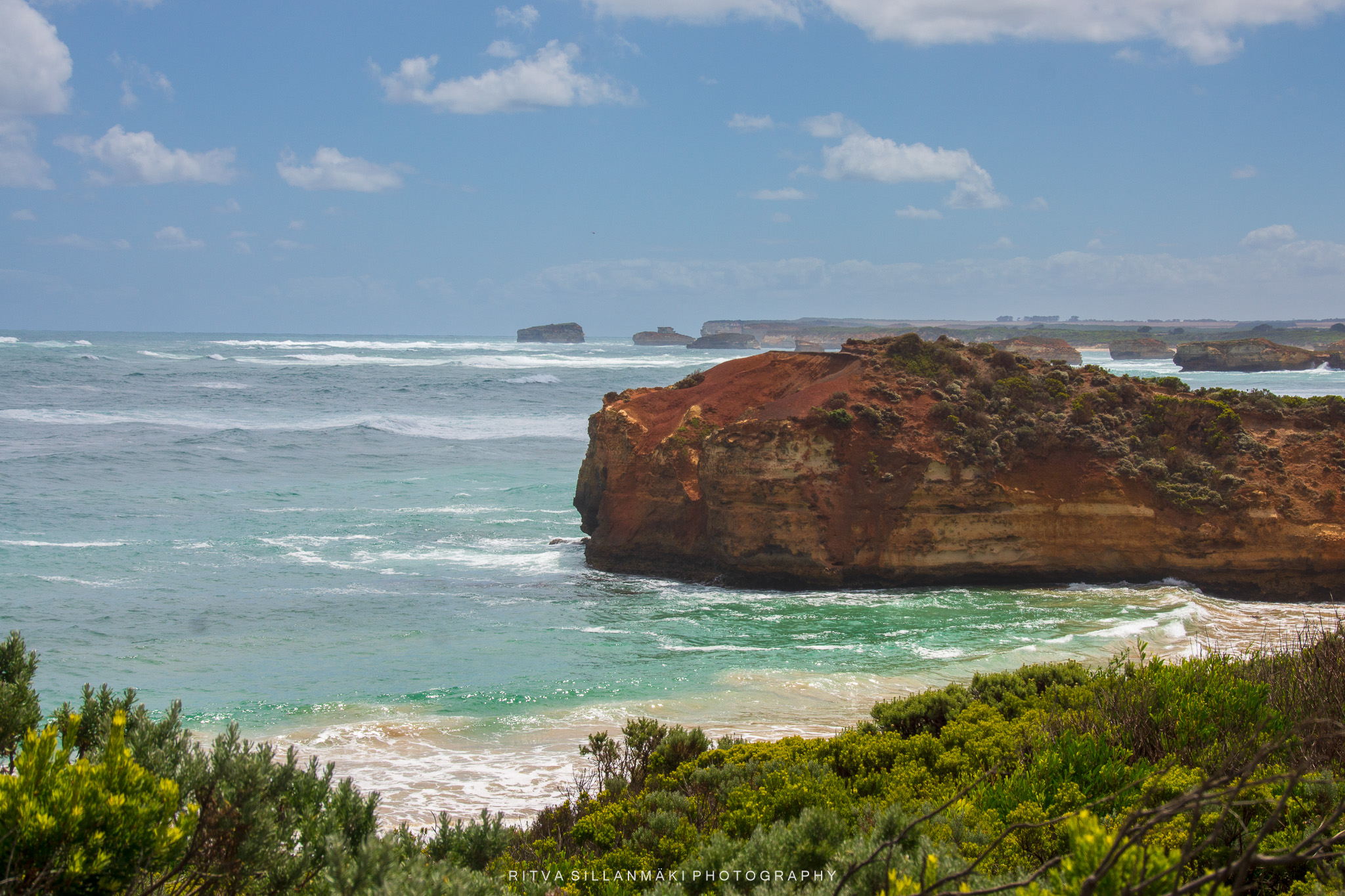
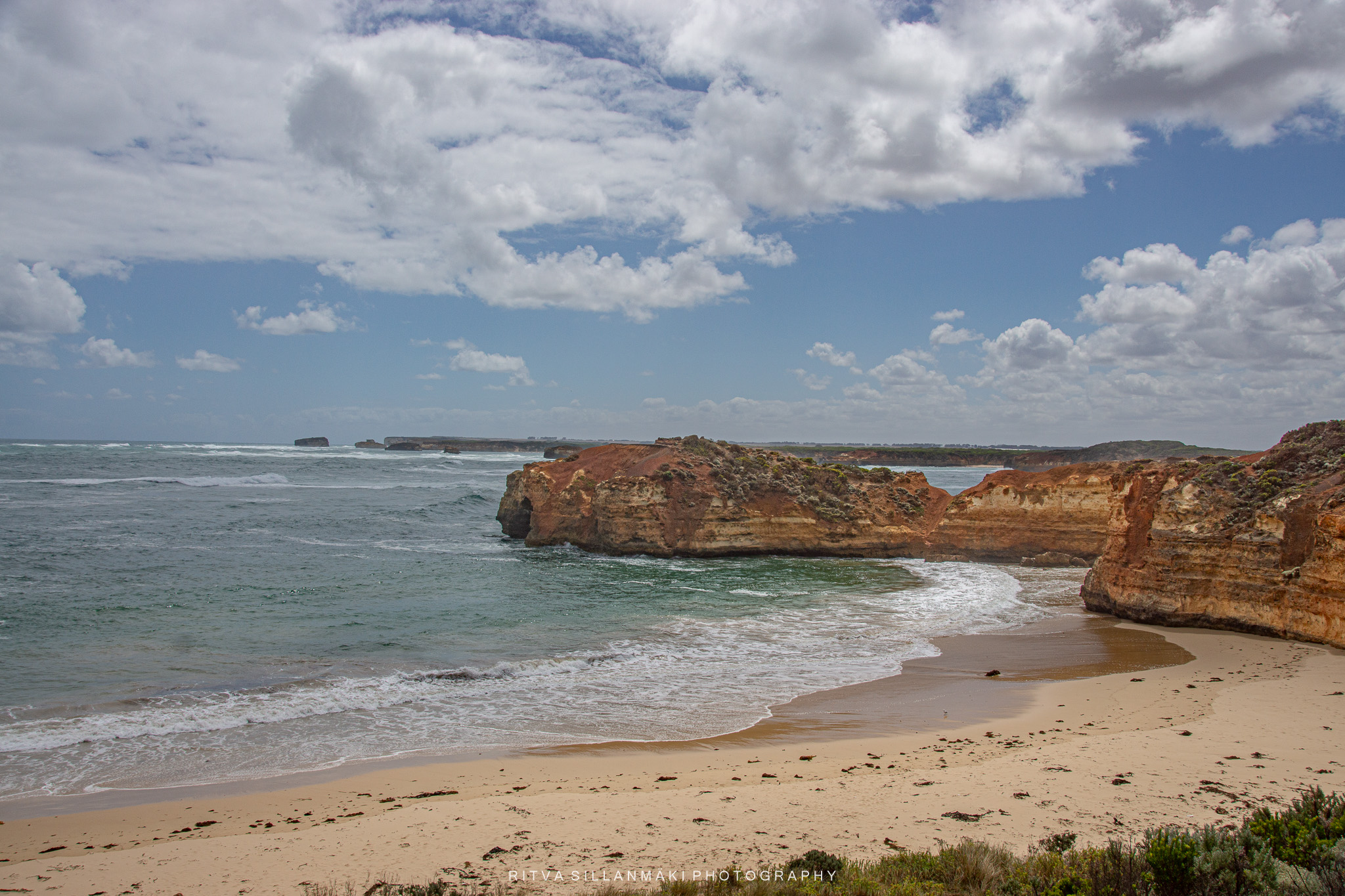
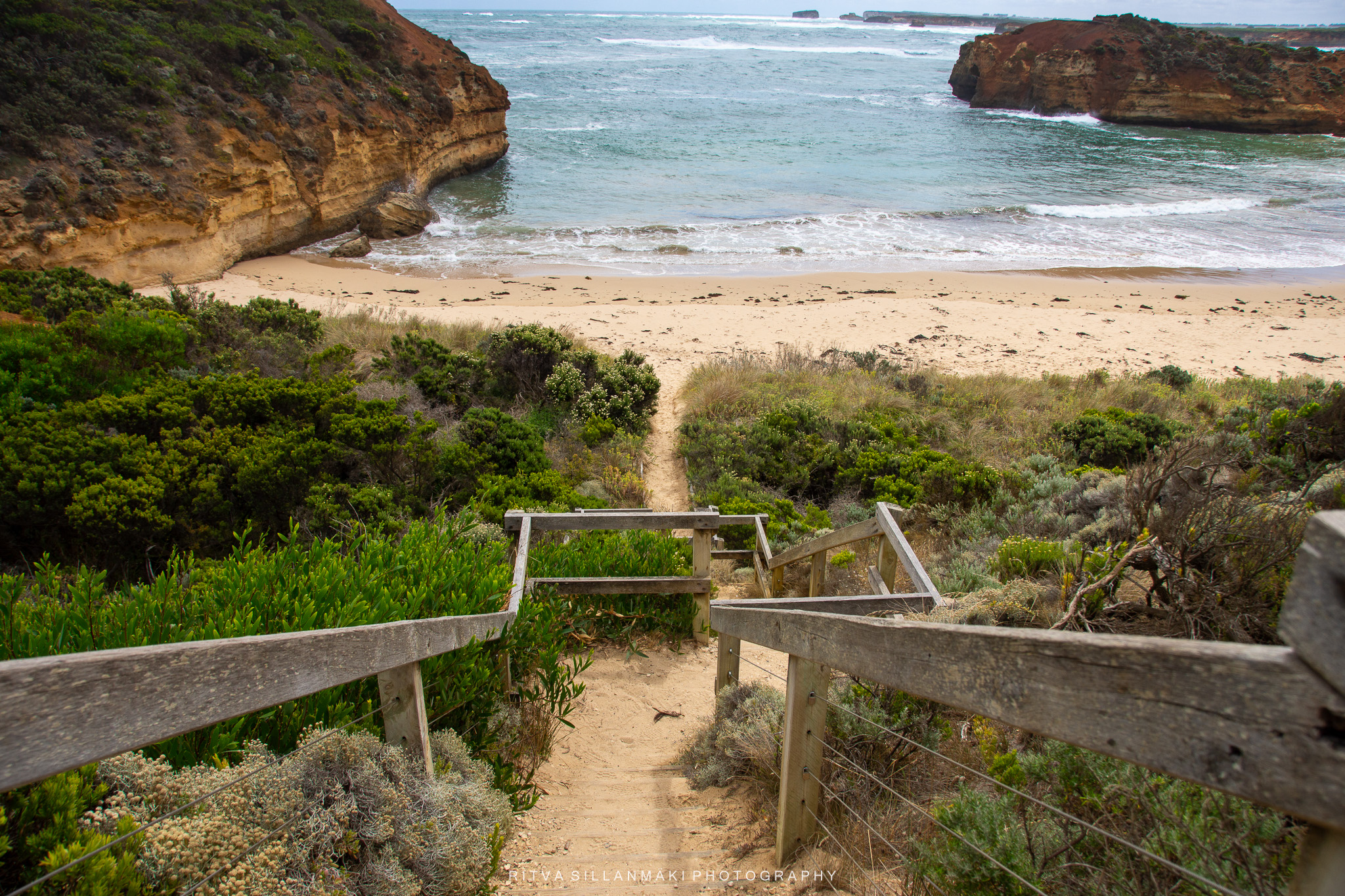
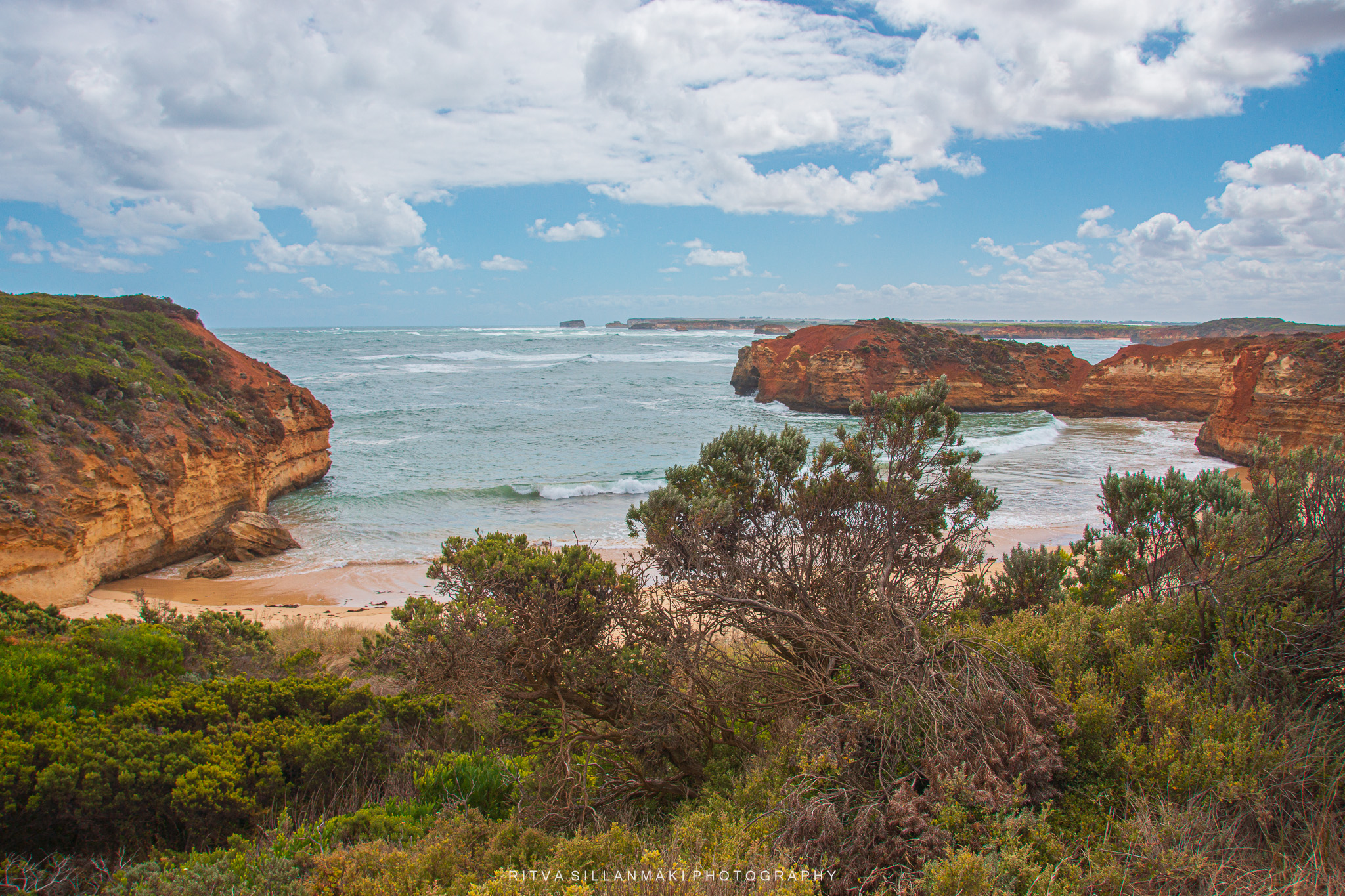
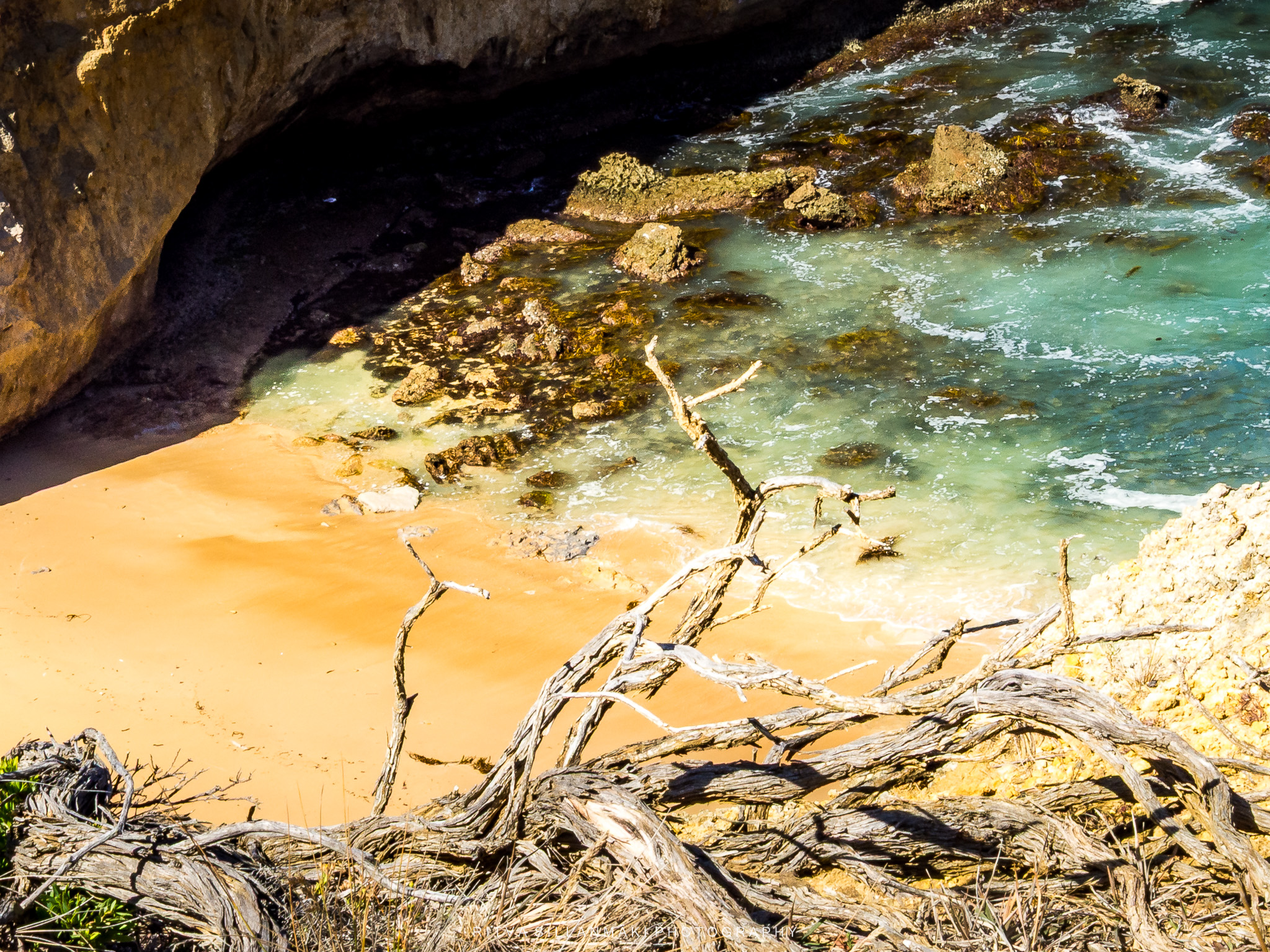
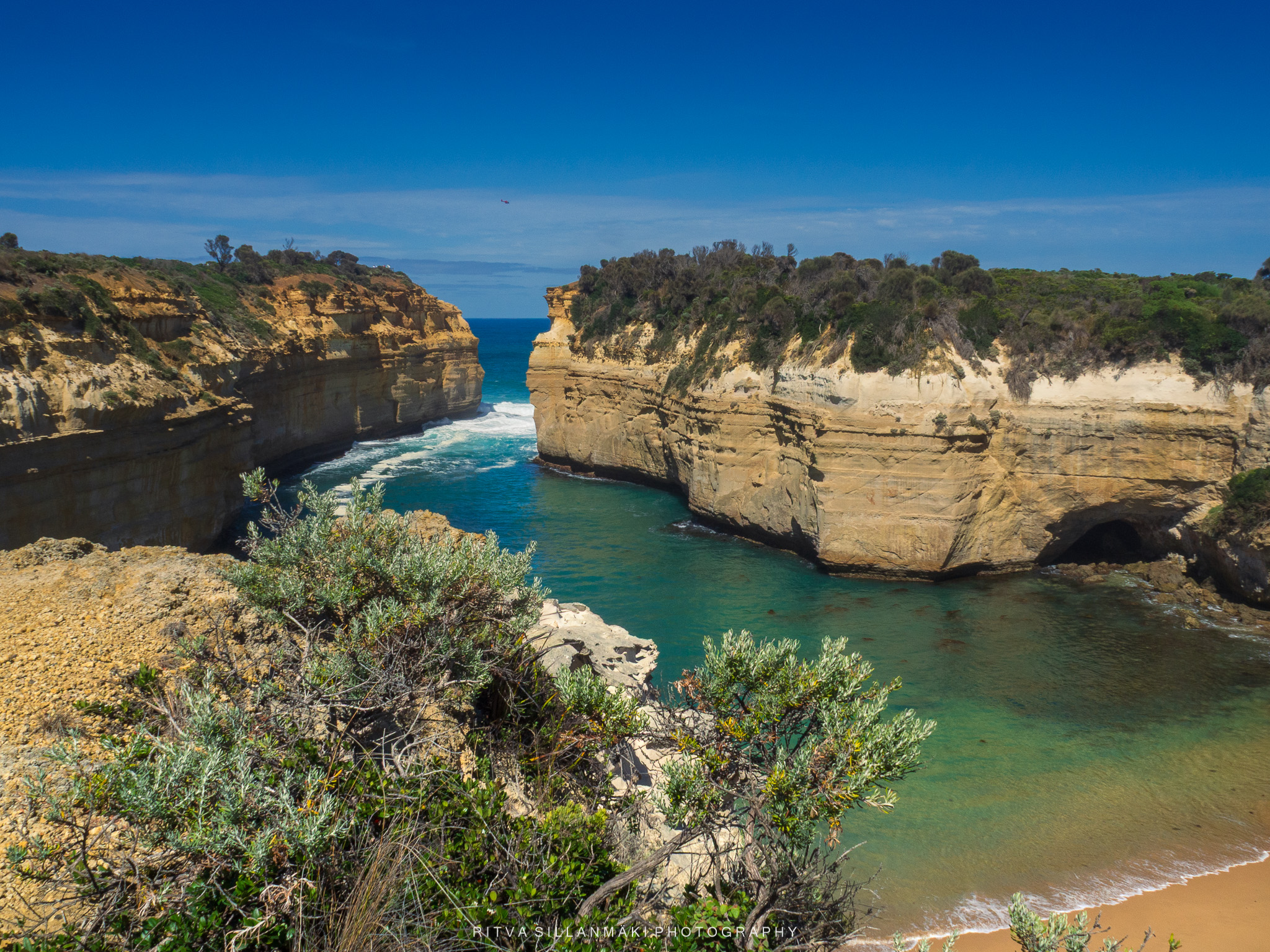
The Grotto was fun because we arrived just after a bus load of Asian tourists. When I saw the steps and long line of people leading down to the Grotto I thought I would never be able to see it. Then I realized that they were all patiently standing in line waiting for their turn to take selfies or have friends take pictures against the Grotto. I wasn’t having any of is, so passed everybody in the line, because there was plenty of room on the deck to take pictures. Luckily, there was a lady standing there who called “next” every 30 seconds to get the line moving. I thought she was the guide for the group but later I saw her with her husband, who had been standing in line that I passed. Anyway, I got some decent pictures but not right in front of the Grotto.
The Grotto is perhaps the most enchanting of all the rock formations in this part of Australia. Part-blowhole, part-archway, part-cave.
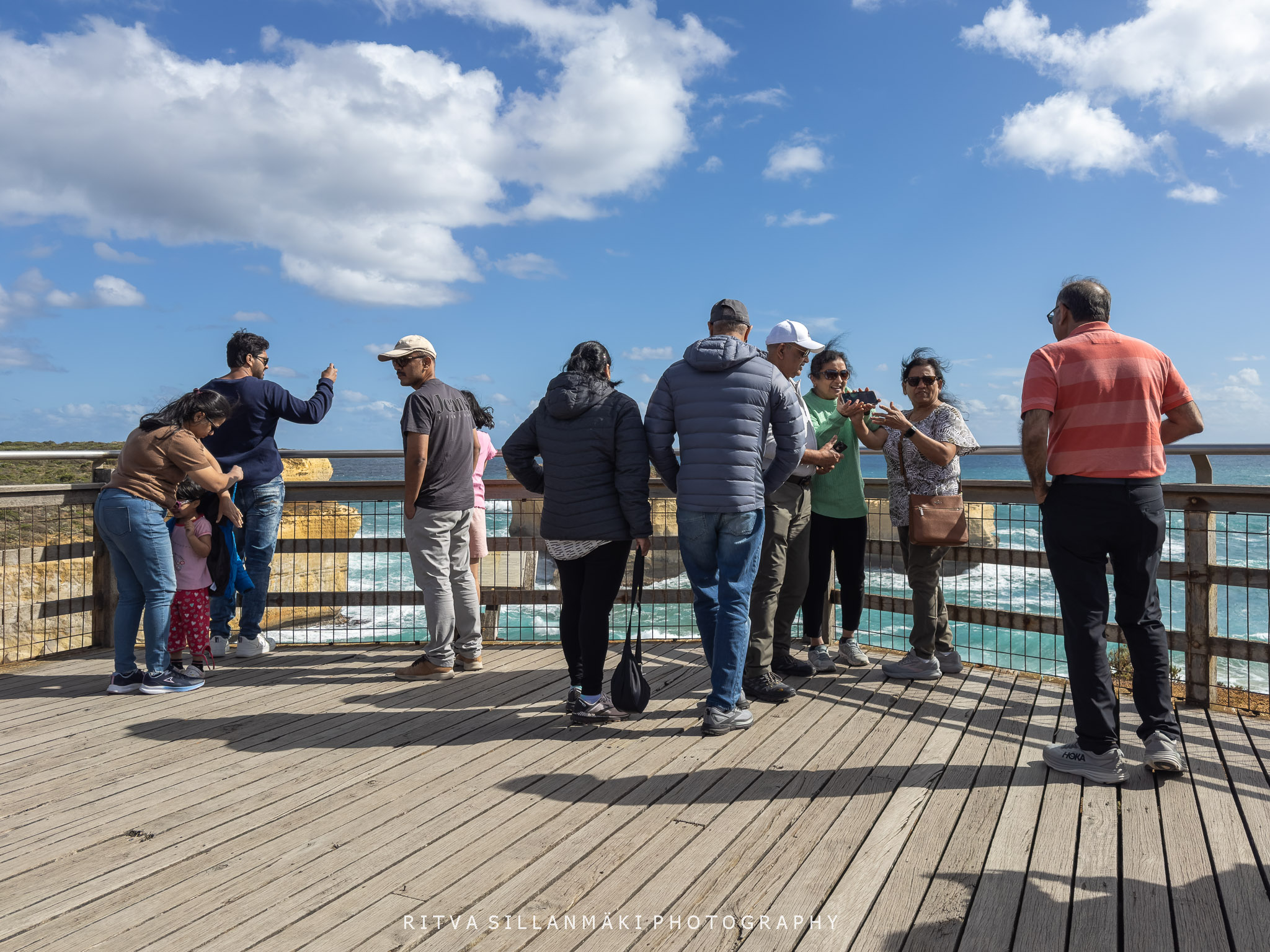
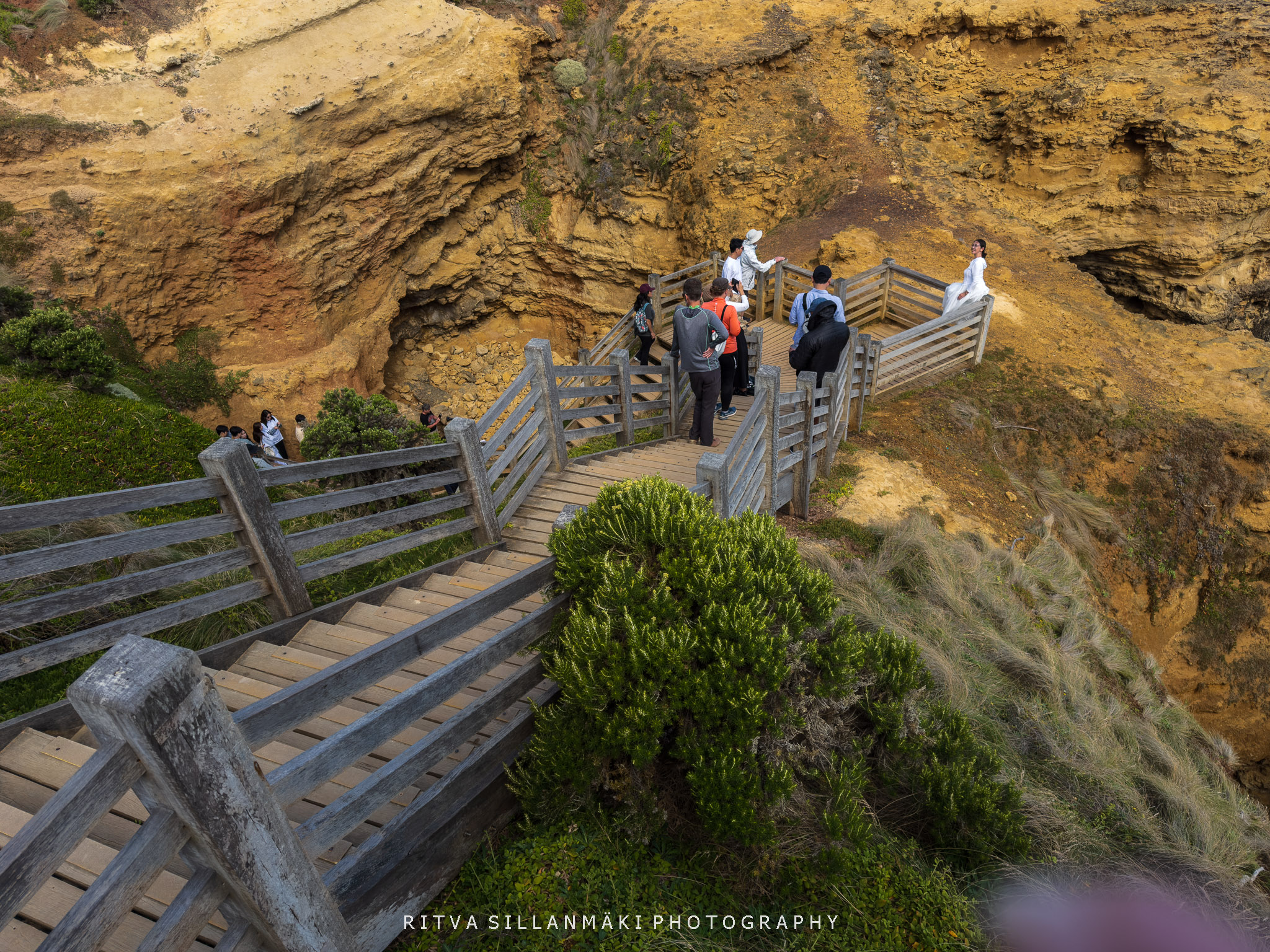
After having only the disappointing breakfast/brunch in Port Fairy we had to go grocery shopping in
Port Campbell. Got some disappointing sandwiches , we were having so much bad luck with our food choices and finished them with tea in our beautiful half-house, but not halfway house. Then it was time for another beautiful sunset. This time we welcomed at Bay of Islands.
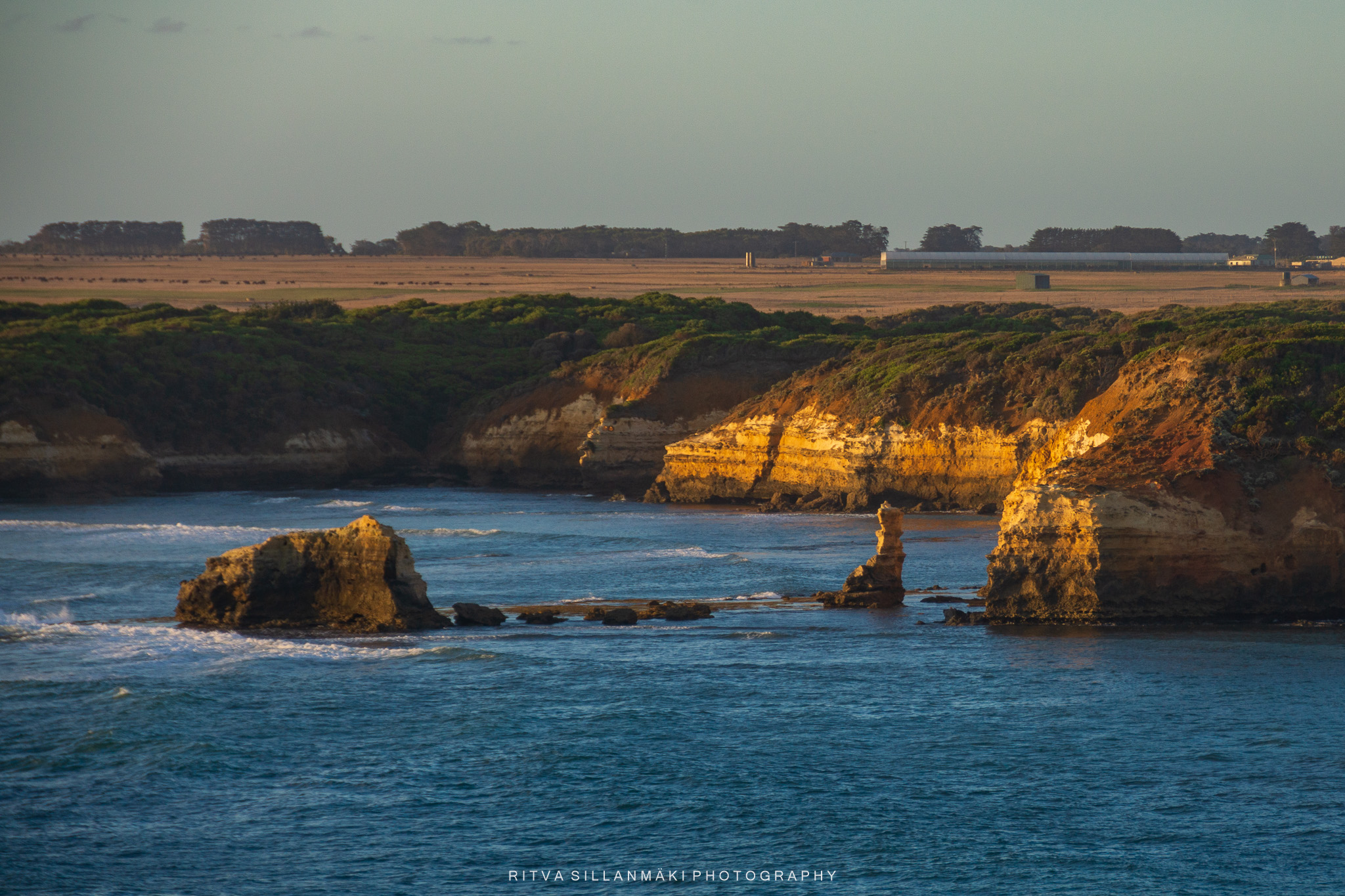
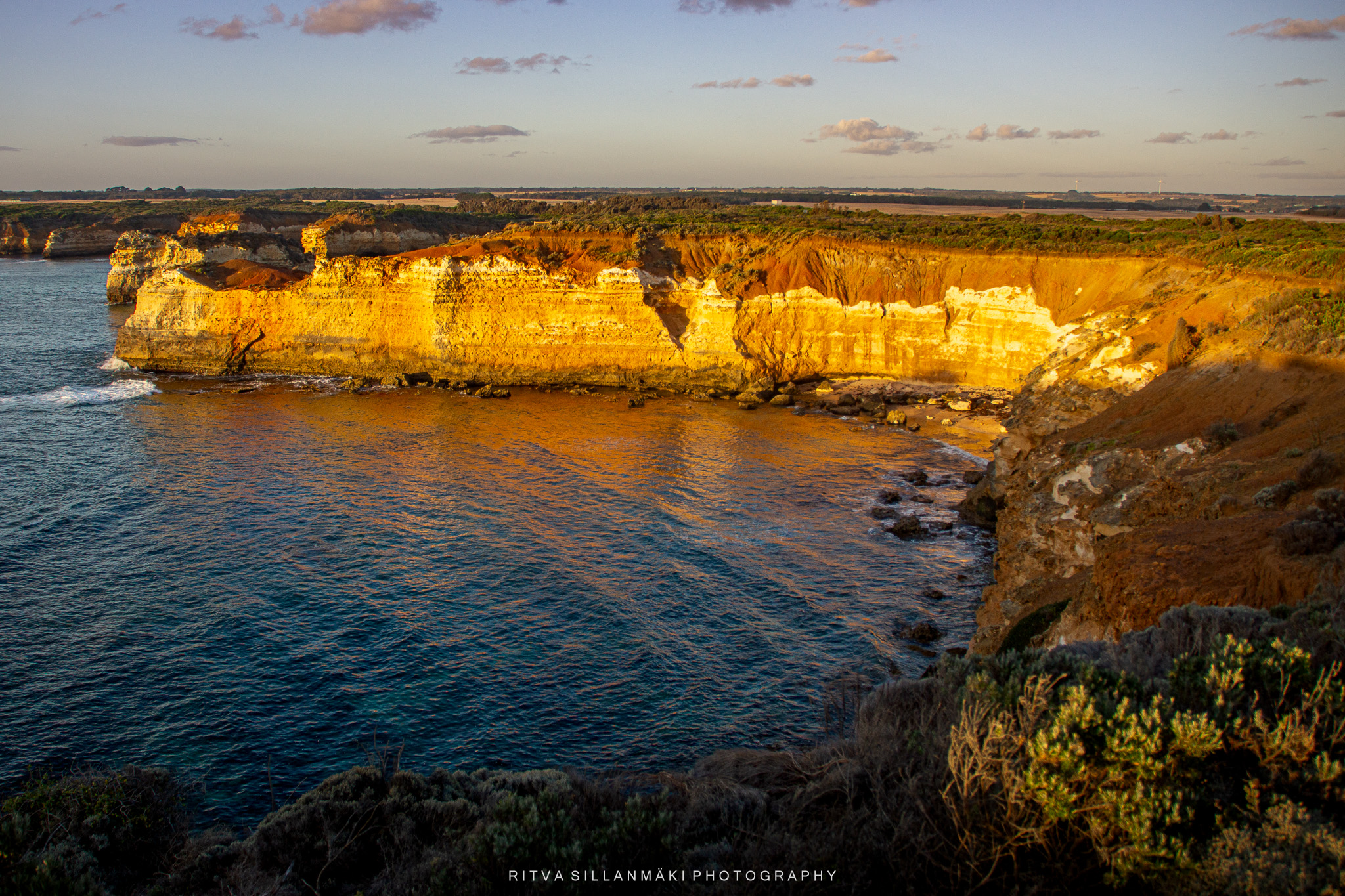
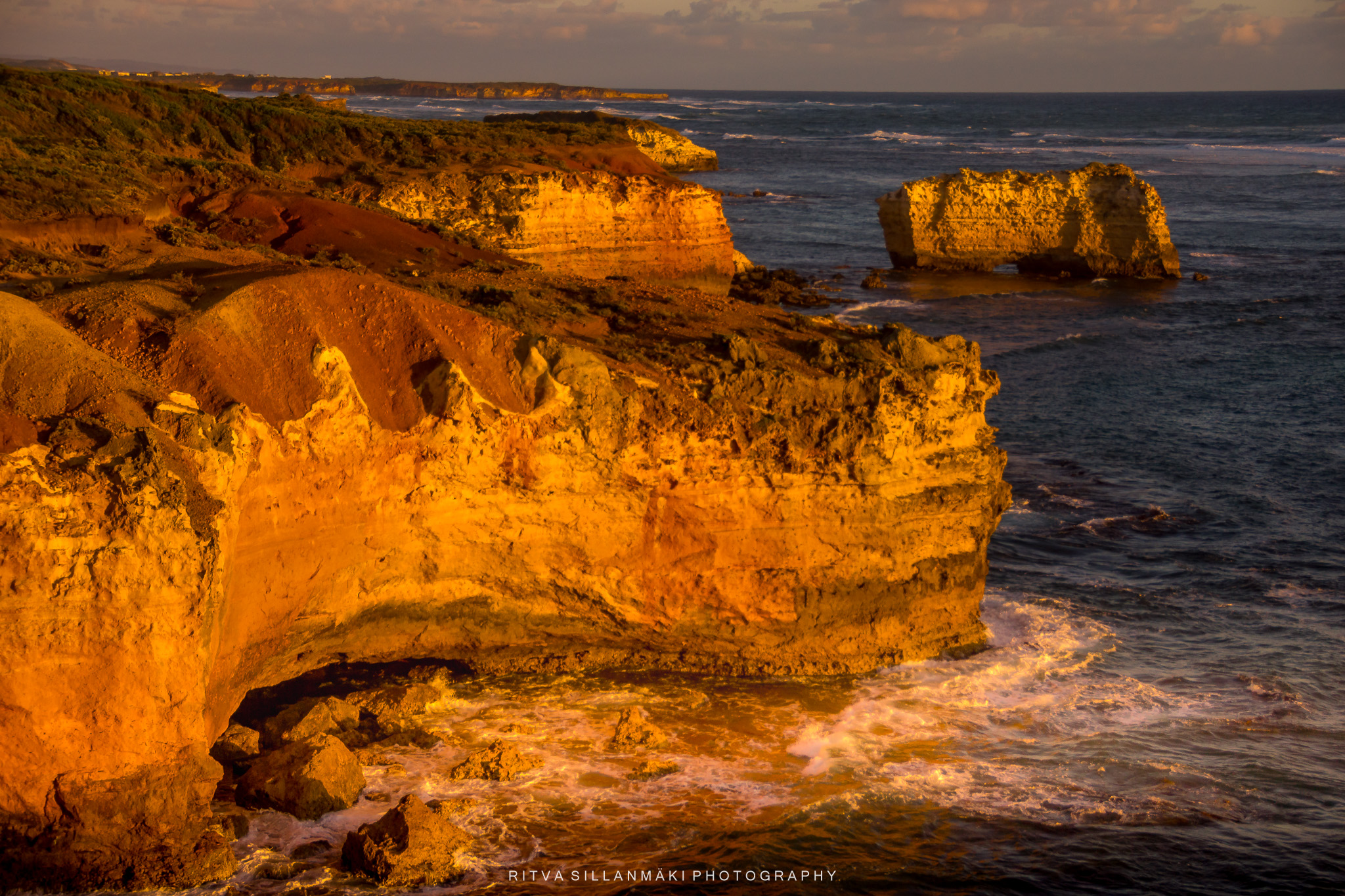
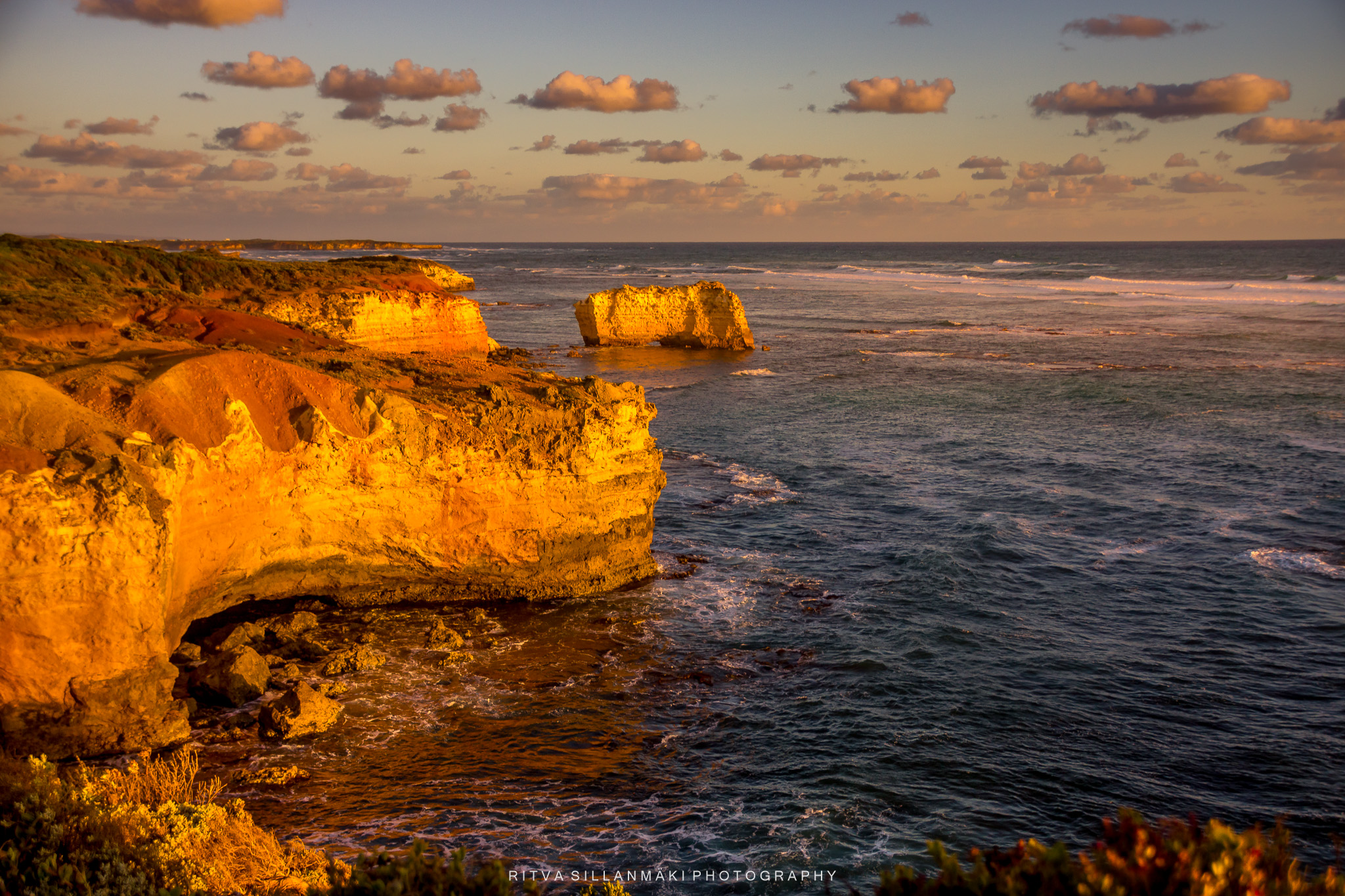
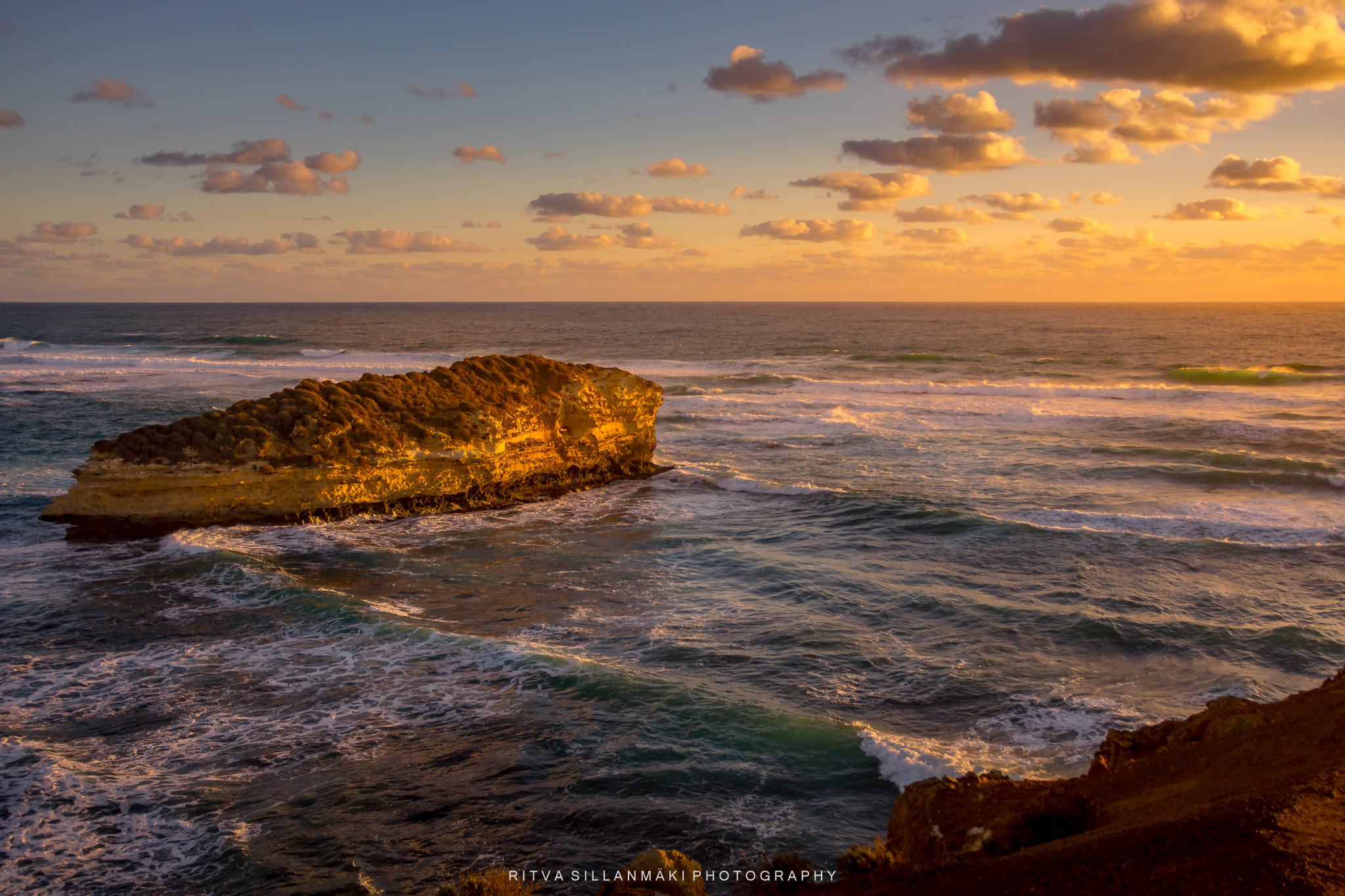
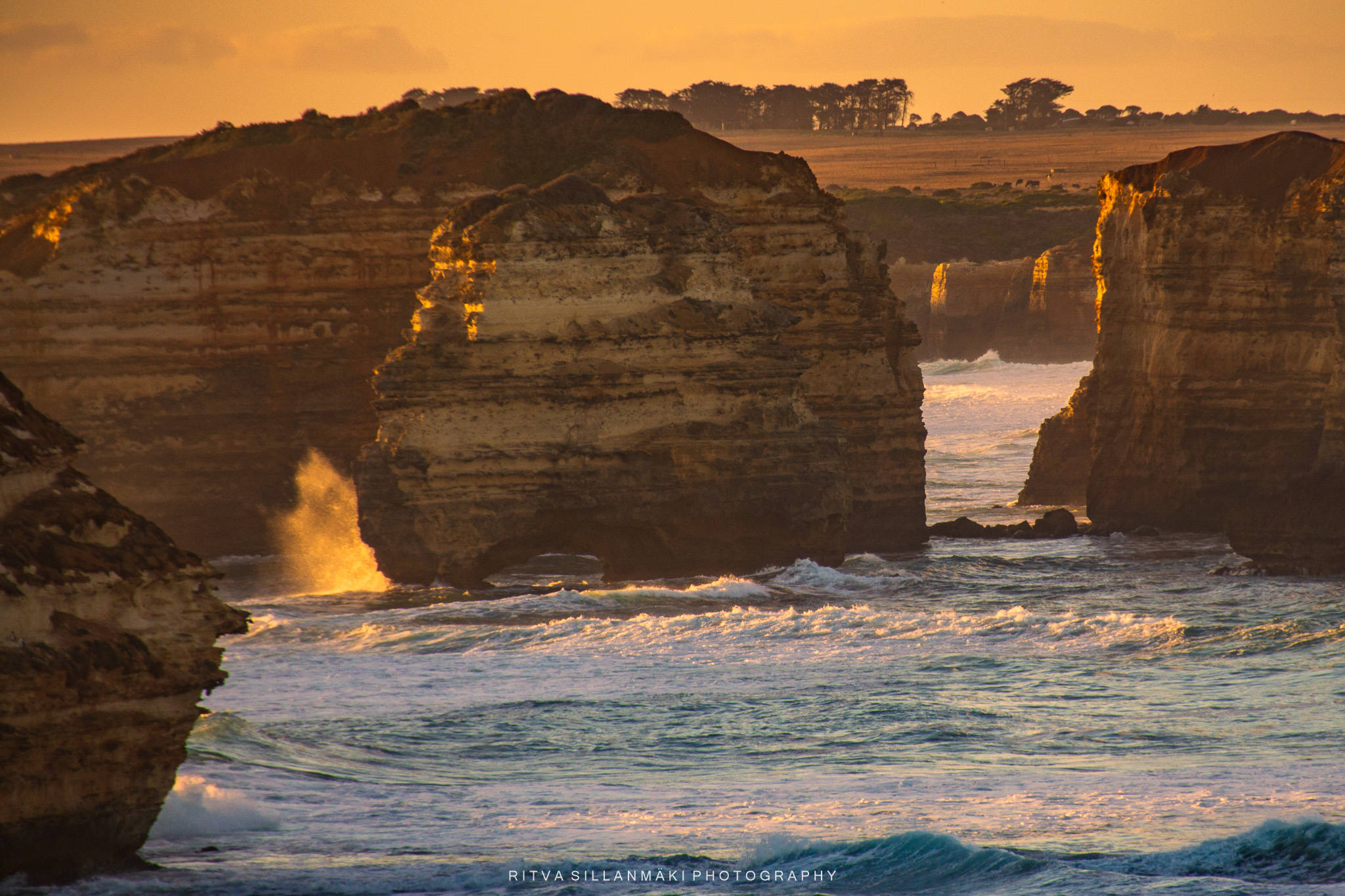
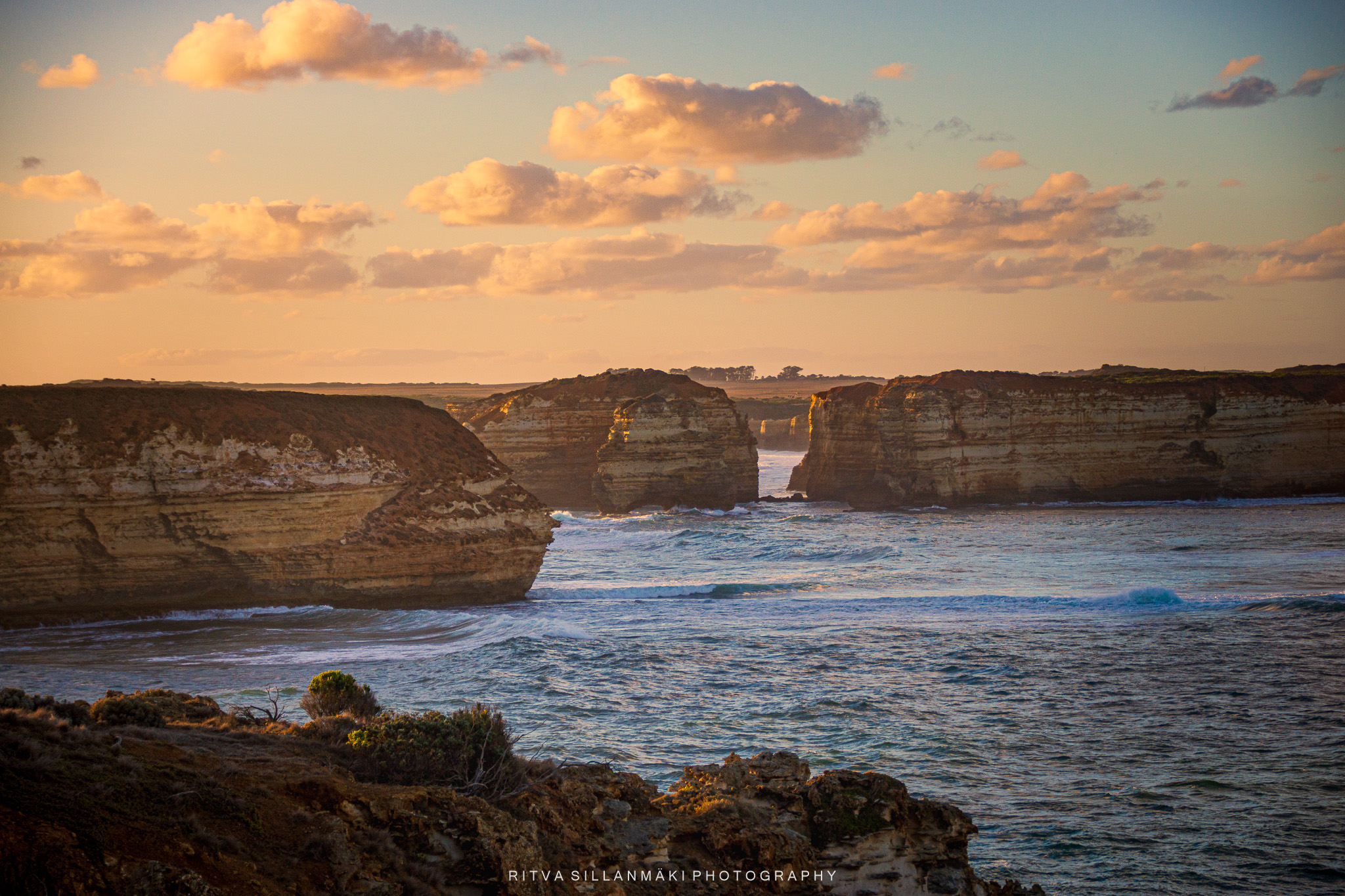
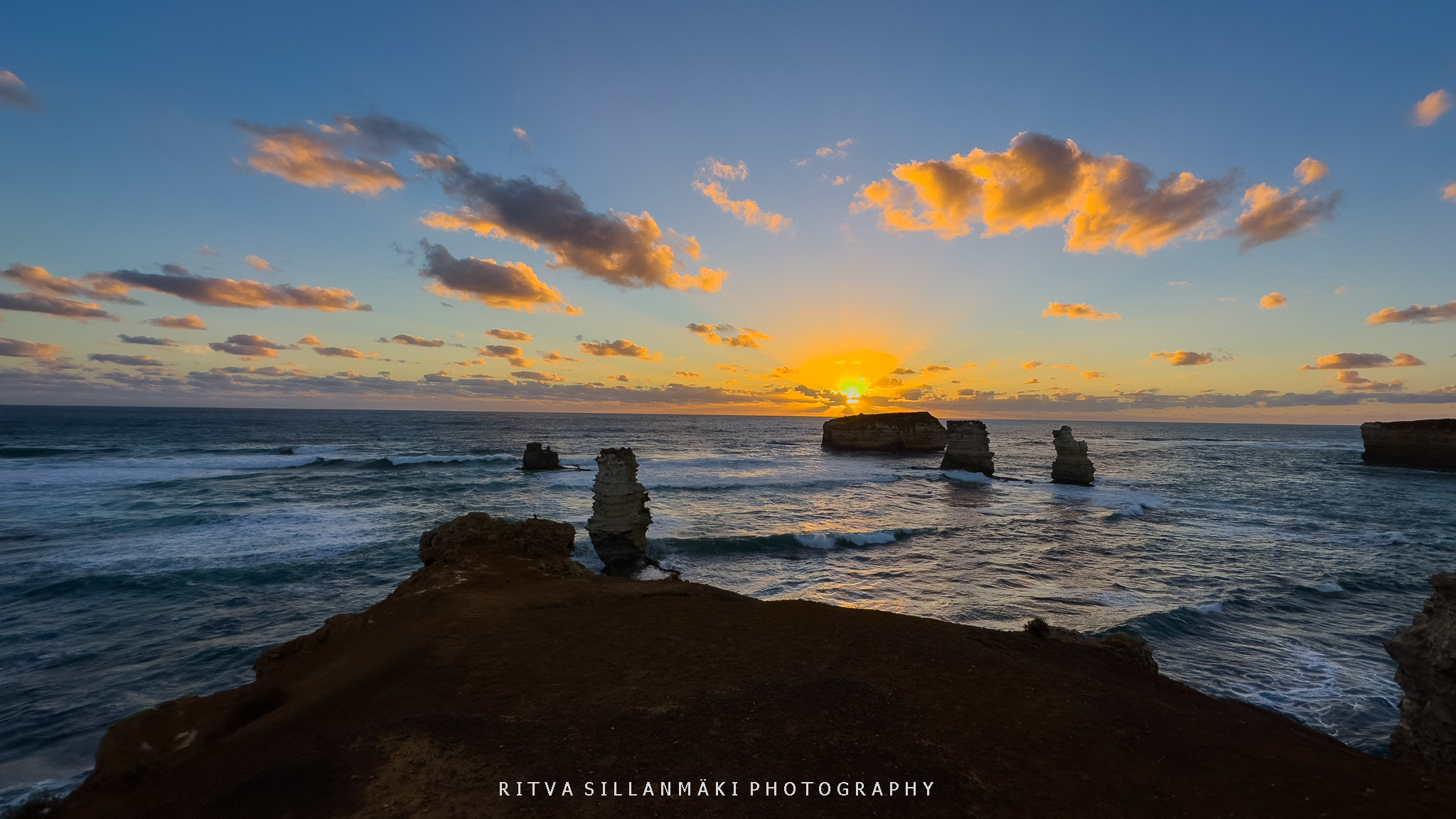
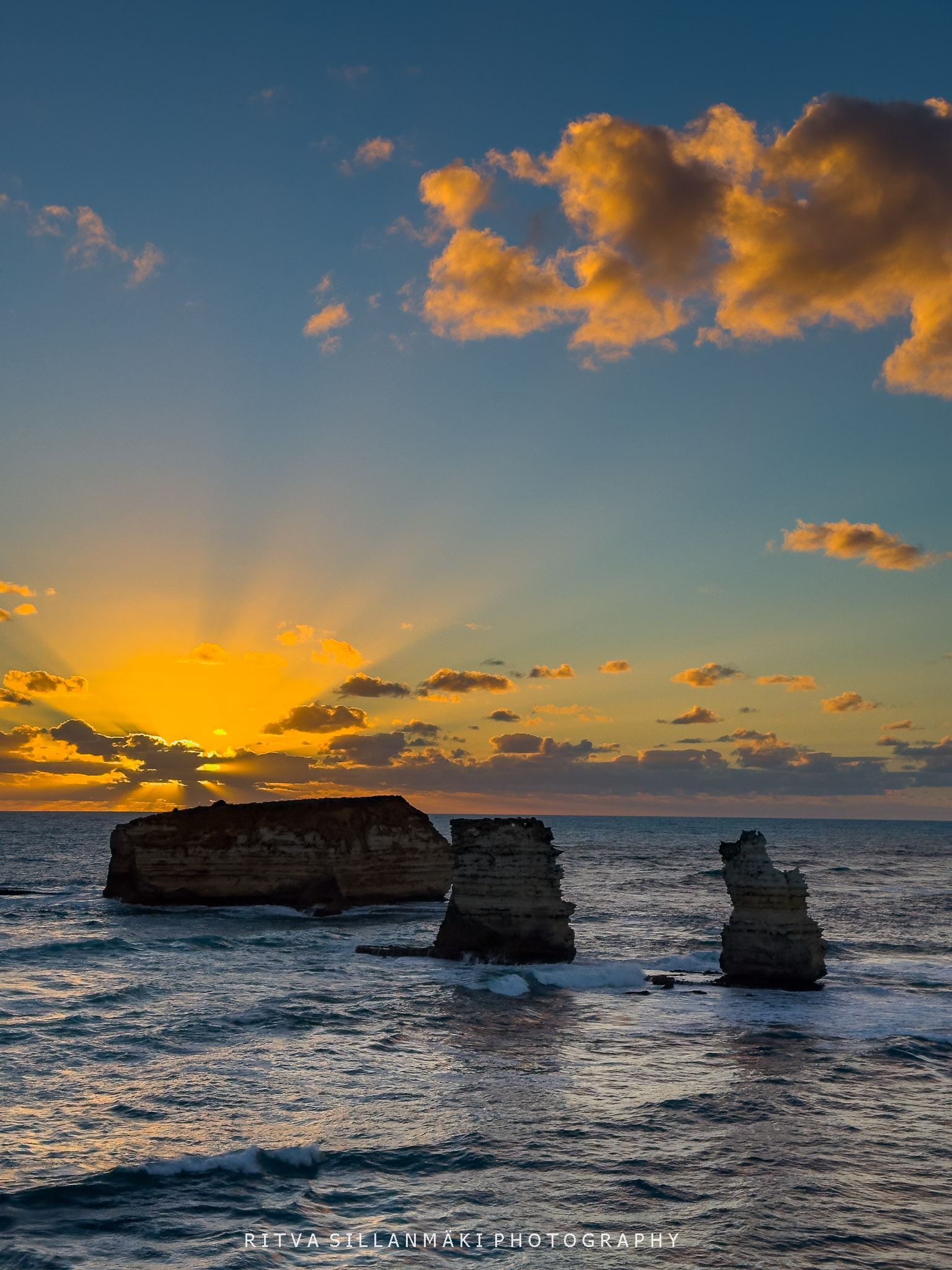
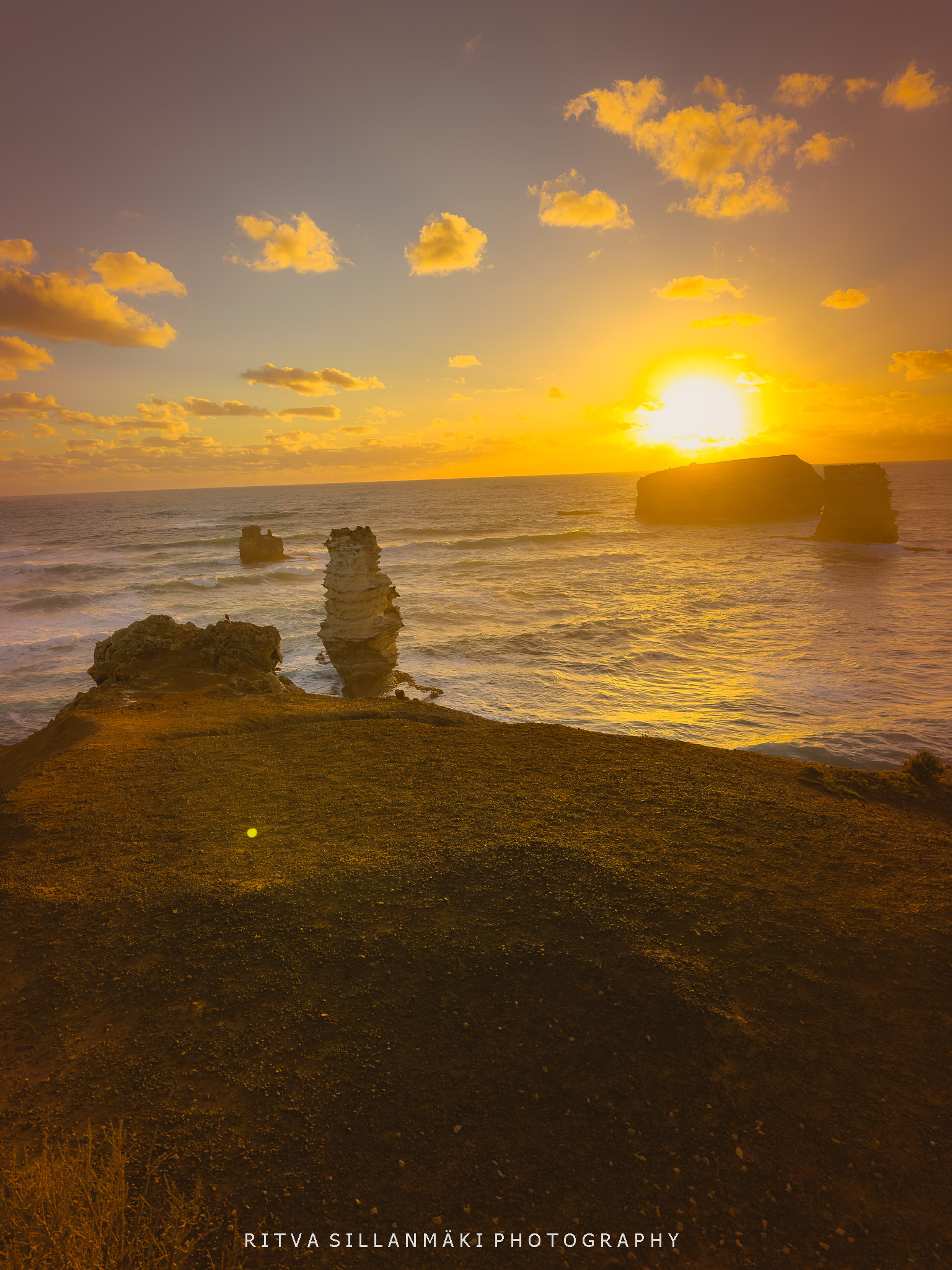
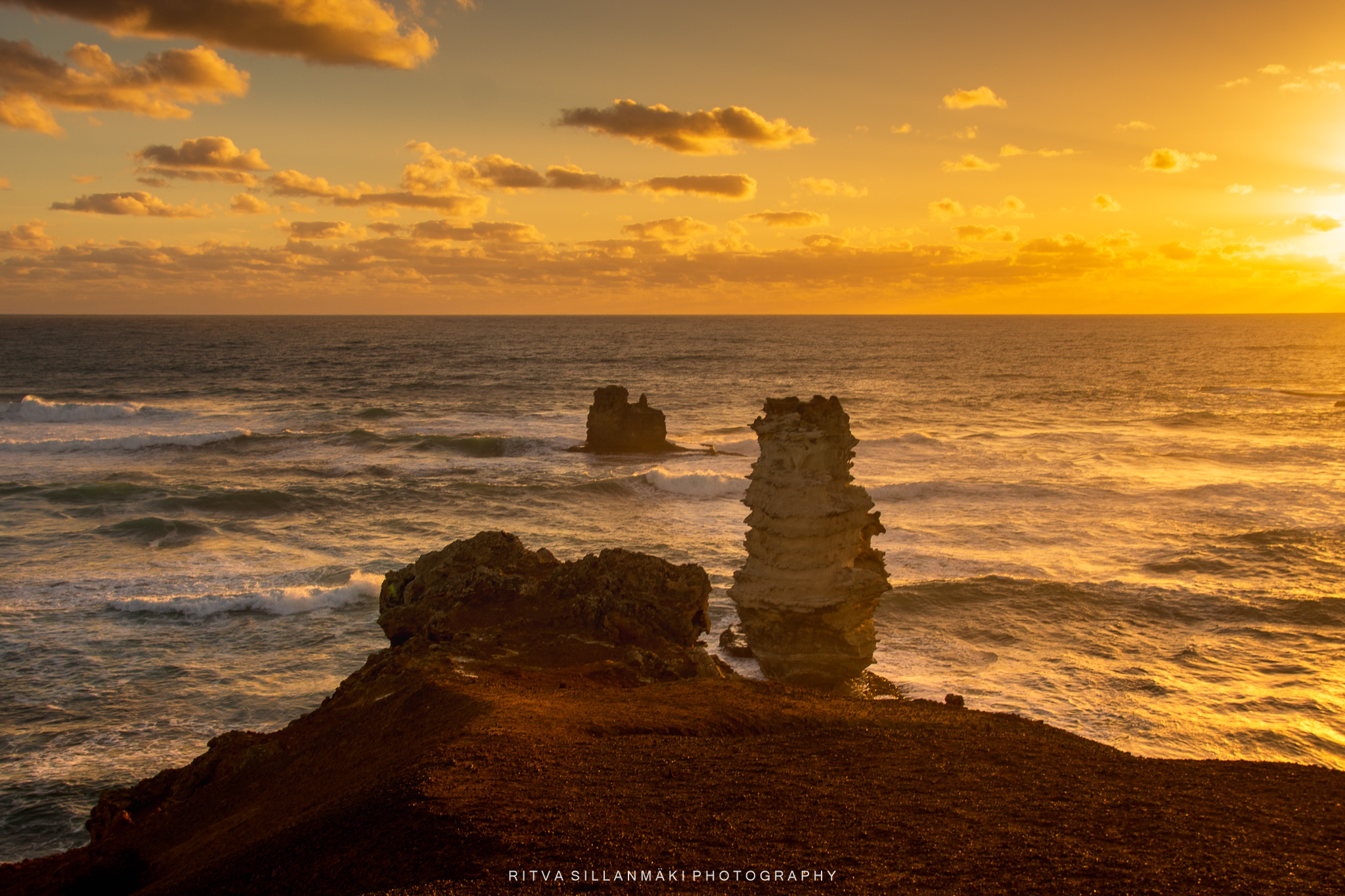
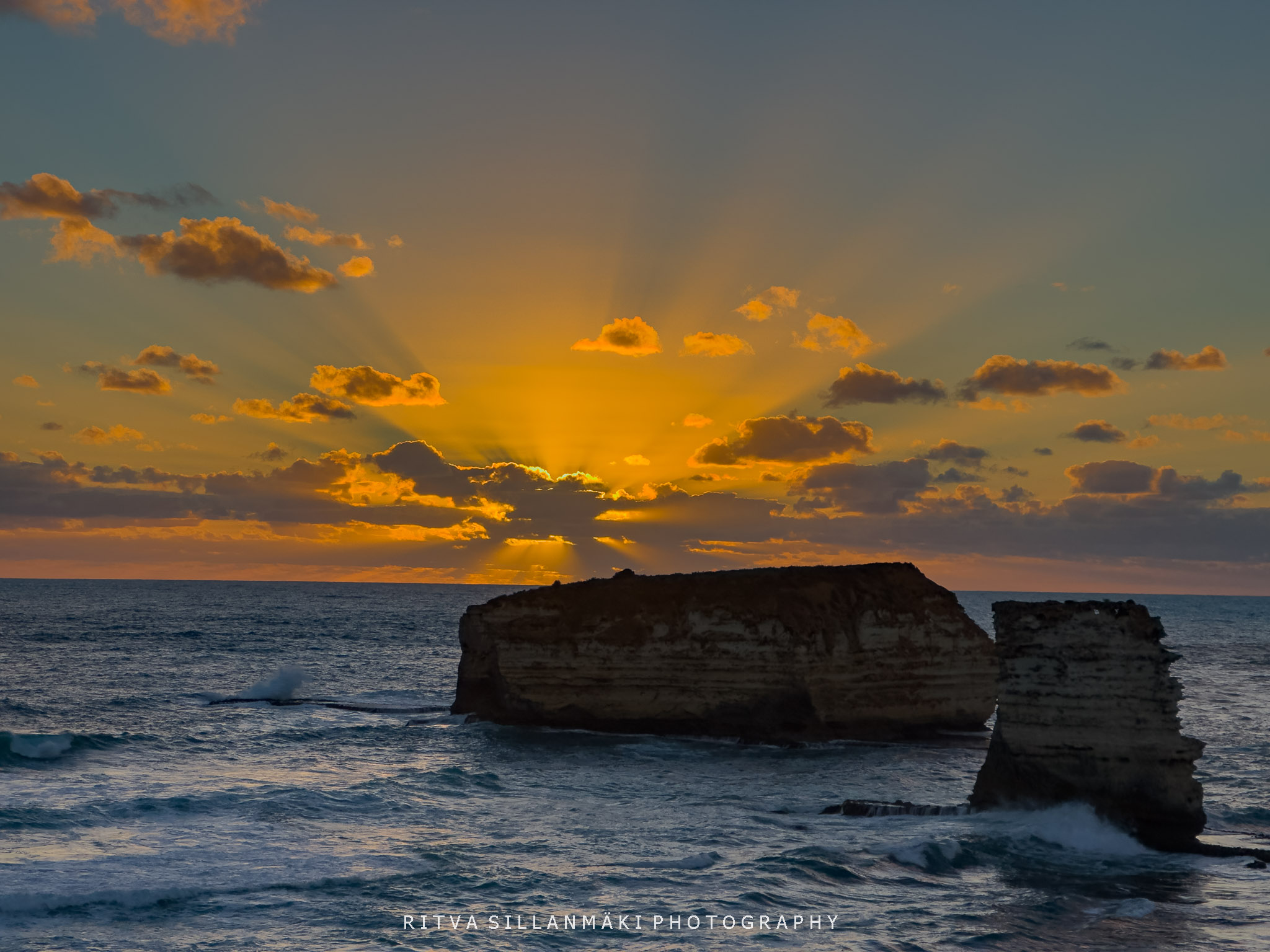
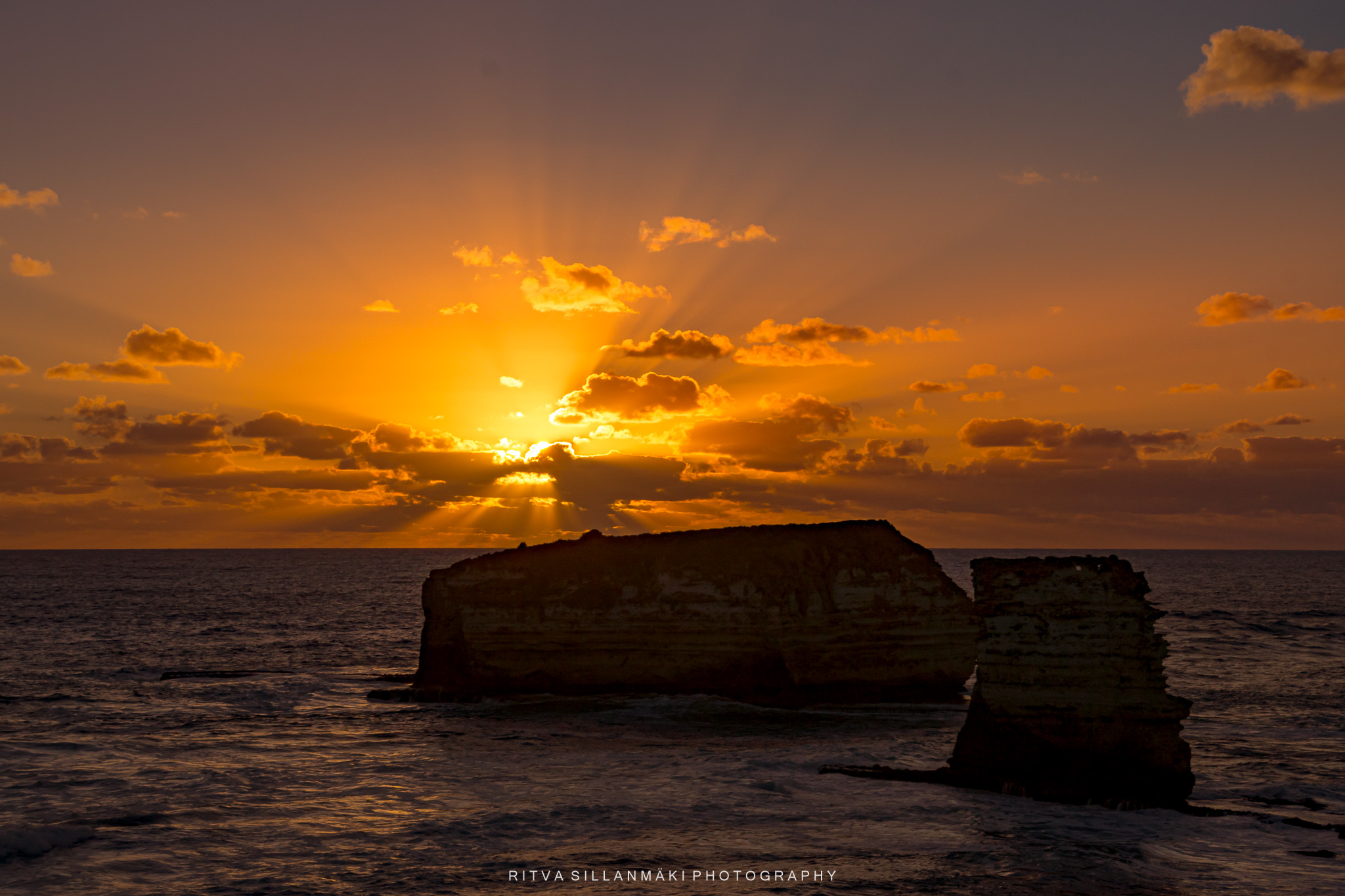
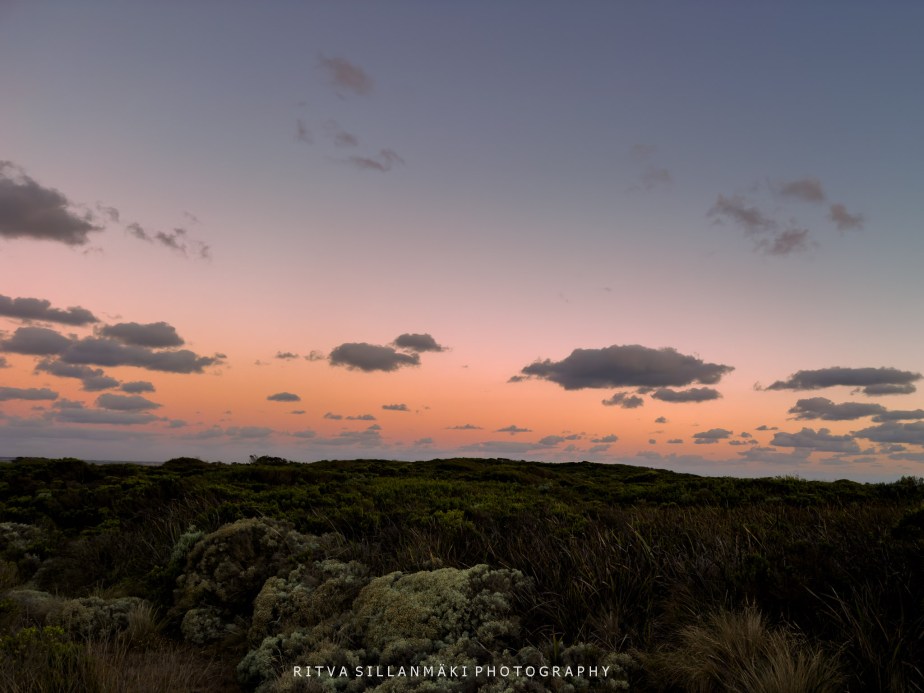
The afterglow of the sunset.
After we settled in that evening we got a very disturbing phone call from Ritva’s cousin Heli. She informed us that we wouldn’t be able to visit Ritva’s other cousin, Kari, in the mountain city of Talbingo. Kari’s wife, Susan. had just gotten bad health news and she was not, understandably, in a state to welcome guests. Such sad news to receive. We had planned on staying for few nights with them and we were slightly panicking. However, Heli graciously welcomed us to stay as long as we wanted in their home. Phew, problem solved, for now. So grateful.
To be continued 😀
Text credit Mara Sillanmäki
I am continuing my houses and doors and windows for Dans Thursday Doors. Looking back I am sad that we only had time to stay for two days.
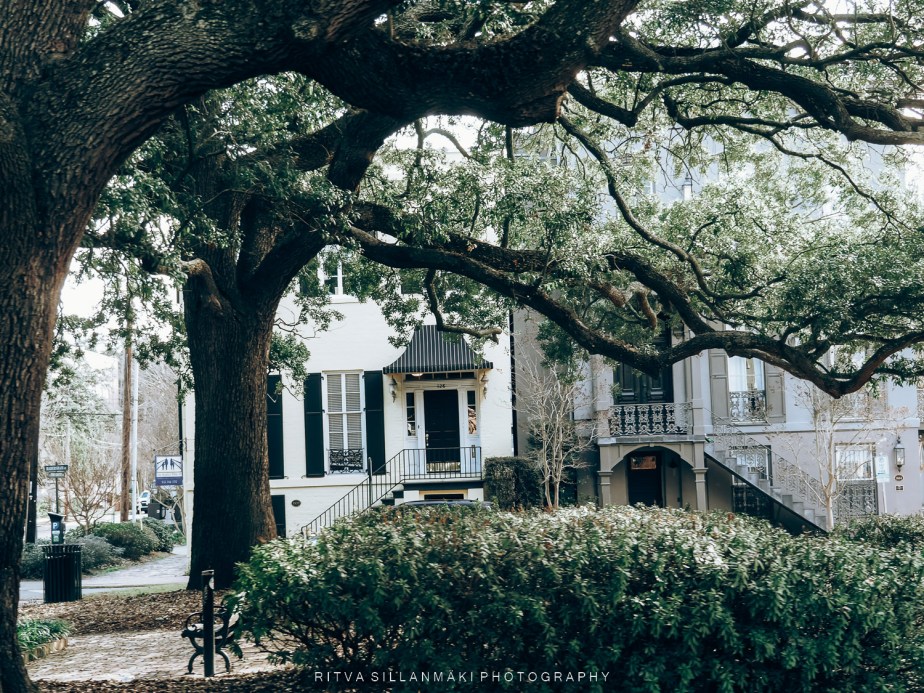
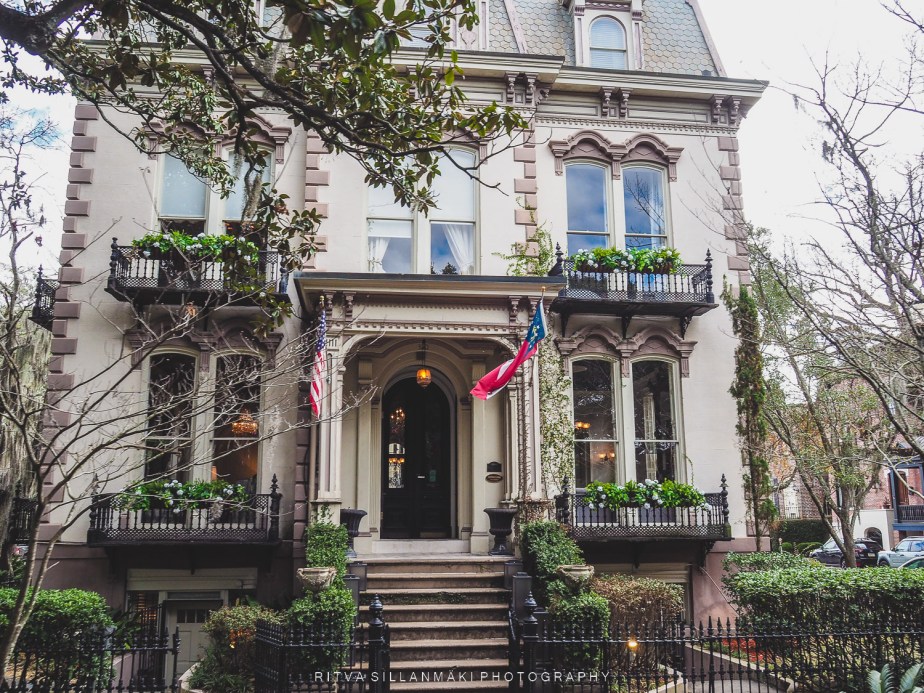
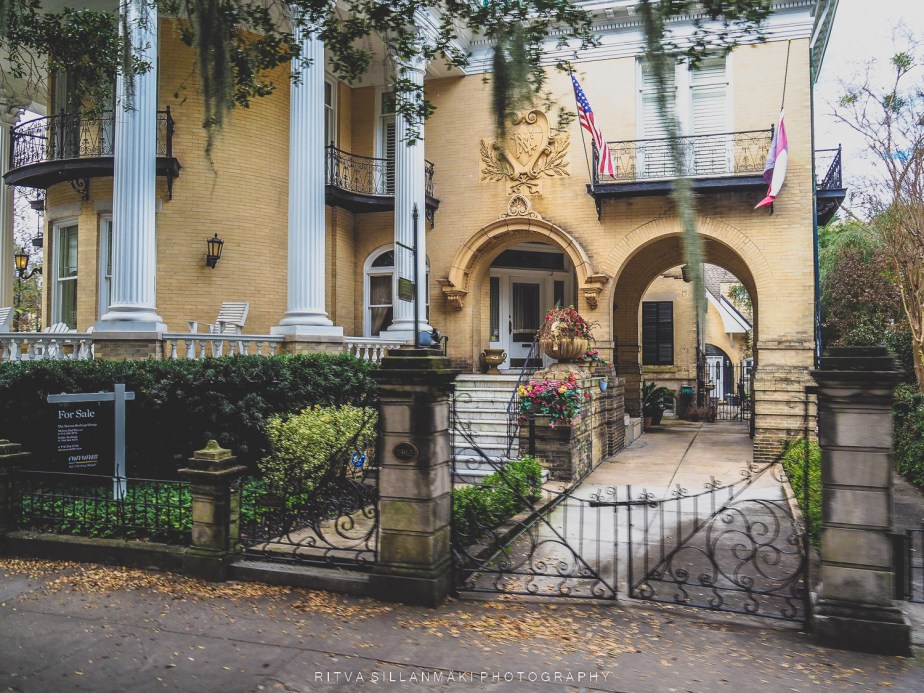
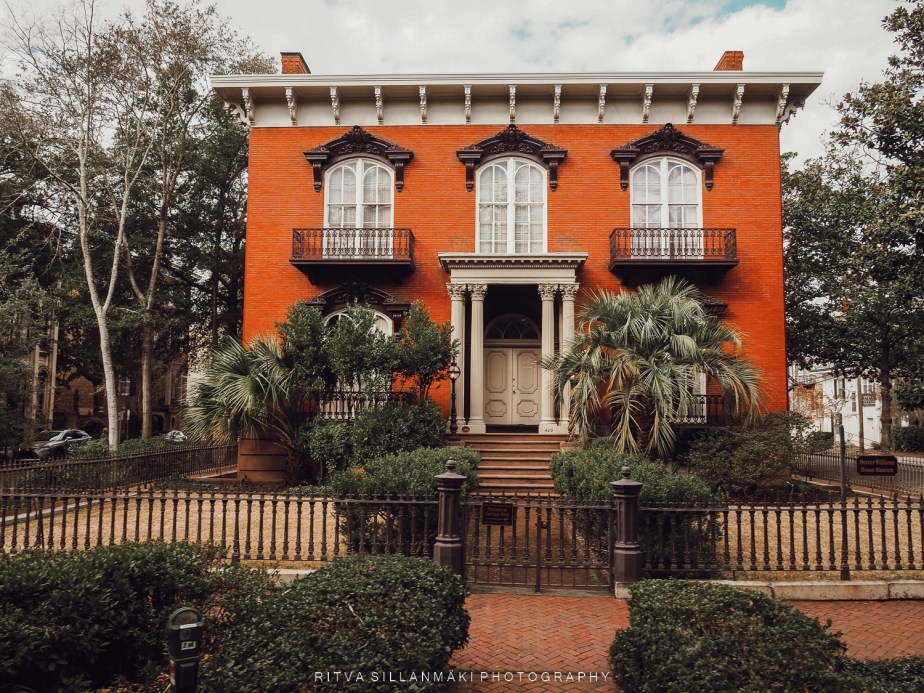
Constructed in 1873 by notable local entrepreneur and alderman Samuel Pugh Hamilton, who was referred to as “The Lord of Lafayette Square,” this private mansion emerged as a centerpiece for Savannah’s social activities, its magnificent architecture and interiors adding a sense of opulence to the numerous gatherings of the elite. When it became the first residence in Savannah to harness electricity, residents flocked to witness the enchanting glow of electric light shining through its windows. Over a century later, John Berendt’s book “Midnight in the Garden of Good and Evil” highlighted the lively parties hosted by Joe Odom, who once oversaw the estate. Years afterward, the Inn made a memorable appearance in the film adaptation of the same title directed by Clint Eastwood, featuring stars Kevin Spacey and John Cusack.
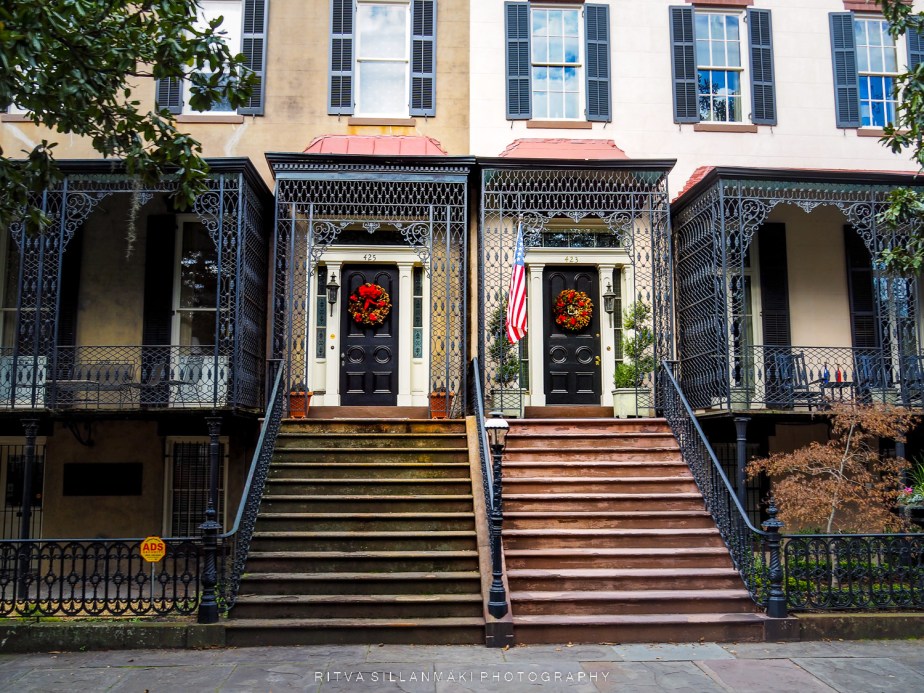
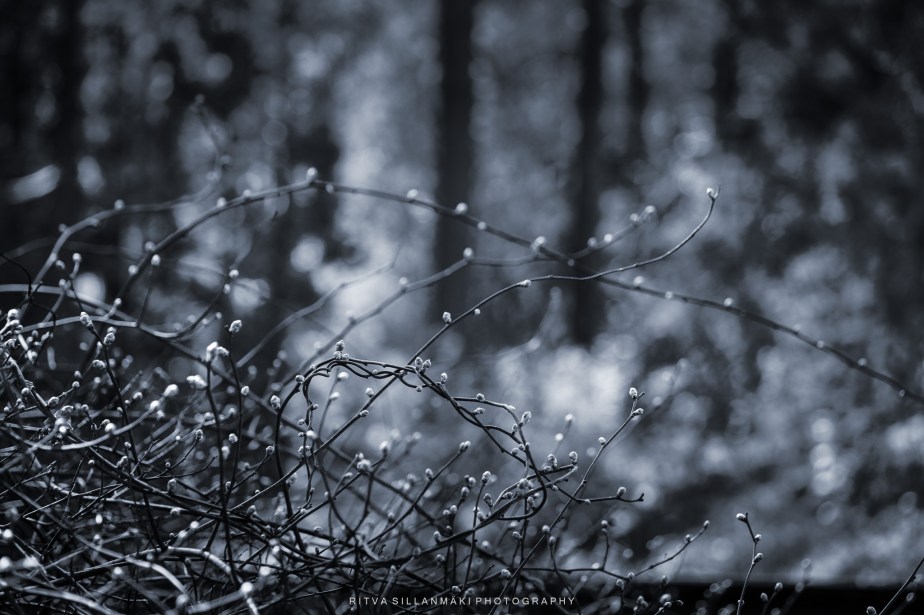
For Leanne’s Monochrome Madness this week I took some photos of spring, trying to capture the essence of renewal and vibrancy that this season brings.
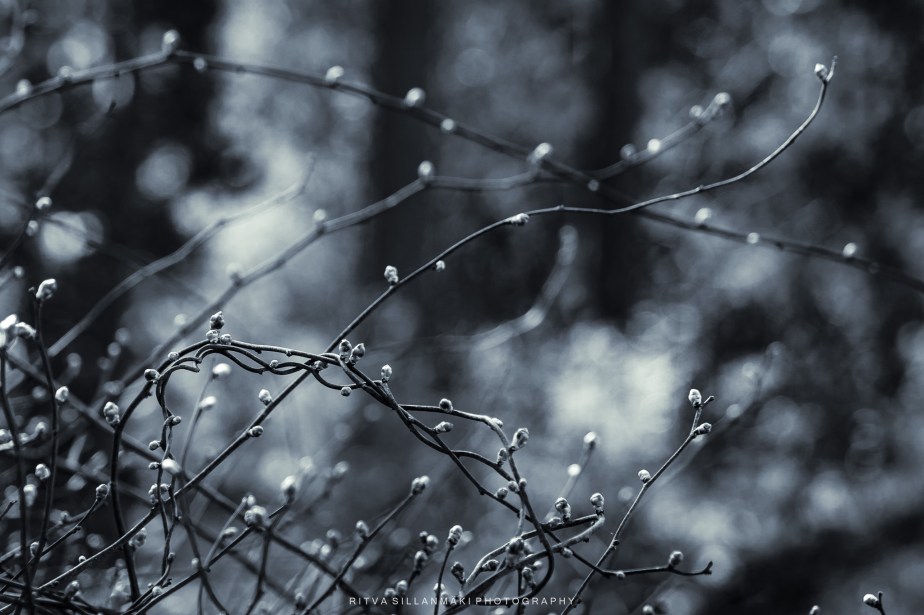
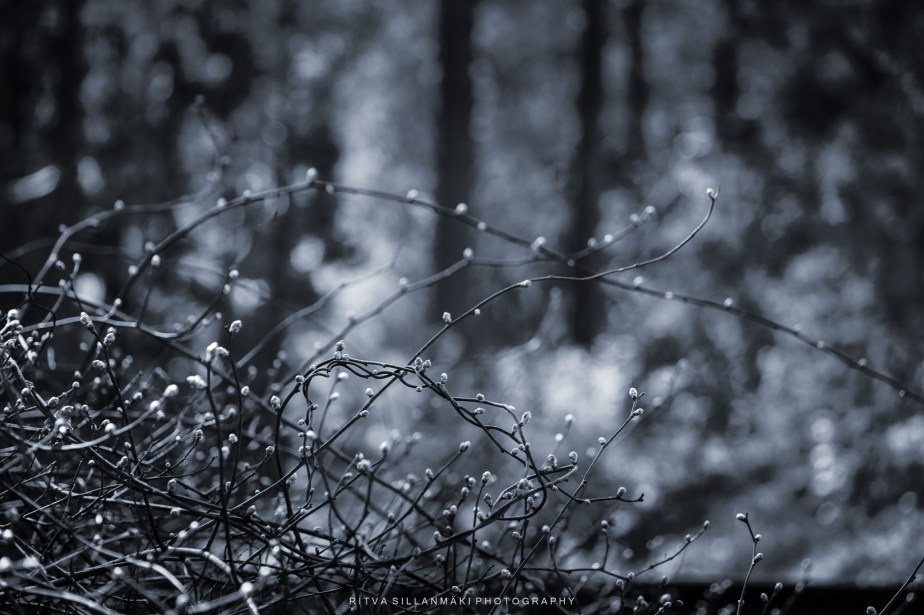
Some plants are just slowly starting to show small buds of leaves, signaling the awakening of nature after the long, cold early spring. So I took a close-up of delicate branches with budding leaves, illustrating the beauty of spring’s emergence against the backdrop of the slowly warming air. These two images are just slightly different, mainly by cropping.
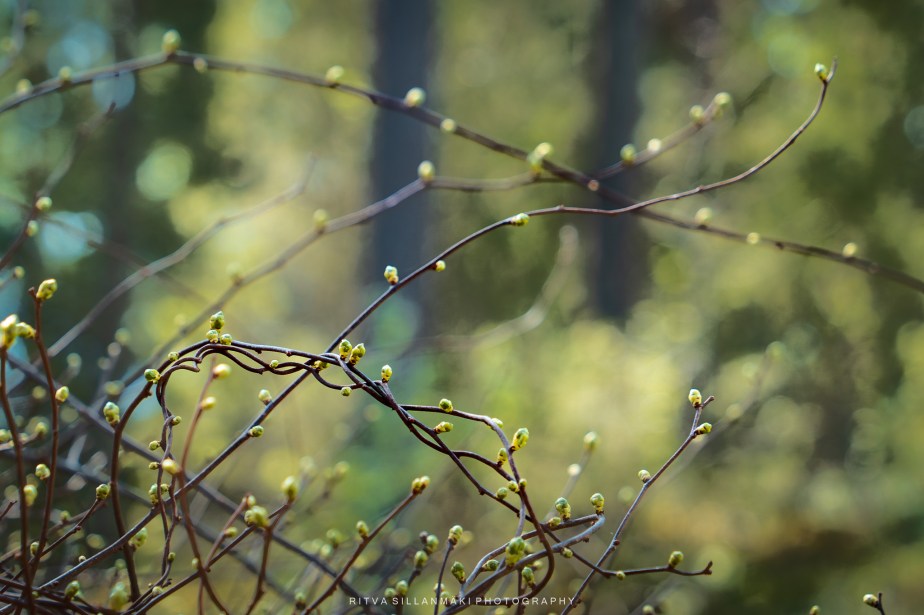
I also added the color version just for no reason other than that I felt like it, wanting to give viewers a contrast that emphasizes the fresh greenery and the subtle hints of color that are beginning to emerge in the landscape.
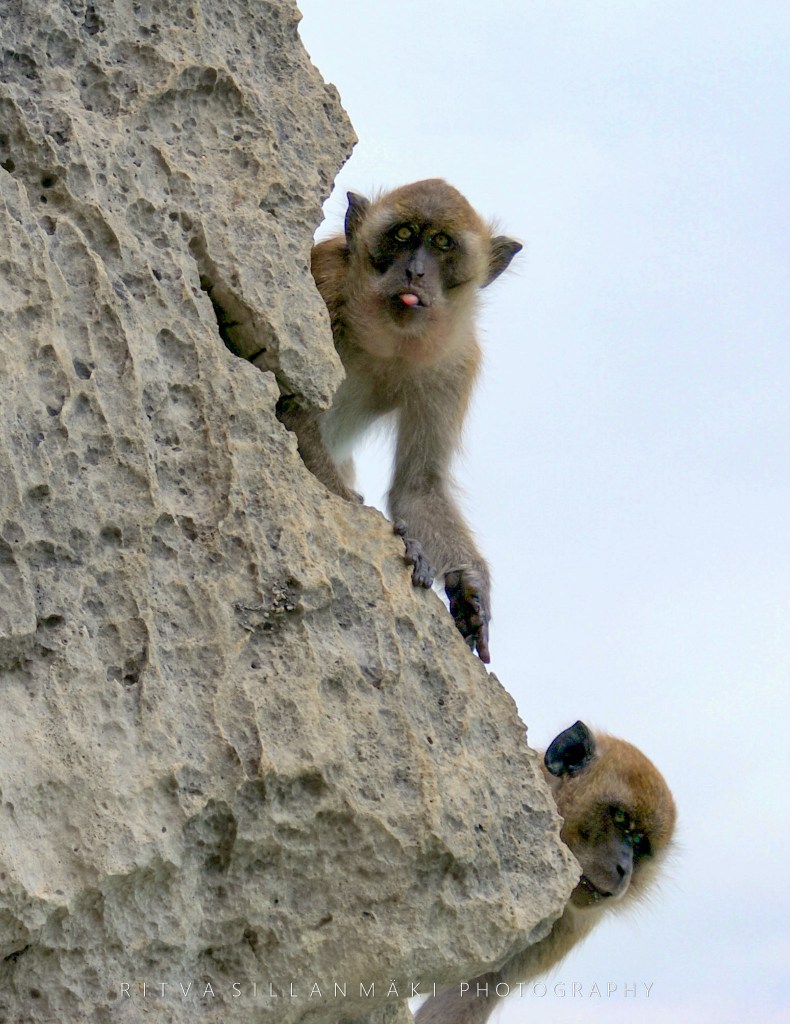
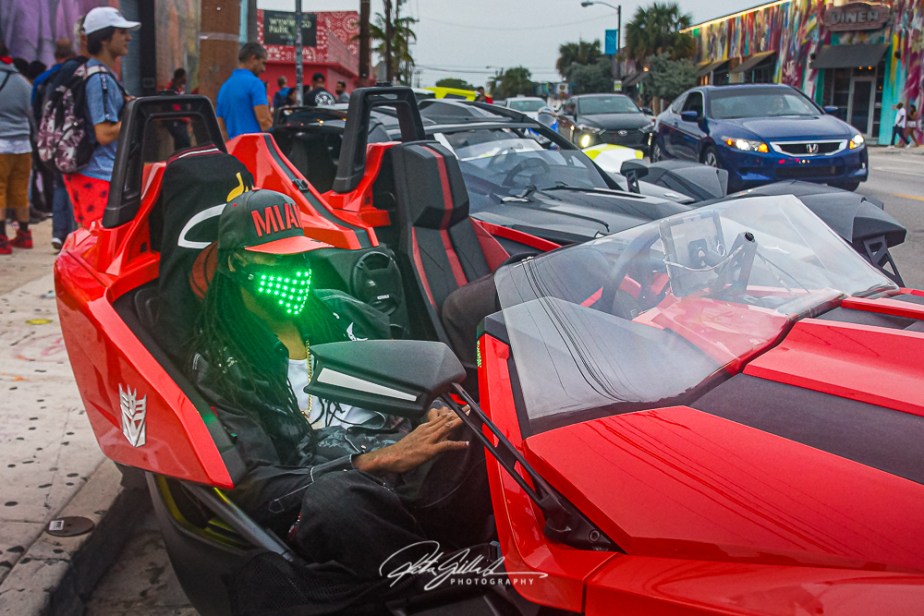
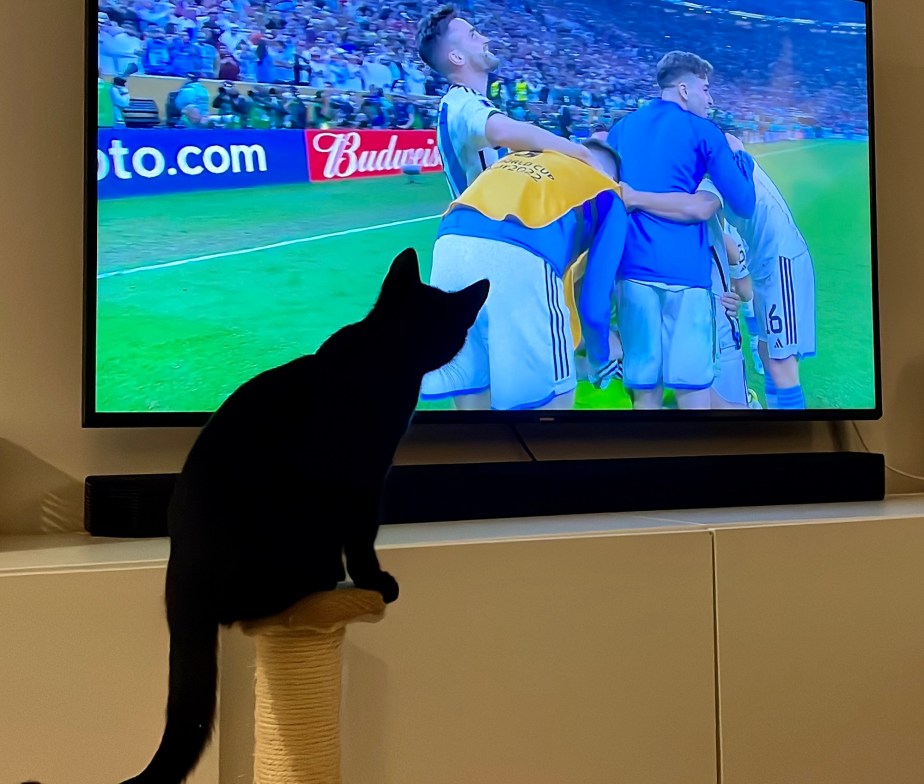
Lens-Artists #349 – The first thing I thought of hosted by Tina is fun and gives us a reason to smile once or twice a least. Maybe even more 😀
As Egidio expressed in his Serenity challenge last week, the current state of the world led him to invite us to share some peace and calm with our images. This week Tina thought perhaps some humor might also be in order and I agree with her – it is.
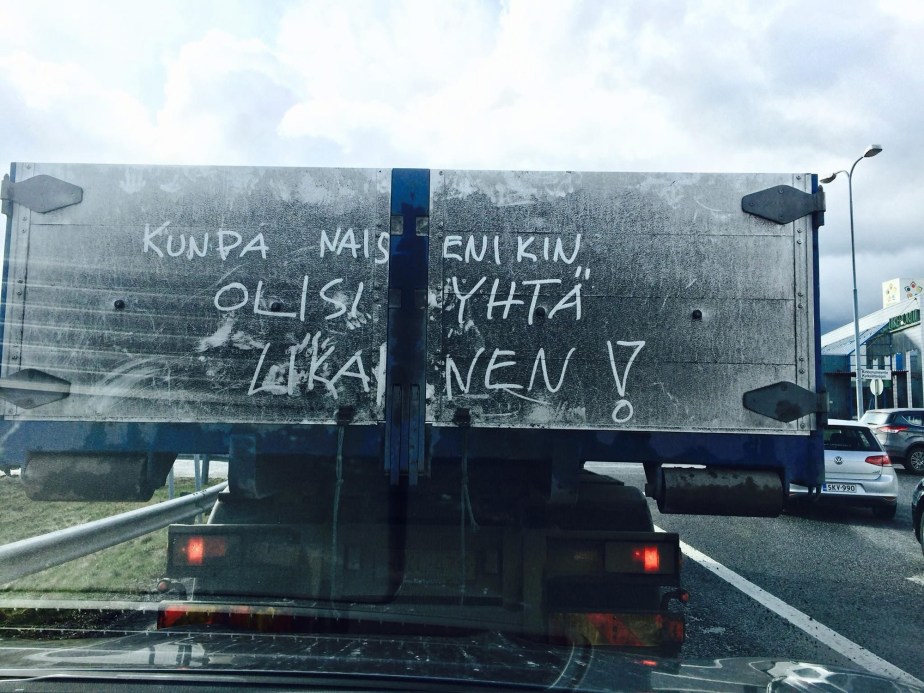
I must admit that initially, I found myself at a loss for photos for this challenge. I don’t have anything funny, and those I have are slightly on the naughty side, and I have no wish to offend anyone. 🙂 One would have been a photo of a very dirty truck that someone had written on in Finnish (another little hiccup for many). I wish my woman’s was as dirty as this truck. Not to everyone’s taste. Still here it is 🙂

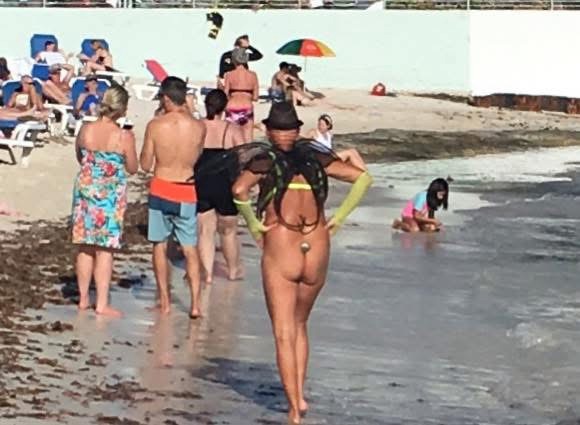
As you might have already read in Tina’s post, we are excited to have Beth of Wandering Dawgs joining the Lens-Artists team. She is a long-time participant and will be a great addition to our team. We very much look forward to having her on board and the new vibes and inspiration she will bring us. Welcome Beth, looking forward to your first challenge.
Be sure to link your responses to Tina’s post , and to use the Lens-Artists Tag to help us find you. Anne from Show Shutter Speed will lead us next week be sure to check out her post next Saturday. Until then and keep smiling 😀
Interested in joining our challenge? Click here .
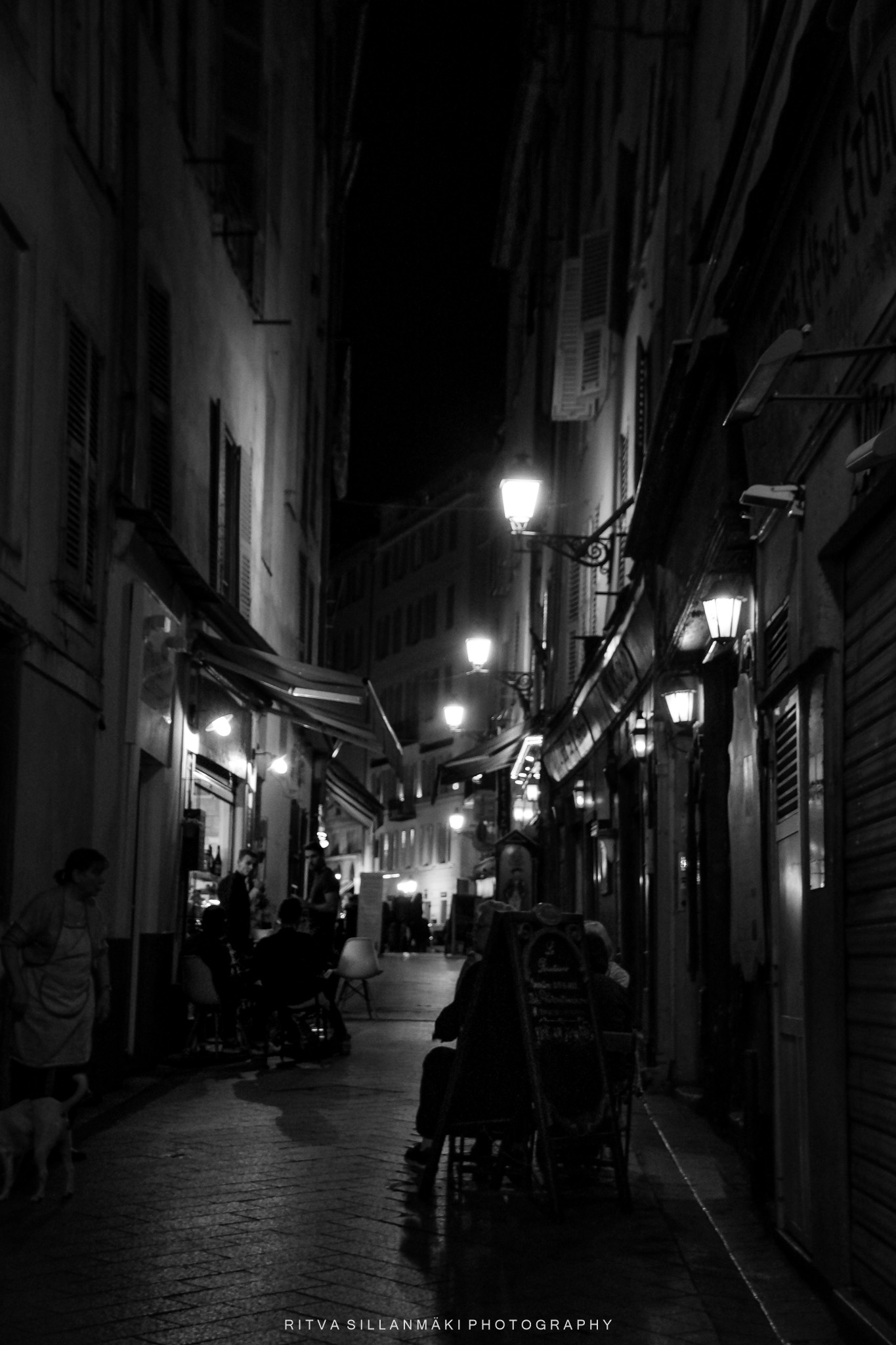
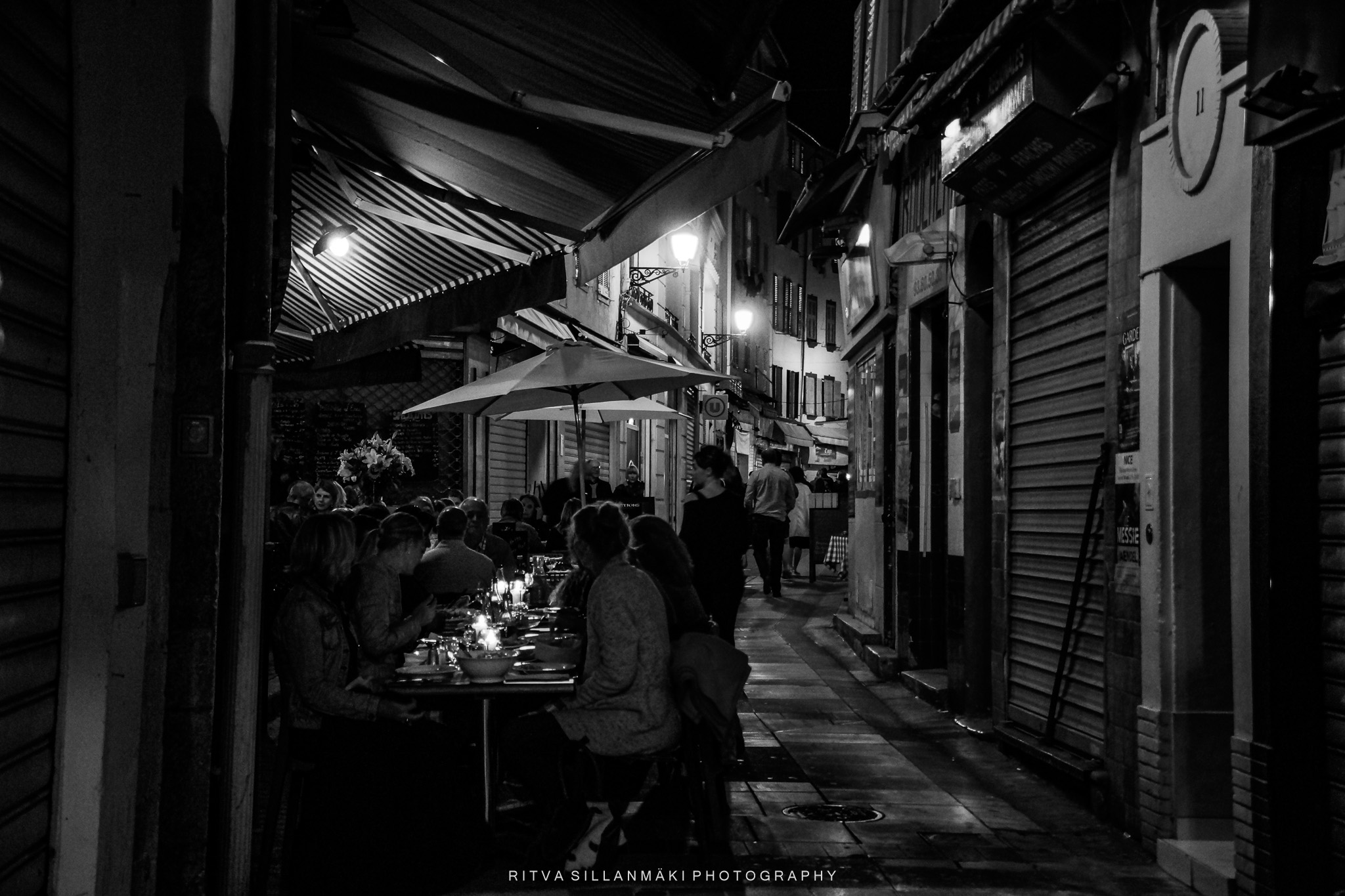
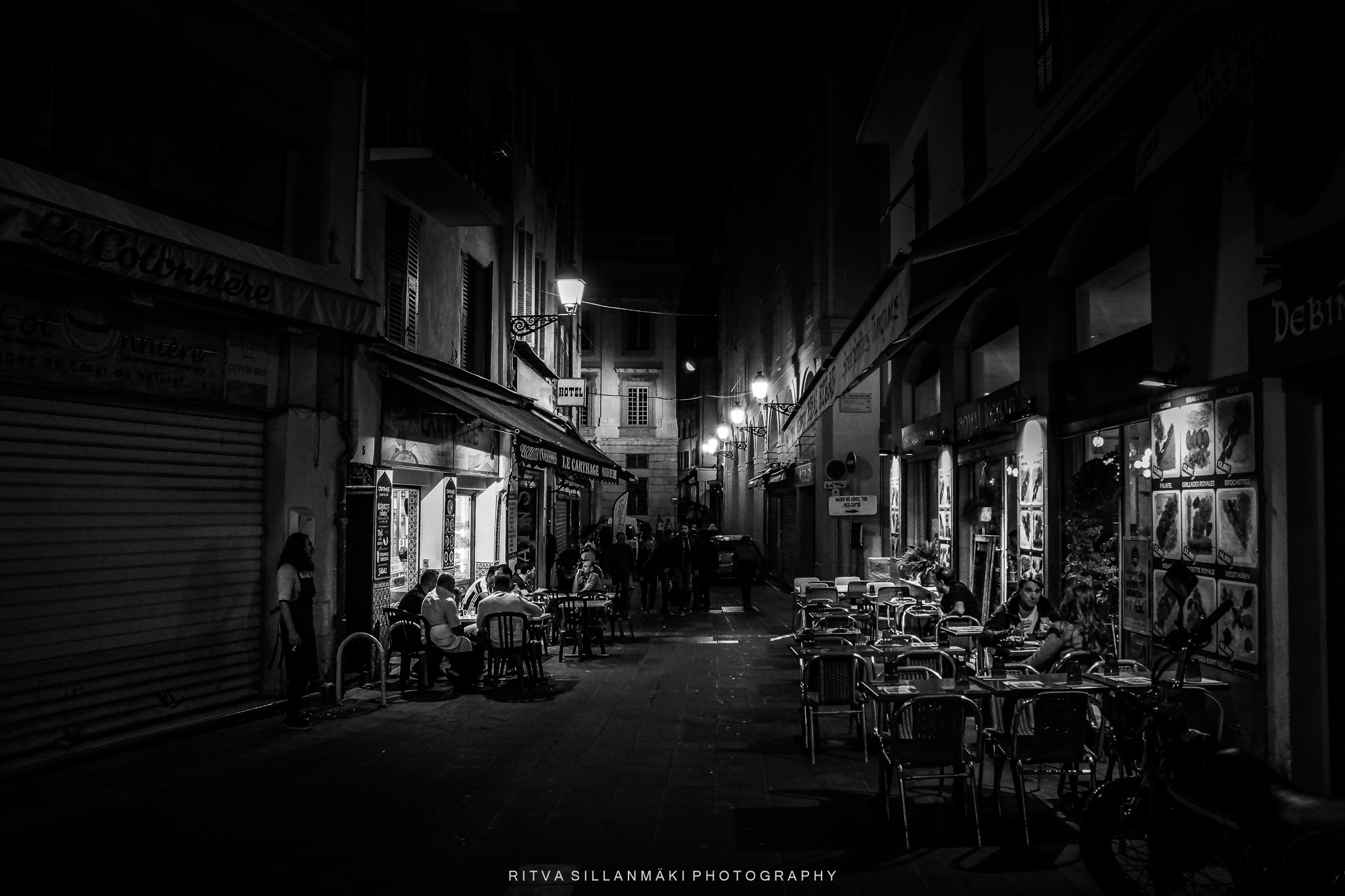
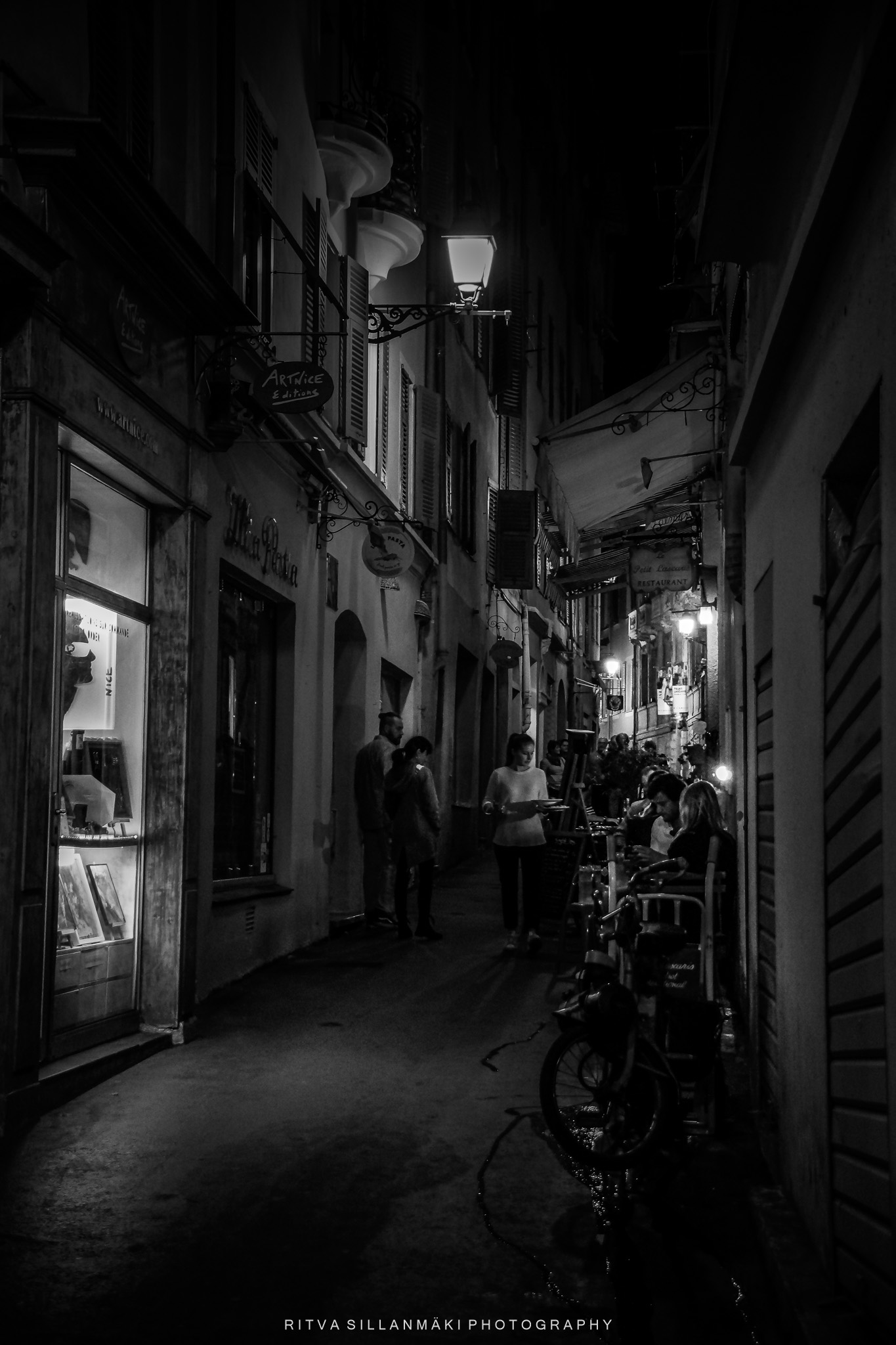
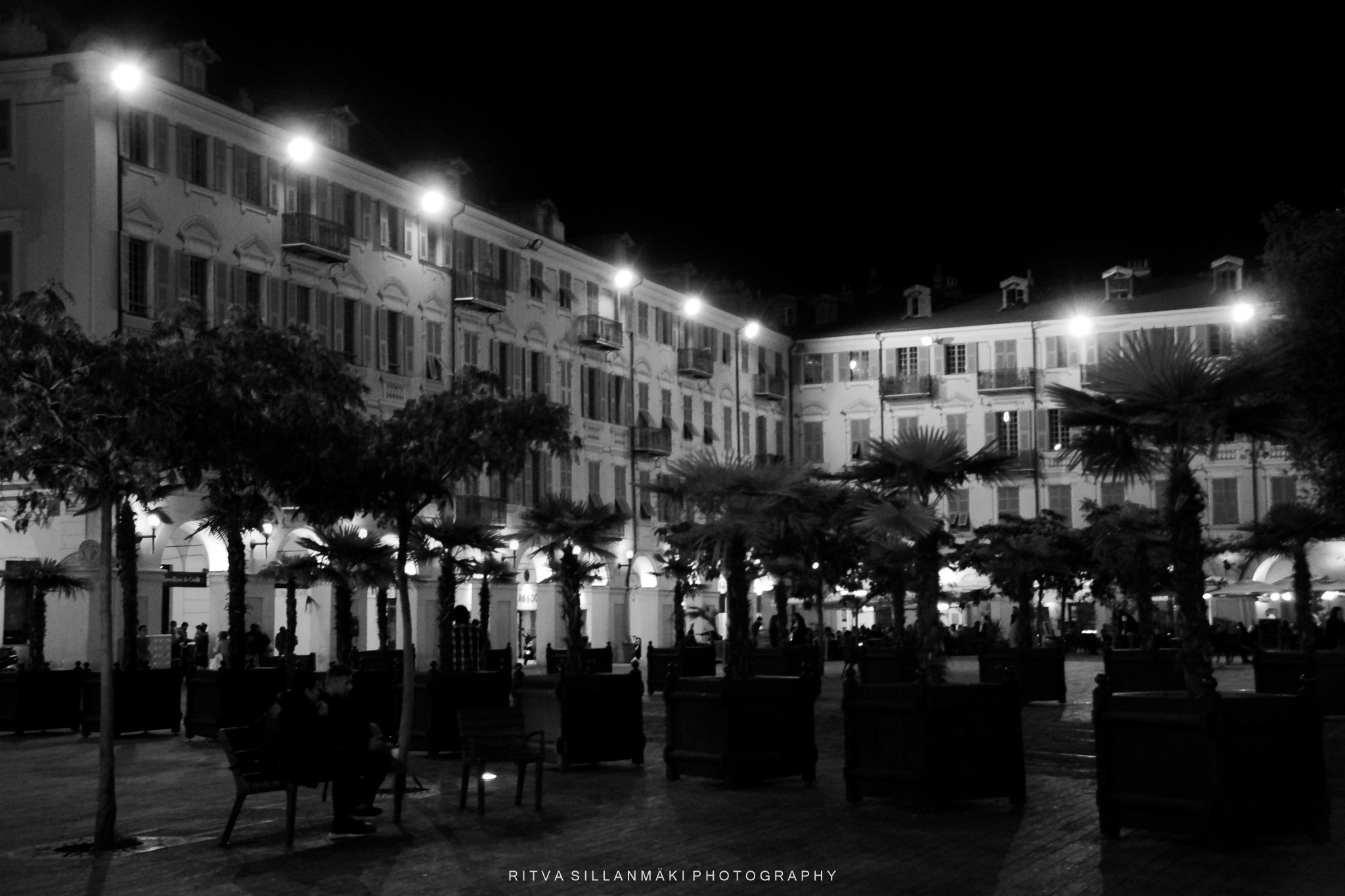
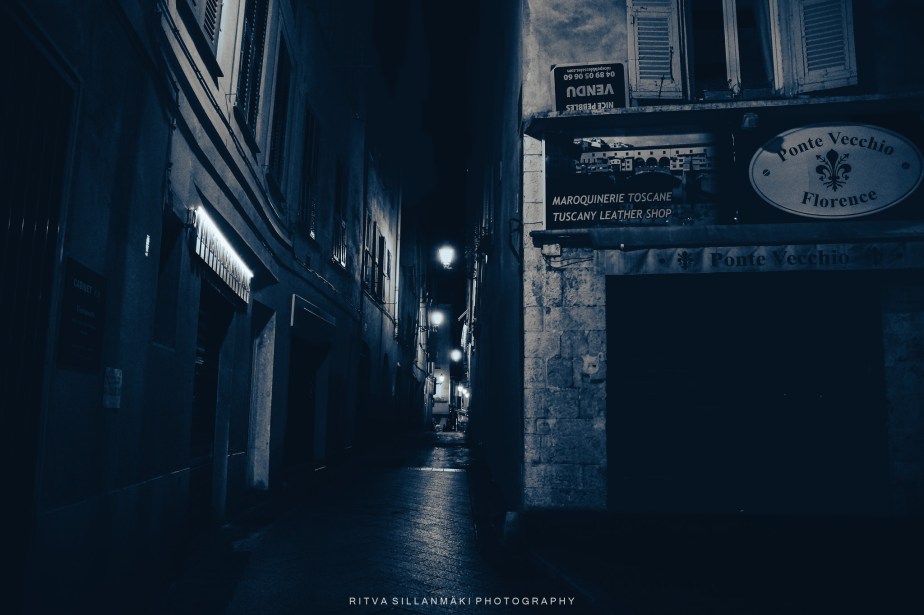
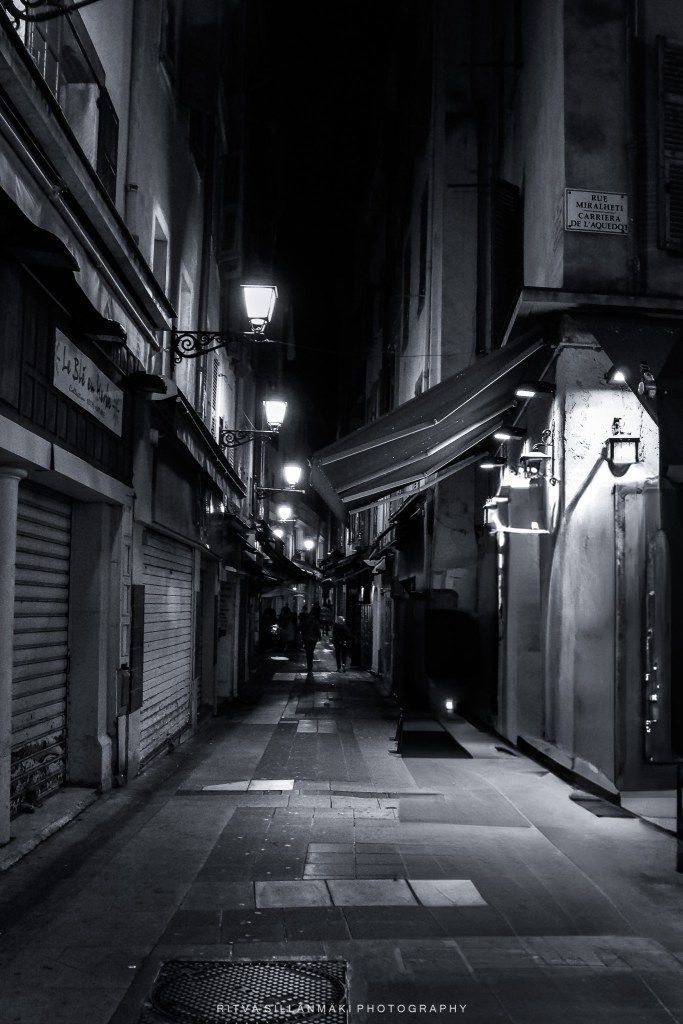
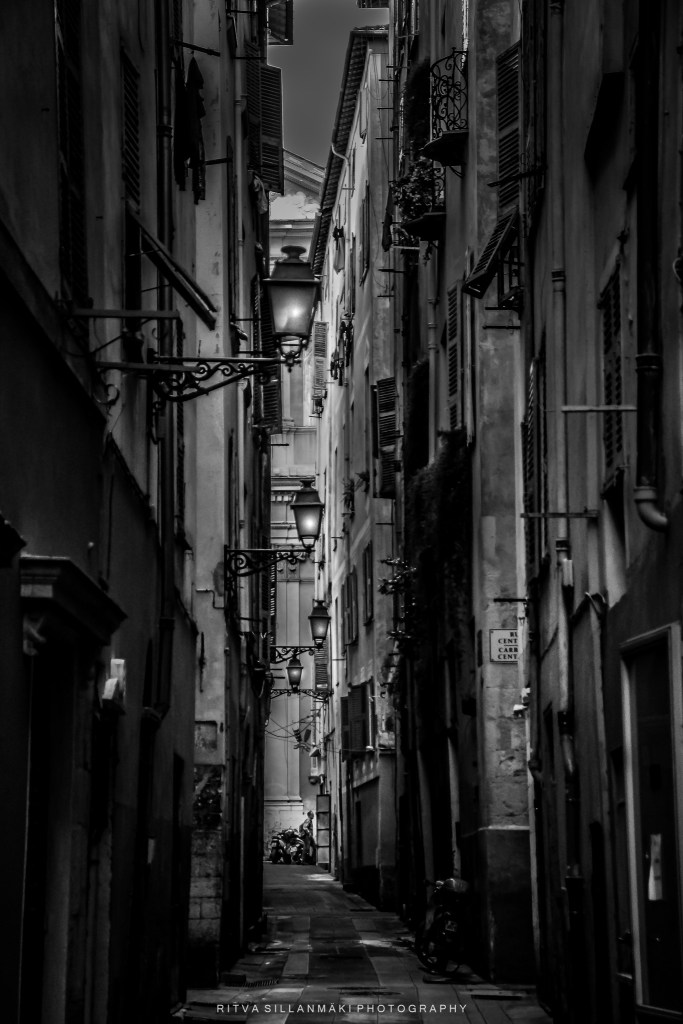
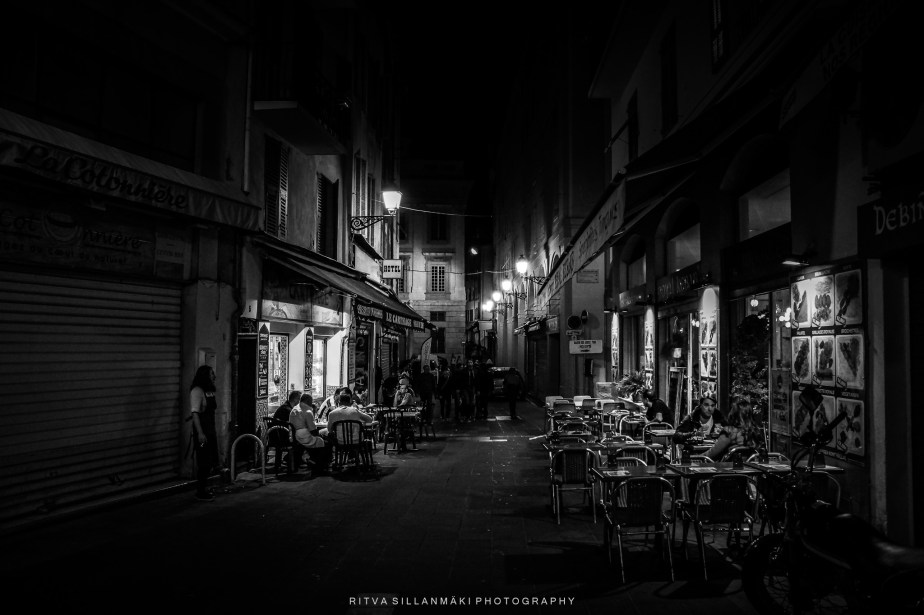
This week, our host is from Bushboy’s World, Brian, with an great theme of Street lights by day or night. Feel free to choose between day or night, or even combine both—it’s entirely in your hands! I’ve also linked this to Leanne’s Monochrome Madness
Reflecting on my past visits to France and Monaco, I want to share these images of stylish streetlights illuminating the charming architecture and vibrant nightlife, emphasizing the interplay of light and shadows in these picturesque locations. I immediately thought of these images when I read the challenge for this week, such a good choice.
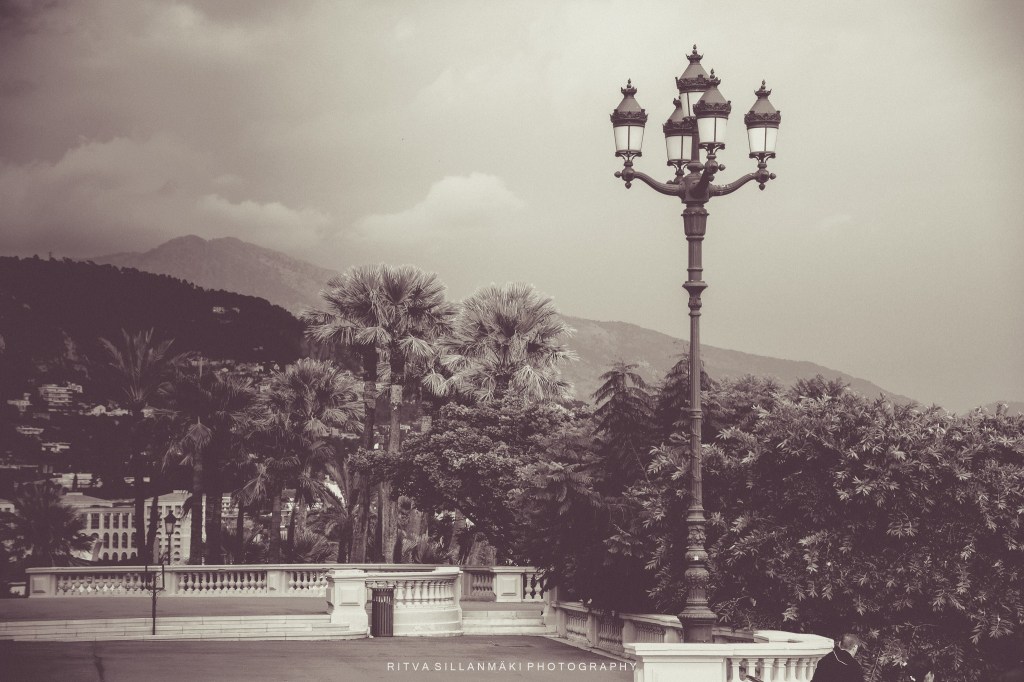
The streetlights in Monaco are stylish for sure.
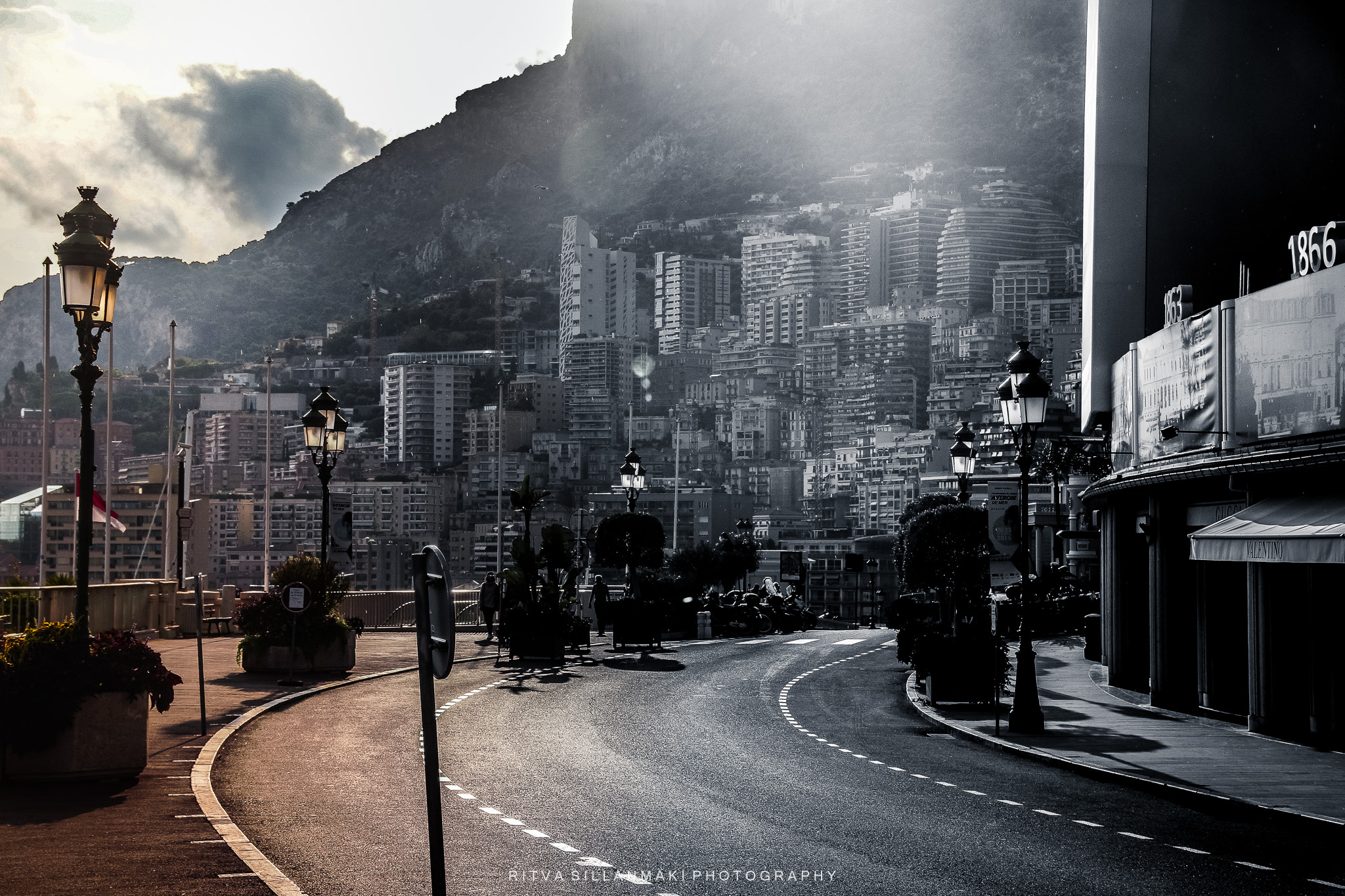
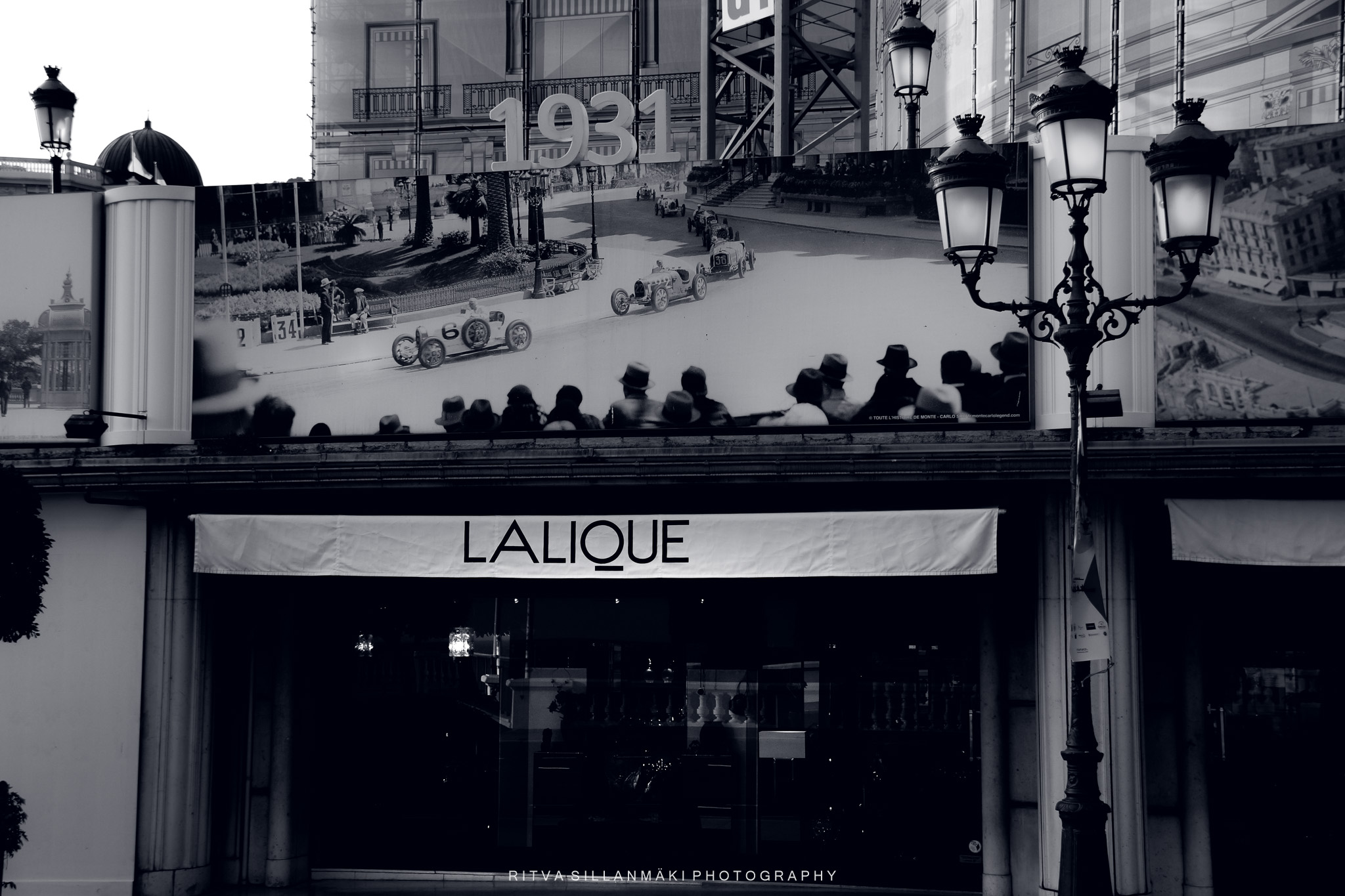
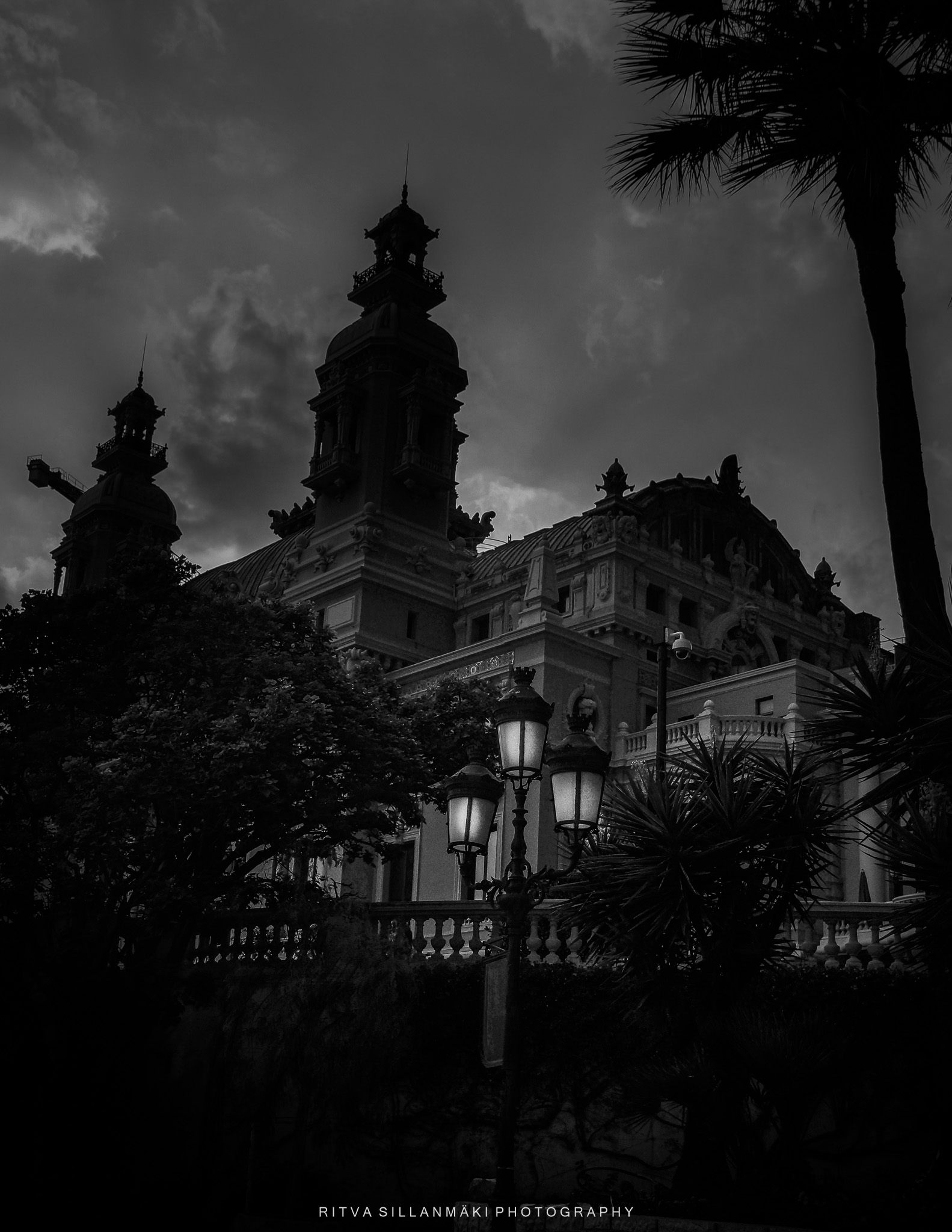
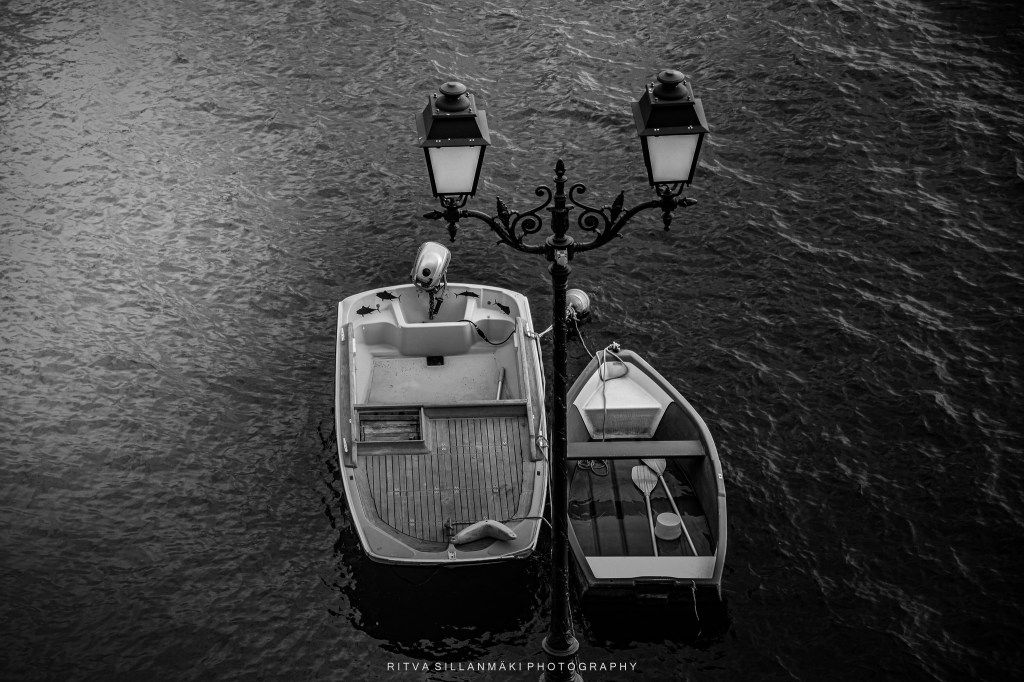
Nice was such a great place for snapping streetlight photos! The old buildings and the way the streetlights were positioned made everything feel warm and cosy, and I just had to take tons of photos. I aimed to catch the light but also the lively vibe of the city, showing off the cool dance between shadows and light as night rolled in. When it got darker, those streetlights turned into little warm beacons, making it impossible not to hit the shutter.
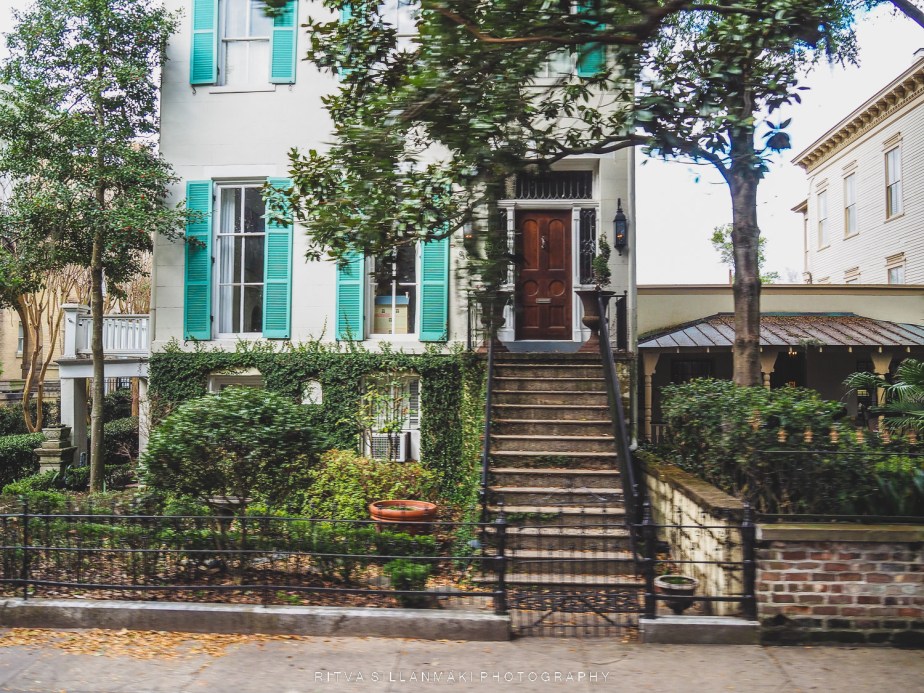
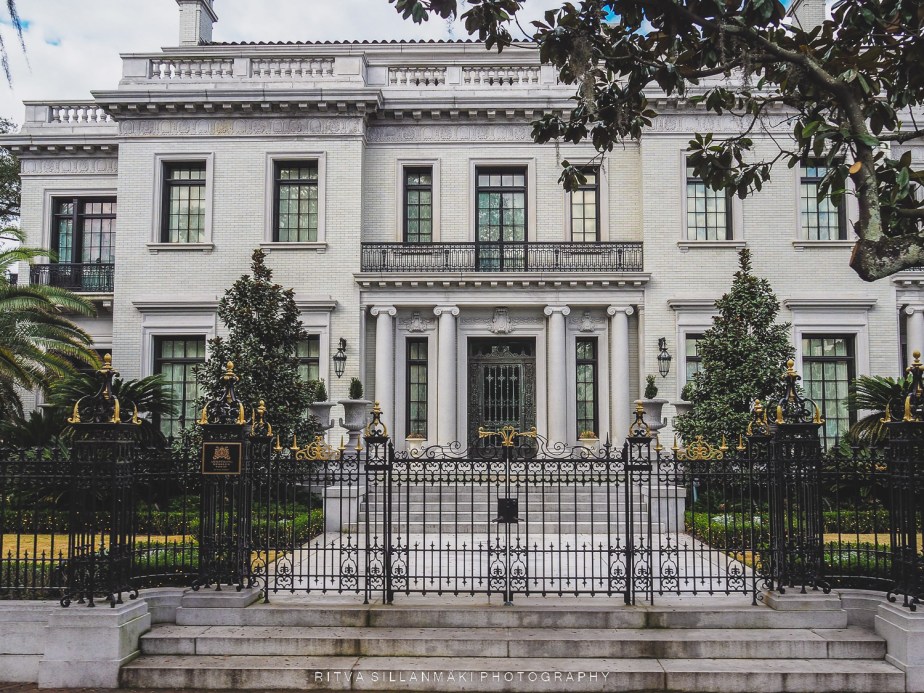
We saw so many wonderful old buildings in Savannah, each telling a unique story through its intricate designs and rich history. I am continuing to showcase some of the buildings we looked at, with their beautifully preserved facades and charming details that transport you back in time. I love old towns, where every corner reveals a piece of the past, and the buildings that are done so beautifully resonate with a sense of nostalgia. As a fan of old architecture, I appreciate not just the aesthetic appeal but also the craftsmanship that has endured for generations, making each structure a testament to the talent of those who built them. Exploring these historic gems is like taking a stroll through time.
This was one of them, the Hamilton-Turner Inn. Located on Lafayette Square in the Historic District of Savannah, Georgia, it is supposed to be one of the city’s most historic luxury inns that captures the style of the Old South. Originally built in 1873 as a private home, the Hamilton-Turner Inn boasts a distinctive French Empire-style architectural design and is filled with original interior elements that will transport you back 150 years.
The Kessler Armstrong Mansion, an impressively Italian Renaissance Revival home, was built in 1919 by the prominent George Ferguson Armstrong and designed by the renowned Beaux Arts architect, Henrik Wallin. This stunning residence, characterized by its intricate detailing and grand architectural features, showcases the elegance and artistry of its era. As the only house of its kind in Savannah listed in the authoritative A Field Guide to American Houses, it stands out not just for its aesthetic appeal but also for its rich history. This is a testament to architectural excellence and historical significance, serving as a captivating reminder of the cultural heritage of the region. I did some googling to tell you this.
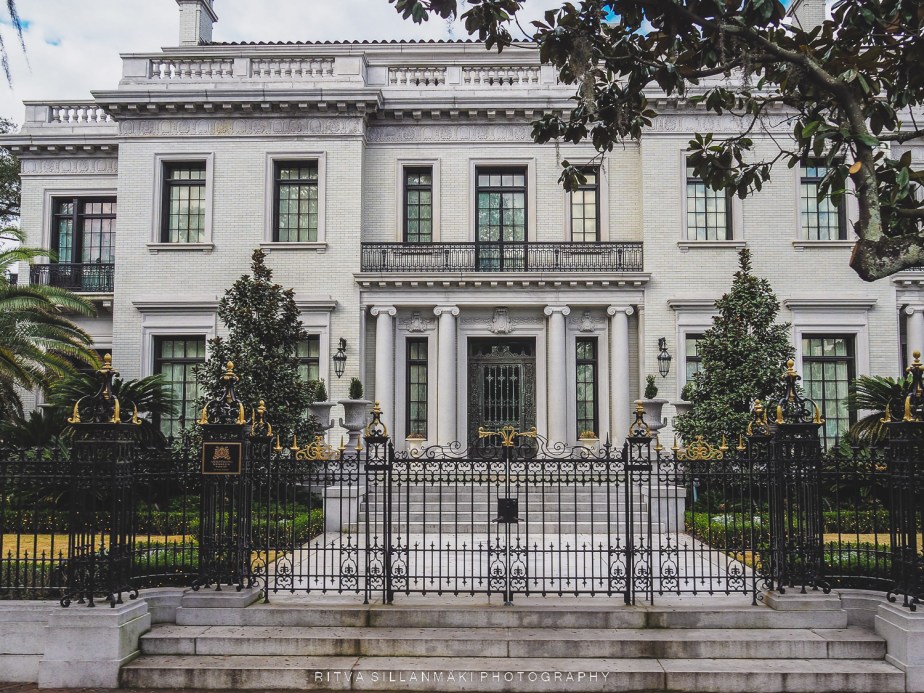
For Monday Window.
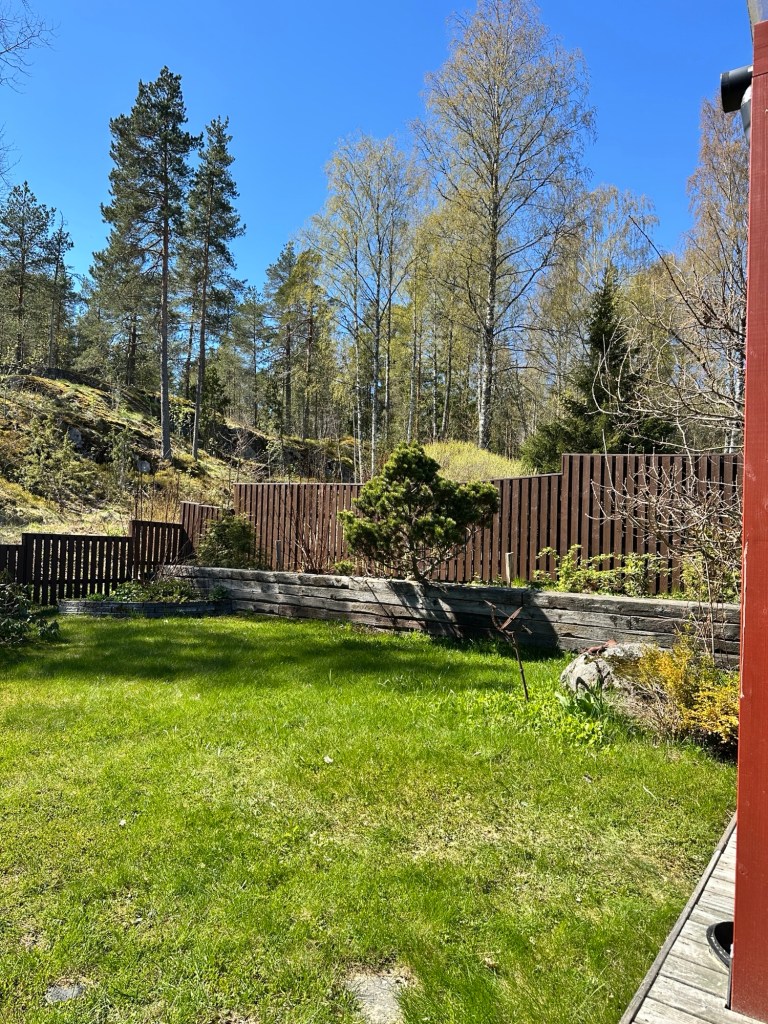
Posted for John’s Cellpic Sunday
Egídio from Through Brazilian Eyes wrote: The world is in constant chaos. If not close to our doorstep, we just need to look around. Wars and conflicts seem to be everywhere in one fashion or another. We are left with two options: to let things boggle us down or to look for serenity to lift our spirits and calm our minds.

This is so true and profoundly heartbreaking. Living in a country with a long border with Russia means that their war against Ukraine weighs heavily on our hearts and minds, constantly occupied by the news, which influences our daily lives in countless ways. However, there is solace to be found; by stepping away from the media and seeking refuge in nature, we can experience a momentary escape from the chaos. Engaging with the tranquility of forests, mountains, or lakesides, ocean offers a welcome relief, allowing us to reconnect with the peacefulness of life beyond the headlines. Nature gently reminds us that despite the conflicts raging beyond our borders, there are still pockets of calm to embrace within the simple joys of the natural world.
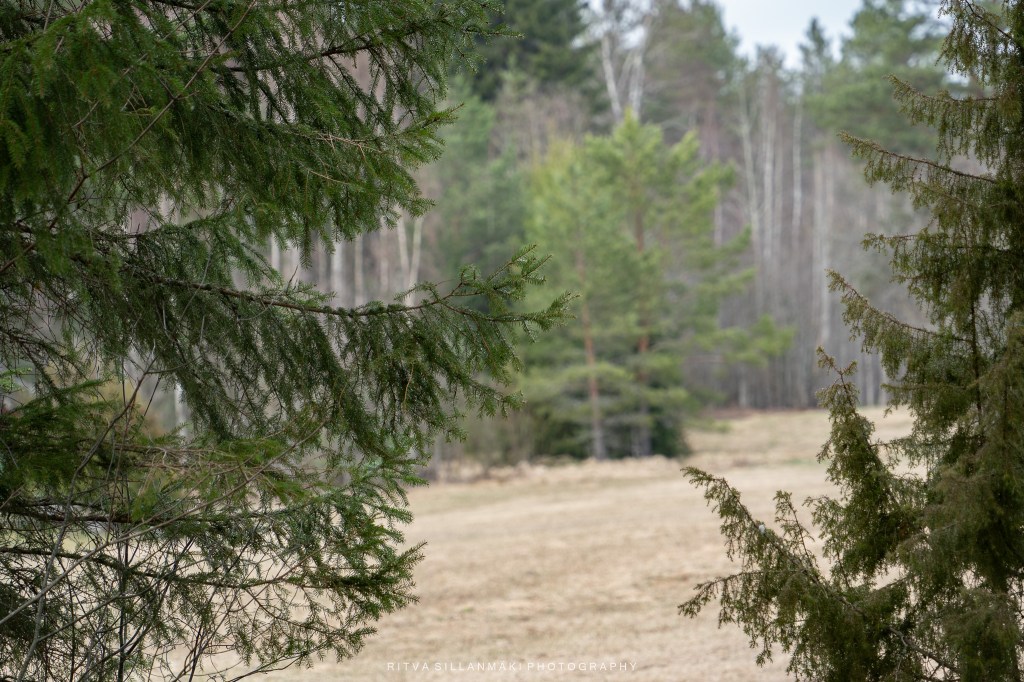
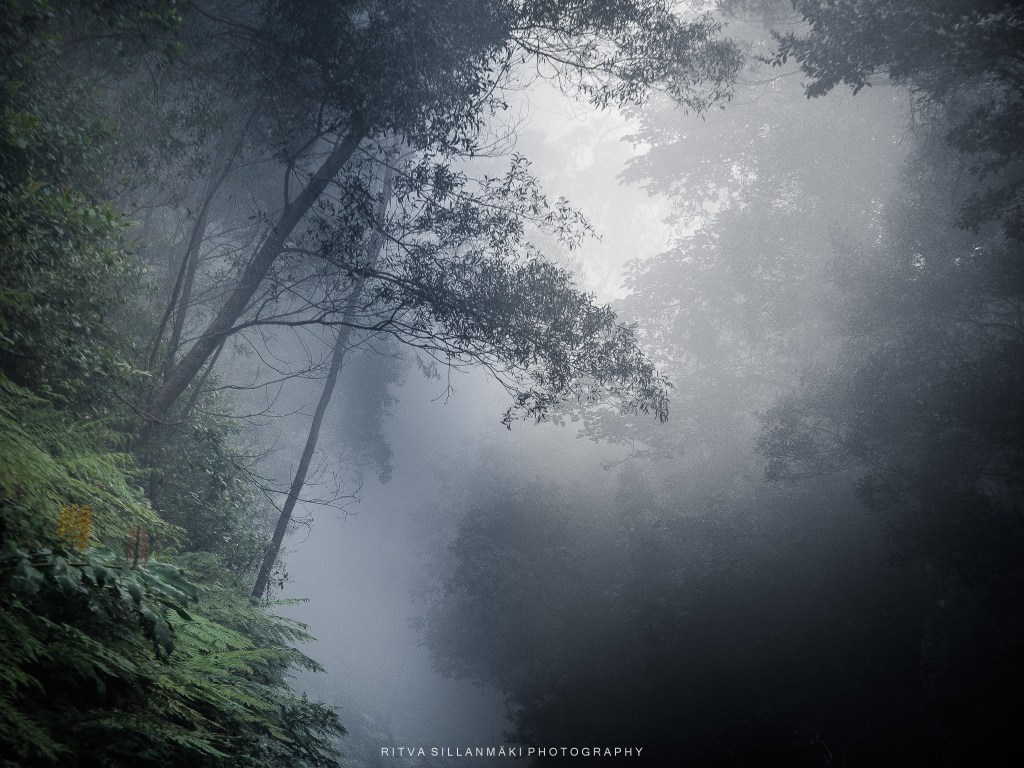
Serenity is the uplifting strength we find in moments of stillness, where the hustle and bustle of life fades away, opening up opportunities for reflection and joy. In these peaceful moments, we can connect wonderfully with ourselves, cultivating a sense of balance and clarity that empowers us to sail through the challenging tides of existence. By embracing serenity, we welcome mindfulness into our lives, inspiring us to celebrate the beauty found in simplicity and reminding us that taking a moment to pause and breathe can lead to brighter days ahead.


Last week, I asked you to break the rules. Your images showed us that photography is spontaneously emotional, when we break the rules. This week, Egídio is challenging you to find serenity in your photos. Don’t forget to use the “lens-artists” hashtag when creating your post so we can easily find it in the Reader and please link it to is lovely blog.
Next week, it is Tina’s turn to share a new challenge. It will go live at noon EST in the USA. Tune in to find out more about the challenge then. Please see this page to learn more about the Lens-Artists Challenge and its history.
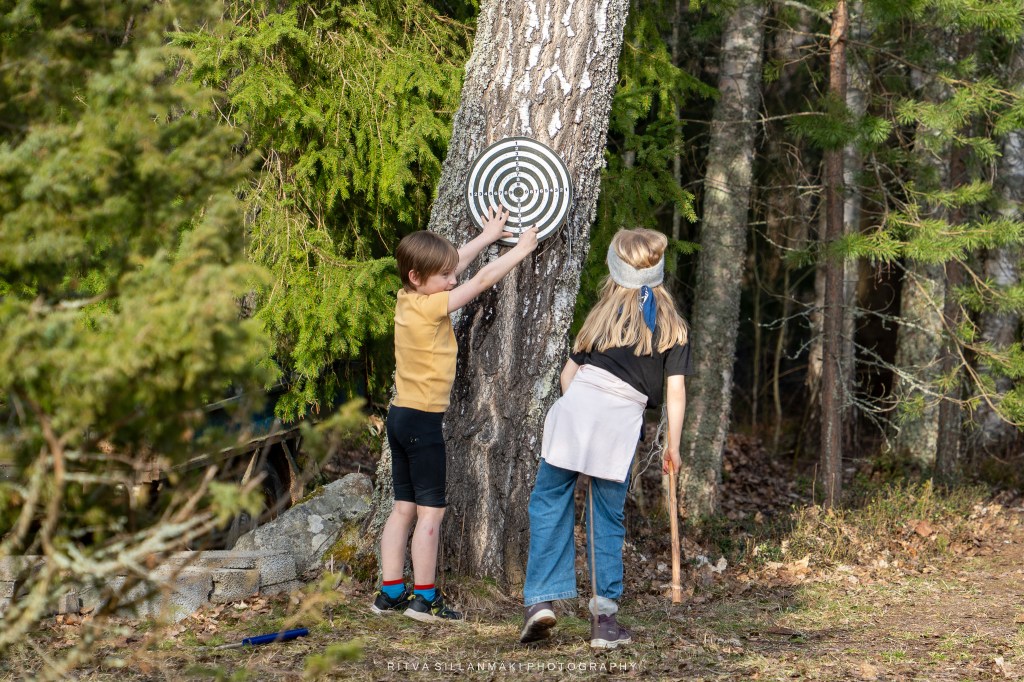
For Debbie’s Six Words Saturday.
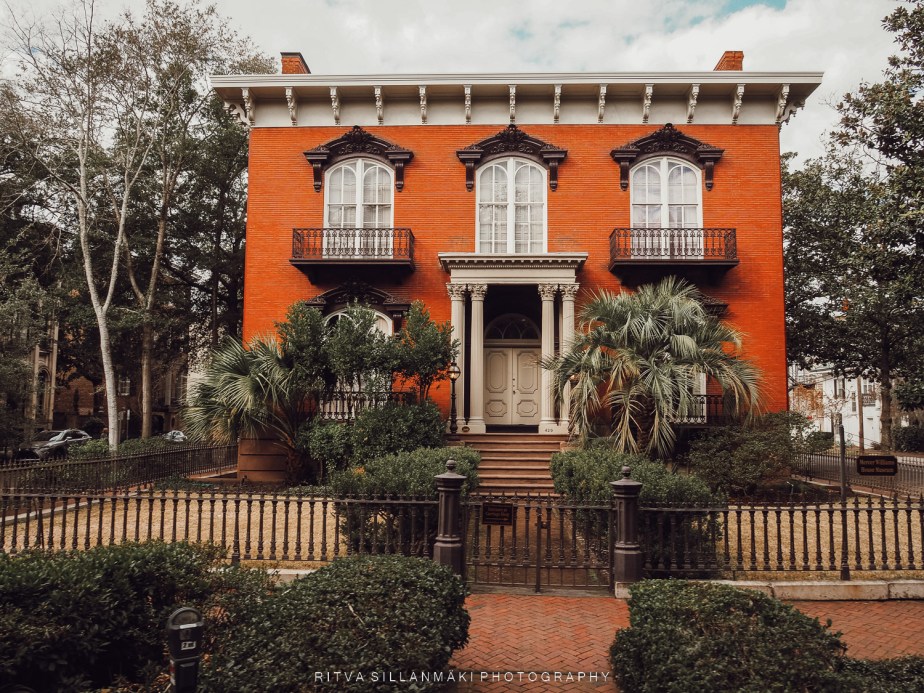
The Mercer-Williams House was meticulously designed for General Hugh W. Mercer, who was the great-grandfather of celebrated songwriter Johnny Mercer, adding a unique layer of cultural significance to the residence. The ambitious construction began in 1860, showcasing architectural aspirations of the time, but it was subsequently interrupted by the tumultuous events of the Civil War, which not only halted progress but also left its imprint on the history of the structure. After several years of delay and considerable upheaval, the house was eventually completed in 1868, following General Mercer’s decision to sell the unfinished structure to John R. Wilder, an influential local businessman. Thus, in a twist of fate, no Mercer ever actually lived in the house that bears their name, creating a fascinating narrative about legacy and ownership. In Savannah, the majority of historic homes echo this tradition, often using the name of the home’s original family alongside that of the most prominent family, establishing a rich tapestry of historical narratives that delight visitors and residents alike, inviting them to explore the stories that shaped the city. This is what I found out about his house when I googled it.
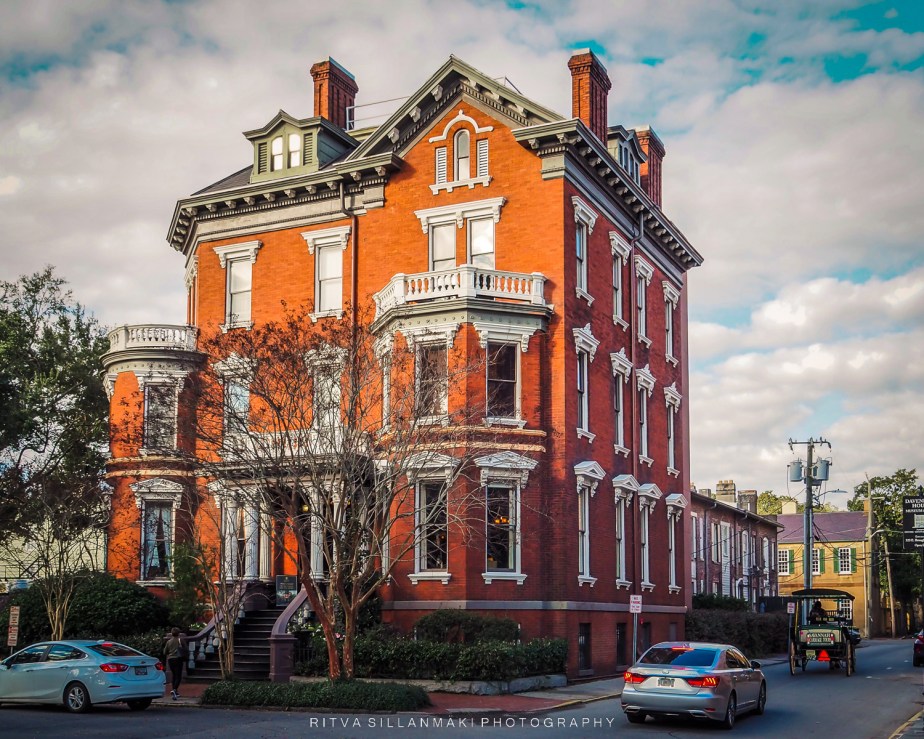
The Kehoe House is an exquisitely restored 1892 Renaissance Revival mansion in Savannah’s Historic District. The Kehoe House was built in 1892 by William Kehoe, a successful iron foundry owner. The home’s architectural style is Queen Anne Revival. Its exterior stairway, balustrades, window treatments, fluted columns and capitals, fences and gates are all cast iron, a tribute to the iron foundry’s excellence in pattern making and casting.
These are for Thursday Doors, as I was revisiting my images from Savannah. Surprisingly I have so many doors and buildings to share from that visit. I will start with these two houses. I have previously posted them, but there is a good chance you have missed those posts.
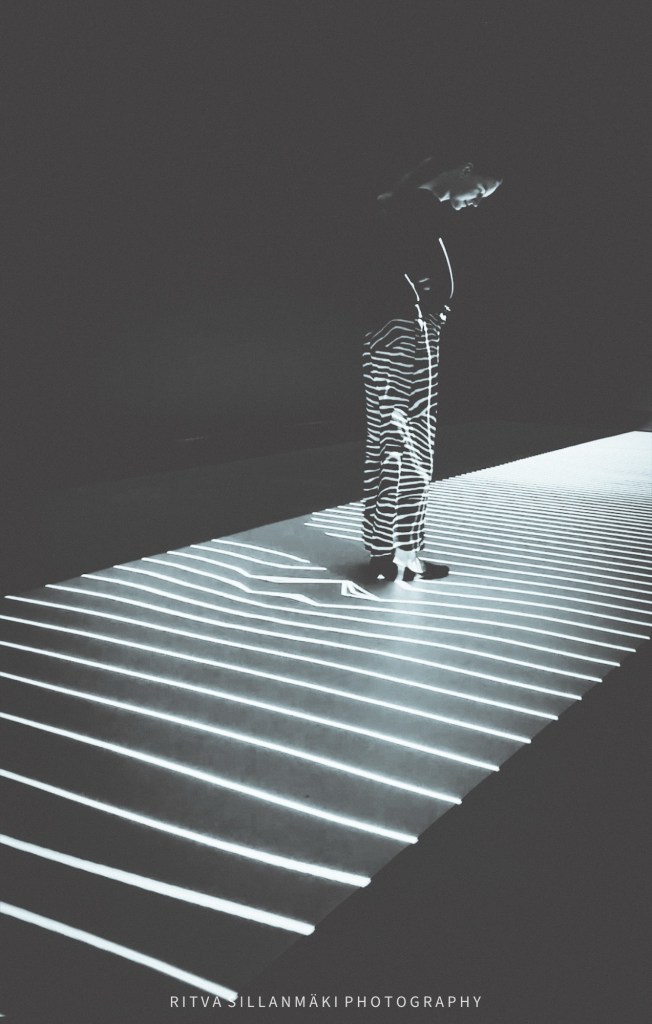
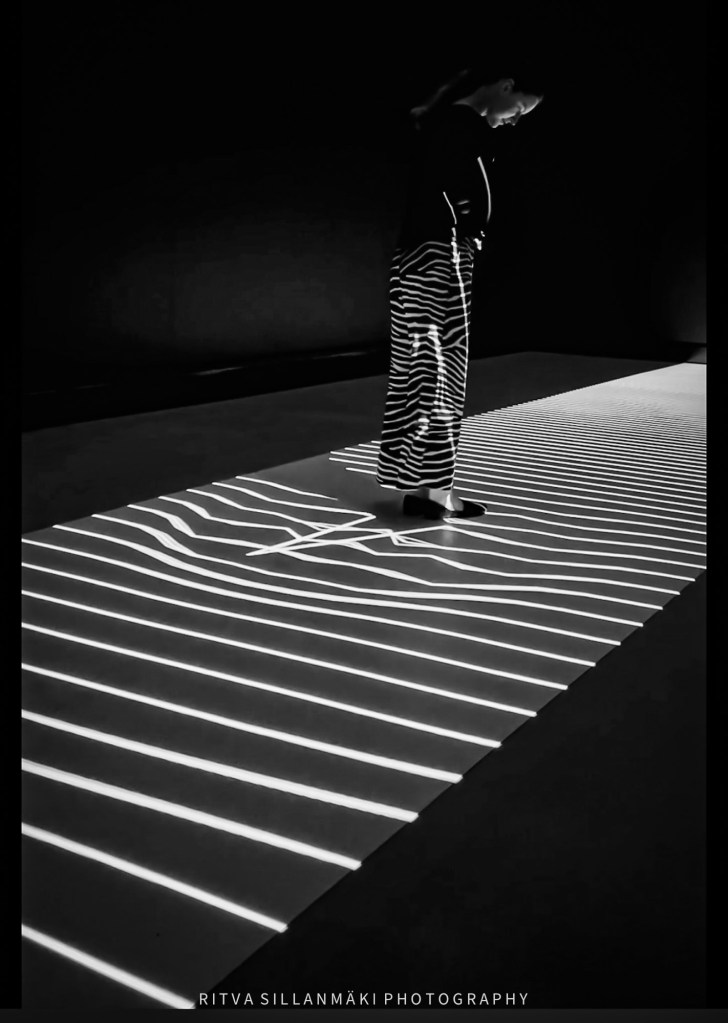
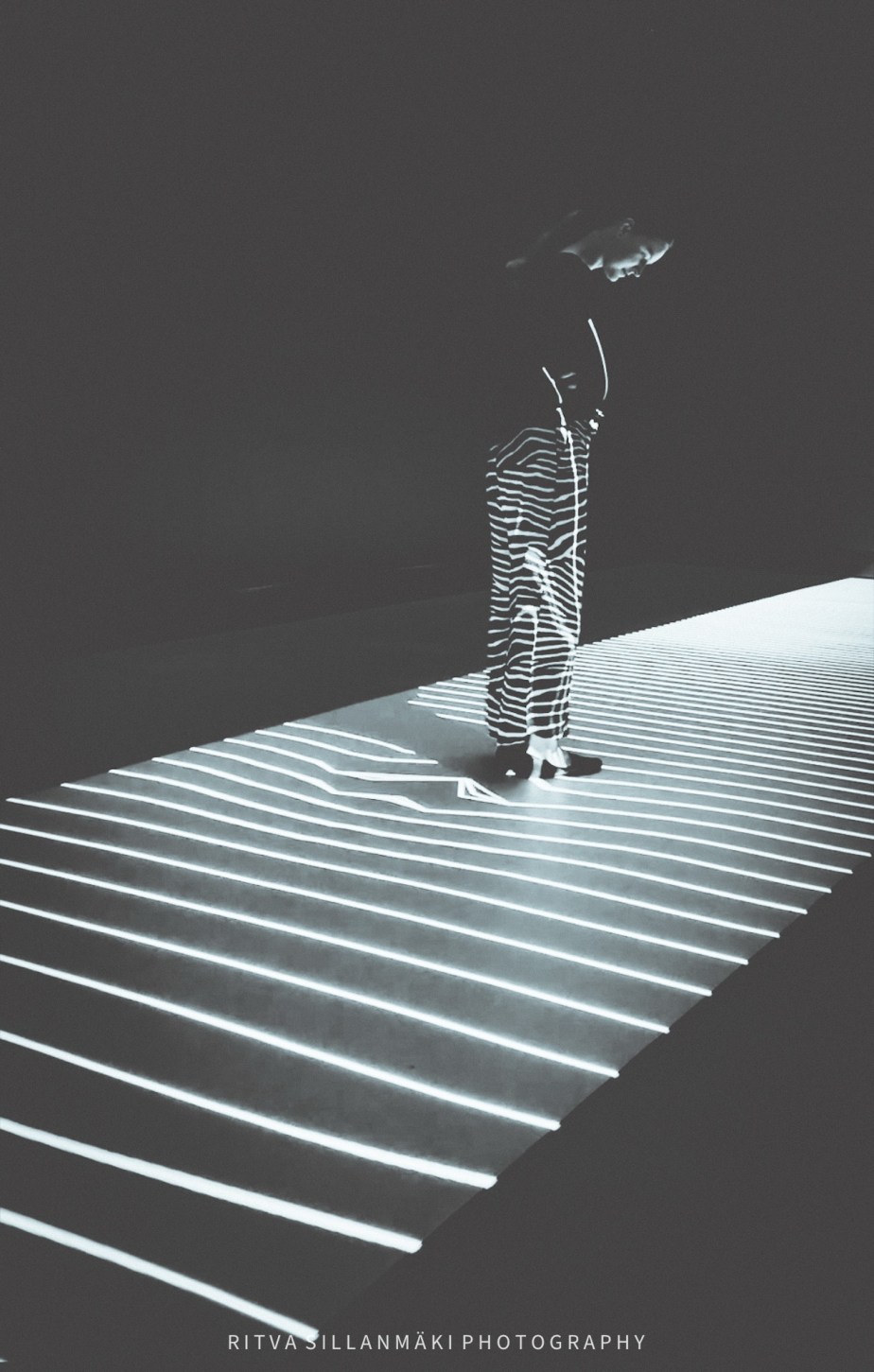
This is for Leanne’s Monochrome Madness. I was browsing my photograph archive and found this image, which I don’t recall posting it before and now am wondering why ever not. It is rather striking and captivates the attention immediately. I think the composition draws you in, with lines and shapes that create a sense of movement. I took it in an art museum a couple of years back, where the play of light and shadow was particularly mesmerizing. I used slightly different editing on the images, and while they appear to be the same at first glance, the subtle yet distinct differences reveal themselves, especially with the stripes under her feet that add movement.
One again, I am so bad at giving an image a title, still in the learning process 🙂
We work so hard to learn the photography rules , at least I do but now it is time to BREAK them!! The problem is just that in order to break a rule, you must know that there is a rule in the first place!
Photography is as much about emotion and instinct to me as it is about technical skill. In those moments when we abandon the constraints of traditional guidelines, we open ourselves up to unexpected and beautiful outcomes in my case many times by mistake. The light might be harsh, and the shadows may seem unflattering, but that can lead to a unique perspective. The carefree spirit of snapping images without overthinking allows for spontaneity to shine through, infusing each shot with authenticity.
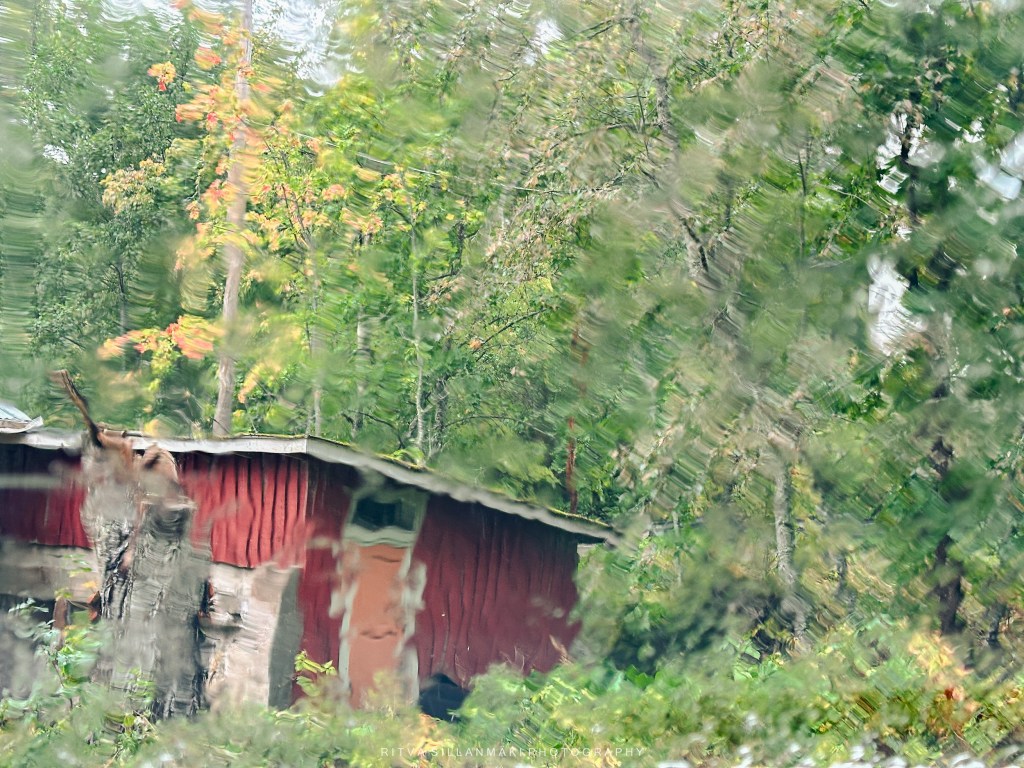
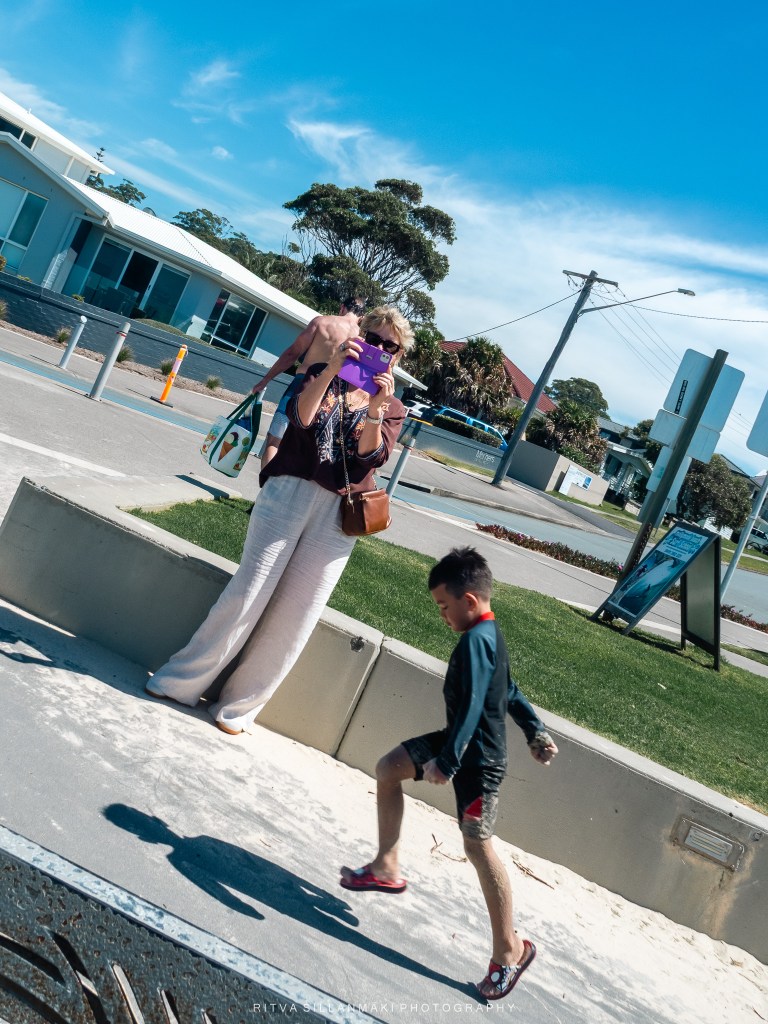
So dear challenger, you have two choices. First you can go and look for a rules to consciously break. This could be something like disregarding symmetry or capturing an image at an unusual angle that defies convention. Rather than shooting from eye-level, explore unique angles, such as low or upside down. OR you can just go and shoot without paying too much attention to the rules that we often keep in the back of our minds, allowing pure creativity to guide you. This absence of self-imposed restrictions might lead to surprising results that speak more to your personal vision than any shot meticulously planned around compositional rules.
Unlike conventional photography – which focuses on capturing crisp and detailed images – impressionist photography challenges us to see the world through a different lens, one that is less concerned with sharpness and more with the emotional and visual impact. Impressionist photos aren’t just about what is directly in front of the camera, but about the story you choose to tell through colors, shapes, and even blur.
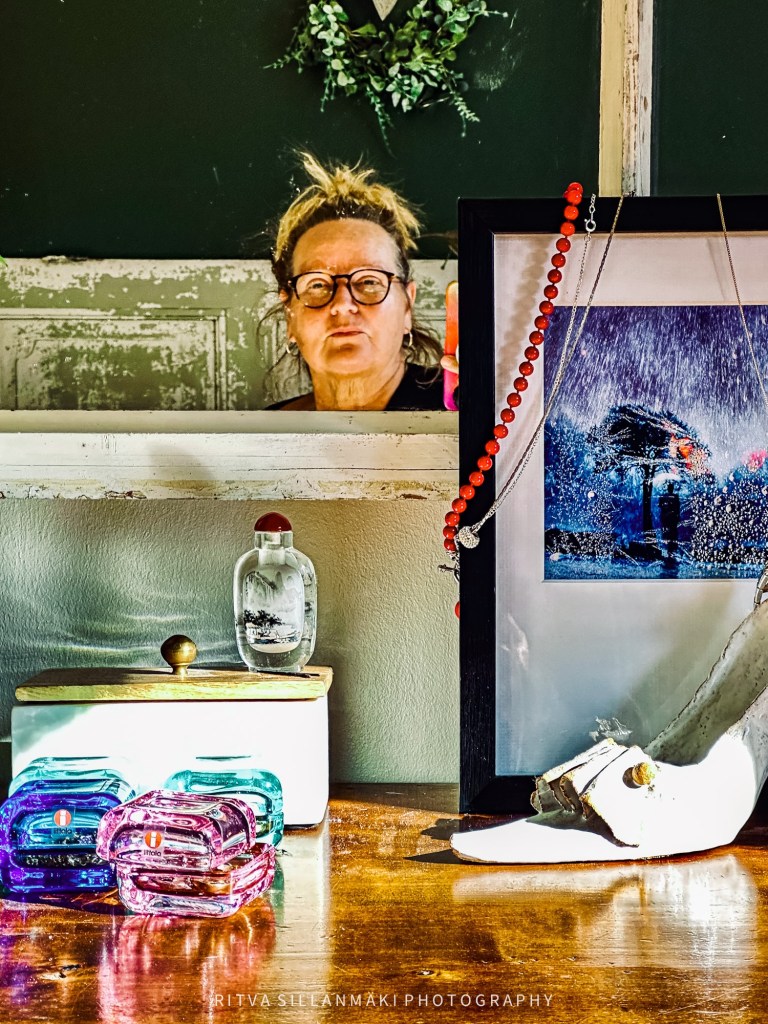
I love capturing impressionistic shots, you to paint with your camera – so you can create the kind of artwork that resonates deep down. I encourage you to embrace movement, play with focus, and celebrate abstraction.
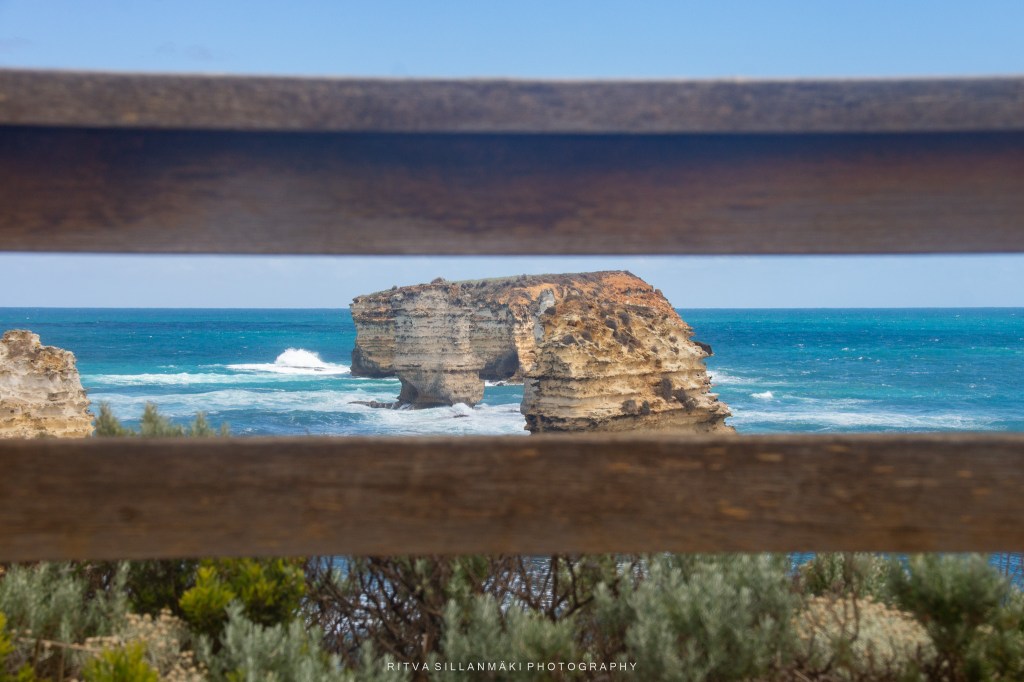
Here are few suggestions: Hold Your Camera on an Angle, Break the Rule of Thirds, Ignore the ‘Active Space’ Rule for Moving Subjects, Experiment with Different Framings in Portraits, Taking Unfocused Photos, Use a High ISO to Create Grainy Shots, Move Your Camera to Create Motion Blur
OR, if you’re feeling particularly inspired, you can take a photo of a rule breaker!
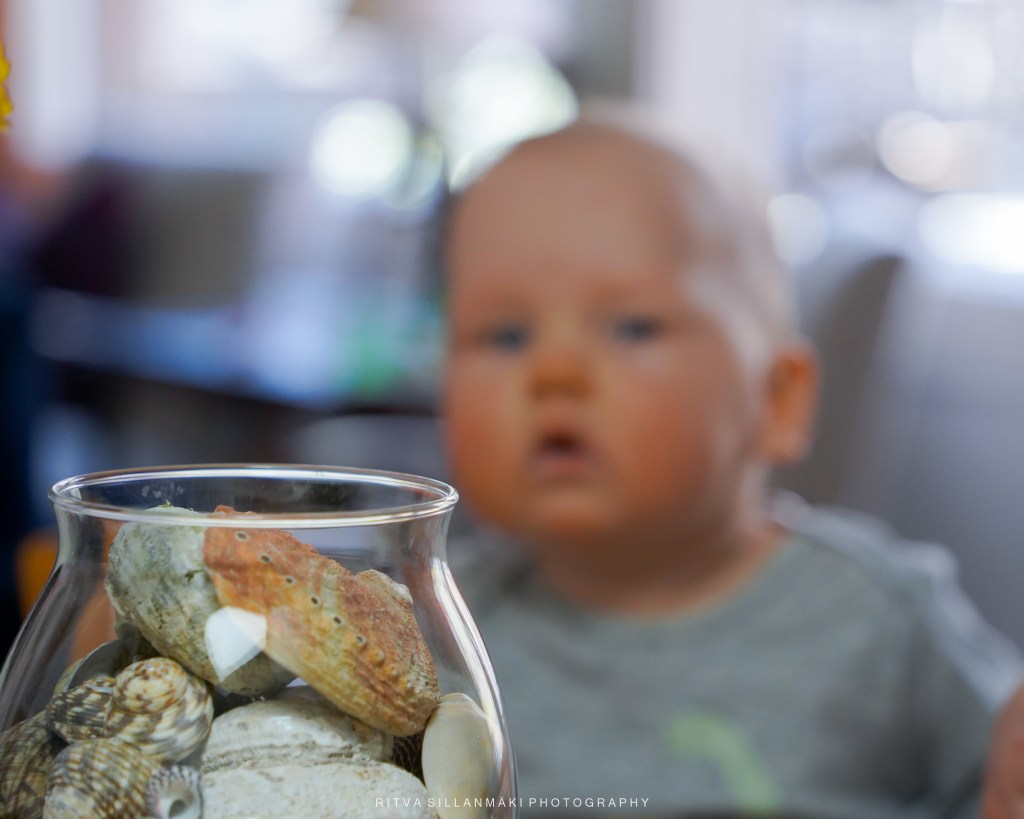
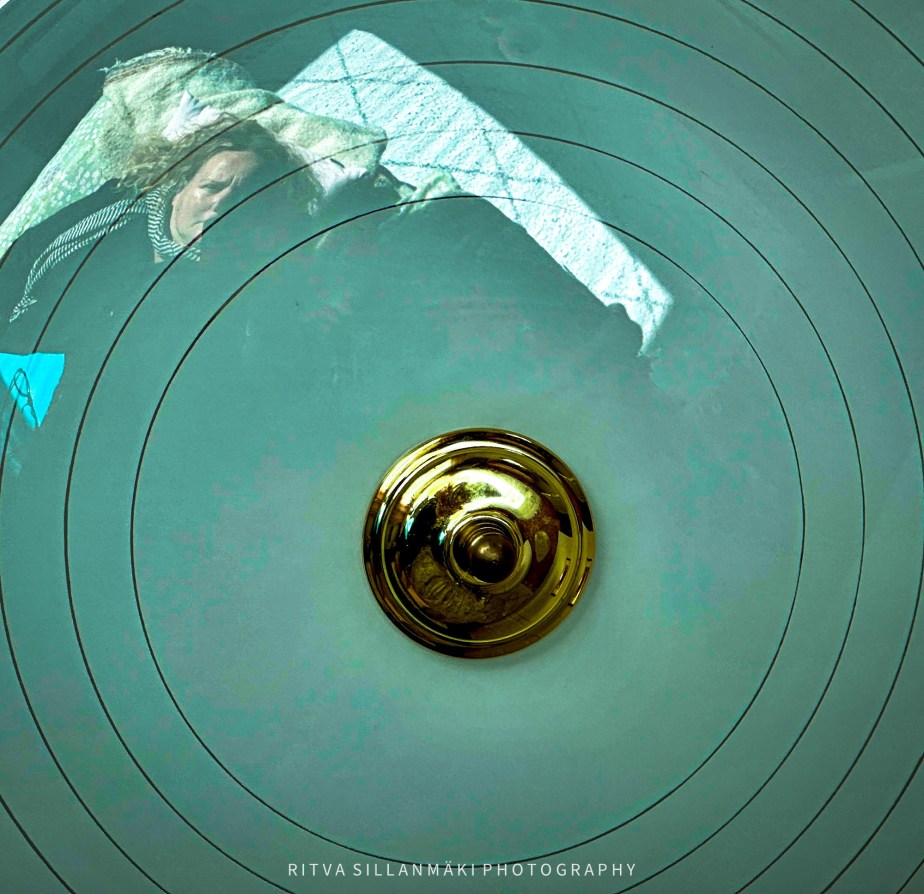
As a summary, I have to say I really struggled with doing this post – I found out that I am a stickler for rules. Looking for shots that I had not thought about before, especially focusing on the different learned rules, was quite challenging and required me to think outside of my usual patterns. I noticed that I consistently keep in mind the rule of thirds, straight horizon lines, and various composition rules that are ingrained in my approach to photography, and these guidelines are often very hard to ignore or set aside. Despite my efforts to break free from these confines, I felt a strong urge to adhere to these established principles each time I raised my camera. I hope you can provide me with great examples of images to be inspired by that have not been so heavily influenced by the traditional rules, allowing me to embrace a more creative and unconventional perspective in my work.
Last week we enjoyed the creative and cinematic photos with Sofia’s challenge. So let’s keep up the same level of creativity this week. Next week, it’s Egídio’s turn to host on Saturday, May 10th—hope you can join us then! Until then, keep smiling. You never know, it might just make someone’s day a little brighter!
If you want to know more about the Lens-Artists Challenge, please click here.
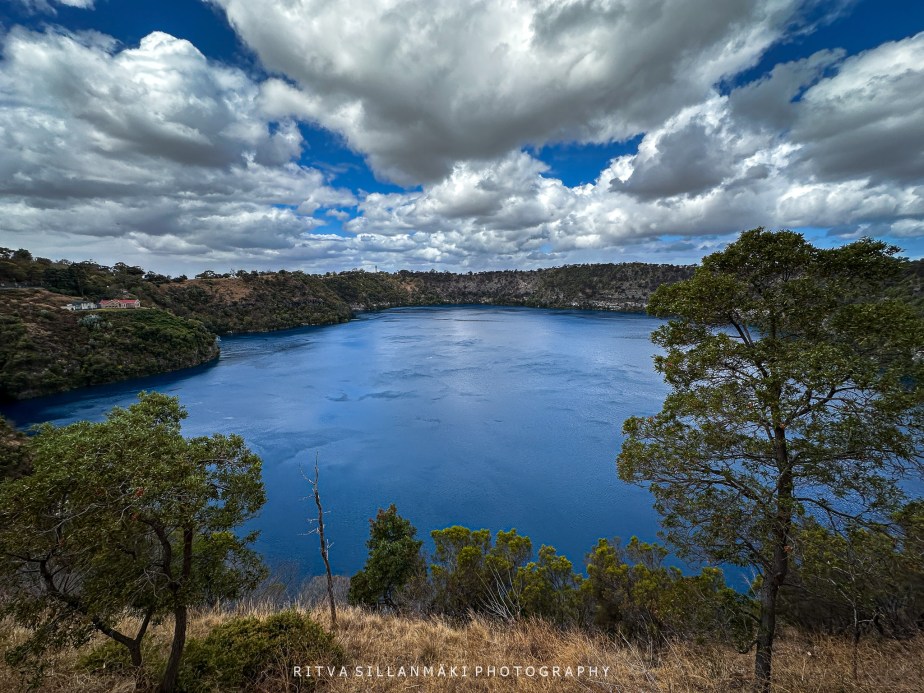
On the way to the Great Ocean Road, we had one more motel to stay the night, in Mount Gambier. Mount Gambier is famous for its Blue Lake, caves and sinkholes. Blue Lake was unbelievably blue. But we were lucky because it’s blue only from November to March. The rest of the year its water looks like in any other lake. However, Blue Lake was formed by meteorite, and it is deep as well.
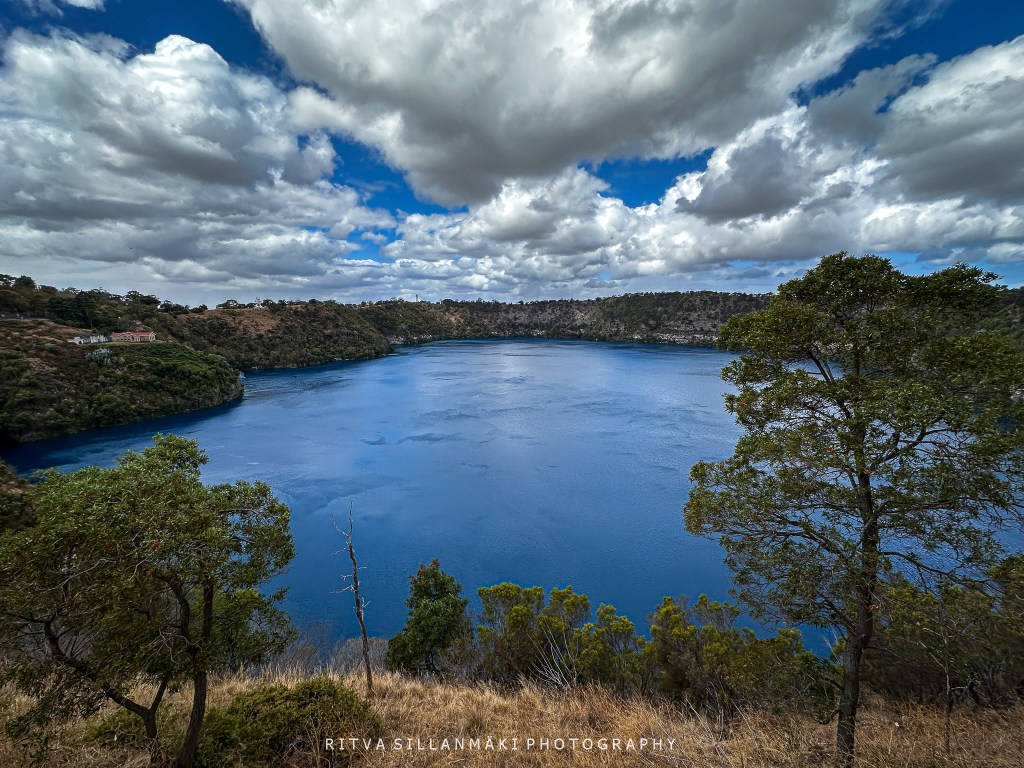
It is really blue, a stunning shade that captivates the eyes and draws you in. I took way too many photos to prove it, capturing the depth and vibrancy of the color from various angles and perspectives, ensuring I could hold onto this mesmerizing view long after I leave.
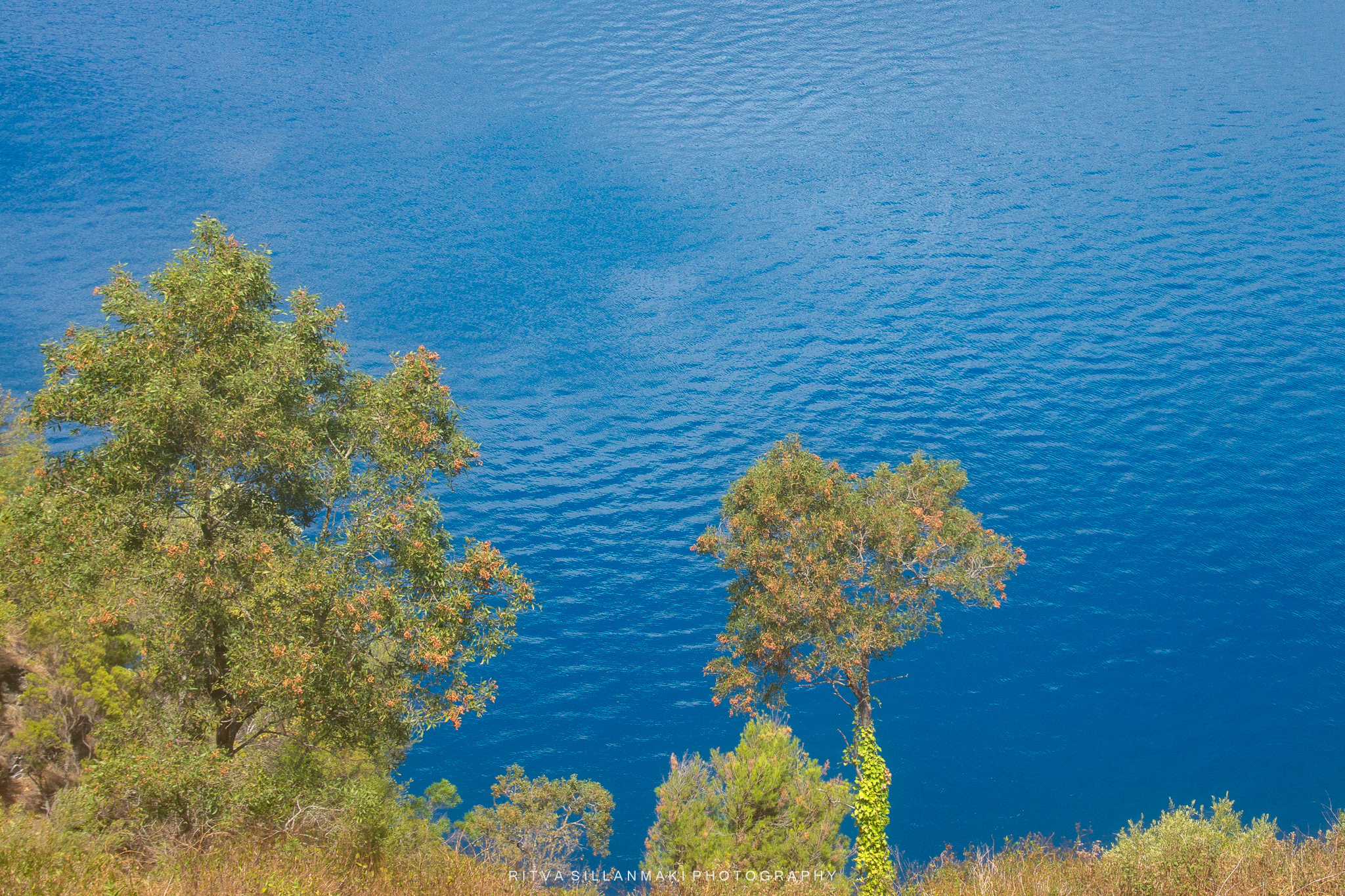
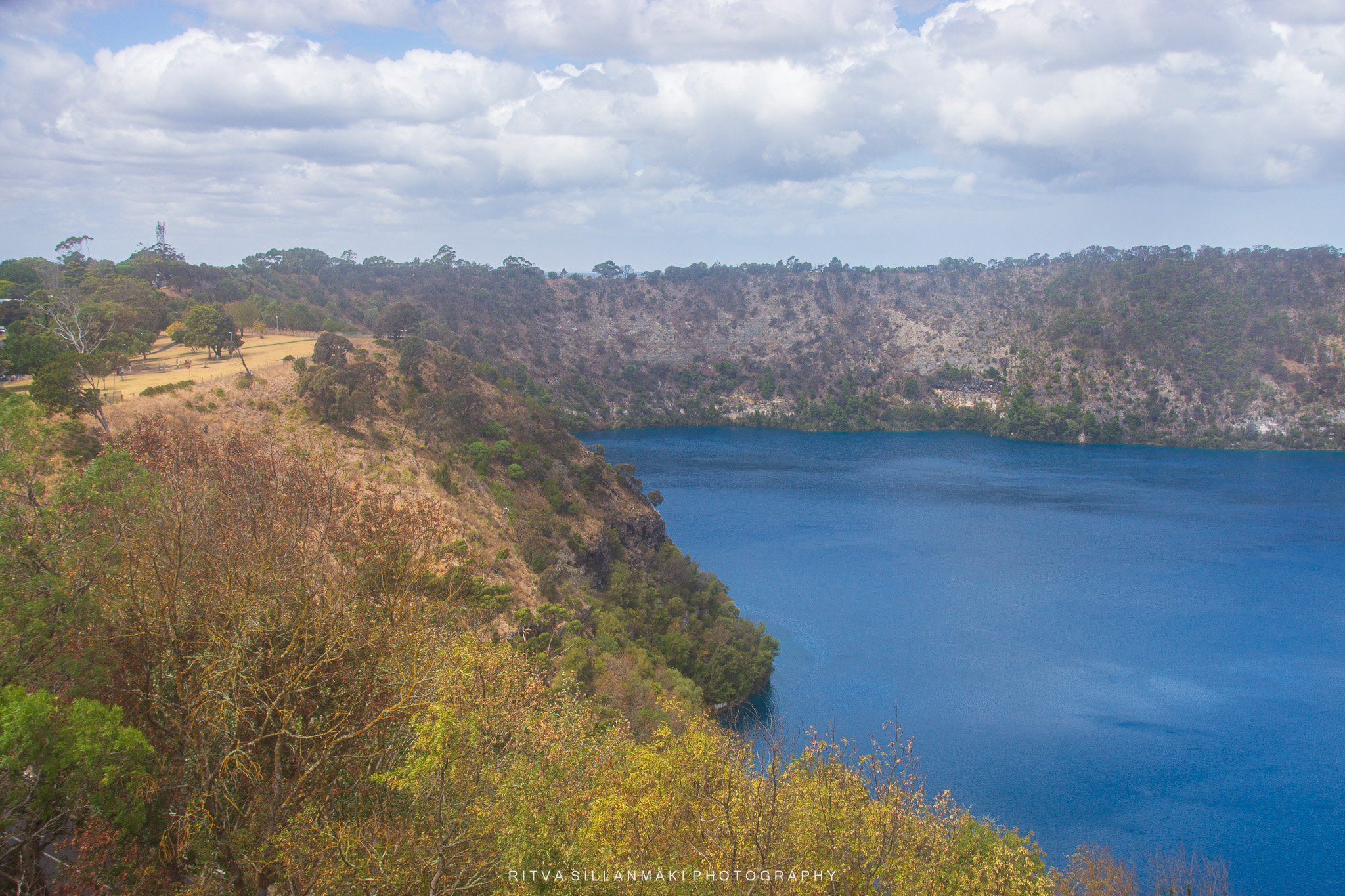
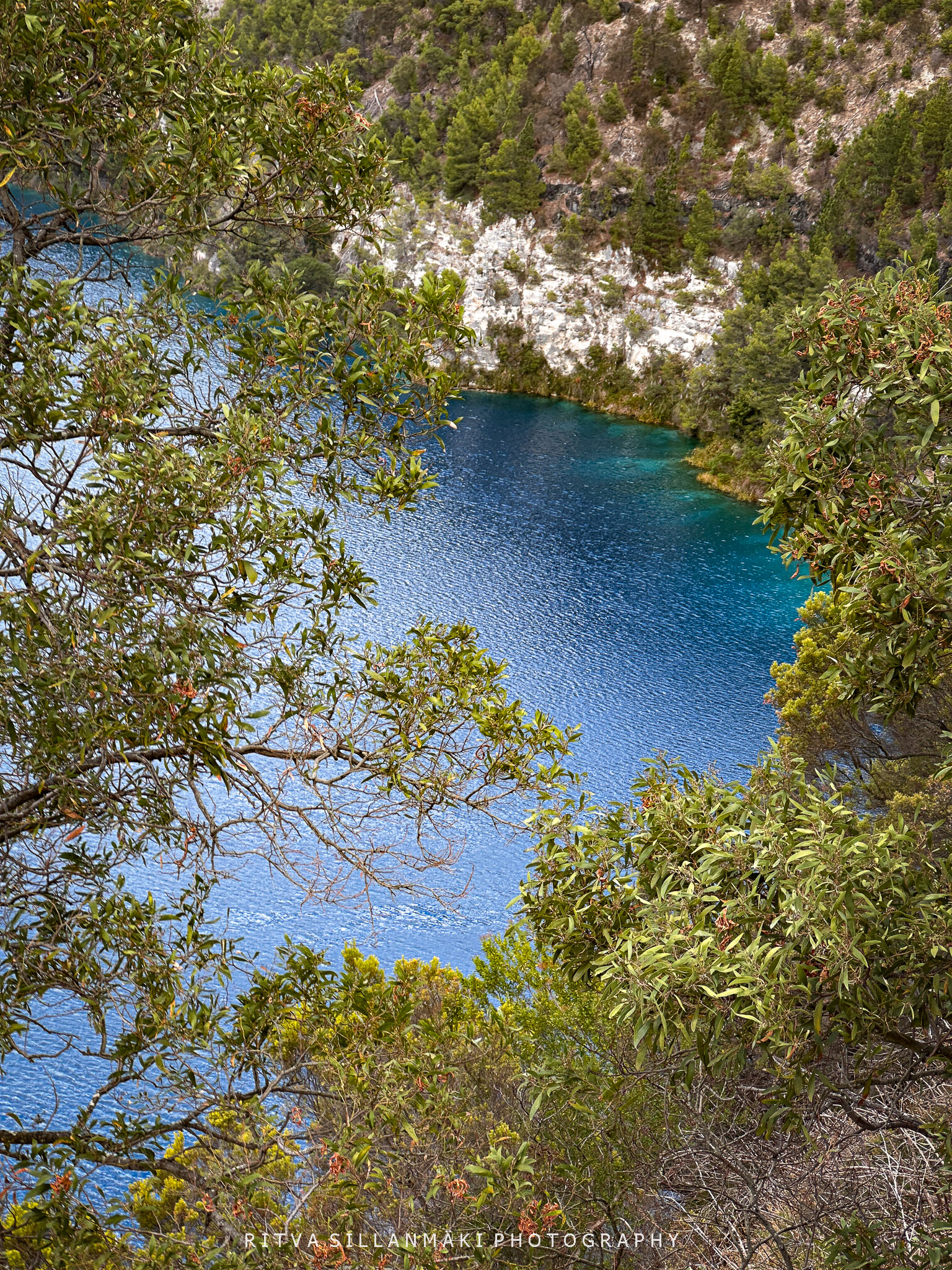
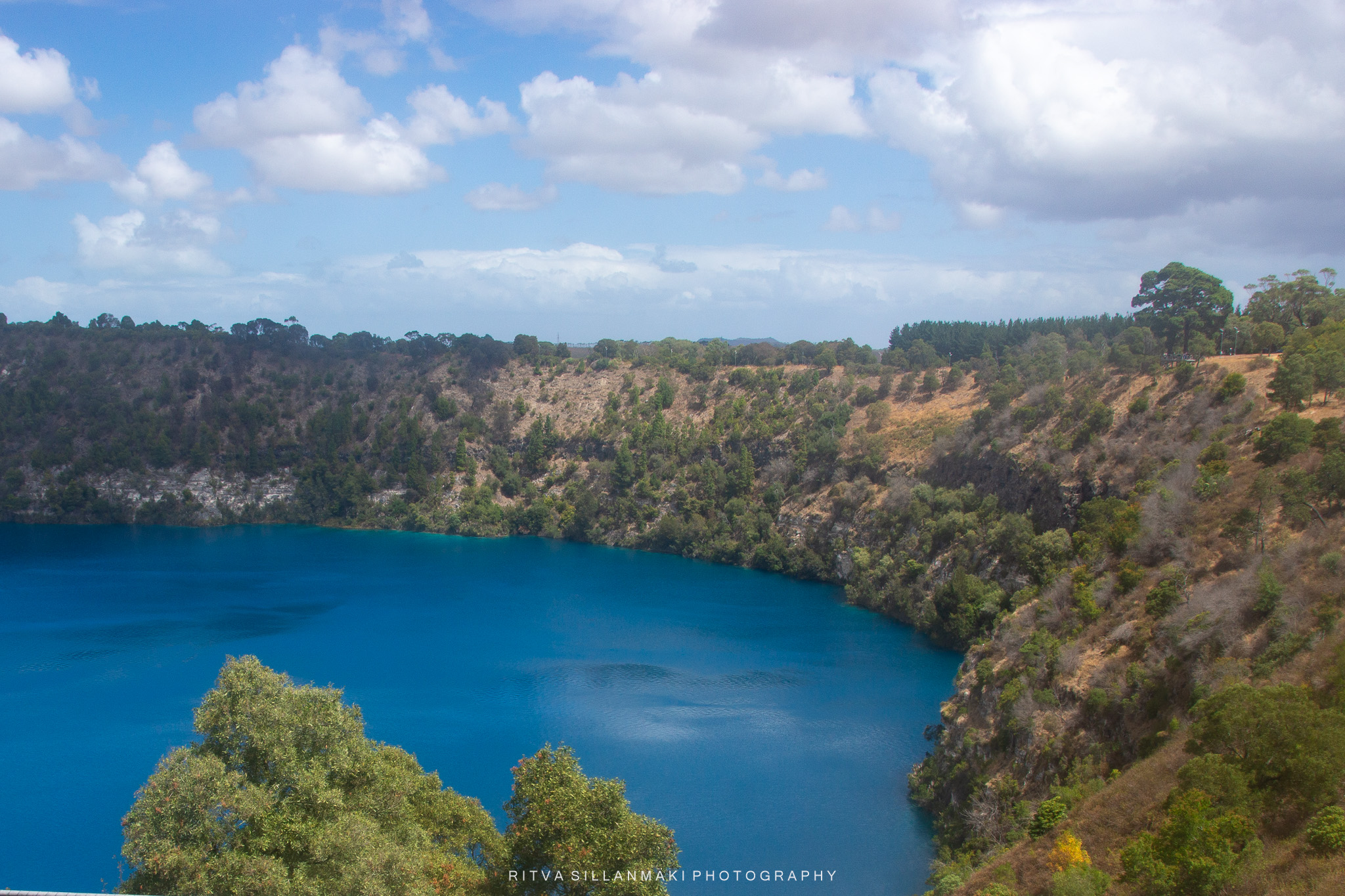
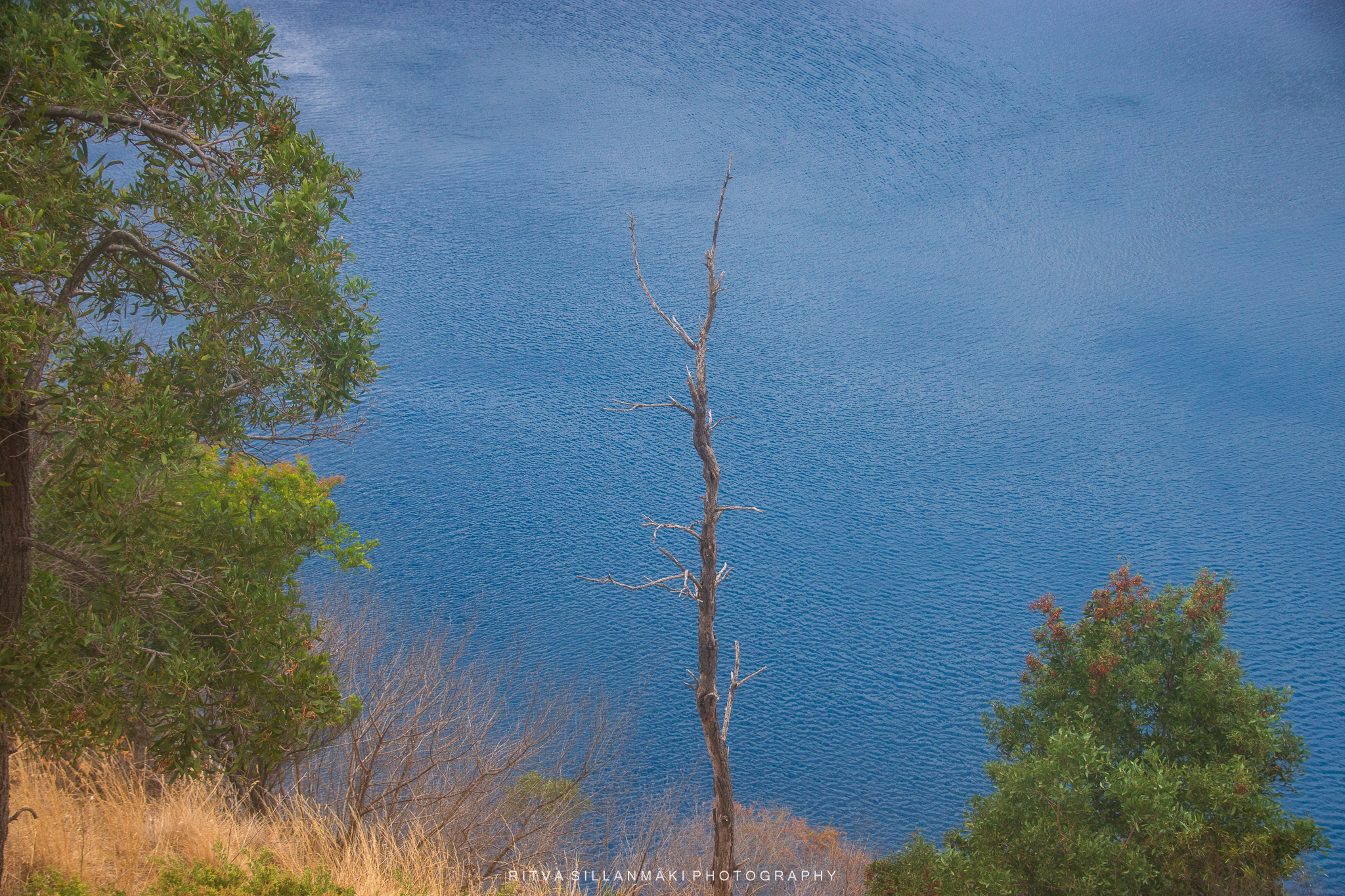
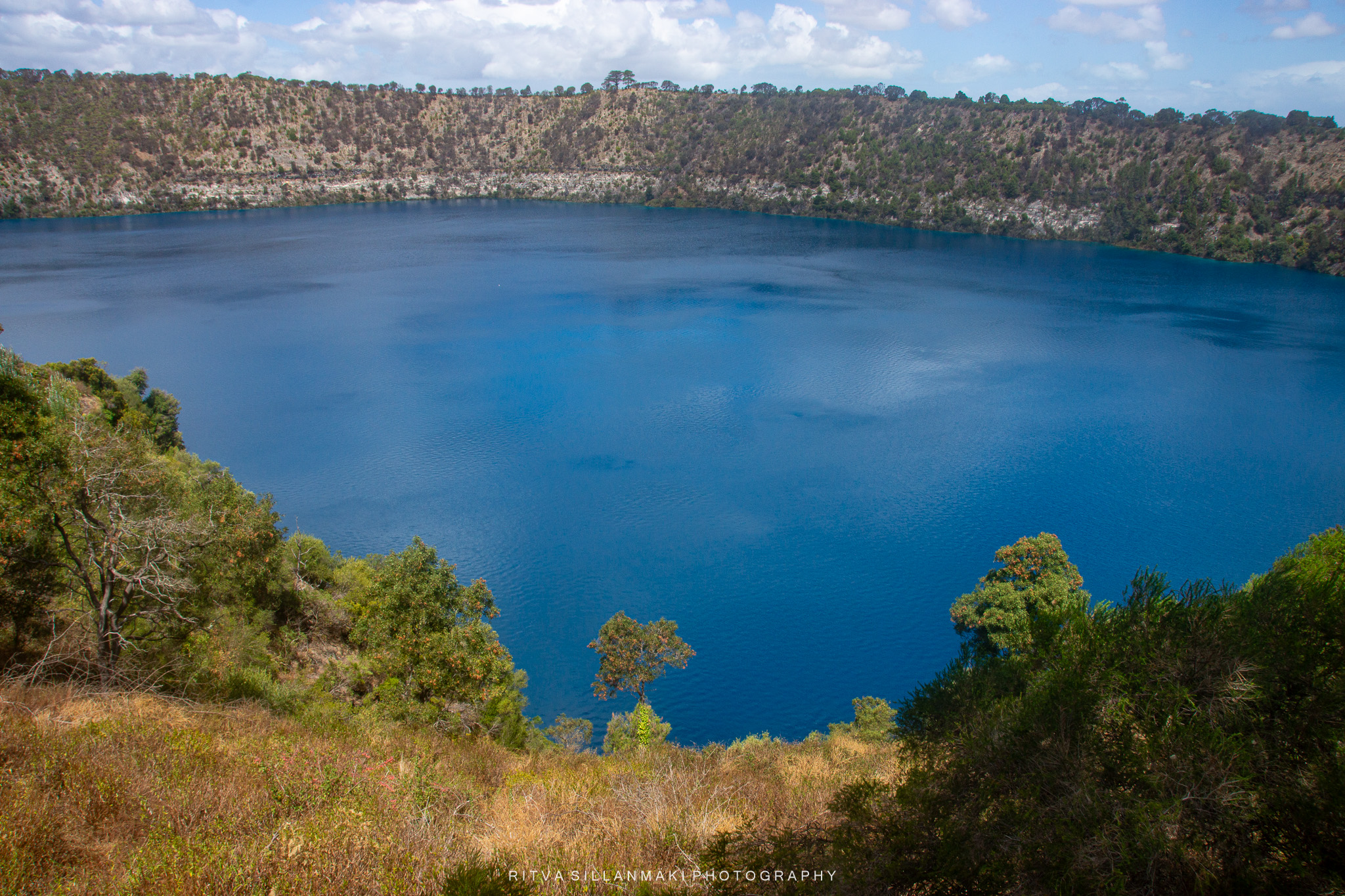
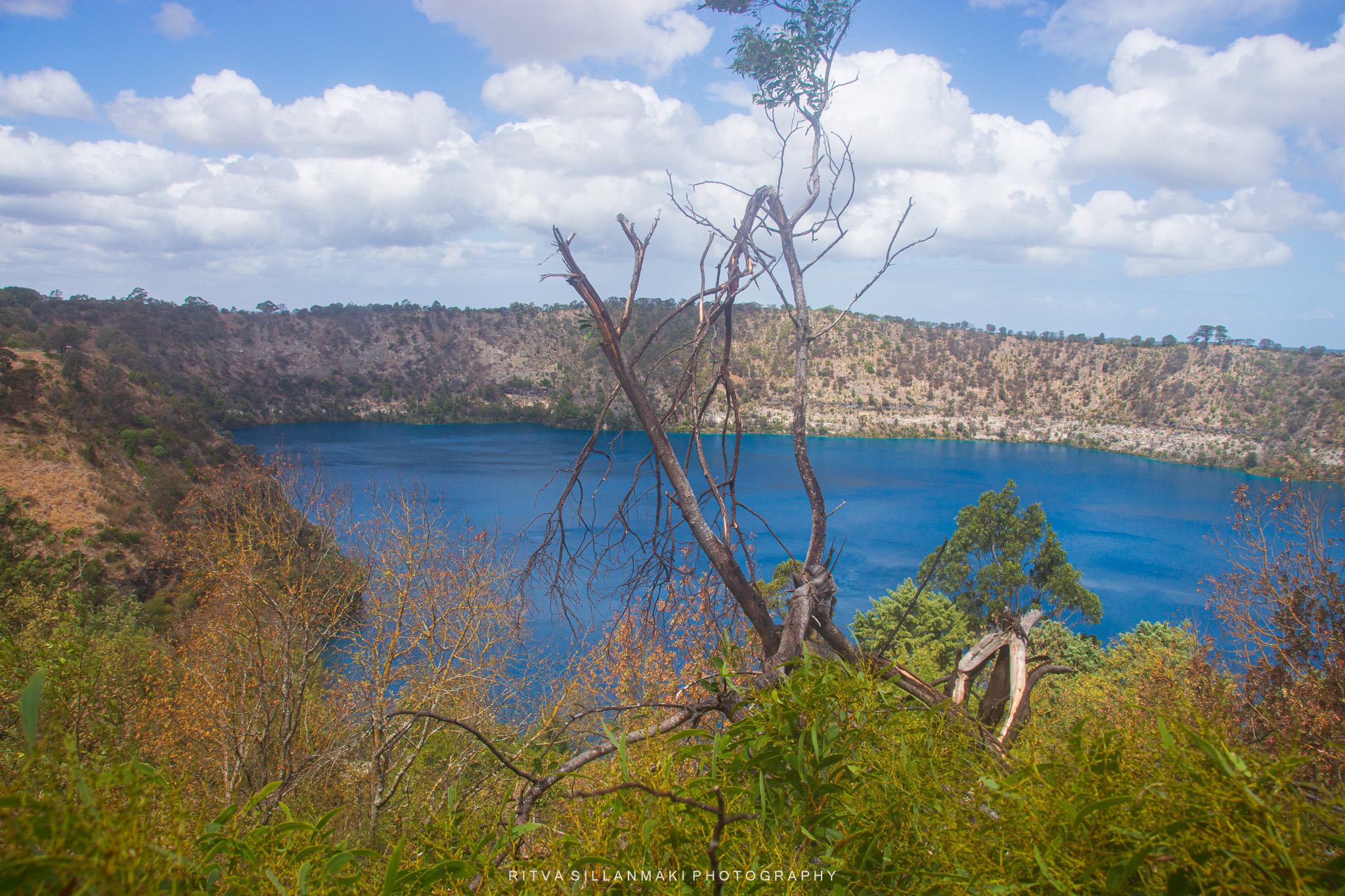
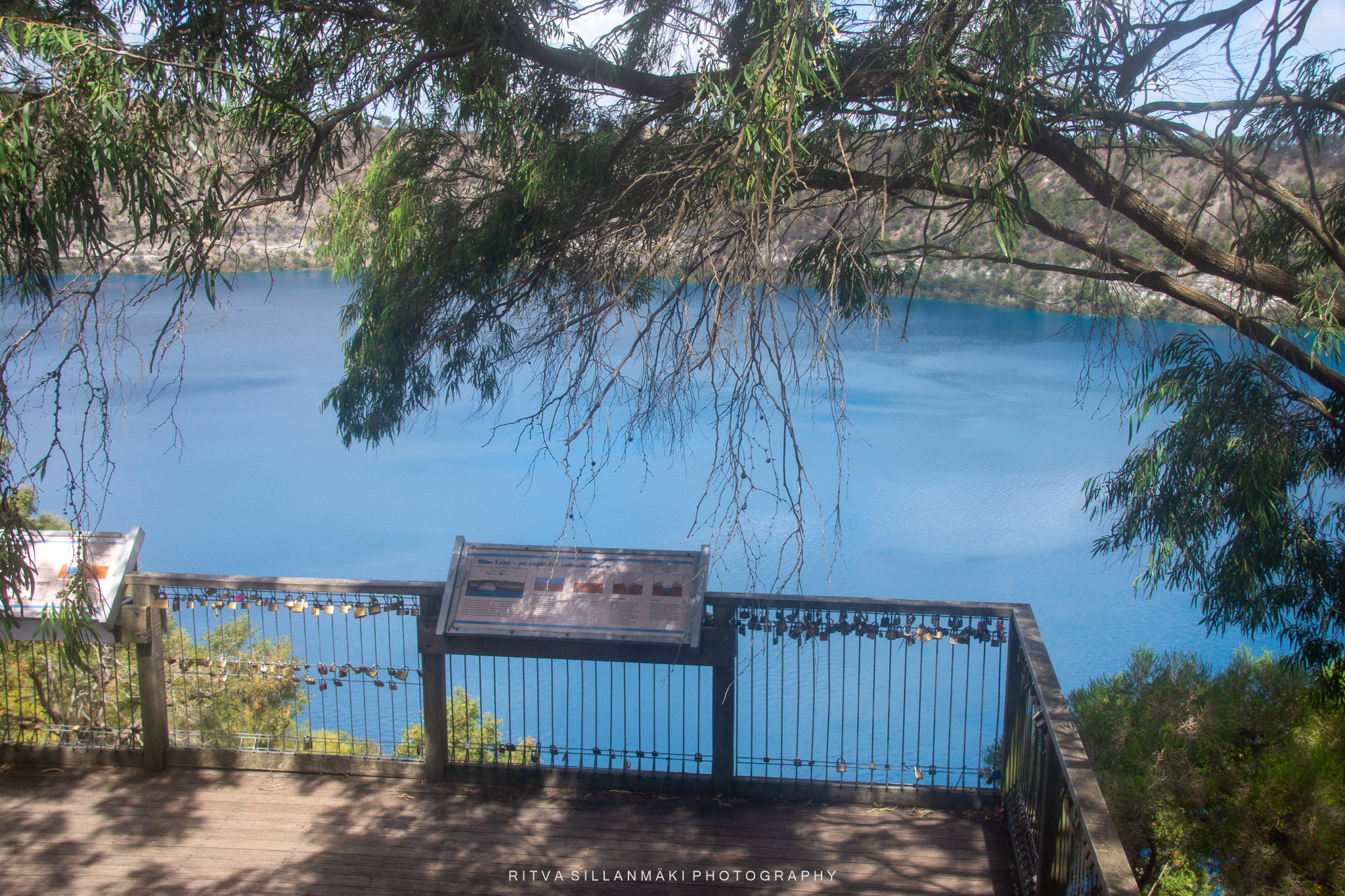
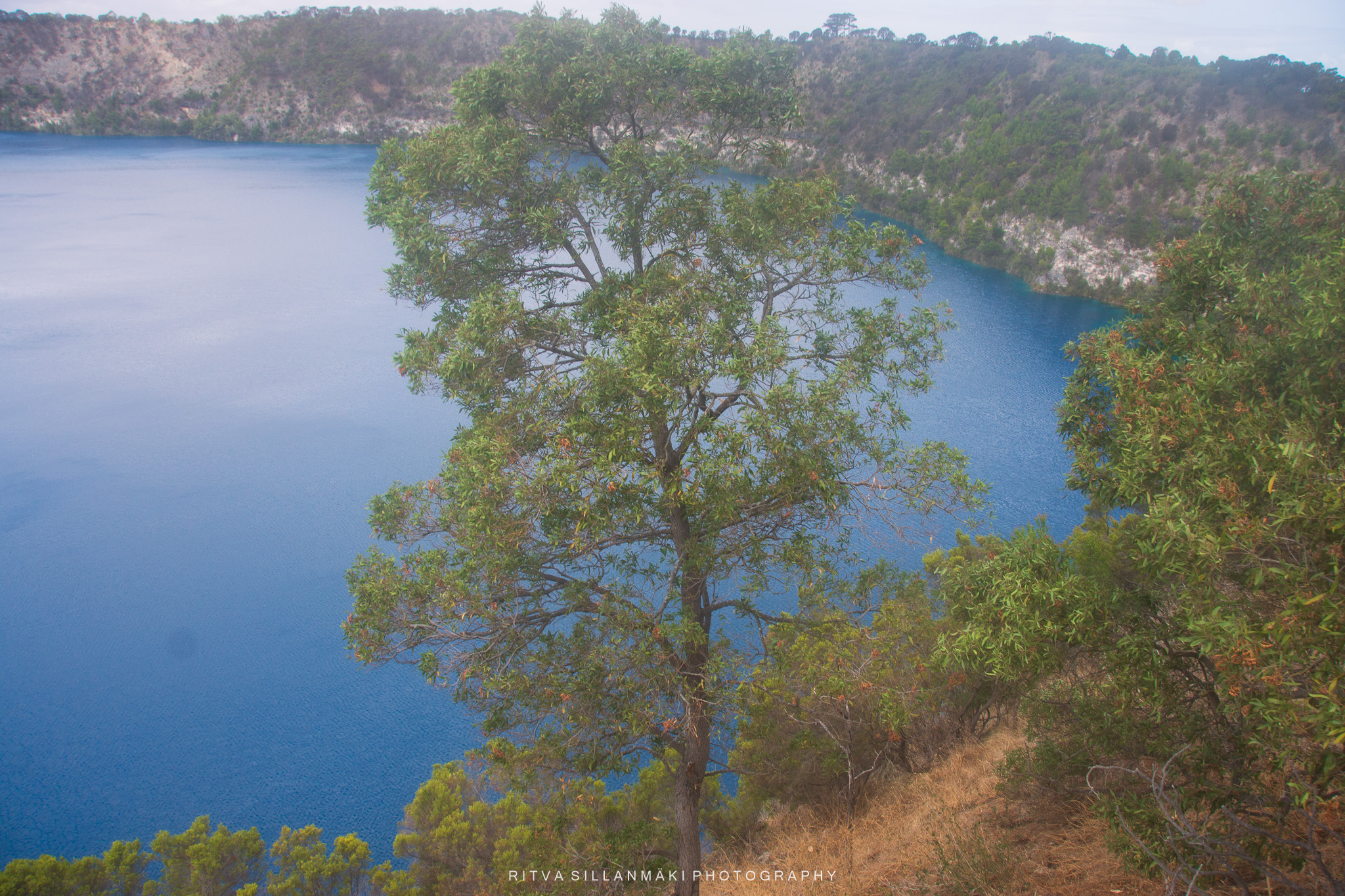
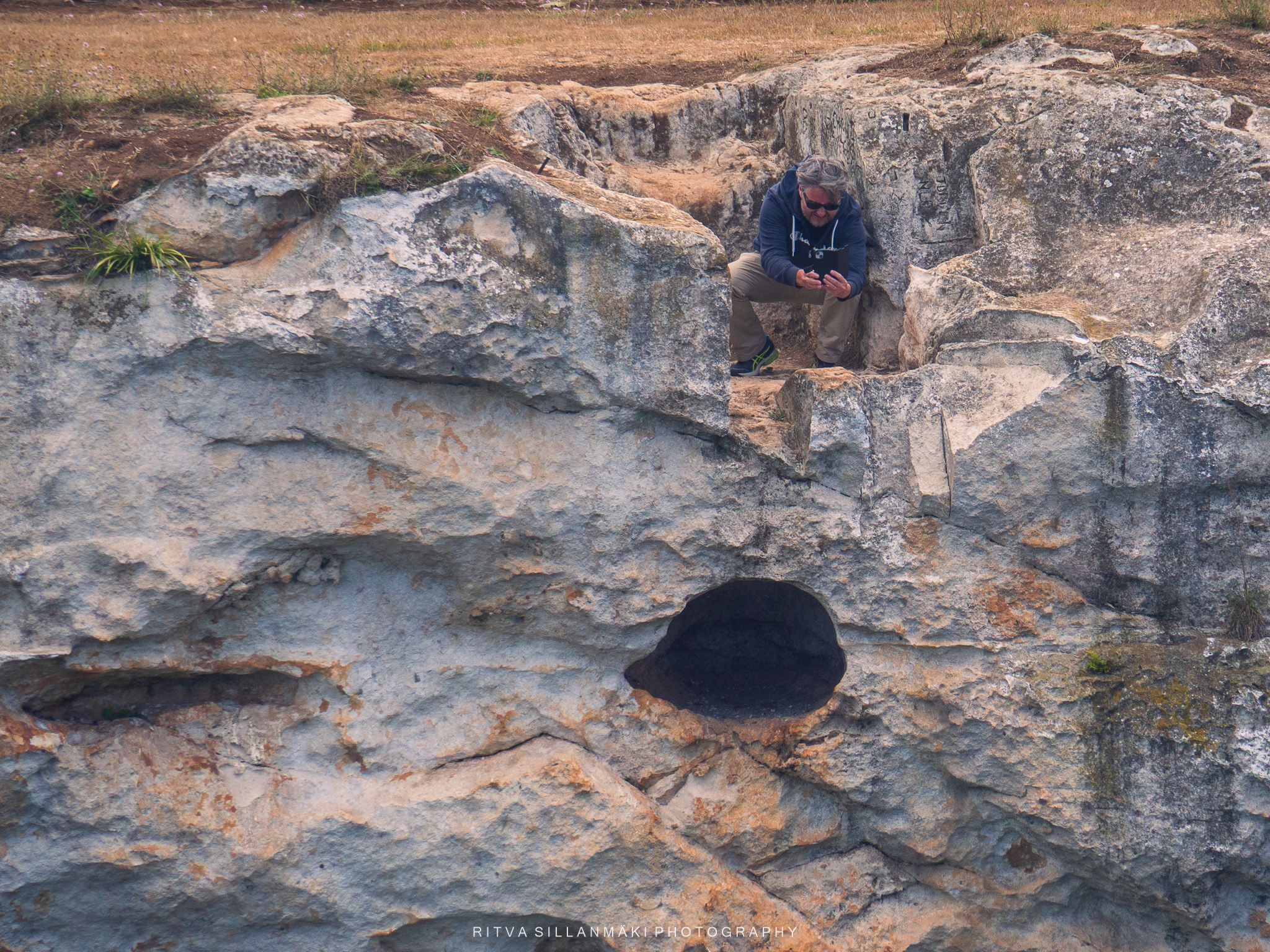
Later we went to the Umpherston Sinkhole, which had an English garden in the 1900’s and even a small pond inside of it. The pond went dry and when Mr. Umpherston passed away nobody took care of the garden. Luckily the sinkhole has been renovated and is a lush green spot in the area worth the visit. Only thing that spoiled the visit was the wood mill next to it. The exhaust fumes from the mill were really bothering me down in the sinkhole. Hopefully, it was wind direction and it’s not like that every day.
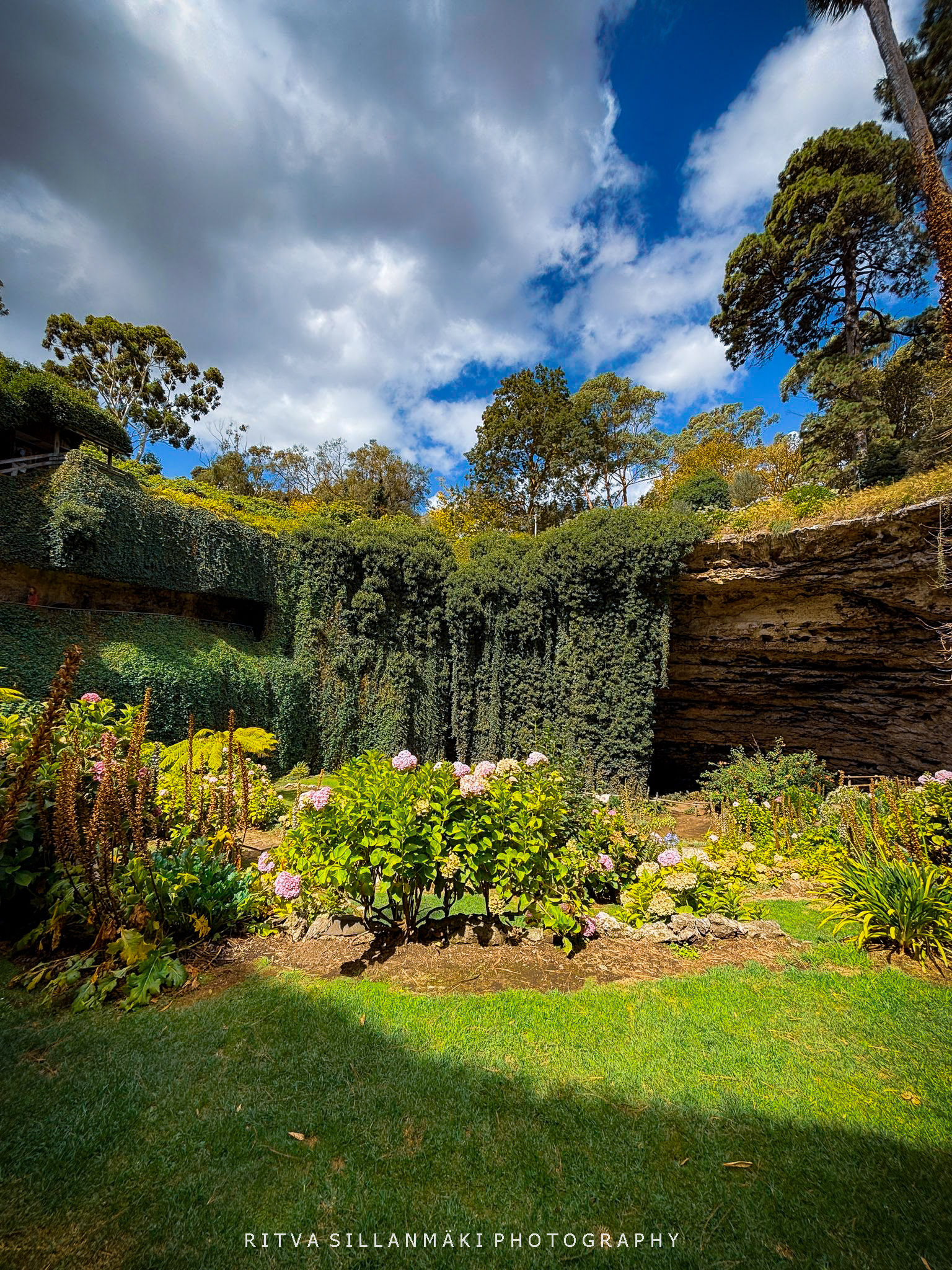
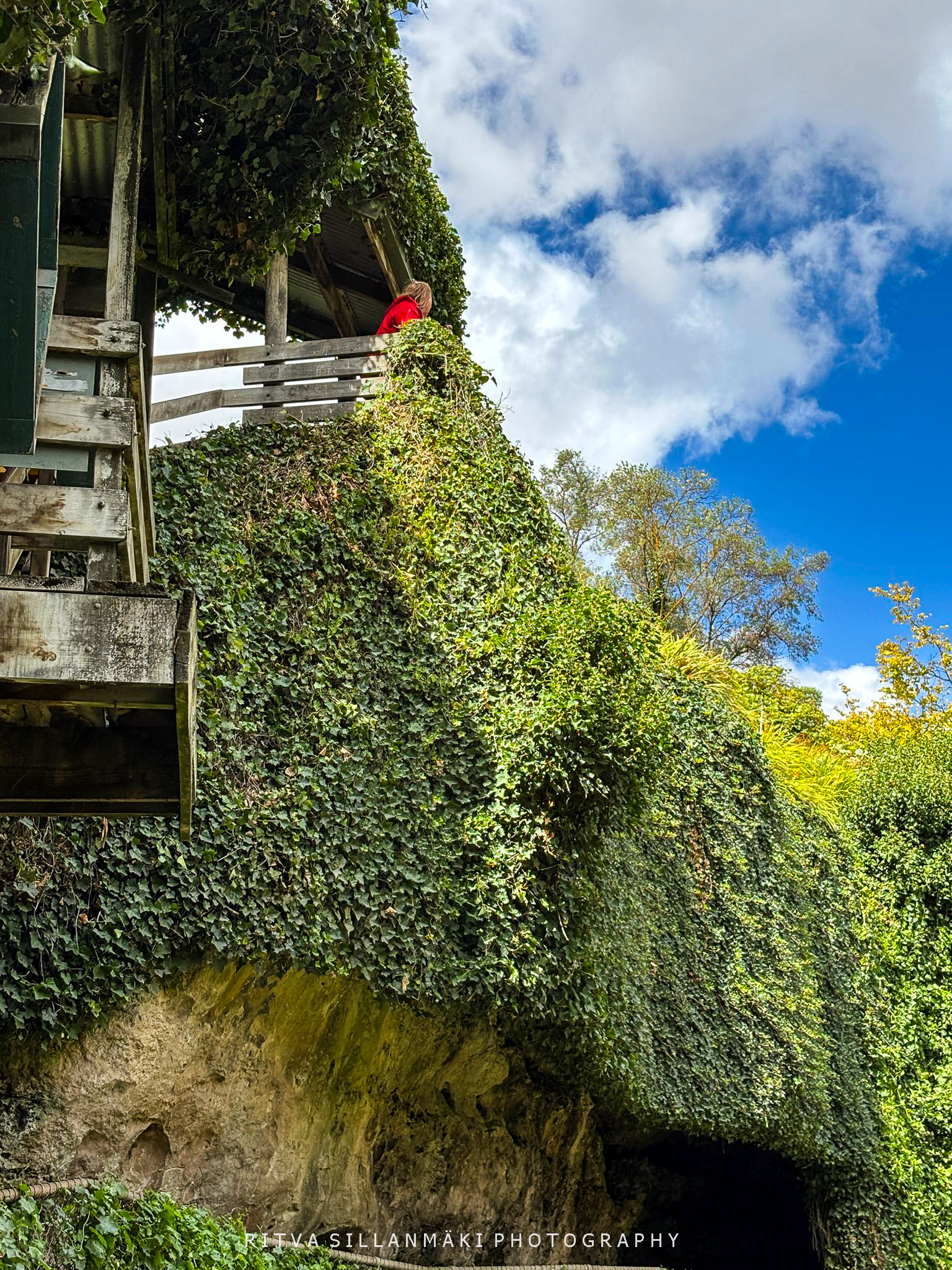
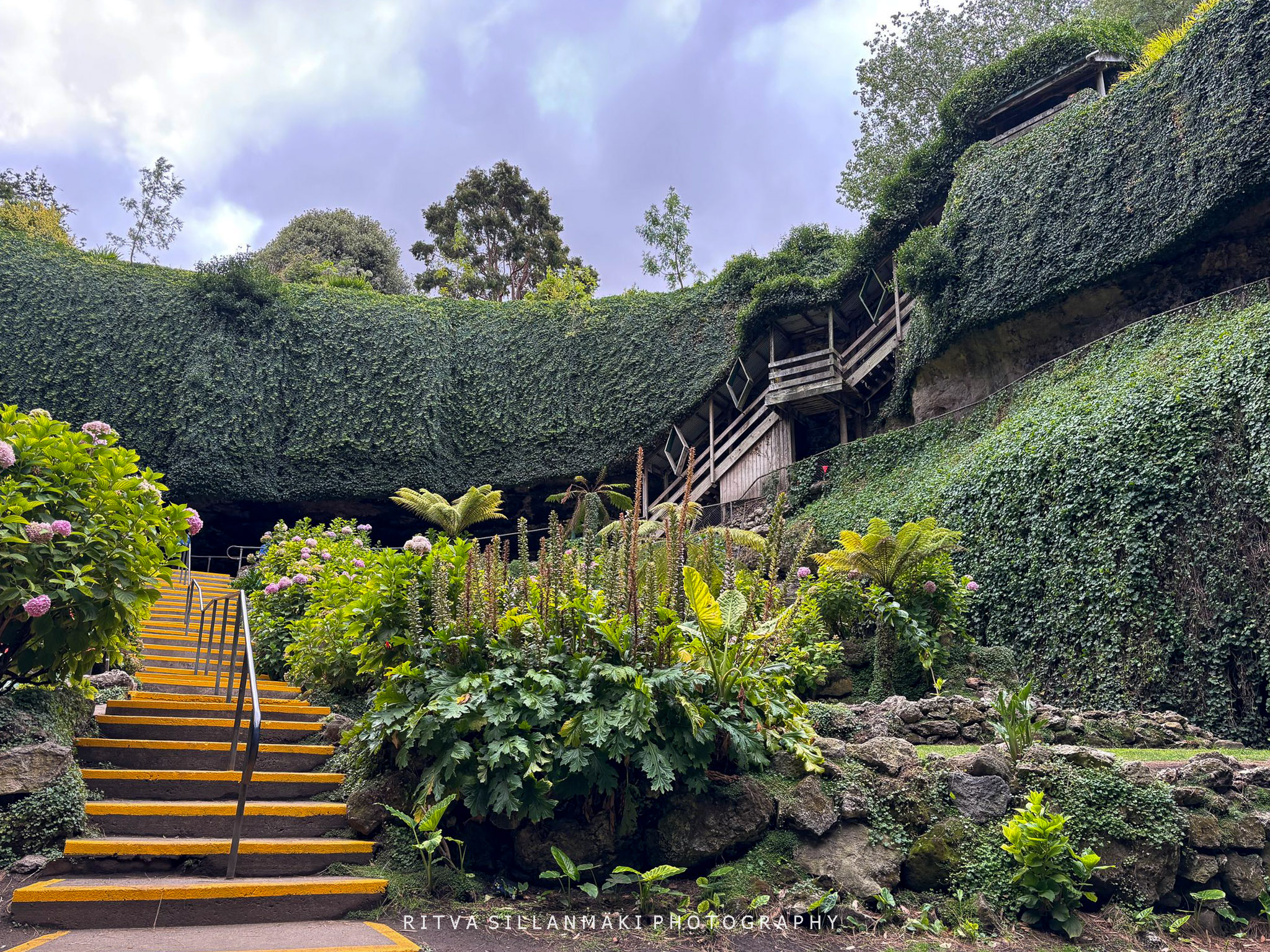
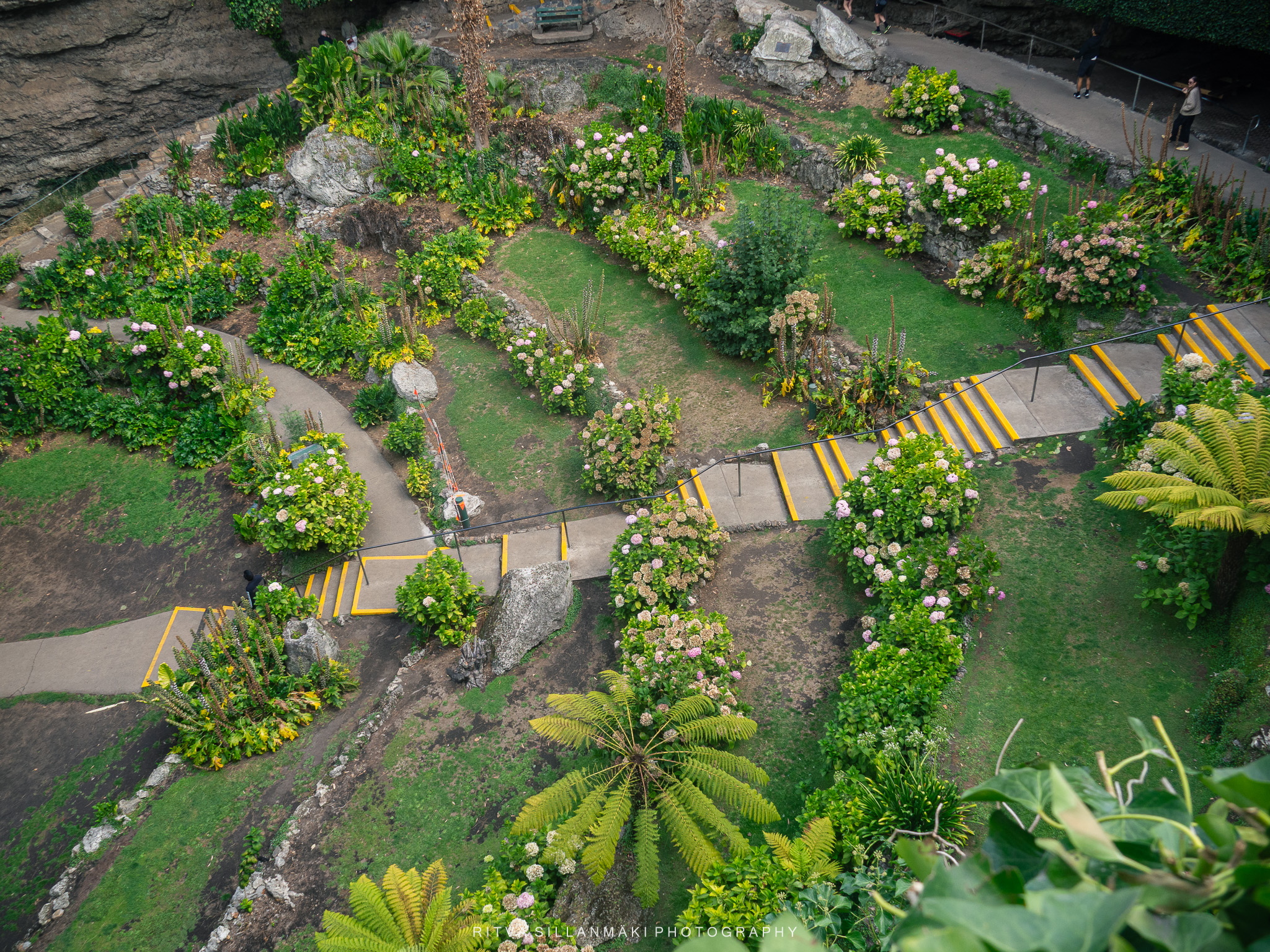
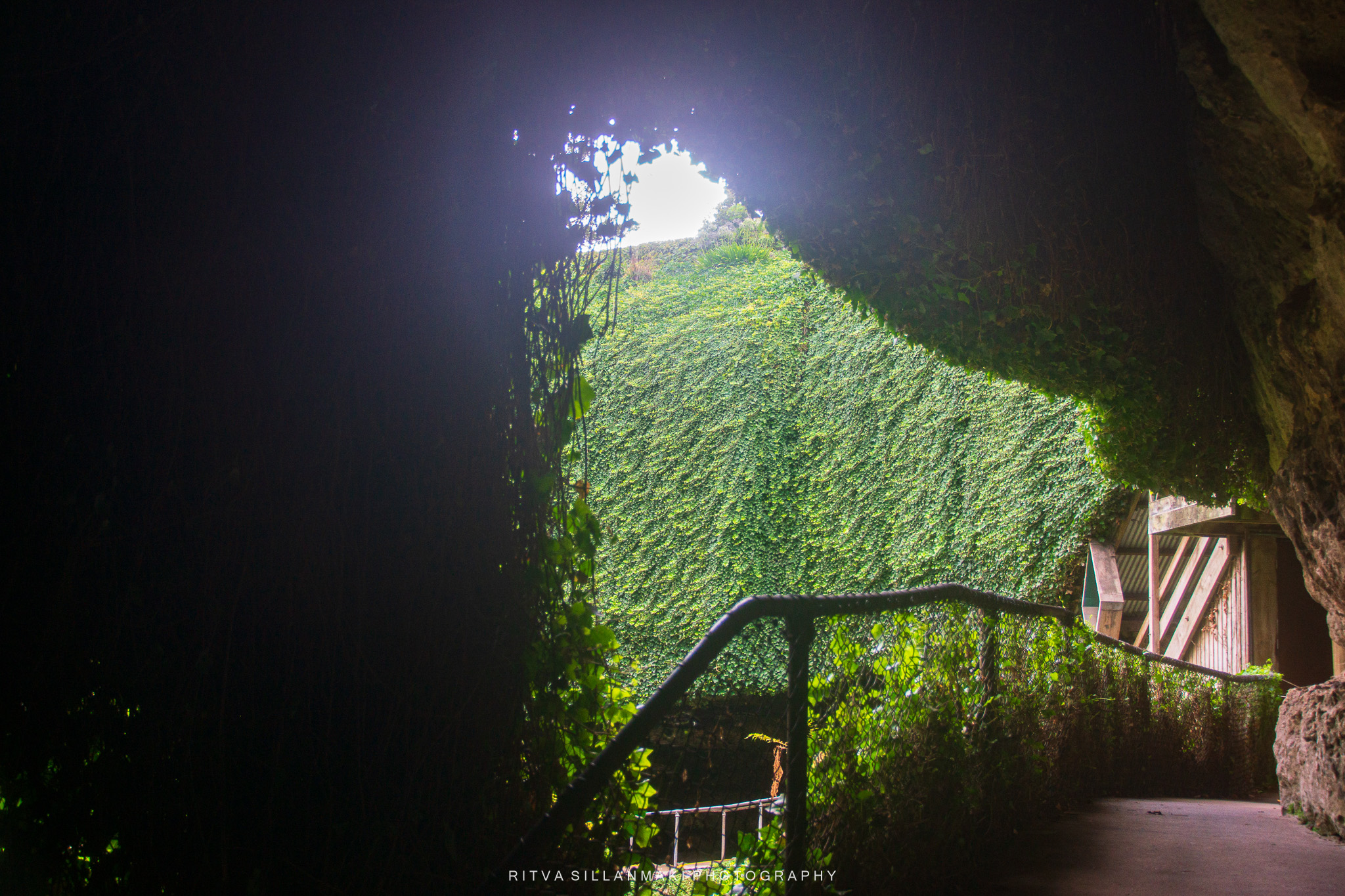
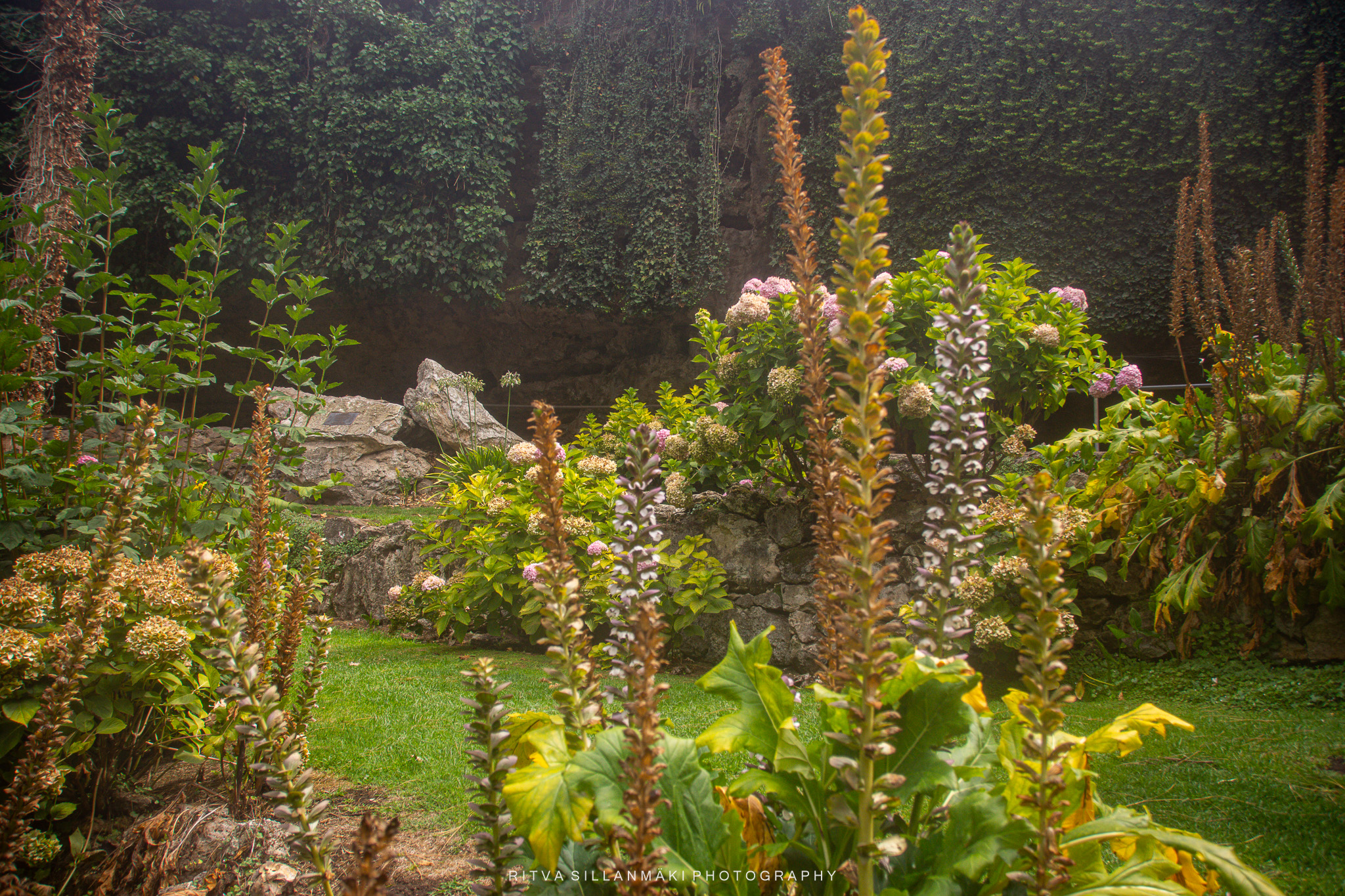
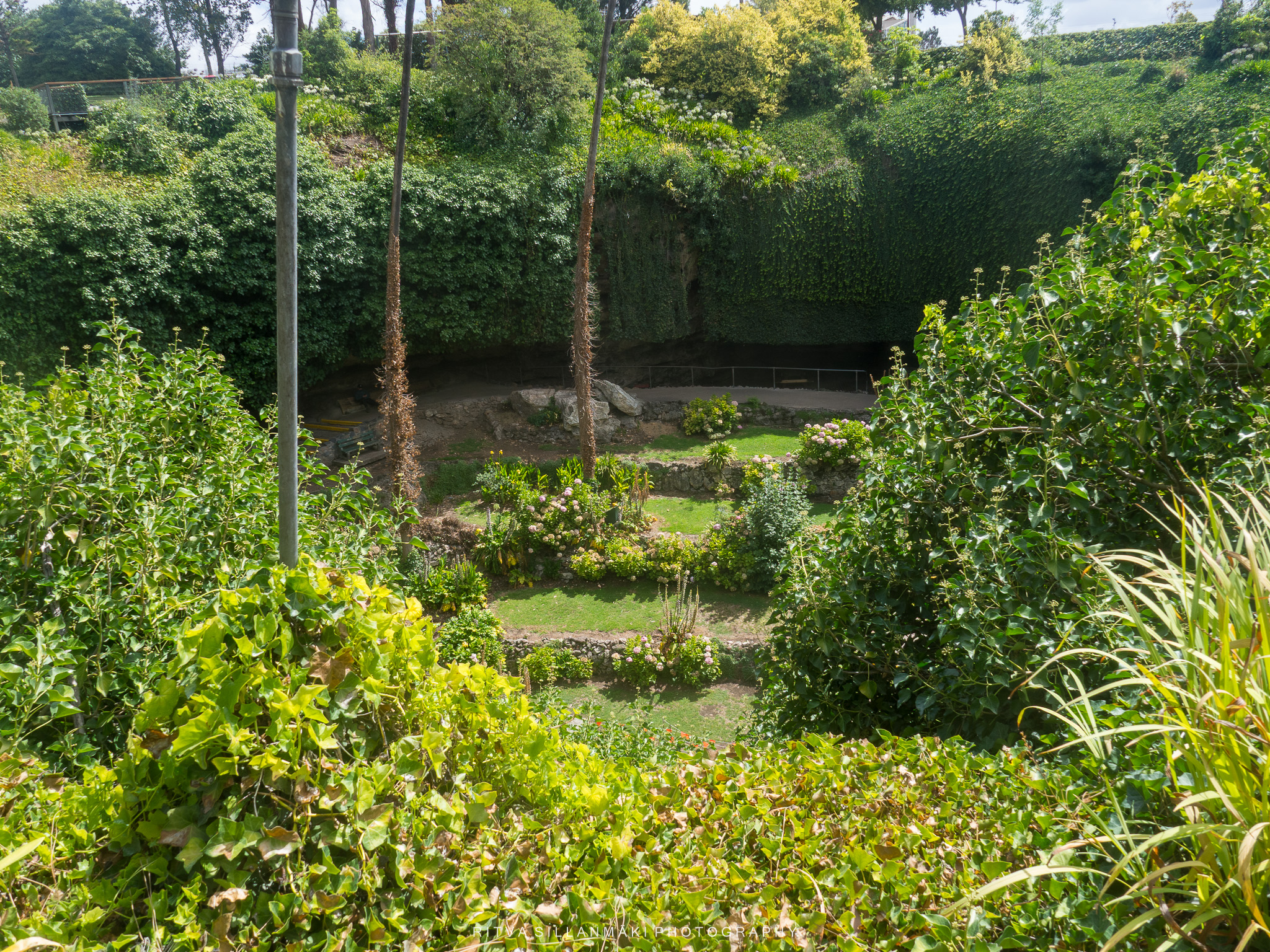
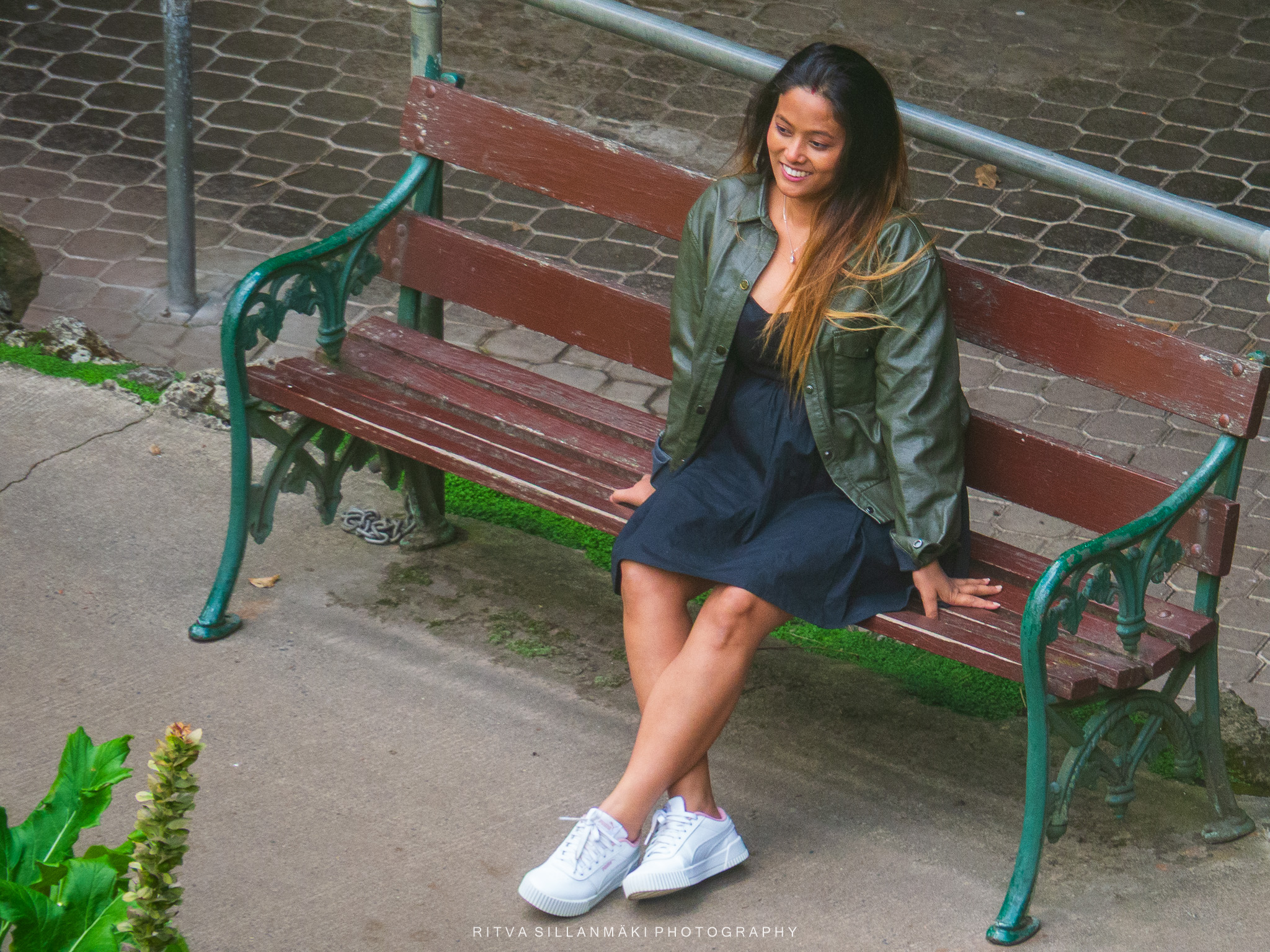
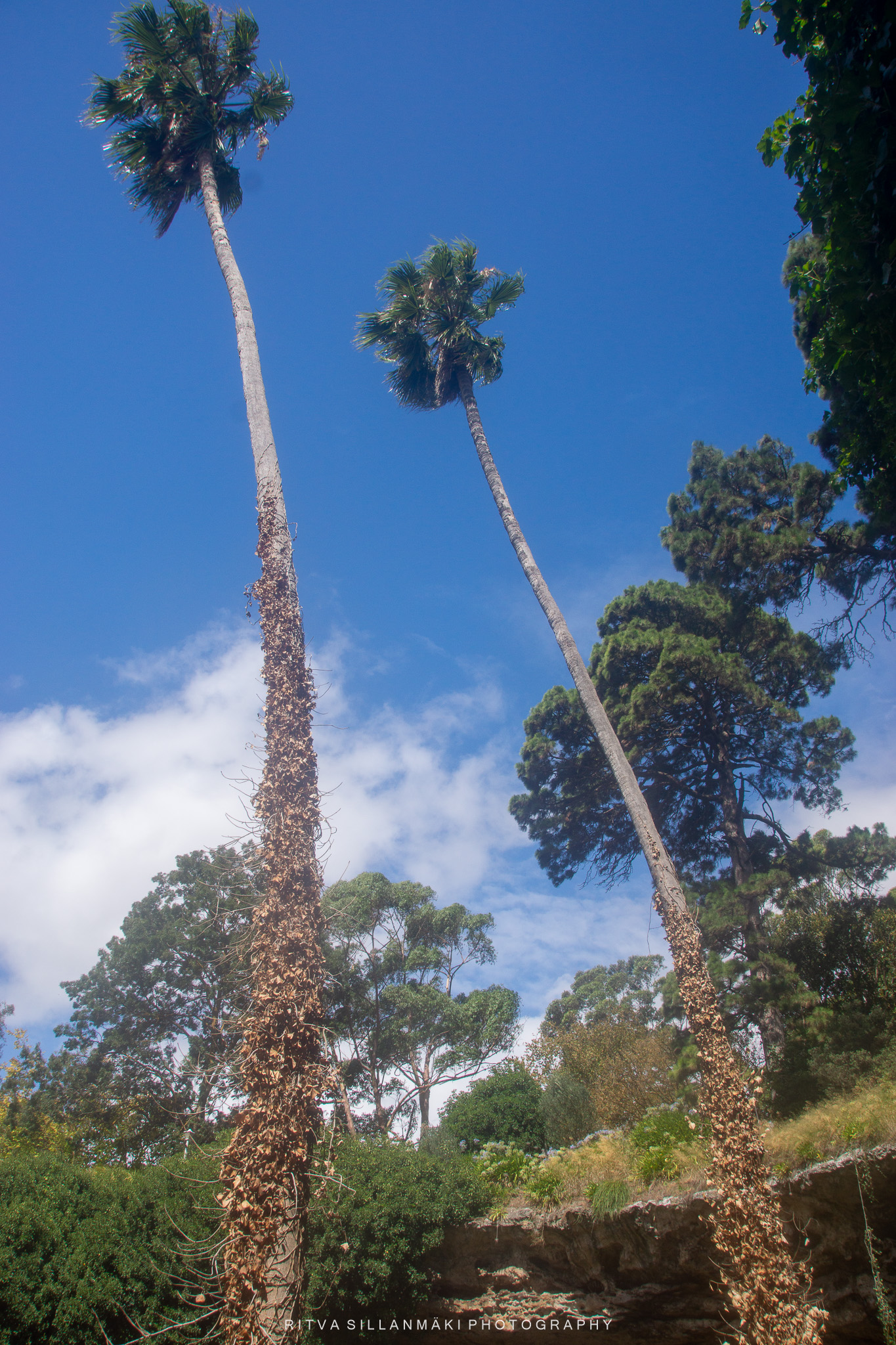
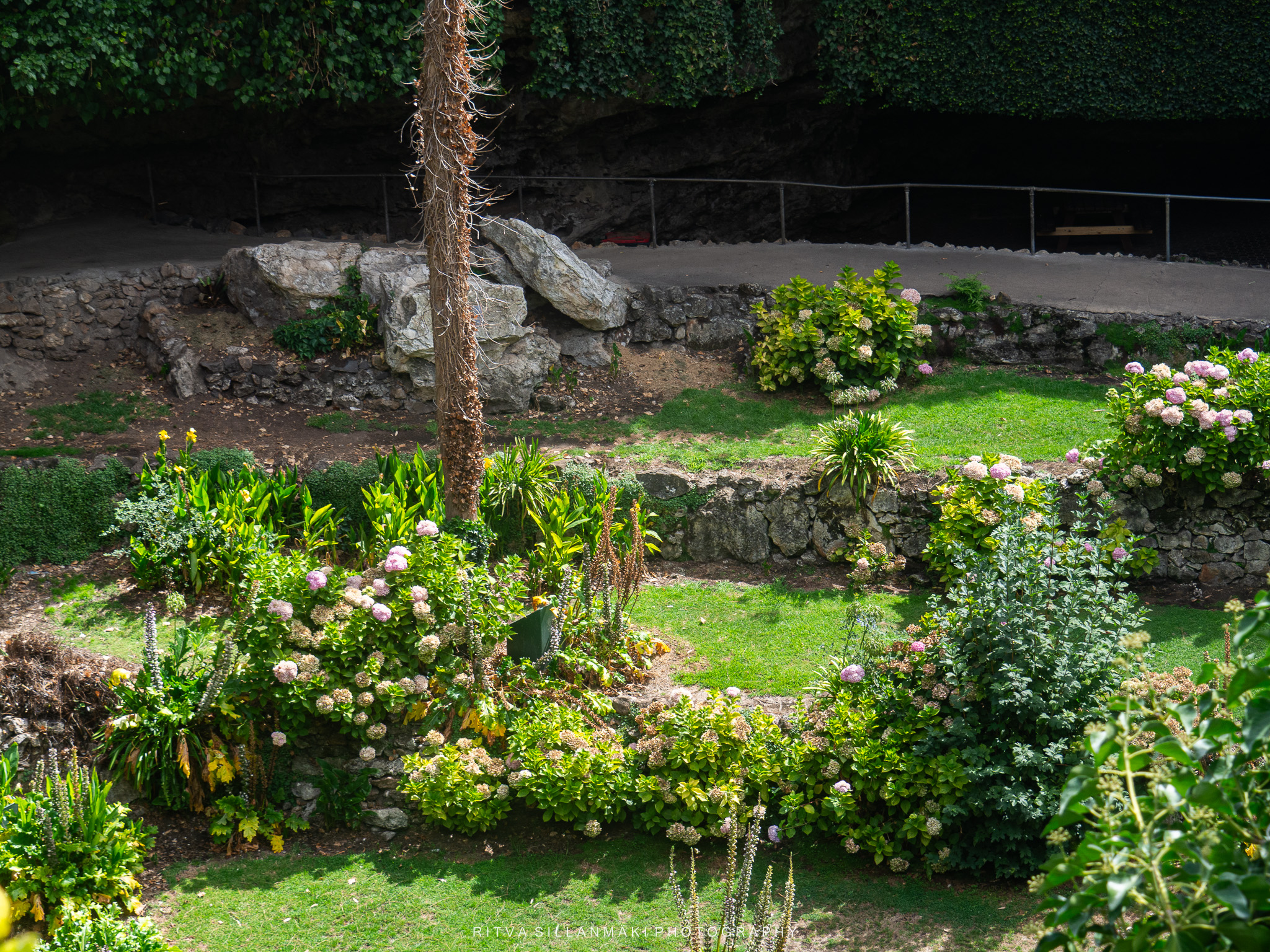
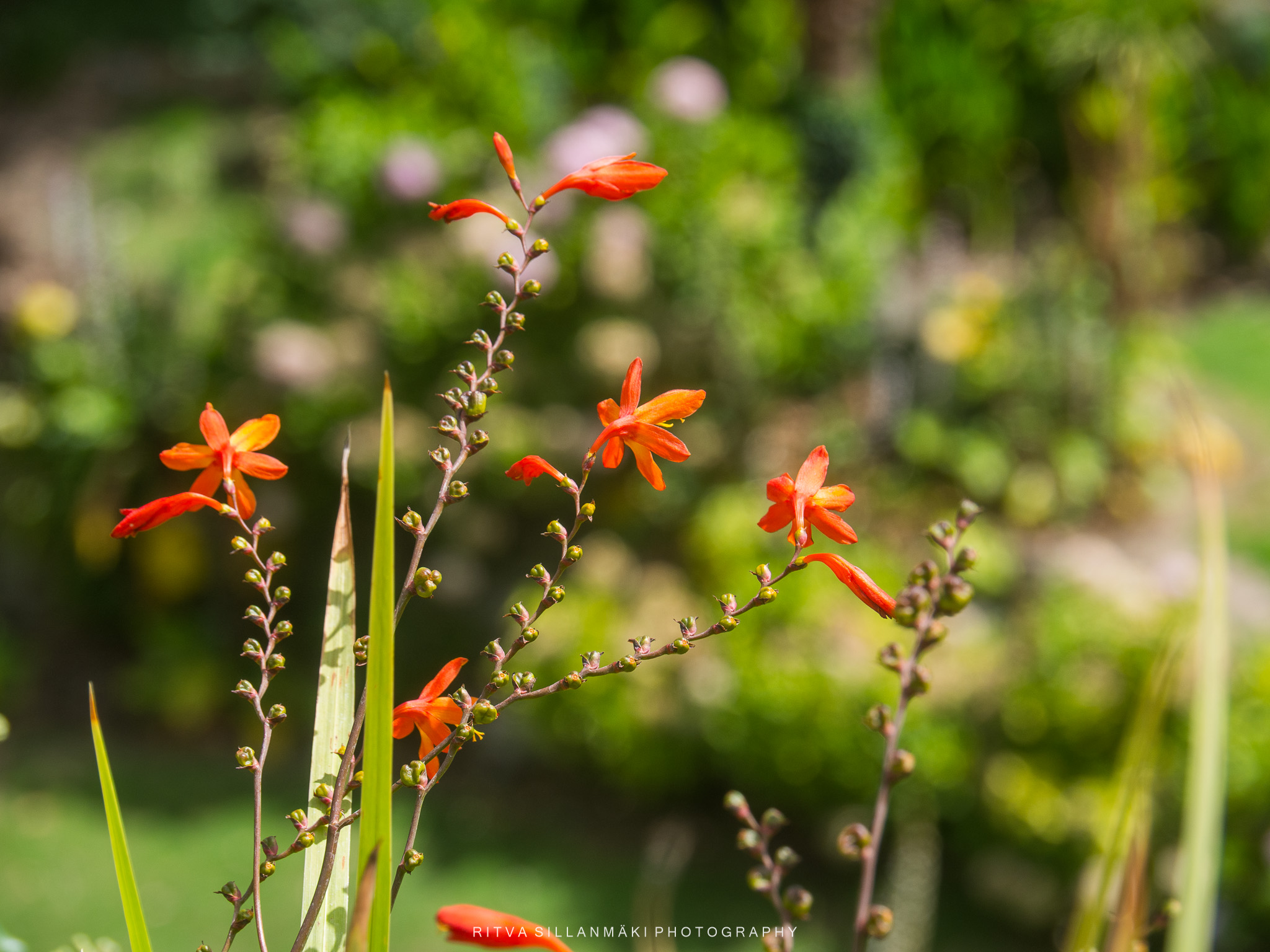
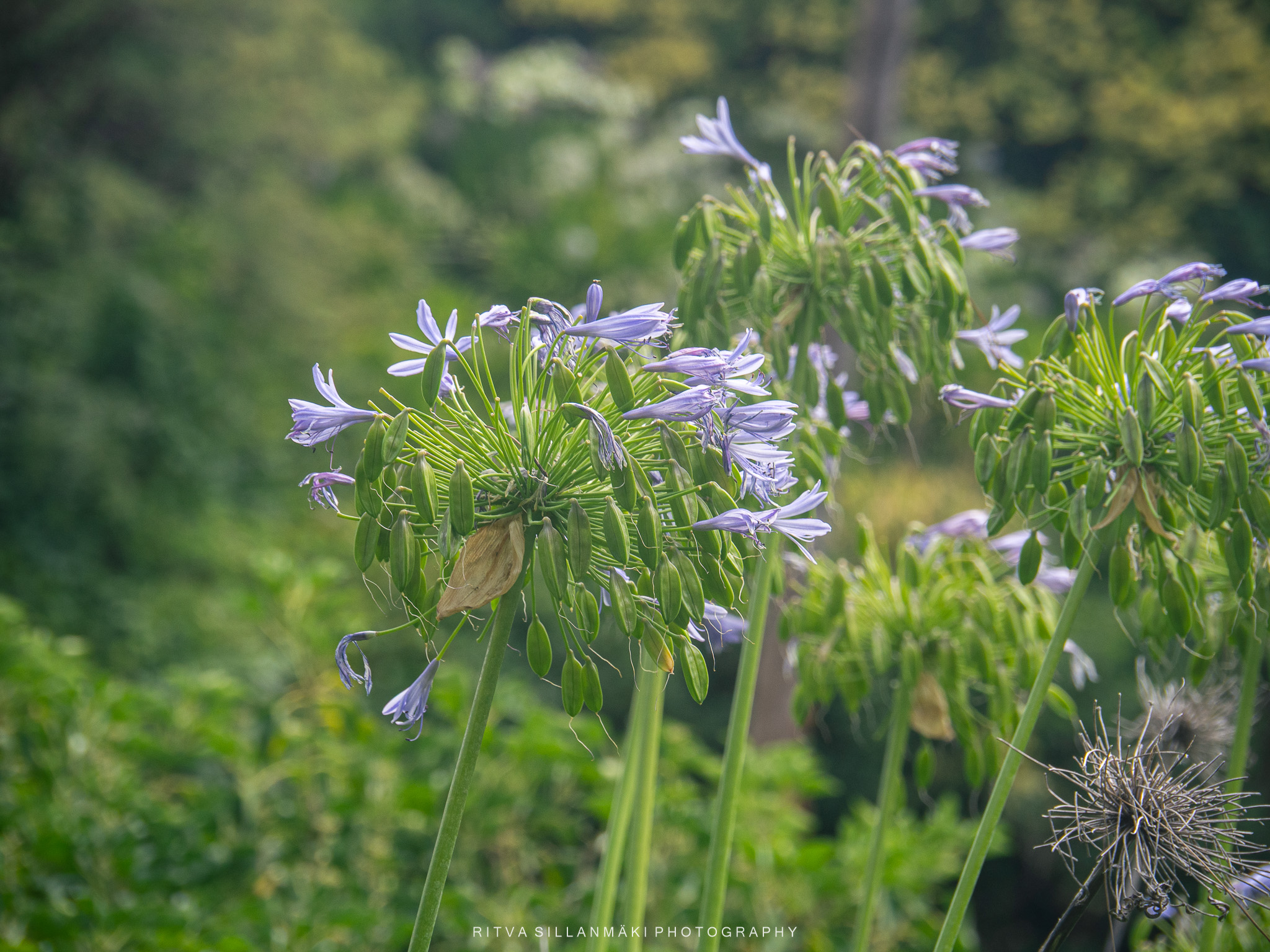
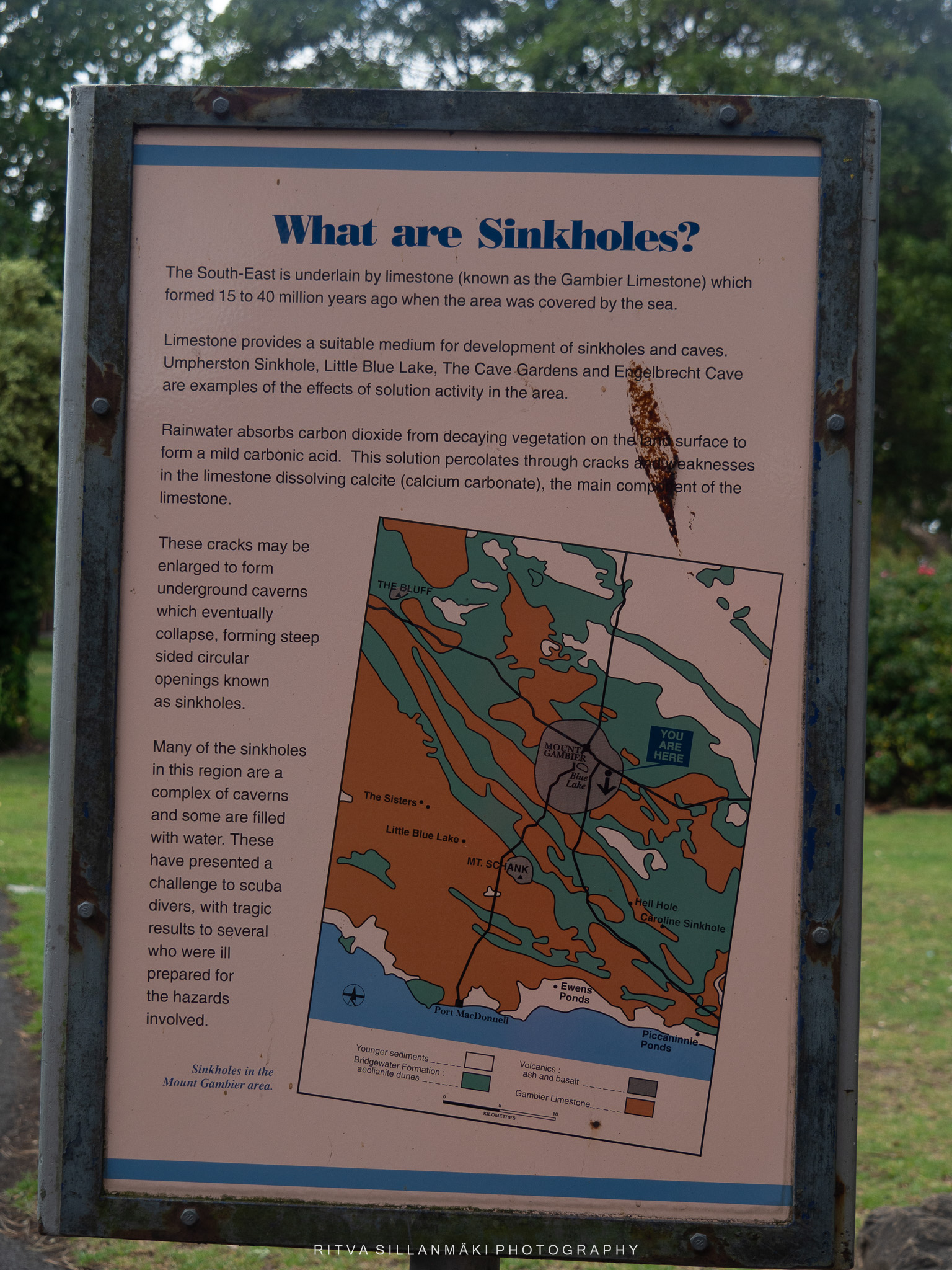
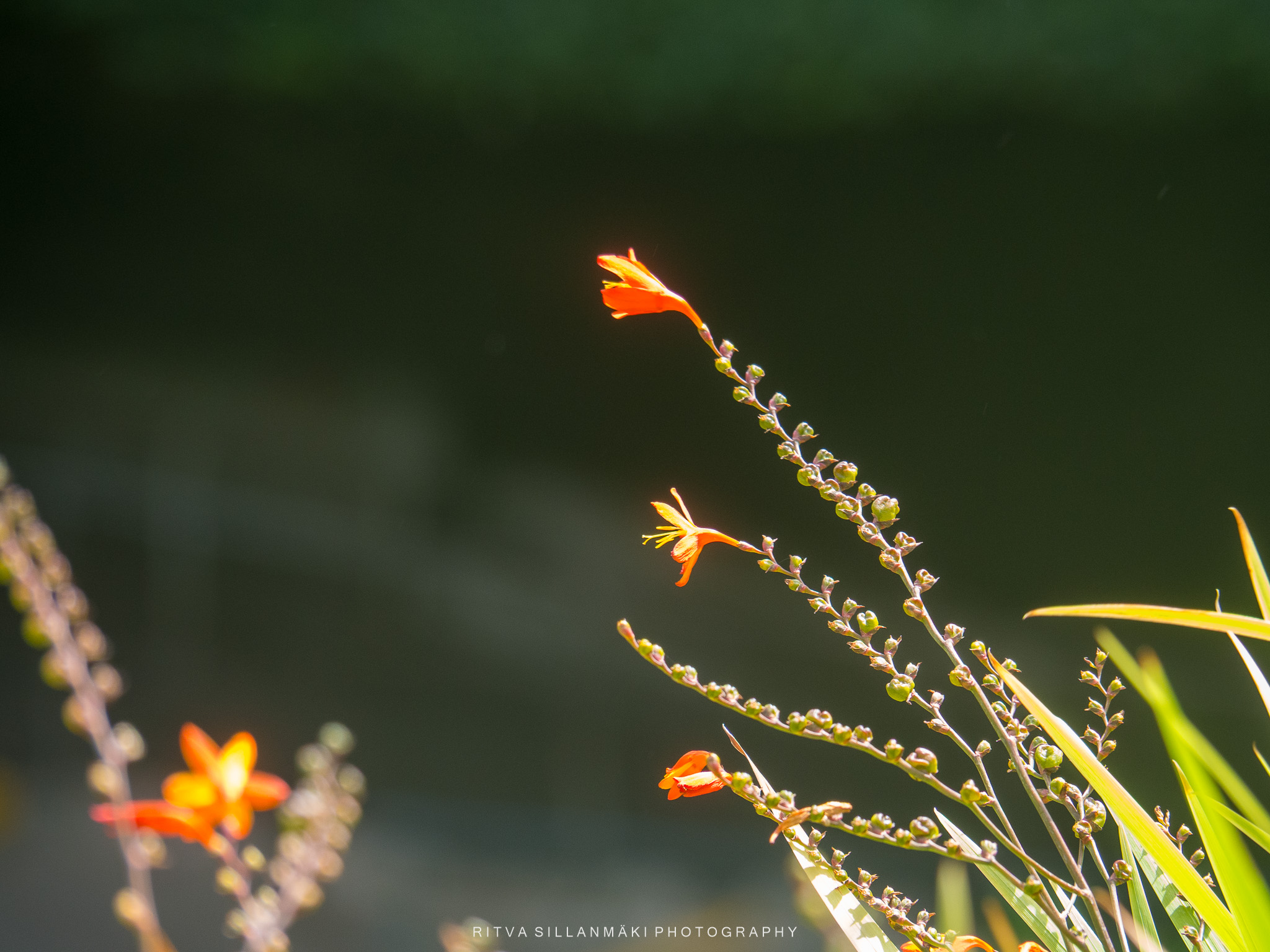
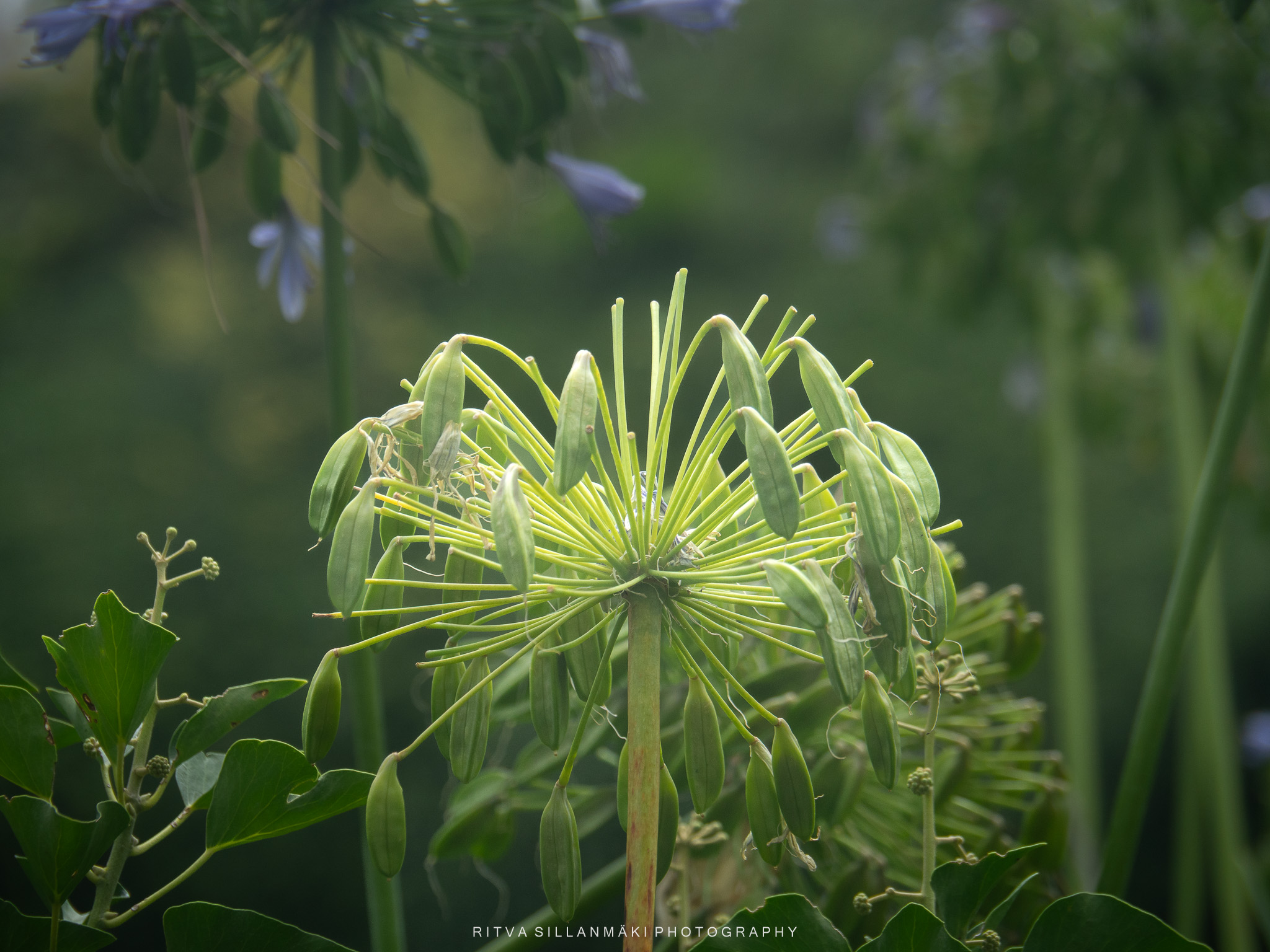
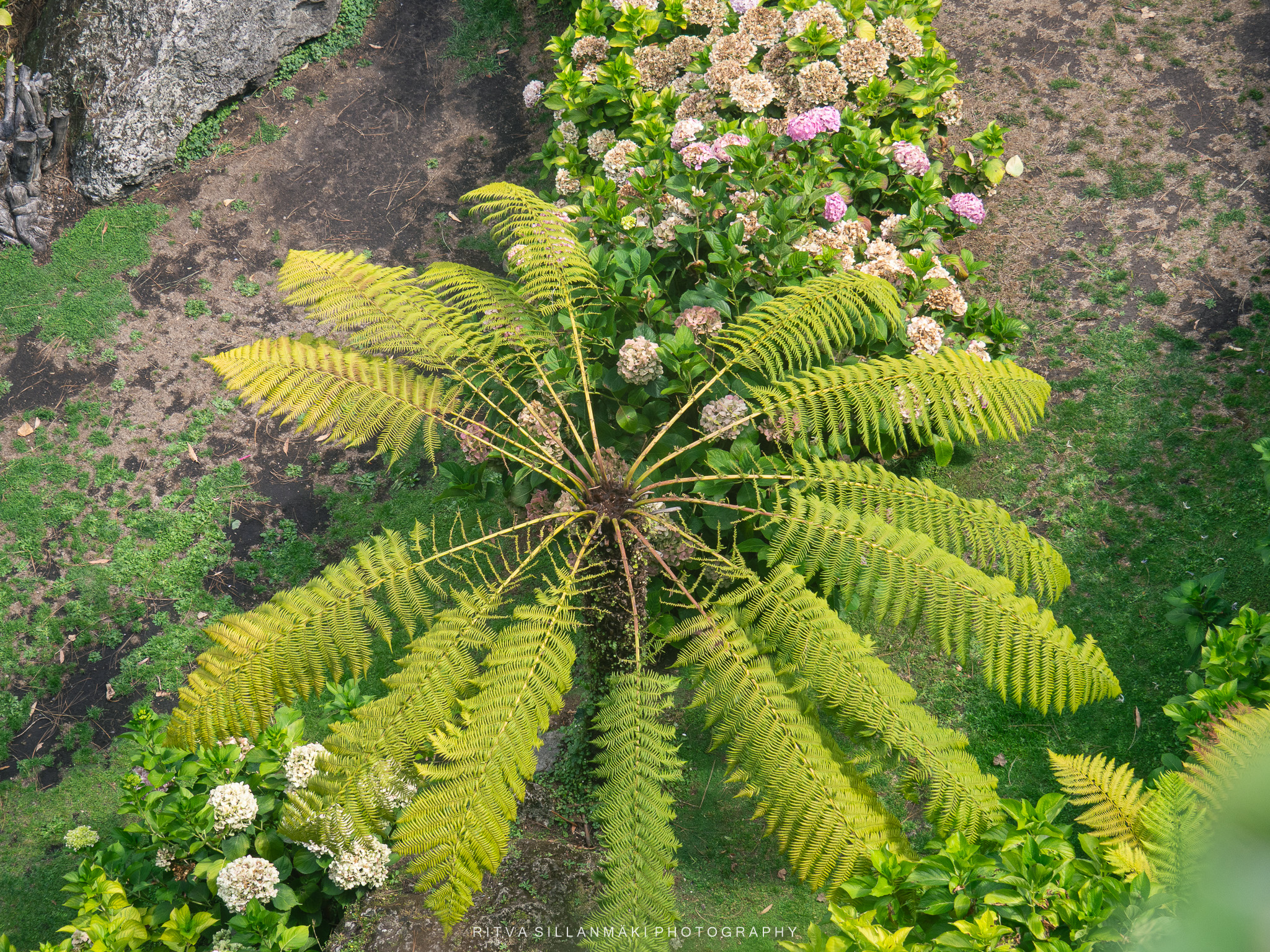
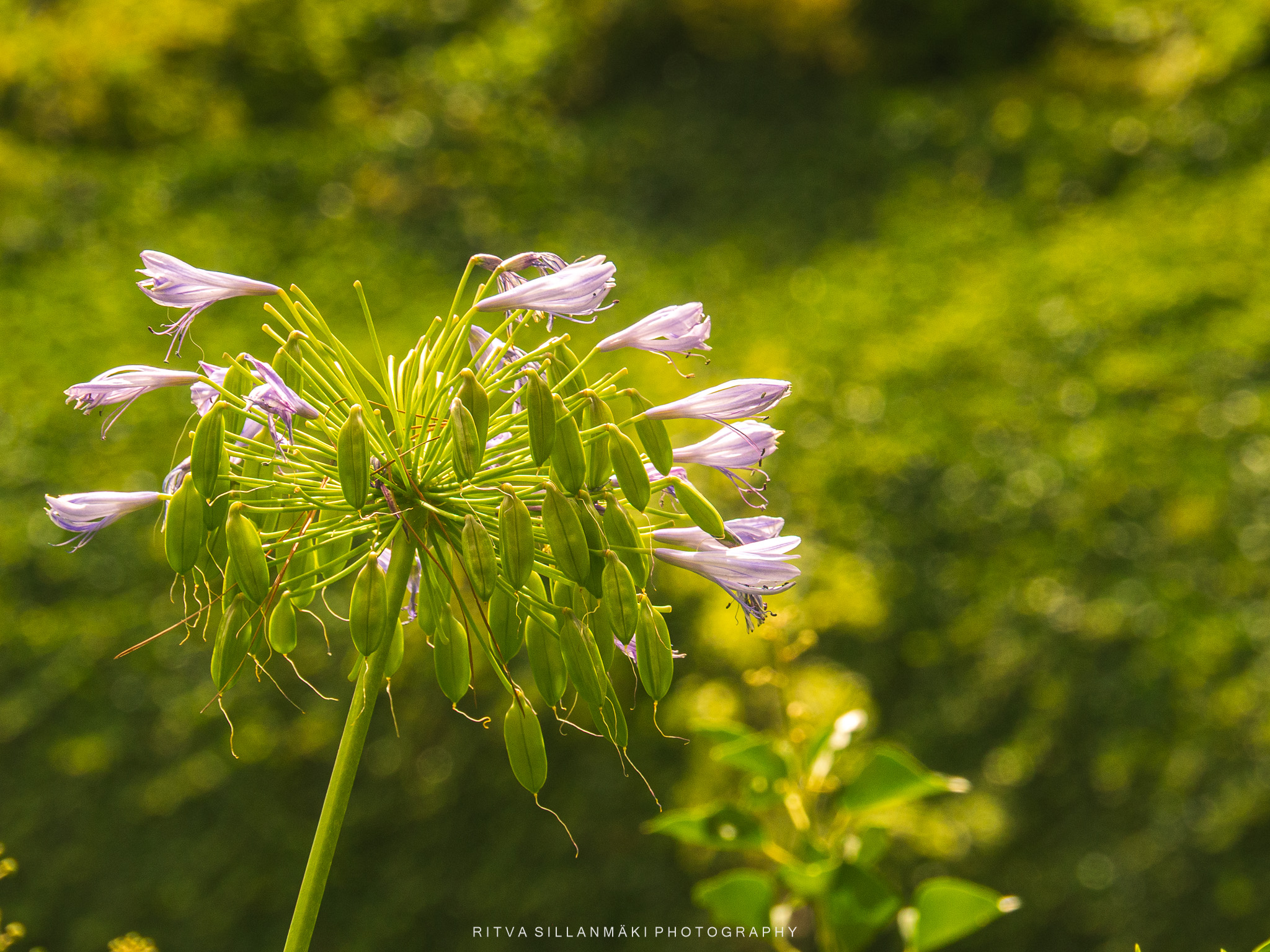
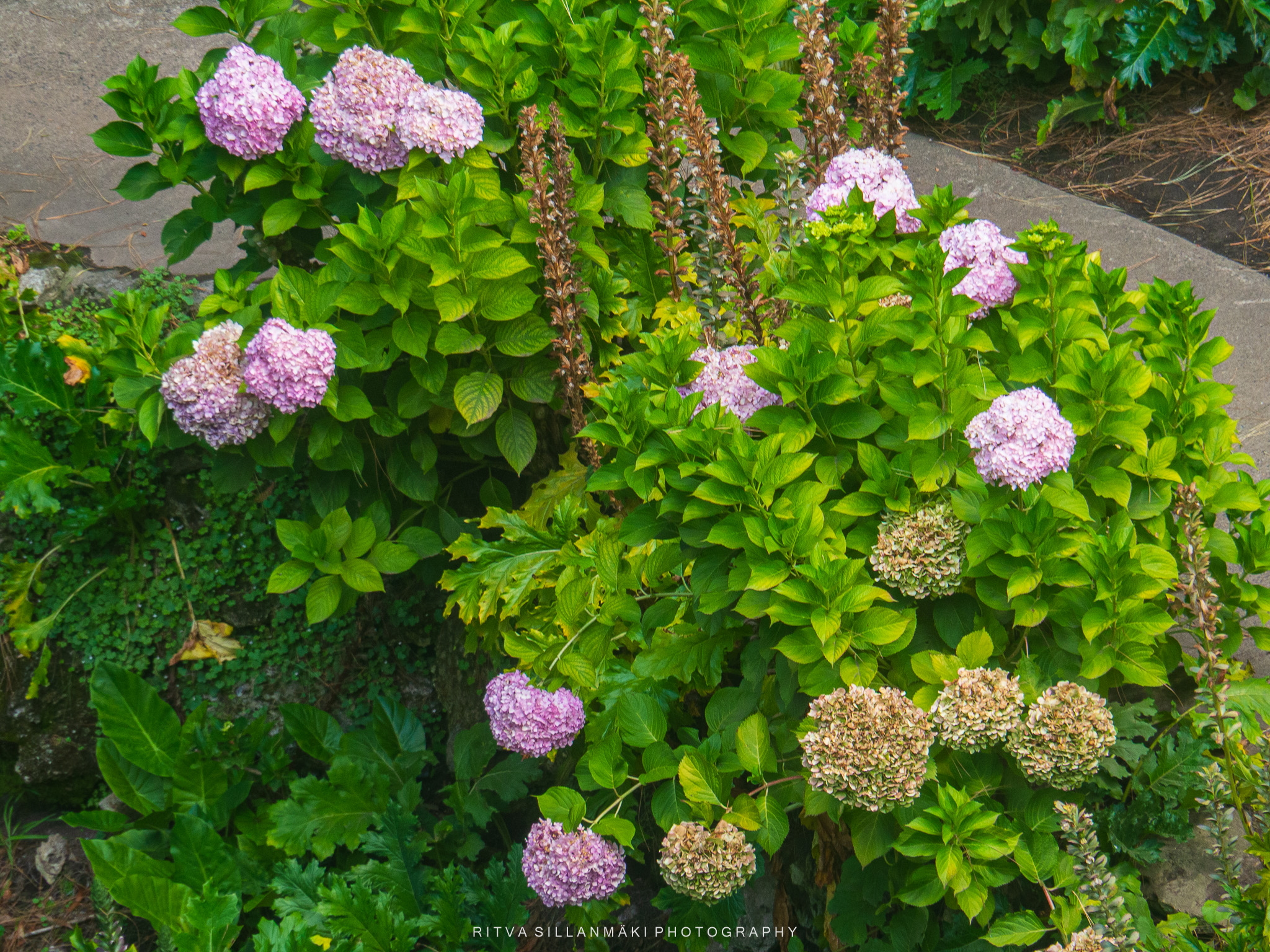
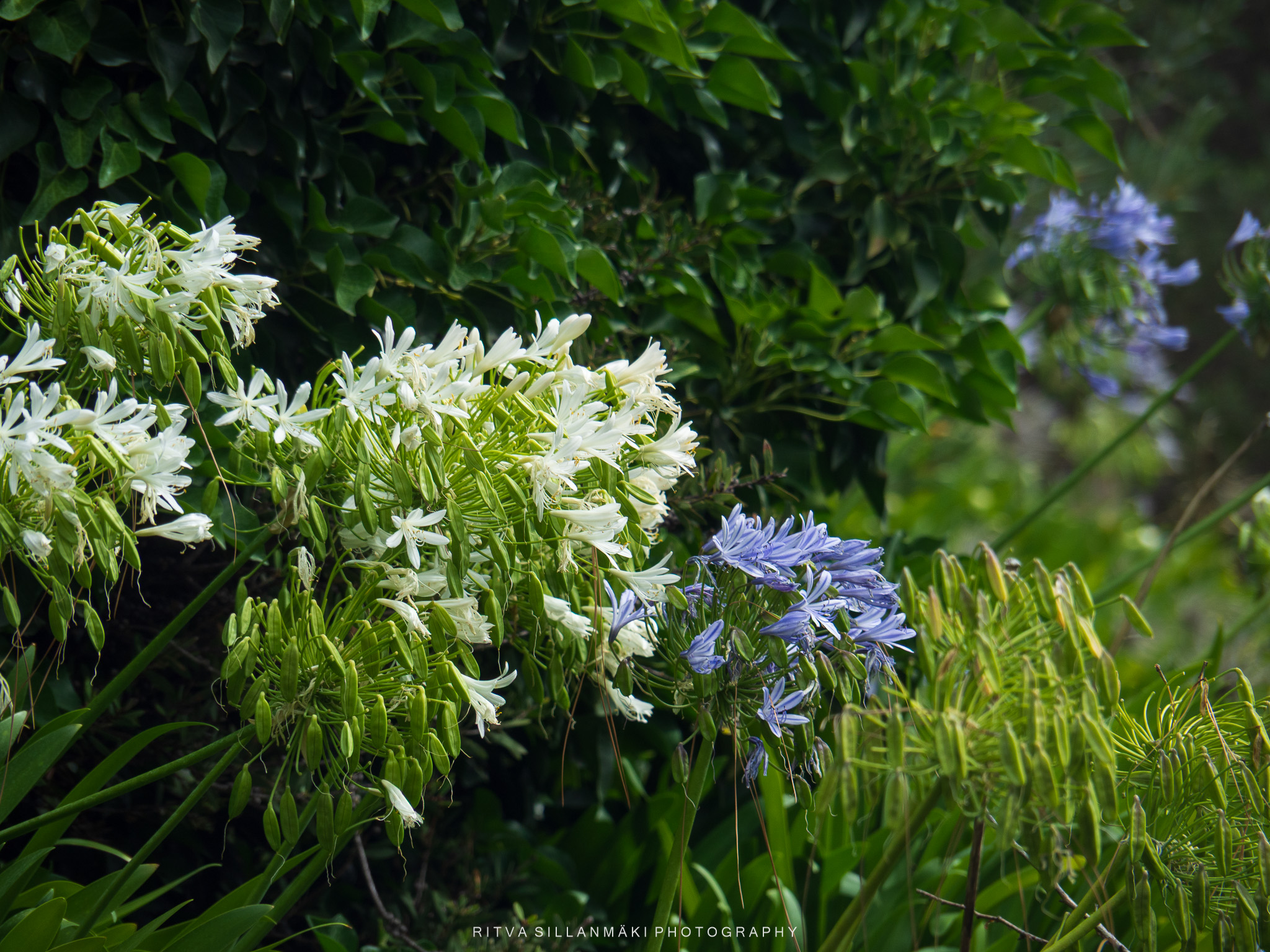
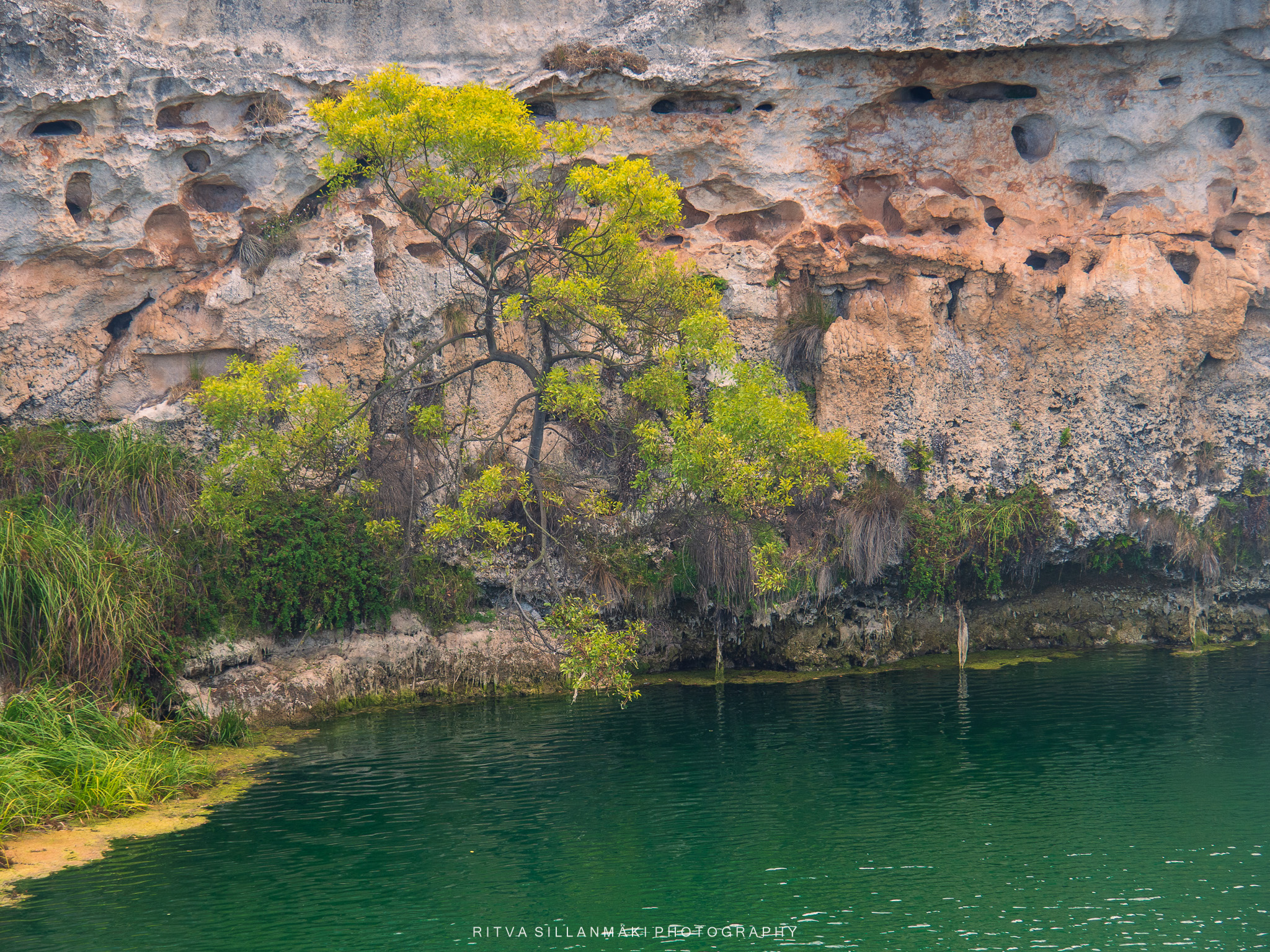
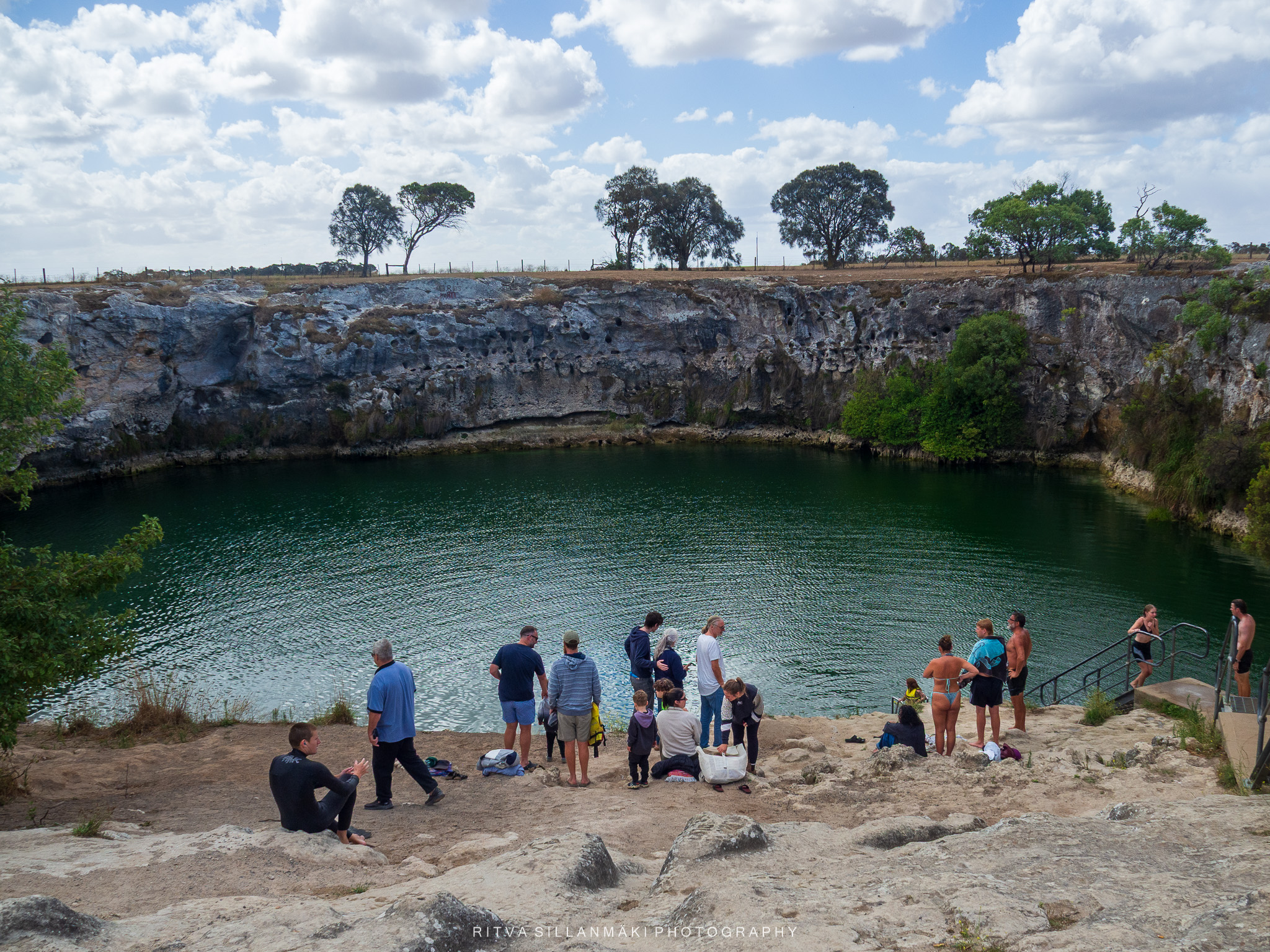
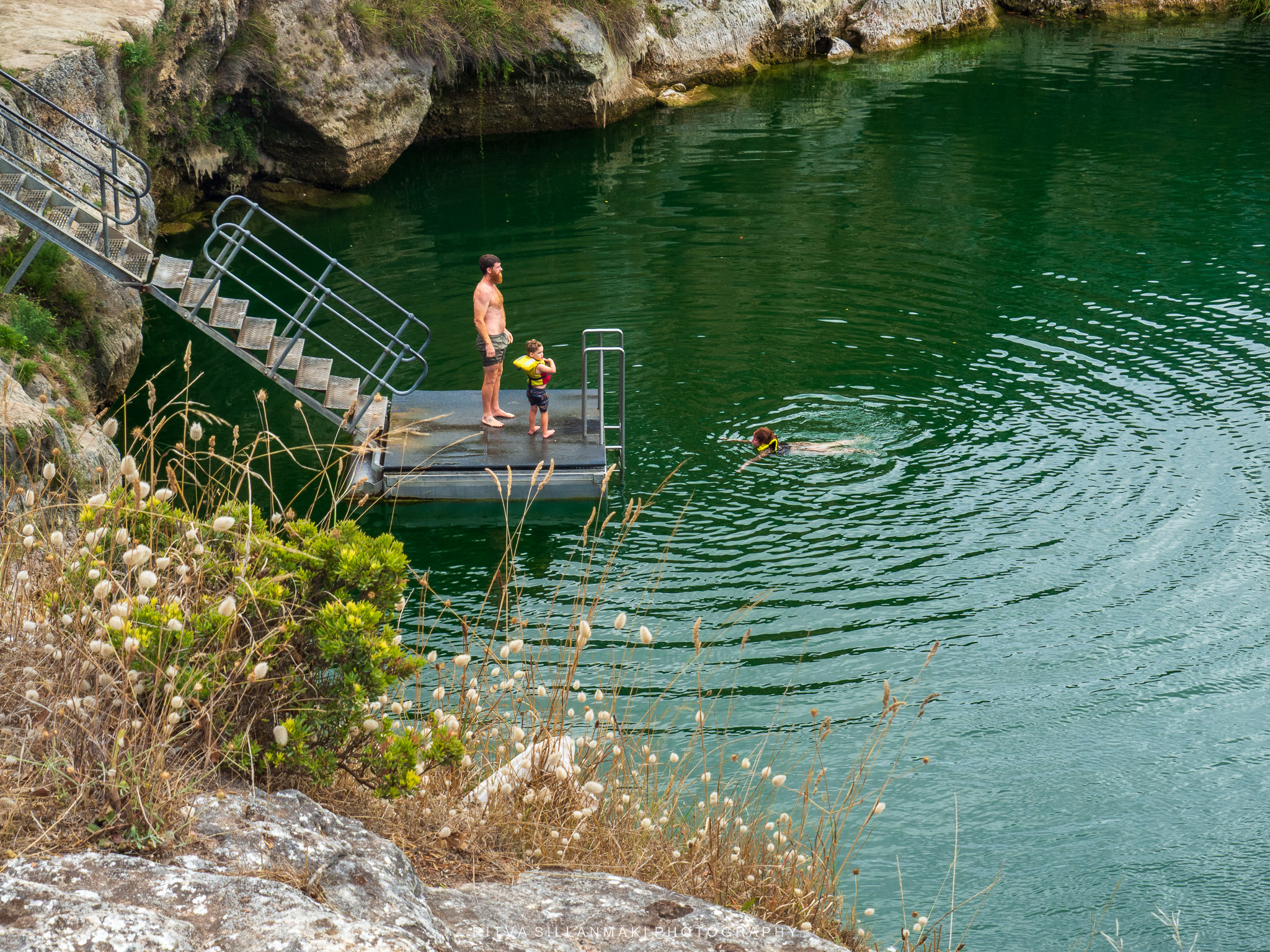
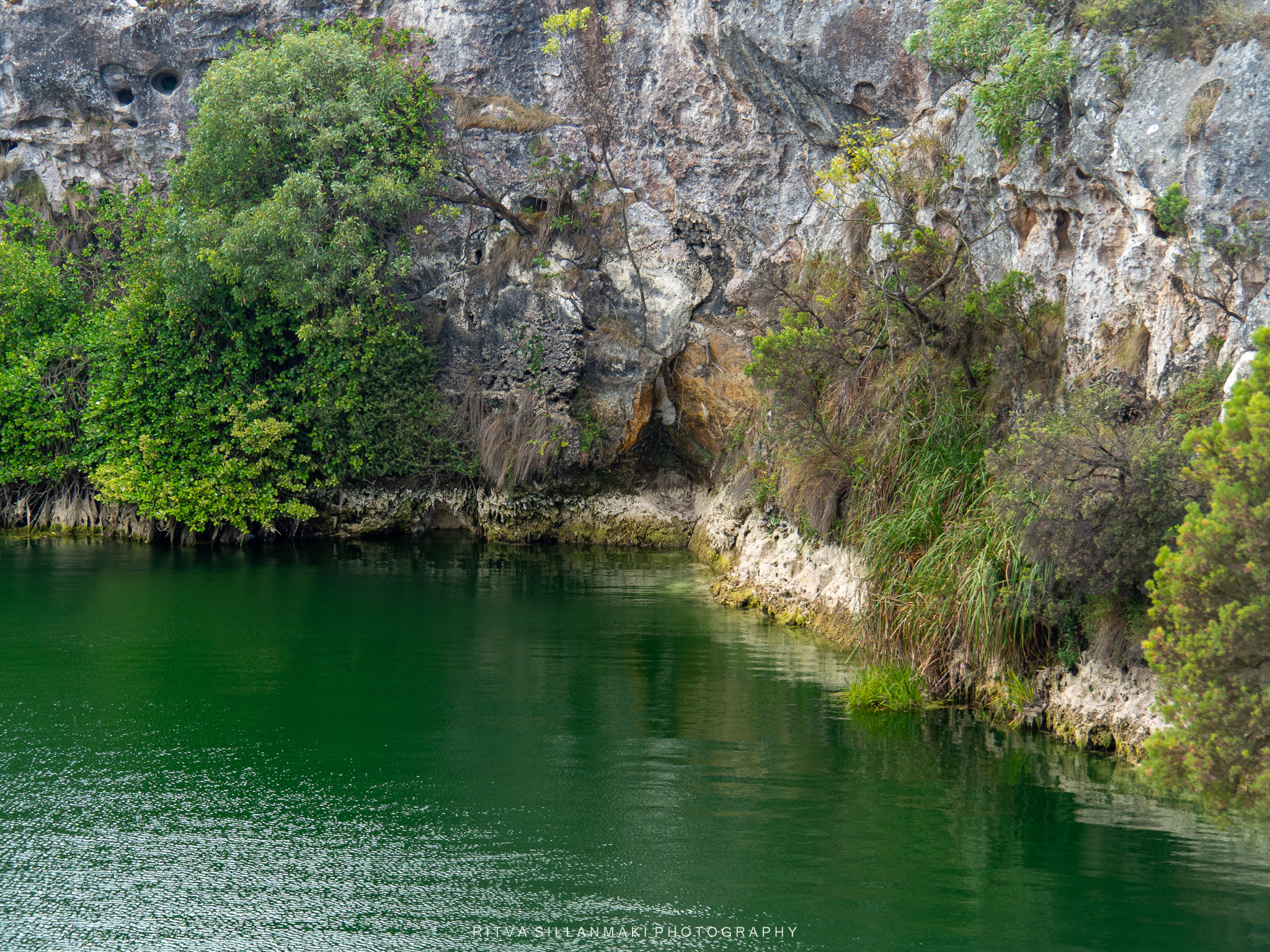
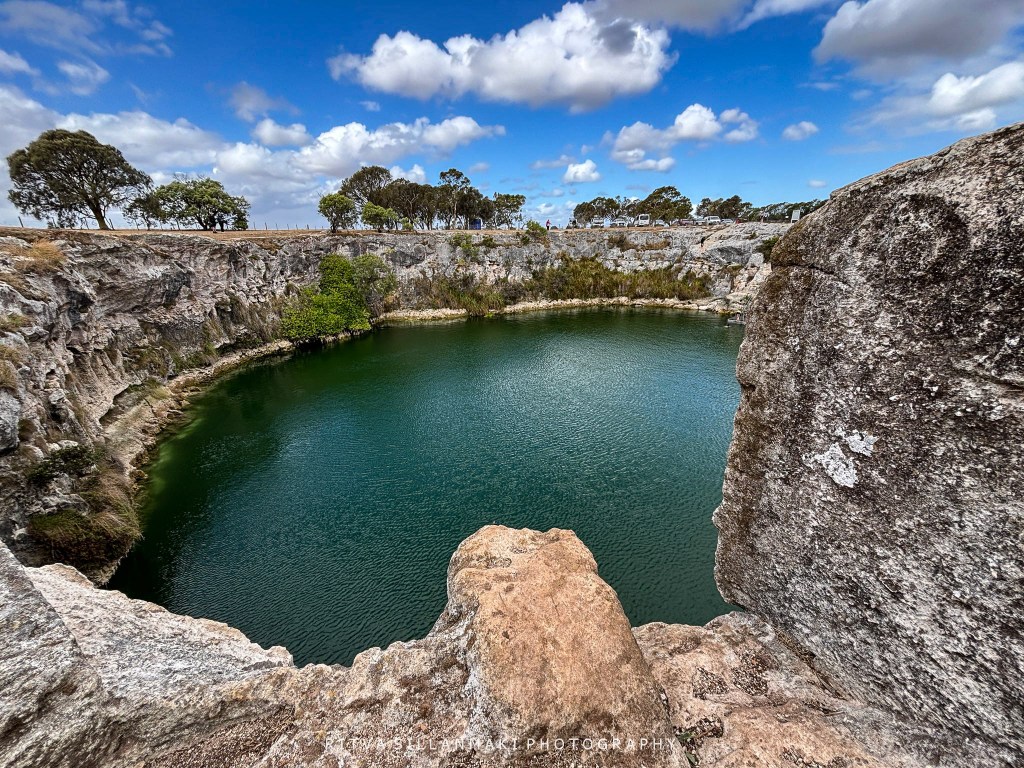
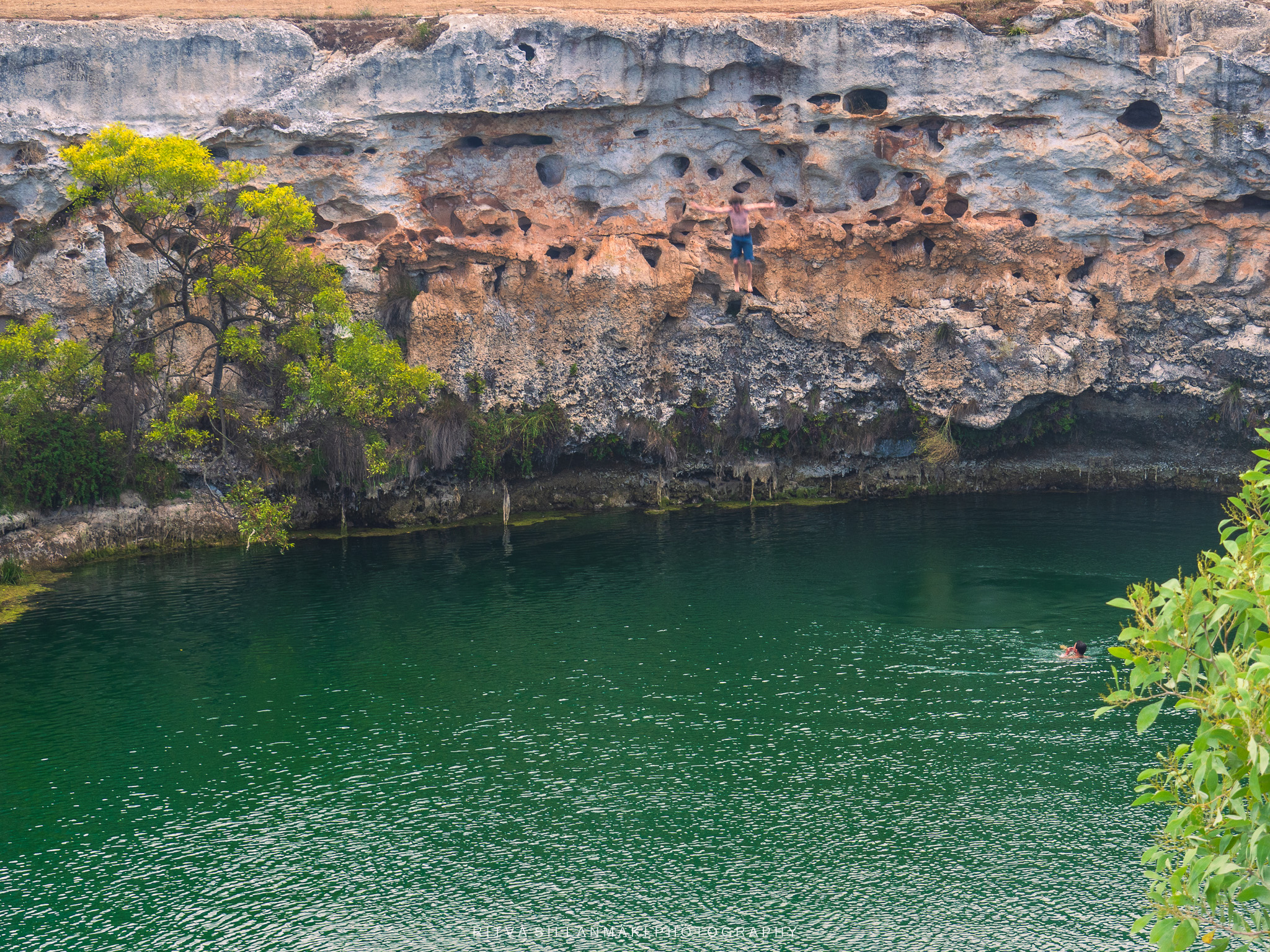
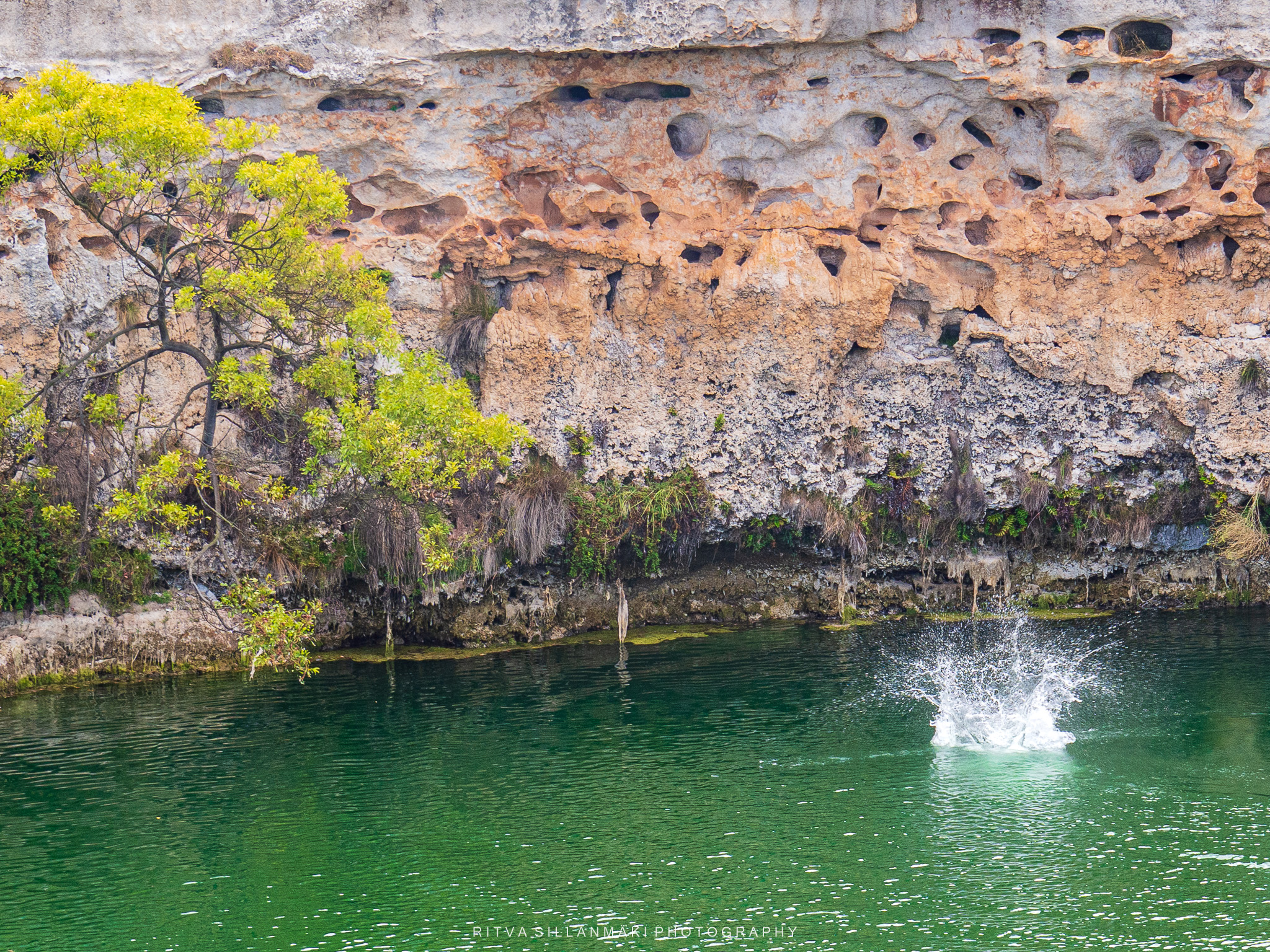
From sinkhole we drove to Little Blue Lake 15 kilometers away from Mount Gambier. To me the water looked more green than blue, but it was a fun place to visit and see the locals swim and dive from the cliffs. I was afraid even to look at the approximately 10-year-olds diving. I would never jump myself.
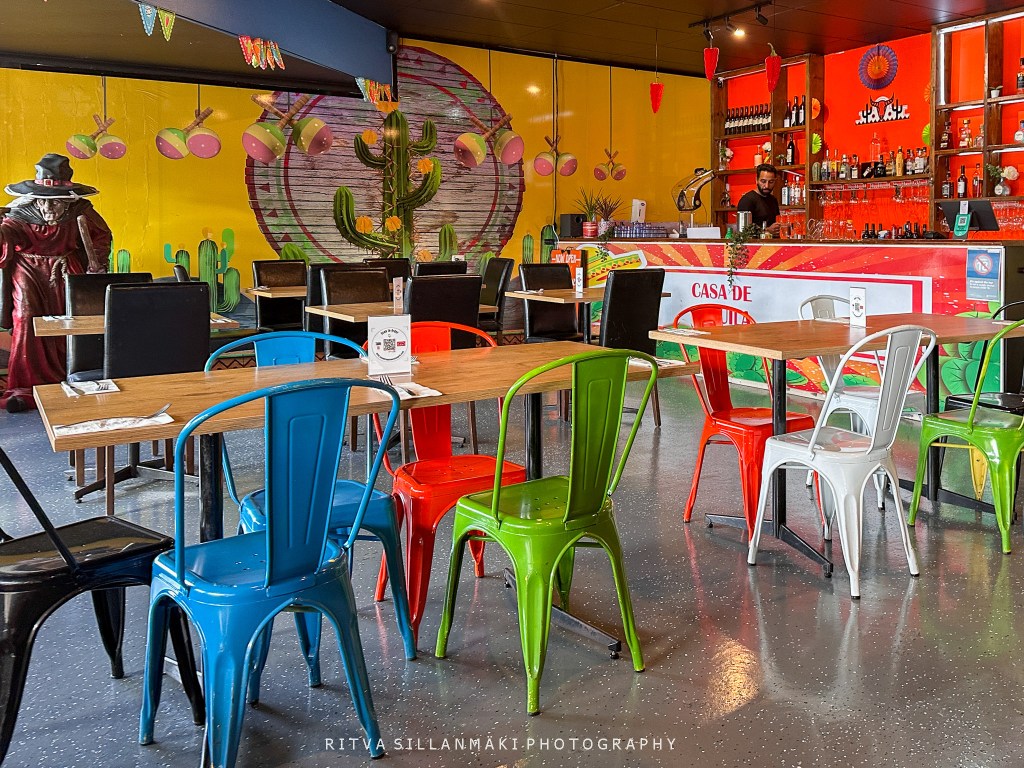
Dinner was at Casa de Tequila. Maybe they had good tequila, but the food was disappointing. Where were the spices? Staff seemed all be Asian. Maybe none of them had ever tasted real Mexican food or they hadn’t studied the recipes too carefully in the kitchen?
What surprised us around Mount Gambier, was the amount of pine forests. They seemed to go on and on. Pine wood is not indigenous to Australia, so they had all been planted at some point. Planting pine wood is understandable because building material is needed, and I guess pine doesn’t take over the indigenous trees and plants? We come from the land of forests, but we were still amazed by the size of the forests. Also, we get a fit every time we see an area with clearcutting in Finland. They are ugly. I’ve never seen clearcutting like this before. Once again, the size of it. But you have the landmass here, I guess? By the way Fleurieu Peninsula had large pine forests as well.
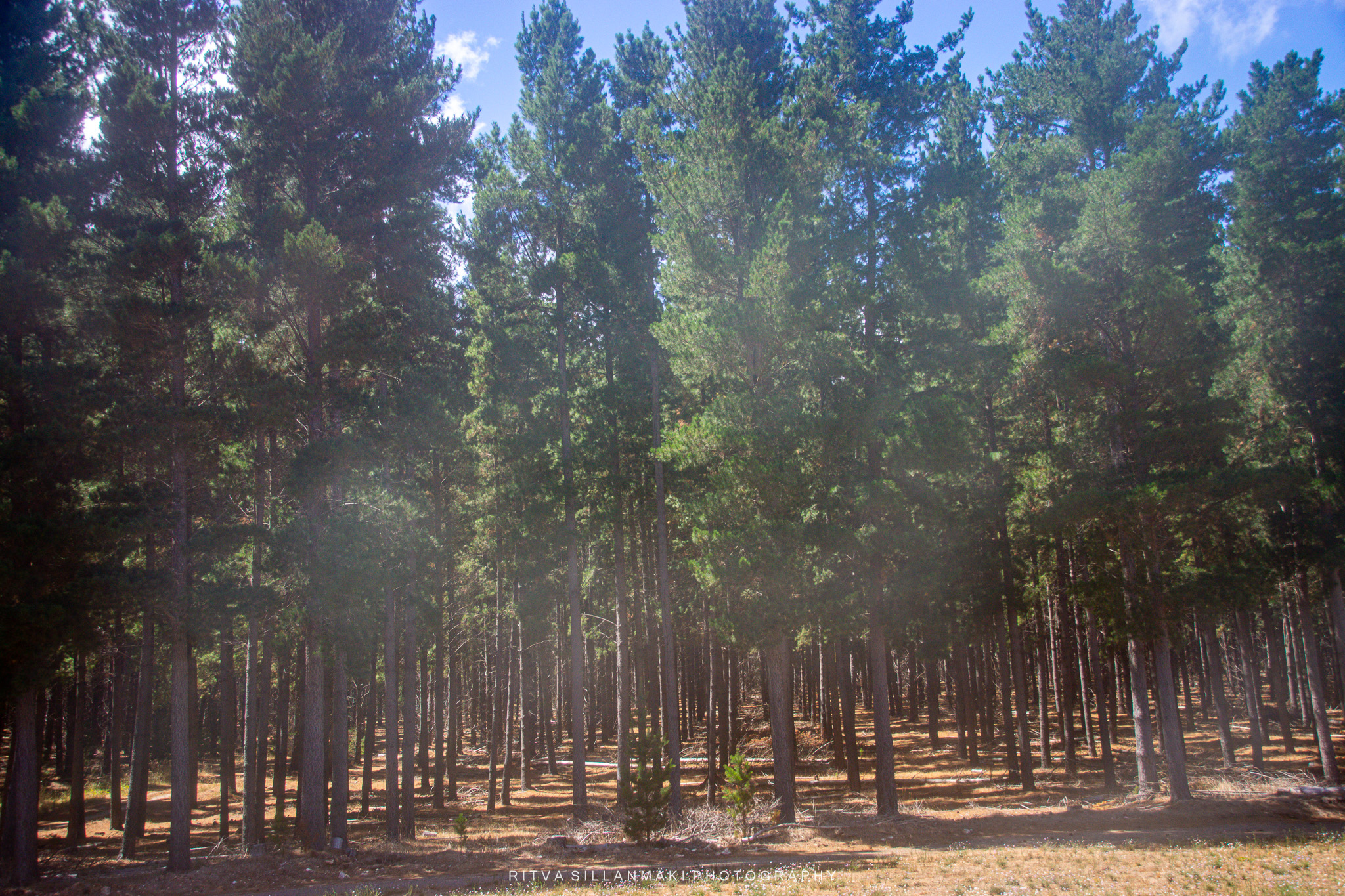
In morning we didn’t see any nice places for breakfast, so we hit the road. We didn’t see any cafes or restaurants on the way but around noon we couldn’t take it anymore and had to take a break in Port Fairy. Town was packed. We found out there was running event going on from short distances to kids to all the way to marathon. We were able to find an empty table. Food was disappointing once again. How can you ruin hamburger and fries, even if it was busy.
text credit Mara Sillanmäki
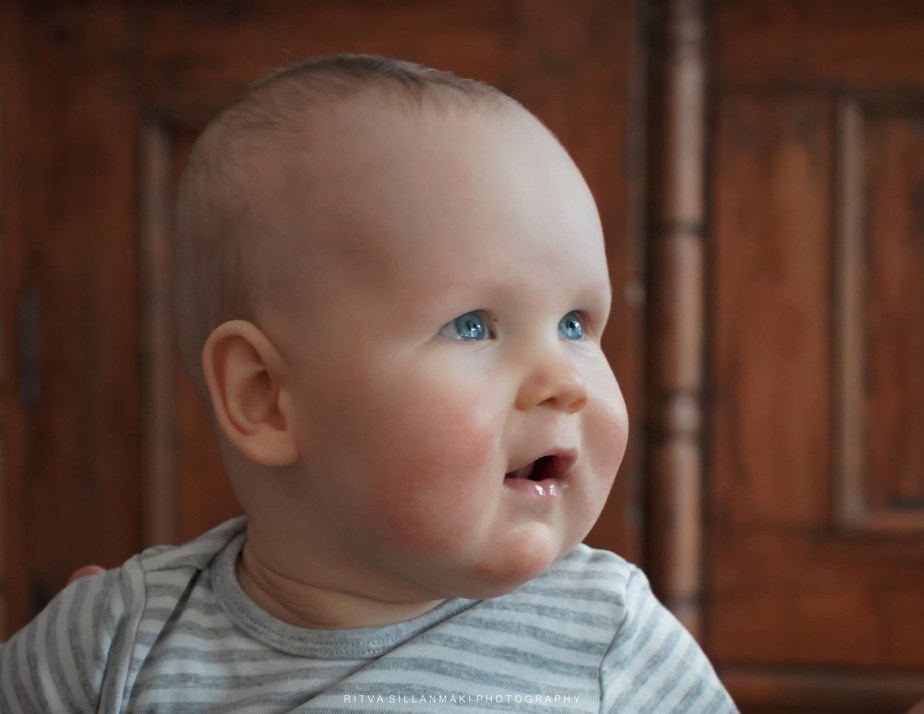
The first one is taken with my new Sony A7 Mark III, I bought it to replace my old one that I had used for the last 19 years. I have been taking lots of photos of my grandkids with it lately.
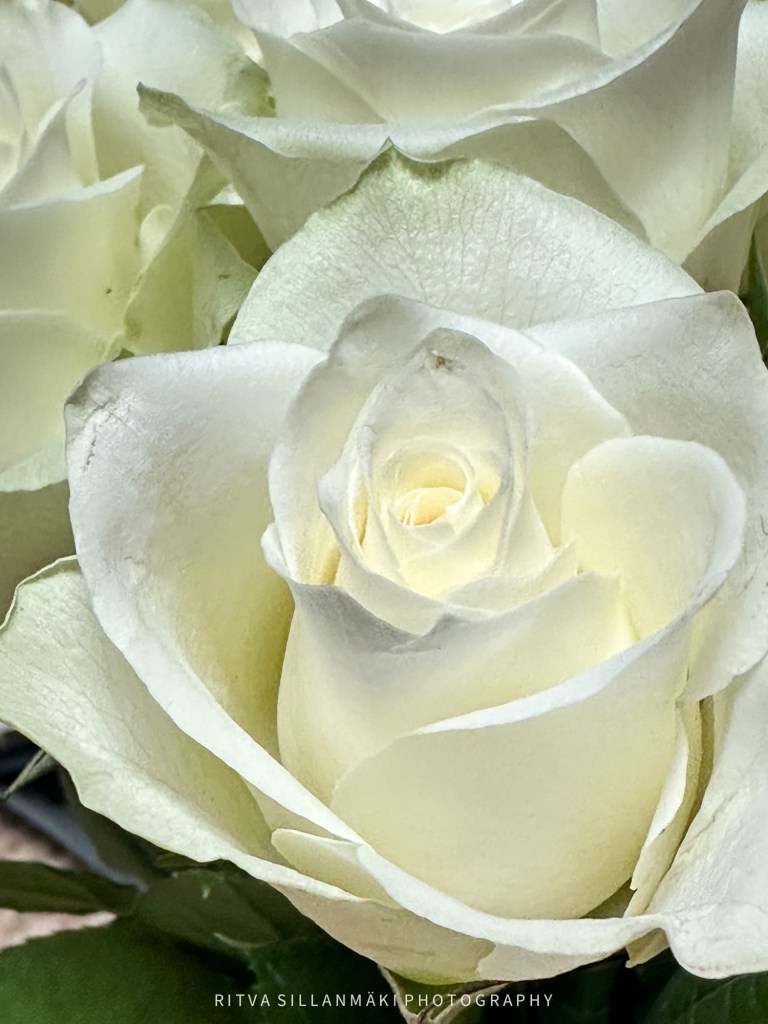
My IPhone I used to take a shot of one of the white roses I received from my friend as she came to visit.
I also took once again a photo of Tinka the cat 🙀
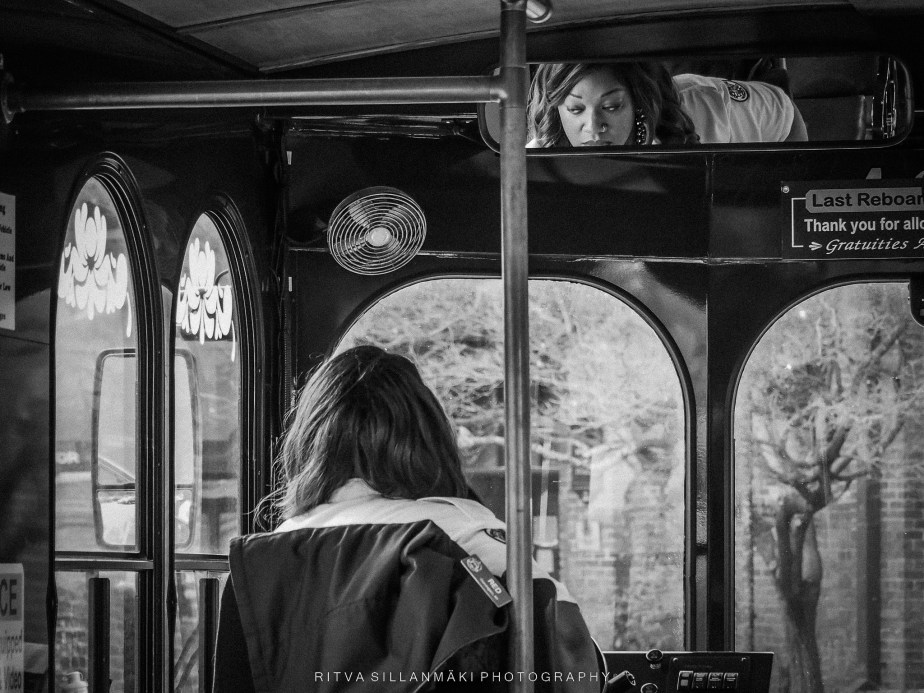
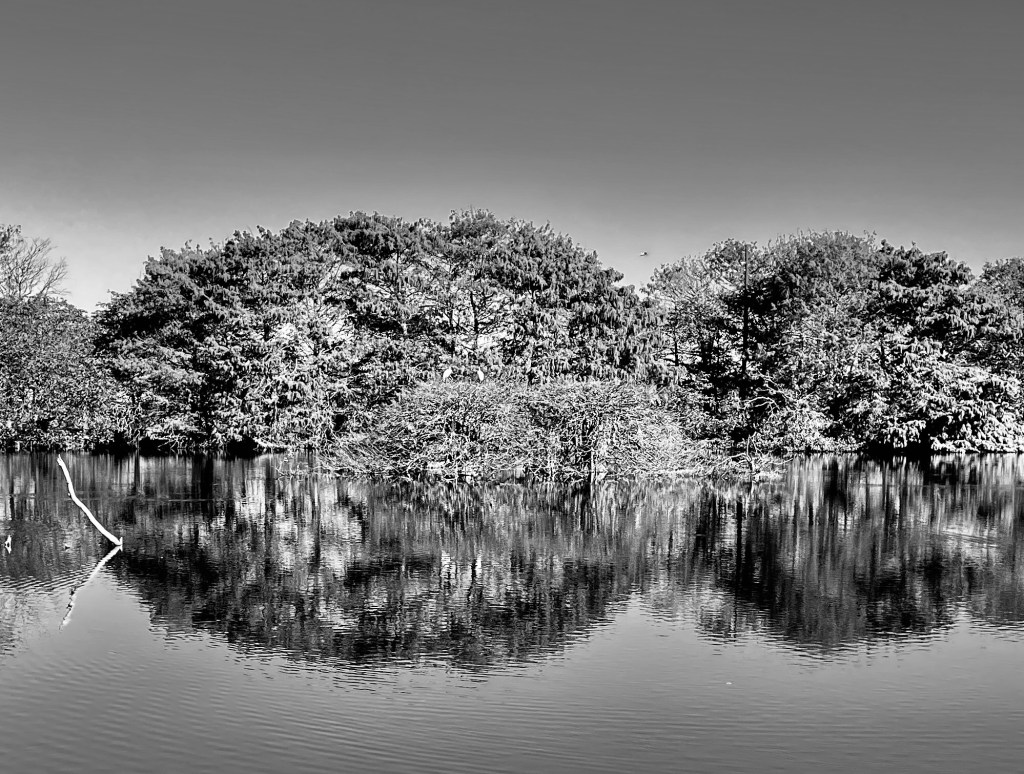
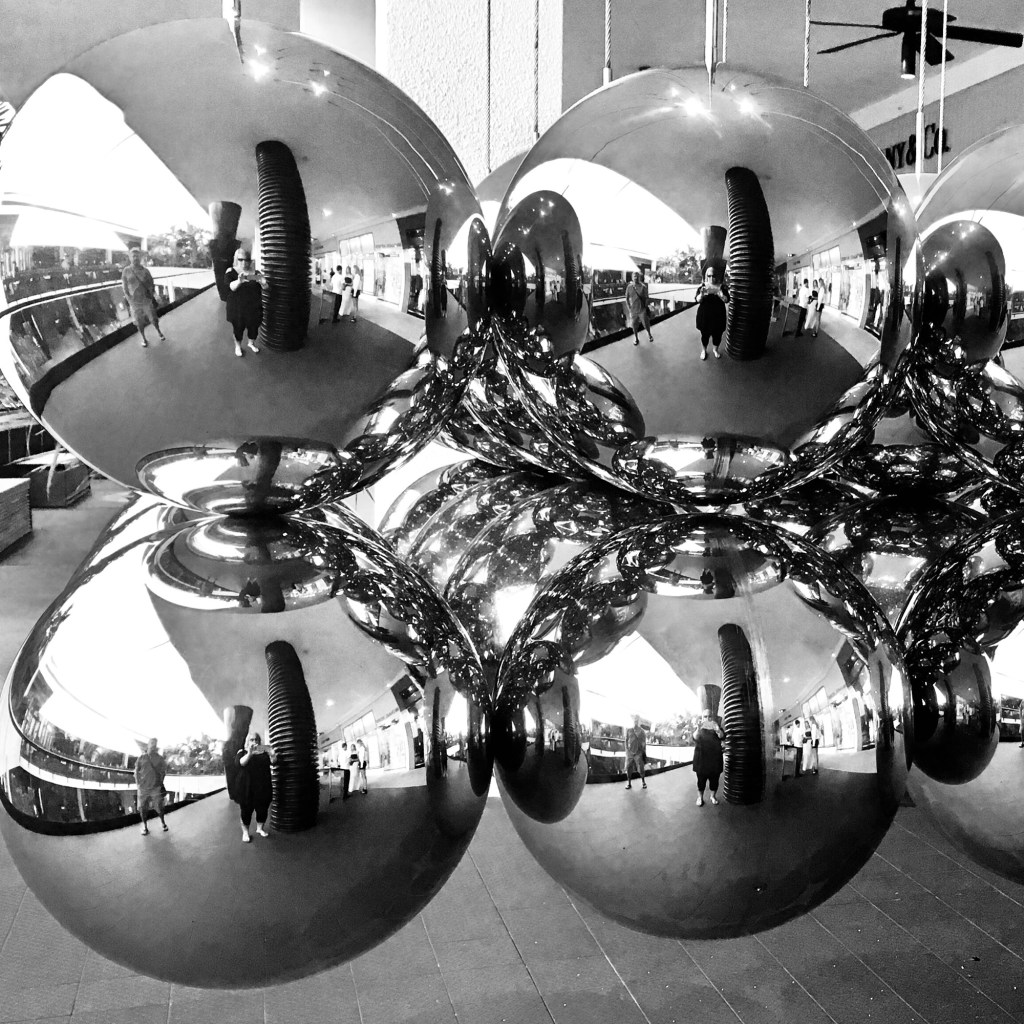
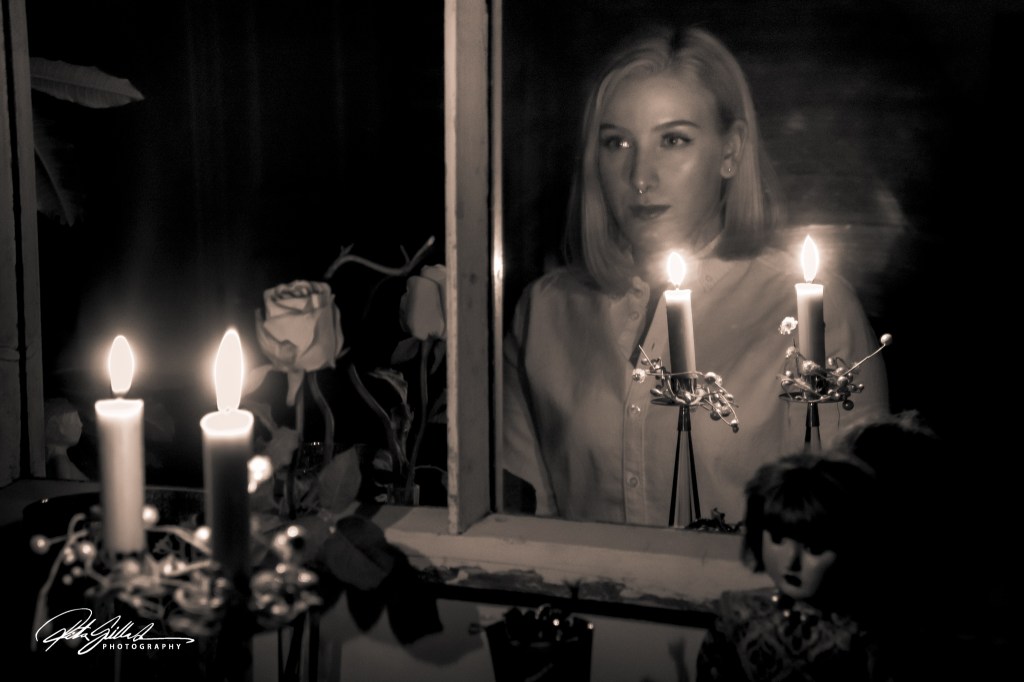
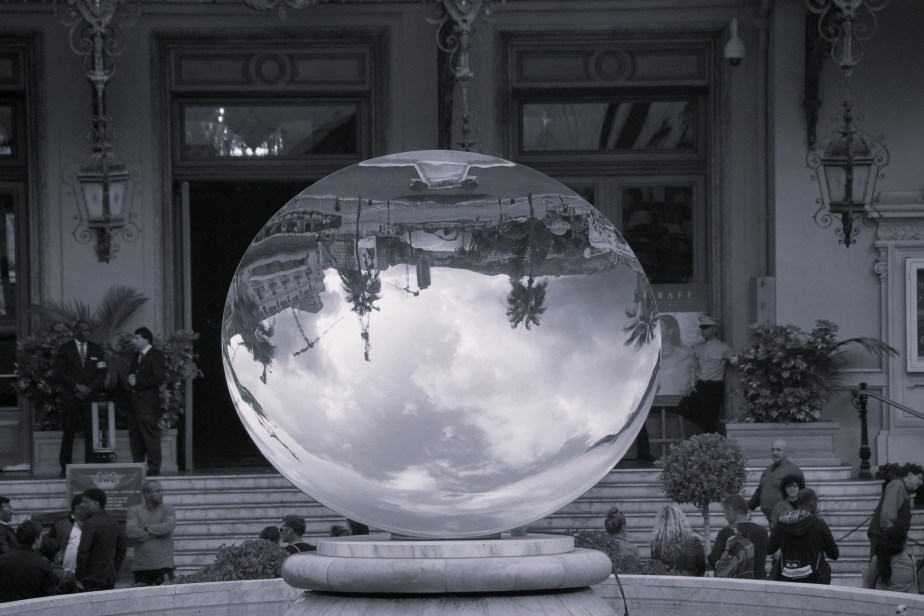
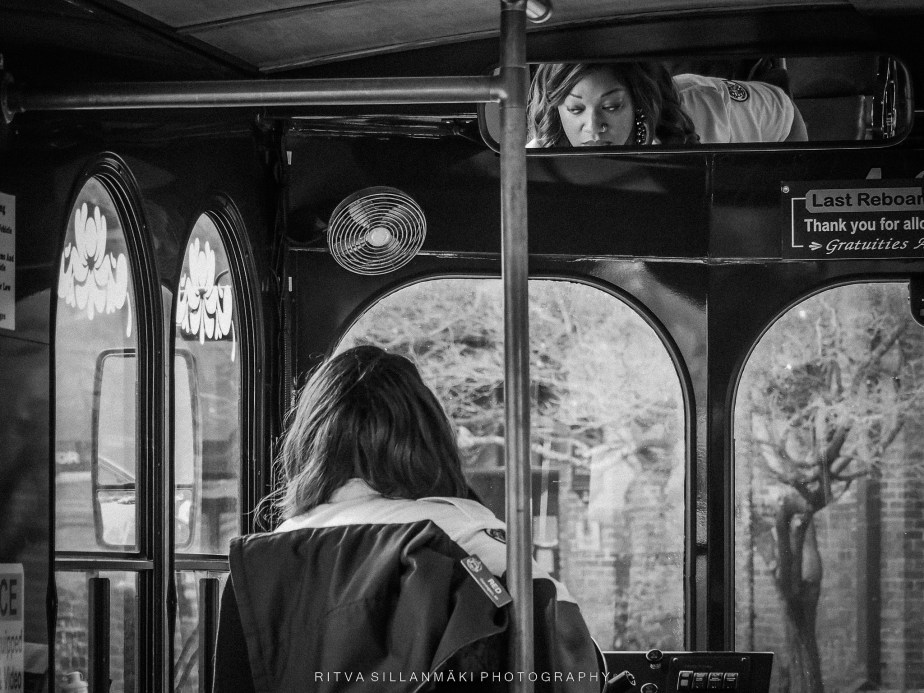
Mirror theme hosted by Margaret for Leanne’s Monochrome Madness.
“I know that mirrors give us a false sense of confidence.” I continued. “The reflection that we see everyday has nothing to do with how others see us. The glass lies.”
― Rasmenia Massoud,



 Ritva Sillanmäki Photography