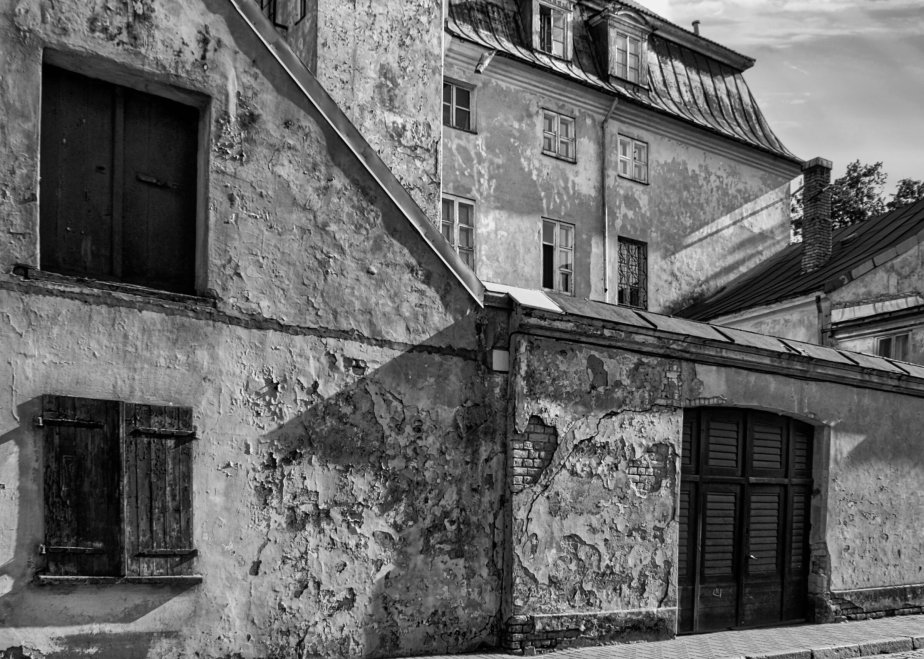
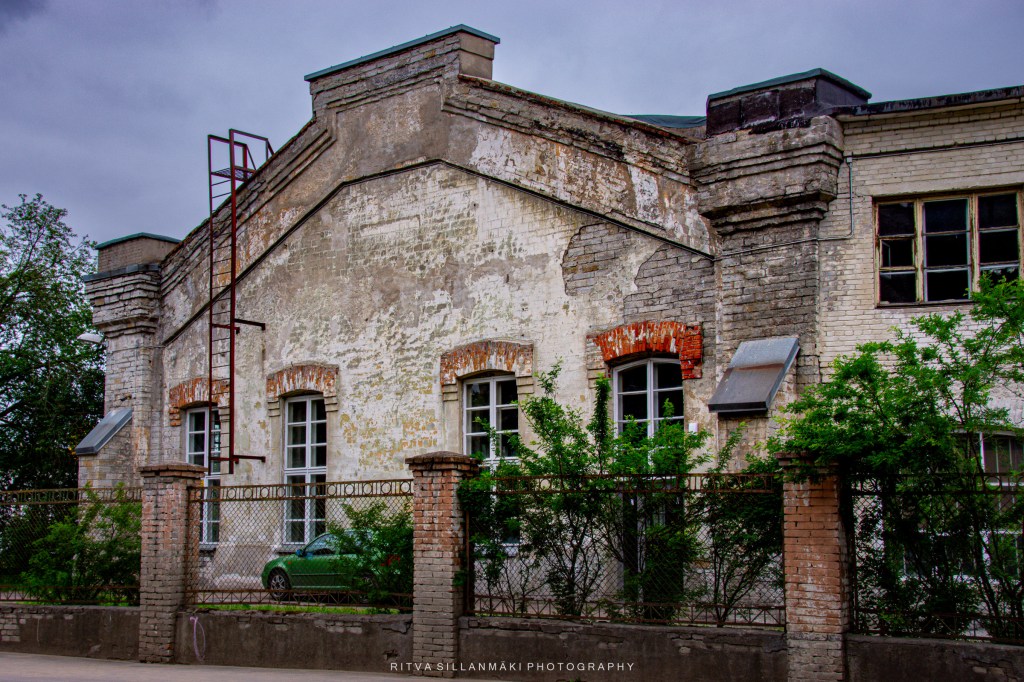
The cobblestone streets led me to an enigmatic relic—an old, weathered building that stood defiant against the passage of time. Its walls bore the scars of countless seasons, each crack and peeling paint layer a testament to memories etched into its very essence.
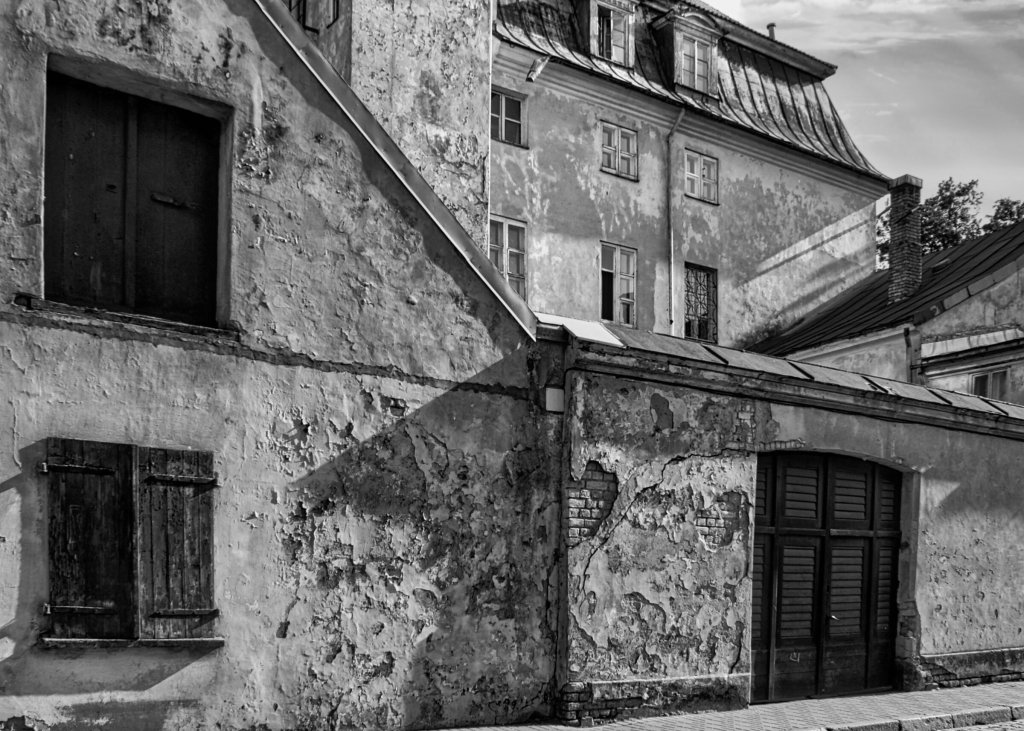
an old, weathered building in Riga, Latvia
The windows, some boarded up like secrets held too close, others revealing glimpses of the past, beckoned me closer. The sun, cast its golden brushstrokes upon the facade. Shadows danced, revealing hidden nooks and crannies. I imagined the building’s heyday…
Lately on Thursdays I have been posting photos of doors, since I started doing this I have discovered that I loads of them in my archives. Dan’s Thursday doors has given me a great reason to post them.
What is the fascination to take photos of doors, and I know I am not the only one. So I gave myself a t moment to think about it.
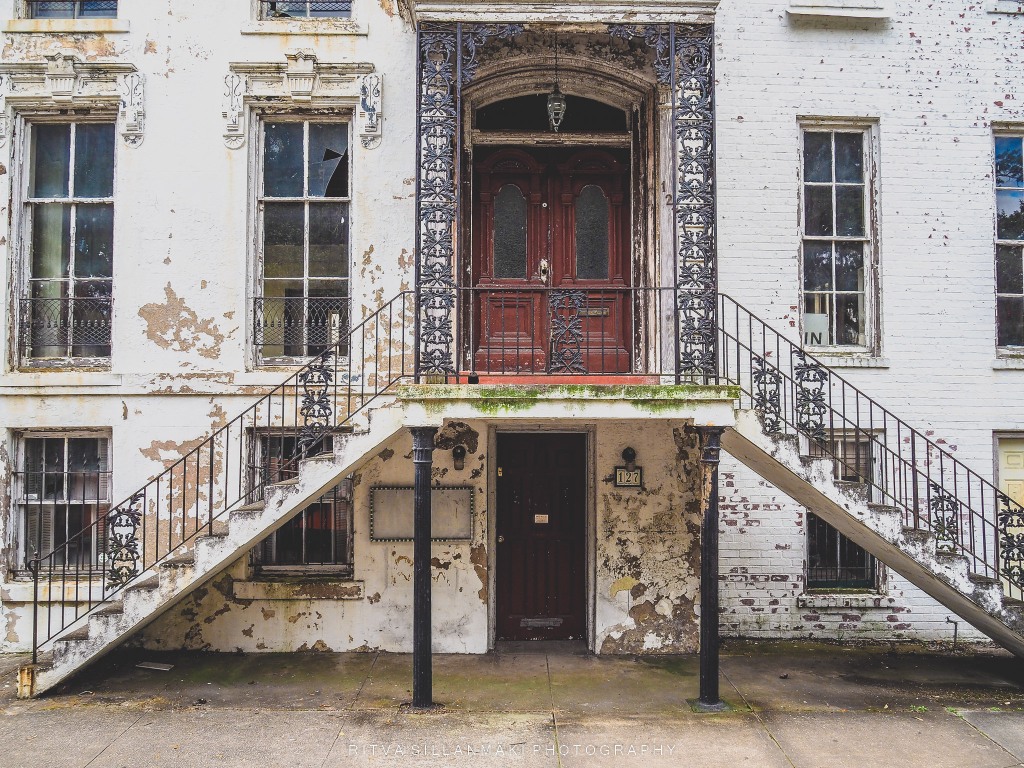
Door from Savannah and beautiful wrought iron stairs
Taking photos of doors has become a delightful pastime for many , myself included, and it’s fascinating how something as seemingly mundane as a door can capture our attention. I took so many door photos when we visited Savannah.
Is it the architectural beauty, as doors come in an array of styles, from grand wooden entrances to charming little garden gates, each door tells a unique story. Or is it capturing these details allows us to appreciate the beauty in everyday structures.
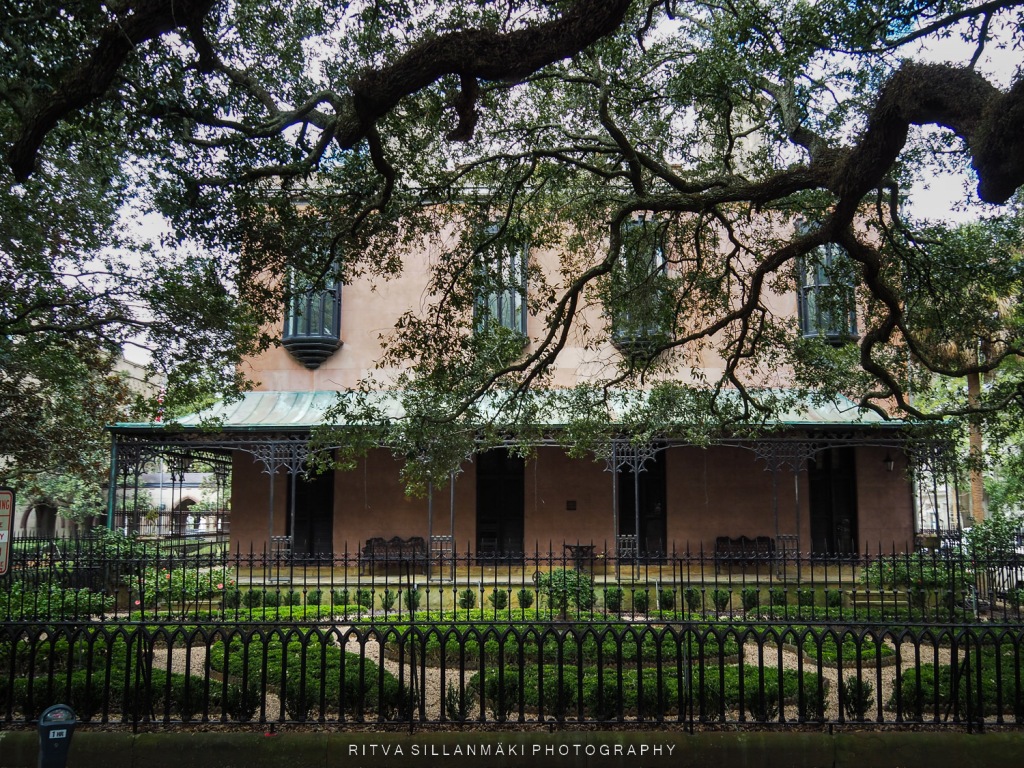
Door behind the branches in Savannah
Is it because doors symbolize transitions, opportunities, and boundaries. Do they evoke feelings of curiosity, wonder, and anticipation. We wonder what lies beyond that closed door, and our imaginations take flight.
I have noticed as I focus on framing the shot, adjusting angles, and noticing small details, I become fully present in the moment. It’s a form of meditation—a way to escape the noise of daily life and immerse ourselves in the visual world. The act of observing and capturing doors and it’s surroundings becomes a calming moment.
A house with a row of door behind the wrought iron work fence
The surroundings around the doors change with the seasons. Flowers bloom around them in spring, leaves fall in autumn, and snow blankets their thresholds in winter. Always something new to discover. Additionally, the play of light and shadow on doors varies throughout the day. A door that looks ordinary in the morning might appear enchanting during golden hour.
So, the next time you encounter a captivating door, take a moment to appreciate its uniqueness. Capture it with your camera, and perhaps you’ll discover a hidden world waiting to be explored—one door at a time!
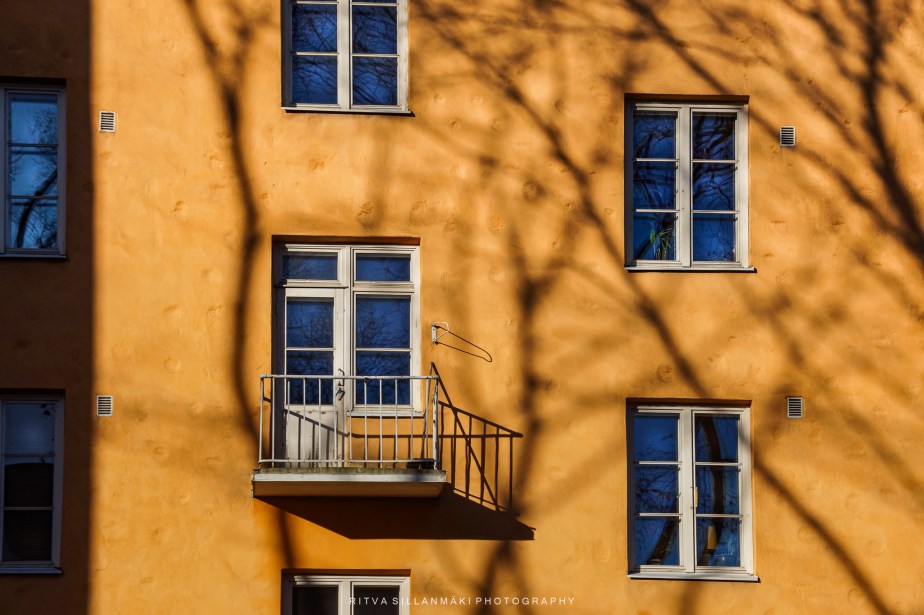
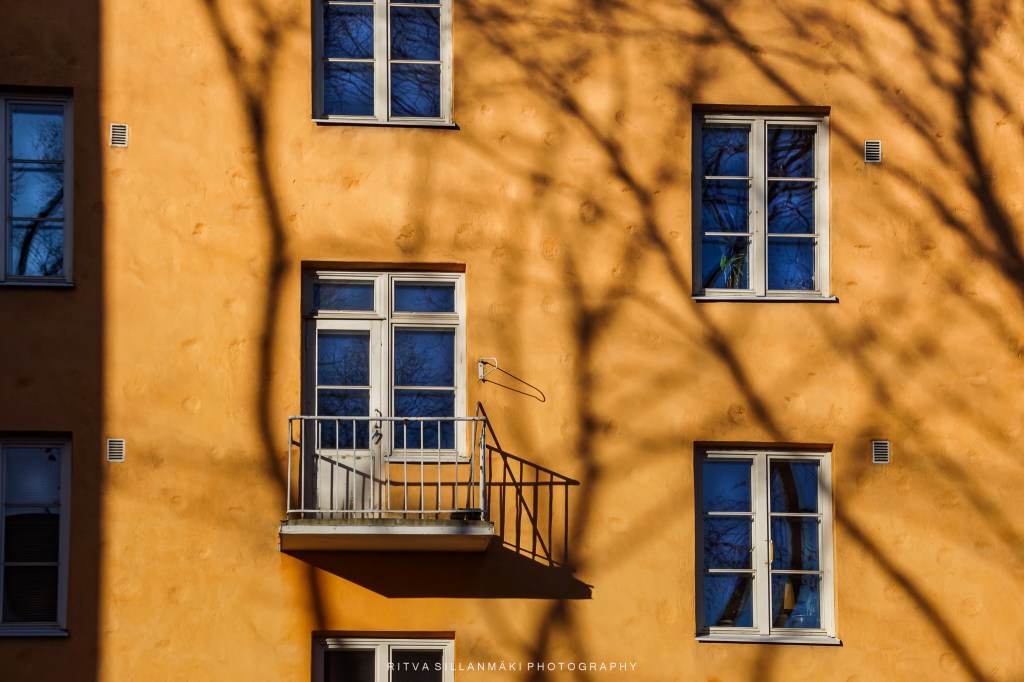
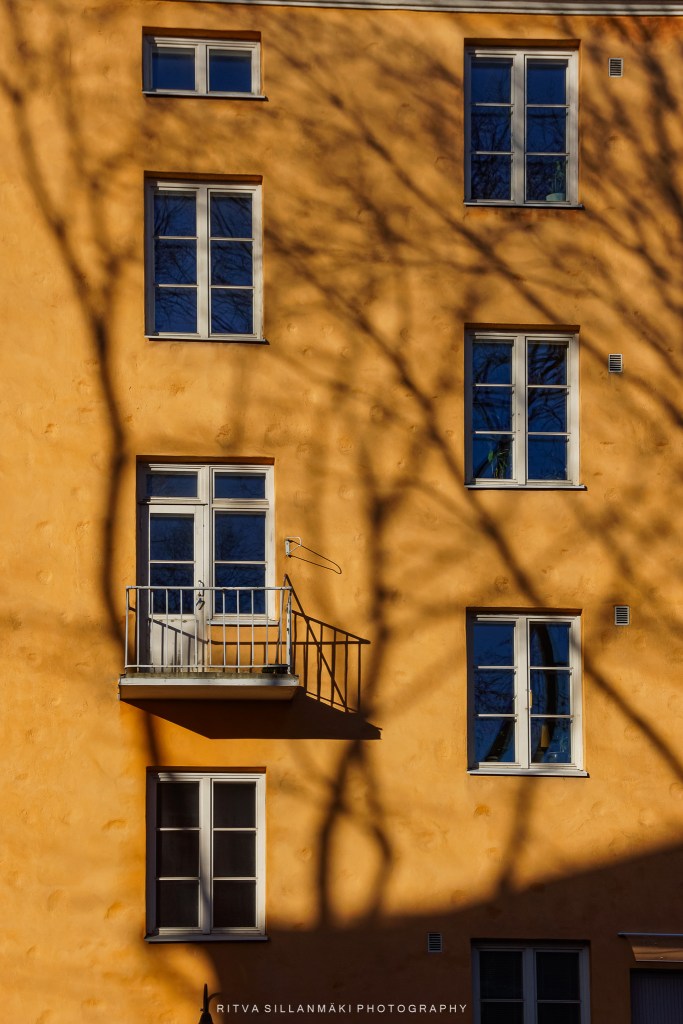
A building with a warm, yellow facade, features rectangular windows, each framed in white. On the left side, a small balcony french balcony. Shadows of bare tree branches are cast upon the building’s facade, creating an artistic pattern. The blue sky reflected in the windows show the fair weather of this day.
The warm yellow hue of the building’s facade, the crisp white window frames, and the intricate patterns created by the tree shadows make this shot interesting.
An old, weathered building caught my eye, its facade worn and crumbling. The central focus for me was the wooden door, partially broken and barricaded, as if guarding secrets from the past. The door is framed by a stone archway, its edges chipped and revealing the bricks beneath made me stop to look more closely as it gave the entrance so much depth.
On either side of the door, partially closed white shutters cover windows, hinting at a time when life once thrived within. Nature has begun to reclaim the space: grass grows defiantly, and tree branches reach out, casting shadows. I felt the overall mood was somber yet serene, evoking feelings of nostalgia and the inexorable passage of time.
The image below suggests it’s the same building by the first glance, or very similar one, by the looks of it also looks like it’s been abandoned. I have no recollection if this is the case. In this shot the main focus is an old, curved wooden door it is set within a worn-out stone archway, where the stones have eroded to reveal the bricks underneath, but not so obviously as in the previous entrance.
There are several white-framed windows along the walls, each with a small ledge below. One of the windows on the upper left side holds potted plants on its ledge, bringing some life to the otherwise deserted scene. Some of the windows suggest that this is not totally abandoned, just a wild guess on my part. I took these photo several year back in Estonia.
This buildings evokes a sense of nostalgia, mystery, and the passage of time. The building stands as a silent witness to stories untold, waiting for someone to unravel its secrets. The old, weathered building with visible signs of wear and tear. The architecture, though aged, has a distinct character that draws the eye.
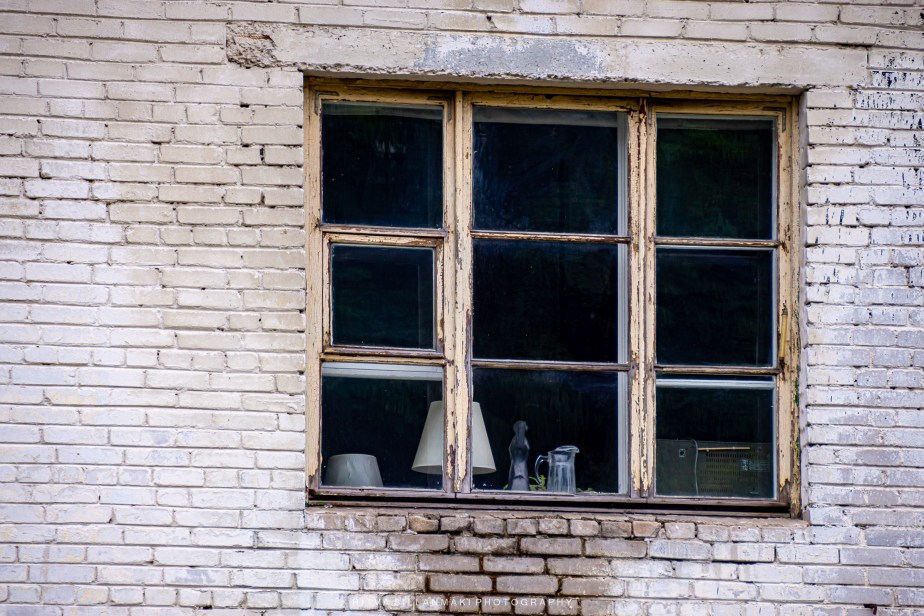
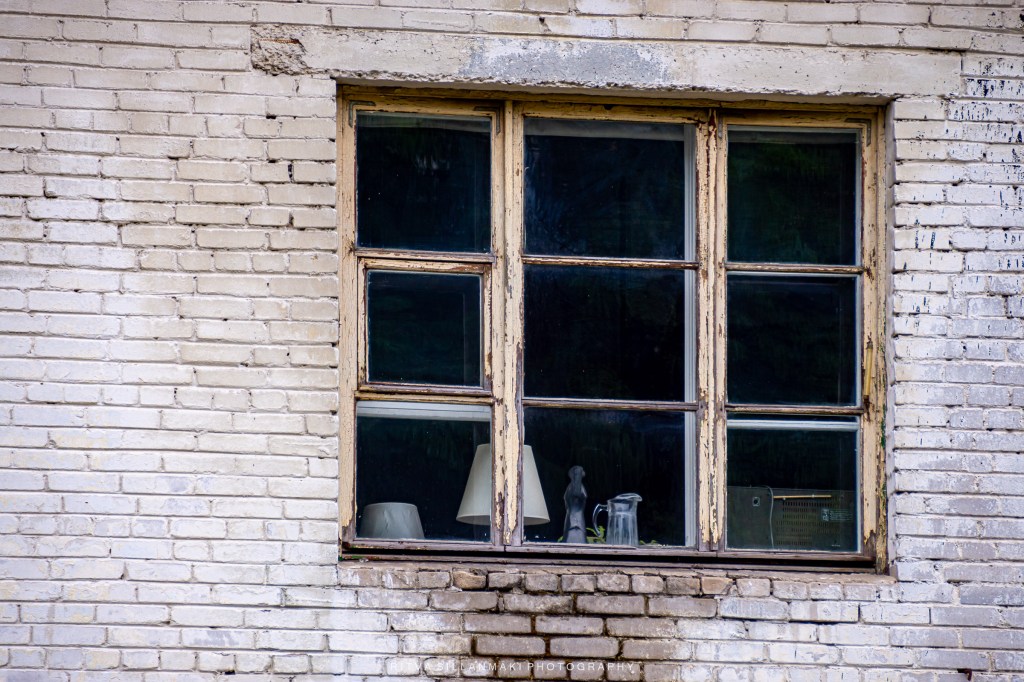
Its walls, once proud and white, now bear the scars of time—cracked bricks, peeling paint, and a sense of melancholy. The window, a relic of better days, gazes out onto the road.
A bittersweet nostalgia hangs in the air—the ache of what was and the whisper of what might have been. The window yearns for a pair of eyes to look through it once more, to see beyond decay and find beauty in fragments. The overcast sky casts a soft light, enhancing the eerie and abandoned feel of the scene.
Ludwig’s Monday Window I found these from my archive – do not know the state of the building now as this was taken several years ago.
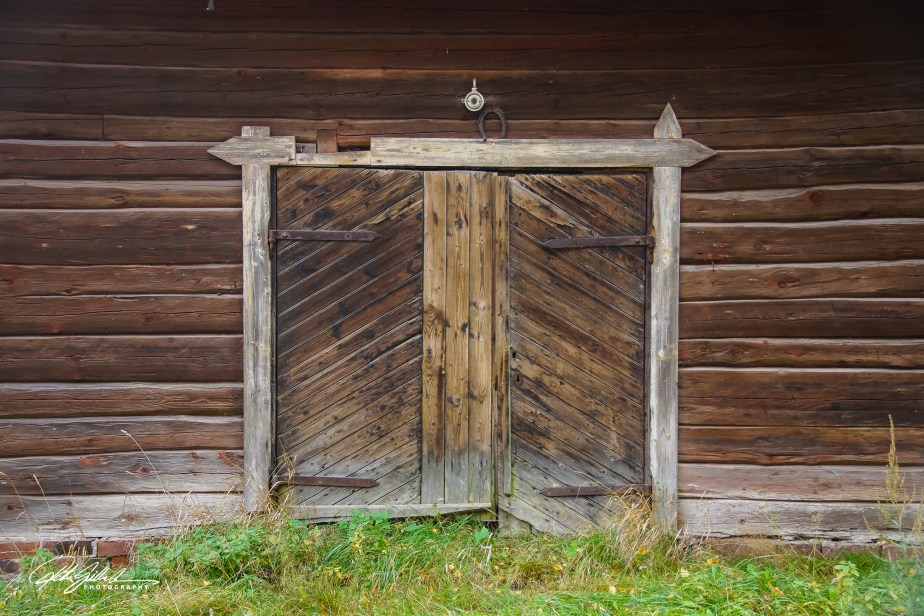
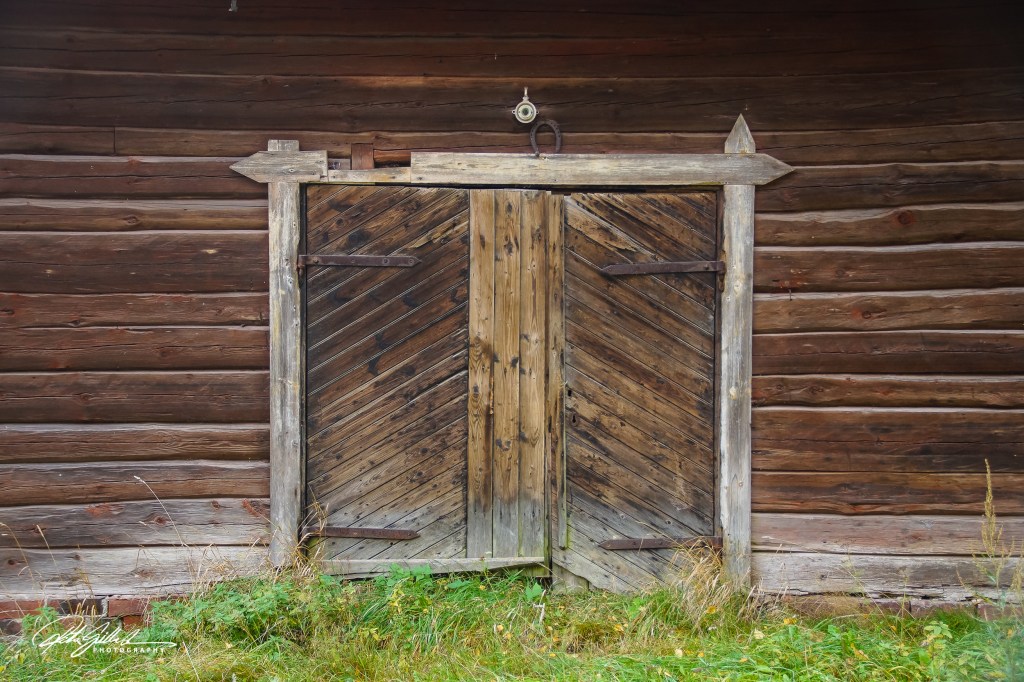
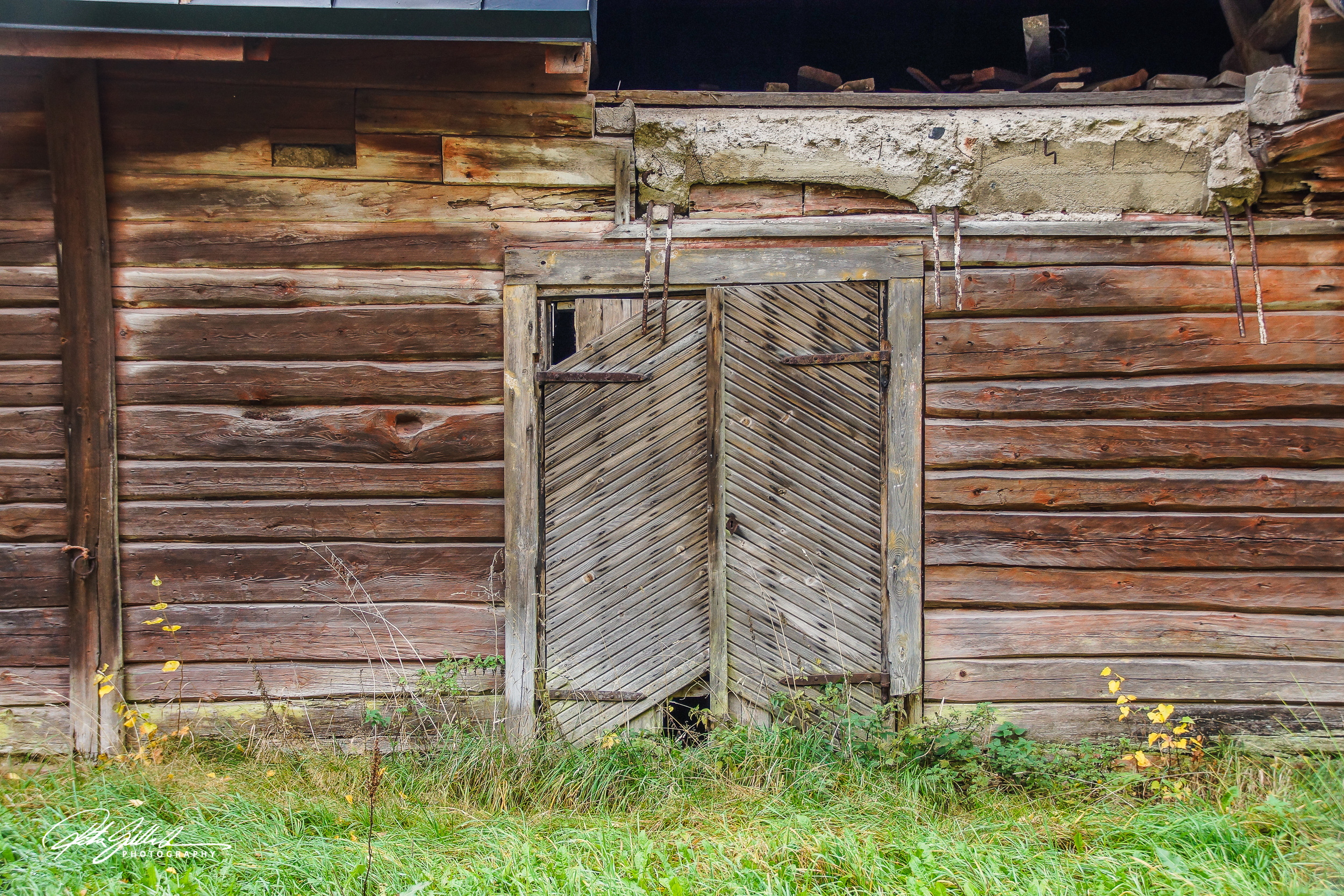
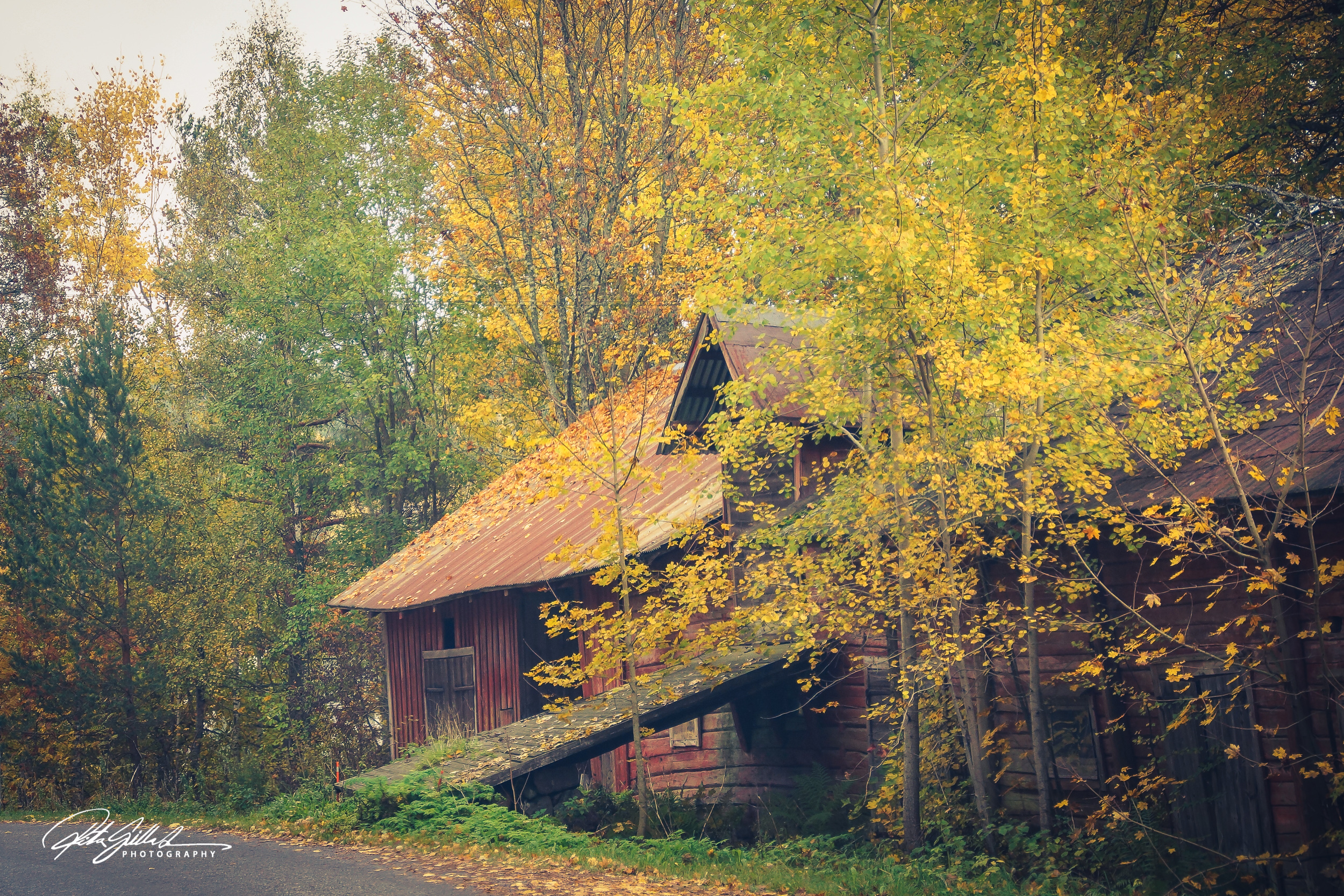
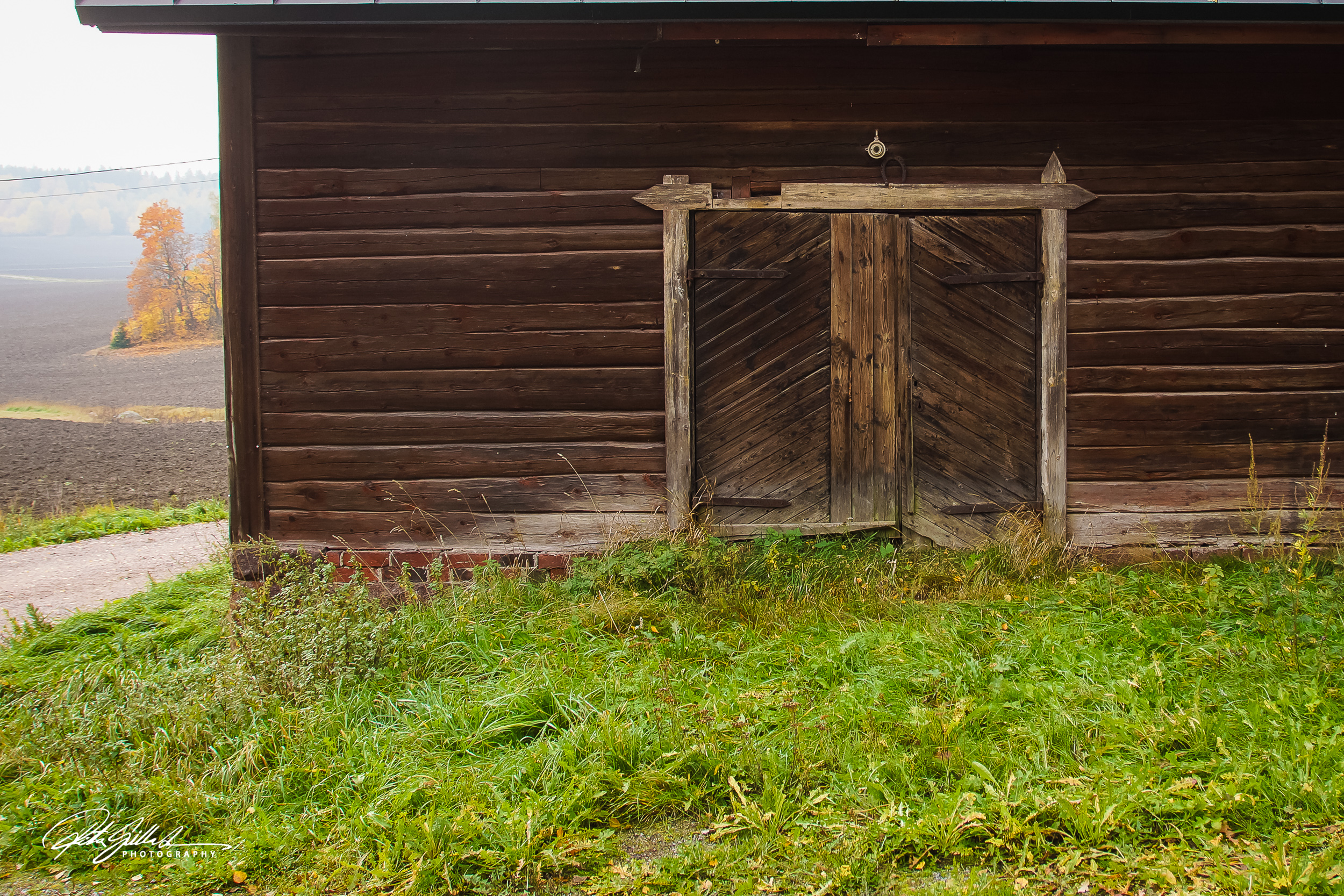
As I drove through the rural area of Kirkkonummi, my eyes were drawn to an old barn building standing by the roadside, quietly whispering for attention through its weathered exterior. The barn, which has clearly weathered the passage of time, seemed to exude a quiet charm that piqued my curiosity, and I couldn’t resist the urge to pull over and capture its essence.I spent some time capturing the details of the barn doors. Surrounded by the enchanting hues of autumn foliage, the scene evoking a sense of nostalgia and peacefulness.
As I was looking for doors, I didn’t go outside, ’cause the roads are so icy at the moment due to the weather we’ve been having lately. Today, for the first time in days, I see sunshine and blue sky. It has been gray, wet, or misty. Yesterday’s storm in Norway brought us winds and rain in the morning,but it also cleared the skies and boy, does it feel good. I feel somewhat uplifted, what a mood changer the sun is. Have a great Thursday. This post is linked to Dans Thursday Doors
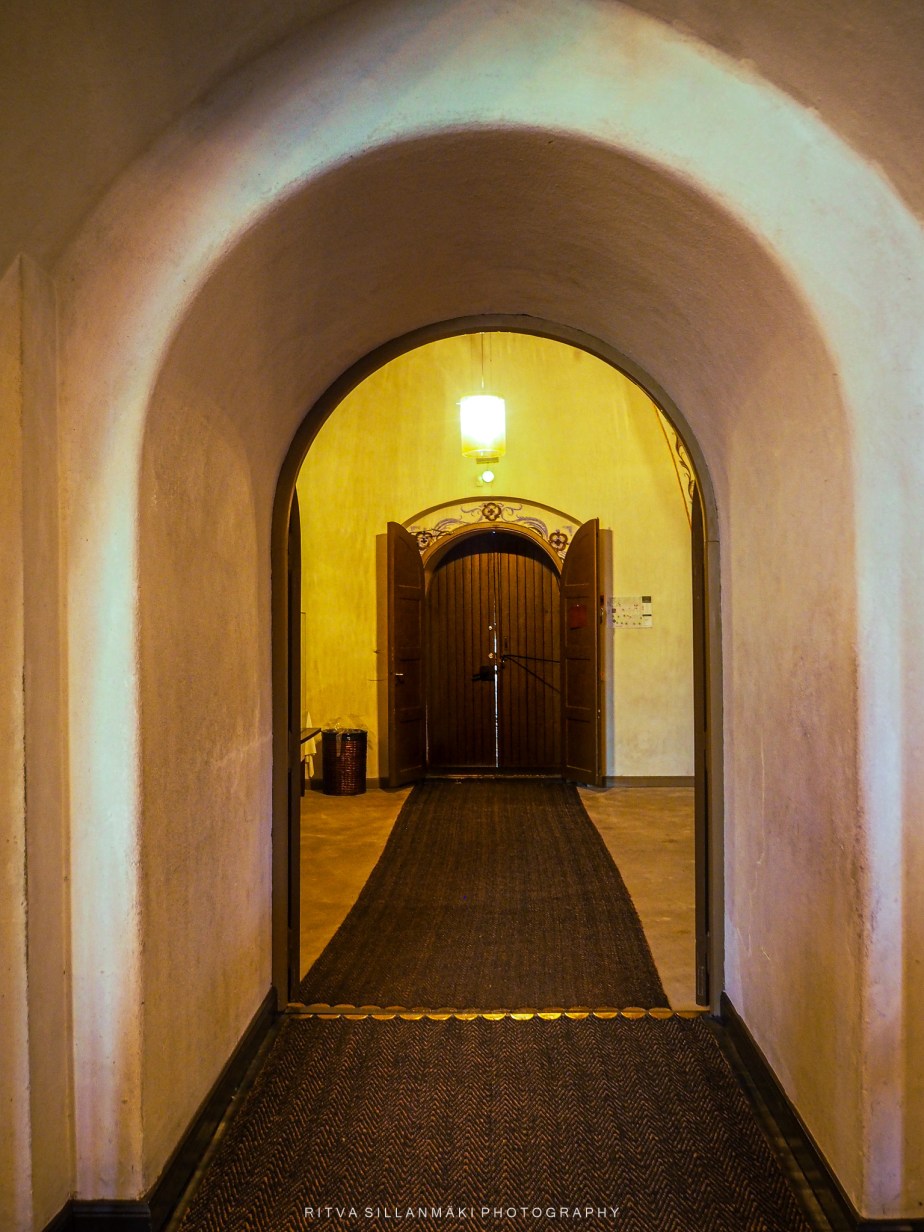
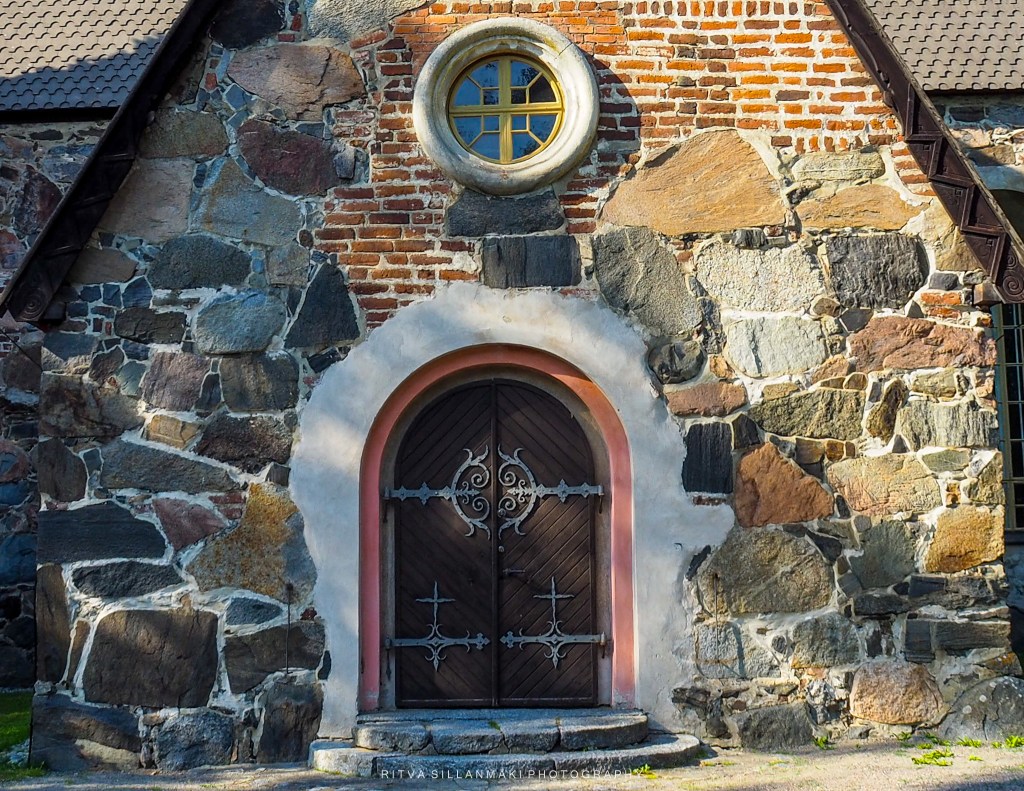
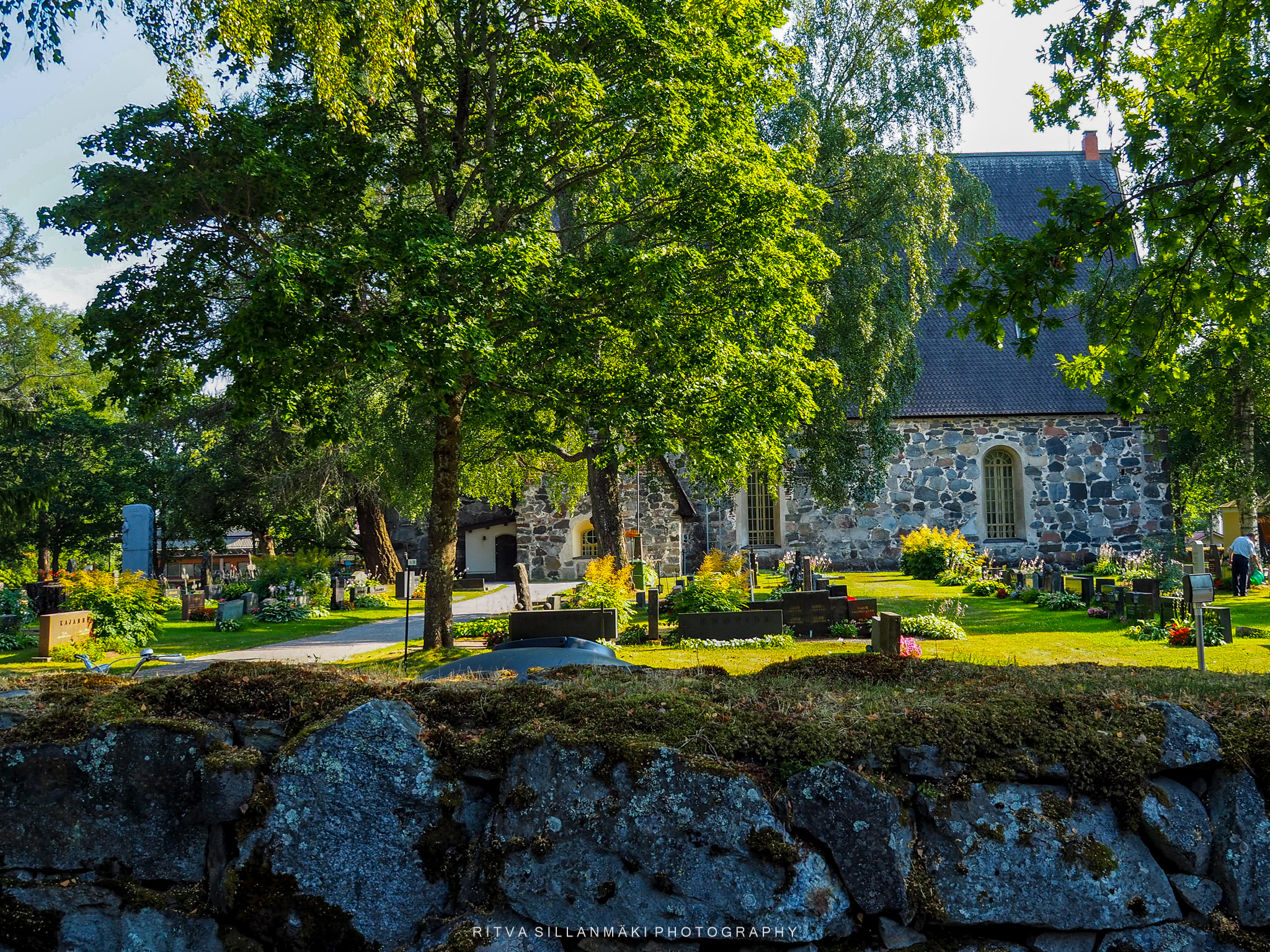
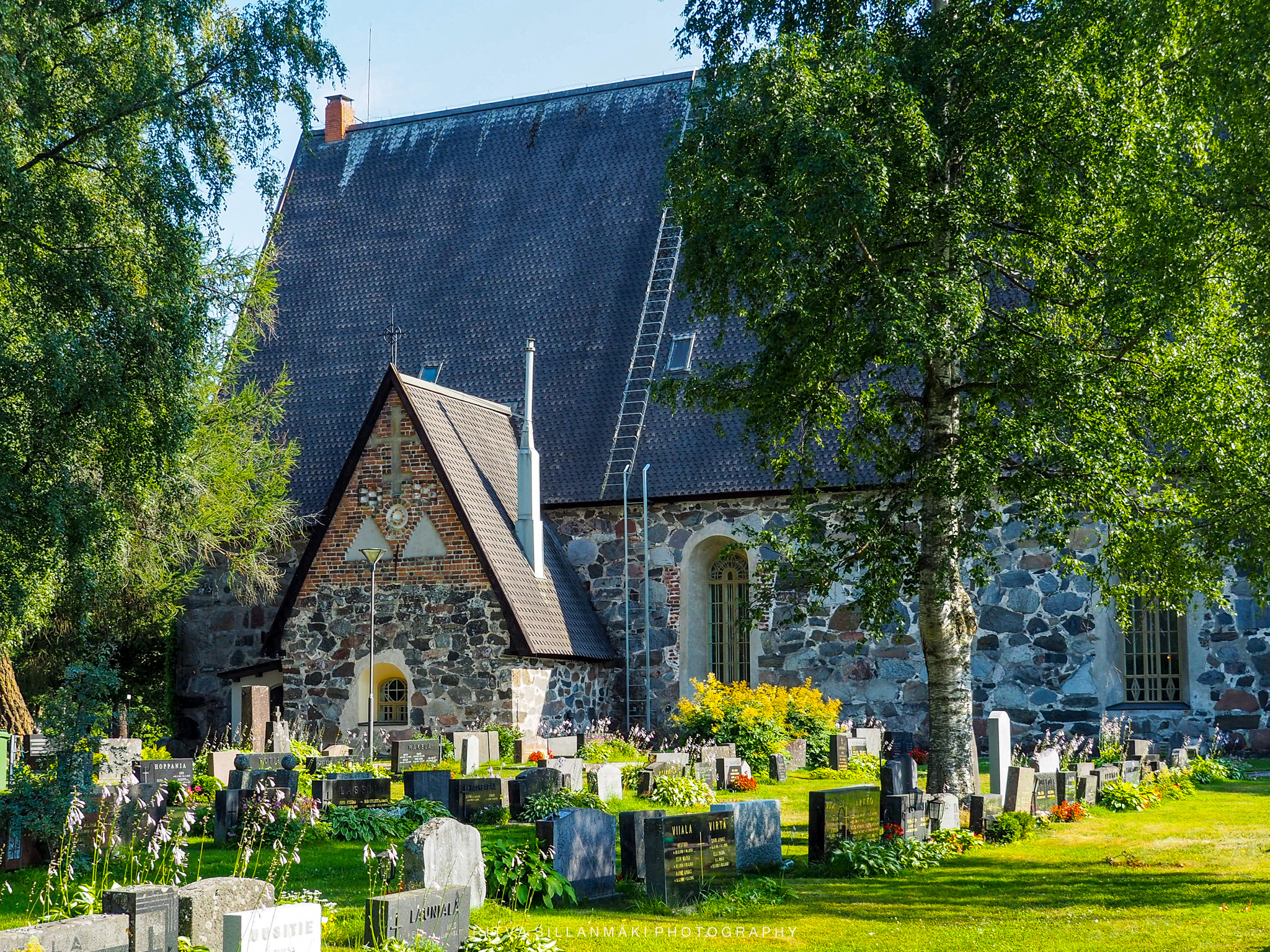
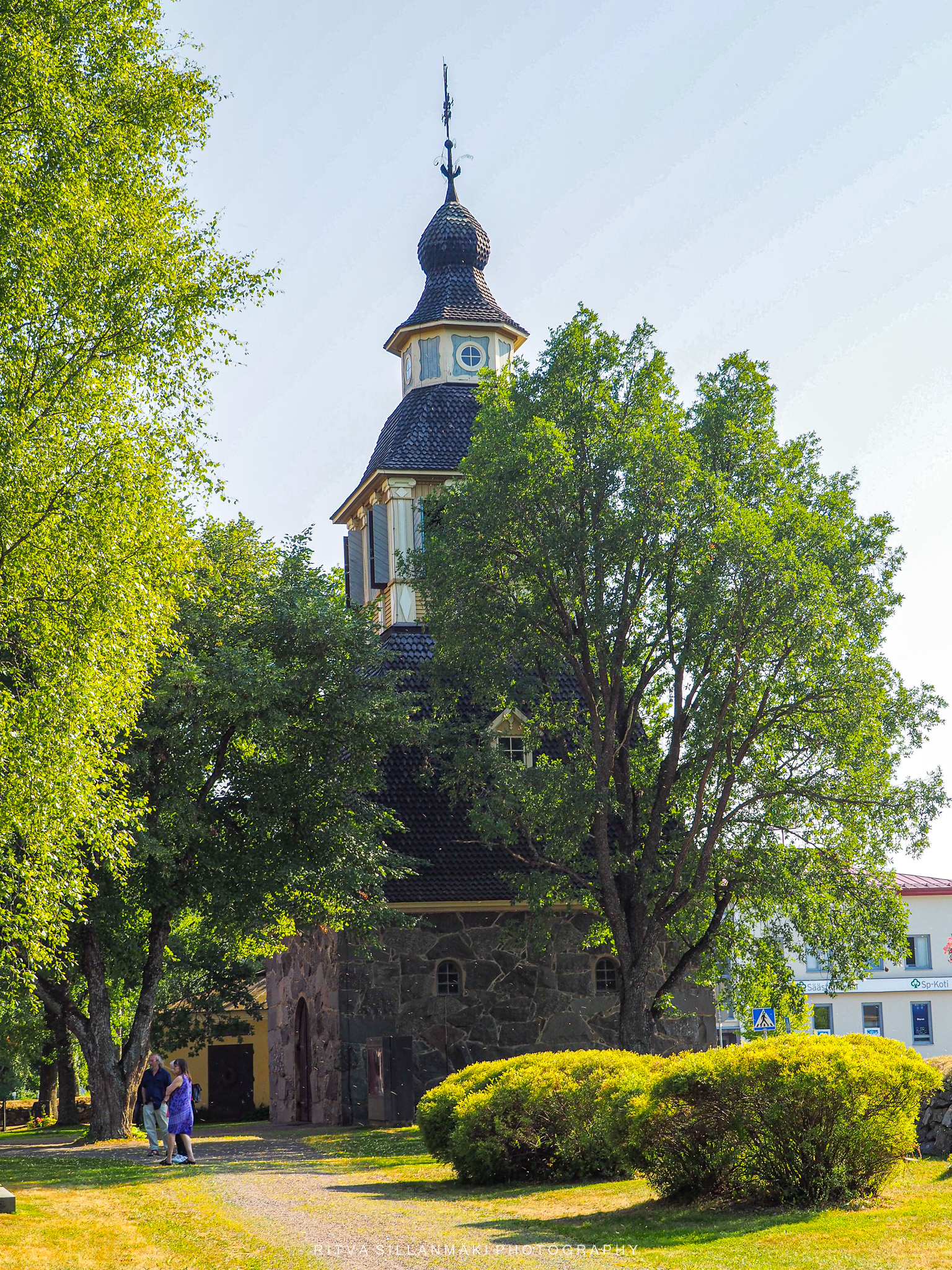
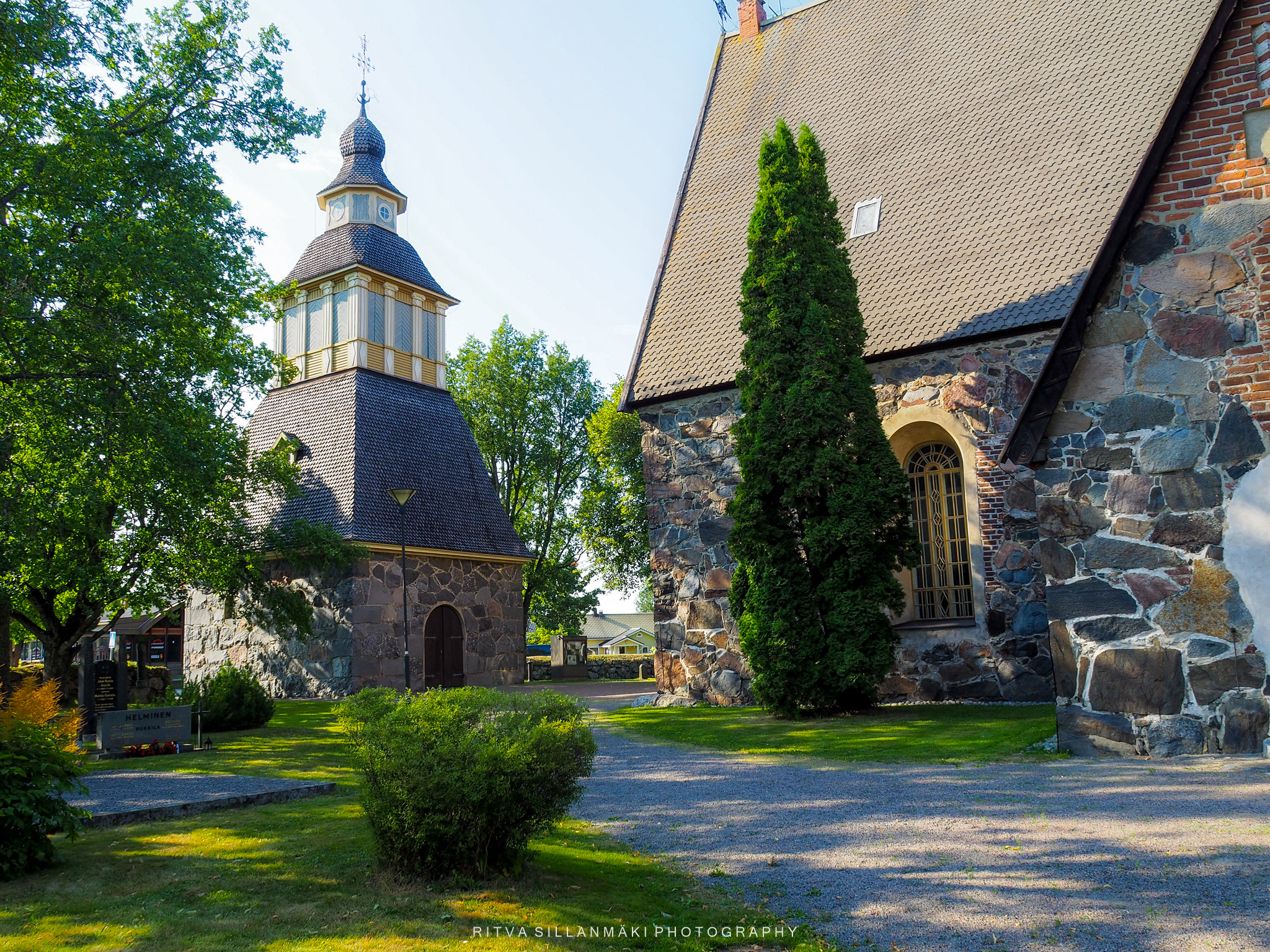
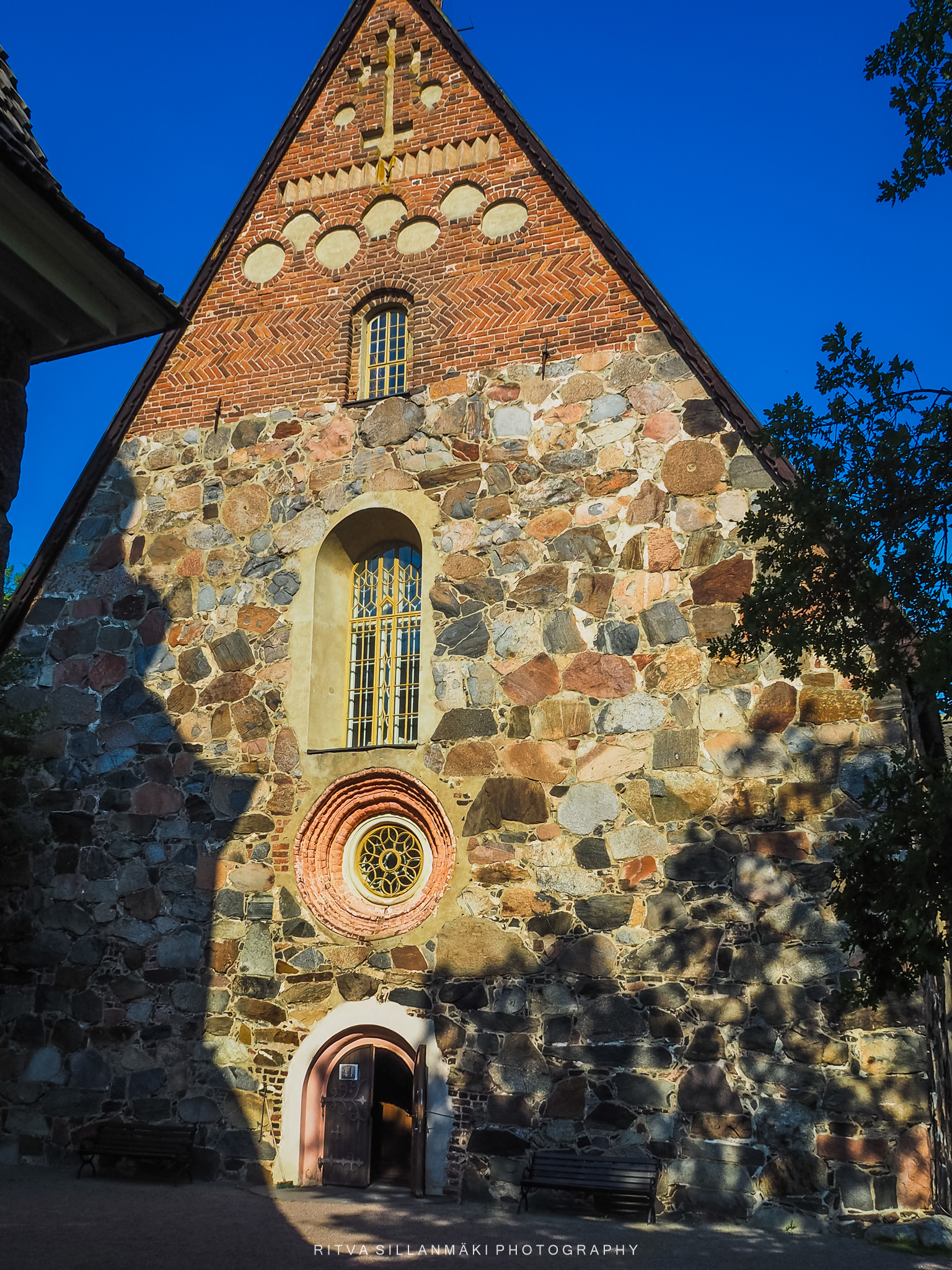
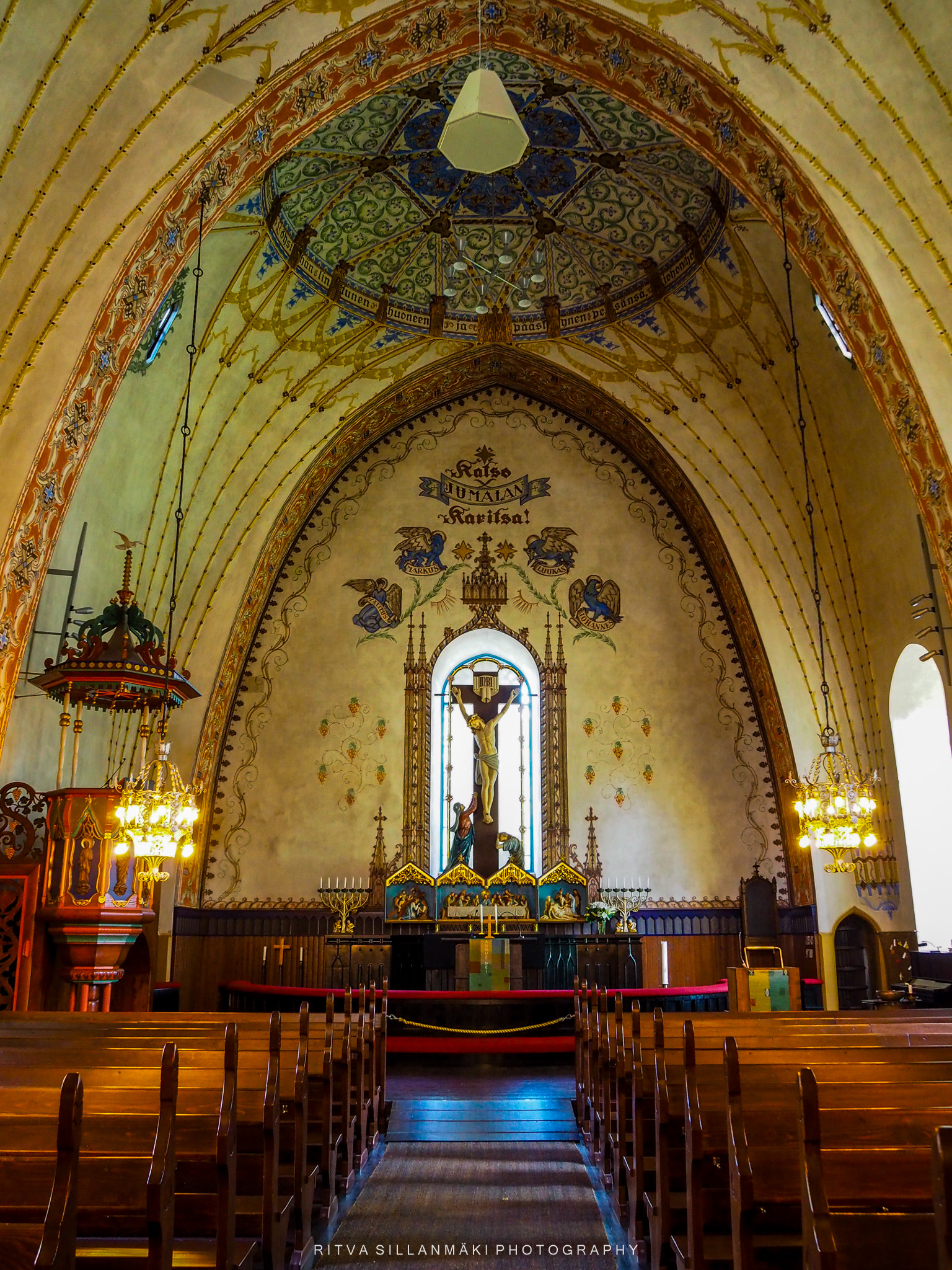
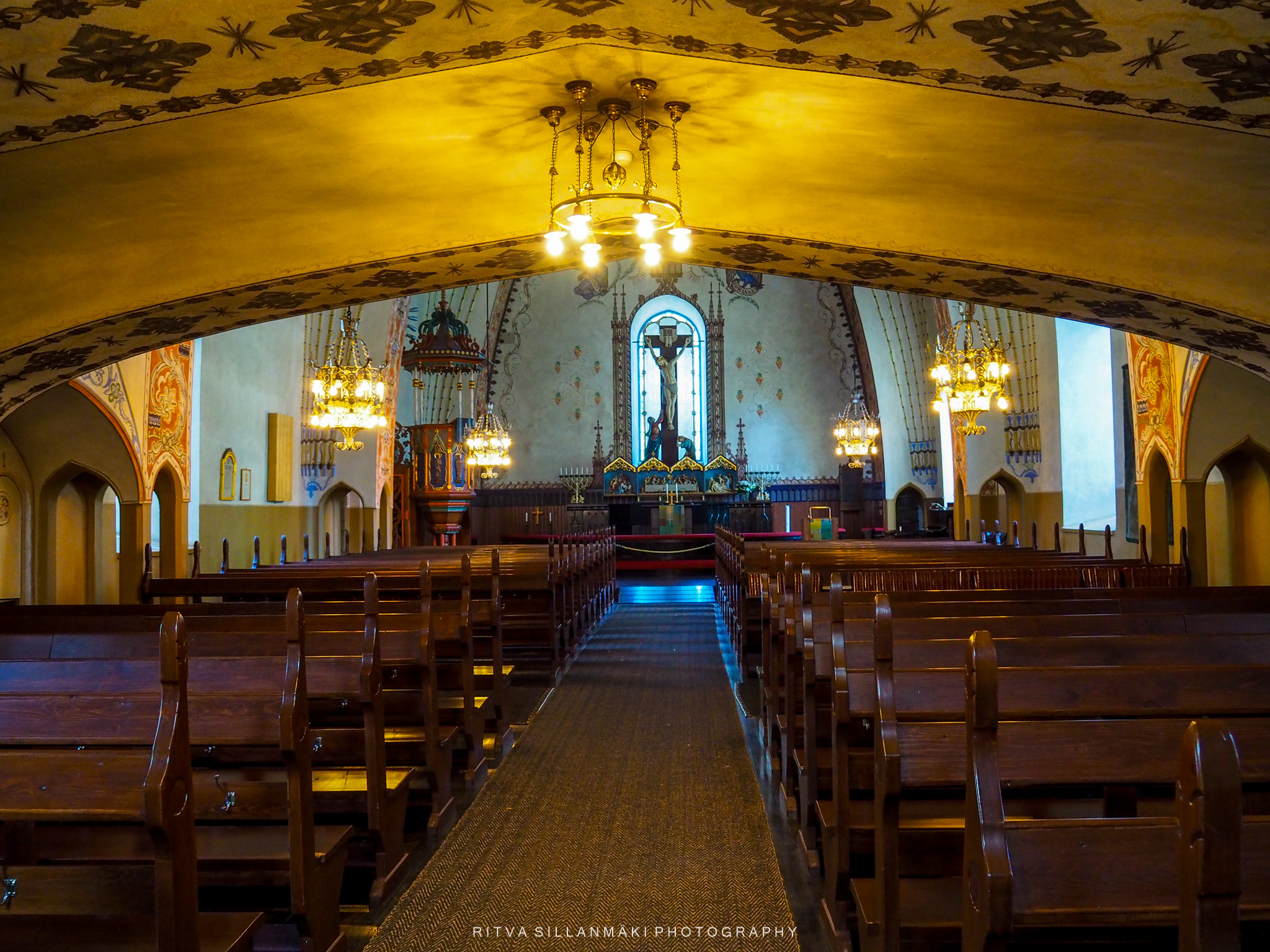
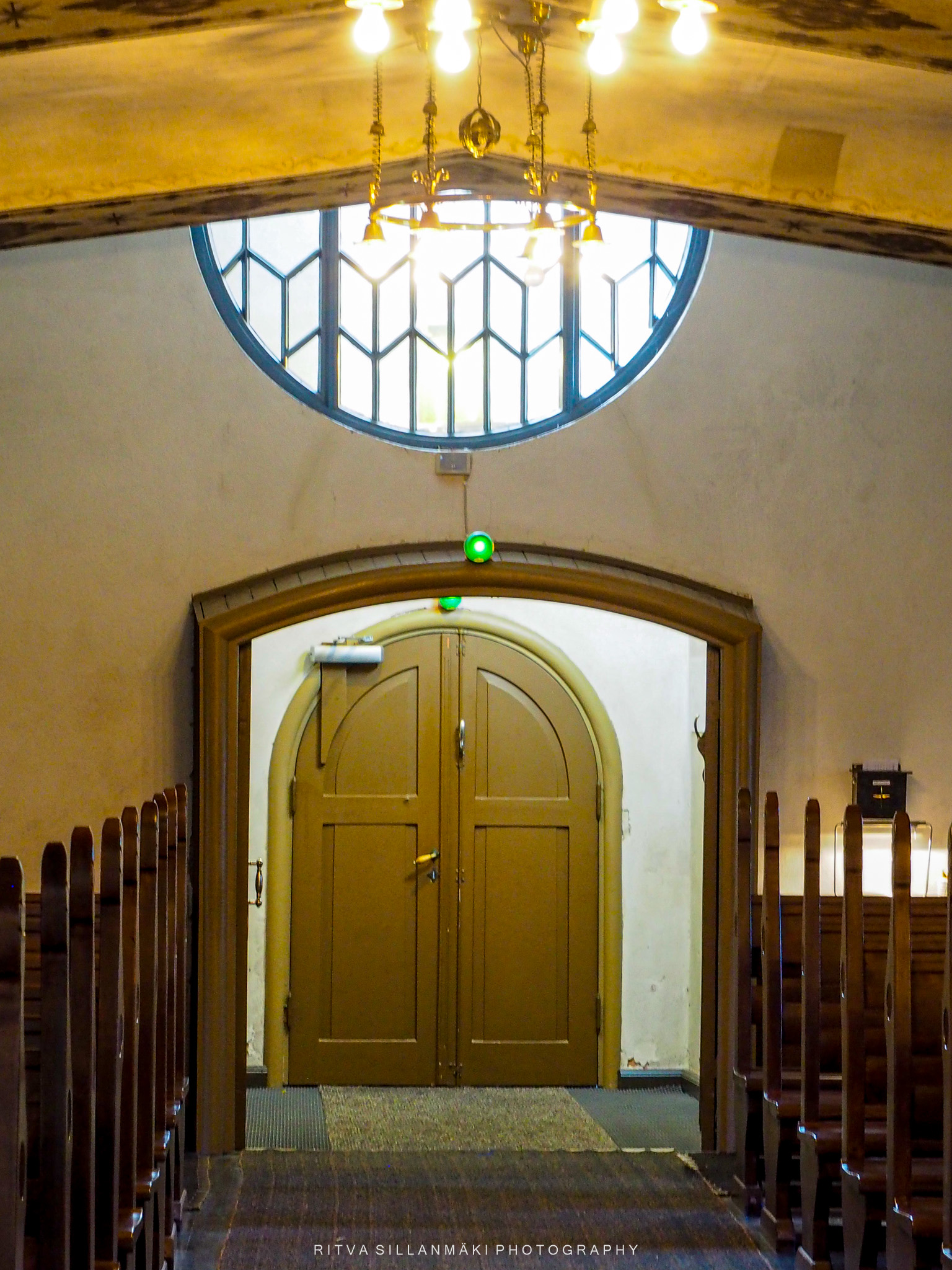
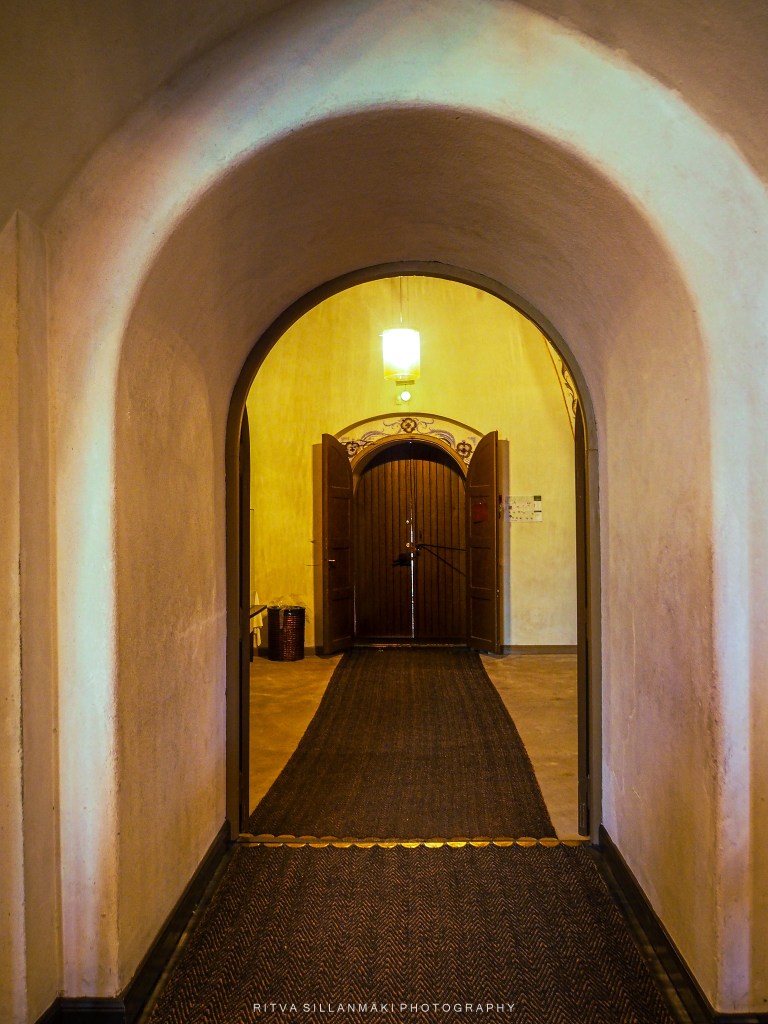
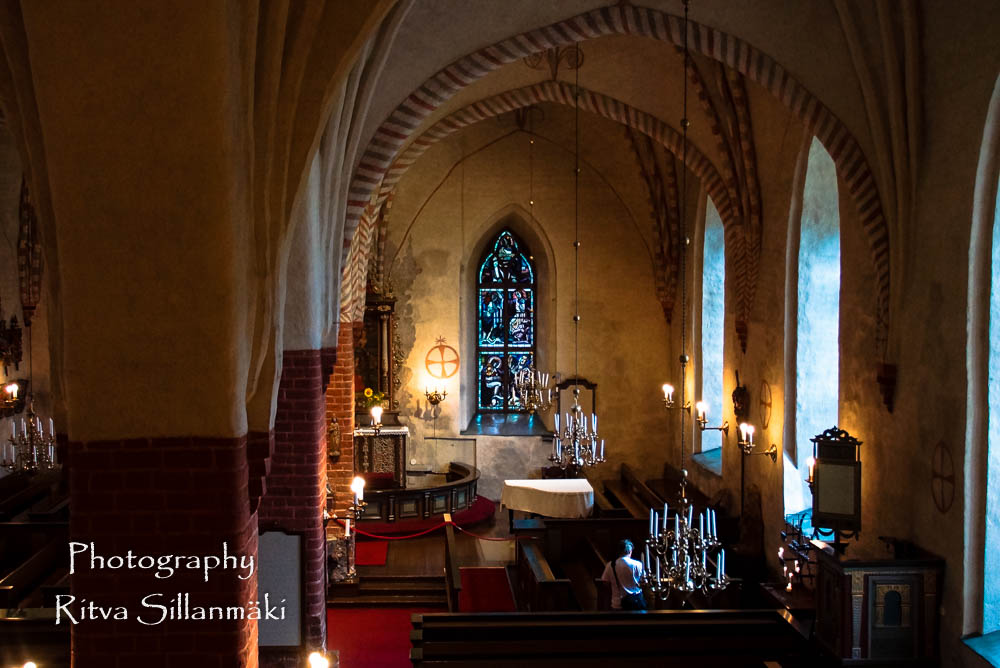
So here are some photos from the Lammin Church and yes some doors.
Lammi Church
Middle Ages
According to current research, the medieval church in Lammi was built between 1490 and 1510. The church is dedicated to St. Catherine of Alexandria, a learned martyr who died in 307, in whose memory e.g. St. Catherine’s Monastery in Sinai. Before this church, Lammi has had two older churches, possibly built of wood.
Fire
Until 1918, the interior parts of the church were wooden. This wooden church was badly burned during the Finnish Civil War on April 29, 1918.
After the fire, only the gray stone walls remained of the church. In the same fire, the pulpit donated to the church in 1692, part of the church’s archives, and the tabul and its medieval church bell were destroyed. After the fire, the reconstruction of the church and church was planned by the architect Usko Nyström.
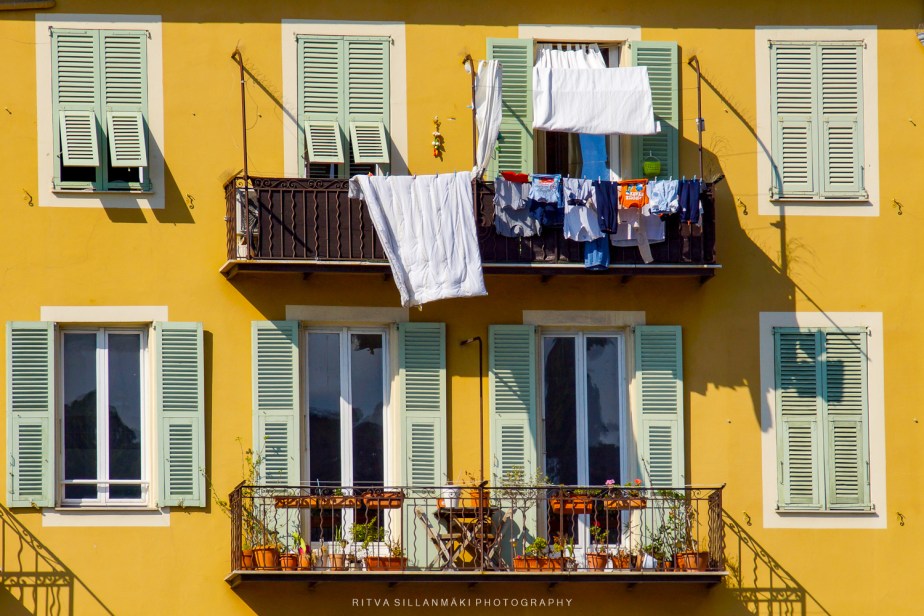
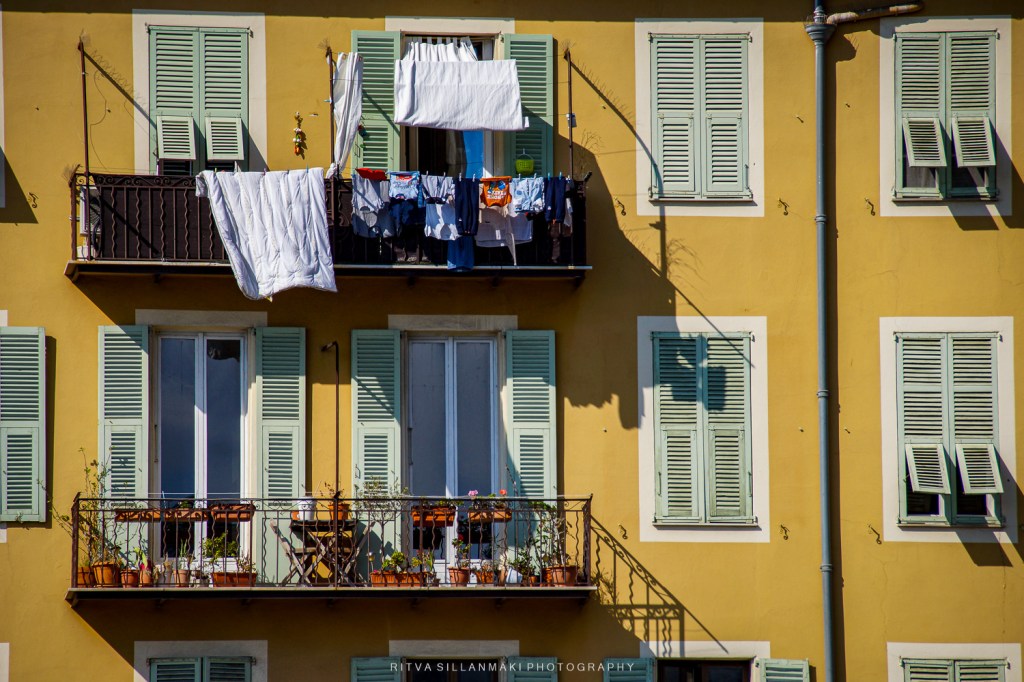
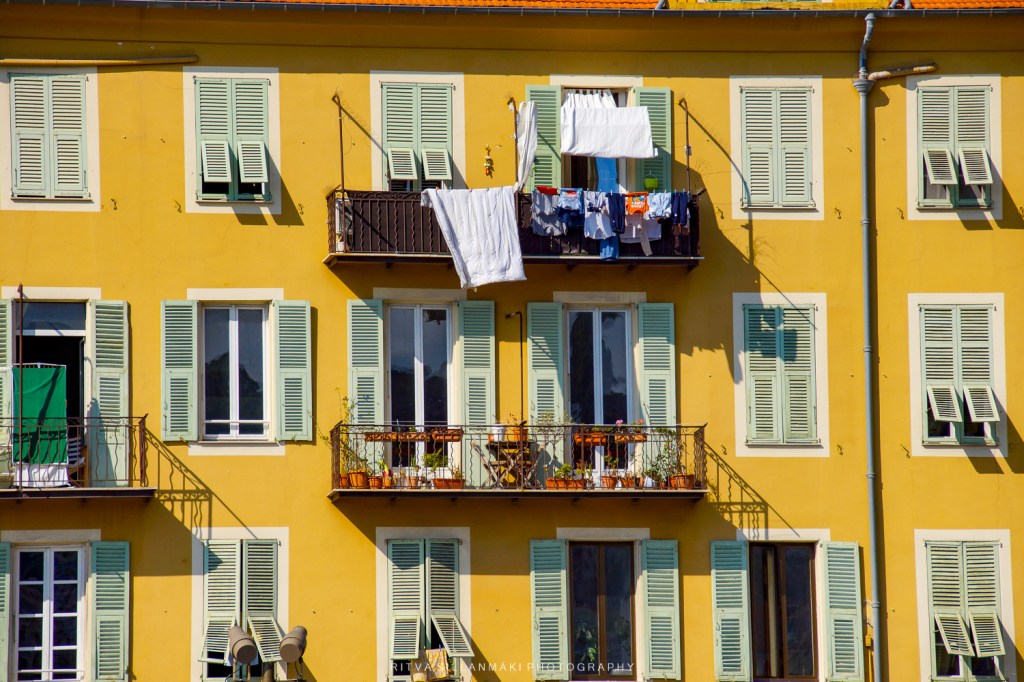
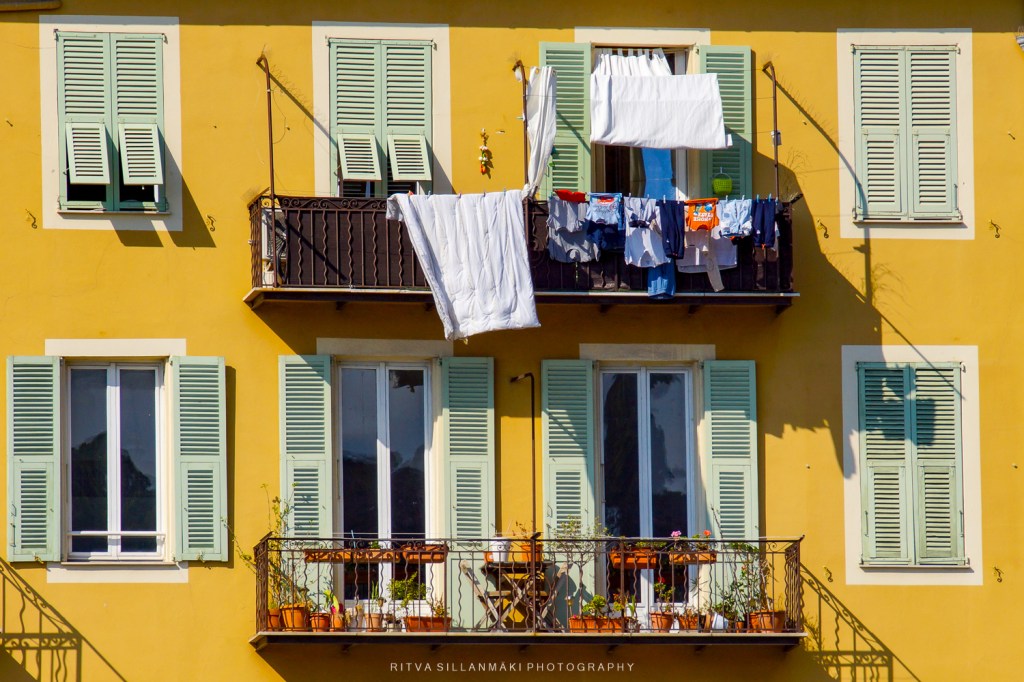
This week, I have edited an image featuring French doors and Juliet balconies for Dan’s Thursdays Doors challenge.
After weeks of seeing only white around me, I needed some color.
Instead of simply applying the conventional technique of converting the imagery to monochrome, I took a different approach by emphasizing the composition of each photograph. Each composition offers a slightly different perspective on the same scene: a charming old yellow building in the picturesque city of Nice, adorned with elegant French doors, adorned with green shutters, and complemented by Juliet balconies. One of the balconies charmingly displays an array of flower pots, while the other serves as a picturesque backdrop for laundry drying in the gentle breeze. .
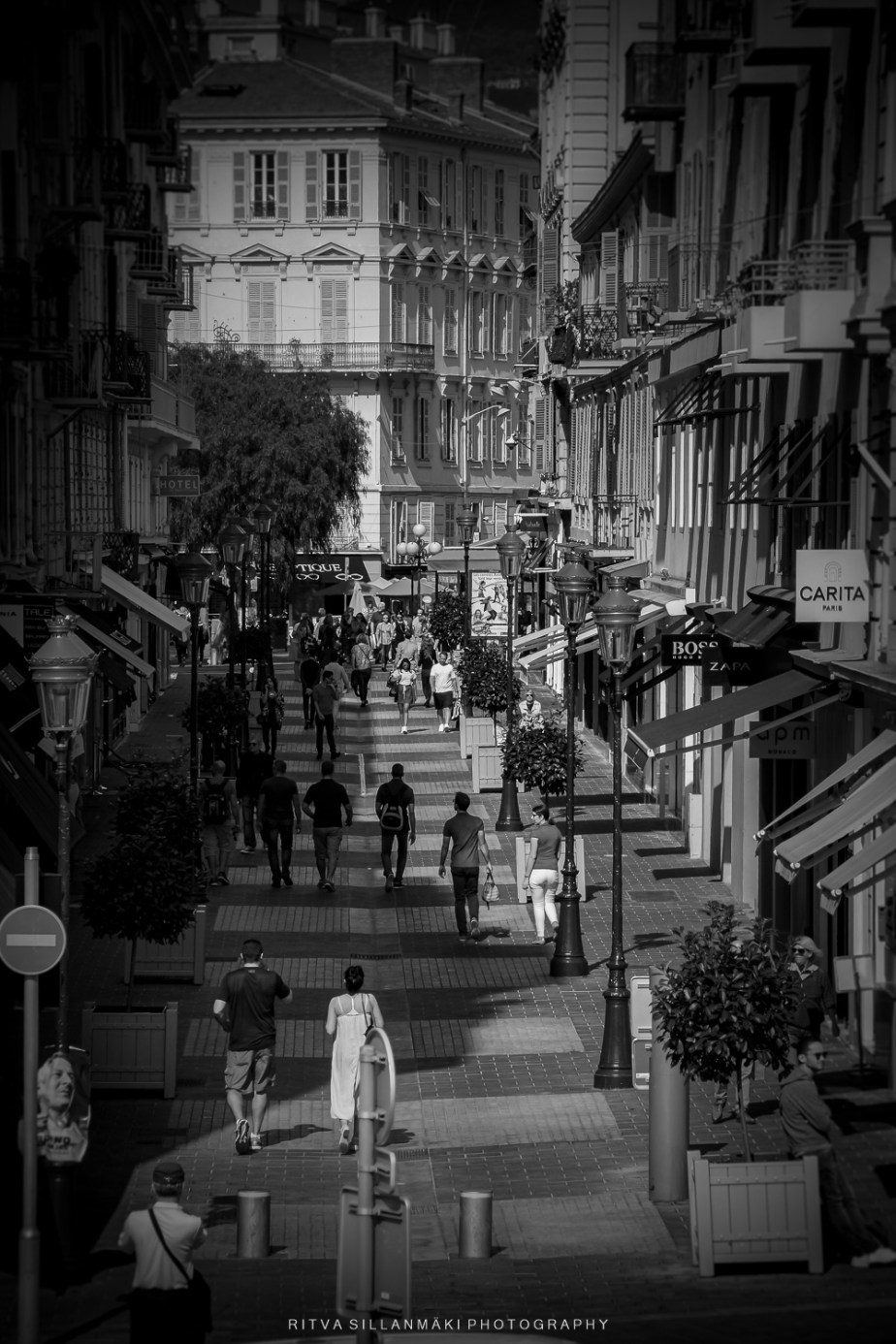
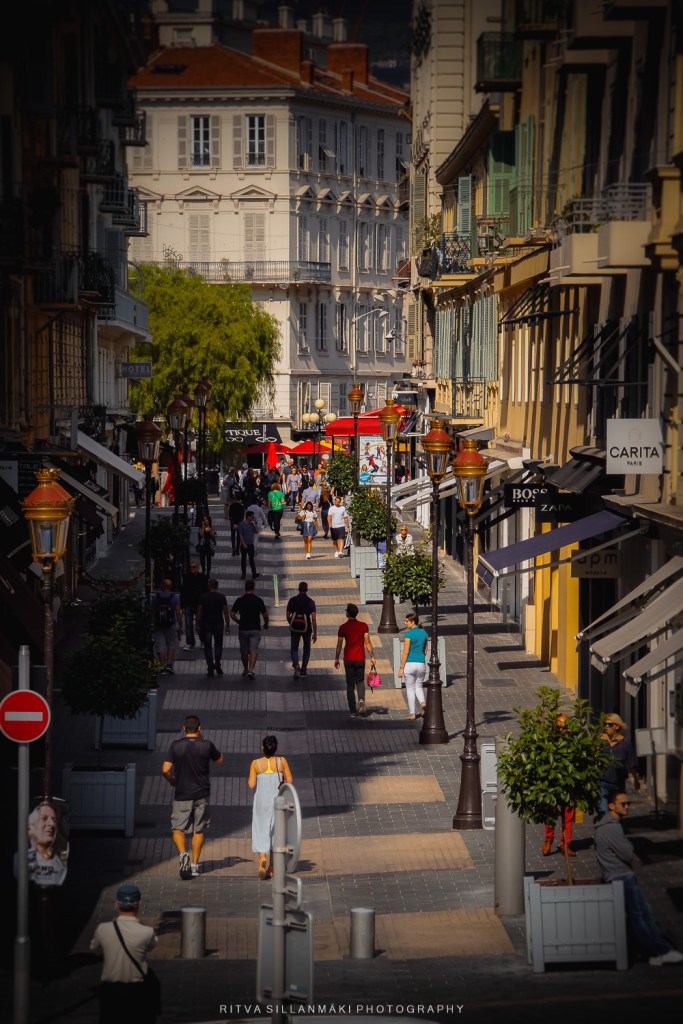
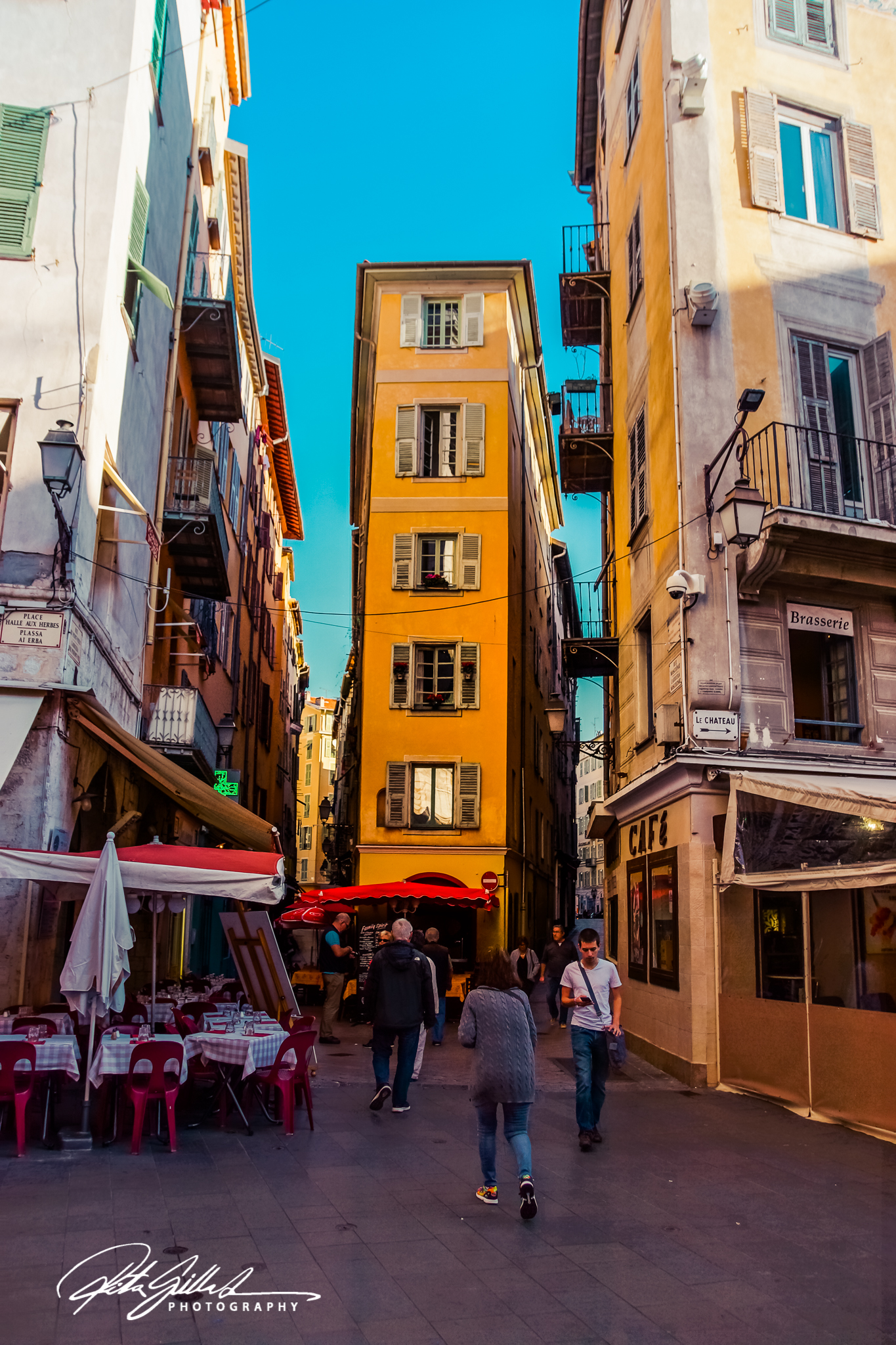
A pedestrian area in the shopping area in Níce some years back. It was early October, but the weather was still nice and warm, and there were lots of people on the move. The shops were situated in lovely old buildings with Juliet balconies and green and white shutters in front of the windows. The atmosphere in the area was energetic and vibrant, as locals and tourists alike meandered through the charming streets, and the sight of colorful displays in the shop windows. The gentle warmth of the sun added to the allure of the scene, casting a soft golden glow over the picturesque architecture and creating a captivating ambiance.
Surrounded by picturesque architecture
Well, I do like playing with my images, so once again I did a monochrome version, but this time I am more inclined to go with the color version as my favorite, go figure :-) The golden glow more obvious in it.
This week, Patti from is asking this question: what makes a photo dramatic? Maybe it is processed in black and white, or it has vivid colors. Maybe a person, place, or object is captured from a unique perspective or it is a macro shot.
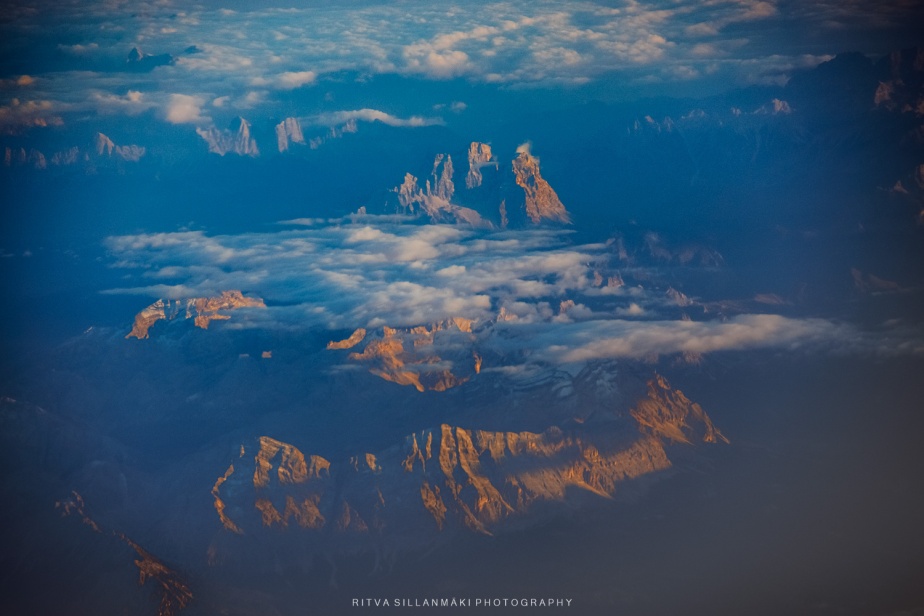
I took this from the plane, the mountains make a dramatic scene behind the clouds.
The word “dramatic” holds immense significance for me – it encapsulates the sense of grandeur and intensity that is ever-present. It’s remarkable how the play of light in photographs can be so distinctive and impactful. In contrast, everyday life may not exude the same overt drama; seemingly mundane events can often hold hidden depths of emotion and sentiment beneath a tranquil facade. Being of Finn, I acknowledge that we may not be the most openly expressive people, yet our emotions are profoundly felt and deeply rooted.
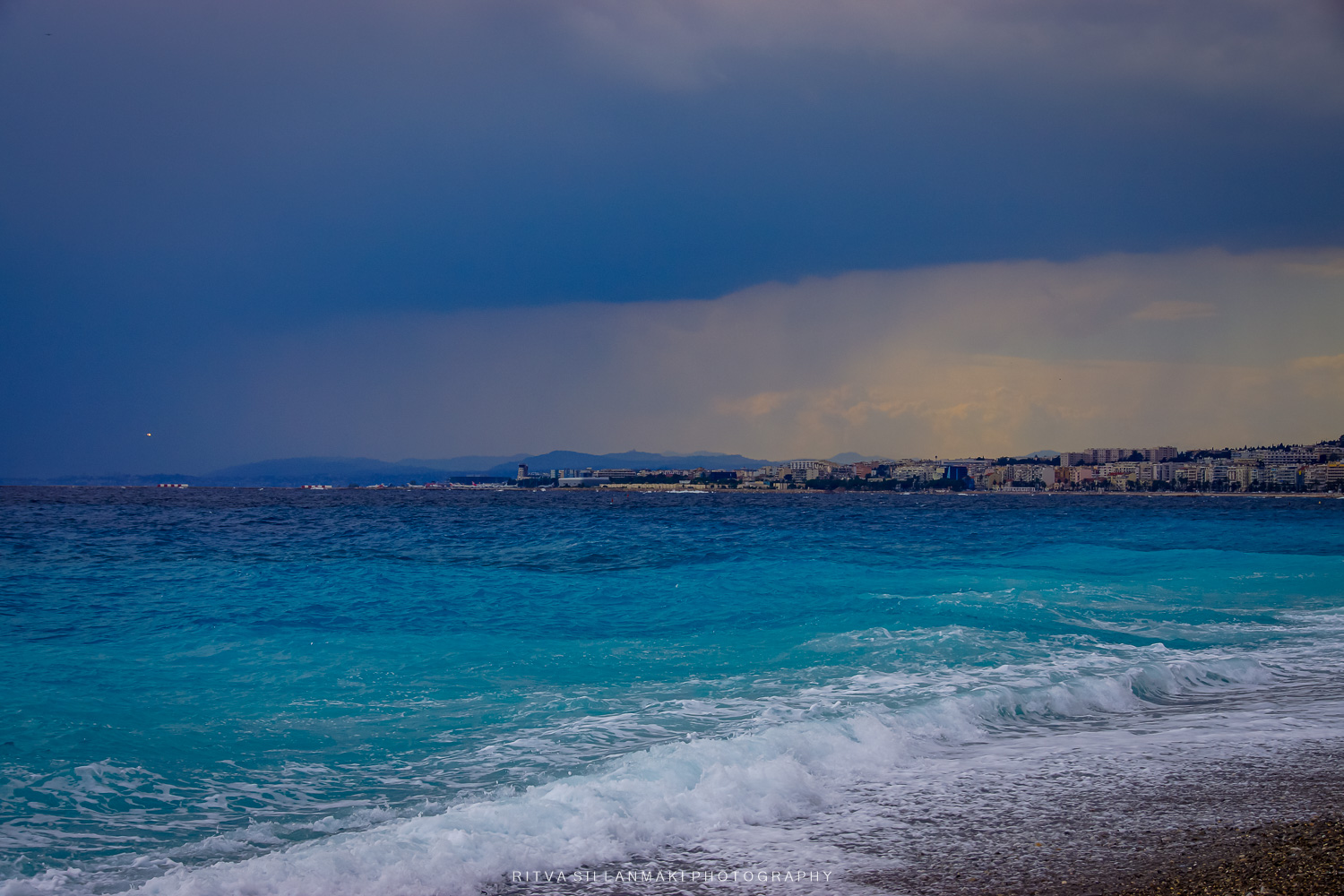
These I took In Níce, France
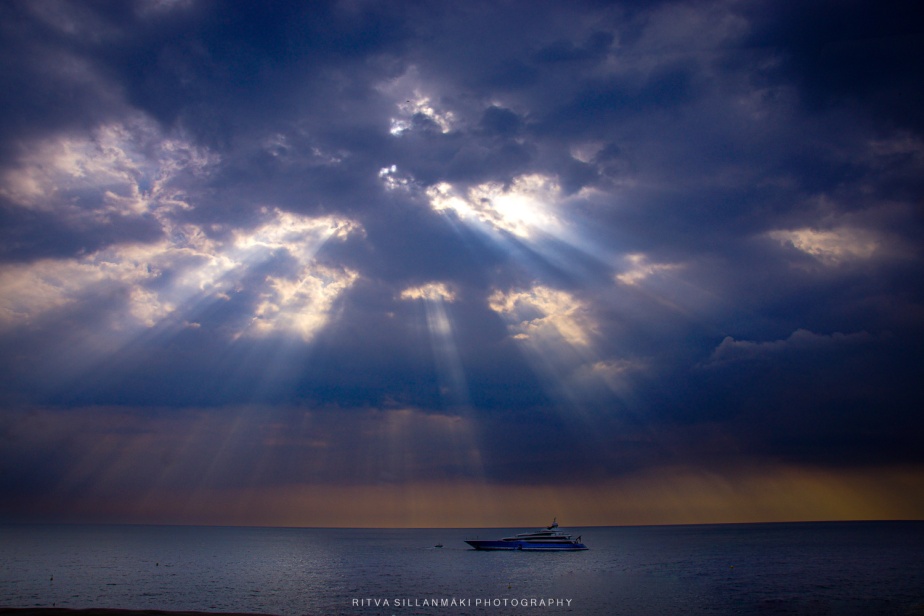
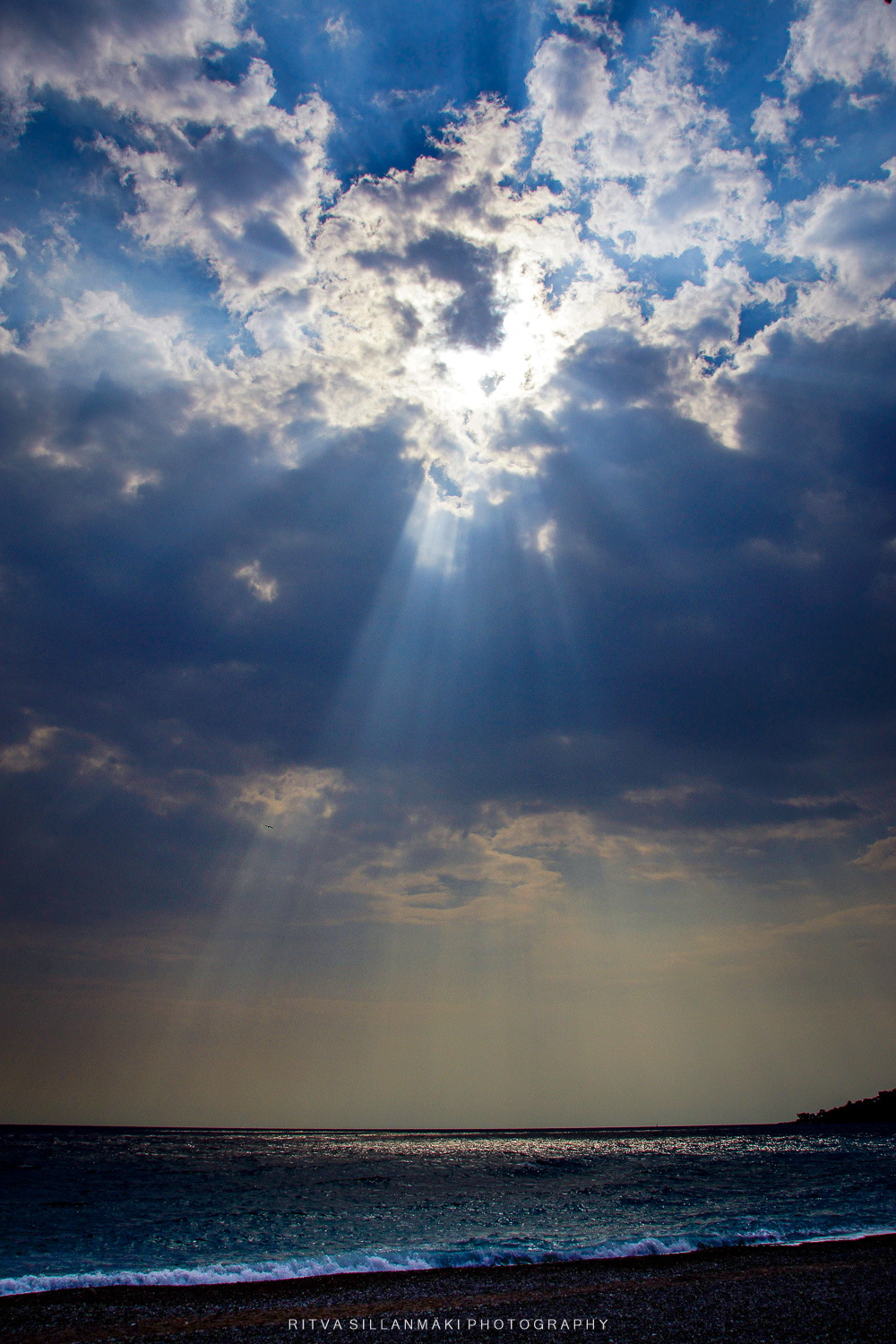
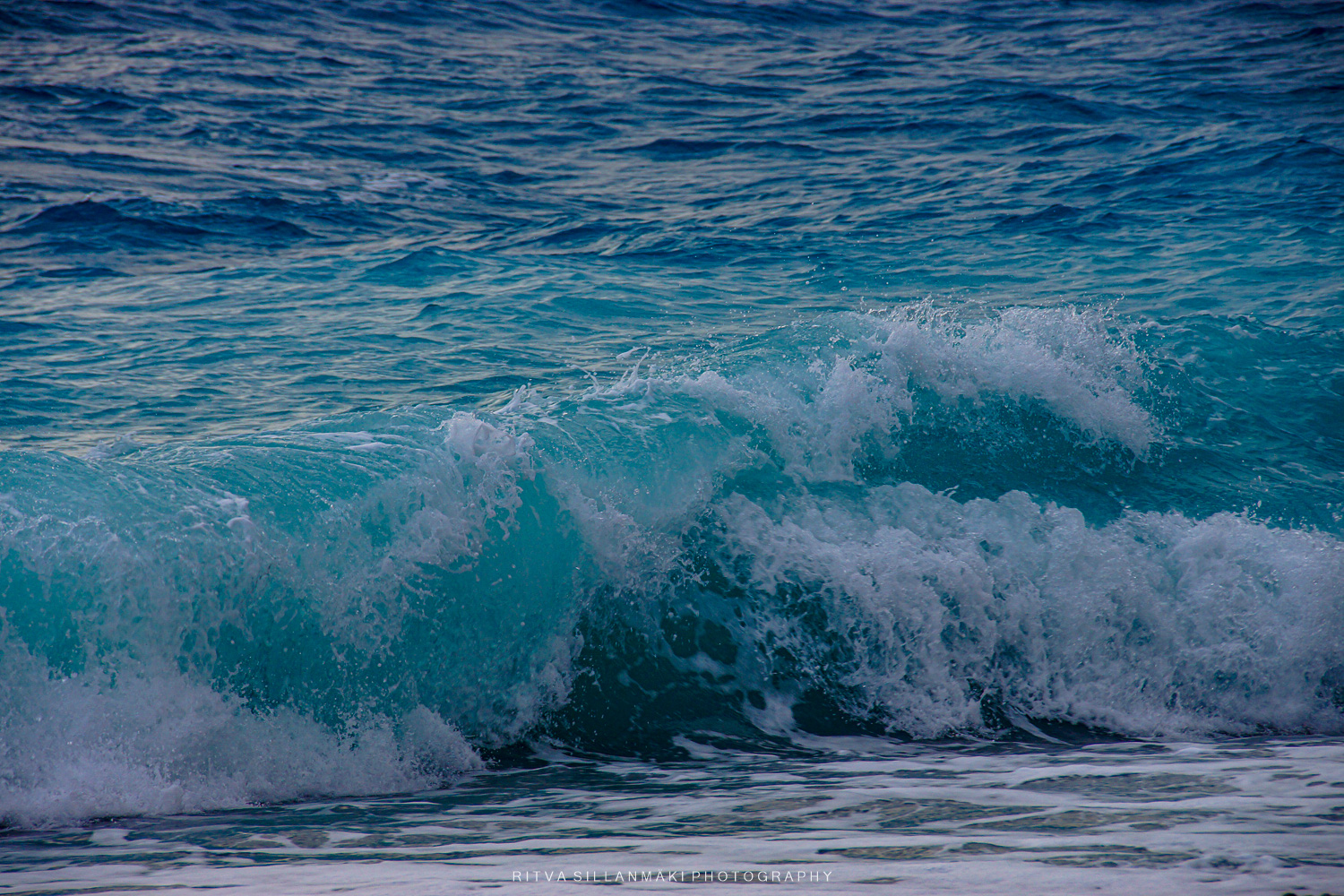
For me, the sea stands as one of the most profoundly dramatic elements, alongside the ever-changing canvas of clouds. Nature, or rather the weather, serves as the catalyst for many of these breathtaking phenomena.
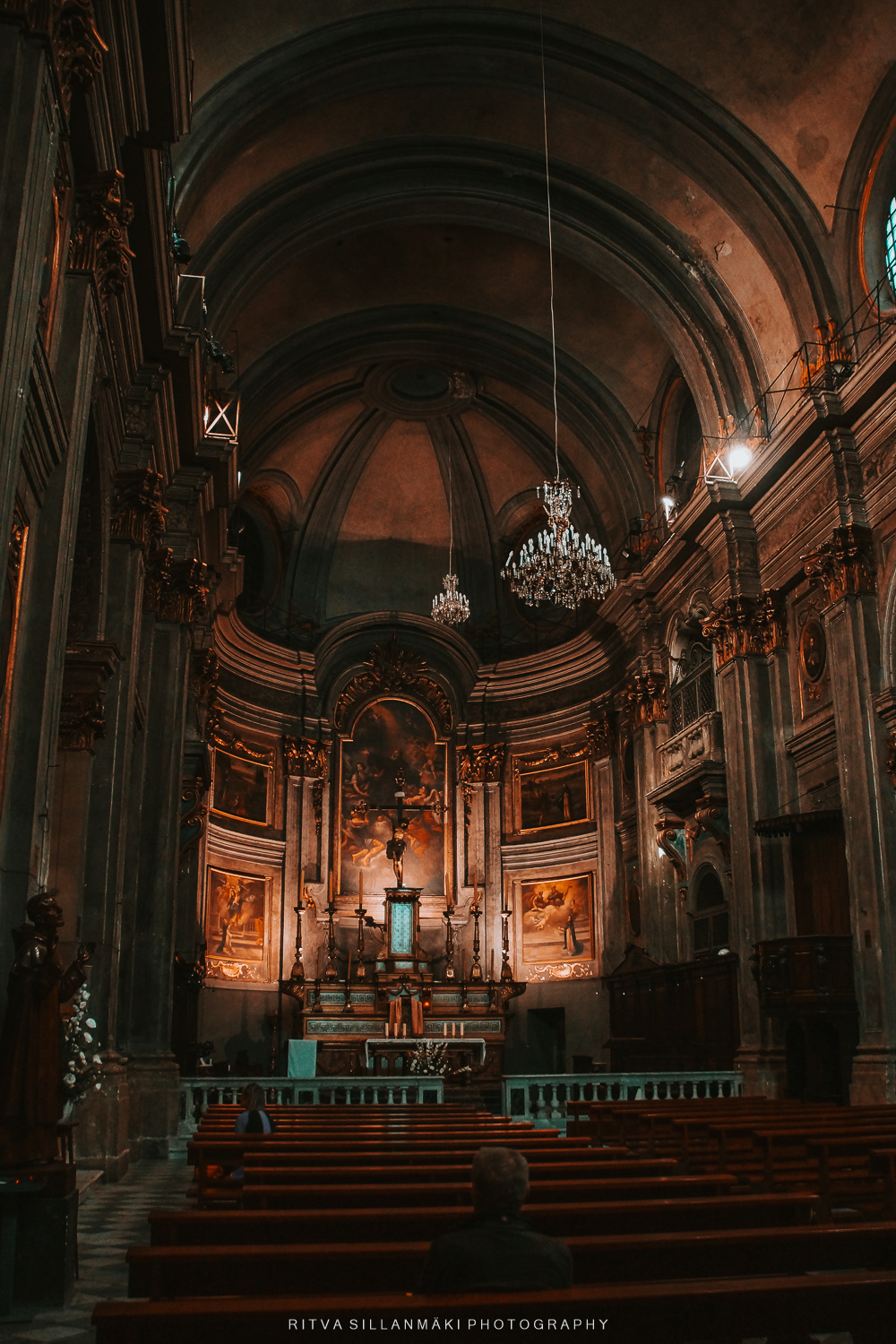
Furthermore, the architectural details has the potential to evoke a dramatic impact through the interplay of light, shadow, and contours.
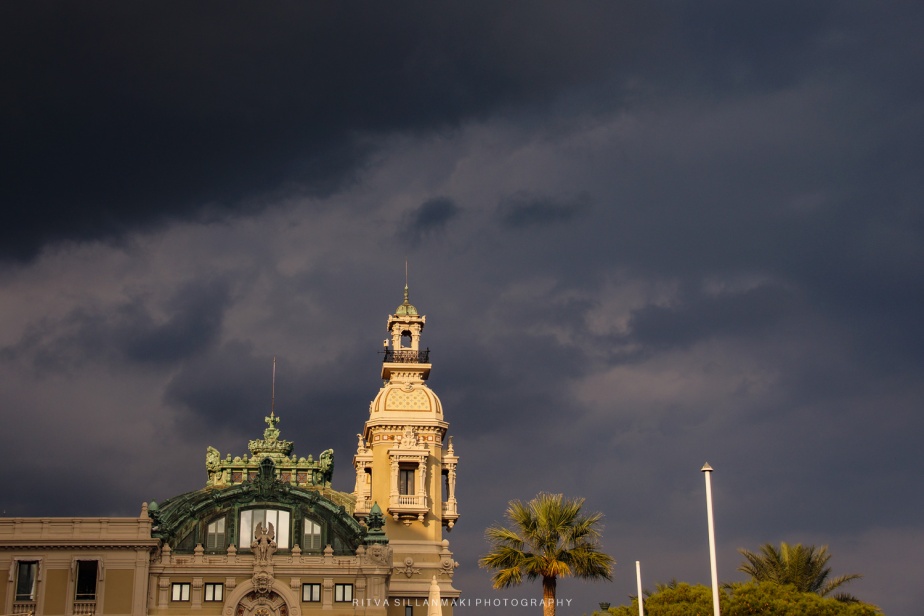
This is detail of the roof Monte Carlo Casino. The interplay of dark skies and beautiful old architecture creates a mesmerizing contrast that captivates the senses. The looming presence of the dark skies serves as a backdrop, intensifying the timeless allure of the architectural marvels.
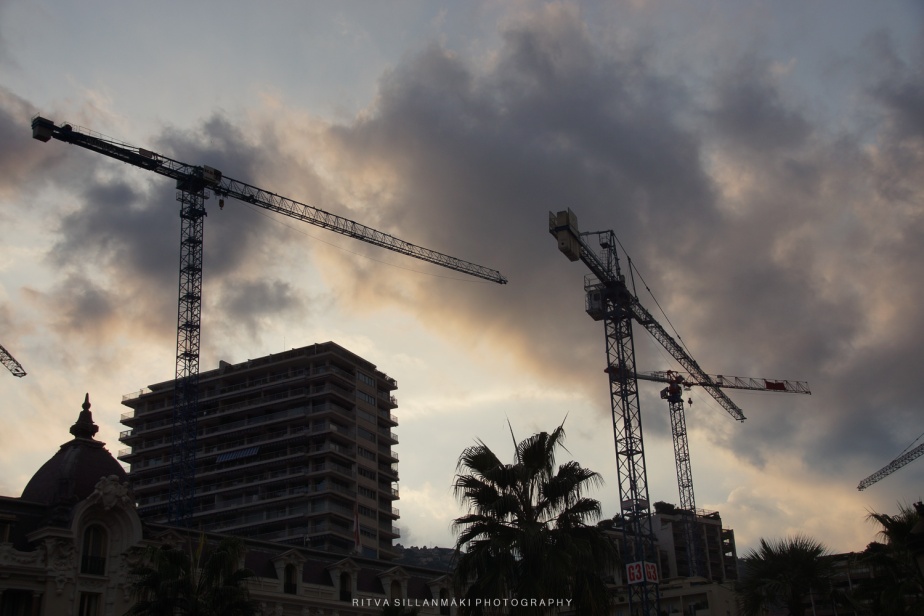
Skyline from Monte Carlo some years back.
“An event or circumstance sudden and striking,”
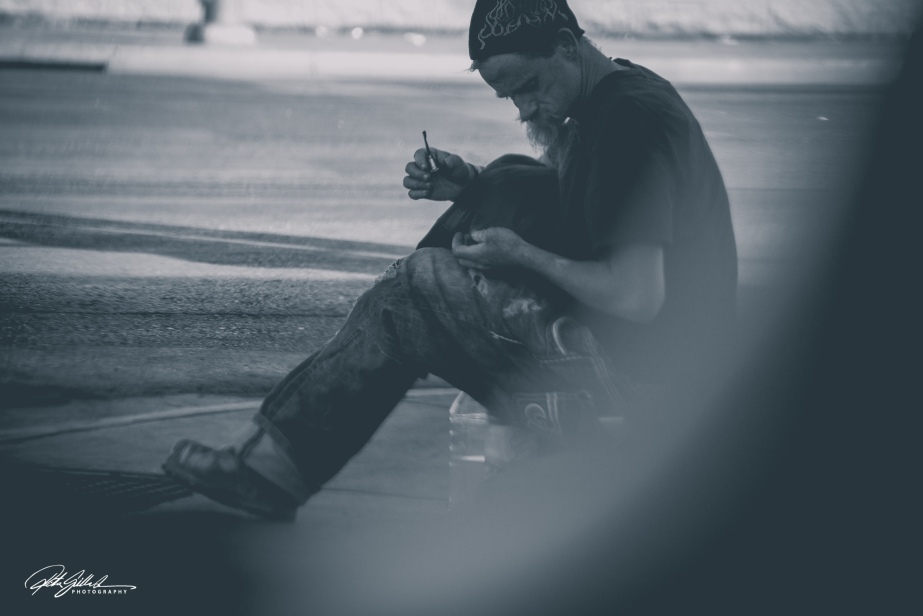
I sometimes capture documentary shots, sometimes I see people who are down on their luck. Even though I don’t know their stories, seeing these homeless men sitting on the streets of Las Vegas was truly a poignant and sad sight. They are not sharp images on purpose…
To participate in this challenge, you should link to or leave a comment on the week’s host’s original challenge post and please use the #Lens-Artists tag in your own post, so the post is easily found in the Reader.
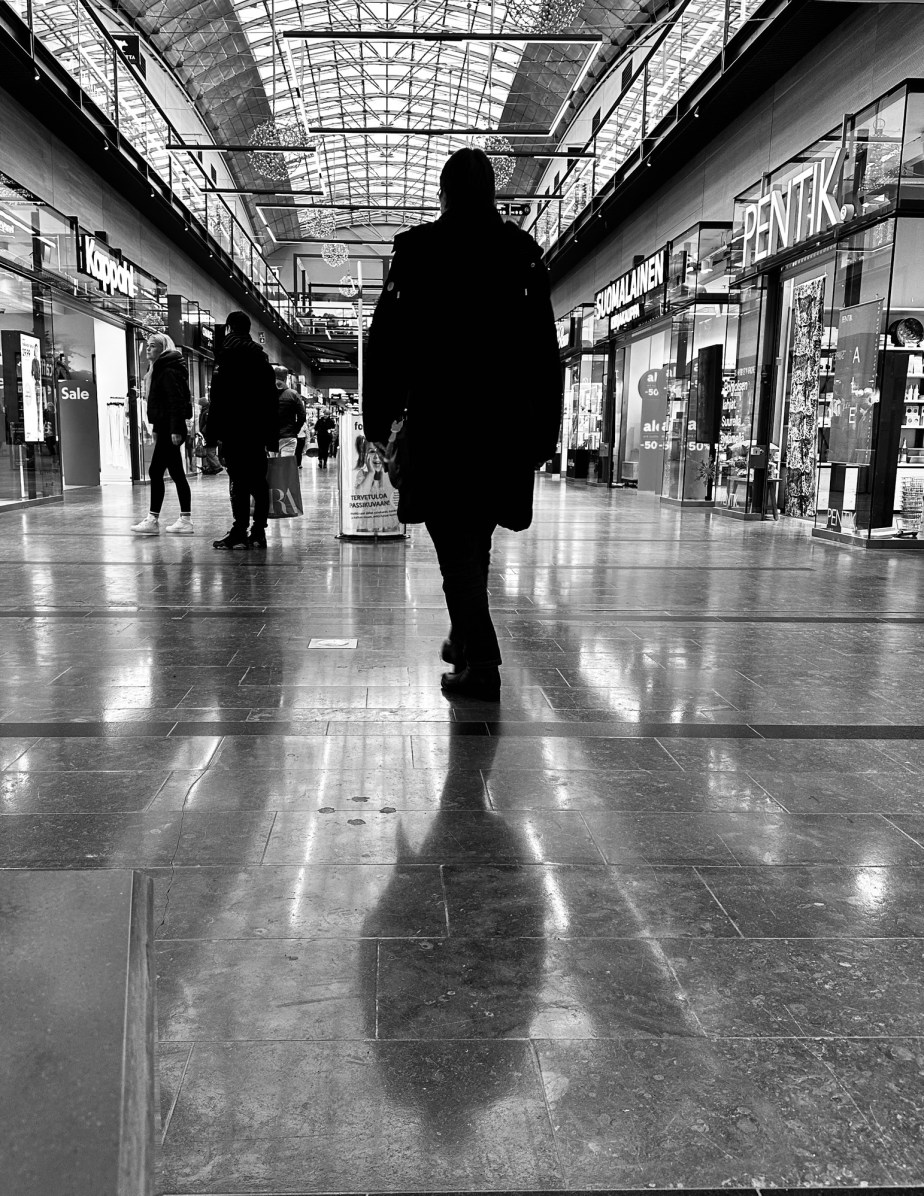
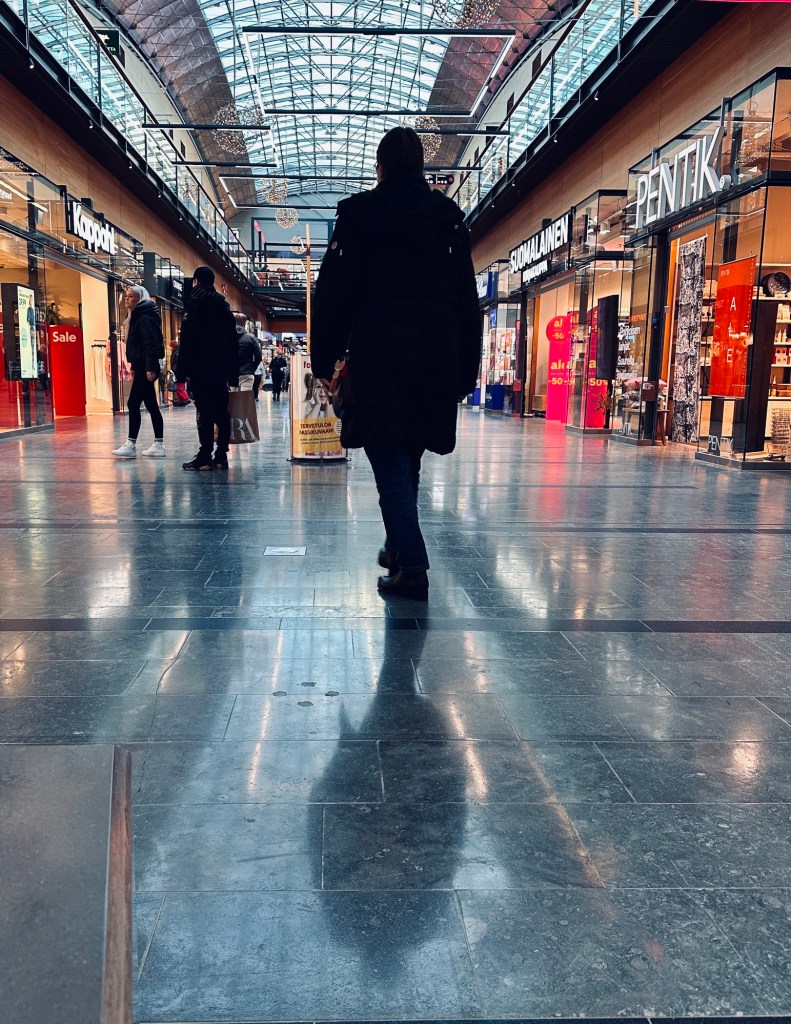
I don’t know if this is really street photography, but let’s pretend so.
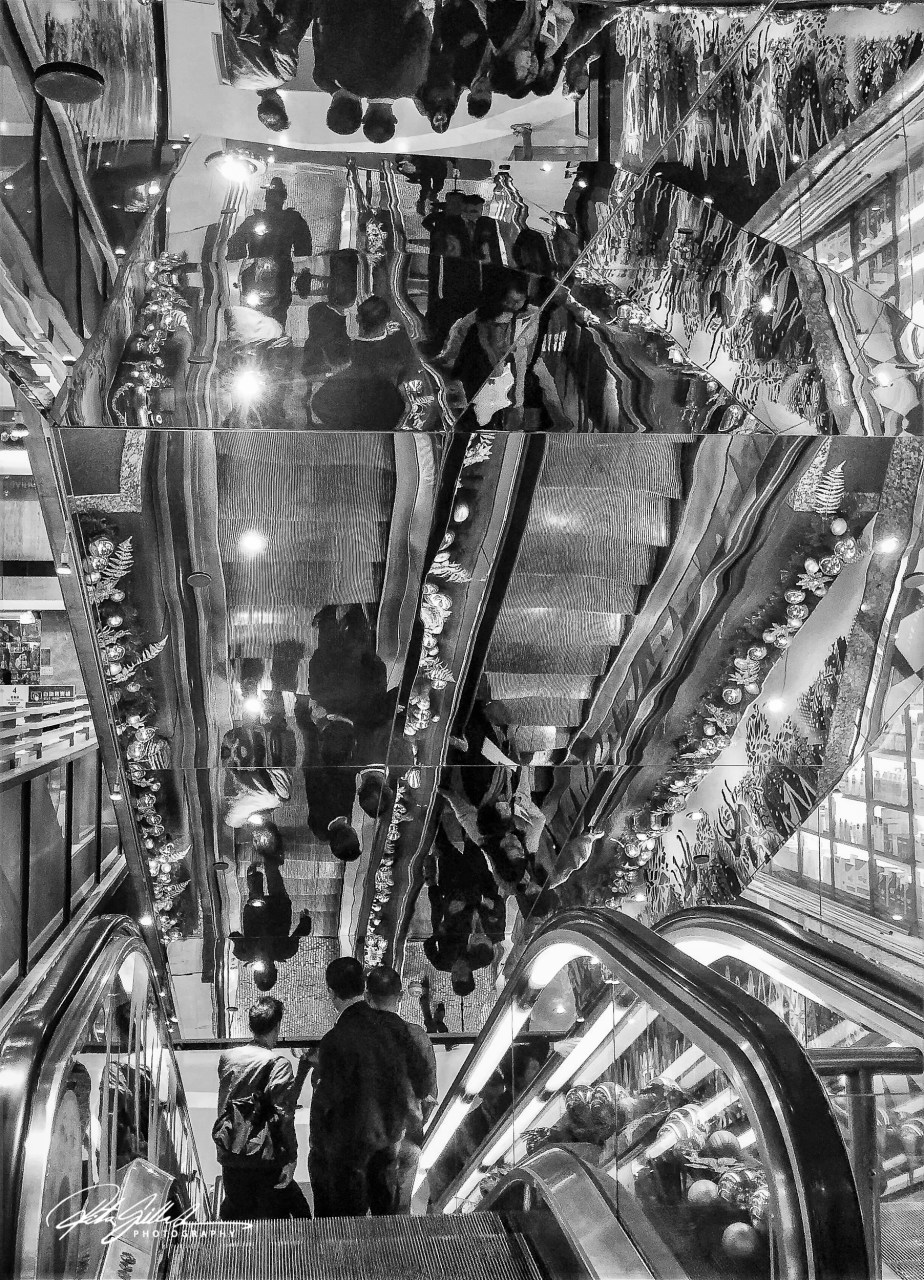
I took this yesterday at the mall. I needed to get out of the house. I was really proud, I didn’t buy anything, nearly did, but I reasoned with myself, I don’t need this, put it back to the rack.
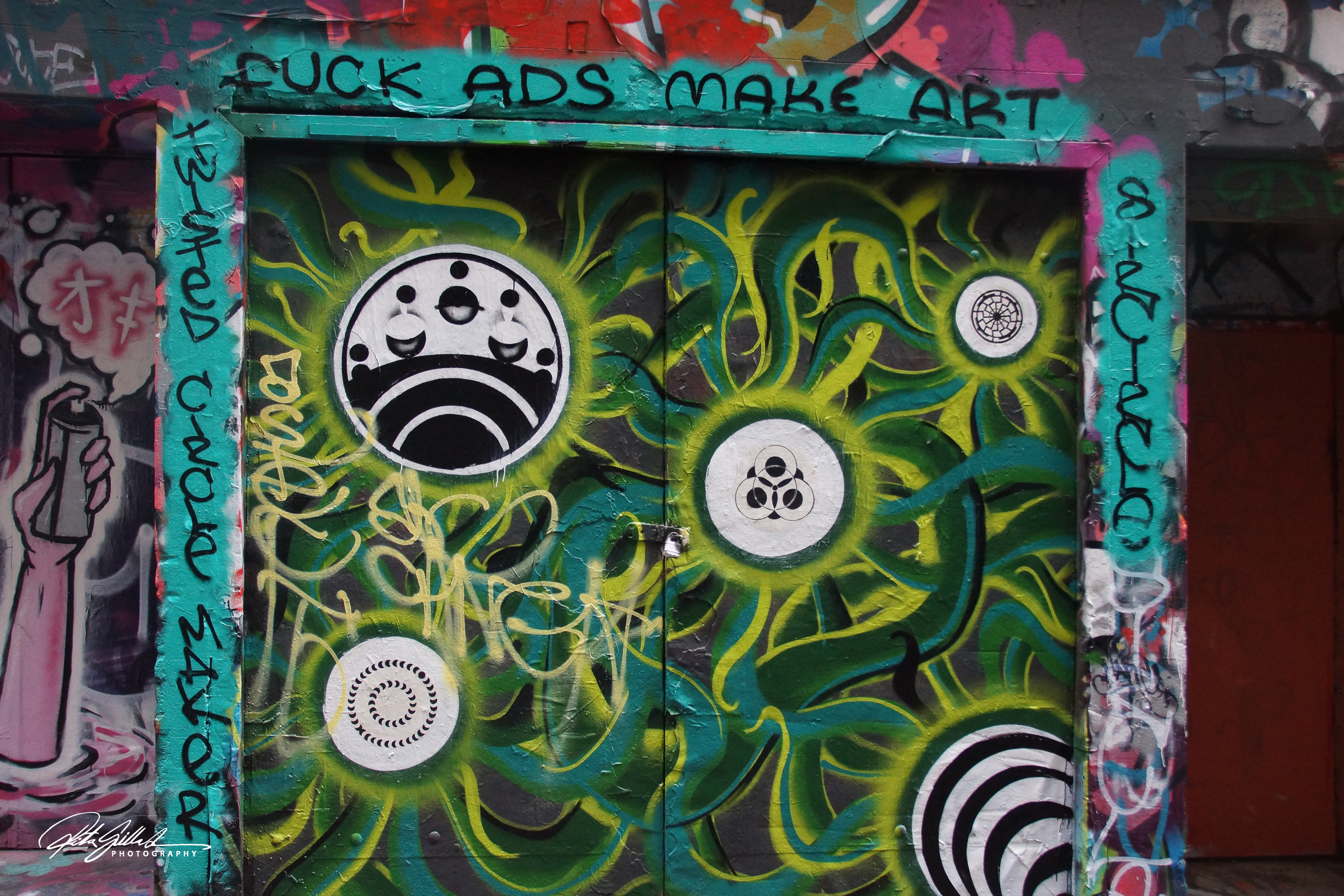
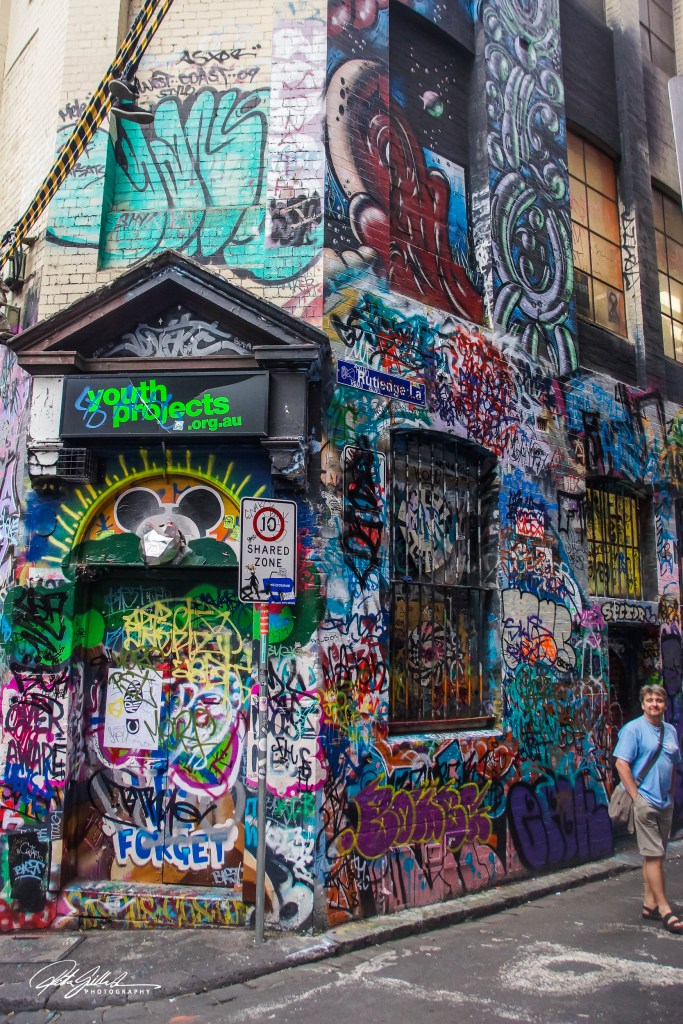
Walk down this quiet thoroughfare and you find yourself in a different world, dominated by the ever-changing street art that covers every wall. and in this case door 🙂
Wander through Melbourne’s laneways
Lose yourself in a wonderland of colourful street art,. Here are some of the street art found in laneways dotted around Melbourne, these ones are on painted on doors .
Thursday Doors is hosted most Thursday by Monsieur Dan Antion.
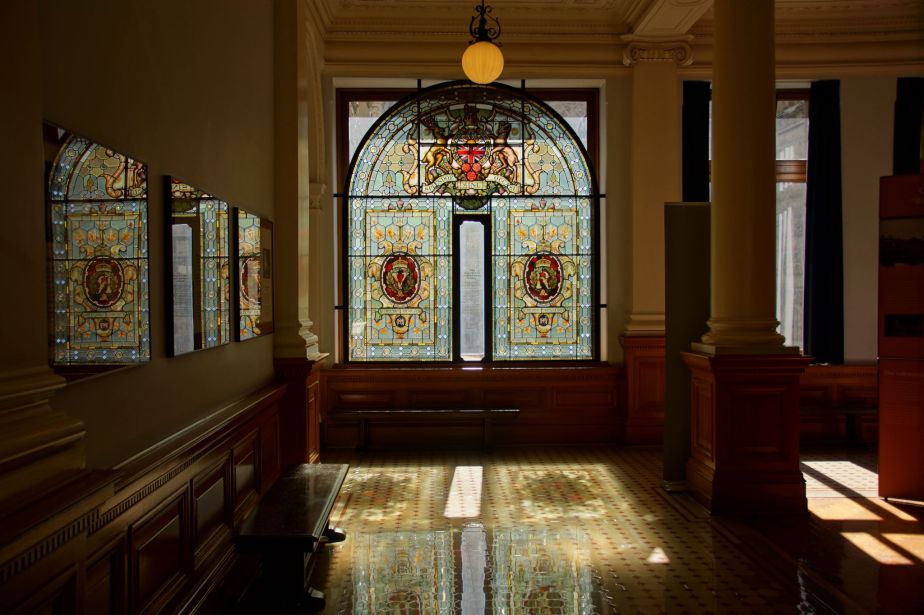
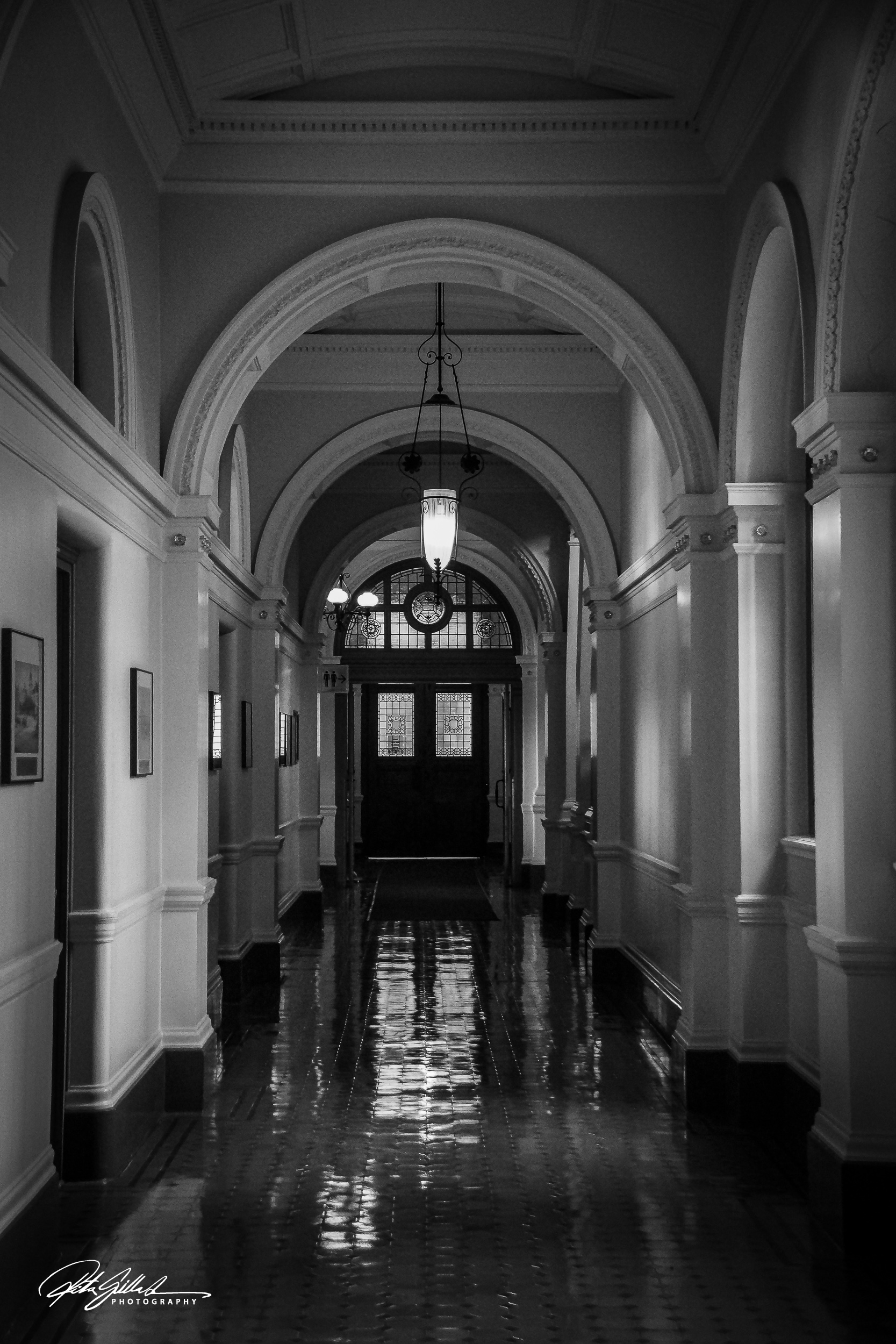
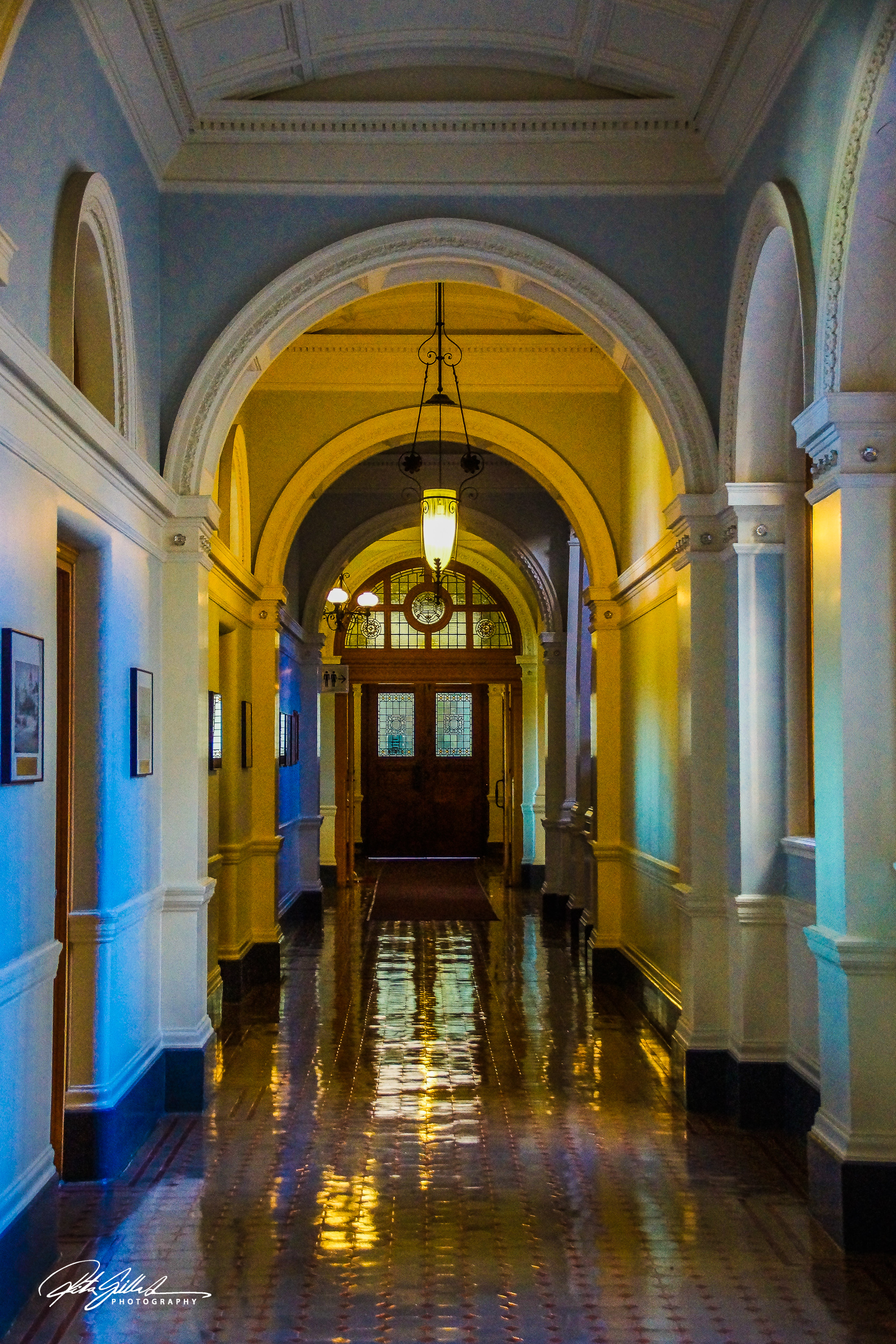
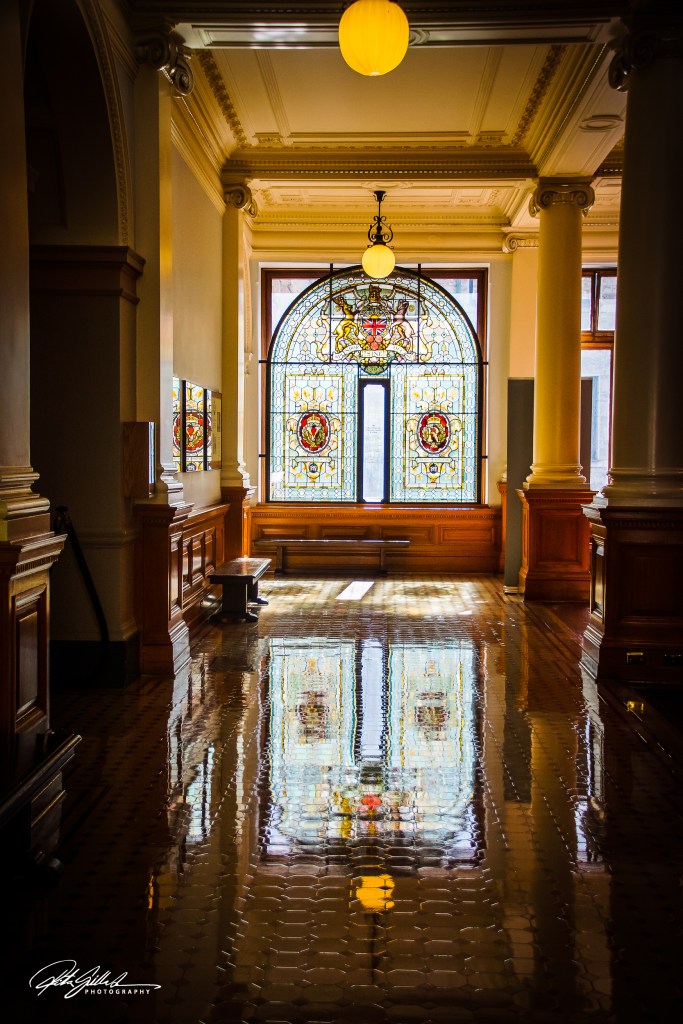
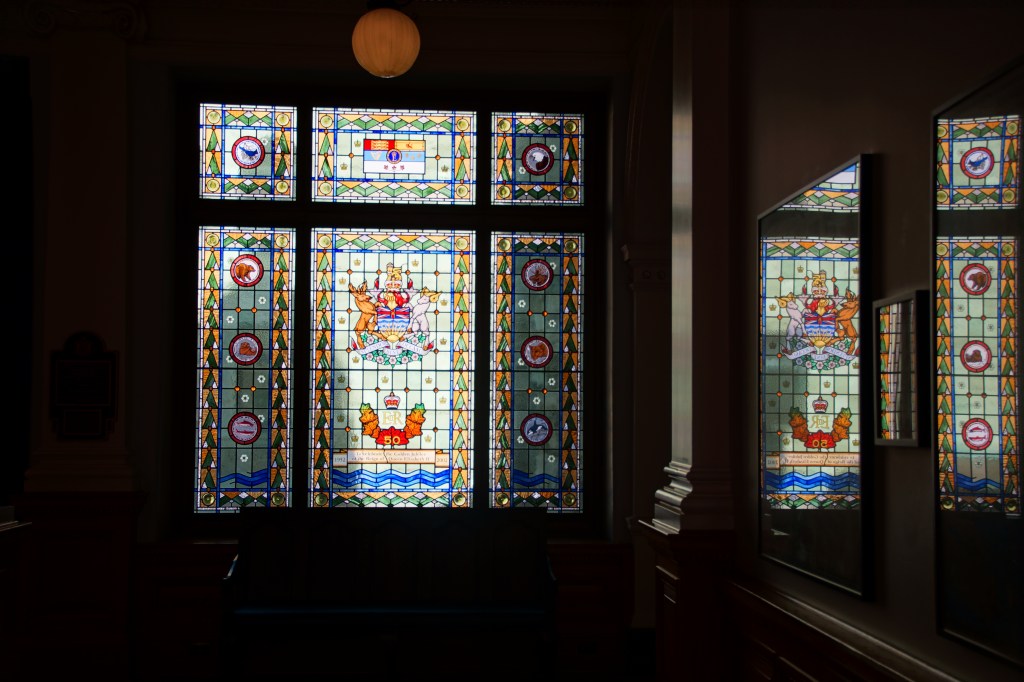
Welcome to the Parliament Building, home to the Legislative Assembly of British Columbia.
. The Parliament Buildings were officially opened on February 10, 1898. I visited the building in 2016
Stained glass door in the Parliament Building, all of their stained glass was shipped from England to Victoria. So, Even though this was a post about the doors, the windows are so much more beautiful.
This week James of Jazzibee wants us to look up and down; I will demonstrate that’s what I’ve done several times:-)
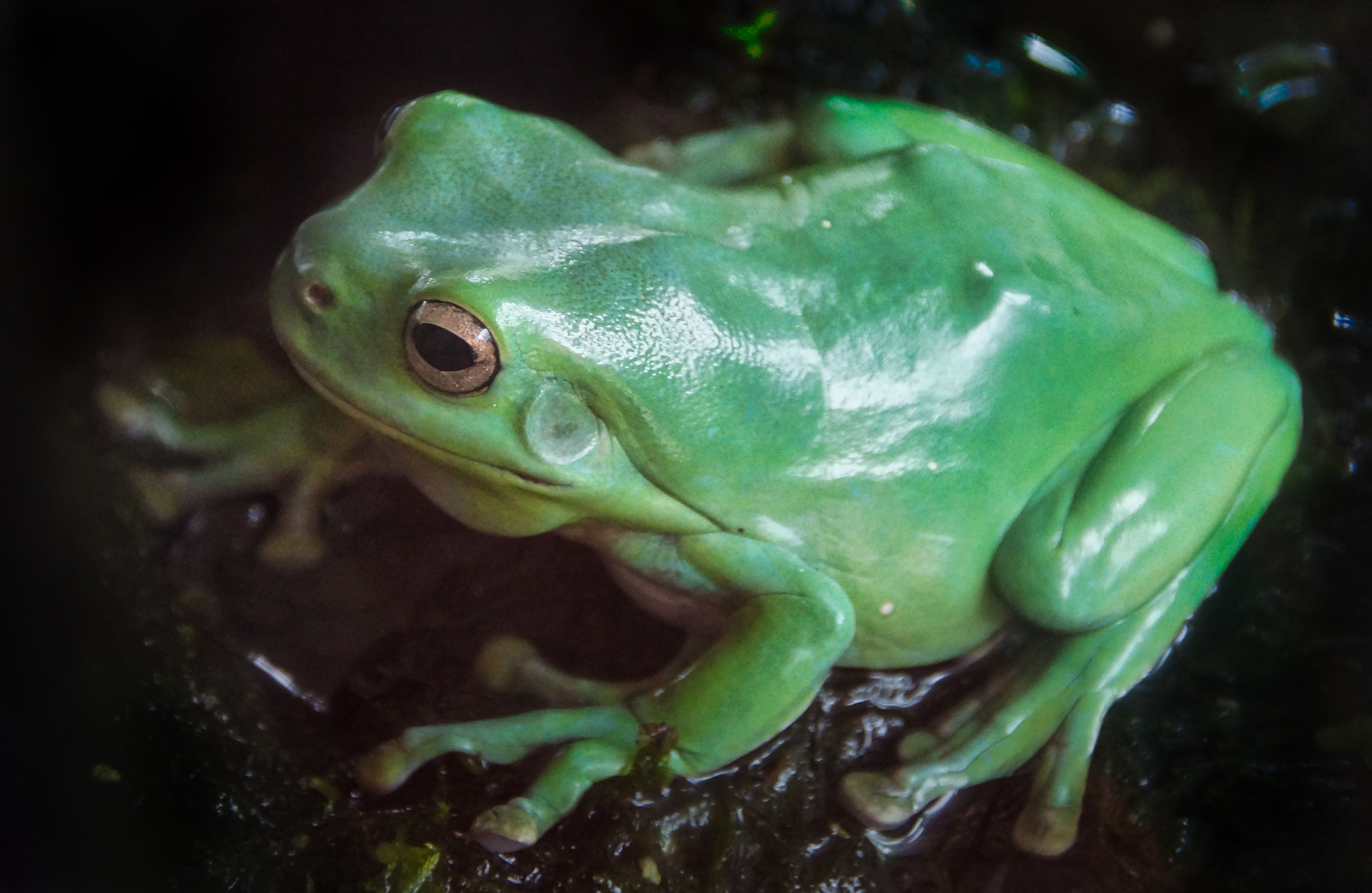
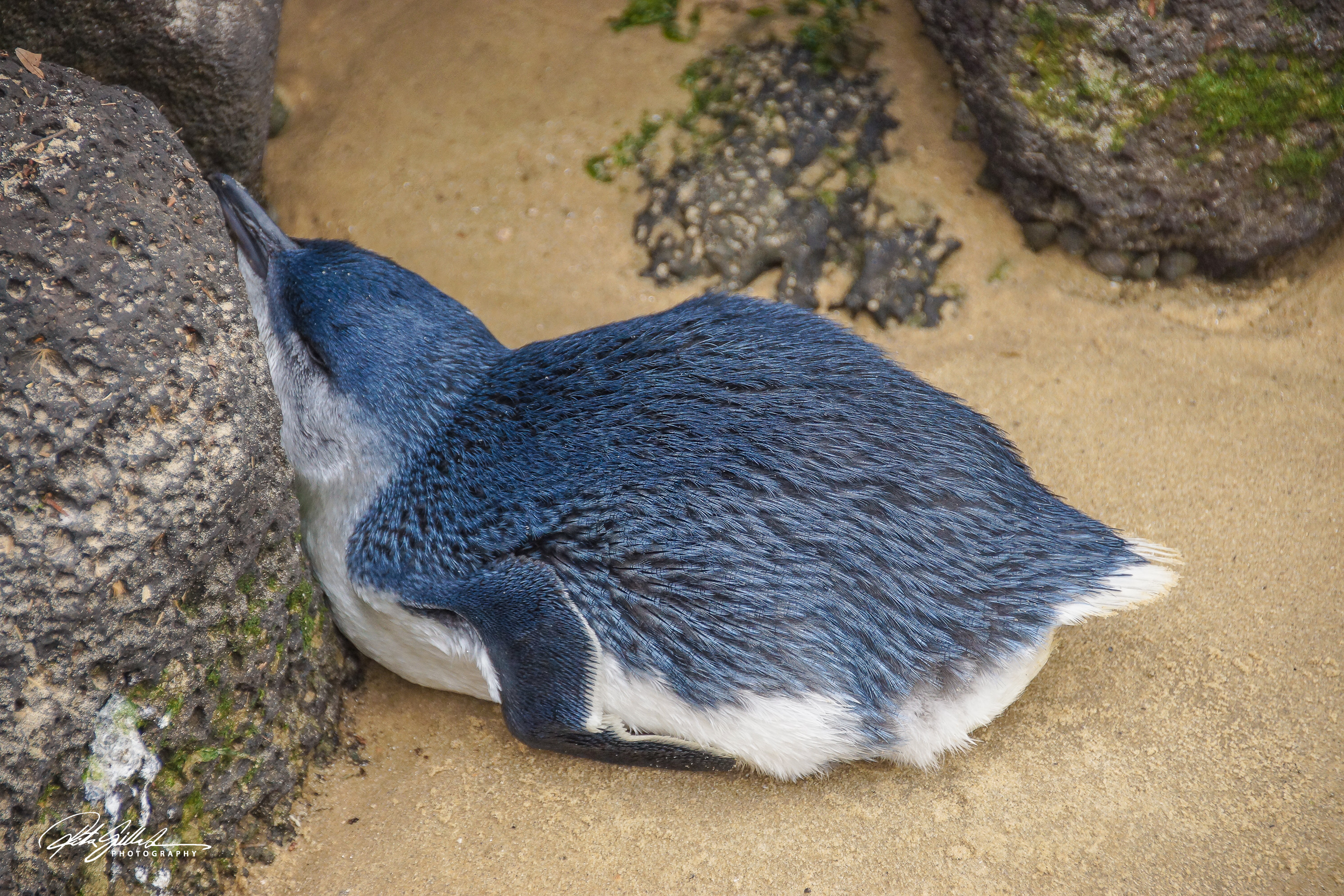
To see small things you often need to look down. I was really happy find this penguin in its natural habitat – in the nature. A crab on the rocks at a beach, and as well as this little green frog. Turtles. To see Koalas in the nature we found ourselves looking up.
This was from my previous post – but I am looking down 👇
SONY DSC
Cities are great places to look up or down. The ones below are from Melbourne.
Sea – Ocean, flowing water, waves.. love, just love watching it
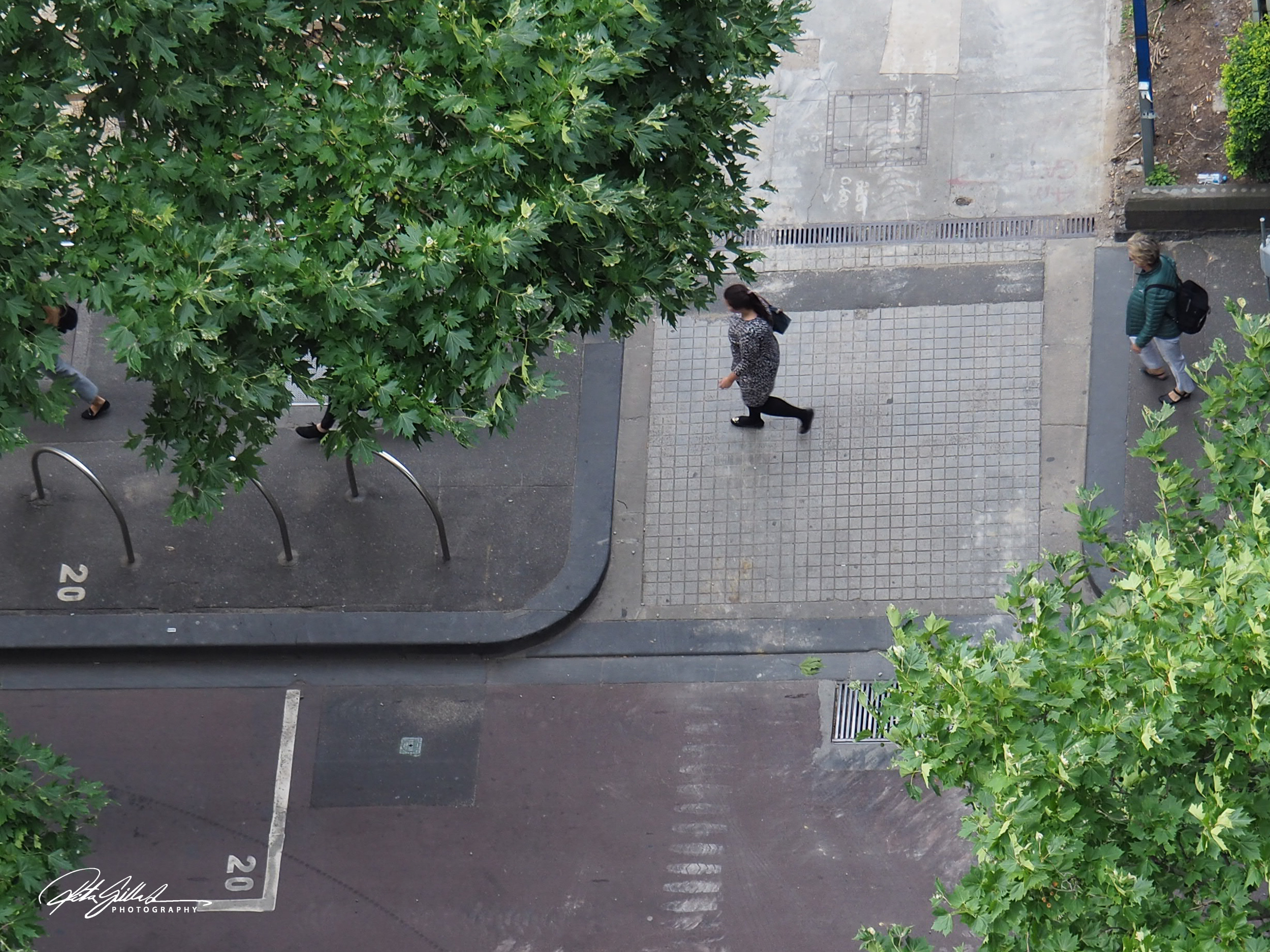
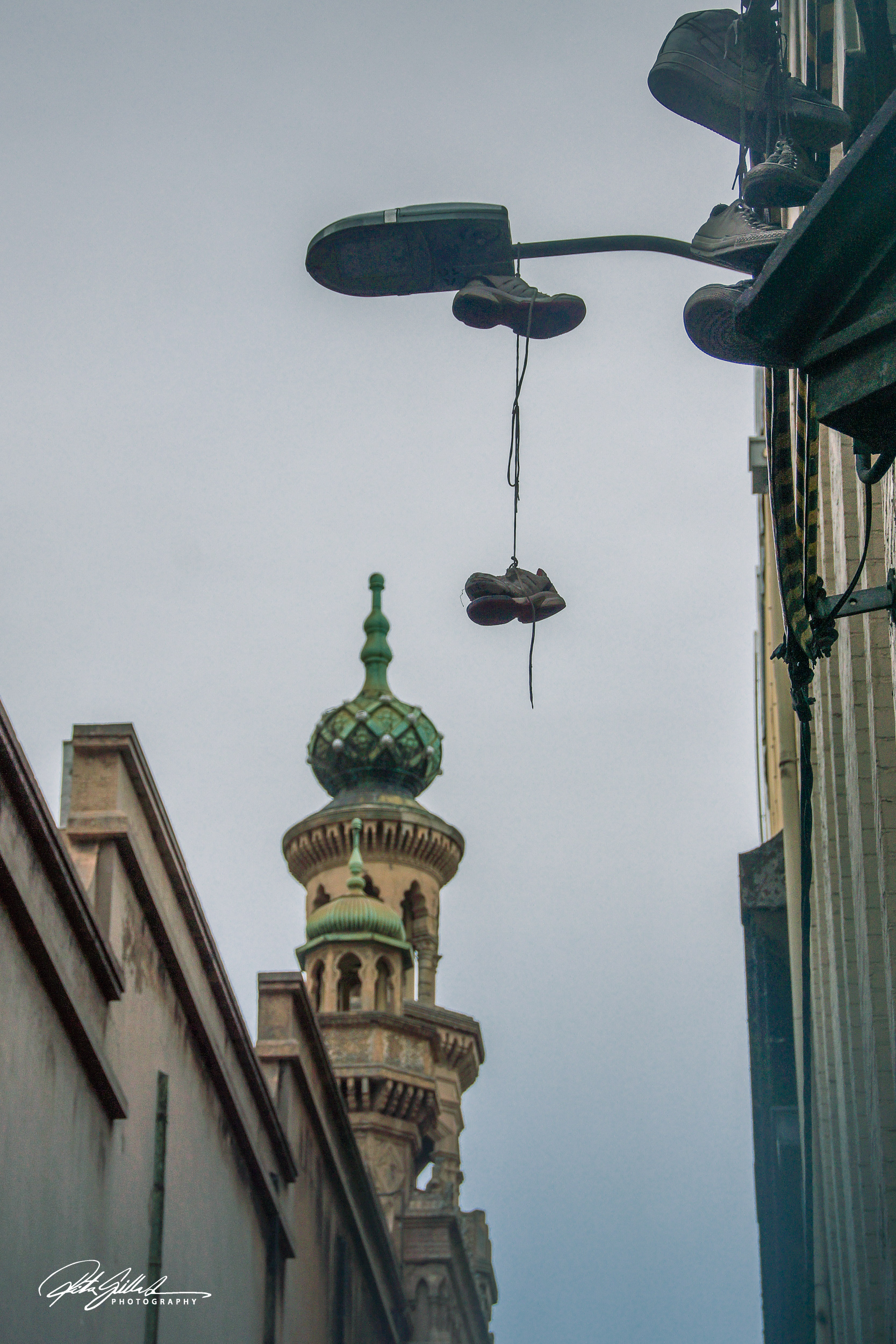
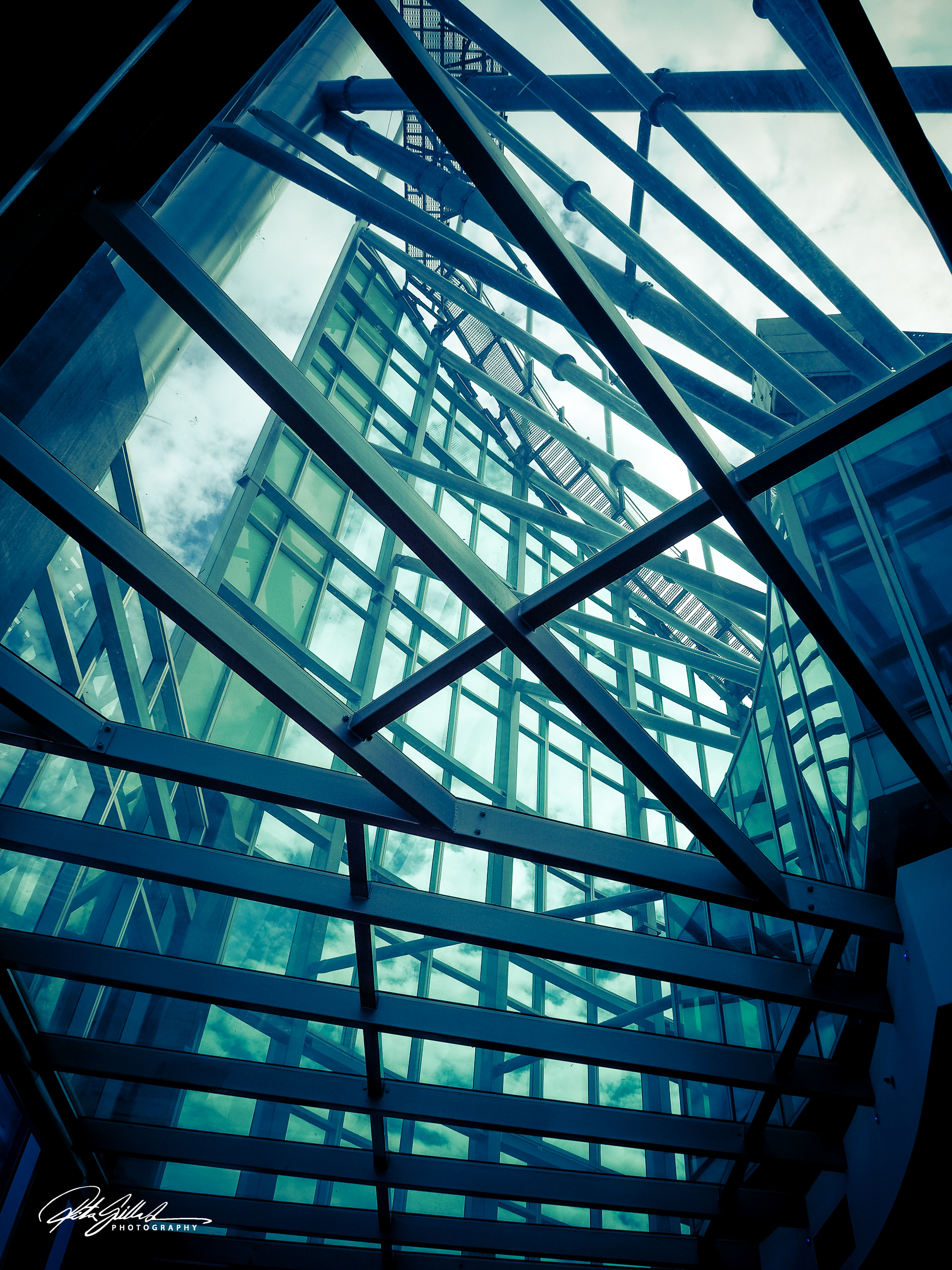
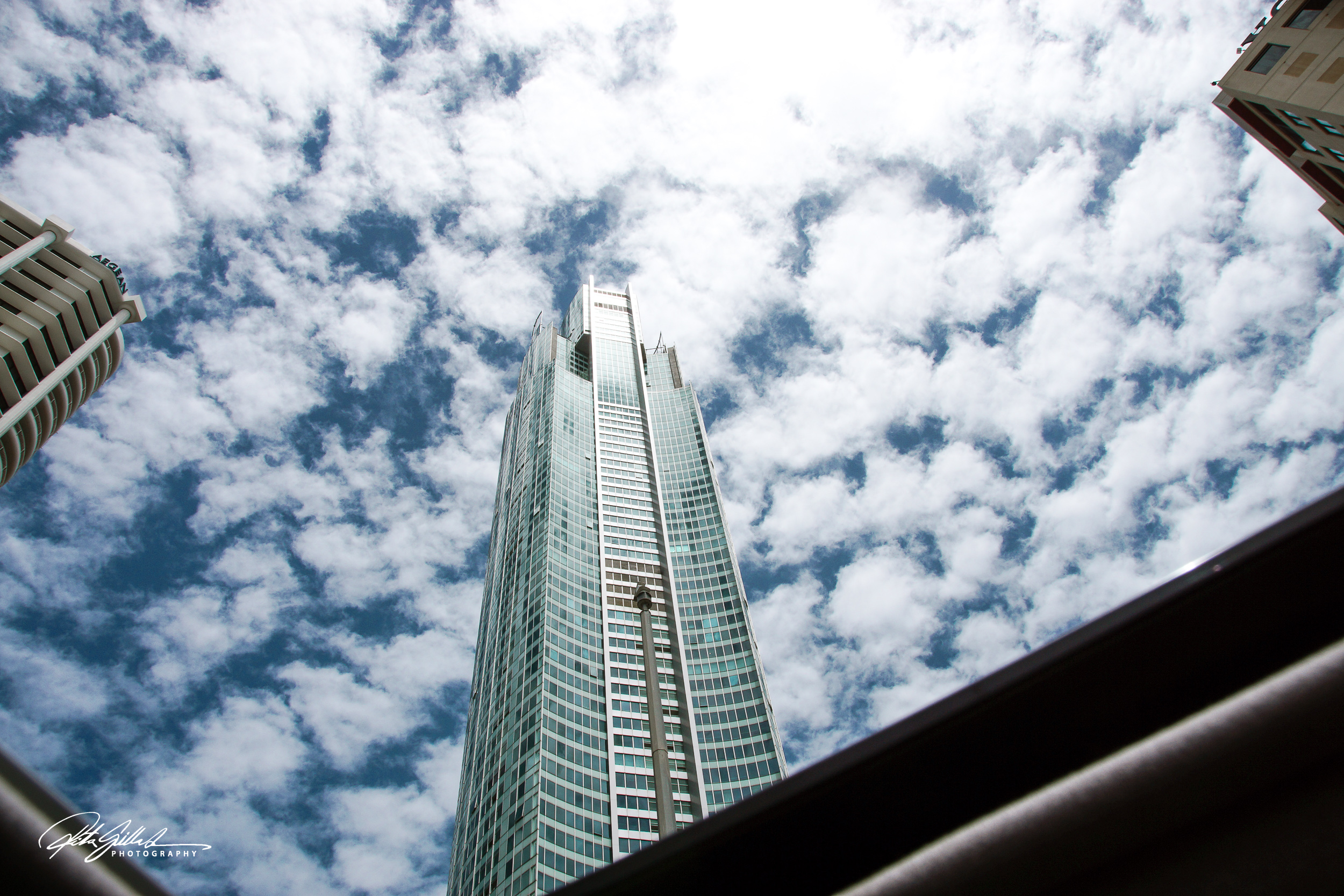
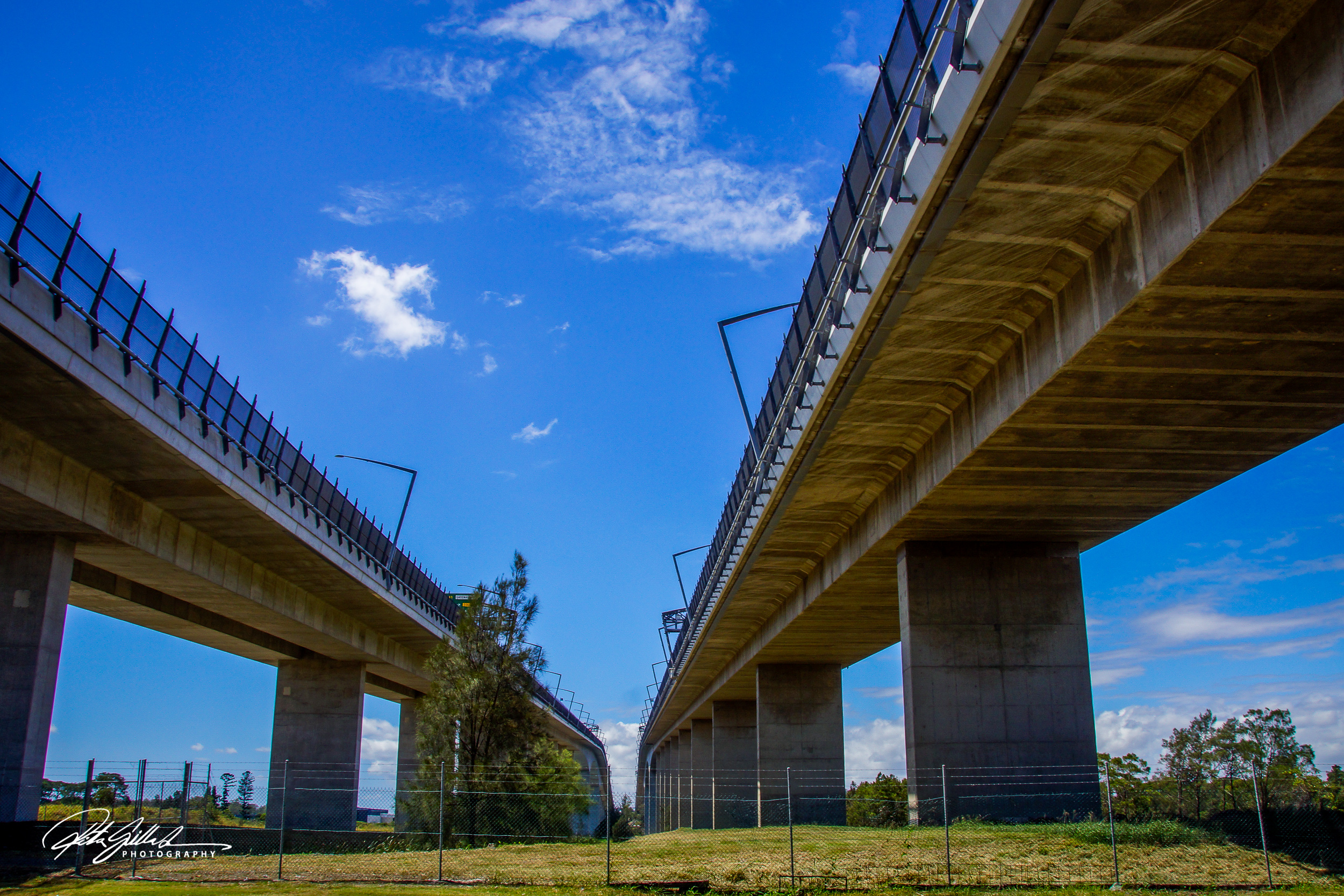
These are taken below or underneath the subject – architectural design choices.
Up and down that’s were your eyes go when looking for something to photograph.
Filling the frame in photography is a technique that can have different effects depending on how you use it.
It can help you to direct the viewer’s focus to your main subject, by eliminating distractions and negative space. It can also help you to accentuate simplicity in your composition, by highlighting the shapes, colors, textures, and details of your subject. It can also help you to create emotional impact in your image, by making your subject appear larger, closer, and more intimate.
Some of the techniques for filling the frame are: You can get closer to your subject, either physically or by using a zoom lens, to fill the frame with more of your subject. You can also crop your image during editing, to remove unwanted elements and adjust the composition.
Filling the frame in photography is a versatile and powerful technique that can enhance your images in many ways. However, it is not always the best choice for every situation. Sometimes, you might want to leave some negative space or background in your image, to create a sense of context, depth, or contrast.
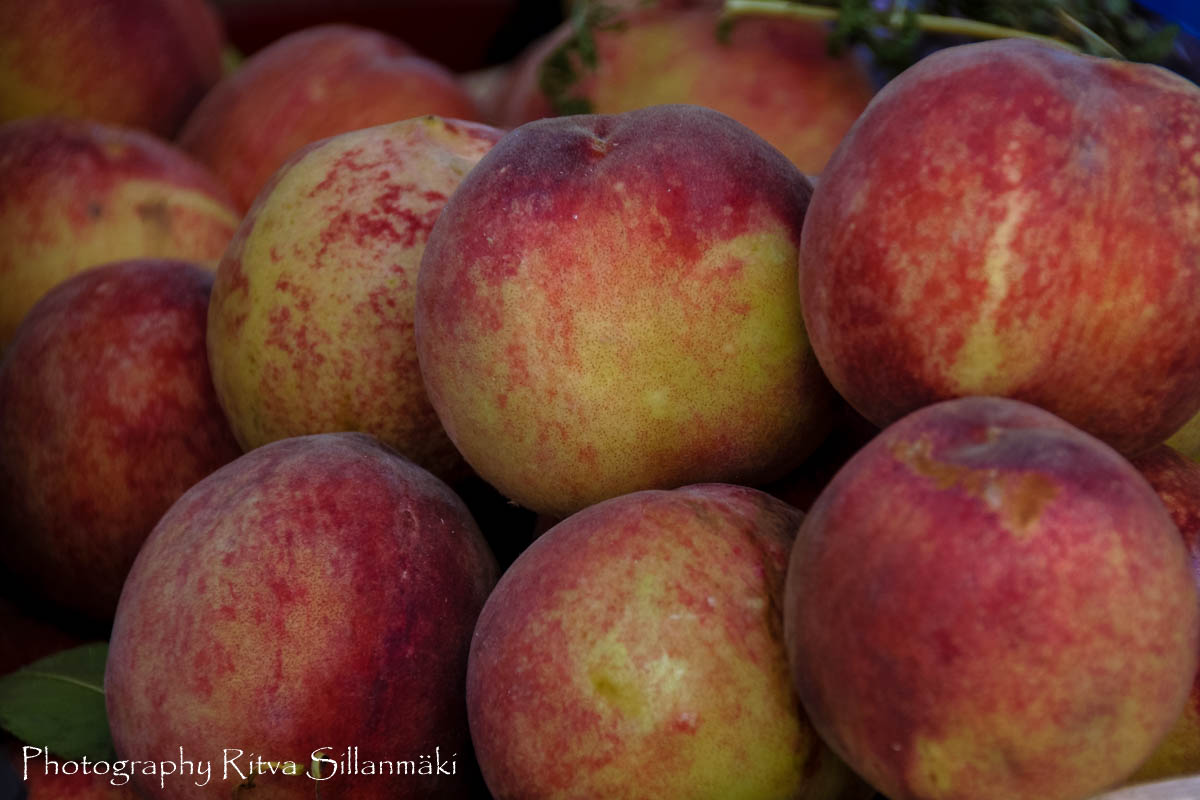
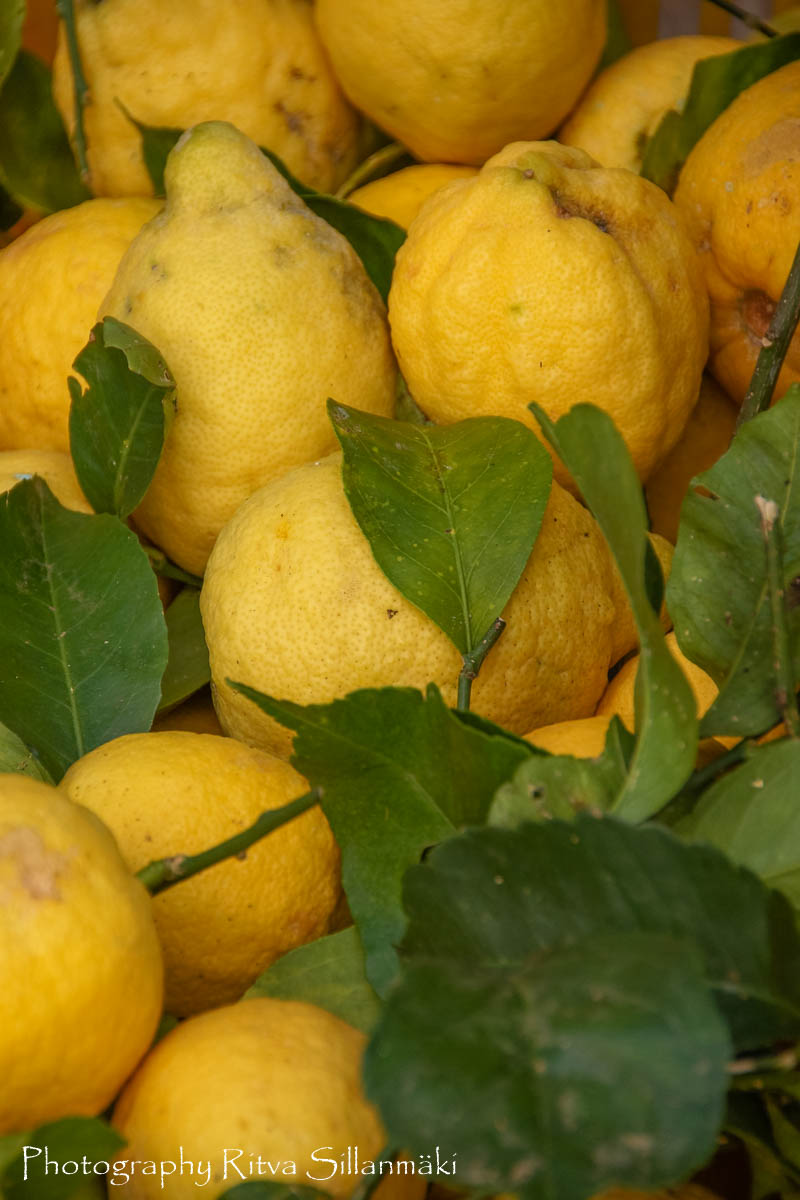
I already posted this once, it is a very recent shot and I am very happy with it . I used crop technique to get the result. As with the shots below of fruits, berries and vegetables You can also use a macro lens to fill the frame with small subjects, such as flowers, insects, or jewelry.
These are taken below or underneath the subject – architectural design choices.
Traffic below
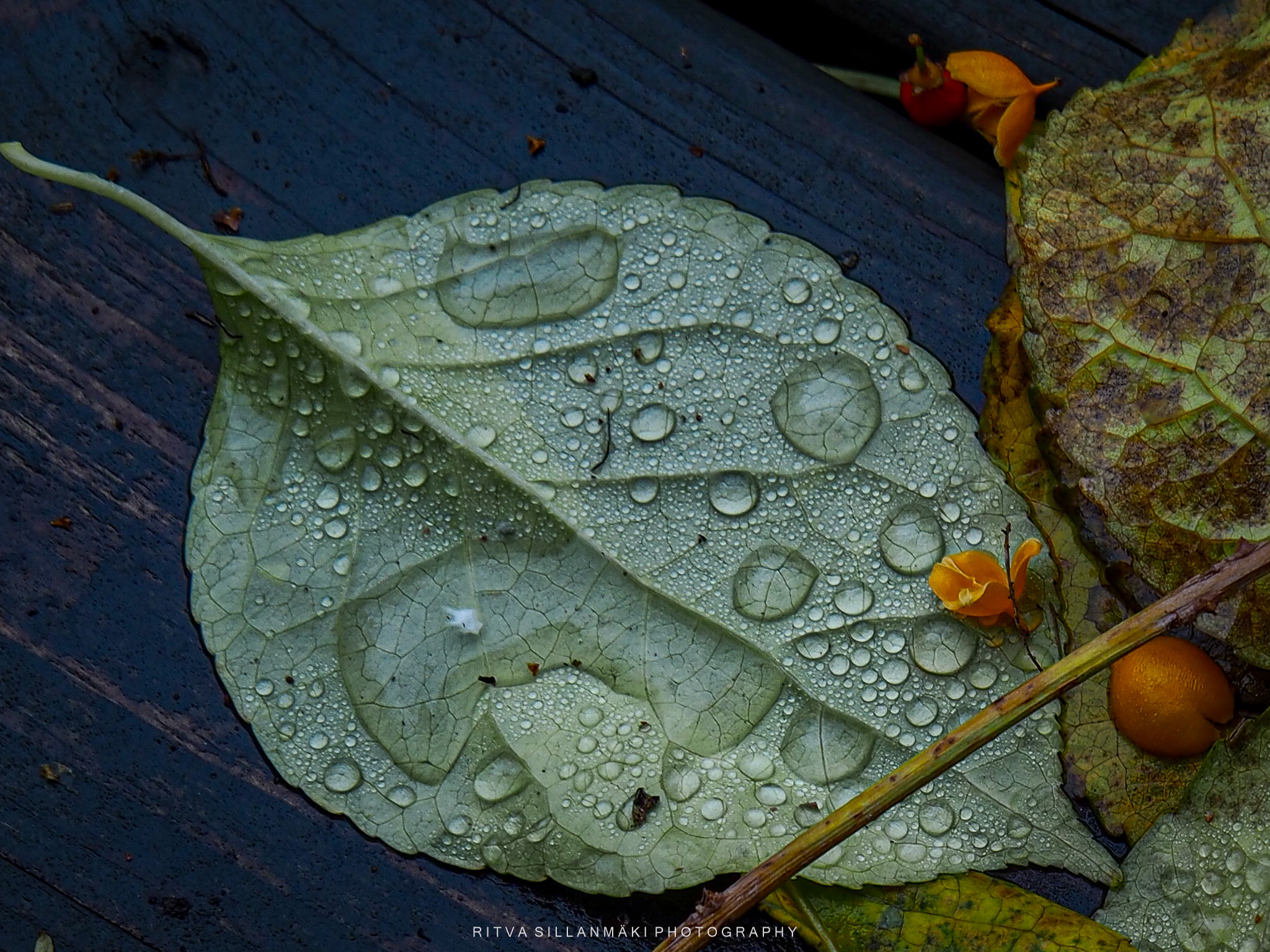
Artistic droplets
I feel this is a full frame even though a small part of the plant is in focus.
Face is the first thing that came to mind, we are all a bit lopsided, right. It has been demonstrated in photo manipulations that symmetric face is odd. I have no photo for this or the interior one, but they came to mind first about the word asymmetrical.
In fact, we’d argue that asymmetrical (yet balanced) rooms are among the most interesting, unique, and elevated spaces. With an asymmetrical approach, you need to reject the literal, mirror-image equilibrium and seek out balance in more abstract terms.
We are exploring asymmetry with Donna. I liked this – Asymmetry – an informal sense of balance.
I really don’t think about any style when taking a photo, I only think about a composition that is pleasant to my eye. In this post I am sharing photos from Brisbane.
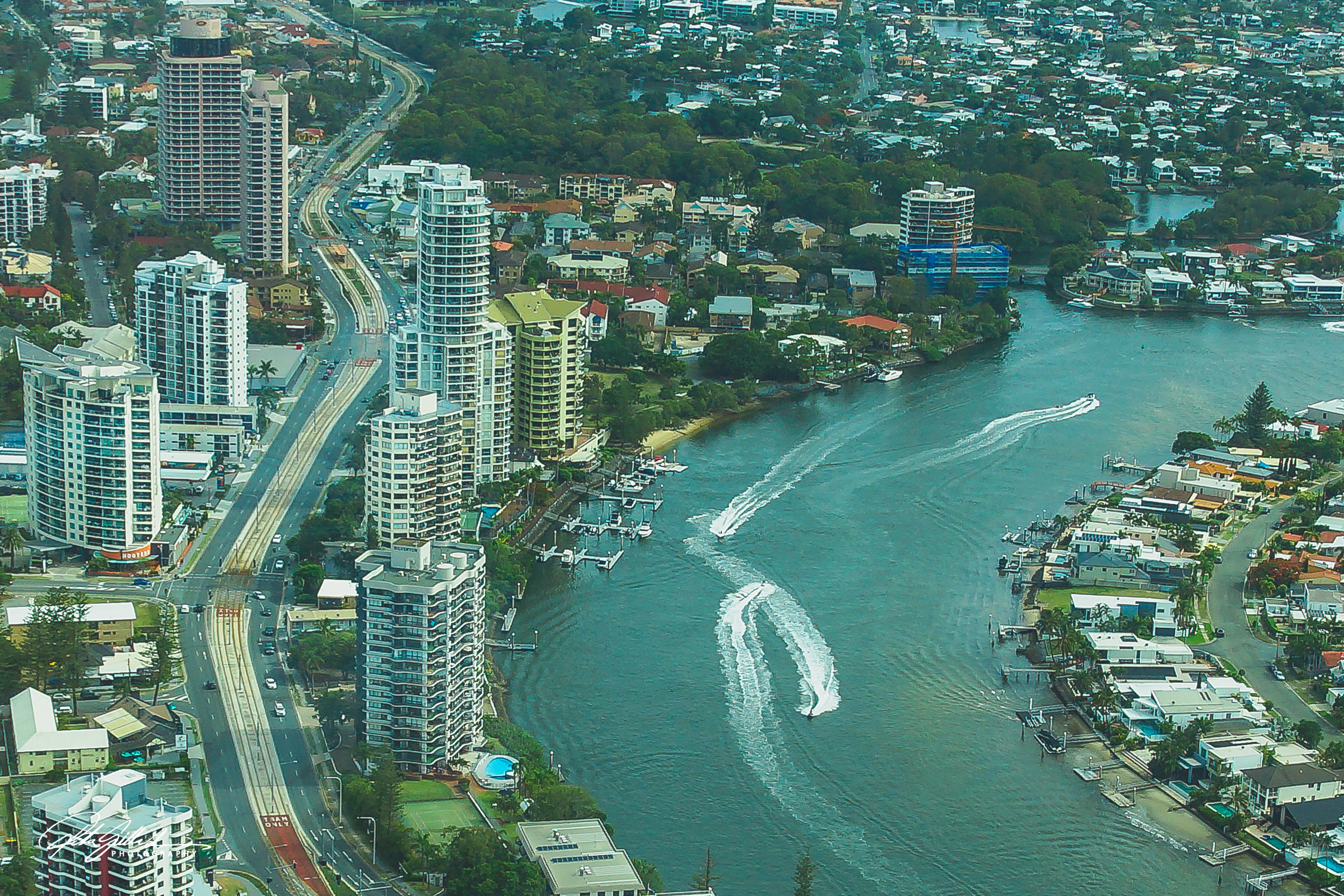
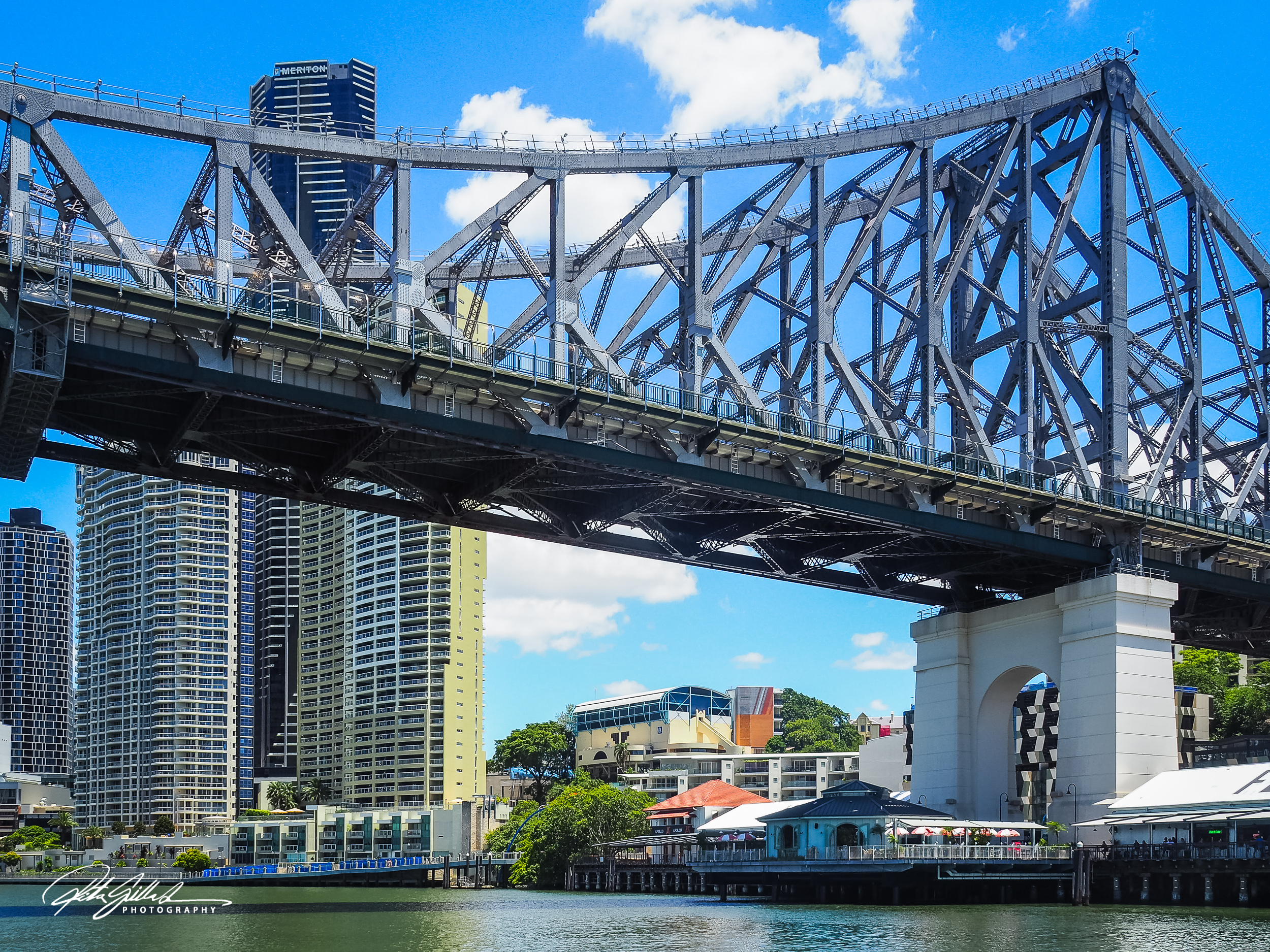
My first image is of The Brisbane River is the longest river in South-East Queensland, Australia, and flows through the city of Brisbane, before emptying into Moreton Bay on the Coral Sea
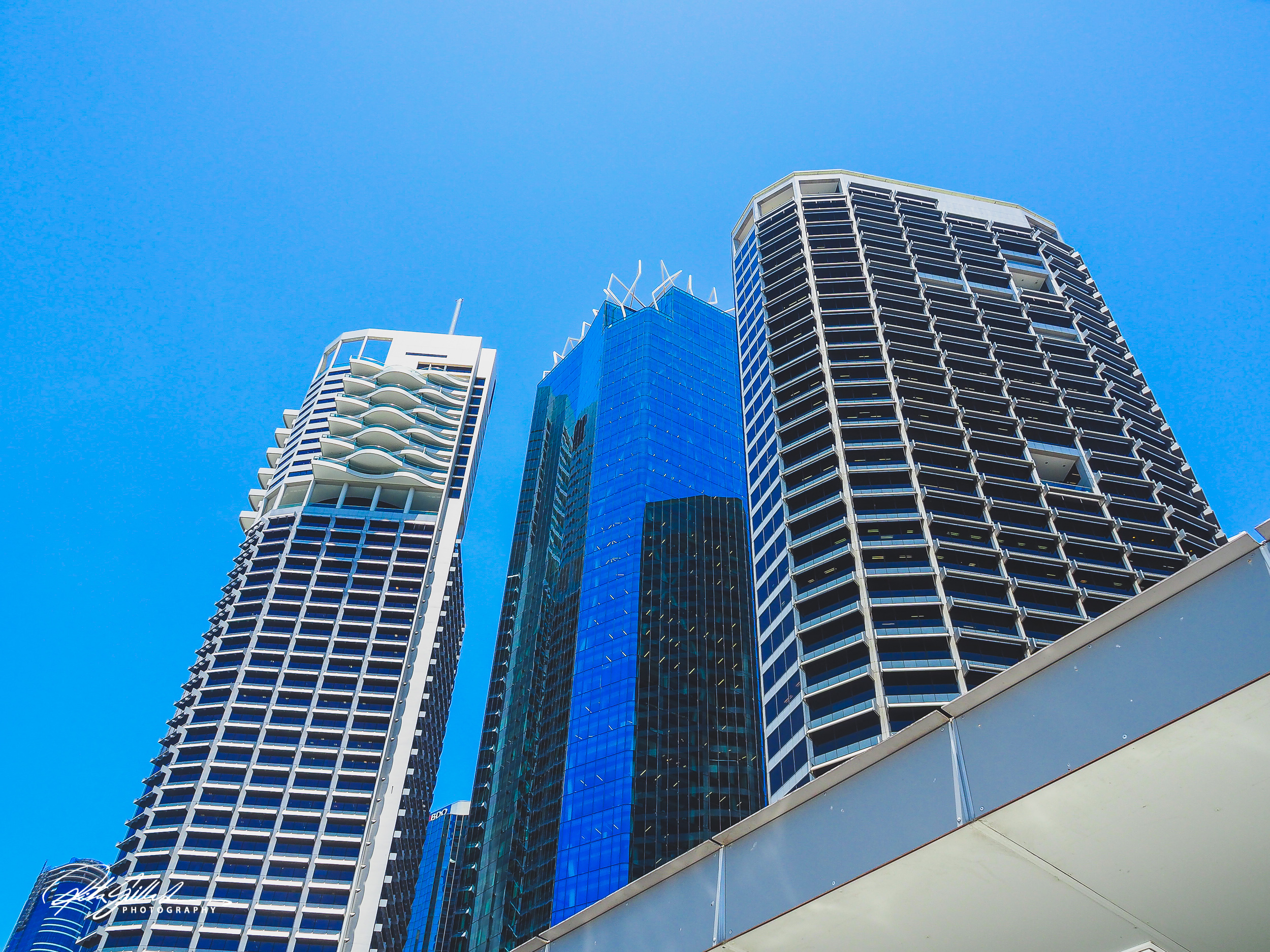
These are taken below or underneath the subject – architectural design choices.
Traffic below
Traffic , this is for certain not symmetrical 🙂
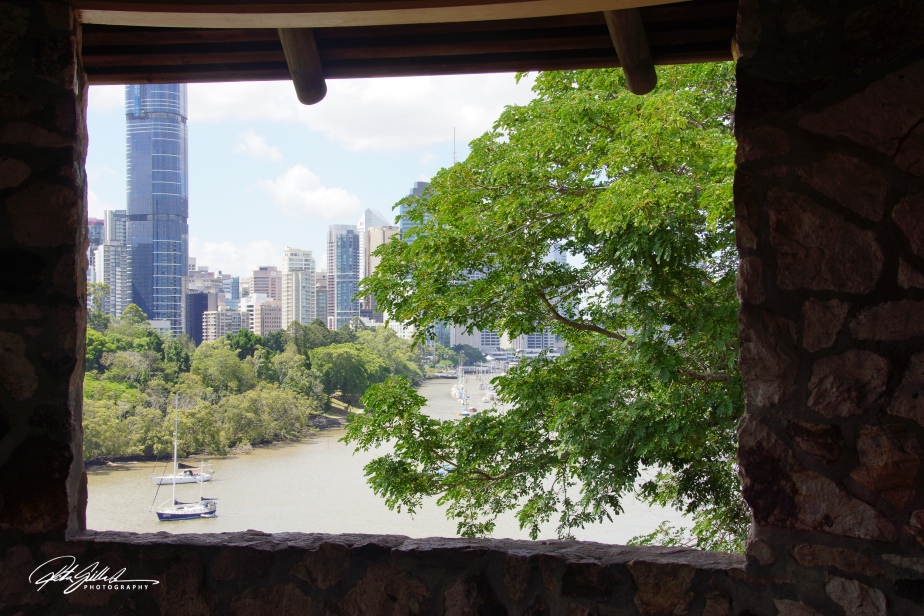
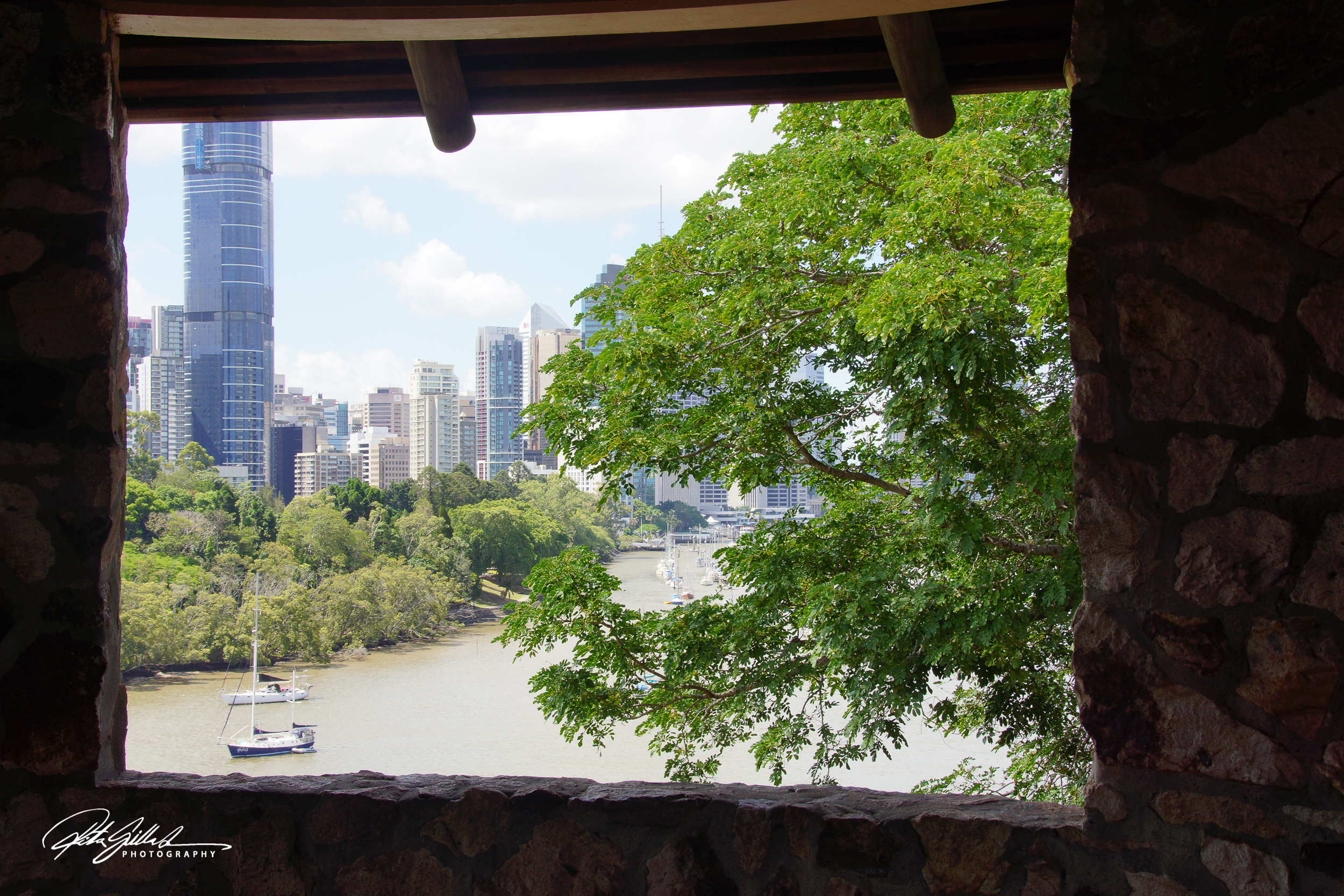
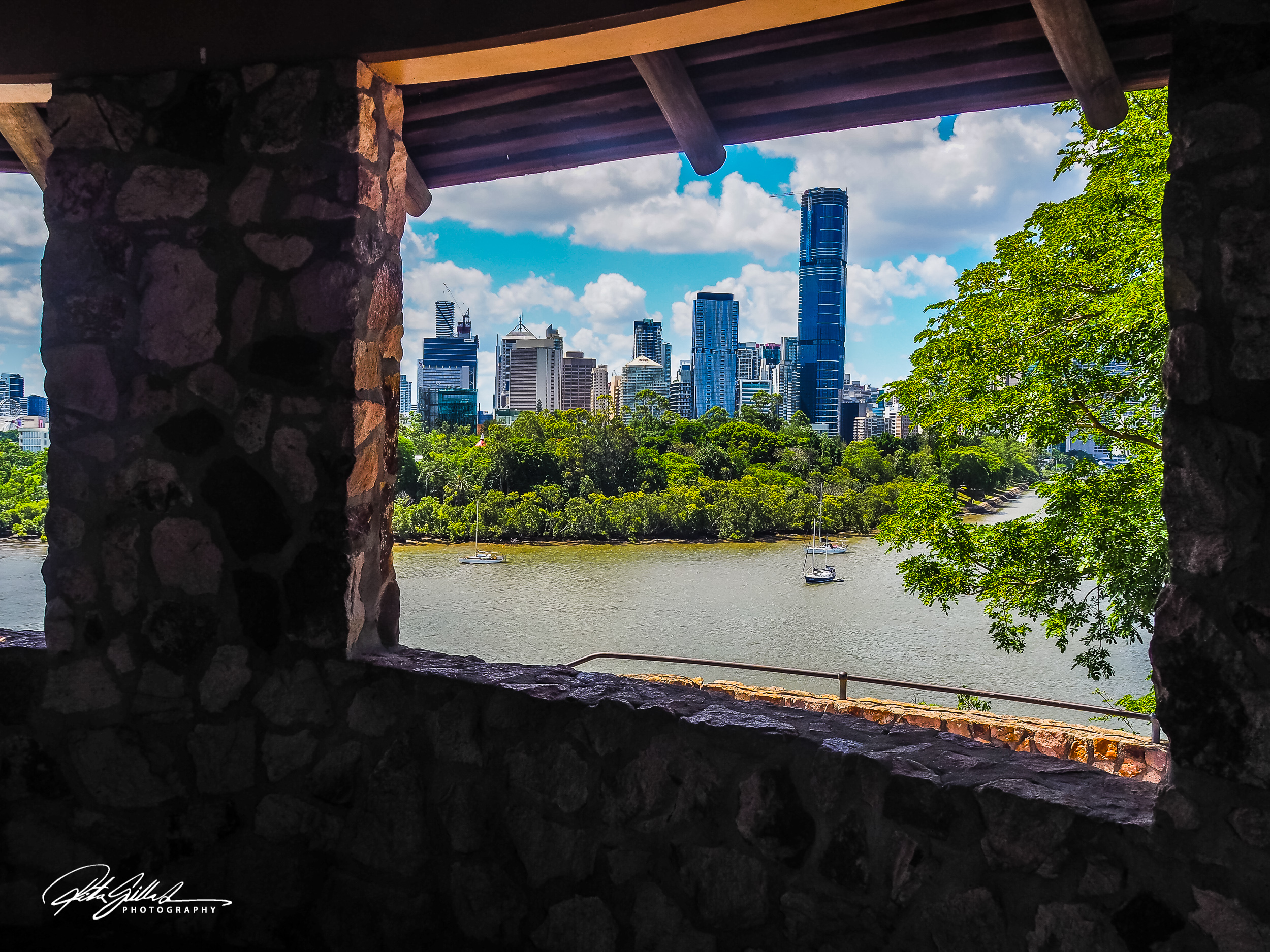
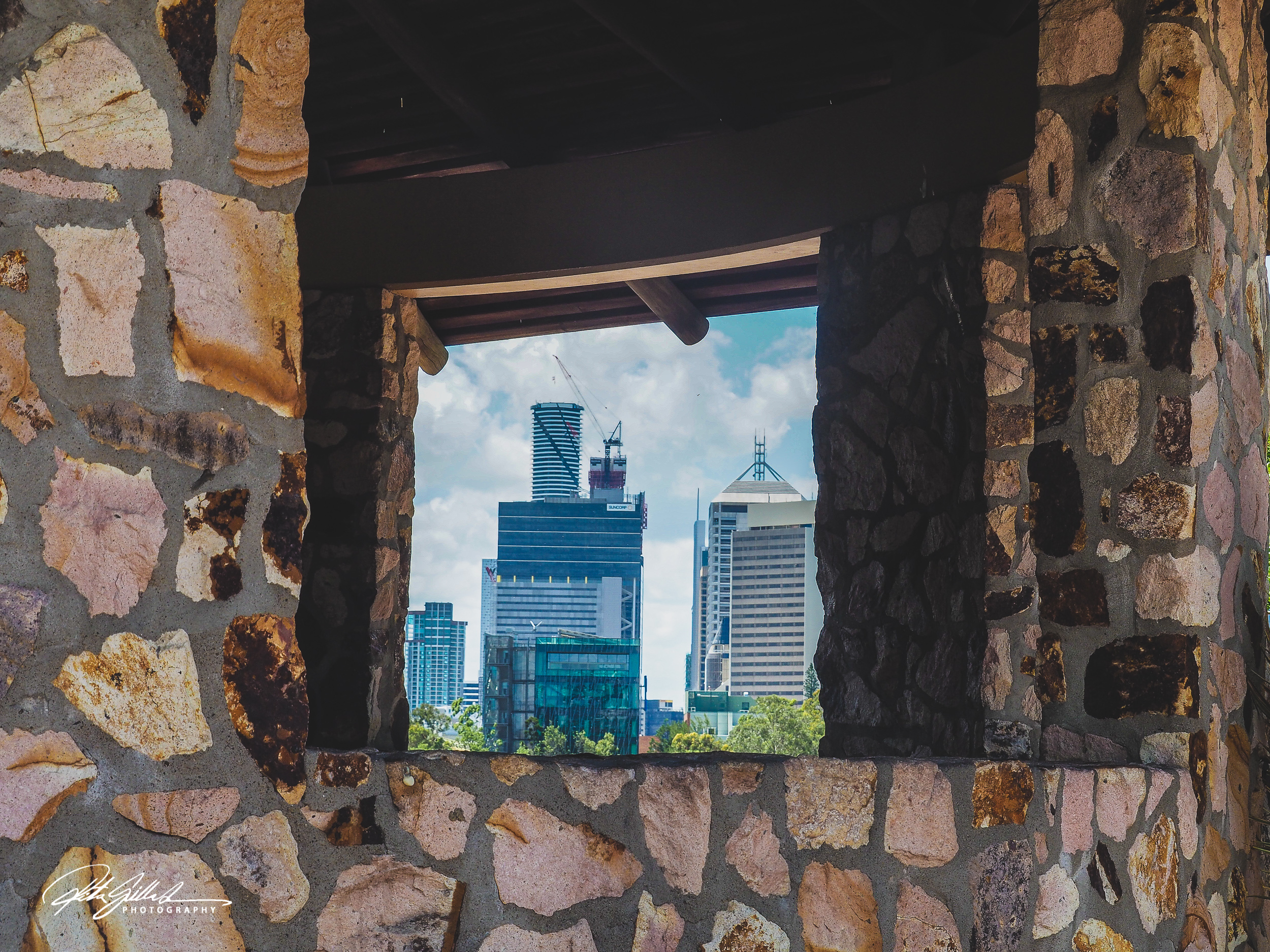
My cousin took us all around Brisbane, he knew the town and all great spots for photos and as he had been builder on many of the buildings we saw, he had so much knowledge about them, This place offered a great framed view of the city. But I think I got it right in terms of these not being symmetric, but the opposite.
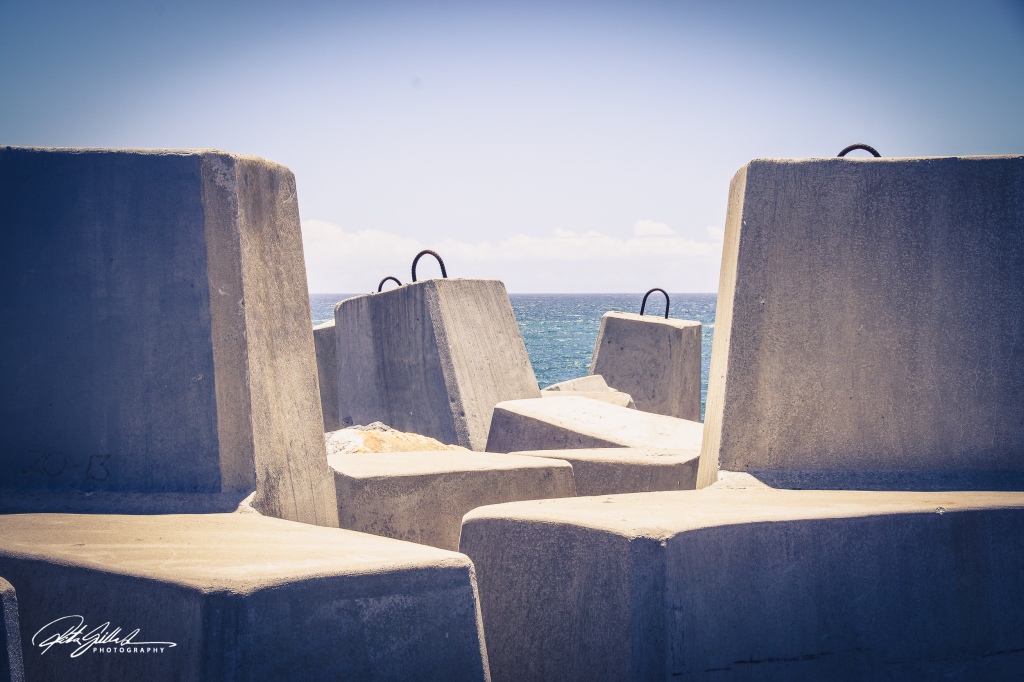
concrete blogs by the sea.
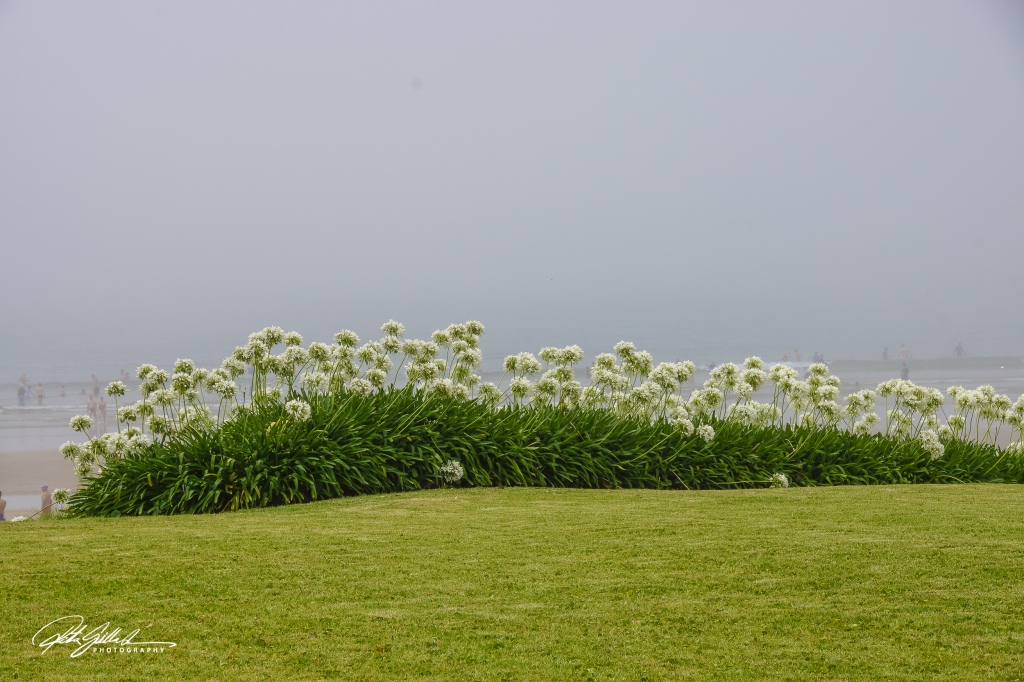
My last one is an image of flowers by the beach on a misty morning
Anne wrote: My challenge for you, this week, is to find your own fascinating structures that capture your attention, tell a story or are just beautiful. You can capture new scenes or take a trip down memory lane in your photo archives. Lens Artists Challenge #251: Buildings and Other Structures
I am going to be brief worded, I have had the flu now for over a week so I am not at my best, it really drains you from all energy. SO I apologize for lack of responses to comments I’ve received. I will get to them.
So many to choose from, and without any reason I went with these. Enjoy.
Urajärven Kartano
Urajärvi Manor is one of the oldest manor museums in our country, having bequeathed their home for museum use by Lilly and Hugo von Heideman. The Empire-style mansion is located in Itä-Asikkala, Urajärvi.
The current main building was completed in 1810, the earlier one burned down and its exact location is unknown. The main building was initially a one-story building with a mansard roof. It was extended and raised into a two-story empire-style building in 1839-40 when the new manor owner Axel von Heideman moved into the house with his wife Sofia. The second floor was built only for grandeur and the fashion of the time. There are living rooms only at the ends.
from the mansion garden
The English-style park of Urajärvi Manor Museum with its romantic walkways and viewpoints is an experience worth seeing and experiencing
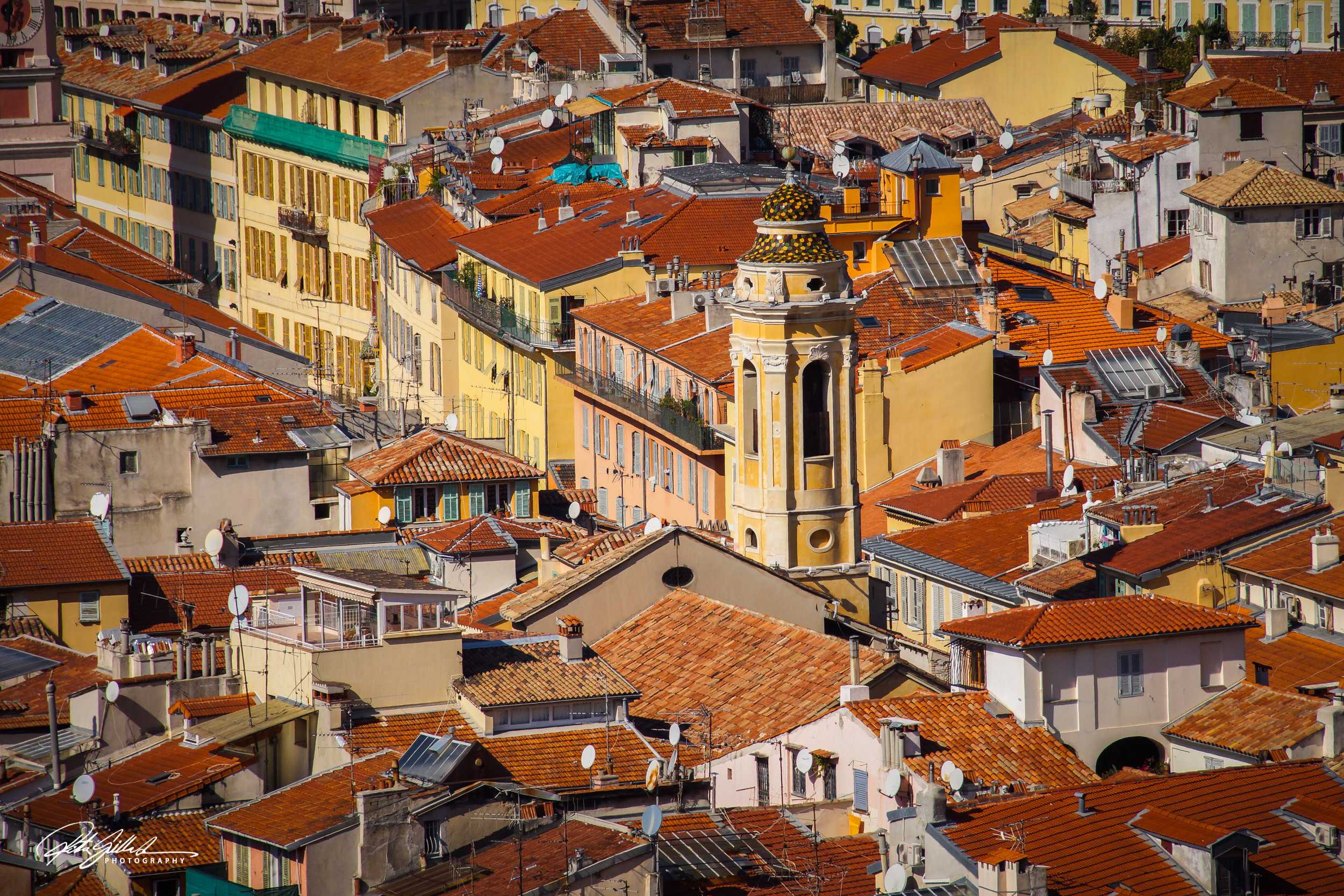
A quick stop to old town int Nice in France, I am drawn to the old architecture, the colors and rooftops .
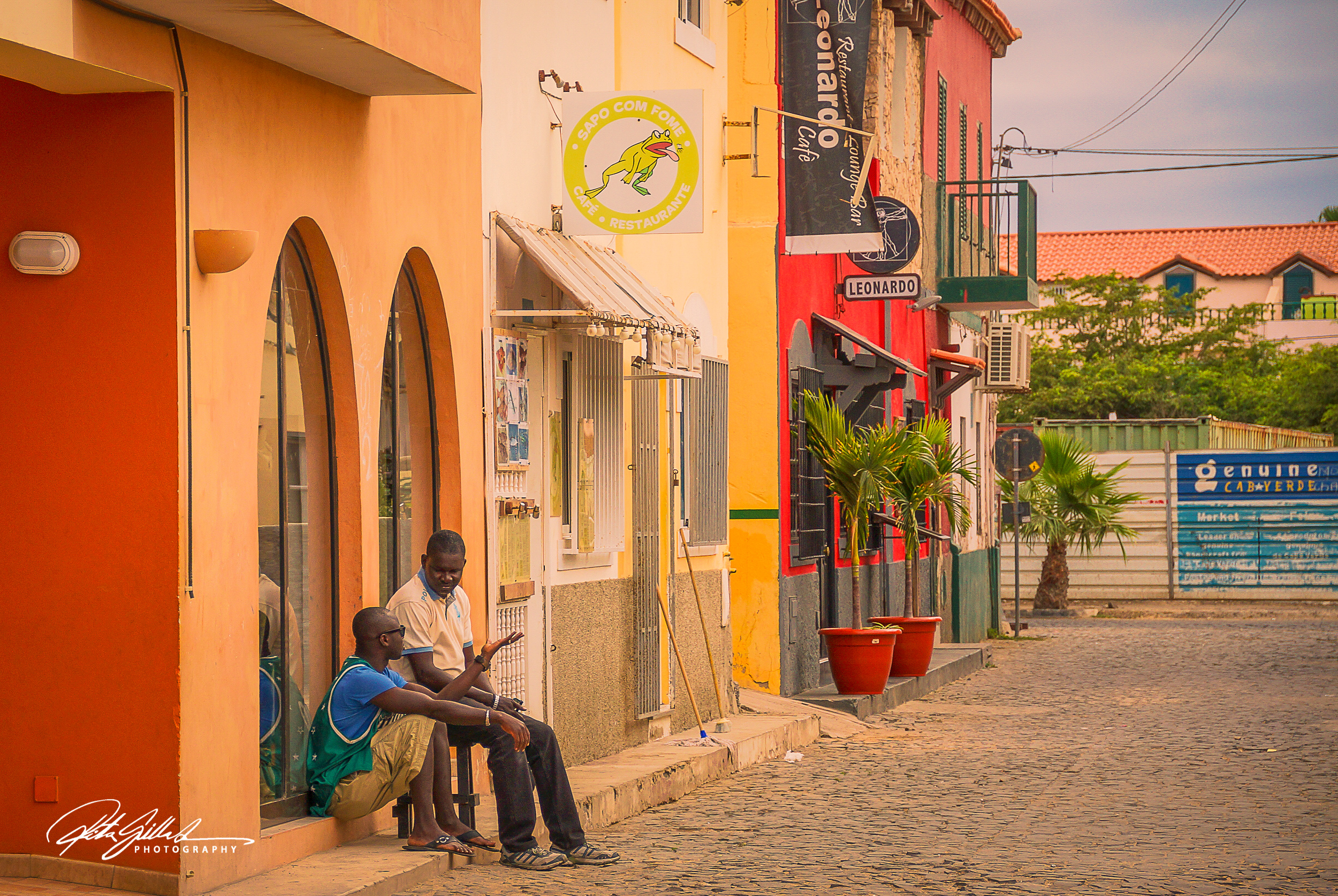
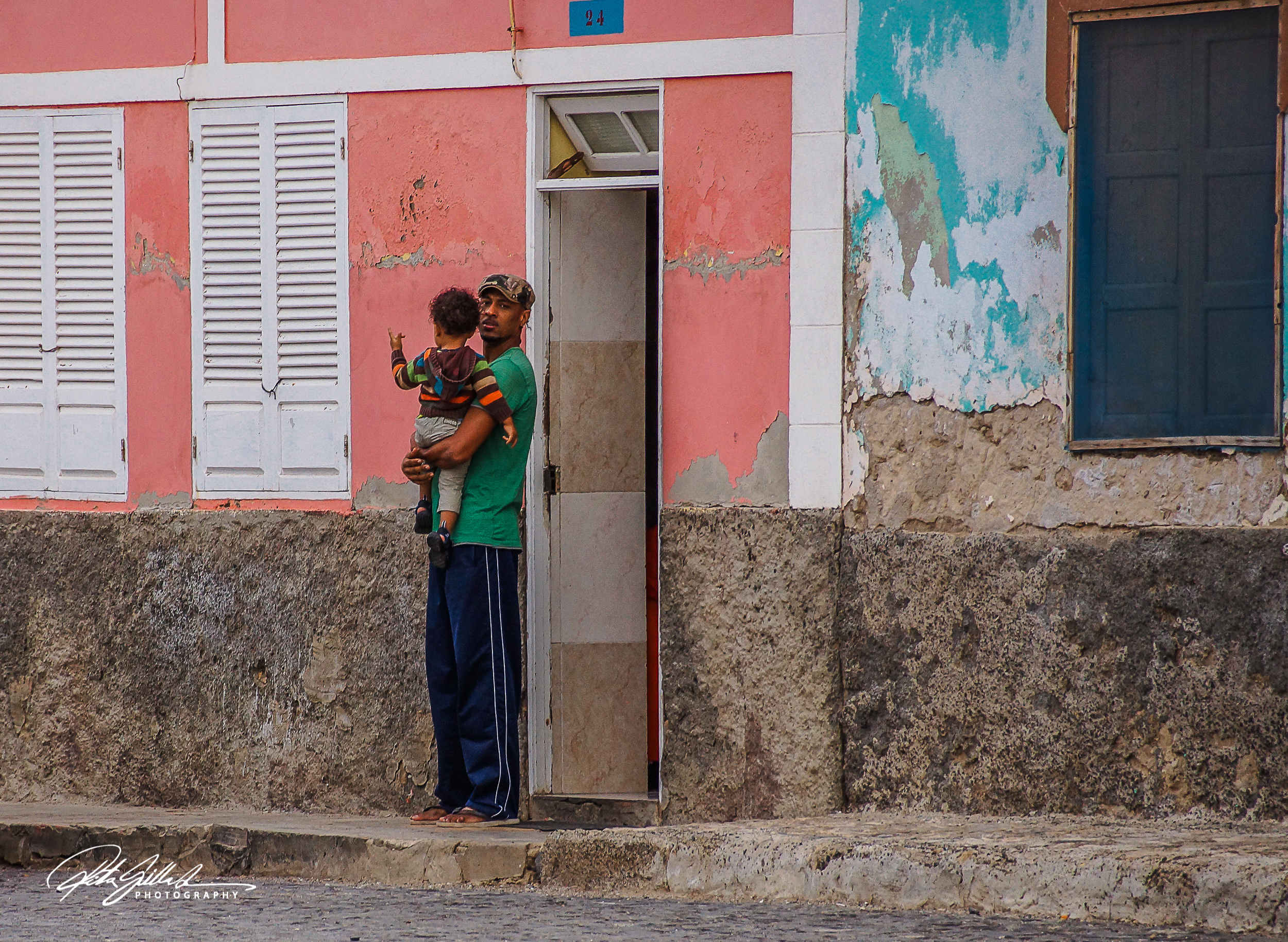
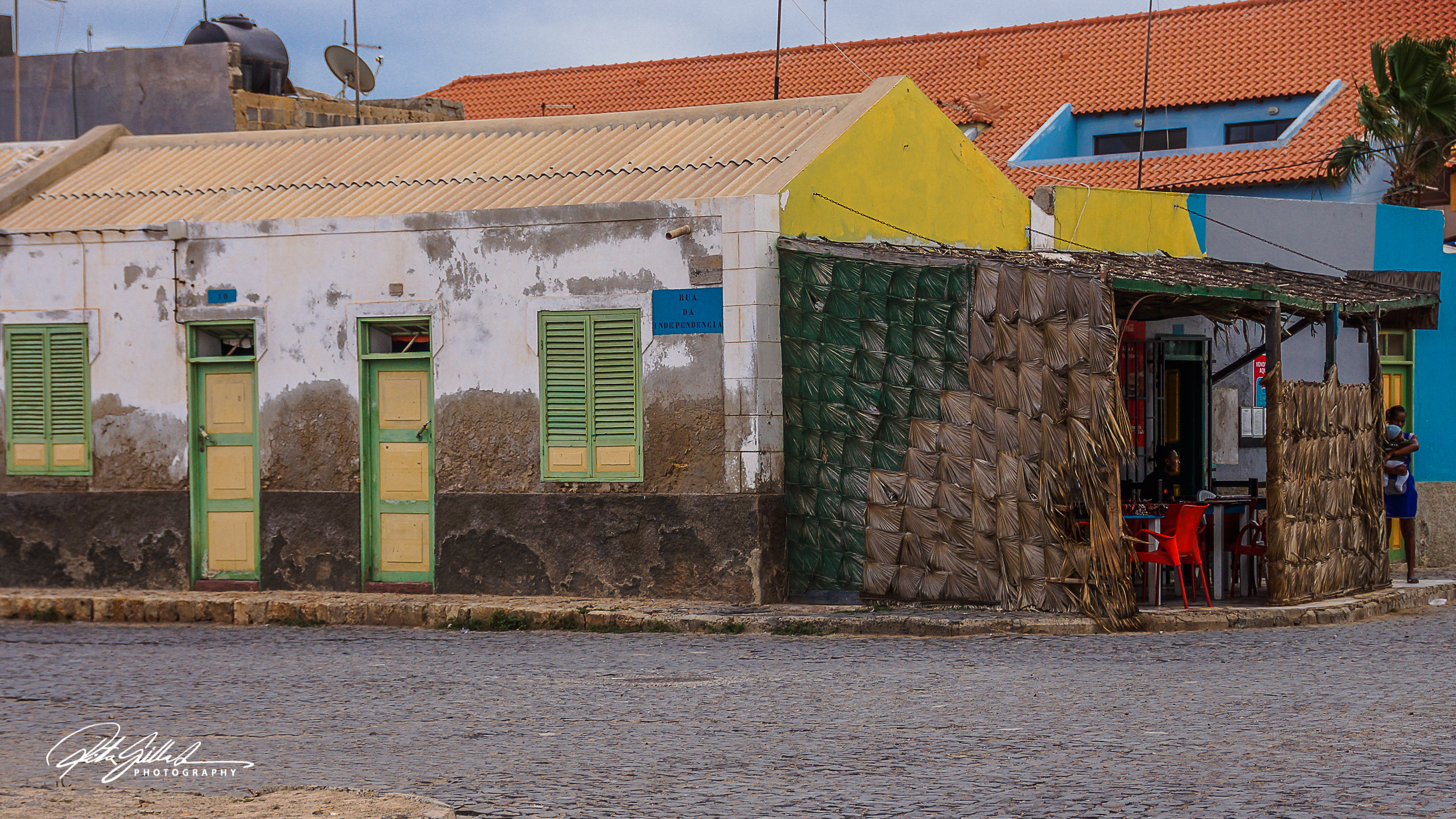
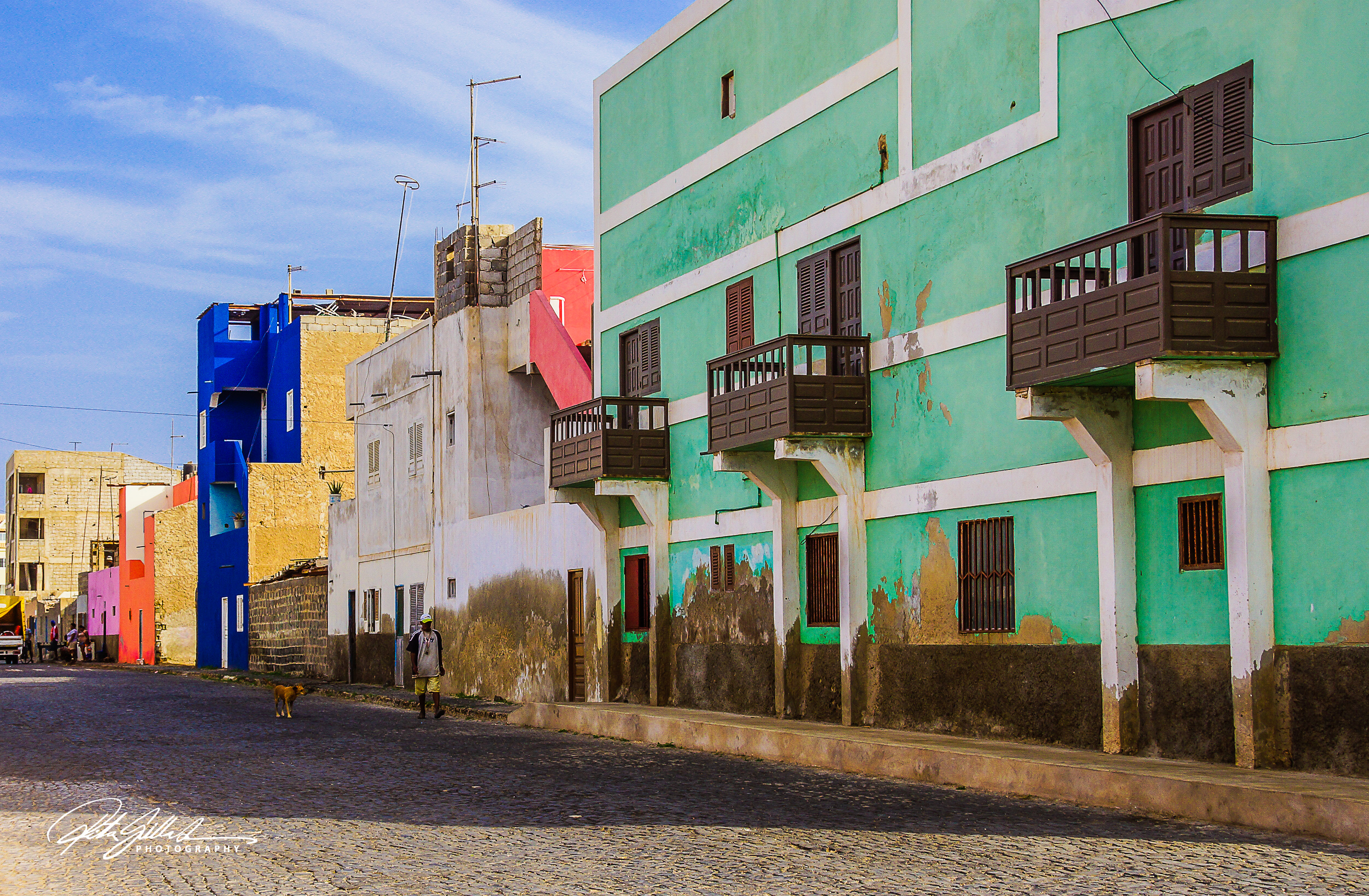
the colorful and slightly dilapidated houses of Cape Verde attracted me and almost asked me to photograph them. Some had been nicely renovated.
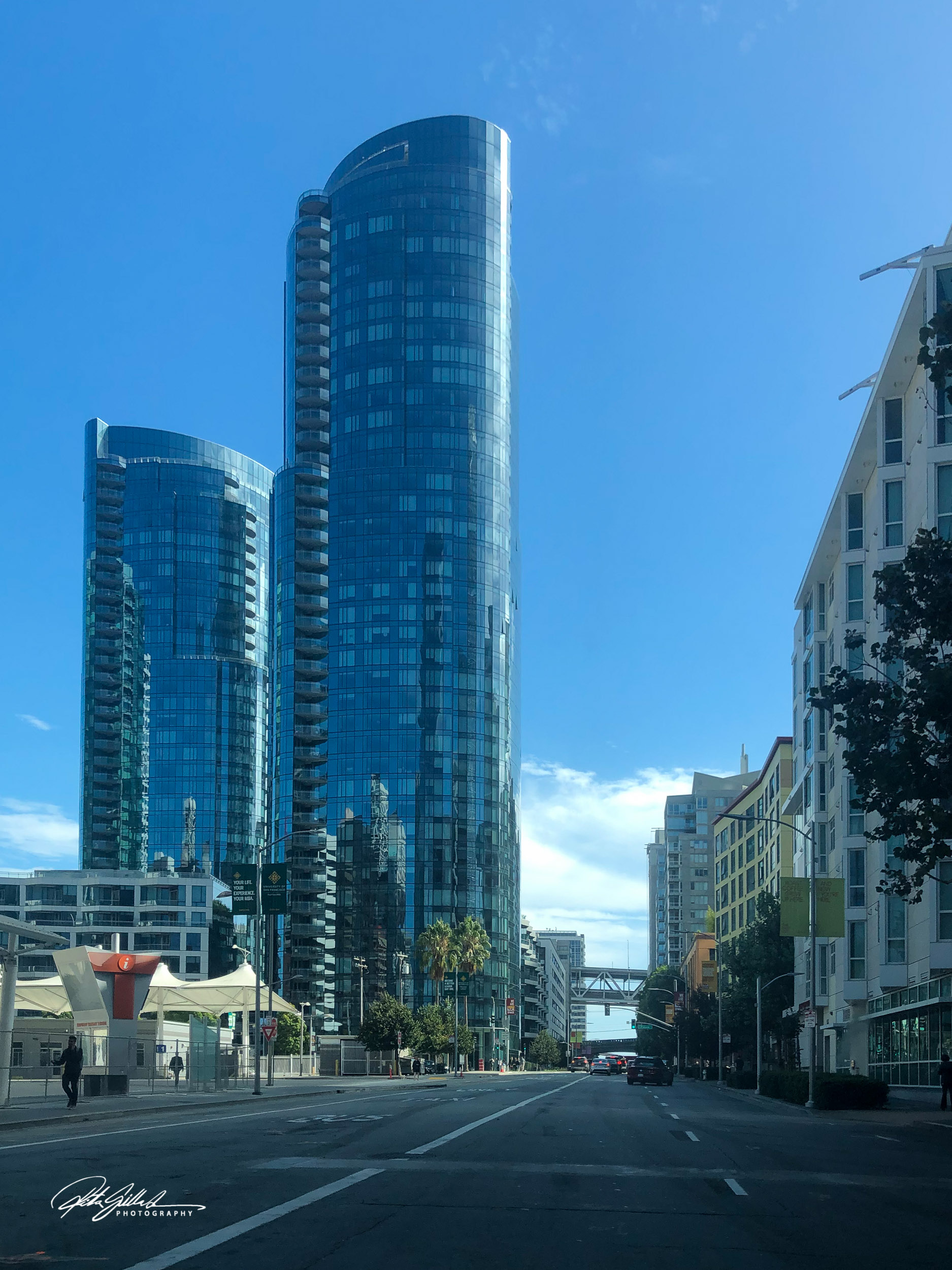
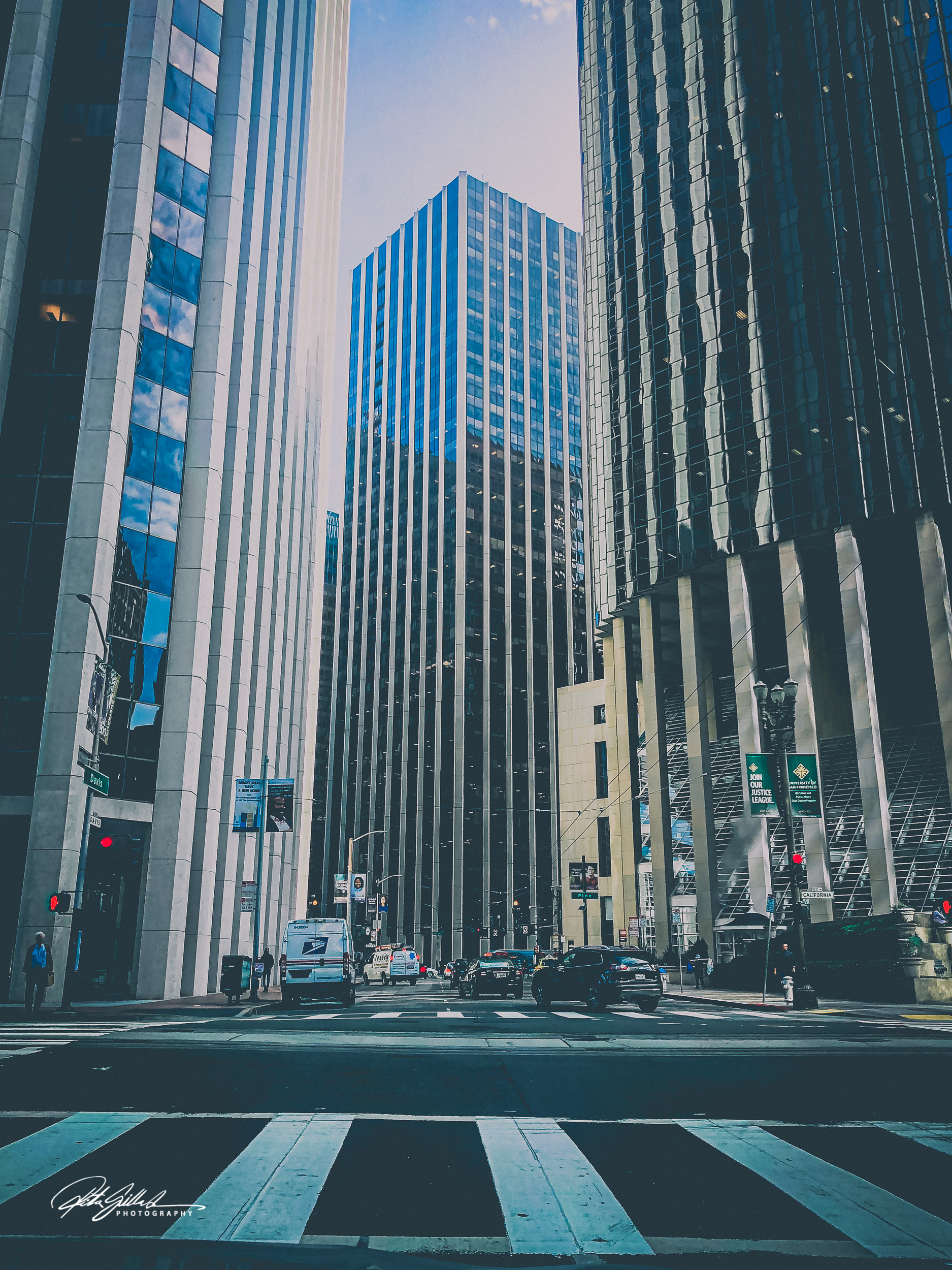
These two modern high-rise building’s are from San Francisco, they are impressive, but they lack warmth and soul
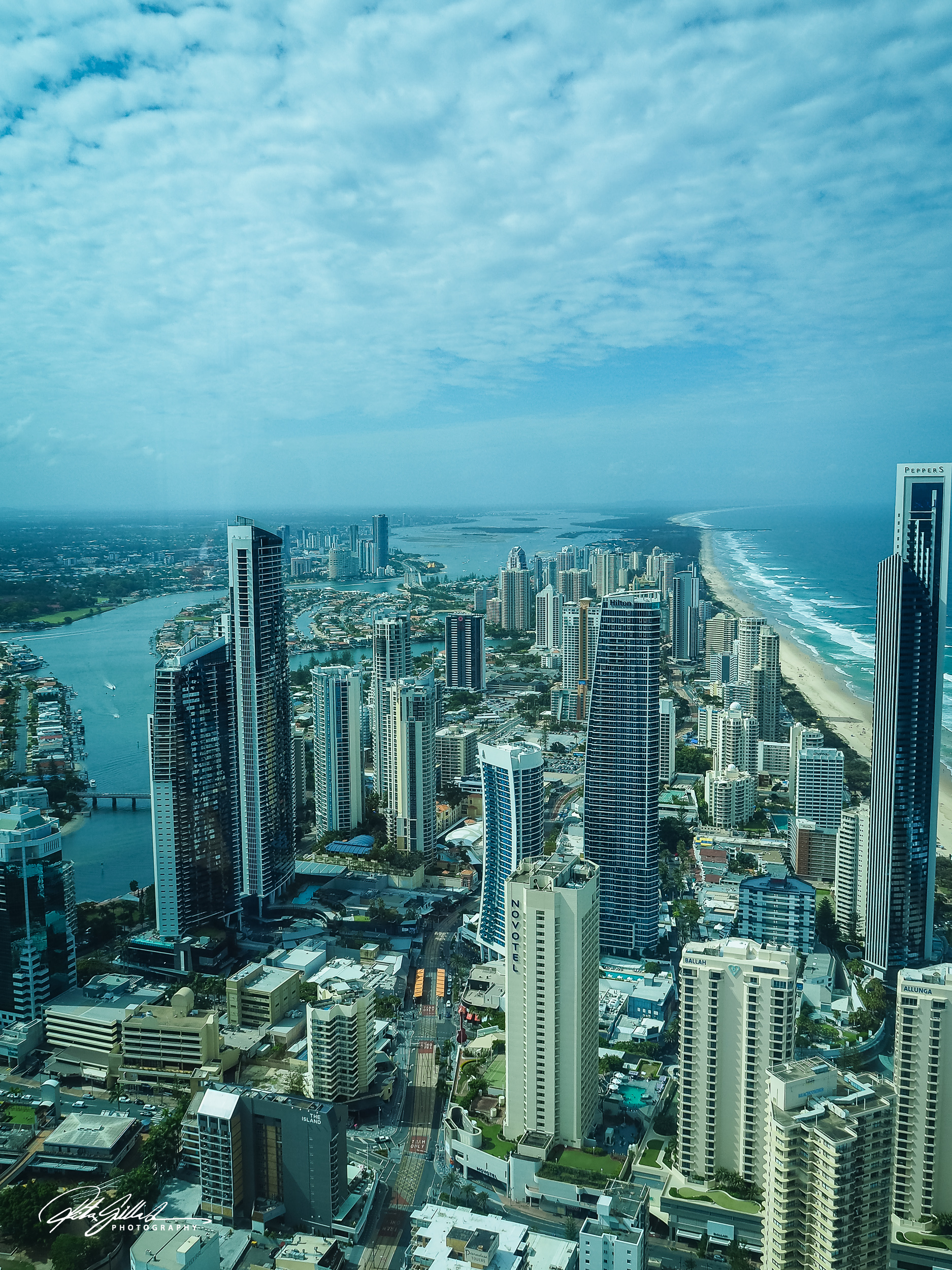
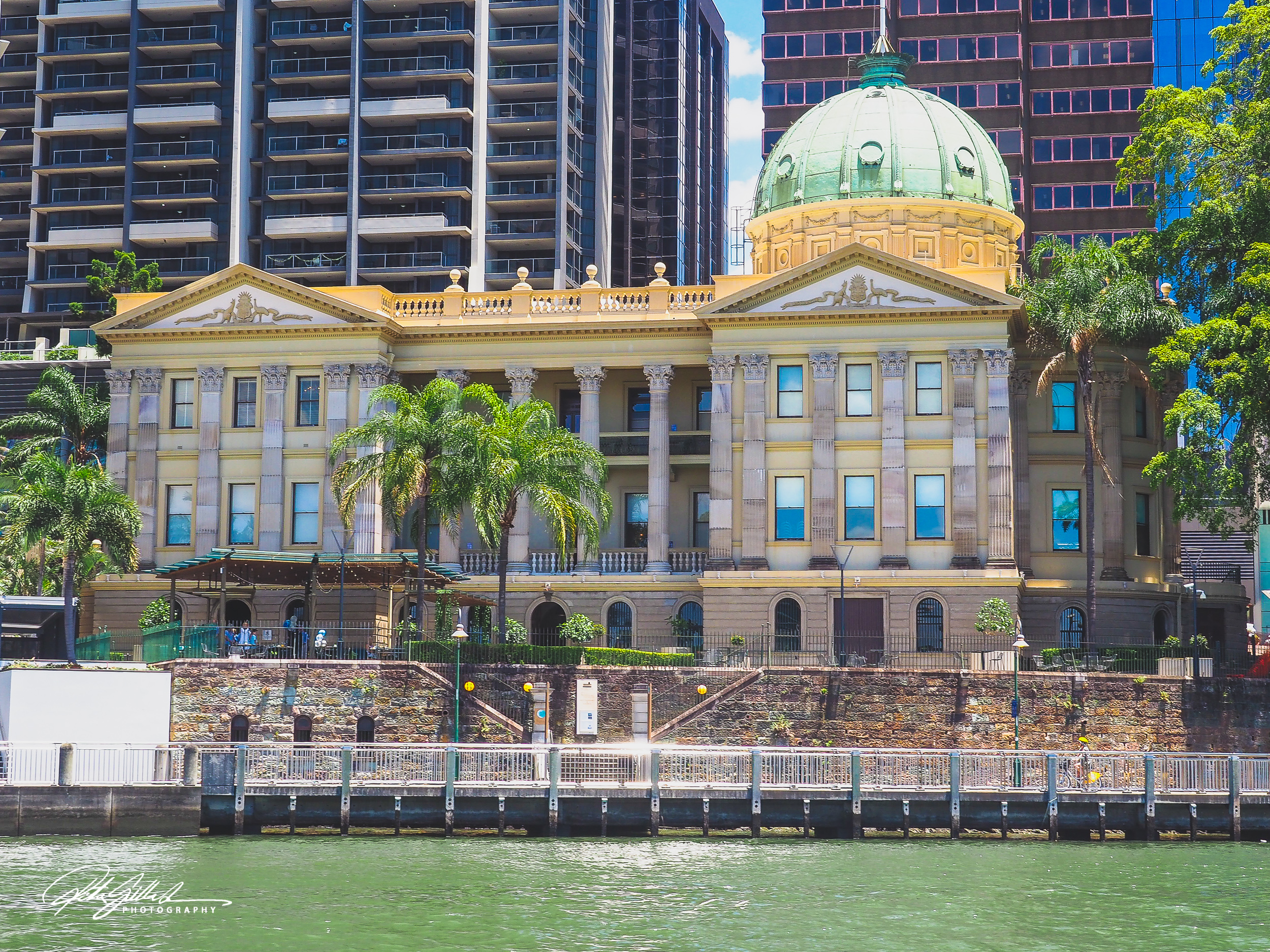
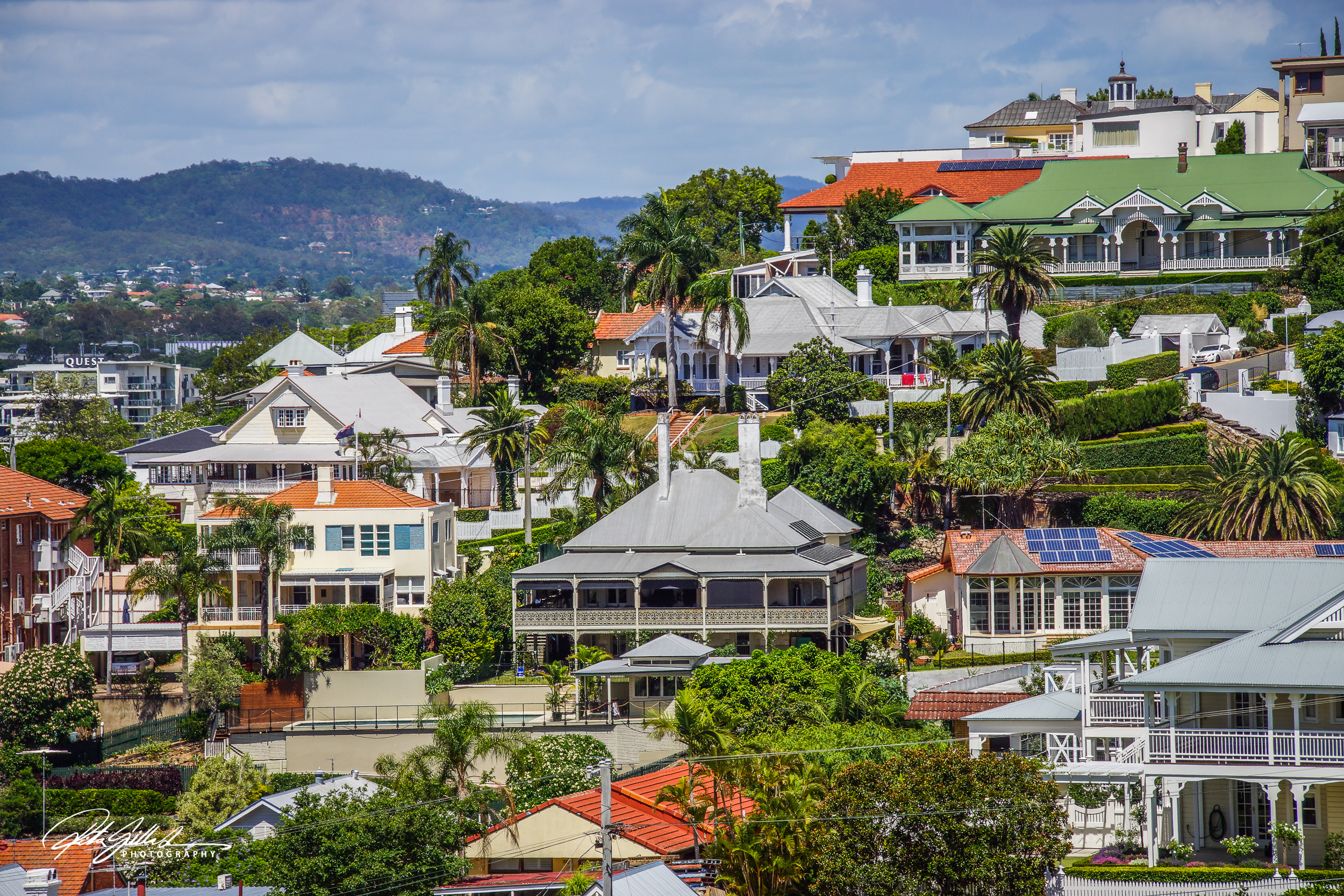
These are from Brisbane in Australia, similar high rise buildings as above, but you can see an old building left by the sea front. What difference in style. I was very attracted to the l Queenslander houses.
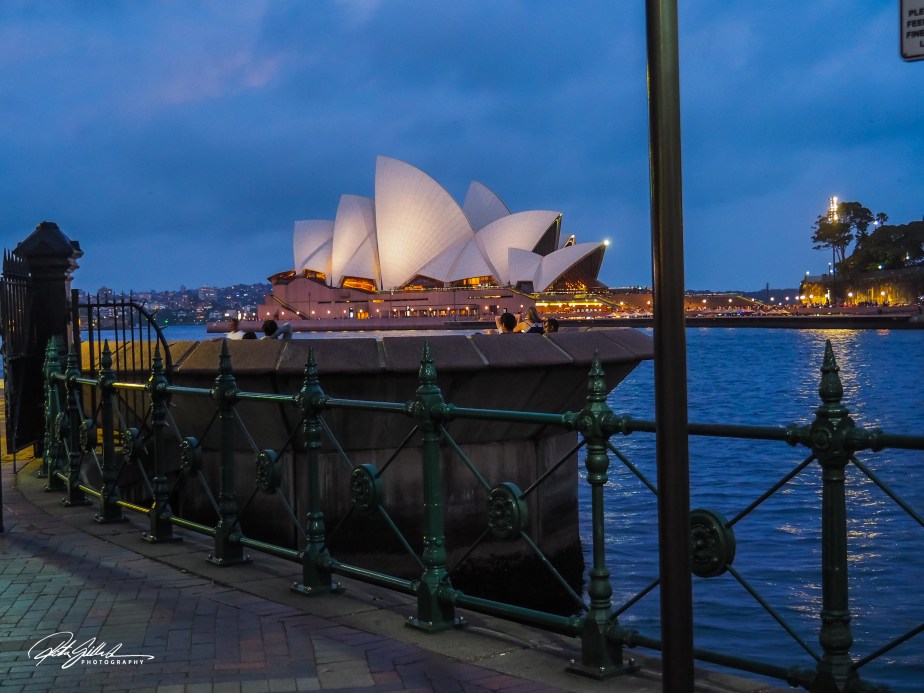
And if you did not know the header is Sydney Opera house 🙂
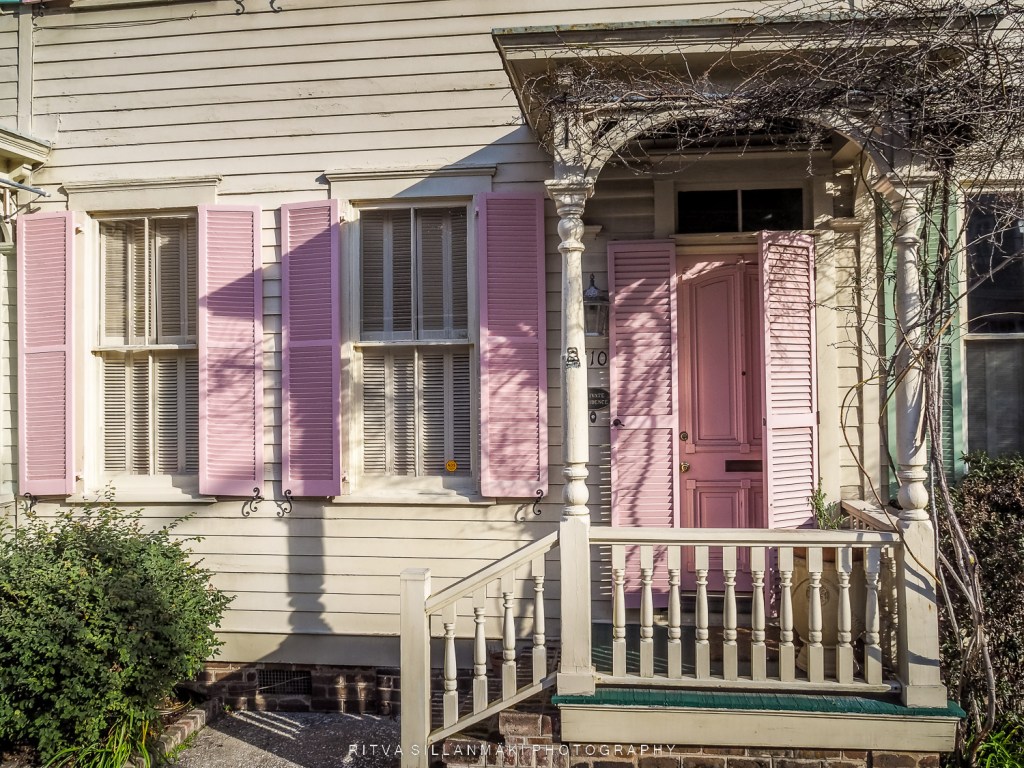
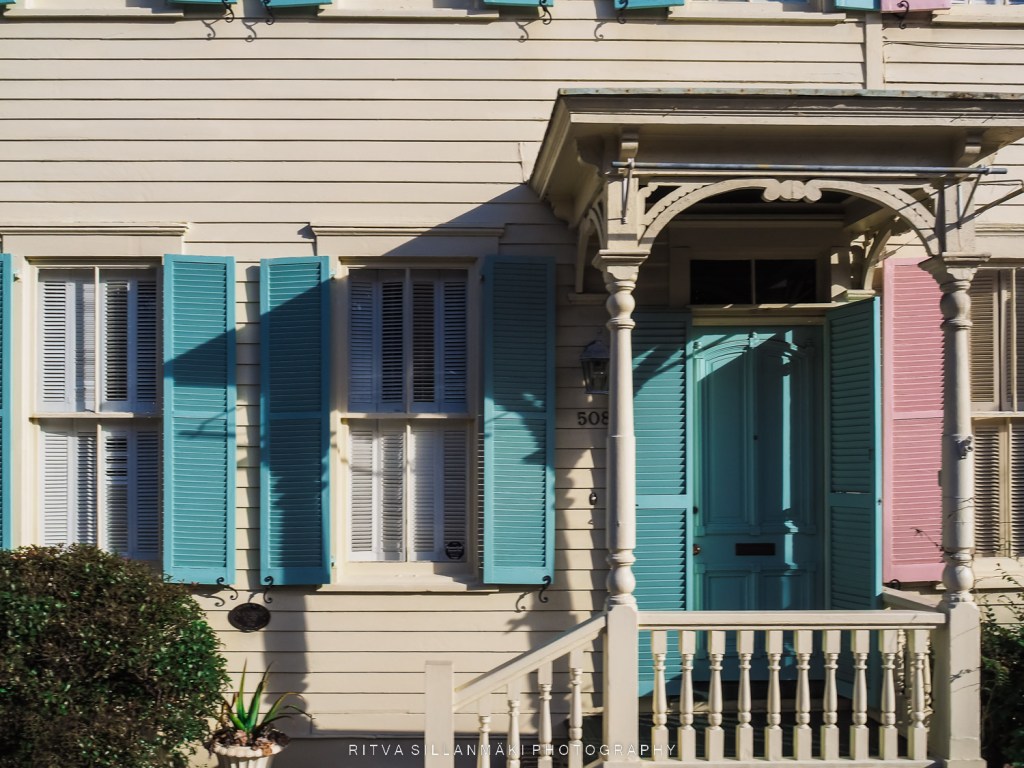
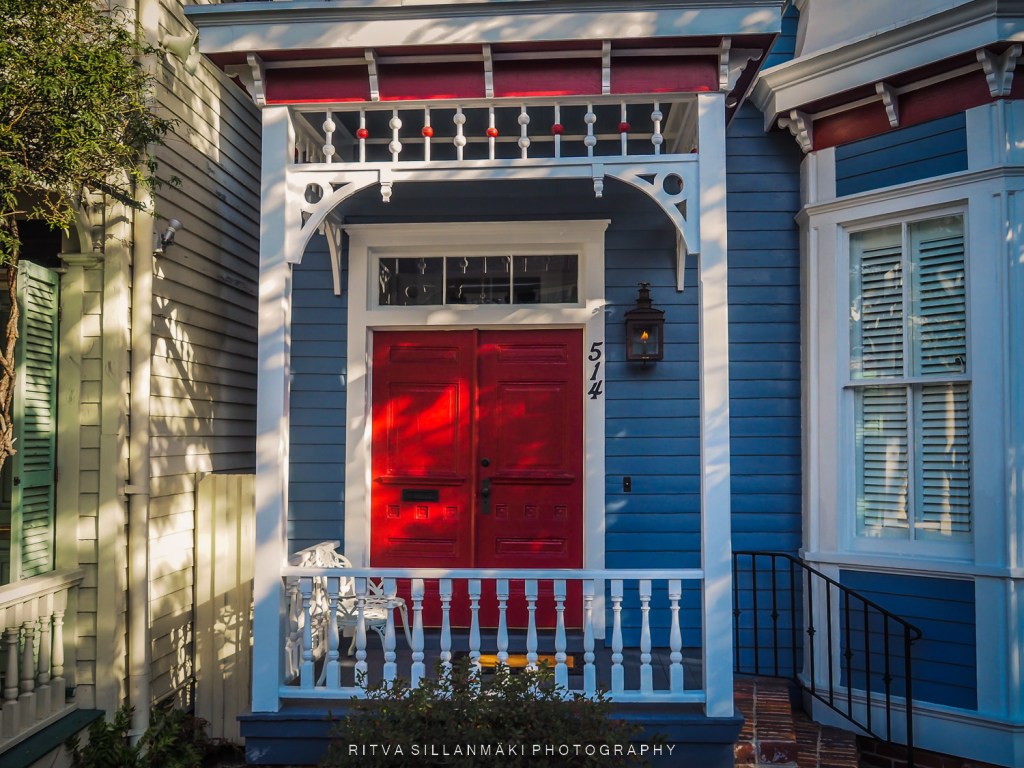
I have come across so many doors while looking at my fellow bloggers posts. So I thought I would post few too. Here are some colorful doors 🙂 from Savannah, Georgia.
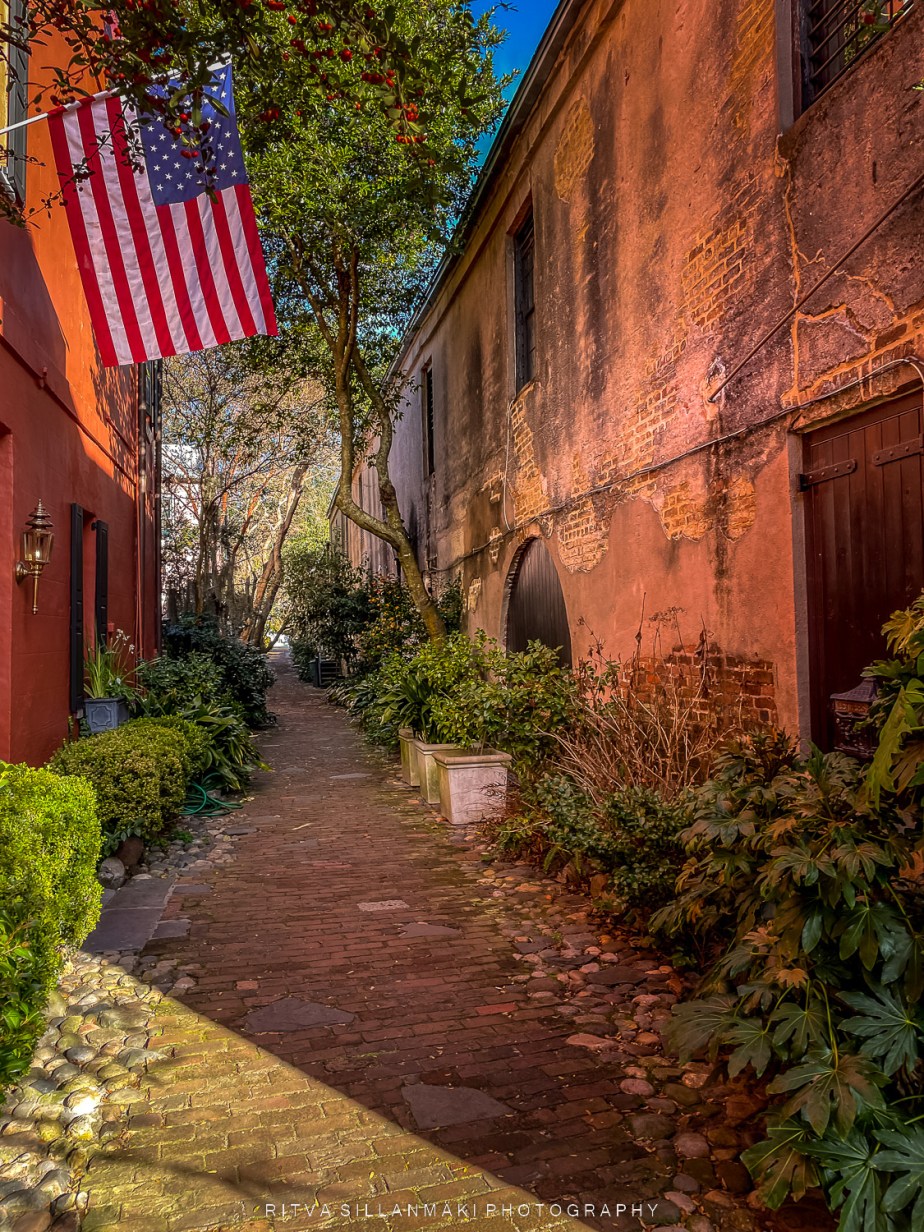
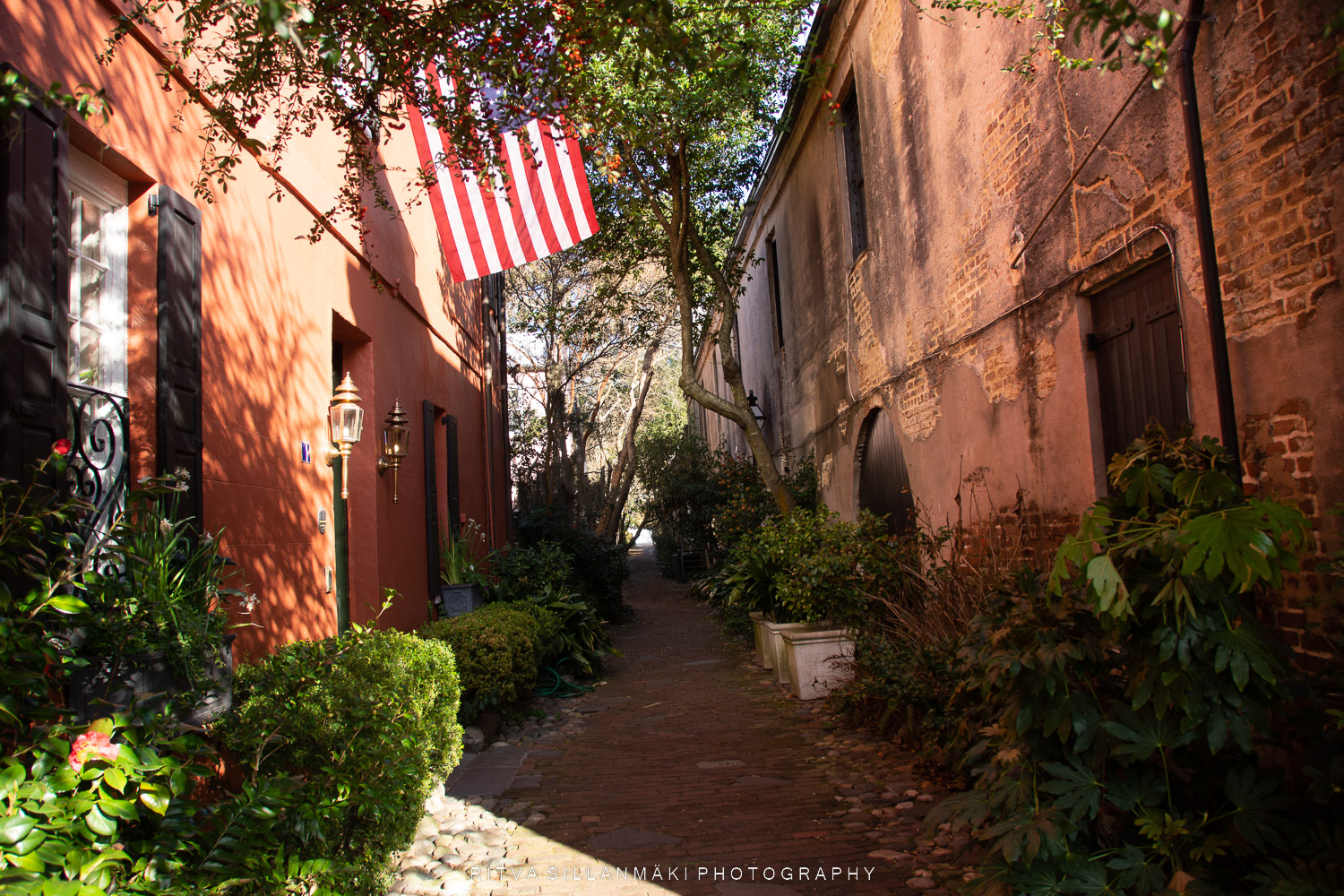
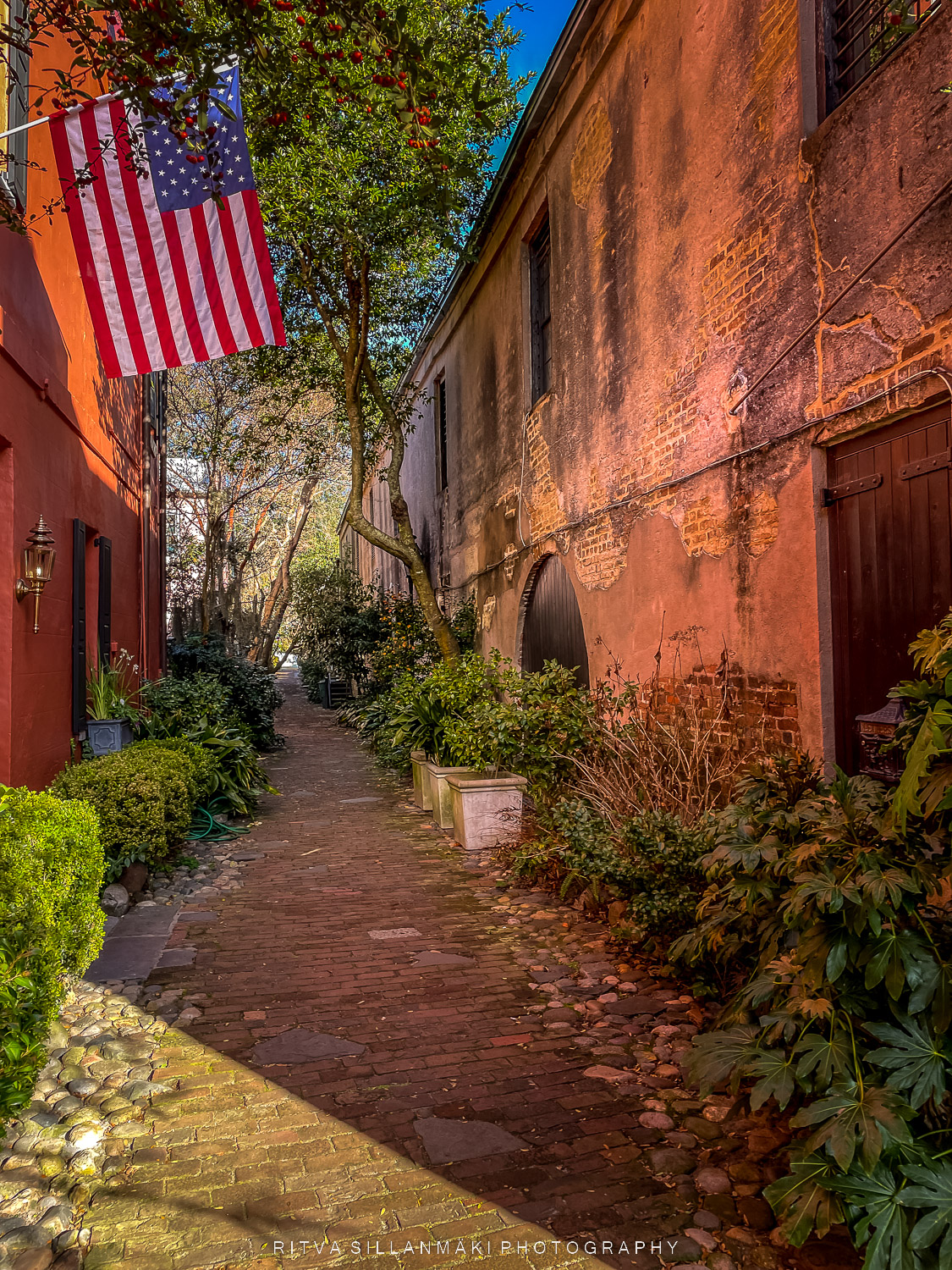
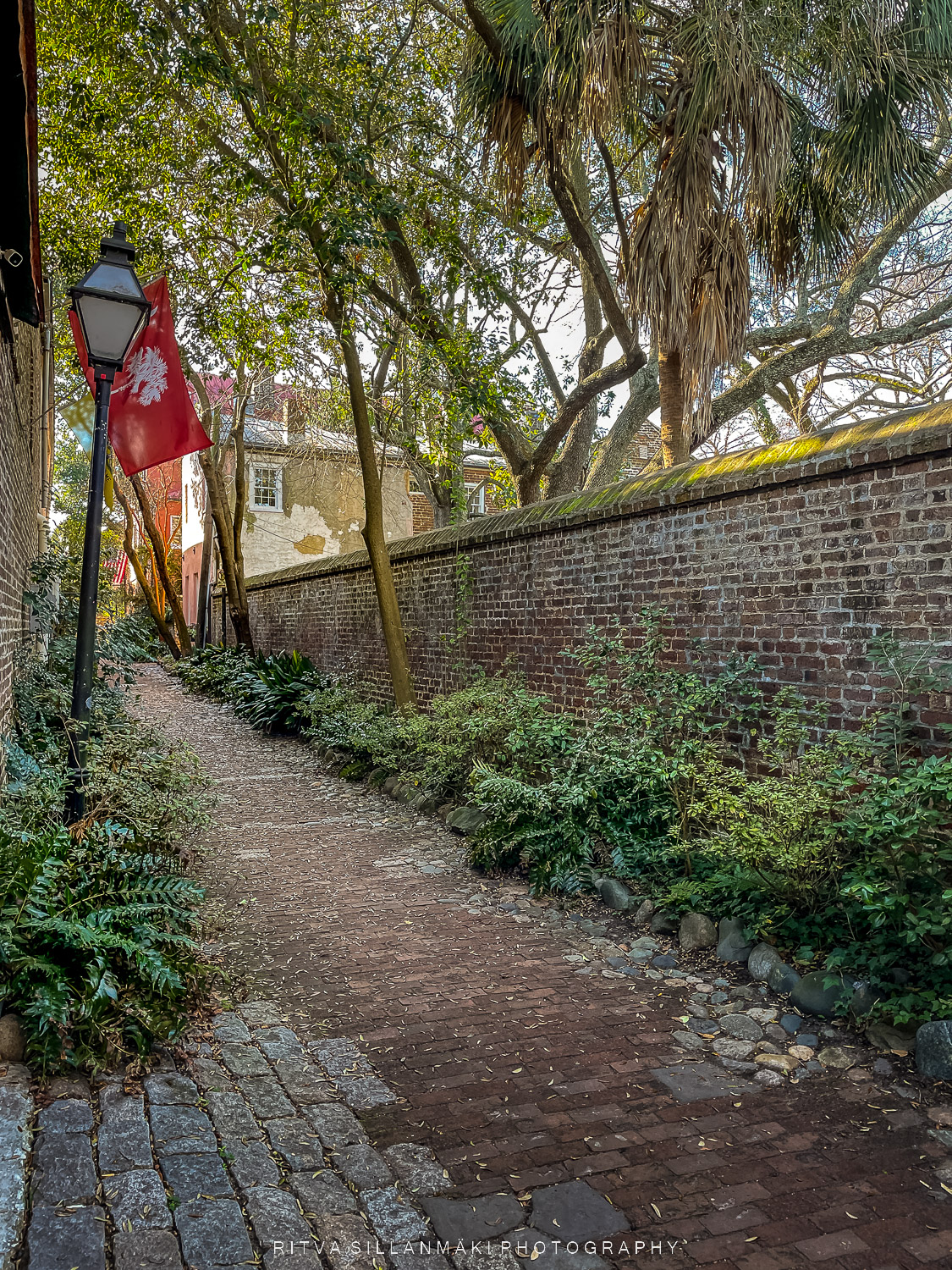
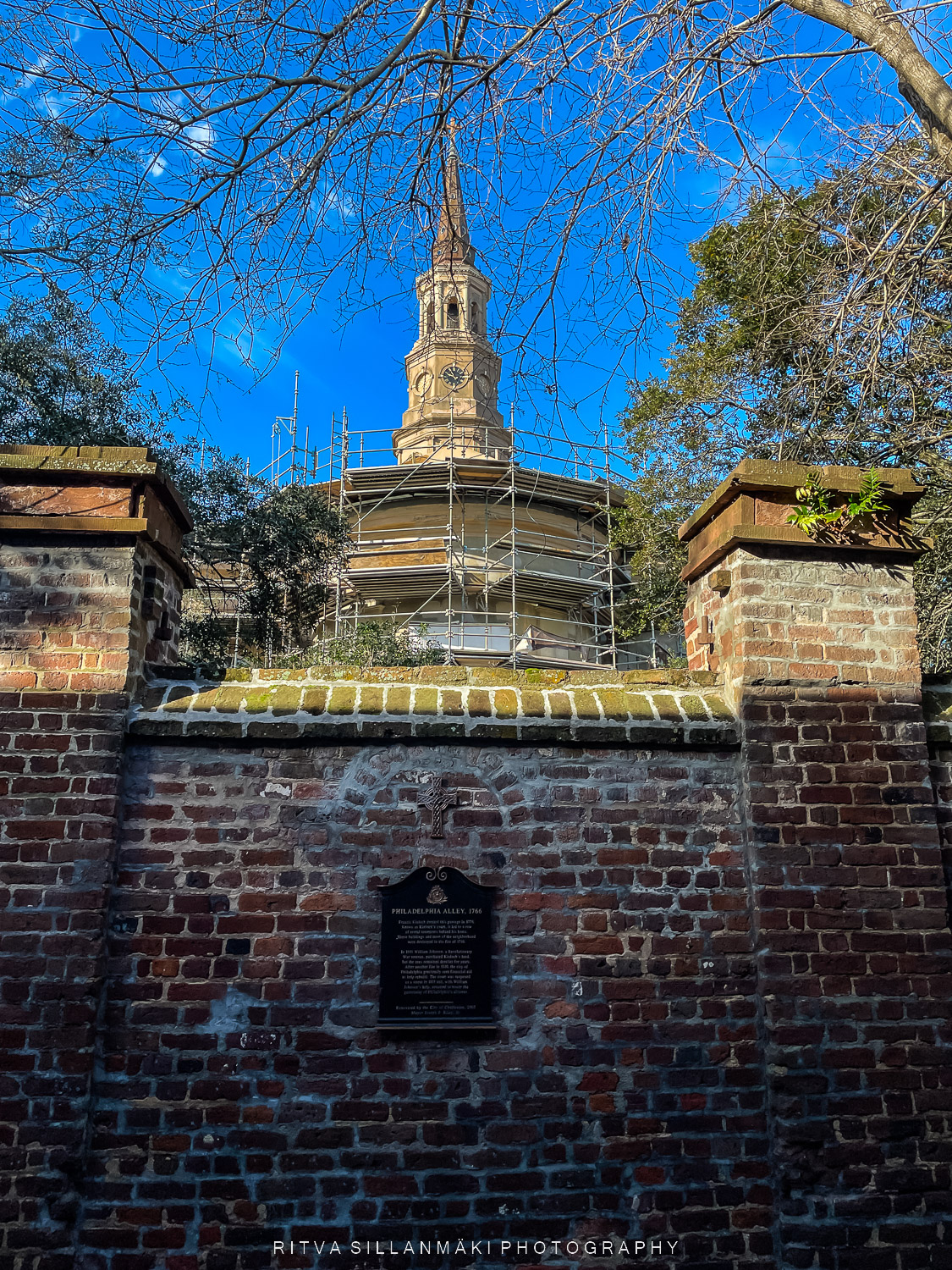
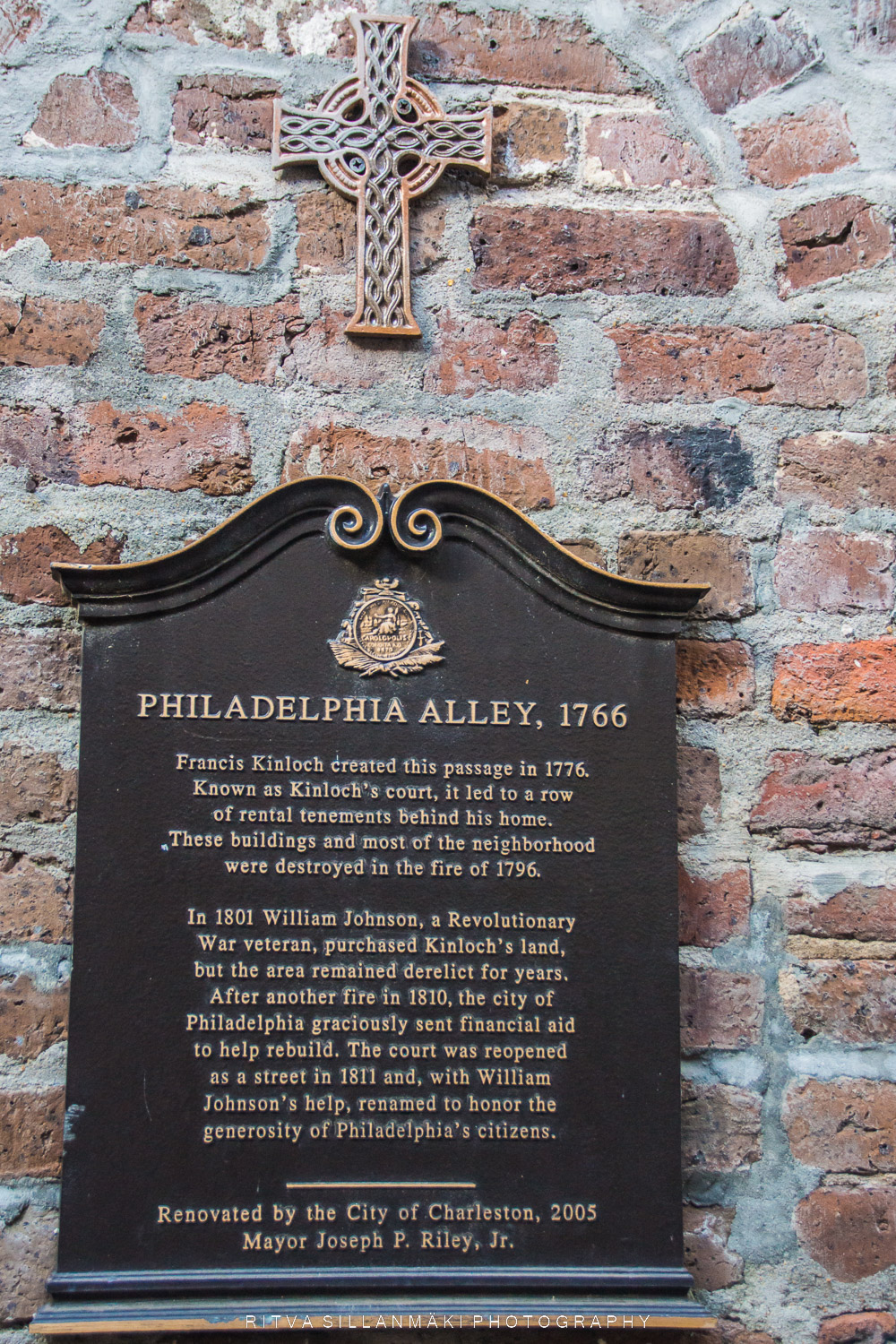
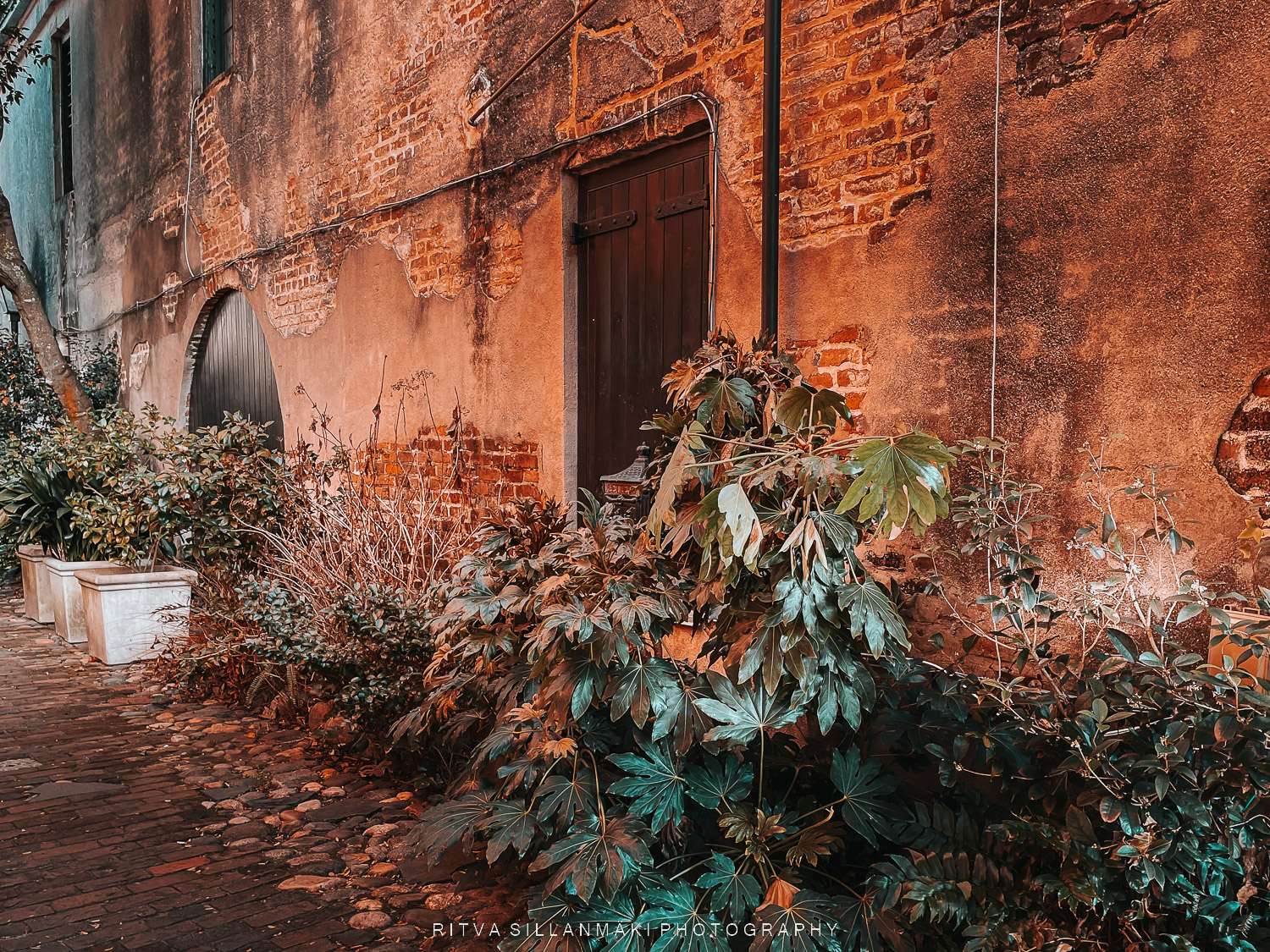
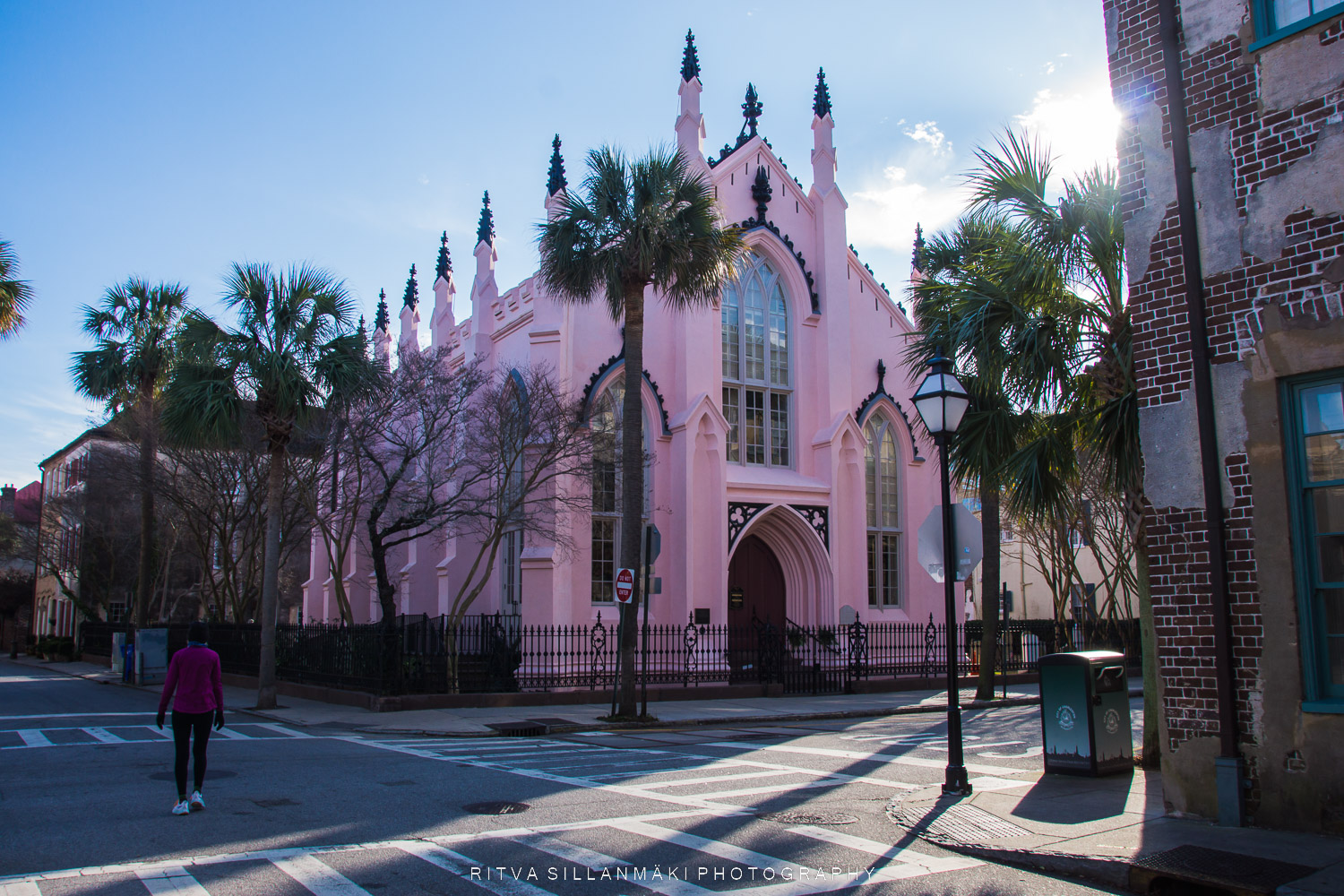
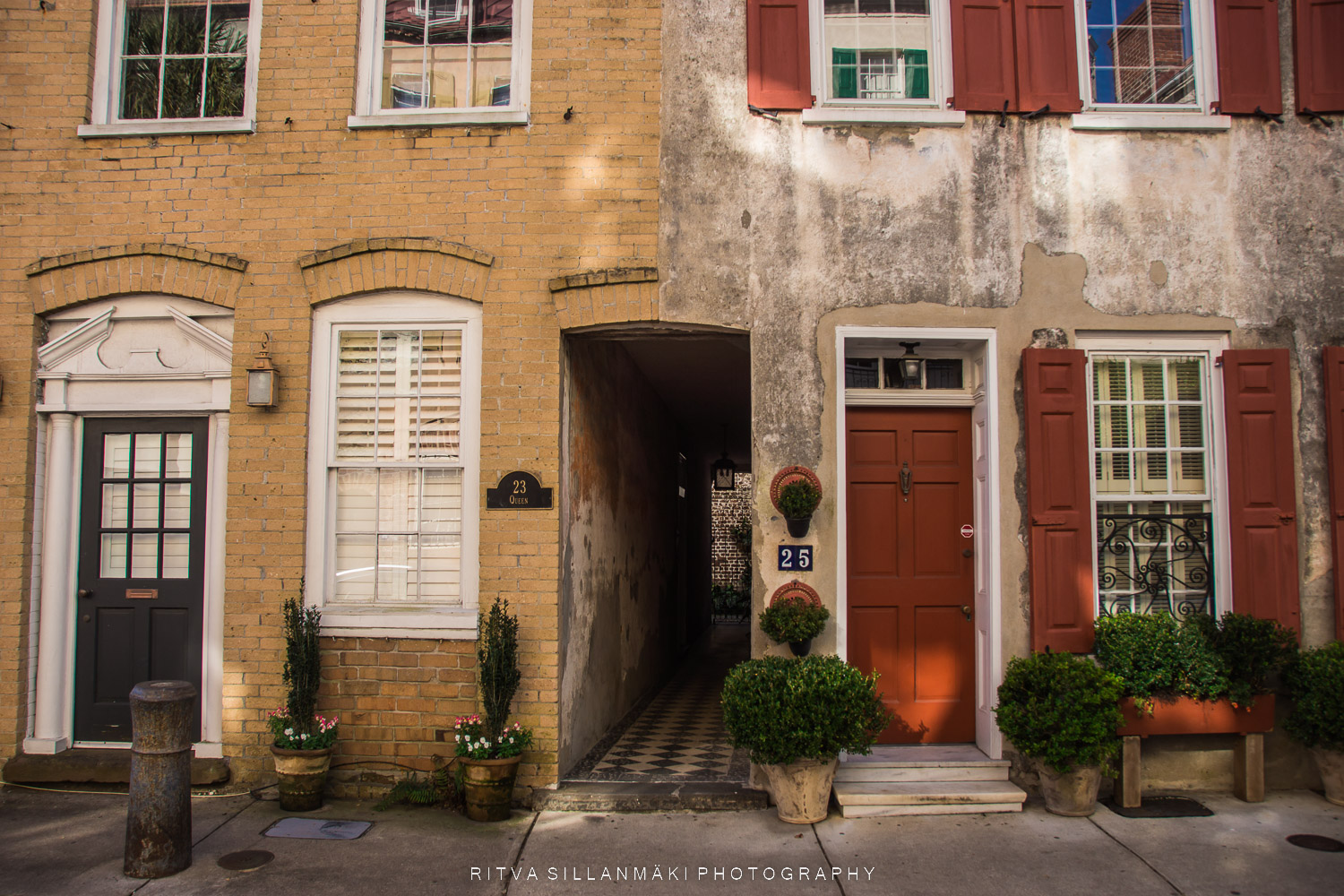
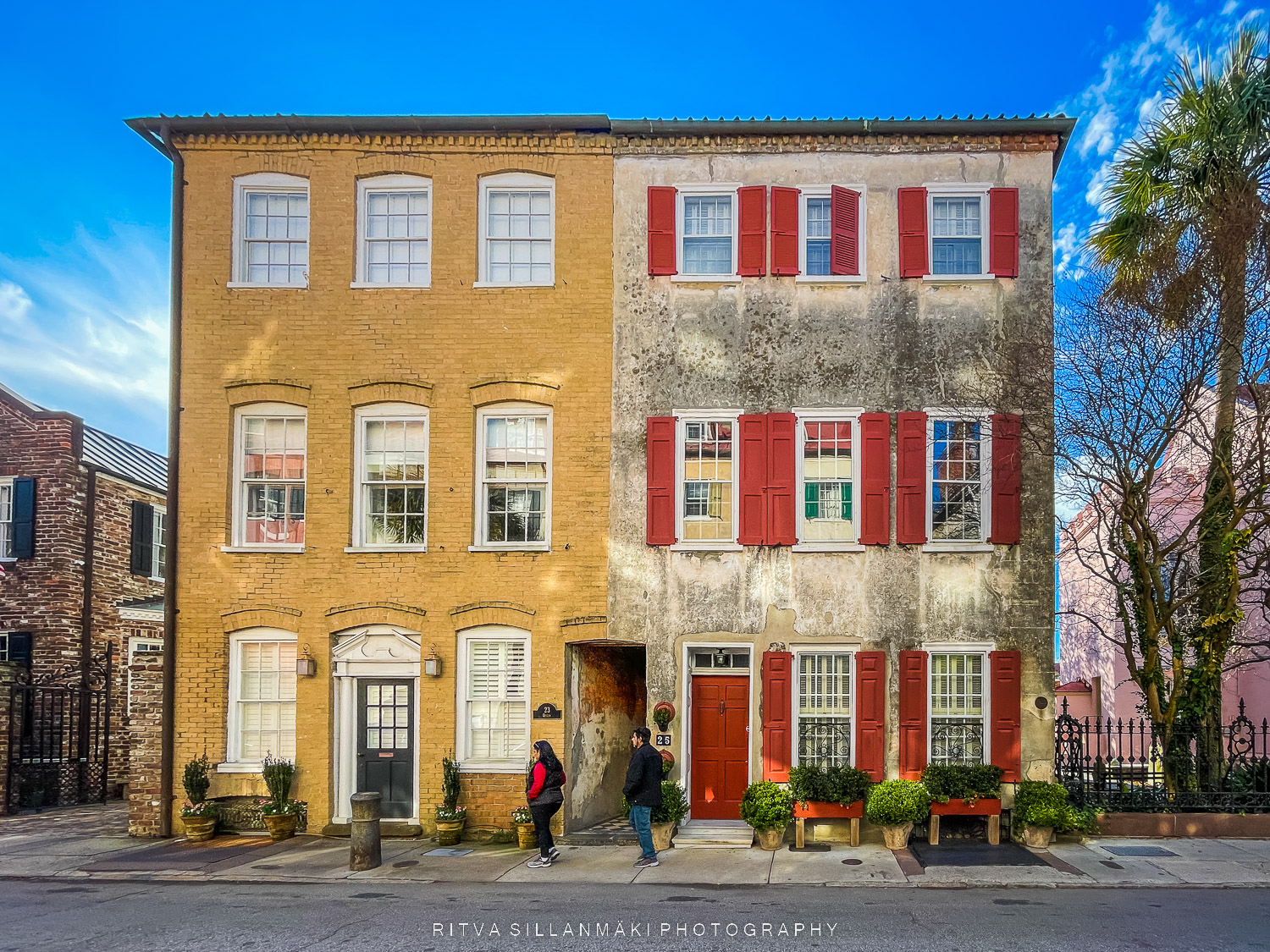
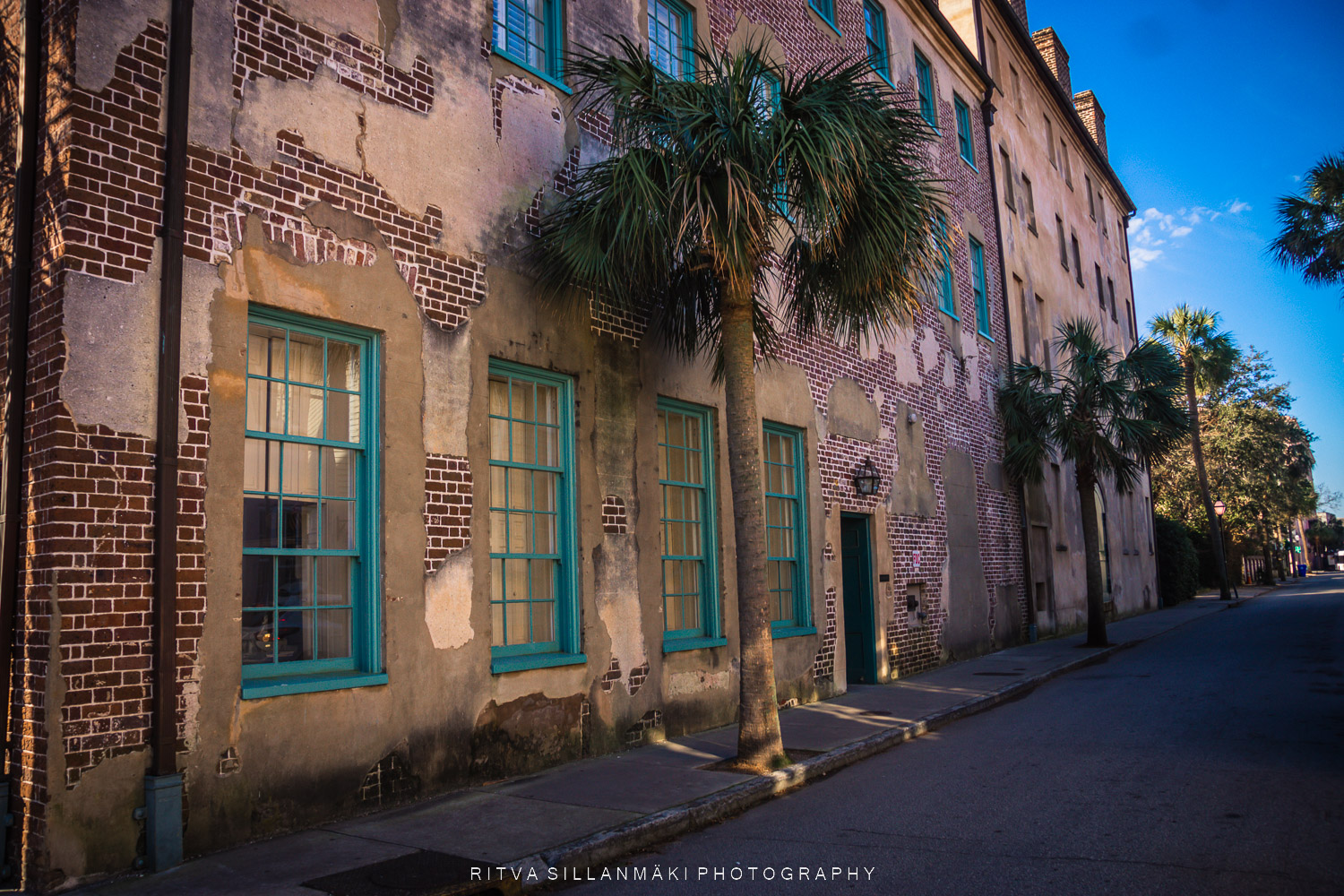
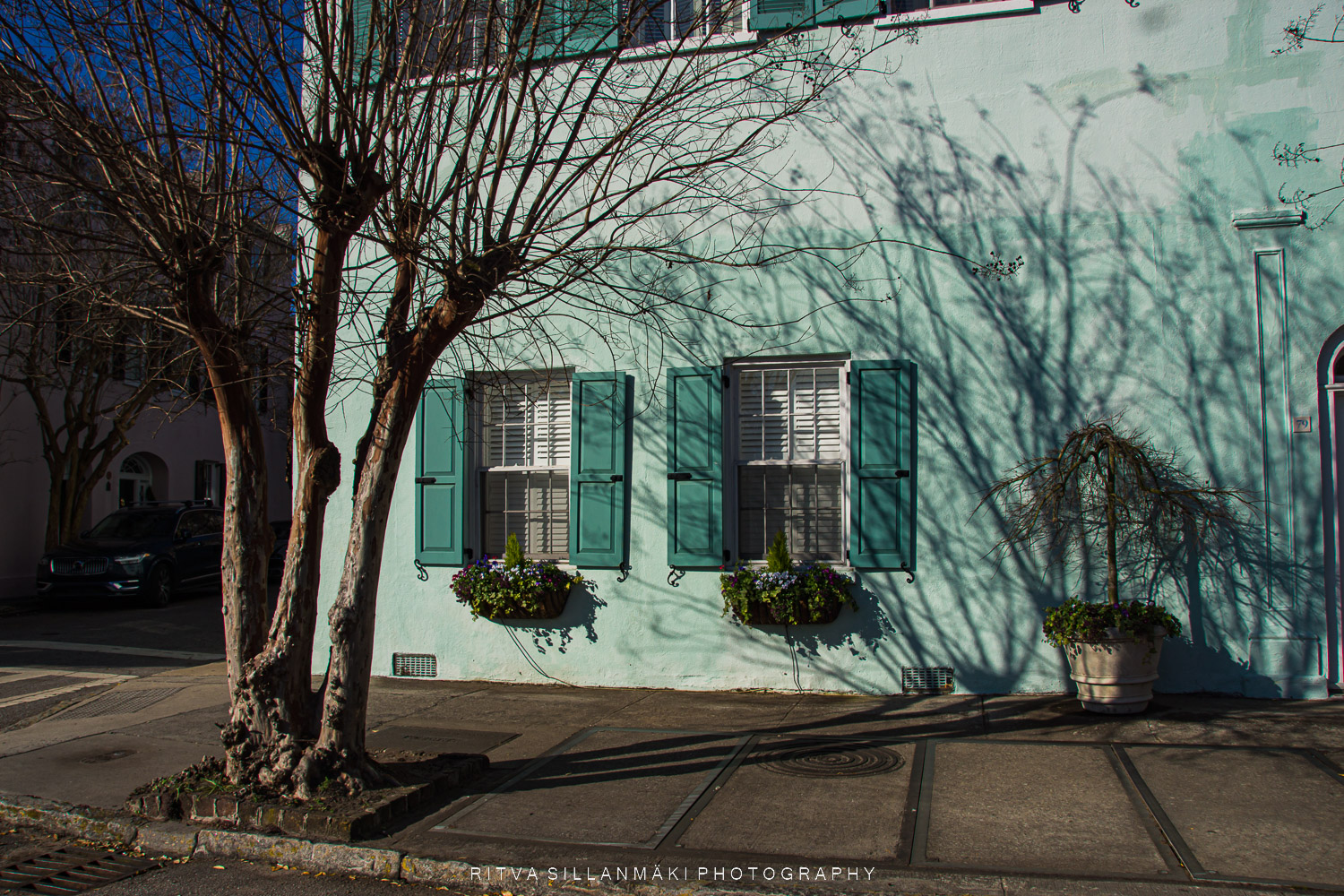
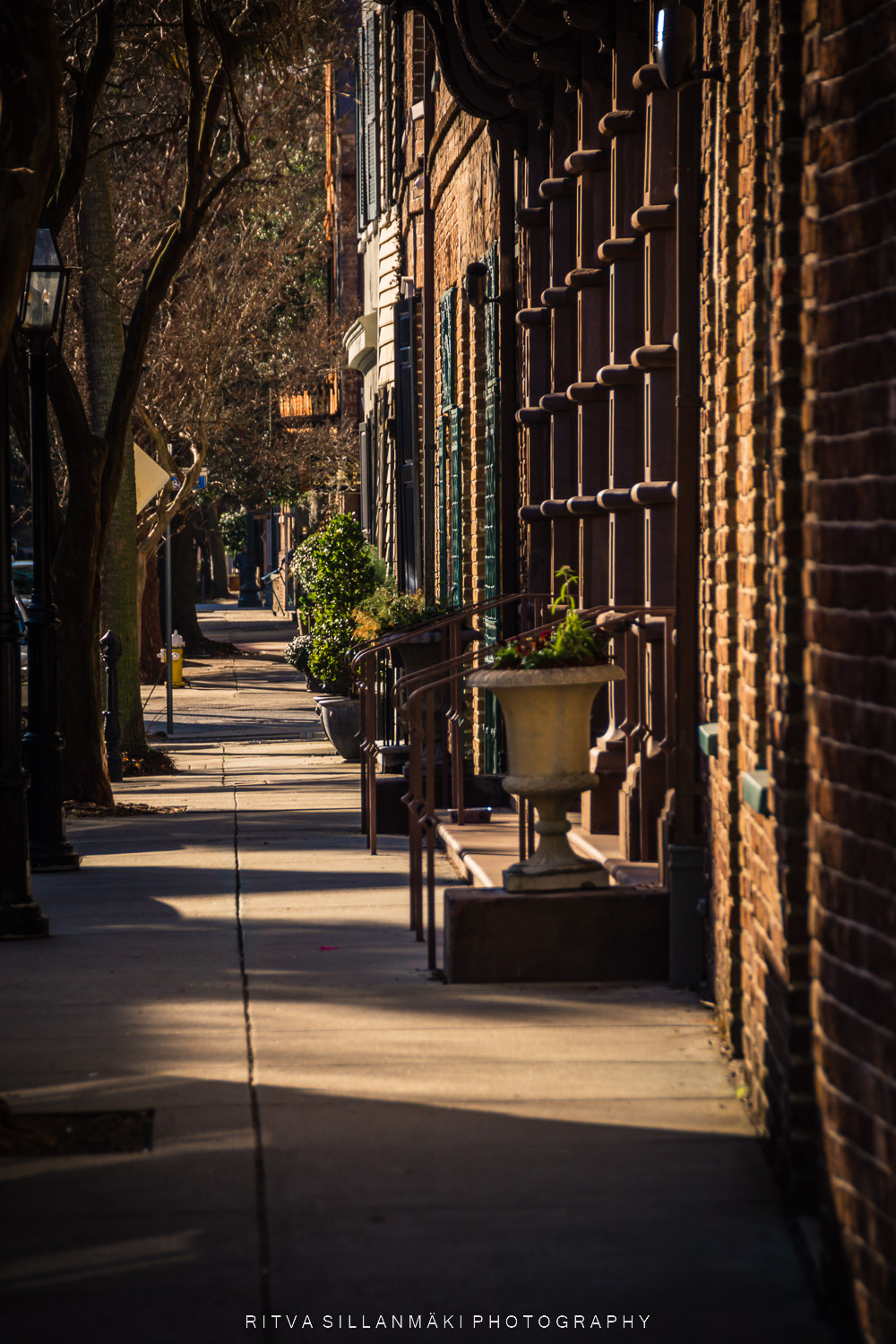
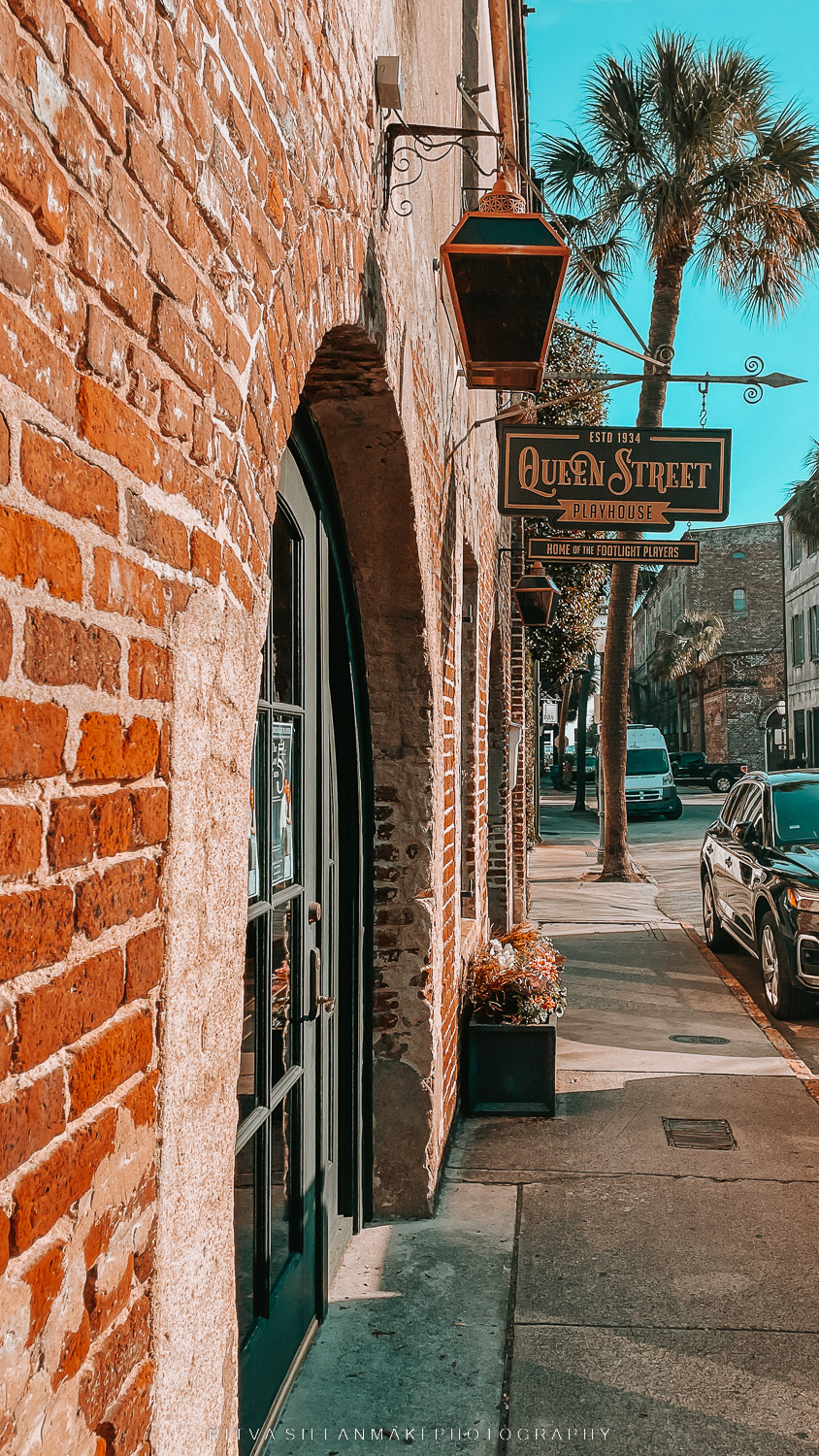
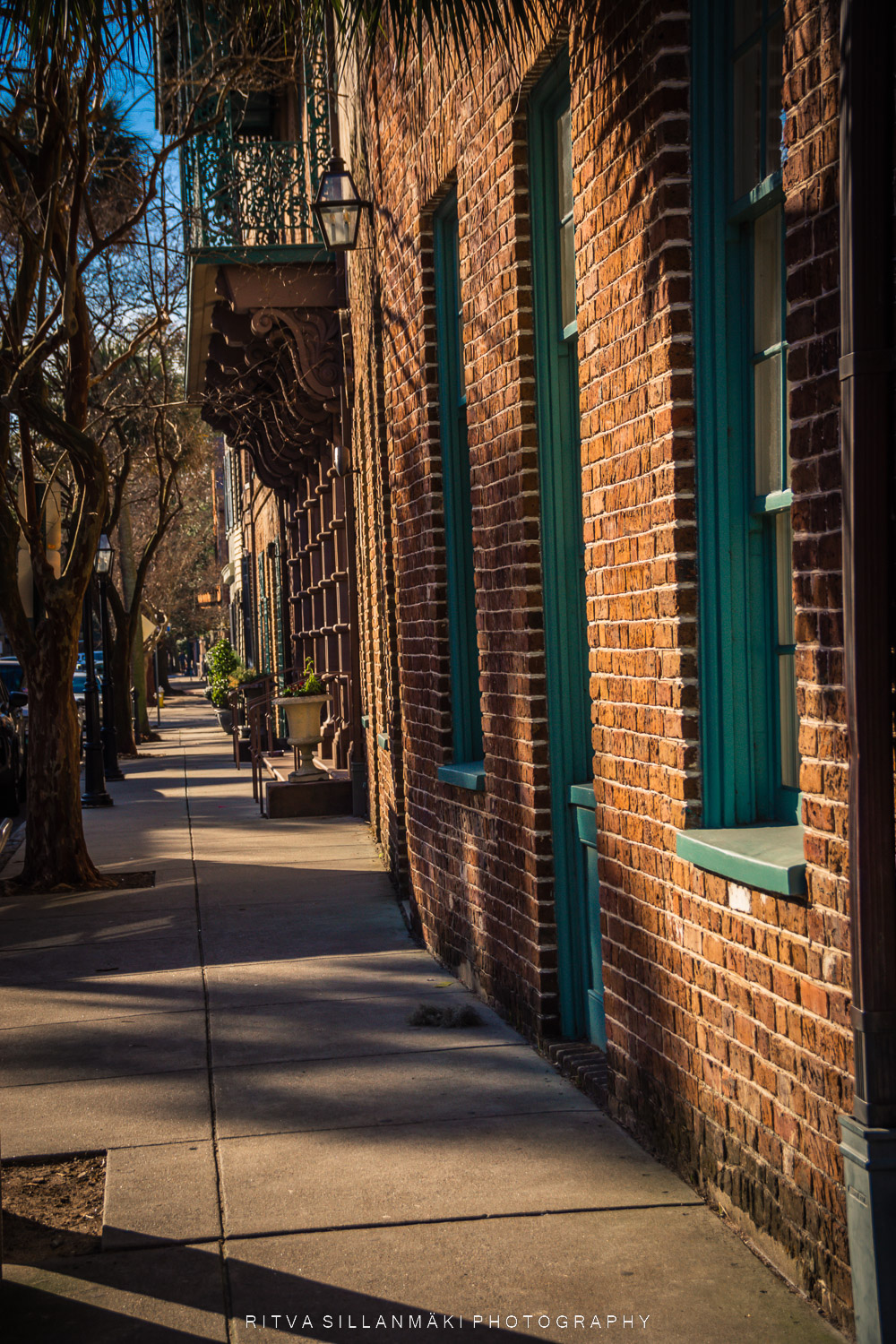
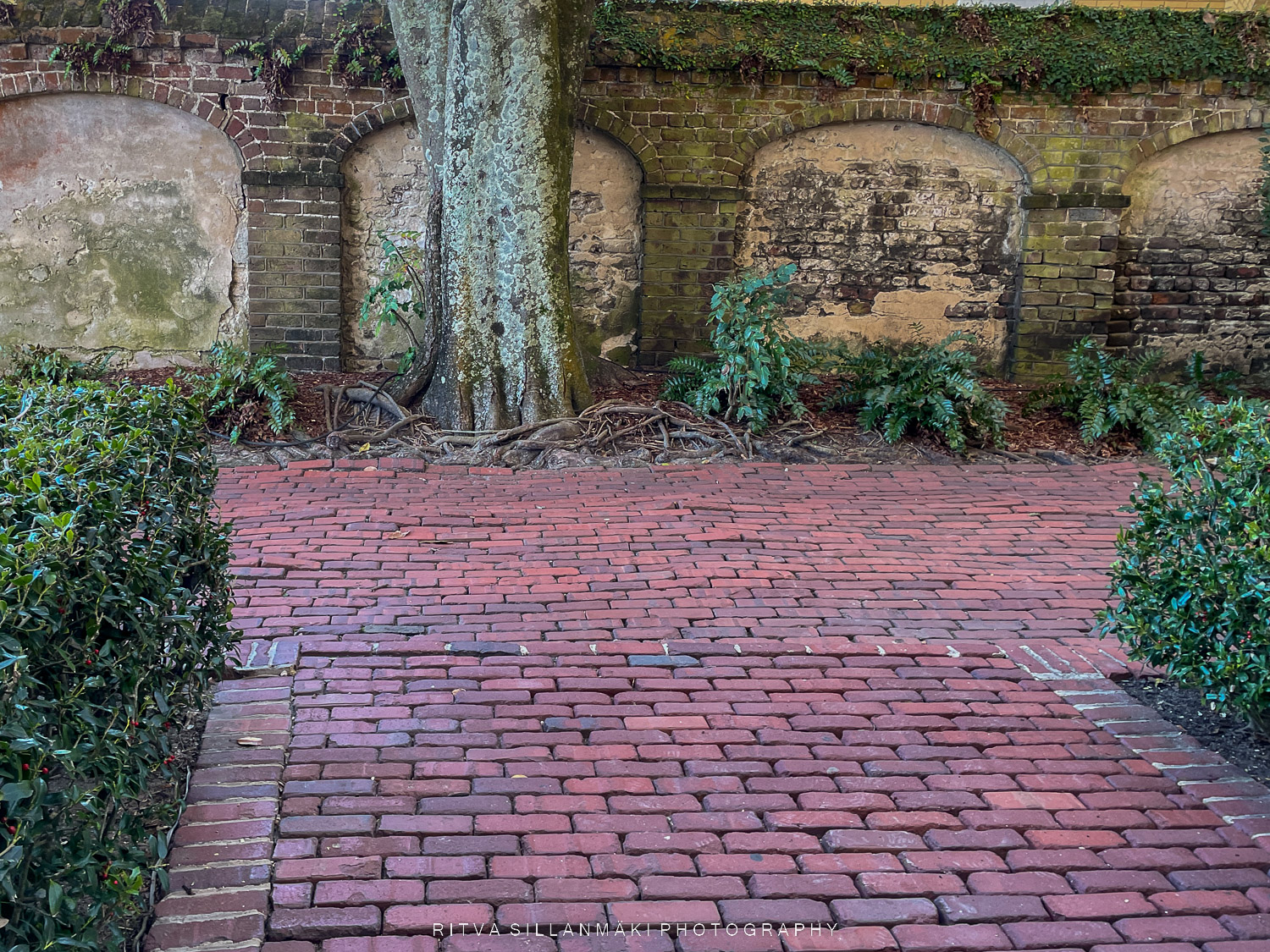
Because we only had one full day in Charleston, we had to get busy in the morning. Having booked a sightseeing tour the previous night, we had couple hours in the morning to cruise the city. First stop was Philadelphia Alley in the French Quarter, one of the beautiful historic alleys in Charleston. According to legend the alley was a popular place for duels, and it was once known as Duelers Alley. Legend has it that that at least one dueling victim still haunts the alley. Unfortunately, we didn’t see any ghosts or anything paranormal. We saw a tranquil and beautiful alleyway with nice yards, cobblestone and old brick warehouses.
Our tour started at 11 am and what a wealth of information that was. I tried to jot down few notes of the most memorable things I heard but I must confess I missed most of it. Somehow, only interesting stories stick to my mind and not facts itself.
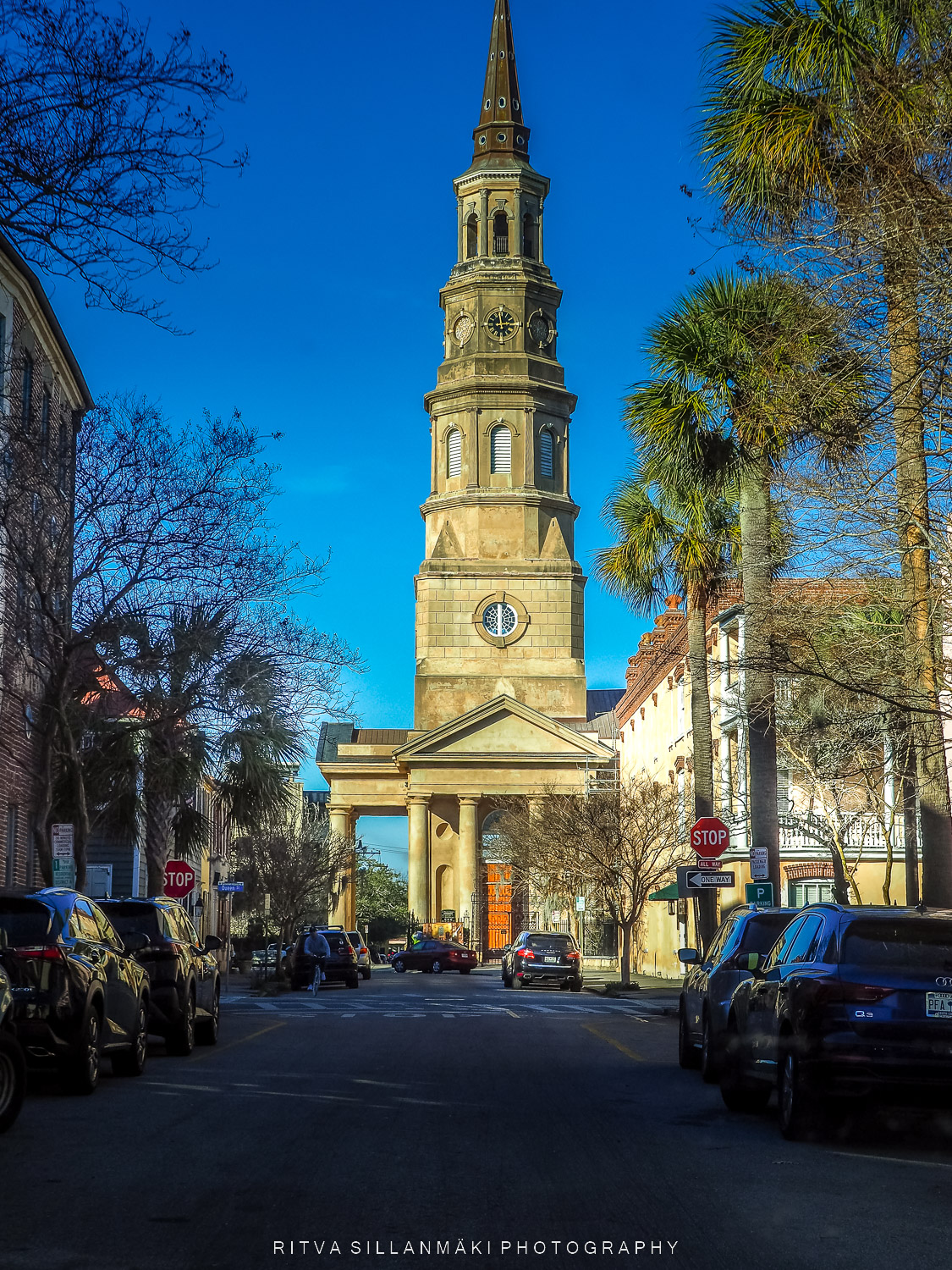
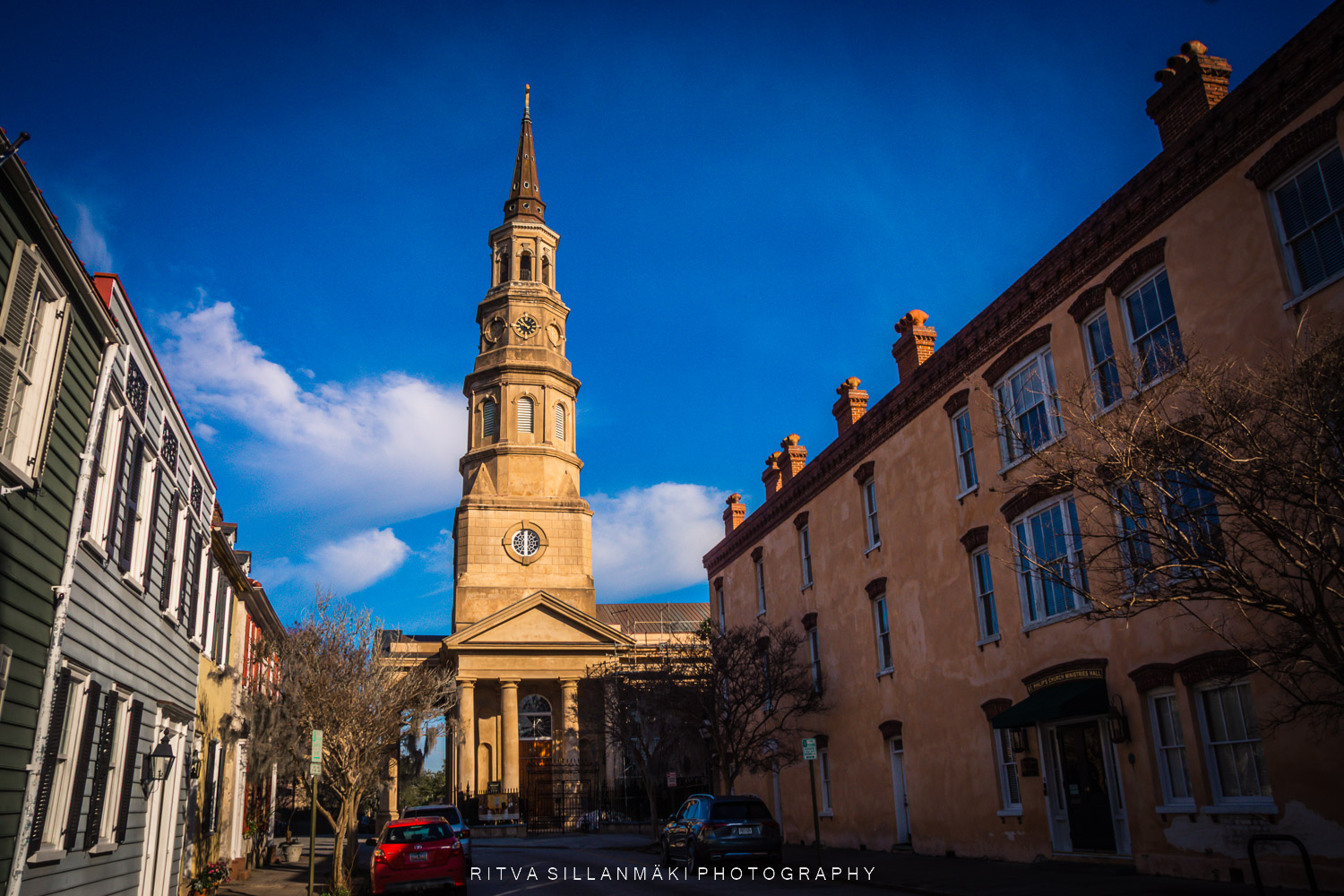
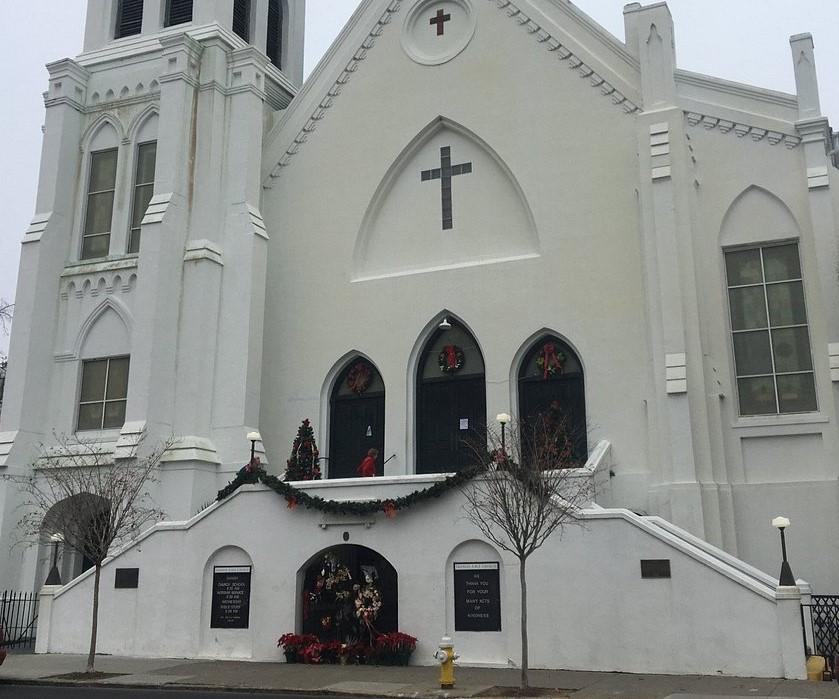
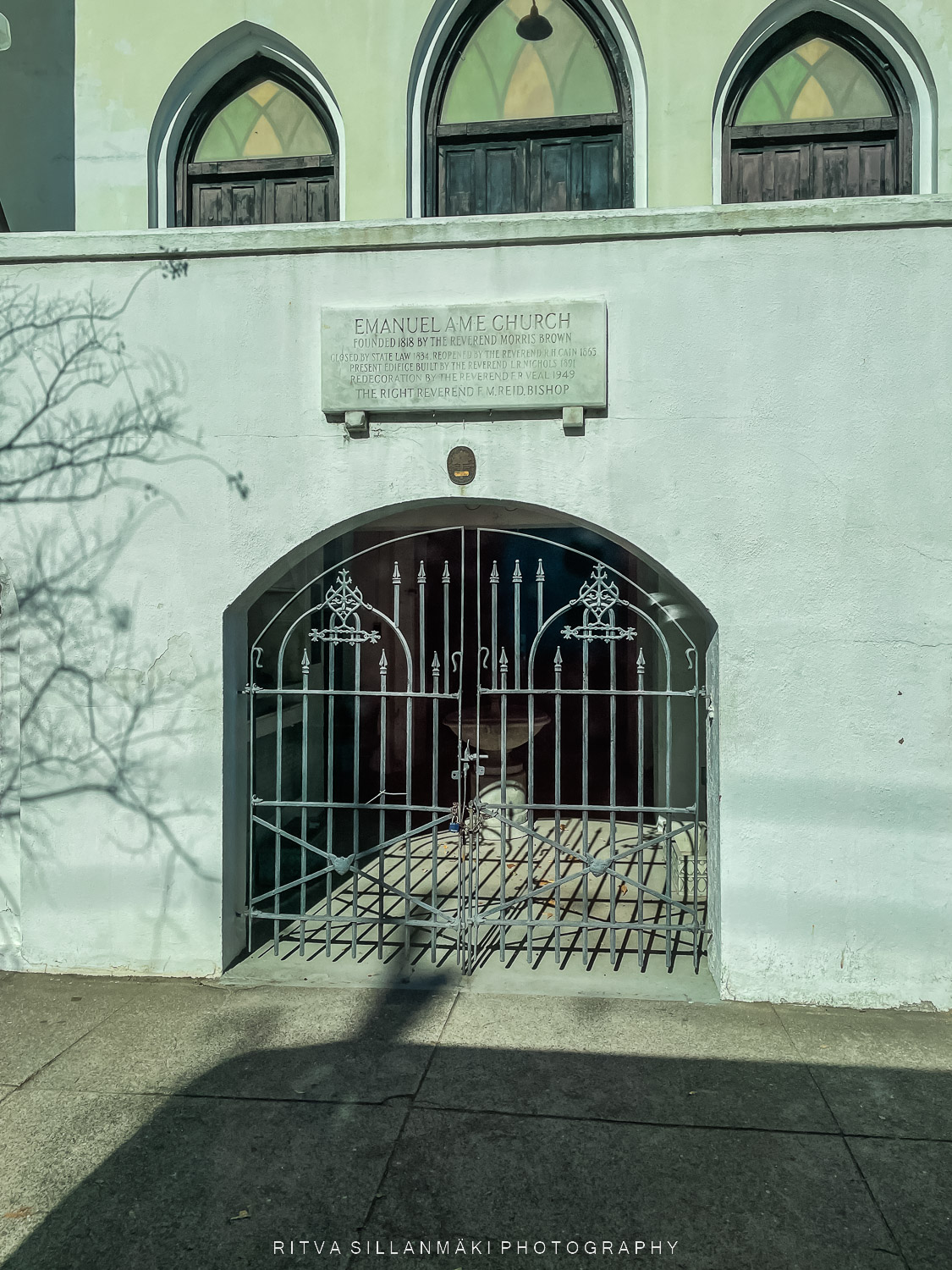
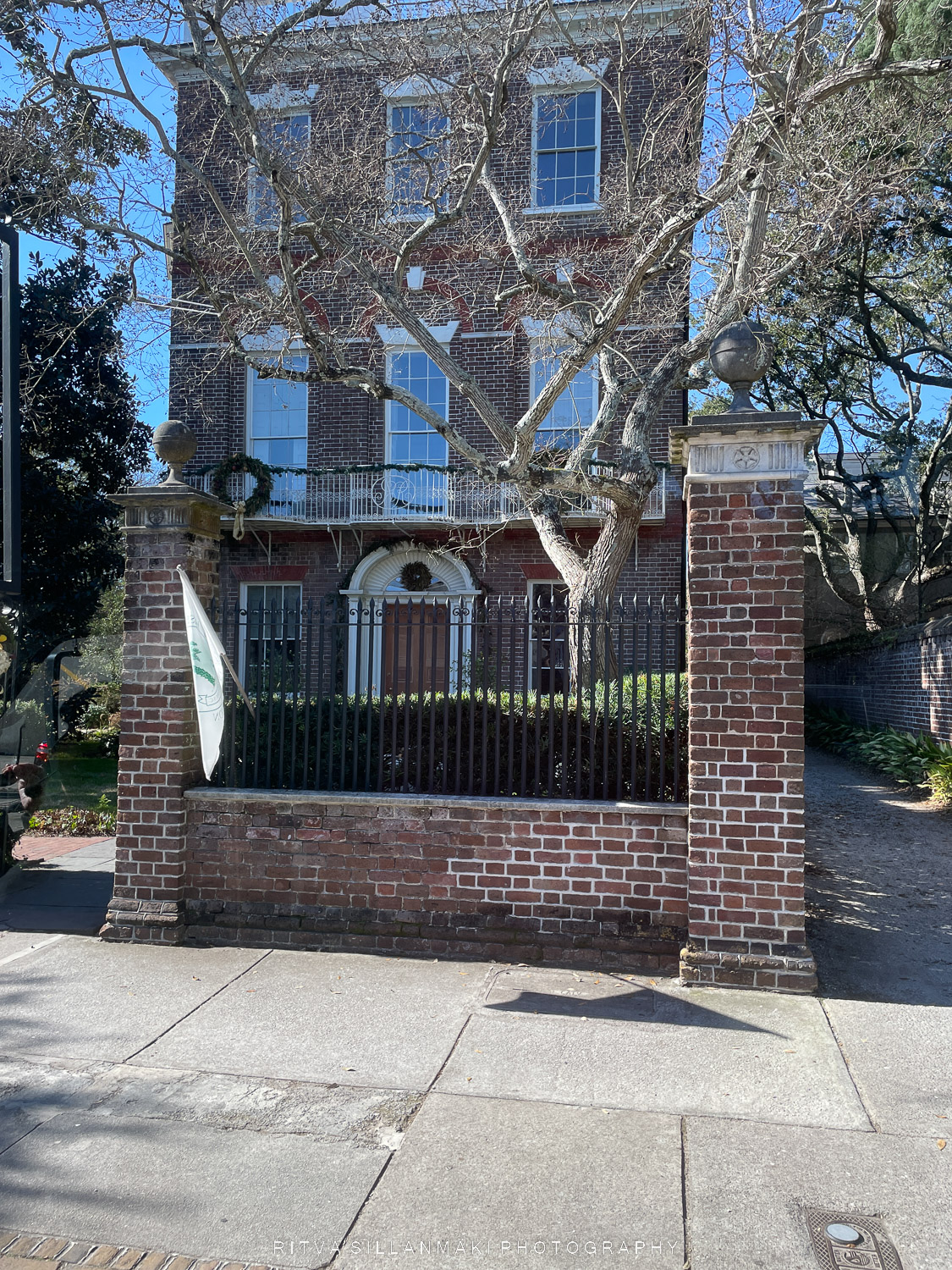
Charleston has over 400 churches, the most of any city in the USA, of quite few different denominations. Reason for the multitude is that early on if you rounded up seven or more people, you could start your own church and build on the land the city gave you. Charleston is full of iron gates, fences, etc. Iron works on your house were the marks of wealth. They don’t let you forget the bricks made in Boone Hall Plantation that a lot of old houses are made of. Four million bricks were made at Boone Hall yearly during slavery. One of the saddest places was Emanuel African Methodist Episcopal Church, where Dylan Roof committed his heinous mass murder few years back. Roof killed nine people after the service but left one person alive, so the person could tell others that this sick person wanted to start a race war. He was given the death penalty and because of the forgiveness of the church and the city, no race war was started, or any violence was instigated.
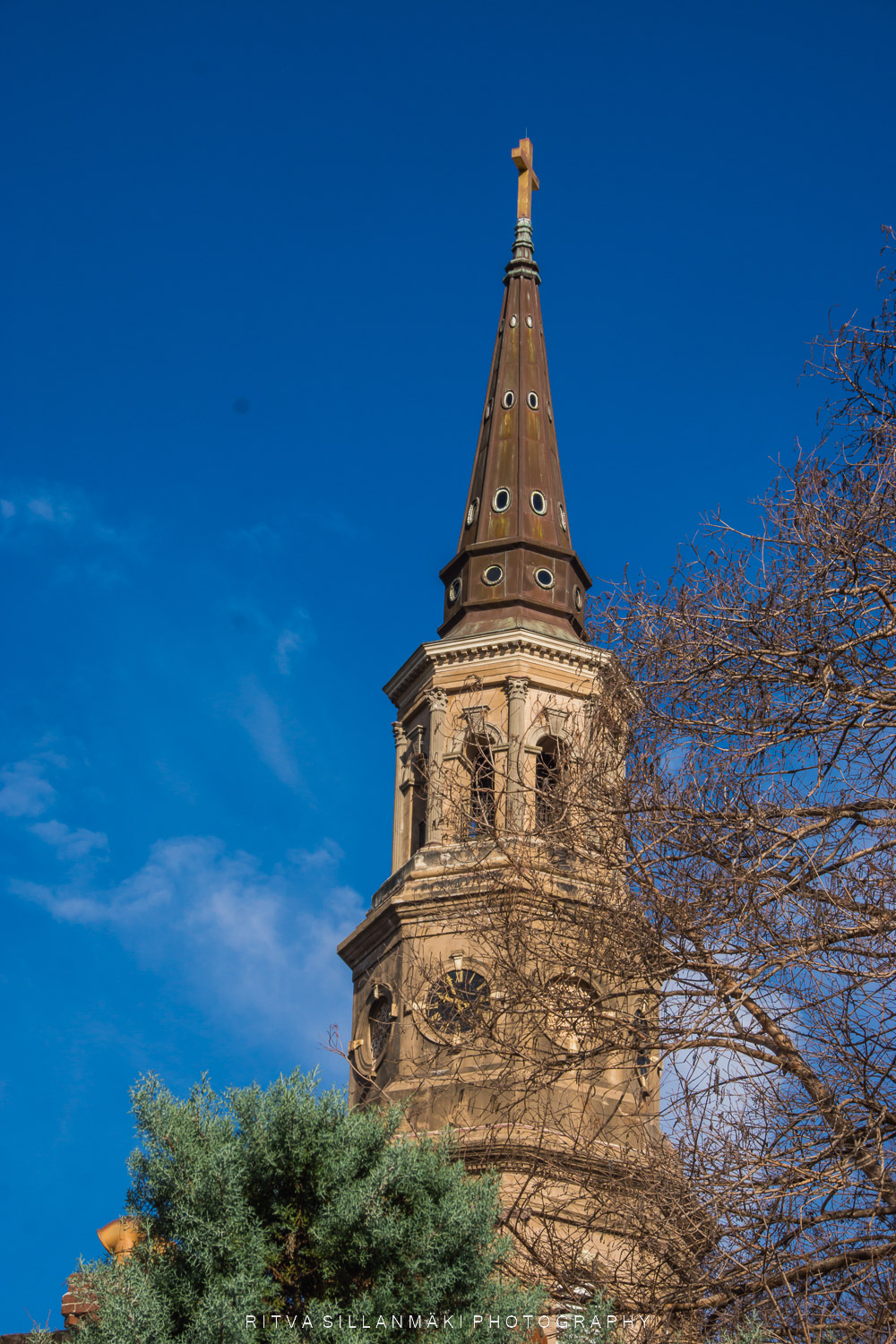
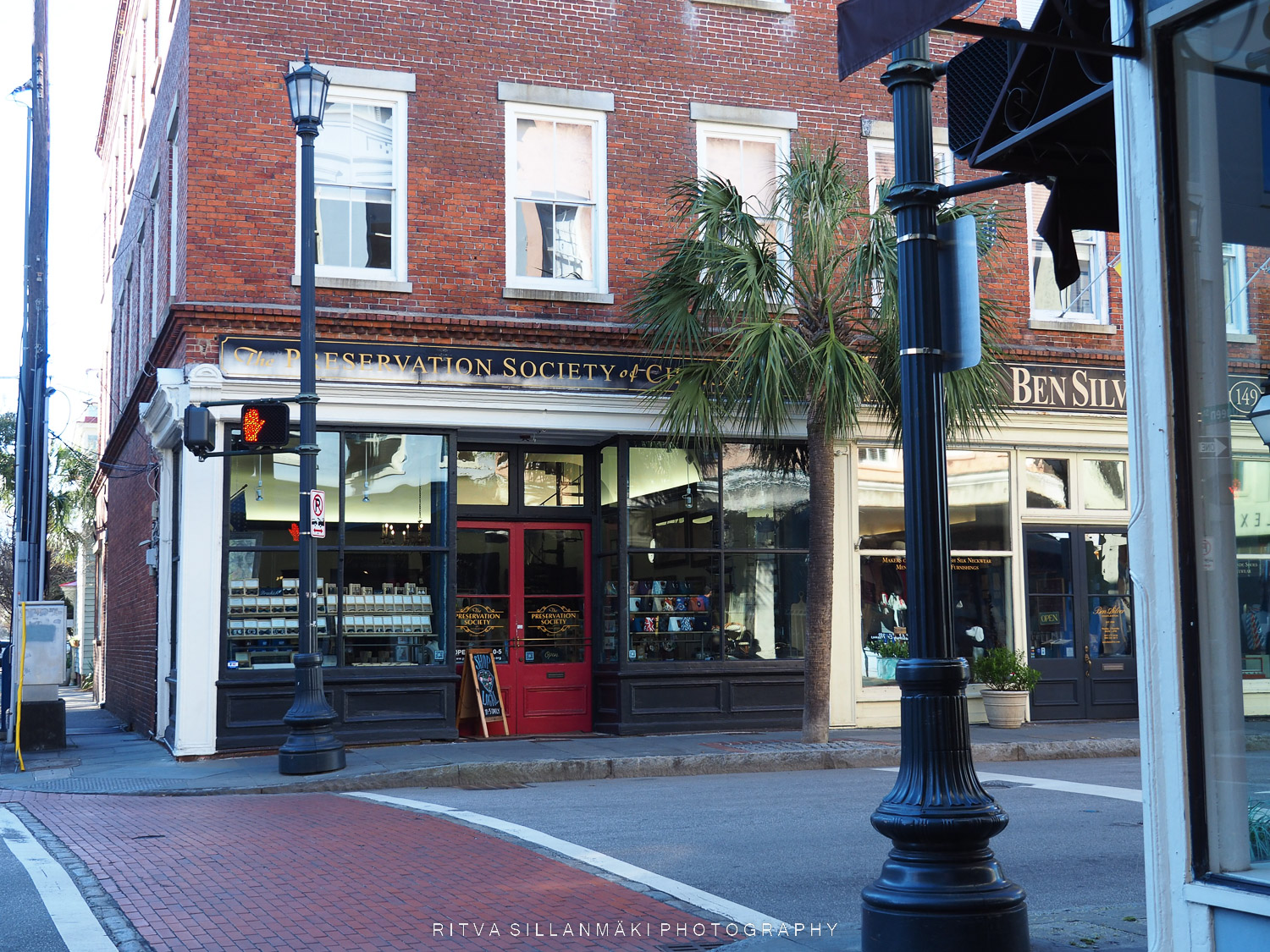
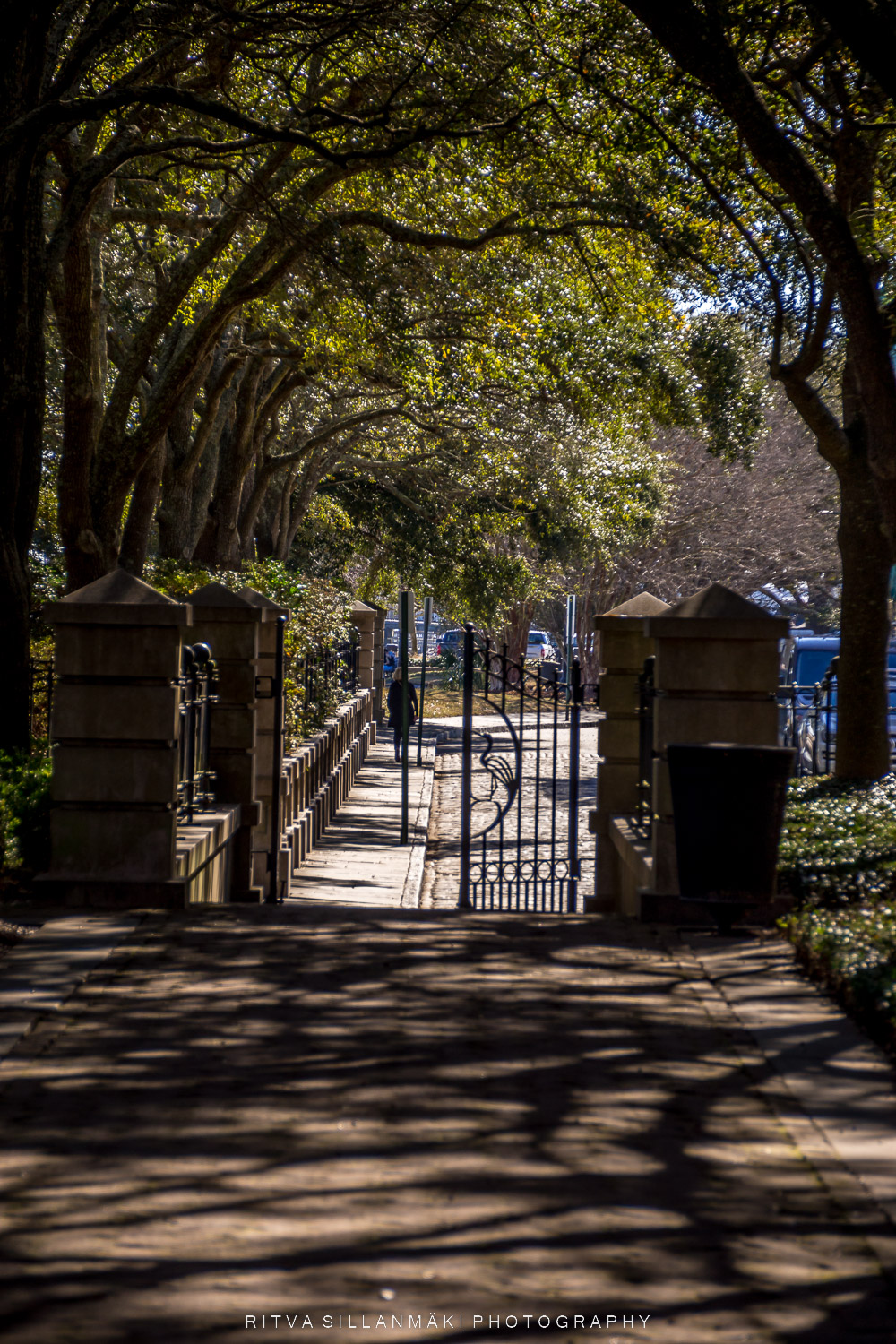
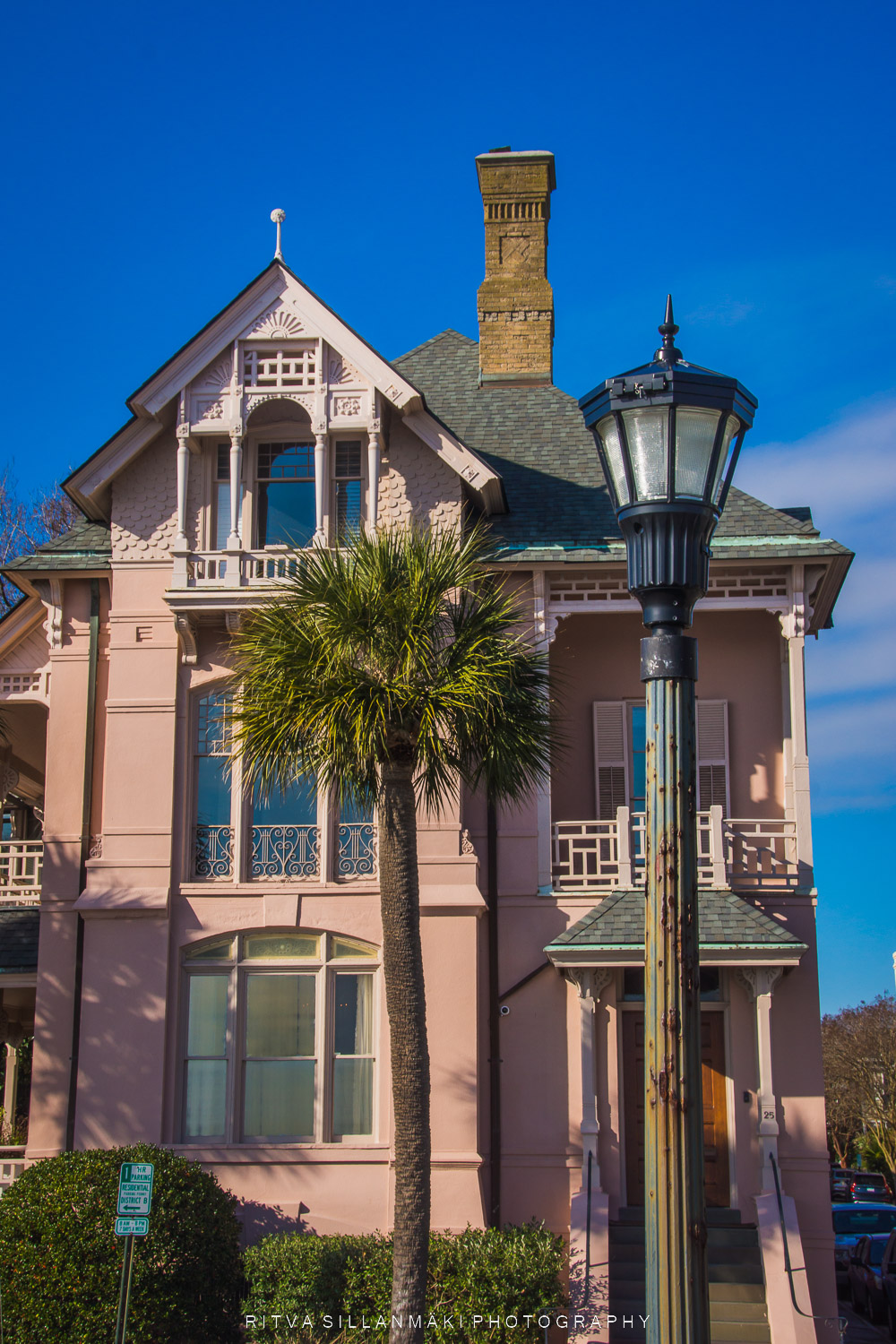
Luckily for all of us the city of Charleston is very well preserved, and the Preservation Society of Charleston will keep it that way. If the house is 75 years old or older it can not be torn down or as they like to say here: Cannot be taken down by hand of people, only by hand of god. And not just houses are preserved but cobblestones, sidewalks, lamppost and old stepping-stones to help you to cling on carriages. And you can’t renovate your old house by yourself. You have to have it inspected by the Society, that will also decide who can do the renovations. Also, tall buildings are not allowed. A certain church steeple sets the height limit. Because of the aforementioned rules historic Charleston is and will stay a very beautiful place to visit.
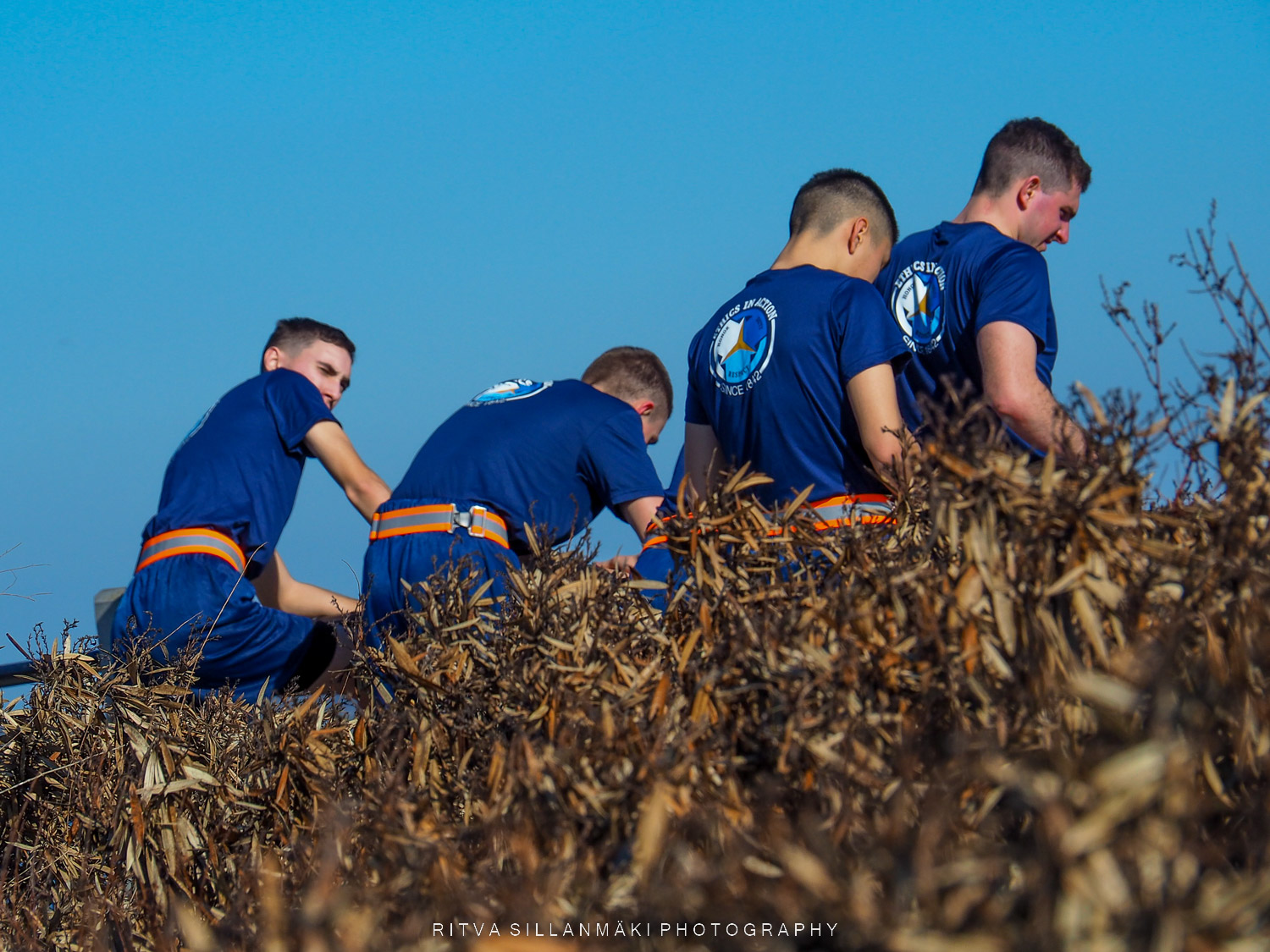
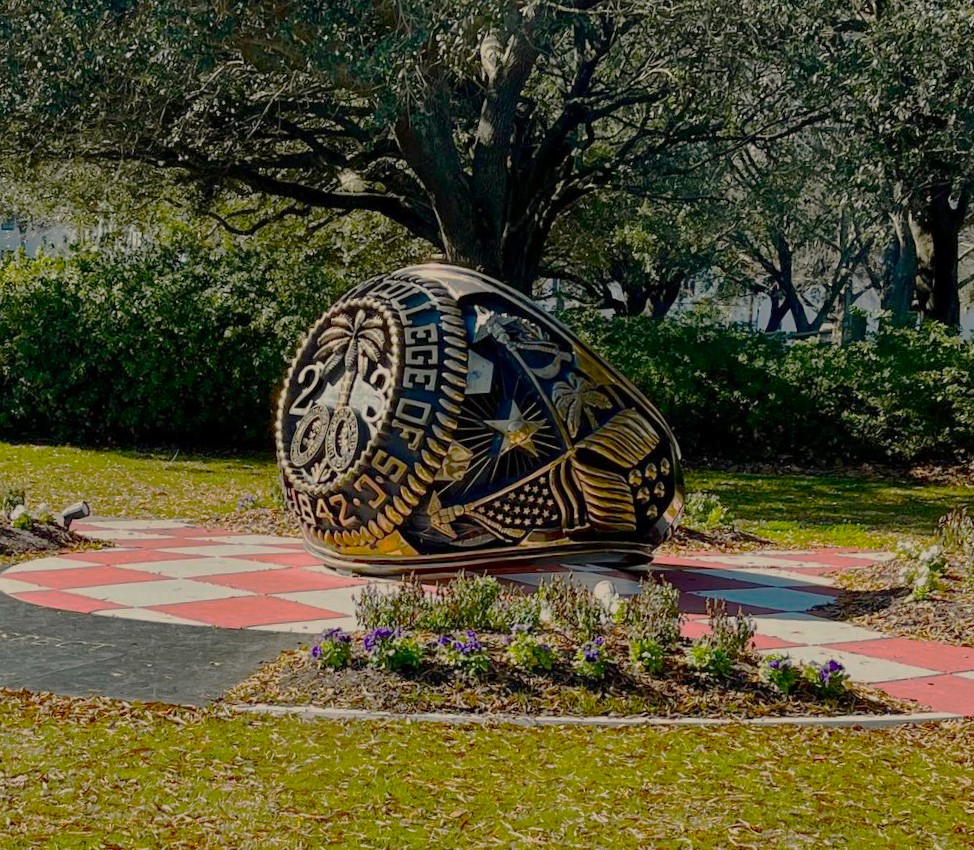
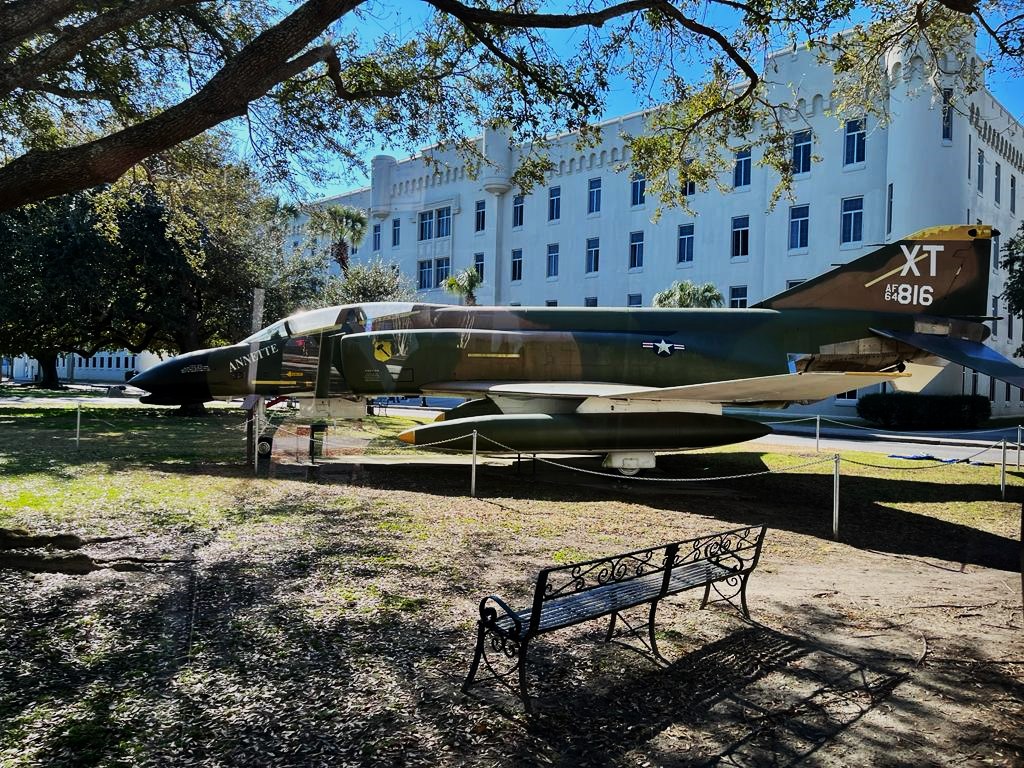
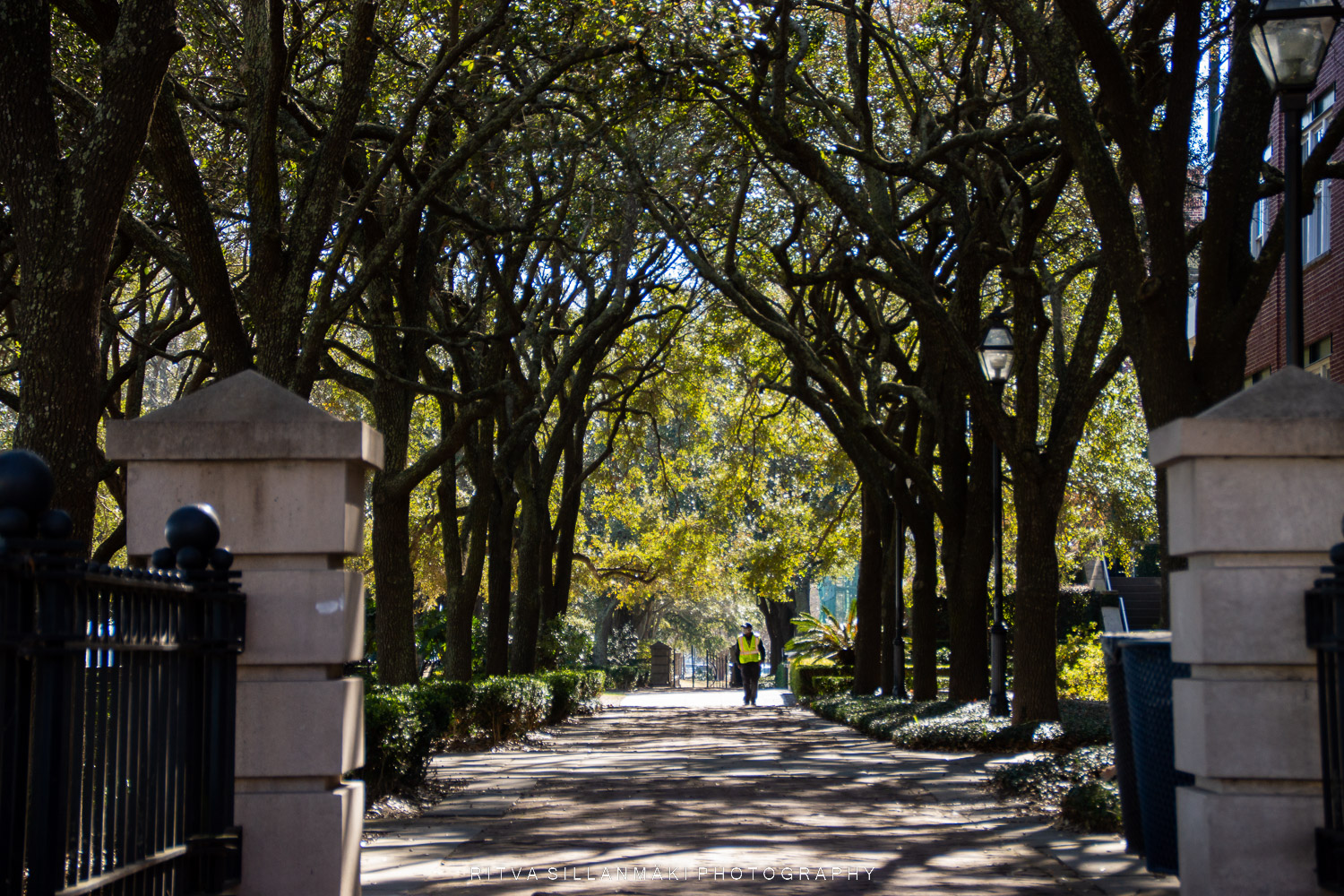
The tour took us through the famous Citadel, the Military College of South Carolina. My first sight was two cadets halfway running. It looked funny. At some point they were almost walking and then they speeded up once again. I just thought that they we in a hurry to get to the class. Then our guide told us that the freshman cadets or so-called gutter rats are not allowed to walk on the sidewalk, and they were not allowed to walk at all, but they have to do double time. Citadel was all male college until 1995 when Shannon Faulkner was able to enroll after a successful lawsuit. The suit alleged that the Citadel, which received state money, was “denying her equal protection under the Constitution”. The reception for her was not the best when she entered and she had to be escorted to Citadel by United States Marshals. During the so called “hell week” Faulkner suffered a heat stroke and eventually dropped out citing emotional and psychological abuse and physical exhaustion. However, she won the lawsuit and now women comprise approximately 9% of the Corps.
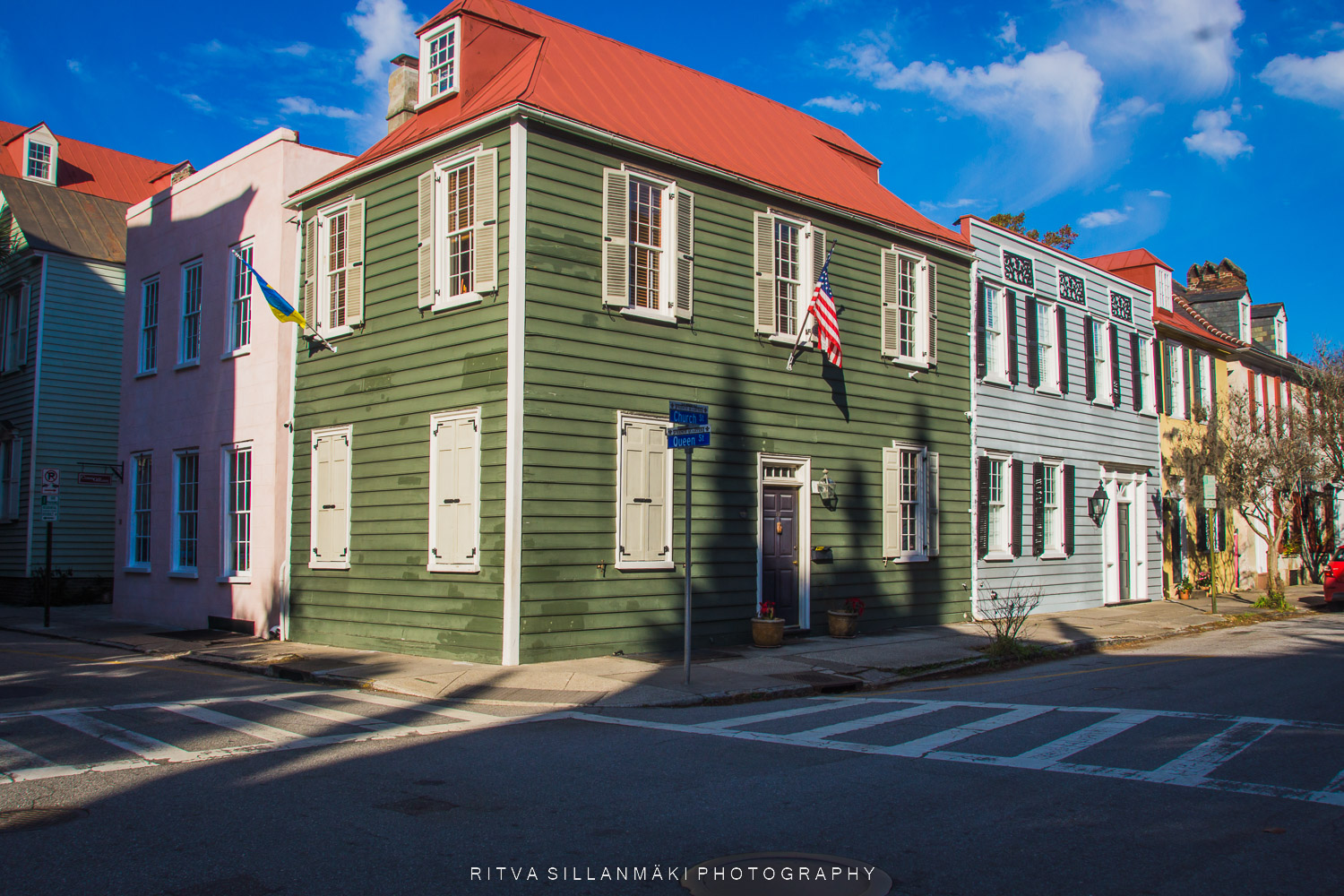
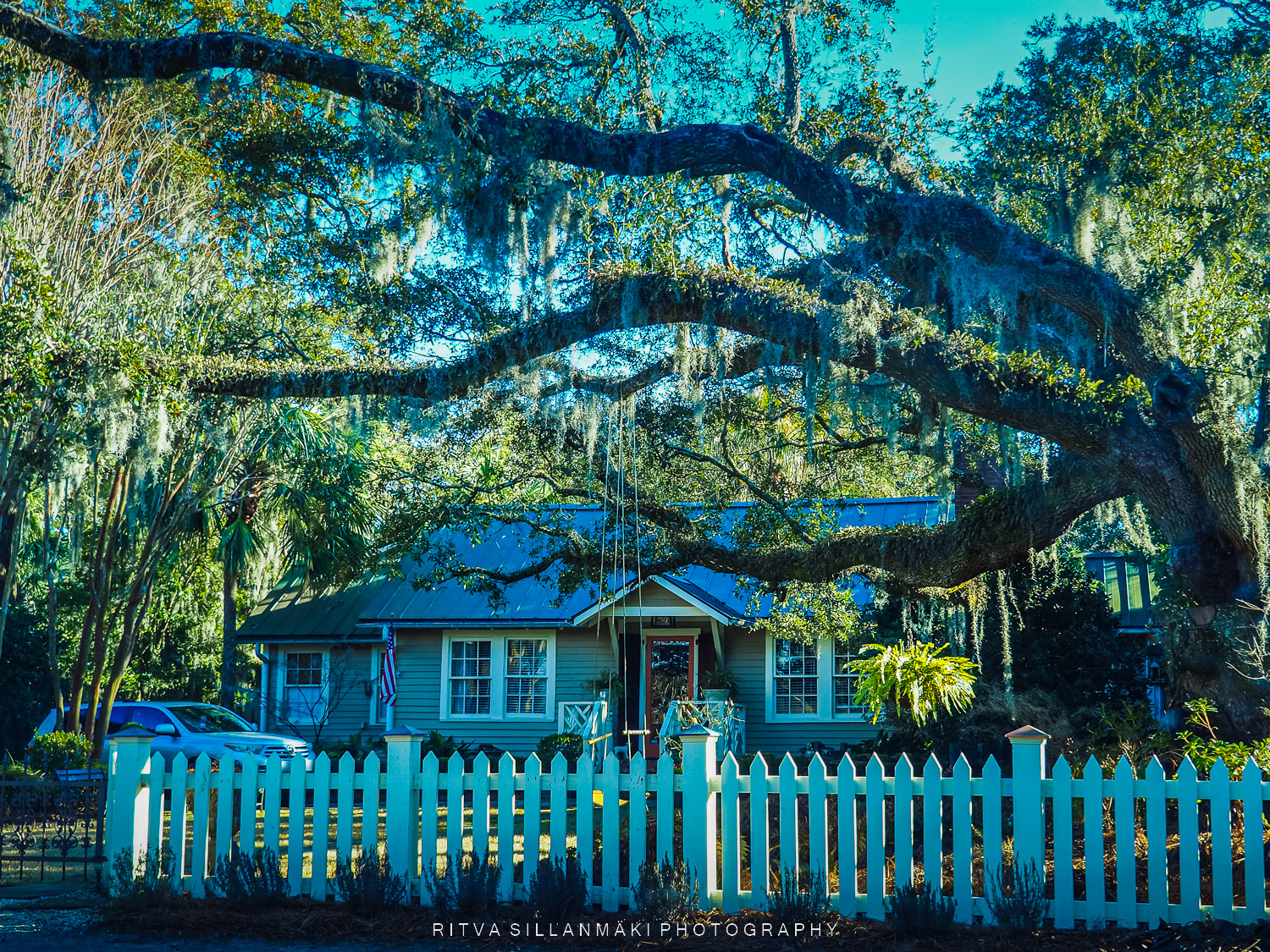
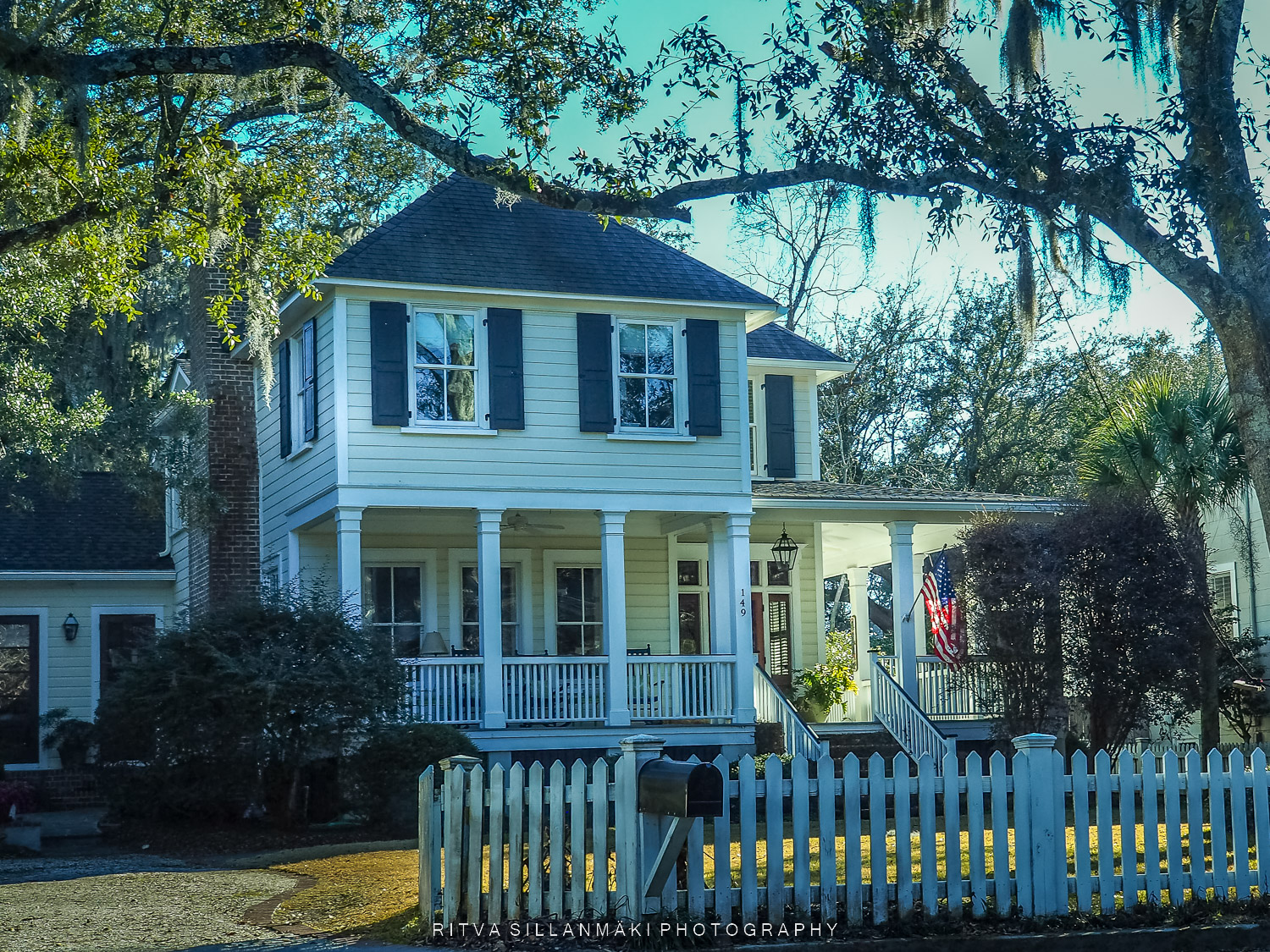
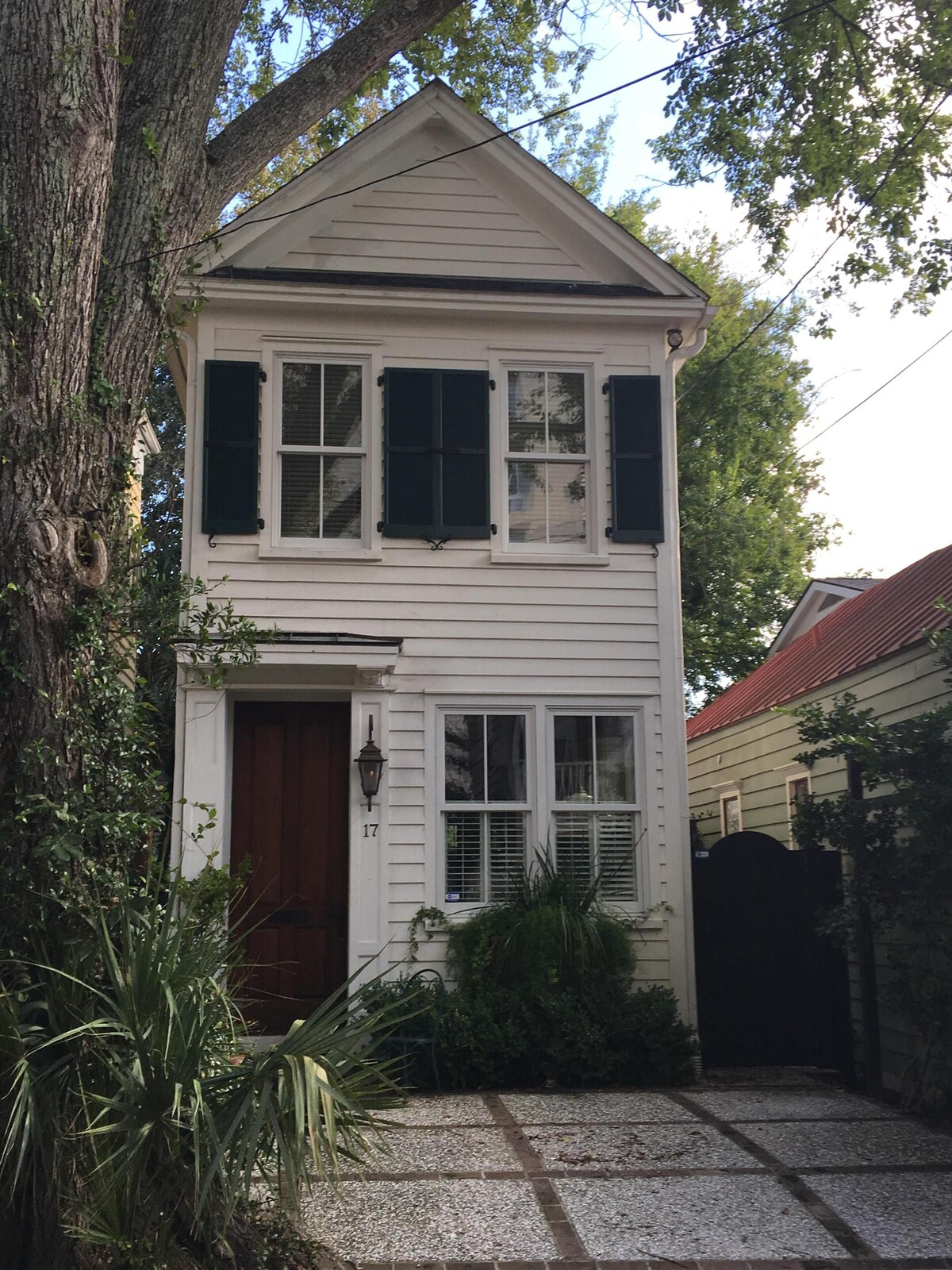
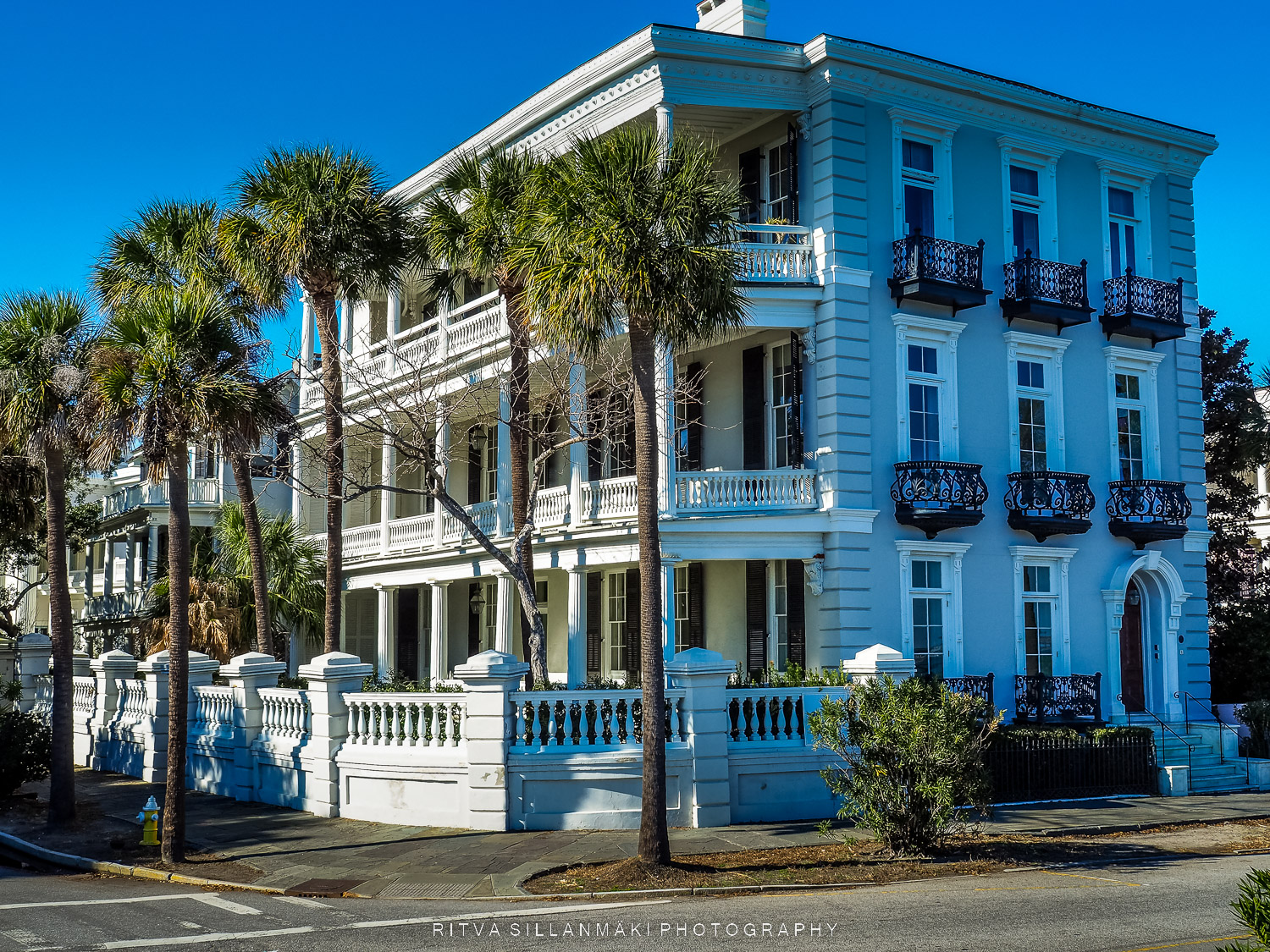
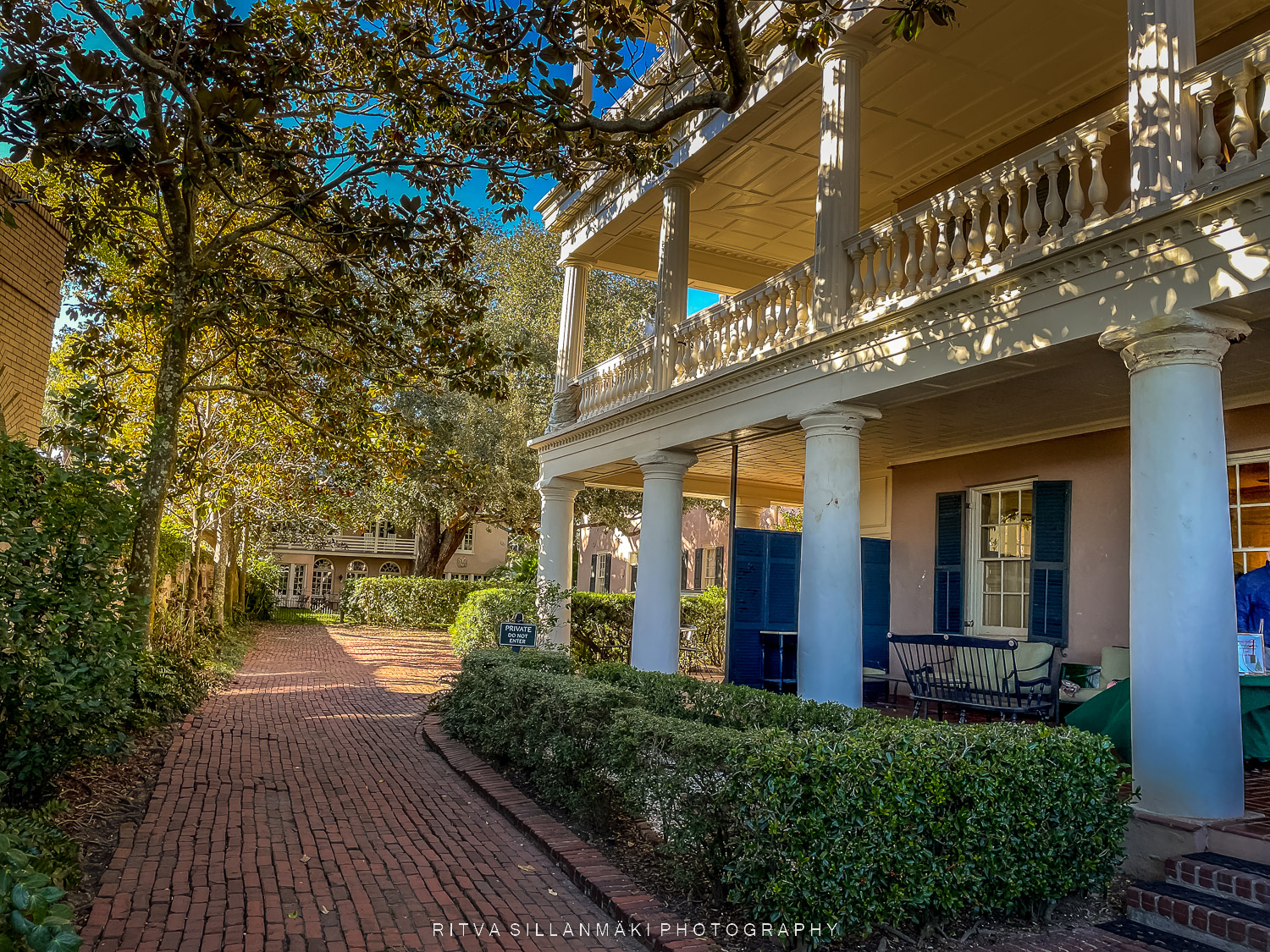
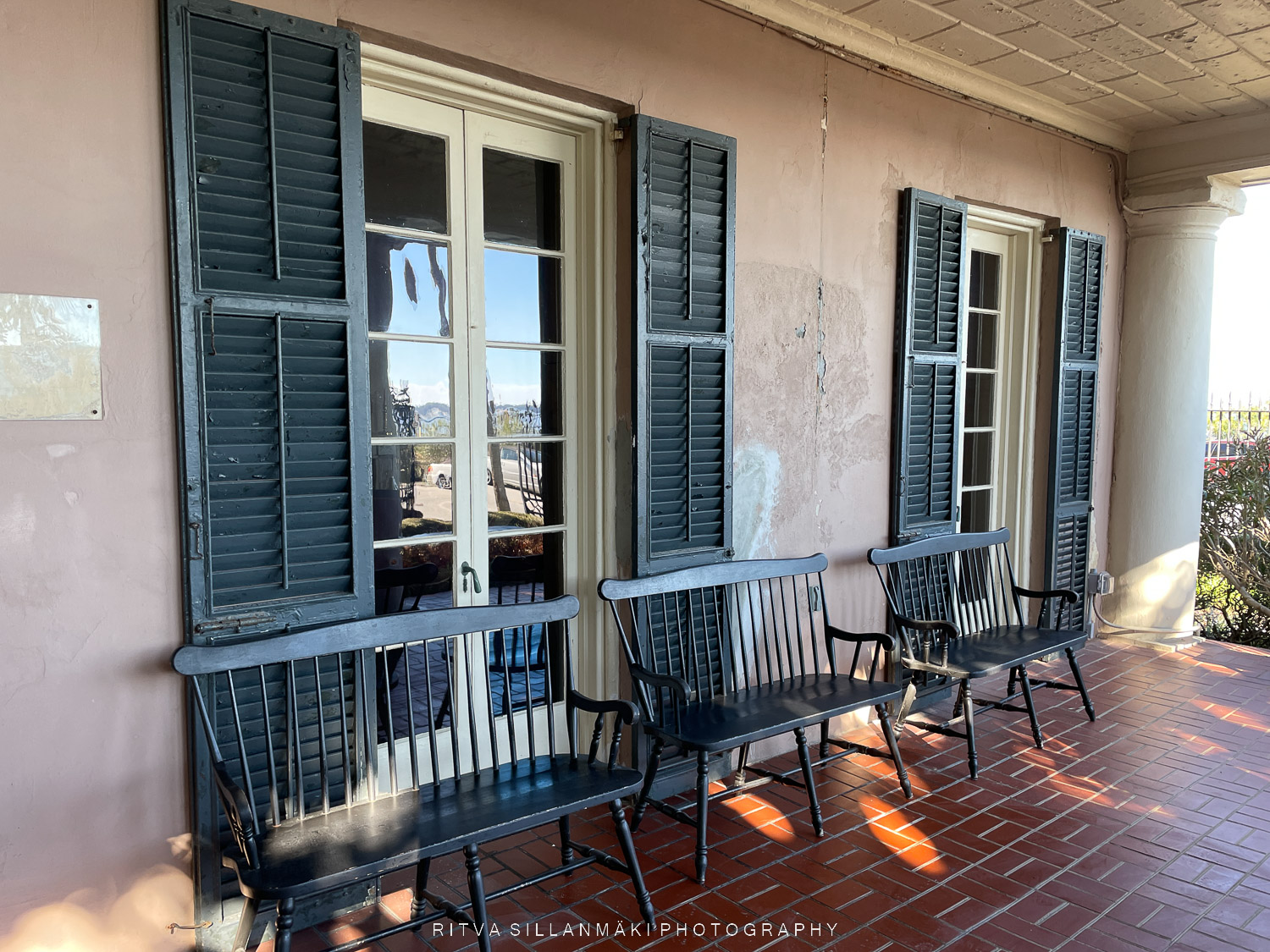
Another historical tidbit that stuck to my mind was the story of single houses in Charleston. During colonial times the inhabitants found out that traditional rowhouses did not work out because they were storing heat and the summers in South Carolina coastline and hot and humid. The idea for single houses was copied from the Caribbeans. Single houses were constructed to according to direction of the southernly winds that are blowing in the area. The houses are well-suited to long, narrow lots which were laid out in early Charleston. Although not a part of the earliest single houses, later buildings had two- and three-story porches, known locally as piazzas, added. Houses had hospitality doors. They were social signs for neighbors and friends. If the porch door was propped open, it meant that the family inside was ready for you. If the door was shut – stay away.
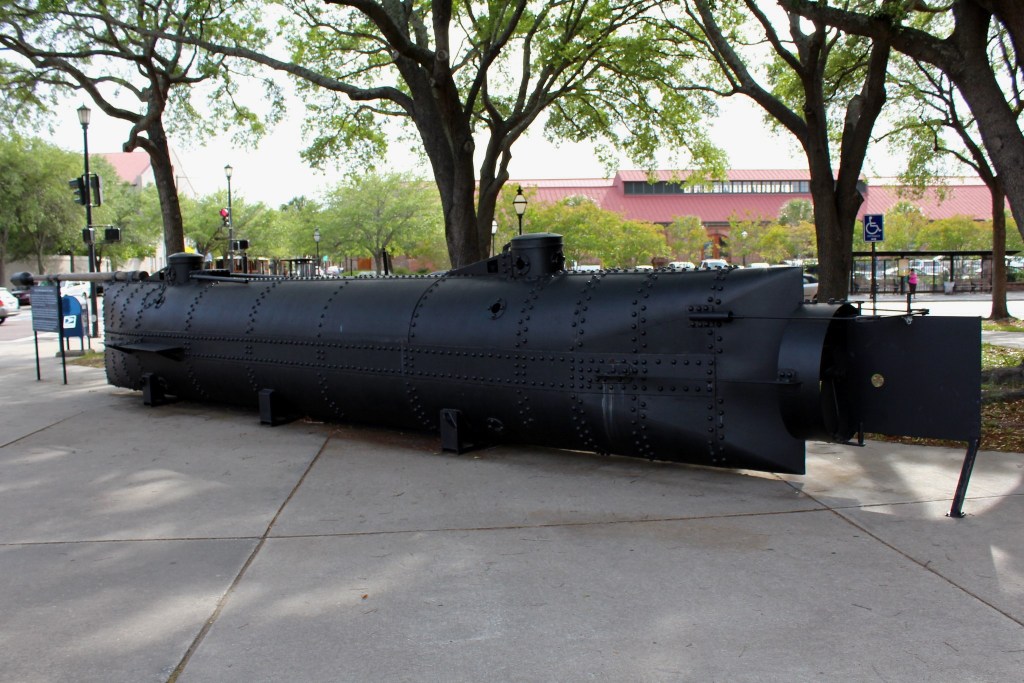
In front of the Museum of Charleston we saw the replica of submarine H.L Hunley, that the South used in the Civil War. Hunley looked very small, but guide told us that the replica is, surprisingly enough, actually too tall. The replica was made before they found the actual submarine in 1995 and the boat was not lifted up from the sea until 2000. I know people were shorter and smaller in those days, but it was amazing they were able to fit eight men into it. And the boat only had oxygen for 2 hours. What is more amazing how they were able to find men to go into that death trap in the first place. And not only one crew. During two test rides 13 out of 16 men perished and during the only actual war mission all 8 died. During the only mission they were able to sink USS Housatonic with its crew of 155 men. Only 5 of those 155 died, so H.L. Hunley killed 21 of they own and only 5 of Northern troops.
Charleston was famous for its slave trade. 48 per cent of the slaves came through and was sold in Charleston and that comes to total of 250 000 slaves. The biggest slave plantation was Magnolia. Nine of the wealthiest persons of the colonies lived in Charleston area. The first shot of the American Civil War was shot by and cannon from Fort Johnson to Fort Sumter in 1861.
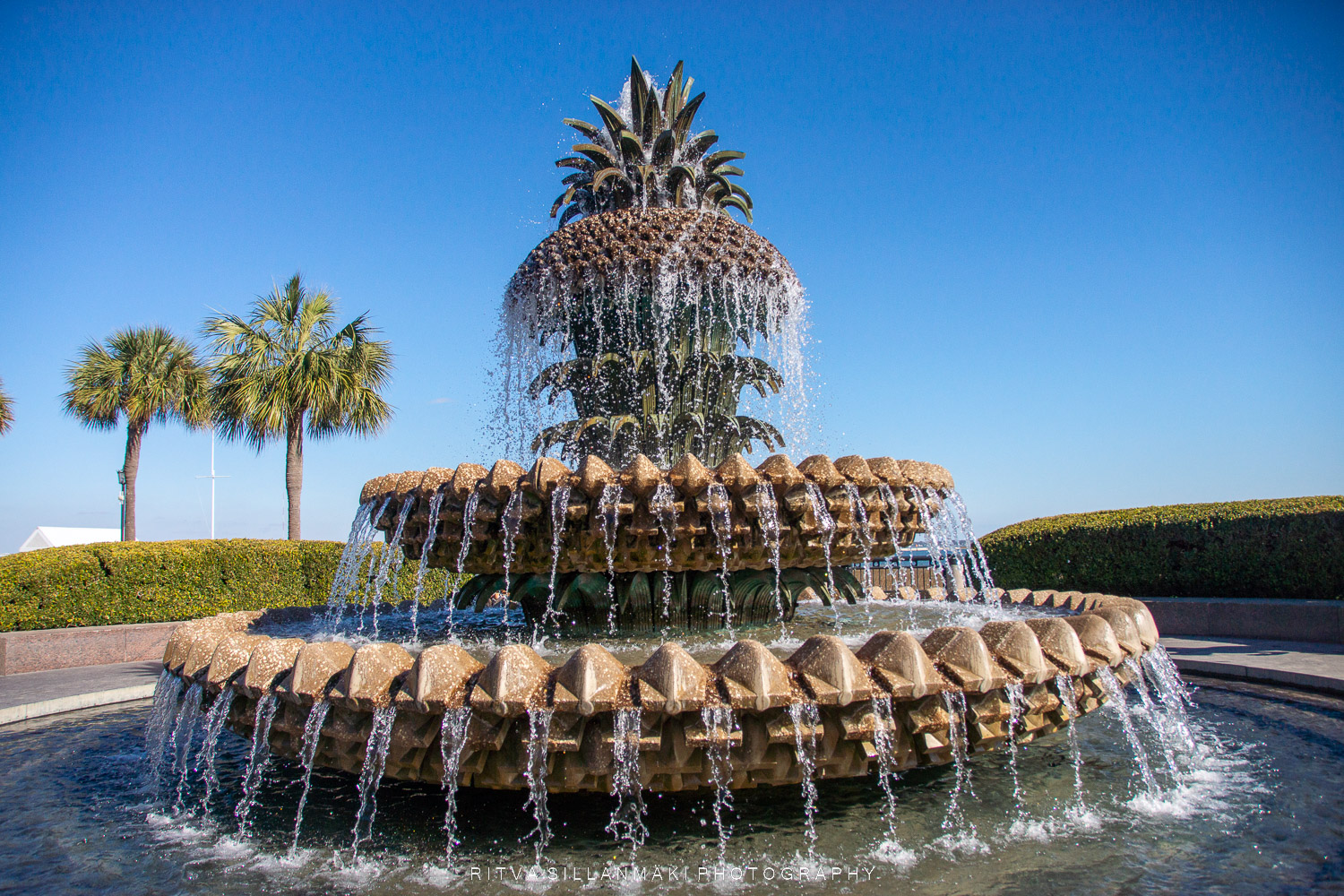
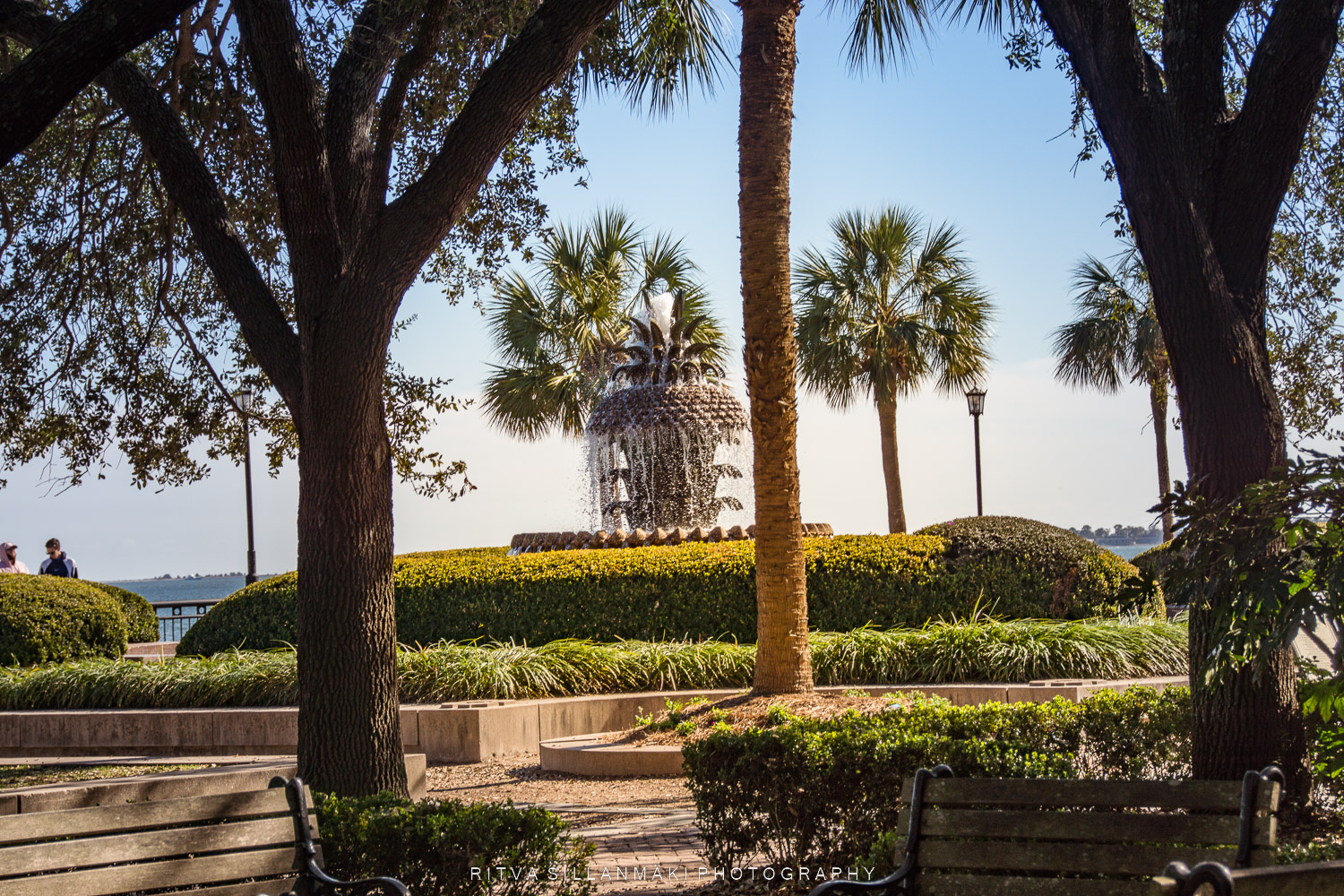
The bus tour lasted only 90 minutes we had plenty of time to drive around the historic downtown. First stop was Waterfront Park and the famous Pineapple Fountain. Afterwards we learnt that the Pineapple Fountain was only built in 1990 but to us it looked like it belonged and had been there for ages. Pineapple represents hospitality. American sailors would place the pineapple outside of their door to show that they had safely returned. In Charleston the woman hung the pineapple from the door to show that her husband had returned. Maybe to show the other gentlemen callers not to bother for the time being?
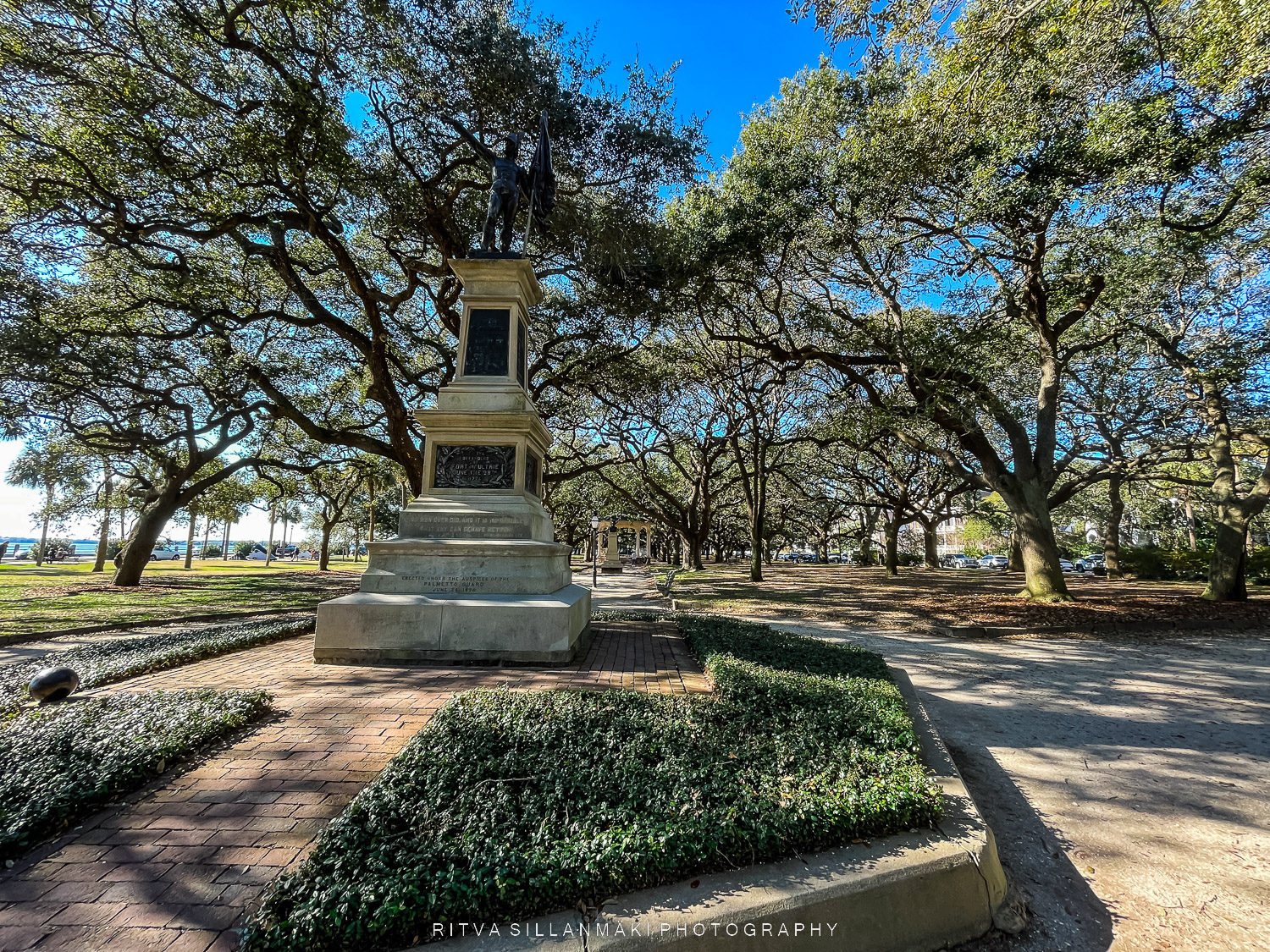
After Pineapple Fountain we took a nice break in the White Point Garden in The Battery and droveby the Rainbow Row.
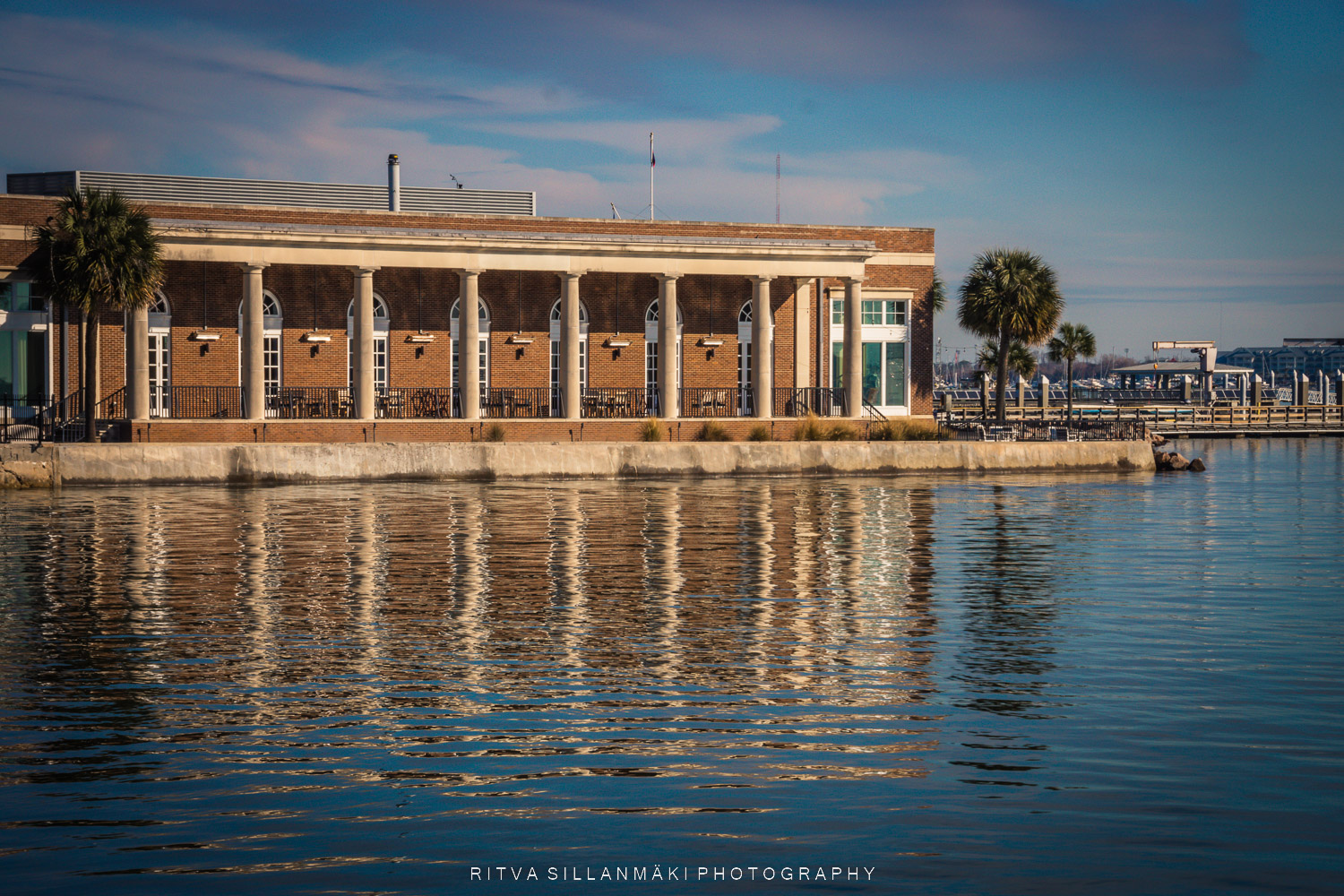
Later in the afternoon we drove over another spectacular bridge, Arthur Ravenel Jr. Bridge, to Shem Rock in town of Mt. Pleasant. Had a late lunch at Tavern & Table by the creek and prepared ourselves for the sunset. We walked along the Shem Creek Boardwalk to catch the glorious sunset. I will post these photos in the nexrt post as this is already an overload of images.
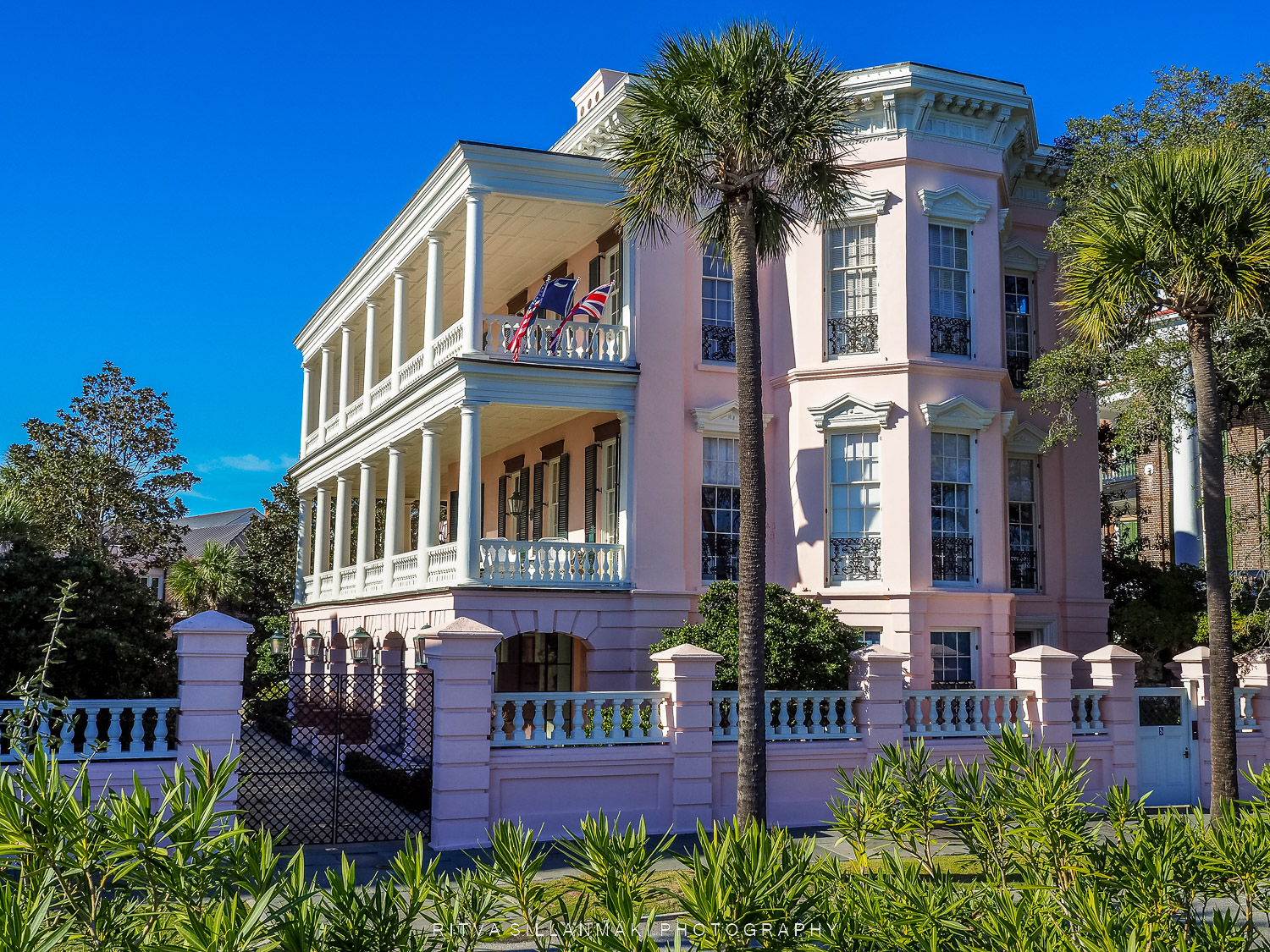
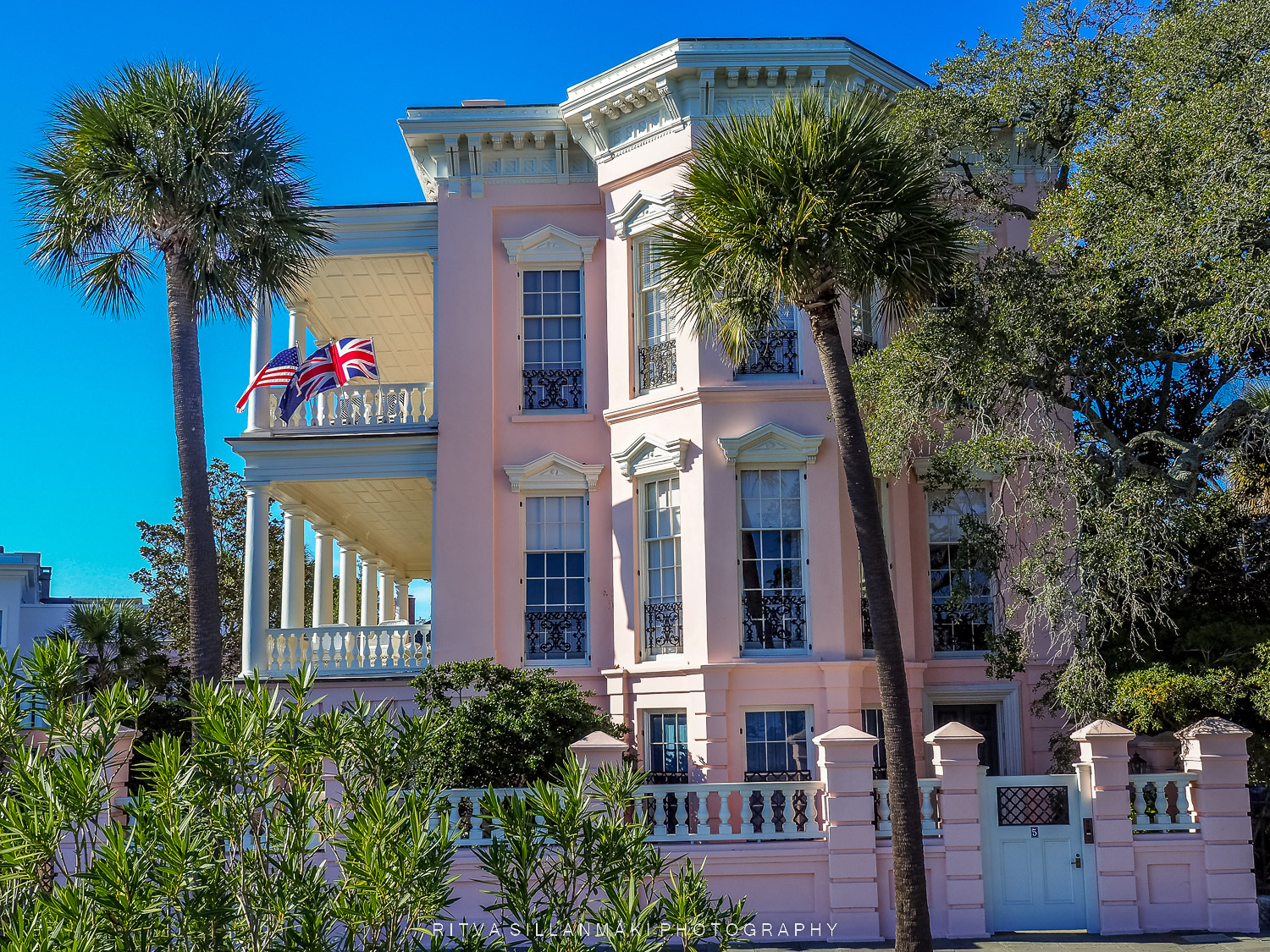
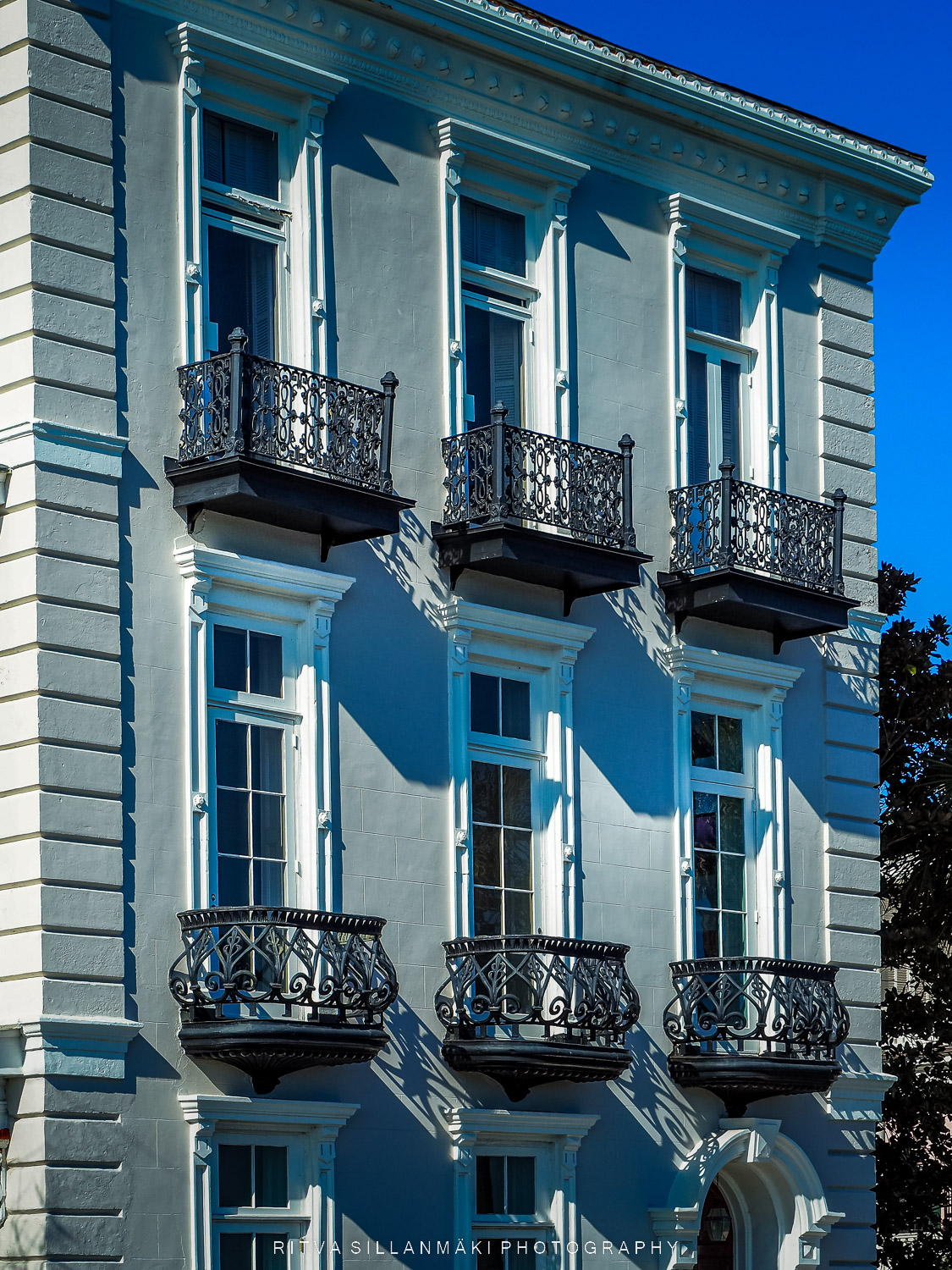
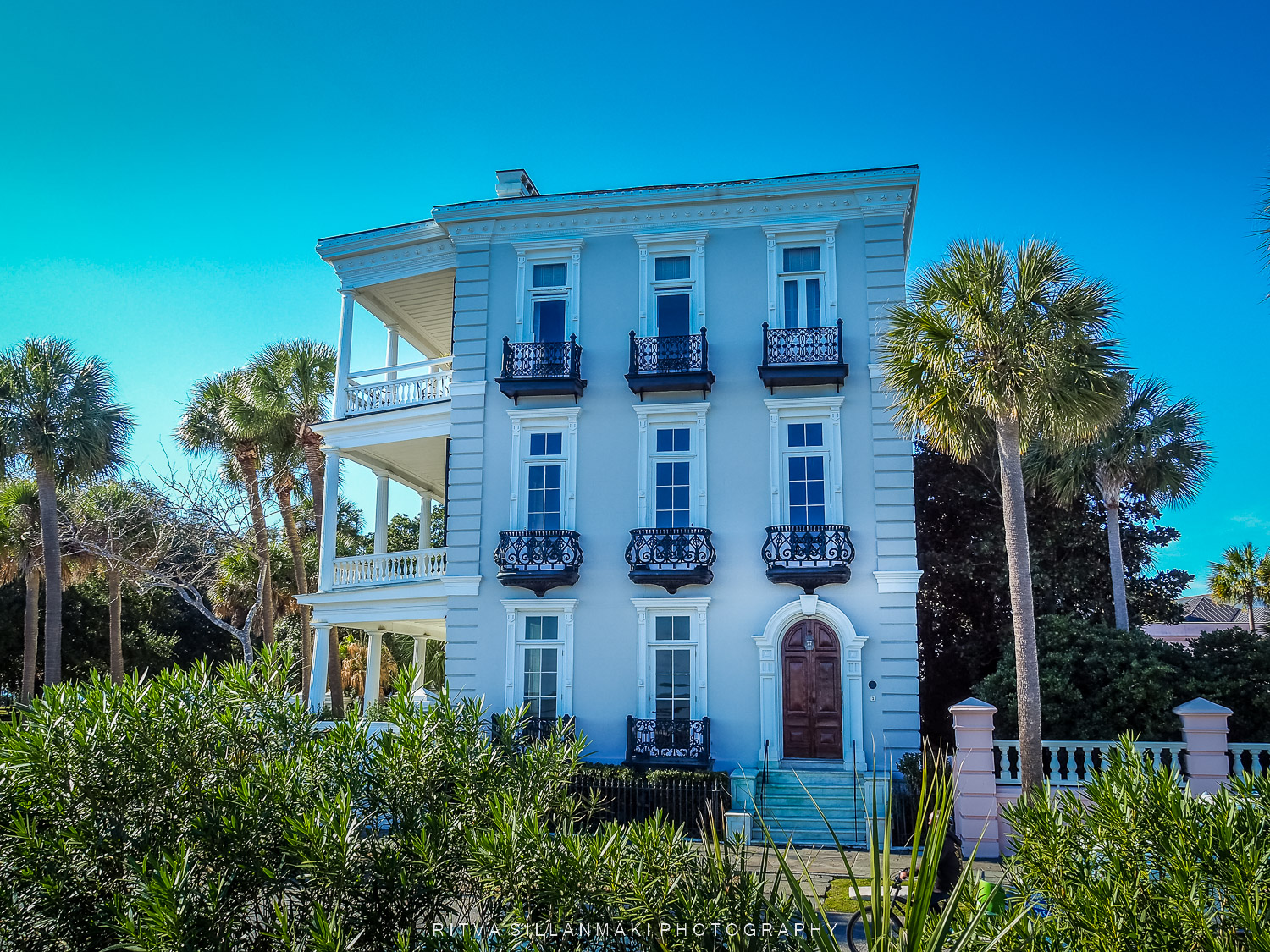
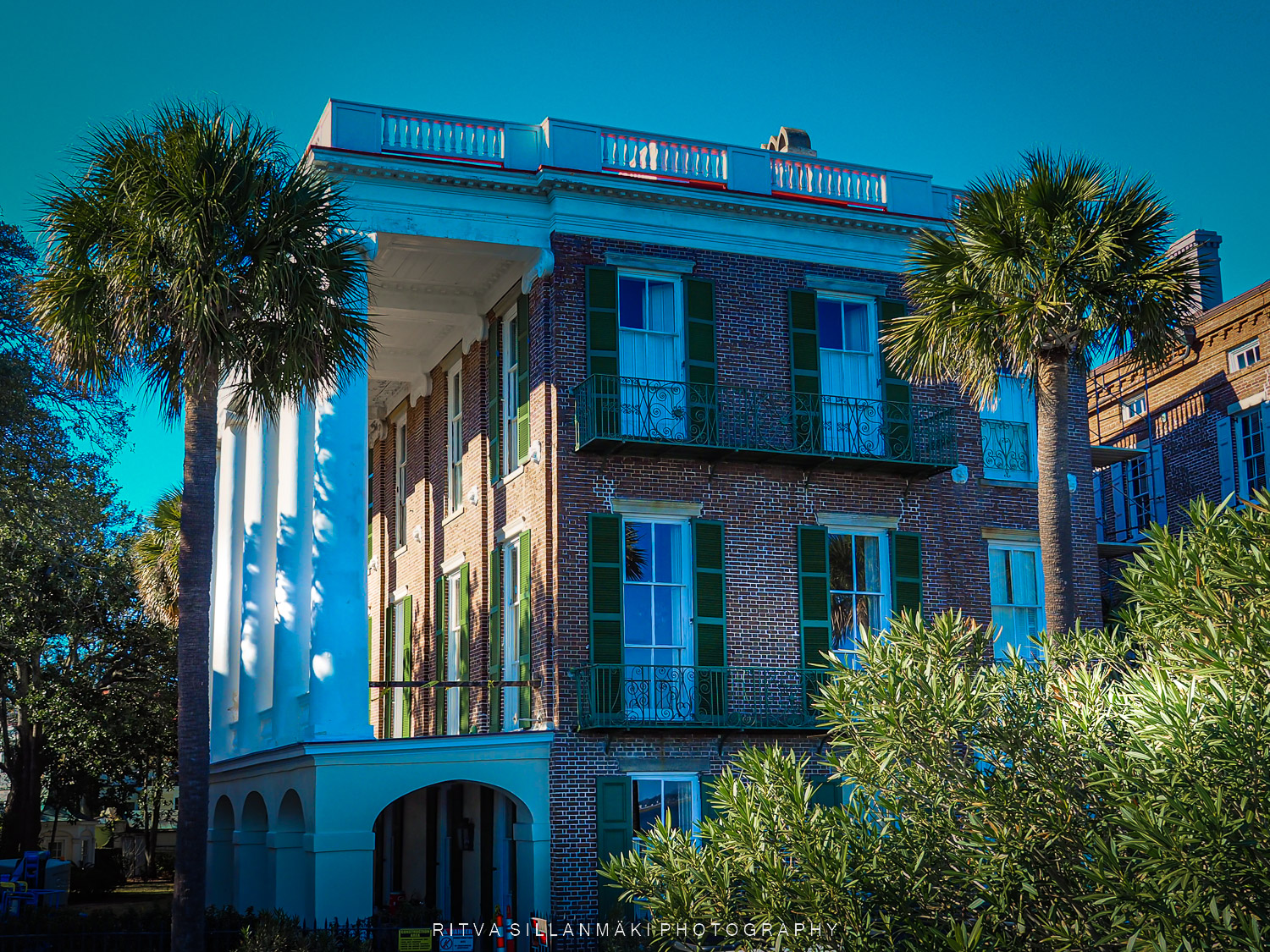
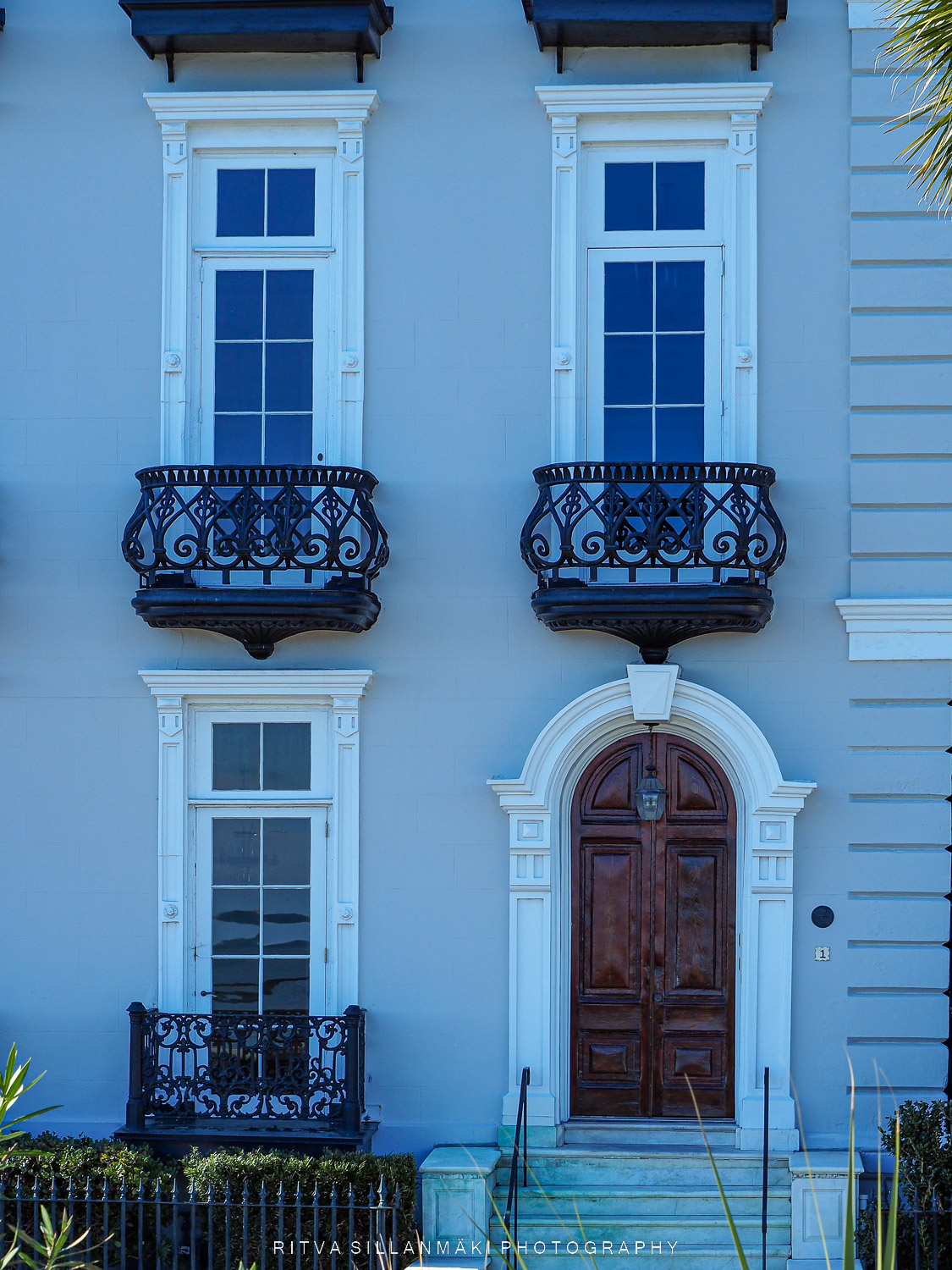
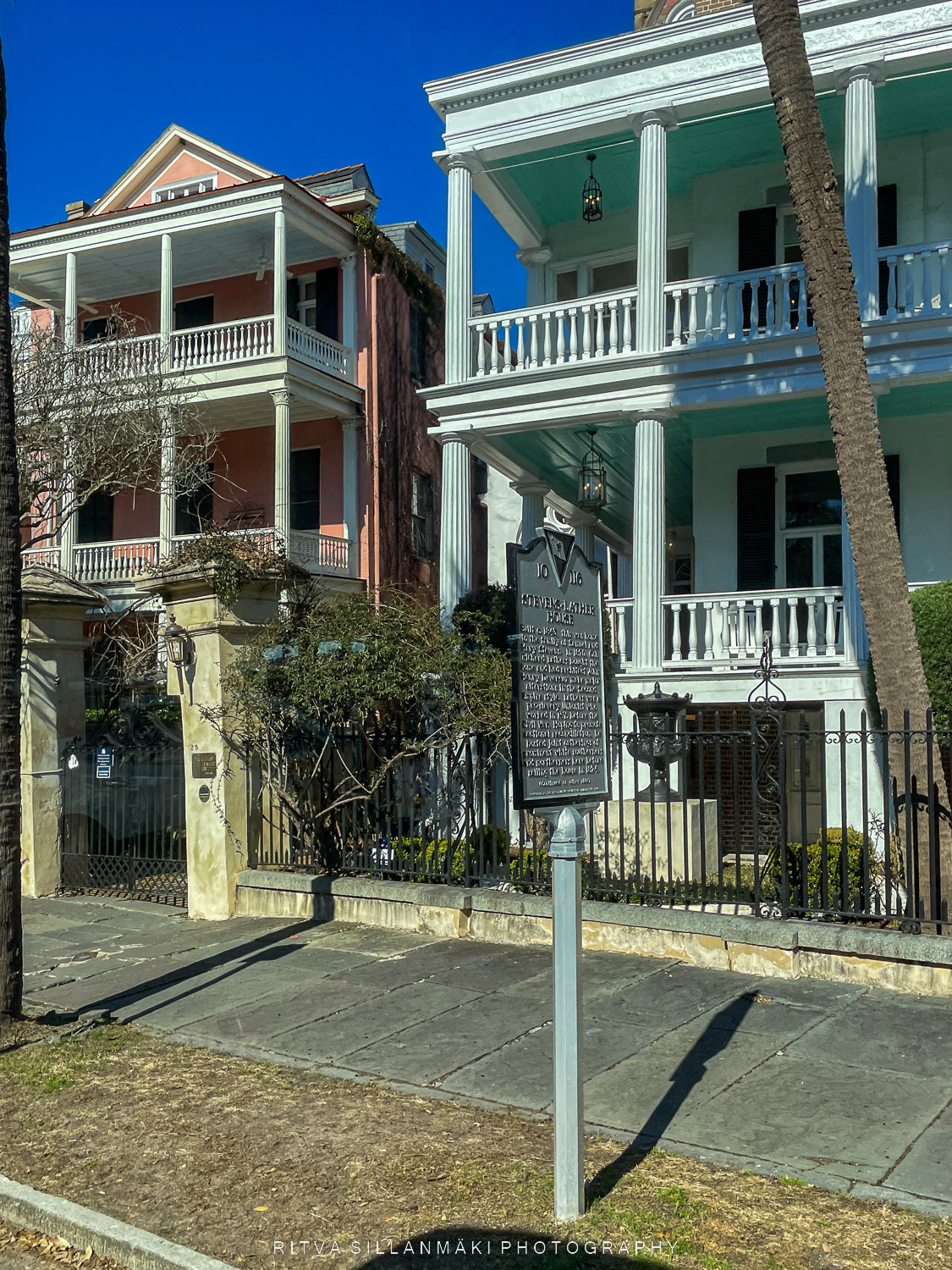
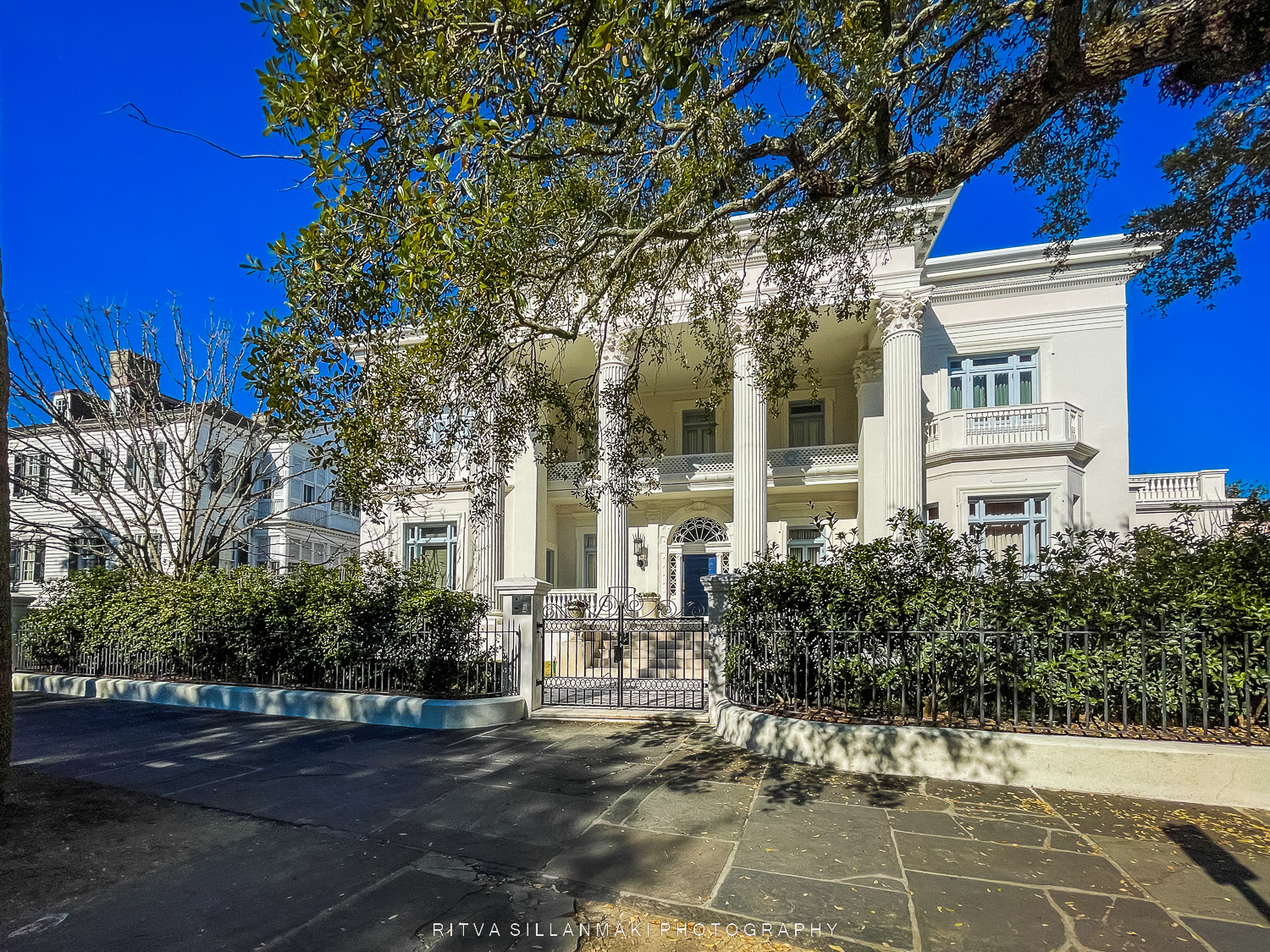
The Palmer Home (Pink House) in historic Charleston is one of the Holy City’s most iconic mansions, frequently photographed and often depicted in paintings of the grand homes along the Battery. Built between 1847 and 1849 by John Ravenel, a wealthy merchant and president of the South Carolina Railroad Company, the home remained in the Ravenel family until 1953.
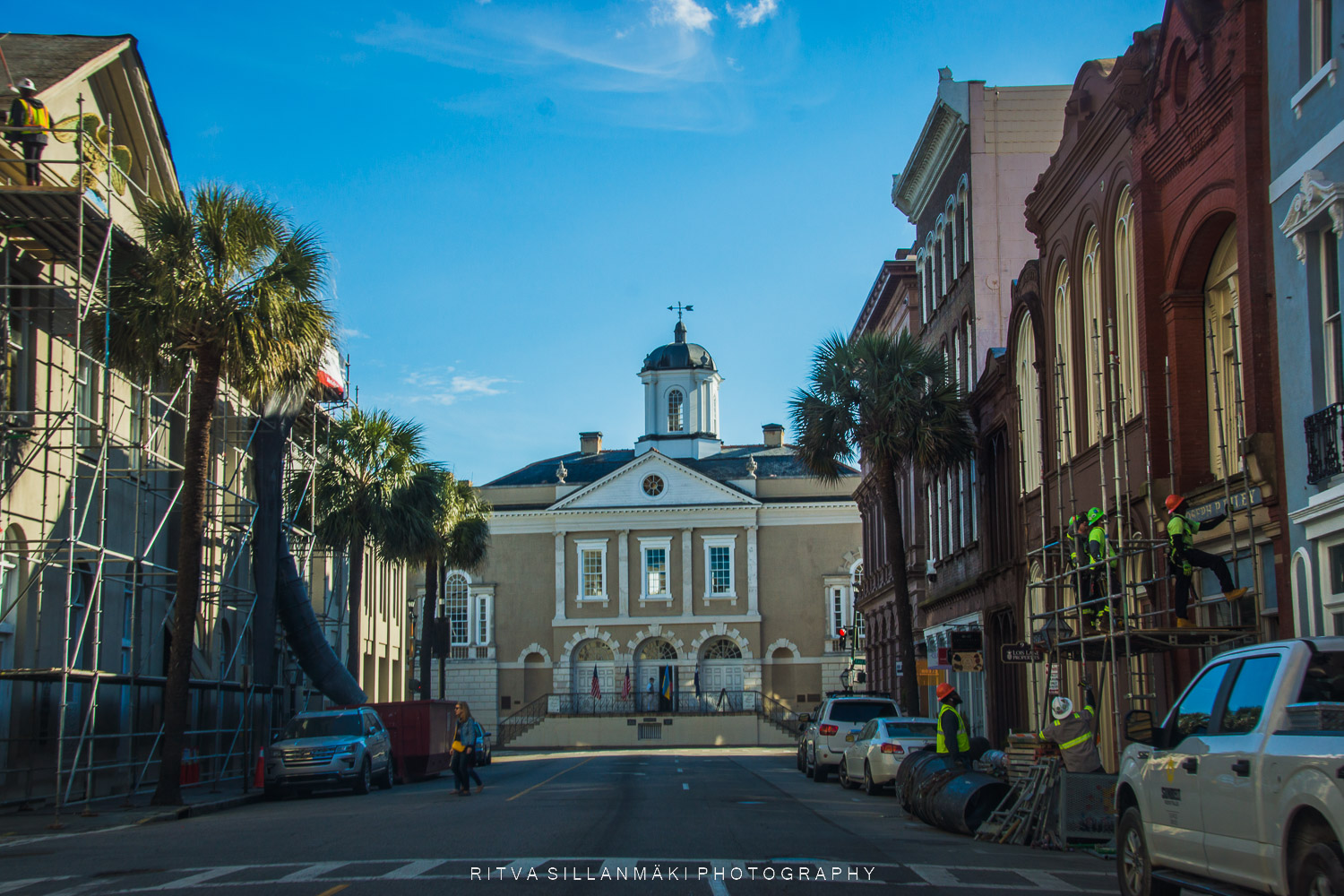
On the way back to the hotel we visited the city center once again. The center was very easy to navigate even in the dark without the navigator because it has been built into a grid. Naturally because it was off-season the traffic wasn’t bad either. Sometimes the one-way streets caught us off-guard but the clear grid saved us.
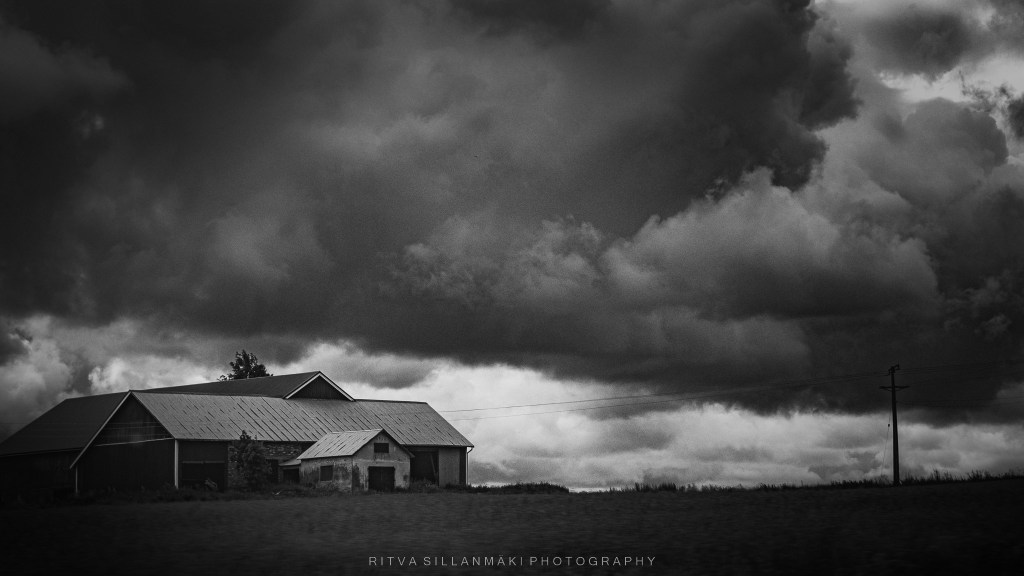
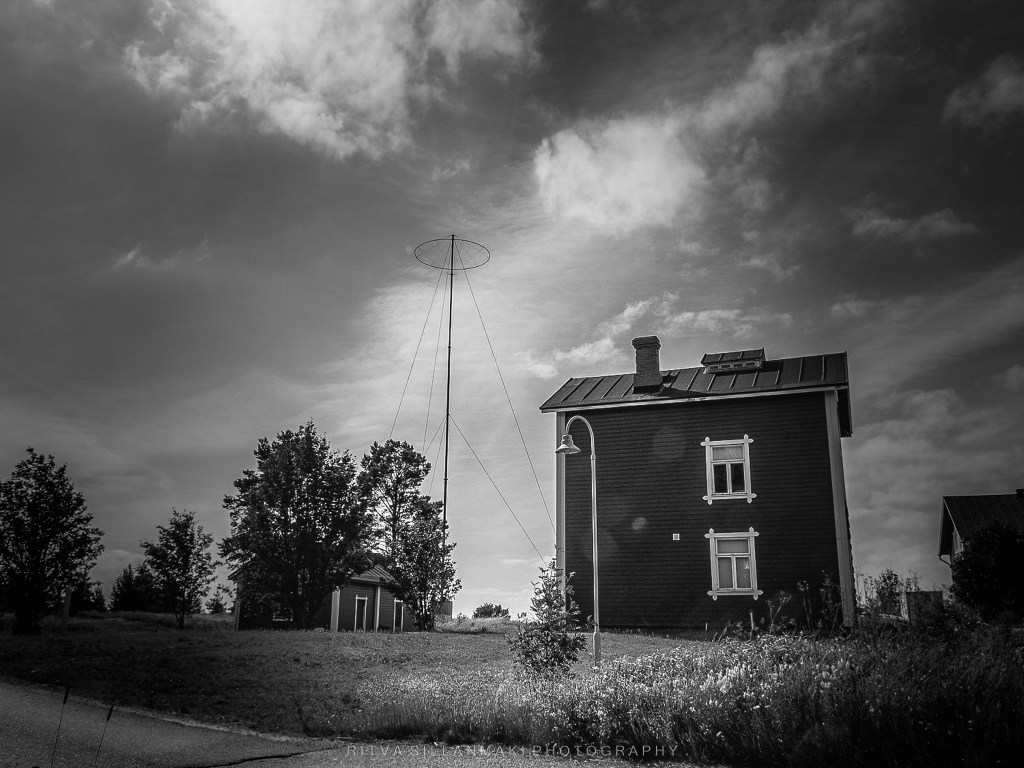
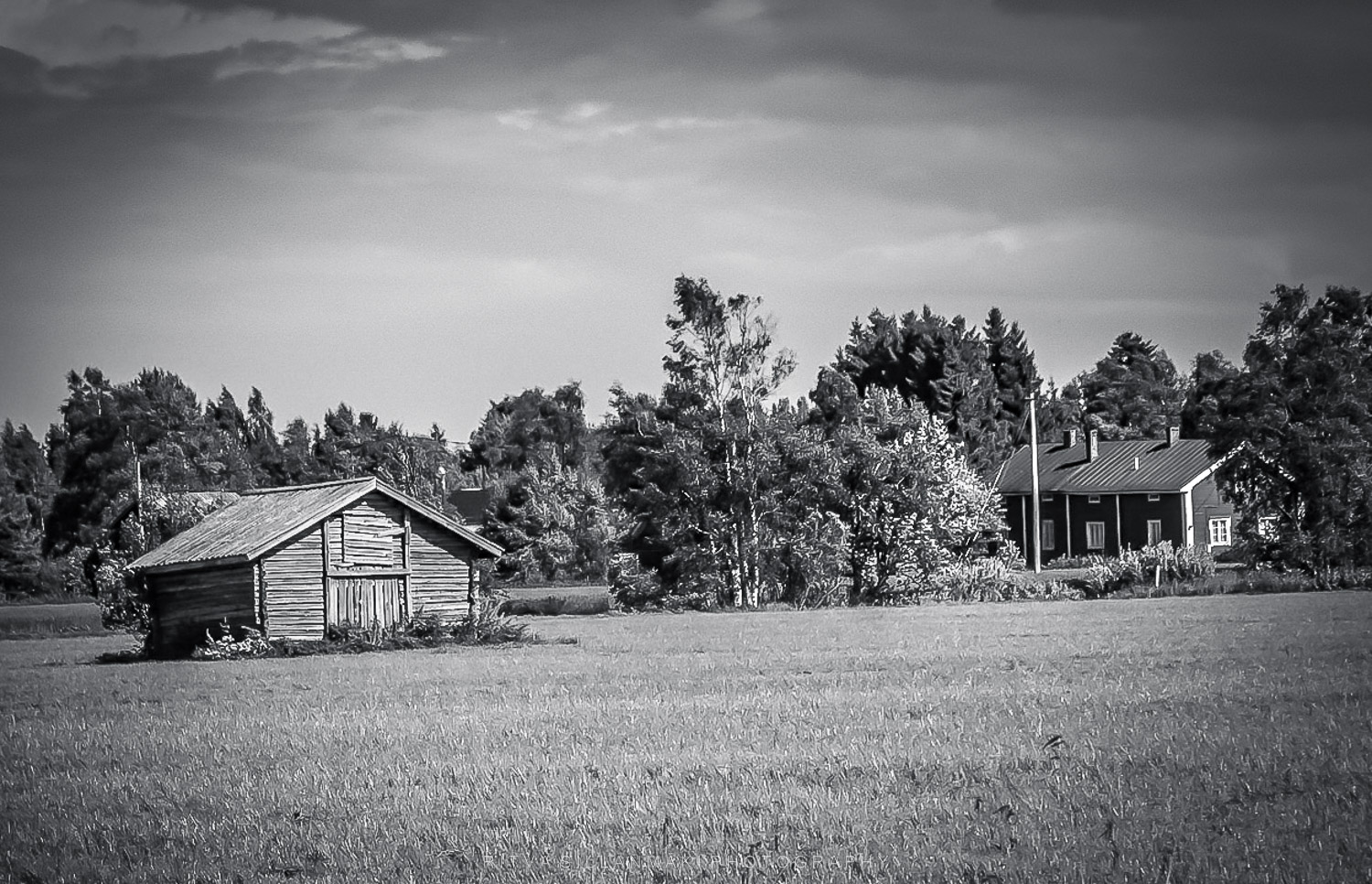
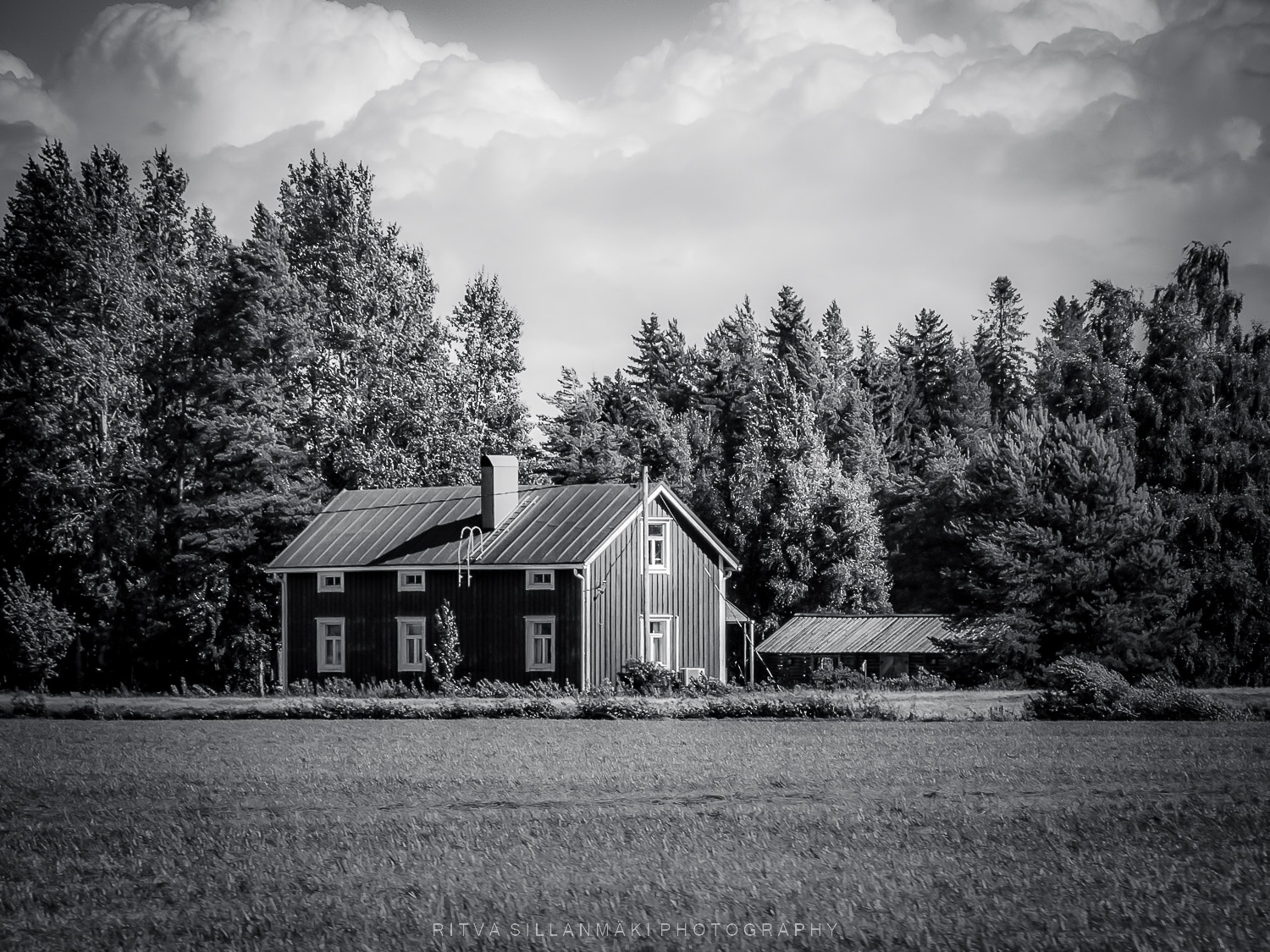
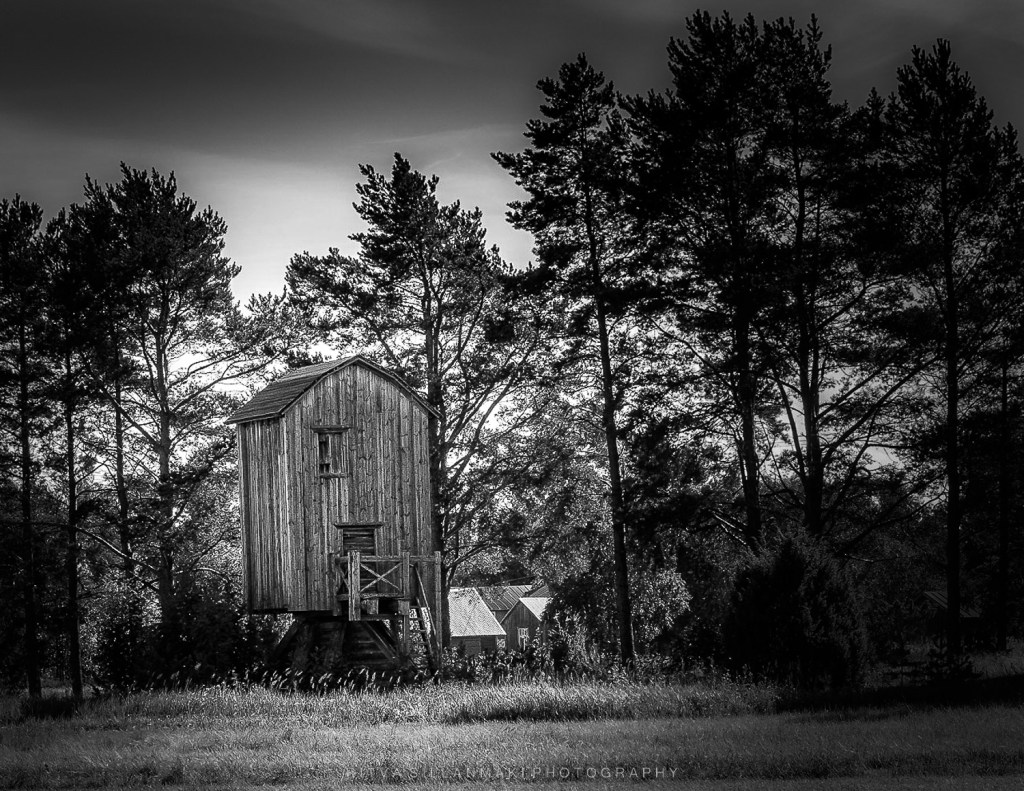
Some building and barns seen I’ve seen this summer
Farm house on a hill with dark clouds
Hailuoto is the largest island in the Bothnian Bay. The island started to rise from the sea approximately 2,000 years ago and continues to do so. Eventually the island will adjoin mainland. The island has been inhabited for at least 1,000 years. Fishing was naturally essential for the islanders as was agriculture. By the end of the 19th century, population on the island had reached 2,000 inhabitants but by the 60’s and 70’s started to fall. In 1980, the number of inhabitants had dropped below 900, but since then has increased again steadily and is now around 1,000 residents.
Hailuoto natural environment is an asset and we do our best to preserve it for future generations by different conservation programmes. Protection covers birds, shoreline and unique esker formations. The rising shoreline is constantly changing and thus forms a living conservation area. The built environment in Hailuoto is characterised by well-preserved traditional buildings and therefore, together with its unique nature, Hailuoto was designated one of the national landscapes in Finland and actually the only one with national landscape covering the entire municipality. (https://www.hailuoto.fi/en/info-2/information-about-hailuoto/ )
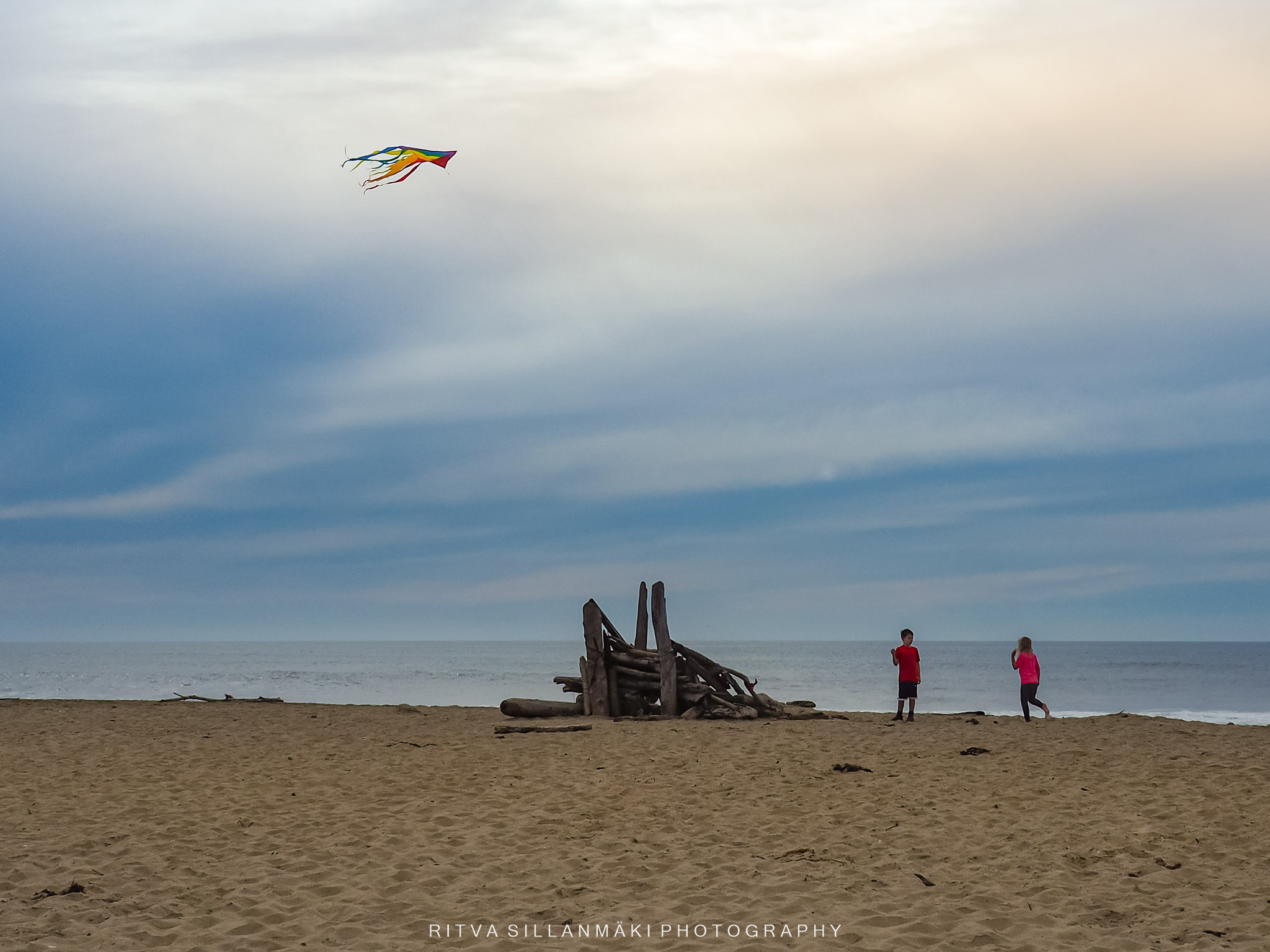
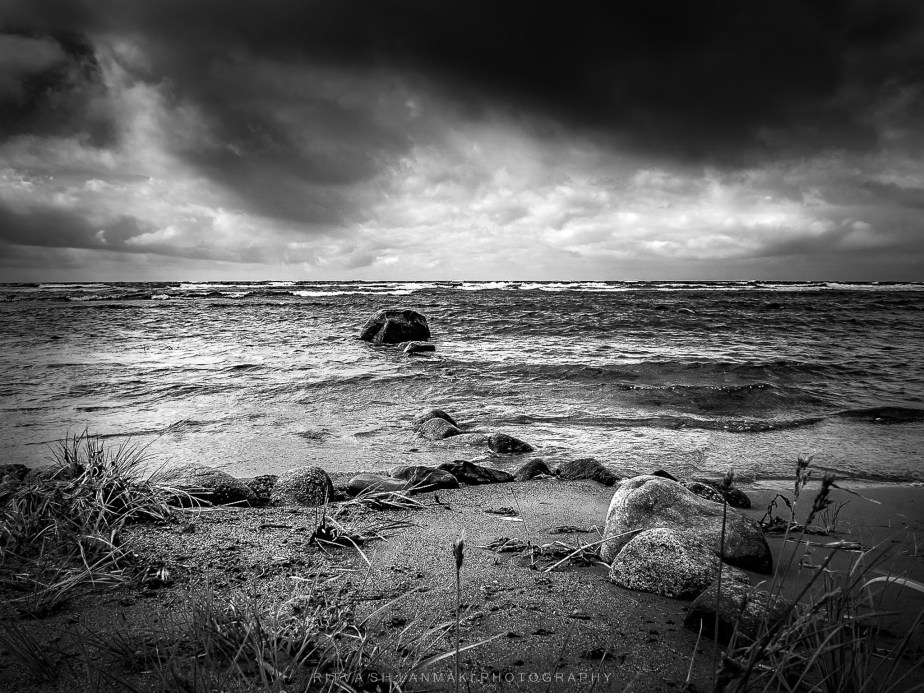
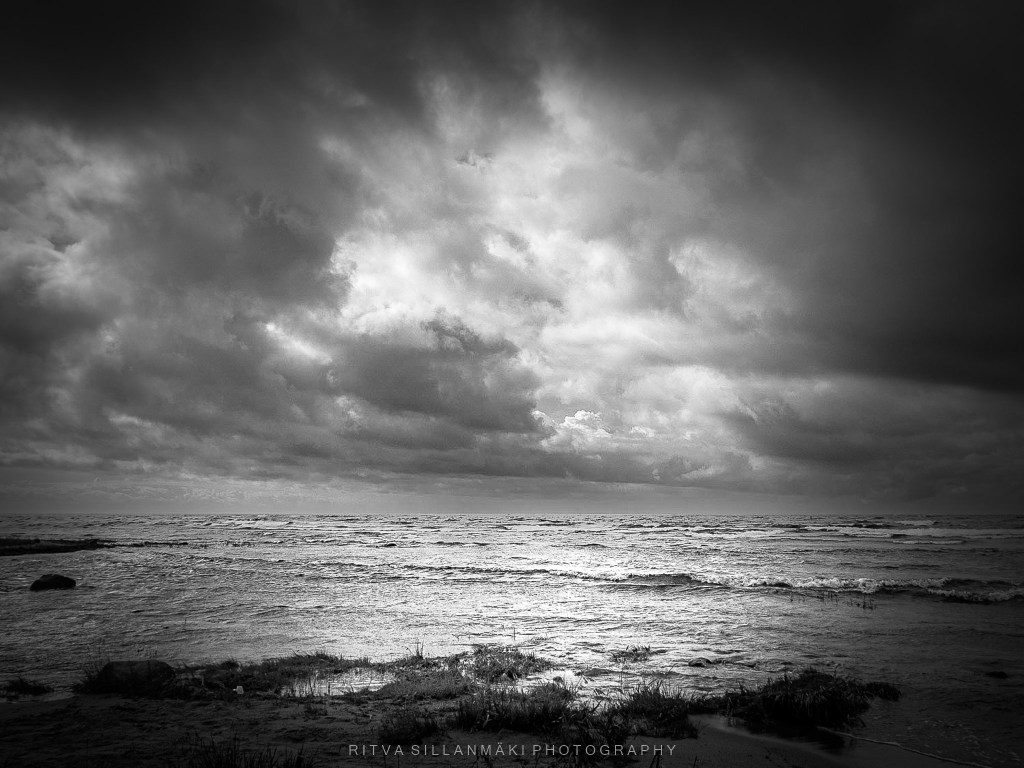
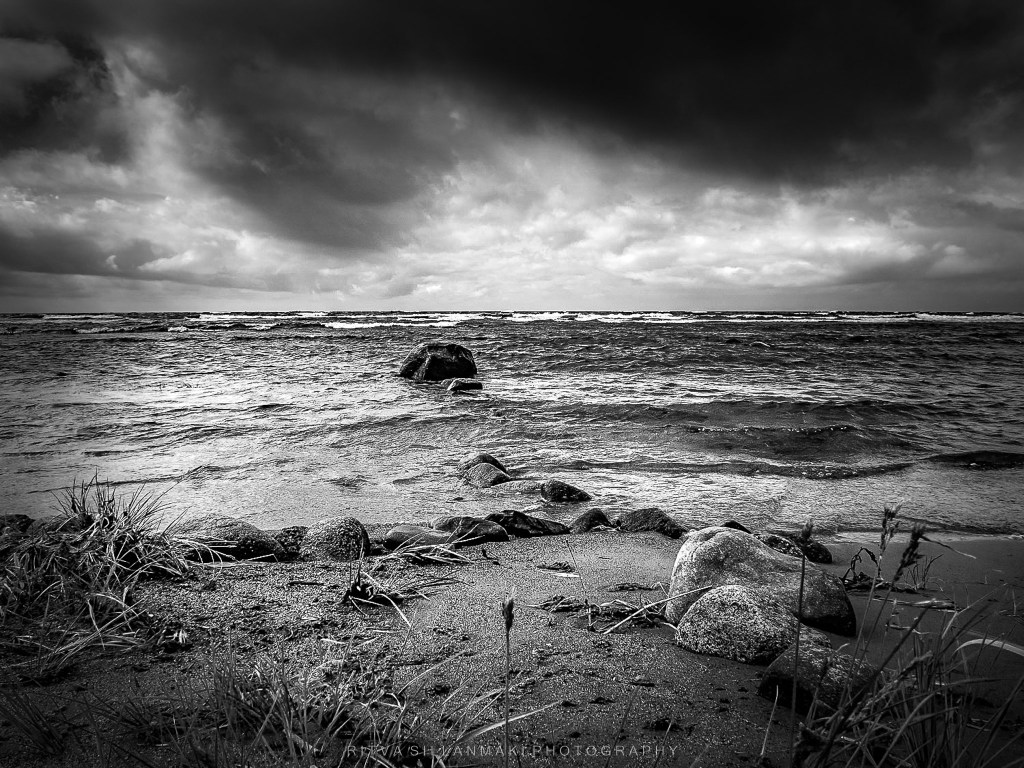
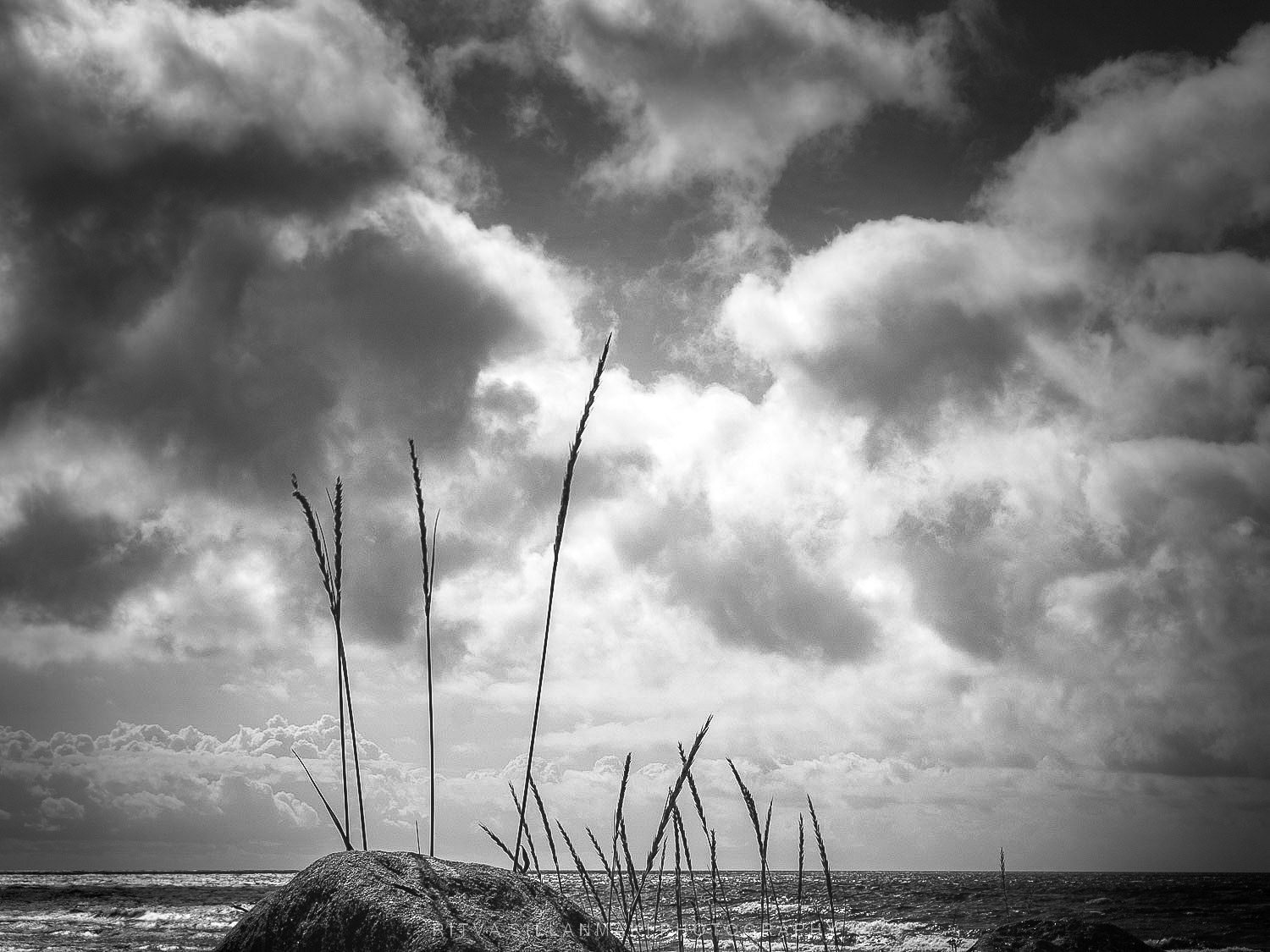
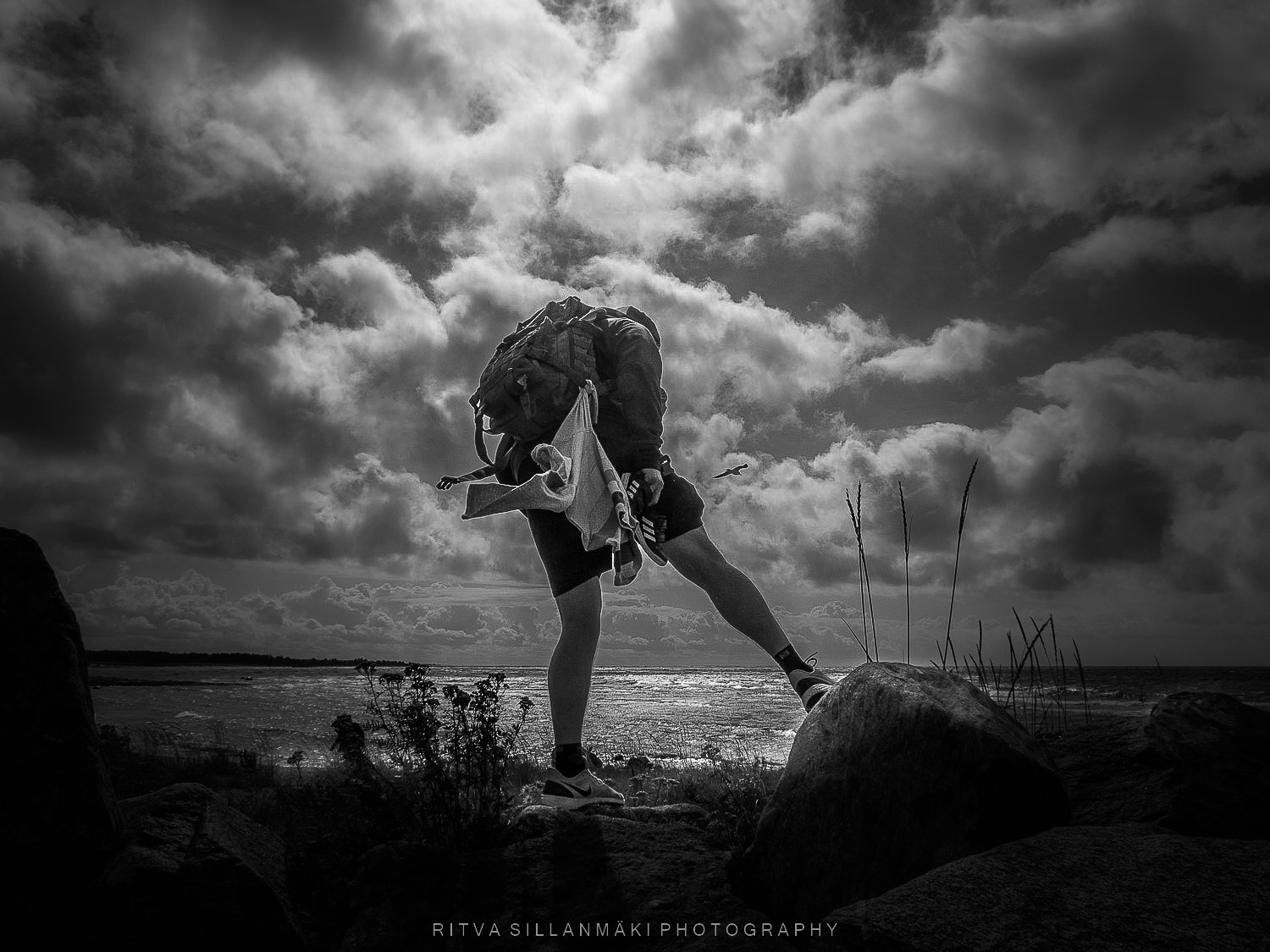
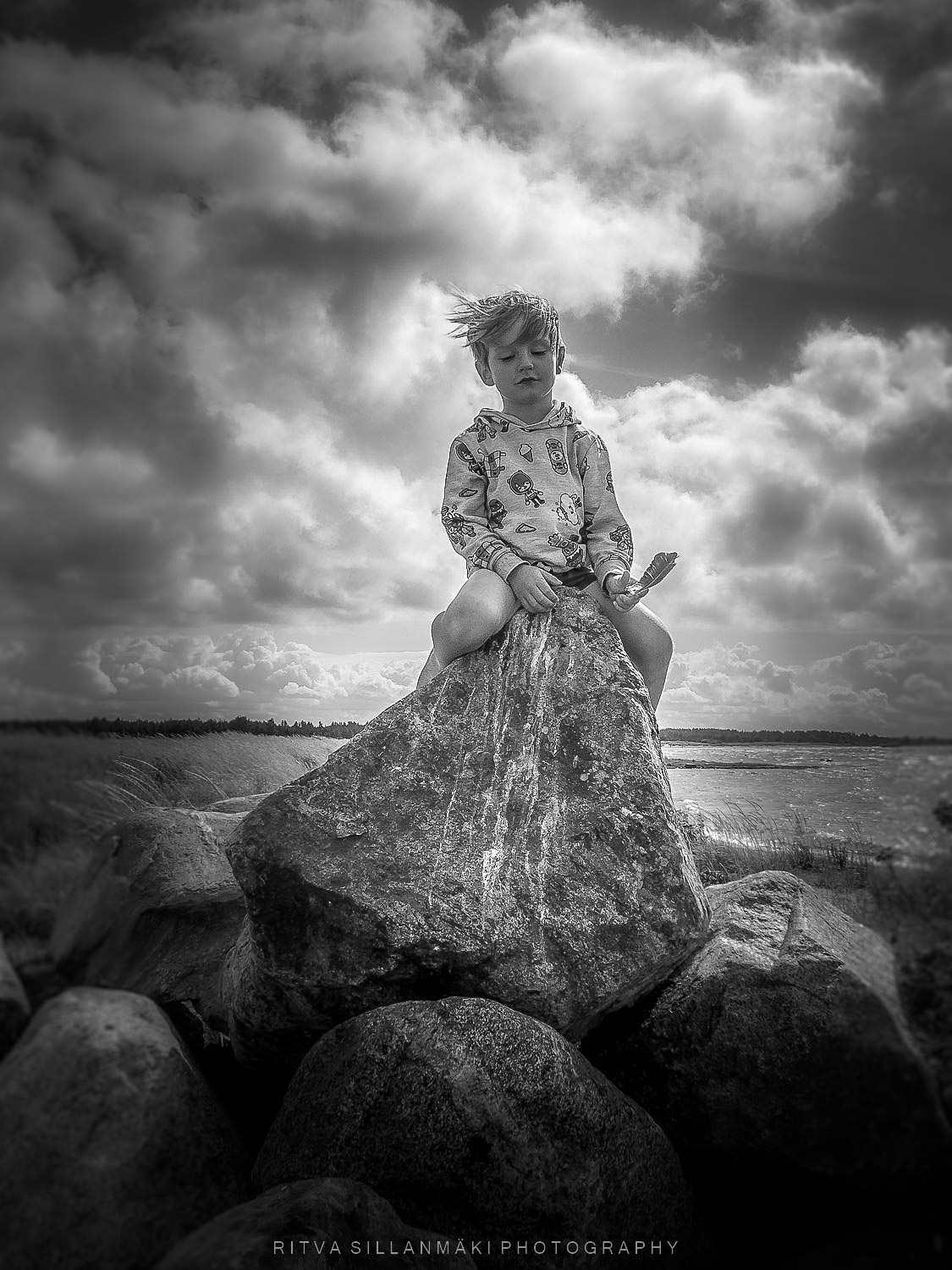
Marjaniemi is the westernmost point in the island at the end of the road in Hailuoto, these are from the beach at Marjaniemi. Sea, sand, waves and clouds, is what this post is about.
A cloudy day allows you to have moody and visually interesting images. I love looking at clouds, listening to the wind and watching how the waves flow,trying to count when the big wave comes. I have heard when younger that every 7th wave is bigger… don’t know if it is true 🙂
clouds over the sea
On the beach
Hailuoto is the largest island in the Bothnian Bay. The island started to rise from the sea approximately 2,000 years ago and continues to do so. Eventually the island will adjoin mainland. The island has been inhabited for at least 1,000 years. Fishing was naturally essential for the islanders as was agriculture. By the end of the 19th century, population on the island had reached 2,000 inhabitants but by the 60’s and 70’s started to fall. In 1980, the number of inhabitants had dropped below 900, but since then has increased again steadily and is now around 1,000 residents.
Hailuoto natural environment is an asset and we do our best to preserve it for future generations by different conservation programmes. Protection covers birds, shoreline and unique esker formations. The rising shoreline is constantly changing and thus forms a living conservation area. The built environment in Hailuoto is characterised by well-preserved traditional buildings and therefore, together with its unique nature, Hailuoto was designated one of the national landscapes in Finland and actually the only one with national landscape covering the entire municipality. (https://www.hailuoto.fi/en/info-2/information-about-hailuoto/ )






























































 Ritva Sillanmäki Photography