Tina’s – Phone Photography challenge is super relevant right now; it totally shows how far mobile photography has come, just like our smartphone cameras have leveled up. Her post is great inspiration, so do check it out and join in.
I’ve taken a ton of pics with my phones over the years. Right now, I’m using the iPhone 17 PRO, which is a recent purchase, and let me tell you, its camera setup is awesome with that triple-lens system and cool features like Night mode and Deep Fusion. The picture quality is great, and honestly, having such a great camera on me makes it so easy to grab those spontaneous shots!
I had no complaints about my previous iPhone 14 PRO; I got great shots with it for three years, and most of the images that I will share are shot with it.
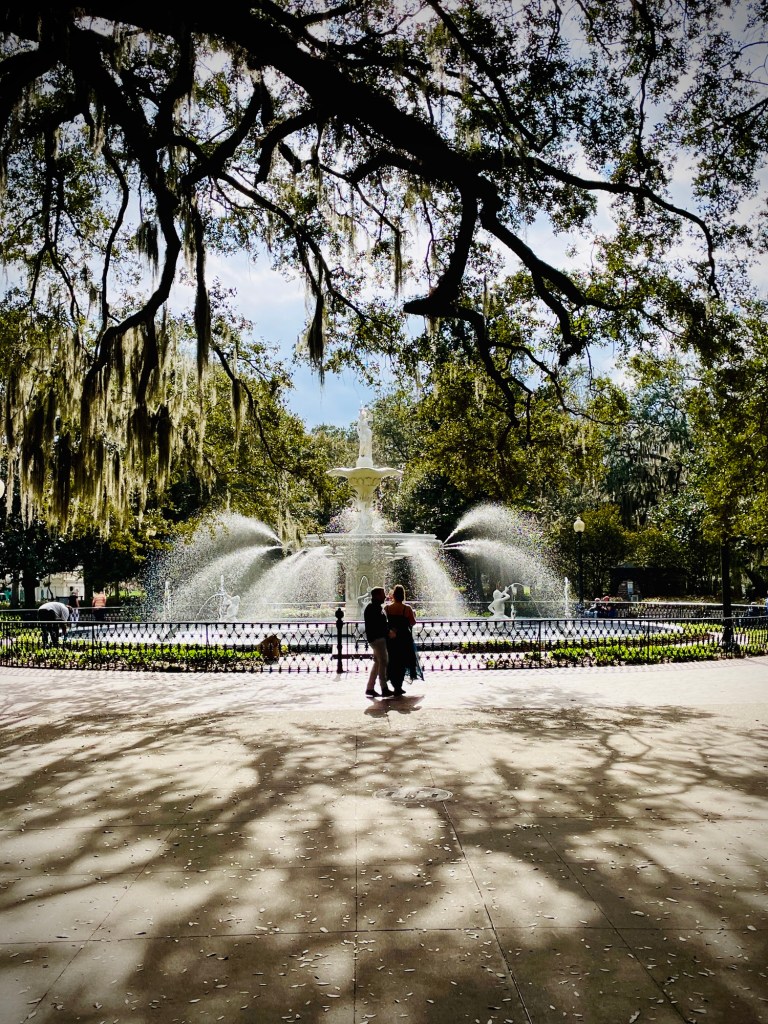
A couple enjoys a picturesque moment together in front of The beautiful Forsyth Park fountain, surrounded by lush trees and cascading water. ( IPhone 14 PRO )
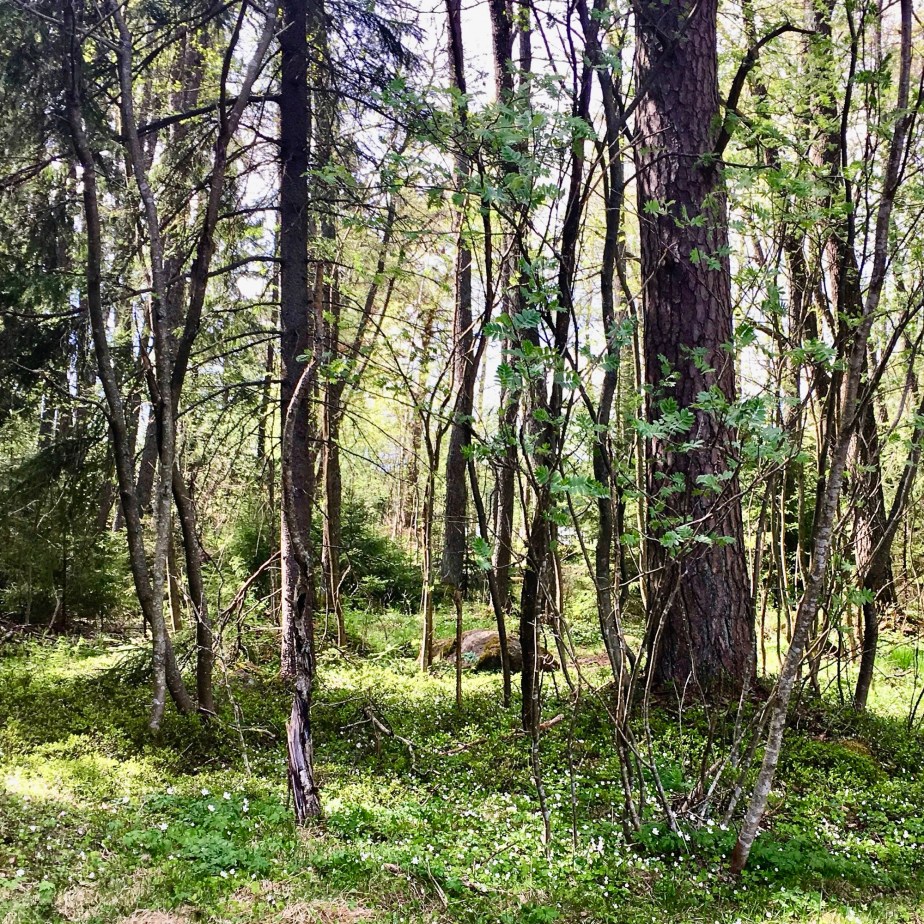
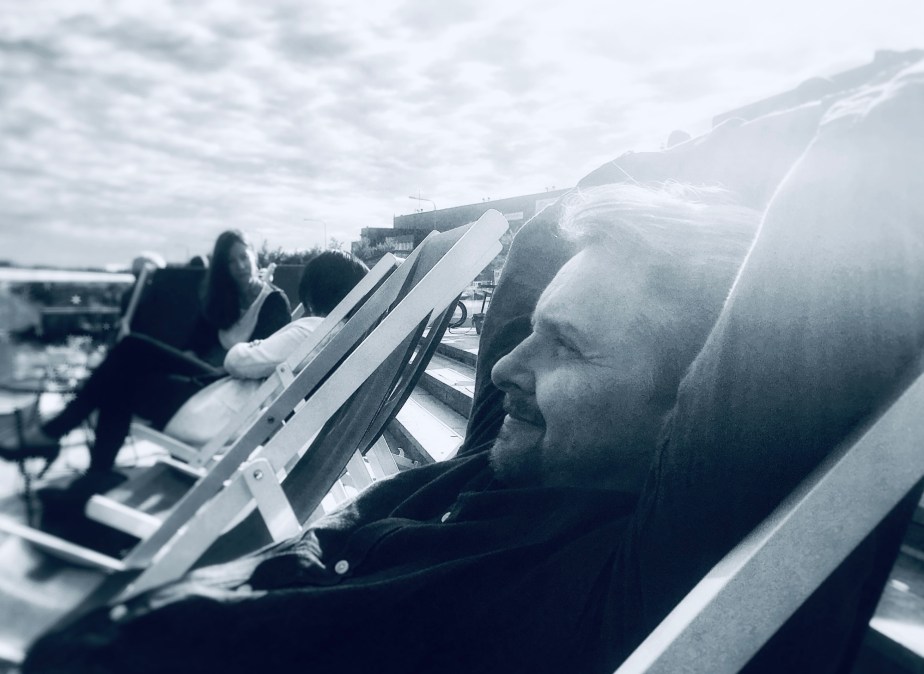
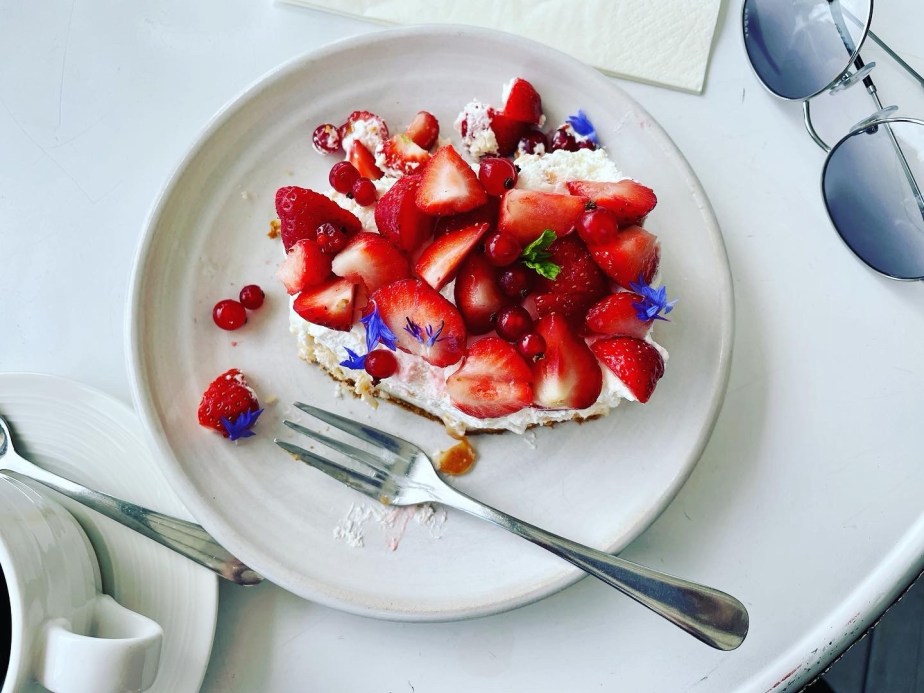
A serene forest scene showcasing sunlight filtering through the trees, highlighting vibrant greenery and a carpet of small flowers on the forest floor. ( IPhone 6s)A relaxed moment captured in black and white, showcasing a man lounging in a reclining chair, enjoying the day. (Iphone 12) I take most of my portraits with phone.Food Photography in restaurants is a must, 😀 A delicious dessert, fresh strawberries and decorative flowers, paired with a cup of coffee. (IPhone 12)
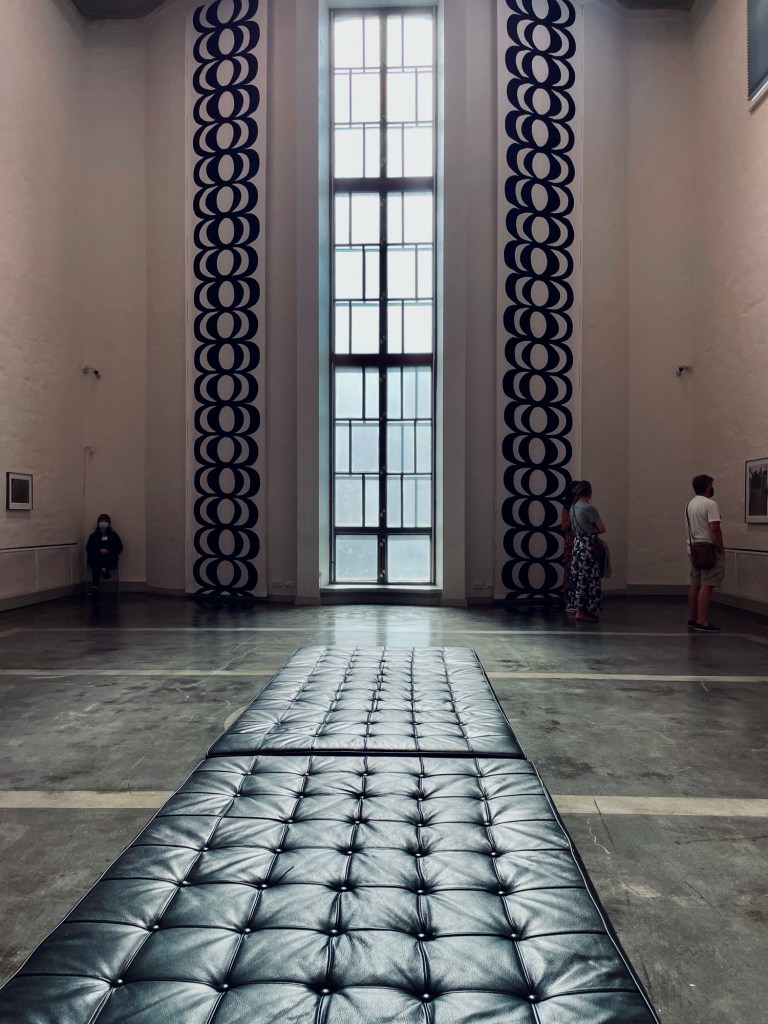
A spacious gallery with a sleek black bench centered in the foreground, framed by large windows and Marimekko curtains. I have edited this as into black and white, one of my favorite interior shots, here is the original ( IPhone 12)
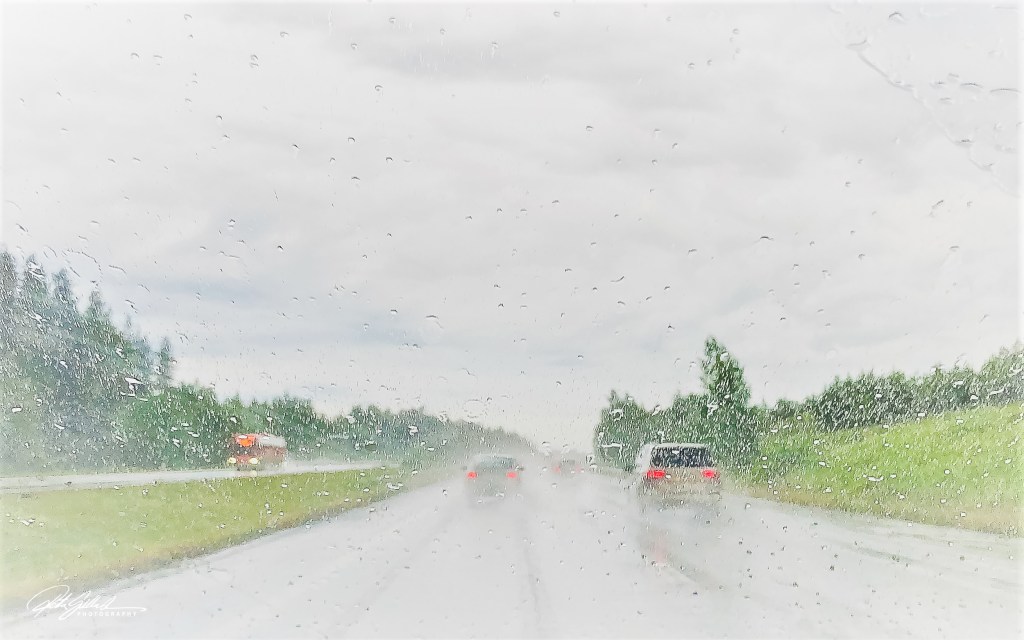
A rainy drive on the highway, the blurred view through a rain-streaked windshield. I often take photos while in the car, of the ever changing skies, weather and trying to capture movement. This one; weather 😂 ( IPhone 14 PRO )Tinka one of my favorite subject to photograph – in this shot I edited in black-and-white of her relaxing, showcasing its peaceful demeanor. ( IPhone 14 PRO )
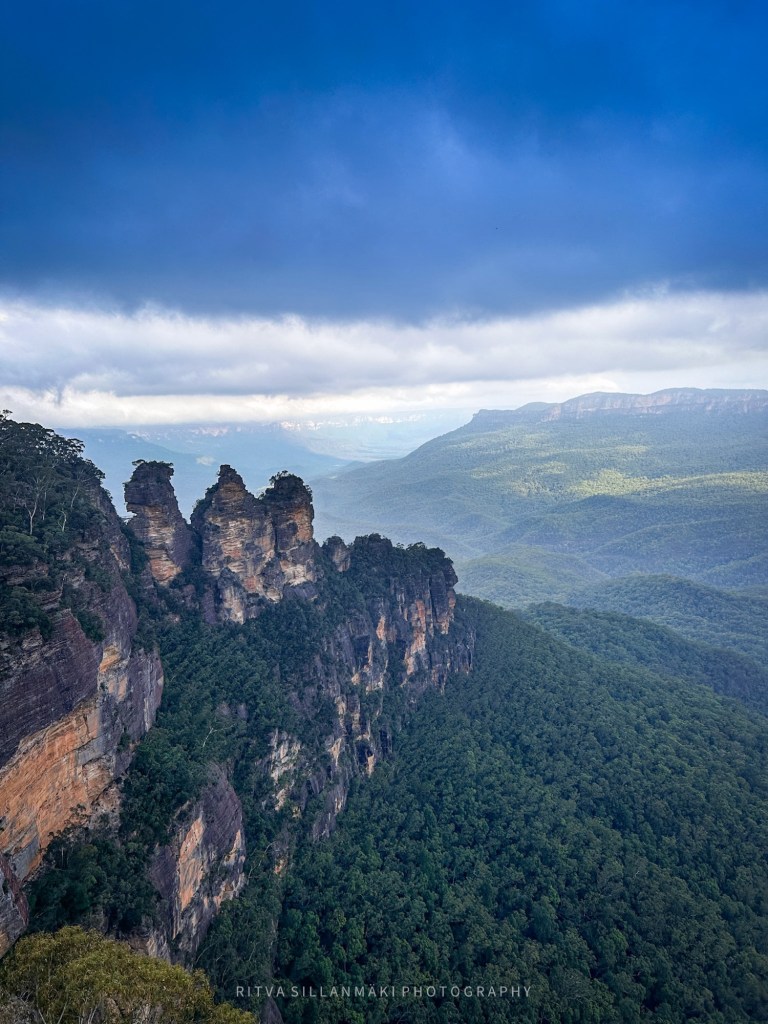
Stunning view of rugged cliffs and lush valleys in Blue Mountains, Australia. tI took so many there this is a new edit. ( IPhone 14 PRO )
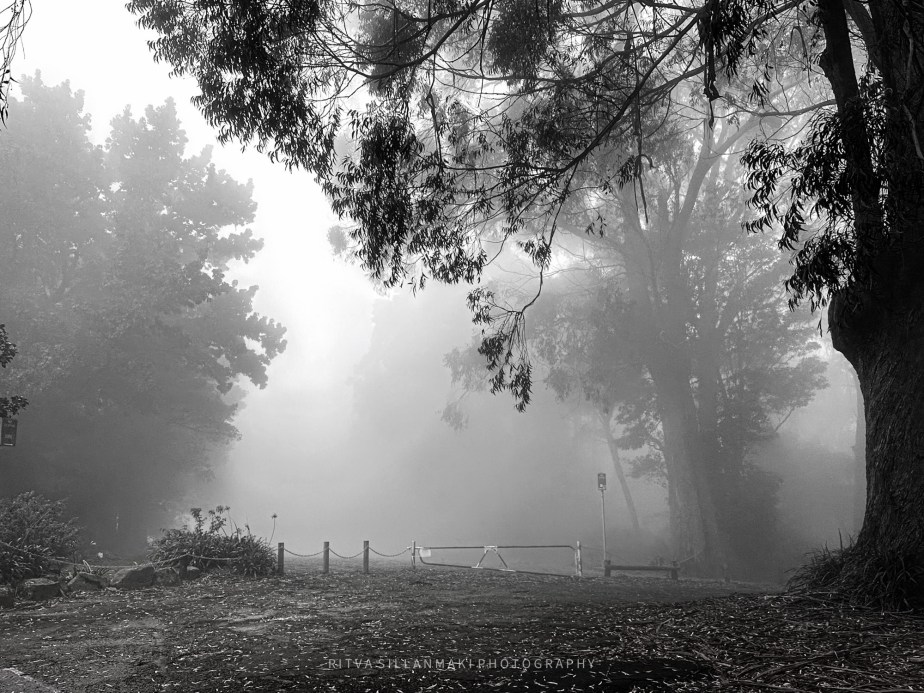
A misty scene featuring tall trees and a partially obscured pathway, creating an atmospheric and serene ambiance. AS I already have said, weather is one I try to capture, mist being one of the favorite things. This is also taken in Australia in 2025 ( IPhone 14 PRO )
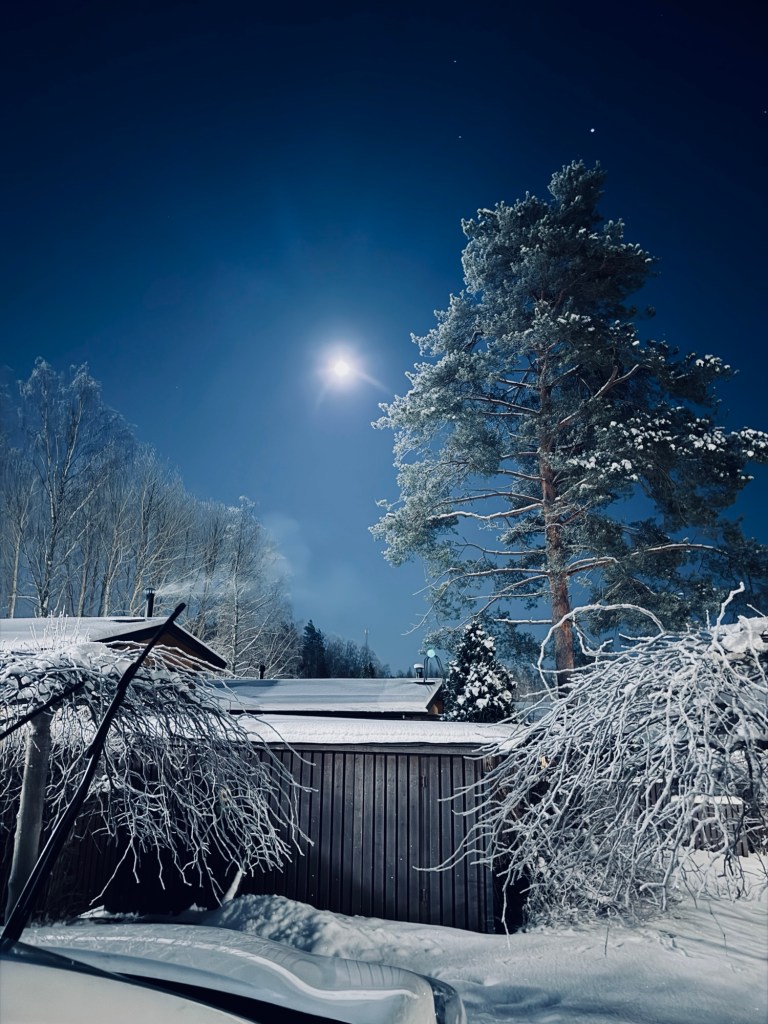
A serene winter night scene a snow-covered landscape illuminated by a bright moon. Taken with my new IPhone 17 PRO past winter. I am amazed how great night shots you can get with this phone.
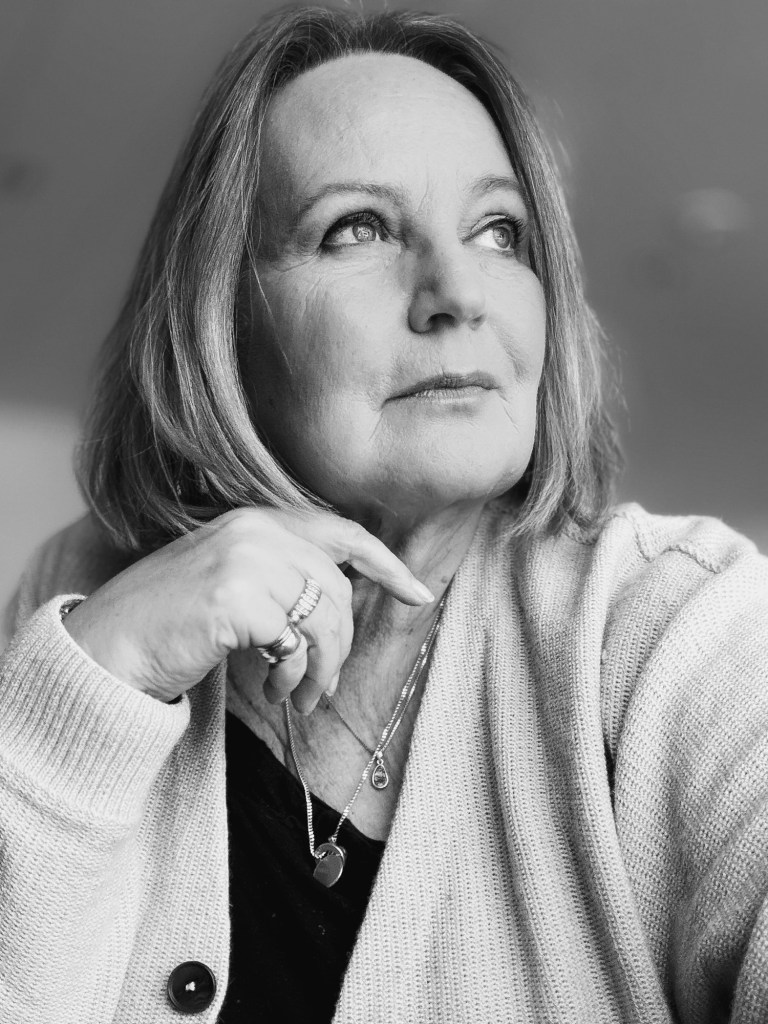
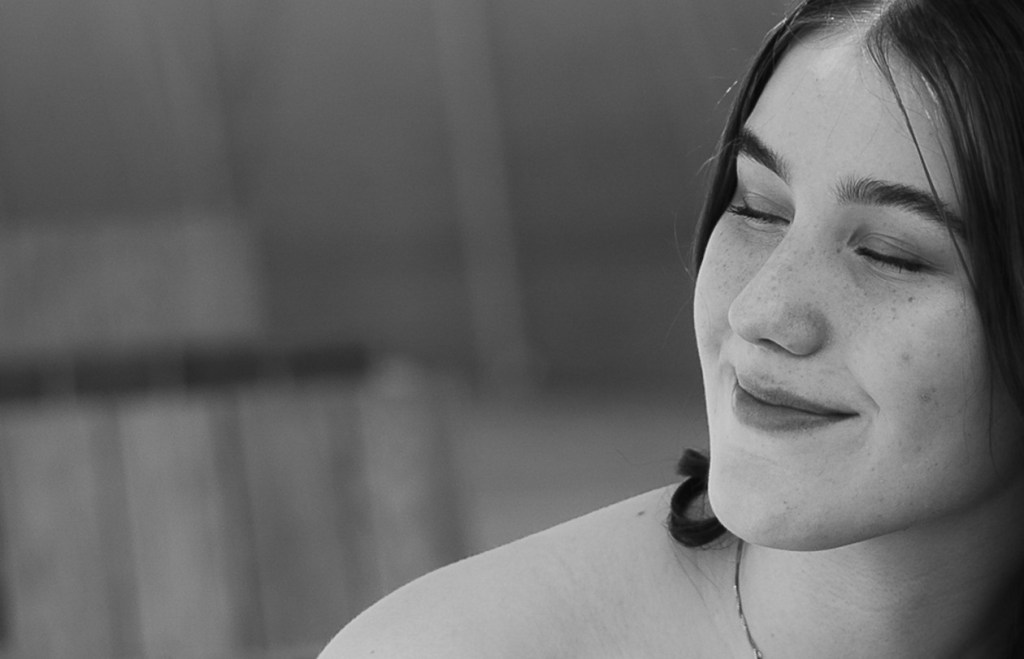
Taking a self portrait with a phone is so much easier than camera, sharing a recent on of myself – in monochrome as I do love that style.
A thoughtful self-portrait in monochrome, showcasing the beauty and easiness of phone photography.
Please remember to include a link to Tina’s post and utilize the Lens-Artists Tag so we can easily find your photos. Huge thanks to Egidio for demonstrating the impact of black and white photography and how our minds can visualize colors through imagination. Lastly, I hope you to join us next week when Patti guides us through her Pilotfish post. Until then, let’s keep exploring, broadening our horizons, and maintaining a positive mindset.
I’m having a bit of a tough time keeping a positive mindset and staying motivated to get things done, but I’m really trying to push through. Every day has its moments. I just keep reminding myself that it’s all about just doing it. I am not depressed or anything, just lacking in the motivation part. My motto is even “Inspiration exists, but it needs to find you working.” I hope you get why I haven’t been commenting lately, but I promise I’ll check out the posts, even if it takes me a bit longer. Engaging with the posts matters to me, and I’m doing my best to get back on track and jump in more.
Please see this page for more information about the Lens-Artists Challenge and its history. If you don’t want to miss any future challenges, please consider subscribing to the team members’ websites. Here we are:
What an Unusual Crop! No, I cannot do this; it’s too hard. No, it’s not. Give it a try, be bold, be creative. You can do it. Exceed yourself, like they say in the Olympics.
Cropping stands as one of the most potent yet frequently underutilized compositional elements in photography. This week, we encourage you to deliberately defy traditional framing conventions. Consider slicing off parts of your subject or positioning it at the far edge of your shot. You might even depict only a hint of an object or an intriguing shadow or reflection. Unconventional crop photography often employs tight, asymmetrical framing techniques—like truncating limbs, using extreme close-ups, or positioning subjects right at the frame’s border—to evoke mystery, abstraction, and artistic tension. Approaches include using a 1:1 aspect ratio to hone in on specific details, employing diagonal lines in your compositions, or leveraging negative space to highlight elements such as the intricate surface of a leaf.
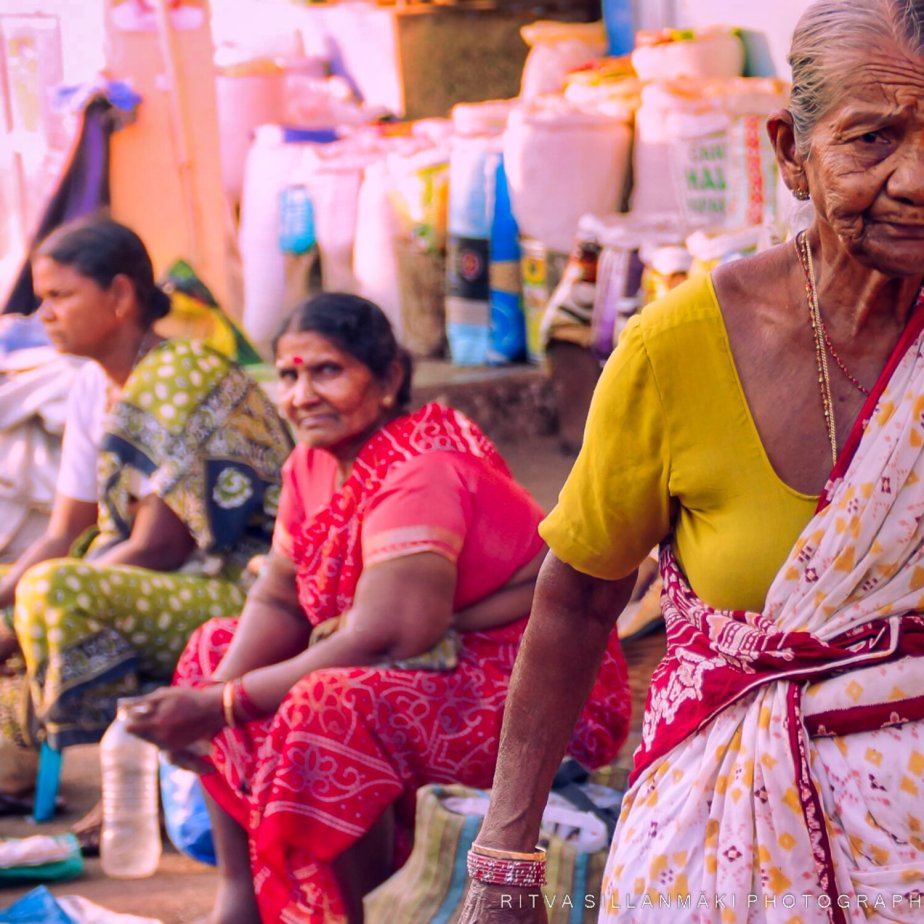
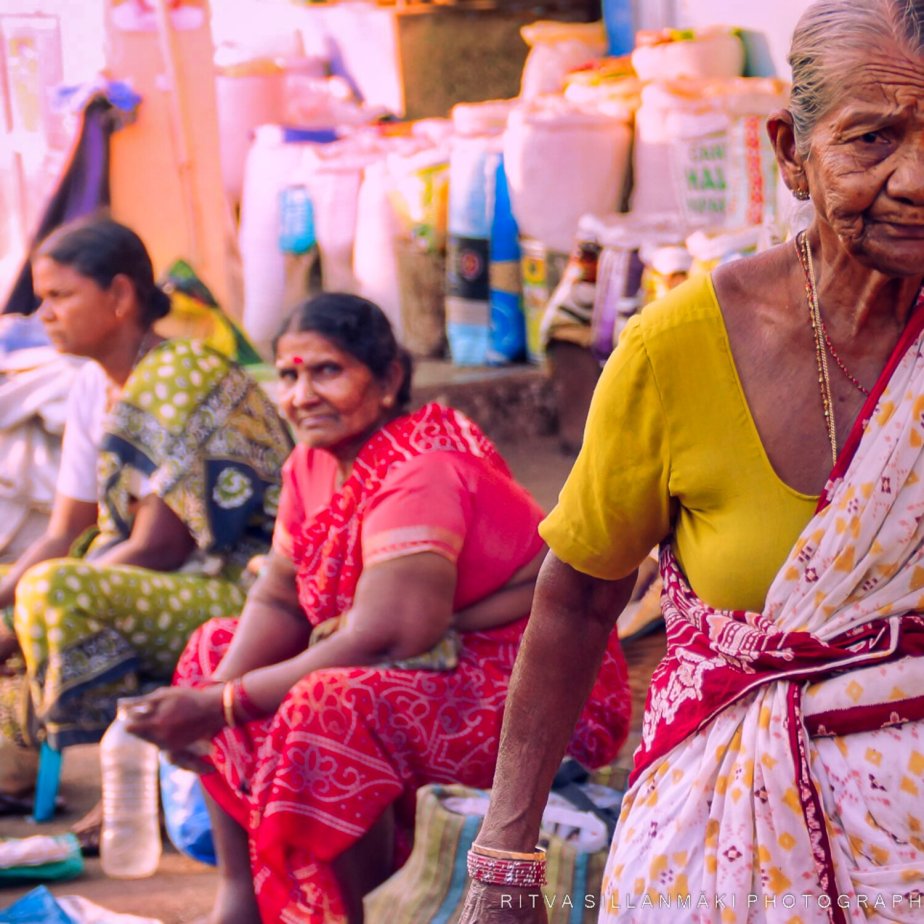
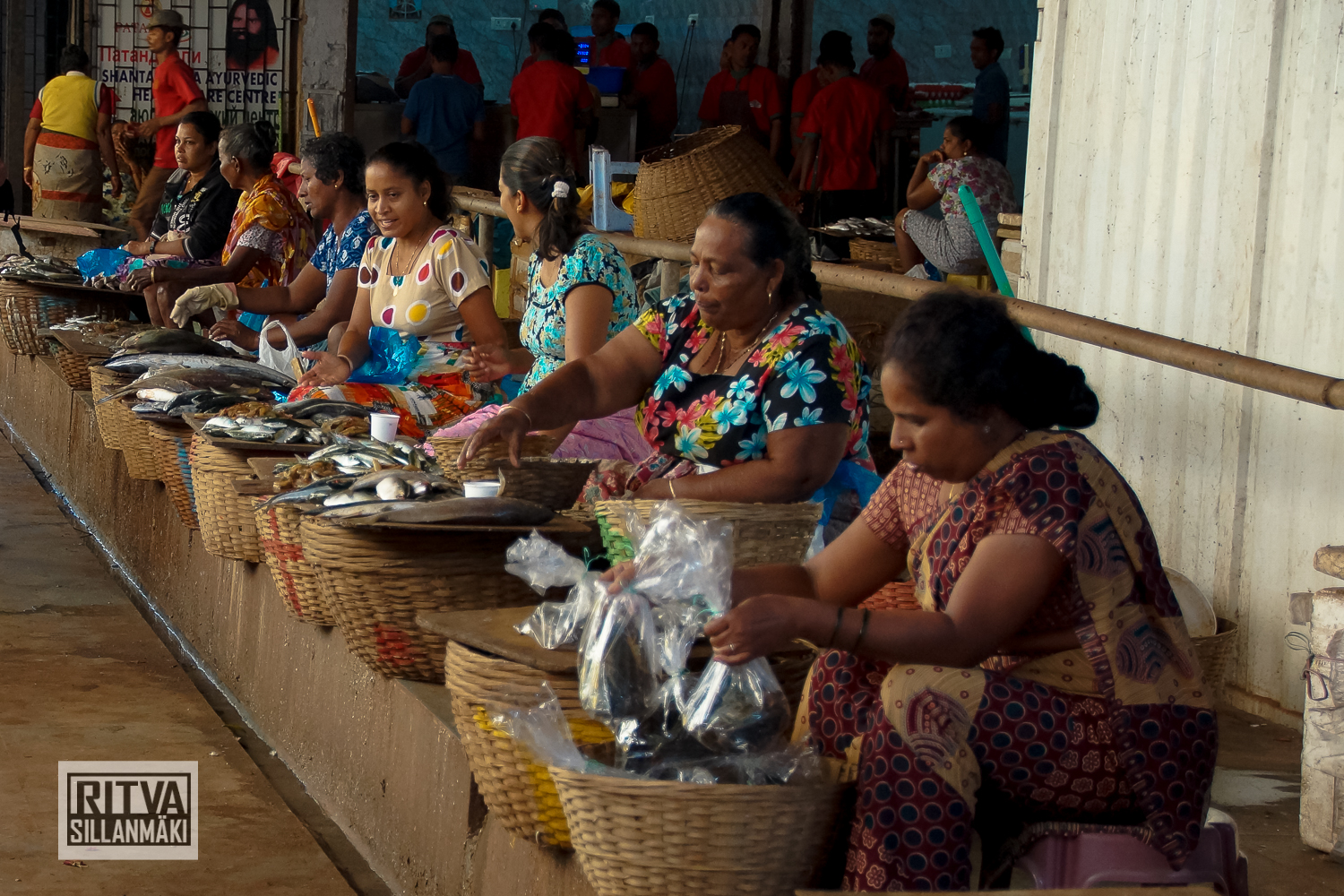
A vibrant market scene showcasing women in traditional attire amidst goods, highlighting the rich cultural tapestry of local life.
In-Camera Versus Editing: Although many unique crops are achieved through post-processing, capturing these moments in-camera encourages more intentional and artistically satisfying results. When deploying these techniques, be mindful to avoid cropping at joints, as this can give the impression of amputation. Instead, aim for narrower points like mid-thigh or forearm for a flattering yet bold appearance.
Experiment with framing as a narrative device by illustrating the story of what’s absent; consider capturing a hand reaching into the frame or a smiling mouth peeking from the corner, or even a bicycle wheel without the bike itself. Crop closely for an intimate feel or employ an off-center approach for added intrigue. Think like a graphic designer—make your images striking, graphic, and unexpected.
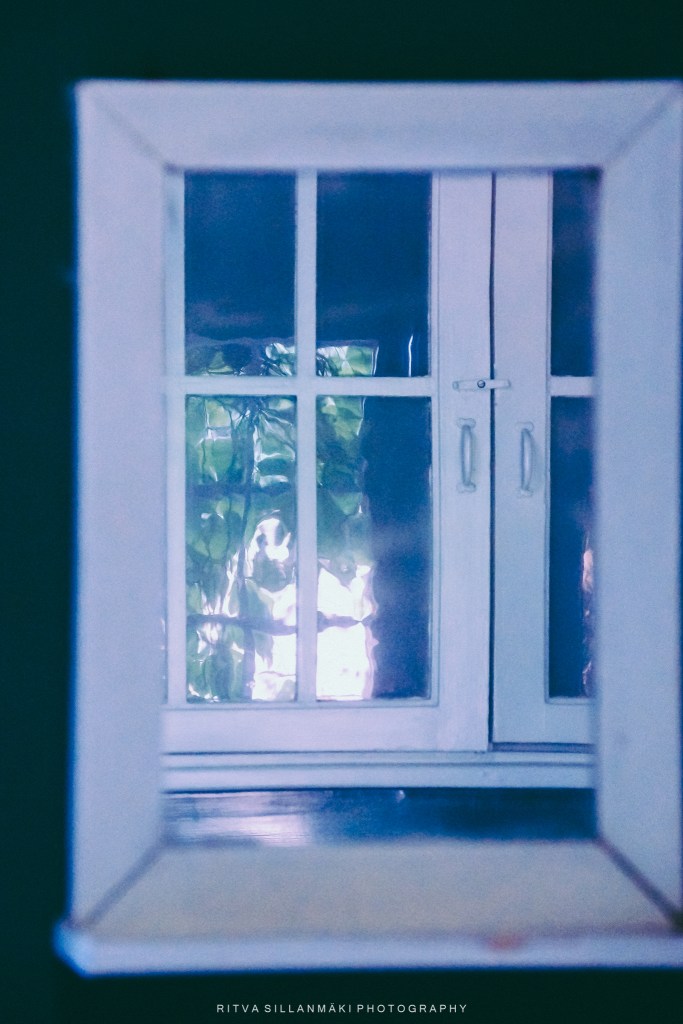
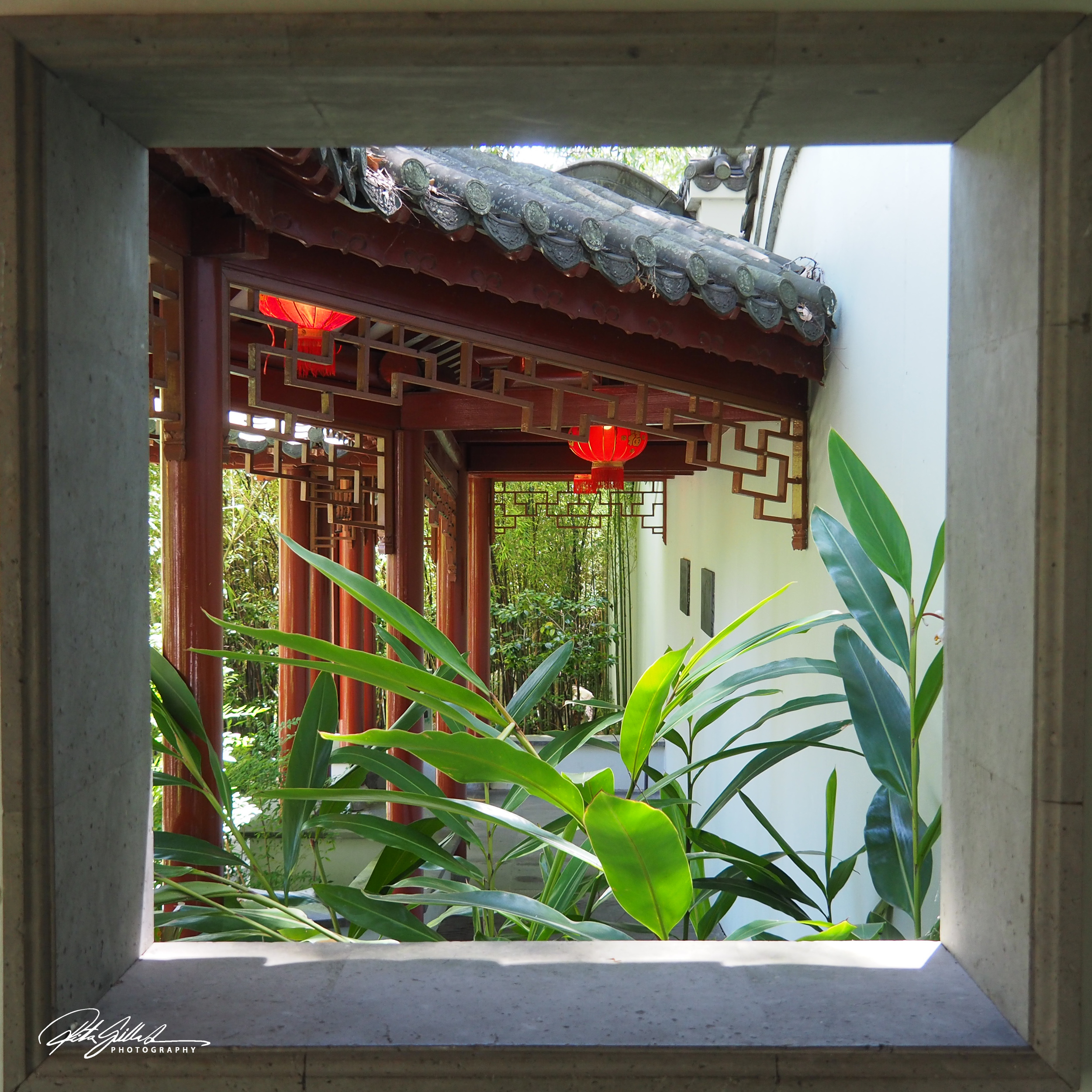
A close-up view of a window frame reflecting green foliage, illustrating unconventional cropping and negative space in photography.
Notable techniques for unconventional cropping involve:
Disrupting the Subject: Intentionally cutting through heads, hands, or limbs in portraits creates a dynamic composition rather than a conventional one.
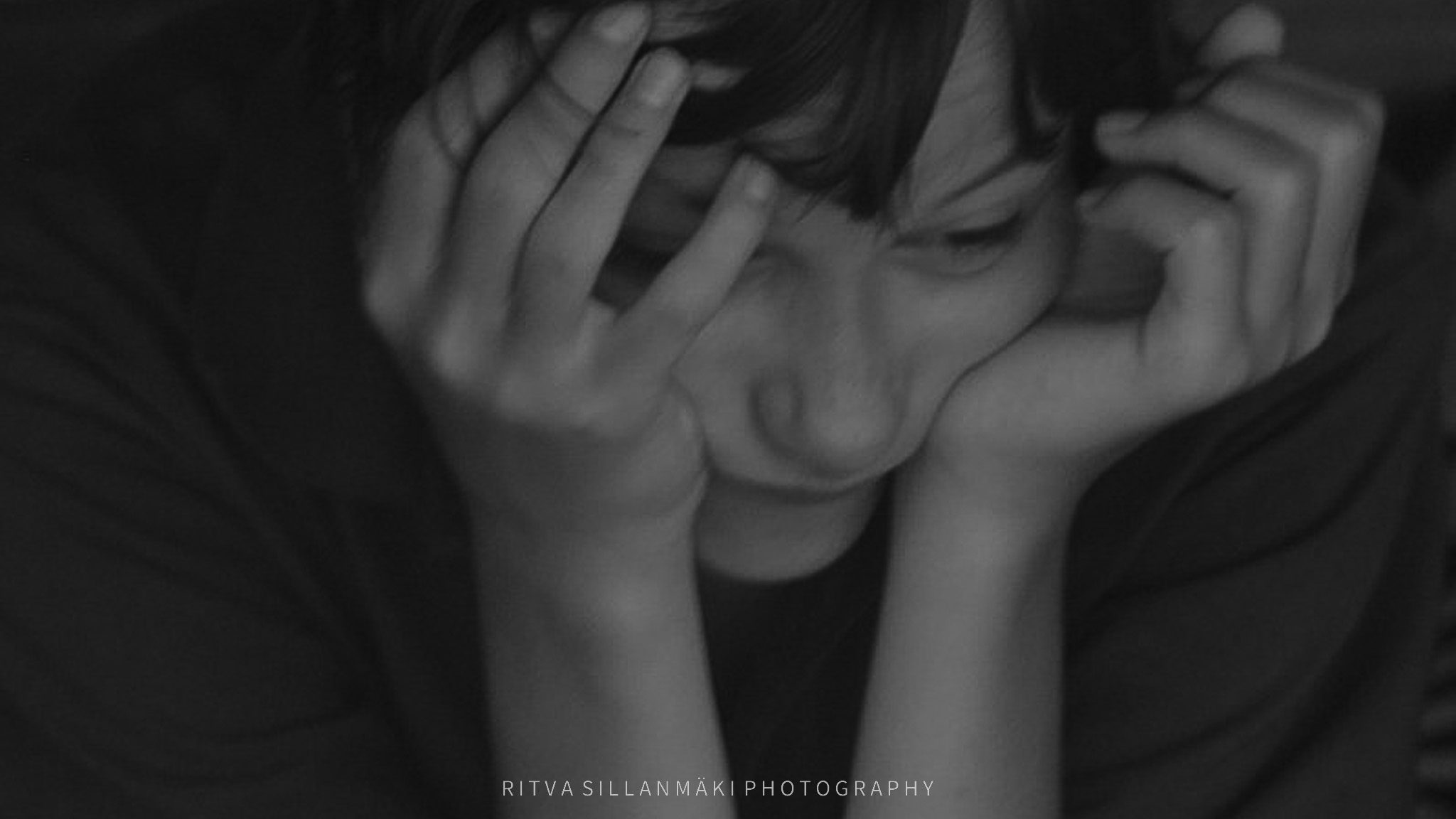
A close-up of a person in deep thought, with hands framing their face, illustrating the emotional intensity of unconventional cropping.
Detail-Oriented Macro Shots: Extreme cropping can accentuate textures, lines, and shapes, transforming everyday objects into pieces of abstract art.
Overriding the “Rule of Thirds”: Position subjects at the frame’s extremes or allow them to extend beyond the edges entirely.
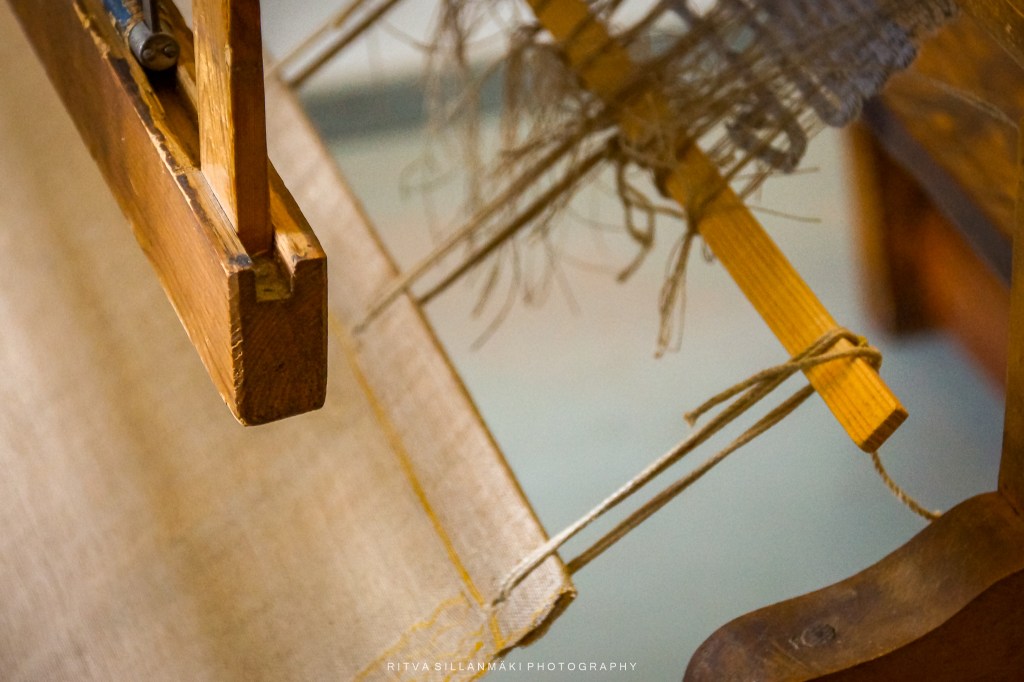
Close-up of a weaving loom showcasing intricate details and textures, emphasizing the artistry of craftsmanship.
Utilizing Negative Space: Generating significant areas of emptiness can convey minimalism or create striking tension.
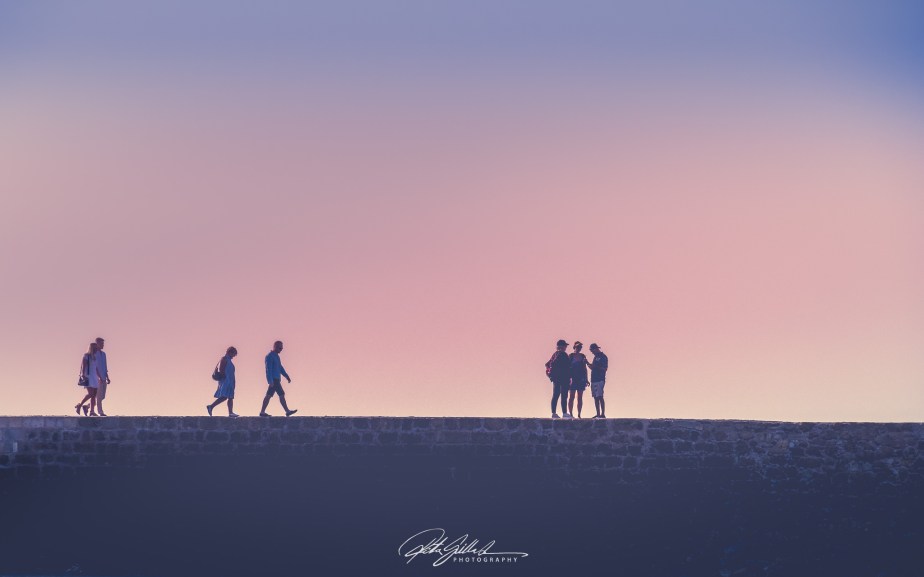
Silhouetted figures walking along a stone wall against a vibrant pastel sky, embodying the essence of unconventional cropping in photography.
TIPS: Frame With Purpose: Make deliberate cuts through heads, hands, or objects; a bold crop can ignite curiosity. Strategic Use of Space: Marry tight framing with negative space to establish either tension or tranquility based on your subject matter.
Instill Mystery: Leave out enough to provoke viewers’ imaginations about what lies beyond the visible.
Emphasize Textures or Shapes: Get close to highlight features like contours, lines, or surfaces that might typically go unnoticed.
An artistic arrangement of colorful glass candle holders with a blurred festive background.
Imply Wholeness: Showcase just part of your subject, encouraging viewers to engage their imaginations.
Use the Frame Purposefully: Position your subject near the edge or let it extend beyond the frame to create dynamic imagery.
A close-up portrait of a young girl smiling, captured in a black and white aesthetic to emphasize her natural beauty and using the framing to the edge.
Disrupt Visual Norms: Surprise audiences by presenting familiar subjects in unusual manners—making them appear strange or abstract.
Consider the Crop During Shooting: Approach cropping not as an afterthought, but as an integral part of your initial composition strategy.
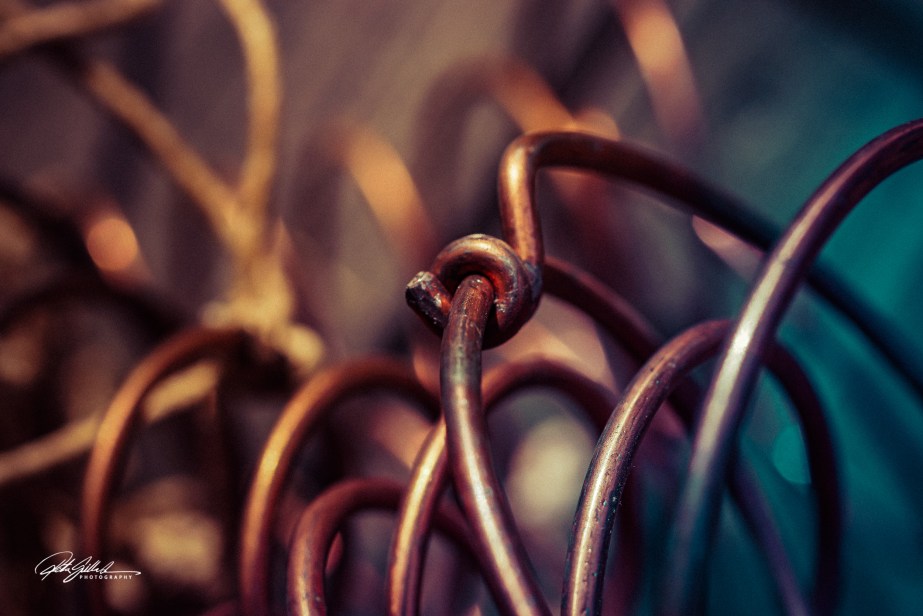
Close-up shot highlighting the intricate lines and curves of overlapping metallic objects, evoking a sense of abstract art.
Last week, Beth introduced us to a theme that truly astonished us. The world brims with wonders, whether they’re grand or subtle, close by or distant, and this was vividly showcased in the photos we all shared.
I hope you will join in for this week’s challenge. Be sure to tag your post with Lens-Artists and include a link back to my post. And Happy Valentines day to you all! Hope you have a lovely day. ❤️💙💚💛🧡💜💞❣️
Make sure to return on Saturday, February 21, at noon Eastern Time for an exciting new challenge from Patti at Pilotfishblog. I hope you’ll be there to join us! In the meantime, let’s keep exploring, broadening our horizons, and maintaining a positive mindset ❤️
This week, Egidio has encouraged us to showcase some of our rejected alongside our edited images to highlight the contrasts. I’ve encountered photographers who view editing as “cheating,” believing it undermines the integrity of the moment captured. Nevertheless, I regard editing as an equally vital skill as the art of photographing a subject or scene. It empowers us to emphasize particular features, enhance colors, and evoke emotions that may not be as prominent in the unedited image. Ultimately, the final image should represent not just what was observed but also the artist’s unique vision and perspective. By embracing both photography and editing, we can elevate our creations and convey more impactful stories through our visuals.
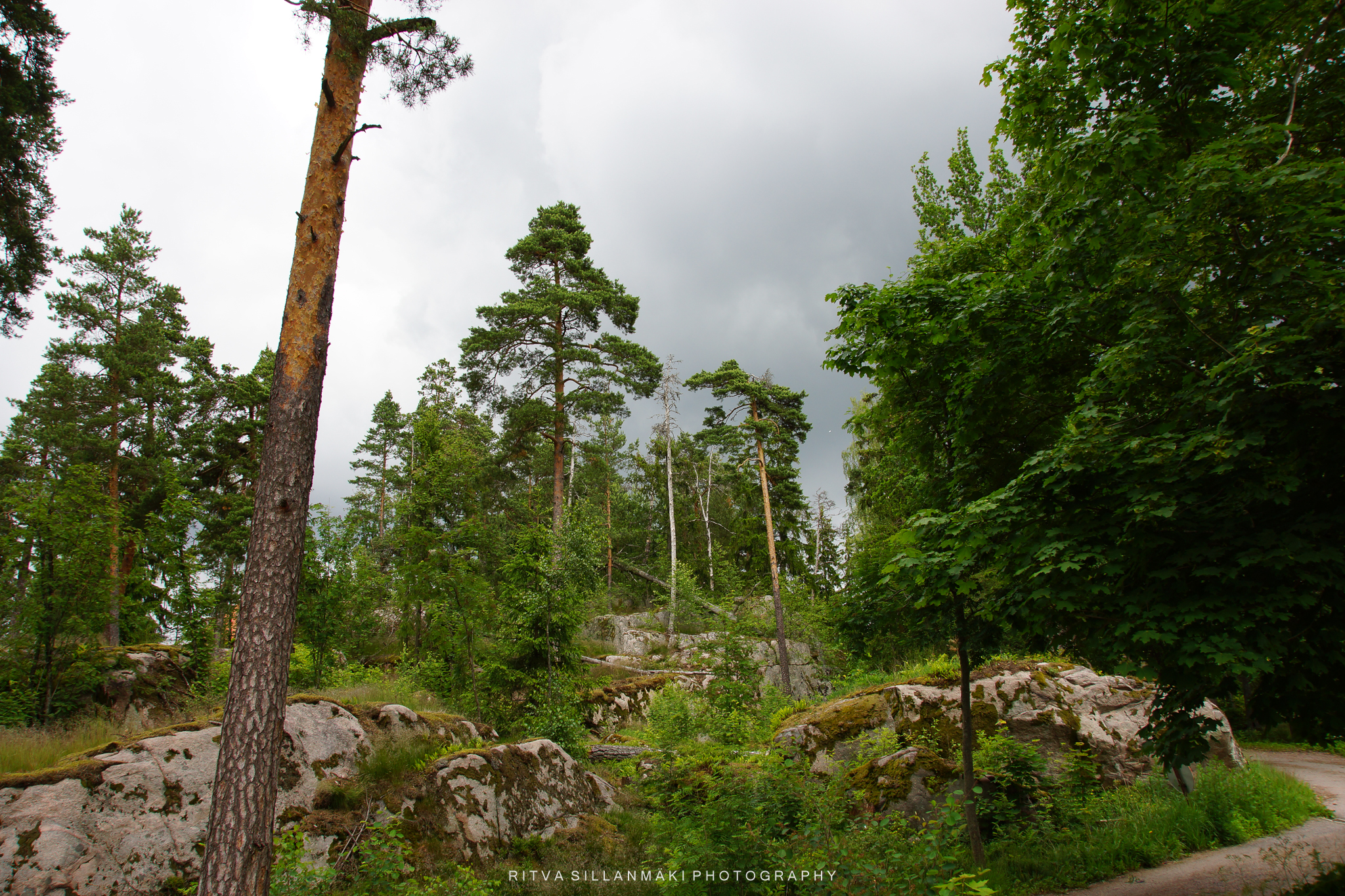
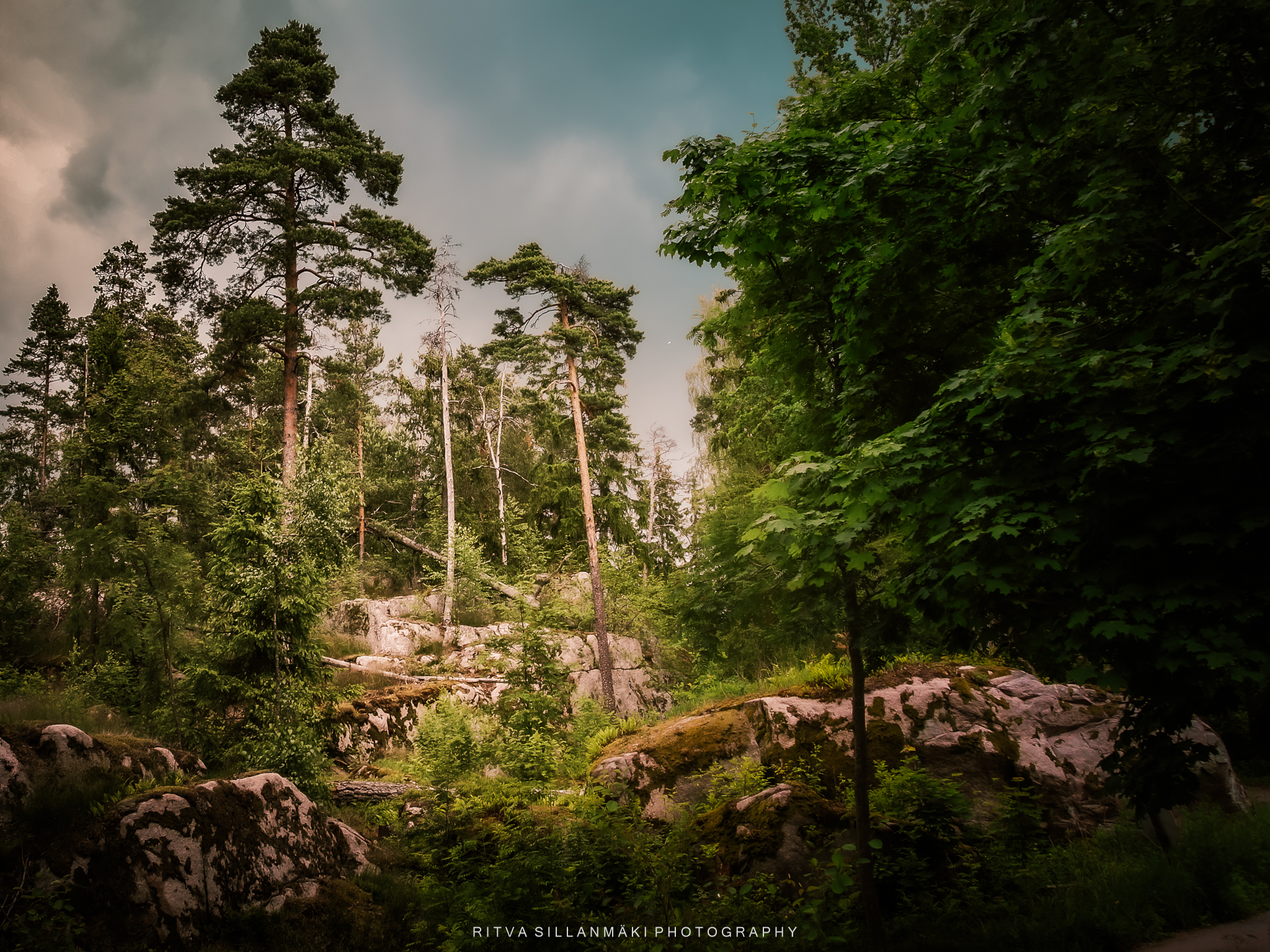
These are all from my visit to Hvitträsk and its surroundings some year ago except the last one. That was a so bad I did not pay any attention to it at all at the time, I just remember being very disappointed in it. I should have binned it, but luckily now with my approved editing skills I was able to do something with it.
The original image was flat and boring, and I never got around to publishing it, even though the picture has many layers and good elements. Perhaps I didn’t initially realize to crop it enough; for some reason, I wanted the trunk of the pine tree in the image even though it didn’t really fit there. The sky had remained flat and nothing really stood out.
Nature shines
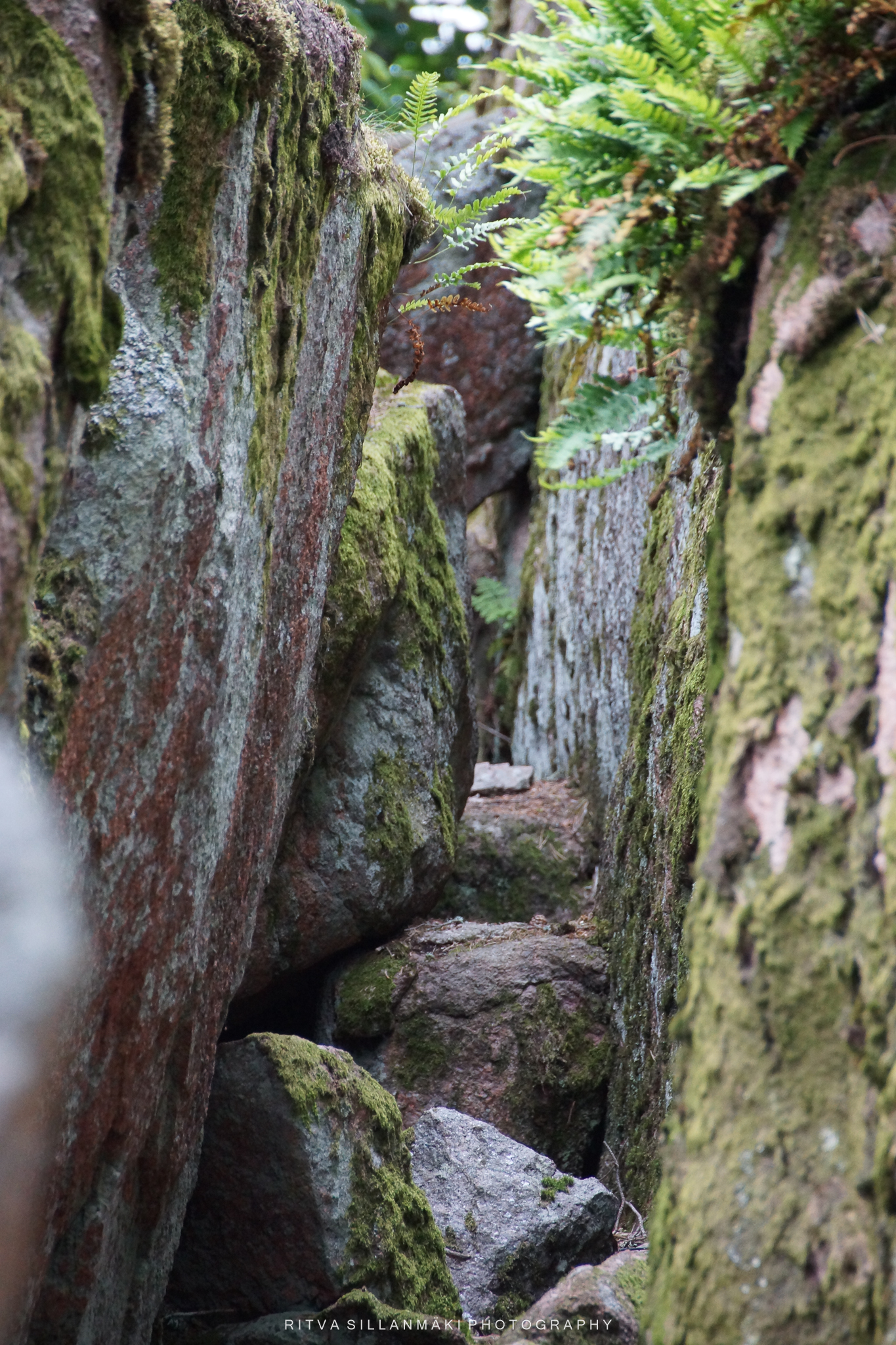
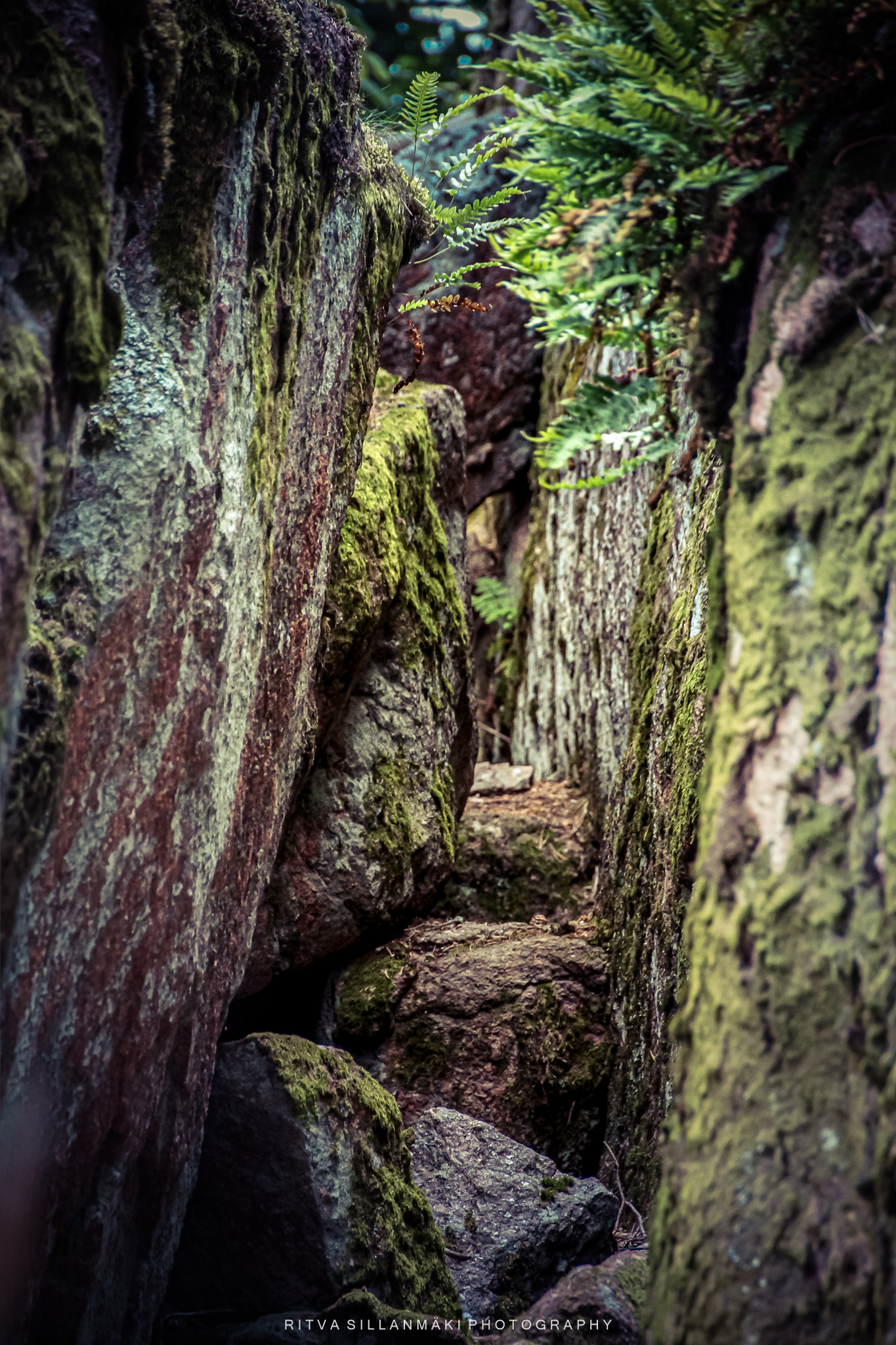
I was drawn to this blurry image; there was something about it that appealed to me, so I decided to rework it in the hope that it would present better with a slight adjustment of contrast and colors. The top of the image was slightly overexposed and clearly out of focus. I am not entirely satisfied with the edit as the colors changed too much from the original—primarily because I try to keep the image as natural as possible.
This could fall into the same category as the previous post, but this is in many parts very unfocused,
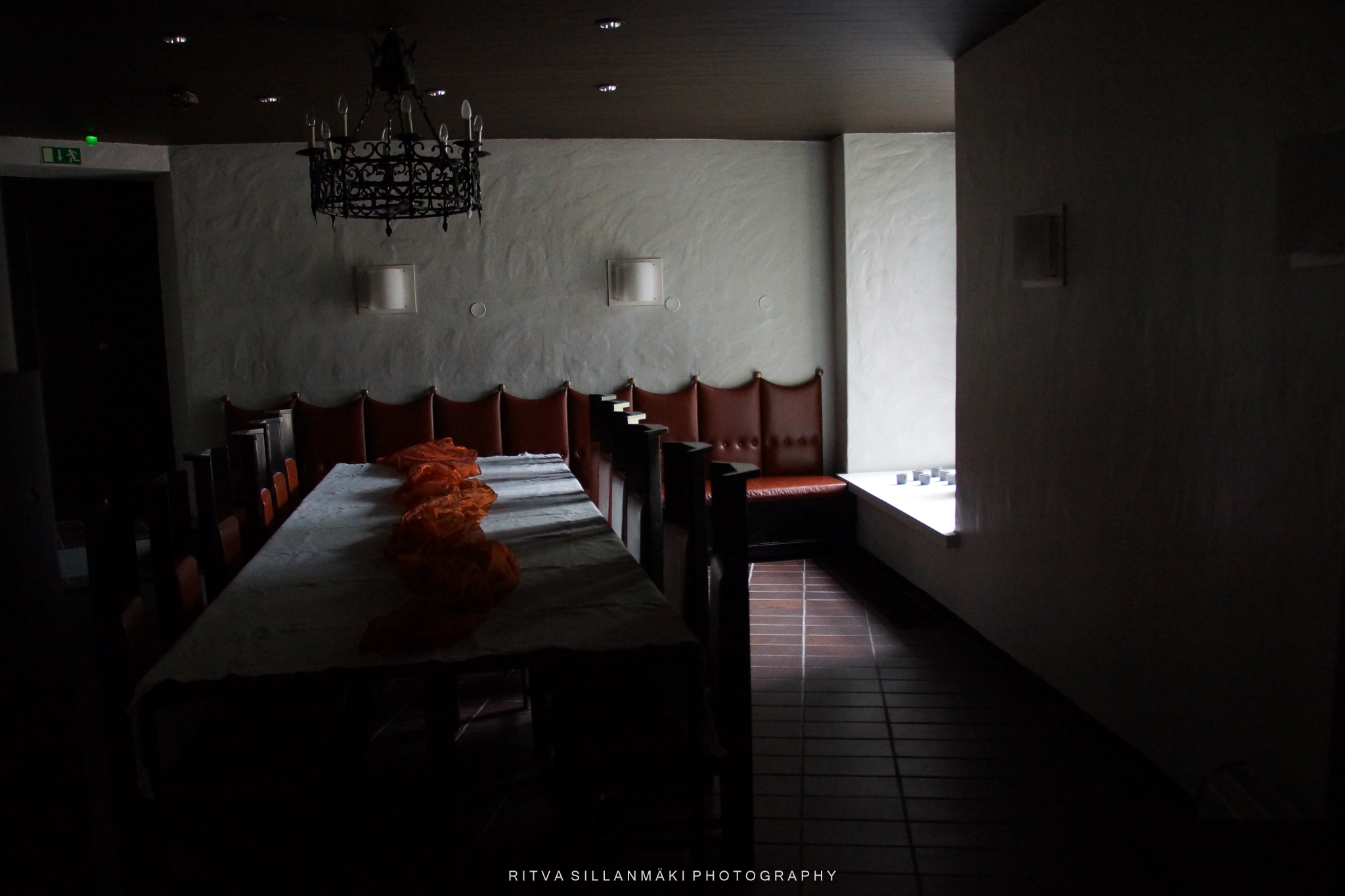
A dimly lit dining room featuring long wooden table in Hvitträsk
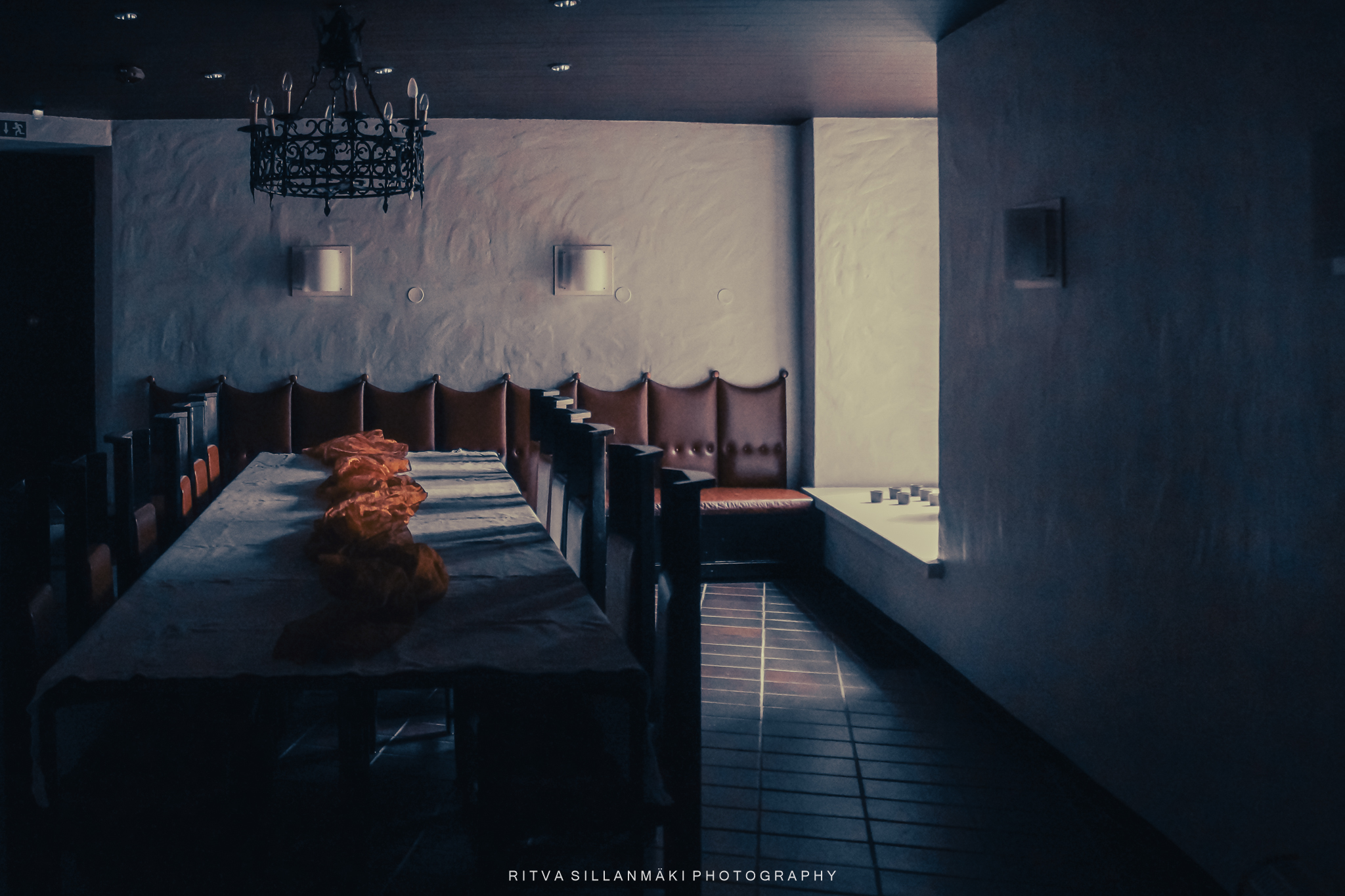
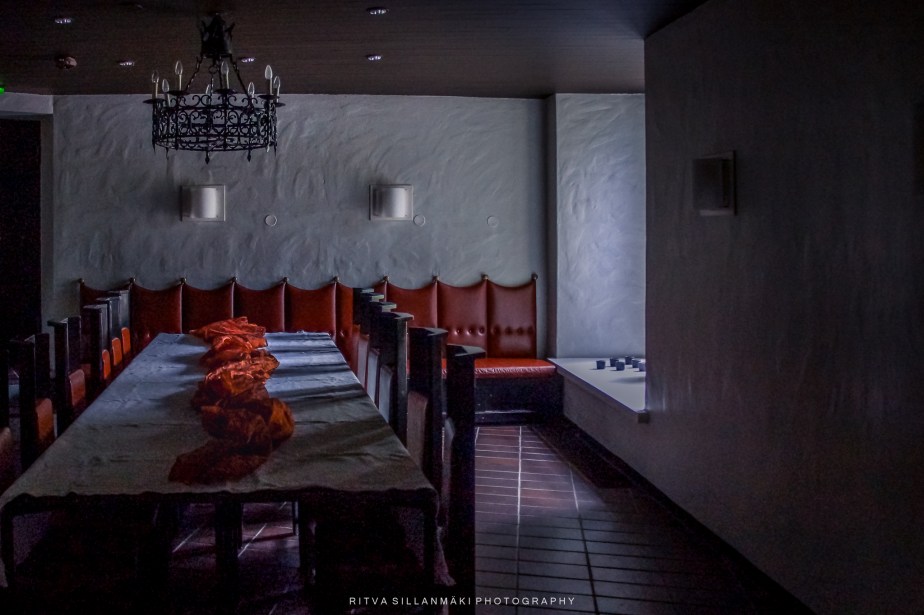
A dimly lit dining room with a long wooden table covered in a white tablecloth, adorned with orange fabric. Red upholstered leather benches line the walls, and a decorative chandelier hangs from the ceiling. In the image above, there is a lot of good, but the picture was left languishing in the archives a bit subdued, and I couldn’t find its purpose; now I decided to boldly edit it in a more cinematic direction. I spent some time battling against making it too colorful, so the third edit is the final result 👇, where I wanted to bring the fabric on the table into focus with light.
A dimly lit dining room featuring long wooden tables and contrasting red seating, evoking a warm yet subdued atmosphere.
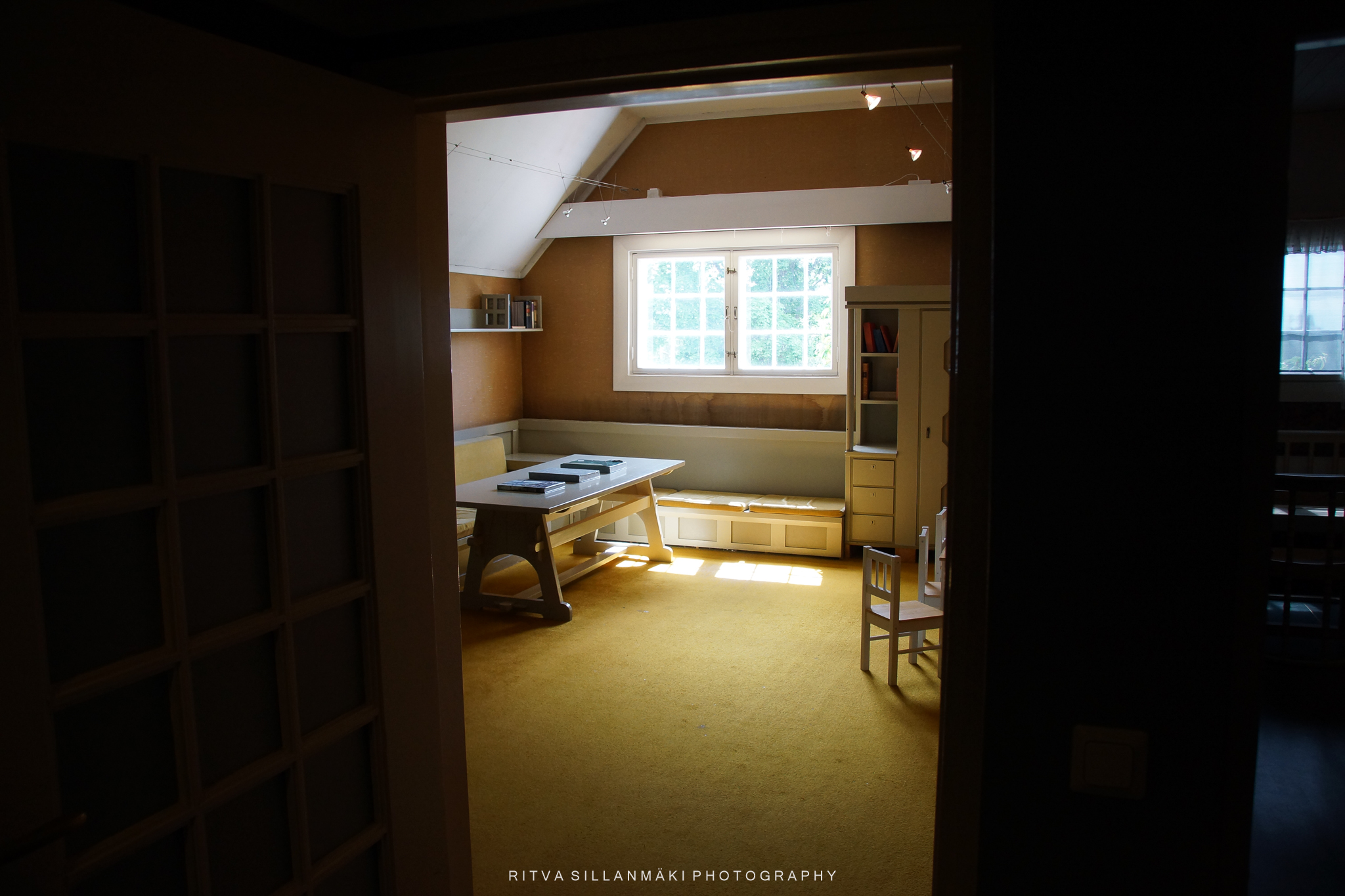
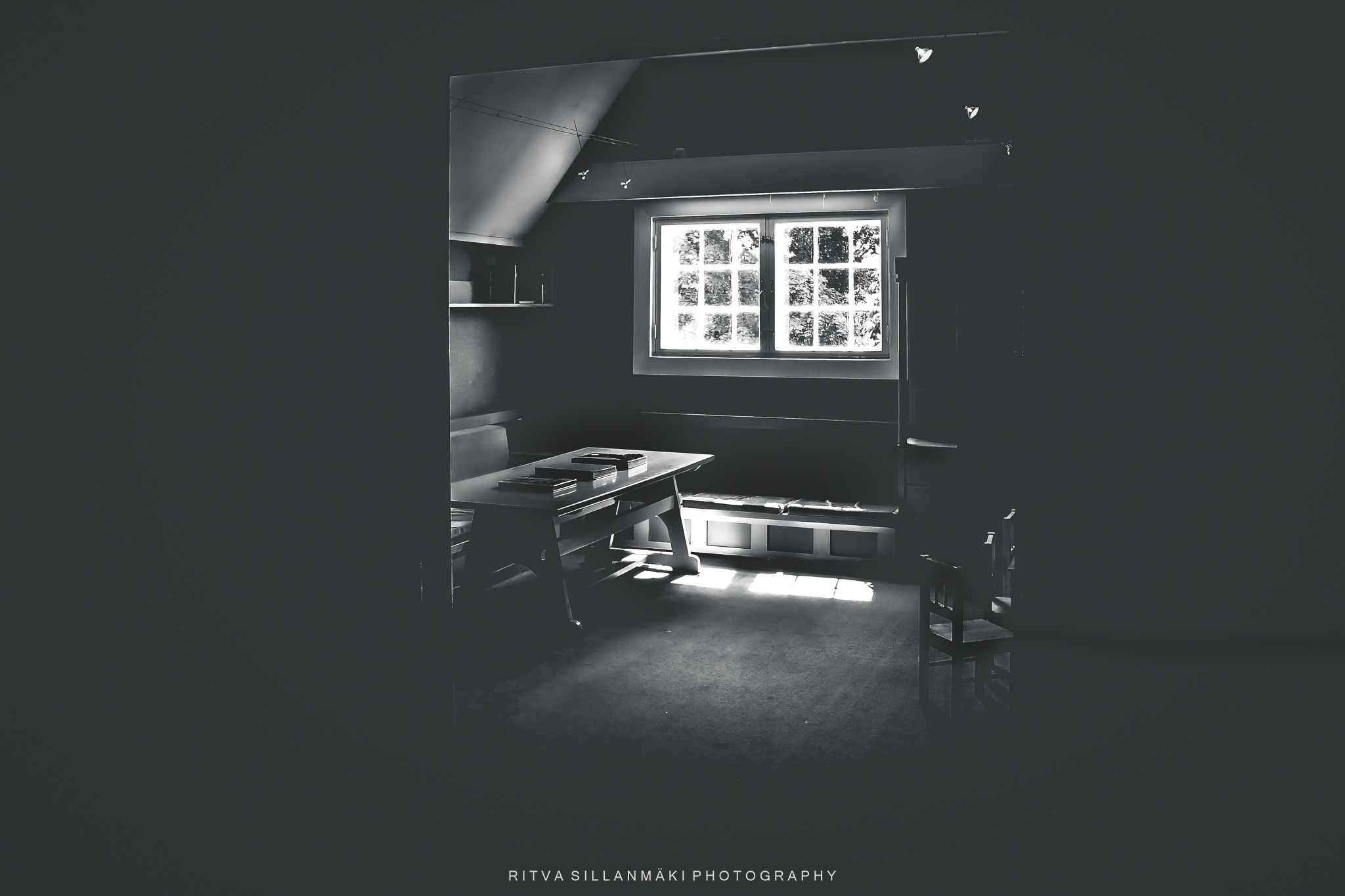
In this last image pair, I wanted to highlight the minimalism of the previous challenge and the black-and-white image as it is a style I really enjoy. I sought to create an atmosphere in the picture and wanted to draw attention to the window and the light coming from it and how it came to the room, and eliminating most of the furniture.
In this picture, I managed to save an image that was clearly overexposed and additionally had completely off coloring. I didn’t know what I had adjusted back then, but for some reason, this remained in the archives. I couldn’t edit this photo to color, but the black and white turned out rather well.
salvation of a bad photo
I would like to extend my gratitude to Egidio for encouraging us to present some of the effort that goes into crafting an image we are proud to share. Don’t forget to check out his original post here, and remember to use the Lens-Artist Tag in your response so we can find you post.
I am grateful to all who took part in last week’s B&W / Minimalism challenge; it highlighted the remarkable power of simplicity when done effectively. I was taken aback by the amount of interest it created and glad to find out that there are so many interested in this style of photography, which emphasizes the beauty of minimalism and the striking impact of black and white imagery. This challenge inspired participants to explore their creativity among those who share a passion for this art form. I loved seeing all your contributions, as each one told a unique story and showcased different perspectives, proving that less truly can be more in the world of visual storytelling.
Lastly, we invite you to join us next week for a challenge Tina will be hosting on Travels and Trifles. In the meantime, smile and try to stay positive
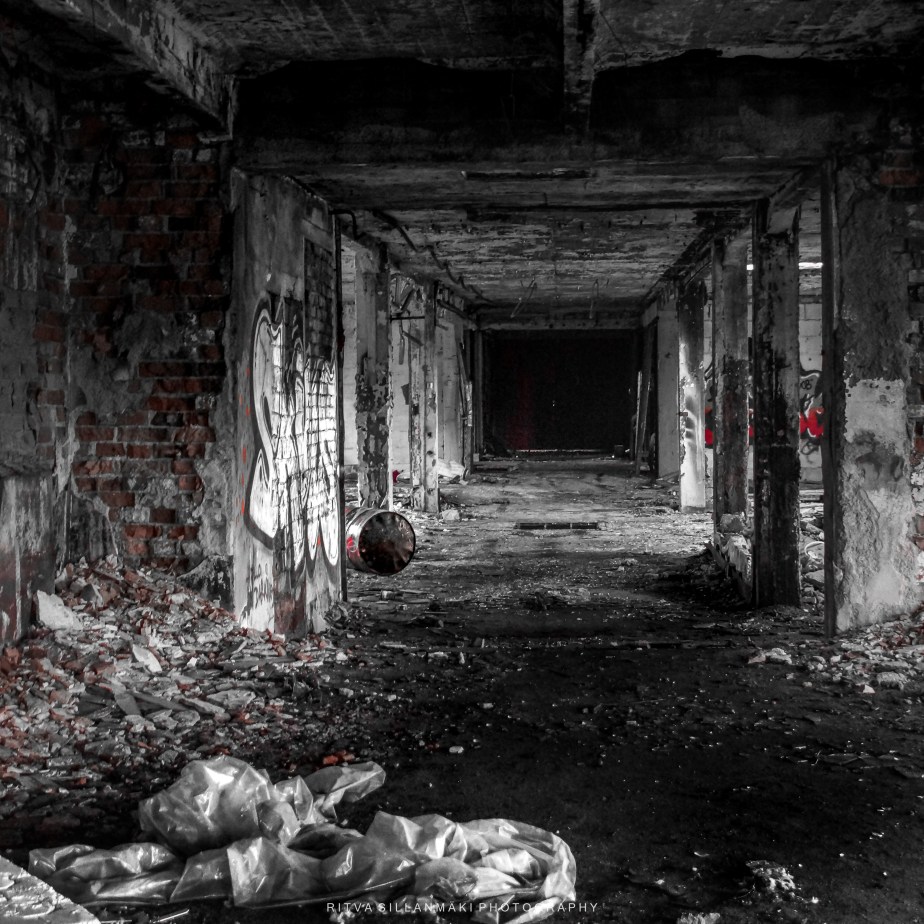
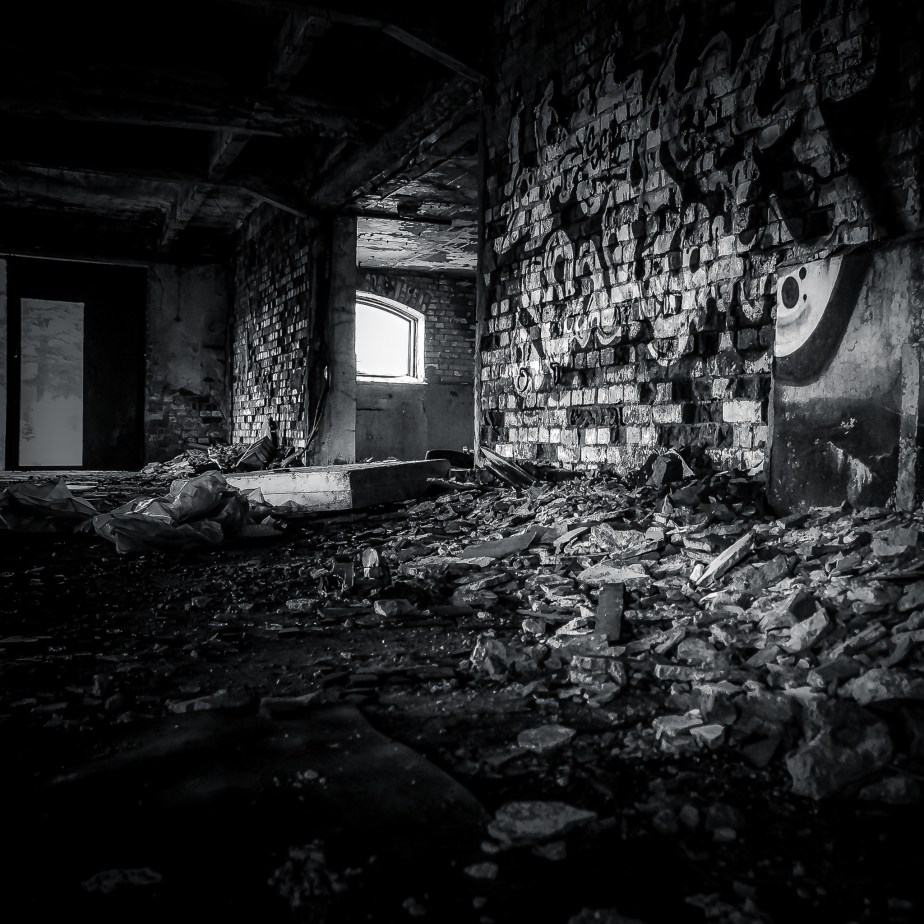
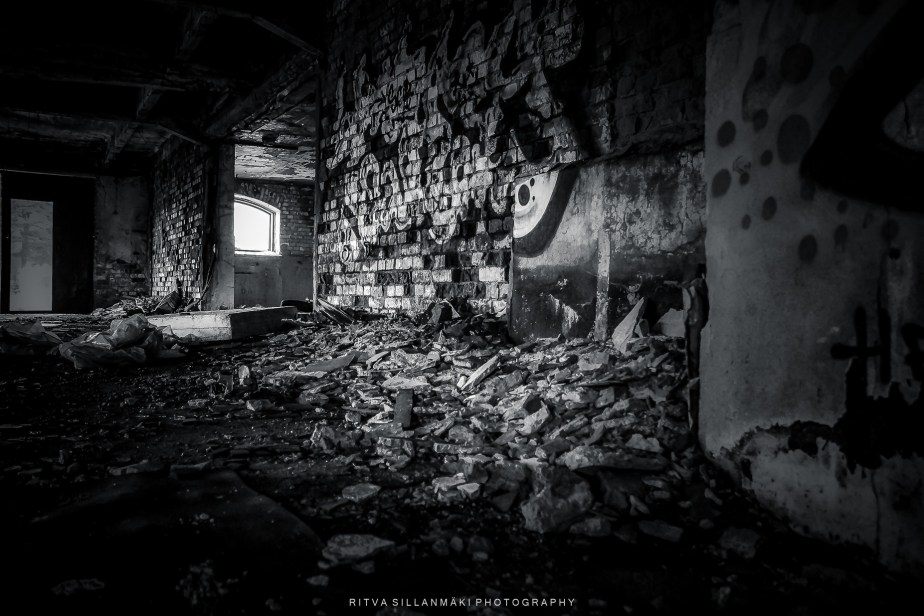
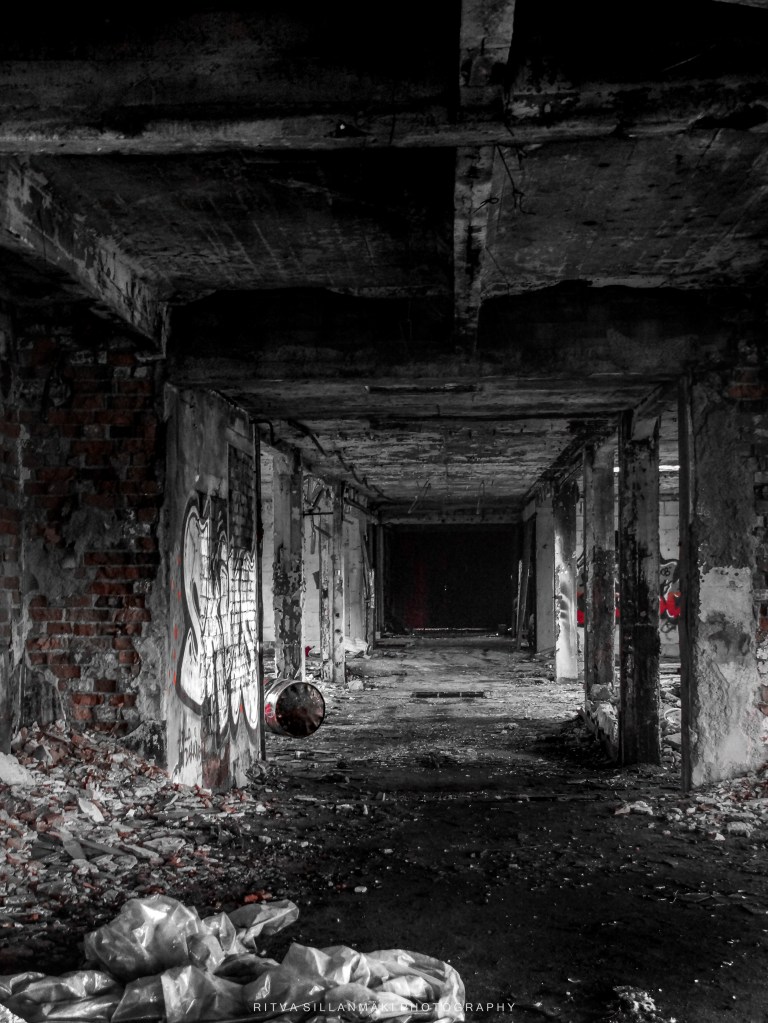
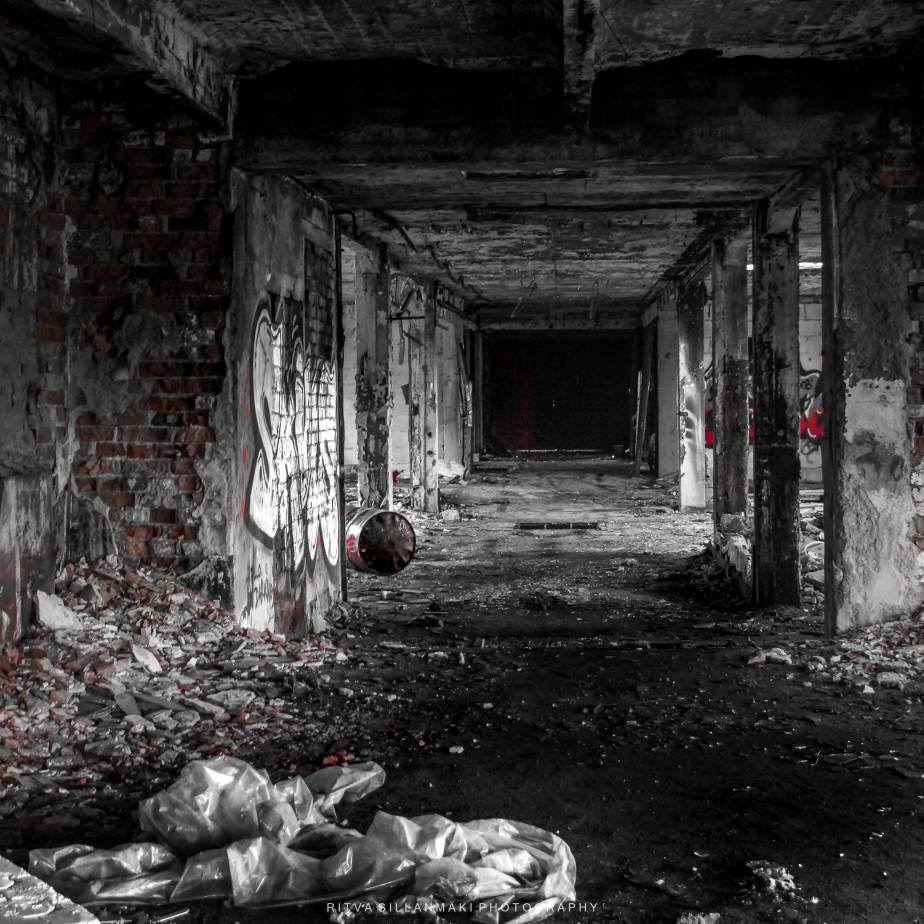
This is one of my favorite challenges as I love black and white photography; it captures the essence of the topic in many cases, allowing viewers to focus on shape, texture, and emotion without the distraction of color. The interplay of light and shadow transforms ordinary scenes into dramatic compositions that tell a story. I am still returning to the burned down barn for this week’s Monochrome Madness and NovemberShadows, as it evokes images in my mind that nurtures my creative vision. Each revisit to the photos reveals new angles and perspectives as how to edit and capture its haunting presence, inviting me to experiment and refine my technique while deeply connecting with the subject matter.
An abandoned interior showcasing a stark contrast between light and shadow, emphasizing the textures of decaying walls and debris.
Here in these two sets of images and different frames, I’m checking out how the crop’s aspect ratio changes these images. It’s pretty interesting to think about whether cropping a photo to a square actually adds something to the mood compared to keeping it in its original rectangular shape weather it is landscape or portrait. This change can really shift the focus, often guiding the viewer’s eye to specific details more easily. But you’ve also got to wonder if this tighter framing means losing some important context or details, which could totally alter the story the photo tells. Cropping can either amp up the emotional punch or totally take it down a notch, so it’s definitely a key choice in the editing process that we need to think about.
I have to admit these are more black and white photographs than monochrome, but the rules are not too tight in these challenges.
An abandoned room filled with debris, showcasing the contrasts of light and shadow in black and white photography.
An abandoned corridor with stark black and white contrasts, showcasing the interplay of light and shadow in decay.
A haunting black and white photograph of an abandoned interior space, showcasing dramatic contrasts and urban decay.
First time I saw this, my first thought was I have nothing to share on this topic.
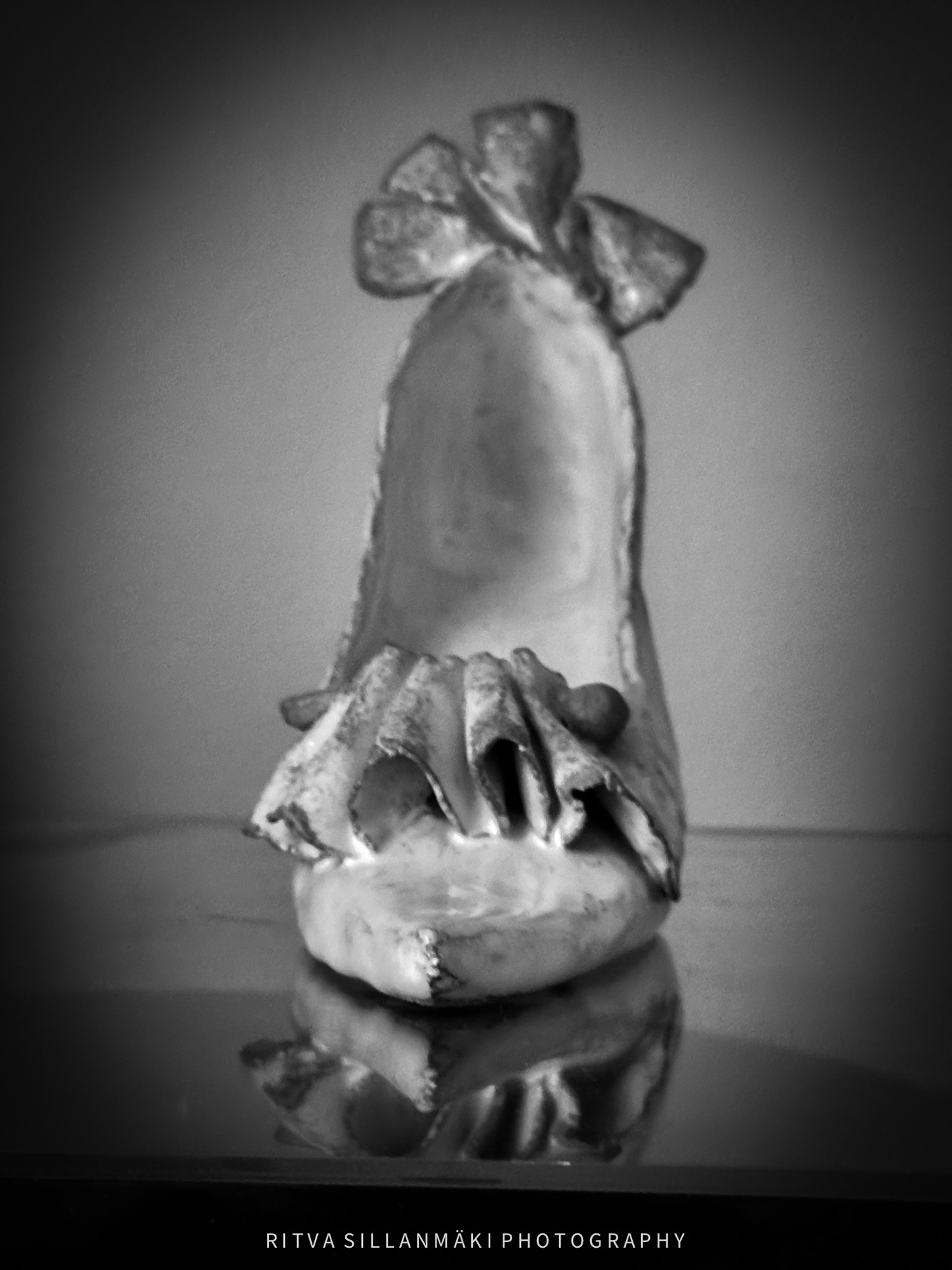
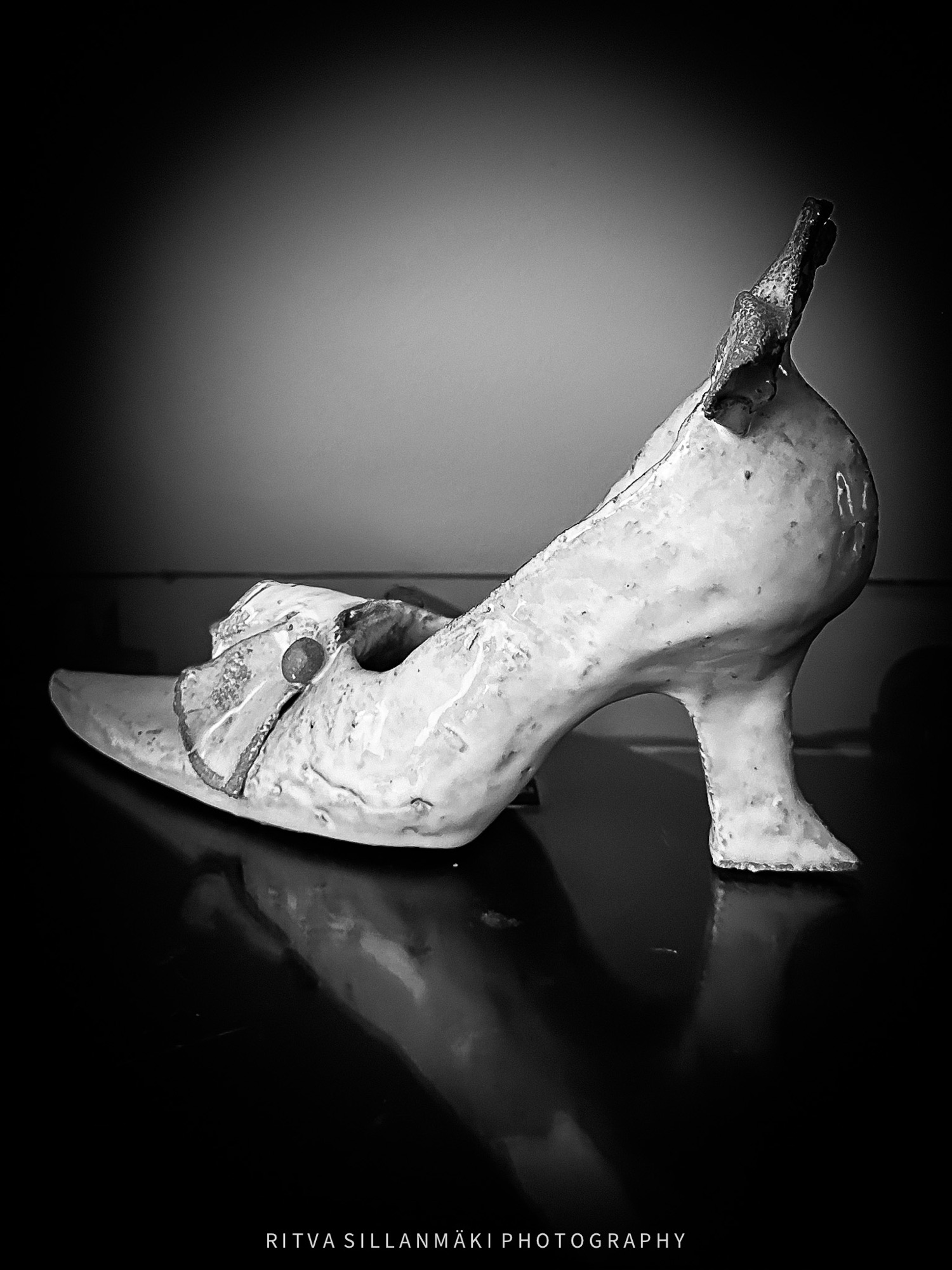
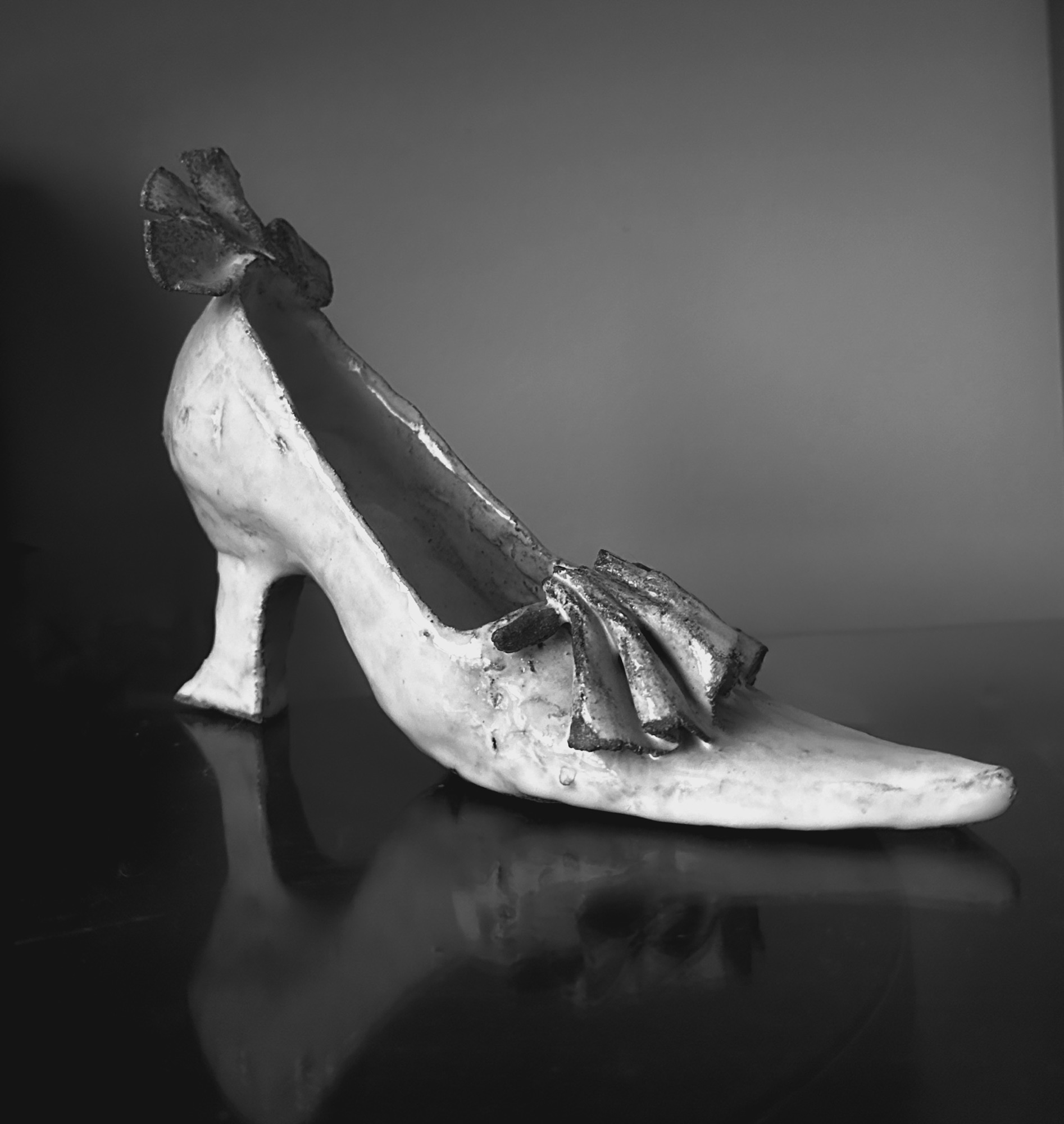
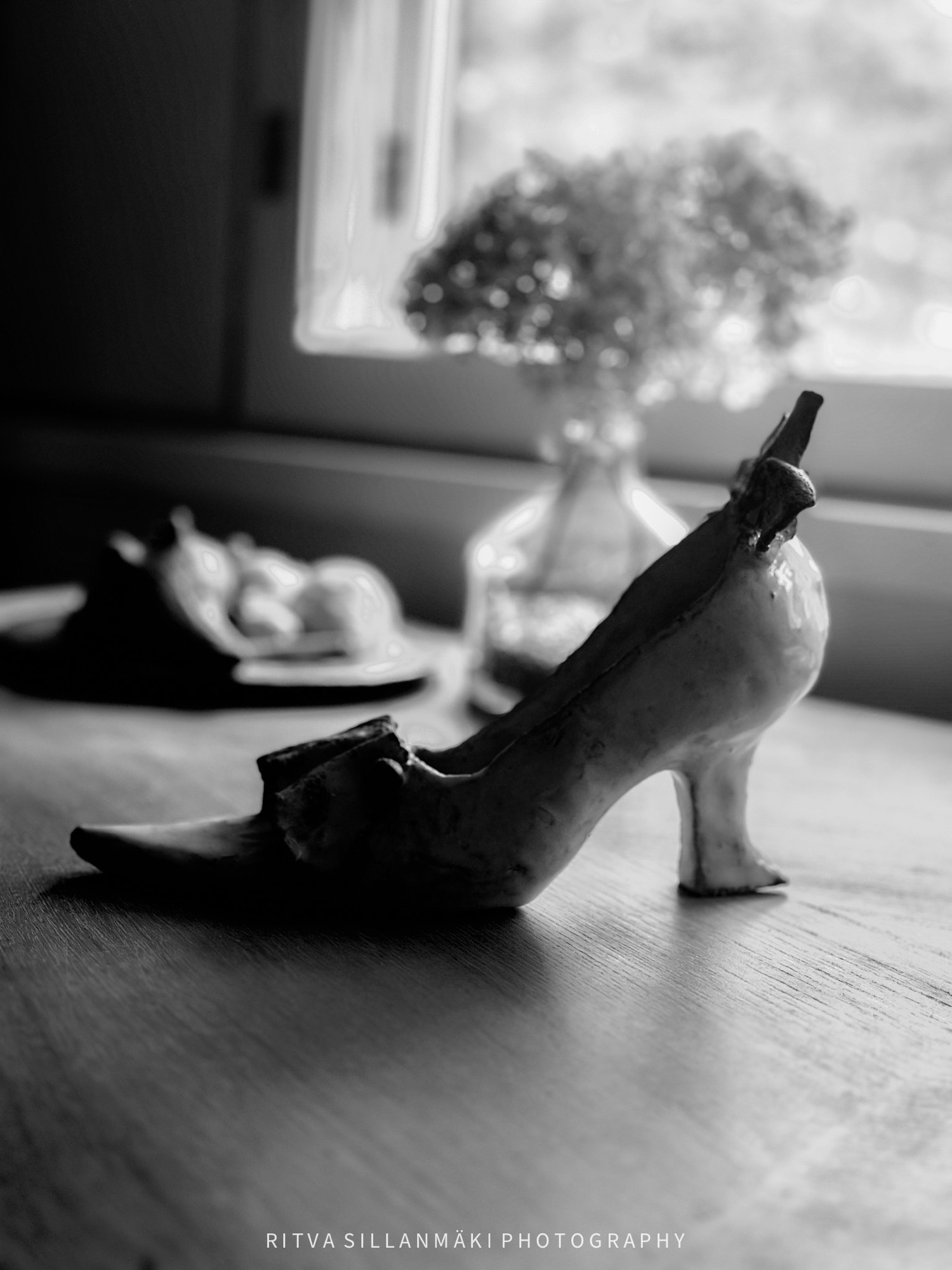
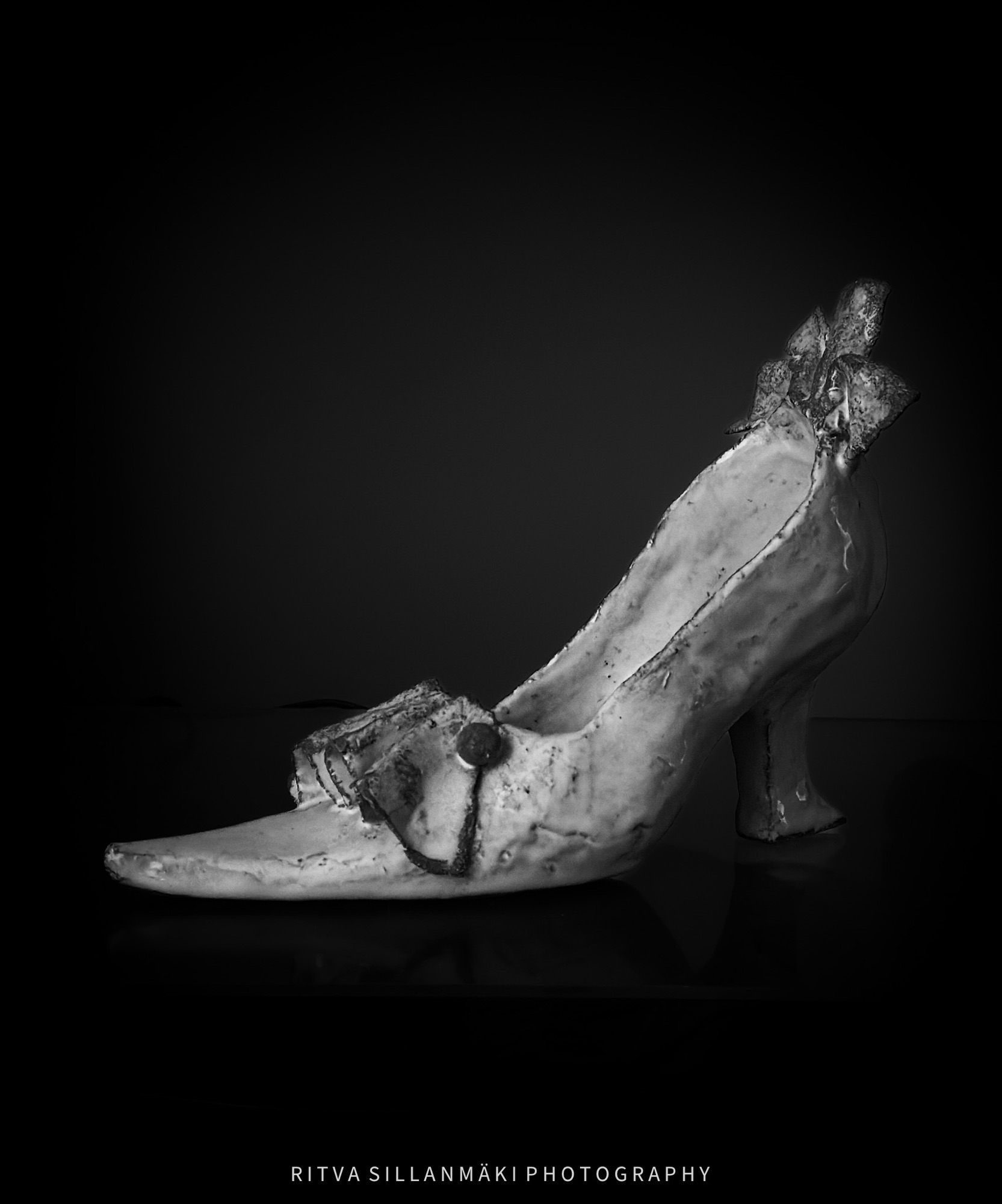
I did try to find a neutral spot to take a shoe shot, considering various backgrounds and environments that might complement the shapes and textures of the shoe. I could have used more time on creativity, as I could have explored different lighting or settings to really make the shoes pop visually. However, with the next two images, I just got lazy and took the shots in the cupboard where I keep jugs and bowls, simply because it was the most convenient option. The ease of just snapping photos in the cupboard won out over my original intentions.
So first thing this morning I took these images, the ceramic shoe by artist Kipa Kirsi (2013) is a gift from a dear friend.
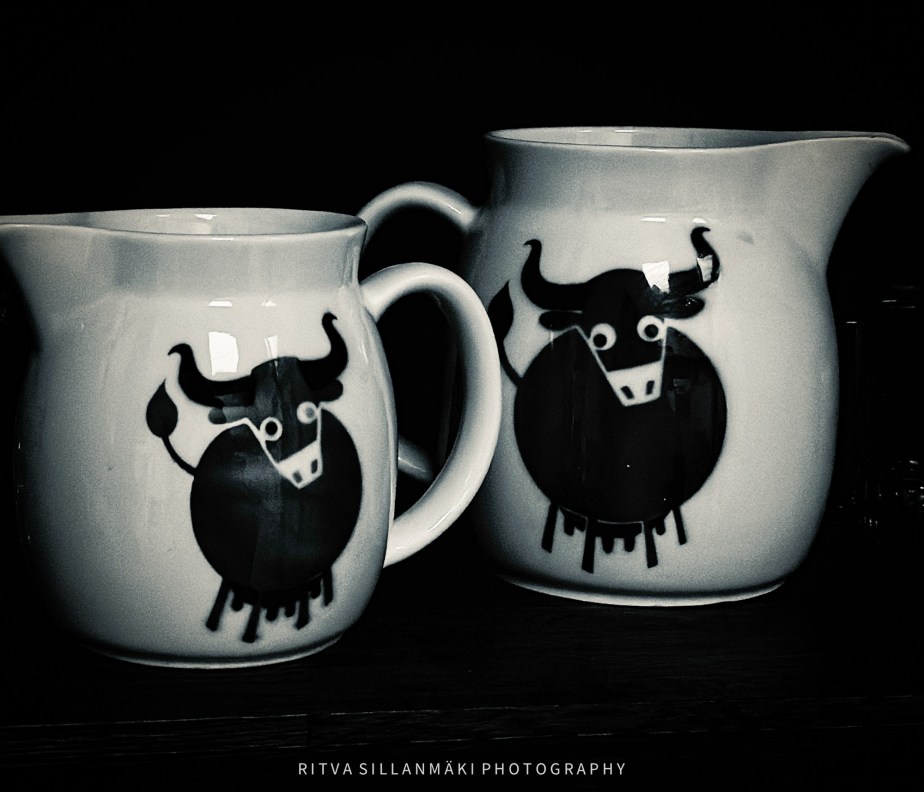
And these Heluna Cow jugs, the bigger one was my grandmother’s, and during our trip, we found the smaller cow jug in Canberra. We thought it was funny that someone had taken the trouble to bring it all this way, and now we are returning it back to Finland. They are Vintage Arabia, a milk pitcher pottery by Kaj Frank from 1950.
Vintage Arabia Heluna Cow jugs, one a cherished heirloom and the other a recent find in Canberra.
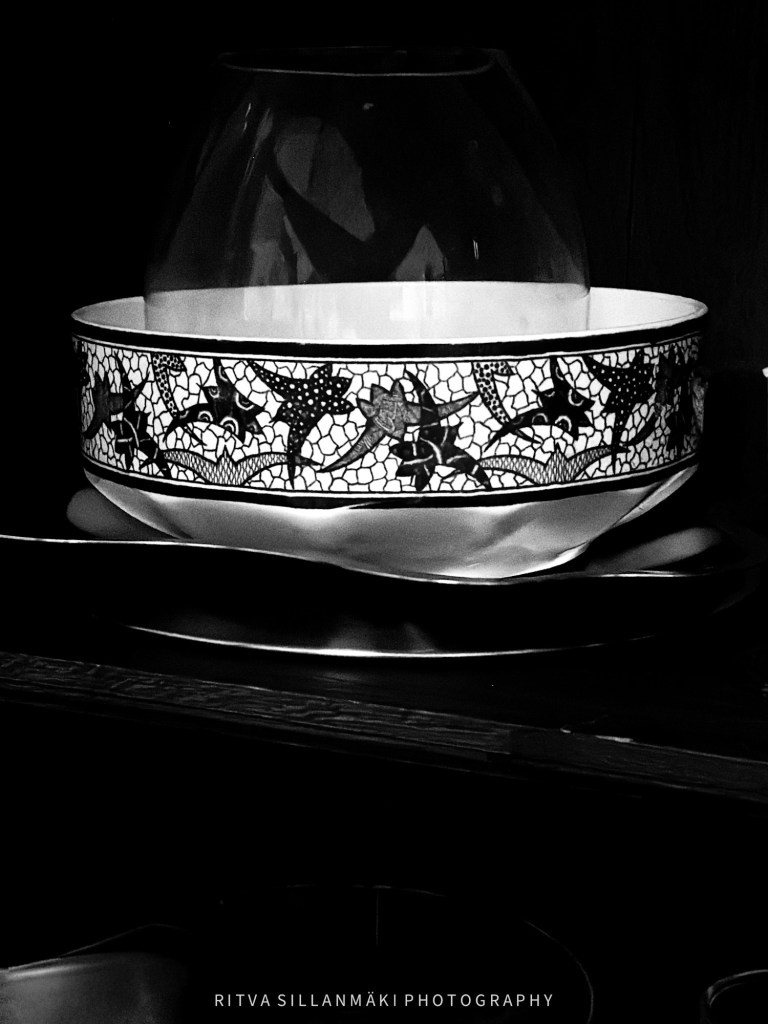
The bowl with the sea decoration is also Arabia; my husband rescued it from his father’s barn. I think it is really pretty; the colors are white and blue. It’s called Sampo. Based on the seal at the bottom of the bowl, the manufacturing date is from 1928-1932.
A beautifully crafted bowl featuring intricate blue and white designs, showcasing vintage Arabia craftsmanship.
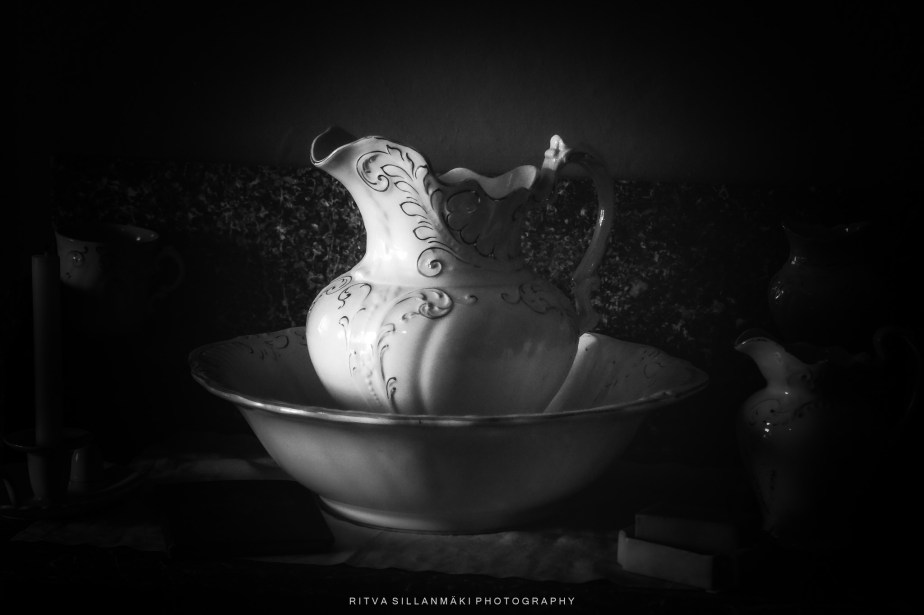
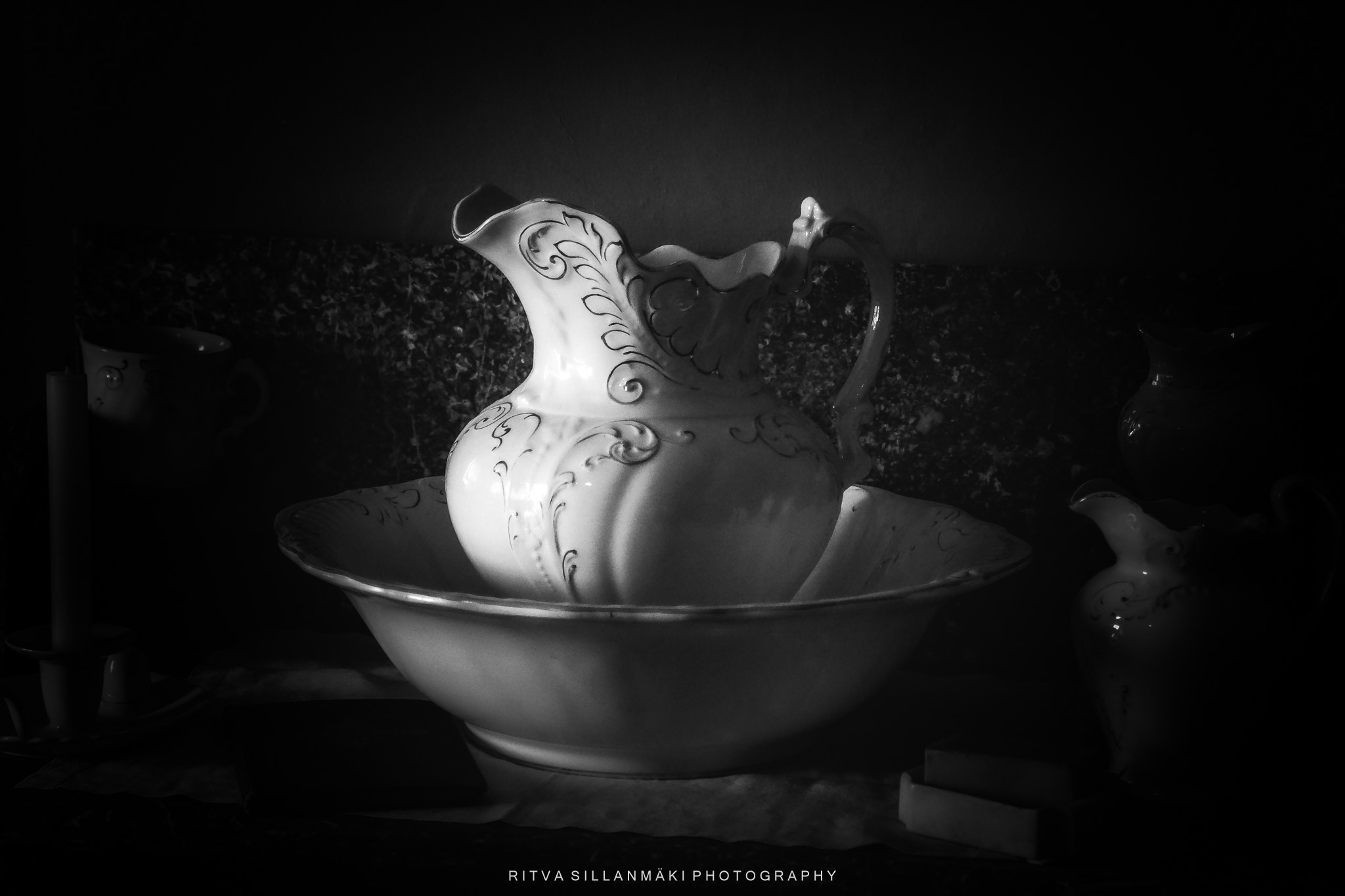
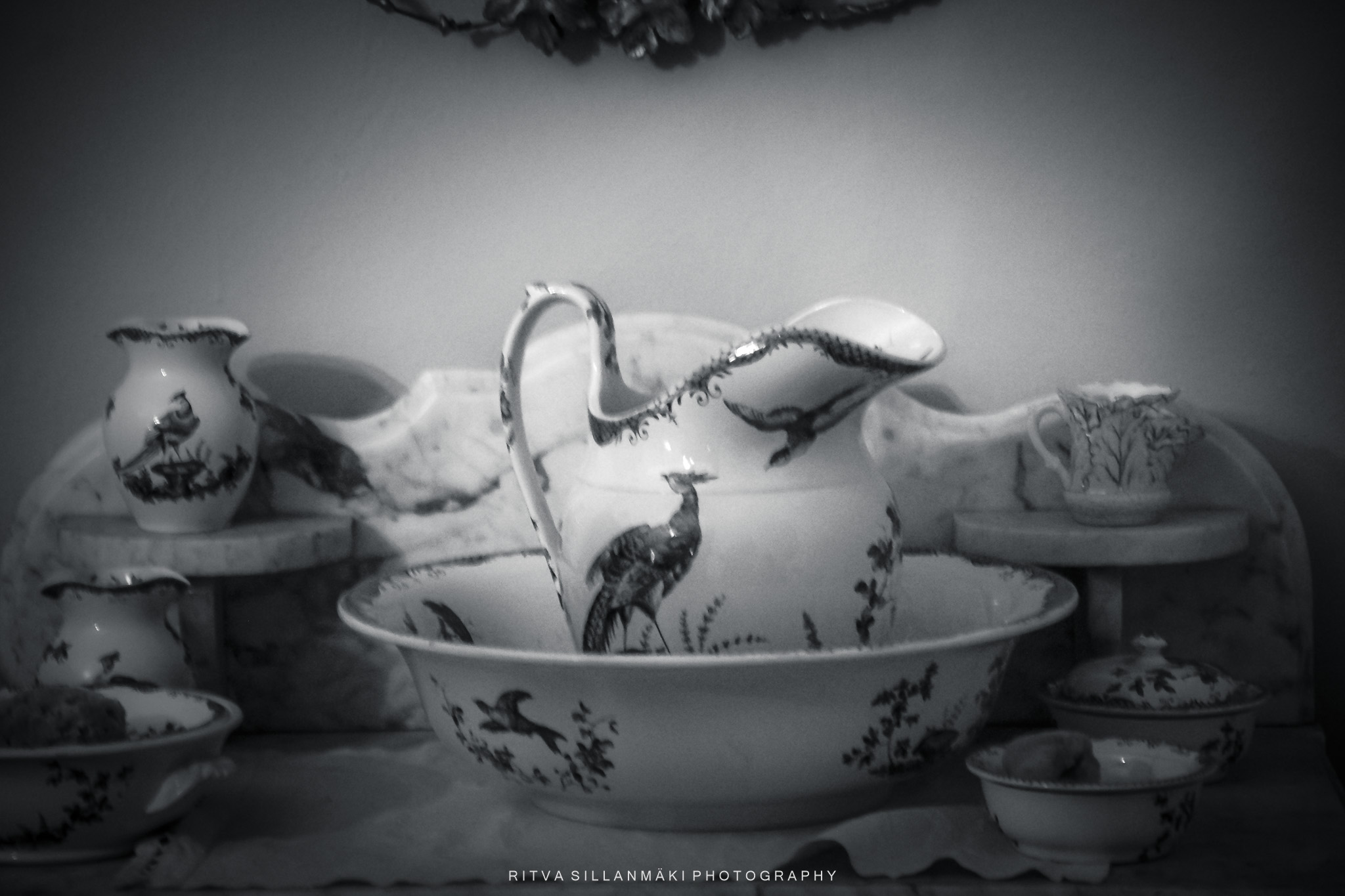
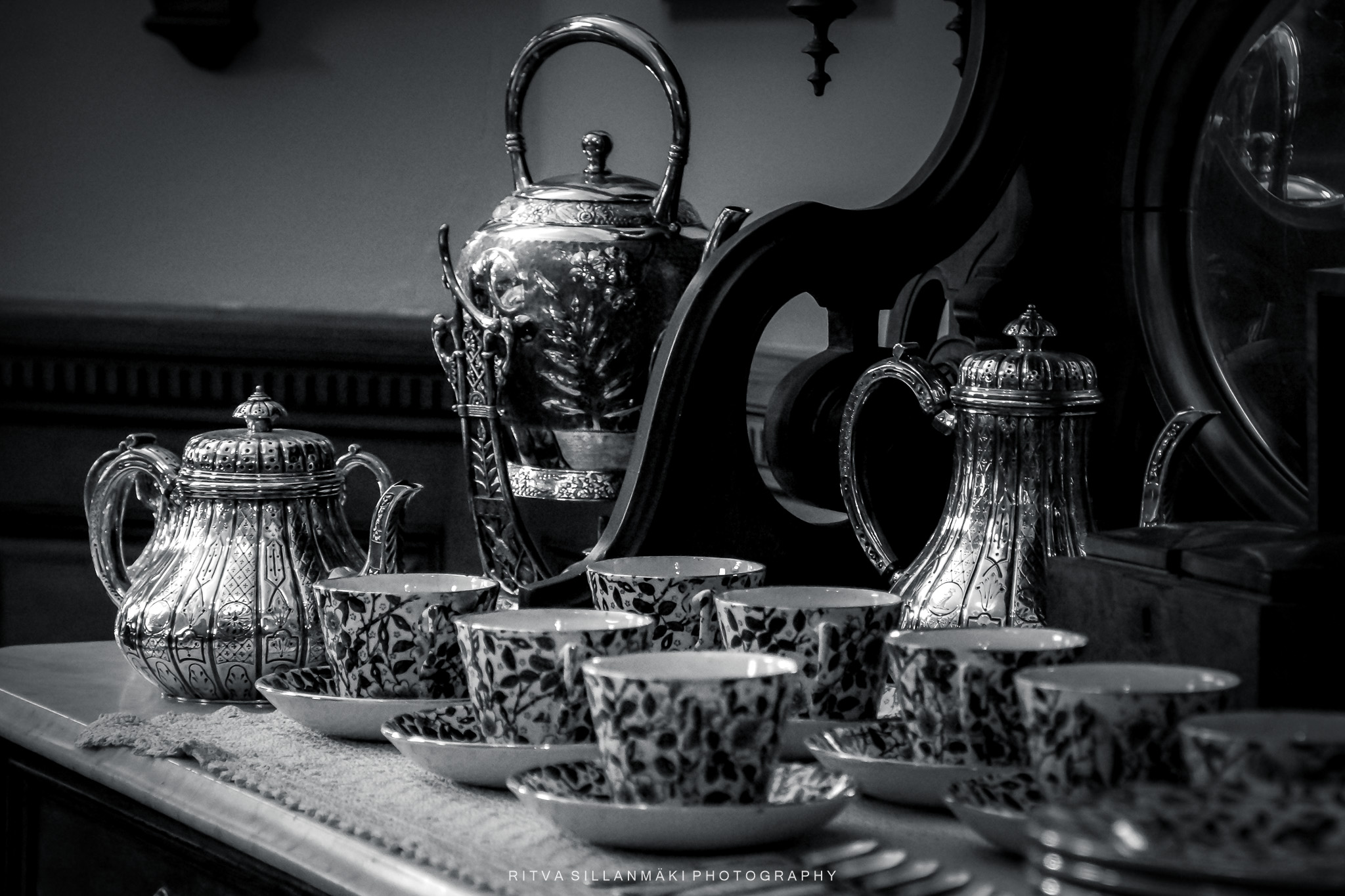
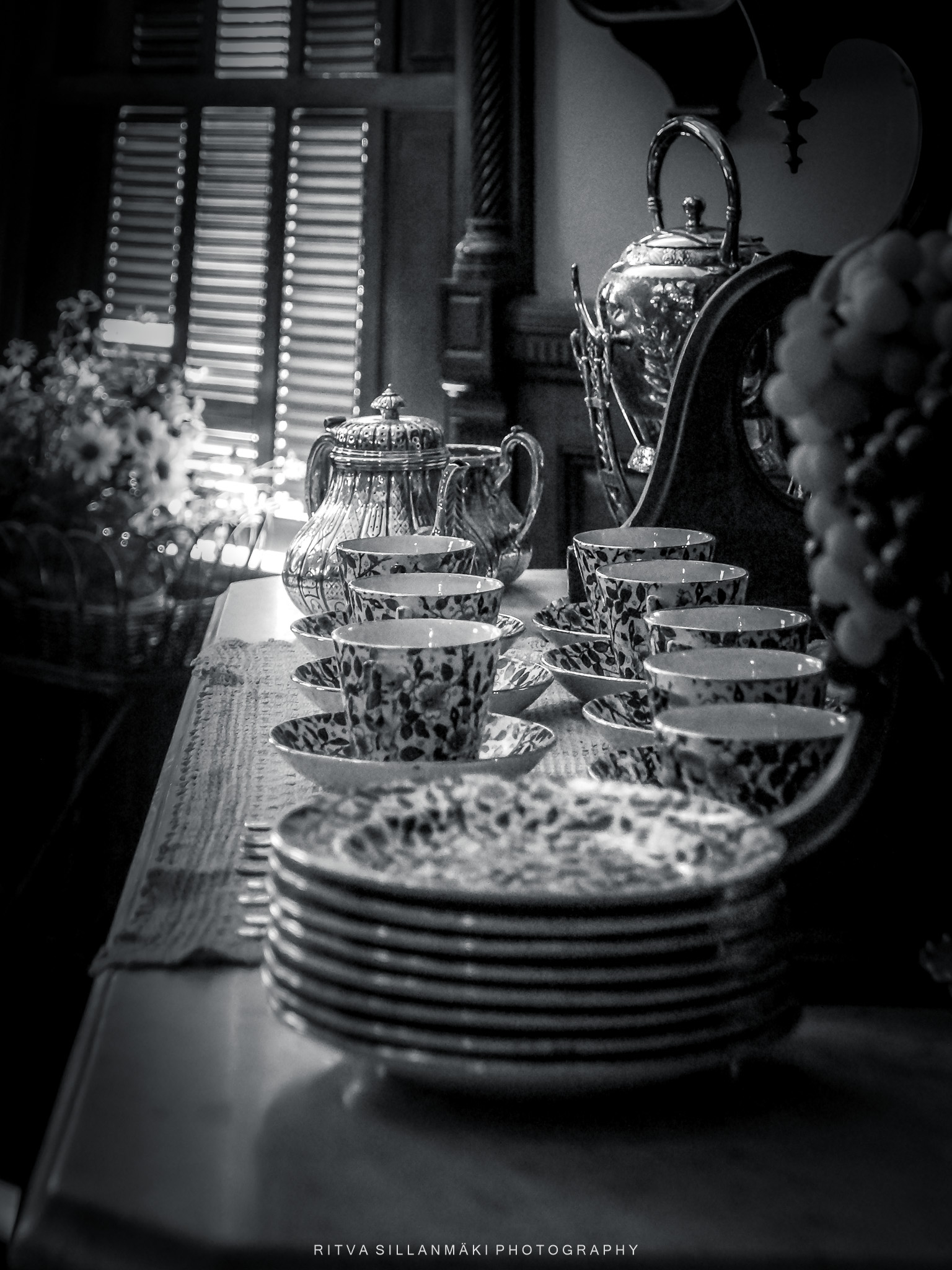
Then I remembered that I had these ceramic shots I took on Vancouver Island from the Craigdarroch Castle Museum, that showcases the grandeur of the Victorian era. It is the quintessential Victoria, BC experience, giving visitors a glimpse of privileged life in the 1890s, complete with exquisite furnishings, beautifully landscaped gardens, and a rich history that reflects the lifestyles of the wealthy elite of that time.
For Leanne and Brian’s Monochrome Madness challenge.
Anne is our lovely guide this week, and she really made me think… a long time before deciding.
Honestly, I’ve been through a lot of big changes in my life that really shaped who I am today. Moving to a different country when I was six opened my eyes to a crazy mix of cultures and perspectives that totally changed how I see people and the world. Each move came with its own set of challenges and opportunities that helped me figure out who I am. Then, as a teenager, I moved again, which opened up my world even more and made me more adaptable, even though it was tough to leave what I knew behind. Changing countries again in my early twenties really tested my resilience and made me crave new experiences and friendships. And losing both my parents before I hit 25 hit me hard; it forced me to figure out how to deal with grief and find my own strength. Everything that happened after that was life-changing, pushing me to live in the moment and really appreciate life because it’s so unpredictable. All these experiences taught me just how important it is to be adaptable, empathetic, and resilient as I navigate this wild journey called life.
Life’s like a road that you travel on When there’s one day here and the next day gone Sometimes you bend, sometimes you stand Sometimes you turn your back to the wind There’s a world outside every darkened door Where blues won’t haunt you anymore Where the brave are free and lovers soar Come ride with me to the distant shore
Life Is a Highway ‧ Rascal Flatts ‧ 2006
On the road
Now let’s talk photography. It’s been my sidekick ever since I got my first camera back in 1981. At first, I was all about snapping pictures of my family; my sisters’ kids were basically my go-to models. Those early days were all about capturing those cute, candid moments and silly snapshots that really showed what being a kid was all about. As I got older, I started branching out. I started to take photos of my friends, our fun hangouts, all the laughter, and those fleeting moments that turned into priceless memories. Plus, every new place I visited sparked my creativity. I found myself chasing after cool light patterns and unique angles in these unfamiliar spots, just wanting to capture the vibe of each place I went.
With the advent of digital photography, a world of possibilities opened up for me. The freedom to take countless images, unconstrained by the cost of film, was exhilarating and enhanced my passion for documenting my family’s journey. My three boys grew up quickly, and their milestones are well documented, even as they resisted my attempts to take photos during their teenage years. Those challenges changed our relationship, yet I cherished the moments I captured before they stepped into a more independent chapter of their lives.
As our kids grew up, we stumbled upon this awesome chance to dive into travel photography. My husband and I got to travel more, exploring all kinds of places together. It was a great way to keep our travel memories alive and got me super excited to try out different photography styles. Every spot we visited was a new opportunity to capture the beauty of nature, the lively hustle of cities, cool architectural details, and those peaceful landscapes, really adding to my portfolio and changing how I see things as a photographer. My sister always joked that I viewed the world through my camera lens, which is why I call it “the world as I see it – through my lens.”
When I first started blogging, it was all about just sharing my photos—no stories, just the images doing the talking. Many of them were digital art projects, but then I got into blogging challenges, especially those focused on photography, like the Lens Artists challenge, and that totally changed my game. These prompts made me think about adding some narrative to my pics, which got me more engaged with my work. Digging through my old photos or heading out to snap new ones really shift how I saw my photography. Plus, checking out all the awesome stuff from other bloggers helped me find a great community of folks who pushed me to explore new ideas and subjects.
Being invited to join the team of contributors for these challenges was a pivotal moment. It not only pulled me deeper into the blogging community but also expanded my horizons as a photographer. I found myself part of a vibrant exchange of creativity, where I could share my experiences and learn from others. This sense of belonging and collaboration has enriched my journey, solidifying photography as not just a pastime, but a vibrant part of my life that continues to evolve and inspire me.
Thanks to Anne for giving me a chance to share my thoughts on life and photography. Next week, I will once again host the challenge, which provides an excellent opportunity for everyone to explore their creativity and showcase their unique perspectives with me, maybe try something new. I would love to have you join me. I will post the challenge prompt Saturday at noon Eastern time, so be sure to check in! If you’d like to join in the challenge responses, but aren’t sure how to get started, look here.
I have often expressed that I enjoy editing photos, even though I tend to post mainly realistic images, having them look like I saw them. On that note, all of my images have been edited, mostly I adjust the light and contrast—highlights and shadows—to enhance the overall feel of the photograph. Contrast plays a crucial role in making certain elements stand out and giving depth to the image. I do it so that it reflects the image I saw in my mind’s eye—hence the title; the world as I see it. Photography, for me, is not just about capturing moments but also about expressing my unique perspective and interpretation of the scenes before me, allowing viewers to experience the beauty and intricacies that I wished to convey. Through careful editing, I strive to invite others into my vision, ensuring that they appreciate the subtleties that might go unnoticed in a more straightforward representation.
Original image without the edits other that cropping it.
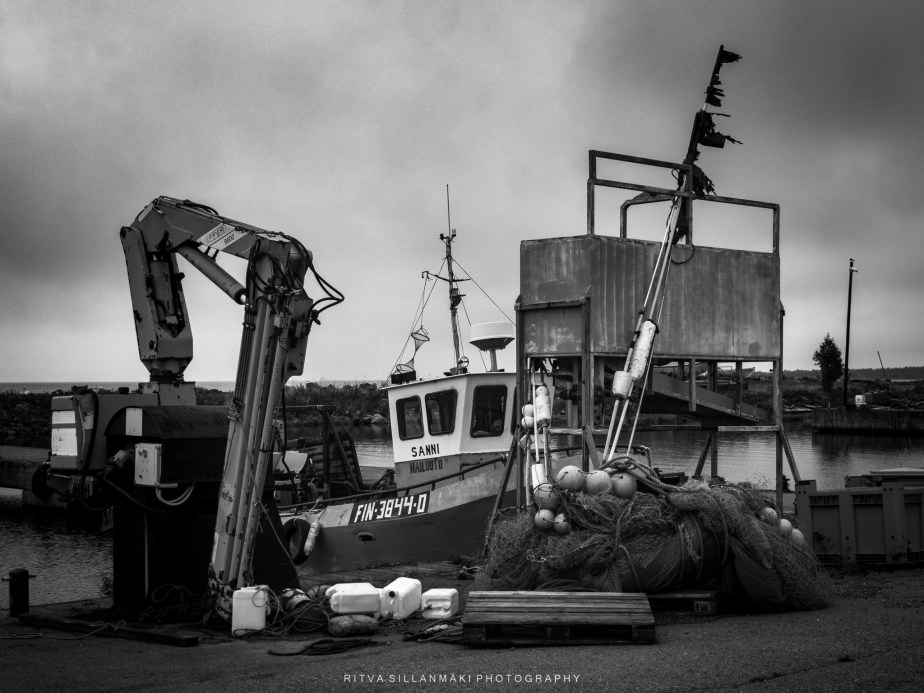
I am going to start editing cityscapes, buildings, and industrial places in a more creative way. For a long time, I have wanted to venture towards this direction, and now I am excited to explore various artistic approaches that can bring a fresh perspective to my work. I plan to experiment with techniques such as dramatic lighting, unique angles, and vibrant color palettes to enhance the visual appeal of my photographs. By prioritizing these innovative methods in my editing process, I hope to creatively showcase buildings and cityscapes, transforming my photographs into something more artsy and captivating.
Converted to an black and white
I am going to explore various angles to highlight architectural details. Finding unique vantage points can elevate the way buildings are presented in your images. Adjusting contrast can enhance the structural elements of buildings, making them stand out.
Vintage or black-and-white filters can transform standard images into stunning artistic representations.
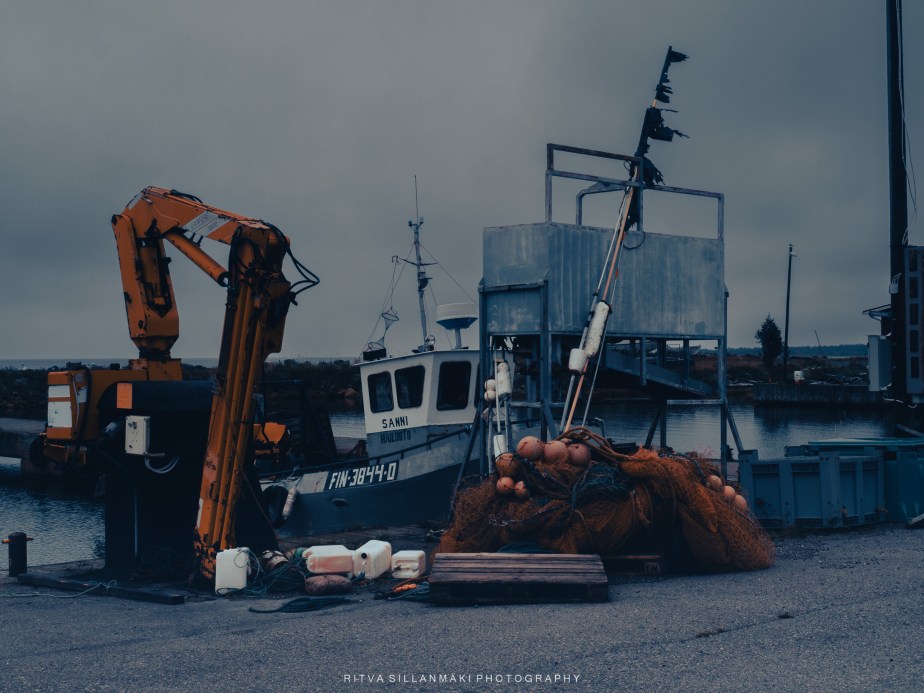
Blue and gray tones –
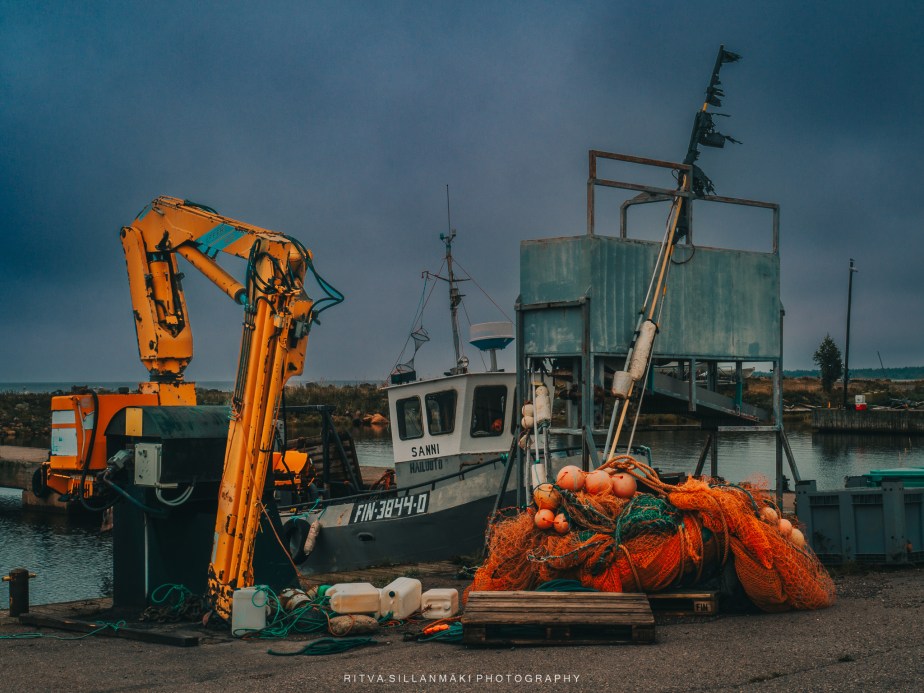
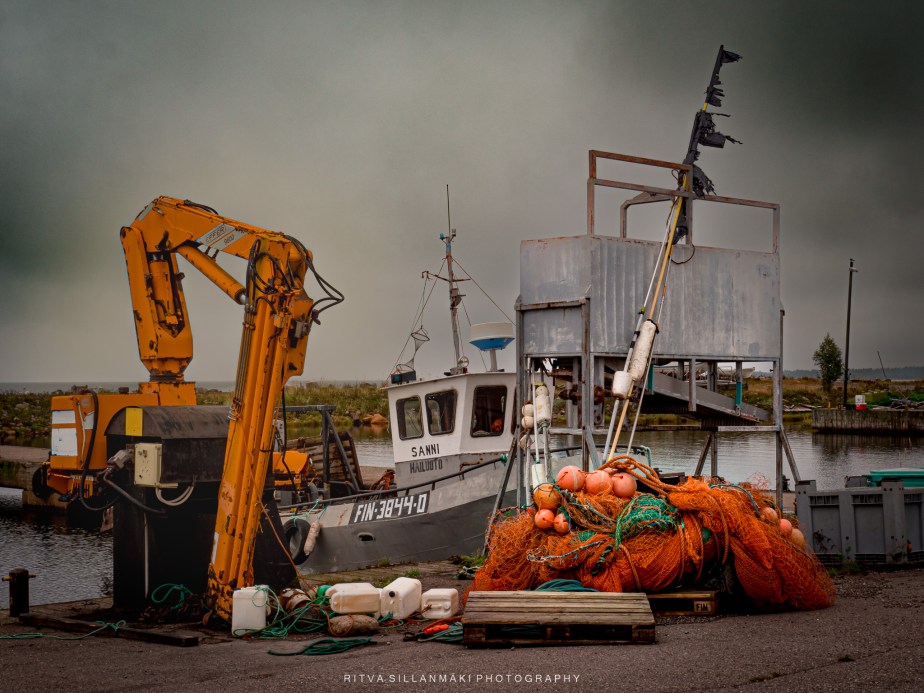
Use color grading to enrich urban atmospheres.. Pay attention to the distinct textures found in urban environments, such as brickwork or glass in post-processing to create depth and interest in your cityscape photos. Play with the color tones in the image.
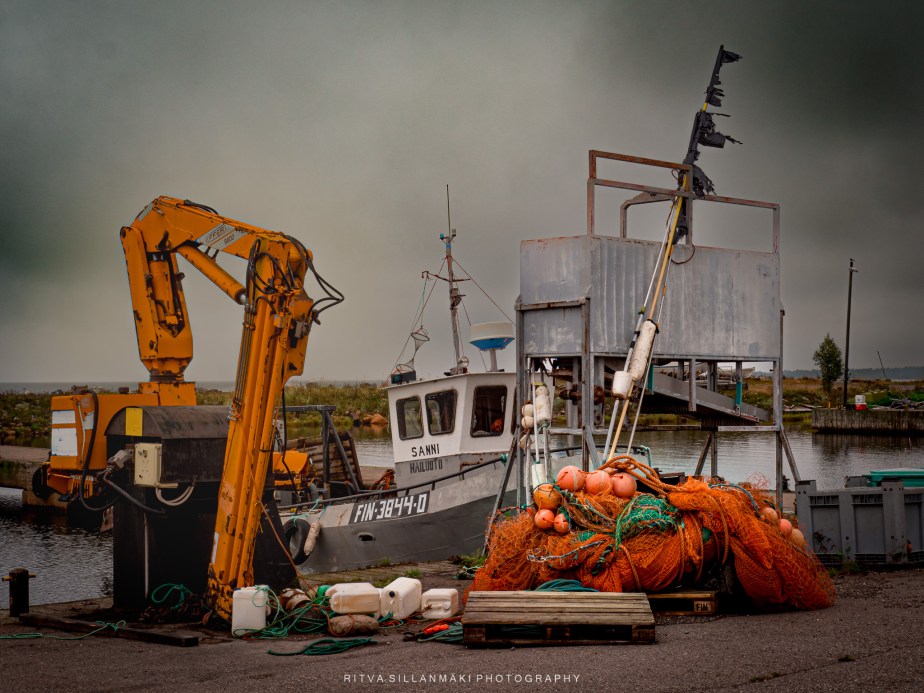
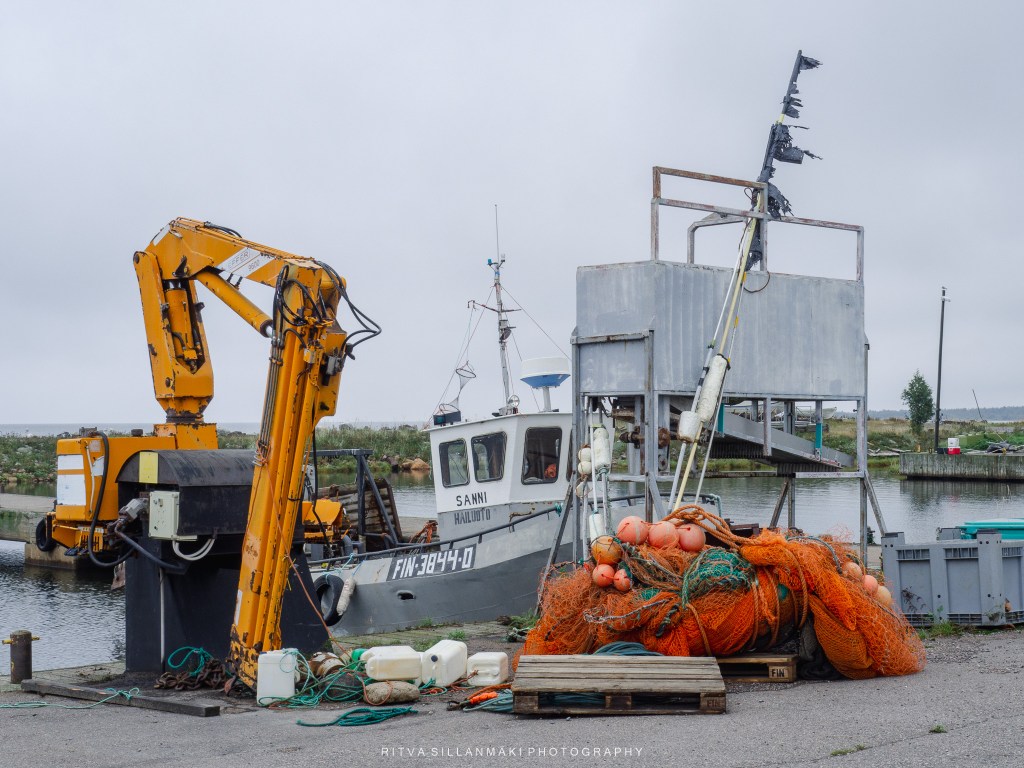
Fishing dock, placing the interest in the subject matter and bright colors
Use filters to create effects that align with the character of buildings and cityscapes.
Fishing Dock in warm tone and still focusing on the bright subjects
This week is a lesson in paying attention to the background BEHIND your subject, does this not sound like a challenge, but it is, if you really start to focus on it. So, think about different techniques you use to elevate your photos and share them with us.
Backgrounds play an essential role in photography, significantly impacting the overall aesthetic of an image. When composing a photograph, the background serves as the canvas against which the subject stands out. The background provides context and narrative to your photo. How your main subject interacts with the background shapes the story within the frame.
Here are some key considerations: Whether it’s a serene landscape, a bustling city street, or a simple studio backdrop, the background influences the mood and message of the image.
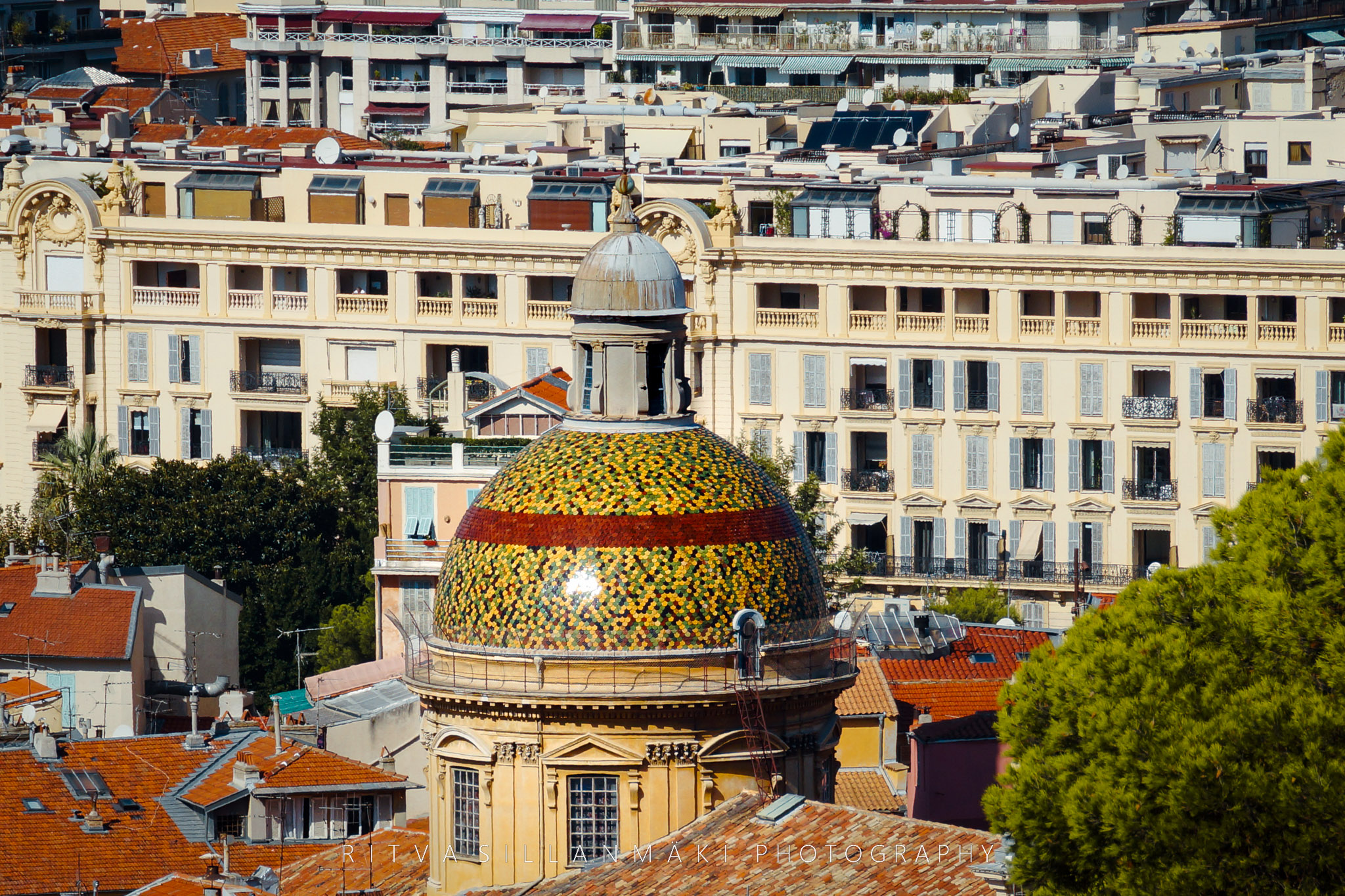
Same cityscape – three backgrounds for the dome.
Different colors evoke specific emotions. For instance, blue backgrounds often convey calmness, while red can evoke passion or energy. Patterns in backgrounds can either enhance or distract from the subject.
Simplicity, achieved through minimal distractions, often yields powerful results. Additionally, controlling depth of field allows you to guide viewers’ attention to specific focal points in both foreground and background.
Remember, a well-chosen background enhances your photo, adding depth and visual interest.
Usually, this means making your background distraction-free. That is often when taking photos we’re laser-focused on our subject: a portrait, a flower, a couple on a bench.
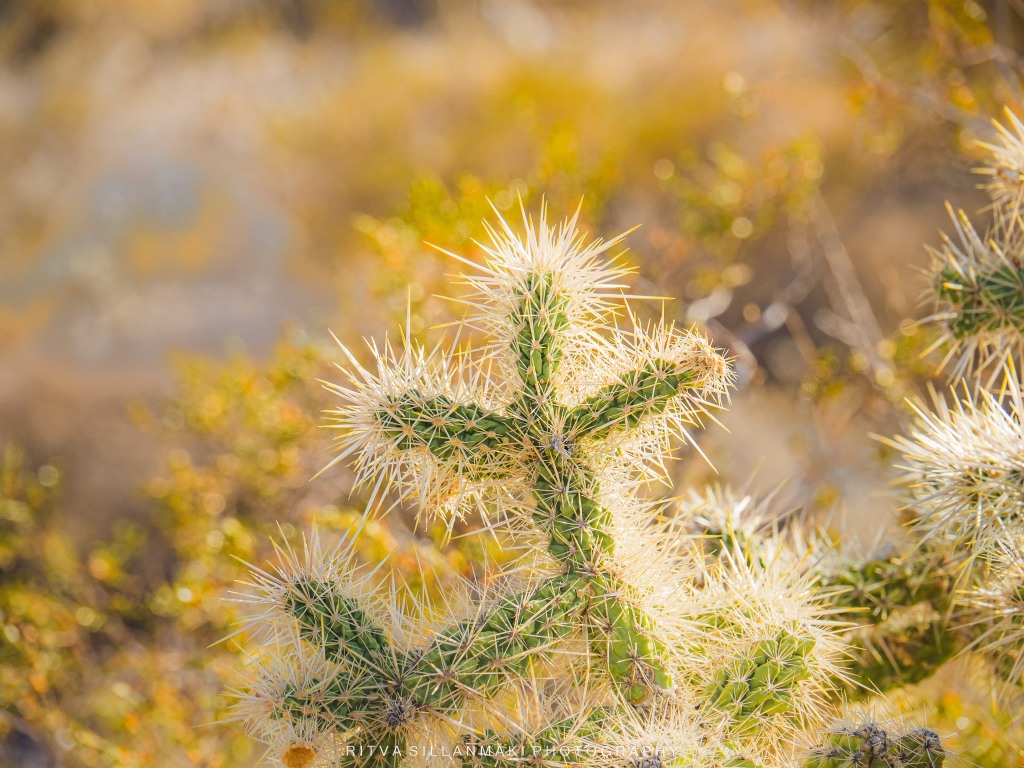
Luncheon on the bench Cactus – two takes with different backgrounds, each has a different story to tell.
A good background pairing (whether that’s making the background disappear with exposure or blur, or enhancing it with color or story will allow your SUBJECT to shine.
You can pair your subject with a colorful background to match or contrast your background to your subject.
You also may want to keep your background dark, relative to your subject, to allow your subject to pop, or vica versa.
You might want to elevate your photography to another storytelling level by creating a picture within a picture. You would see the main scene up front, but little scenes from the whole story would complement it on the side.
This can be children studying in a classroom, with a detailed scene behind them.
Or boys sitting, watching a document on a screen. Use your “canvas” to portray your entire creative story, from end to end, for both your subject and of course, your background.
Background Blur: Utilize depth of field to blur your background, keeping focus on your subject
two daisies
Color Harmony: Harmonize or contrast colors between your subject and the background for visual impact.
Darker Background: Adjust exposure to darken the background, spotlighting your subject.
Negative Space: Embrace negative space, using it to highlight your subject against a minimal background.
Last week we stepped into the lovely world of connections with Donna’s beautiful photos to guide us. We were shown lovely interpretations of connection this week. There is always need to be connected…
I am already looking forward to next week’s challenge with Egídio. Join him Saturday 12:00 EST to enjoy his beautiful photography, captured through his Brazilian eyes.
Interested in knowing more about the Lens-Artists challenge? Click here for more information.
John is our hero this week for leading us tp a controversial and rapidly-evolving development in photography. He is challenging us to experiment with AI. For those of you who use any of the Adobe programs, I’m sure you’ve been stunned with the speed of development of AI tools.
Artificial intelligence is already everywhere, not least in photography, where it turns the creation of images on its head. In many photo contests, judges have awarded pictures created with artificial intelligence-based image generators, thinking they are genuine. It’s scary and fascinating at the same time.
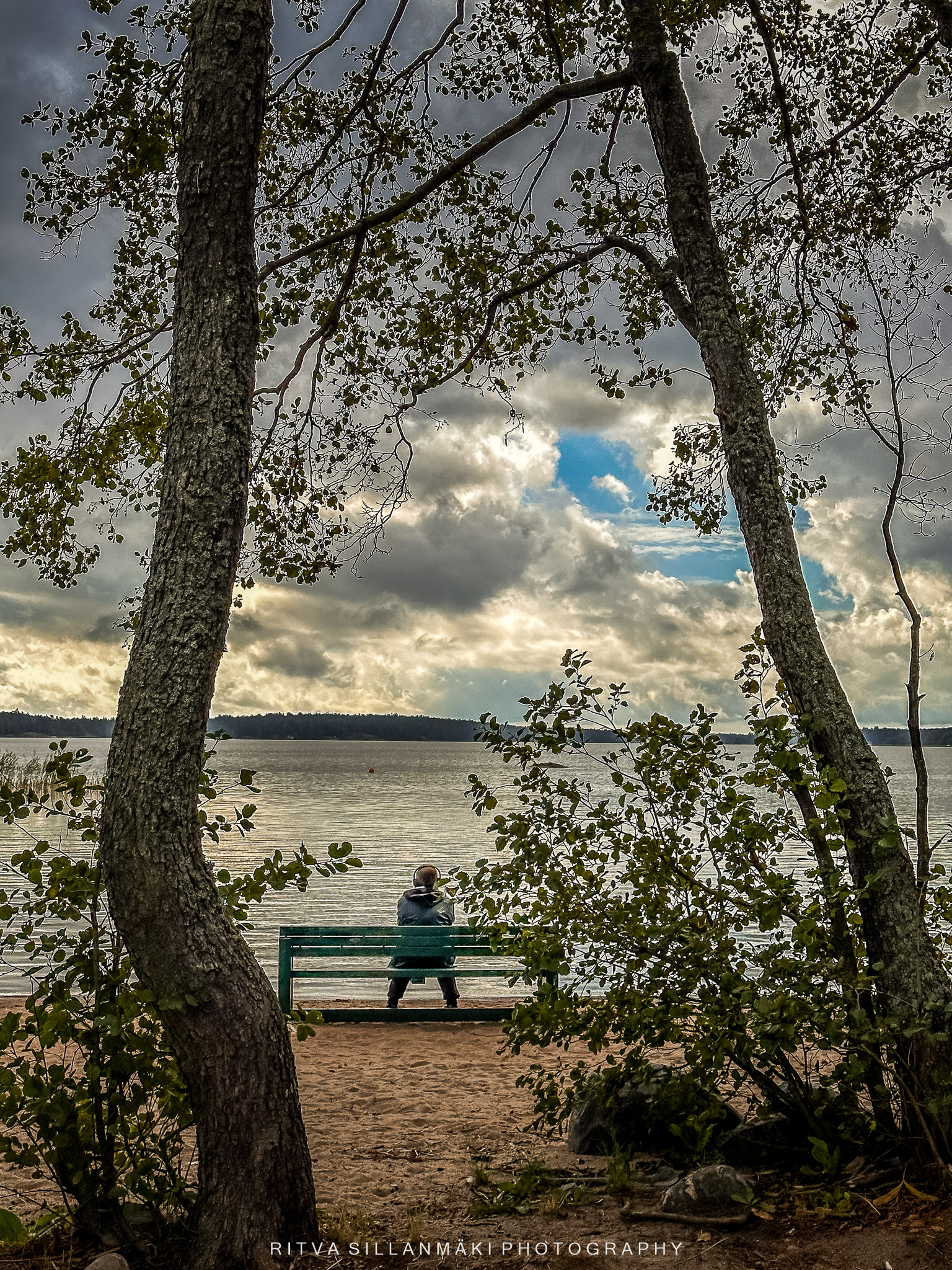
original photo that I have obviously edited as it was shot RAW
I am not in my comfort zone in this challenge, as a serious hobbyist photographer I like to take my own photos and edit them myself to my style.
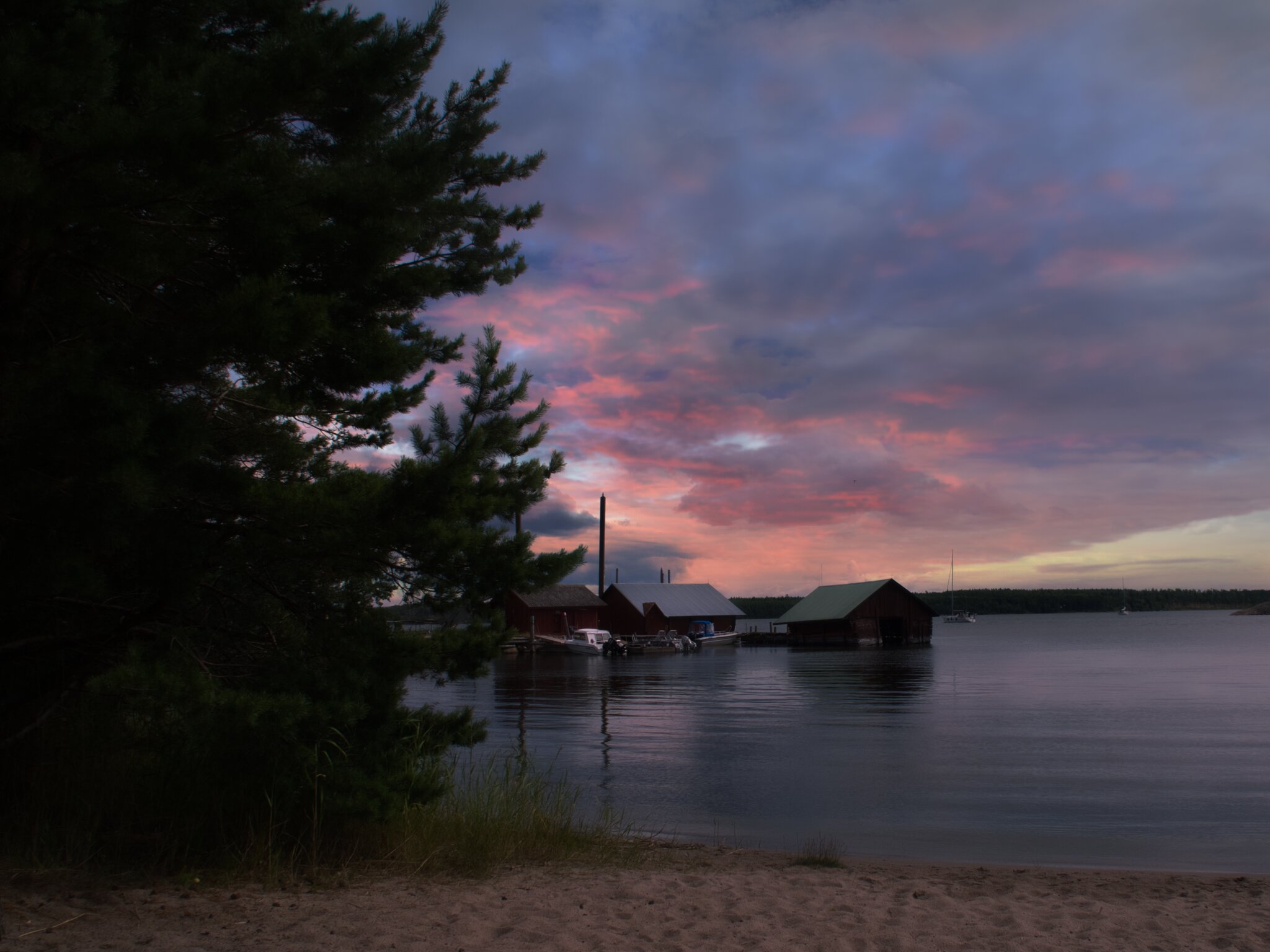
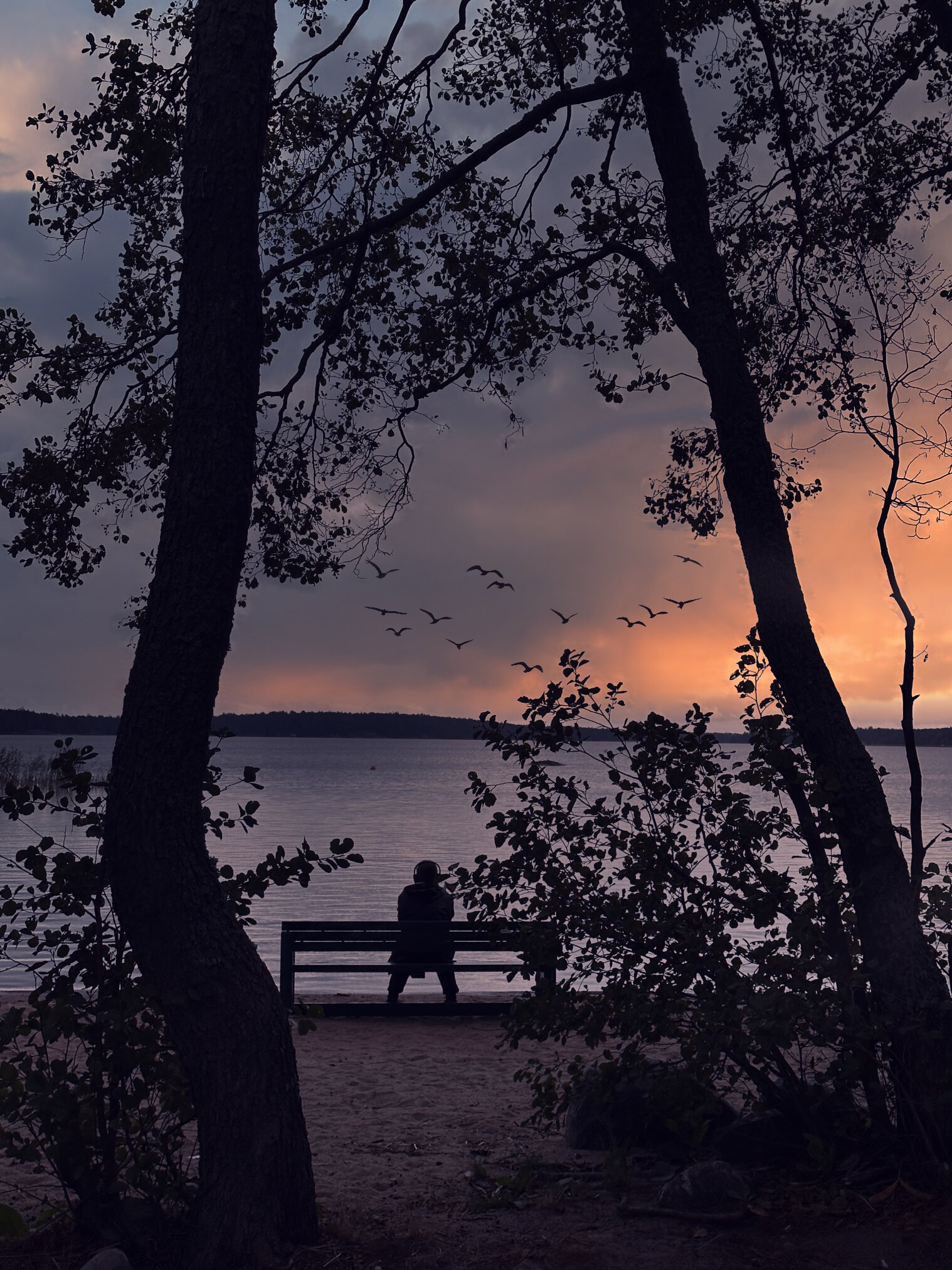
I used my photo as a starting point, I changed the sky to two different sunsets. One is more believable..
Regarding the edit process, I am comfortable removing distractions and, on occasion, replacing the sky. It is a very delicate process, the art of replacing the sky in a photograph requires a keen eye for detail and a deep understanding of light, perspective, and atmosphere. Ensuring that the new sky seamlessly integrates with the rest of the scene, taking into account the direction of the sun, the play of shadows, and the reflections, It’s a meticulous process that, when executed skillfully, can elevate the entire mood and narrative of the photograph, transporting the viewer to a captivating and immersive visual experience. It can easily go wrong.
An other sample of sky edits…original and edited version, can you tell which is which?
The approach I usually take is to carefully frame the shot at the location to naturally exclude most distractions. However, this is not always feasible. In some cases, I am comfortable with the idea of removing objects like garbage cans and electric cables, or even editing out certain branches from the periphery of the image.
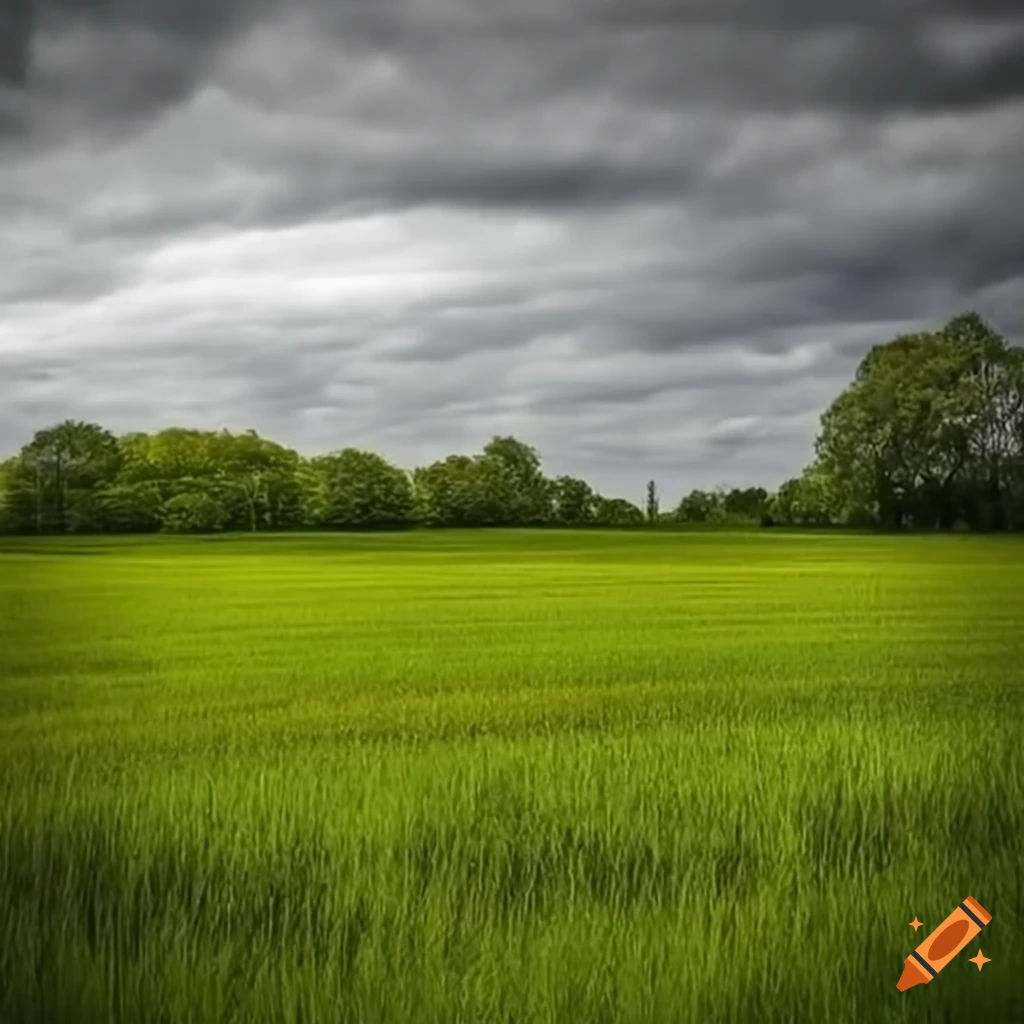
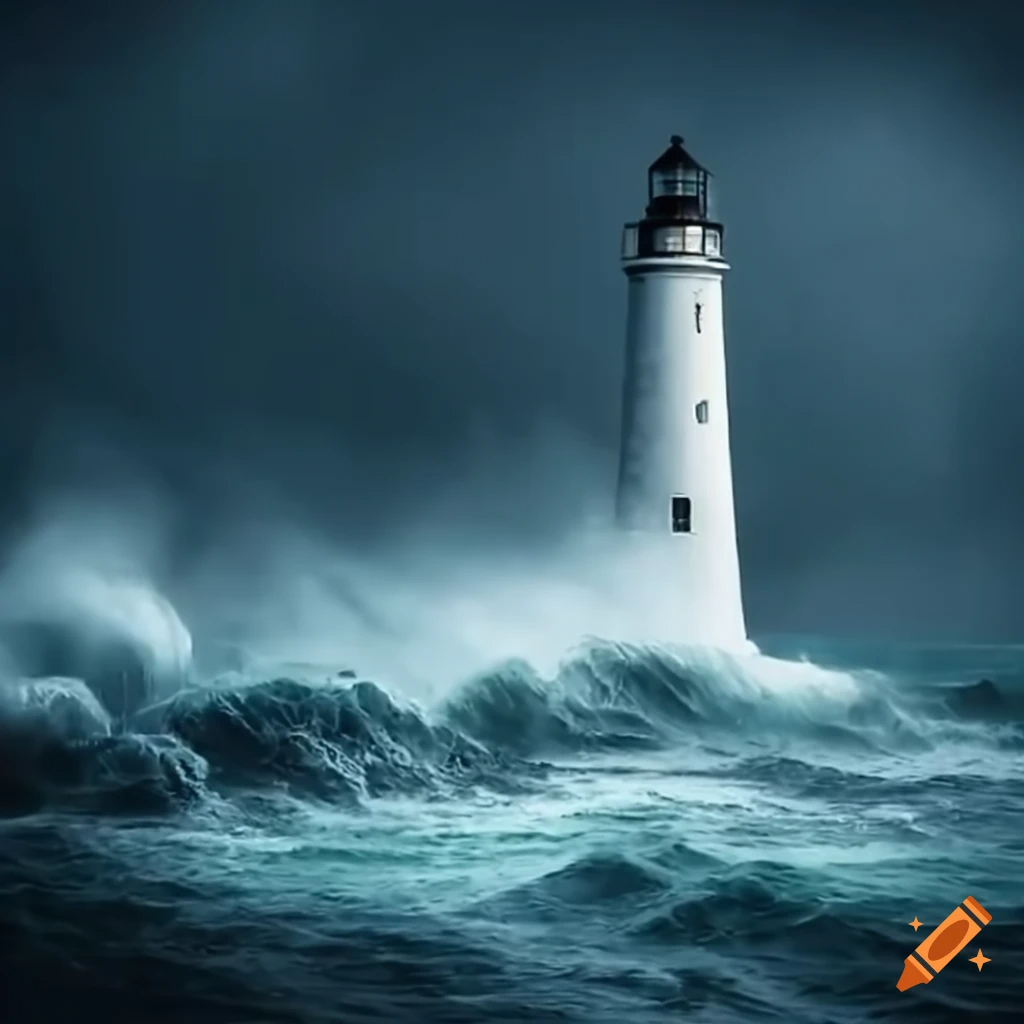
For this challenge I was going to try Photoshop to create something, but as my heart was not into it, I got nowhere, but I did get really frustrated. Then I found t Craiyon free site to create these two photo. Prompts: green field set against dark clouds and Lighthouse during a storm.
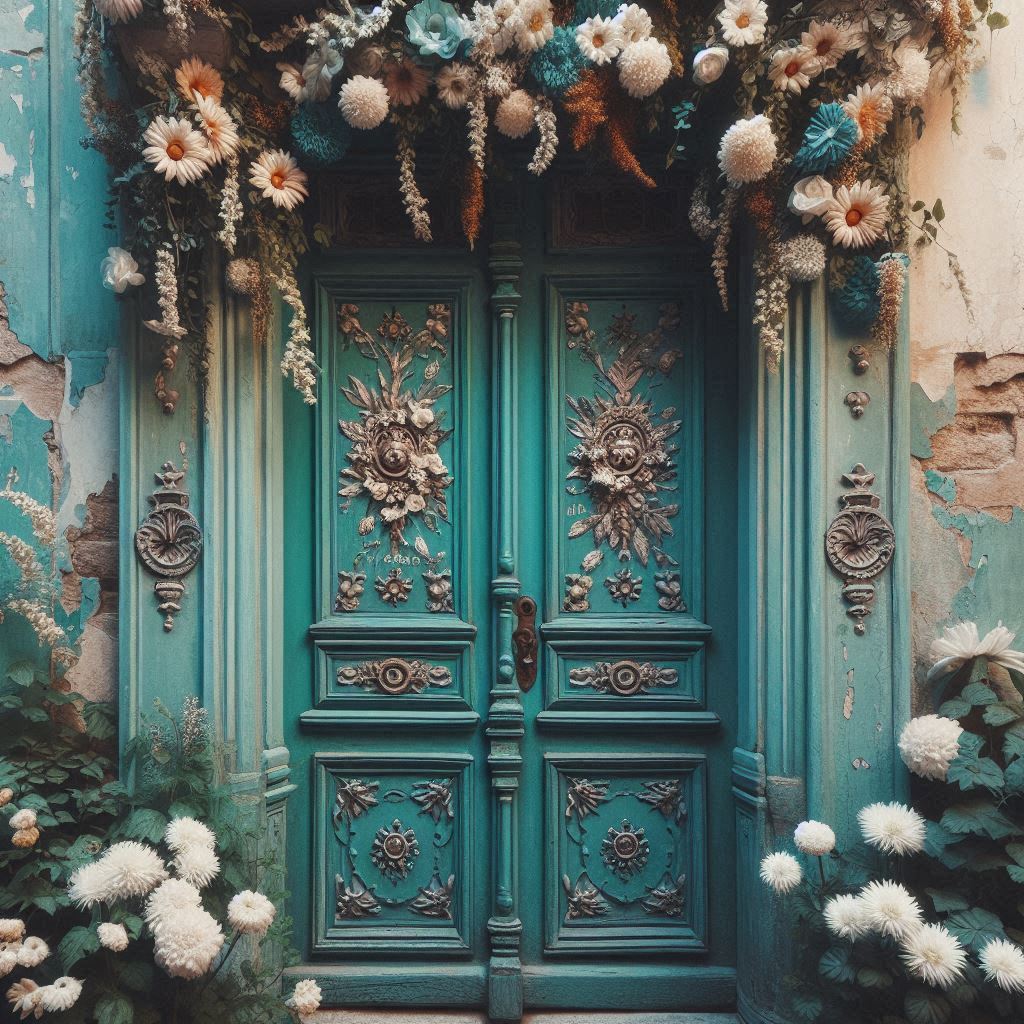
These two (below) were my first attempts to create anything on word prompts- done with free version on copilot – these came out as illustrations. Not to my taste. Hence my frustration after seeing others create lovely images.
I don’t condemn anyone using AI, but it not for me at least now at least in photography. I strongly believe that something is lost, the soul , the personal touch. I might take it up when my own inspiration is lost, but most likely not. Art is about individual creativity to me.
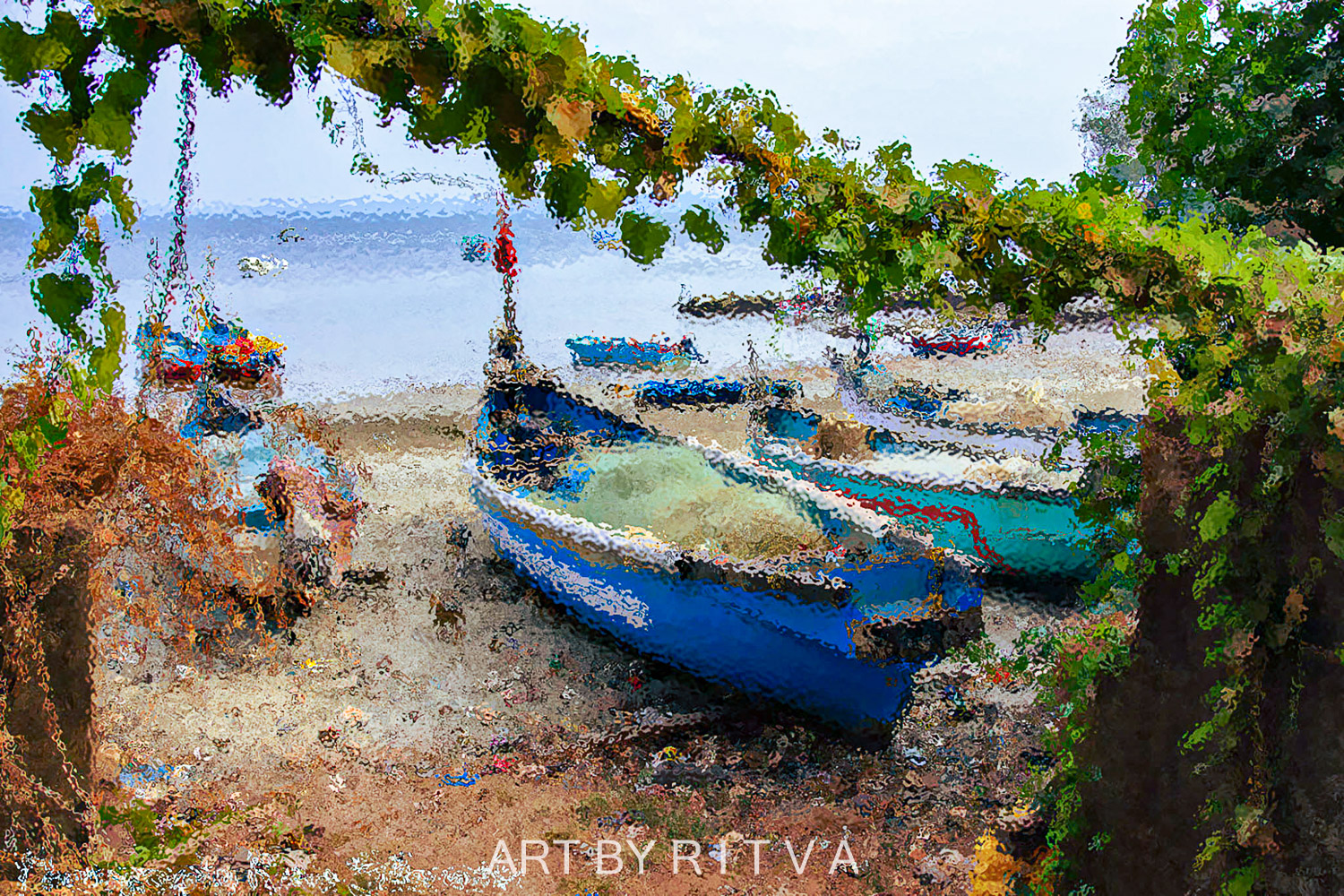
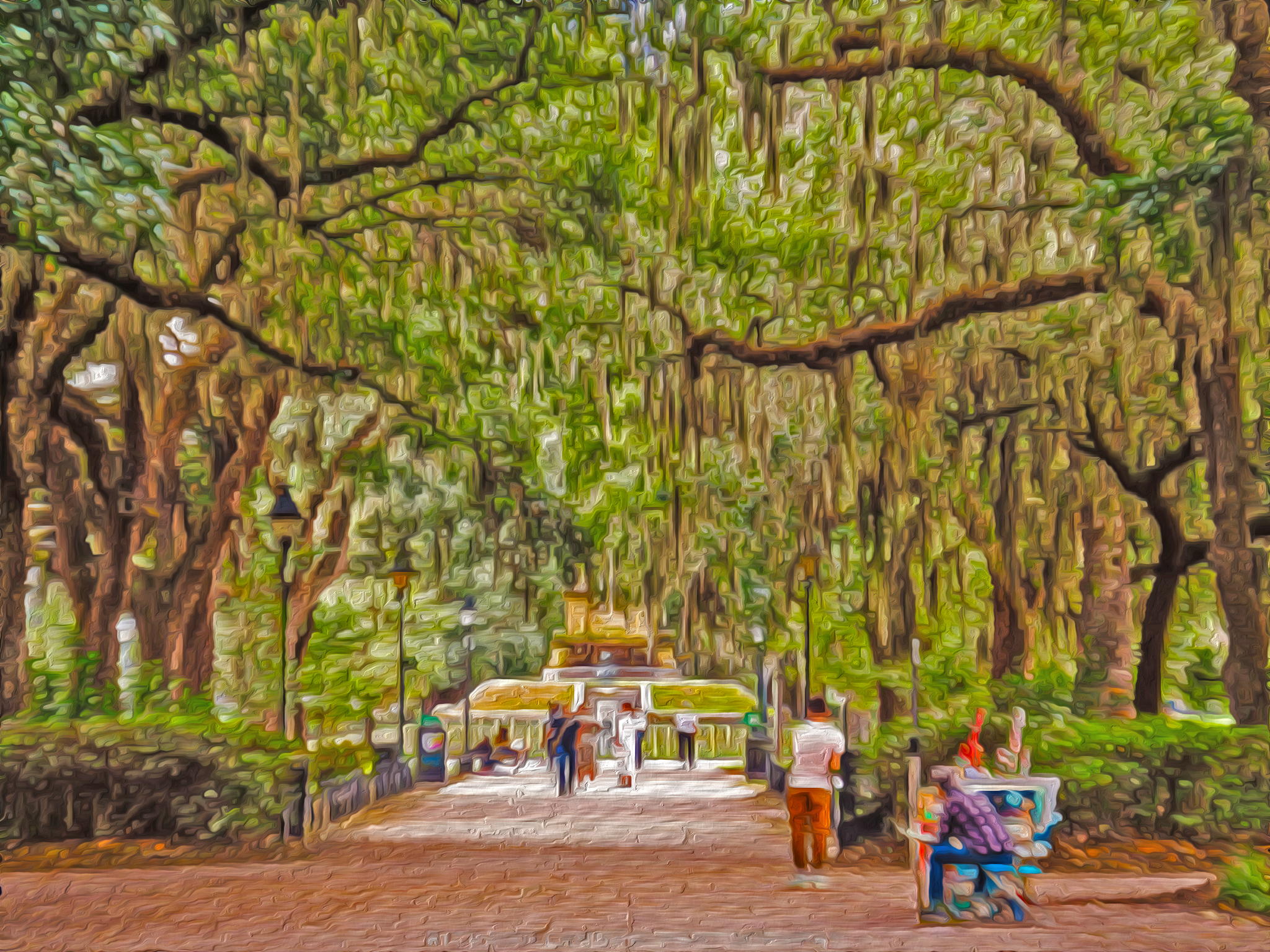
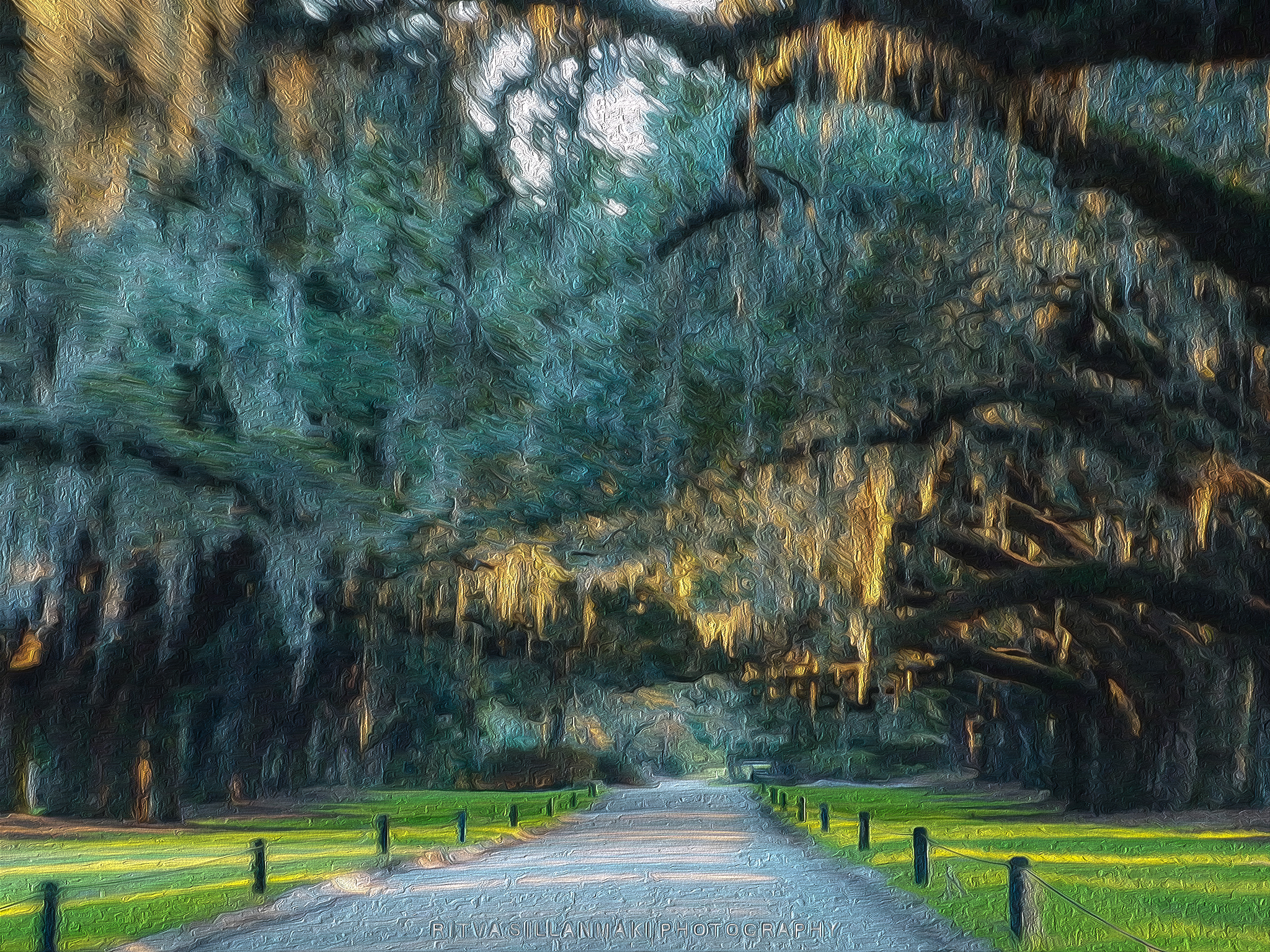
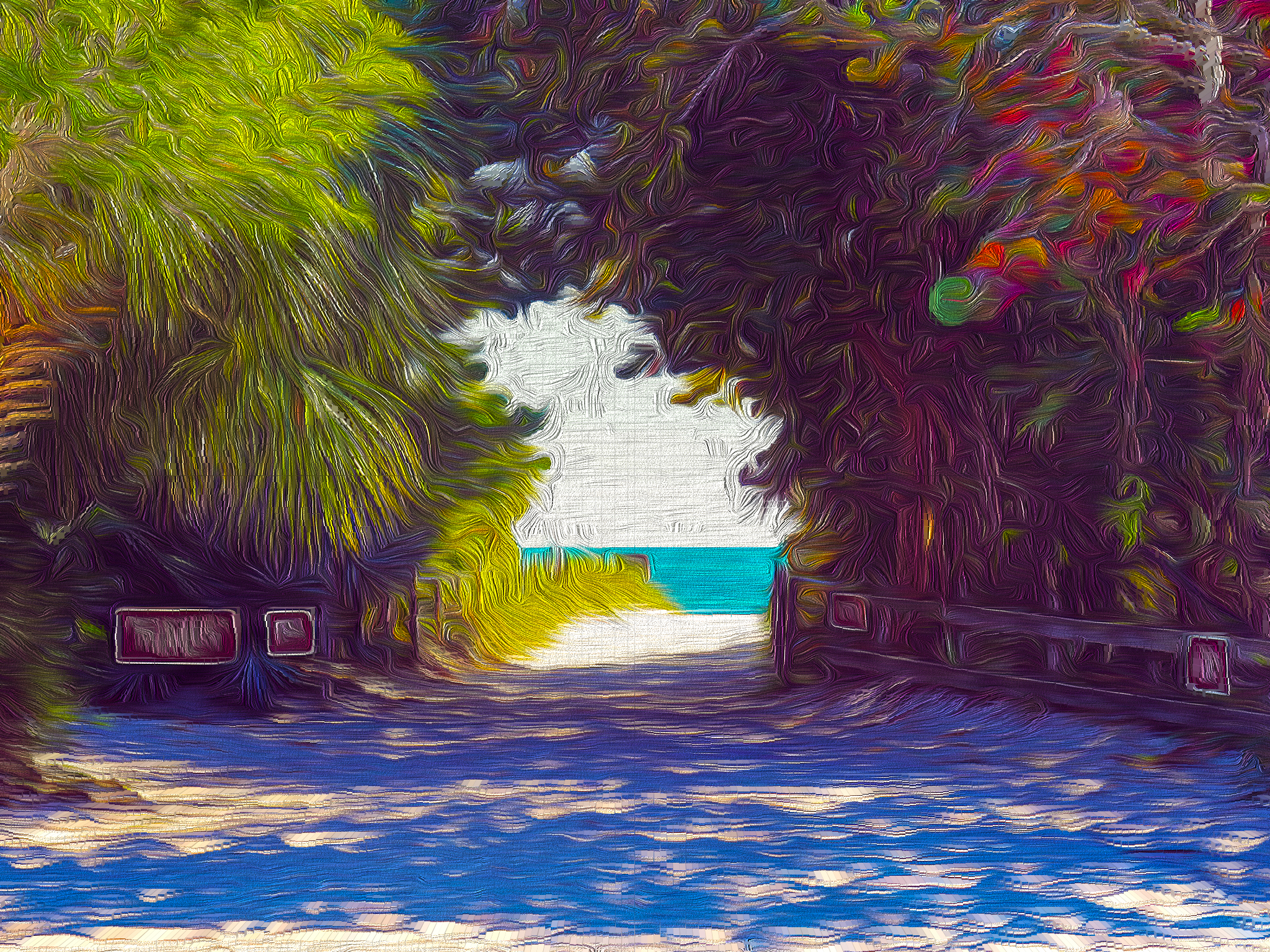
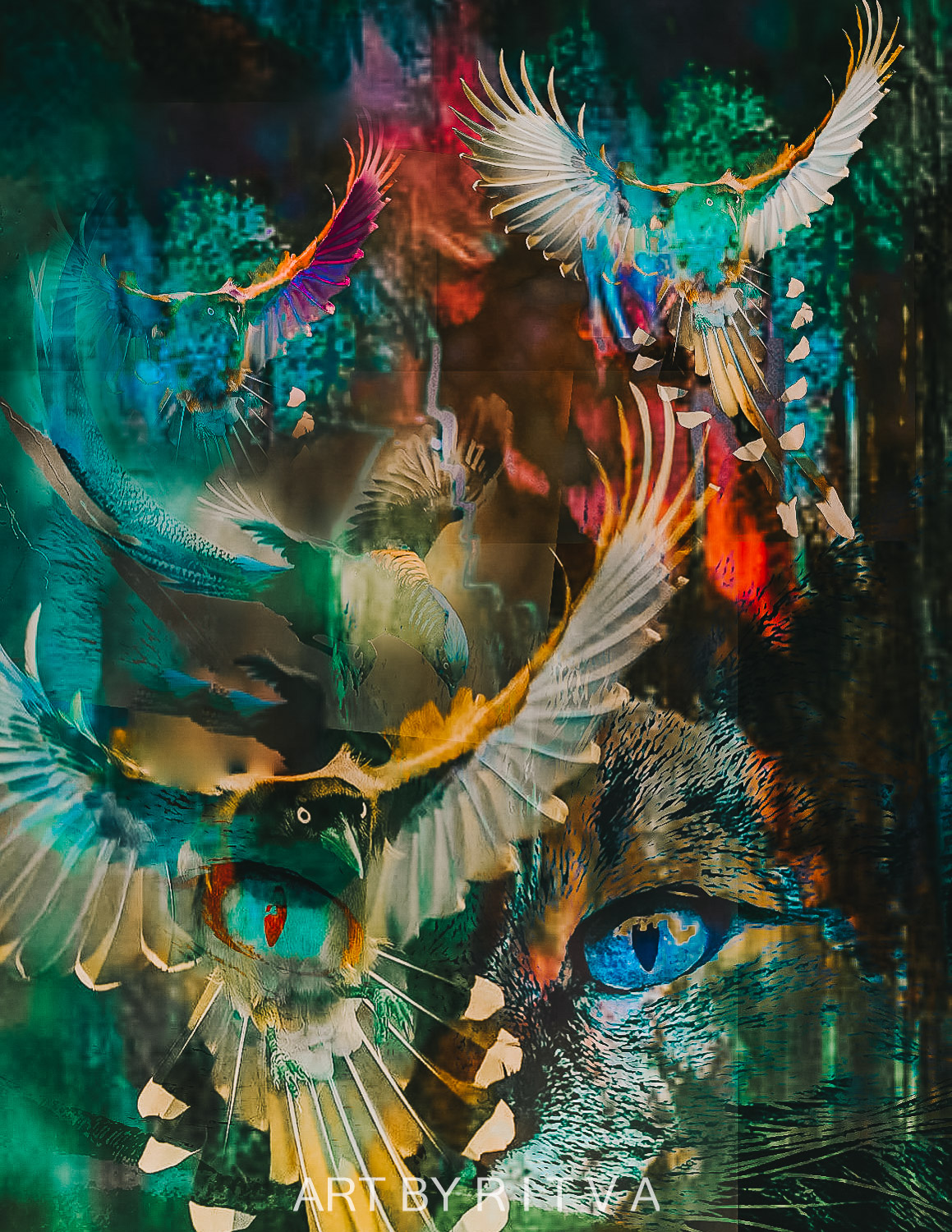
As an Contemporary digital artist, which I like to label myself (not to be too modest) I can use editing tools to create art, but I do not want a AI to create art on a prompt. These are from my own images. Art is about individual creativity to me.
Thank you, Sofia, for last weeks floral enchantments, the floral inspiration we got was amazing.
The challenge host next week will be Donna, be sure to visit her inspirational site and see what she is up to! If you’d like to participate in the challenge responses each week but aren’t sure how to get started, check here.




















 Ritva Sillanmäki Photography