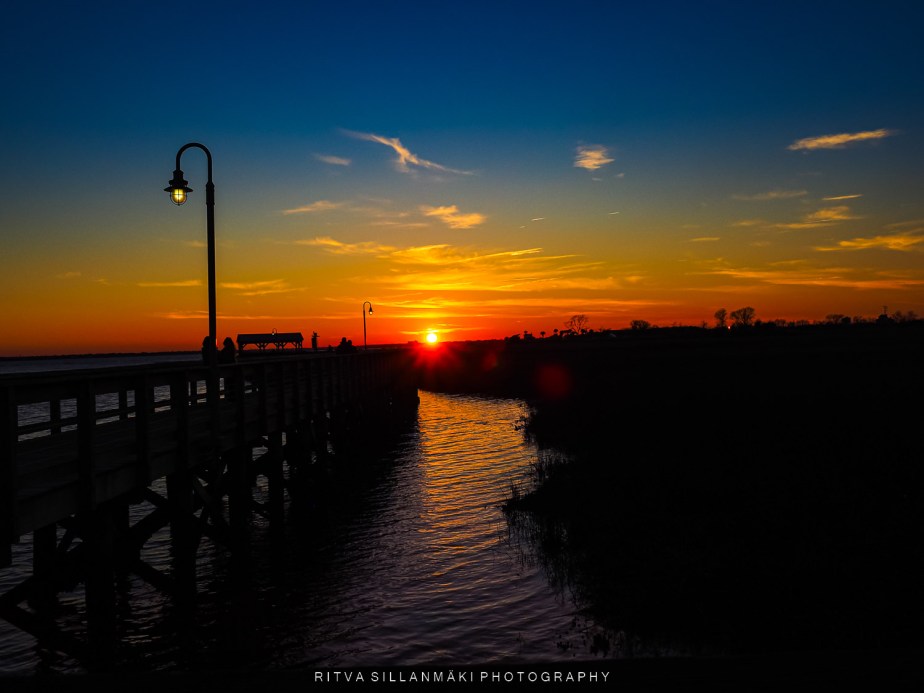
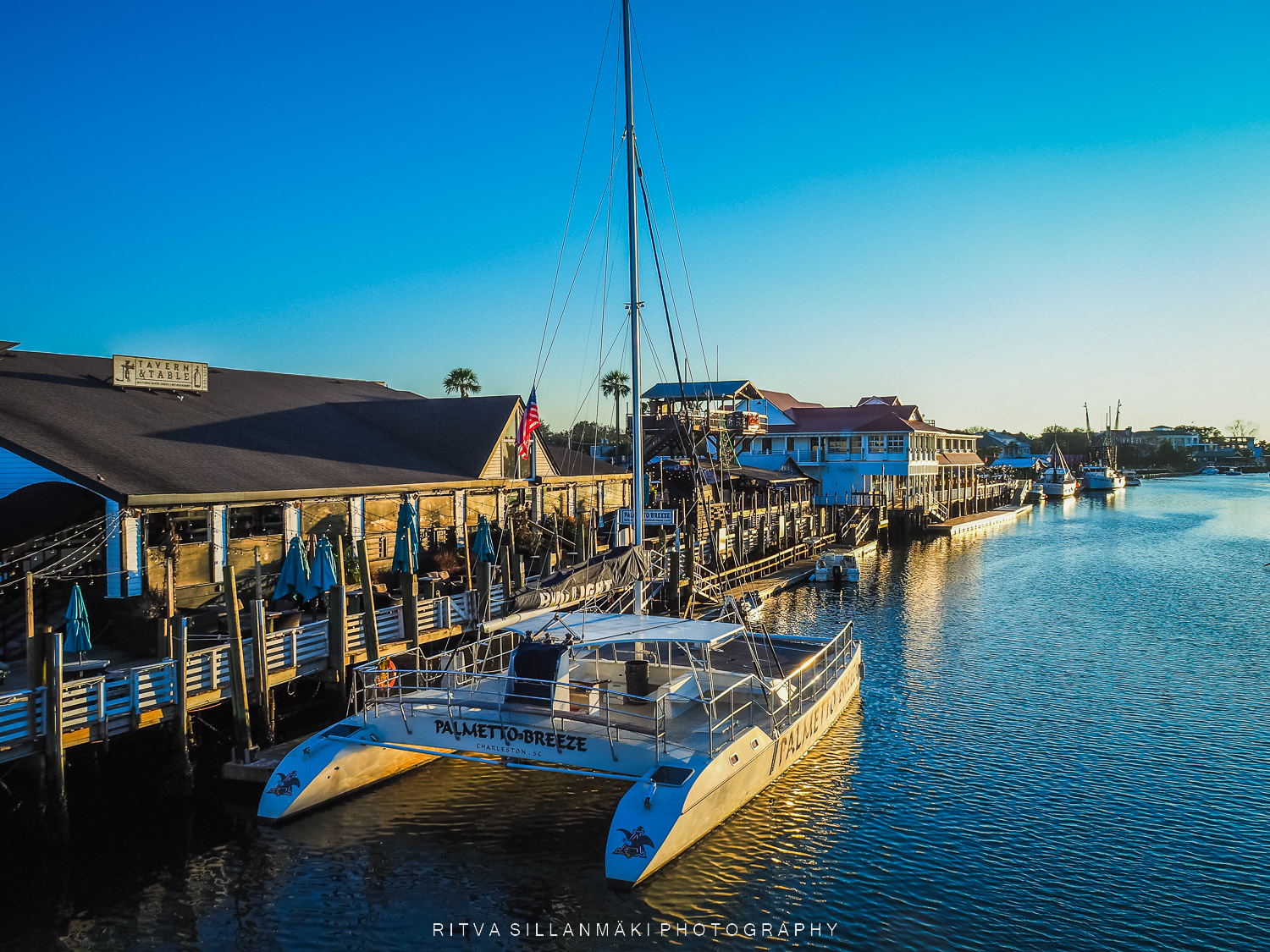
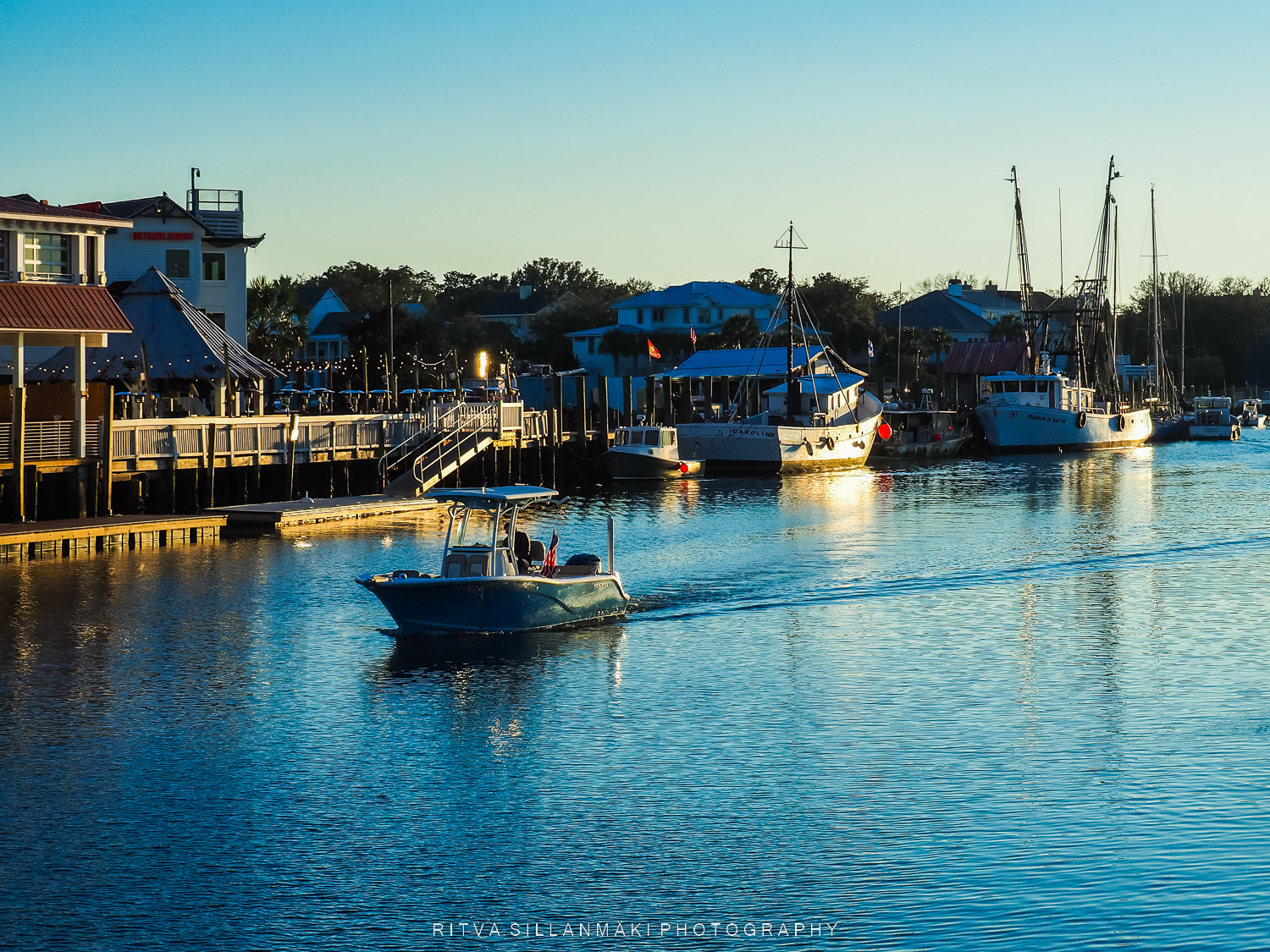
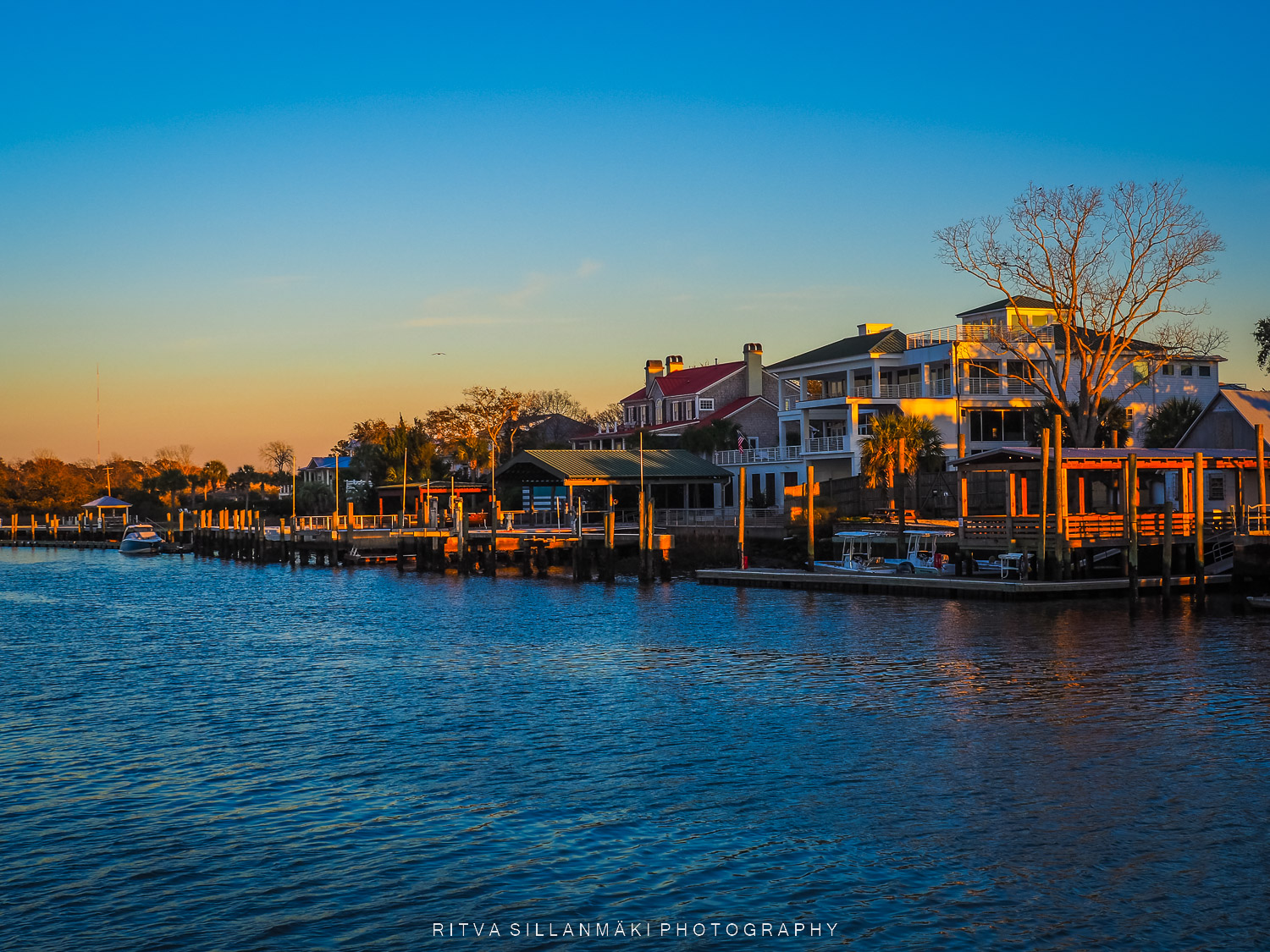
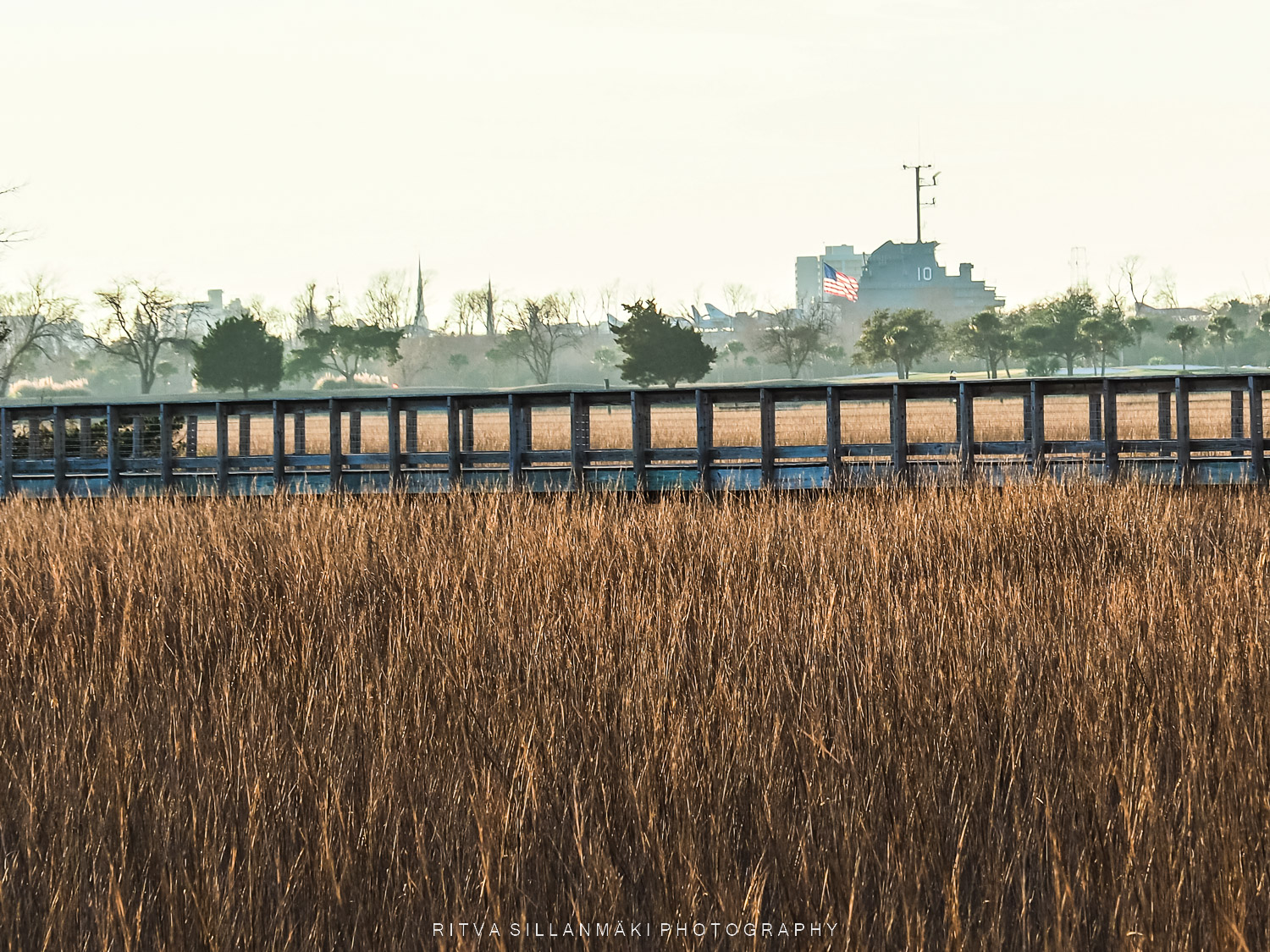
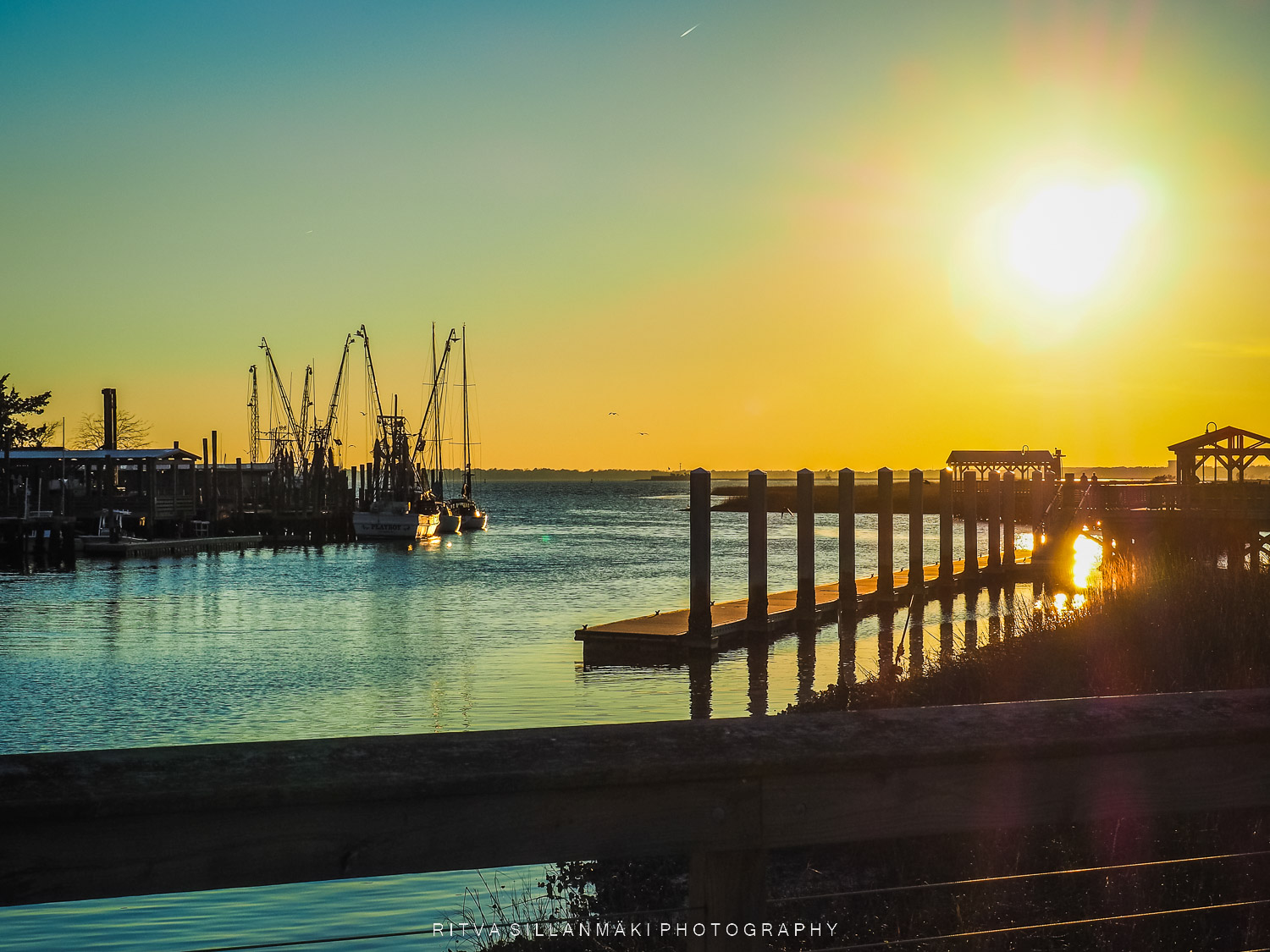
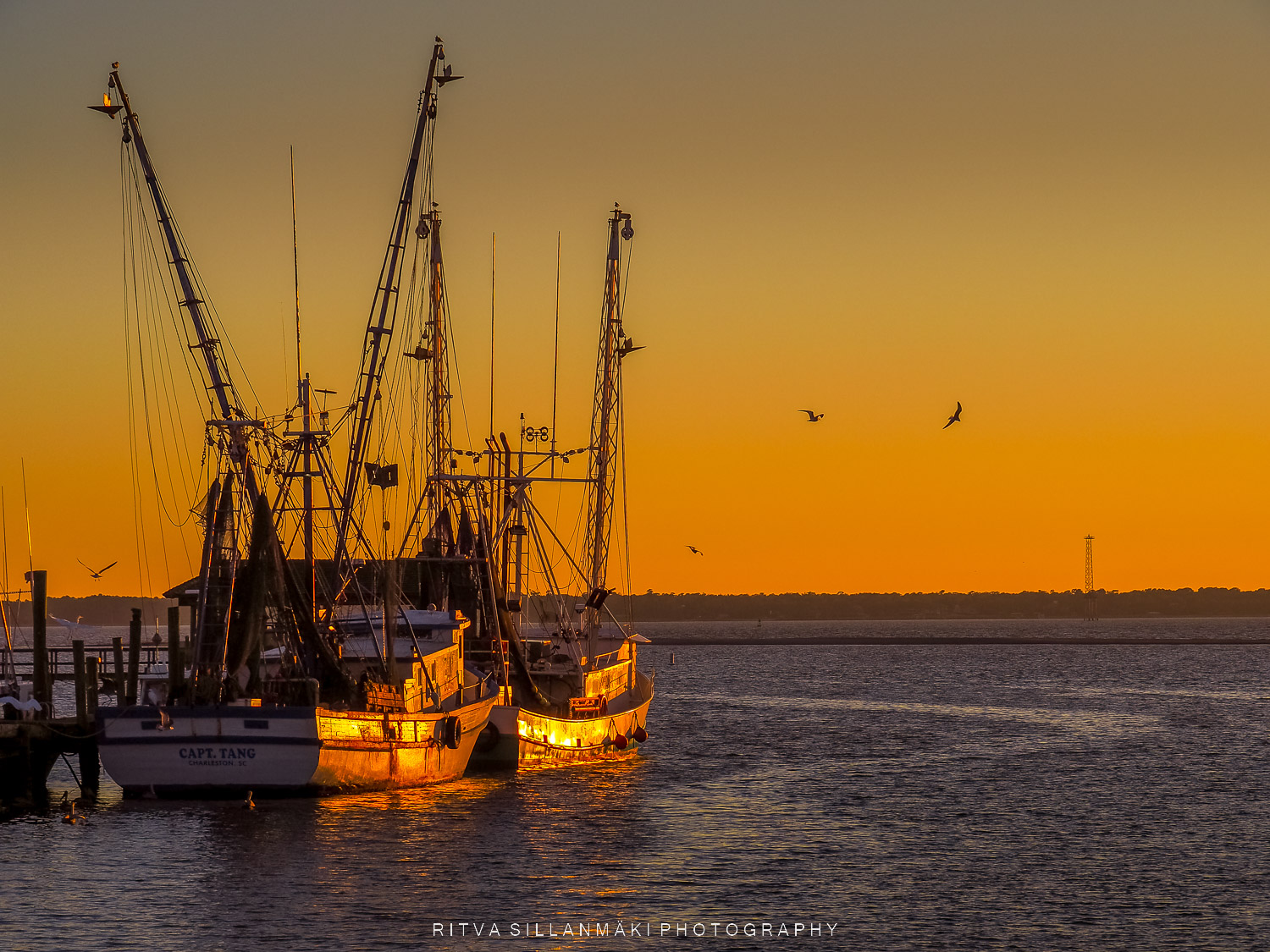
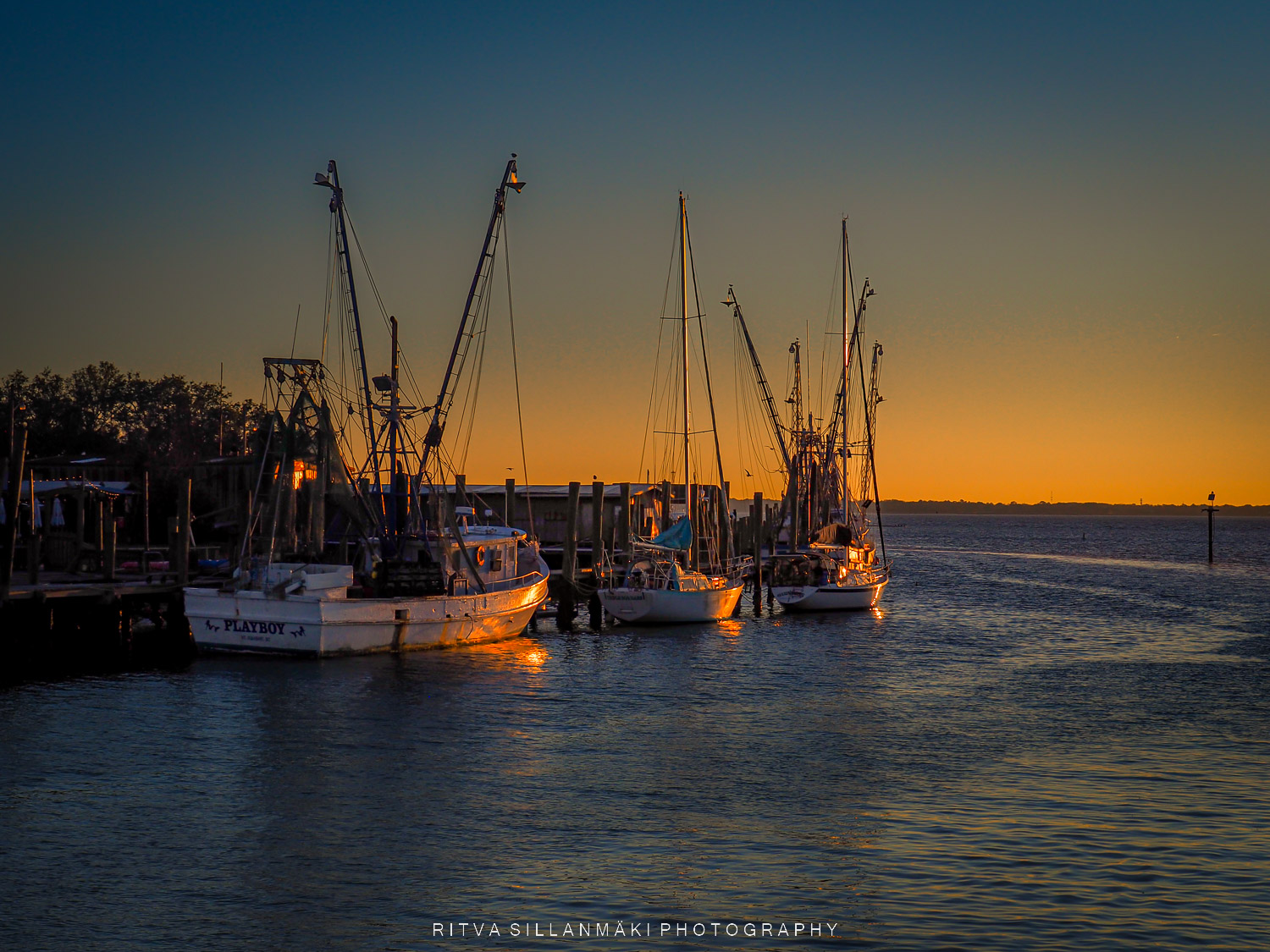
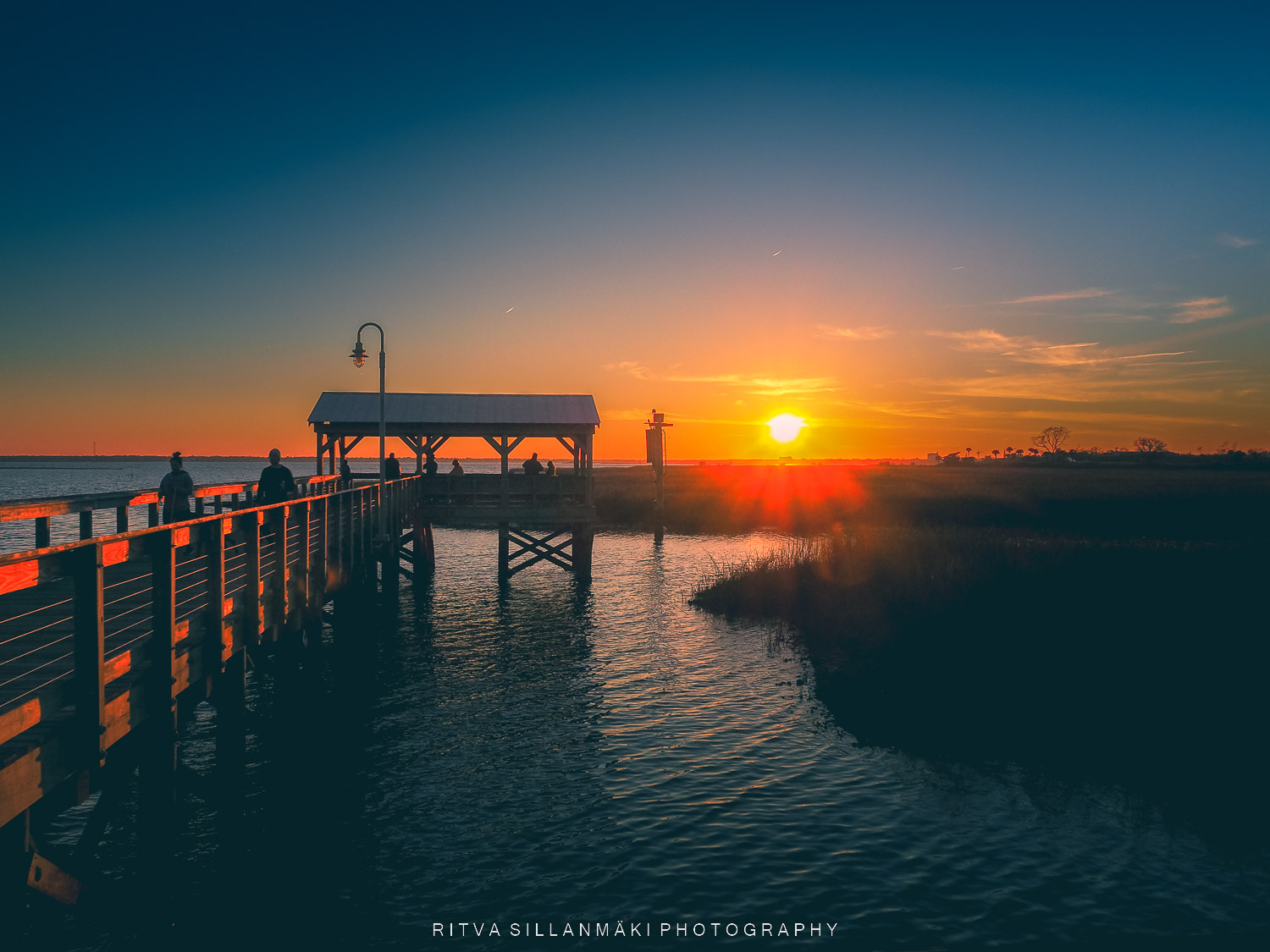
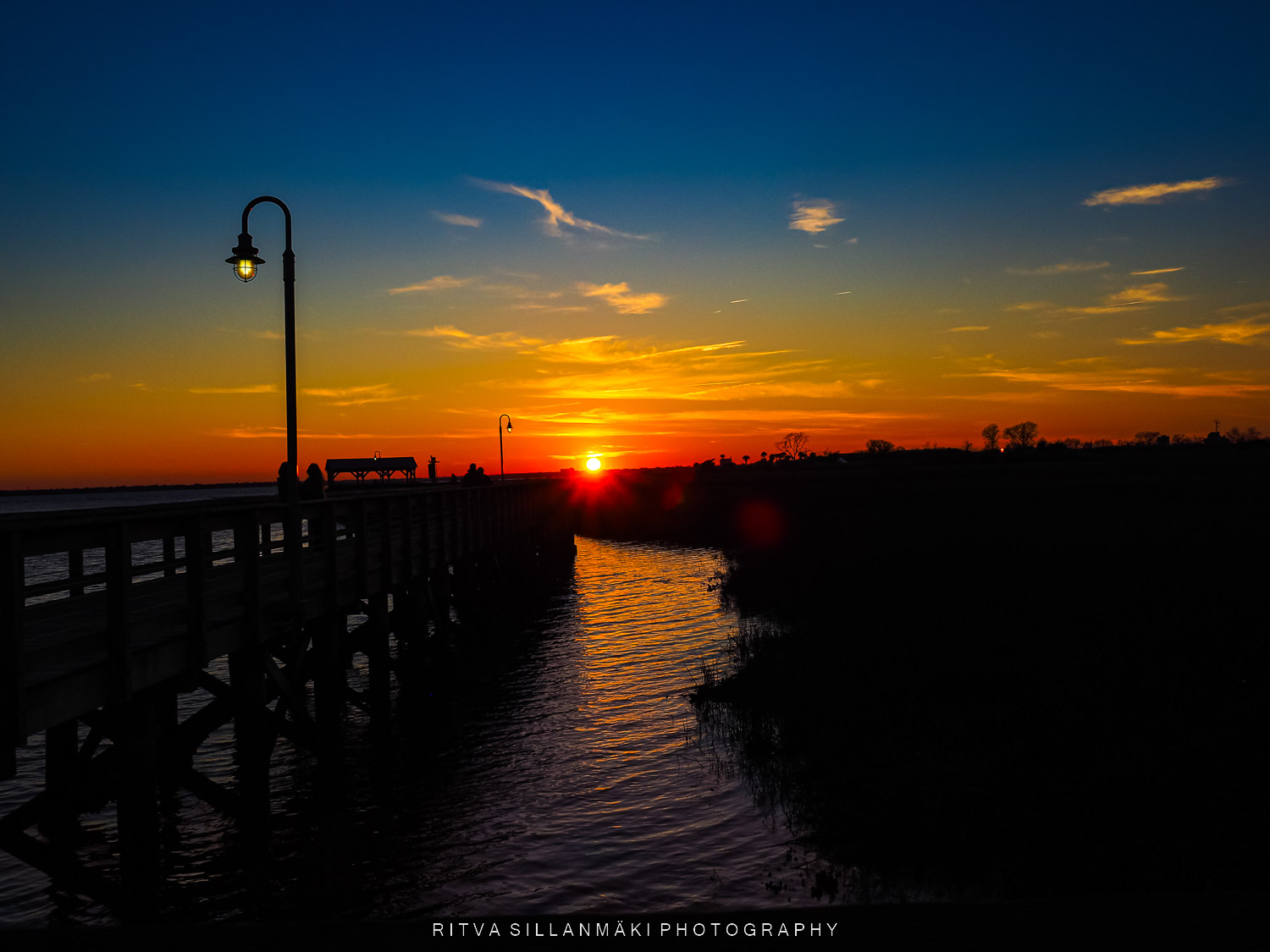
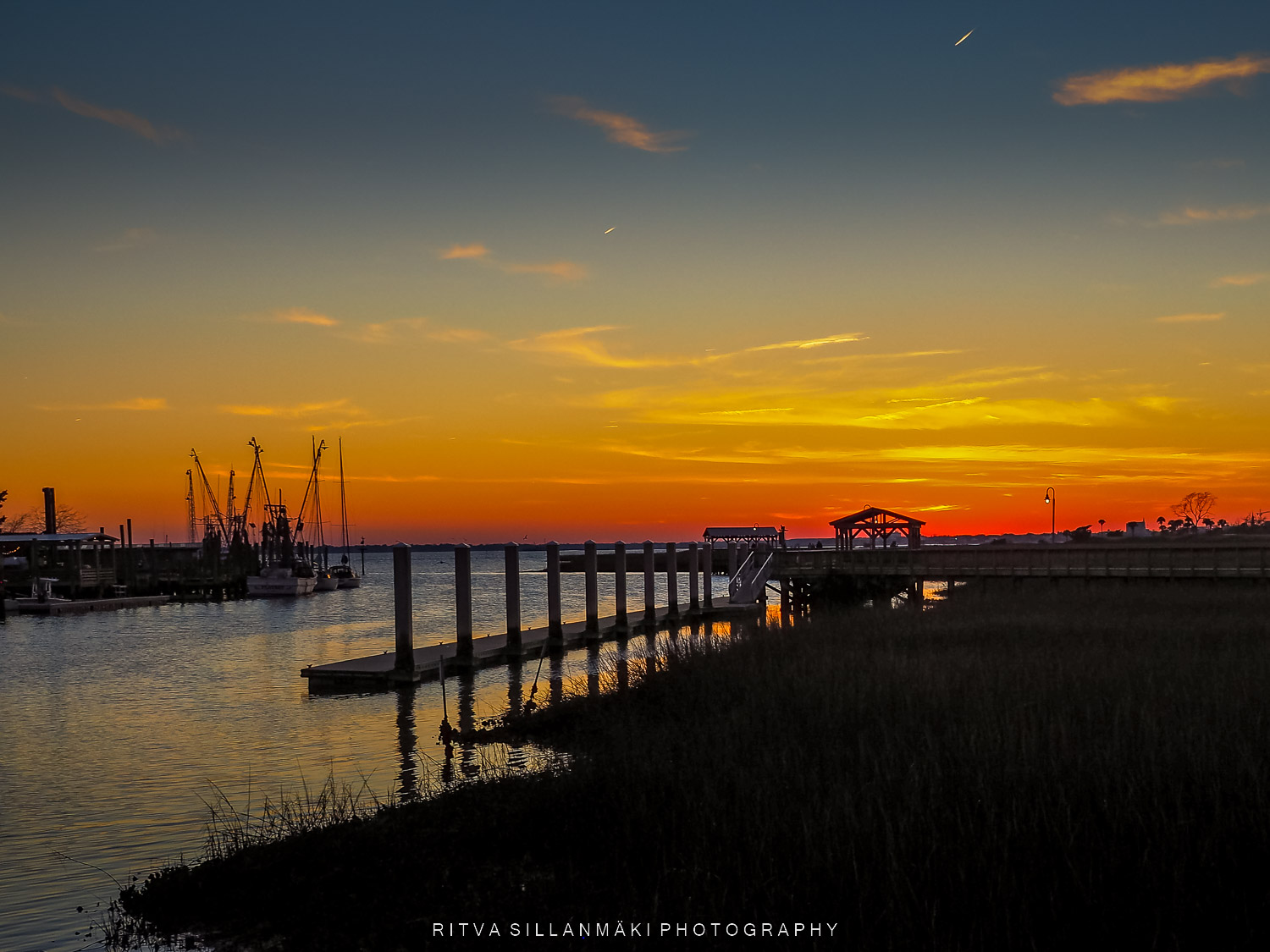
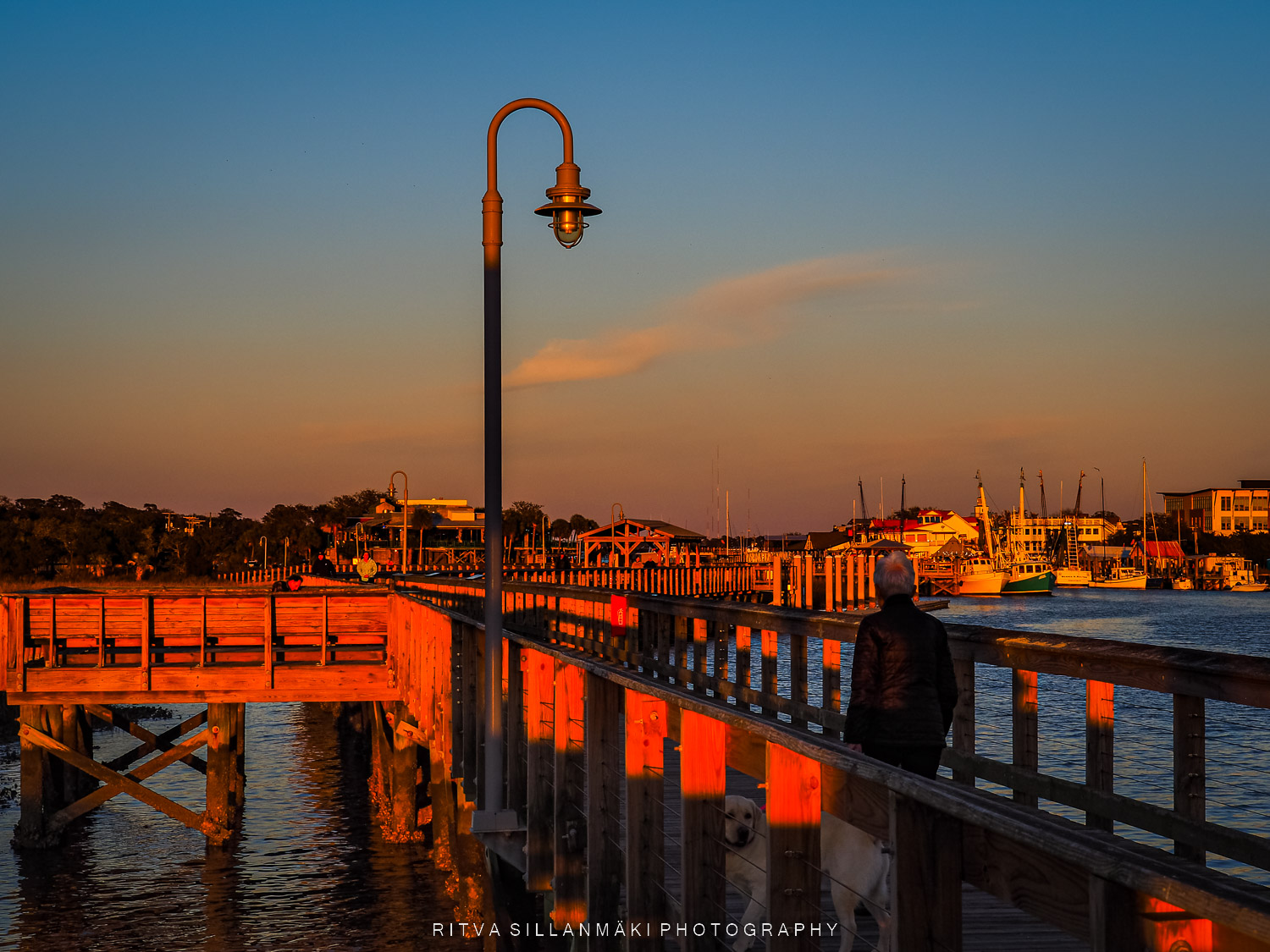
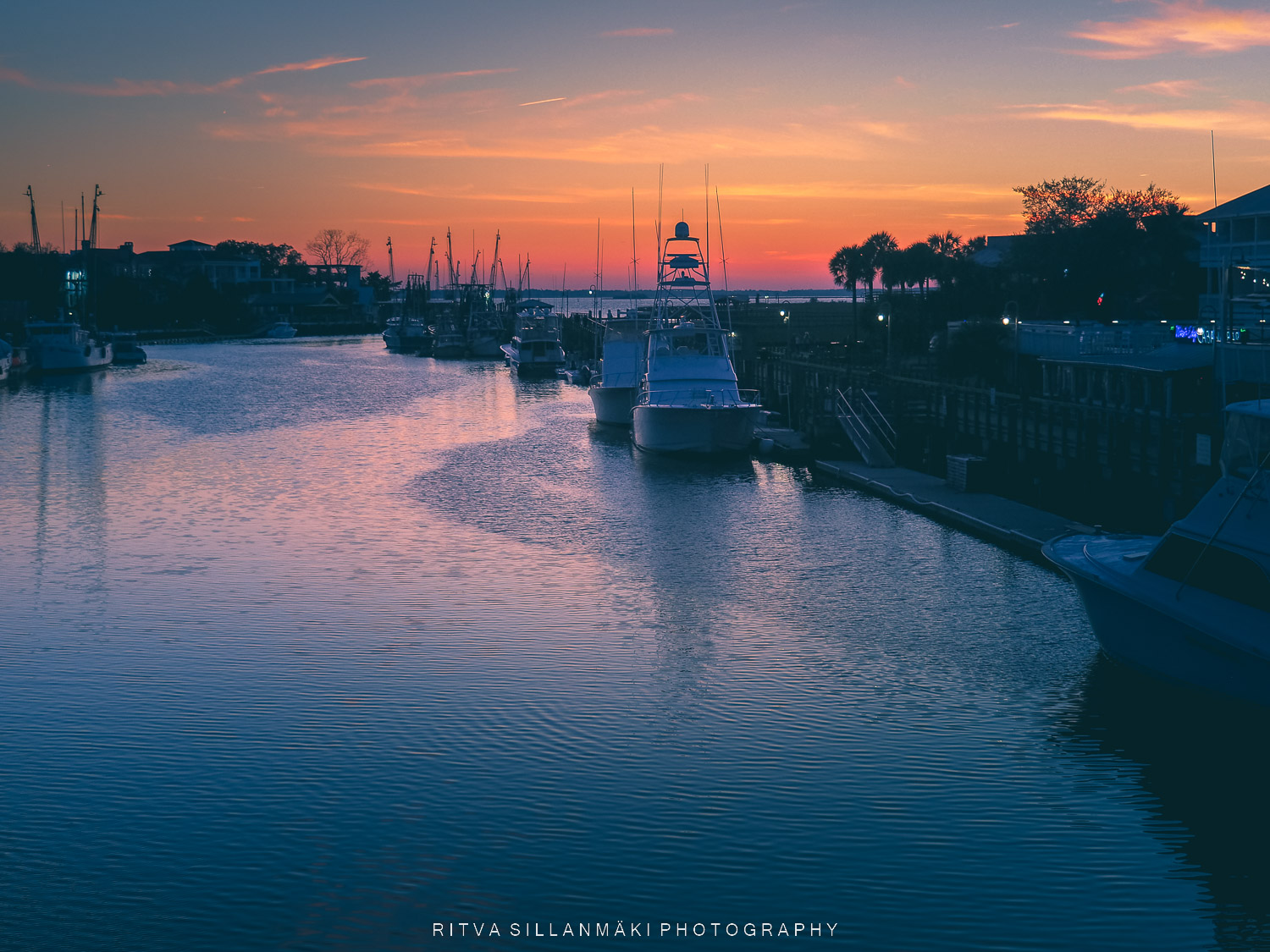
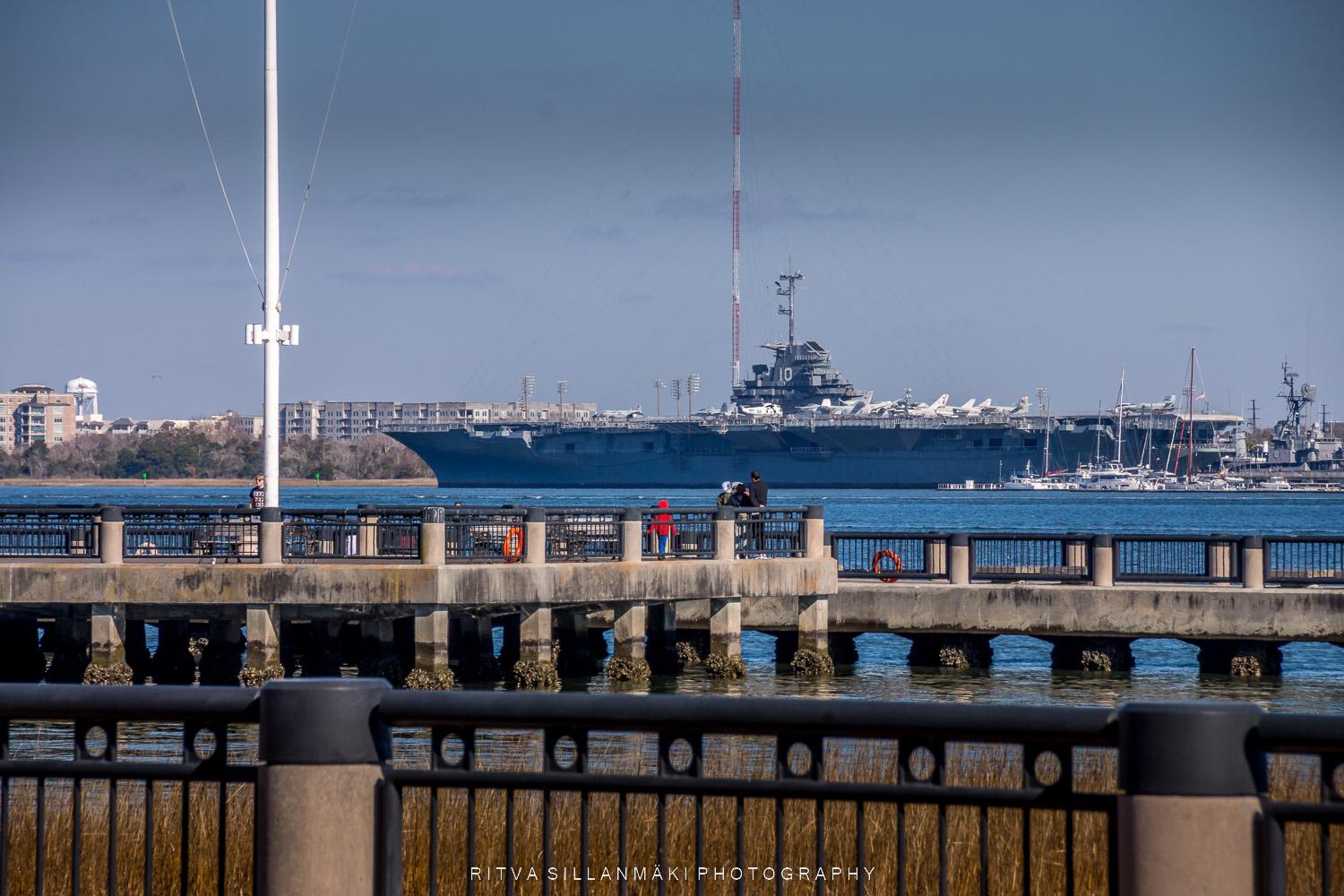
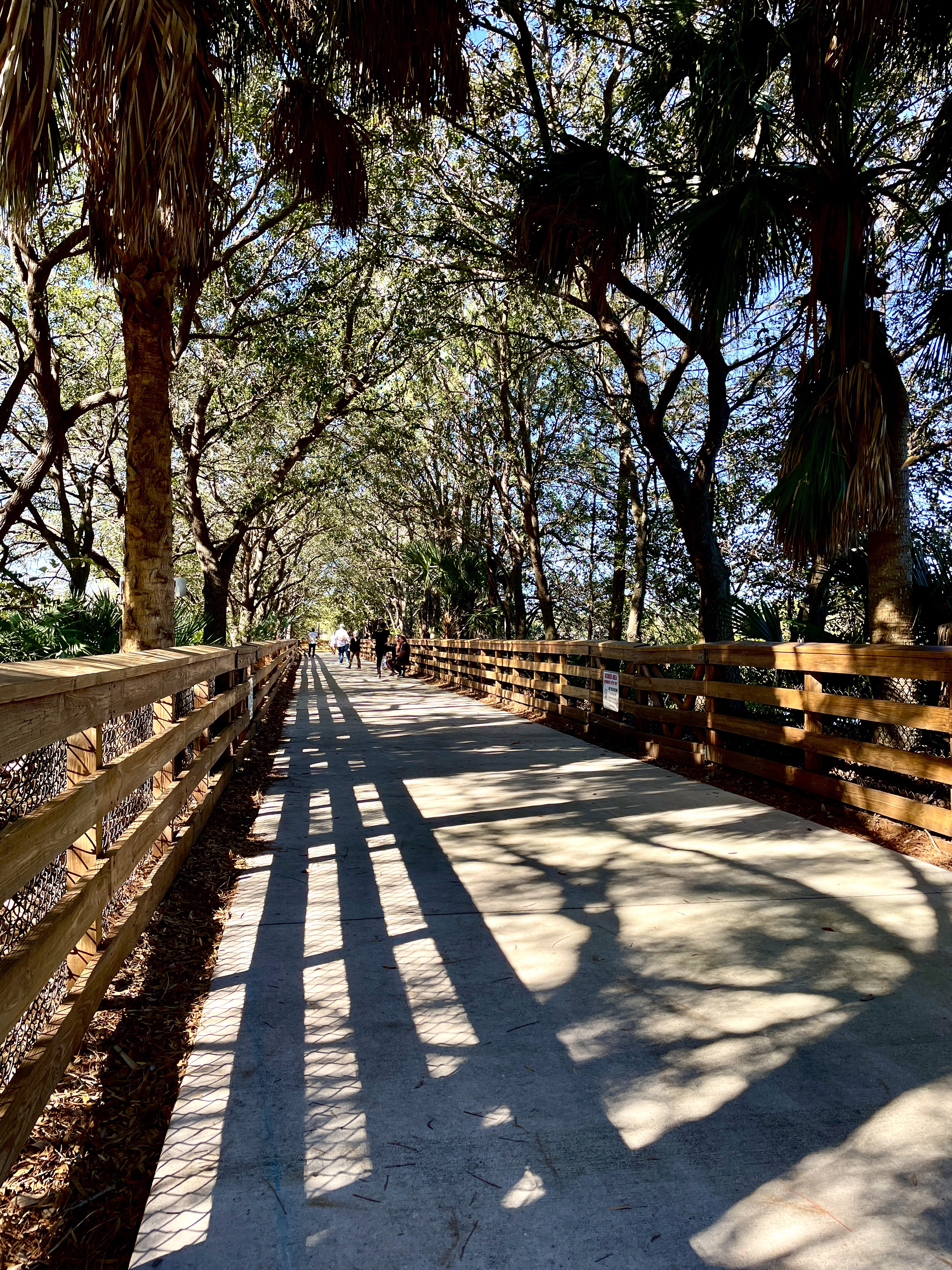
The lovely Shem Rock in town of Mt. Pleasant. Had a late lunch at Tavern & Table by the creek and prepared ourselves for the sunset. We walked along the Shem Creek Boardwalk, the boardwalk is a total of 2,200 feet long, it offers panoramic views of the marsh and Charleston Harbor to catch the glorious sunset.
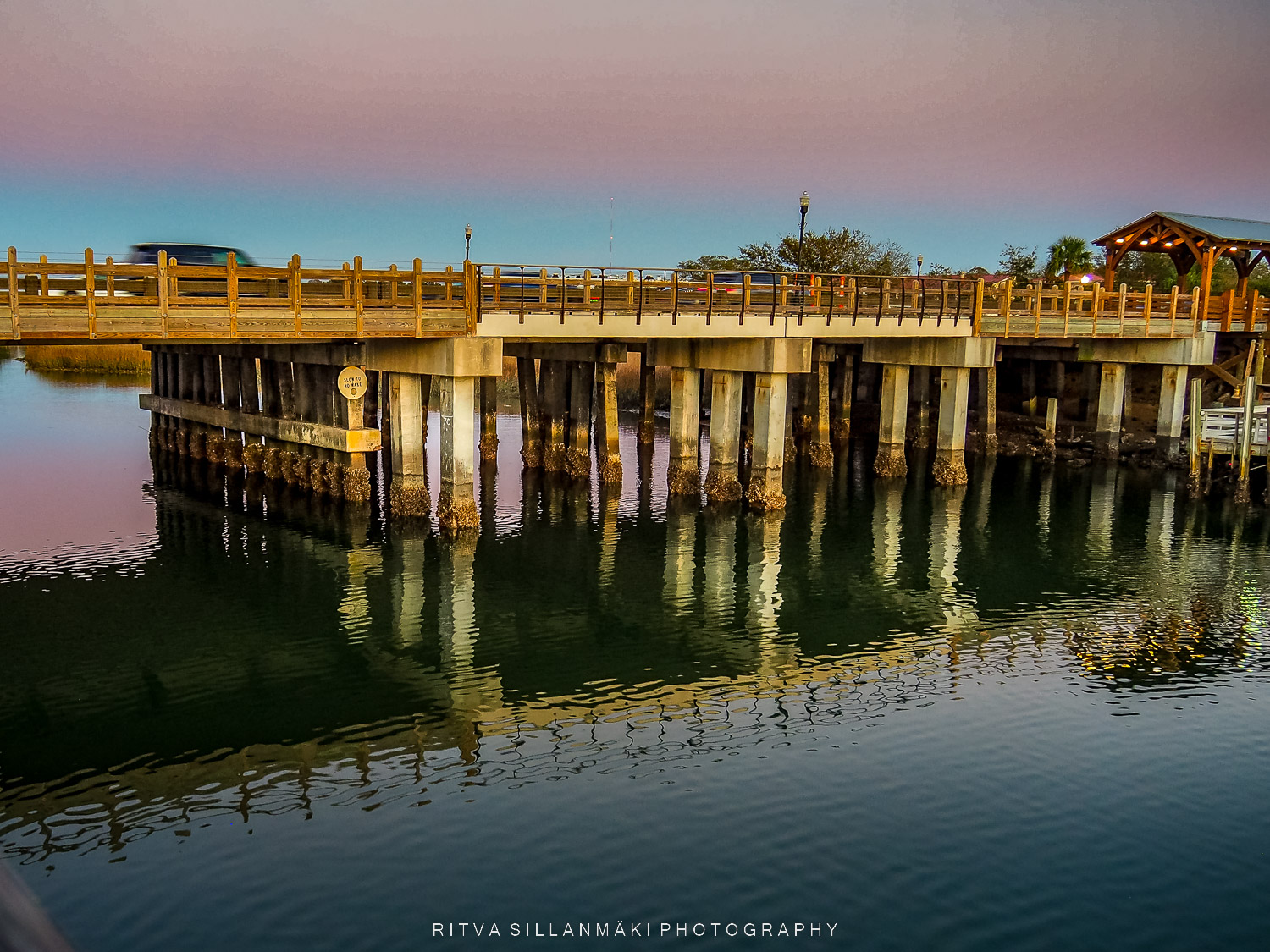
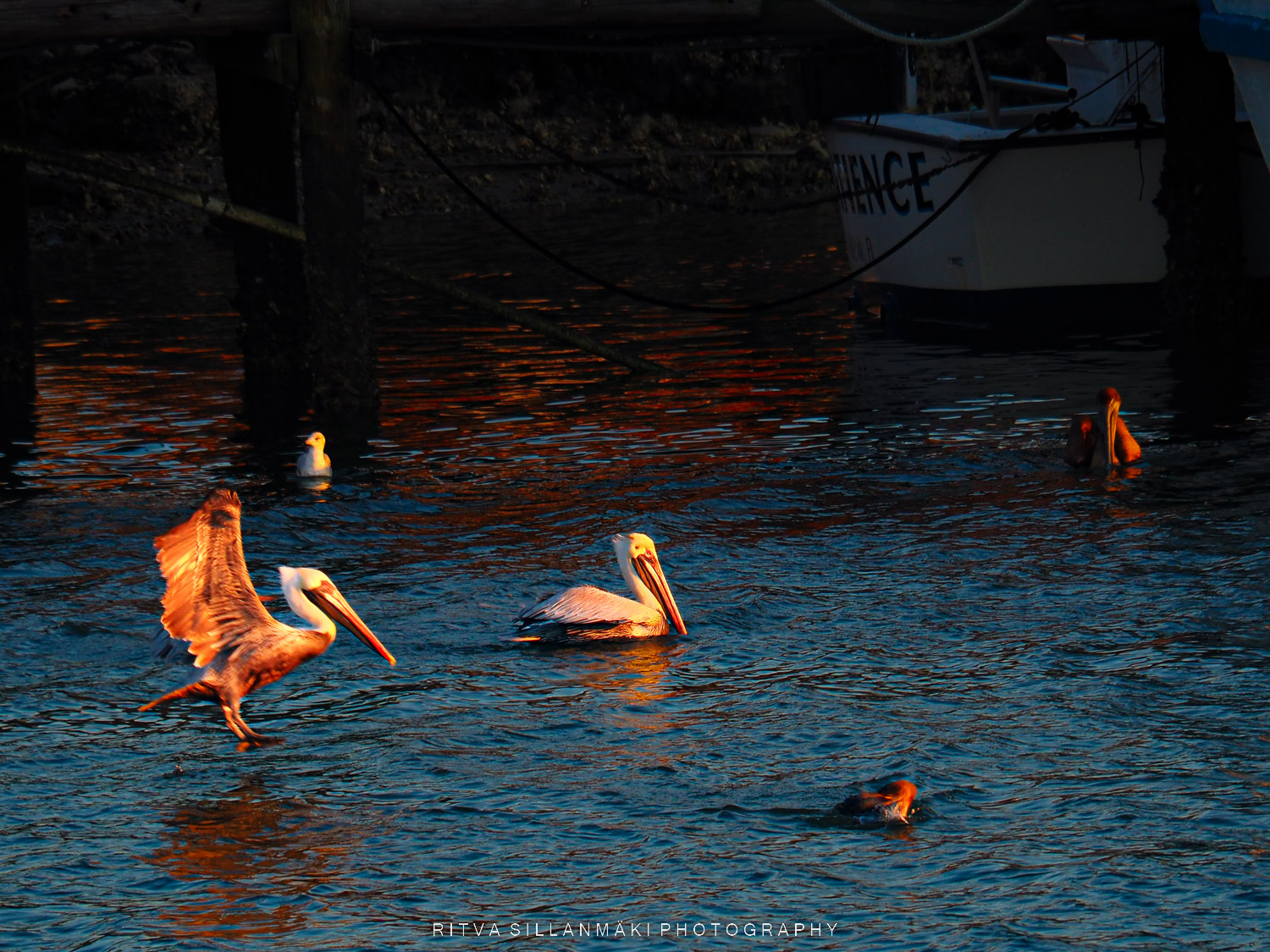
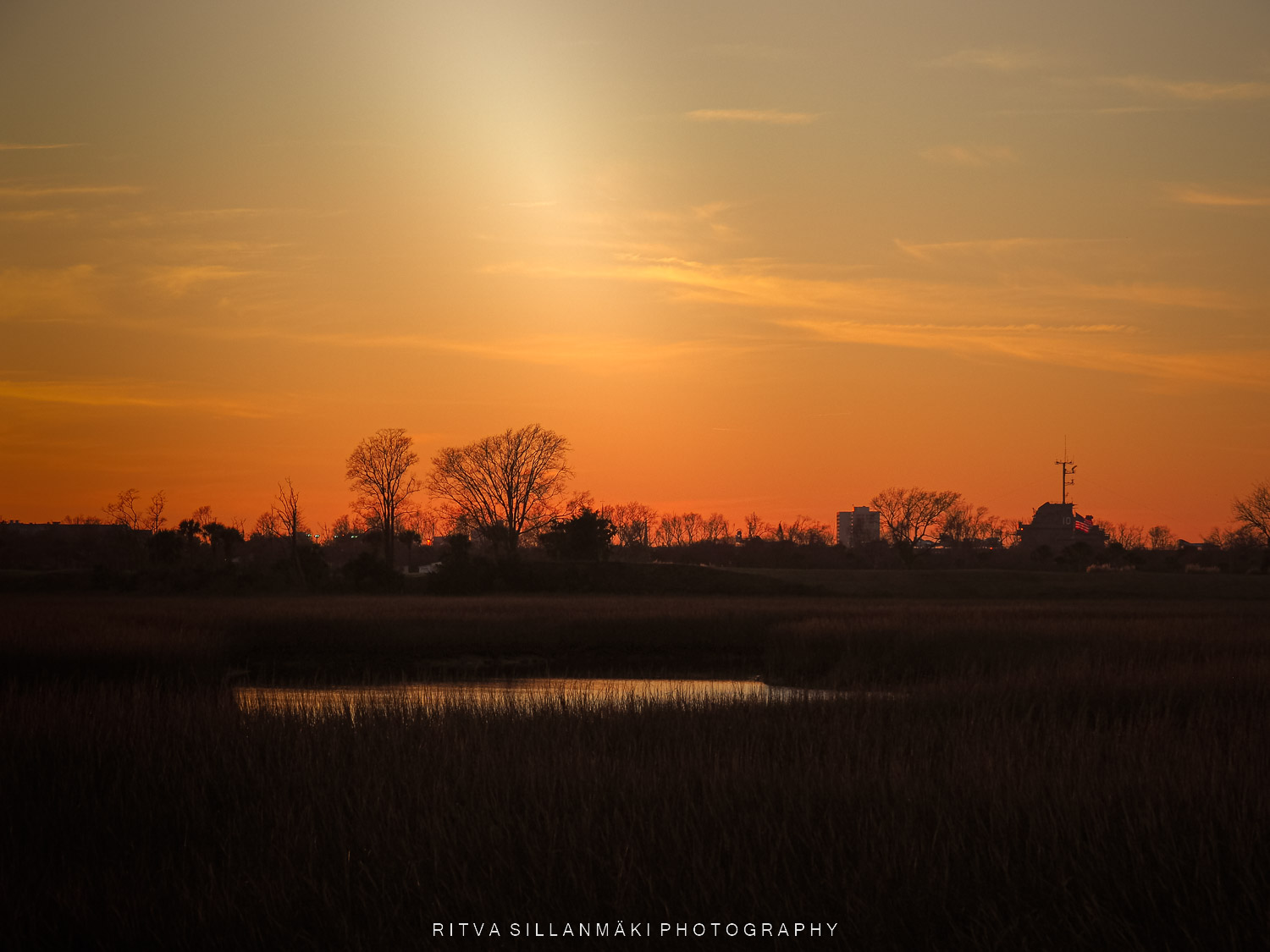
The sunset was lovely changing colors depending were you looked, from warm tones to cooler ones the later it got from the sunset.
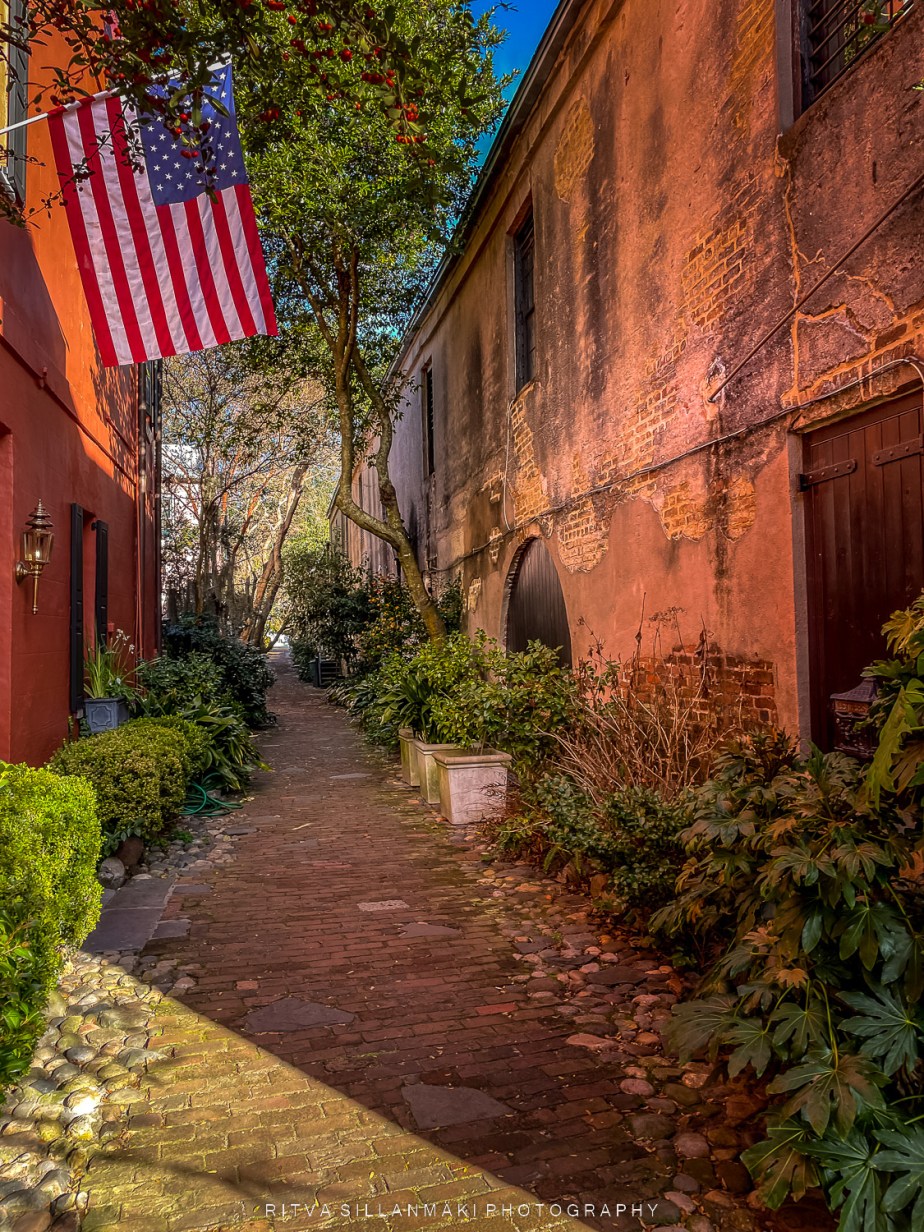
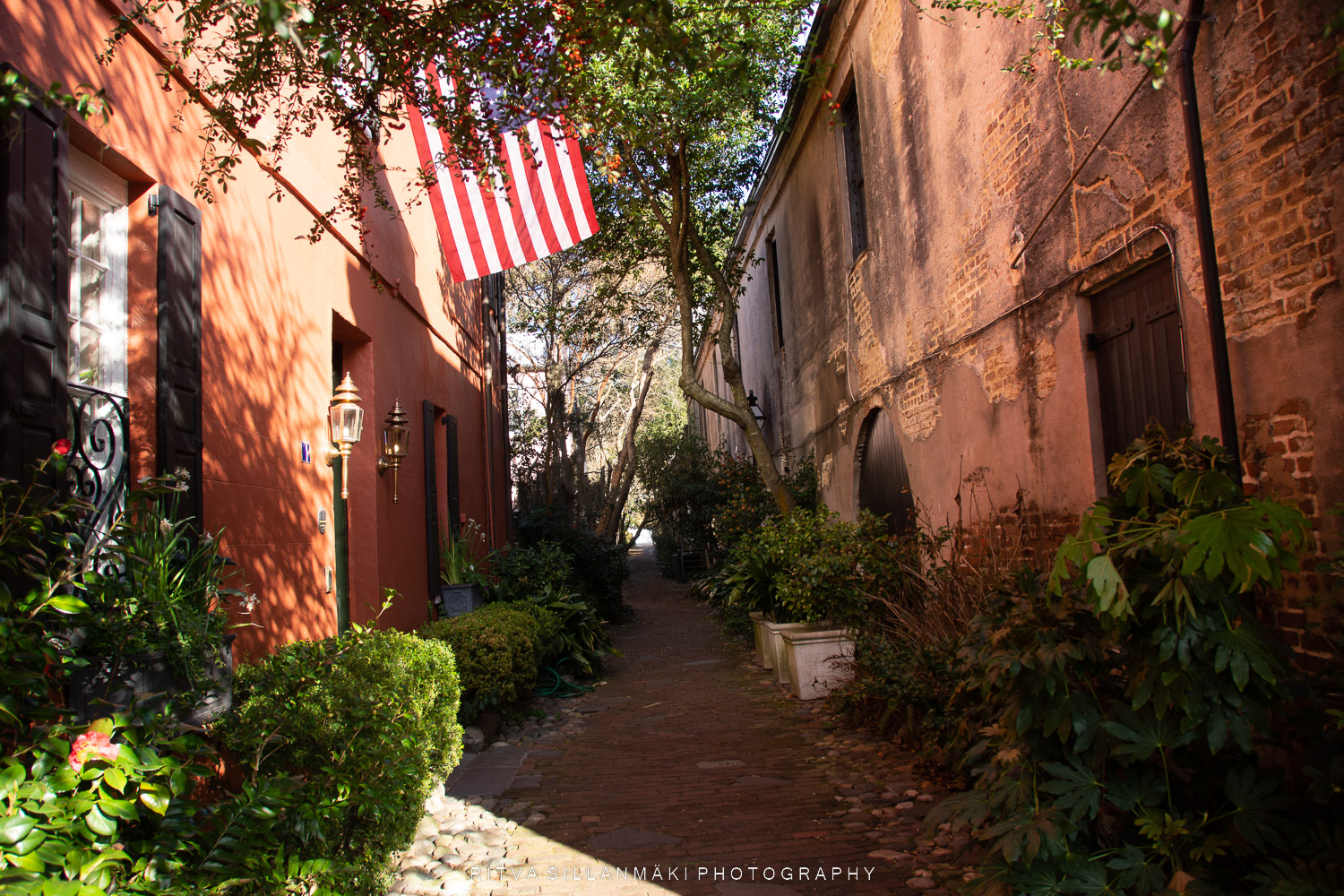
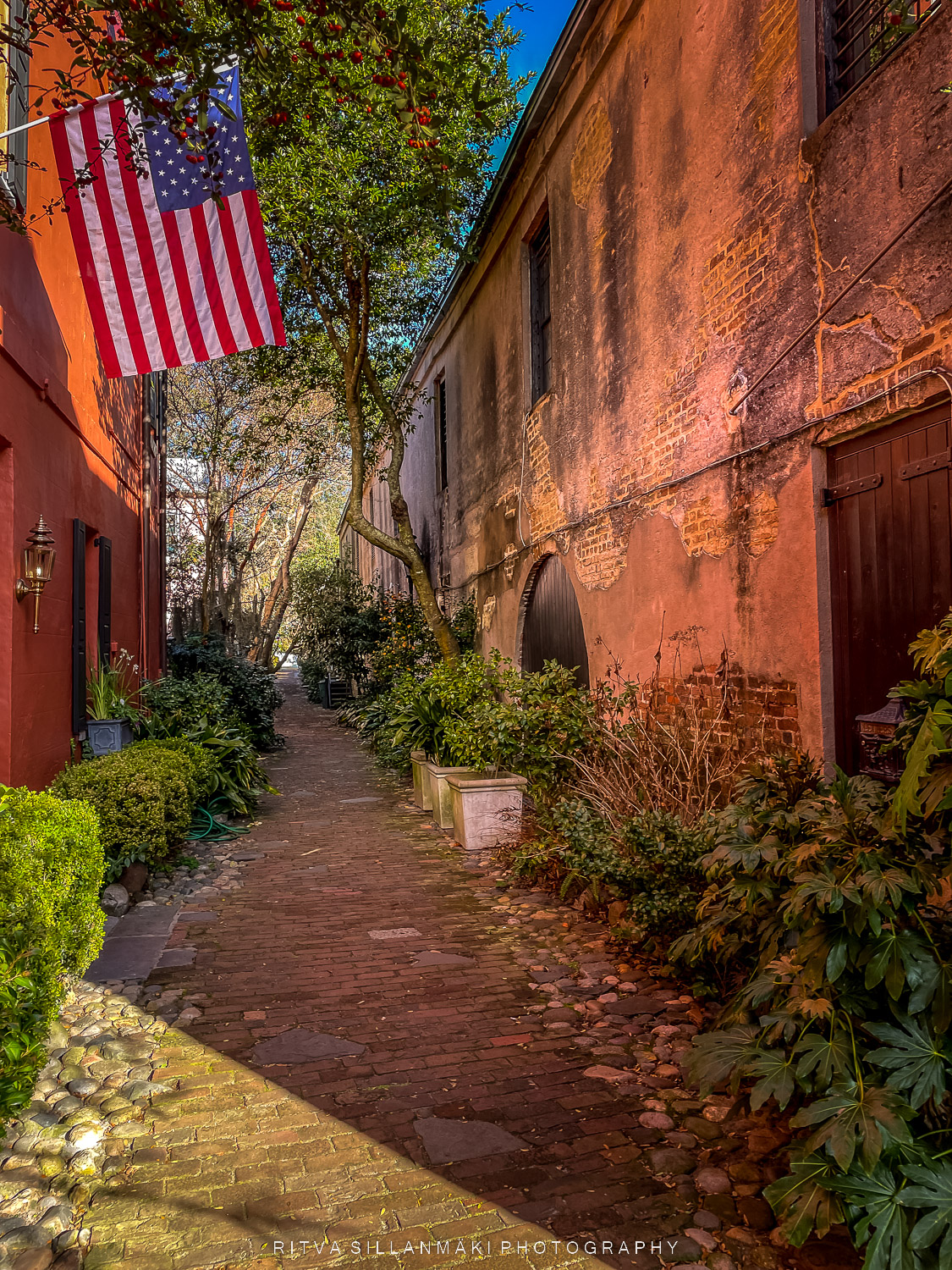
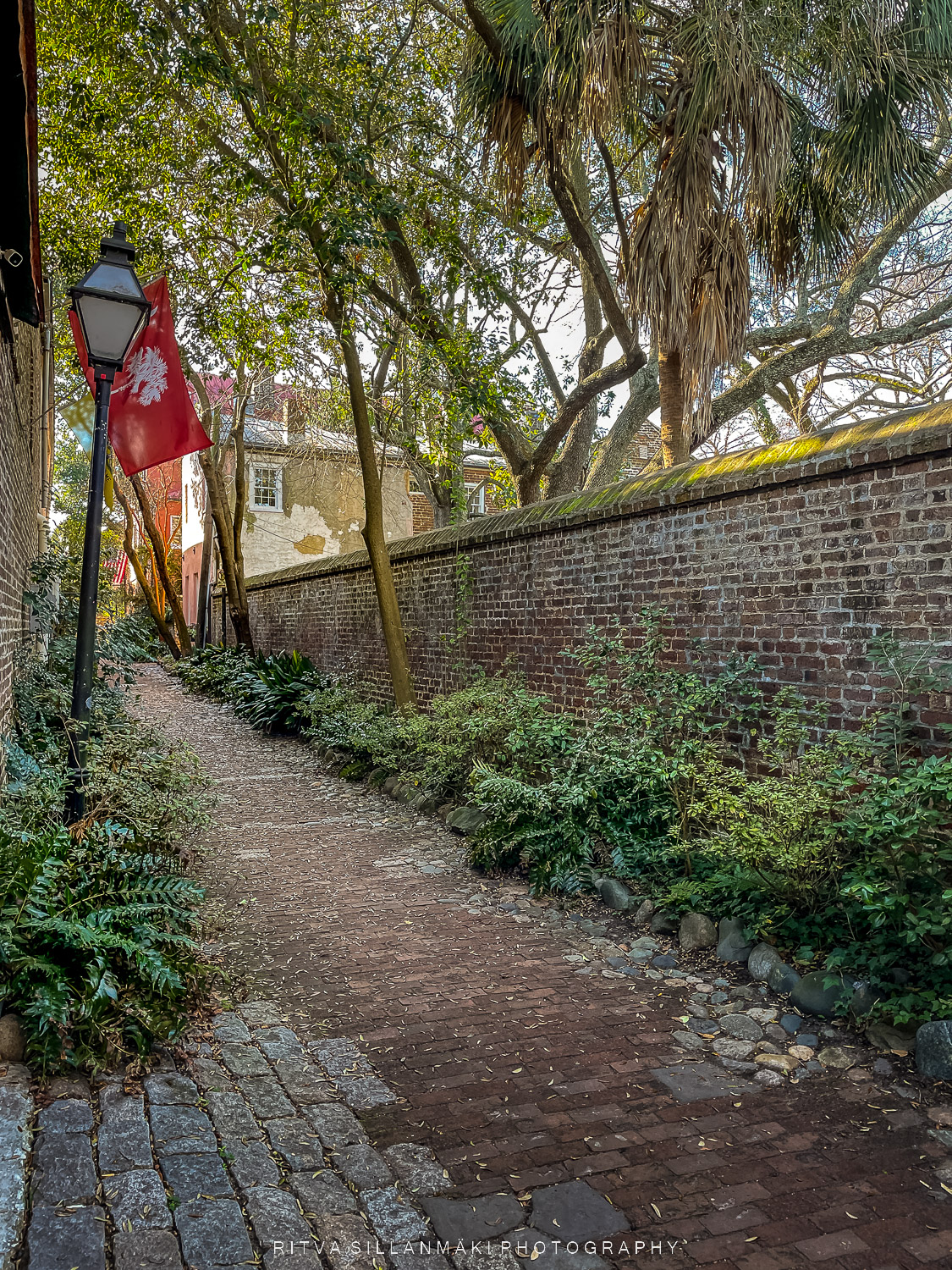
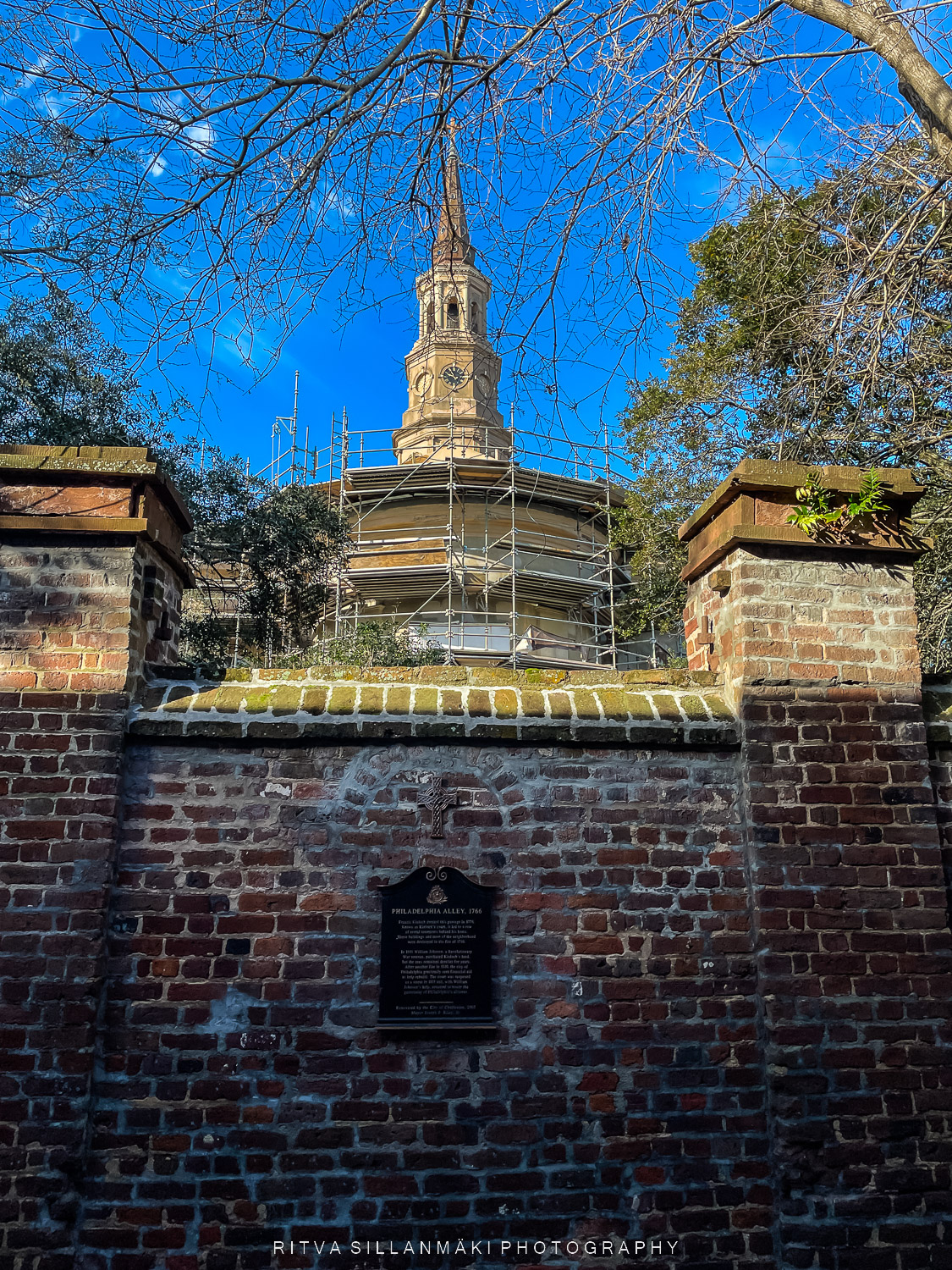
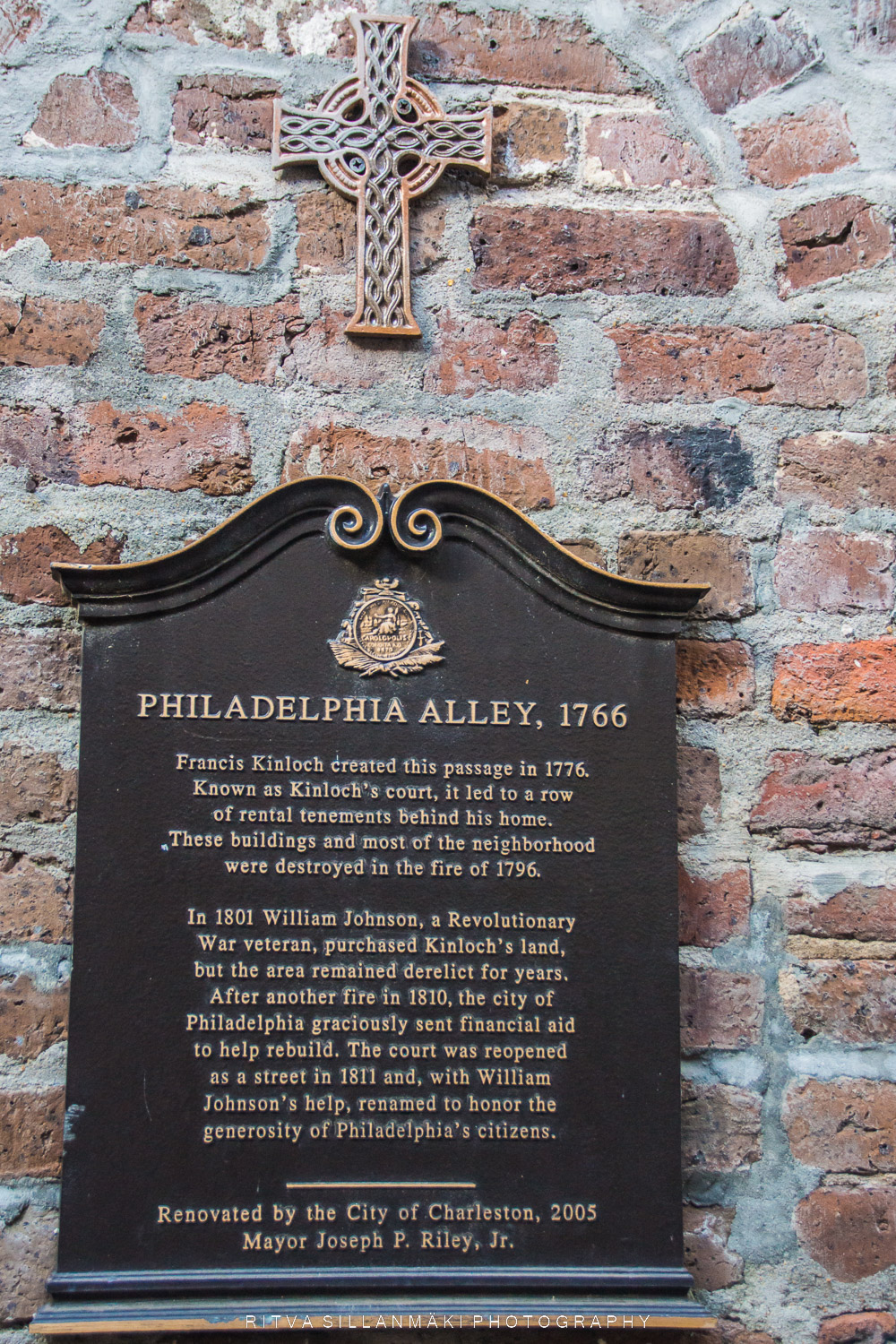
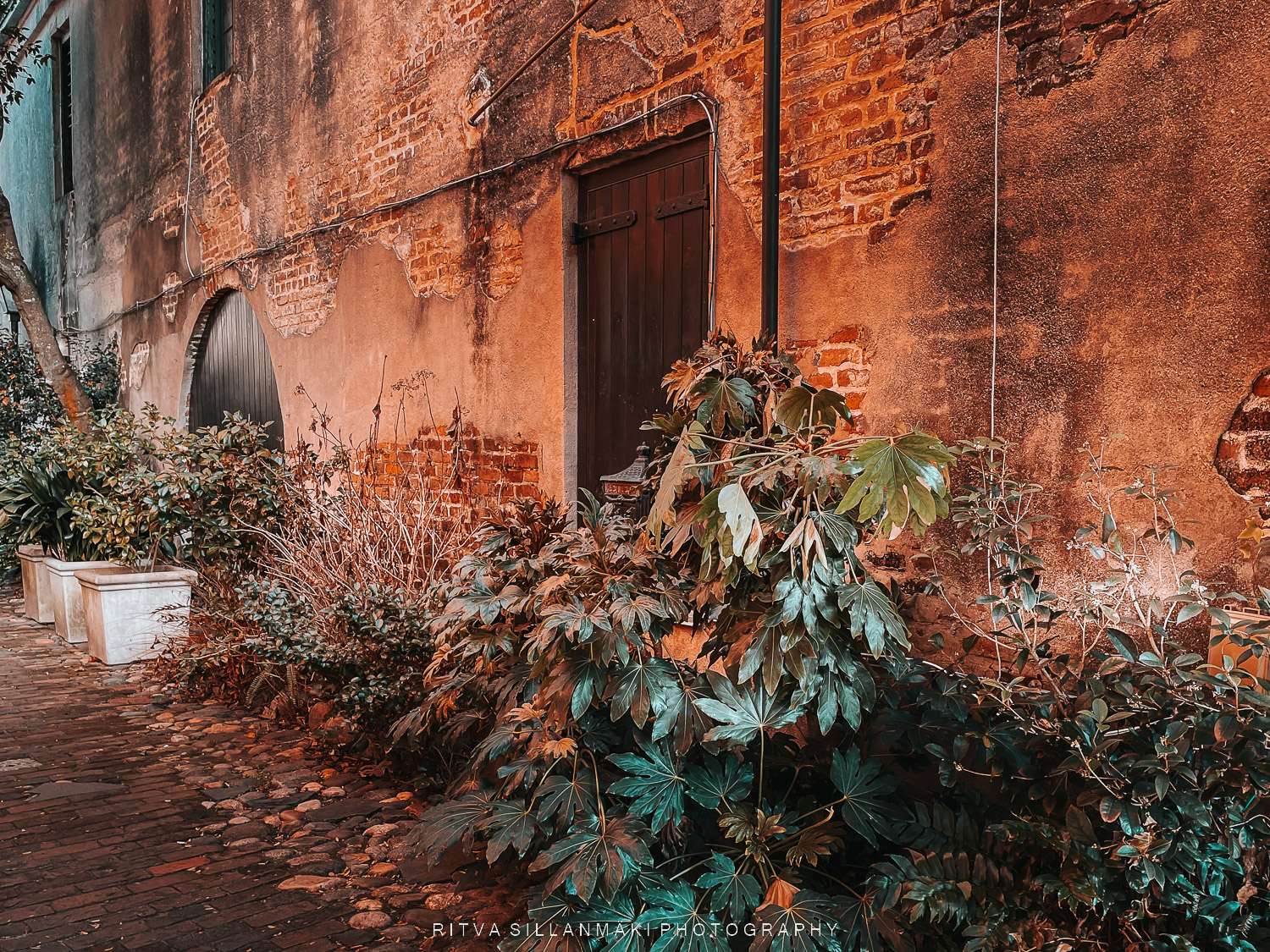
Because we only had one full day in Charleston, we had to get busy in the morning. Having booked a sightseeing tour the previous night, we had couple hours in the morning to cruise the city. First stop was Philadelphia Alley in the French Quarter, one of the beautiful historic alleys in Charleston. According to legend the alley was a popular place for duels, and it was once known as Duelers Alley. Legend has it that that at least one dueling victim still haunts the alley. Unfortunately, we didn’t see any ghosts or anything paranormal. We saw a tranquil and beautiful alleyway with nice yards, cobblestone and old brick warehouses.
Our tour started at 11 am and what a wealth of information that was. I tried to jot down few notes of the most memorable things I heard but I must confess I missed most of it. Somehow, only interesting stories stick to my mind and not facts itself.
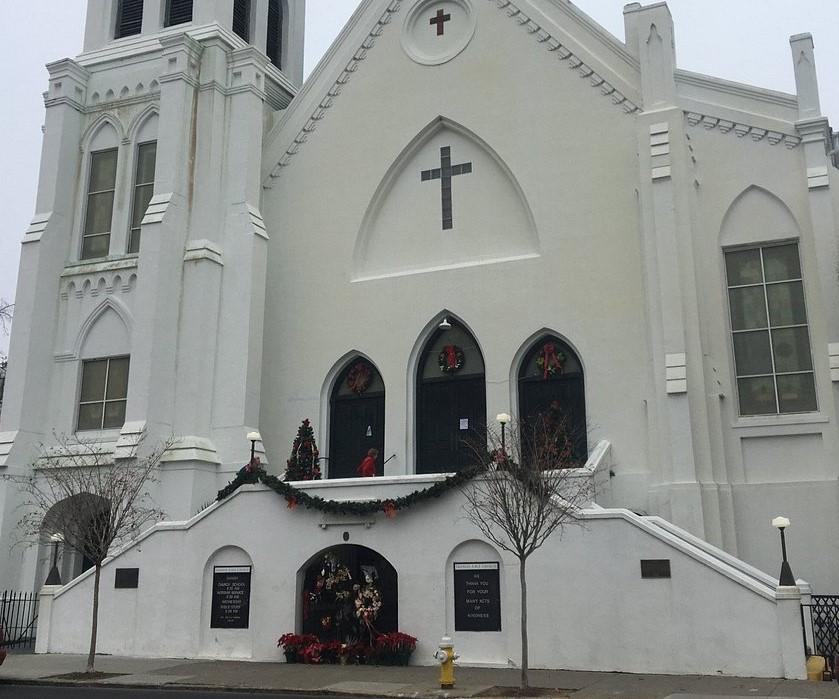
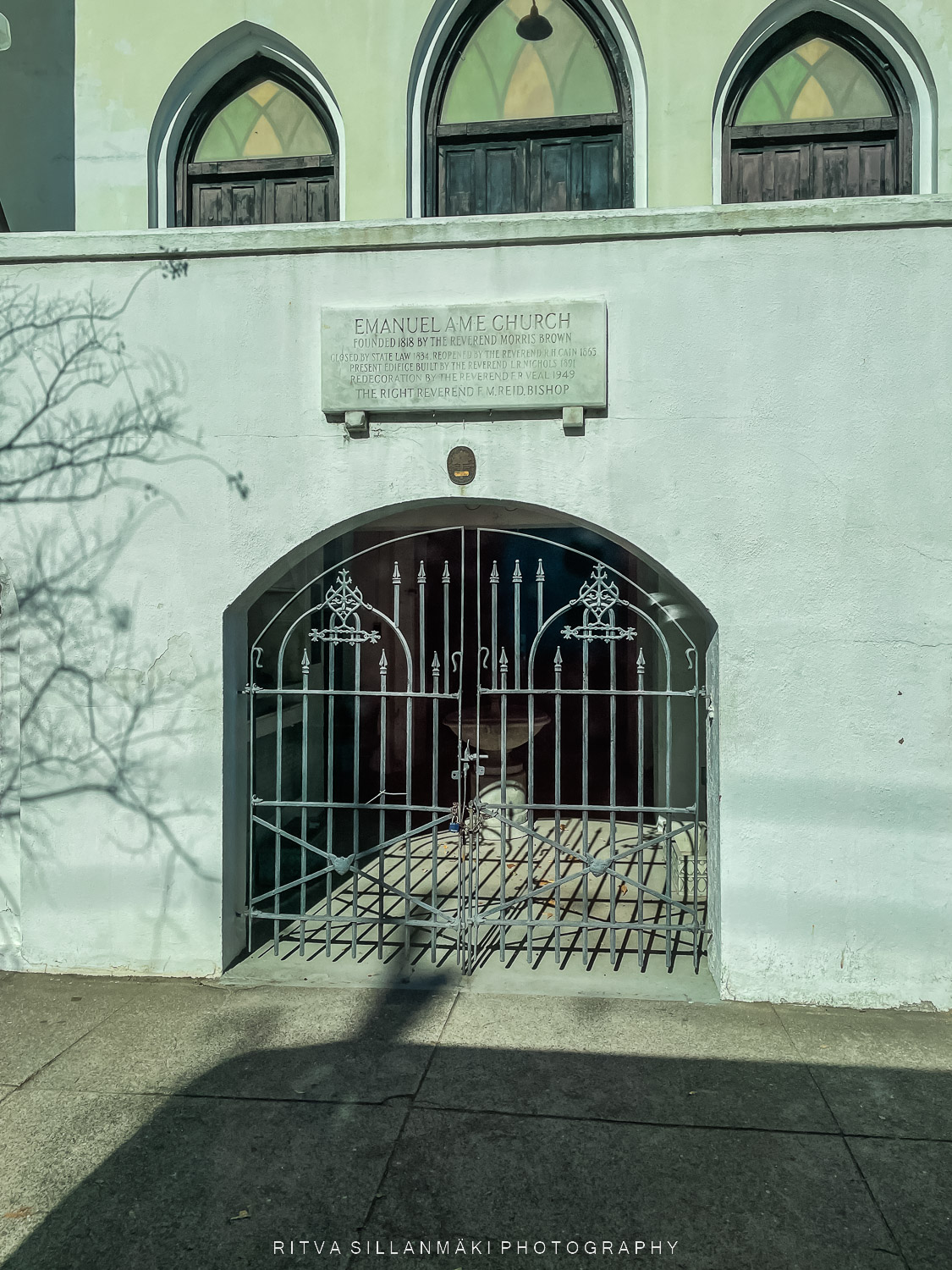
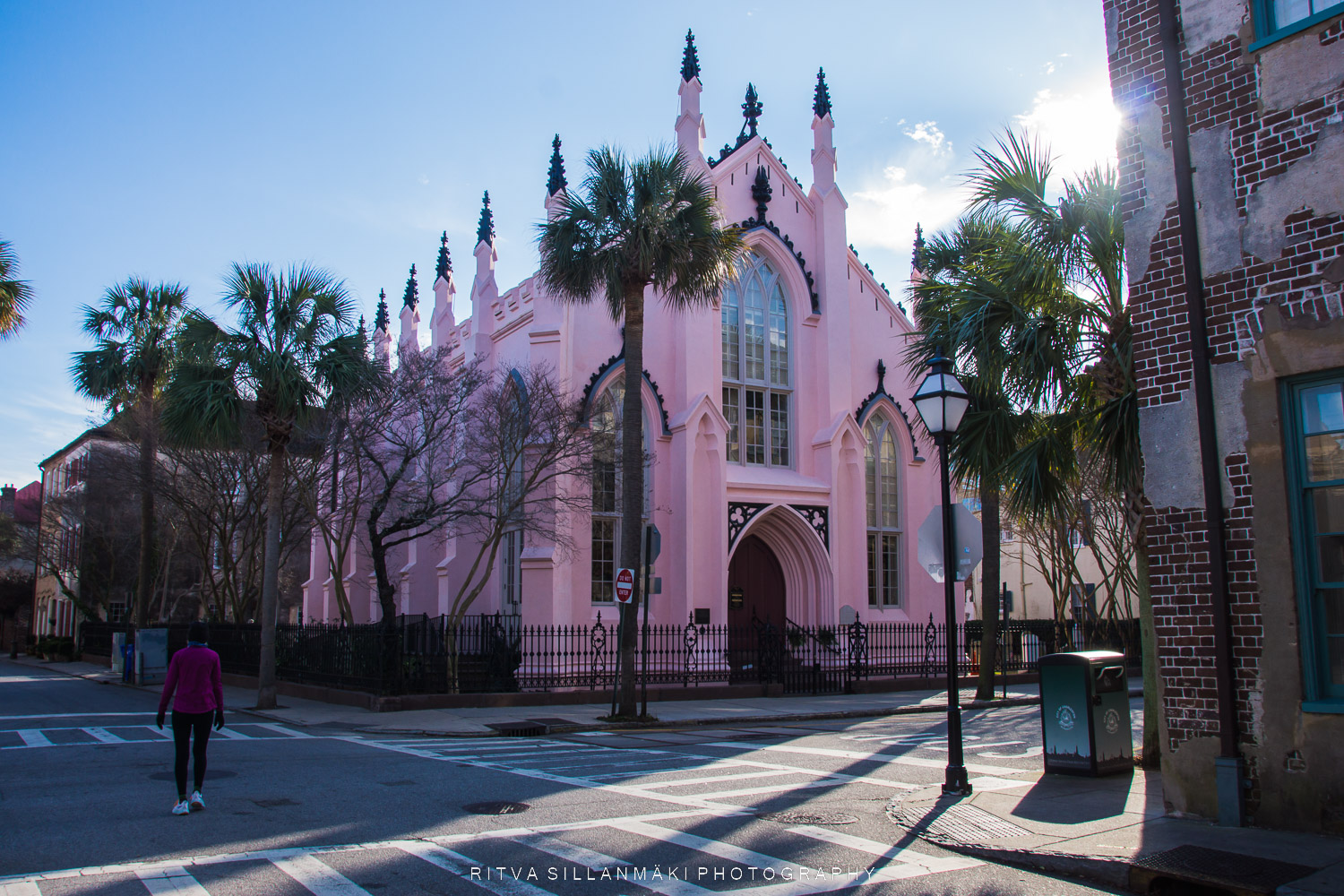
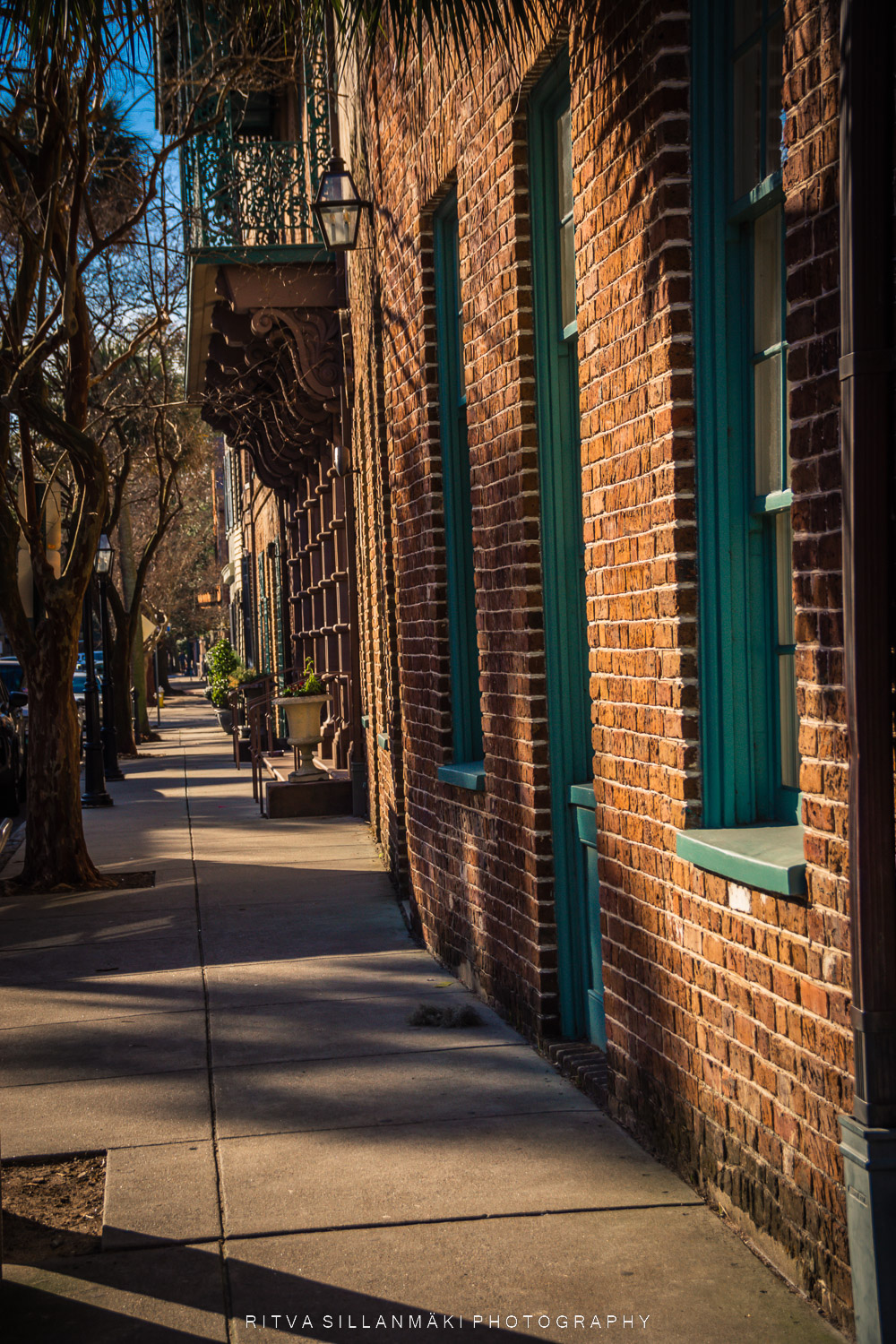
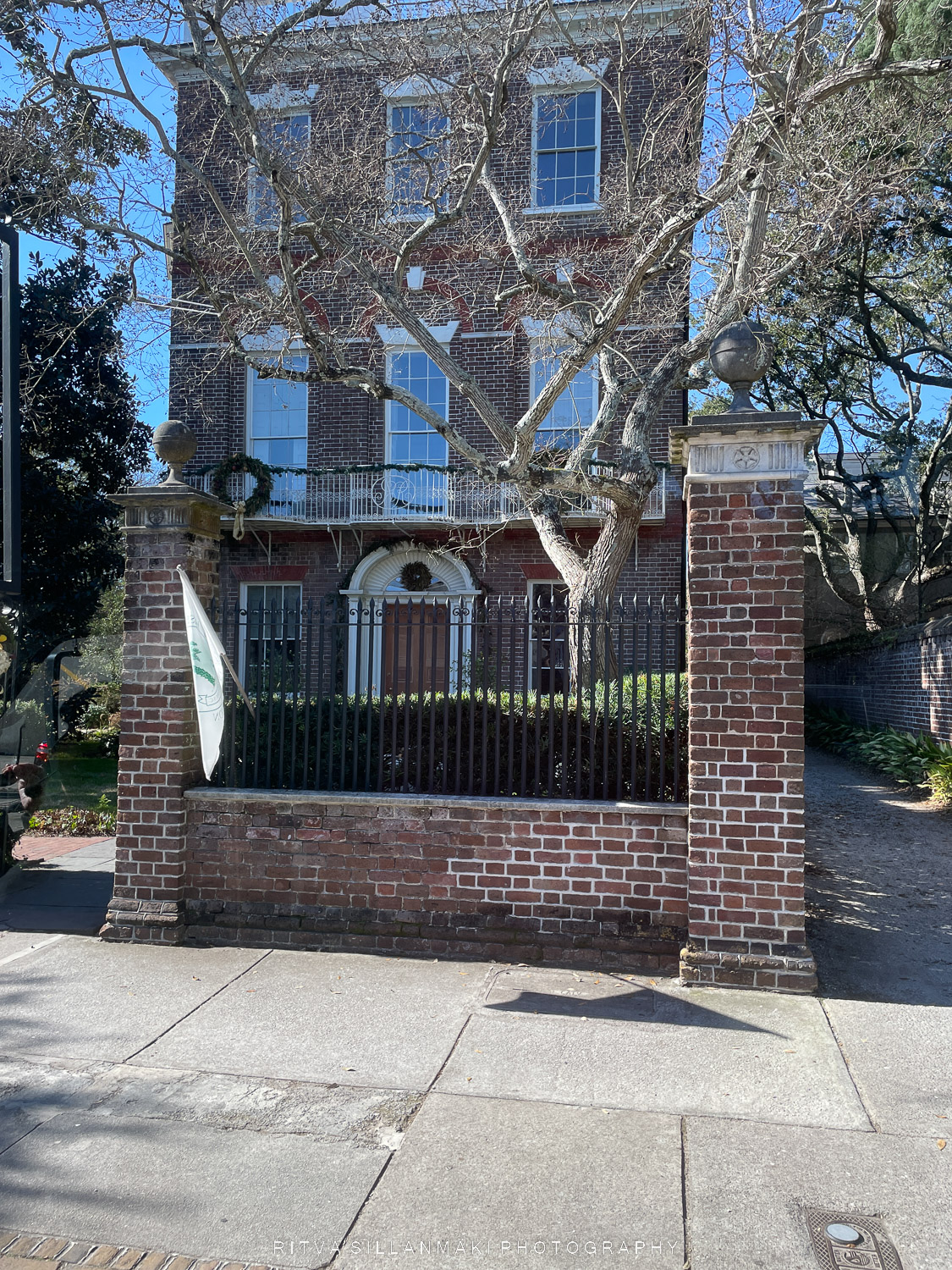
Charleston has over 400 churches, the most of any city in the USA, of quite few different denominations. Reason for the multitude is that early on if you rounded up seven or more people, you could start your own church and build on the land the city gave you. Charleston is full of iron gates, fences, etc. Iron works on your house were the marks of wealth. They don’t let you forget the bricks made in Boone Hall Plantation that a lot of old houses are made of. Four million bricks were made at Boone Hall yearly during slavery. One of the saddest places was Emanuel African Methodist Episcopal Church, where Dylan Roof committed his heinous mass murder few years back. Roof killed nine people after the service but left one person alive, so the person could tell others that this sick person wanted to start a race war. He was given the death penalty and because of the forgiveness of the church and the city, no race war was started, or any violence was instigated.
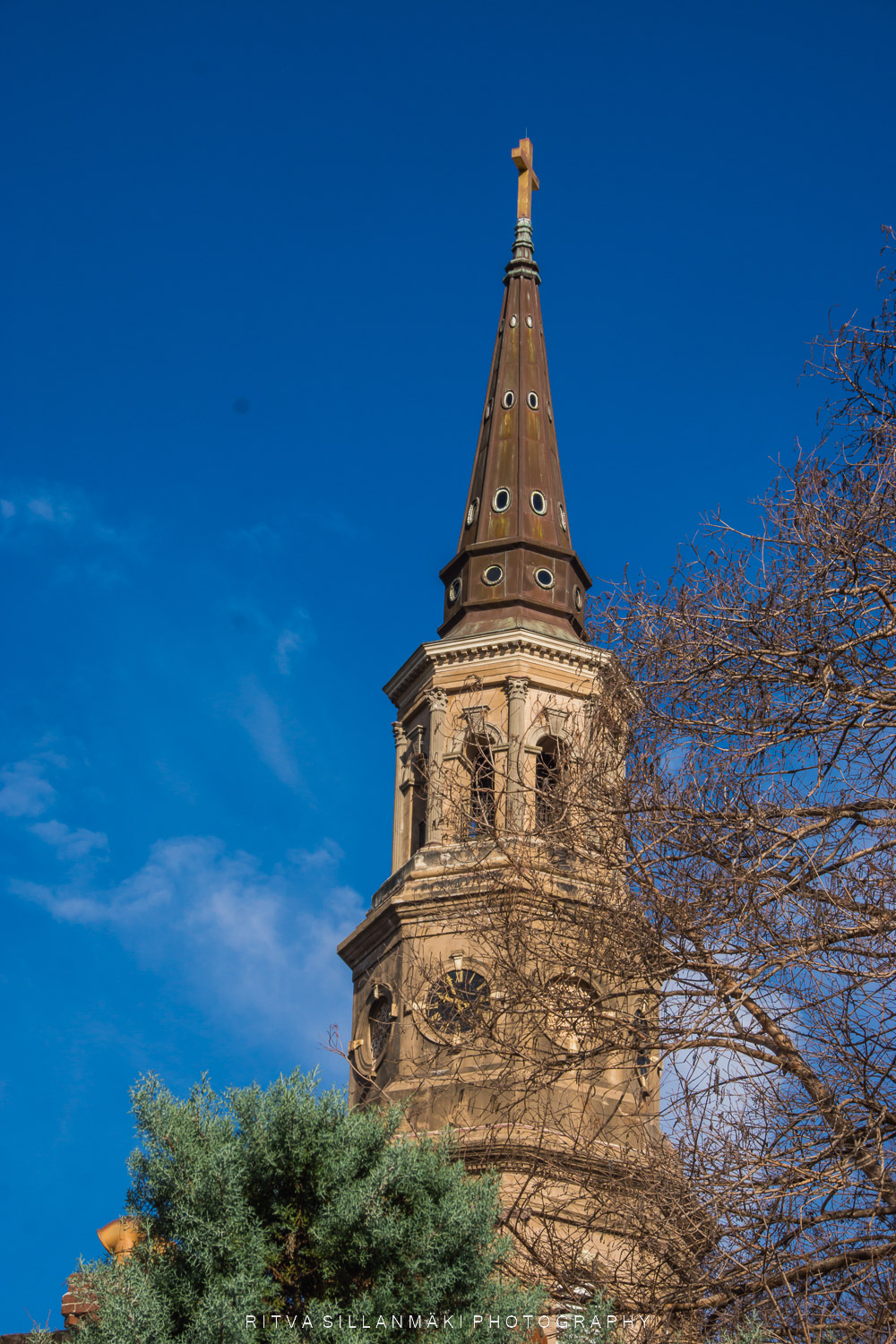
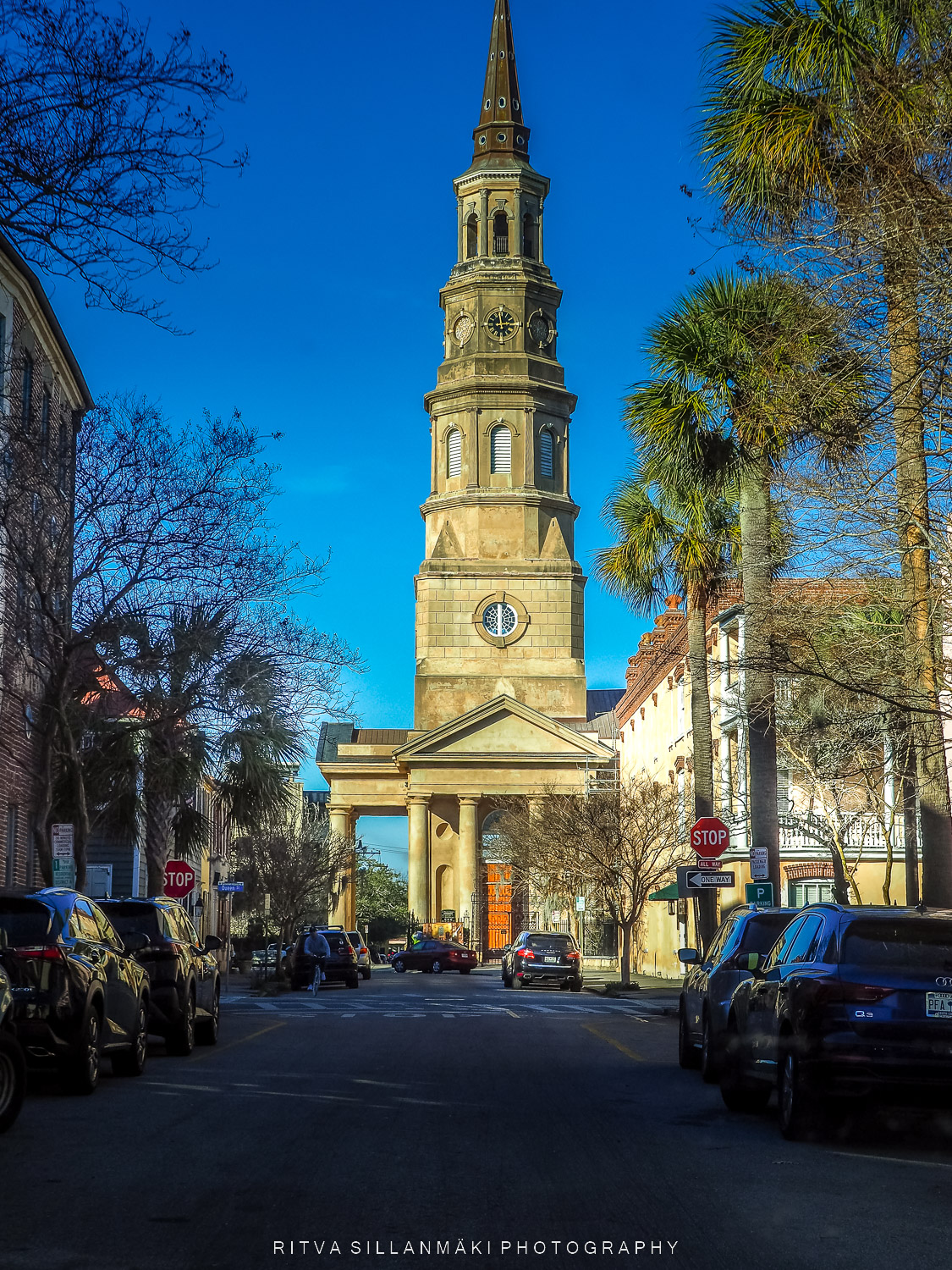
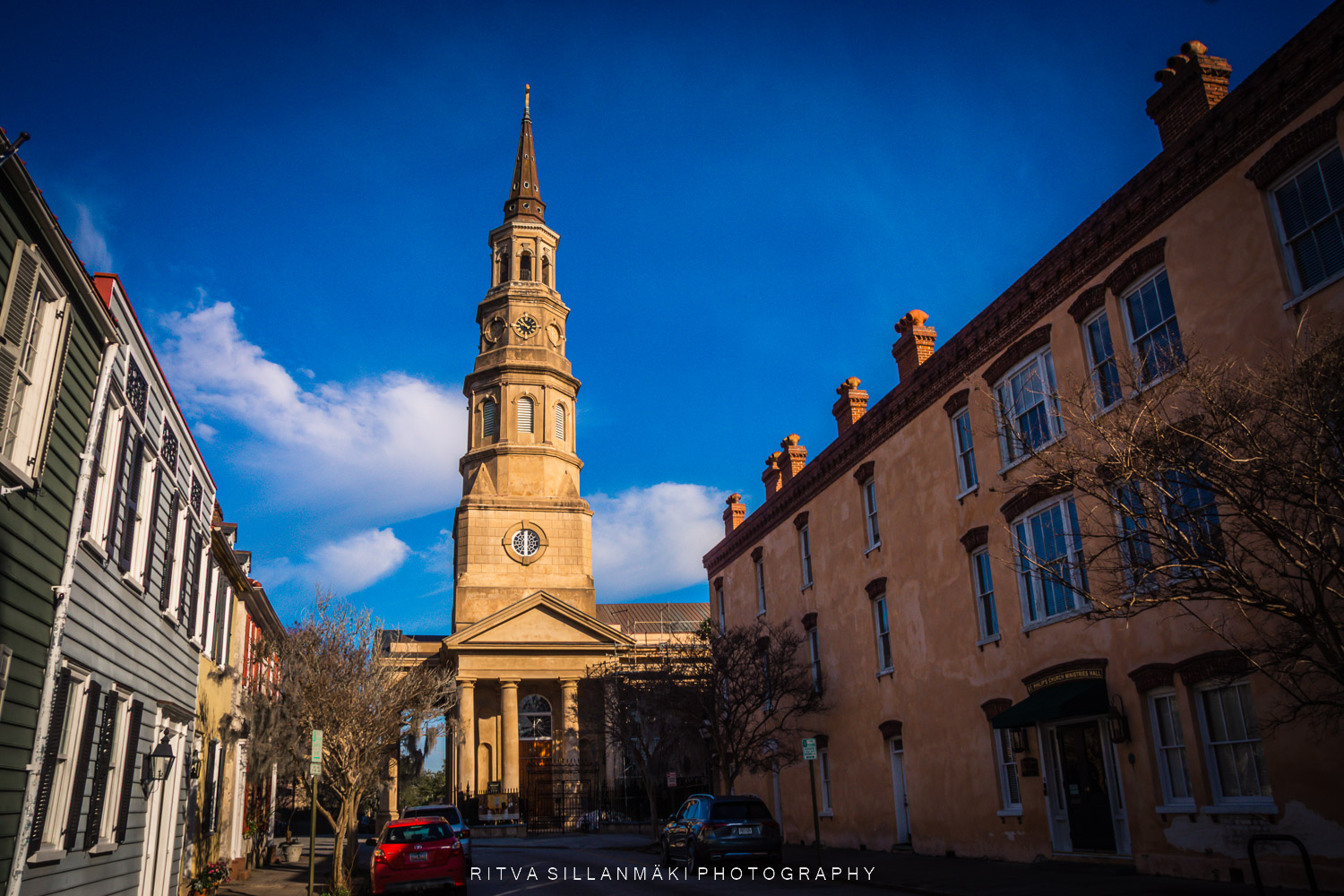
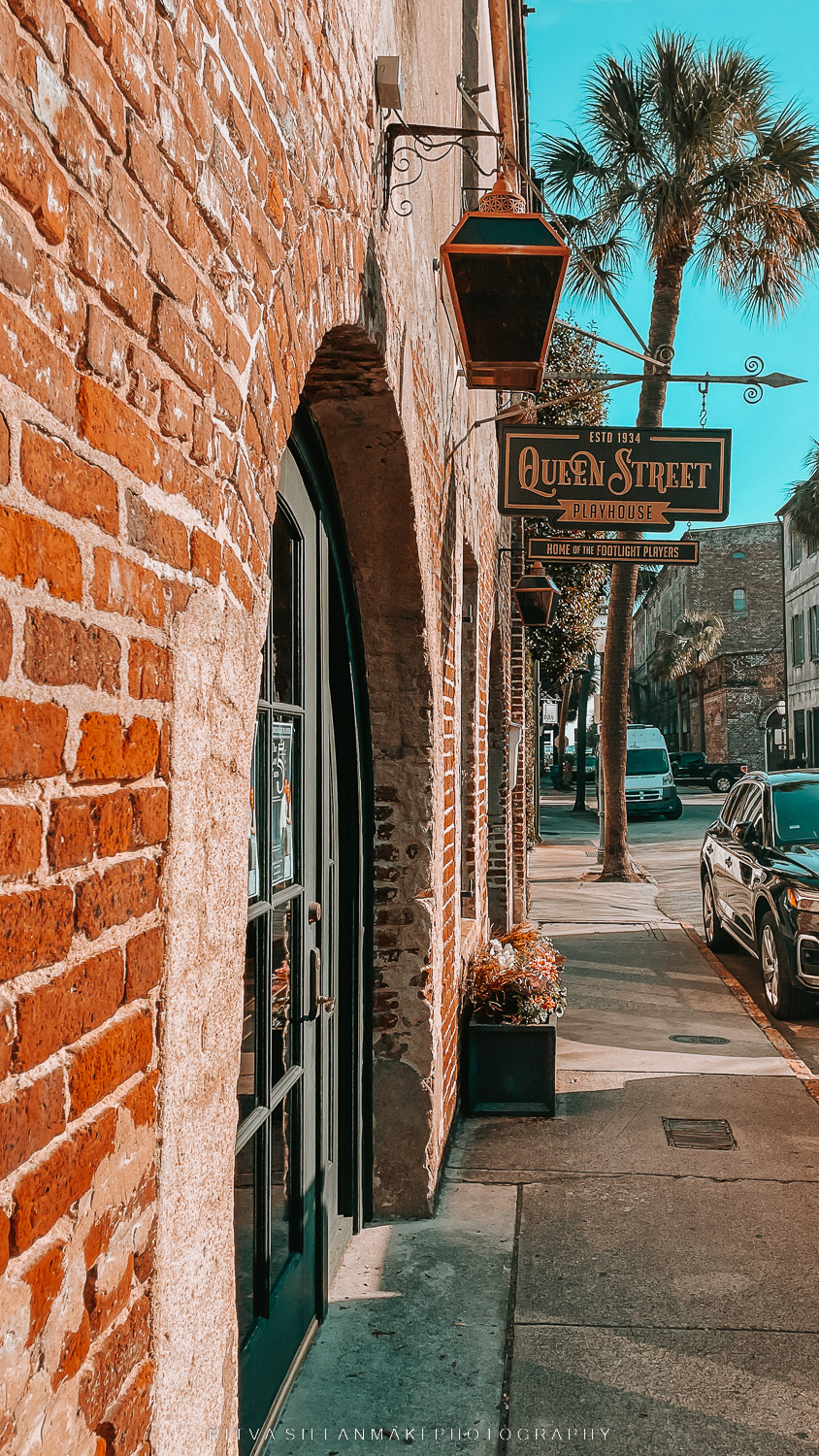
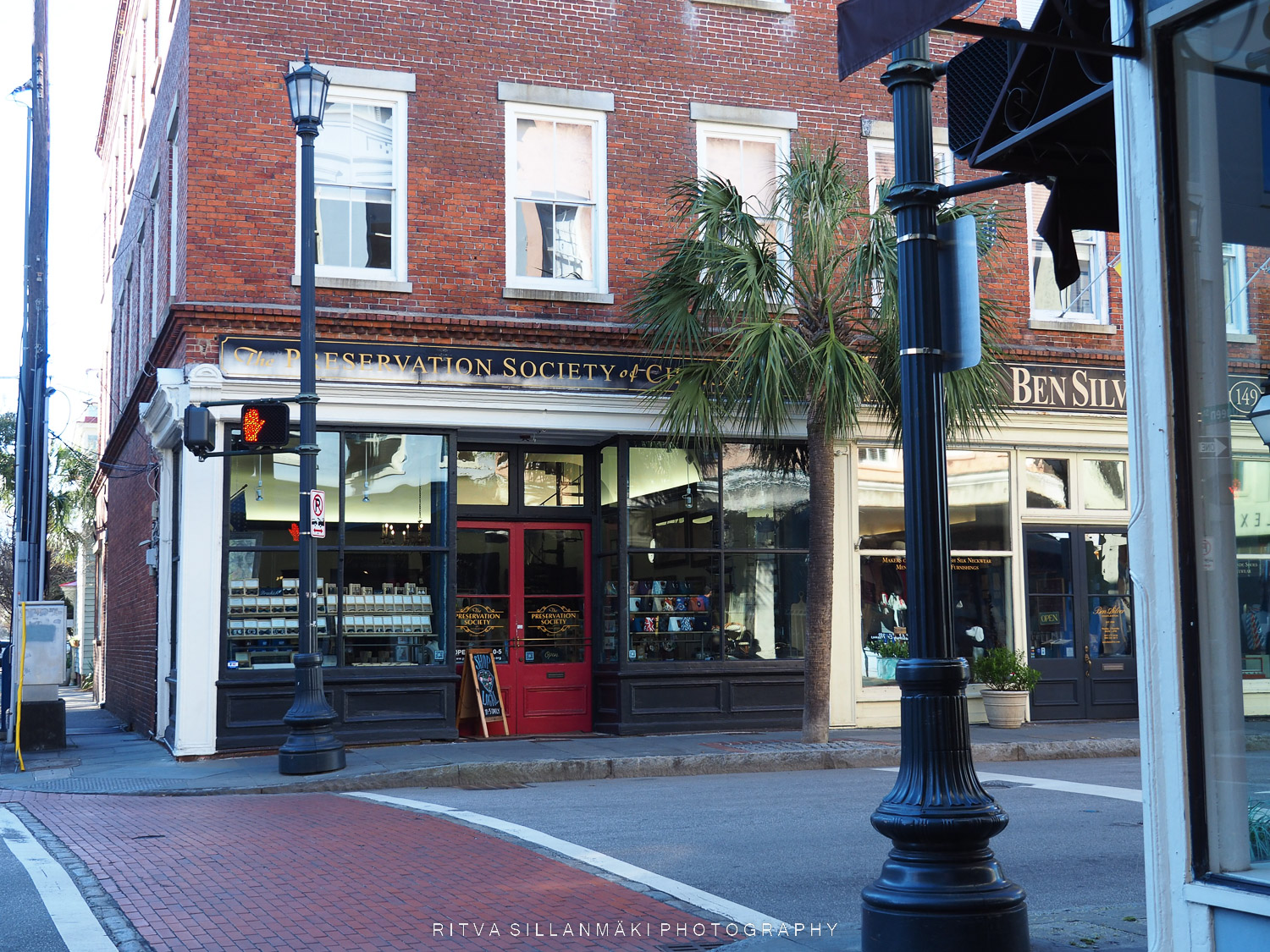
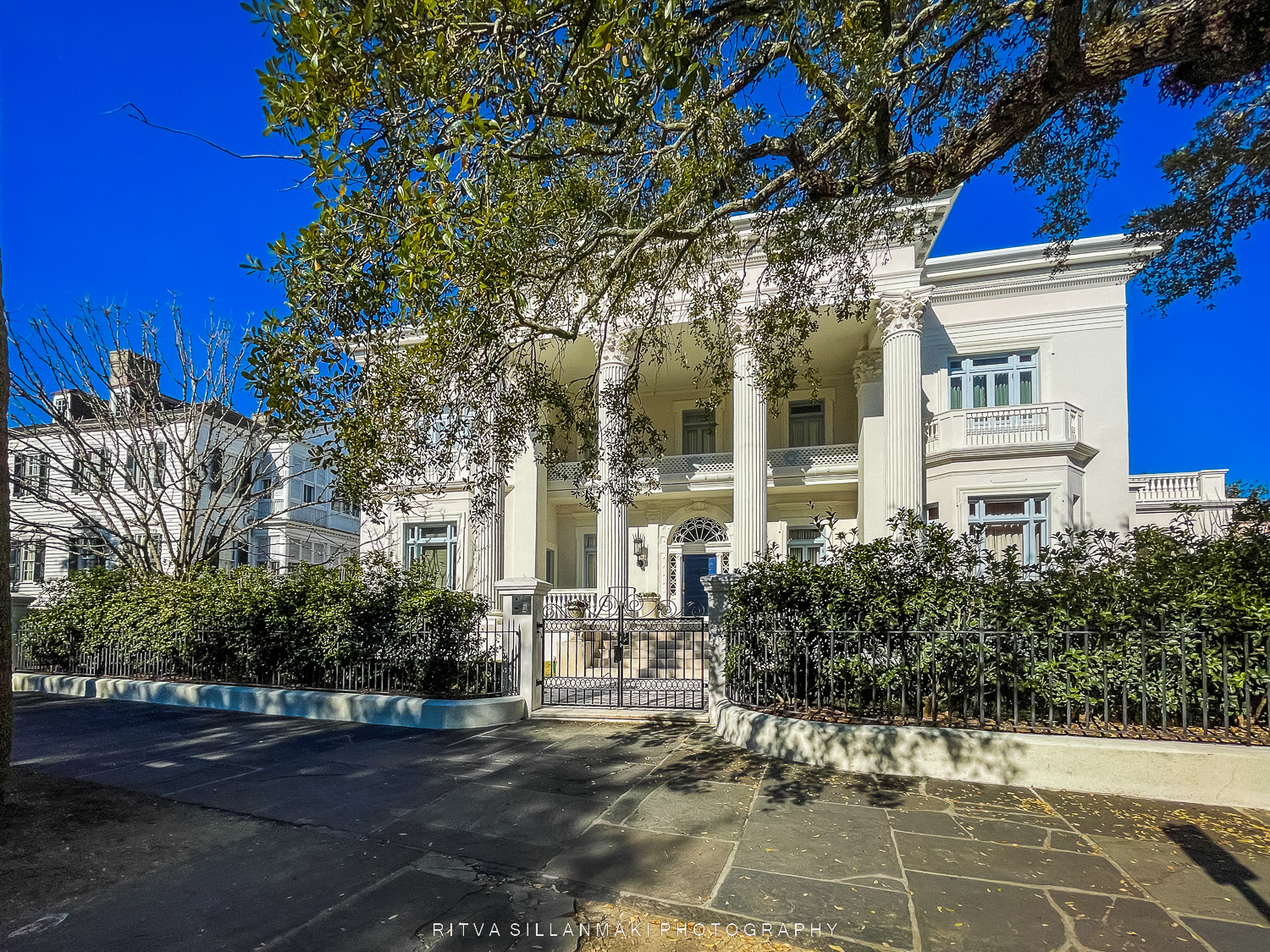
Luckily for all of us the city of Charleston is very well preserved, and the Preservation Society of Charleston will keep it that way. If the house is 75 years old or older it can not be torn down or as they like to say here: Cannot be taken down by hand of people, only by hand of god. And not just houses are preserved but cobblestones, sidewalks, lamppost and old stepping-stones to help you to cling on carriages. And you can’t renovate your old house by yourself. You have to have it inspected by the Society, that will also decide who can do the renovations. Also, tall buildings are not allowed. A certain church steeple sets the height limit. Because of the aforementioned rules historic Charleston is and will stay a very beautiful place to visit.
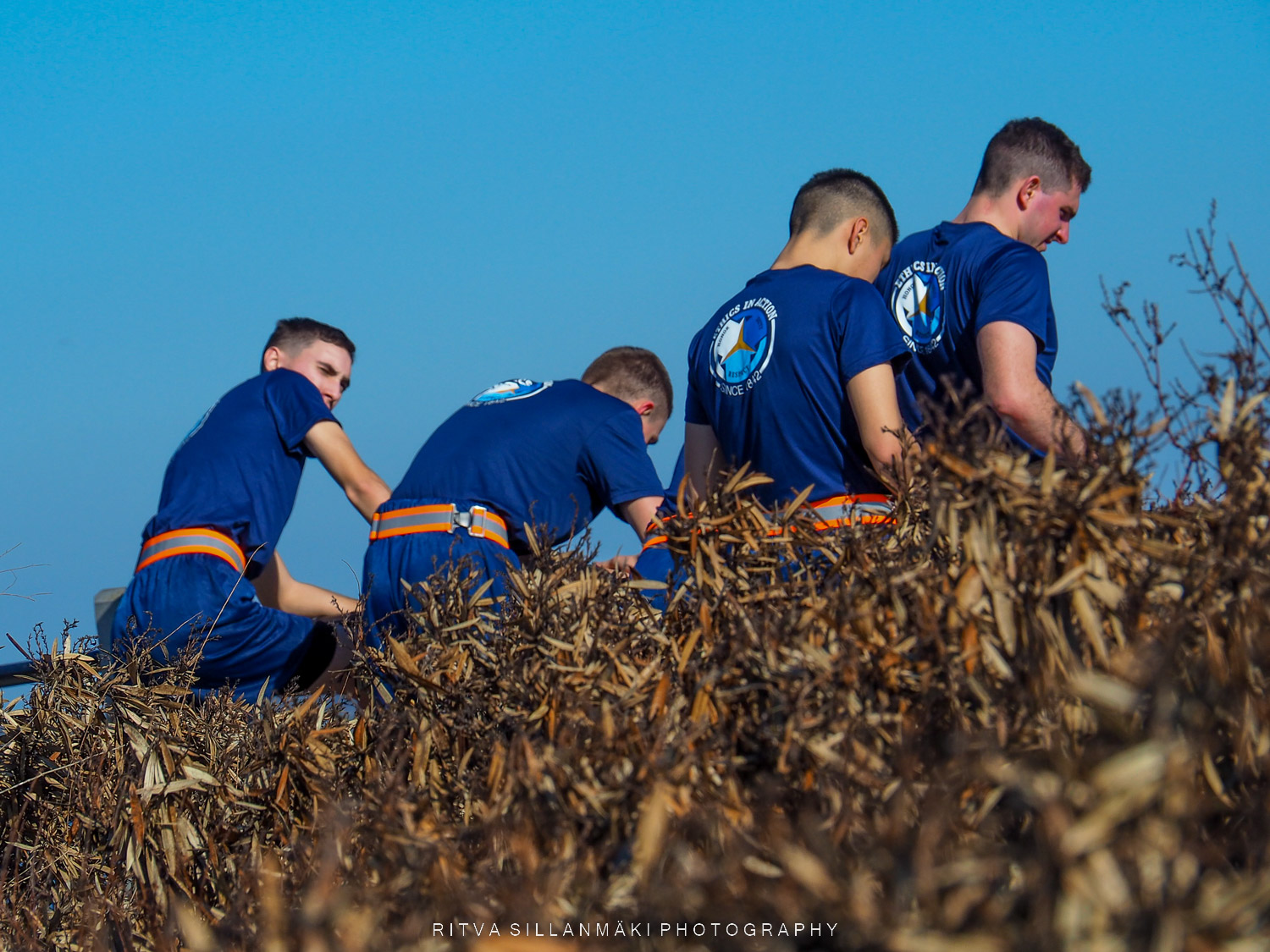
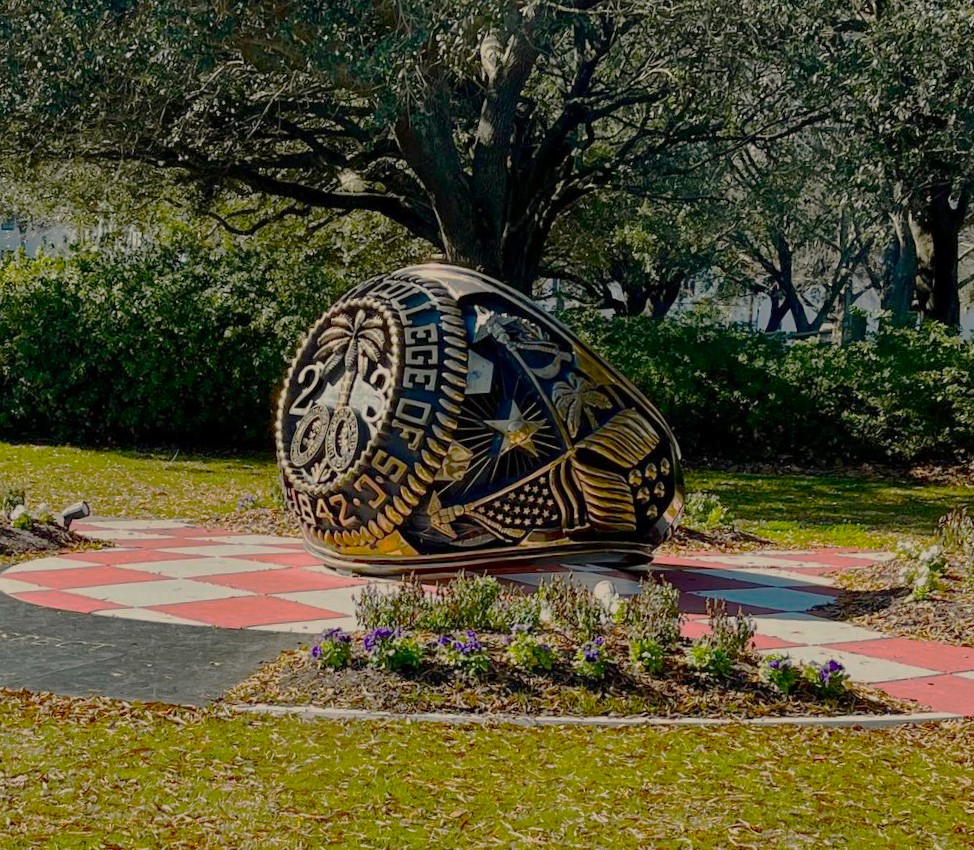
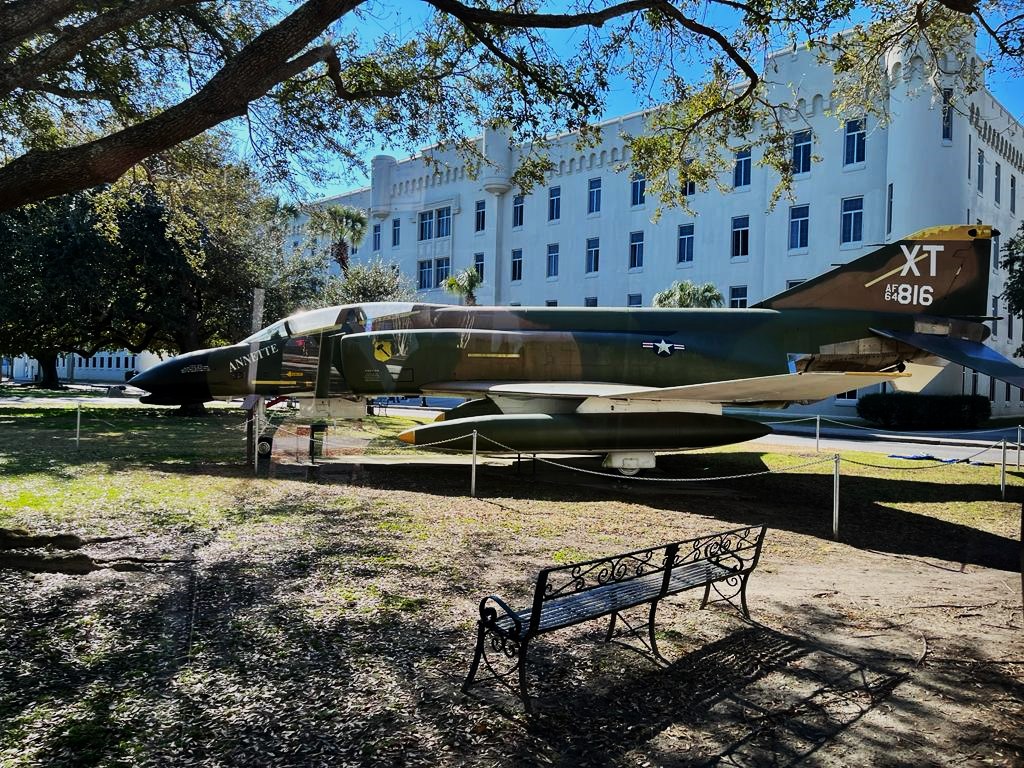
The tour took us through the famous Citadel, the Military College of South Carolina. My first sight was two cadets halfway running. It looked funny. At some point they were almost walking and then they speeded up once again. I just thought that they we in a hurry to get to the class. Then our guide told us that the freshman cadets or so-called gutter rats are not allowed to walk on the sidewalk, and they were not allowed to walk at all, but they have to do double time. Citadel was all male college until 1995 when Shannon Faulkner was able to enroll after a successful lawsuit. The suit alleged that the Citadel, which received state money, was “denying her equal protection under the Constitution”. The reception for her was not the best when she entered and she had to be escorted to Citadel by United States Marshals. During the so called “hell week” Faulkner suffered a heat stroke and eventually dropped out citing emotional and psychological abuse and physical exhaustion. However, she won the lawsuit and now women comprise approximately 9% of the Corps.
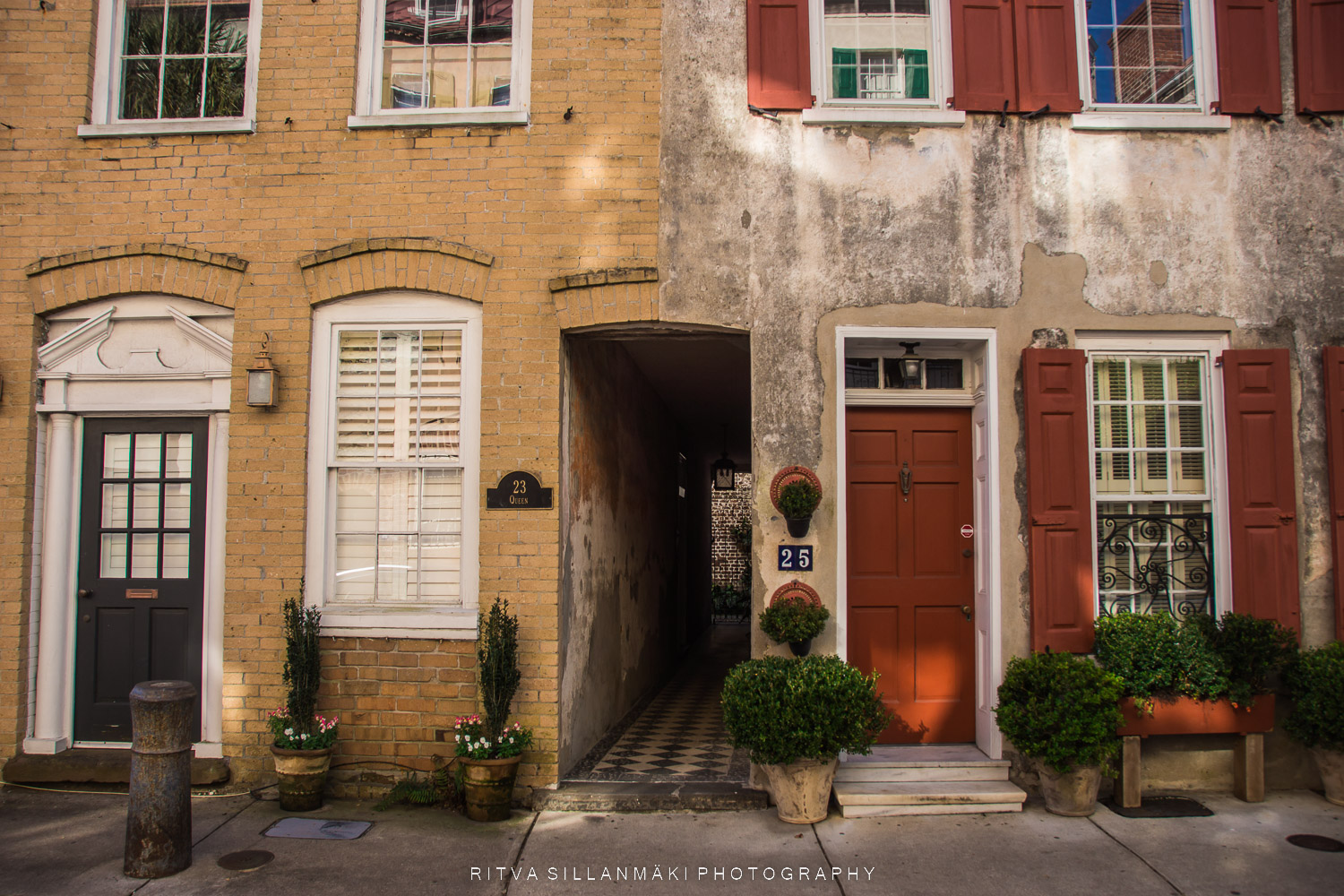
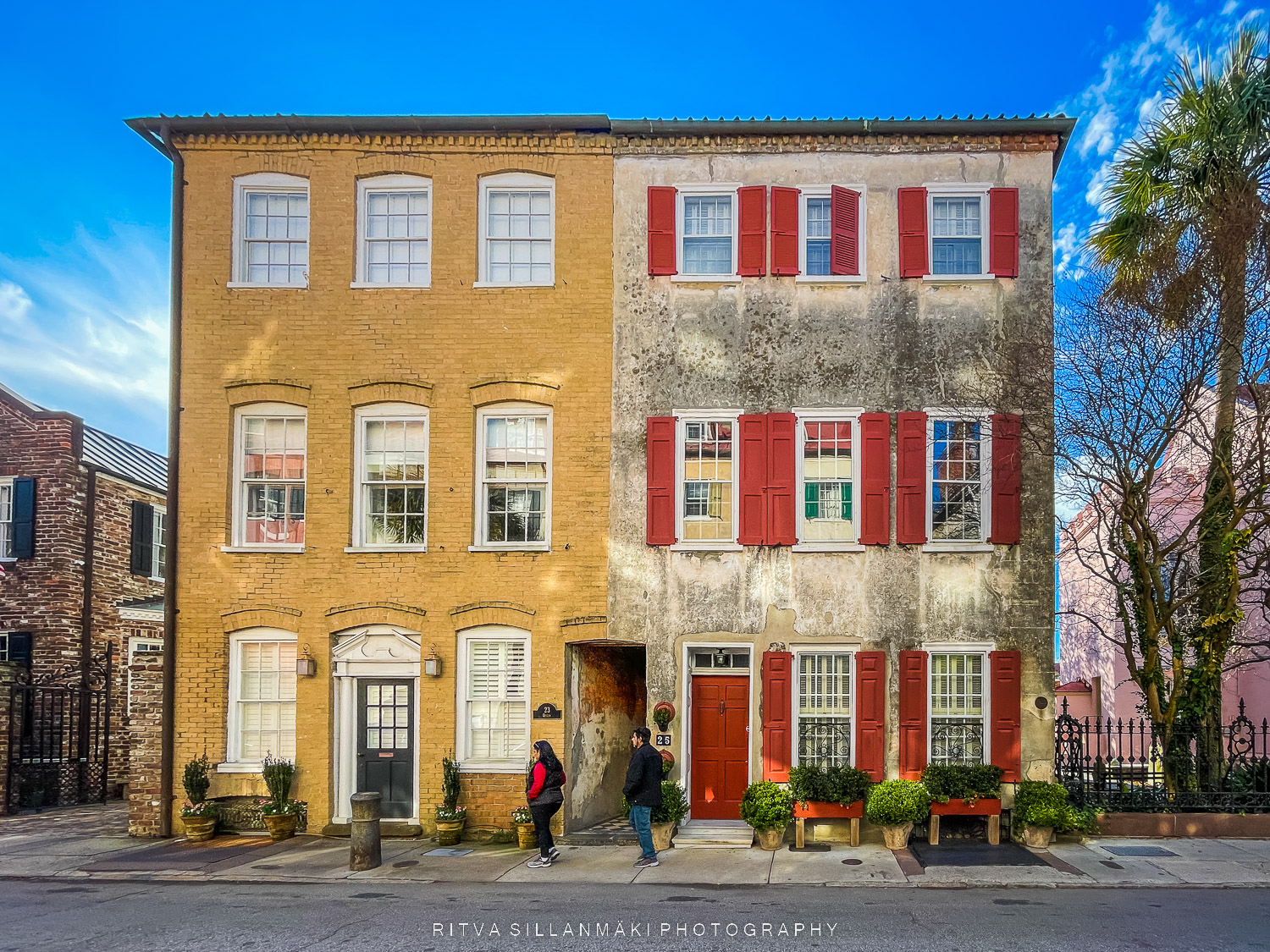
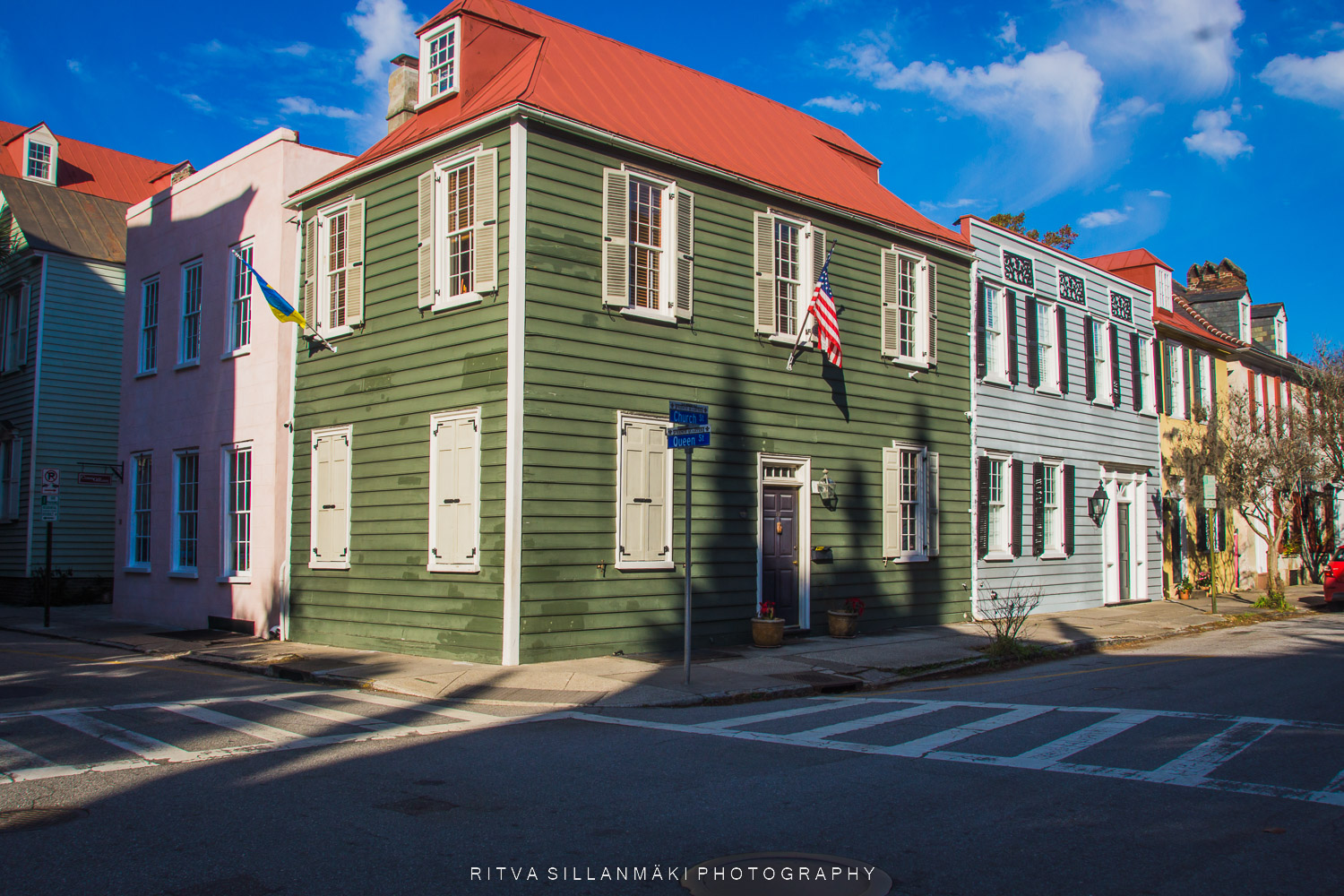
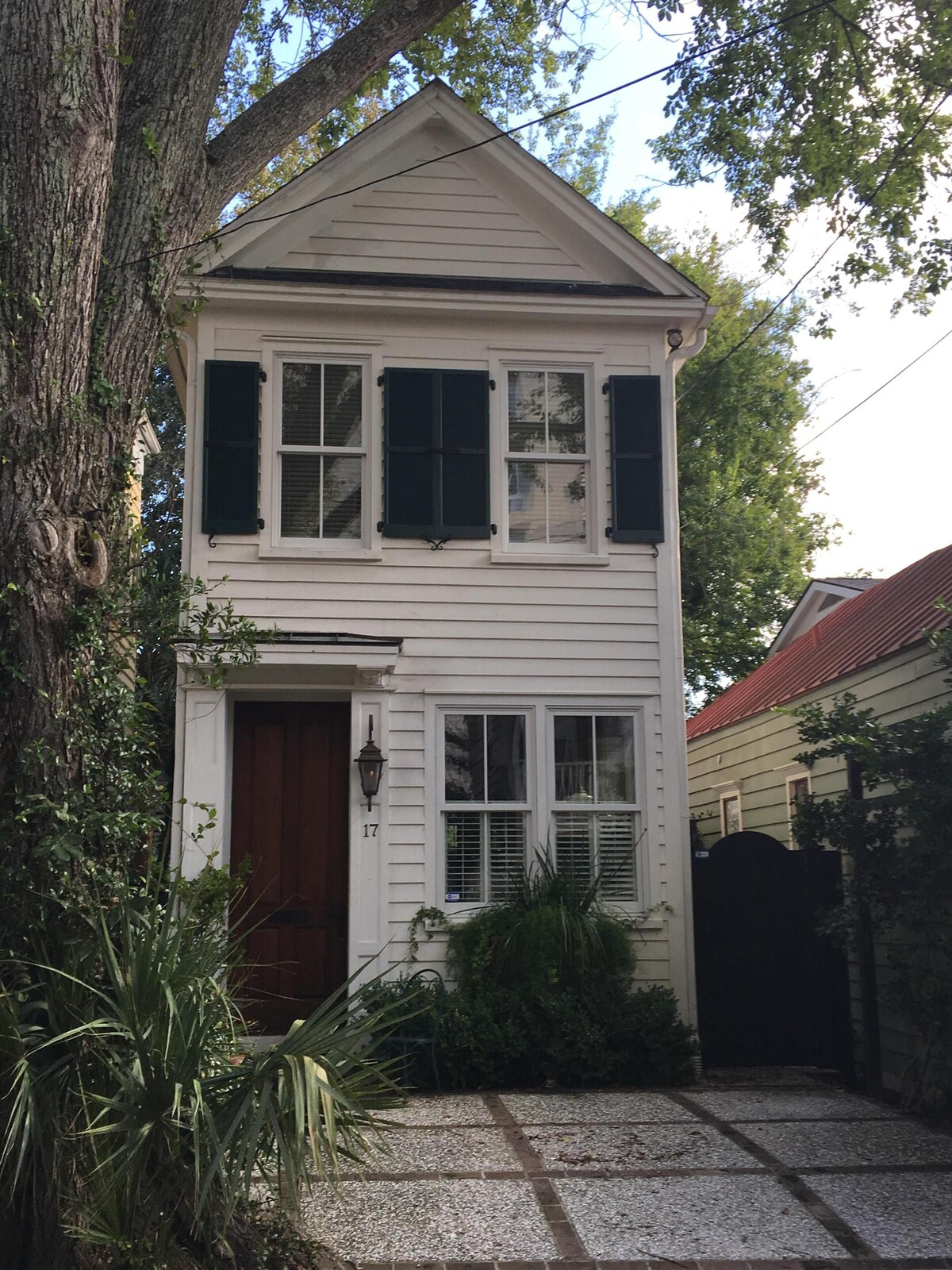
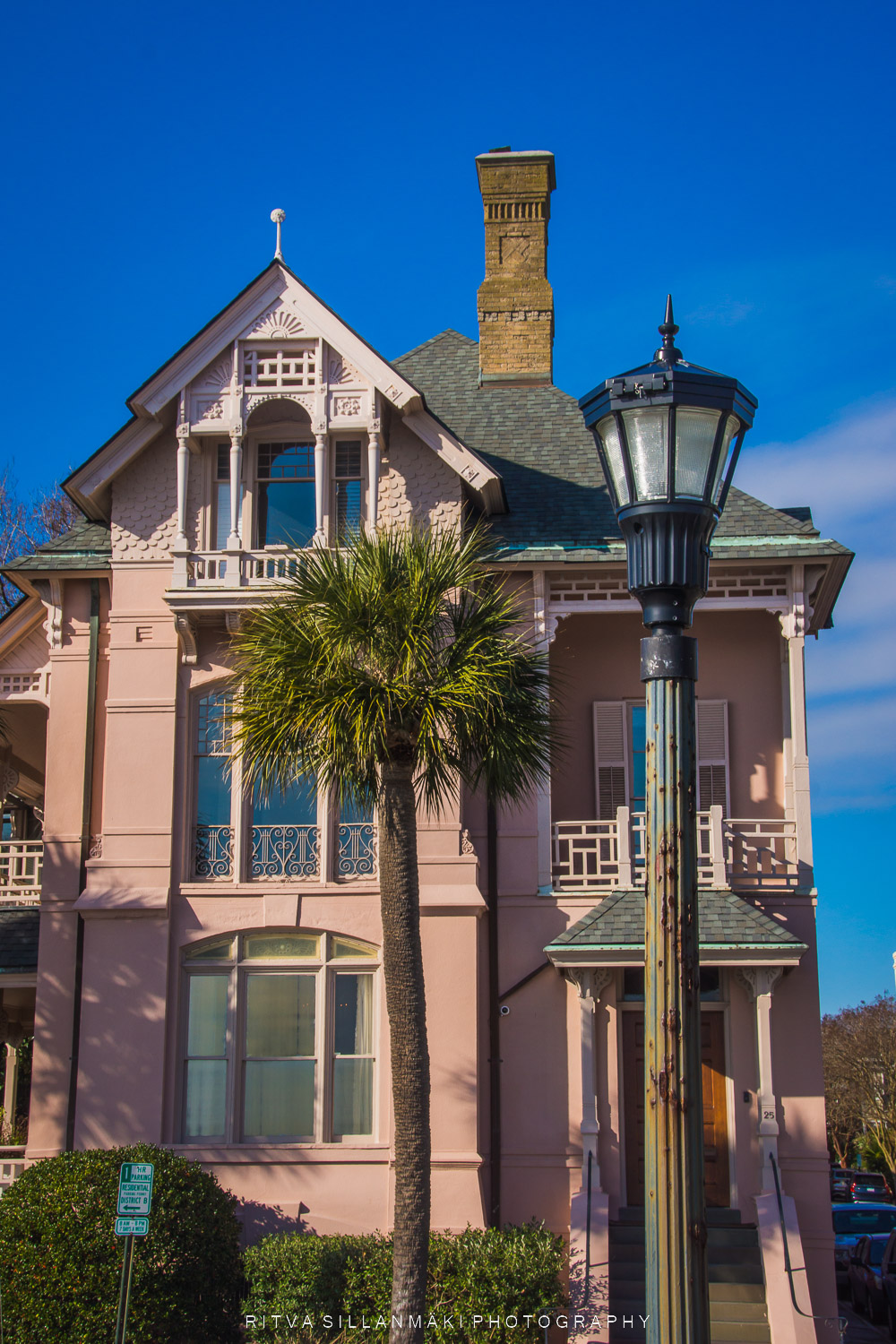
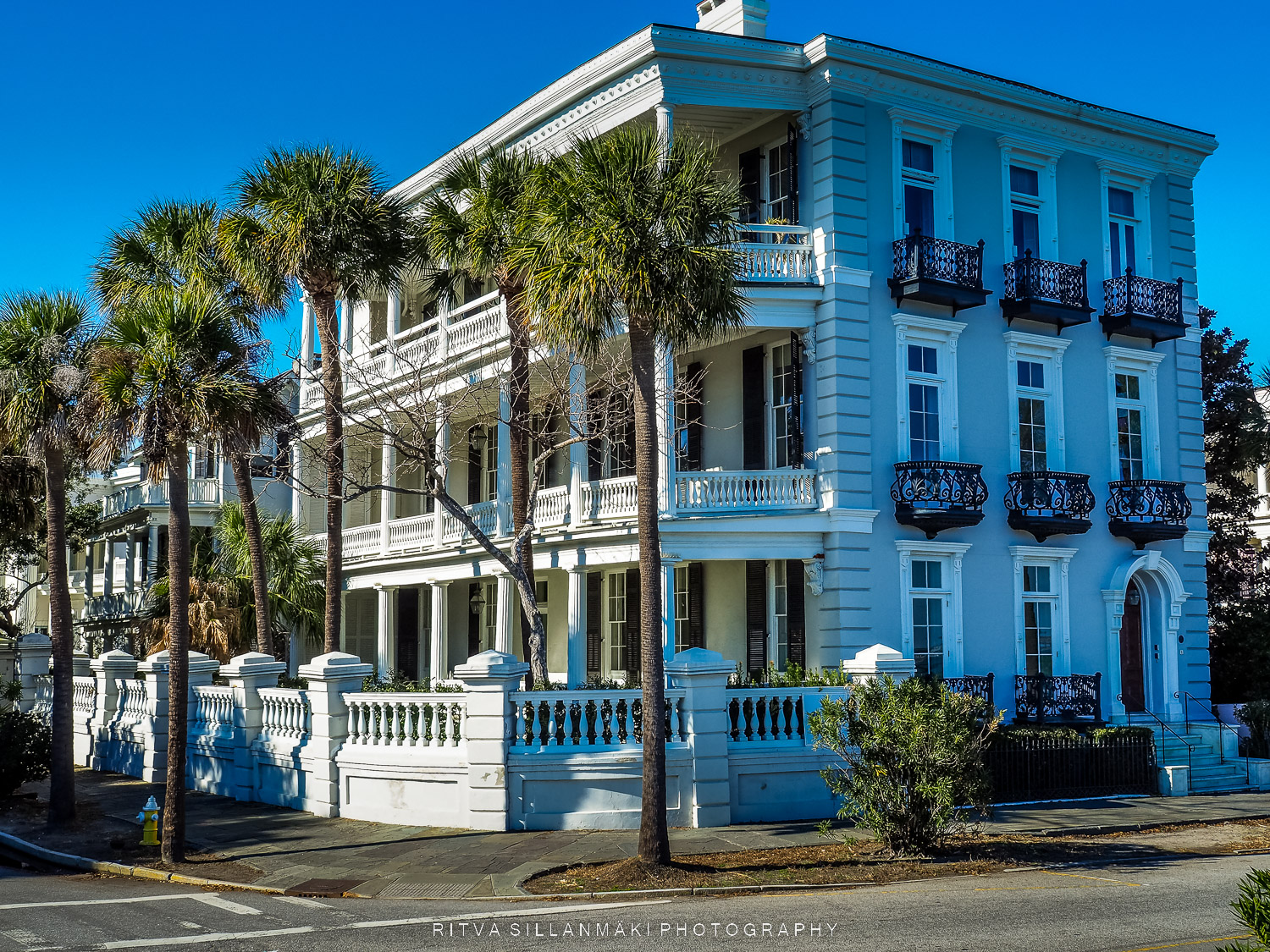
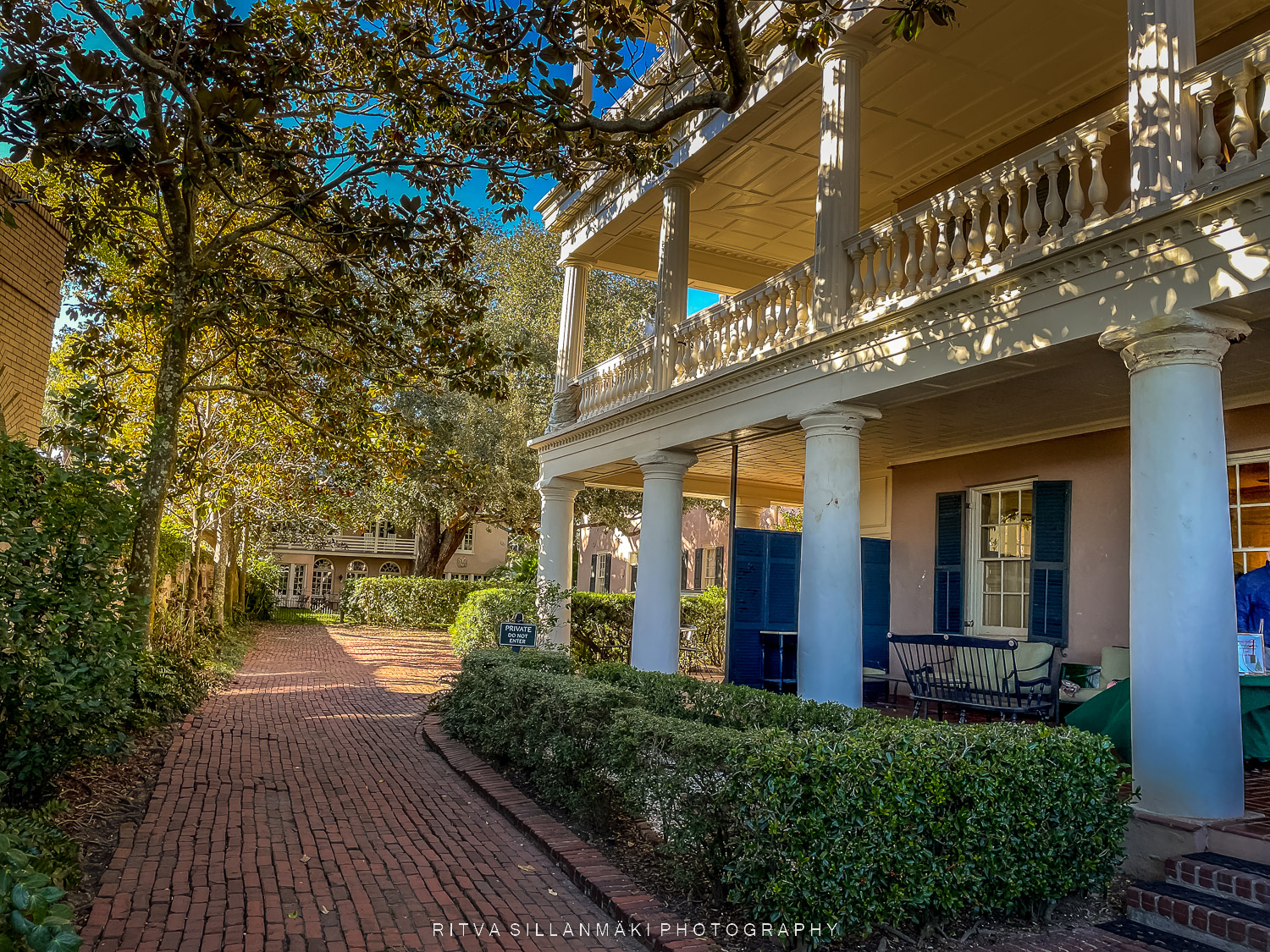
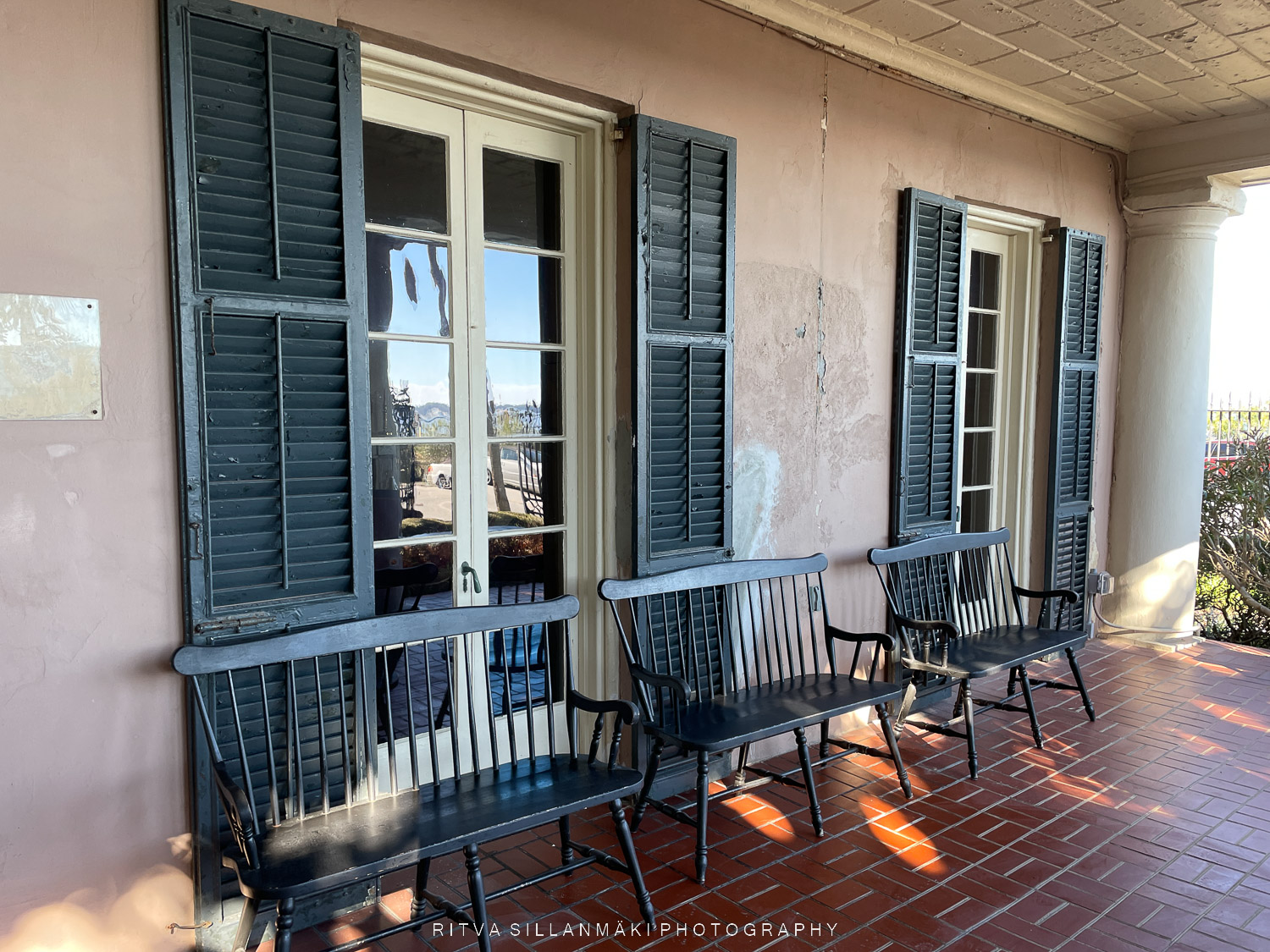
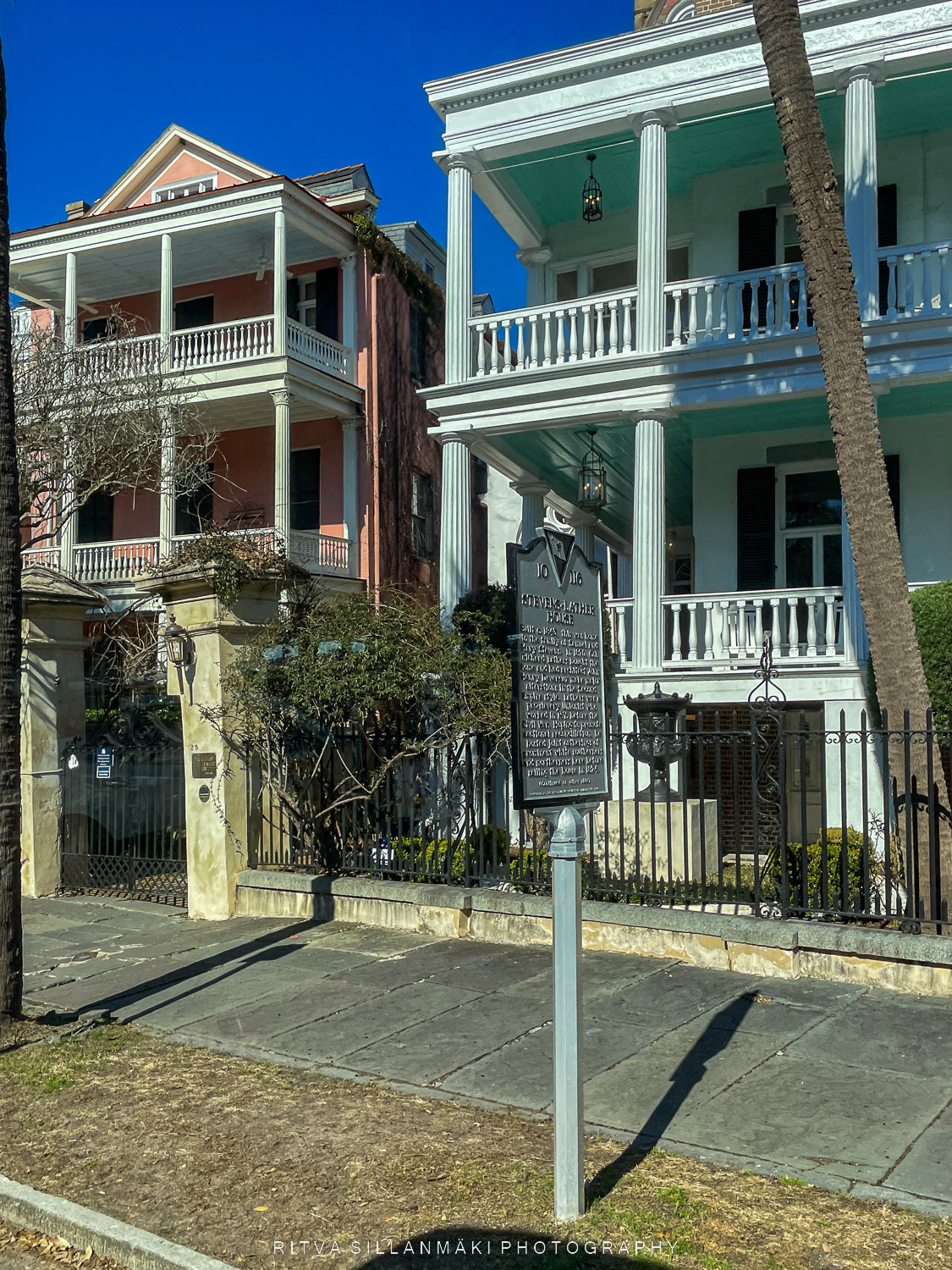
Another historical tidbit that stuck to my mind was the story of single houses in Charleston. During colonial times the inhabitants found out that traditional rowhouses did not work out because they were storing heat and the summers in South Carolina coastline and hot and humid. The idea for single houses was copied from the Caribbeans. Single houses were constructed to according to direction of the southernly winds that are blowing in the area. The houses are well-suited to long, narrow lots which were laid out in early Charleston. Although not a part of the earliest single houses, later buildings had two- and three-story porches, known locally as piazzas, added. Houses had hospitality doors. They were social signs for neighbors and friends. If the porch door was propped open, it meant that the family inside was ready for you. If the door was shut – stay away.
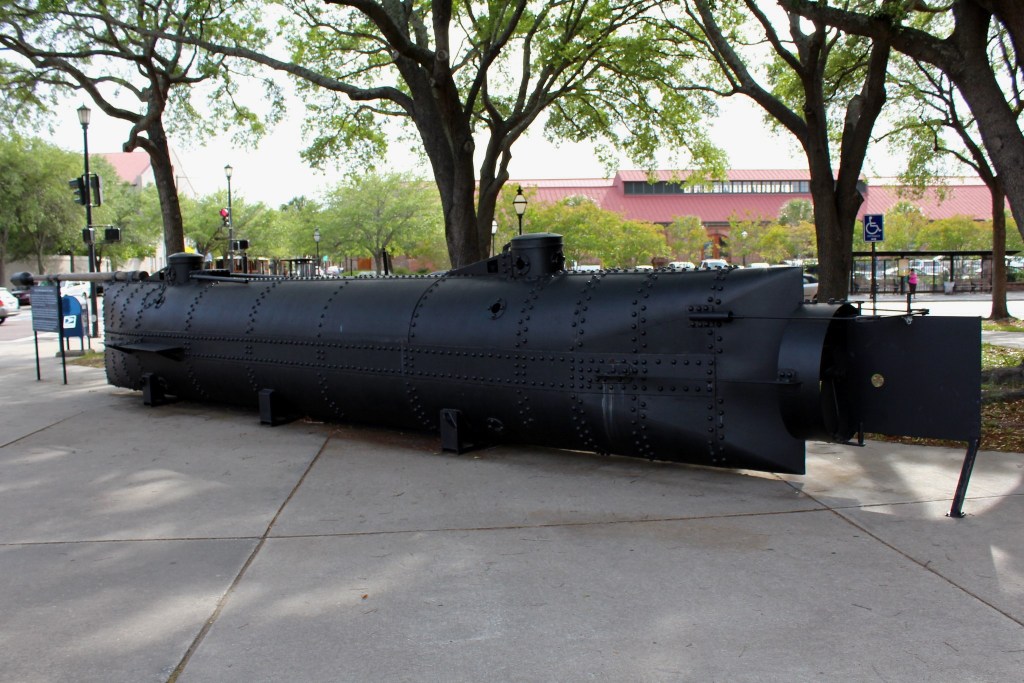
In front of the Museum of Charleston we saw the replica of submarine H.L Hunley, that the South used in the Civil War. Hunley looked very small, but guide told us that the replica is, surprisingly enough, actually too tall. The replica was made before they found the actual submarine in 1995 and the boat was not lifted up from the sea until 2000. I know people were shorter and smaller in those days, but it was amazing they were able to fit eight men into it. And the boat only had oxygen for 2 hours. What is more amazing how they were able to find men to go into that death trap in the first place. And not only one crew. During two test rides 13 out of 16 men perished and during the only actual war mission all 8 died. During the only mission they were able to sink USS Housatonic with its crew of 155 men. Only 5 of those 155 died, so H.L. Hunley killed 21 of they own and only 5 of Northern troops.
Charleston was famous for its slave trade. 48 per cent of the slaves came through and was sold in Charleston and that comes to total of 250 000 slaves. The biggest slave plantation was Magnolia. Nine of the wealthiest persons of the colonies lived in Charleston area. The first shot of the American Civil War was shot by and cannon from Fort Johnson to Fort Sumter in 1861.
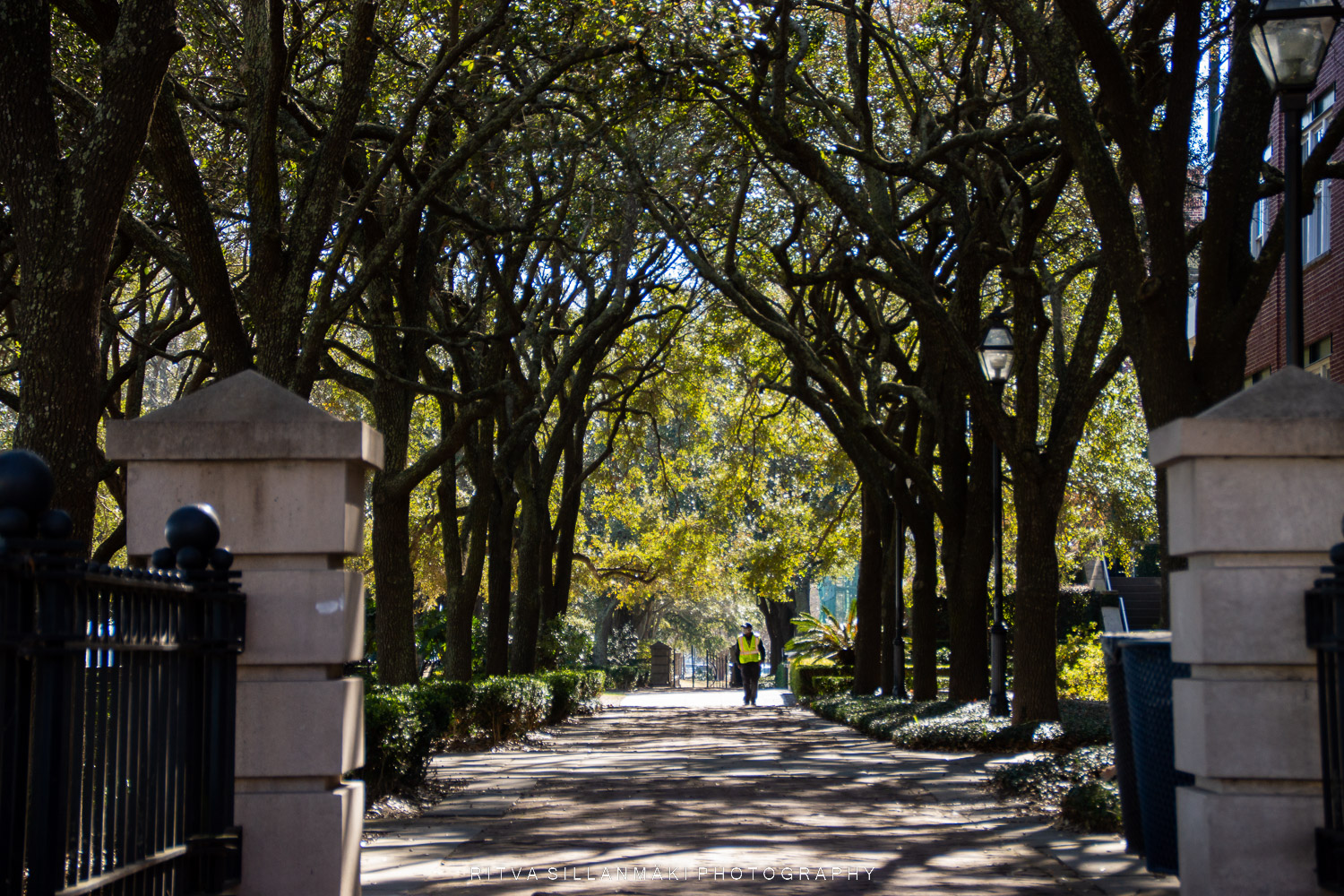
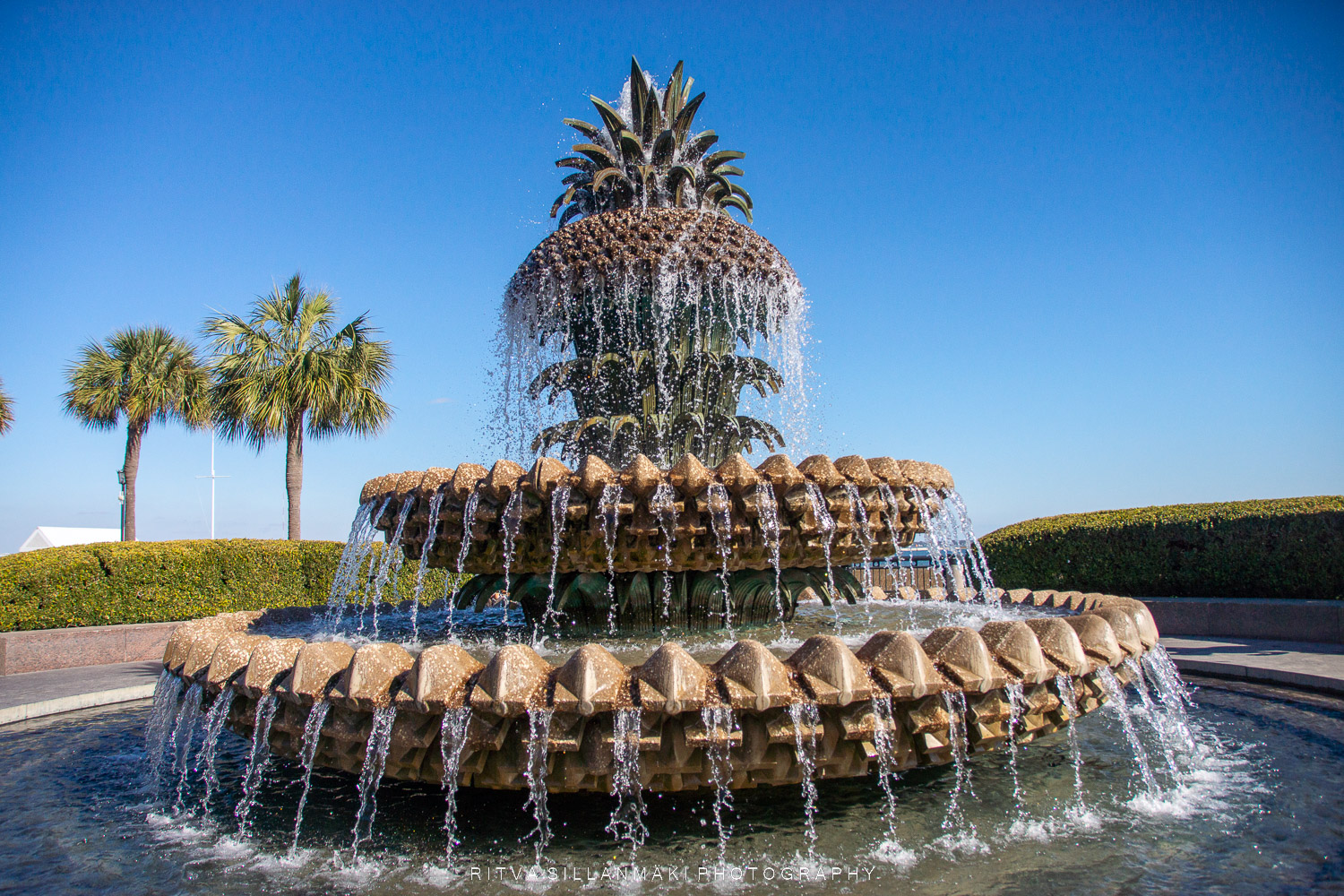
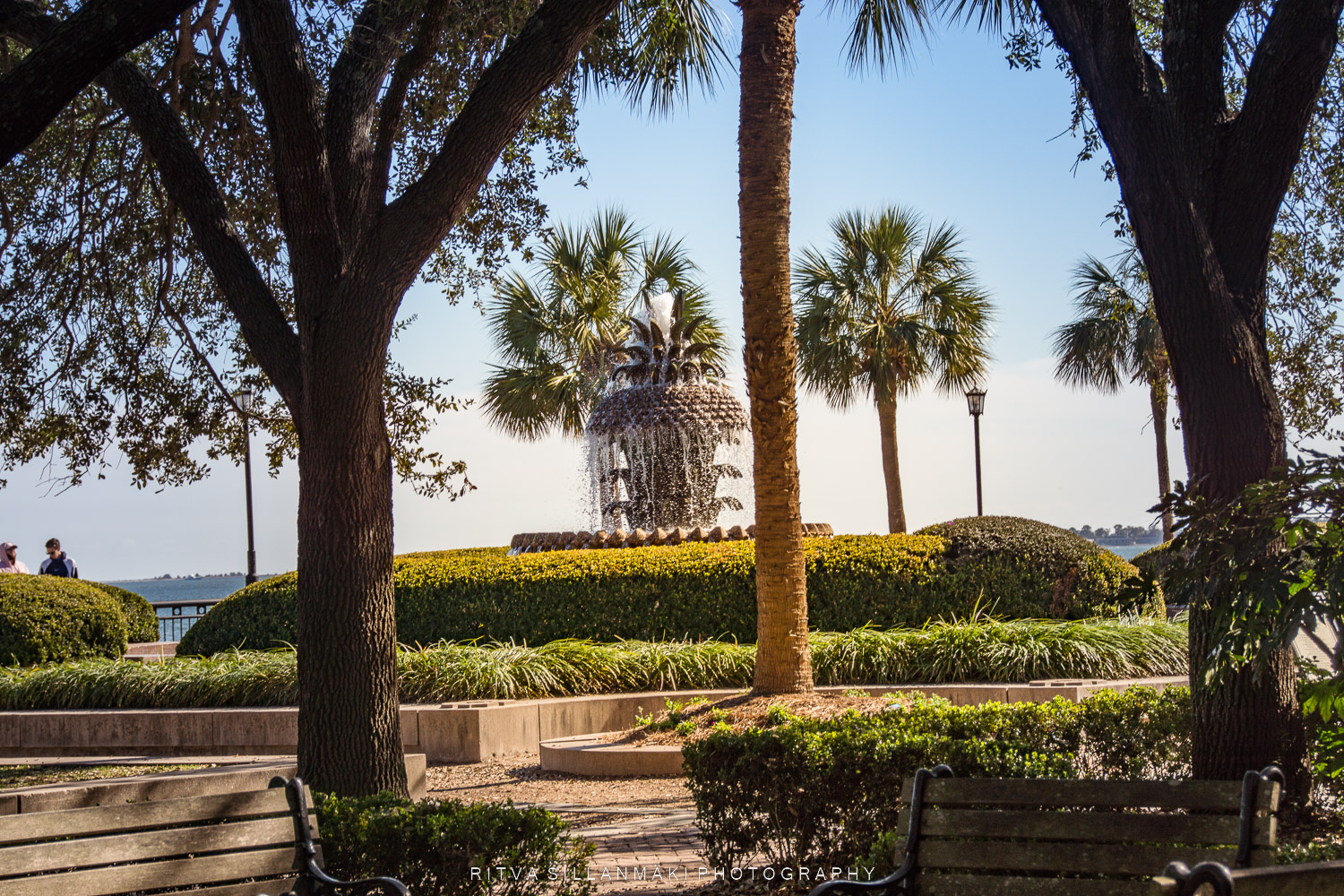
The bus tour lasted only 90 minutes we had plenty of time to drive around the historic downtown. First stop was Waterfront Park and the famous Pineapple Fountain. Afterwards we learnt that the Pineapple Fountain was only built in 1990 but to us it looked like it belonged and had been there for ages. Pineapple represents hospitality. American sailors would place the pineapple outside of their door to show that they had safely returned. In Charleston the woman hung the pineapple from the door to show that her husband had returned. Maybe to show the other gentlemen callers not to bother for the time being?
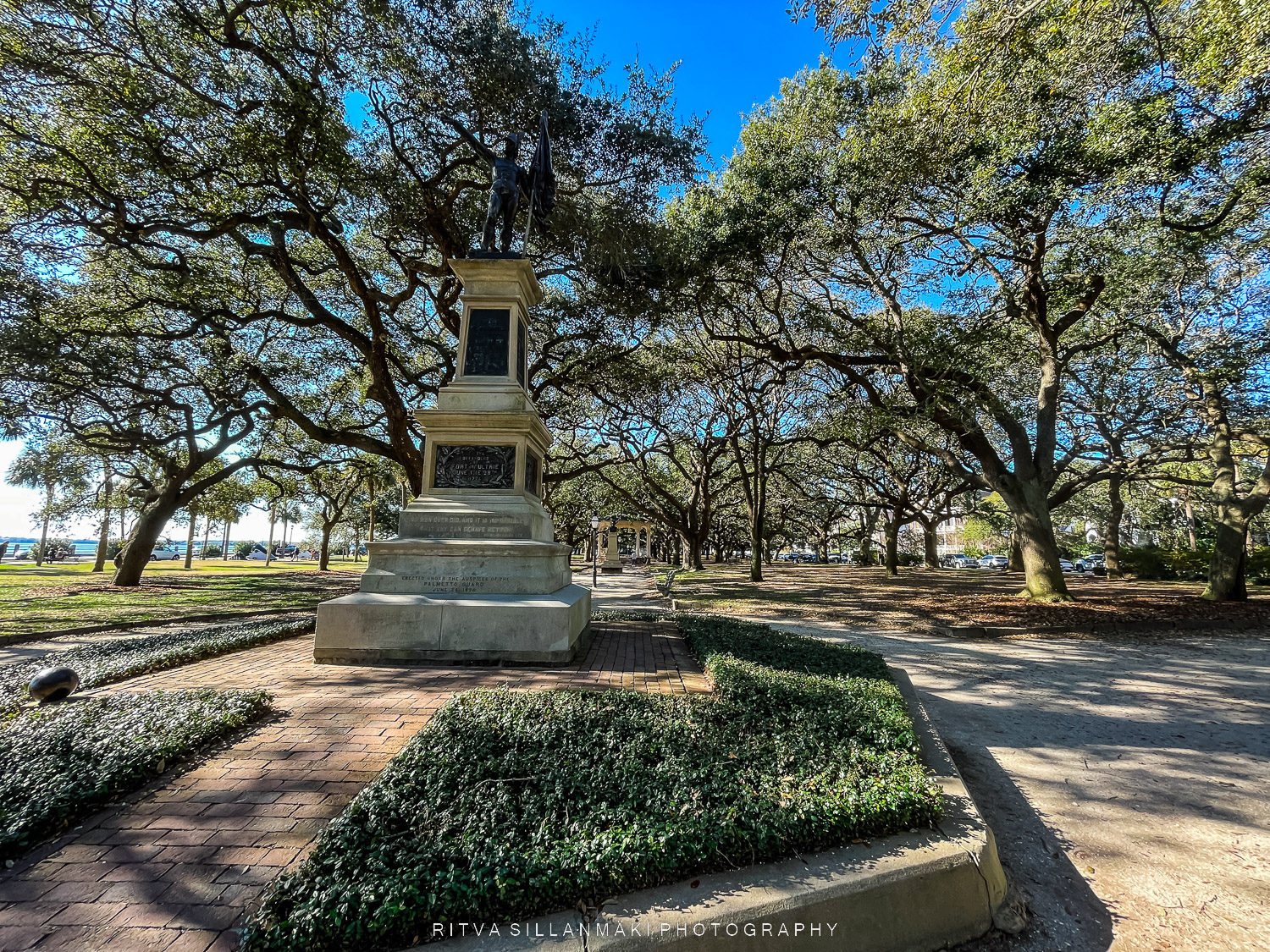
After Pineapple Fountain we took a nice break in the White Point Garden in The Battery and droveby the Rainbow Row.
Later in the afternoon we drove over another spectacular bridge, Arthur Ravenel Jr. Bridge, to Shem Rock in town of Mt. Pleasant. Had a late lunch at Tavern & Table by the creek and prepared ourselves for the sunset. We walked along the Shem Creek Boardwalk to catch the glorious sunset. I will post these photos in the nexrt post as this is already an overload of images.
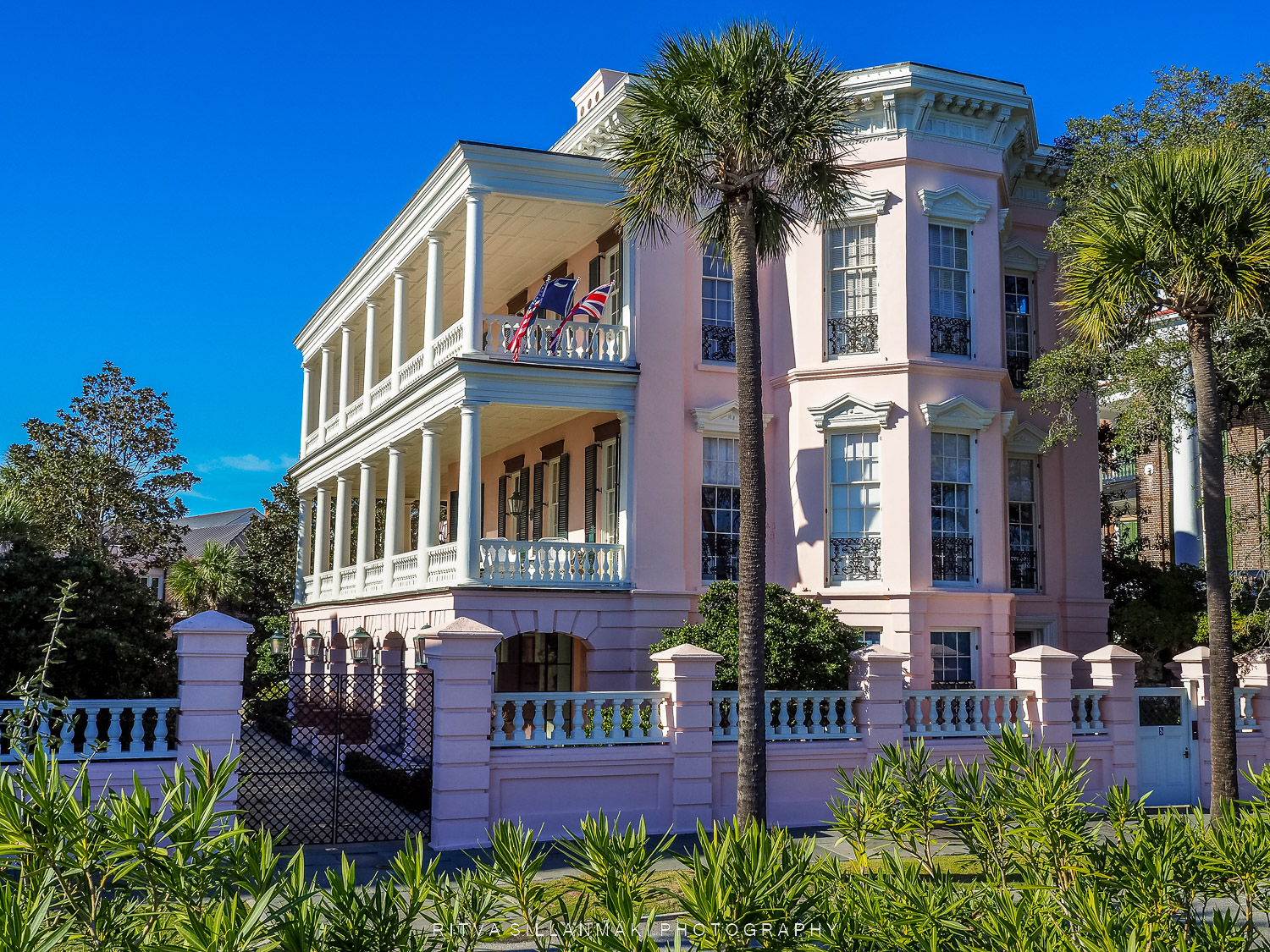
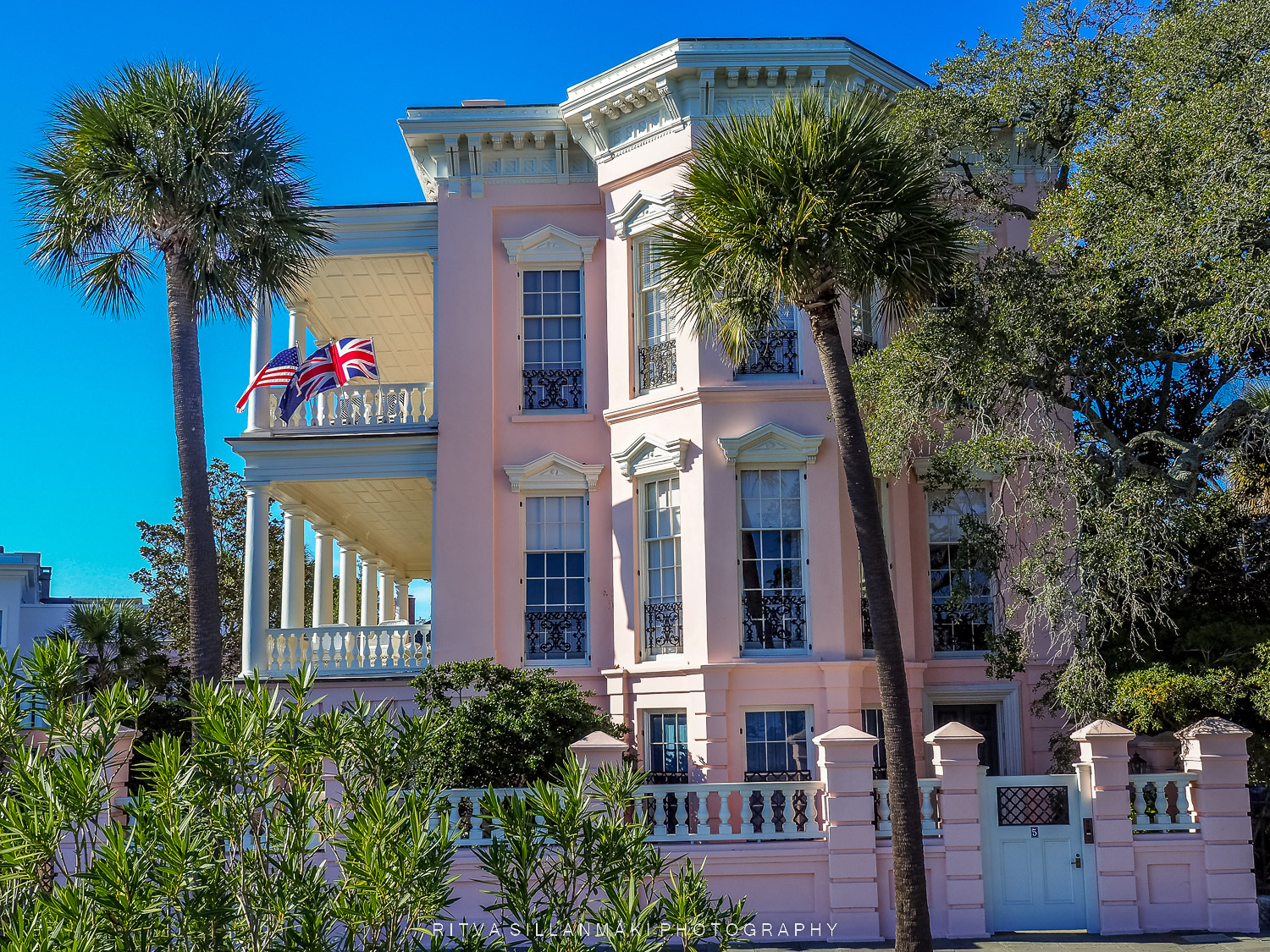
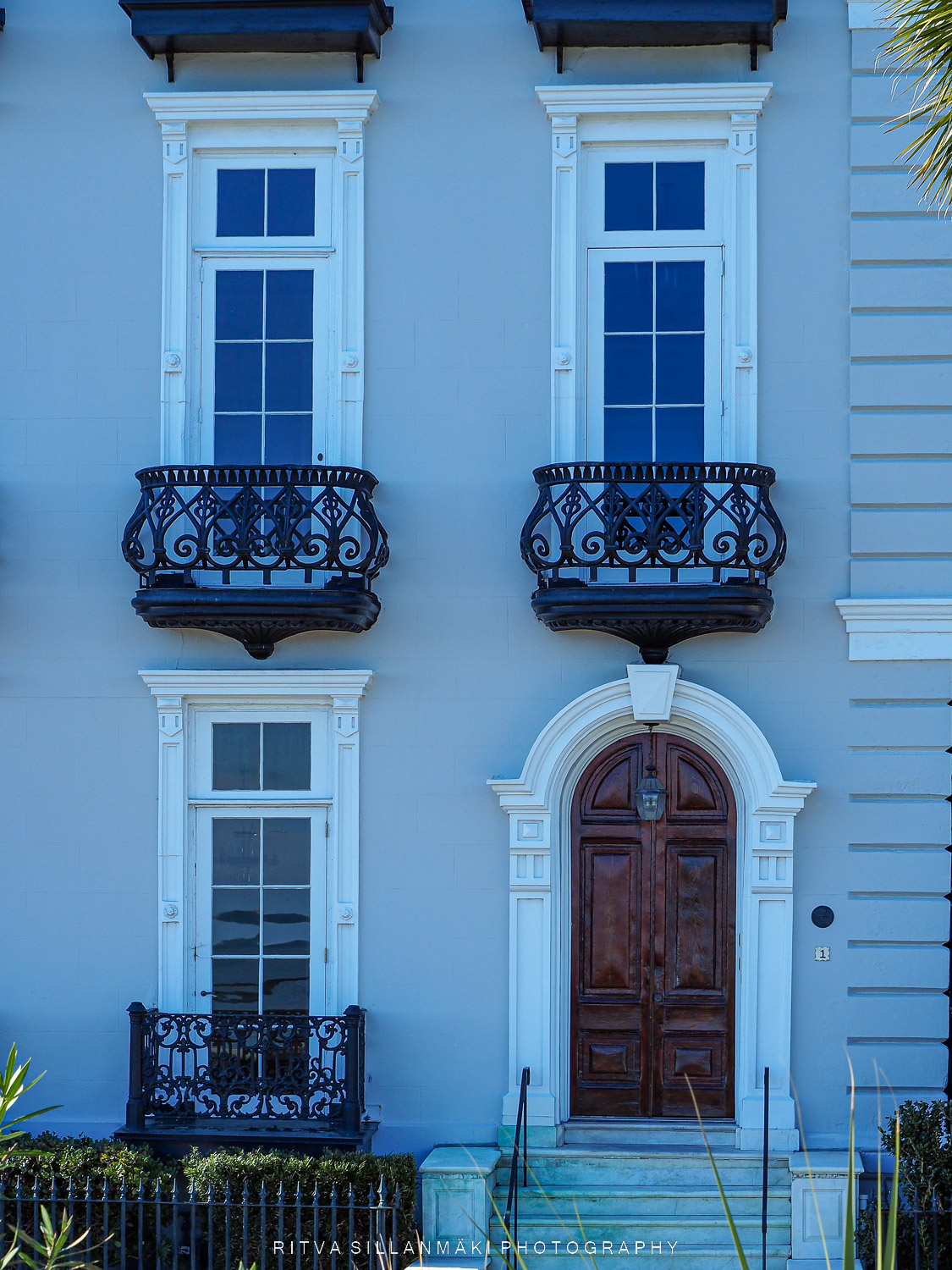
The Palmer Home (Pink House) in historic Charleston is one of the Holy City’s most iconic mansions, frequently photographed and often depicted in paintings of the grand homes along the Battery. Built between 1847 and 1849 by John Ravenel, a wealthy merchant and president of the South Carolina Railroad Company, the home remained in the Ravenel family until 1953.
On the way back to the hotel we visited the city center once again. The center was very easy to navigate even in the dark without the navigator because it has been built into a grid. Naturally because it was off-season the traffic wasn’t bad either. Sometimes the one-way streets caught us off-guard but the clear grid saved us.
LAPC #235: Shadows and Reflections in Monochrome, Patti’s looking for shadows a/o reflections but in monochrome.
Patti from P.A. Moed CREATIVE EXPLORATION IN WORDS AND PICTURES Wrote;
This week, we’re challenging you to show us photos with reflections and/or shadows captured or processed in monochrome. Feel free to process your image in different shades of blue, green, brown, or gray. You can also shoot your image in a setting that’s predominantly one color–like a blue sea and sky, for example. I’ve checked quite a few experts who agree that black and white photos are not two colors, but varying shades of one color–gray. Purists will refer to black and white images as grayscale. So, for our challenge, black and white images fall under the category of monochrome.
The photos below are from our recent trip to the southern states, South Carolina and Georgia.
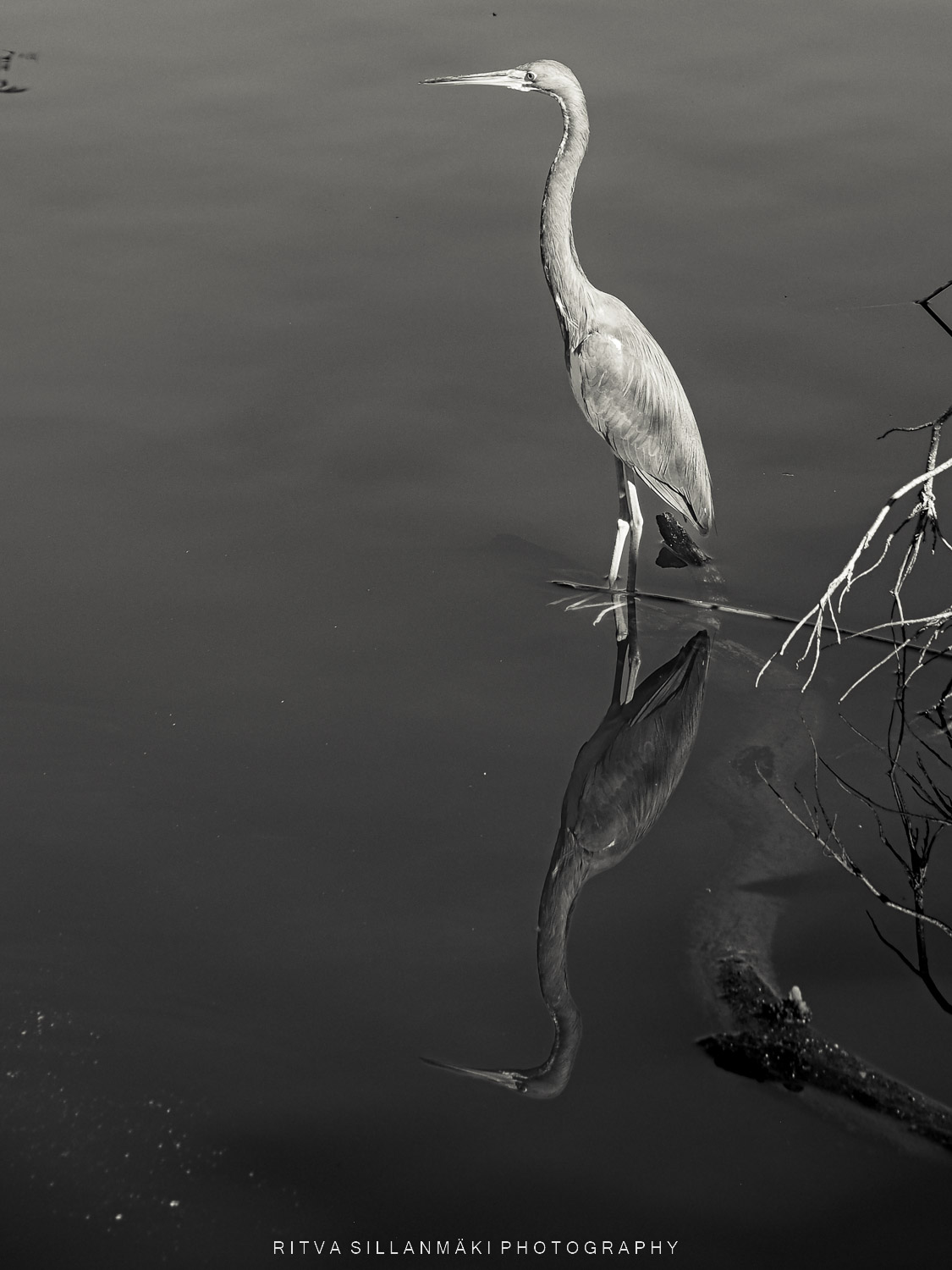
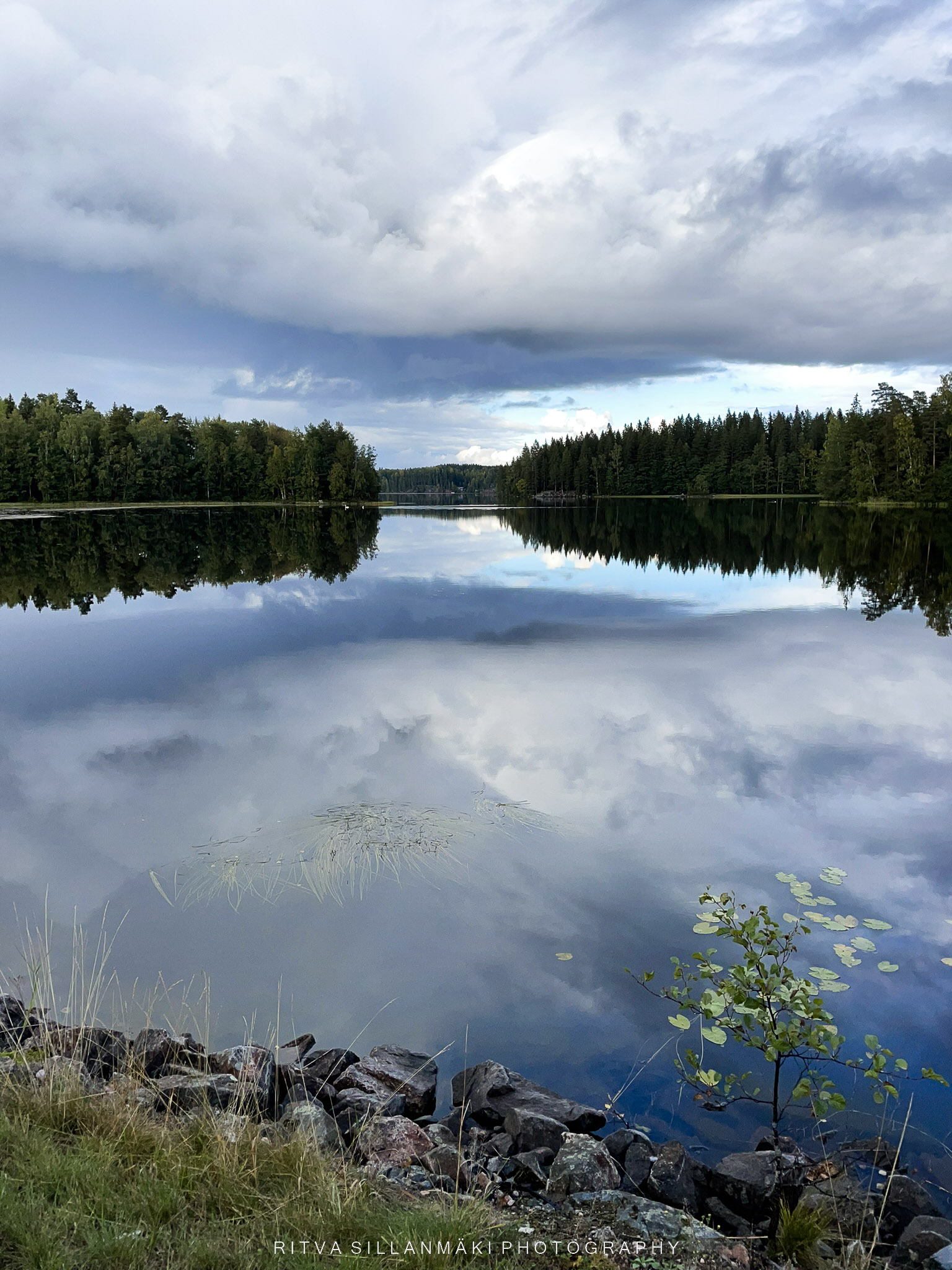
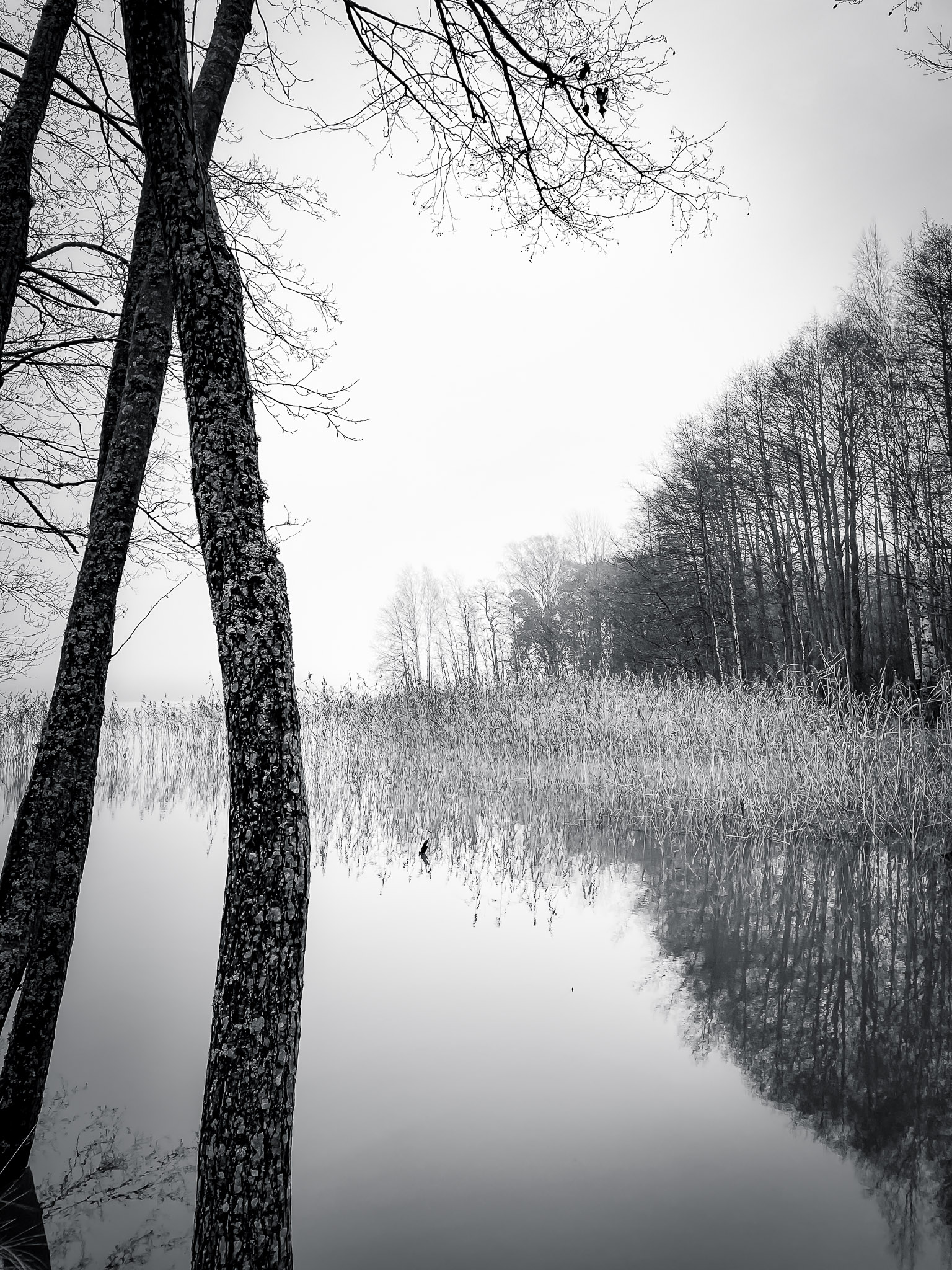
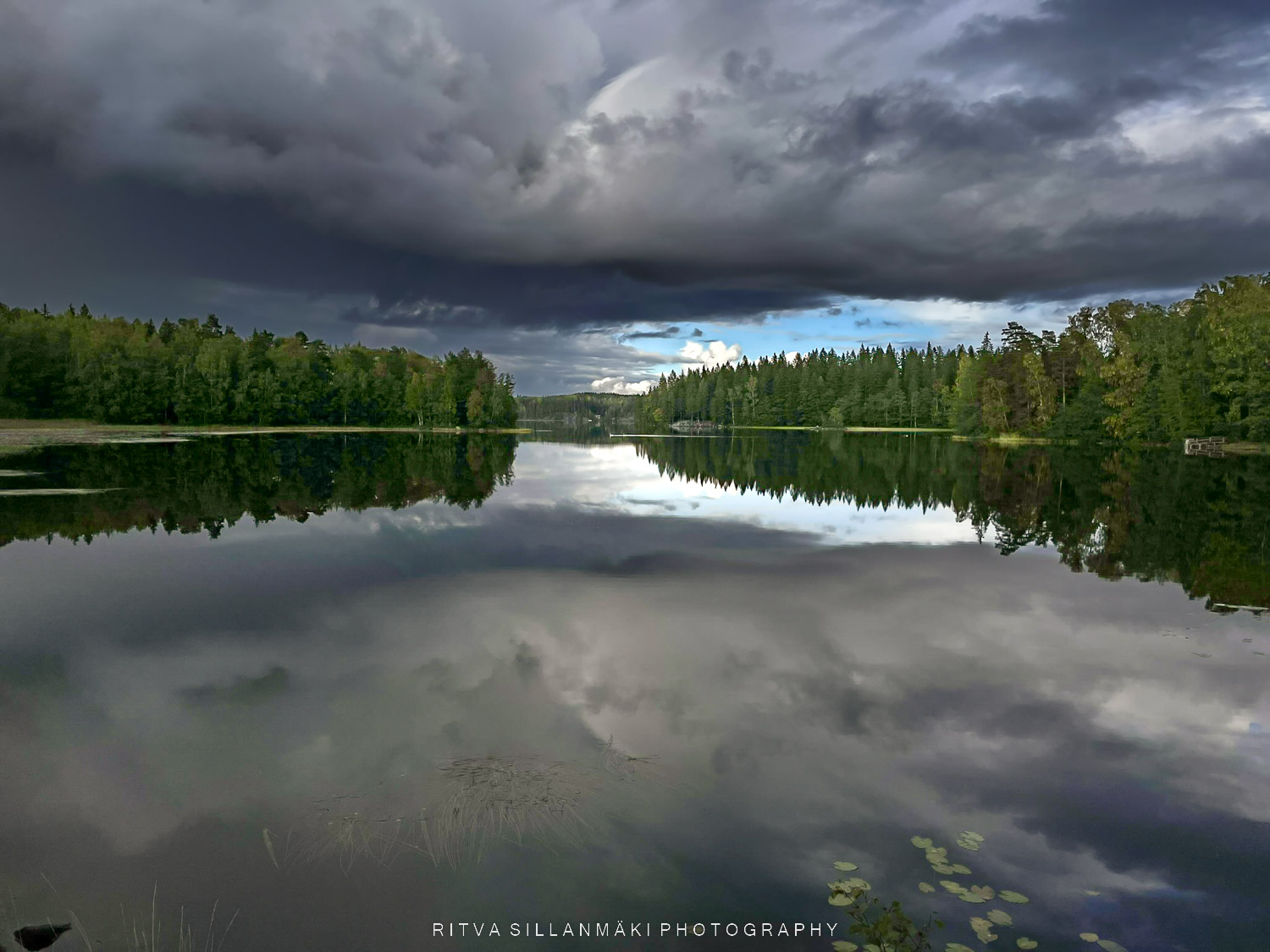
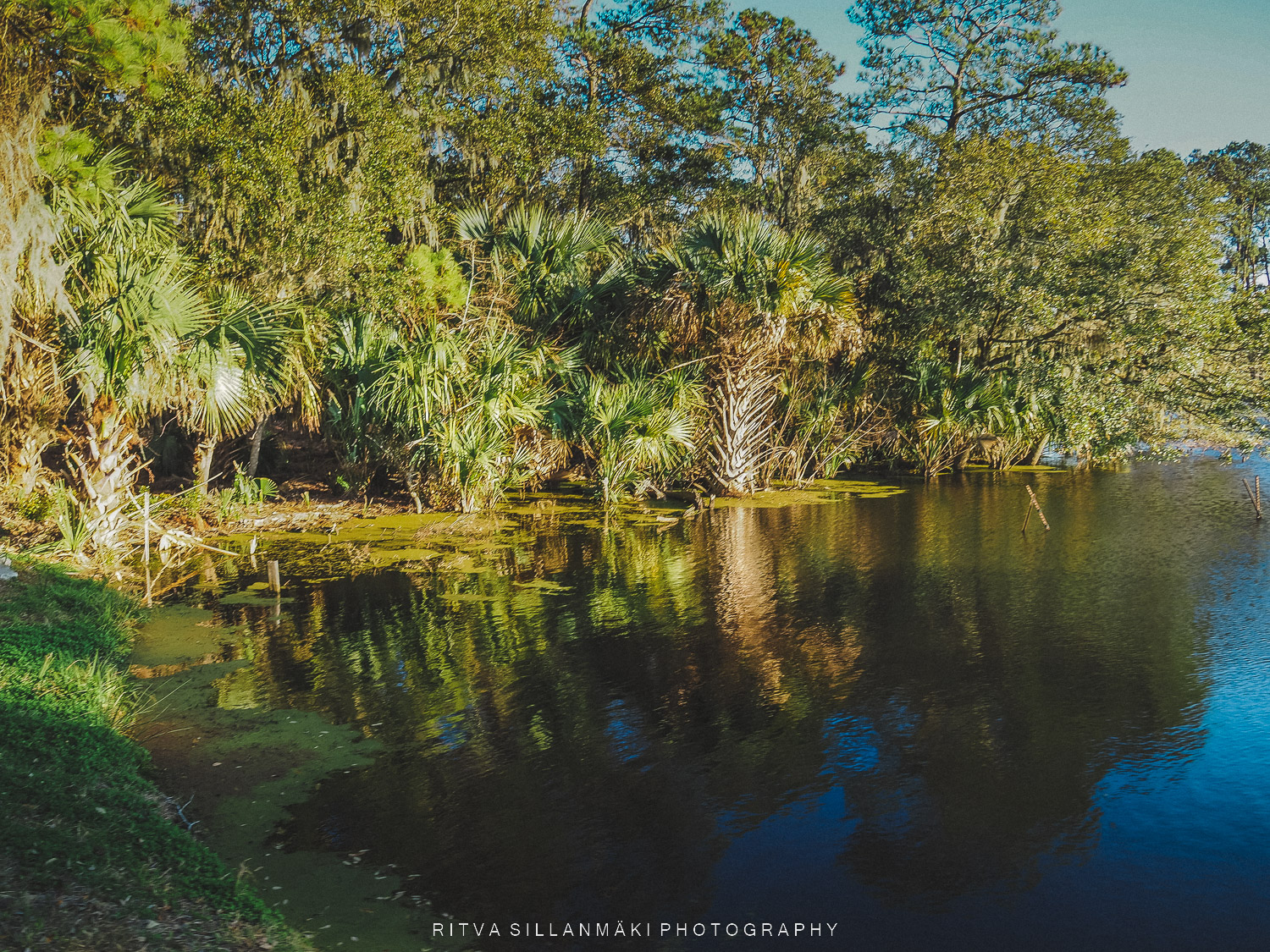
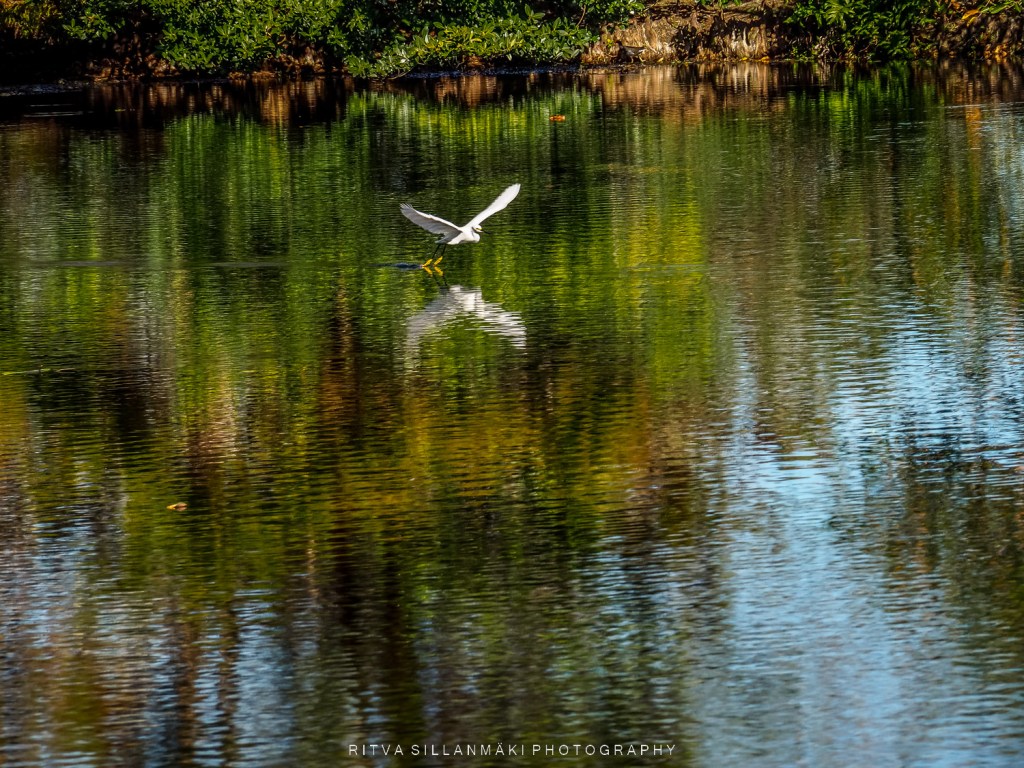
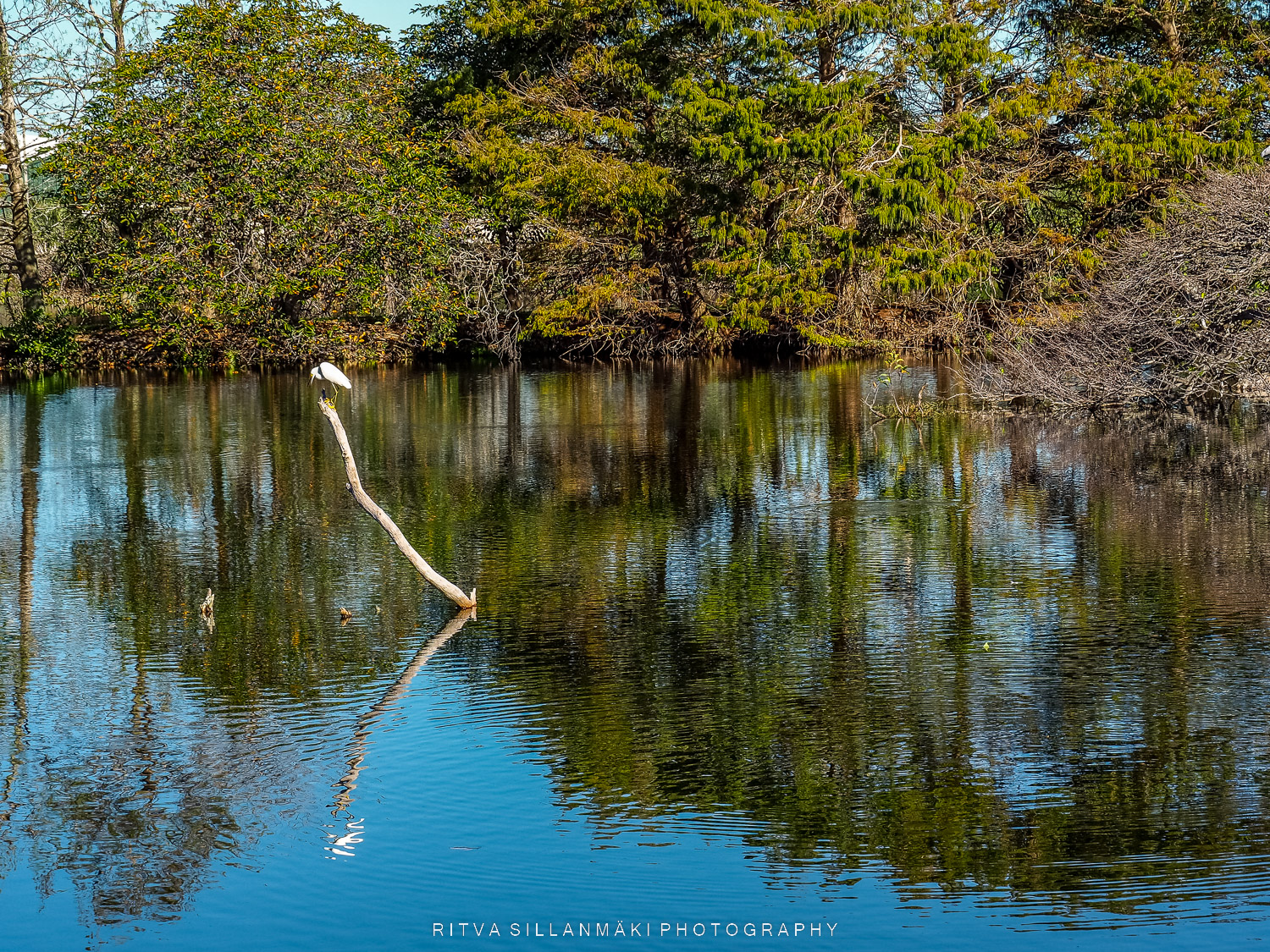
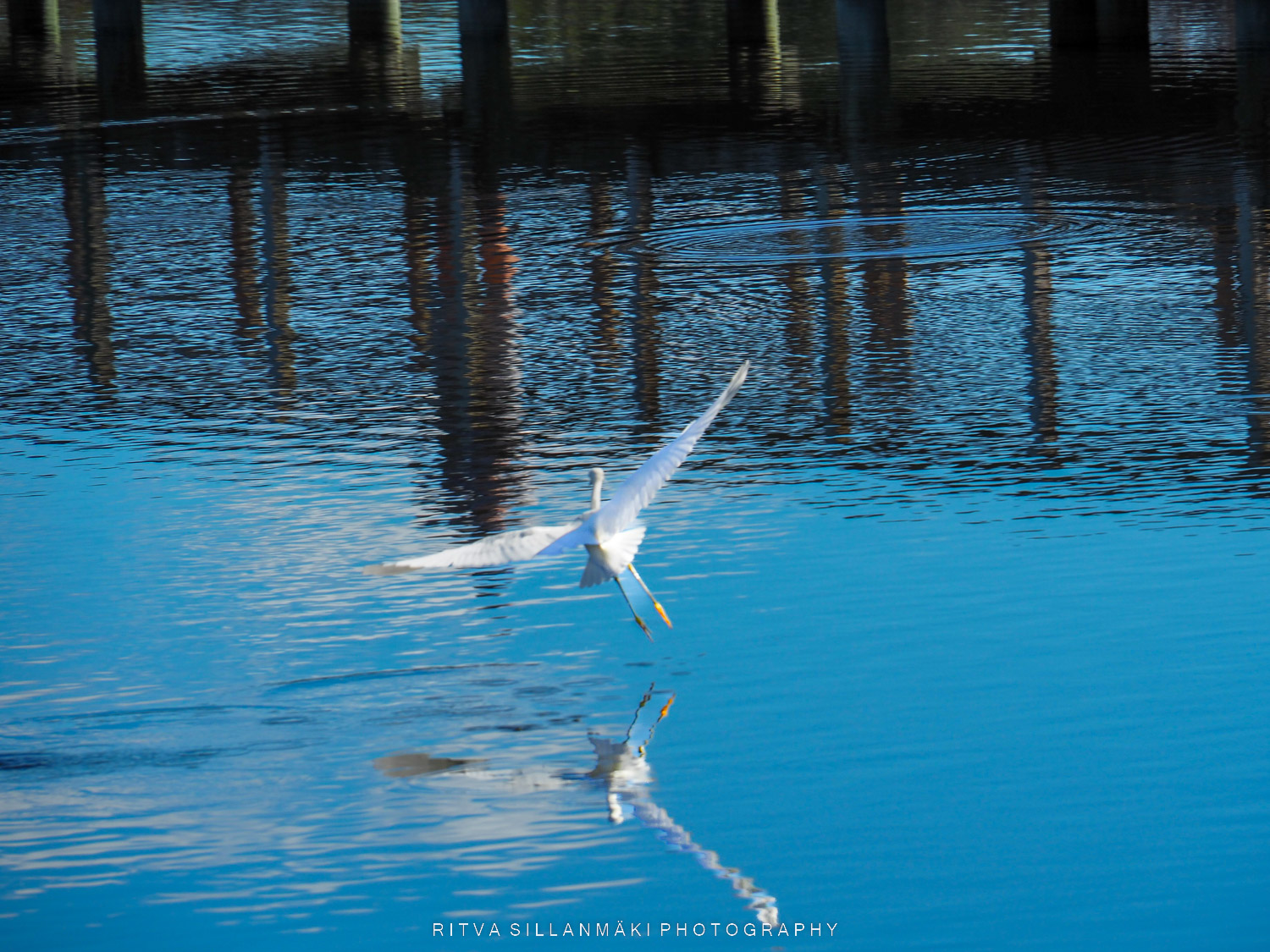
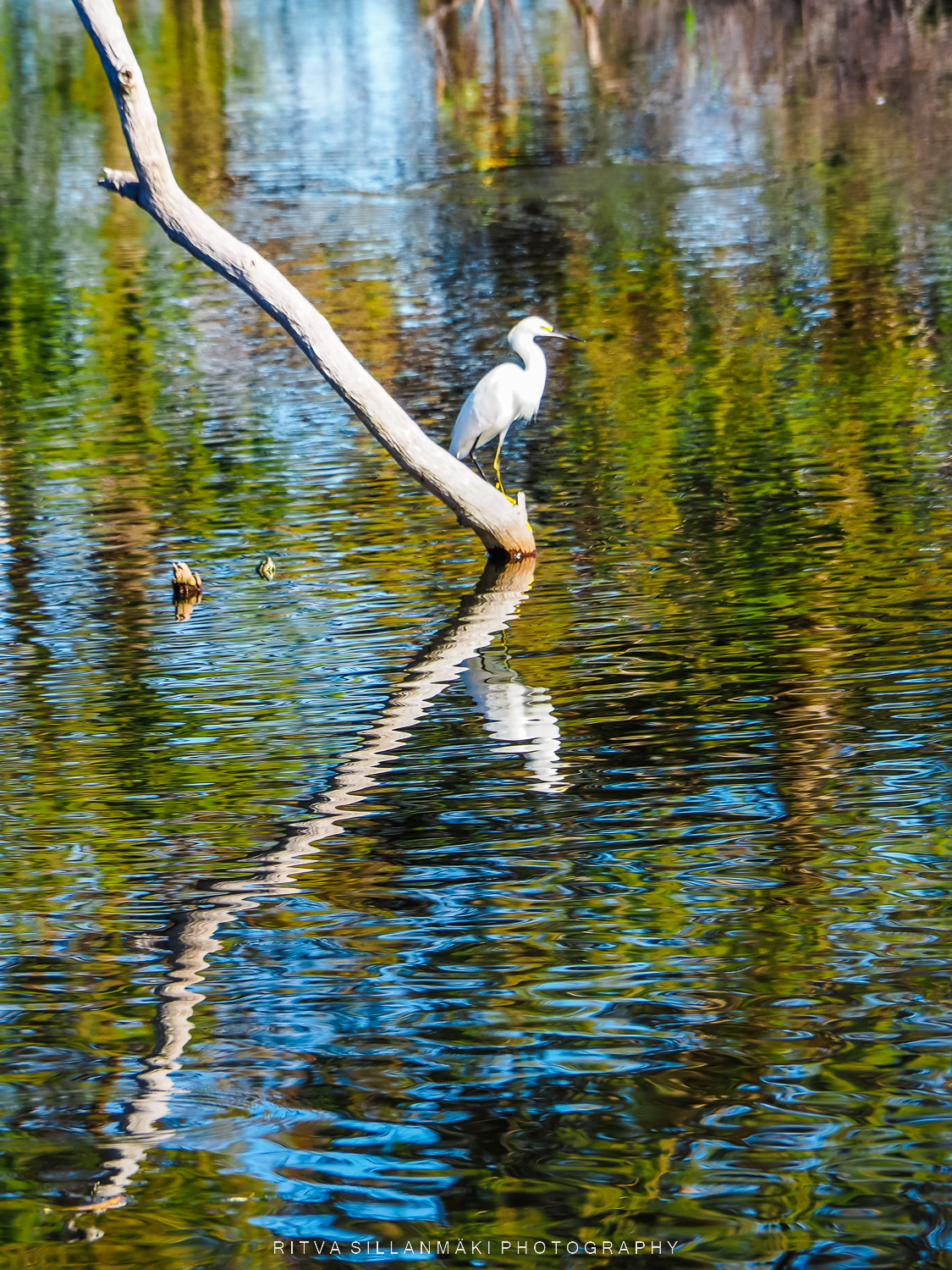
Water reflections – obviously easiest to do.
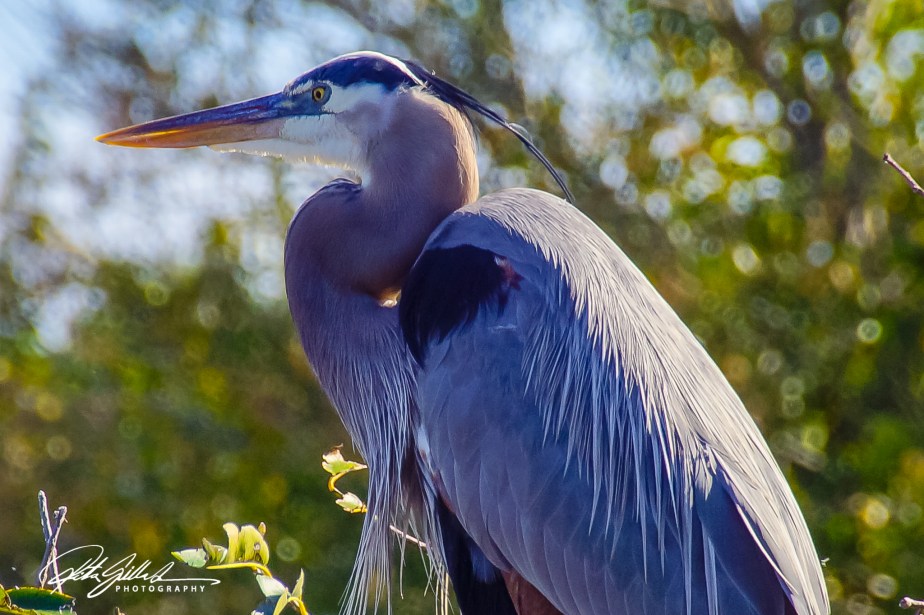
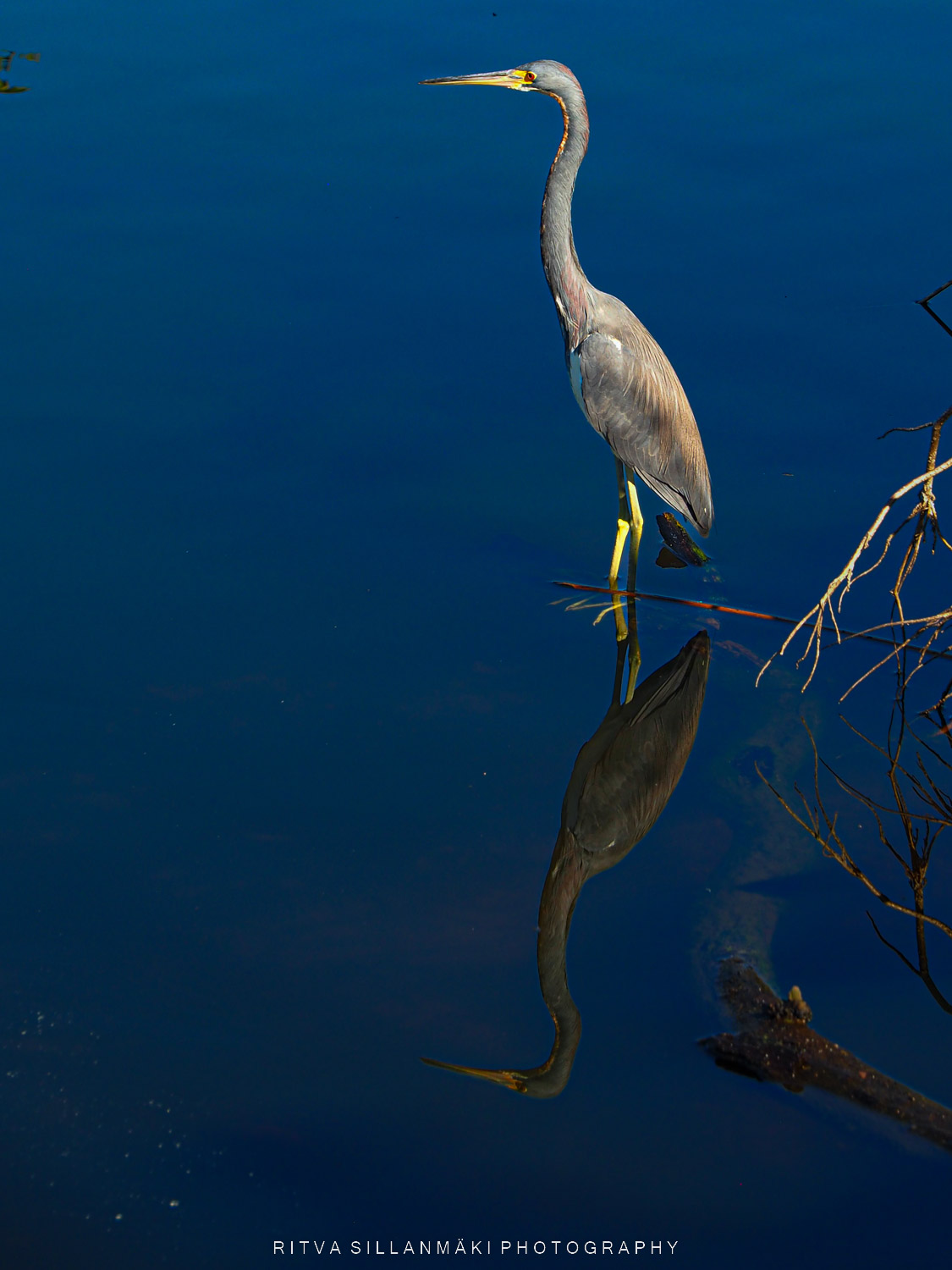
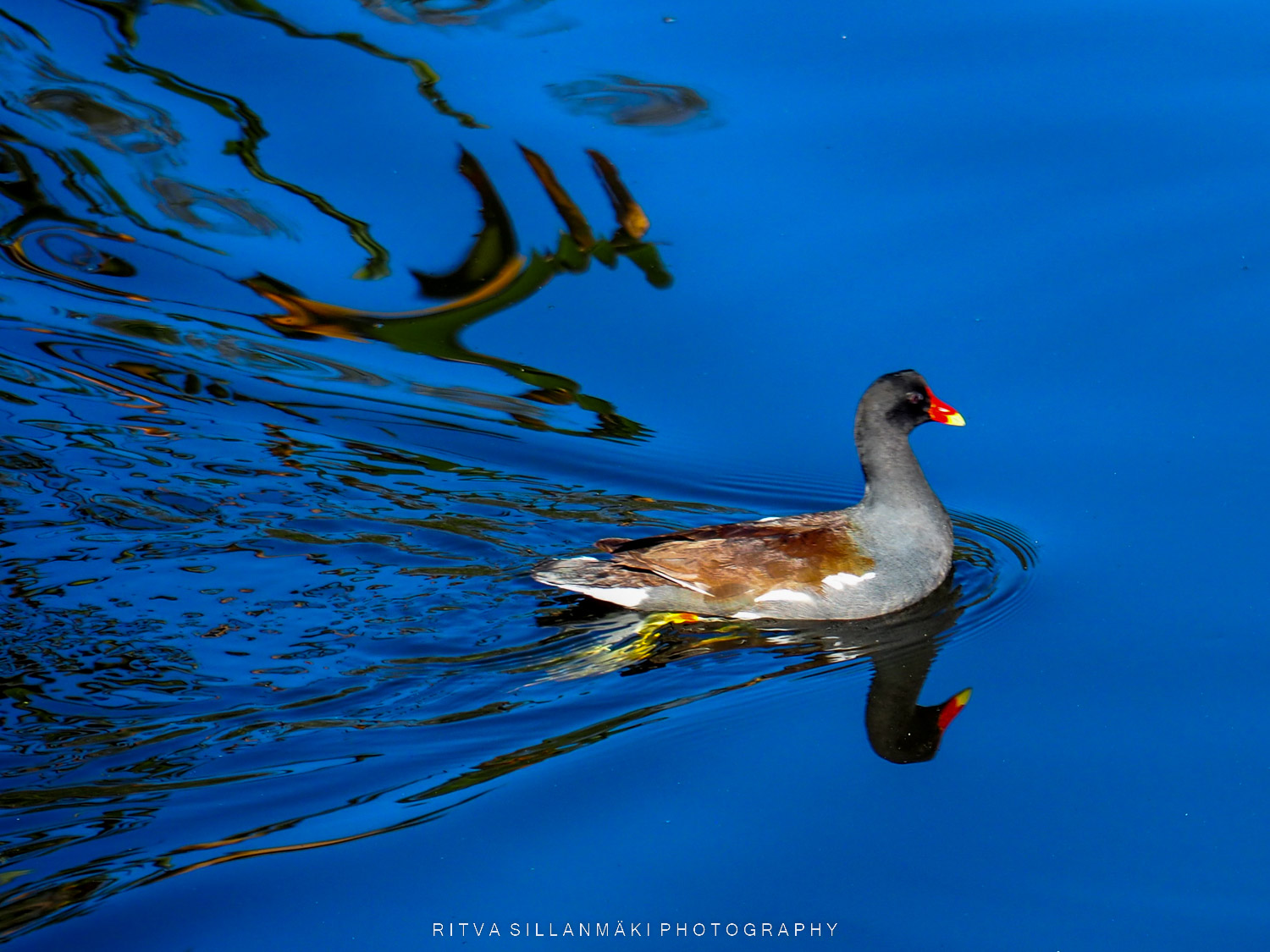
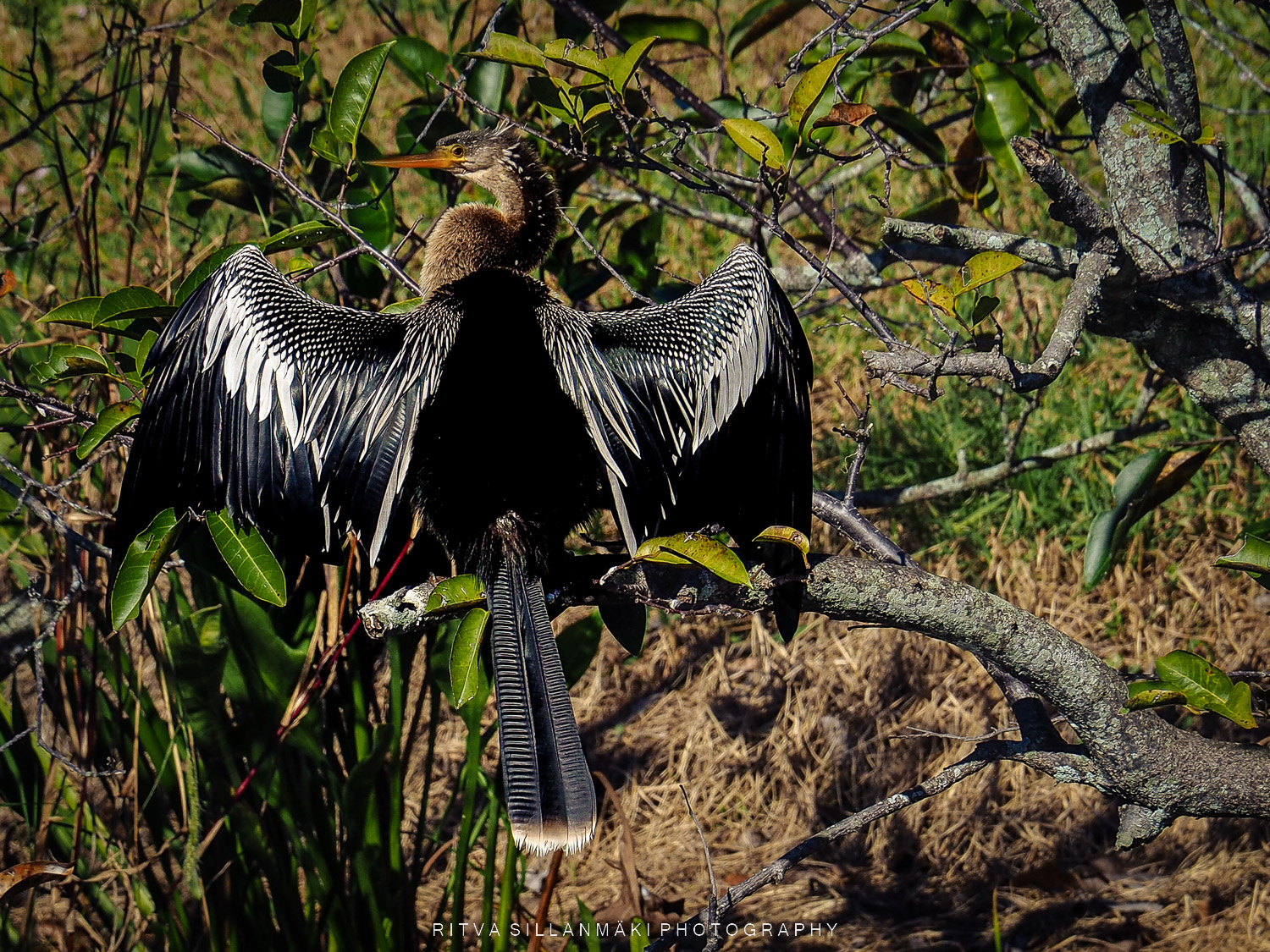
Birds and reflection from Florida, and lake reflection from Nastola, Finland
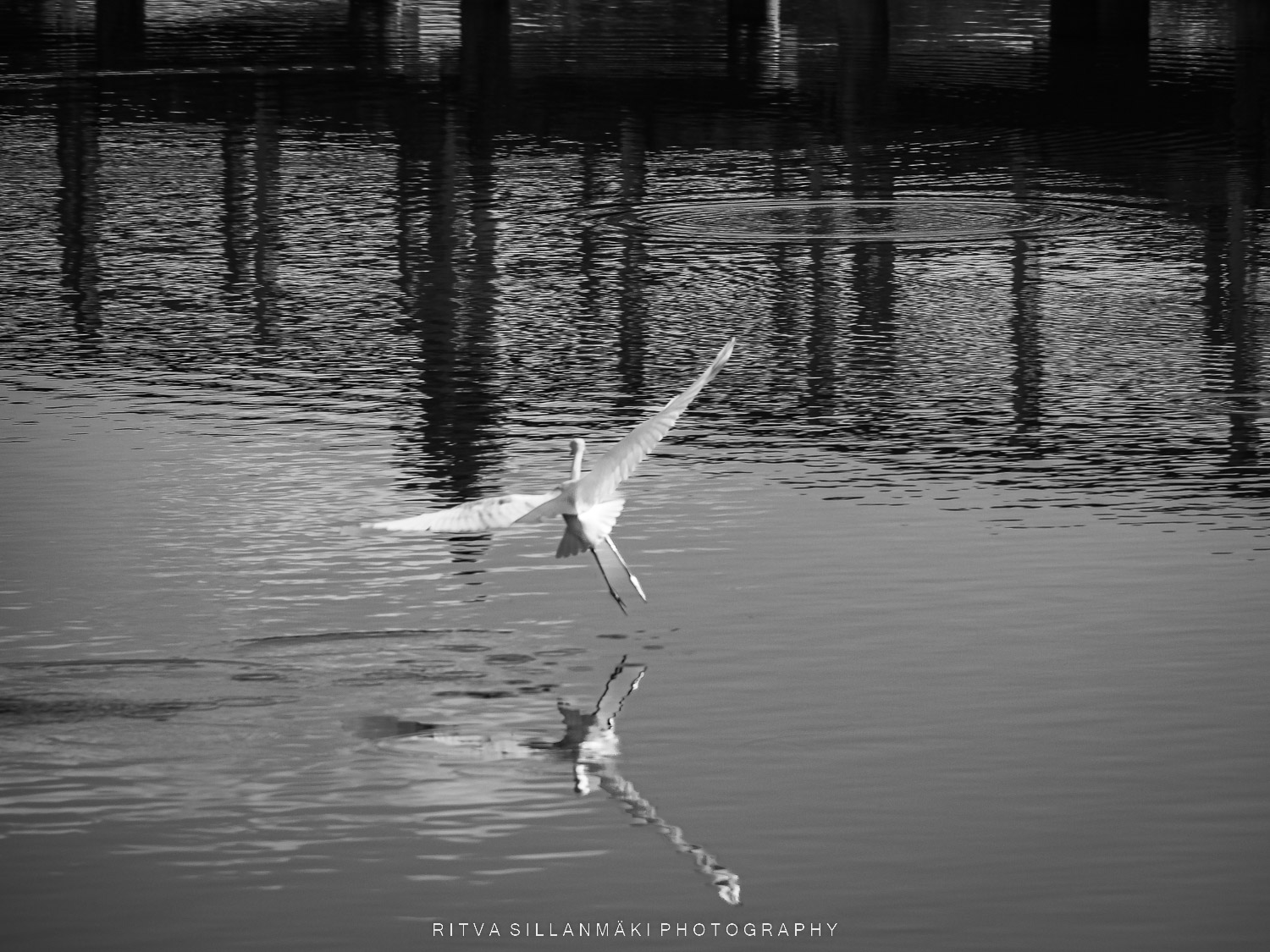
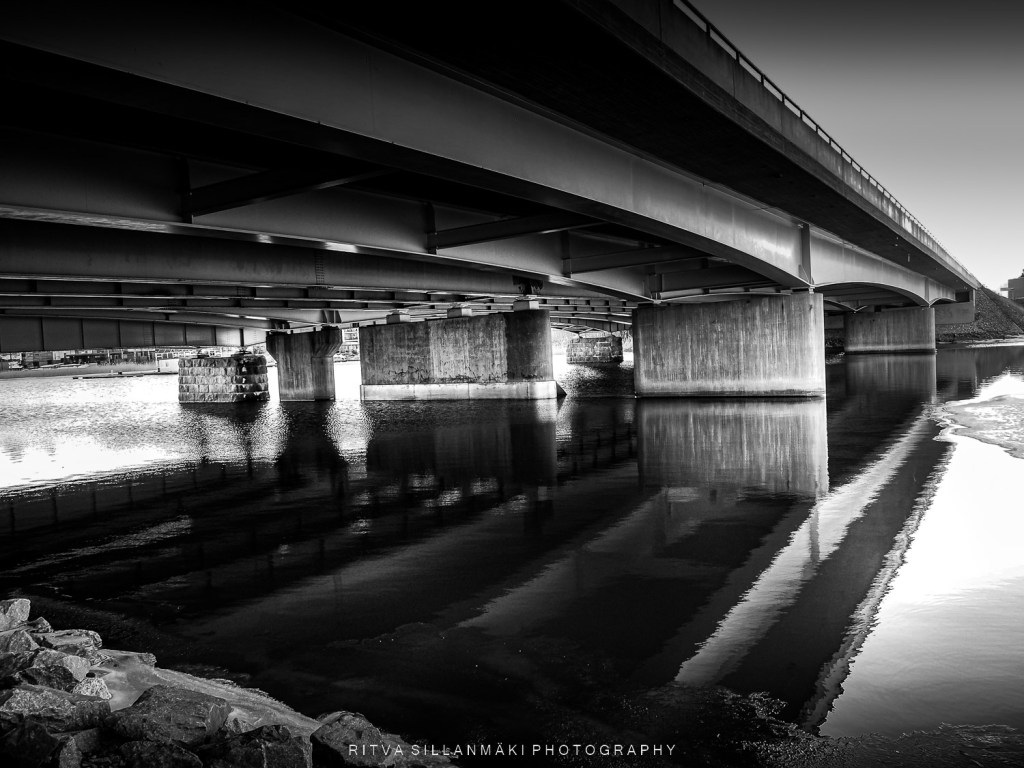
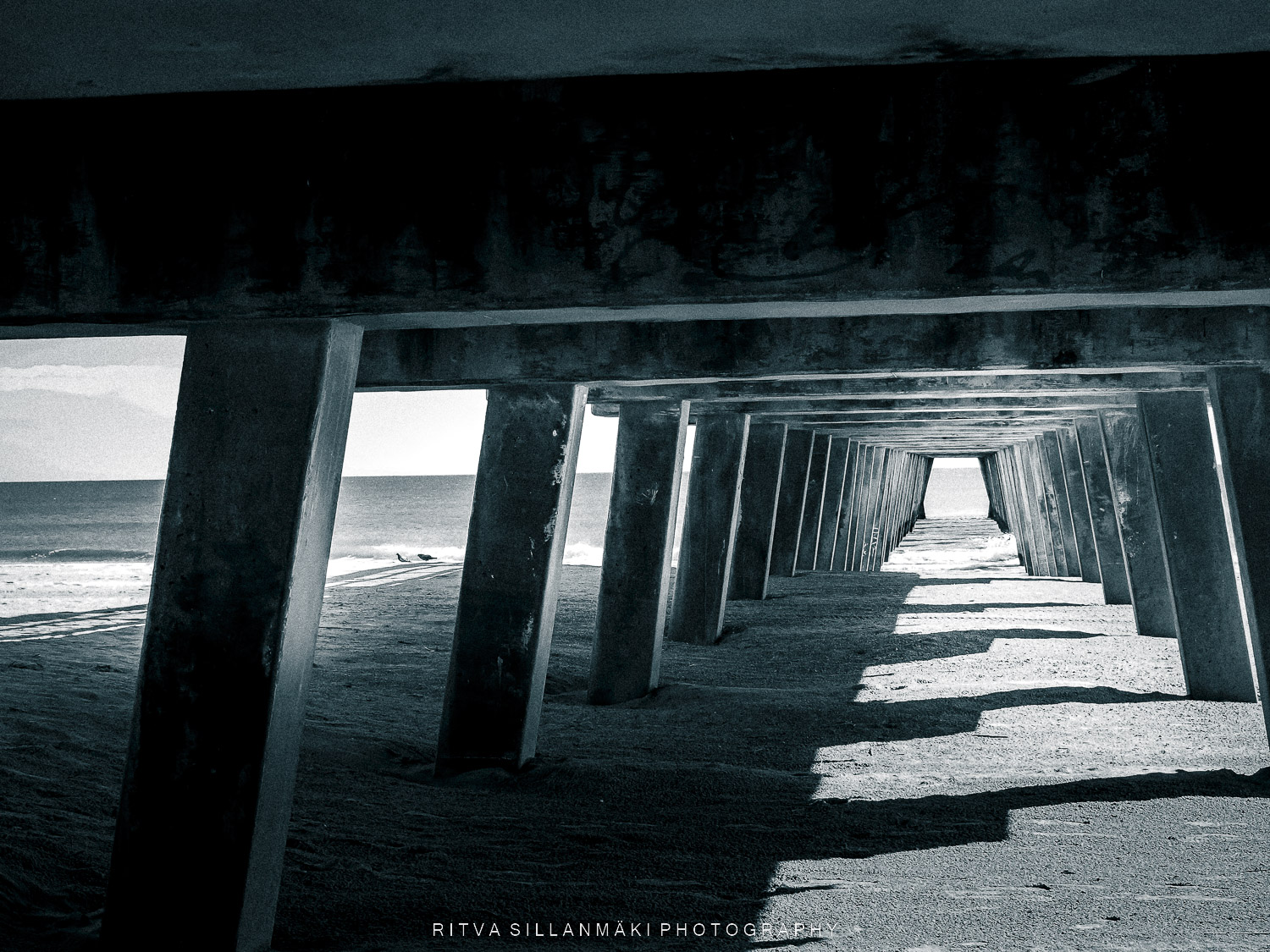
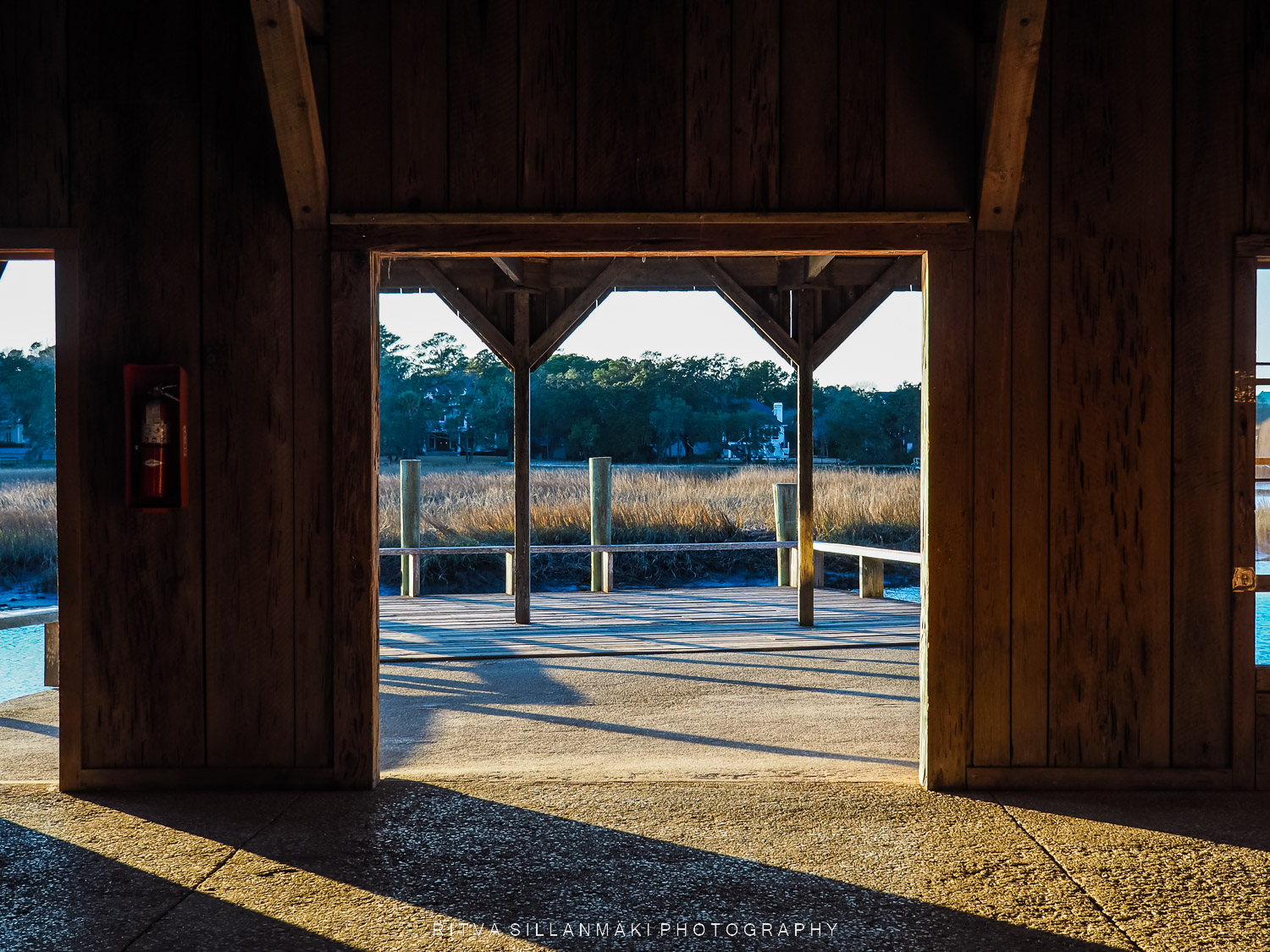
Under the bridge in Kivenlahti, Finland on a February afternoon. Below also one from a pier in Savannah.
As I’ve stated before I am not a very technical photographer, more into composition, mood. I do my magic on the edit table mostly, if you can call it magic, more like my interpretation of places and people. I am also not one to write all that much, let the photos speack for themselves.
I have two cameras an old reliable SONY SLT-A65V, and I have two lences I use with it one for Macro Sony Macro 2.8/50 and portraits. The other for nearly everything a Sony 18-200mm.
The Sony has been in less use since I bought a new lighter one to carry around, its a Olympus E-M10 Mark II with a 14-150mm lense and I have a OM-D M.ZUIKO DIGITAL 45mm 1:1.8 for street and portrait photography
Boone Hall Plantation in Mt Pleasant was founded in 1681 when Englishman Major John Boone came to Charleston area. Major Boone was quite respected and he was elected to the colonial Grand Council during the 1680s, but was removed twice because he illegally trafficked enslaved Native Americans, became associated with pirates, and concealed stolen goods. However, having slaves in general was no problem, as we have learnt from history books.
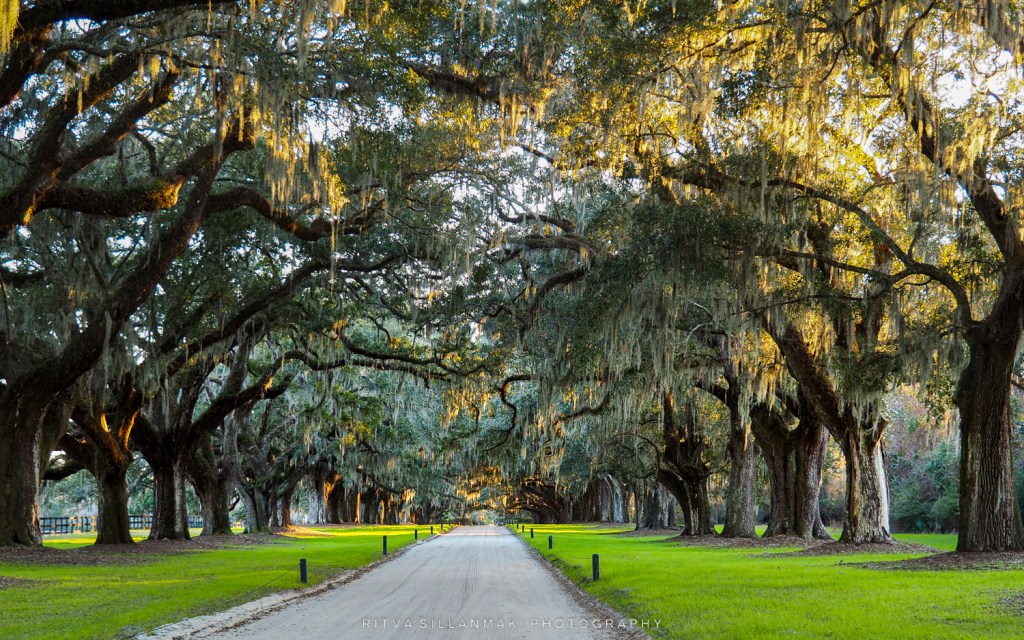
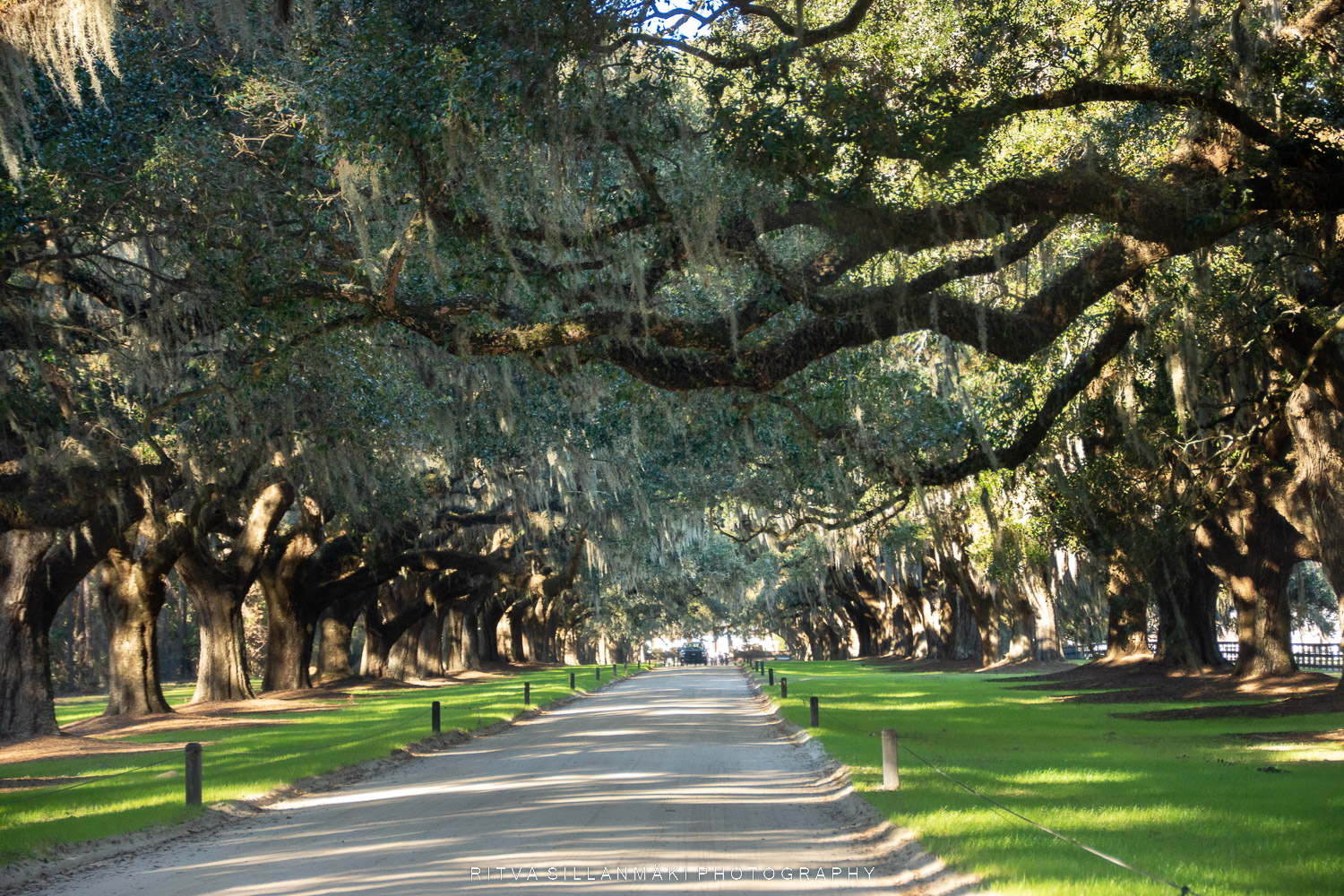
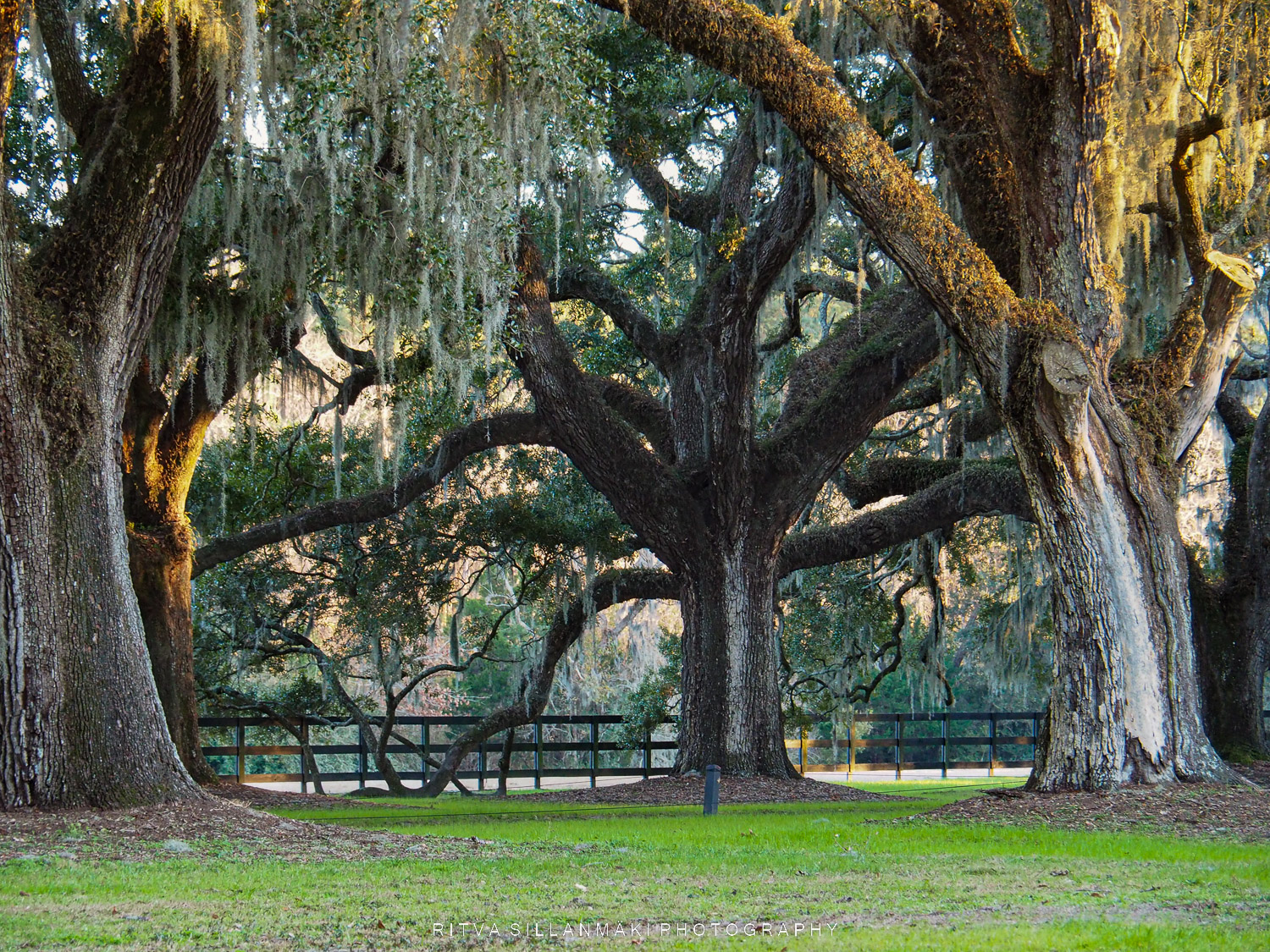
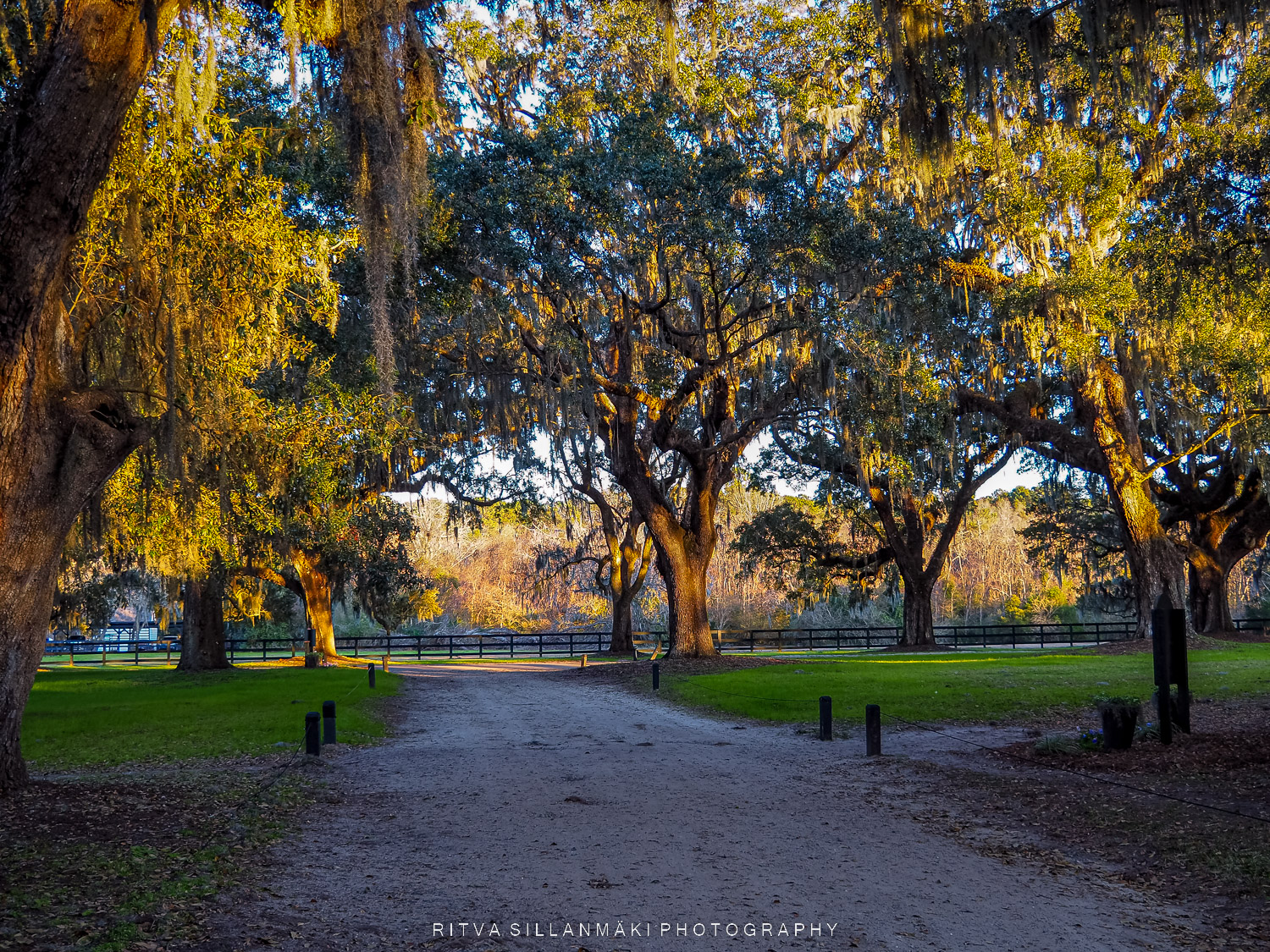
The Grand Avenue of Oaks that was first planted in 1743
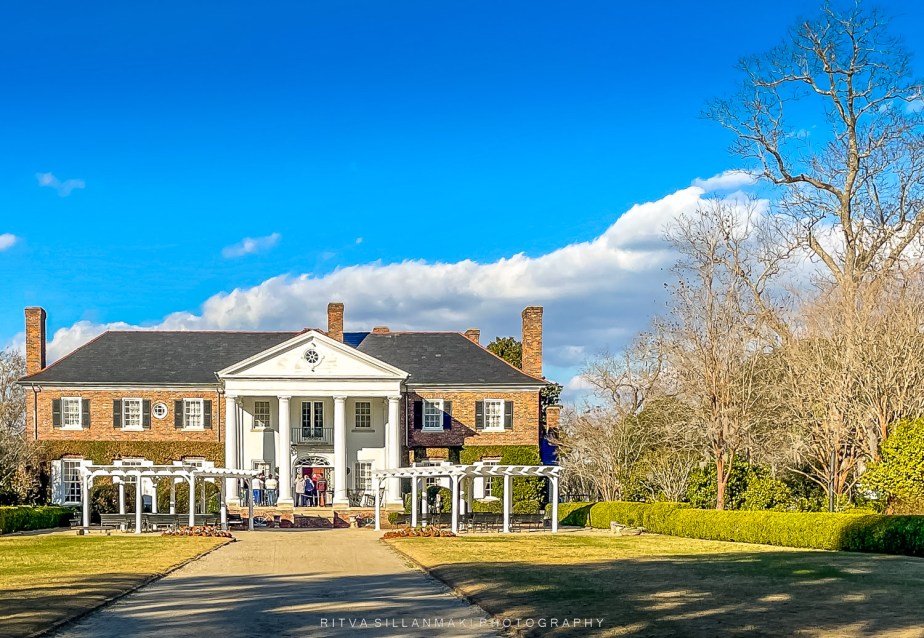
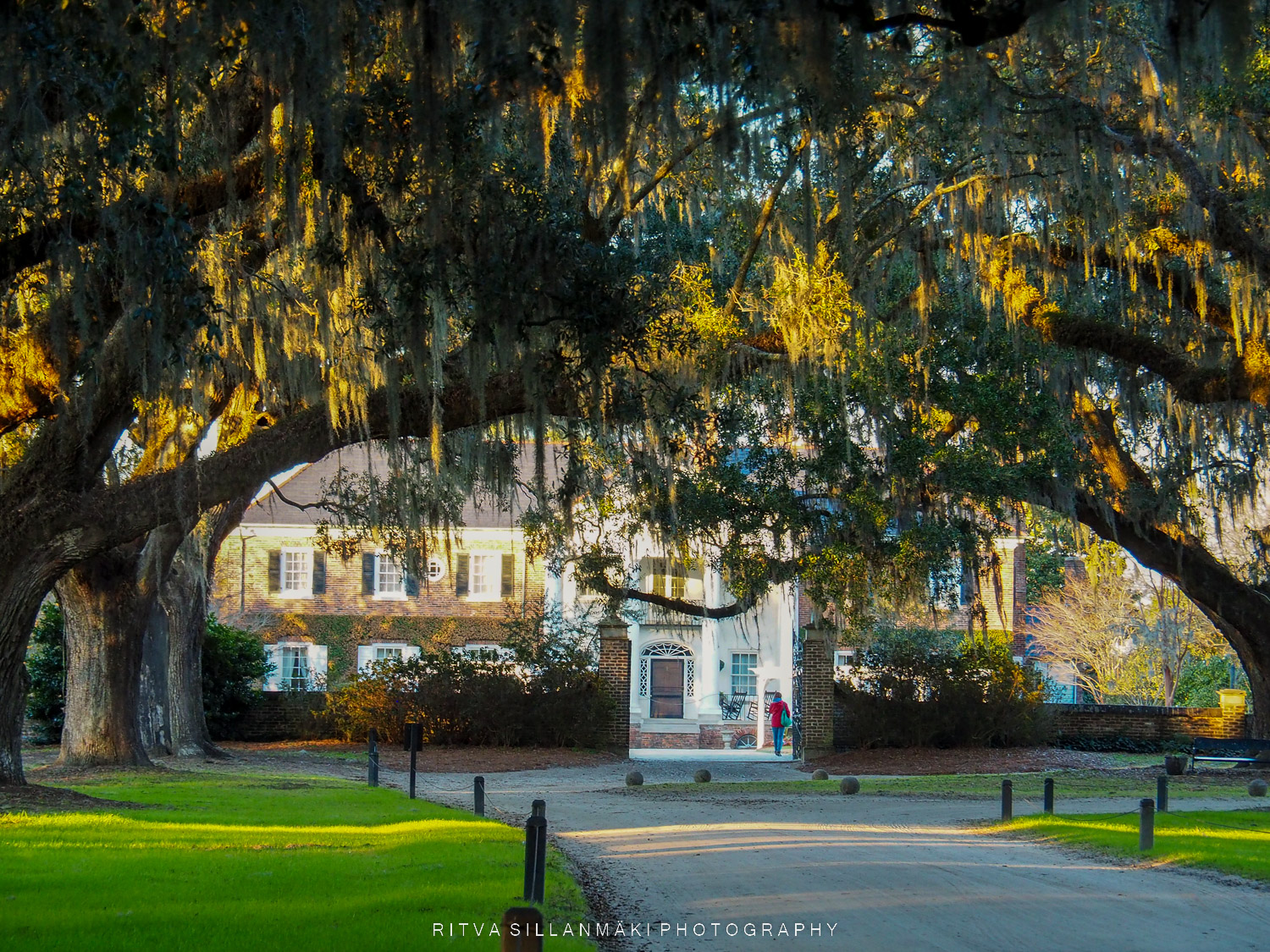
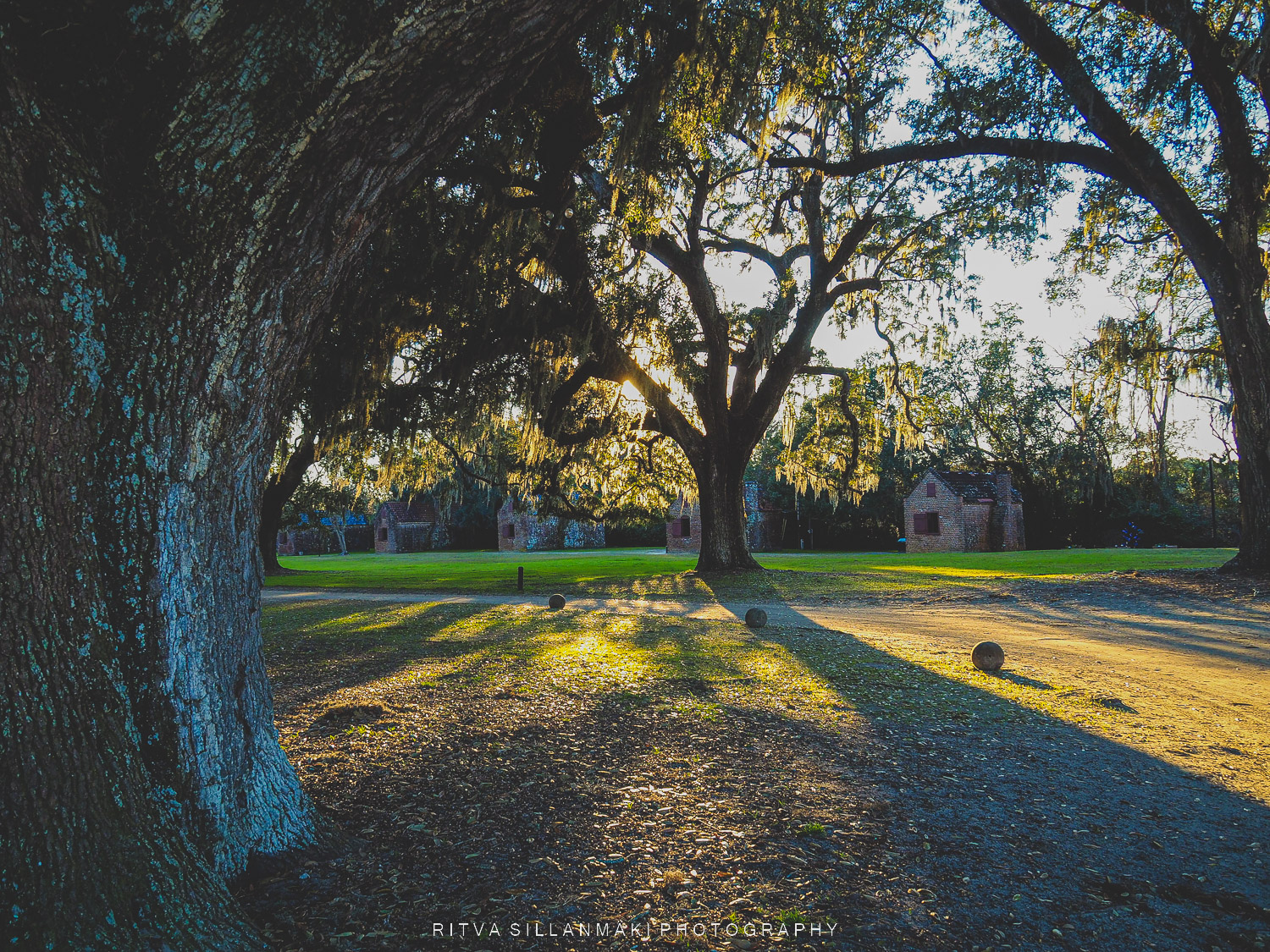
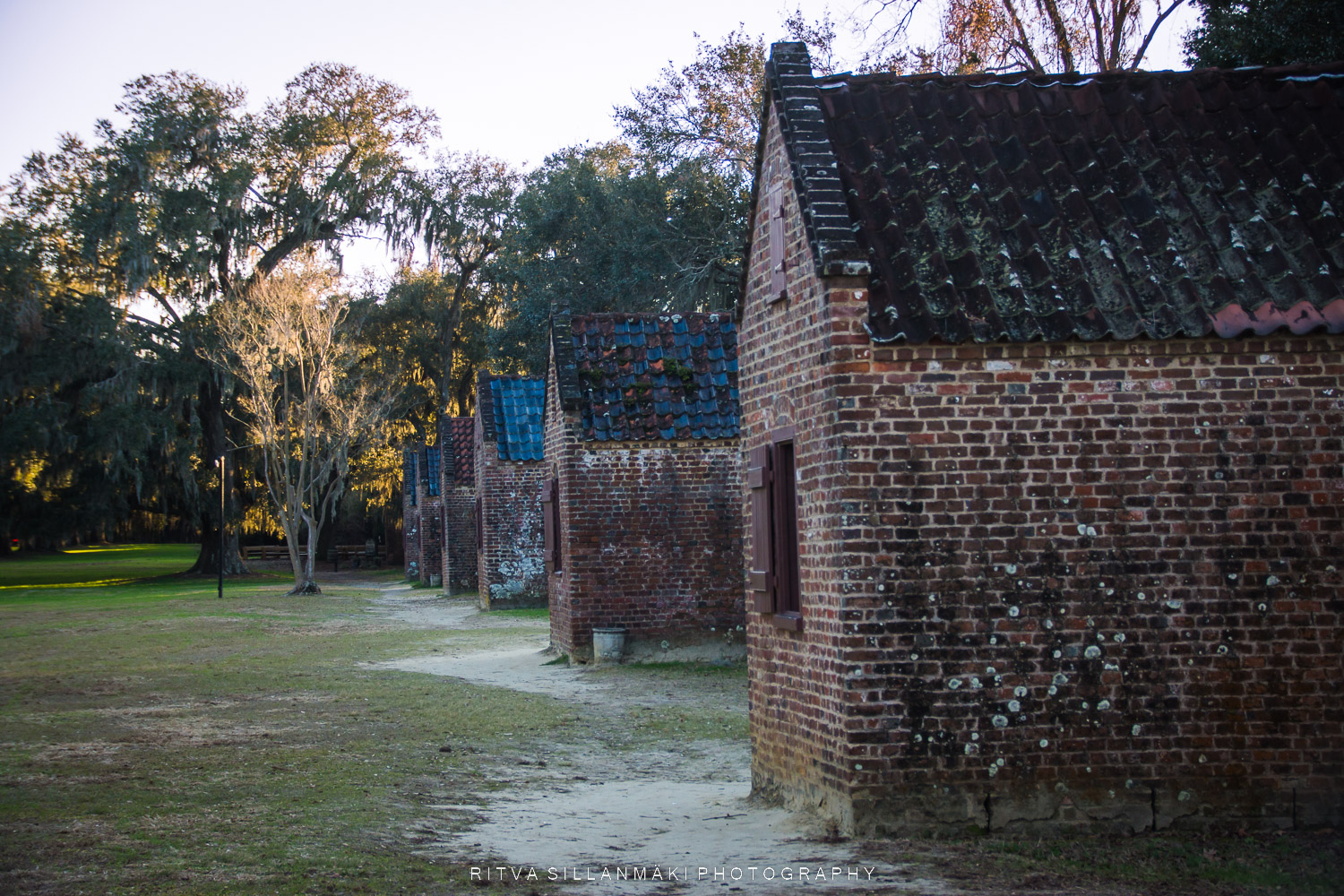
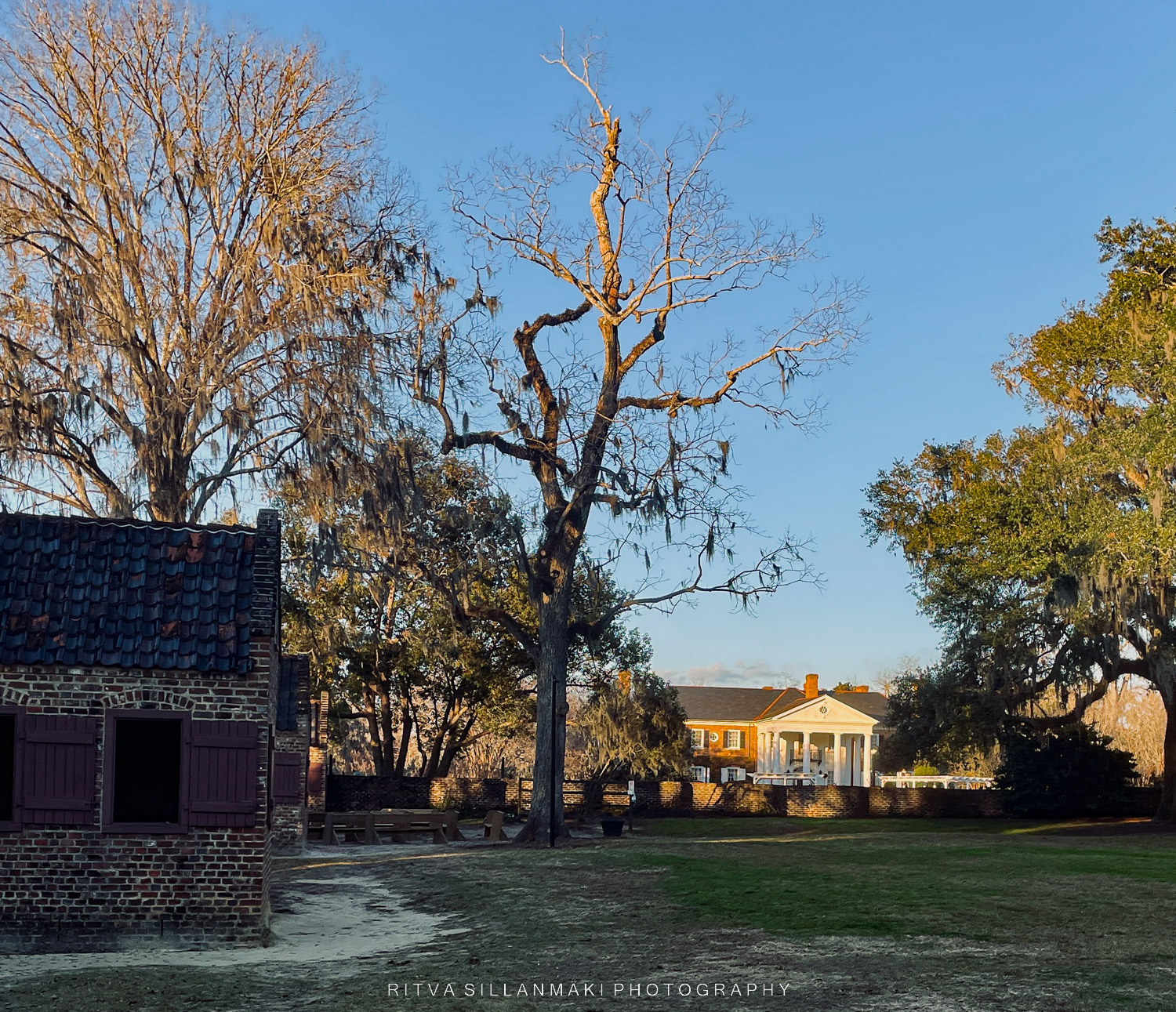
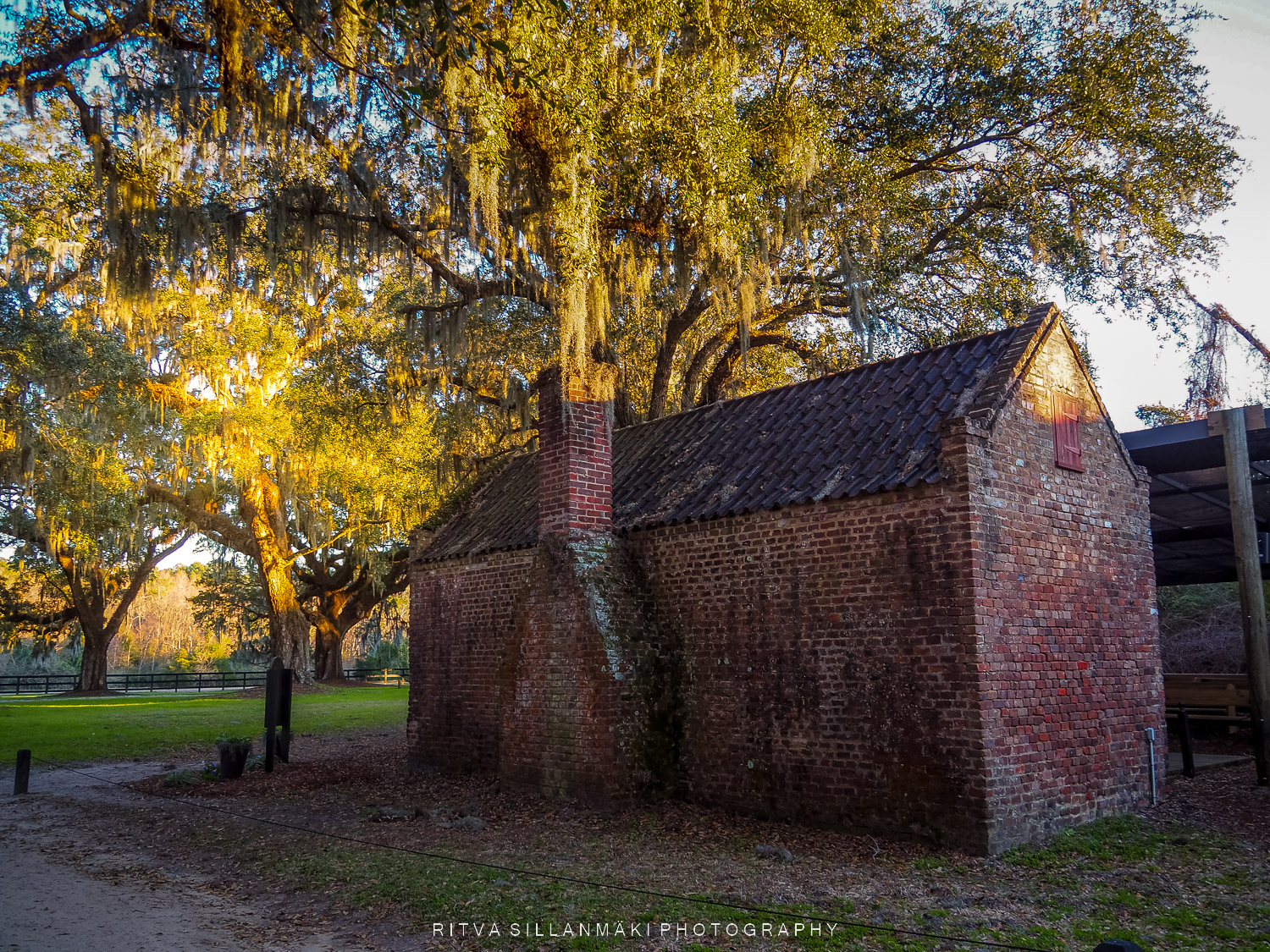
The house on the plantation the third of its kind, built in 1935 and not your typical antebellum house. But the plantation is one of the oldest plantations still in operation having produced agricultural crops for over 320 years. Much older are the brick slave cabins located along Slave Street which date between 1790 and 1810. Only nine cabins are left. Some of the bricks from cabins that have not been saved were used to build a serpentine wall for the main house.
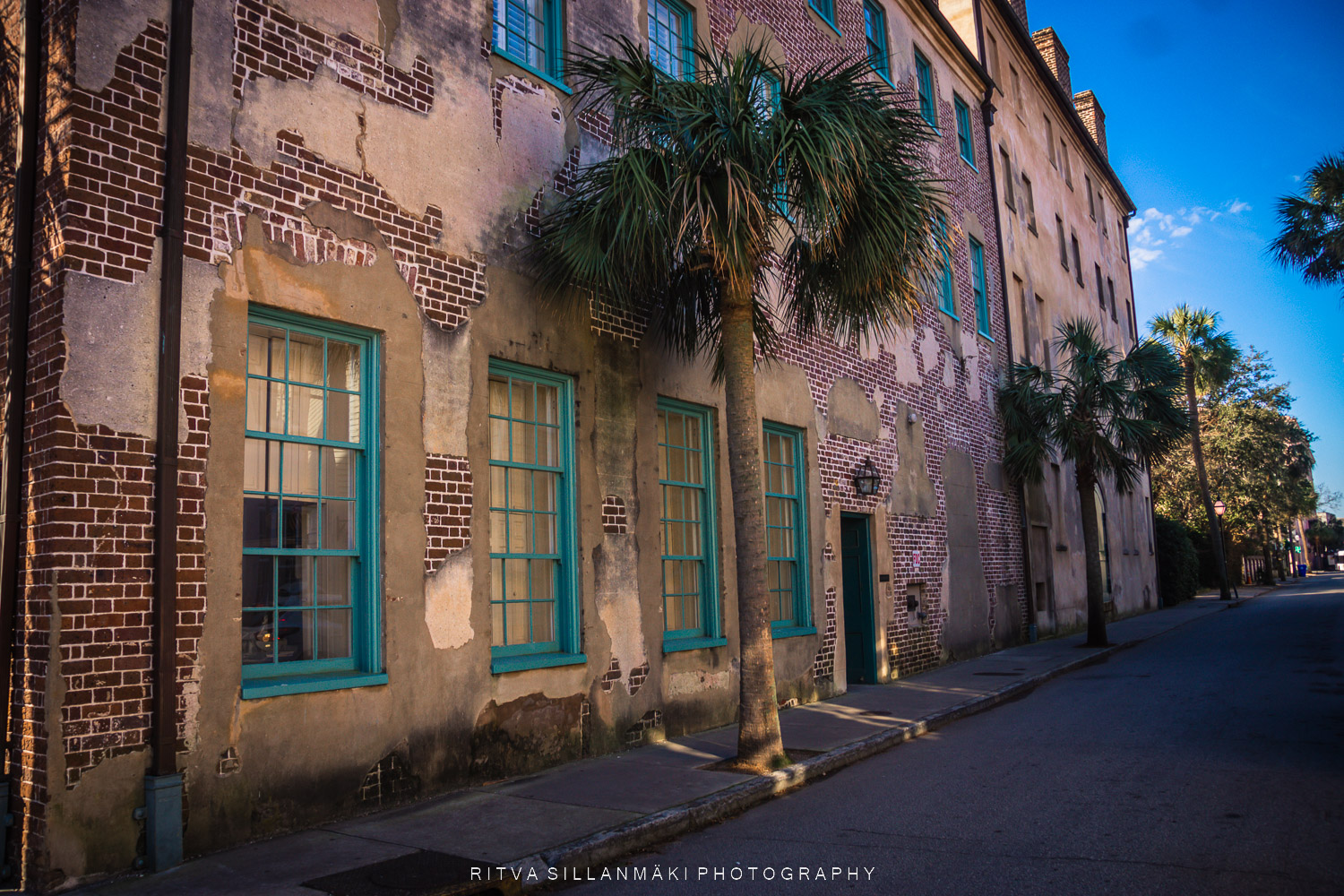
Talking about the bricks! By year 1850 the slave laborers were able to produce 4 million bricks on a yearly basis. Most of the historic buildings in the historic downtown of Charleston were built from the bricks of Boone Hall and Fort Sumter, as well. Not that we saw any, but the fingerprints of these workers are still visible in the bricks of many of these historic sites. The agricultural tour didn’t go too much into slavery or anything unpleasant but some anecdotes made you wonder how hard living for the slaves must have been and the life expectancy must have not been too high. Times have changed but it still makes you wonder how that was even possible and did the owners ever think this is not right?
Unfortunately photographing was not allowed inside the house and the second floor was completely off-limits, as well. However, the stories presented by the guide were very colorful and entertaining. John Stone the man who had the latest house built liked to entertain he had many famous visitors to his big parties, like the composer George Gershwin, if my memory serves me right?
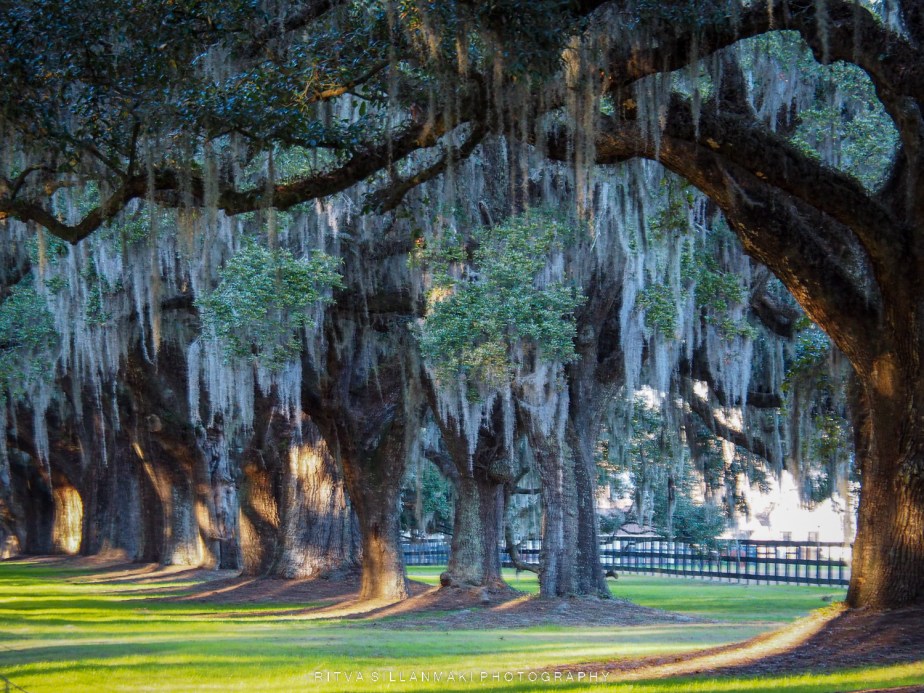
Driving into the plantation couldn’t be more beautiful with the grand Avenue of Oaks that was first planted in 1743 and completed by the in 1843. The avenue consists of 88 live oak trees and one magnolia.
When we arrived the the sky was still blue and the avenue was in totally different shade than when we left, the sun had already started to set and the avenue turned into beautiful yellow and orange tones. I took so many photos and trying to choose the ones I liked best was hard as you can see from the amount of photos I have here.
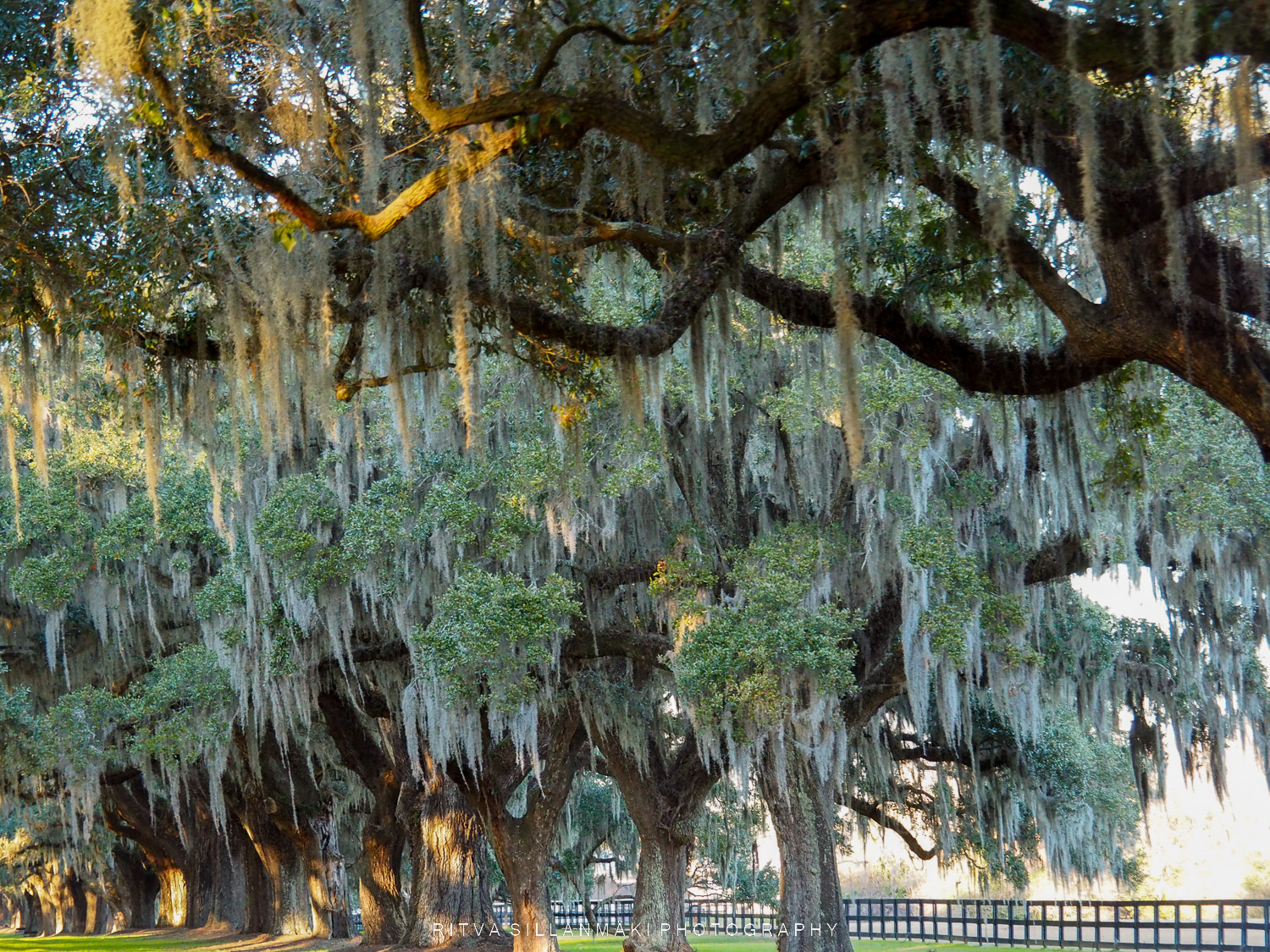
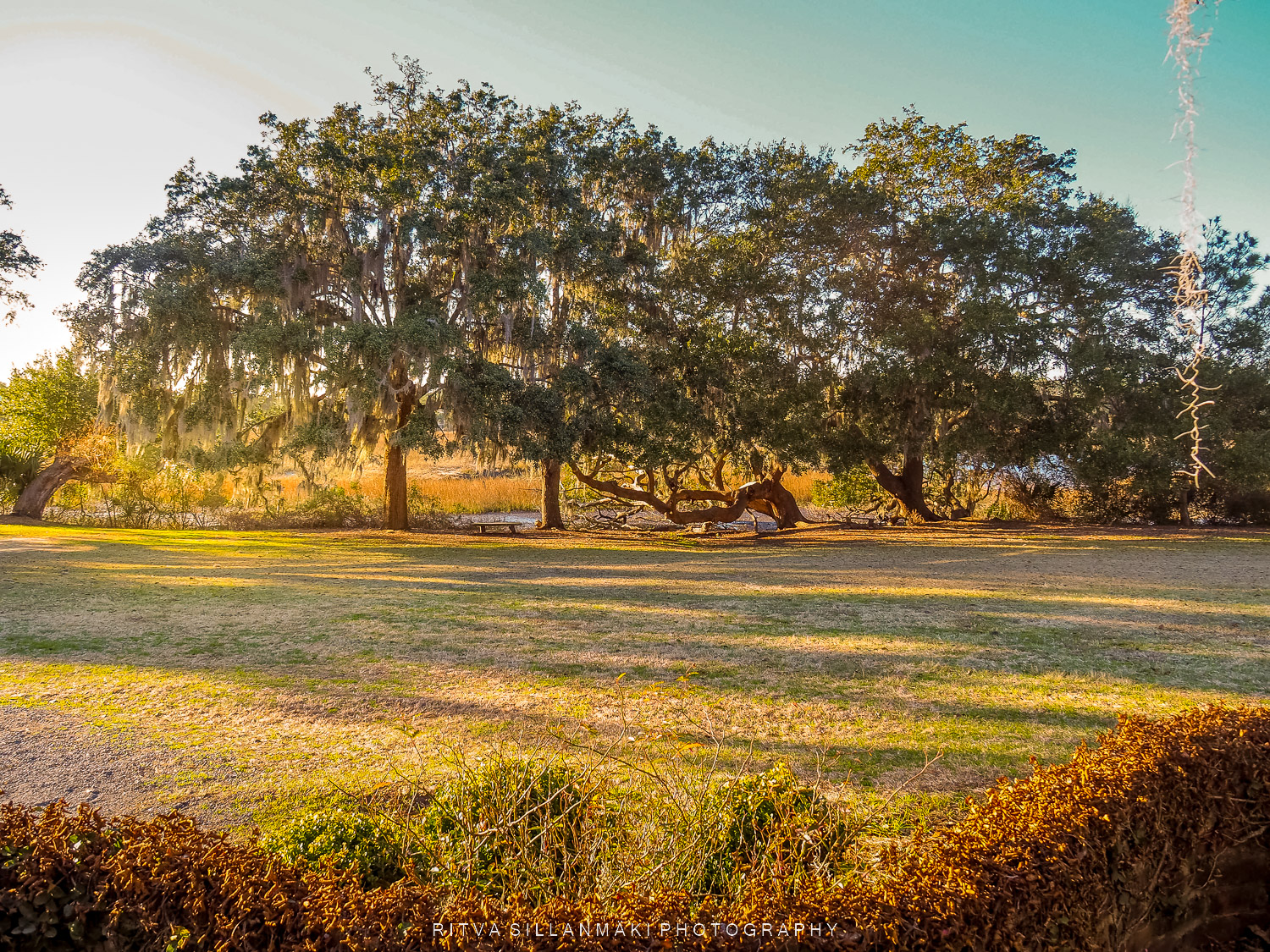
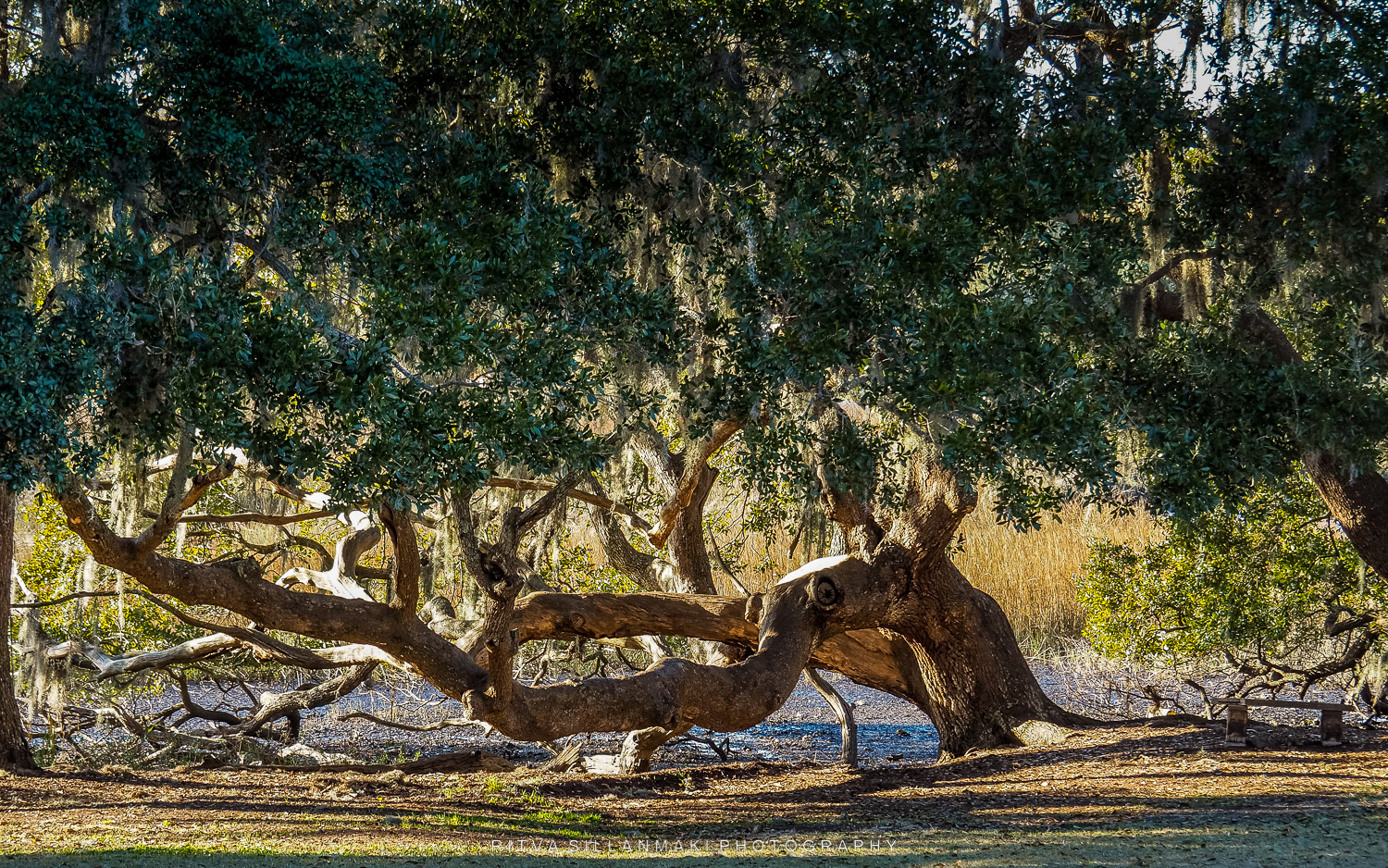
January probably wasn’t the best time to visit when you think about the surroundings. The Avenue of the Oaks might have been even more beautiful if the Resurrection Fern would have been in bloom. But you can’t do anything else but to love the Spanish Moss hanging from the trees. It gives the plantation or any surroundings such a lovely and eerie backdrop.
Even though arriving late afternoon we were able to manage to take part of house tour and the “agricultural tour”, meaning the tour of the grounds. Boone Hall Plantation consists of 738 acres. The landscape includes areas of cultivated, seasonal crop fields, preserved wetlands, creeks, and ponds. Boone Hall is still very active operator in the area in not only caters to tourists, but they organize many events to locals as well, for example, Halloween events. In the beginning the main products of Boone Hall were indigo (used for coloring the uniforms of British troops), rice and cotton. The production of cotton was discontinued in 1880 because the plantation could not compete with other plantations that were using machinery.
The cotton dock on the river had been rebuild lately.
Ryan Reynolds and Blake Lively who were married at Boone Hall Plantation in 2012. Ryan Reynolds have regretted having the wedding there because of the historical reasons.
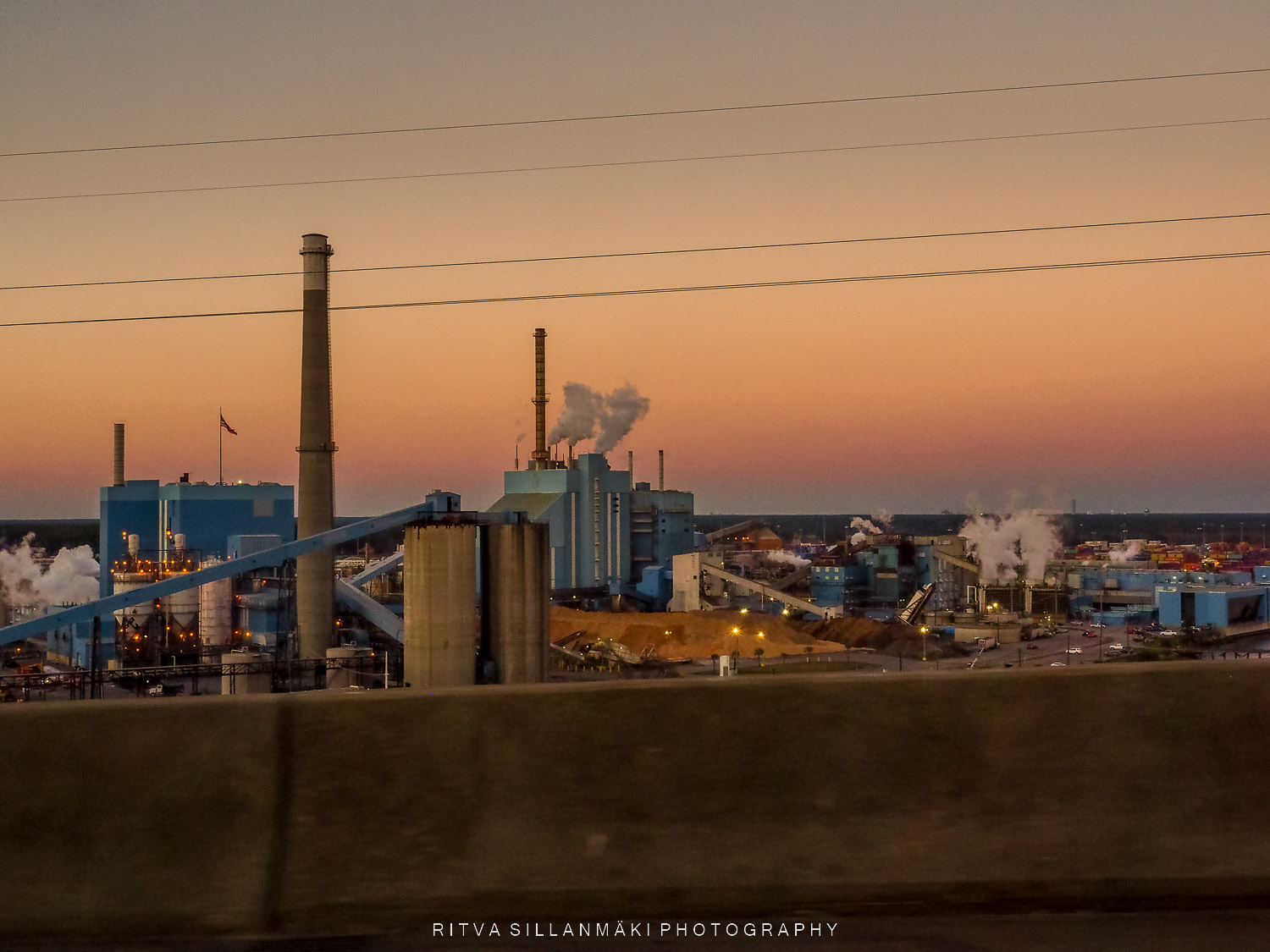
Driving from Boone Hall towards Charleston during sunset was treat. We hit a traffic jam but on the other hand taking pictures of Wando River and Don N. Holt Bridges became much easier. Especially Don N. Holt Bridge provided a nice back drop for the orange sunset. Driving across the bridge we experienced very familiar smel,l to us Finns, like rotten eggs. And sure enough we saw a paper mill. Later on, I read from online news that the mill has become one of the dirtiest polluters in the United States since being acquired by an investment group led by Robert Kraft, the billionaire owner of the New England Patriots football team. Go team!
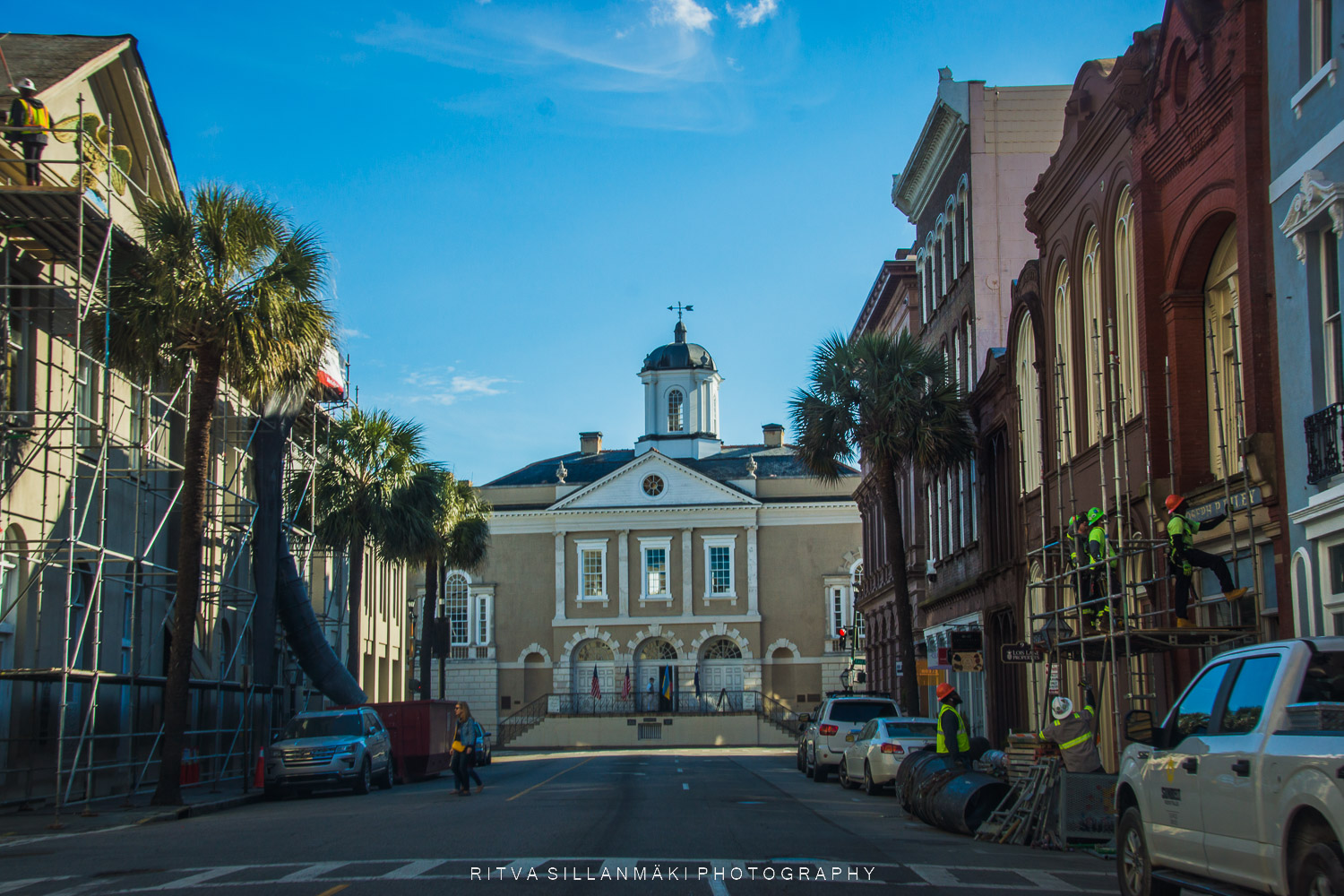
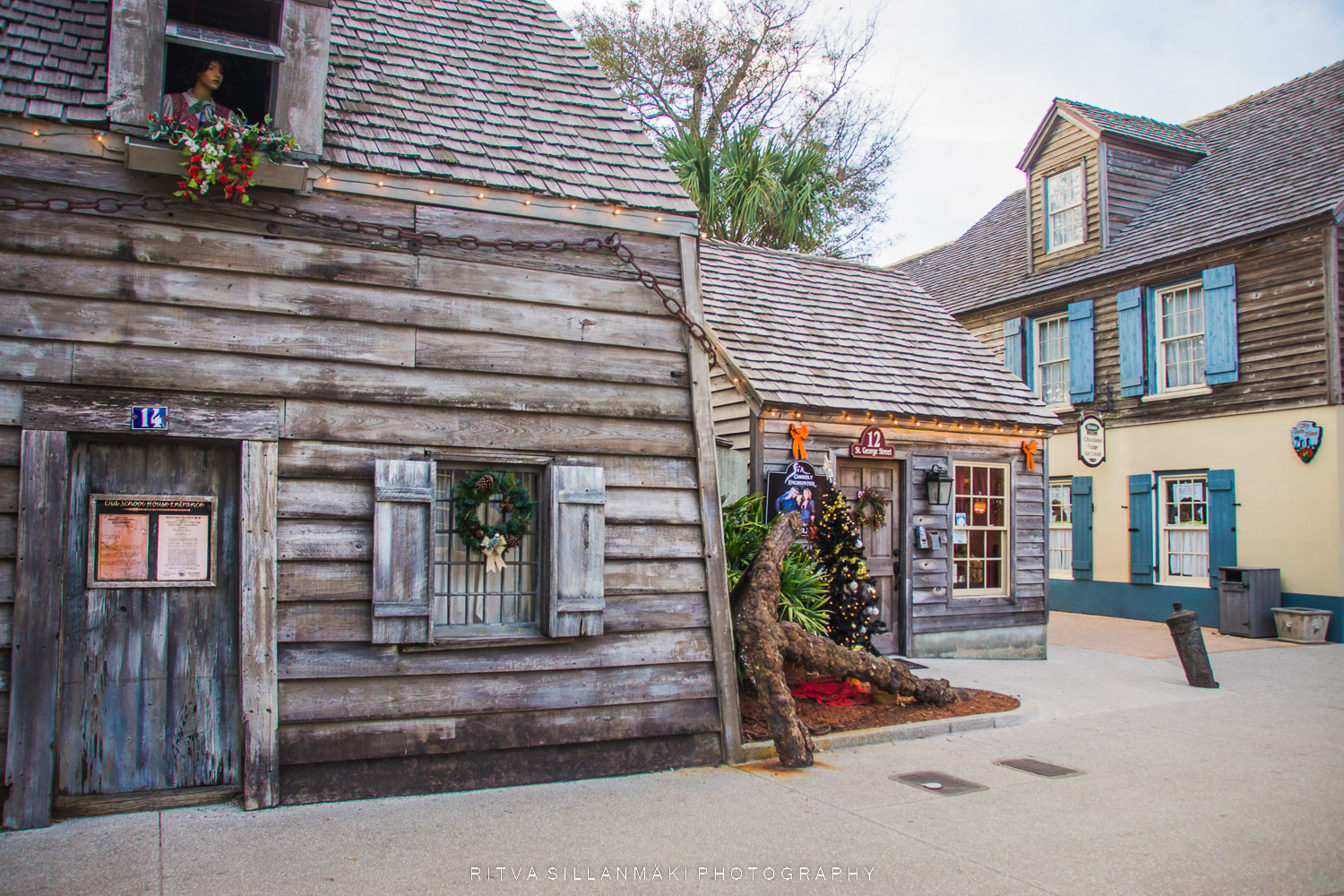
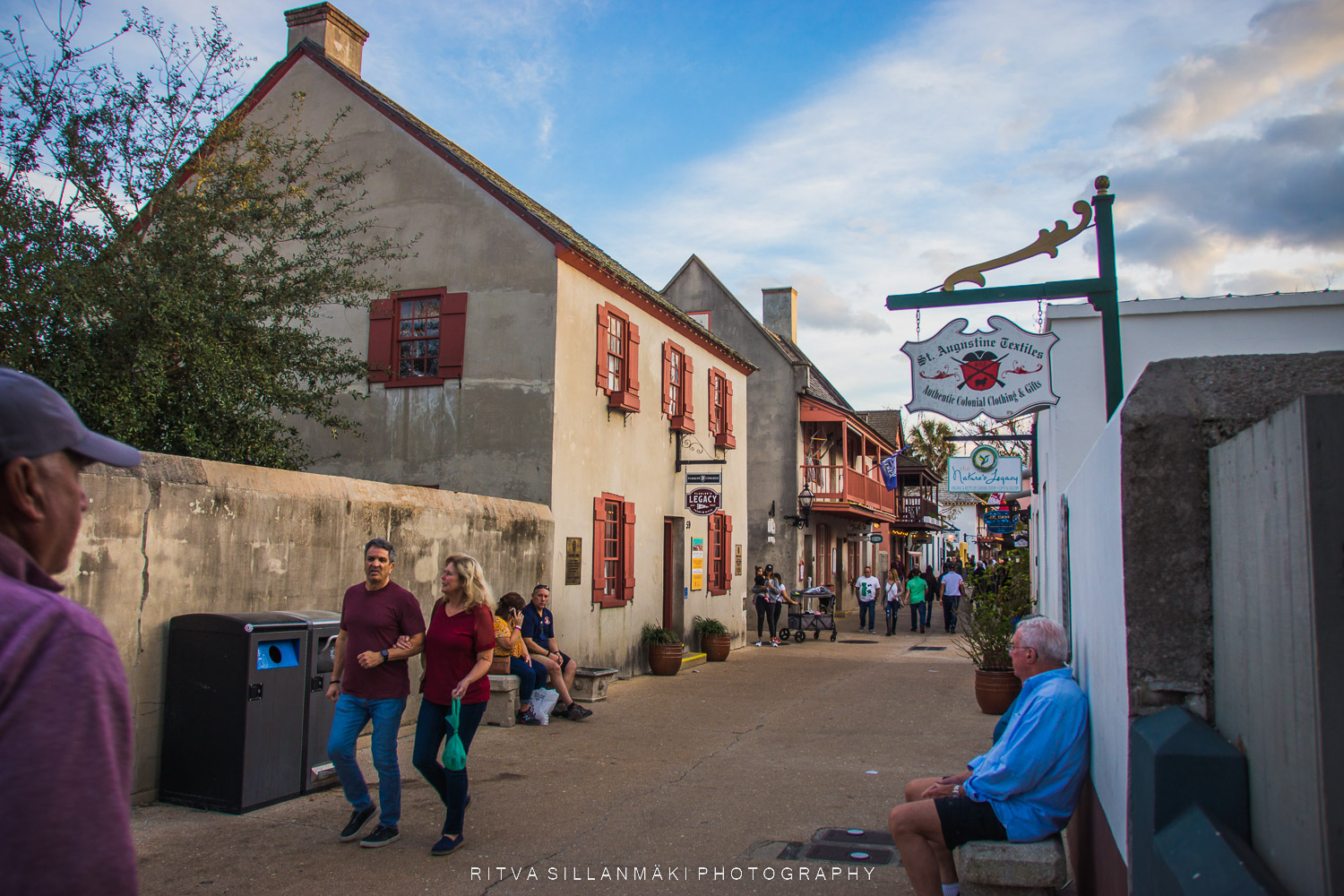
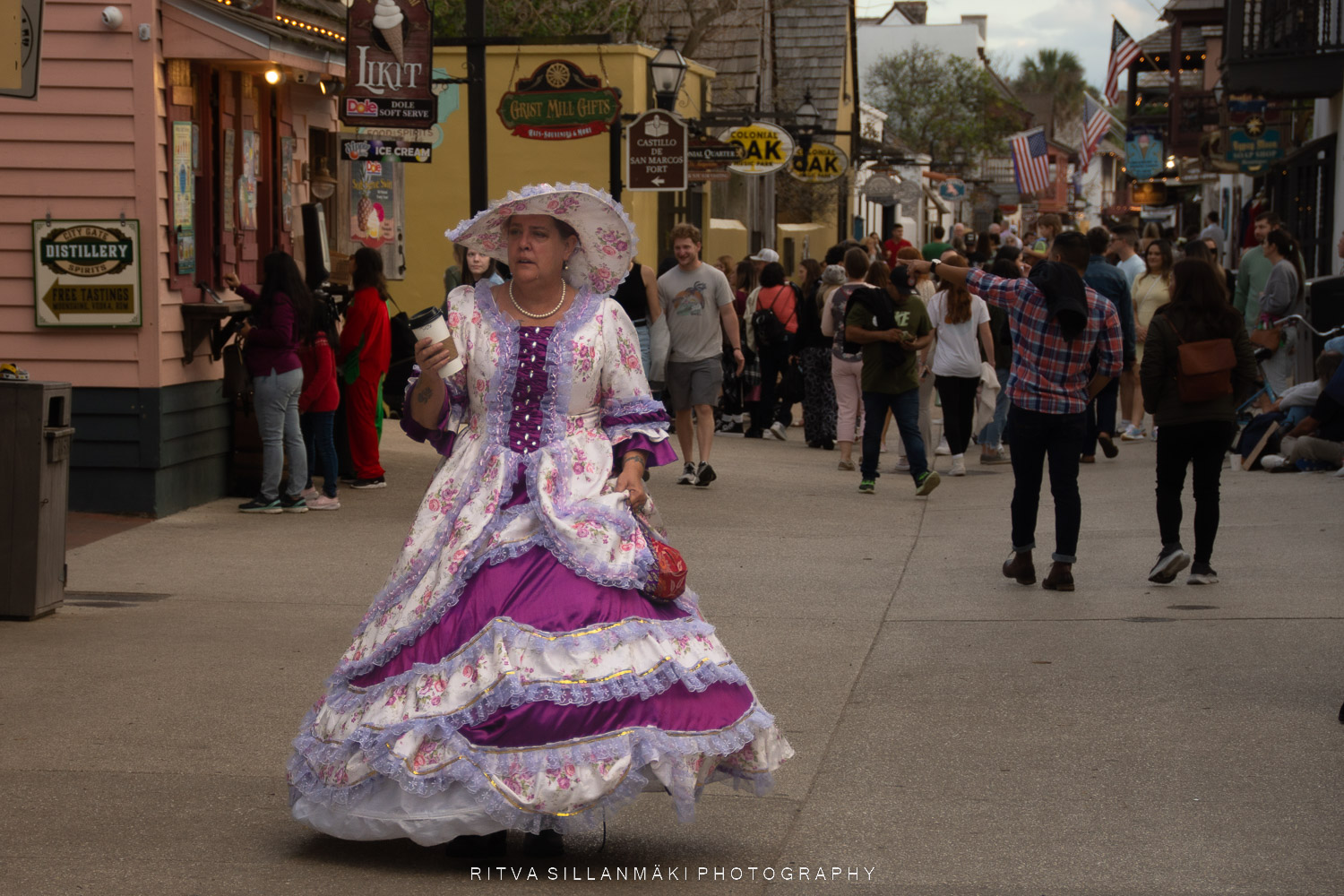
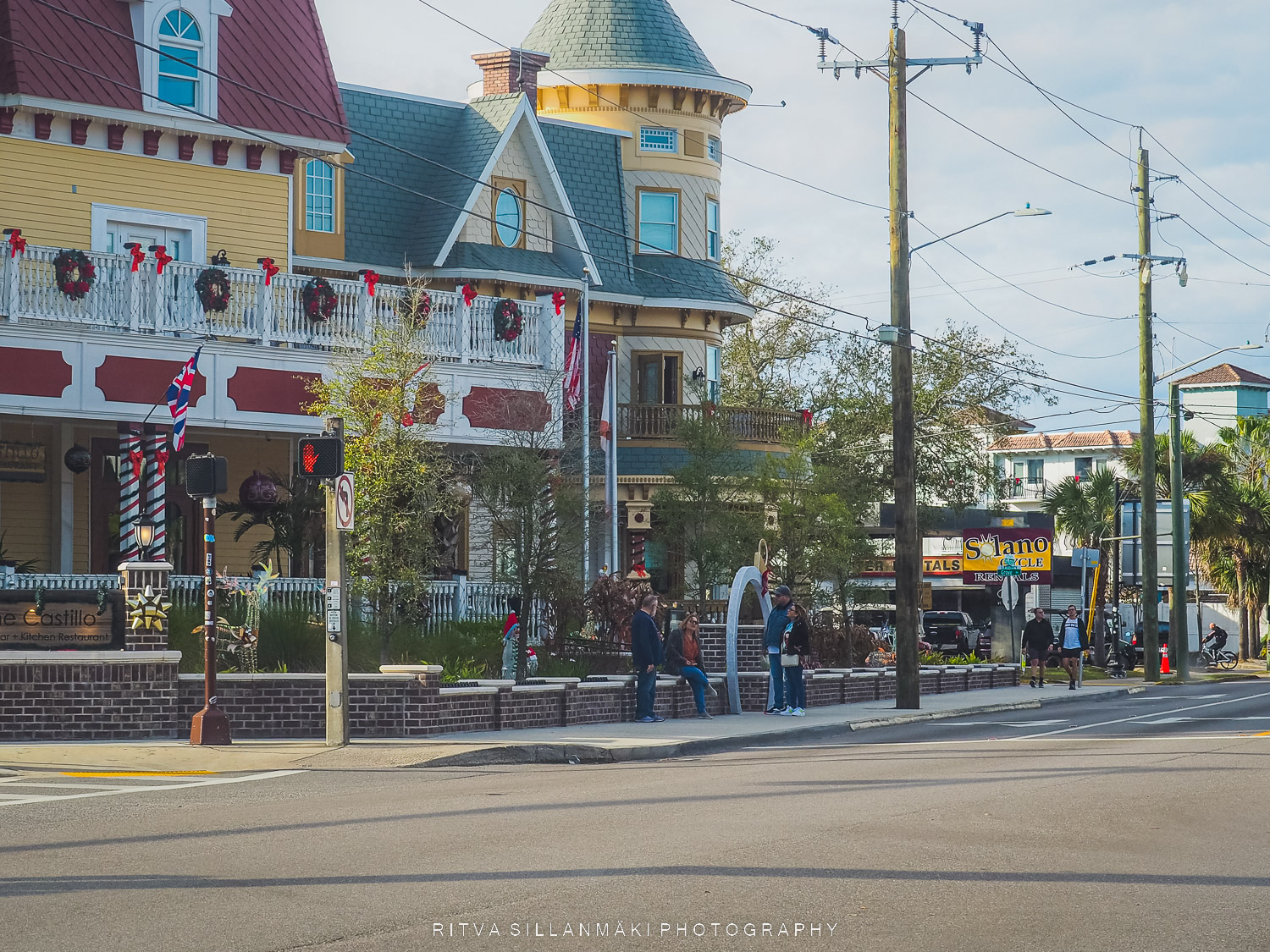
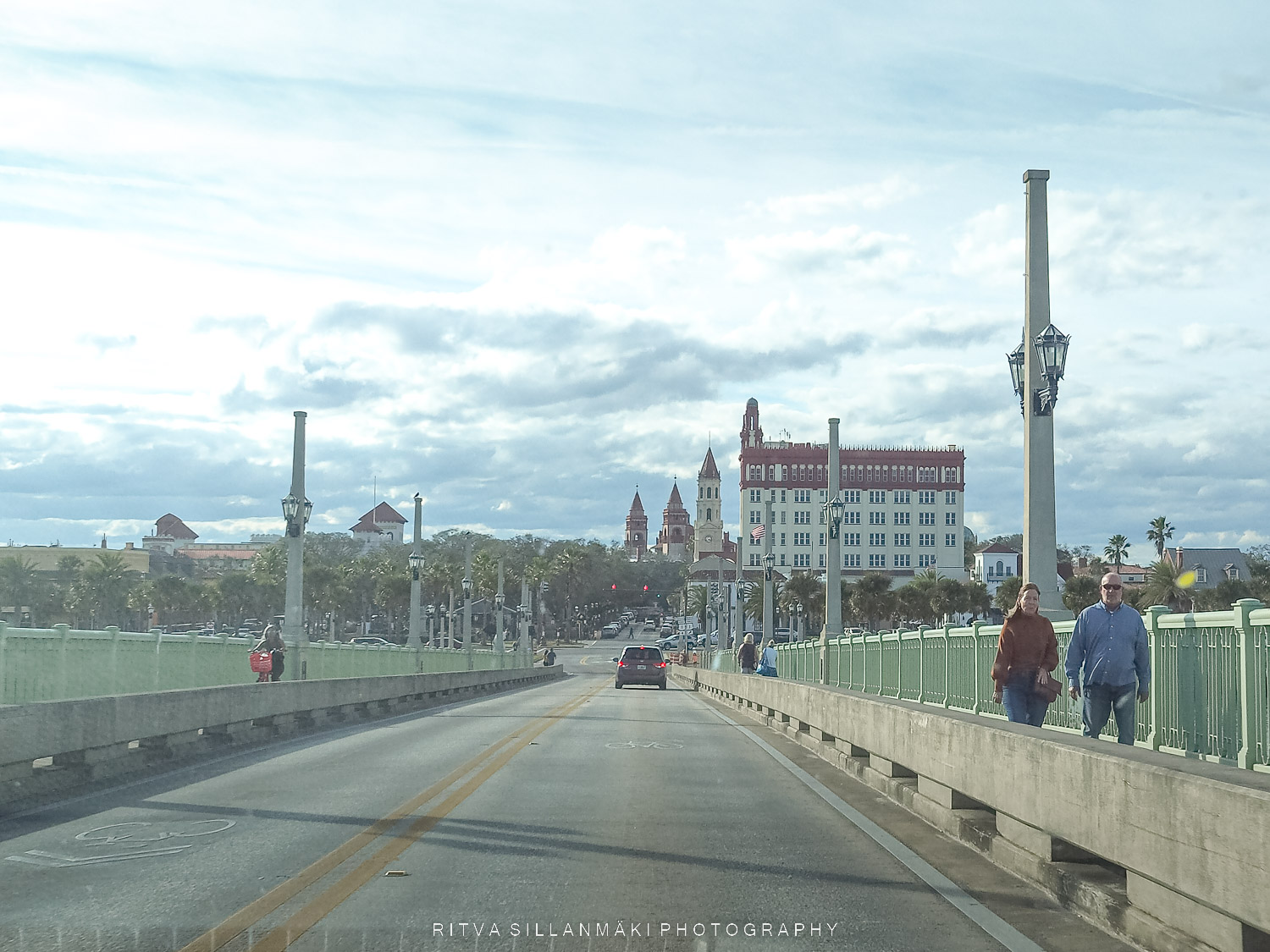
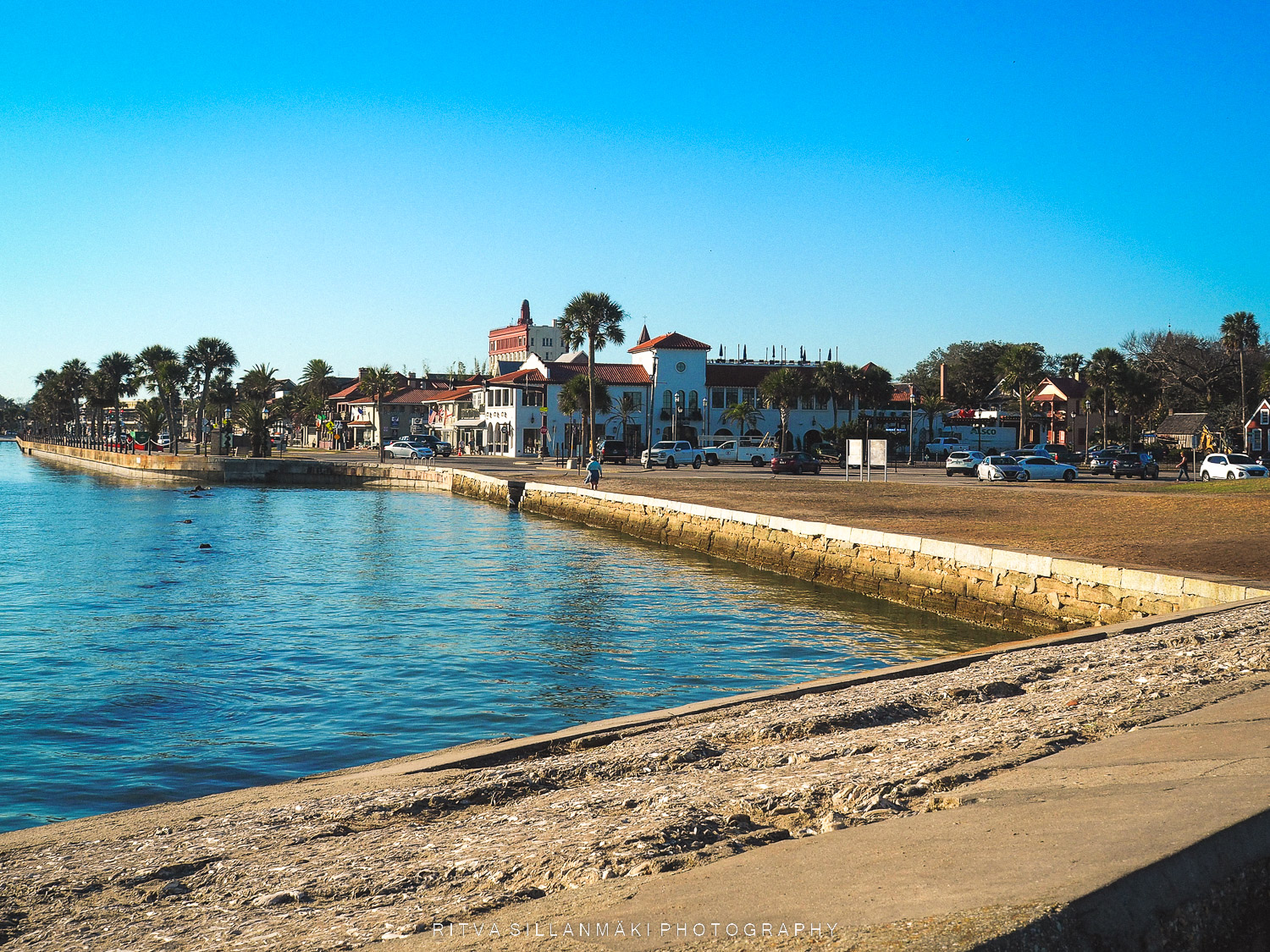
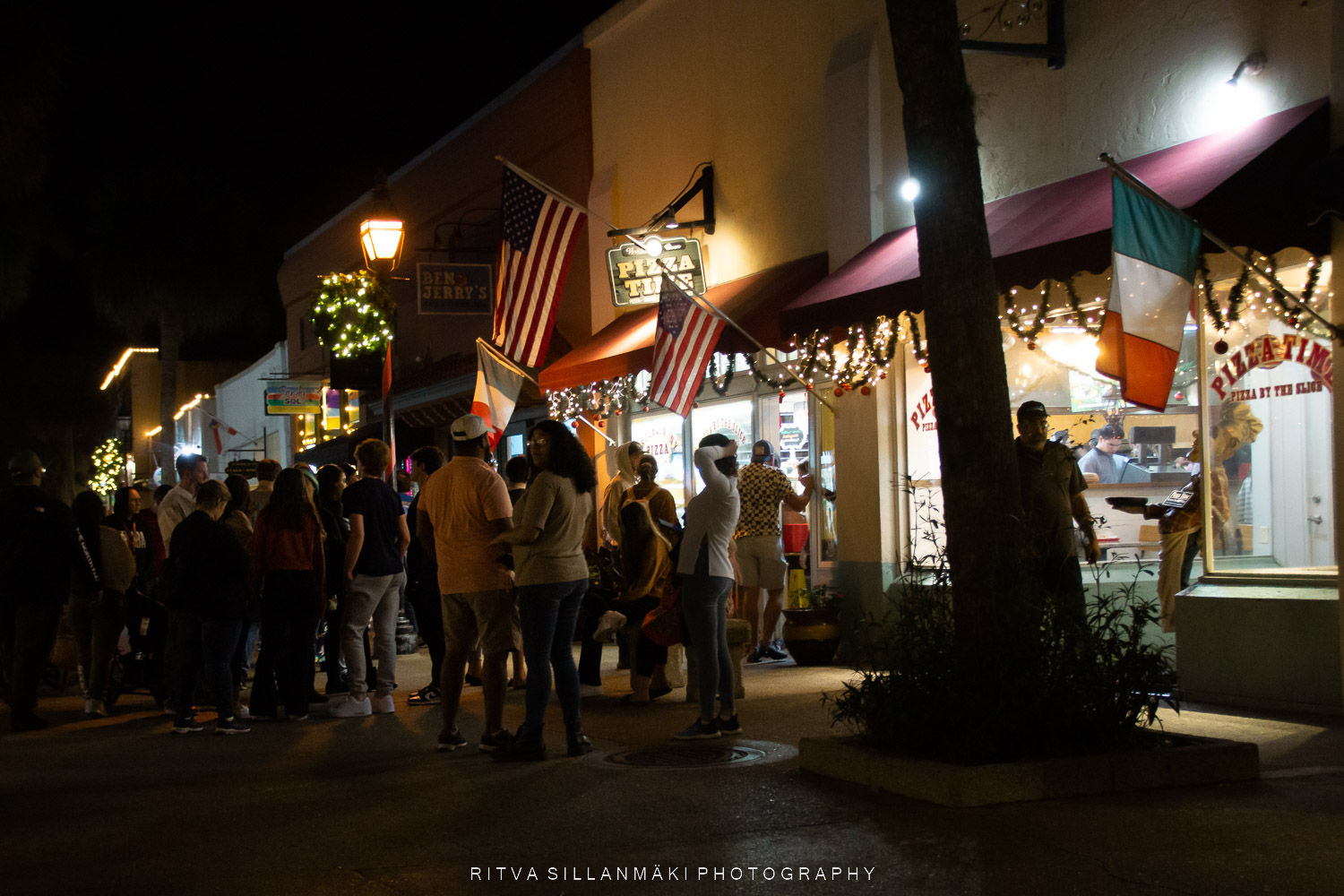
Unfortunately we got to the town center after 5PM so we did not have much light time to take photos of the buildings, also there were so many people around that getting a shot was a challege. This is clearly a tourist area with lots of shops and restaurants and bars in these old buildings.
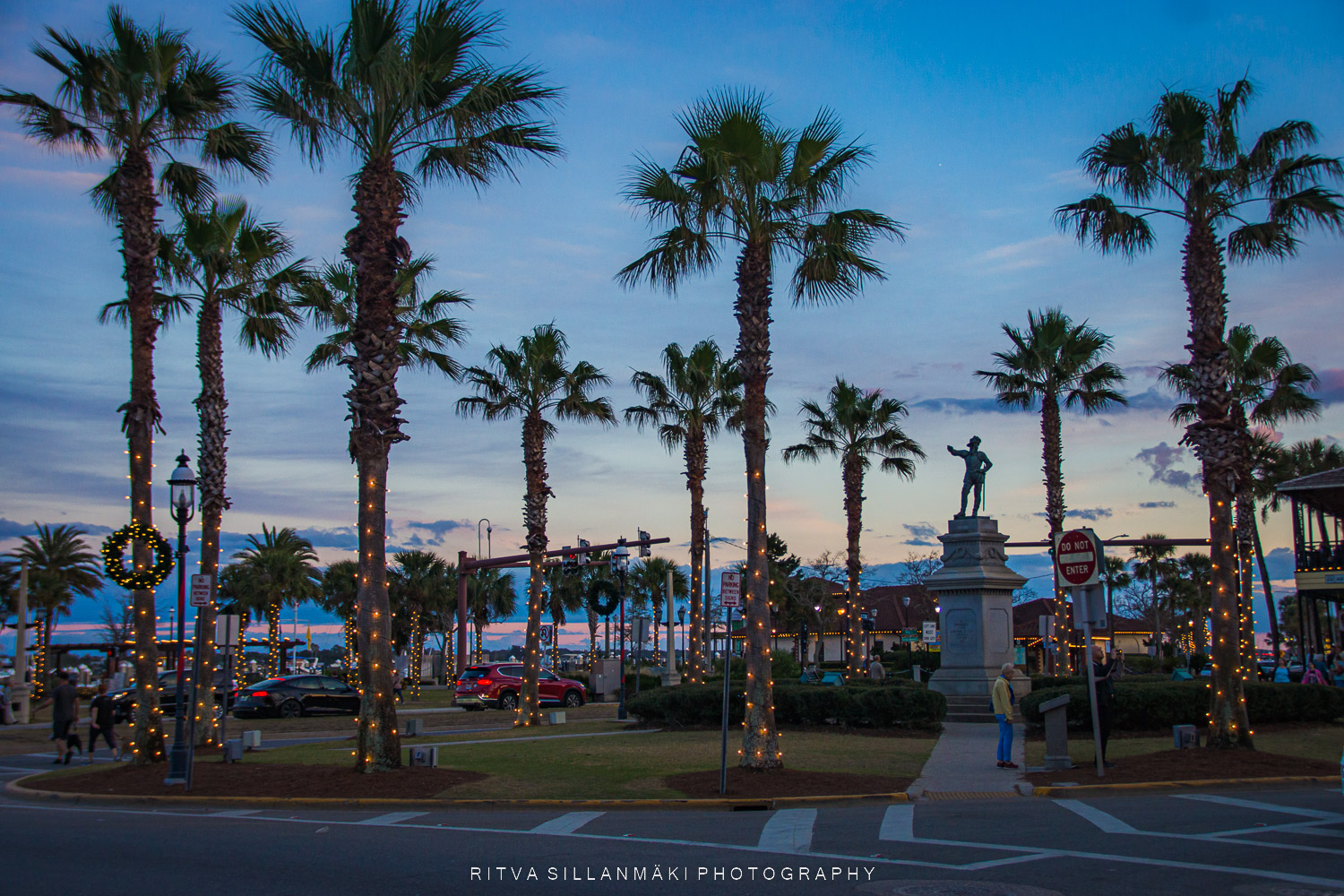
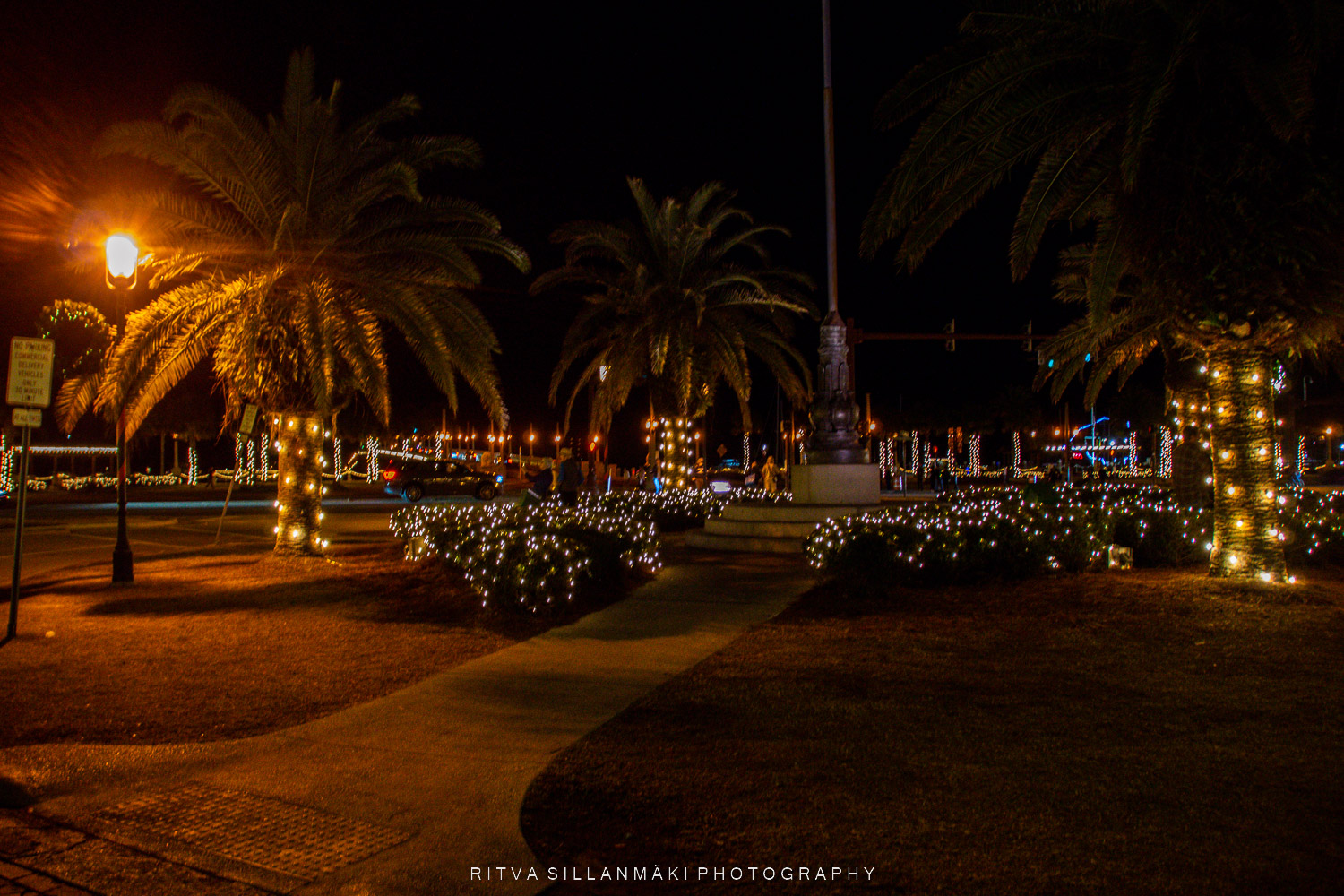
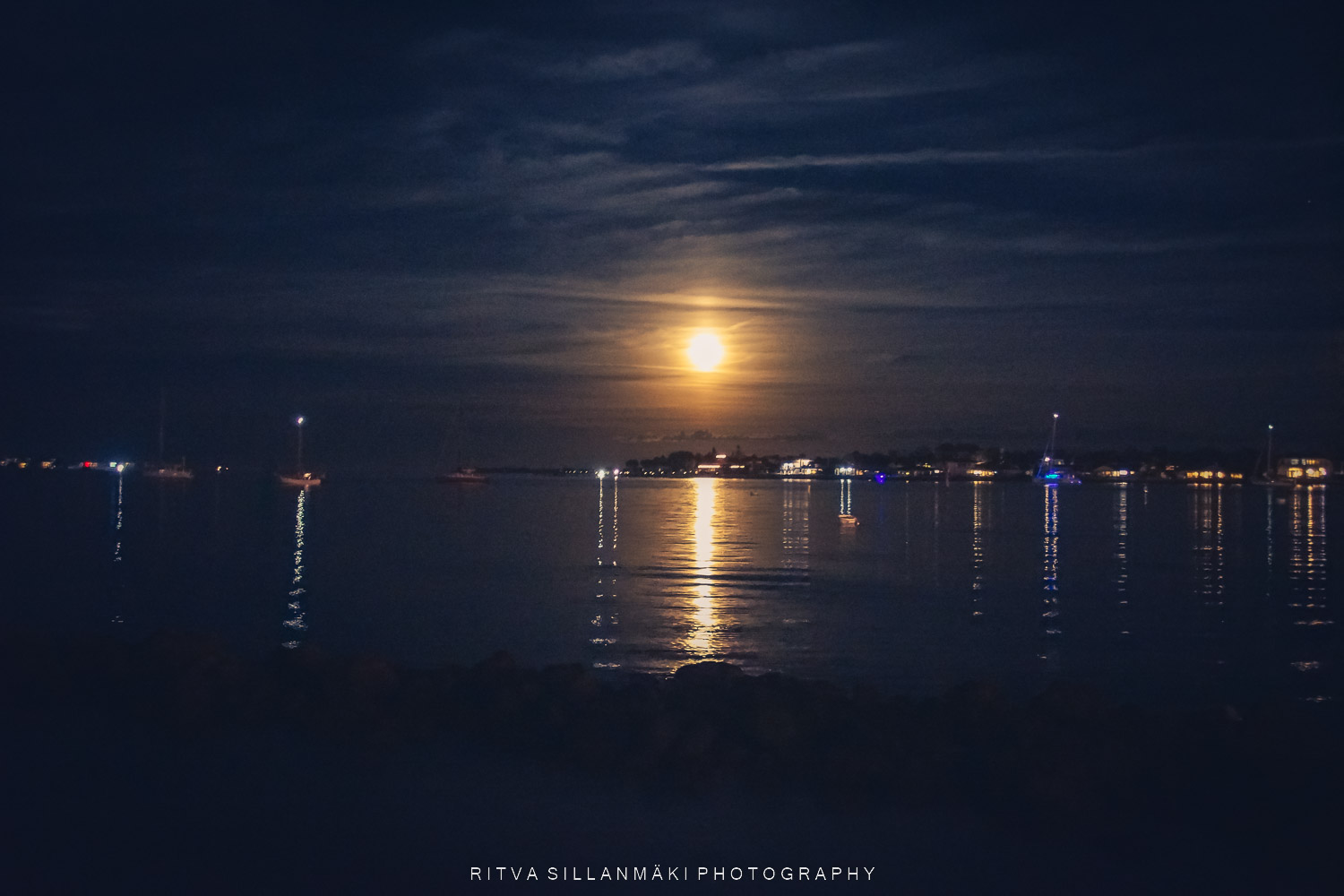
The 29th Annual Nights of Lights was still going on so the there were plenty of lights. Our stop in was quick, one night only so we did not see all that much of the city. We ended the evening looking at the moot at Castillo de San Marcos
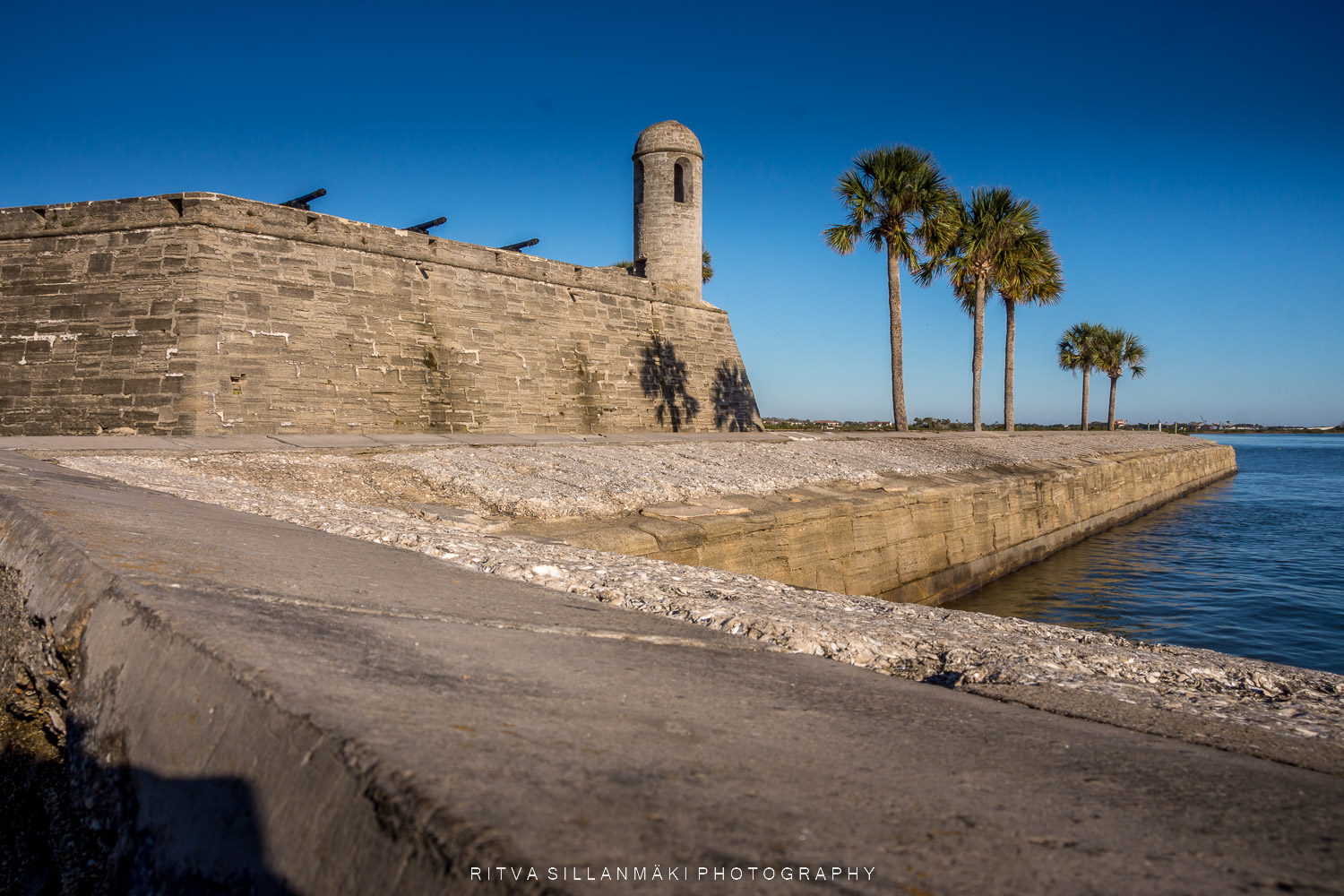
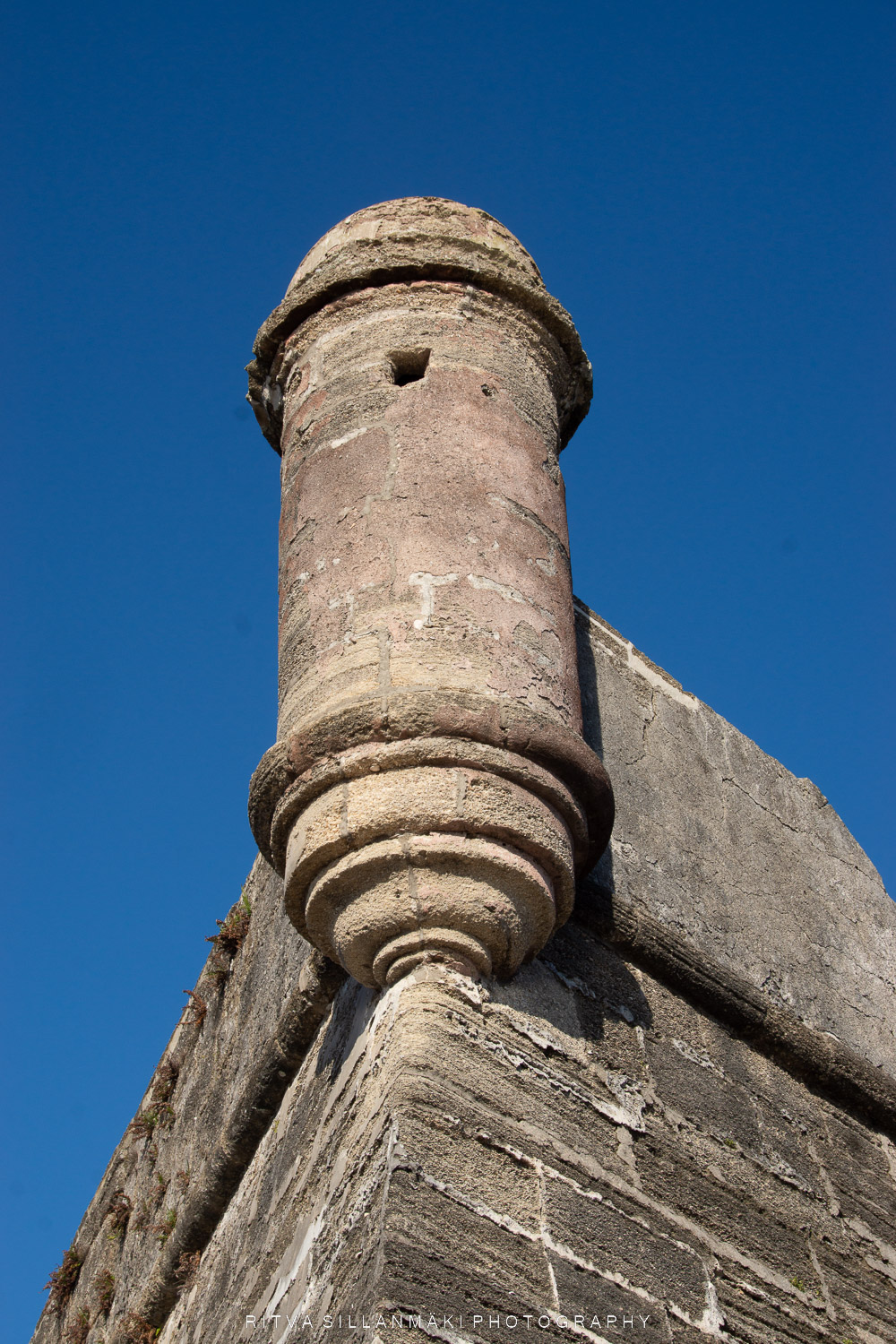
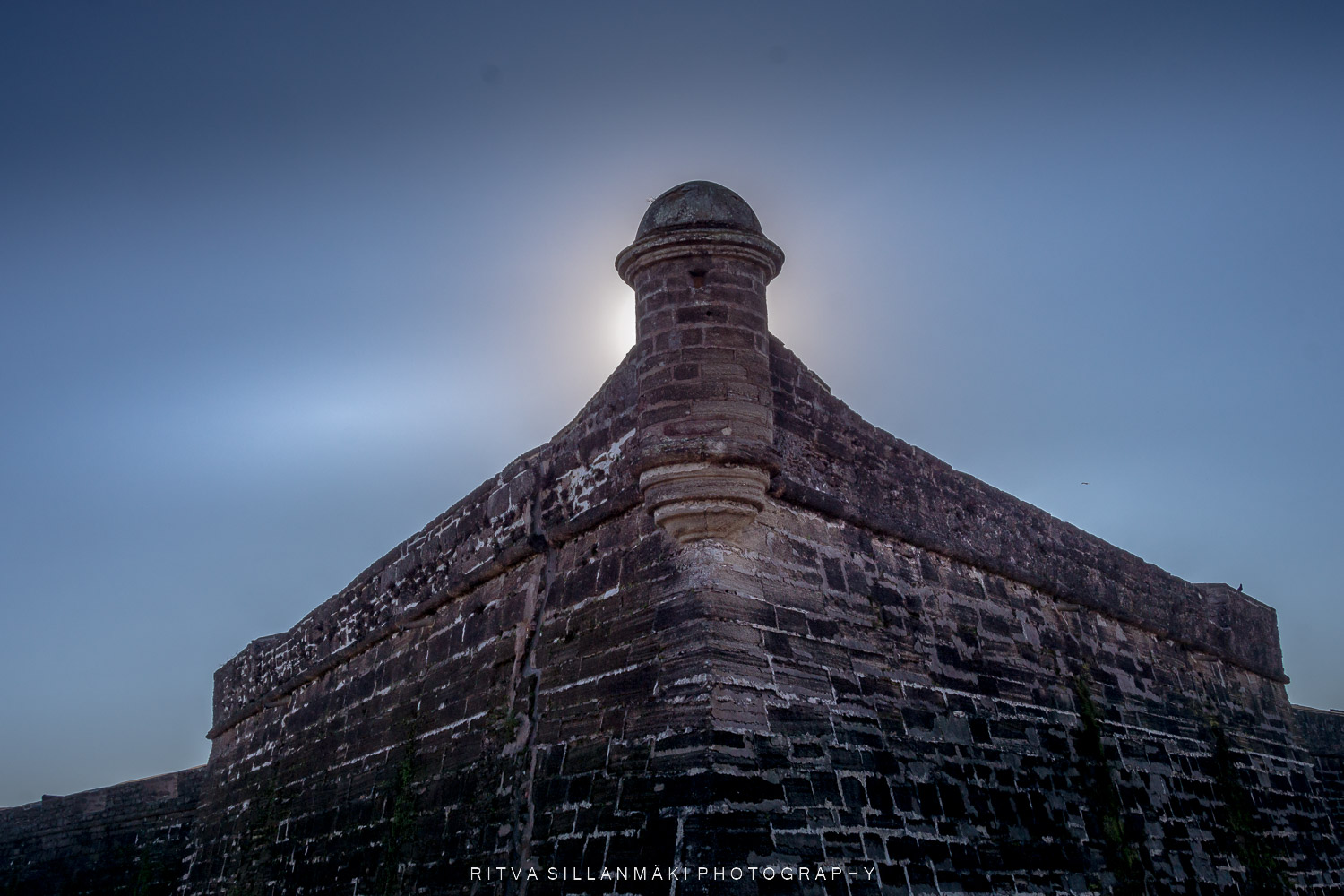
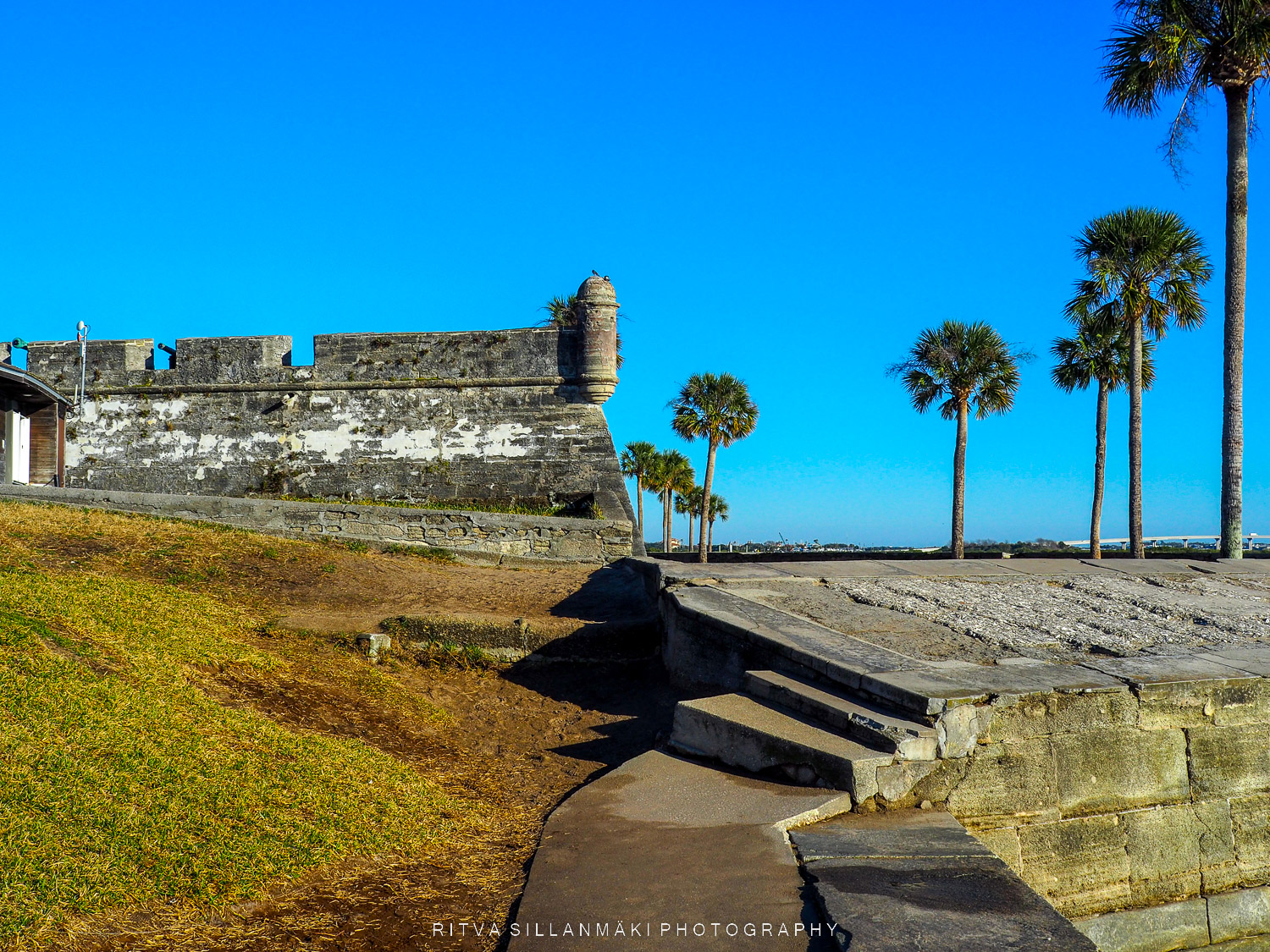
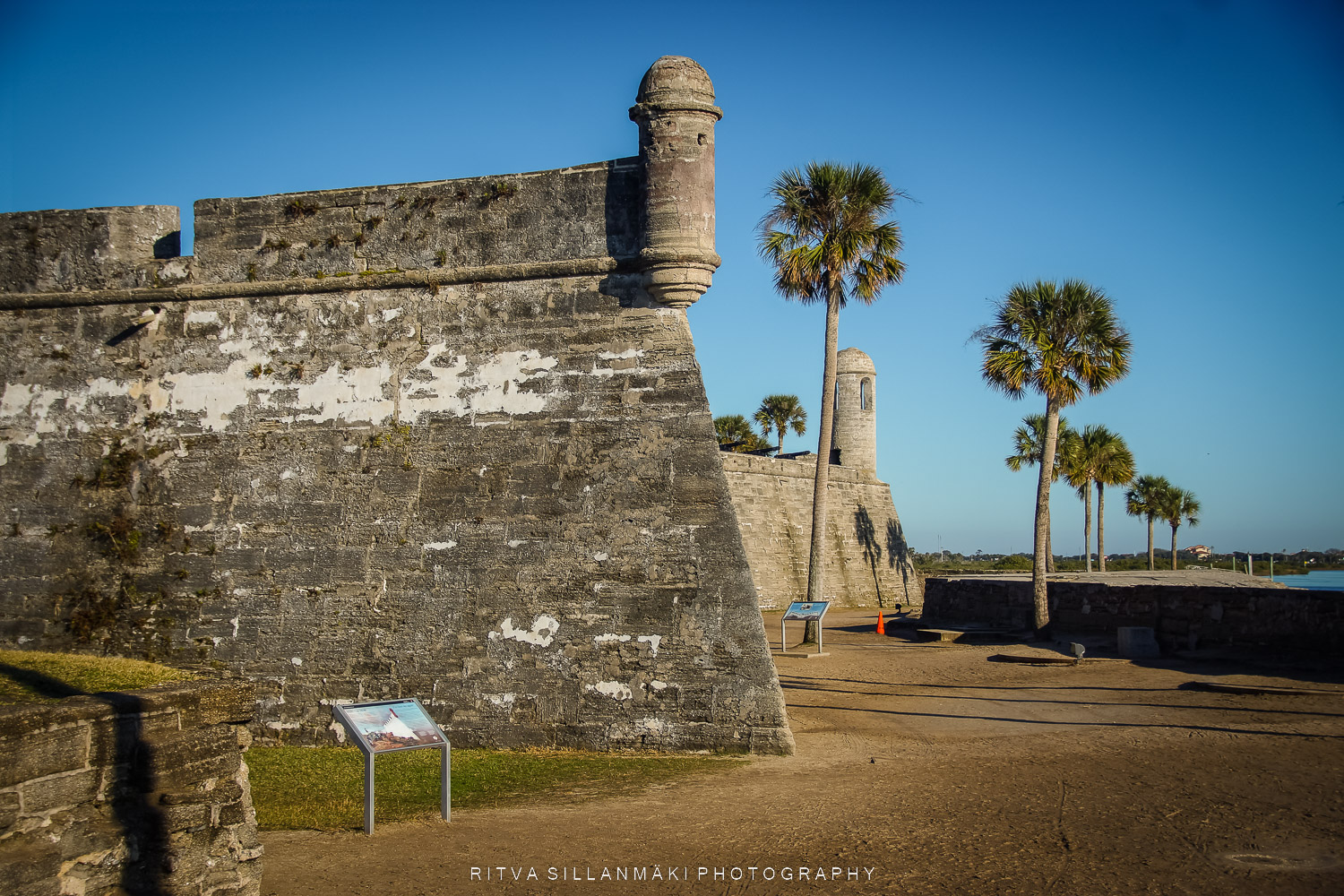
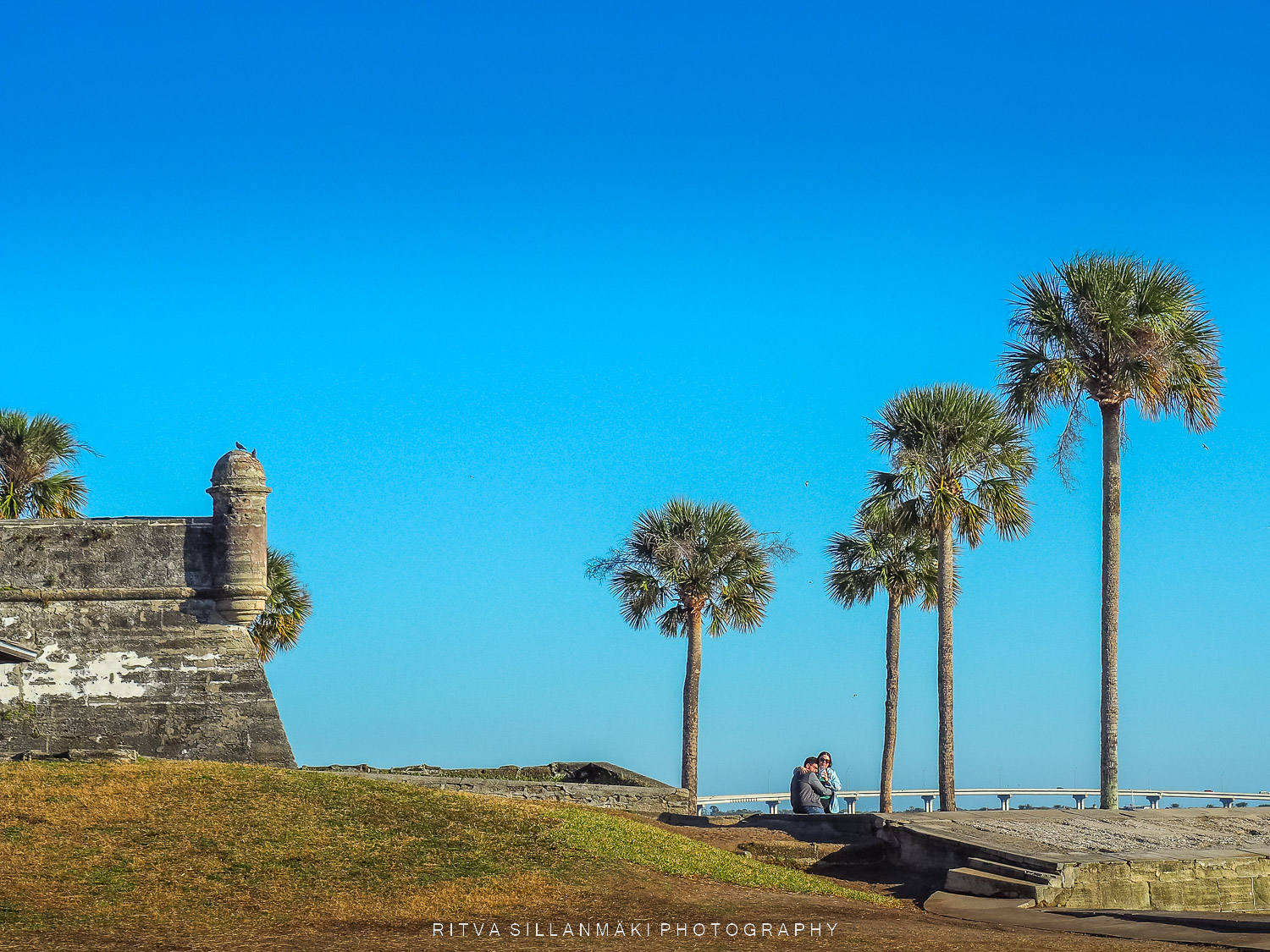
You can’t stay in in St. Augustine without visiting the Castillo de San Marcos, “St. Mark’s Castle”. It is the oldest masonry fort in the continental United States. The construction started in 1672 and finished in 1695. The fortress is made of coquina stones. The fort was declared a National Monument in 1924, and it was deactivated in 1933 after 251 years of continuous military possession.
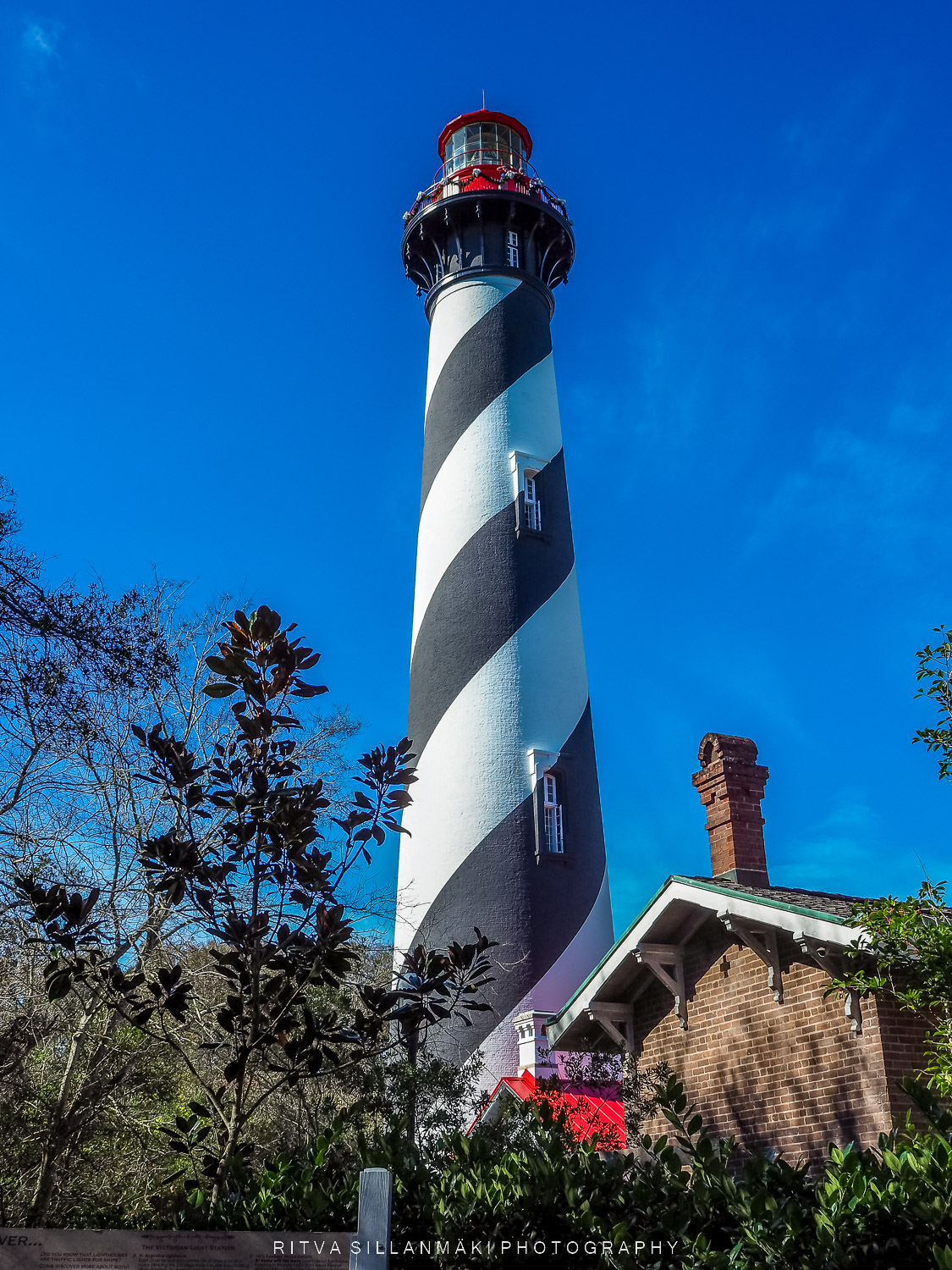
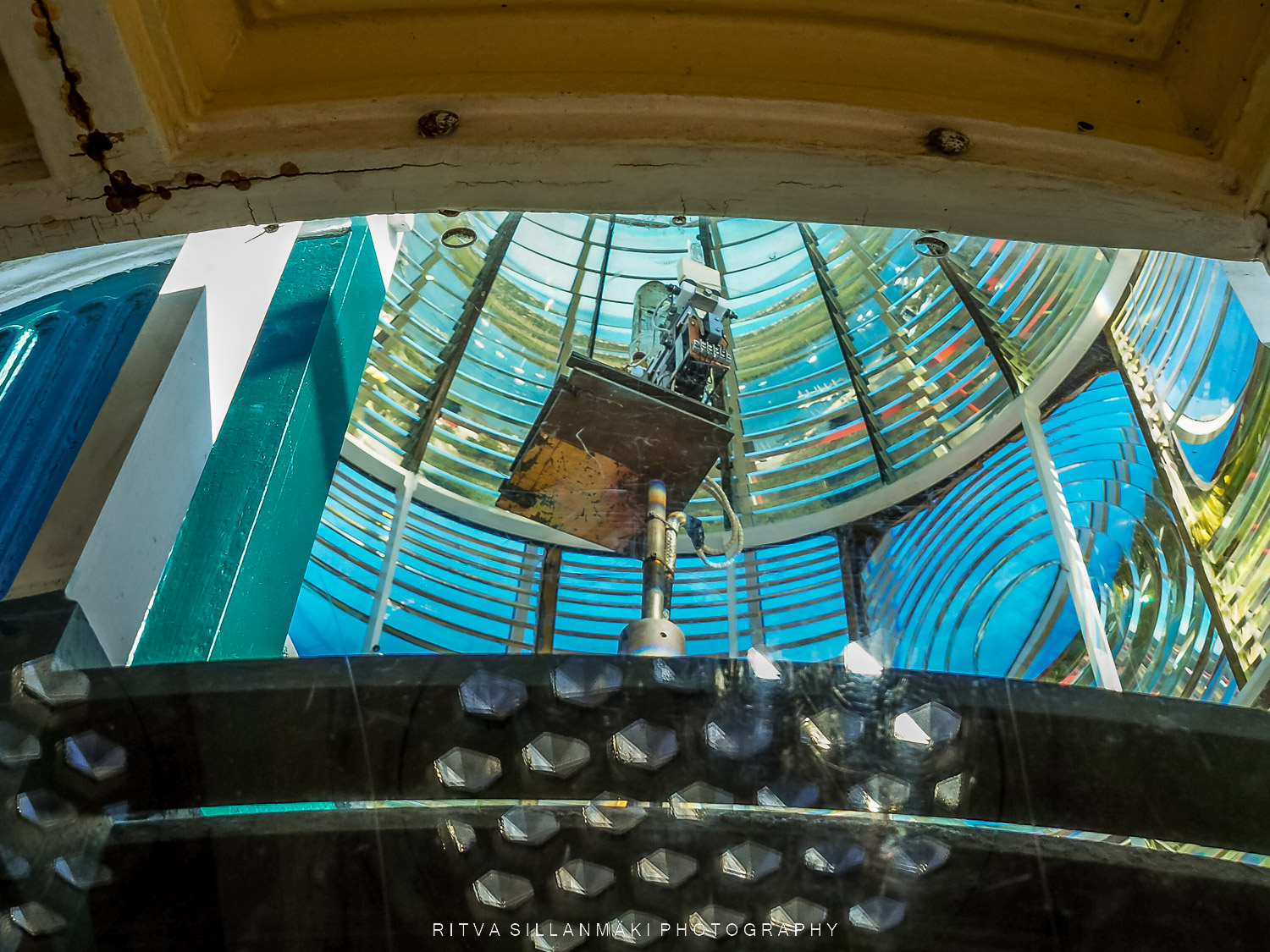
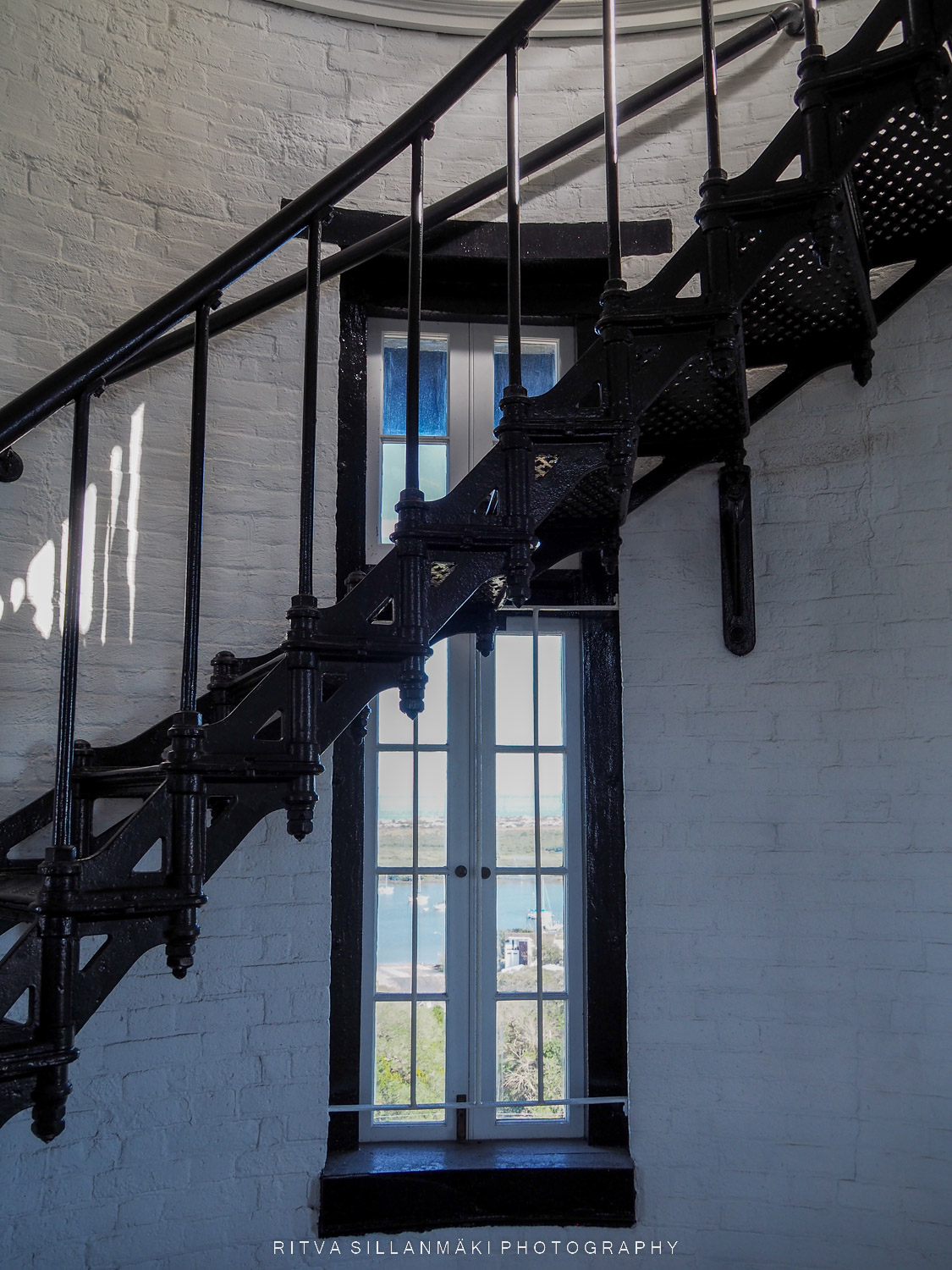
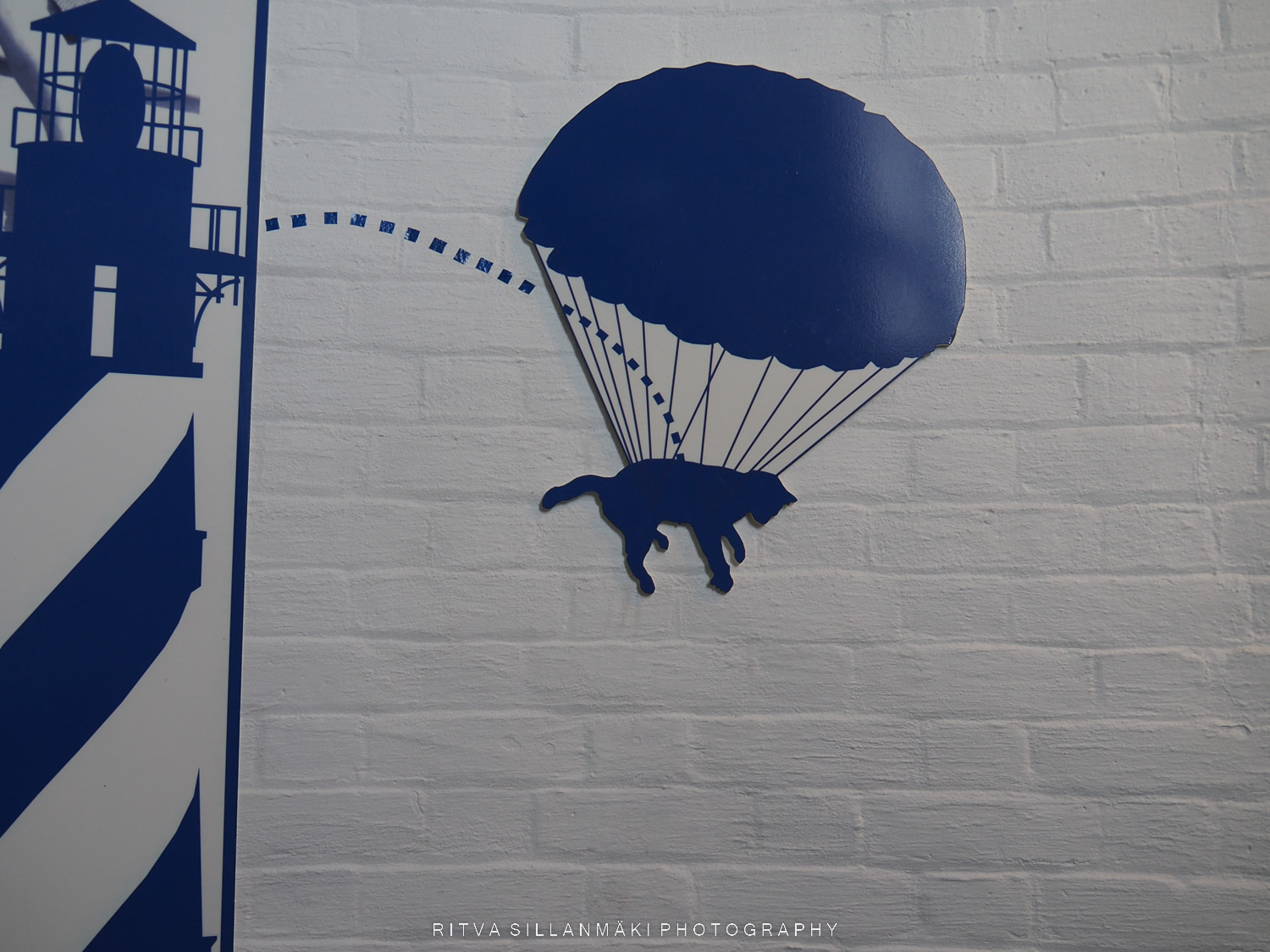
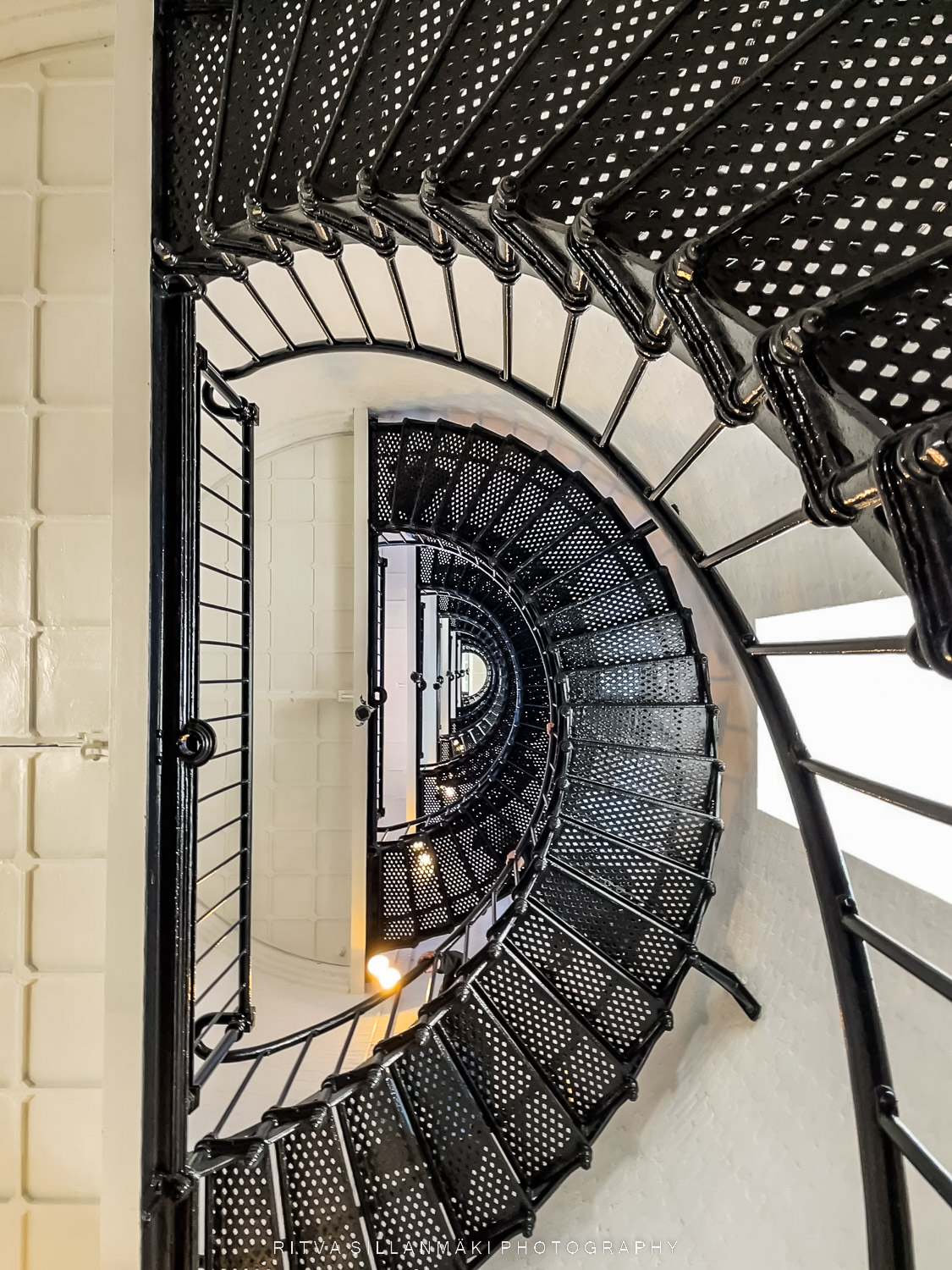
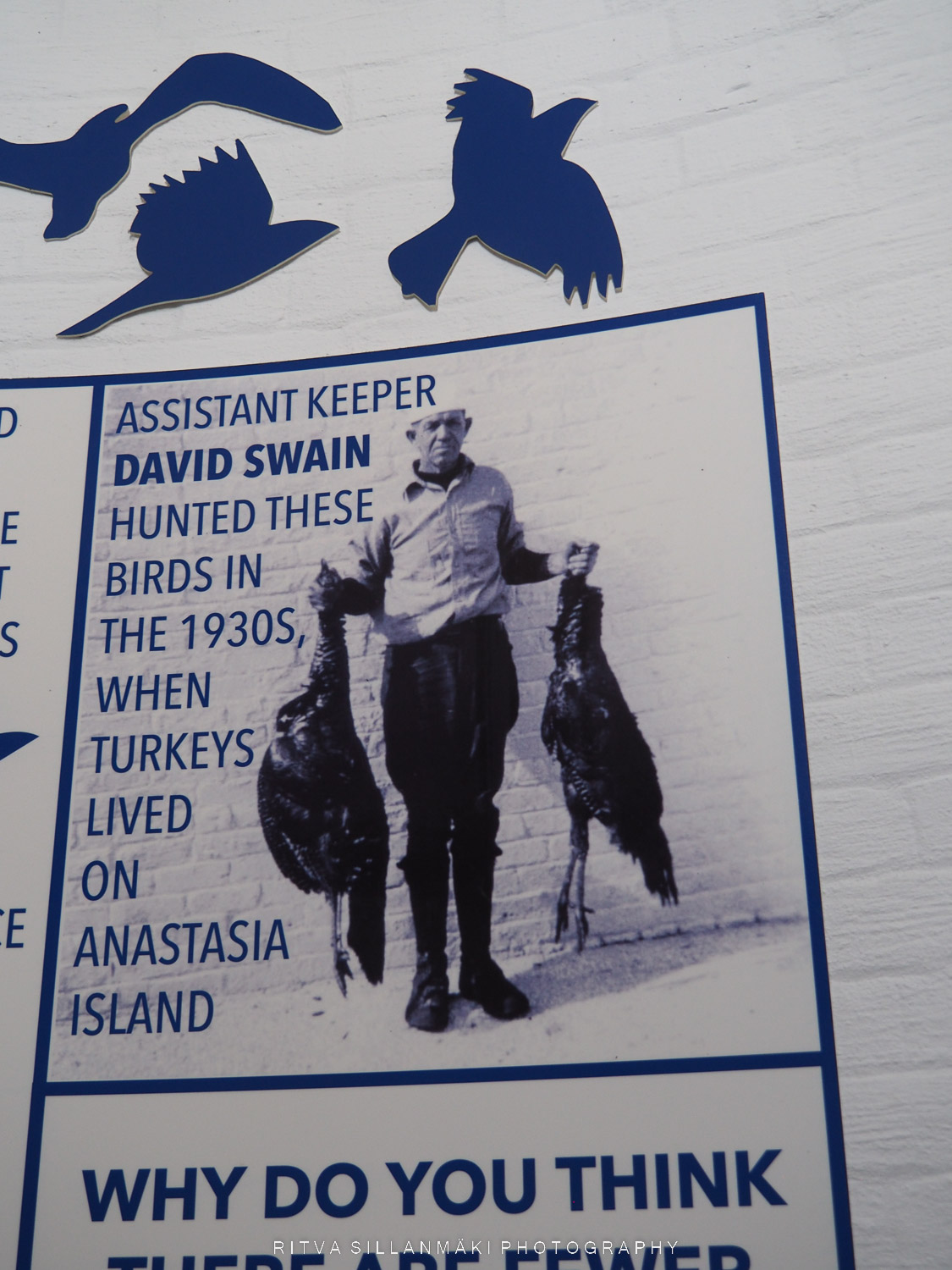
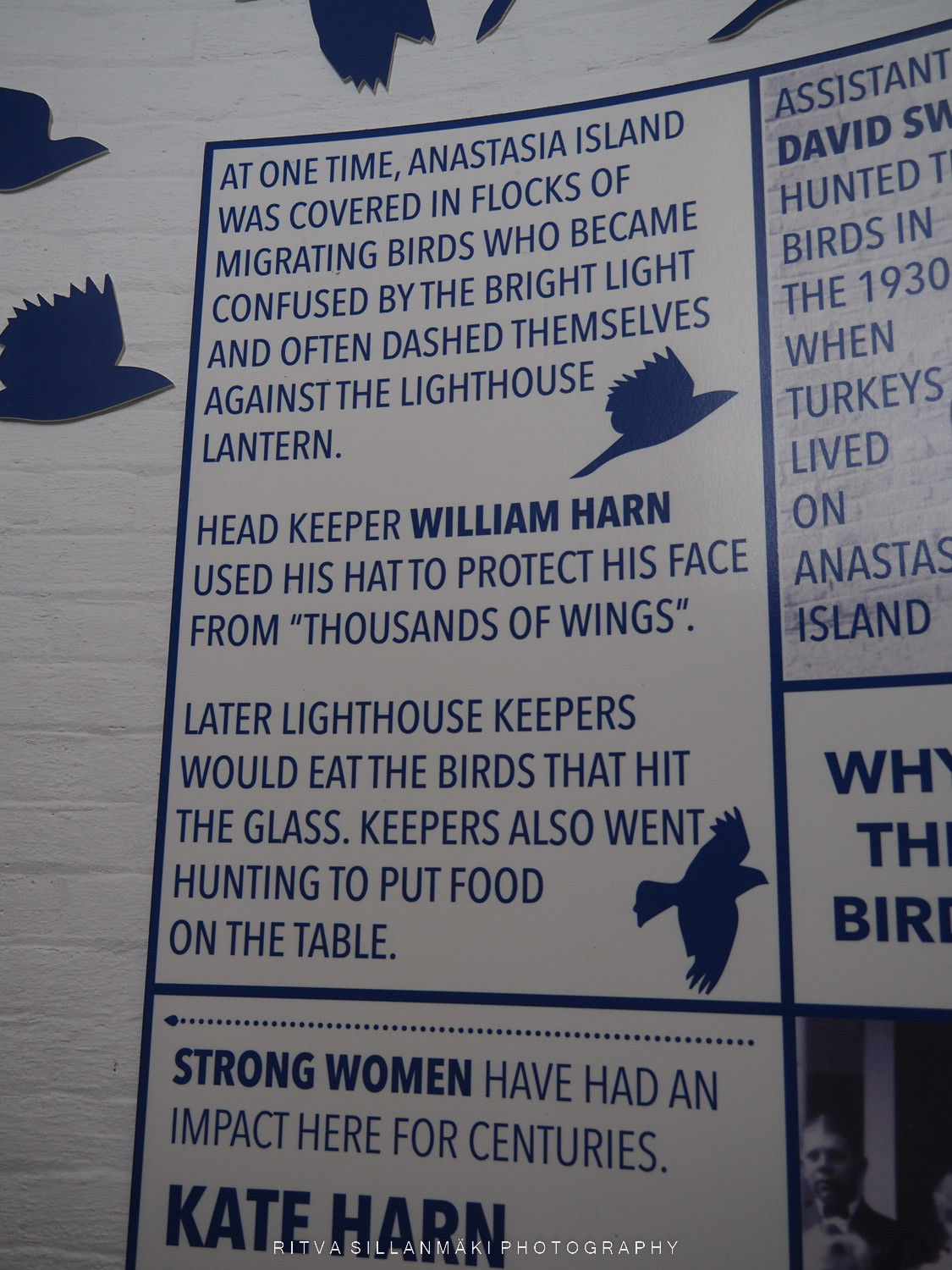
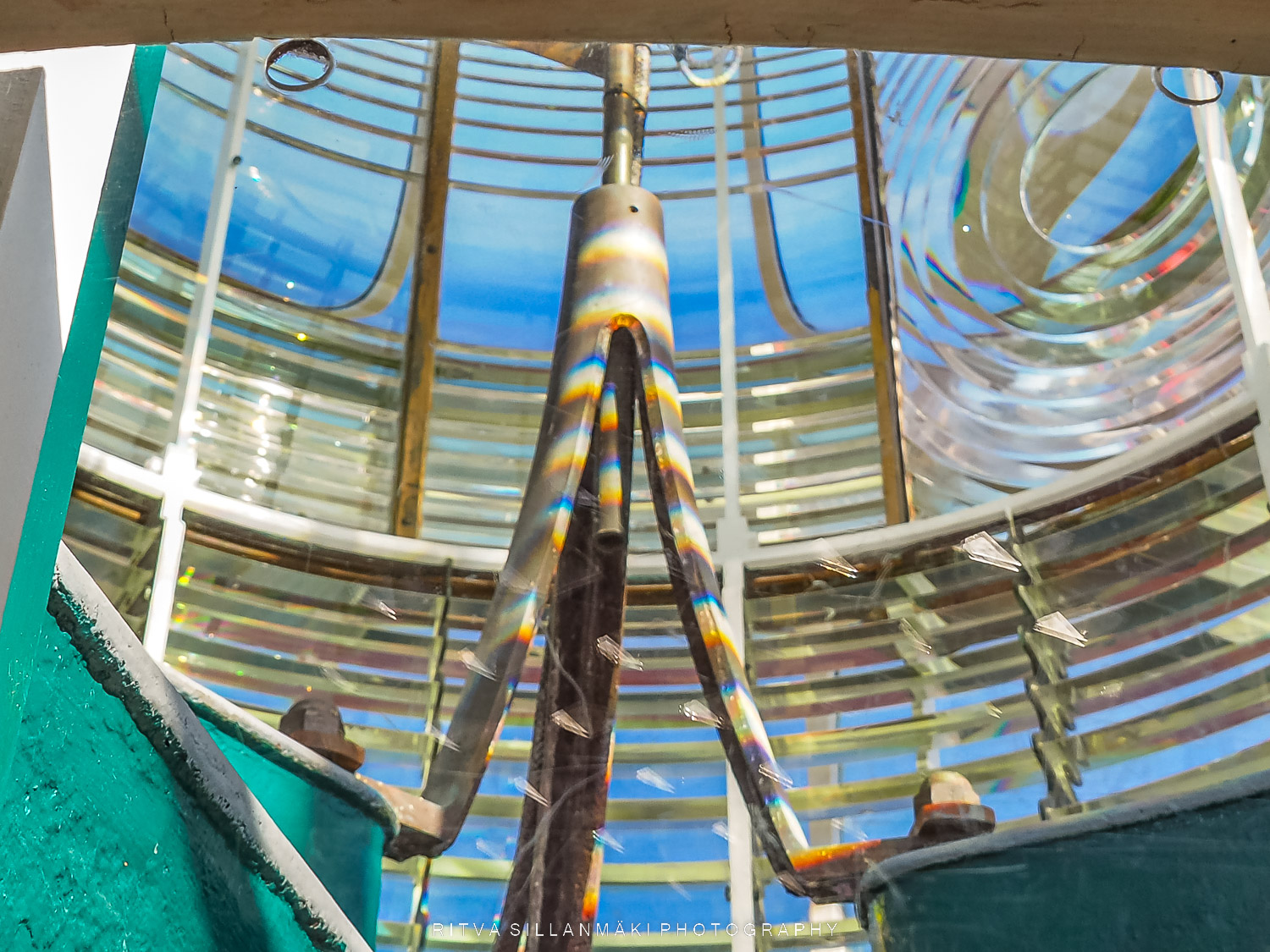
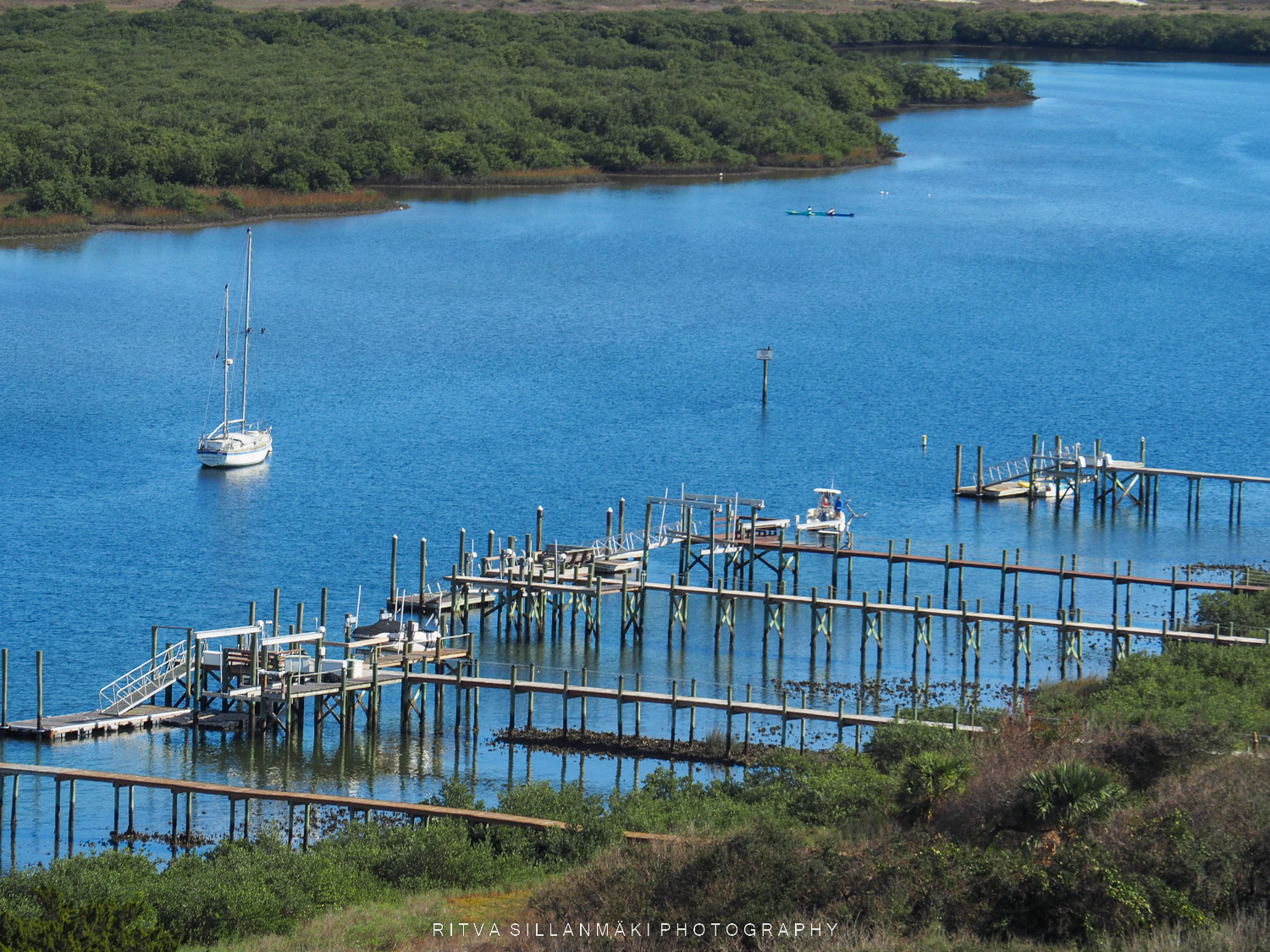
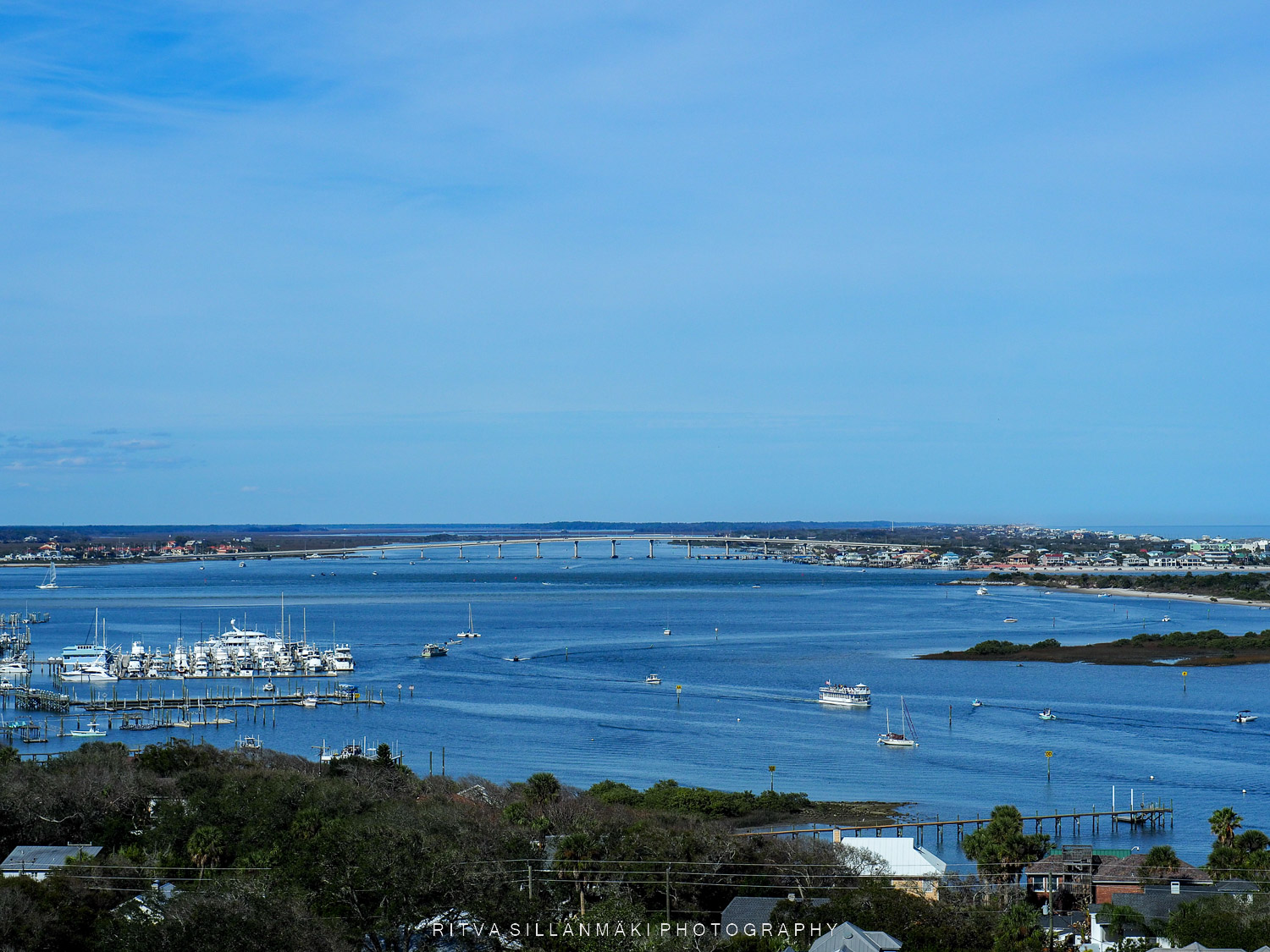
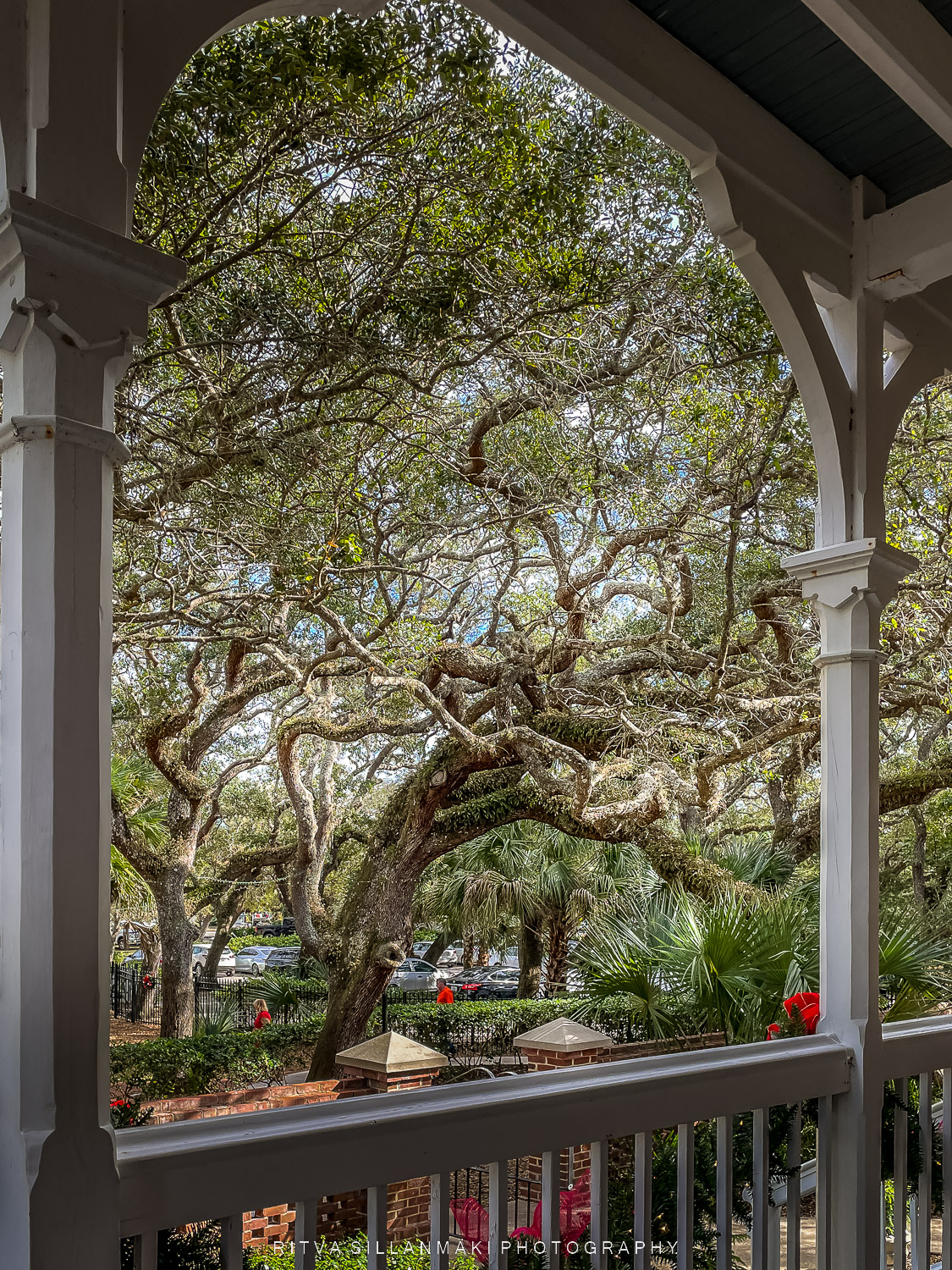
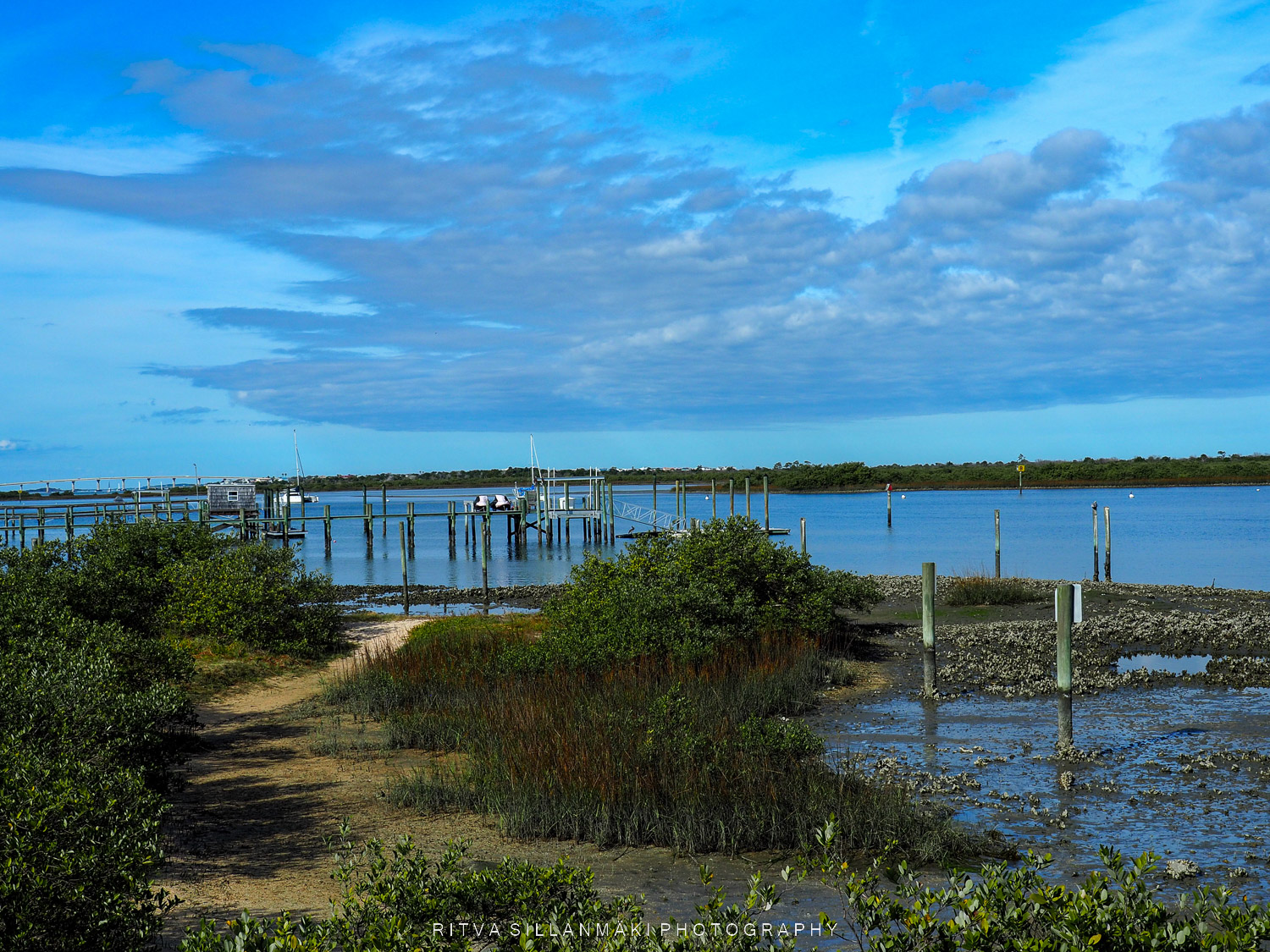
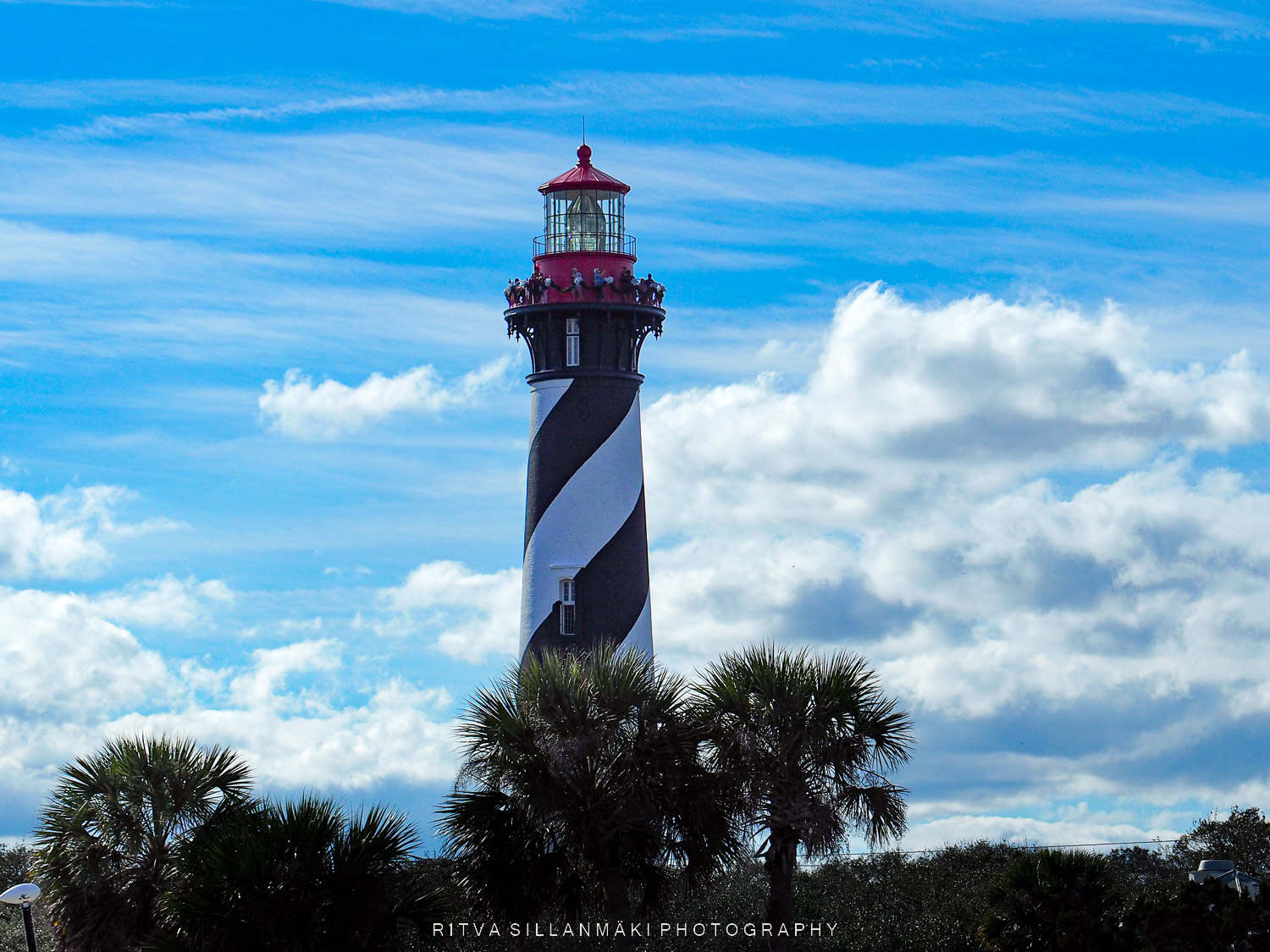
Hardly a day goes by without checking out a lighthouse. So, before going into the historic city of St.Augustine we hit the St. Augustine Lighthouse. The climb to the top was exactly 219 steps. The view was spectacular.
The first lighthouse or should we call it a watchtower was built in 1589 by the Spanish colonials. Sturdier structure replaced the wooden tower in 1737 and it was made or coquina (shell rock) and wood. The current lighthouse was finished in 1874.
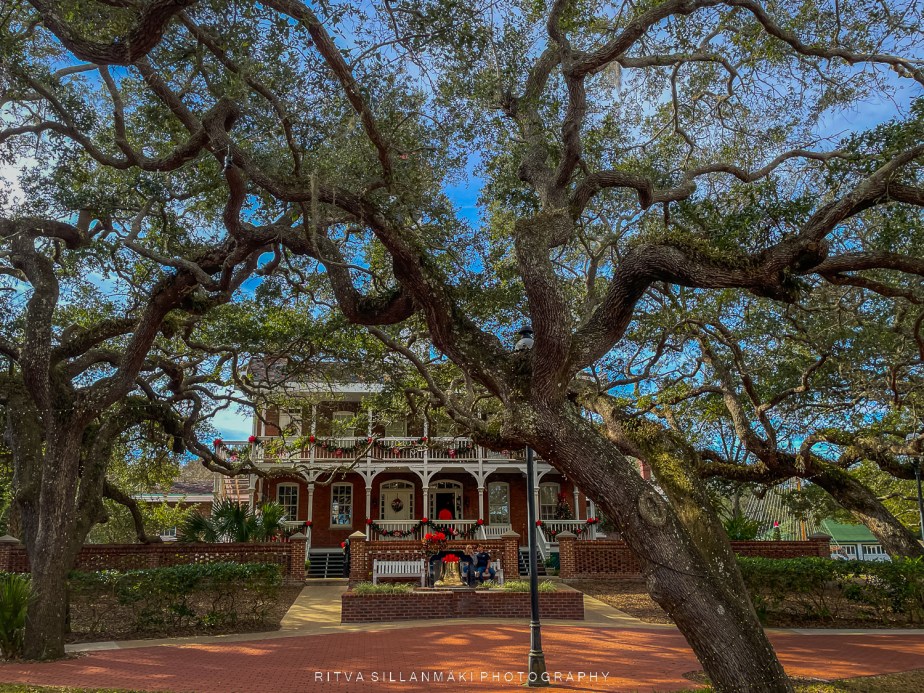
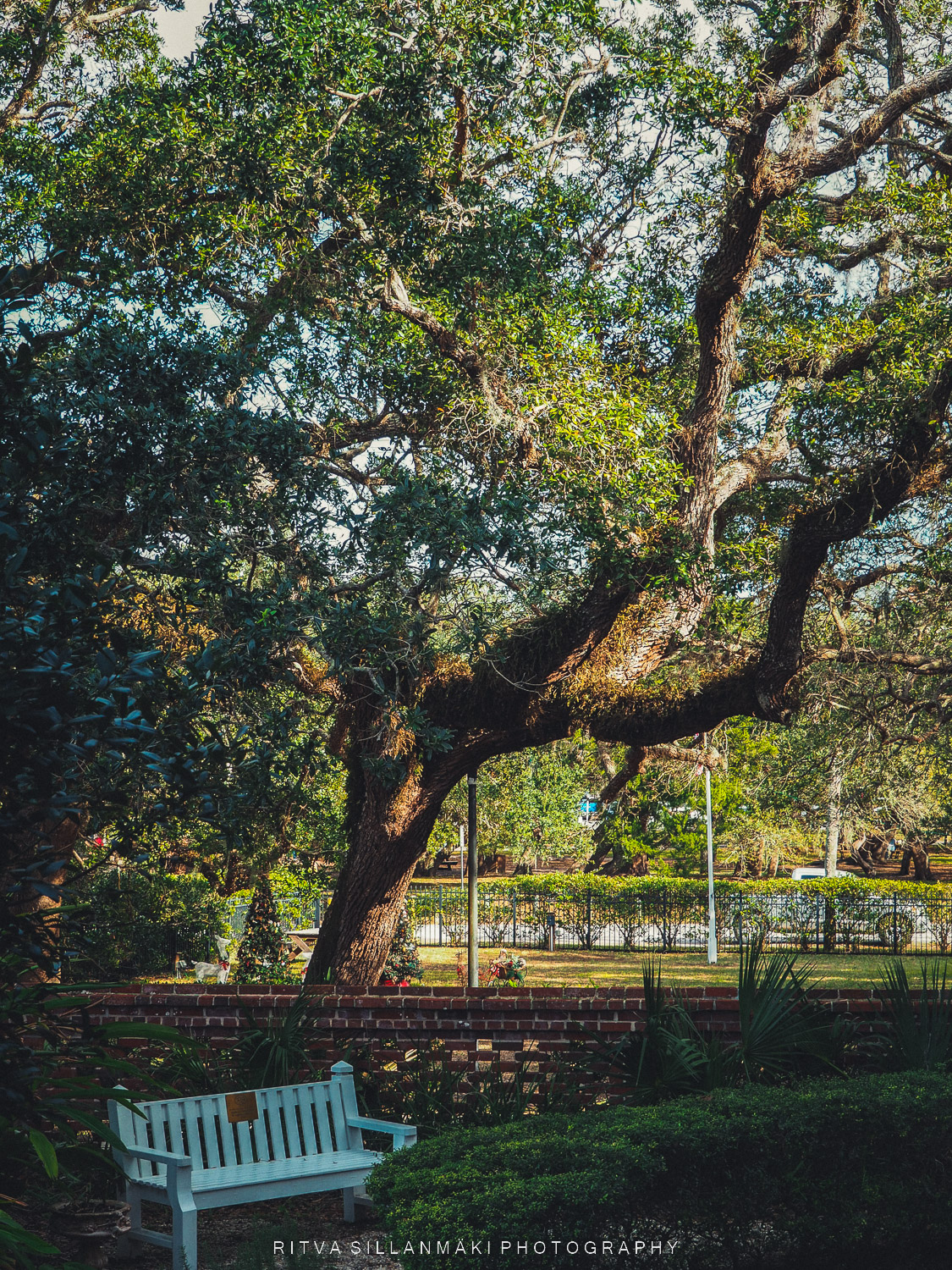
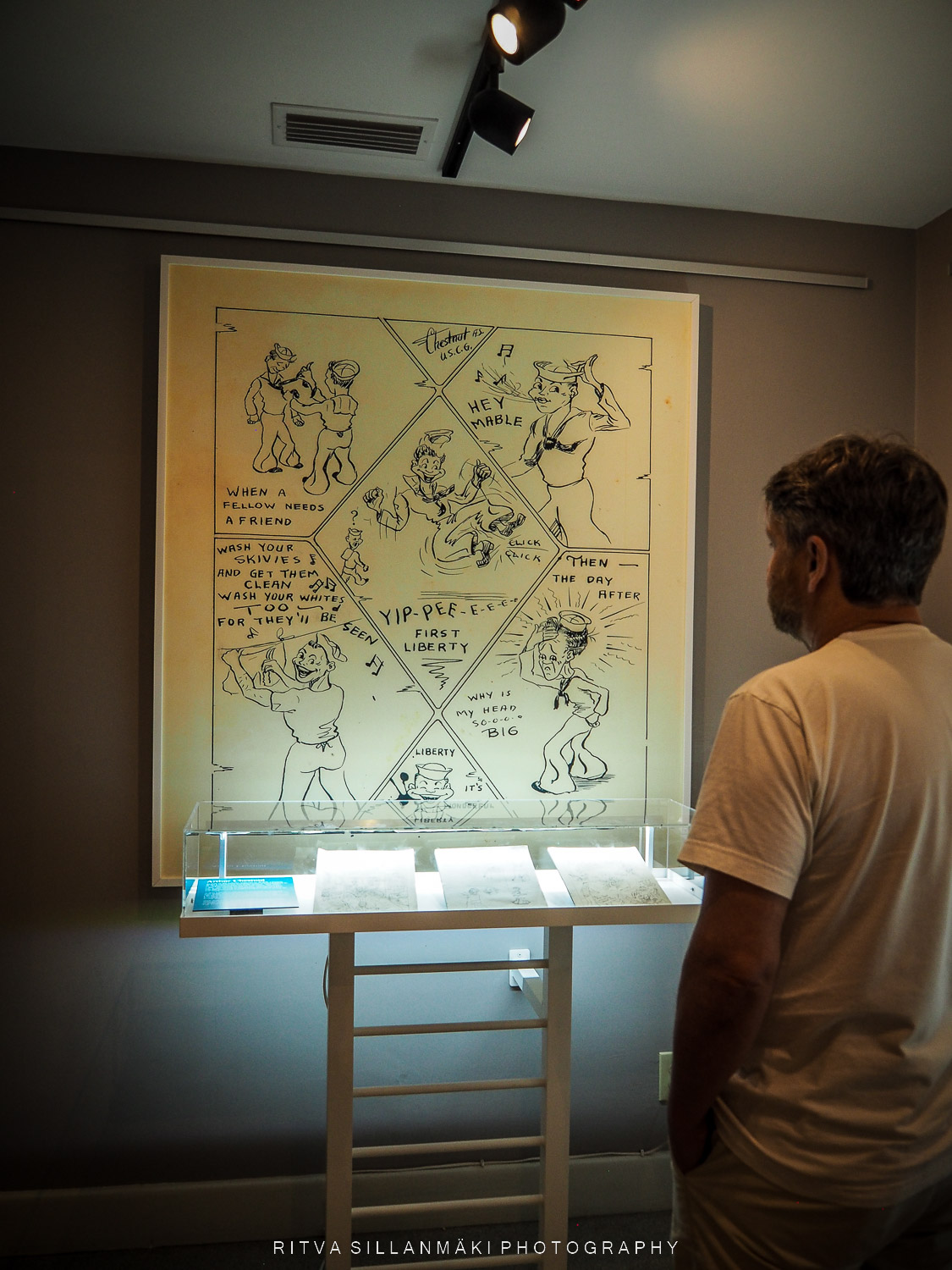
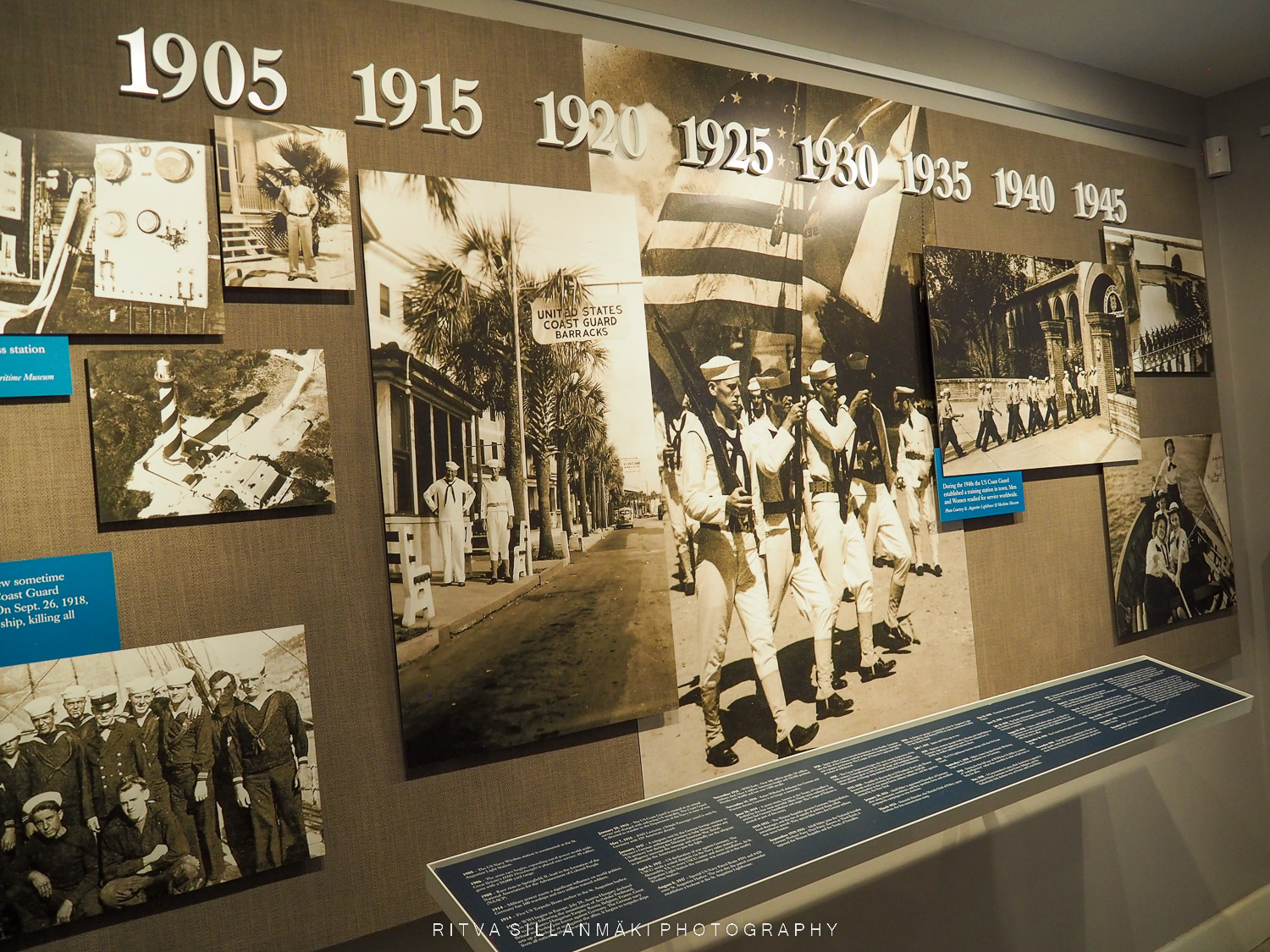
Lighthouse Keepers house was worth visiting, also, with its historic displays. It was early January so the Christmas decorations were still there, not really my thing, so they limited a bit of what I photographing as I did not want seasonal photos.
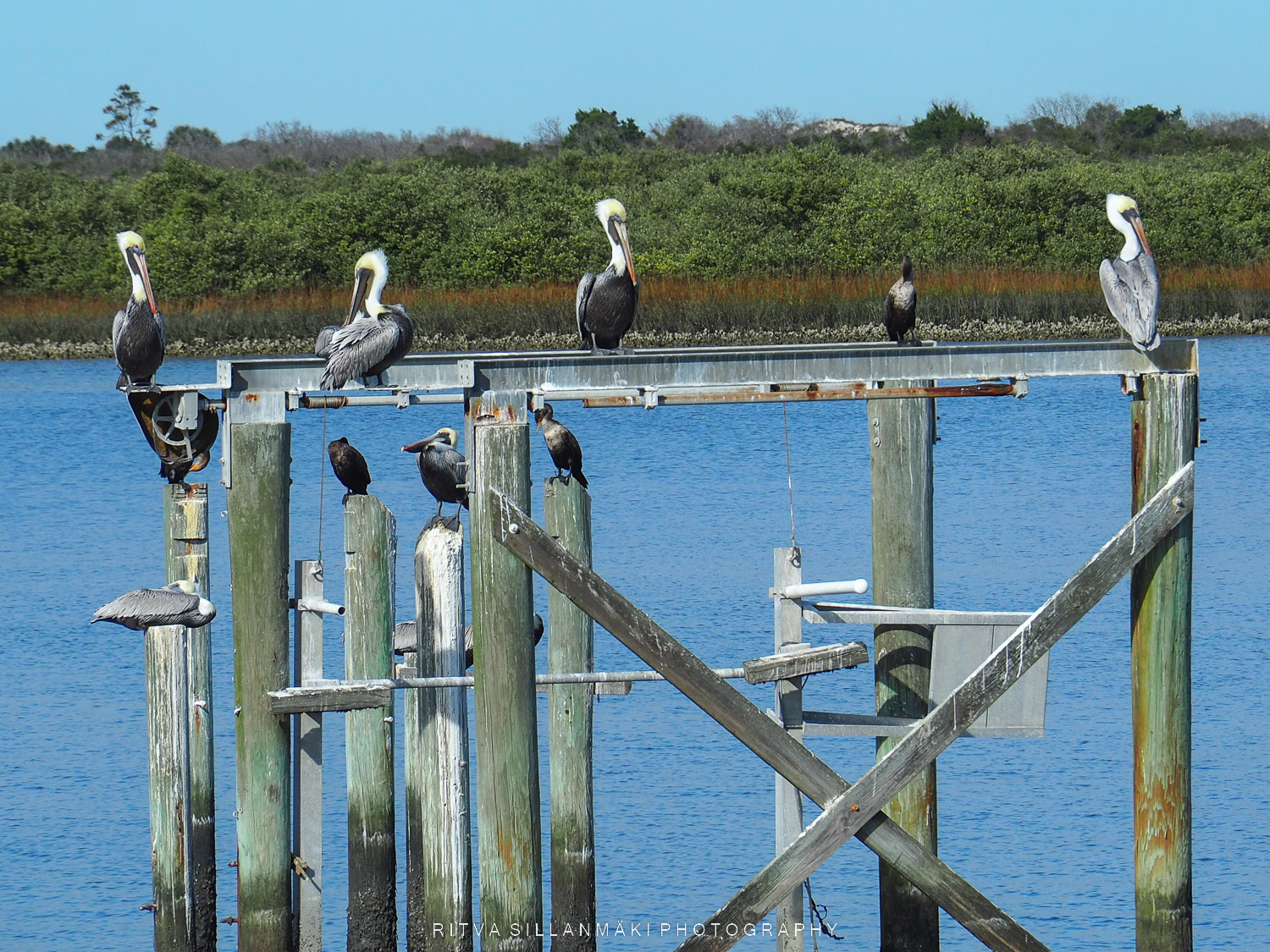
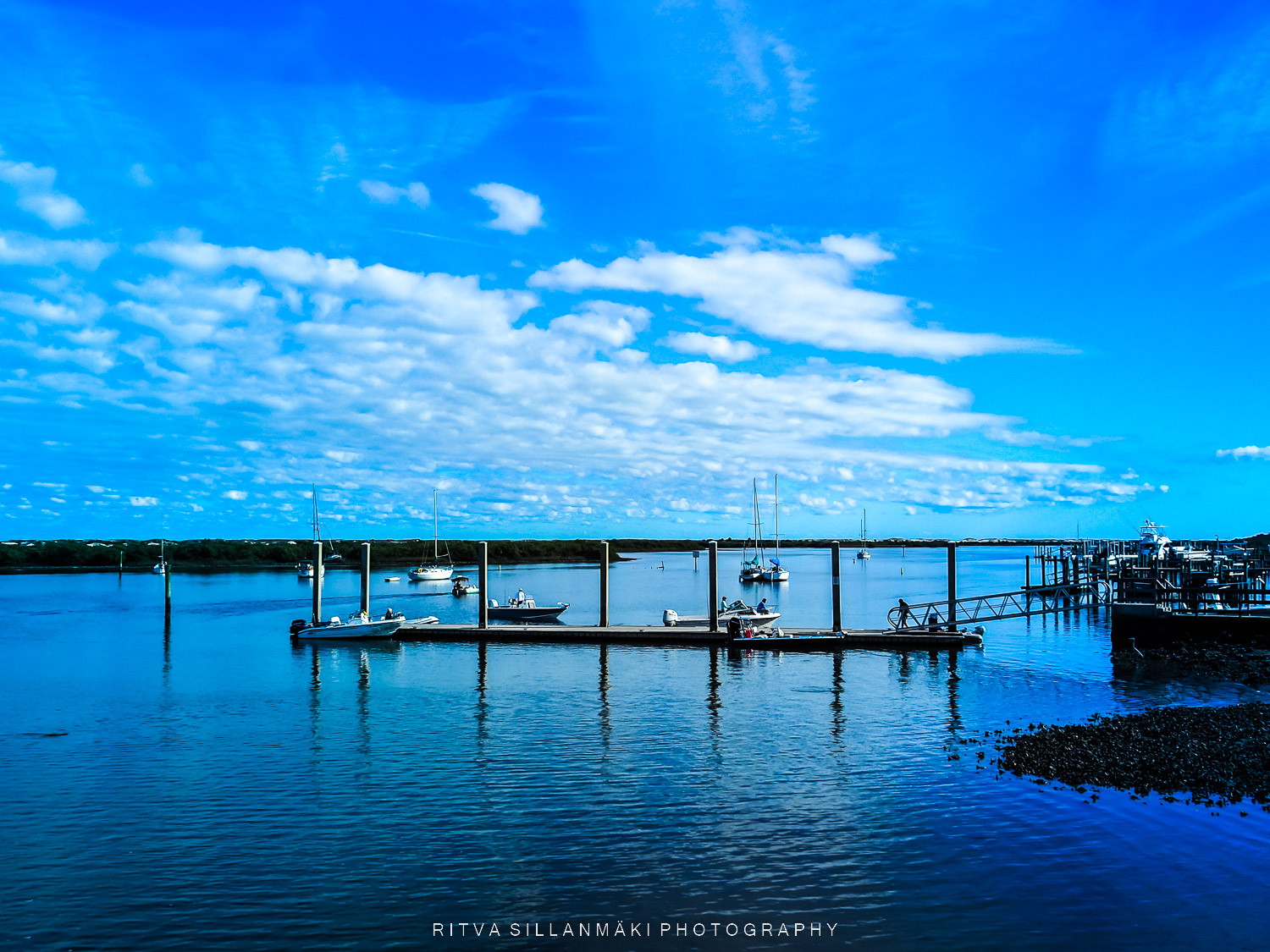
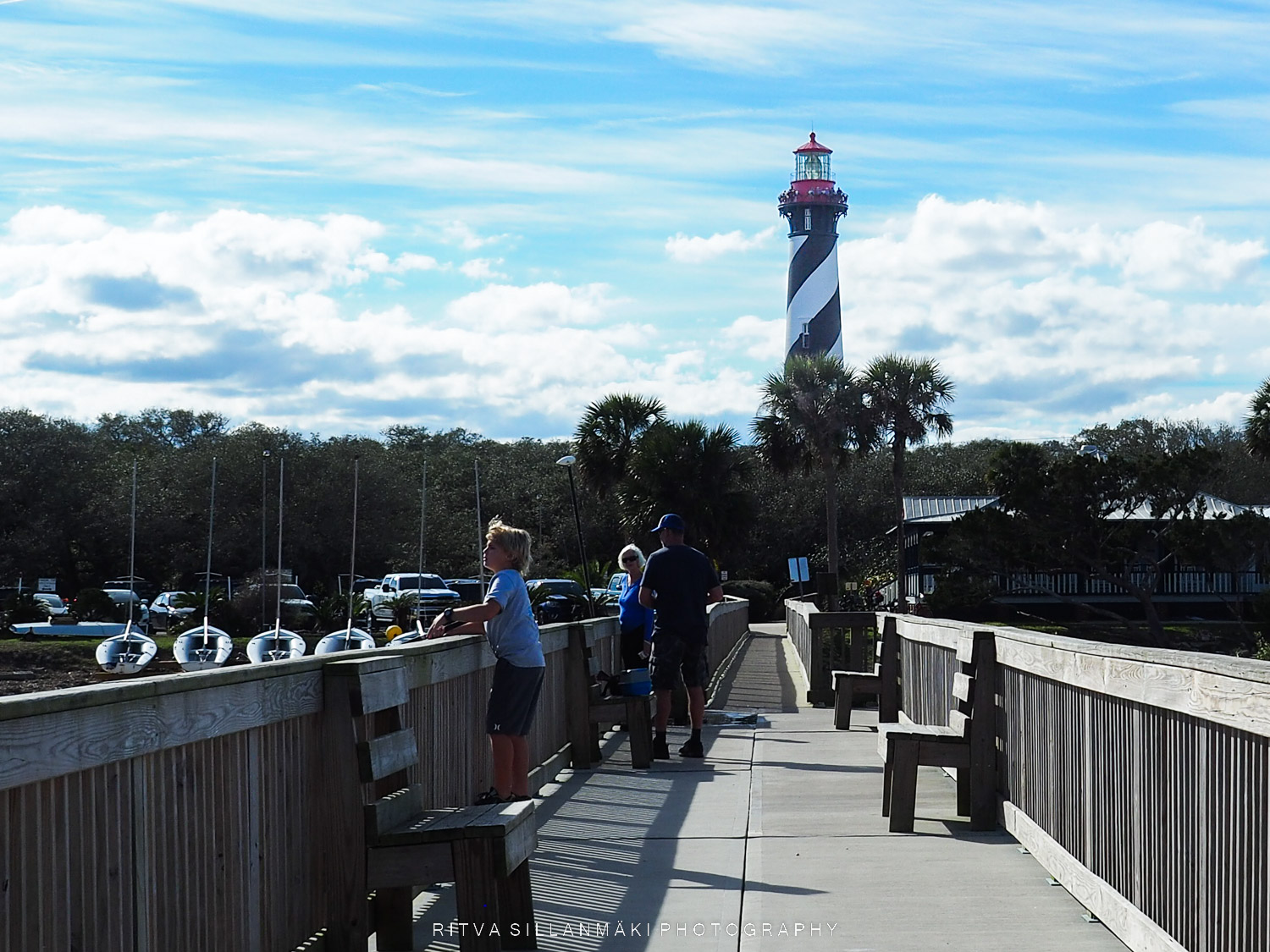
We were told that you could get the best shot of the lighthouse from the pier, unfortunately due to the backlite the shots from the pier did not turnout the best, but I understand that during an other time of the day that would have been the case.
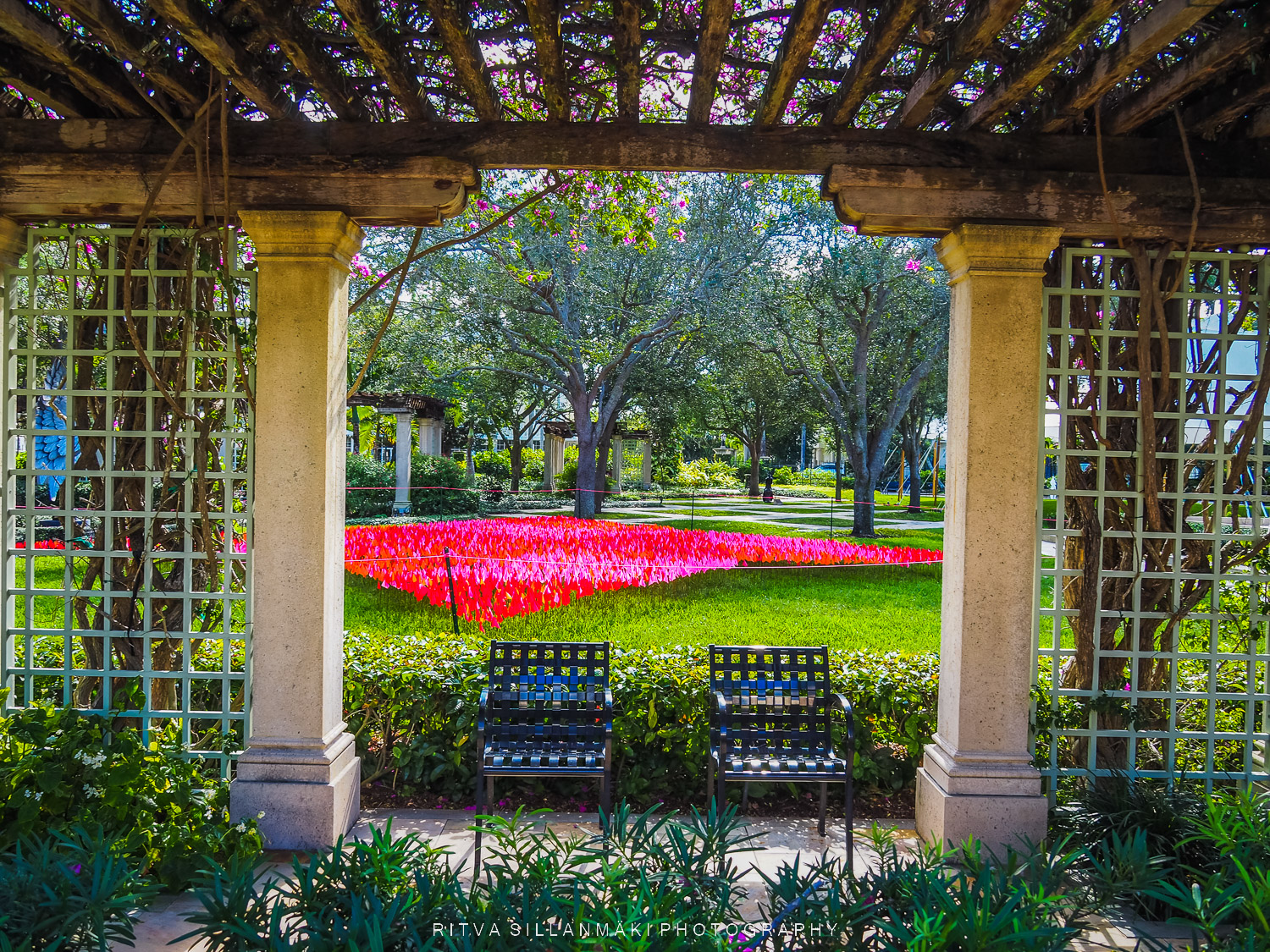
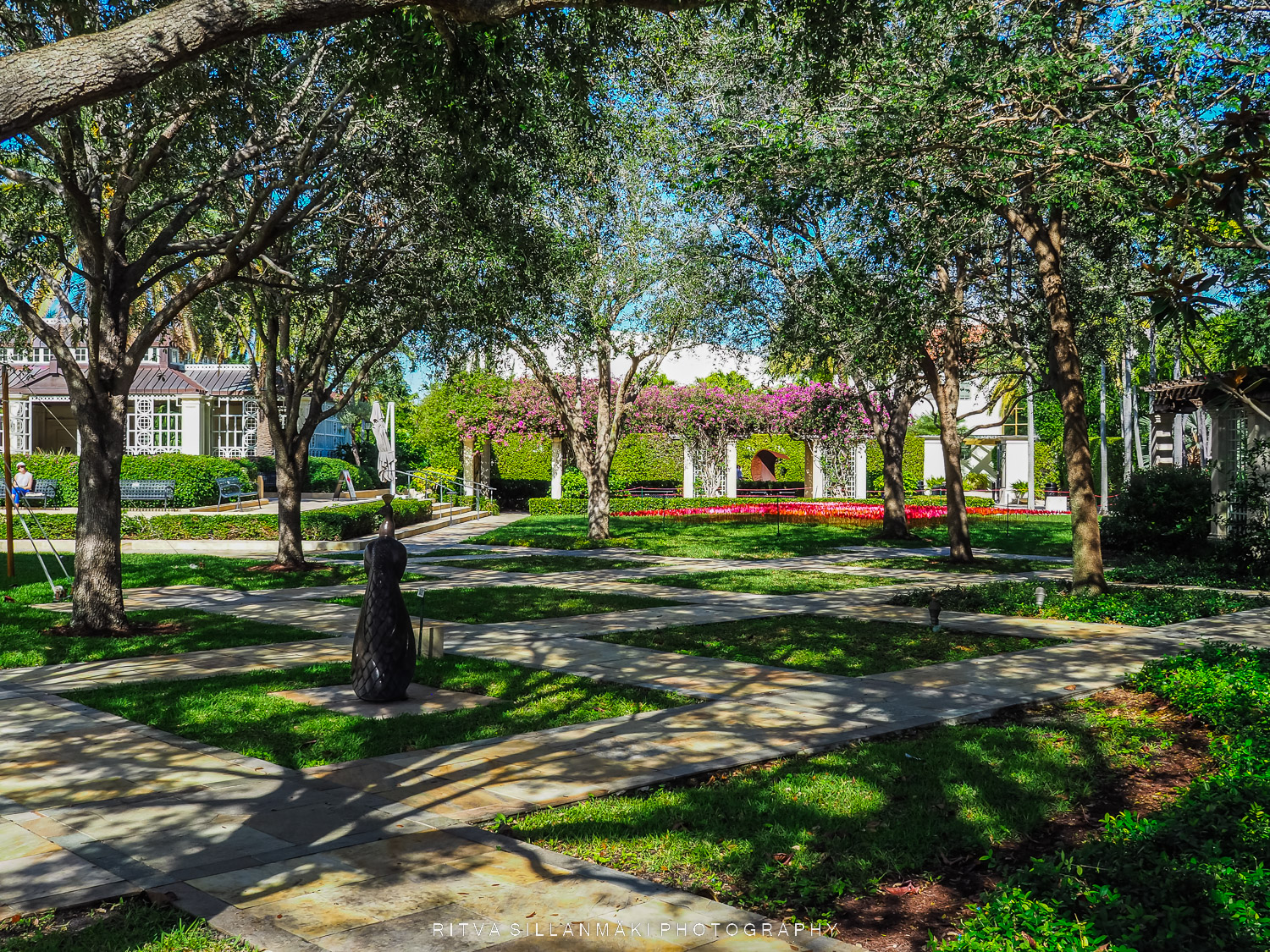
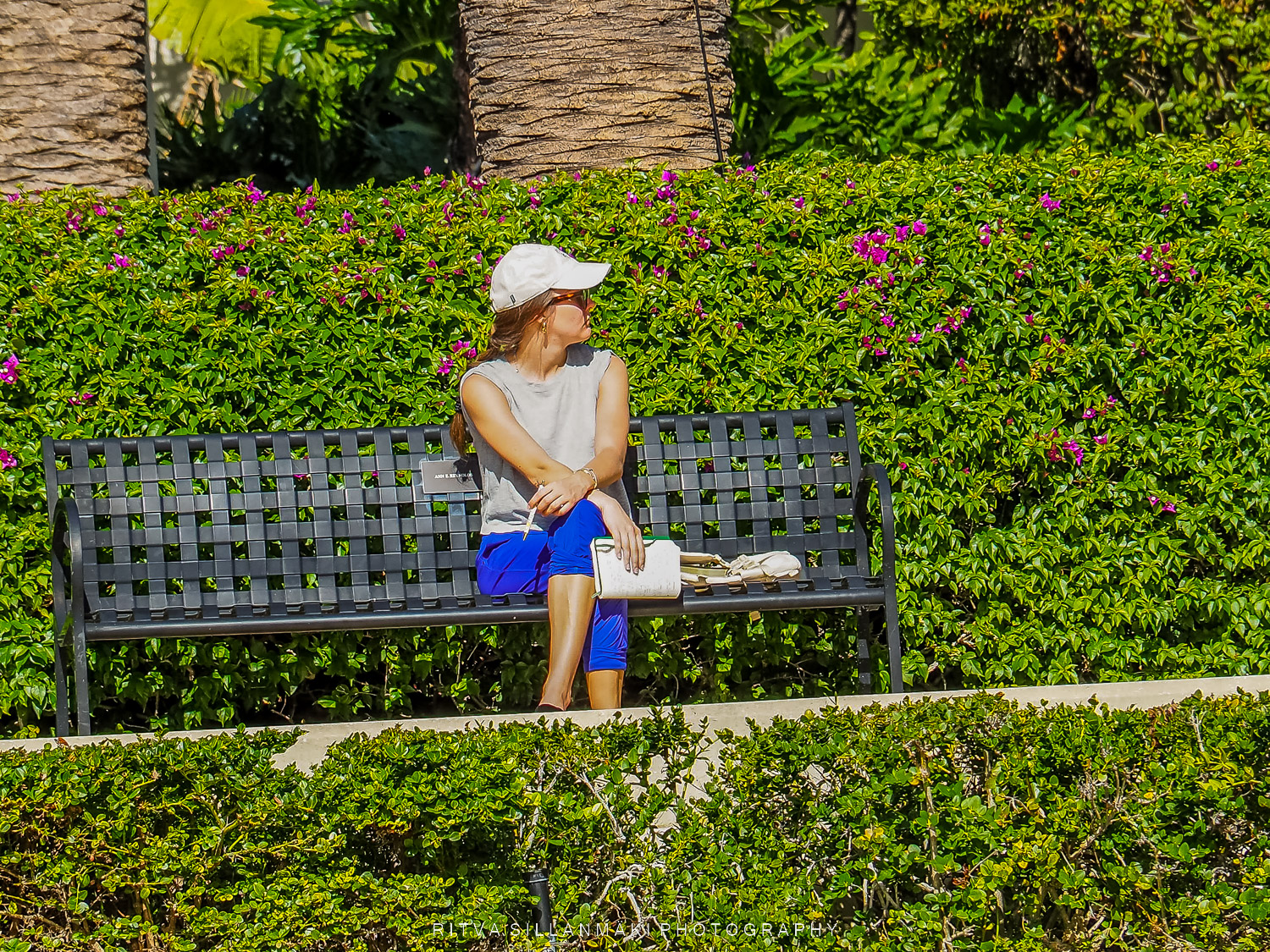
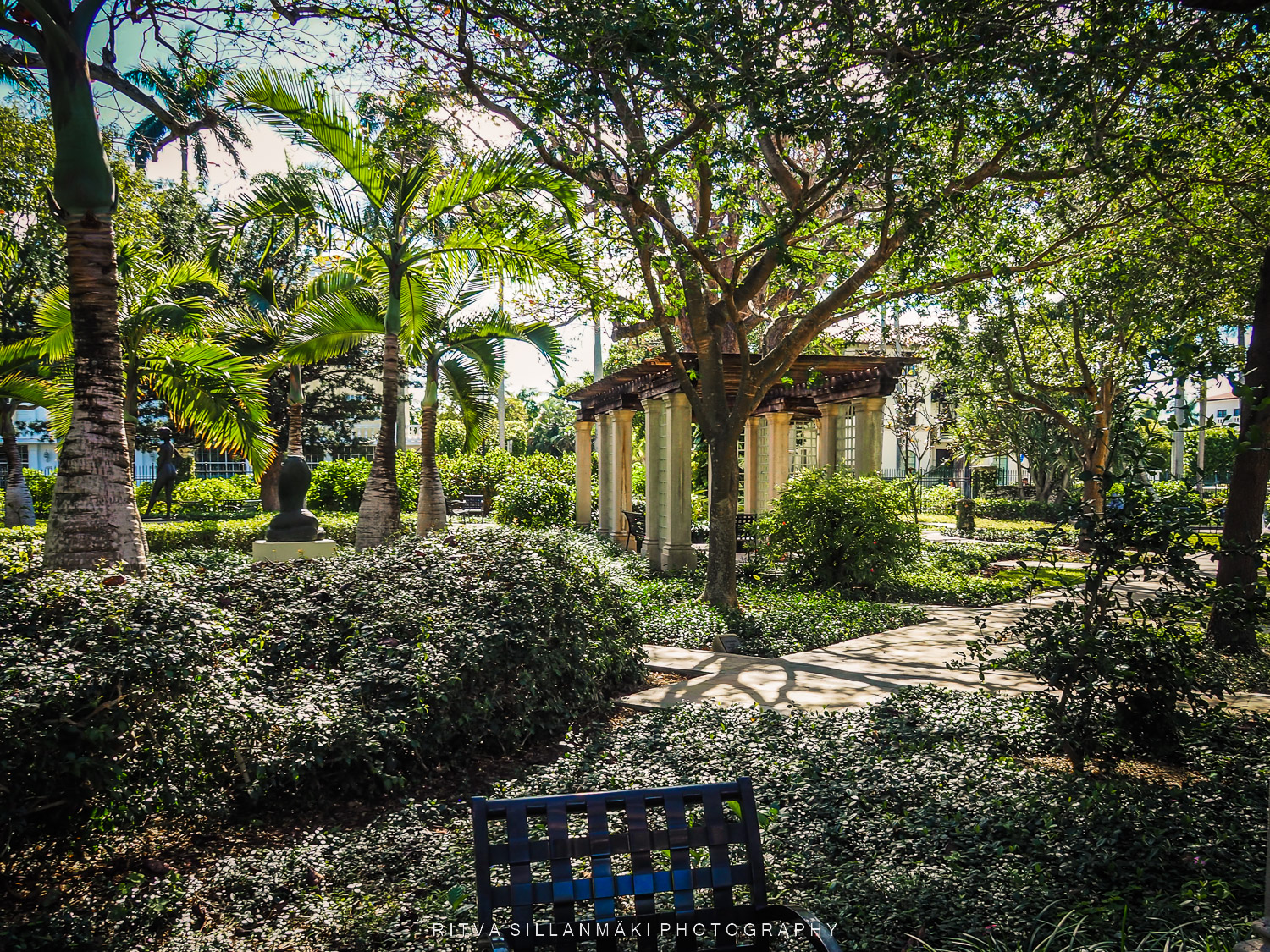
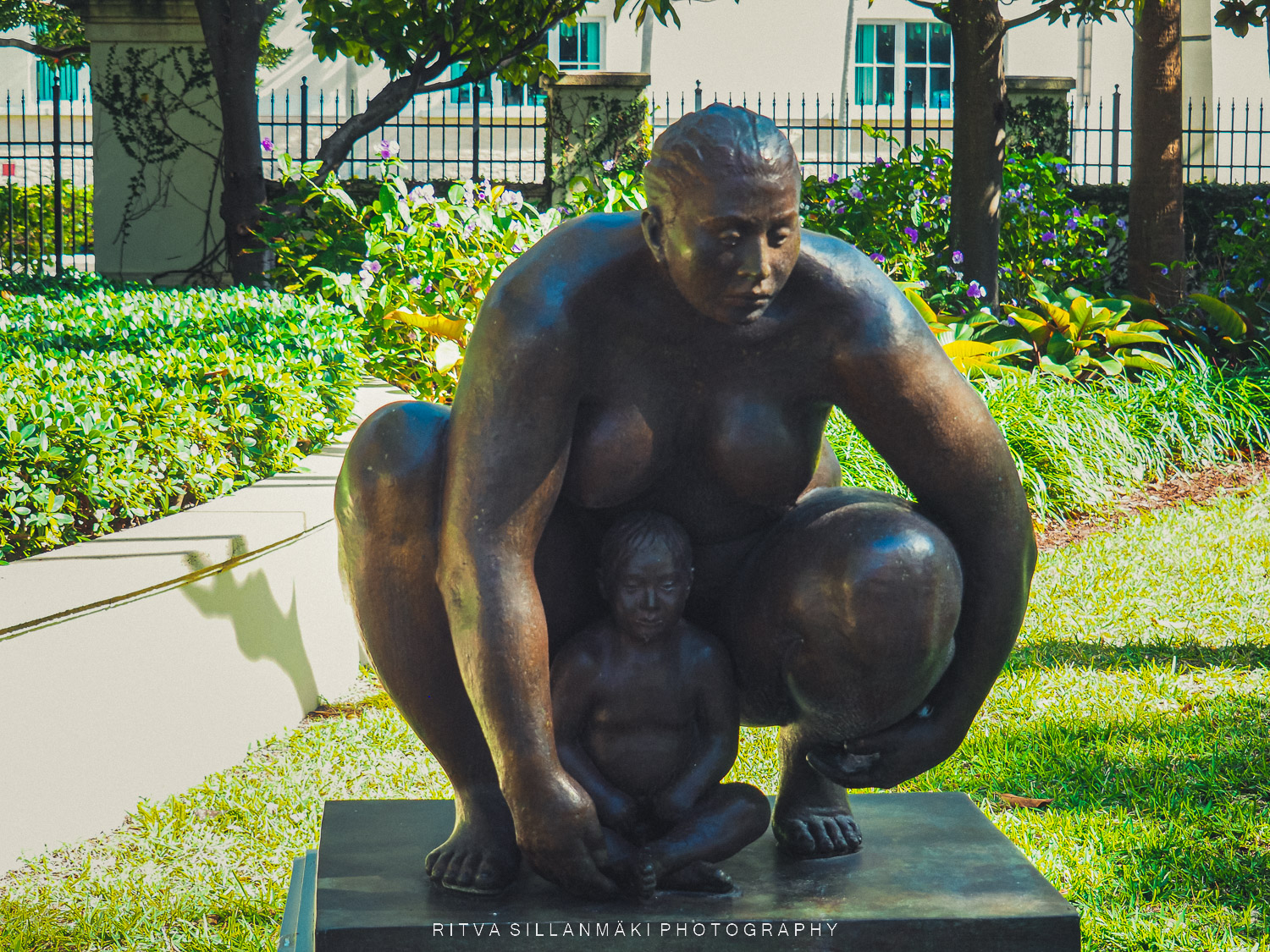
The Society of the Four Arts in Palm Beach garden, Florida. Such a lovely spot to take a break, I don’t think a really appreciated all the different gardens- or to be honest noticed them, but it was a lovely spot to visit. See some art. There were several people there reading, stretching and drawing and just sitting in the shadows of the pergolas
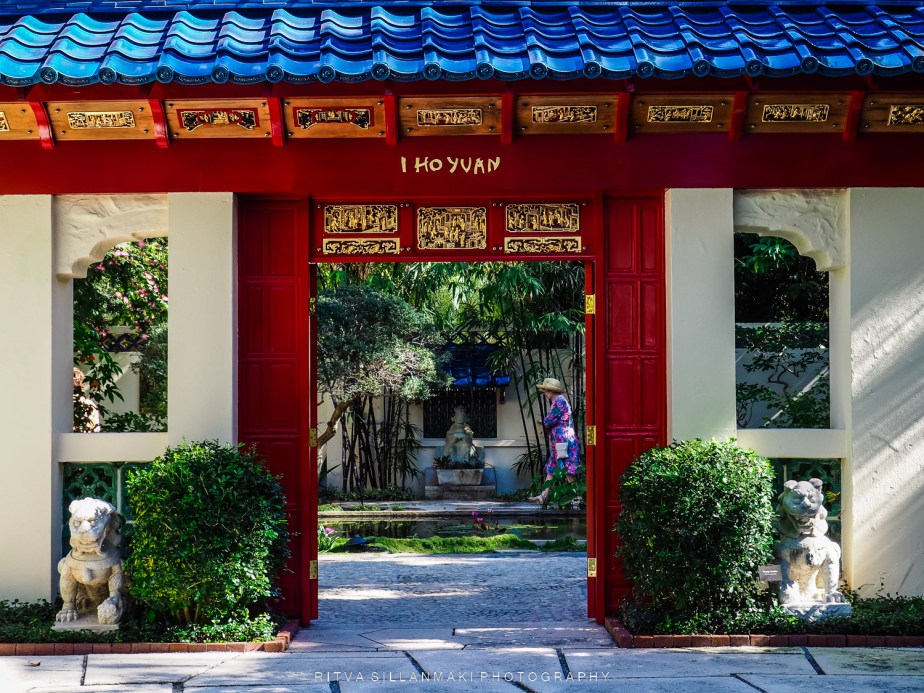
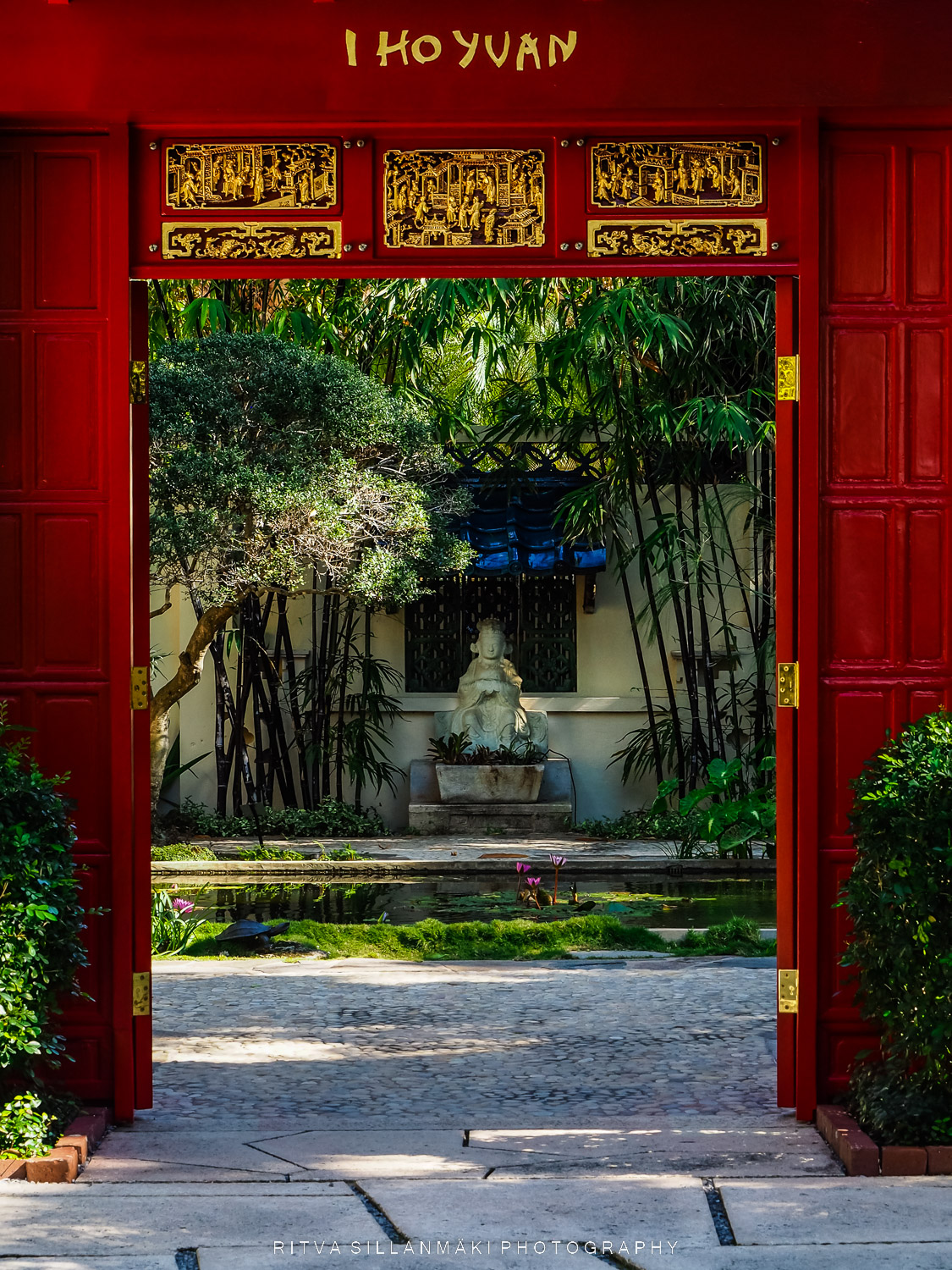
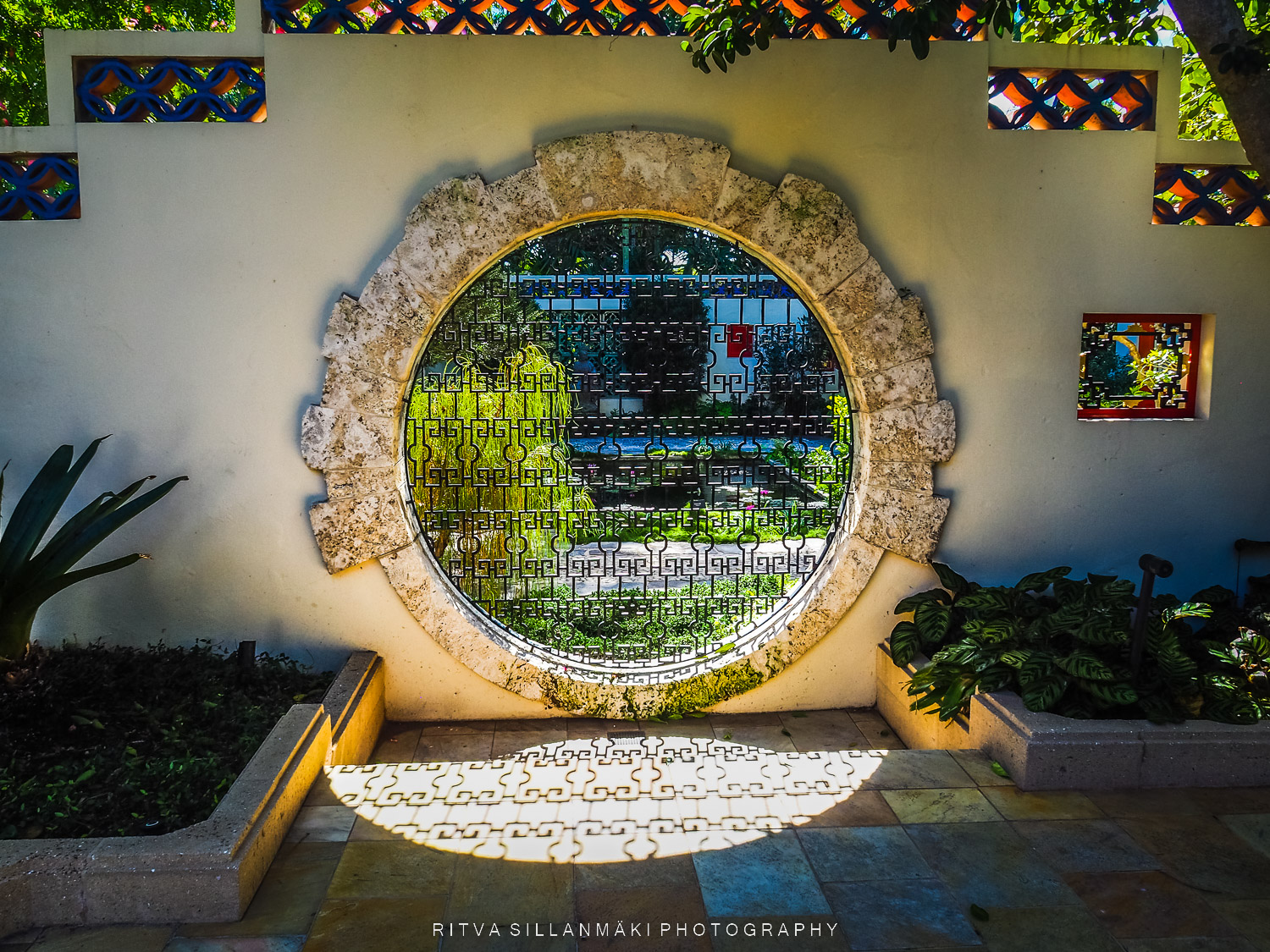
.Originally designed in 1938, the Botanical Gardens are demonstration gardens that educate residents and visitors about the diversity of plants that thrive in South Florida’s climate. The gardens are divided into themed spaces that reflect popular architectural and planting styles in the area: Chinese Garden, Fragrant Moonlight Garden, Palm Garden, Bromeliad Garden, Jungle Garden, Spanish Facade Garden, Formal Garden, Tropical Garden, and Madonna Garden.
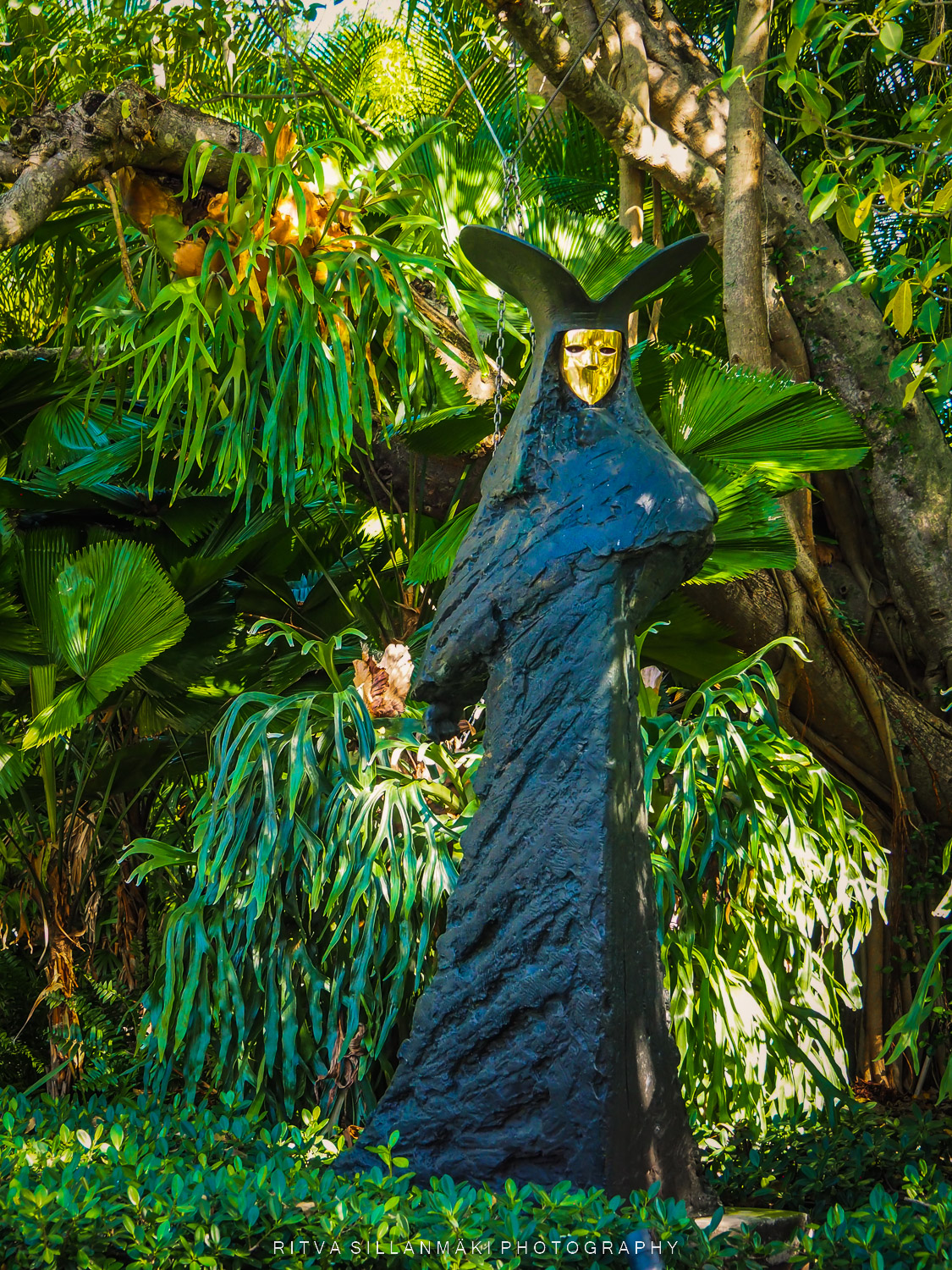
My favorite was the Chinese garden and I found the statues and art to be lovely.
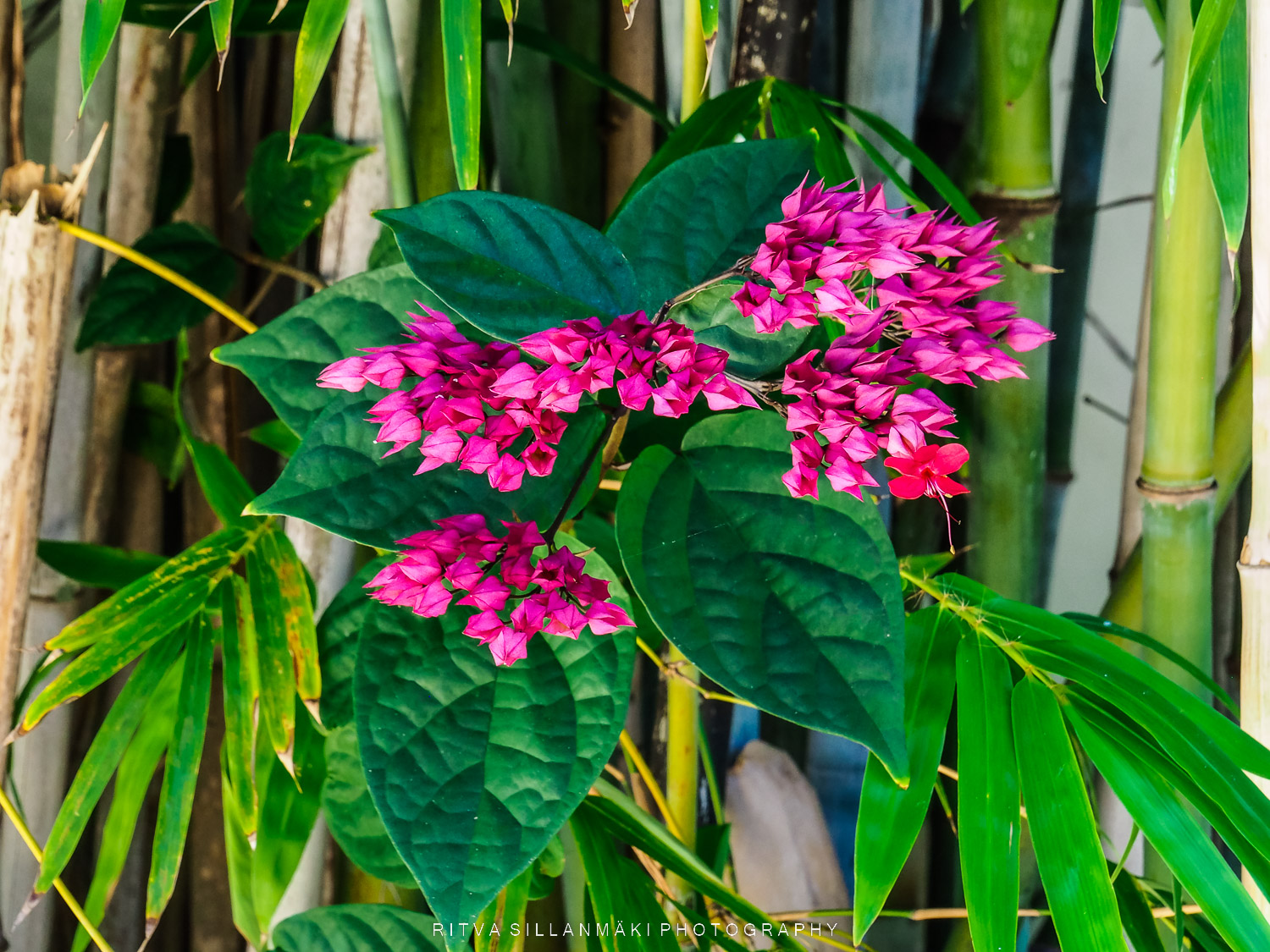
The different areas of the garden were lovely also even if it was winter.
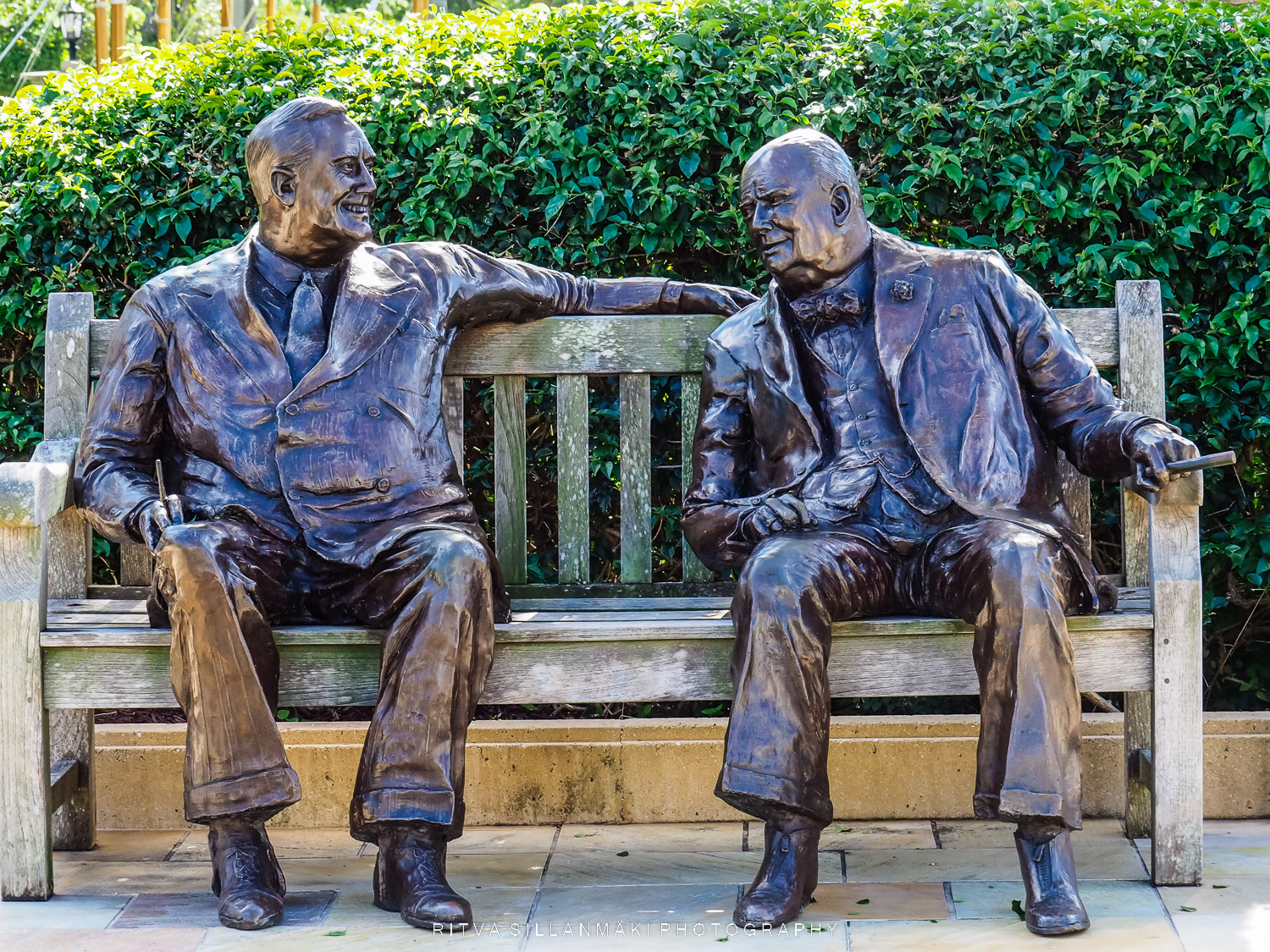
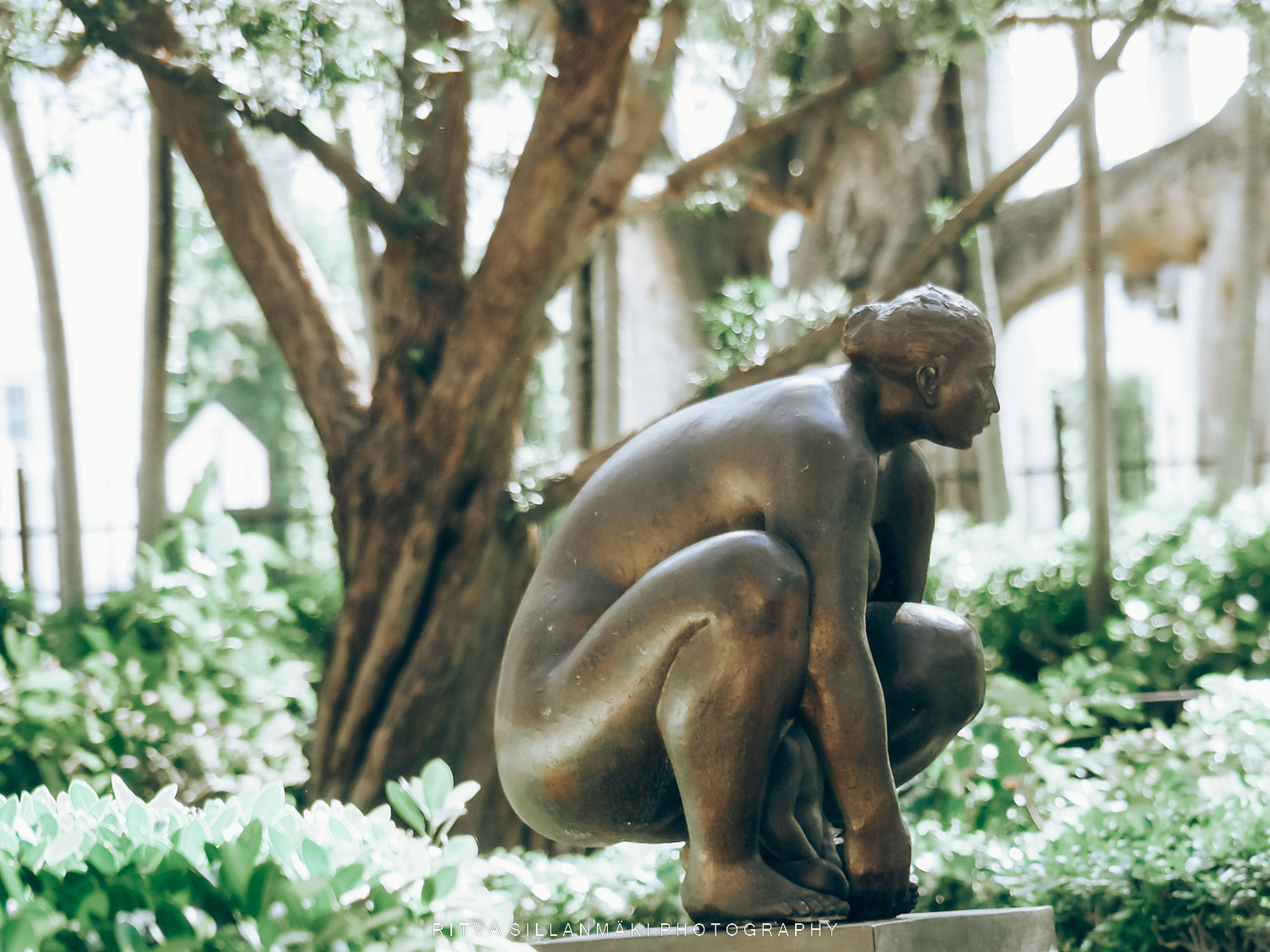
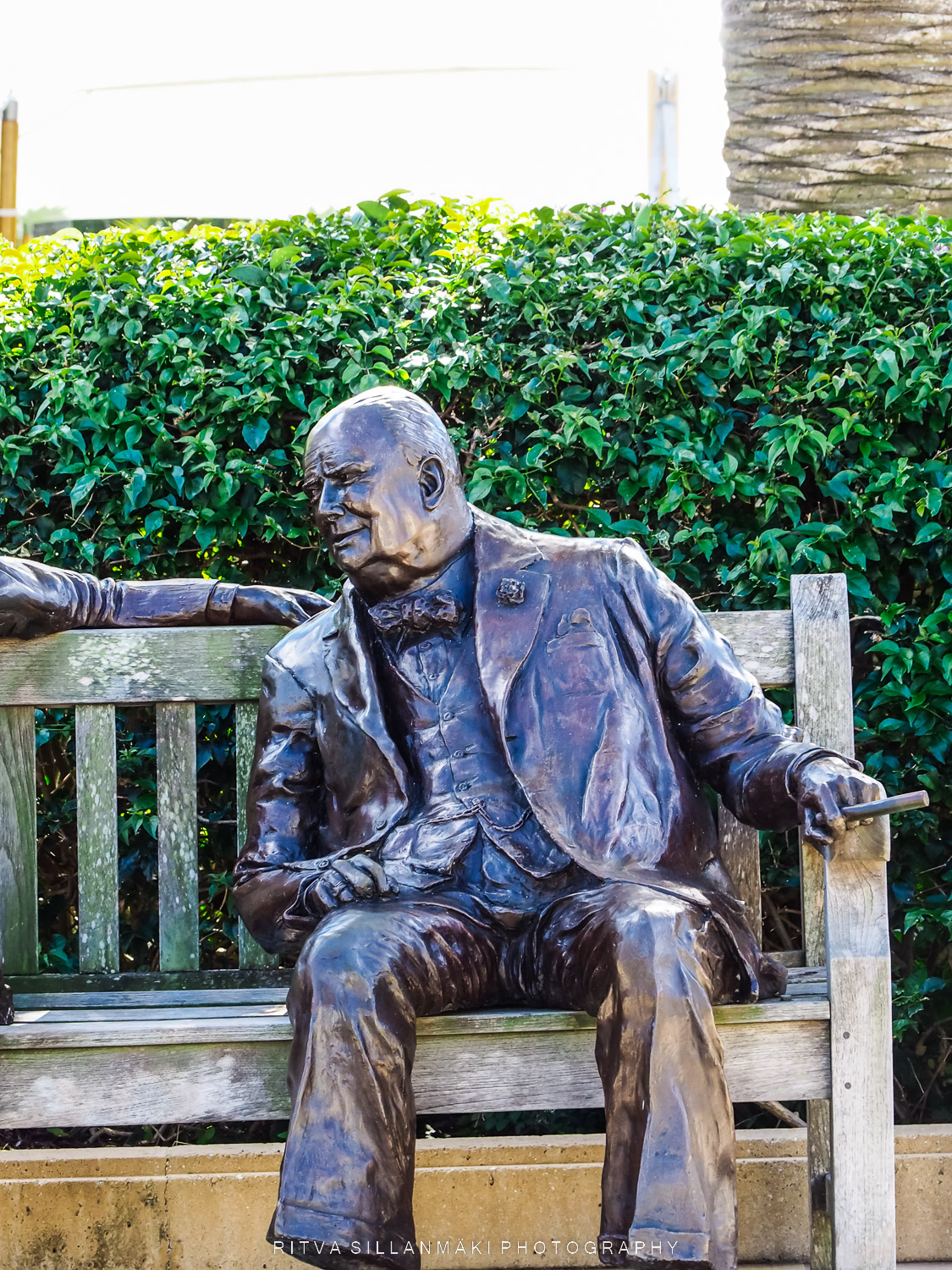
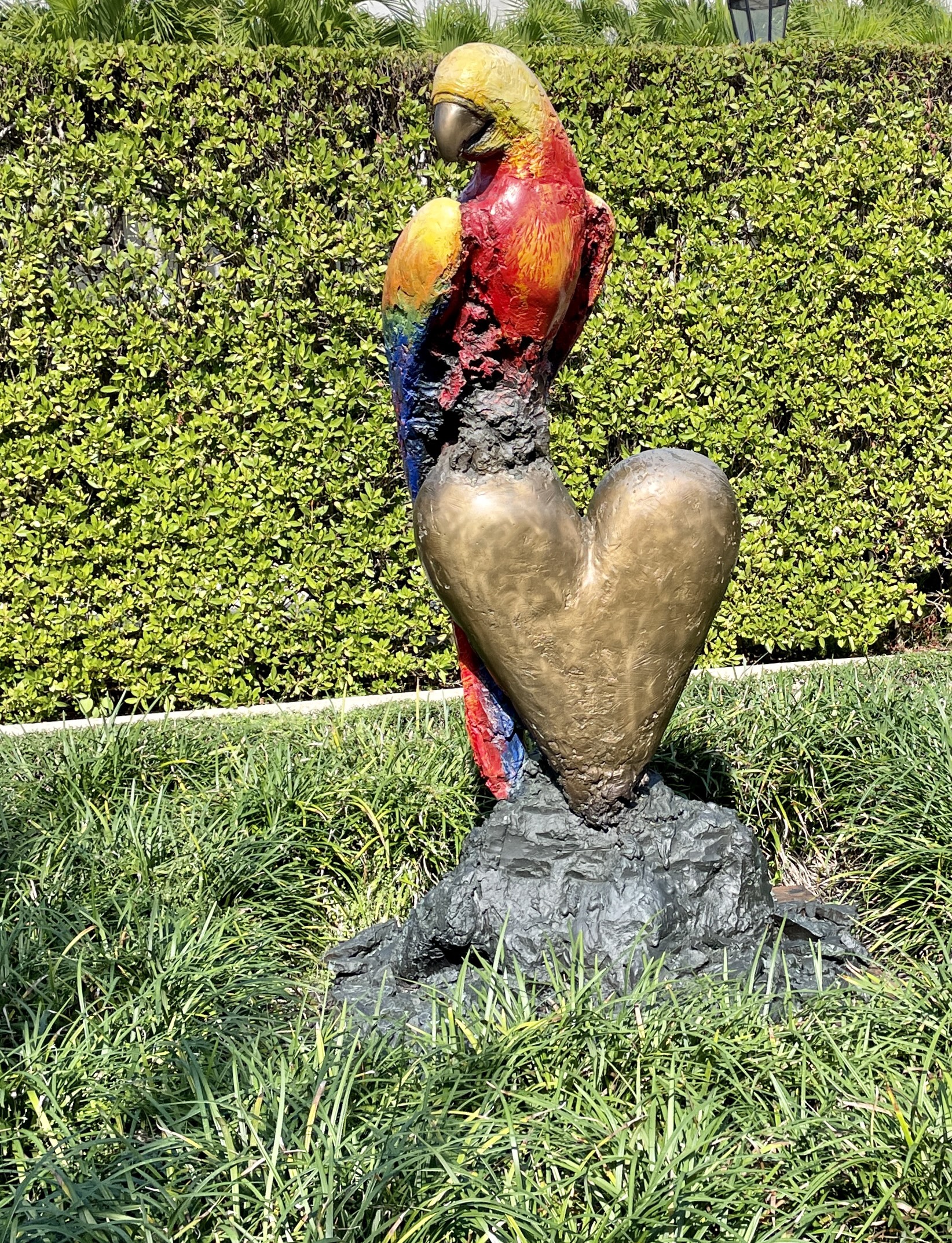
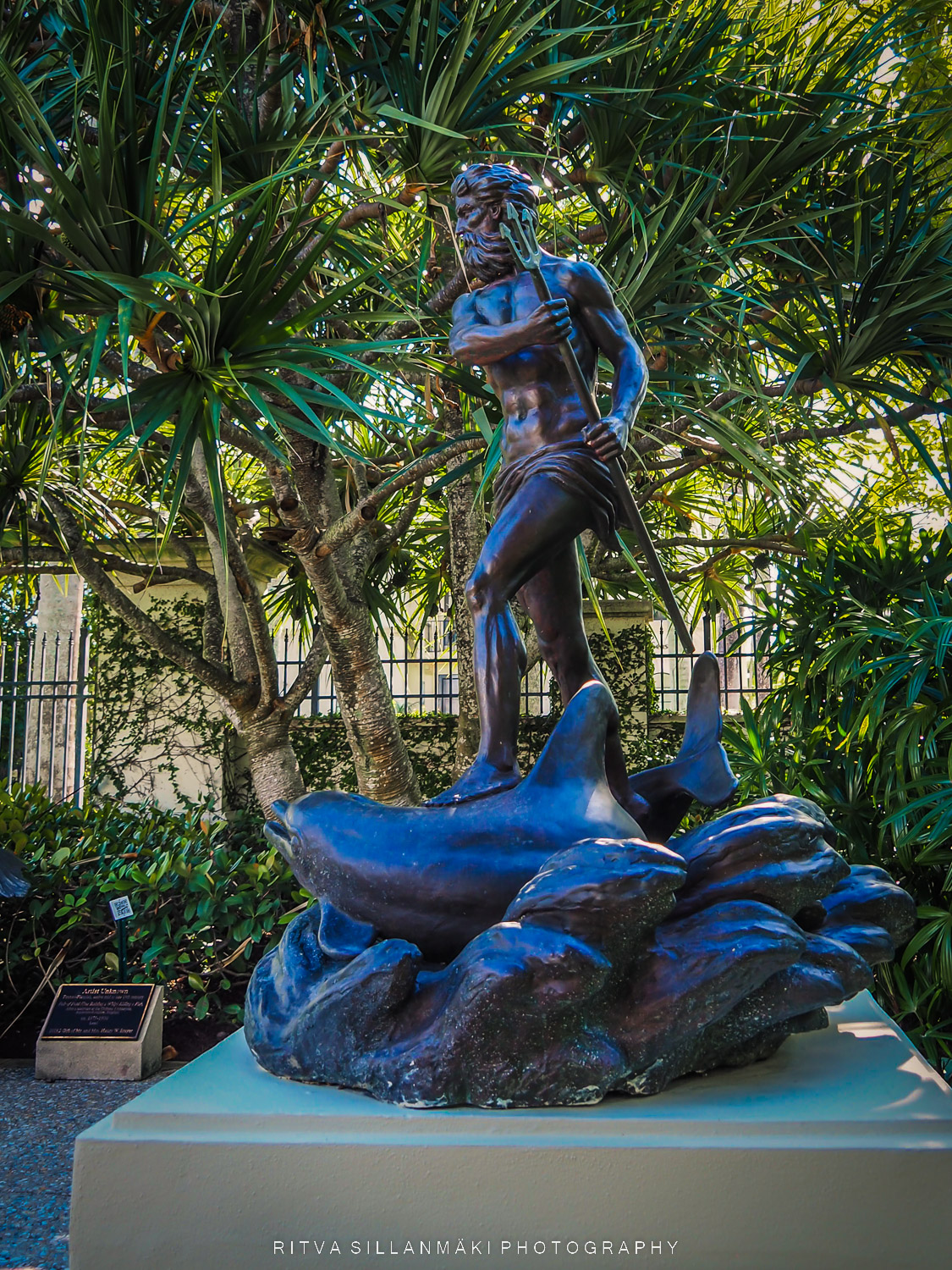
There were several statues in the garden I took photos of some of them.
Donna Wrote; To some, photography is formal, with clear and concise messages. Others want you to feel the photos, and take away impressions from what you see. At the end of the day, it is always our story, driven by our character and passions, that we showcase.
As I’ve stated before I am not a very technical photographer, more into composition, mood. I do my magic on the edit table mostly, if you can call it magic, more like my interpretation of places and people. I am also not one to write all that much, let the photos speack for themselves.
I think some of these speaks, relates a story. Hope you agree 🙂 I find monochrome images are great way to showcase messages of emotions and action as all unnecessary is taken away
In colors also – obviously.
Nature in all its forms speaks volumes
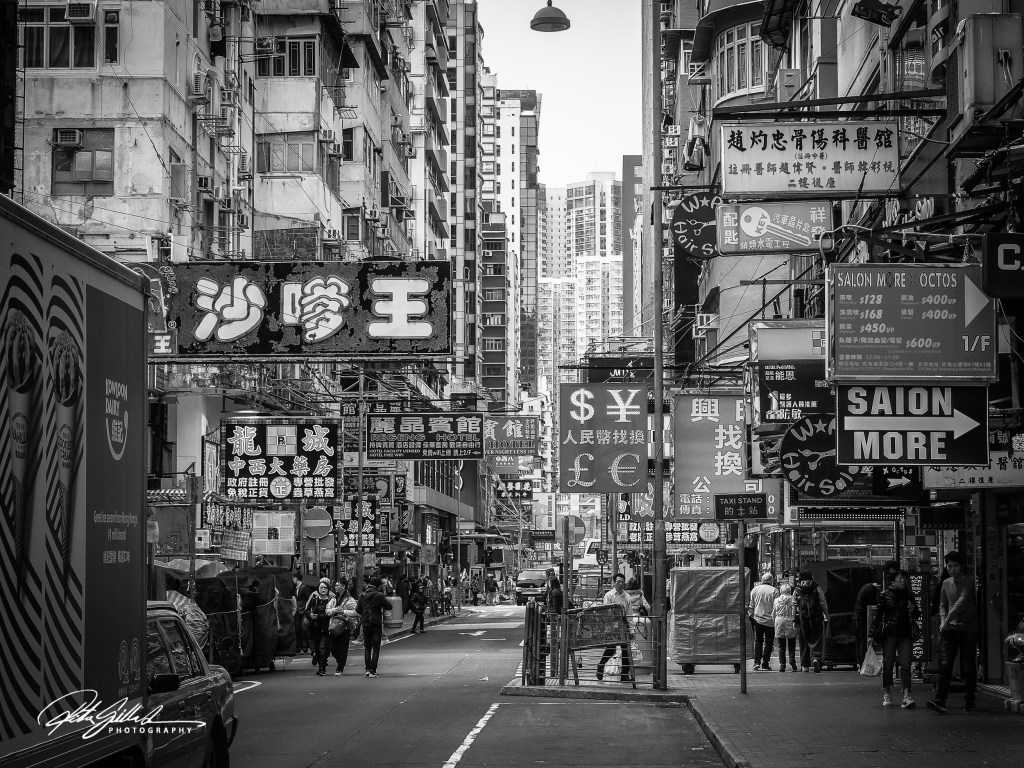
Signs….
I have two cameras an old reliable SONY SLT-A65V, and I have two lences I use with it one for Macro Sony Macro 2.8/50 and portraits. The other for nearly everything a Sony 18-200mm.
The Sony has been in less use since I bought a new lighter one to carry around, its a Olympus E-M10 Mark II with a 14-150mm lense and I have a OM-D M.ZUIKO DIGITAL 45mm 1:1.8 for street and portrait photography
I have two cameras an old reliable SONY SLT-A65V, and I have two lences I use with it one for Macro Sony Macro 2.8/50 and portraits. The other for nearly everything a Sony 18-200mm.
The Sony has been in less use since I bought a new lighter one to carry around, its a Olympus E-M10 Mark II with a 14-150mm lense and I have a OM-D M.ZUIKO DIGITAL 45mm 1:1.8 for street and portrait photography
water ripples
I am not a very technical photographer, more into composition, mood. I do my magic on the edit table mostly, if you can call it magic, more like my interpretation of places and people. I am also not one to write all that much, let the photos speack for themselves.
These are shot with the Olympus and the with a 14-150mm lense
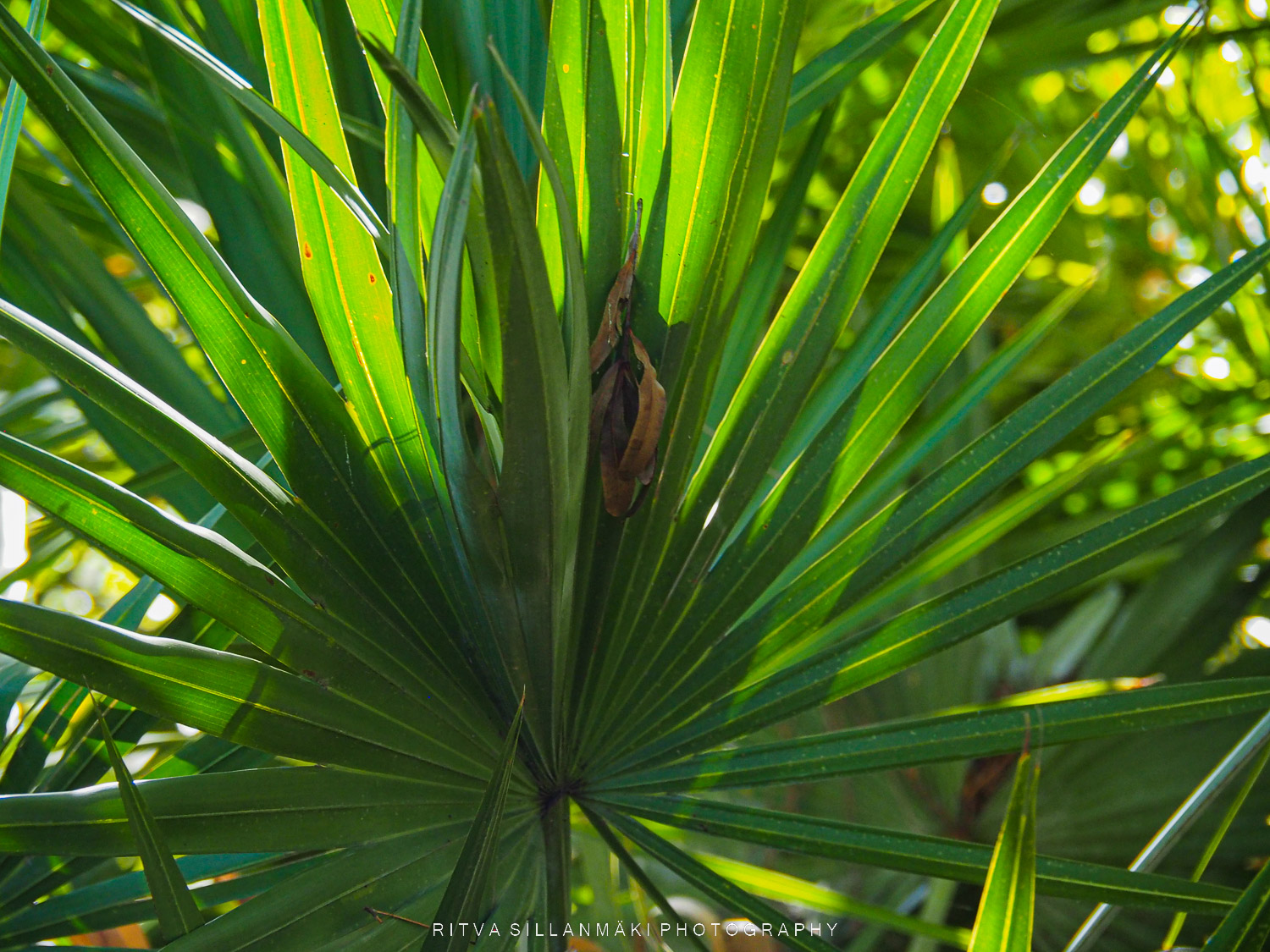
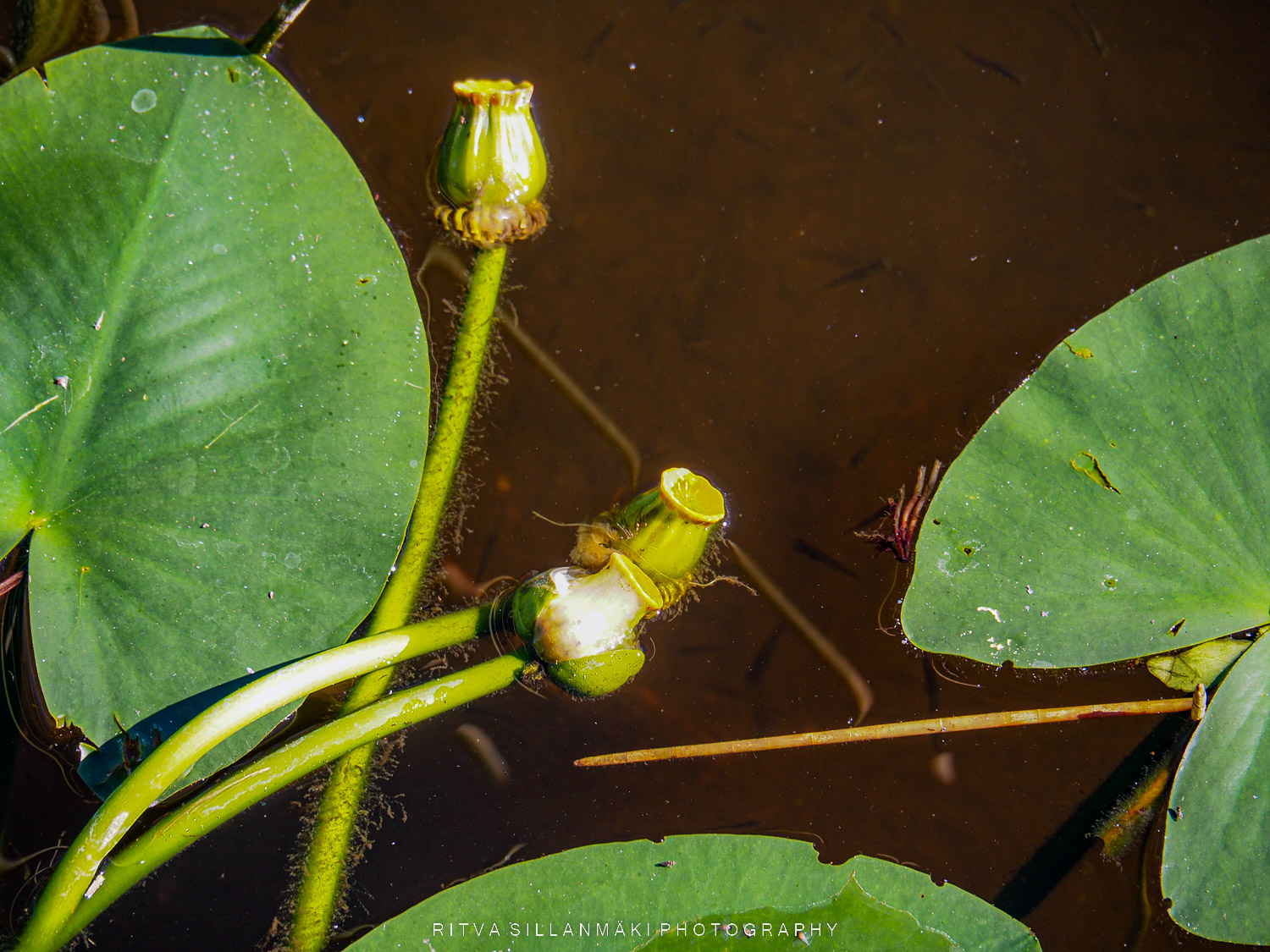
Natures green always inspires me
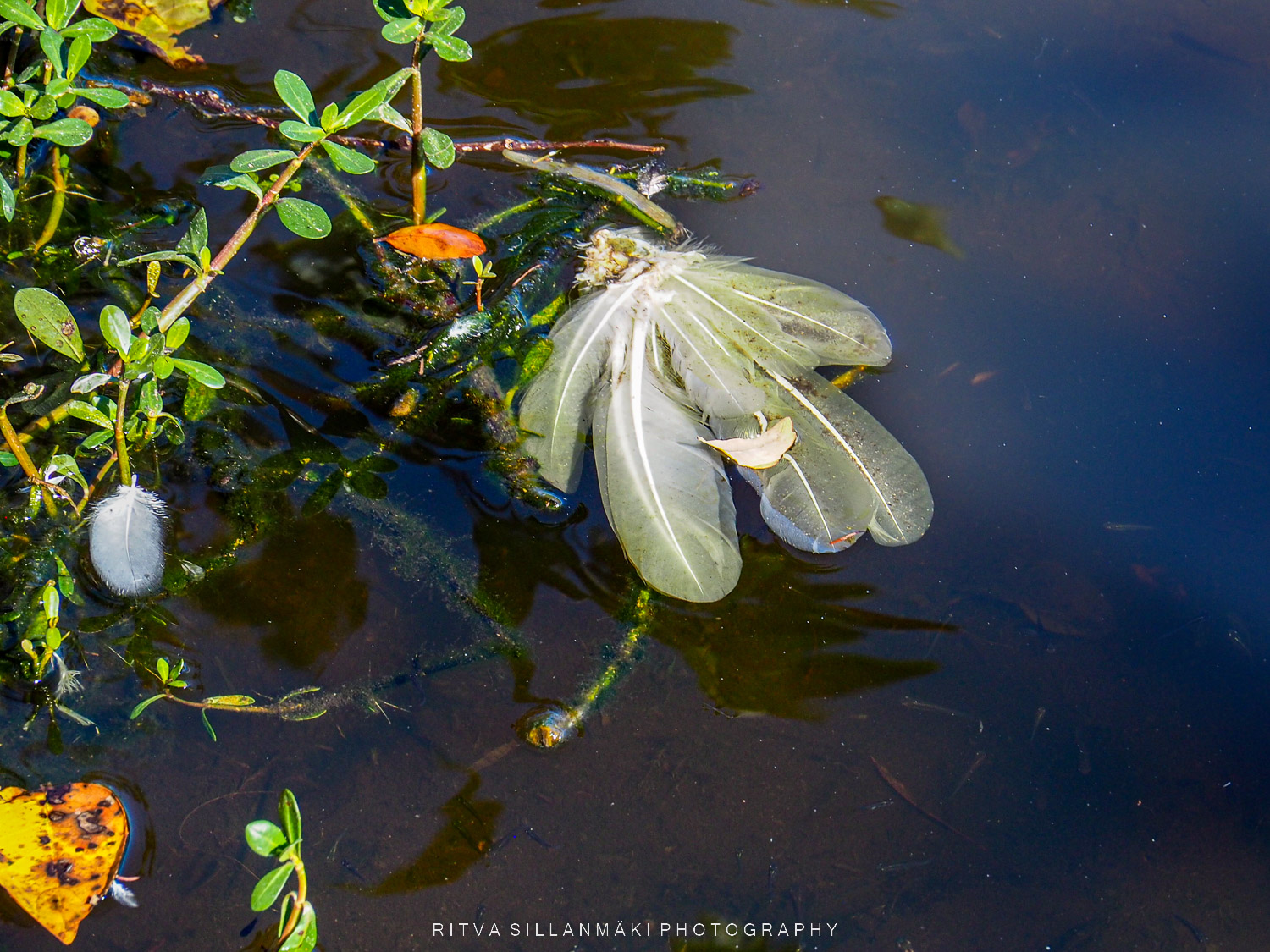
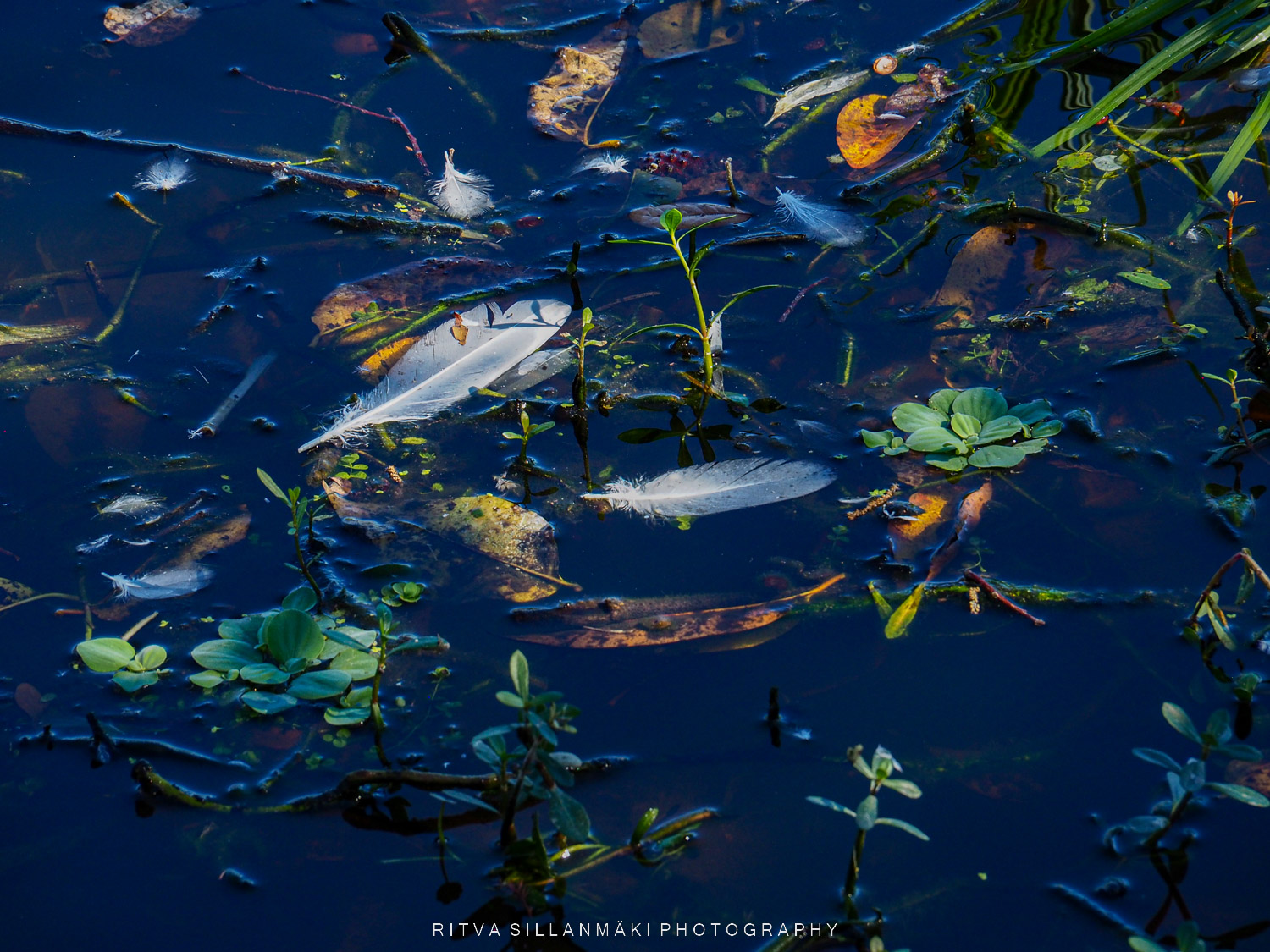
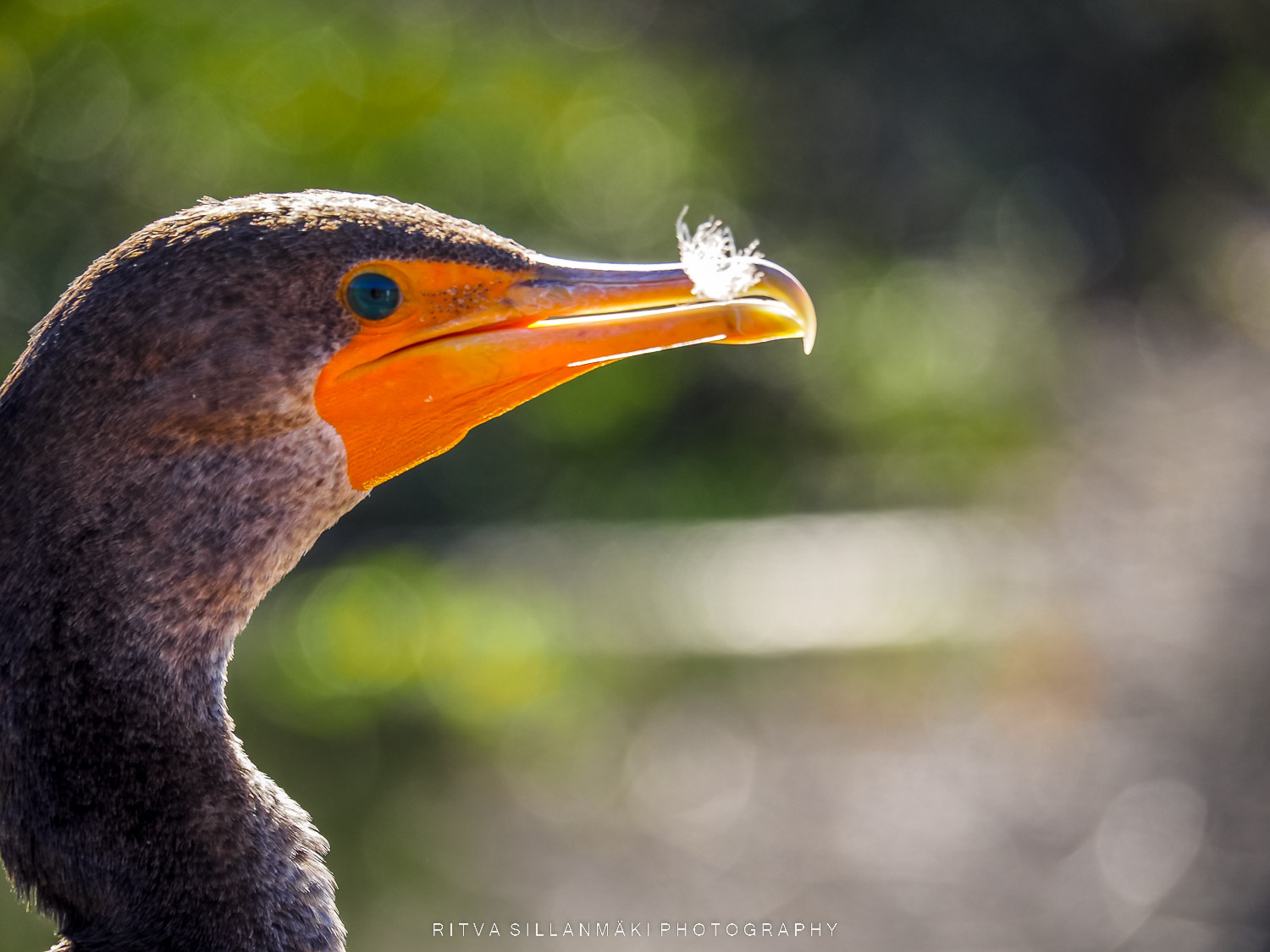
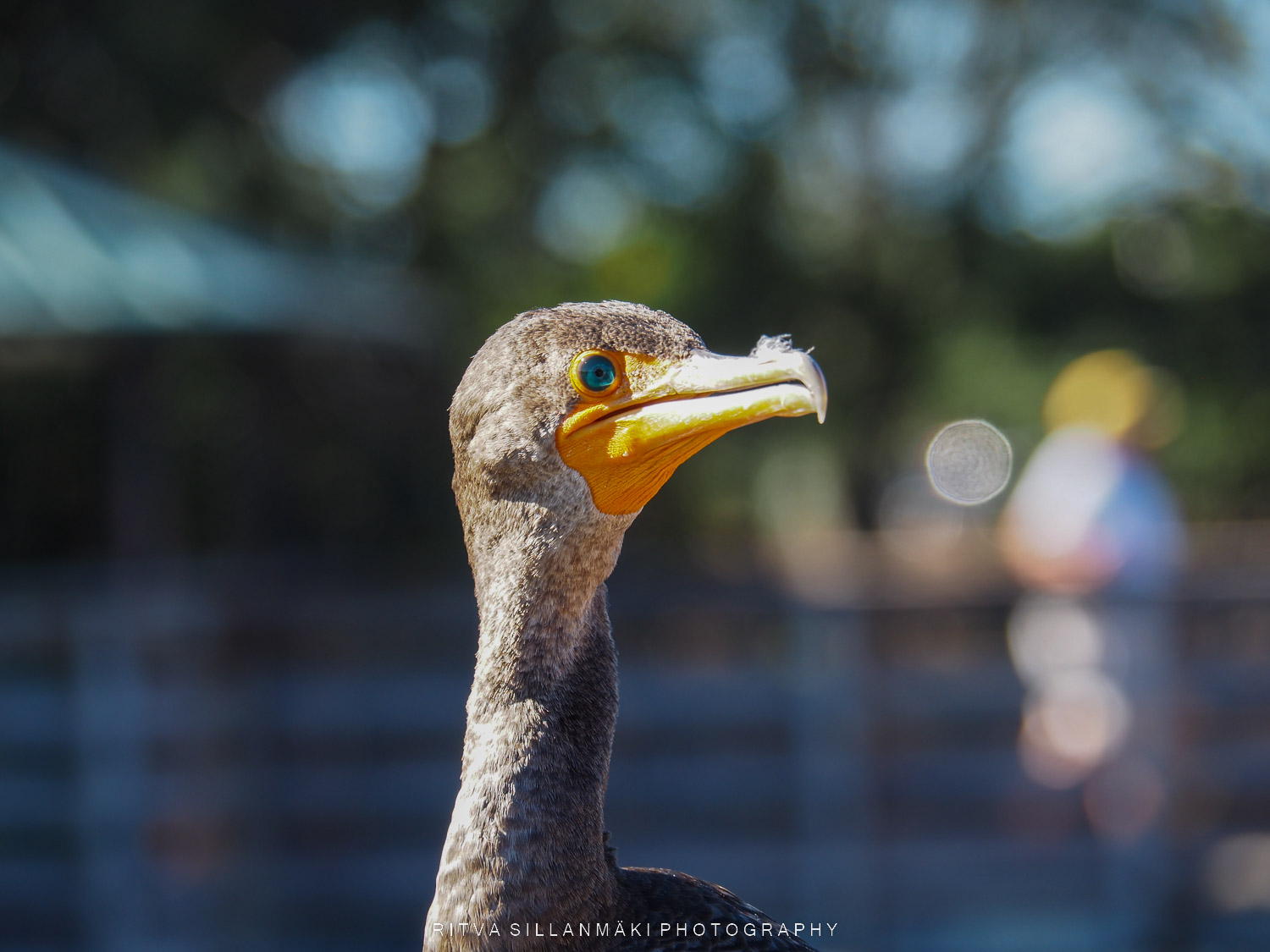
Details from nature are often important things to photograph to me at least as they are found near and are beautiful, the birds had been leaving lots of feathers.
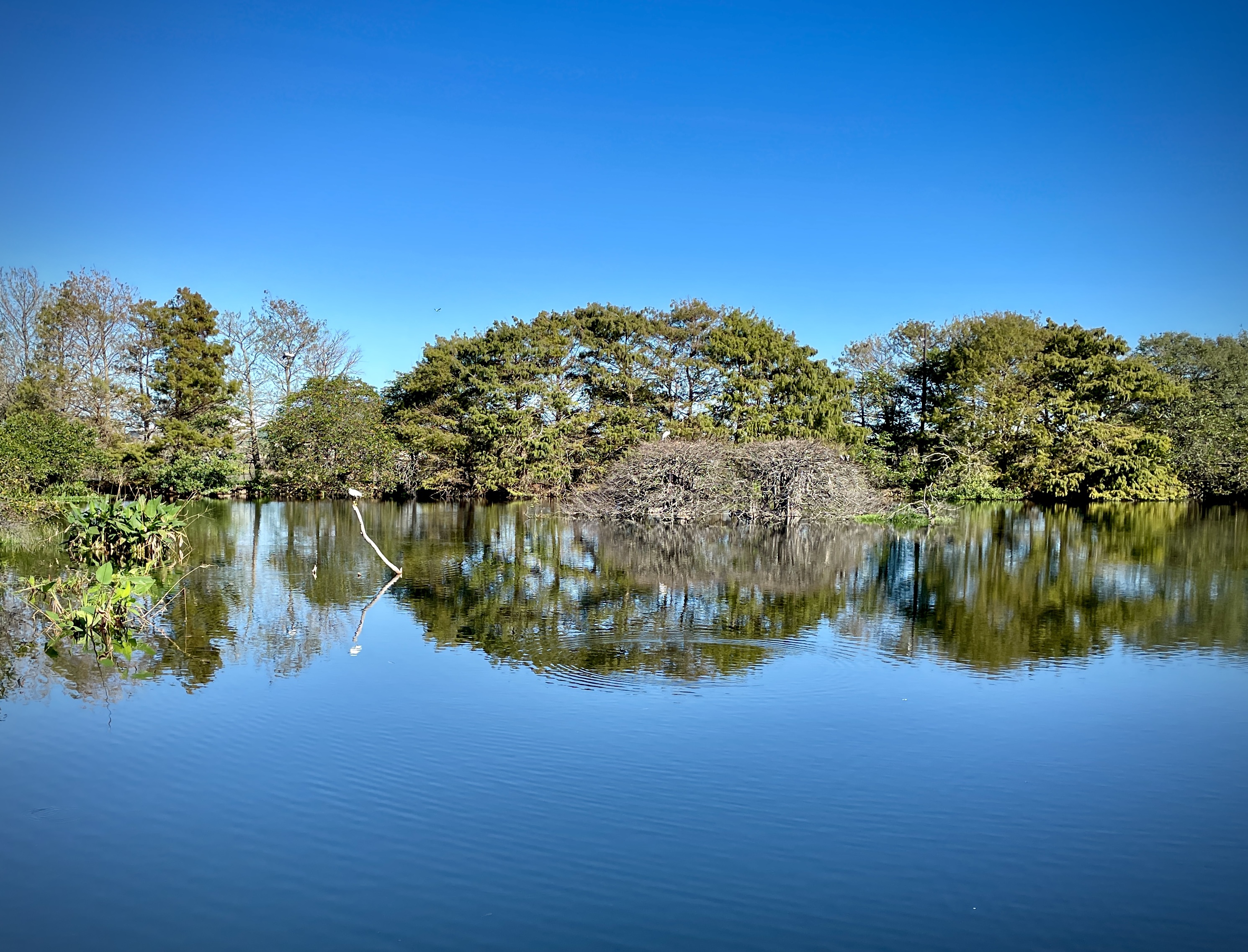
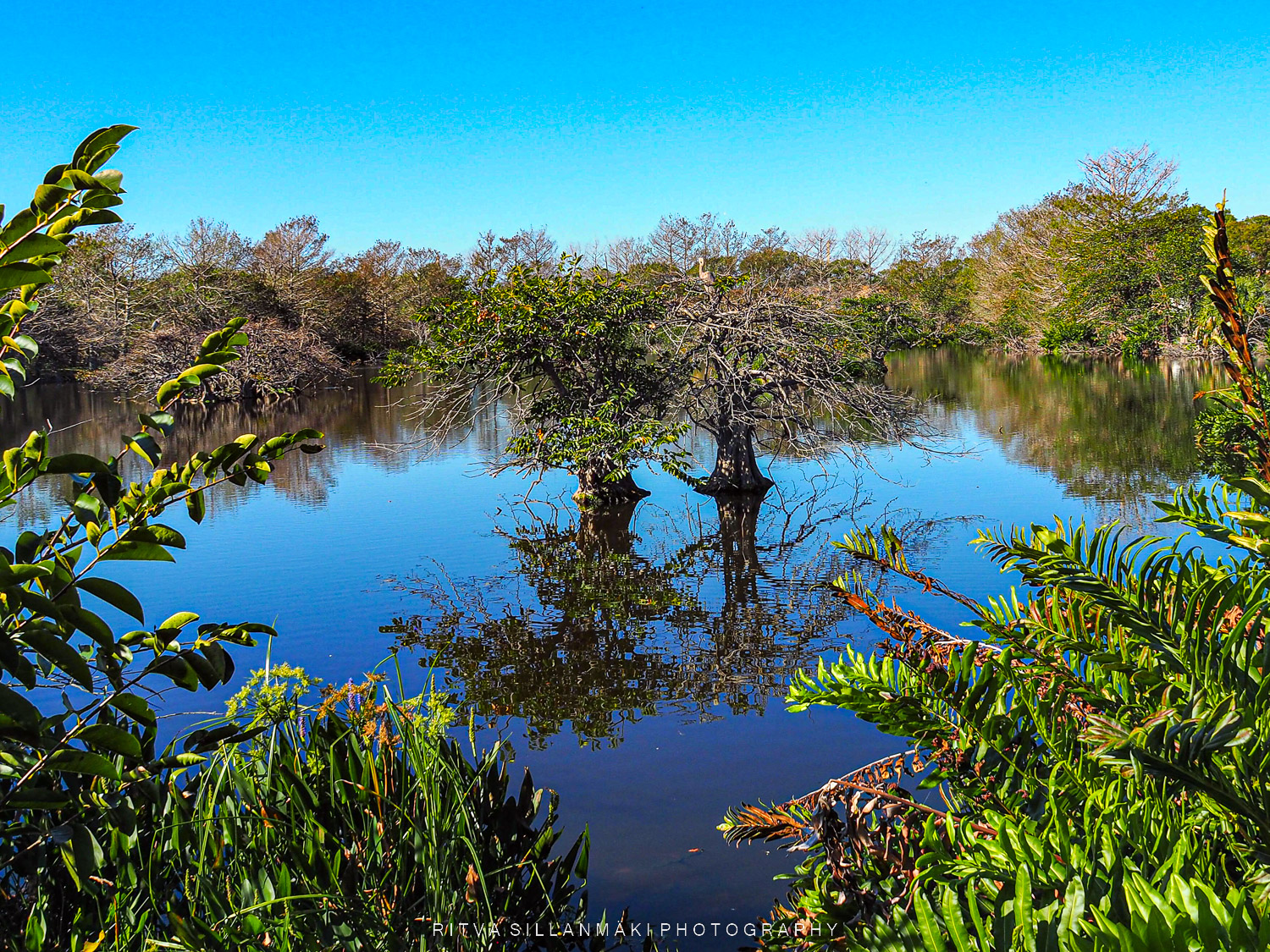
The first day of out holiday to US we were in Florida and went to visit Wakodahatchee wetland park.
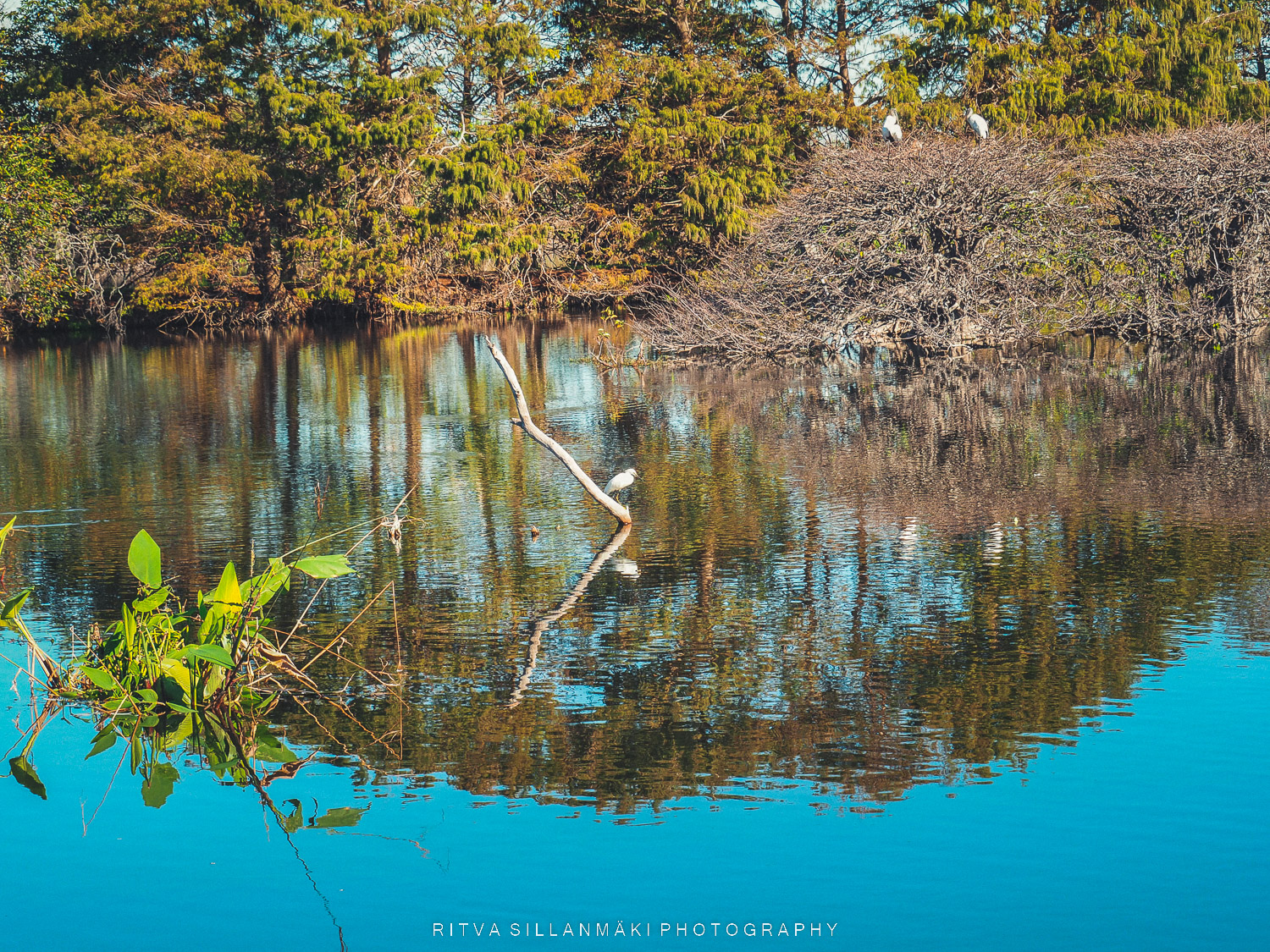
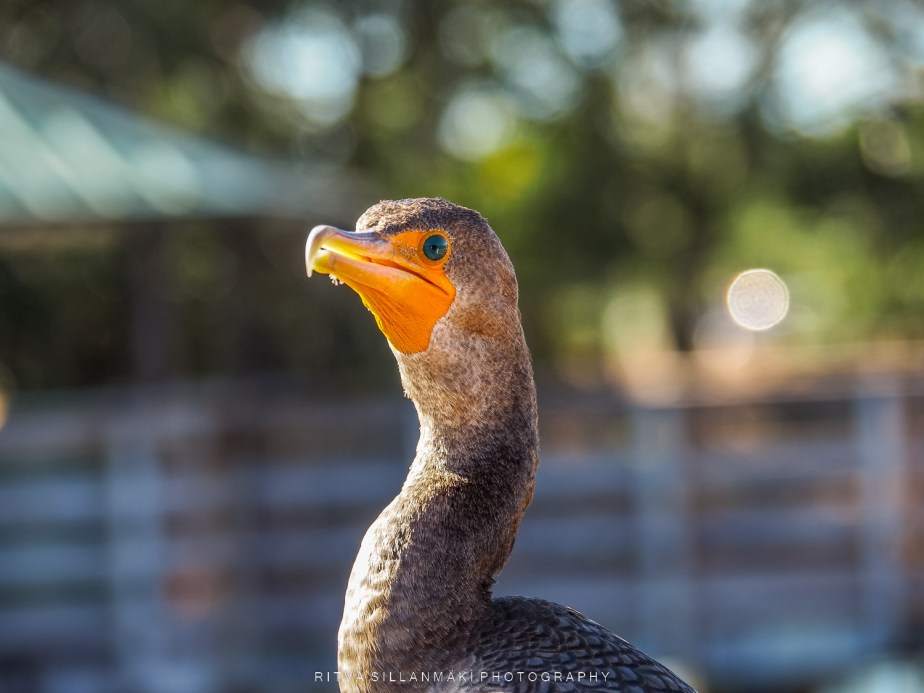
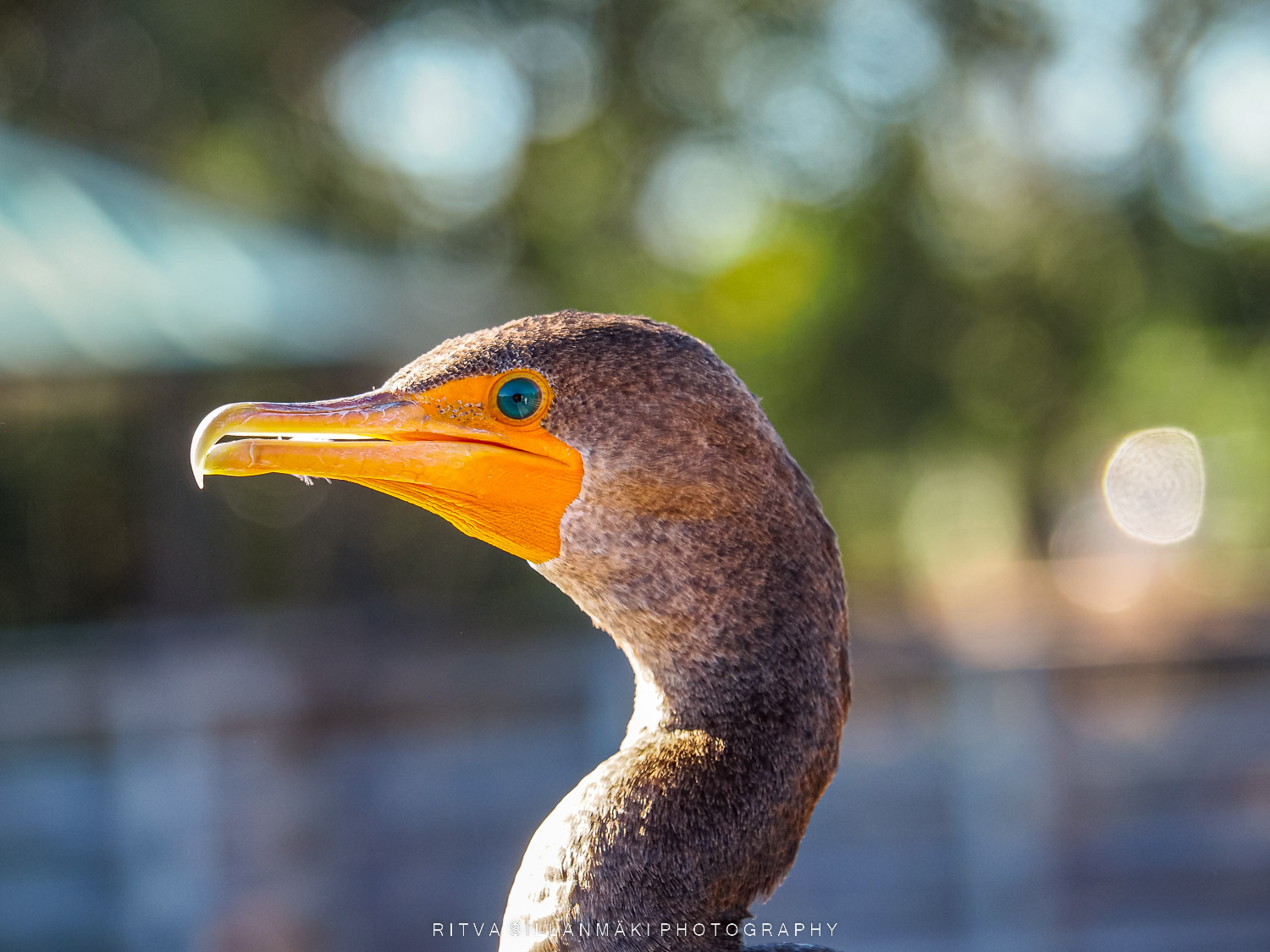
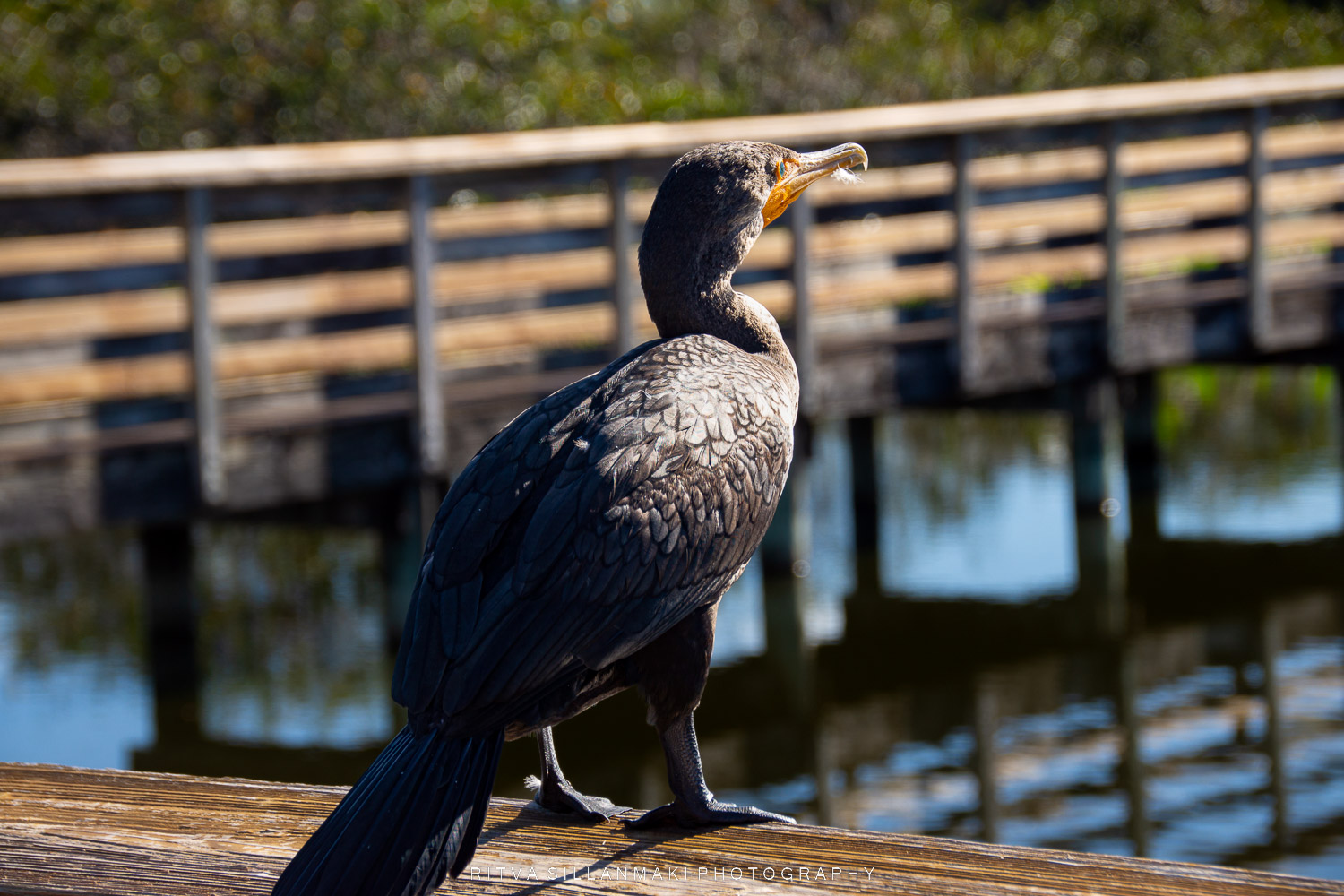
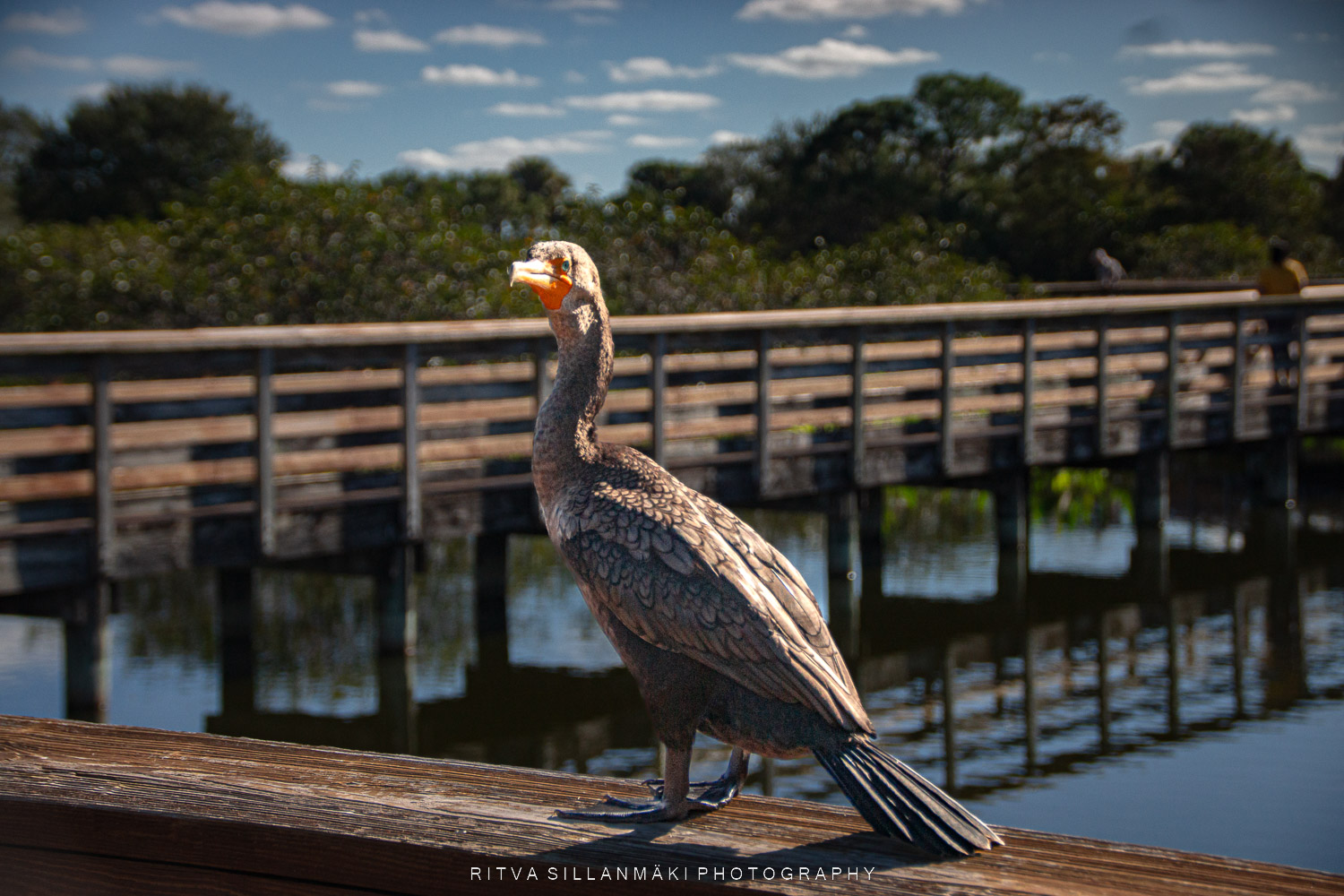
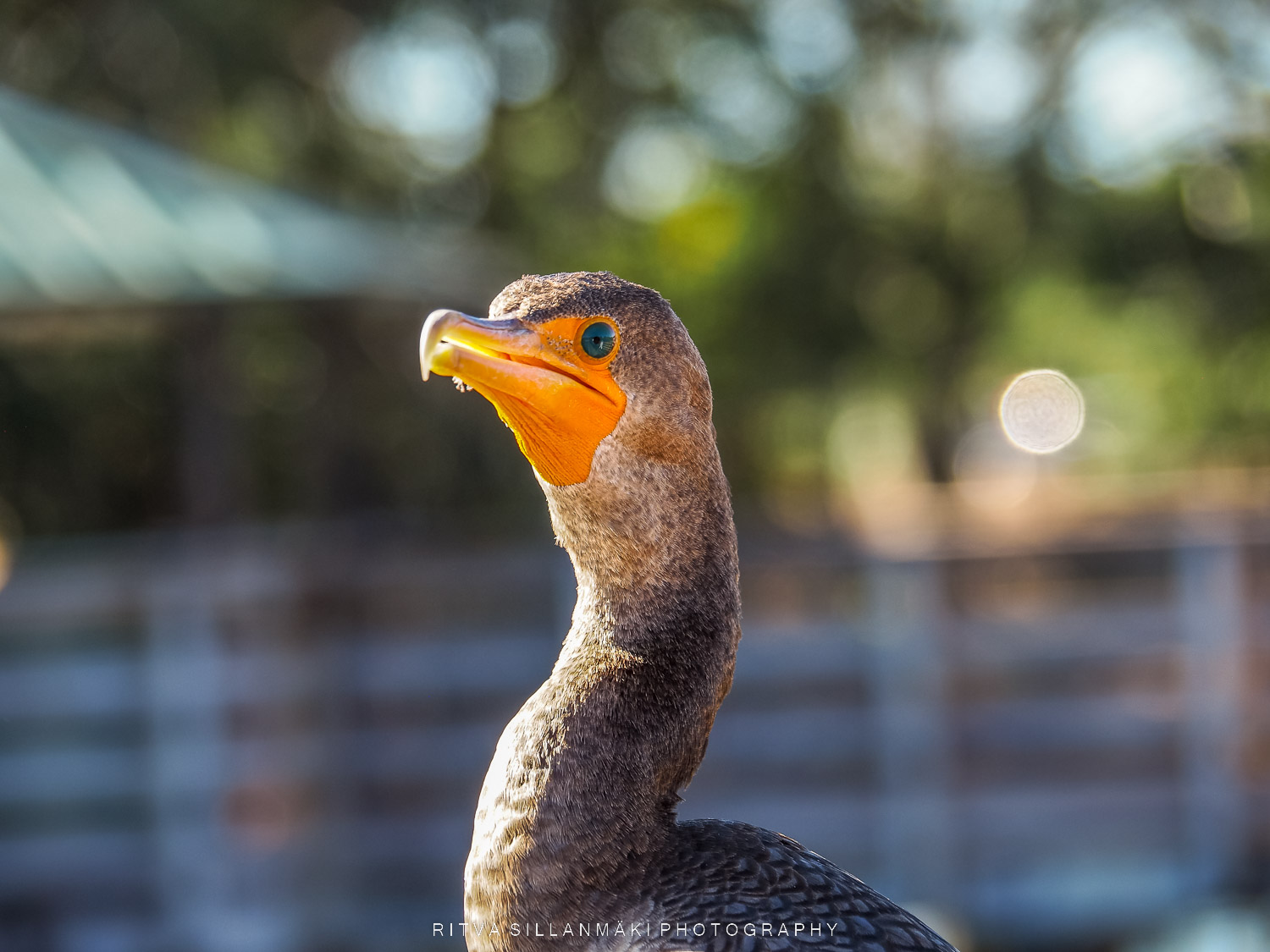
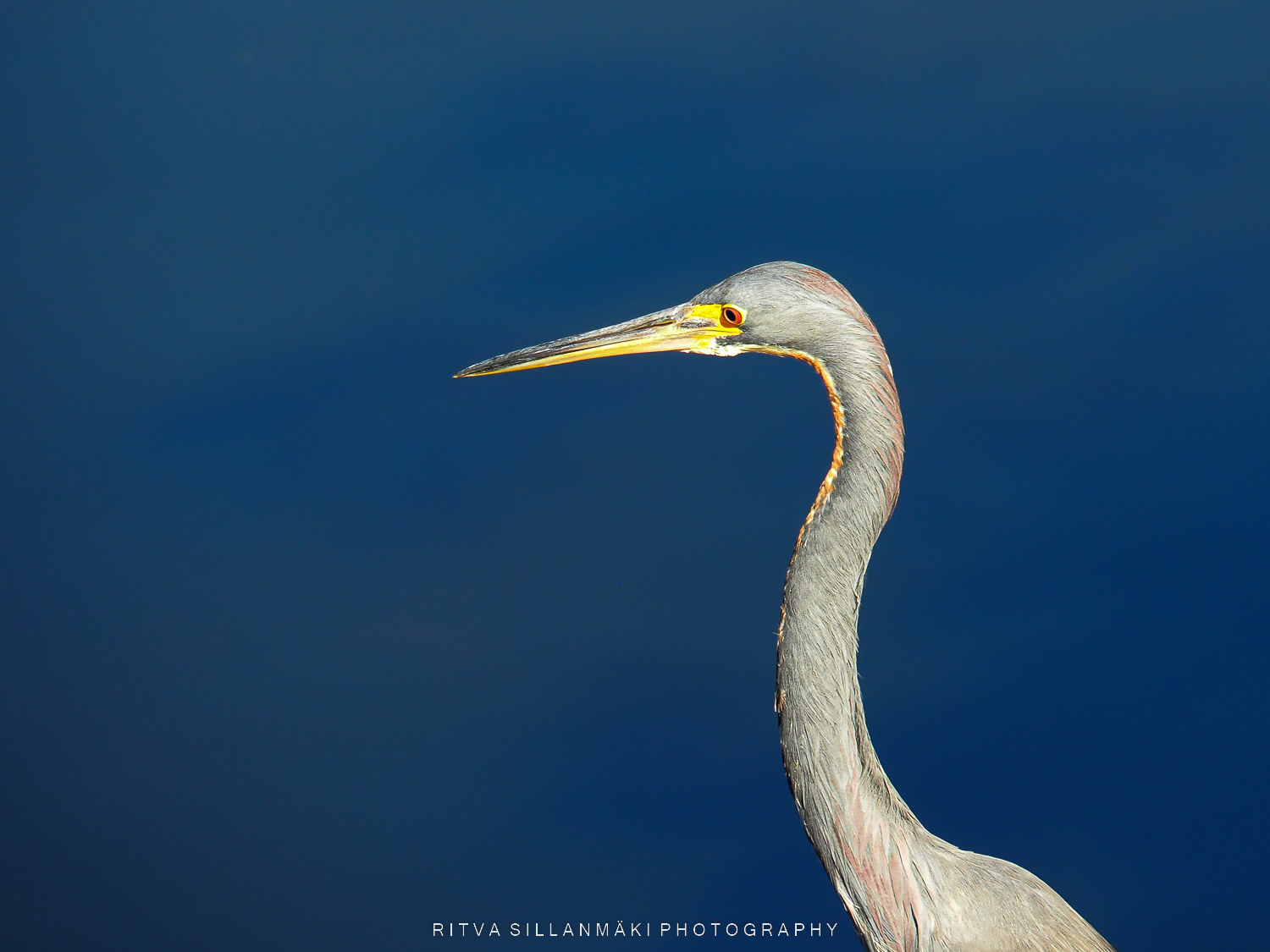
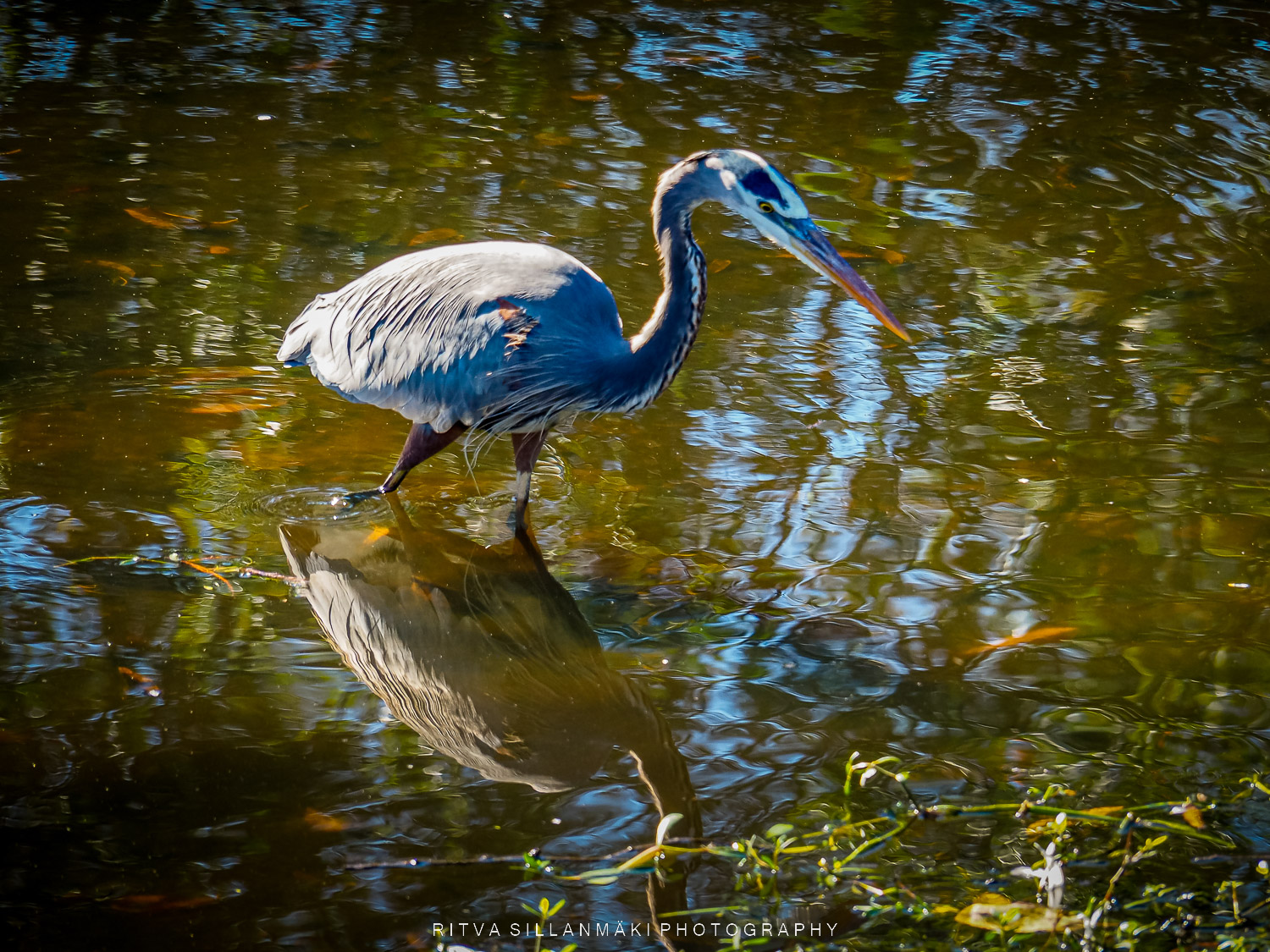
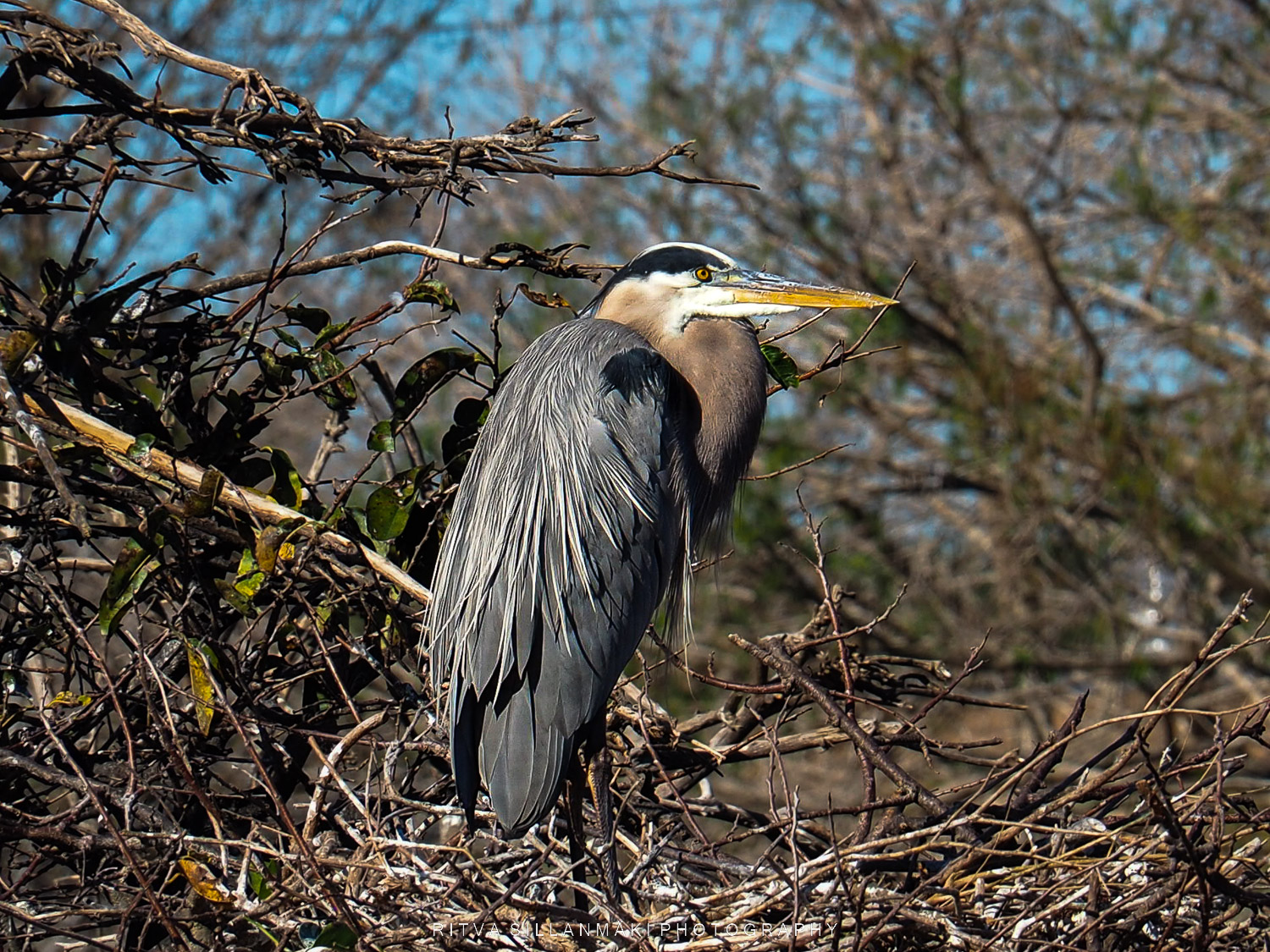
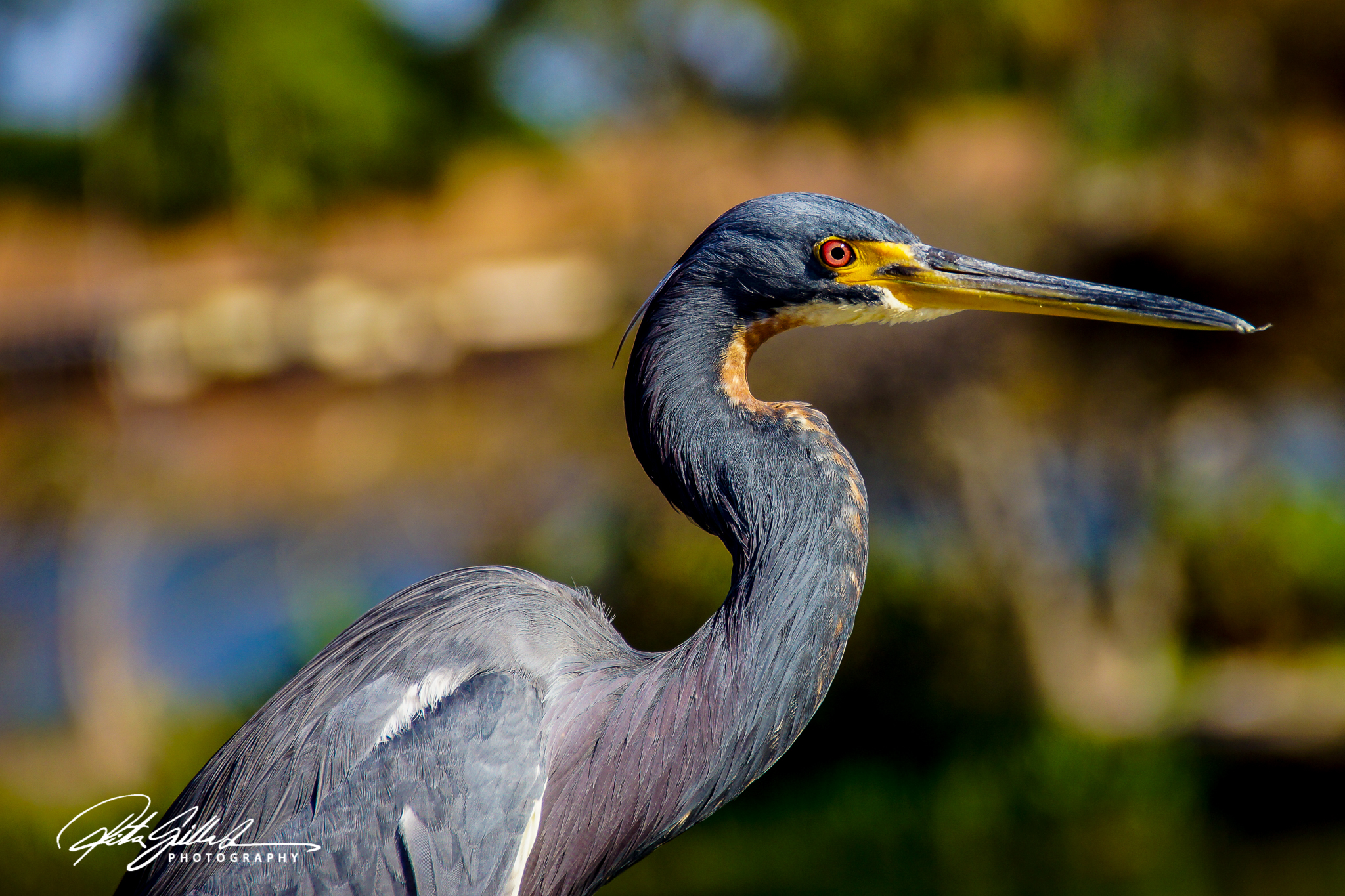
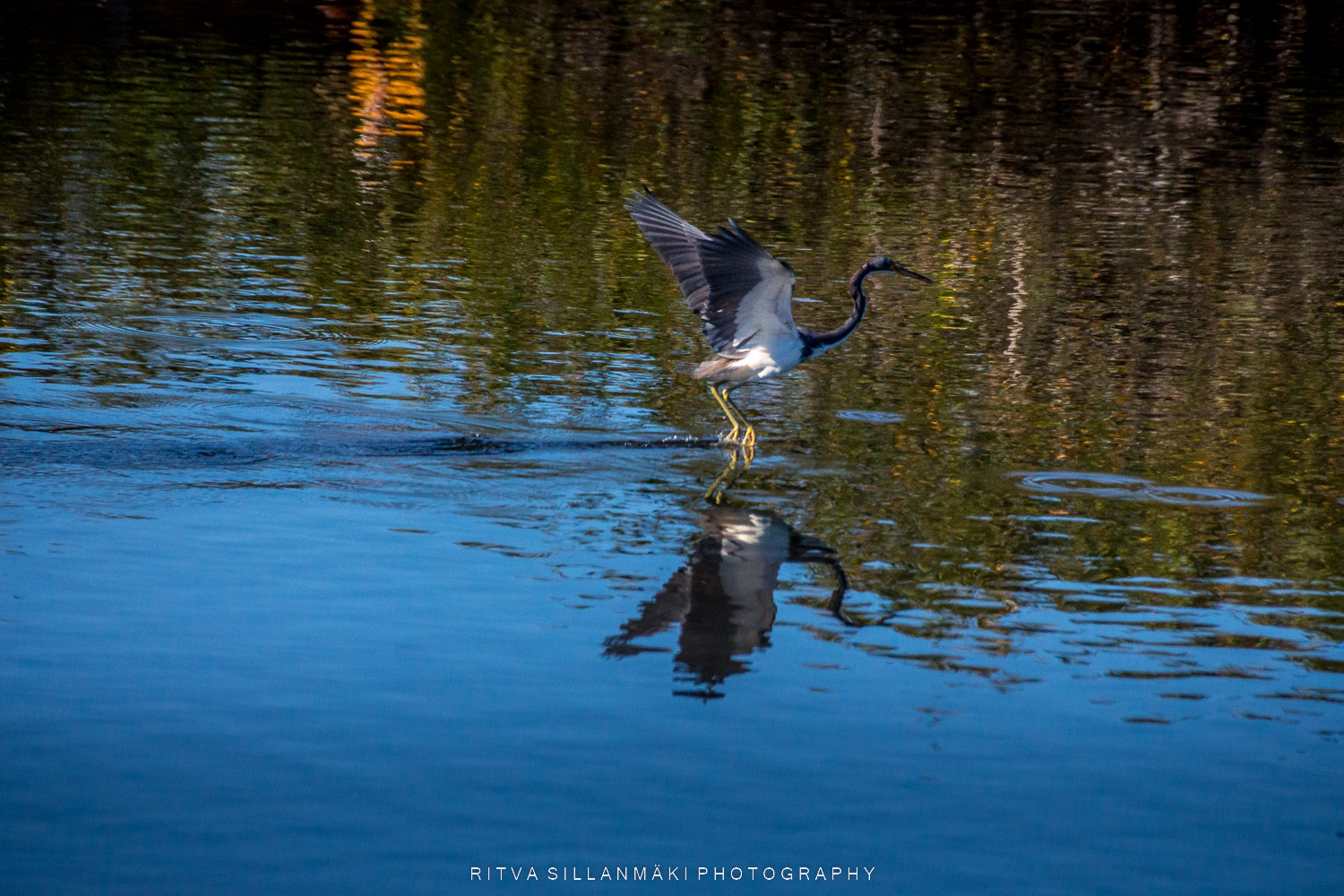
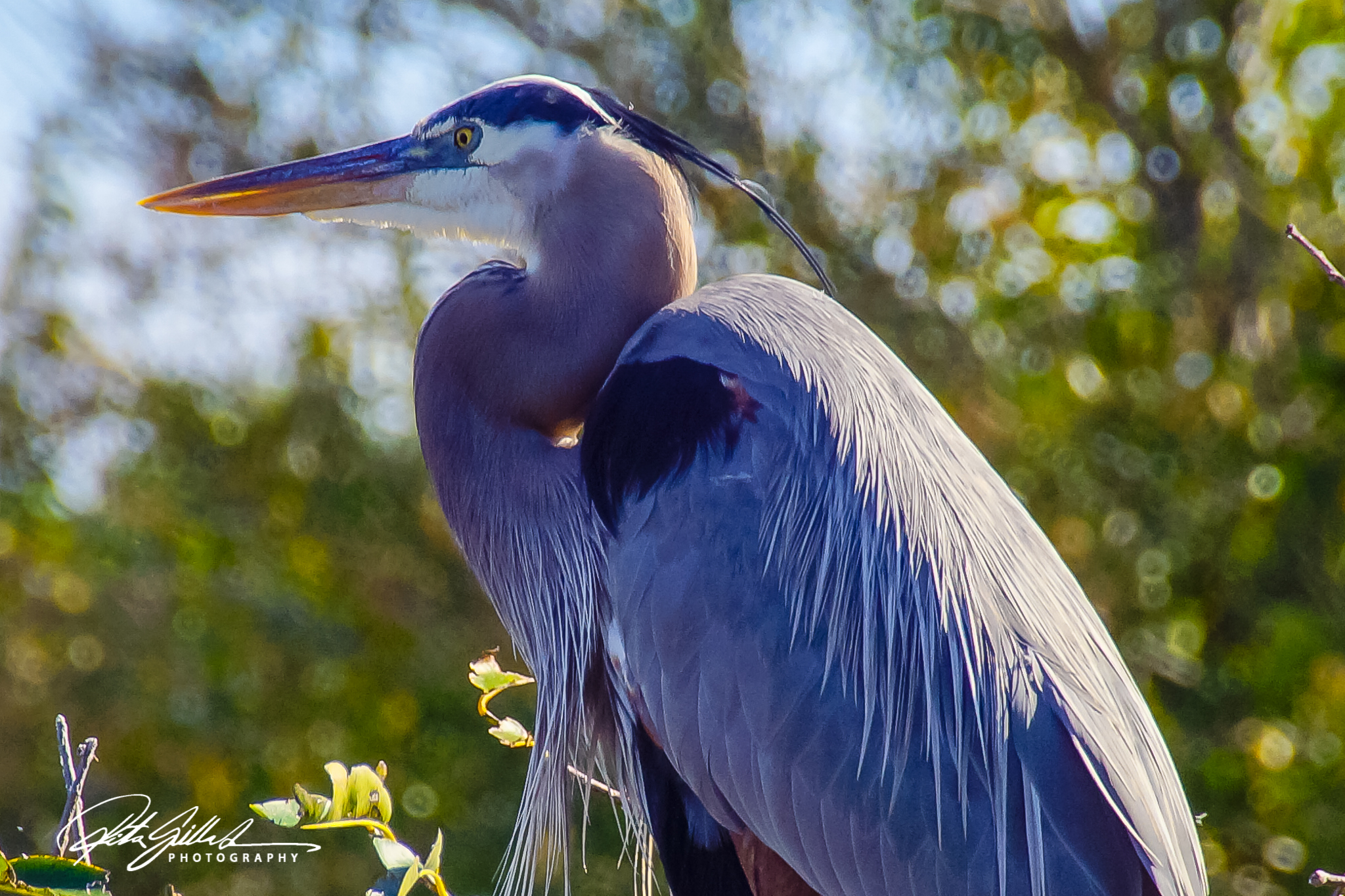
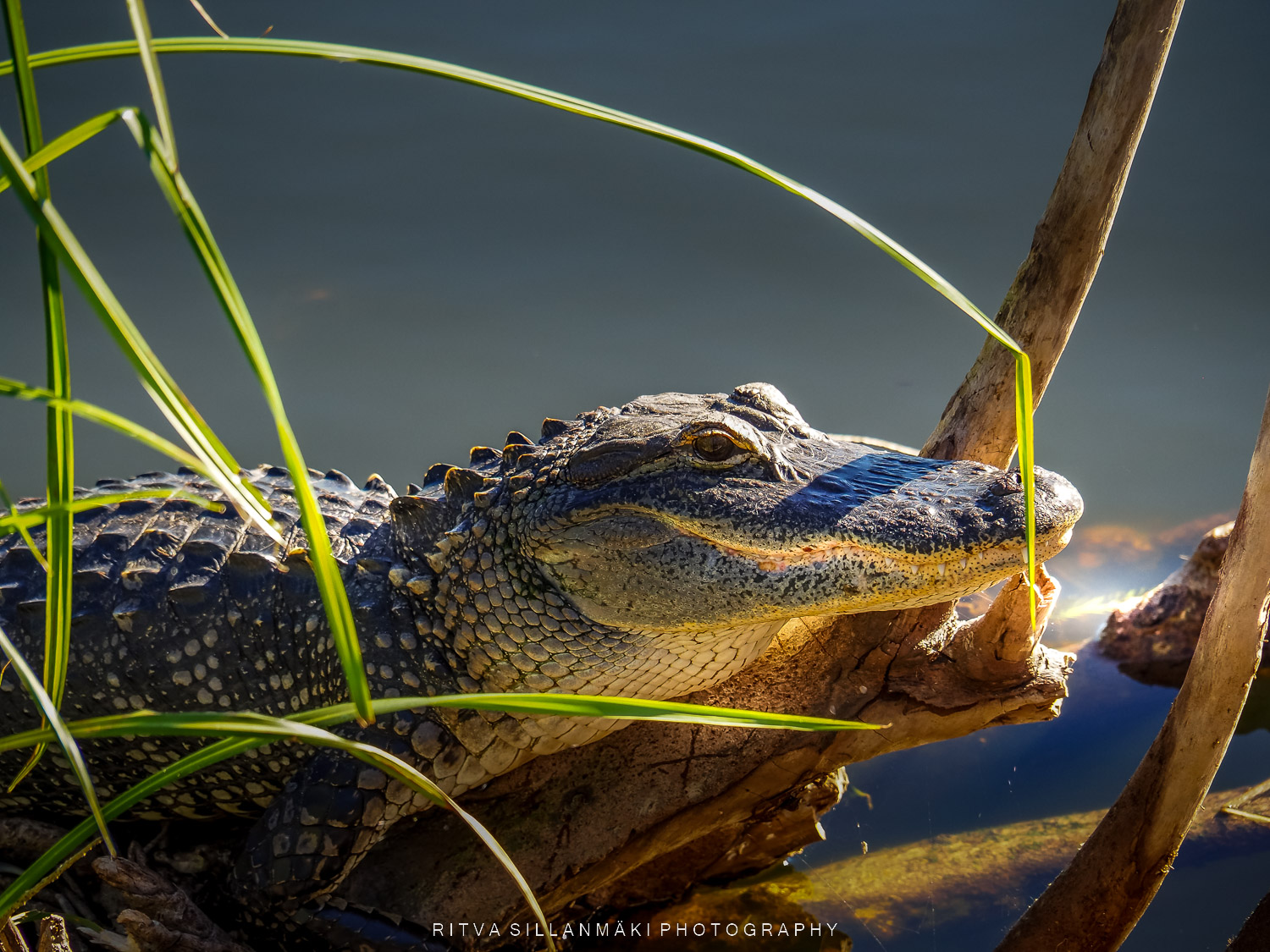
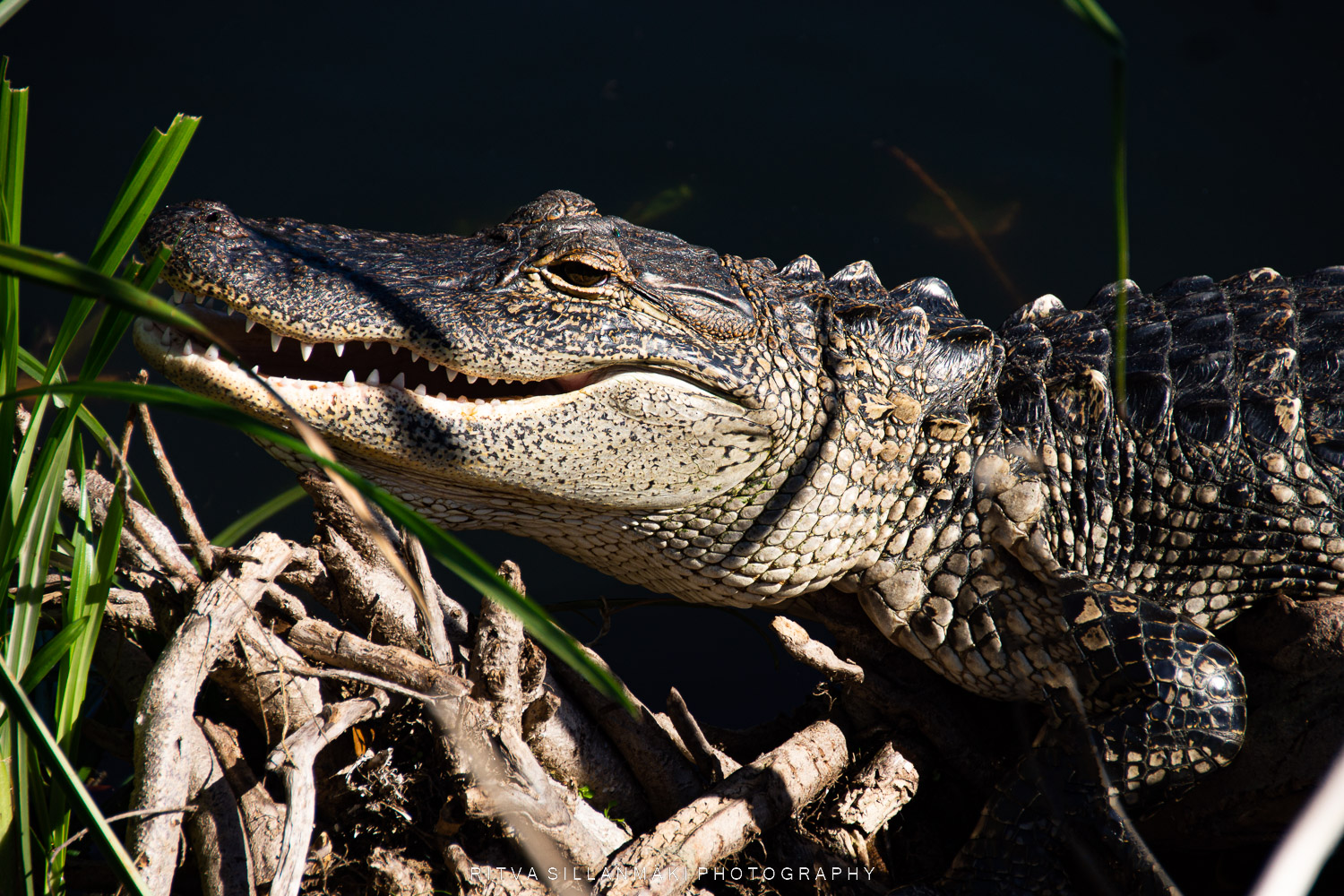
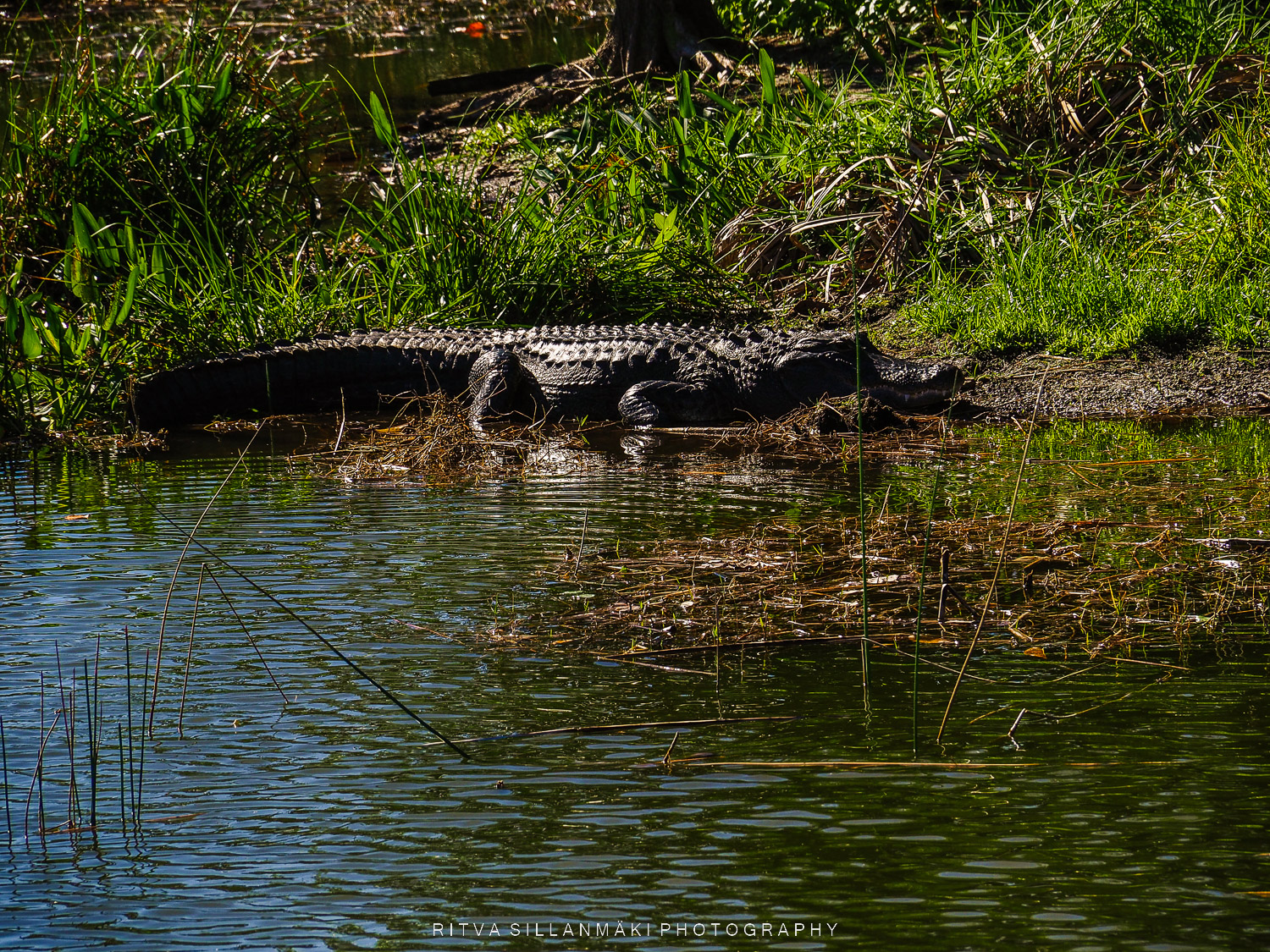
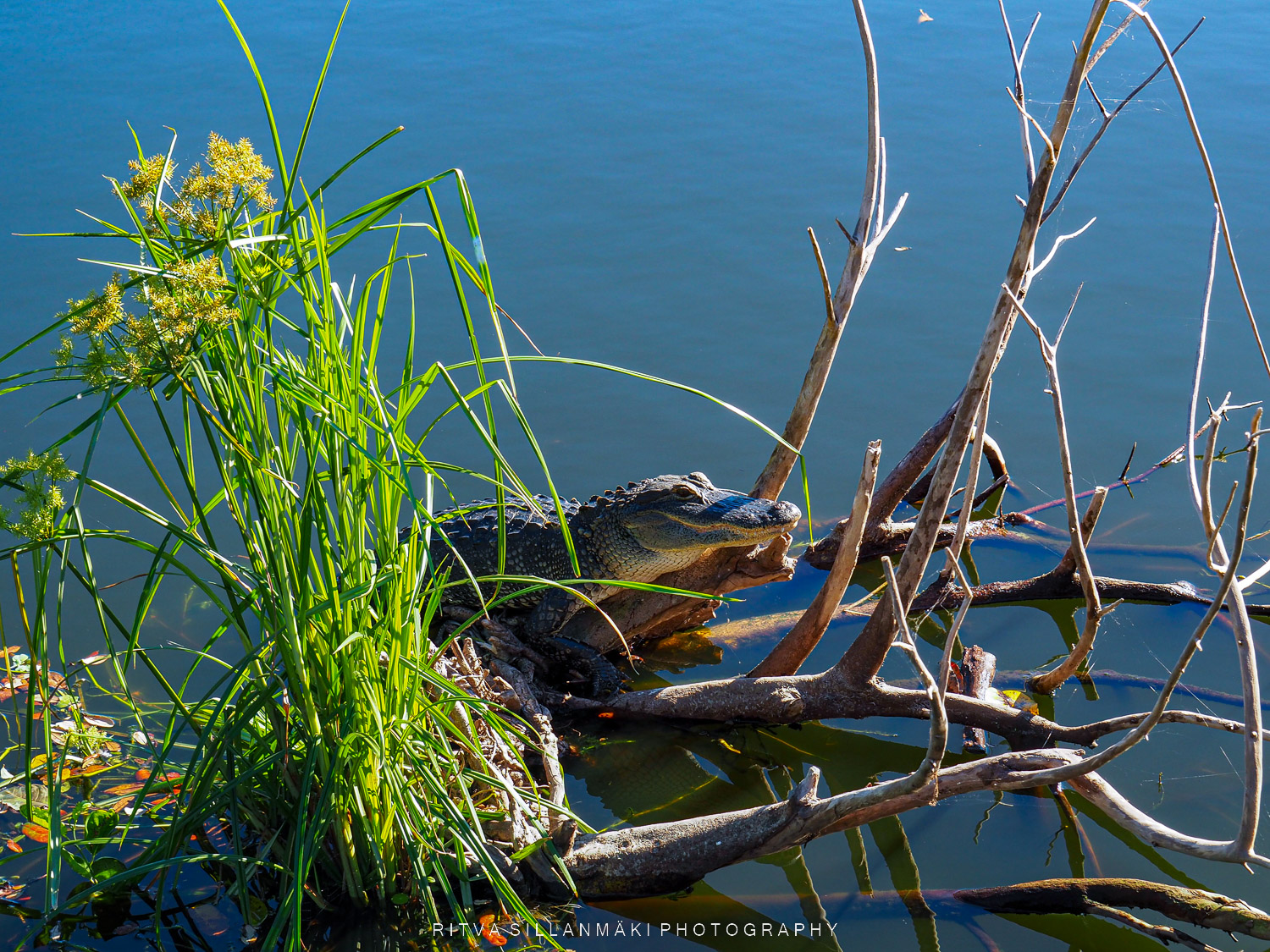
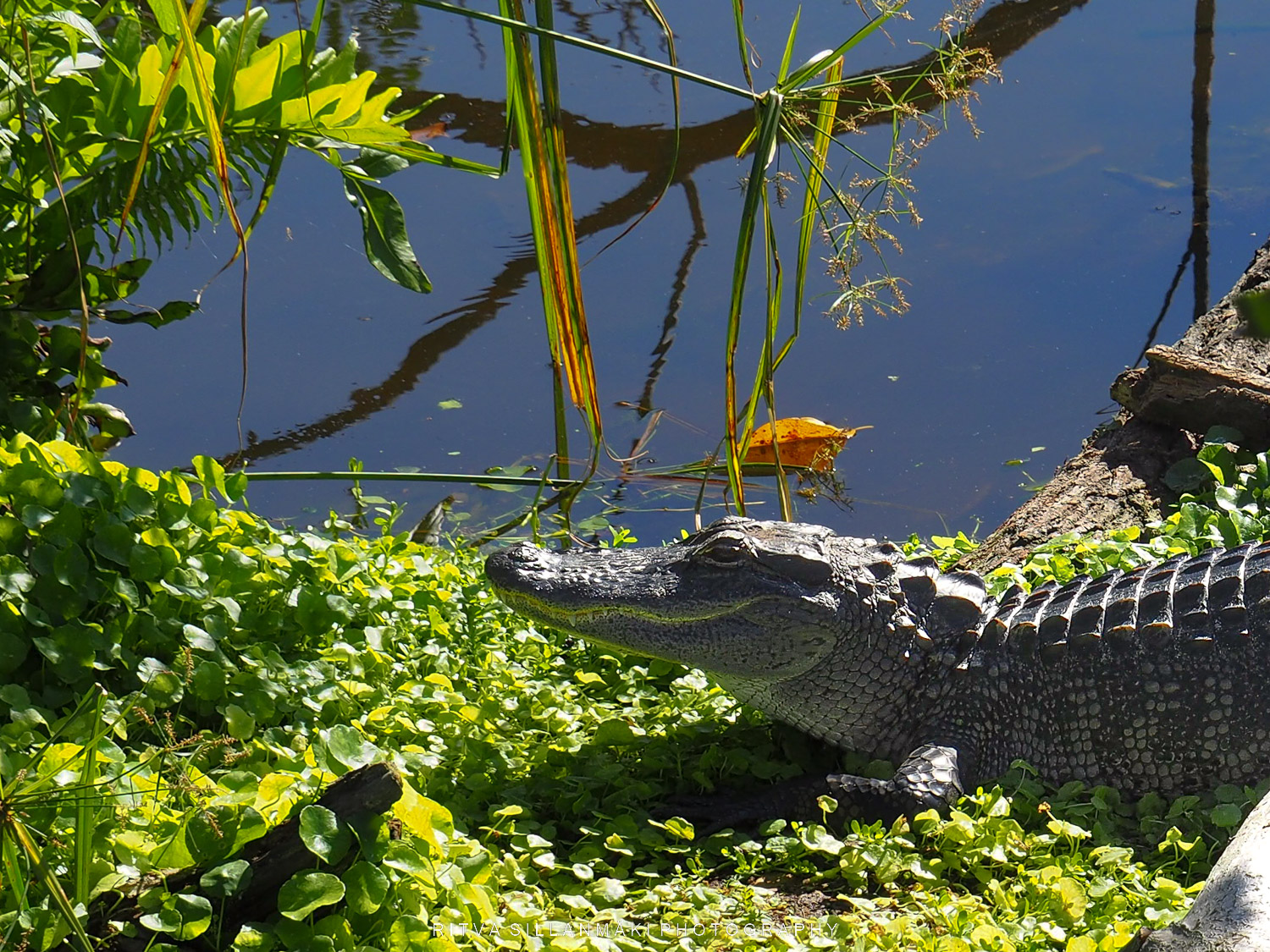
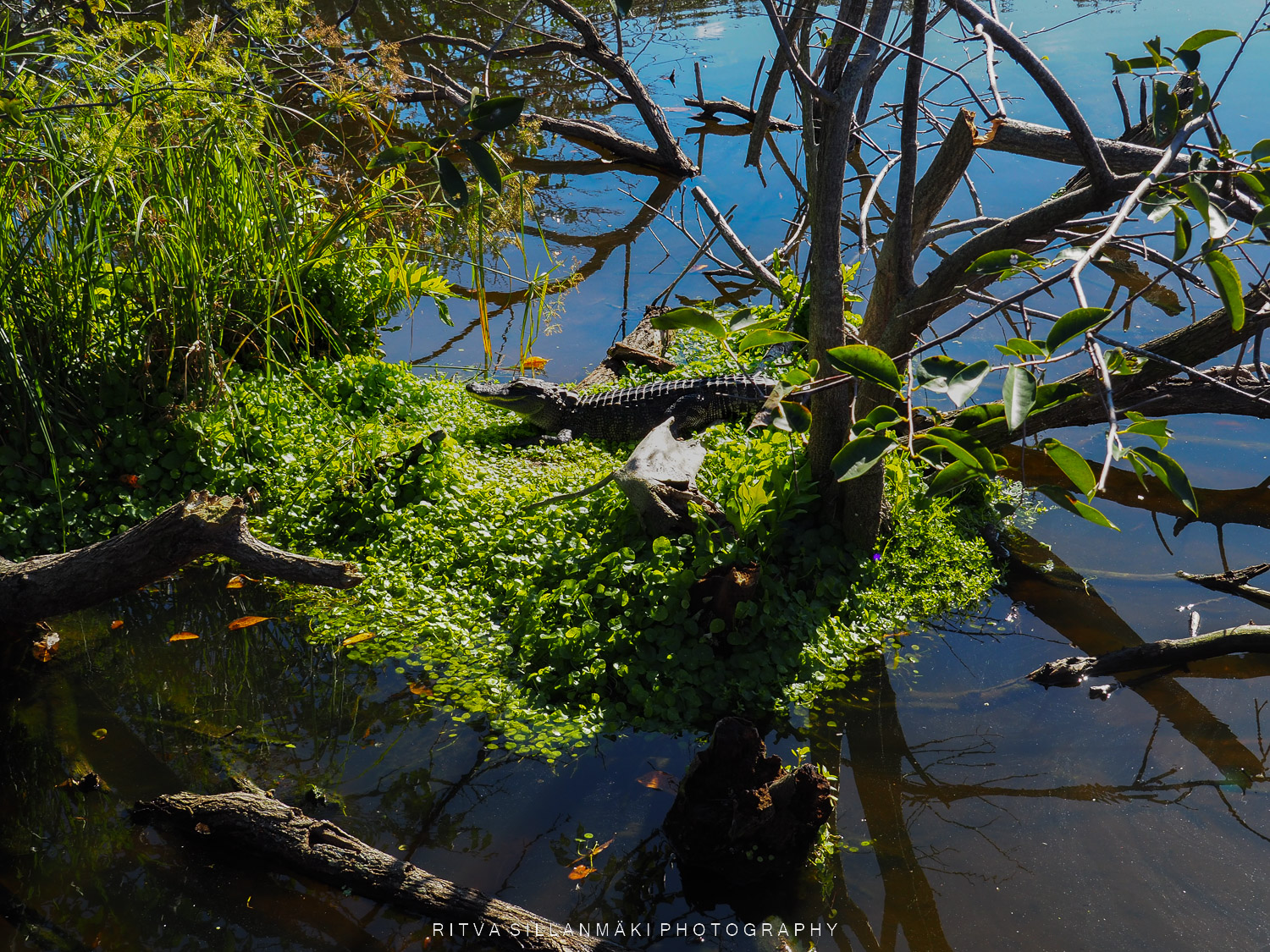
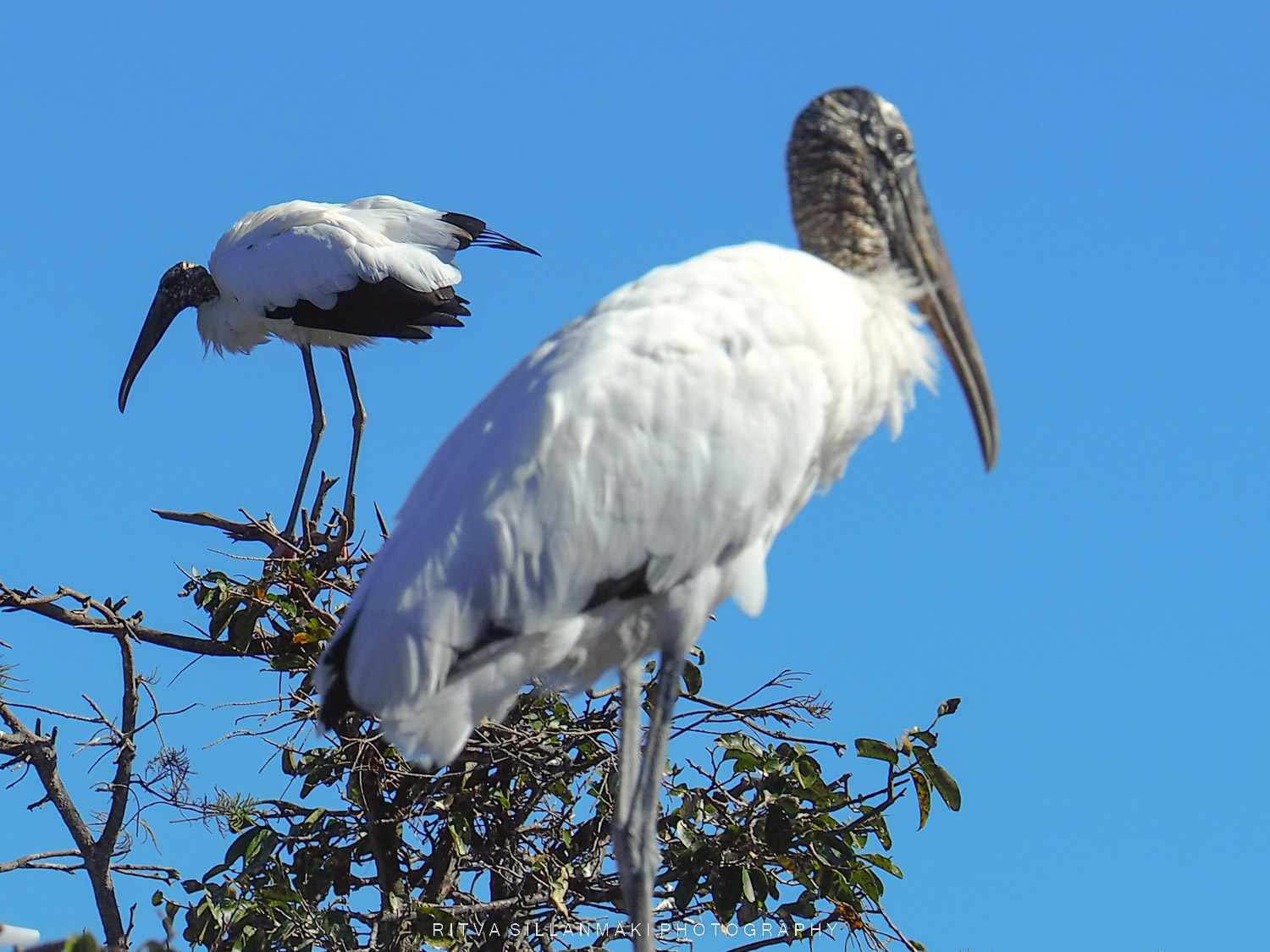
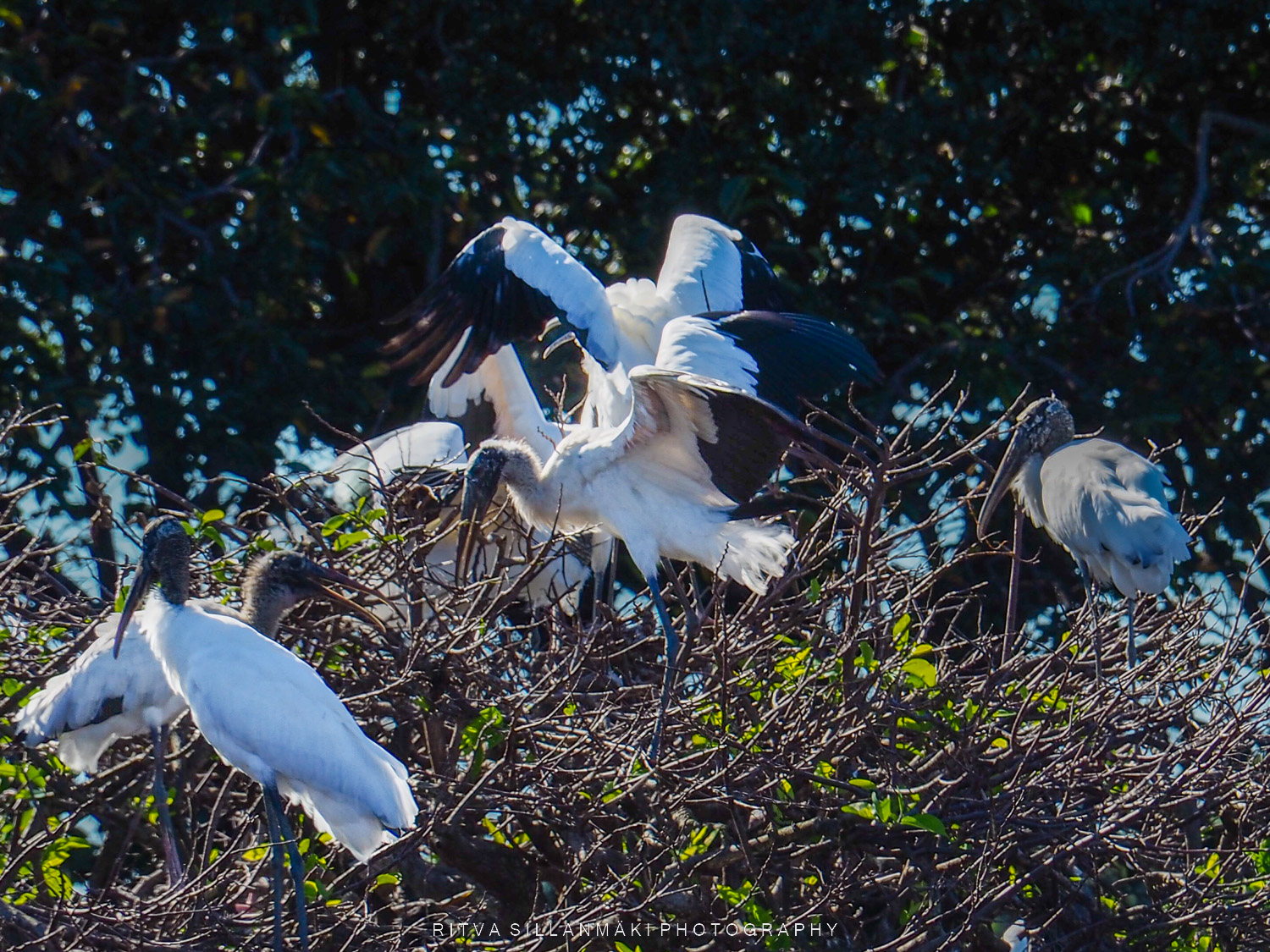
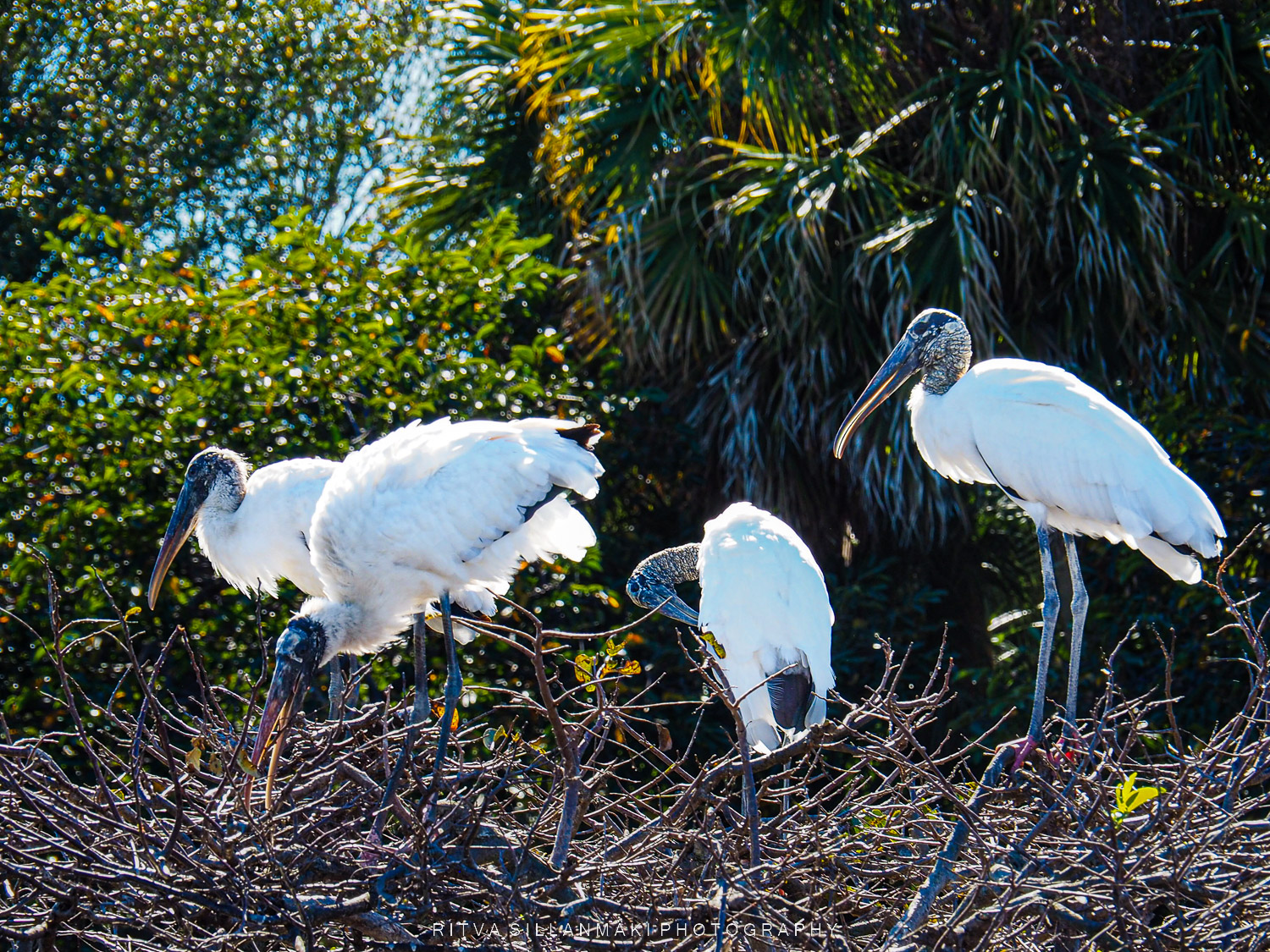
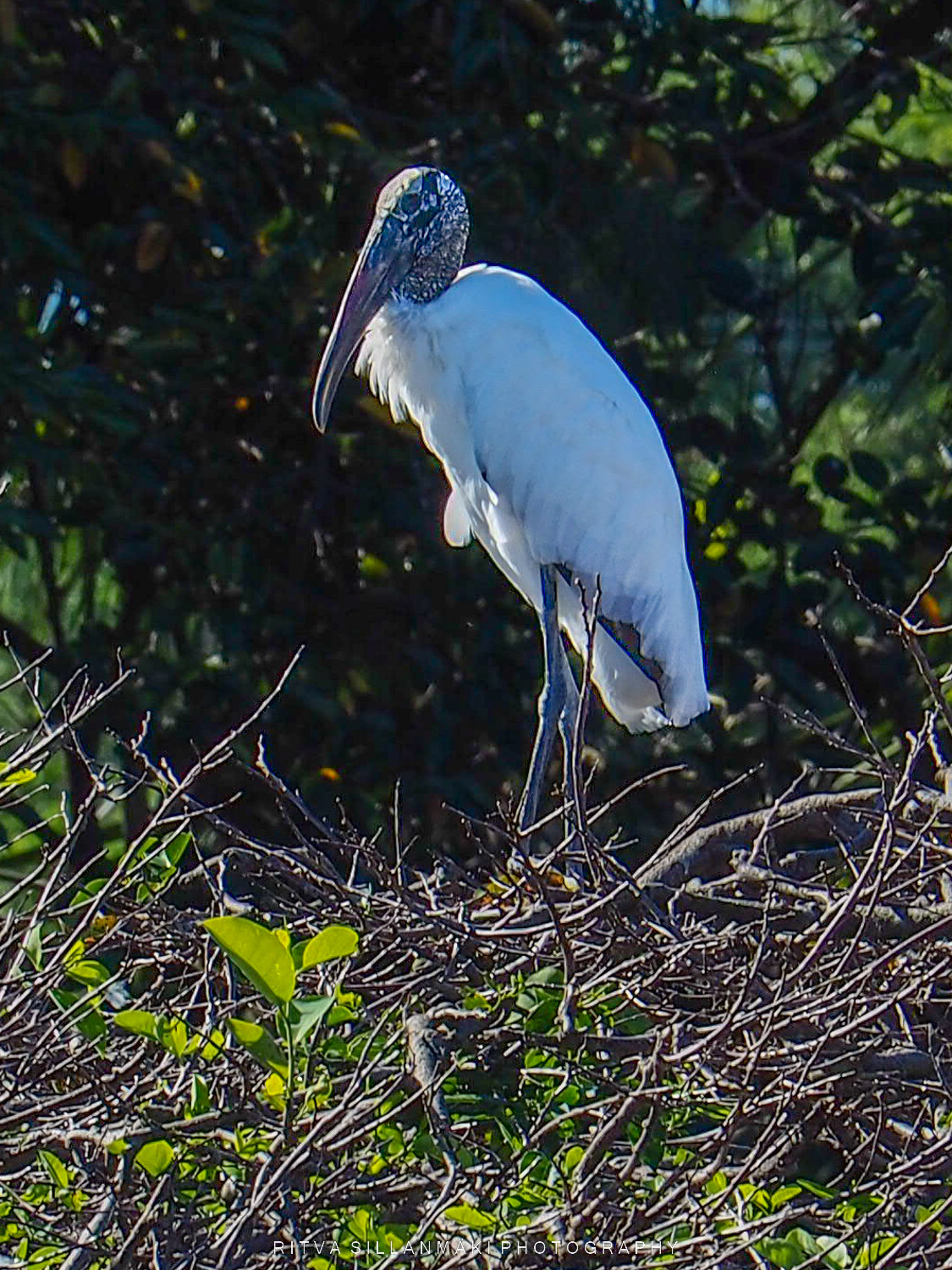
We were already at the Wakodahatchee Wetland (Delray Beach) just after 10am. We toured the Boardwalk and saw e.g. four alligators enjoying the sunshine, great blue heron, egret, wood stork and double crested cormorant, and tricolored heron and a turtle. The birds were reportedly preparing for mating and nesting, the woodstocks were very active making the nest but otherwise it was a pretty lazy day for the animals.
We ran into a few people who said they go to the wetlands every day for a walk. I can say I was not the only one thre with a camera. Here are some of the shots that I got.
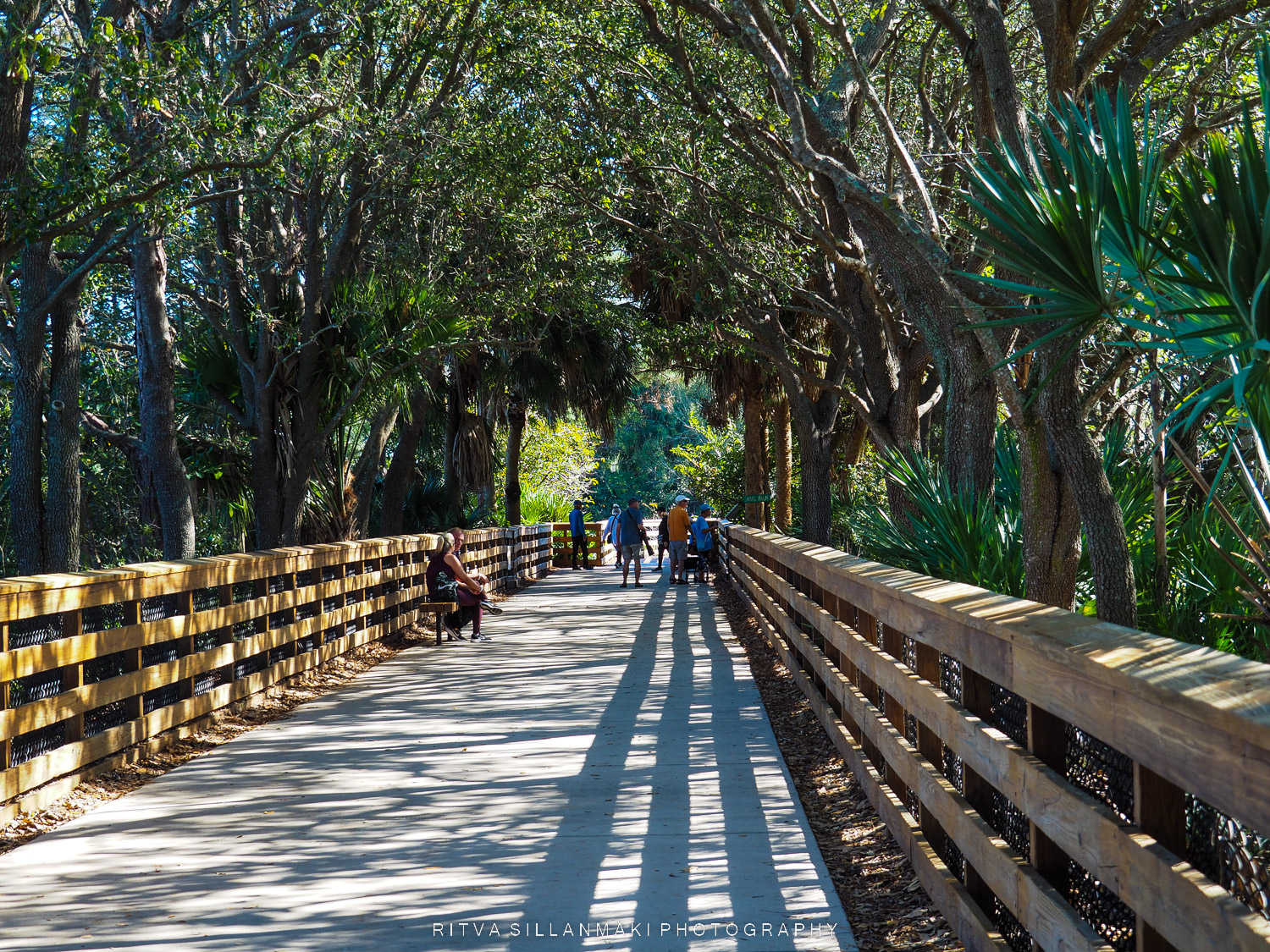
Here is some background info about the he park, it was created on 50 acres (20 ha) of unused utility land and transformed into a recreation wetlands open to the public with a three-quarter mile boardwalk that crosses between open water pond areas, emergent marsh areas, shallow shelves, and islands with shrubs and snags to foster nesting and roosting.
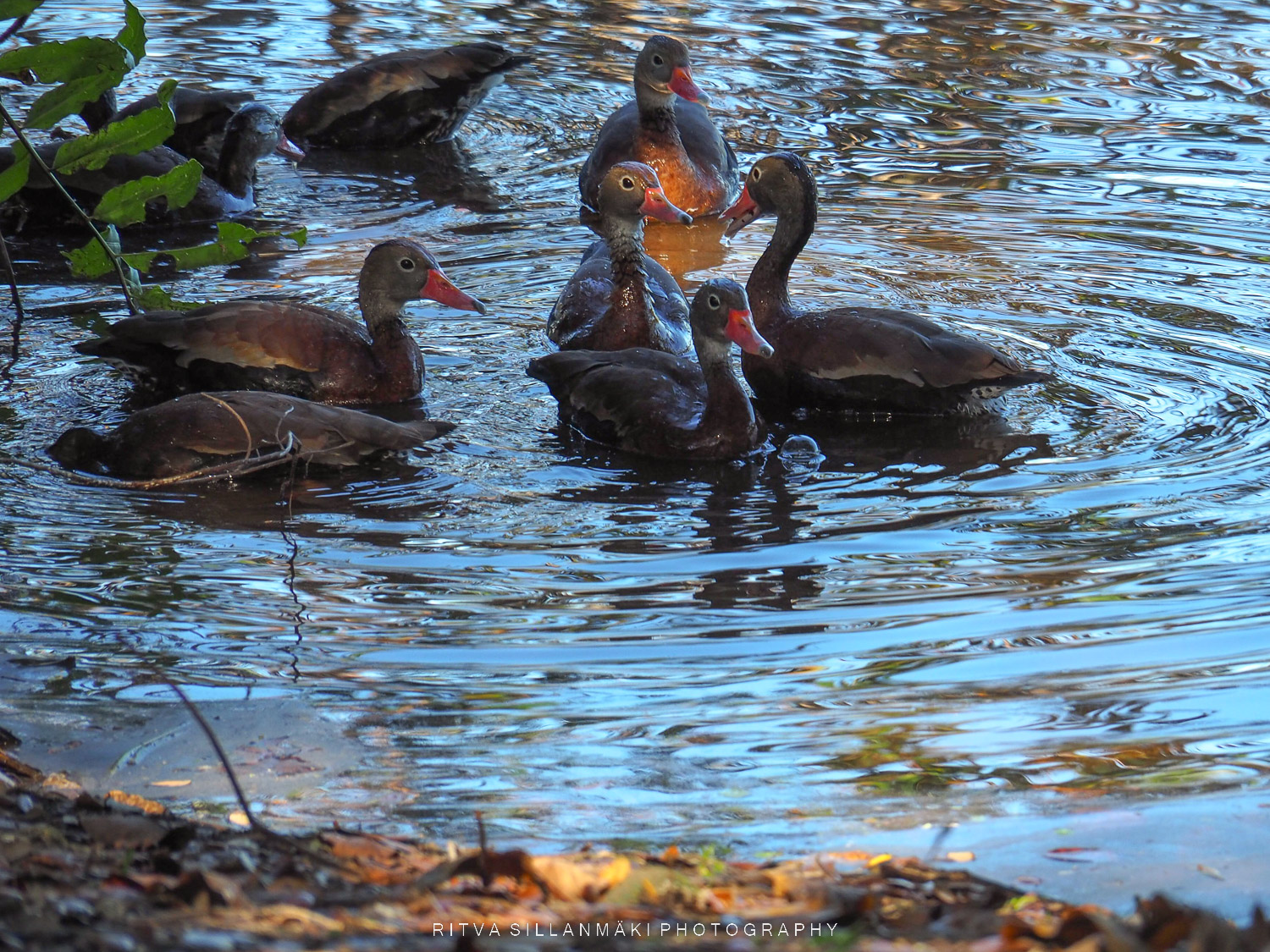
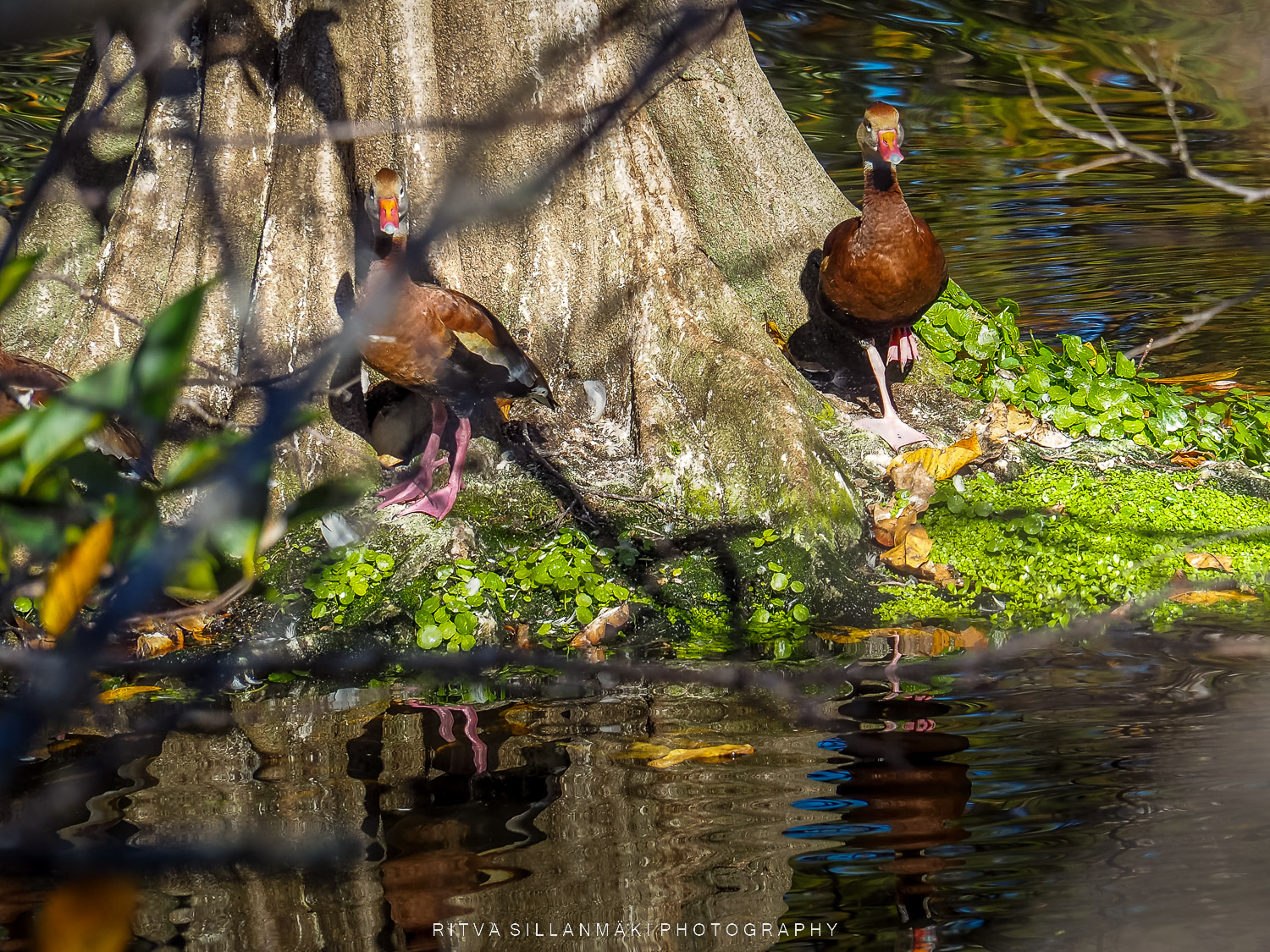
Over 150 species of birds have been spotted inside the park, including wood stork, pied-billed grebe, snowy egrets, and black-bellied whistling ducks. The park is also home to turtles, alligators, rabbits, frogs, and raccoons.
Each day, the Southern Region Water Reclamation Facility pumps approximately two million gallons of highly treated wastewater into the Wakodahatchee Wetlands, which in turn acts as a percolation pond, returning billions of gallons of fresh water back into the water table.
I will be going on a vacation on Thursday for three weeks, will be enjoying new places, sun and experiencing new foods, hopefullymeeting new people. I will post photos taken with my camera when I get back, I am brave and I am leaving my laptop home. I might post something from my phone, most likely, but who knows.
I bought these tickets two years ago, but all thats been going on has postponed it. But now, so happy to have a break from the winter and the dark season, even if we have snow now. Our plan was to go in February but the fact that we had to postpone also changed the month. Hope the weather is pleasant anyways. last time it was a bit nippy 🙂 in January.
Looking forward to sunny beaches, warm sand under my feet.
Sightseeing is the other part and cooler weather is good for that as long as it doesn’t rain. It will be what it is, but we will be on vacation from the normal life rut. So looking forward to this. We rented a car so we can move from one place to an other, hotels are booked and research done for the places we are going to visit. We are ready.
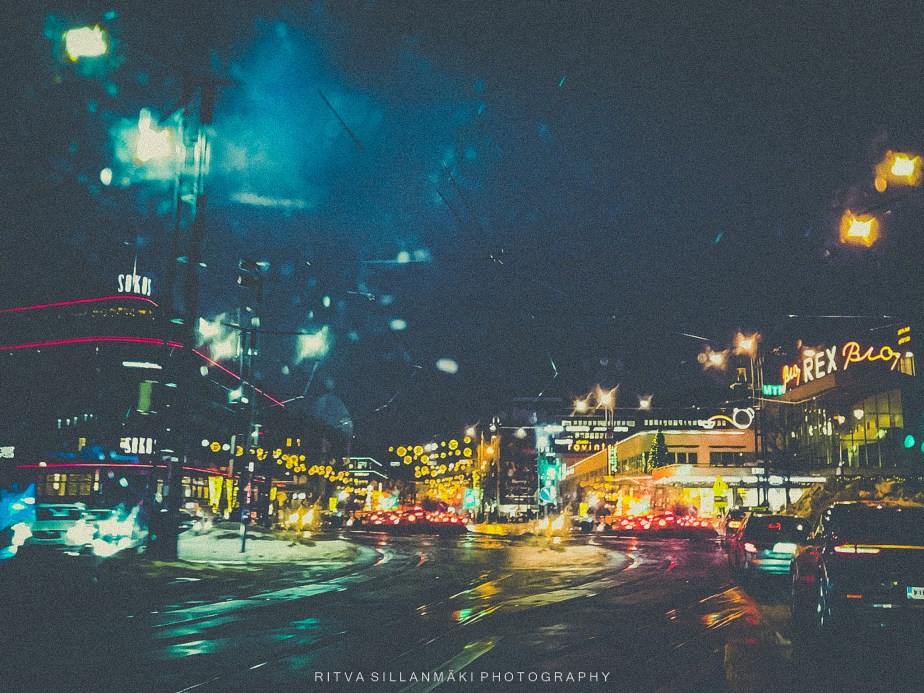
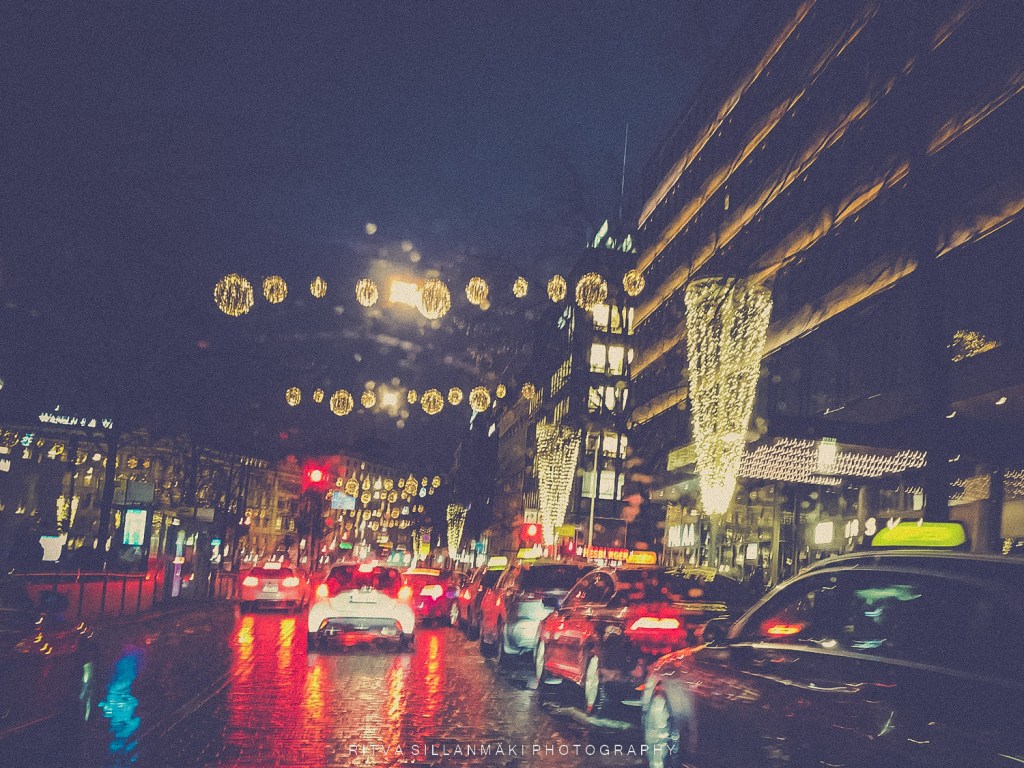
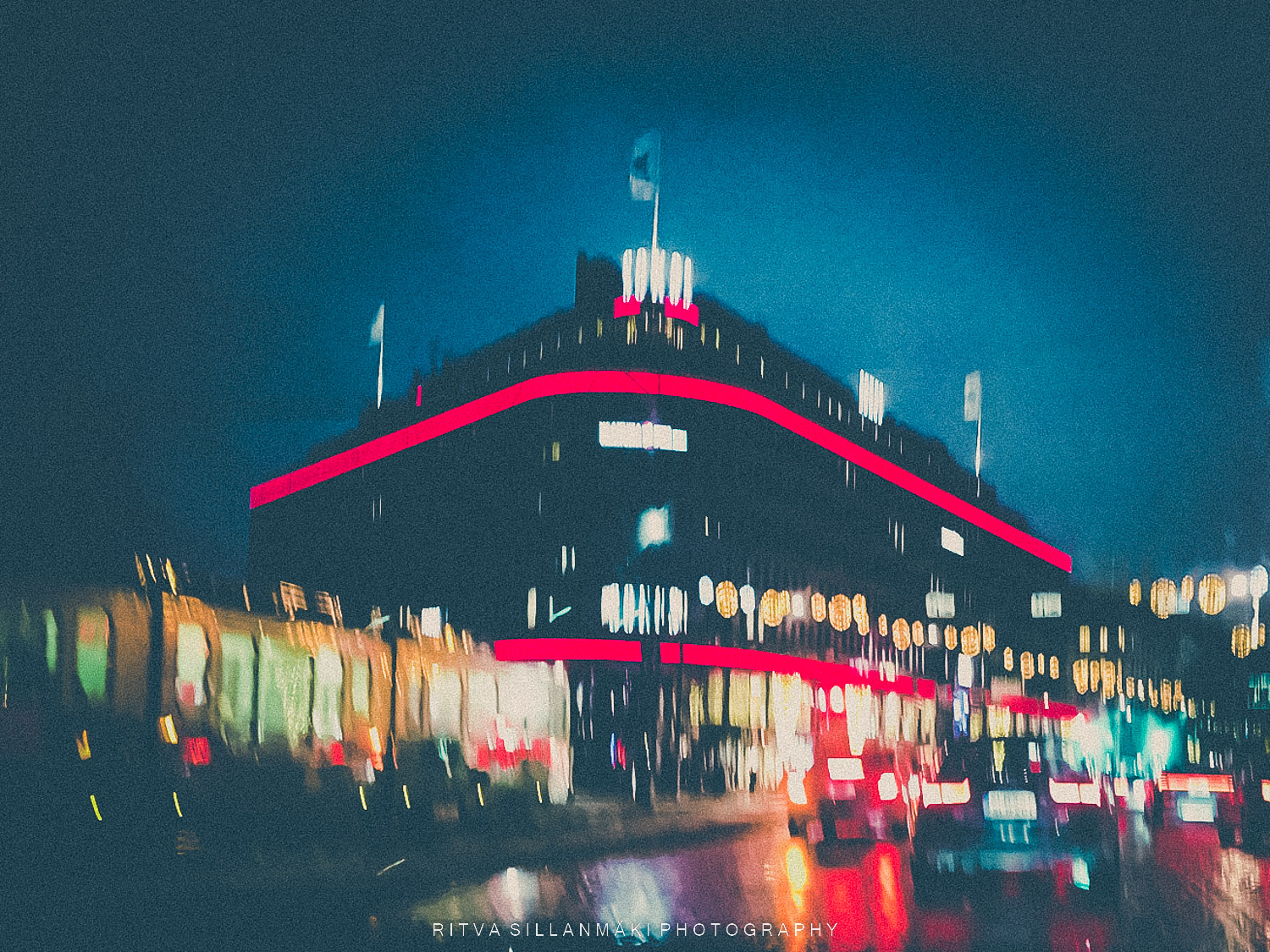
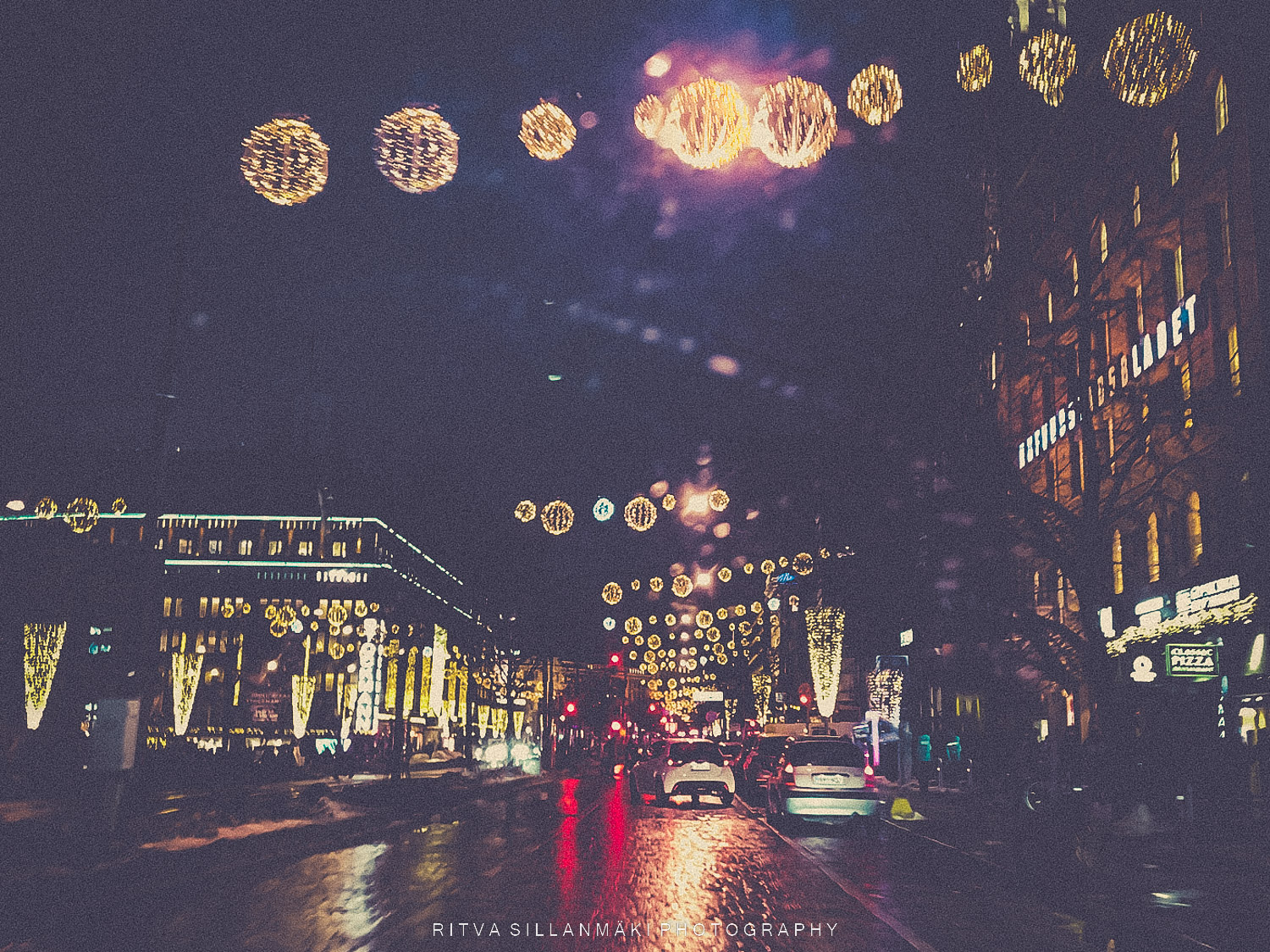
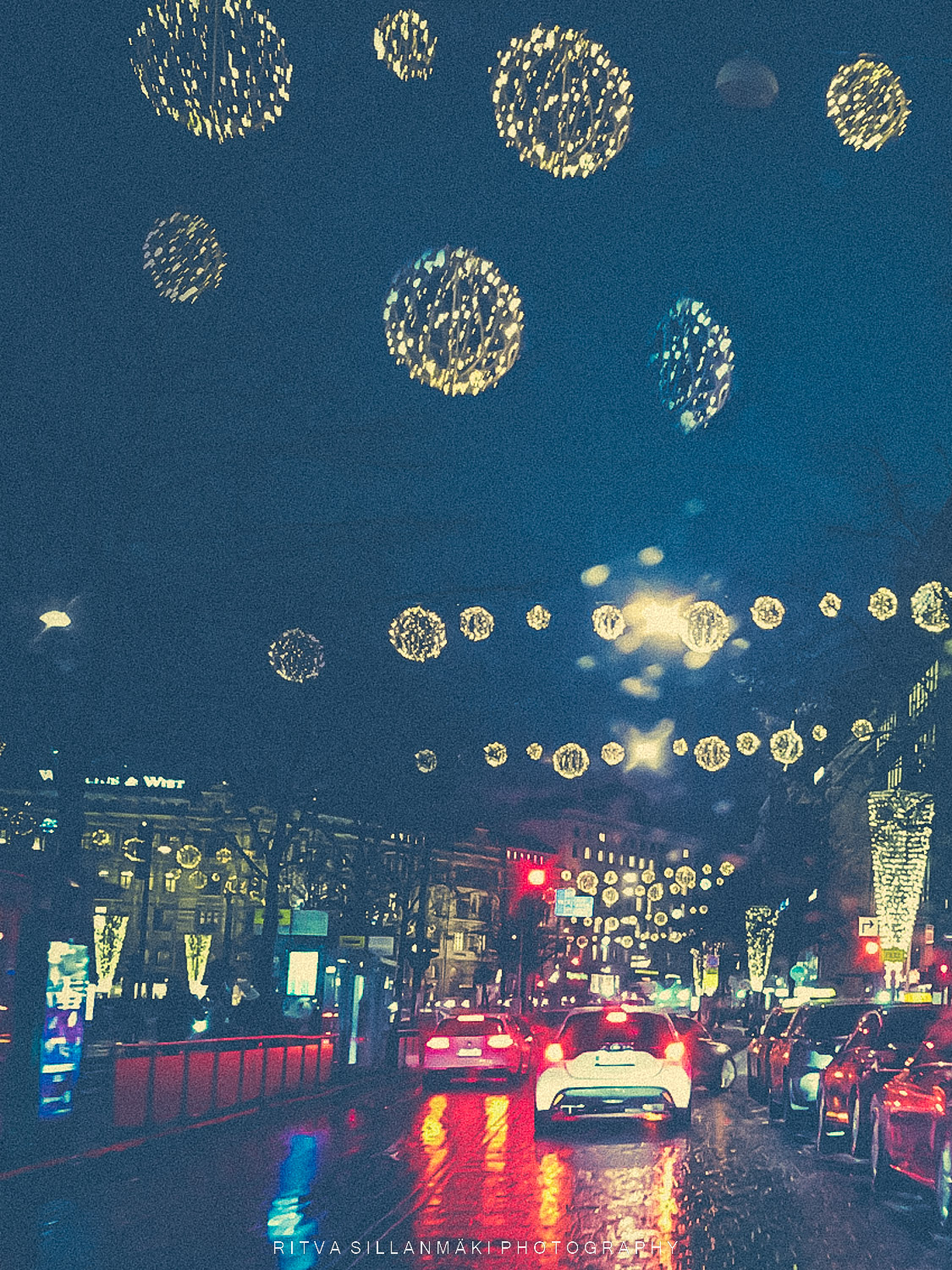
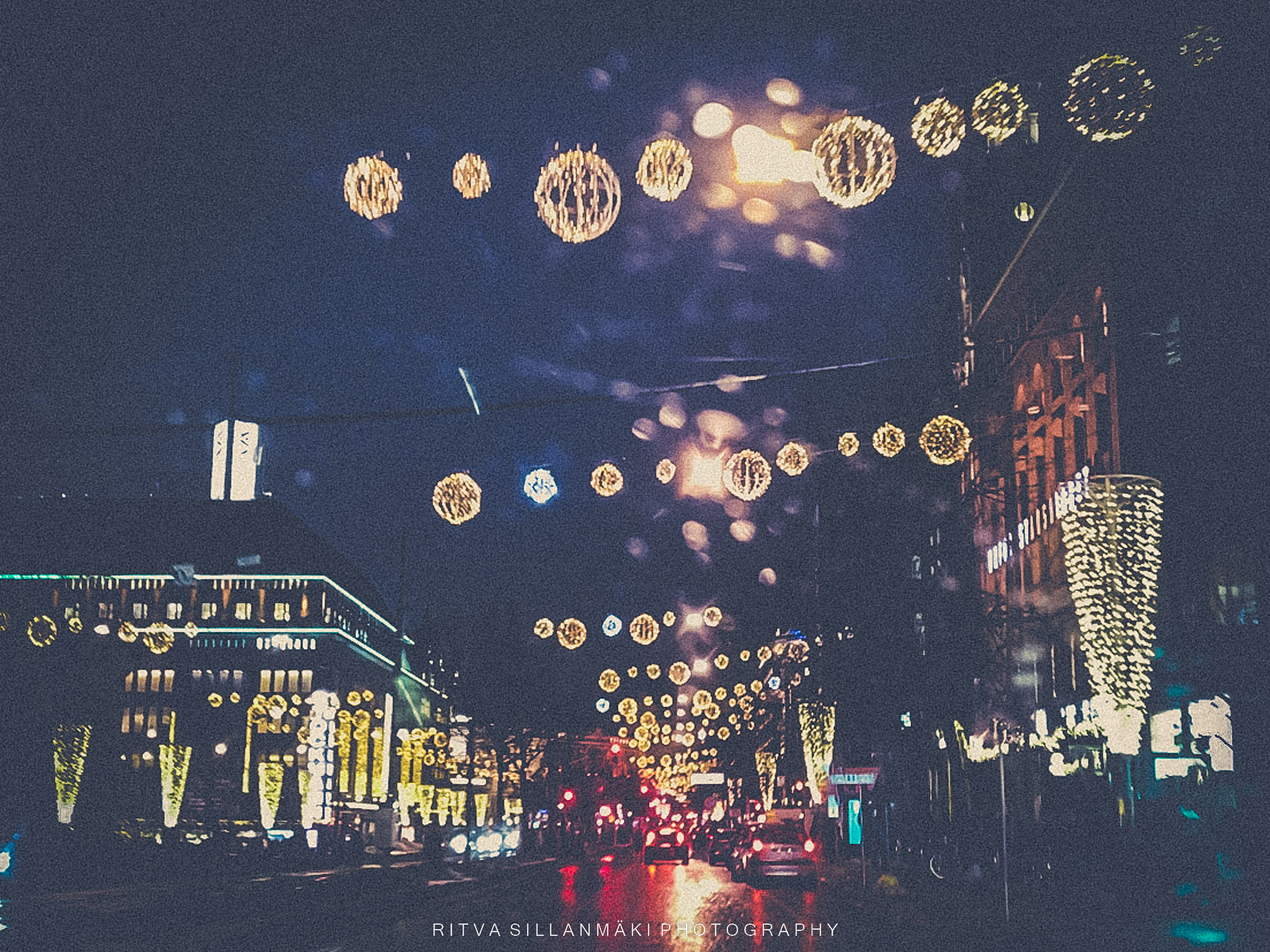
With the winter solstice, and these citylights I am now starting Christmas preparations and I take this opportunity to
I wish you and your loved ones a Happy and Peaceful Christmas.
I want to thank you all who have taken the time to look at my photos, press like and I really appreciate all the encouraging comments I’ve gotten this year.
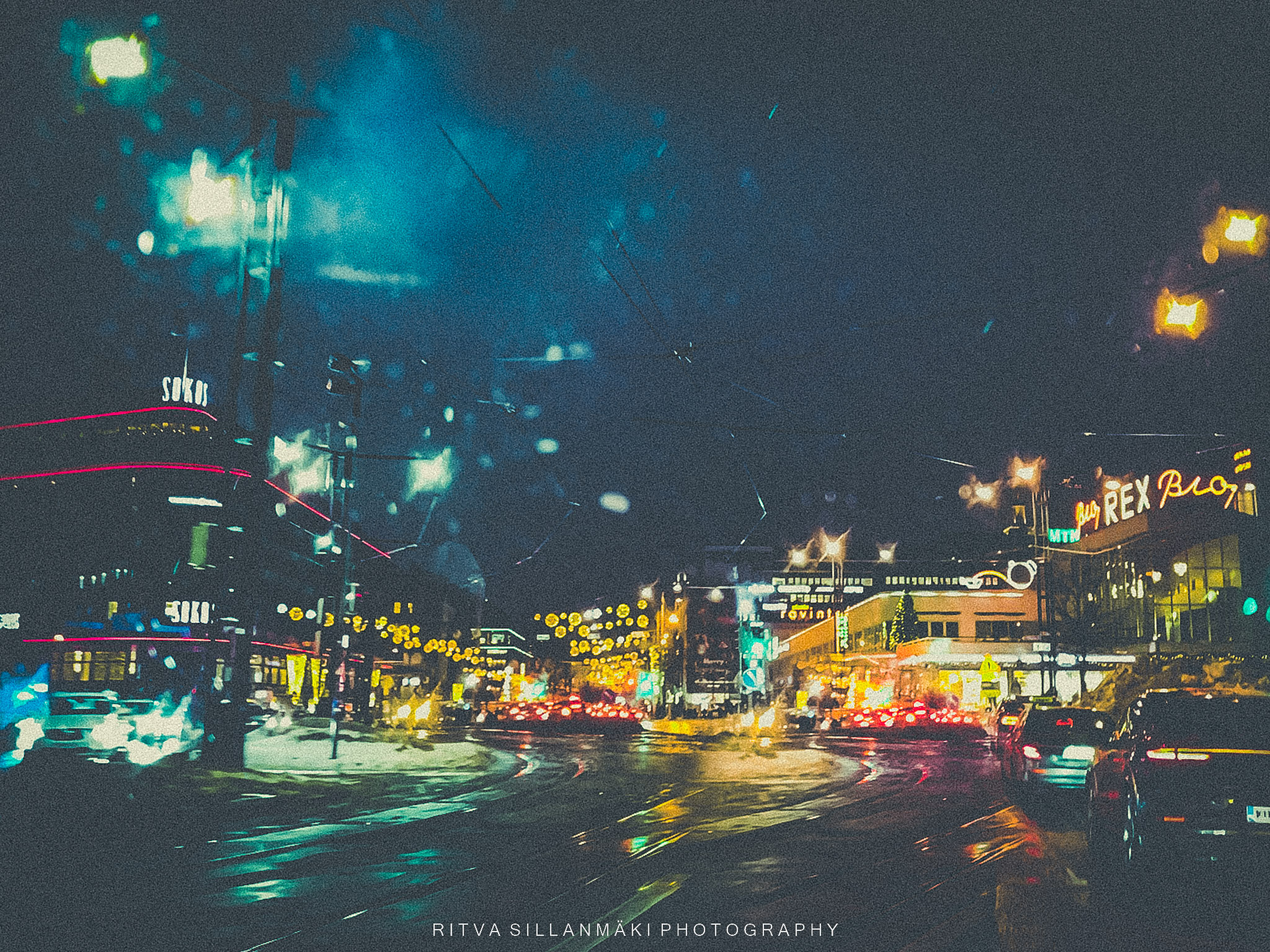
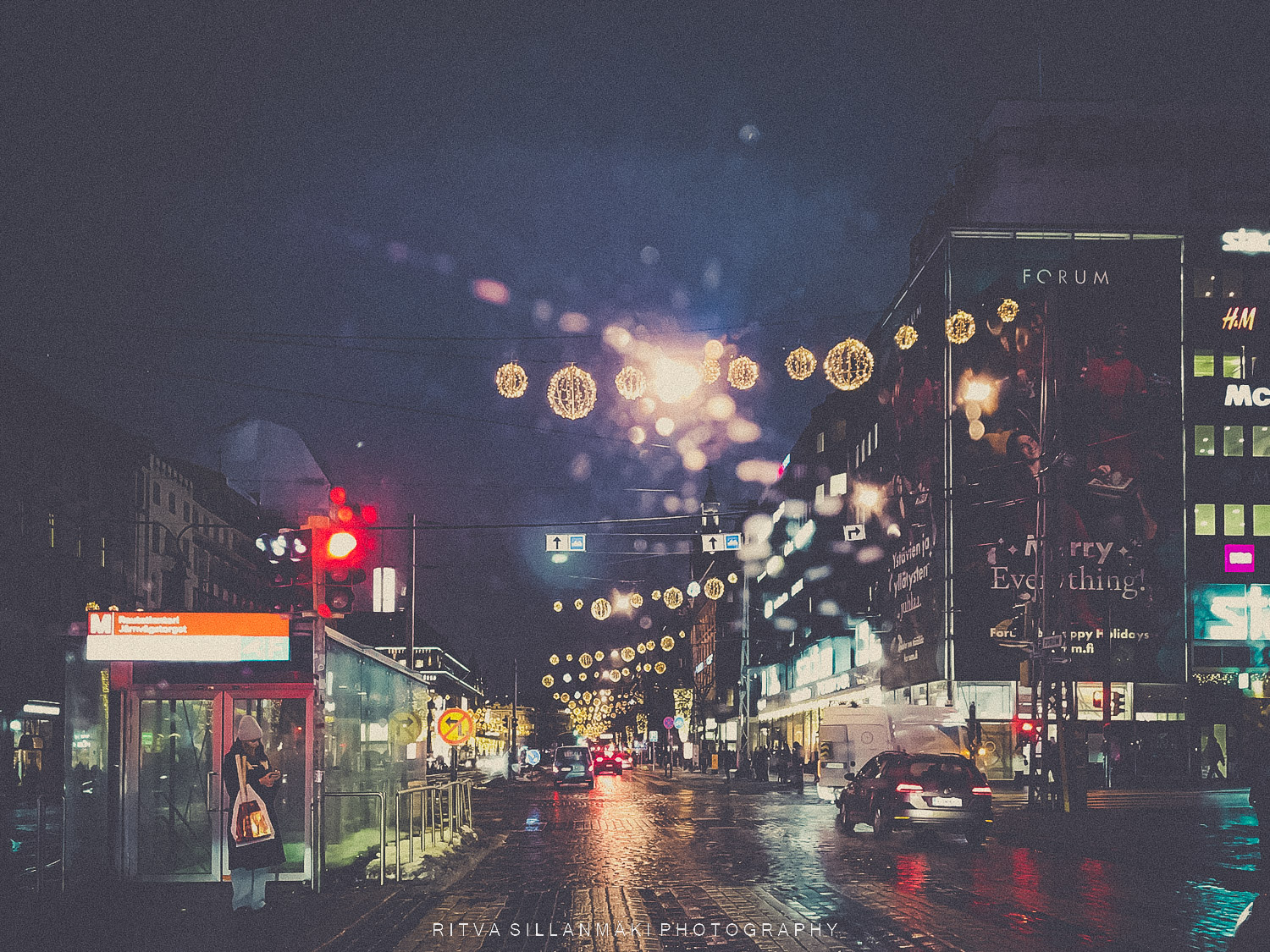
These I took yesterday when doing my last minute shopping. The cobblestone streets in Helsinki with the rain made it hard to get really great shots of the season lights in the city from a moving car, but I ended up with moody, artistic shots and with a little help from the editing they came out OK.
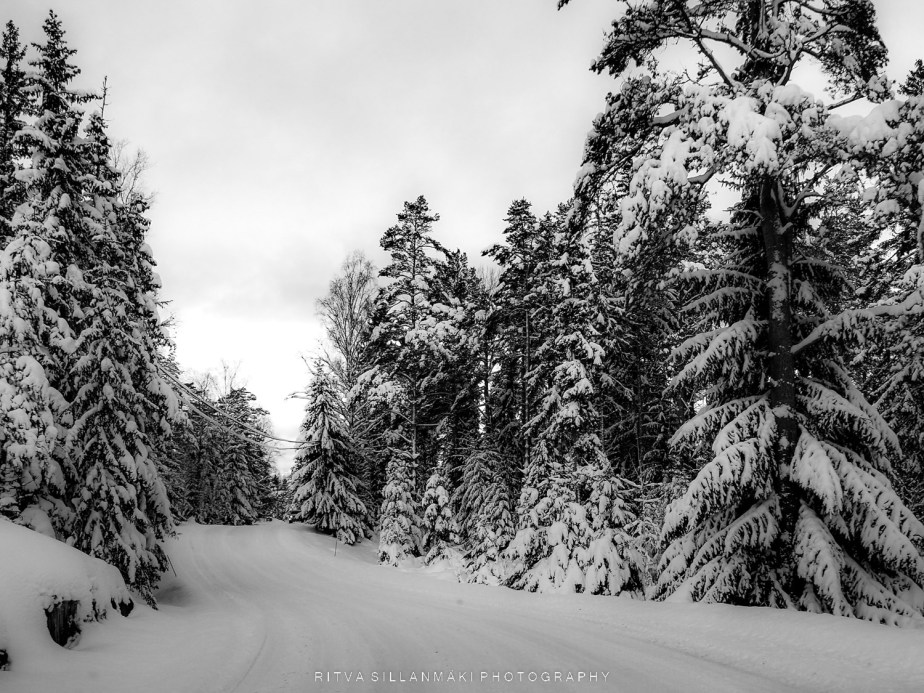
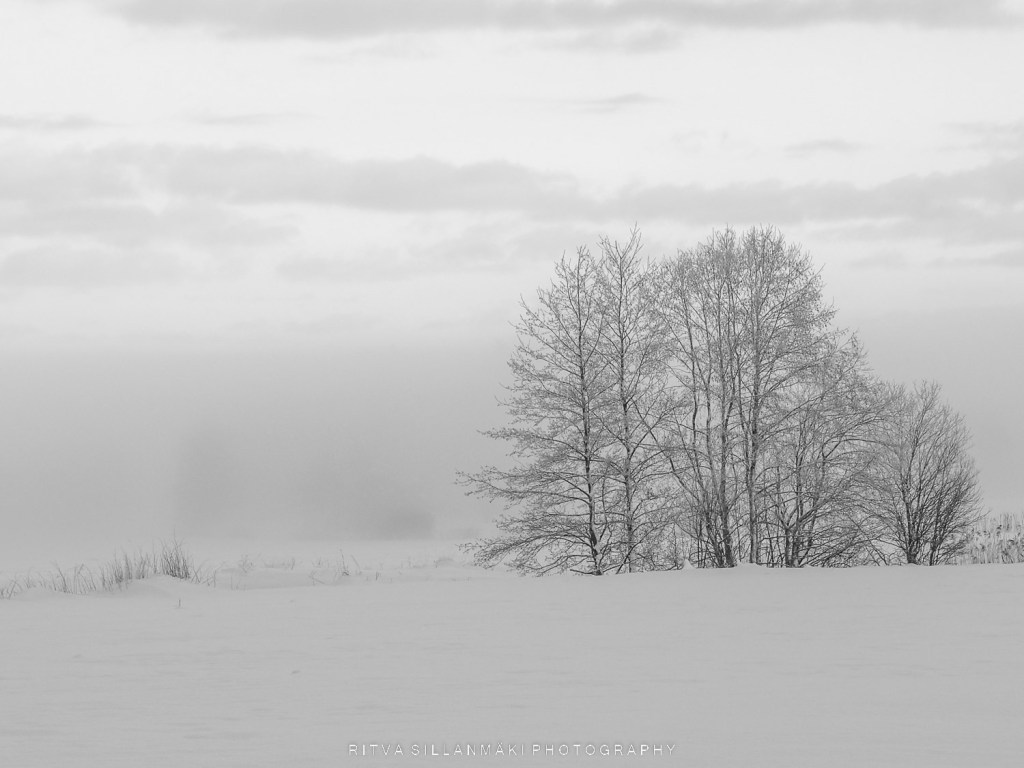
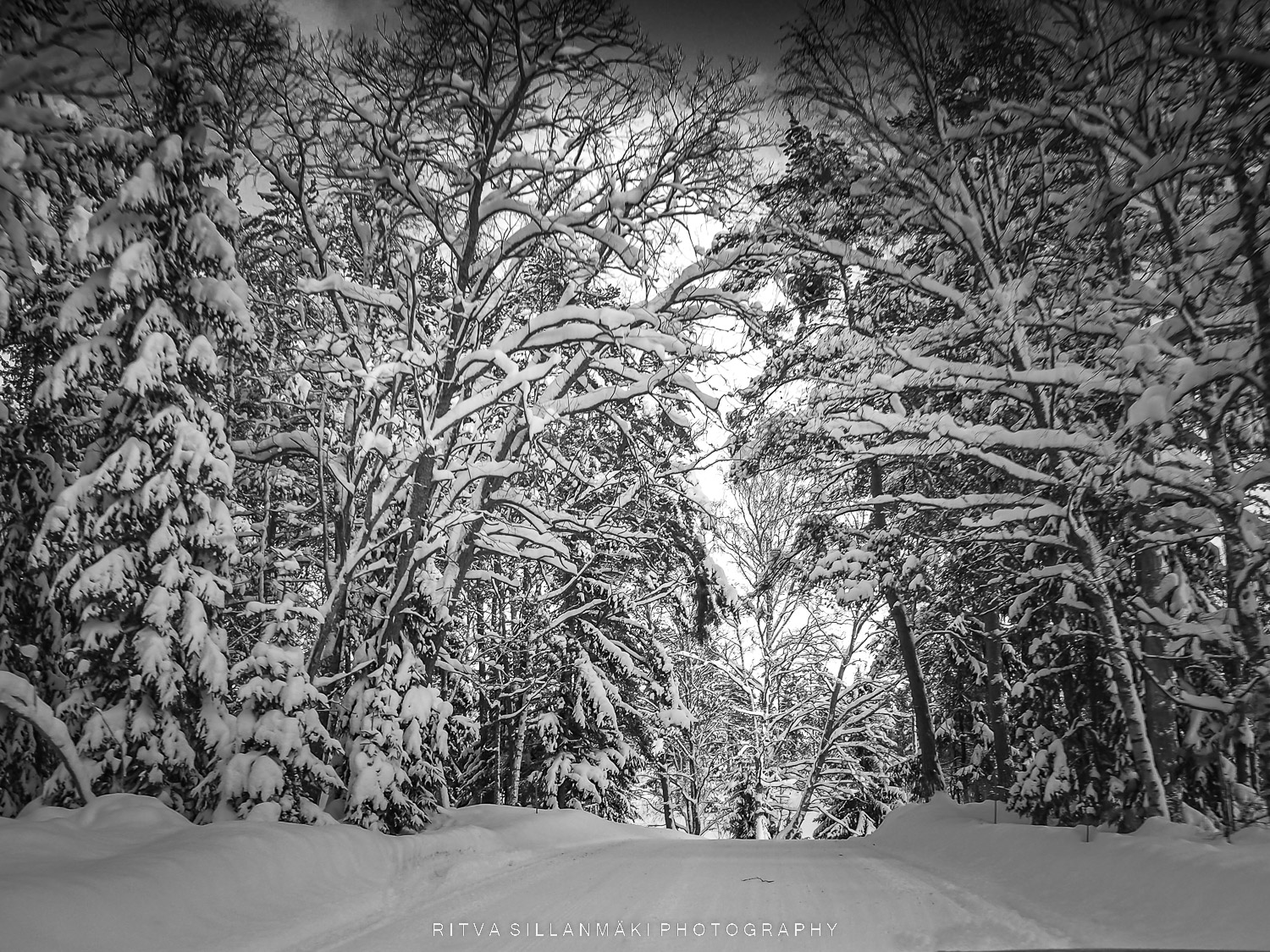
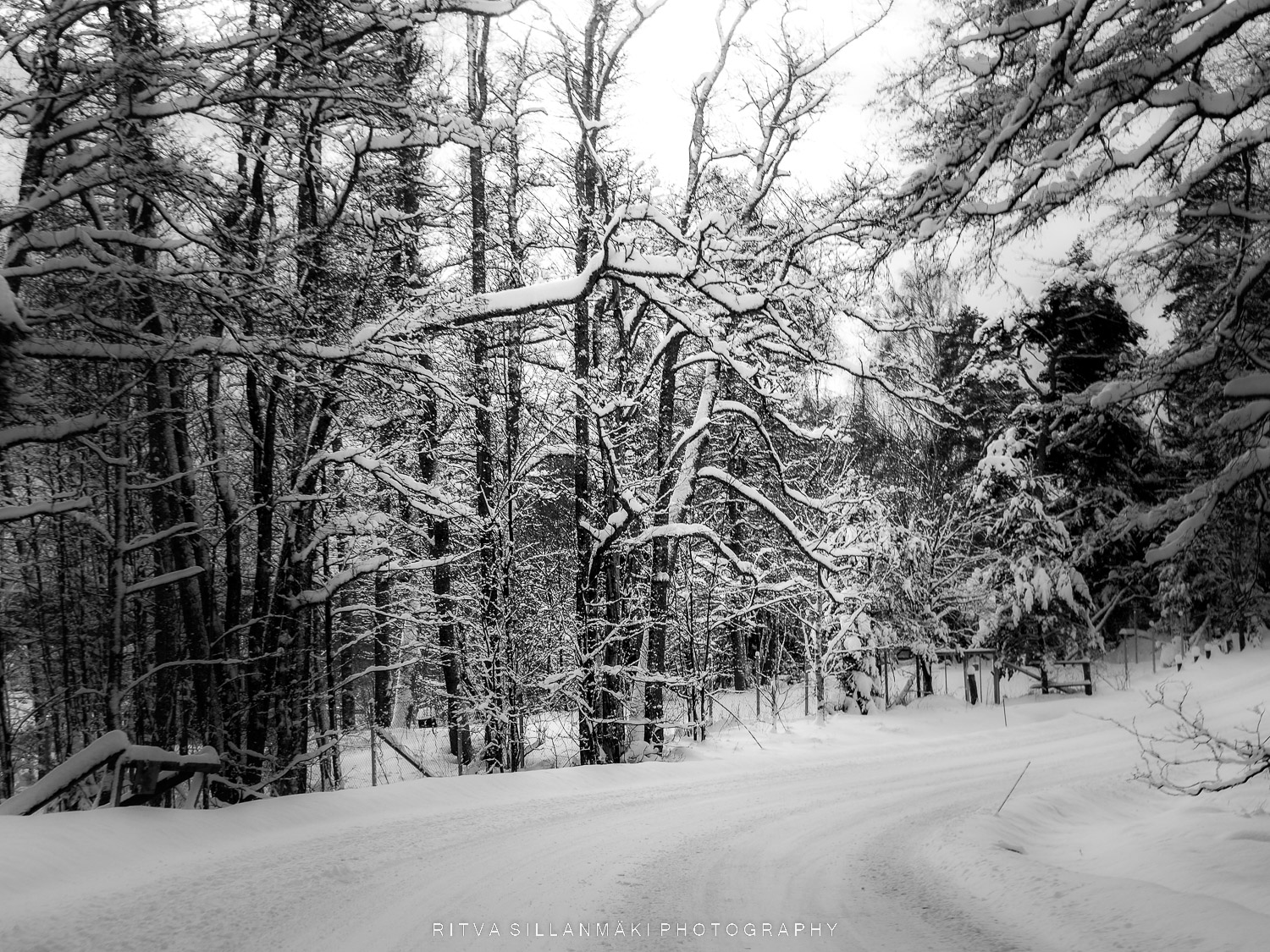
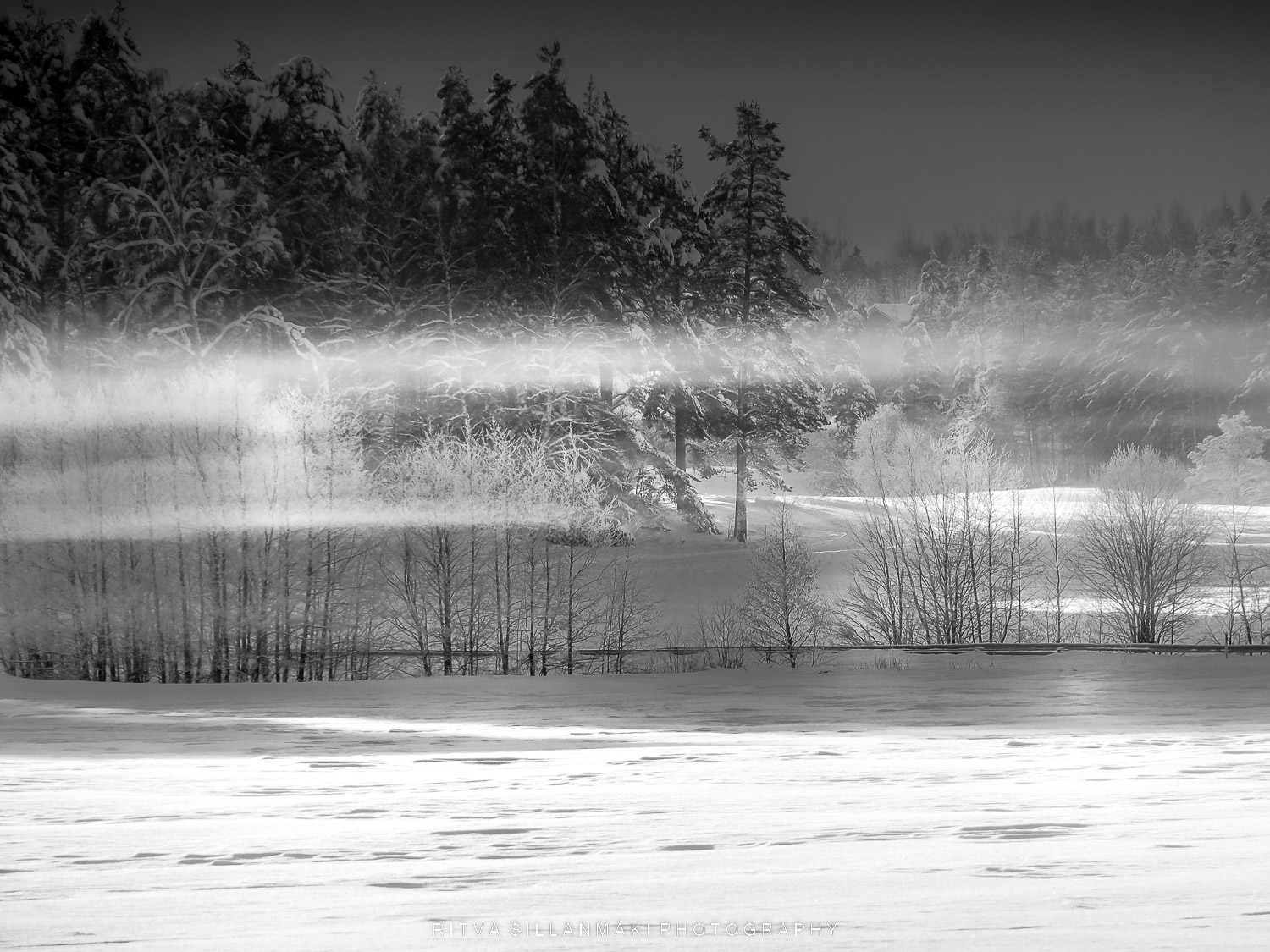
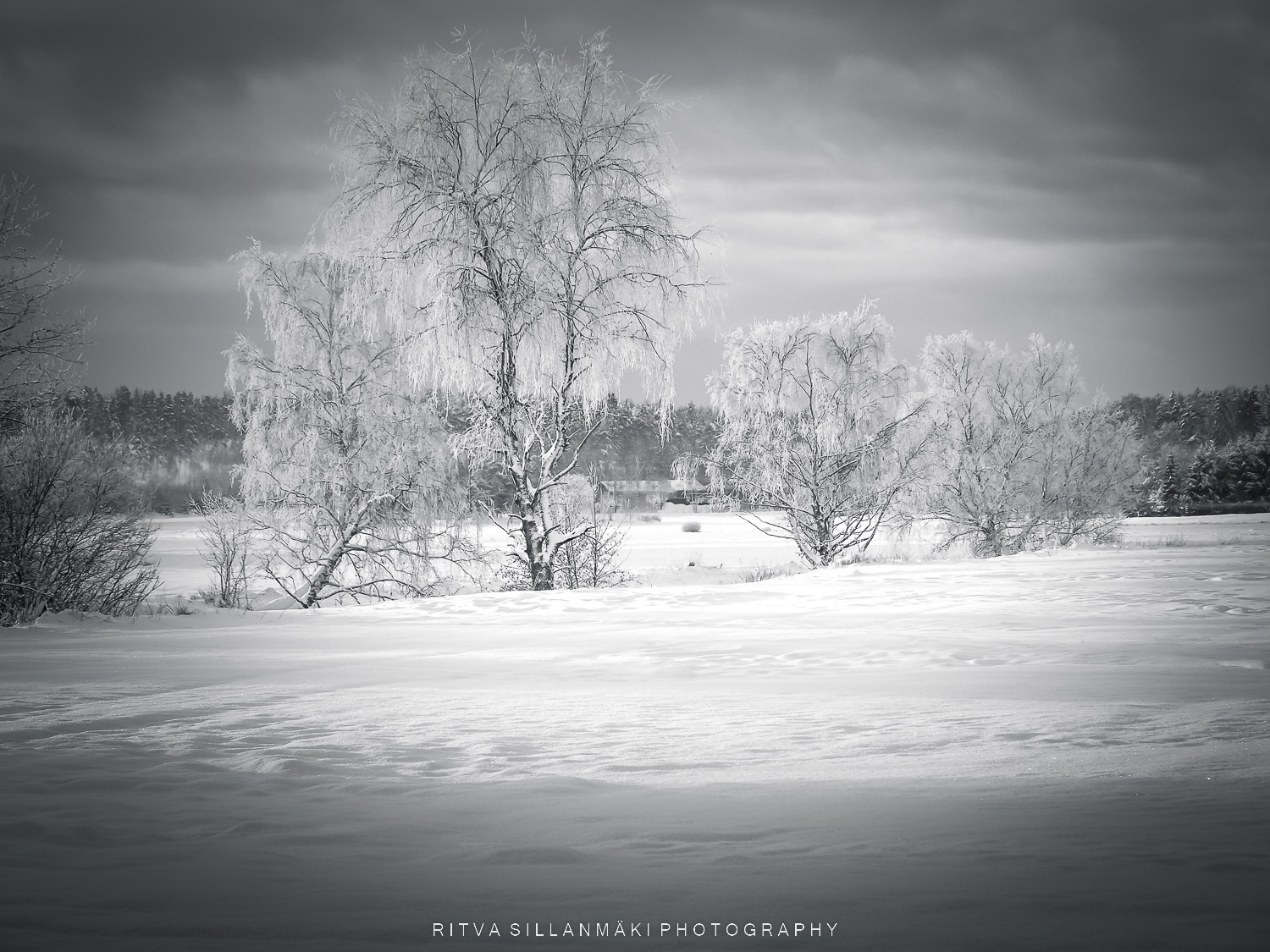
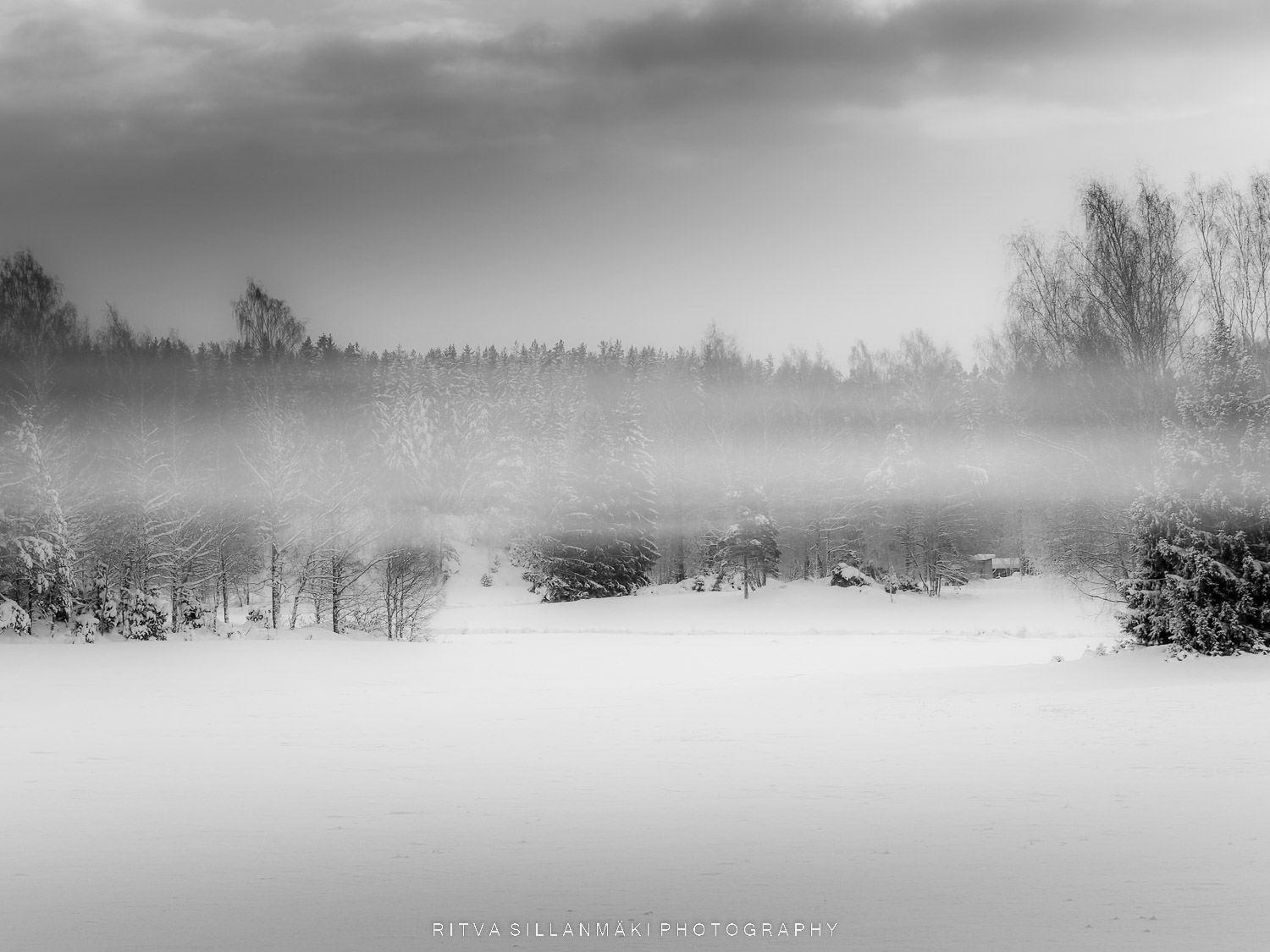
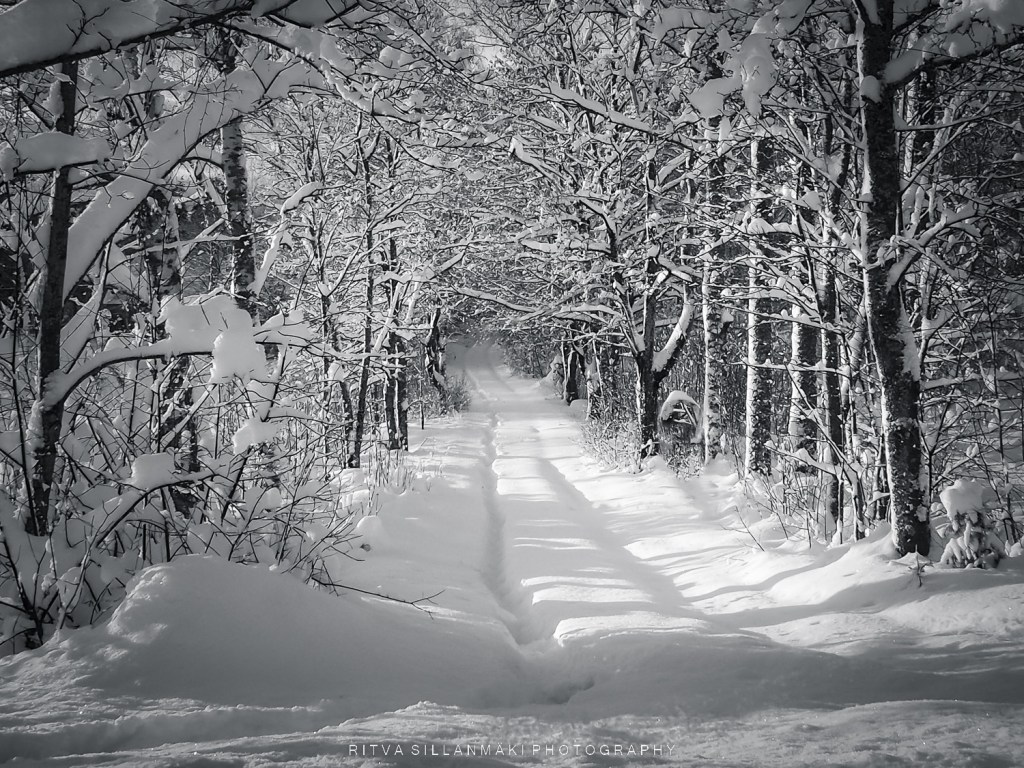
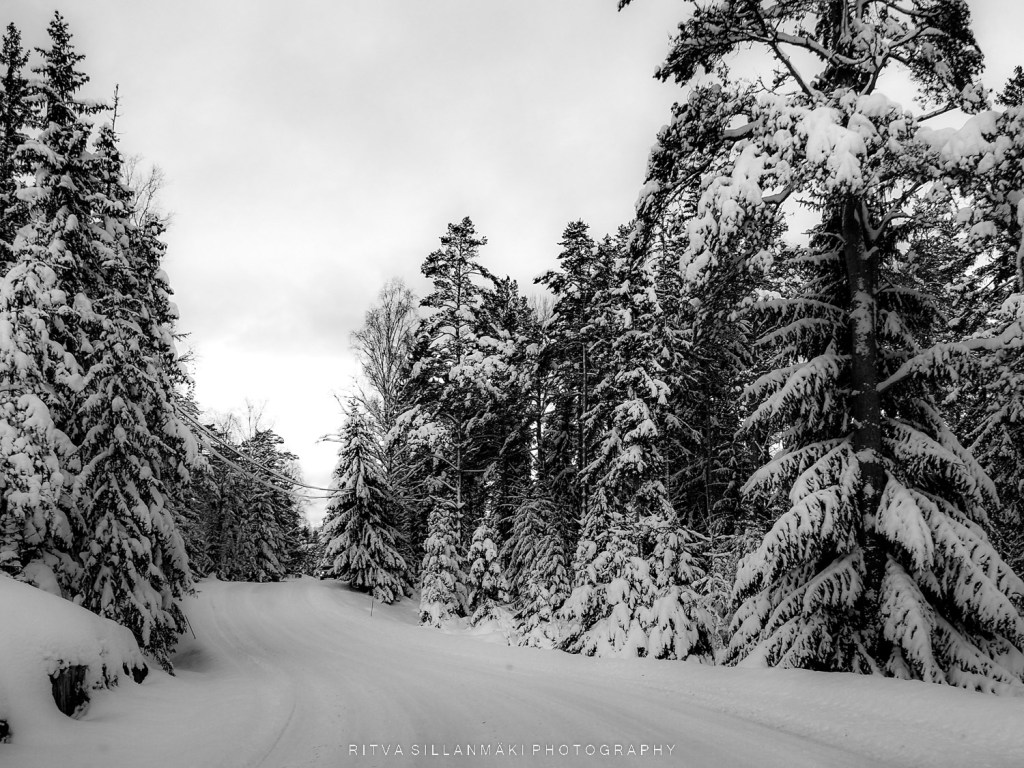
I took several winter wonderland photos last week, so I thought I’d try them as monochrome. Misty fields and snow-covered roads with trees heavy with snow surrounding it. This is how they turned out.
It is nearly Christmas, and I hope that these winter shots will help you to get into white Christmas spirit.
Snow covered lane
The way that light hits objects, I think, is one of the more important things that sculpture and photography share. – Rashid Johnson
For this week’s challenge is hosted by Tina Schell from Travels and Trifles Lens-Artists Challenge #230 – Last Chance we’re show casing our forgotton or should I say our not yet published shots. Now, the challenge is remebering if I’ve posted them or not. I discover that I have not taken all that many photos this year… sad but true. It obviouly also depends how people defines much.
The image above is new from last week. winter can be beautiful
She wrote; But what about the images that are among our favorites but have not fit any of the categories? This year we’re giving you an opportunity to include images on any and all subjects that are personal favorites – BUT, they must have been created in 2022 AND must not have been previously published.
Here are my Last Chance photos, please link your post back to Tina’s original post and tag Lens-Artists if interested in participating in it.
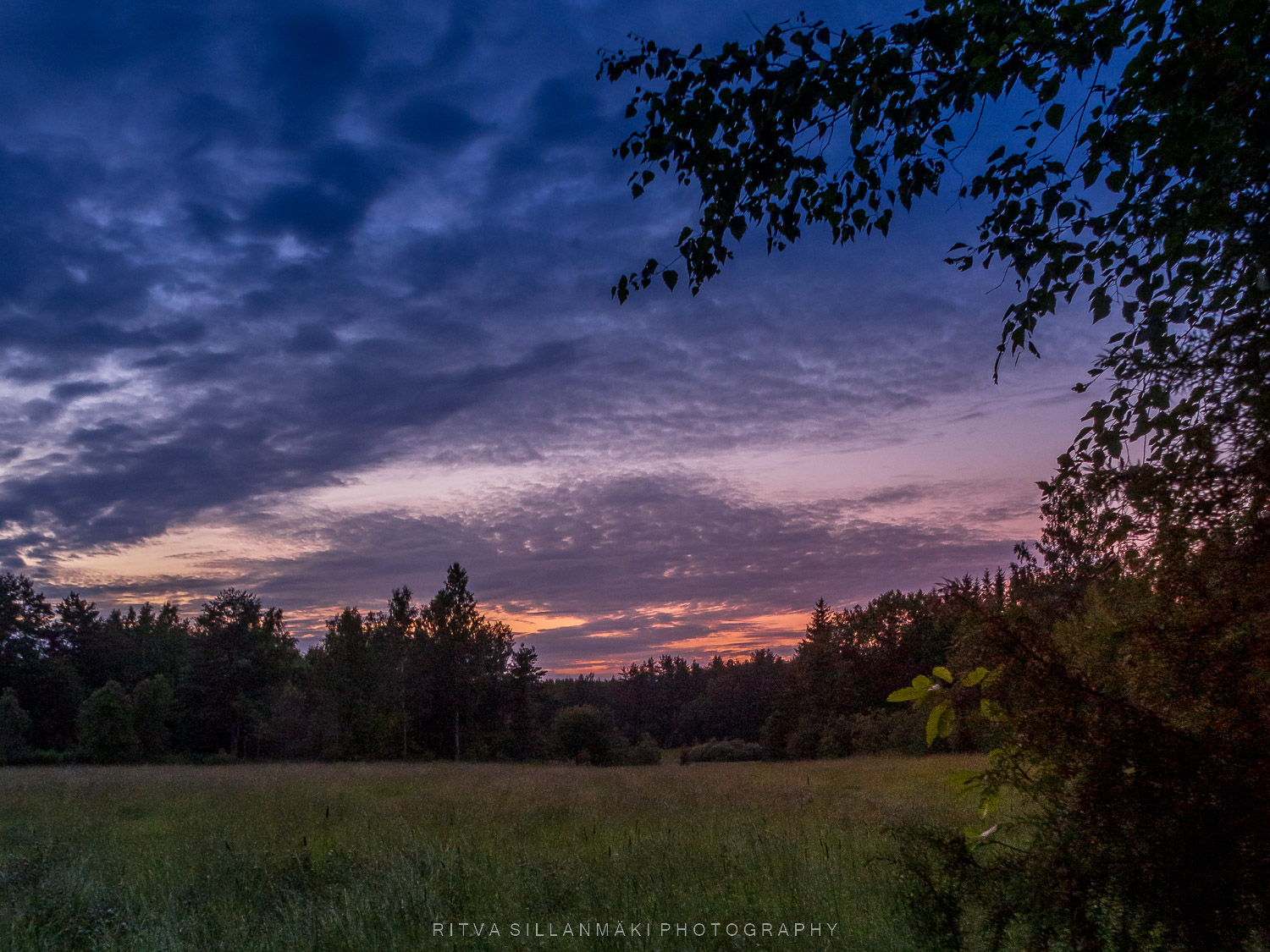
Hailuoto was one of my favorite places to visit this summer, I posted several black and white images from that trip, here are some with colors. I love watching clouds and they played a big part in the photos I took there.
My summer house and the nature is a constant inspitation to me – below
Details from nature are often important things to photograph to me at least as they are found near and are beautiful,
I have taken still life shots that I have not posted lke these pearls
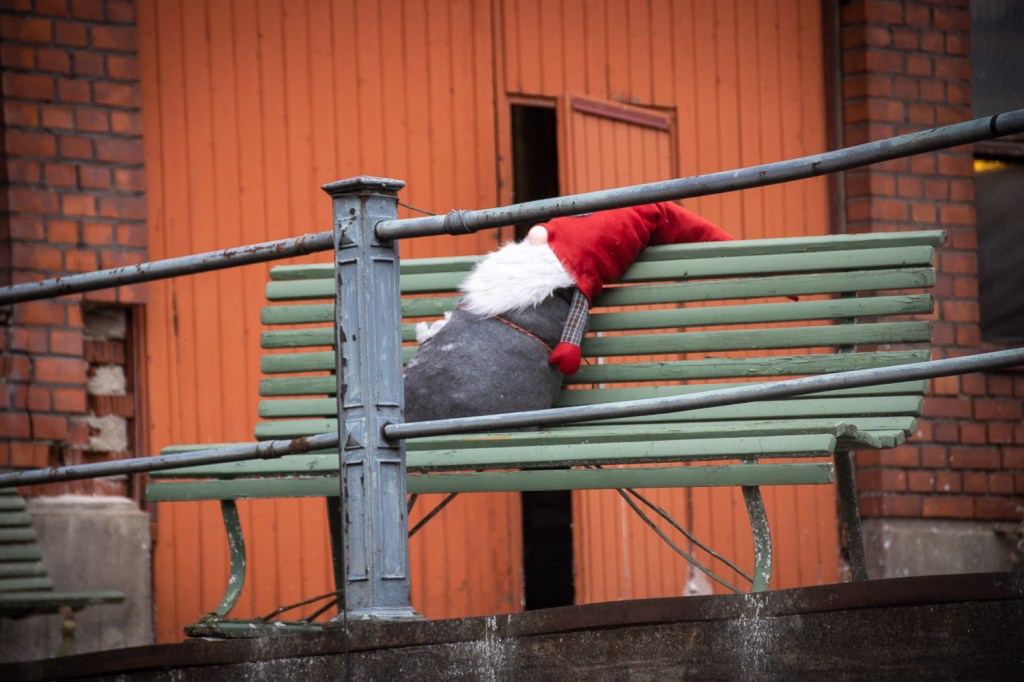
And I found this 🎅 Santa resting on a bench during summer…
I have been away from my computer, and photos for a long weekend visiting my son and his family. So obviously I have missed a lot. Here are some more winter wonderland shots from last week
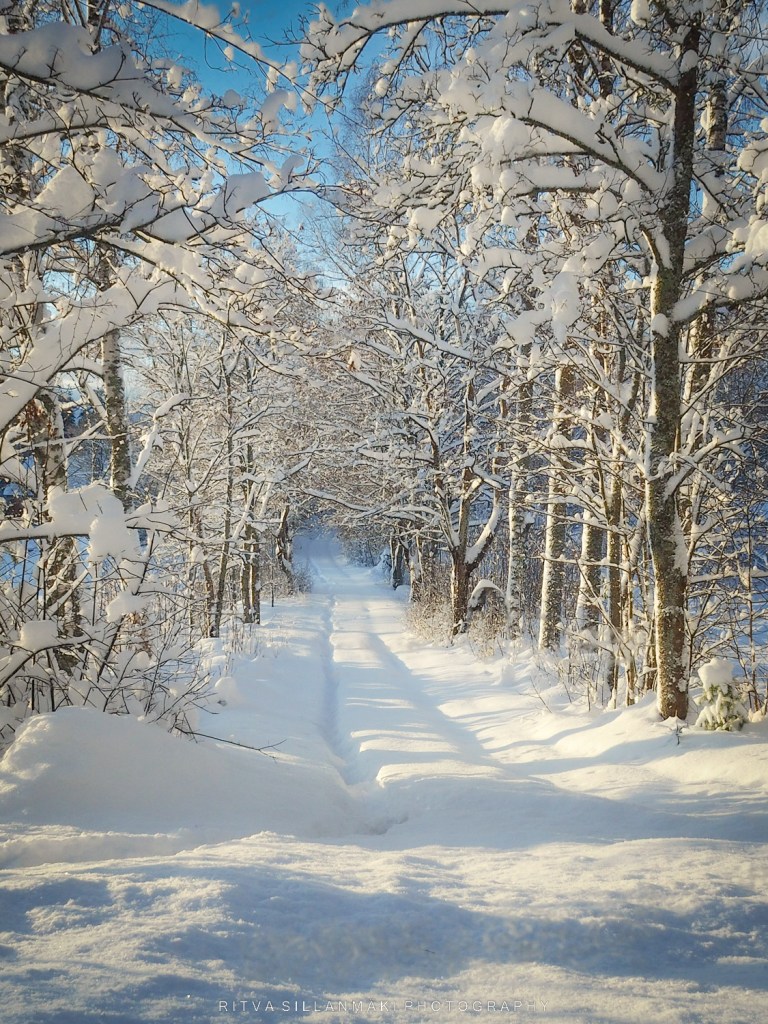
I am just going to put this here, as I went out today to take winter photos, I need to go through them. This is the first ones I am going to post. At this moment the sun was still shining. This Lane/ road looked so lovely I ad to stop to photograph it. Hope you enjoy it too.
Ann-Christine wrote, Of course there is no such thing as a ”perfect” pattern…but it could be perfect in Your eyes, perfect for camouflage or perfect for its purpose…or simply radiating ”perfect”! This week we challenge you to find perfect patterns and it would be great if you wanted to tell us why you think they are perfect.
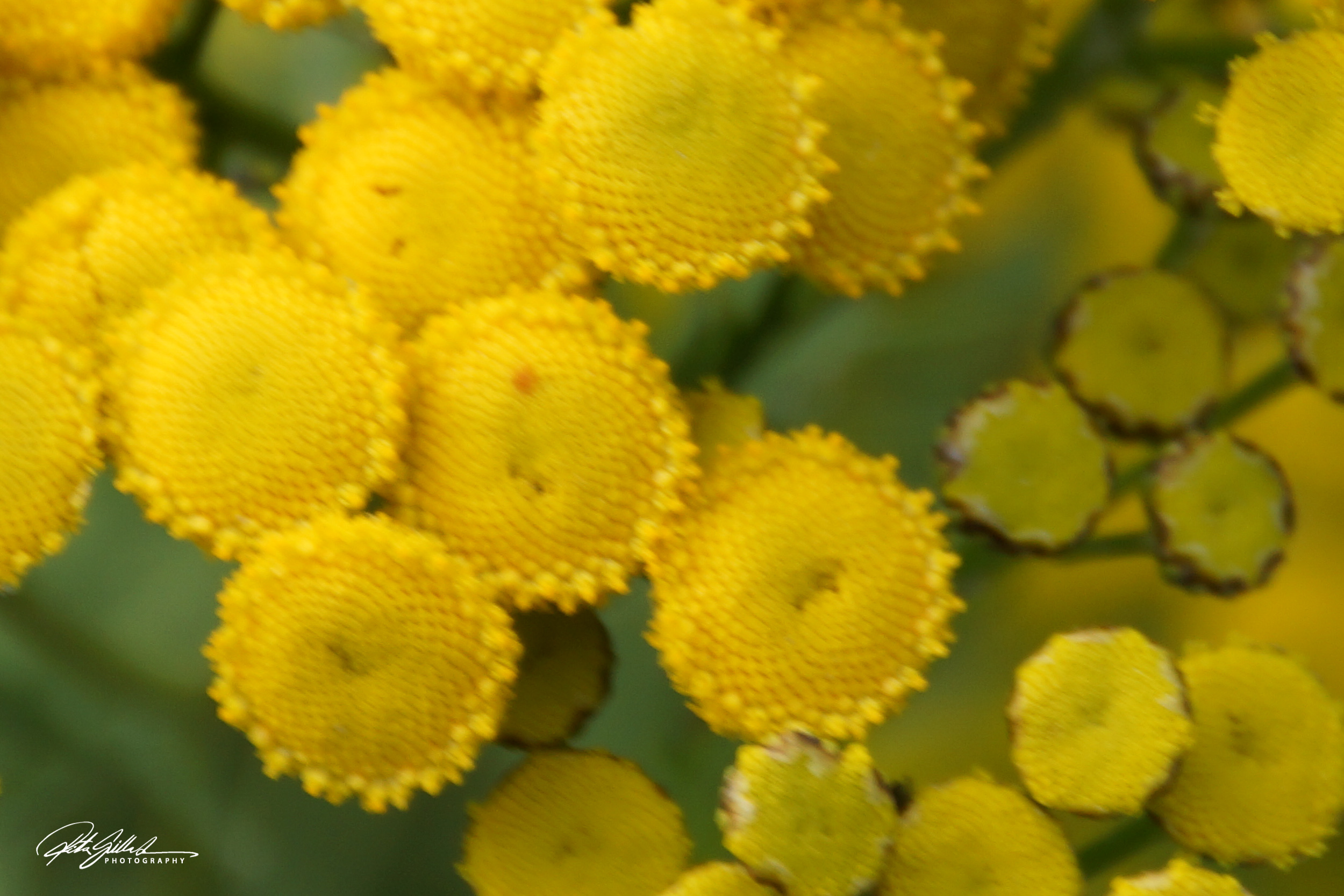
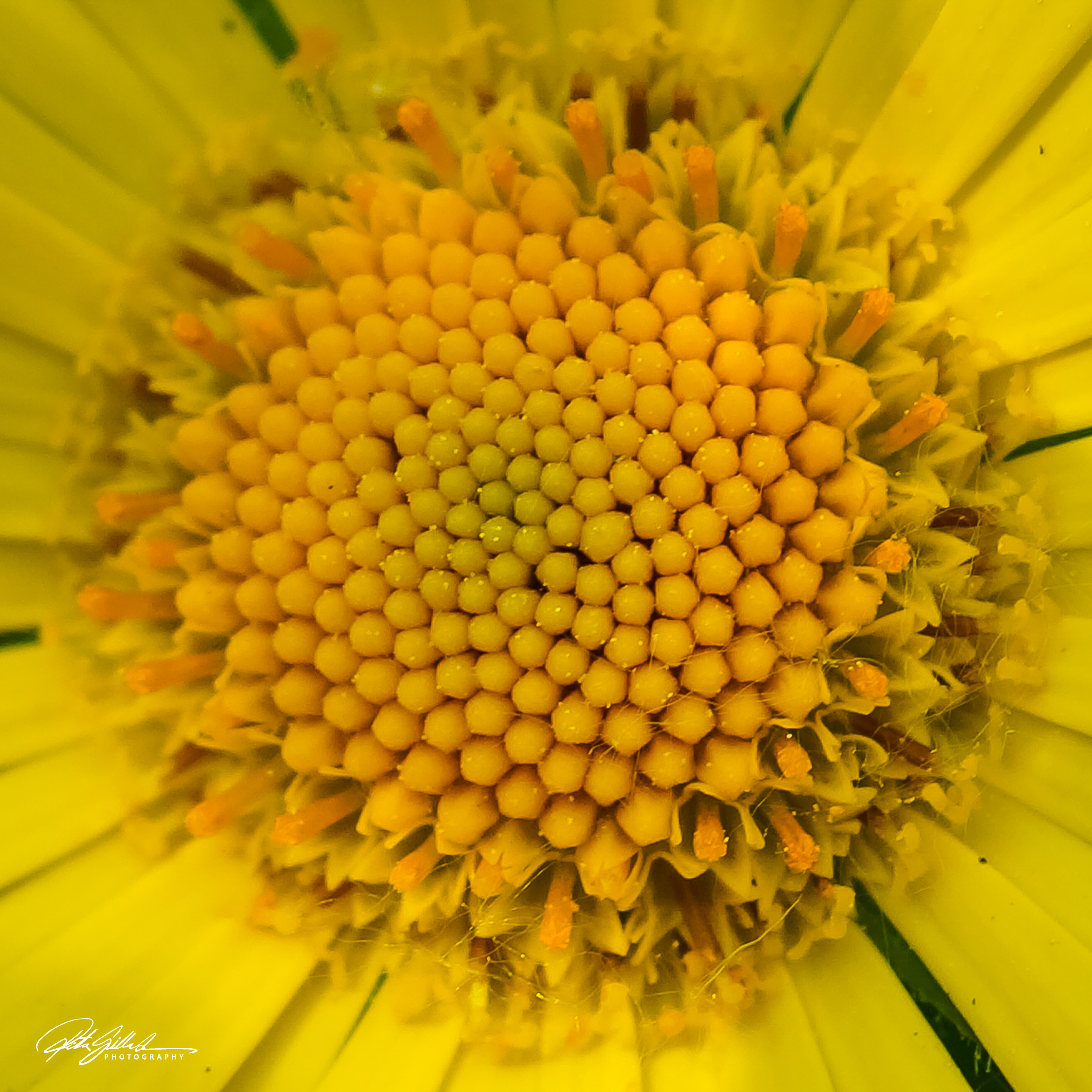
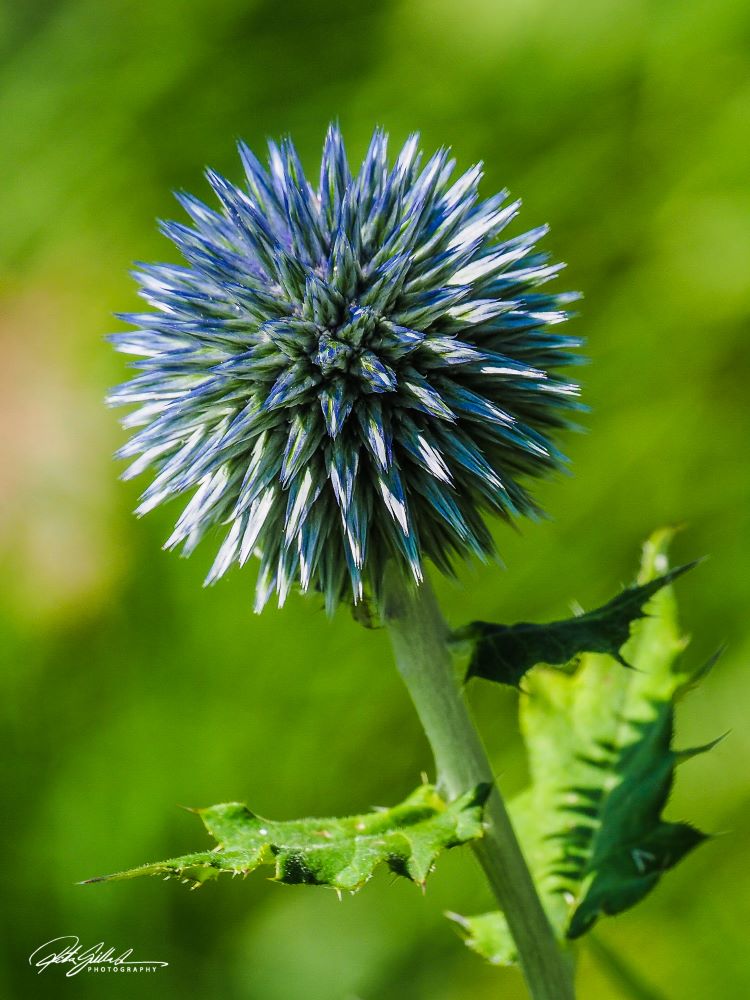
Diagonals and patterns have lots in in common, I could easily use some of the same images from last week. Lets see what I can find in my archives. Patterns are everywhere, but in the purest form they can be found in nature. Nearly all things, big or small have them, if we look closely enough.
Well nature produces most wonderful patterns in flowers, spiderwebs, trees… you name it we can find it
Not to forget man made patterns, in building, textiles,
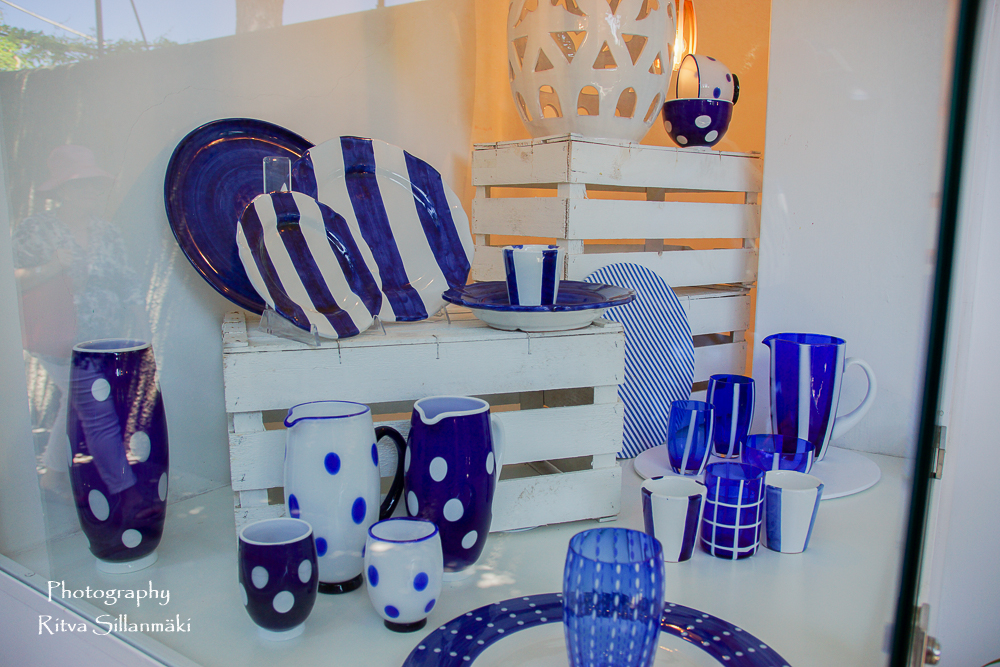
Our tableware is a place patterns are commonly found, as are the fabrics are made of.
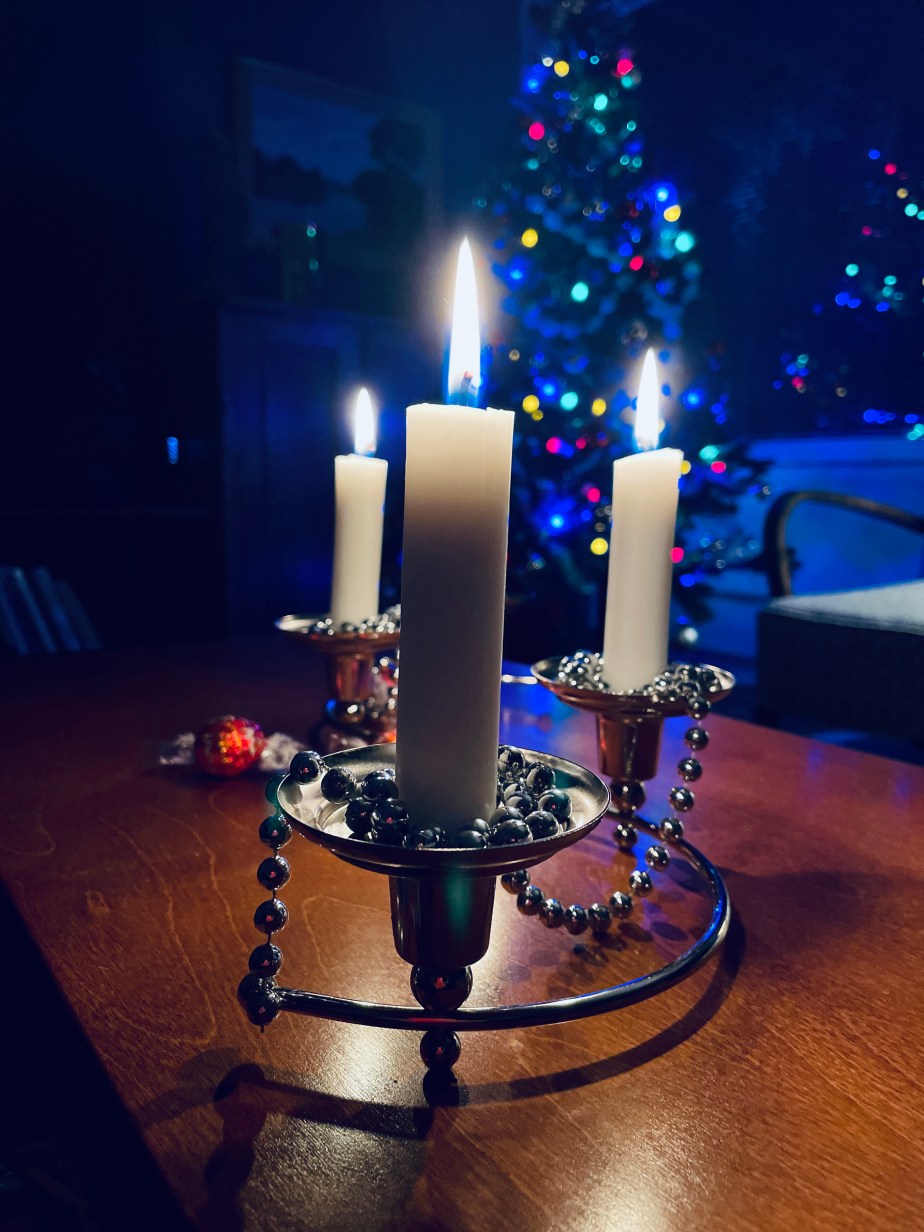
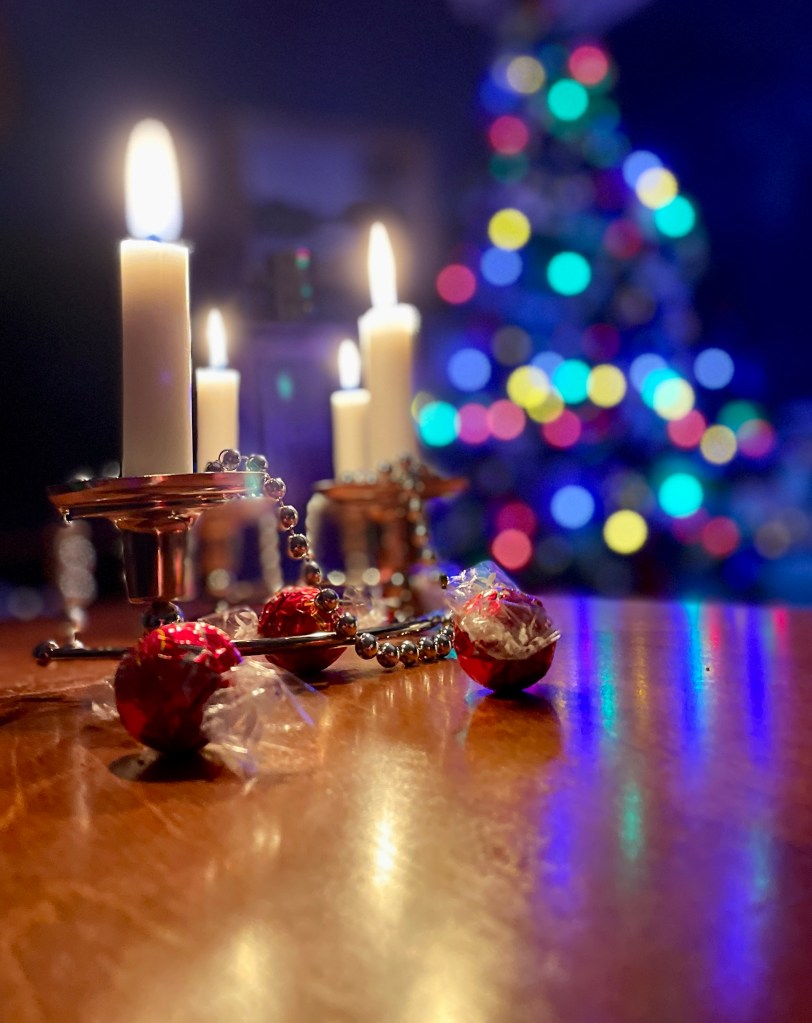
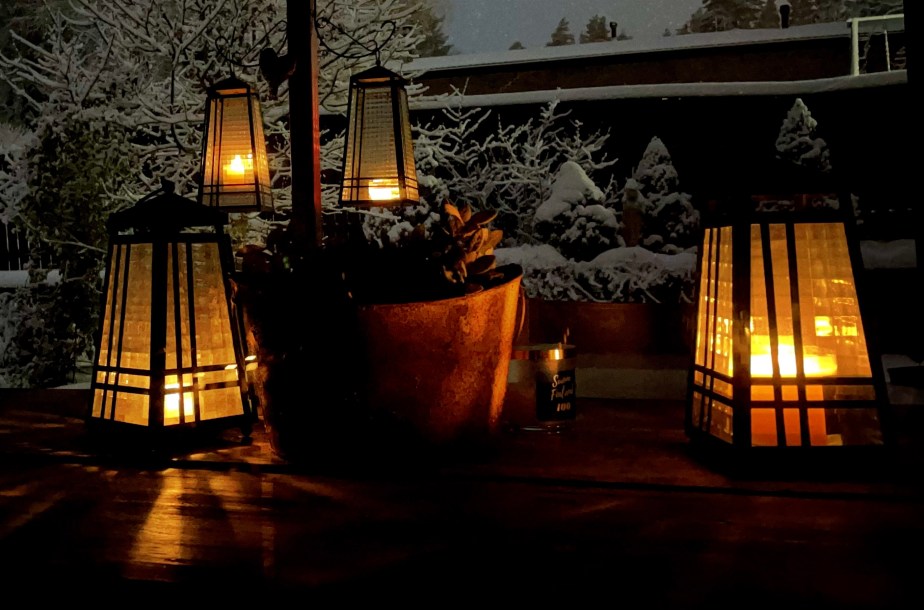
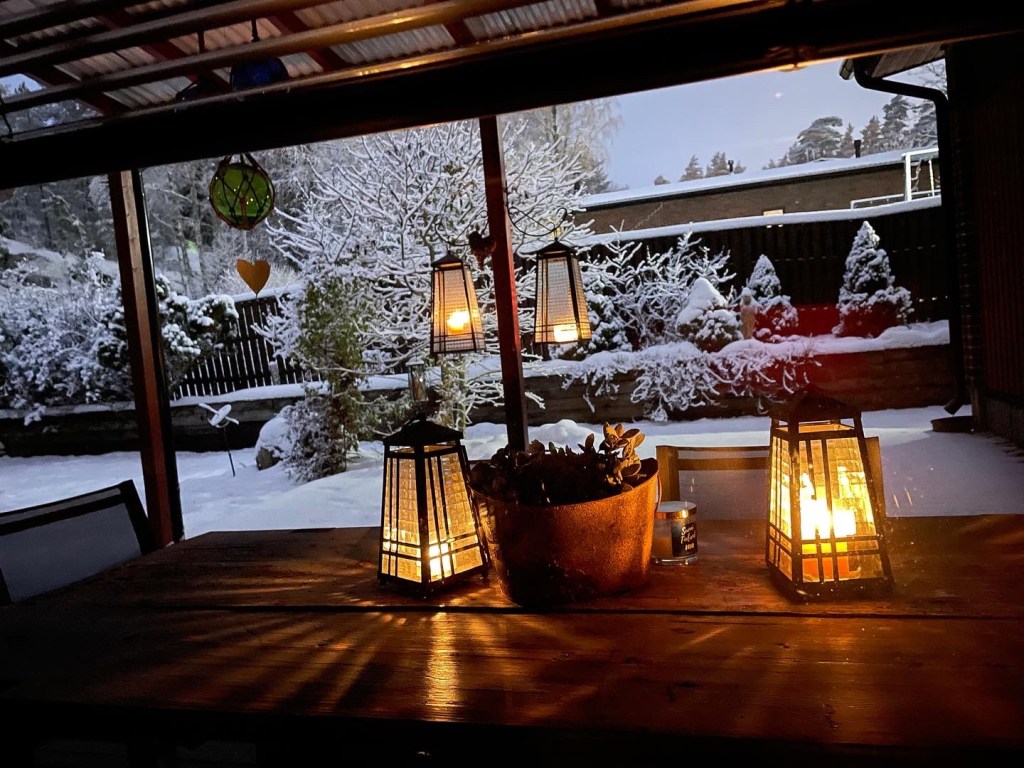
The header photo has patterns, diagonals, and keeping with the season candles, frost and snow….
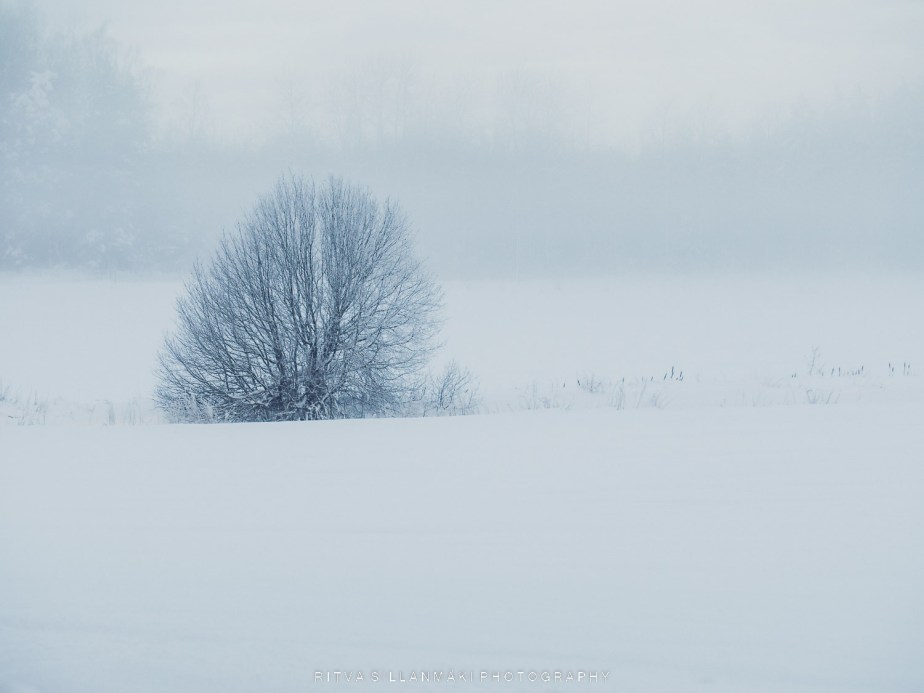
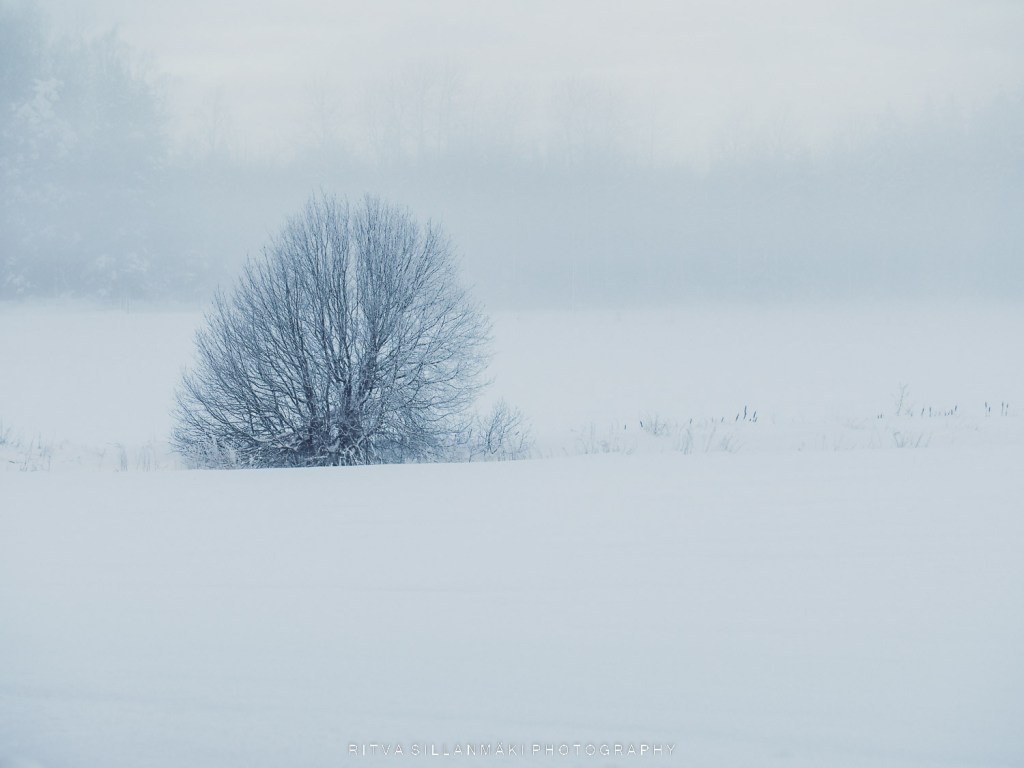
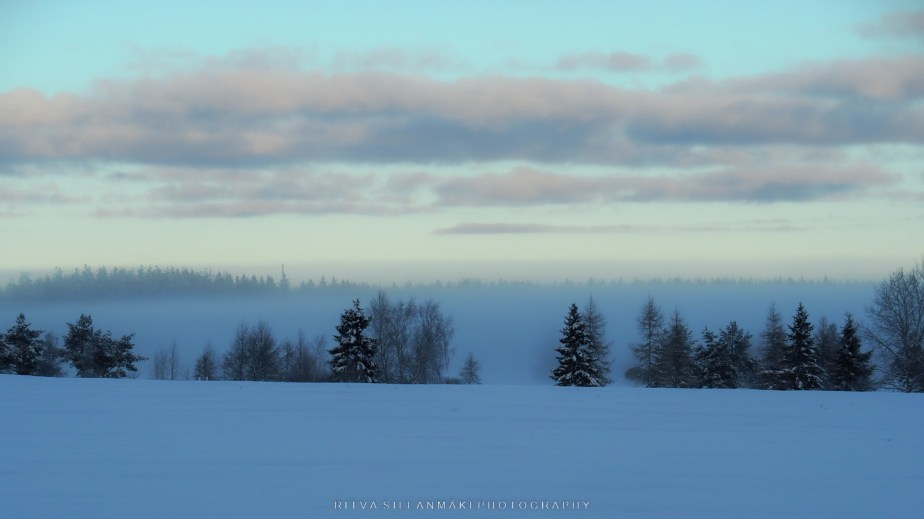
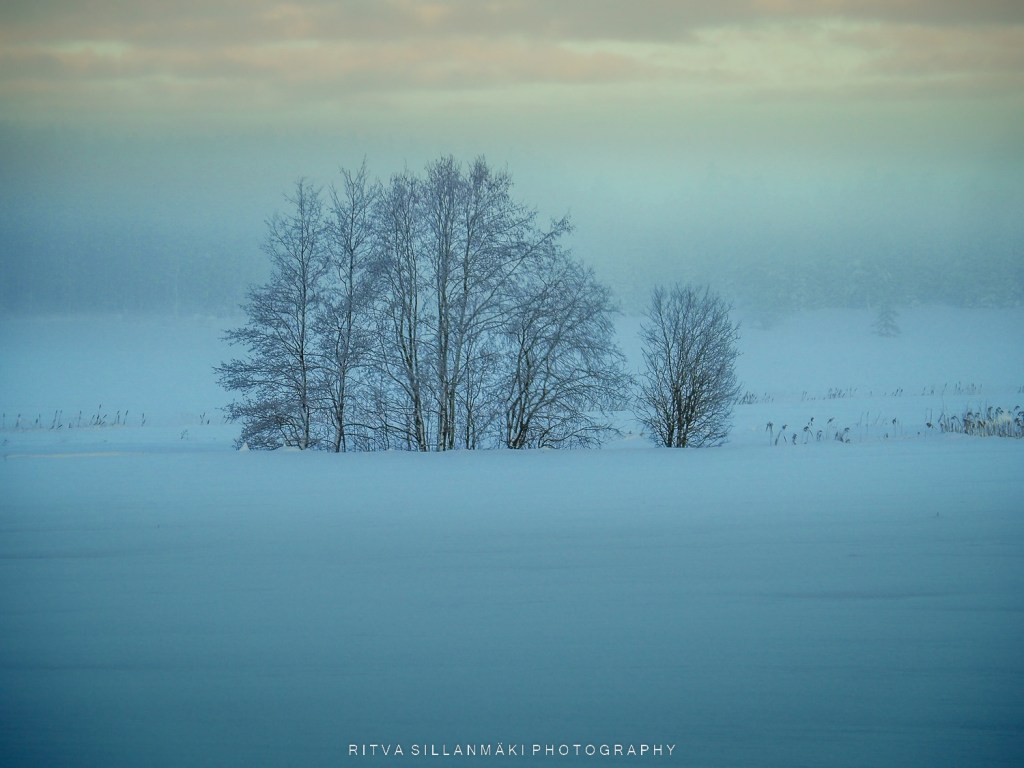
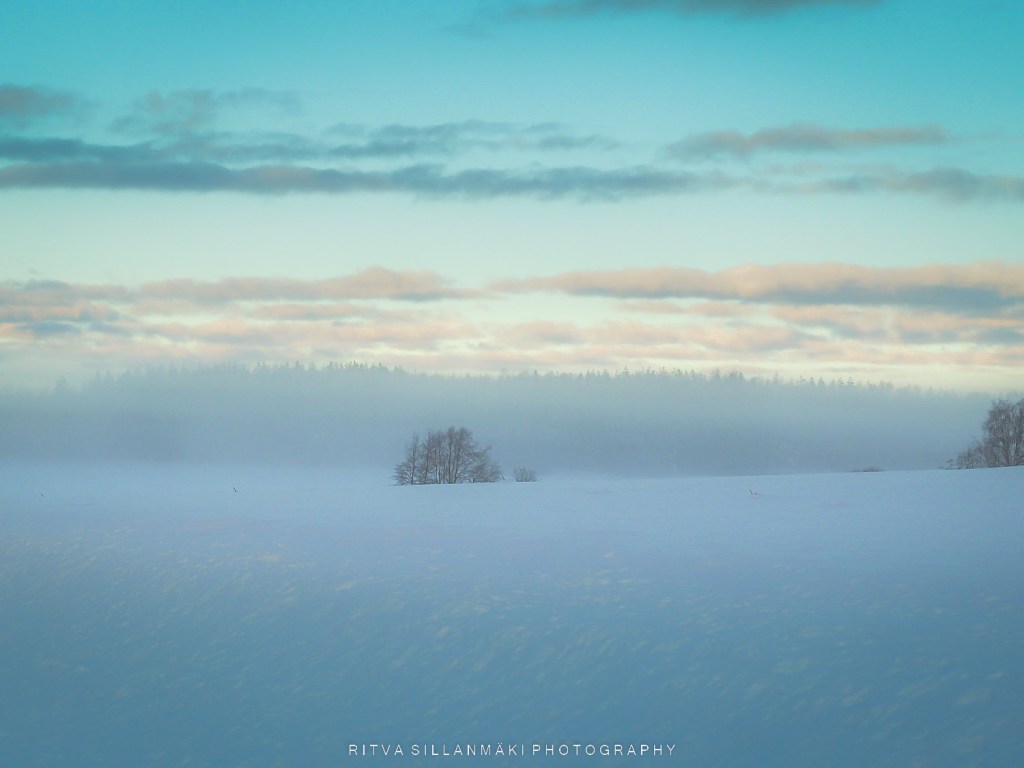
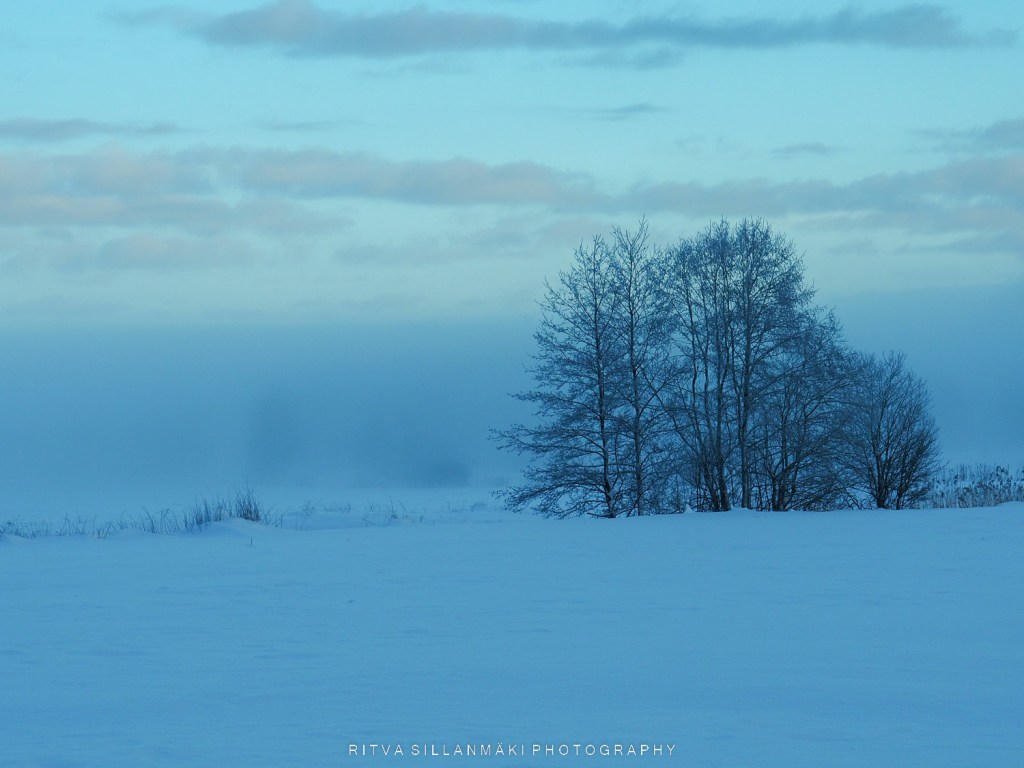
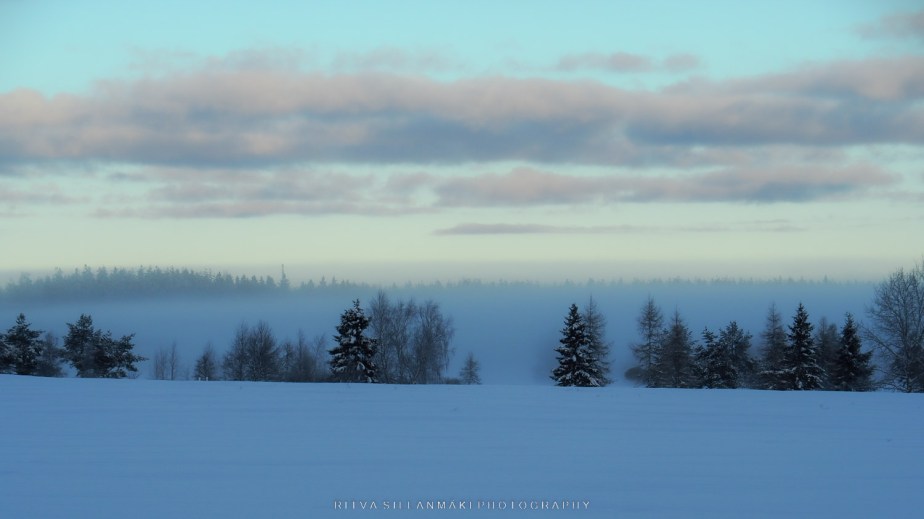
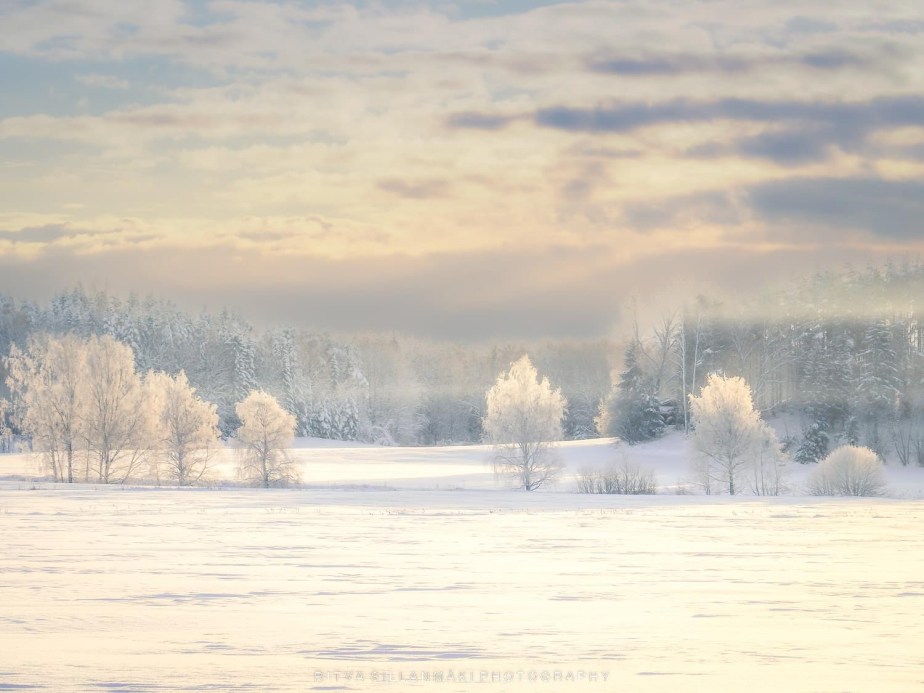
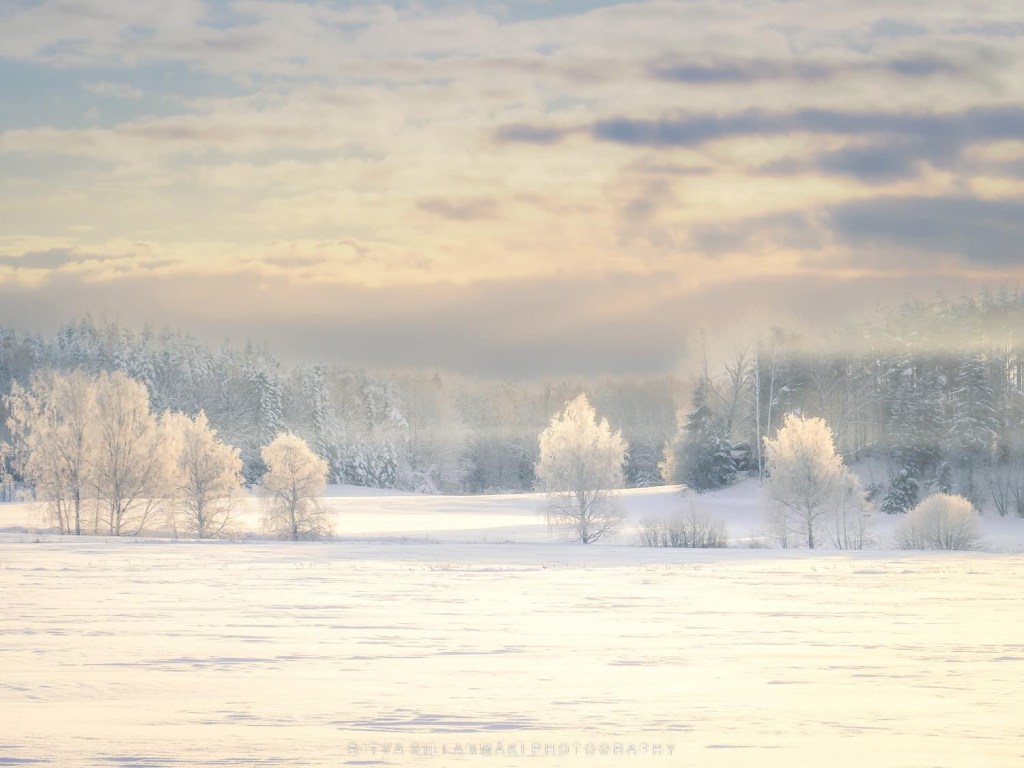
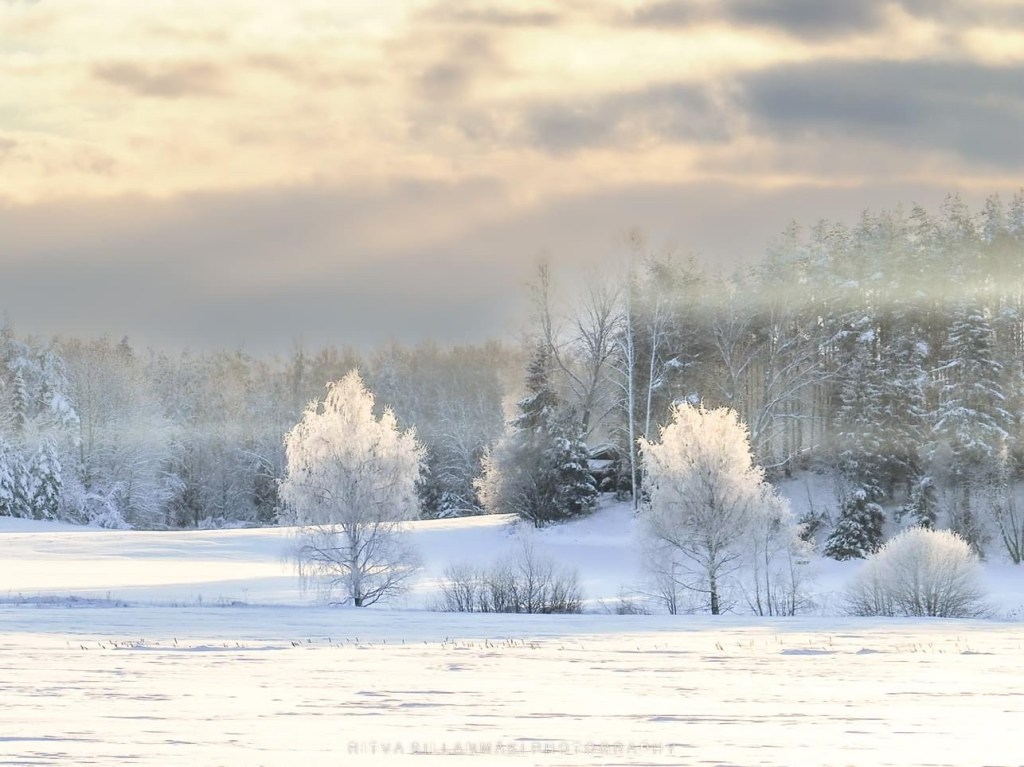
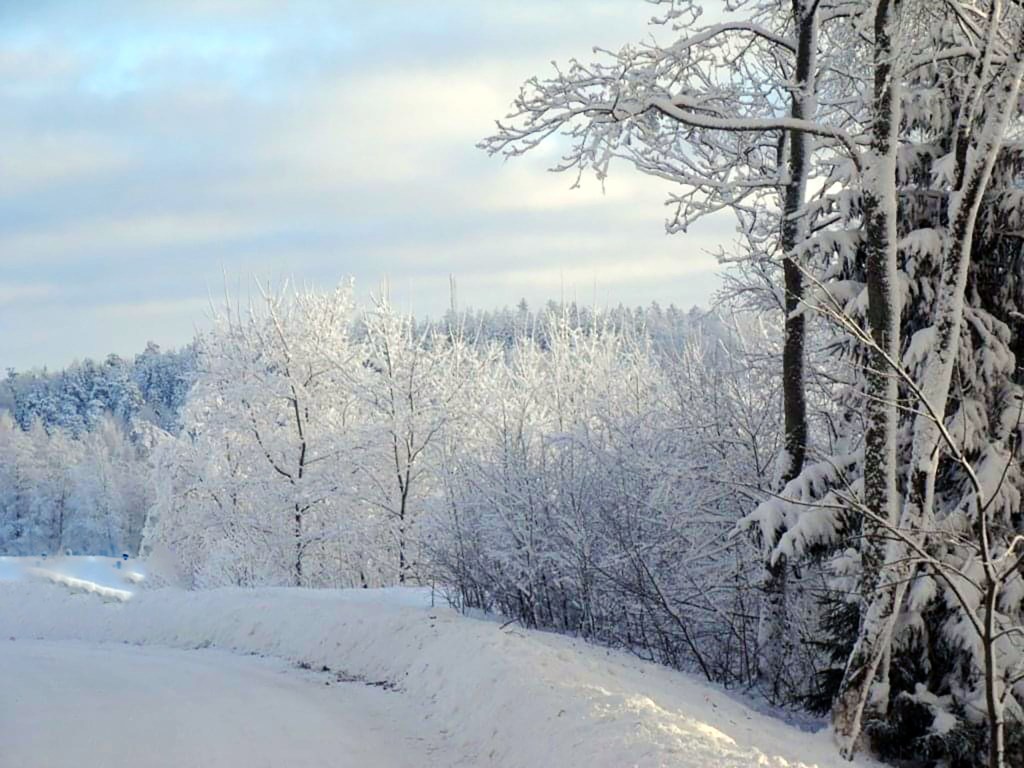
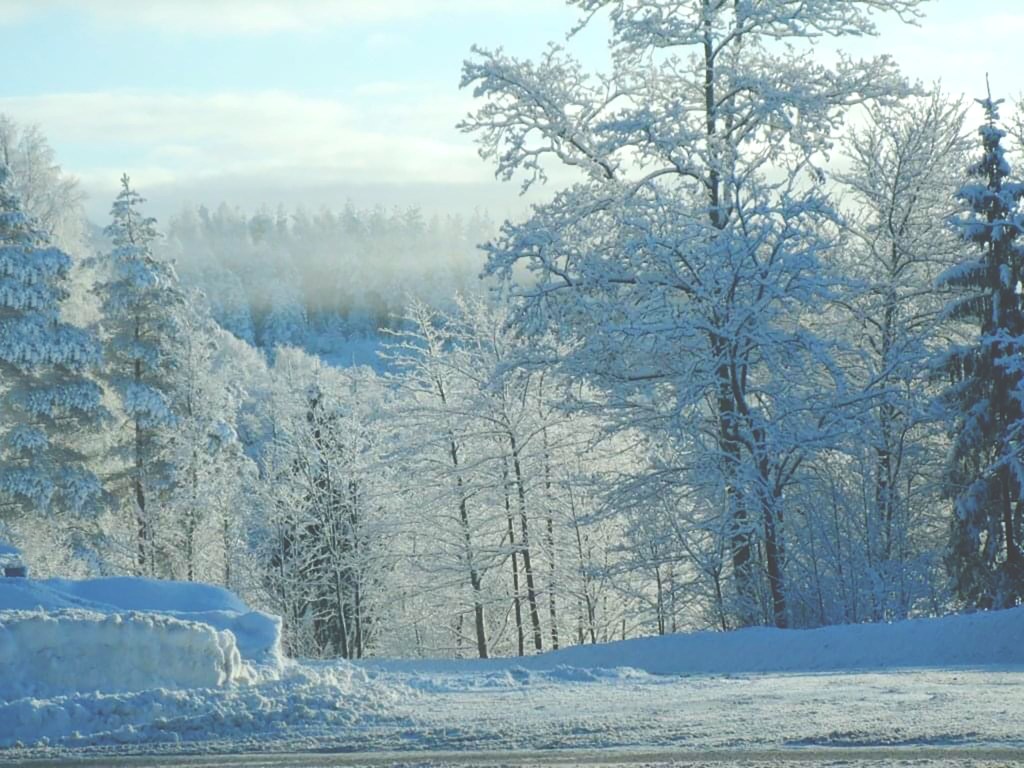
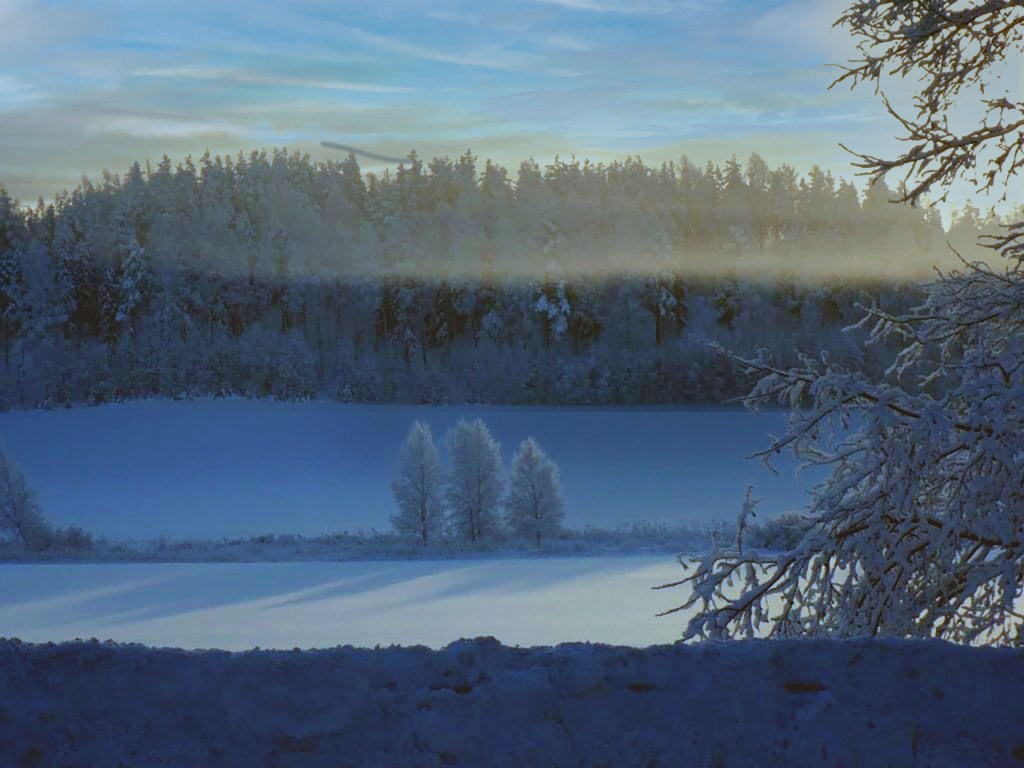
It looks lovely for sure, blueish skies and white snow, with a a subtle mist hovering over the landscape.That is it nothing elso to say about these photos.
Snow coverd birch trees by the road
A subtle mist hovers over the landscape on these two shots
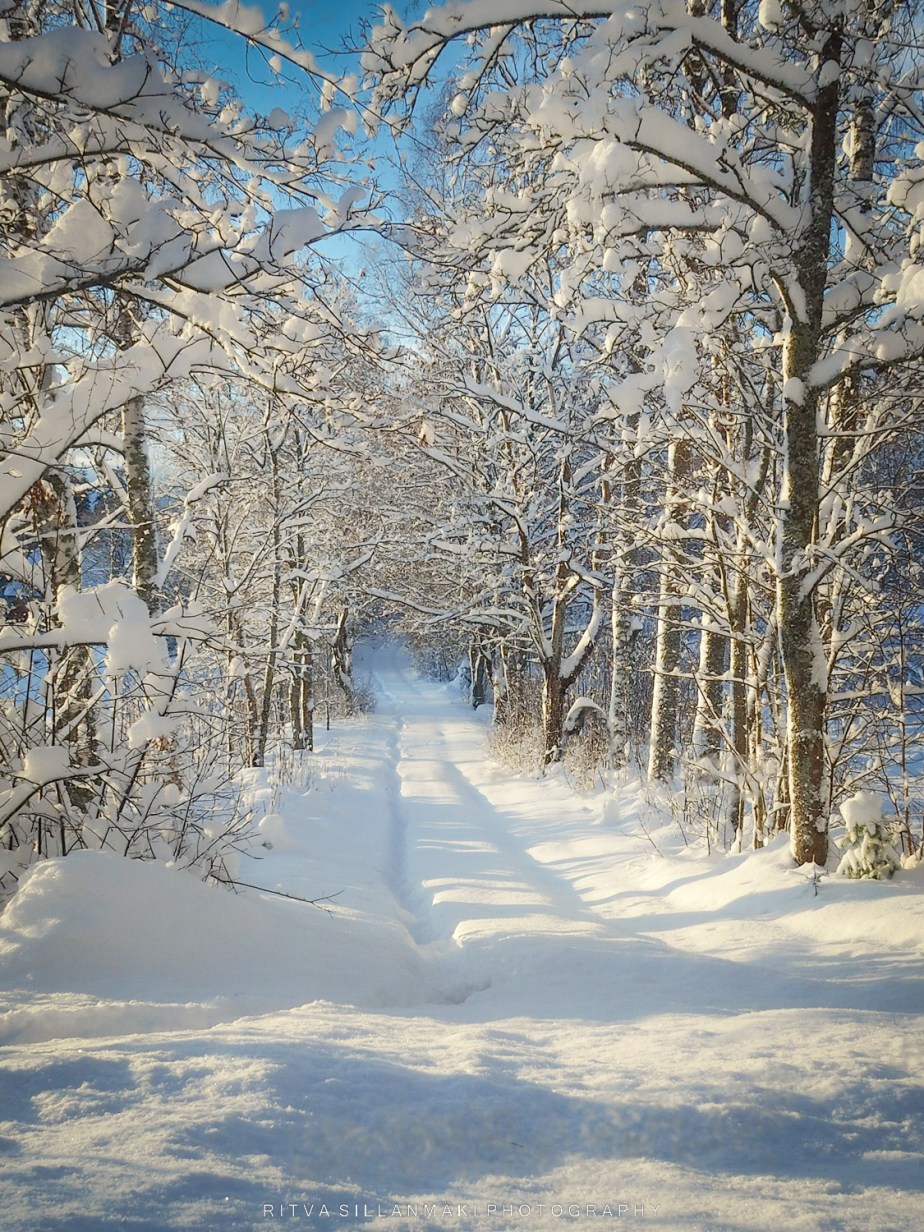
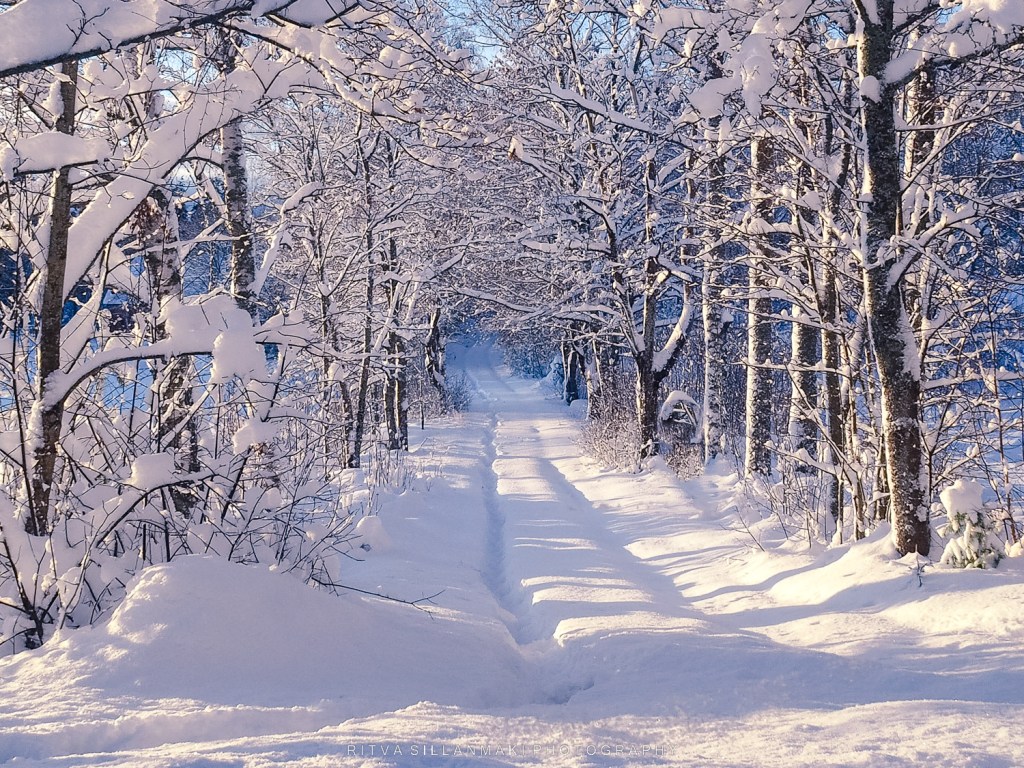
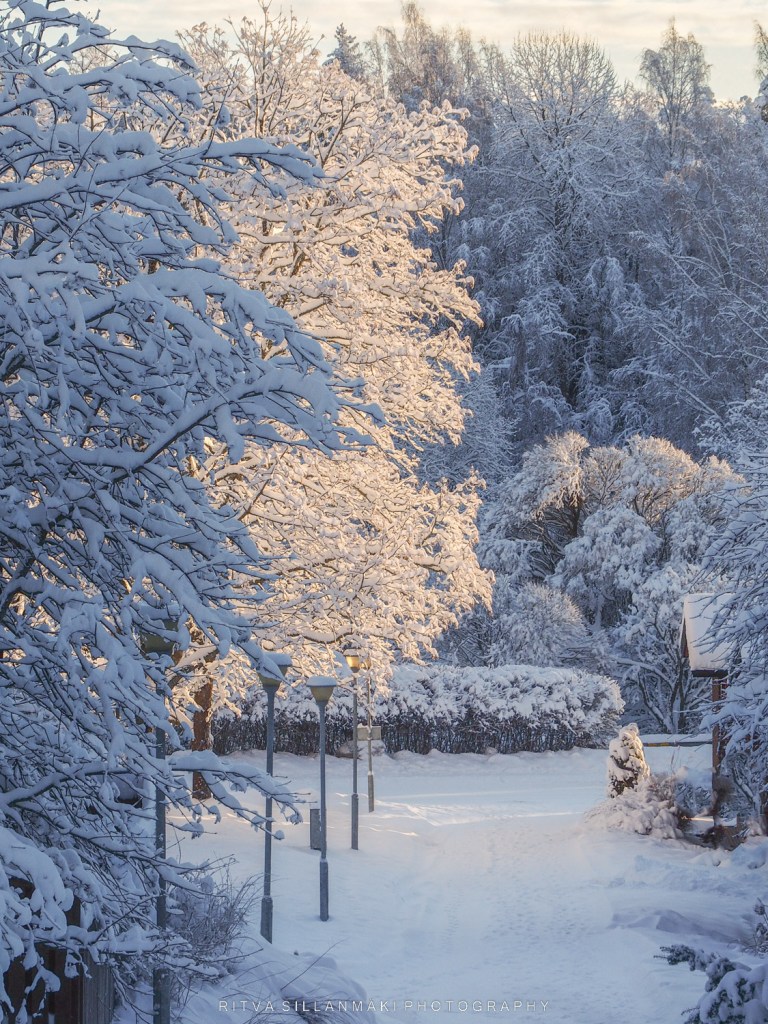
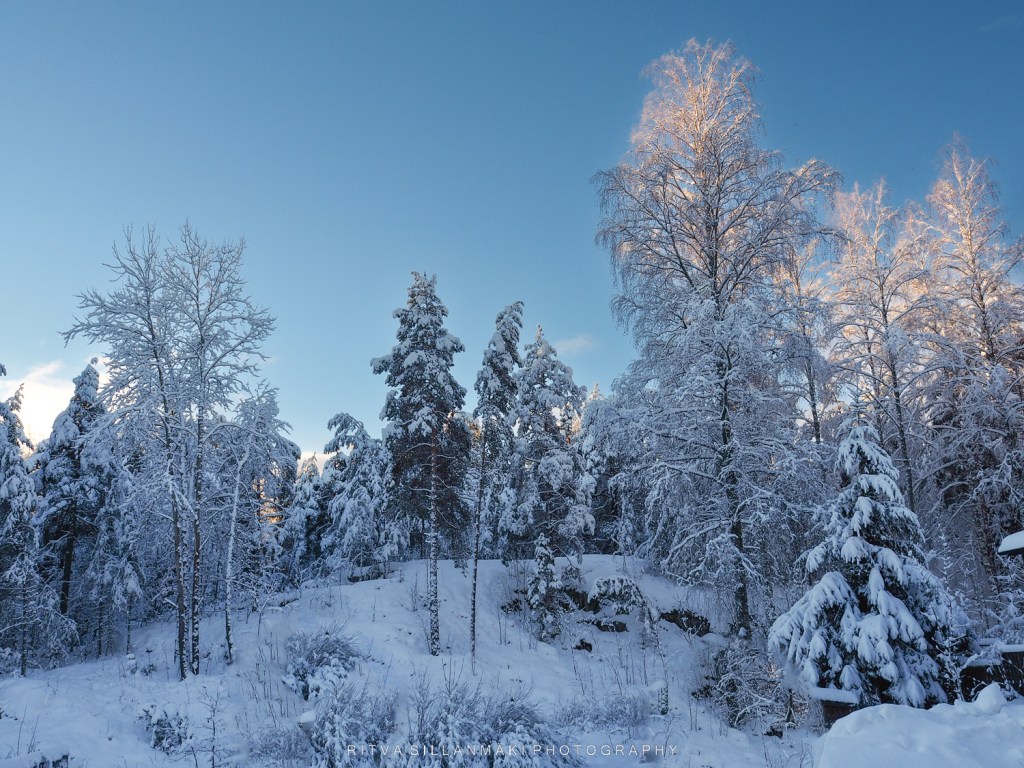
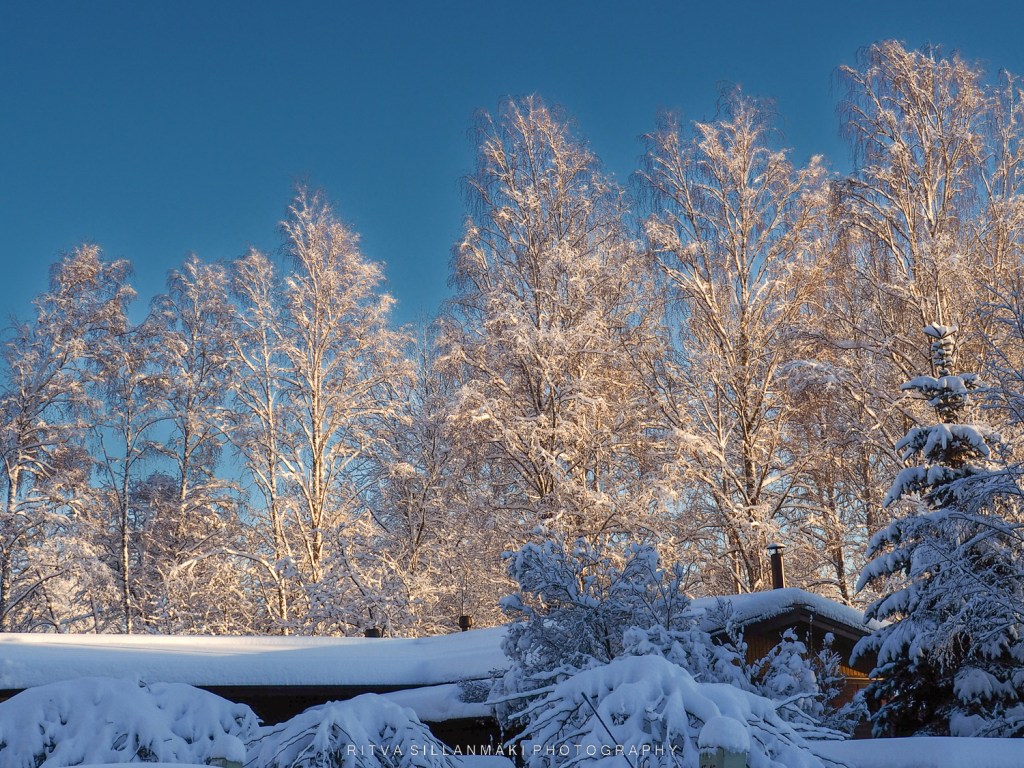
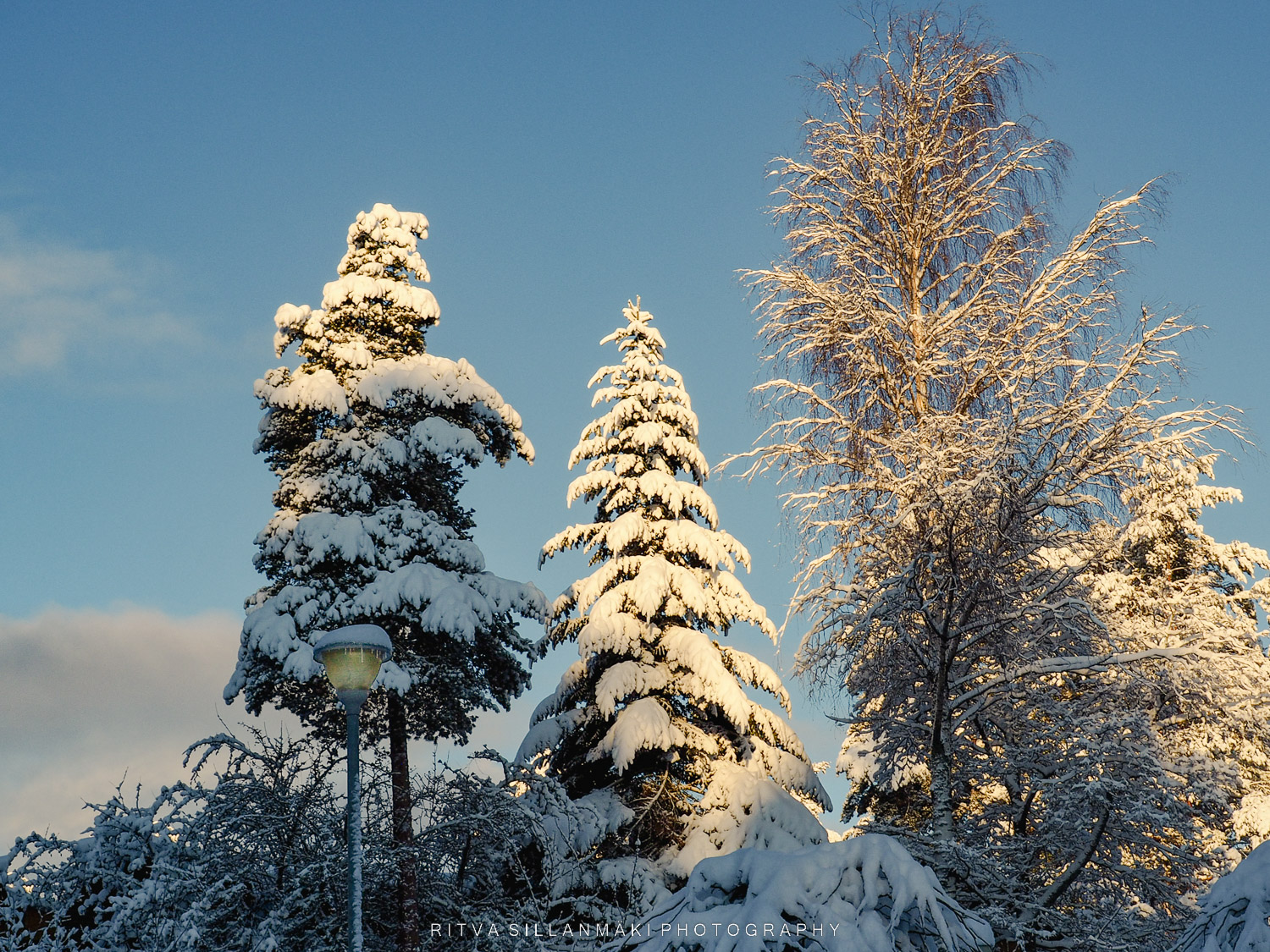
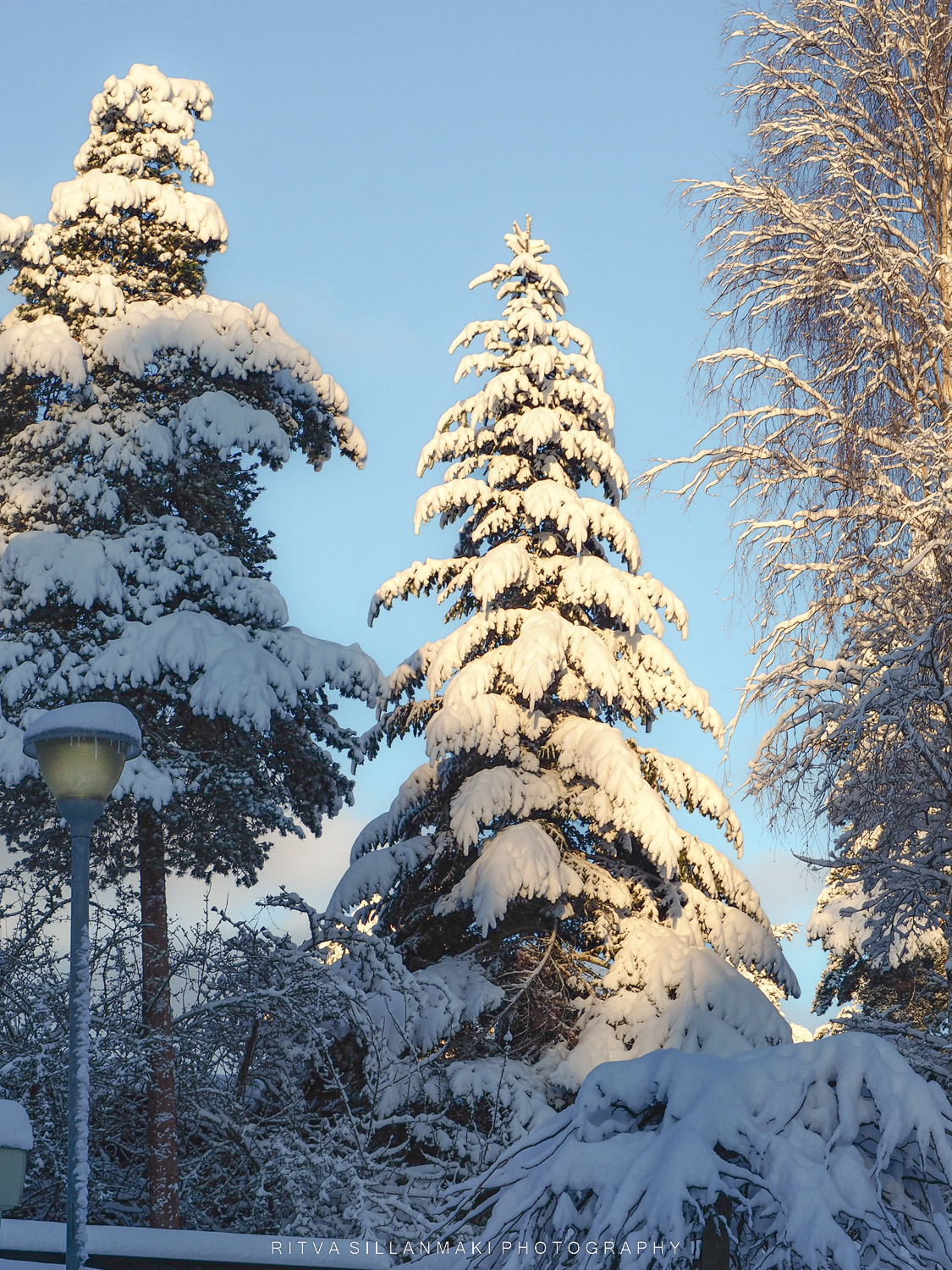
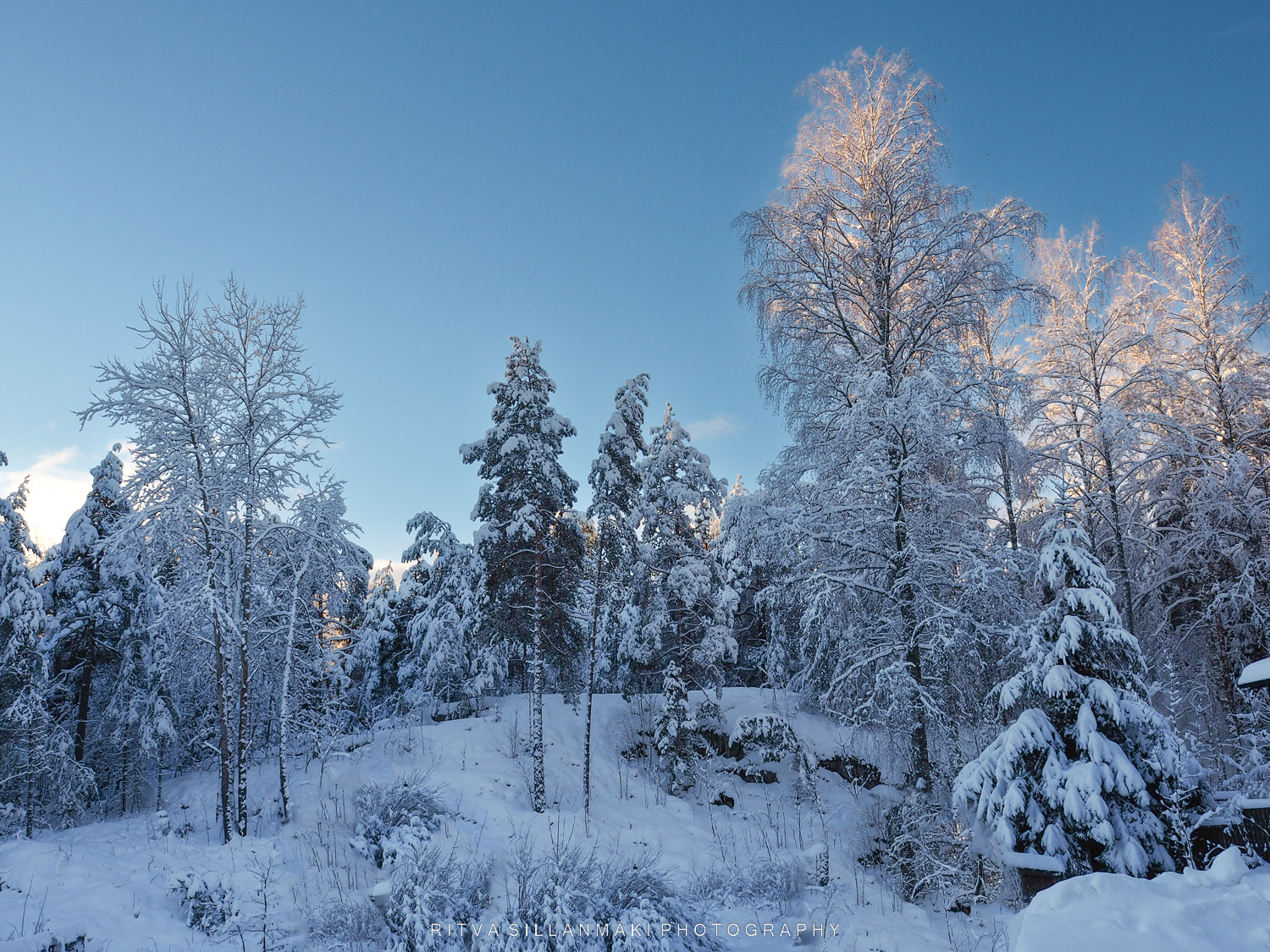
The joy of sunshine, the past weeks we have not been blessed with lots of sunlight, but today, of the glorious weather with snow coved trees, blue sky.
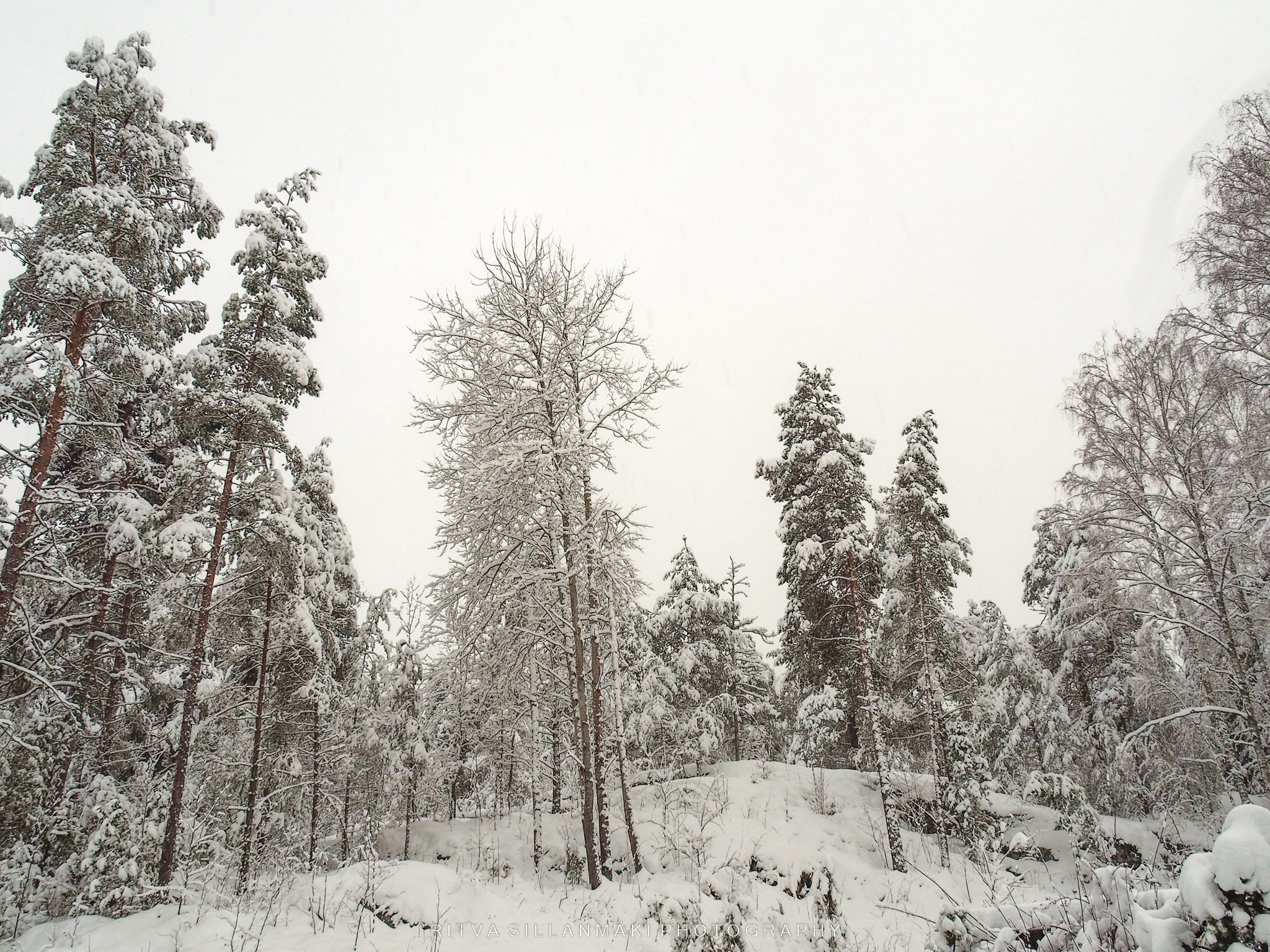
I stepped out and took shots to all four directions from or house, and it looked lovely everywhere,white powder snow, blue sky and even the temperature was not that bad -7C ( 23 F ) I am going to post a shot also when its not shining and it looks OK, but there is a difference. On this happy note I wish everyone reading this post a lovely weekend!
10 AM looking east towards the road
at 10 AM View to our south facing backyard 10 AM looking North, this is the view from my office
10AM facing west looking at the spruce and birch trees on a upward hill
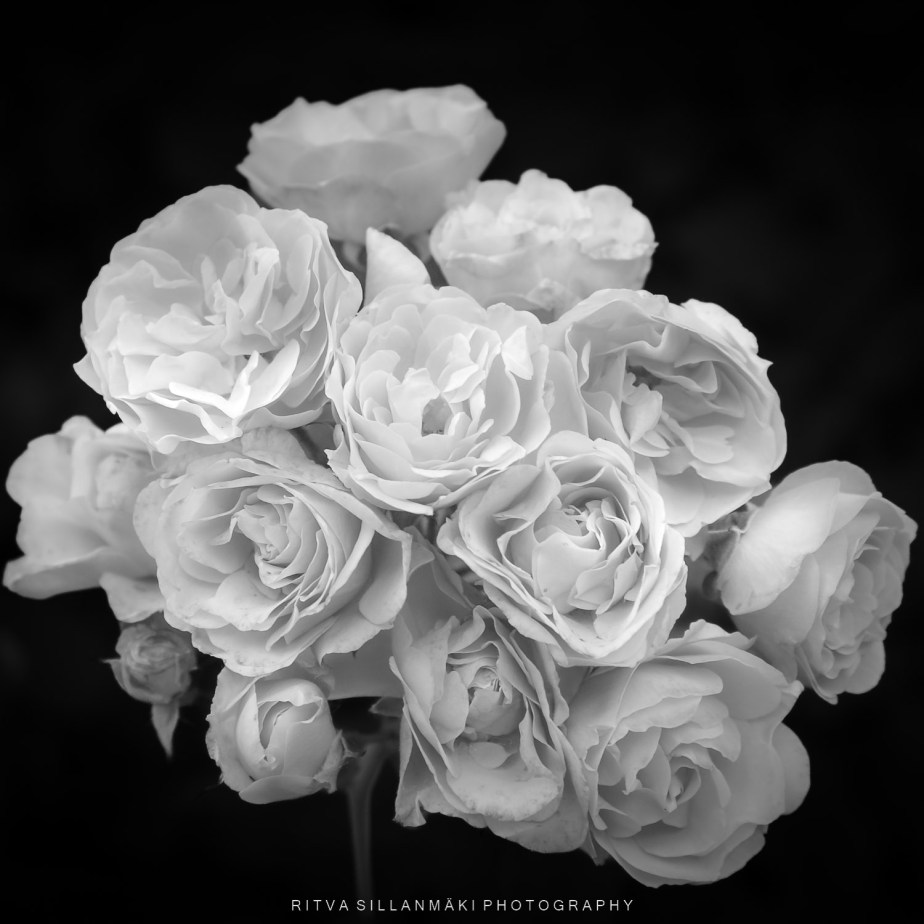
I have a soft spot for black and white photography, I was once again reminded about the importance of exposure, light. It is the key element in these photos.
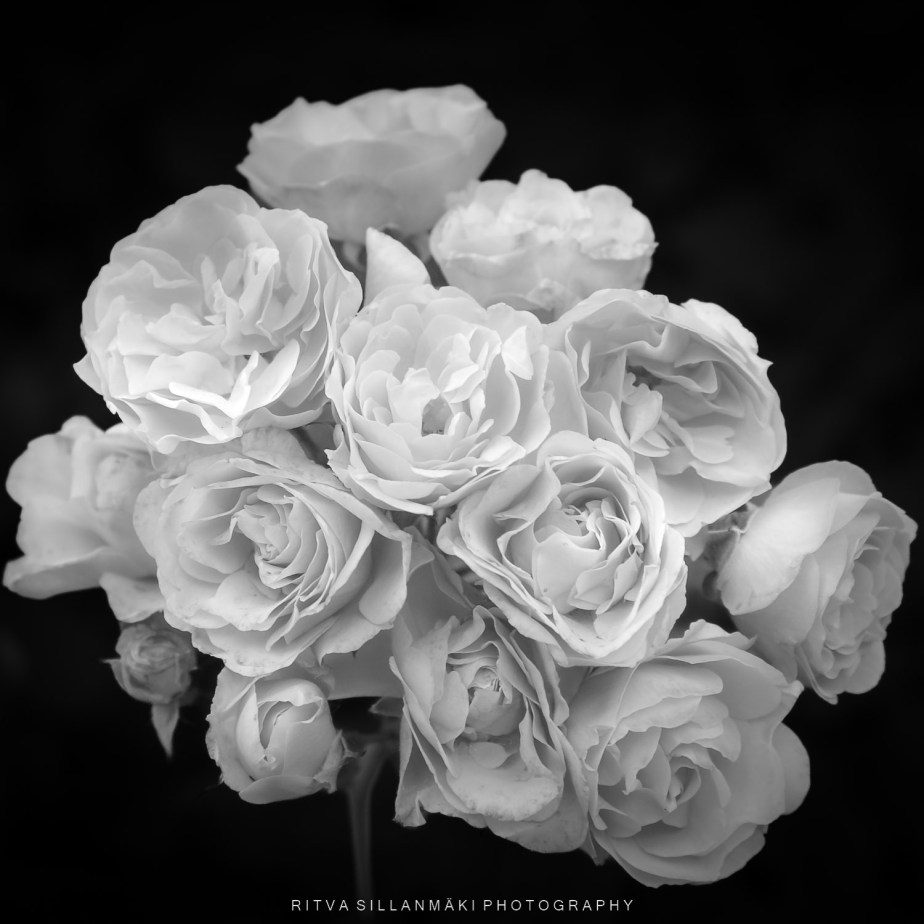
Roses, they look lovely in black and white
SONY DSC
Roses
The way that light hits objects, I think, is one of the more important things that sculpture and photography share. – Rashid Johnson
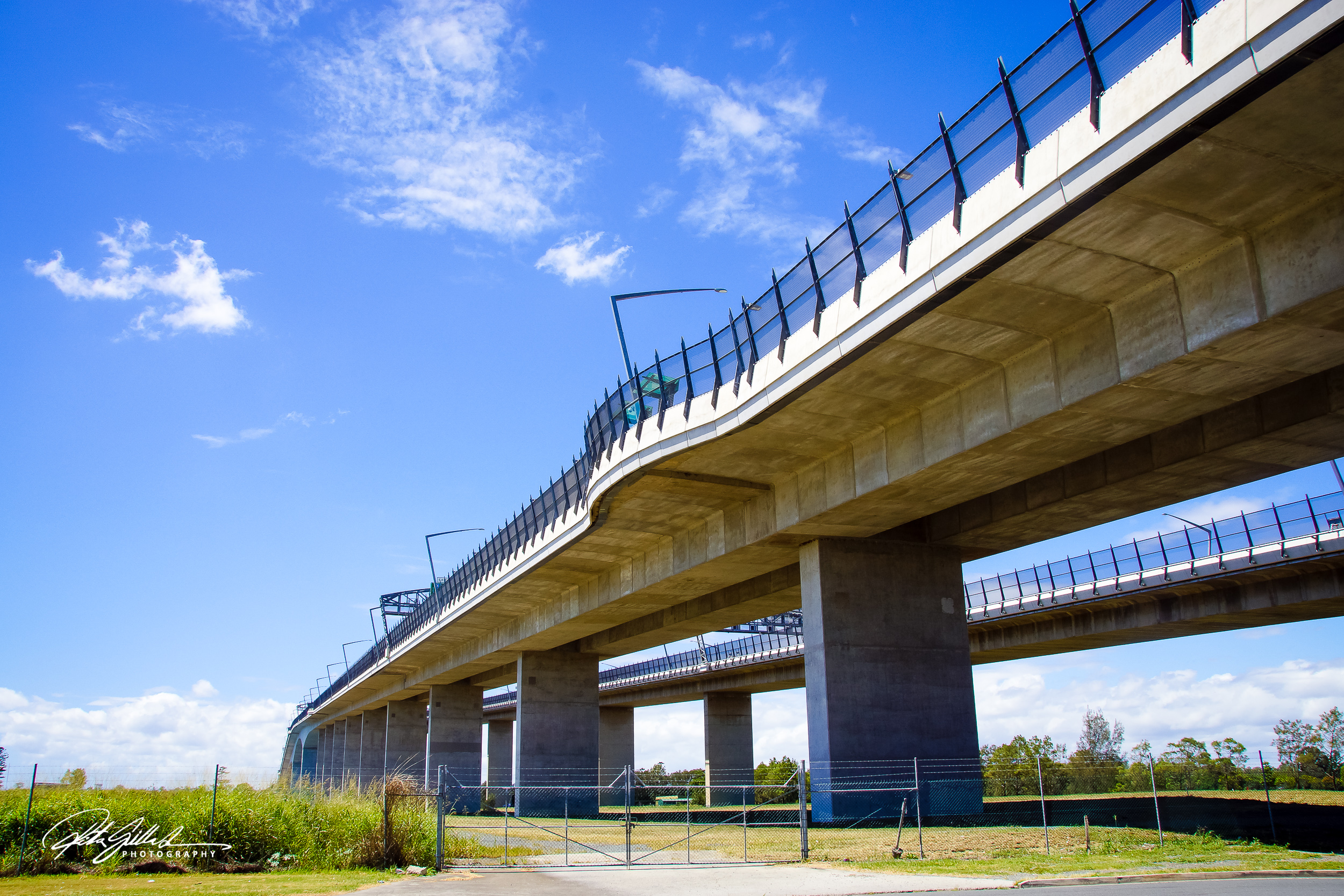
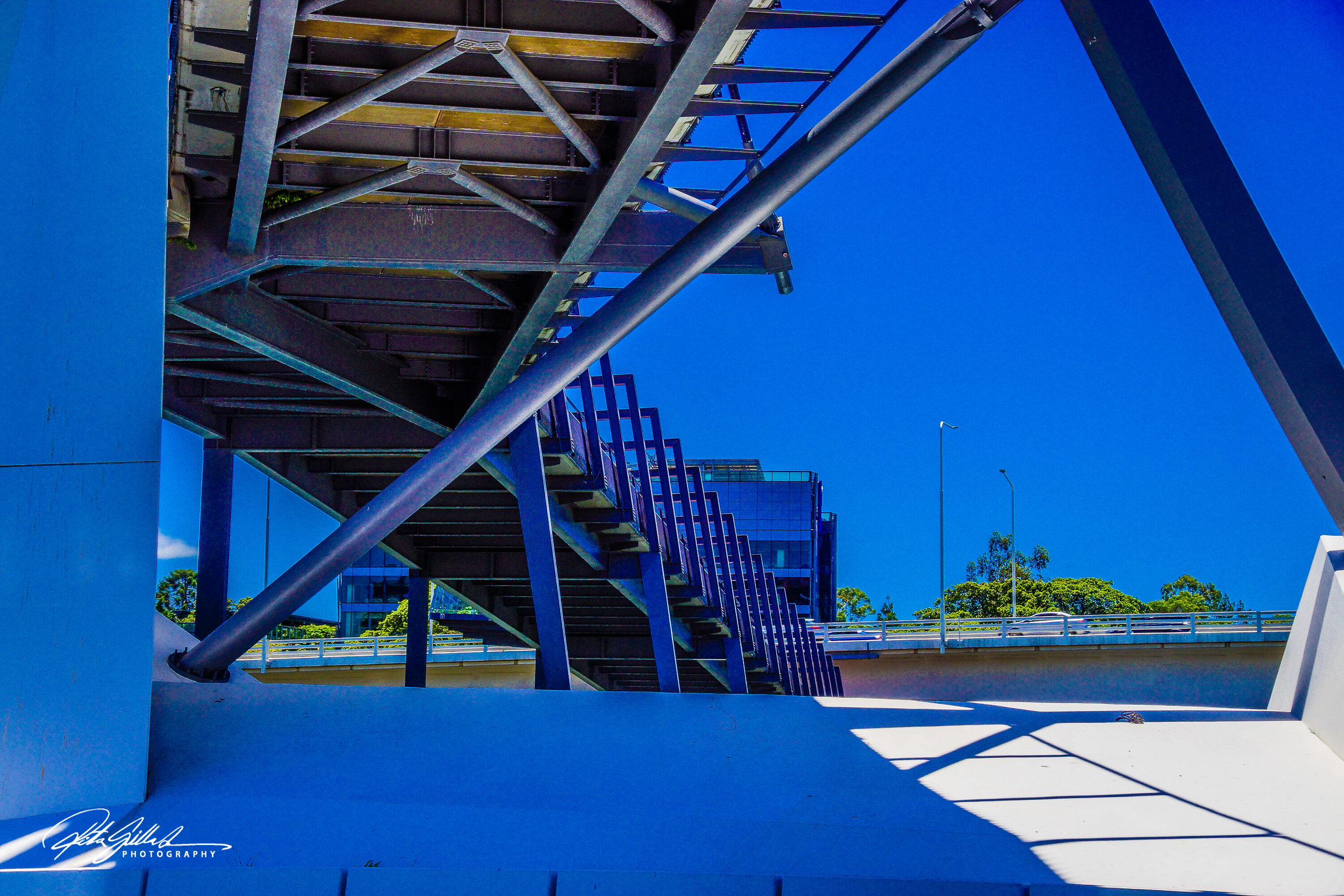
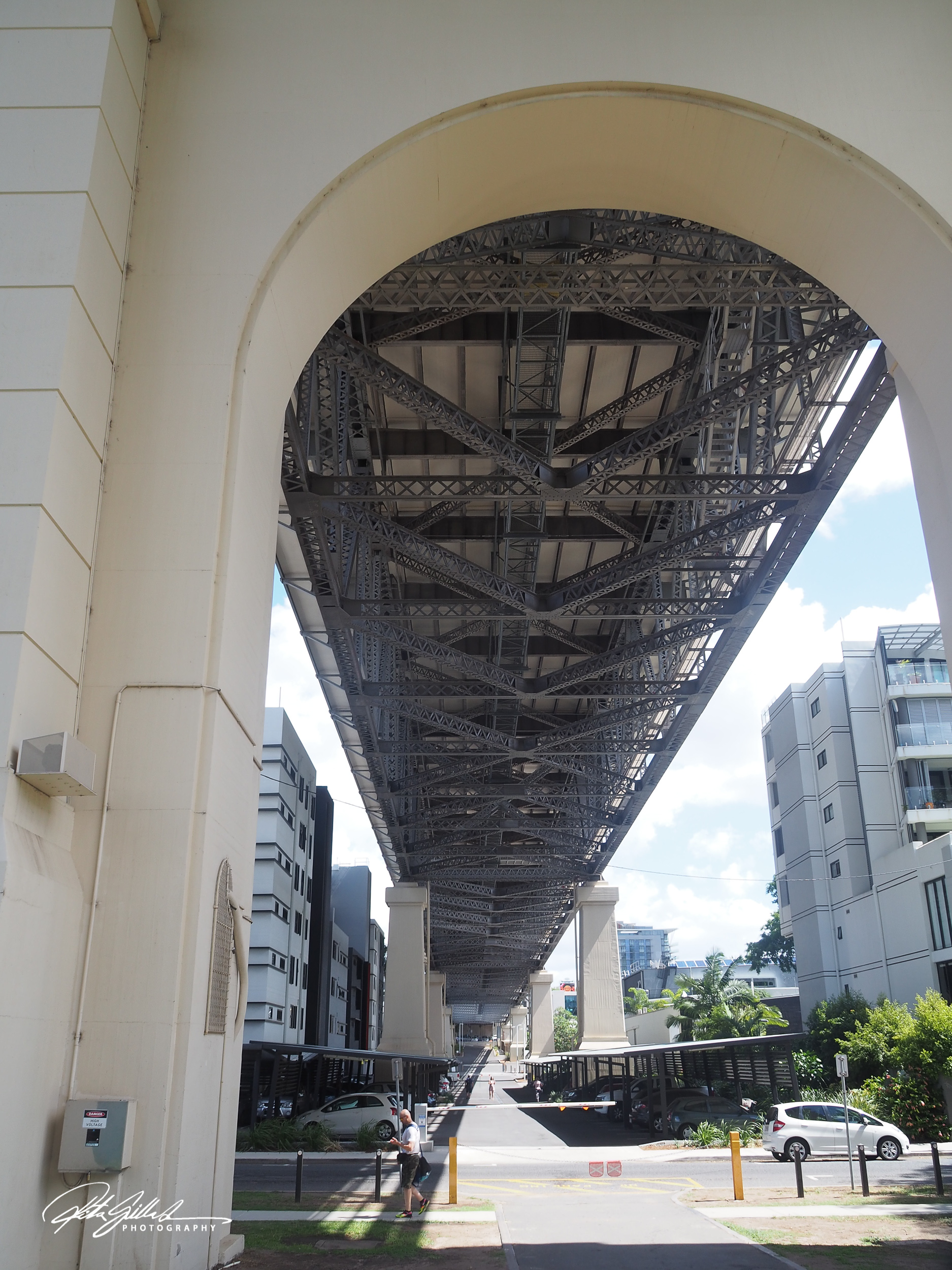
We were invited to join this week to explore diagonals as a way to add visual interest and depth to our photos, as well as a sense of action. What diagonals can you find was asked?
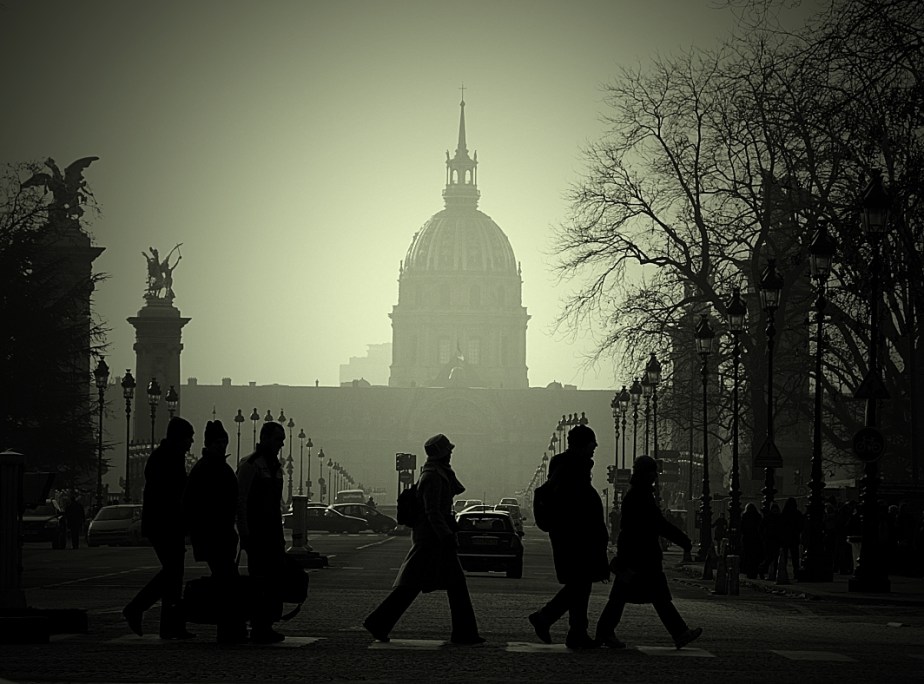
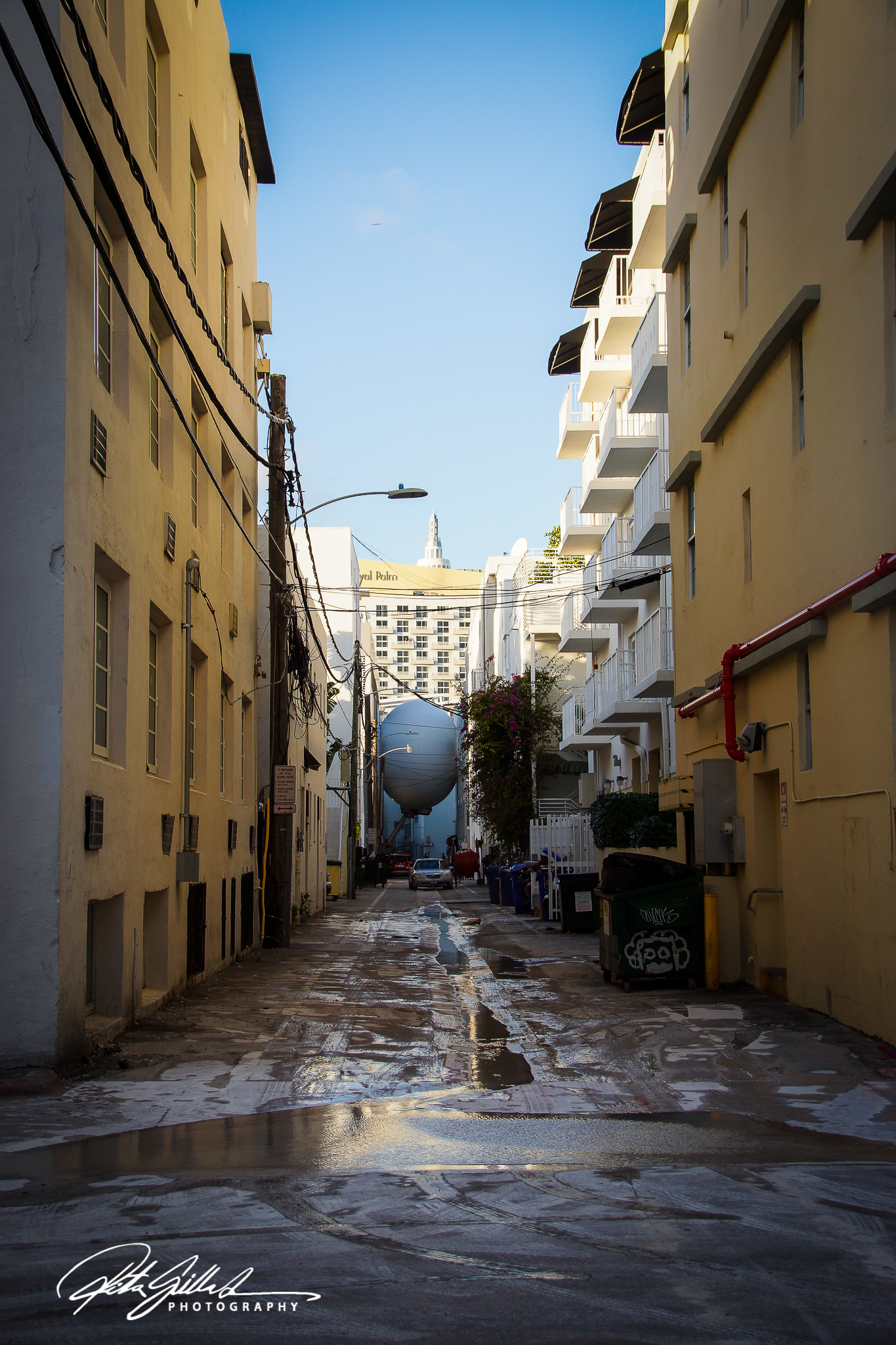
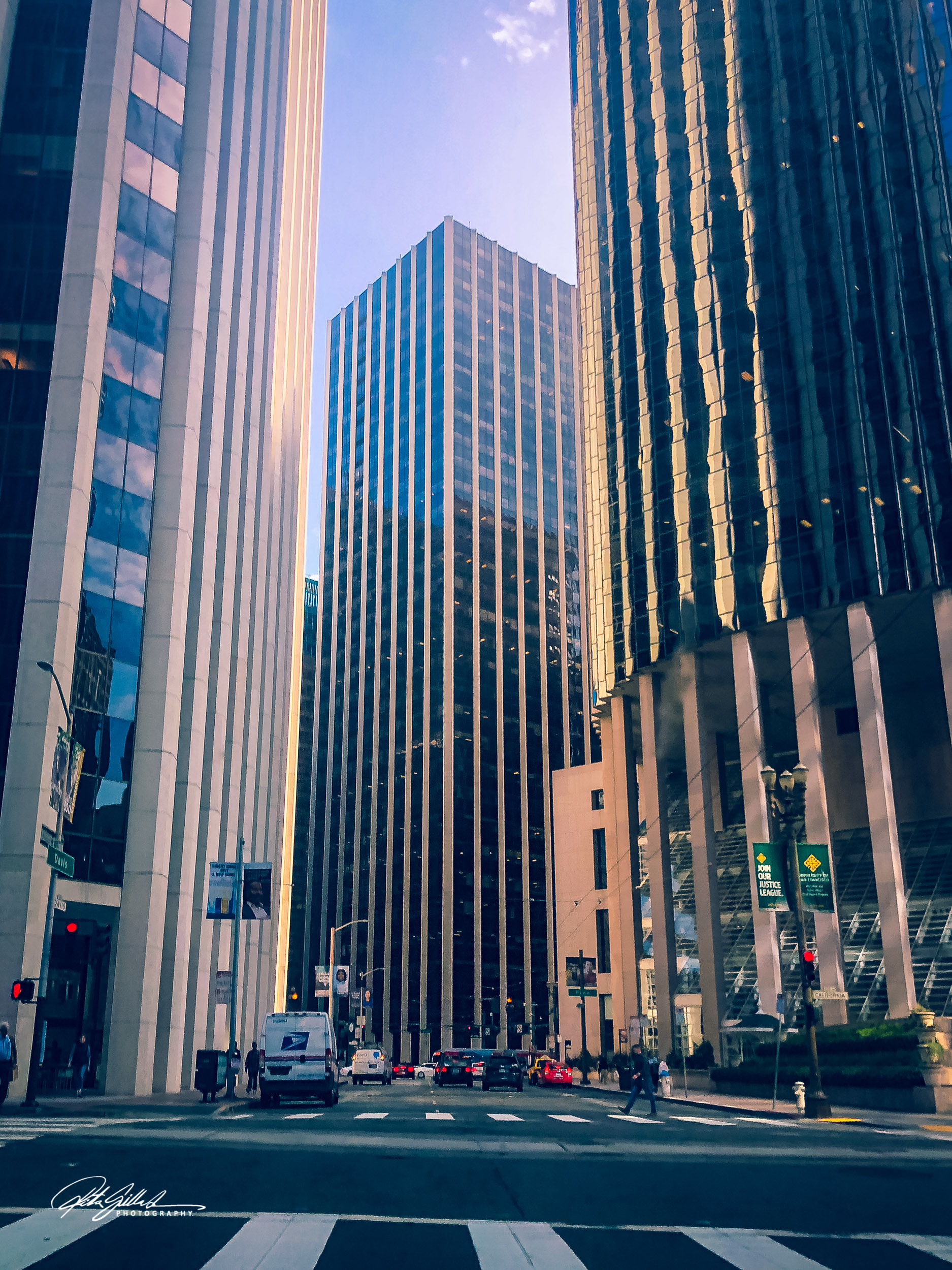
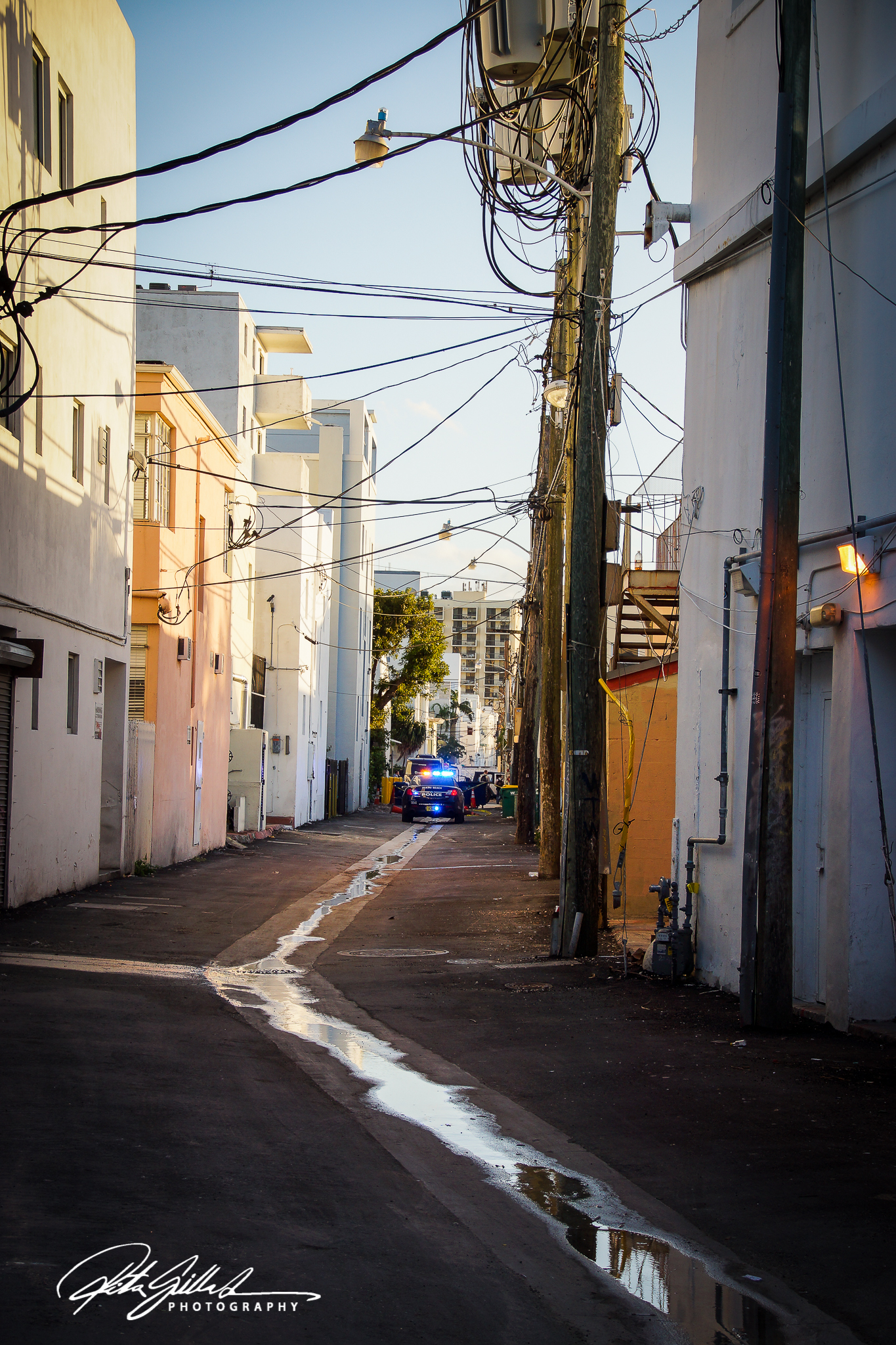
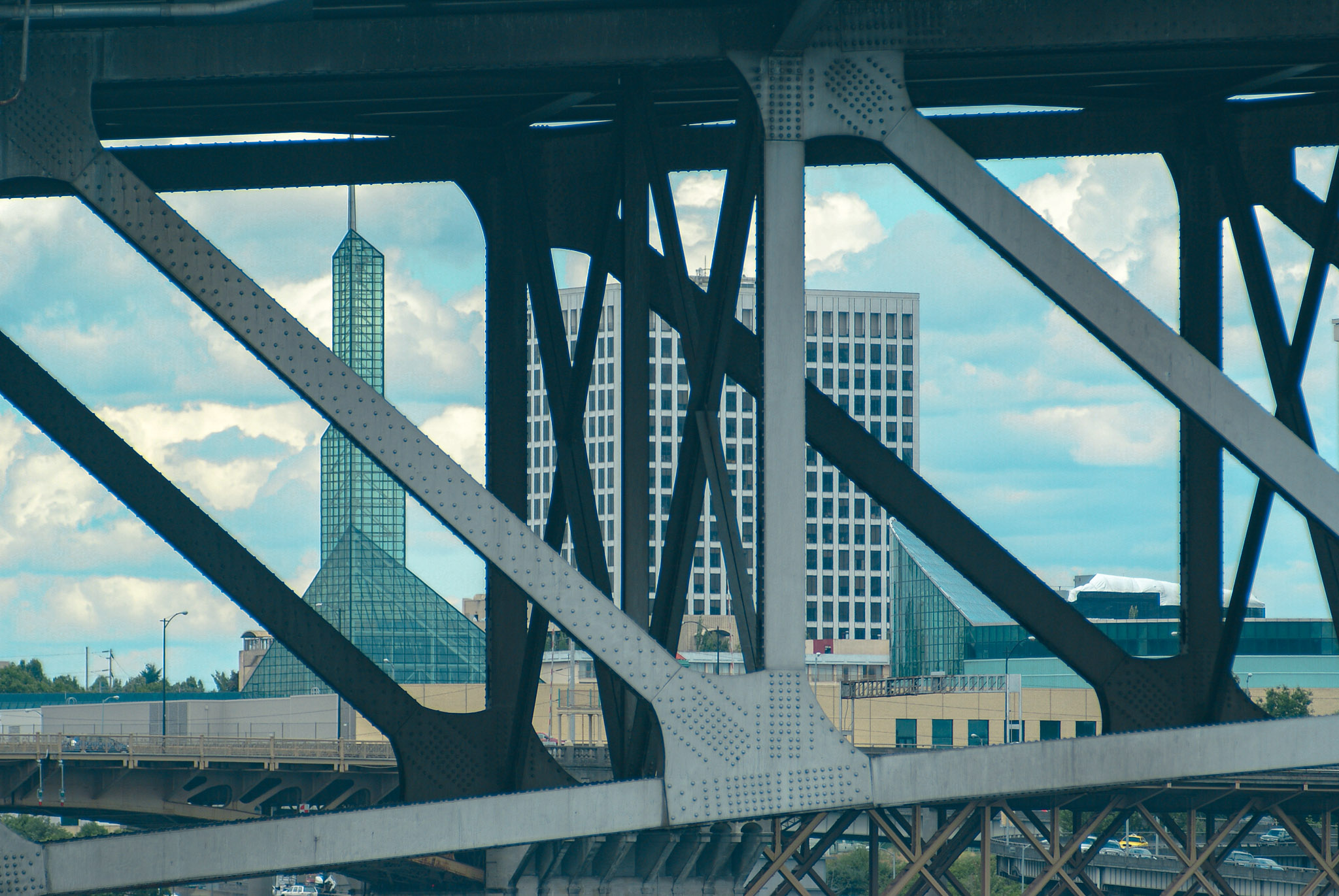
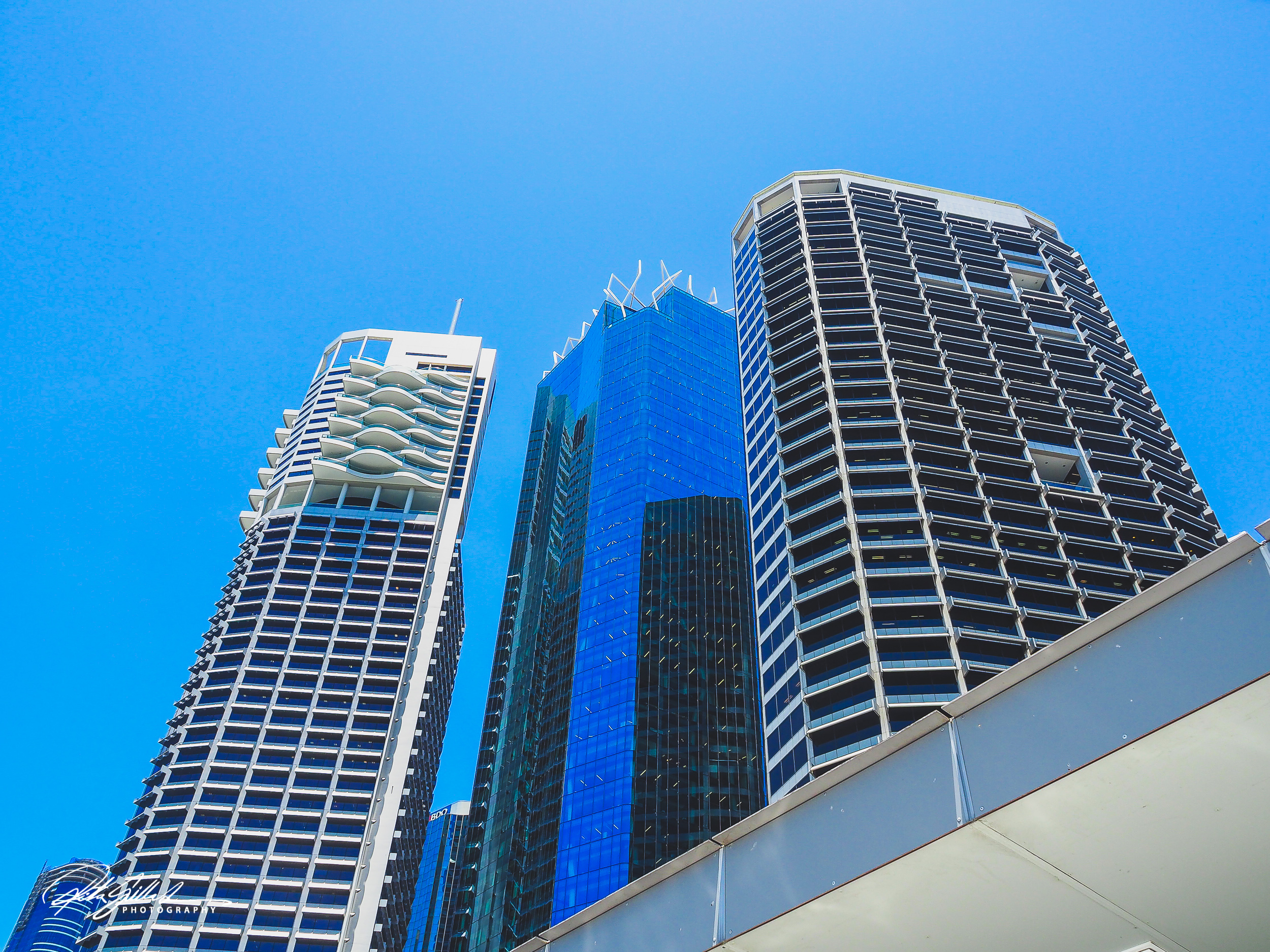
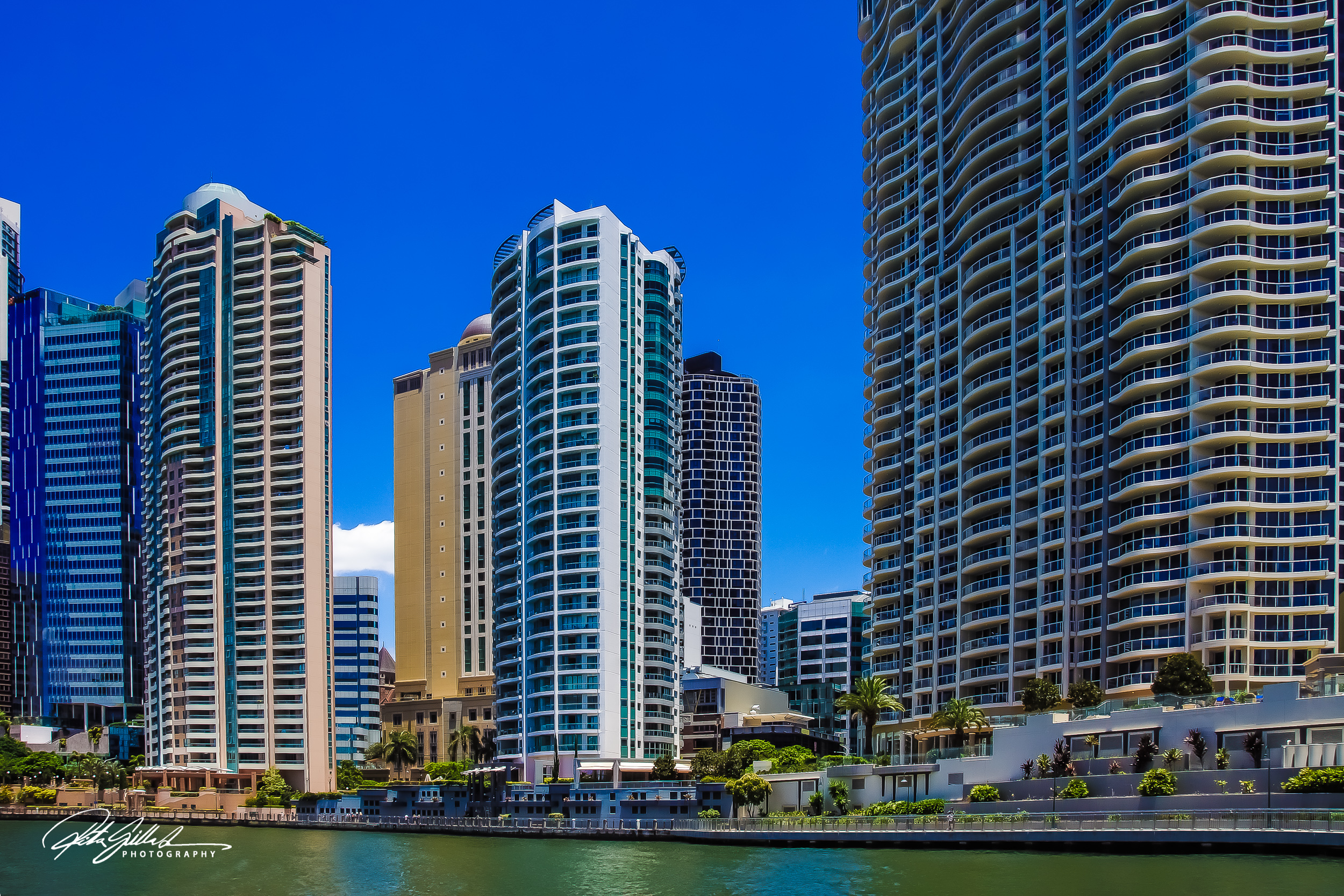
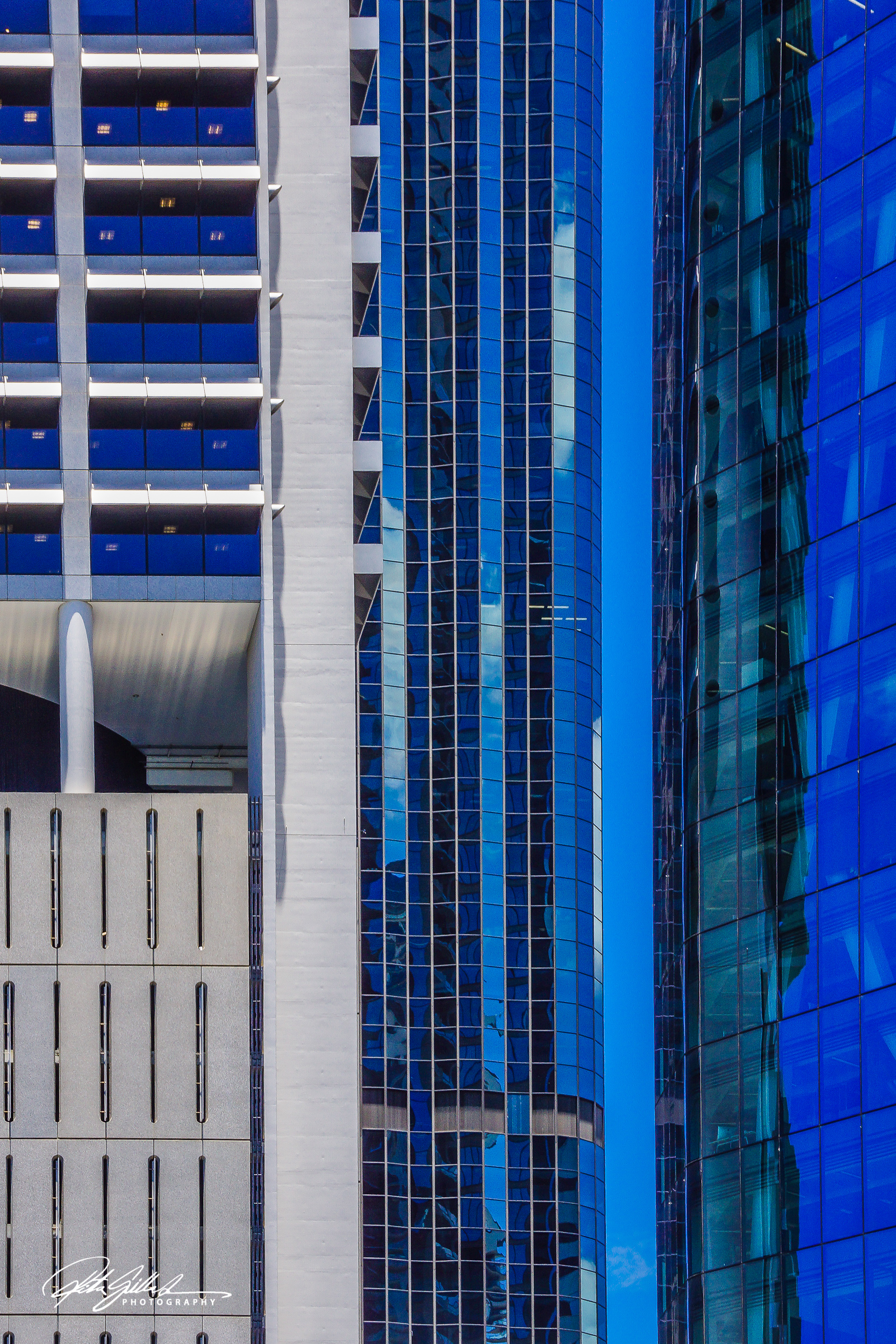
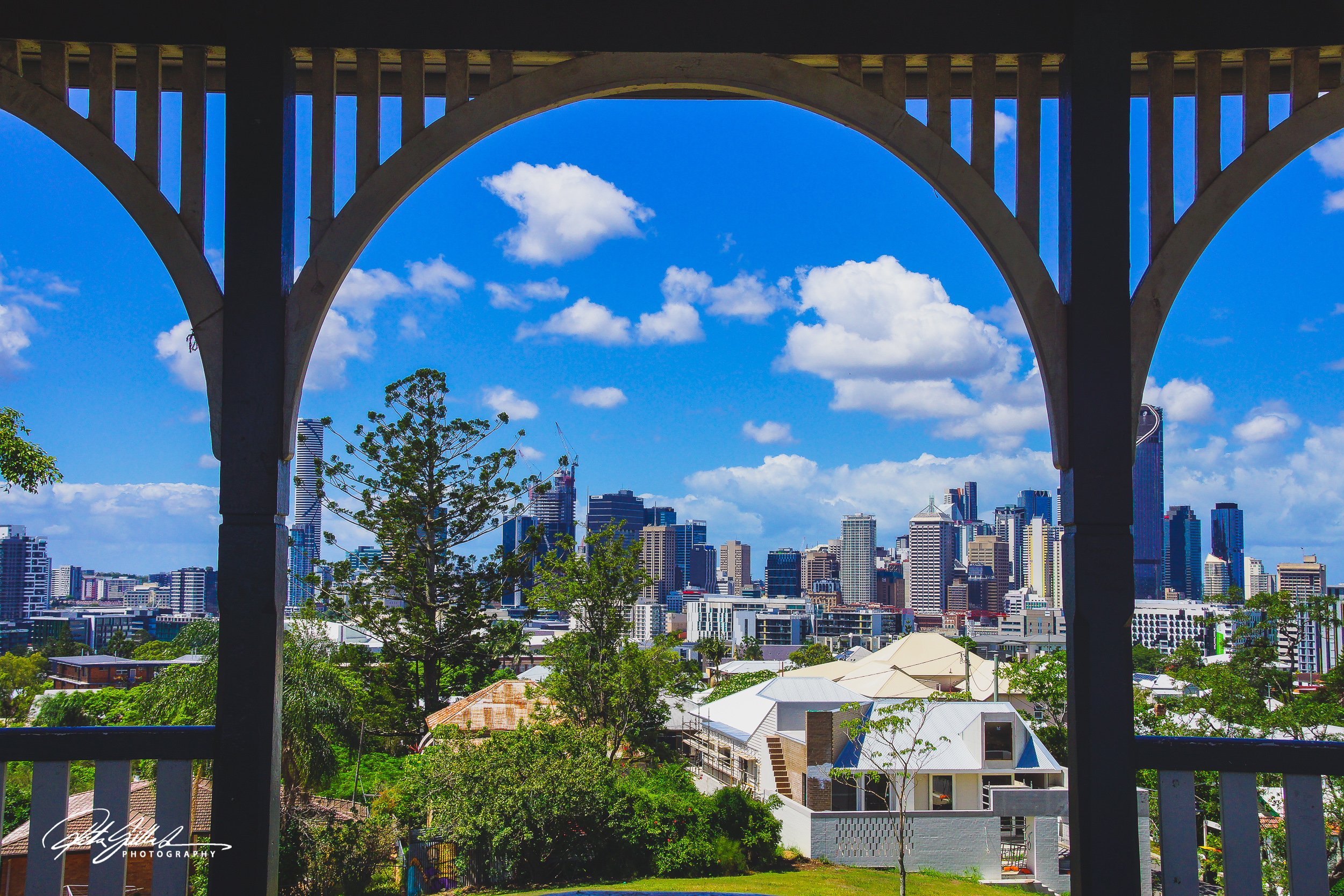
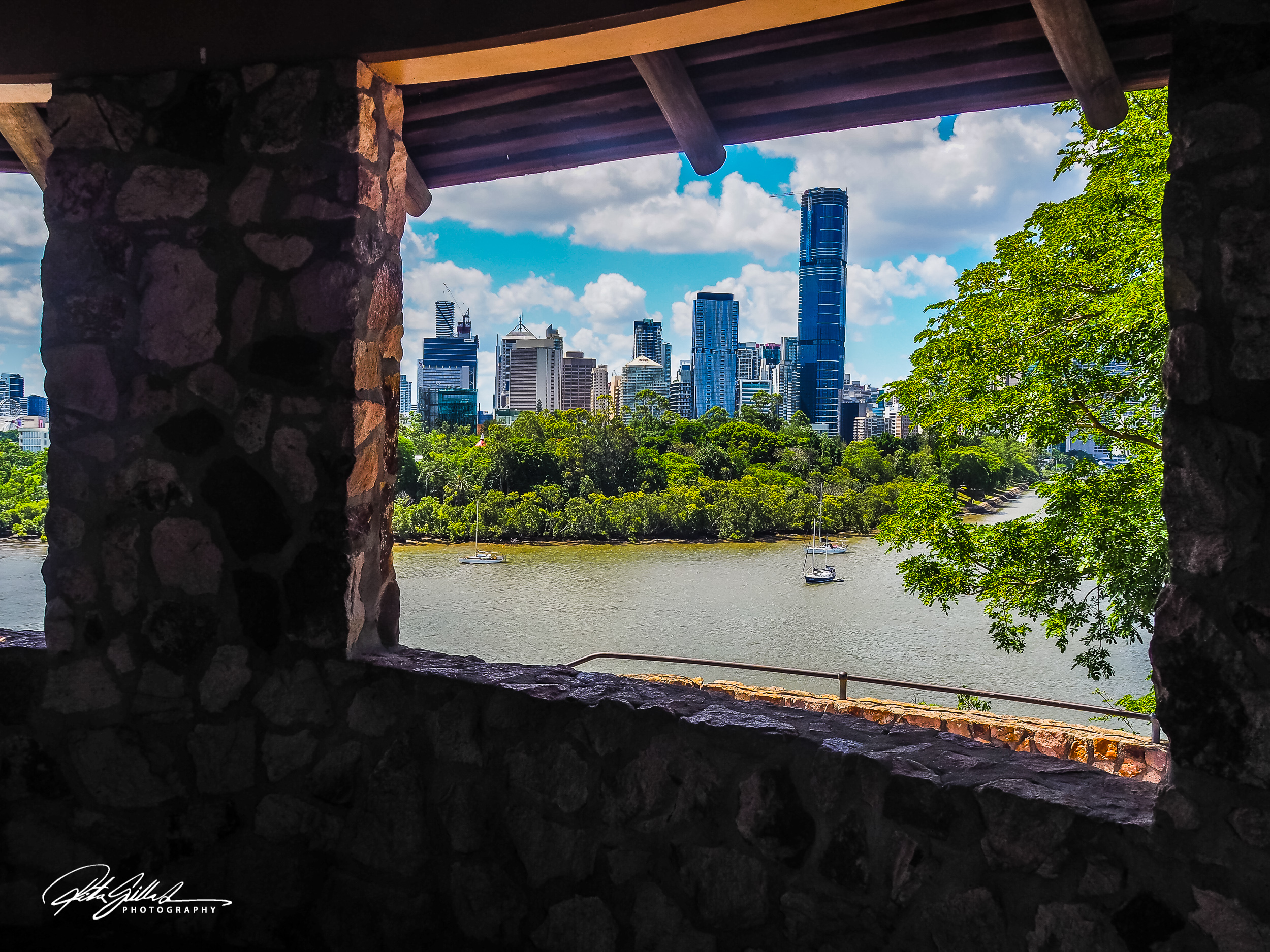
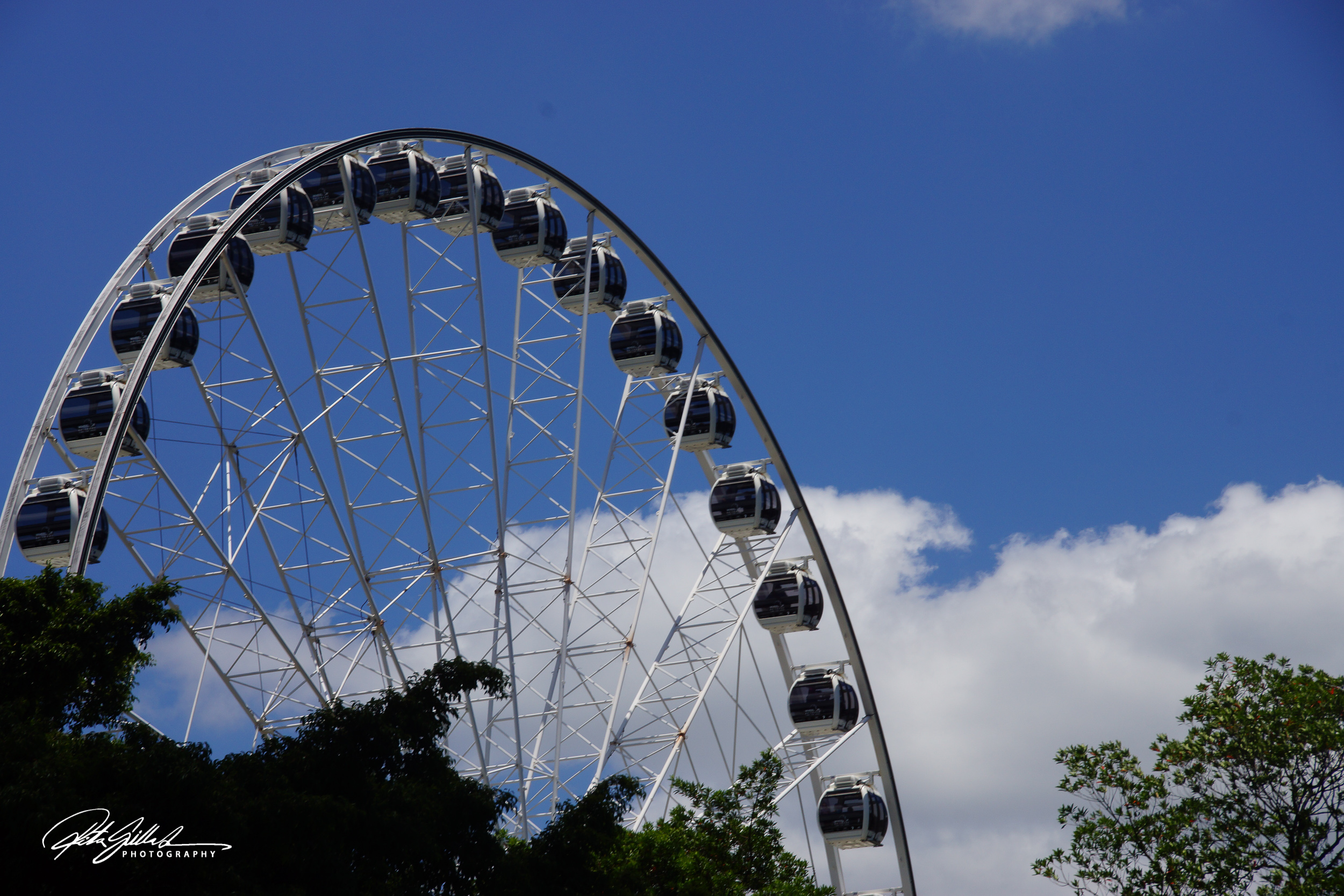
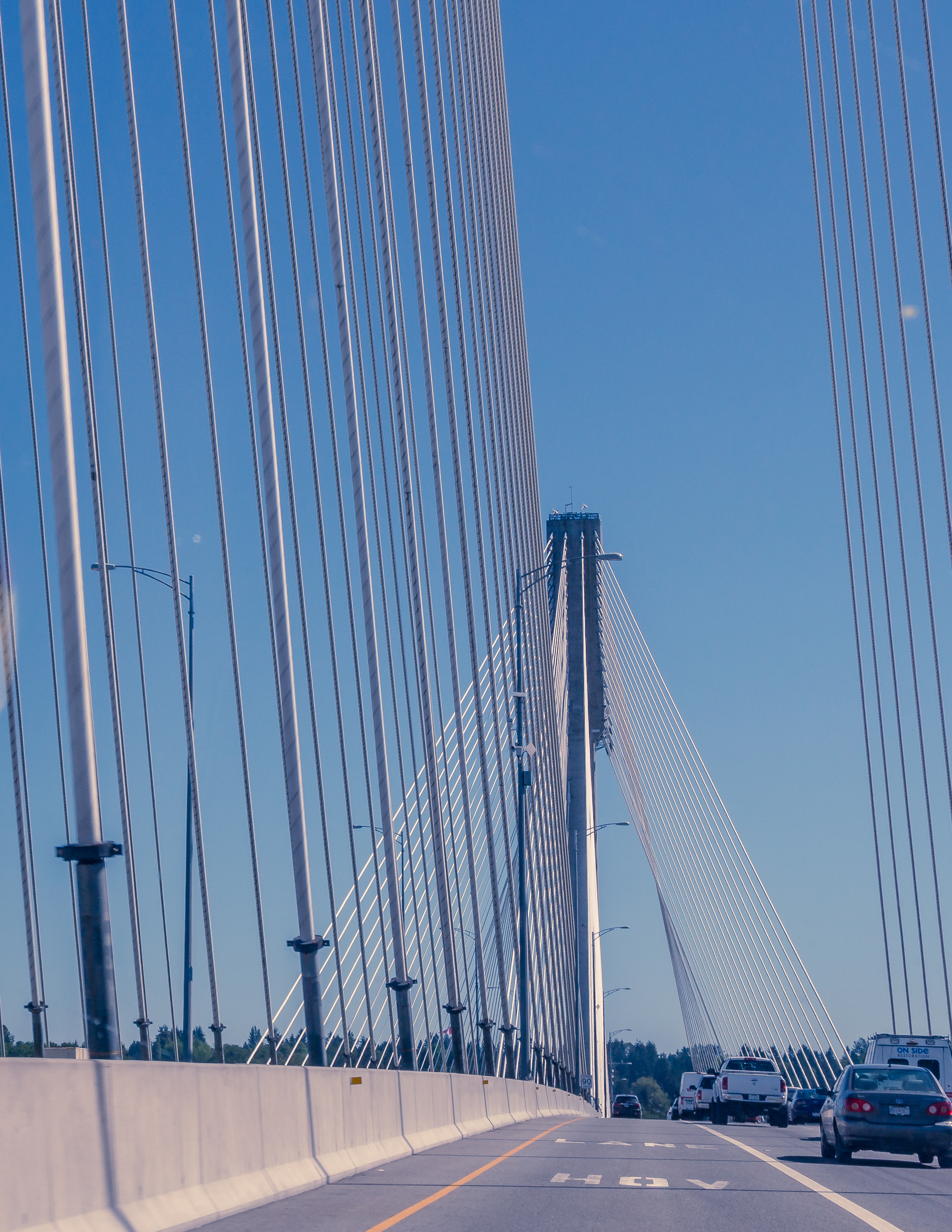
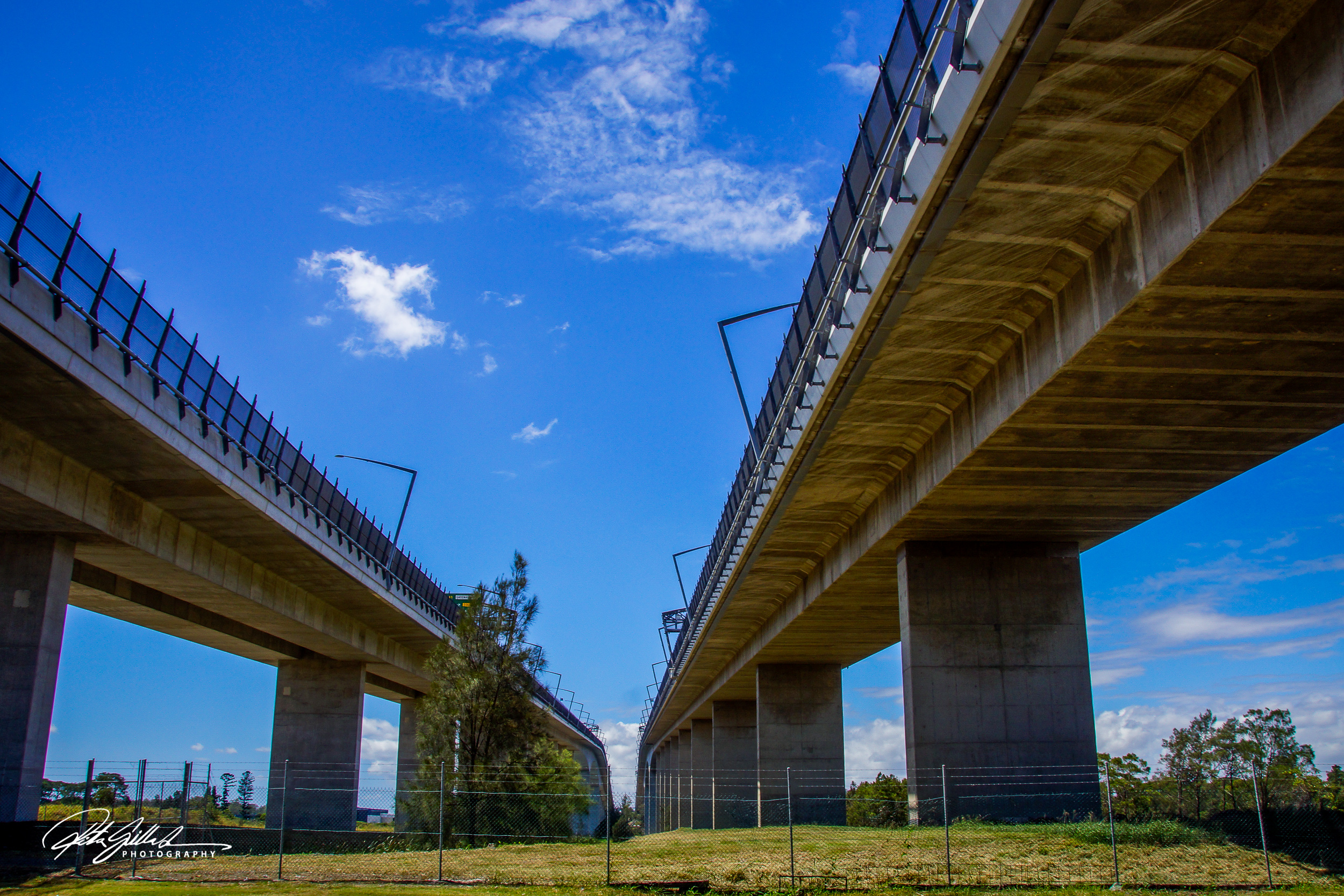
Lets have a look at what I can find in a form of leading lines, I try to use them often to lead your way to something. Cityscapes are easy place to find them. They can lead your eye, frame the scene.
Did I find them, I had to stop lookng for them as I once again have an overload of them. Sorry…and as this is mainly a photography blog I will not go into details of the locations, I would not remember even if I tried. Diagonals you will find 🙂 Sit down and enjoy the scene’s as the header suggests.
On the top collage – Photos from Florida, California and Nevada
The second set is from Brisbane – Australia and the last one has bridges from Vancouver BC, first image, Brisbane AUS and the last one is from Sydney AUS
Lepis kindly made a patch to celebrate us once again surviving the deadliest month of all, November.
Here we are December, I have taken few days to recover from daily posting. As nice at it is listening to music it was hard trying to find every day a photo to match.
I am once again in silence, I think I need to but the music on. I also noticed a slight blue in the sky… it has been gray day out lately. Maybe this will cheer me up
Trying to figure what to post as nothing is really catching my attention. I can go through my archives, there are tons of photos I have not posted, I could re-edit them.
“I know I have gotta find somekind of peace of mind” The brokenhearted, I put the music on 🙂
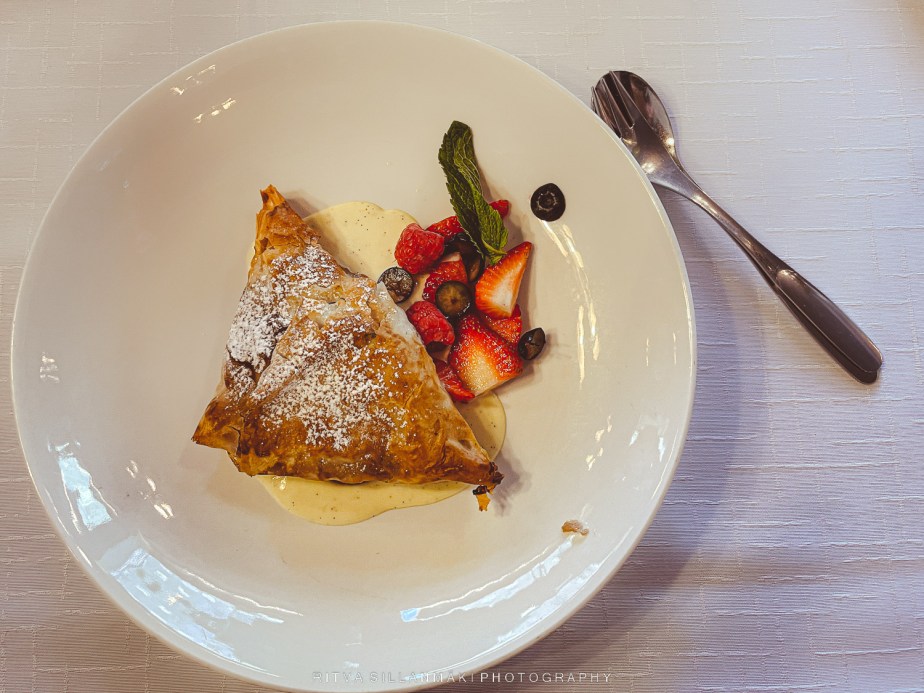
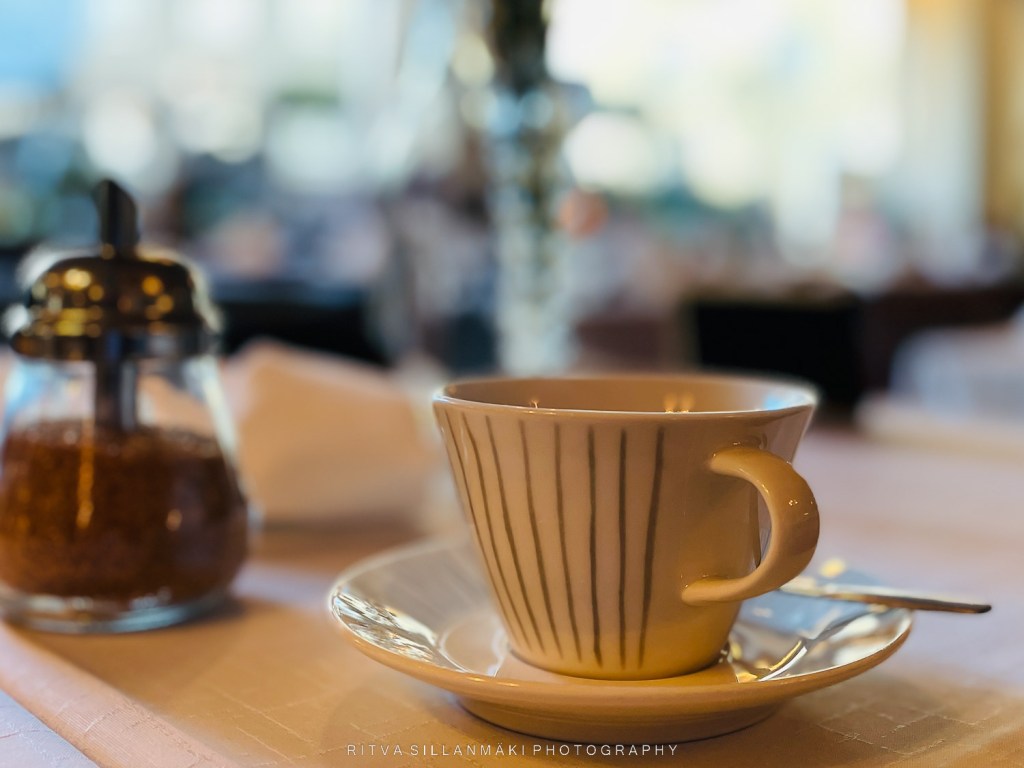
Time to have a cup of coffee ☕and have some pastry with it and take a photo.
I also need to catch up on commenting and replying to your comments, thanks to all already for doing so !
I have a soft spot for black and white photography, I was once again reminded about the importance of exposure, light. It is the key element in these photos.
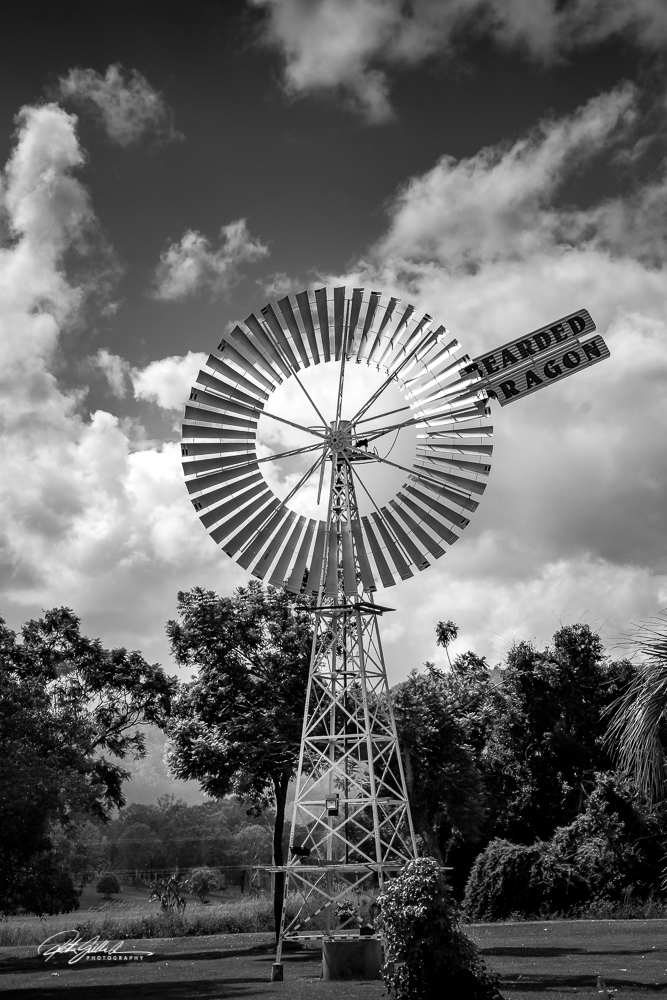
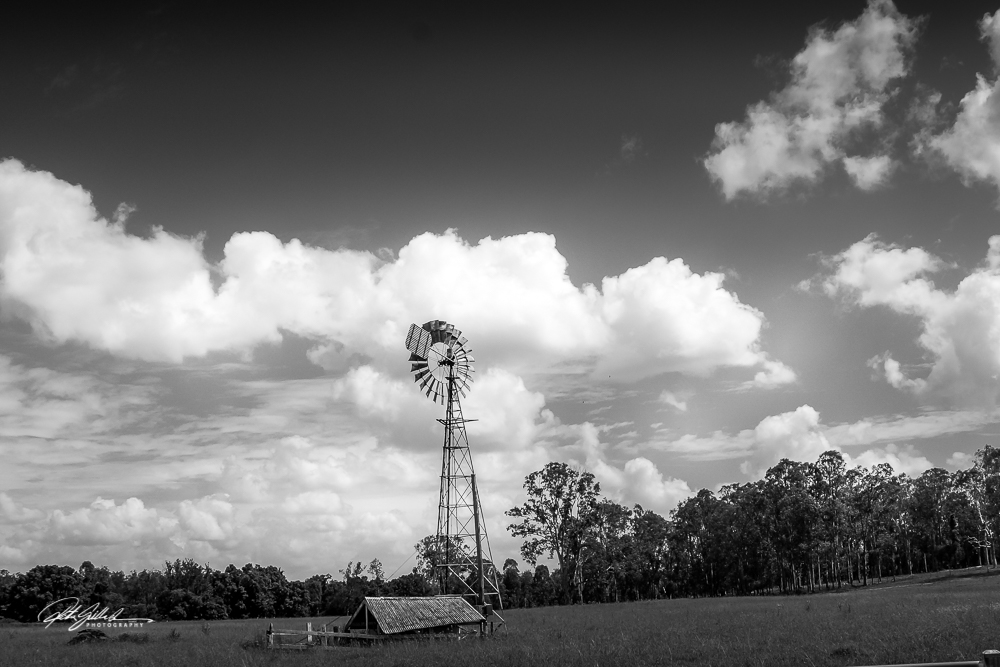
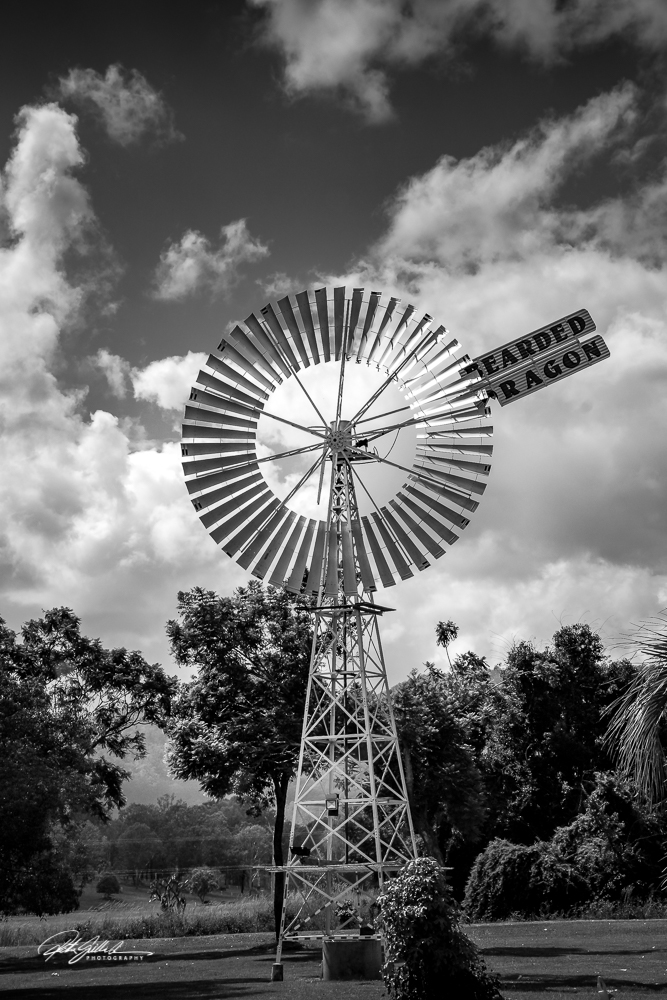
Clouds work well in B&W as do distinct shapes. I took these when visiting Queensland few years back
Bearded Dragon sign – Bearded Dragon Hotel Tamborine in QLD
Wind wheel sign in Queensland
The way that light hits objects, I think, is one of the more important things that sculpture and photography share. – Rashid Johnson










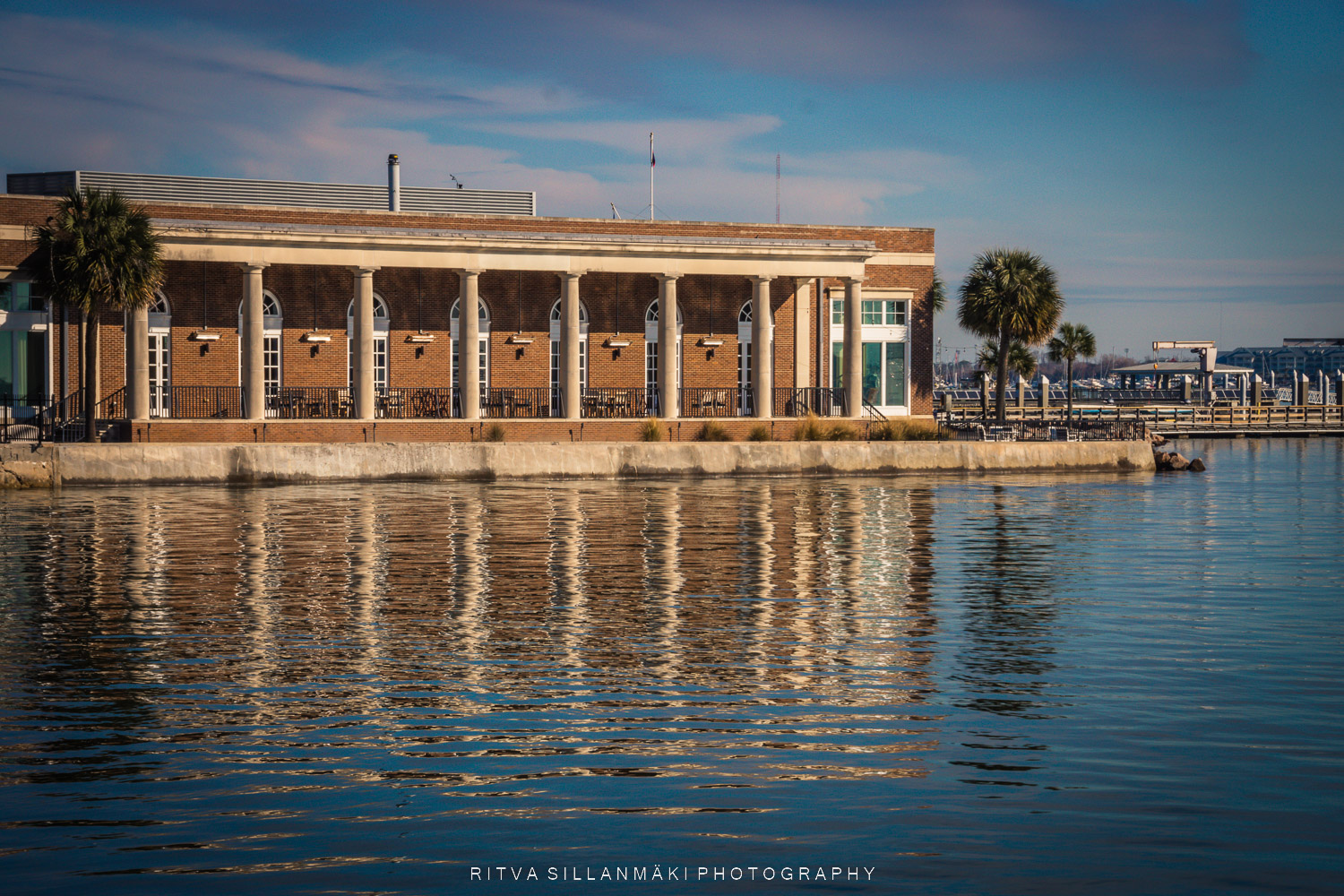
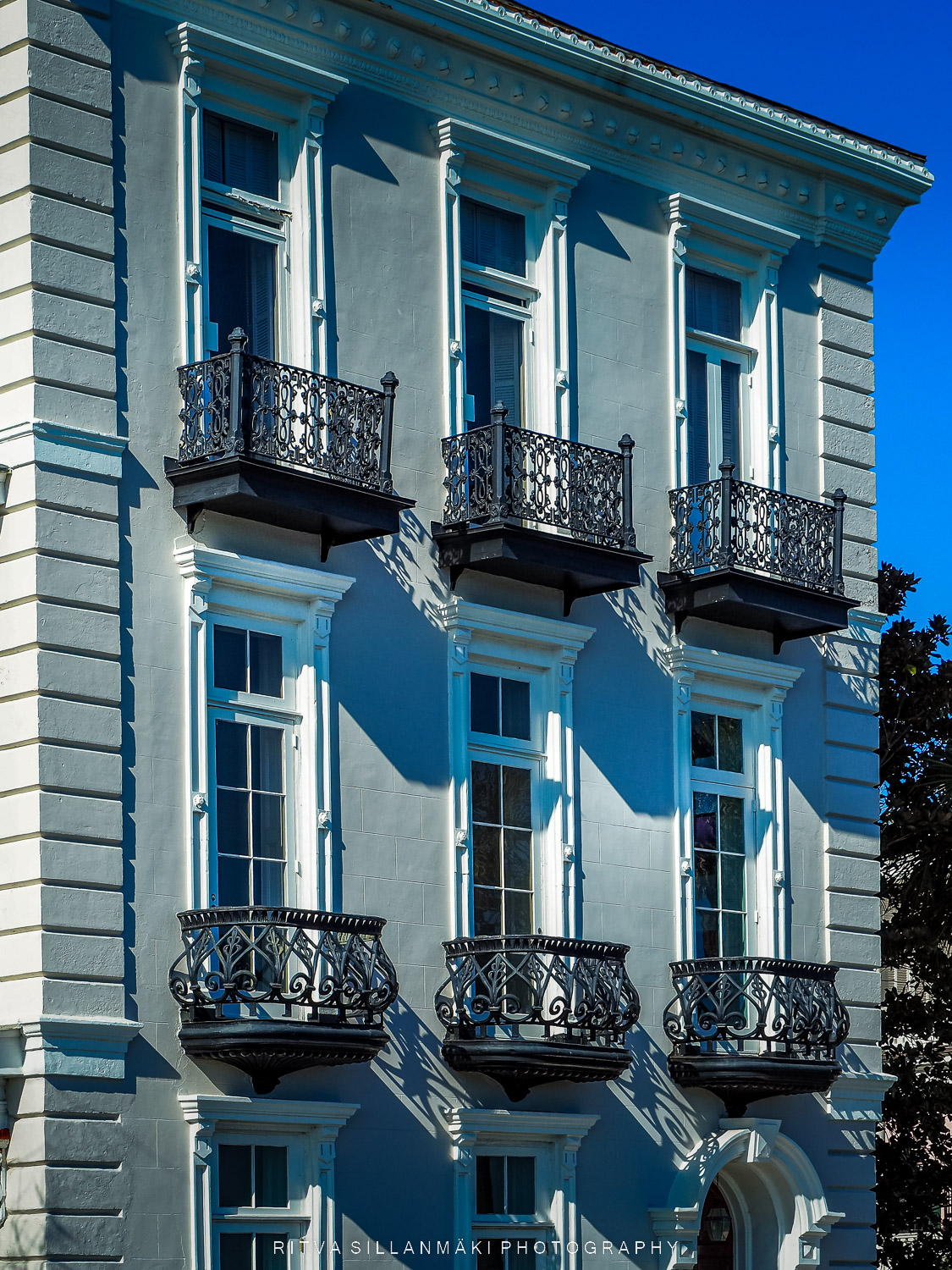
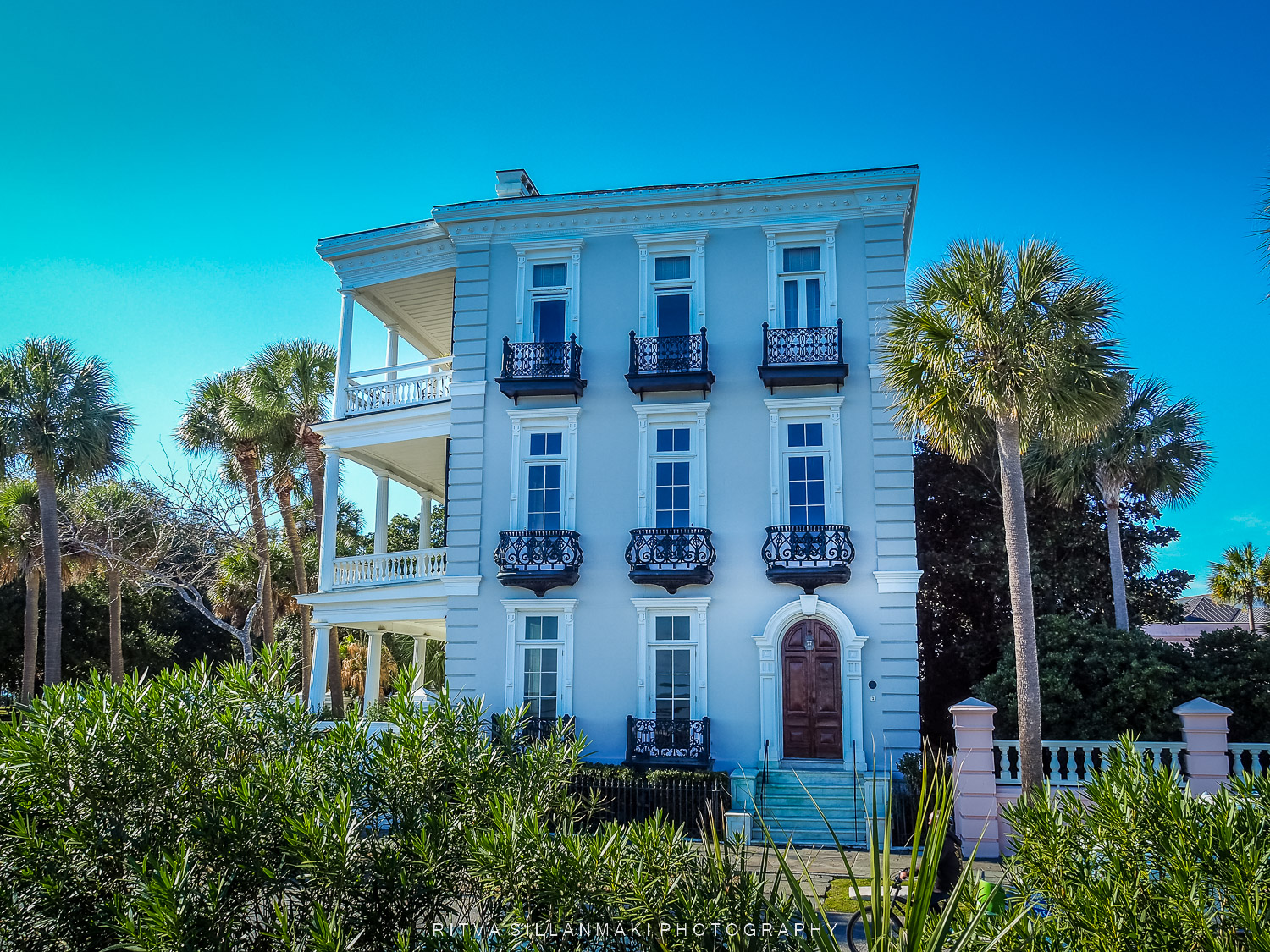
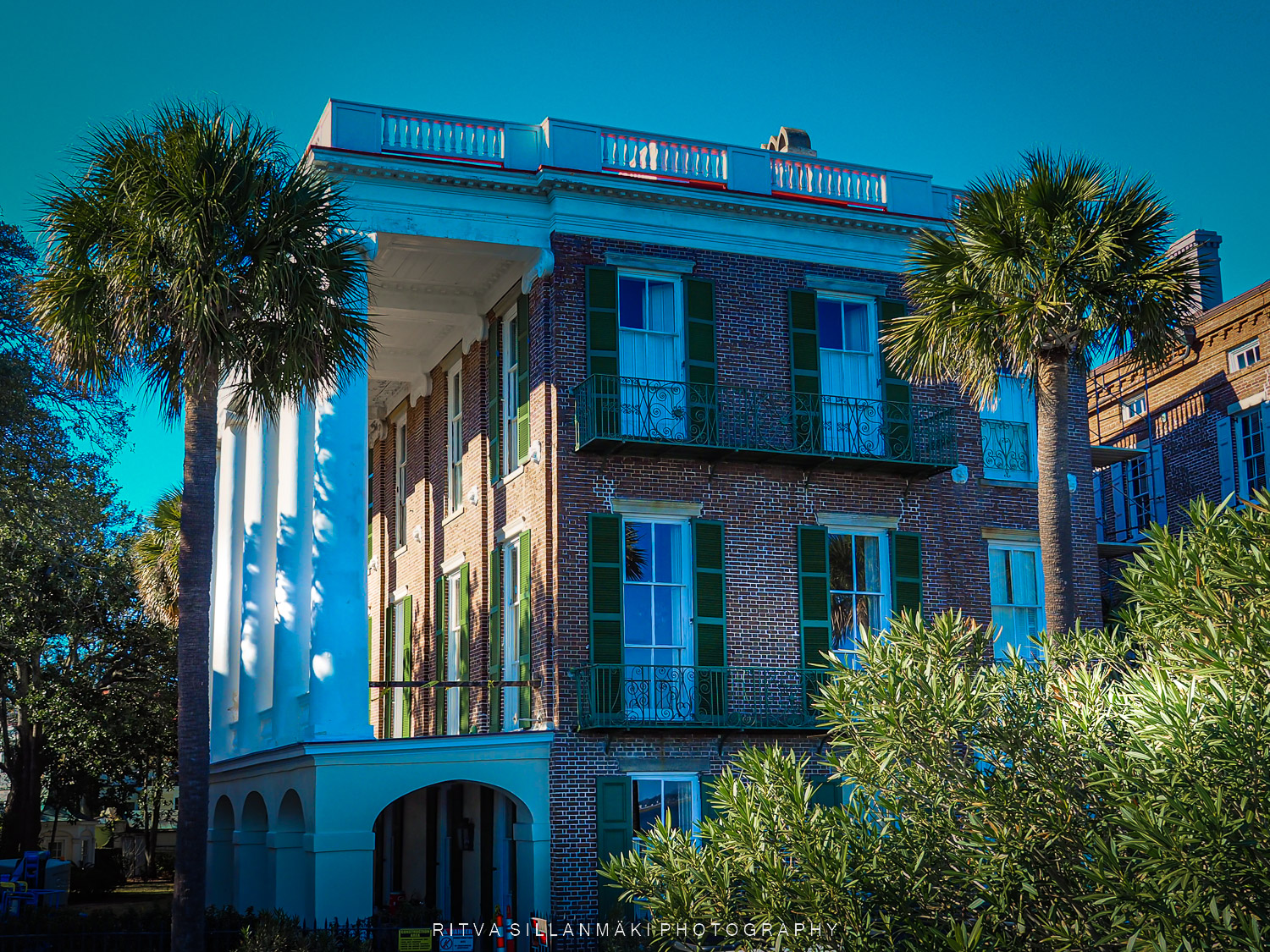
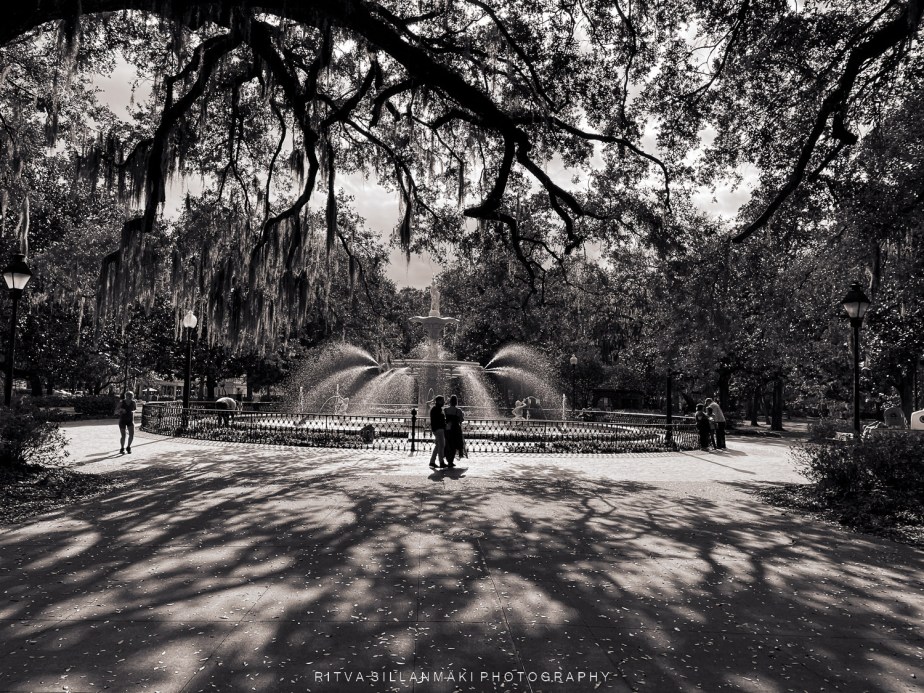
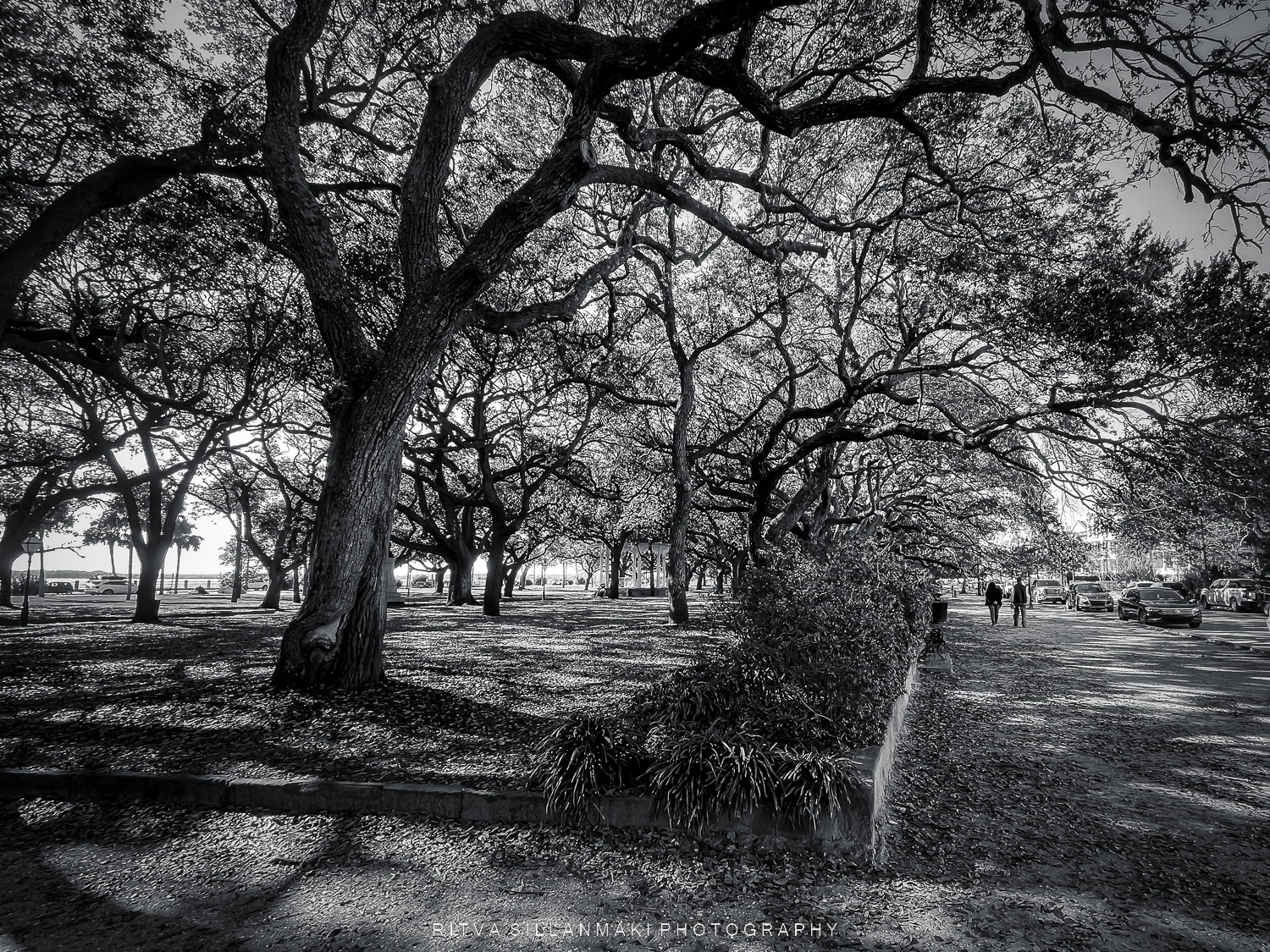


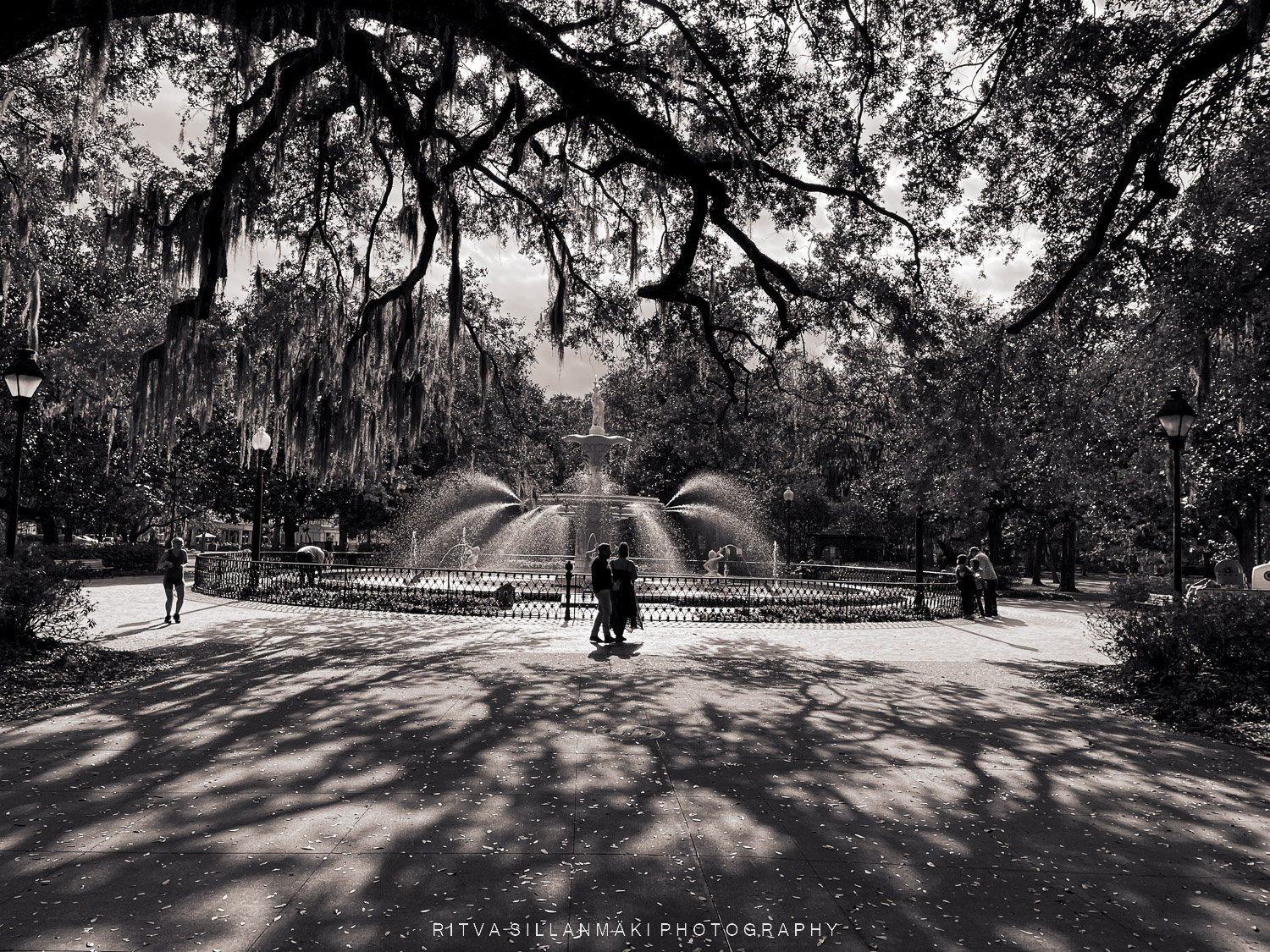
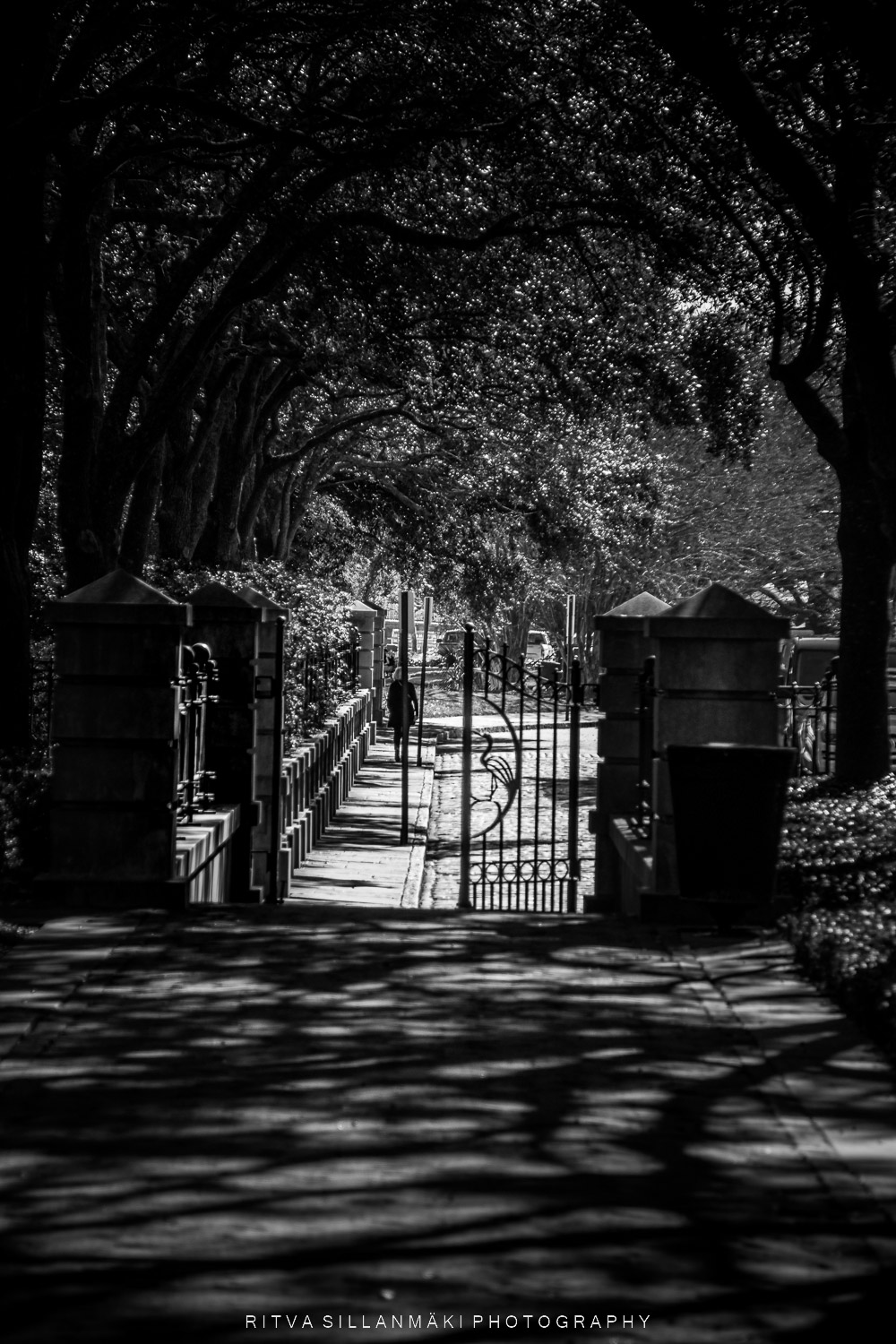














































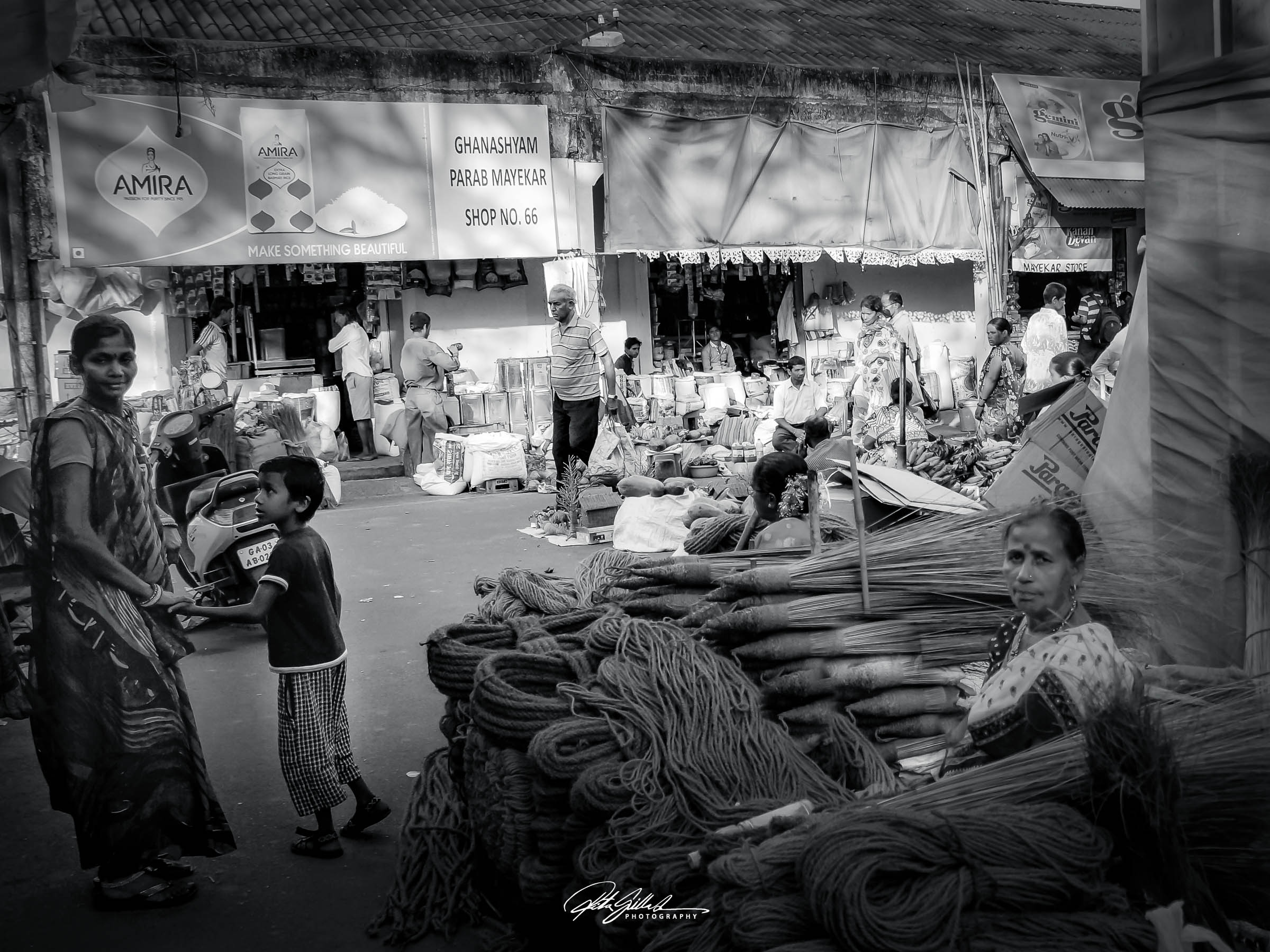
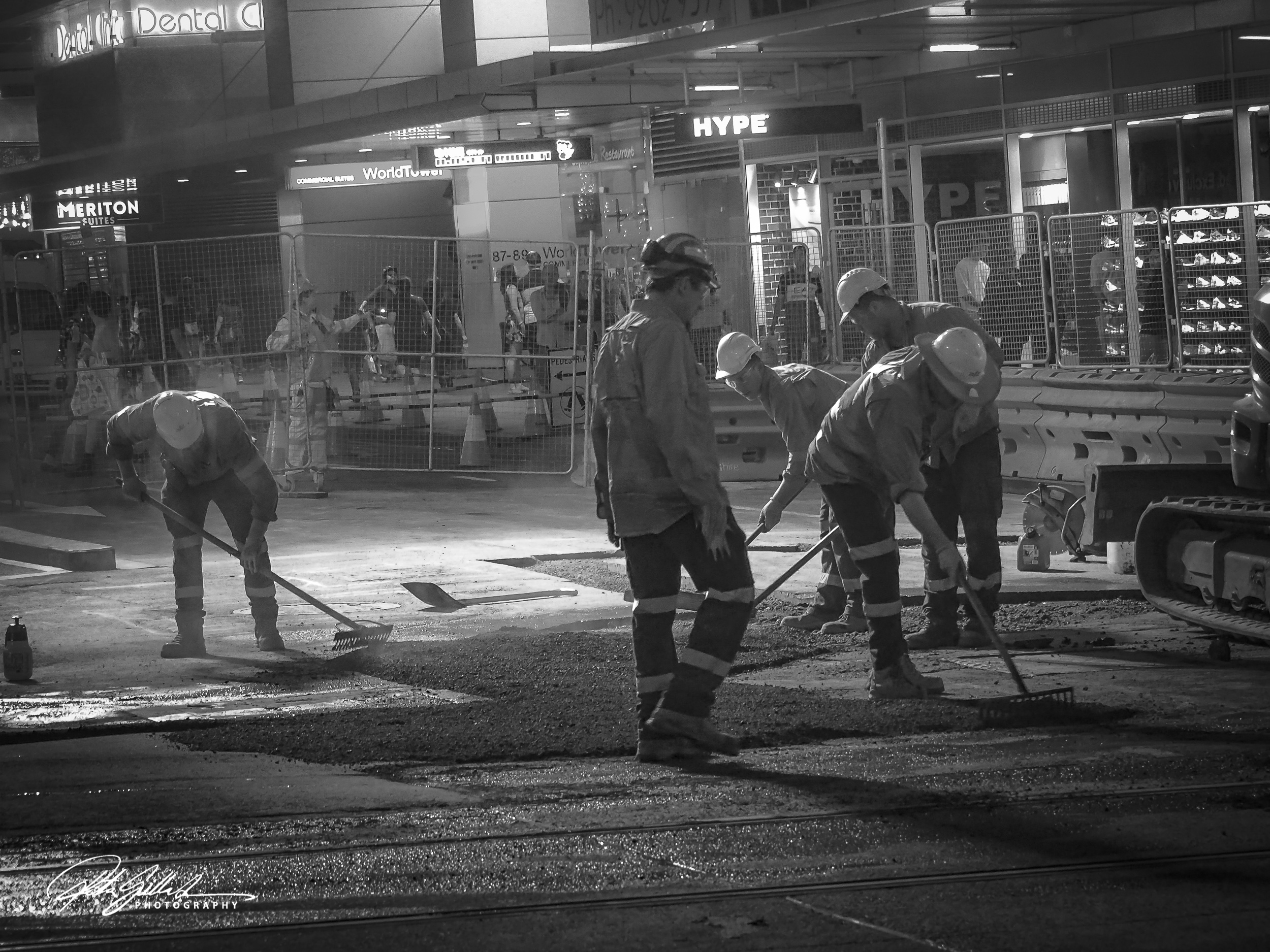
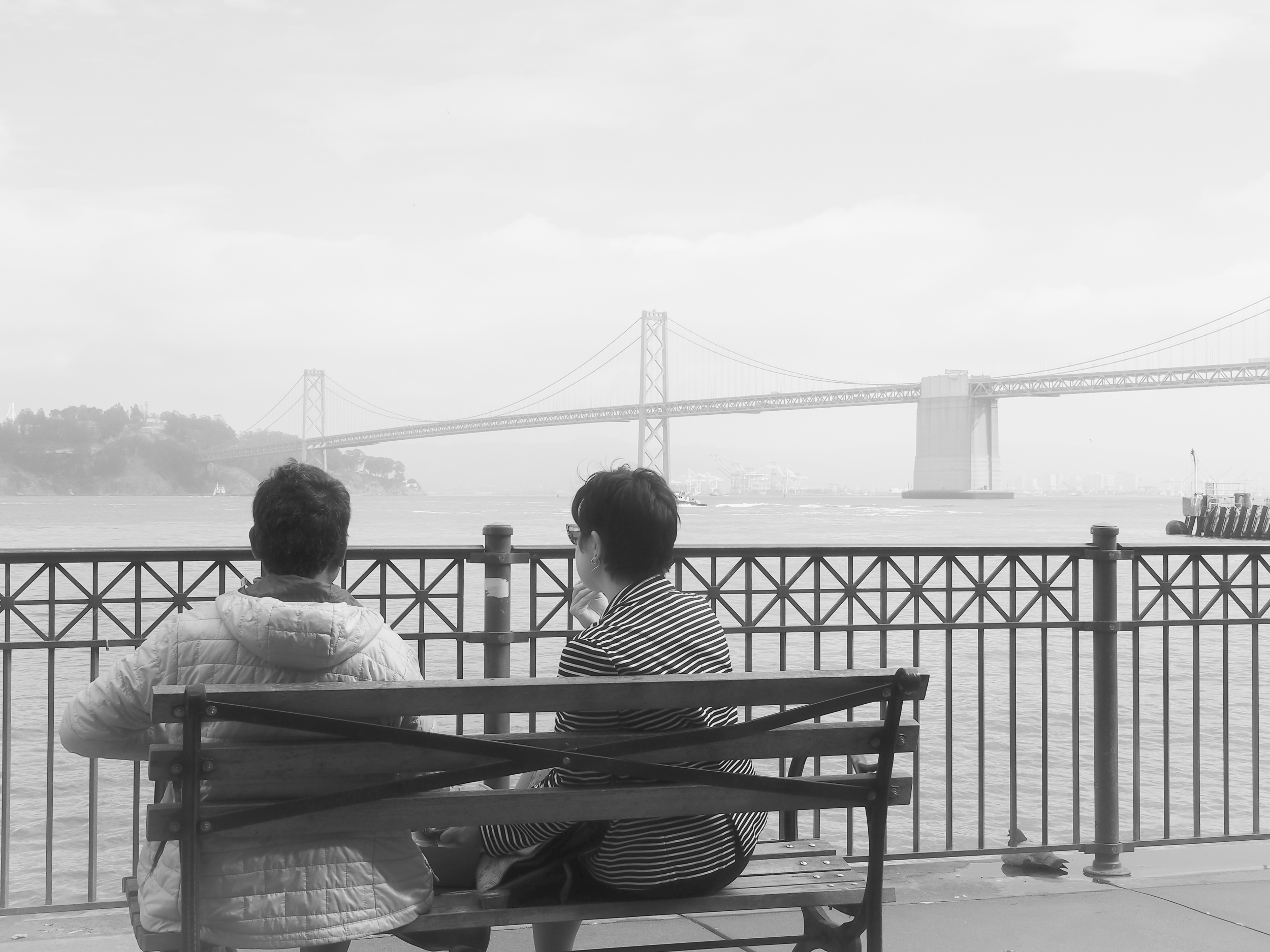

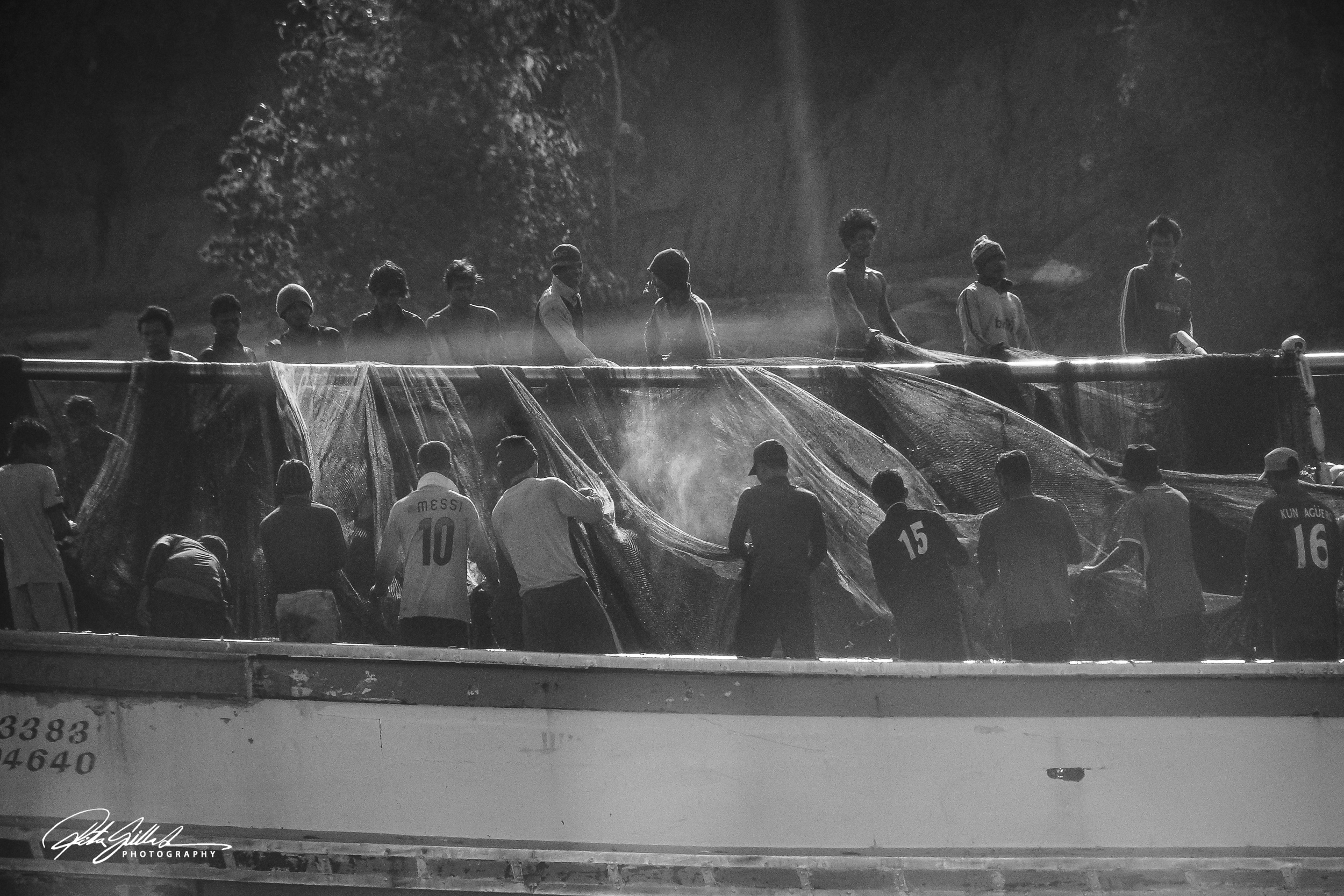































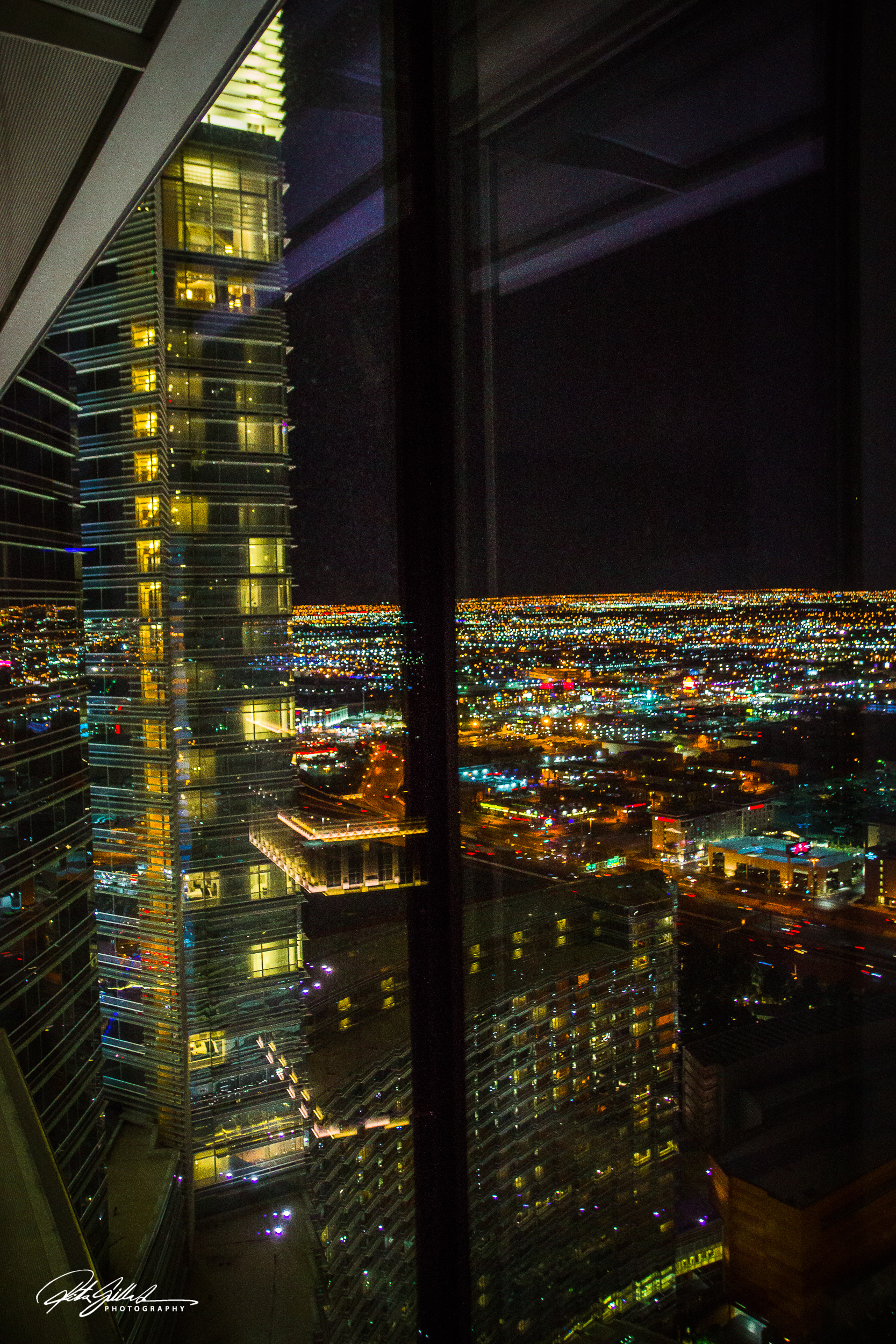
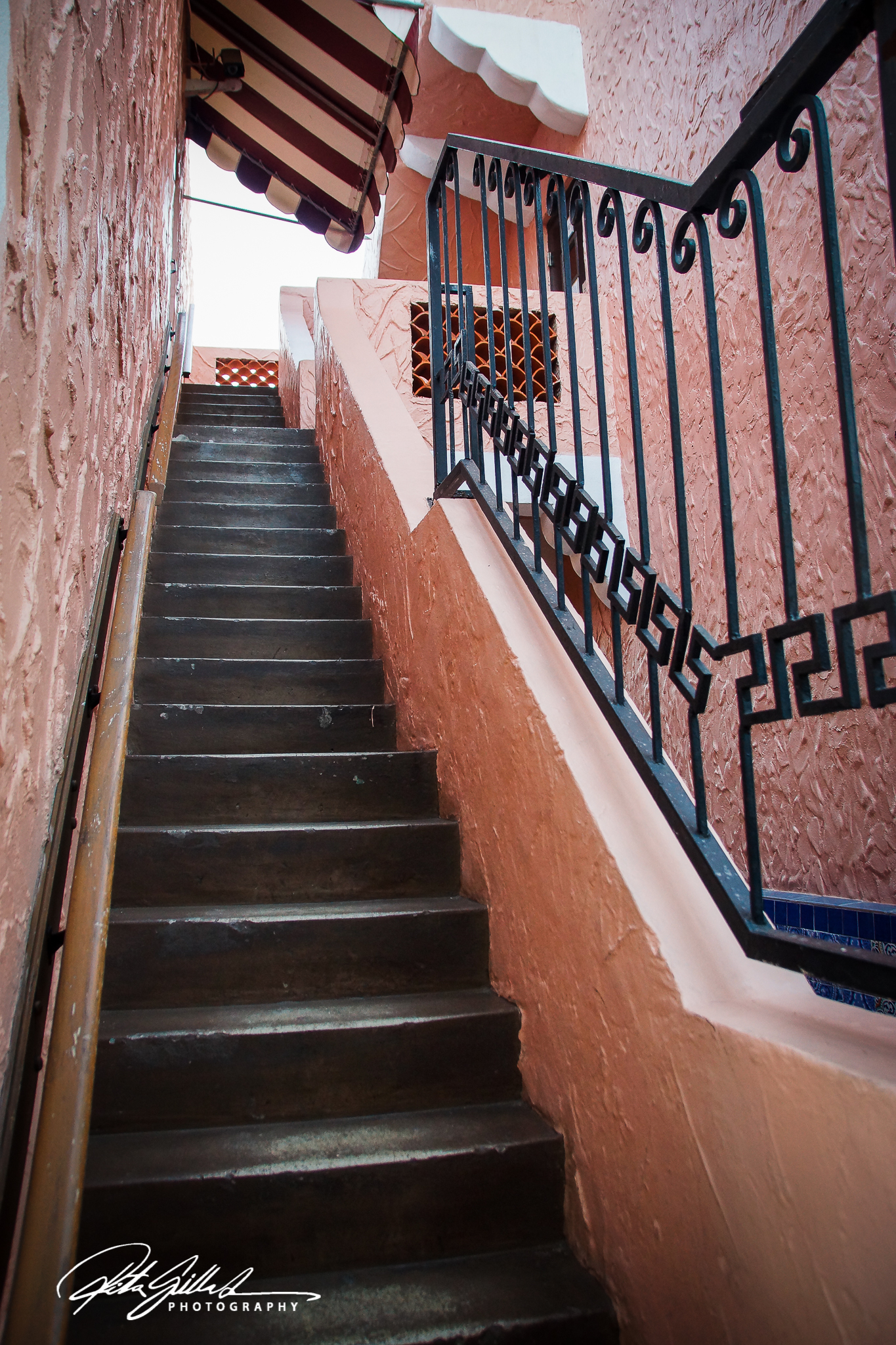
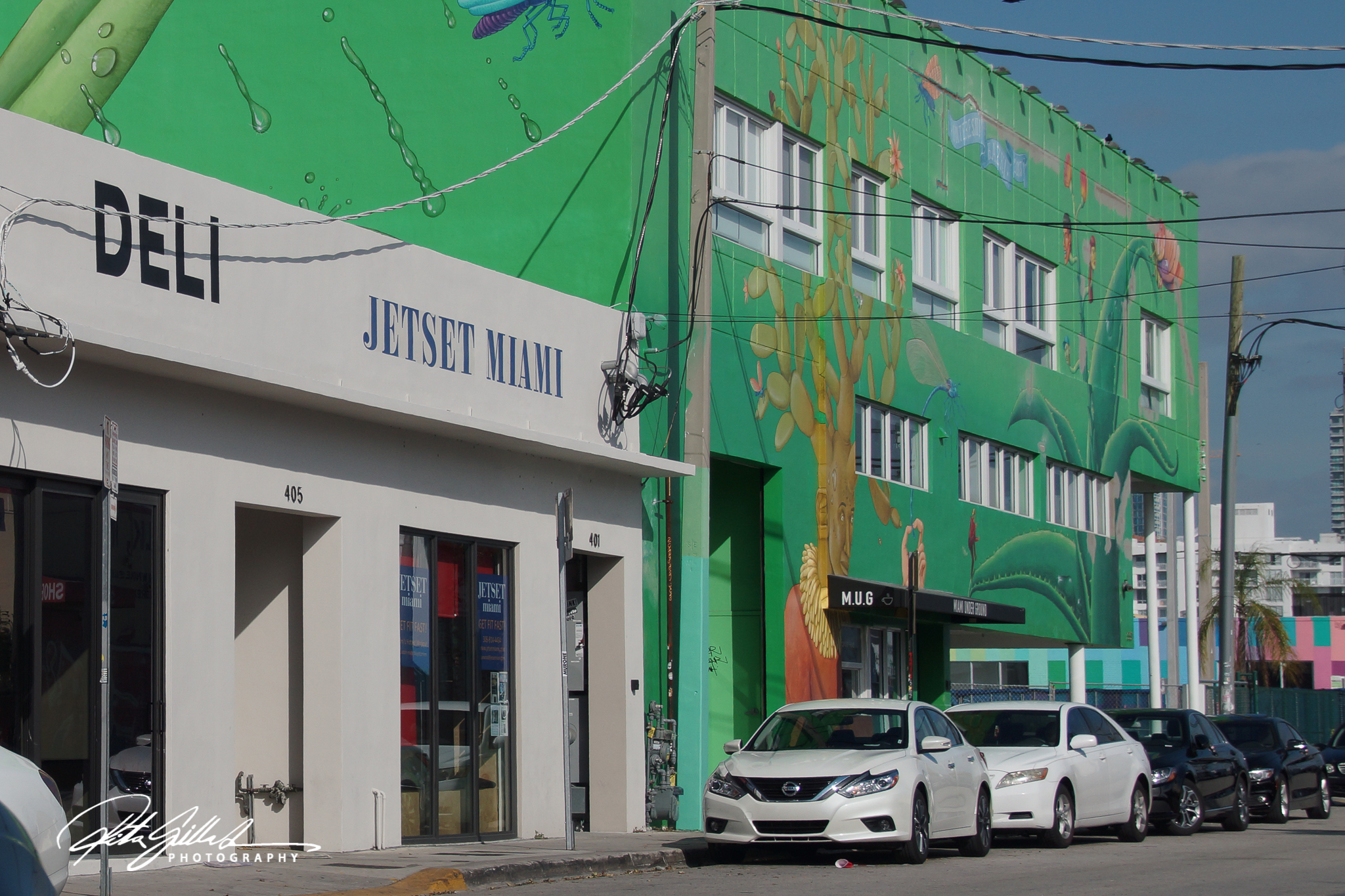
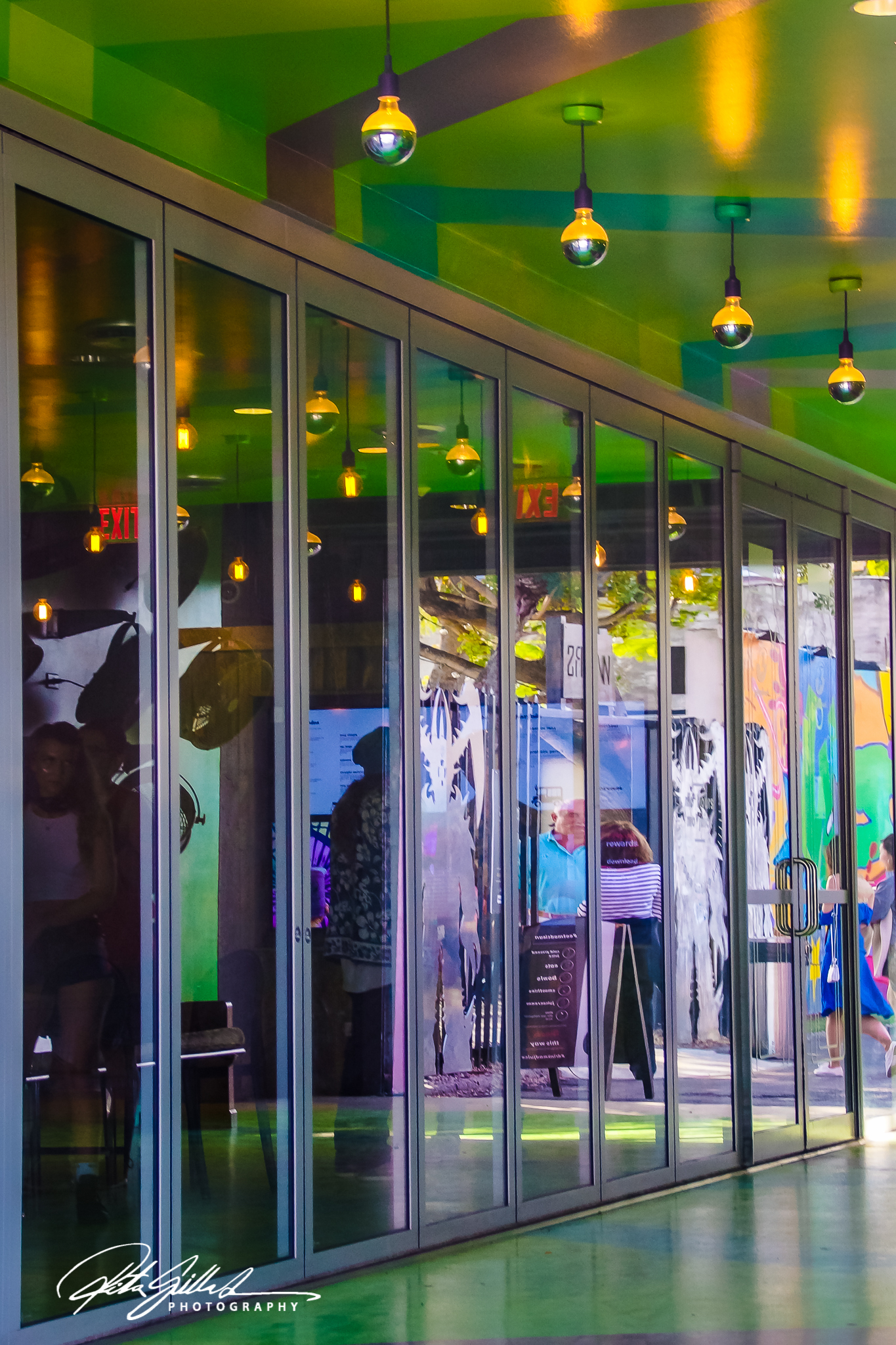

 Ritva Sillanmäki Photography